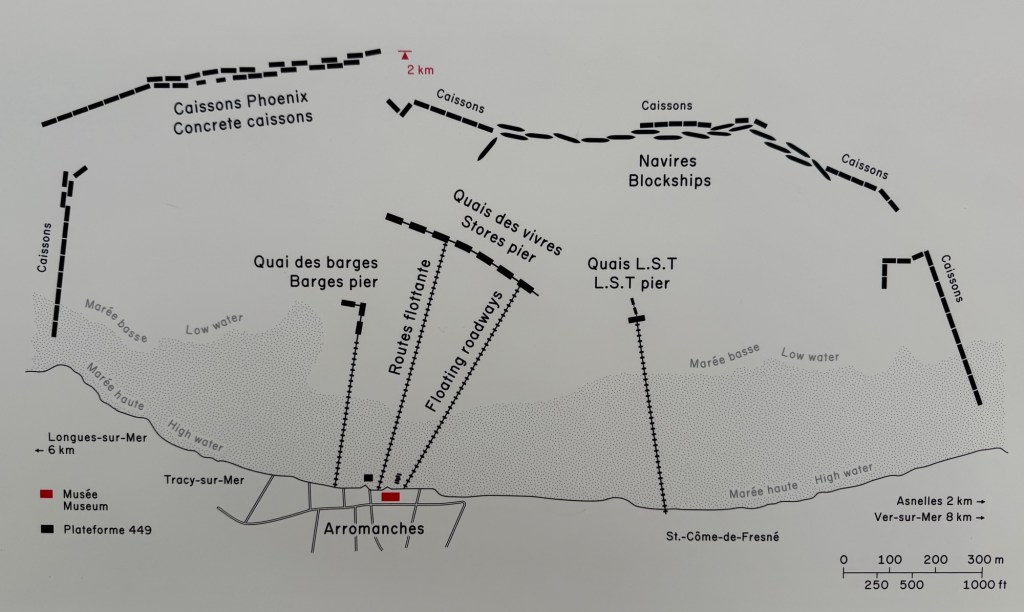
Today, with Jèrome and Cèdric, we visited more D-Day sites. The first area was Arromanches, where British soldiers and engineers built a harbor in six days. Incredible! The Germans had blocked all the natural harbors, so this was the only way to get the large numbers of men and matériel to shore efficiently.
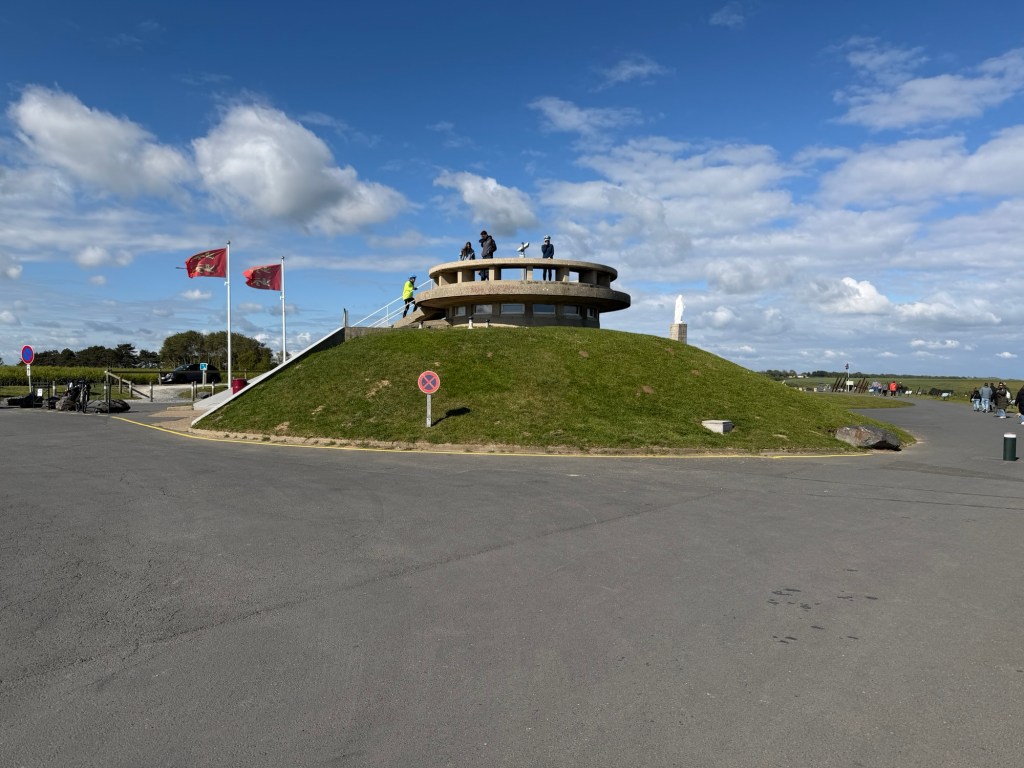
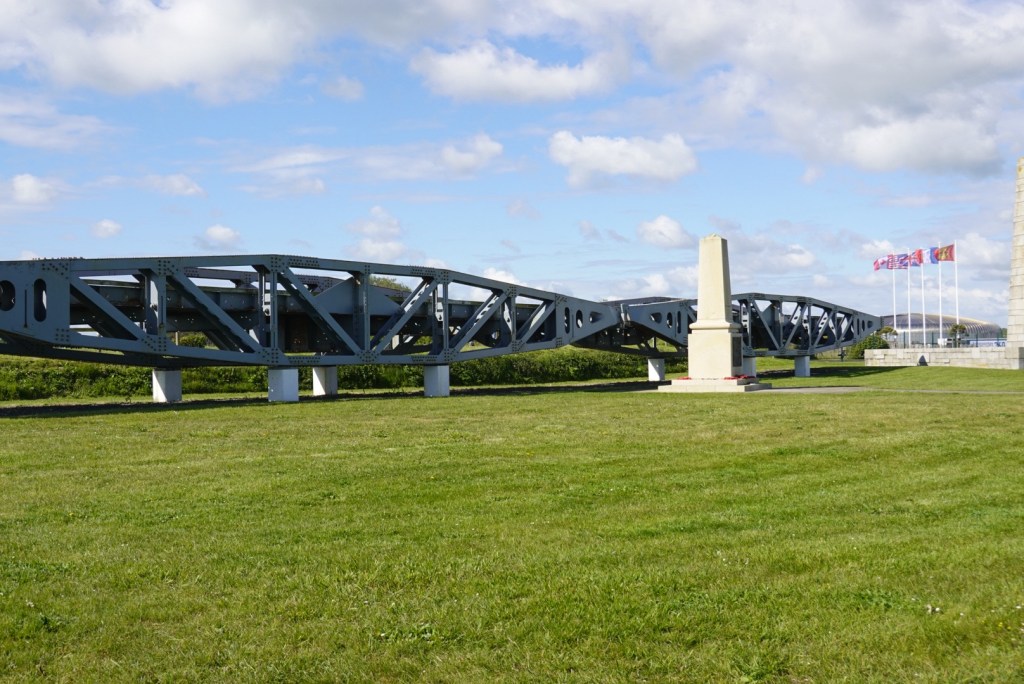
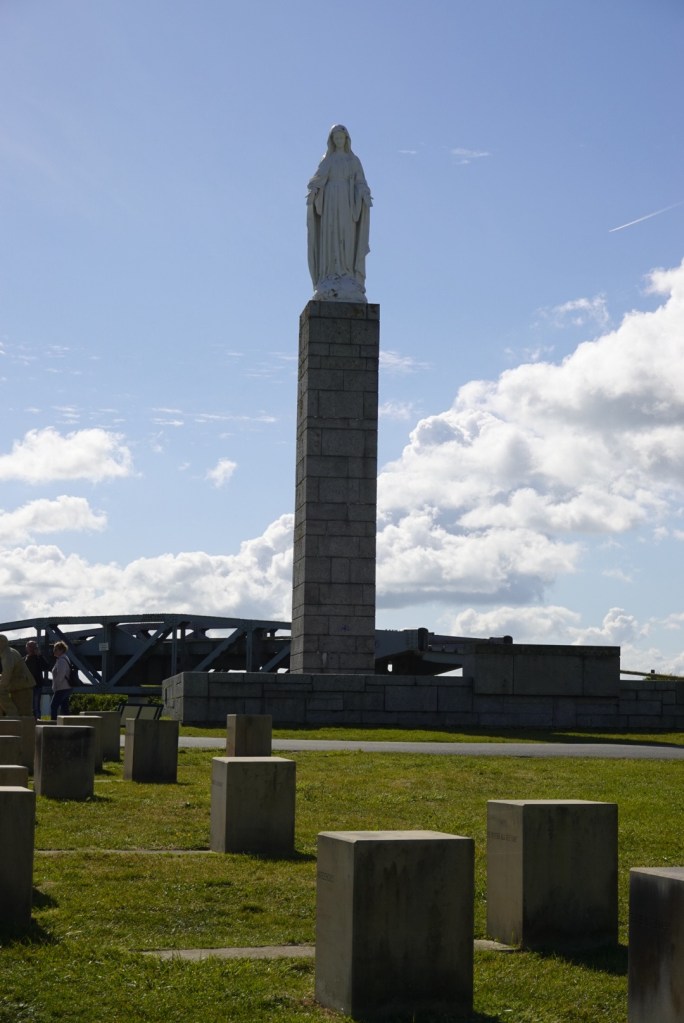
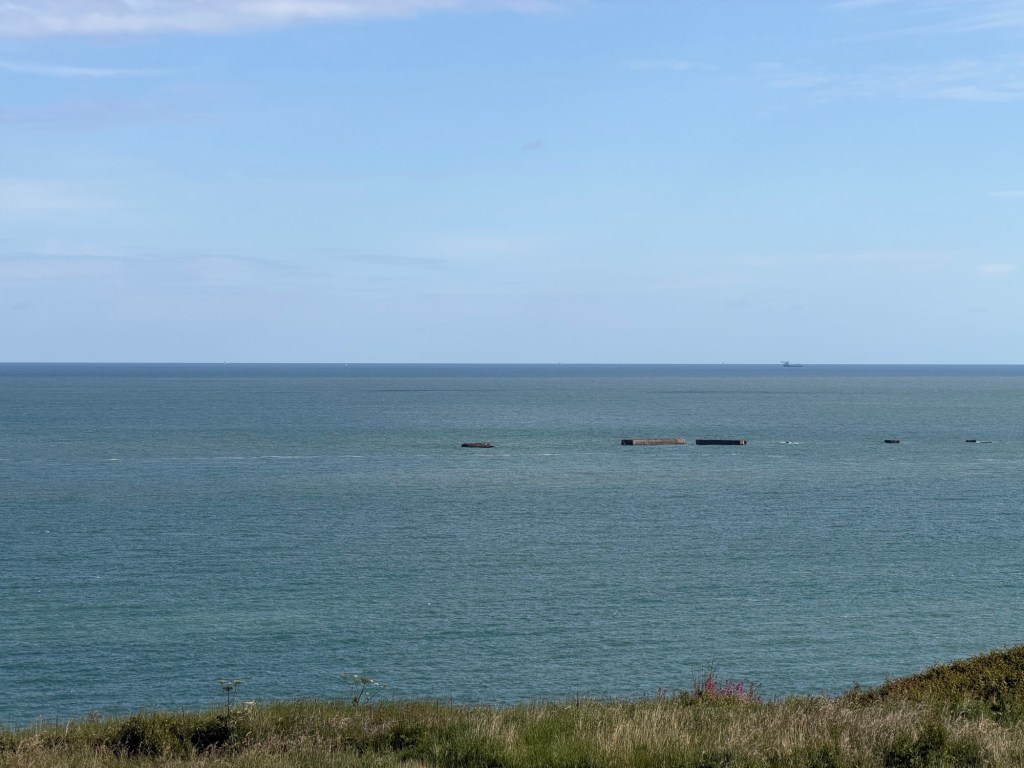
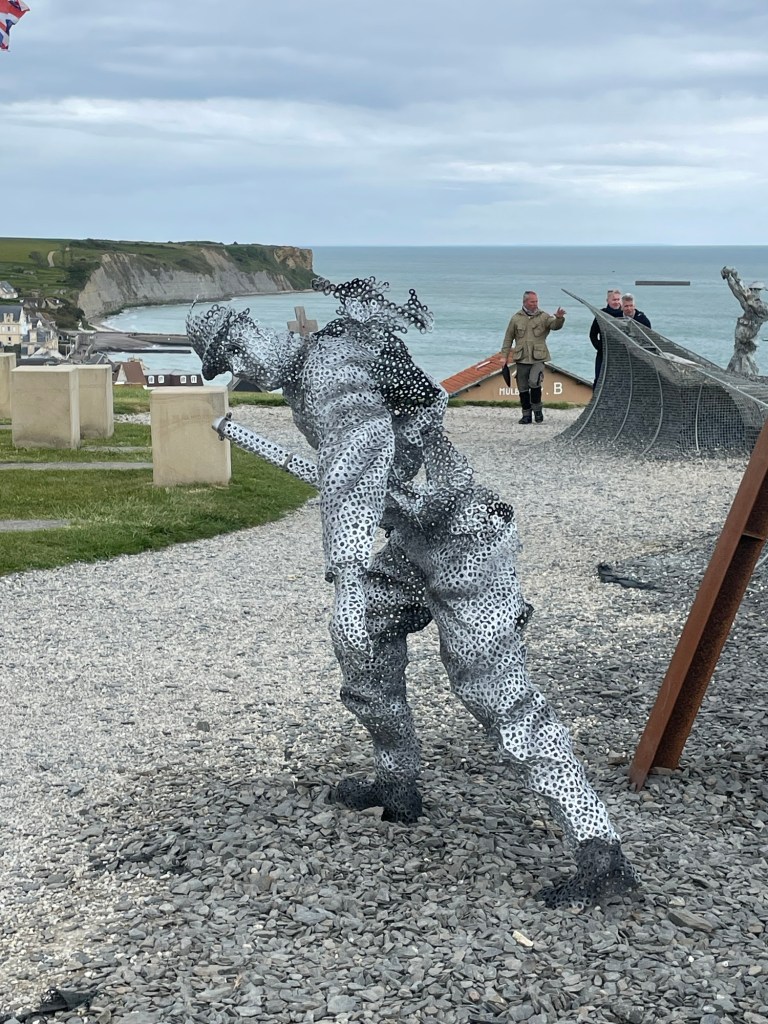
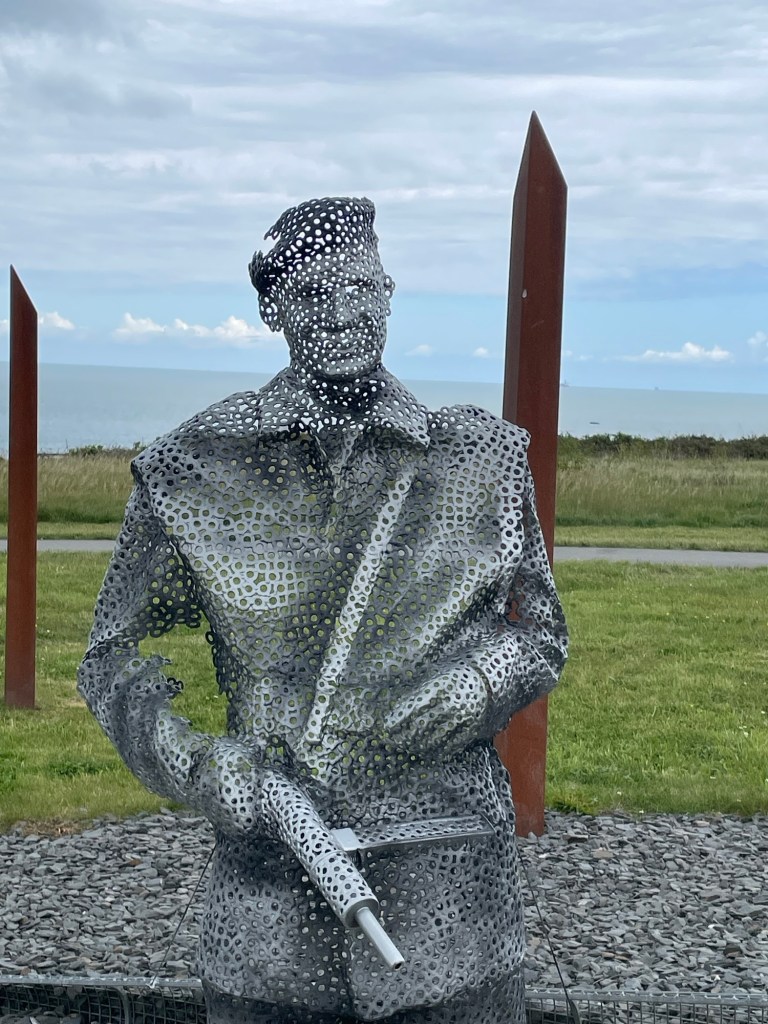
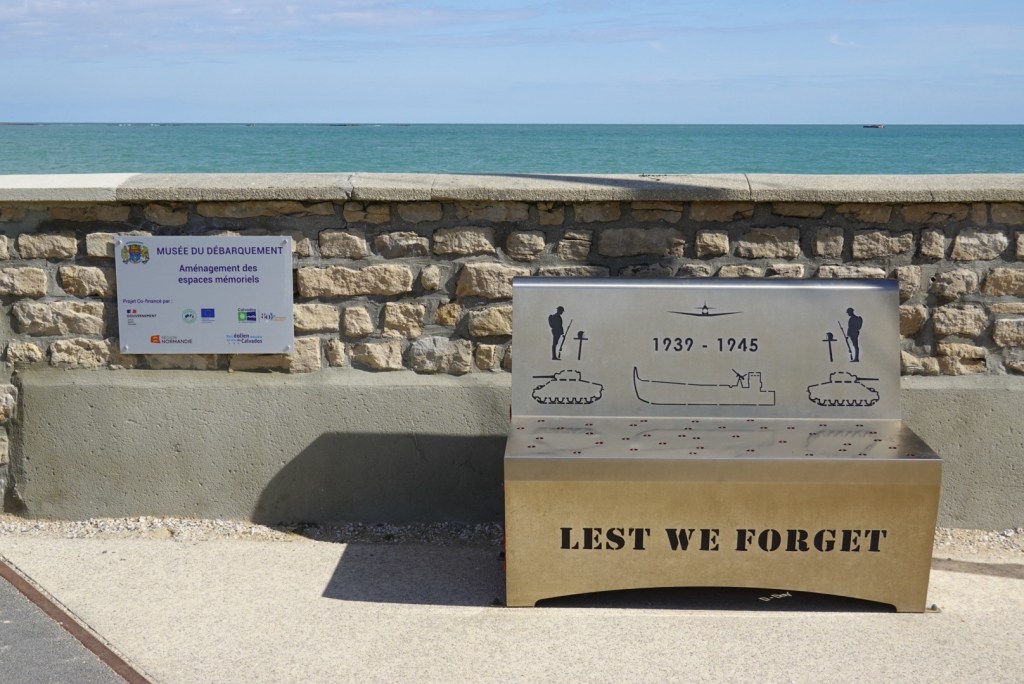
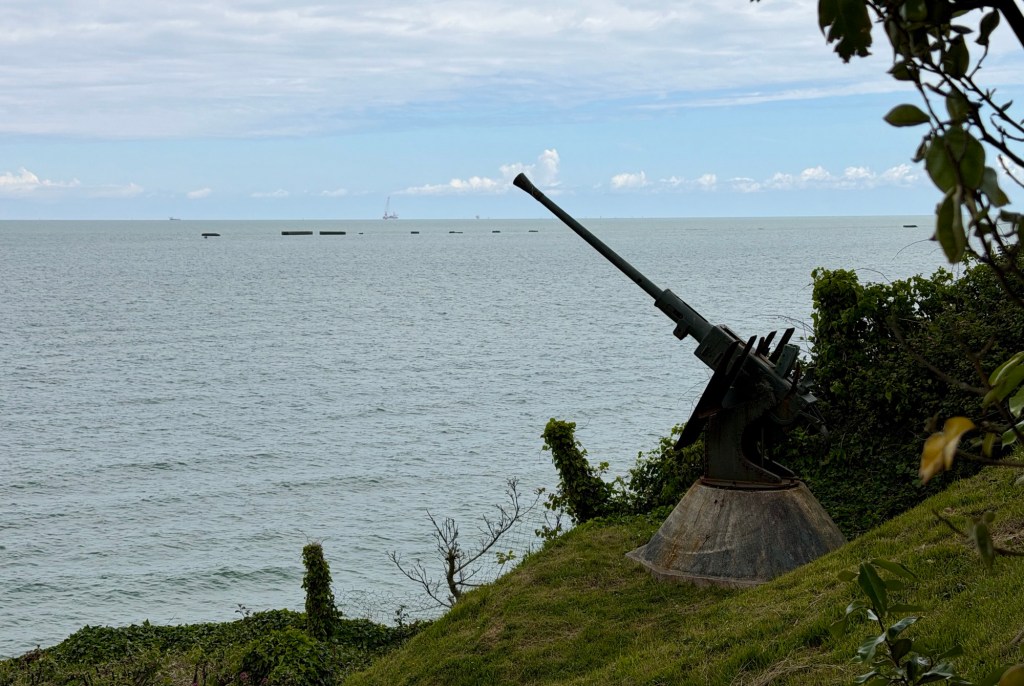
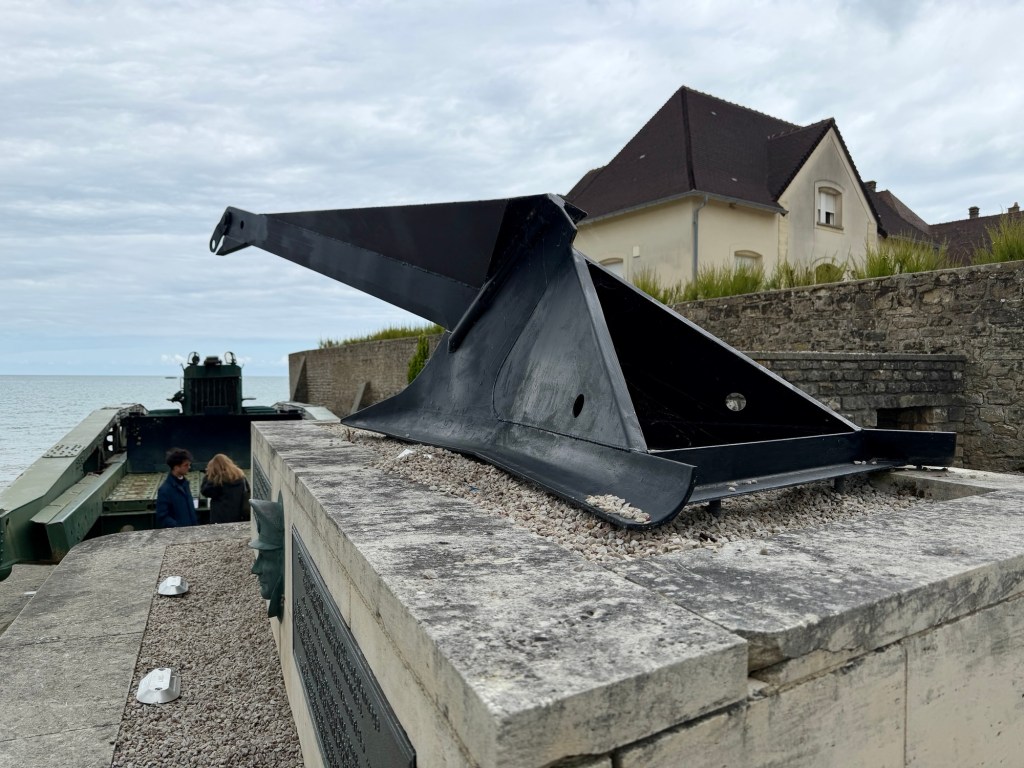
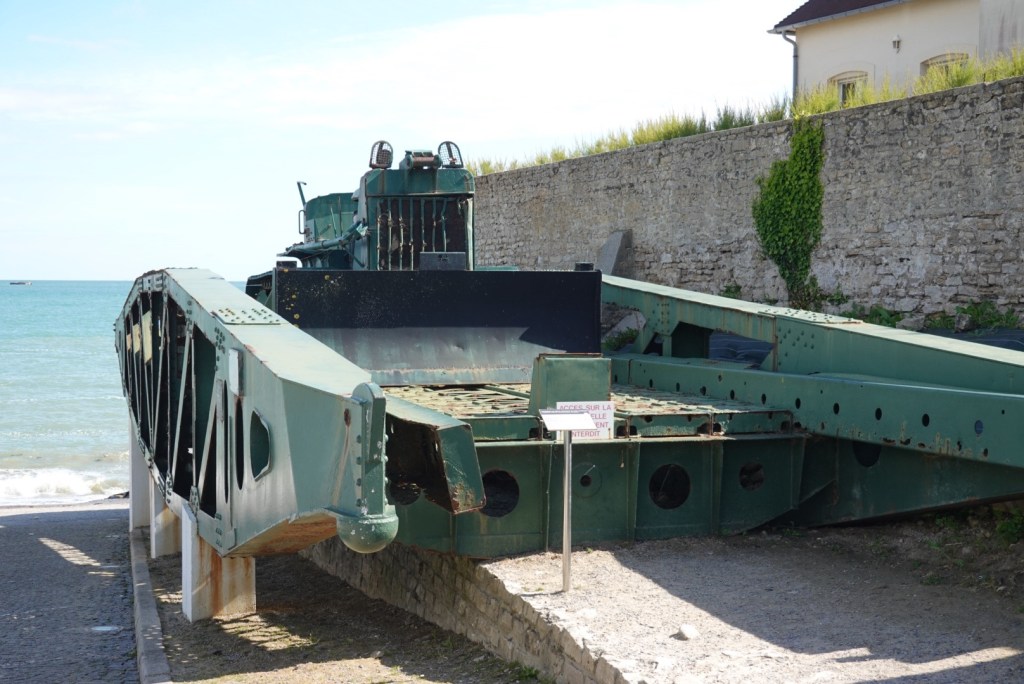
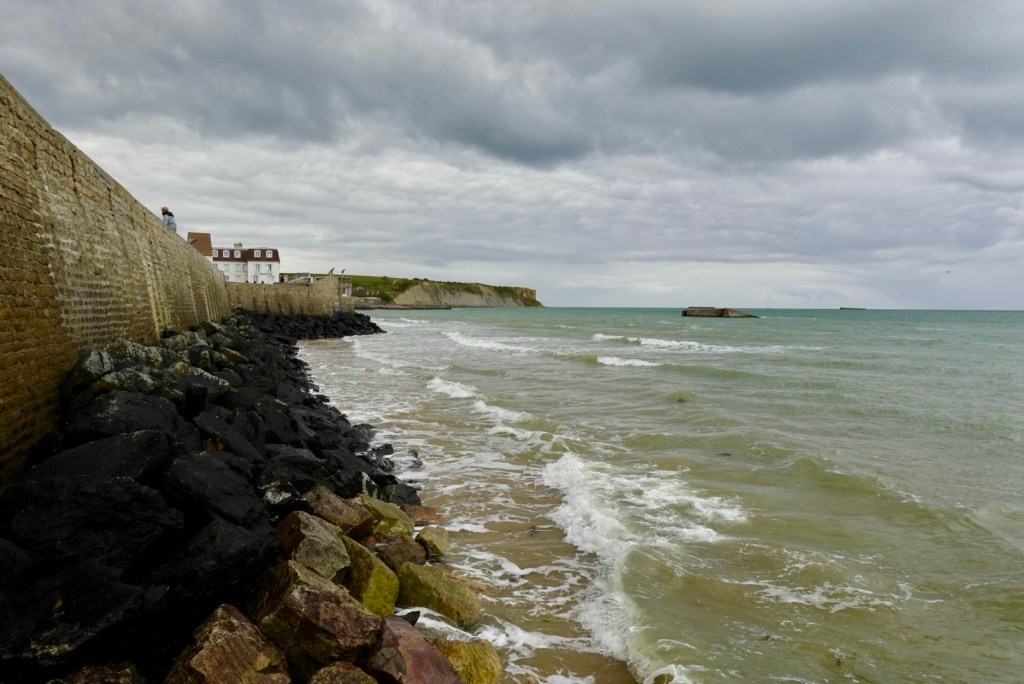
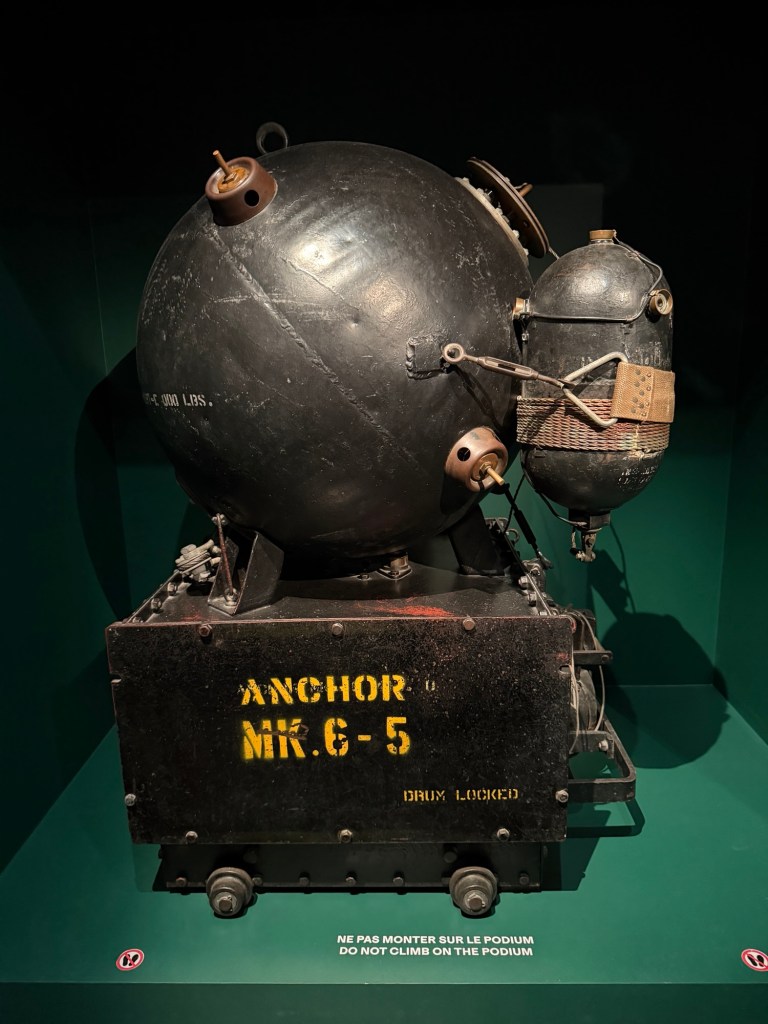
We parked at this overlook.Parts of the man-made harbor look like islands today.Intriguing artworkDon’t get lost!Another memorialGun pointing out to seaA type of anchor used to stabilize the floating piersPart of a floating pier with bulldozerThe narrow beach and seawall
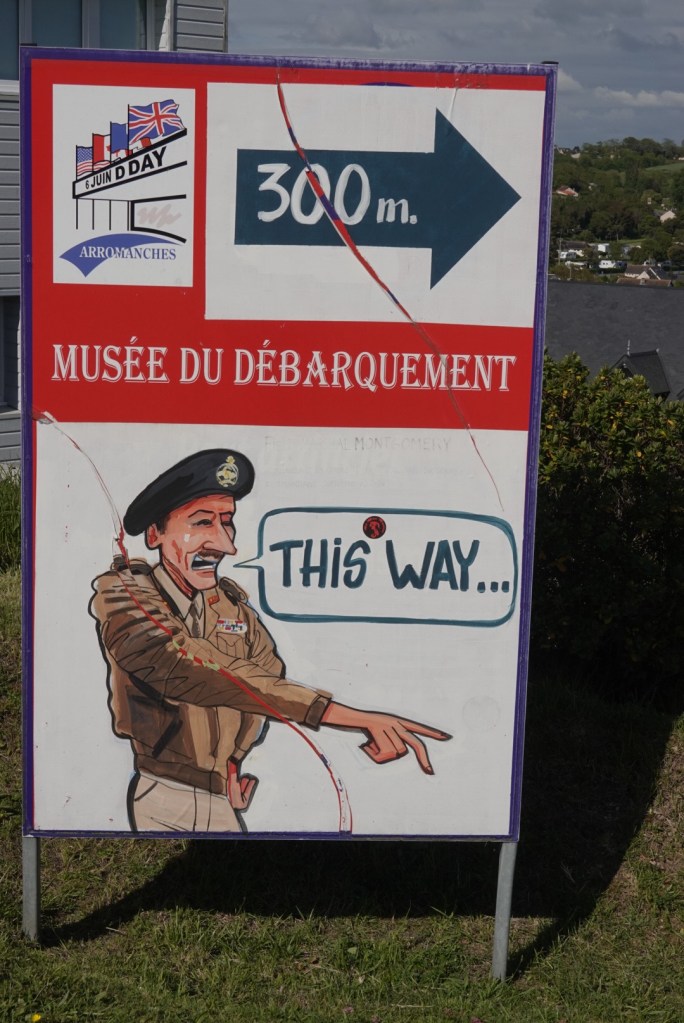
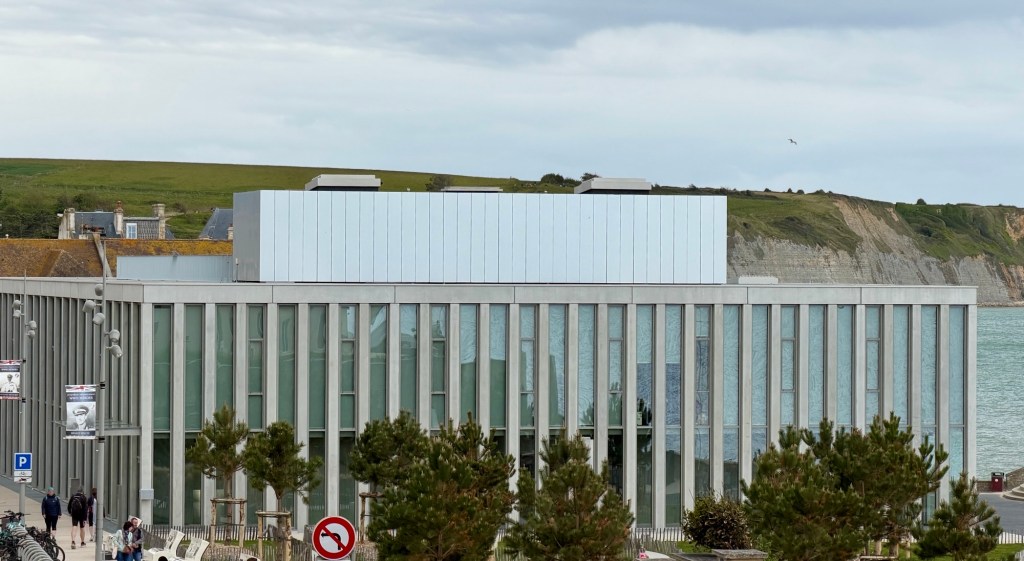
The modern D-Day Landing Museum was fantastic, with many videos and educational displays centered on the construction of the artificial harbor.
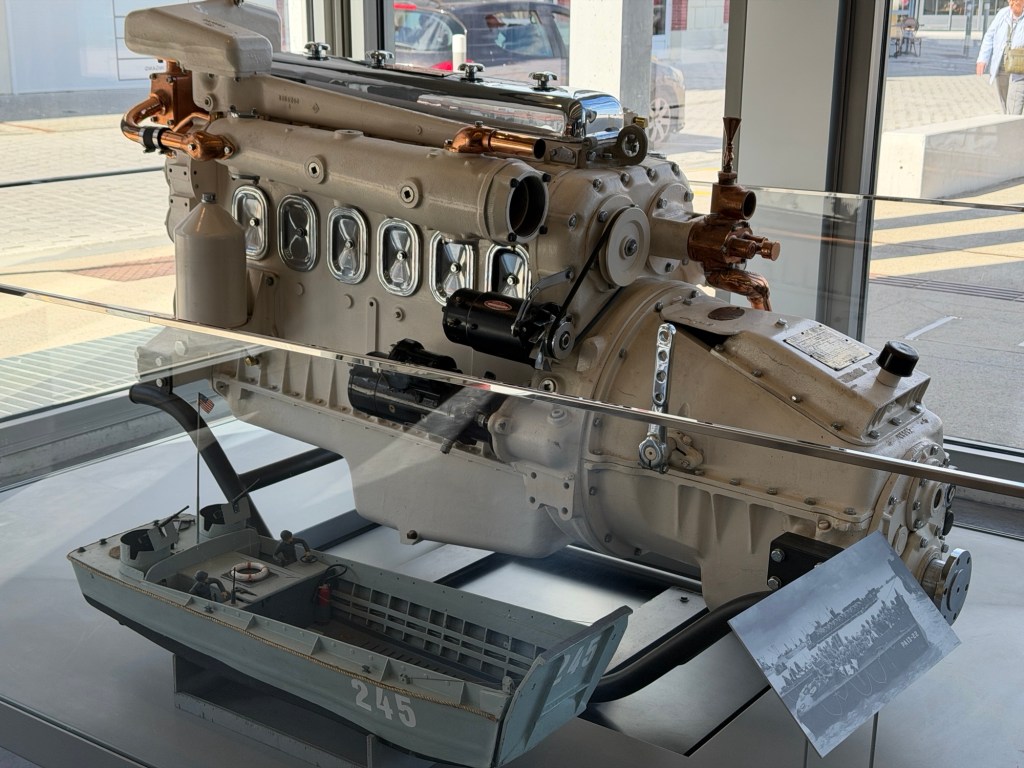
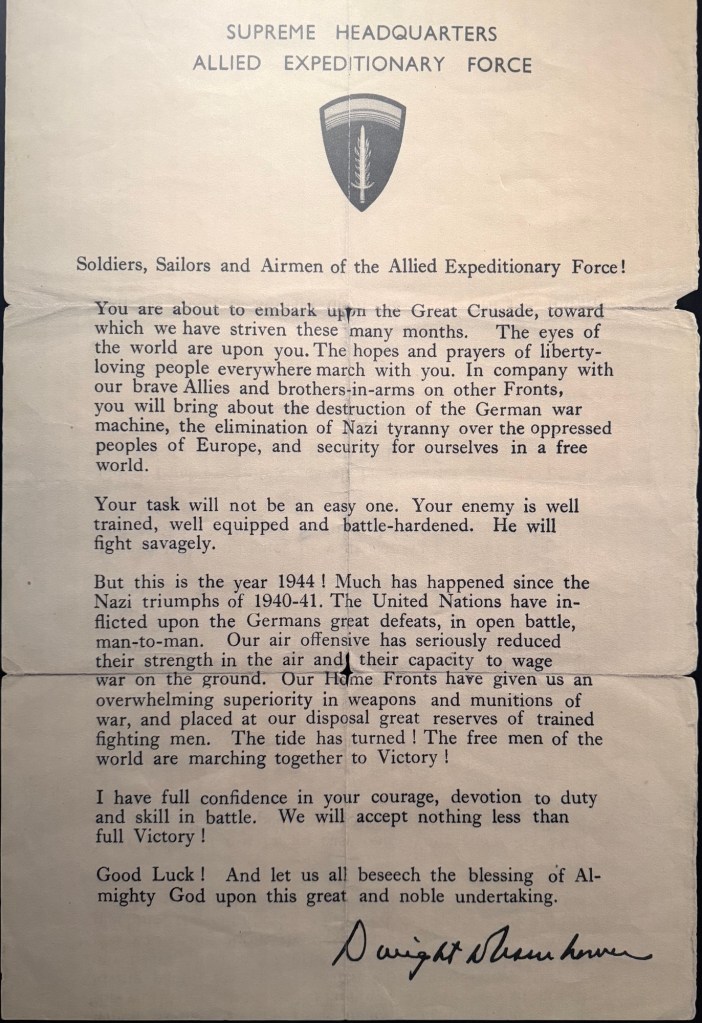
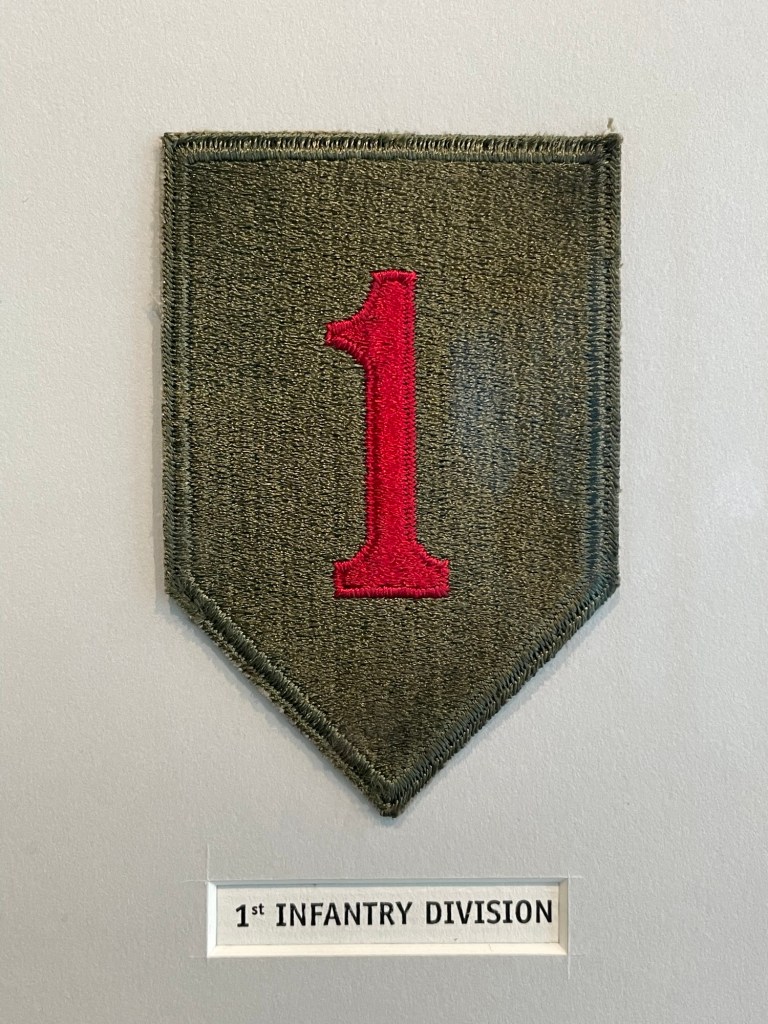
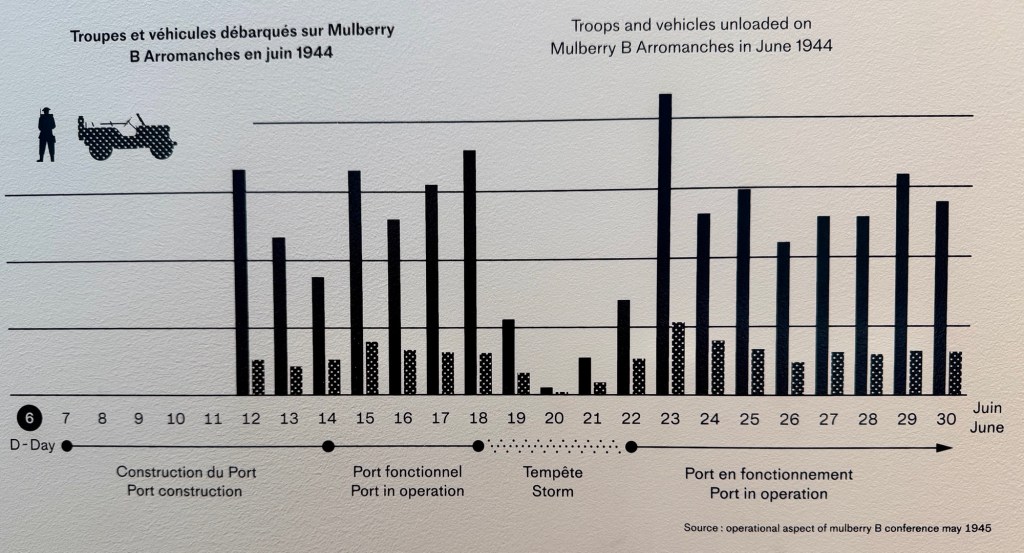
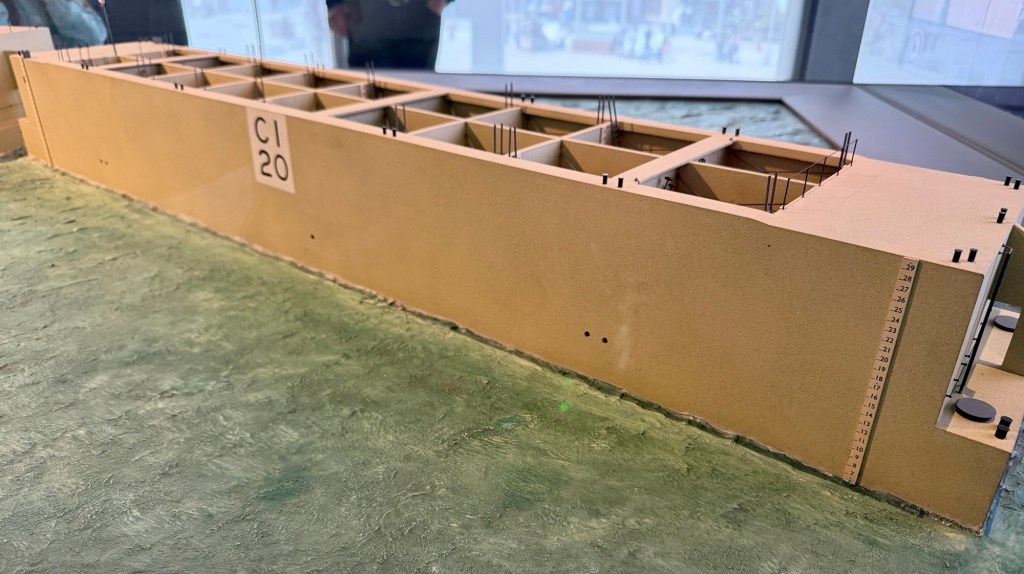
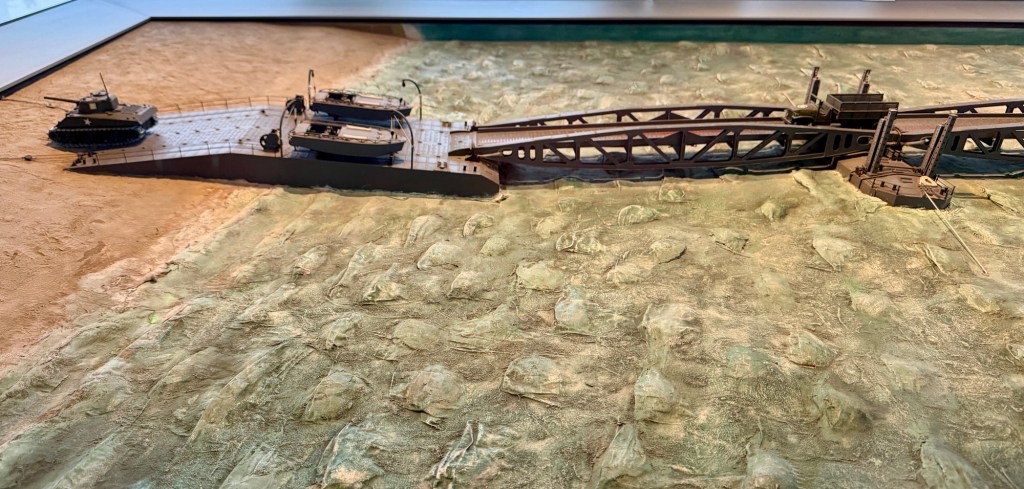
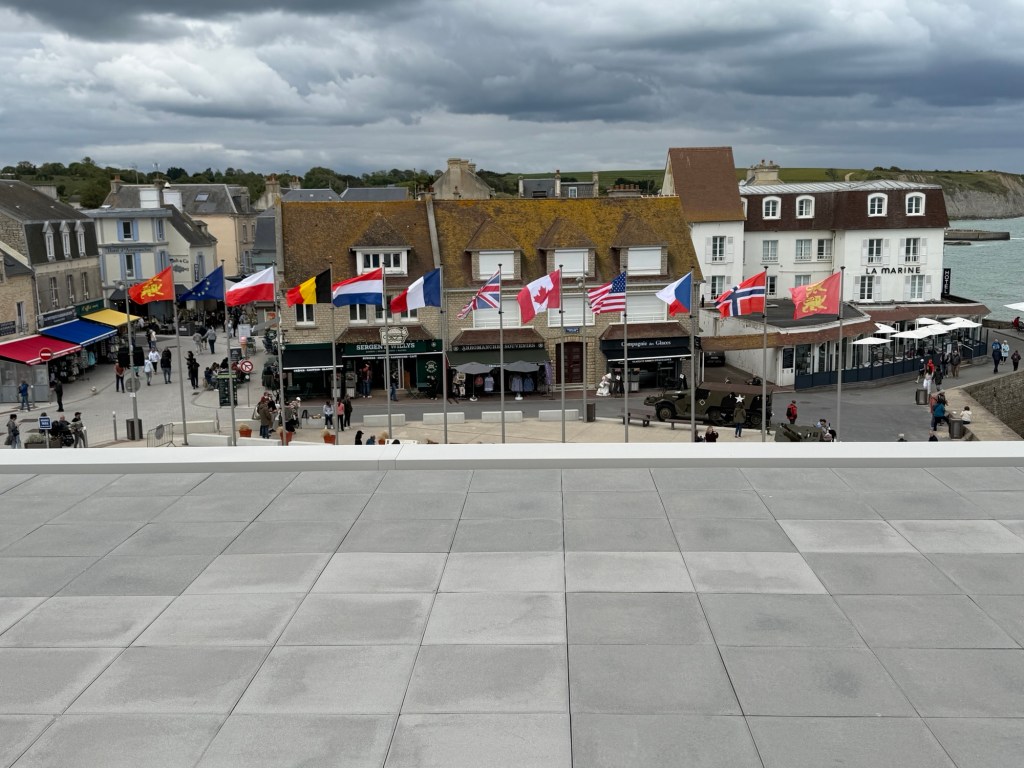
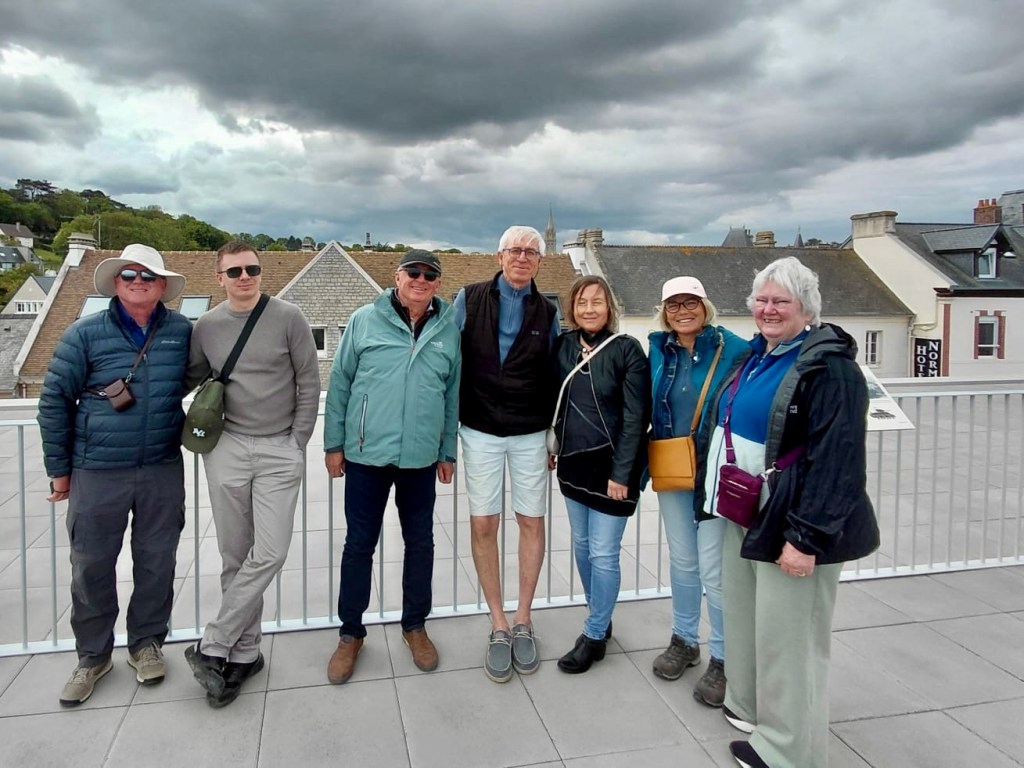
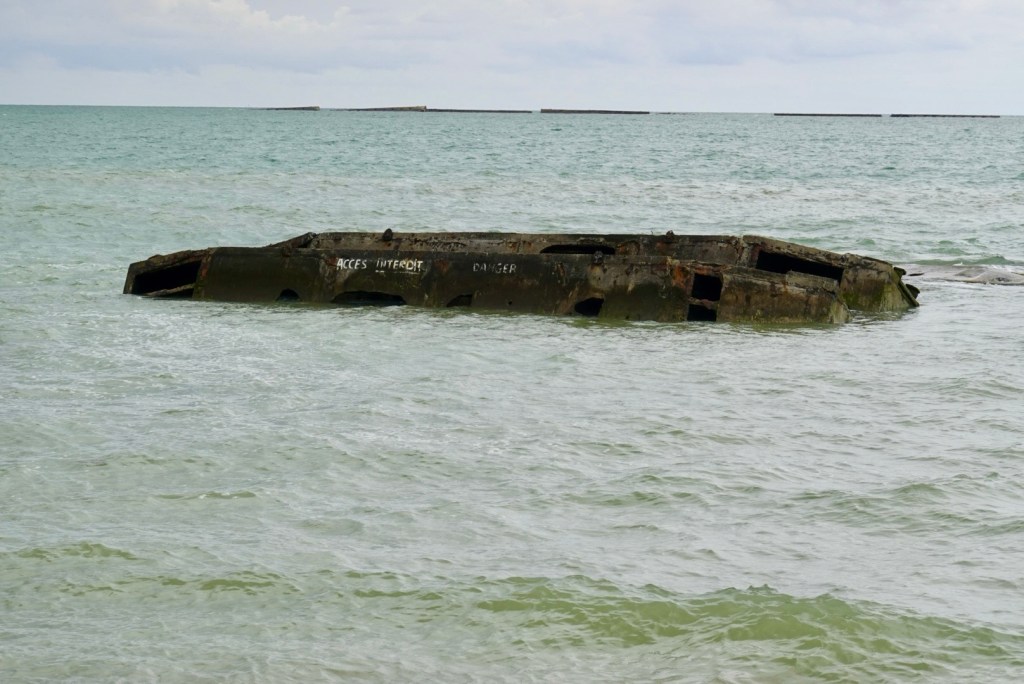
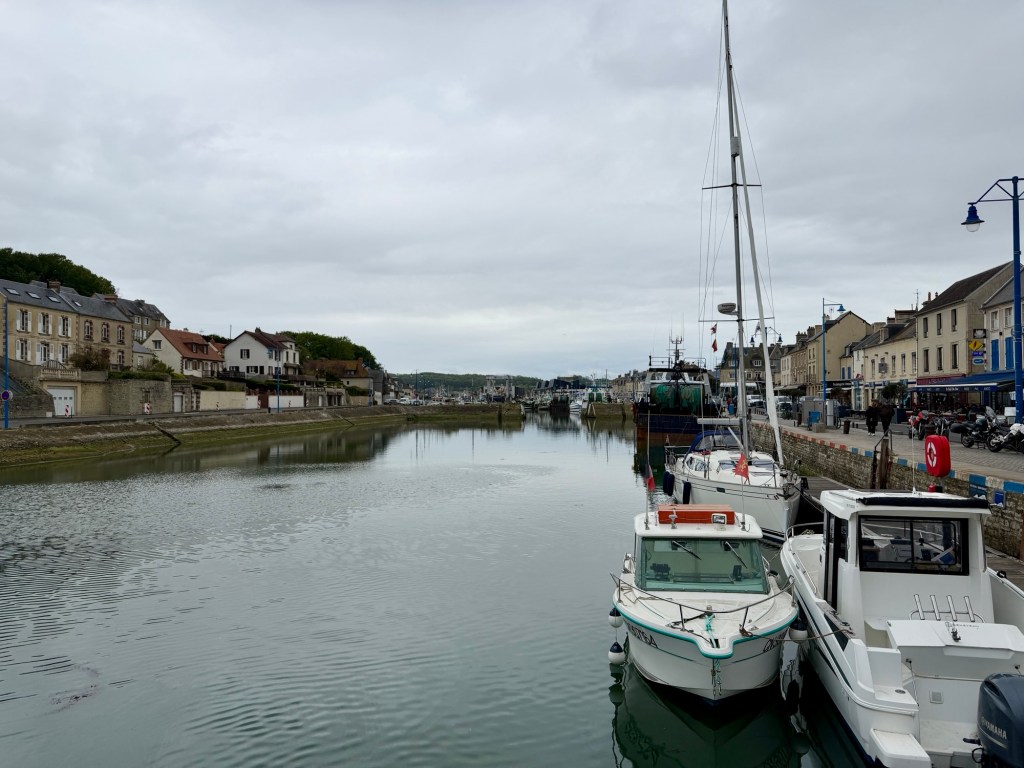
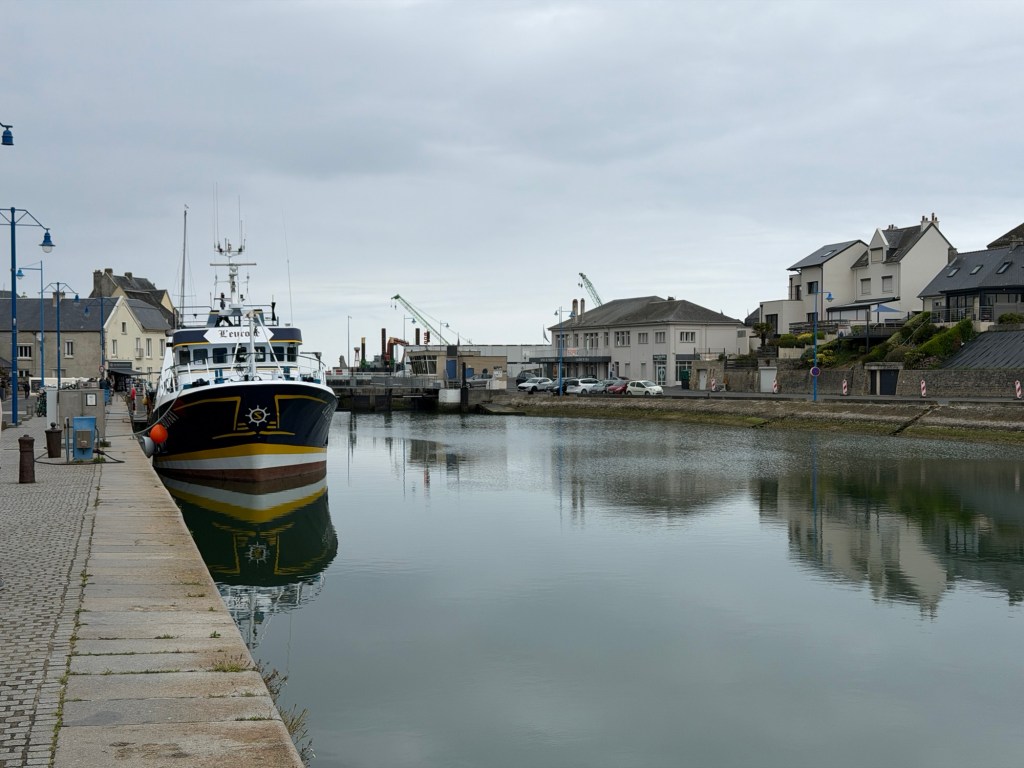
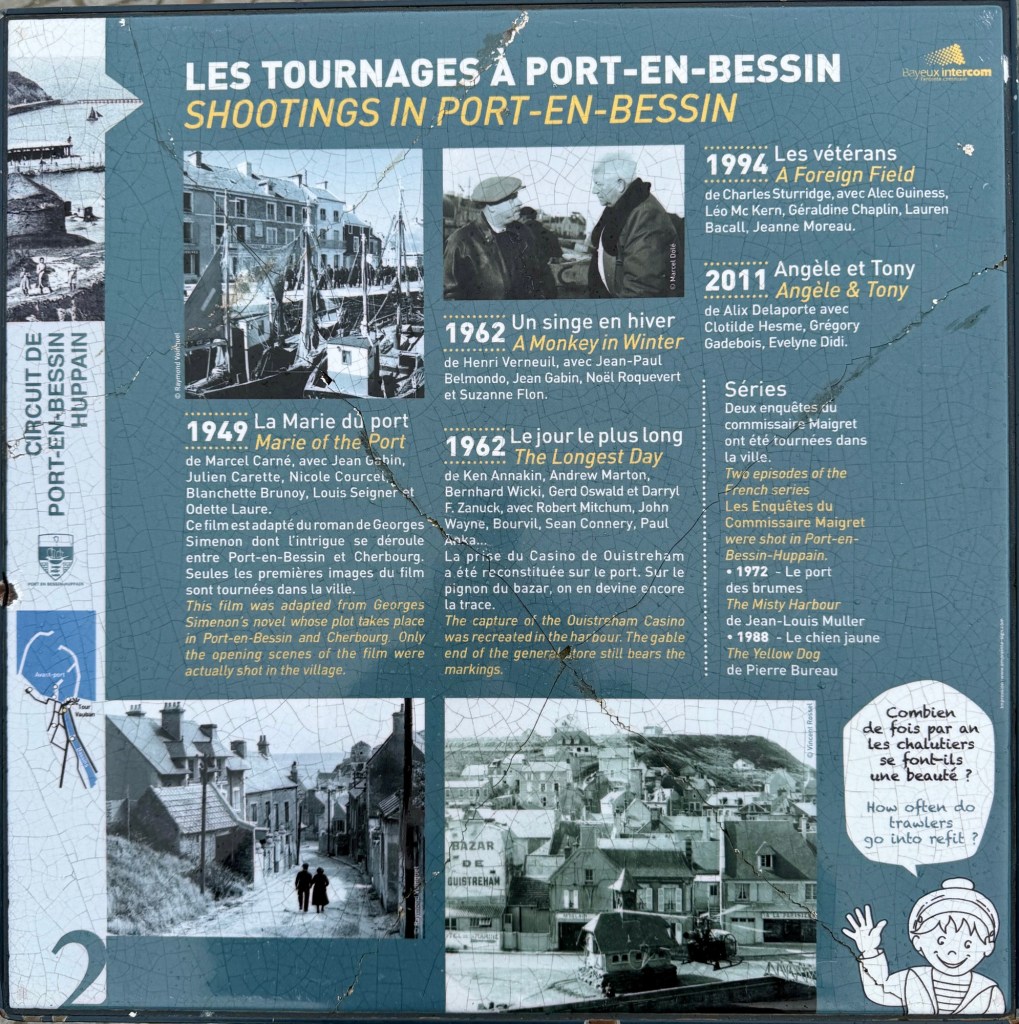
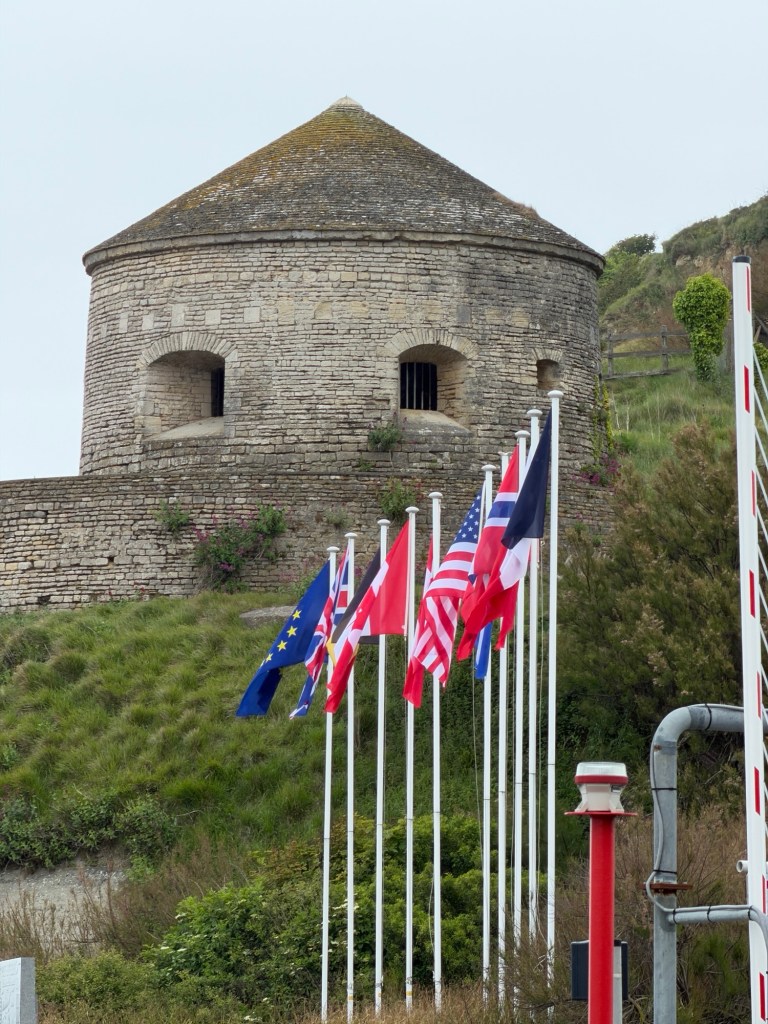
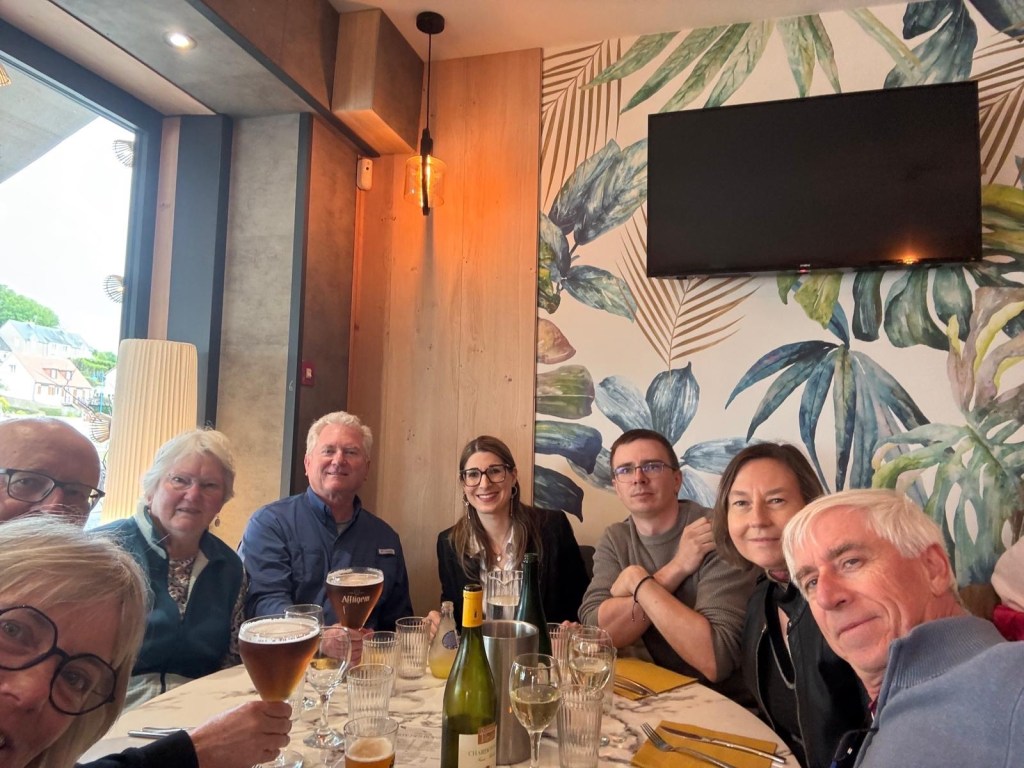
Letter from Commander Eisenhower to allied personnelBrian’s Great Uncle was in charge of an infantry unit in this division that landed on Omaha Beach.Map of Winston Harbor, showing caissons and floating piersGraph of daily unloading here in June, 1944; linear scale from 0 to over 10,000 troops on the 23rd.Pheonix caissons were flooded upon arrival for breakwaters.Model of floating pier for unloading heavy equipment and suppliesFlags around the museum show wind. All of us, under a dark cloudOne of a few remnants of the artificial harborPort-en-Bessin harbor, a sign with movie locations, and an old towerLunch with our friends at O’plan B in Port-en-BessinValerie and Jérome
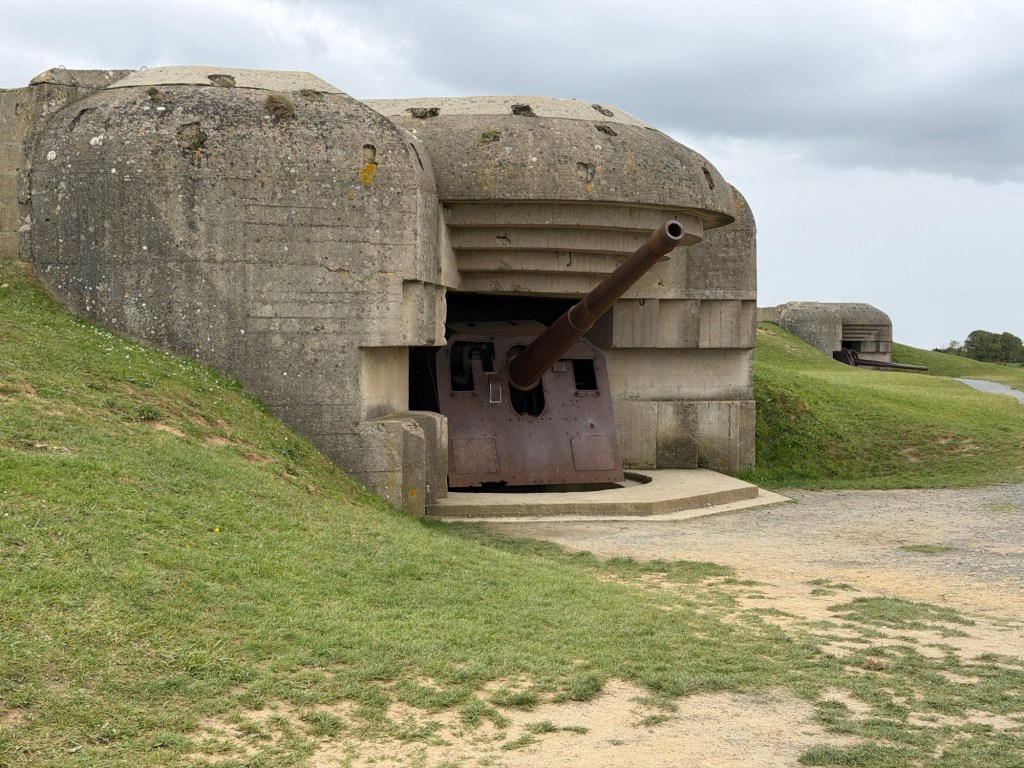
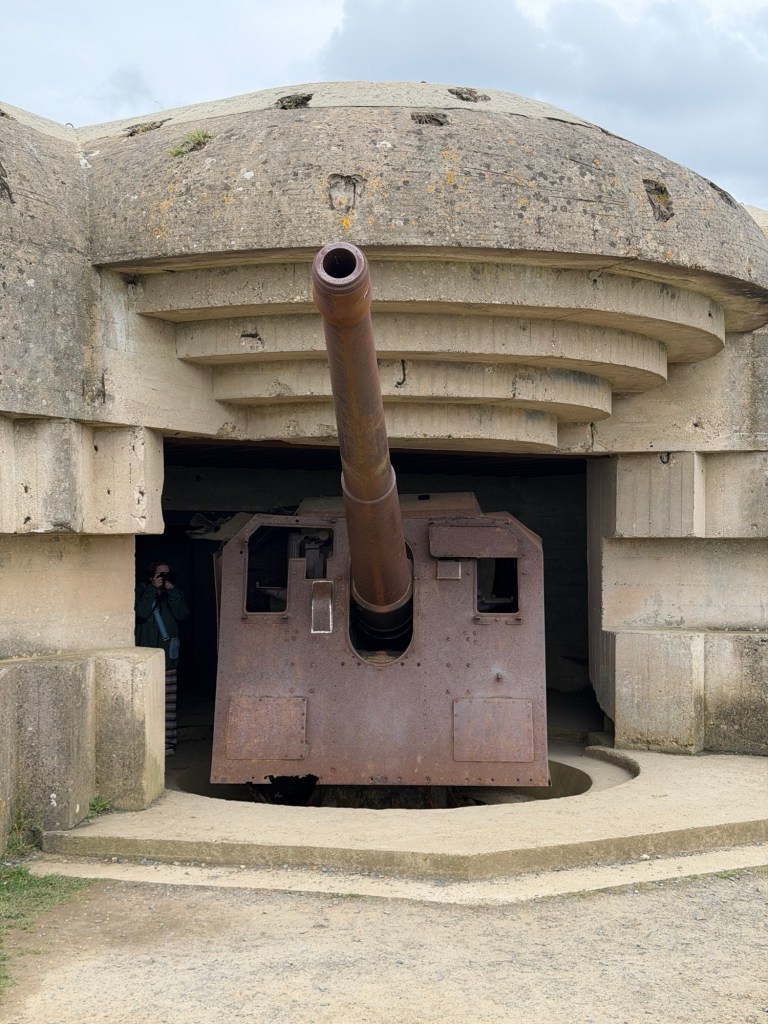
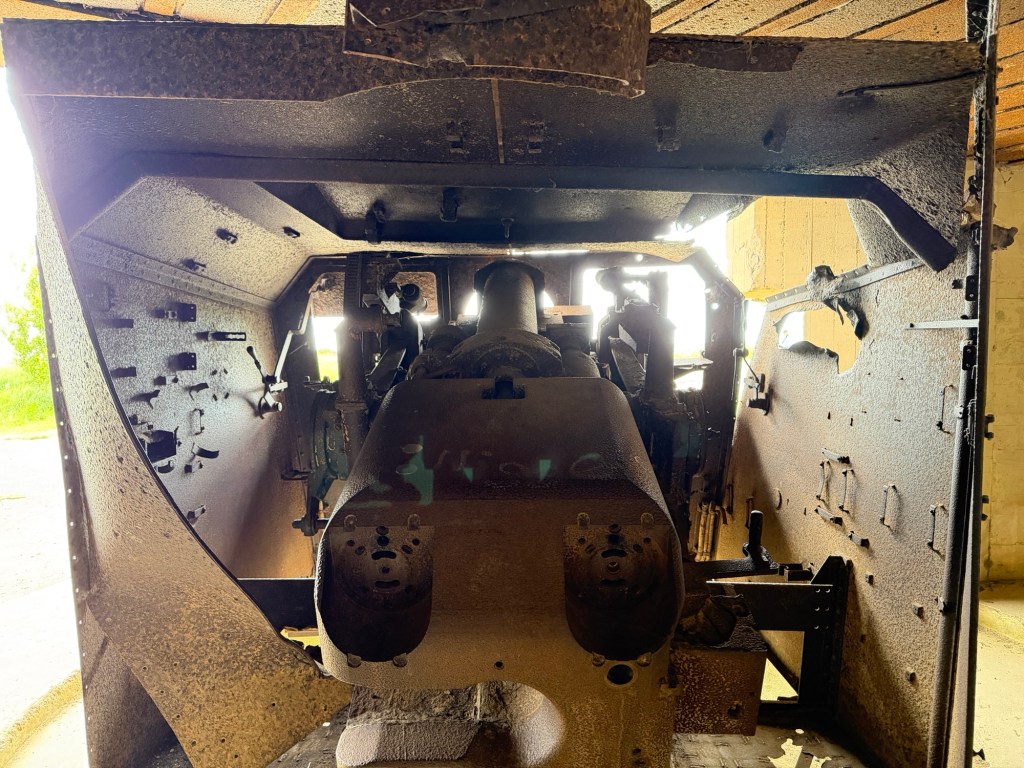
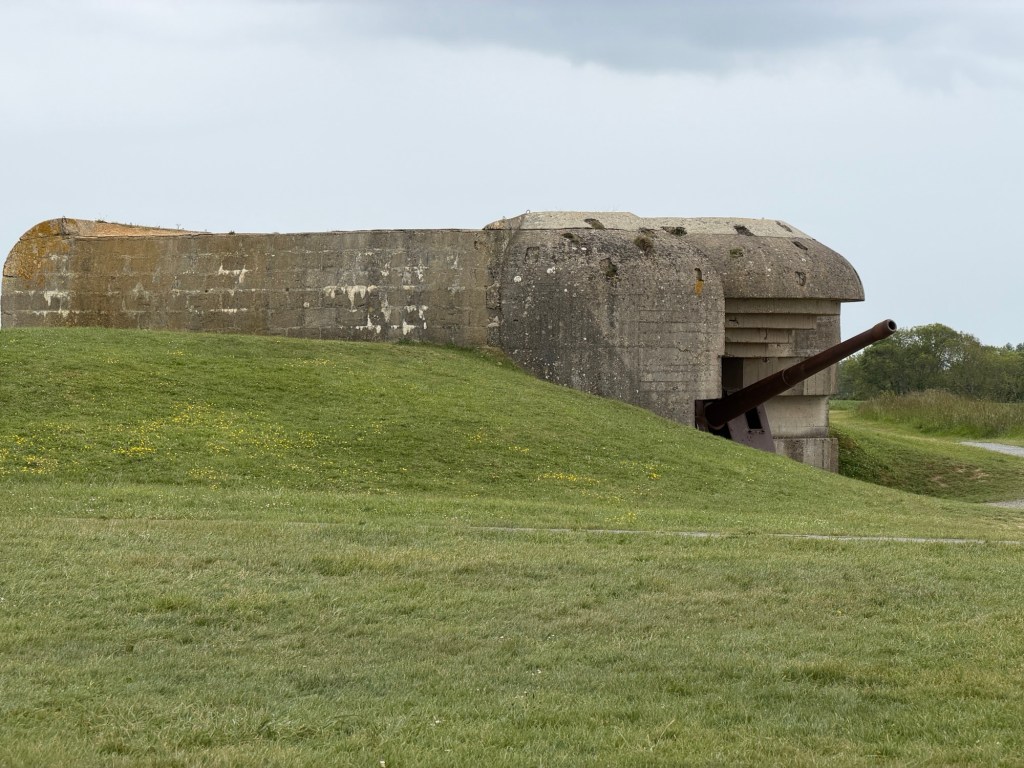
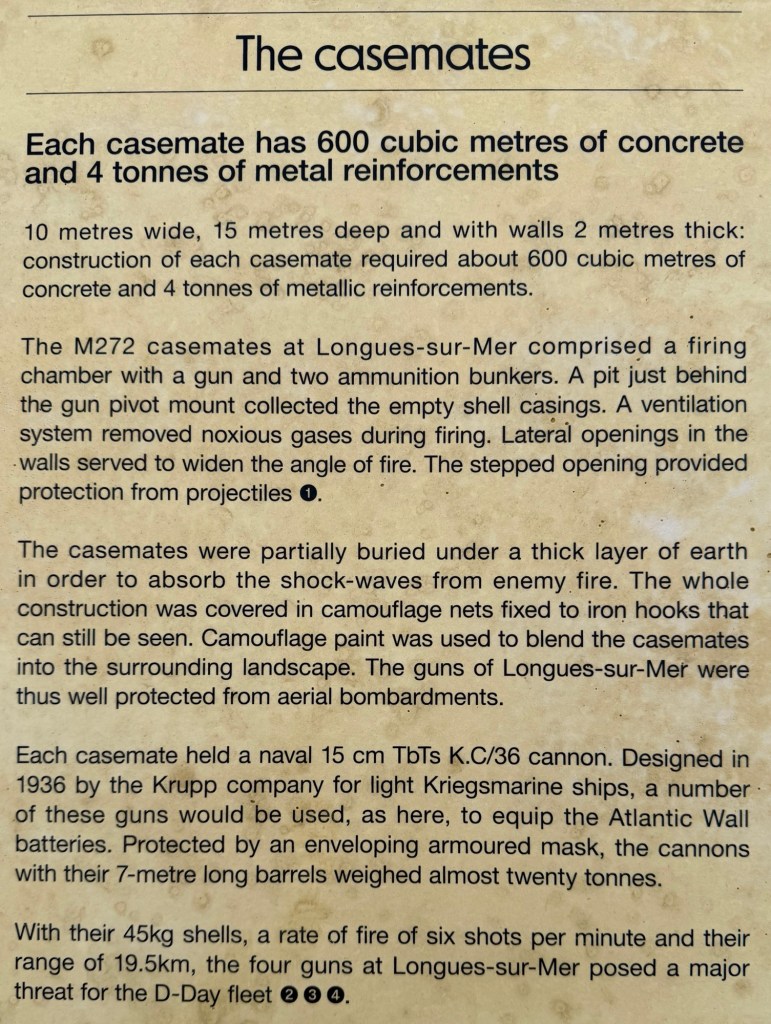
After lunch we drove to a more intact gun battery at Longues-sur-Mer
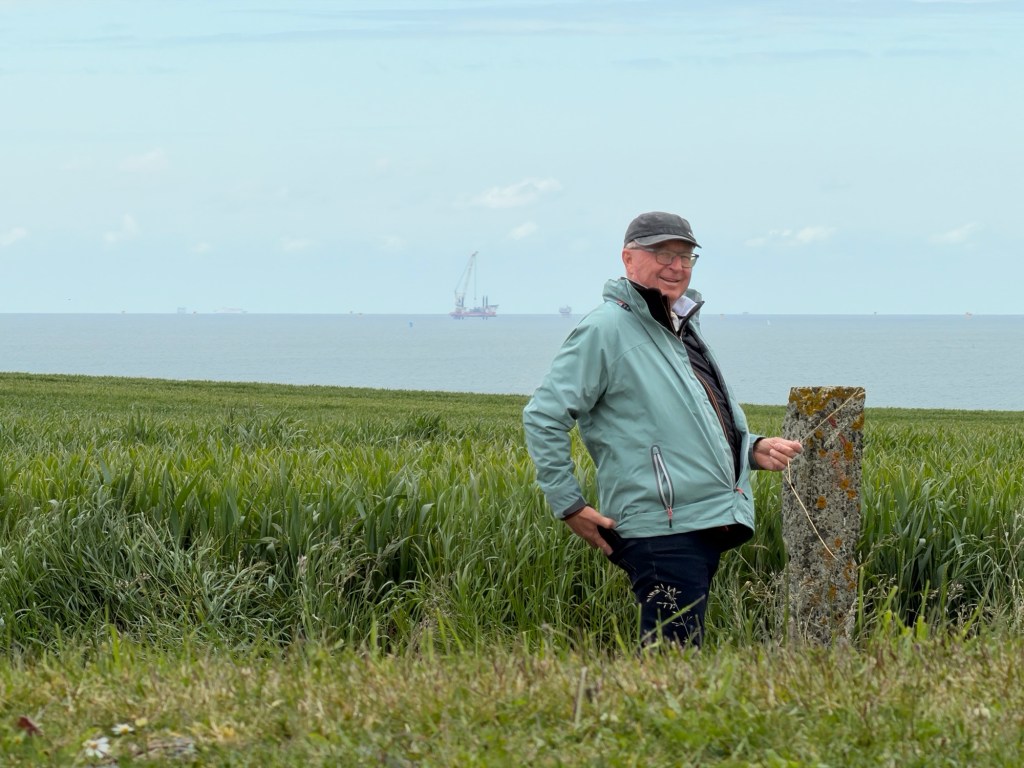
Details of the amazing construction Marc finds a geochache?
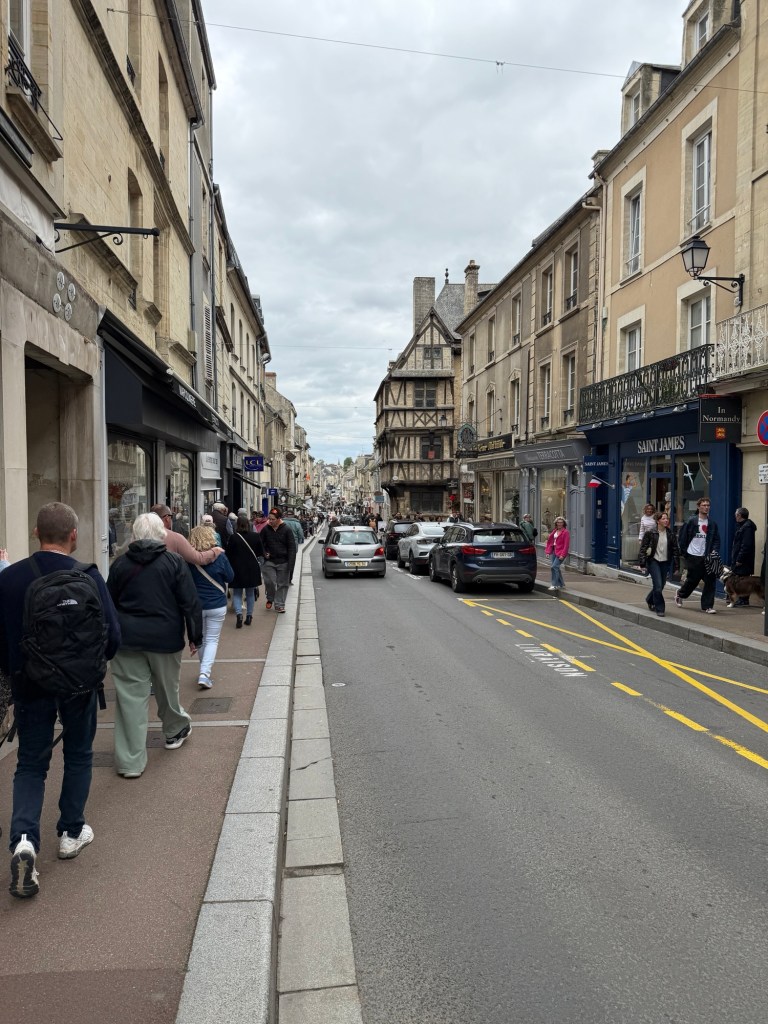
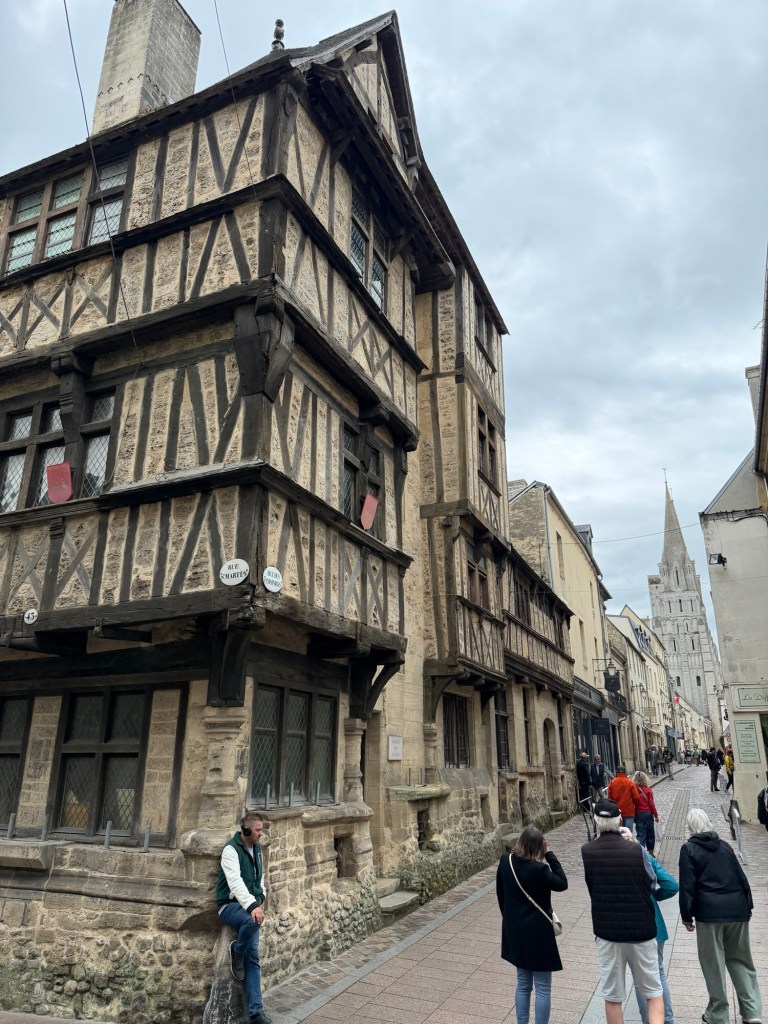
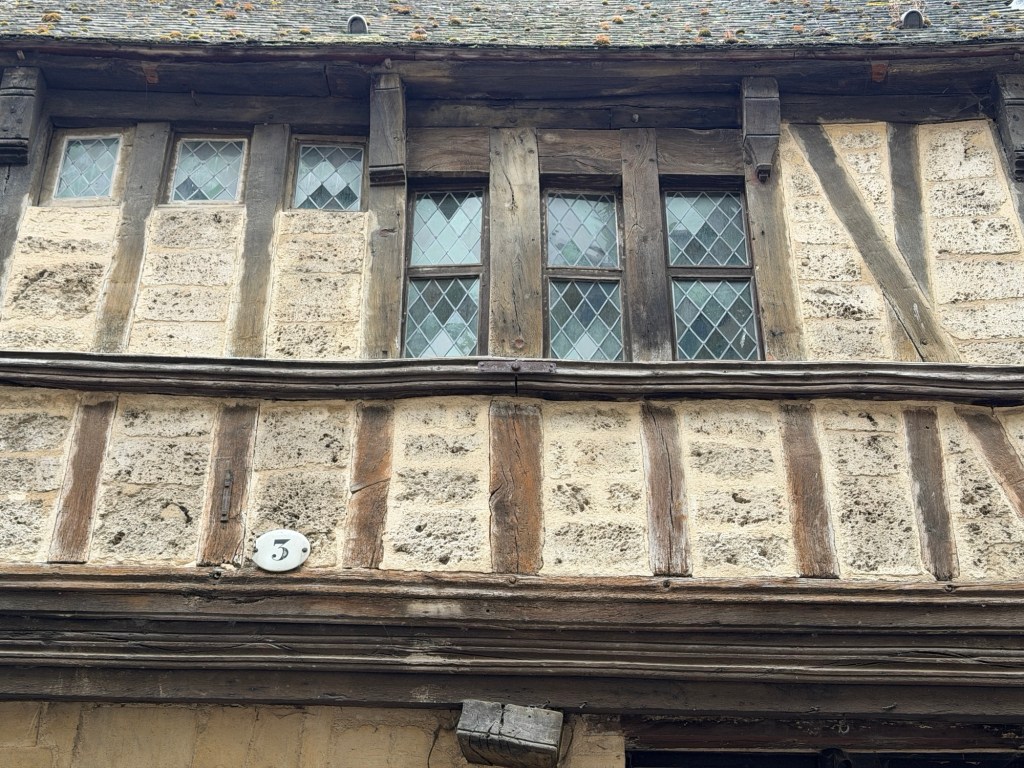
Next, Valerie showed us some favorite sites in Bayeux
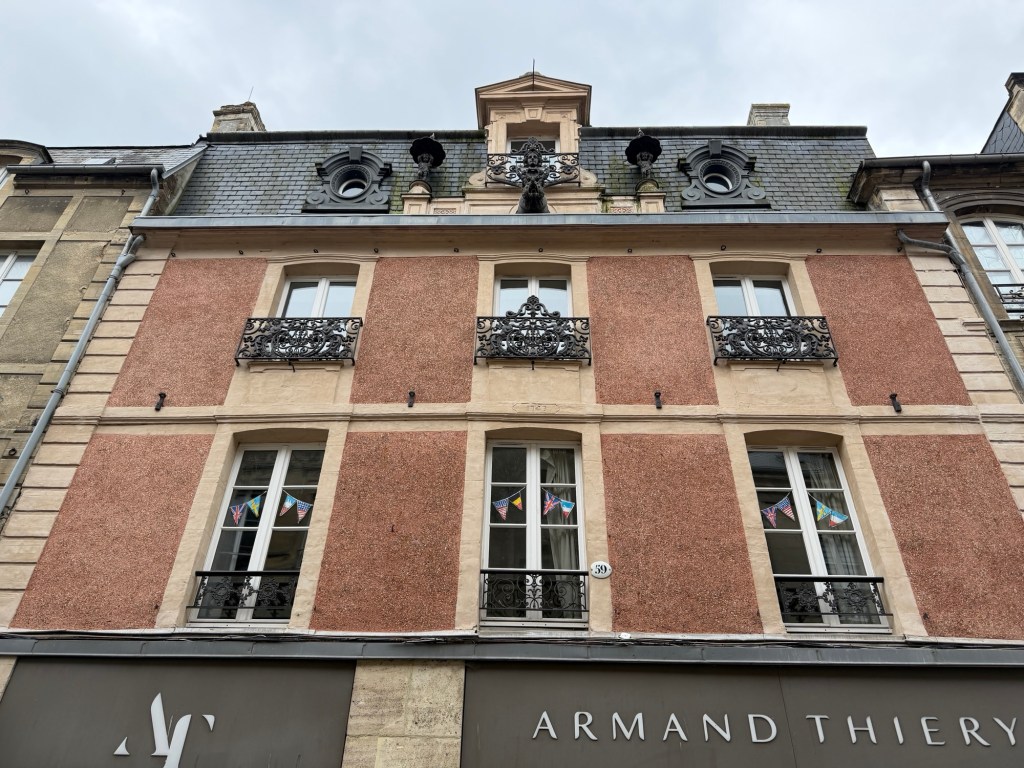
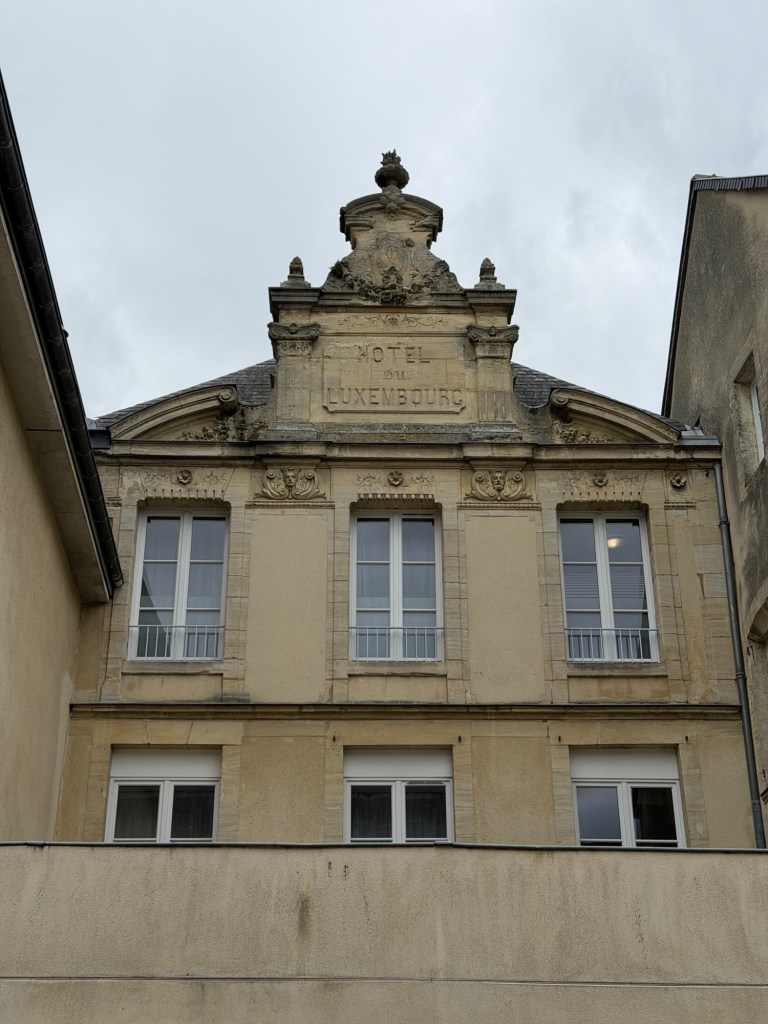
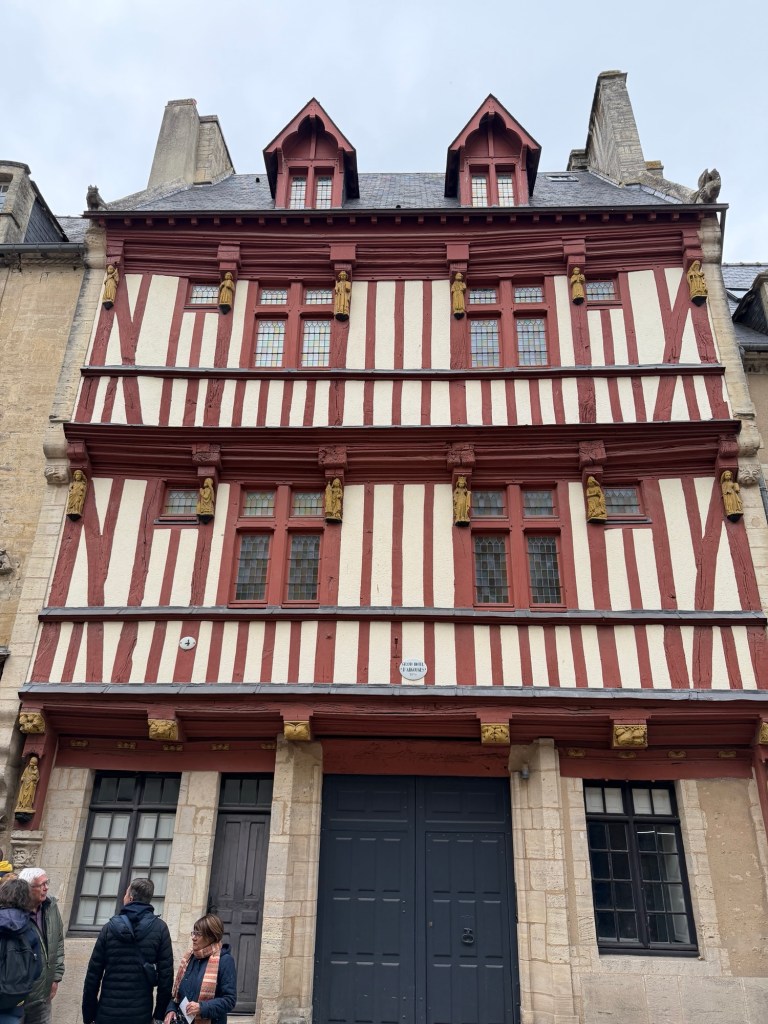
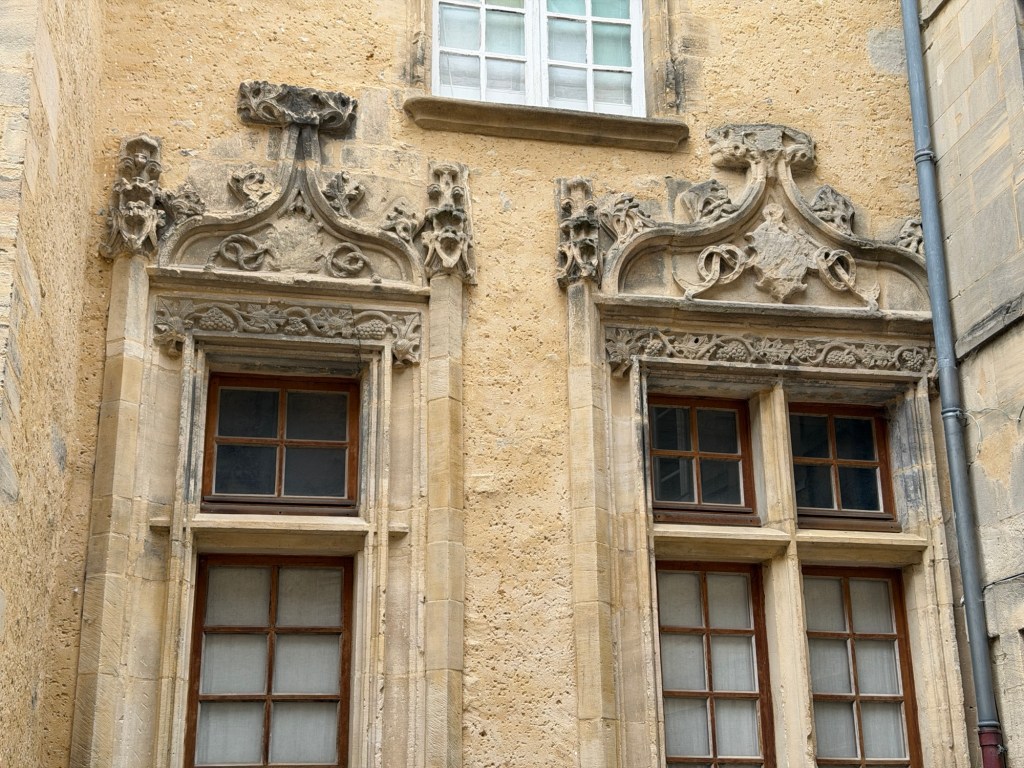
Façades with interesting designsNote the missing sculptures above the windows; during the French Revolution, people rebelled against royalty by removing the faces of the old guard.
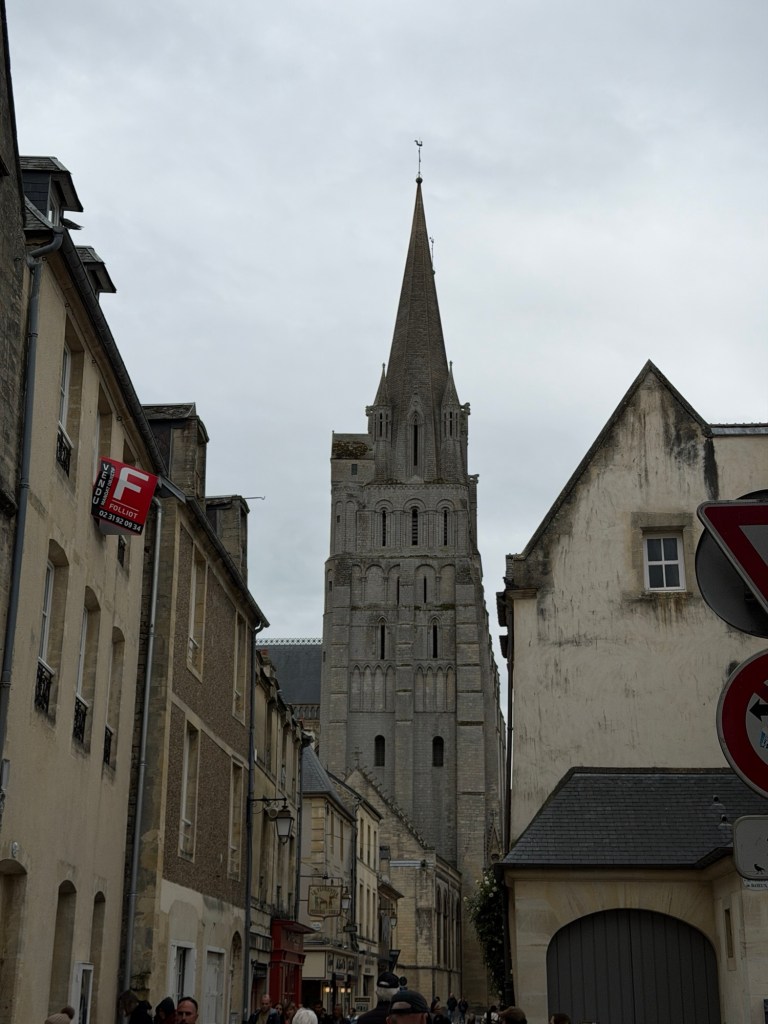
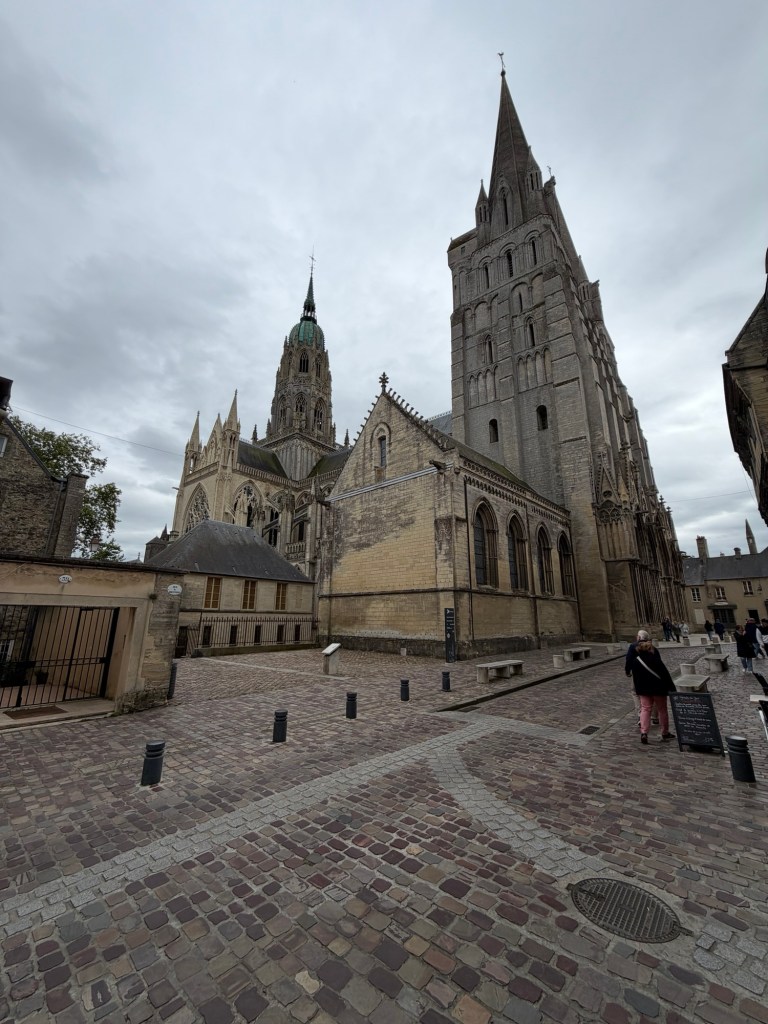
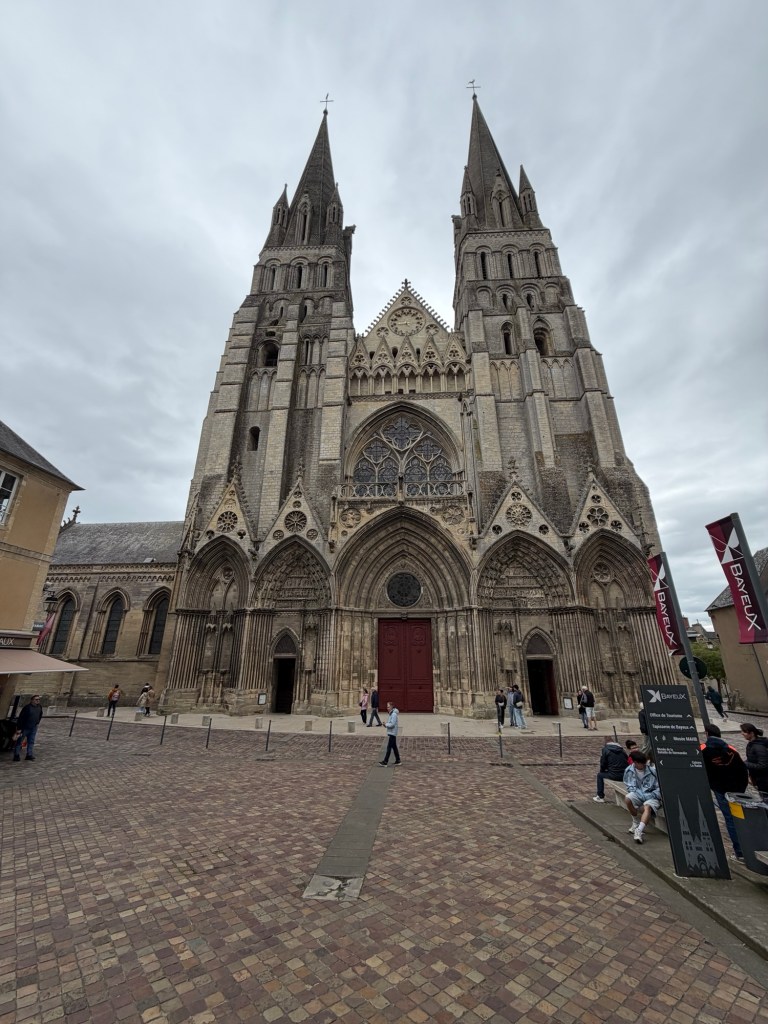
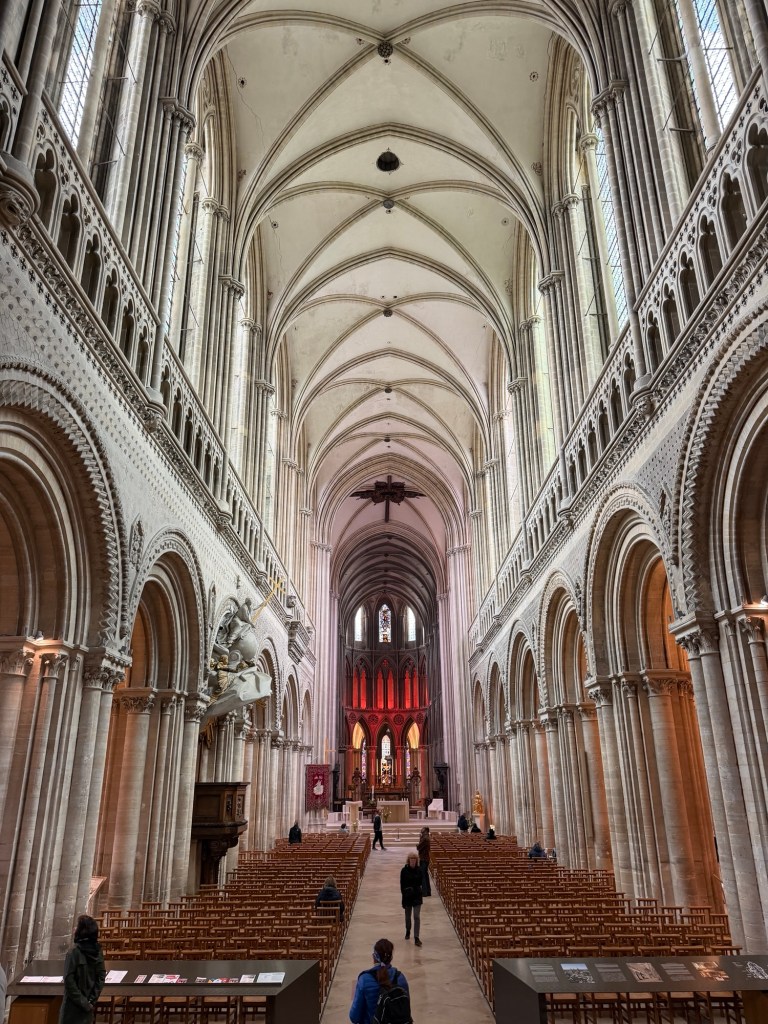
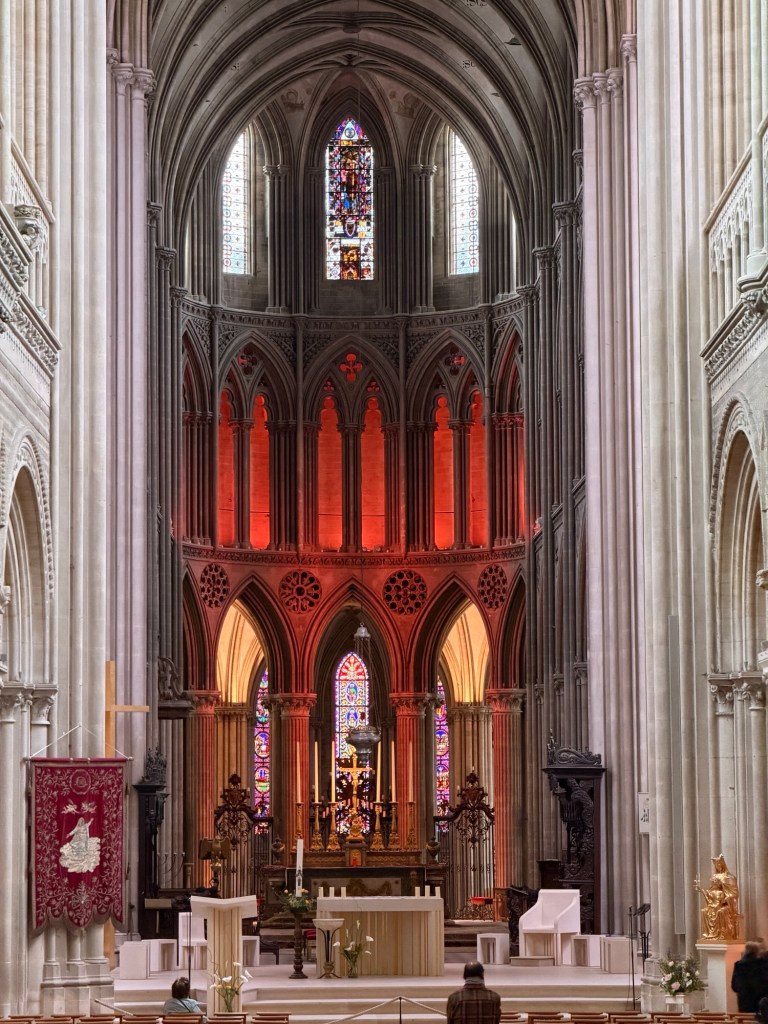
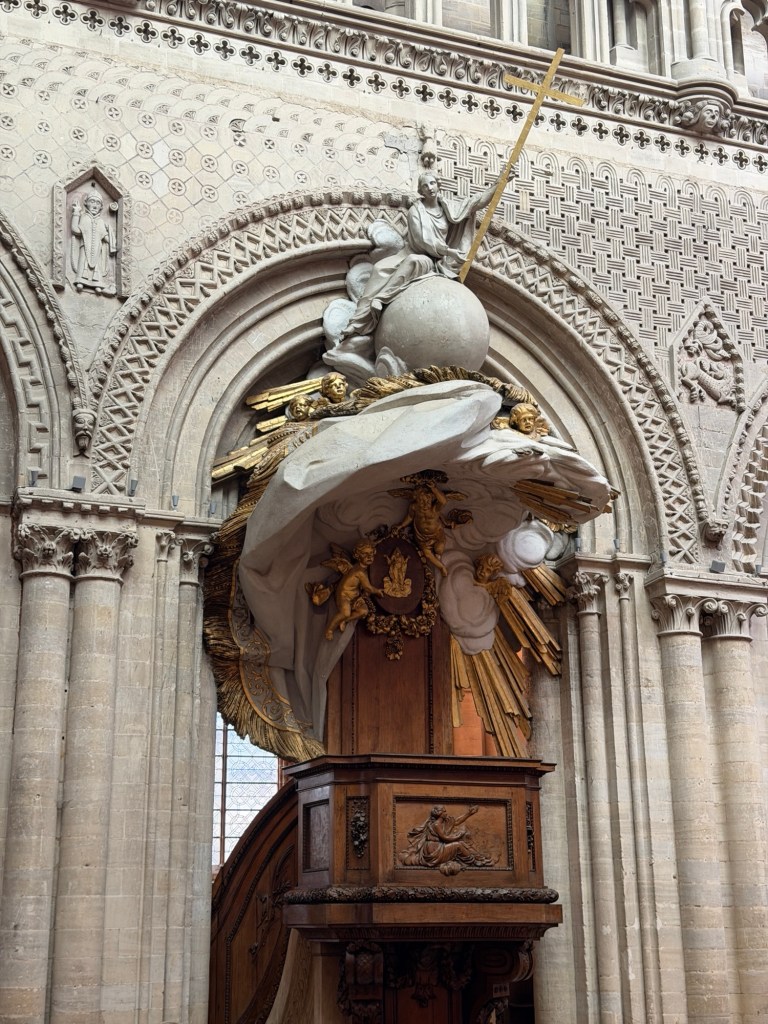
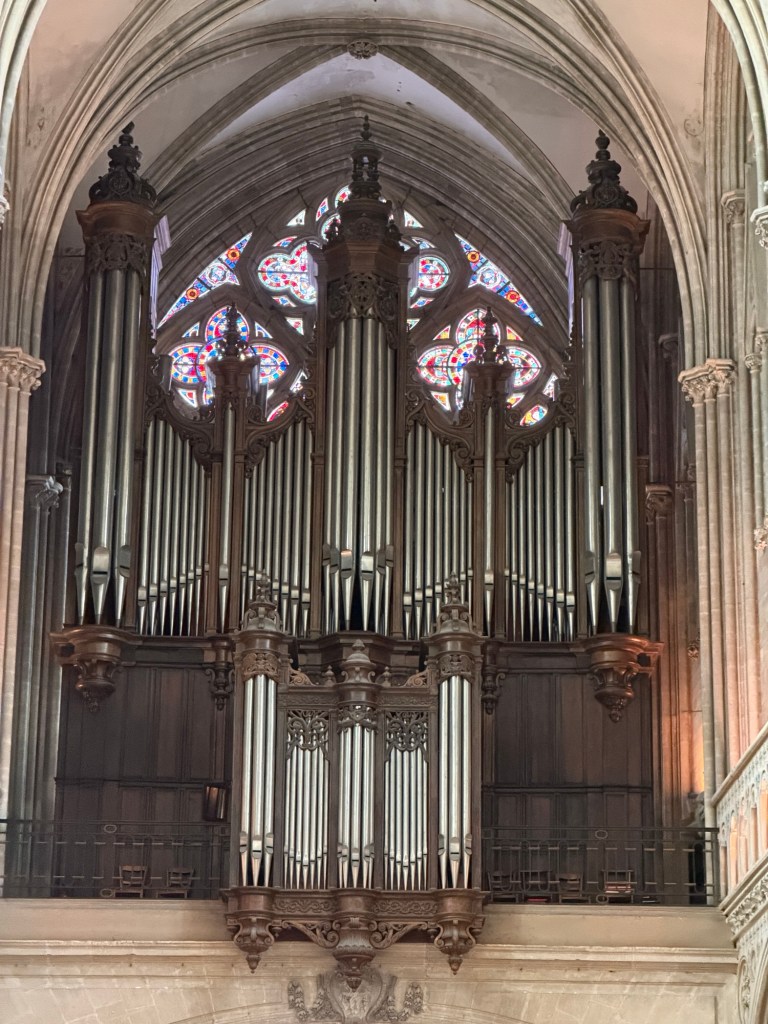
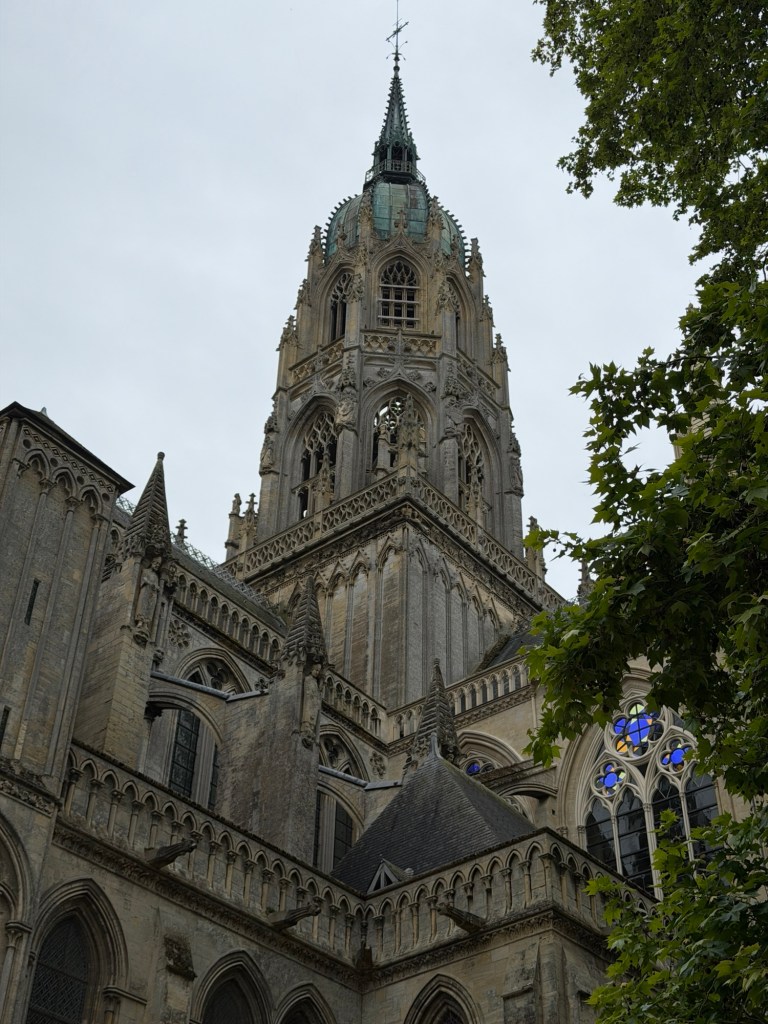
Bayeux Cathedral
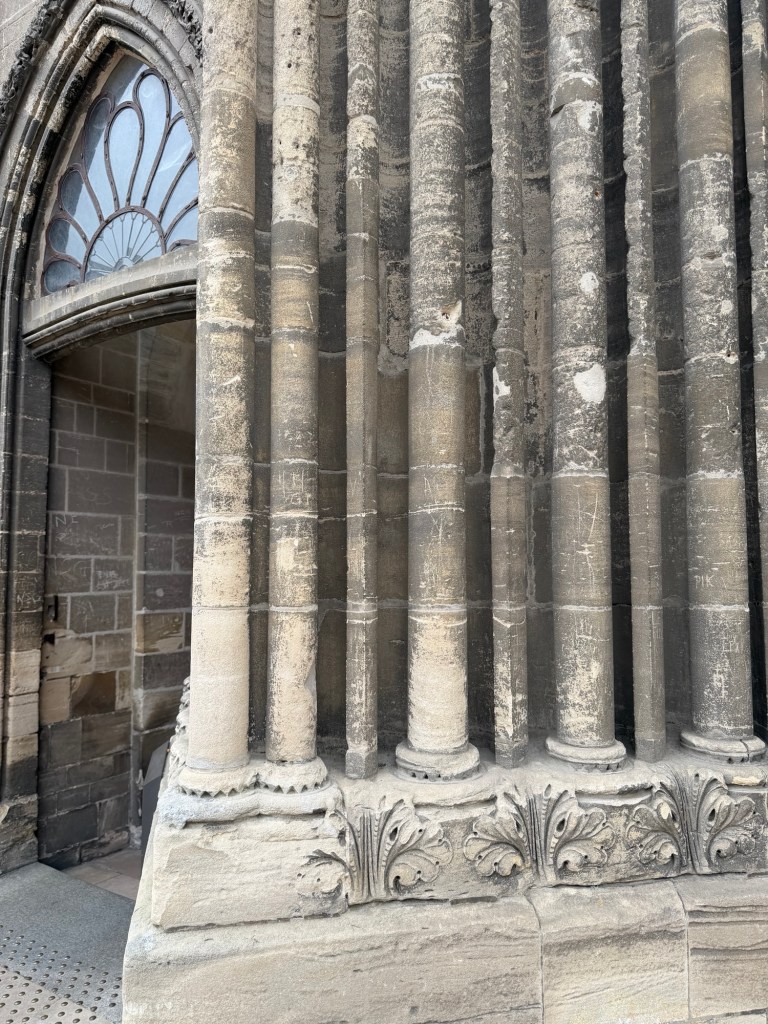
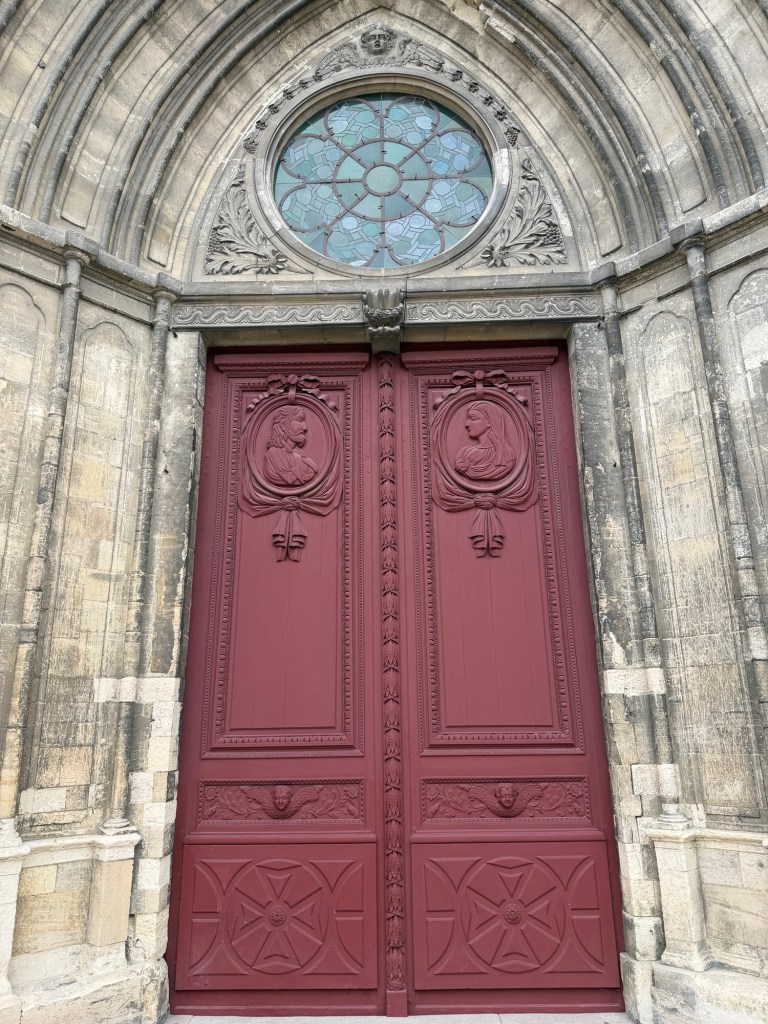
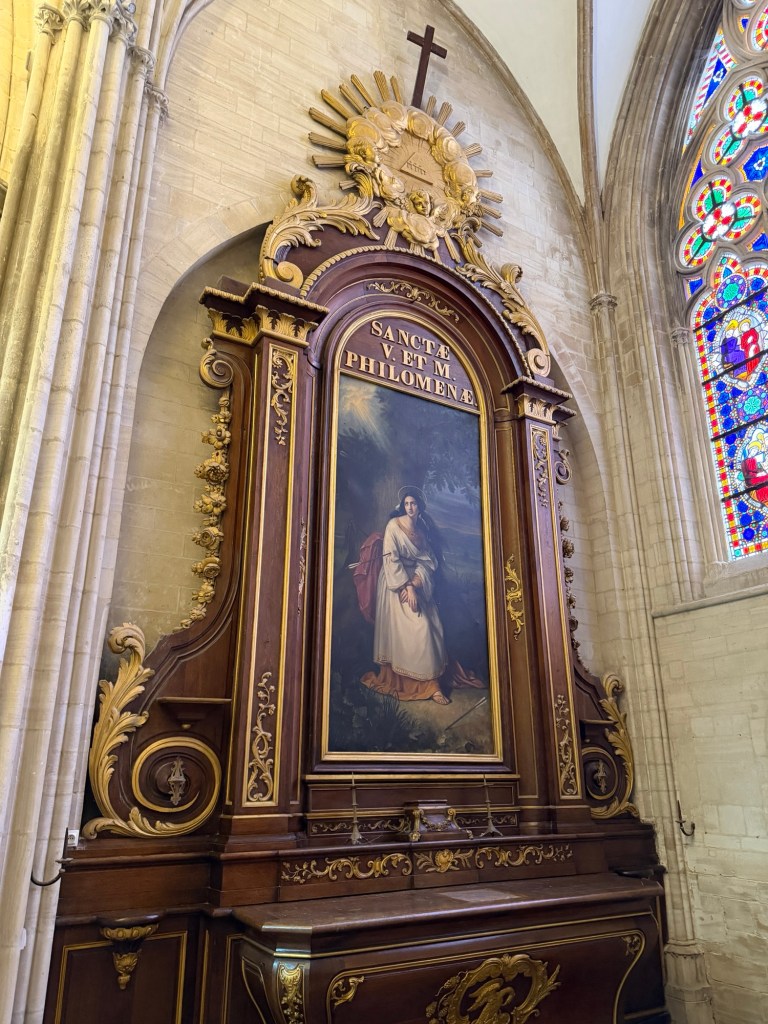
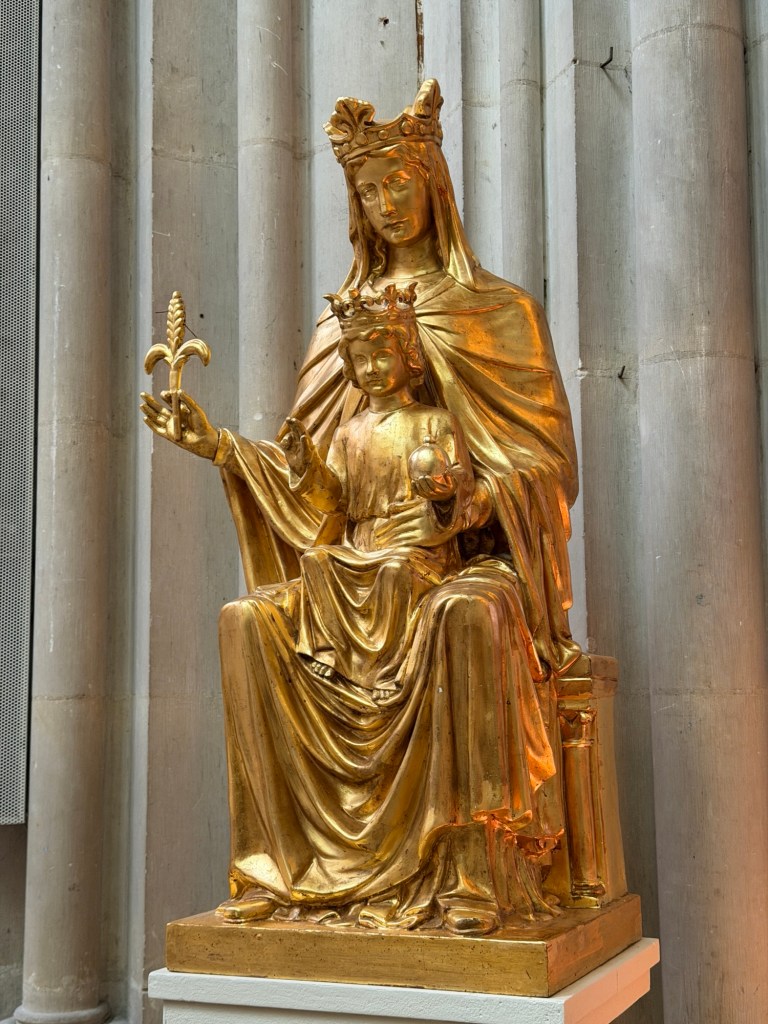
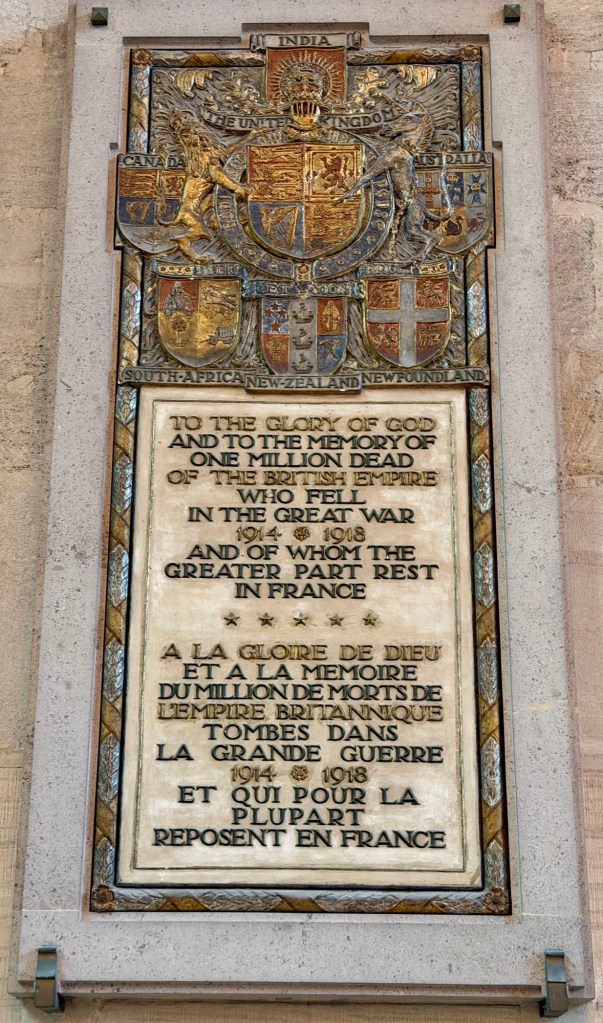
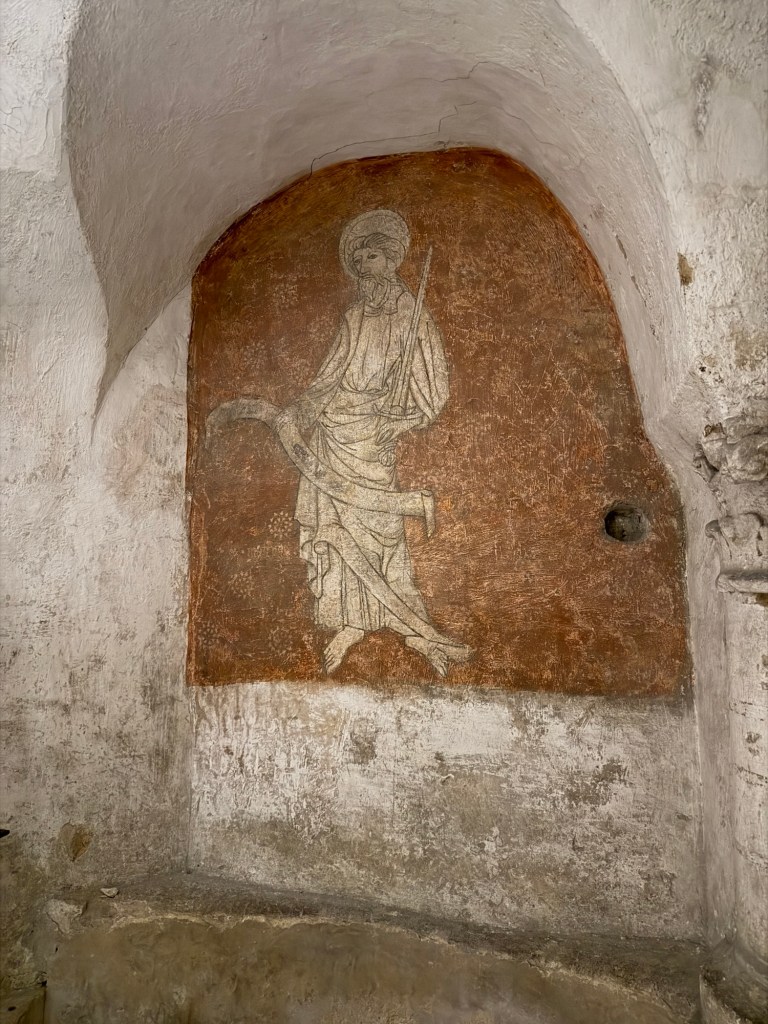
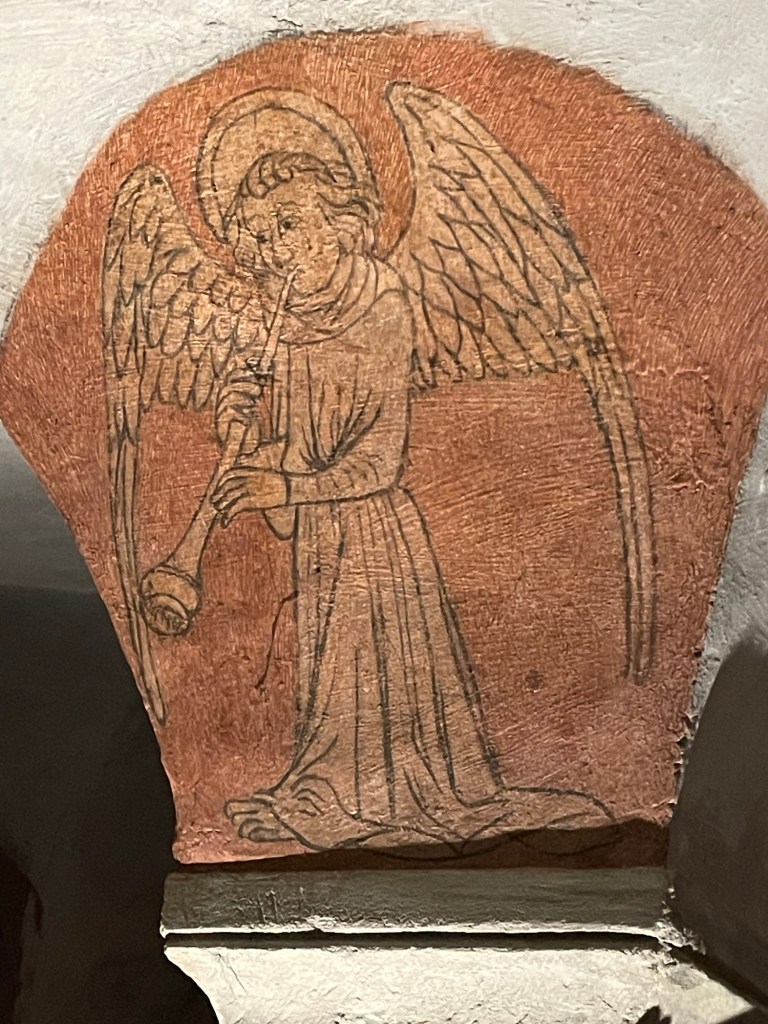
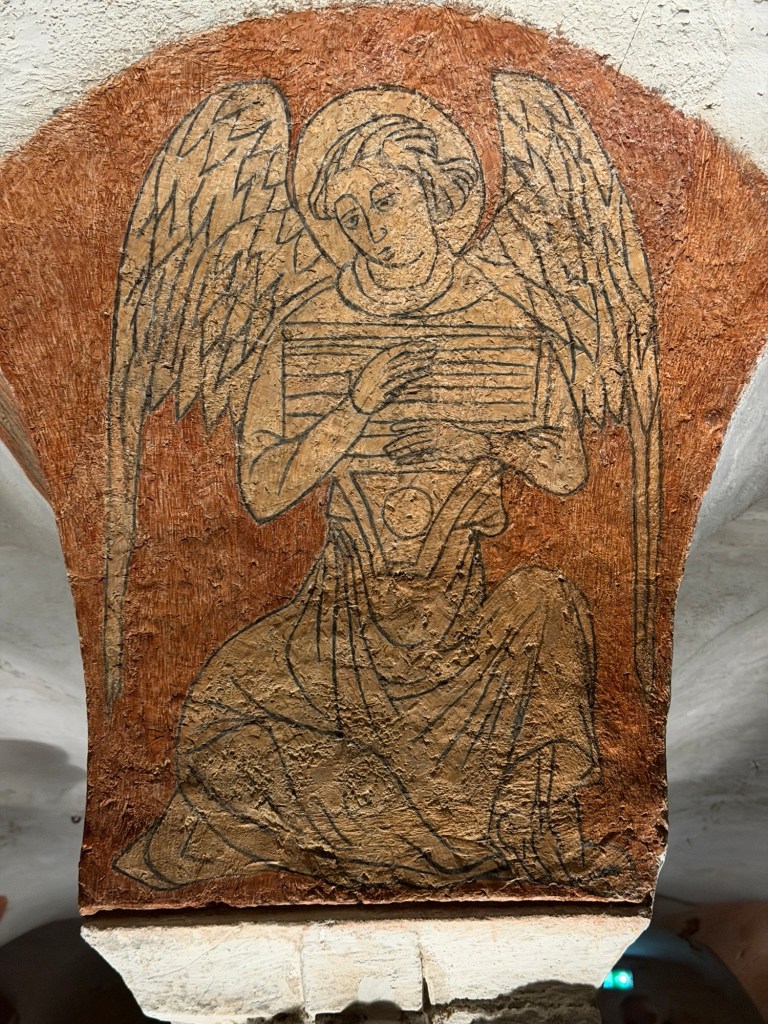
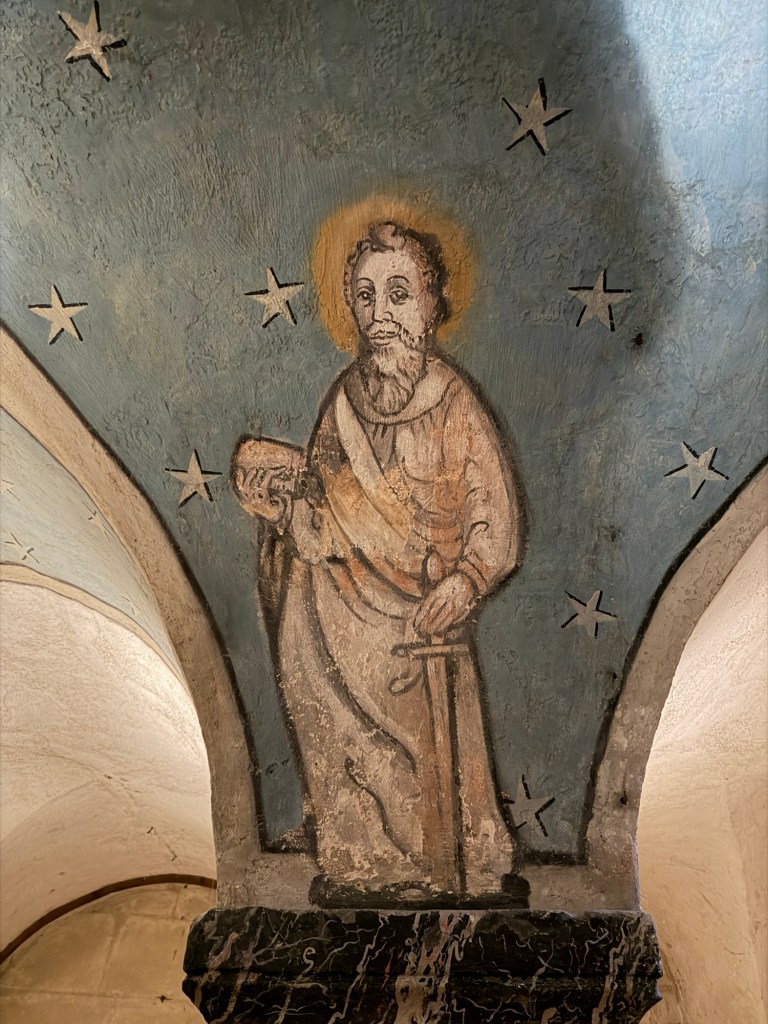
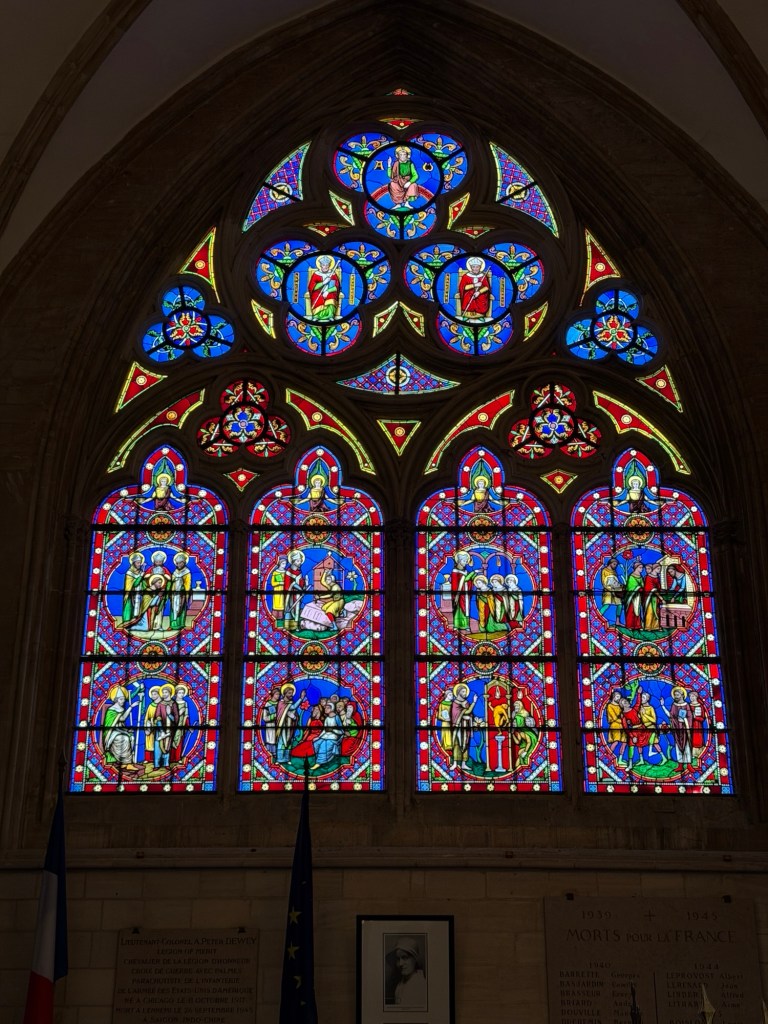
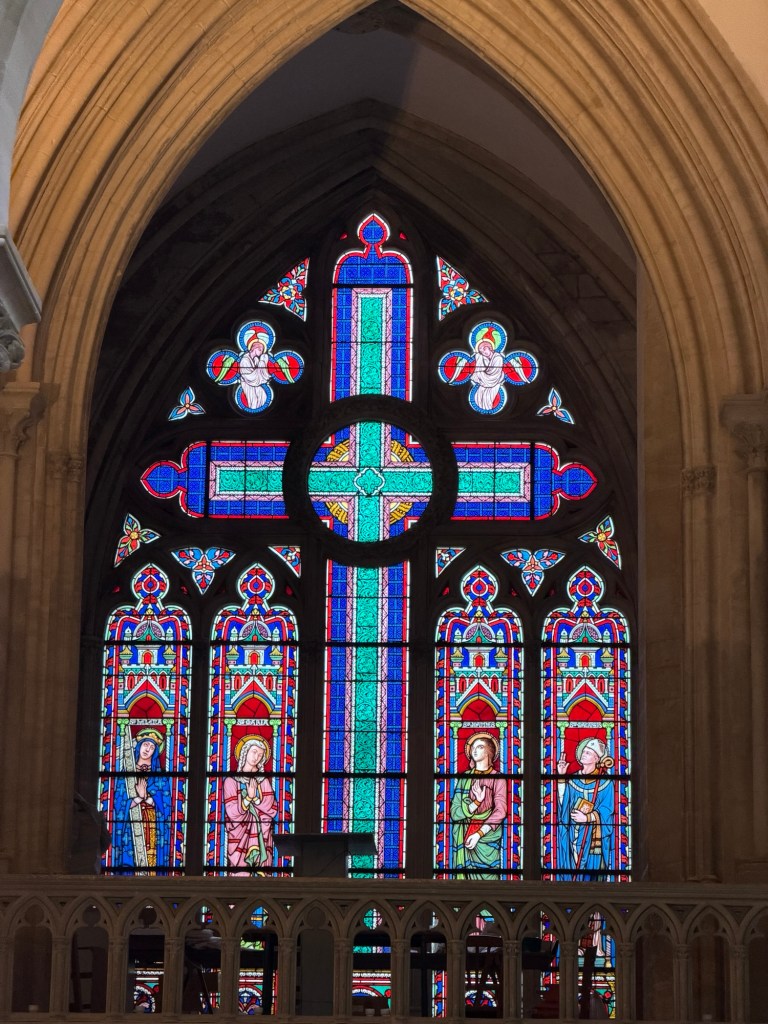
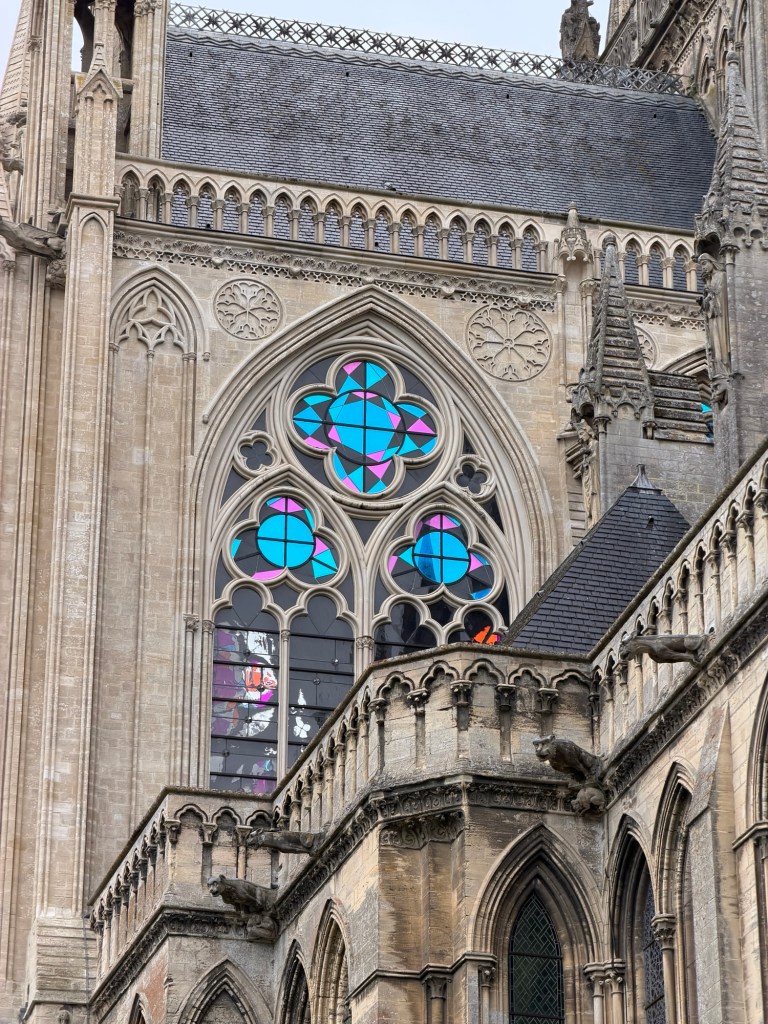
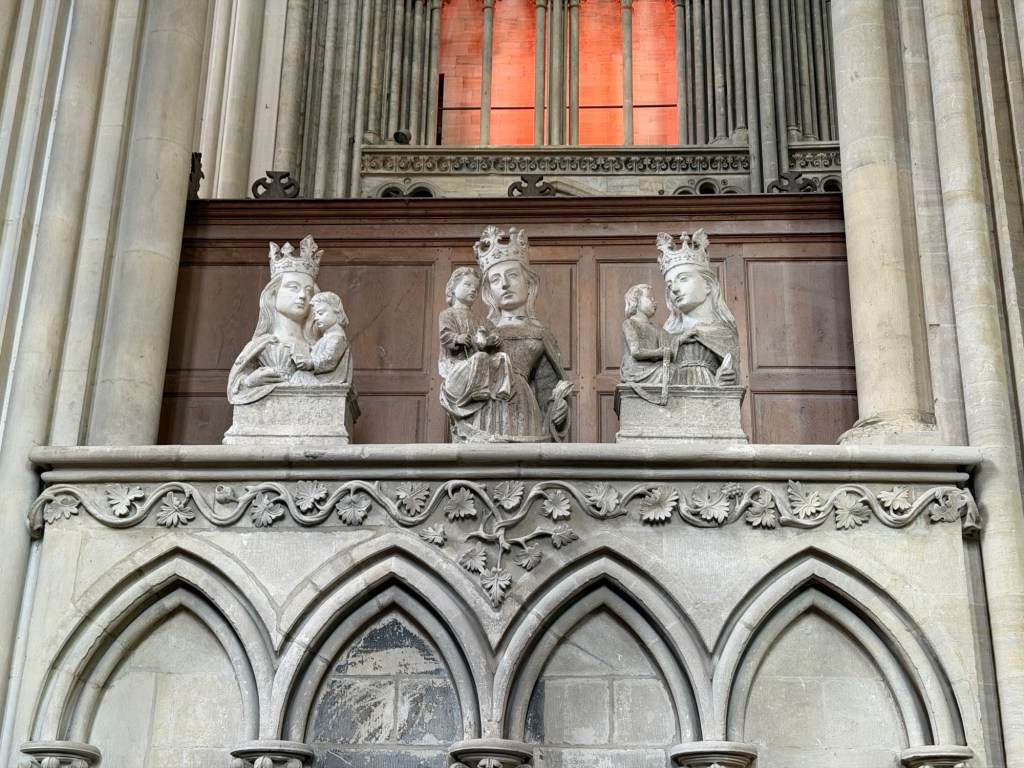
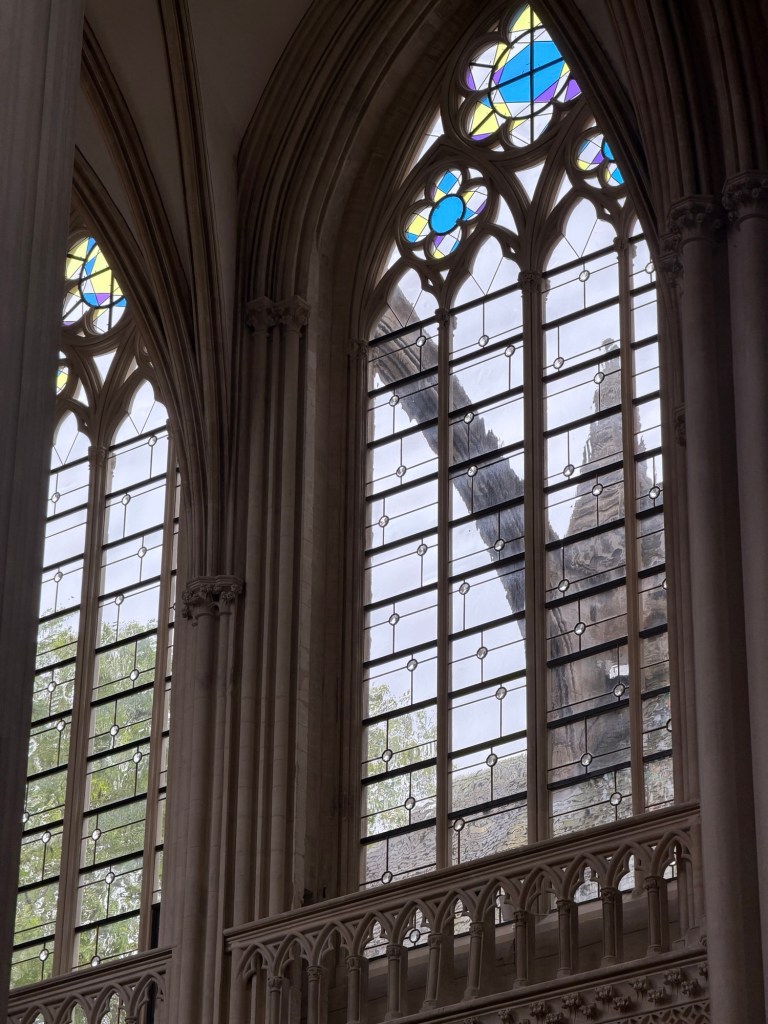
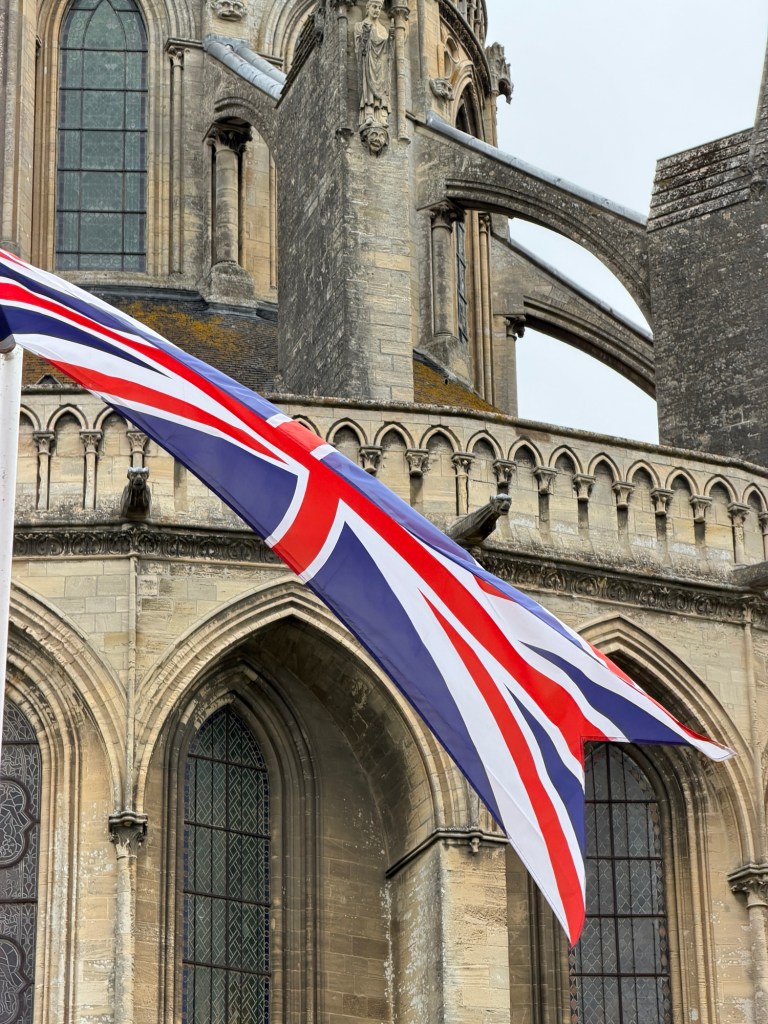
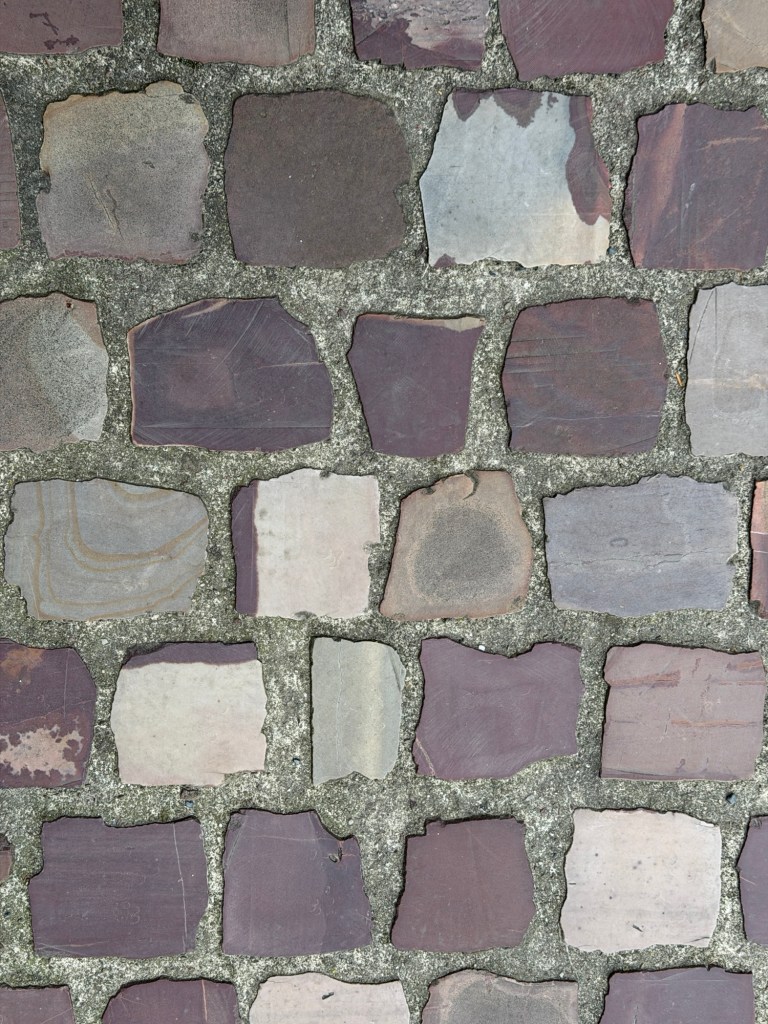
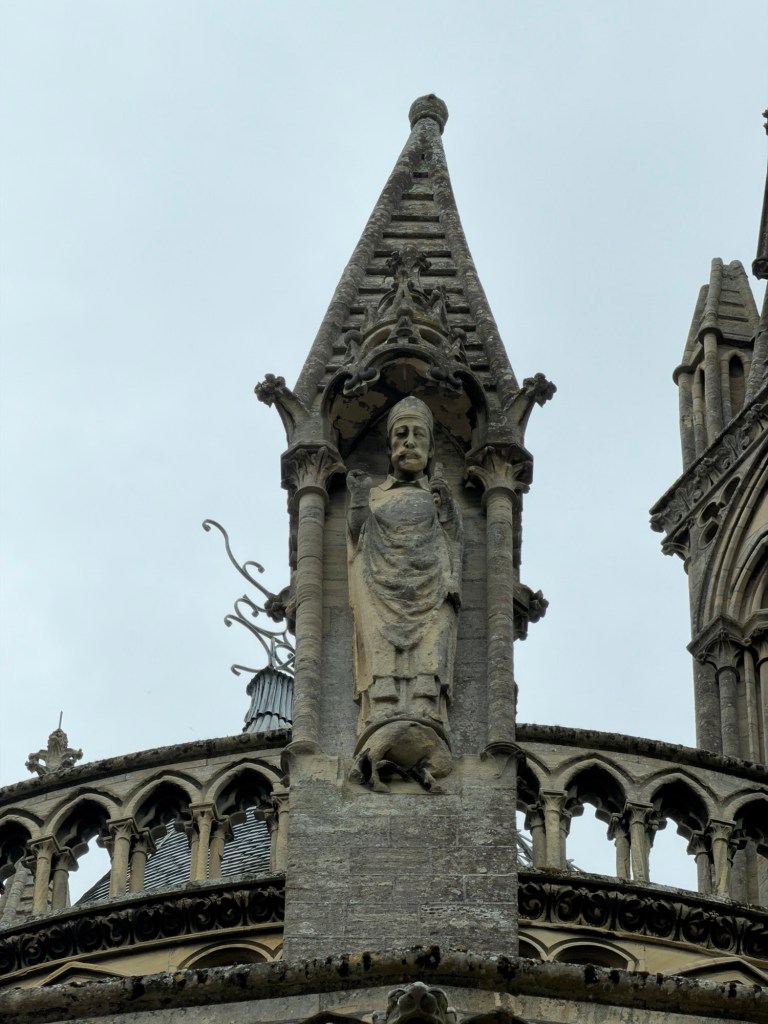
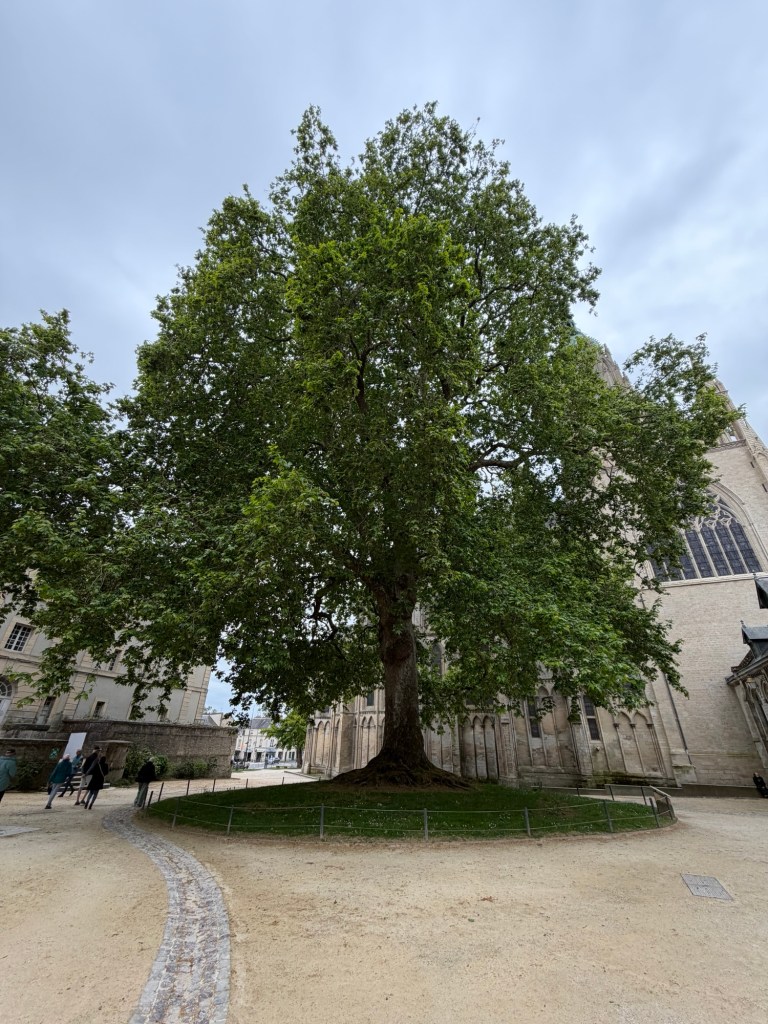
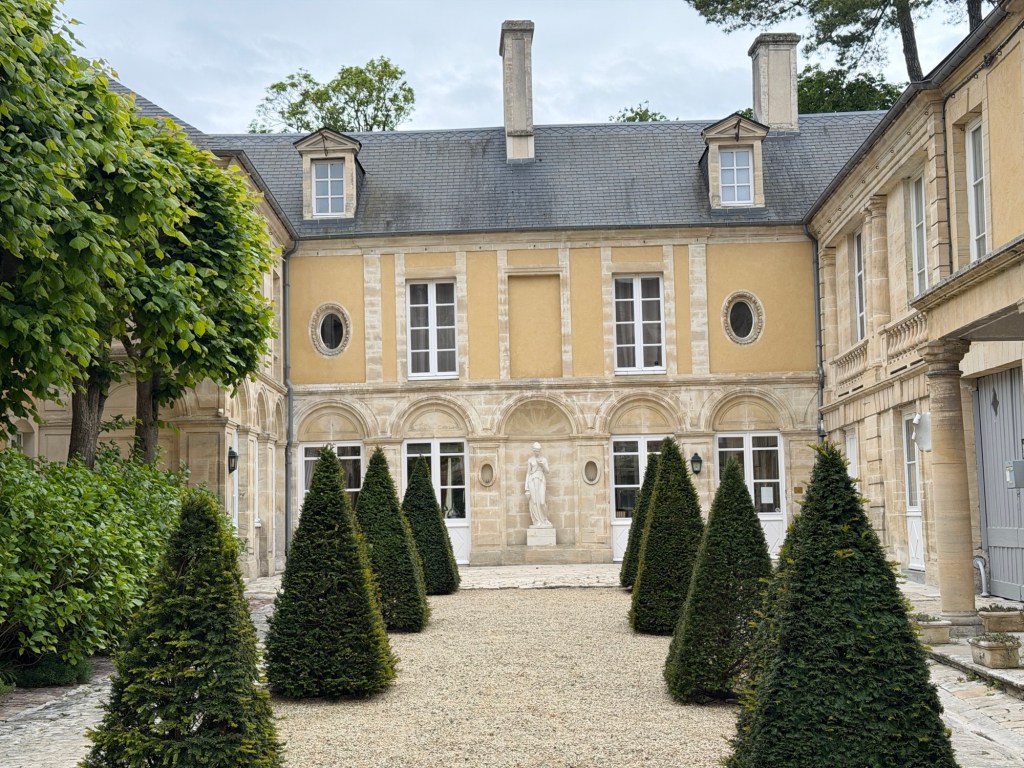
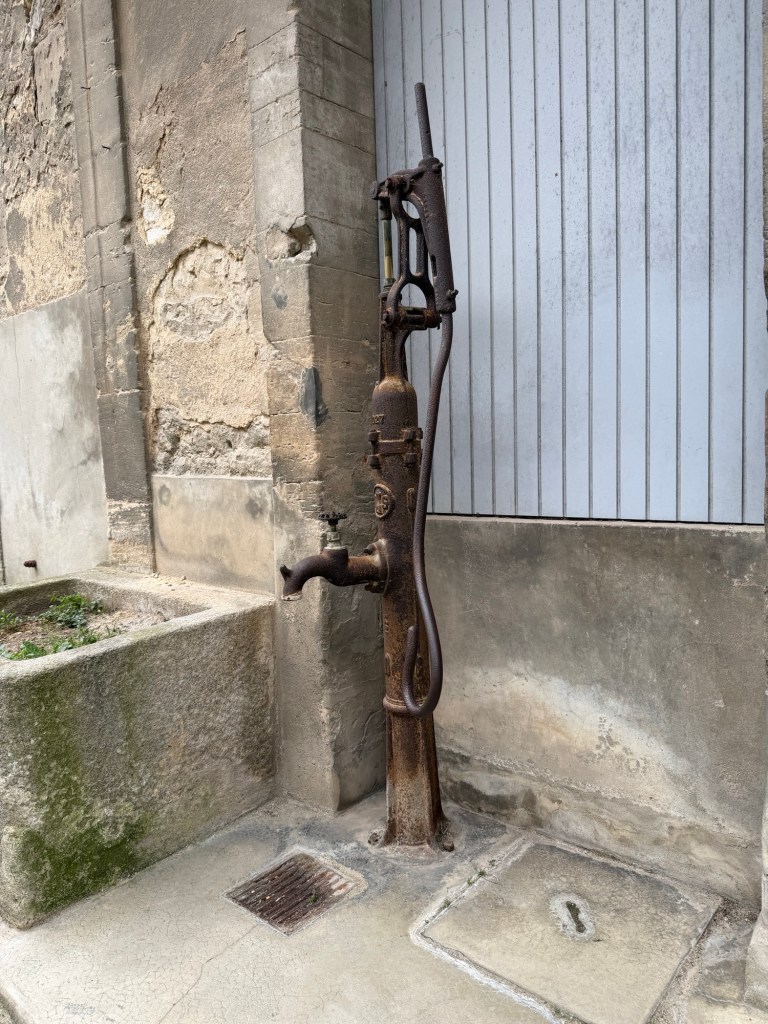
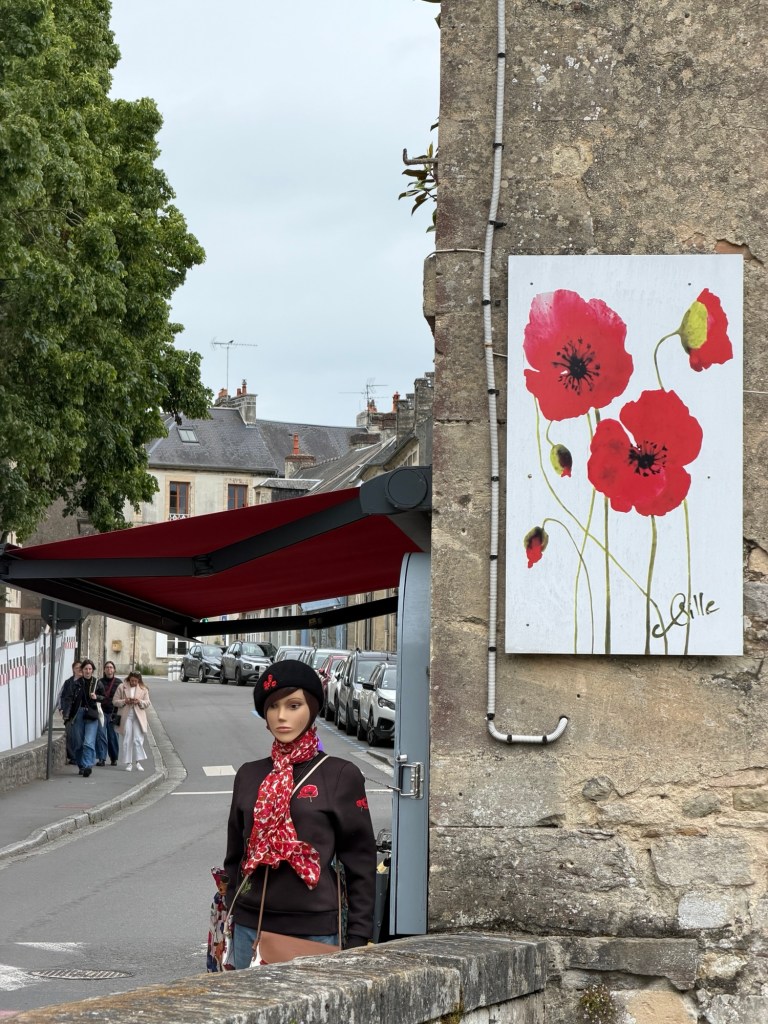
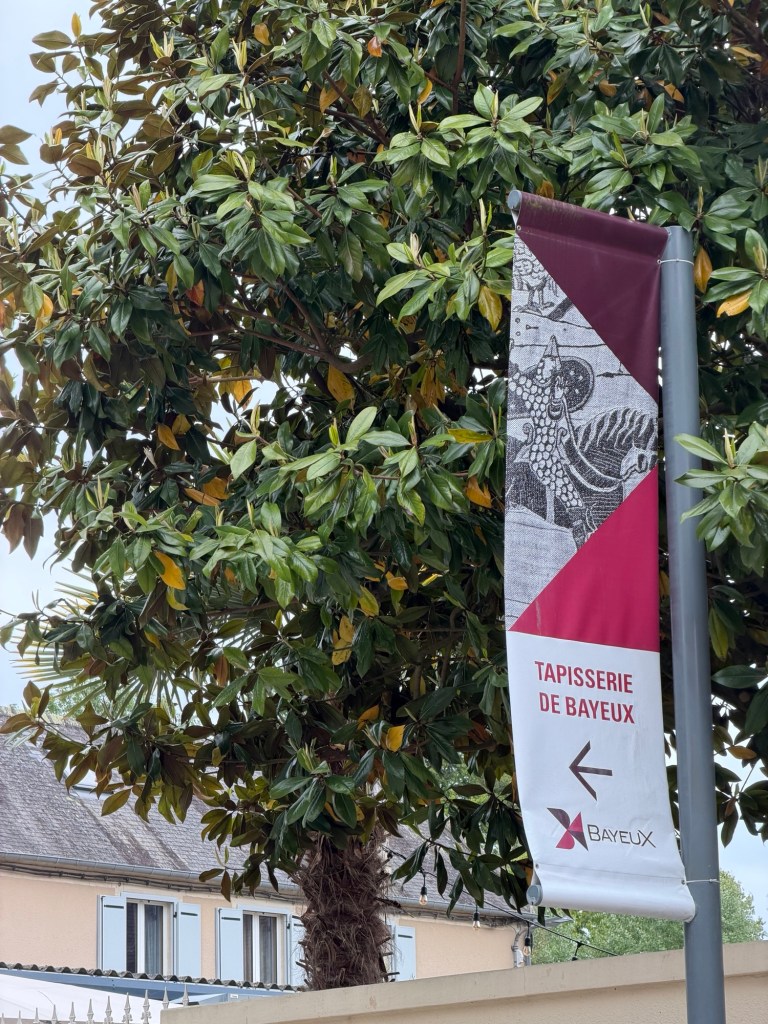
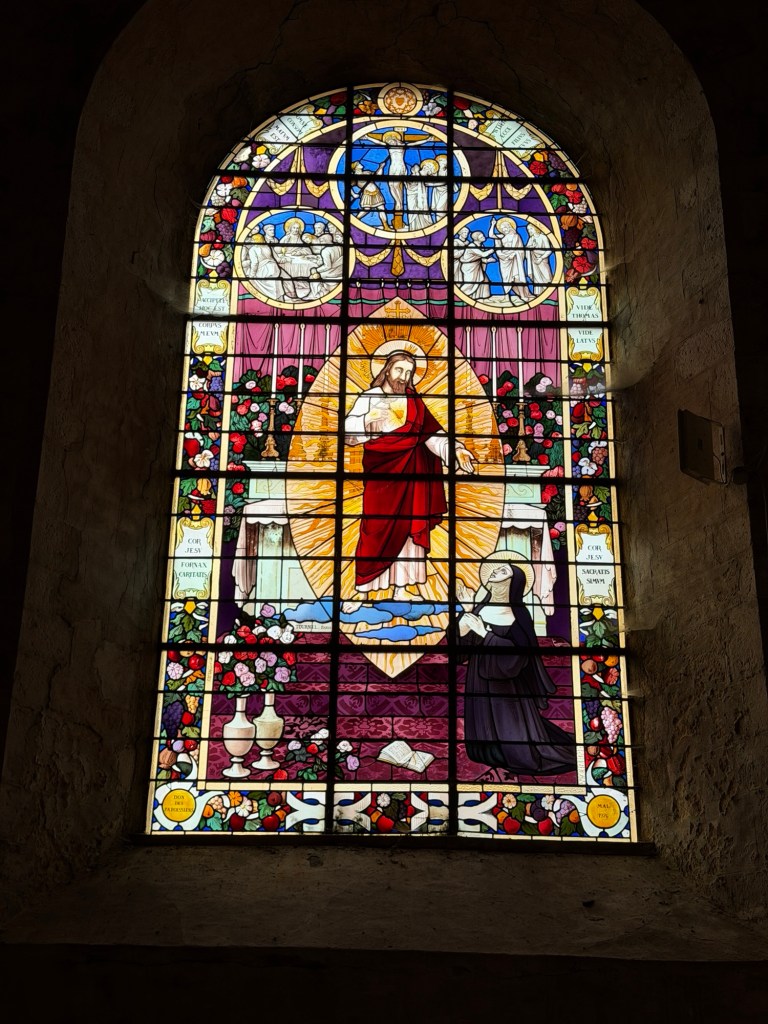
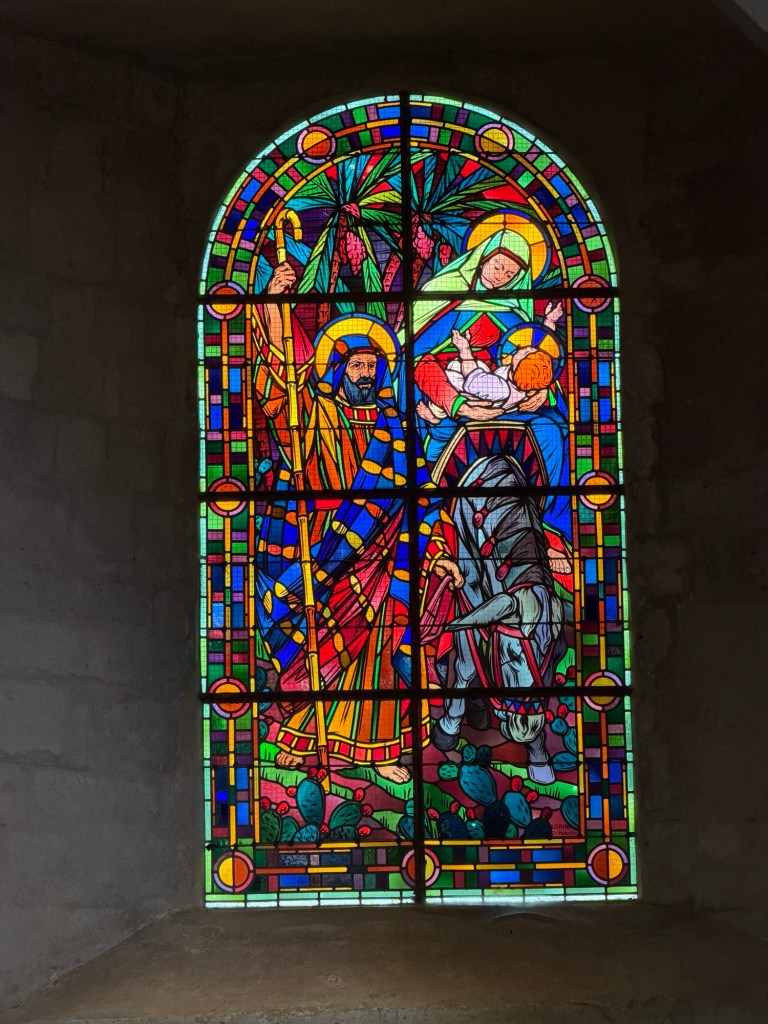
Clare’s middle name is after this saint. Mary and JesusIn memory of the dead in WWIImages in the cryptStained glass from inside and outside and statues inside the Bayeux CathedralFlying buttresses from inside and outside, red sandstone pavers, and views from outsideLiberty trees such as this were planted throughout France in 1793, when the king was beheaded.Lantern CourtyardWater pumpPoppies in artwork are a common sight.The Bayeux Tapestry is in London as the space in Bayeux is undergoing renovation.
The following text is from a sign near the water features:
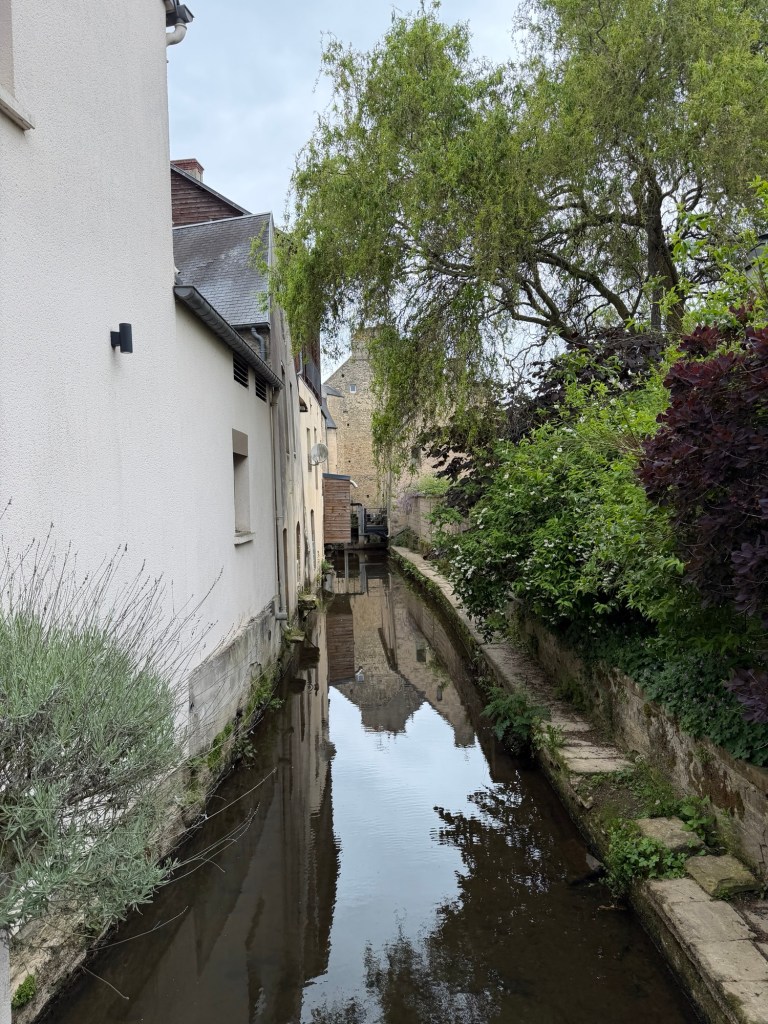
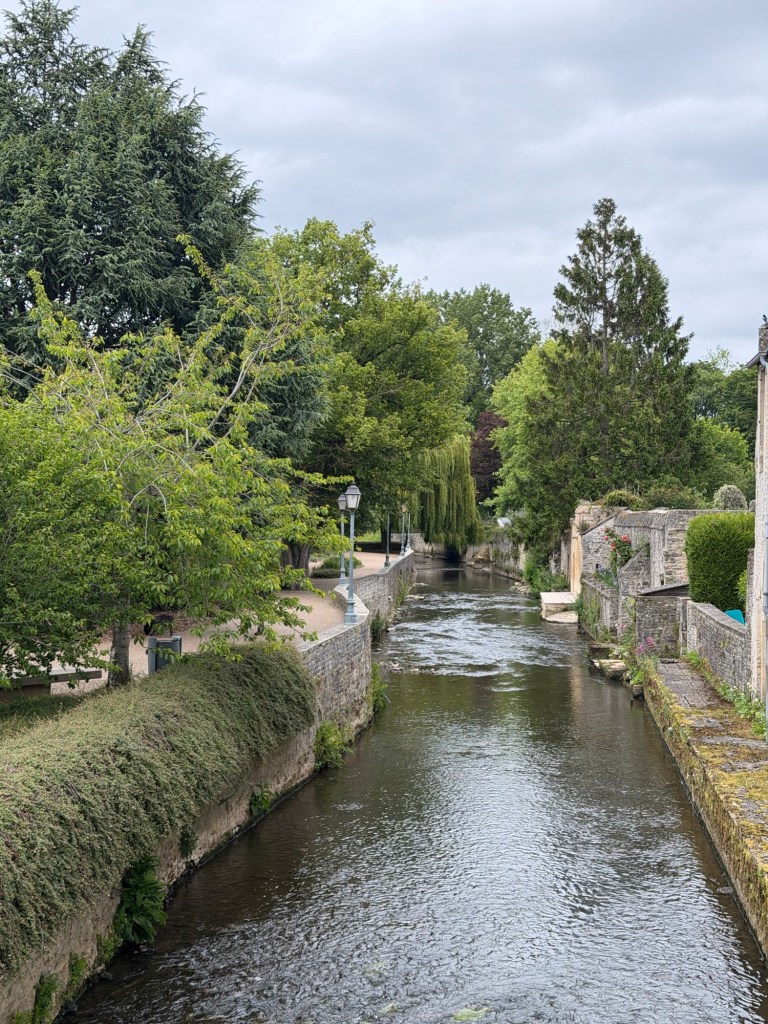
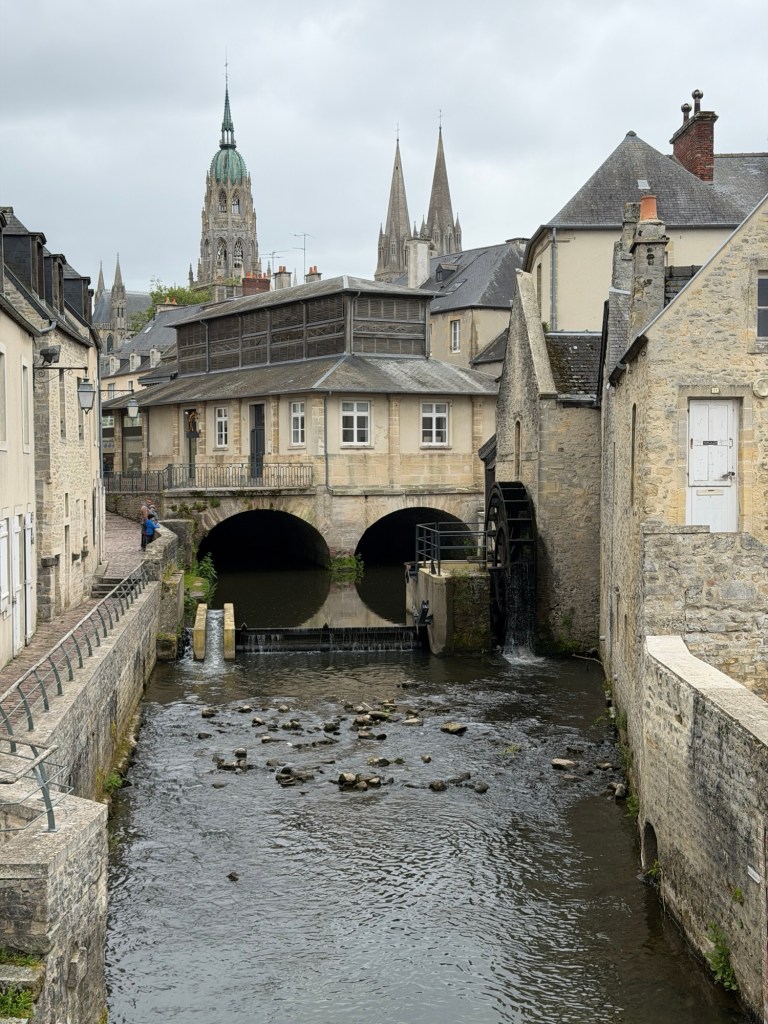
Two thousand years ago, the town of Bayeux was established on the western bank of the river Aure, now running through the city from the south to the north. From Gallo-Roman times to the beginning of the 20th century, a vast number of craft industries have grown up along its banks.
First, there was fishing. Part of the river, upstream of the lock gates, was thus set aside as a fishing reserve for the Bishop’s exclusive use.
Those craft industries requiring vast amounts of water were also concentrated along the banks: dyers, tanners, laundries. The wash-house that can be seen from the d’Ornano car park, on the opposite river bank, still bears witness to these activities.
Finally, water was used as an energy source as hydraulic power for the various mills: flour mills, tannin mills or even colza oil mills.
In the Middle Ages, some of the mills, such as the one facing us, belonged to the Bishop of Bayeux who derived considerable income from them.
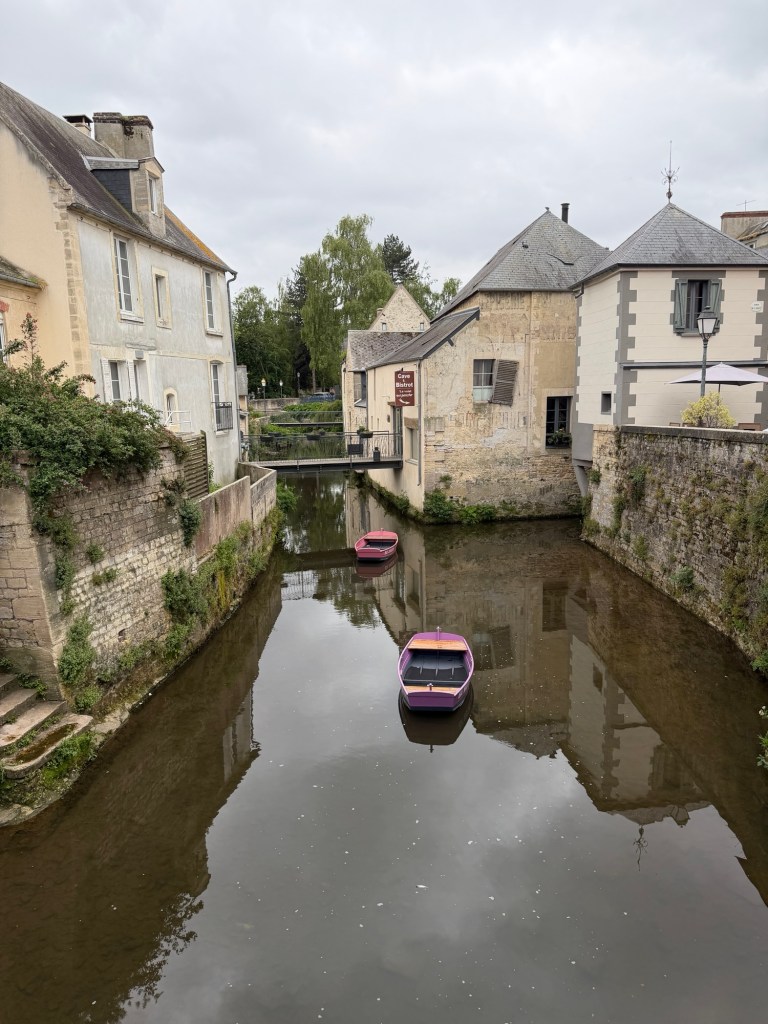
The river has greatly influenced the city’s development. Stone bridges have been built at the main crossing points, notably here where the Aure was transformed into a canal as early as the 13th century to pass under the former Hôtel-Dieu hospital.
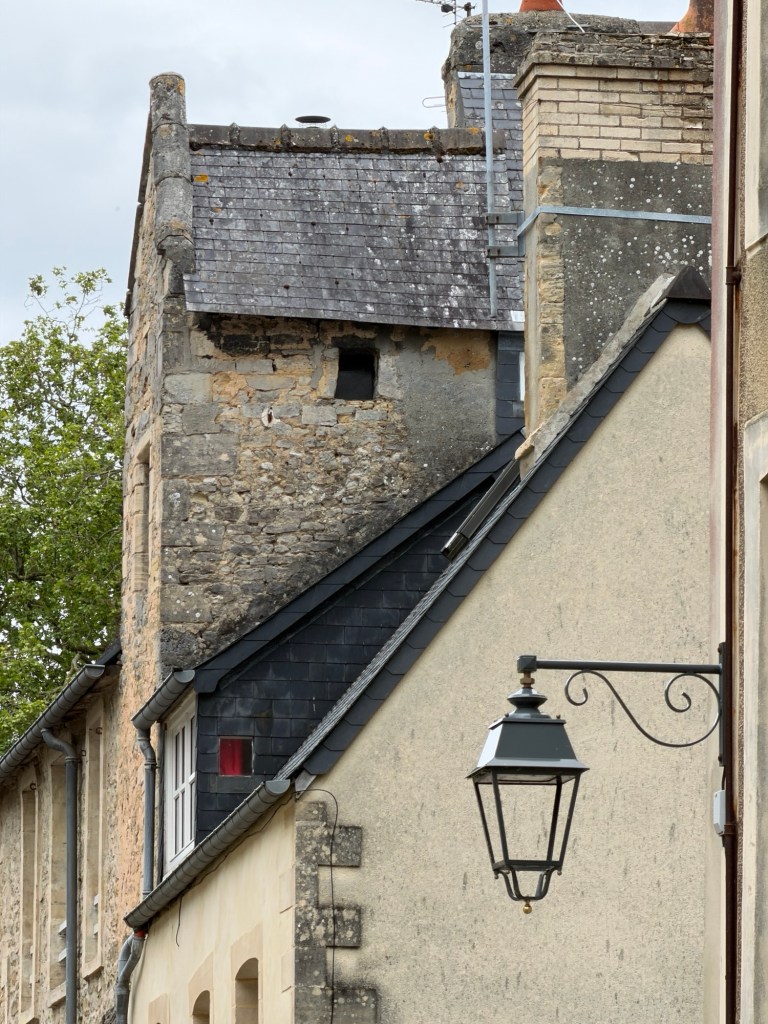
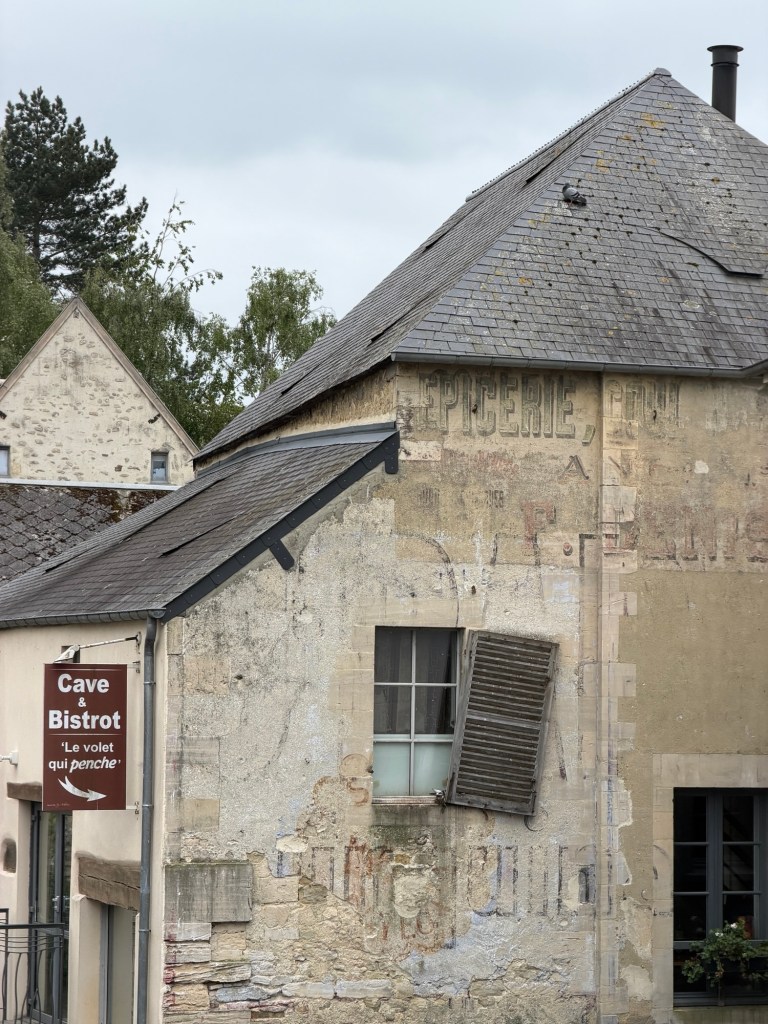
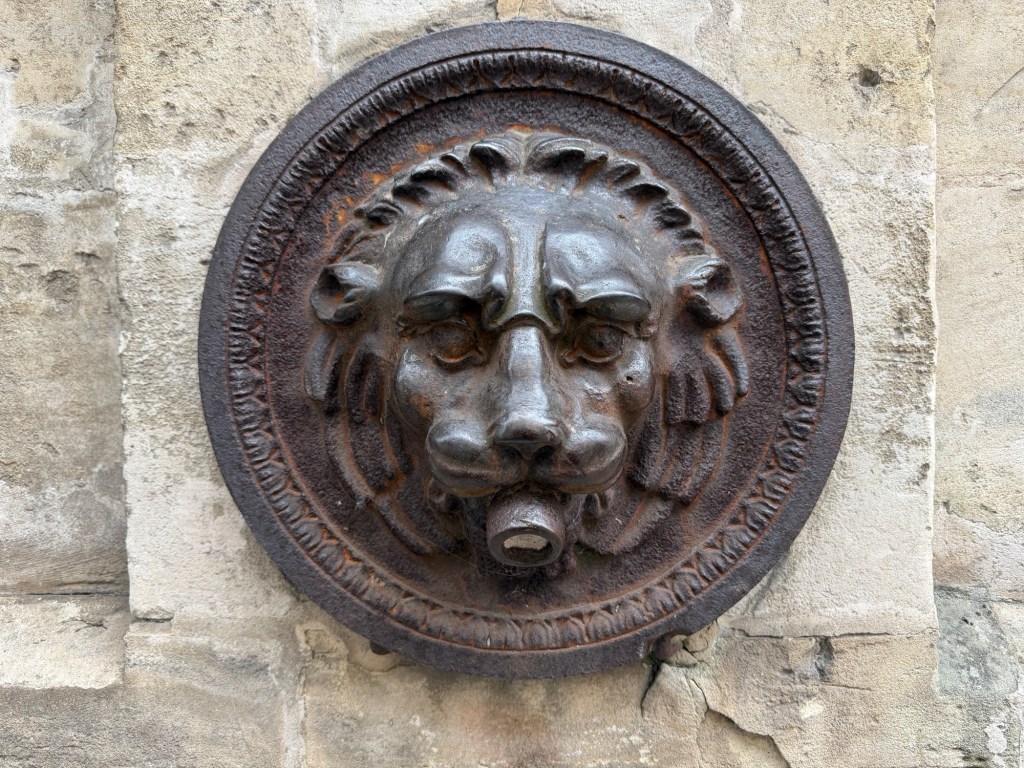
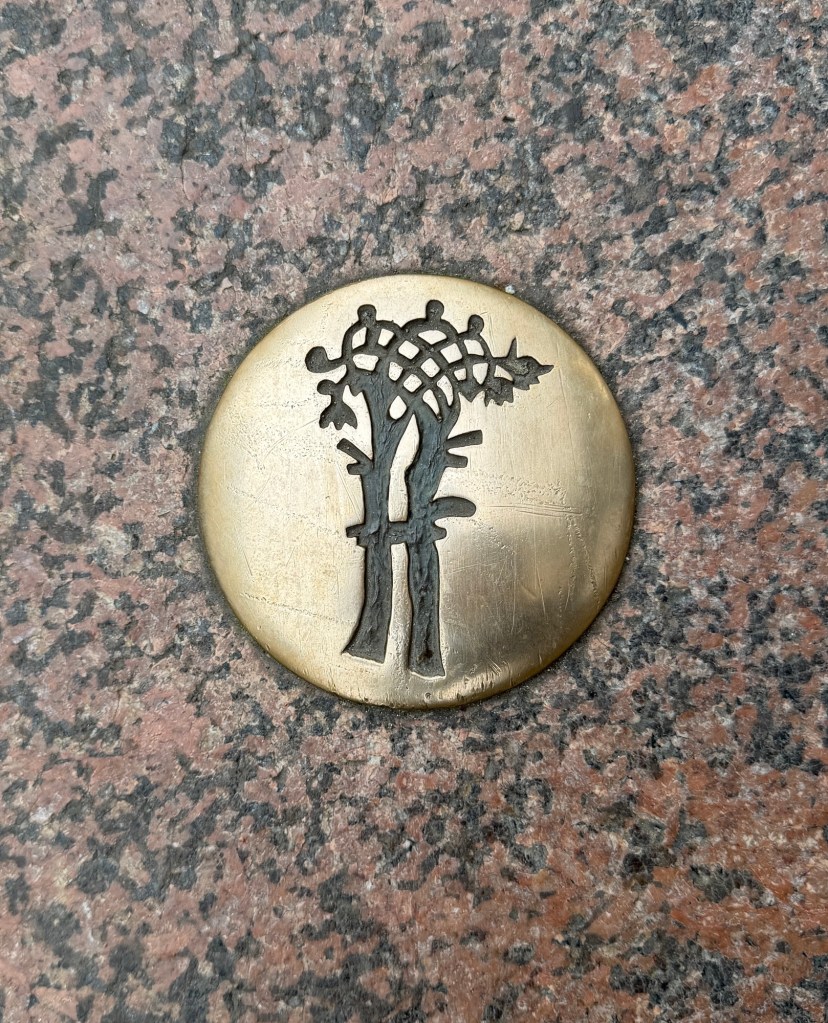
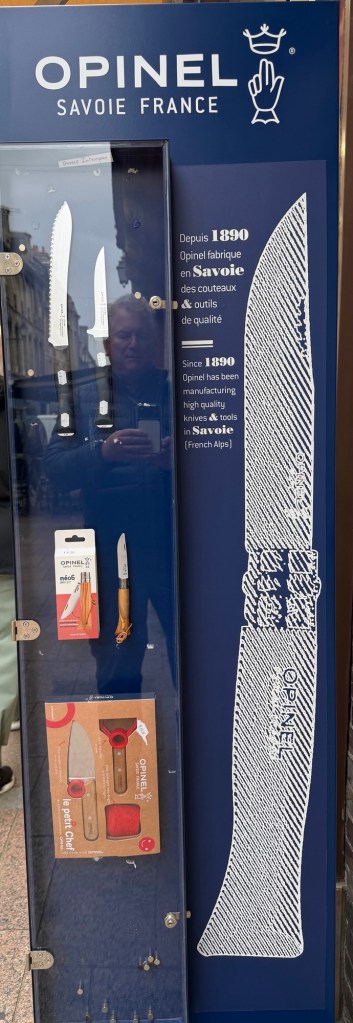
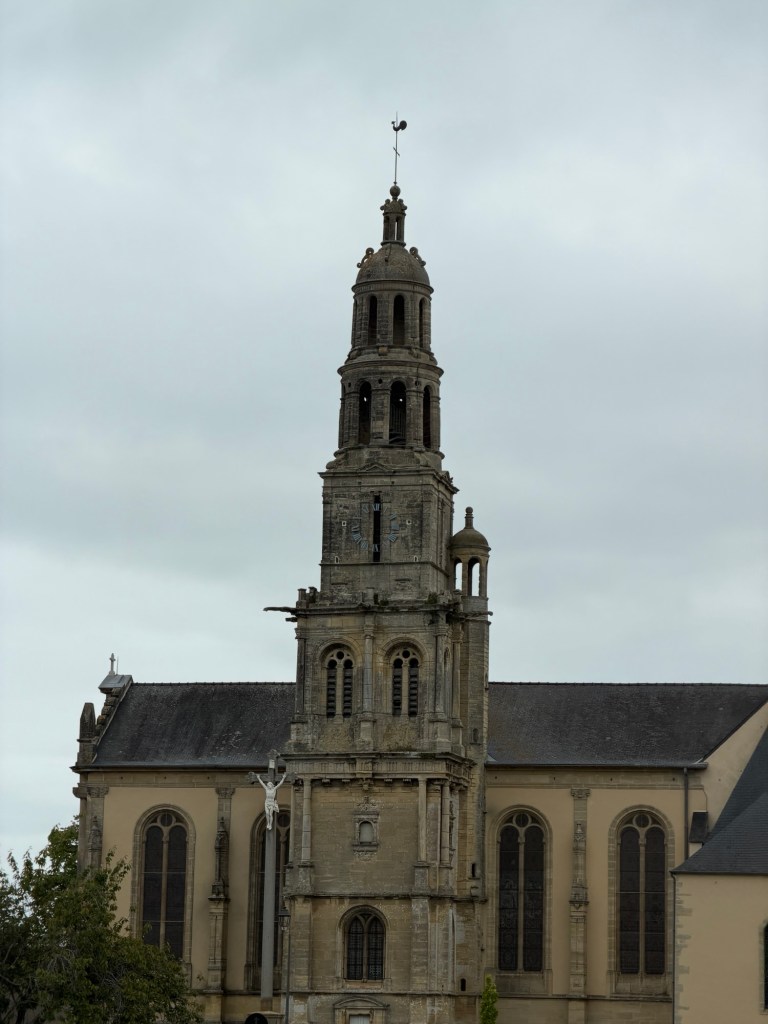
CanalsThe tilting shutter (Le violet qui penche) can never be repaired because it is the name of this wine cellar & bistro.Old water spigotTourist walk symbols on the groundAn ad for well-known French knivesA church near where we parked
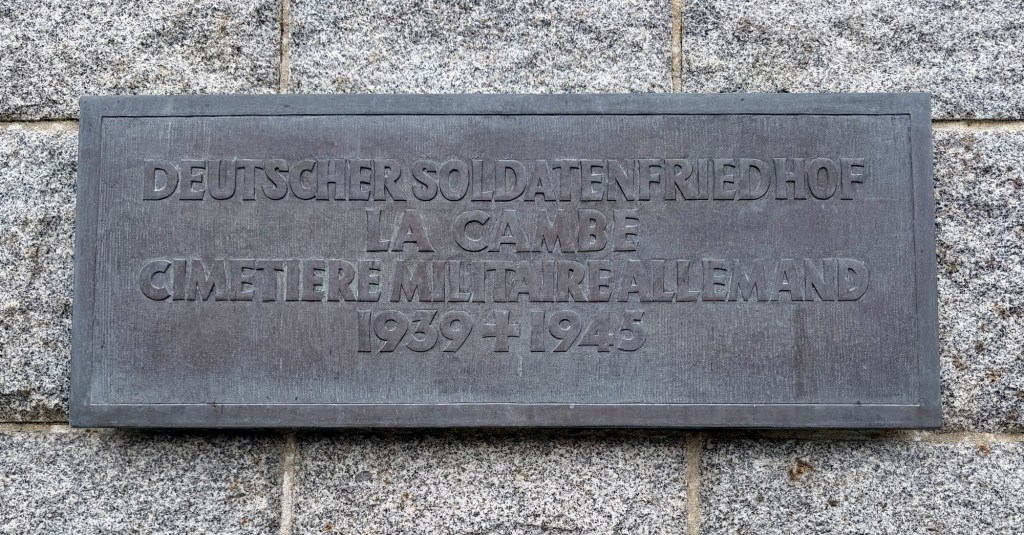
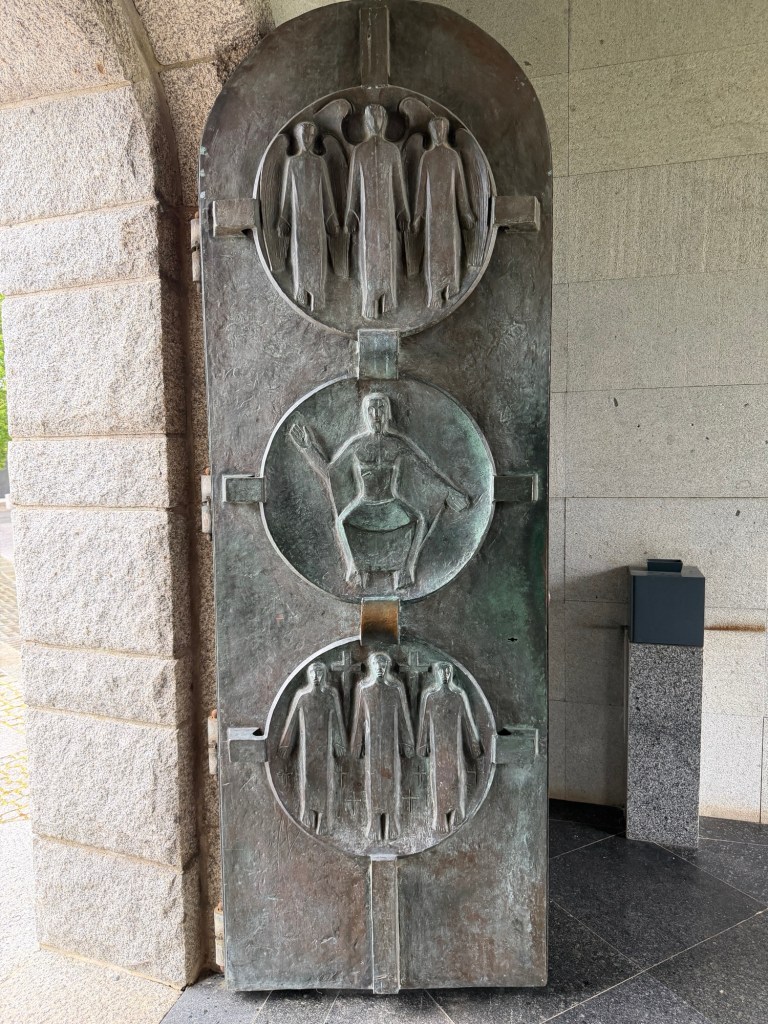
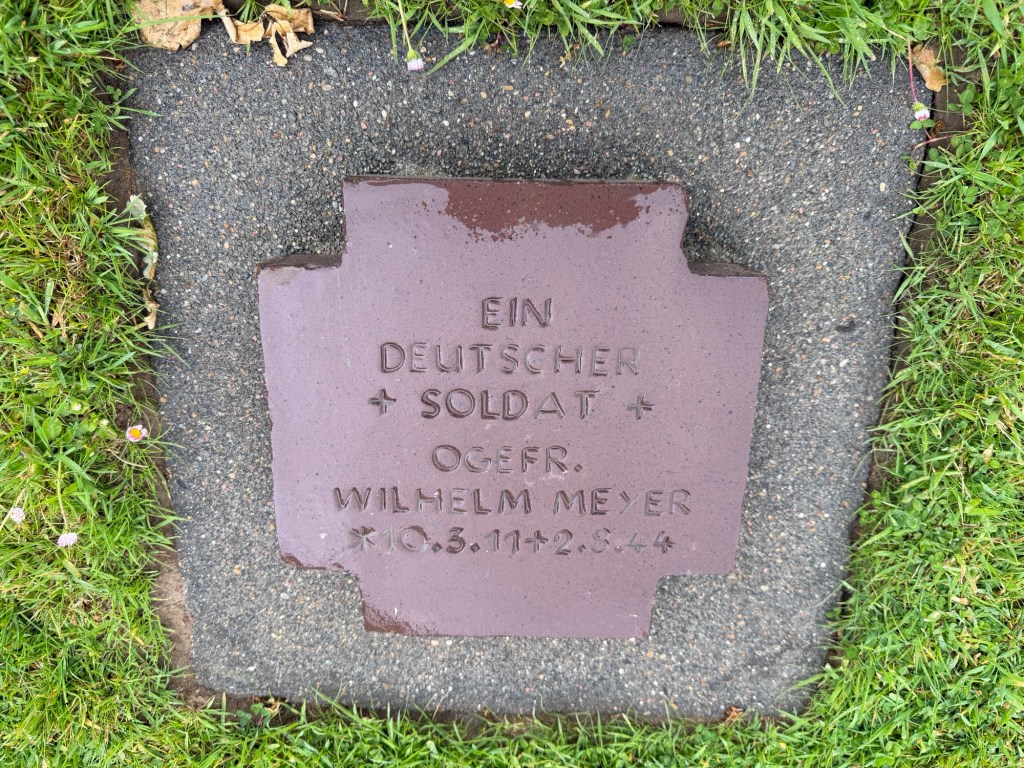
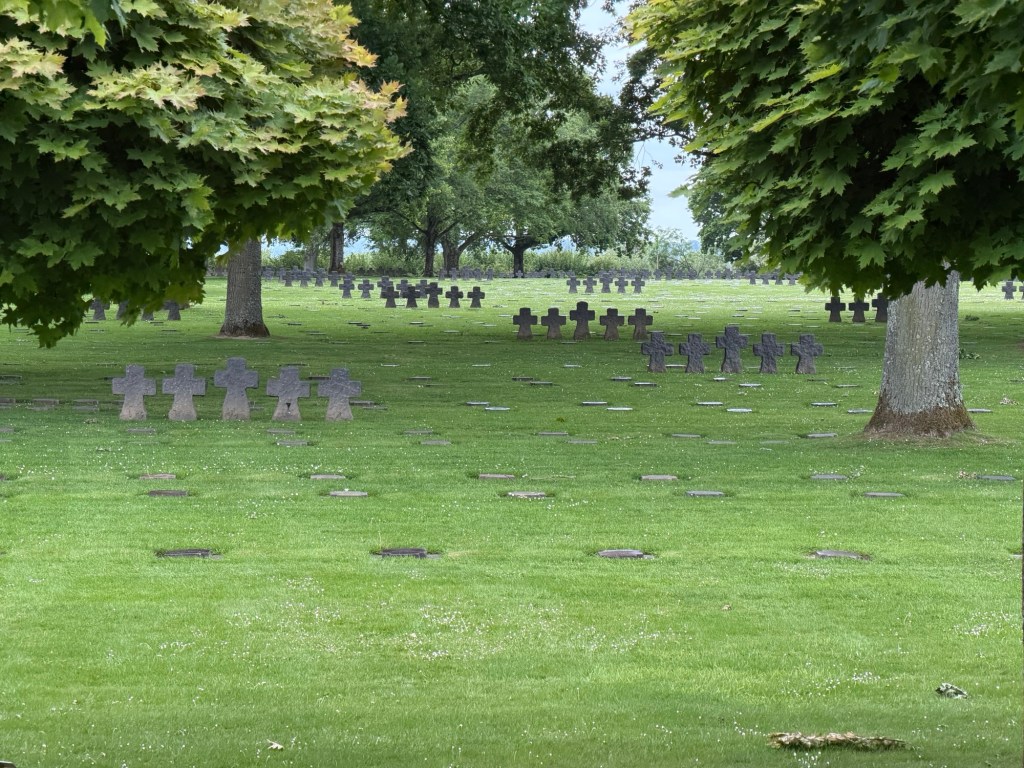
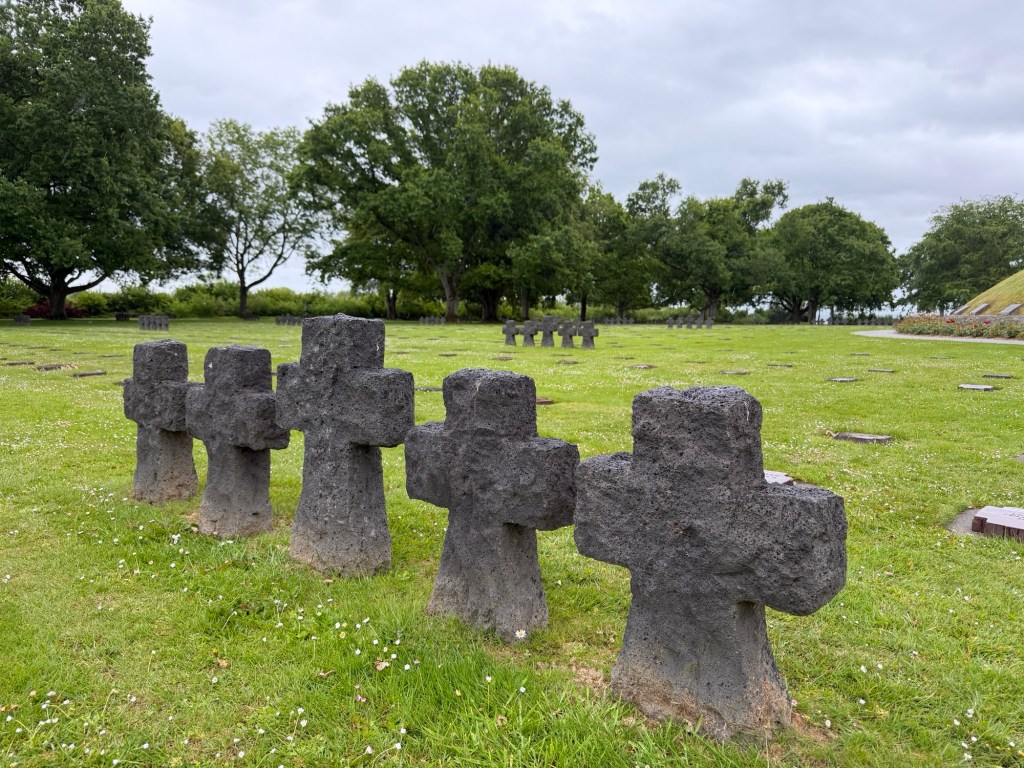
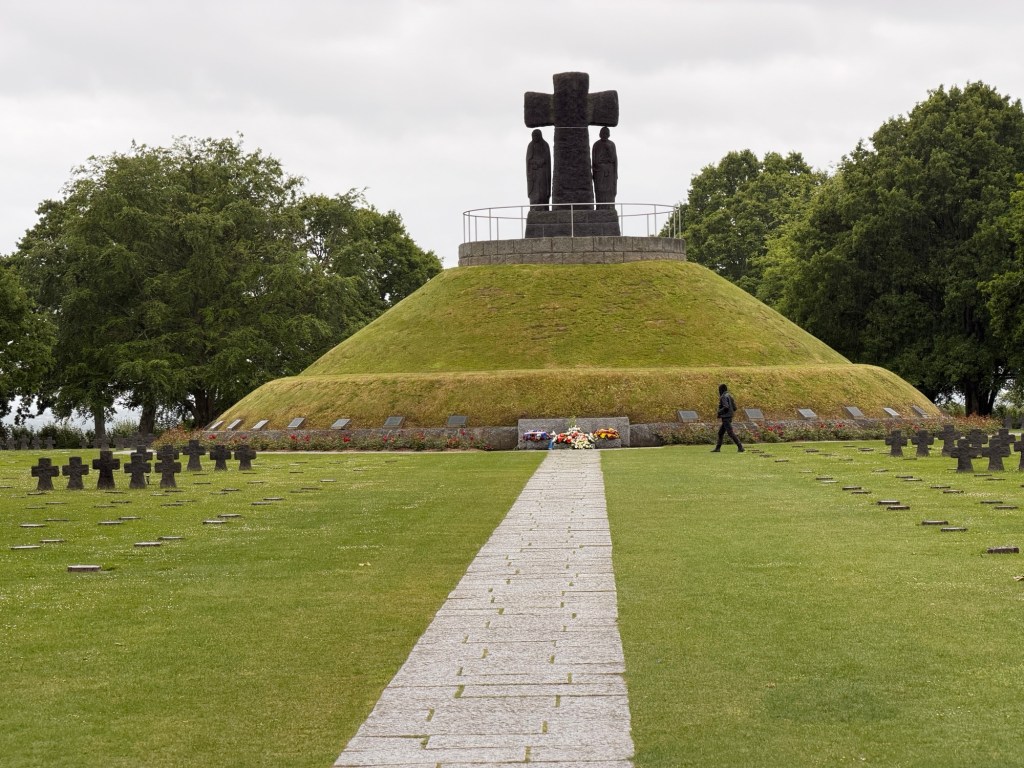
We also visited the large German cemetery at La Cambe where 21,000 soldiers are buried, many unidentified.
Marker with an unidentified soldier and a second soldierA light drizzle was appropriate in the somber place with few visitors.Crosses made of vesicular basalt create a dark ambience compared to the American cemetery.Cross and figures symbolizing the mothers and fathers of the dead
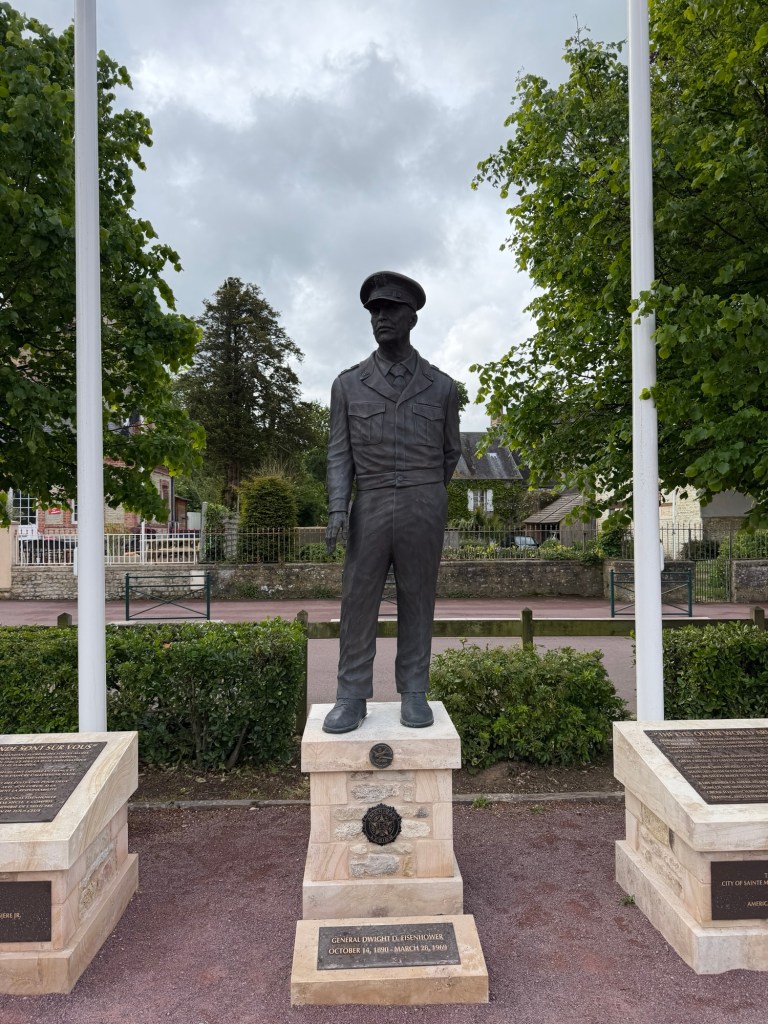
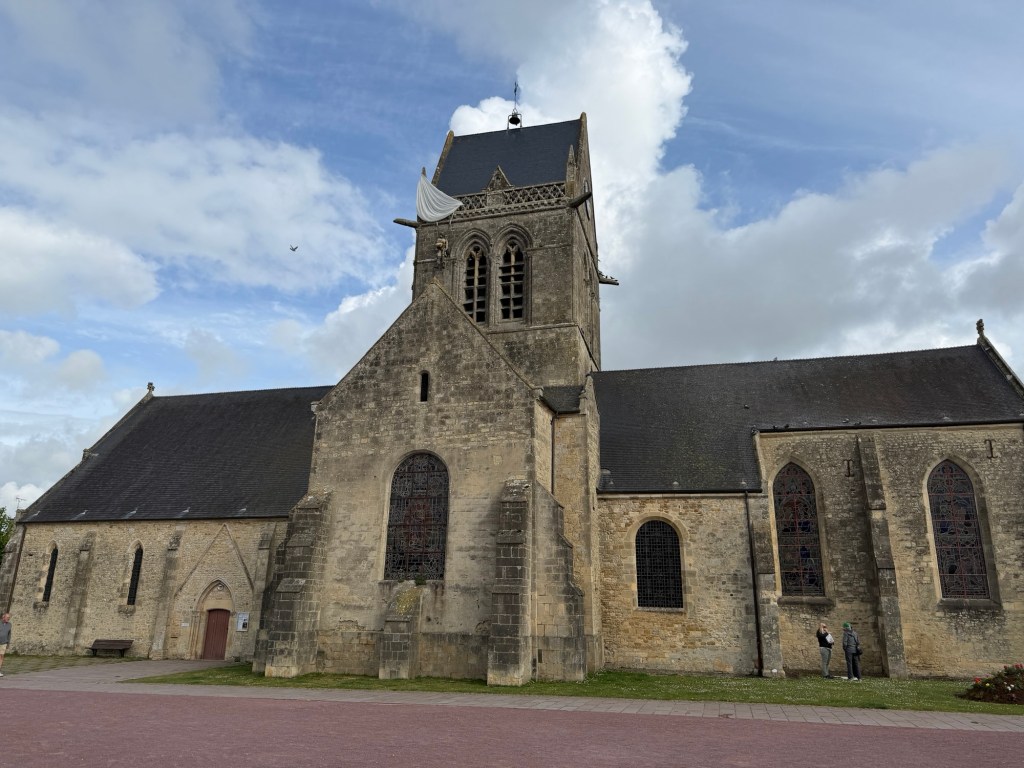
We then proceeded back to Ste-Mère Eglise.
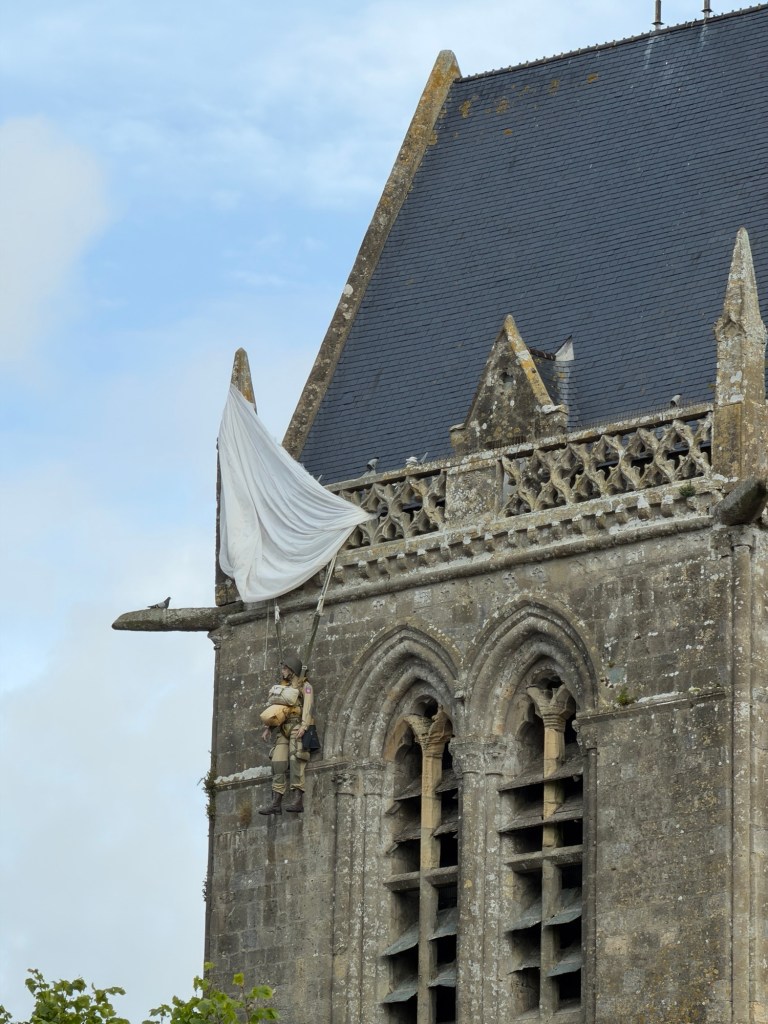
General Eisenhower The medieval churchThe paratrooper who hung for hours early on D-Day prior to rescue
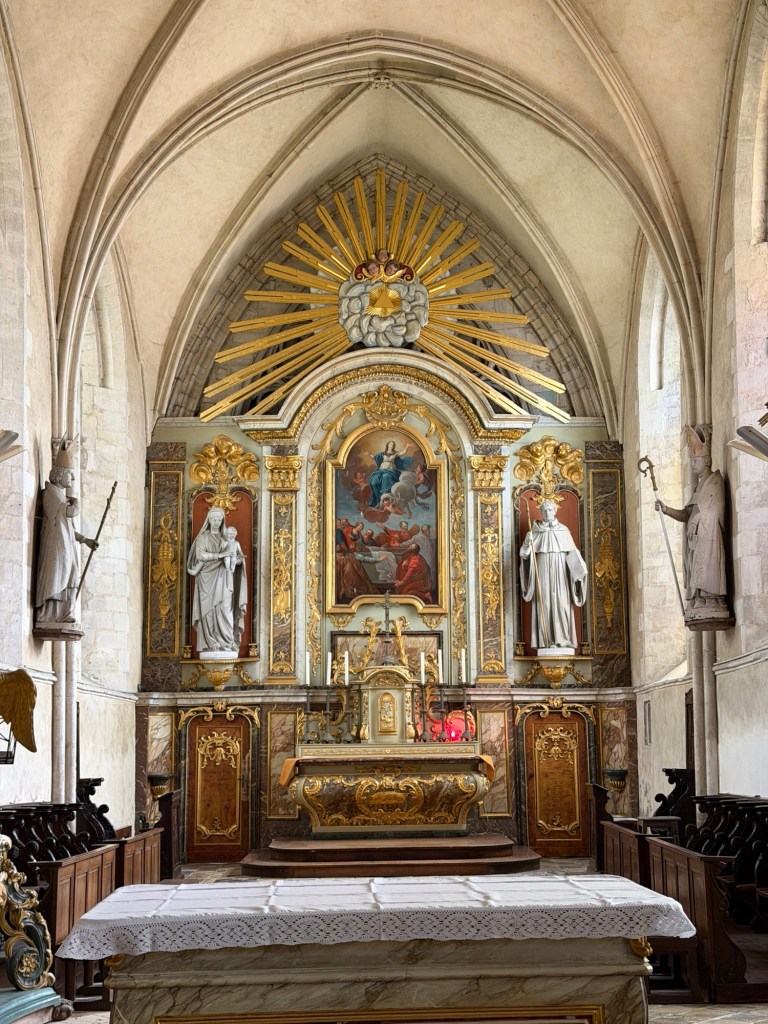
The church was closed, but we went back the next morning to see the inside.
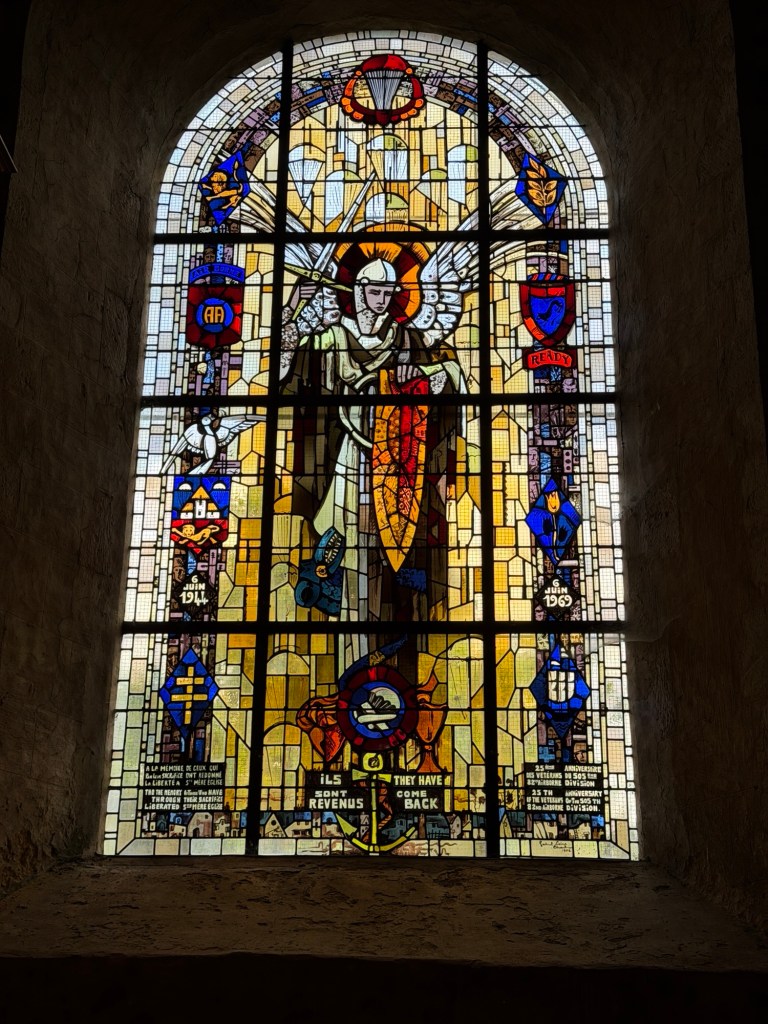
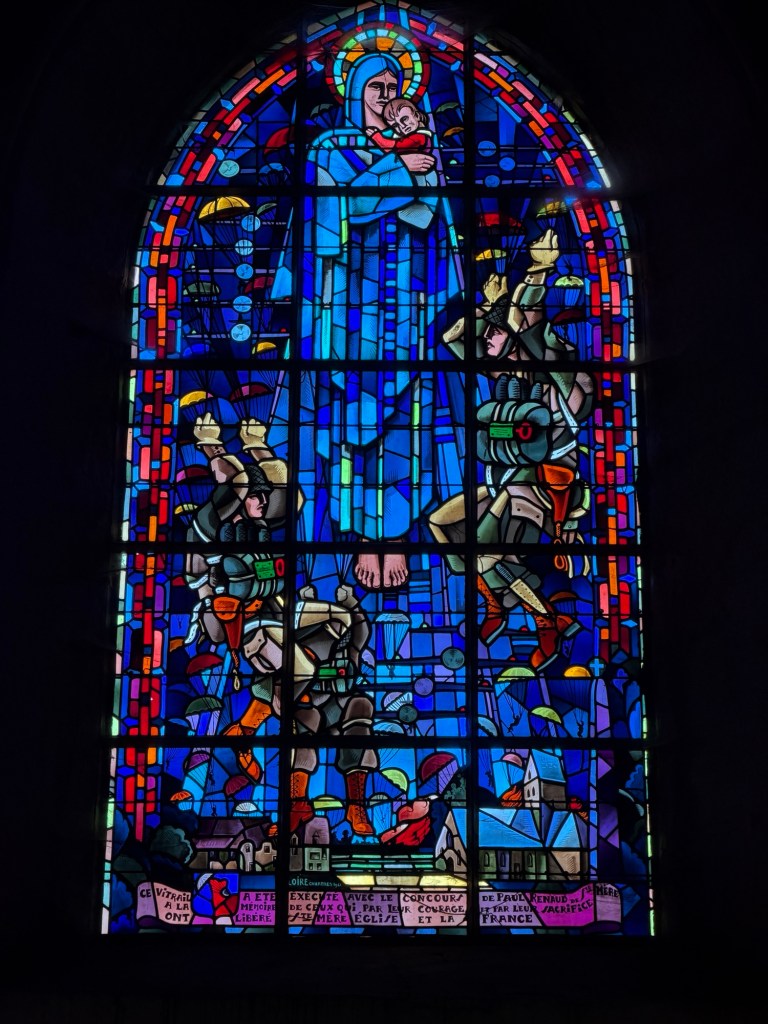
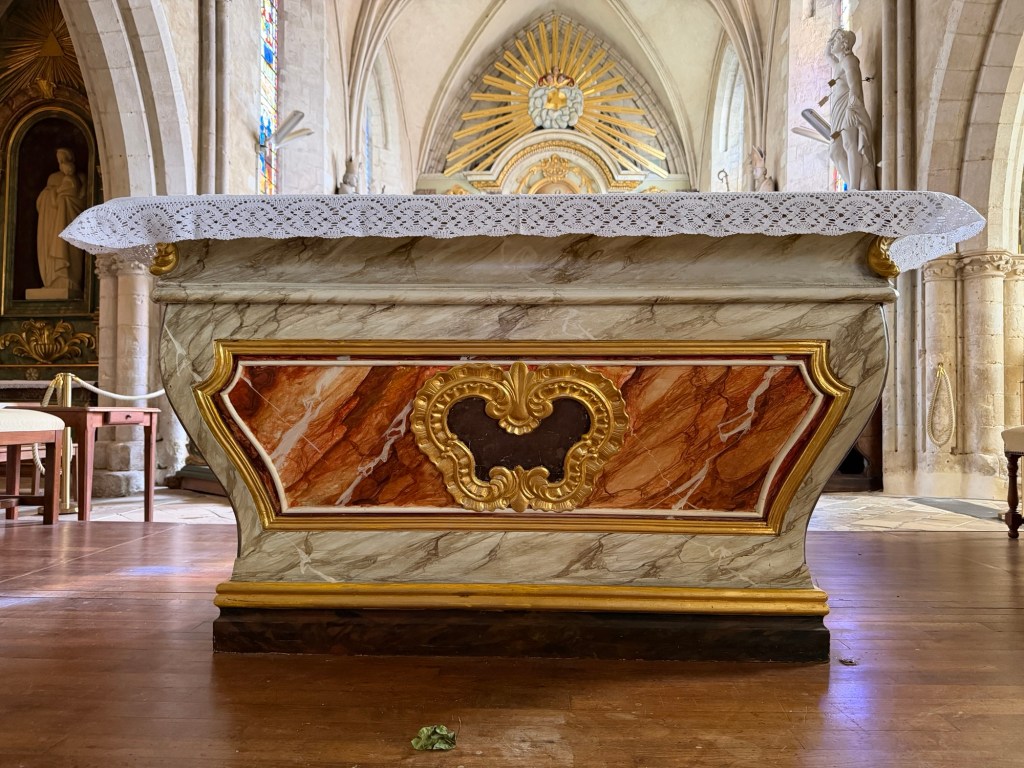
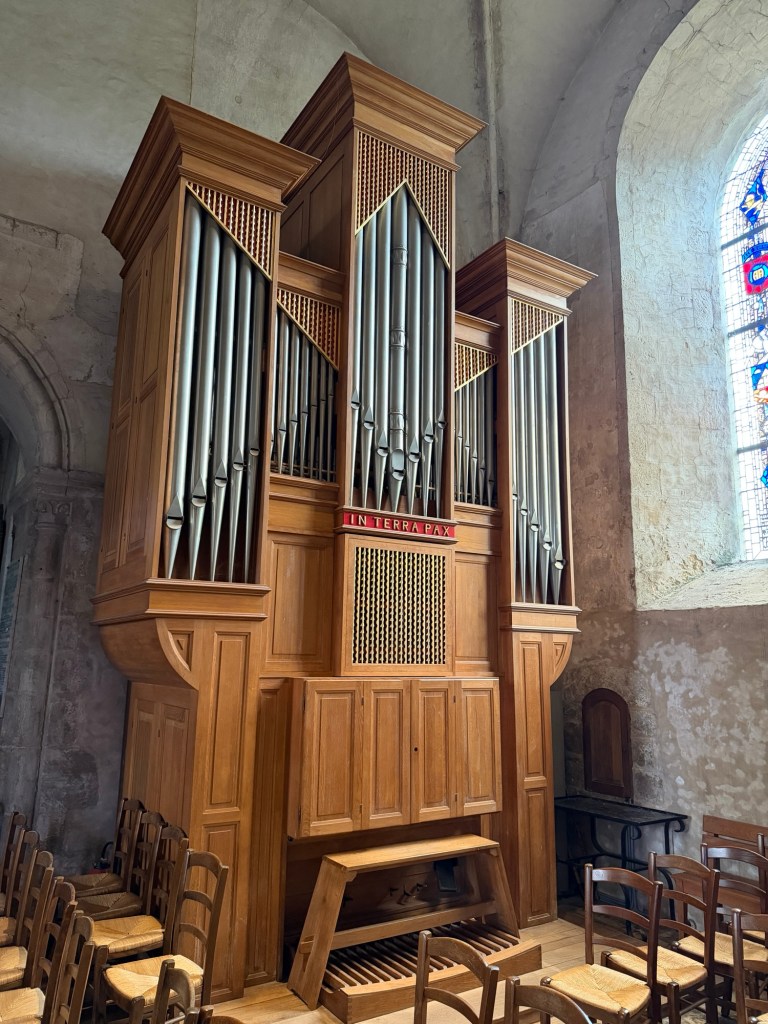
St. Michael, patron saint of paratroopers (1969)Paratroopers in stained glass window (1984)Alter made of marble
 Bunch of Geeks go Traveling