Incredible! Wandering around old rocks with people there to explain them to me. Pure JOY!
The rocks we were studying today are all so old that the trip leaders say 2000 when they mean two thousand million years old. The youngest rocks we saw today were 470, older than any at Dinosaur Ridge or Red Rocks.
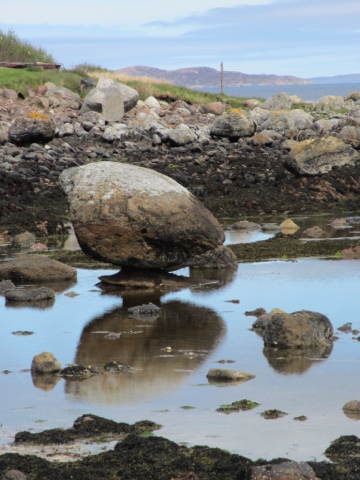
This was a funny one, eroded by the tides, now standing on a pedestal.
The people are like any geology field trip we have attended. Some older, younger,some know more and others less. They come from all over the world. We are traveling in two fifteen passenger vans. The front one has music on all the time and the back one is quiet. Today we are in the quiet one.
This is a structural geology field trip, so Brian and I are anomalous. A bit. But one of the leaders knows people we knew at UCLA, so we have some common topics.
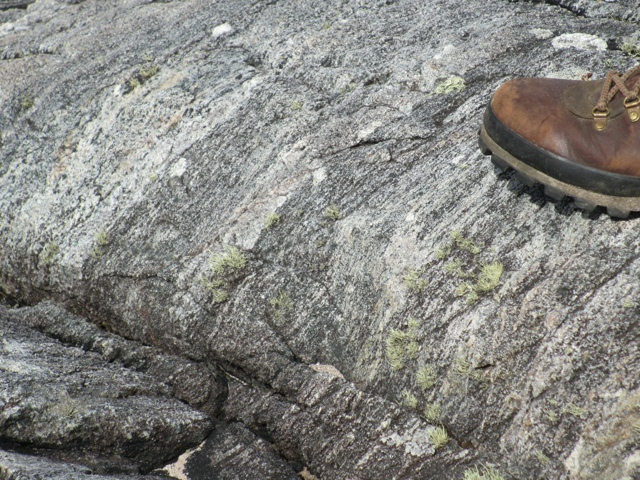
Striped rocks called gneiss show minerals in bands, caused by high pressure and temperature deformation.
Today we saw a world class view of a thrust fault. I’ve never seen anything like it, a text book photo opportunity! Think of hard chocolate candy bars in frosting. The candy bars are all aligned, end to end, horizontal, and the frosting is above and Barlow the layer of candy bars. Then push them together, slowly with constant pressure. The candy bars would break apart and start stacking on top of each other. The rocks that did this now look a bit like dominoes that are laying partly on top of each other.
I was so enthralled with the explanation, I forgot to take a picture!
We also walked to an island at low tide, so we were able to get to it without getting wet. It is surrounded by water now. The 2400 rocks were complex, geochemically fascinating. I would have done a thesis on rocks like these if I had gotten a PhD.
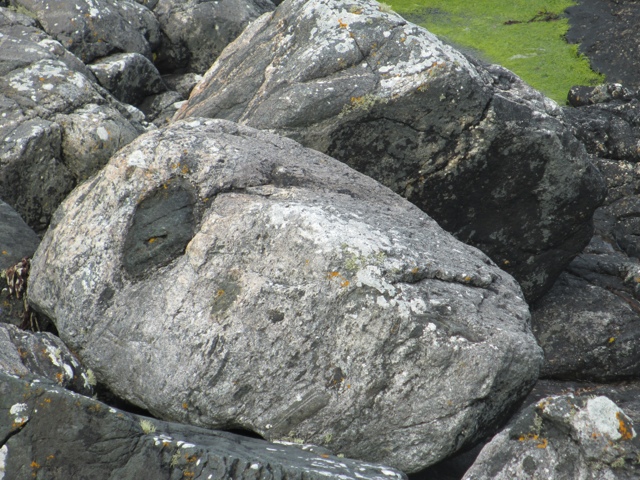
This one shows a black rock surrounded by light colored gneiss. Was the black one there first?
The tidal area we crossed showed ripple marks like what we have at Dinosaur Ridge. Those are one hundred. (Million years old) these were made today.
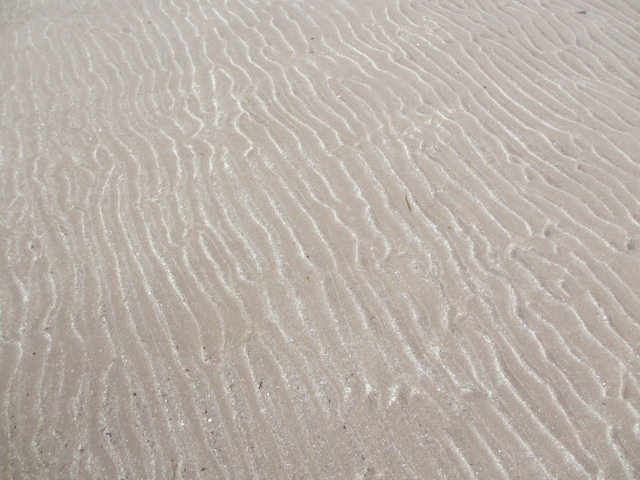
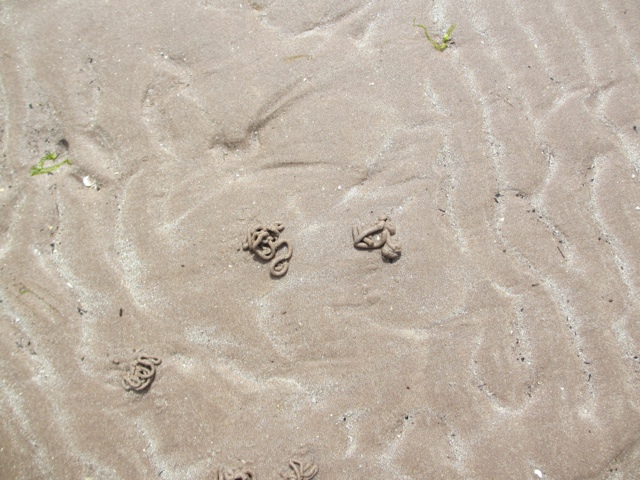
And there were some kinds of burrowing animals that left trace marks in the wet sand.
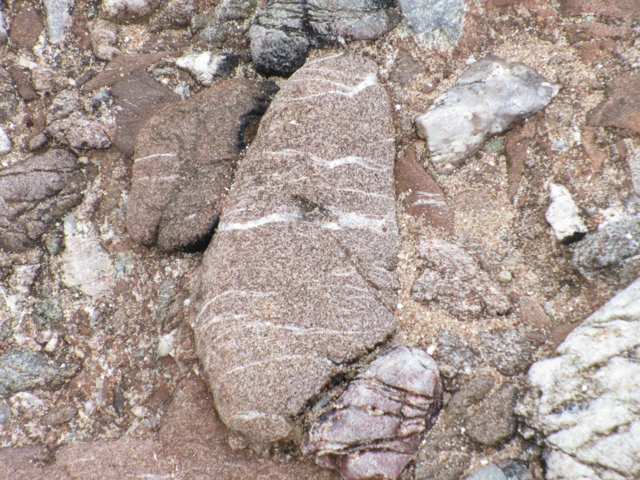
At another site, the breccia, which is a rock made up of big chunks of other rocks, like a Mrs. Fields cookie, some nuts, chips, oatmeal all cooked together. All the rocks inside the cookie dough part had cracks in them, filled with another mineral. Weird. And the filled cracks were aligned, so the thought is that they cracked under the same stress. I can not think of anything analogous. Marbles embedded in plastic? If you squish that, the marbles would crack but not the plastic. But then what filled the cracks? And why are they parallel?
Even though we were wearing strong boots, our feet are tired. Geology does not follow trails! But every step was worthwhile. A glorious day!
 Bunch of Geeks go Traveling