Category: 2013

Glasgow to Edinburgh

Talk about a tale of two cities! Glasgow is known as an engineering center while Edinburgh is thought to be an artistic one. They are different enough from each other to be in separate countries. Glasgow is laid out on a grid, while Edinburgh’s streets wind (wynd) around each other. Both have cool old buildings, however.

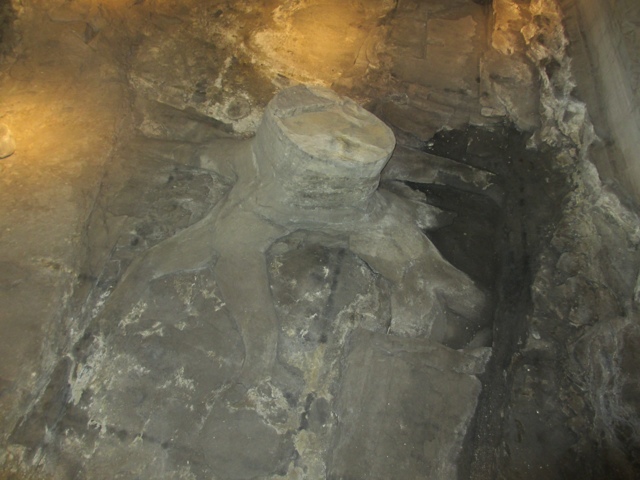
First thing this morning, we got a taxi to Victoria Park to see the Fossil Grove. It was discovered in the 1880’s in a sandstone quarry. Stumps of trees from 330 were found in place, like the base of a primordial forest. They were huge, but all are extinct now. The displays were well done.
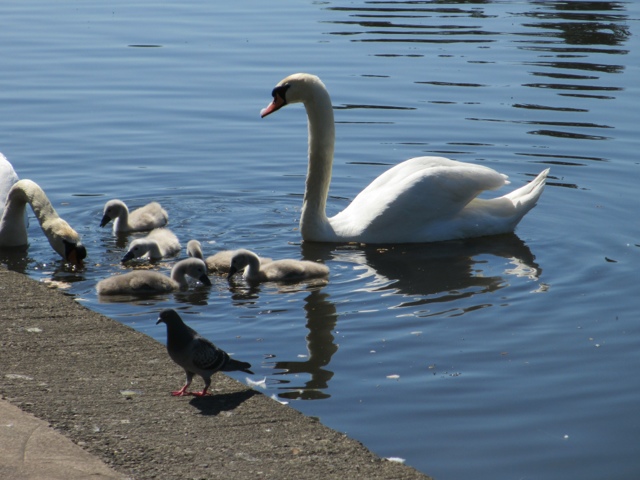
The park itself was lovely!, lots of flowering trees and bushes and a family of swans. 🙂
We then walked halfway back to the city to go to the Riverfront Transportation Museum. Engineering and inventions of all kinds. We spent hours there.
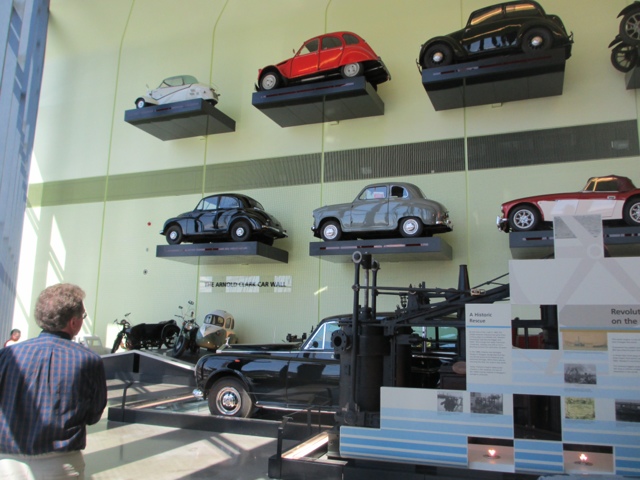
Those are real car, stacked three high on a tall wall.

We walked around the old part of Glasgow and found the old cathedral. Totally Gothic. 
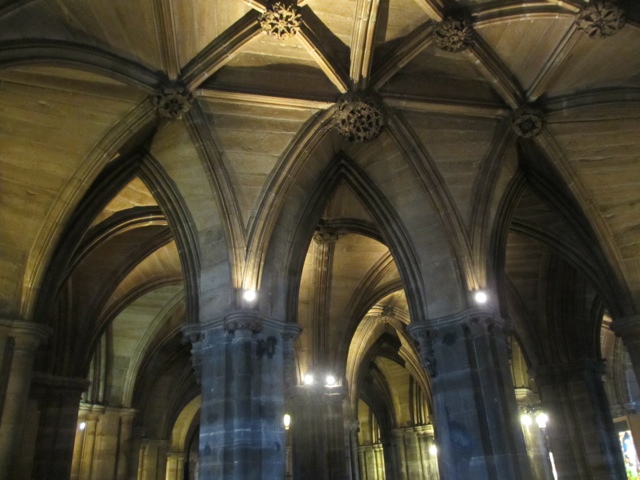
With stained glass windows
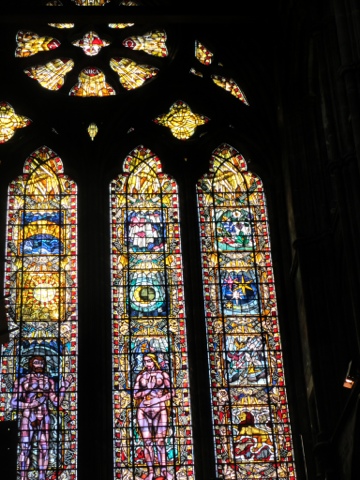
Then we visited the St. Mungo Museum of Religion and Art.
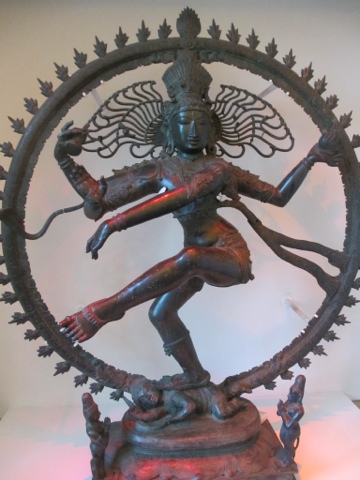
Dinner in an Irish pub and took the train to Edinburgh to sleep. Tomorrow is a travel day. We hope to be in Denver around midnight Sunday night.
Highlands Last Day, sleep in Glasgow

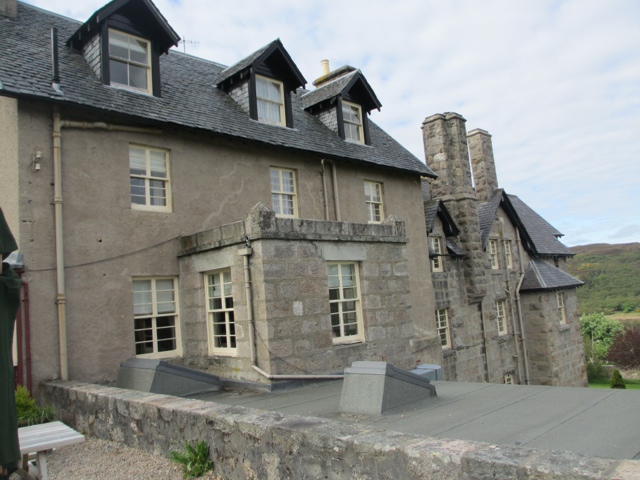
Last morning in Tongue, and Brian went for a walk. It is beautiful, perhaps the clearest morning yet. The oddly shaped mountains visible out the window have no fog around them today. The last three nights we had dinner and slept in an old building on the outside, modern inside.

We slept in the back, older part. Our view out the window included a ruined castle wall on a hilltop.

I was thinking last night about why we do this measuring folds and planes of stress in these ancient rocks. Does what happened here 3,000 to 1,000 (million years ago) matter today? Even in the late 1800’s, scientists recognized that some of the rocks on one side of a big fault looked more like rocks in North America than the rocks on the other side of the big fault. That is fascinating and fun, but important? All I know is that understanding these things makes me feel more human. Perhaps it is similar to how an artist feels, or a musician. I learn geology, because it completes me.

Later….

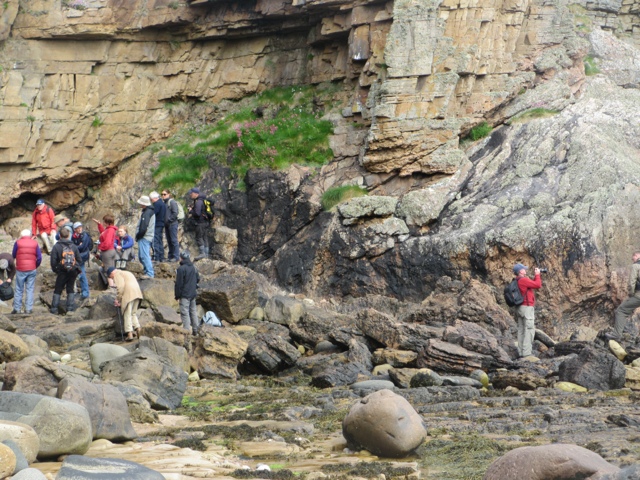
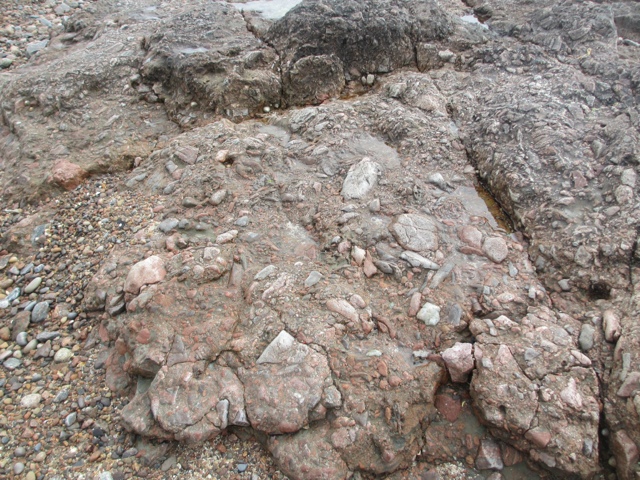
The two stops were both at beaches. The first one, on the North Sea, 400 conglomerate sits on top of the 1000 gneiss rocks.

The cobbles in the conglomerate are rough, not rounded. We walked along the beach a bit to see the contact between these better. Yes, that is Brian off to the right.

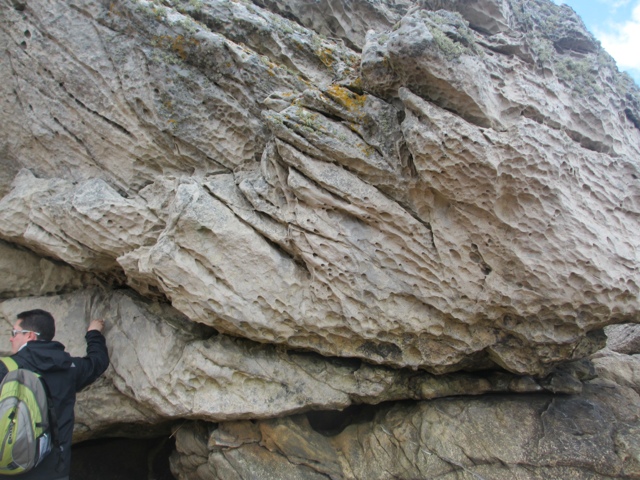
Then we drove to the Moray Firth, the giant elongate bay along the Great Glen Fault, which is also the fault that Loch Ness is on. We looked at grey sandstones that had cool fracture systems related to faulting about 400.

The drive to Inverness was uneventful. We said goodbye to our new friends, were dropped off at the train station and continued to Glasgow.

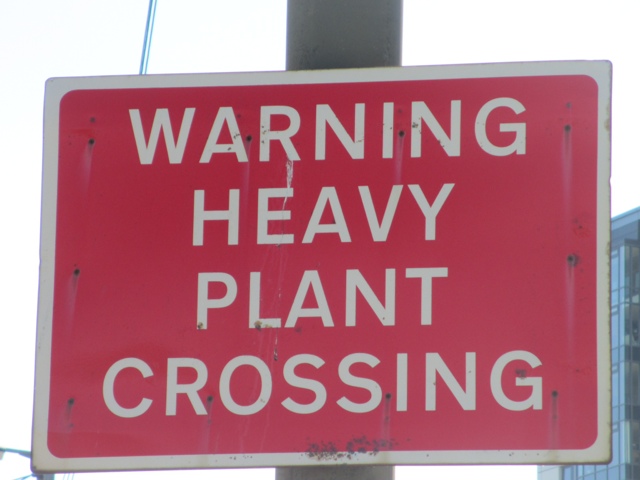
What does this mean? How heavy can a plant get?

Highlands Day 4, sleep in Tongue

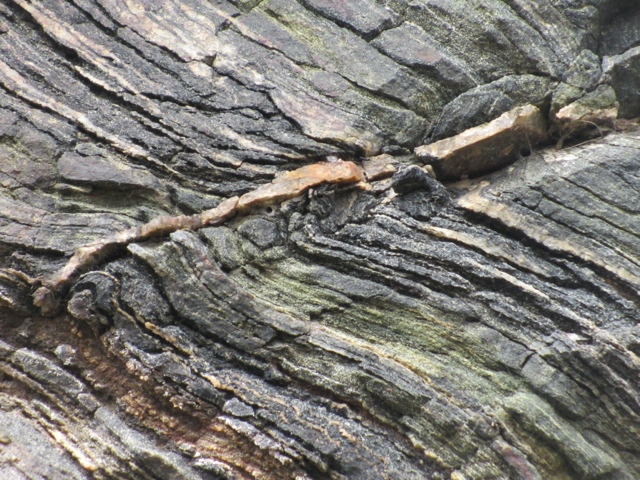
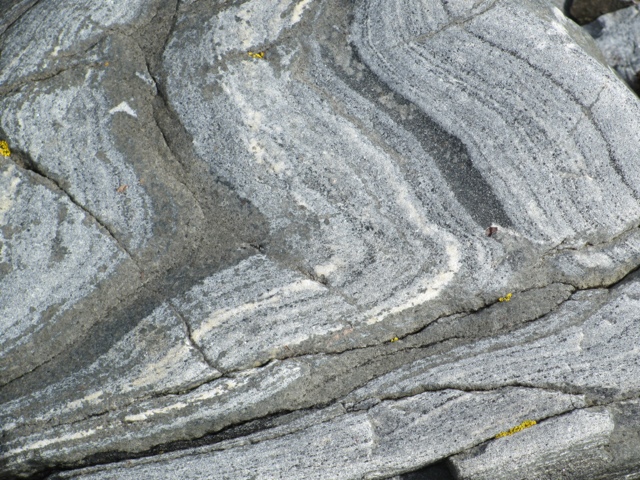
This was the day for folds! Beautiful structures. See how the layers are bent next to the pink vein? It is a tiny example, but the large ones are ifficult to photograph.

This was bigger, but still only the size of a beach ball.

Yet another sheep found me interesting.

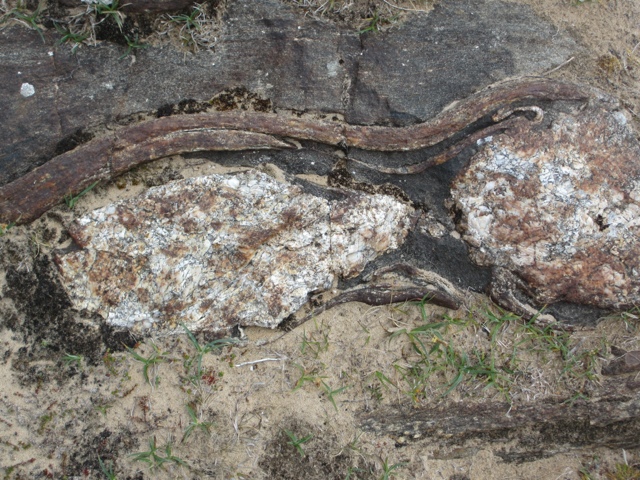
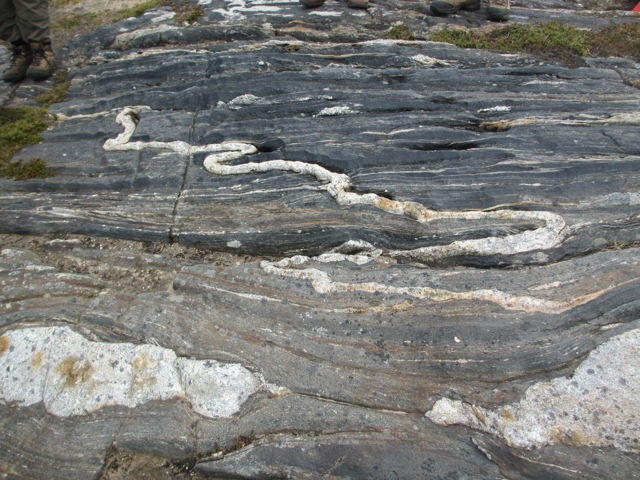
In another area, the veins were stretched and broken apart, looking a bit like sausages on a string.

And here are swirls of a quartz vein within extremely folded layers. And more sausages.

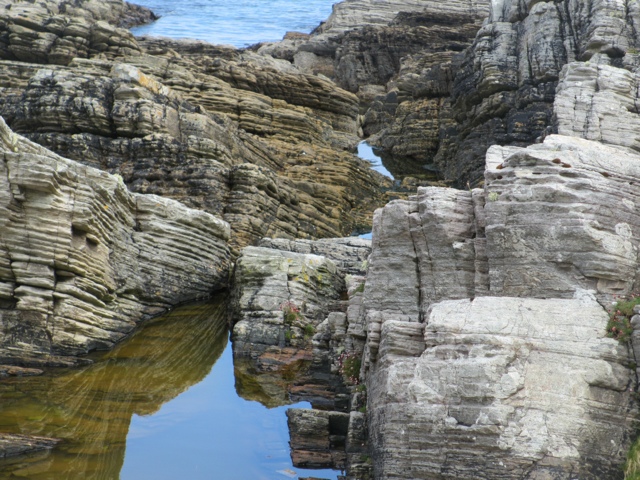
We ate lunch adjacent to this astonishing cove, which has rocks laminated by strain. Then we climbed toward the water to look more closely.

The waves weathered the layers into shapes made by the folds of the laminated layers.

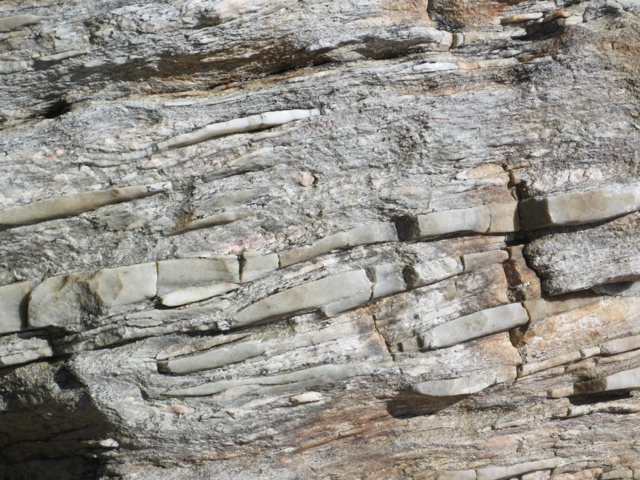
At a different cove, we walked out to see stretched pebble conglomerates. The idea here is that this was once a sedimentary rock which was pushed so tightly that the pebbles became elongated. Each of the  whitish lenses are likely pebbles from the original rock. Kind of like extremely elongated sausages from the previous pictures.

Highlands Day 3, sleep in Tongue

I was too tired to write last night. I was asleep before Brian came back to the room! Embarrassing, that, but the truth due to the fact that I have not been exercising enough at home.

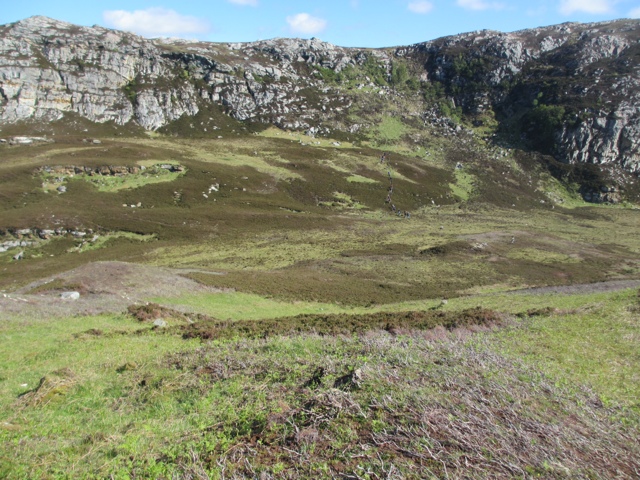
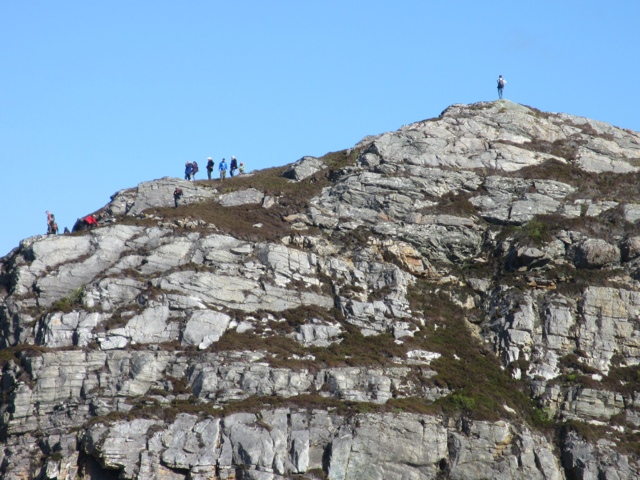
Yesterday was a day looking at and climbing to faults. There are minor folds associated with the faulting. Our first stop (Kempie) was to look at where the idea of thrust faults came to the geologists of the 1800’s. We hiked upwards through heather to view an asymmetrical syncline, a large fold that is vertical on one side and slightly dipping on the other.

We kept climbing and climbing. I learned what a bog feels like, having accidentally tripped into one. They can be quite small scale. Also, I think I learned what the moss that changes to peat looks and feels like. When you fall on that, it is quite spongy and damp – doesn’t hurt at all.

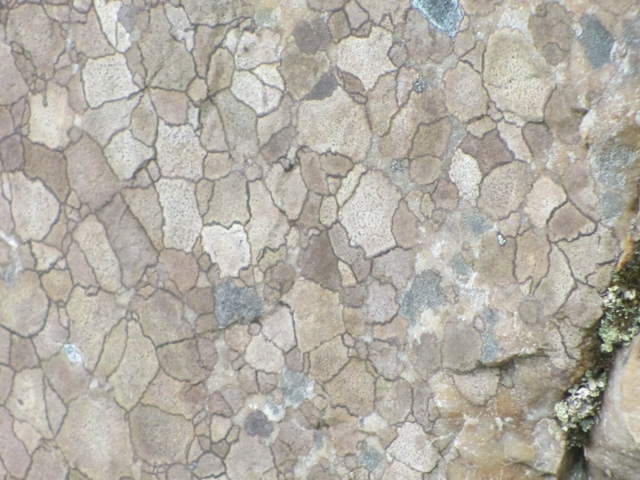
Part of what helped the geologists so long ago are “Pipe Rocks” which contain cylindrical burrows made by worms about 600. When the rocks these fossils burrows are squished or stretched or folded, the cylinders are as well. They are much easier to measure than rock grains, and those measurements help tell the rock’s story. They don’t photograph we’ll, but they attract an aggressive form of lichen that makes beautiful mosaic patterns on it.

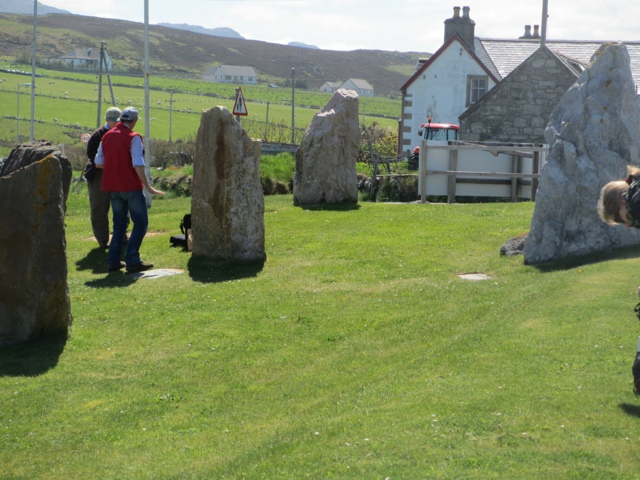
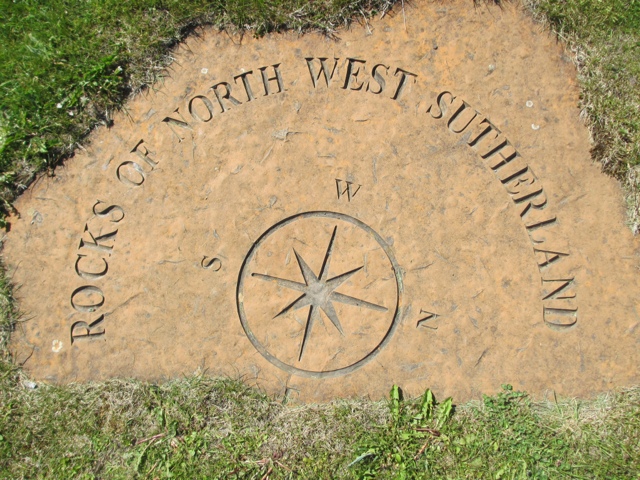
Lunch was at another Geopark site, where they cleverly created a Stone Henge for geologists.

Each of the rocks was labeled with it’s name and age. This was in the center.

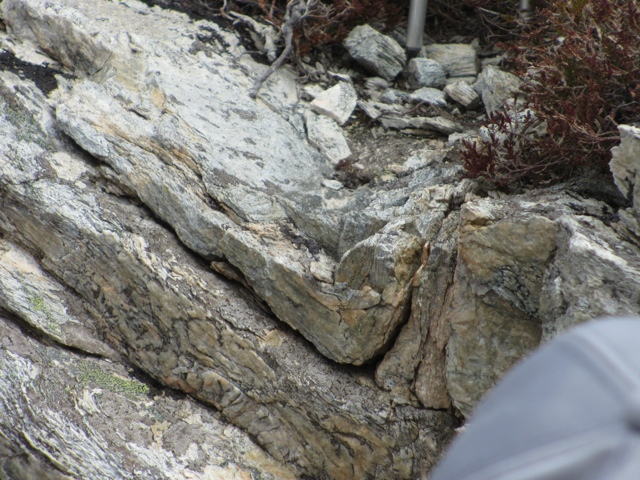
We saw all kinds of beautifully folded rocks.

I stayed on one side of a valley while most of the other participants went across to look at more cool rock. But I was done for the day and soon went to sleep.