The Maori culture and its history are a huge part of New Zealand. Many names of towns, signs, and other information can be found in the language, which has been one of the official languages of NZ since 1987. Of course, the relationship between the Maori people and the colonizing Europeans has not always been great, but it does seems like overall the two cultures try to understand one another in earnest. The Maori culture developed over time from Polynesian settlers arriving on the islands sometime between 1250 and 1300 CE. European settlers did not arrive until the mid 1800s.
We wanted to learn more about the Maori culture, especially since it was where the art of poi originated. Being outsiders, it is difficult to reach into another culture without coloring it with our own bias. We attended a tourist attraction called The Living Maori Village knowing full well that it could be just as exploitative as some of its counterparts in America. However, we were pleasantly surprised. The set up may have been a bit cheesy for the performance, but the performers all clearly loved what they did. All we can hope is that through sharing their culture, they can educate others without watering it down.
We saw traditional dances, a love song, a fierce Hakka, and poi and stick dances. The performances were all incredible, and we took few photos, preferring to soak it all in.
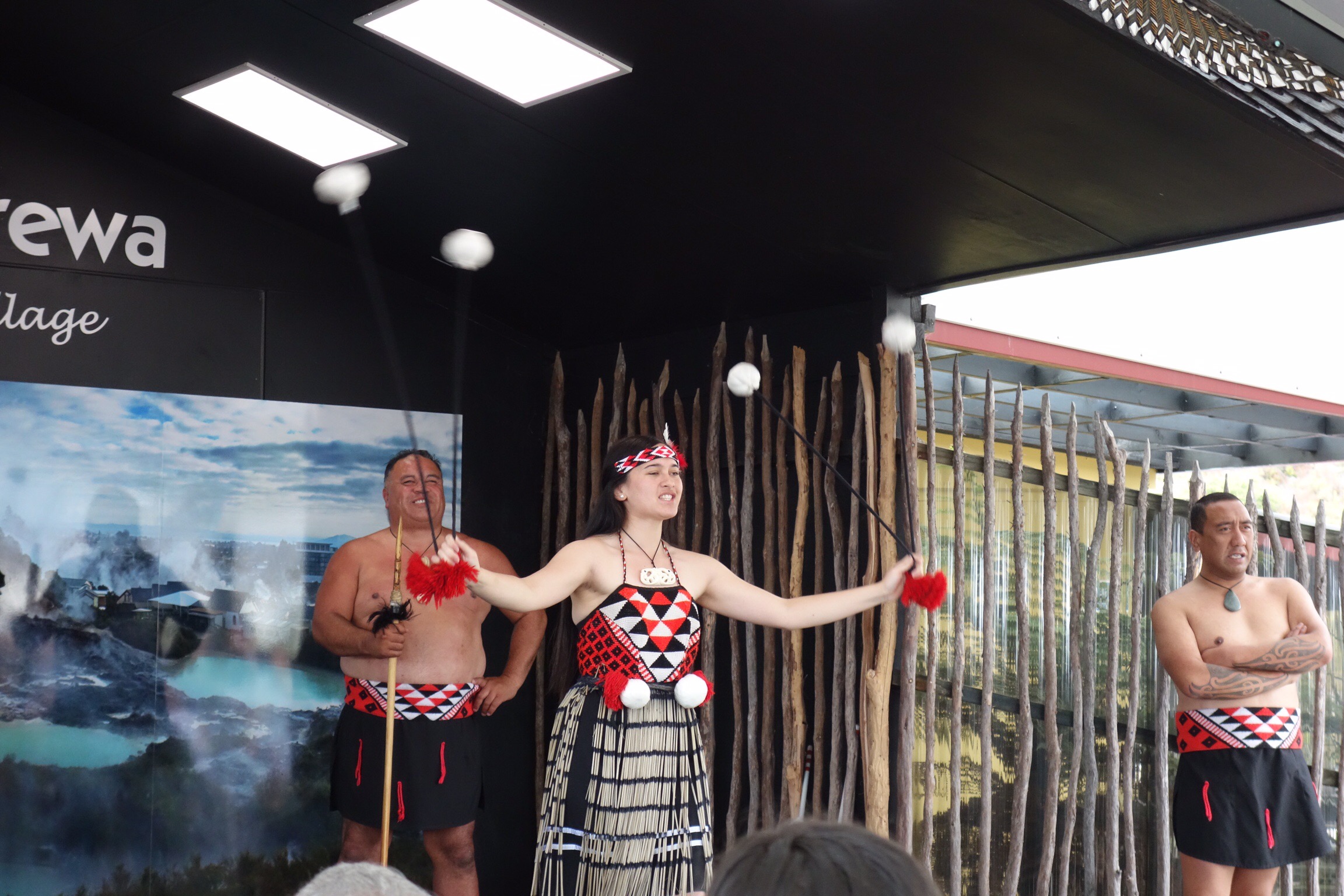
Short poi were used solely for contact, to beat out different rhythms. Long poi were used in movements more recognizable to modern flow art, and were evocative of specific animals and other natural or spiritual phenomena. Both poi and stick were arts of training, and improved dexterity and coordination as well as being beautiful to watch.
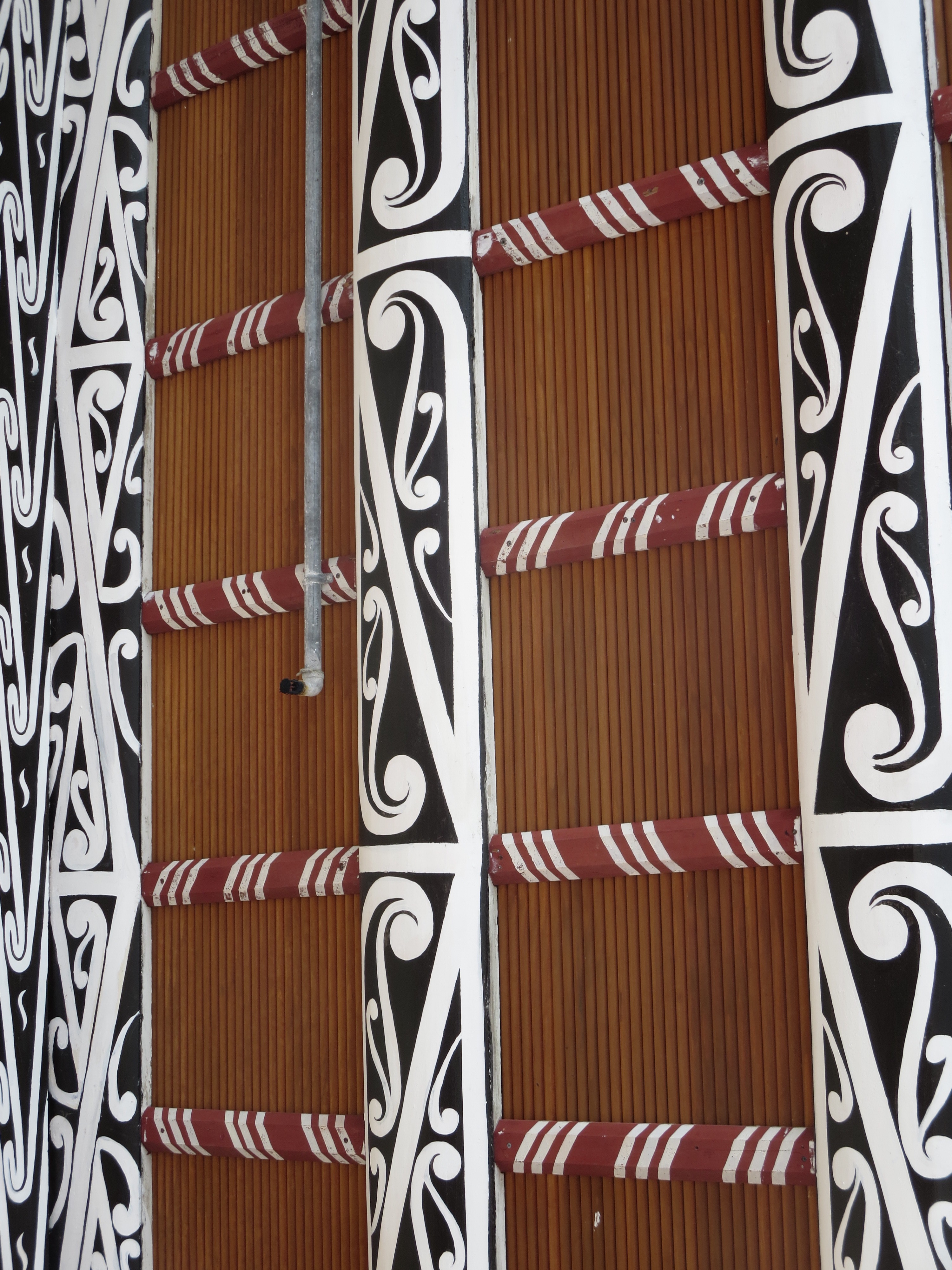
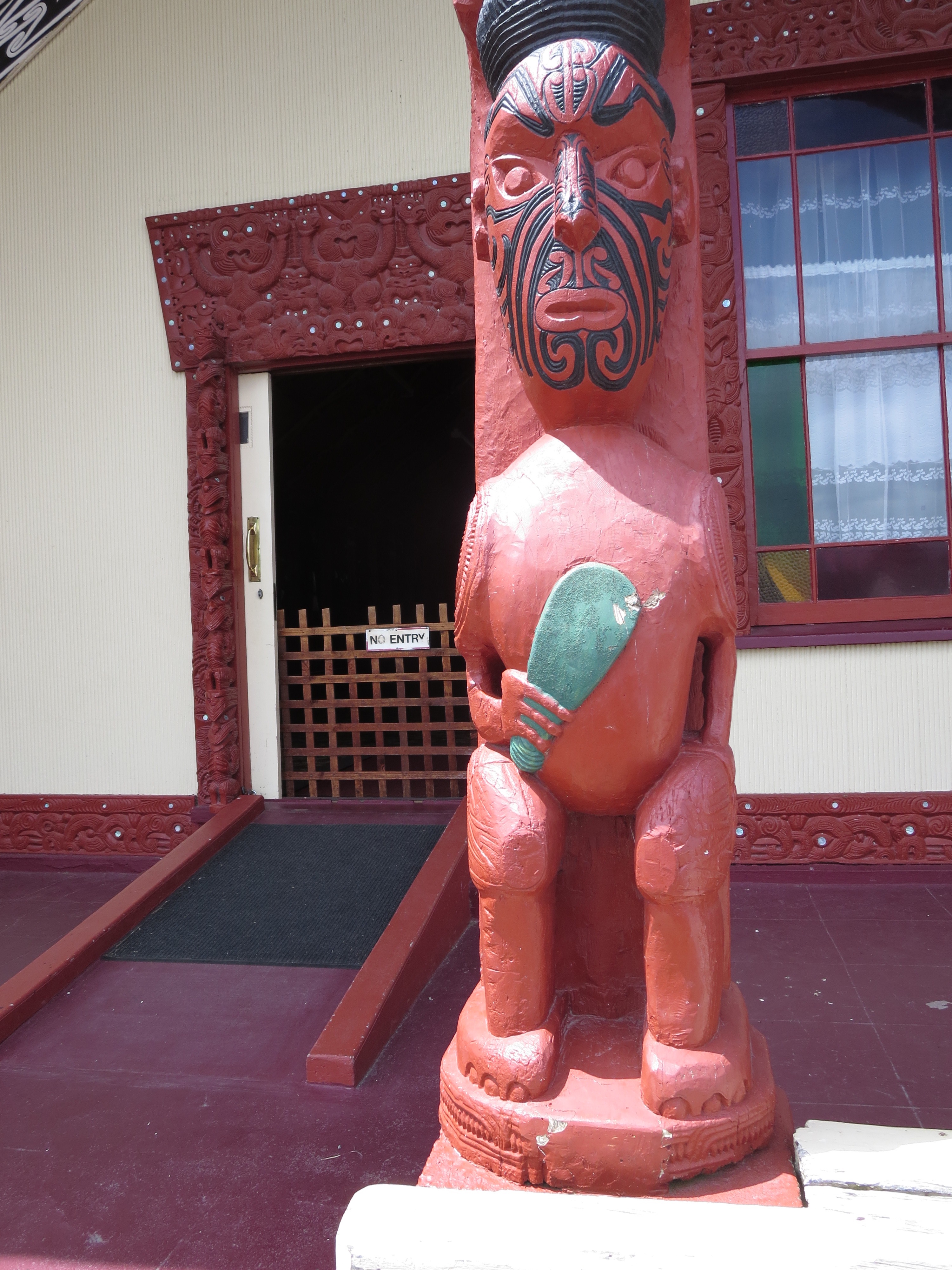
The village itself displayed mostly post-European arcitecture, although Maori carvings often adorned the buildings. The best carvings were reserved for the Ancestral Meeting House, where they told a story of a tribe’s history.
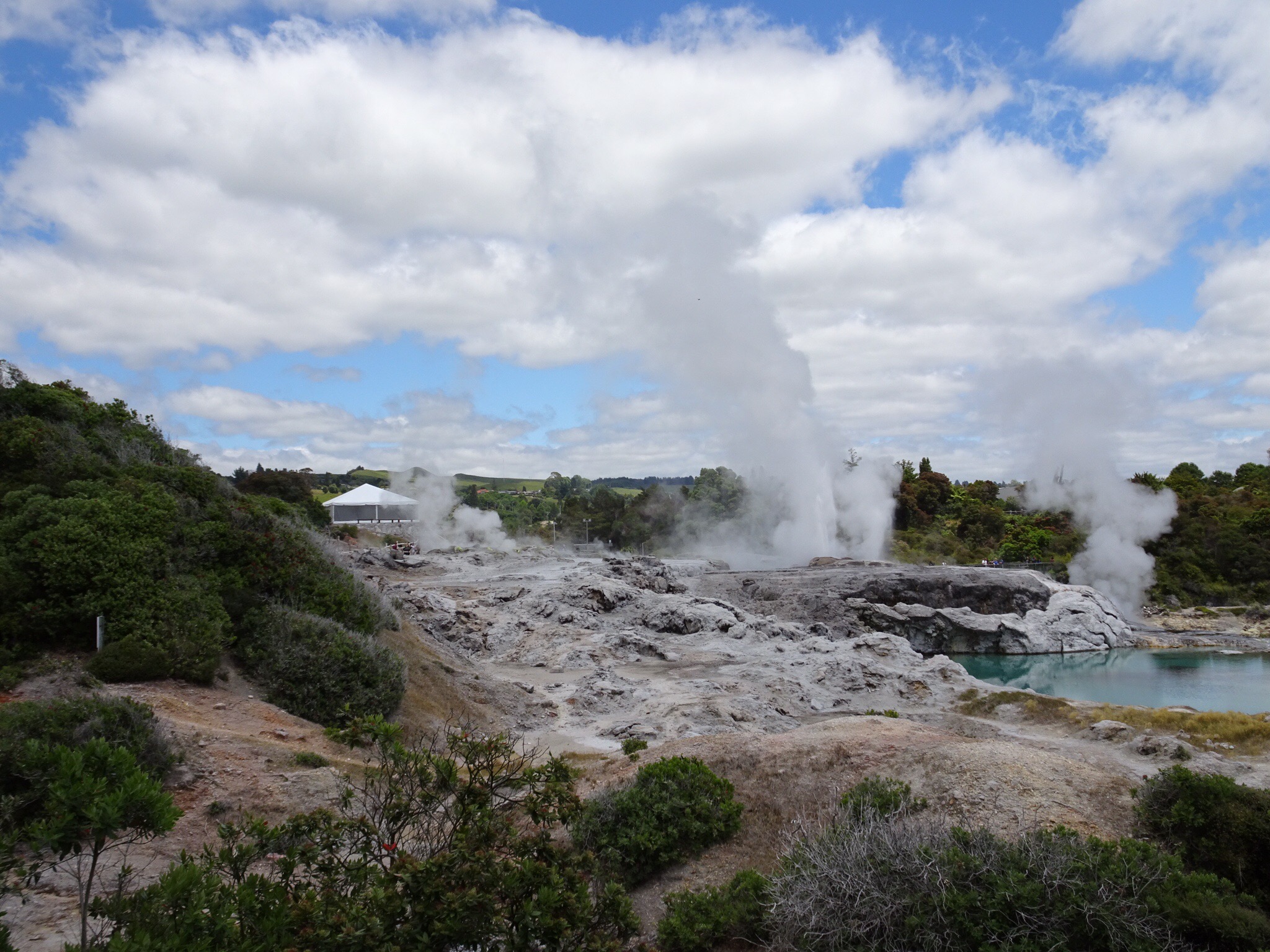
The Maori used the resources around them. This tribe developed around a geothermal hotspot. The heat from the pools was used to cook food, as well as for bathing and washing. The entire village seemed to fill with steam as we wandered about.
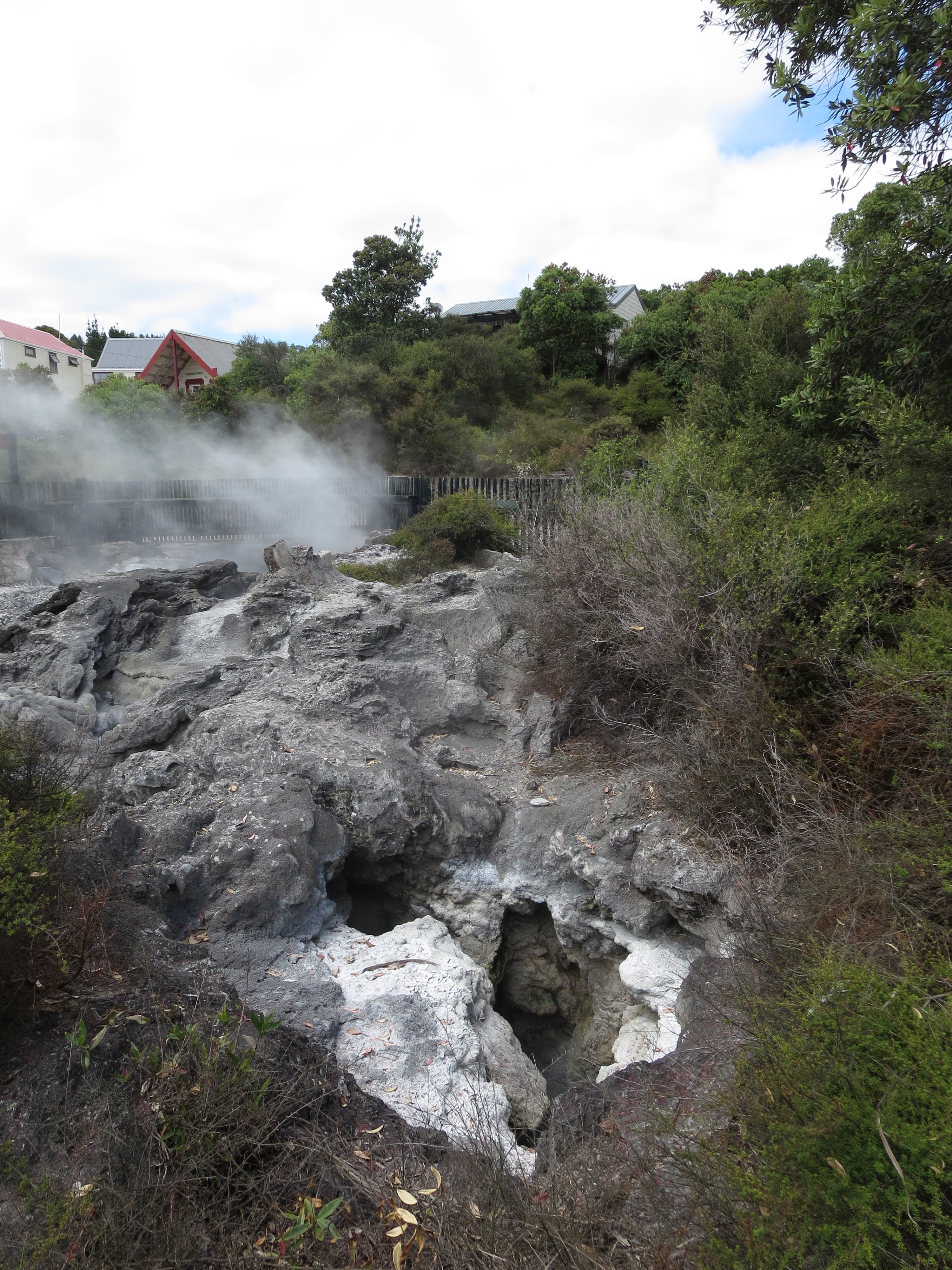
There were also some geysers.
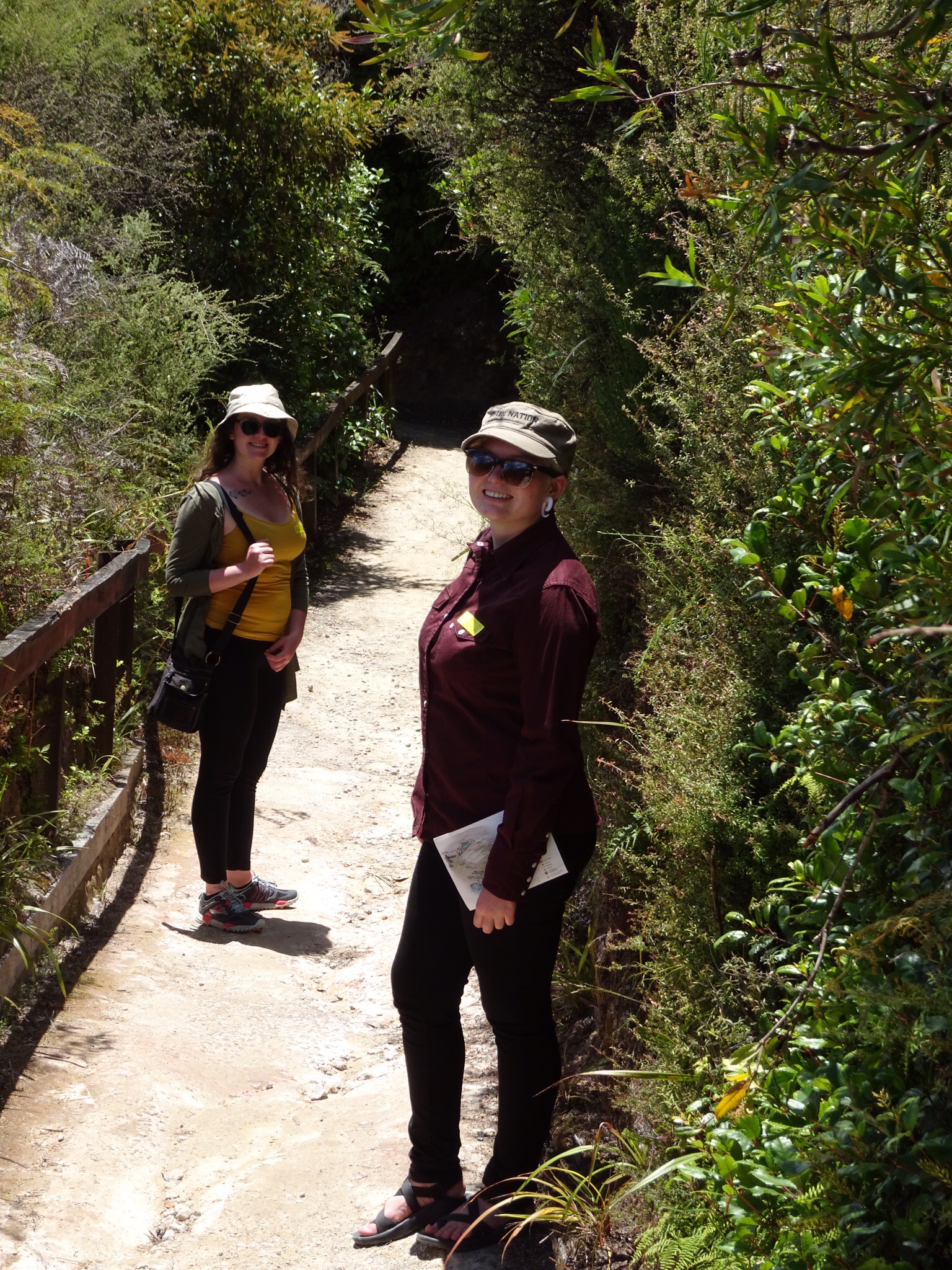
We took a short hike.
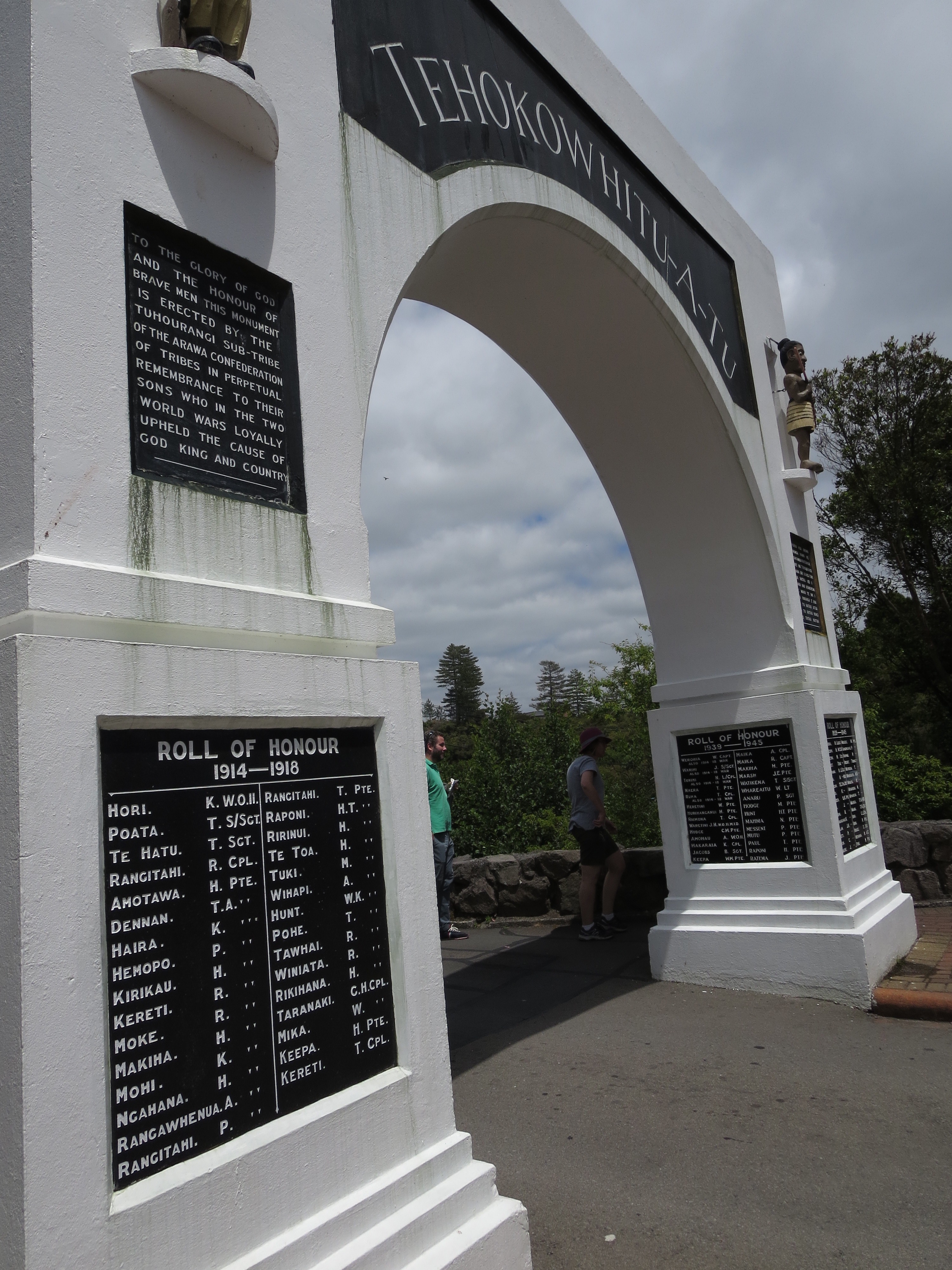
When we left the village, I took one last look at the entrance. The arch is a war memorial.
 Bunch of Geeks go Traveling