On New Year’s Eve we visited New Zealand’s premier museum, Te Papa Tongarewa (Our Place). The museum covers the geology, natural history, and cultural history and art of the country. We learned that many animals and plants have become extinct since the islands were settled by Maori and Europeans who introduced many non-native species that changed the ecosystem. It is apparent that scientists do not have complete knowledge of native vs non-native plants and animals, but efforts are being made for more complete understanding.
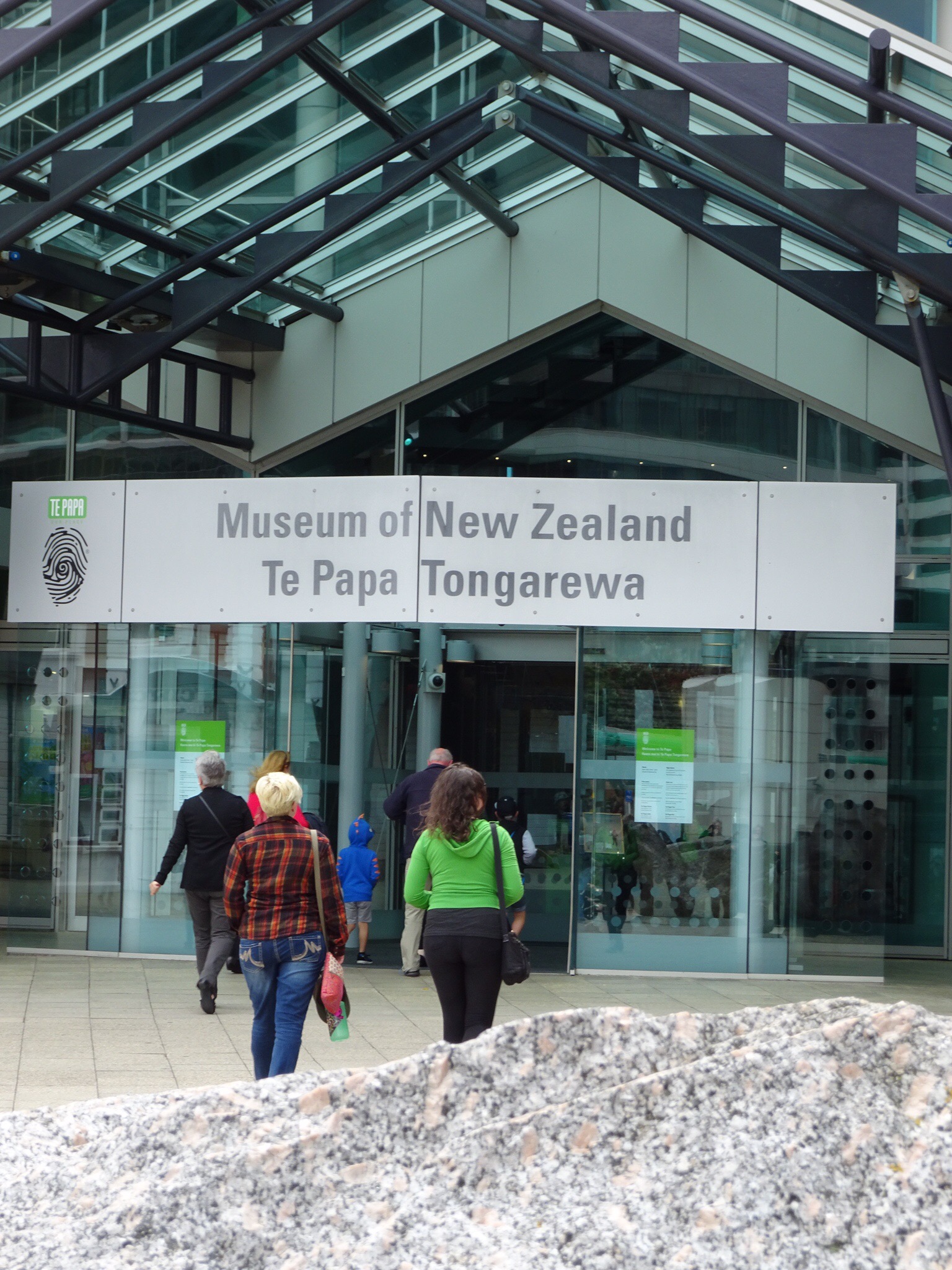
We found out that a bird that we saw and heard in Rotorua on the 27th is called a Tui; its unique call is enabled by two voice boxes! We walked over a rope suspension bridge outdoors and went into an artificial cave complete with stalactites and stalagmites as well as glow-worms (see entry for December 28th for the real thing). A giant squid was also on display, encased in resin.
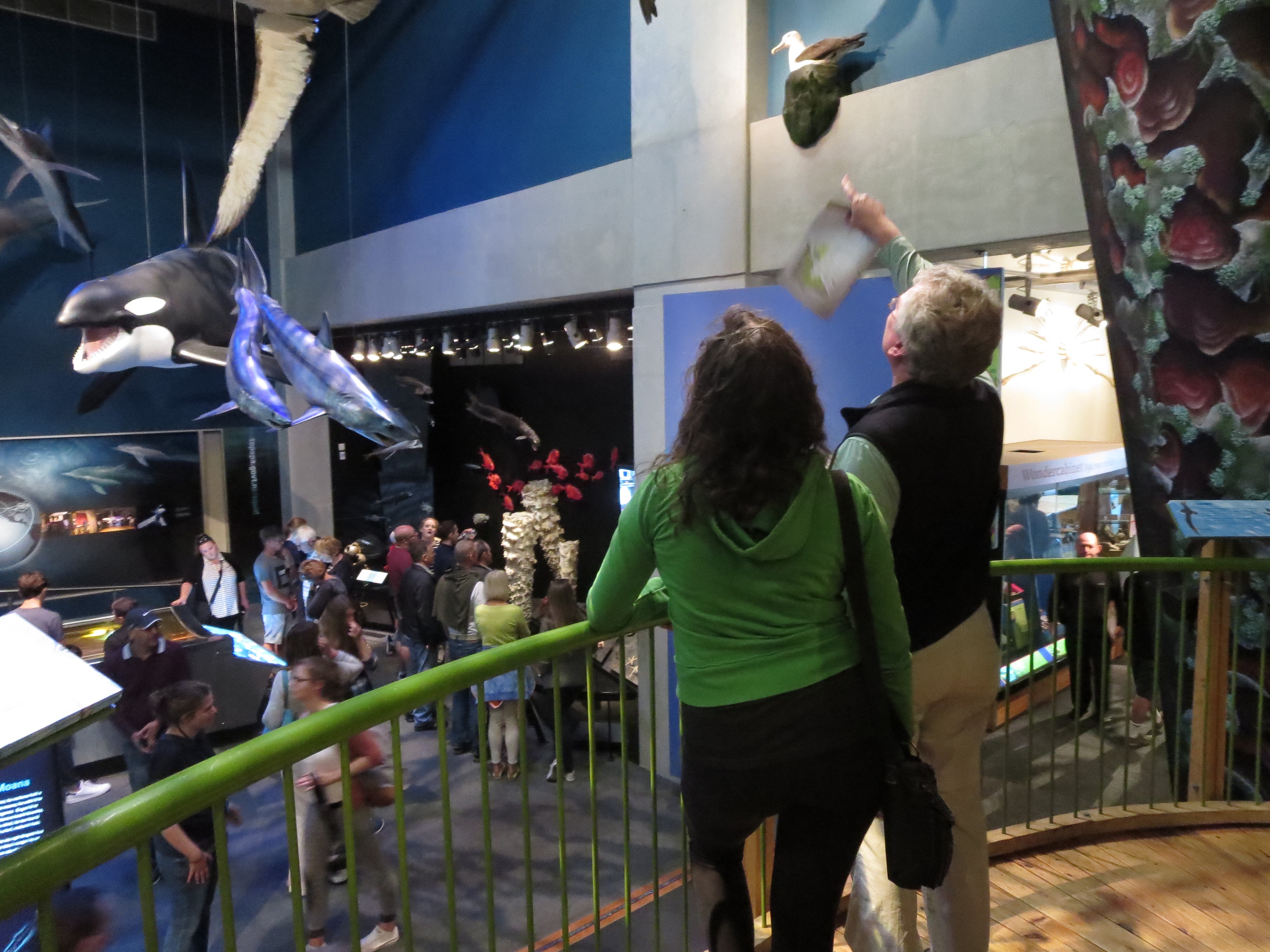
When European settlers arrived in the late 19th century they brought many plants and animals with them. This included farm animals and the grasses to feed them. They proceeded to cut down the native forest and created large farms and stations to raise cattle and sheep. The transformation of the land to accommodate these industries happened quite fast; the settlers even imported grasses to stabilize coastal sand dunes.
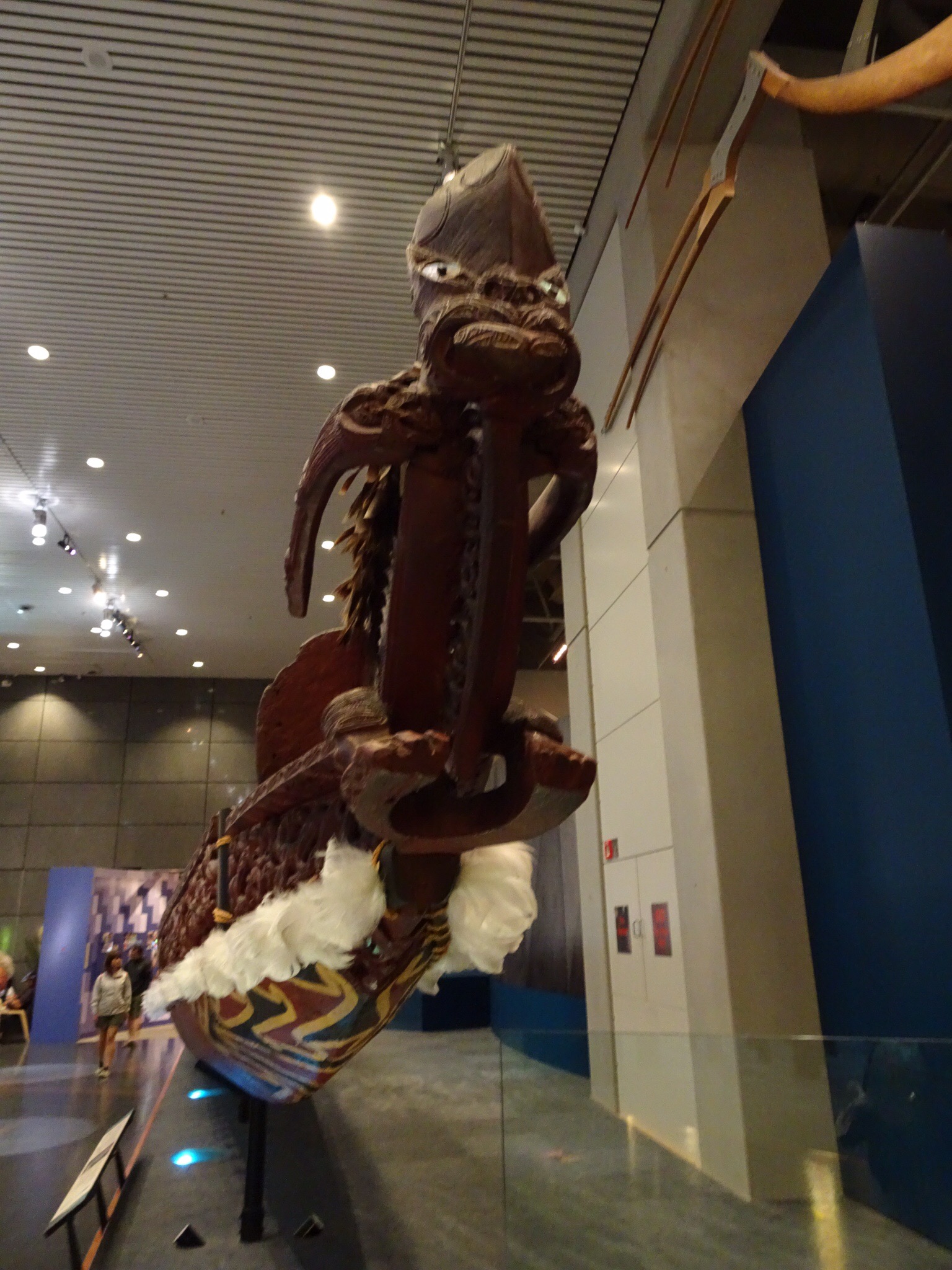
A major portion of the museum is devoted to Maori history and the conflicts between these “indigenous” tribal people and the later settlers. A treaty signed by representatives of England and many tribal leaders established a peaceful coexistence but was much later determined to have unfairly moved the Maori off of their lands. These disputes are still being settled today. The Maori language and art exhibits were quite extensive and many Maori were present as both visitors and docents.
*****Written by Brian*****
 Bunch of Geeks go Traveling