Starting just north of Strasbourg, the Rhine River becomes the border between Germany and France. The cruise director had all kinds of jokes about crossing borders on the ship!
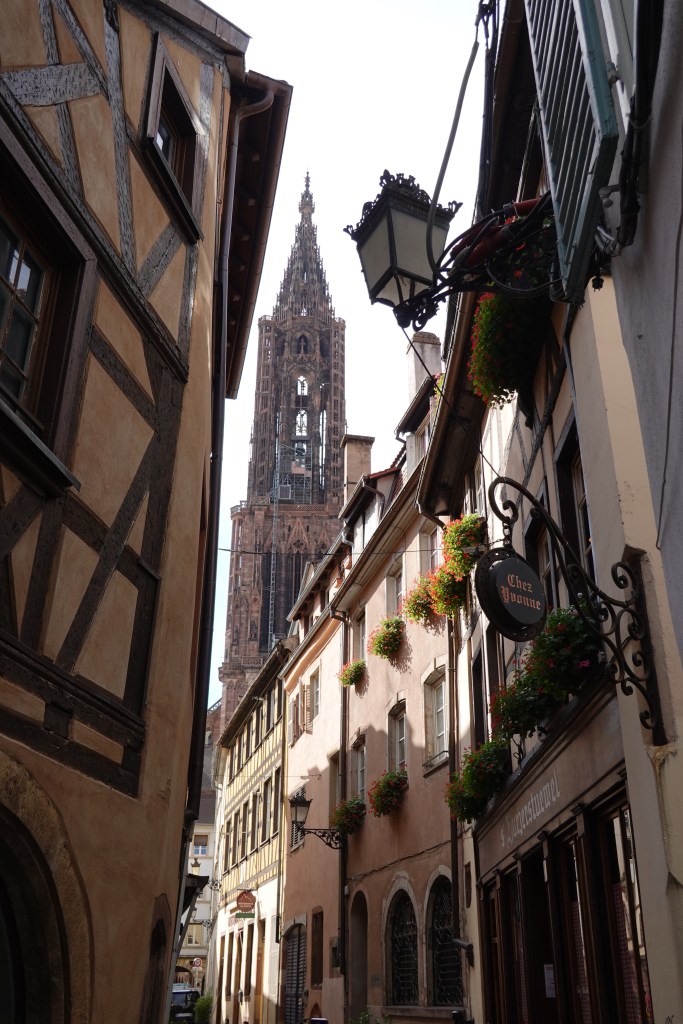
The cathedral is the tallest building in town; by decree no other buildings can be made higher than half the height of the cathedral spire. You would think that would make the spire easy to see from anywhere, but in actuality, you had to be on certain streets or alleys to see it at all. Fortunately, the tour guide knew all the right pathways.
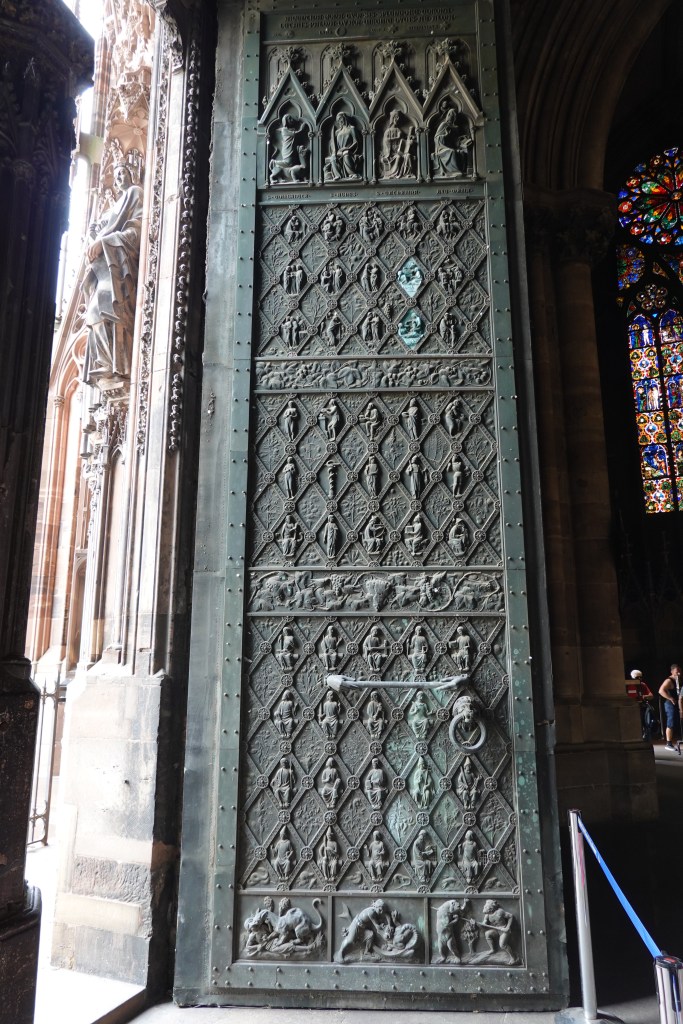
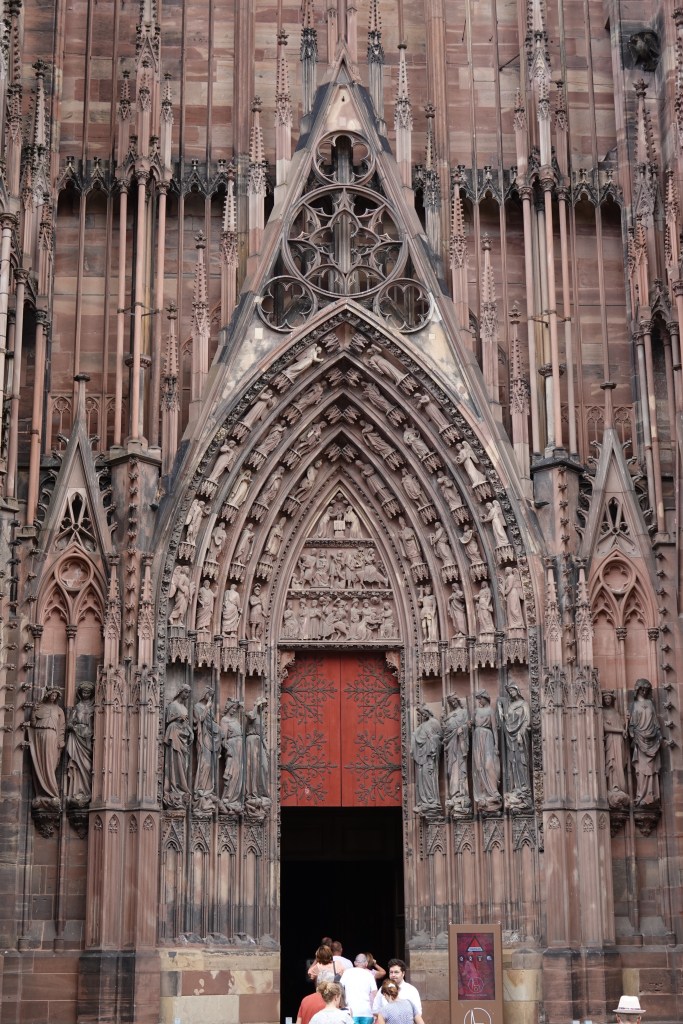
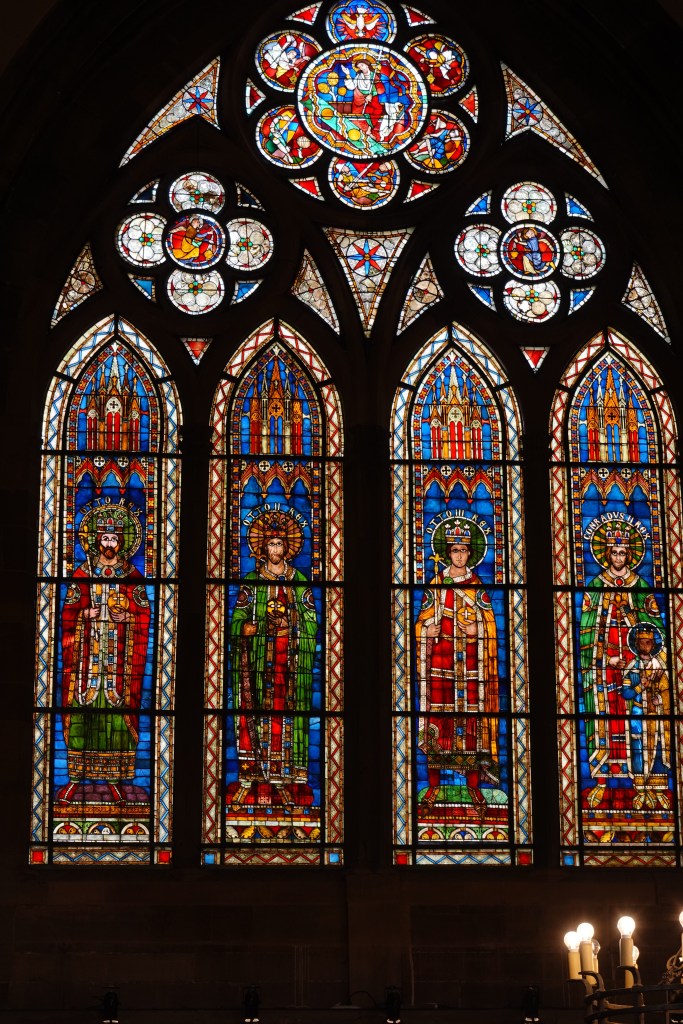
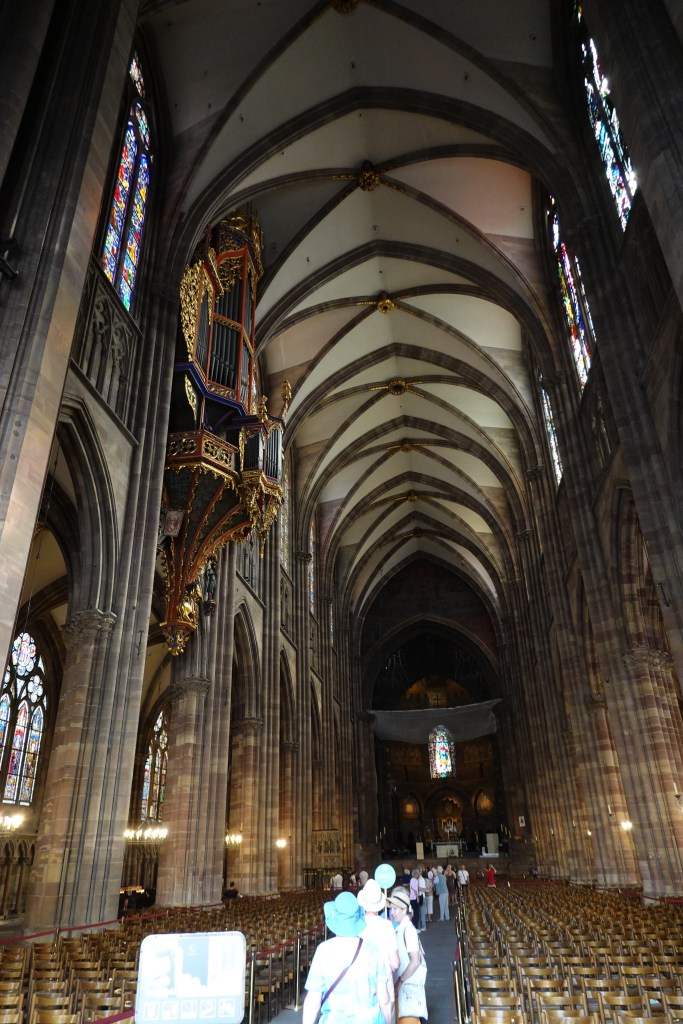
And, the cathedral is quite beautiful. Gothic and Romanesque architecture are seen in its structure. Most of the stained glass windows were taken out of the church during WWII, and hidden in the basement of another structure, so that most of the stained glass is original – such intense colors.
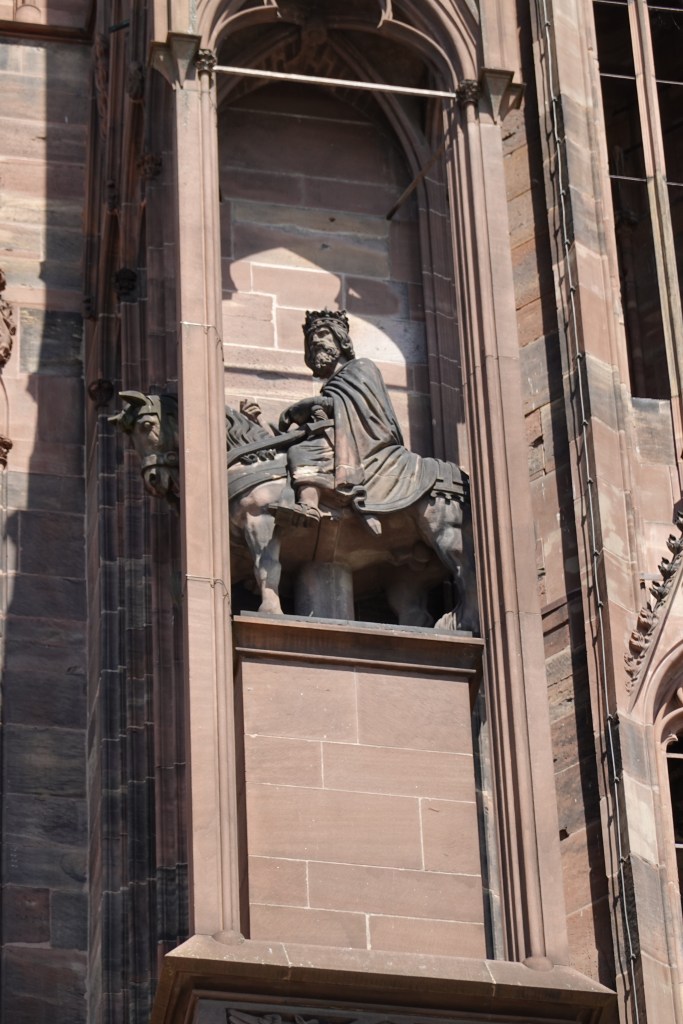
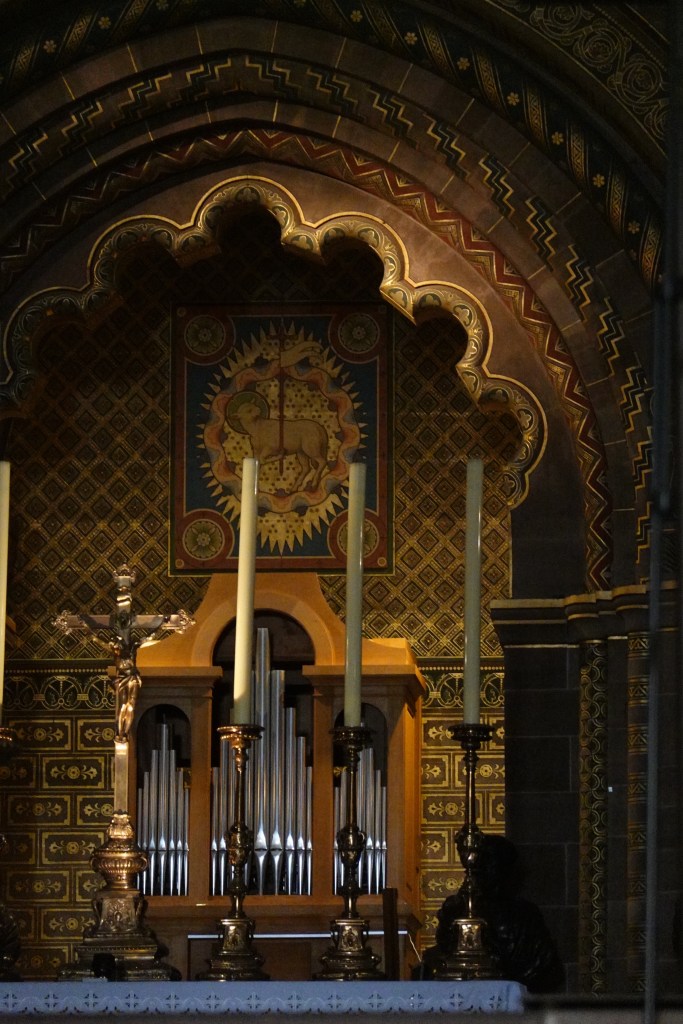
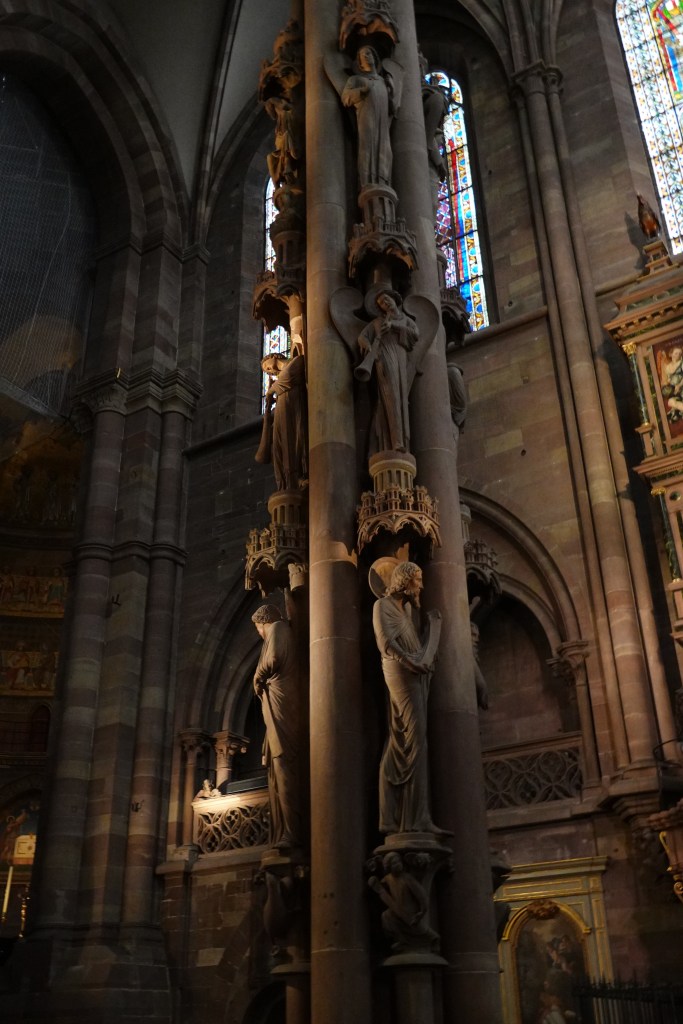
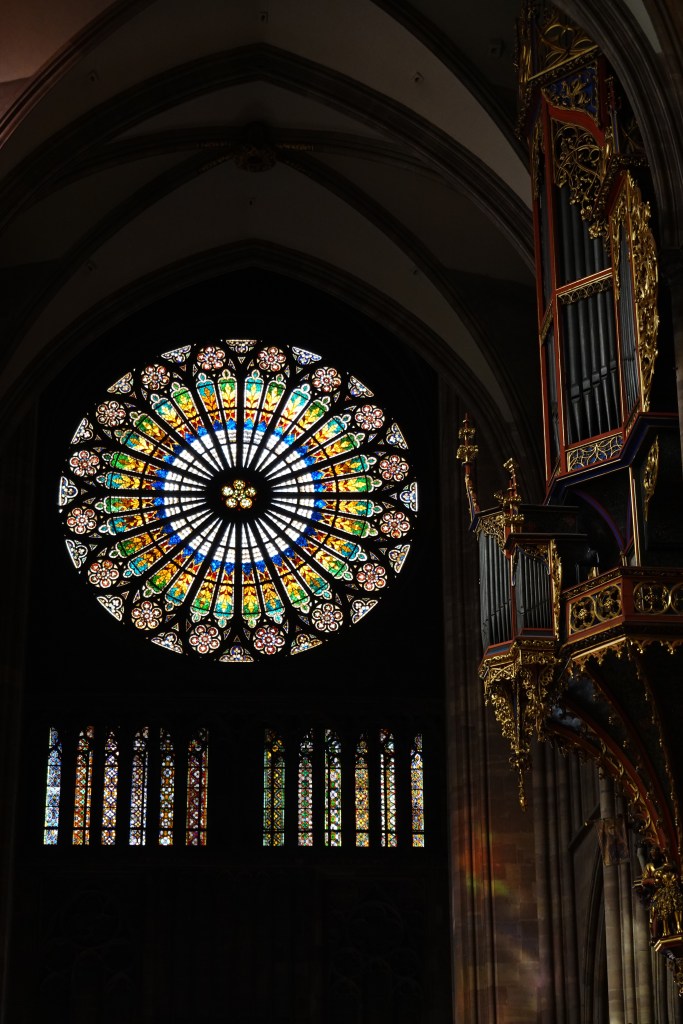
The tour guide mentioned that their cathedral is older and taller than the Notre Dame in Paris, and the one in Strasbourg has a larger flower circular window as well. People sure do like to be competitive.
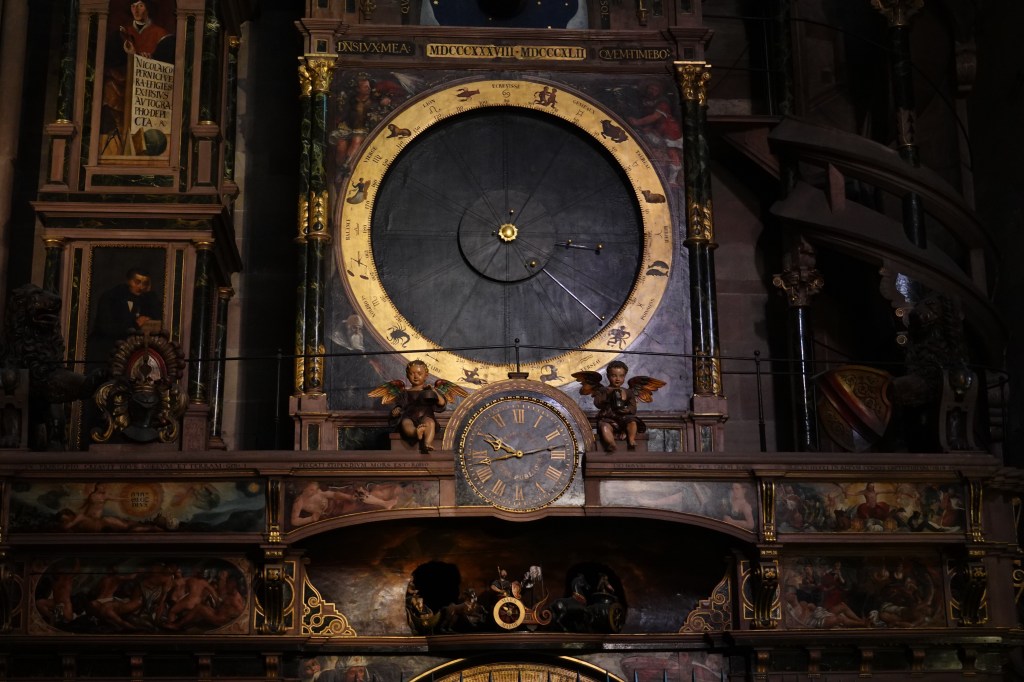
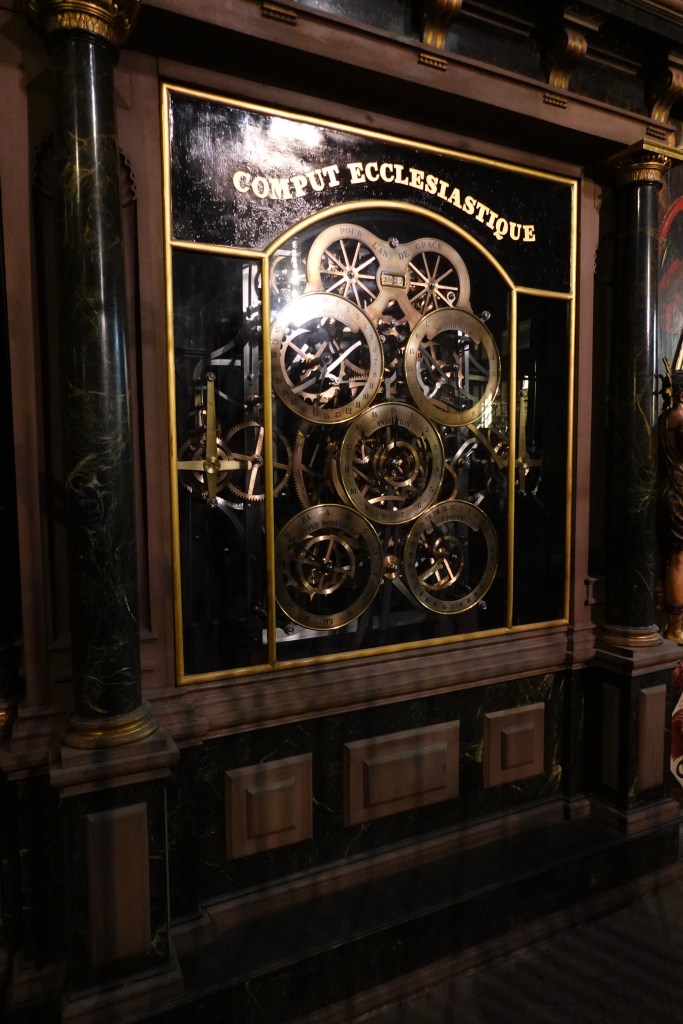
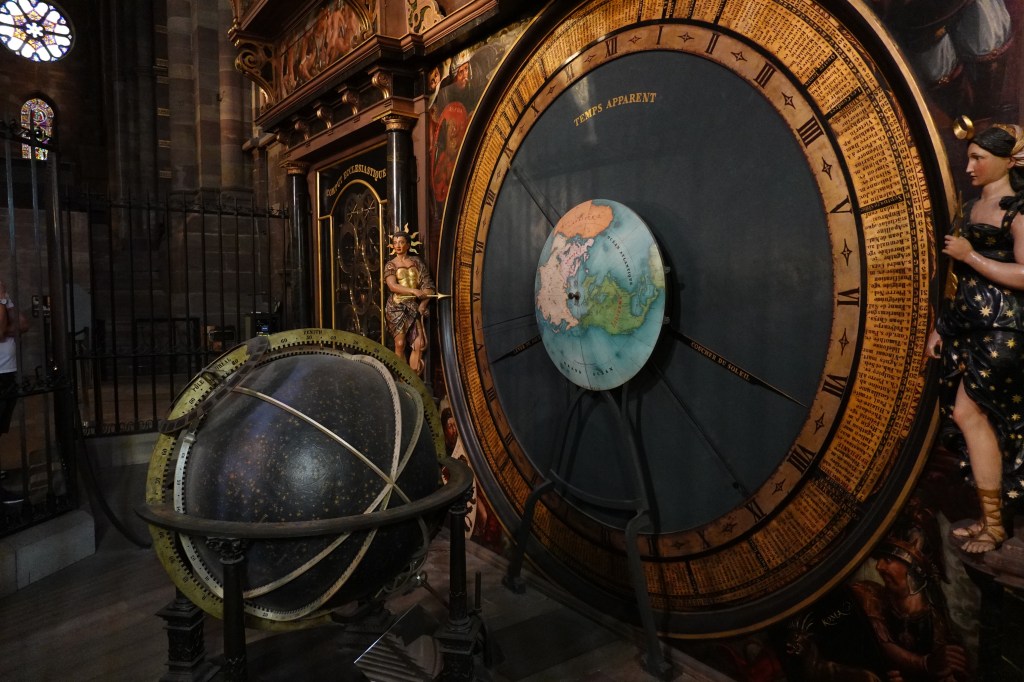
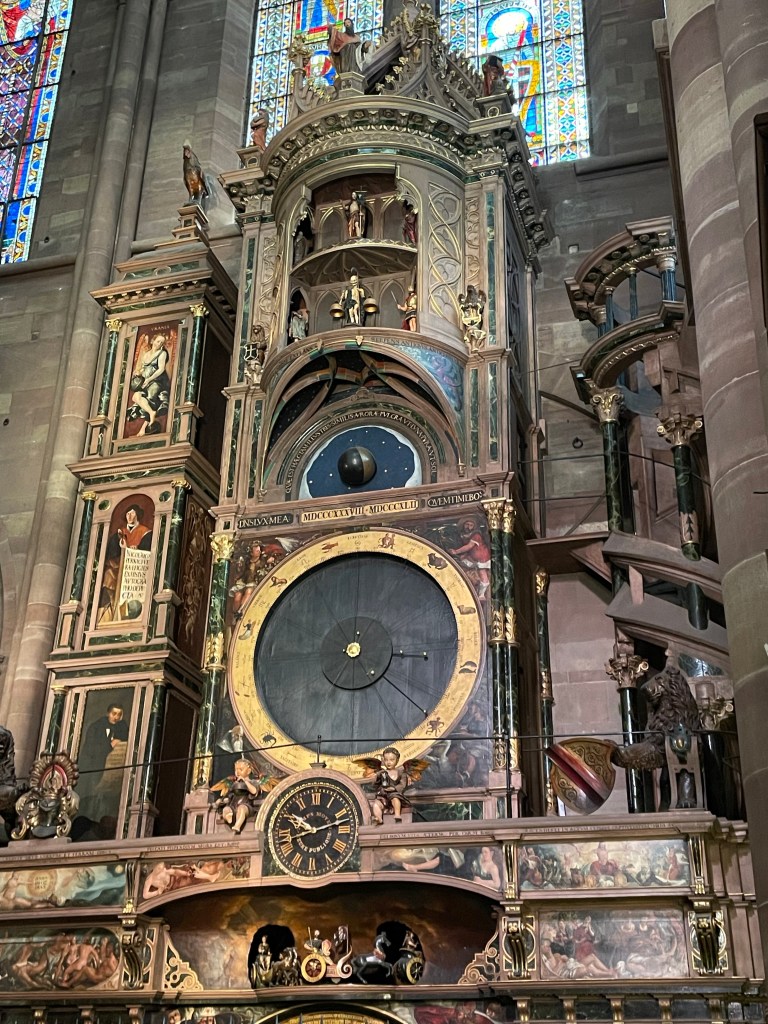
Clare’s favorite part of the cathedral is the astronomical clock, huge, complex and still working. It showed the placement of the planets, the moon and sun, where on Earth is in night and where in daylight, Zodiac signs, so many scientific things. And it had puppets (characters representing stages of life) walking past the death every 15 minutes: first a child, next a young man, then an old man. For the hour, different puppets moved higher up. The little angels adjacent to the base also moved every quarter hour, one turning an hour glass and the other ringing a bell.
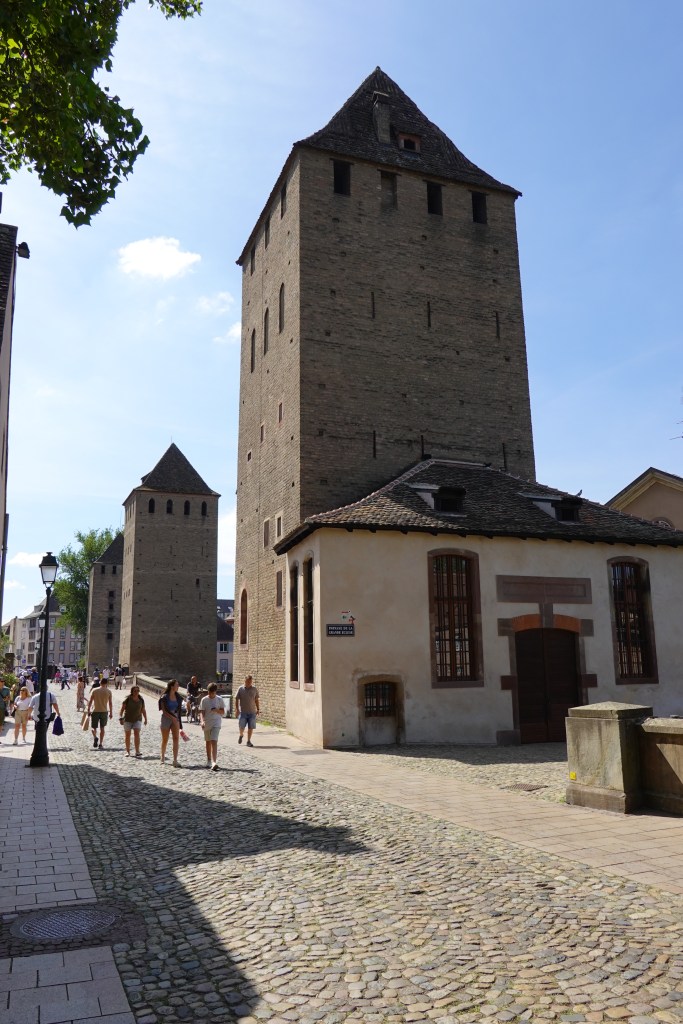
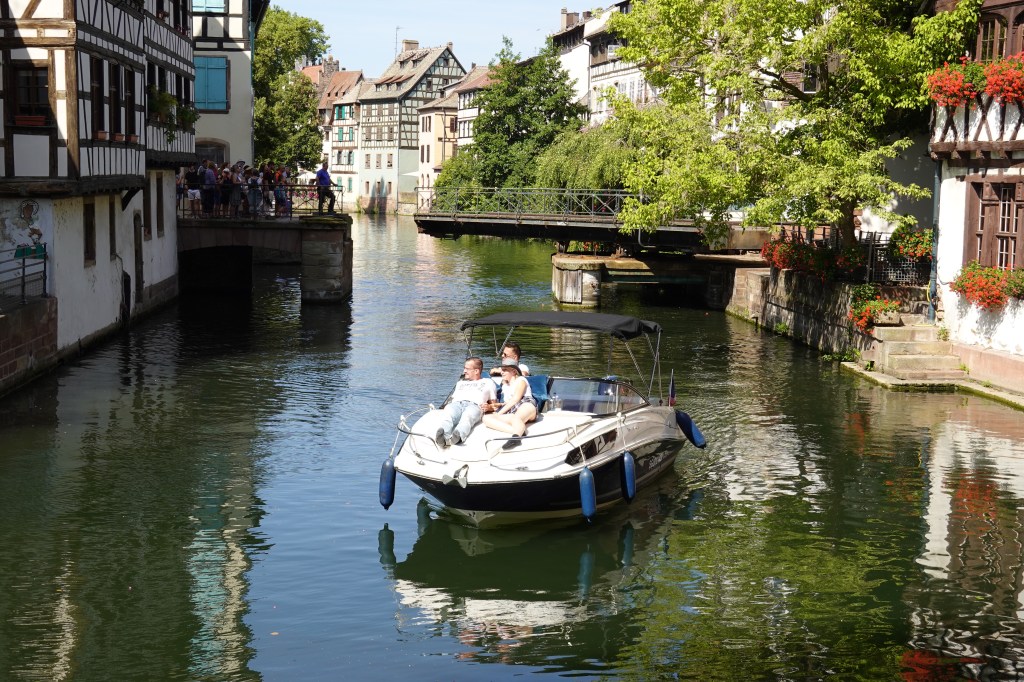
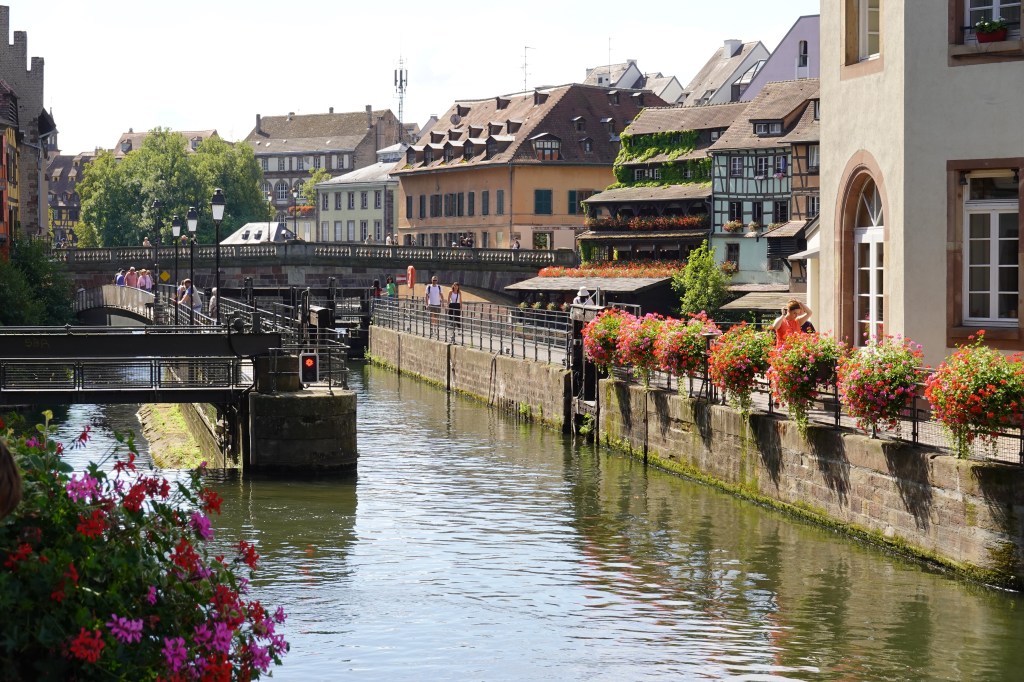
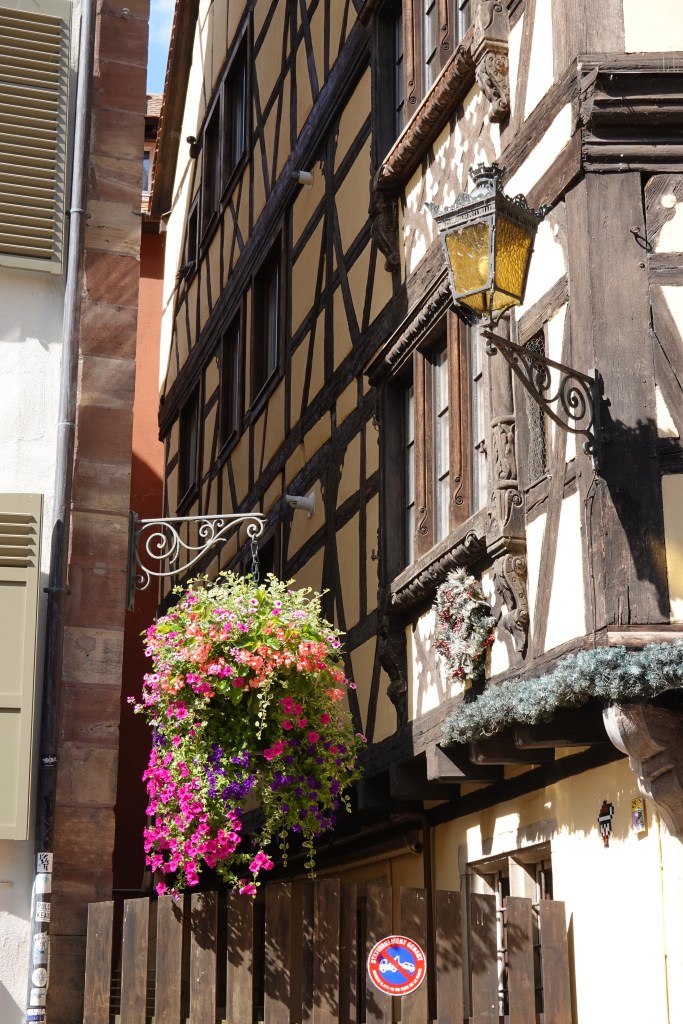
Lots of canals around Strasbourg are decorated as you would expect in France. Some of the bridges rotate out of the way to allow boats to go at prescheduled times.
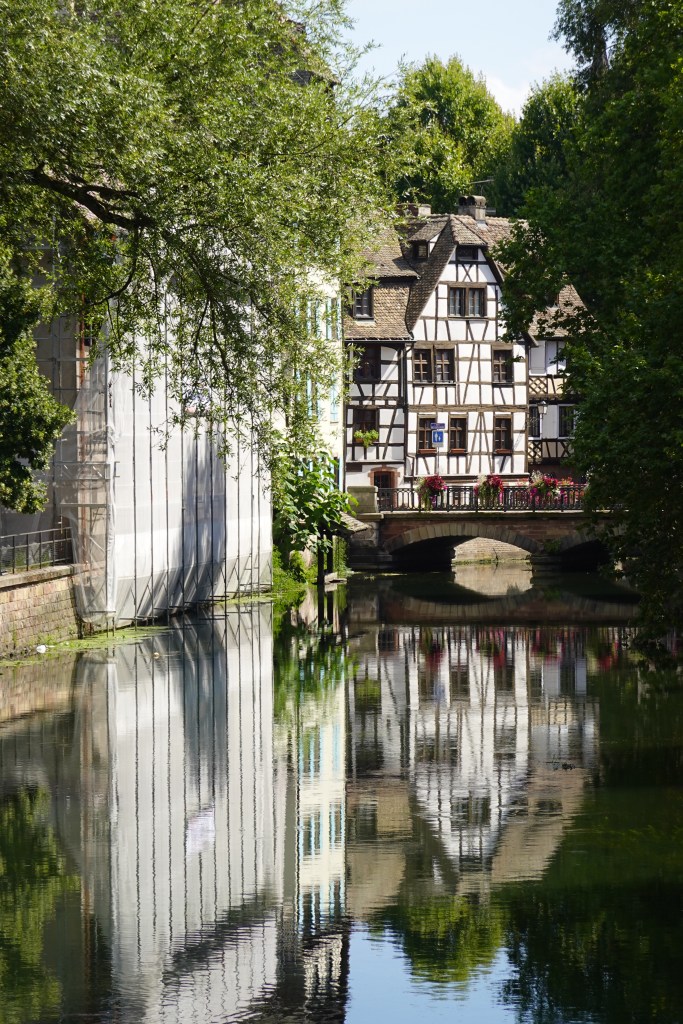
The town is very much a mix of French and German. Our tour guide indicated that most of the people consider themselves European rather than one or the other, because ther parents and grandparents had to change nationality and religion several times in order to stay in the town.
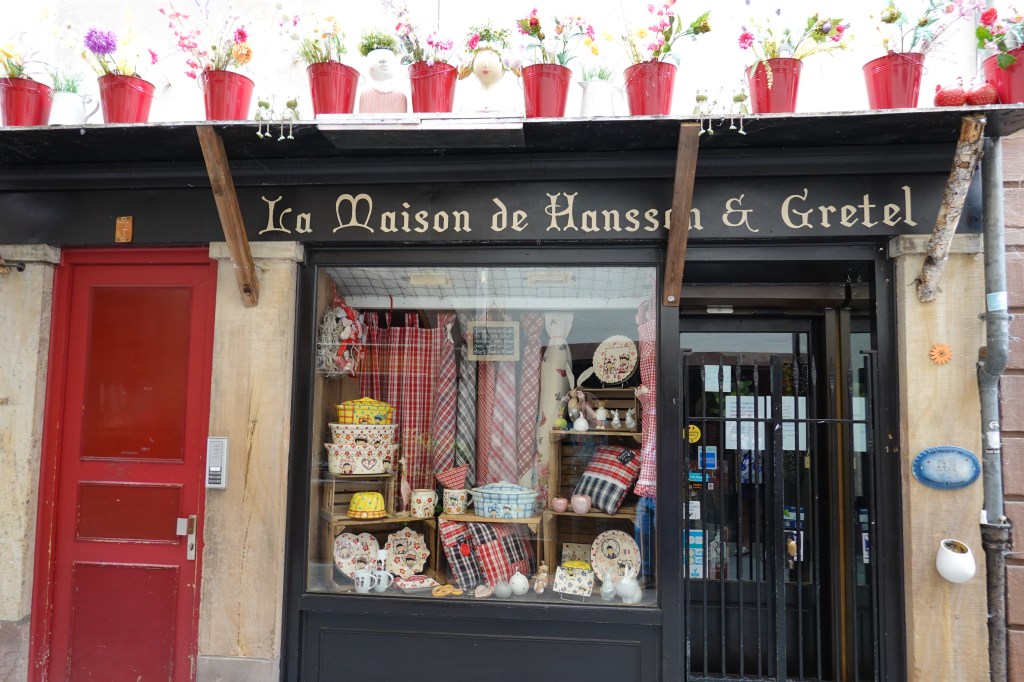
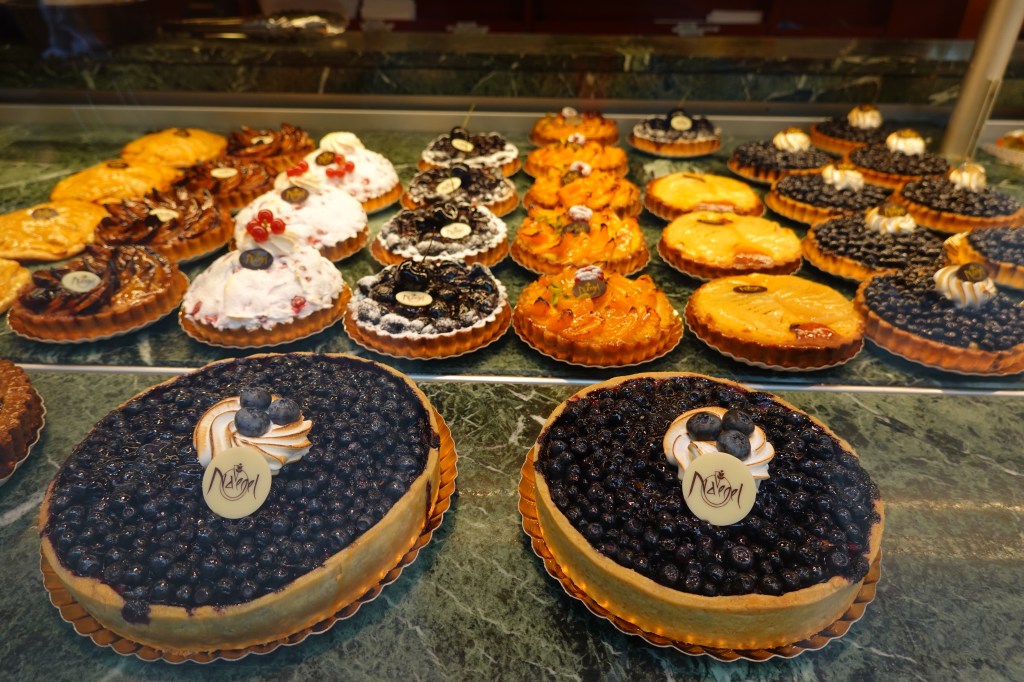
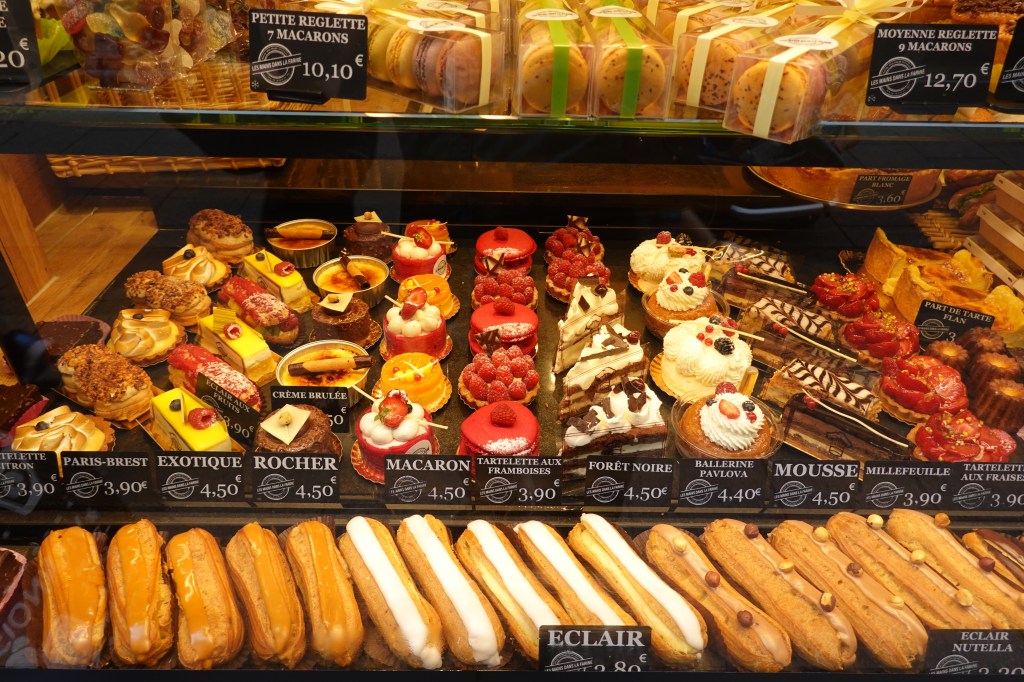
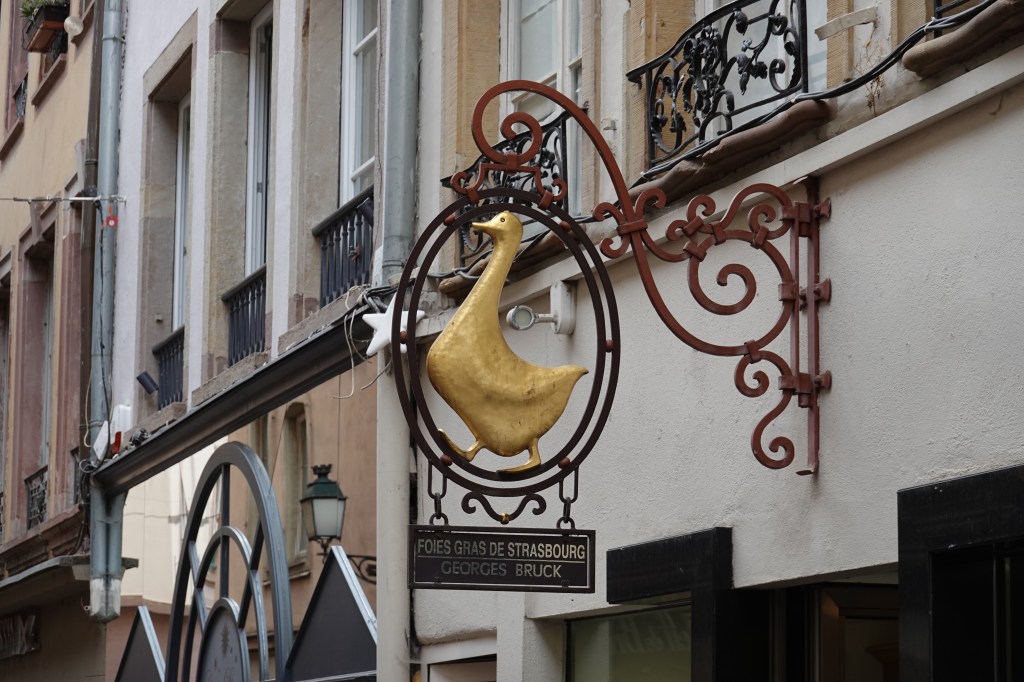
The tour guide joked that people cross the river to the German side to buy manufactured goods while they cross to the French side to buy food, such as pastries, foie gras, and cheese.
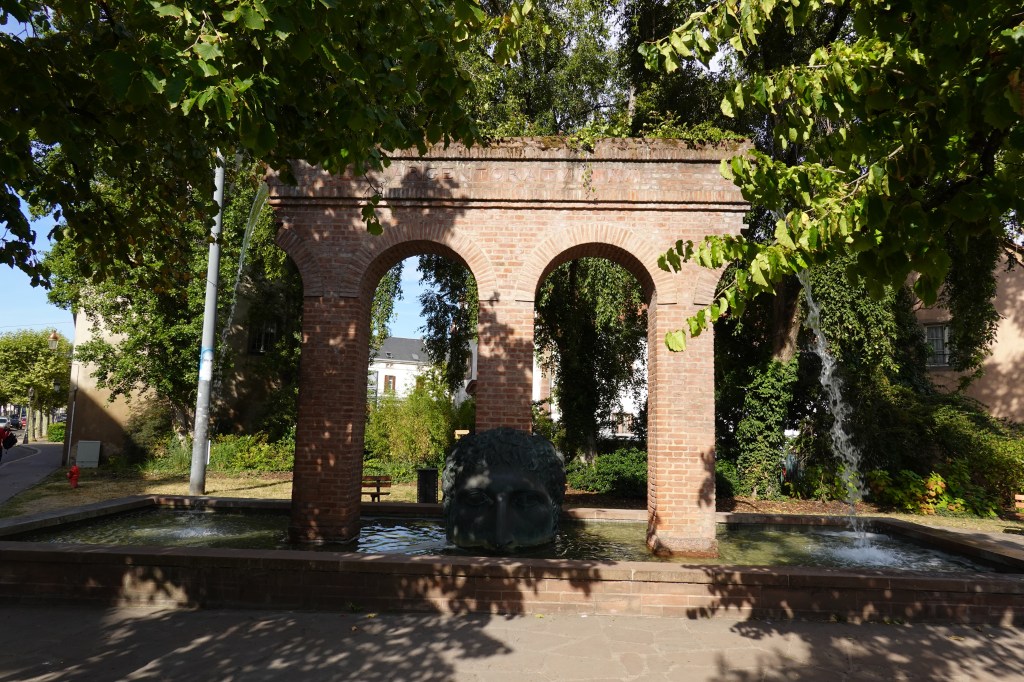
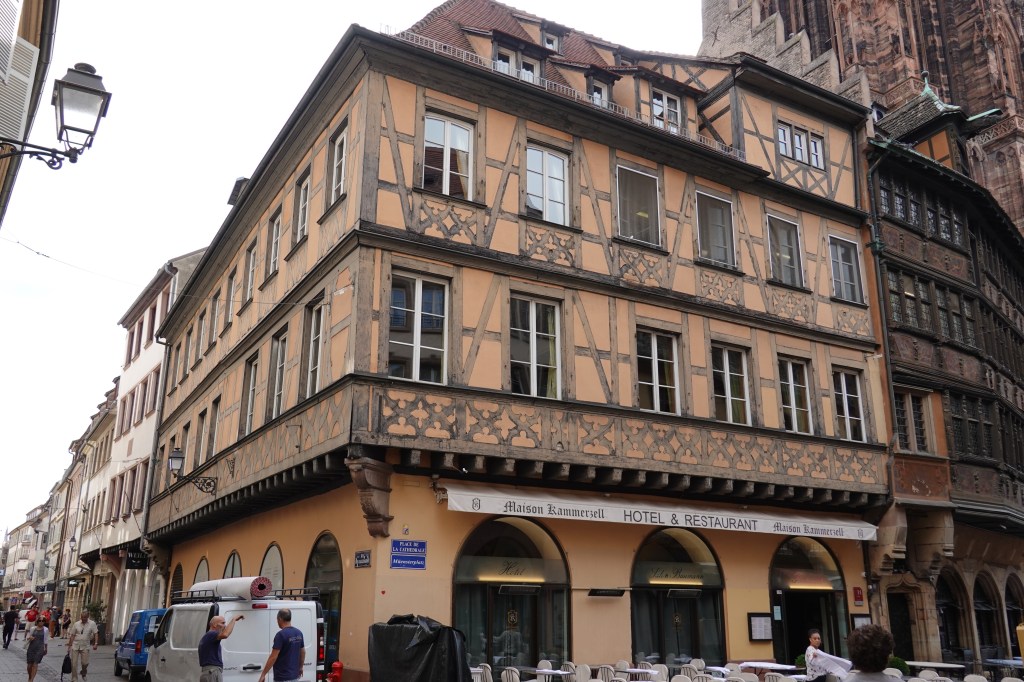
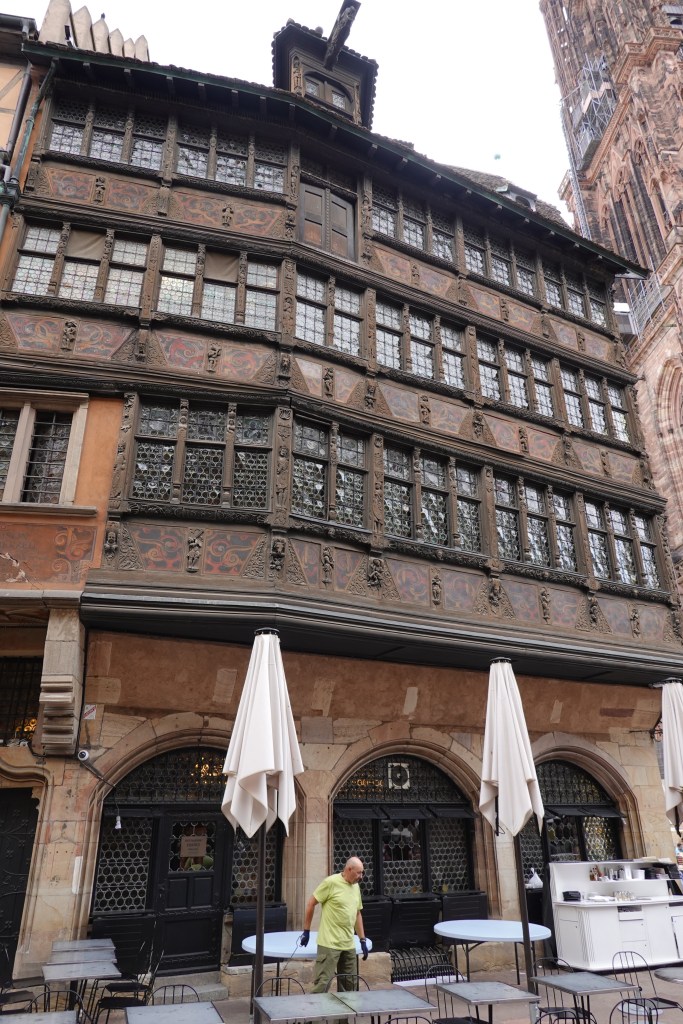
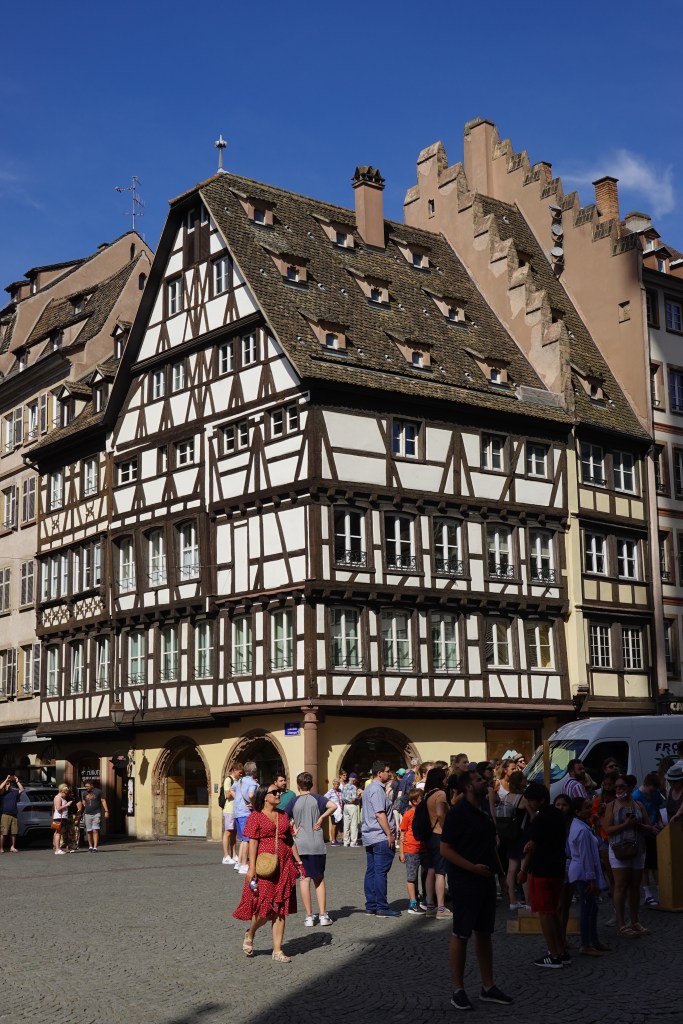
The architecture is not only French and German, but Roman as well. As in many places in Europe, ruins and reconstructions of Roman structures are everywhere.
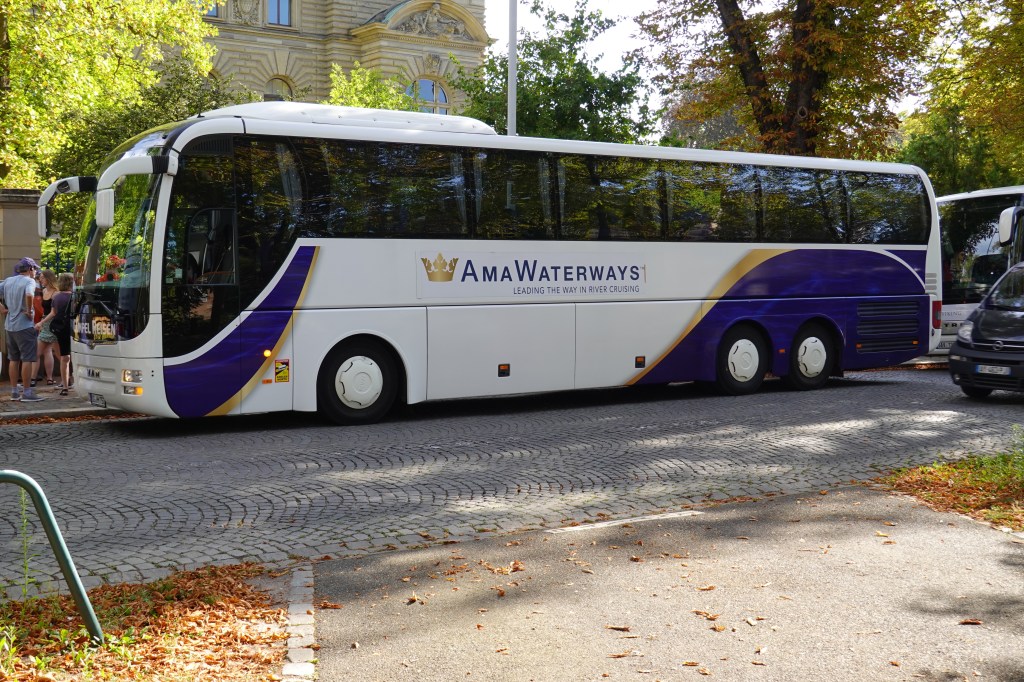
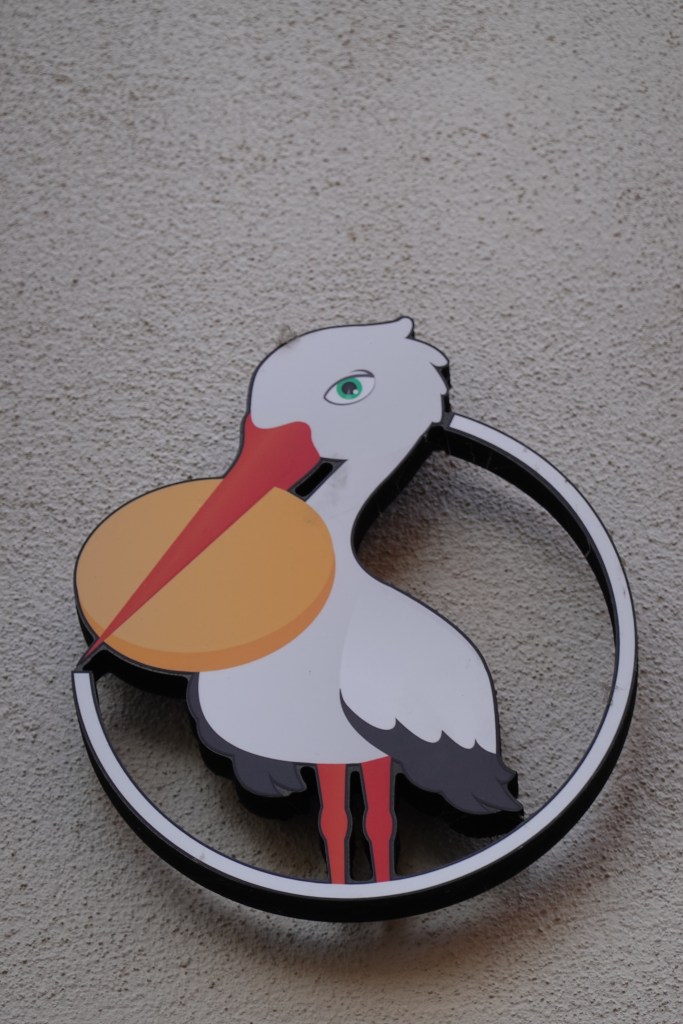
The stork is the town mascot, and many stork’s nests were pointed out on our bus drive from the river to the old town, but only in the Parc de l’Orangerie. The storks return to their nests year after year, like the citizens, but the storks do their Spring cleaning by throwing debris out of their (very large) nests, sometimes hitting unsuspecting humans below. So the people have encouraged the storks not to nest near where humans live.
 Bunch of Geeks go Traveling