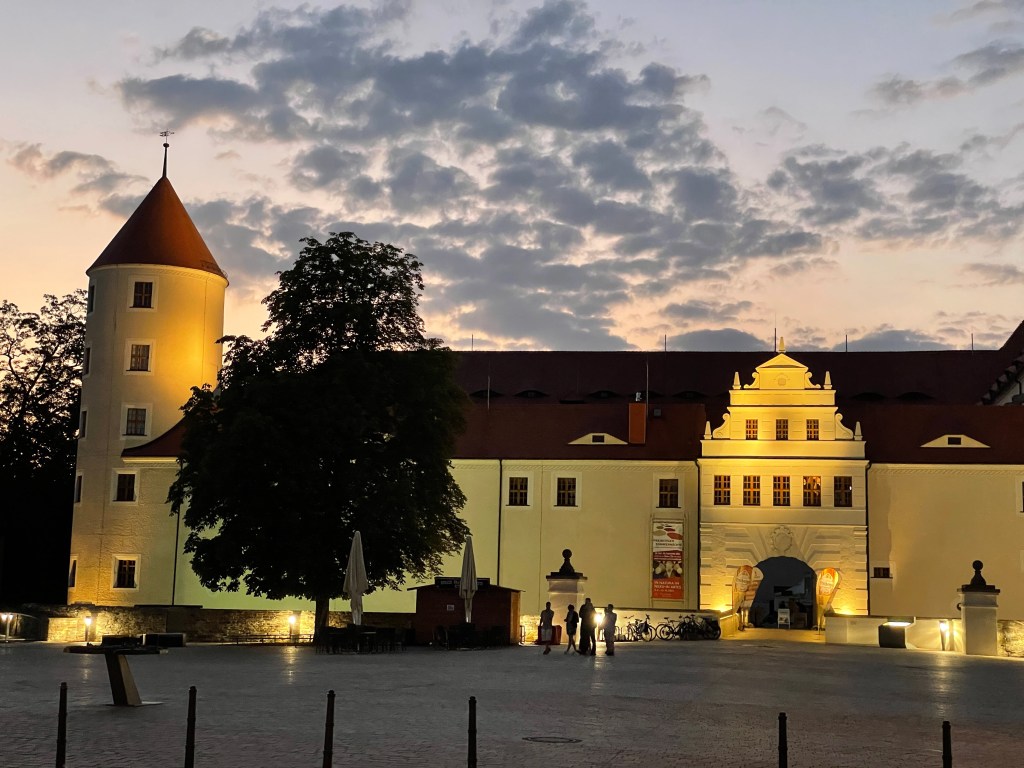
The “best mineral museum in the world” is indeed fantastic. It’s organized primarily by continent. The Hall of Europe divides the minerals into chemical groups, carbonates, salts, silicates etc. This took Clare a while to figure out, because of the Covid arrows on the floor, directing visitors to take a certain path to minimize contact. The arrows, of course did not follow the chemical groupings.
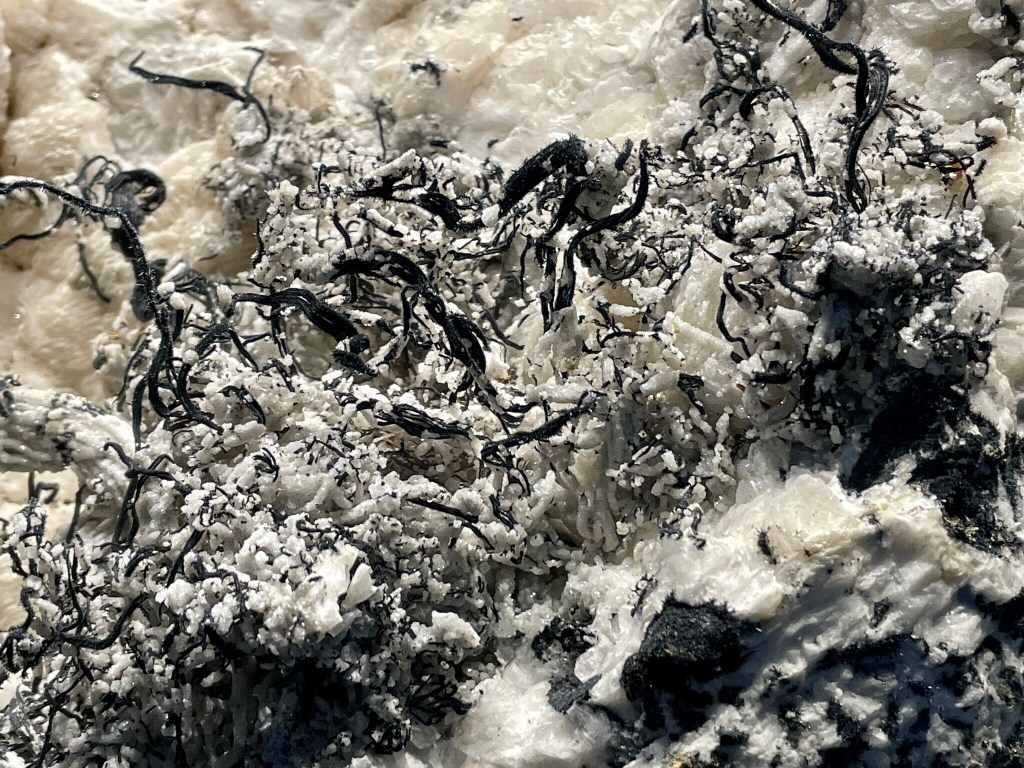
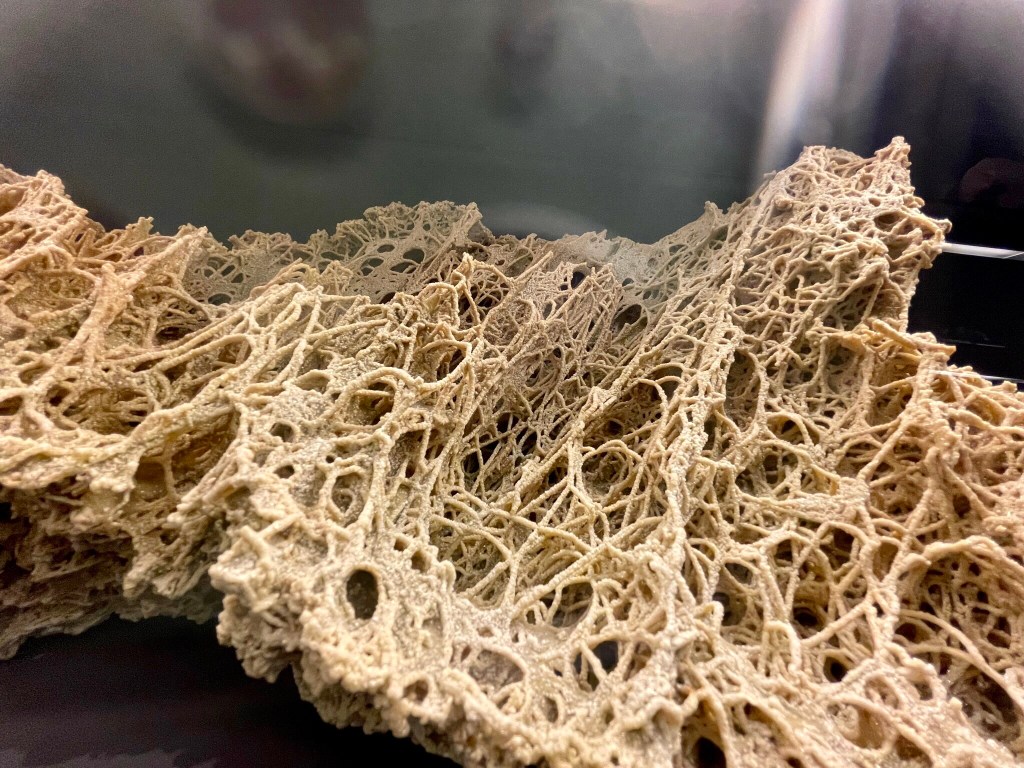
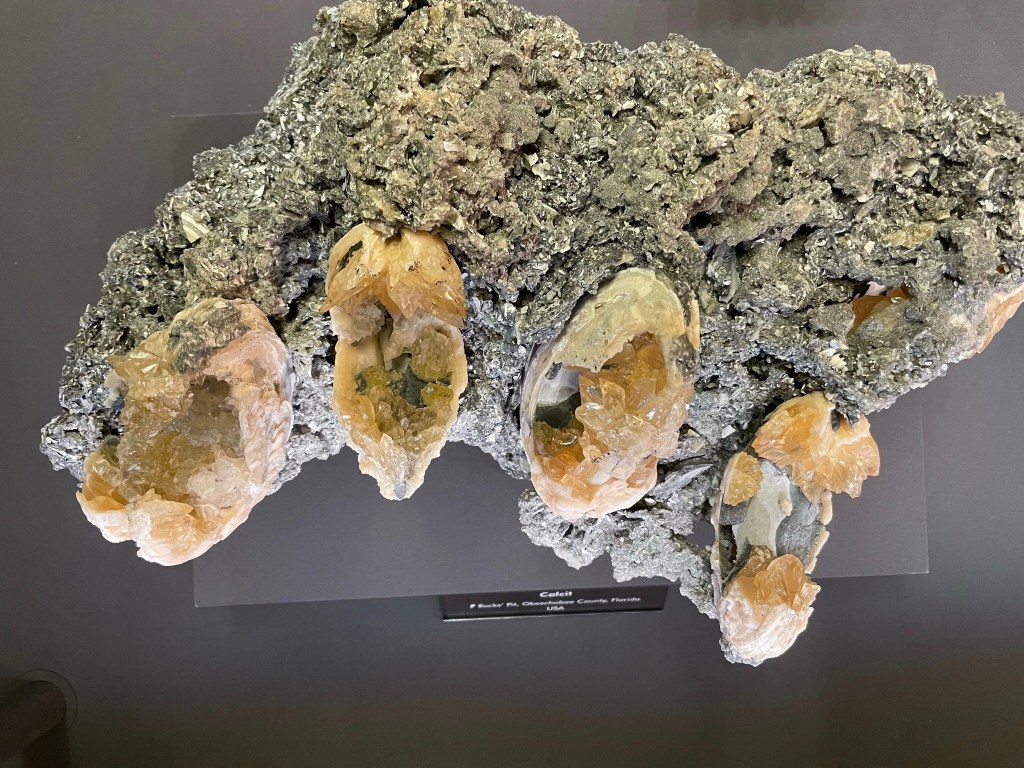
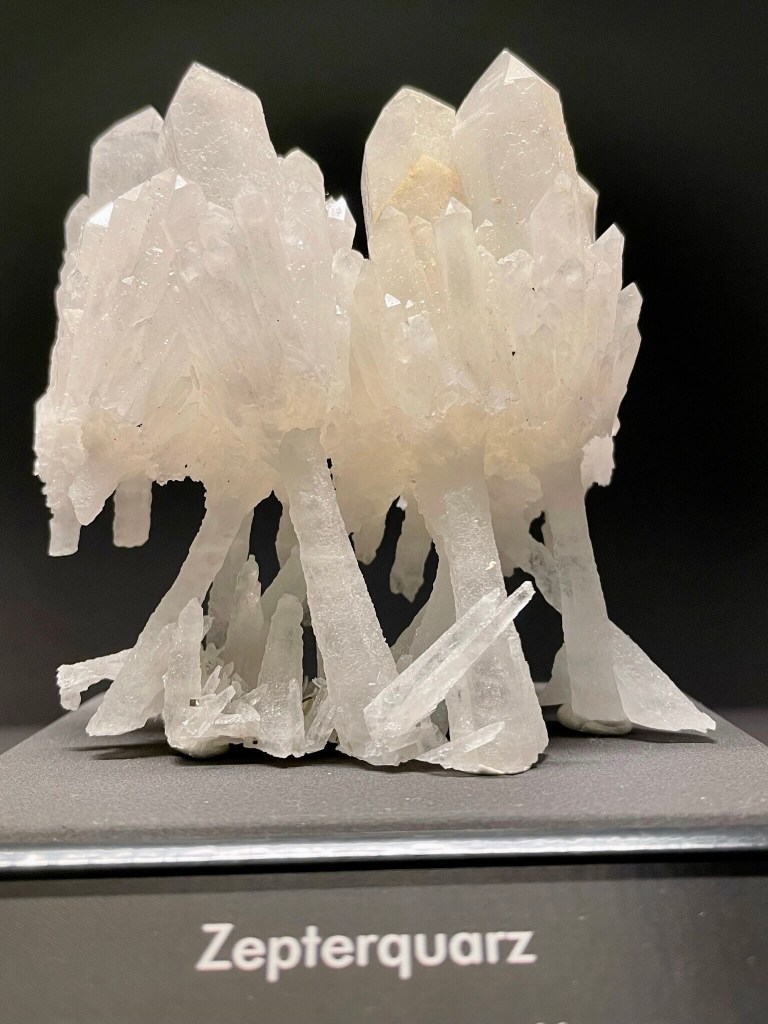
Big specimens. Unbelievably big. But without scale, photographs cannot capture the awe felt by visitors to this place. Instead, Clare concentrated on showing pictures of fun or unusual minerals from these collections.
The explanations of the genesis of minerals in the Hall of Europe included pegmatite, skarn and hydrothermal veins, all environments where crystals can grow freely, forming perfect crystal faces. These large, graphic displays are all in German, no other translations.
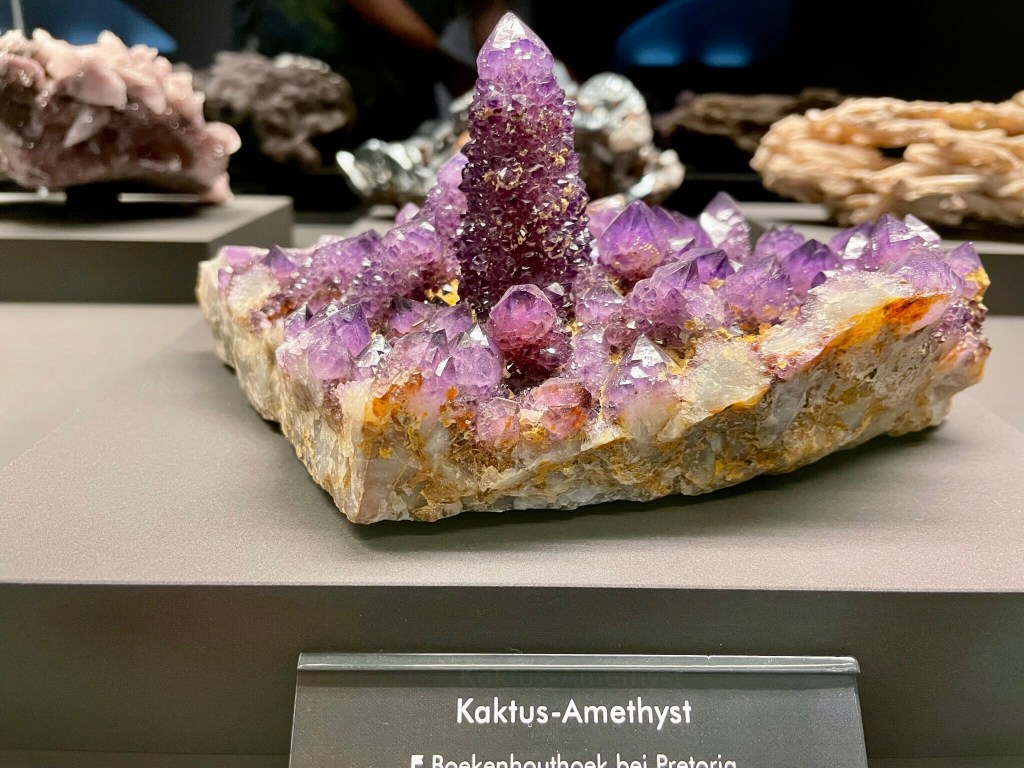
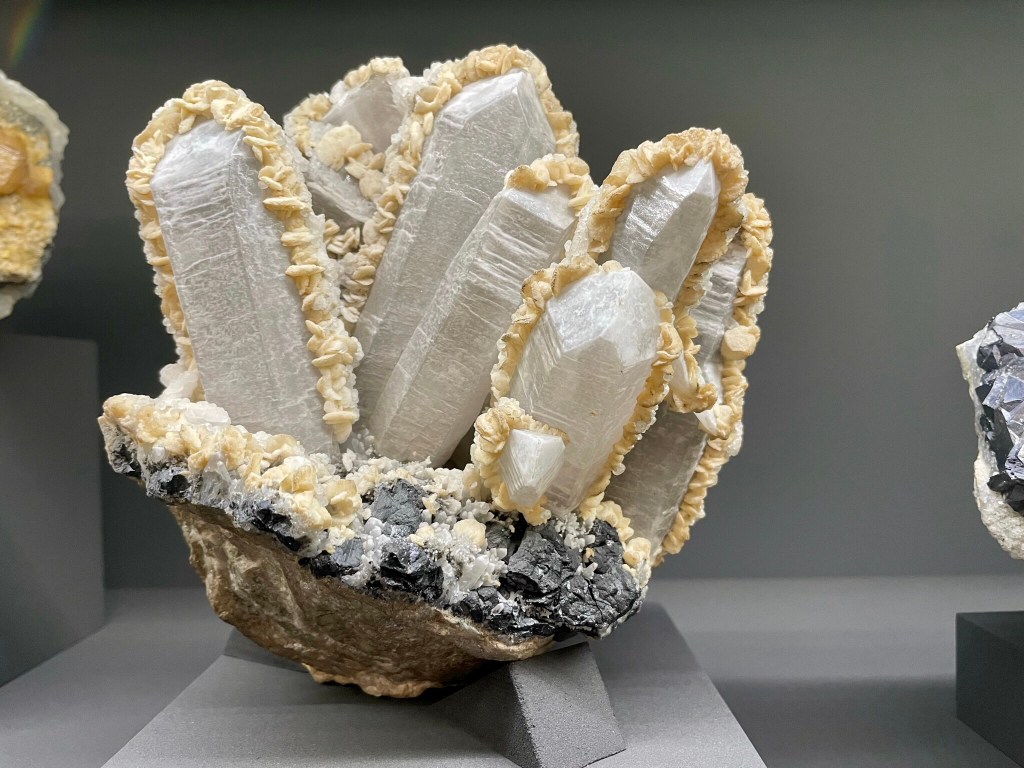
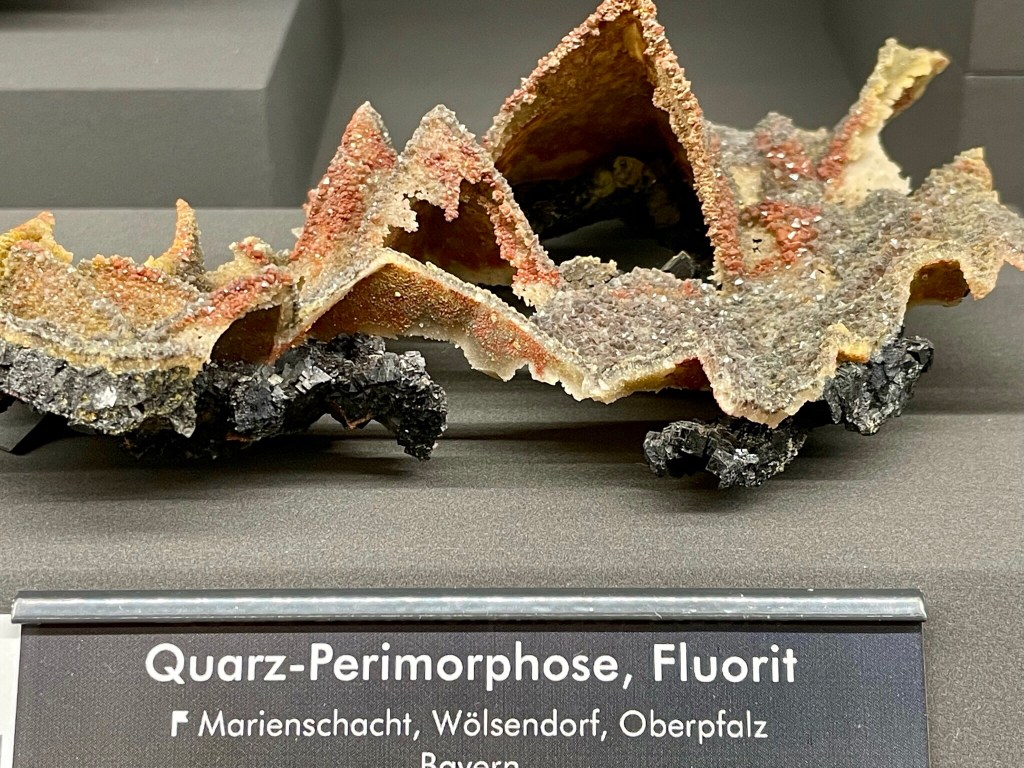
The Hall of Africa is divided geographically and by mining region. The explanation signs, at the ends of cabinets, were translated into English (hooray) and, reading them, Clare learned a lot about the genesis of many unique ore deposits and the minerals found in each.
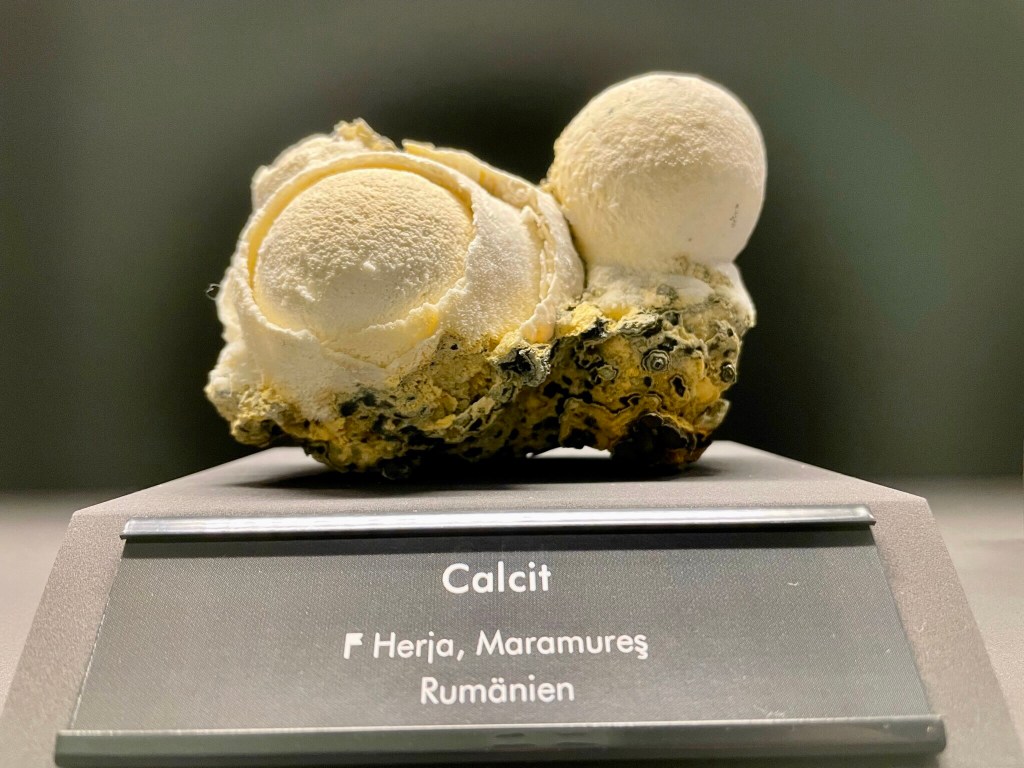
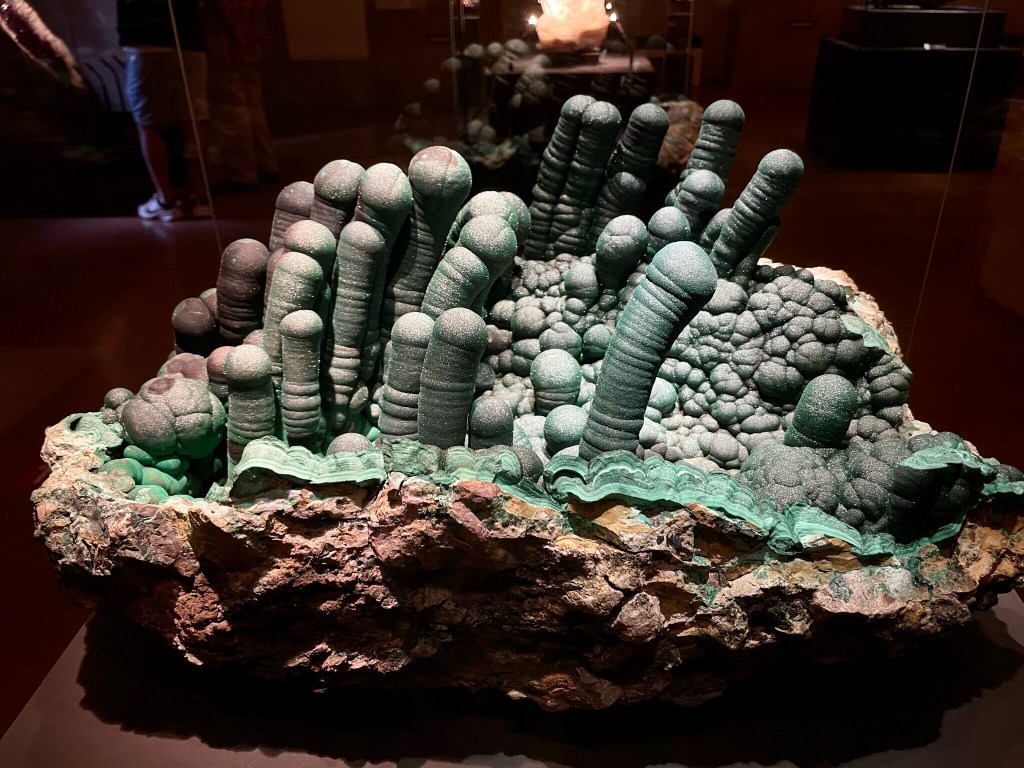
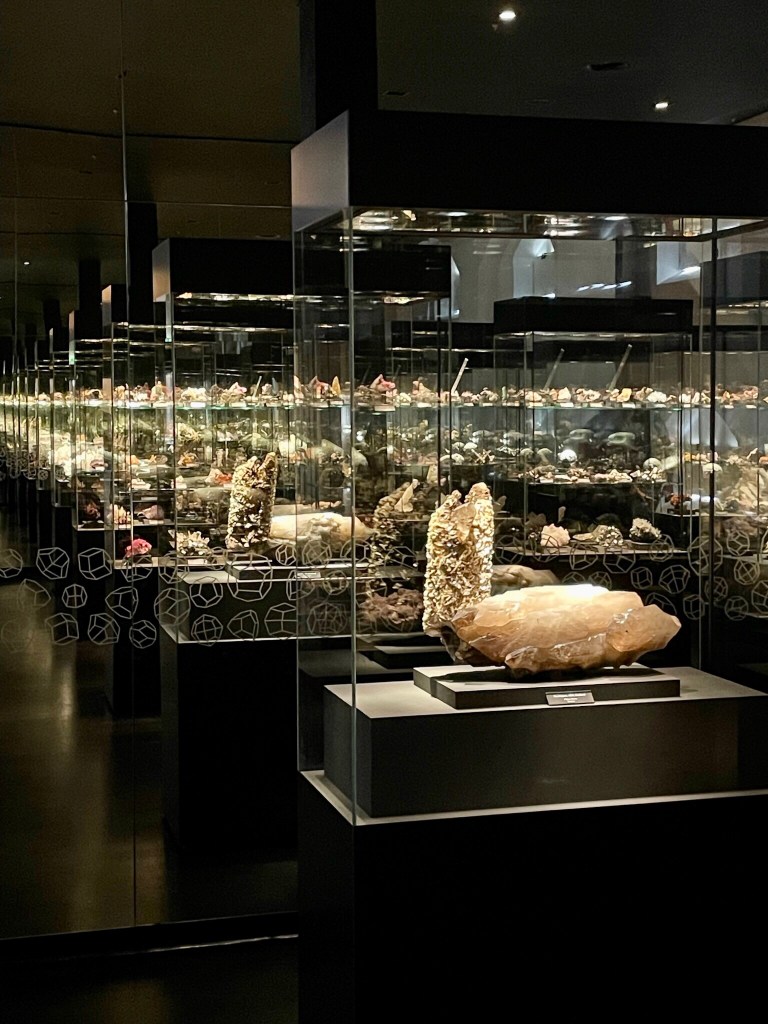
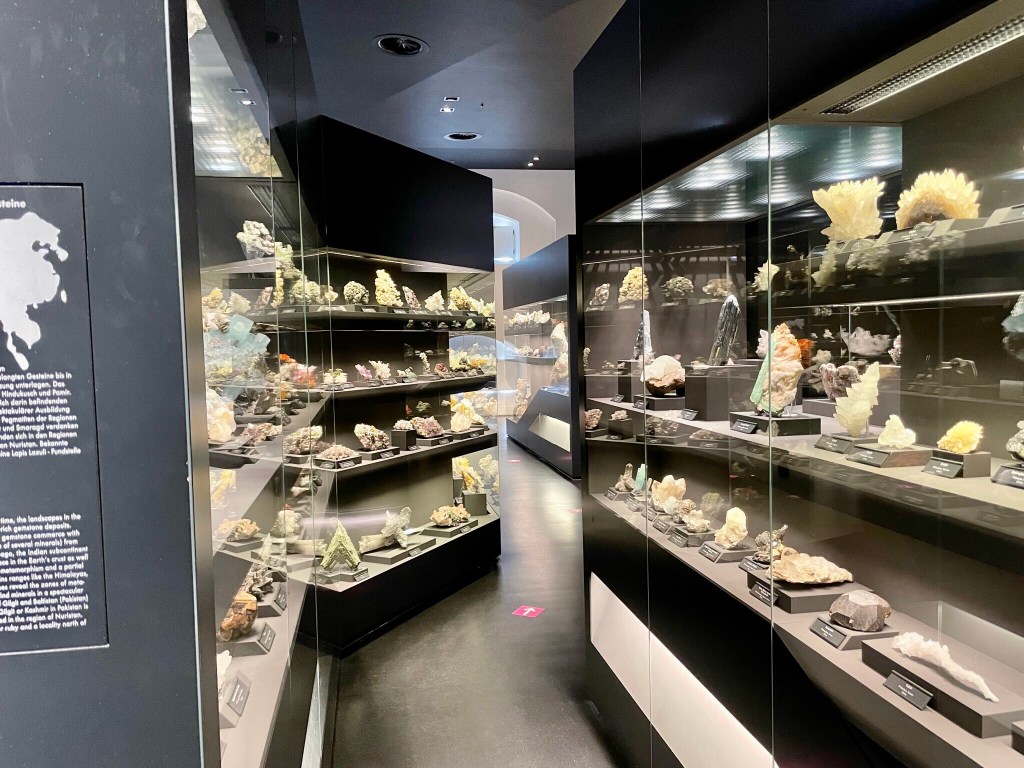
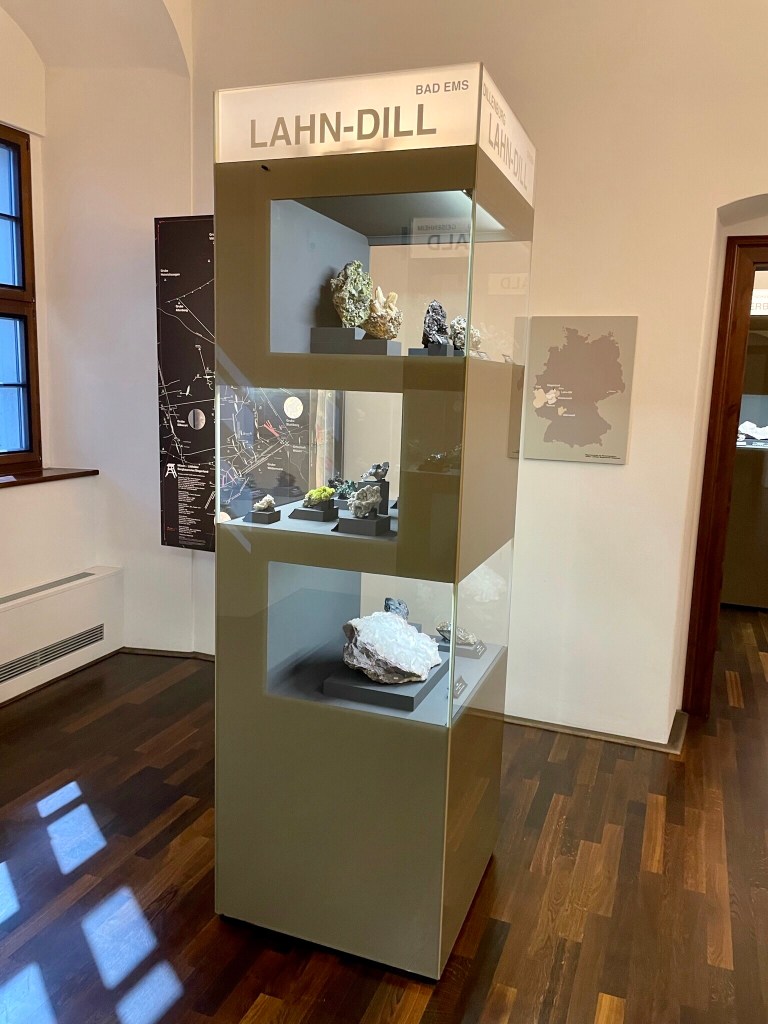
Display cases in each of the rooms varied a lot. All were controlled environments with good lighting, but the way minerals were displayed was different.
The Americas were combined into one room, north and south together. Clare was happy to see rhodochrosite from Alma, the official state mineral of Colorado in the same case as benitoite, California’s official state gemstone. Asia and Australia were combined into one room as well.
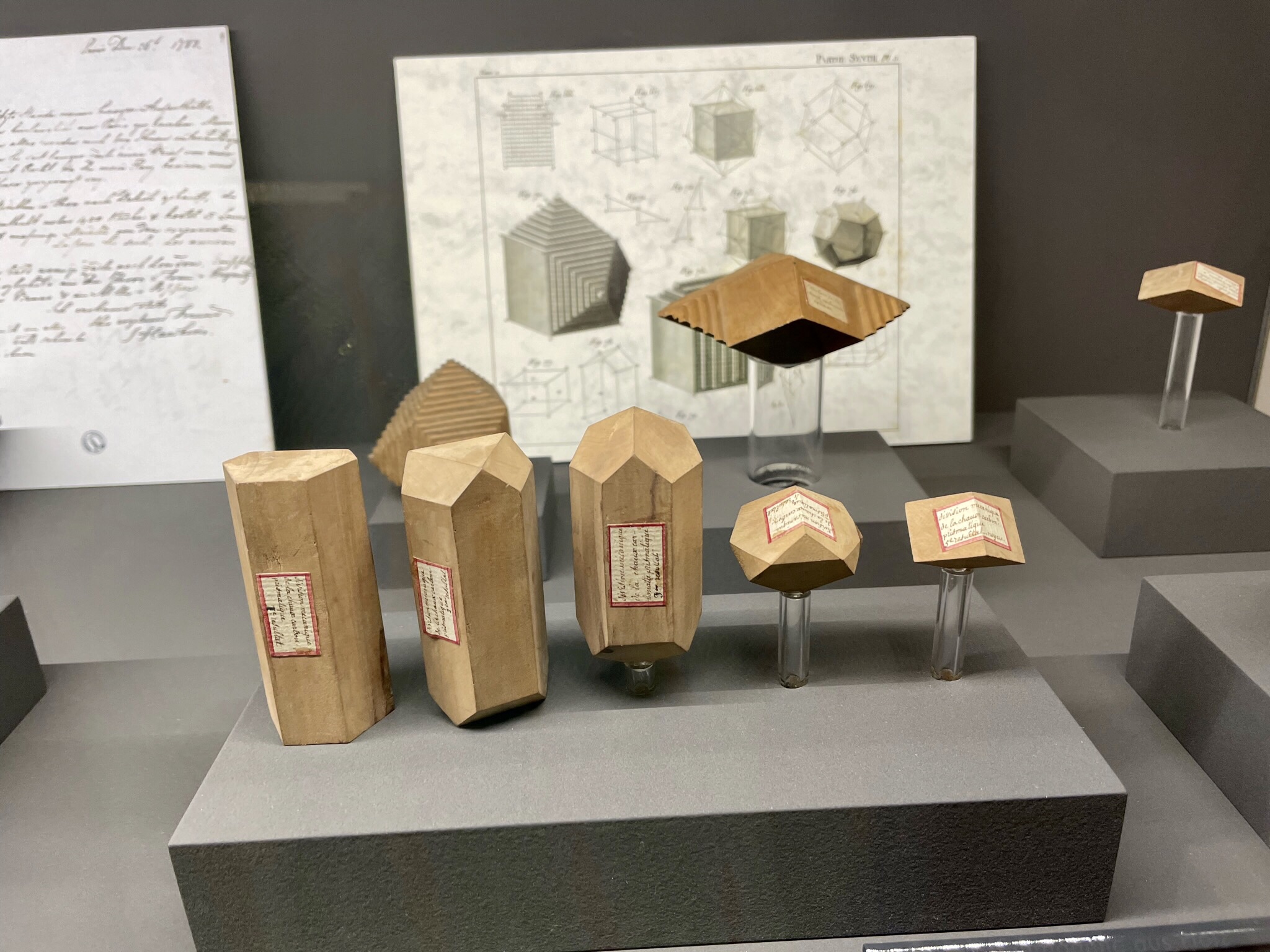
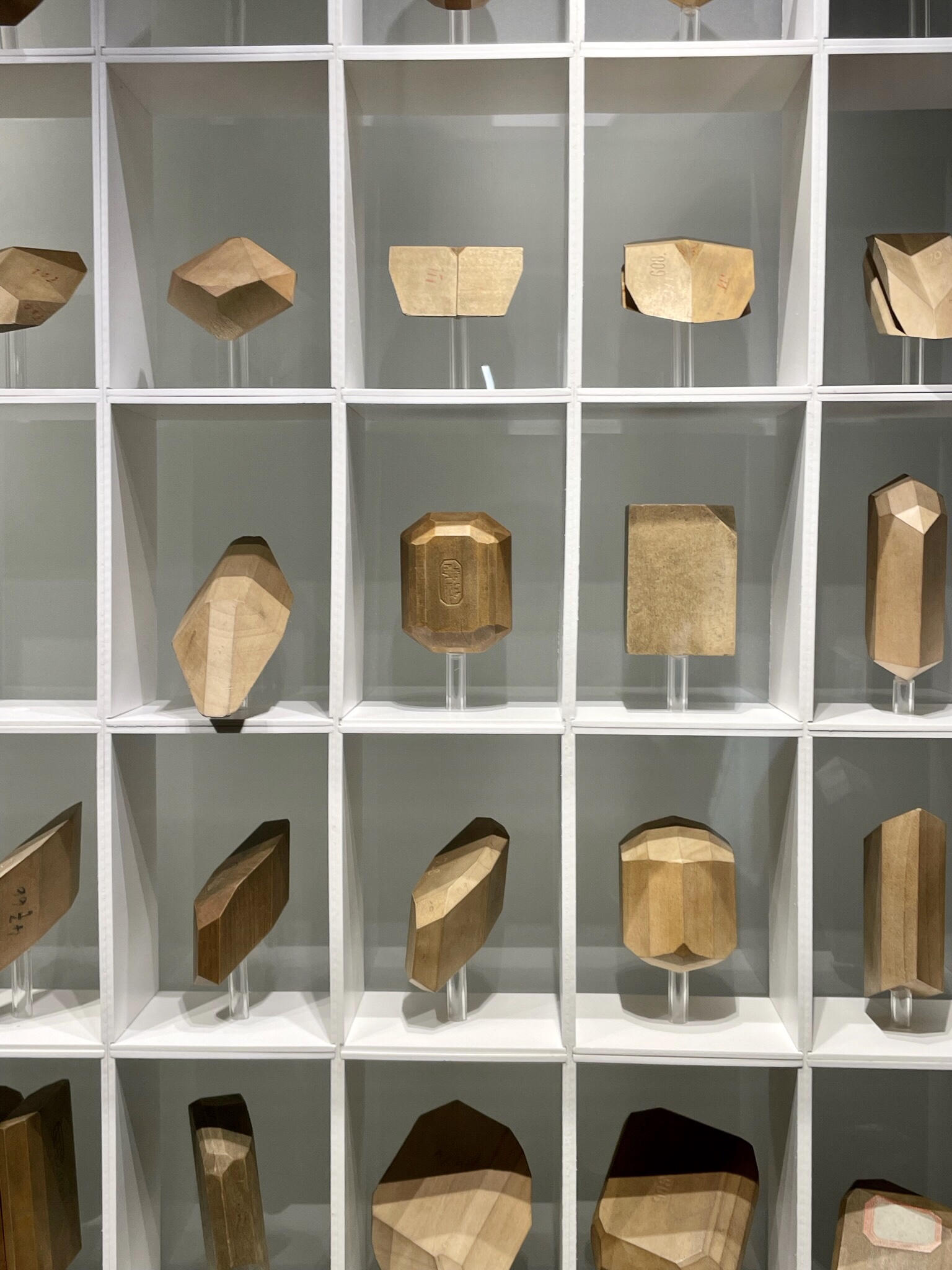
Another area, not in the castle, showcased minerals of Germany. but the first room you walk into shows crystal faces in wooden models. So many times when teaching, Clare wished for such models to explain symmetry.
 Bunch of Geeks go Traveling