We woke to steep, snow-capped mountains rising above the sea. The air was clear but the sky cloudy. The ship rolled a bit during the night, making us appreciate the smooth seas of the inside passage.
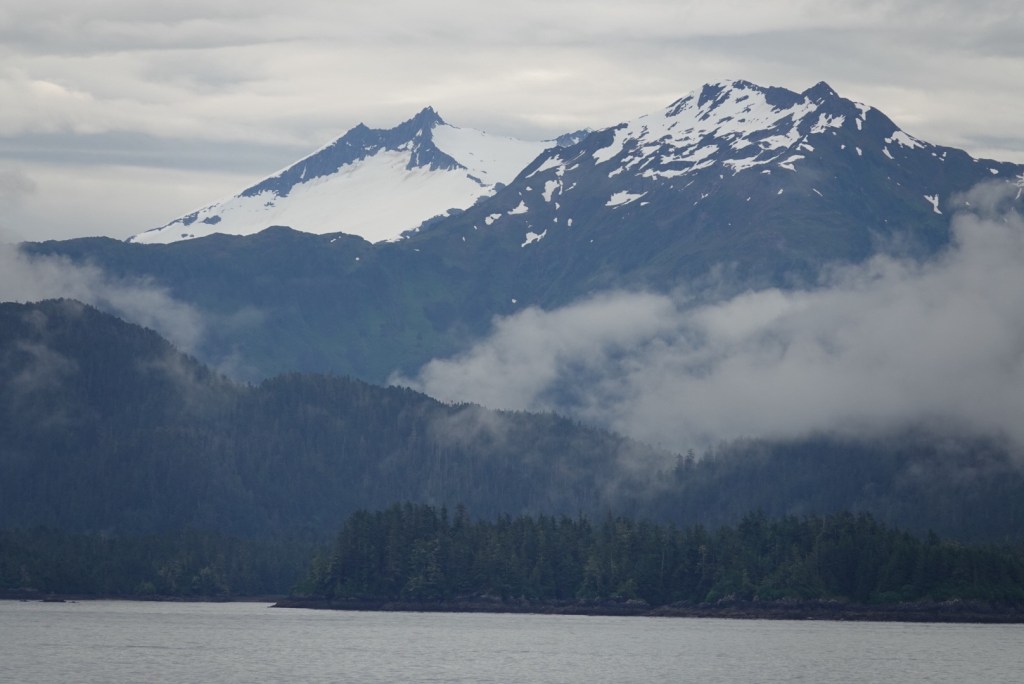

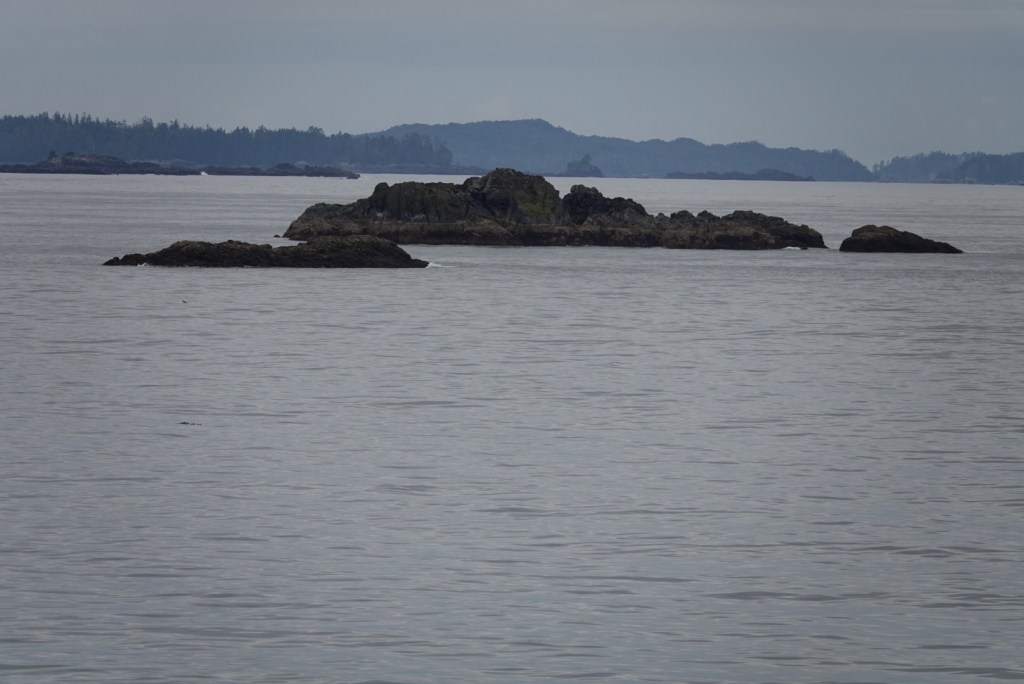
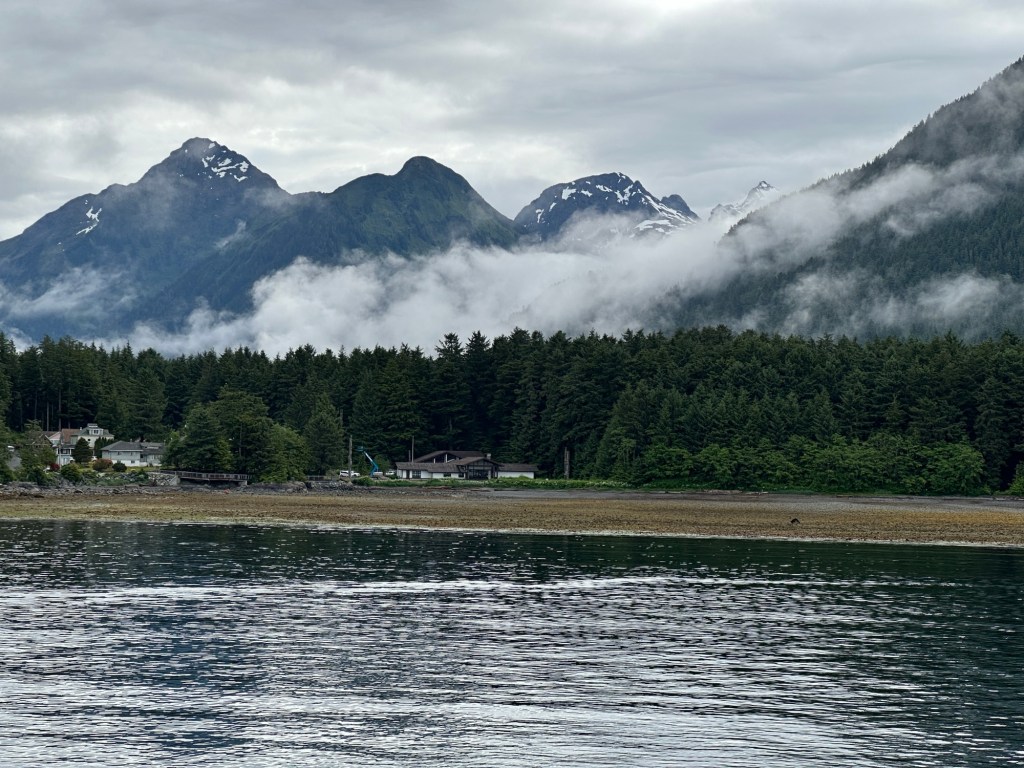
The first thing noticeable on the approach to Sitka by sea is the large number of islands in the bay adjacent to Baranof Island. The second thing is the sharp mountain peaks with snow on them. We watched the mountains go by during breakfast.
We went to shore on a tender again, meaning we didn’t have to bring life jackets. Then we met our bus driver and guide for our adventure.
Our excursion started early and lasted all morning. Owen guided a group of 21 fellow travelers through the complex history of the Native people, Russian invaders and later the US invaders. First, though, he told us about the Edgecumbe volcano on a close island across Sitka Sound, which last erupted about 4000 years ago.
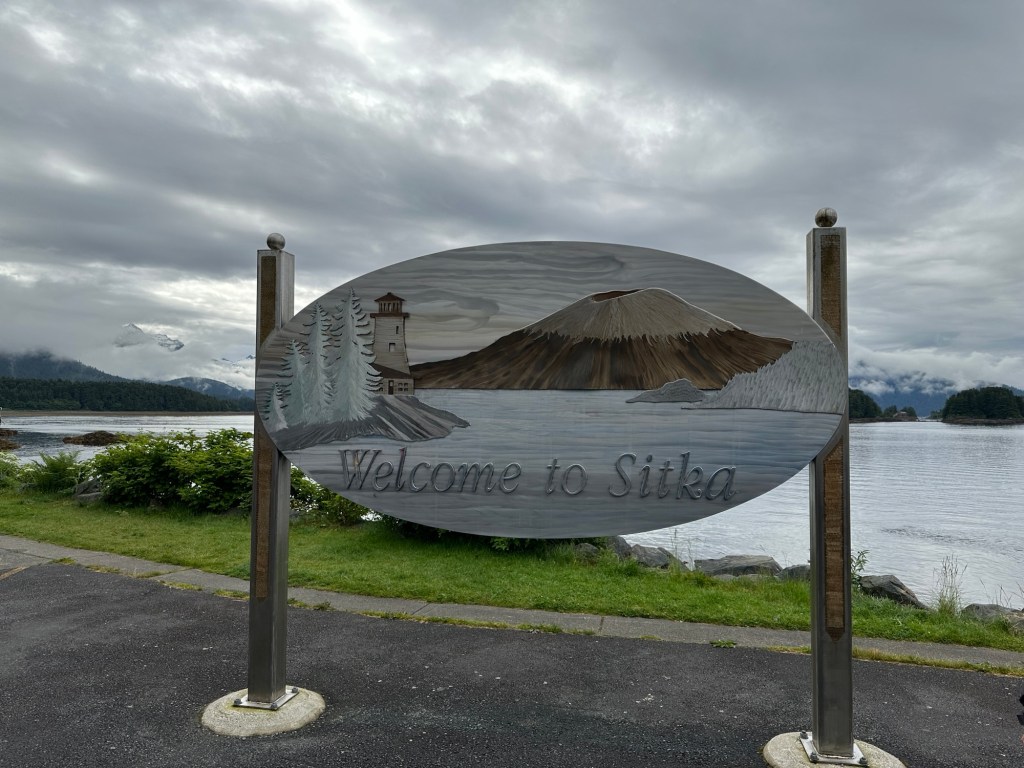
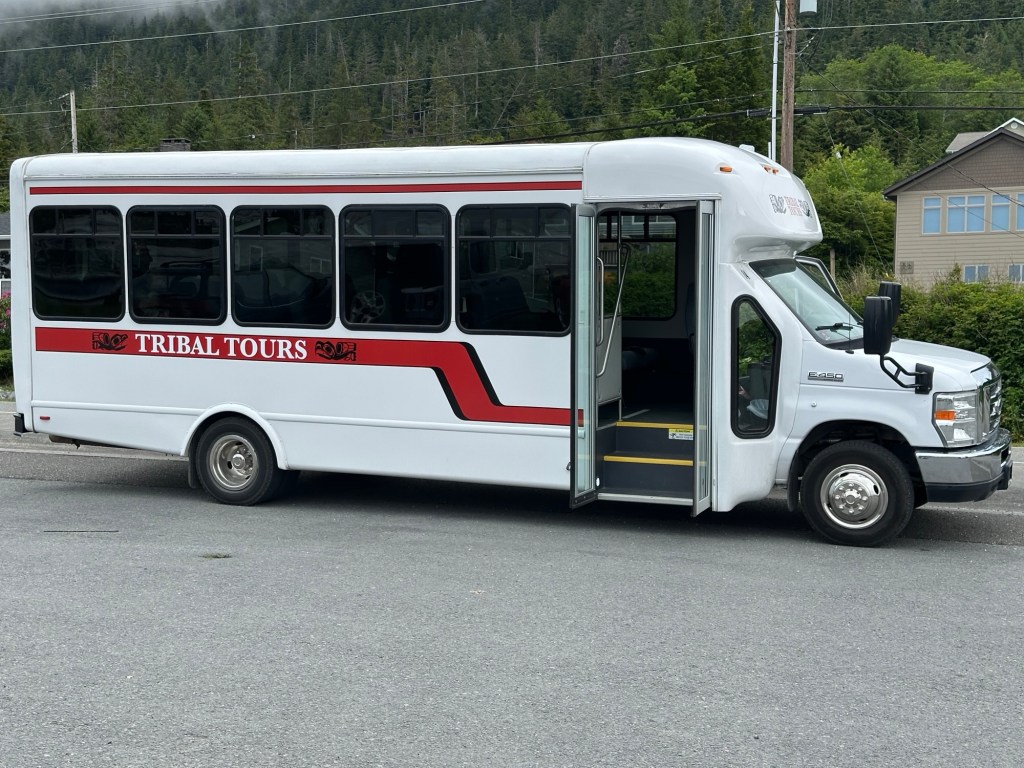
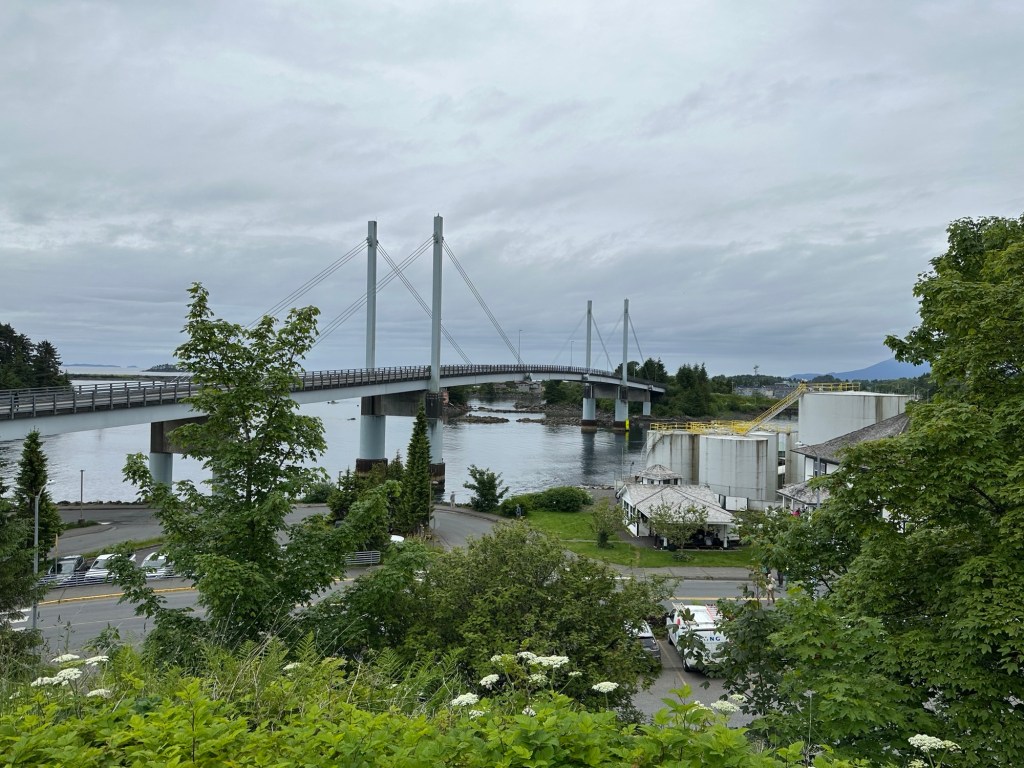

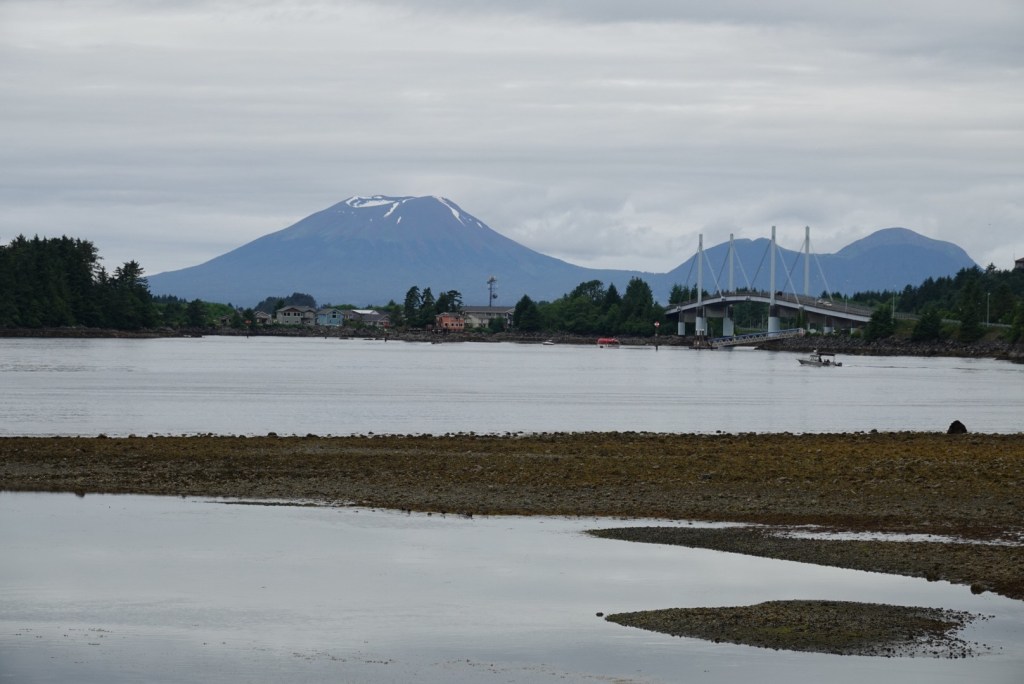
Owen first drove the bus to the end of the road, seven miles from the town center. Both the main roads end seven miles out, at the edge of the wilderness in the Tongass National Forest. This area has been roadless since being designated by the Clinton administration, but Owen worries that the current administration will redefine it. This would be disastrous for the entire planet because these old-growth trees provide oxygen to the air and help maintain the pristine water. We started there because it is also the site of one of the first Russian forts built near Sitka, which was burned to the ground by the Tlingit people in the early 1800s.
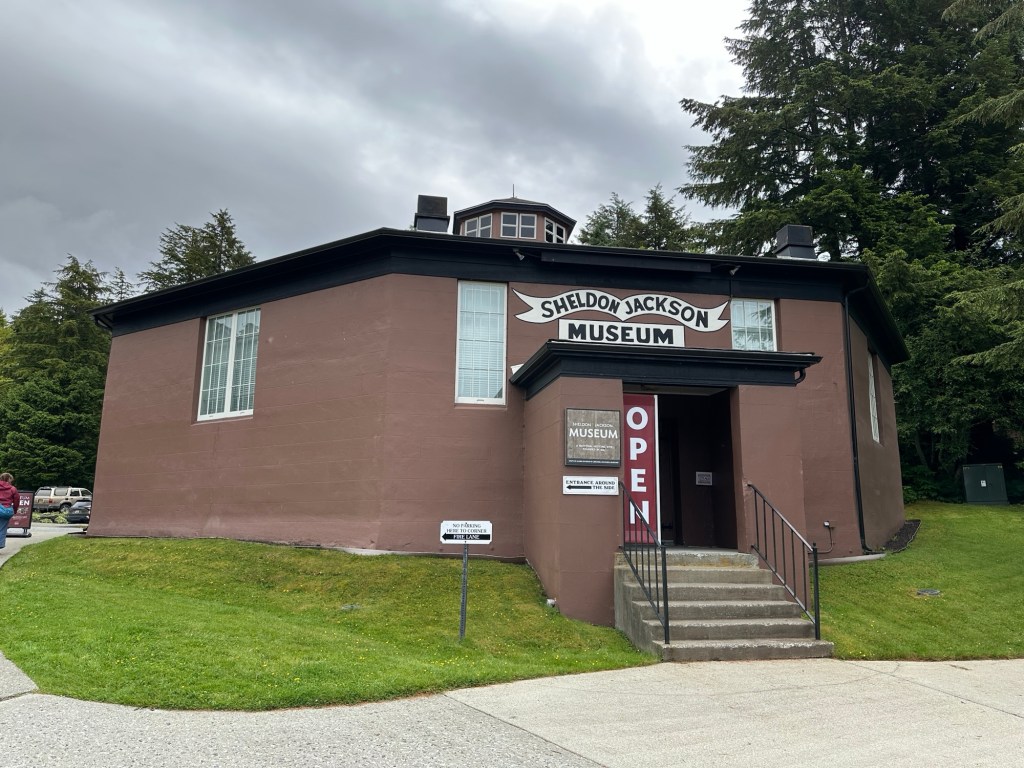
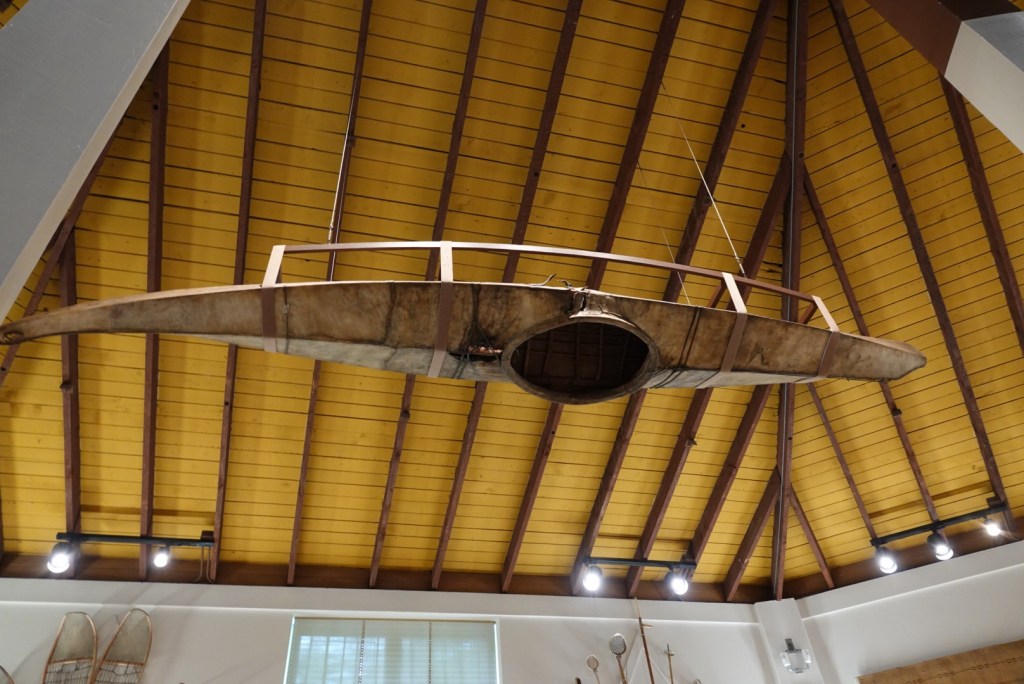
We spent an hour at the Sheldon Jackson Museum, a well organized and user friendly exhibit in an octagonal building, the first structure in Alaska with concrete walls. The native people were curious about how to build something from powder, rock, and water, but the US engineers just asked them to build the framework, then watch. Concrete structures have been popular ever since.
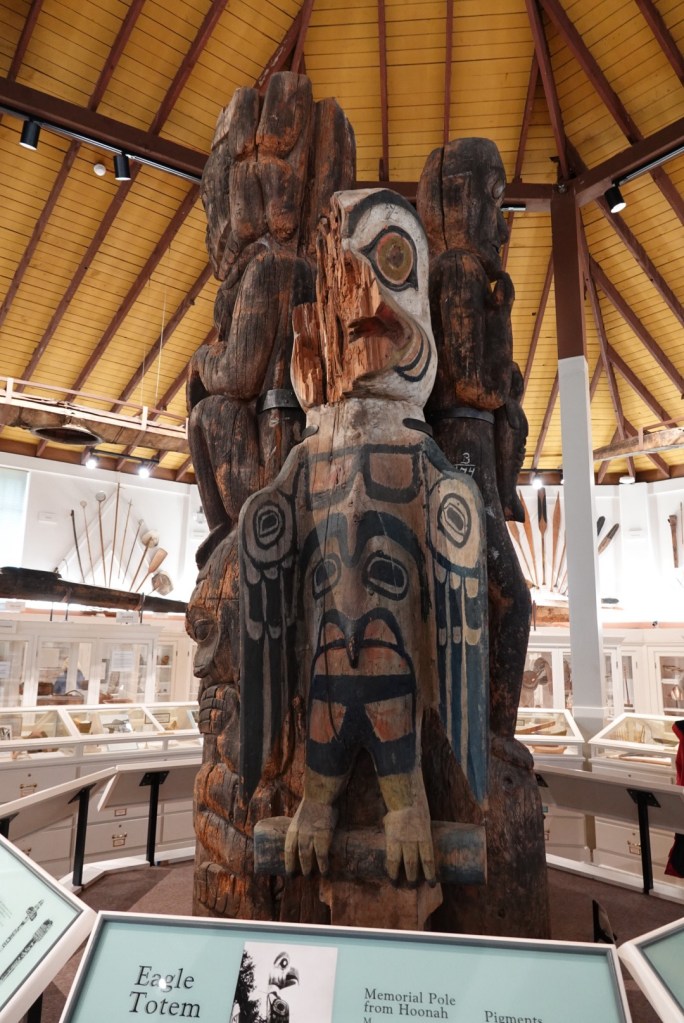
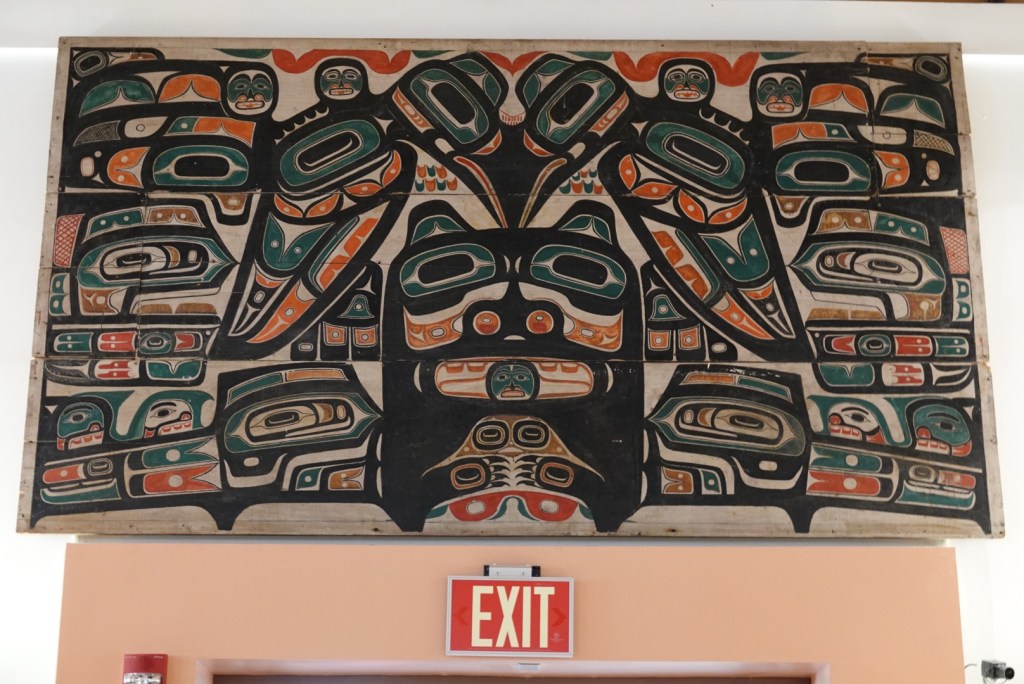
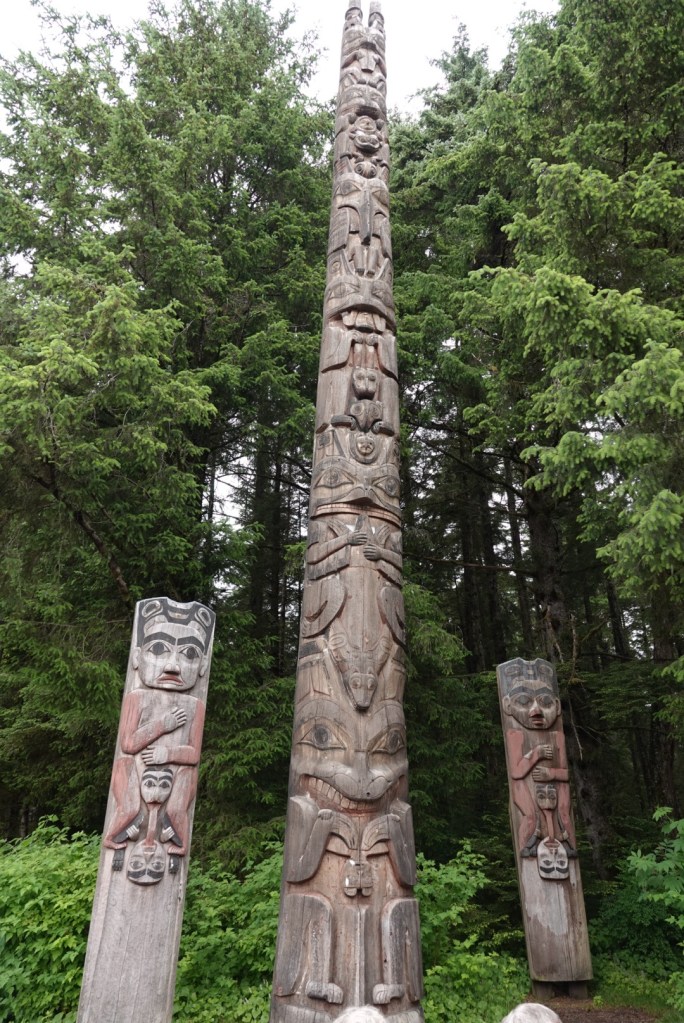
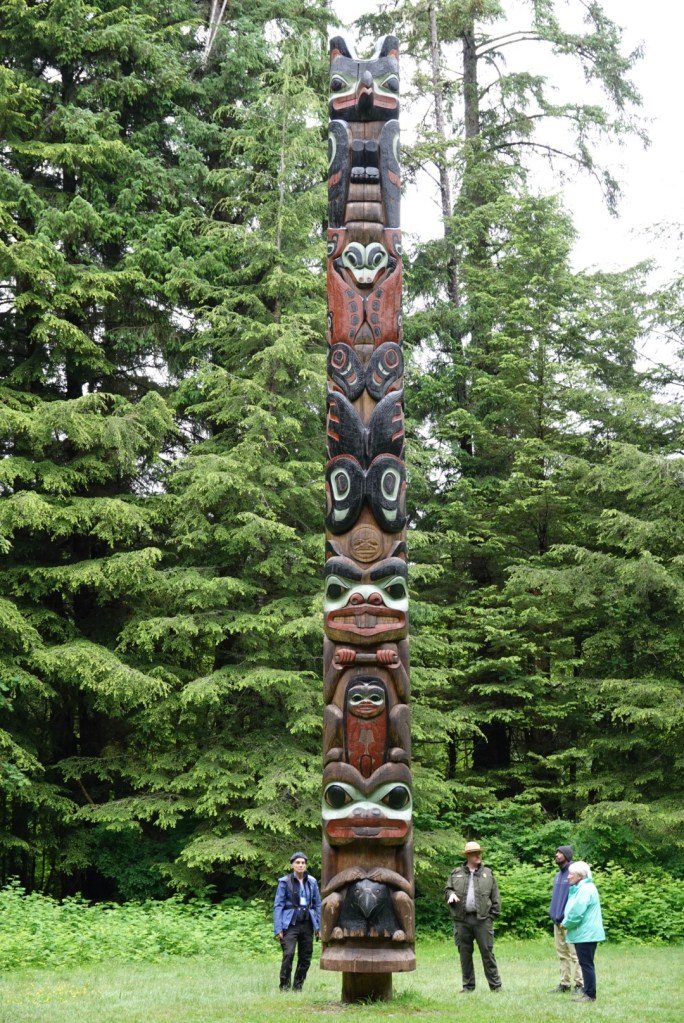
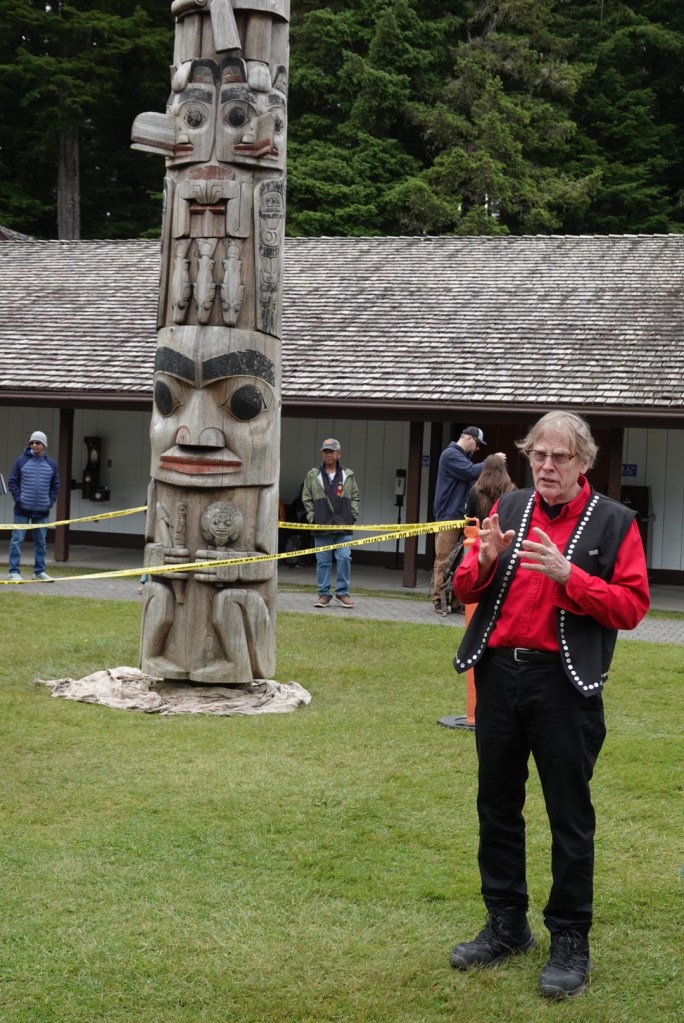
The Sitka National Historic Park was our next stop, where we walked through a display of totem poles in the forest. We learned quite a bit about totems. The phrase “low man on the totem pole” is a misnomer because the lowest person on the totem is actually the most powerful or most respected. In the family totems, this would typically be a grandparent. In the totem at the battlefield, the lowest person is the leader of the Tlingit people, represented by a raven with a notch in its beak to indicate a wound that he suffered before killing his assailant with a blacksmith hammer.
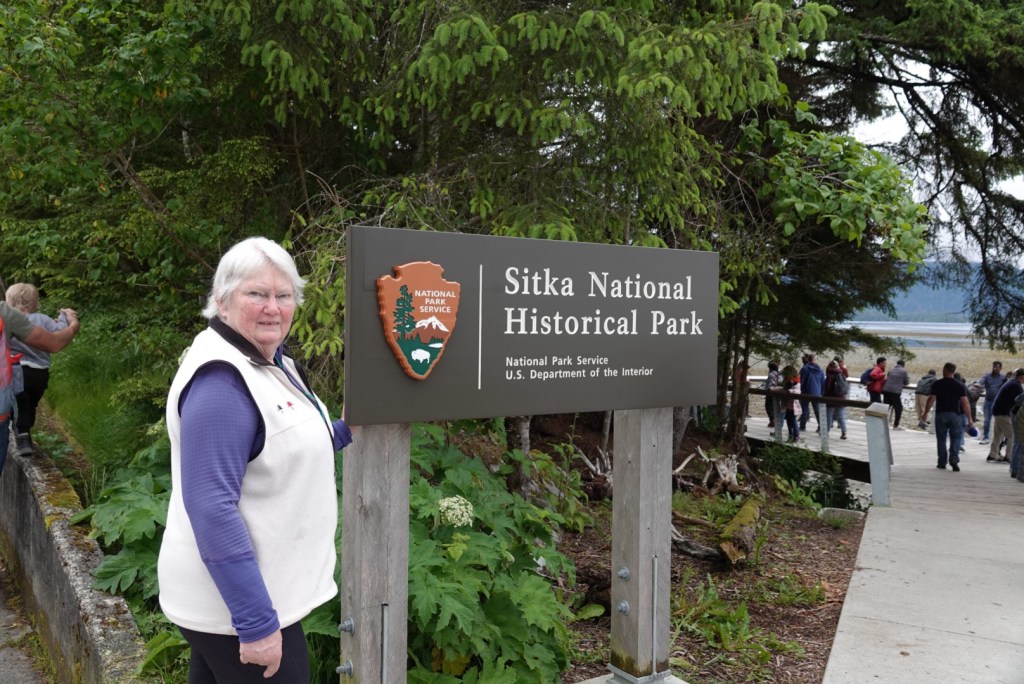
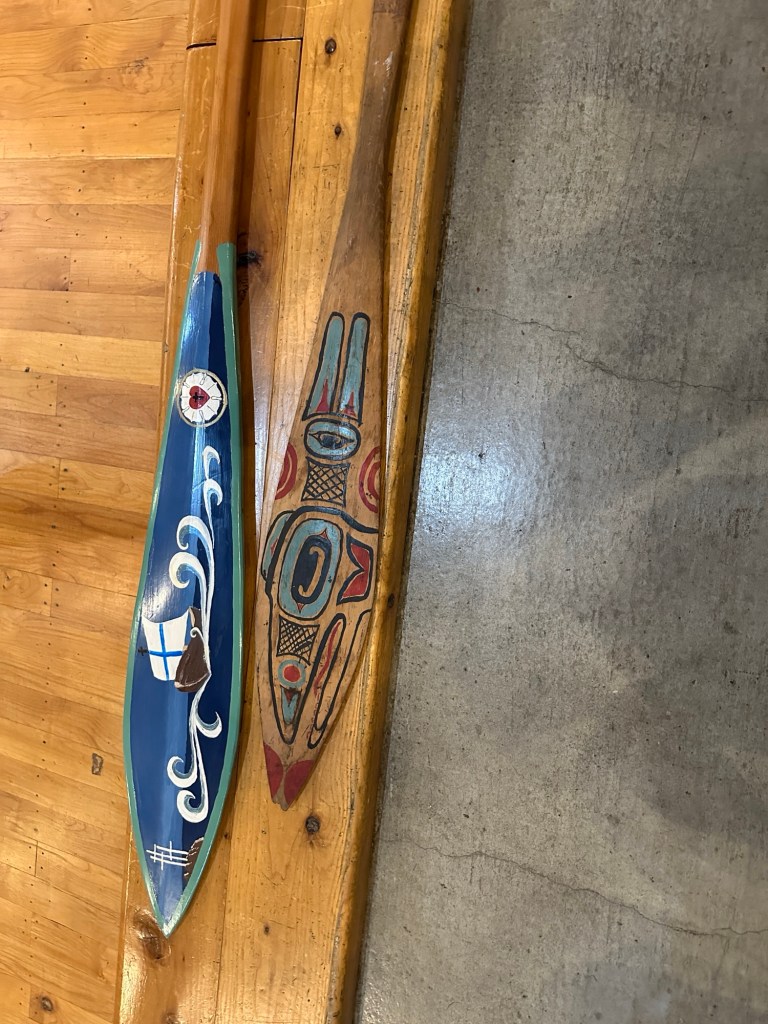
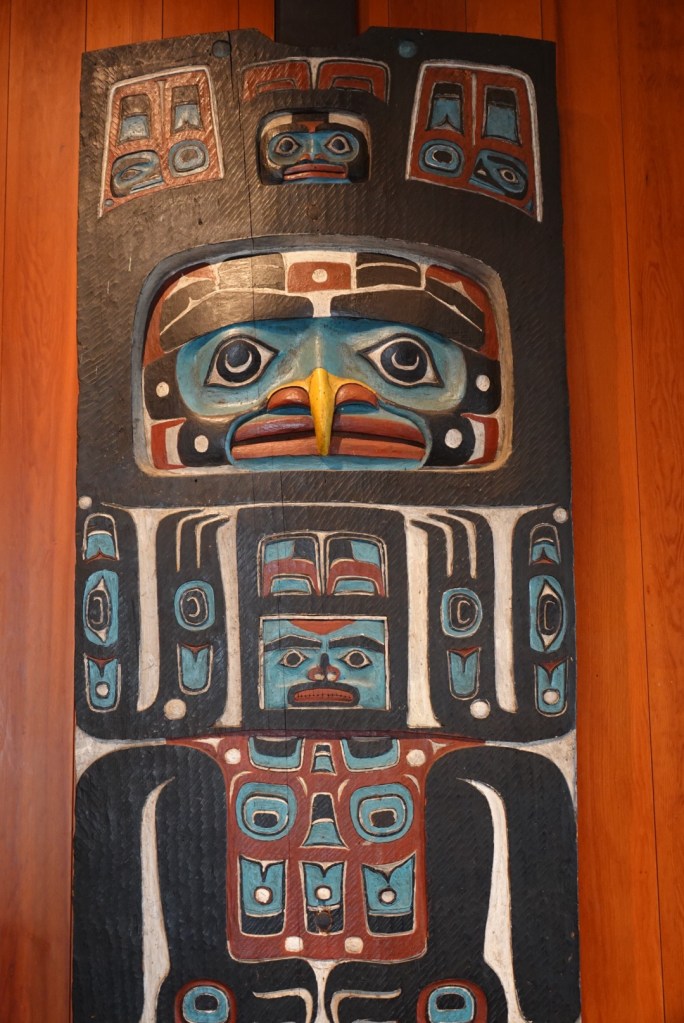
After the official tour, we wandered around Sitka, a uniquely historic town.
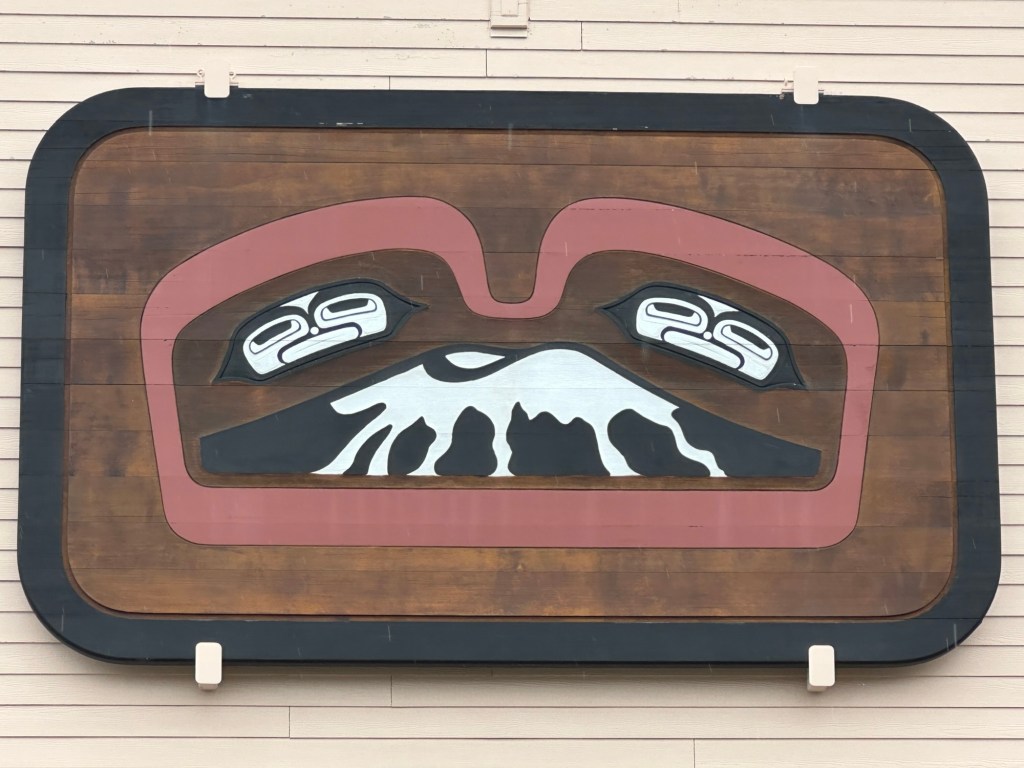
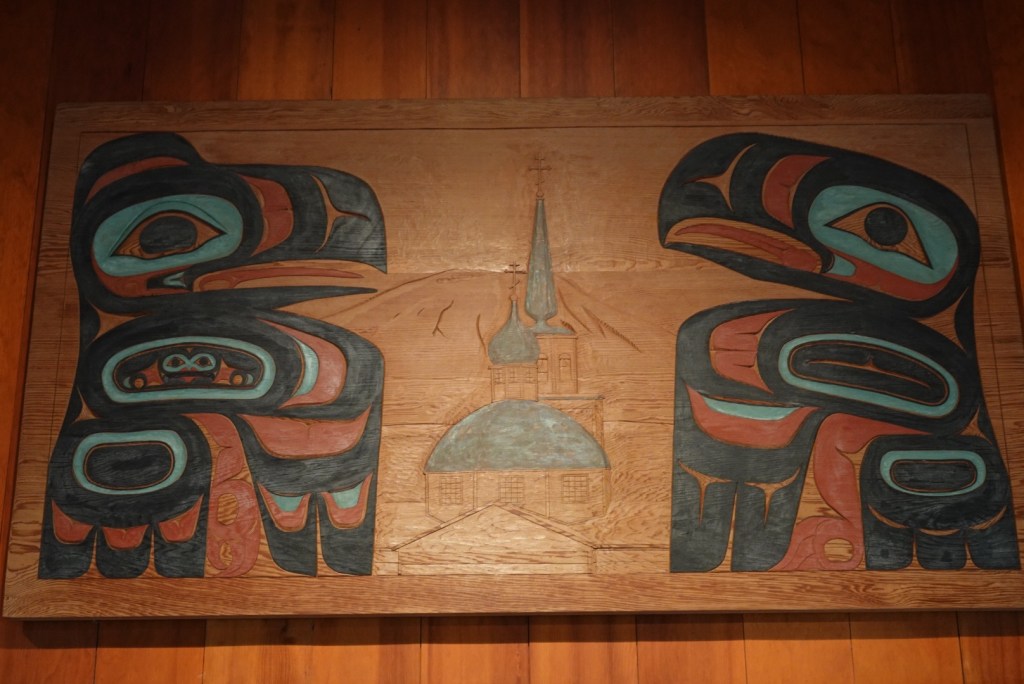
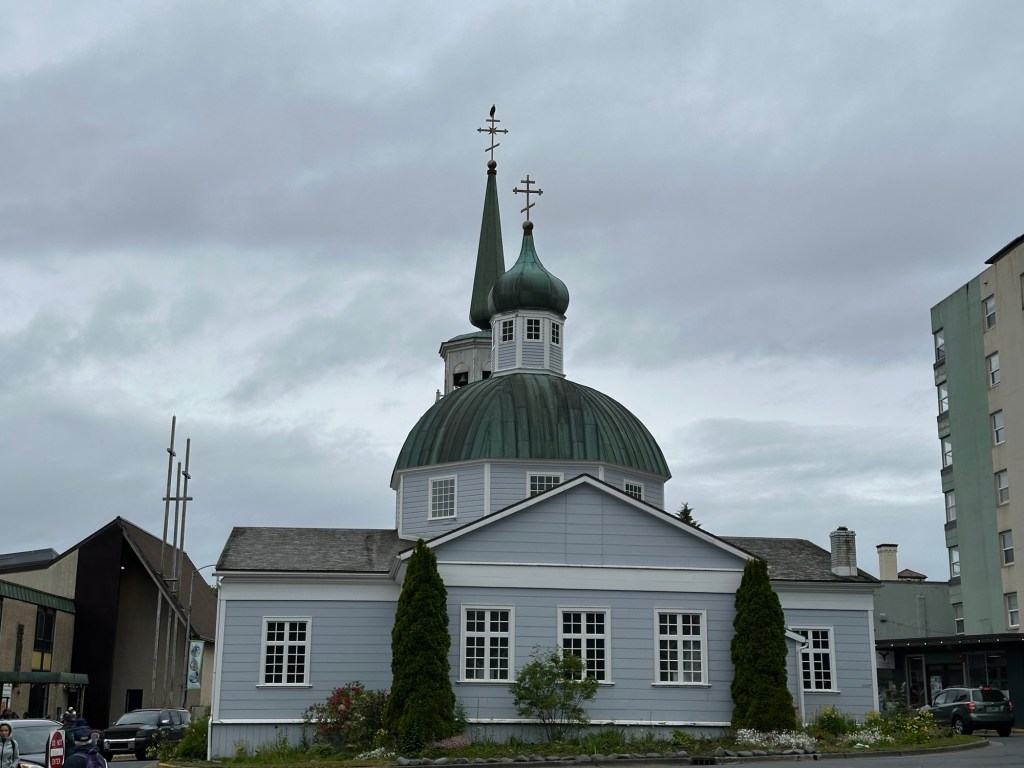
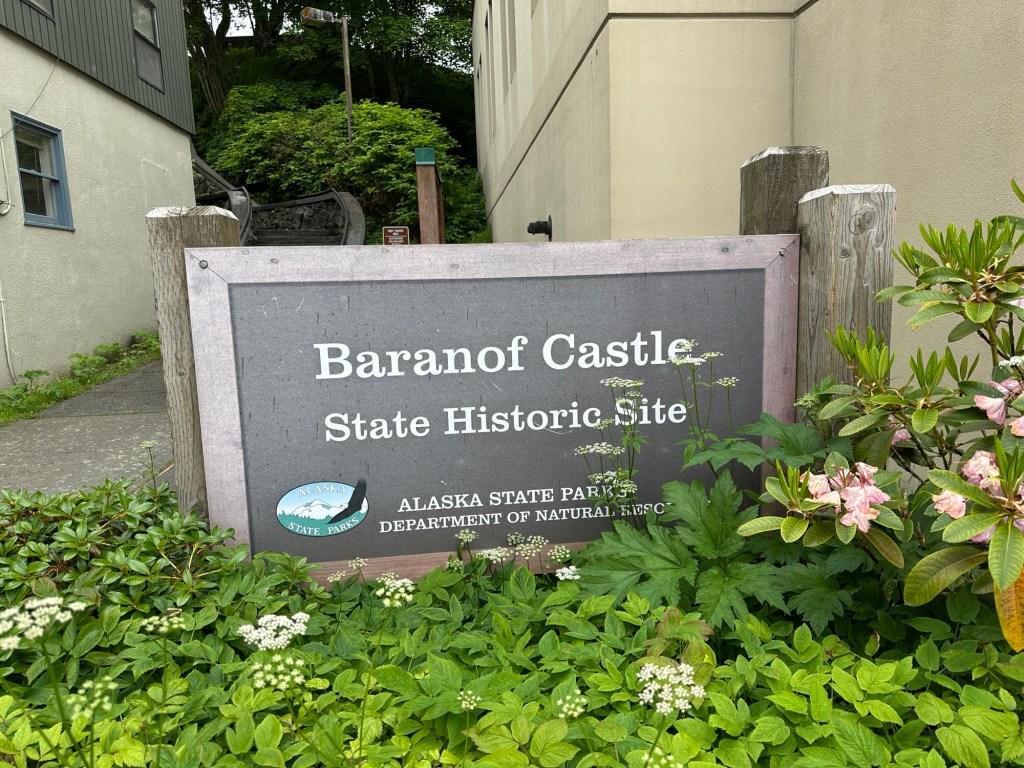
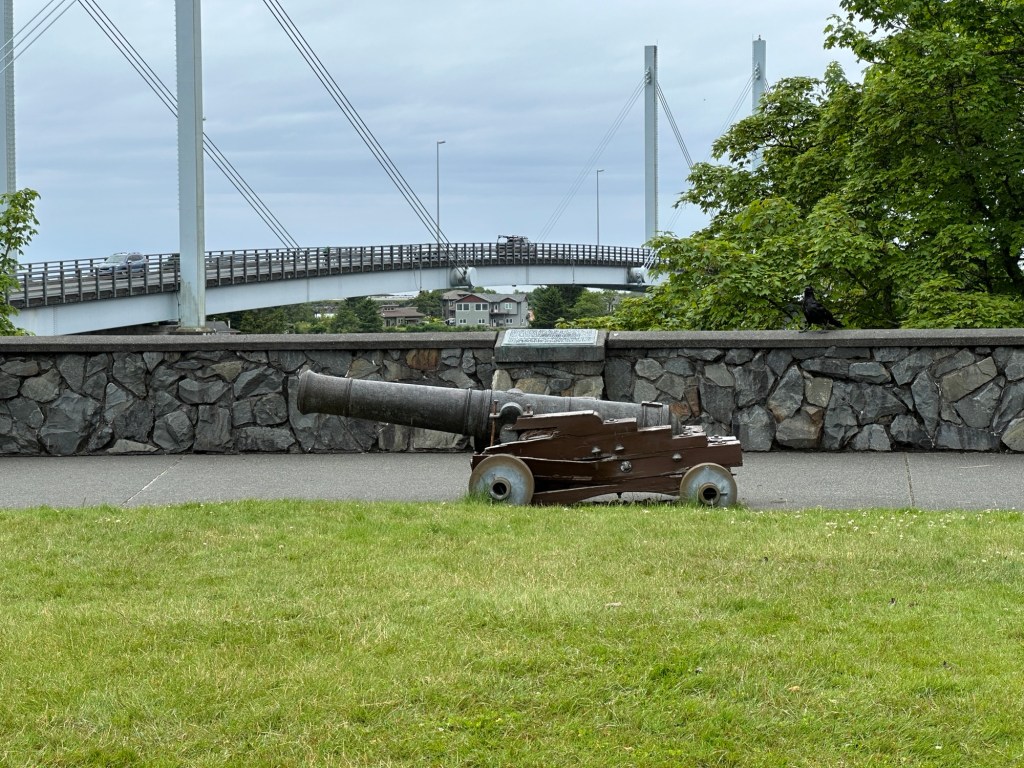
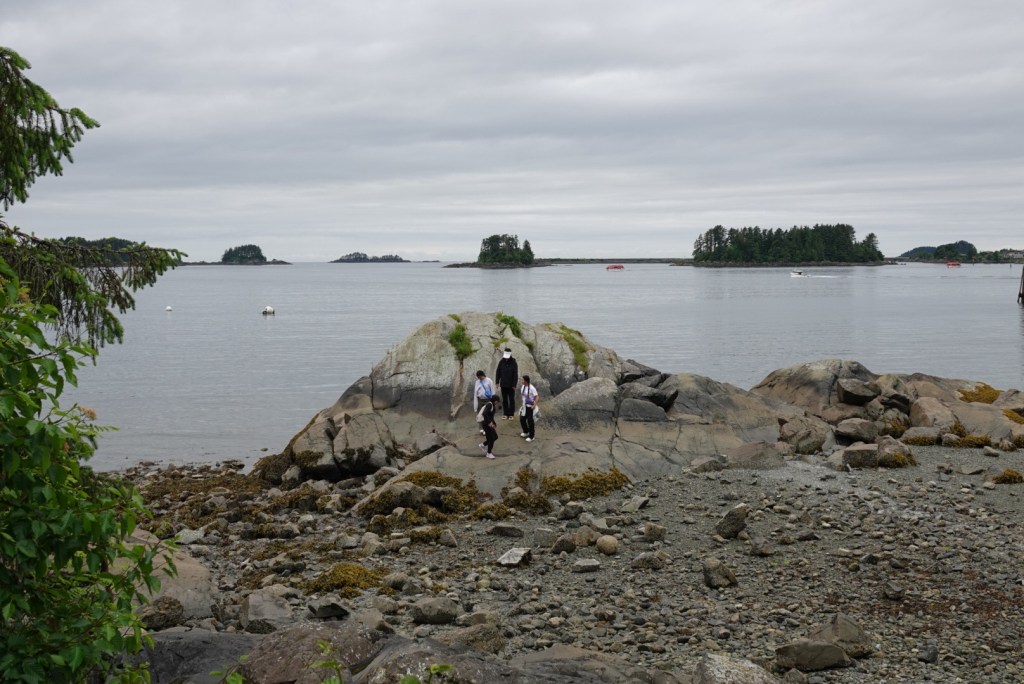
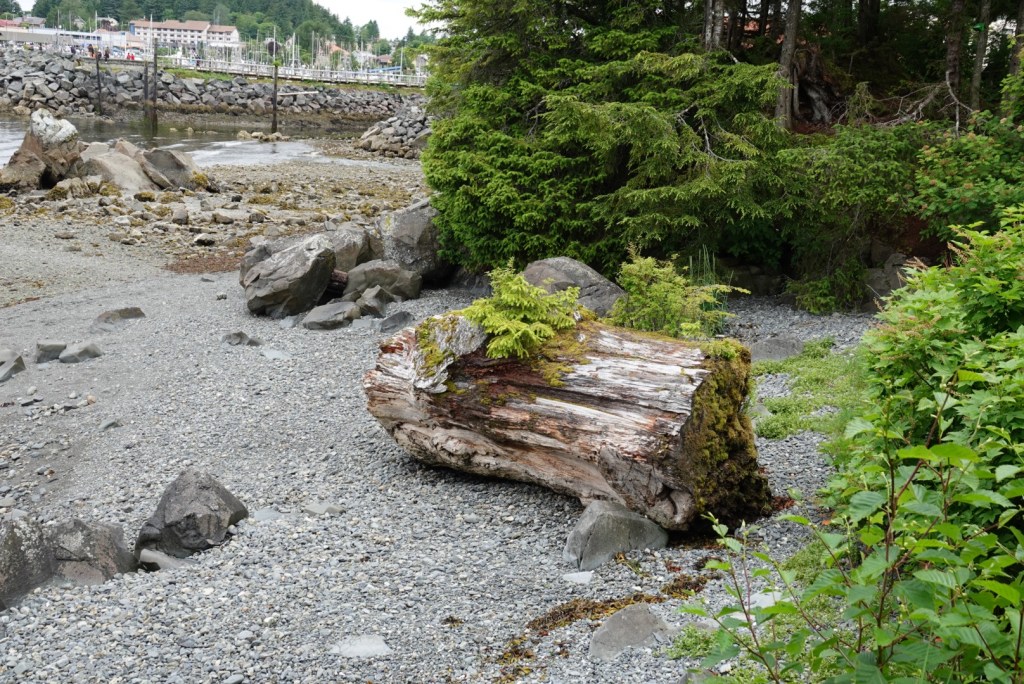
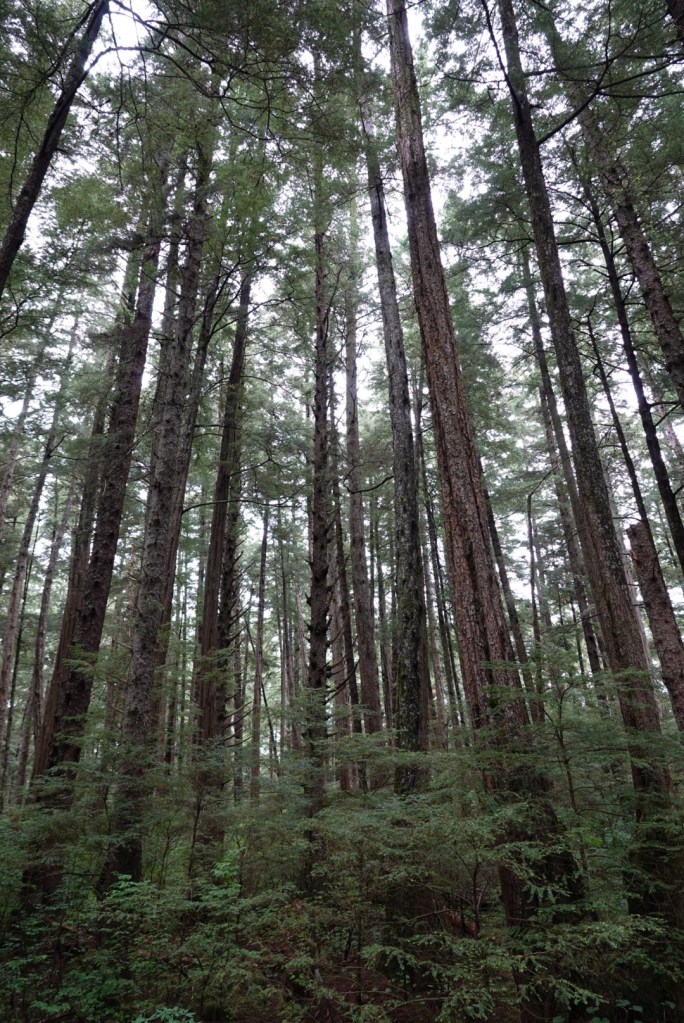
Another really good day.
 Bunch of Geeks go Traveling
Great reporting and thanks for taking us along.
LikeLike
Great reporting! Thanks for taking us along!
LikeLike