This morning we met our local Buenos Aires guide, Noelia, a native of the outskirts of Buenos Aires but now a resident of the city. We took a bus to her favorite places, learning a lot on the way.
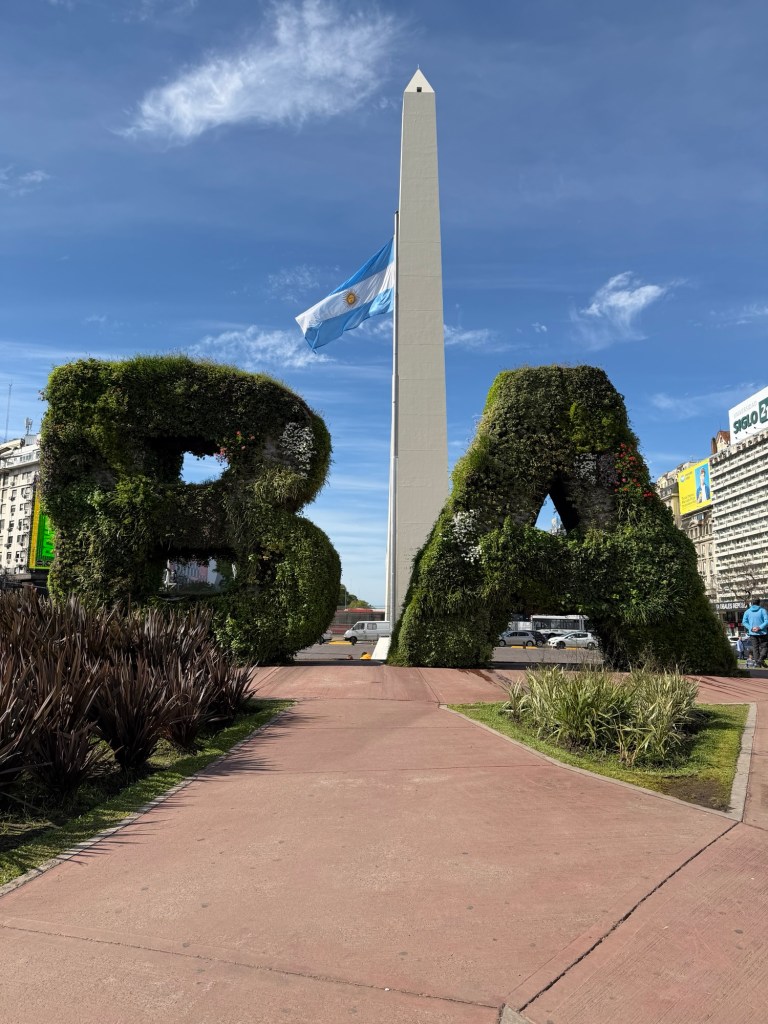
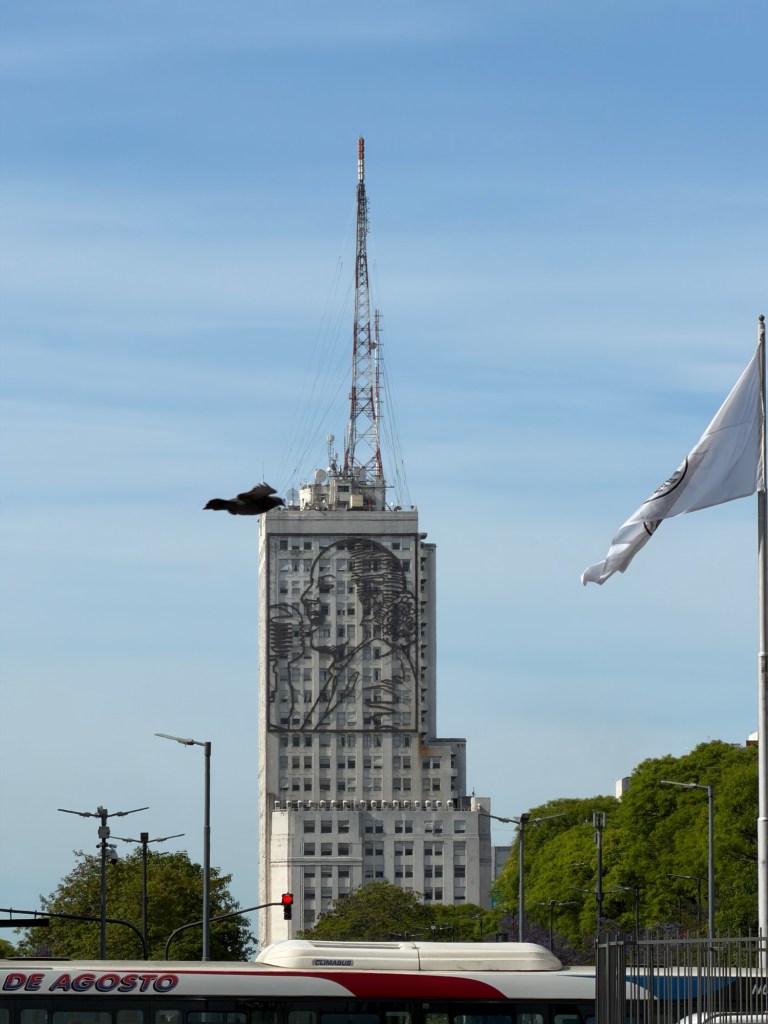
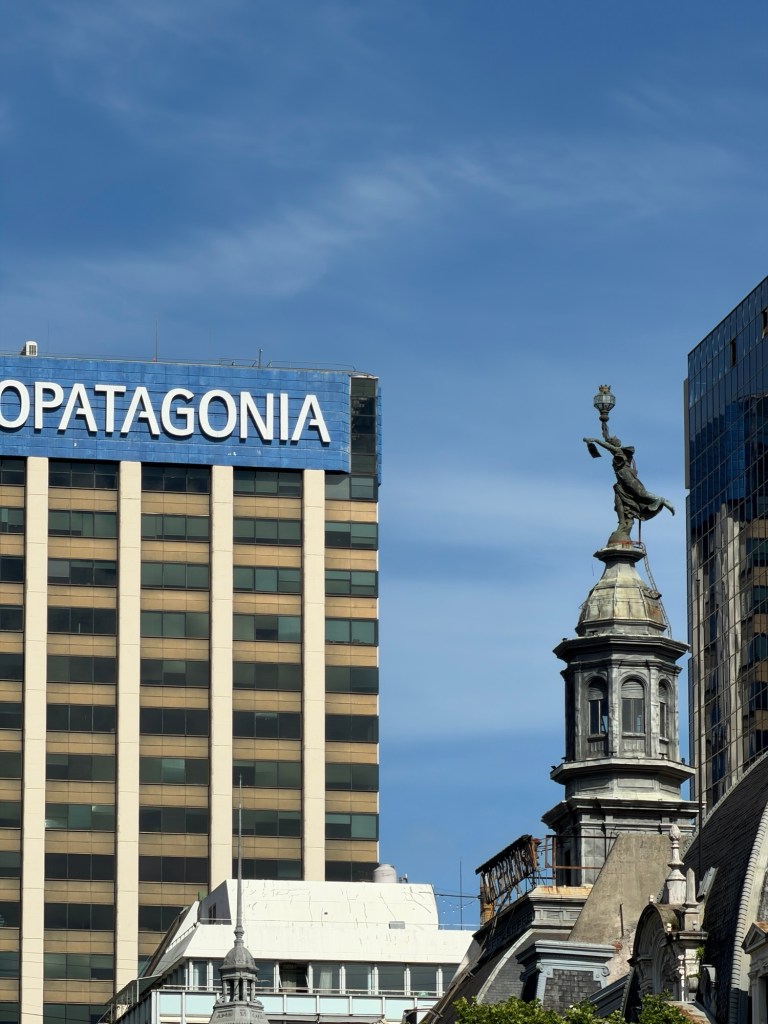
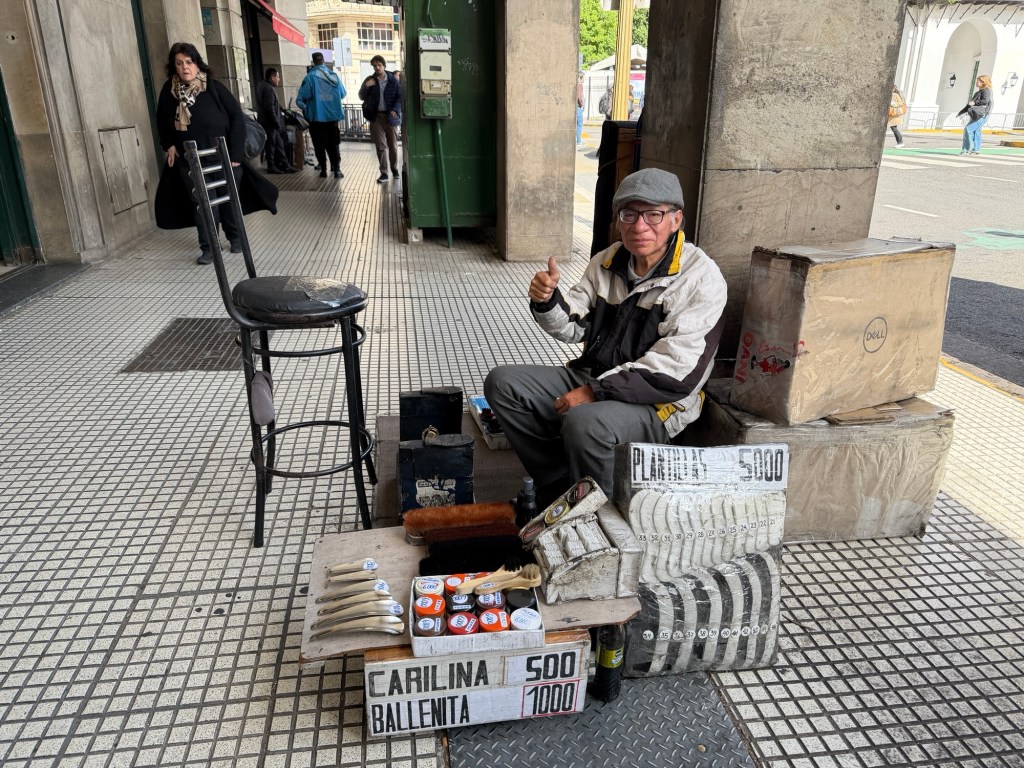
We went by bus to Plaza del Mayo, where we talked to a man who has been shining shoes for 25 years, since he moved to Argentina. He has clients who get their shoes shined often, getting to know them over the years. His set up is easy to pack up, because the government has begun to tax entrepreneurs like himself.
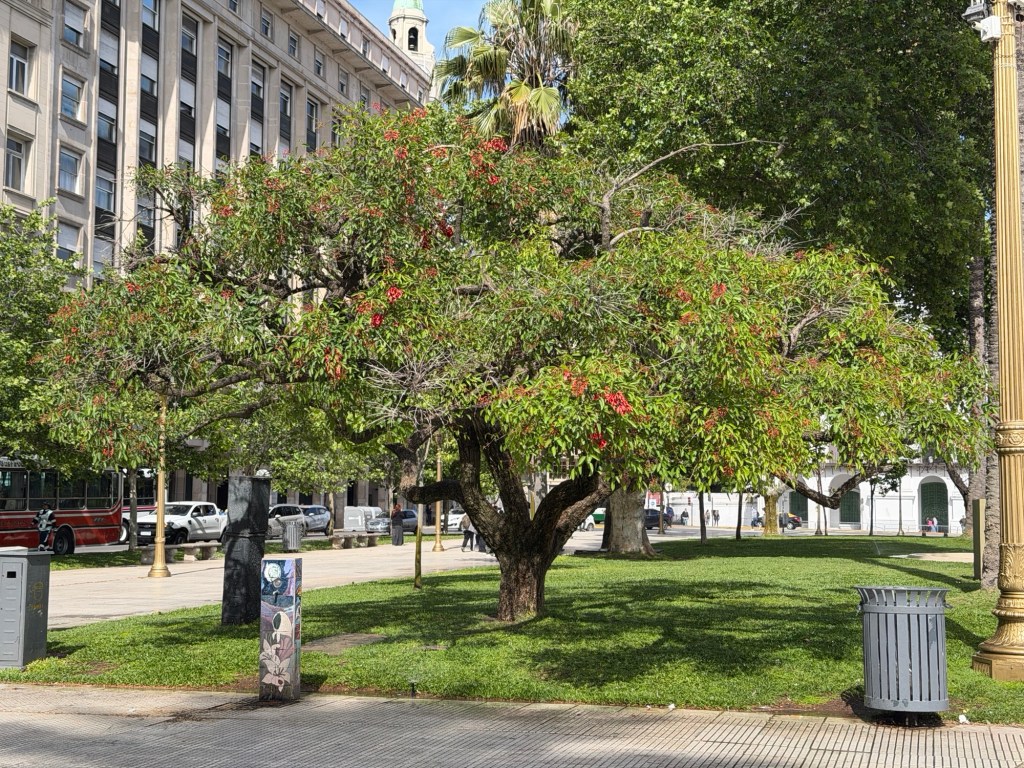
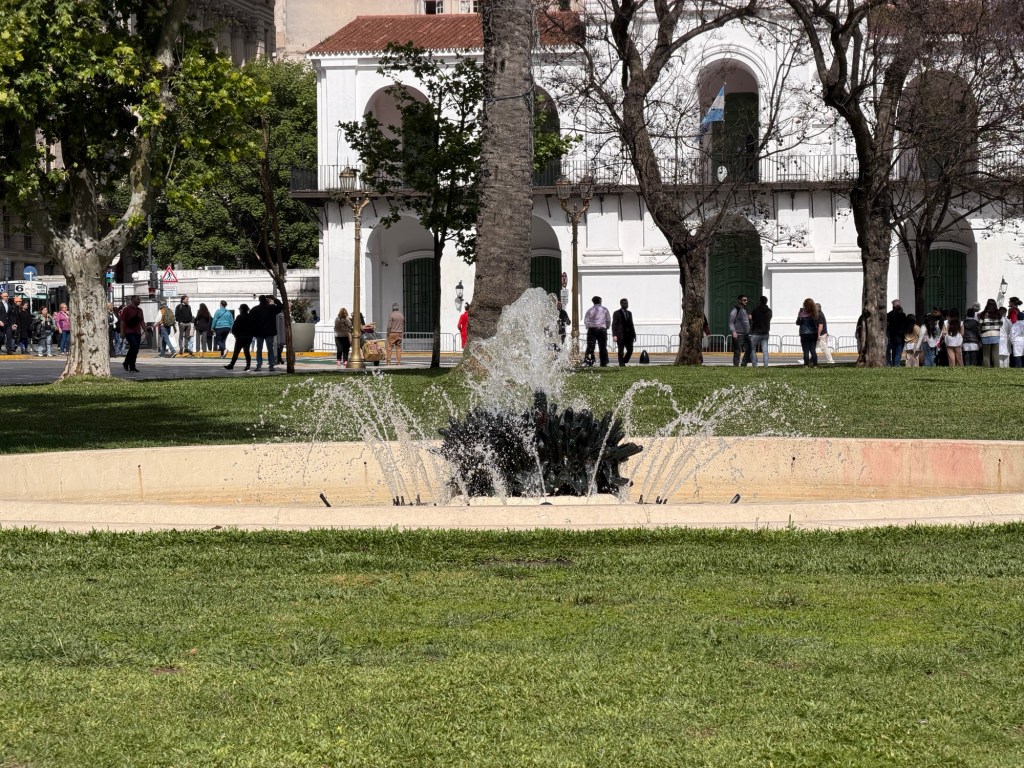
We walked around the plaza for a short while, and felt a little sorry for our friends who only had a minute to see the cathedral and other places we explored the previous day.
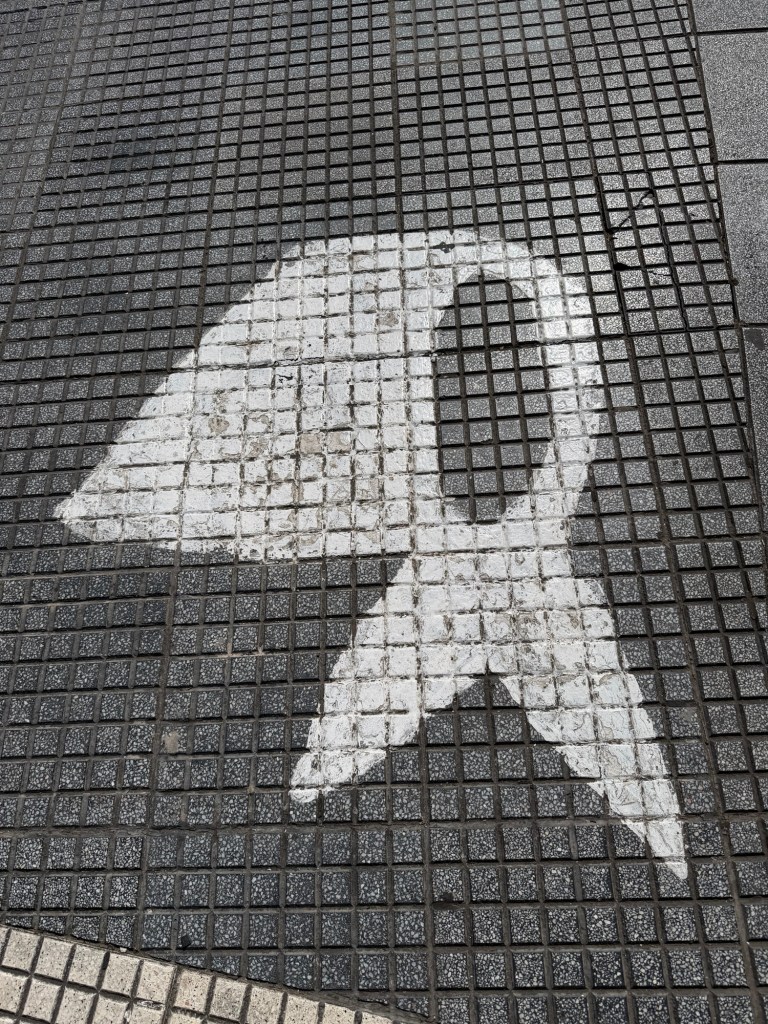
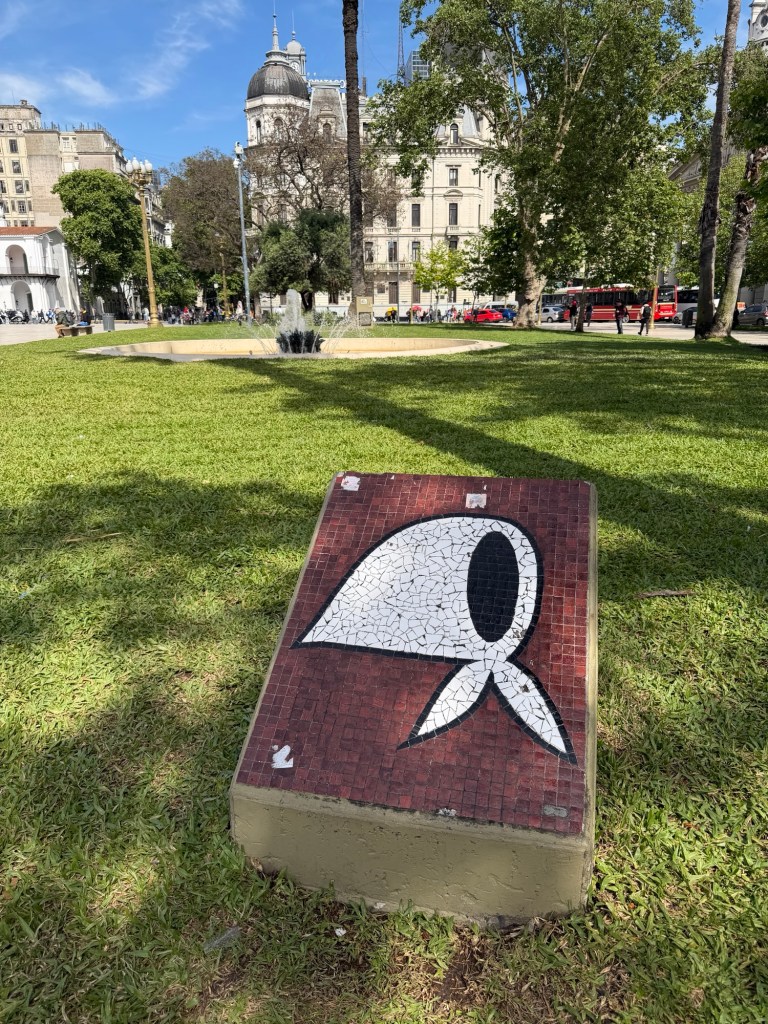
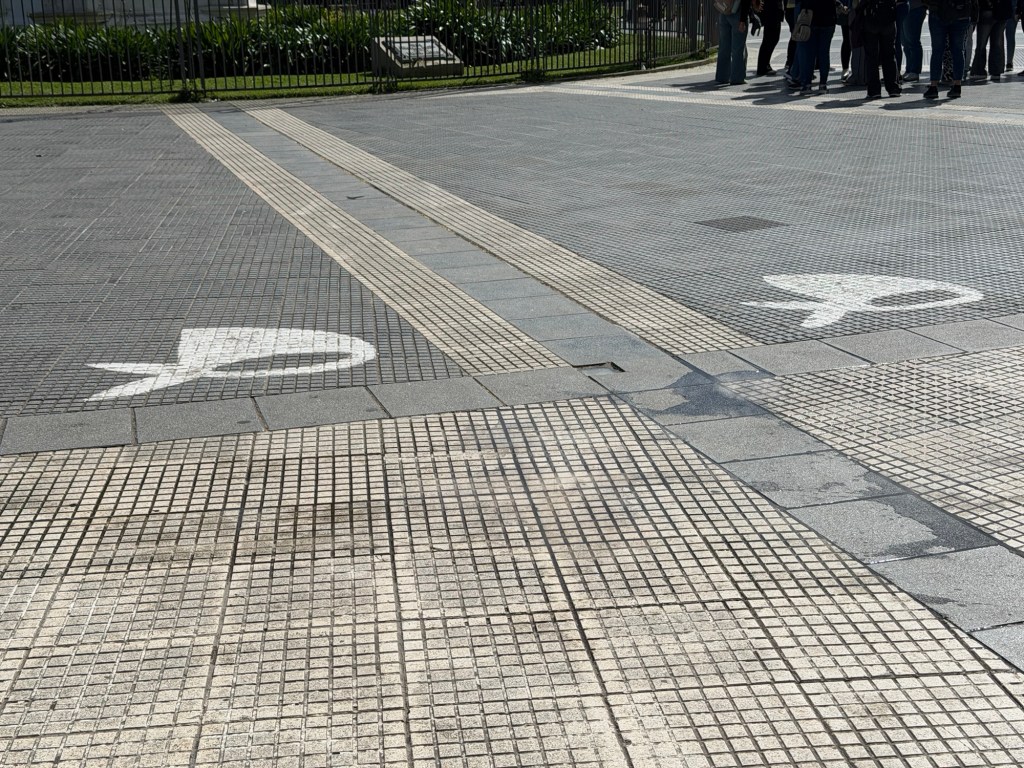
During the dictatorship, Noelia told us, people were not allowed to gather in large groups. To protest the disappearance of 30,000 people during this dictatorship, a large number of women, who called themselves the Grandmothers, put diapers on their heads like scarves and walked around the plaza in pairs. They would sit on benches in pairs but close enough to talk to the other pairs. Today, this successful protest is celebrated in pictures on the ground, in pairs, around the plaza.
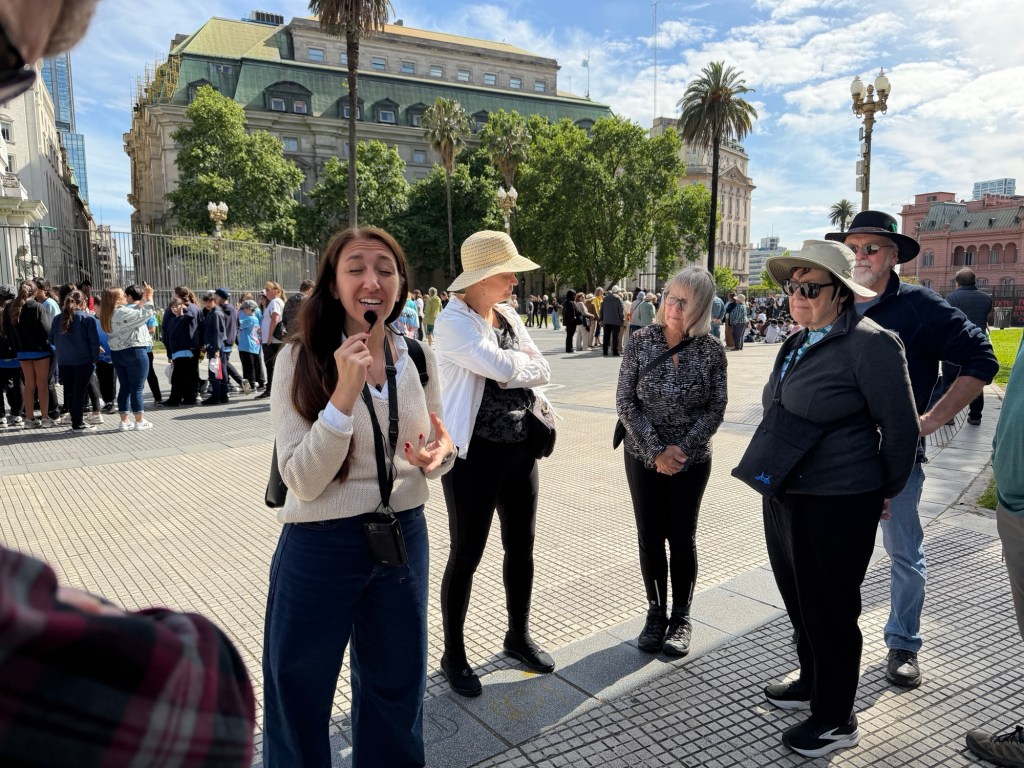
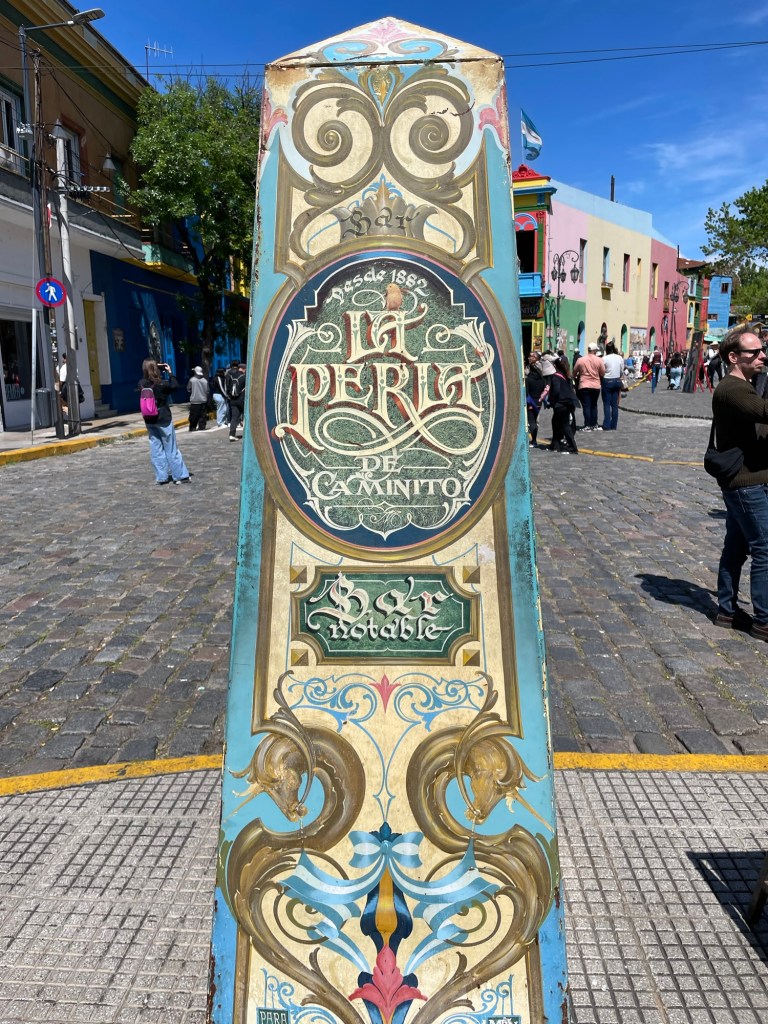
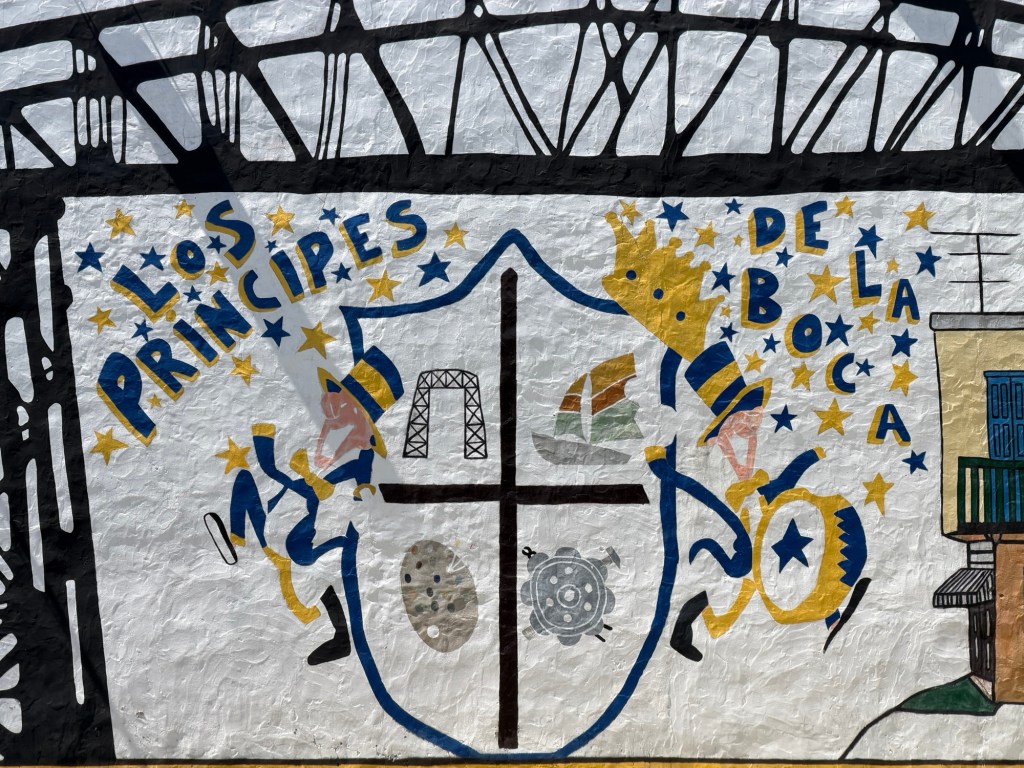
We then drove to La Boca, a wonderfully colorful area attractive to tourists and locals alike. It reminded us a bit of New Orleans, with the bright colors, balconies and stores. Again, we happily wandered on our own, onto the famous street Caminito. On the way, we learned that fútbol, what we call soccer, is very important to Argentinian people.
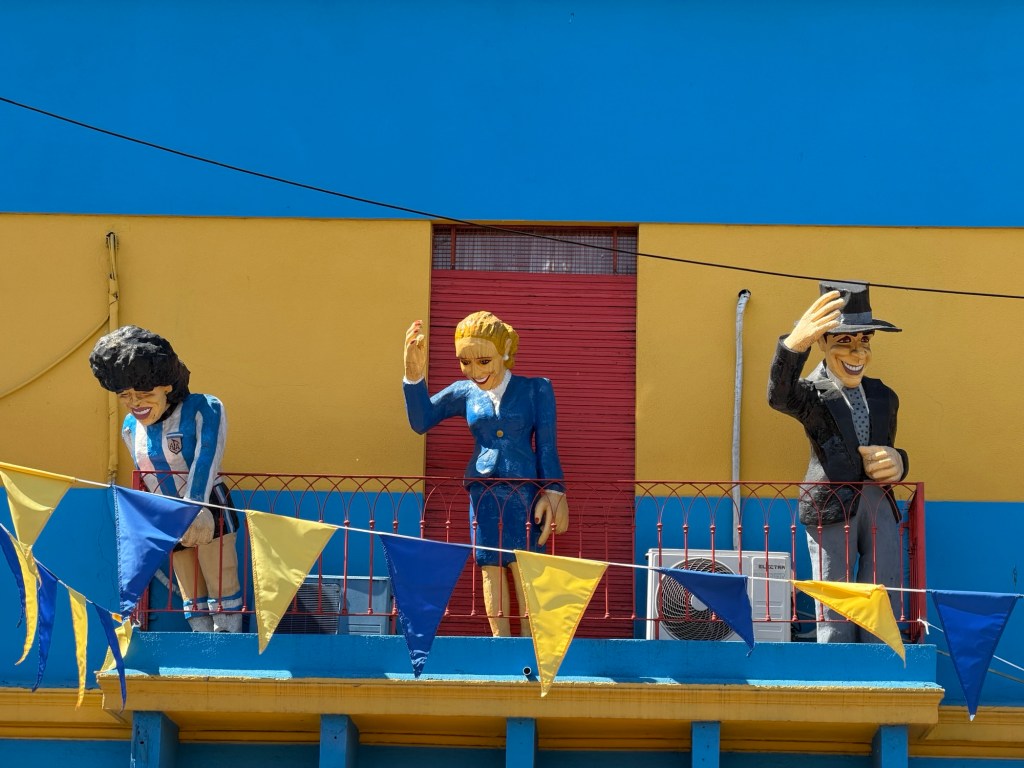
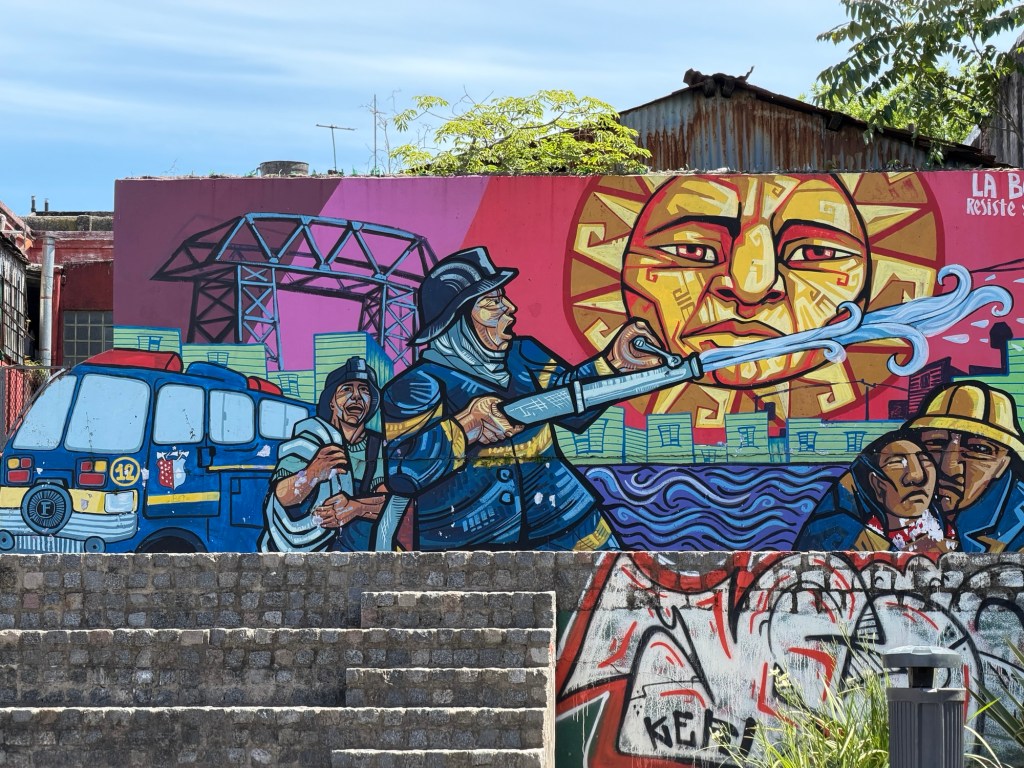
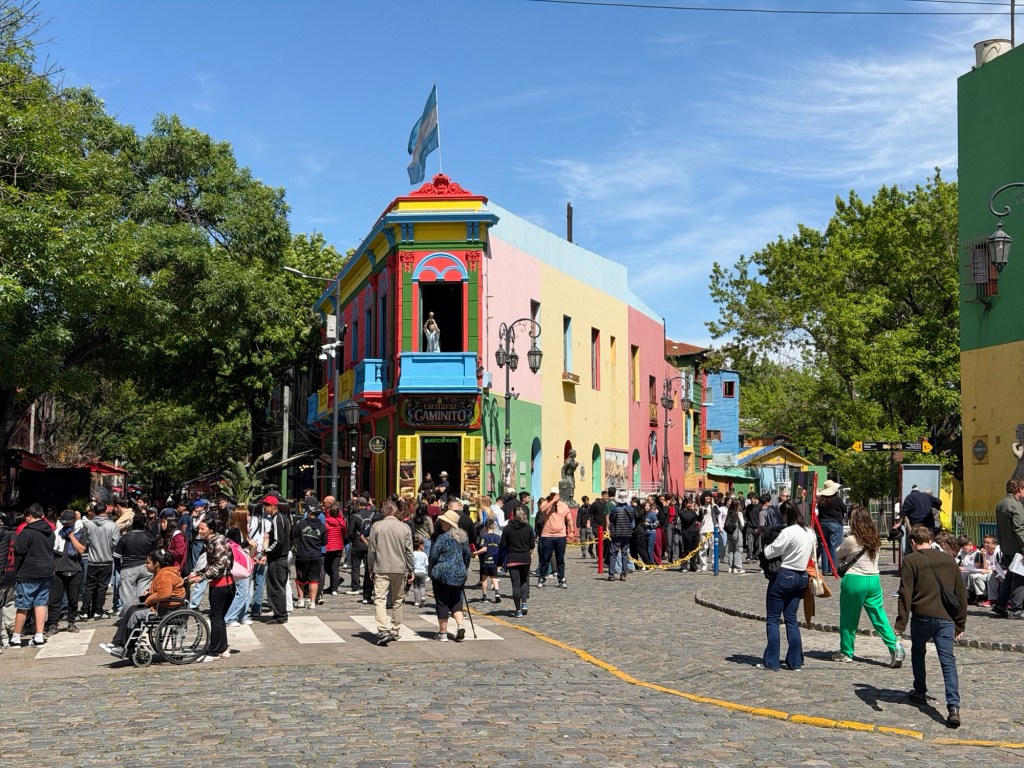
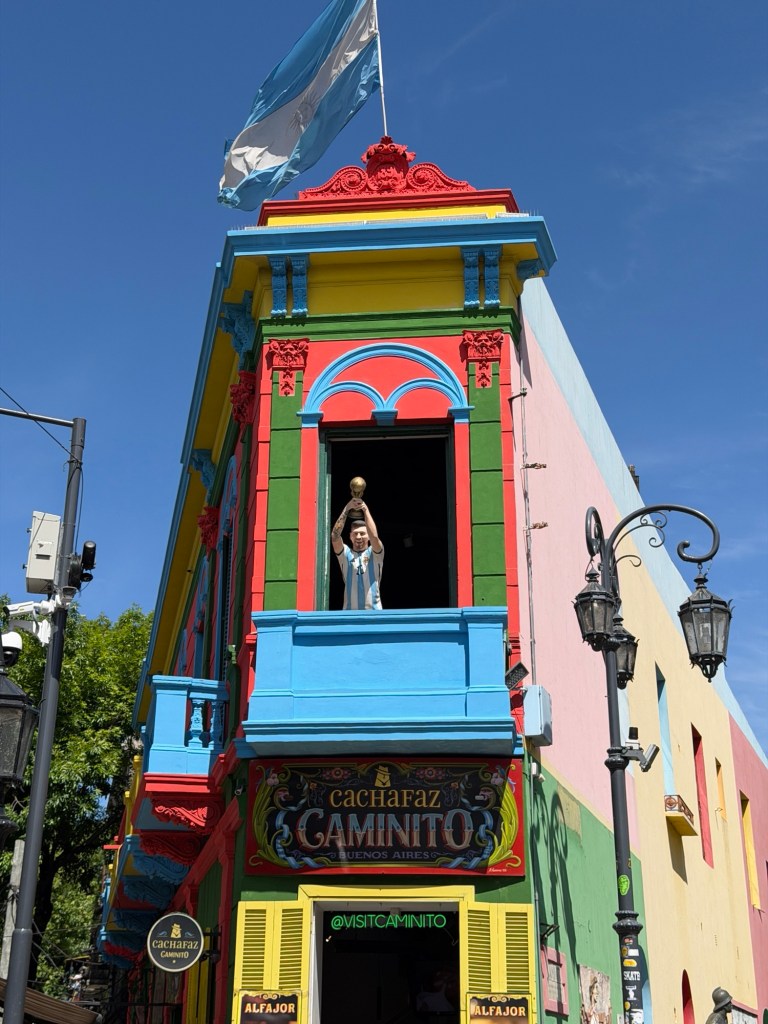
The shops and houses are so colorful in part because people would use whatever paint was available from the ships that docked here.
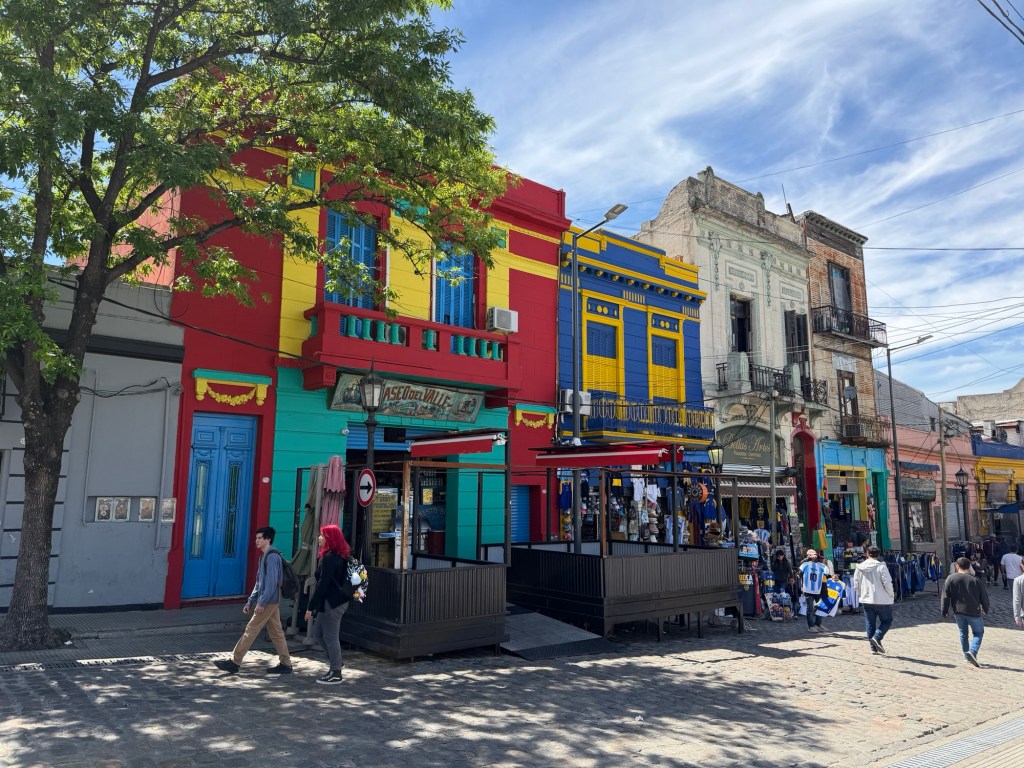
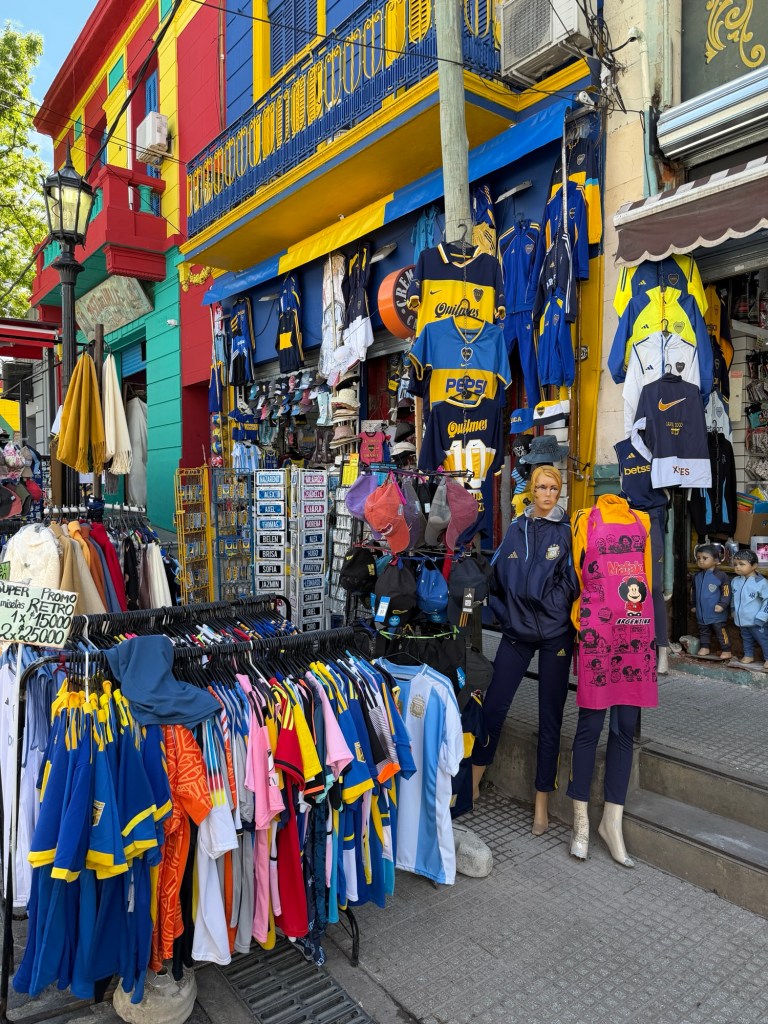
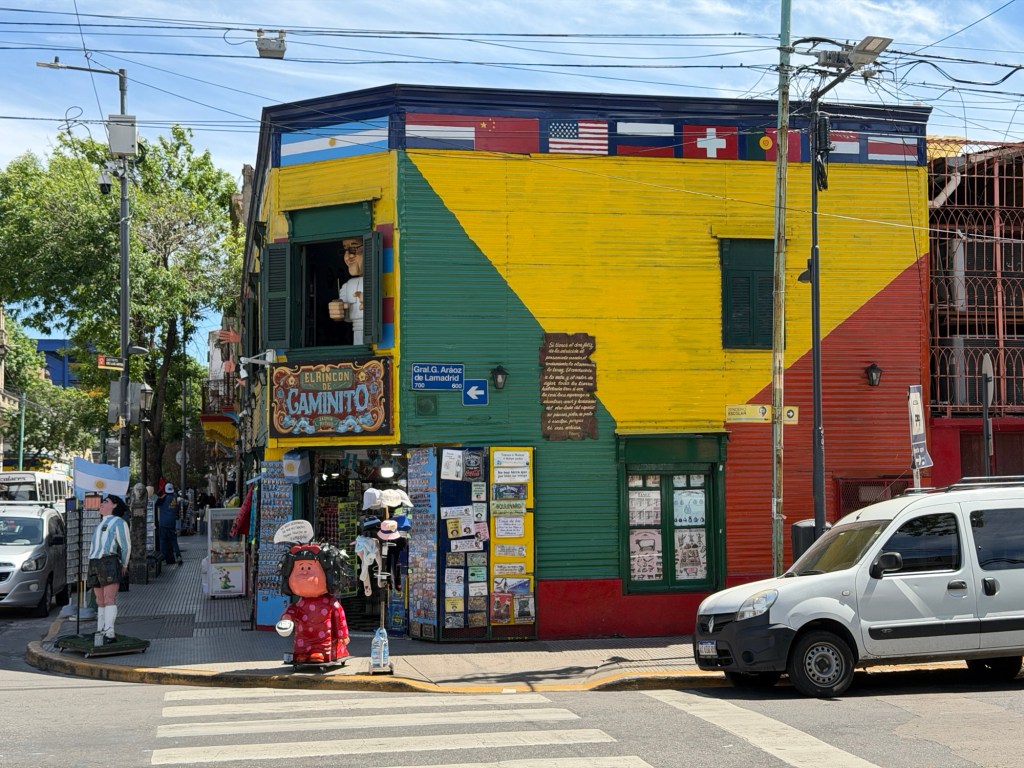
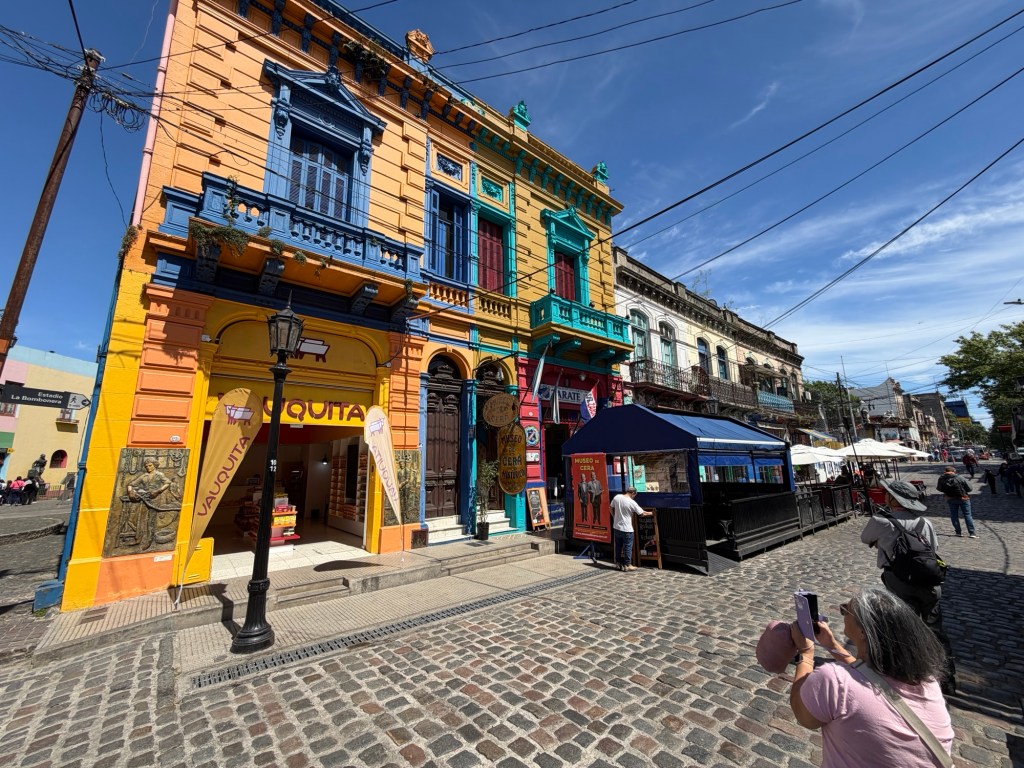

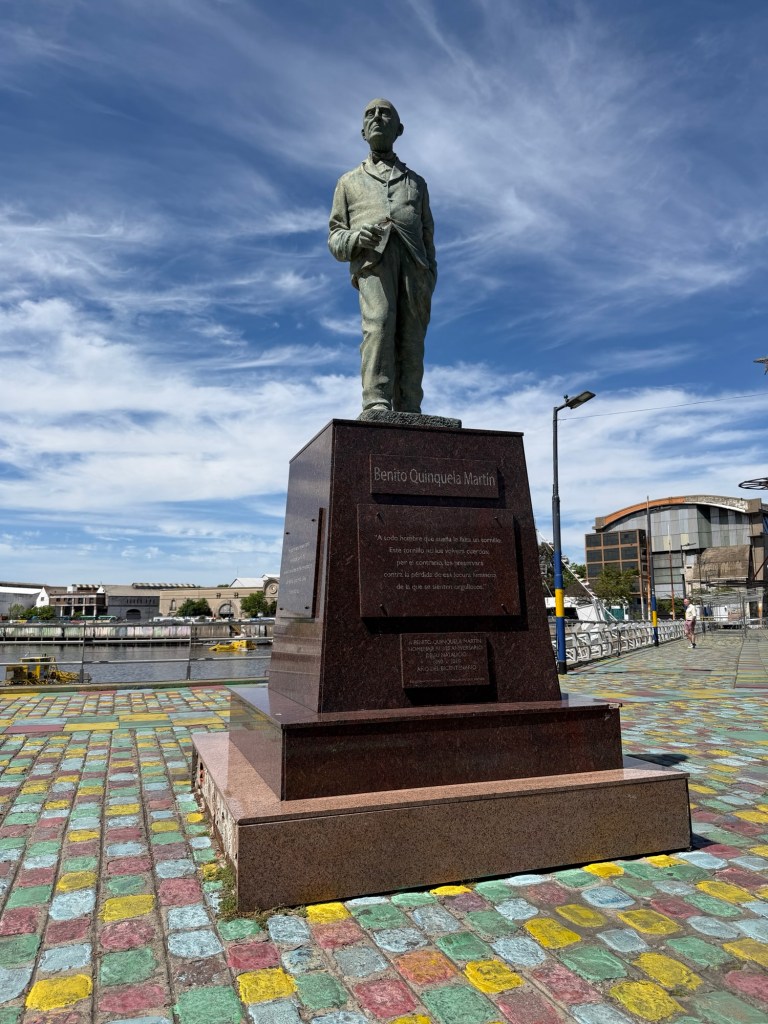

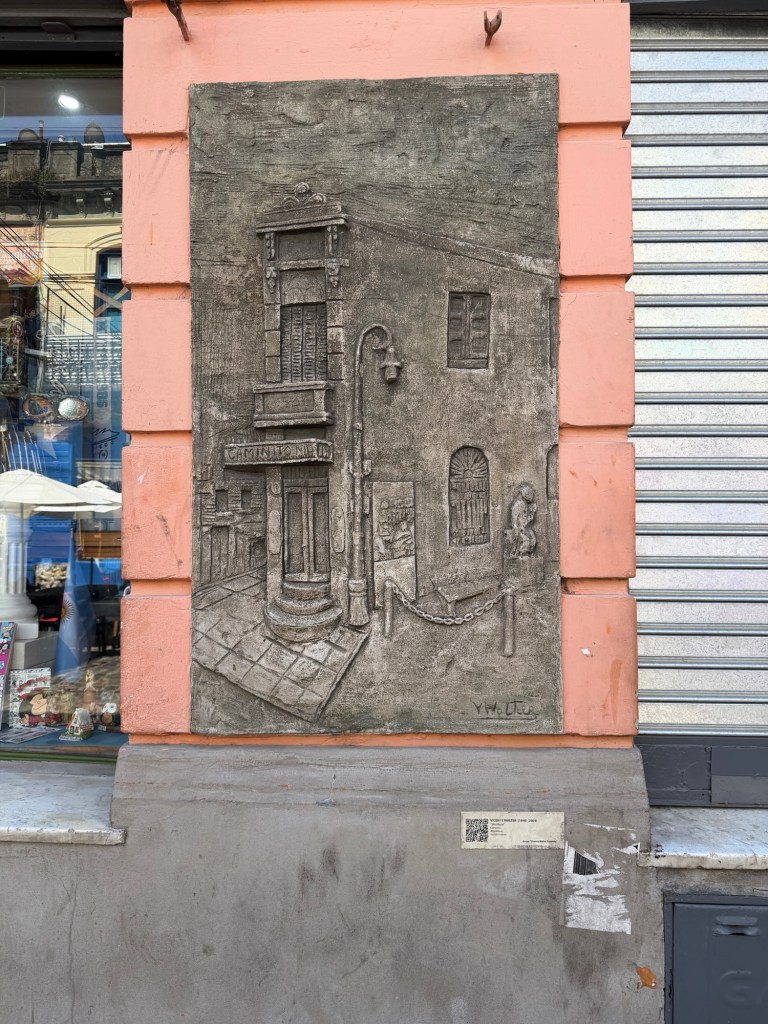
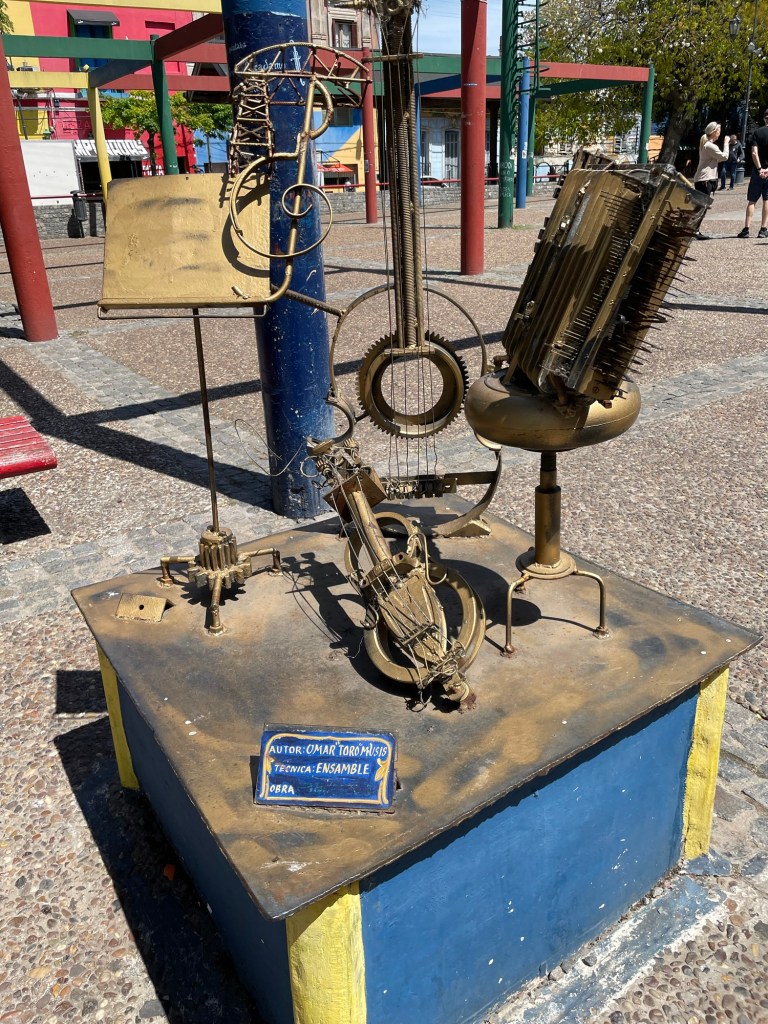
Artistic displays abound.
At an upstairs conference room at London City restaurant, we listened intently to a talk about first-hand experiences with disappeared people during the period of 1976-1983, after Perón was deposed by a military dictatorship. The speaker directed a movie called “The 70s and Pico;” Pico was his grandfather. The movie, released in 2016, was directed by Mariano Corbacho. It has been pointed out many times on our visit to Buenos Aires that discussing this period of history is difficult for Argentinians!
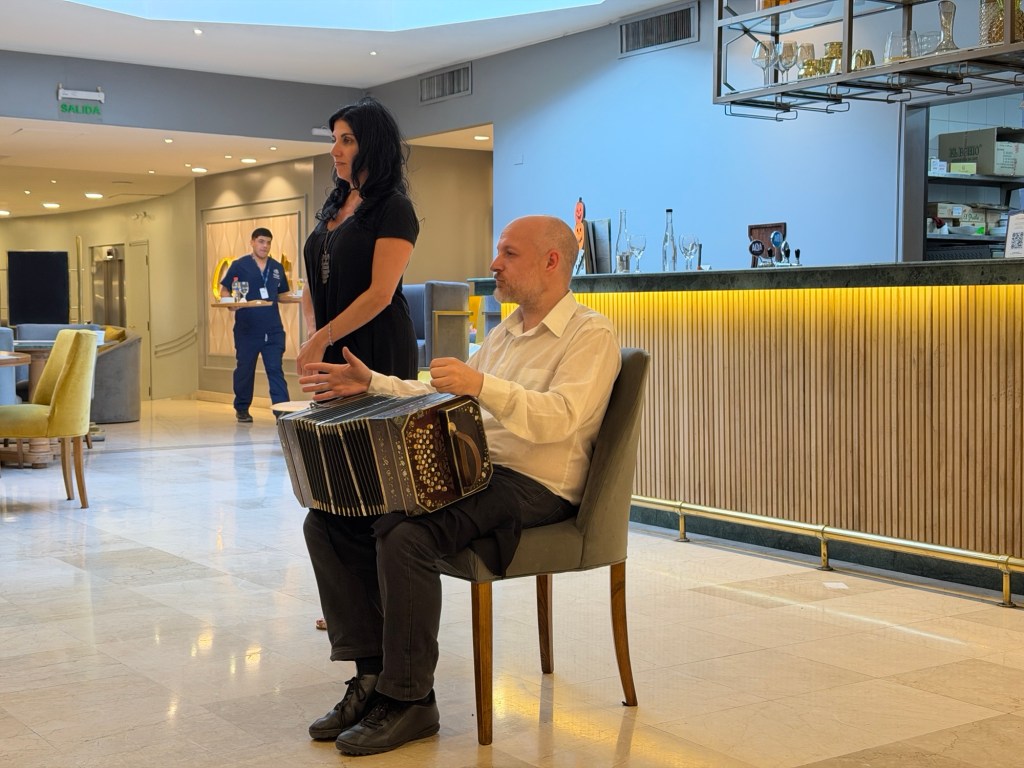
That evening, we participated in a tango lesson, learning a lot from the musician and two dancers. The most difficult aspect for many of us was to accept the male as sole leader, no negotiations.
The musician showed us how his instrument worked and explained its history. The dancers demonstrated elegantly, something none of the rest of us were able to do. We learned how the man asked the woman to dance — eye contact followed by a nod, and how the woman answered — either getting up to dance or showing interest in something else.
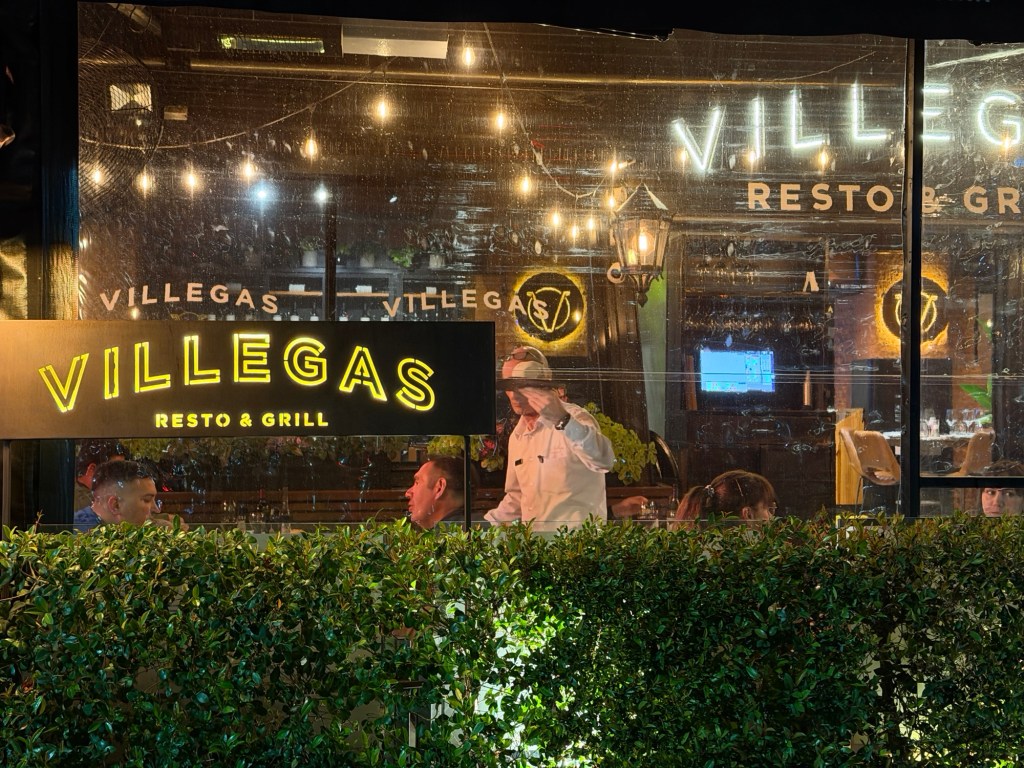
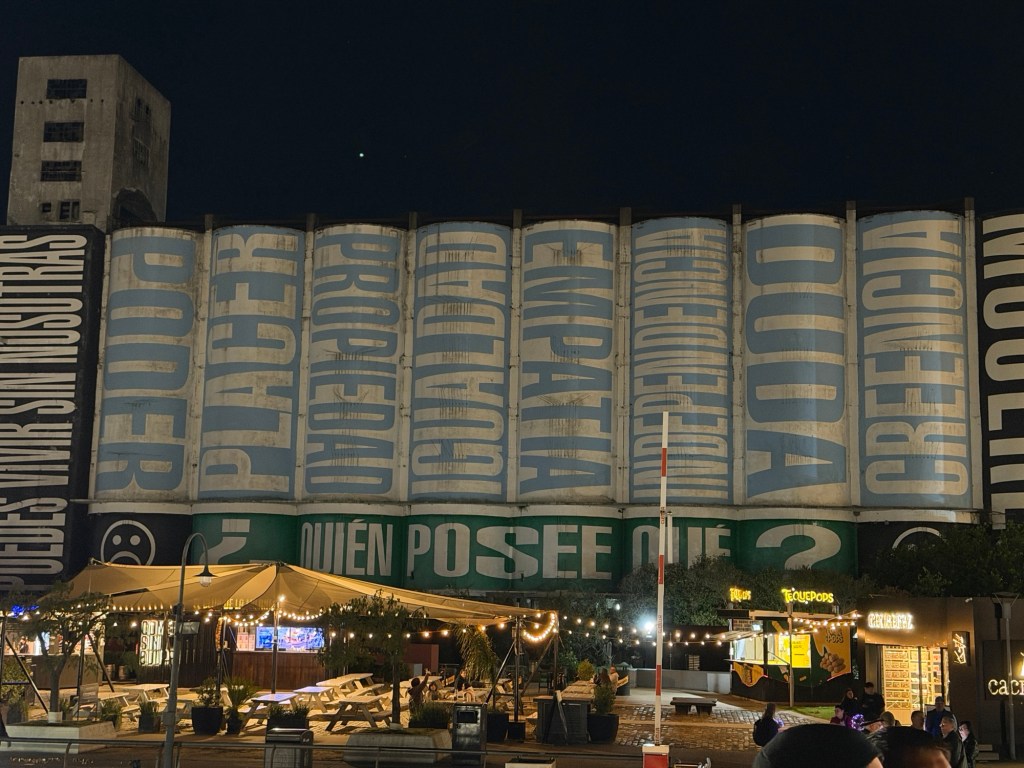
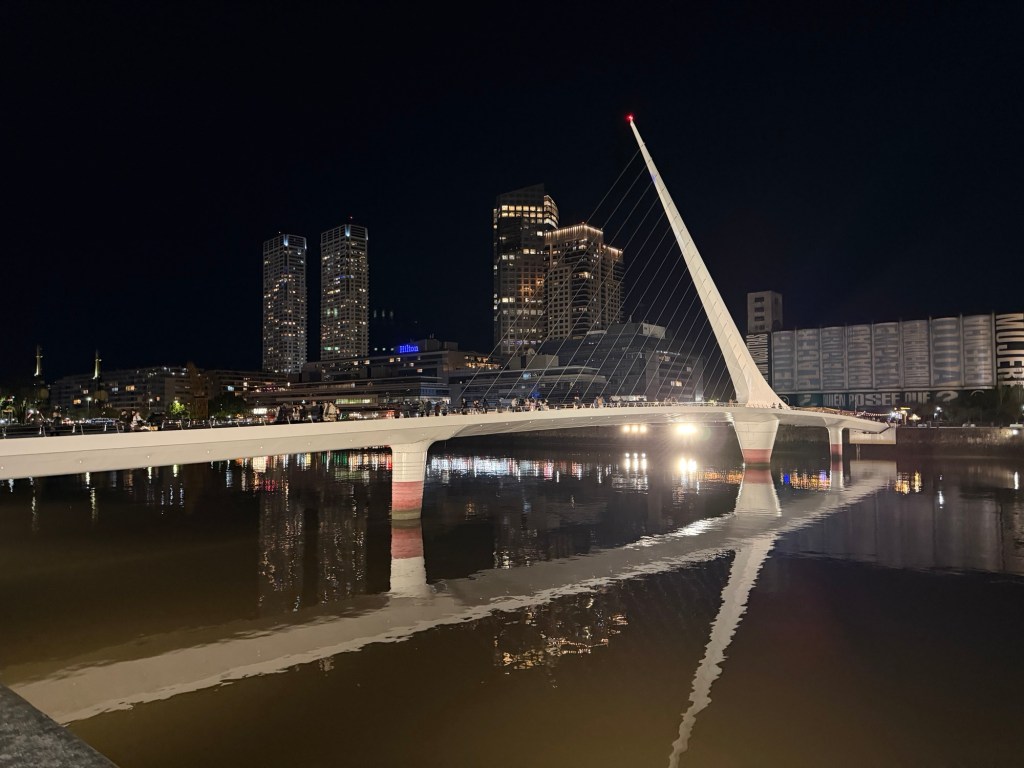
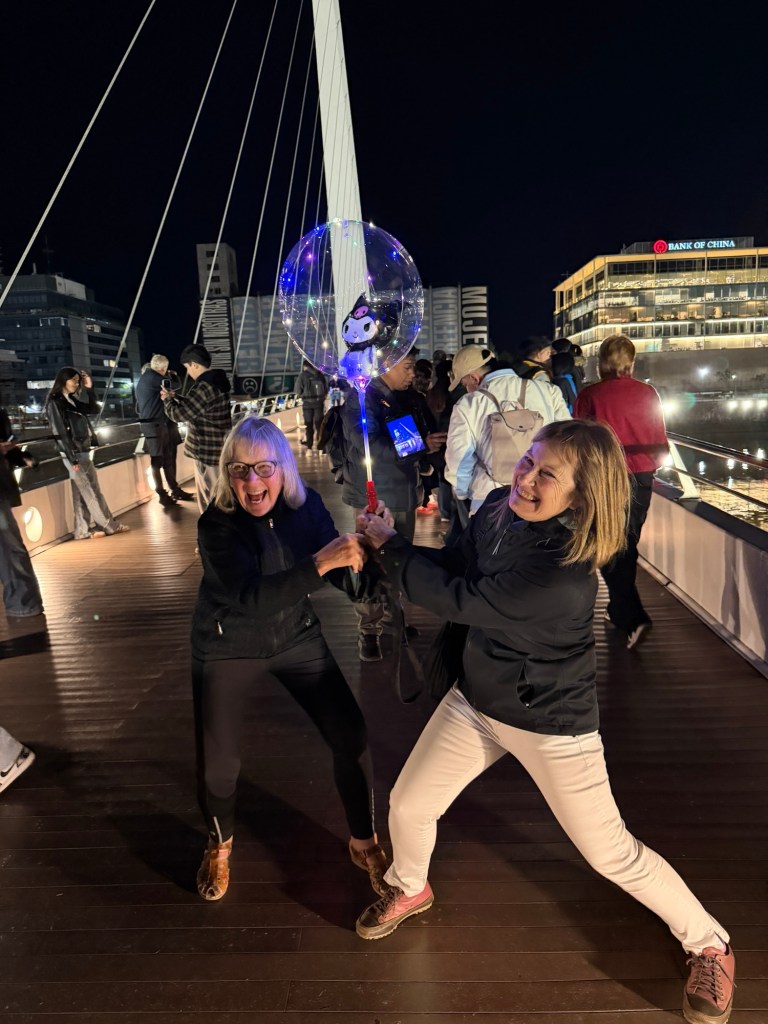
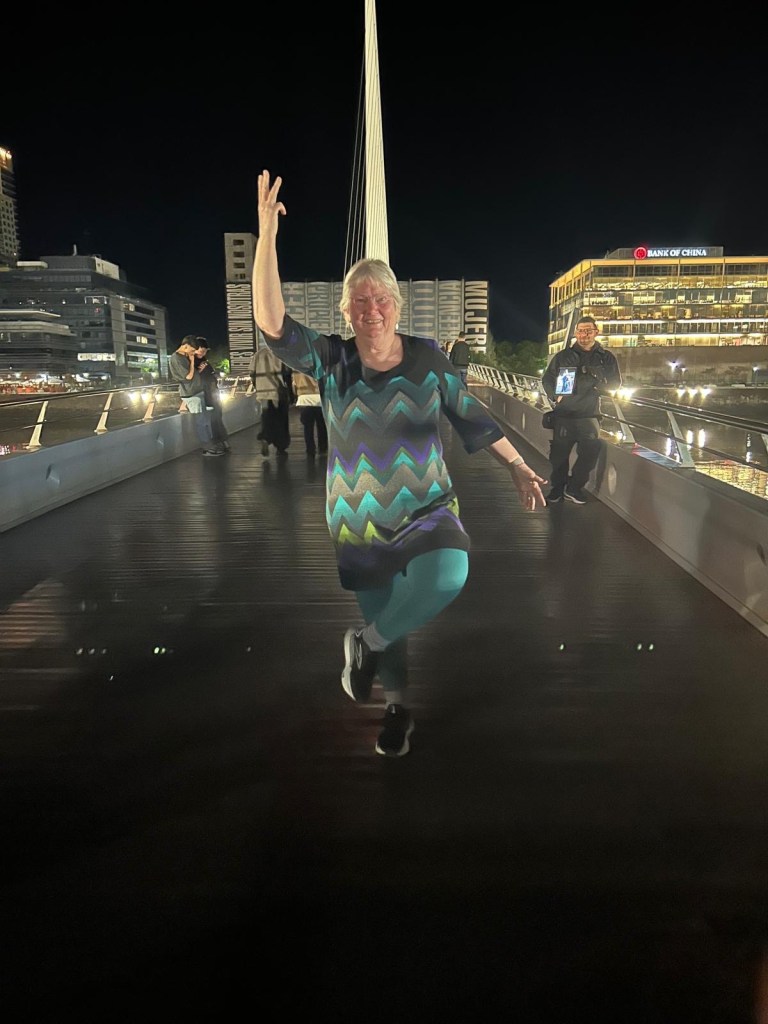
After dinner, we walked to the women’s part of town, celebrating women’s rights so desperately fought for after and during the dictatorship.
 Bunch of Geeks go Traveling
Hello Clare and Brian,
I loved all the colors of the day. And how fun to get to danse the tango!
Enjoy, Véronique
LikeLike