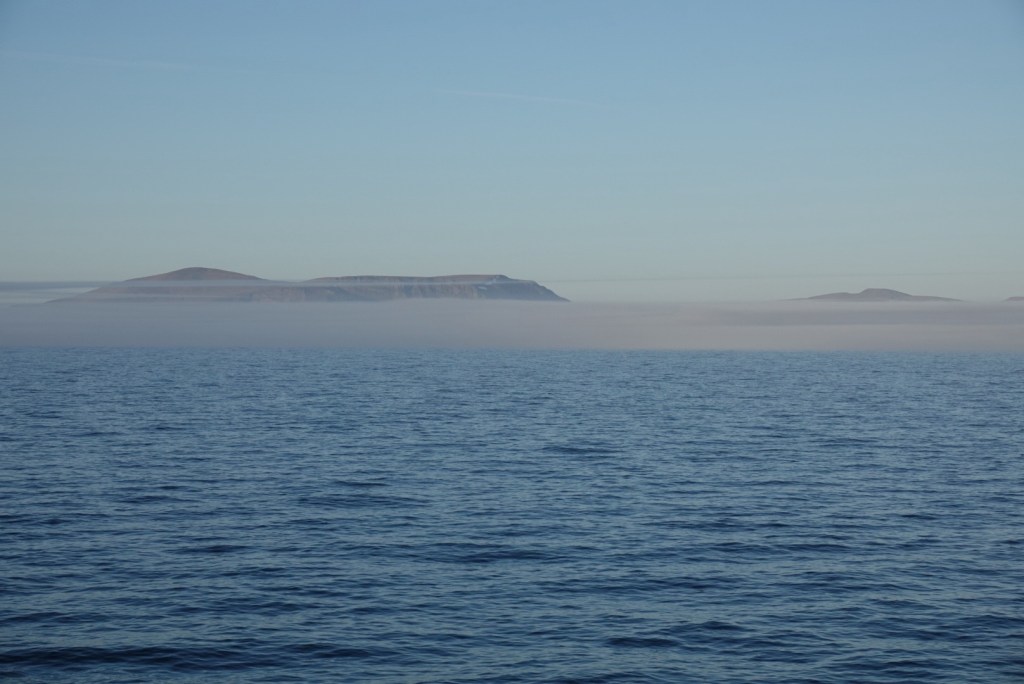
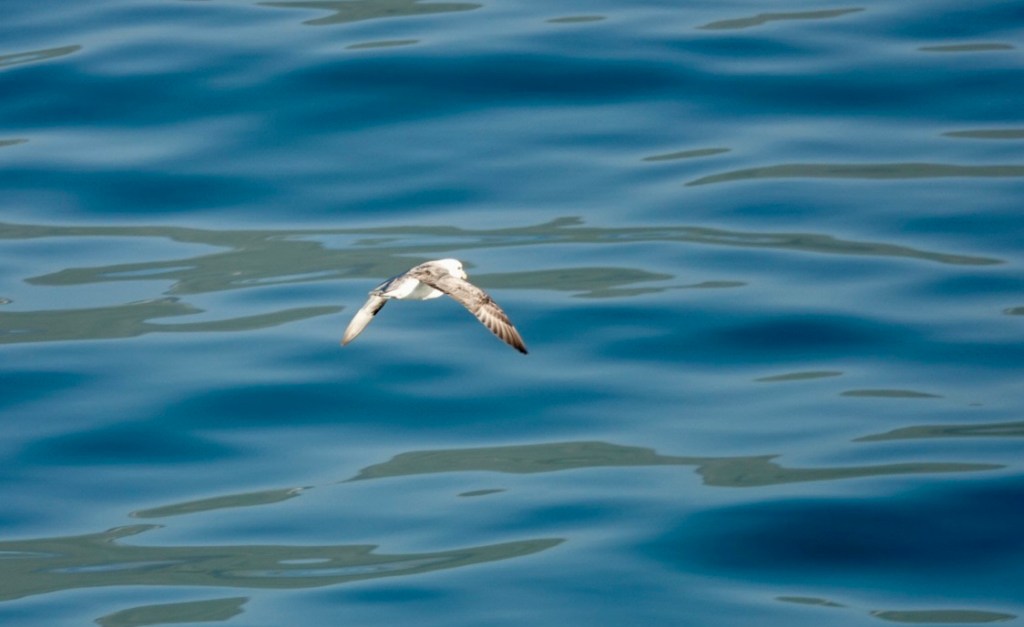
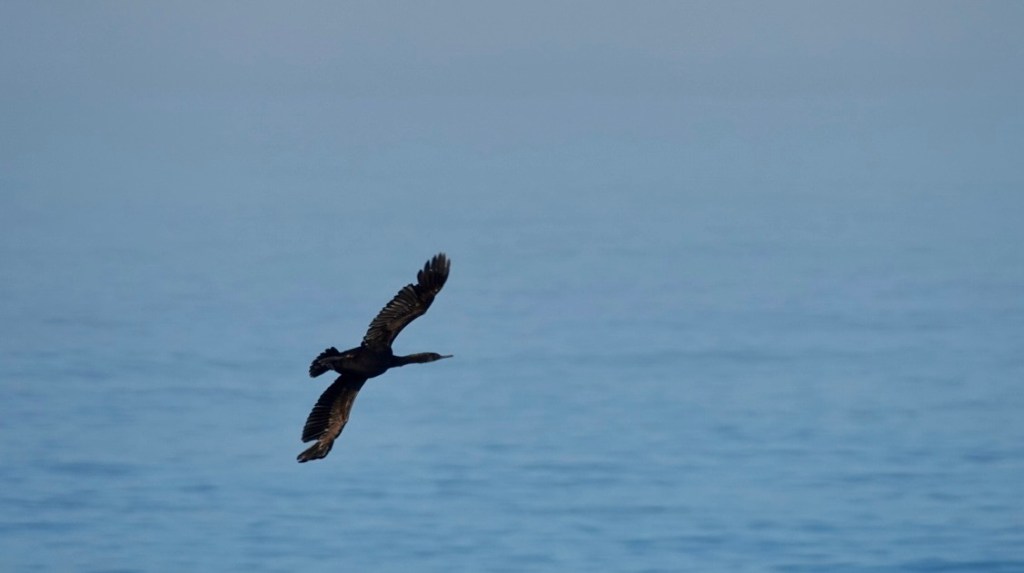
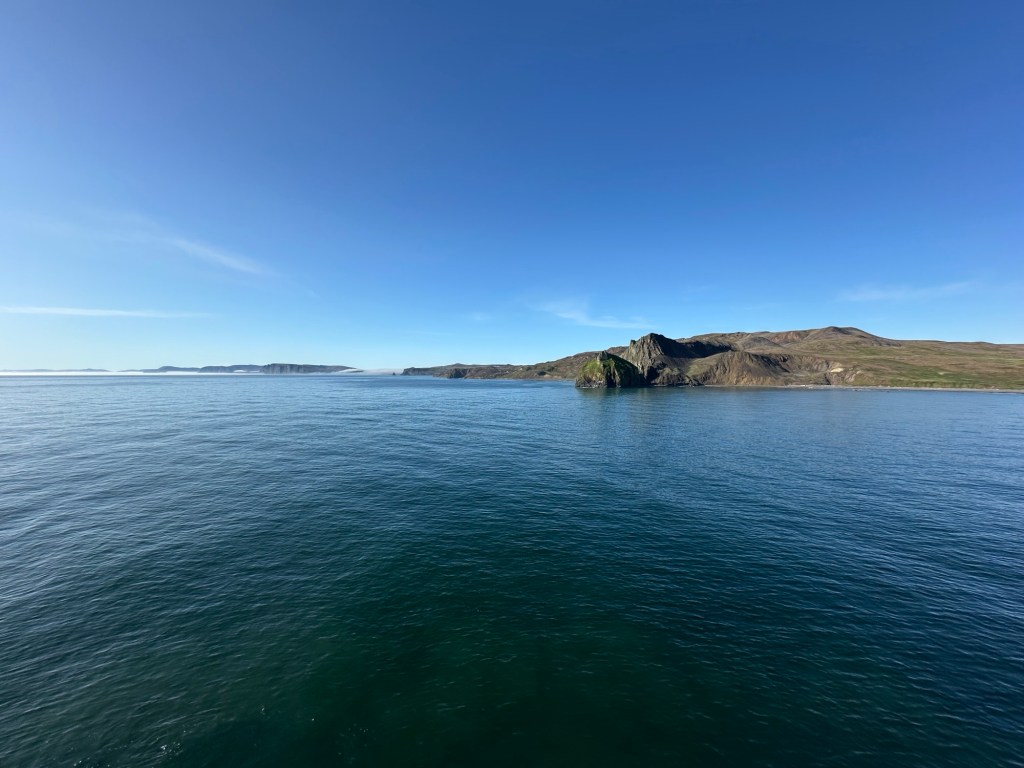
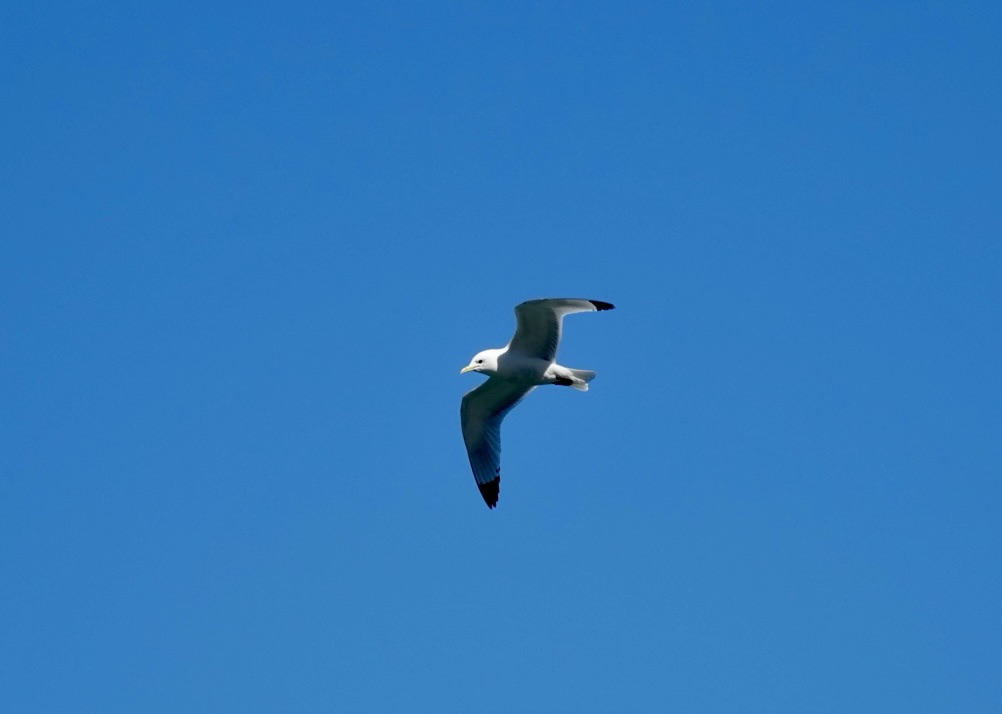
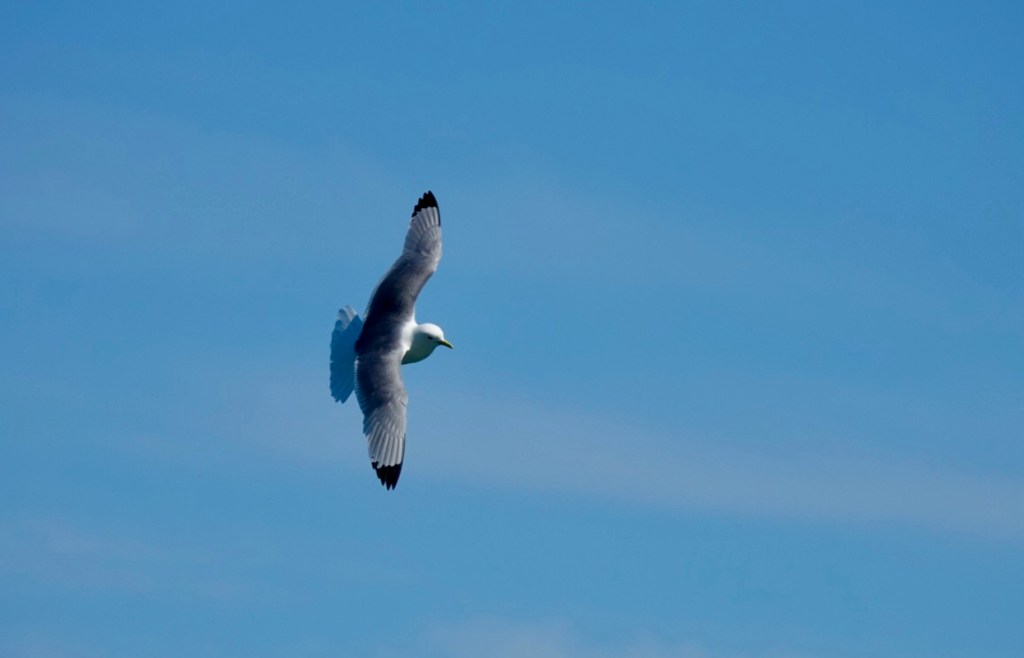
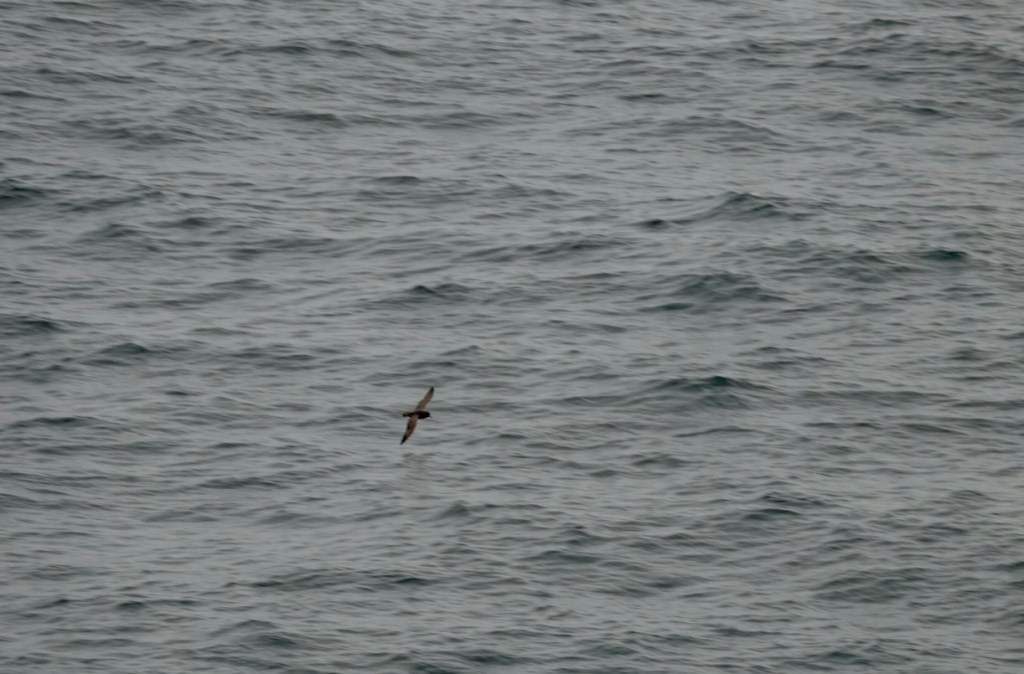
On this day, we are sailing northeast to arrive in Nome tomorrow morning. The weather is sunny, but there is nothing to see but open ocean and seabirds. We hope to see Orcas, but not as of this writing.
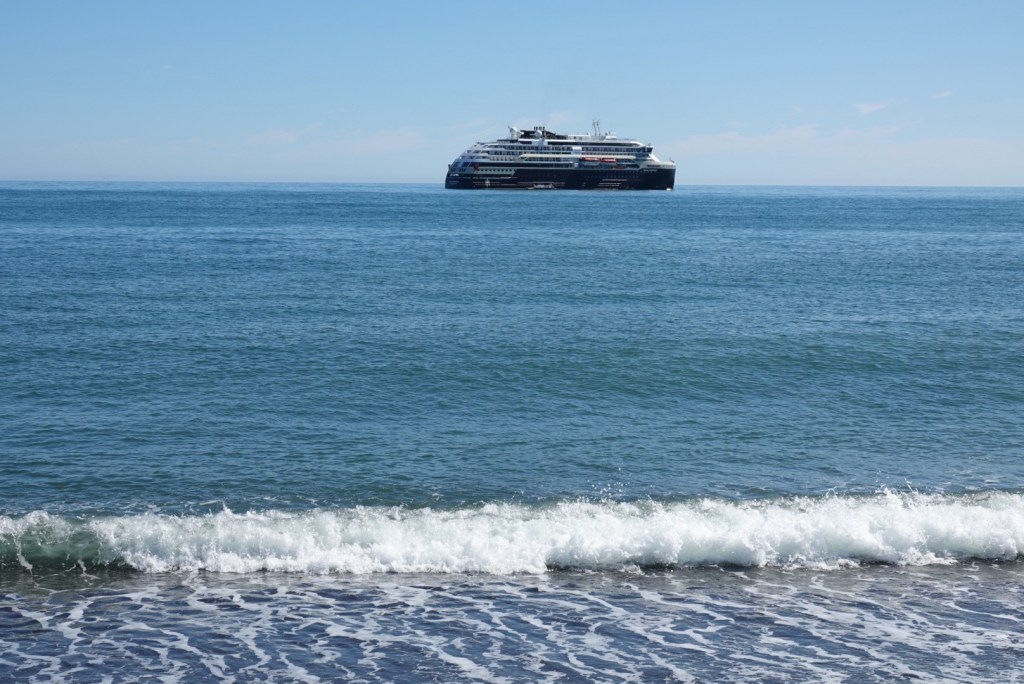
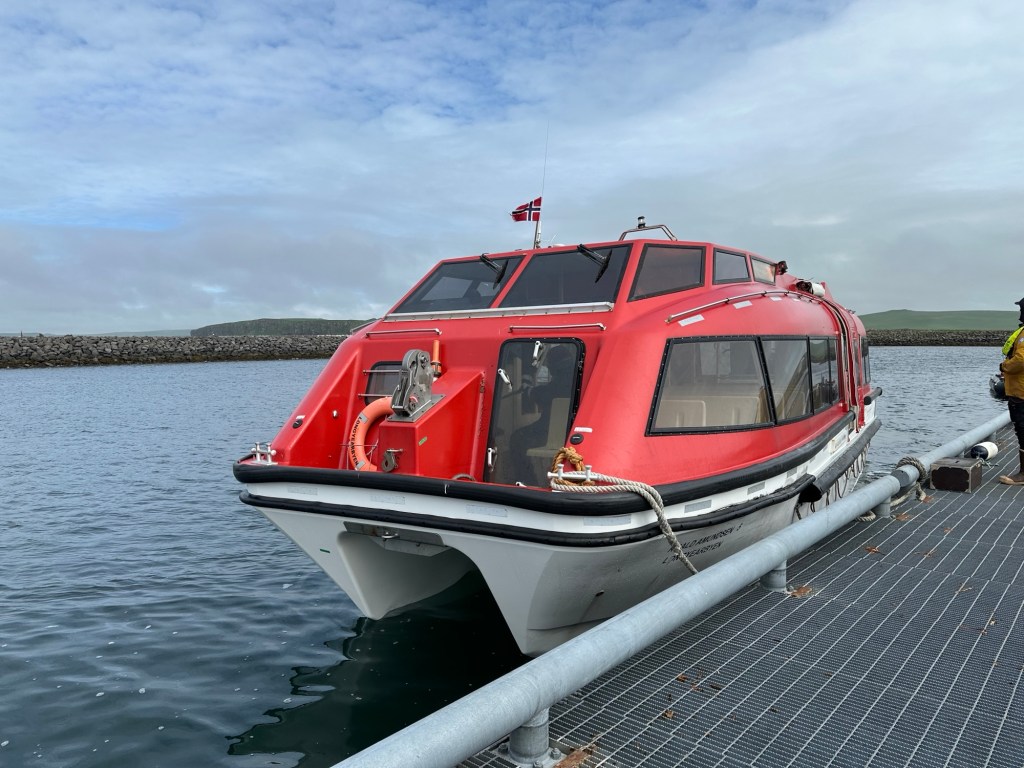
Here is more about the ship. The Roald Amundsen and its sister ship, the Fridtjof Nansen, were built in Norway in 2019 and 2020. We wrote earlier about the hybrid drive system and some of the features that we learned about while visiting the bridge. Further information was gleaned from a Q&A session with the ship’s officers.
The ship makes its own fresh water by taking in seawater and purifying it through reverse osmosis. The ship needs to be traveling at higher speeds (>10 knots?) in order to take on seawater. Production of fresh water is on the order of tens of cubic meters per day!
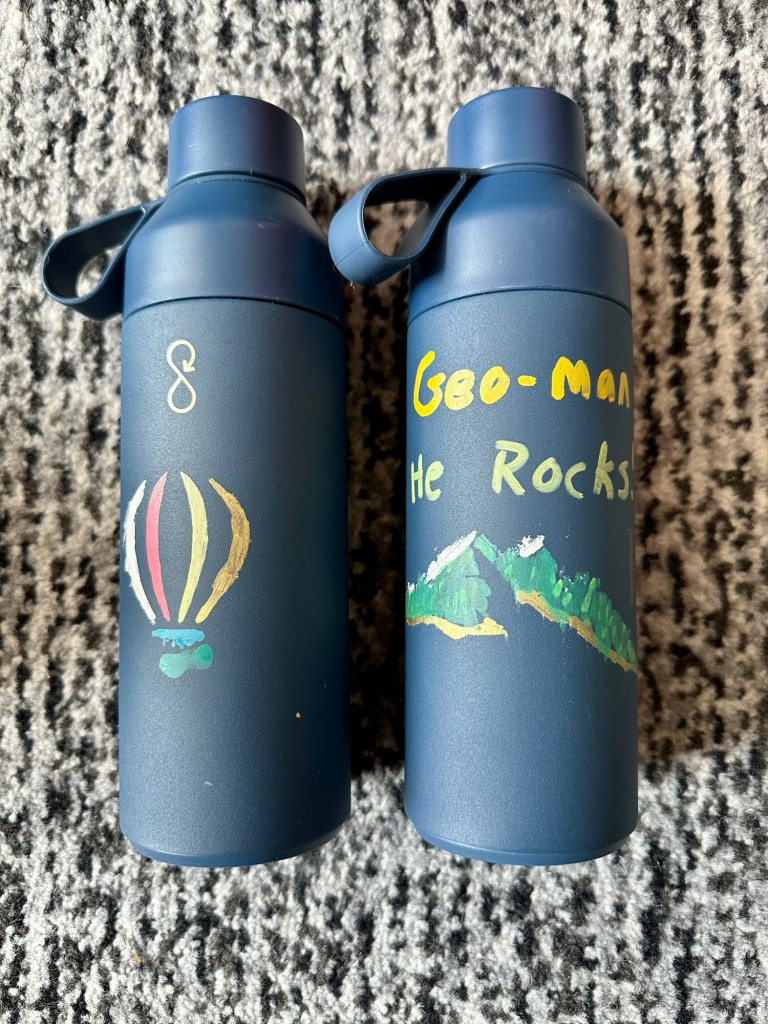
There is no single-use plastic on board the ship. We were given nice insulated water bottles to keep; Clare decorated them! Chilled and filtered water refill stations were placed on each deck. One could also drink the tap water in the stateroom, but it had a chlorine flavor.
Gray water, sewage, and food waste are treated onboard and discharged at sea in accordance with maritime regulations. We were told that this effluent is essentially drinking-water quality.
There are about 150 crew on the ship, which can accommodate up to 530 passengers. On this voyage, only around 280 guests are traveling. While discussing the food, which has been excellent, with a crew member, we learned that the ship is only re-supplied with provisions every two to three months. It seems amazing that so much of the food appears to be fresh, although perhaps most has been frozen.
The main restaurant is a breakfast and lunch buffet, but a-la-carte table service for dinner. Menus are only available through an app, not printed. The alternative all-day lunch restaurant has burgers and various small plates. The fries were quite good! The main restaurant assigns a table via computer at the maître d’ stand.
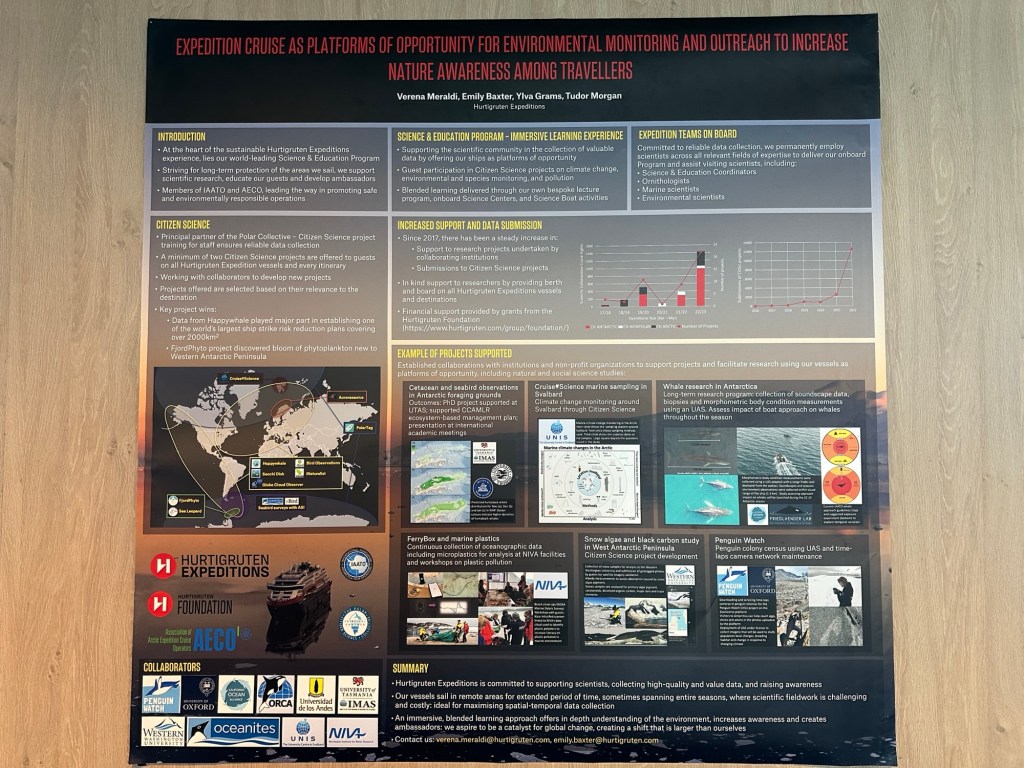
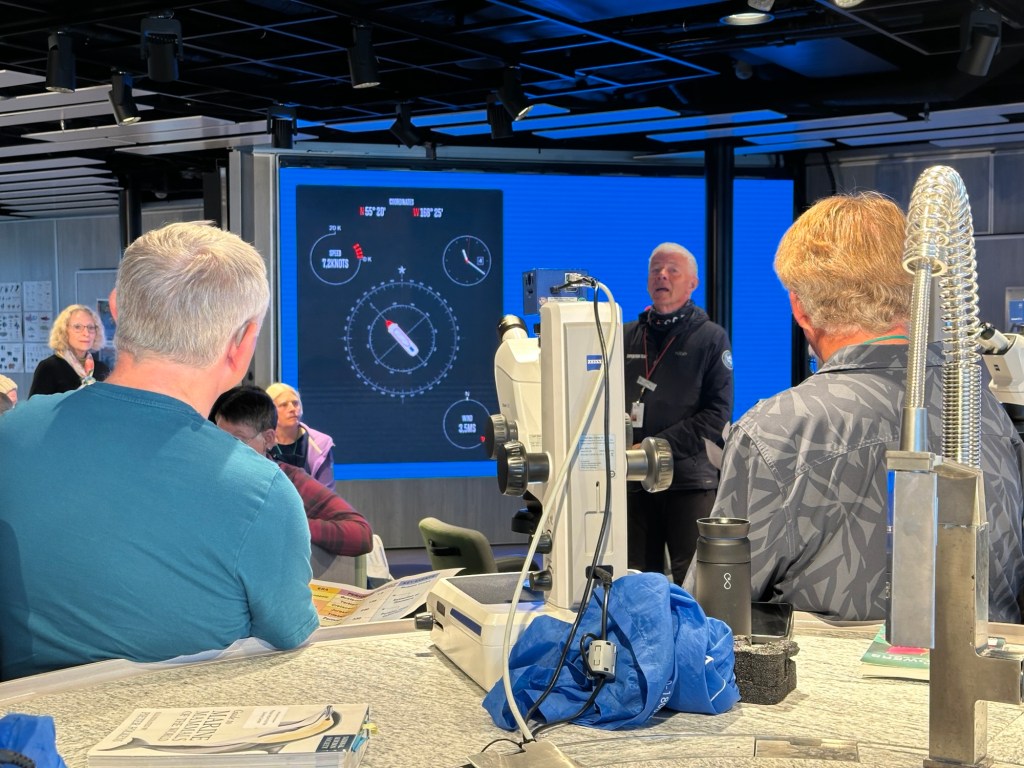
The ship features various science activities involving guests in both collection and analysis of samples. We only went to the lectures on subjects that were interesting and (or) unknown to us. The geology presentations were too elementary for us (not a surprise), but the speaker was entertaining. David was the comedian (and geologist) of the science team!
Last night, an auction was held to raise some additional funds for the Hurtigruten Foundation. One item auctioned was the pride flag that was flown on the ship during June. It was signed by the expedition crew members.
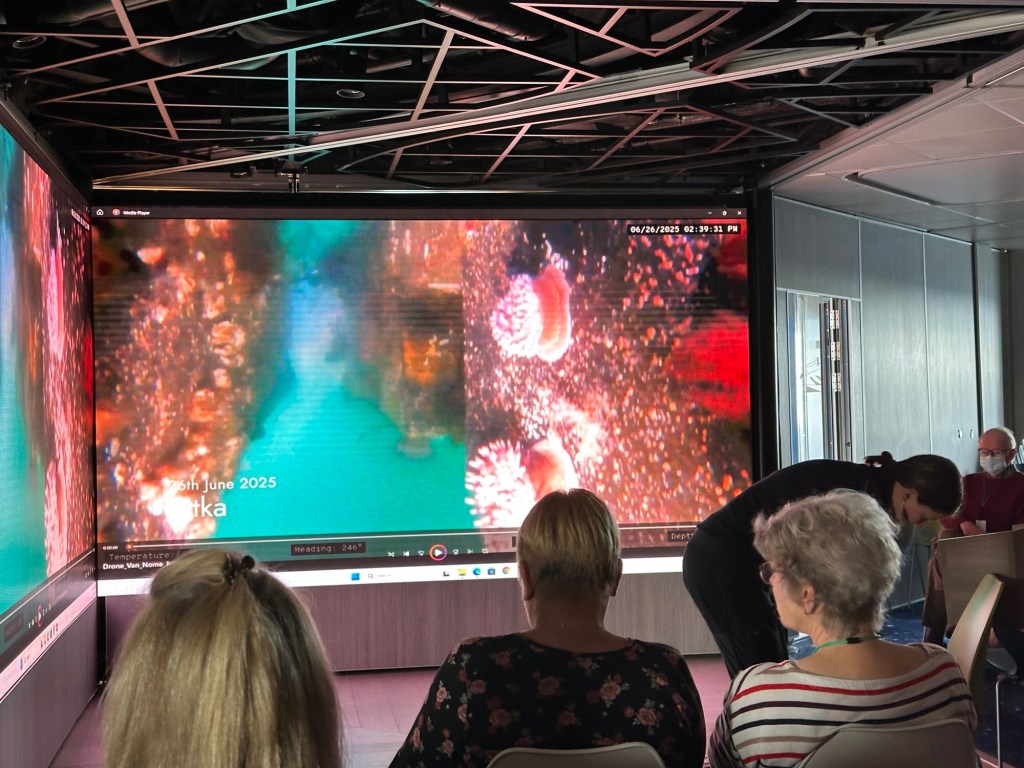
The lecture hall was used for numerous presentations, many of which were simultaneously translated for the German guests. Most were also streamed to the televisions in the staterooms.
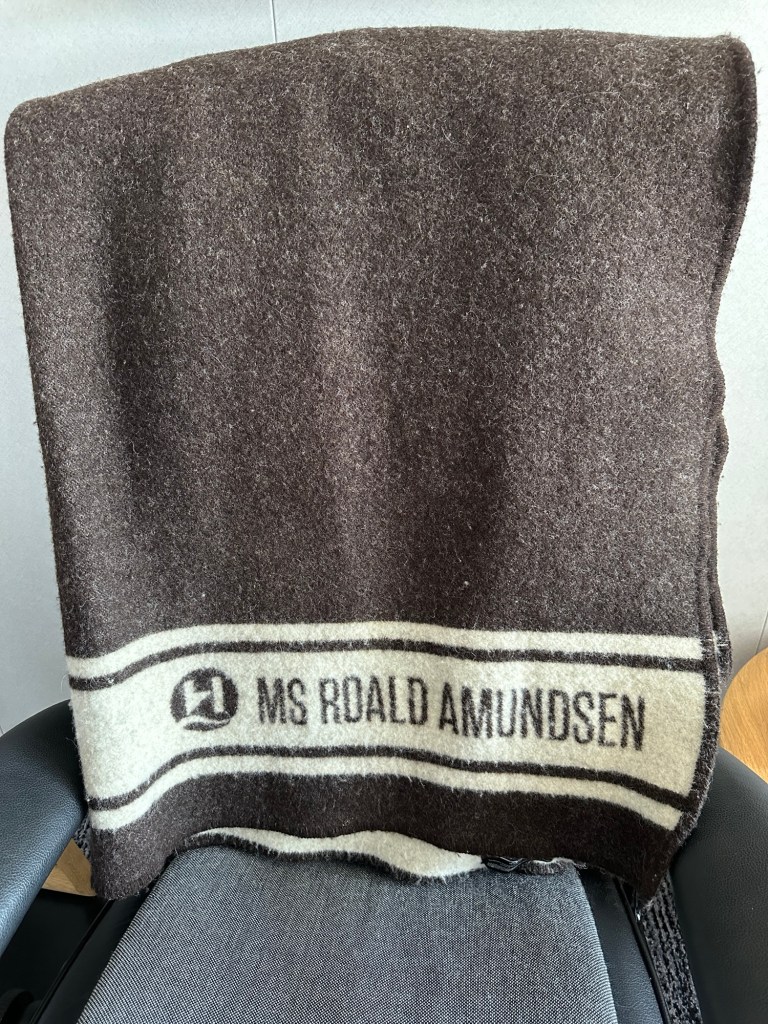
There was a nice wool blanket in our stateroom that we never needed!

 Bunch of Geeks go Traveling