We assembled to leave the hotel at 7:30, to catch a bus to the domestic airport nearby. Our plane was scheduled to leave at ten, so plenty of time. Check in and security went smoothly, and we regrouped around gate 9 near a board that listed gates for all departing flights. Ours was listed but did not have a gate yet, but we didn’t worry.
The domestic airport was people friendly, with many small stores for snacks or meals and all kinds of other things. Lines were short because of the large number of stores. Really nice.
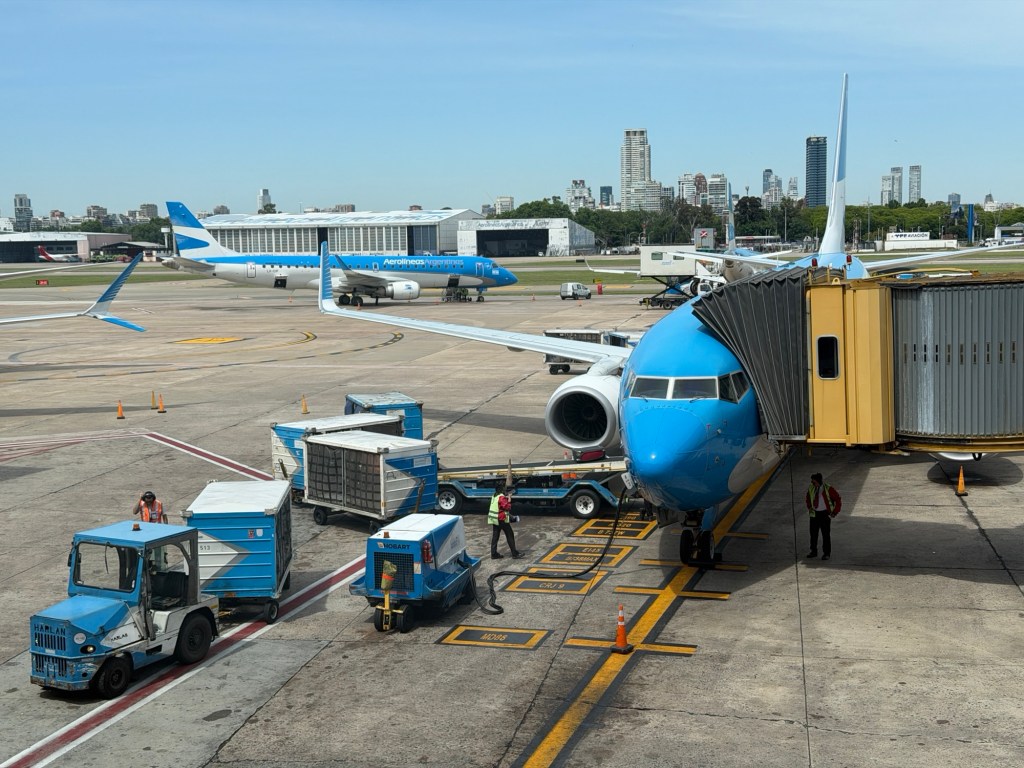
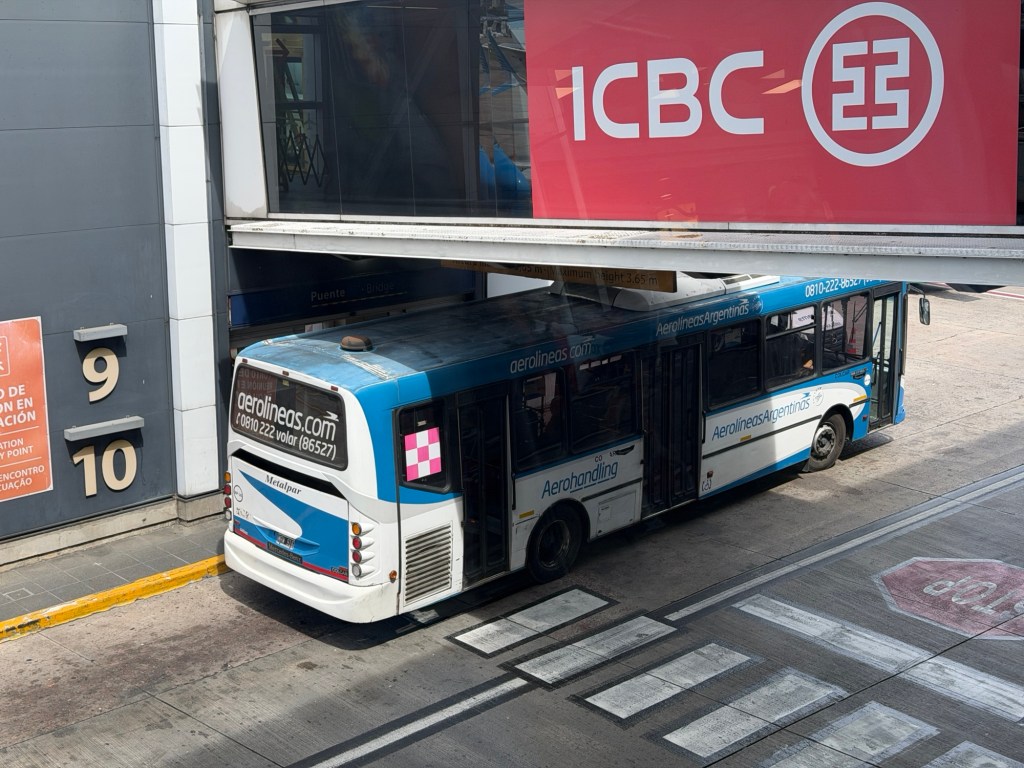
We started noticing something was amiss when the announcements, like plane now boarding at gate number whatever, but there were no people at that gate. And, to our knowledge our plane was not assigned a gate number on the board. But, there were some announcements in Spanish; our fearless leader kept us updated. Plane now at gate five. So we went. Plane at gate nine. Ha! Where we started, so we went. Plane now at gate fourteen. So we went. From 14, we took a bus to the plane, which sat on the tarmac for a long time, eventually getting refueled, before we left, more than two hours later than planned. Sigh.
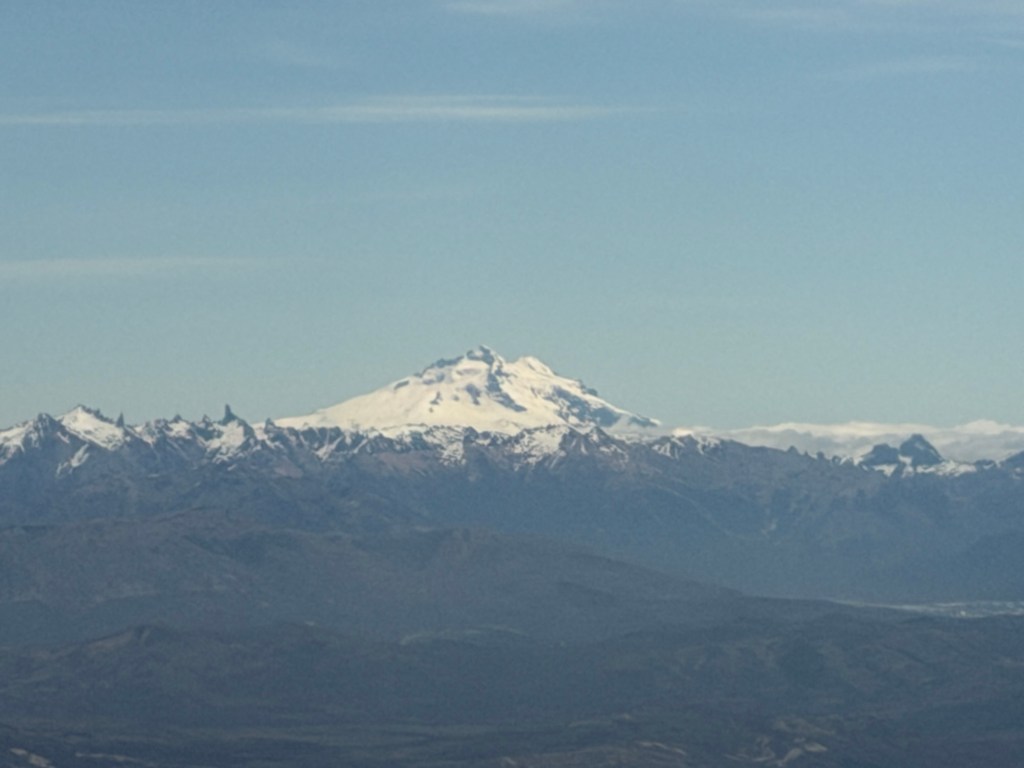
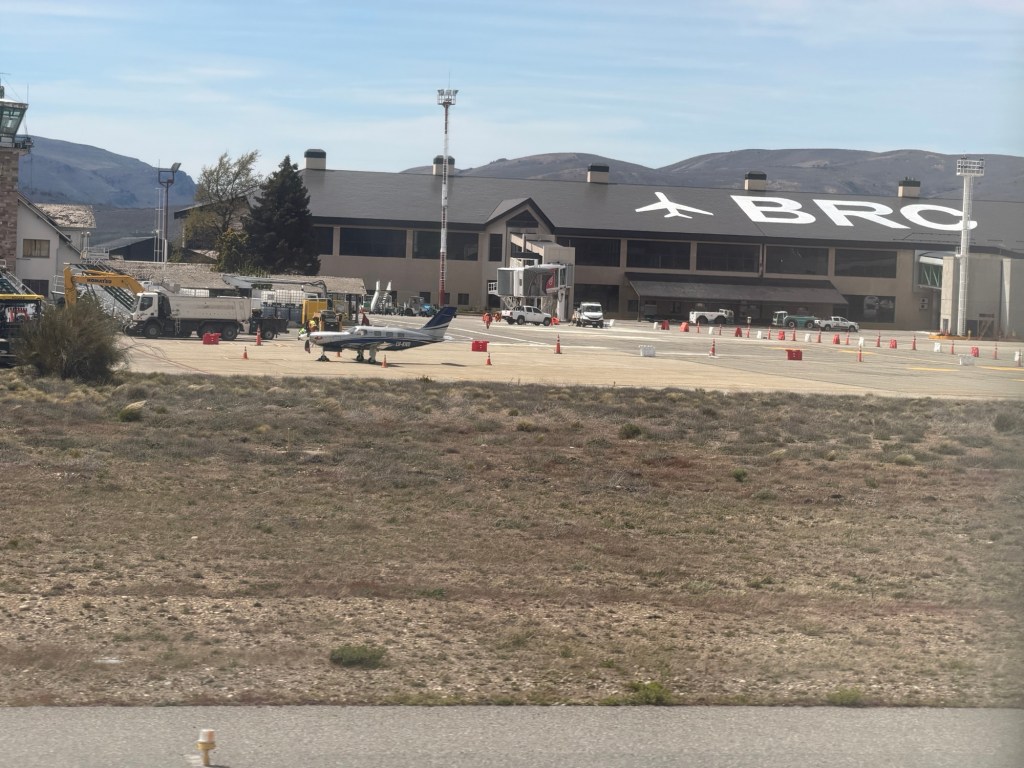
A plane similar to oursOne of the buses that brought us to the plane View from the plane window of a beautiful volcano in the Andes, possibly Volcan LaninBariloche airport
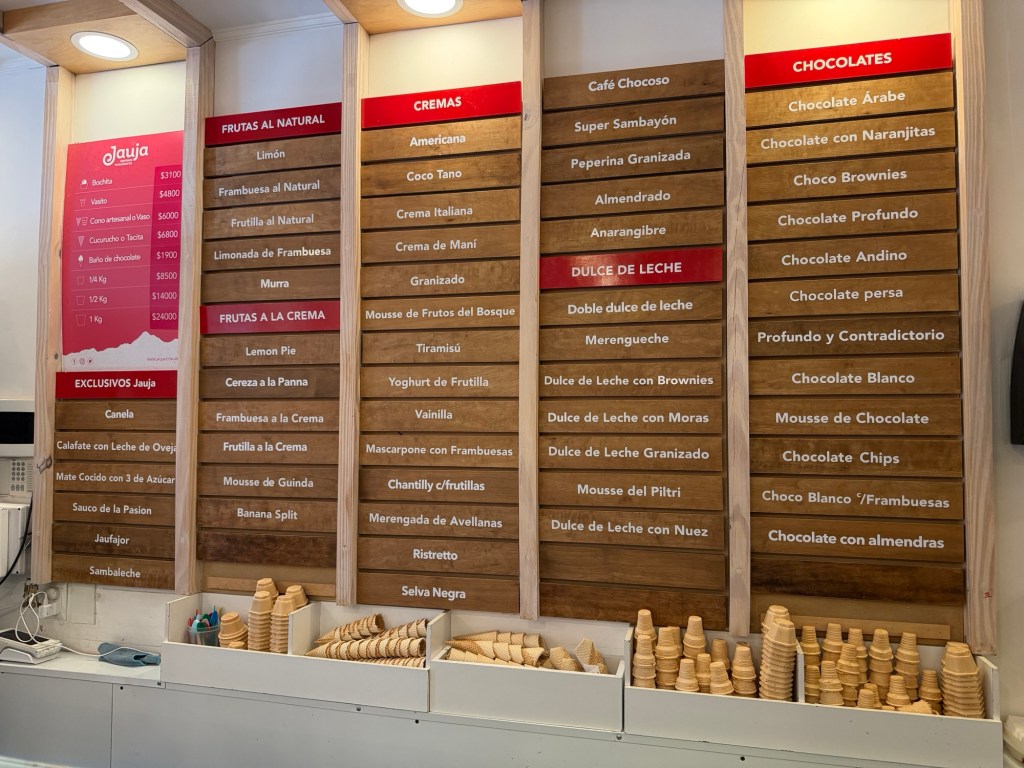
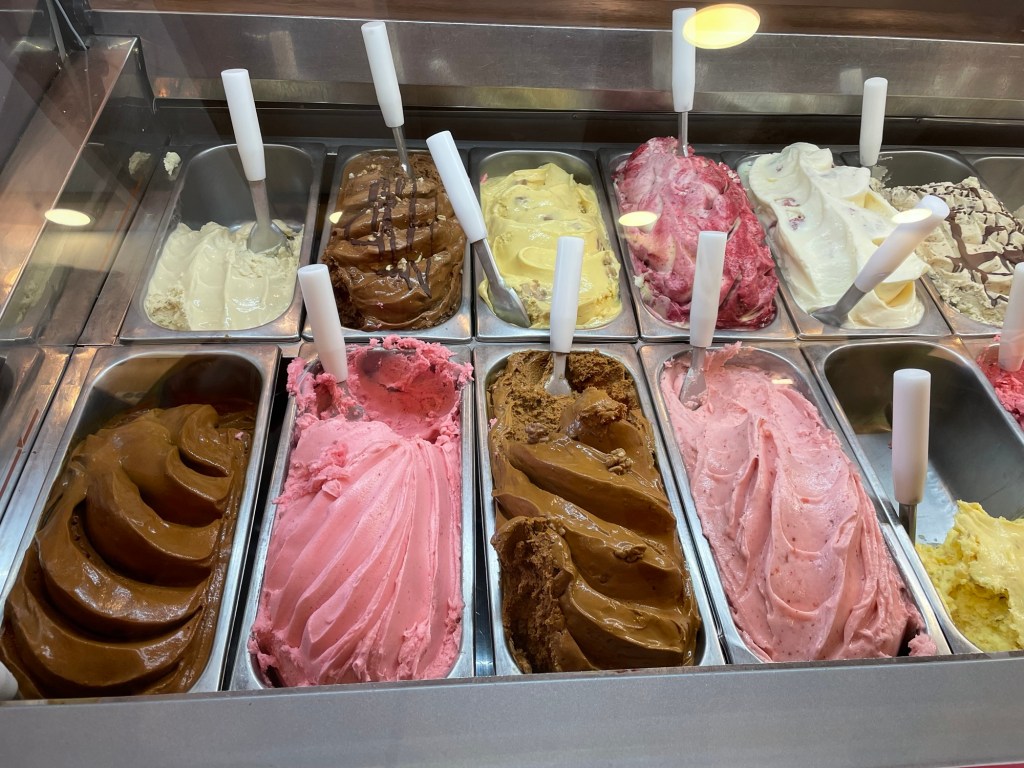
Most of us were hungry by the time we landed in Bariloche and took a bus to the town itself. So, we went to a gelato place for a snack (dinner was scheduled). Delightful!
How to choose?
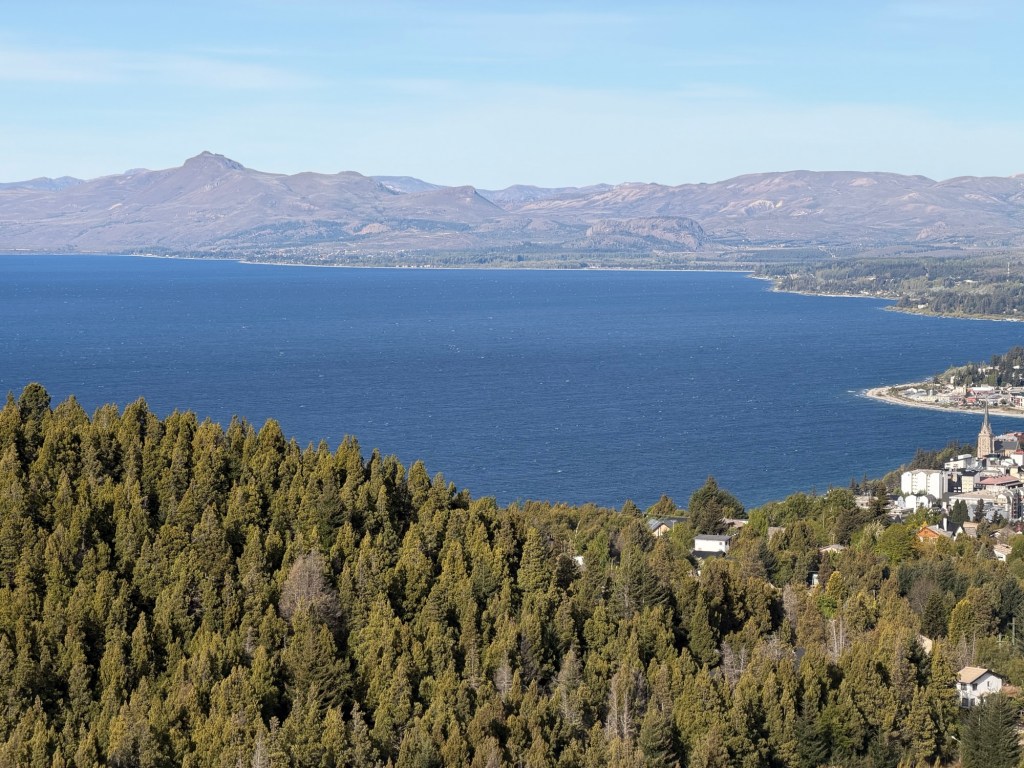
Then we took taxis to a local park to climb in a forest for beautiful views of the glacial lake and surrounding mountains. So refreshing after the hassles of the airport. Just what we needed!
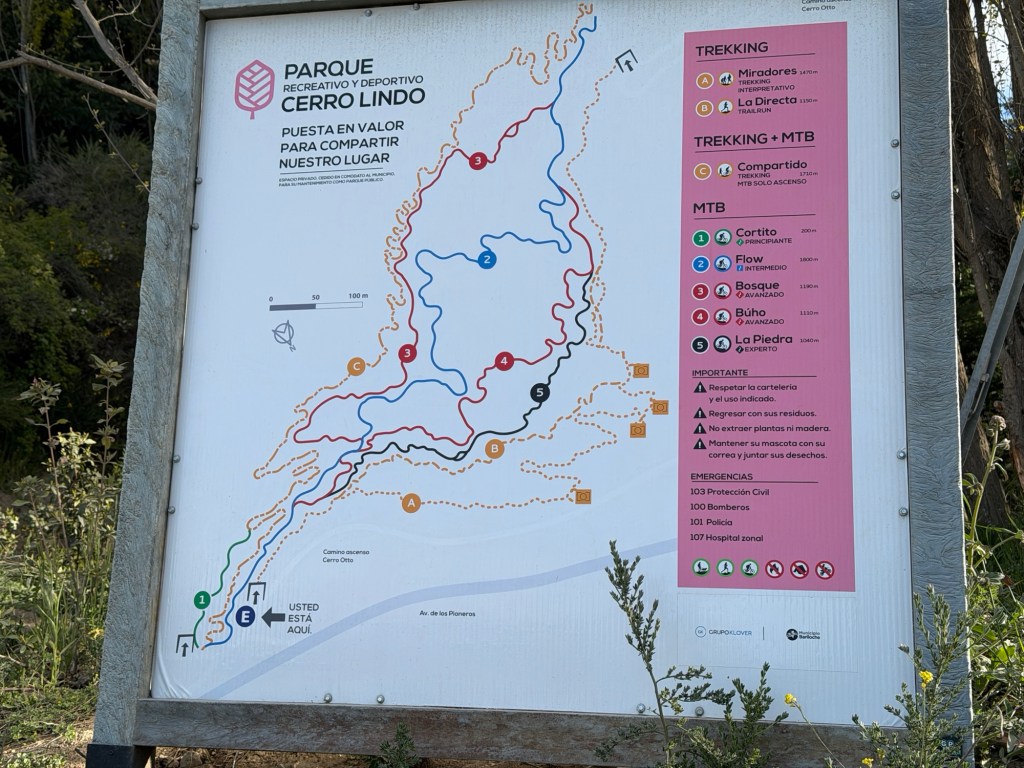
Map of the park where we hiked. We went up the trail that did not allow bicycles, but had four viewpoints to look at the lakes and mountains.
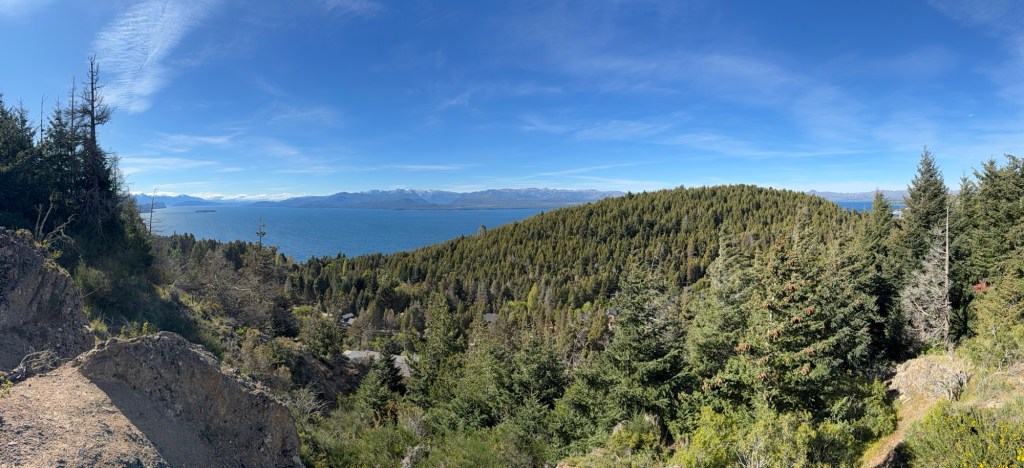
We hiked the Miradores trail, which was quite steep. There were many mountain bikers descending on an adjacent trail. We learned about the trees, which were mostly planted here, and took pictures at viewpoints.
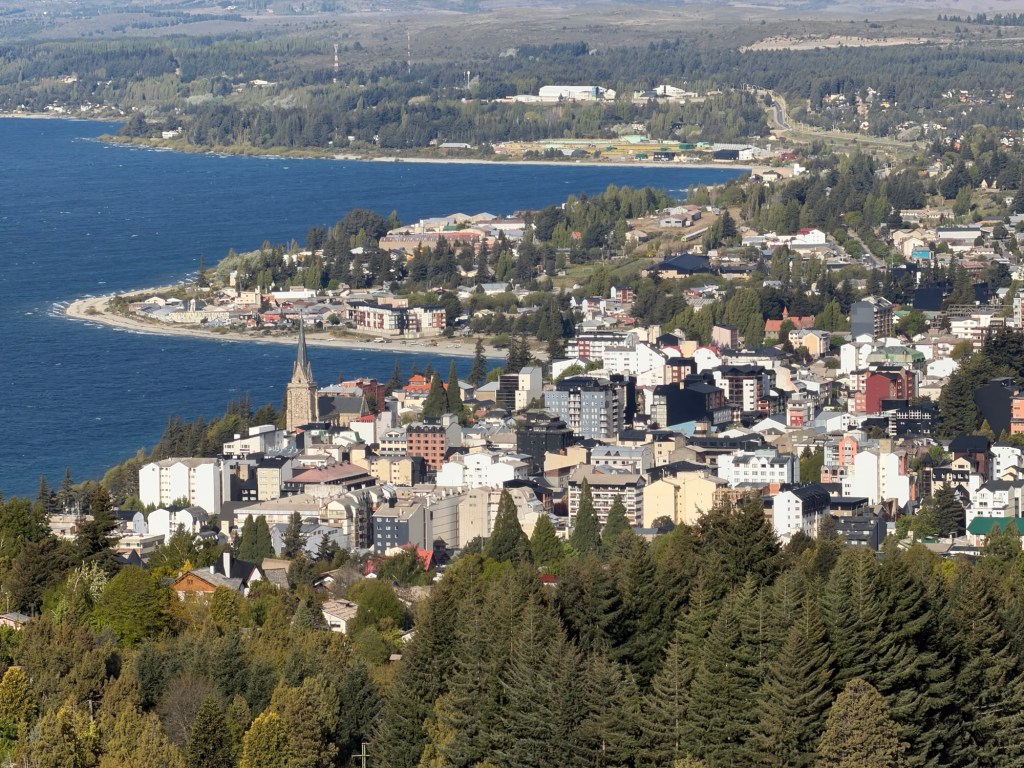
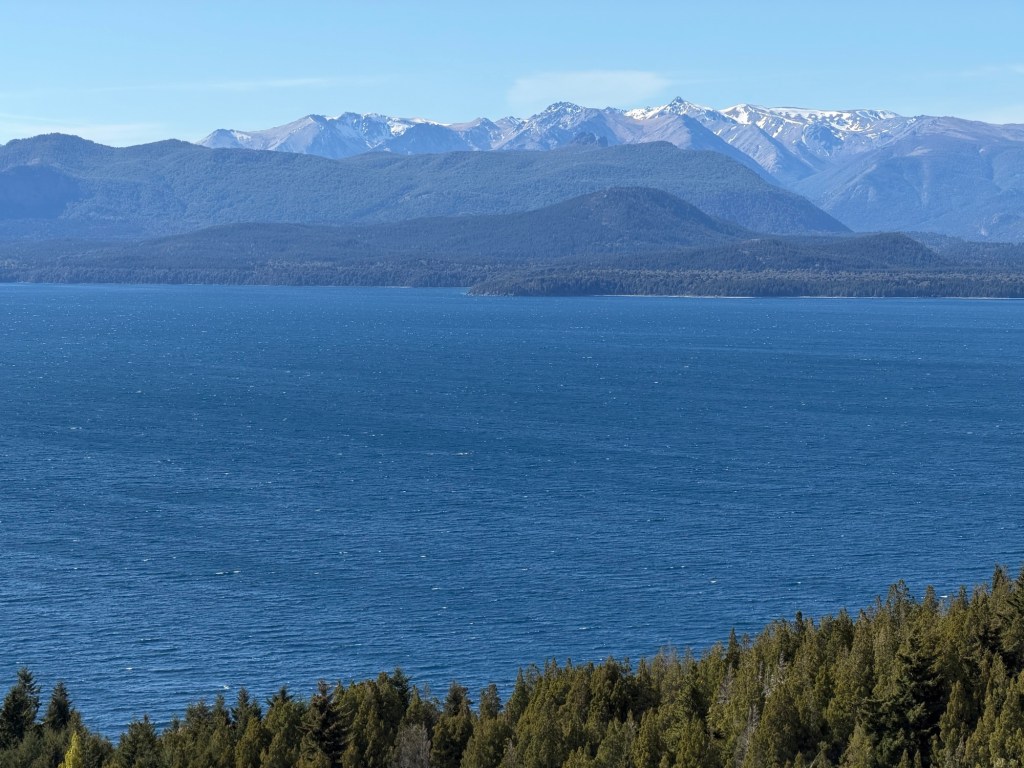
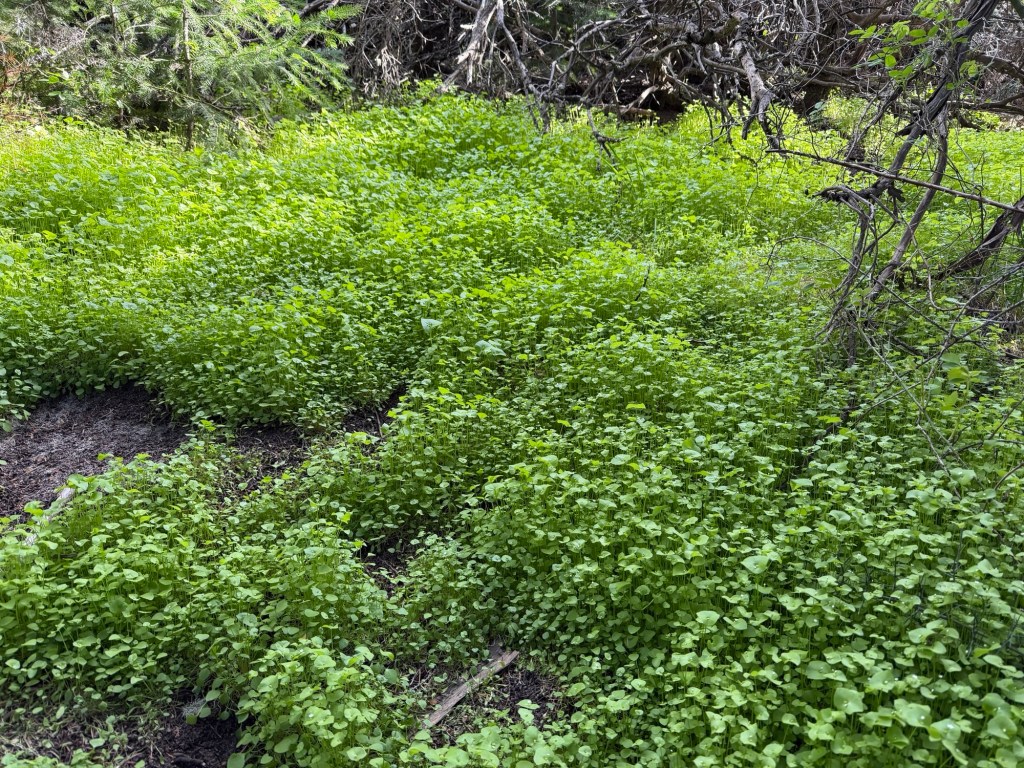
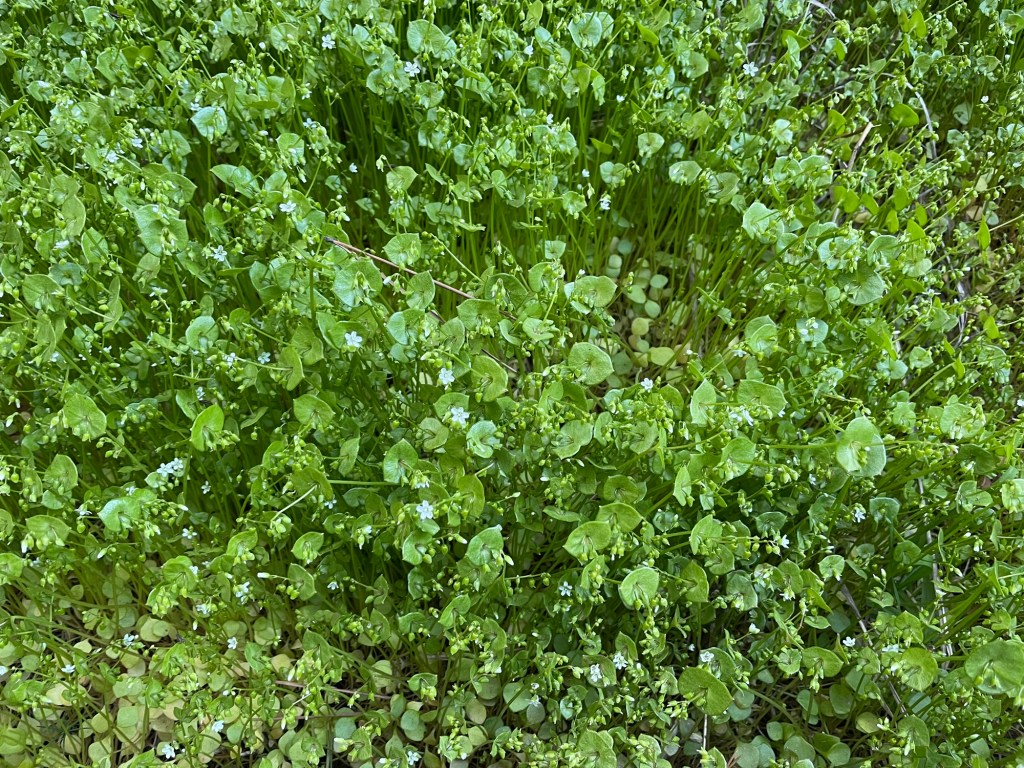
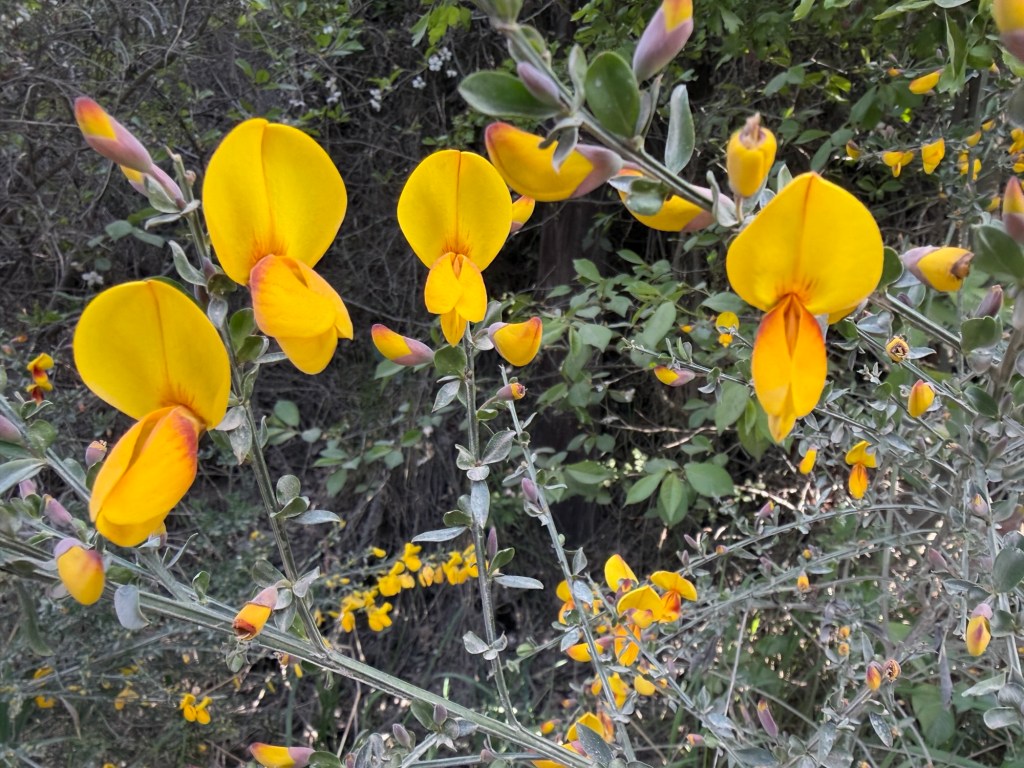
Lake Nahuel HuapiBariloche The lake is huge!Panorama from a viewpointDifferent plants Same plants up closeOrchids, Marta showed just Clare, so she was Marta’s slave for a day
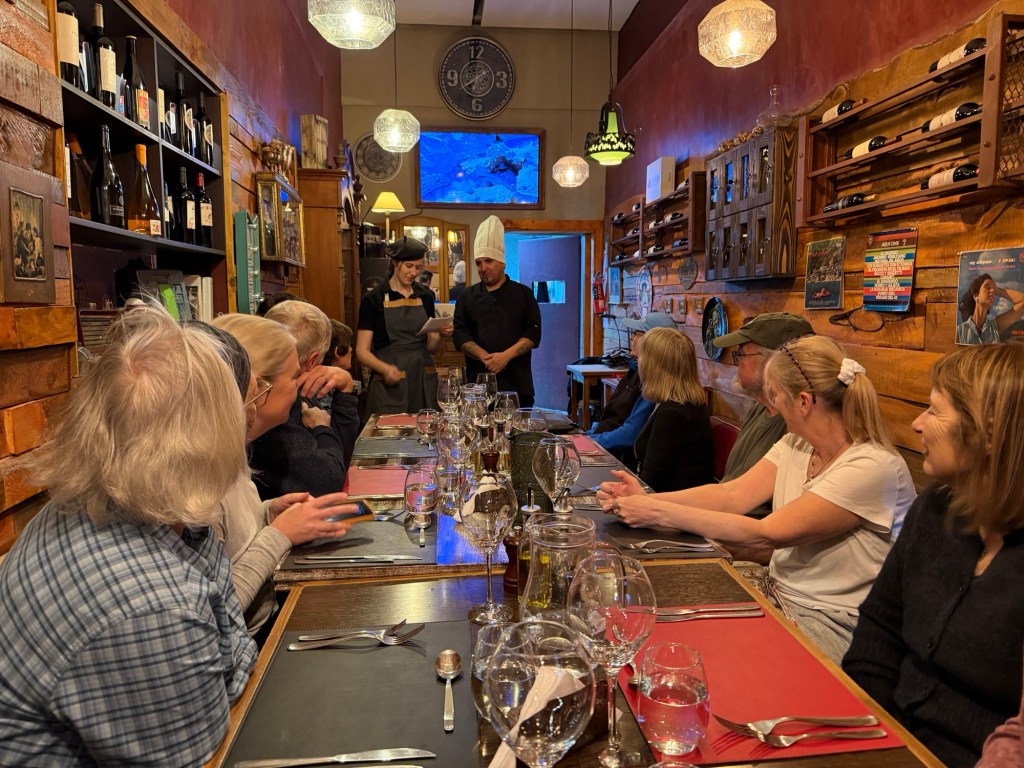
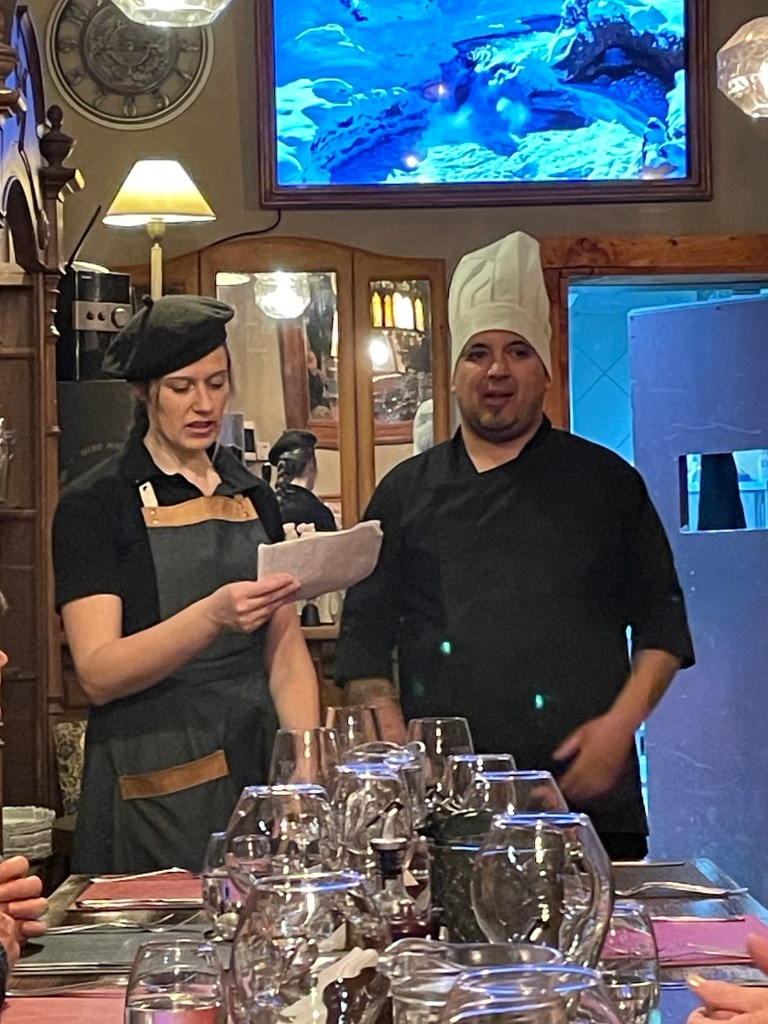
Since Bariloche is Marta’s home town, she knows the best places for everything. The dinner we shared was proof of this.
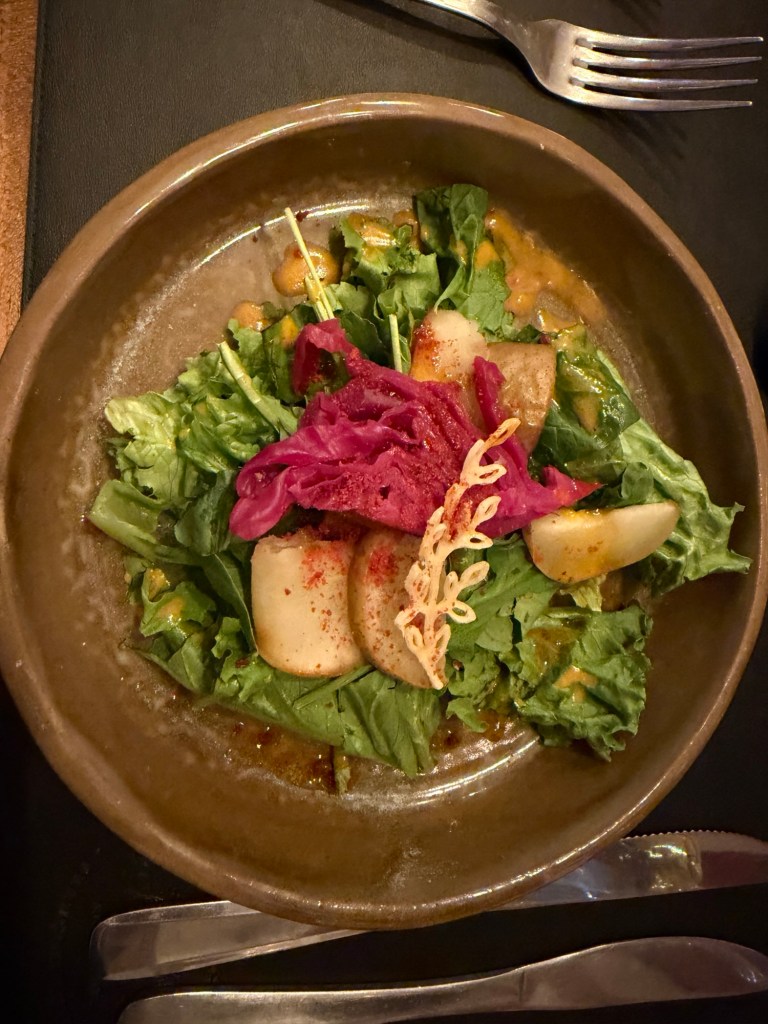
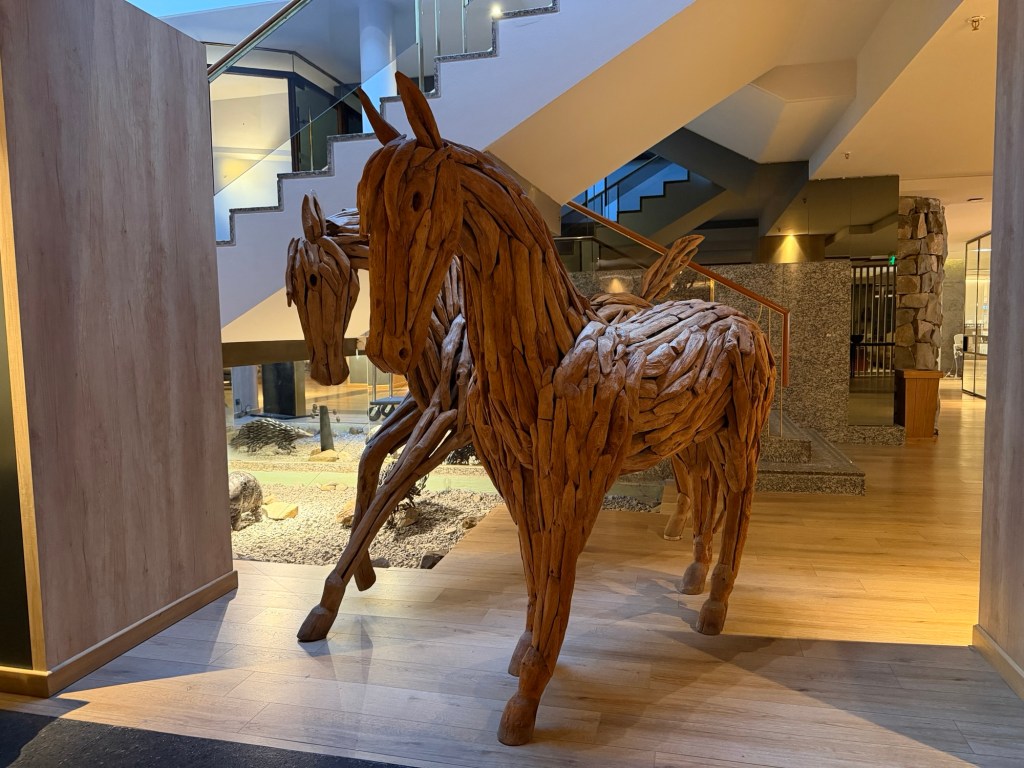
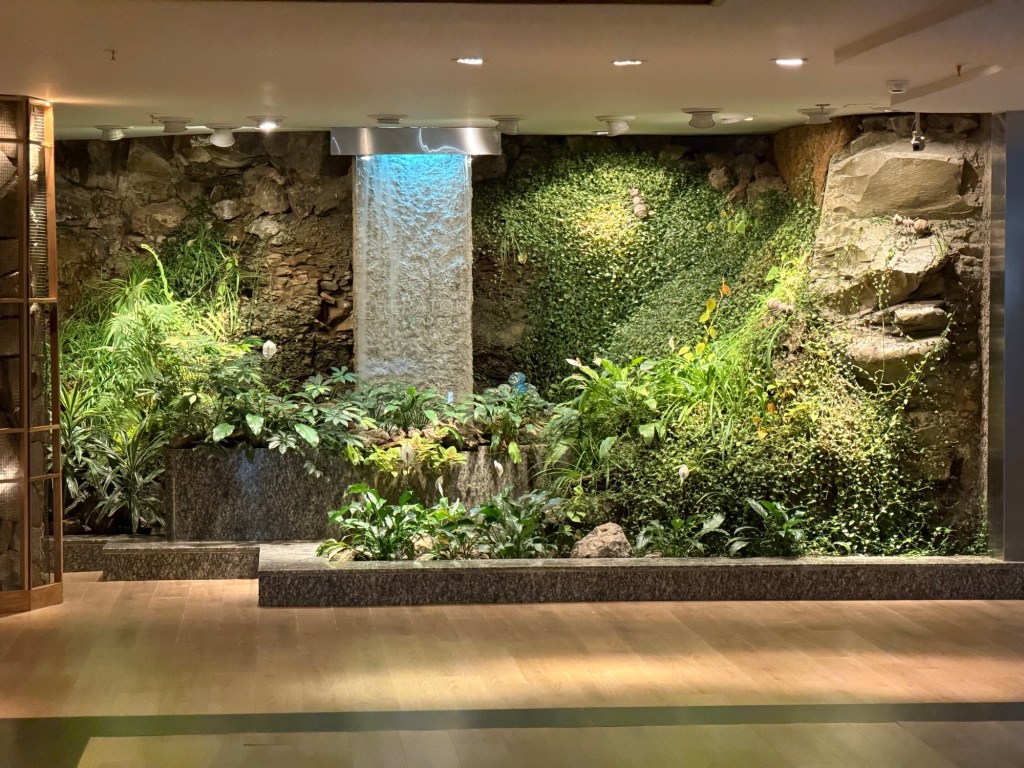
The owner and chef at the end of our table. Just us. Owner and chef, successful for the past five years (for good reasons)The salad was representative of the entire meal: beautiful and delicious Our hotel for three nightsInteresting art in the lobby of the hotel Vertical garden in lobby
Although the travel time was longer than planned, it still was a good day thanks to our leader and the group being flexible!
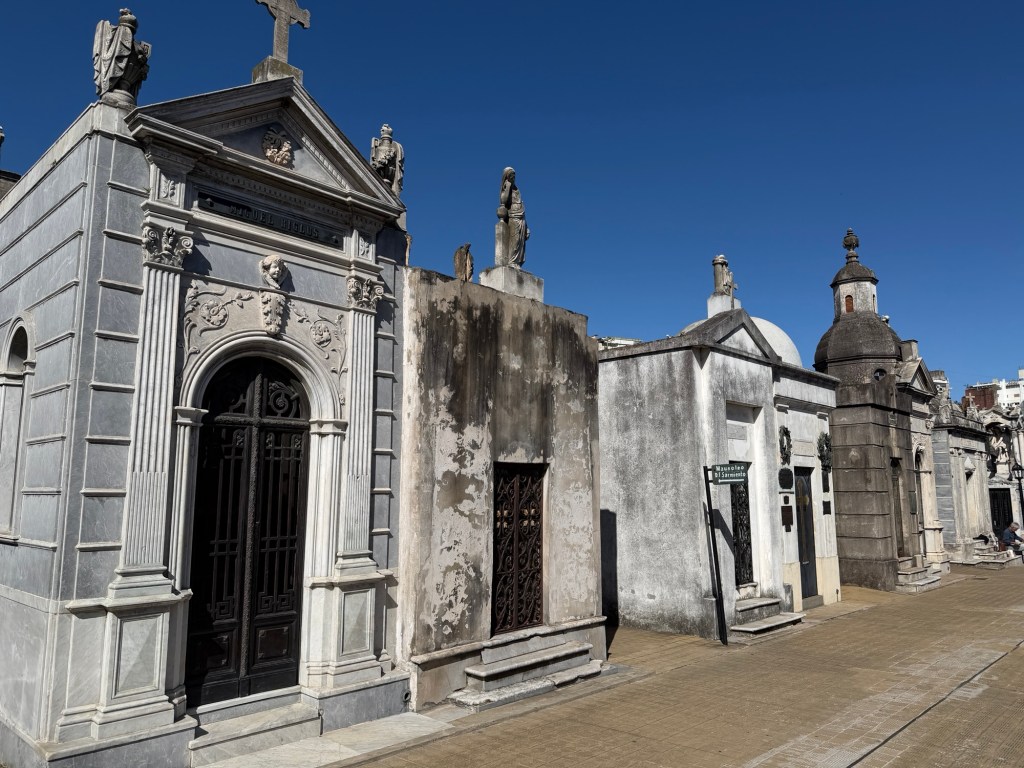
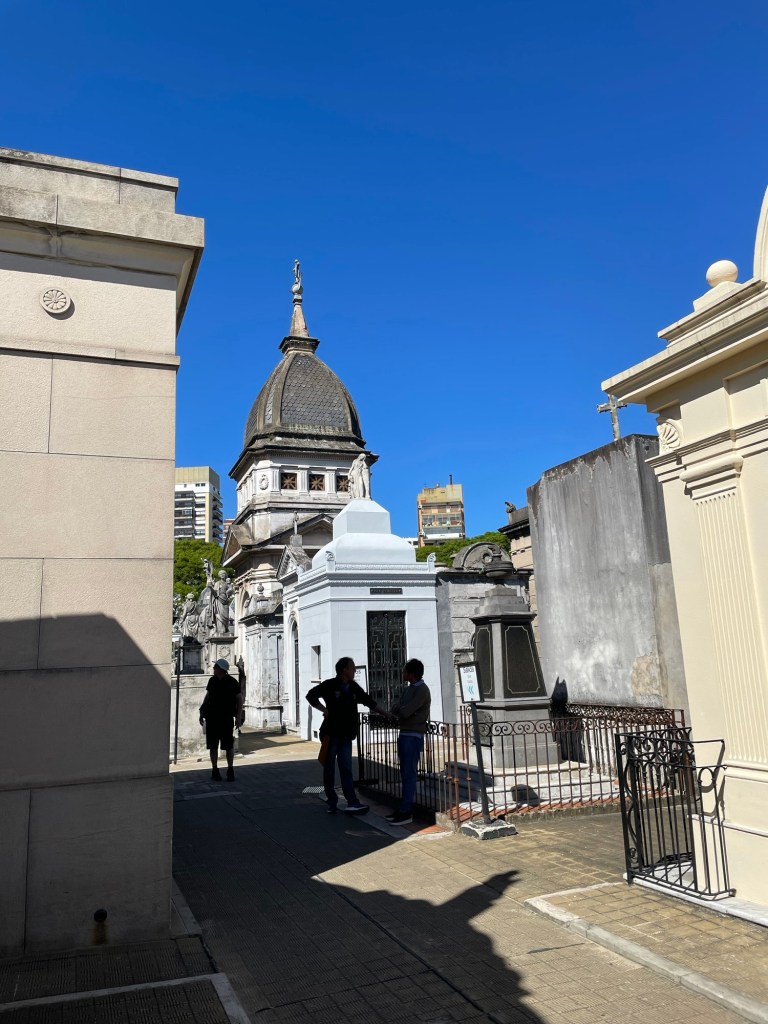
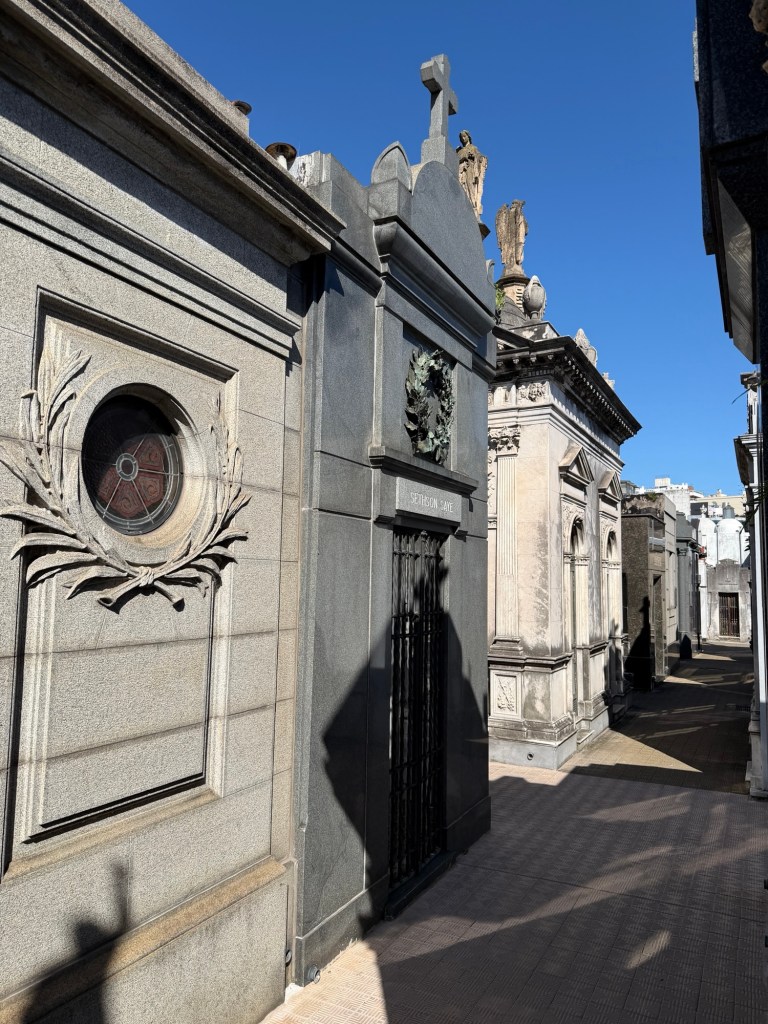
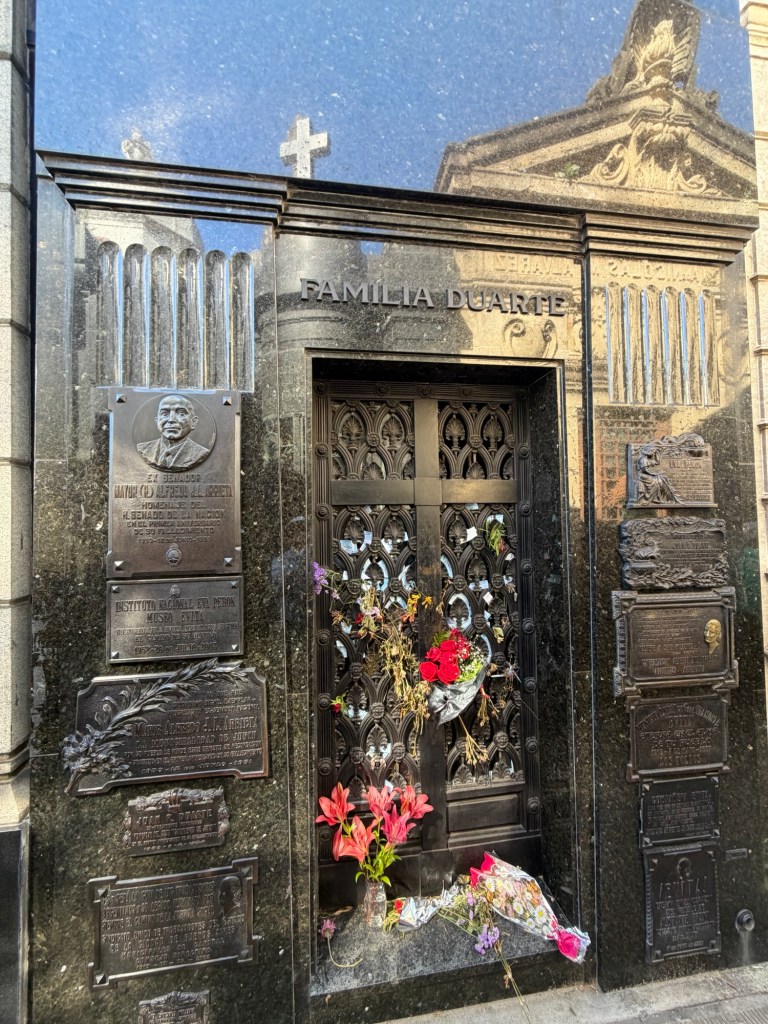
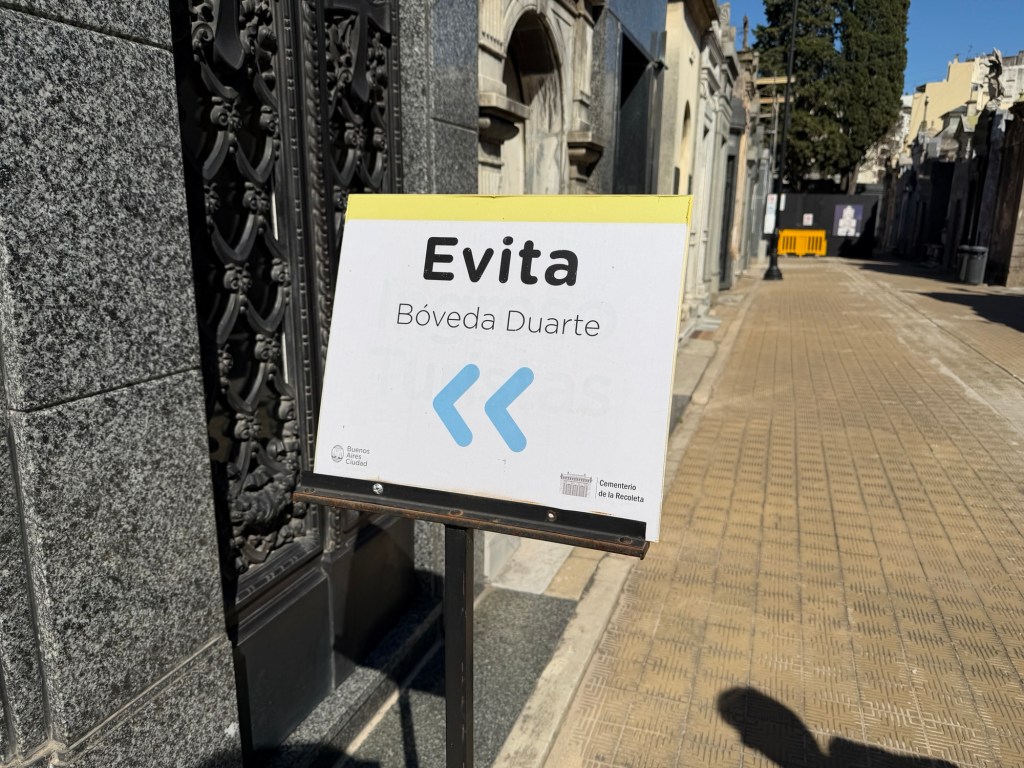
This cemetery is the final resting place of Eva Perón. But her body actually traveled the world before coming back to her home. That’s a problem for a controversial celebrity.
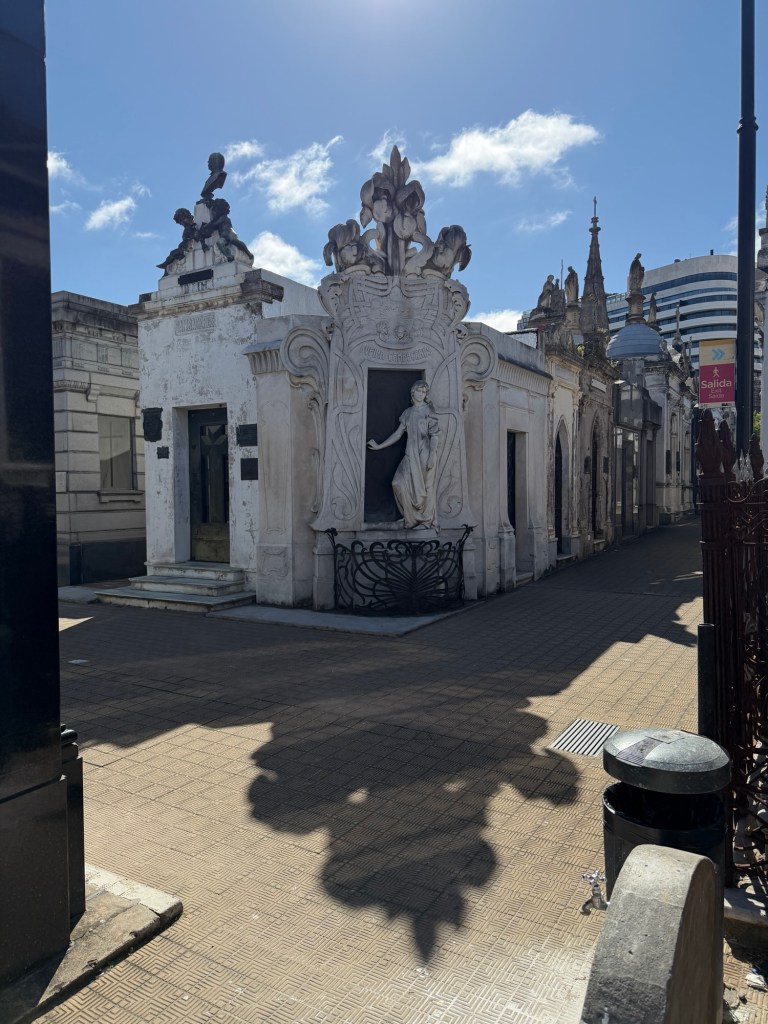
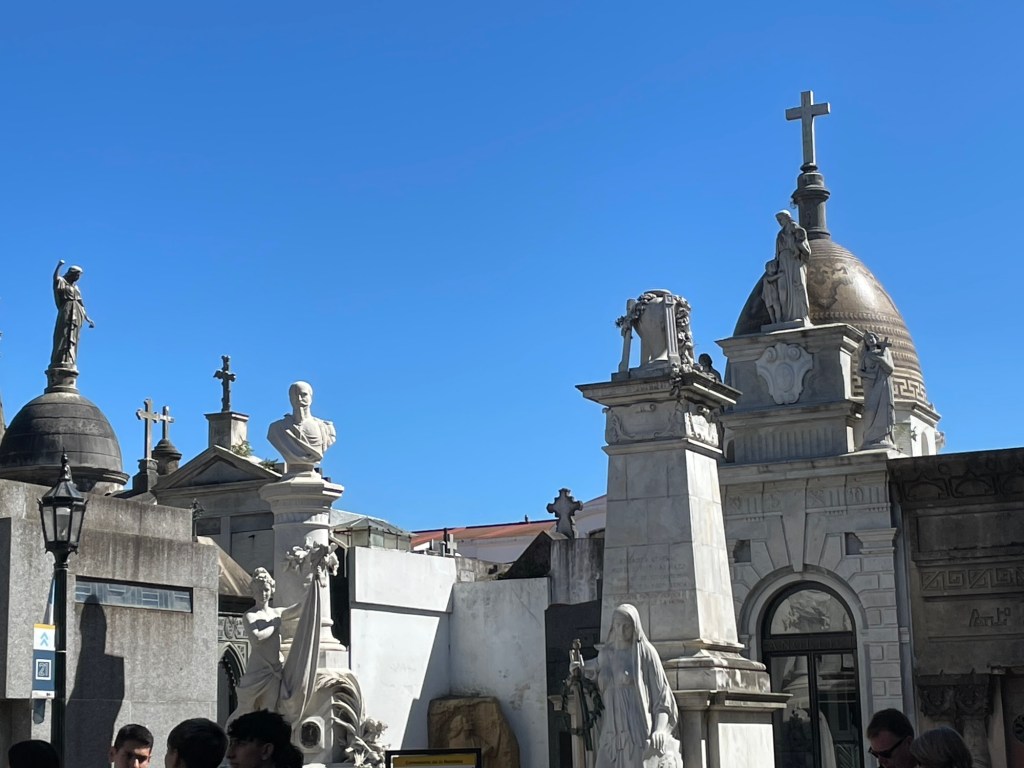
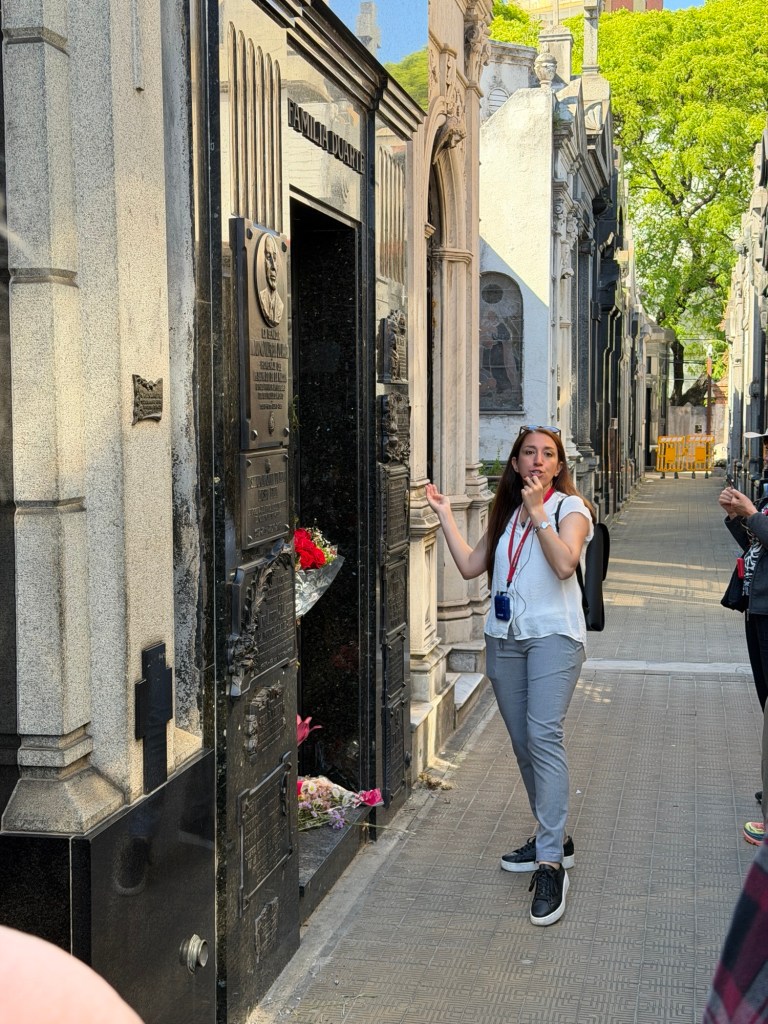
In our orientation, Marta told us not to wander off, because the cemetery is a bit of a maze. I was confused, because in cemeteries in the U.S., you can see people for long distances. When we arrived, we understood.
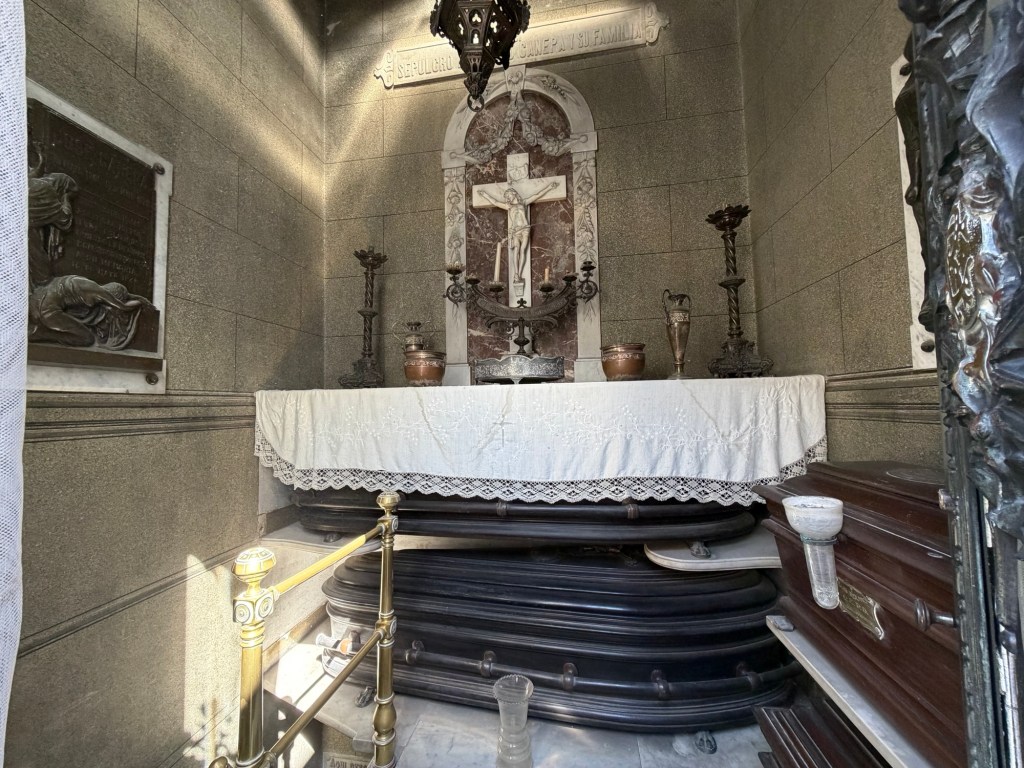
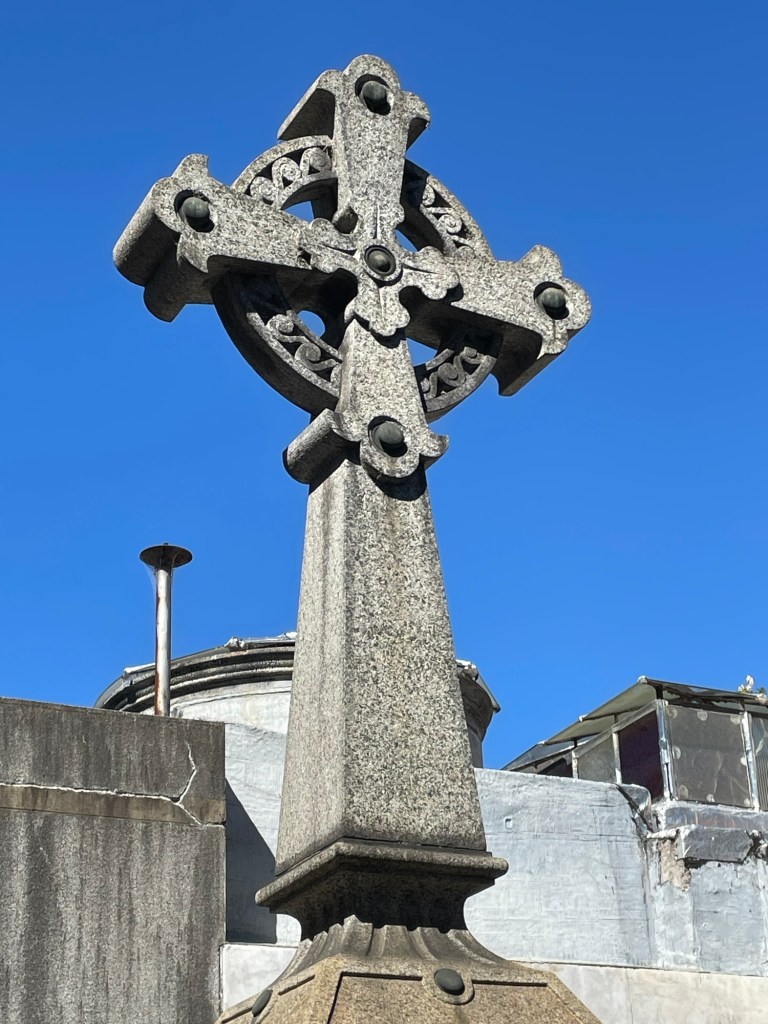
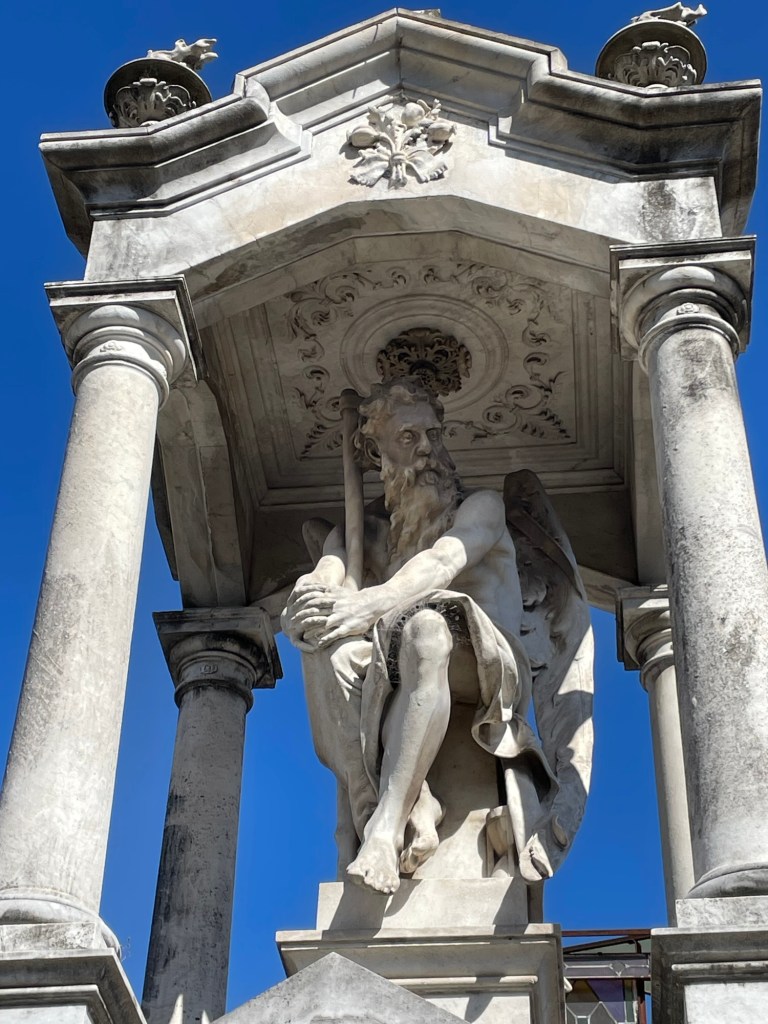
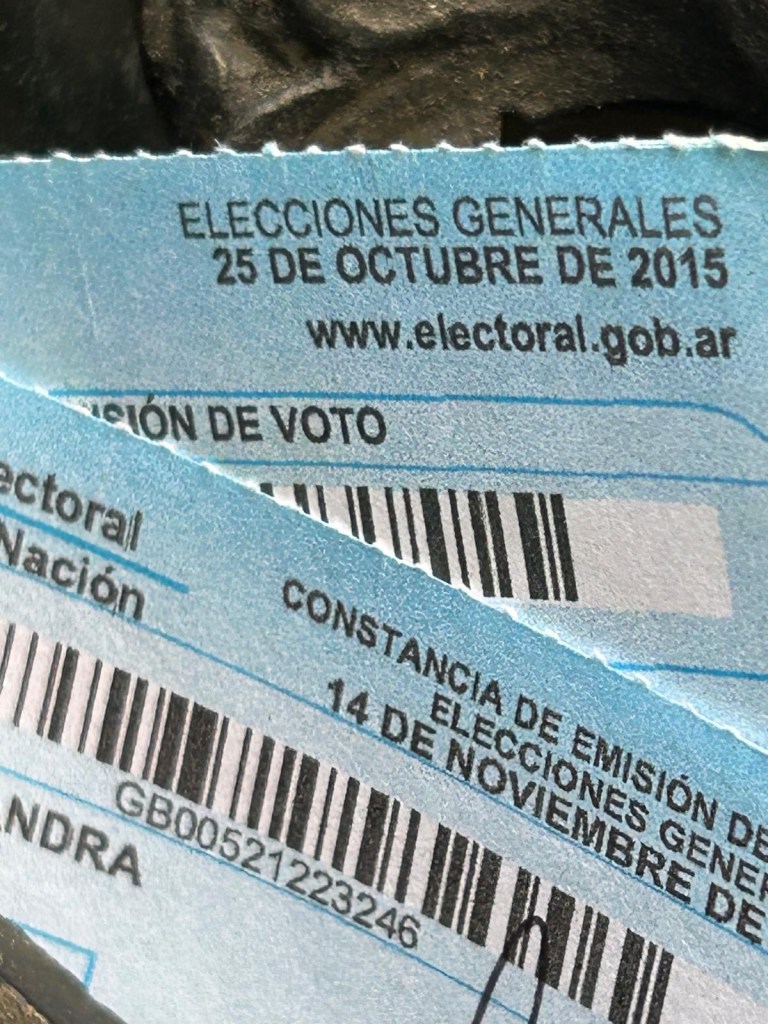
Rows of single family mausoleums,More affluent families purchase highly visible spacesSometimes, glass doors make coffins visible People from all over the world lived and died hereNoelia showing us Evita’s resting place; her coffin is below ground, under a concrete slab.No matter the time of year, fresh flowers are found on her graveMany people want to visit Evita!Voter receipts placed into the iron work.
Evita secured voting rights for women; every election, women thank her here by placing their voting receipts on her grave. There was an election on October 26.
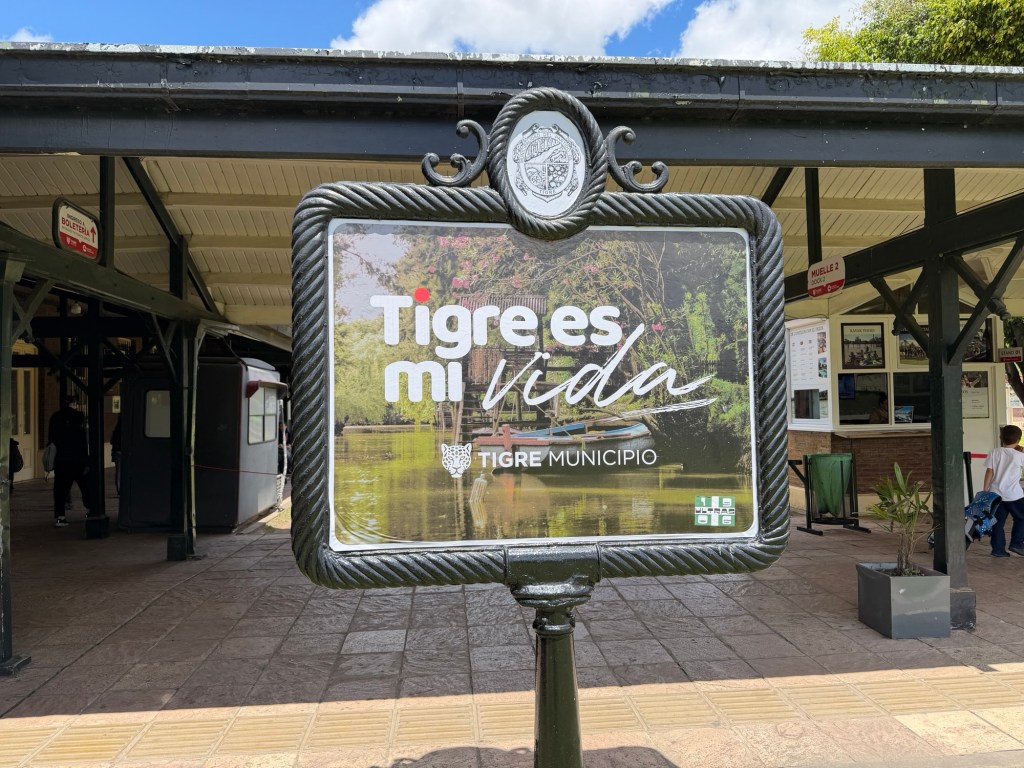
After the Halloween adventure in the cemetery, we took the bus to a part of a huge river delta where people from Buenos Aires go to see and play in nature. This was a favorite place for Noelia when she was a child.
Tigre is my life! This beautiful area is only an hour from Buenos Aires, but feels far away from the city. The ocean is a 4 hour drive.
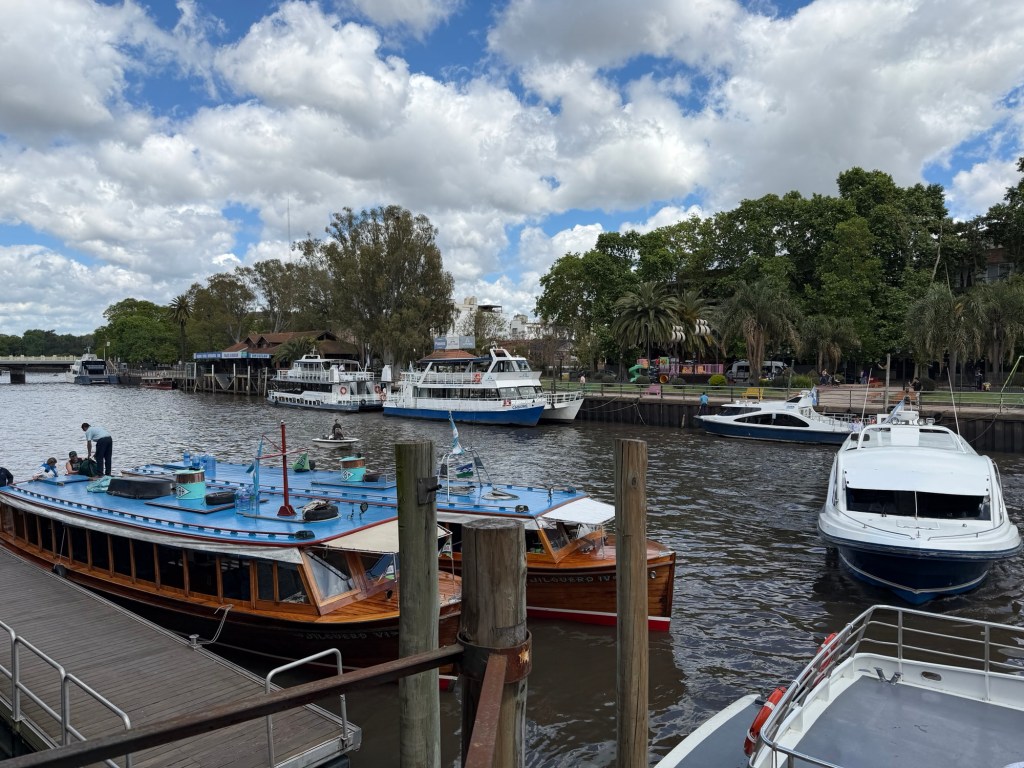
The Paraná River, originating in Brazil, forms many channels through a large delta before emptying into the Rio de la Plata. A lot of sedimentary islands are places for vacation homes or rentals, event venues, or recreational clubs. The islands are protected from erosion by barriers that are a few meters tall made of steel, concrete, or wood pilings. Rarely, rock or concrete boulders are used.
Noelia swam in the silty water as a child, and perhaps now when she brings her son here. I can’t help but wonder how one gets the silt out of the bathing suits.
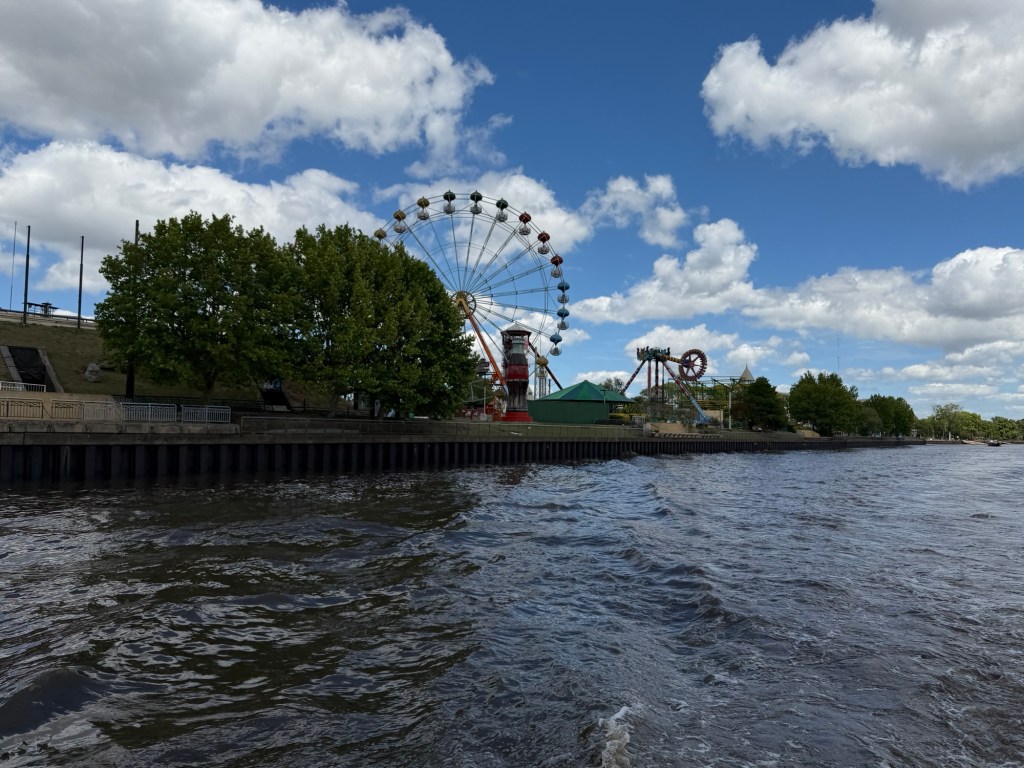
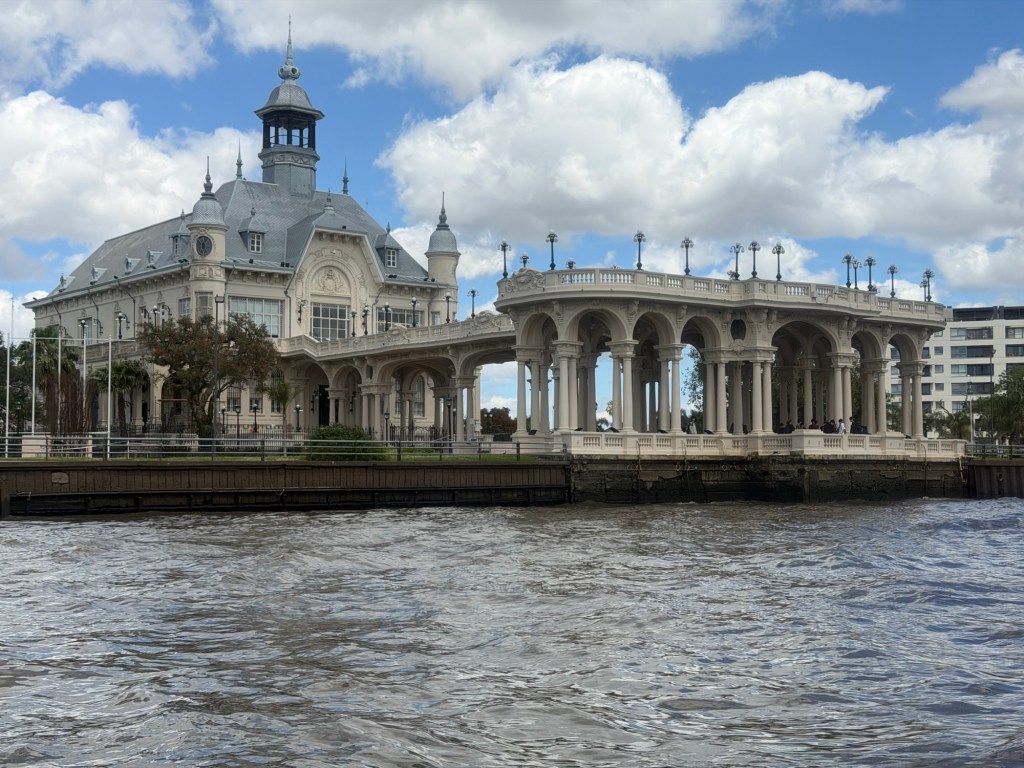
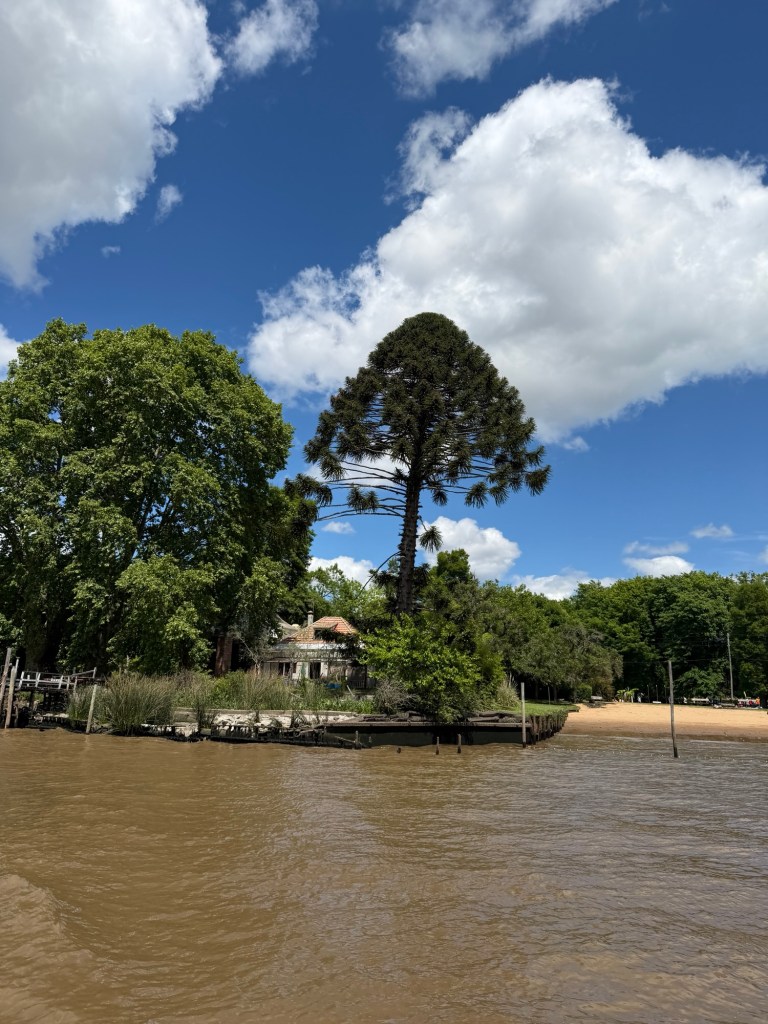
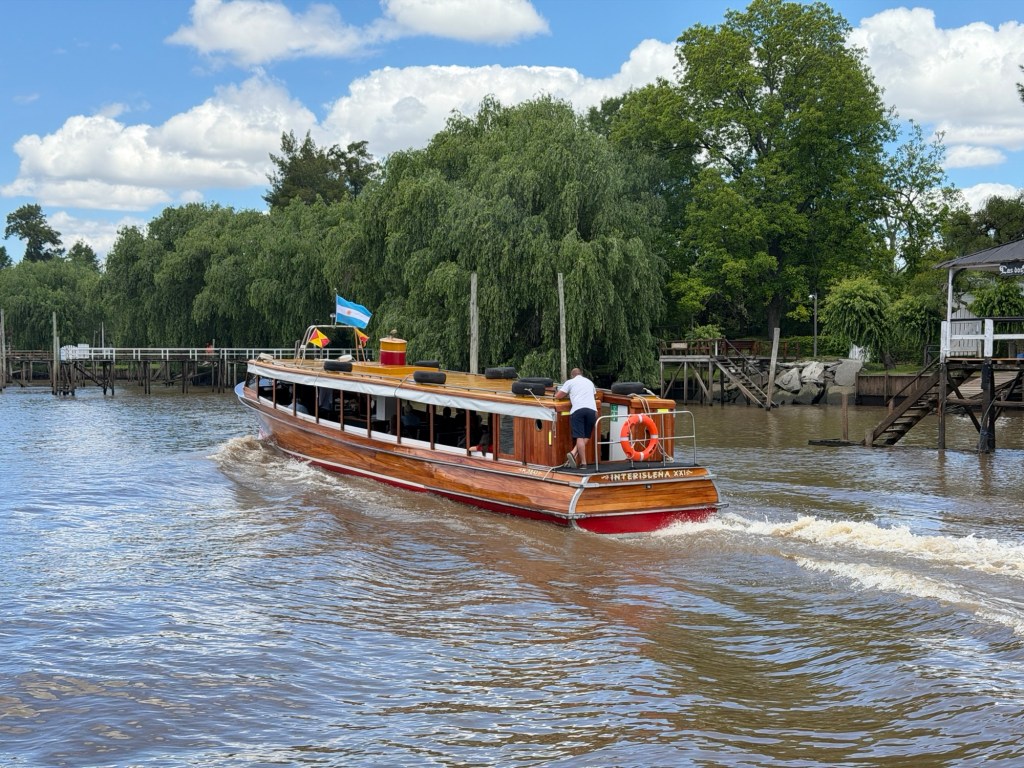
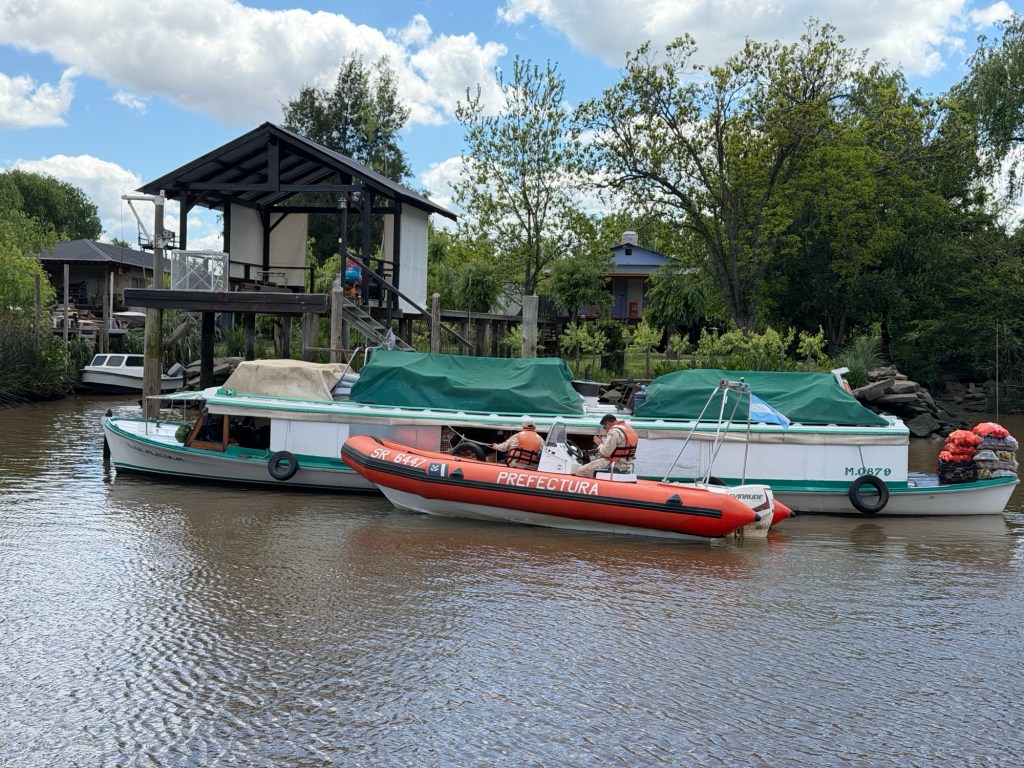
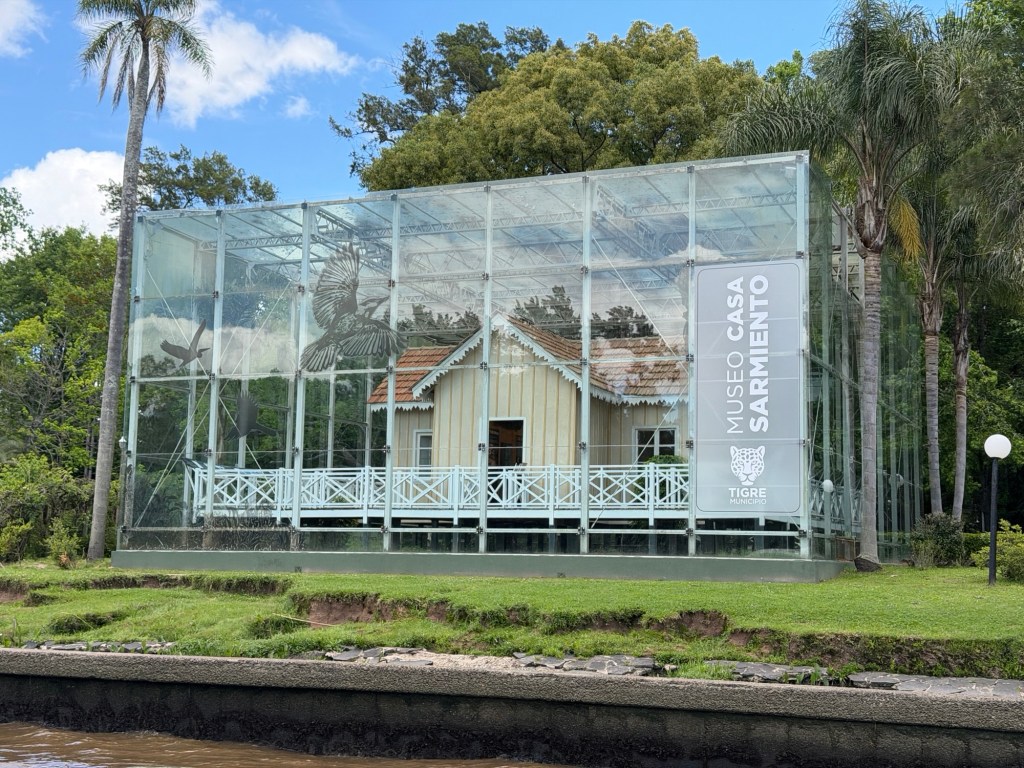
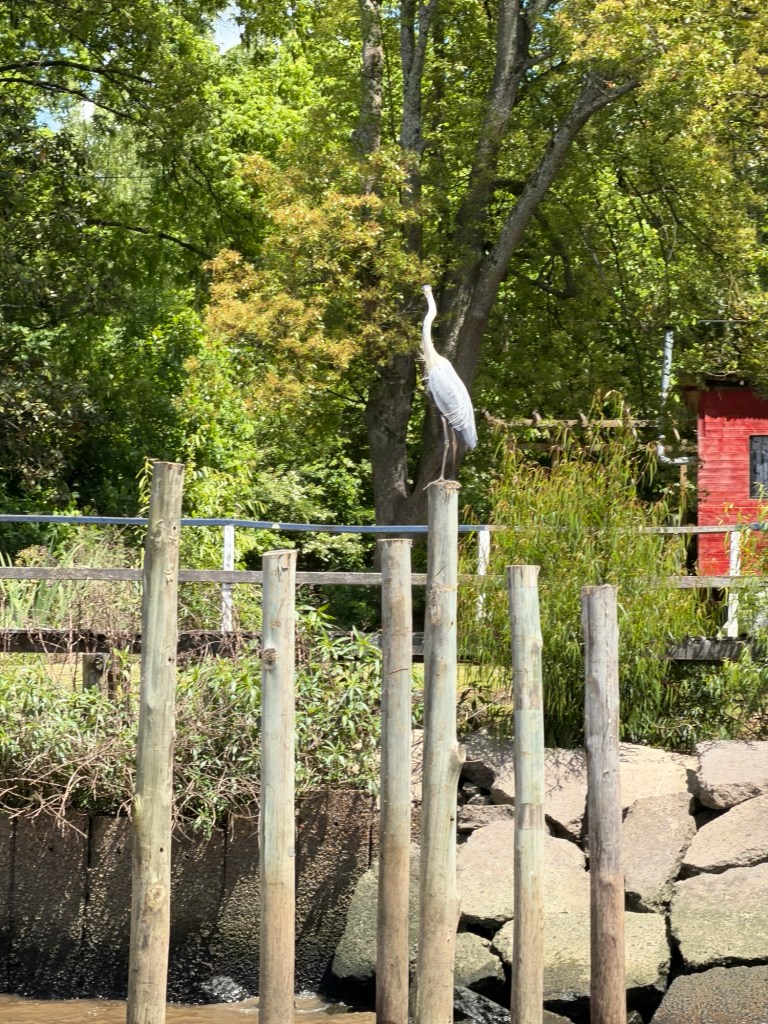
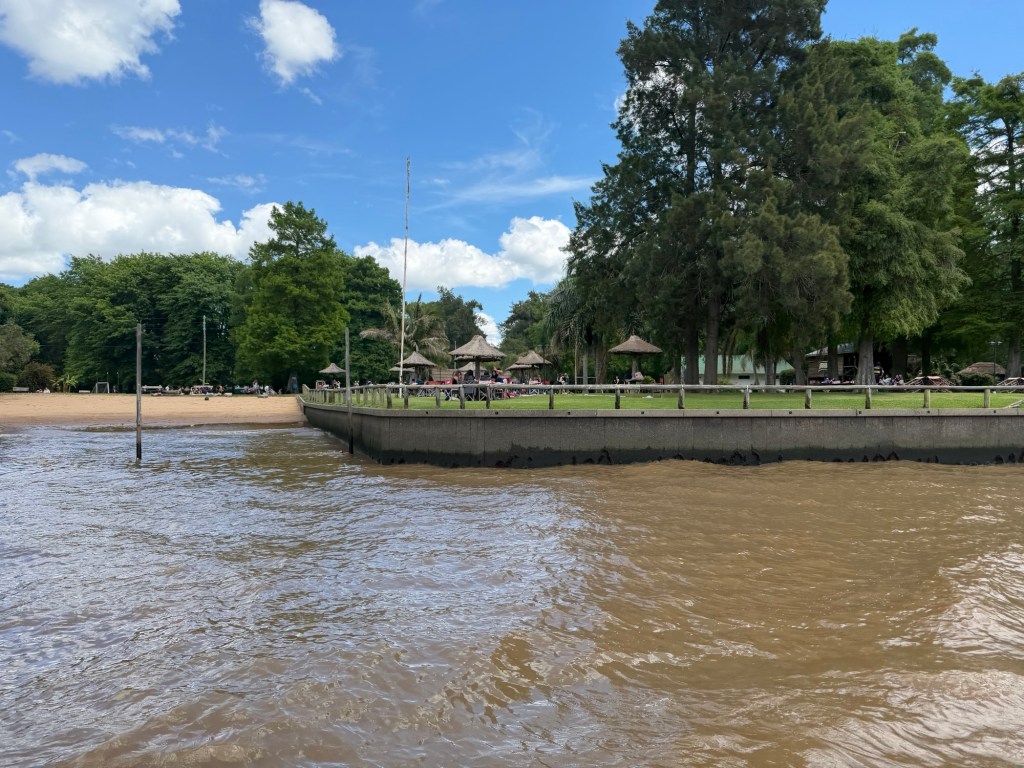
Our boat was similar do the one turning in the river.An amusement park, operating on weekendsLarge estate, often rented for events Monkey puzzle tree adjacent to a beach formed from imported sand. The sediments that color the delta brown are too fine to make sandy beaches.Boat taxiSupermarket boat with coast guard customers Museum enclosed in glassHeron (not a statue)
This was a beautiful, sunny Friday. On weekends, the area is much more crowded.
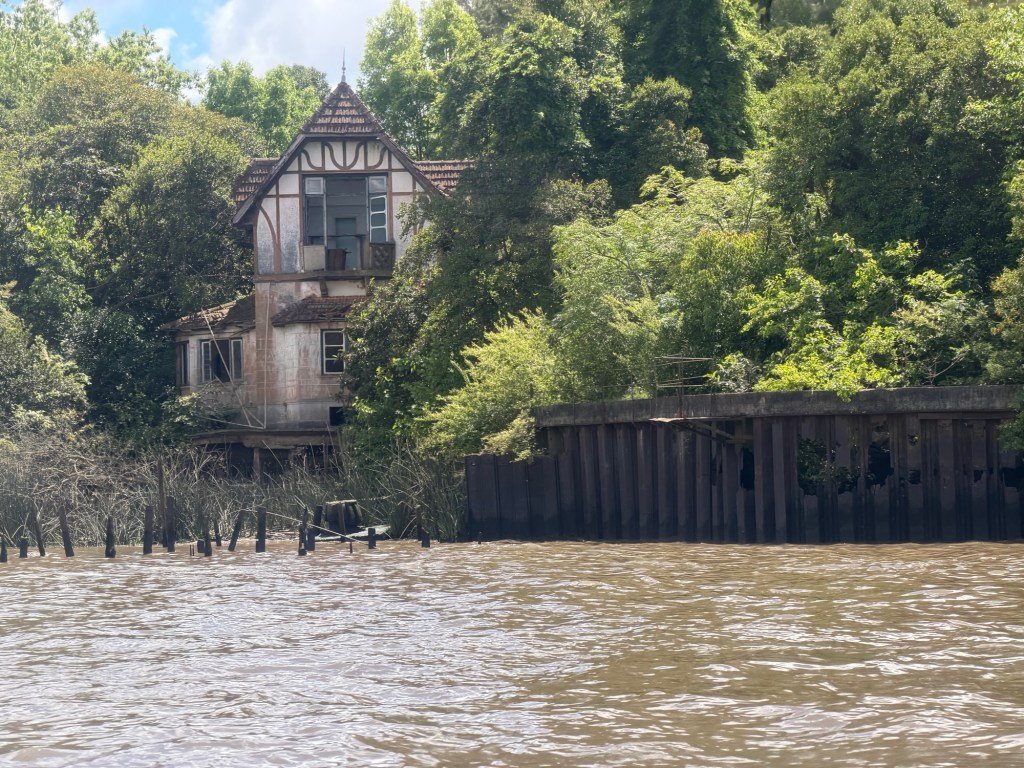
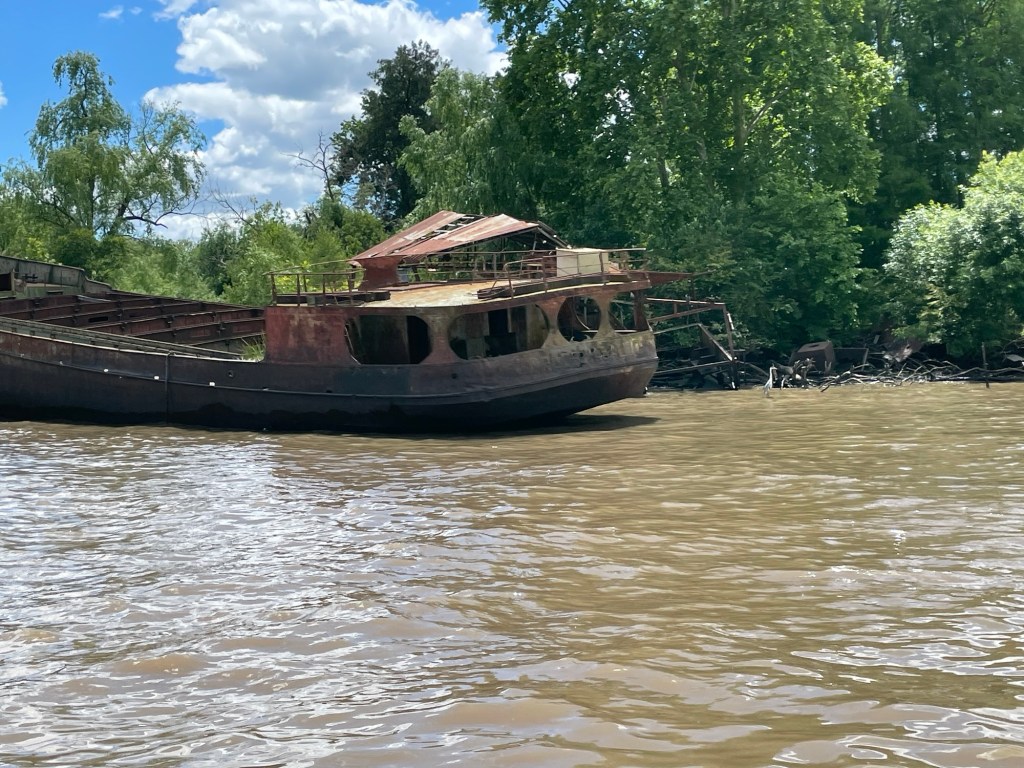
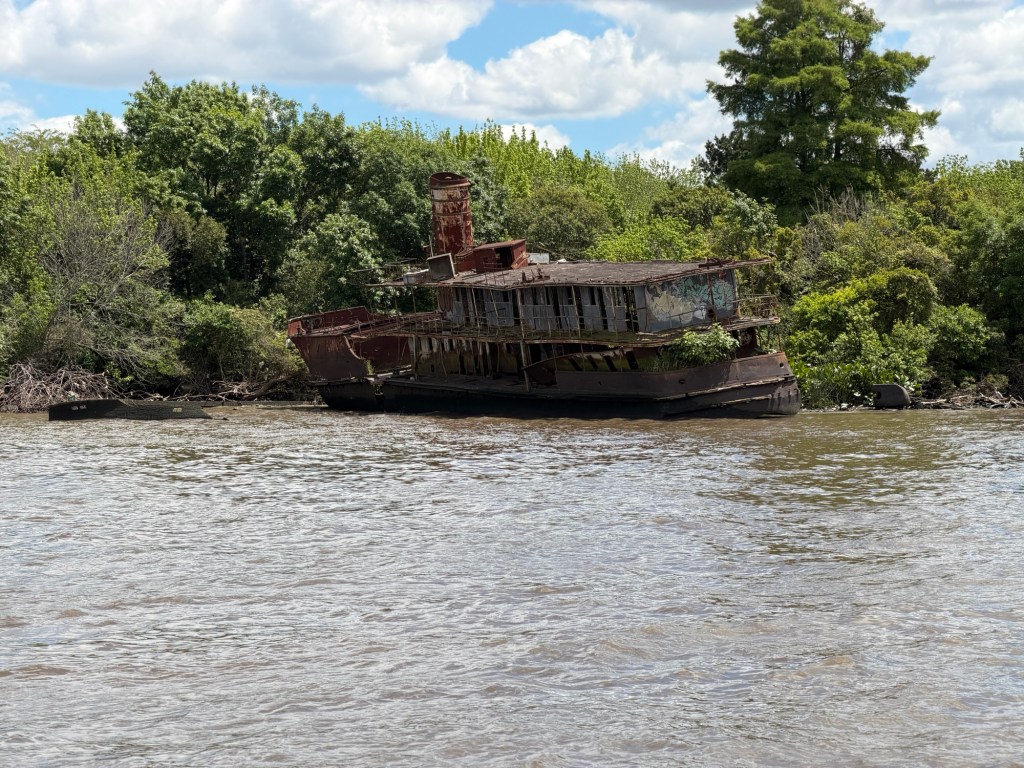
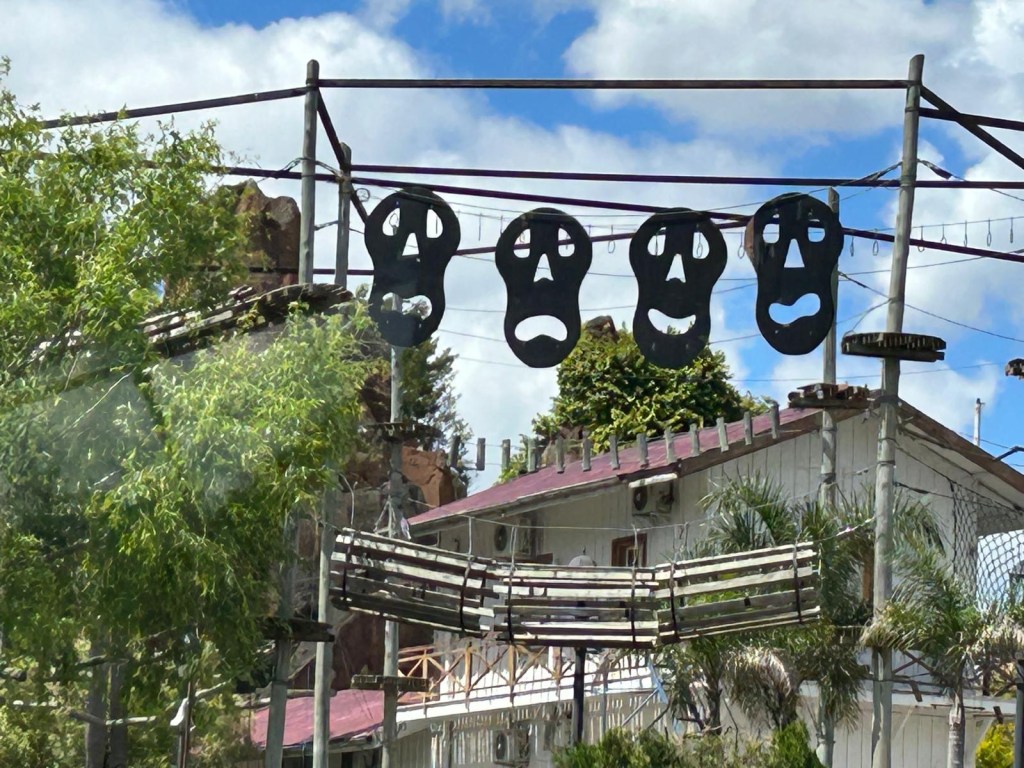
Many properties are in disrepair, partly due to erosion.Abandoned boatThis boat has been there long enough to sprout a tree!A club for members to useDecor at the amusement park
We hopped onto the bus again to a delicious restaurant for lunch. Then, the group split to find our own adventures.
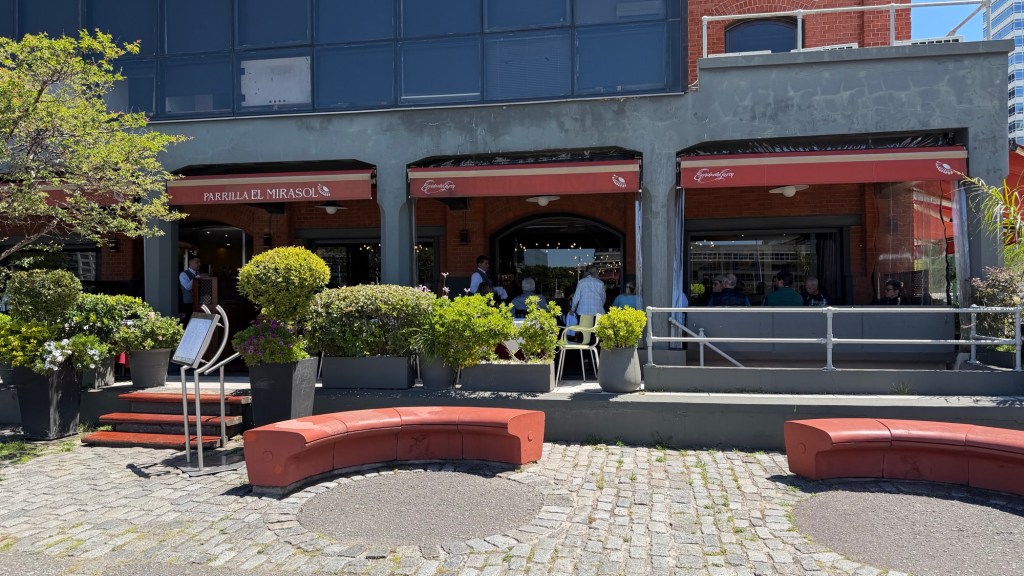
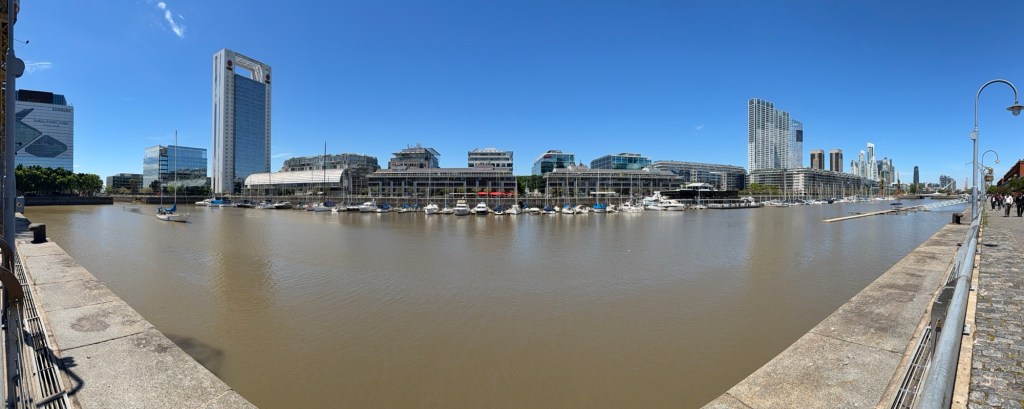
Lunch at a nice restaurant in Puerto MaderoPuerto Madero area is fairly upscale
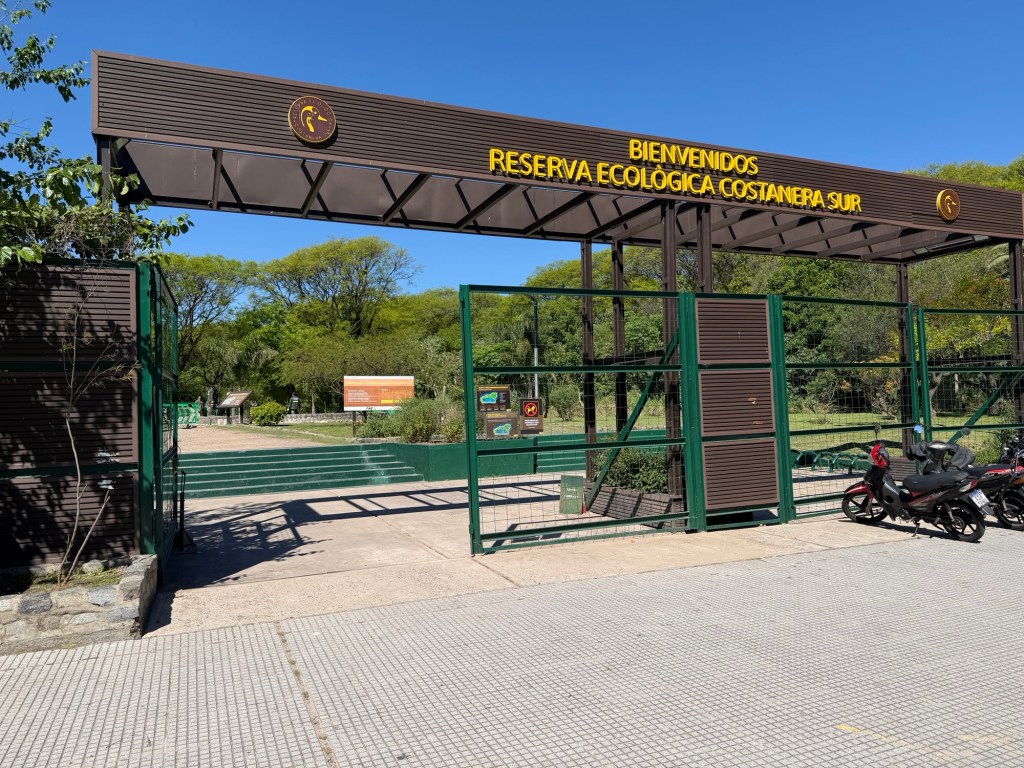
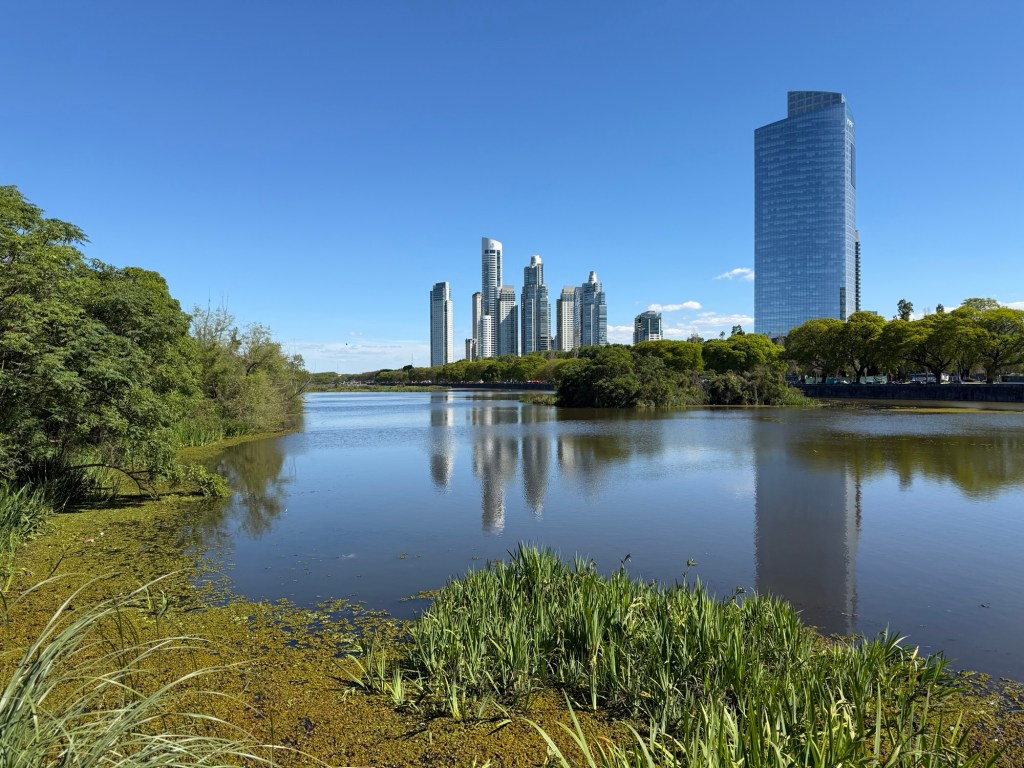
After lunch some of us went for a walk in the nature area east of Puerto Madero.
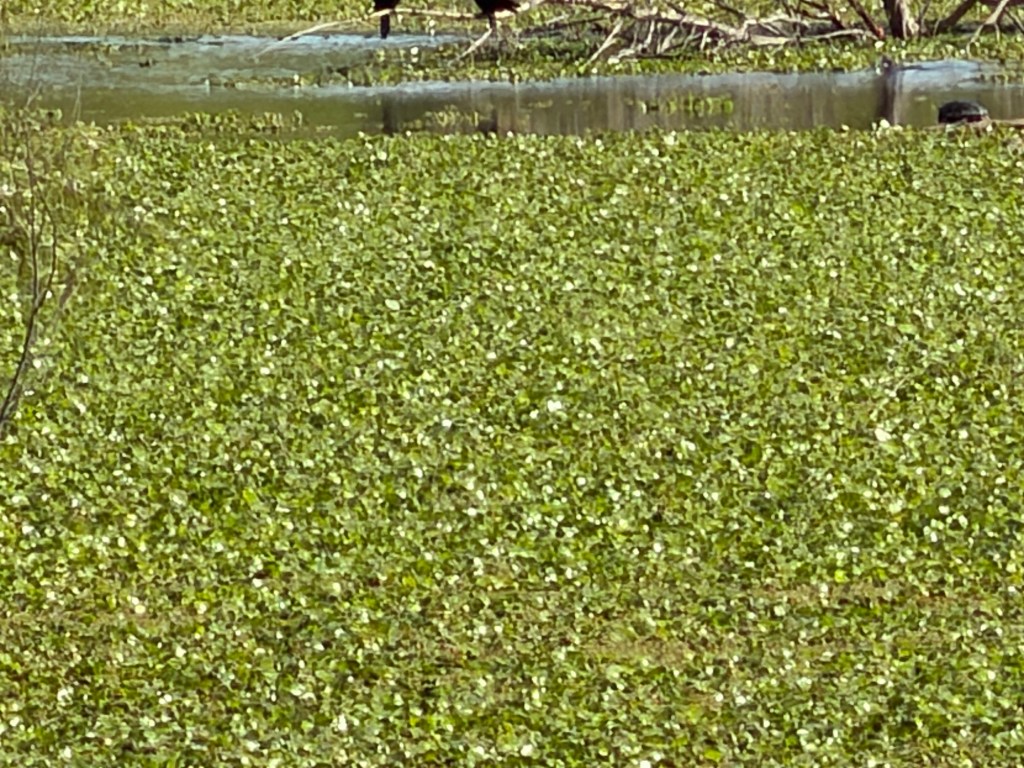
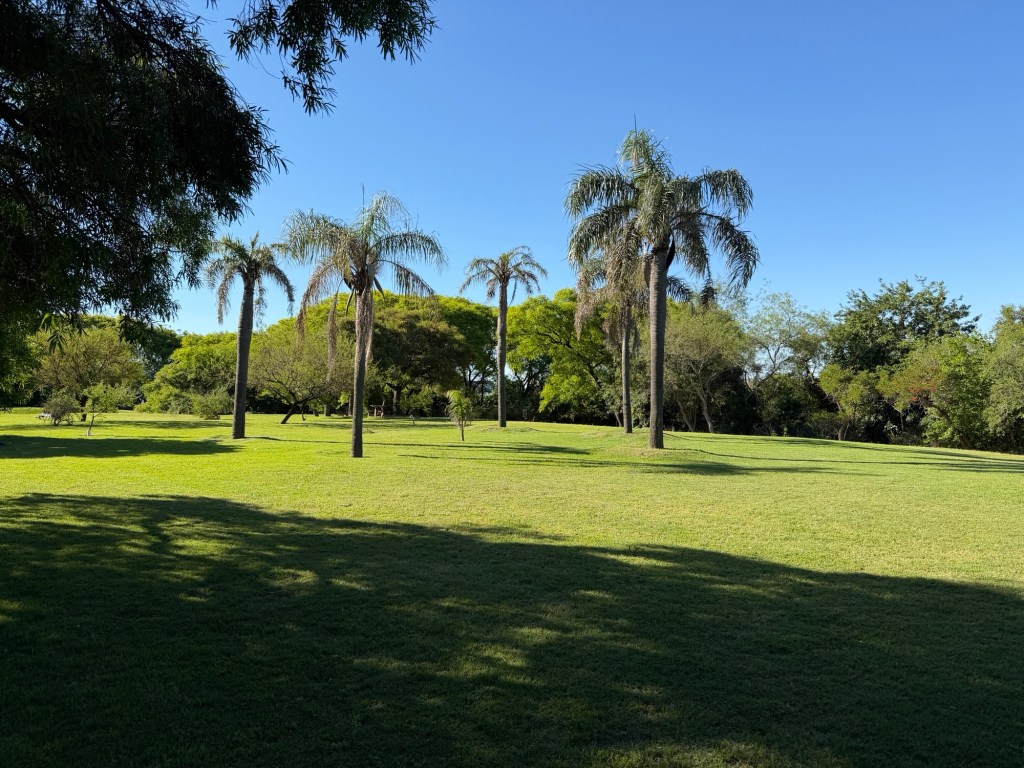
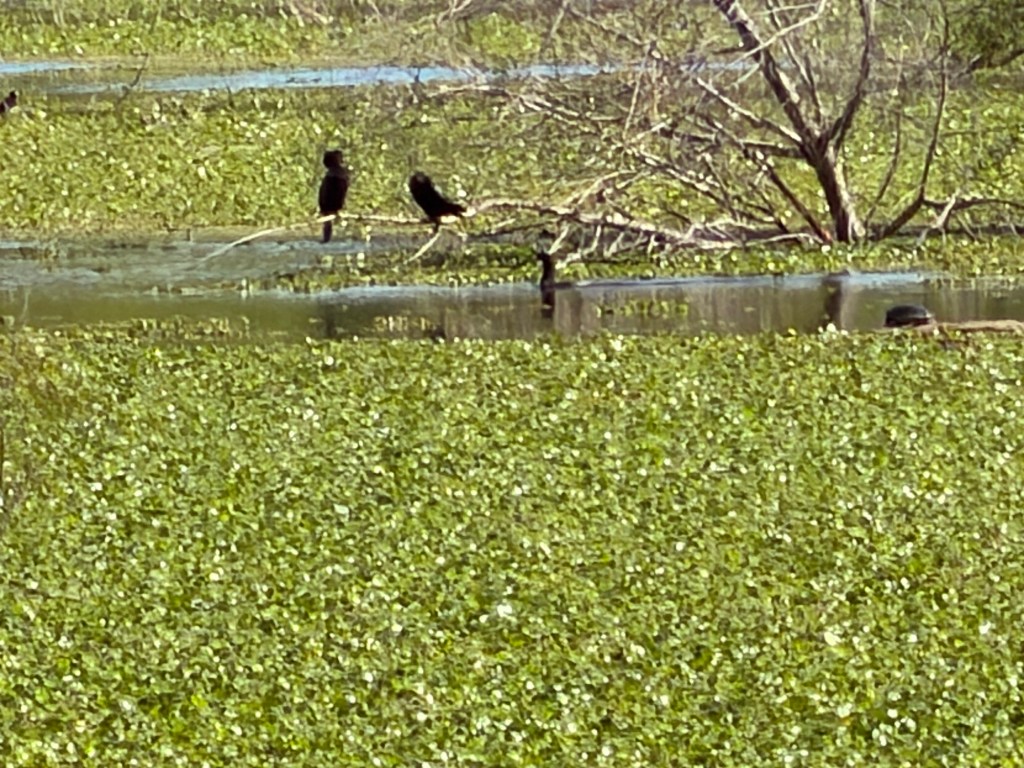
Entrance to the nature reserveHigh-rise residences viewed from the reserveWater hyacinths in a lagoonMowed park area
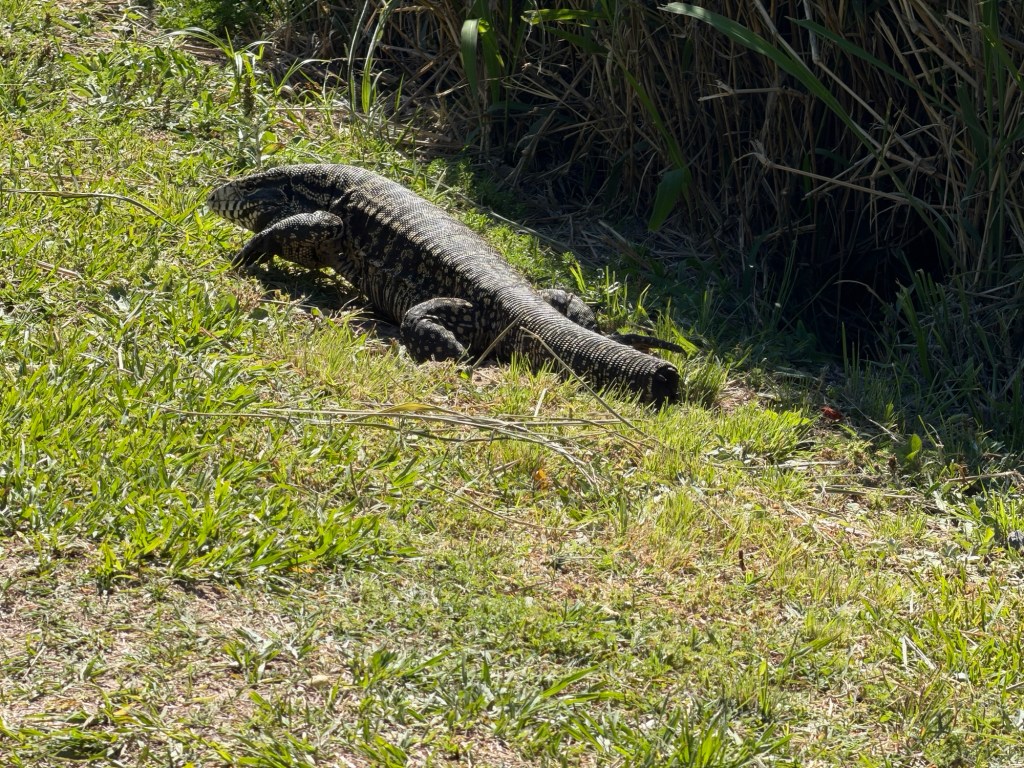
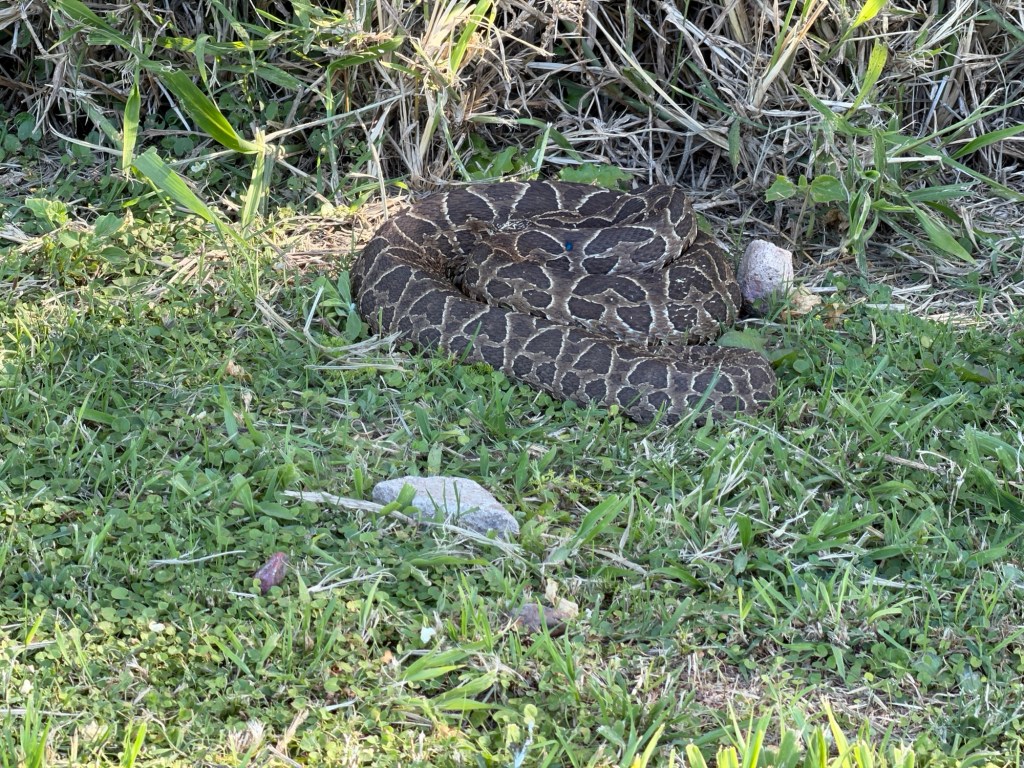
Our hopes for finding wildlife in the reserve were rewarded. One of our friends even saw a porcupine!
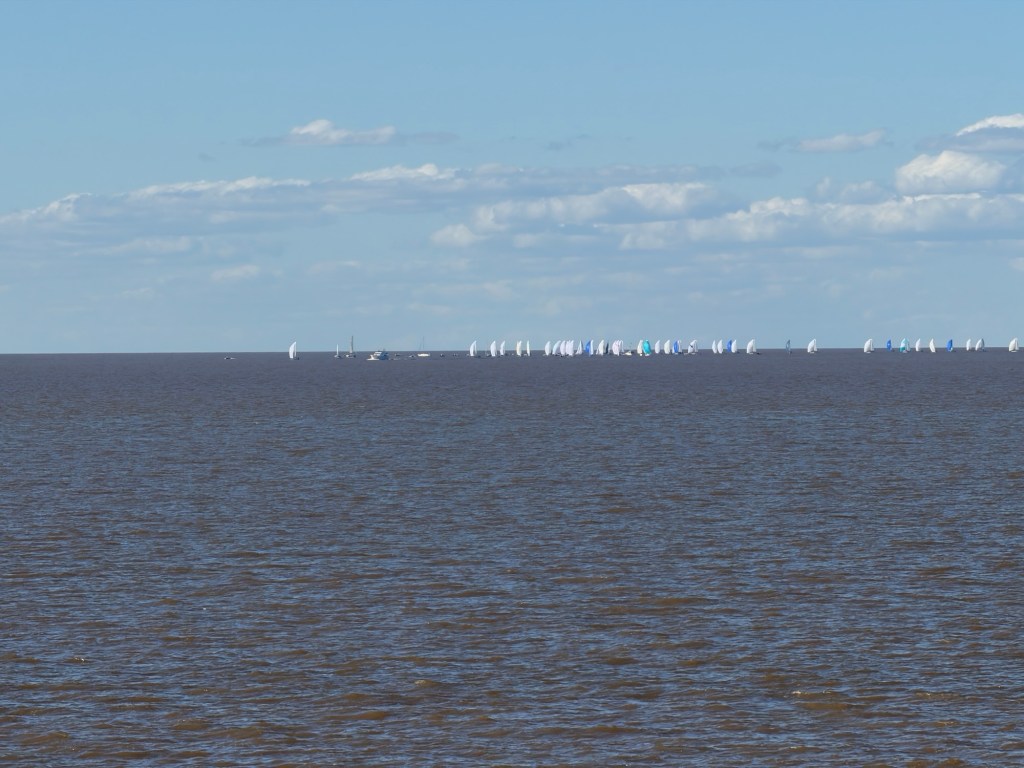
Iguana with partial tailA pit viper snake at the edge of the path; very dangerous!Birds in the lagoon from far awaySailboats on the Rio de la Plata
Back to the hotel for a good night’s sleep.
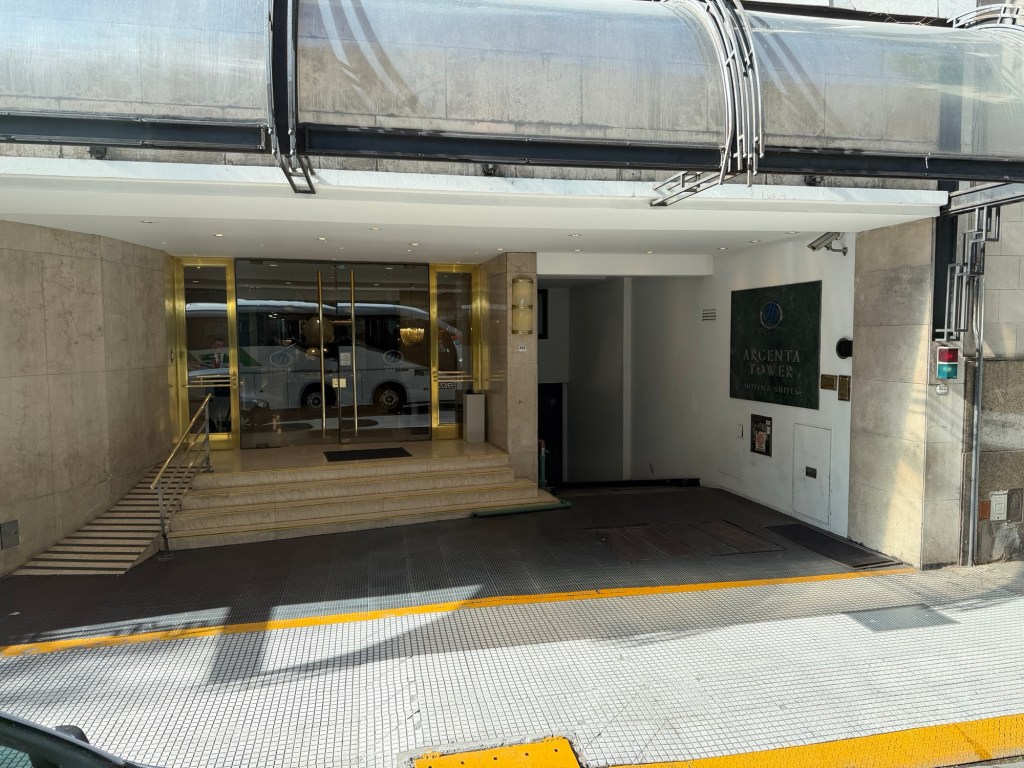
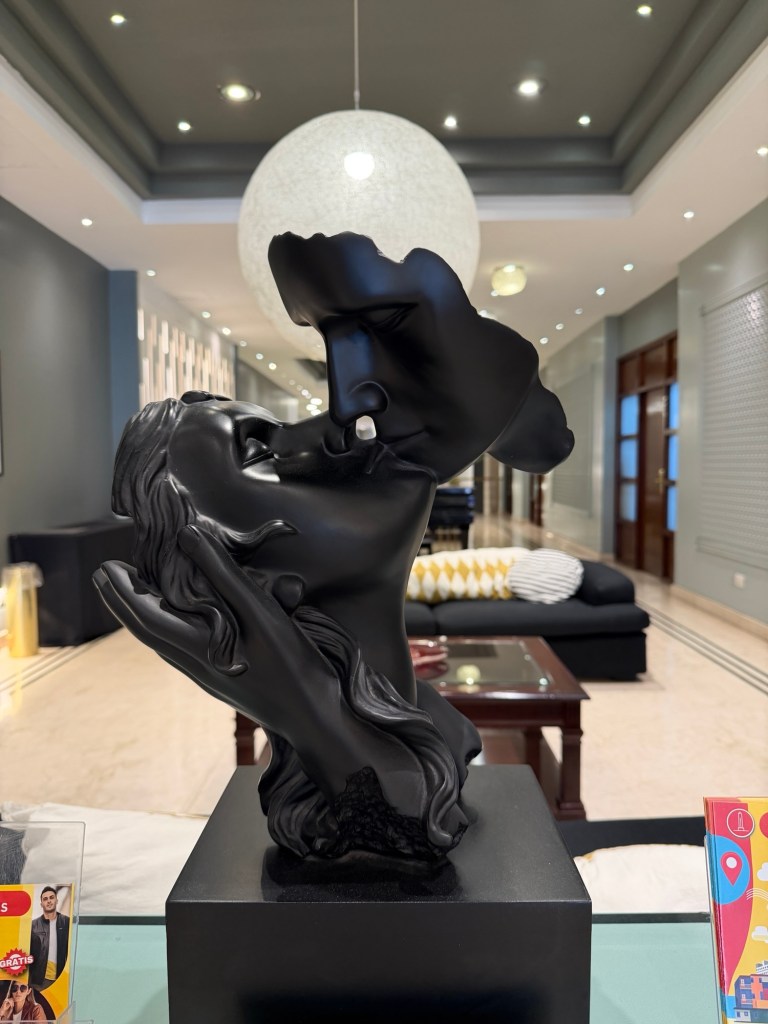
Entrance to the Argenta Tower HotelInteresting sculpture in the hotel lobby
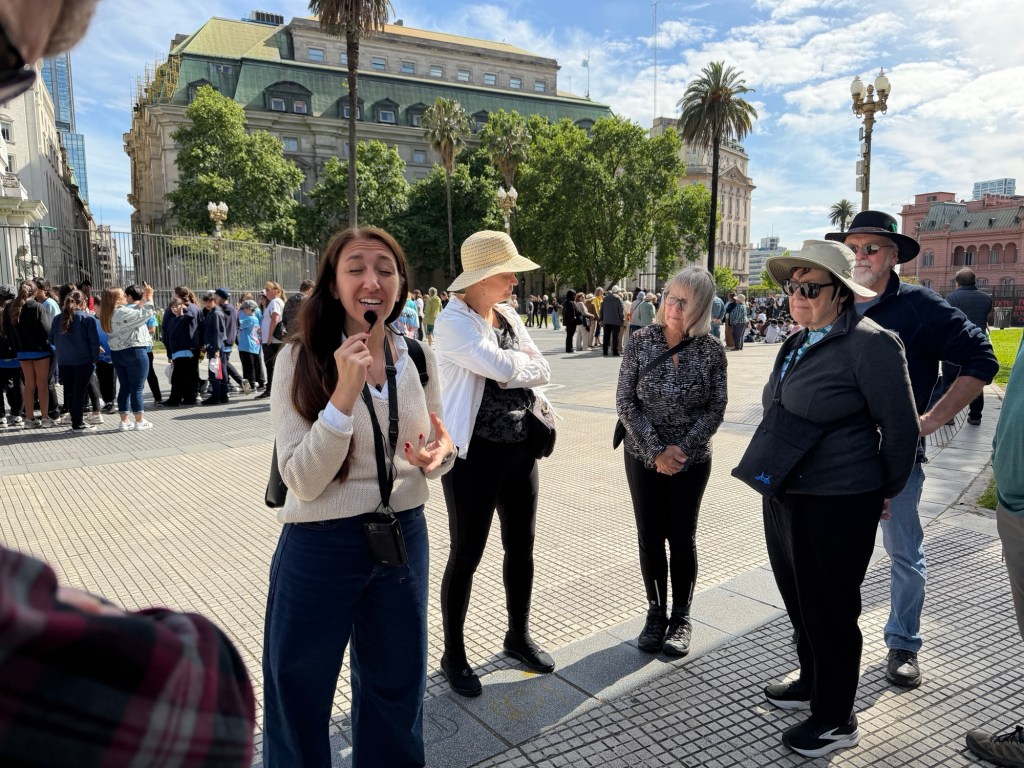
This morning we met our local Buenos Aires guide, Noelia, a native of the outskirts of Buenos Aires but now a resident of the city. We took a bus to her favorite places, learning a lot on the way.
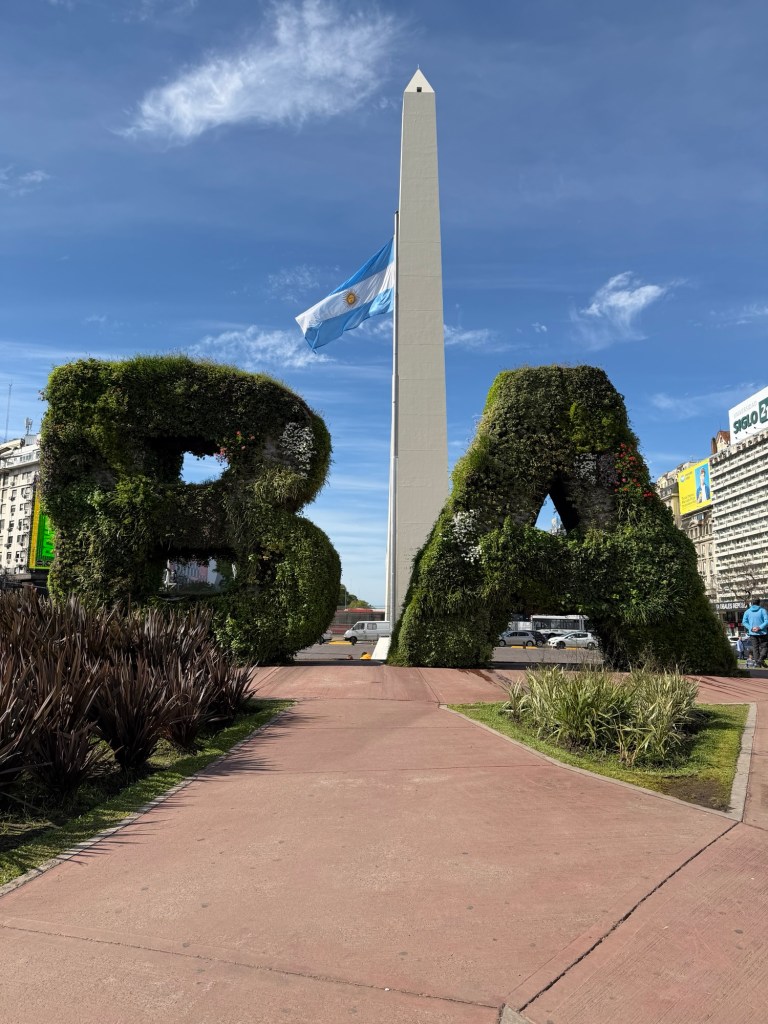
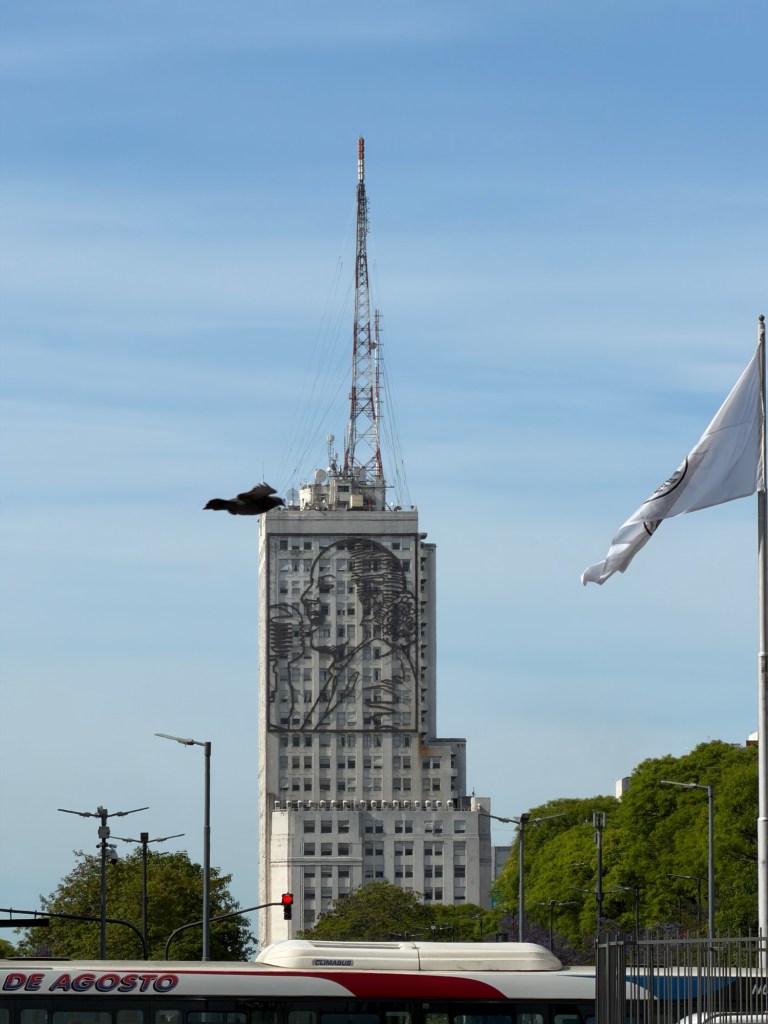
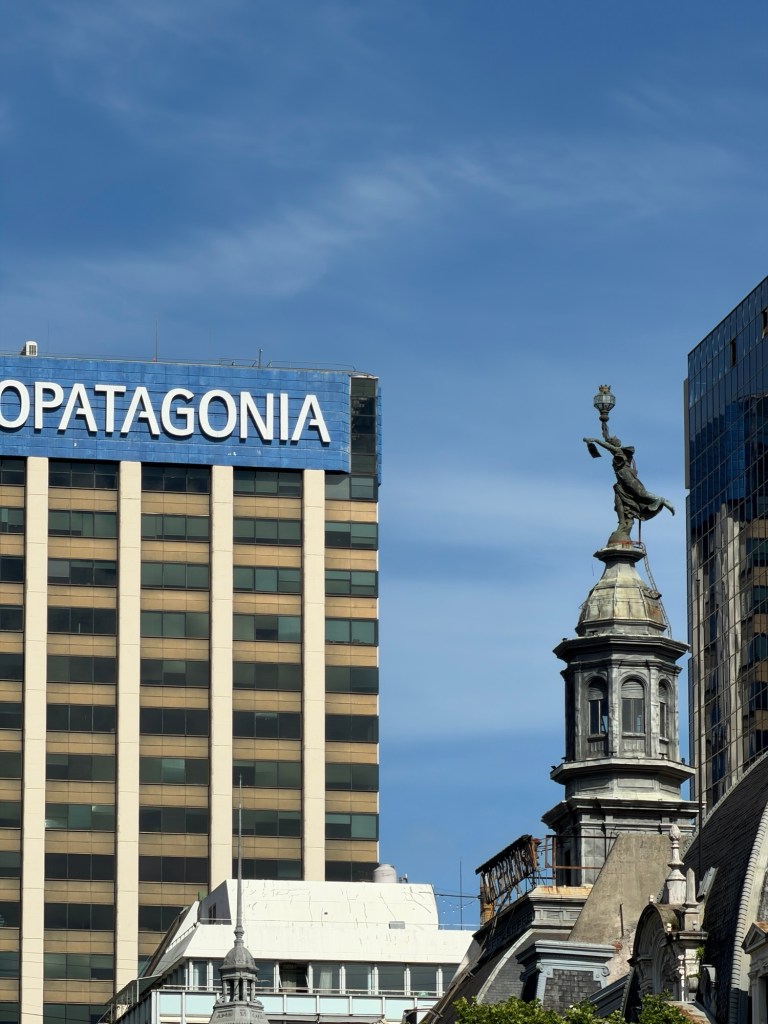
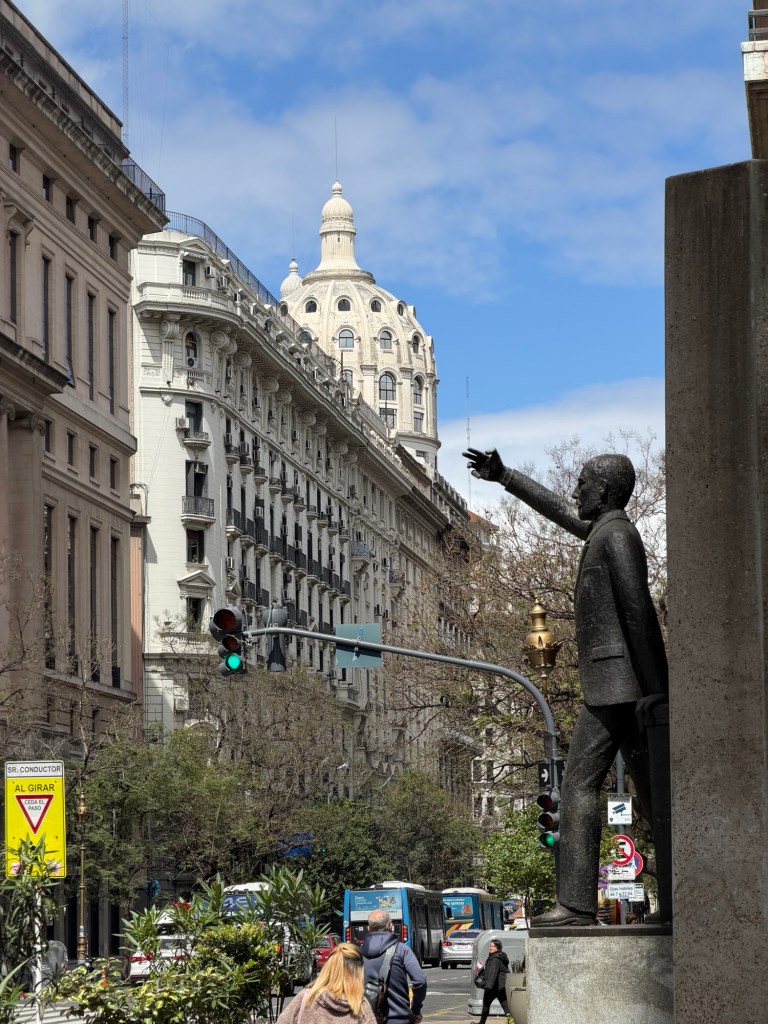
Obelisk, from the correct viewing direction. We didn’t see the initials of the city previously. Noelia told us about the importance of fútbol (soccer) to the Argentinian people; 4 million fans assembled in this area after Argentina won the World Cup in 2022.Eva Perón portrayed on a building facing the obelisk, photo-bombed by a bird!This statue symbolizes the free press. “Patagonia” is used in many contexts, in this case a bank.
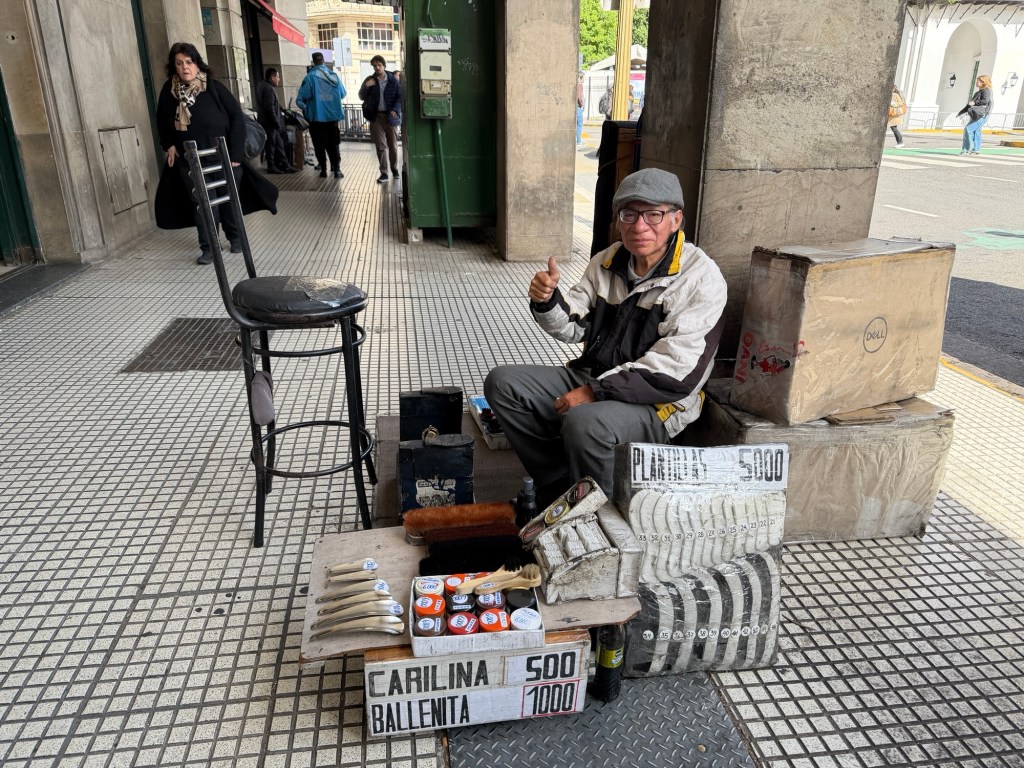
We went by bus to Plaza del Mayo, where we talked to a man who has been shining shoes for 25 years, since he moved to Argentina. He has clients who get their shoes shined often, getting to know them over the years. His set up is easy to pack up, because the government has begun to tax entrepreneurs like himself.
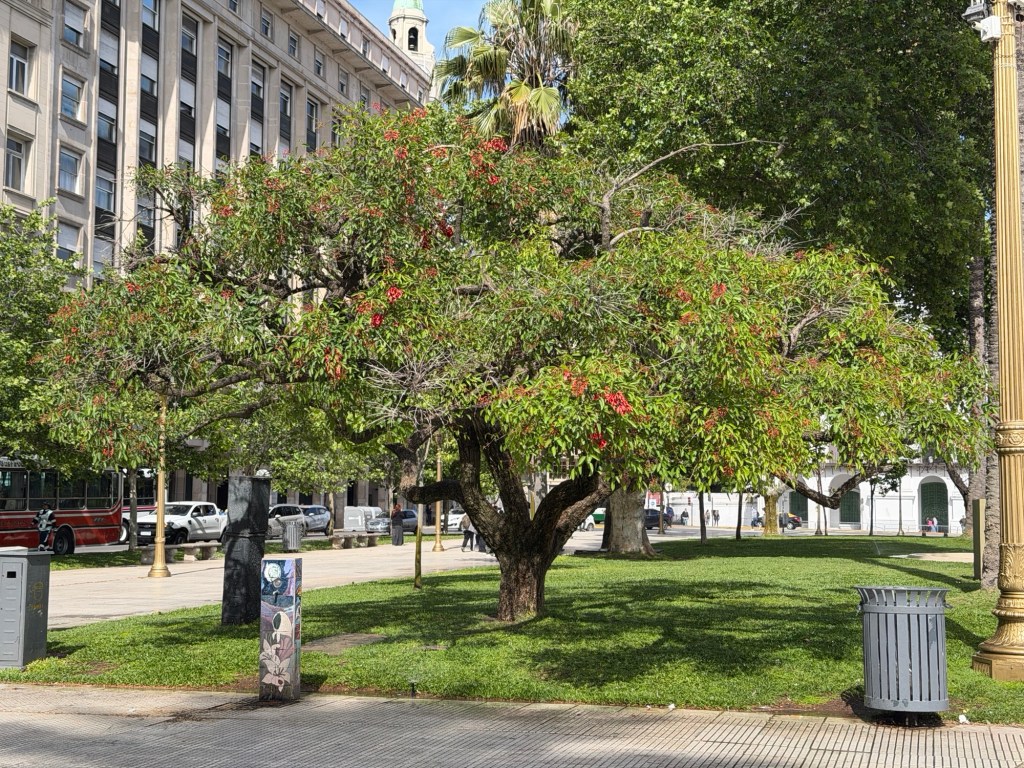
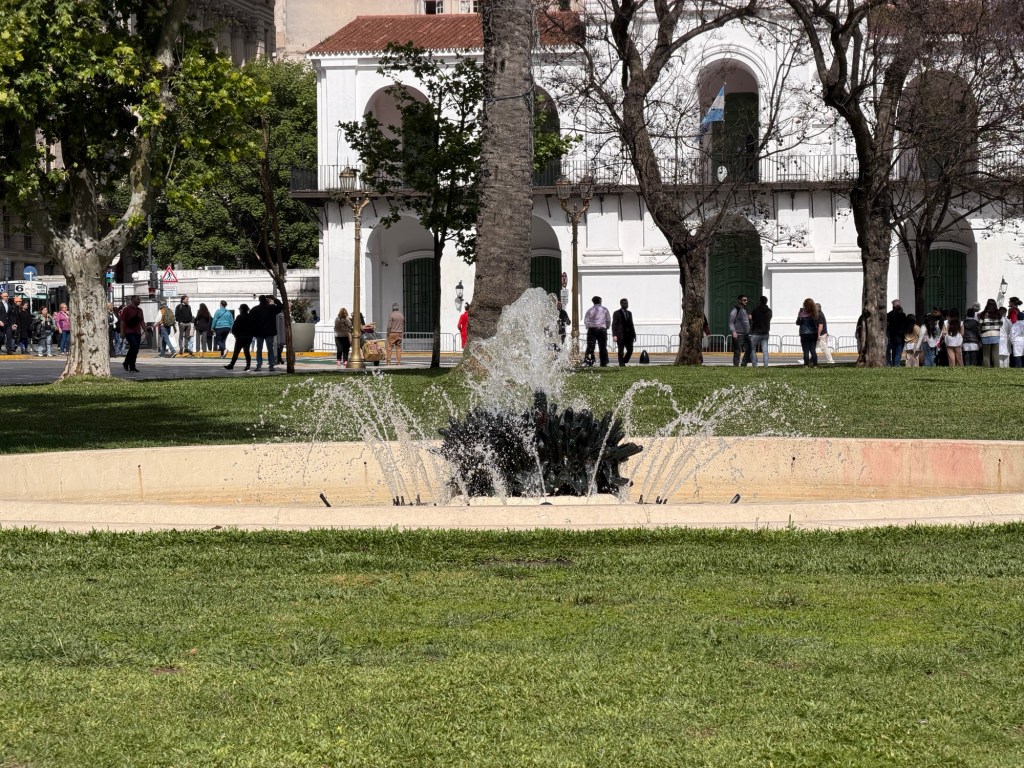
Shoe shinerCeibo tree with red flowers is the official national tree. Four fountains similar to this one surround the plaza.
We walked around the plaza for a short while, and felt a little sorry for our friends who only had a minute to see the cathedral and other places we explored the previous day.
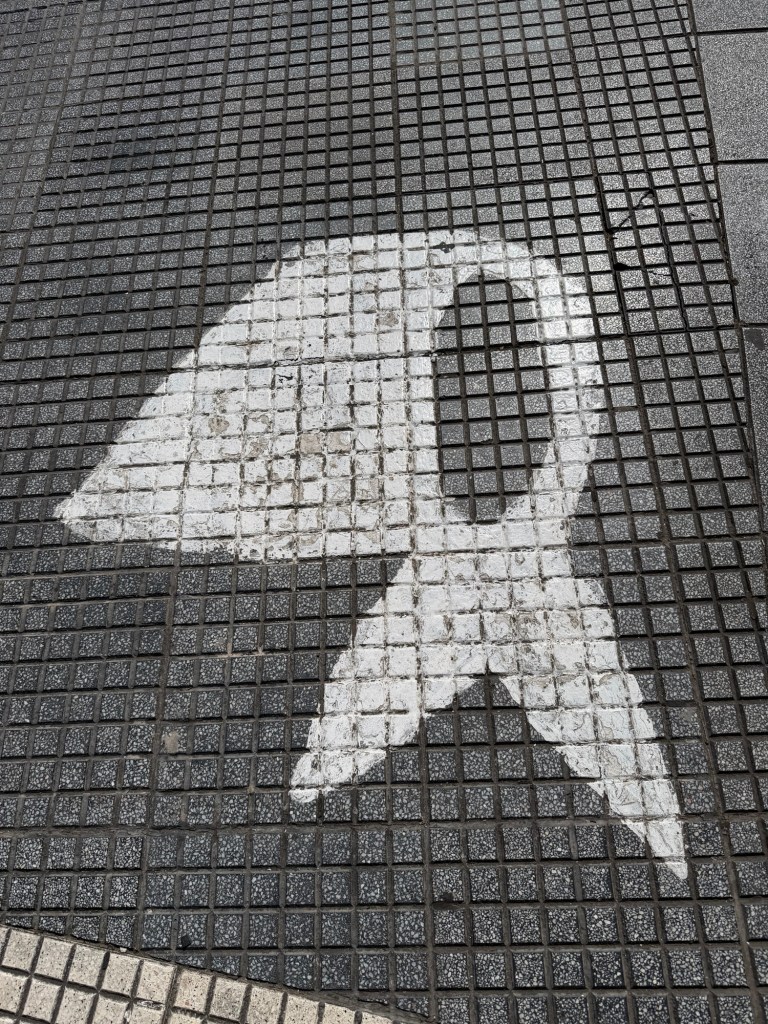
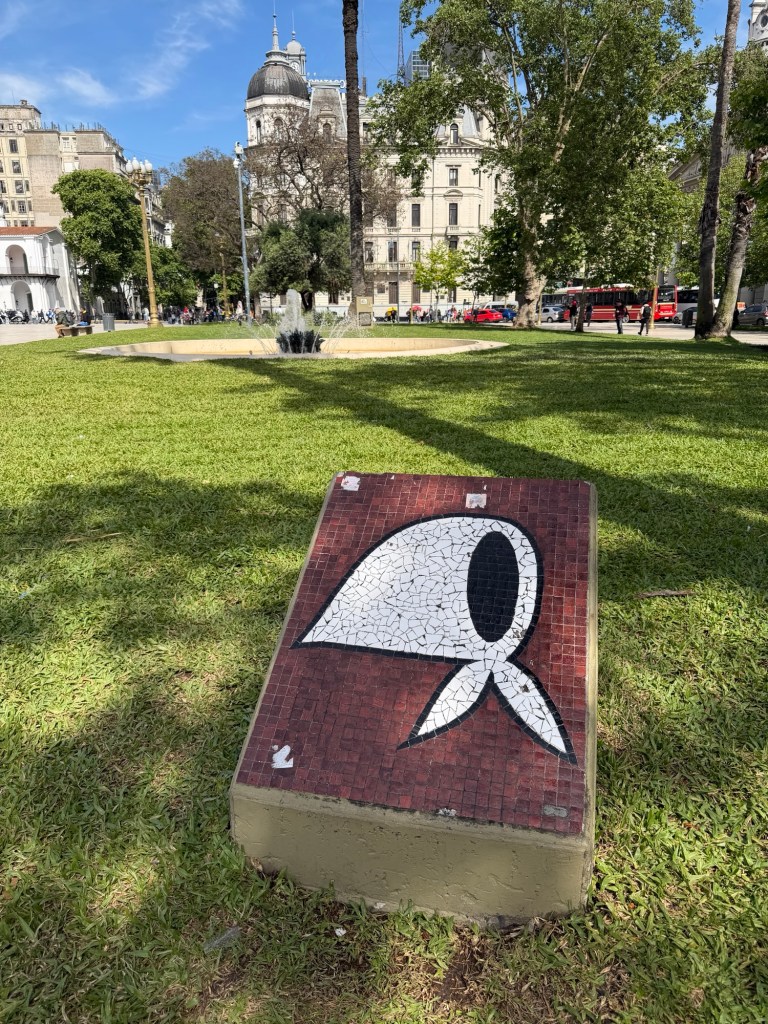
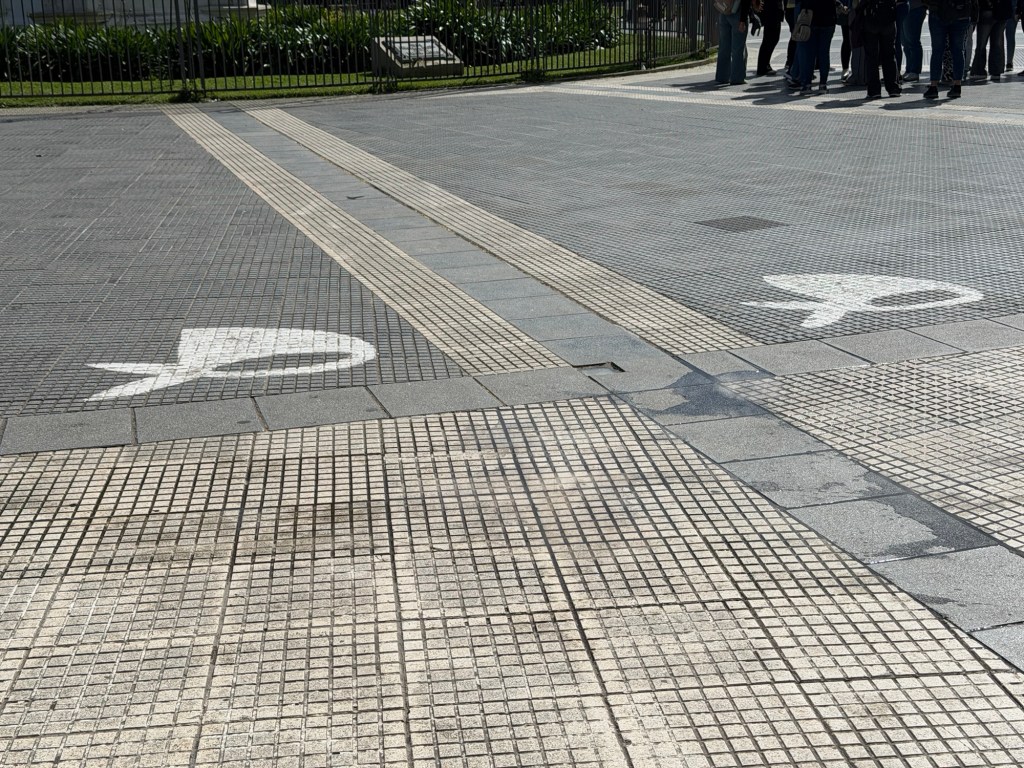
During the dictatorship, Noelia told us, people were not allowed to gather in large groups. To protest the disappearance of 30,000 people during this dictatorship, a large number of women, who called themselves the Grandmothers, put diapers on their heads like scarves and walked around the plaza in pairs. They would sit on benches in pairs but close enough to talk to the other pairs. Today, this successful protest is celebrated in pictures on the ground, in pairs, around the plaza.
Noelia and our friends Chris, Pam, Sue and Paul
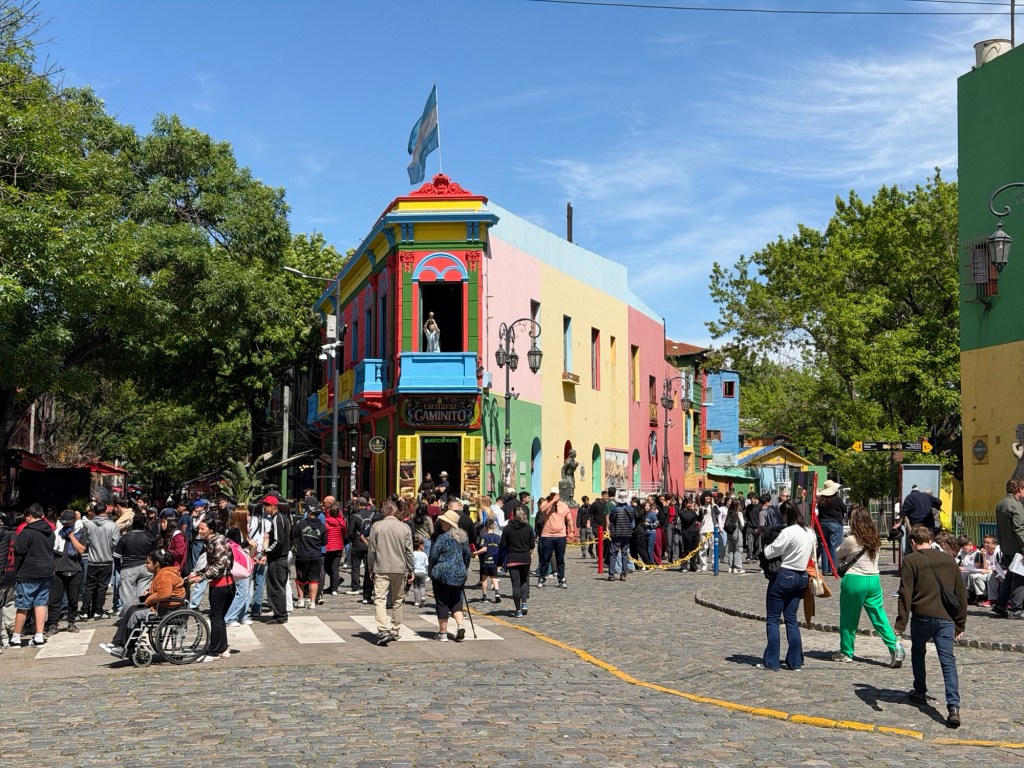
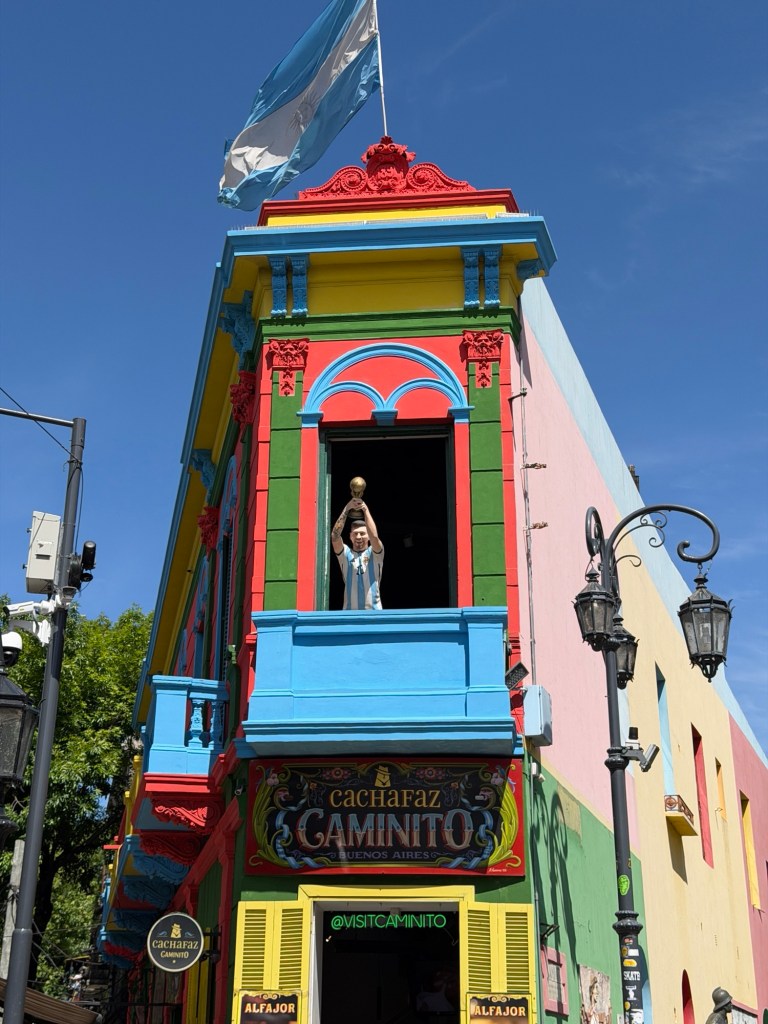
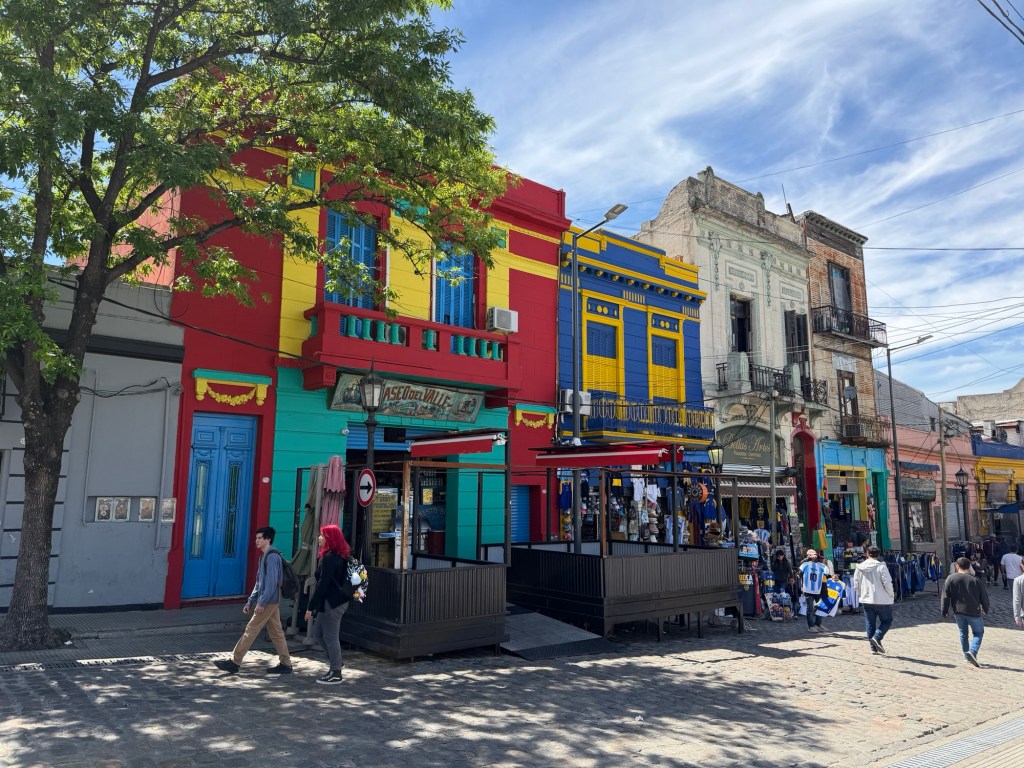
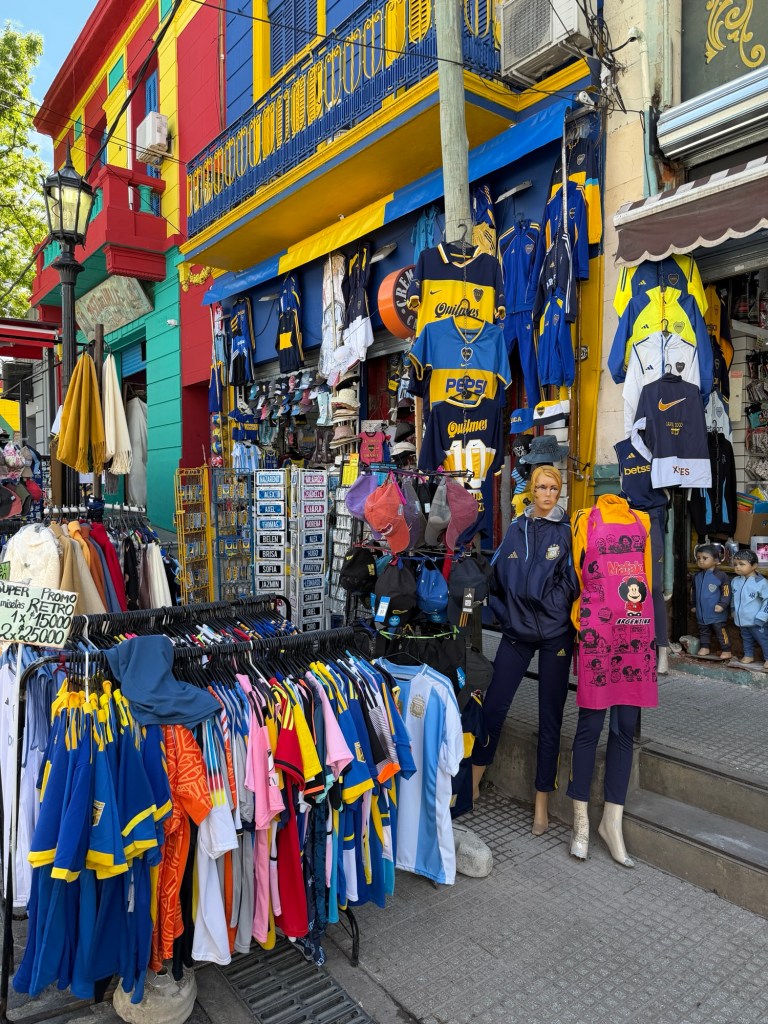
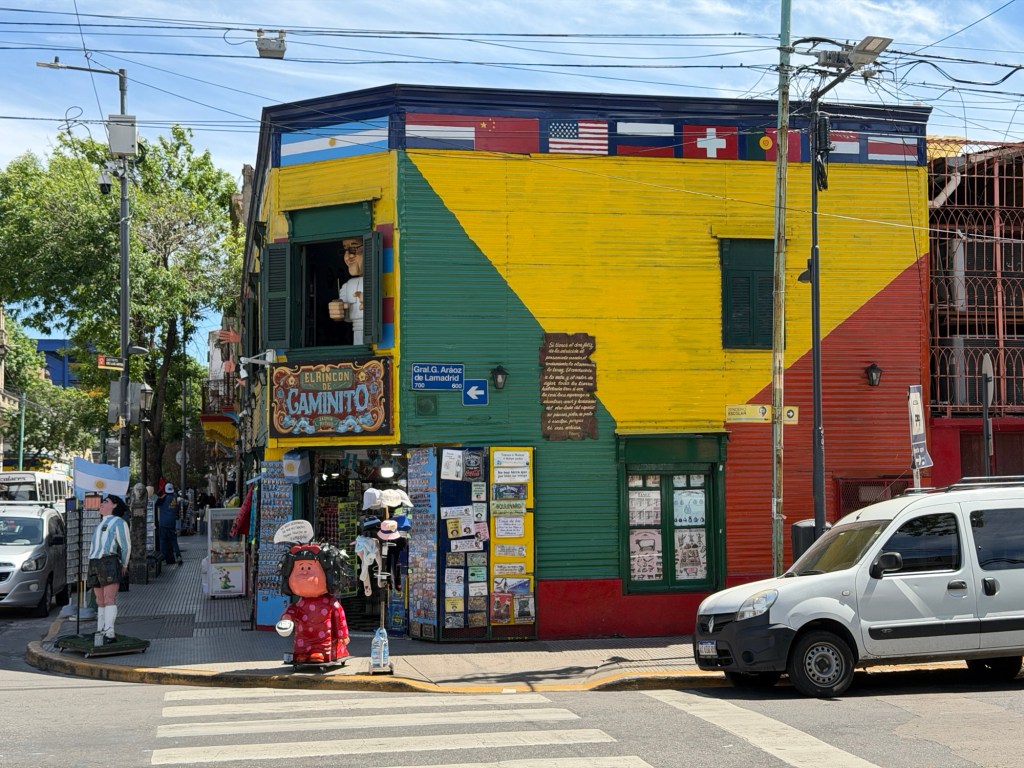
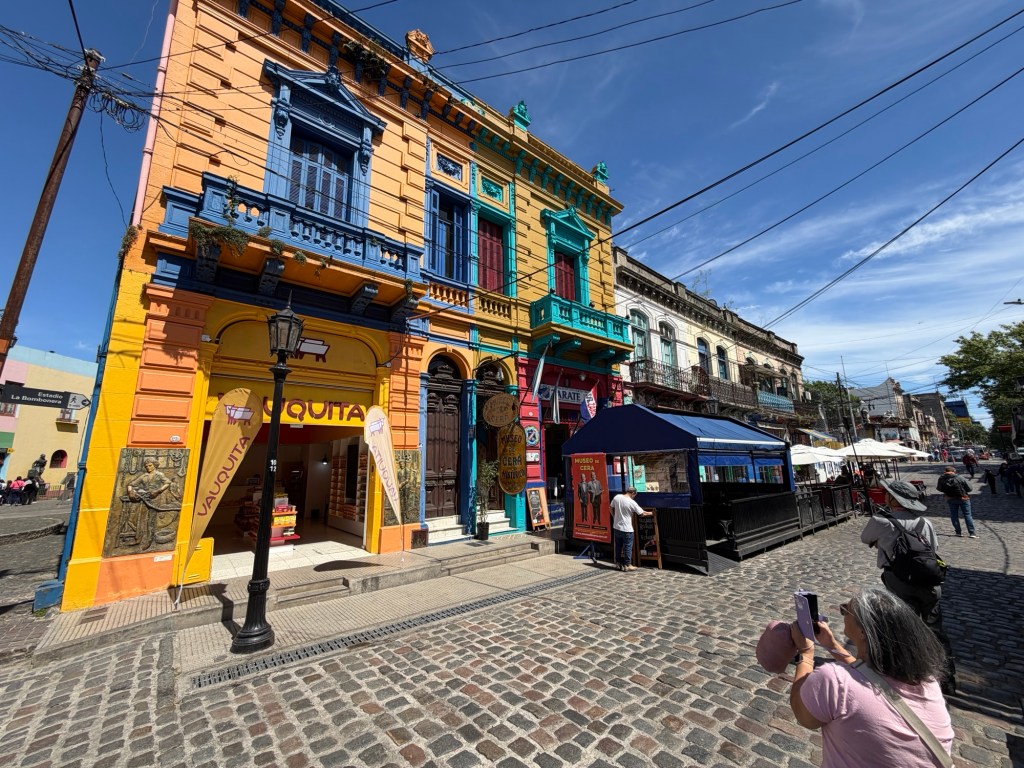
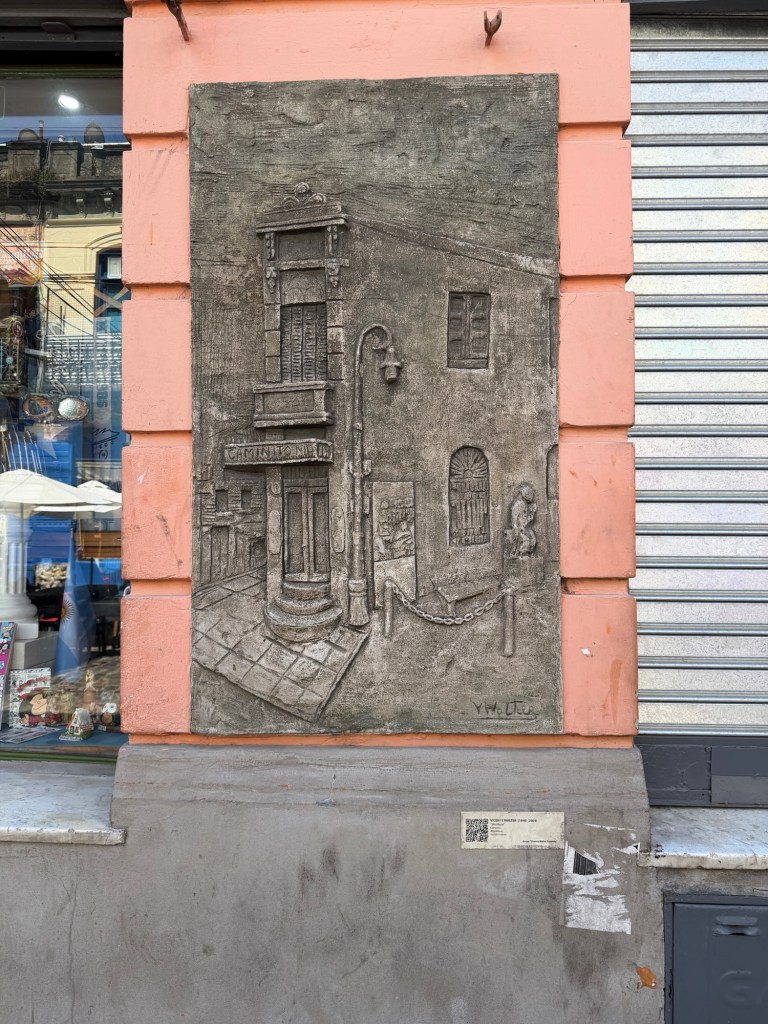
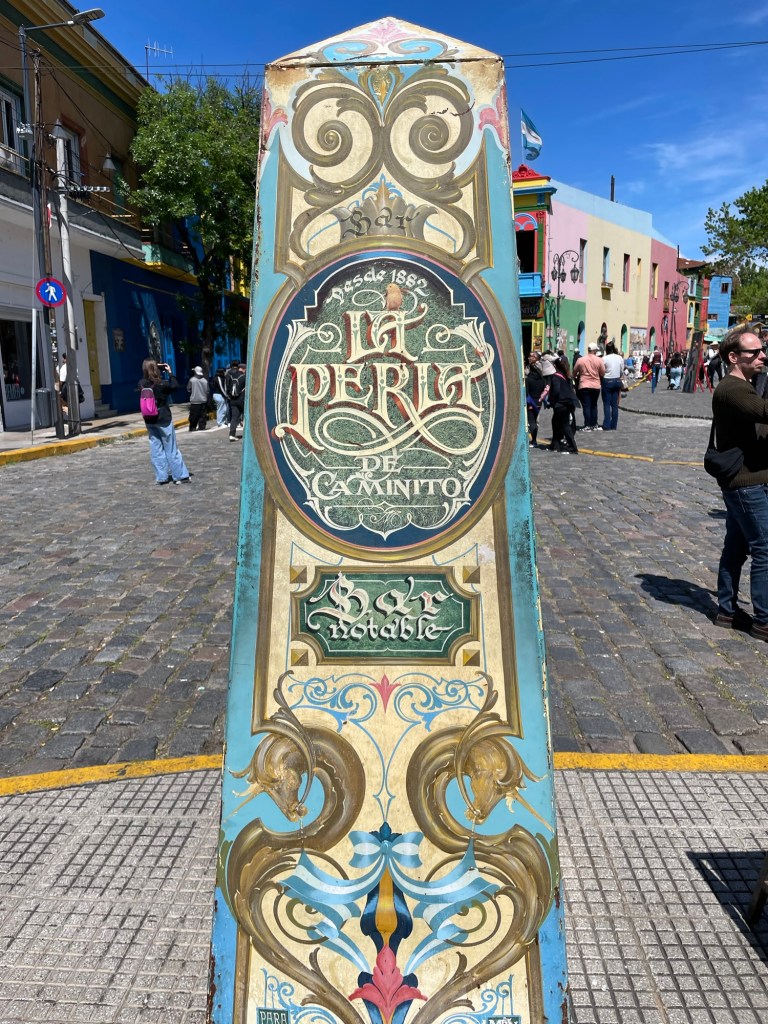
We then drove to La Boca, a wonderfully colorful area attractive to tourists and locals alike. It reminded us a bit of New Orleans, with the bright colors, balconies and stores. Again, we happily wandered on our own, onto the famous street Caminito. On the way, we learned that fútbol, what we call soccer, is very important to Argentinian people.
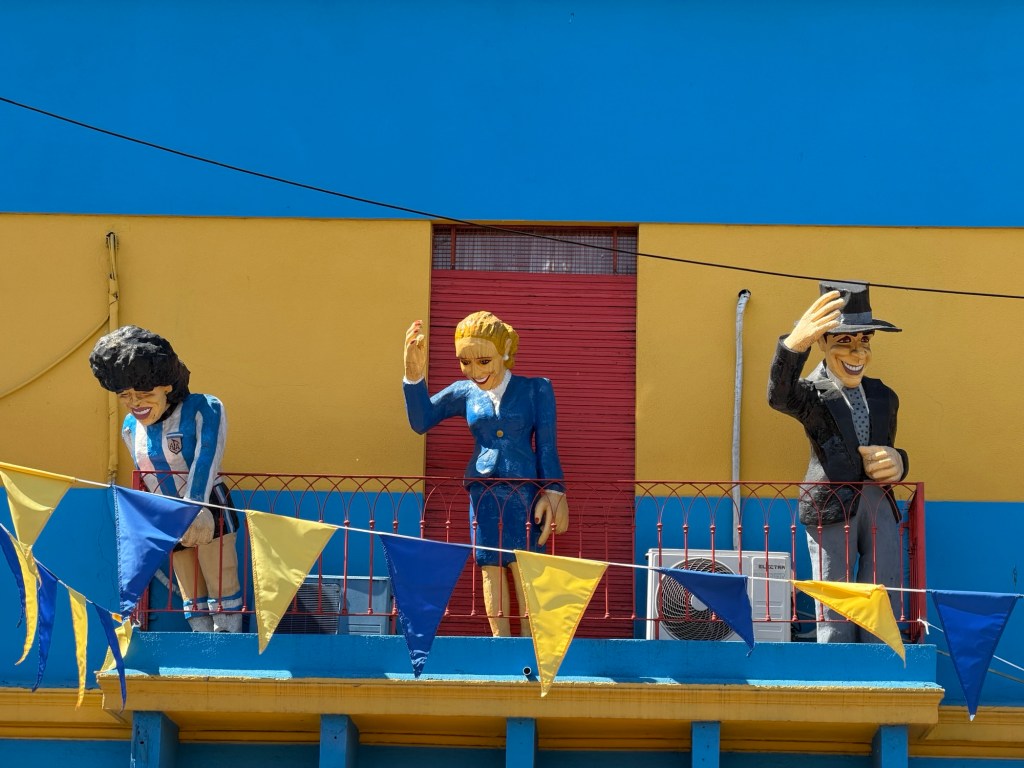
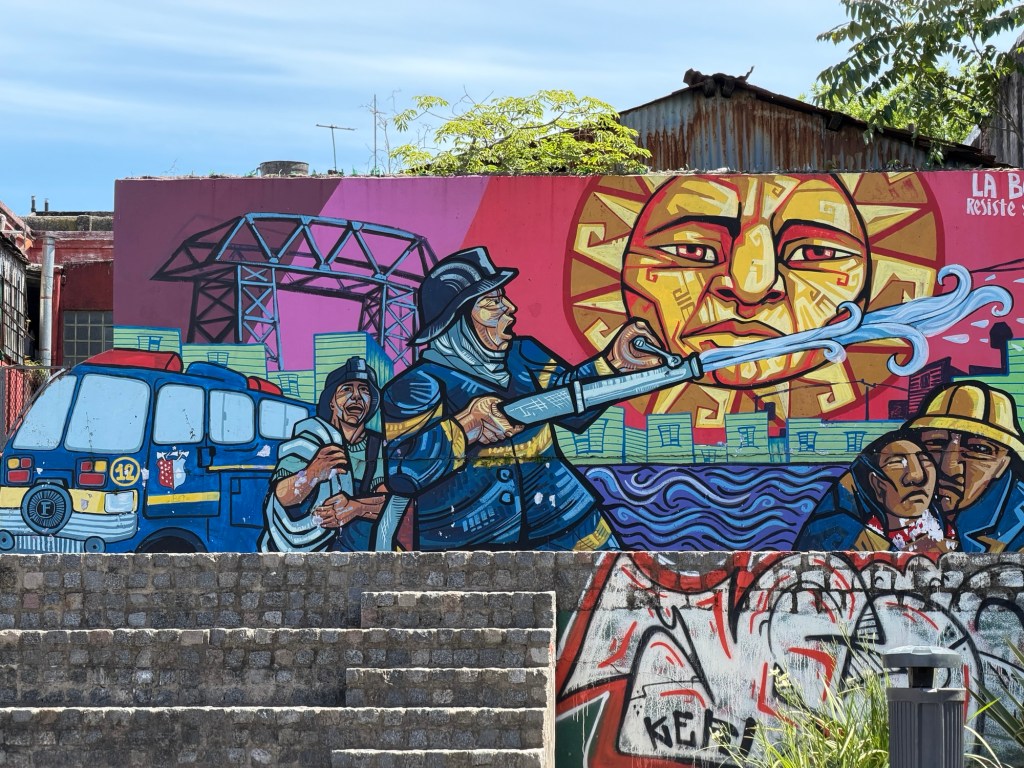
Three famous statues on a balcony: Maradona, Evita and Gardel: a soccer player, First Lady, and tango singer.Originally, the houses here had no heat, so people found other ways to keep warm. This led to the first volunteer firemen (bomberos) in Buenos Aires.Tight corner here with many tourists and school childrenLionel Messi, famous soccer player
The shops and houses are so colorful in part because people would use whatever paint was available from the ships that docked here.
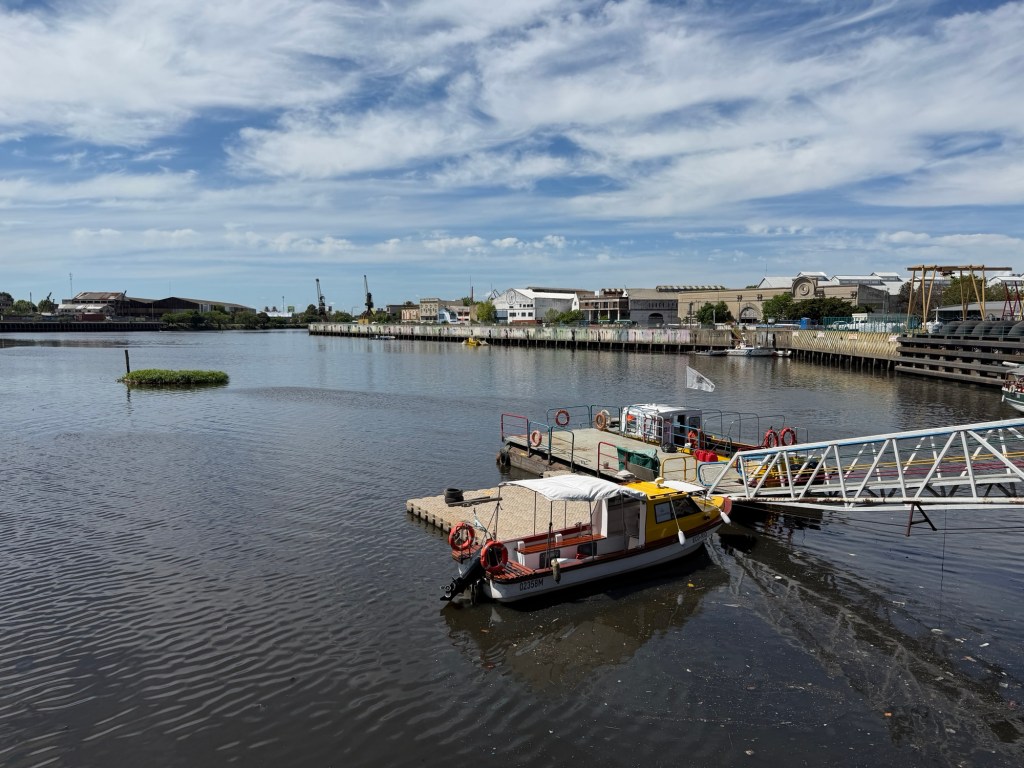
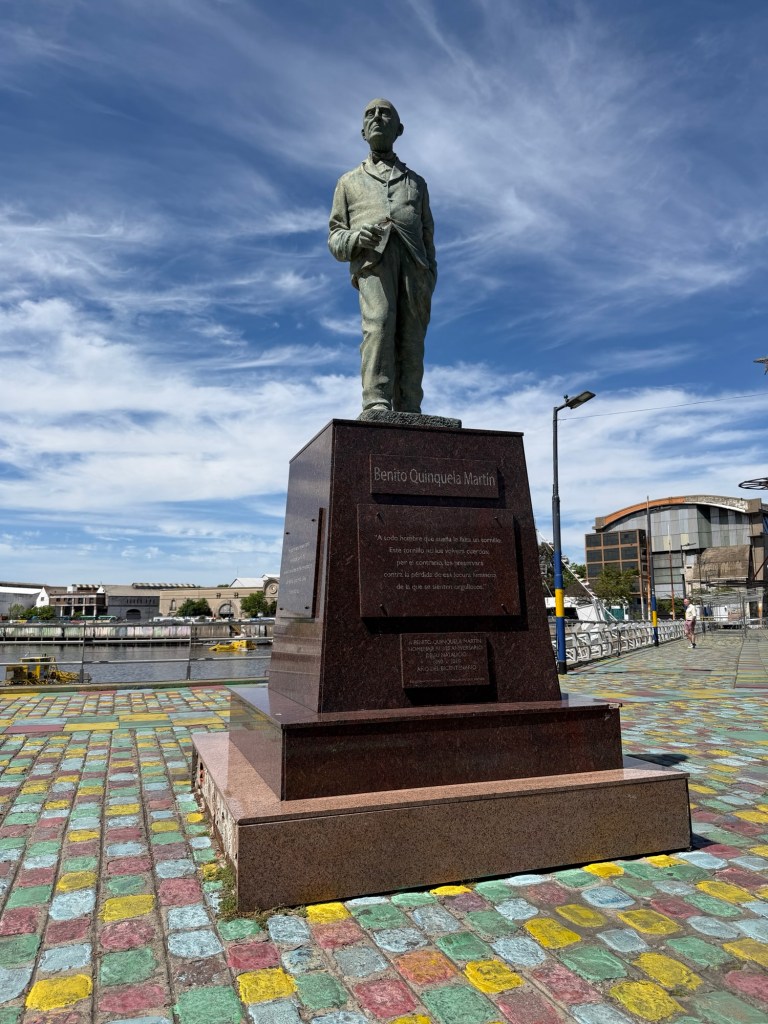
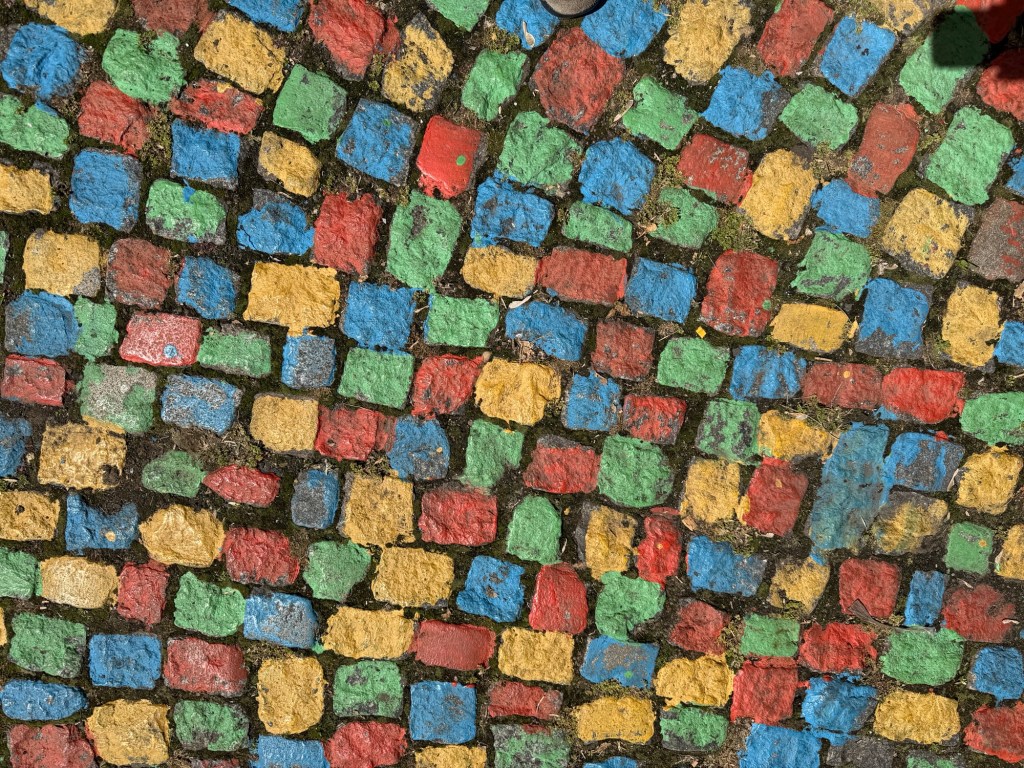
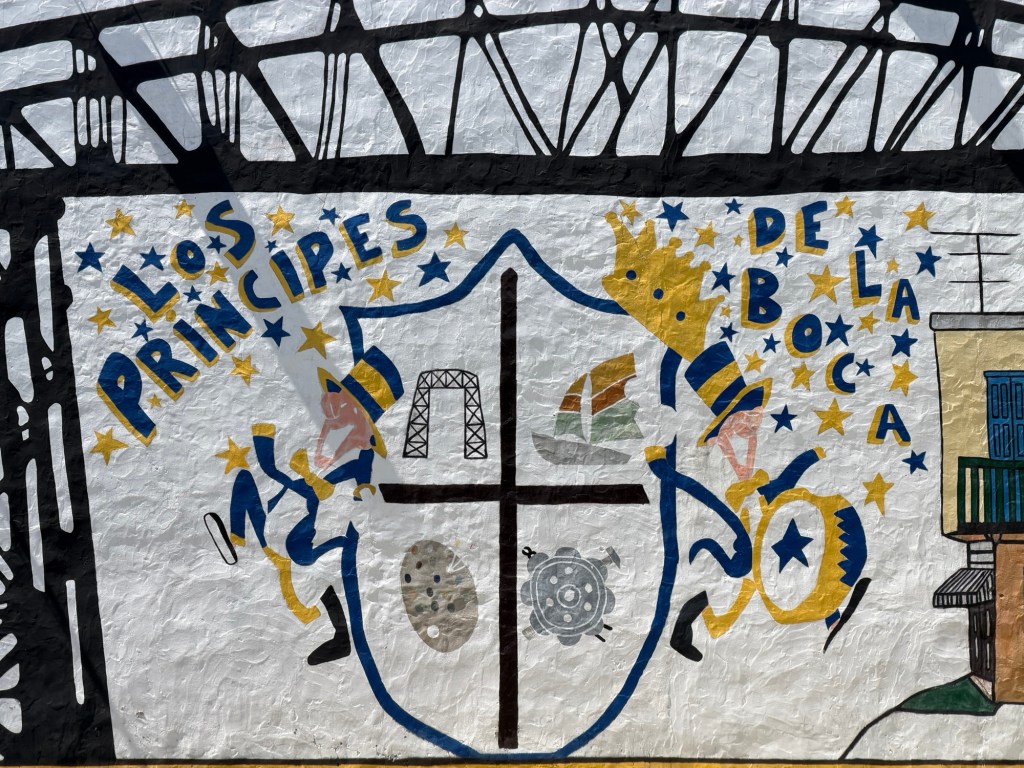
Blue and yellow are the colors of the local soccer club, Boca Juniors.The port at La Boca is on the Riochuelo River near the mouth.Statue of painter and philanthropist Benito Quinquela MartinOne street’s cobblestones were painted
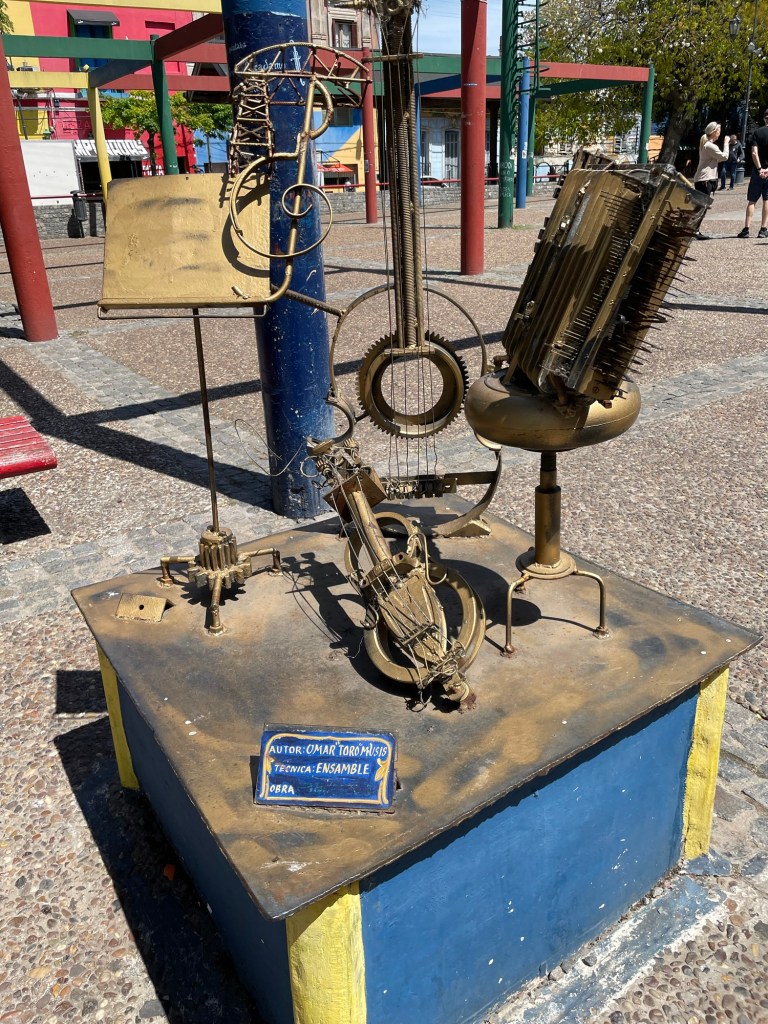
Artistic displays abound.
Many art displays, and some artists selling their products.
At an upstairs conference room at London City restaurant, we listened intently to a talk about first-hand experiences with disappeared people during the period of 1976-1983, after Perón was deposed by a military dictatorship. The speaker directed a movie called “The 70s and Pico;” Pico was his grandfather. The movie, released in 2016, was directed by Mariano Corbacho. It has been pointed out many times on our visit to Buenos Aires that discussing this period of history is difficult for Argentinians!
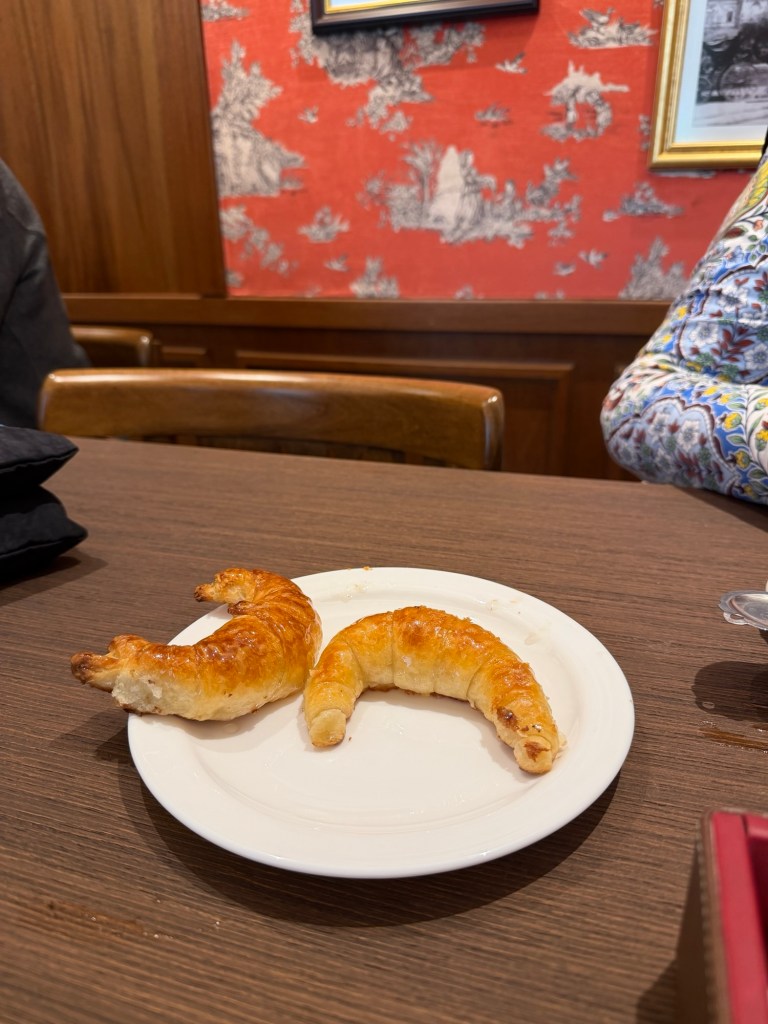
Medialunas were served with coffee or tea at London City restaurant during the lecture about the dictatorship.
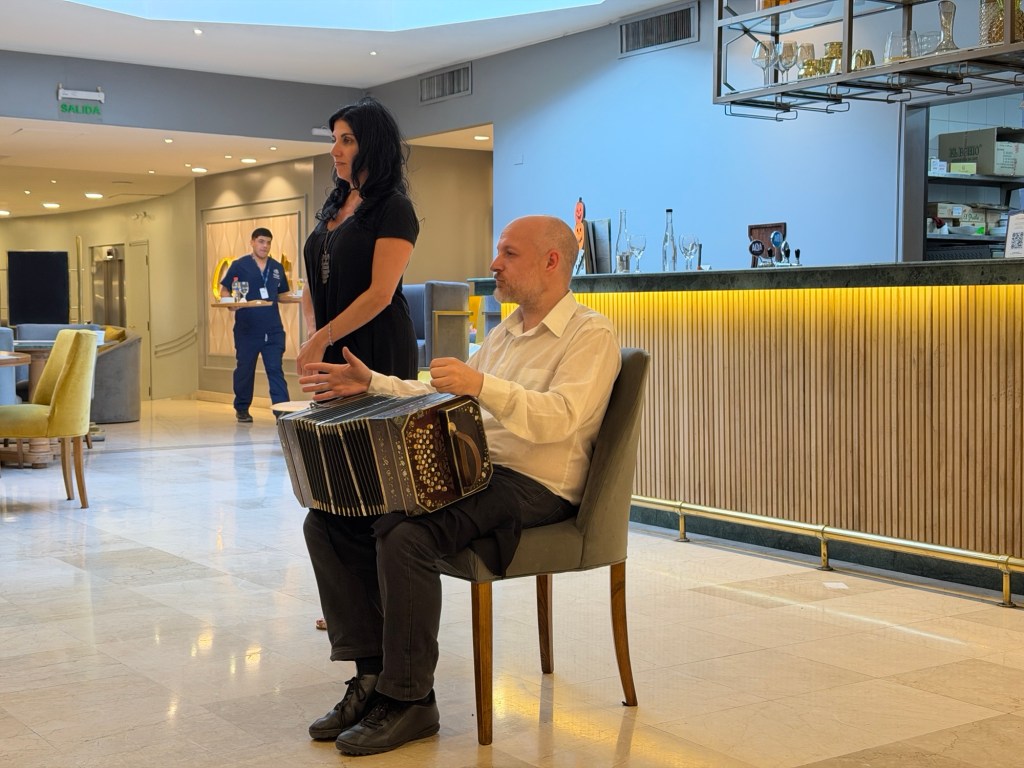
That evening, we participated in a tango lesson, learning a lot from the musician and two dancers. The most difficult aspect for many of us was to accept the male as sole leader, no negotiations.
The musician showed us how his instrument worked and explained its history. The dancers demonstrated elegantly, something none of the rest of us were able to do. We learned how the man asked the woman to dance — eye contact followed by a nod, and how the woman answered — either getting up to dance or showing interest in something else.
The music for the tango lesson was provided on a bandoneon, similar to an accordion.
Tango demonstrated at our hotel.
After dinner, we walked to the women’s part of town, celebrating women’s rights so desperately fought for after and during the dictatorship.
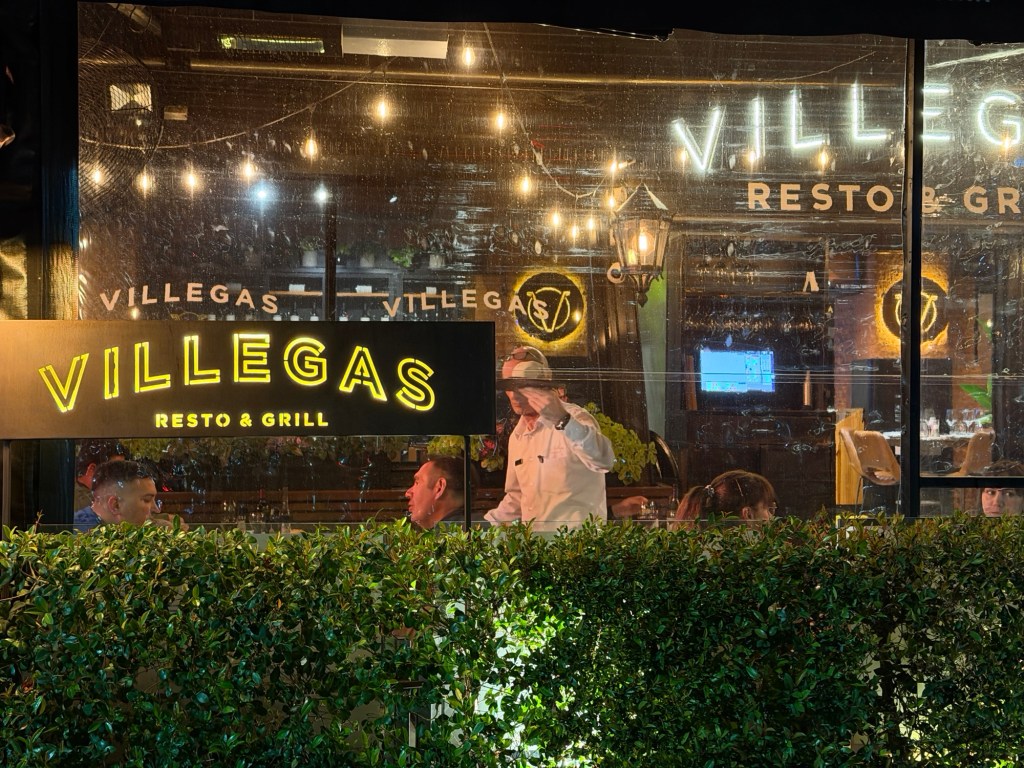
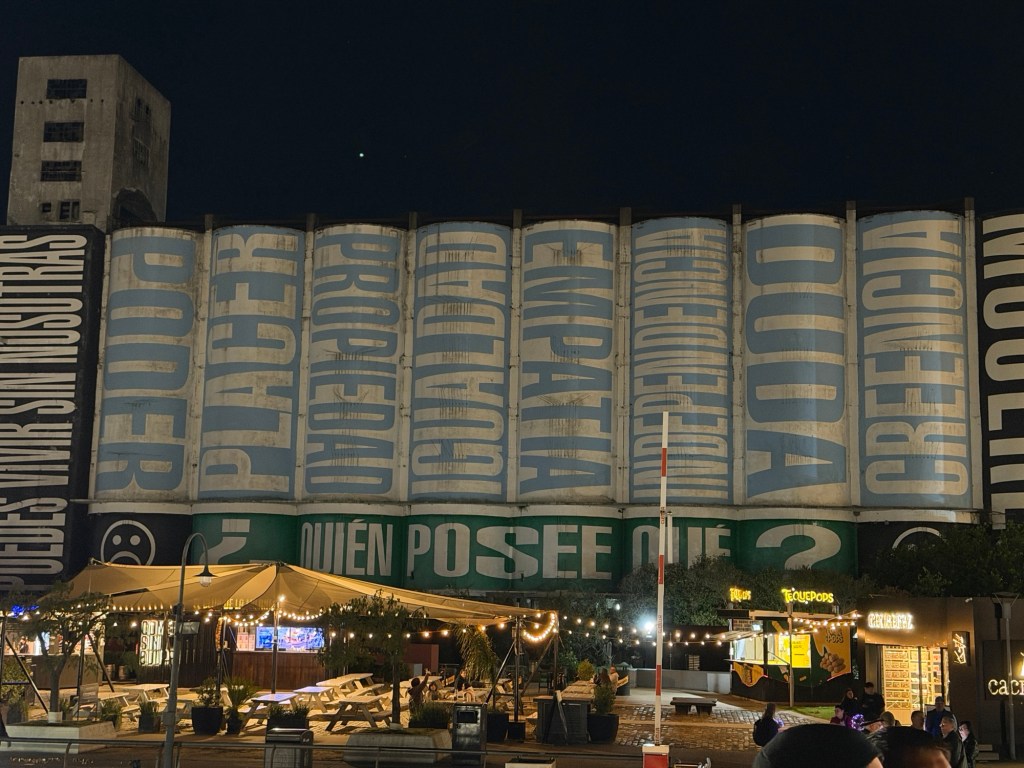
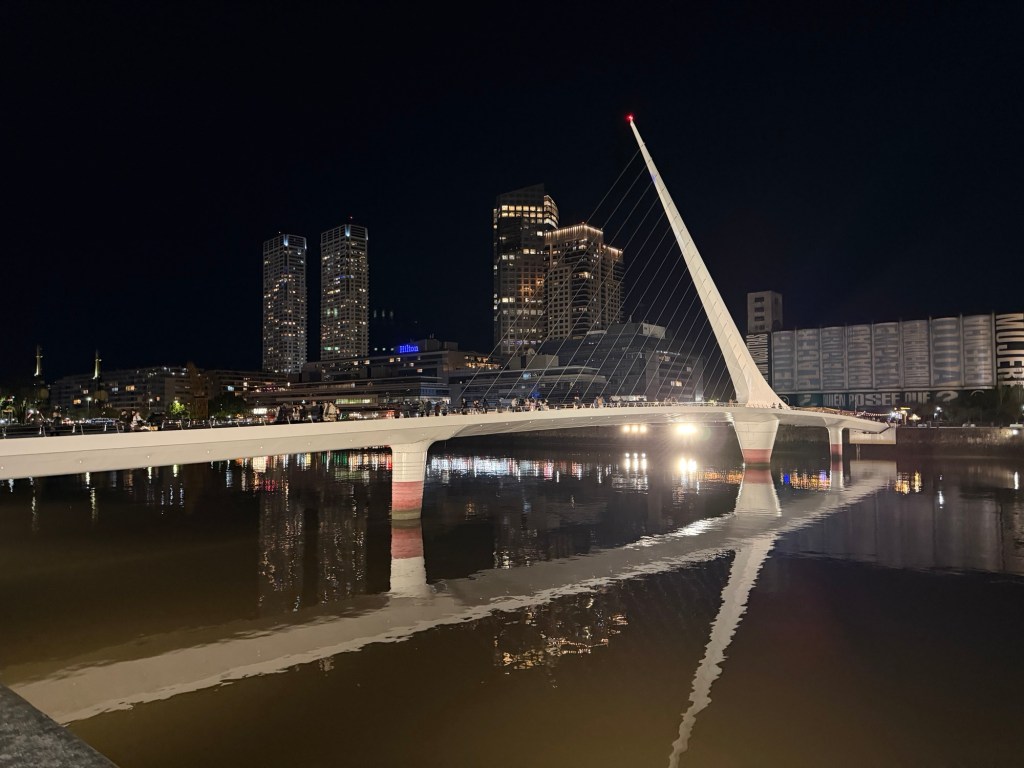
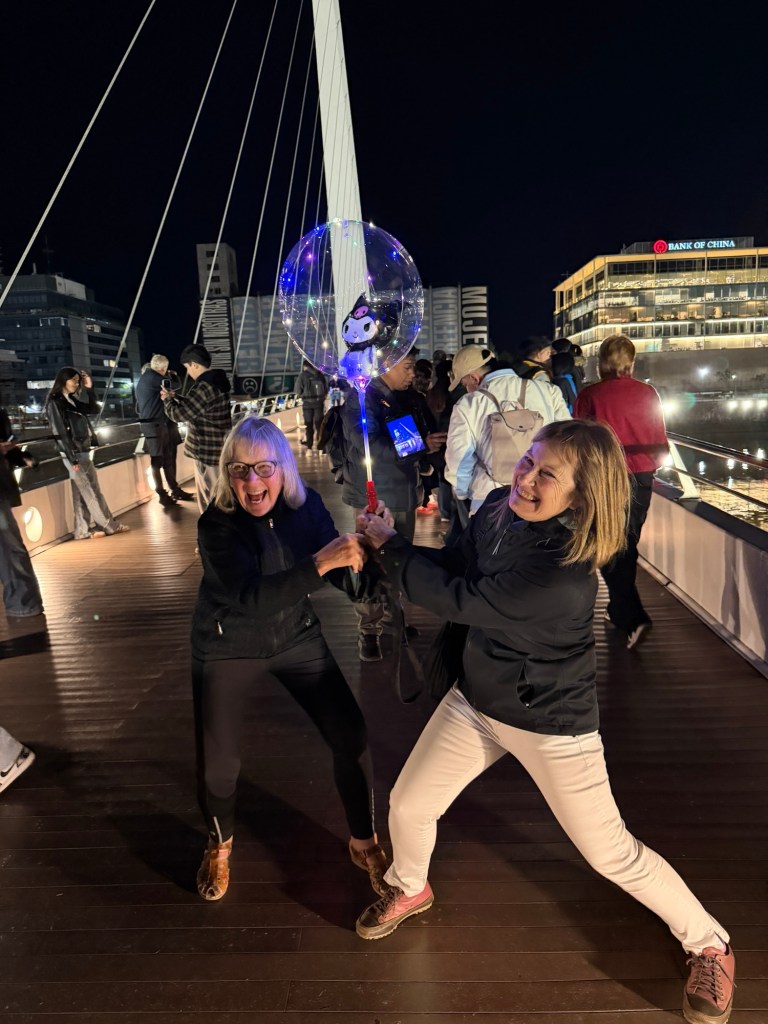
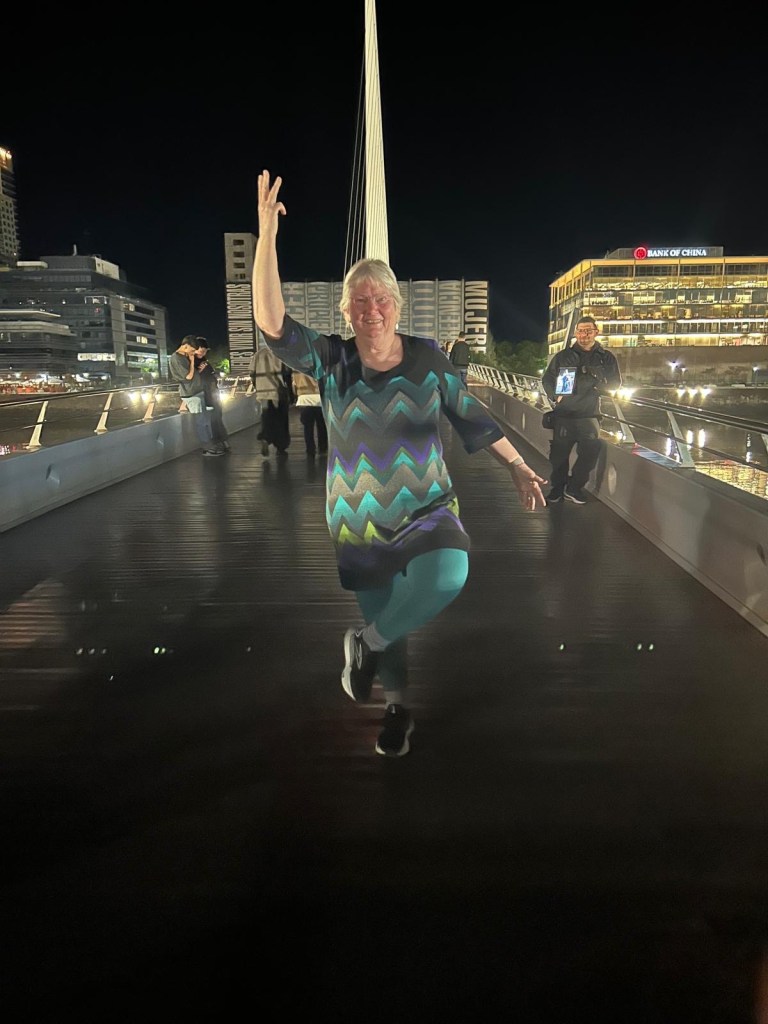
Steakhouse for dinner.Giant artwork with words describing women’s strengths and struggles. Pedestrian bridge in Puerto Madero districtOur friend Pam and our tour leader Marta playing with an electric balloon.Clare demonstrating a tango pose on the Women’s Bridge. Photo by Chris.
Although most of our tour group arrived at the hotel this morning, we had already left for another day of exploring on our own, mostly in the San Telmo district of Buenos Aires.
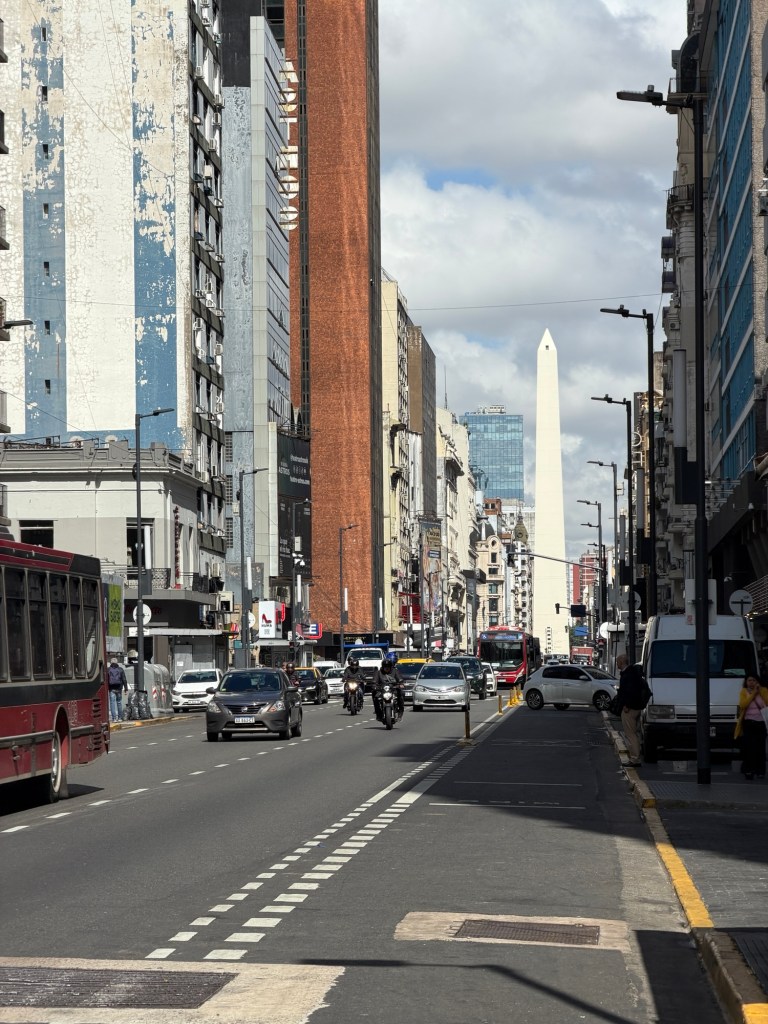
What a difference a turn makes! Yesterday, we turned left out of the hotel; today, we went right. We soon noticed the building facades were nicer, and overall people were walking more slowly. We found the tourist part of town!
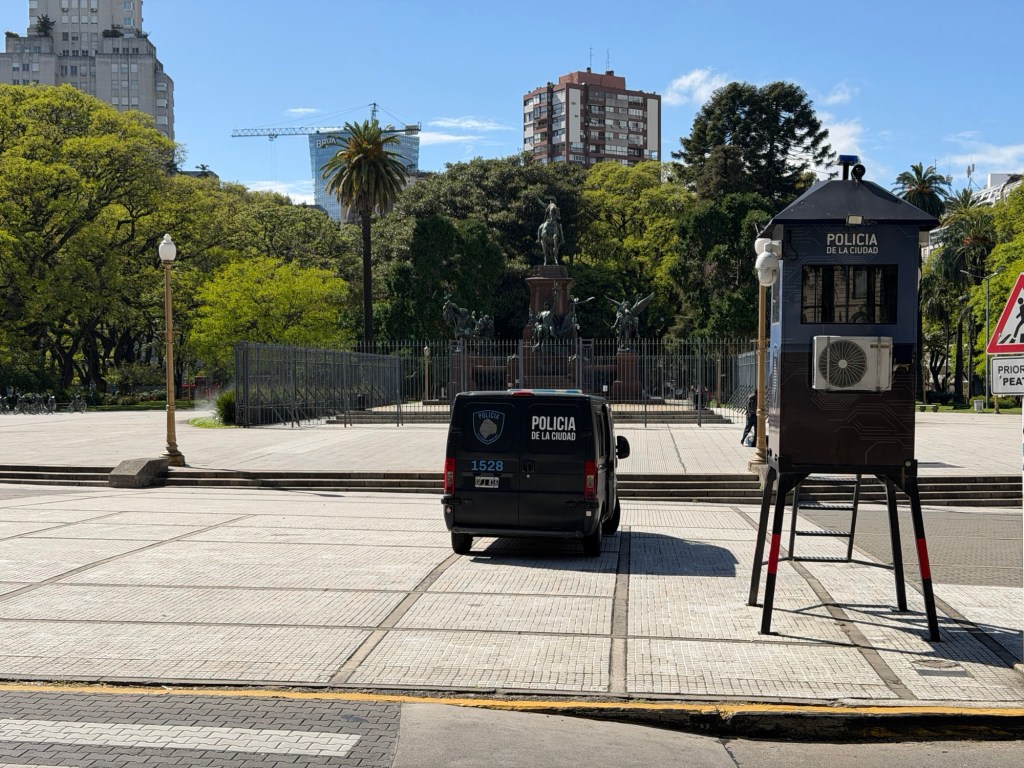
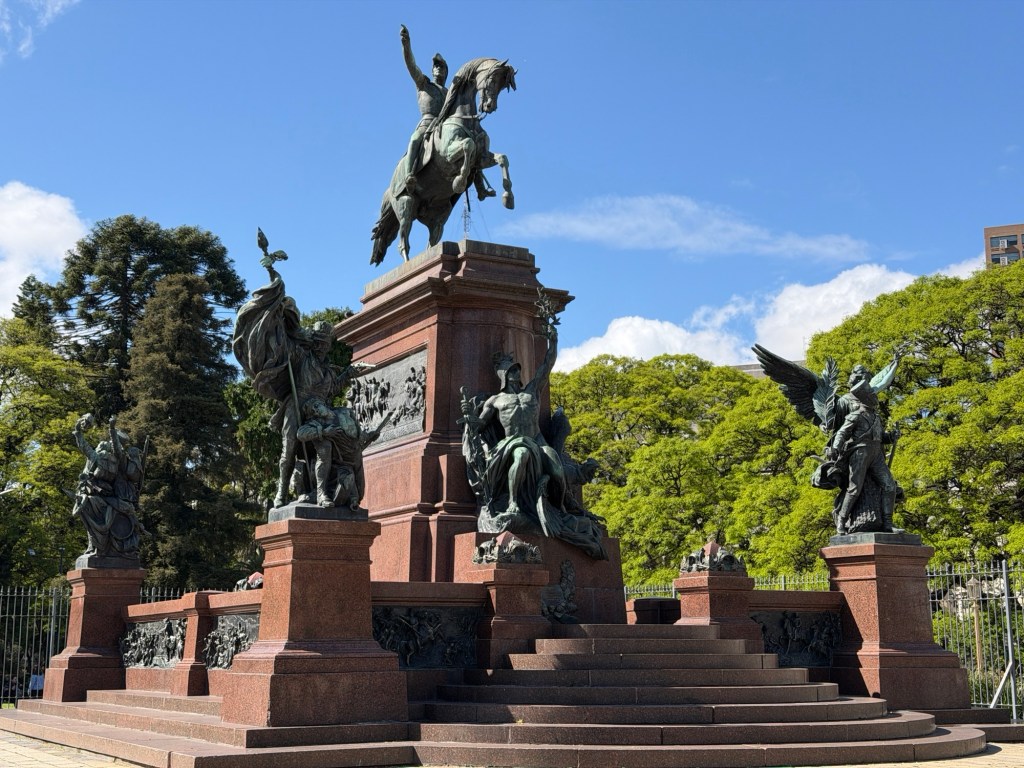
Around every public square, you see a police presence. This statue of San Martin is what they were guarding in the former picture. He is the South American George Washington.The Obelisk is visible from many angles in this capitol city.
We then wandered onto Florida street, like a long outdoor pedestrian mall, headed to the beginning of our second walking tour of Buenos Aires. A sure sign of the inflation here were the people yelling or suggesting “cambio”, that they wanted to exchange our US dollars into Argentinian pesos. The exchange rate quoted to us by one of these black market entrepreneurs was 1430, slightly higher than we got the previous day, 1400, at a legitimate Cambio.
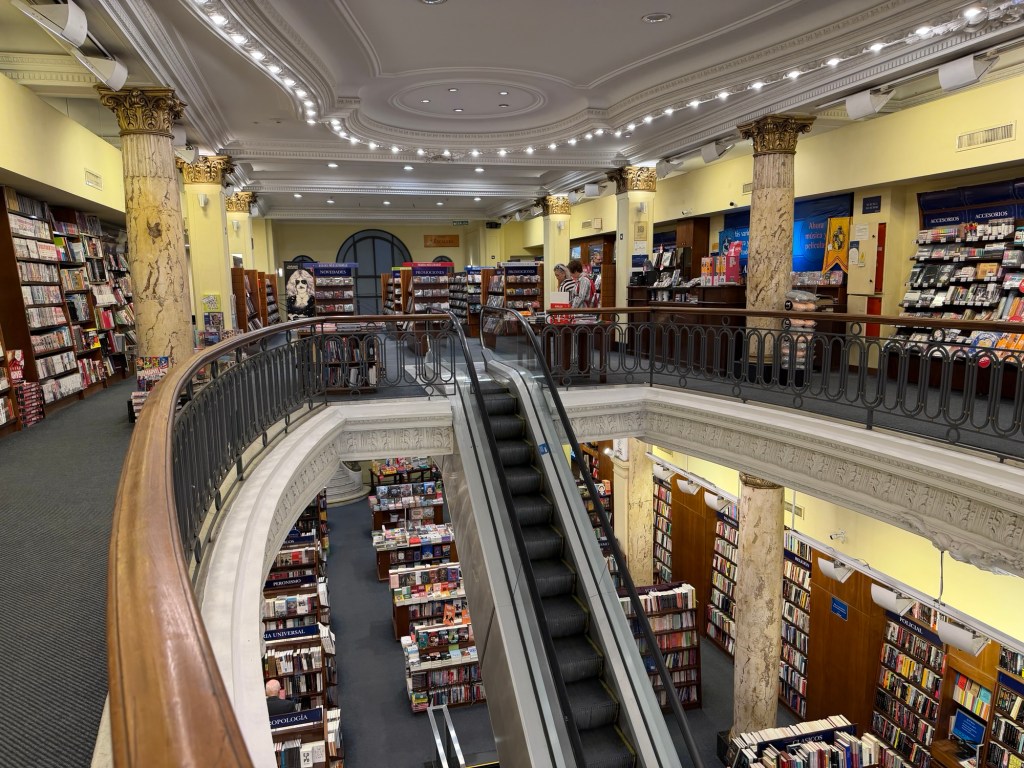
We spent a long time exploring a bookstore, one of many in this amazing city.
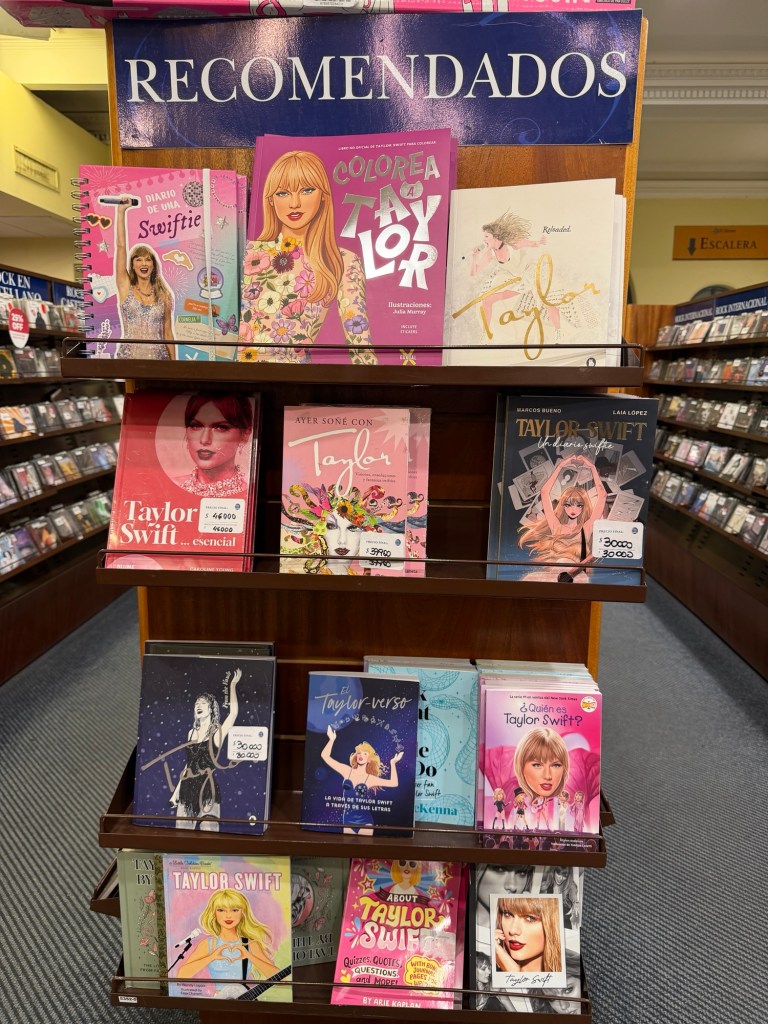
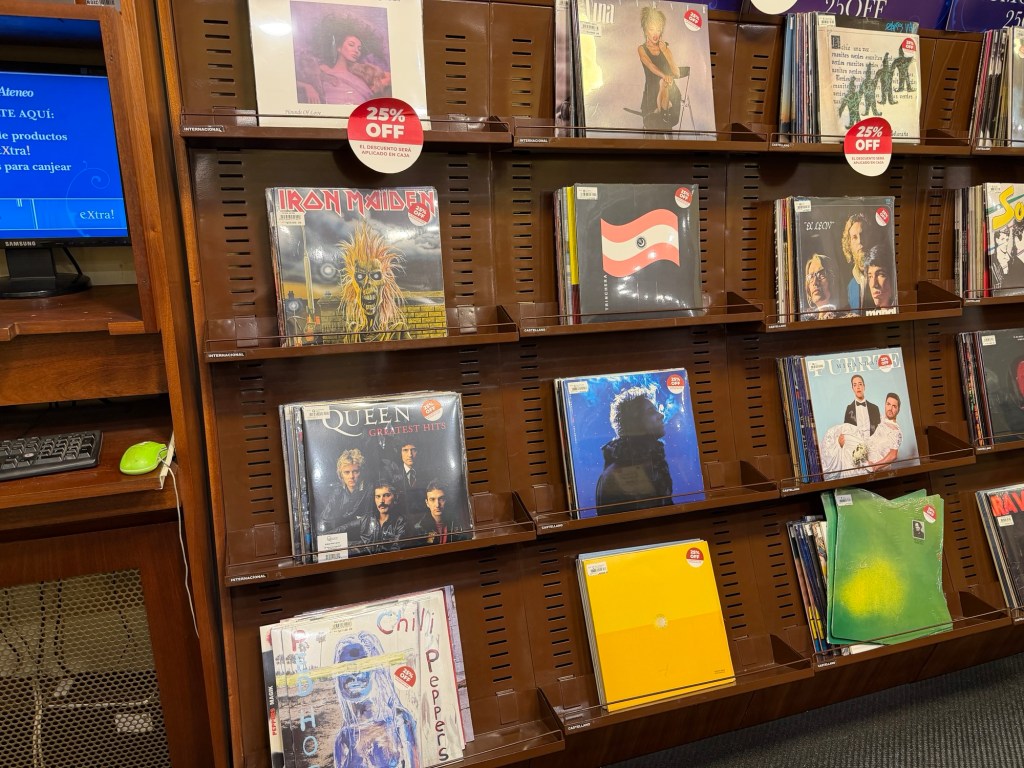
A famously beautiful book store, transformed from a theater, was our first objective.A Taylor Swift display? Even here?Also for sale were vinyl records.
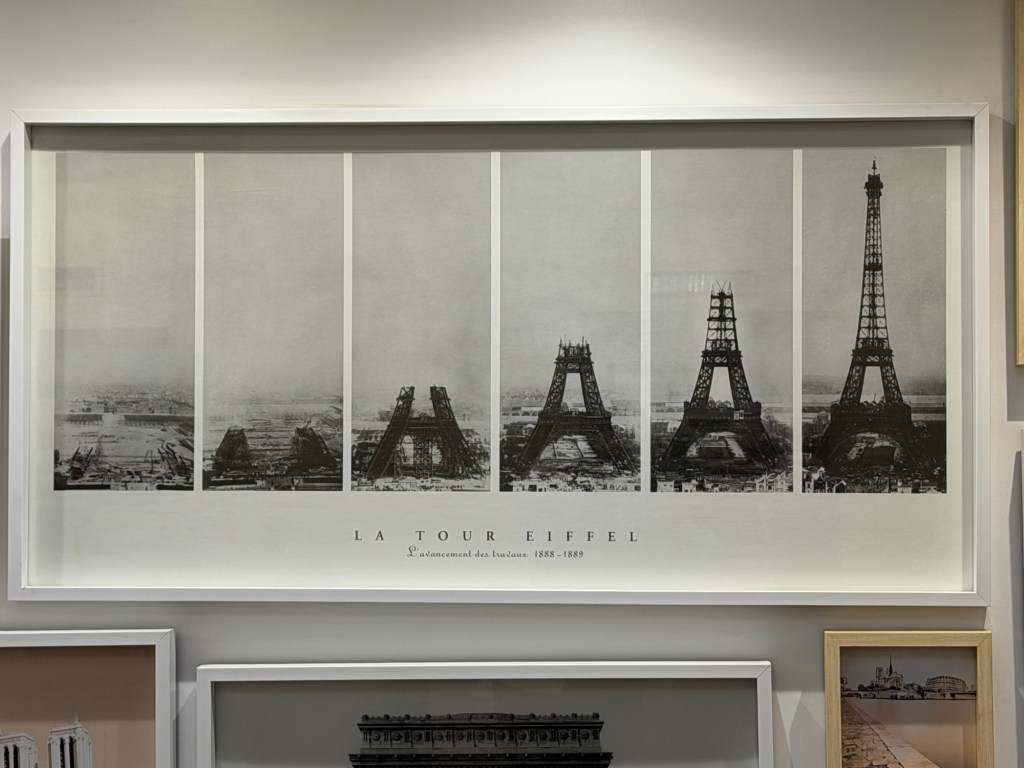
Another part of the bookstore showed some French influence.
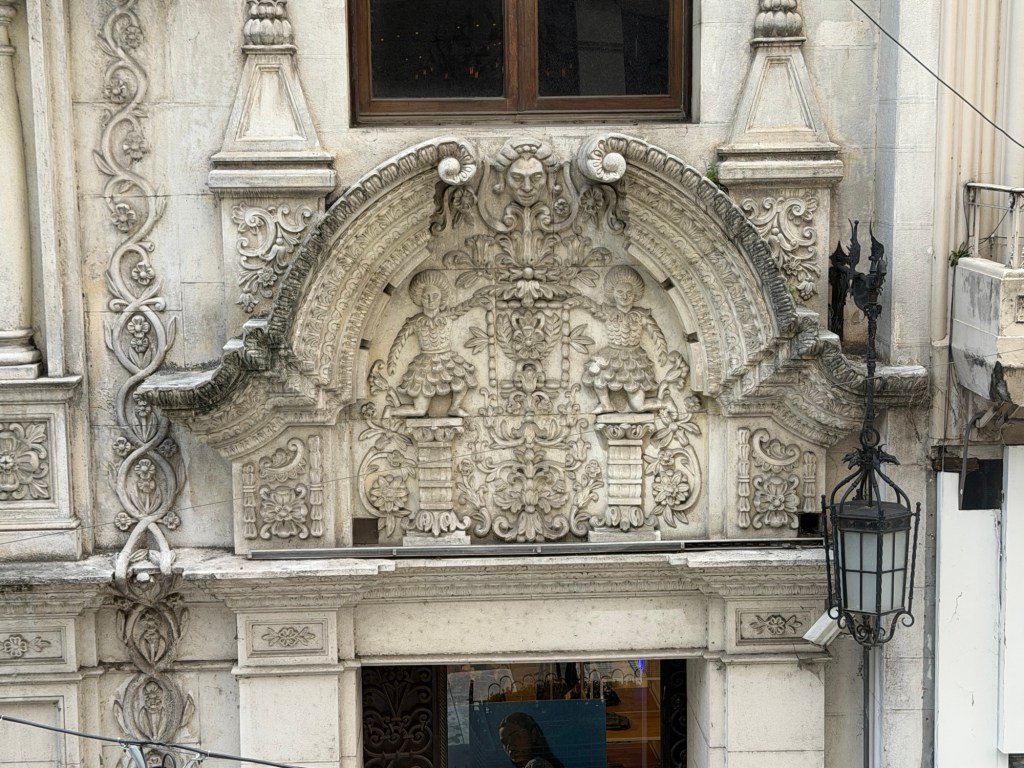
Construction of the Eiffel Tower, 1888-1889. An adjacent photograph showed the Arch de Triomphe.3-D relief art above a door across the street from the book store.
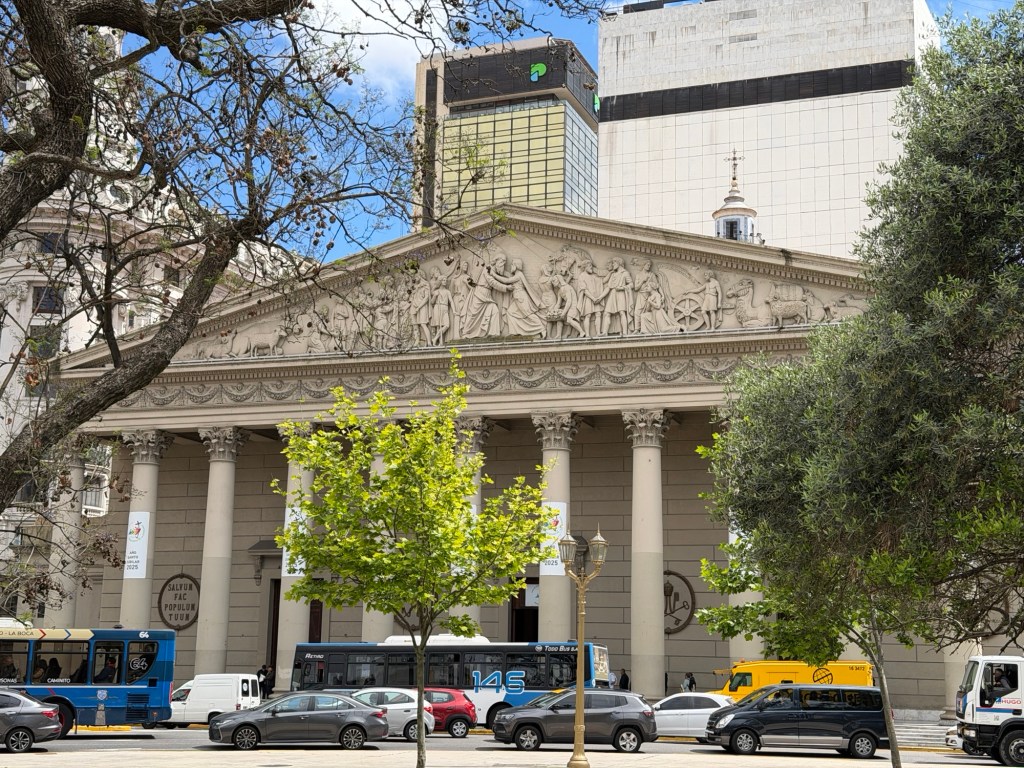
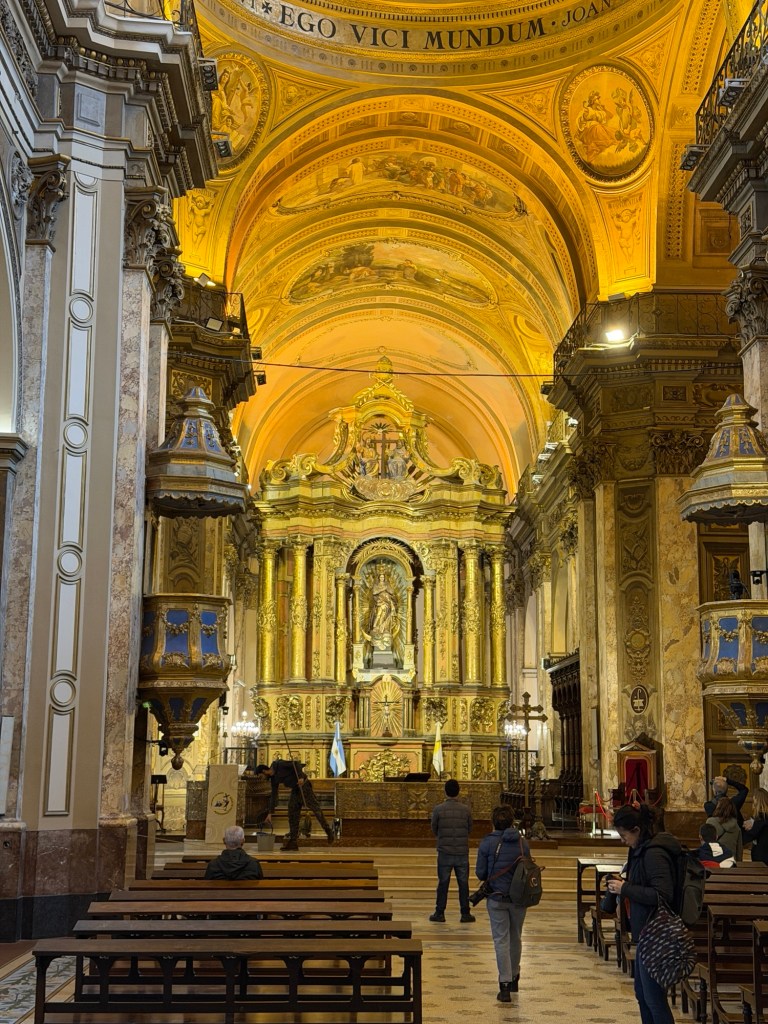
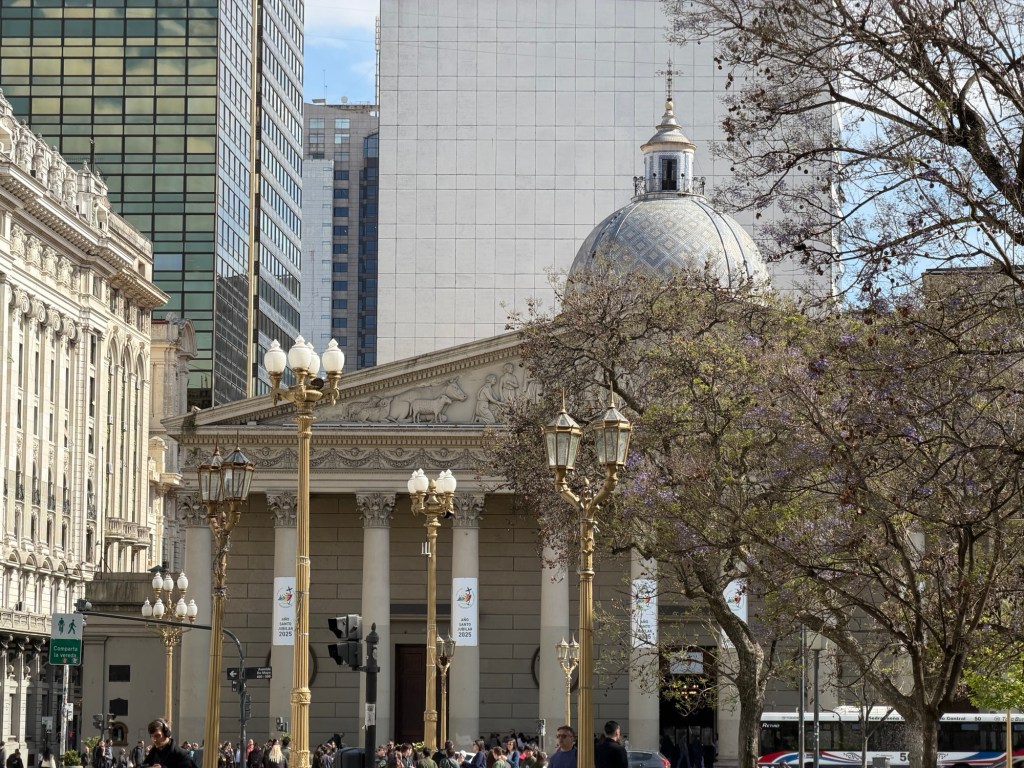
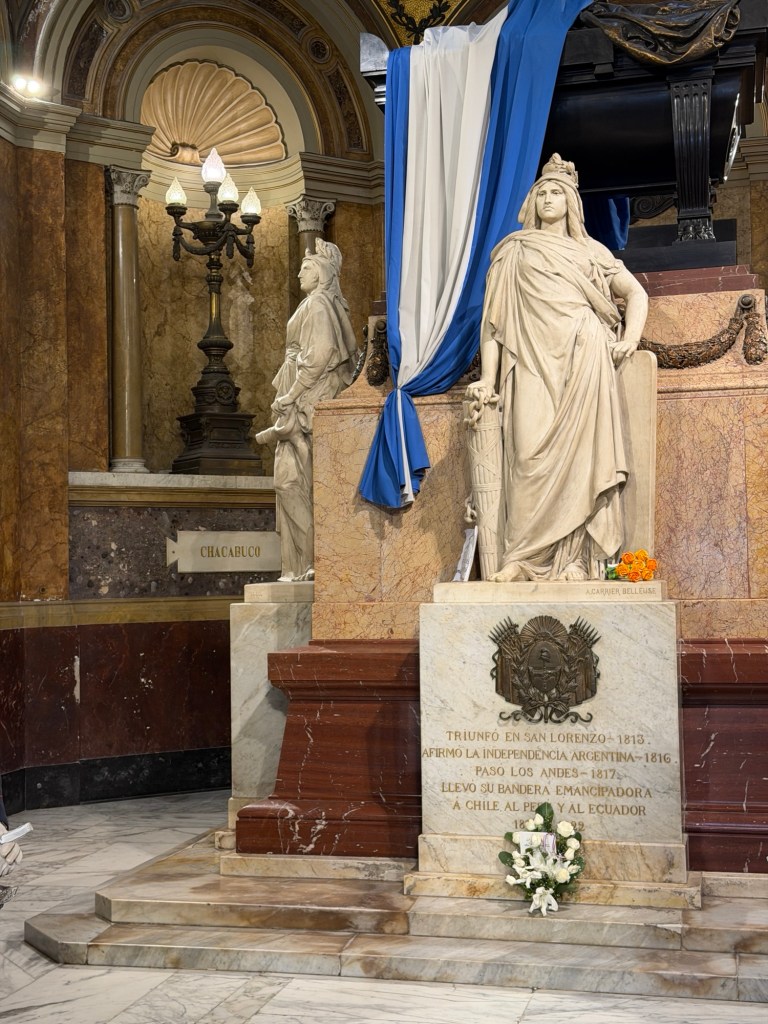
Plaza de Mayo houses the national cathedral, where Cardinal Francisco, later Pope Francis, preached. The famous San Martin is also entombed here.
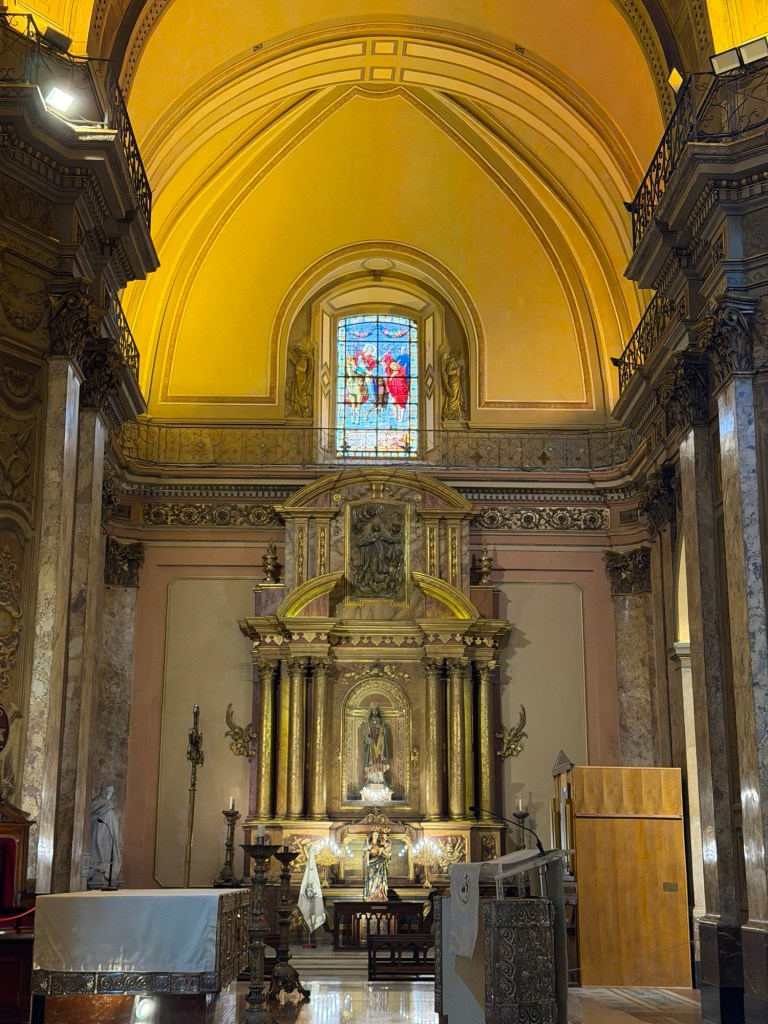
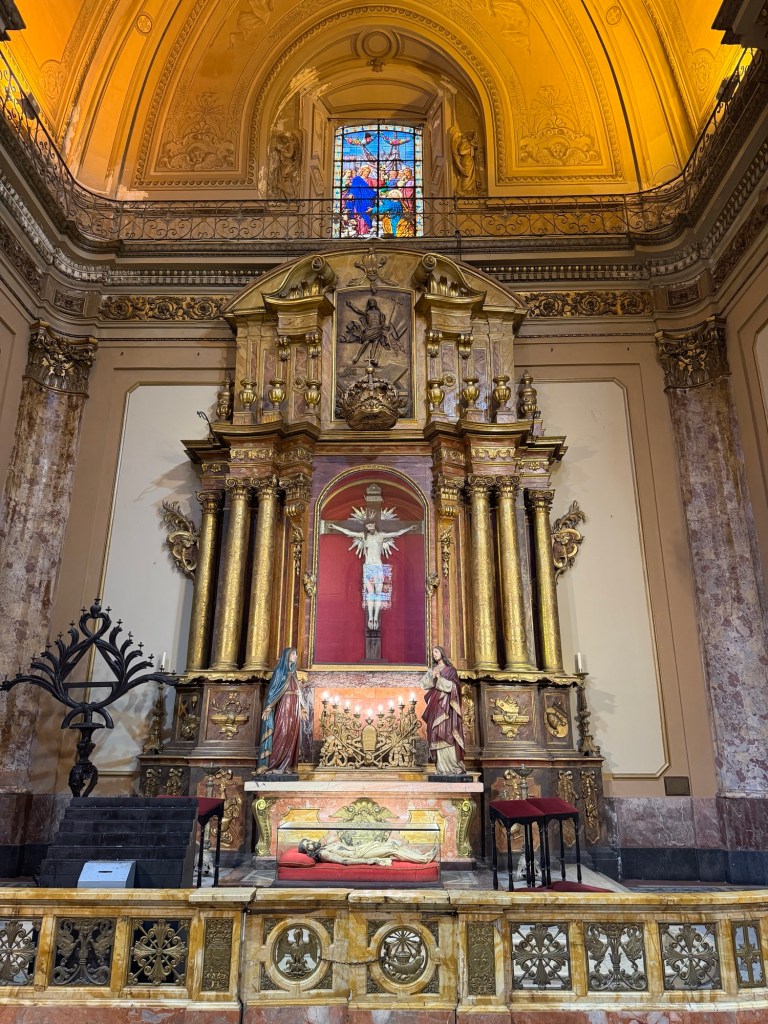
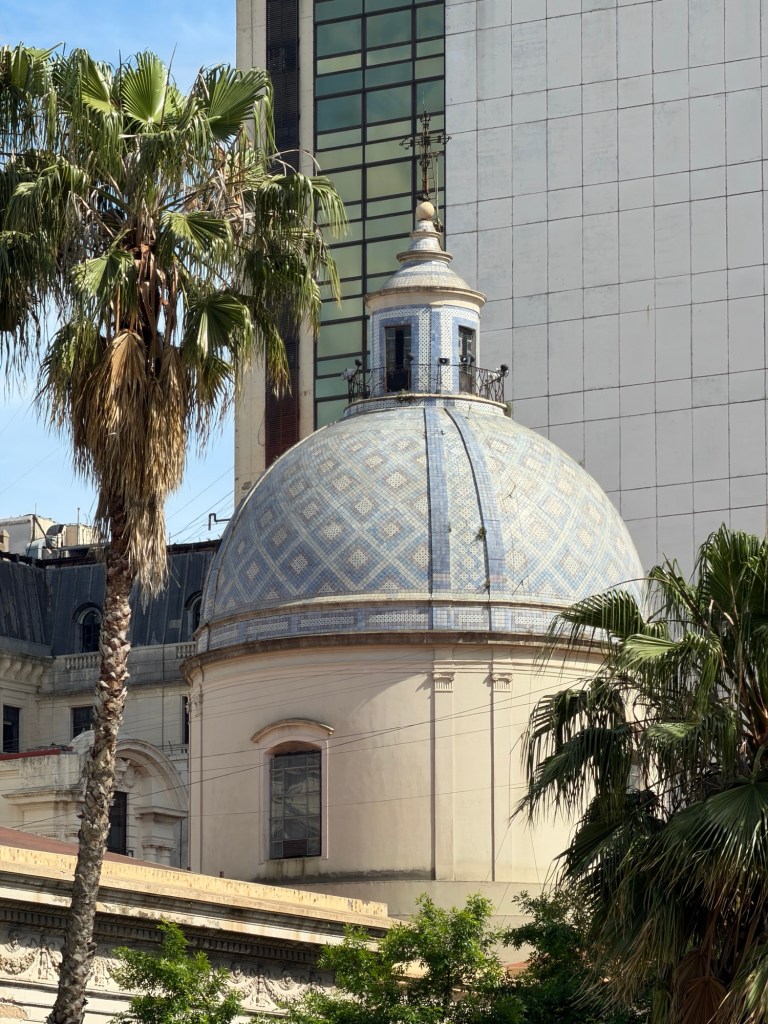
Front of the cathedral— not very impressive, eh?Main altar All the stained glass windows were quite high above the main floorAlter in a side chapelThe façade of the cathedral looks like a government buildingCloser view of the dome
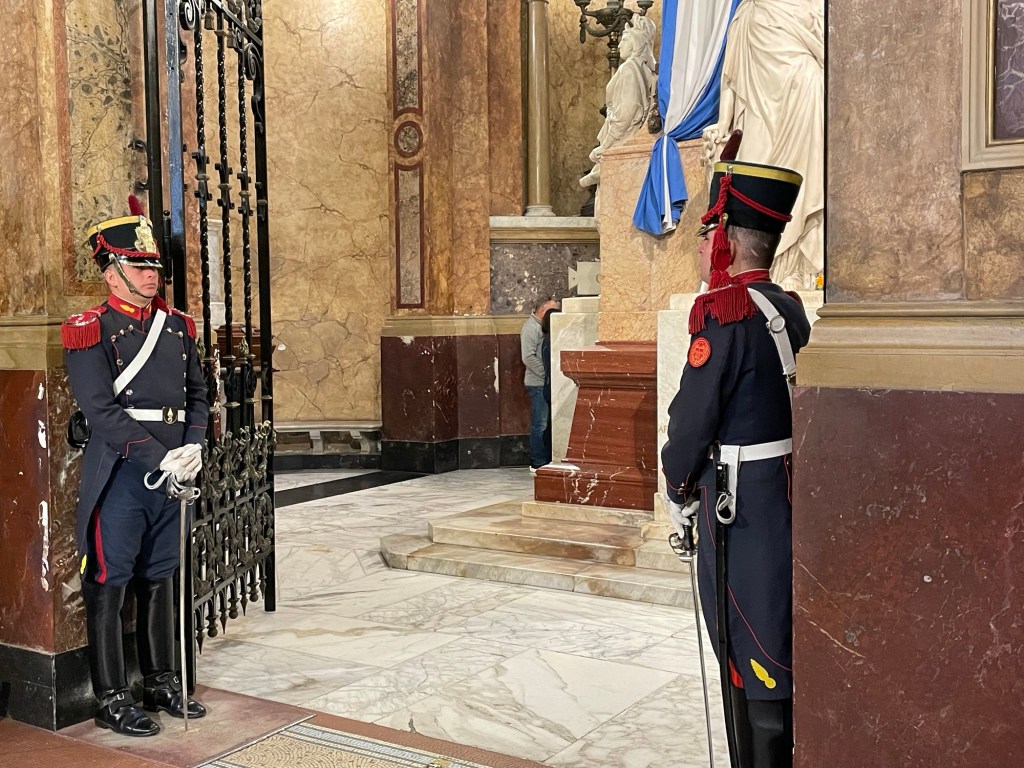
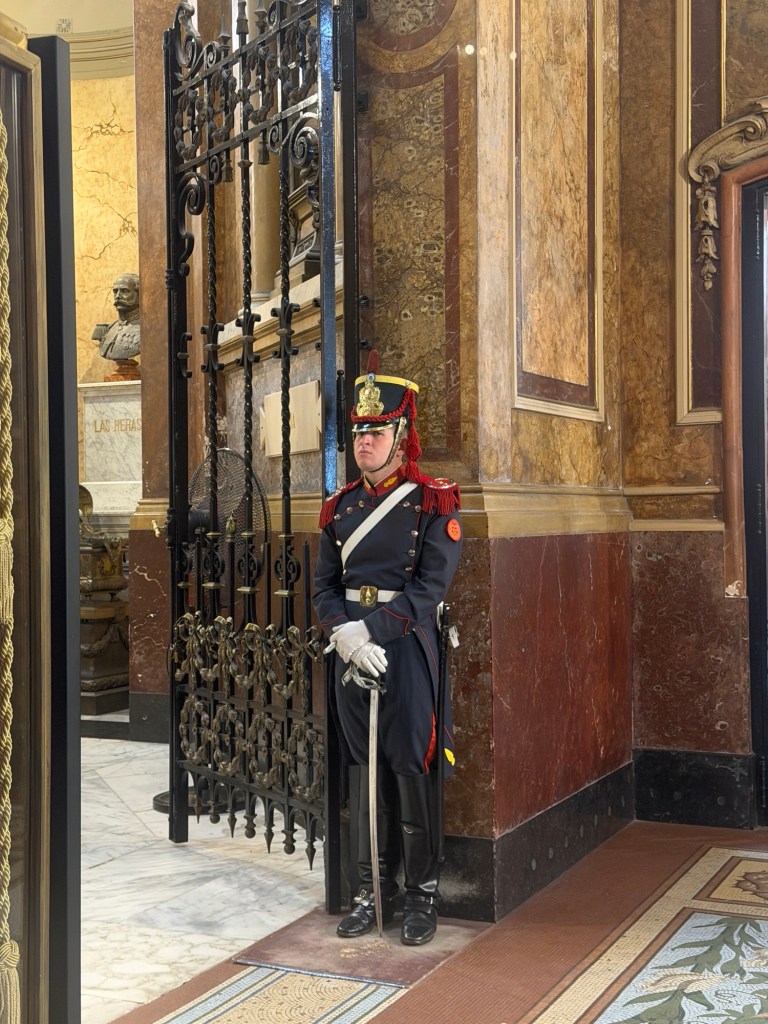
We were startled to see guards around this alcove. This is the mausoleum for José de San Martin, Argentine general and liberator of Argentina, Chile, and Peru from Spanish rule.
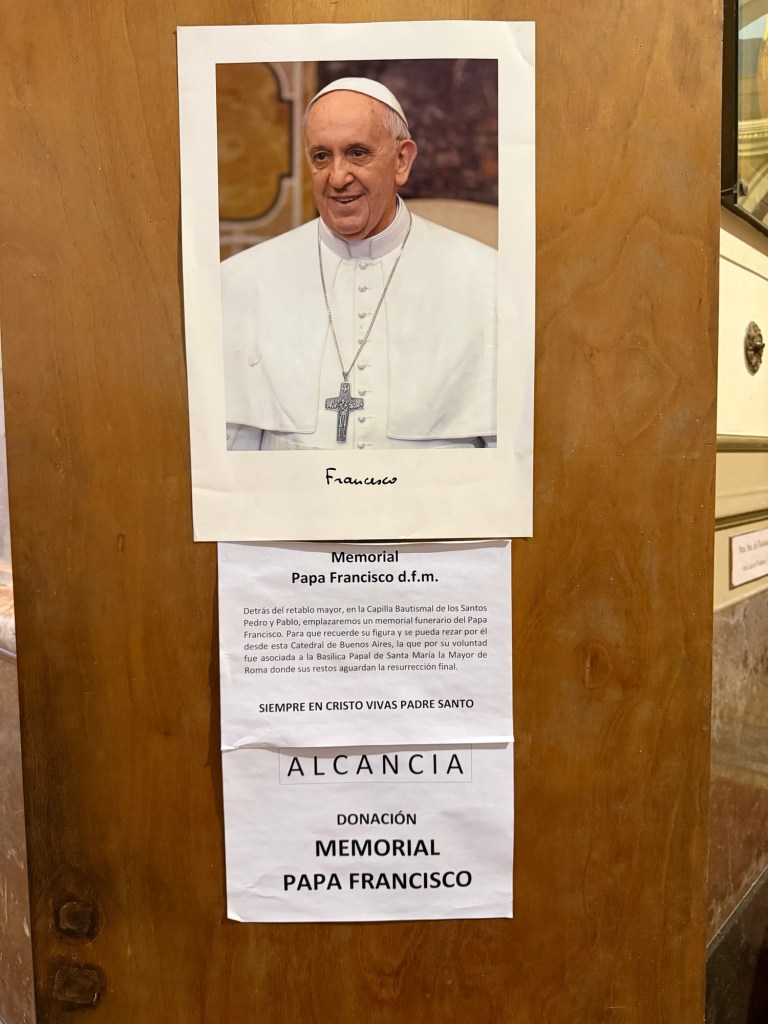
Both guards were stern. From a different angle. The tomb itself.Memorial to a well-loved priest, known to all the neighborhood. No one knew he would become the future pope.
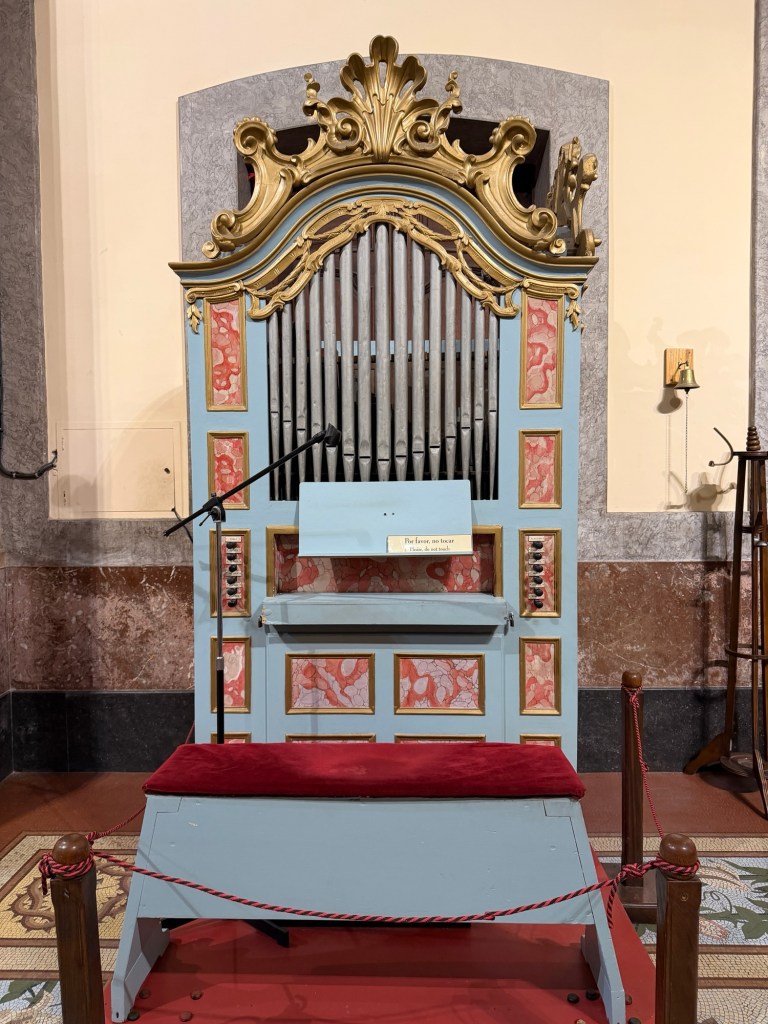
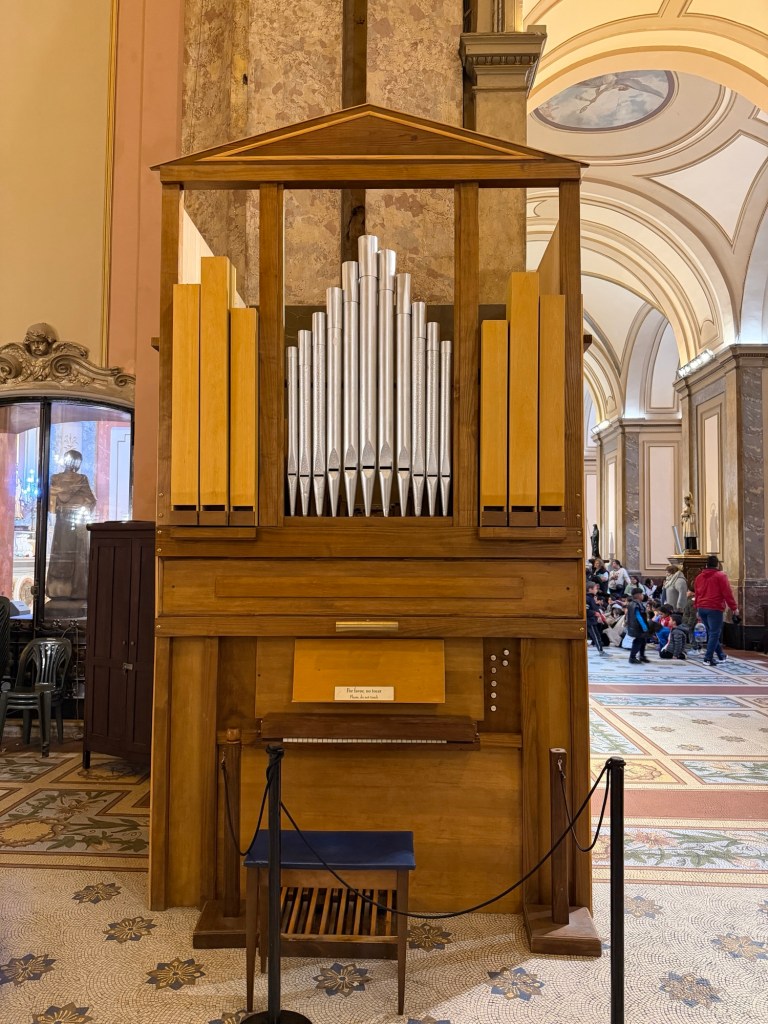
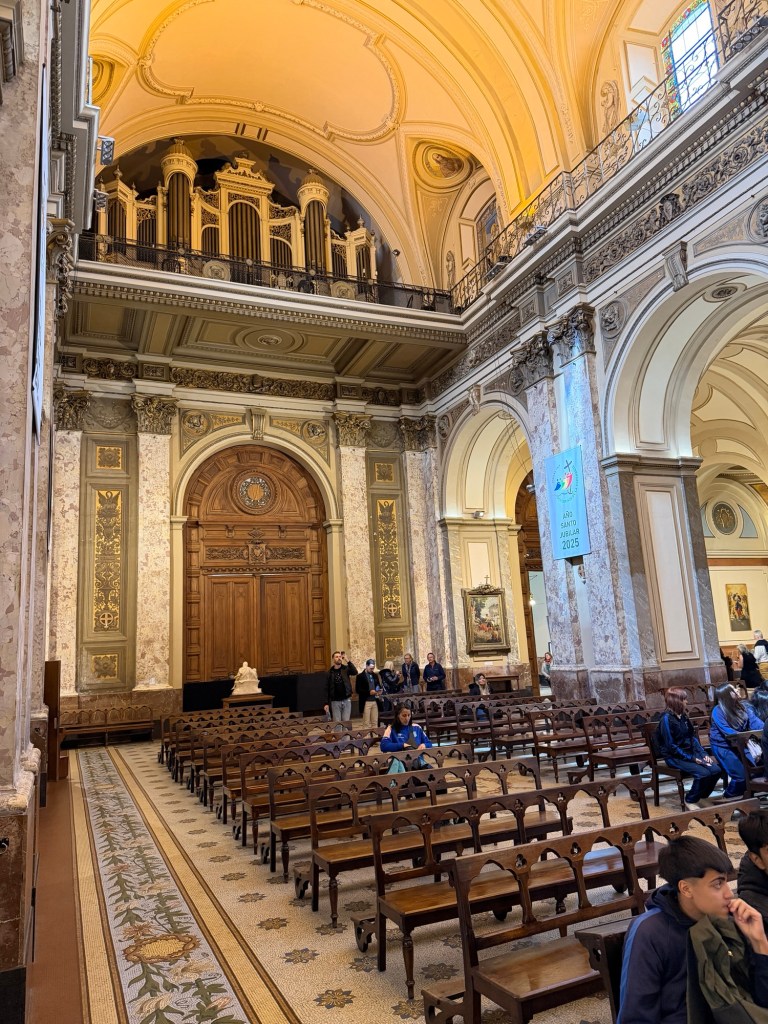
One cathedral, three pipe organs. Also many confessionals, but we didn’t take pictures of them.
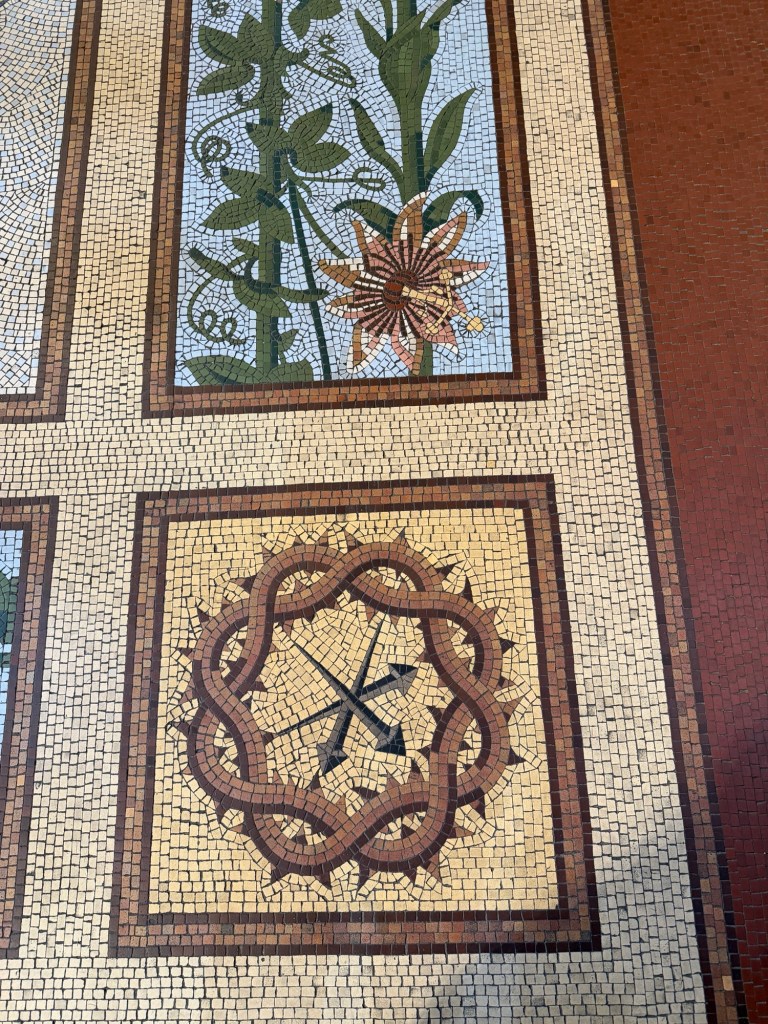
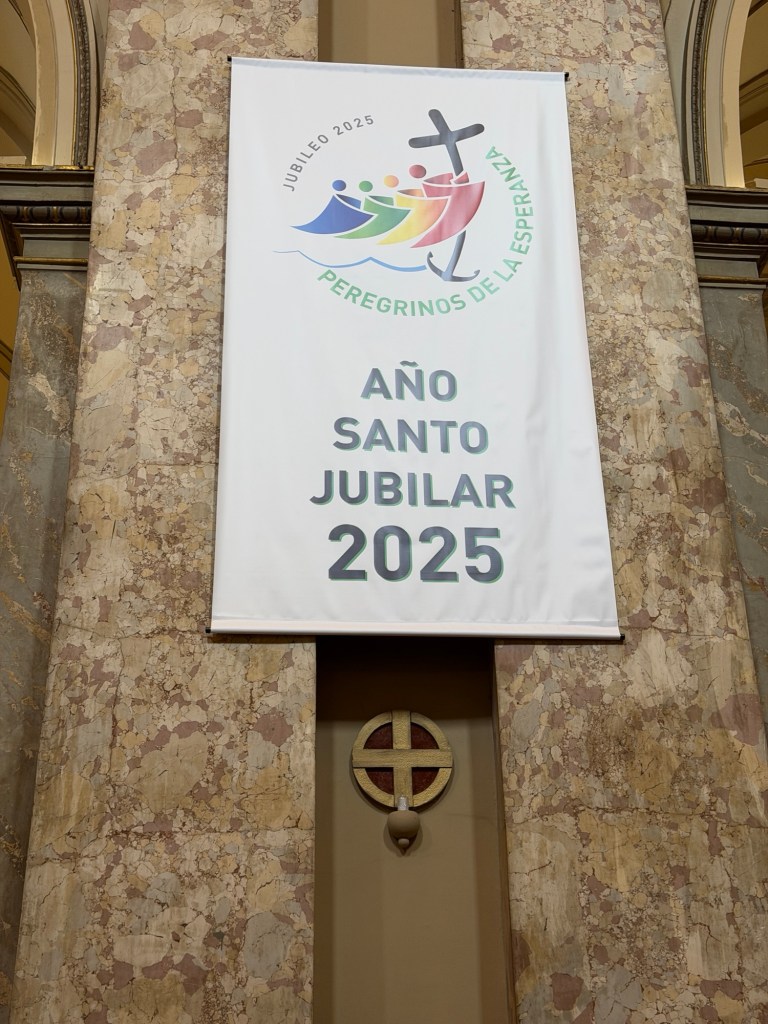
Small pipe organ at the side Near the alterLarge pipe organ on the next floor up at the rear of the cathedral Common symbol in the mosaic flooringThese white flags were prevalent around the cathedral, both inside and out.
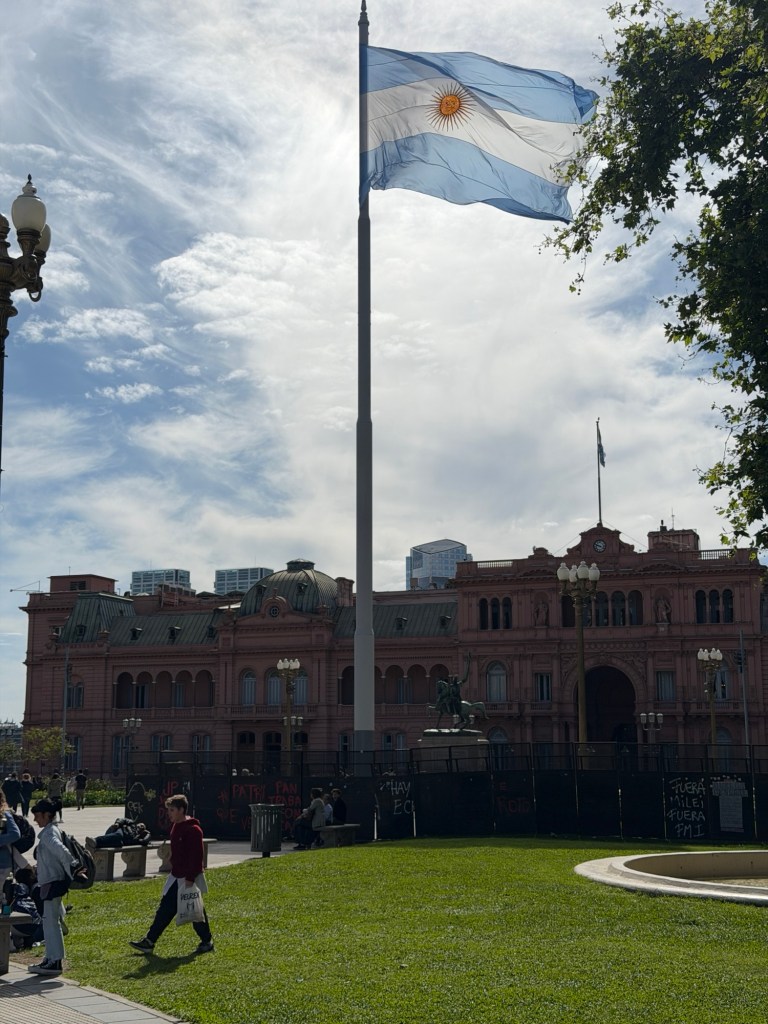
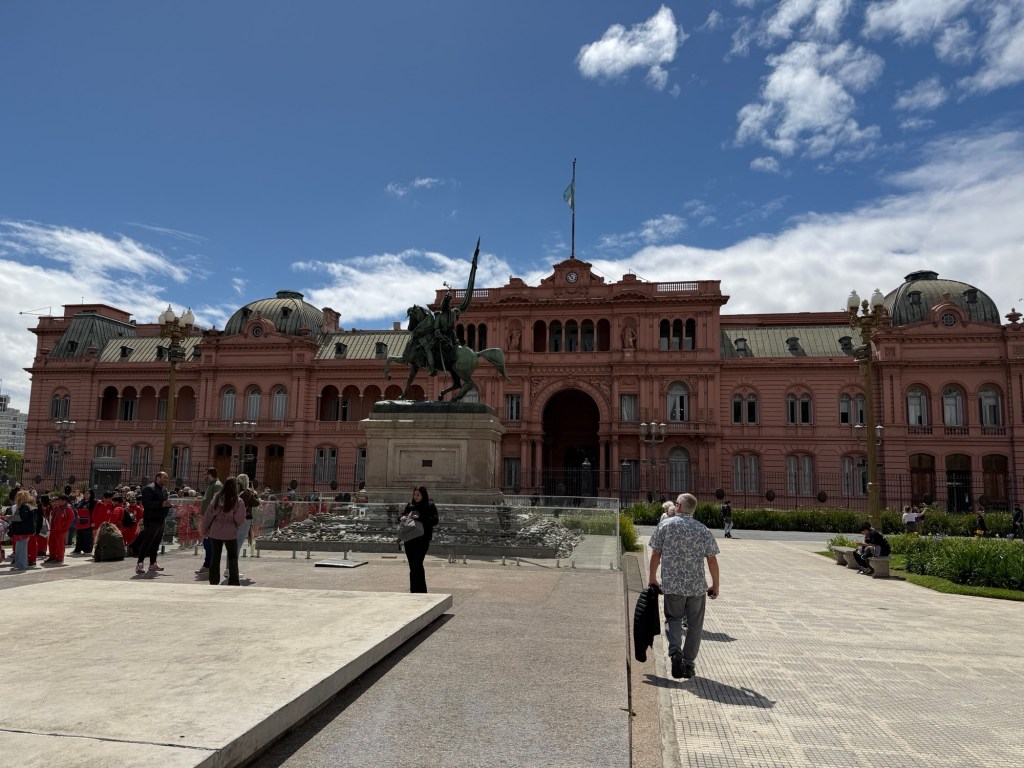
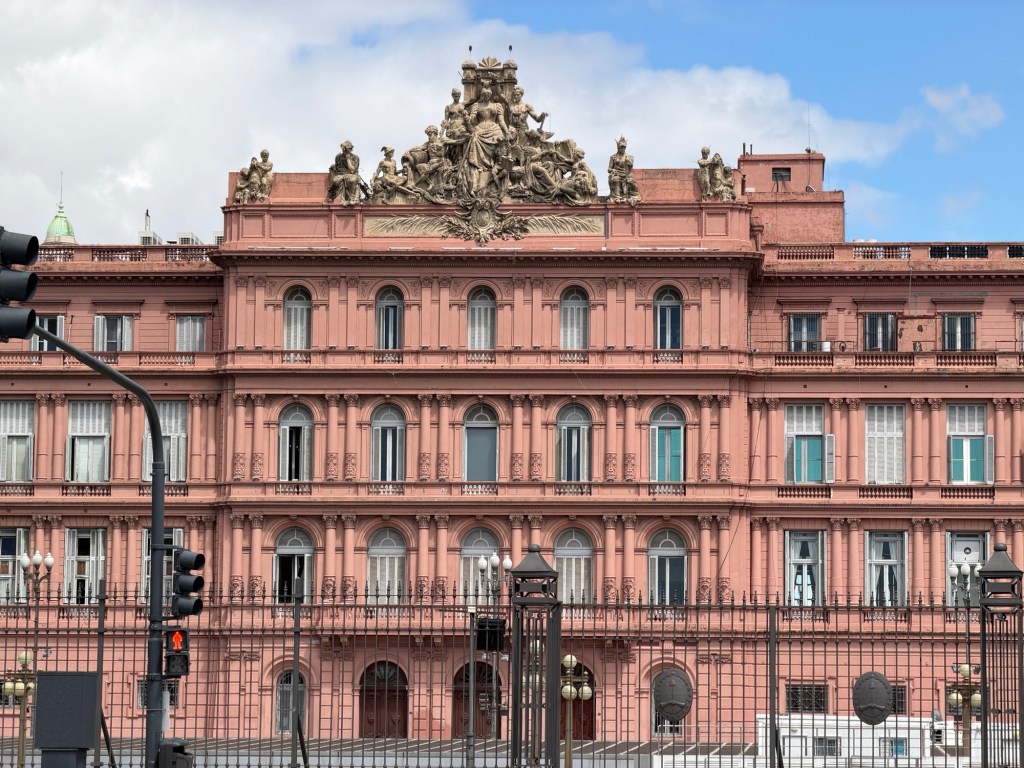
On the other end of the plaza is the Rose Mansion, where the president of Argentina works. The president does not live there.
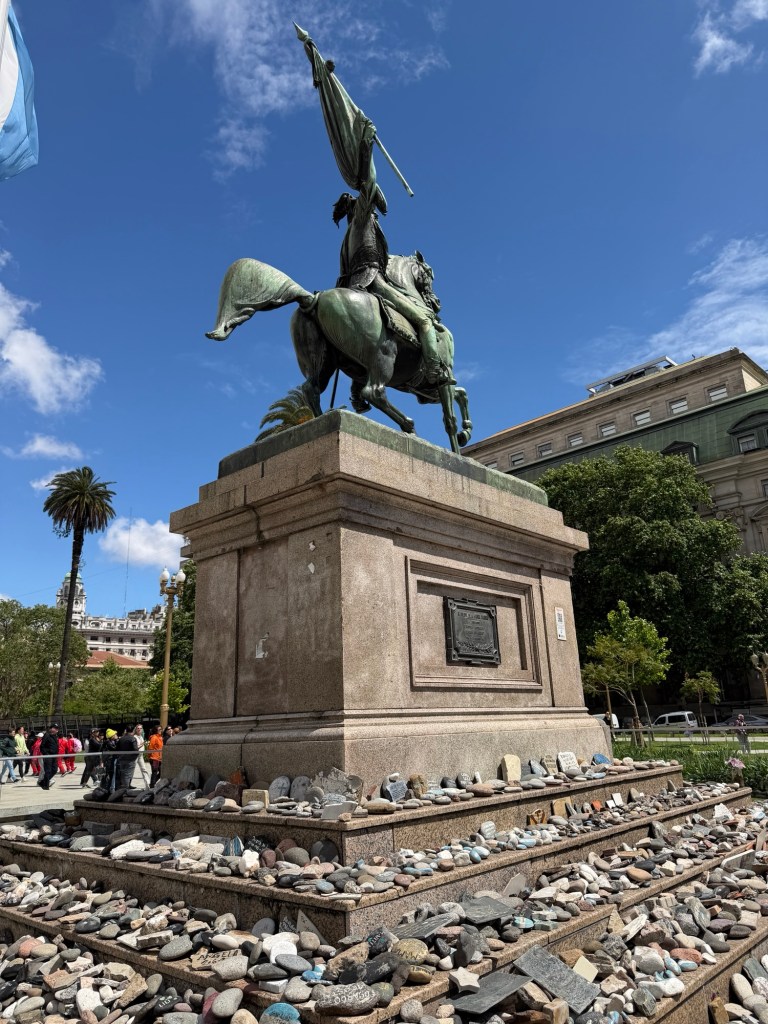
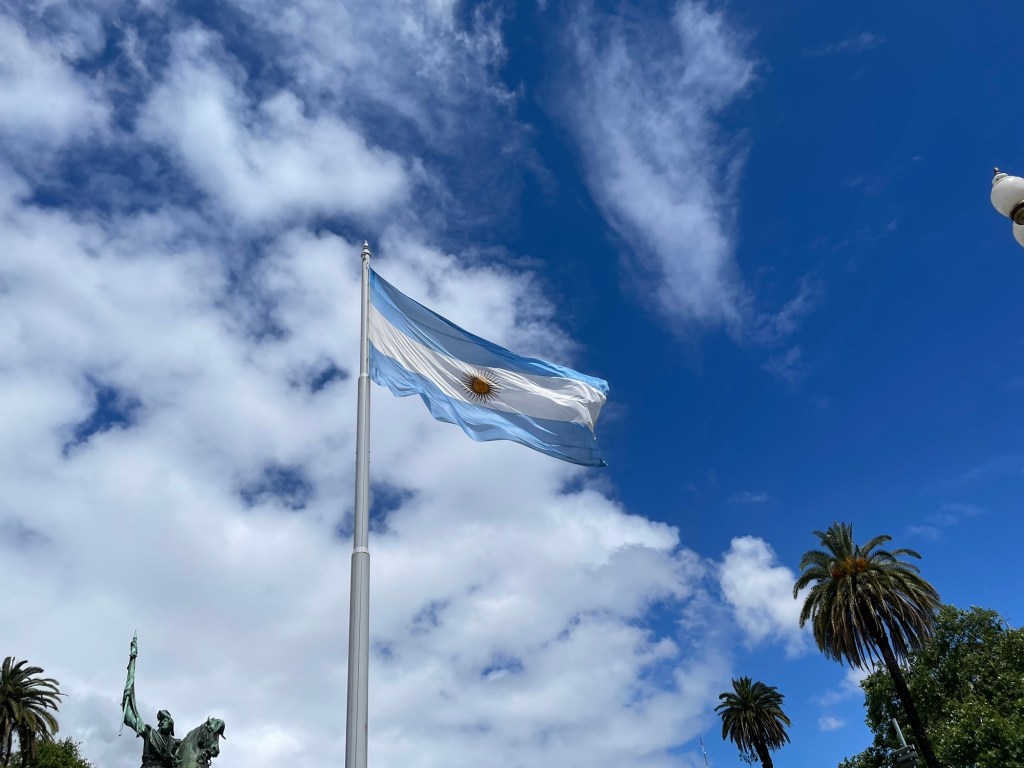
Statue of the person who designed the Argentina flag. The stones surrounding the base of the monument were placed for victims of the COVID epidemic.View of statue, presidential palace with flag unfurled in the breezeSame statue, in front of the Presidential Palace.Presidential Palace (Casa Rosada), a work place not living space. It is painted this color, historically using ox blood.
Next, we followed the route of the walking tour for San Telmo.
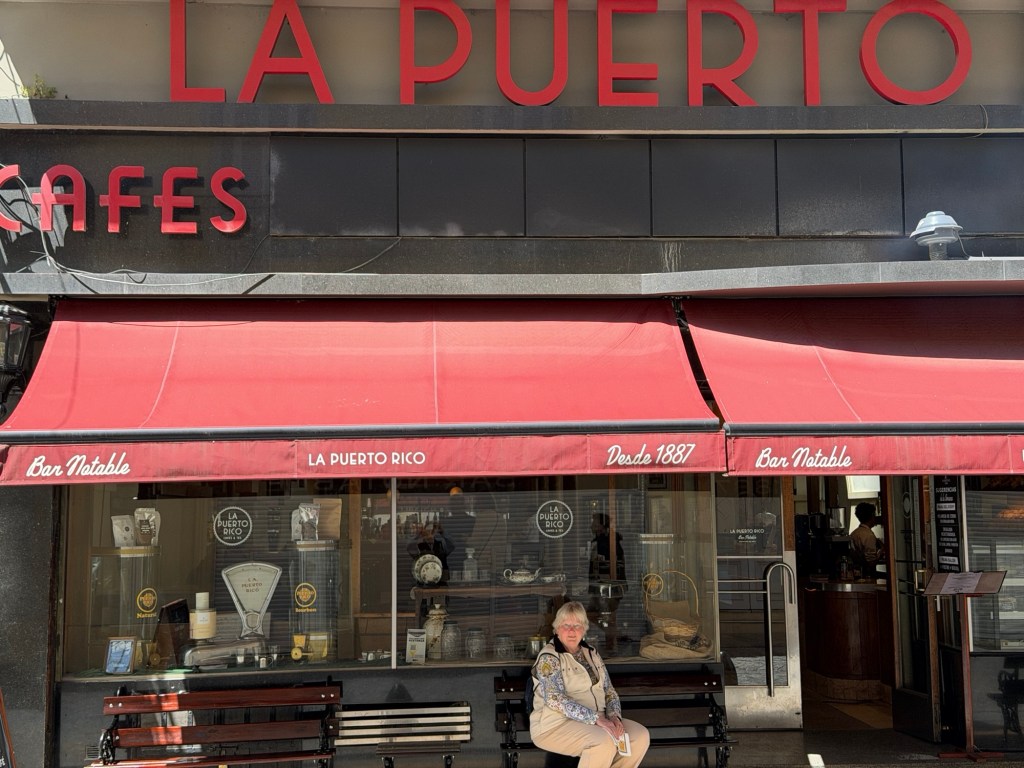
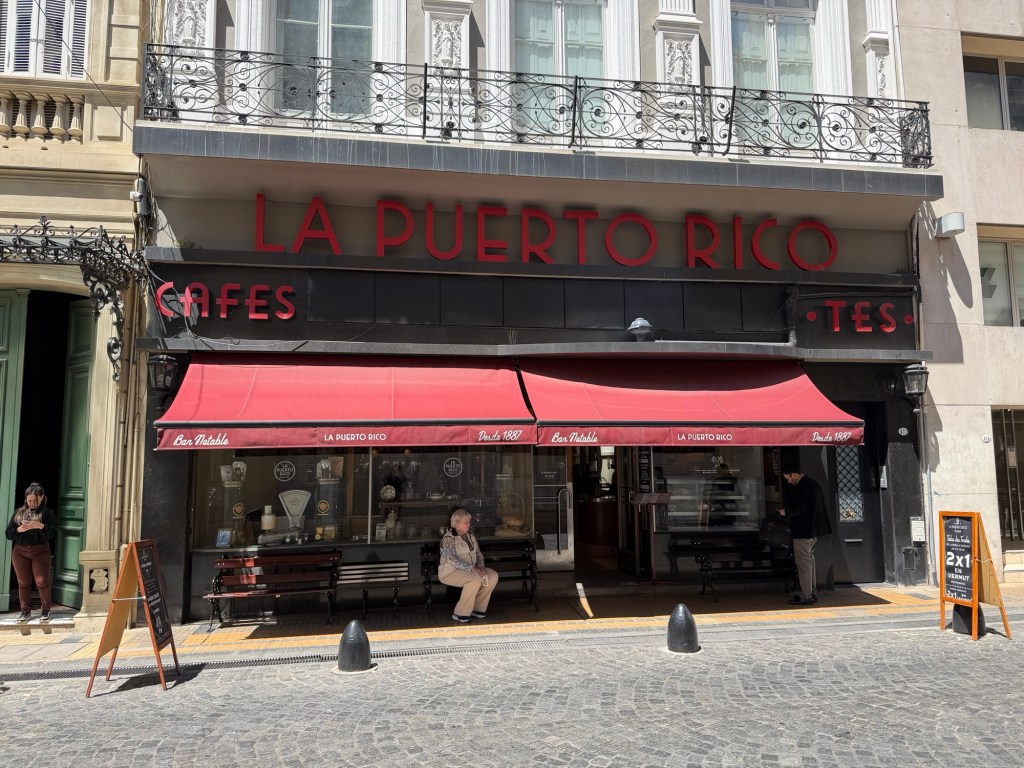
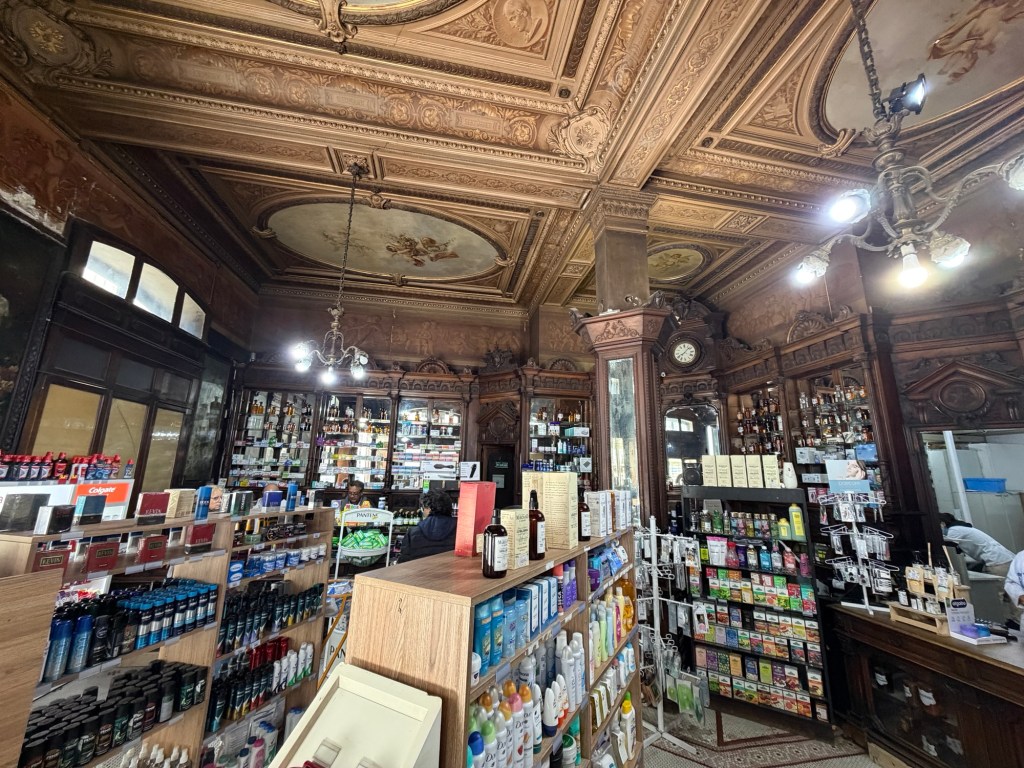
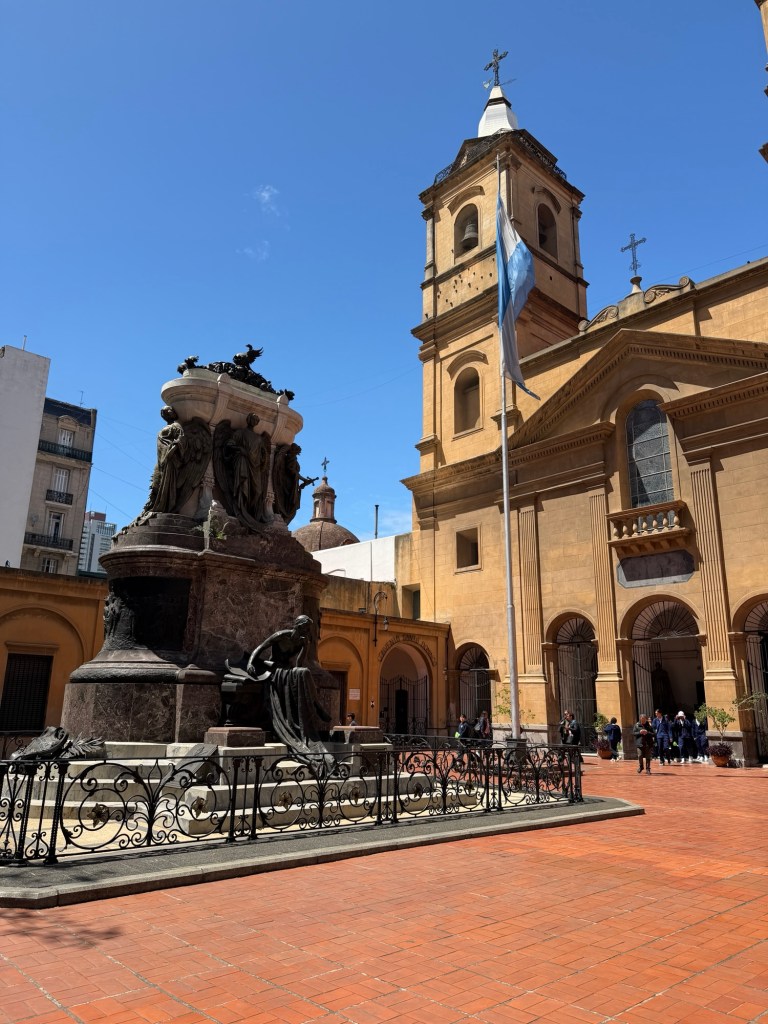
Bar Puerto Rico, a notable cafe recognized by the government. Same bar from across the street. Inside the oldest pharmacy in Buenos Aires. Convent showing cannon balls from one of the British invasions, embedded in the upper story to the left.
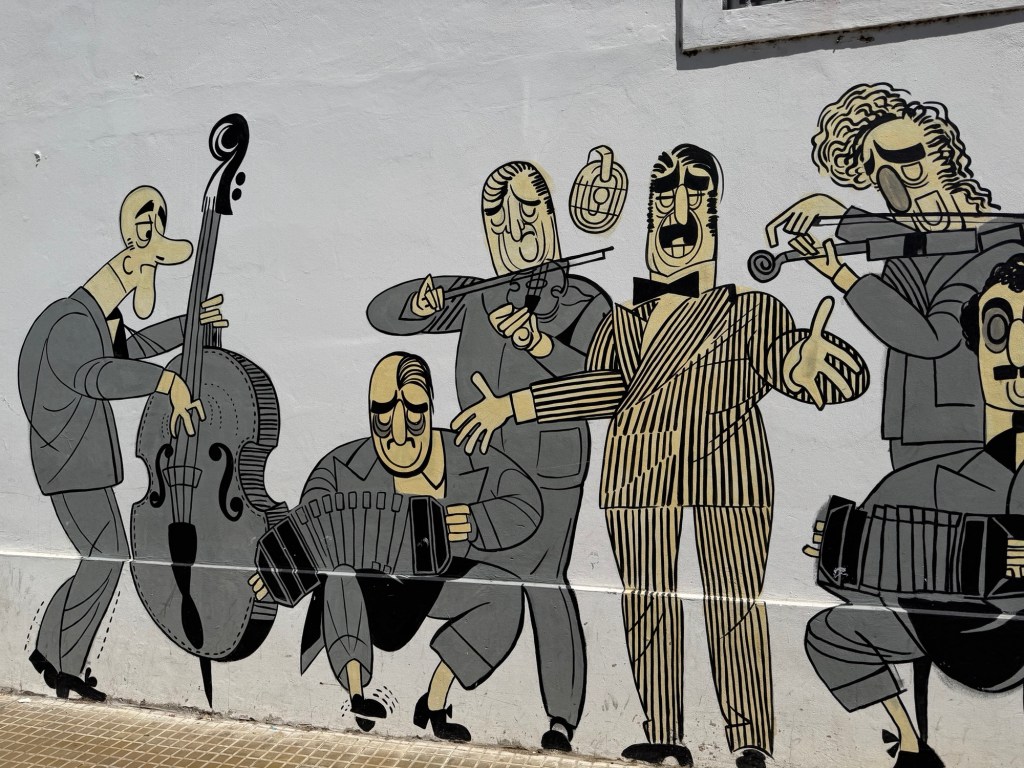
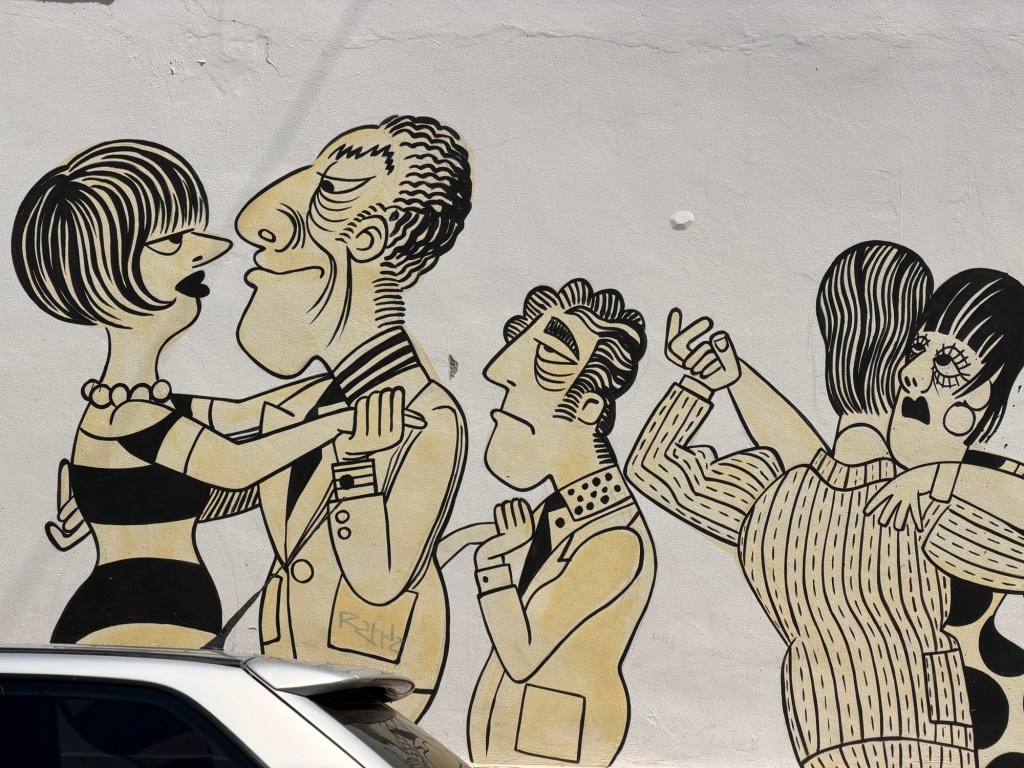
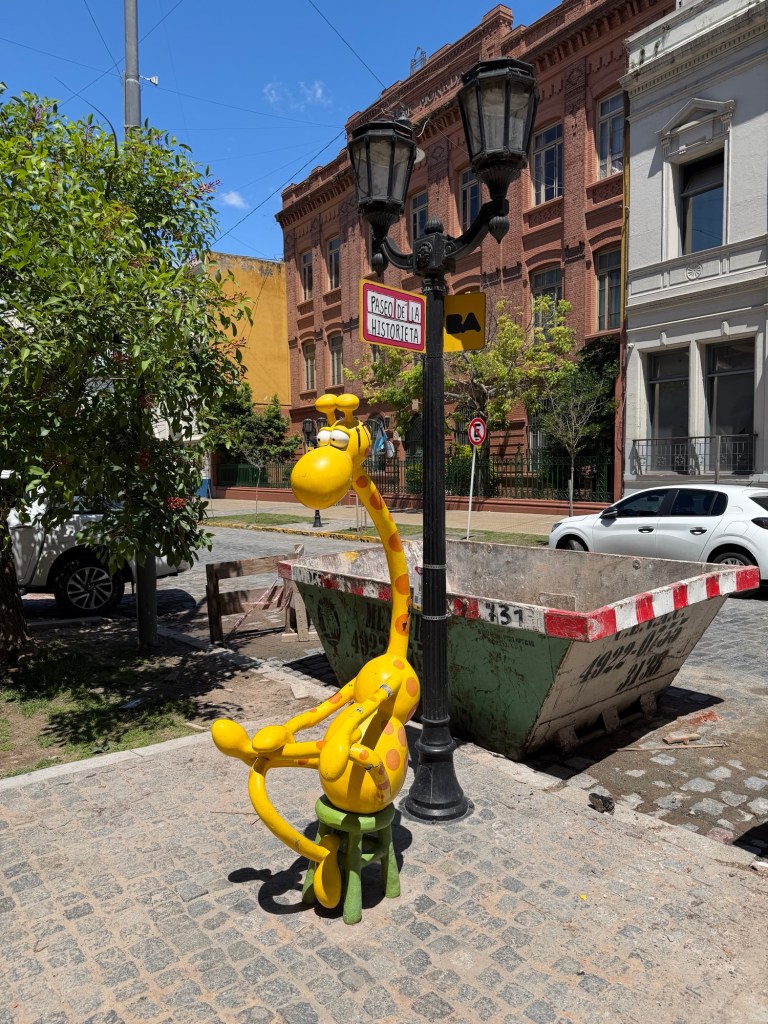
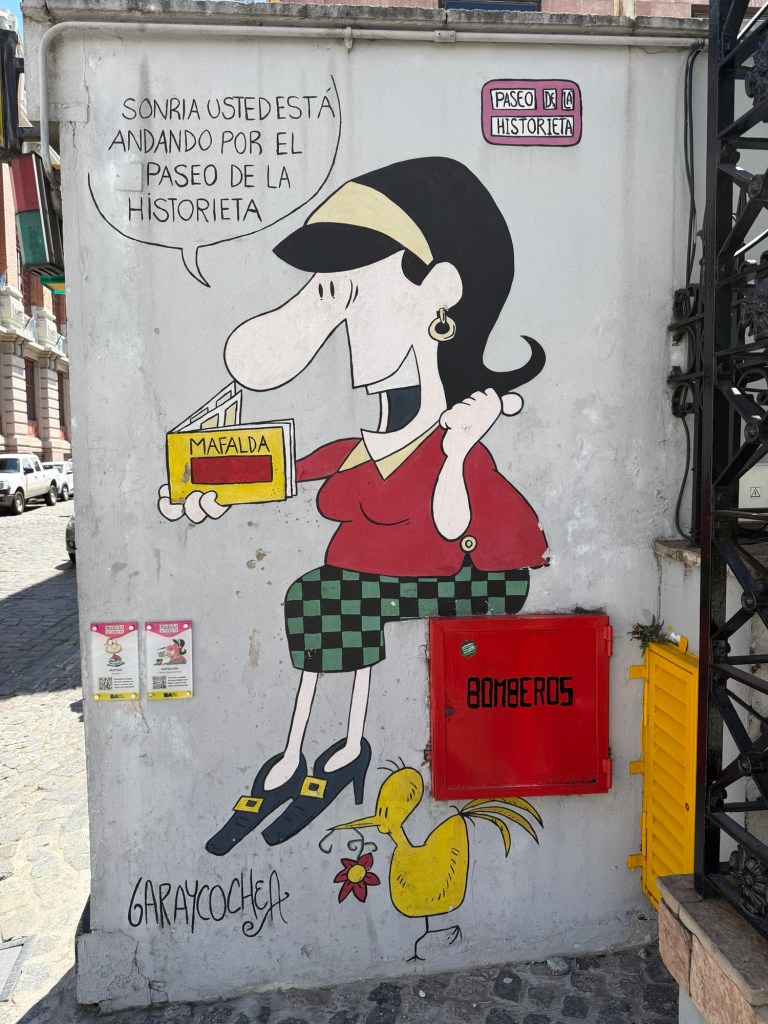
Paseo de las historieta, an avenue with murals and other street art, often featuring cartoon characters.
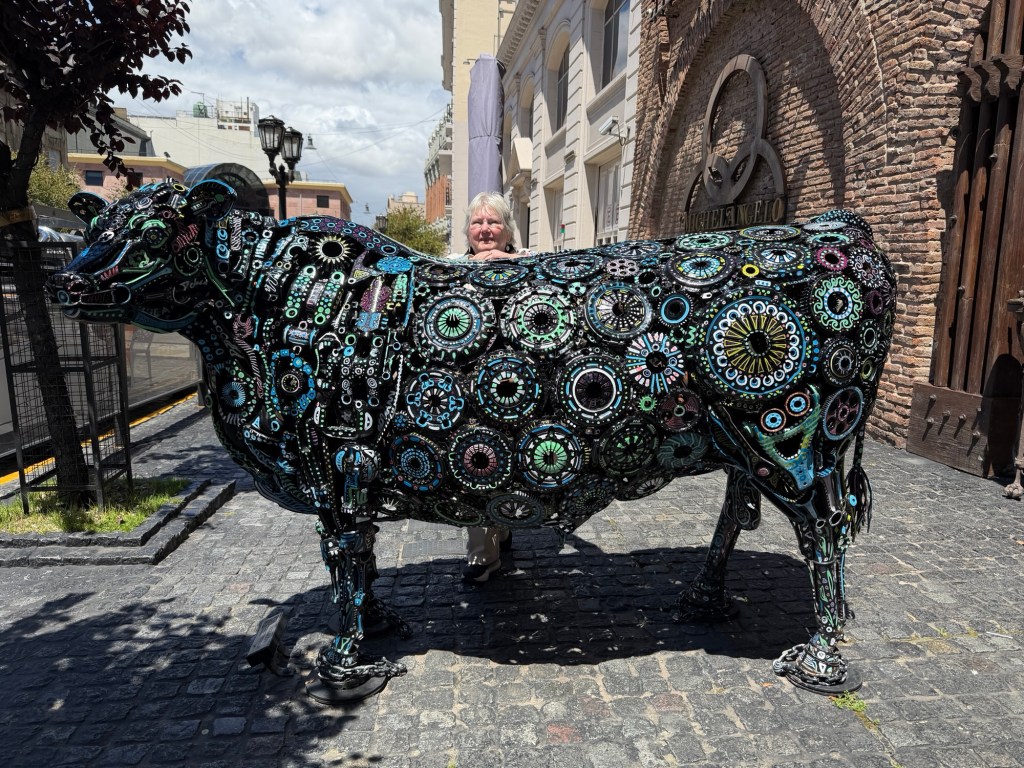
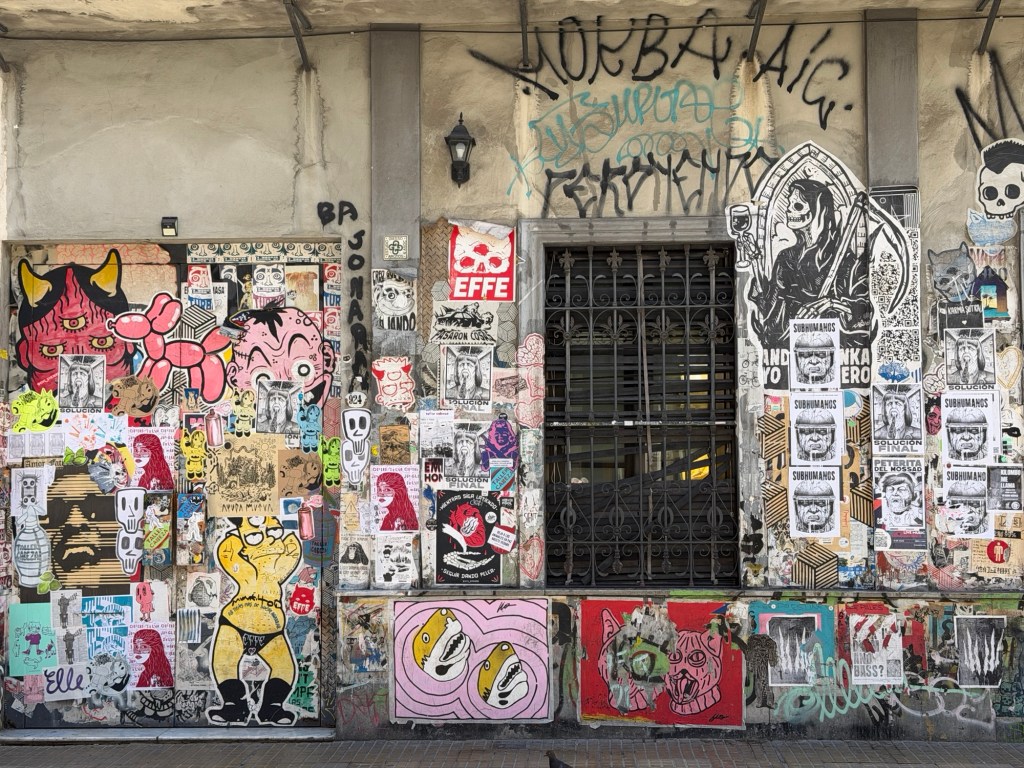
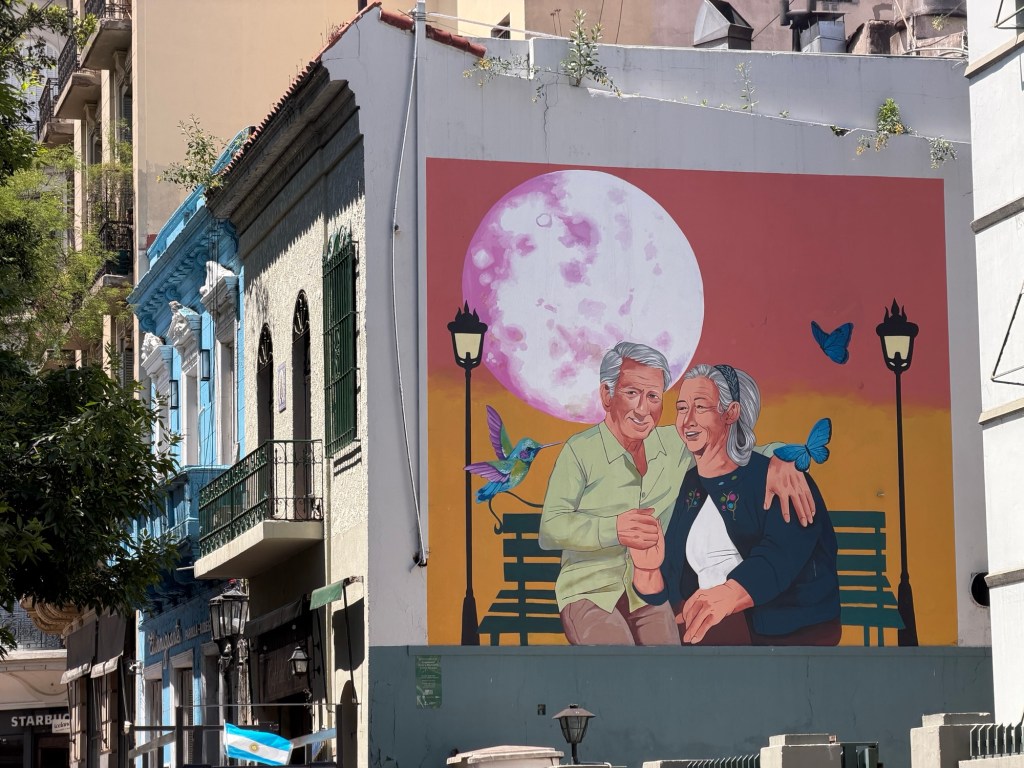
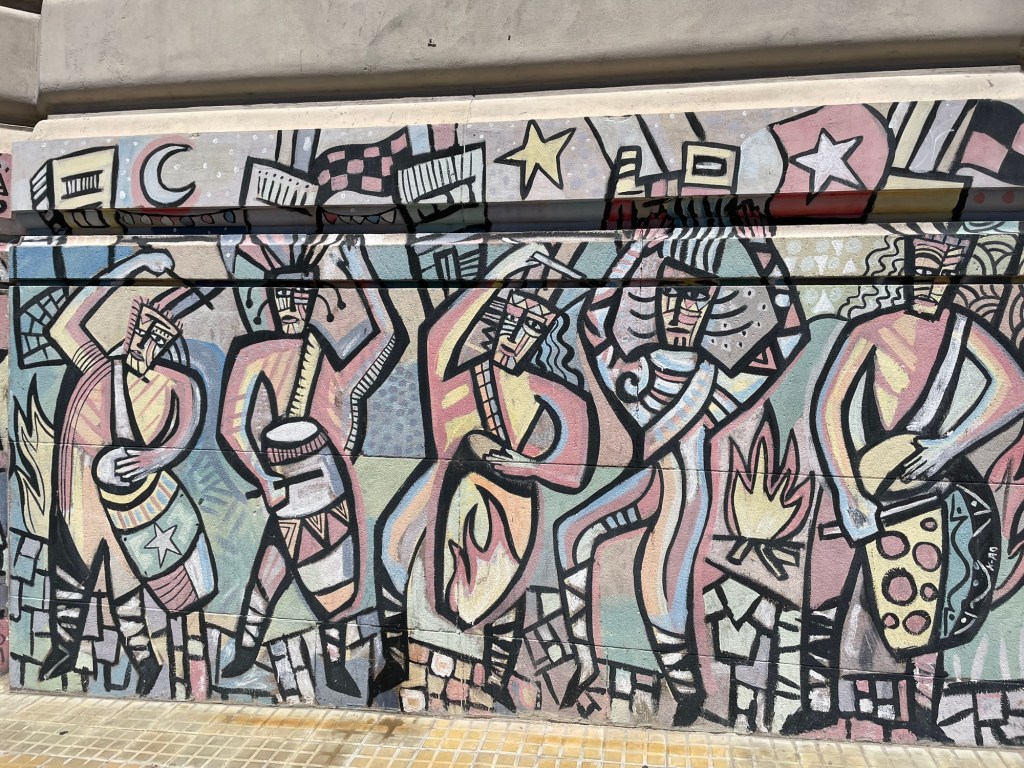
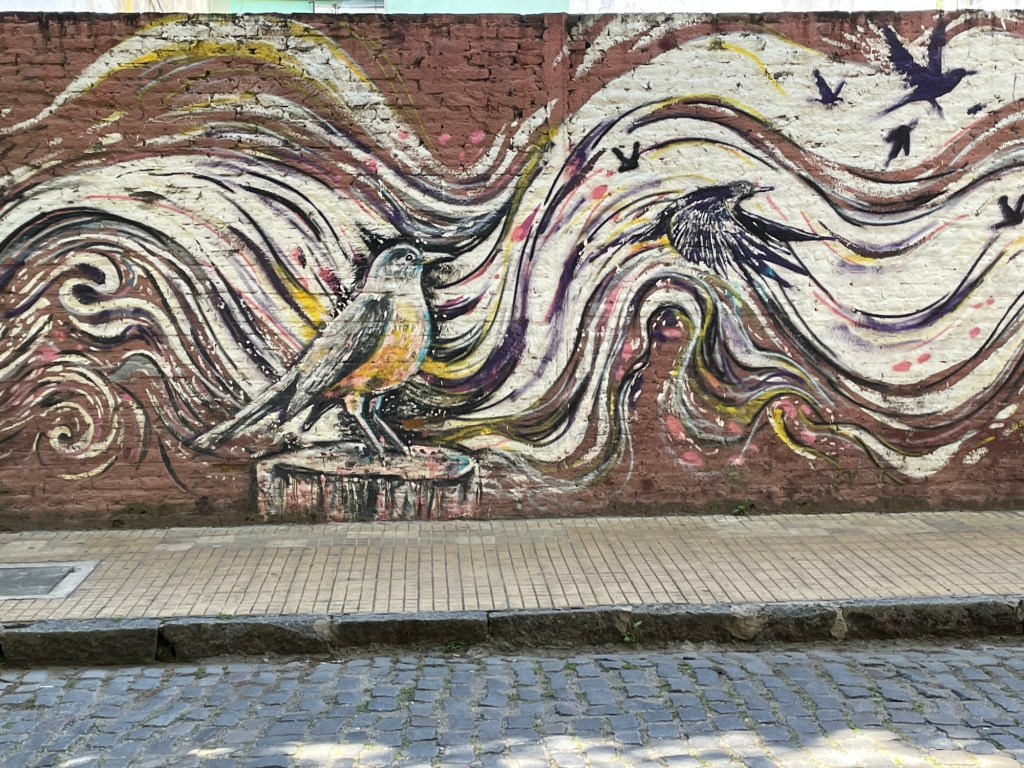
Cow made from metal pieces of cars. Mural of musiciansMural of dancersFunny yellow cartoon character Mafalda, a beloved, politically relevant characterMurals and graffiti Mural of old people still in loveMural of drummersMural of two birds in a wave
We don’t usually go into many shops, but these we couldn’t resist.
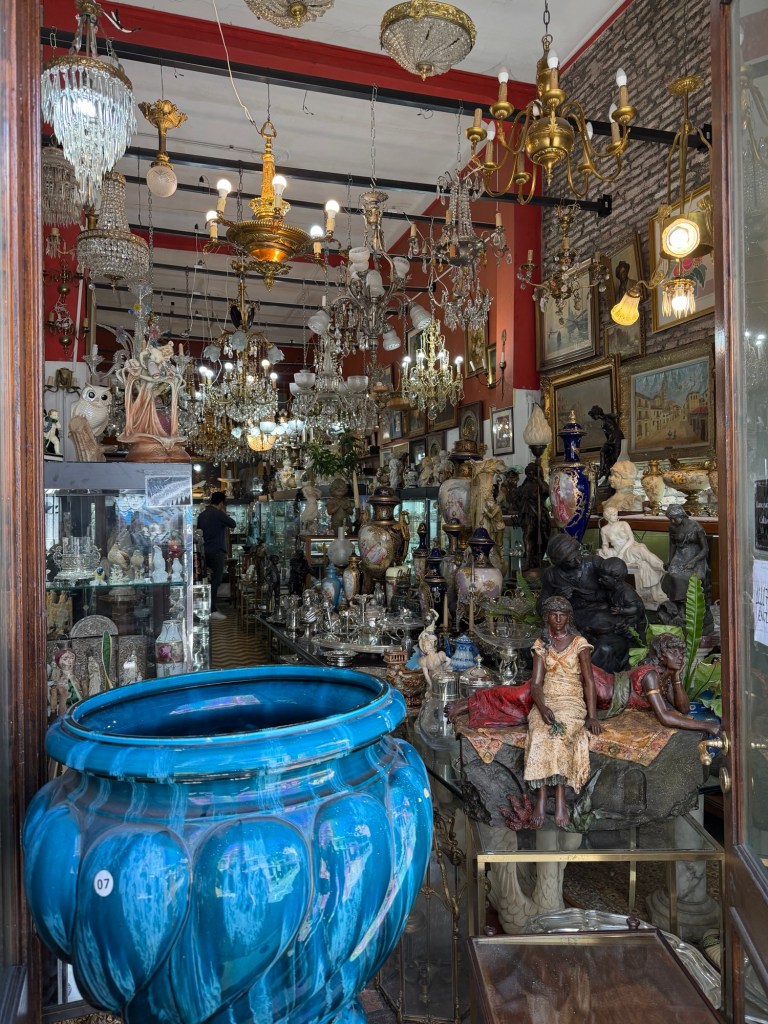
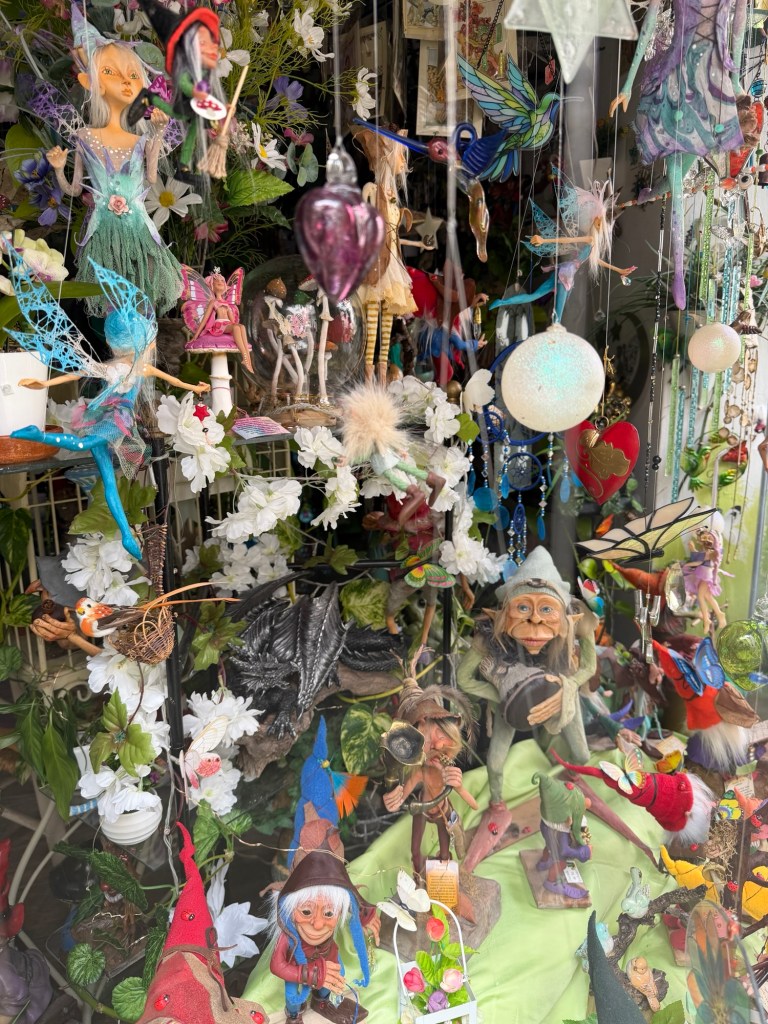
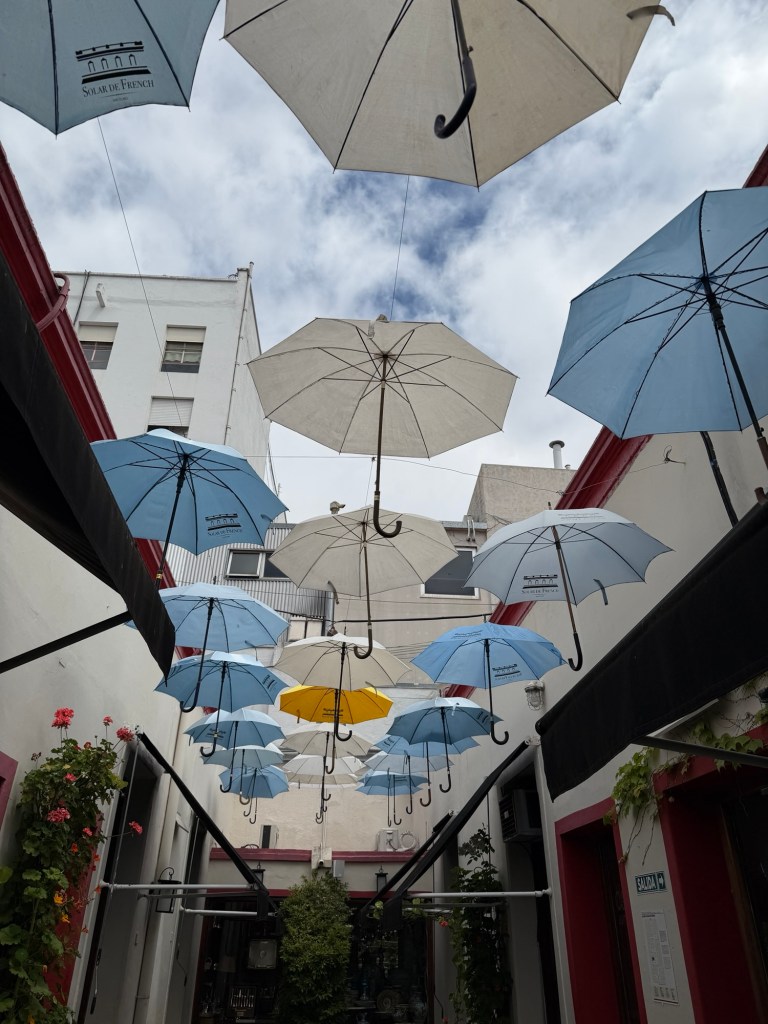
Antique store with beautiful chandeliers Store with gnomes and fairies and other creatures Umbrellas above an outdoor street mall resemble the flag of Argentina
We ate lunch outside at Plaza Dorrego, and were entertained by tango dancers.
Our first taste of papa frites (fried potatoes) was excellent, with large pieces not as crispy as in the U.S.
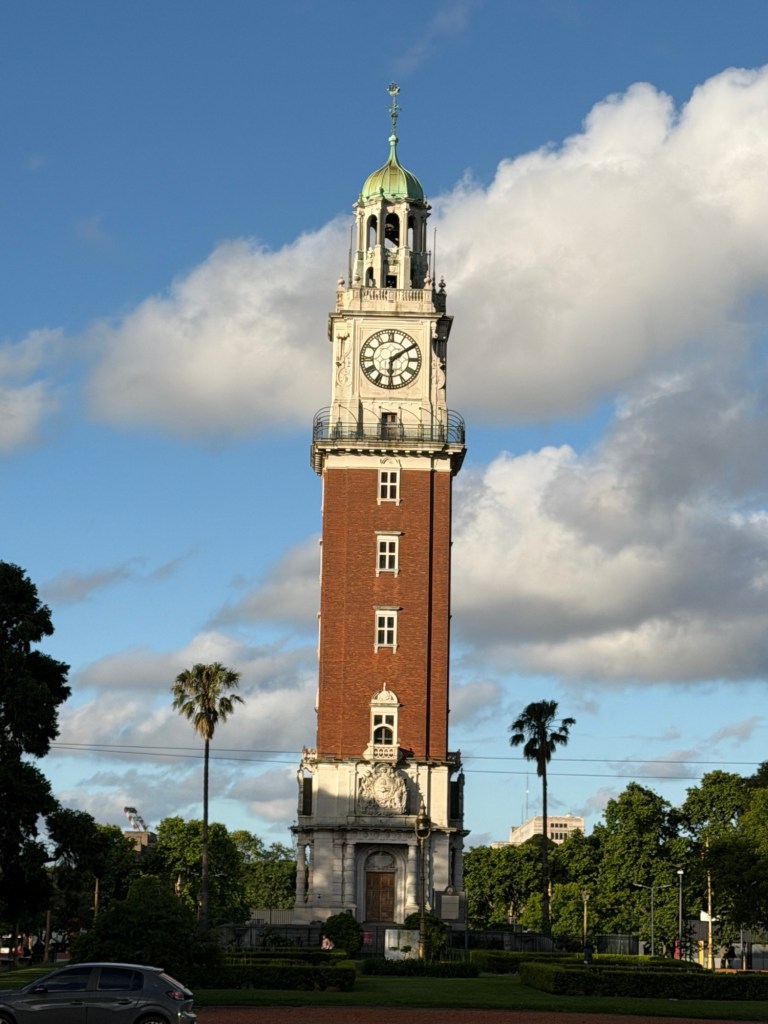
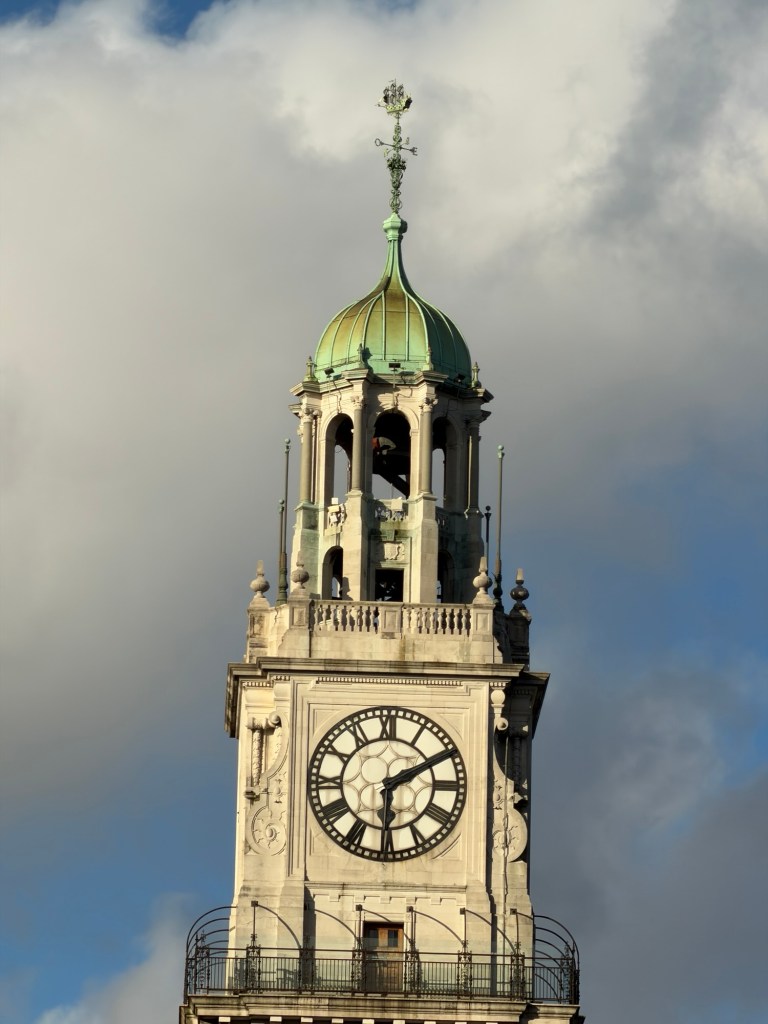
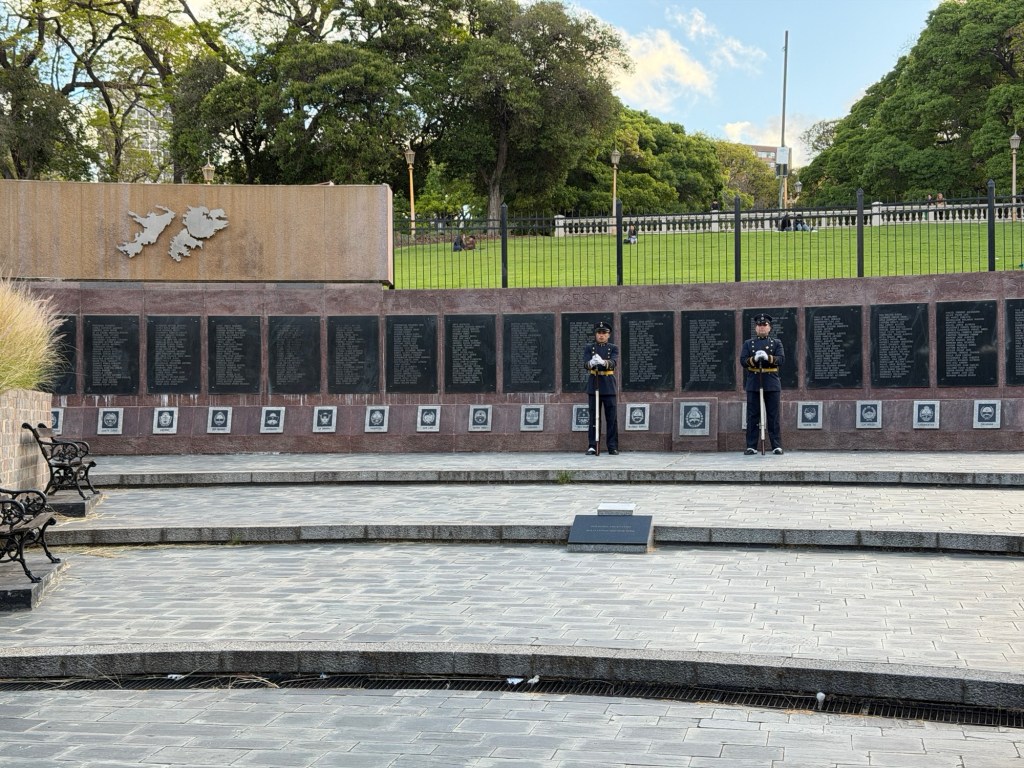
There are many statues on various street corners.Torre Monumental, formerly known as Torre de los Inglesses was renamed after the Falklands War.The top of the tower features a sailing ship.The flagGuards at the memorial to soldiers killed in the Falklands WarNavy building
The previous evening, we met Marta, our petite, energetic tour leader who will be with us this entire adventure. Tonight, we met with all our tour friends, listened to the orientation, then went out to dinner as a group at an Italian restaurant.
 Bunch of Geeks go Traveling