Although I enjoyed the pampering, extravagant food, and ease of travel (no worry about train schedules and luggage) on the river cruise, I was glad to be off and on our own this morning. As mentioned, we stayed in the Hilton, built during the Cold War (our guide said that every room was bugged! – perhaps not today?). We chose this place not for the interesting history (which we did not know before) but because it is centrally located.
A gentle rain greeted us that first morning off the ship. Fortunately, we were prepared with umbrellas. It was great to walk, just two people and no one talking in our ears, along old streets toward our first goal: subway station. It was downhill all the way.
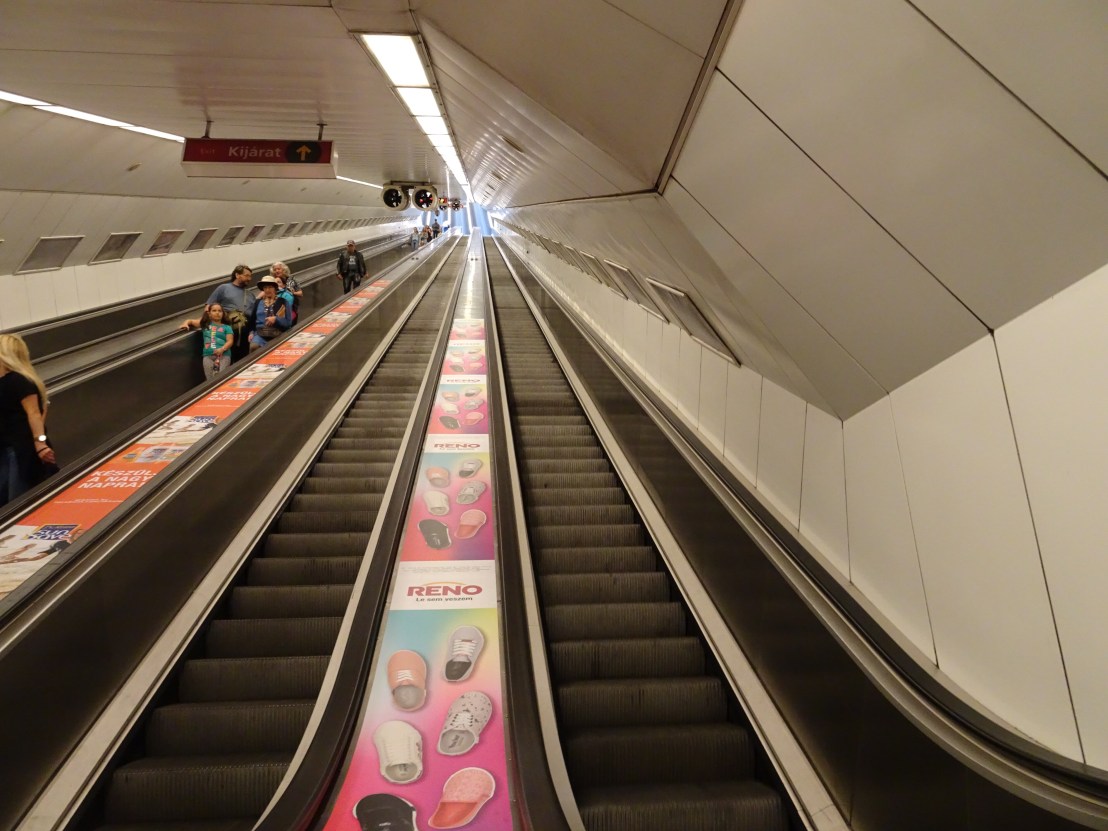
I was not kidding!!! This was the steepest, fastest, longest escalator I have ever ridden! The Metro (subway) served dual duty as bomb shelters in the Cold War Era, and this one was deep enough to go under the Danube River.
We popped out across the river (on the Pest side) to begin a walking tour (from a book) that brought us to interesting monuments.
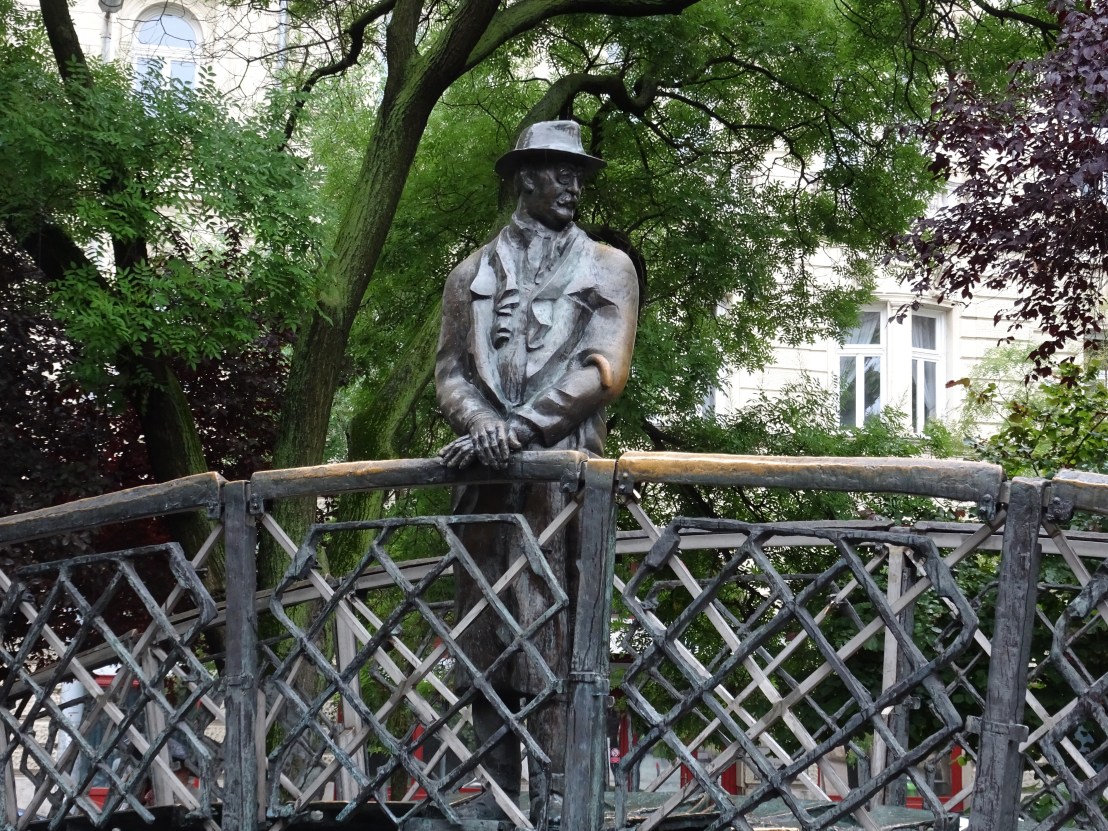
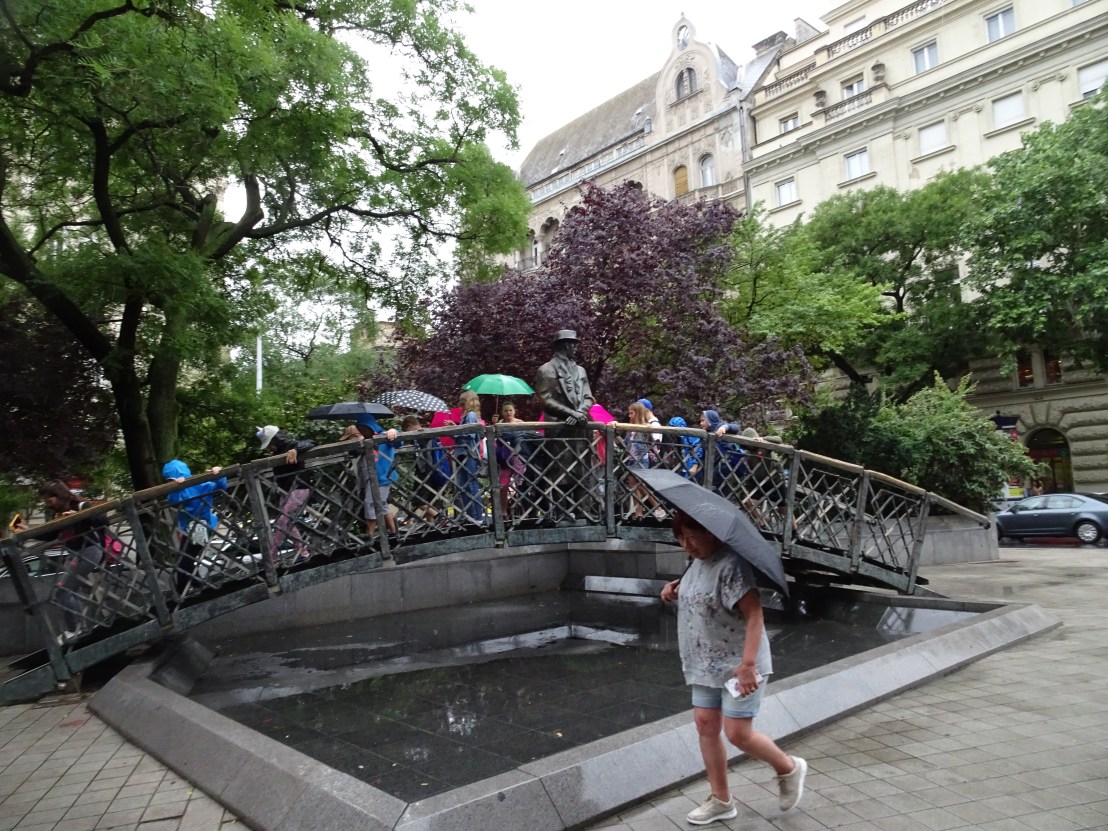
I put in two photos of this statue because the first was nice, but the second gives scale and a reminder of the rain. He was Nagy, a respected politician, who stood on the bridge between communism and old Hungary. He was too liberal for the Soviets and was tried, convicted, and executed in the 1950s.
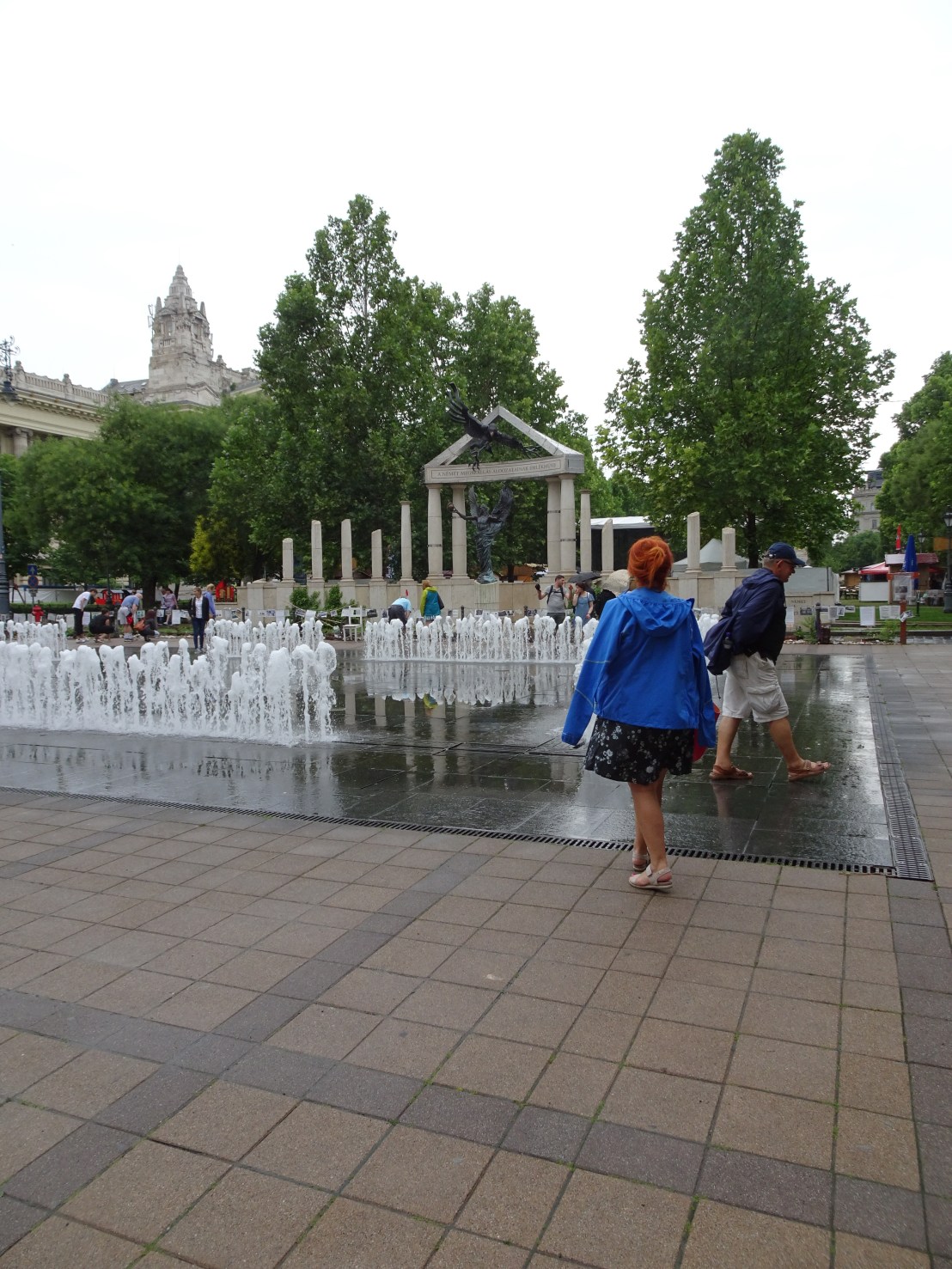
This is the Monument to the Hungarian Victims of the Nazis. The eagle represents Germany, grabbing Hungary, represented by the angel holding part of the Hungarian Crown Jewels. The armband on the eagle shows the date of Nazi invasion (1944). Of course, the monument makes light of the fact that many Hungarians collaborated with the Nazis.
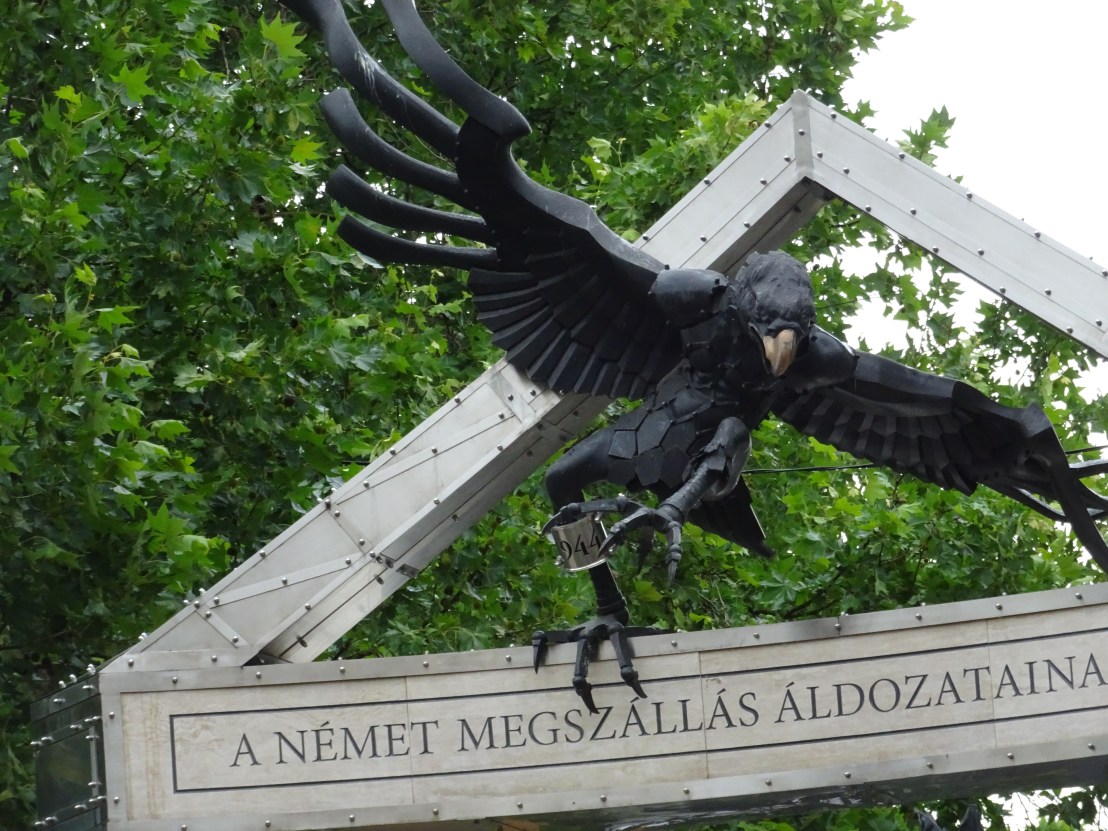
The fountain in front stops flowing when you walk toward it, so you can take a picture of yourself inside without getting wet. In front of the monument part on a string like fence, are paper memorials (photographs and stories) of victims of Hungarian violence prior to and after the invasion.
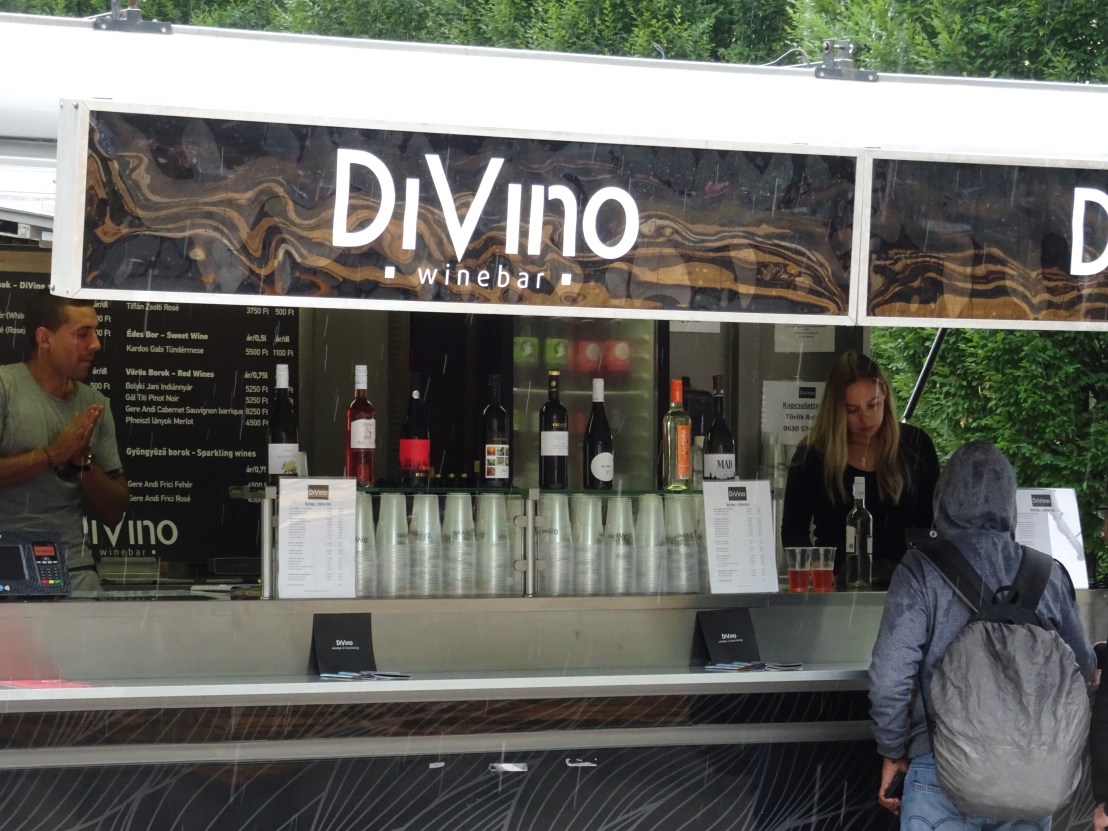
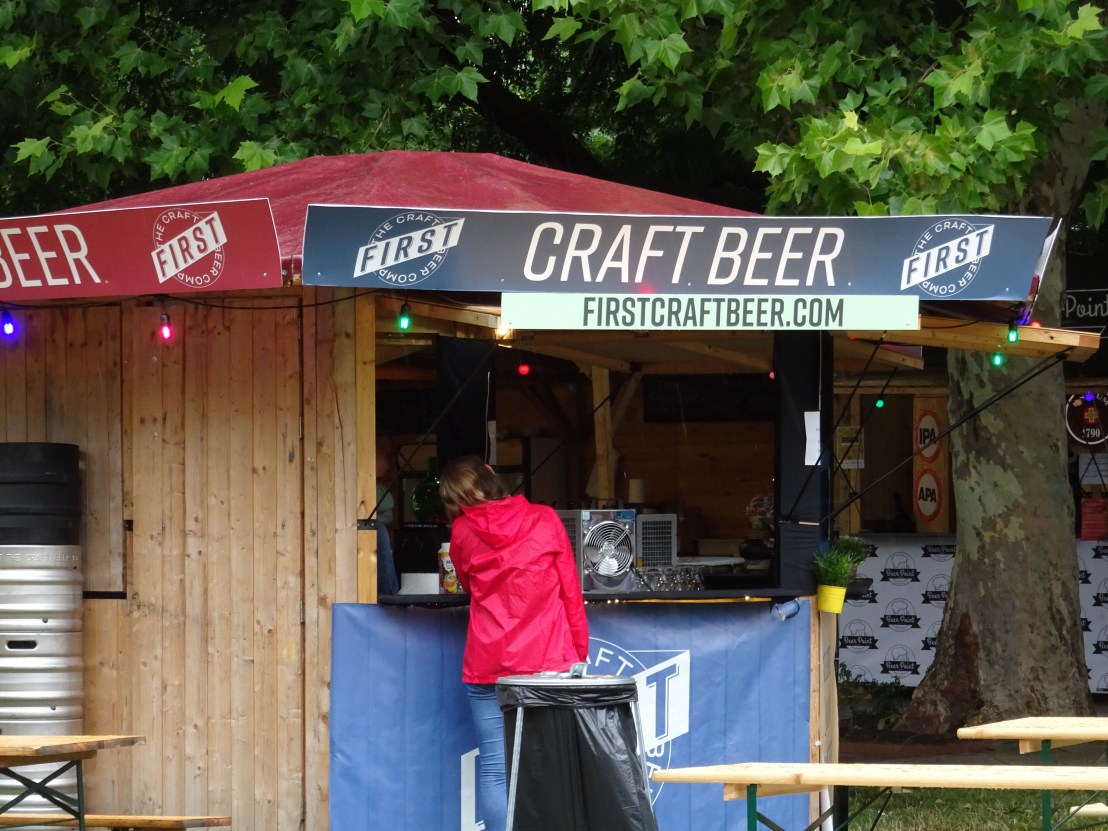
You will notice that we did not take many pictures when we were walking in the rain, but we found a wine bar (above) and an entire square with temporary looking stands selling beverages and foods that looked inviting for later in the day.
We went past the US Embassy, which looked like a fortress, with barriers all around, guards and tons of “no photo” signs everywhere. So, we did not take photos. At St. István’s Basilica, even though a wedding was happening, we were allowed to take pictures.
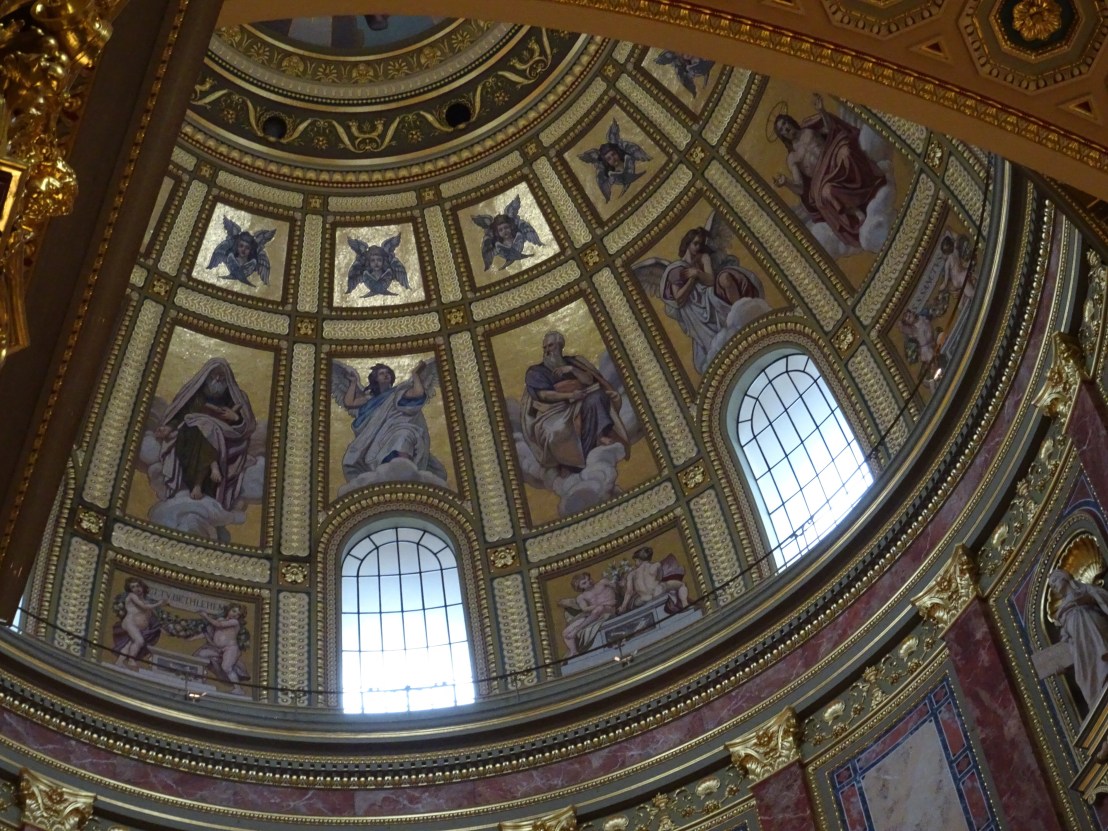
Then we went to the House of Terror which addressed the Soviet persecution and incarceration of people who were believed to support revolution. No photos. Weird and difficult to see, much is in Hungarian and not much in English.
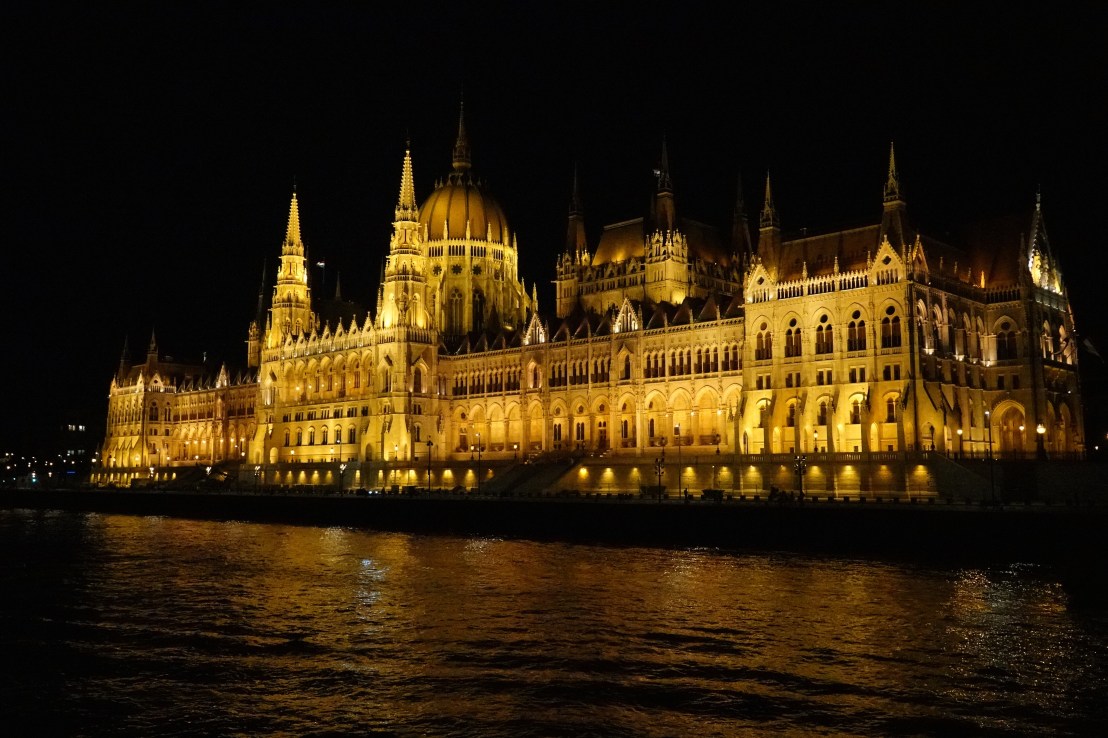
The last of this day was a tour of the Parliament Building, that huge, ornate building featuring so proudly in the “Illumination” tour last night. We were allowed to take pictures in all but one of the rooms, the one containing the Hungarian Crown, in a glass case guarded by two Hungarian soldiers holding swords.
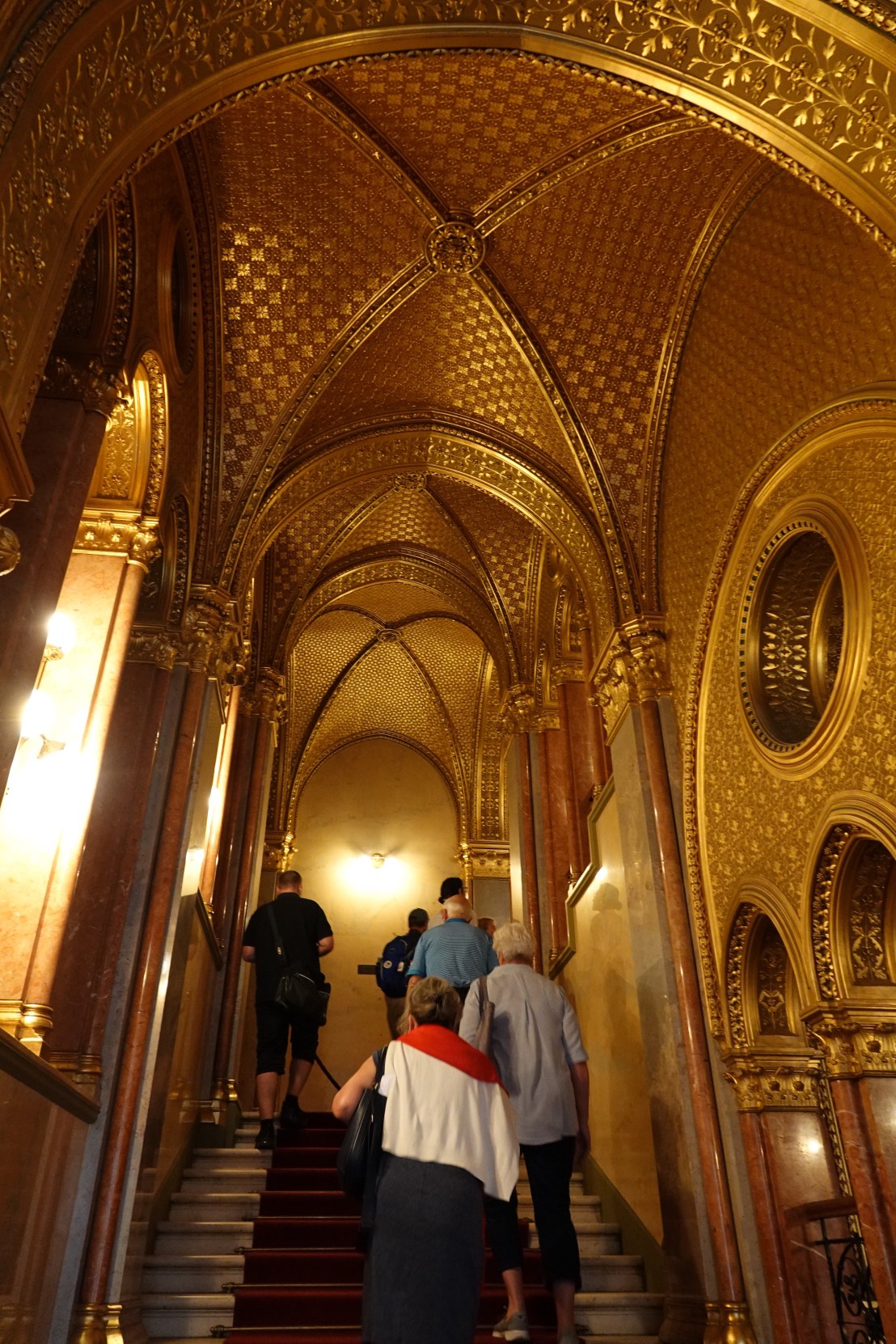
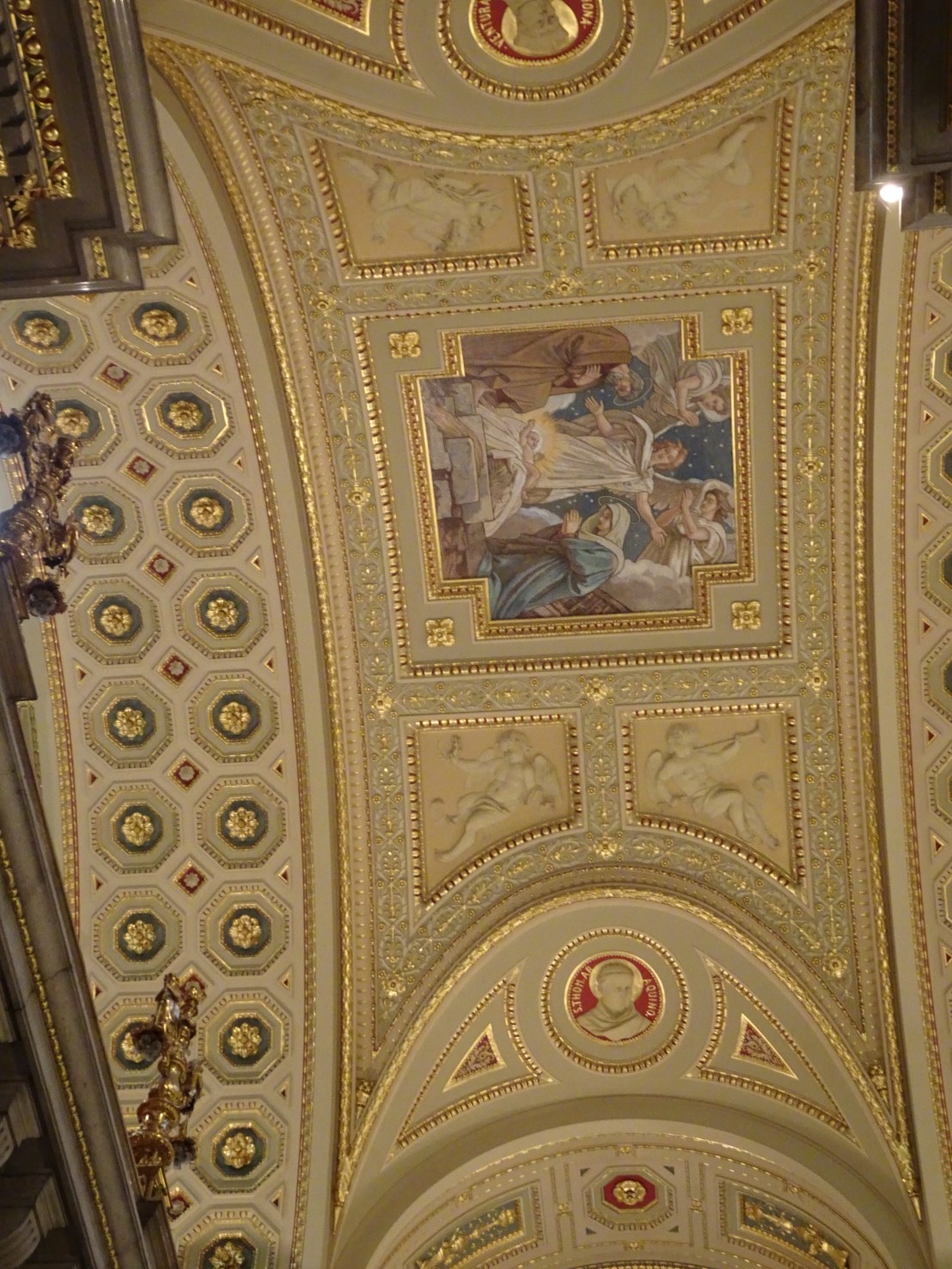
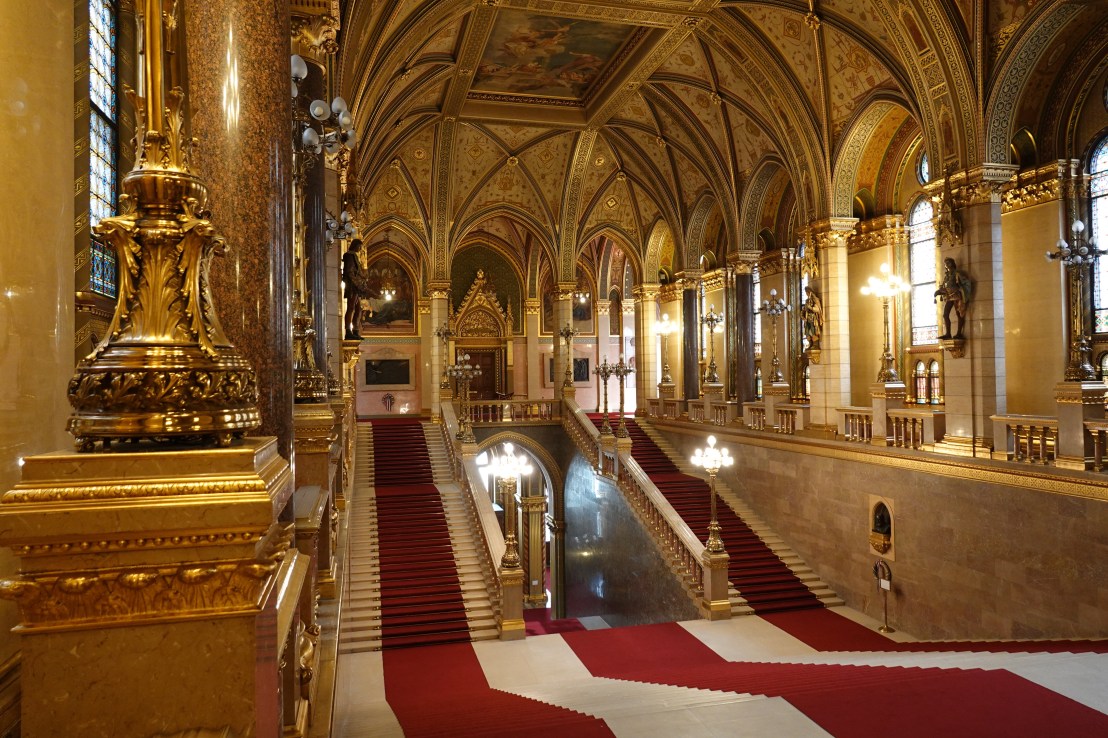
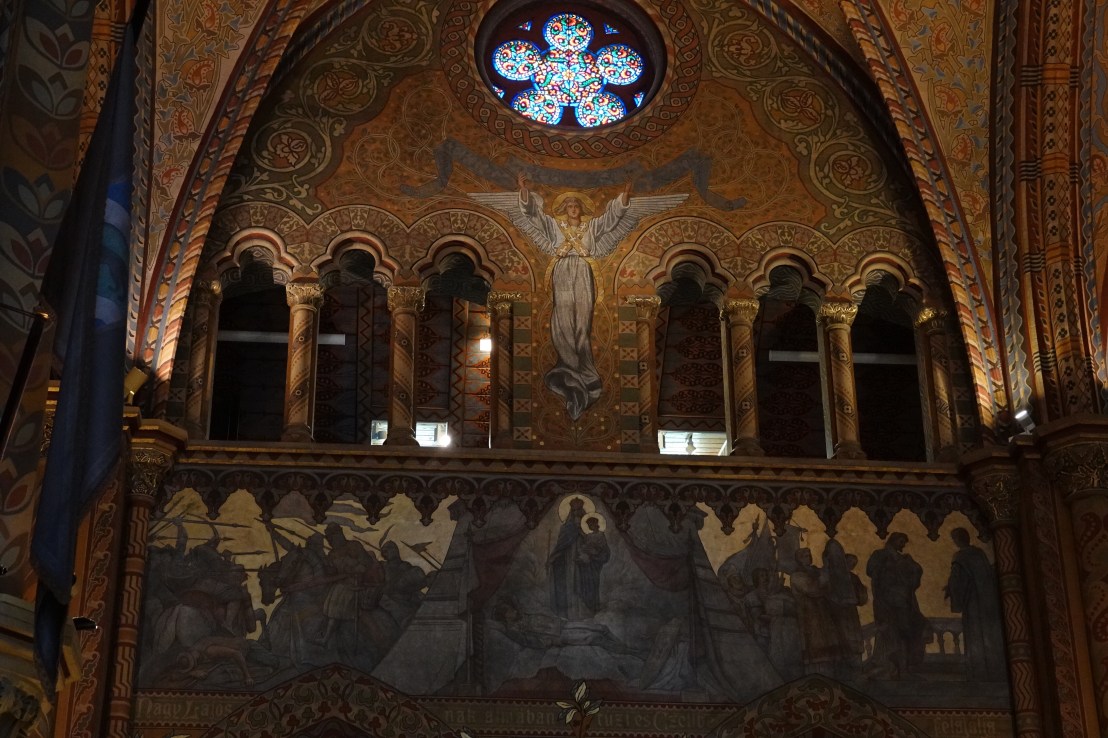
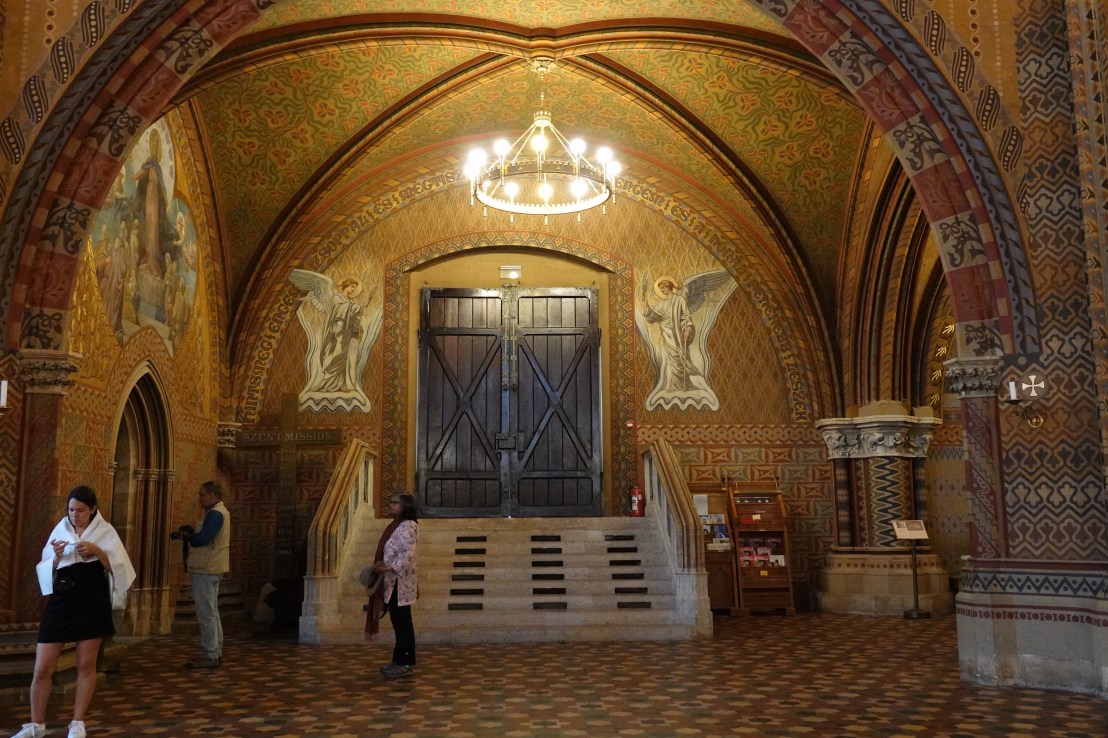
We walked up the gold staircase; some parts of the building resembled a church (see below).
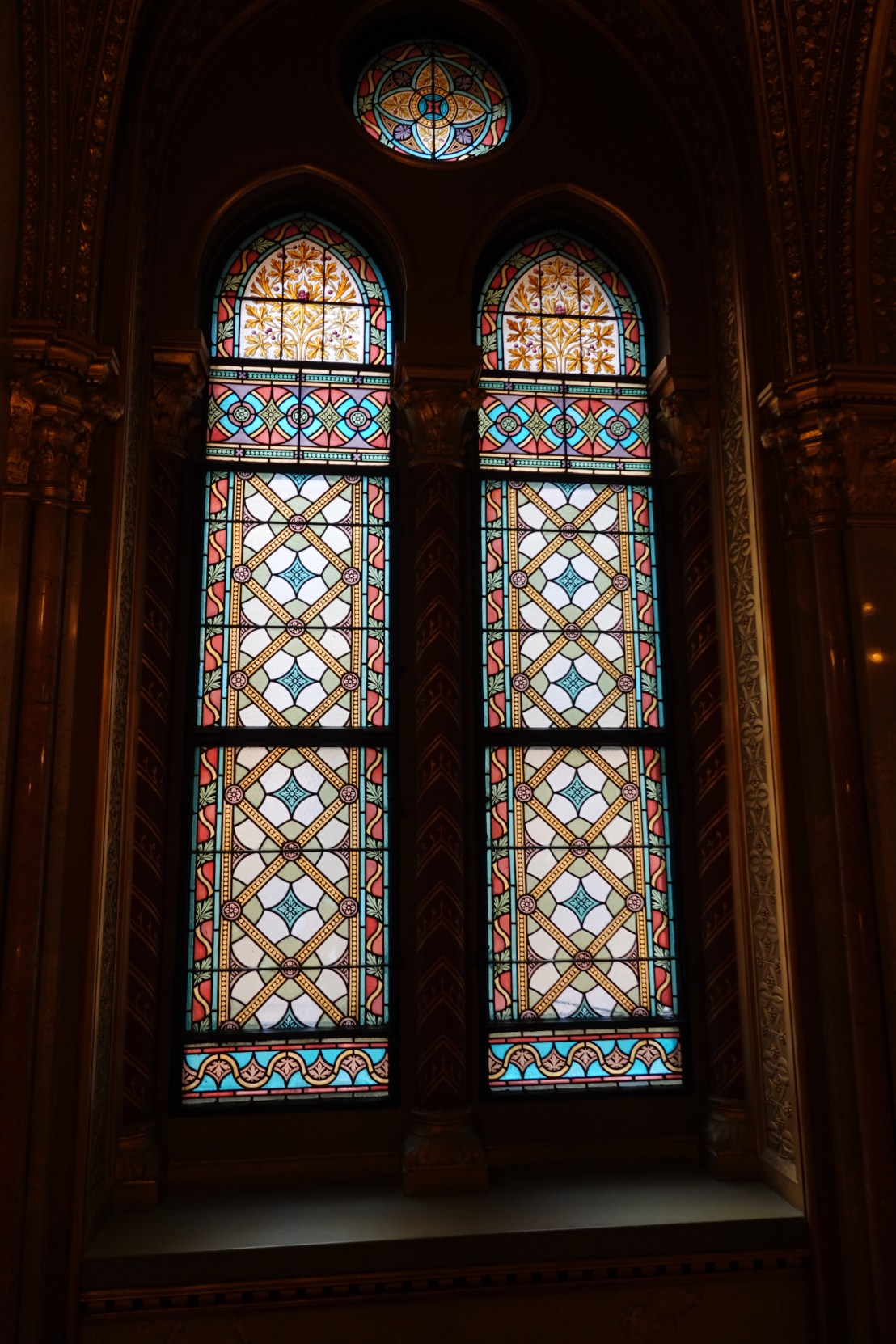
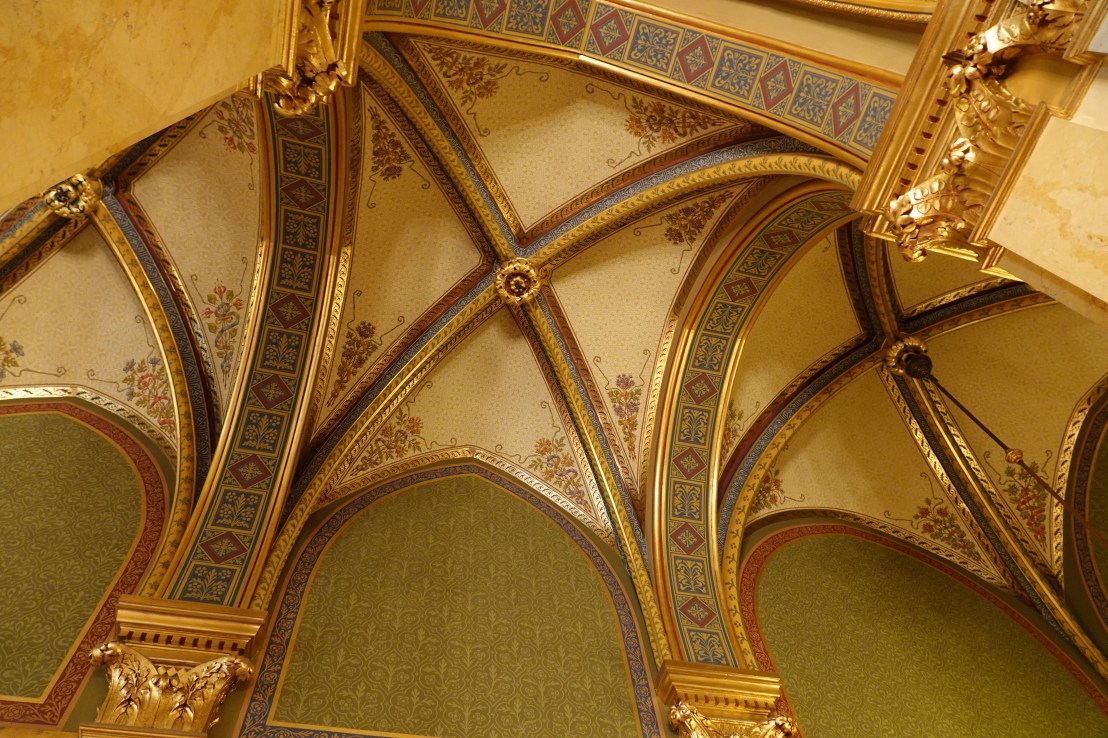
The grand staircase is only used for visiting dignitaries.
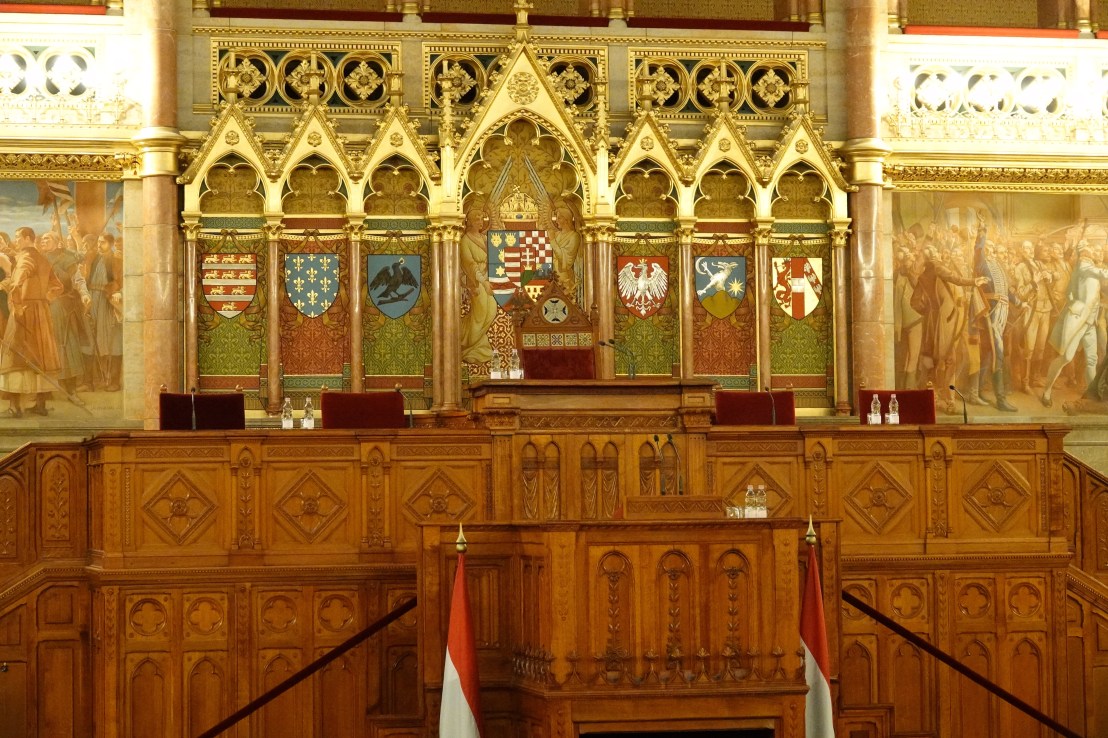
Parlement chamber, Coats of Arms of past kingdoms that joined to form Hungary.
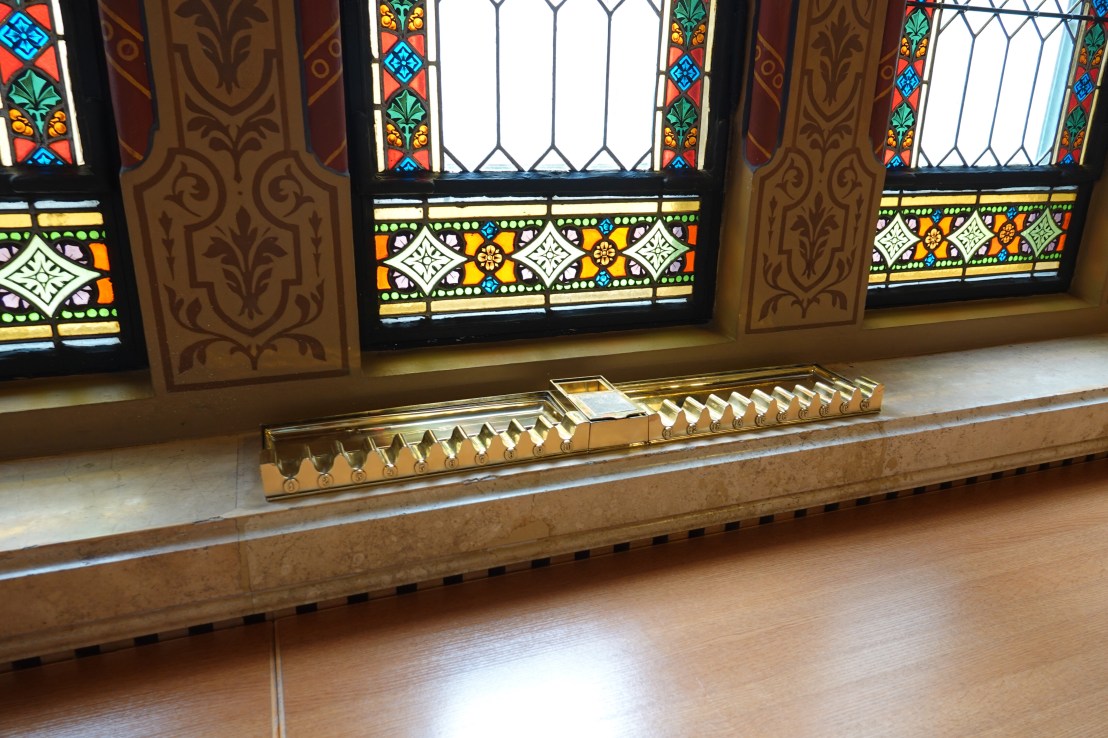
The strange golden contraption at the base of the windows is a cigar holder which represents one of many, for space for 199 cigars. When Parliament was in session, everybody smoked in the hallways, then left their lit cigars on these (numbered!) places when they went back into the chamber. If a speech took a long time (or was particularly good), and everyone’s cigars burned to ash, it was called a “Havana.”
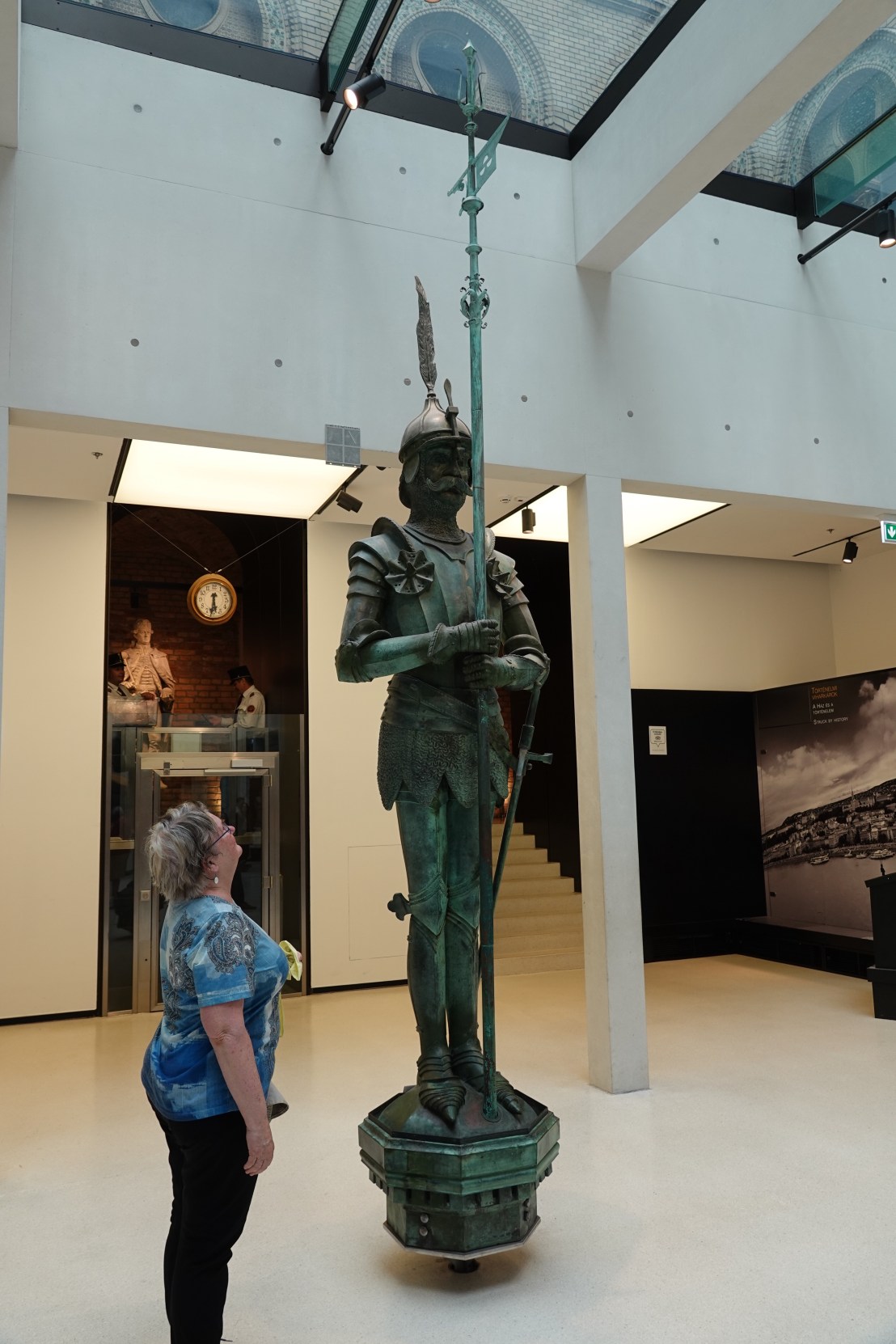
Clare found another knight! Turns out, this guy’s friends are guarding the top of the building!
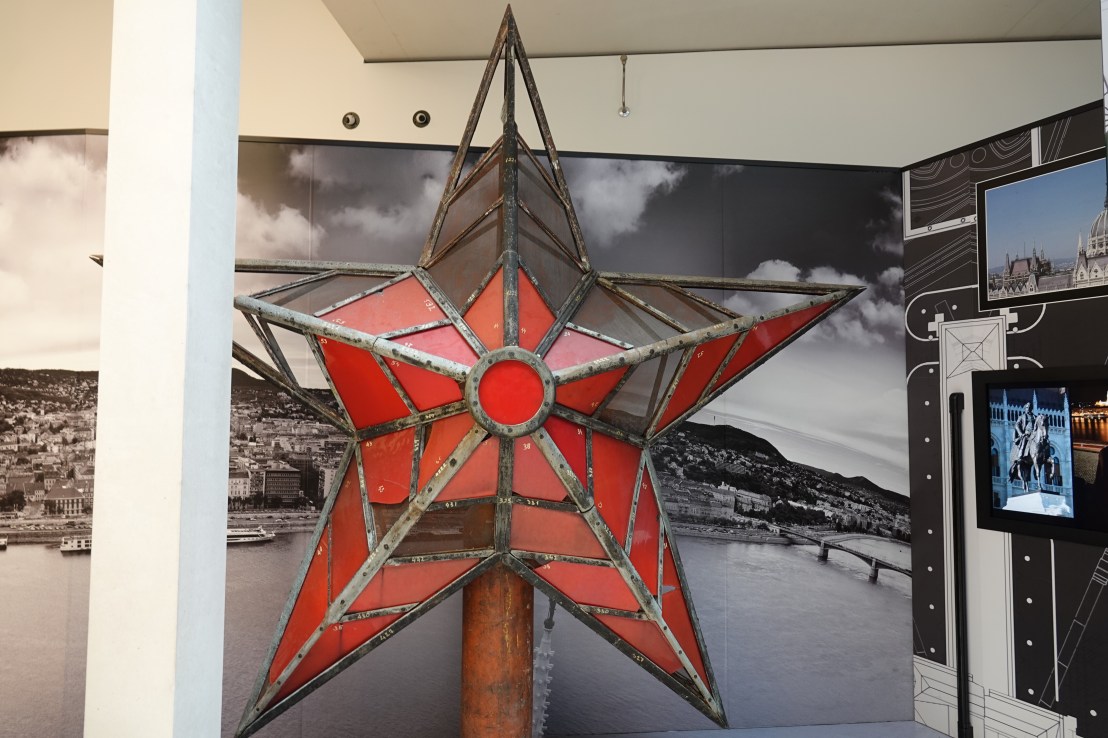
During Soviet occupation, this red star graced the top of the building.
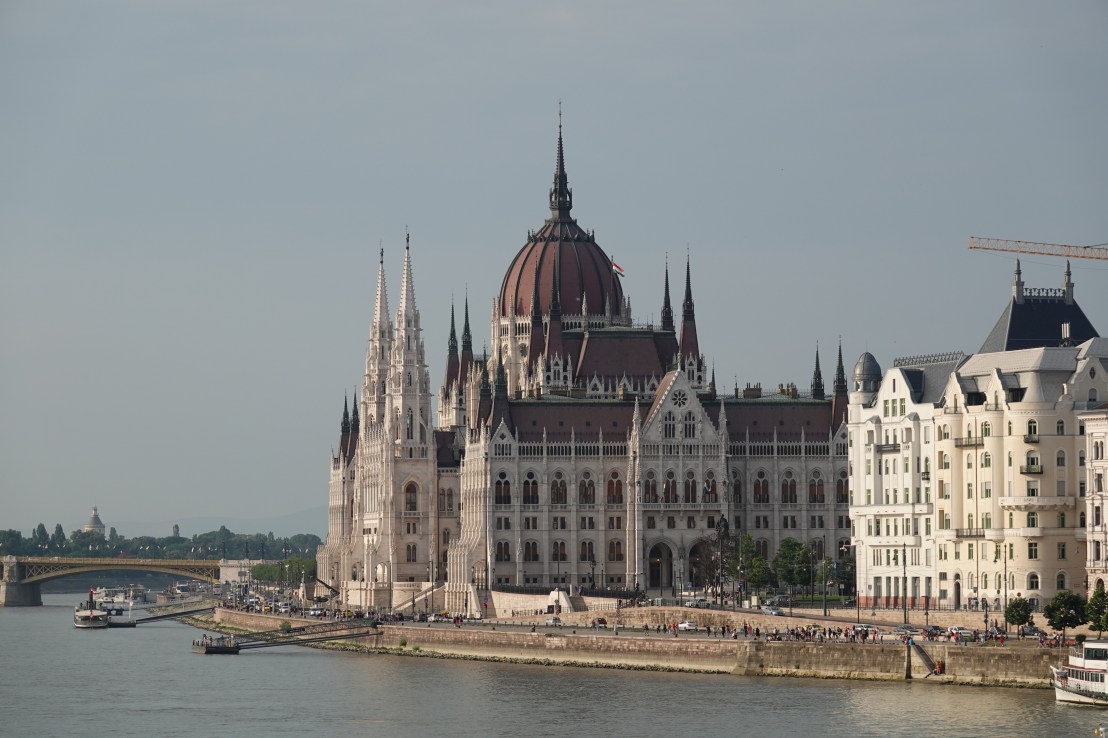
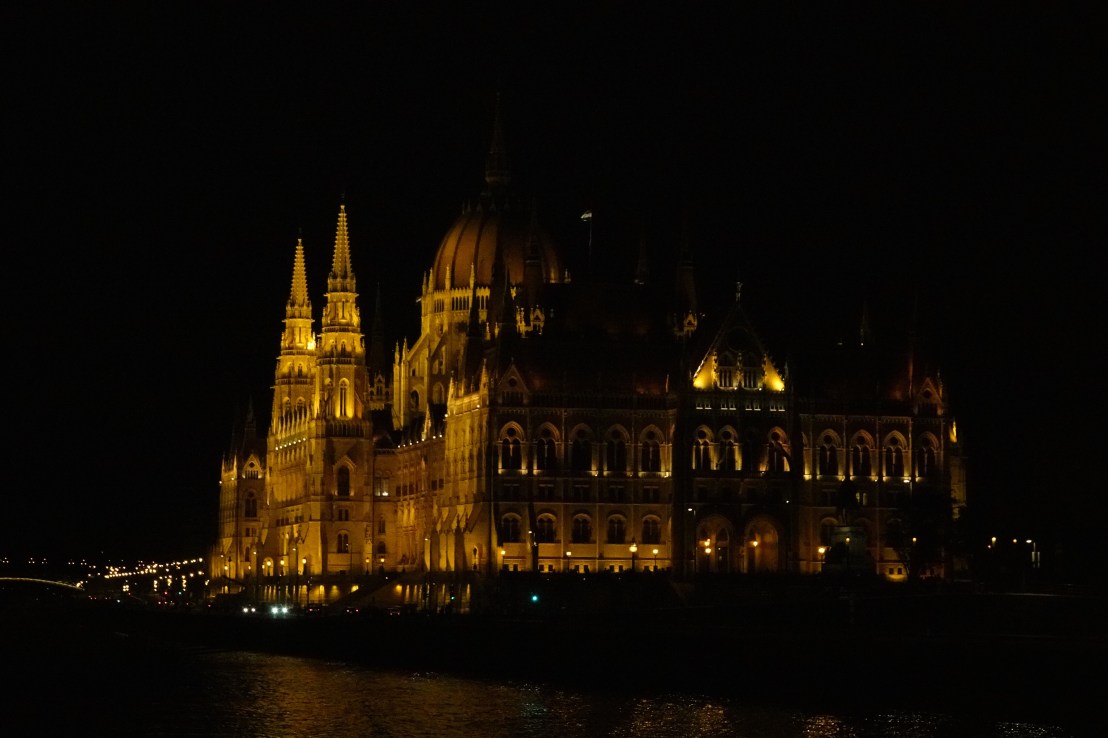
Here is another view of the Parliament building, as we walked back along the Danube.
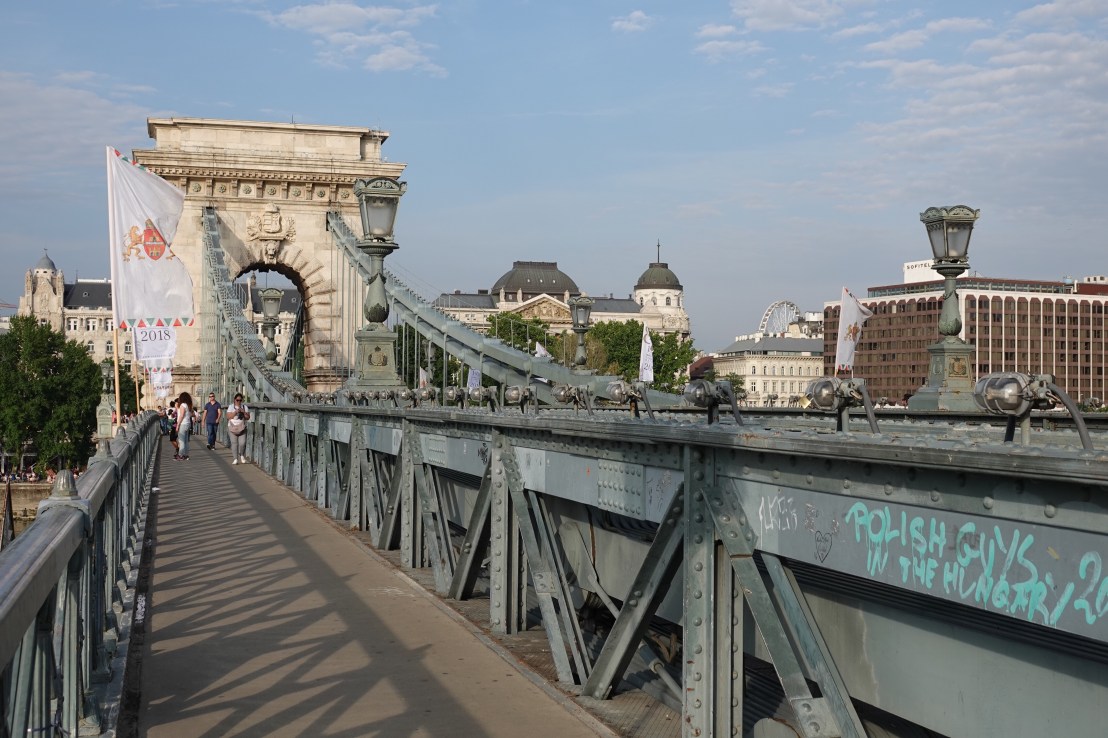
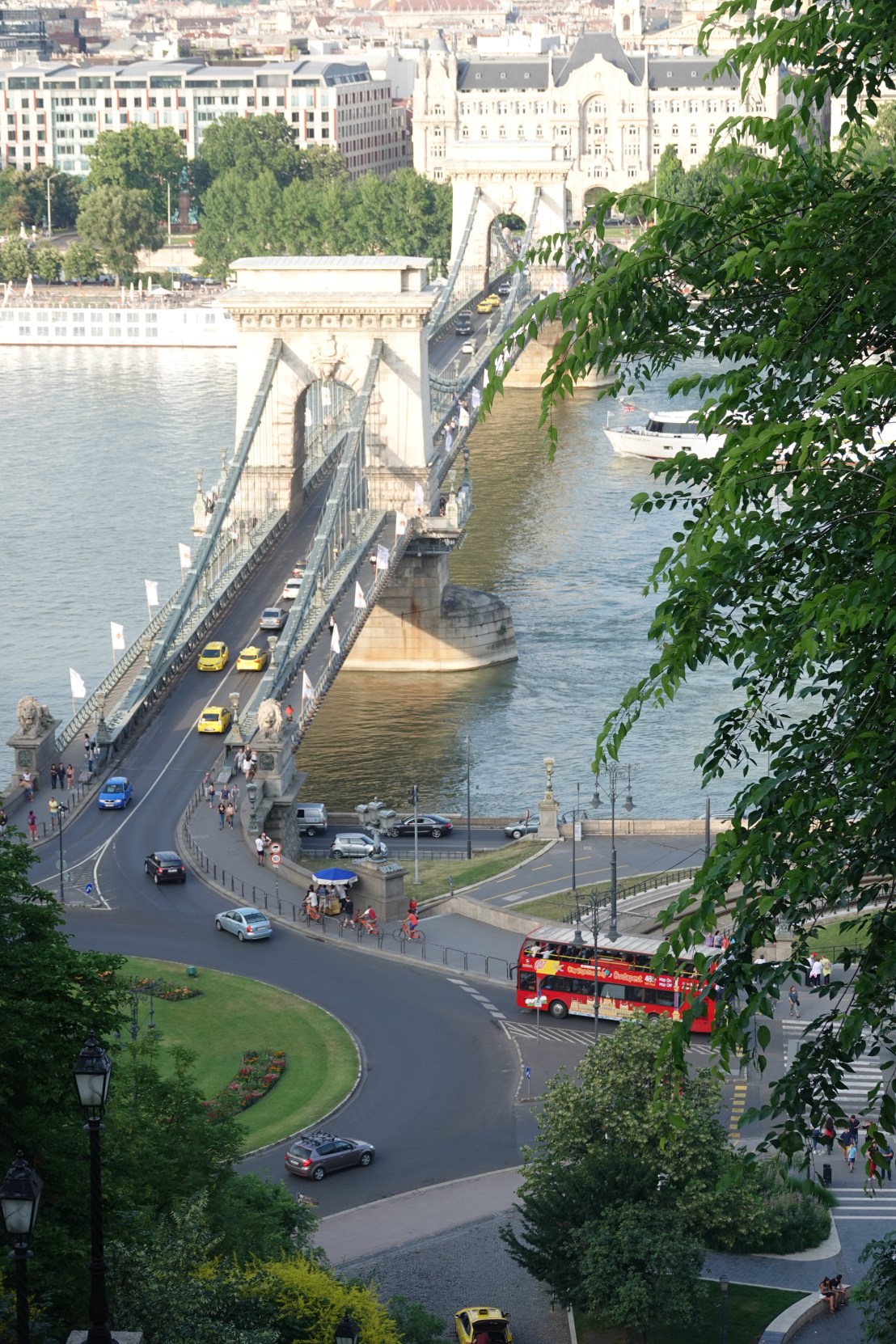
We walked across the Chain Bridge, built in 1849 and Budepest’s first bridge across the Danube. All Budapest bridges were destroyed by the Nazis as they left Hungary.
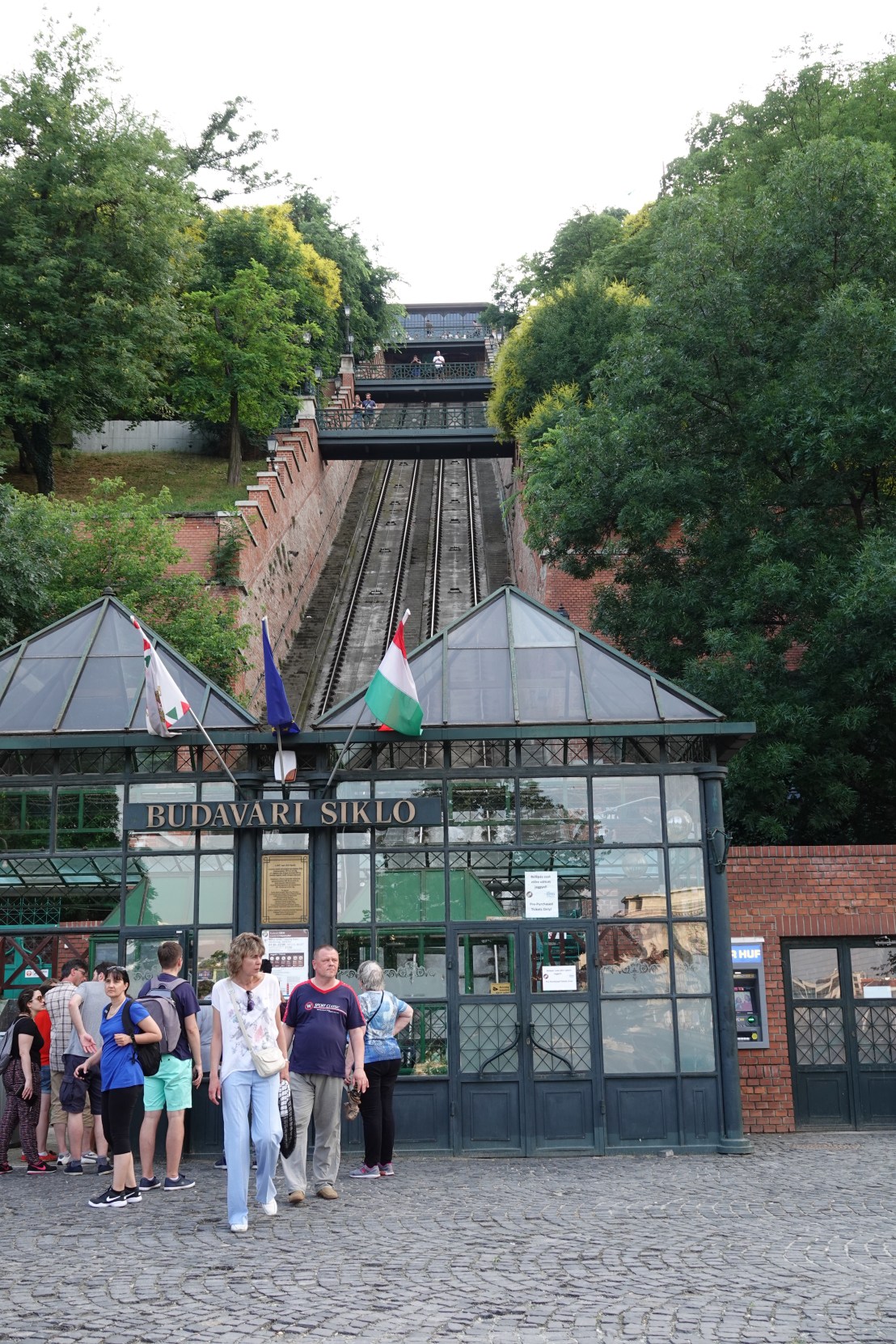
We rode the funicular up the hill to get back into Buda! A much easier walk to the hotel this way!
View from the funicular onto the Chain Bridge over the Danube. The Parliament building is out of the picture to the left (upstream).
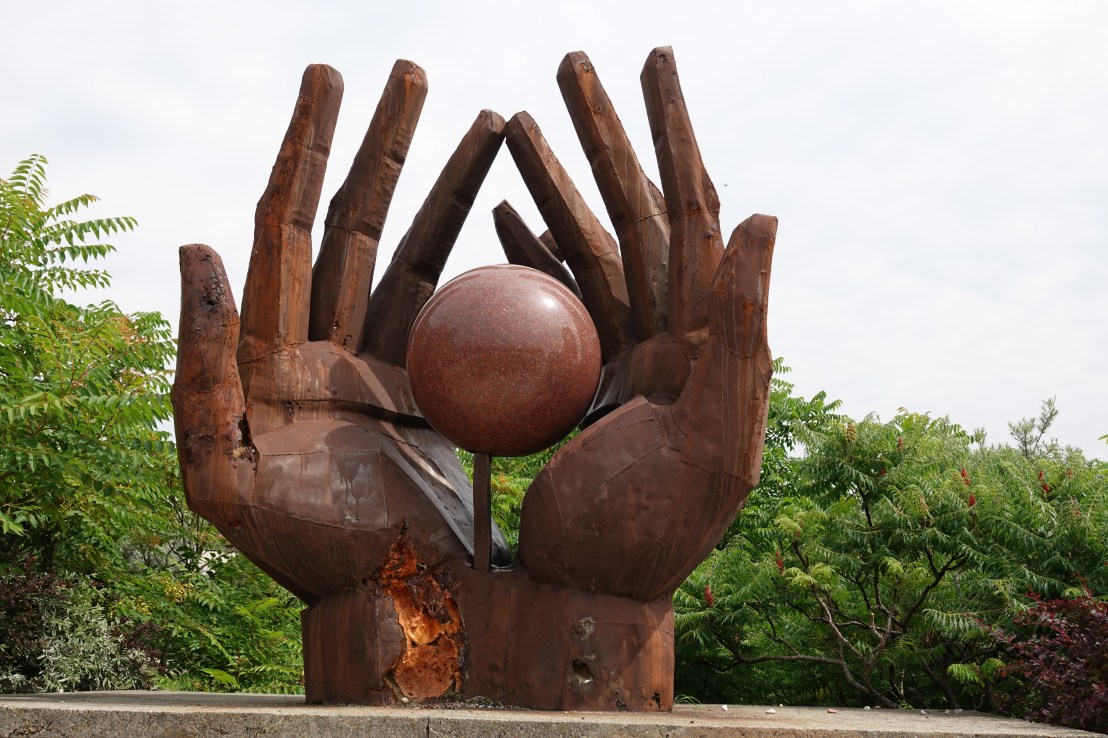
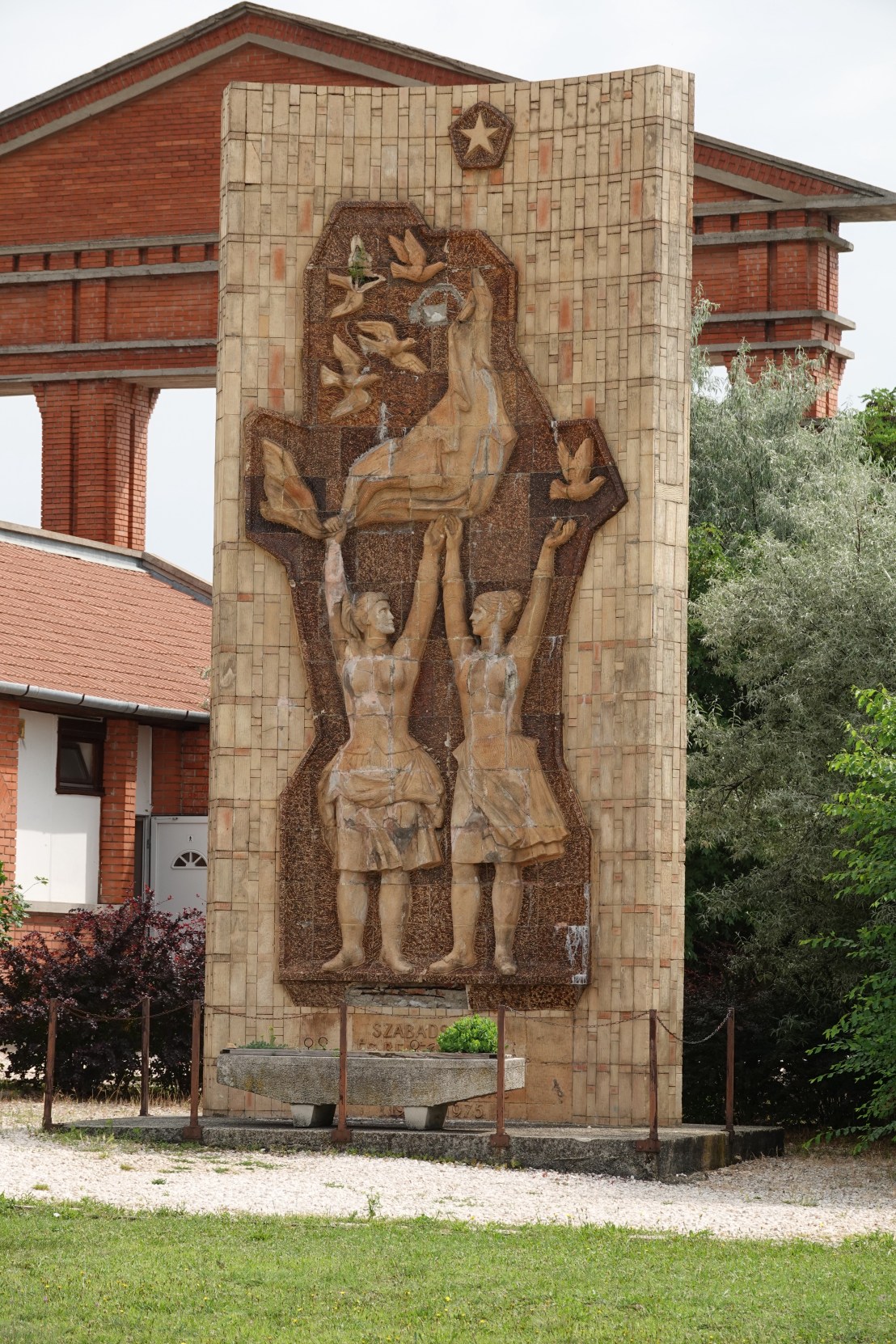
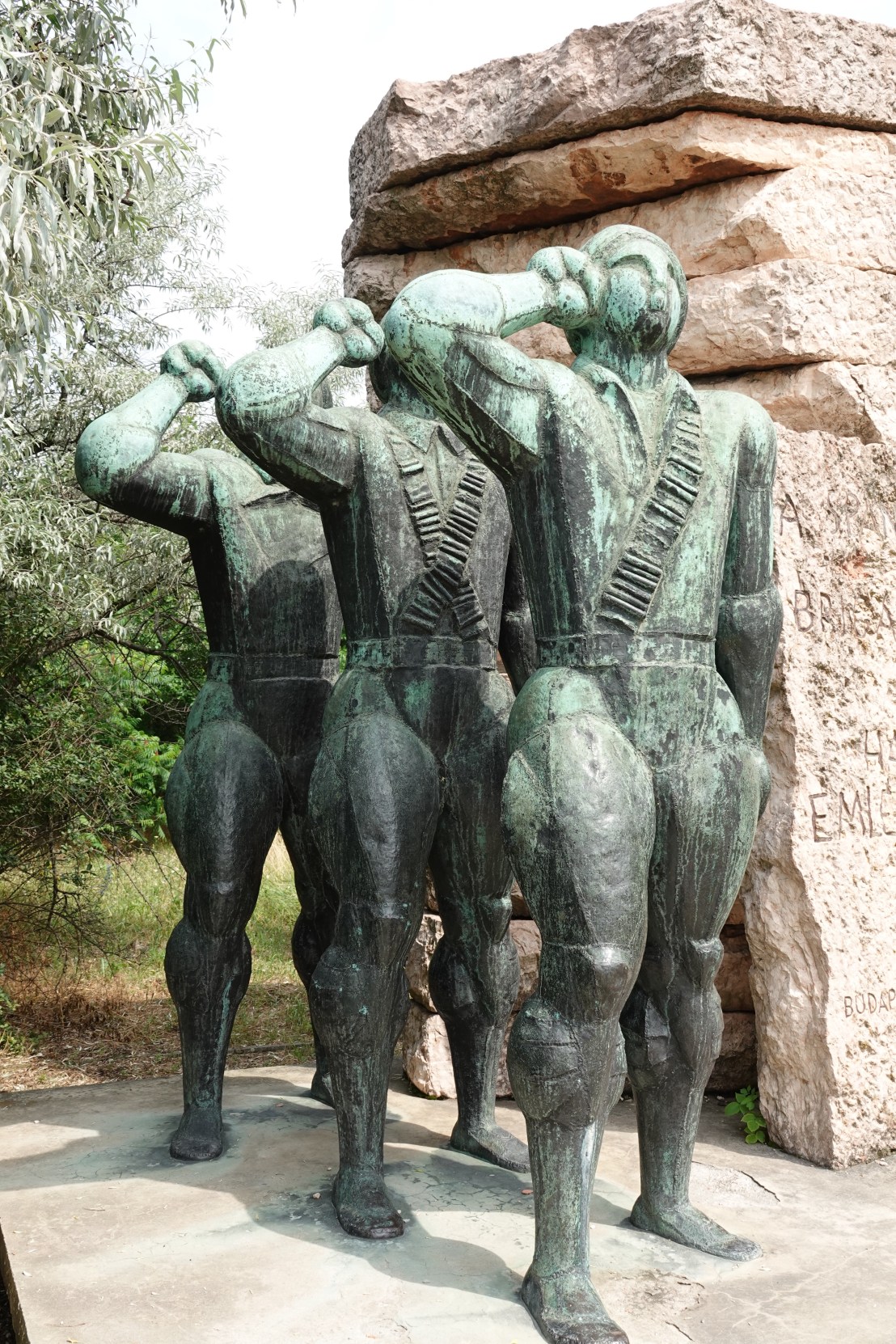
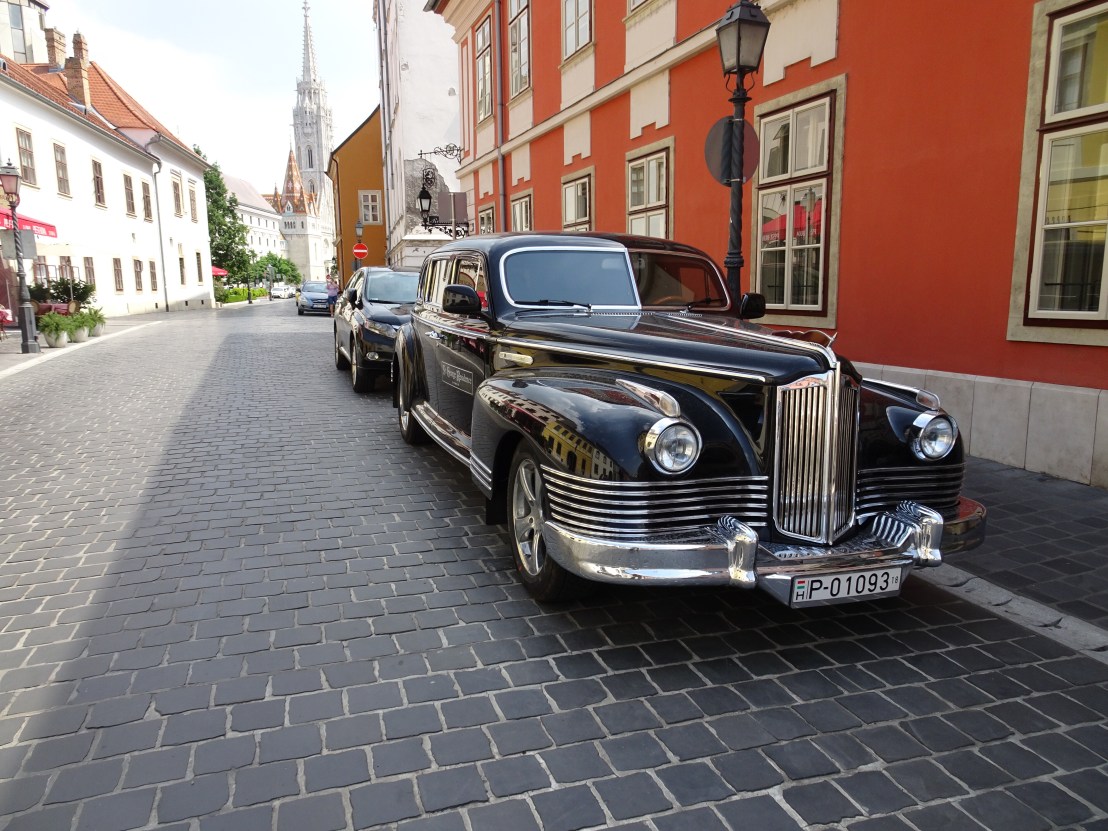 Above is a Russian limousine used by one of the hotels. After lunch, we wandered around the hills of Buda for a bit, until we left for the airport. Below is part of the 13th century wall that was left as part of the Hilton hotel where we stayed, preserving part of the old Dominican abbey.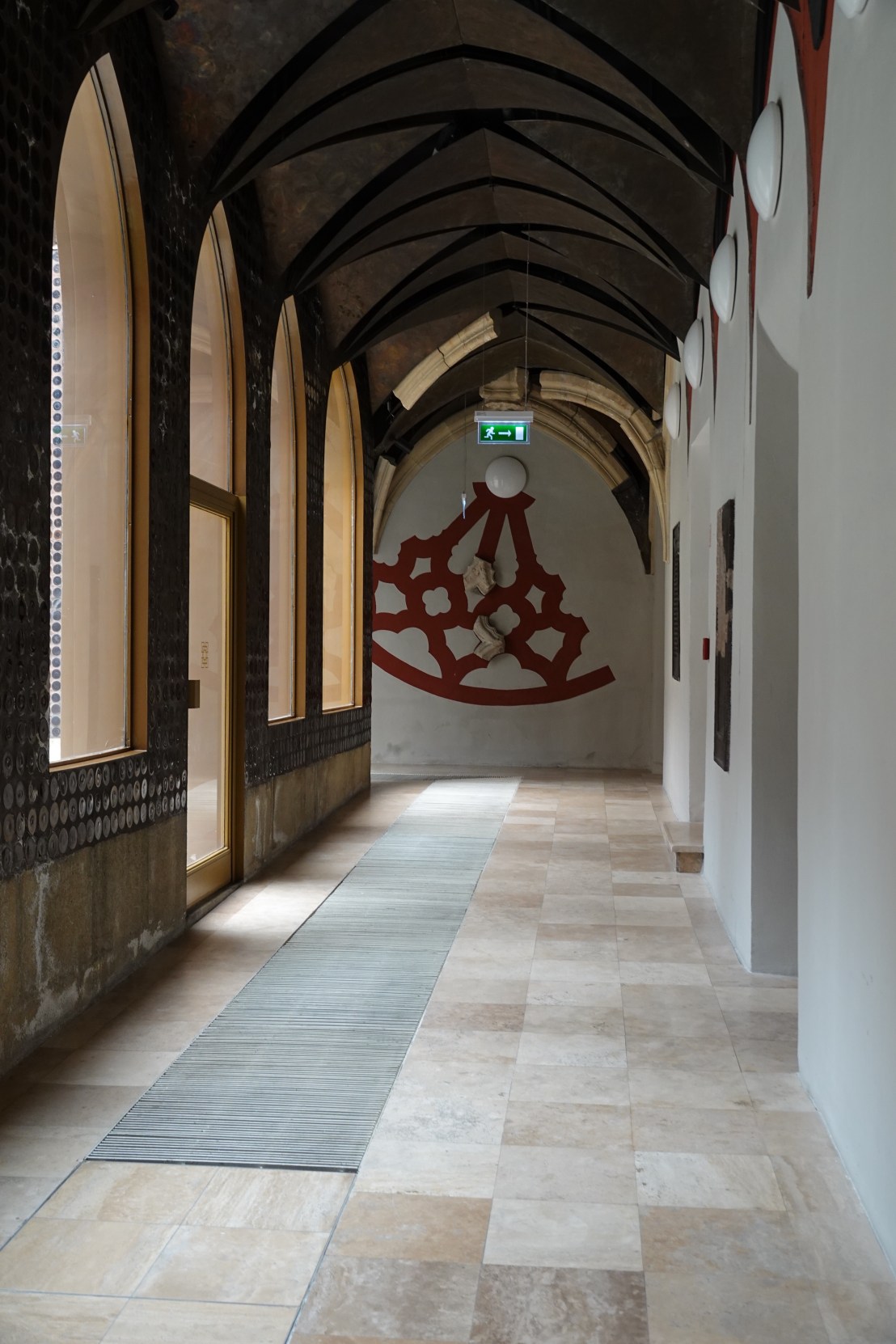
 Bunch of Geeks go Traveling