Category: 2020

Guadeloupe Ancient History and Plants

Our first day in Guadeloupe, we drove to see petroglyphs in a beach side town, Trois Rivière, about half an hour from our BnB. The petroglyphs are a few hundred years BCE, they think.
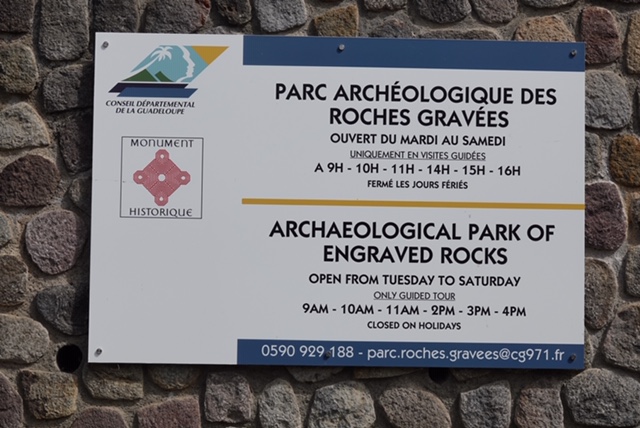
Notice how wet it is.
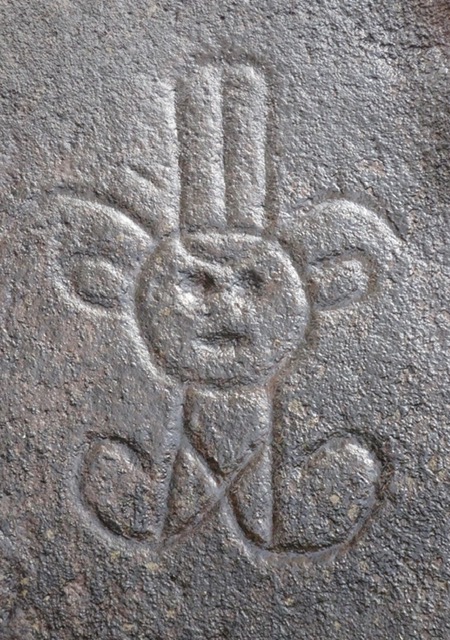
Is this guy the king? The guide’s interpretation was such.
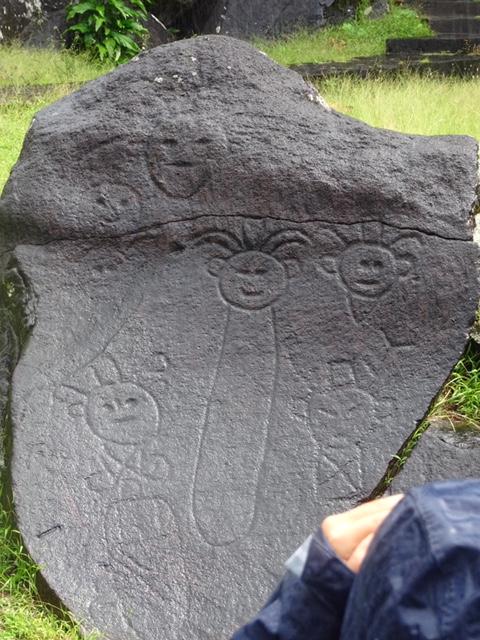
I thought it was interesting that so many have what we would call smiley faces and wondered if those were carved later.
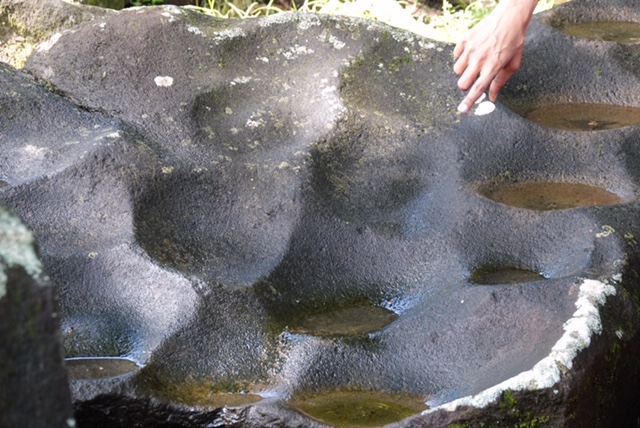
Rock where different fruits and vegetables were ground up, similar to some found in the US, but ours are in sandstone, not volcanic rock!
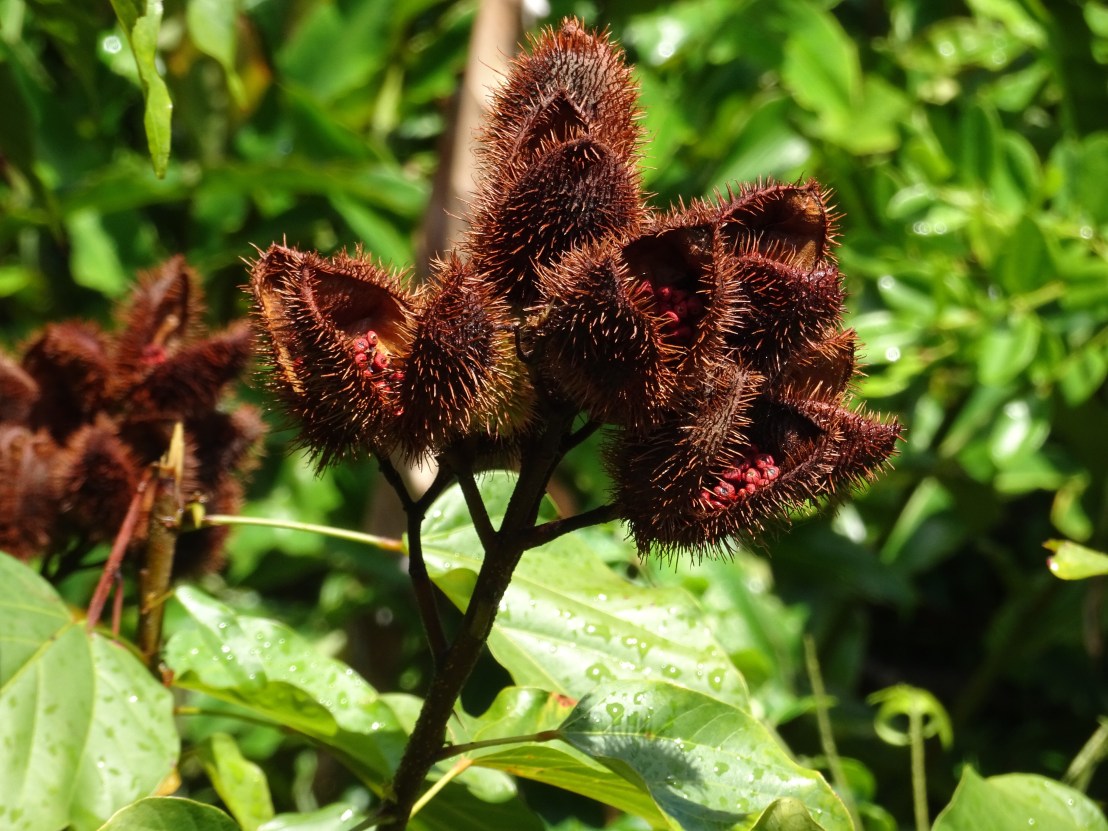
Most of the guided tour was actually about the native vegetation, which scientists supposed the Pre-Columbian people used. It was fun to watch the young guide explain how things were processed. This one was a lot like henna, for making tattoos and coloring cloth. Most of the tour laughed when Brian refused to taste a different fruit until after I did.
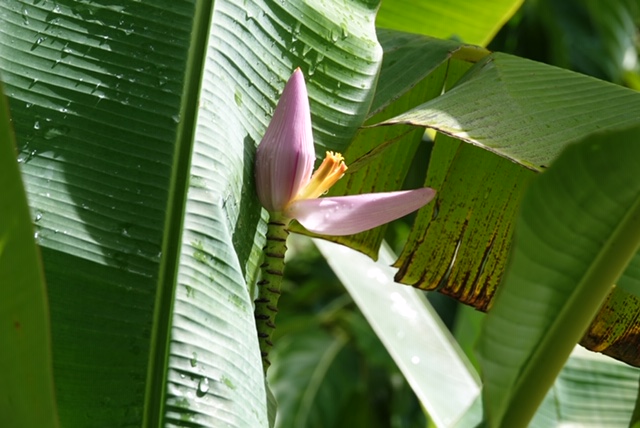
This elusive flower put us in the mood for our next adventure, the Botanic Garden (about an hour drive away).
The Jardin Botanique is in Deshaies on the NW coast.
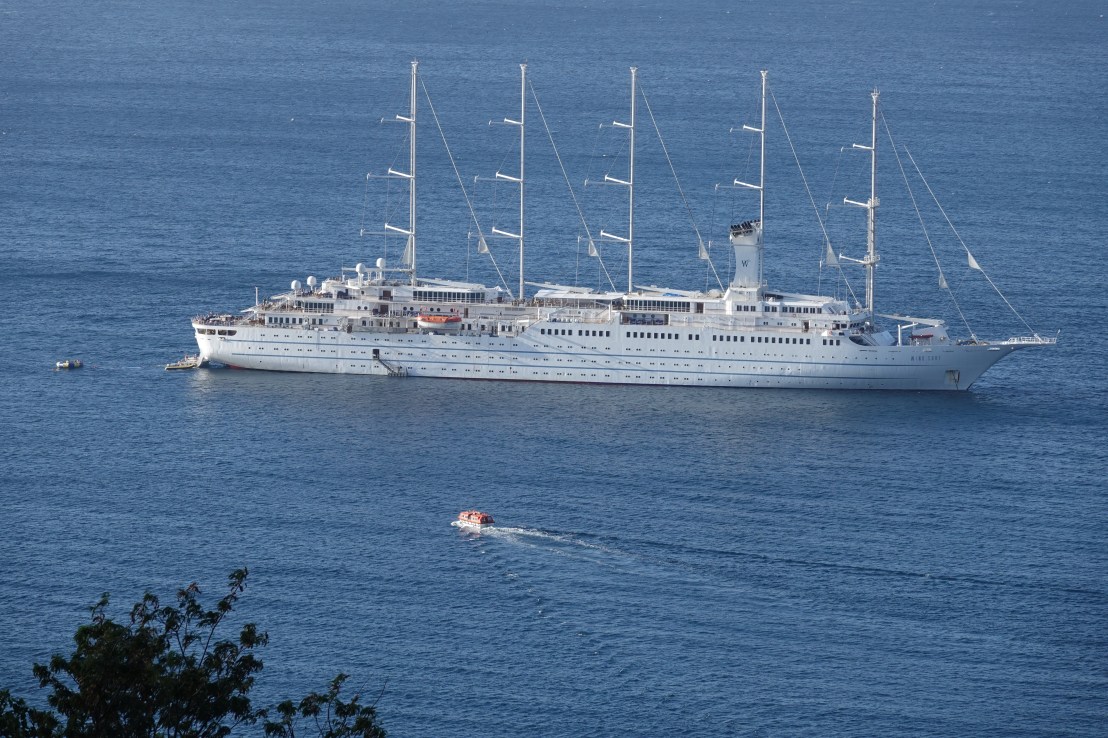
Some of the visitors to the botanic garden were ferried and bused from this cruise ship.
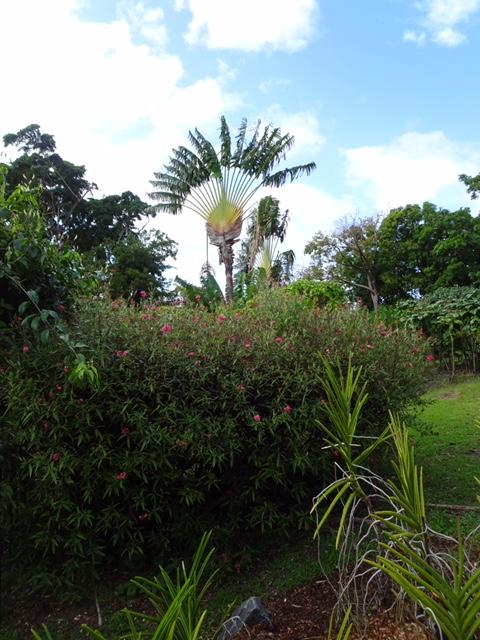
Another crazy fan palm, which we learned is actually from Africa, not native at all.
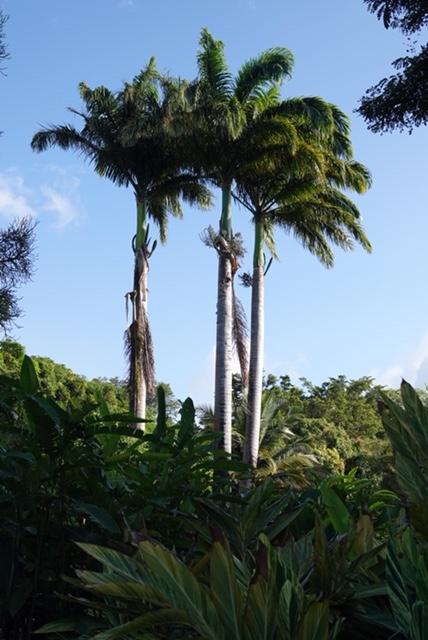
These three palms are native; the perspective is deceptive – they are exceptionally tall, towering over the tops of the other trees.
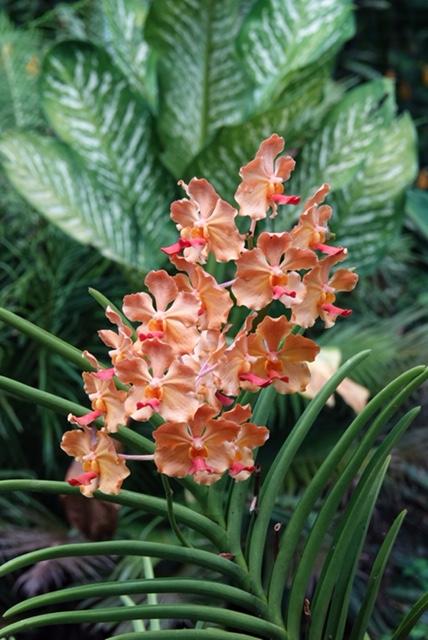
The flowers were exquisite, though most were not native.
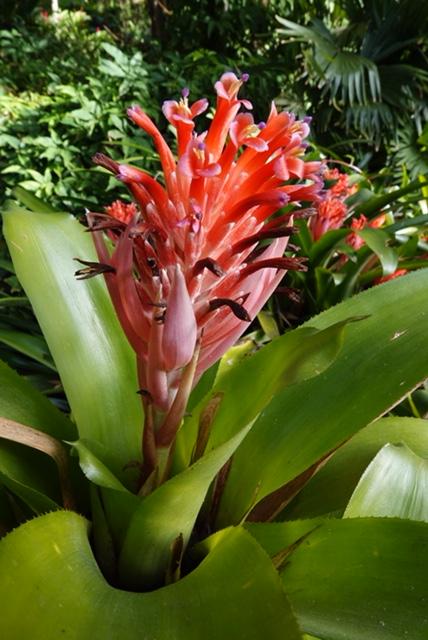
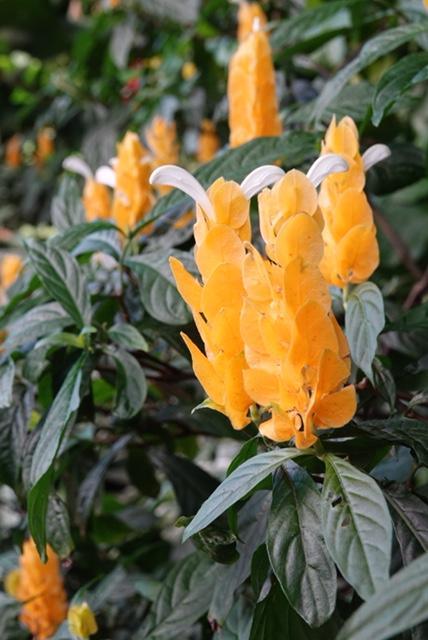
I loved these! In life, the orange parts look like feathers and the white parts like beaks. Crazy upright birds.
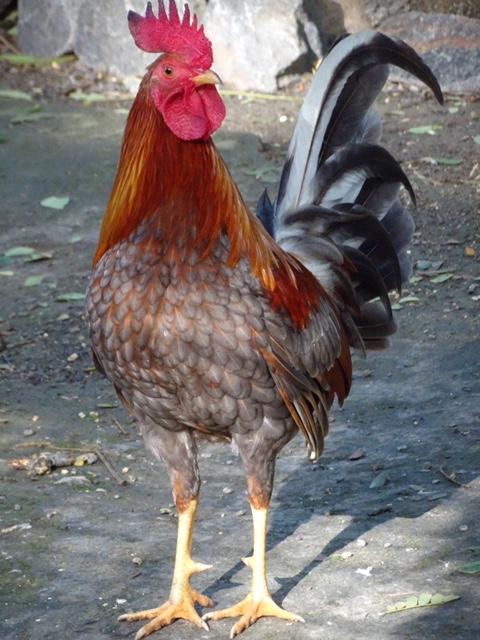
When we saw this bird, I knew we were in France!
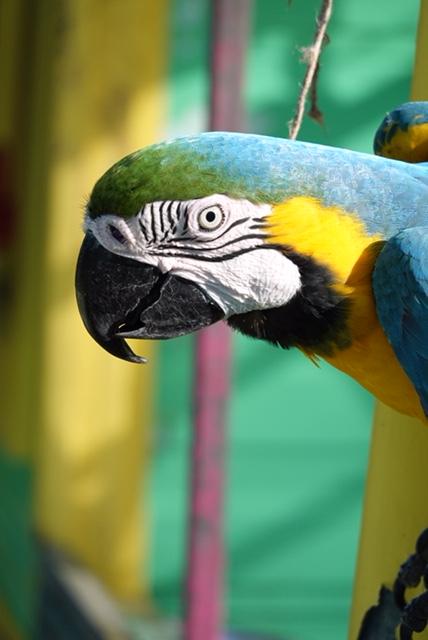
Parrots and flamingos were also featured.
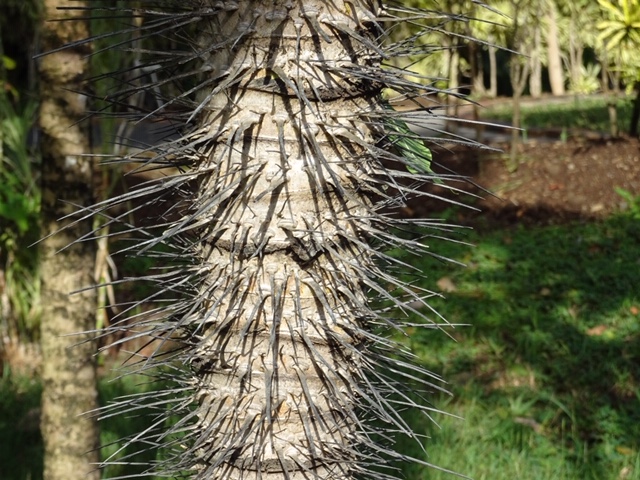
That’s one palm tree I would not like to climb!
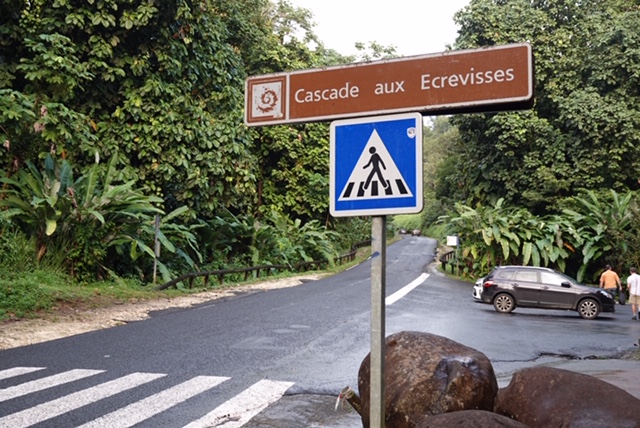
After the botanic garden, we drove back across the island through the national park.
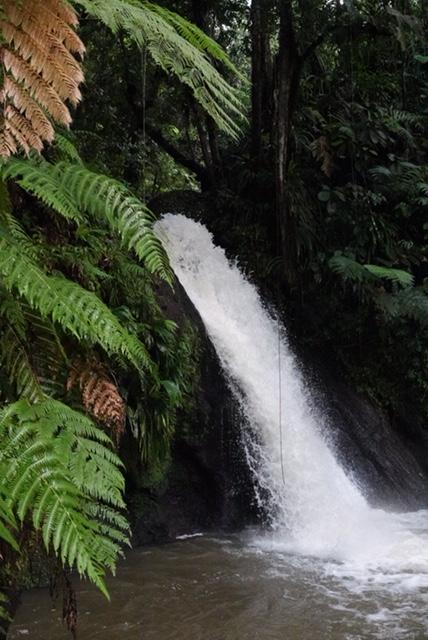
We could not resist stopping to see a waterfall along the road.
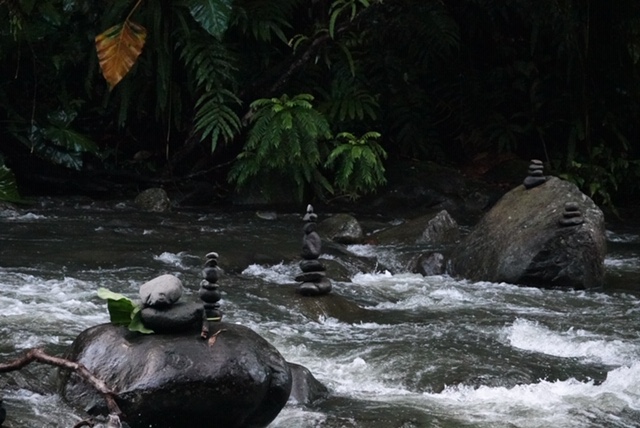
Can you see the cairns? At first we thought people must have risked life and limb to put those on rocks in the swiftly flowing river that the waterfall joins. Later we realized the water flow must be higher than normal because of the last week of rain.
Viva la difference?

Antigua and Guadeloupe are very different islands, even though they are close together spatially (20 minute flight). Antigua was once a British protectorate; driving on the left and English speaking are leftovers from that era. The islanders are laid back, easy going, with that relaxed joyousness that Bob Marley made famous. The roads are bad, unmarked, no lines and with few road signs, and we were thankful that we did not rent a car. (Besides, the taxi drivers were fun!)

Guadeloupe is a bit of tropical France. They speak French and drive on the right. That is where all similarities with Antigua vanish!

Infrastructure: Antigua has tons of pot holes, no street signs and the tap water is unsafe, so everyone drinks bottled water. It’s OK for showers and brushing teeth, they said, but to drink might make you sick. Also after the water went out on our last day at our resort, when it came back on it was rust colored. Guadeloupe has nicely paved roads, some freeways, good road signs. The water from the tap is not only safe to drink but tastes good, almost as good as Colorado water. Apparently, a volcano or mountainous area is necessary to cause enough rain to fall on the land.

People: On Antigua, the African descendants seemed to want to keep separate from the European descendants (did not see any or many Caribbean descendants.) On Guadeloupe, European, African and Caribbean people are blended, all doing the same jobs, working side by side, speaking the same language.

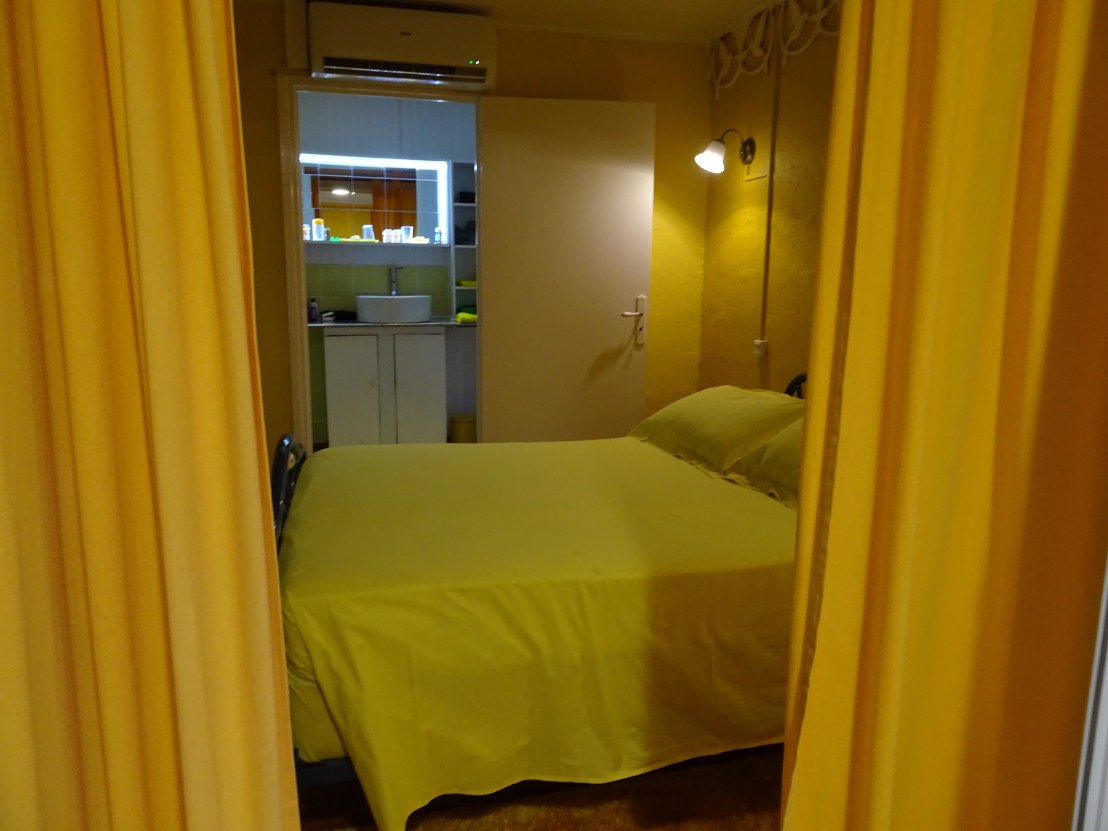
Our lodgings: We chose lodgings a bit due to differences we read about each island. On Antigua, we stayed in our first ever all-inclusive resort (unless you count our 2018 river cruise boat). The room was huge, with a separate area with couches and tables for us watch the waves when we wanted. Lots of cupboards, lots of hangers in the closet. On Guadeloupe, we have a single room which barely fits the bed, no tables or chairs. It’s a Bed and Breakfast in someone’s home. We can sit out on a balcony to write blogs and eat food that we bought.

Food: Antigua’s resort food was British and abundant. Clare would be OK to never see baked beans for breakfast again. Abundant food and alcohol, all day if you want it. When we walked to the capital, we had nice British-type food. Guadeloupe is French all the way! The breakfast at the BnB is fantastic, fresh cooked croissants and pastries, home-made jams, fresh fruit from their own trees, fresh eggs from their chickens cooked by a smiling gentleman. Fantastic. For lunch and dinner, we are on our own.

Topography: Antigua has mountains but not as steep or tall as on Guadeloupe. The volcano that created Antigua is 35 million years old, so a lot of time for erosion to occur. Guadeloupe’s volcano is considered active, and that mountain, La Soufriere, is very steep with deep valleys around it.

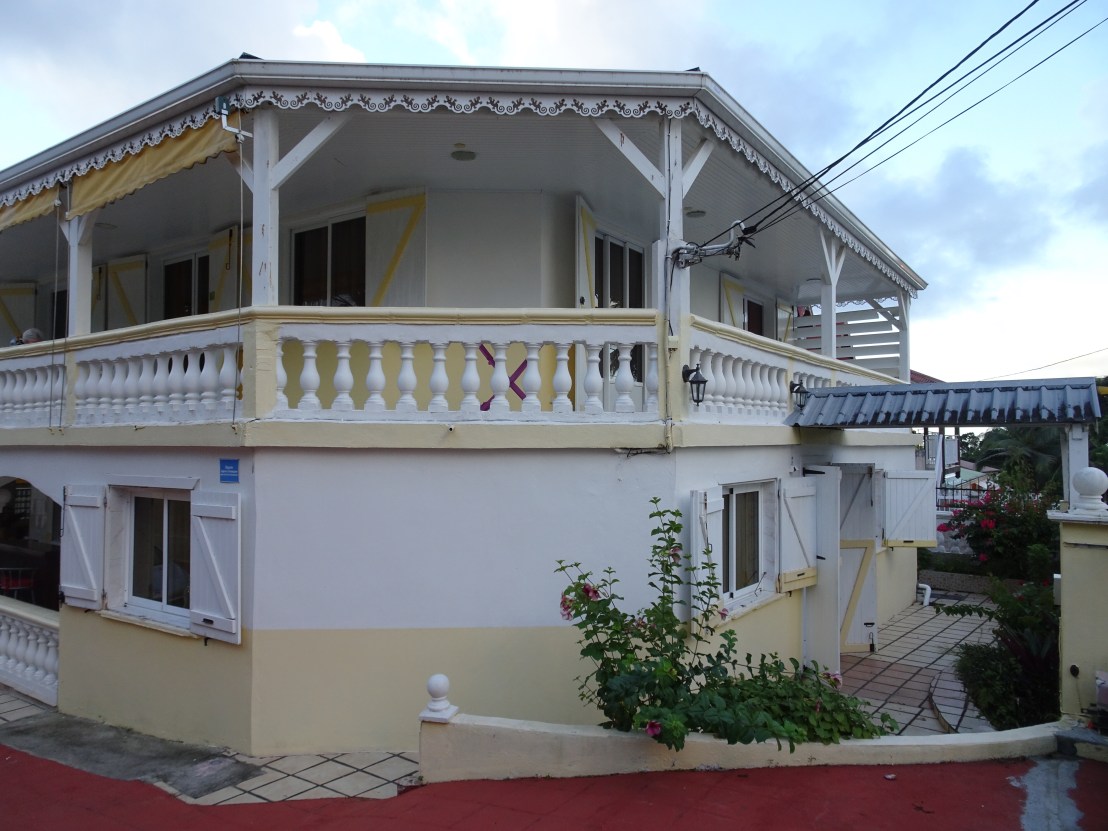
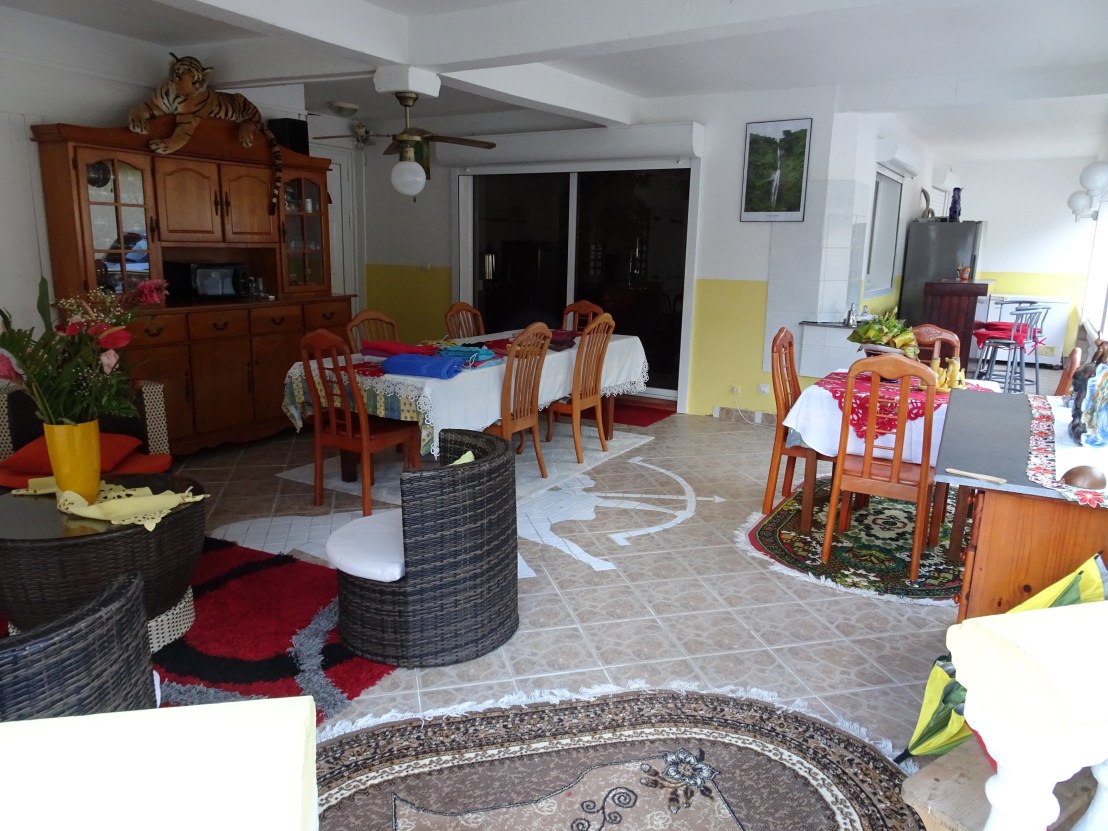
Pictures of our B&B, Villa Mancina:

Milky Water and Goodbye Antigua

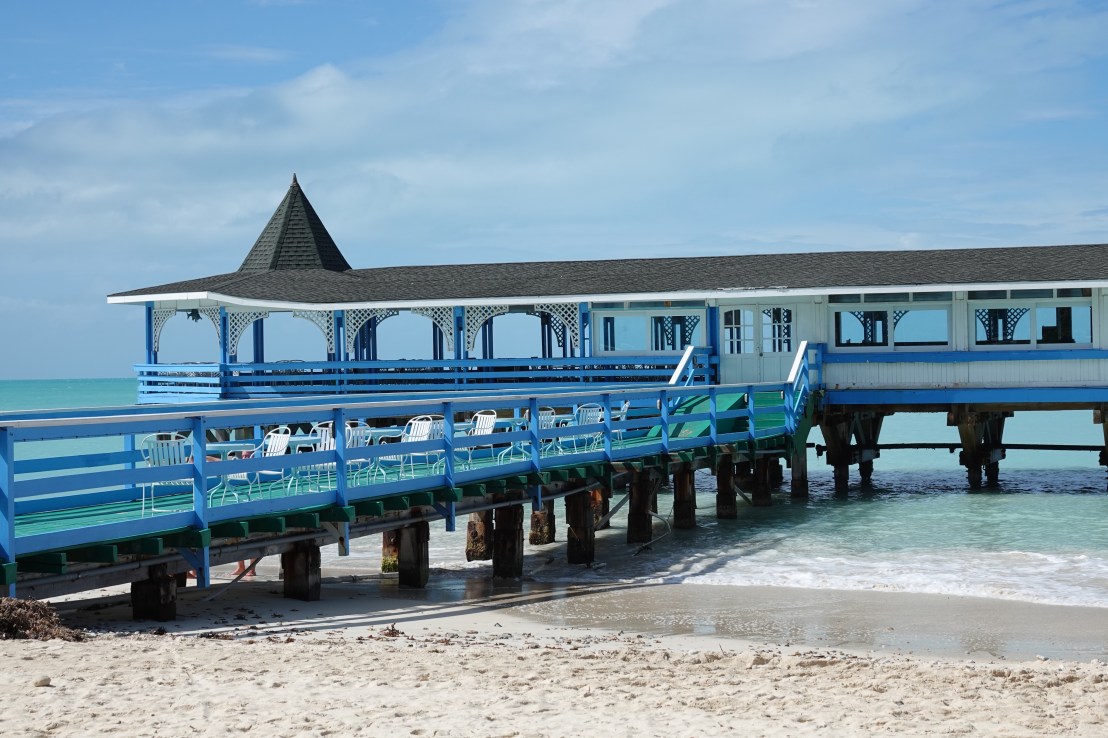
Our last night in Antigua, we ate dinner at the Warri Pier restaurant at the resort, shown above. Lights on the water made the waves look milky blue, so I asked the waitress if it were always like that? She practically exploded with information about how different the water has been all week because of the rough seas. Usually, she indicated, you can see big fish in the water at night, and people throw food from the restaurant to feed the fish. Usually, in the day, the water is crystal blue, not the murky mess we see now.

That was interesting in two ways. First, we observed that the water was different from Curaçao where we stayed two years ago, but assumed that was just a difference in the island. Perhaps the water would have looked more similar to our other visit on a more normal week. Second, the islanders claim to be laid back, easy going, yet the woman was passionate, defending her ocean.

The airport on Antigua is modern and security is super strict. We had to show proof of where we were staying as well as how we were leaving the next island, Guadeloupe. It took a long time.

News Hiking Friends! If you bring your hiking poles to these islands and cannot fit them into your luggage, you might have to pay $60 US to get them onto one of the flights between islands! Surprise! And we could not pay at the check in counter, so Brian had to go to a different counter. This is only for poles with spiky ends like mine, not ones with rubber ends like Elnore’s.

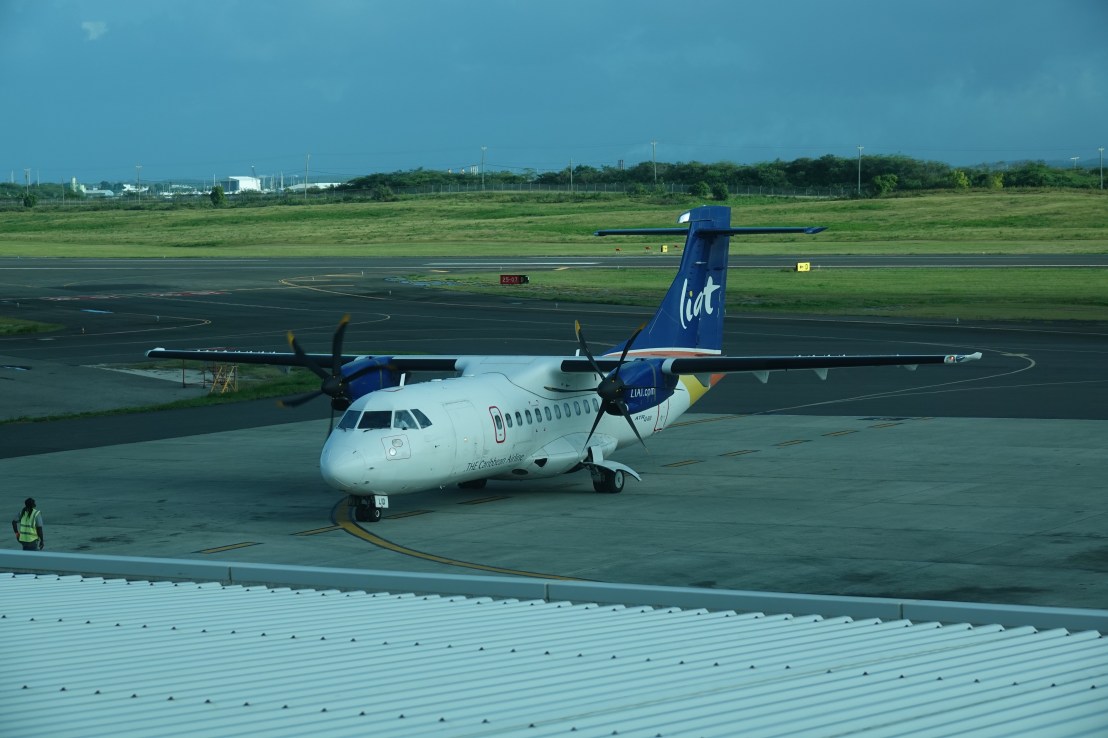
We made it to Guadeloupe on a plane like this one, so all is well.

St. John’s and a Rogue Wave

This morning we skipped the water aerobics class to walk to the capital, St John’s, about 3 miles from our resort. Everyone thought we were crazy, but it was relatively flat and we wanted to see the island better. On the walk, we realized why it was crazy – humidity! I would not recommend this to anyone who lives in an arid environment – the humidity tired us out!

One car stopped to ask if we needed a ride (we must have looked really red).

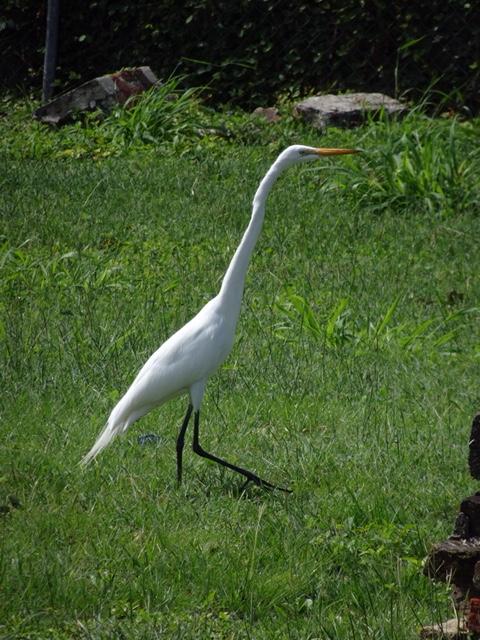
Cattle egret – very similar to our snowy egrets in Colorado. This one does not like to wade so much as hang out in the fields.

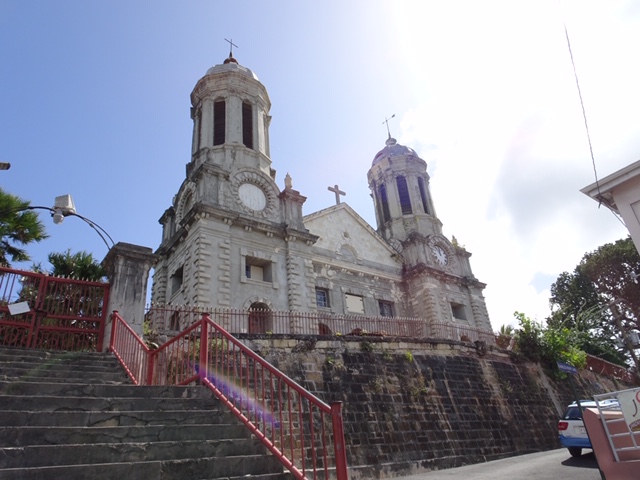
The first place we visited in St John’s was the Cathedral and Parish of St John. We had to go all the way around it to find an open gate.
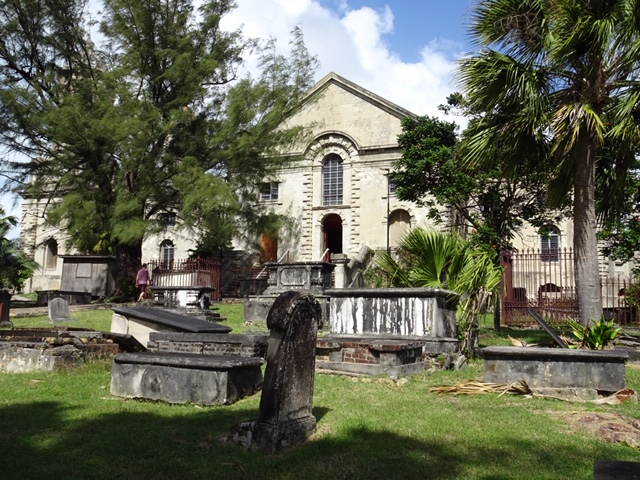
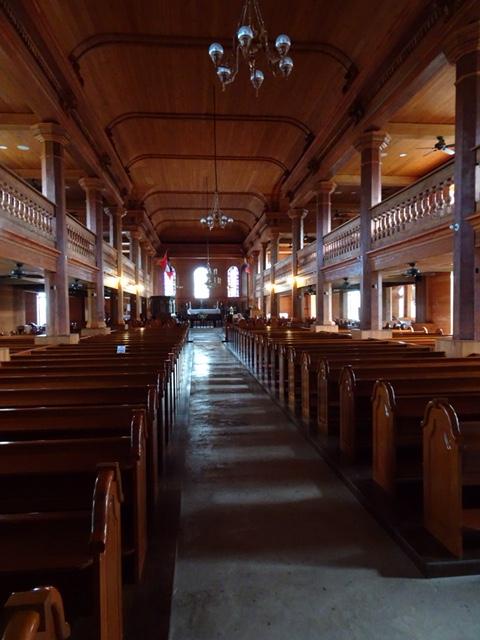
In front is a cemetery; so strange to me to have it in the middle of town, right next to an active church. Last Sunday was the confirmation day, with the local bishop administering.

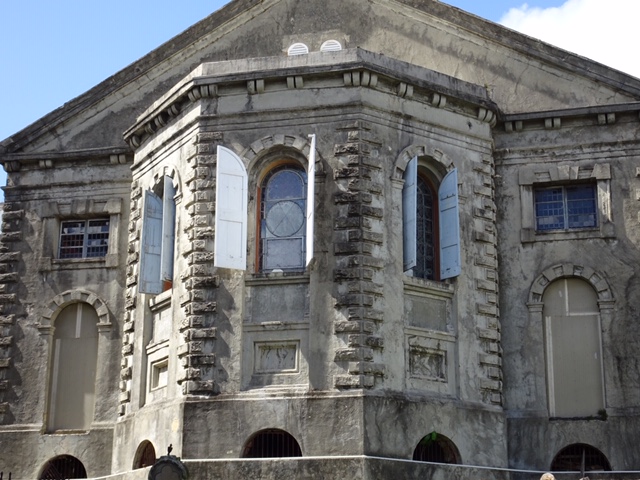
From the outside, the stained glass windows behind the altar are not impressive but notice the storm shutters for protection from hurricanes.

Inside the church was very dark, especially after the bright sunshine from our walk here. The pews were all made of wood, nicely polished.
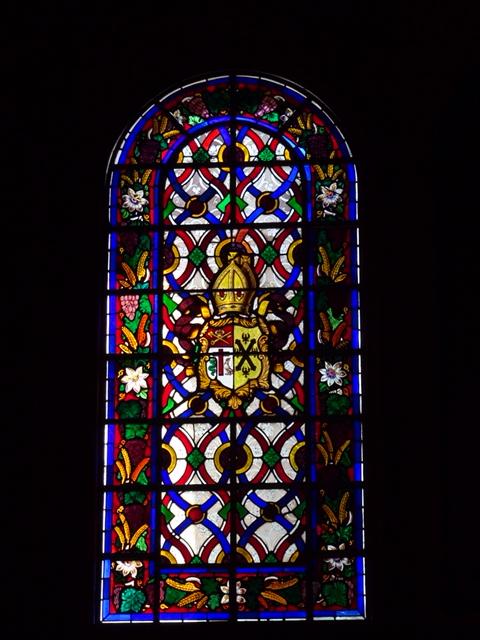
One of the stained glass windows behind the altar.

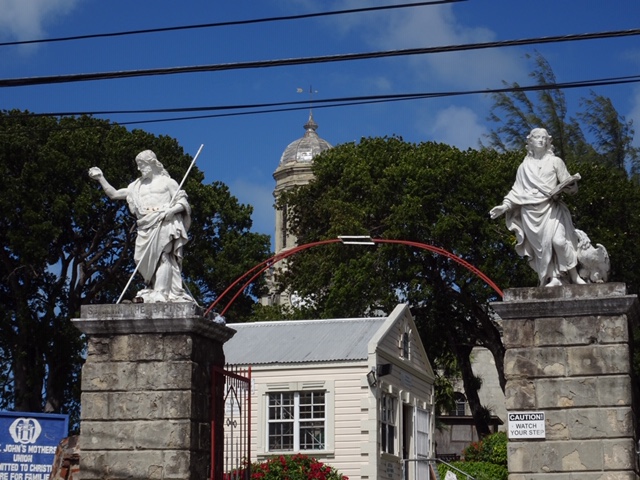
View of the south gate with one of the towers in background. The two white statues are of St. John the Devine and St. John the Baptist and were planned for the island of Guadeloupe but were confiscated by the British navy from a French ship in 1756.

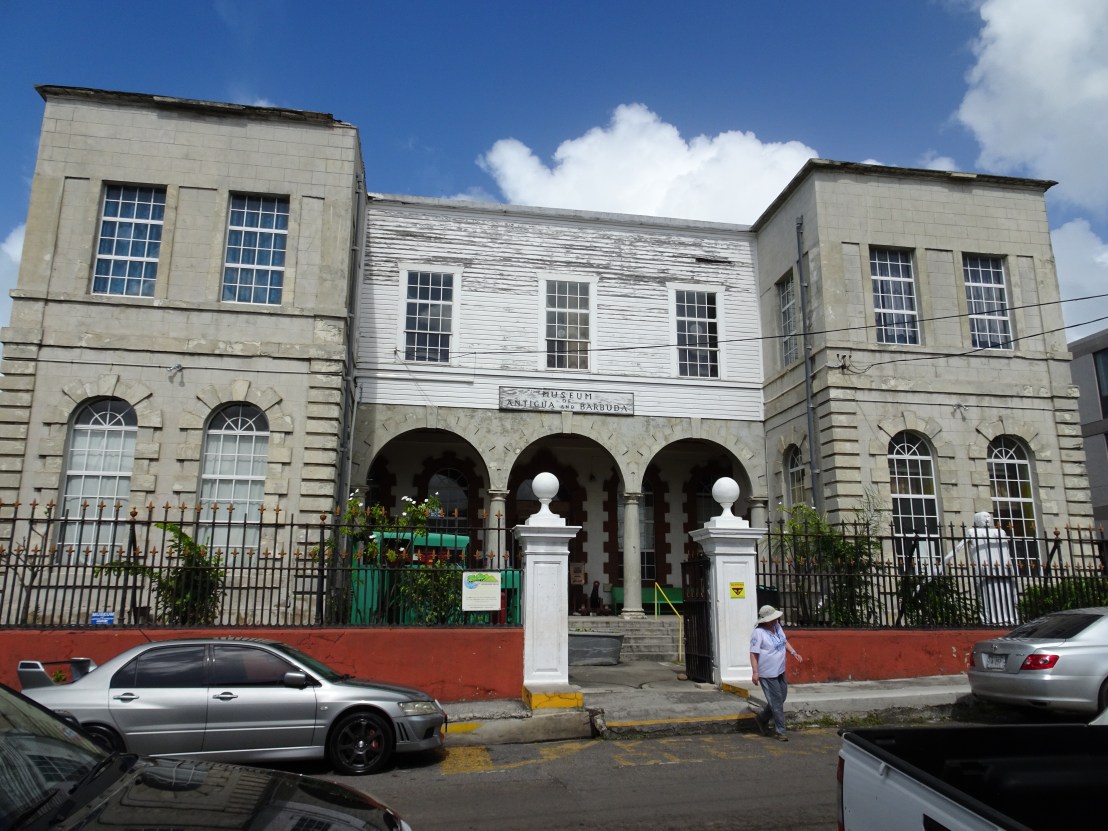
We then visited the Museum of Antigua and Barbuda. Located in the old courthouse, it had good displays on the geology and history of the country. By the way, Antigua is east of the main volcanoes in the Leeward Islands; there has been no volcanic activity on this island for more than 25 million years.

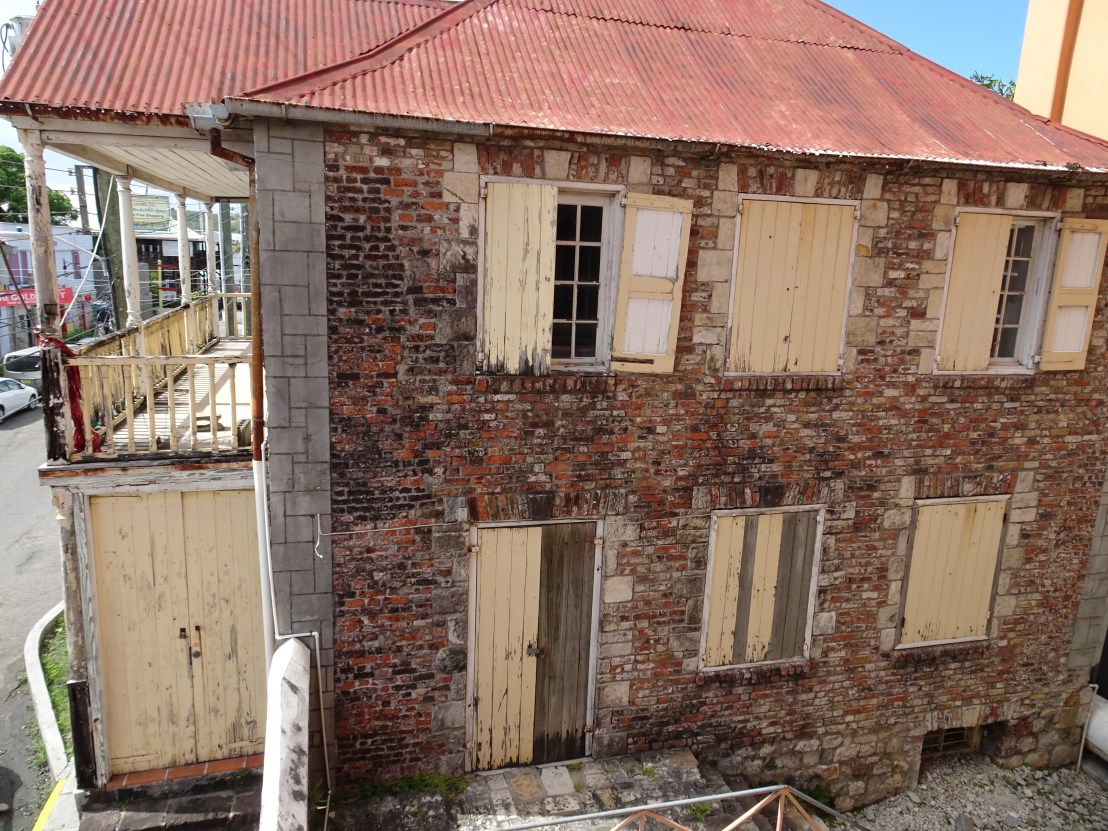
We don’t know when this was built – it looks like a long time ago.

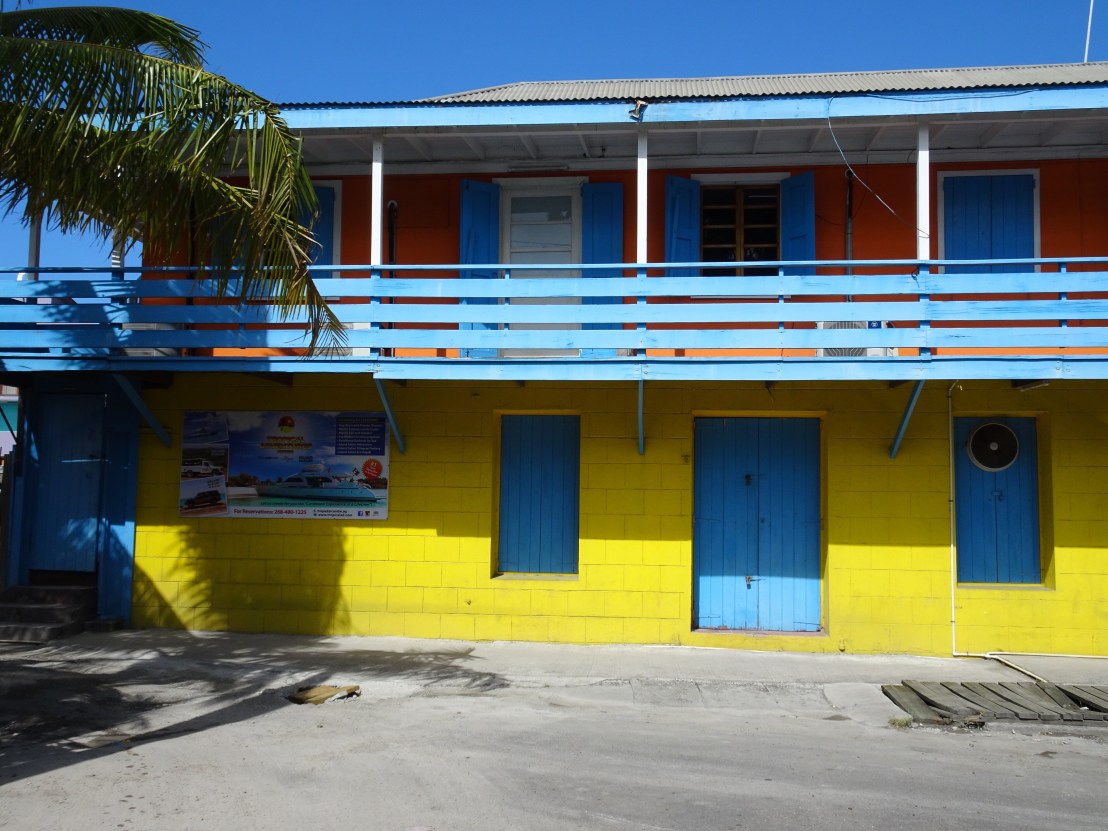
This is more fun to see, so colorful!

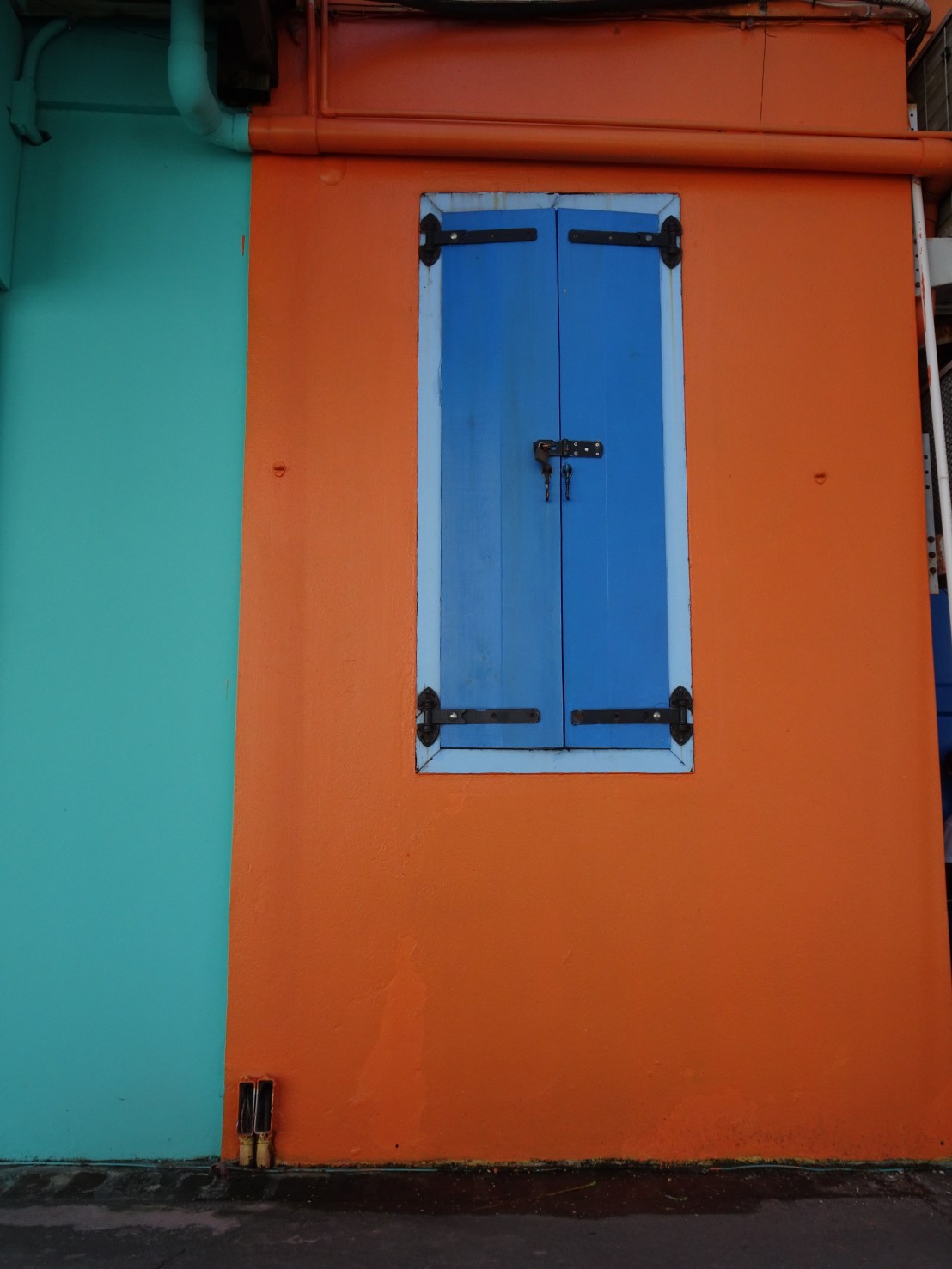
Again. Caribbean?

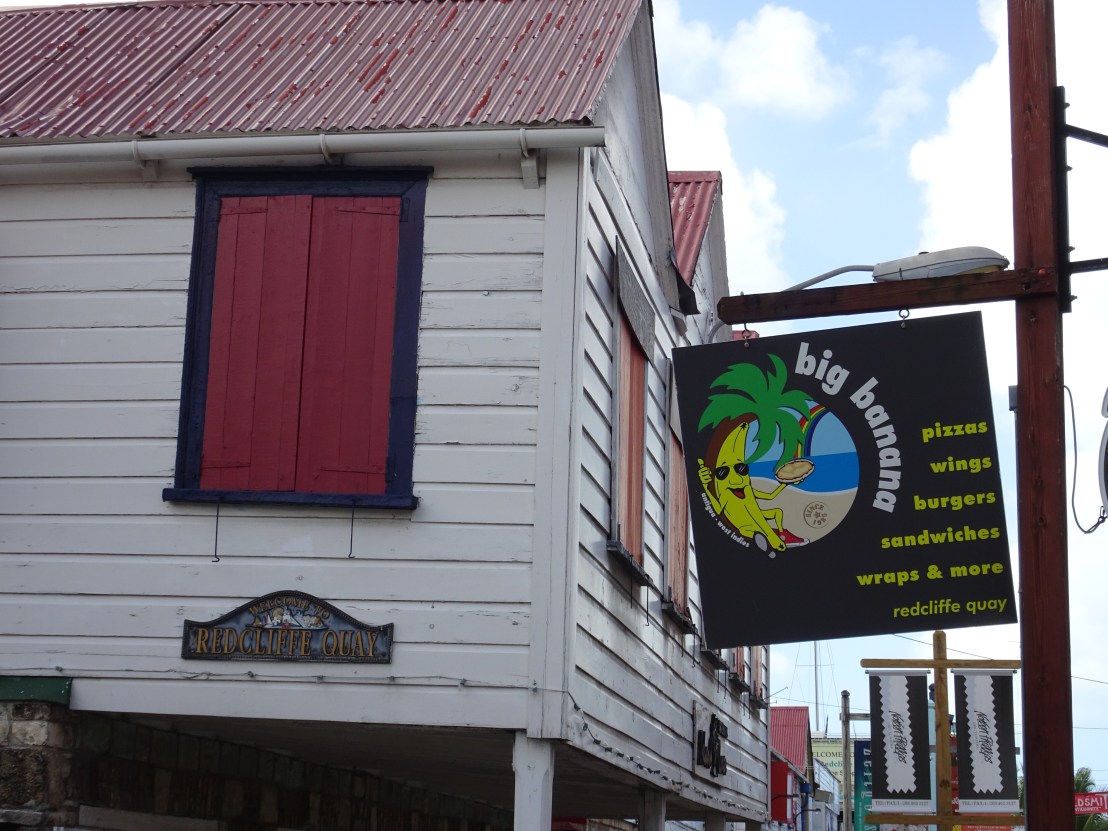
We ate lunch at Big Banana; it was good timing as it poured rain while we were eating. The restaurant staff had to mop up water that blew in the open doors.

After a short taxi ride back to our resort, we went for a swim in the ocean (which we have done most of our days on this island). While we were getting in, Clare stopped to point out to Brian how high the water had gone on the adjacent cliff, and we were dumped, slammed by an exceptionally large wave. Clare got up and called to Brian “I lost my glasses,” and he said “So did I”. Fortunately, four friendly French people were in the water nearby and they helped us find BOTH pair (unbelievable). Brian commented that we should go to the casino next, and one of our saviors said, “I’ll go with you.” The water was only chest deep, so the sunglasses were found by carefully walking around and feeling the sandy bottom for them. It was amazing that they were recovered without damage. We continued our ocean swim afterward, feeling lucky.

No – we did not go to the casino.