Category: 2020

365 Beaches

Antigua is known for 365 beaches, one for each day of the year (we are not sure how they count them). Since we could not go snorkeling, we decided instead to see some more beaches.
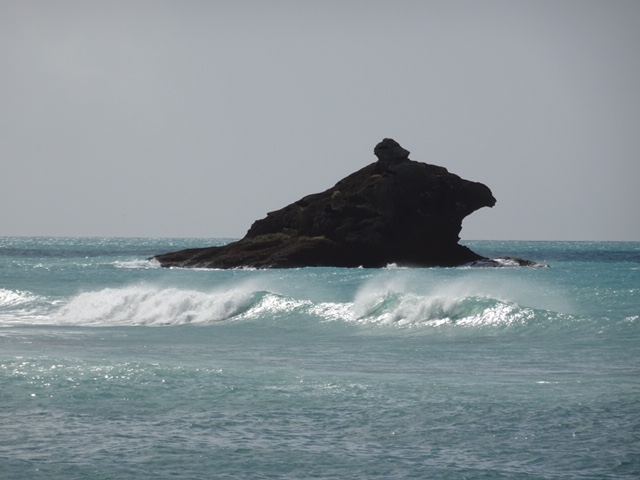
This is the Hawksbill, an erosional remnant in the ocean adjacent to a sister resort to the one where we are staying. The waves were really high, for this area, as others who had been here before explained. We had hoped to go swimming at this resort (in 4 different beaches) but it looked too dangerous. Clare fell down just walking on the beach! (Unusually, when walking on these beaches, your foot can sink quite a bit, and Clare tried to turn when her foot could not. No big deal.)
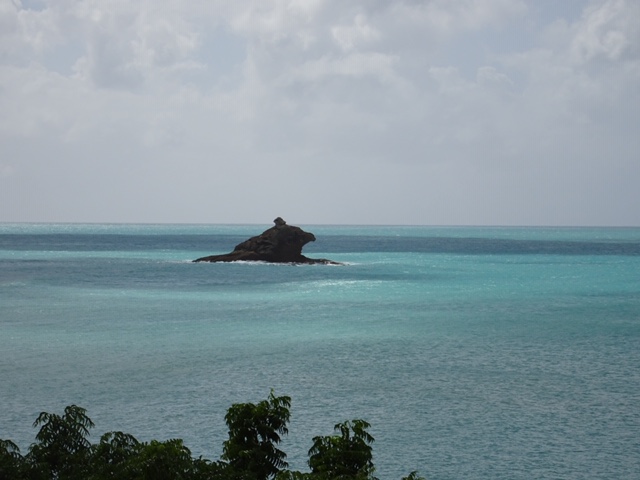
A more typical view of the Hawksbill rock. Notice the darker parts of the sea? We had originally thought the darker places were kelp, or deeper parts of the ocean – until one started dissolving right in front of our eyes! Now we understood that the darker parts were shadows caused by the numerous cloud layers above. It was fun to watch the dark and light water parts change, almost dancing as the weather patterns evolved.
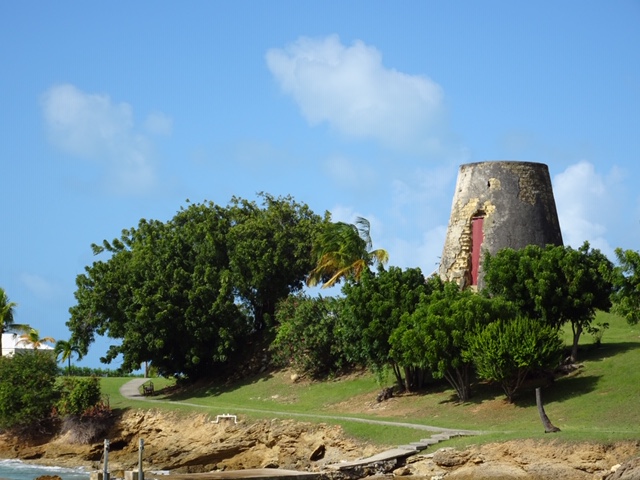
The Hawksbill resort was built on a former sugar plantation. The only remnant is the masonry base of an old sugar mill. Above this base, in its time, a wooden wind mill would have been visible, powering stone wheels to grind the sugar cane. Could this have looked a bit like Holland, back when so much sugar was being produced here?
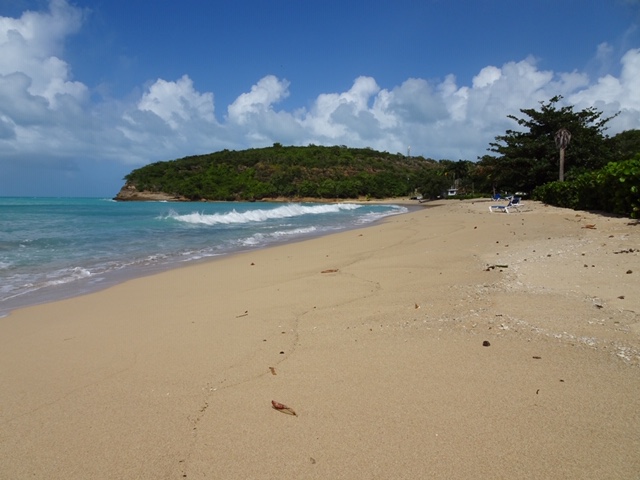
The 4 beaches we visited at Hawksbill were steep.
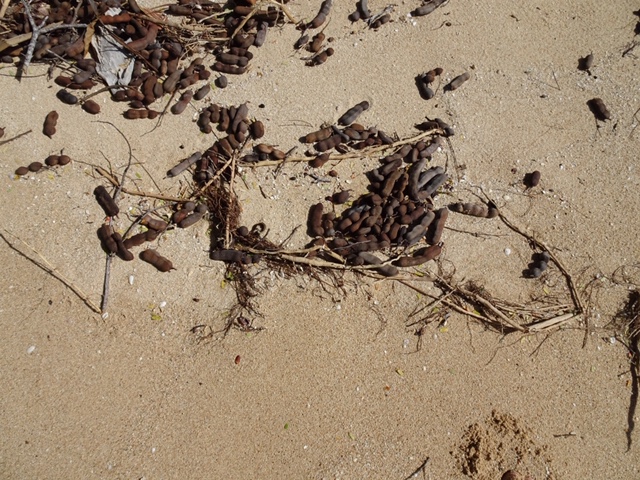
Um – what do you think this is? No, not poops! Fat seed pods.
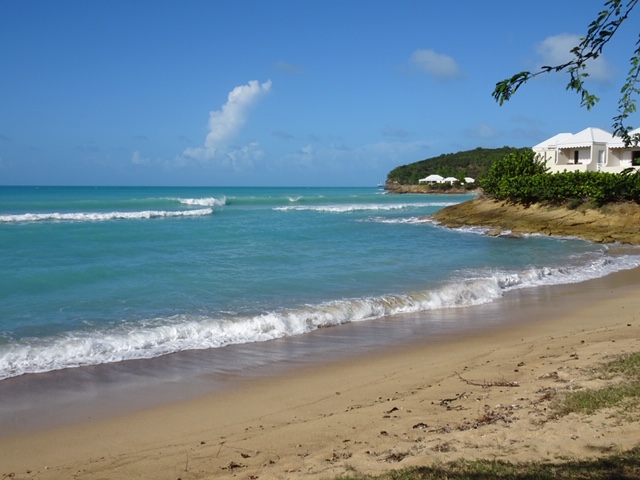
Another beach, showing part of the resort. The waves were fantastic. Once again, I enjoyed watching them crash. So unusual for this time of year in the Caribbean.
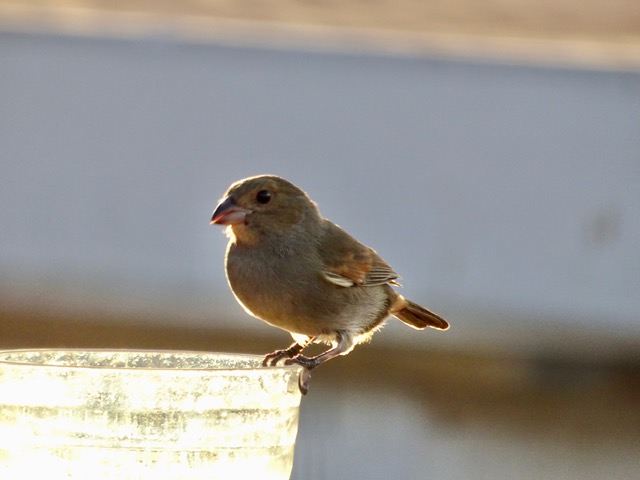
A Lesser Antilles bullfinch, sitting on the edge of a cup (so you know how small they are). These lovely birds visit us whenever we are outside, back at our resort.
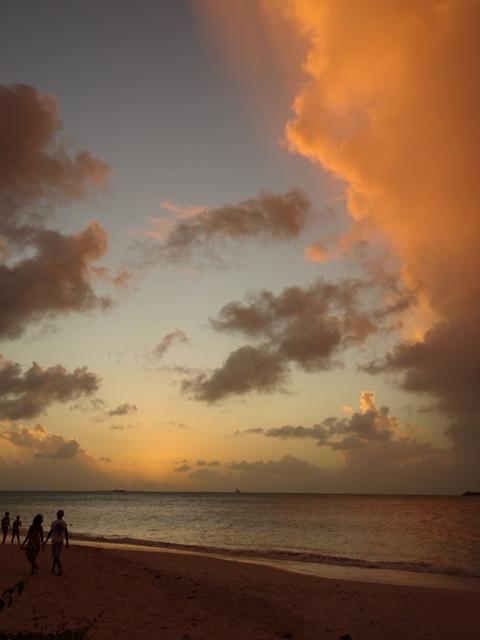
Sunset at our resort.
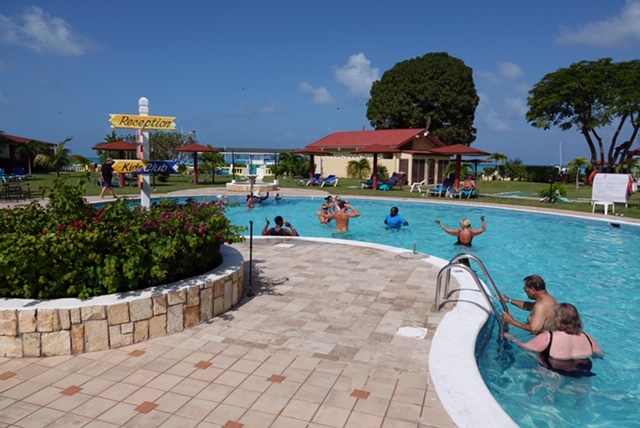
Explorers

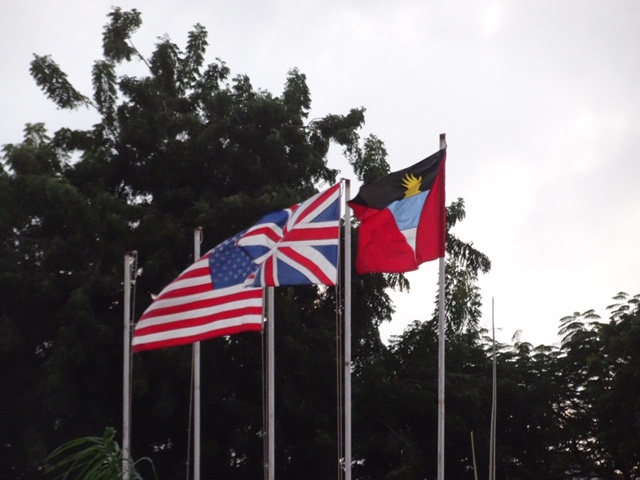
The resort where we stayed has US, British and Antiguan flags. The food is “British”, and the guests are mostly from Britain and Canada – direct flights from London and Toronto are probable reasons for that.

One morning we decided to participate in “Socorobics”, in which we did everything the instructor told us to, including yelling “Ya Mon” whenever he asked if we were feeling good. And it did feel good! Moving through the water is easy on the muscles, leaving us feeling more flexible after.

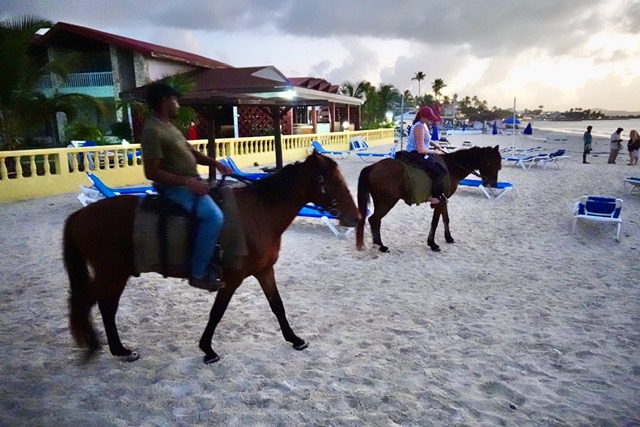
Horses are, not common, but here they are! On the beach.

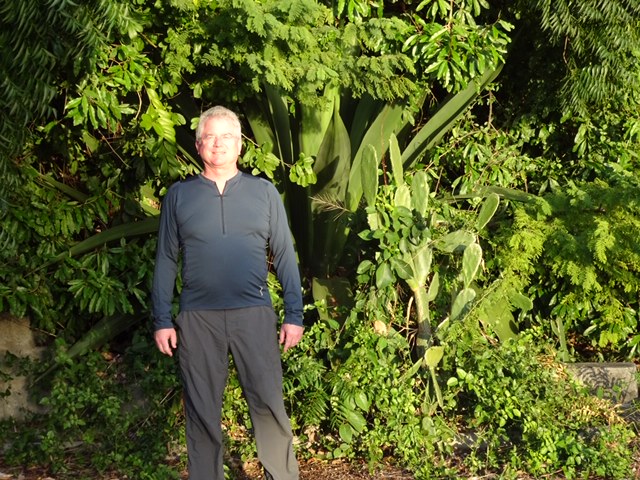
Then we walked to the “Clouds” on one of the steepest roads I have ever walked along. Almost like a ladder. But the road went to the top of a mountain adjacent to the resort. The picture shows Brian standing next to a cactus in the middle of other lush foliage. That was about half way up the mountain.

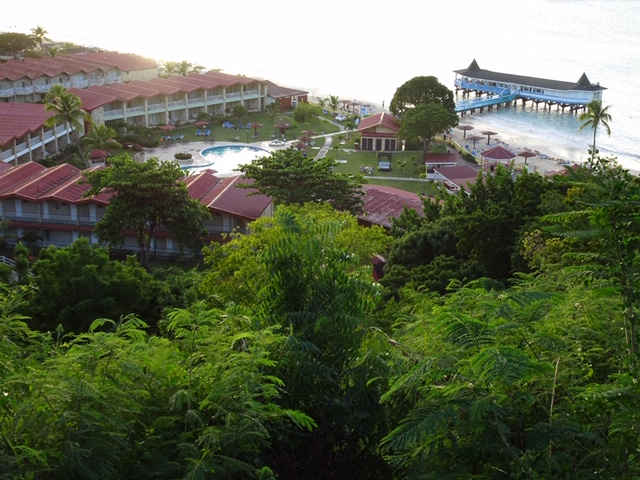
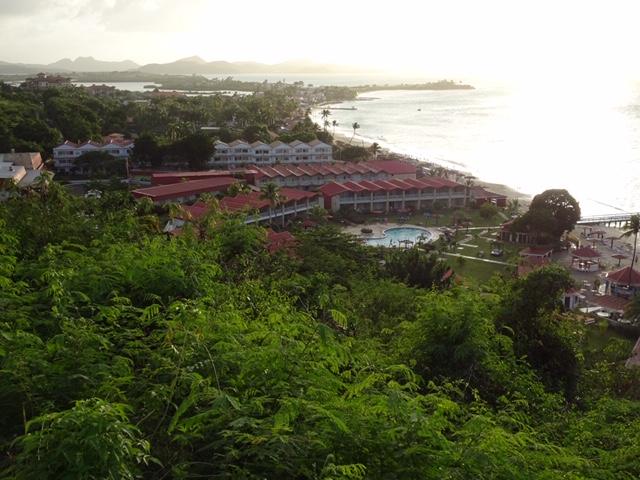
View of our resort from along the hike. We stopped at what was once a place for fancy receptions, like weddings, but with no parking at the top, people had to come up in an elevator located just outside the abandoned venue.

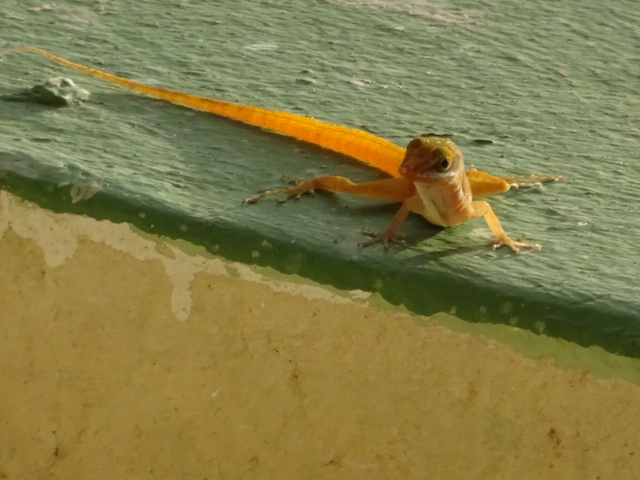
A guest at the venue.

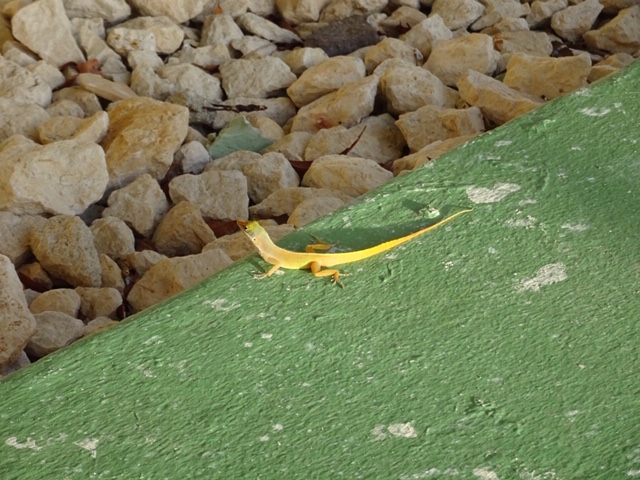
Another guest! These guys are fast, hard to catch with a camera. Speaking of fast creatures, Clare saw a mongoose twice at the resort. They were imported from India to get rid of rats that were eating sugar cane and are now wild all over the island. Thanks to the mongoose, there are no snakes here.

Area around the resort, from “The Clouds”. The big body of water which connects to the ocean at the inlet we called an estuary the other day is called a pond. Great to see this all from above!

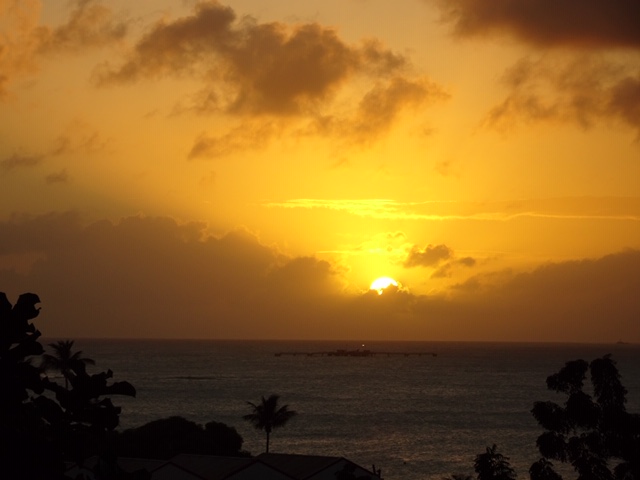
Sunset on the way down the mountain.

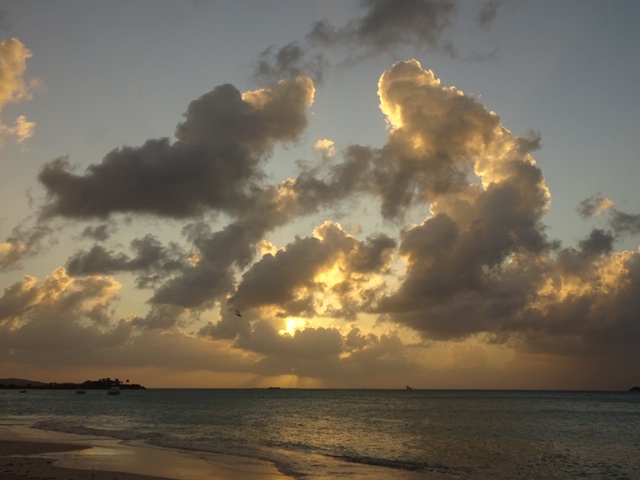
Sunset the day before. The sunsets have been nice due to the weather instabilities. The oceans are murky with sand, and ferries are not running for the next few days into the future. I am glad we have a flight to the next island instead of a ferry.
Nobody is going snorkeling or scuba diving because of the conditions, so we become explorers.

Sounds of Antigua

I have been enjoying the sounds here, on our first island of this trip. During the day, numerous birds delight us with melody, while at night, we are serenaded by the frogs and crickets. Behind that is the constant, rhythmic sound of the crashing waves, which have become increasingly stronger (louder) through our stay. If I wake up at night, I hear the waves and am calmed, going right back to sleep.

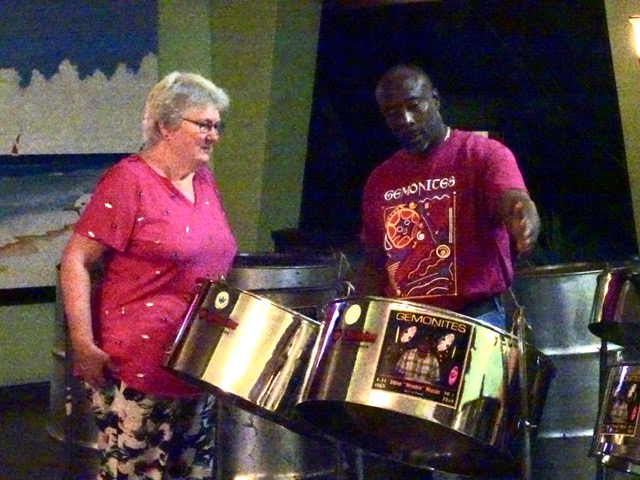
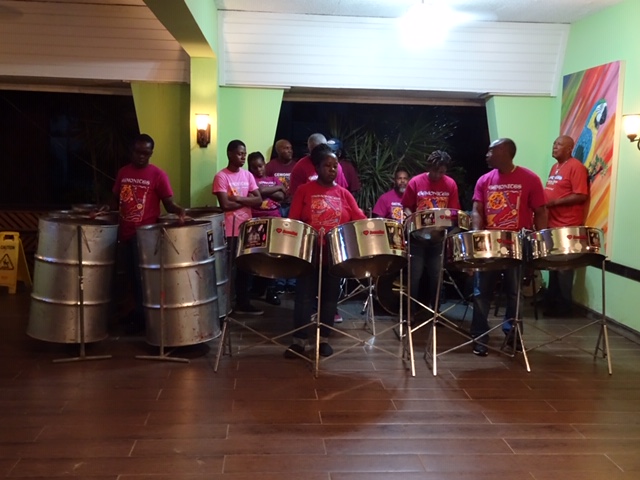
Tonight, however, we heard a local Steel Band. WOW! It was supposed to be a Saturday night barbecue on the beach, but because of the weather, it was inside. Outside would have been better, but perhaps I would not have had a chance to talk to one of the musicians.

The musician who answered my questions was part of the alto group (as he explained to me). They all learn by ear – no written music. He said that the melodic (soprano?) lines come from the shorter steel drums, the alto lines from the medium sizes drums, and the rhythm from the oil barrel size drums.

The band calls themselves Gemonites https://www.panonthenet.com/history/bands/antigua/gemonites-bio.htm because the first few members were all of the Zodiac sign Gemini. So much fun to see the hands of the musicians move synchronized as they played heir chords. Before we learned how the band works, Brian thought he had heard a keyboard! But, no, it was all steel drums. Caribbean! Fantastic!

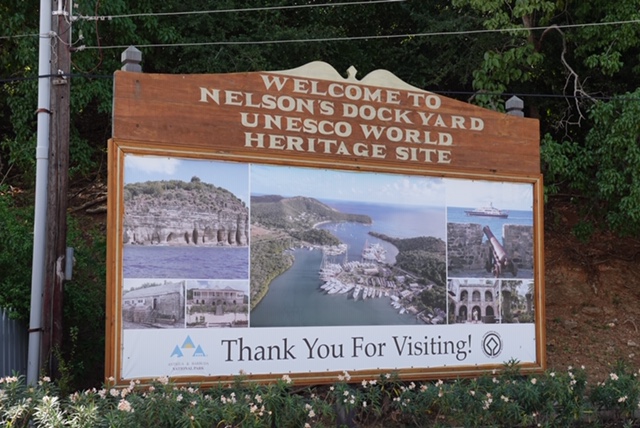
Nelson’s Dockyard

We didn’t waste our day! We got a taxi (from Dickenson Bay on the far north of the island where the resort is) to the south end of Antigua – a 45 minute drive over narrow streets. We wandered around the National Park there.

We got a quick tour full of history and explaining the names of the buildings and giving us a general idea of what to do and where to go. Most of the buildings were constructed in the 1700s through slave labor.

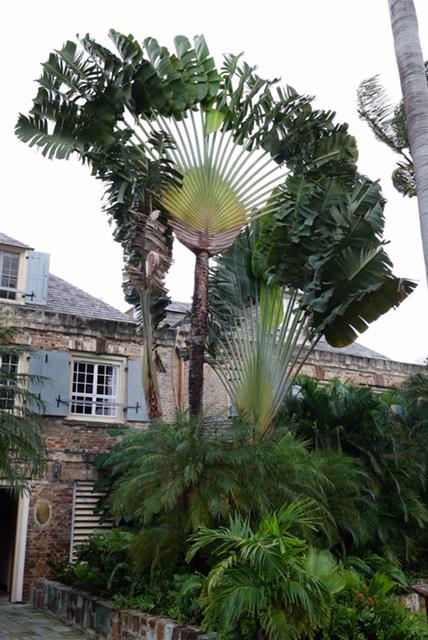
This palm was planted by Princess Margaret! (The guide indicated that it is a native species – I hope we see some like it out in nature.)

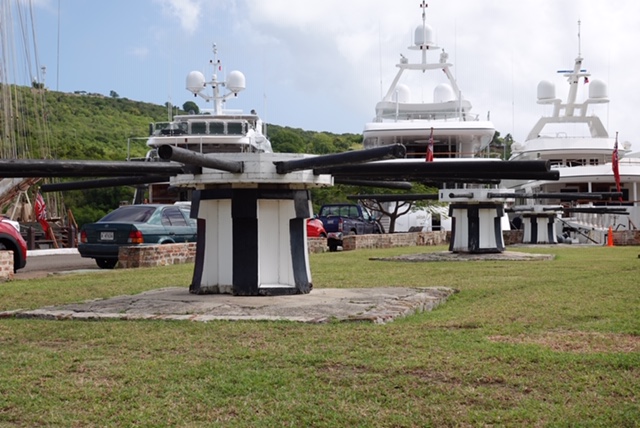
These huge wooden turnstiles (capstans) were built in order to pull masted ships onto their sides in order to clean and repair the hulls. It took months to clear each boat of the worms and other things causing wood rot. Now every Christmas, yachtsmen gather around the capstans for a huge celebration. We saw people taking down the decorations when we were there.

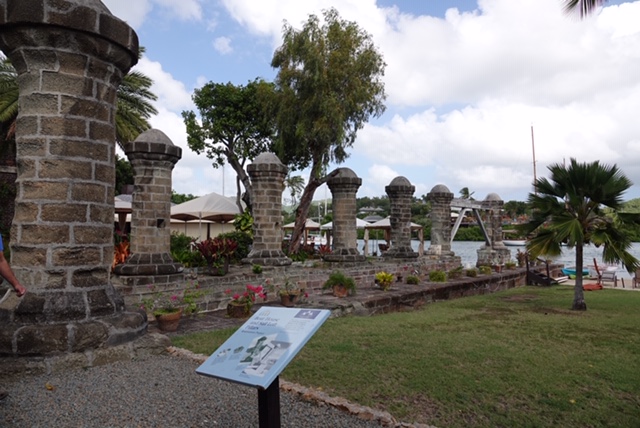
The Sail Loft Pillars were once supports for a building used for sail repair. Ships would sail directly into the building between pillars. Those are not normal sized bricks (see person’s hand and notebook on the left for scale).

After wandering around the park area, we walked up a mountain to see if we could walk to another part of the park called Shirley Heights. We went about a mile, and got some good views of the harbor area, but due to the humidity decided to go back to the main part of the park.

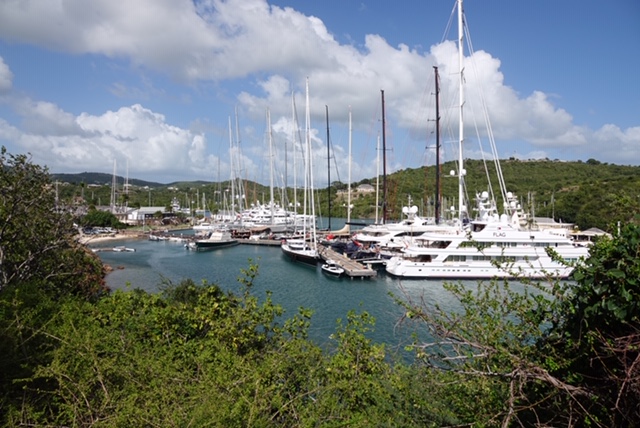
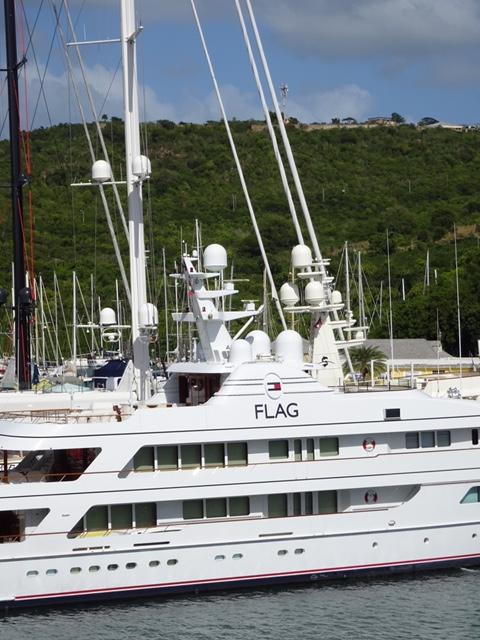
A true flagship! So many huge yachts in one place is impressive.

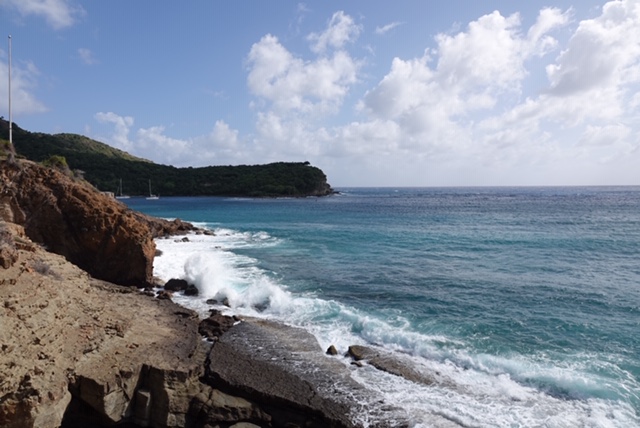
After a lovely lunch in the park, we walked to Fort Berkeley, which brought us to the Caribbean Sea. I loved watching the waves crashing onto the rocky coast!

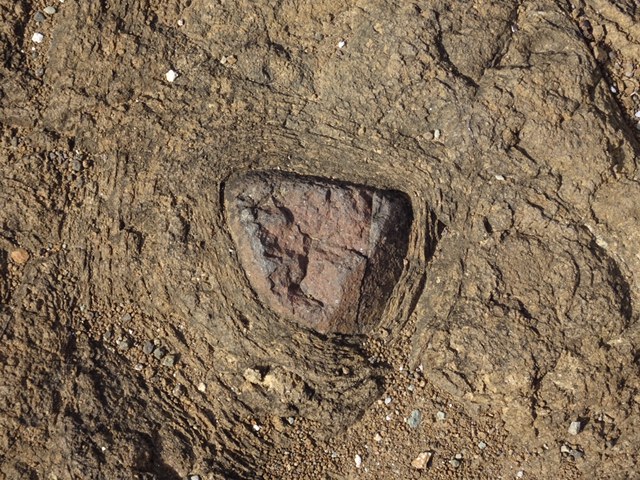
The volcanic rock, weathered into rounded forms. You can see the concentric rings around the more resistant center.

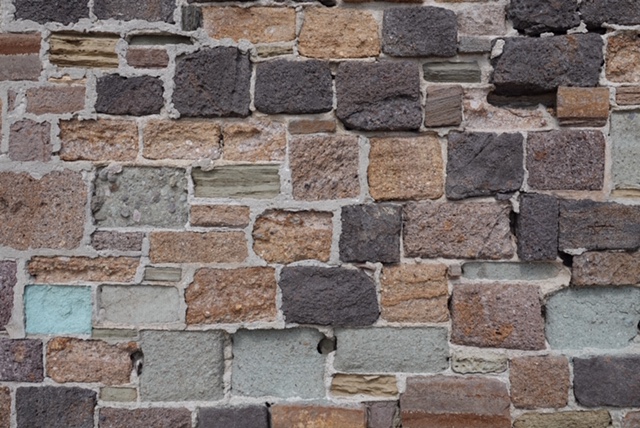
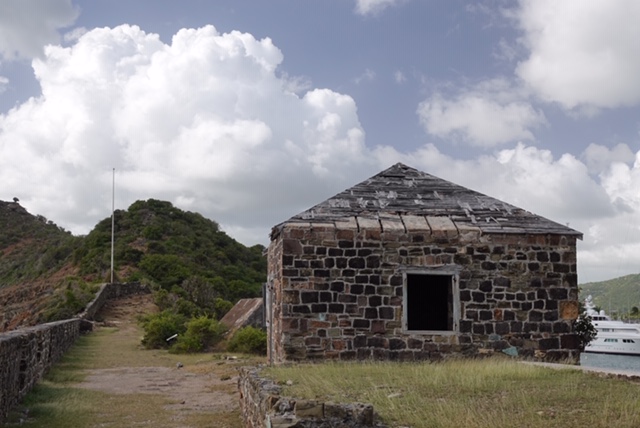
Two buildings were on the point, one for gun powder (cannon powder?) storage and the other lodging for the soldier lookouts. They were made from local rock.

The building in front is the lodgings, and the powder storage roof is behind it.

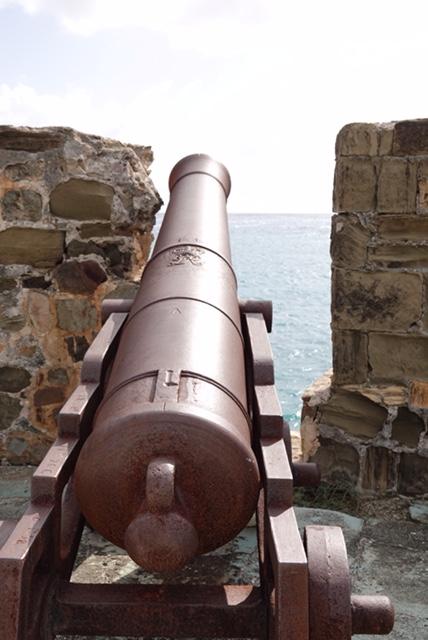
Cannon at Fort Berkeley – looks in great shape. The cannons at the main part of the park were much more corroded. The letters beneath the crown insignia are probably GR for George Rex (King George).

We then hired a taxi to go to Shirley Heights. The driver first took us to a peninsula just to the east of the Heights to show us the sunrise side and Atlantic Ocean, then to the heights to see the sunset side on the Caribbean.

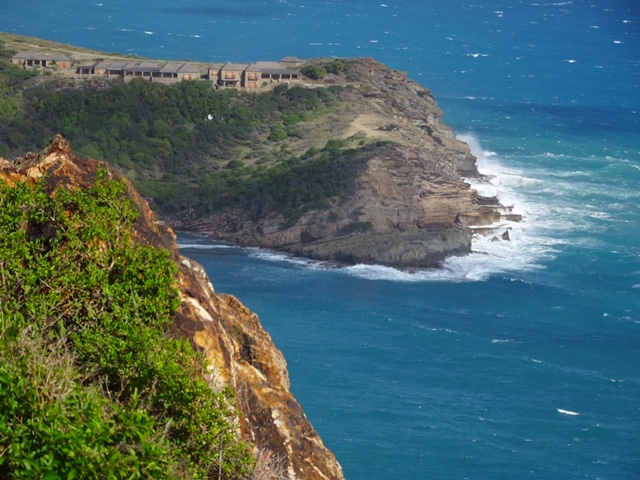
On the eastern side, you can see Eric Clapton’s Antigua home – it looks like it can withstand hurricanes! Notice the white caps in the ocean? Our taxi driver in the morning told us the sea was so strong that three cruise ships that were scheduled to stop in the main town, St. John’s, did not dock. That’s part of why the park was almost devoid of tourists.

Our cab driver in the evening, Renford, was a bit crazy and made us laugh a lot. He grew up near the National Park, and showed us his elementary school and the church where he was baptized. He also told us stories of the places we drove through. He pointed out a 200 year old mango tree, explaining that you can tell how old it is by looking at the fruit. (I didn’t catch it all, his accent was pretty thick.) He also stopped to pick us some lemon grass. He crushed it and bundled it, and gave it to us to smell. Like lemons, naturally!

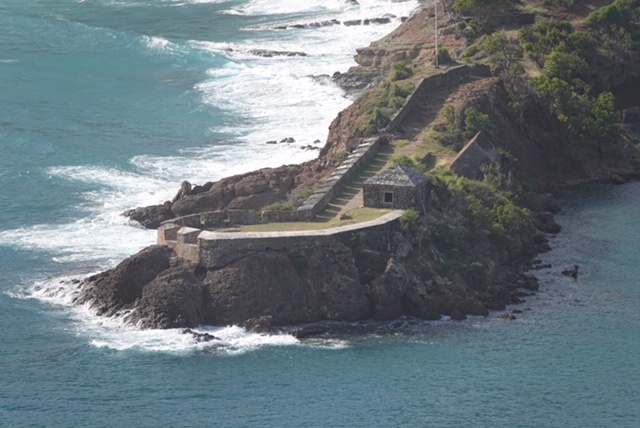
This is looking back at Berkeley Fort, where we were earlier, from Shirley Heights.