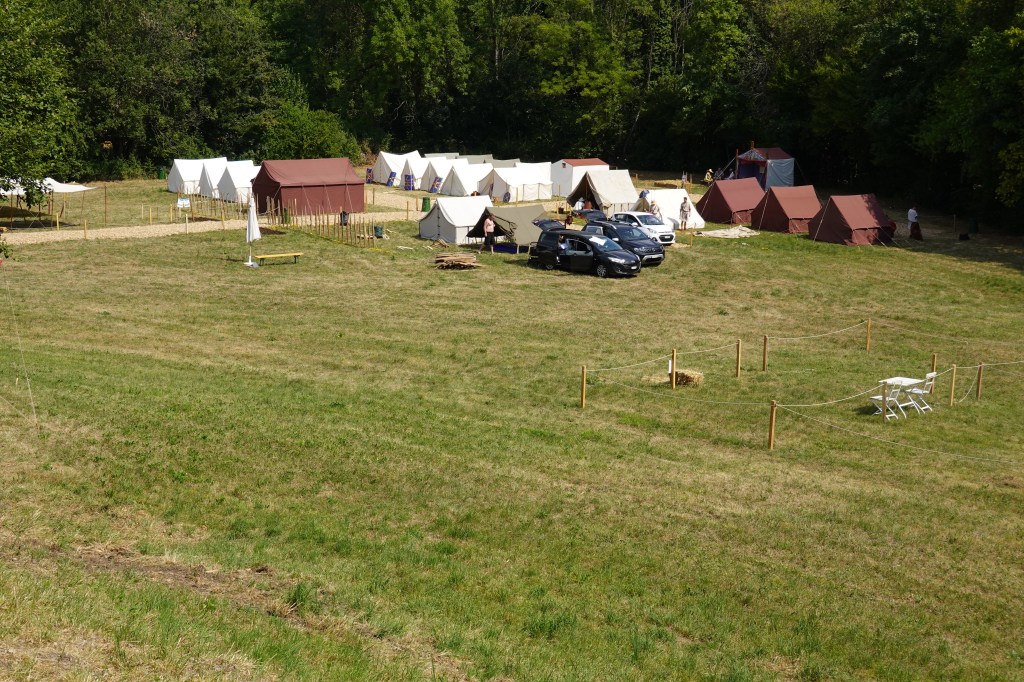
A short train ride from Basel leads to ruins of a Roman town that has been made into a fun park and museum. When we visited on a Friday, people were getting ready for the 25th annual Roman Festival, which would happen that weekend. The fee was waived because of all the people setting up tents for the festival.
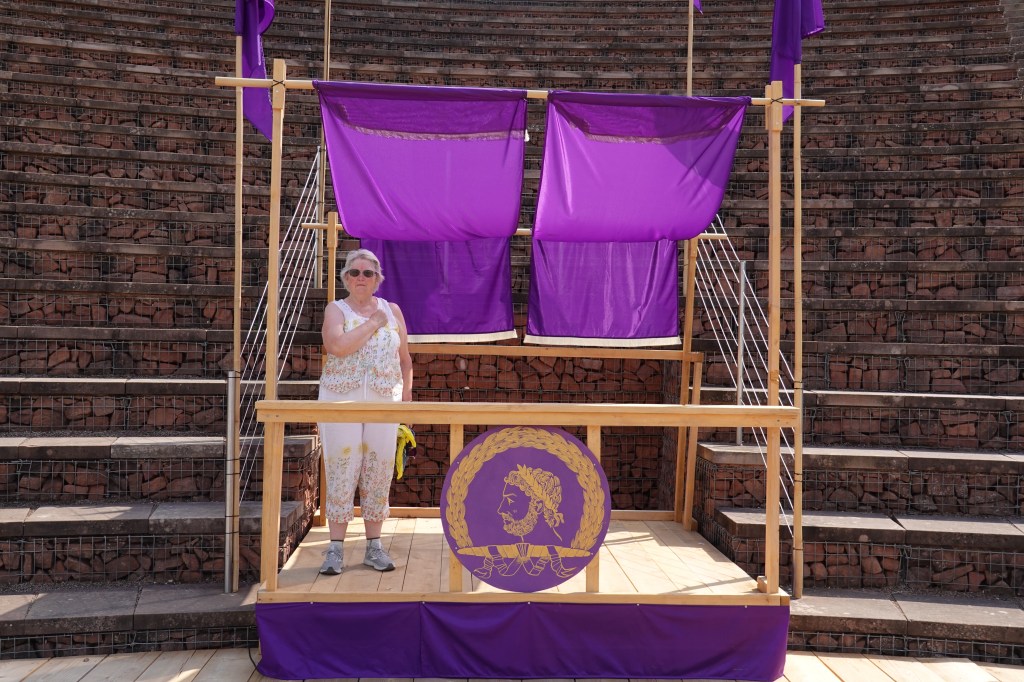
Clare as Caesar!Tents with food and games for the festival.
The festival seems similar to the Renaissance Festival in Colorado and the Shakespeare Festival in California, except for the time being portrayed. Everyone in costume talking in feigned accents. Seems like great fun, but we would be on our way the next day.
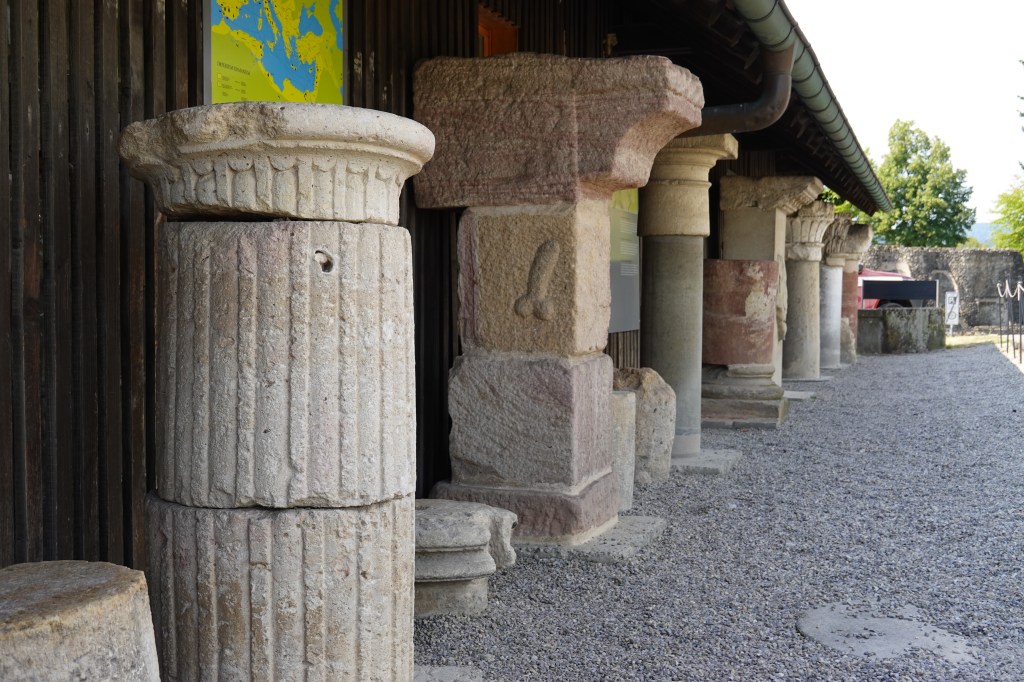
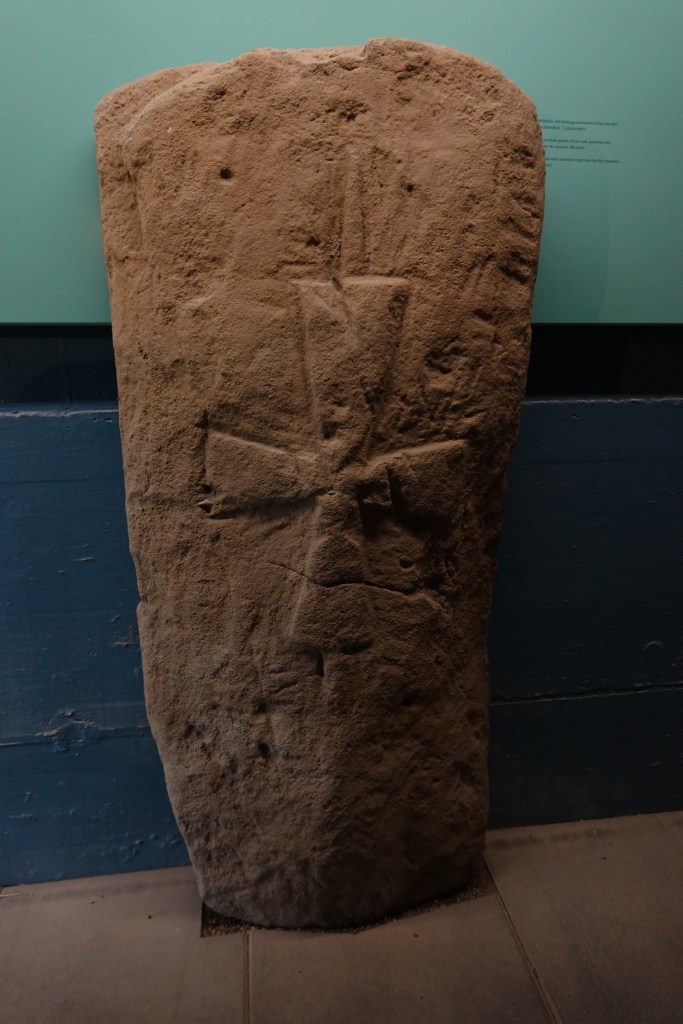
Stone relics recovered from the ancient ruins.
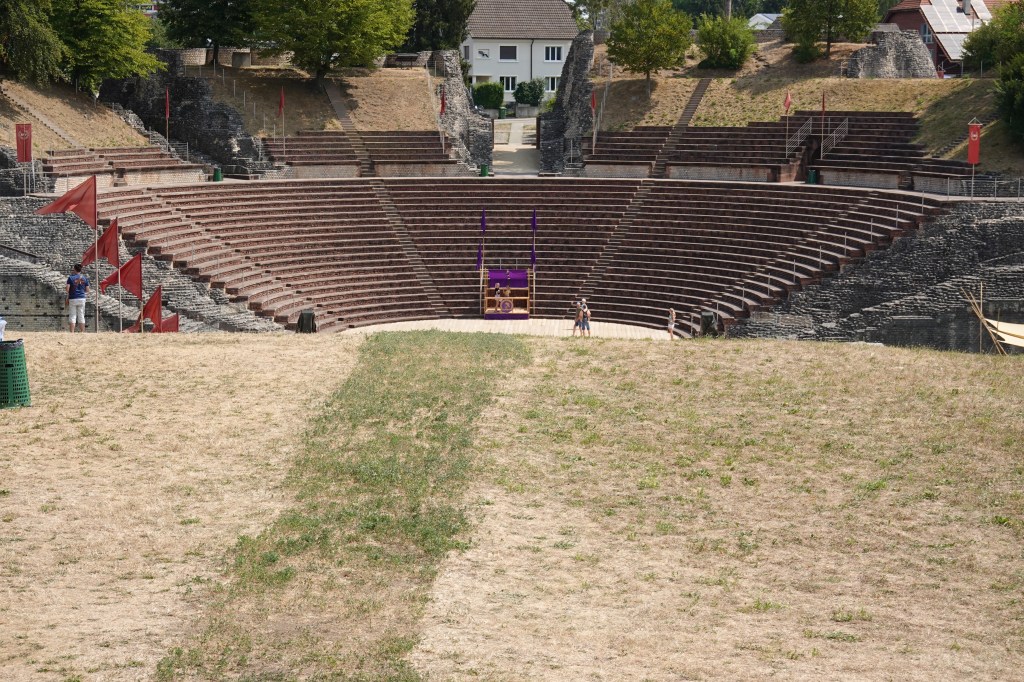
The forum, part of the theatre and the well
An astonishingly large amount of Roman silver was excavated recently near the old town and is now on display in the museum at the site.
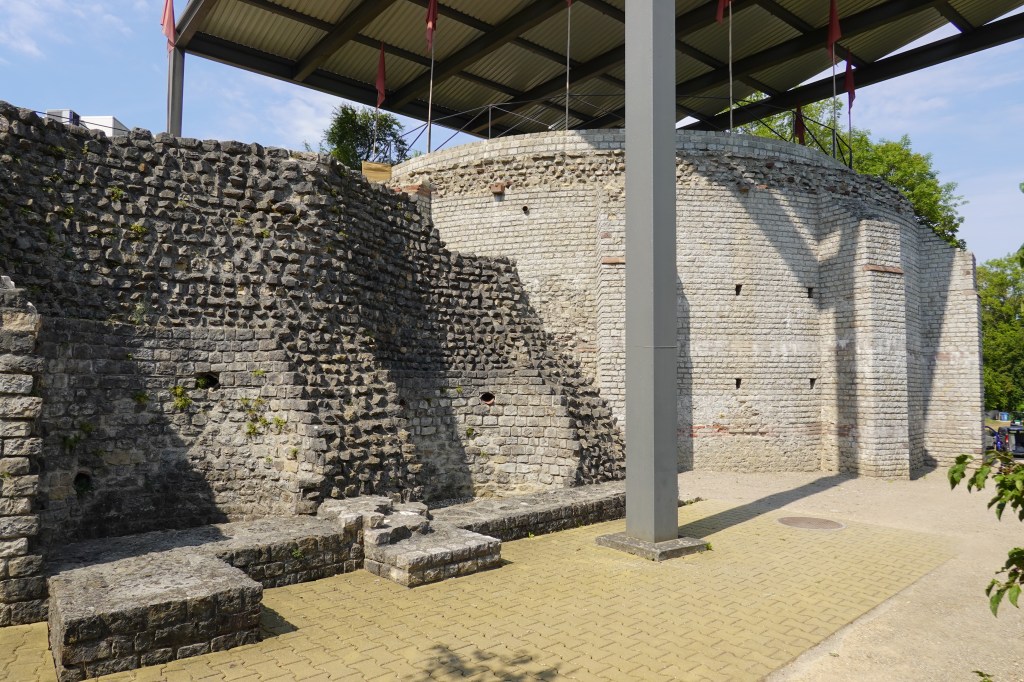
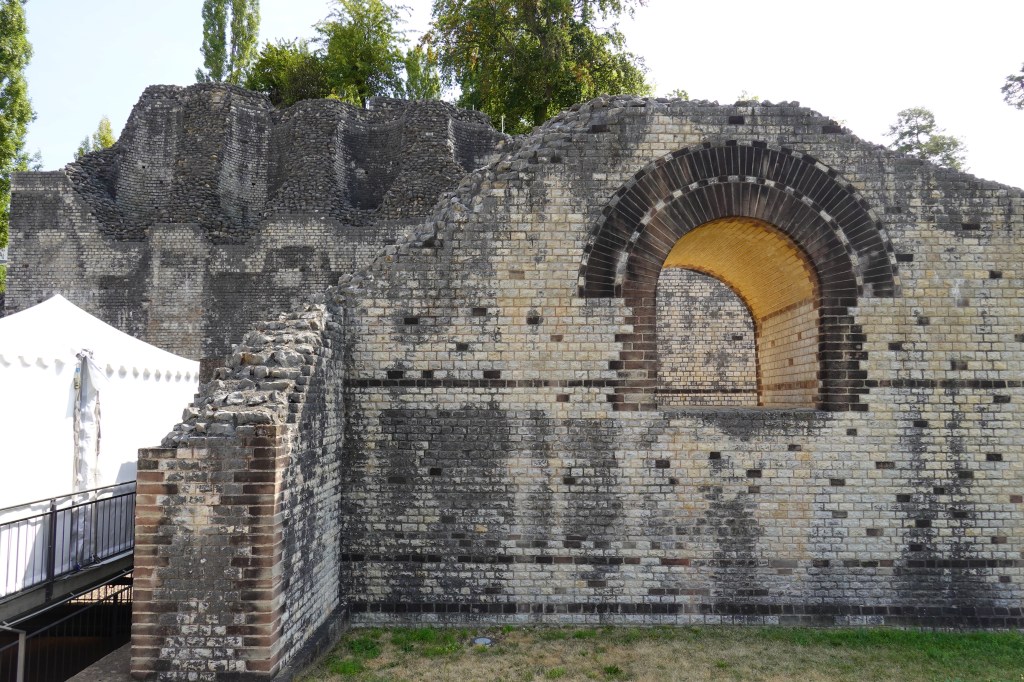
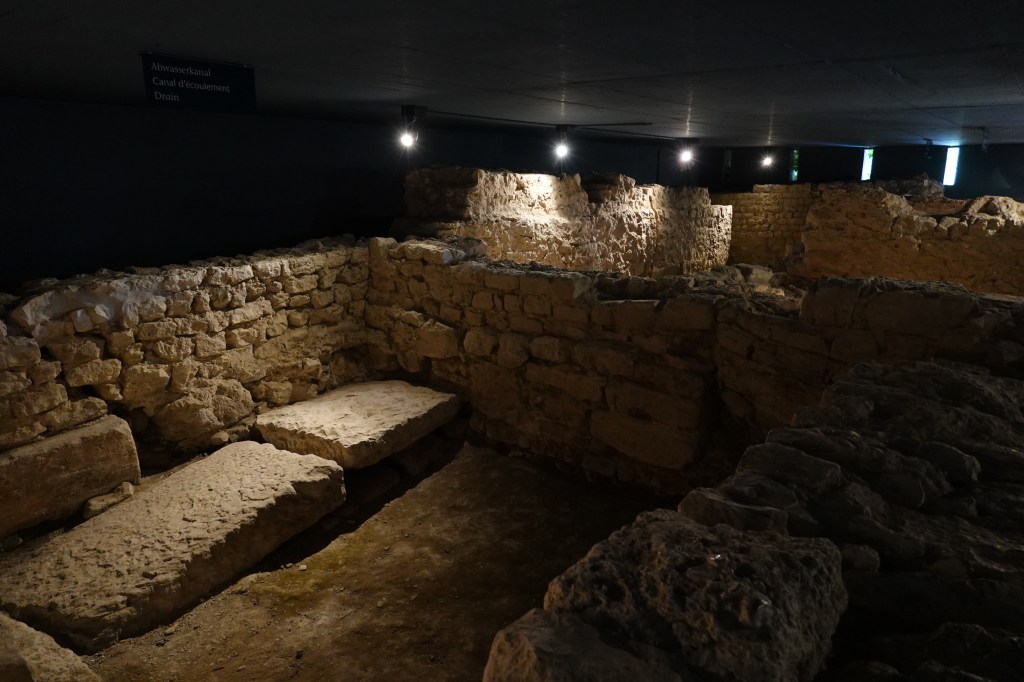
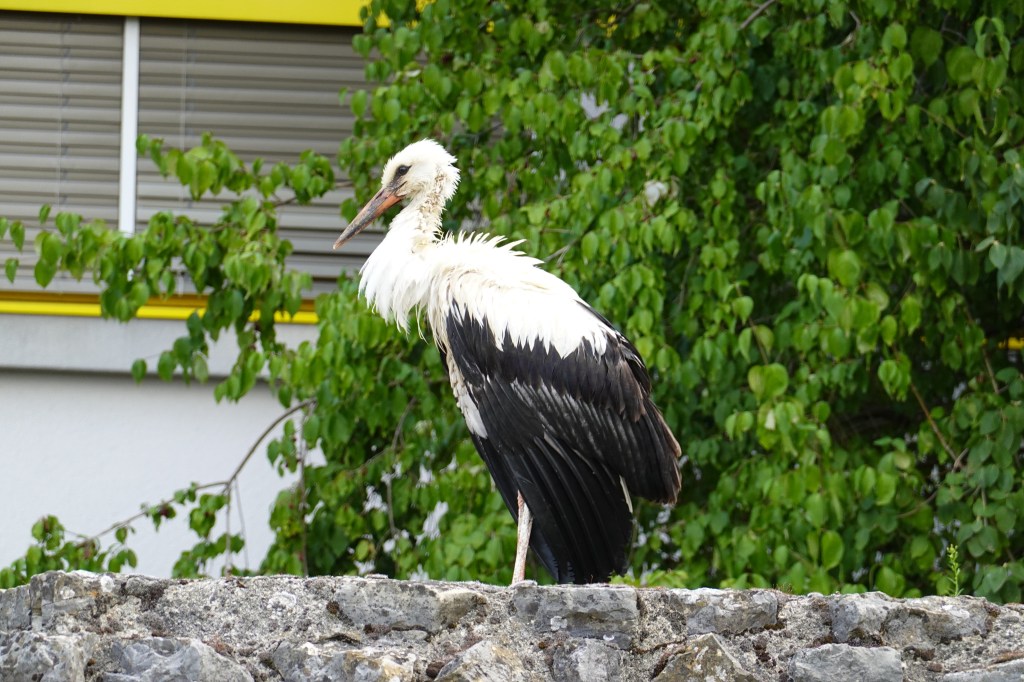
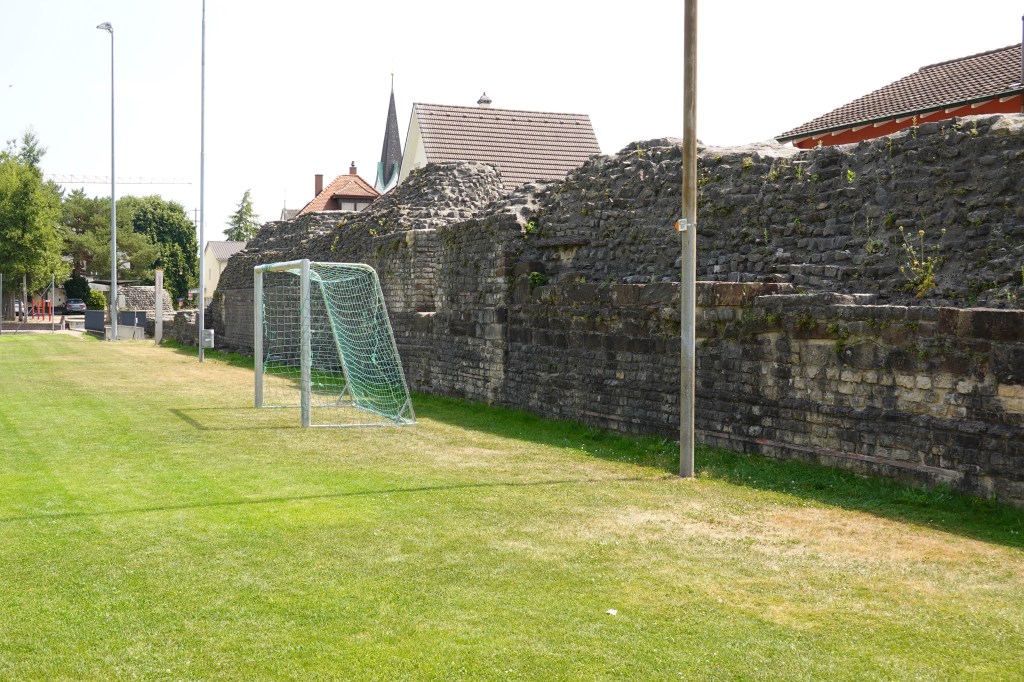
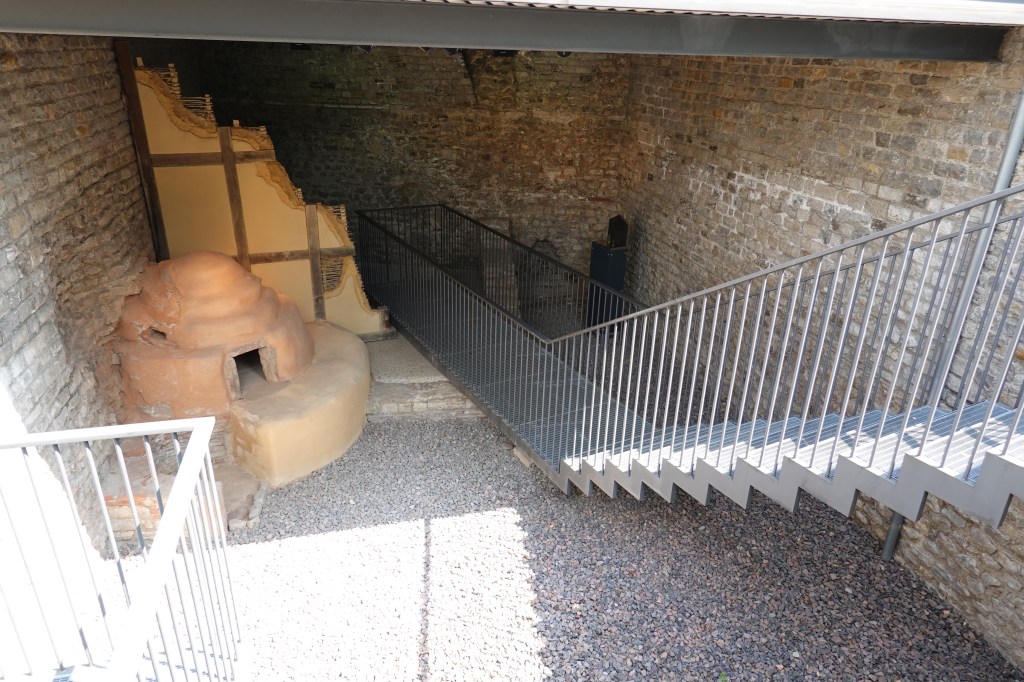
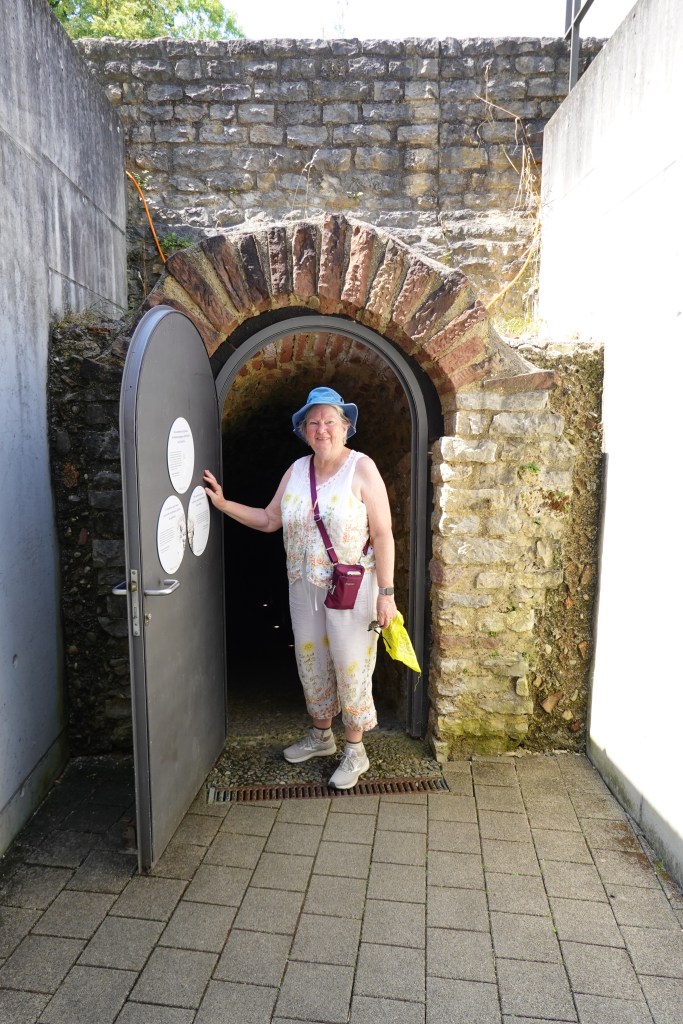
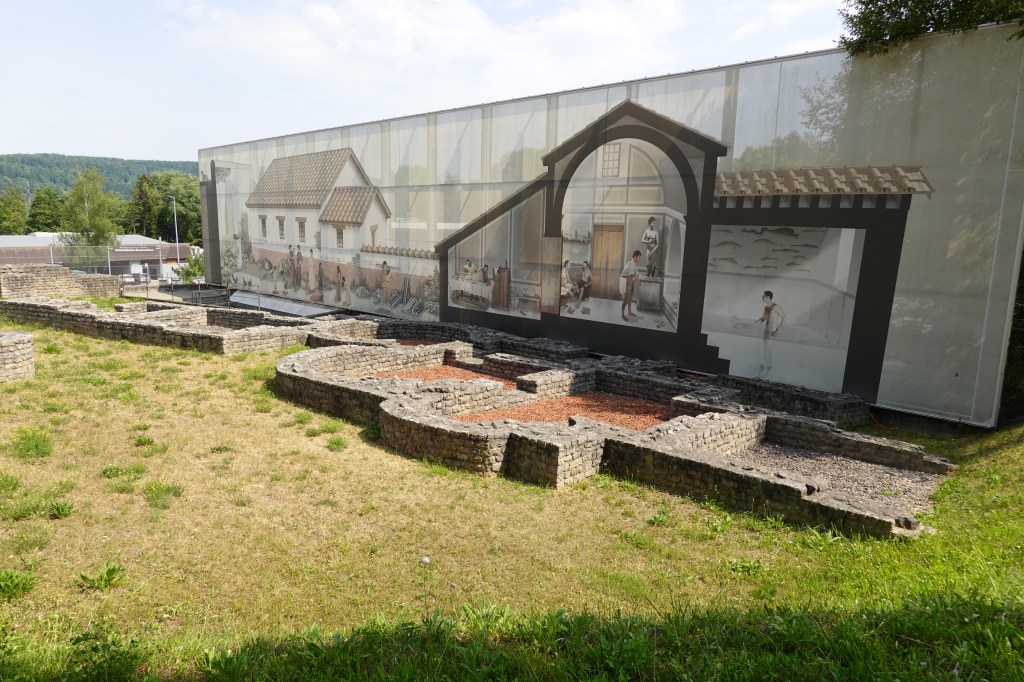
Bishop’s residence, recently rediscovered Cover of one of the tombs in the crypt in the bishop’s residenceAn immature stork, reminding us of the stories in StrasbourgRoman wall, now surrounding a soccer field. Great reuse of space. These pictures are in the town of Kaiseraugst, which is on the Rhine and was part of the Augusta Raurica settlement.Replica of Roman houseEntrance to well below the bathhouse Roman baths
A large, busy city at the intersection of three countries, France, Germany and Switzerland. We walked from the cruise ship to our hotel.
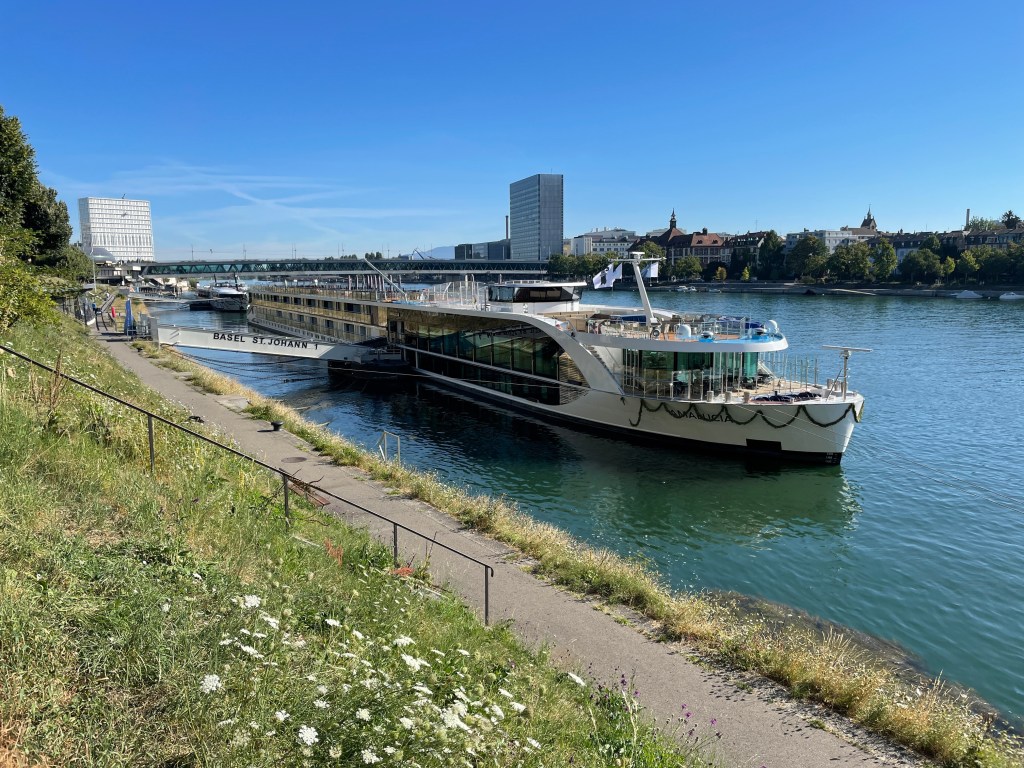
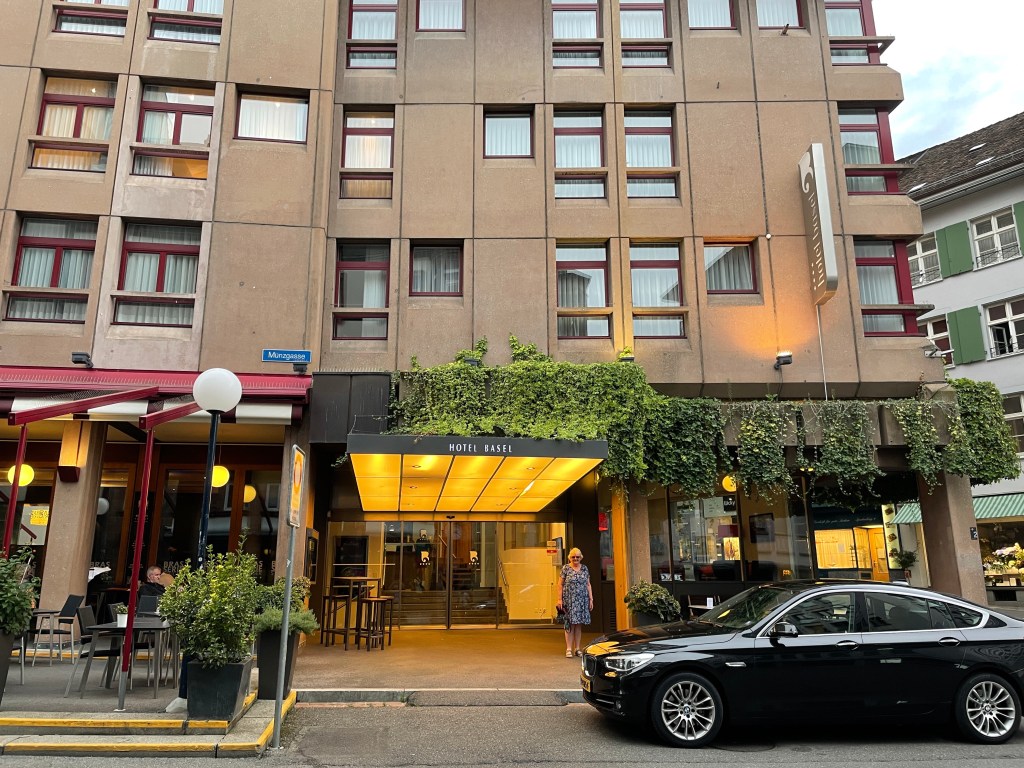
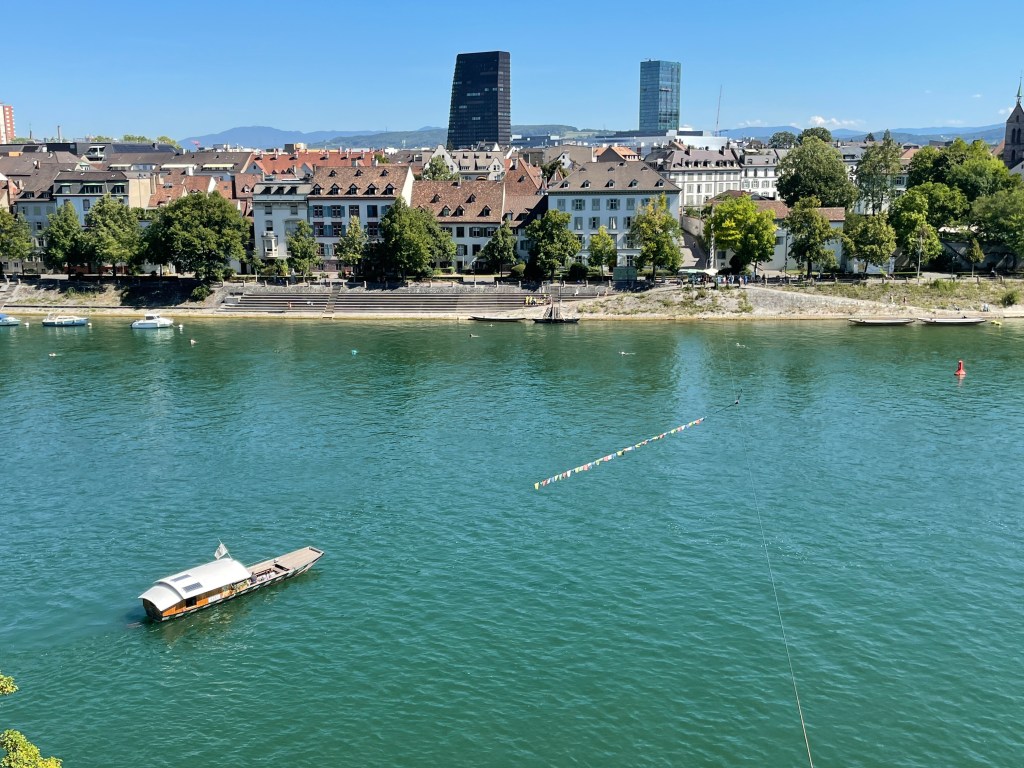
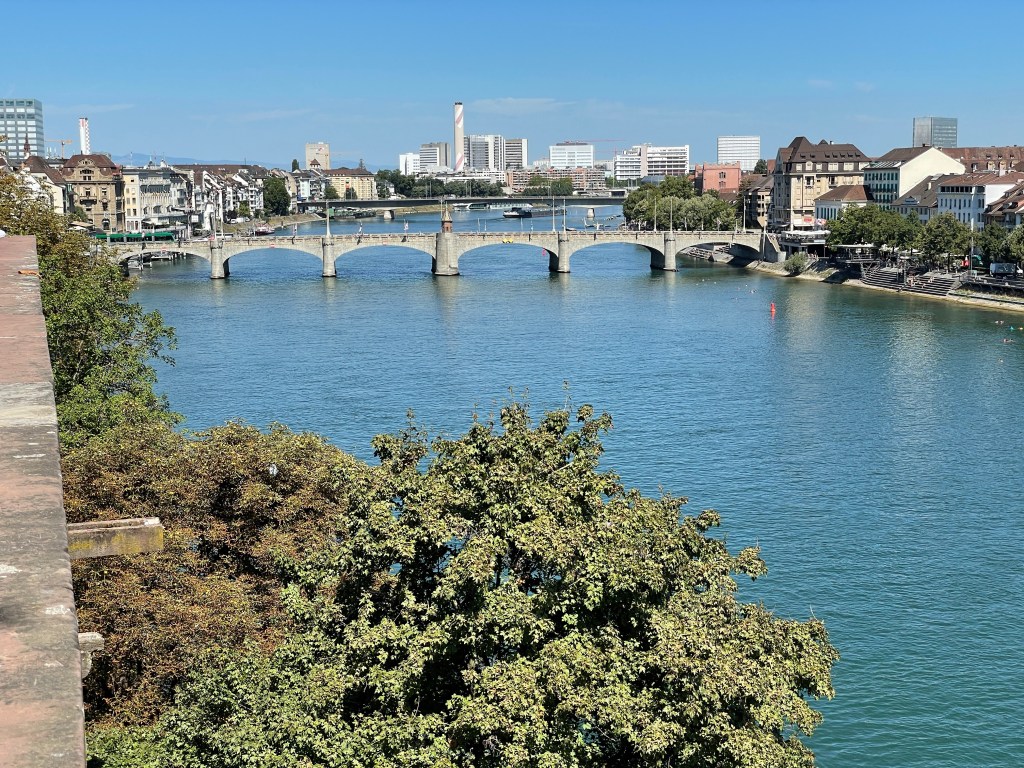
Our cruise ship, floating hotelOur hotel in BaselFerry across the RhineThis is one of many bridges over the Rhine, but look carefully. Every day, all day, there are many people floating down the river. Enlarge the image and look at the right-hand side of the river beyond the red buoys. Very refreshing when the weather is hot; the current takes folks of all ages (usually with a floatation device) a mile or so downriver in a matter of minutes.
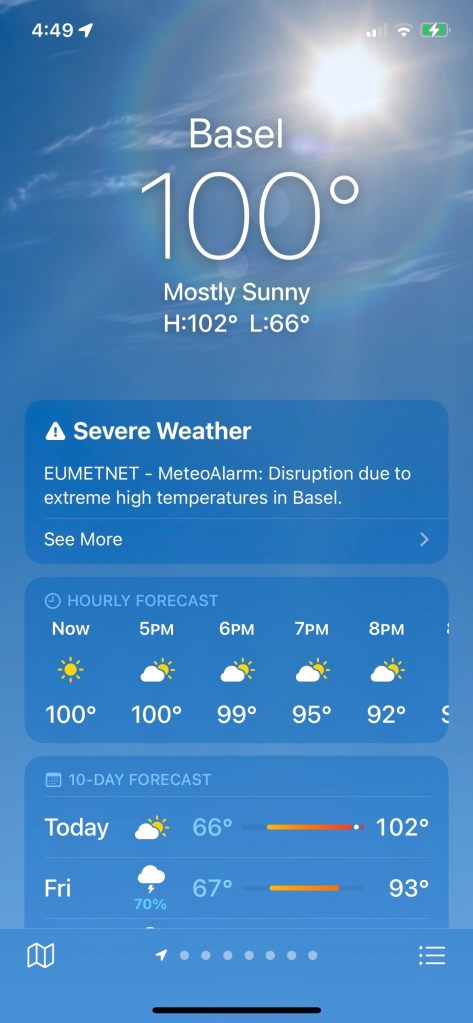
Did we mention that it was hot? Our hotel and most of the trams were air-conditioned. We were grateful for the tram system. The trams came often and were well laid out. Hotel guests receive a pass for all the buses, trams and trains within Basel and surrounding areas.
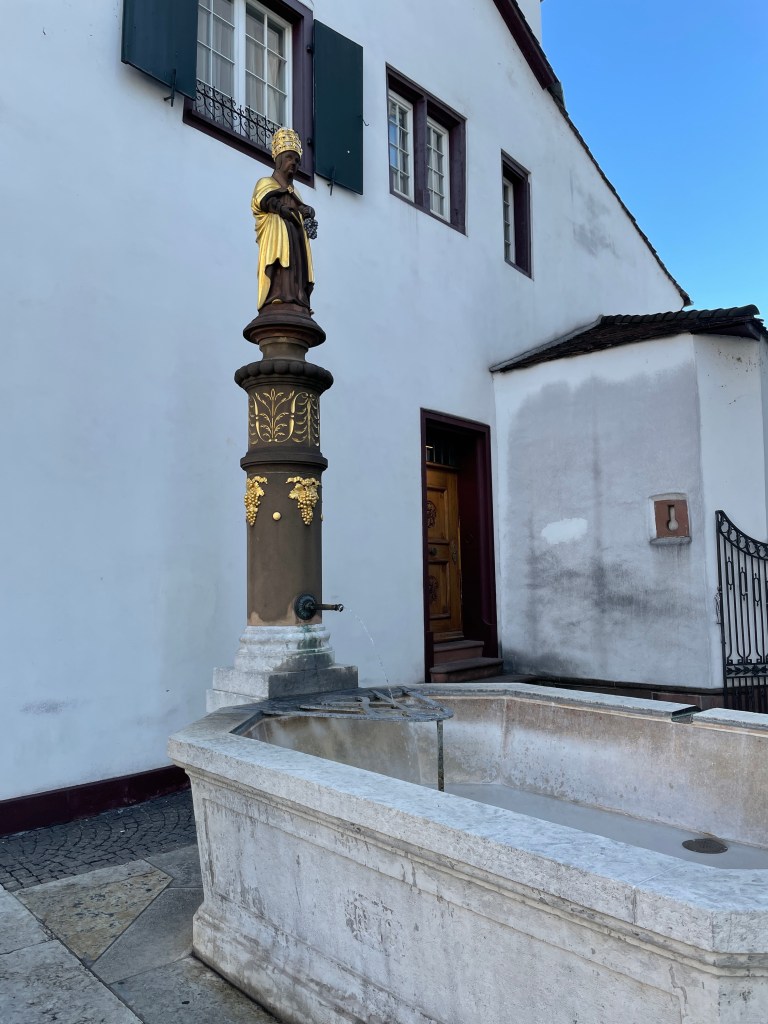
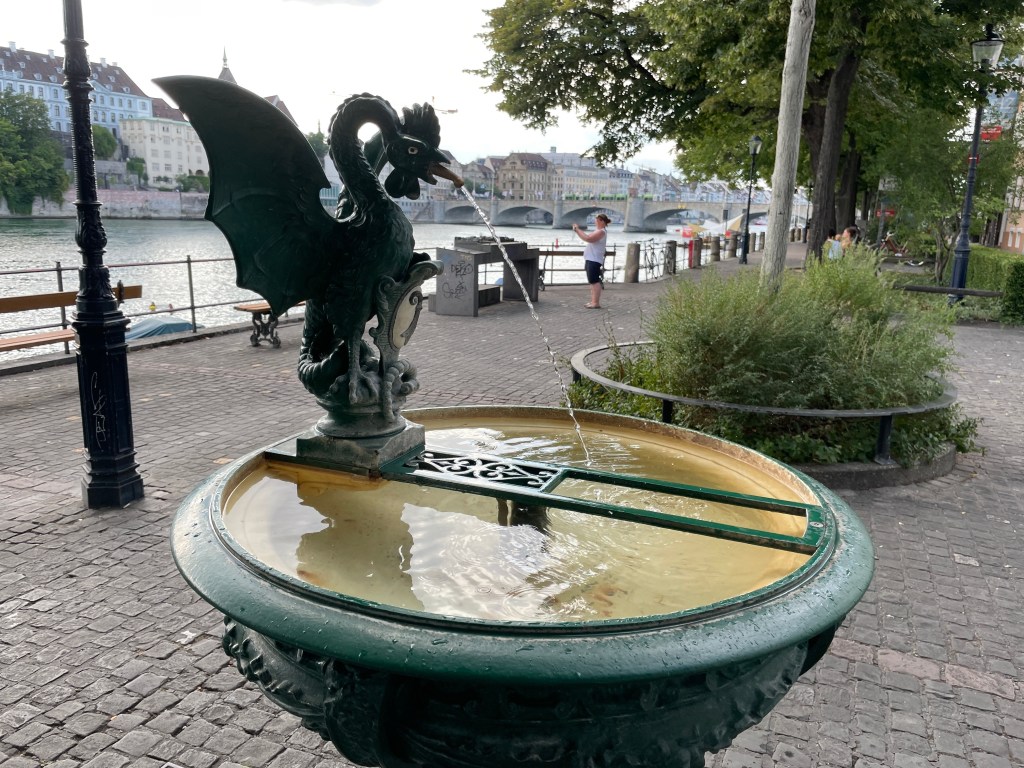
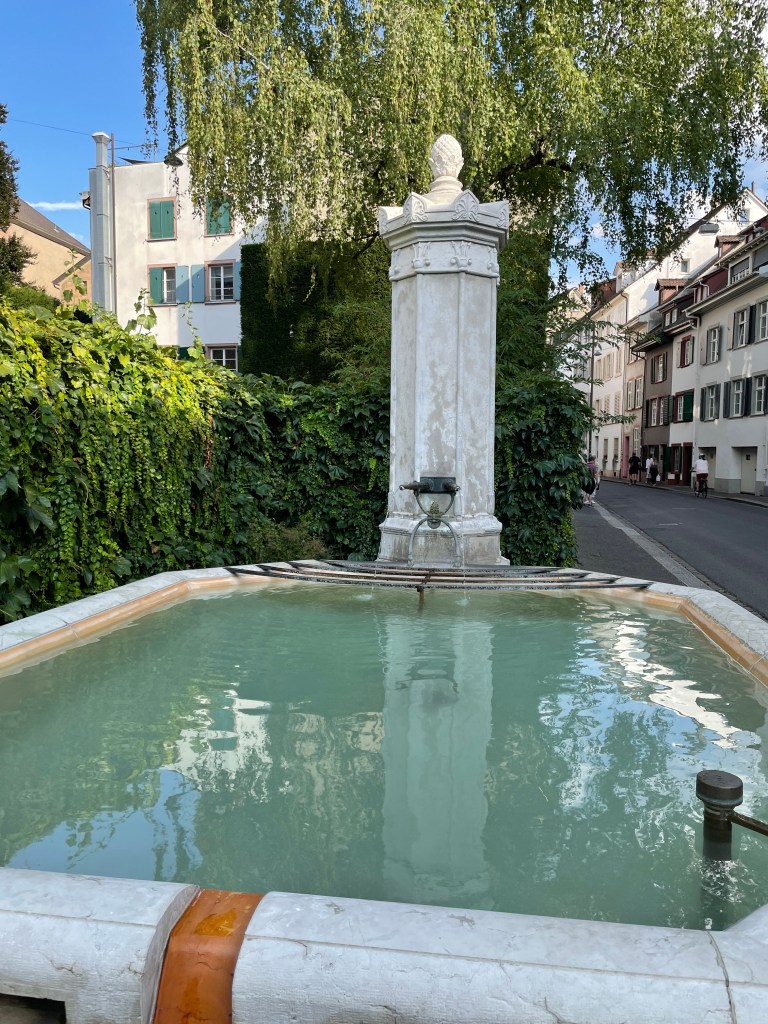
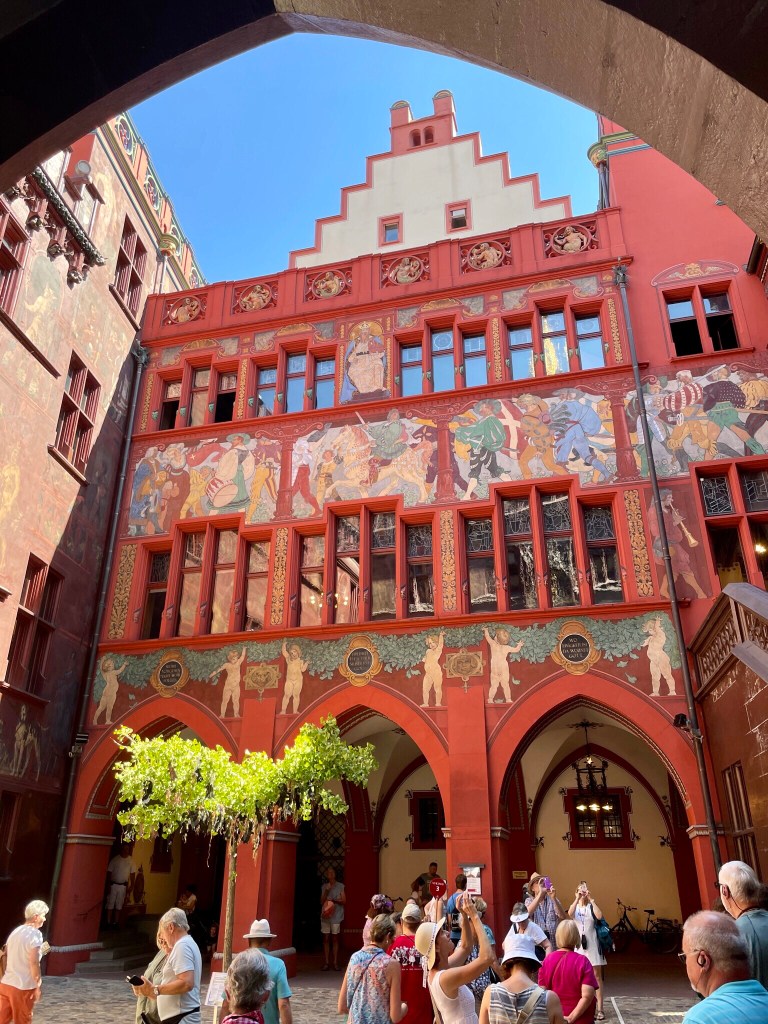
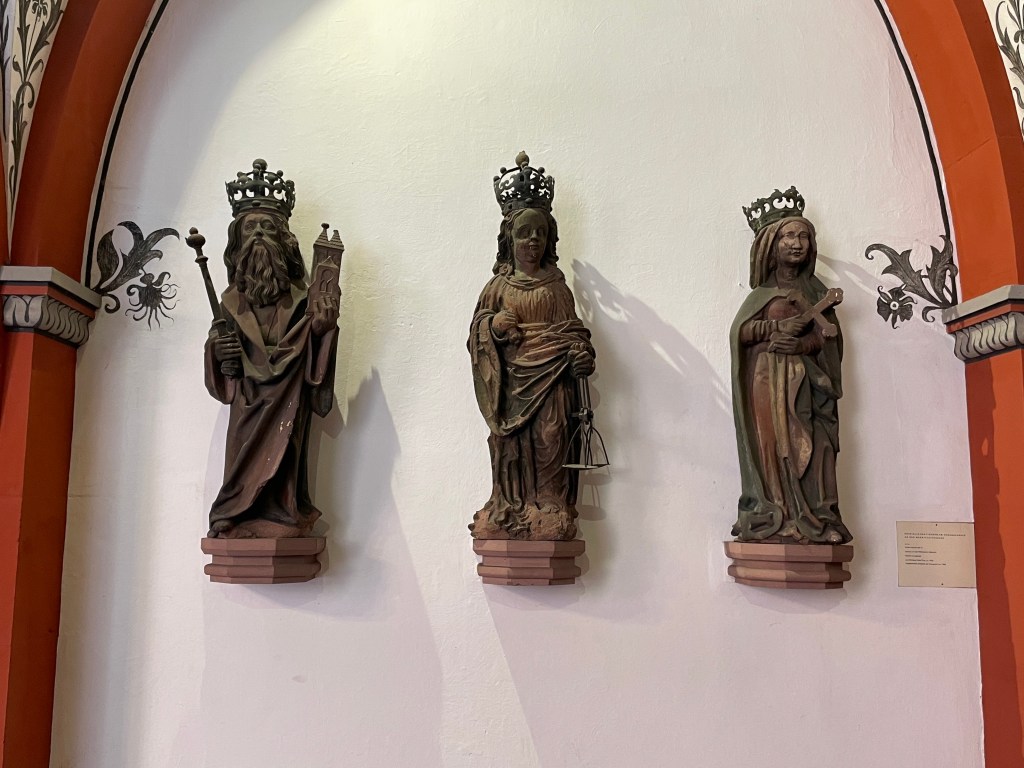
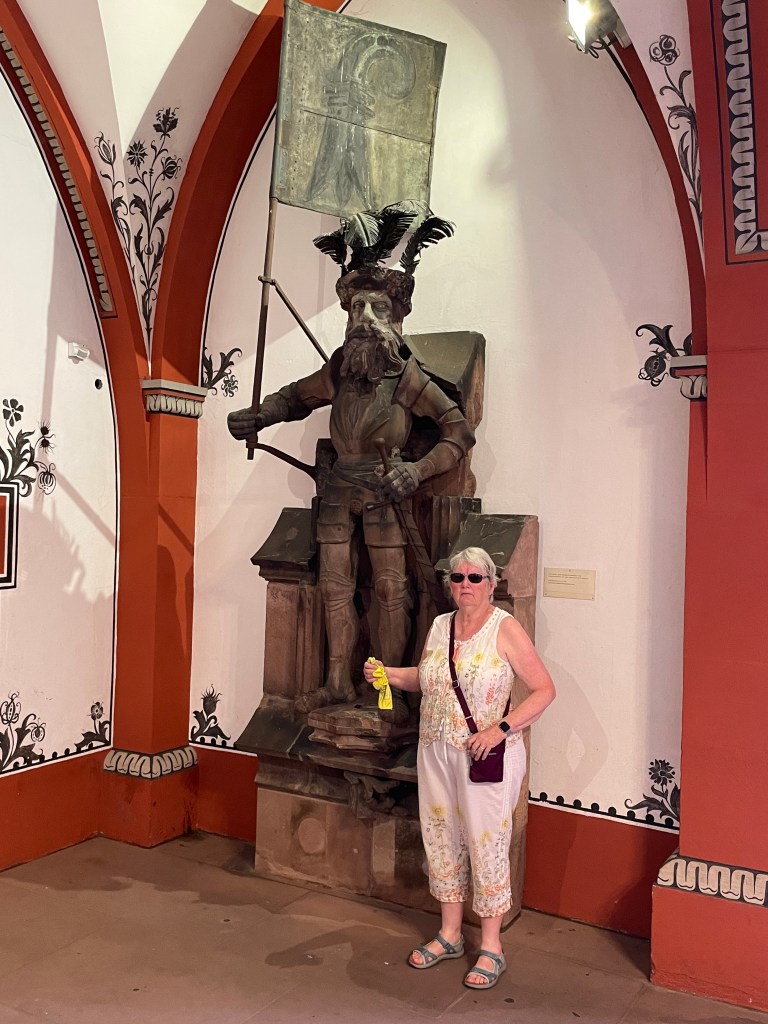
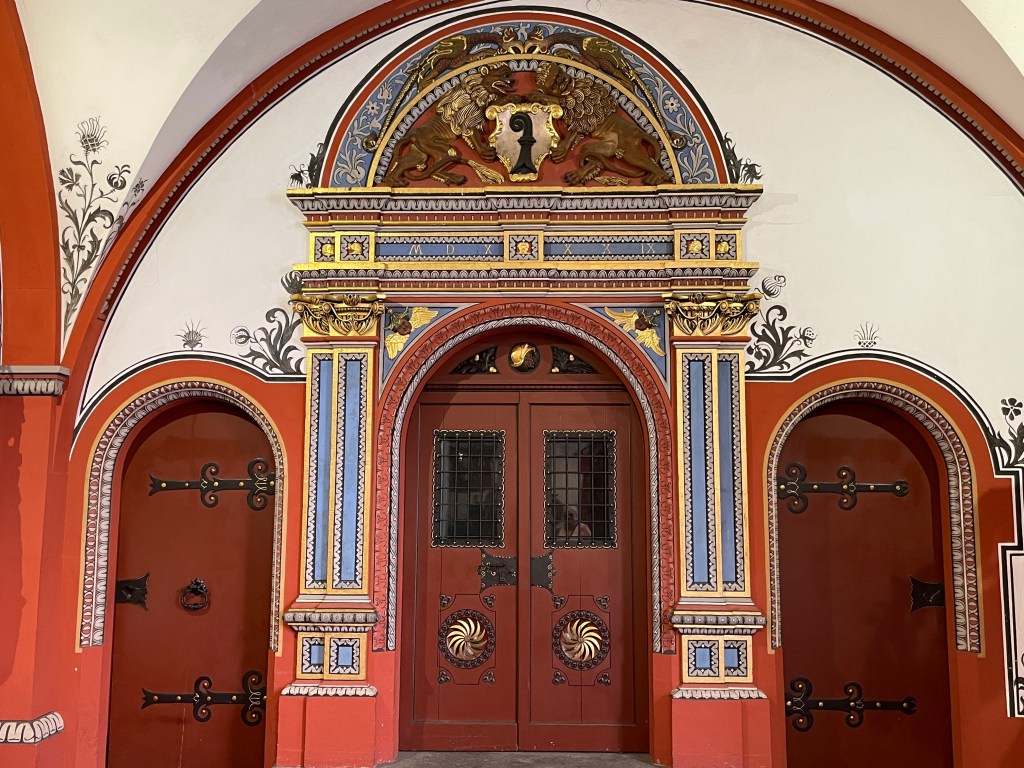
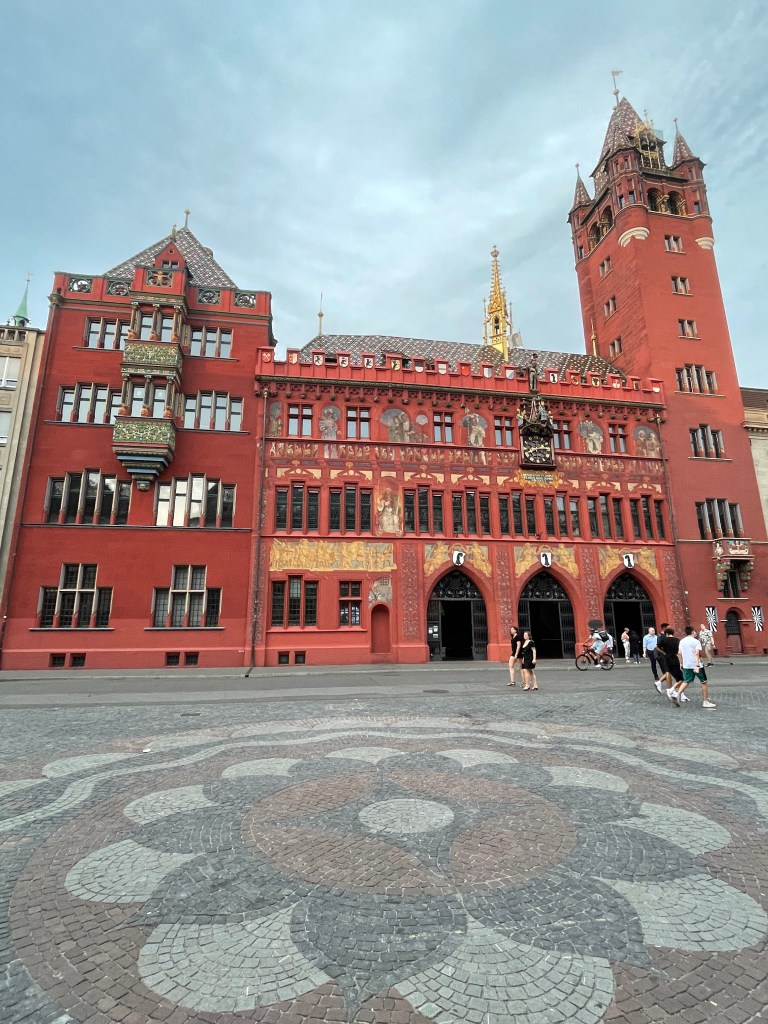
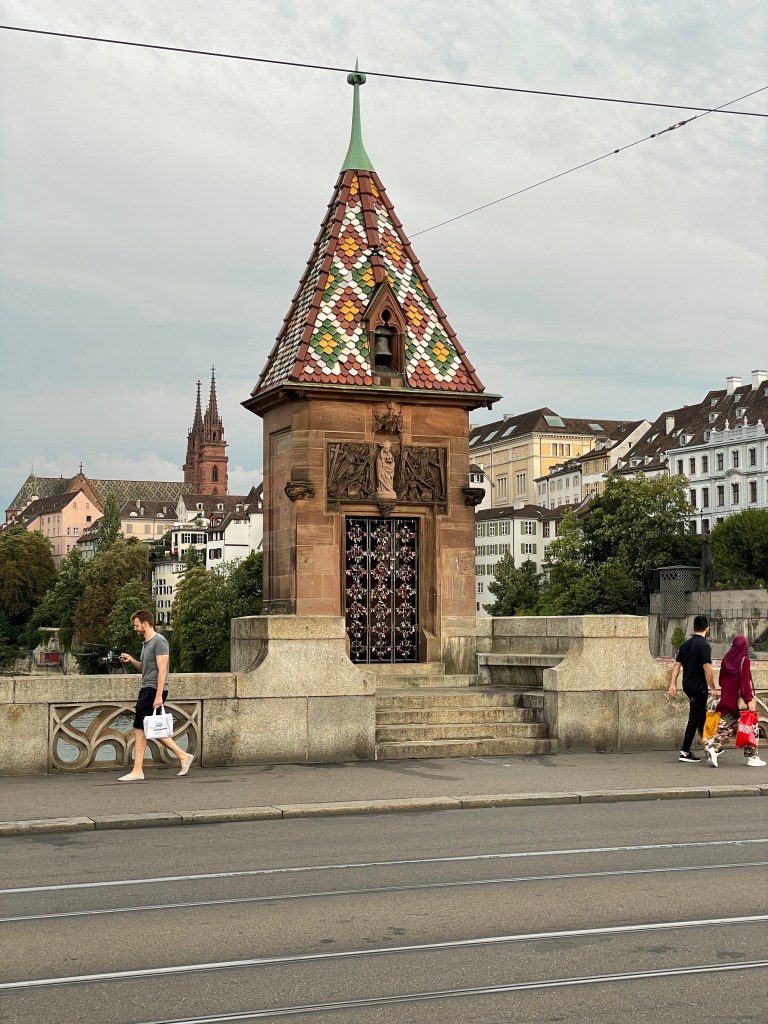
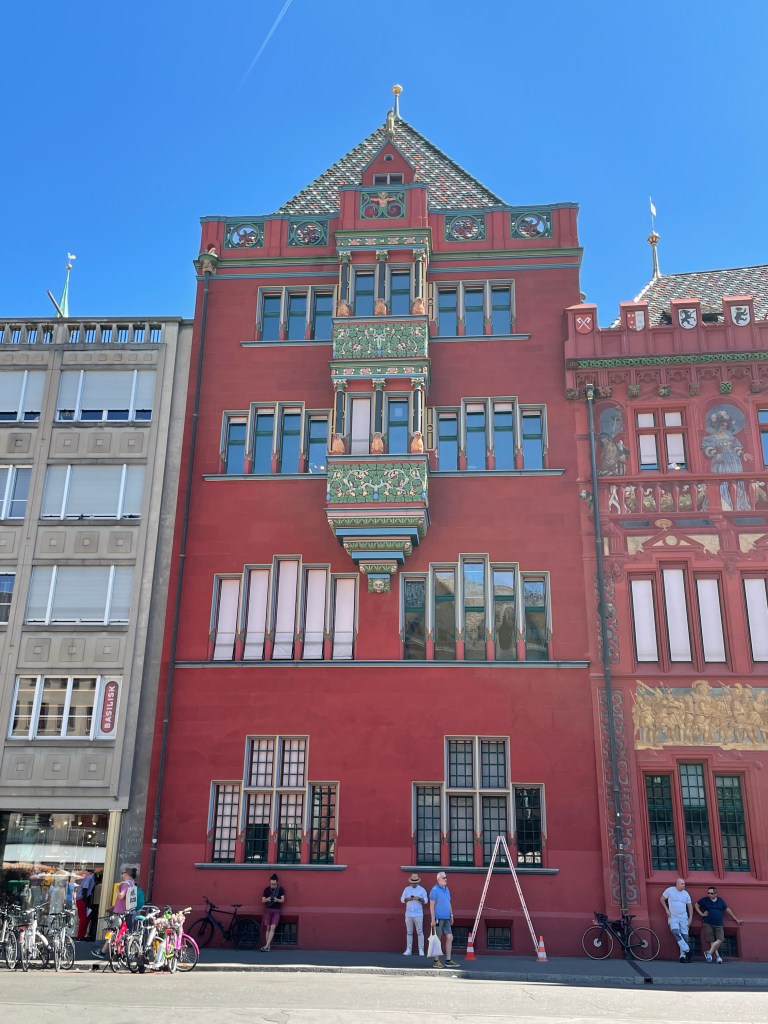
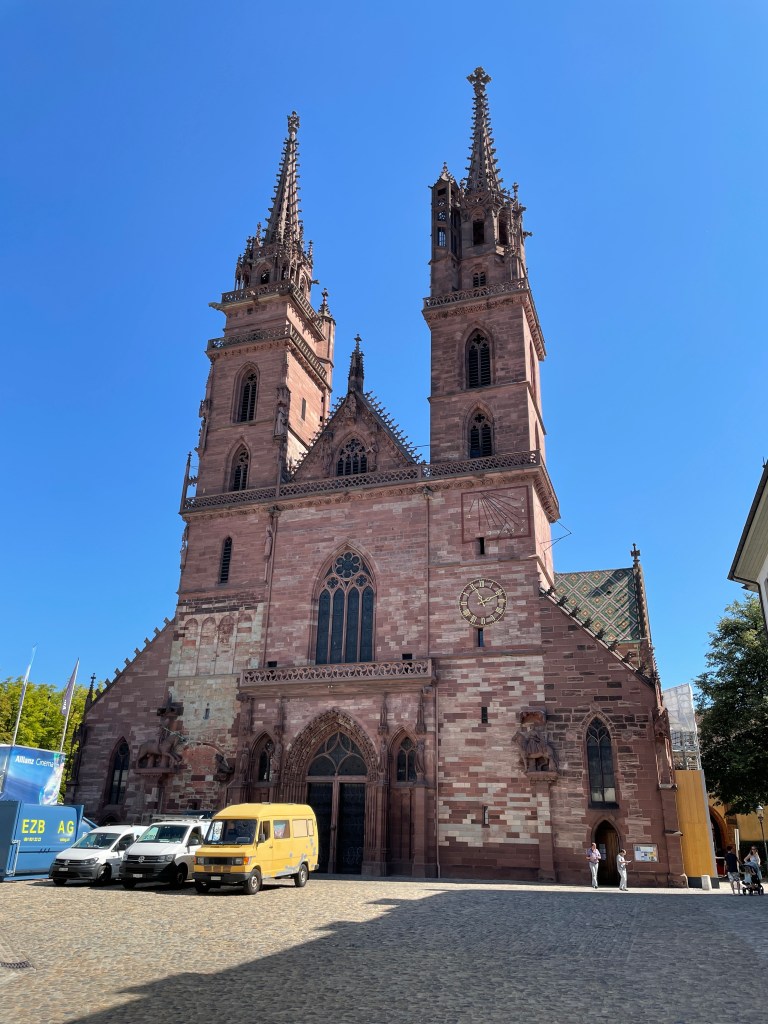
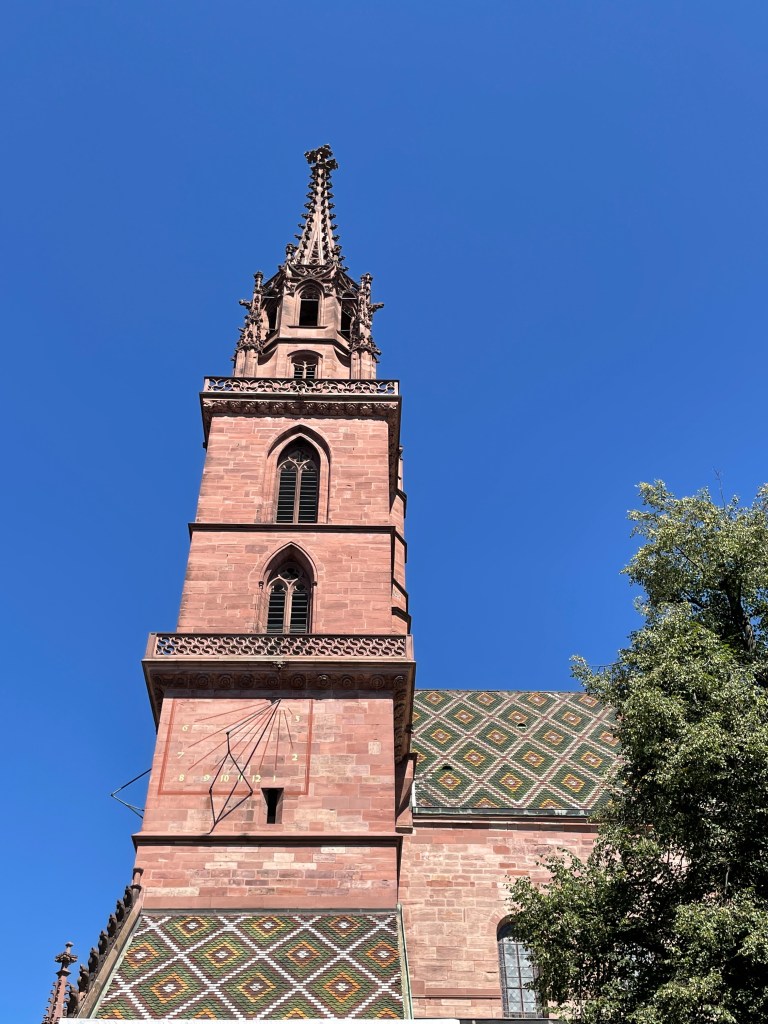
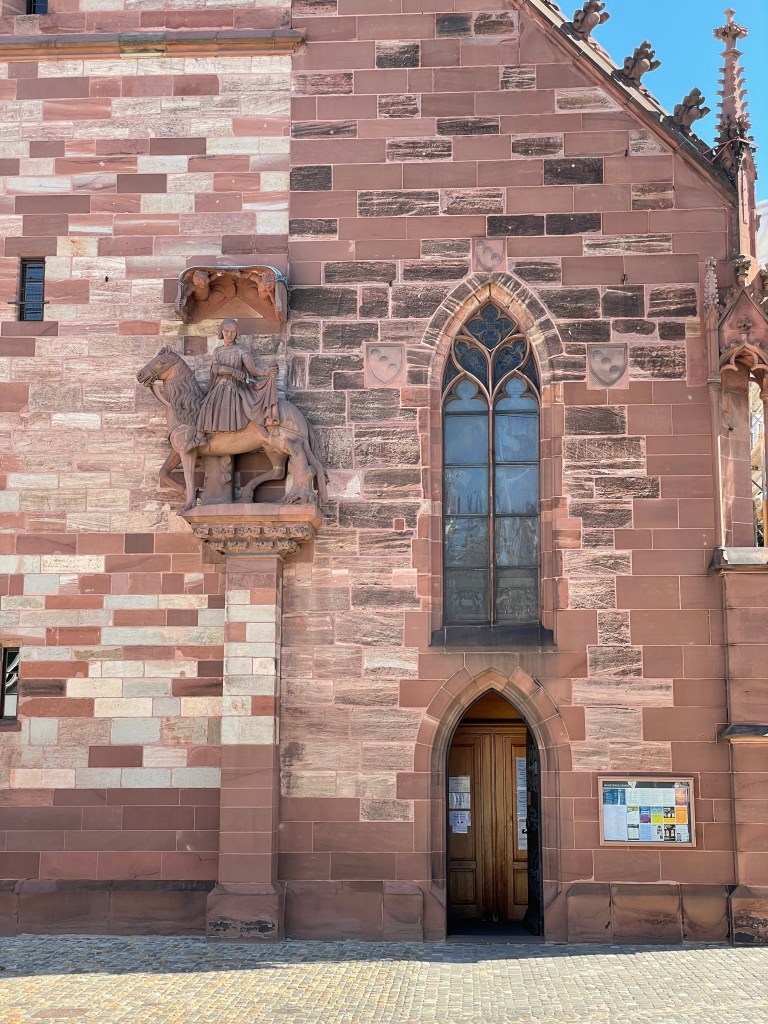
Water features around the cityThis beautiful building, city hall, is a short walk from our hotel. A daily marketplace is in the front courtyard.Statues in City HallProbably the city founderFancy doorway in City HallCity hallSmall tower on bridge over Rhine has fancy tiles like the cathedral. Close-up of left side of City HallBasel Minster
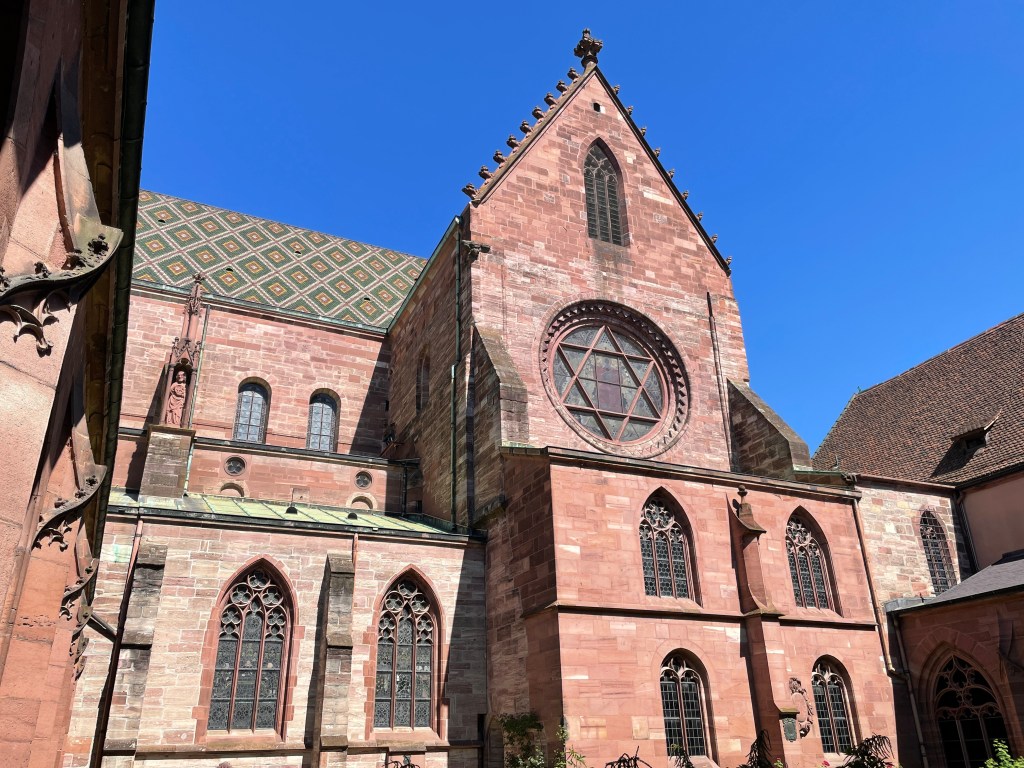
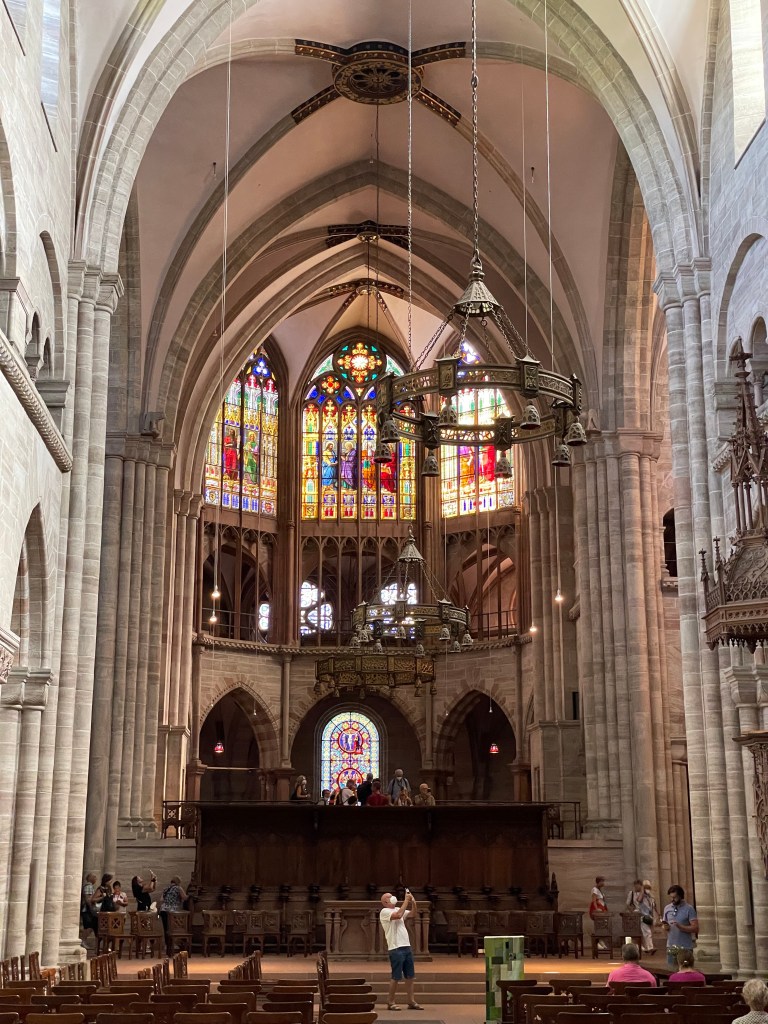
We visited the cathedral and its dozens of crypts of famous bishops and other leaders over the past hundreds of years. That part felt a bit creepy, underground and dark, until we likened it to visiting an extremely old cemetery.
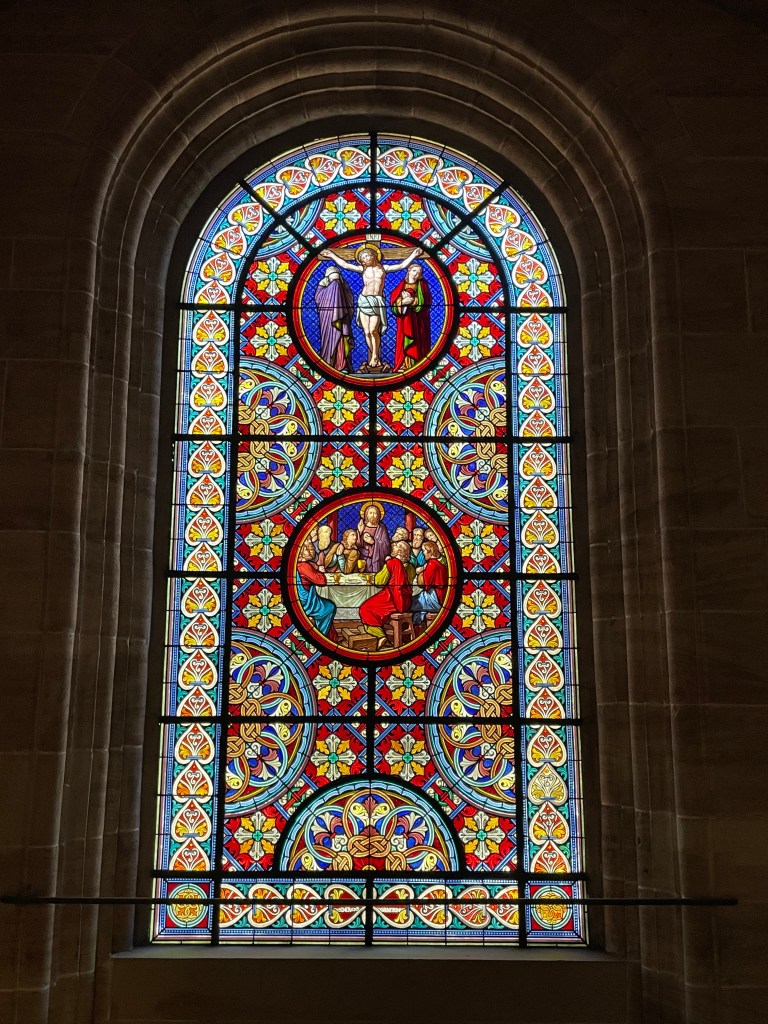
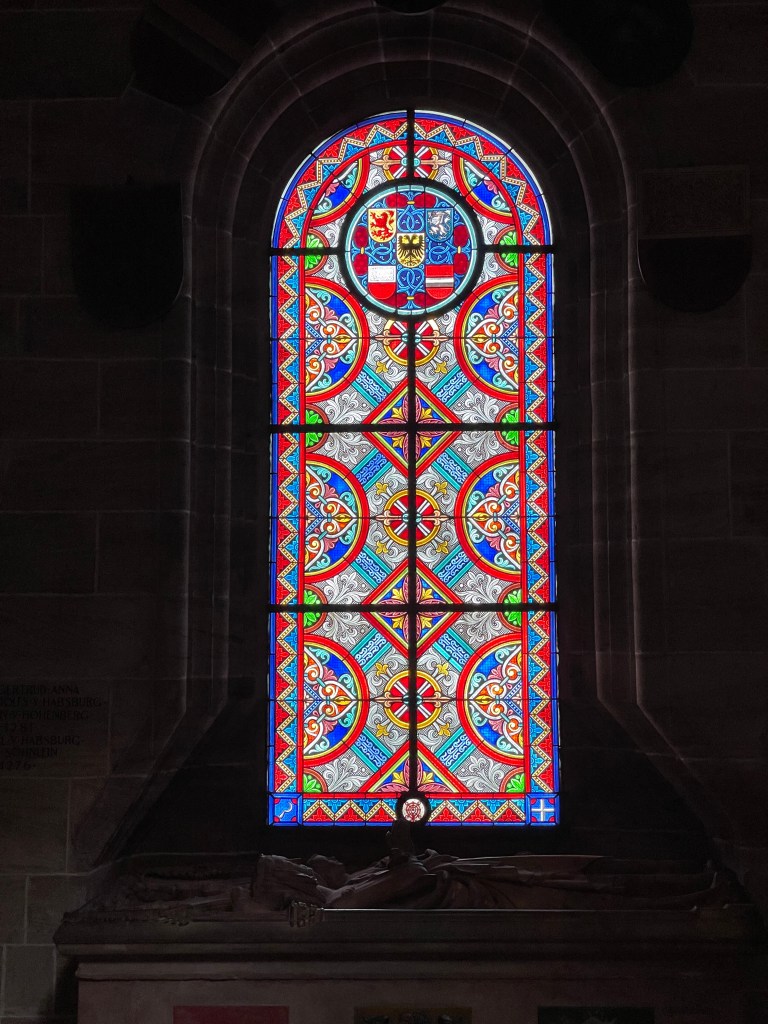
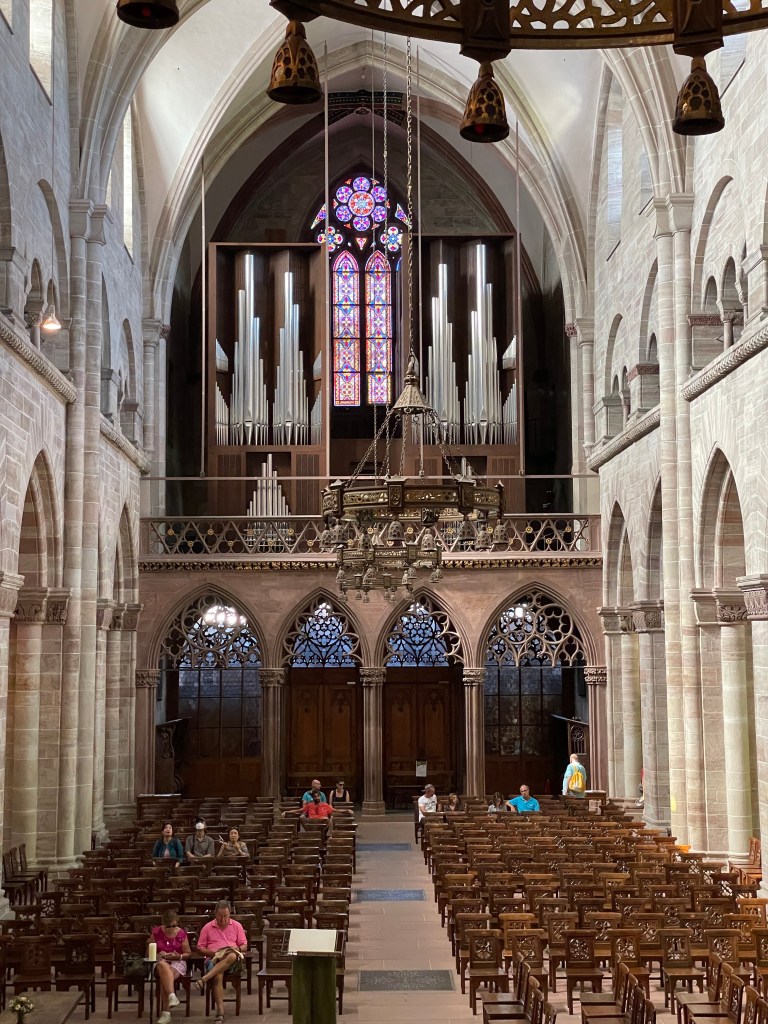
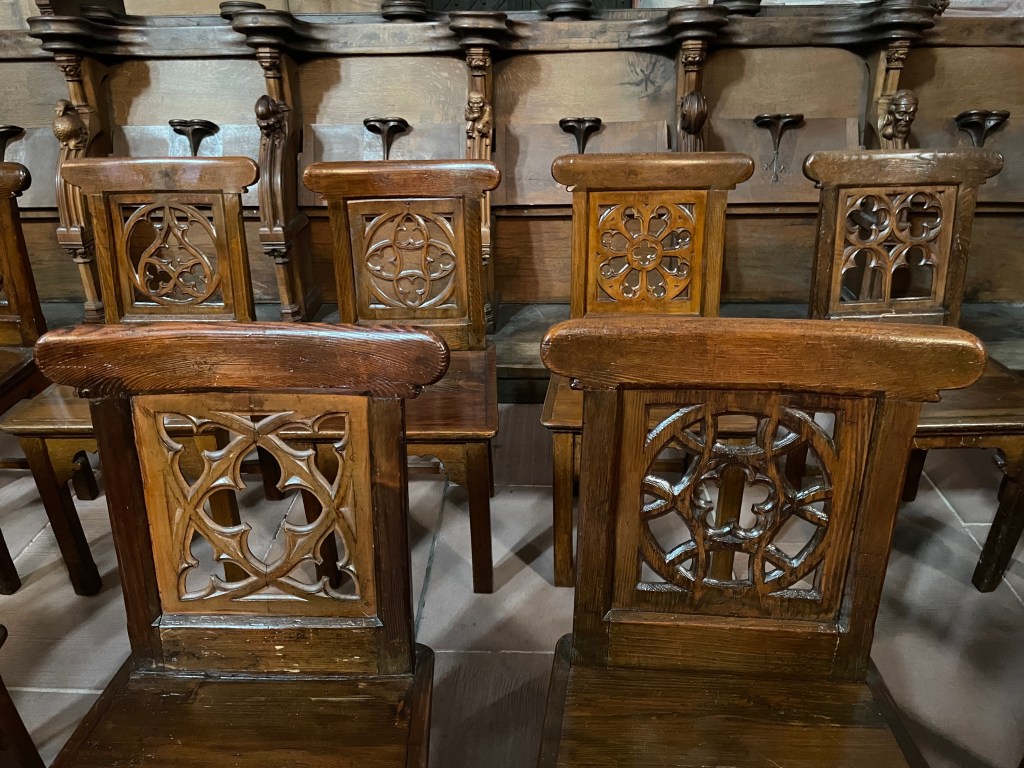
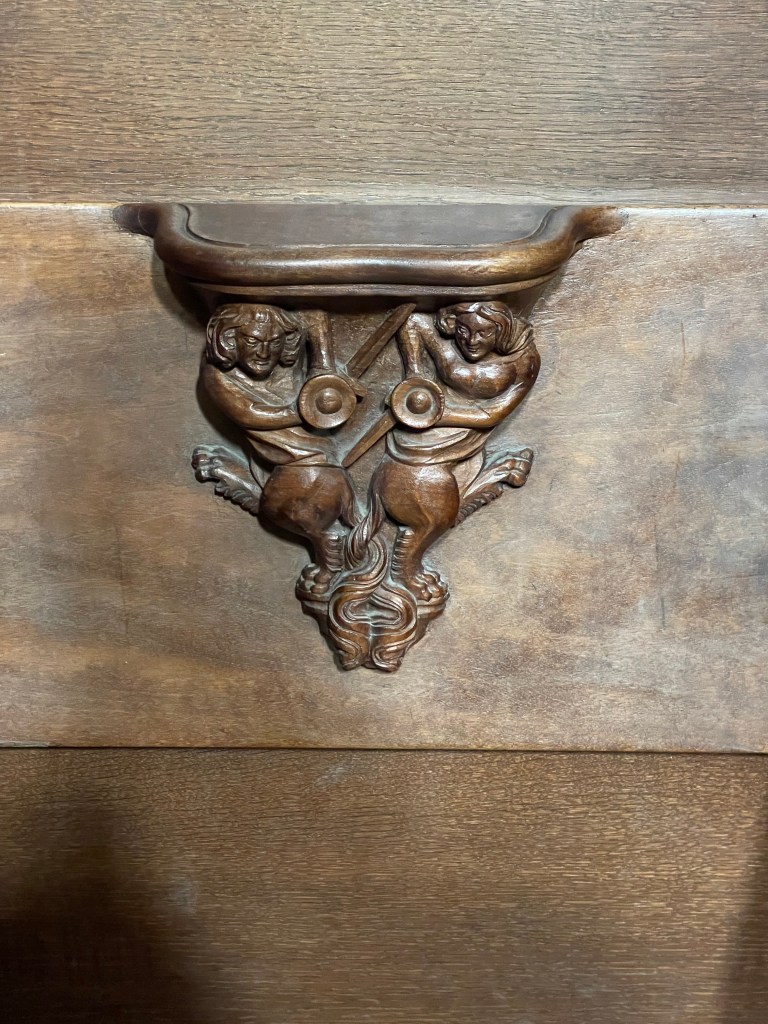
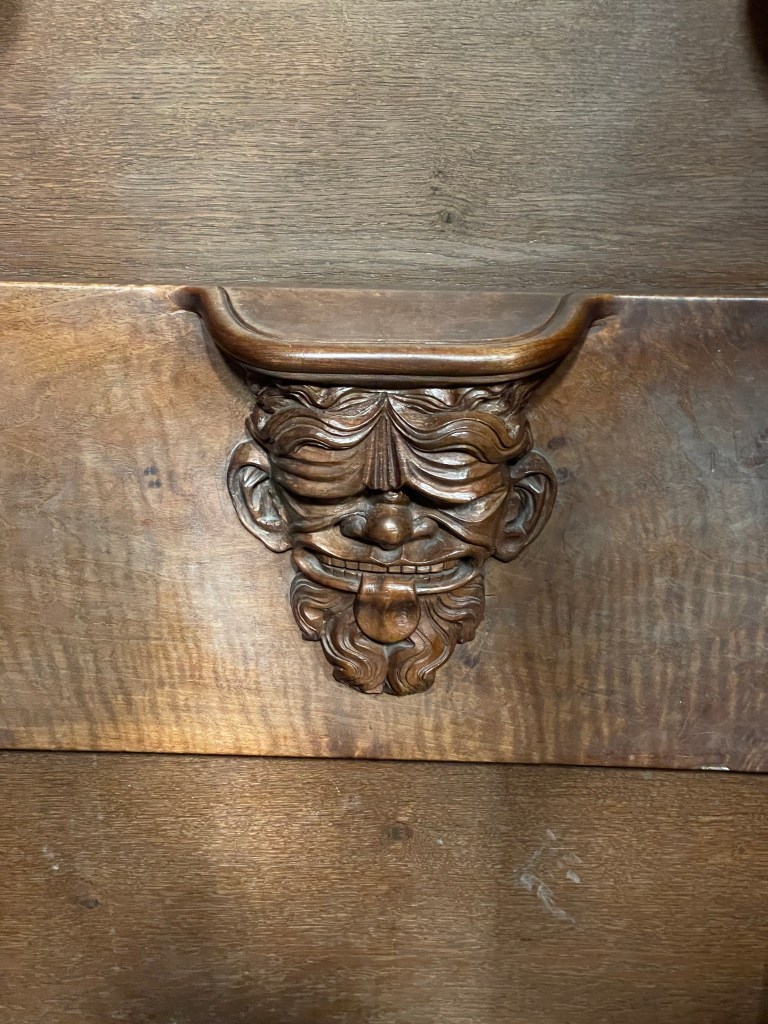
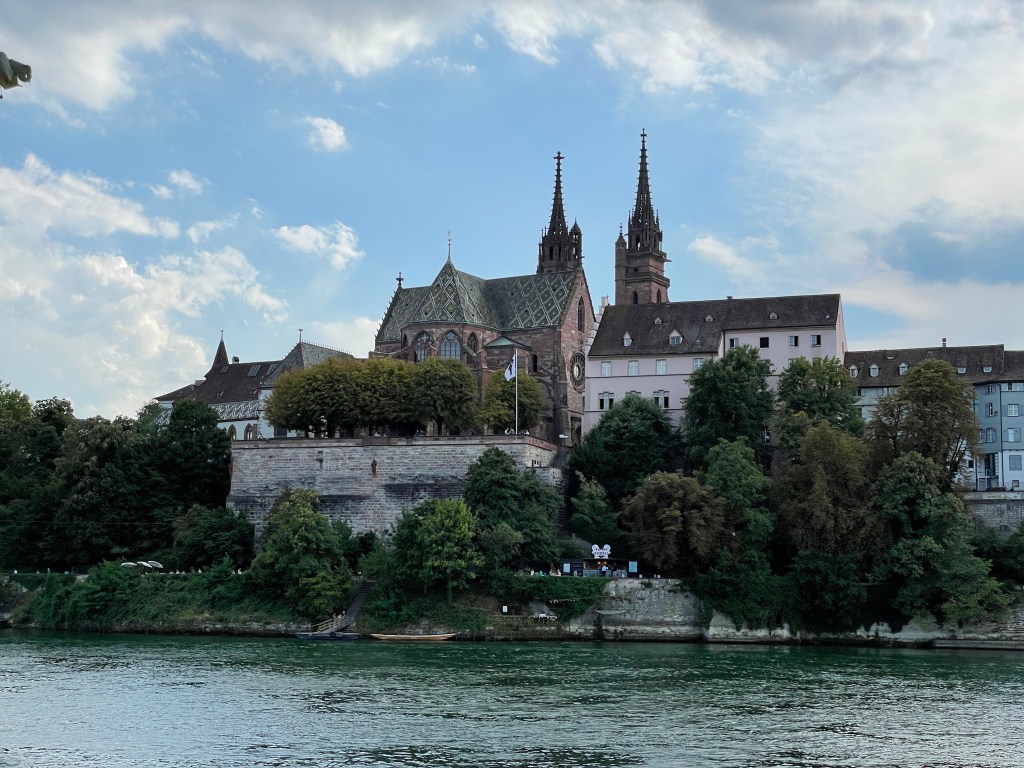
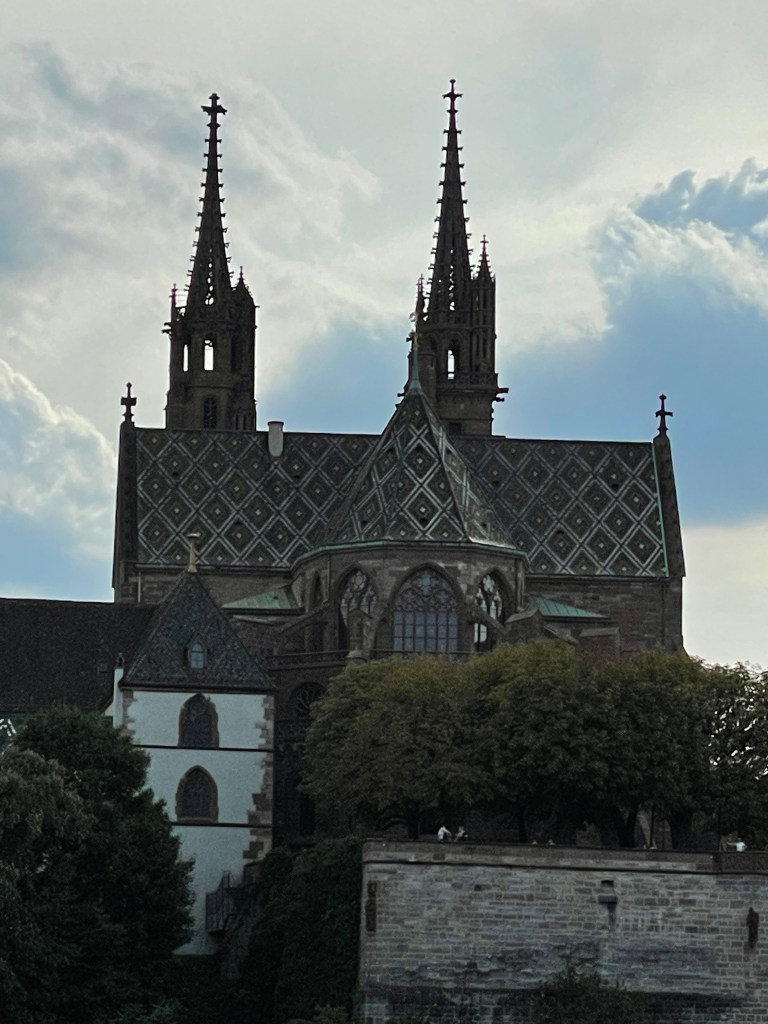
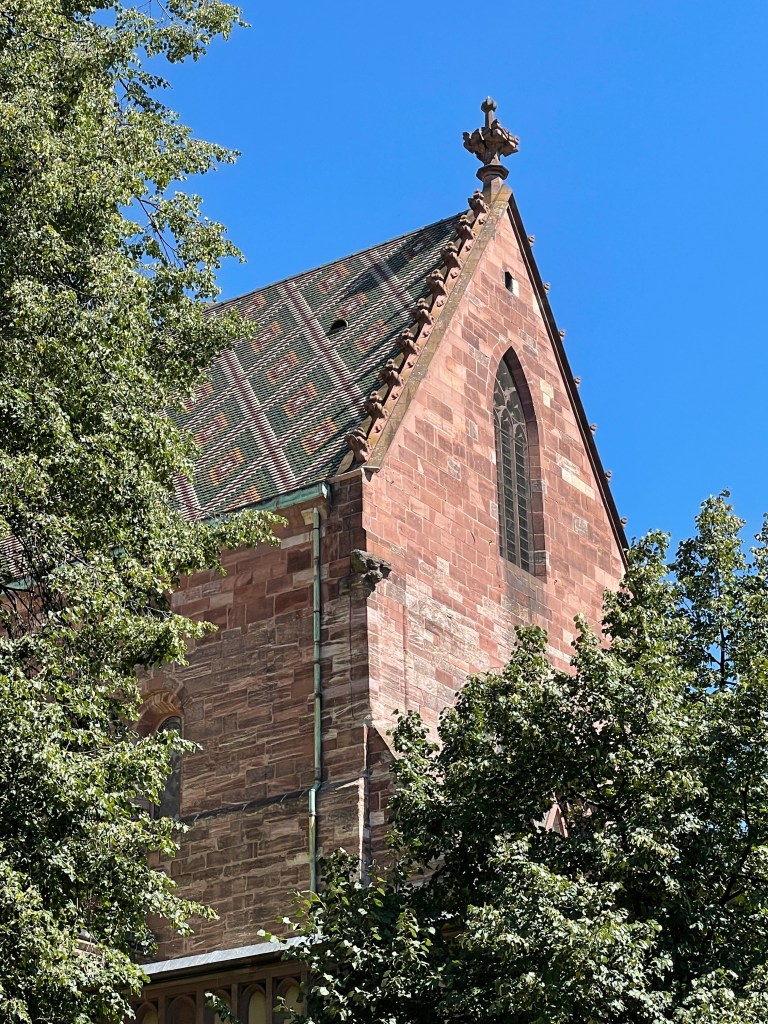
The cathedral roof has a similar style of tile.Stained glass windows, pipe organ and alter in cathedral Each chair back has a different design Bottoms of fold-up seats, also different designs Bottom design only visible when seat is upCathedral from across the Rhine and from closer showing the beautiful tiled roof.
We tried to ensure that the cruise we chose included this excursion as not all cruises stop near here. The Black Forest seems such a mysterious place, filled with Grimm’s Fairy Tales. The ancient peoples who first settled on the lowlands did not venture into the forest.
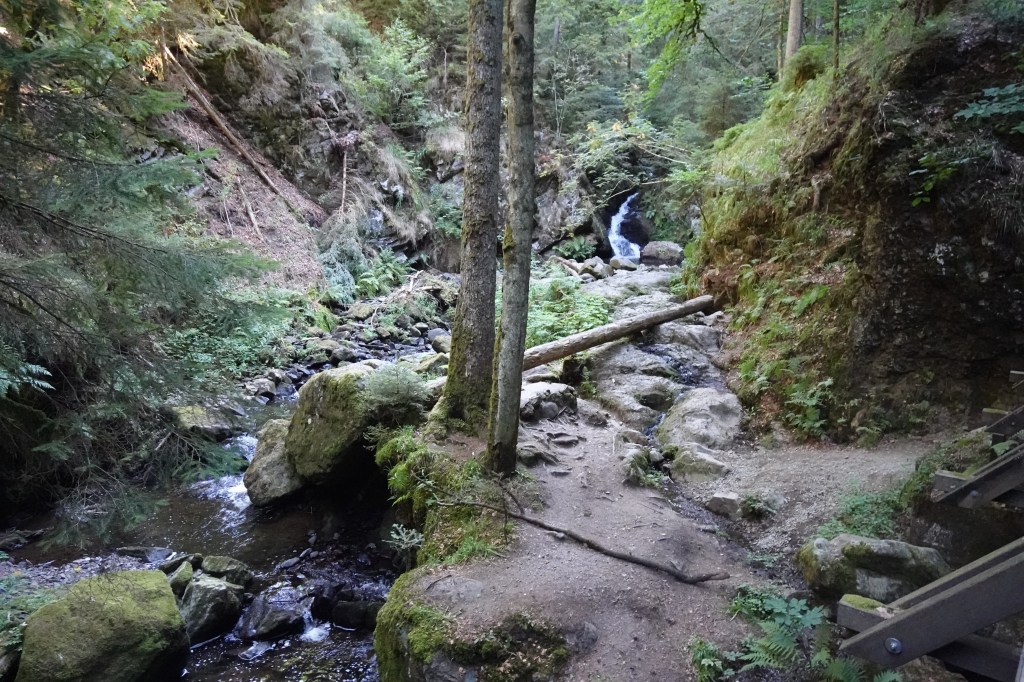
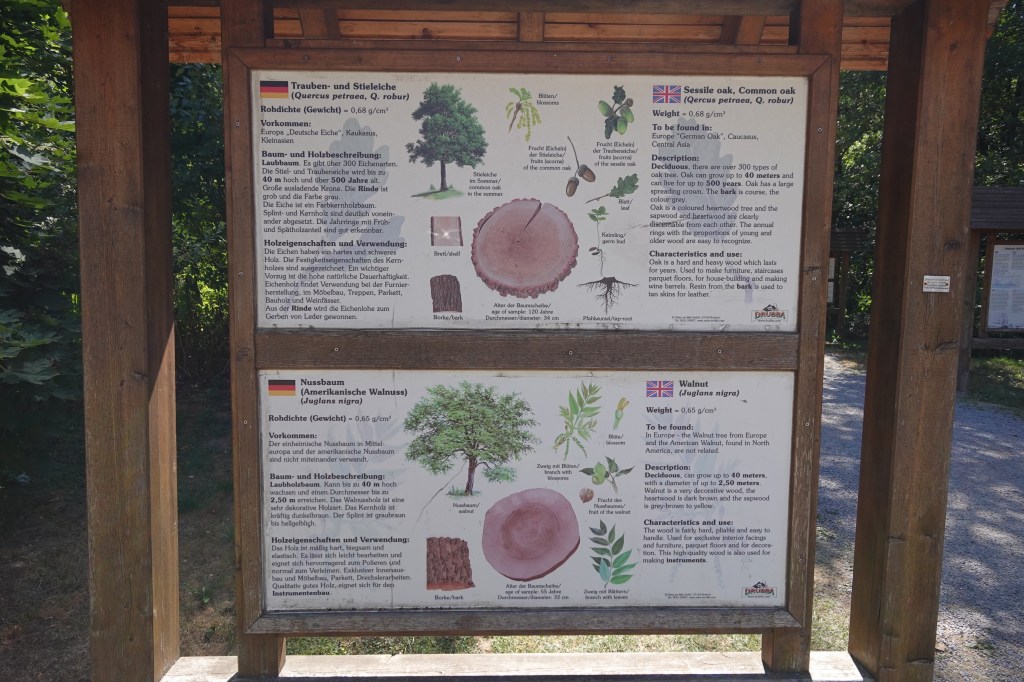
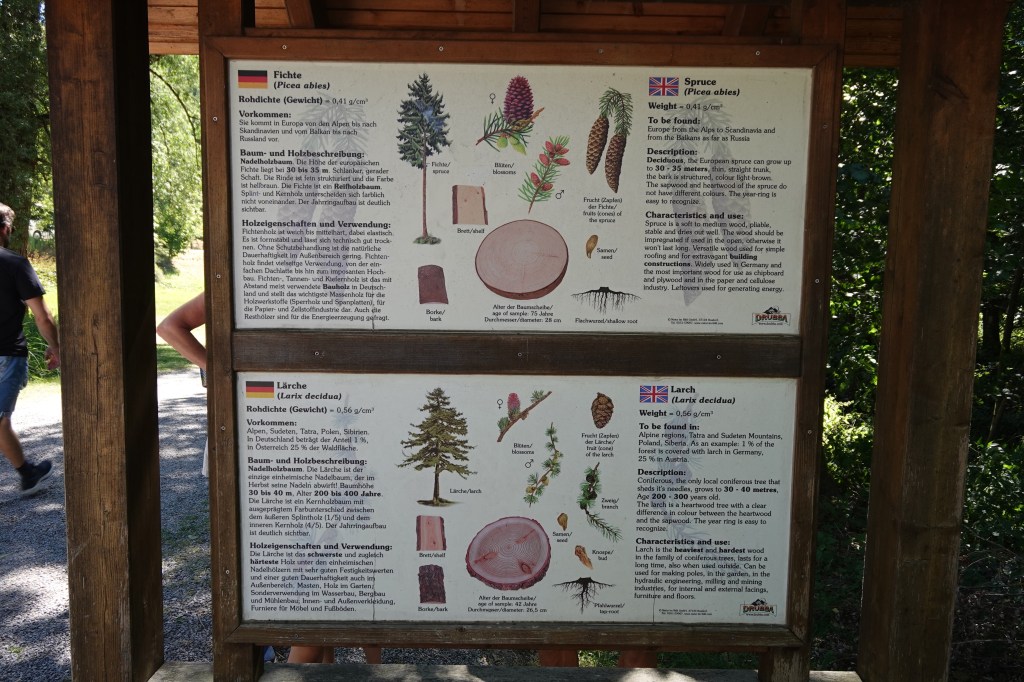
The hike is up Ravenna Gorge near Freiburg. Six kinds of trees live in this dense forest, and signs help visitors identify the varieties. We were thankful for the shade as the weather had been unusually warm.
About oak and walnut treesAbout spruce and larch trees
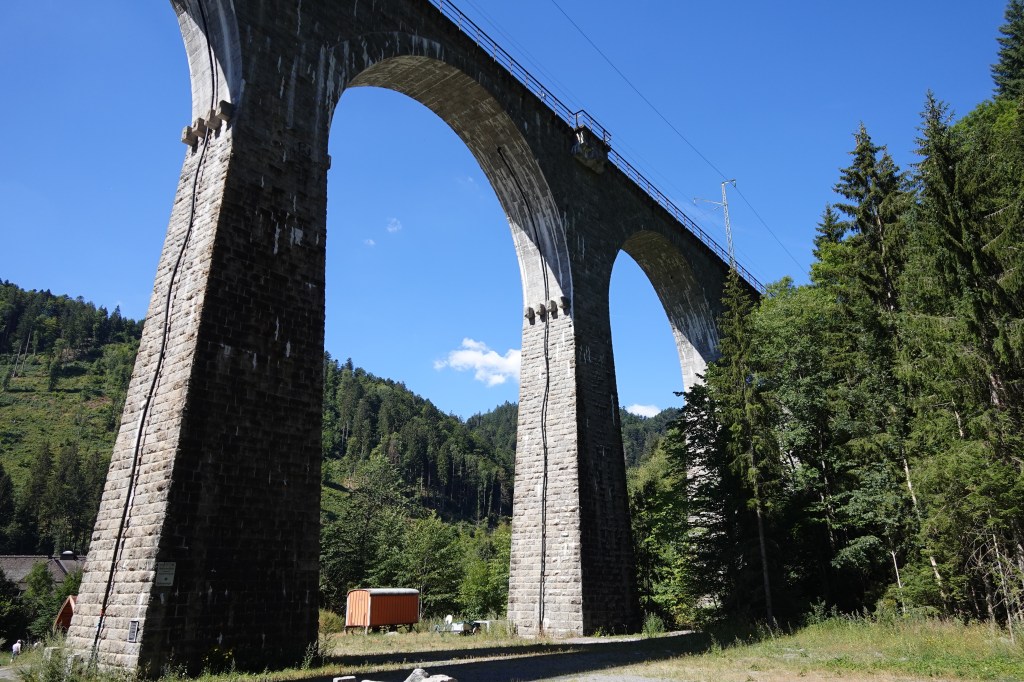
The first thing we saw was this high railroad viaduct rebuilt after WWII, quite extraordinary.
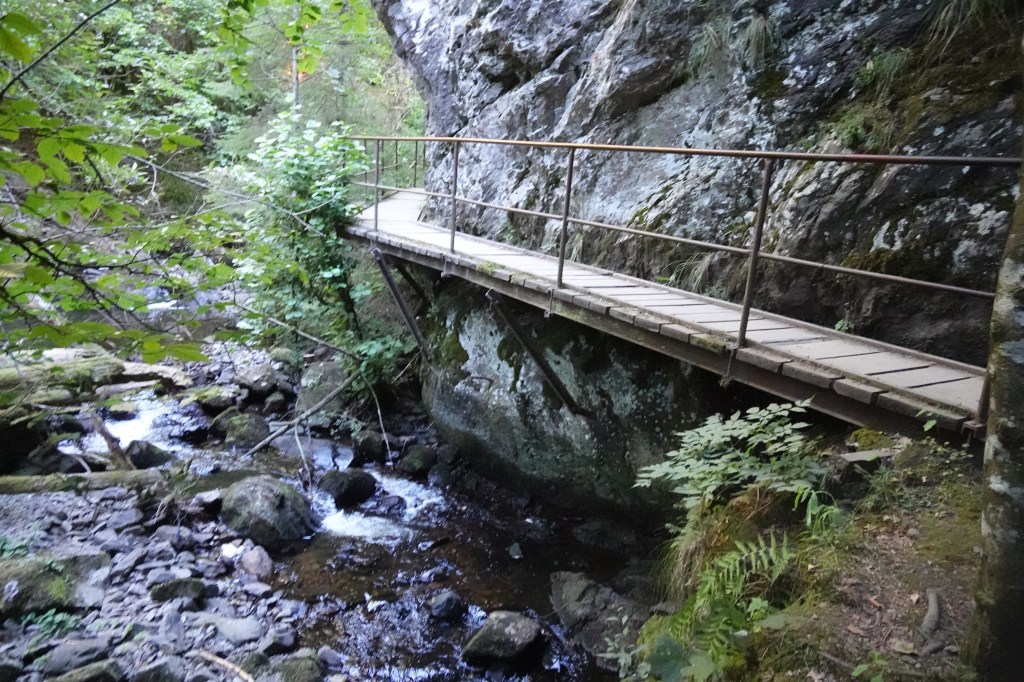
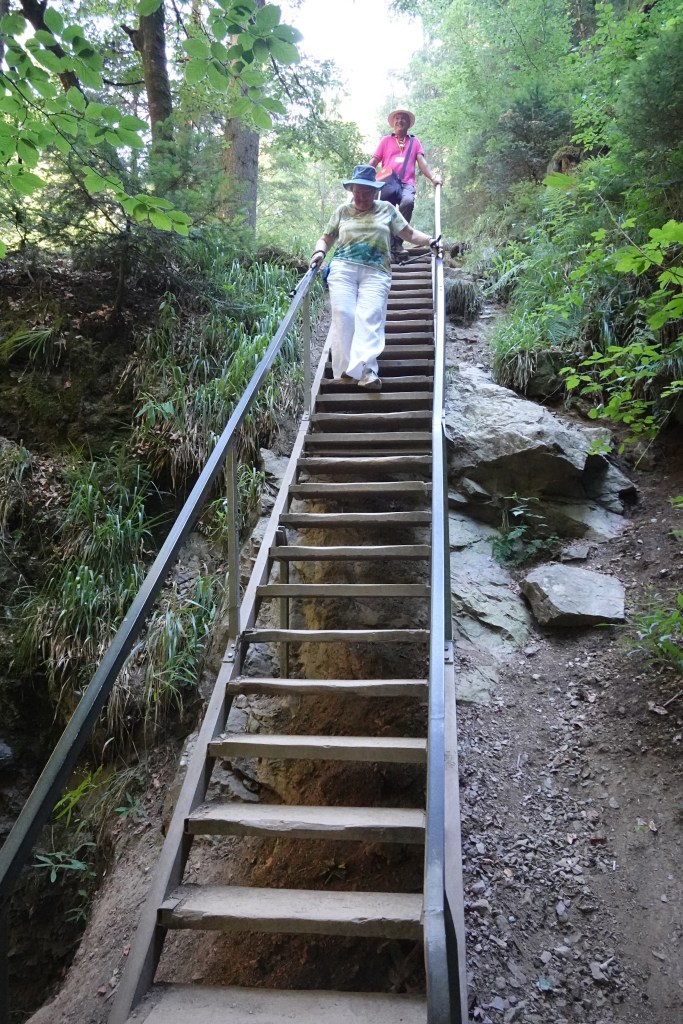
The walk was only 1.25 miles, but we gained over 400 feet, so a little bit steep. The trail in places was quite narrow, with handrails on the many bridges and stairways.
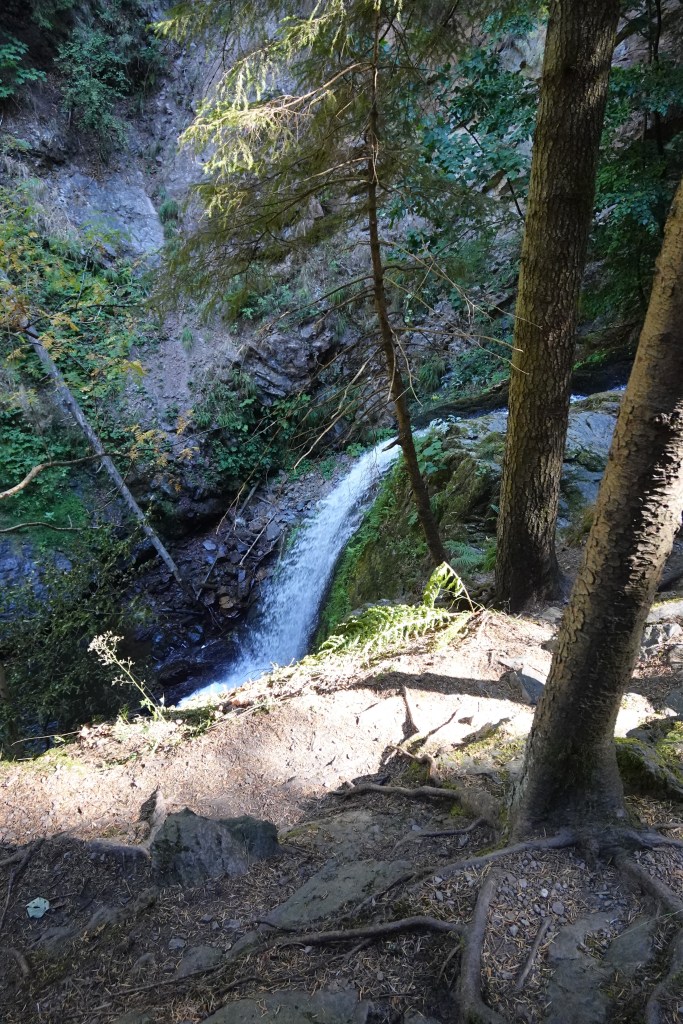
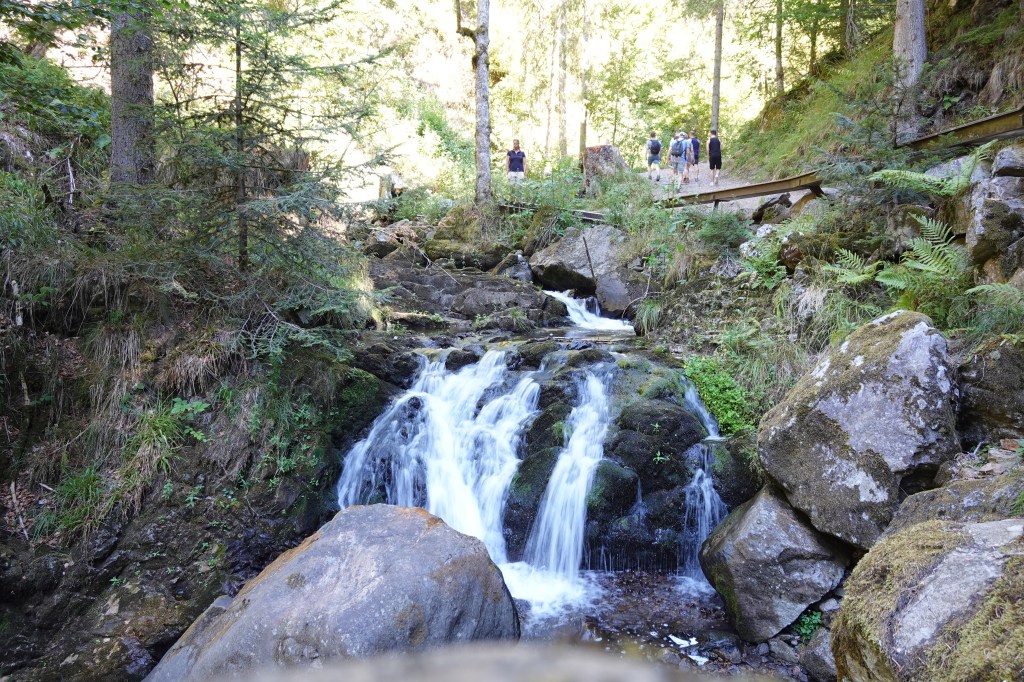
Lots of beautiful waterfalls to admire, but strangely no mosquitoes and very few other bugs.
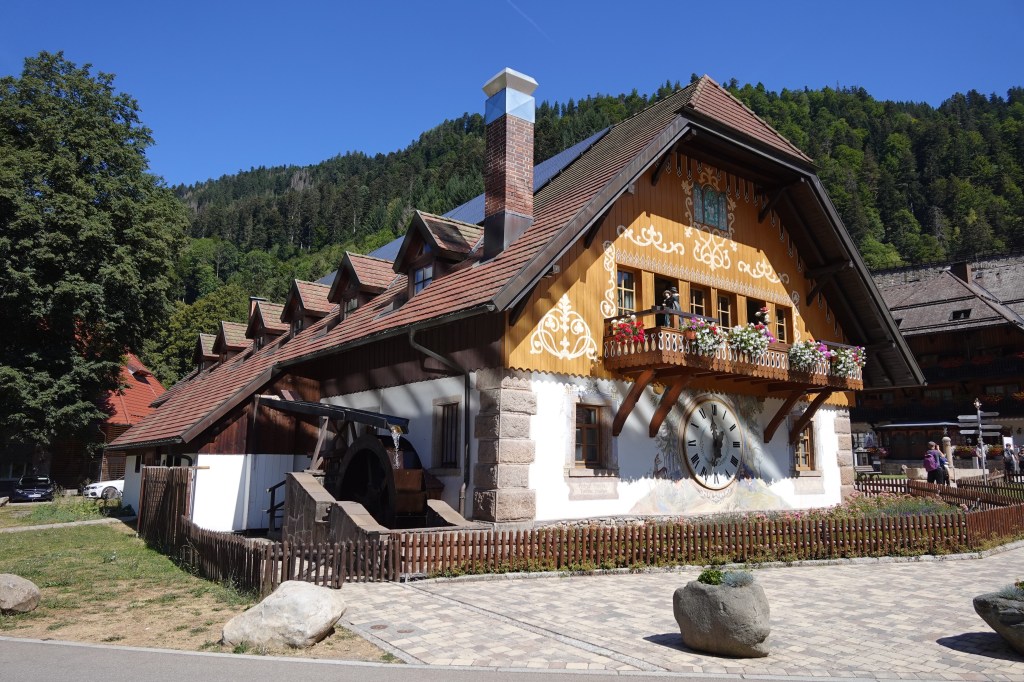
At that end of the hike was a cute little village selling glass ornaments, cuckoo clocks, beer and Black Forest Cake!
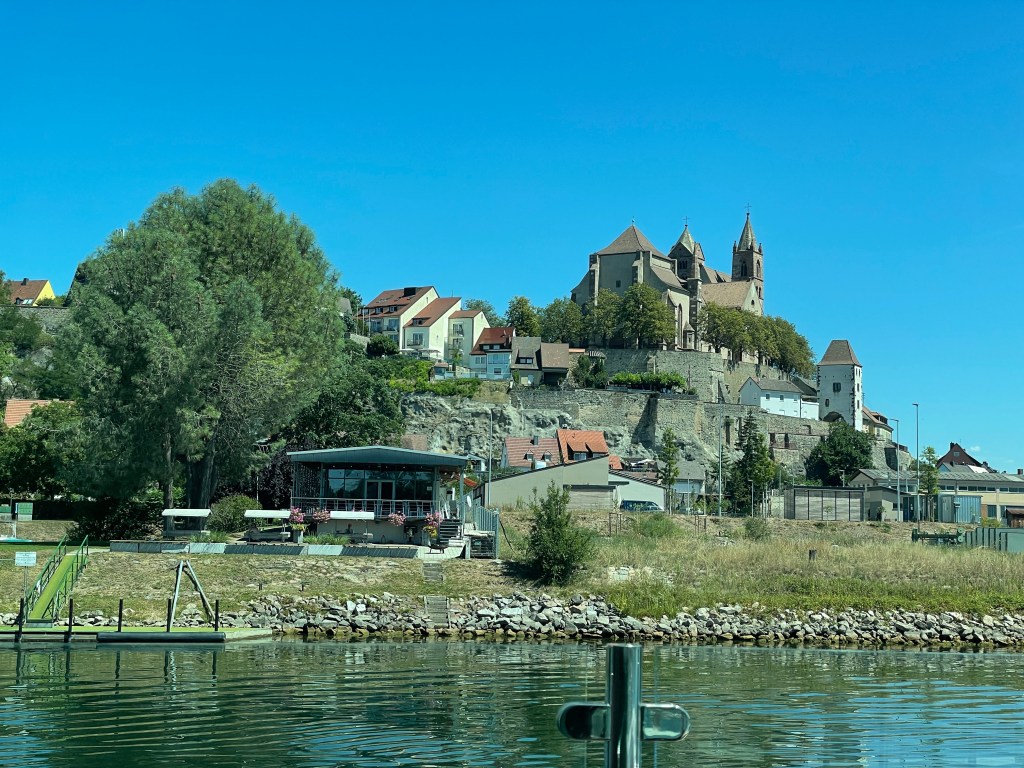
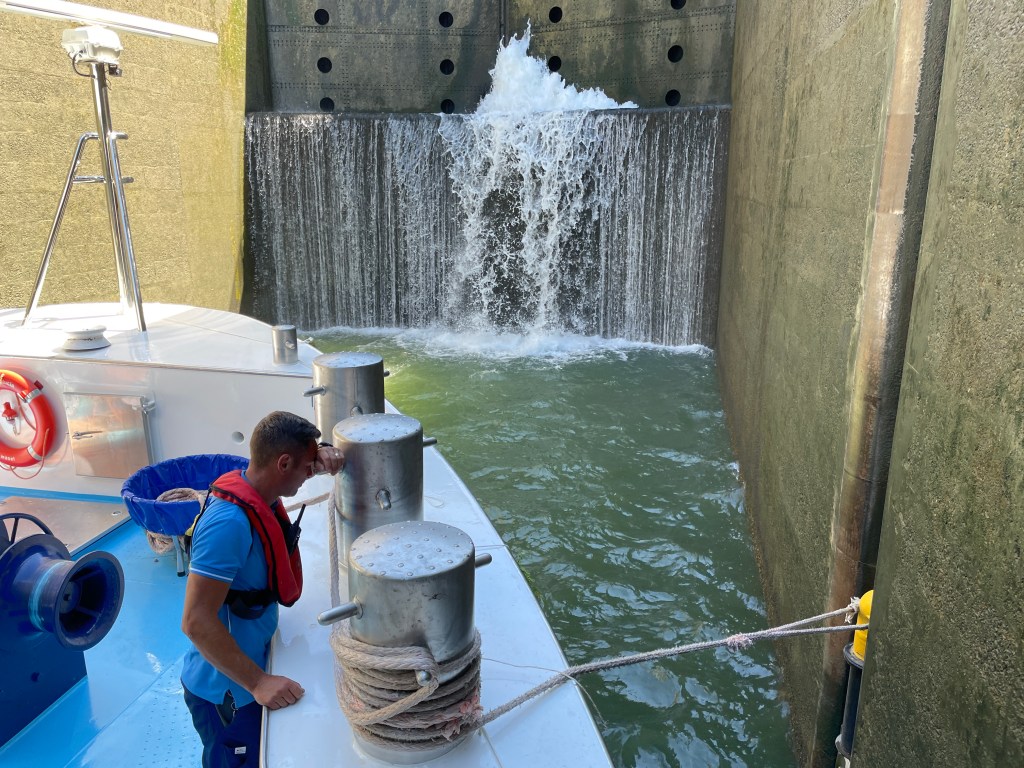
Upon leaving the dock adjacent to the town of Breisach, the ship immediately traversed one of the many small locks on the upper Rhine River. Note the rope securing the ship to the side of the lock and the large amount of water leaking though the closed lock doors. We were told that the delays in traversing these locks was due to ongoing maintenance.
Starting just north of Strasbourg, the Rhine River becomes the border between Germany and France. The cruise director had all kinds of jokes about crossing borders on the ship!
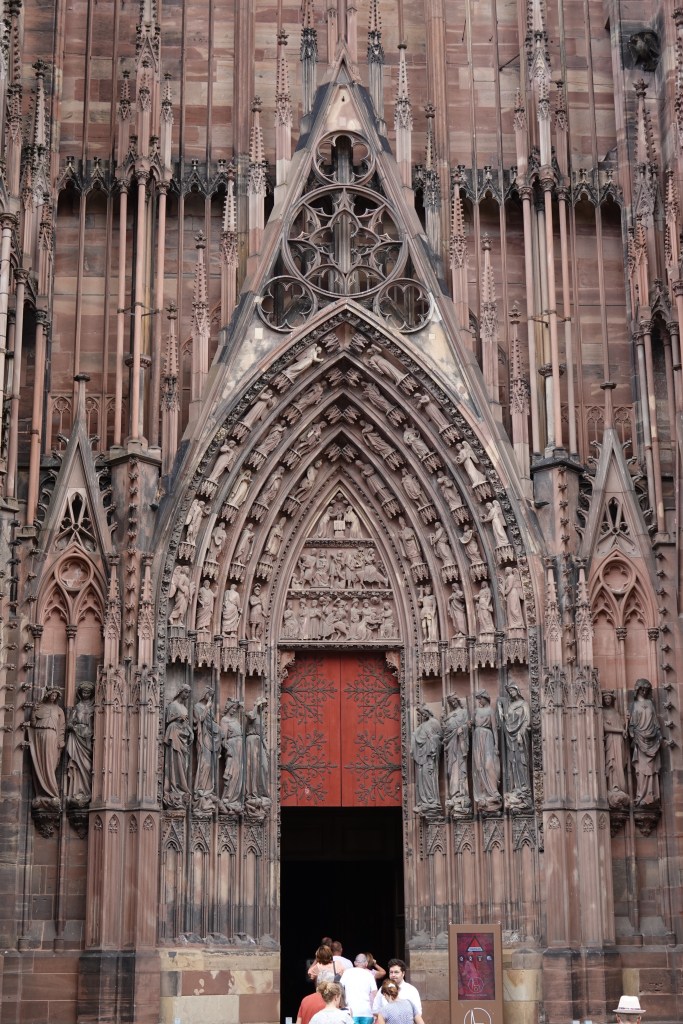
The cathedral spire was built to be the same as the elevation of the town so it is almost 500 feet high. It is hollow to save weight, also making the sky visible through the spire structure.
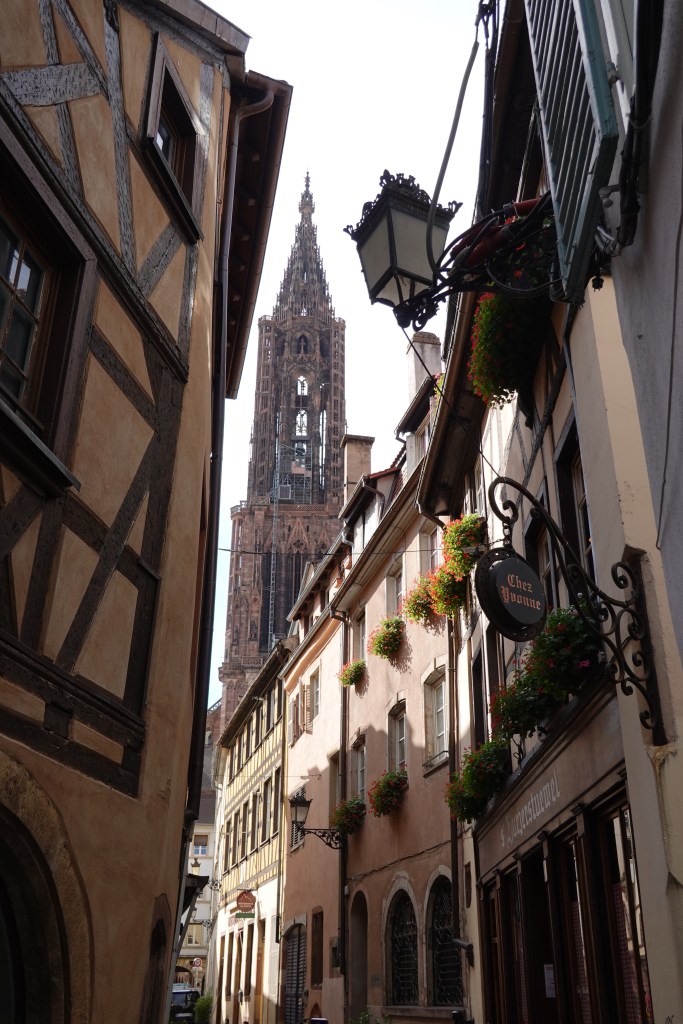
The cathedral is the tallest building in town; by decree no other buildings can be made higher than half the height of the cathedral spire. You would think that would make the spire easy to see from anywhere, but in actuality, you had to be on certain streets or alleys to see it at all. Fortunately, the tour guide knew all the right pathways.
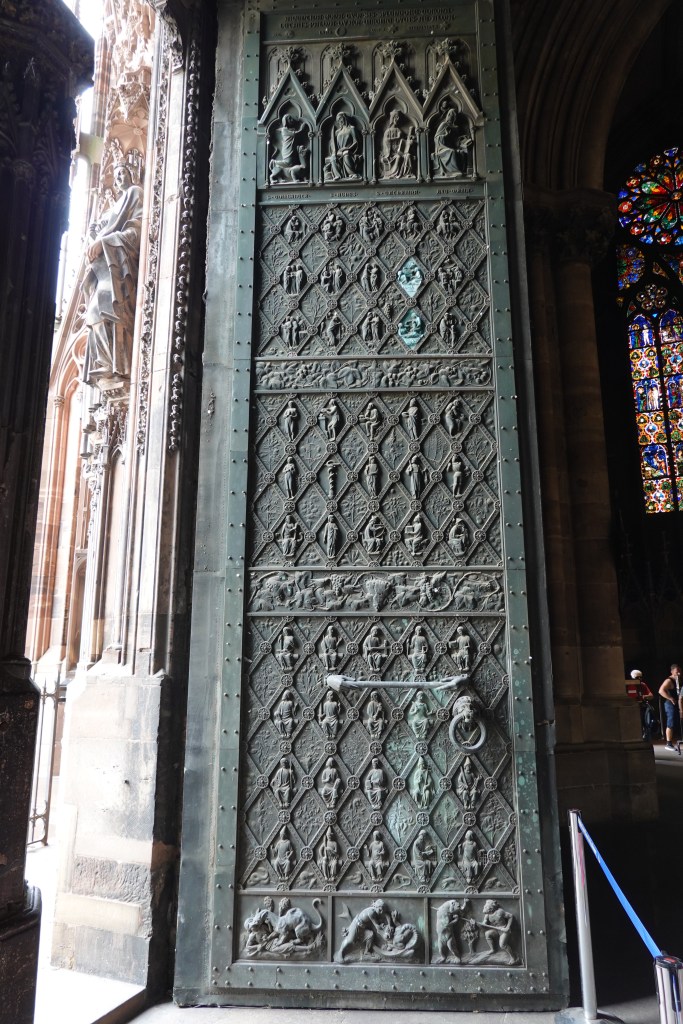
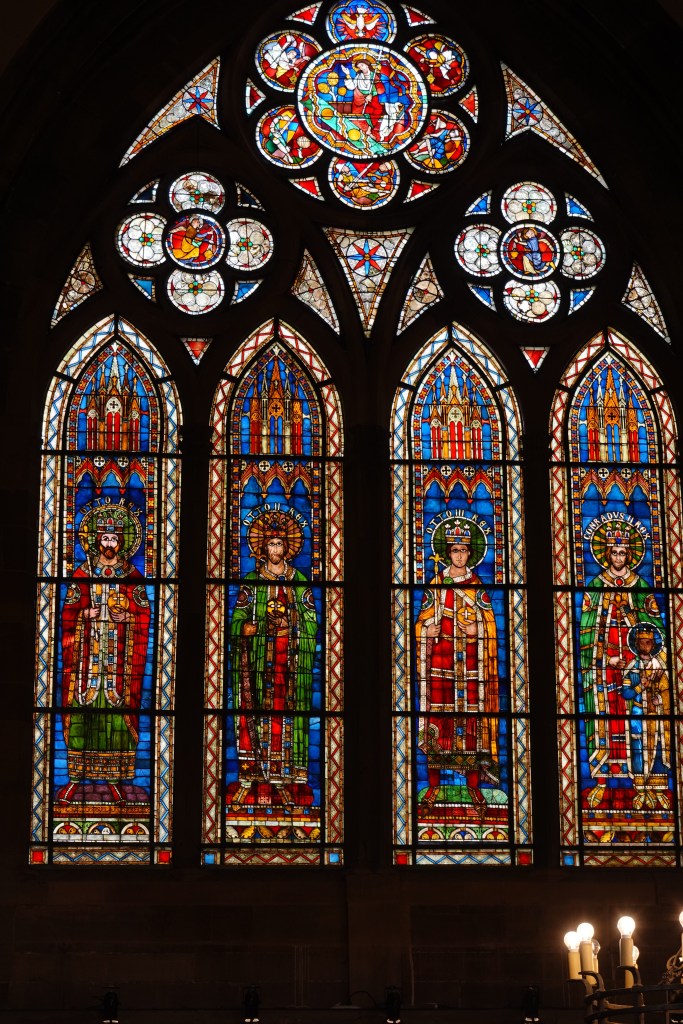
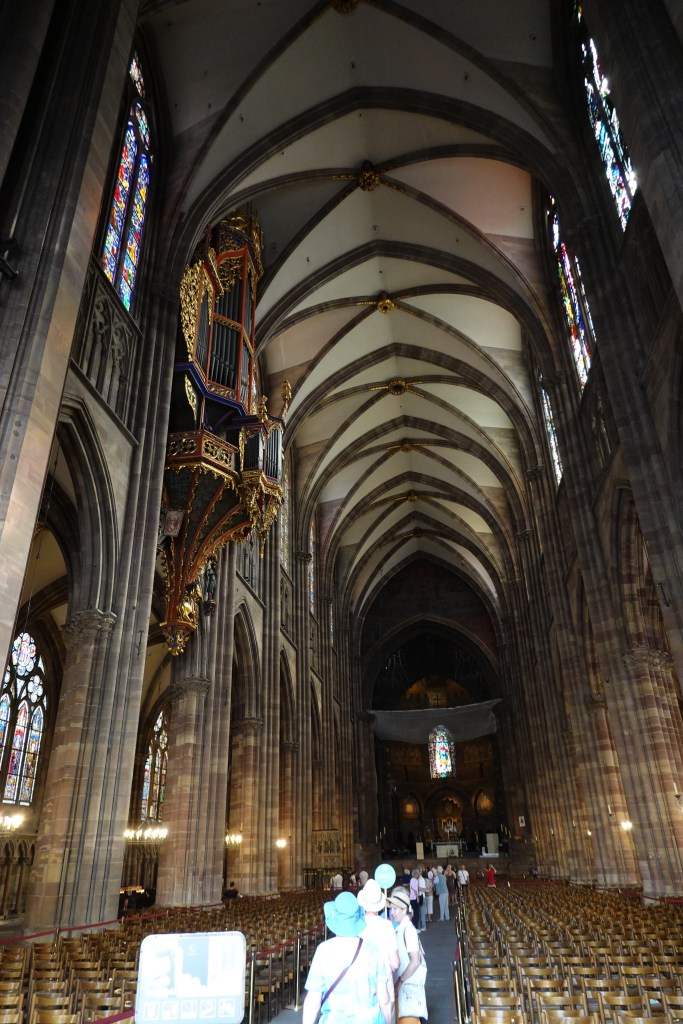
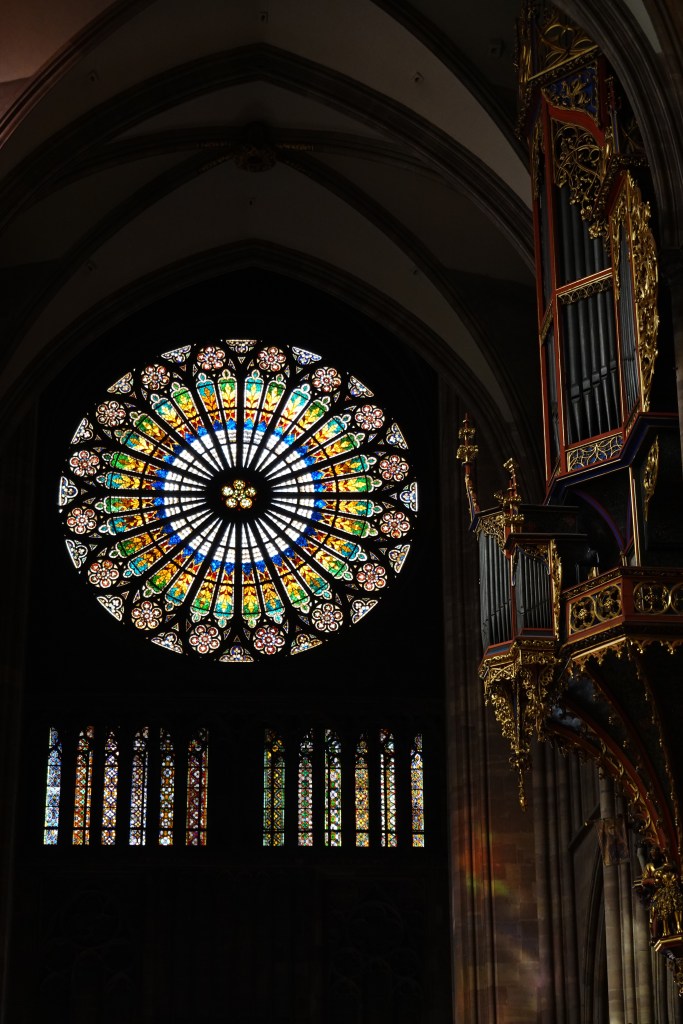
And, the cathedral is quite beautiful. Gothic and Romanesque architecture are seen in its structure. Most of the stained glass windows were taken out of the church during WWII, and hidden in the basement of another structure, so that most of the stained glass is original – such intense colors.
The tour guide mentioned that their cathedral is older and taller than the Notre Dame in Paris, and the one in Strasbourg has a larger flower circular window as well. People sure do like to be competitive.
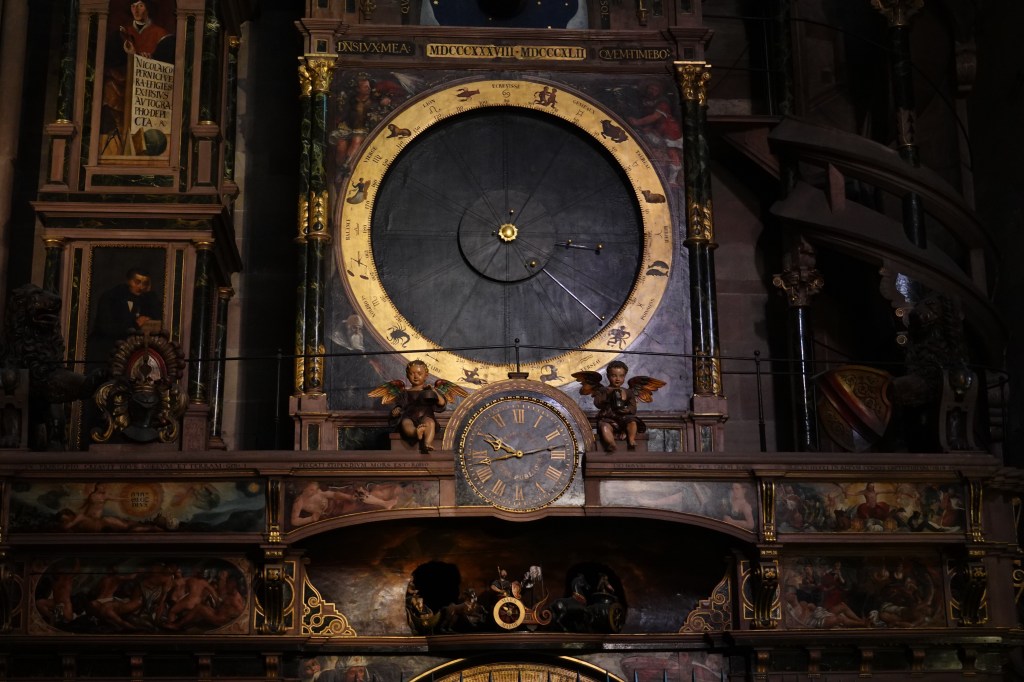
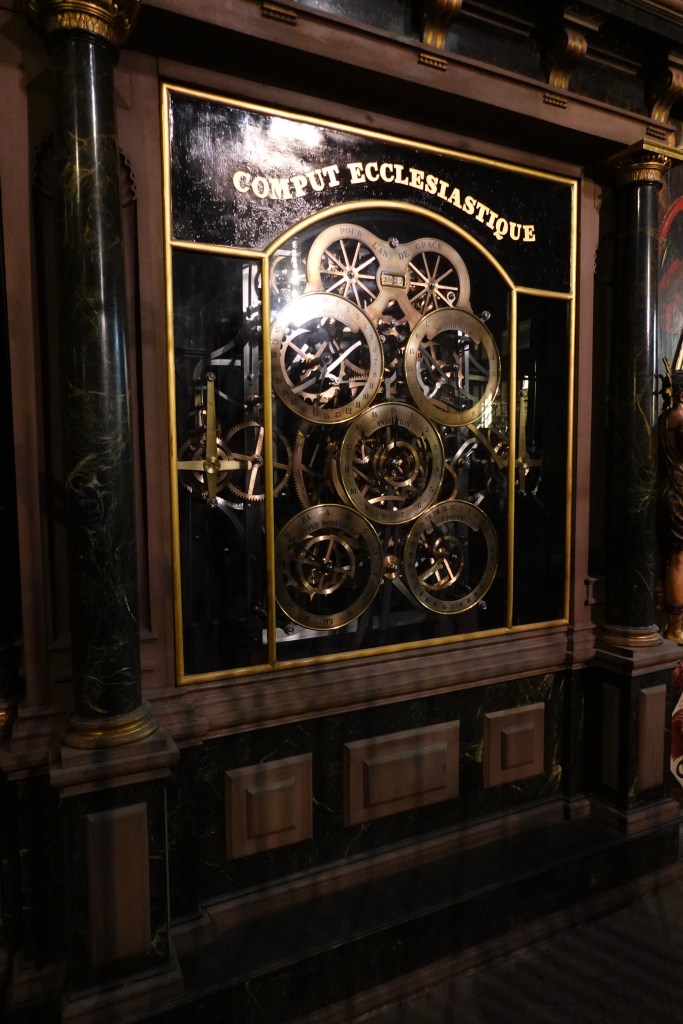
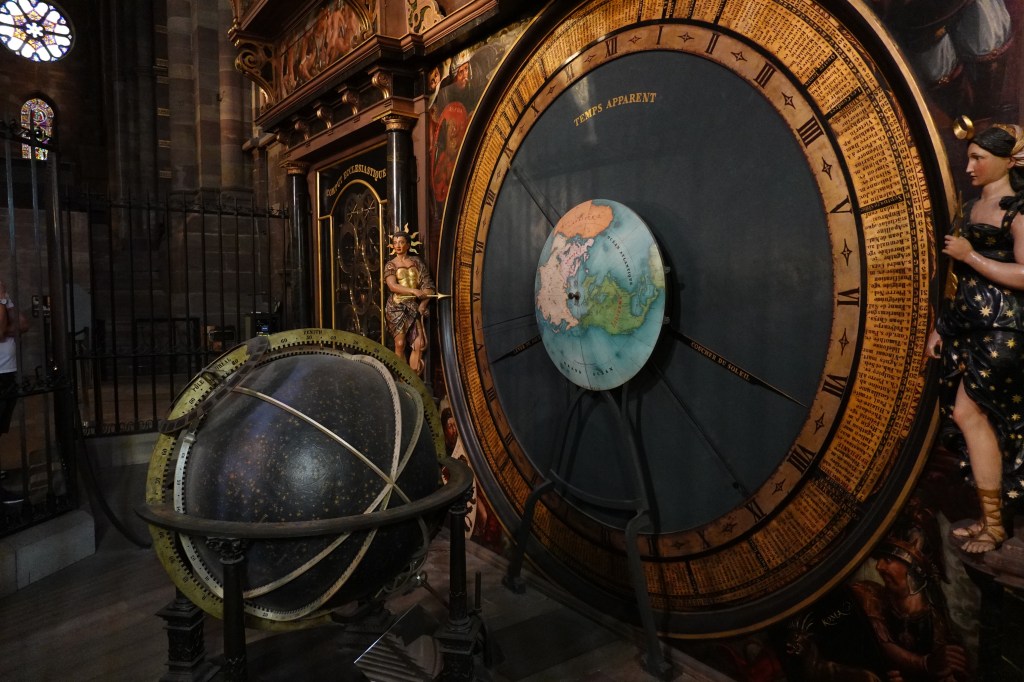
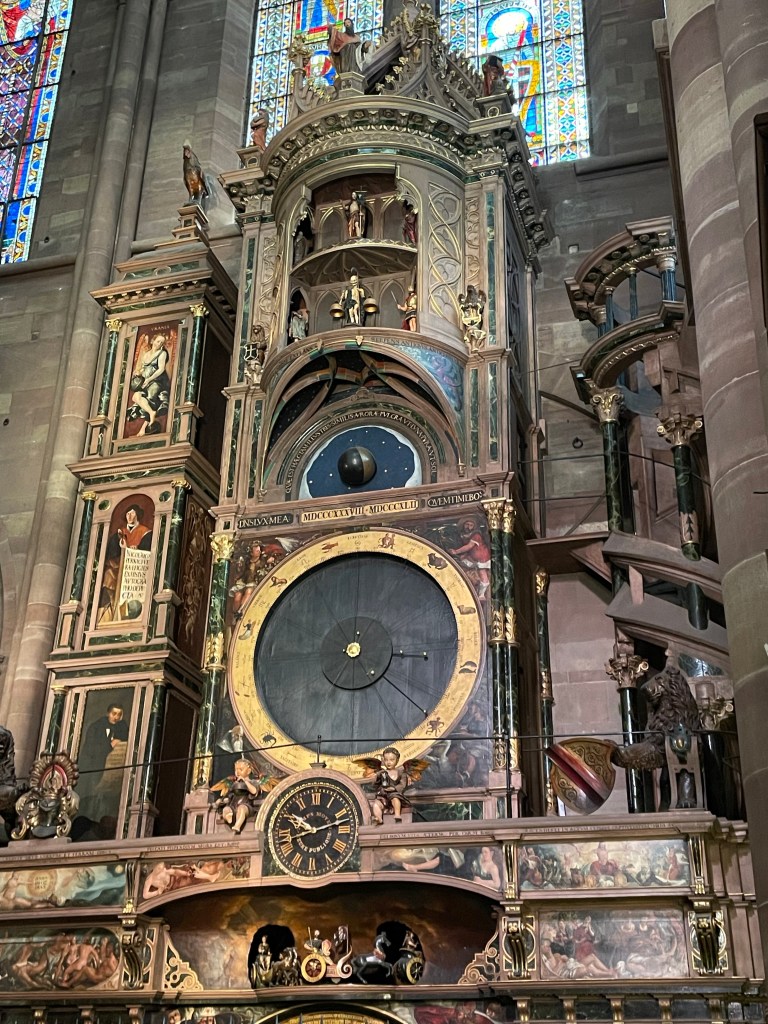
Clare’s favorite part of the cathedral is the astronomical clock, huge, complex and still working. It showed the placement of the planets, the moon and sun, where on Earth is in night and where in daylight, Zodiac signs, so many scientific things. And it had puppets (characters representing stages of life) walking past the death every 15 minutes: first a child, next a young man, then an old man. For the hour, different puppets moved higher up. The little angels adjacent to the base also moved every quarter hour, one turning an hour glass and the other ringing a bell.
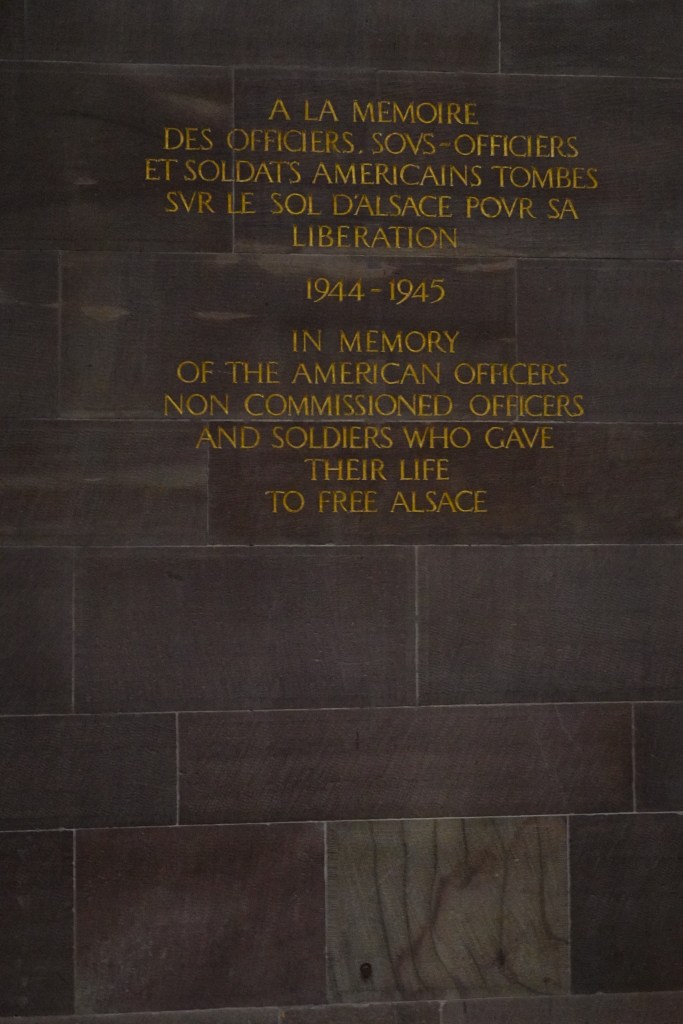
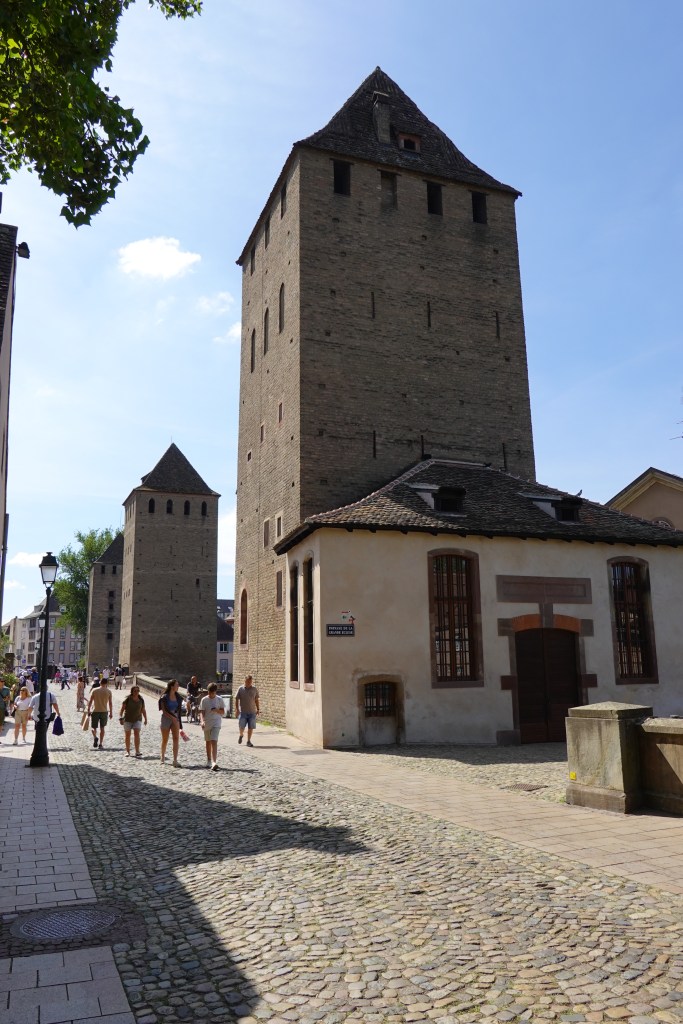
Watch the video of the clock – child changing into adultPlaque inside the church as a memorial to American soldiers who gave their lives to free AlsaceMultiple towers defended the old town.
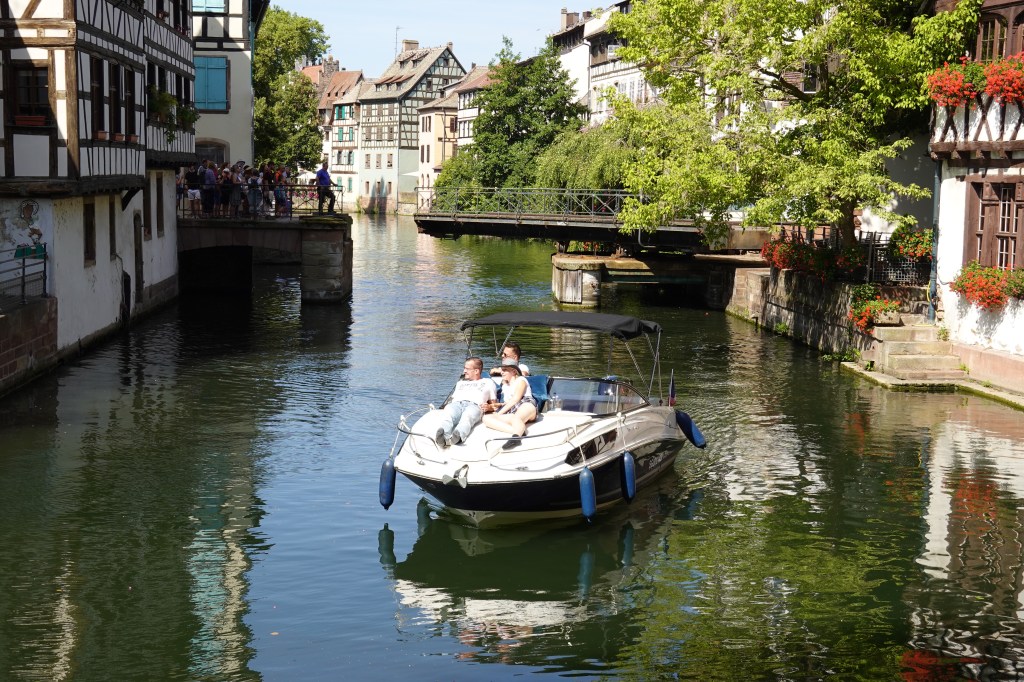
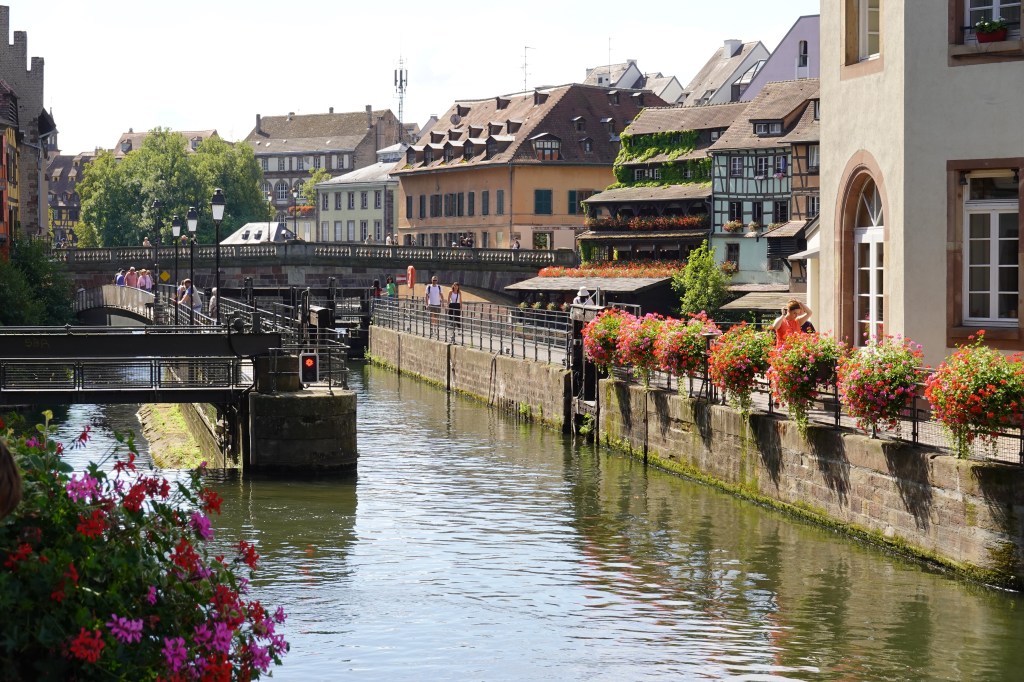
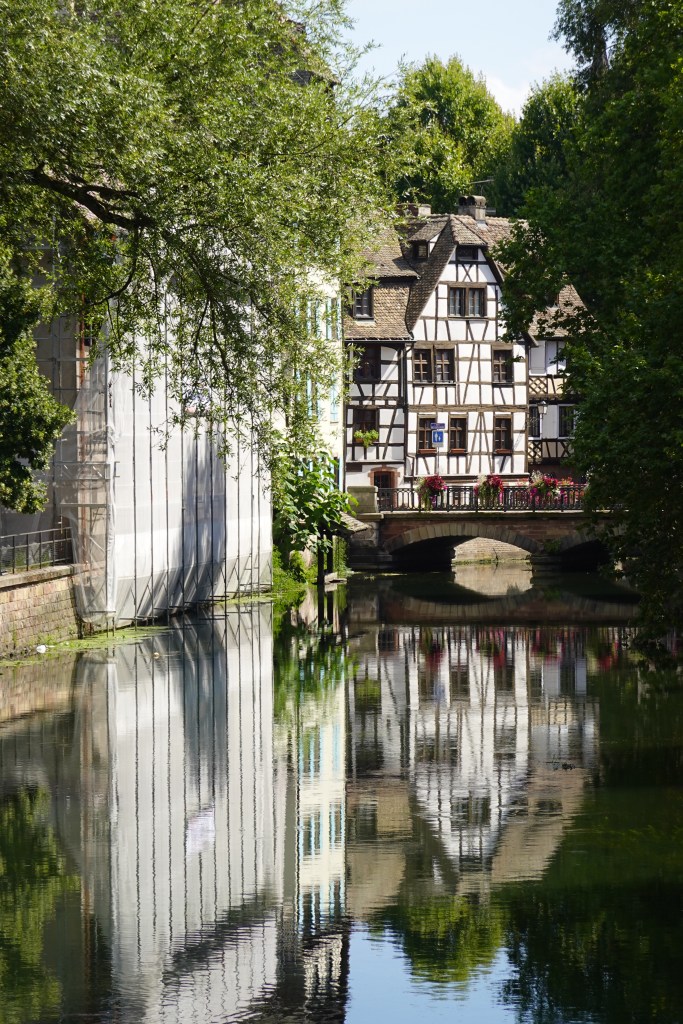
Lots of canals around Strasbourg are decorated as you would expect in France. Some of the bridges rotate out of the way to allow boats to go at prescheduled times.
The town is very much a mix of French and German. Our tour guide indicated that most of the people consider themselves European rather than one or the other, because ther parents and grandparents had to change nationality and religion several times in order to stay in the town.
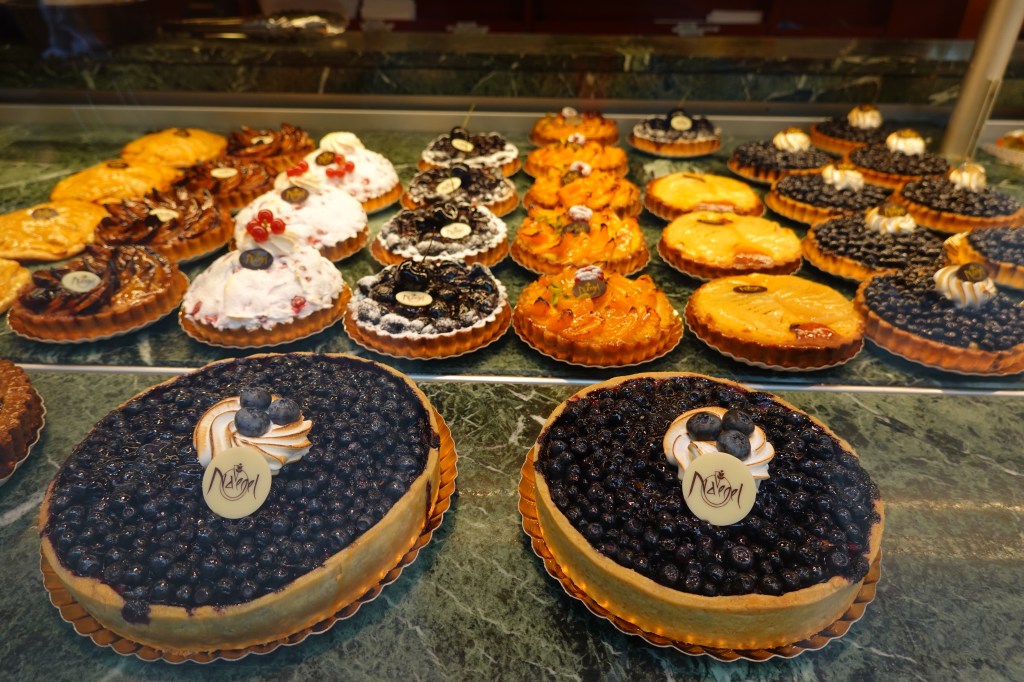
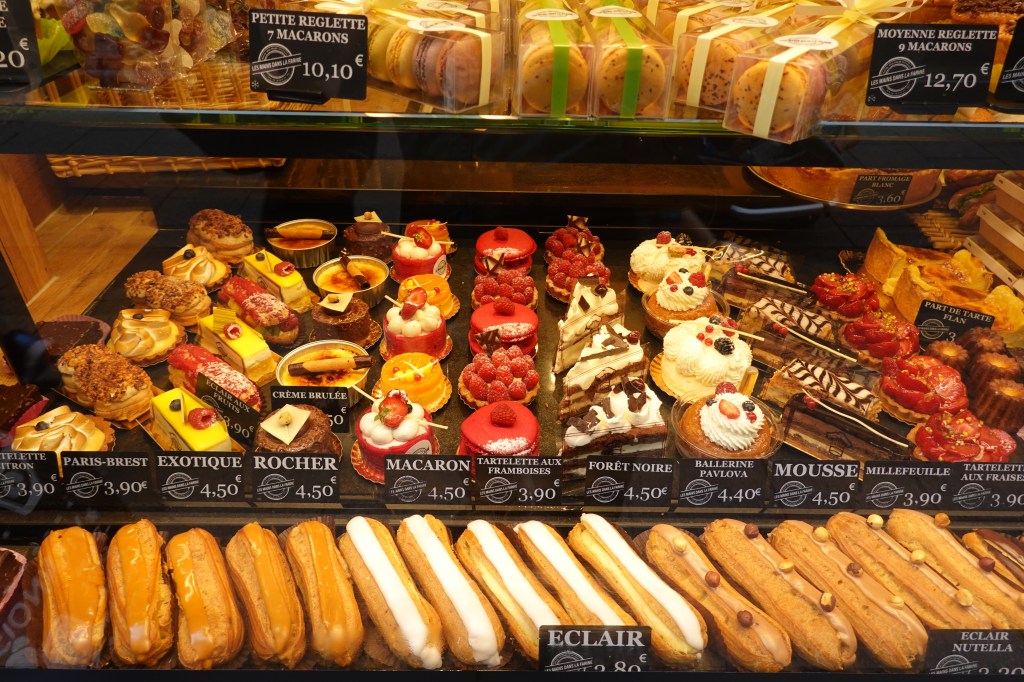
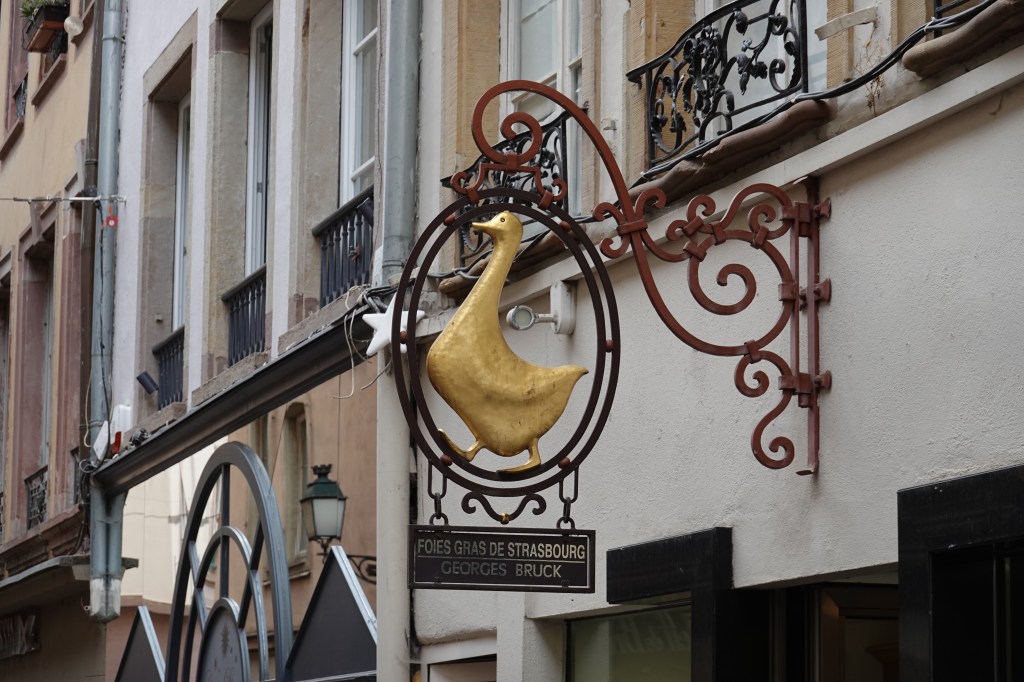
The tour guide joked that people cross the river to the German side to buy manufactured goods while they cross to the French side to buy food, such as pastries, foie gras, and cheese.
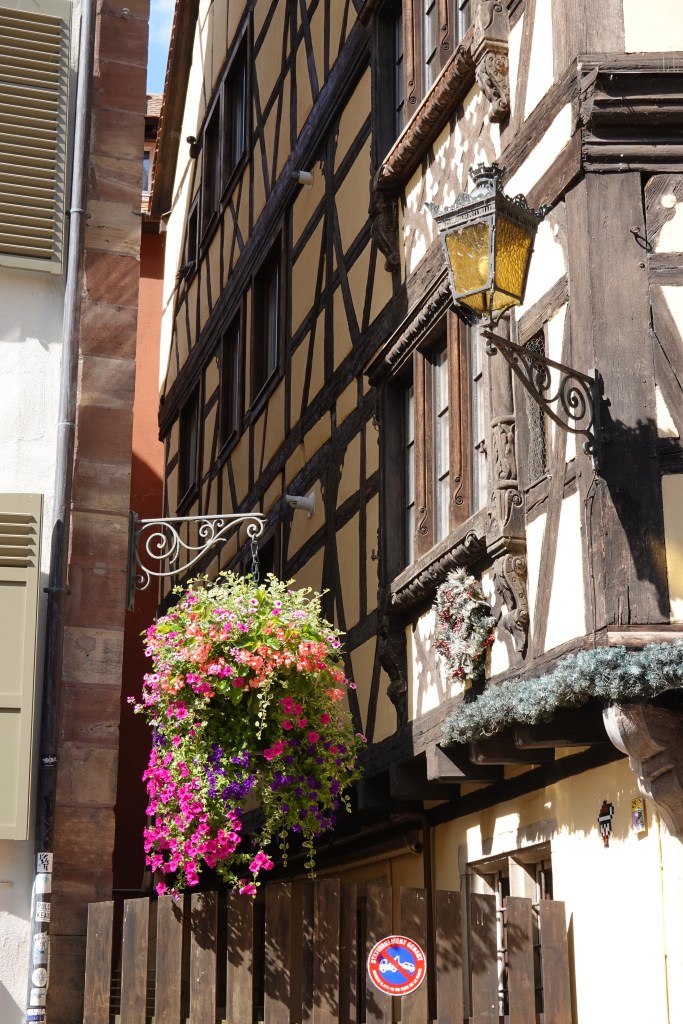
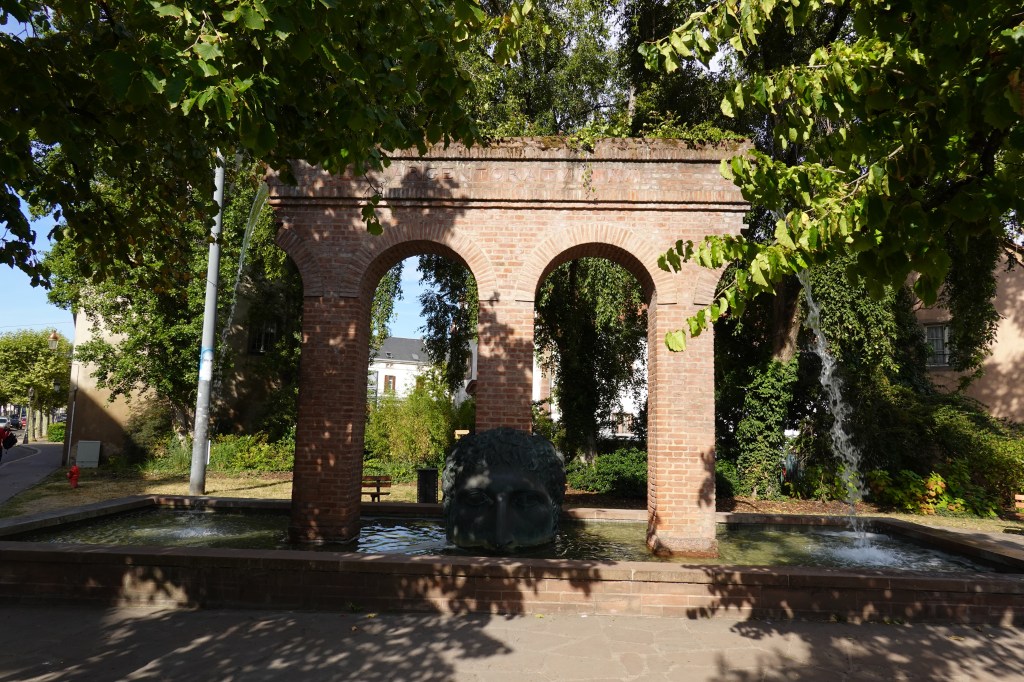
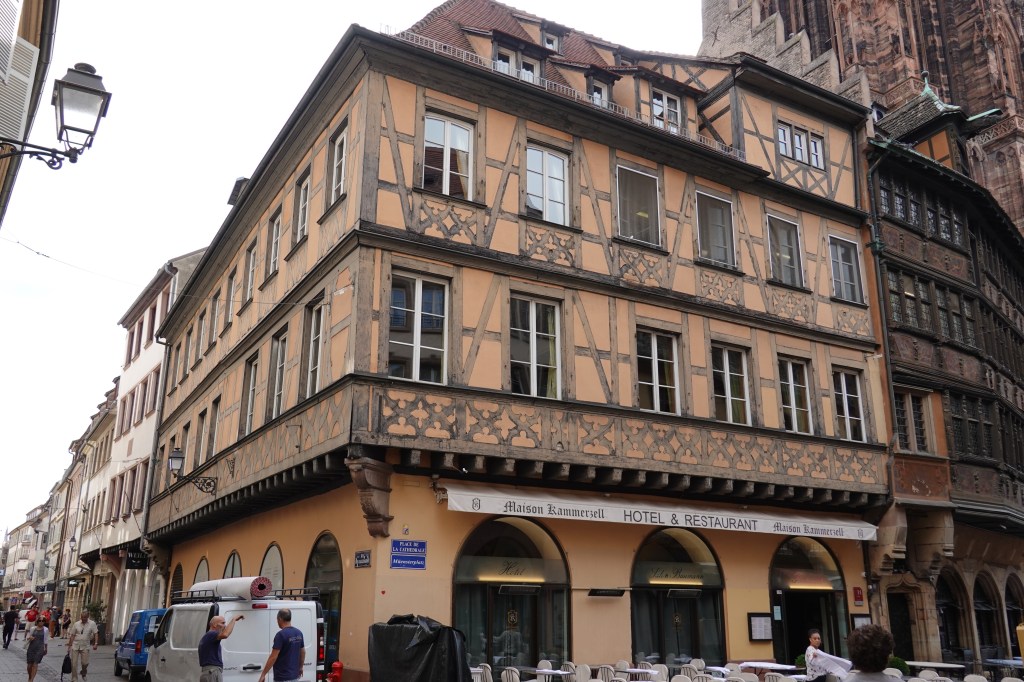
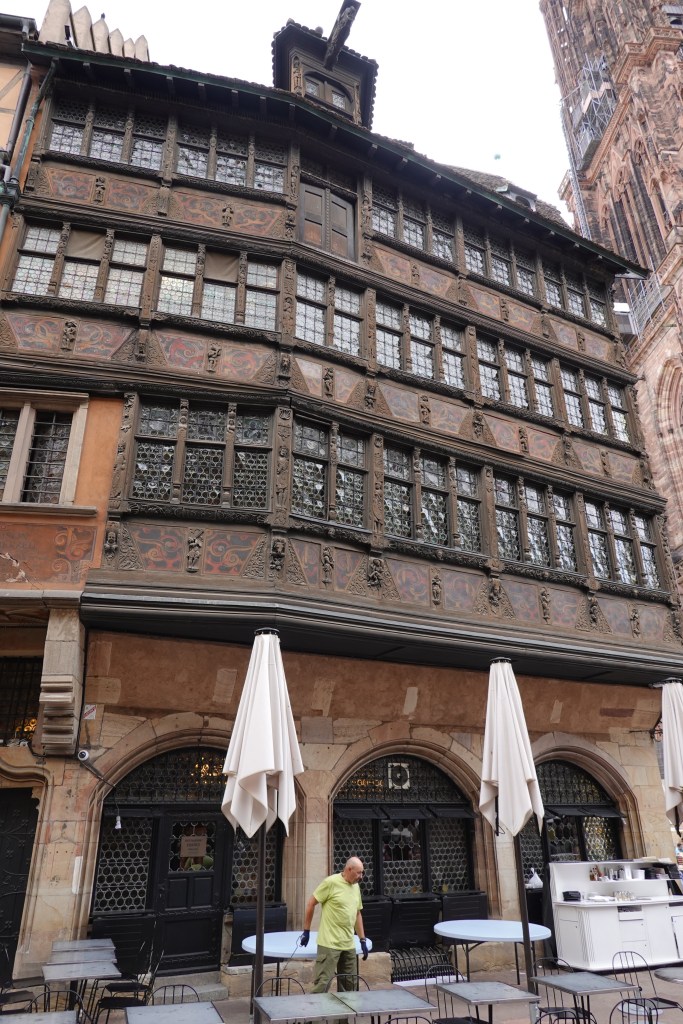
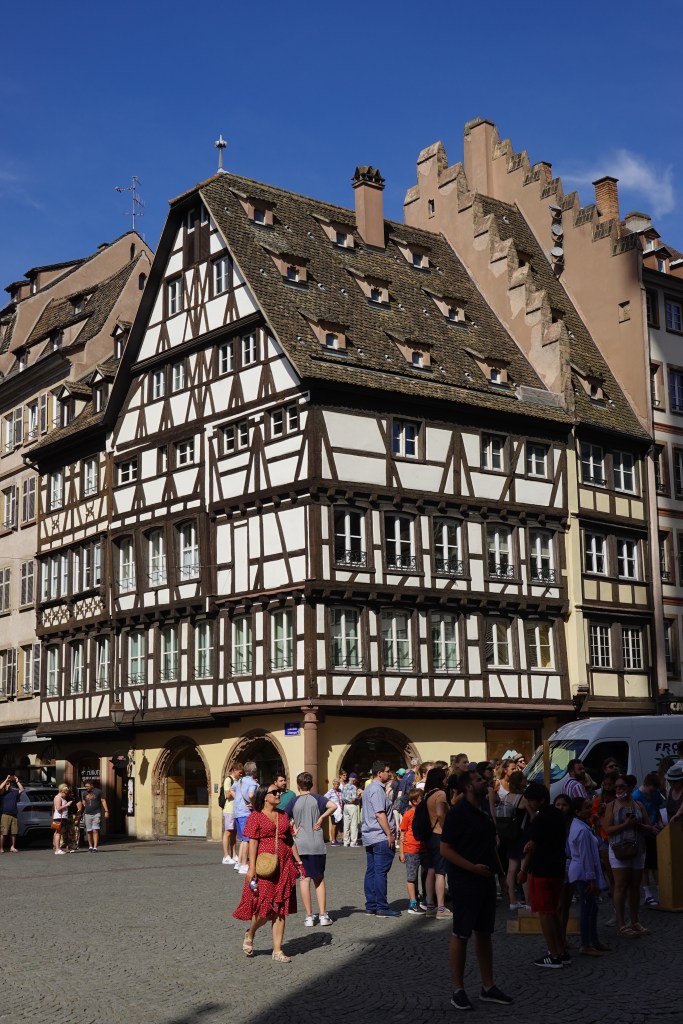
Reconstruction of a Roman aqueductHalf timbered buildings are common.This old house was next to the cathedral. Some of the windows are made from the bottoms of wine bottles.
The architecture is not only French and German, but Roman as well. As in many places in Europe, ruins and reconstructions of Roman structures are everywhere.
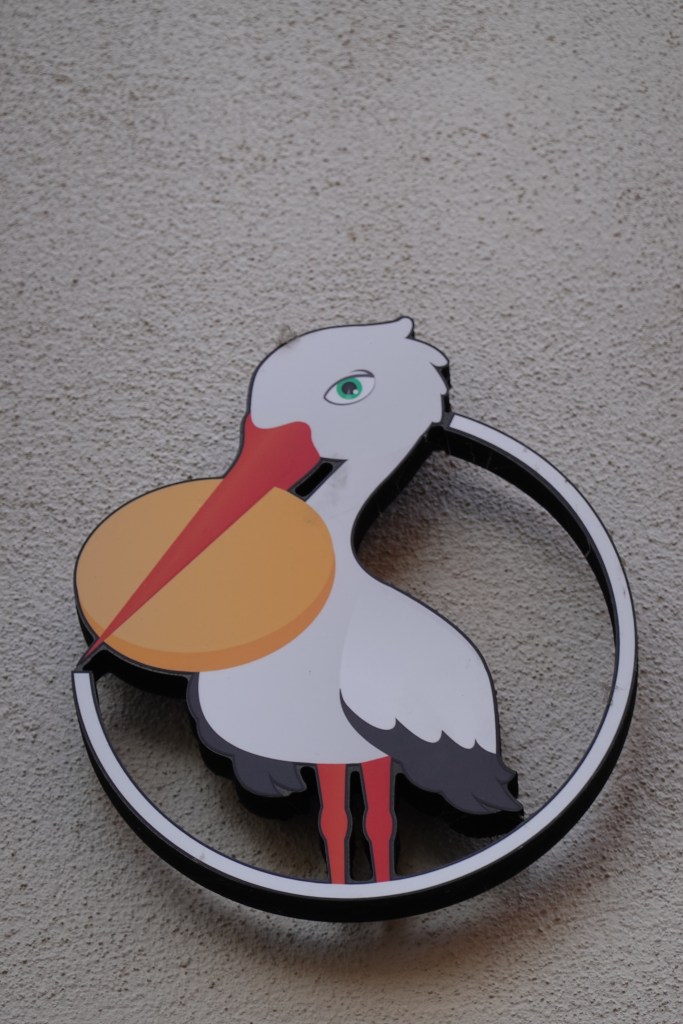
The stork is the town mascot, and many stork’s nests were pointed out on our bus drive from the river to the old town, but only in the Parc de l’Orangerie. The storks return to their nests year after year, like the citizens, but the storks do their Spring cleaning by throwing debris out of their (very large) nests, sometimes hitting unsuspecting humans below. So the people have encouraged the storks not to nest near where humans live.
 Bunch of Geeks go Traveling