Category: Alaska 2025

Icy Bay on June 27

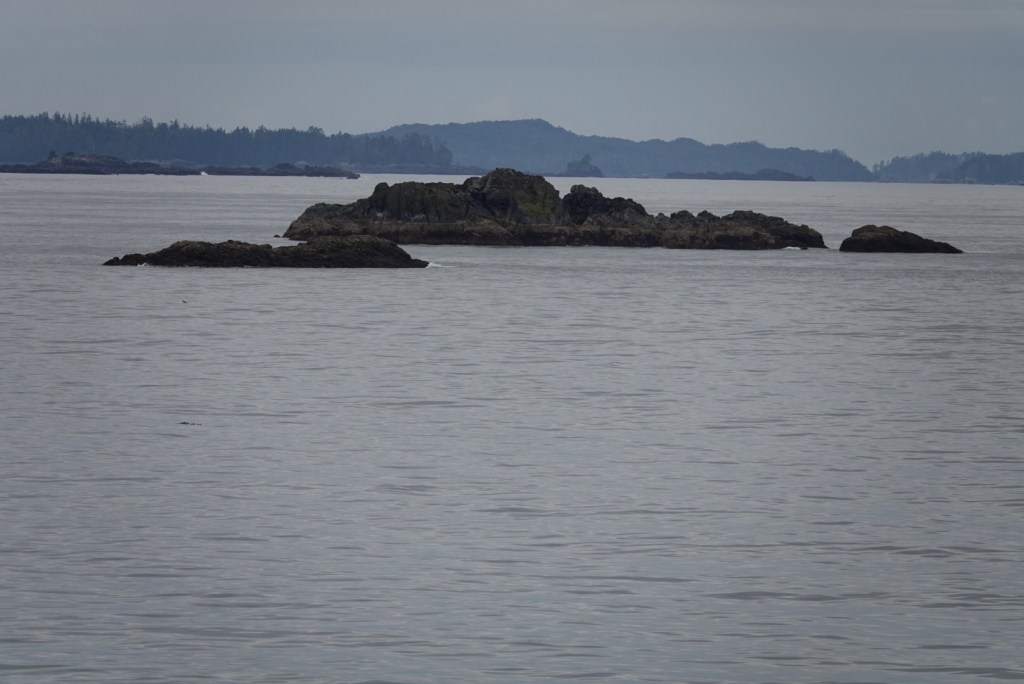
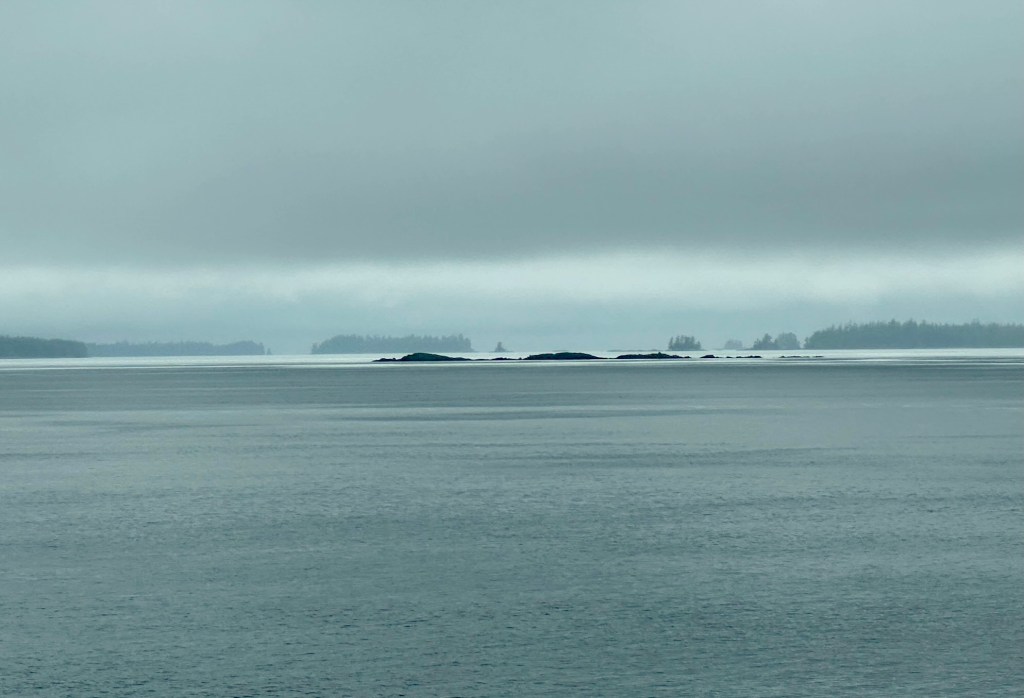
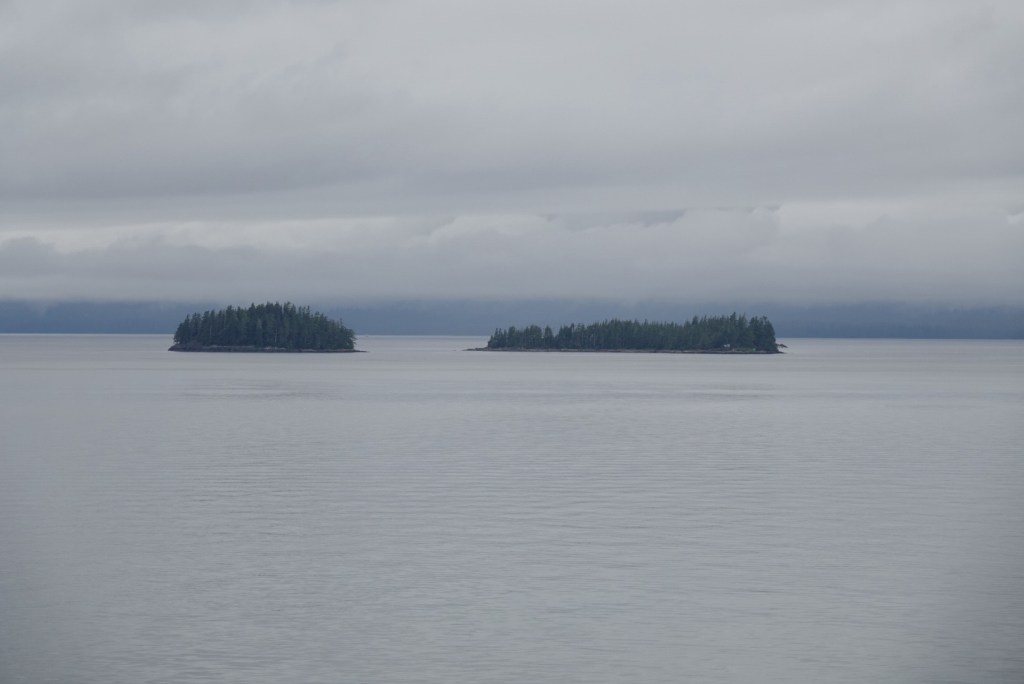
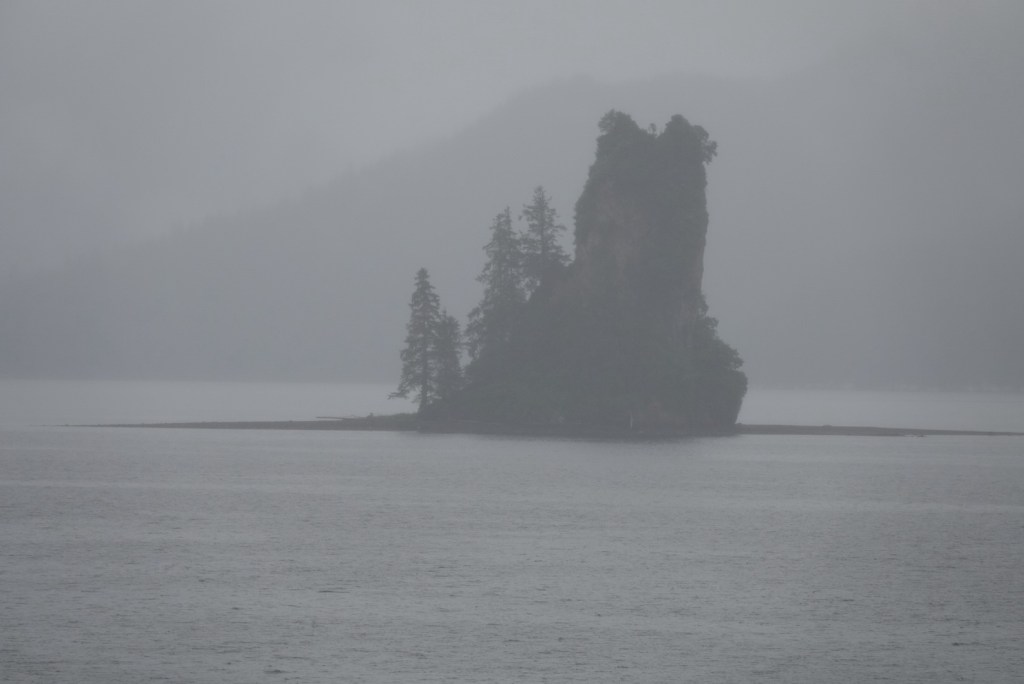
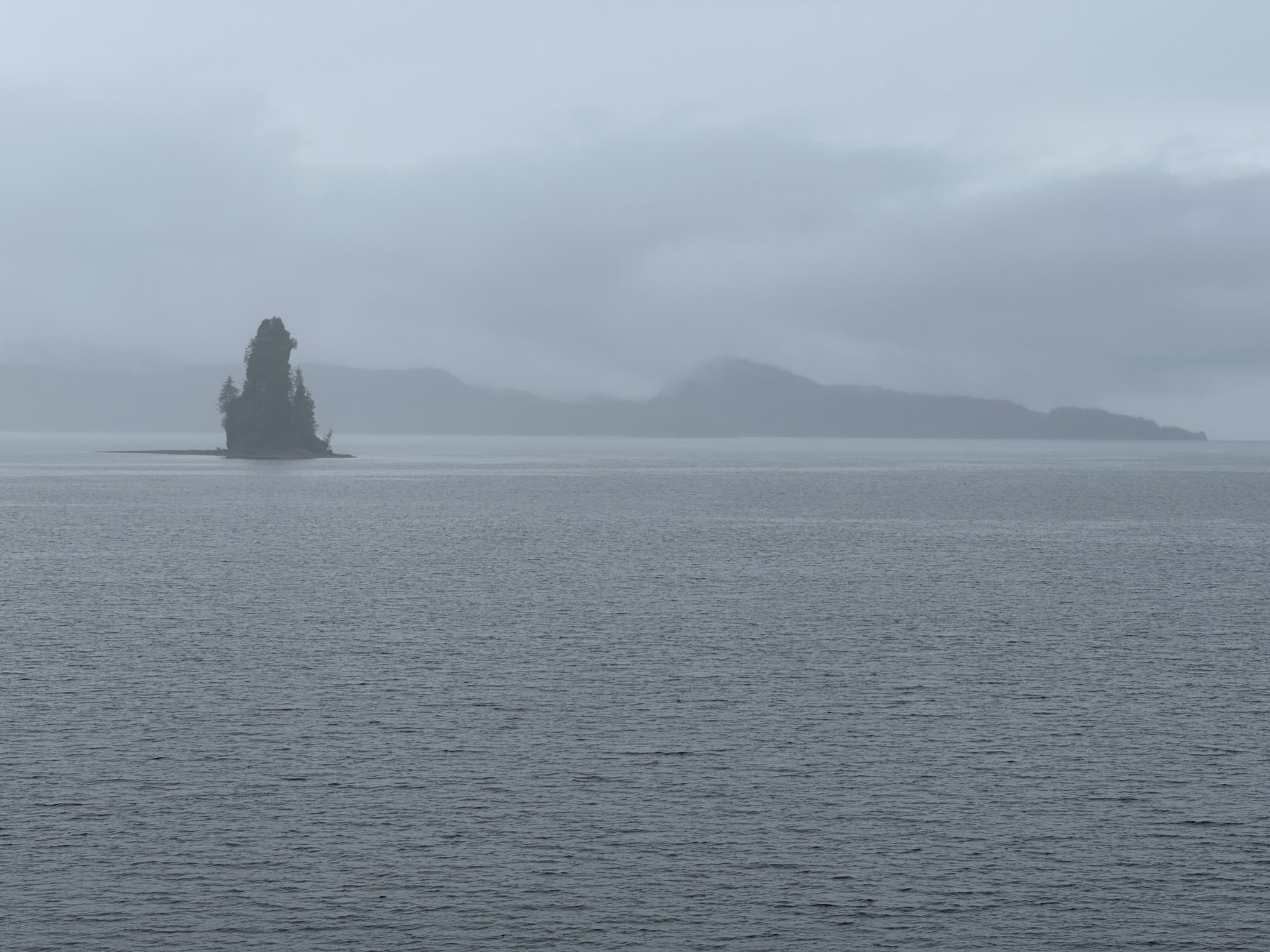
We woke to fog, with islands dimly visible. It’s a long sea day, so the organizers planned lots of lectures and activities to keep us informed. Our excursion isn’t until late in the afternoon.

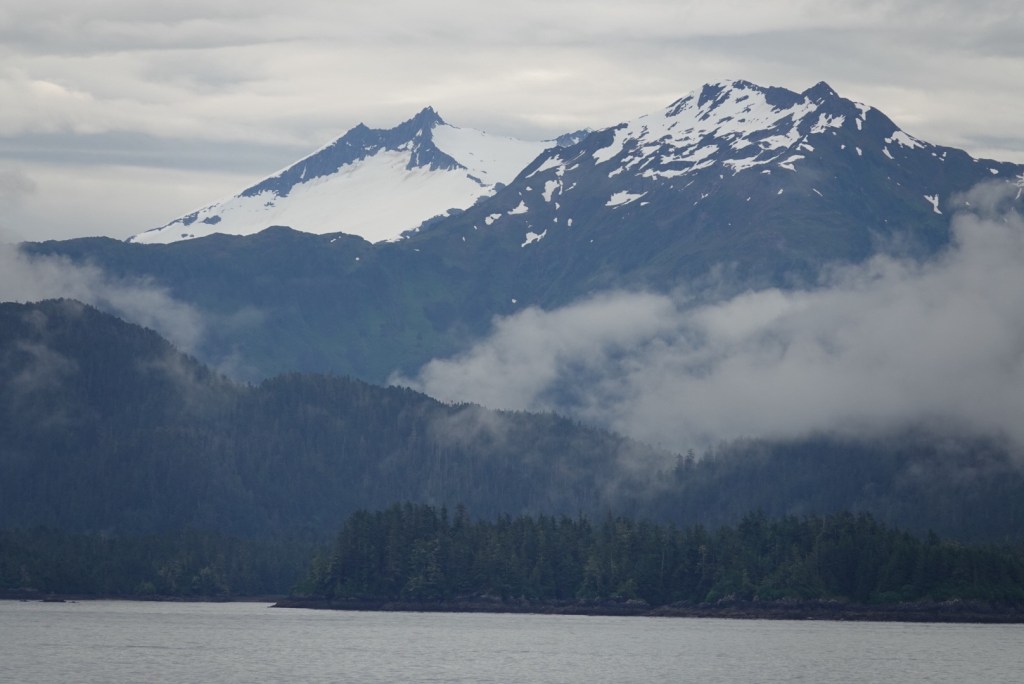
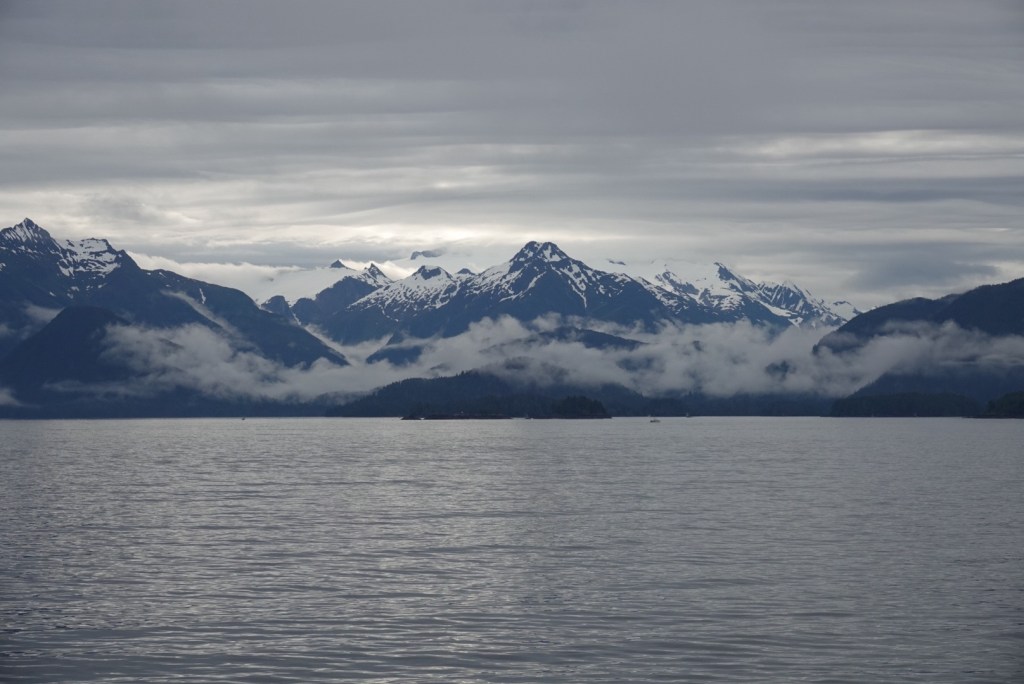
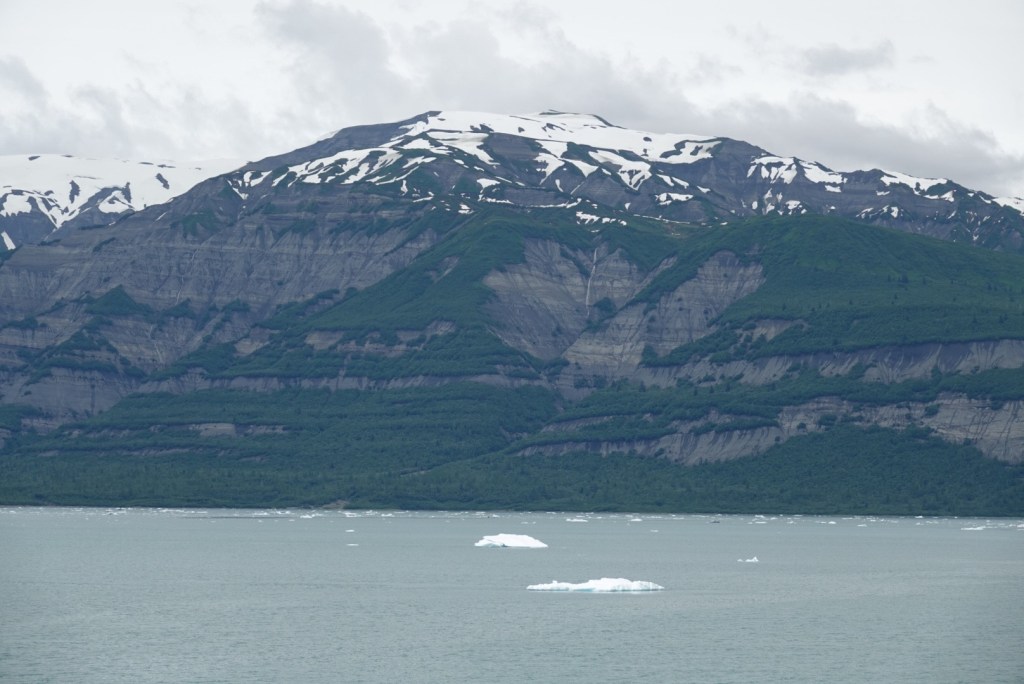
As we head north, snow line gets closer to sea level and the mountains seem higher, although that might be more a function of distance and visibility.

In the first lecture, Lancy spoke about sea birds, with cute cartoons emphasizing how to distinguish related birds in the awk clad. He named the “little brown bird” that our zodiac driver was so excited about the other day. The Marbled Murrelet is rare, in part because it nests in old-growth forests, which are disappearing from the area. They dive deeply for food and fly through the water like penguins.

After the bird presentation, we went to the hot tub and sauna. In the tub, it was fun to watch the effect of the ocean waves on the adjacent swimming pool water. It’s actually fun walking around, trying to go in a straight line.
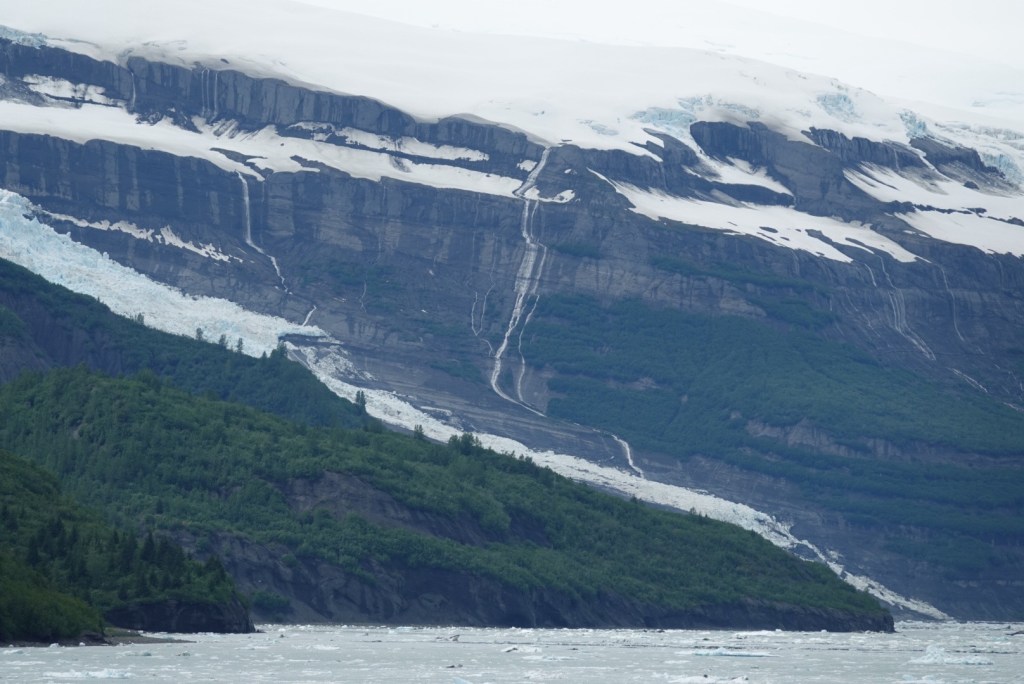
Julian gave a presentation about glaciers, with examples from all over the world. He used clips from a video called Chasing Ice showing ice calving that Clare used when teaching at the Community College of Denver! She was proud to have chosen so well.

The next presentation told of tides – more than I ever knew. Again, well done and informative. Near Anchorage, adventurous folks surf the tidal boar.

Then we learned that the ship had made good time, and our excursion into Icy Bay would be earlier. Hooray!
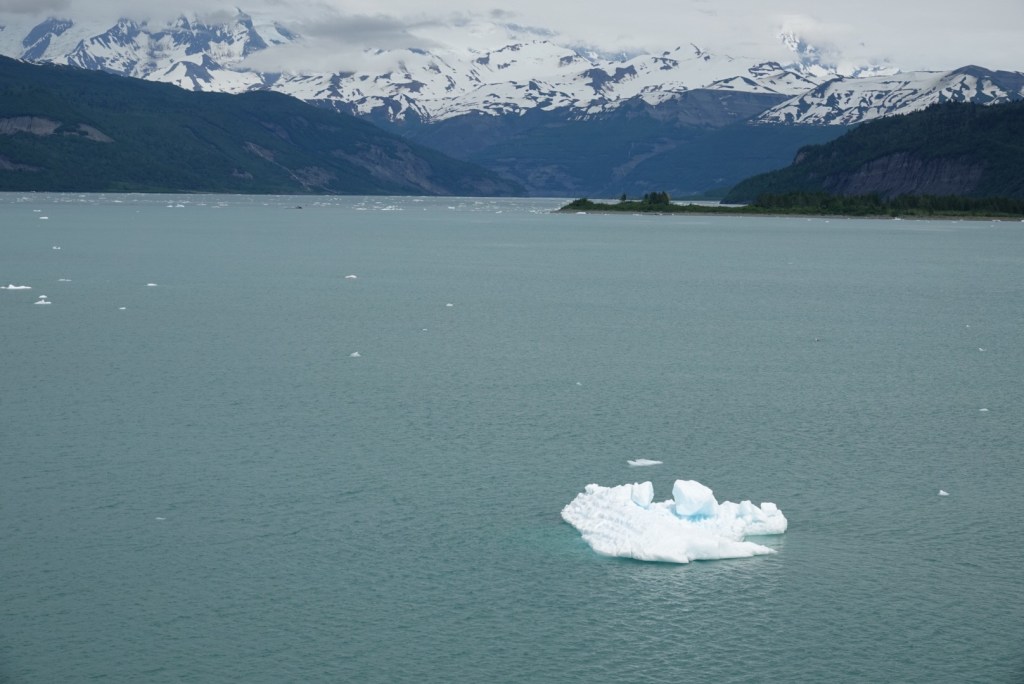
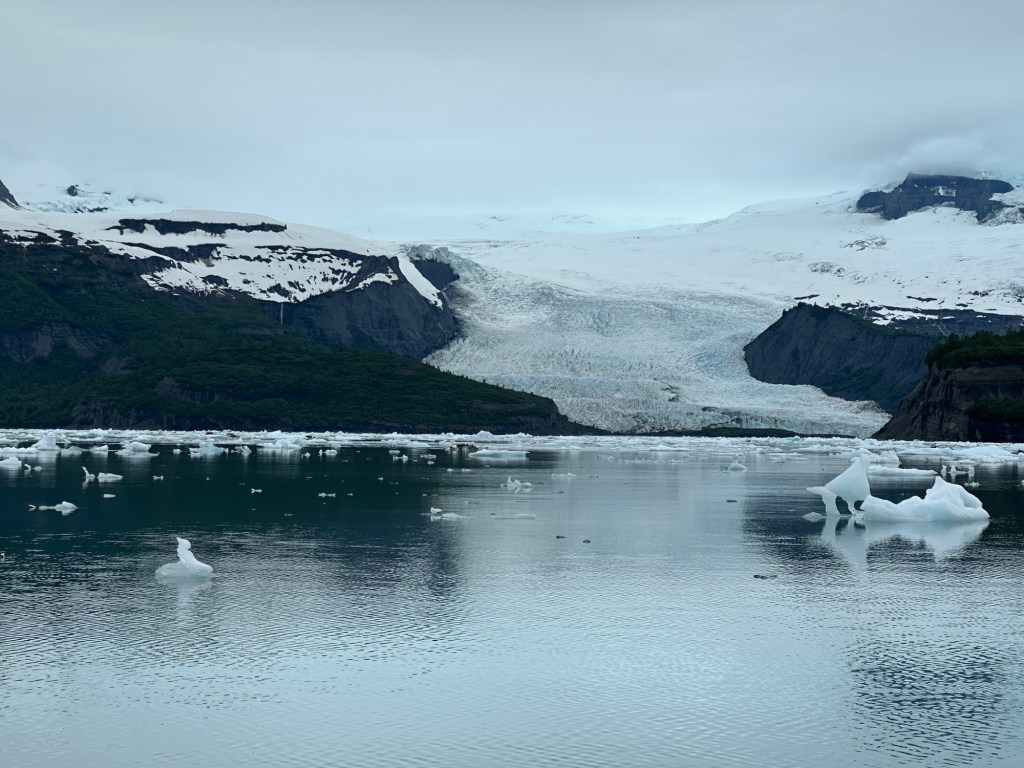
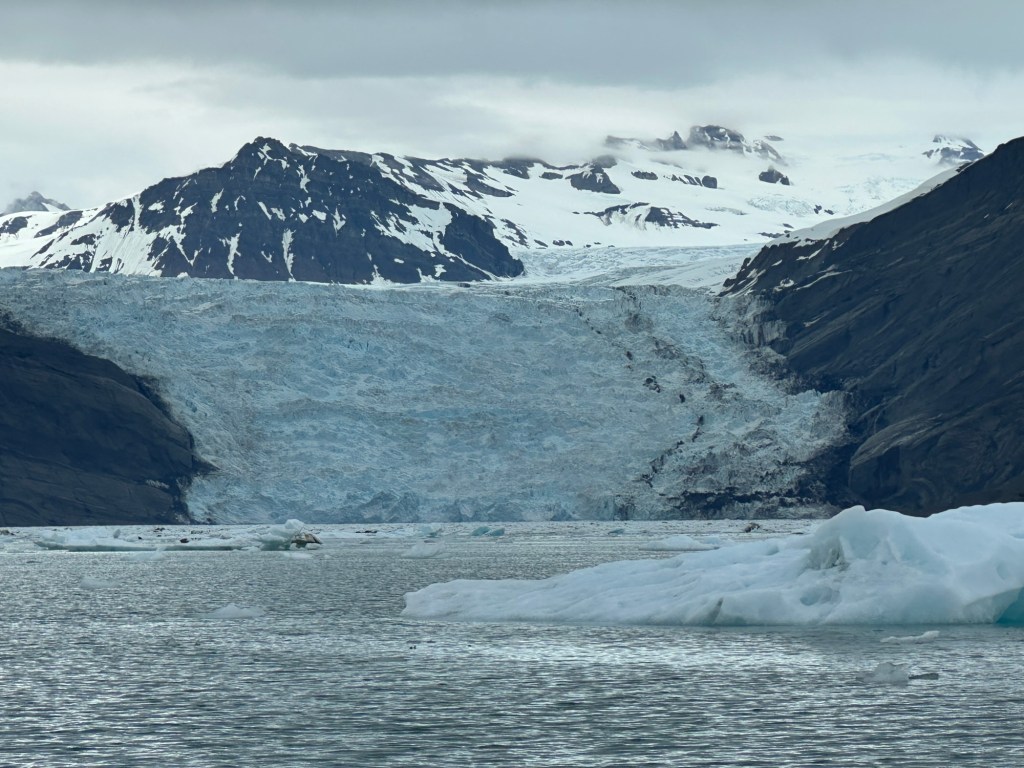
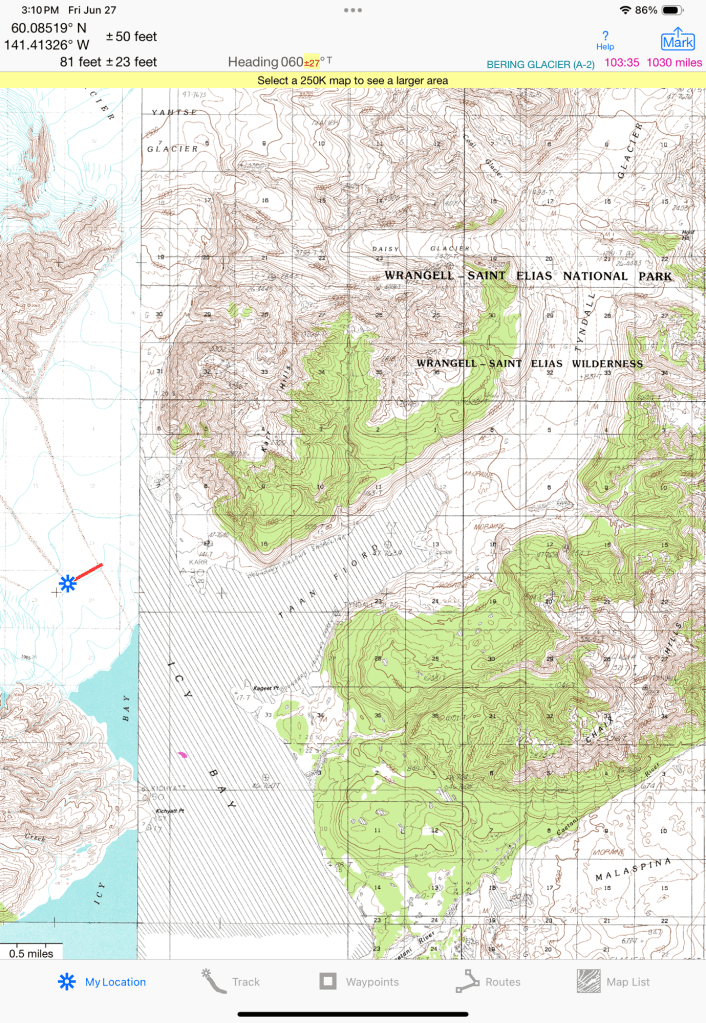
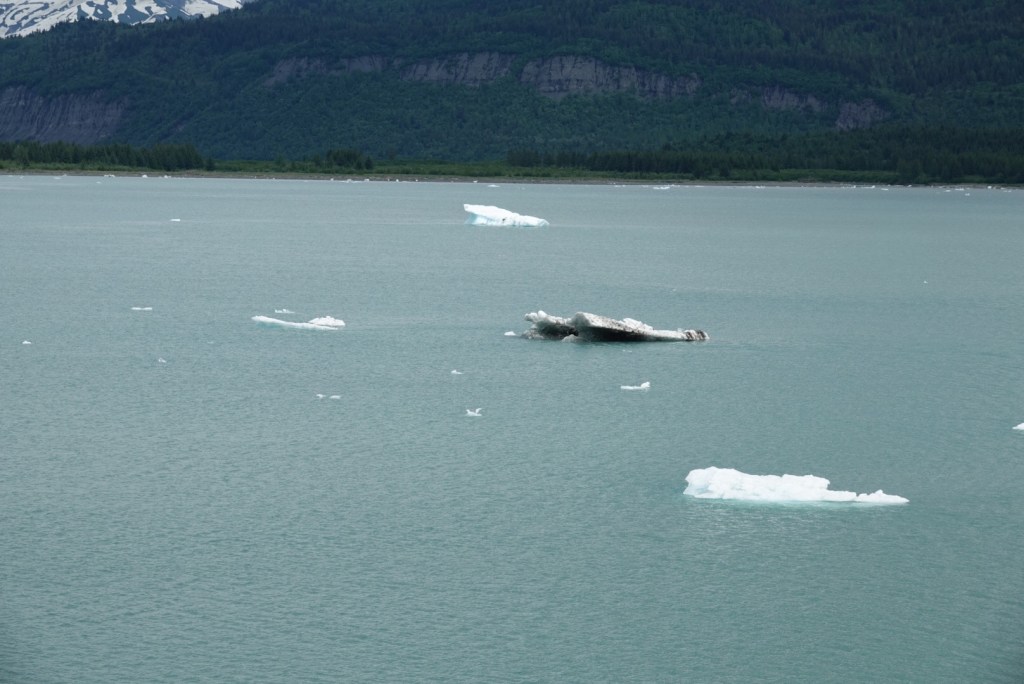
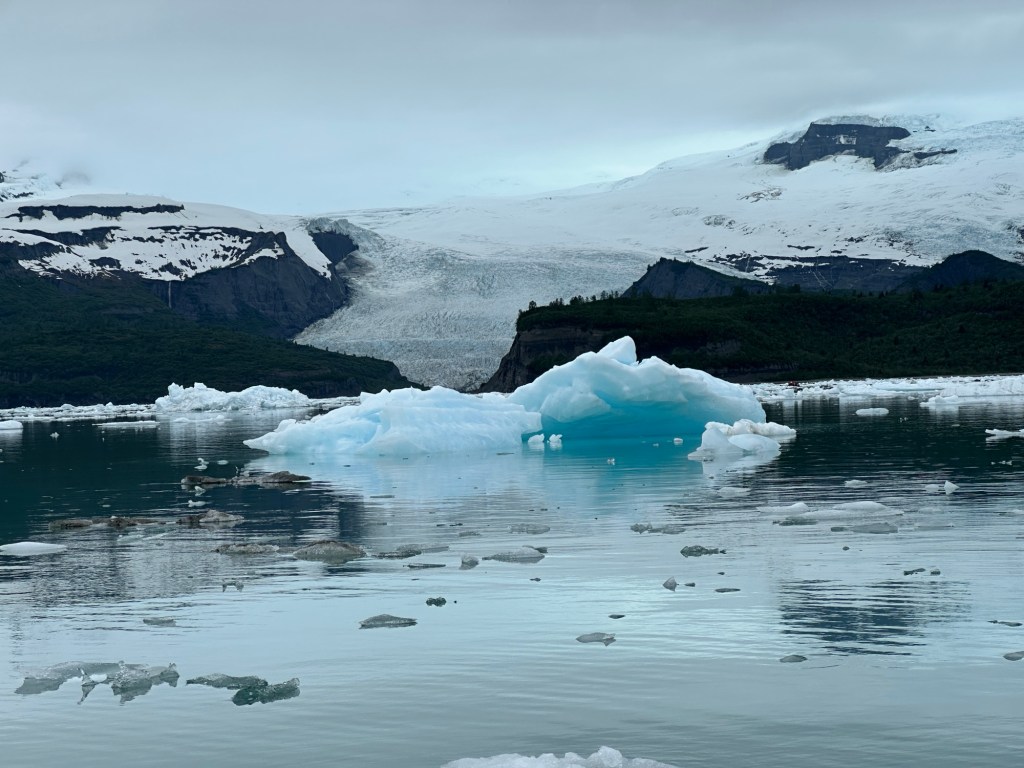
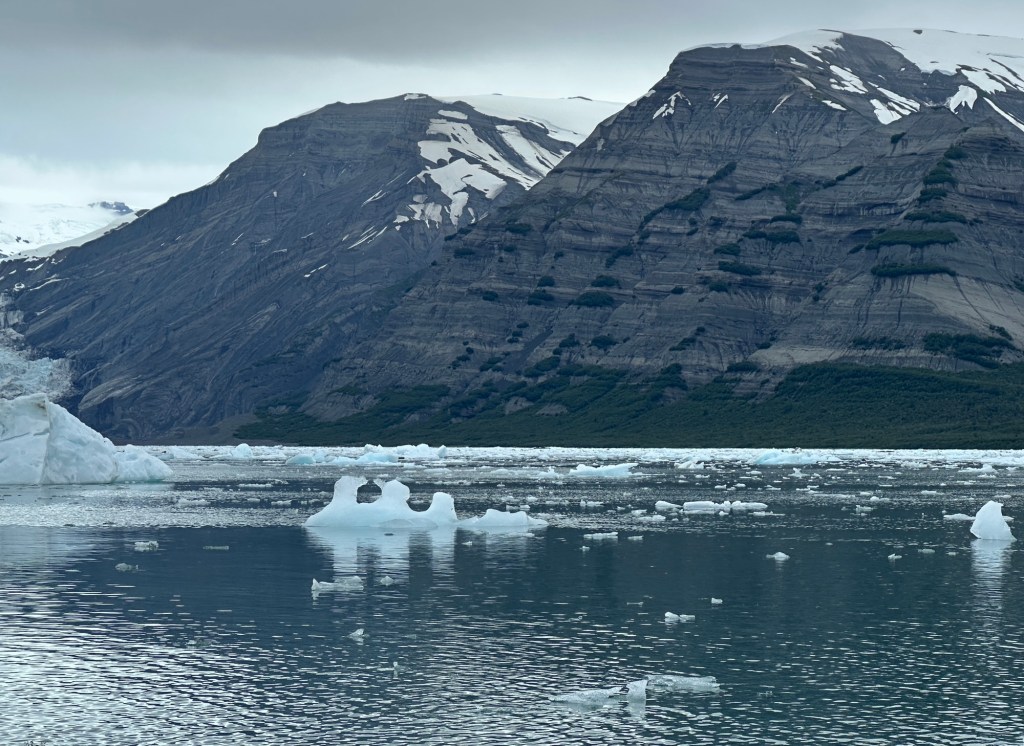
Icy bay is wonderful, beautiful, exciting and a little sad. Sad mostly because of how transient this phenomenon must be, as the glaciers retreat into oblivion. The spot where our cruise ship anchored was under ice just fifty years ago

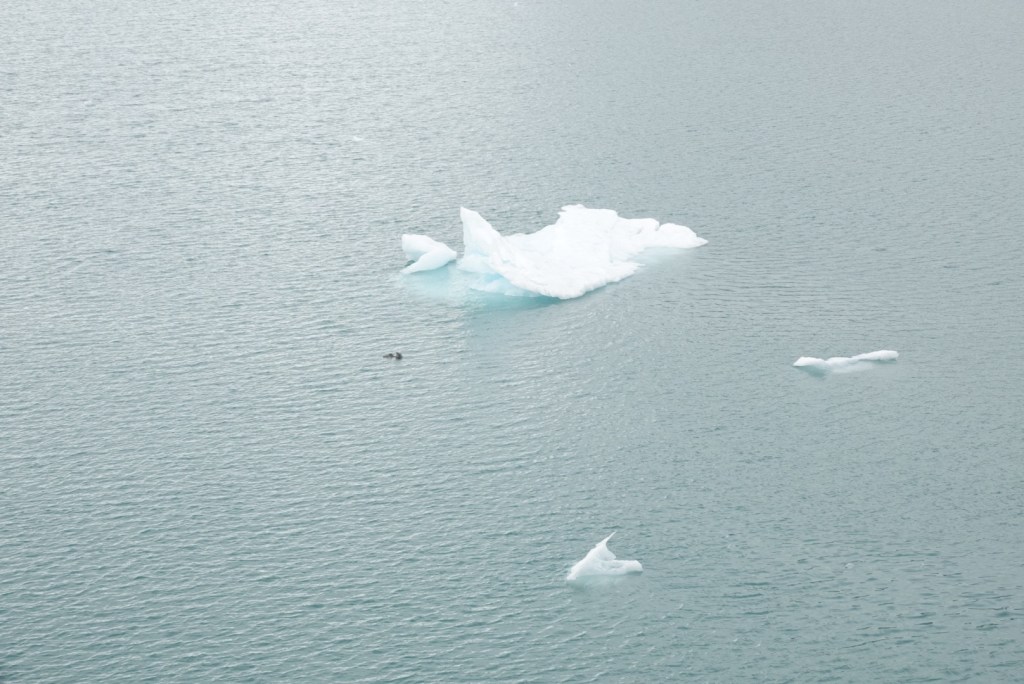
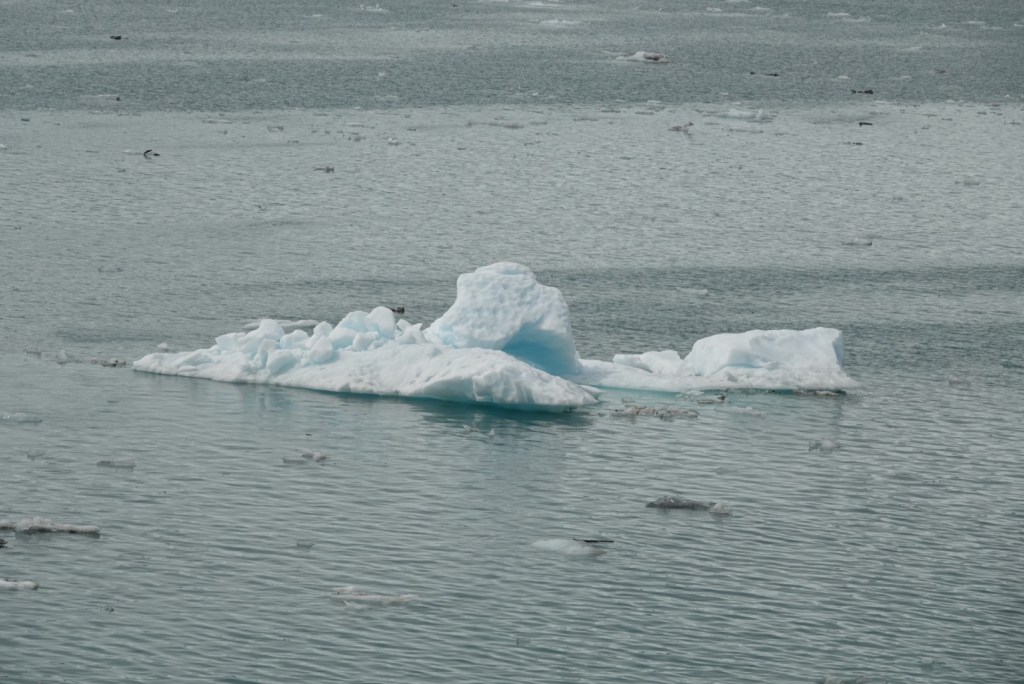
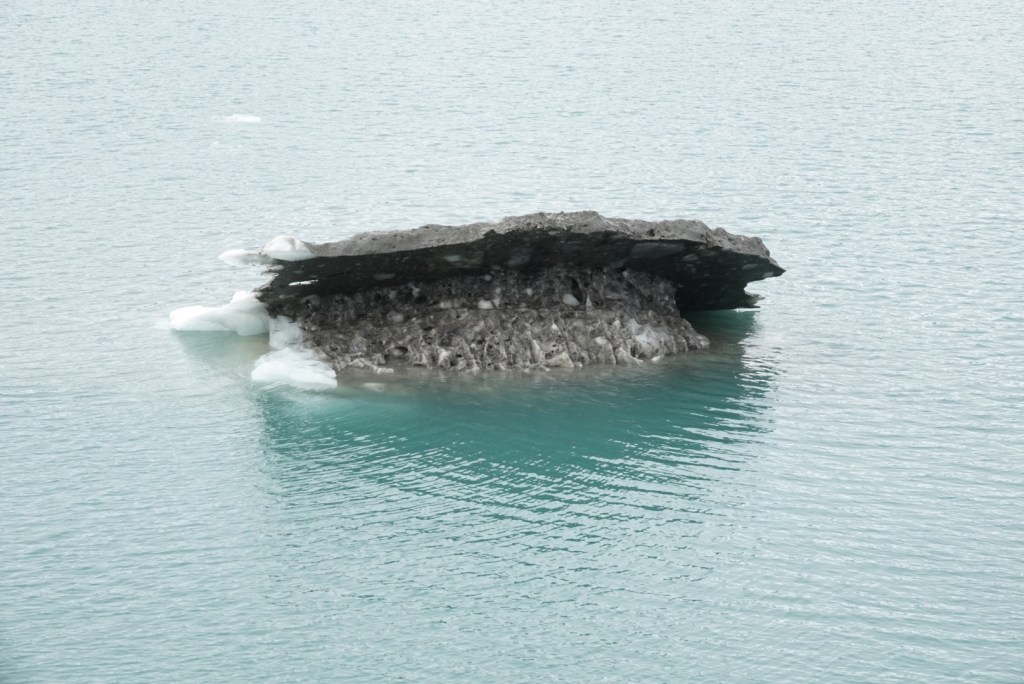
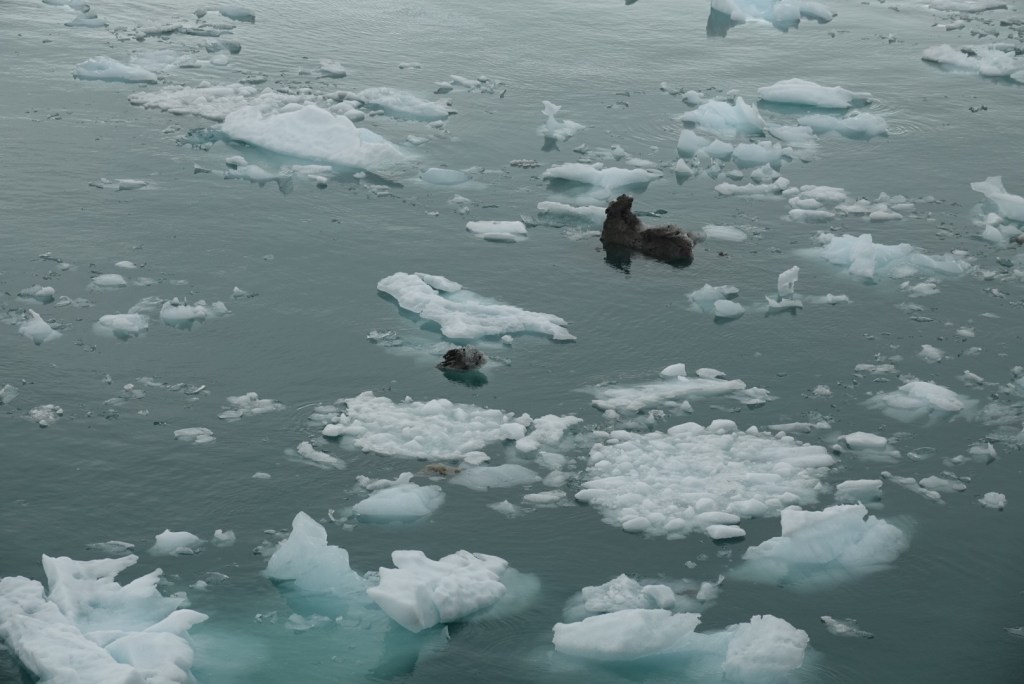
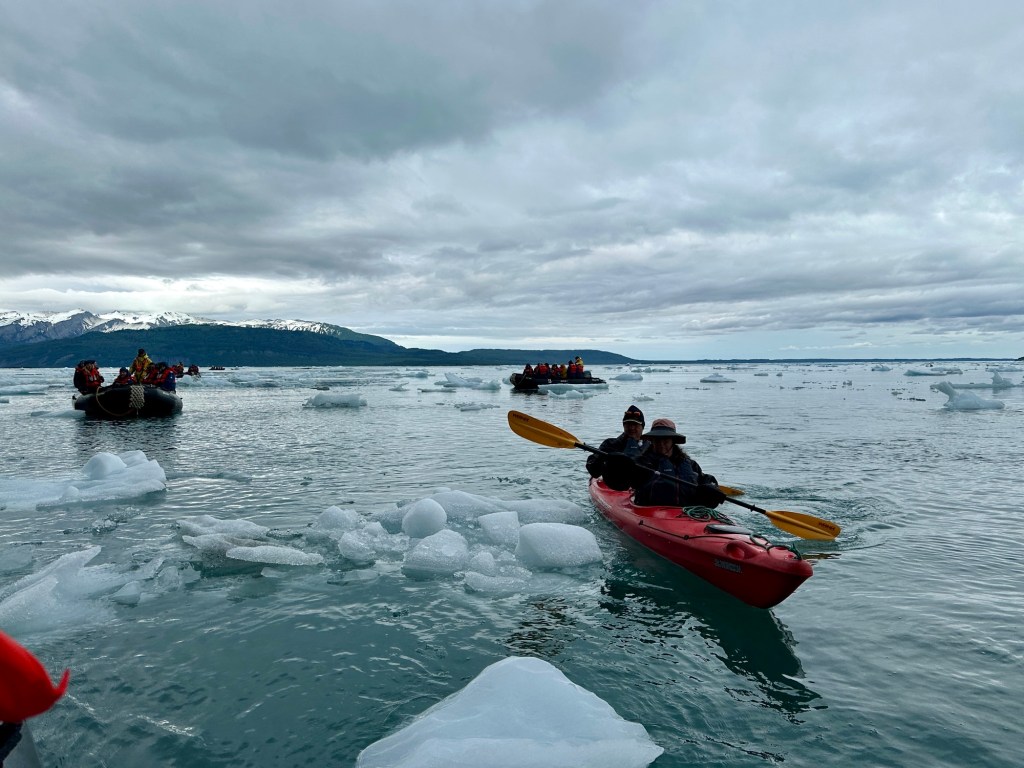
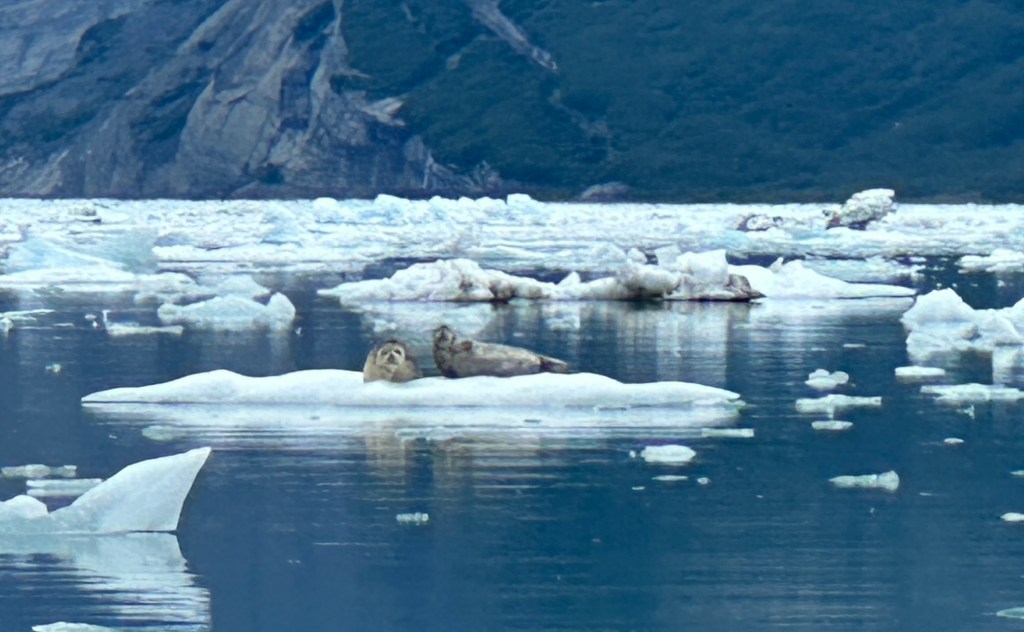
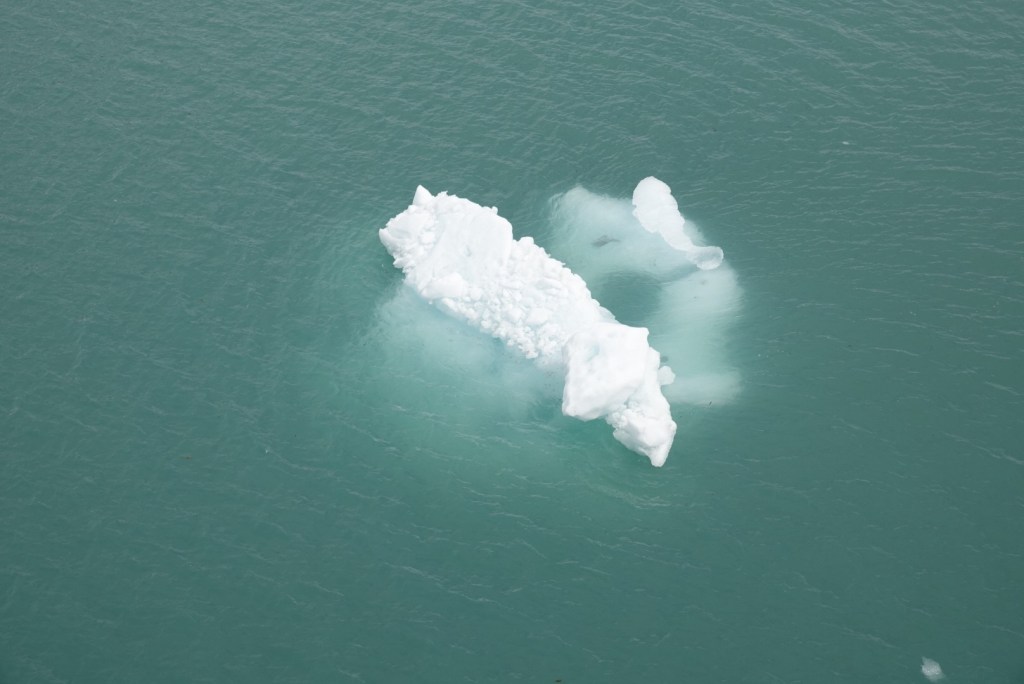
Our Zodiac trip was more vocal, interactive than the last one, probably because of the lack of rain (thankfully!). We passengers delighted in naming the floating ice bits, like one does with interesting shaped clouds. We also competed in seal sightings. The Zodiac captain, Kai from Hawaii, said our group saw more than any of his previous groups.
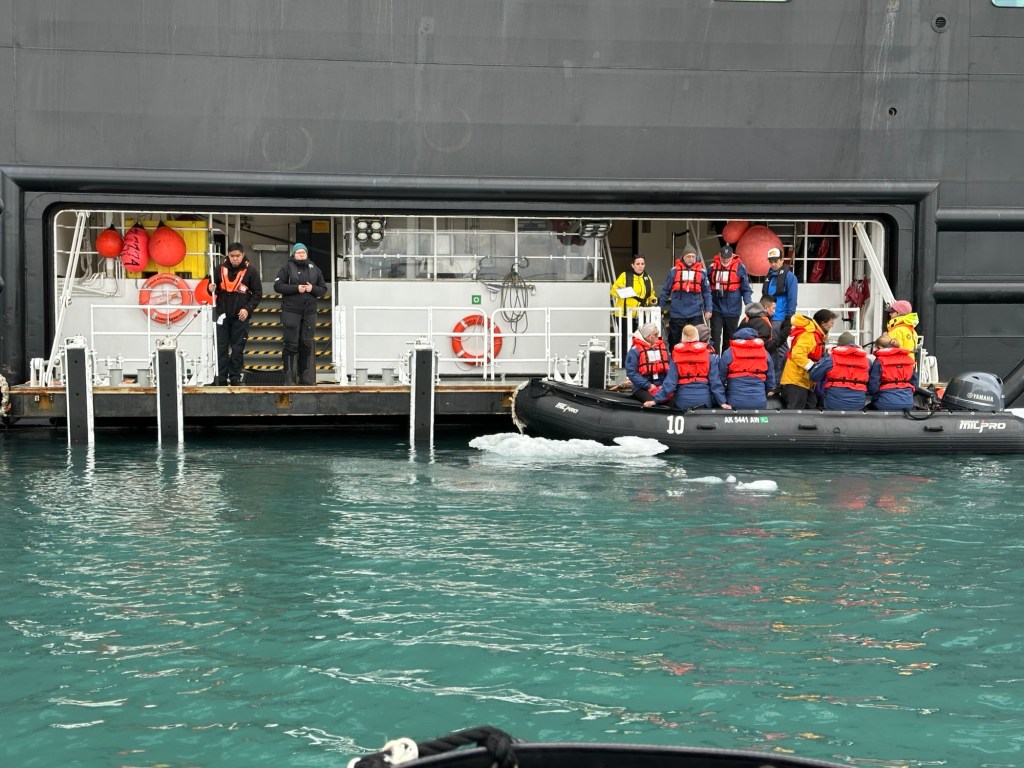
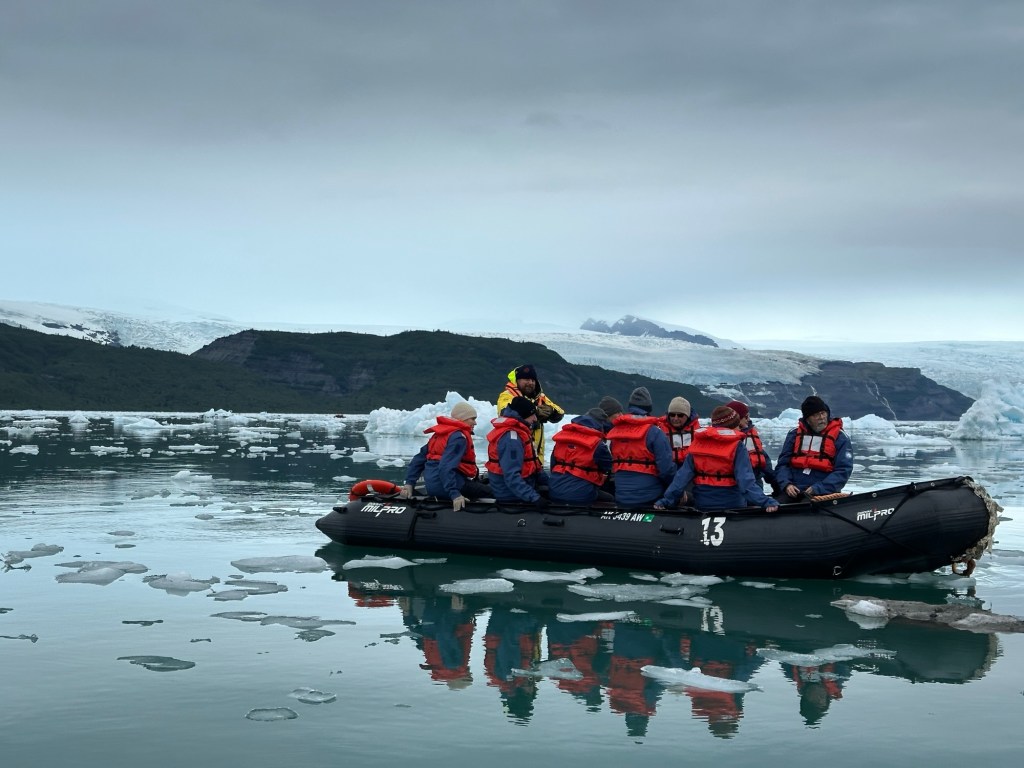
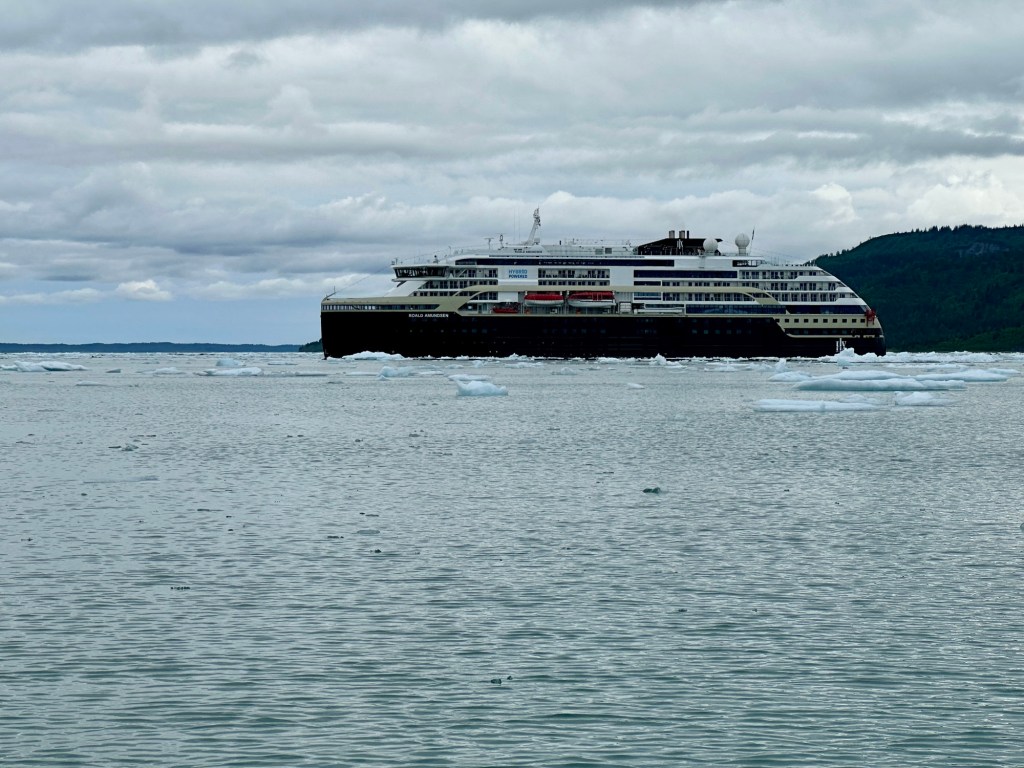
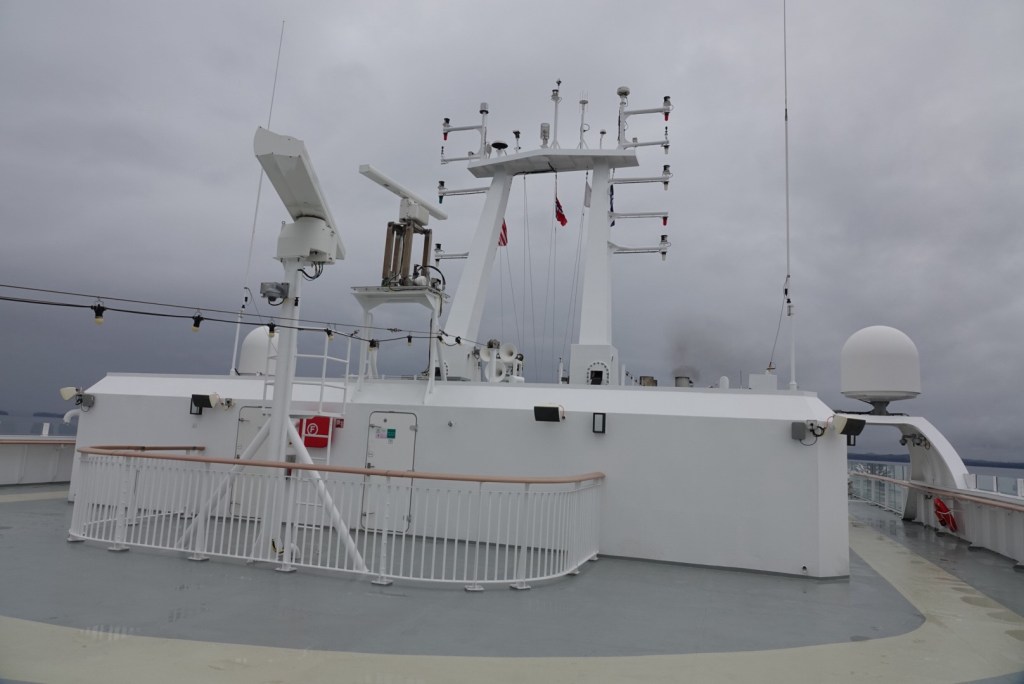
Our ship appears small in the expanse of Icy Bay.
Cruising through ice

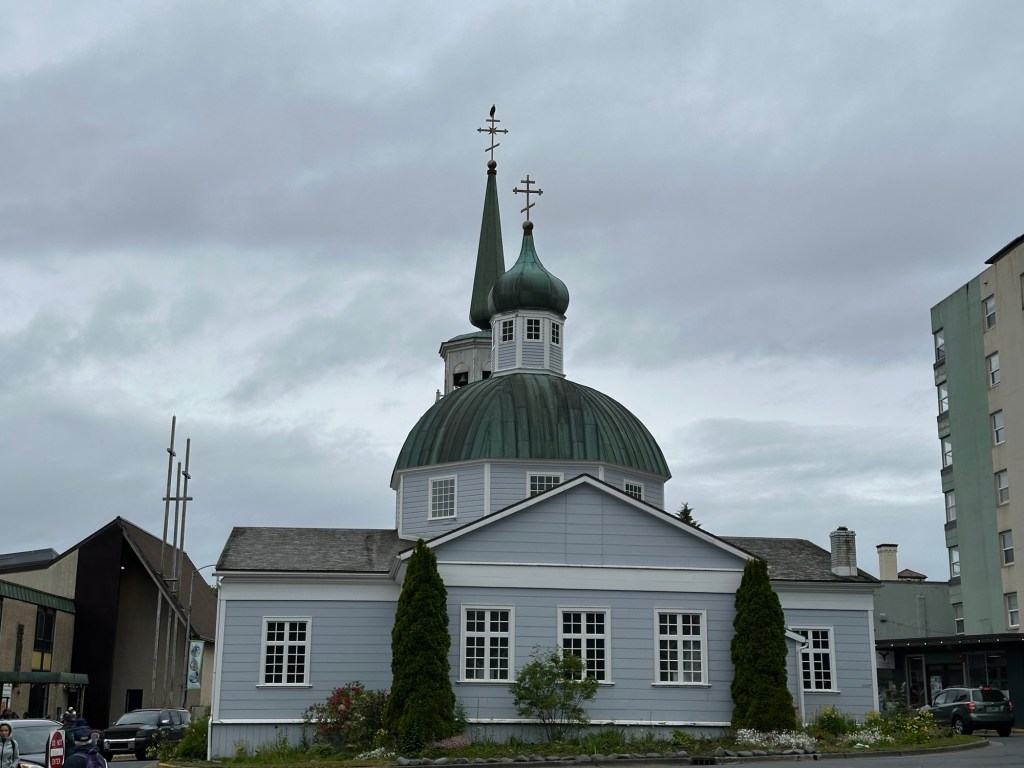
Sitka, Alaska on June 26

We woke to steep, snow-capped mountains rising above the sea. The air was clear but the sky cloudy. The ship rolled a bit during the night, making us appreciate the smooth seas of the inside passage.

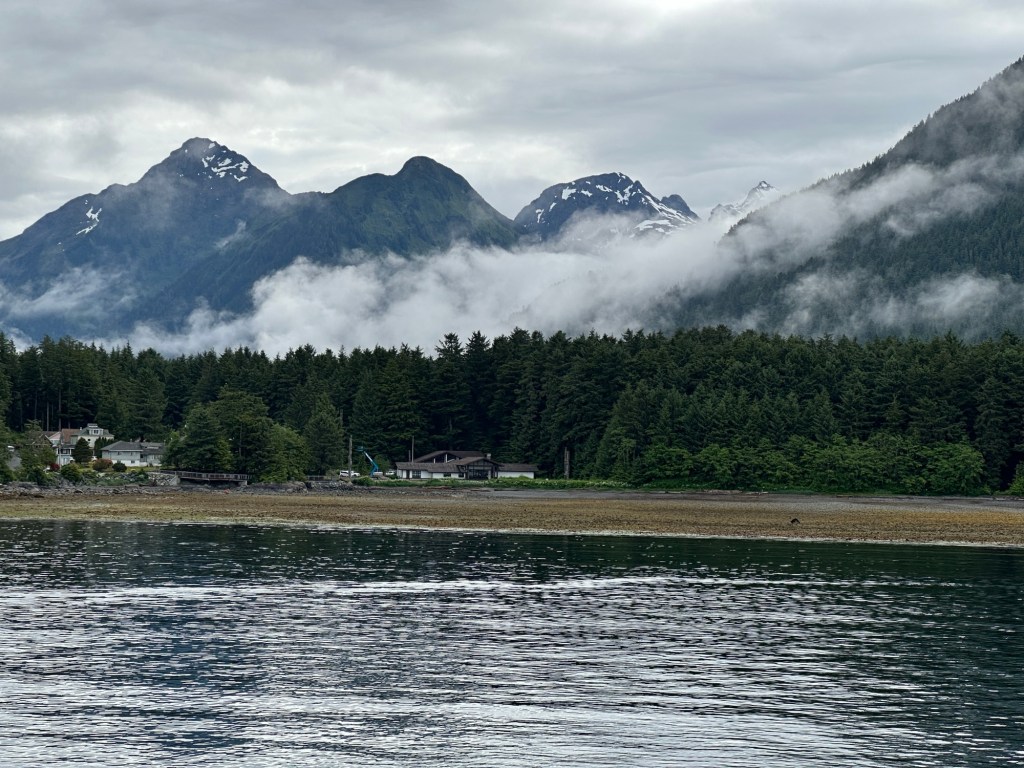
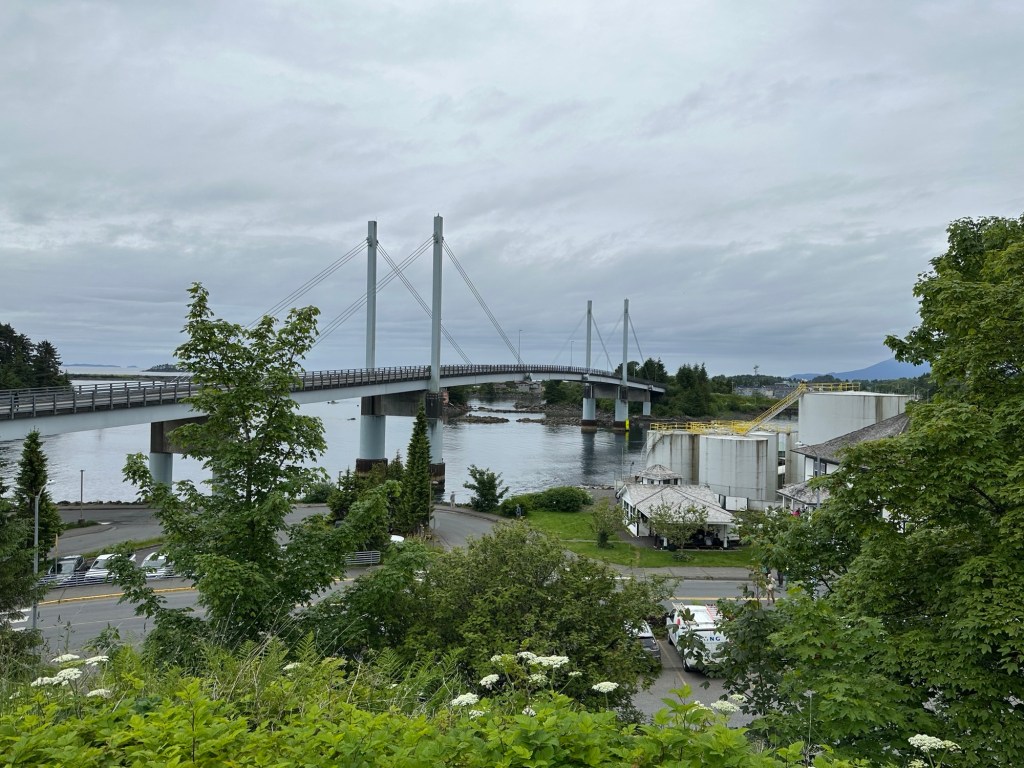
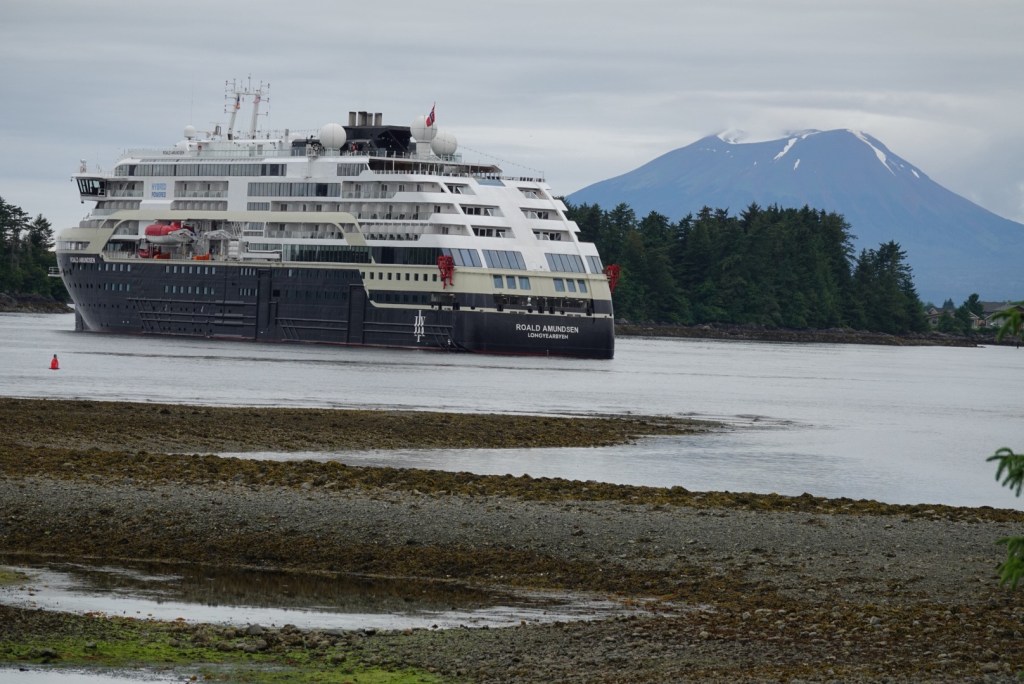
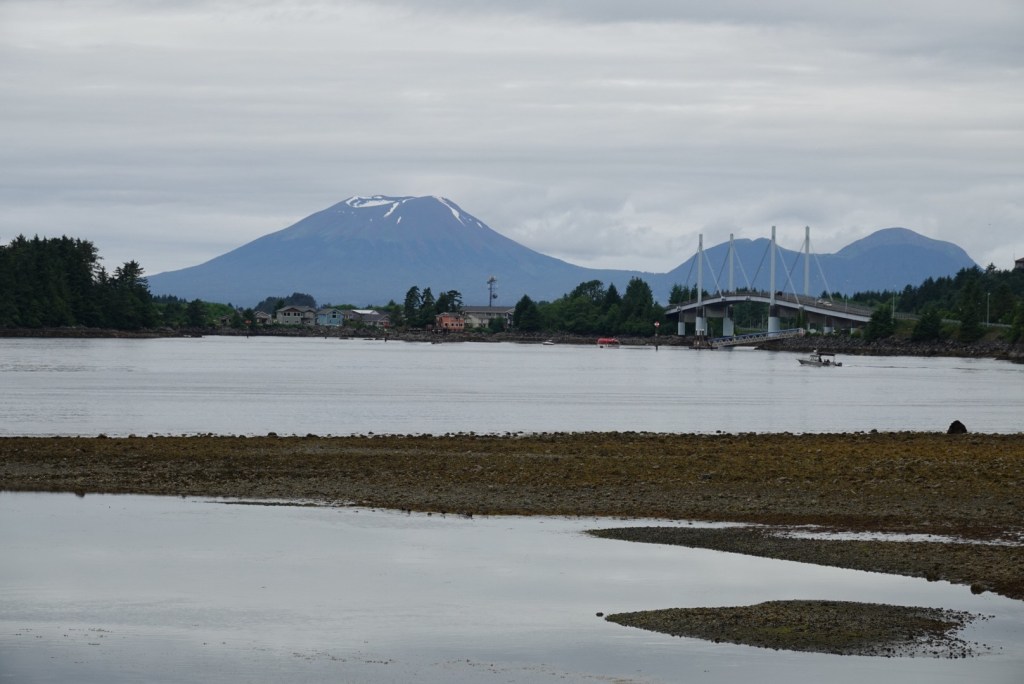
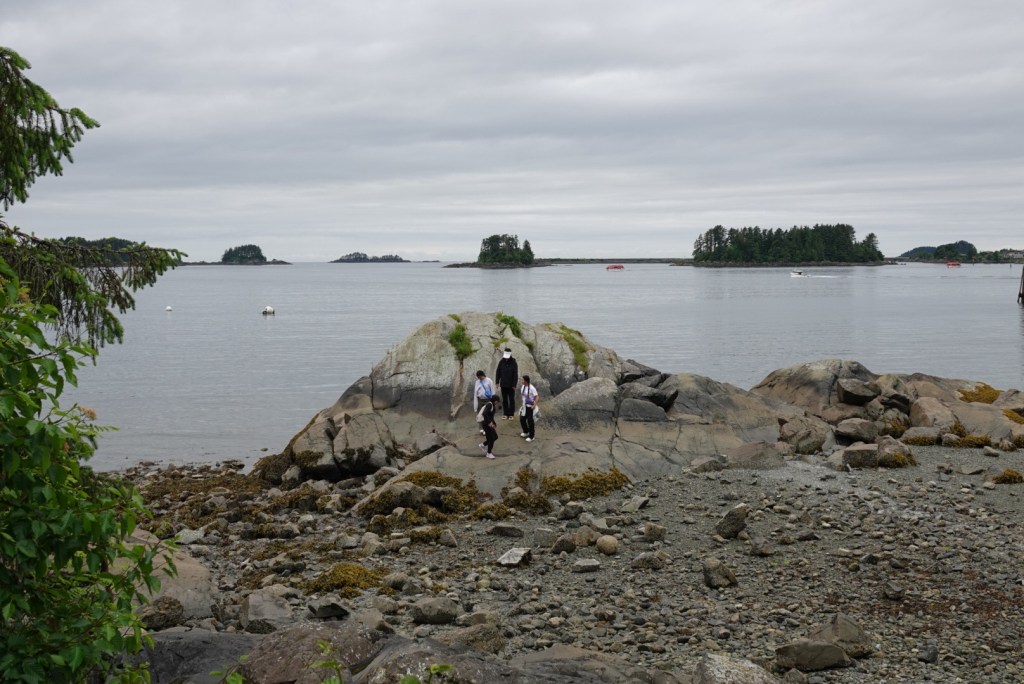
The first thing noticeable on the approach to Sitka by sea is the large number of islands in the bay adjacent to Baranof Island. The second thing is the sharp mountain peaks with snow on them. We watched the mountains go by during breakfast.

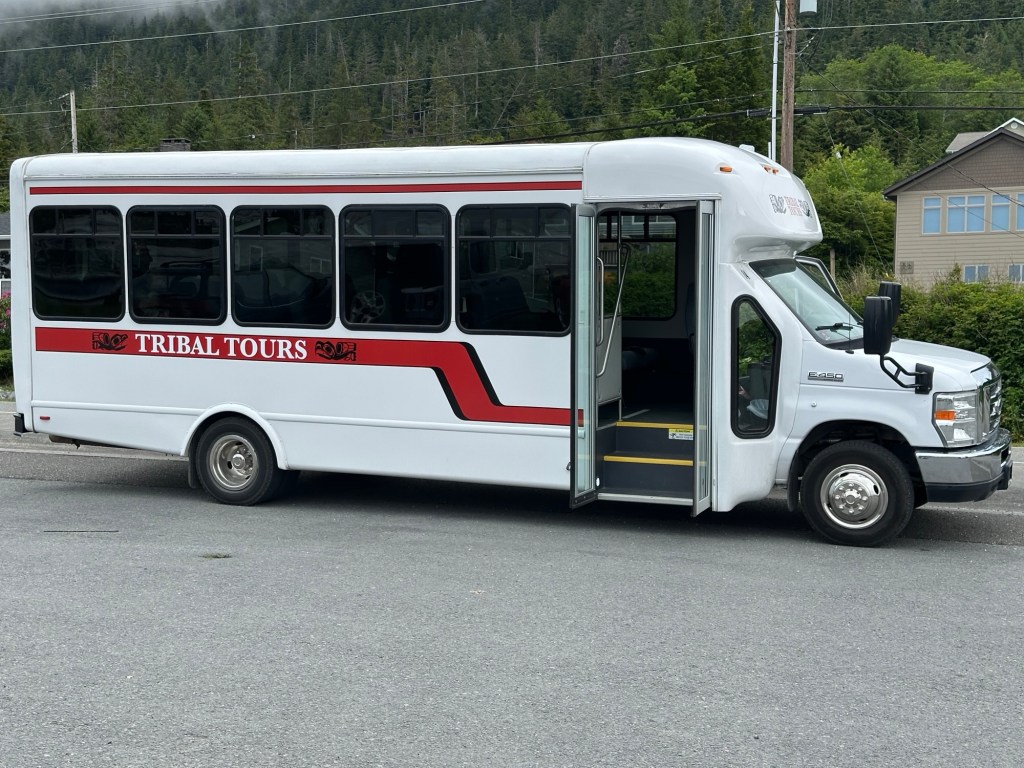
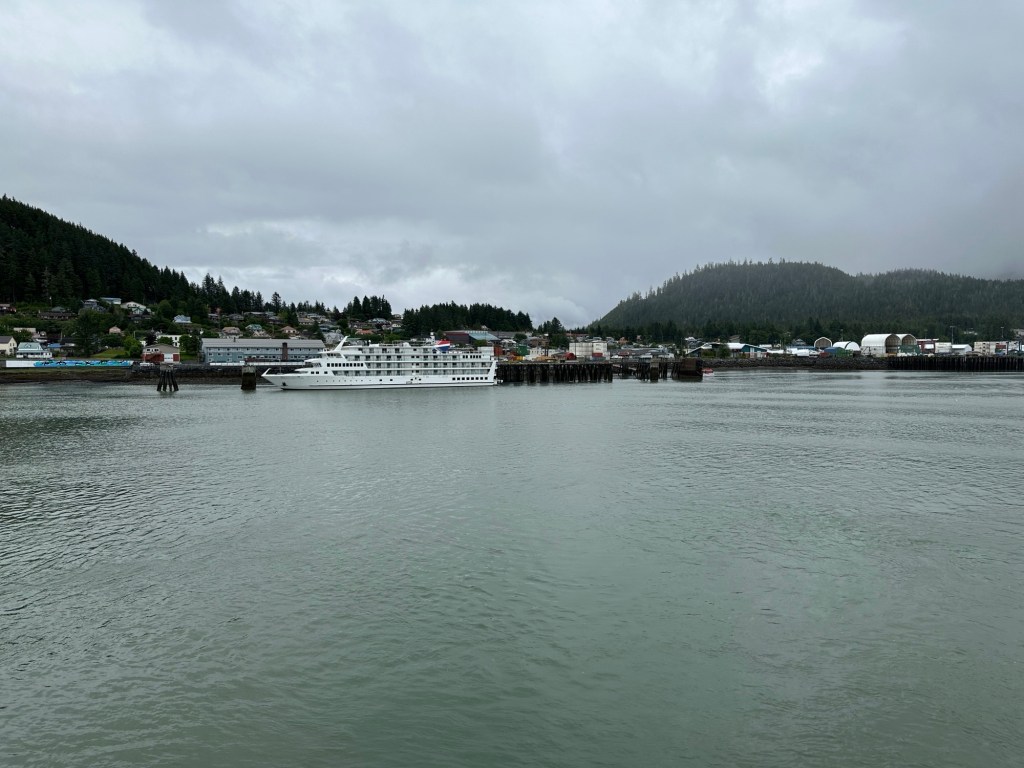
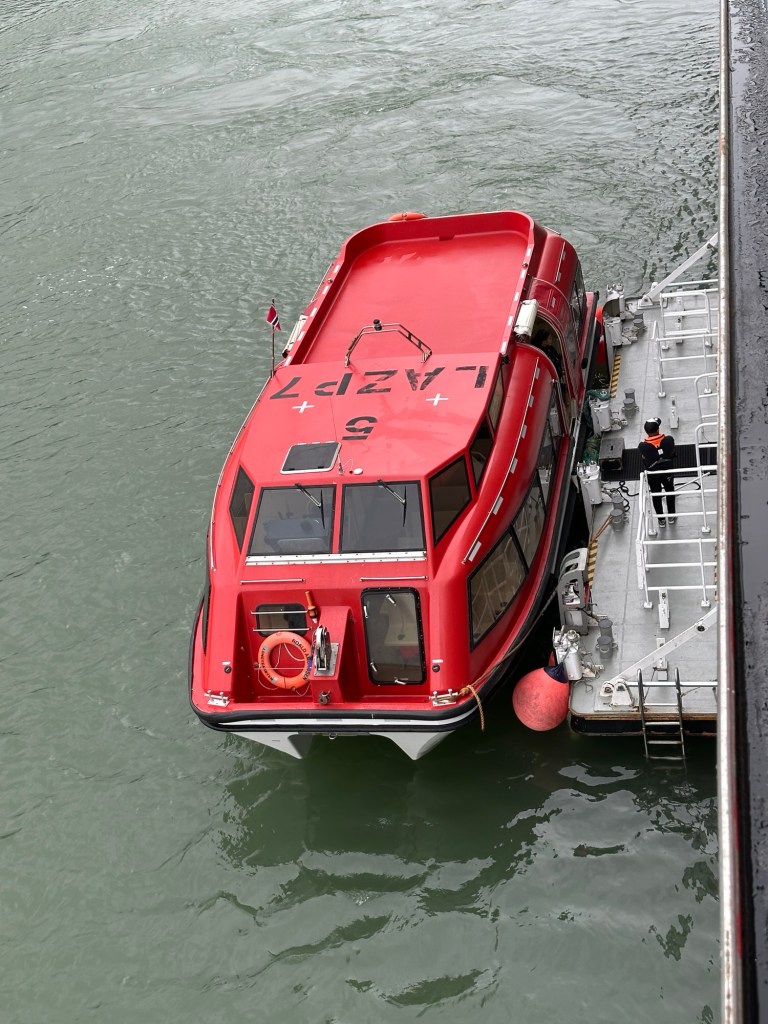
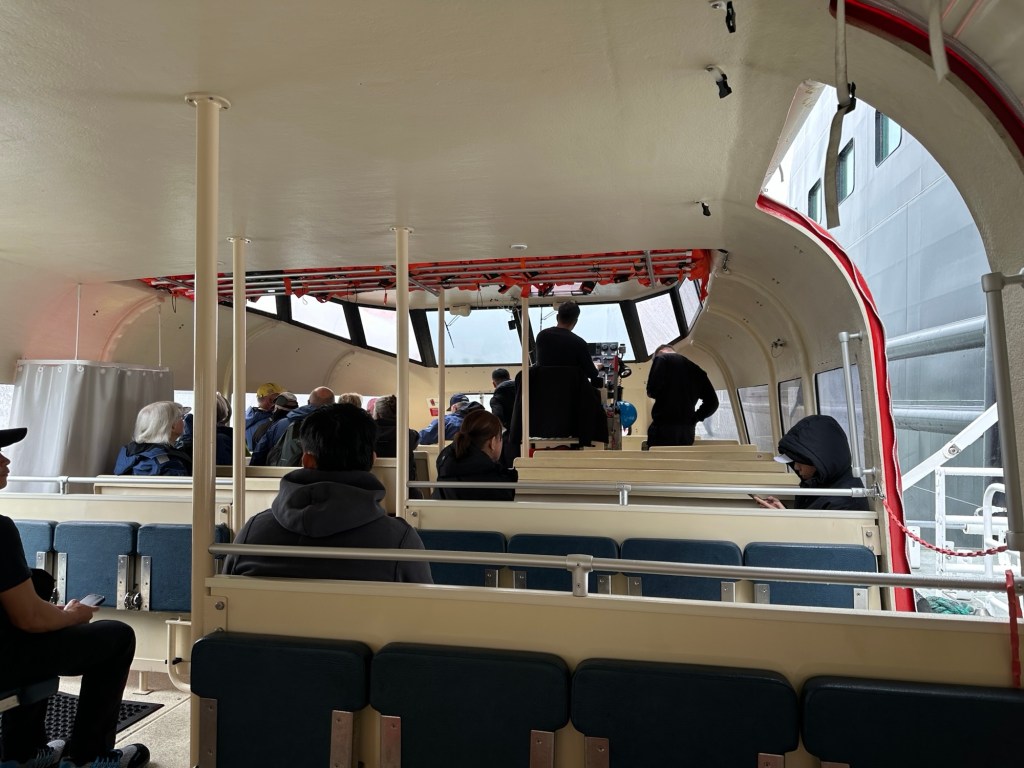
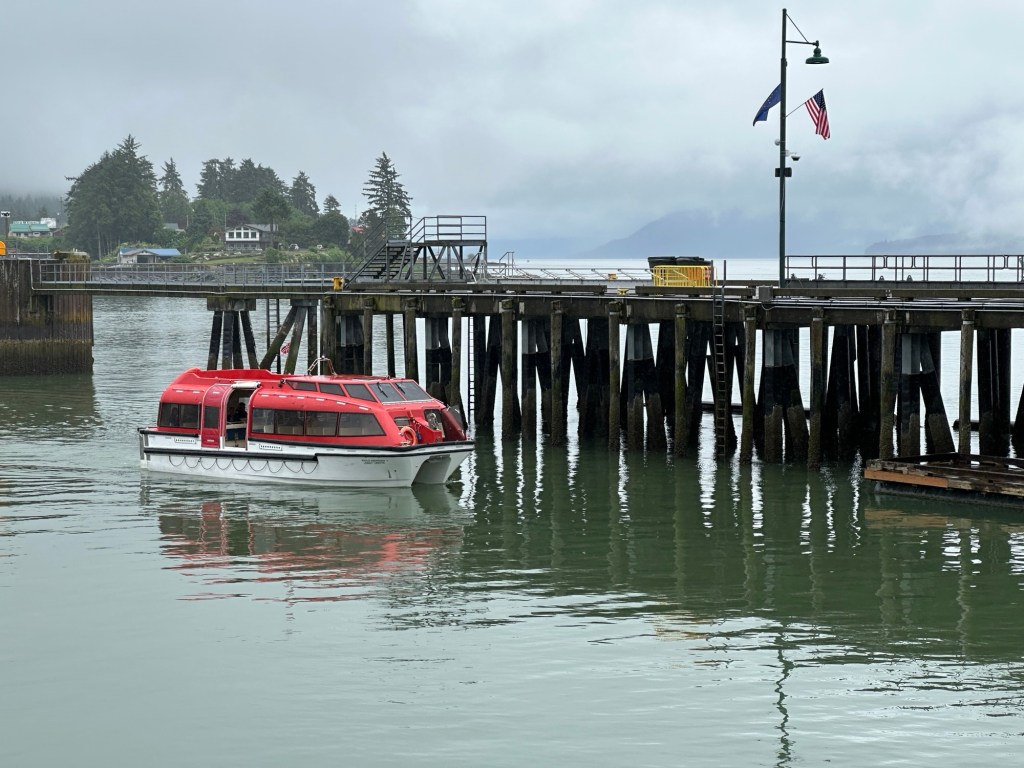
We went to shore on a tender again, meaning we didn’t have to bring life jackets. Then we met our bus driver and guide for our adventure.
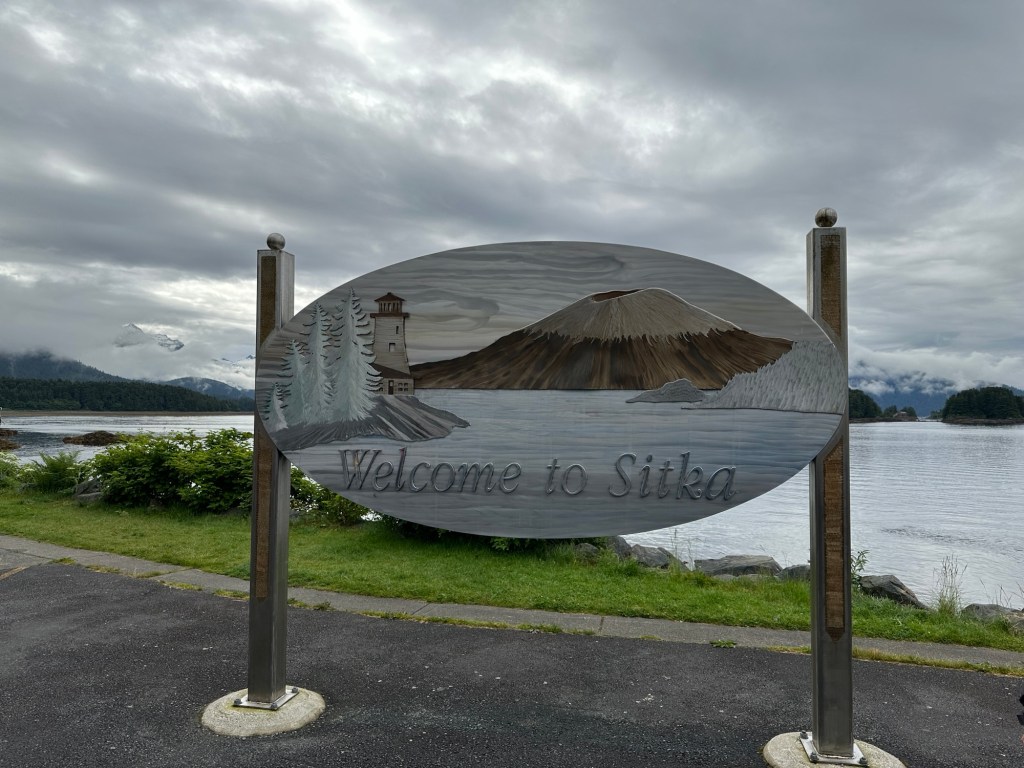
Our excursion started early and lasted all morning. Owen guided a group of 21 fellow travelers through the complex history of the Native people, Russian invaders and later the US invaders. First, though, he told us about the Edgecumbe volcano on a close island across Sitka Sound, which last erupted about 4000 years ago.

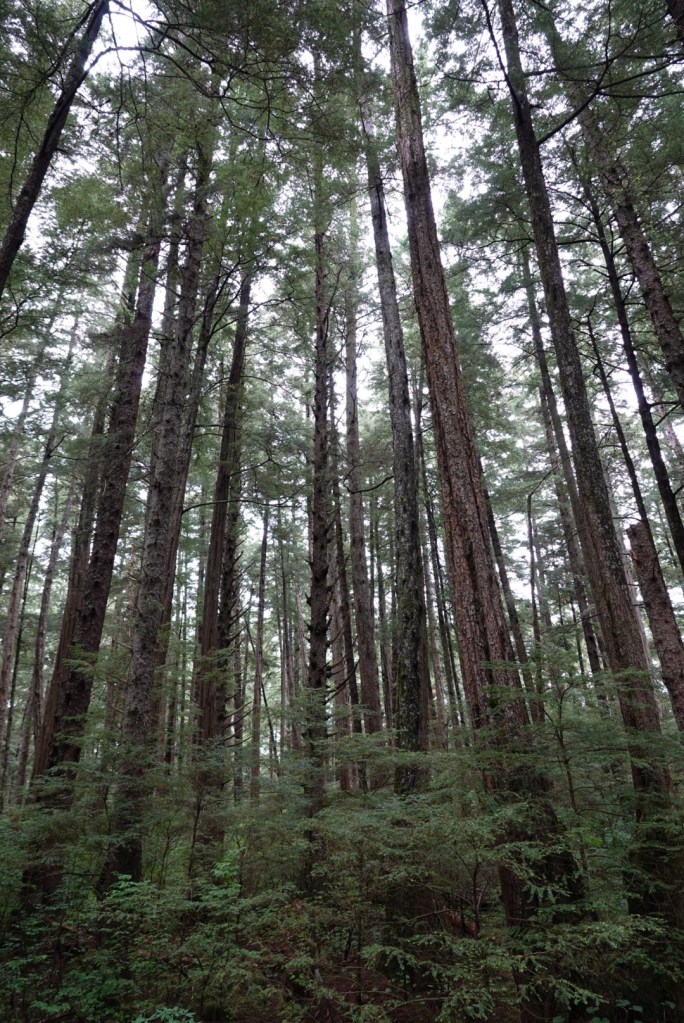
Owen first drove the bus to the end of the road, seven miles from the town center. Both the main roads end seven miles out, at the edge of the wilderness in the Tongass National Forest. This area has been roadless since being designated by the Clinton administration, but Owen worries that the current administration will redefine it. This would be disastrous for the entire planet because these old-growth trees provide oxygen to the air and help maintain the pristine water. We started there because it is also the site of one of the first Russian forts built near Sitka, which was burned to the ground by the Tlingit people in the early 1800s.

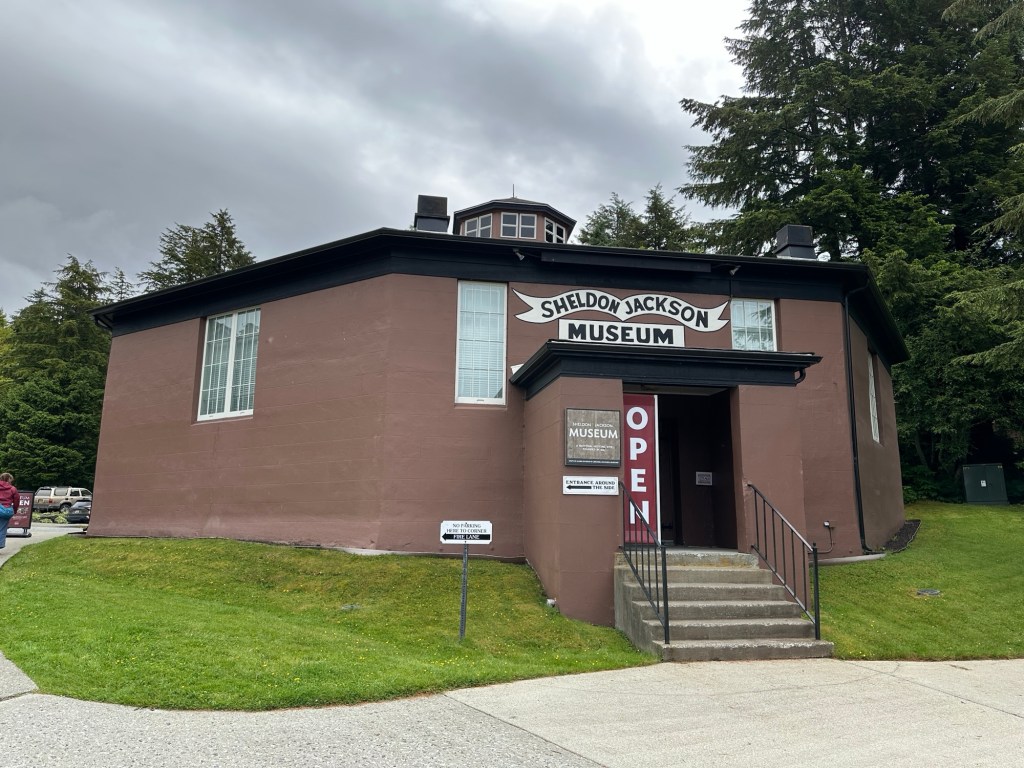
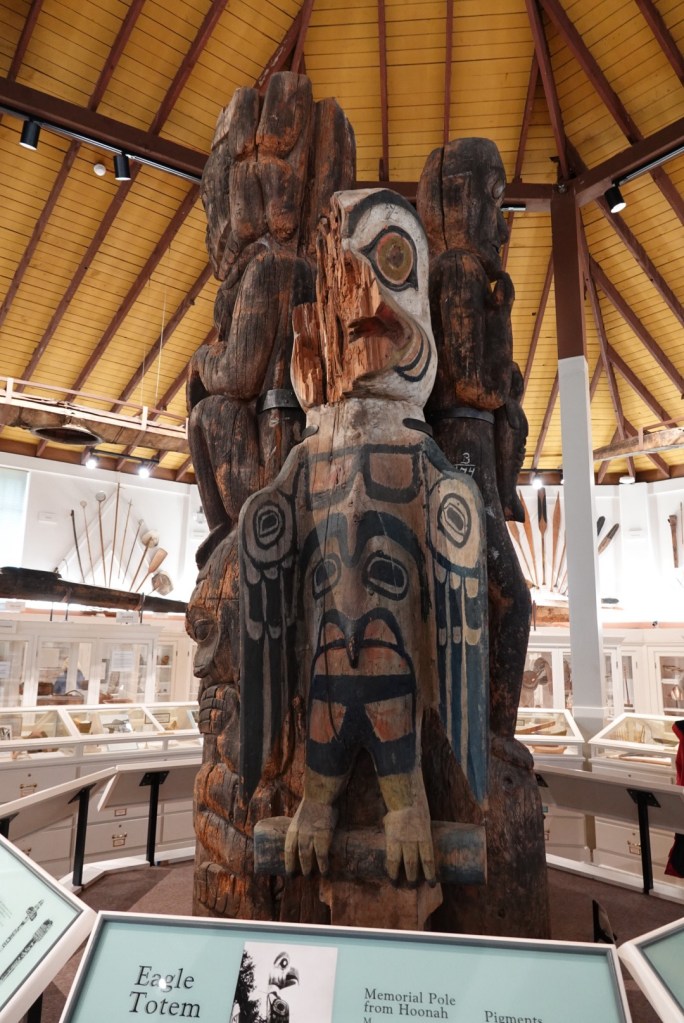
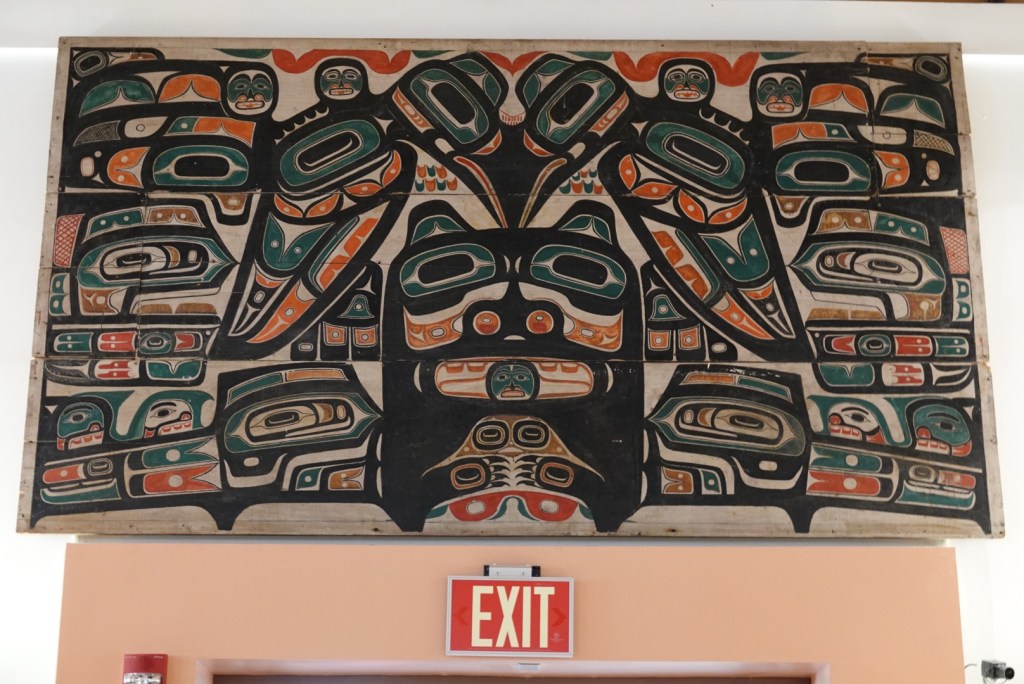
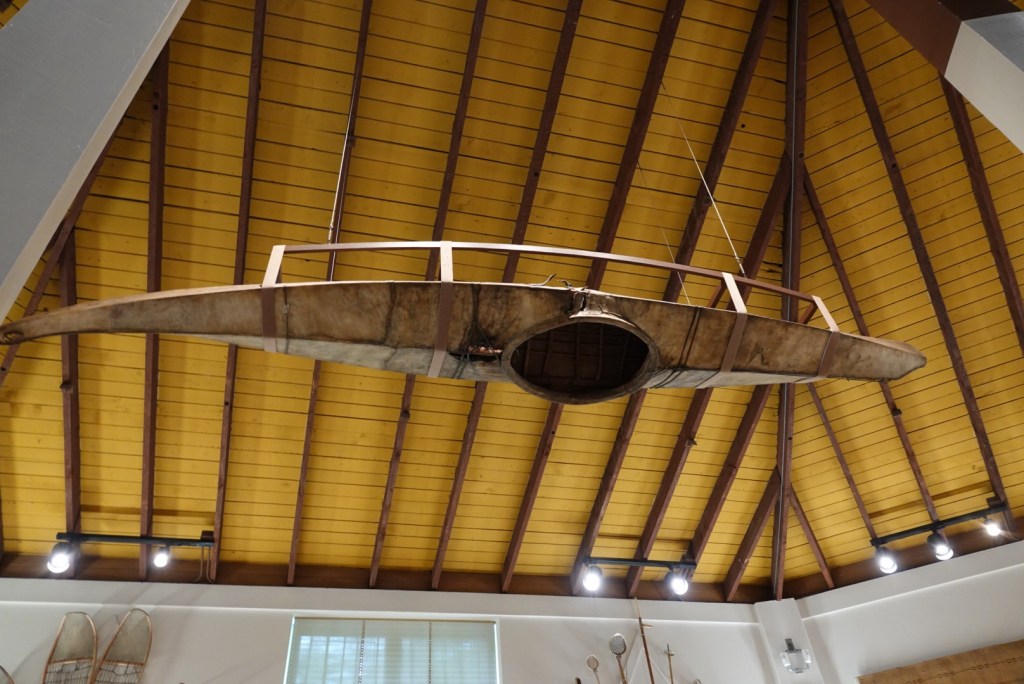
We spent an hour at the Sheldon Jackson Museum, a well organized and user friendly exhibit in an octagonal building, the first structure in Alaska with concrete walls. The native people were curious about how to build something from powder, rock, and water, but the US engineers just asked them to build the framework, then watch. Concrete structures have been popular ever since.

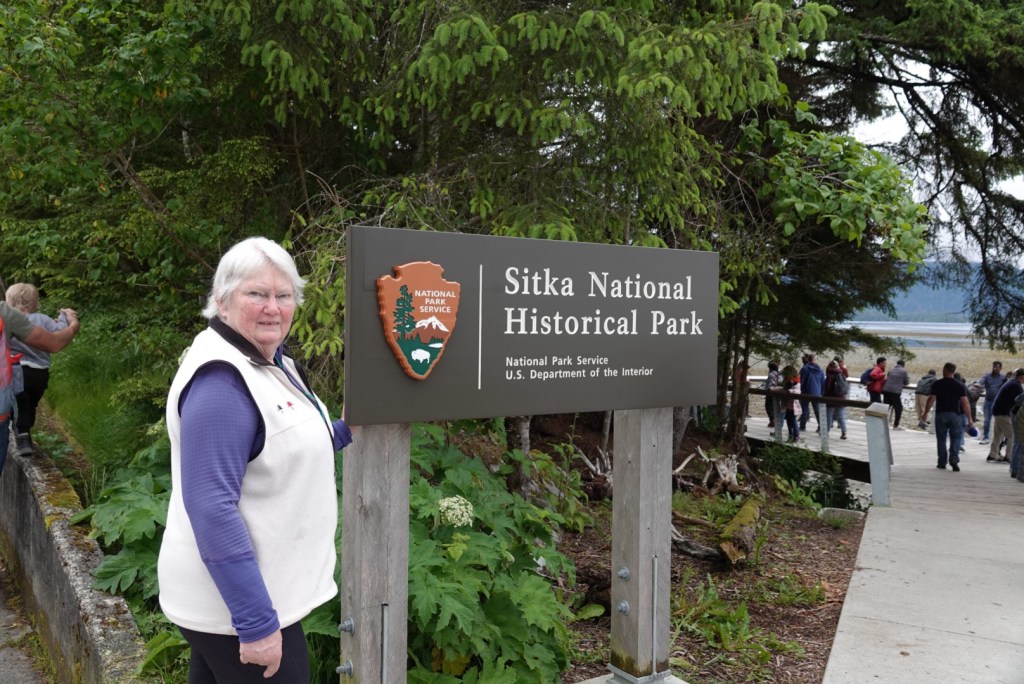
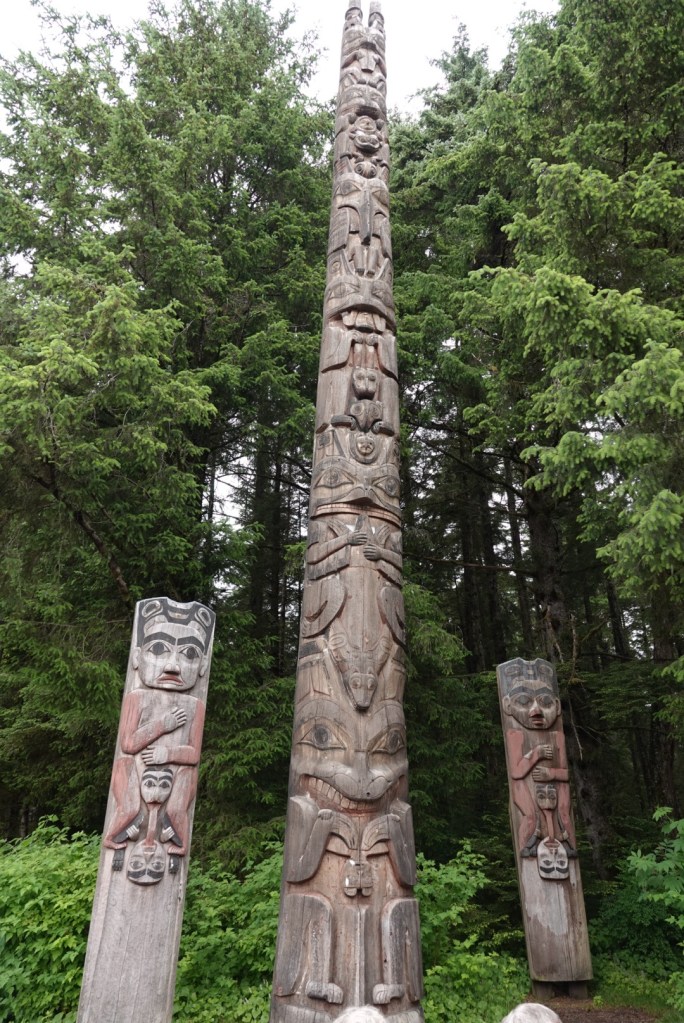
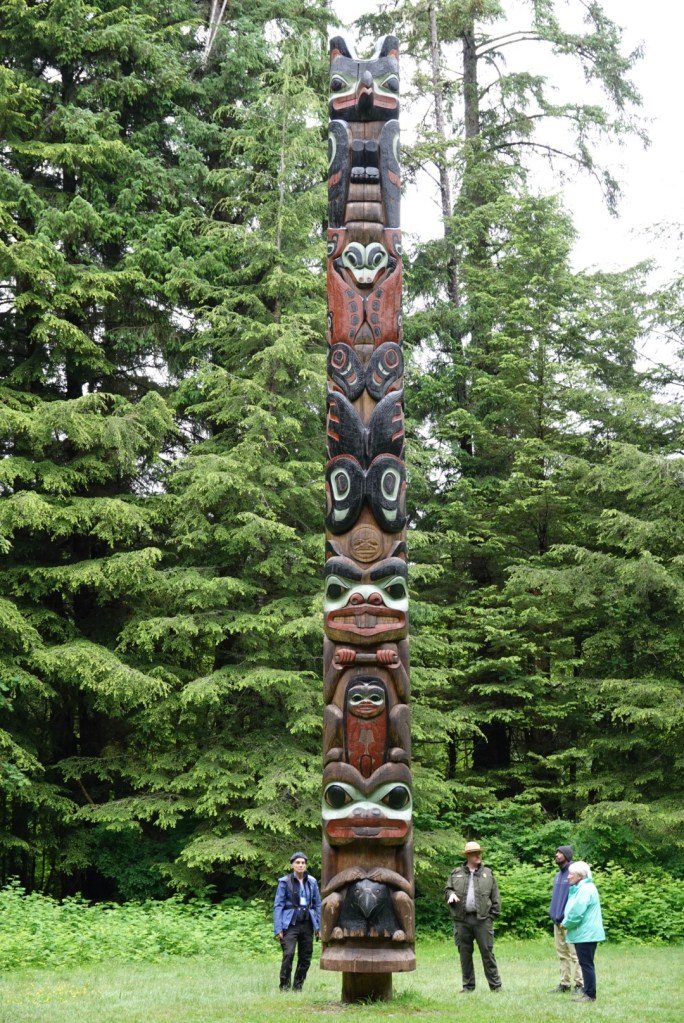
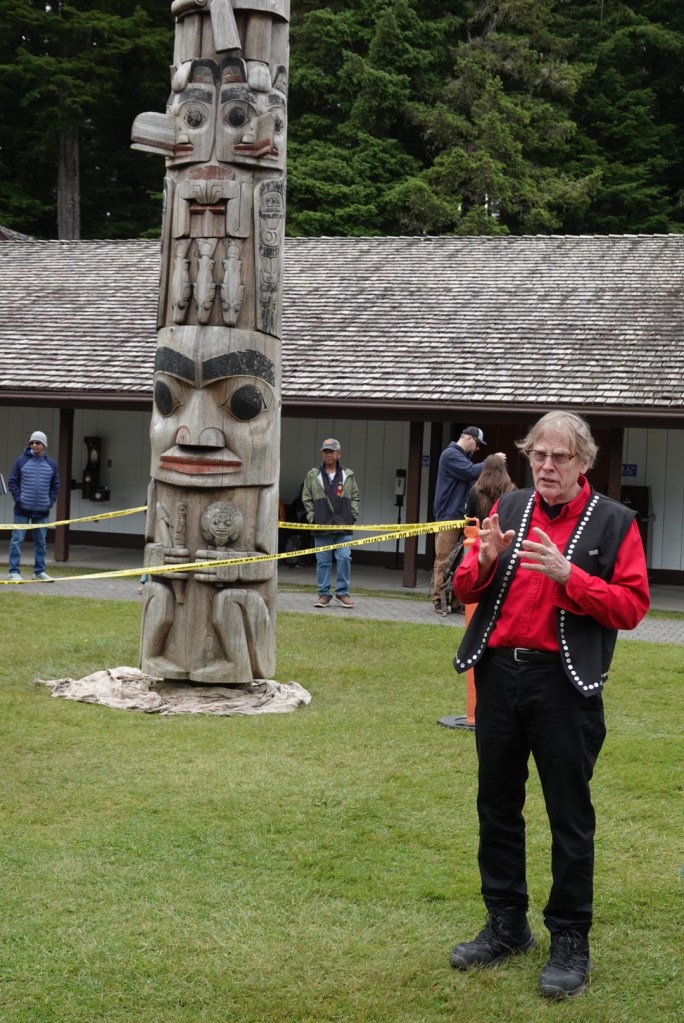
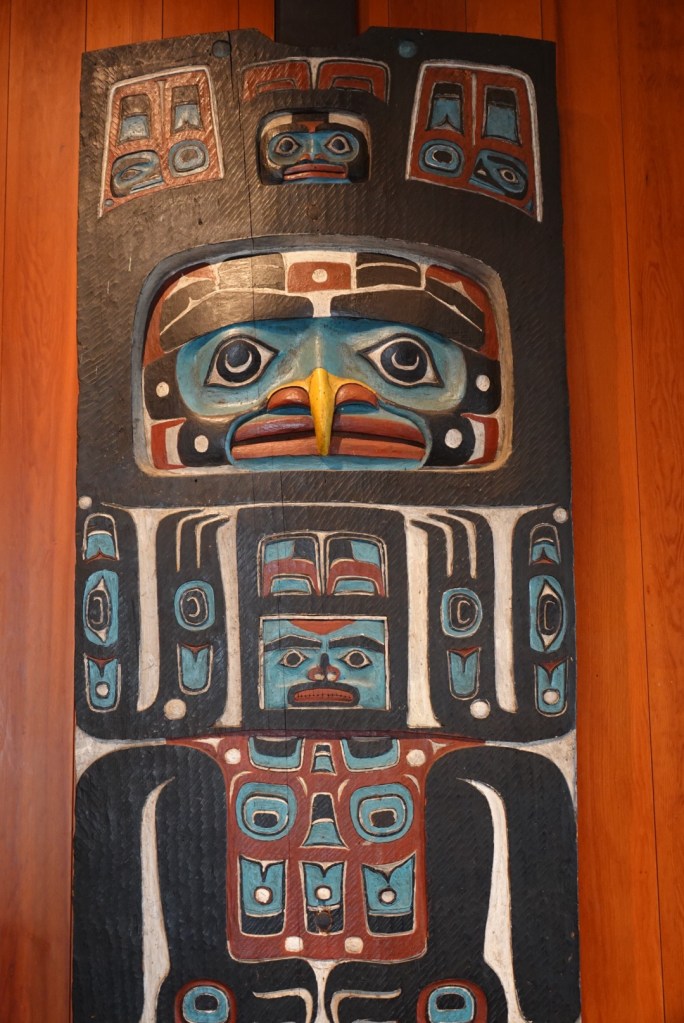
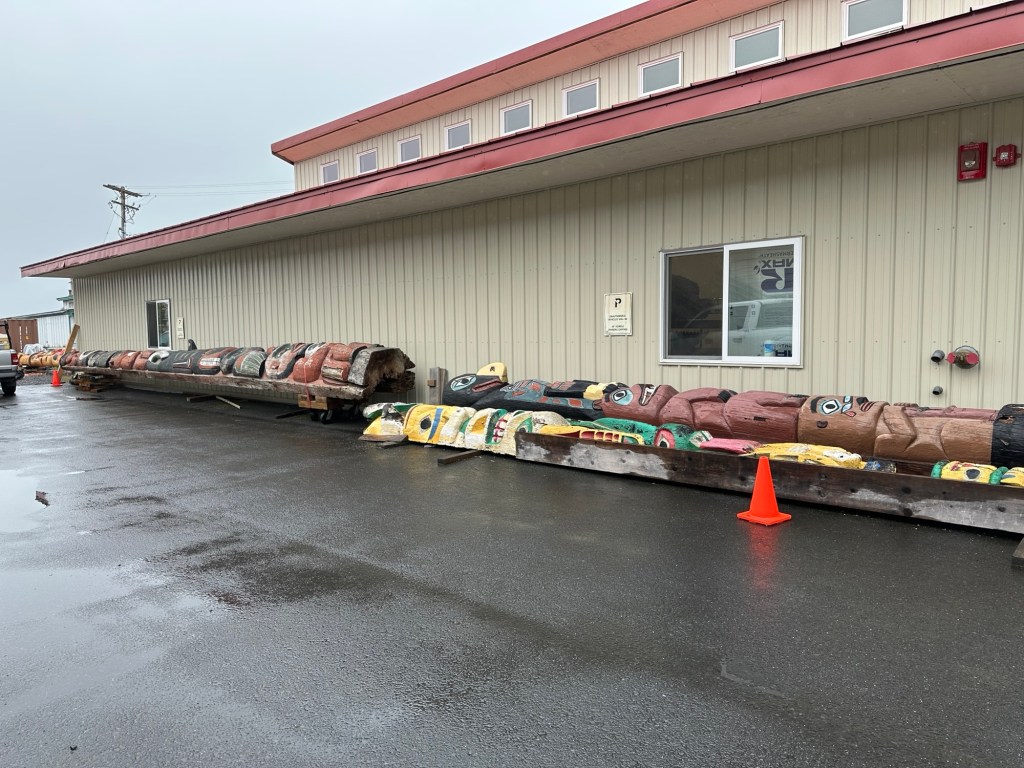
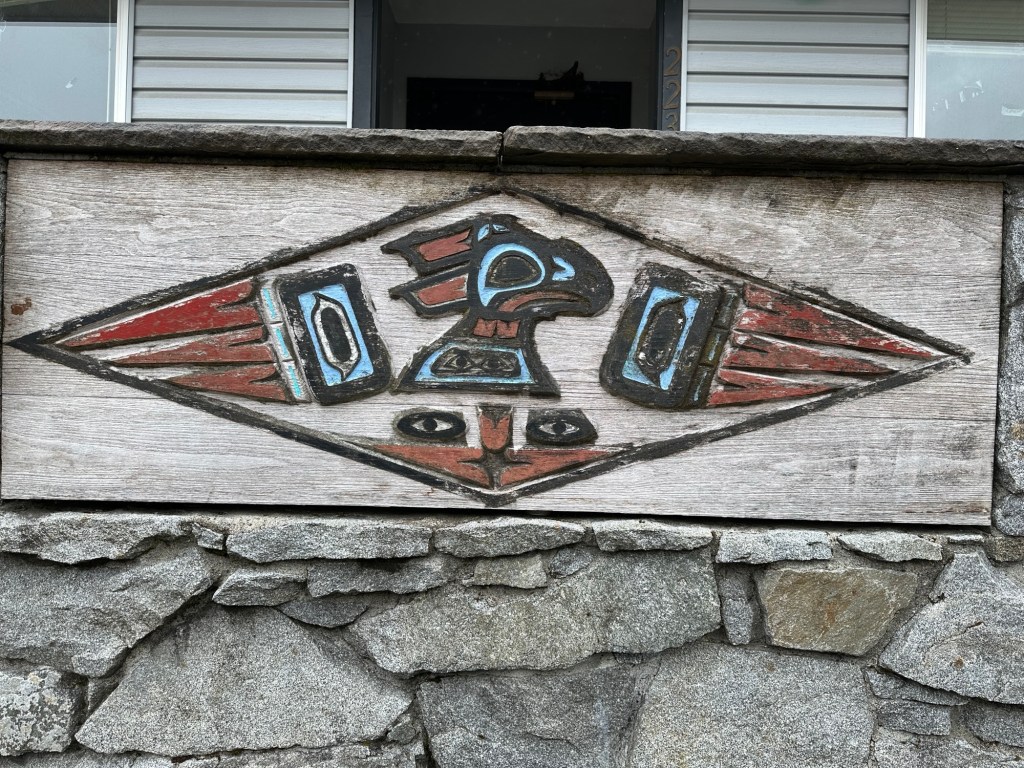
The Sitka National Historic Park was our next stop, where we walked through a display of totem poles in the forest. We learned quite a bit about totems. The phrase “low man on the totem pole” is a misnomer because the lowest person on the totem is actually the most powerful or most respected. In the family totems, this would typically be a grandparent. In the totem at the battlefield, the lowest person is the leader of the Tlingit people, represented by a raven with a notch in its beak to indicate a wound that he suffered before killing his assailant with a blacksmith hammer.

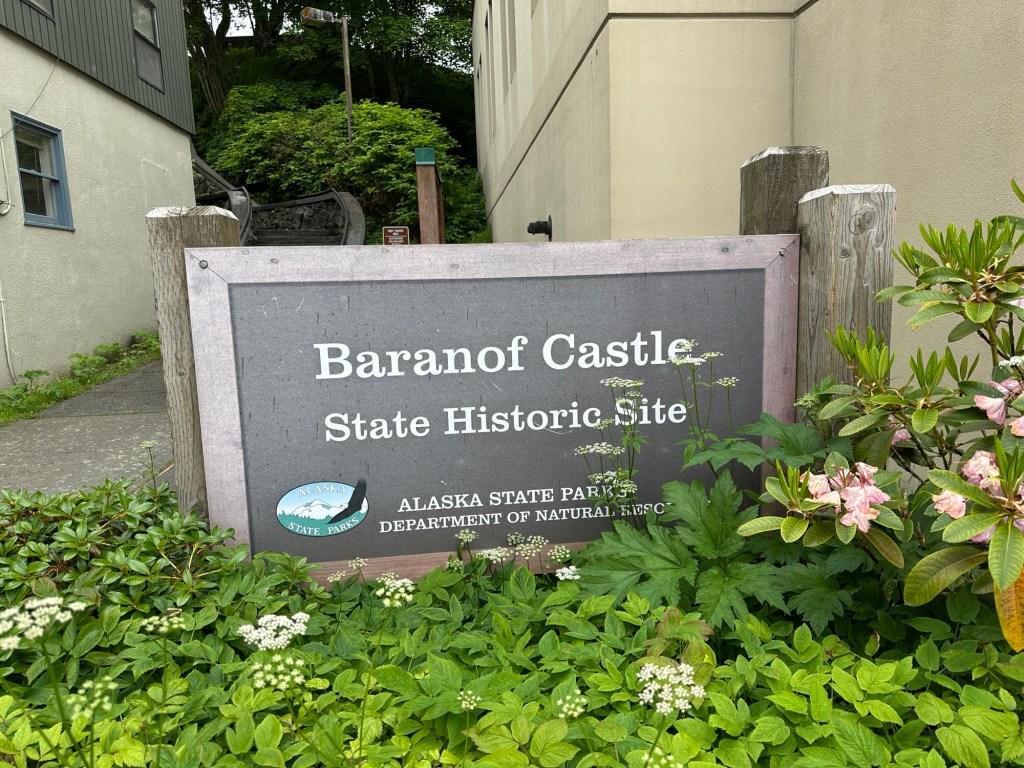
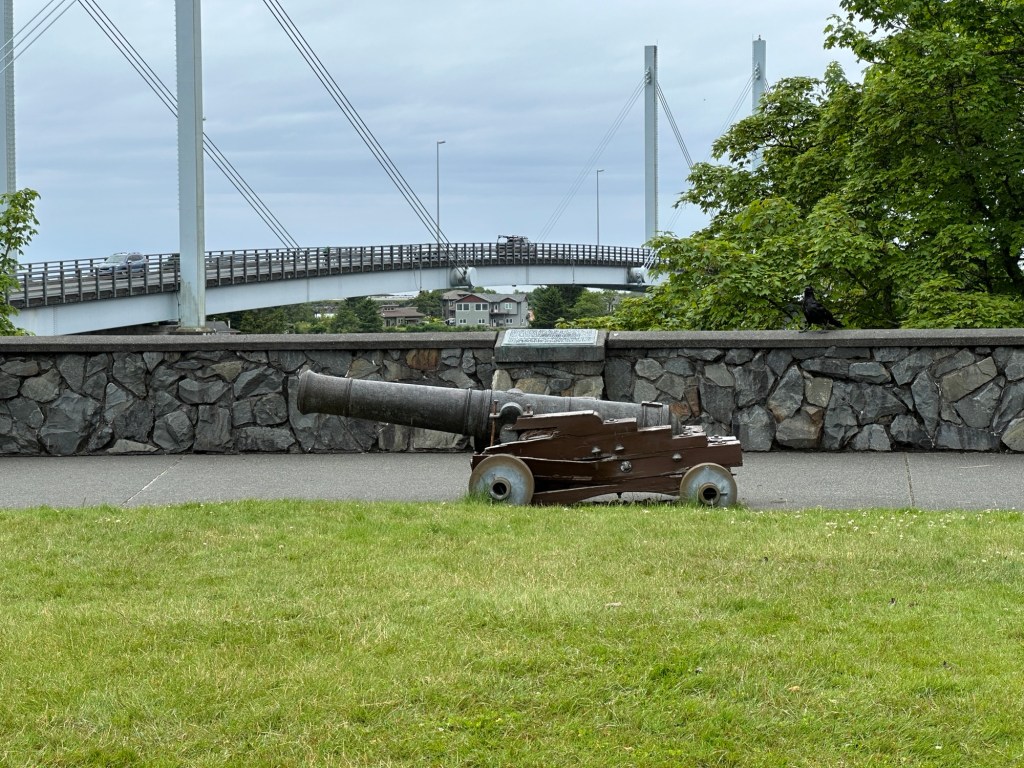
After the official tour, we wandered around Sitka, a uniquely historic town.

Another really good day.

Wrangell, Alaska on June 25

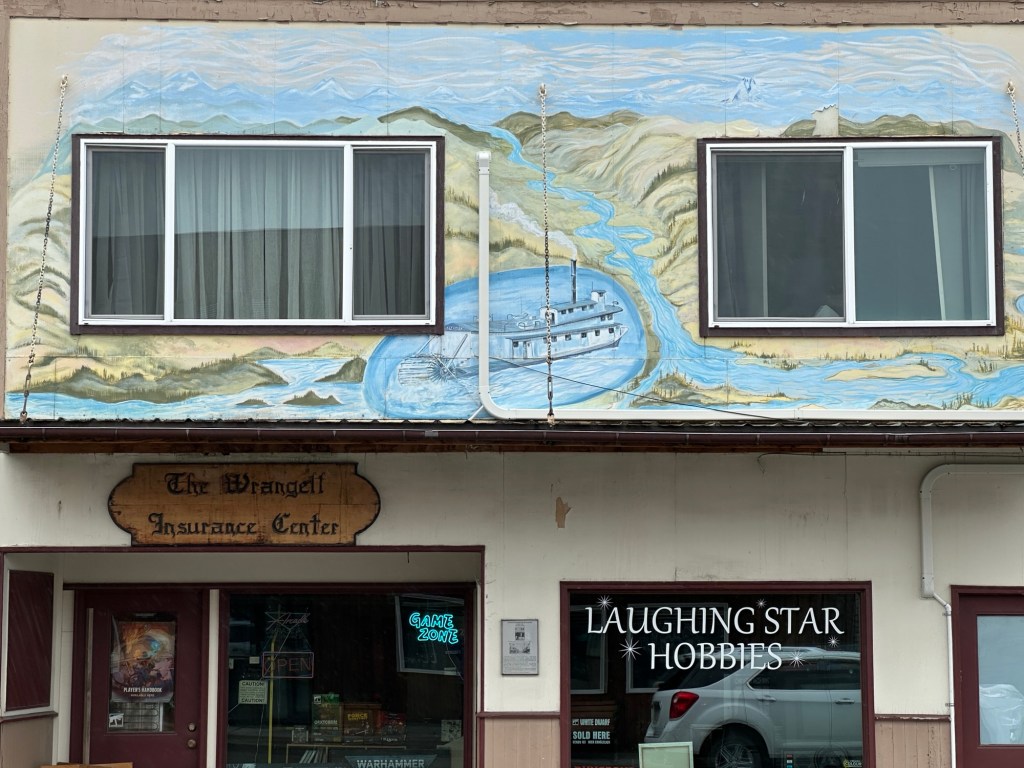
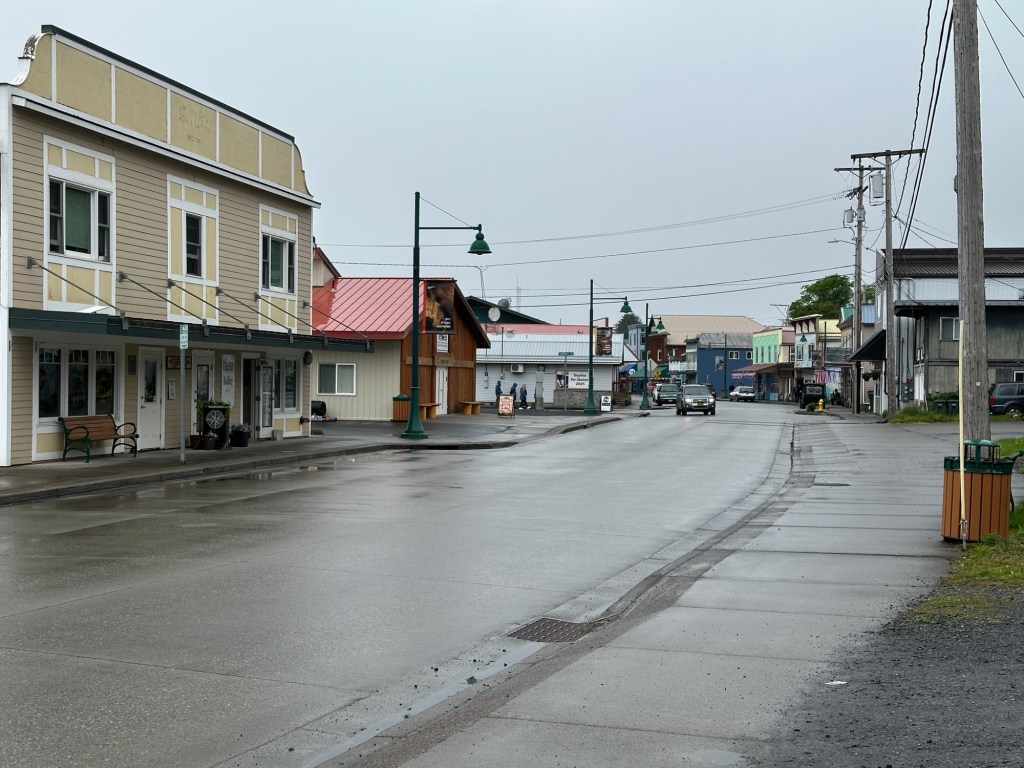
Wrangell, on the north end of Wrangell Island is our first port of the trip. Our ship parked a little ways out from the pier and two tender boats from the ship ferried passengers to and from the dock.

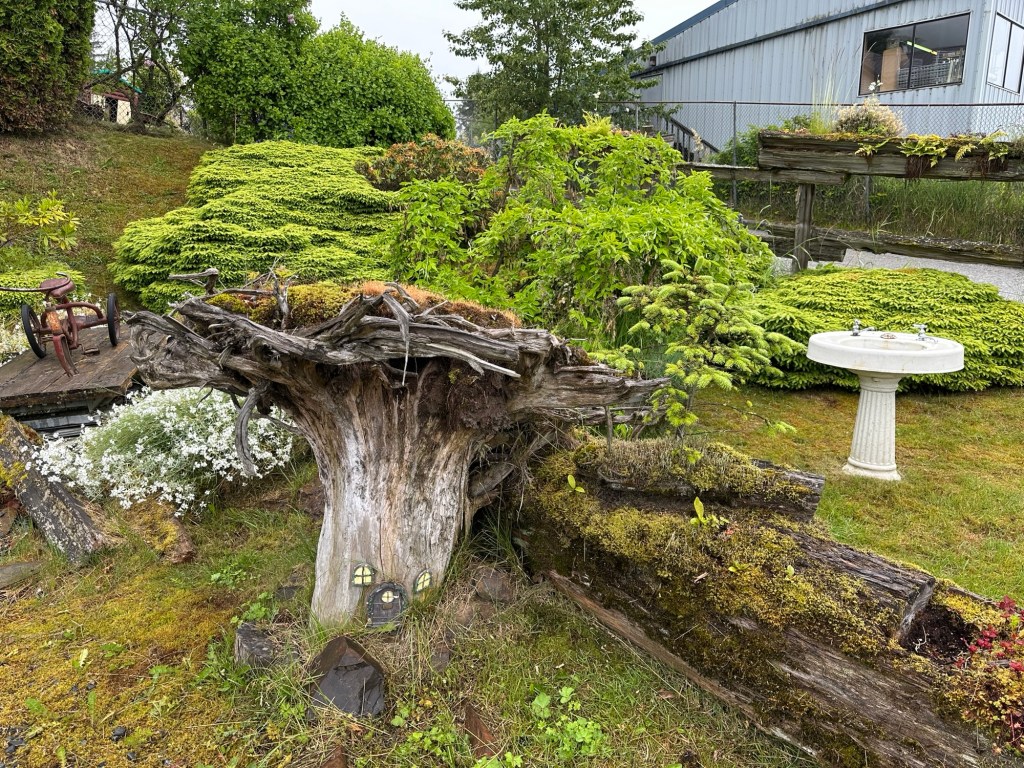
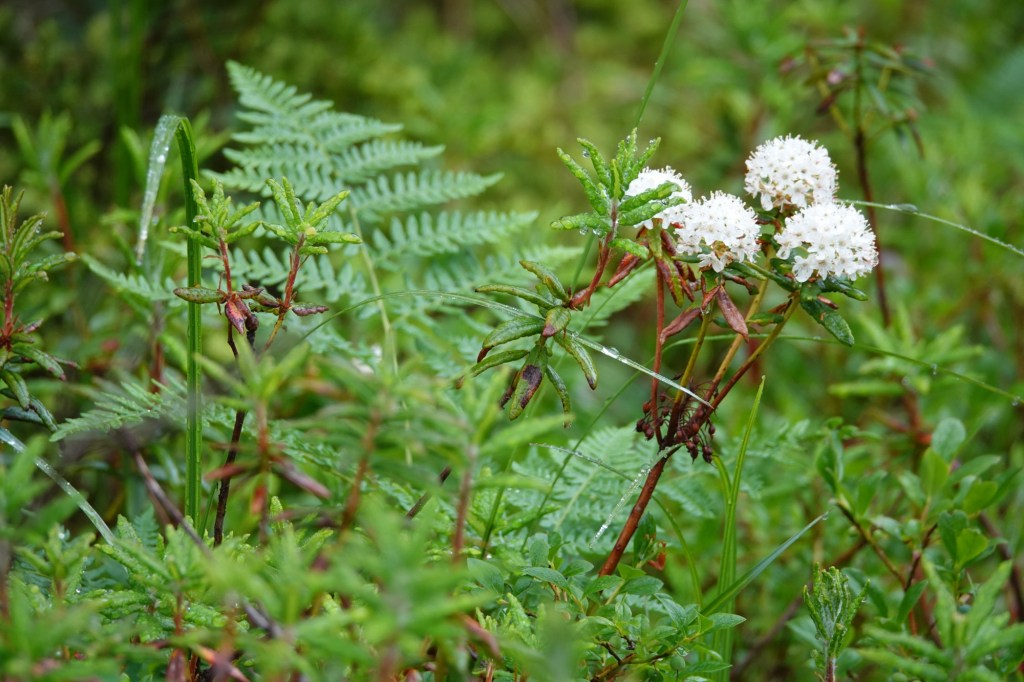
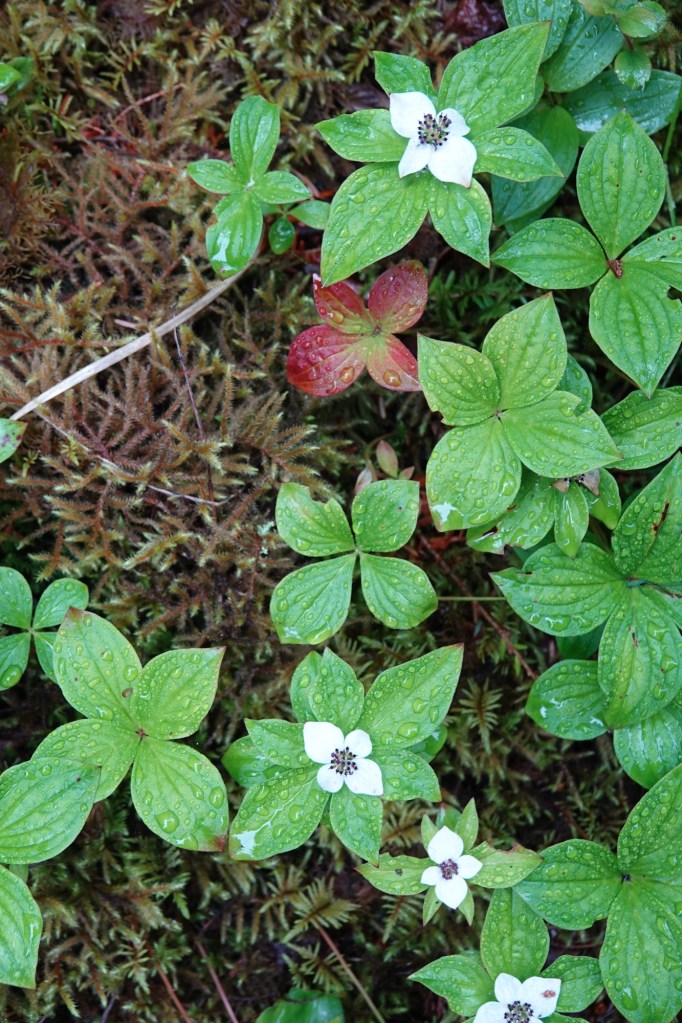
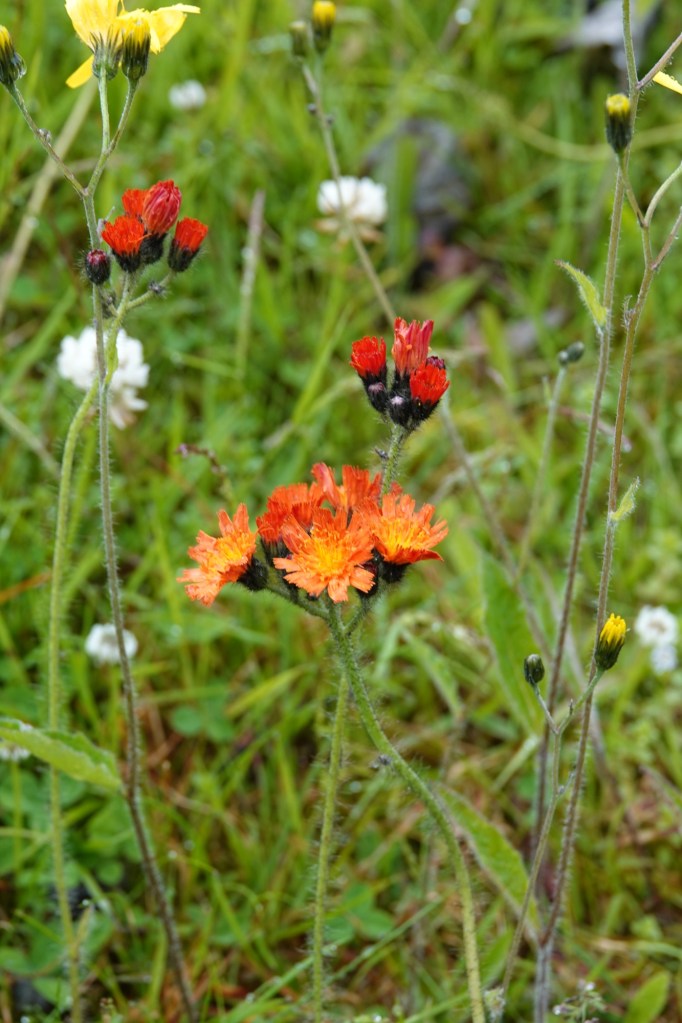
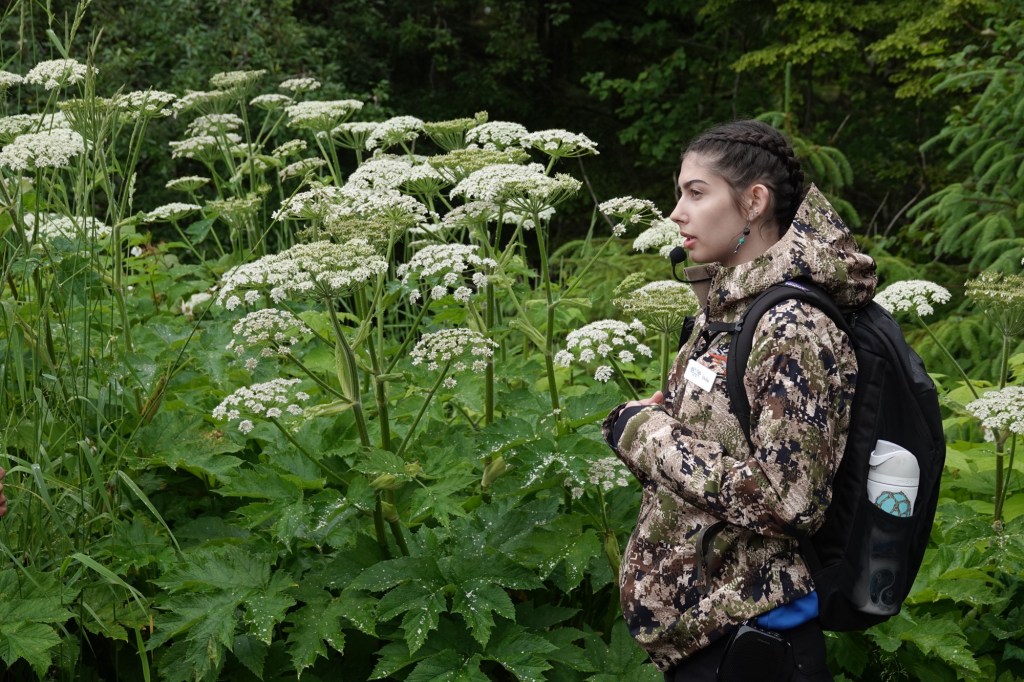
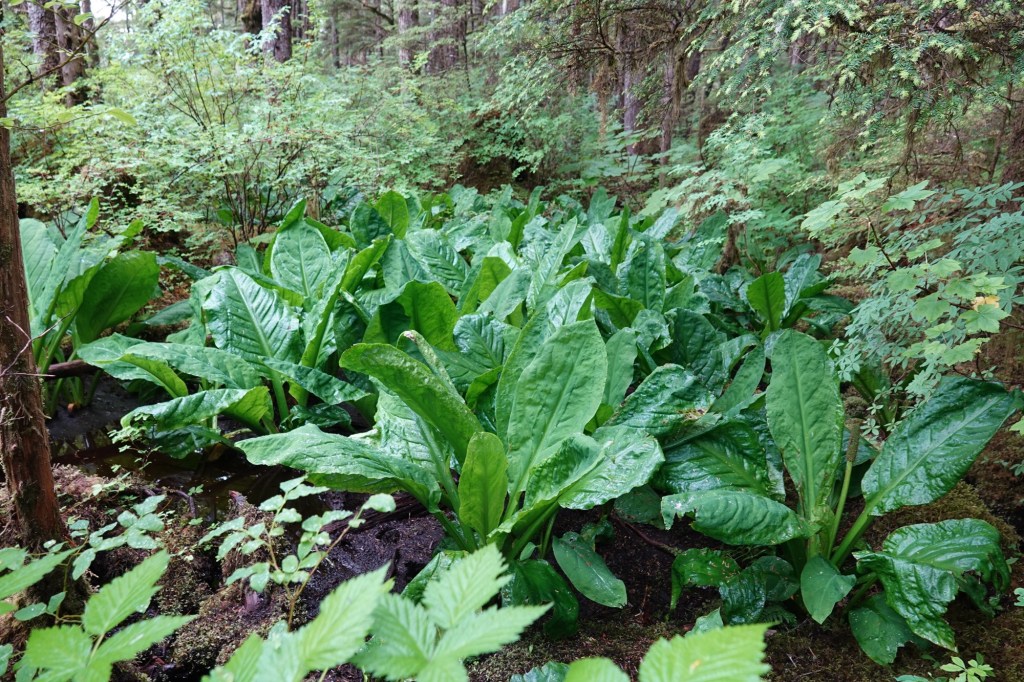
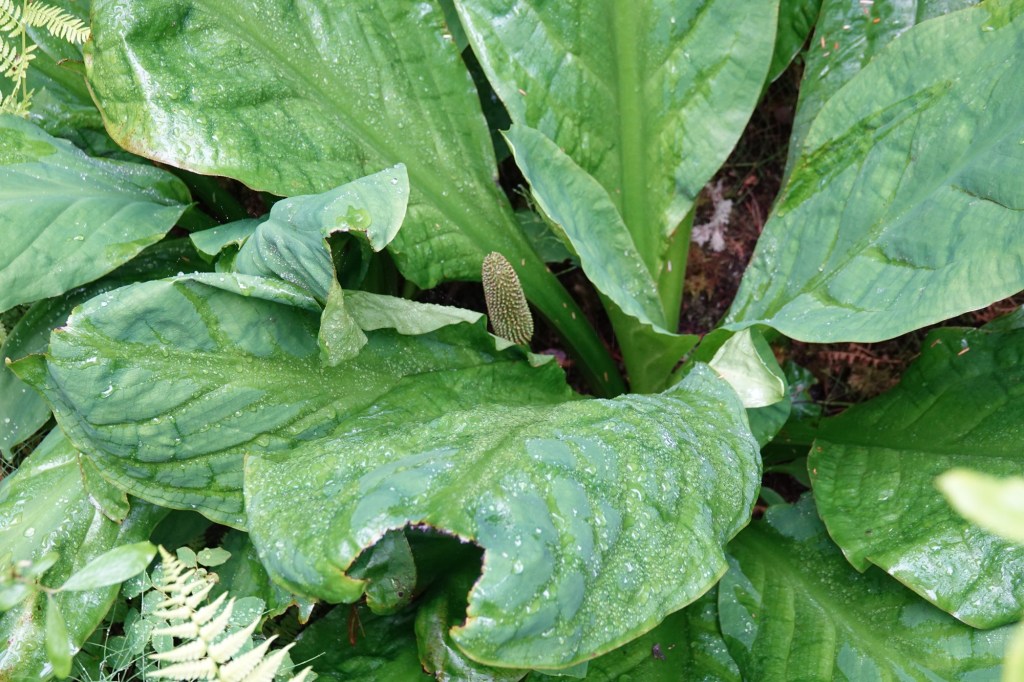
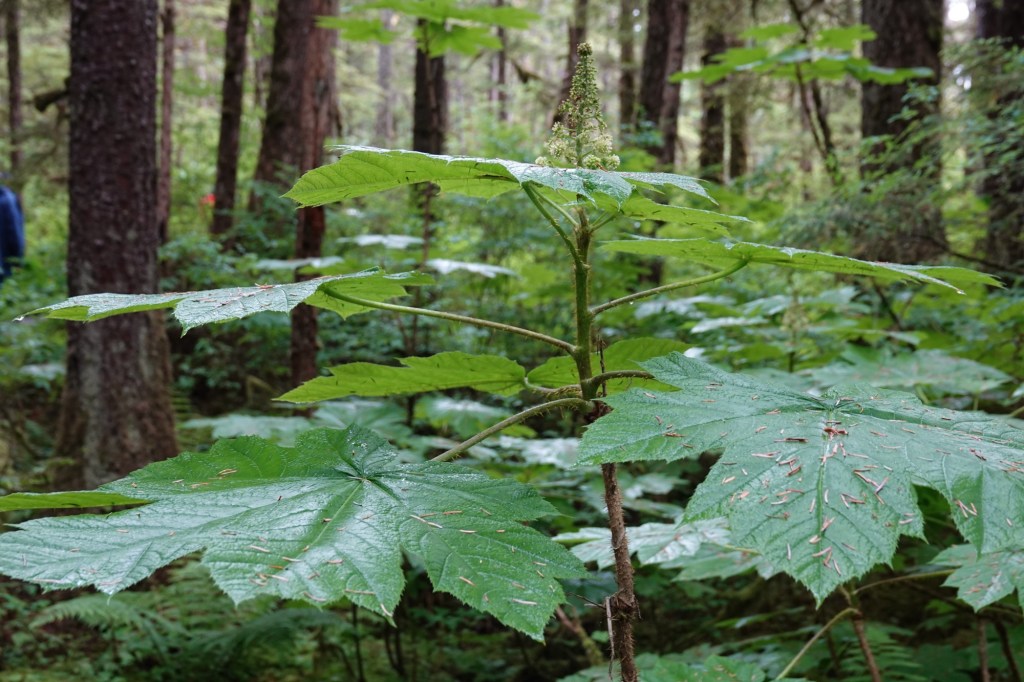
This was our first feet-on-the-ground landing in Alaska. We enjoyed both the town and the hike in the forest emphasizing the botanical uses of plants by the Tlingit people.

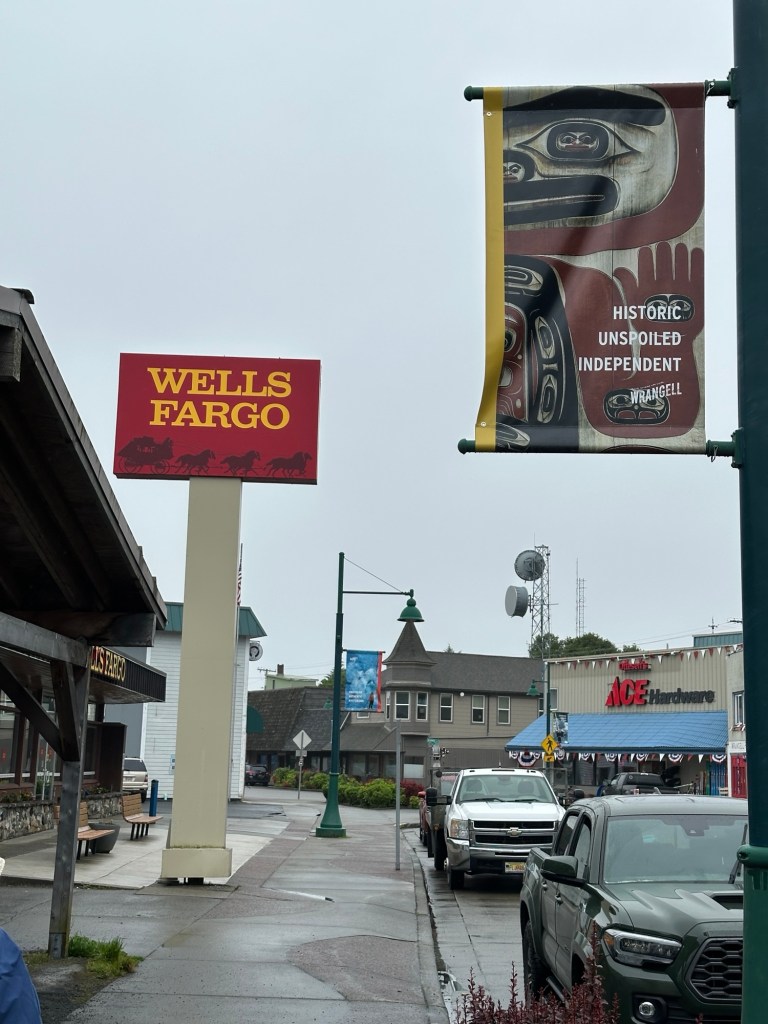
The streets were a lot like any American town. We learned that Wrangell doesn’t get much snow, and when it comes it’s often followed by rain, so snow doesn’t stick around for long.

The guide for our forest walk in the gardens was an 18 year-old woman, just graduated from high school with 15 people in her class. Della plans to go to Fort Lewis College in Durango, where our own Checkers got a degree. She wrestles competitively and is planning on majoring in Business Administration. She also really knows her plants and loves her home town.

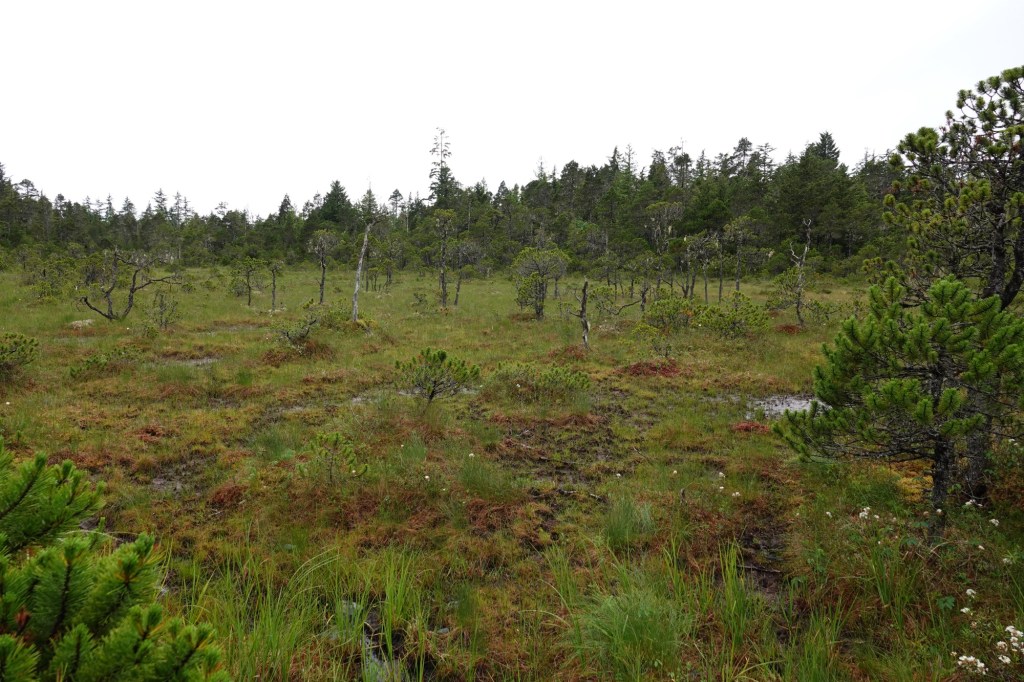
Muskeg, basically a peat bog, hundreds of feet deep. The ground is acidic and almost anoxic, so any tree that gets started growing is stunted like a bonsai tree.

Into Alaska on June 24

We woke to fog and morning dew. The ship changed time zones early, so that the change would be while we were all sleeping, but our phones and watches did not change right away because we were still in Canada.

Before breakfast, Clare made a water run (the tap water tastes like chlorine). Going past the gym, she noticed that all the equipment was being utilized! Walking, cycling, stair steps, weights, everything. Our fellow travelers are serious about keeping in shape.

Two dolphins tried to keep up with the ship while we were eating breakfast. Such a nice welcome. No camera again.

Most of the day was ocean travel and learning. The experts on this cruise are really good. One guy, Oscar from Mexico, gave us tips on how to more fully utilize our smart phones as cameras (or how he said it, your camera that can also be used as a phone). Even Brian learned things from him, and his presentation was full of humor to keep us listening. Lauren told us about the cultures in Southeastern Alaska. Jake(?) told us about Old Growth Forests, which we would be seeing later in the afternoon.

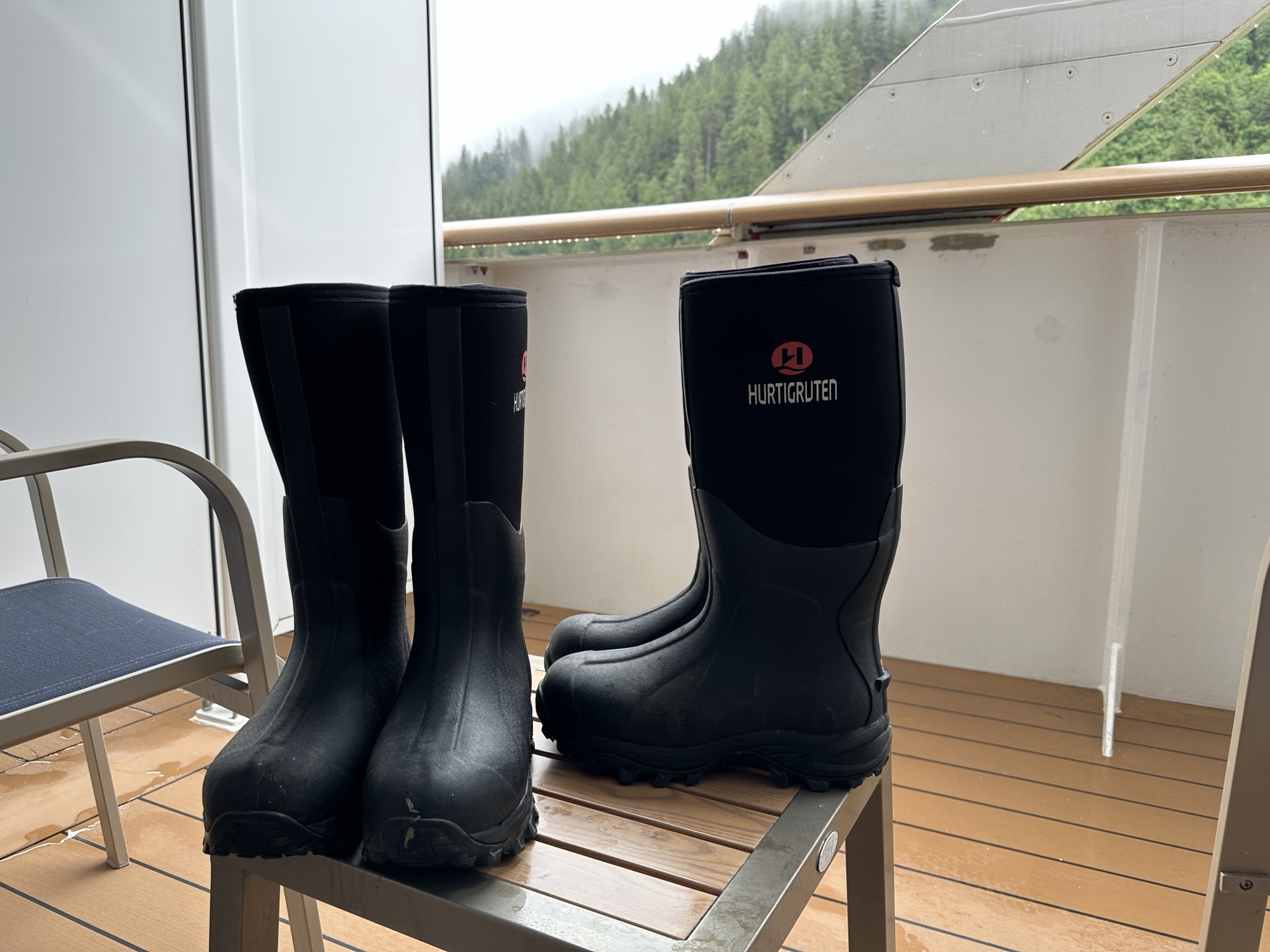
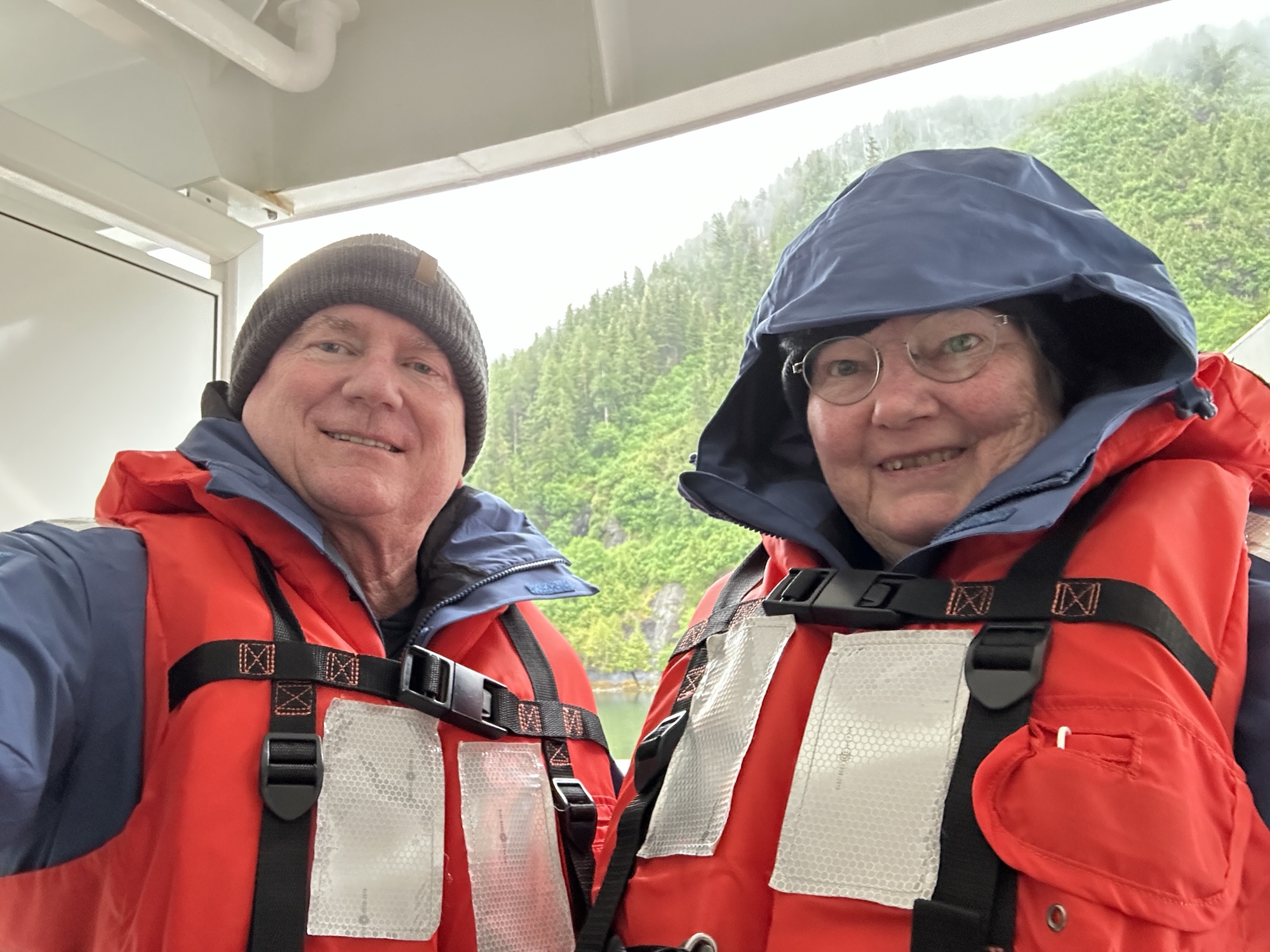
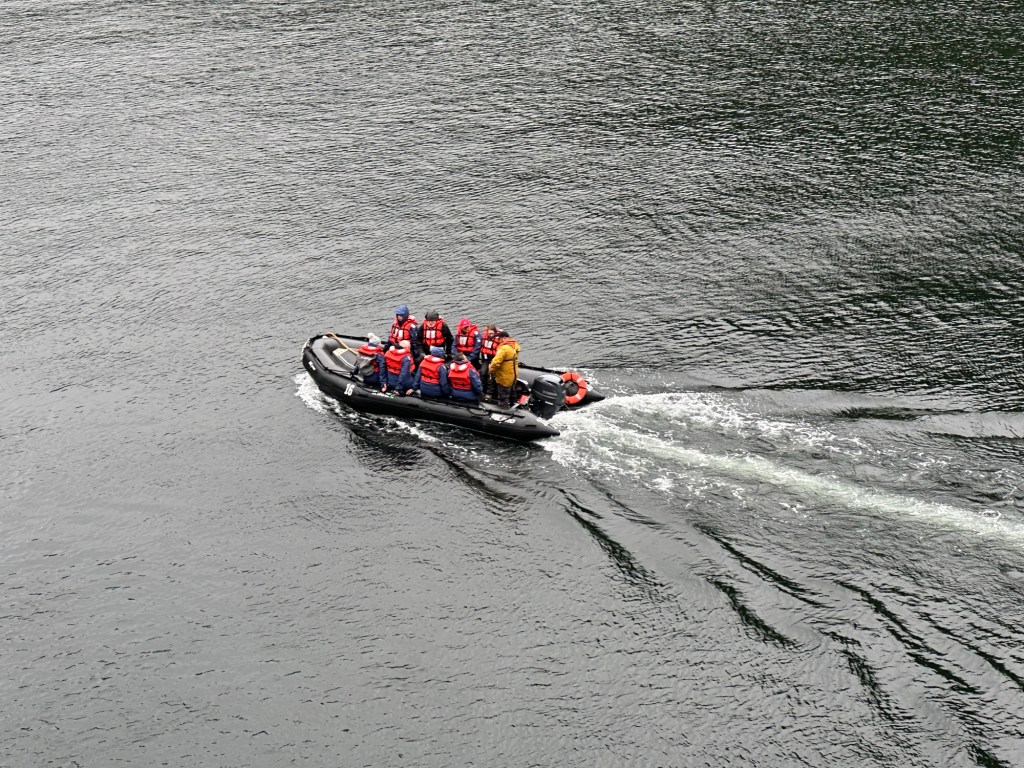
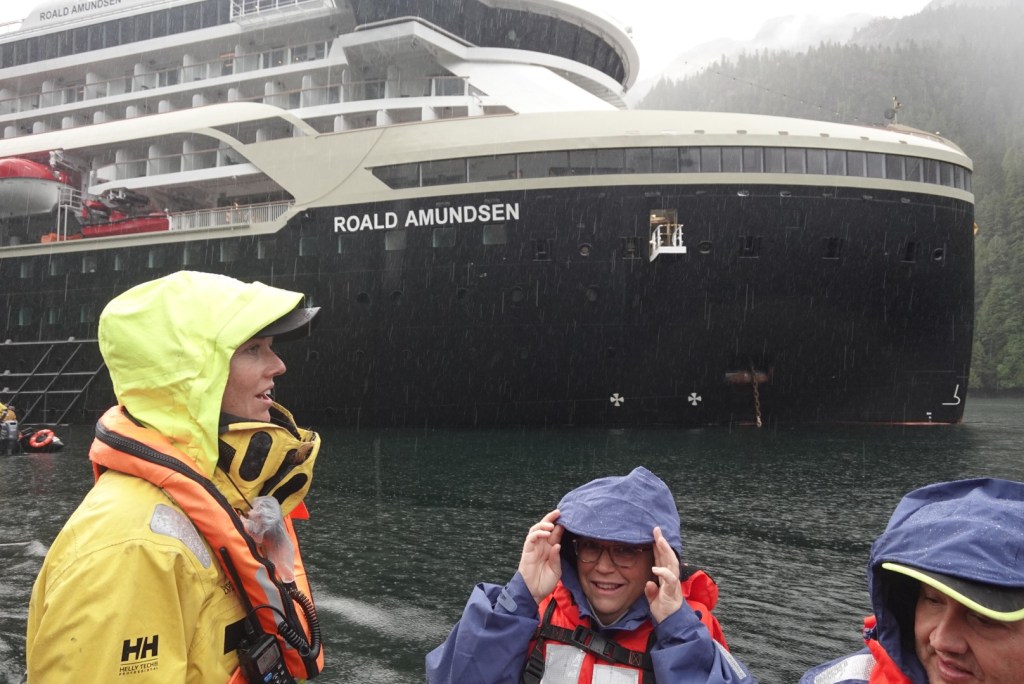
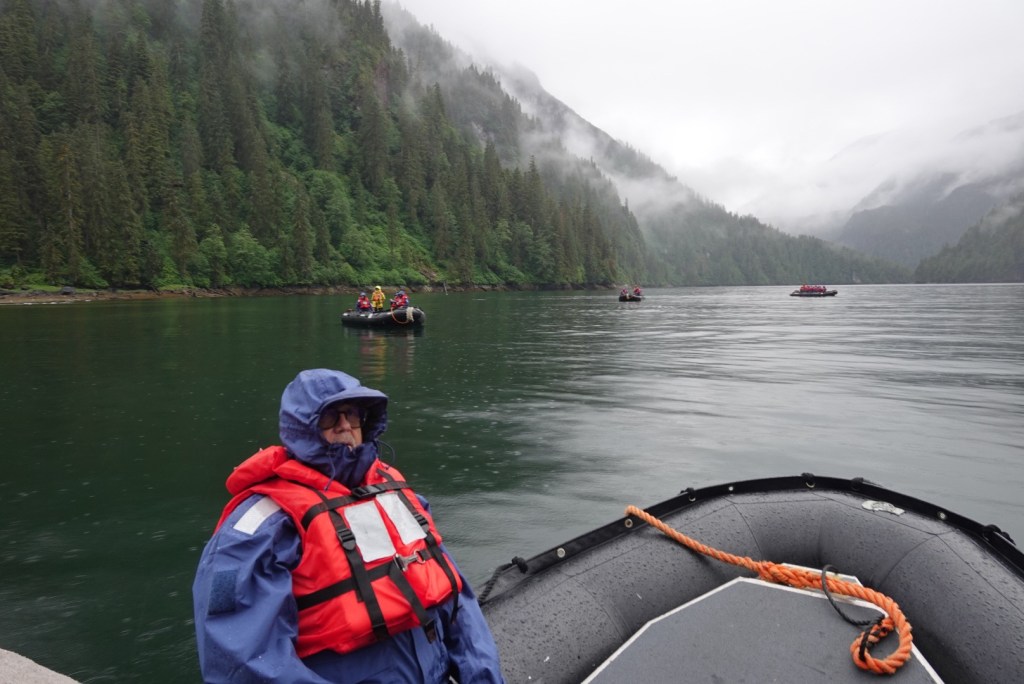
Yesterday, we were equipped with excursion jackets that we get to keep and mud boots, huge and heavy that we don’t want to keep. Both were necessary for our first Zodiac tour in the Misty Fjord!.

We were fitted for expedition coats and shoes yesterday, so we were ready for our first Zodiac tour.

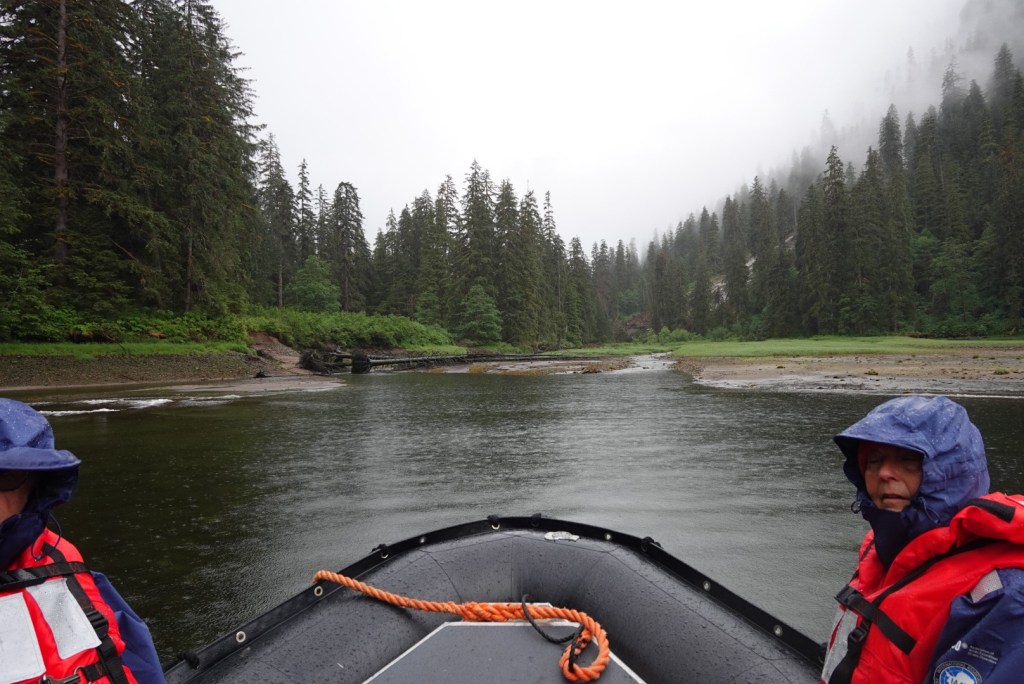
I didn’t really feel like I was in Alaska until we got into the Zodiacs and out onto the ocean. We rode very near the shorelines all over the area. The water was super clear near the shorelines; you could easily count the rocks below. The reason the ocean water in the fjords seems opaque is that they are so deep.

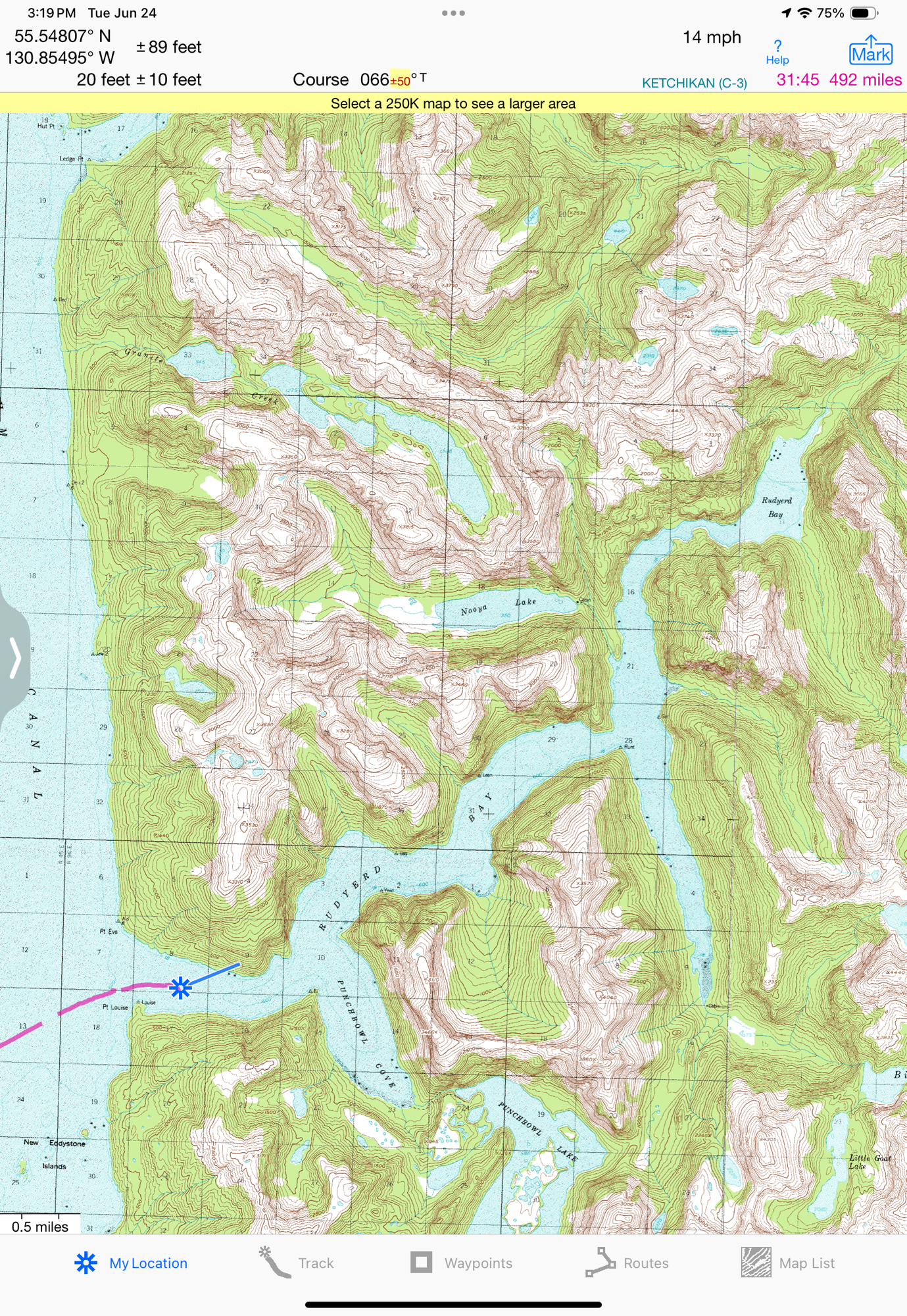
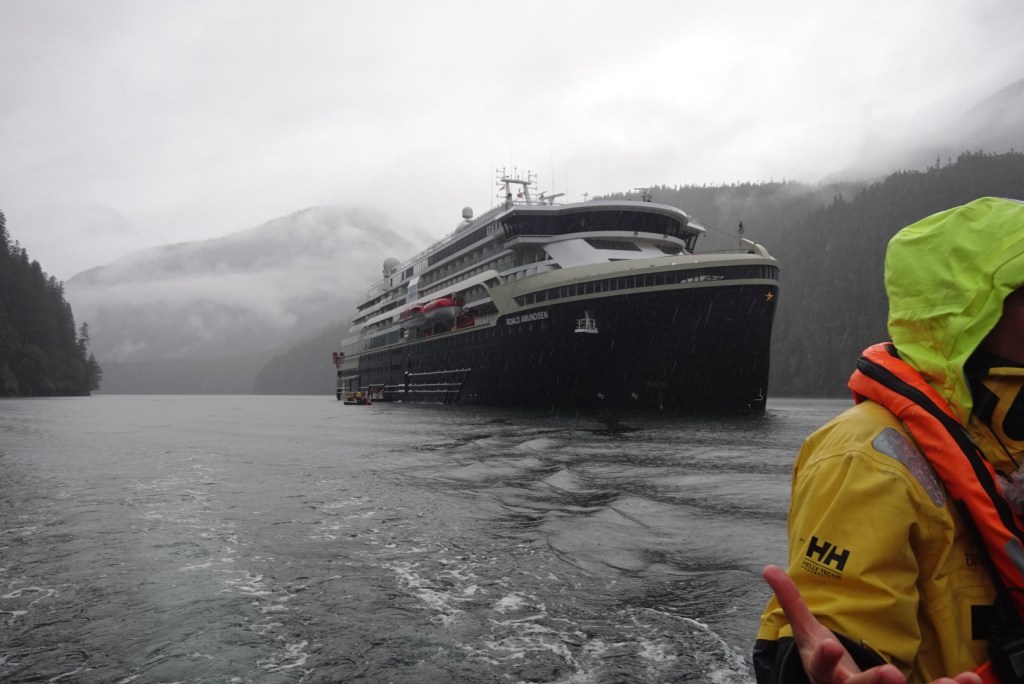
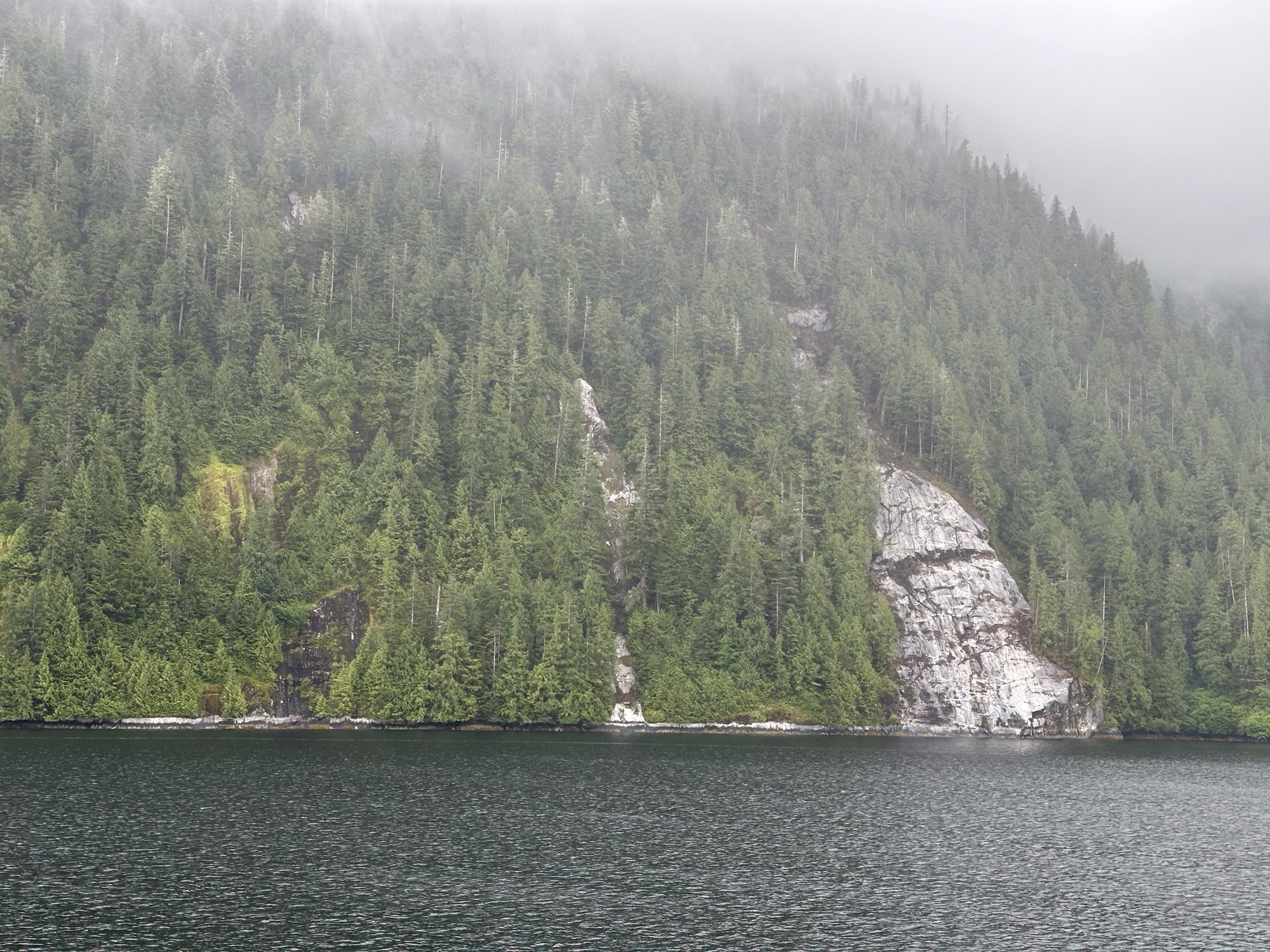
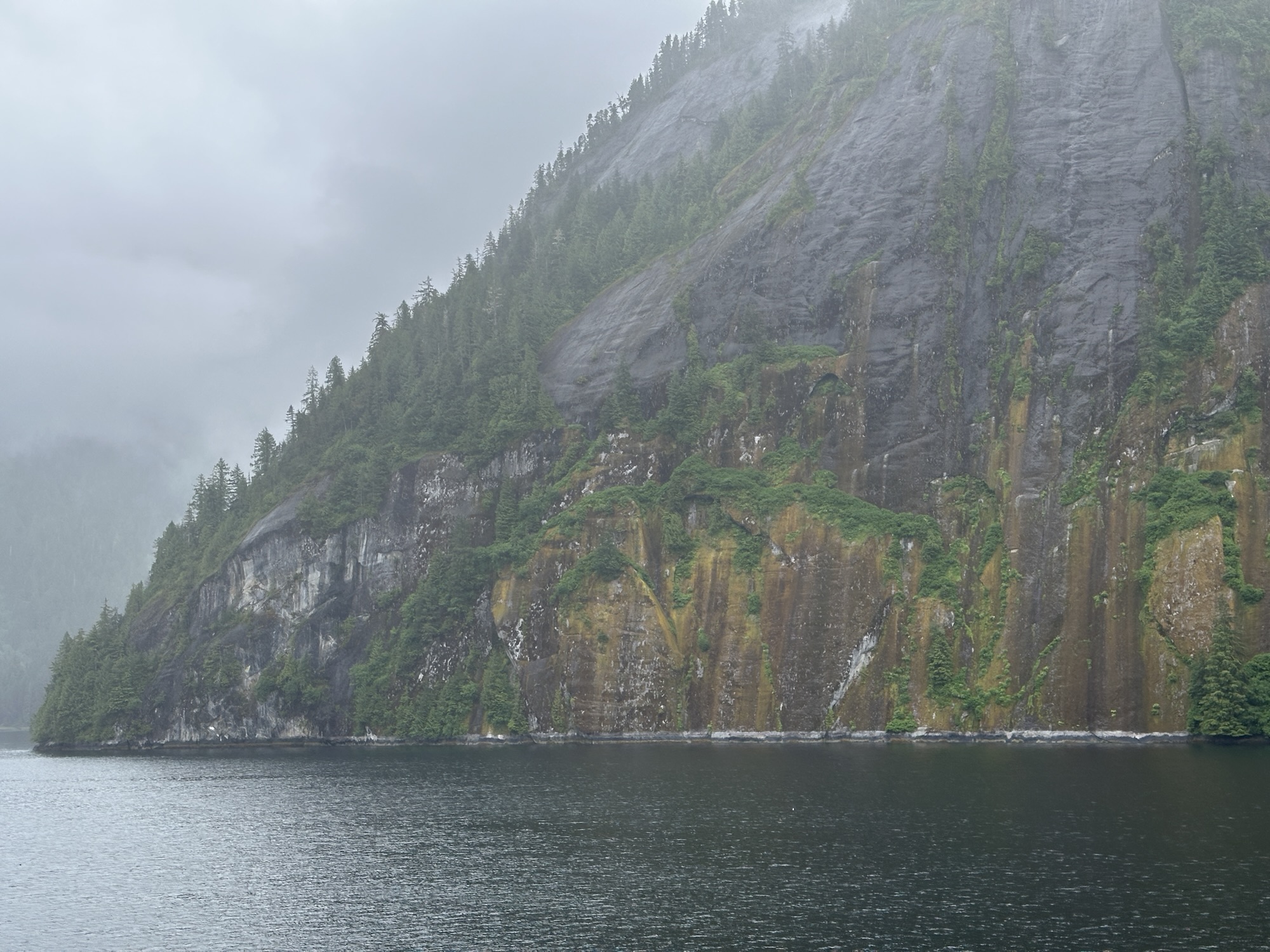
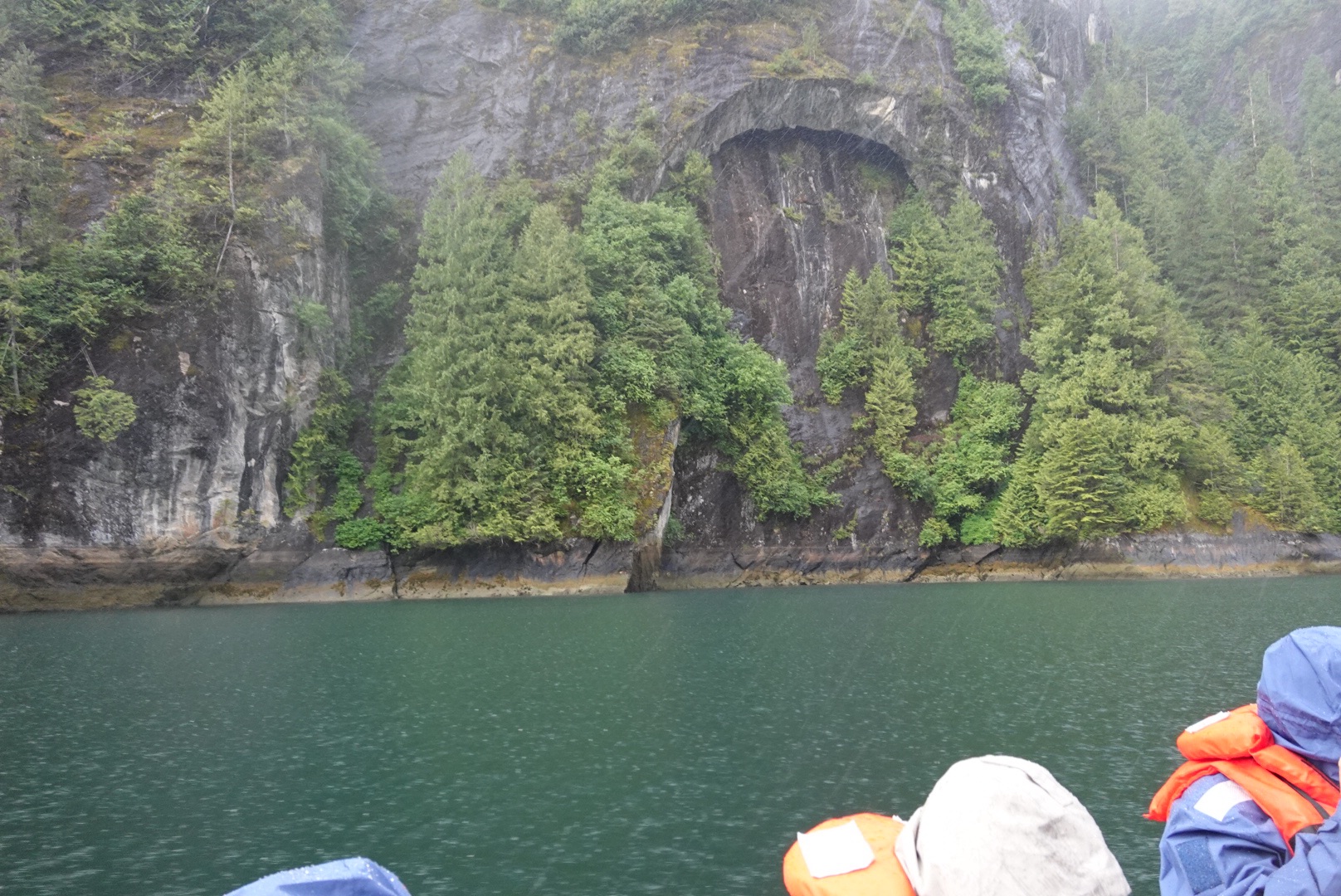
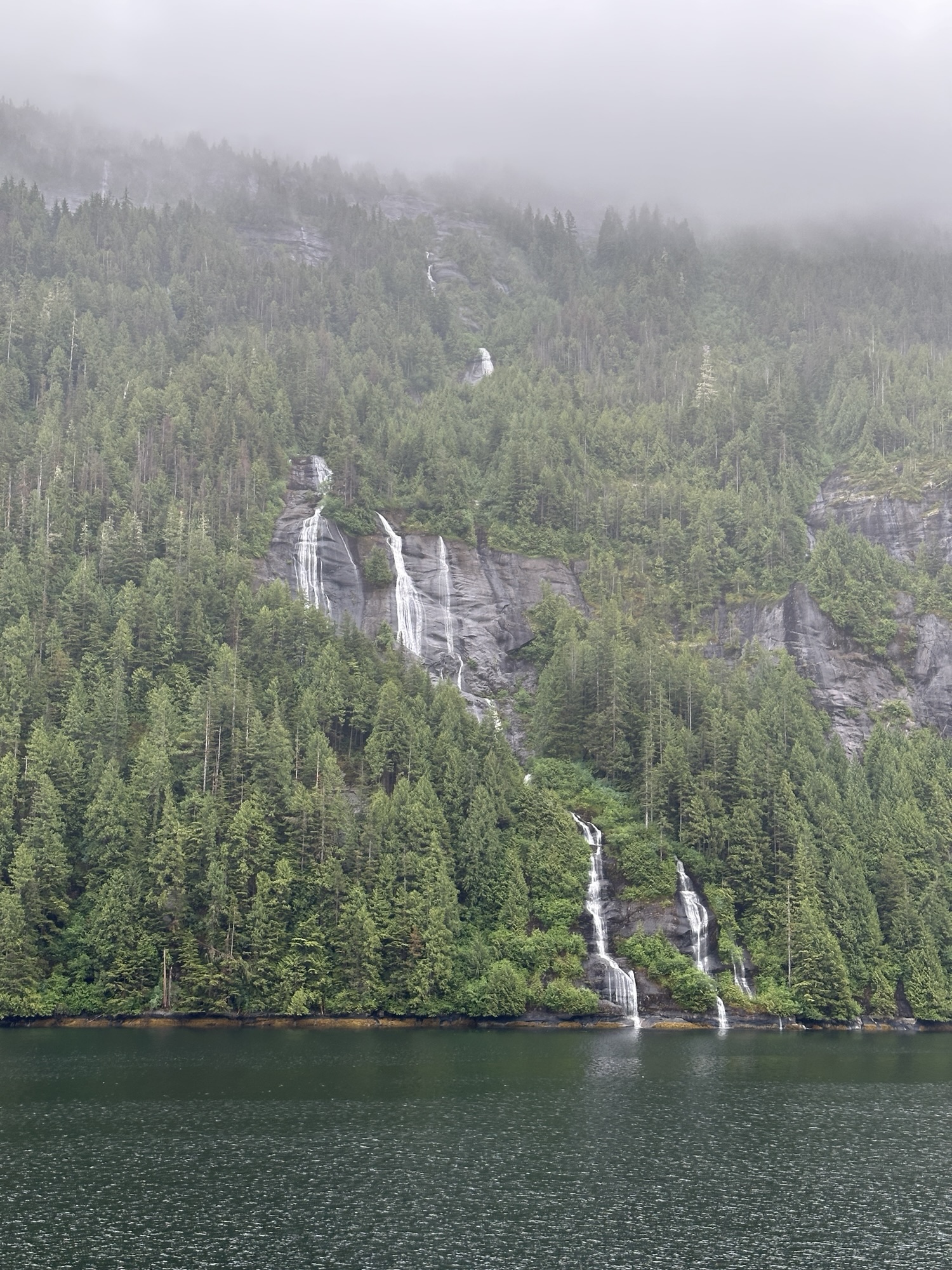
Misty Fjords National Monument is aptly named. These are views from our rainy Zodiac trip.

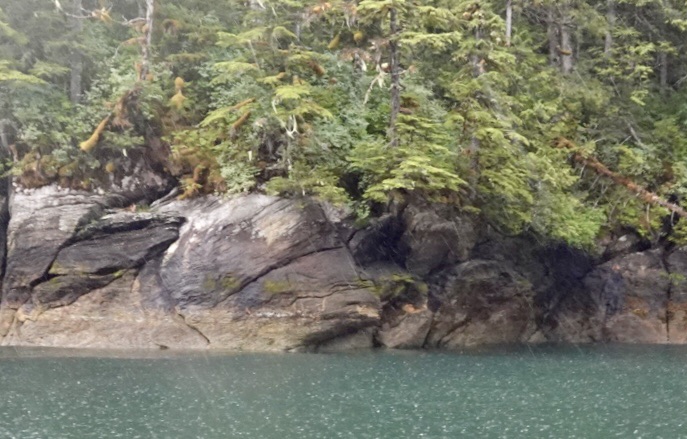
We saw three harbor seals, on the rocks, not very visible here. Rain makes photography difficult.
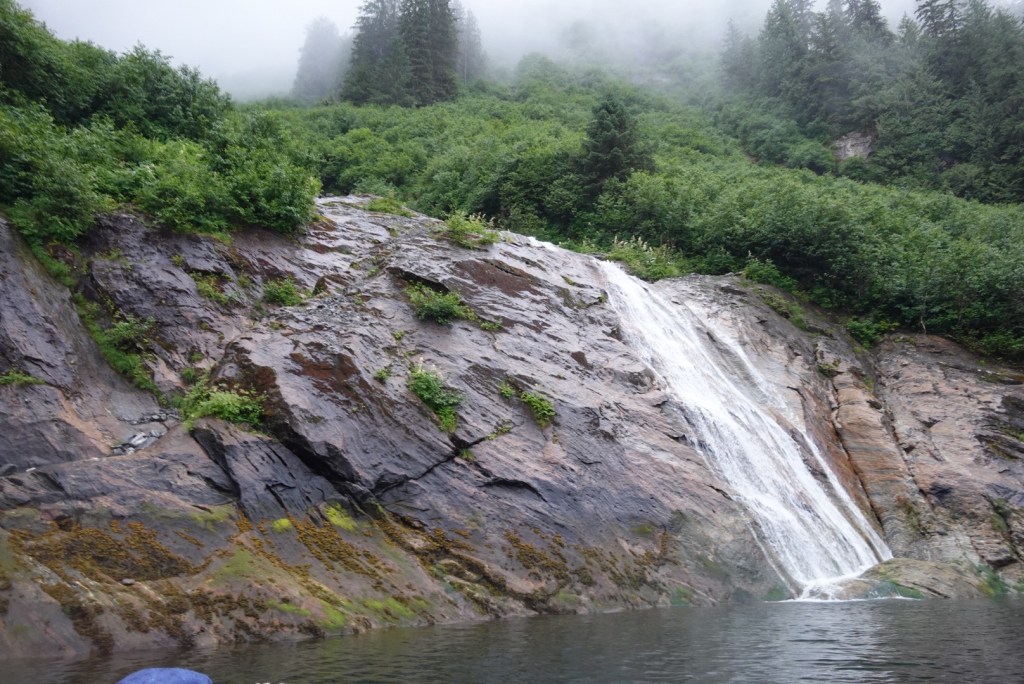
Cascade over gneiss. A closeup of the rock would show intricate folds.
Sound of water falling!

Tongass National Forest has, from two of our guides presentations, one third of the old growth rainforests in the world. They of course want to preserve this pristine environment, and politely pointed out problems from current administration policies. No names mentioned.

Sorry this was not sent yesterday. Our excursion was late in the afternoon, the internet connection is spotty, and we were tired.