The Patagonian Steppe is arid and the ranches large. Many people struggle to make a living. We visited such a ranch, in part to compare it to the one farther north where the weather is kinder, moister.
Jimena explained that the rancher’s English was not good, causing us to pay close attention. She also said he loved questions, so we obliged.
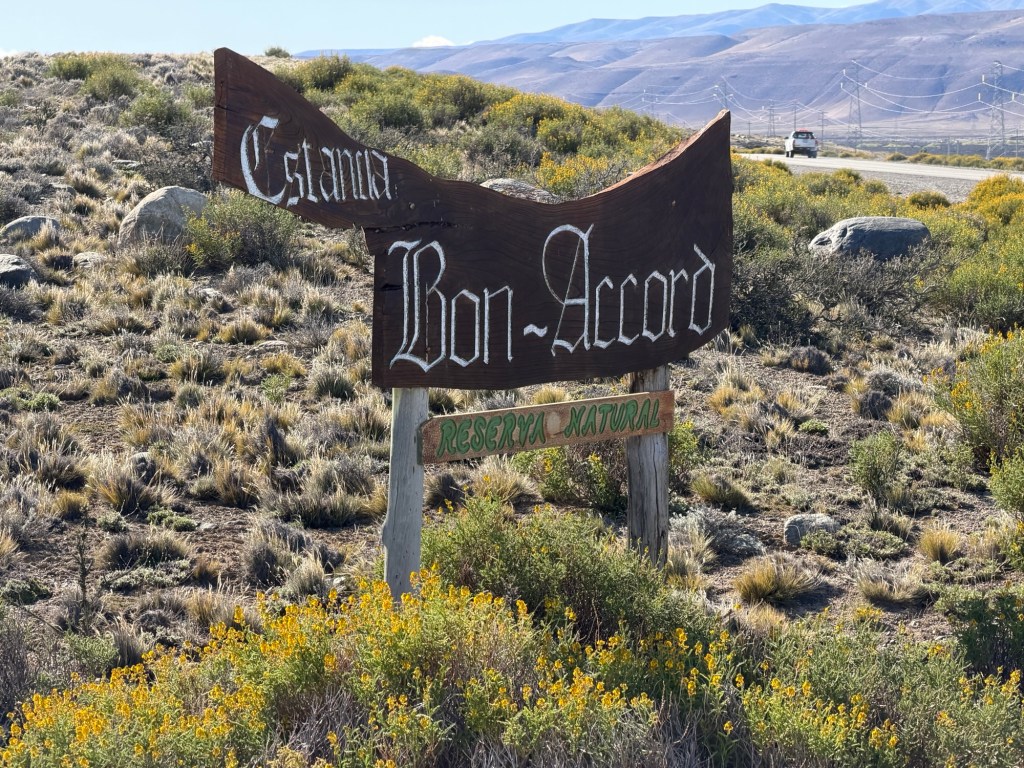
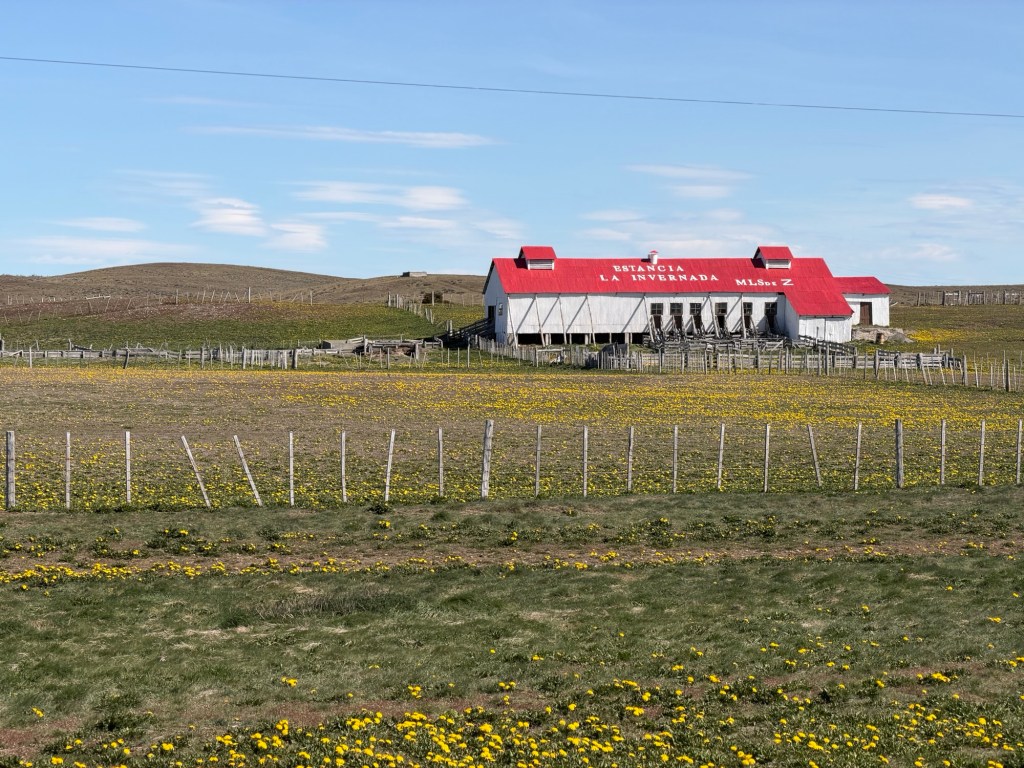
Name of the ranch
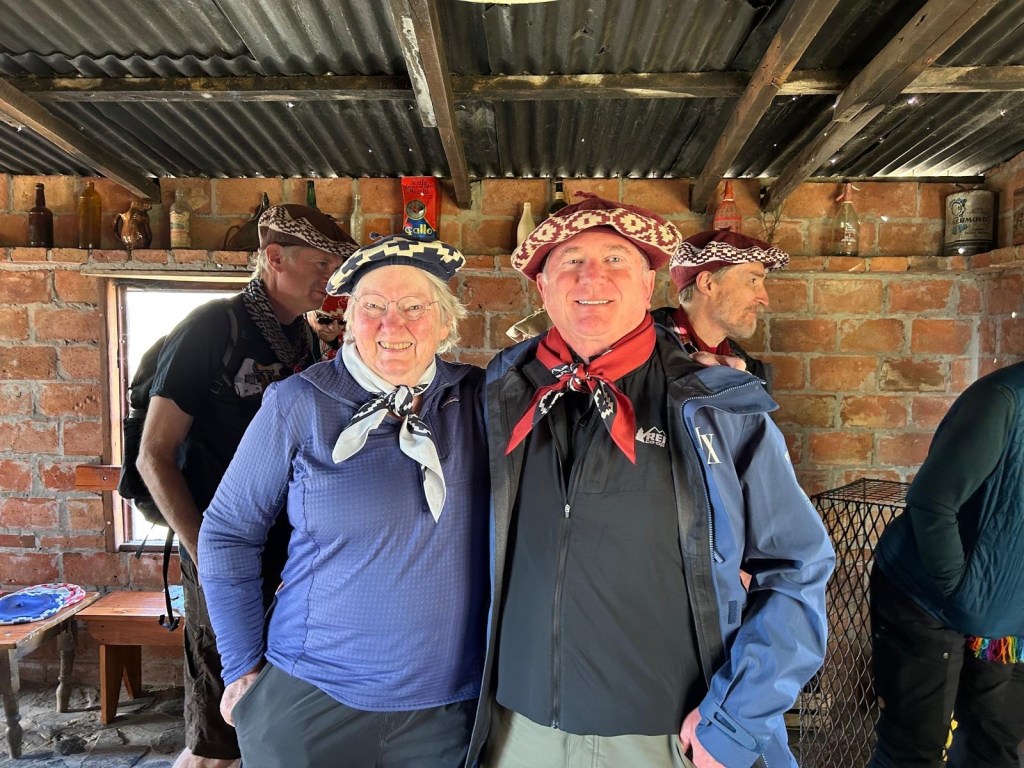
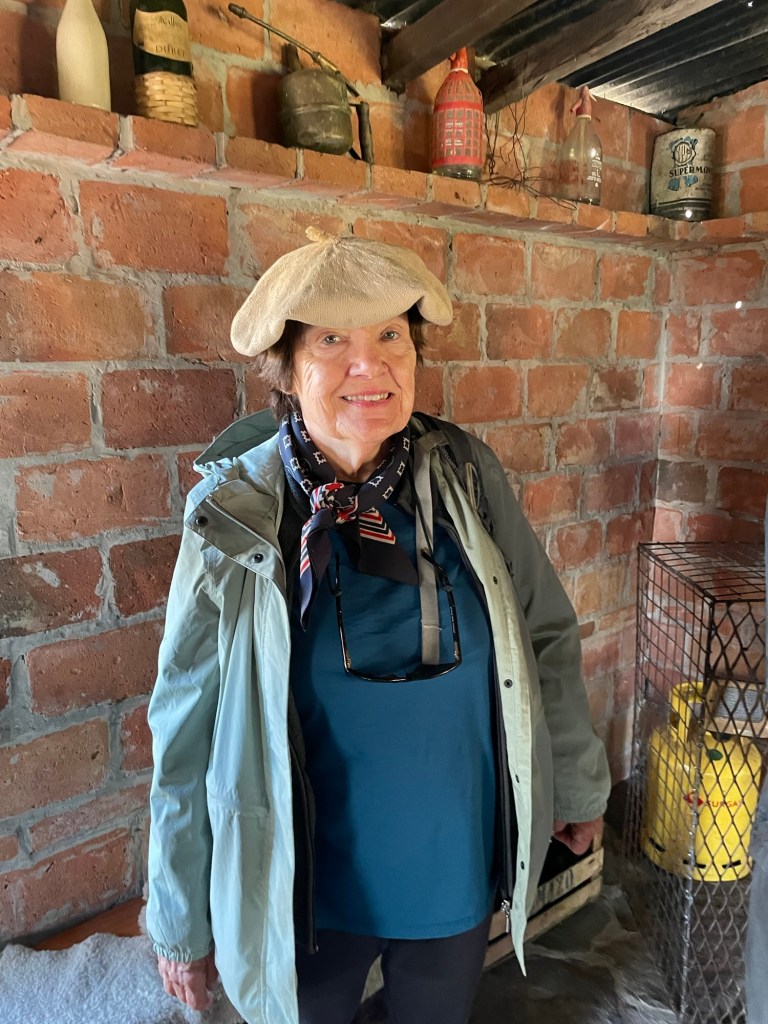
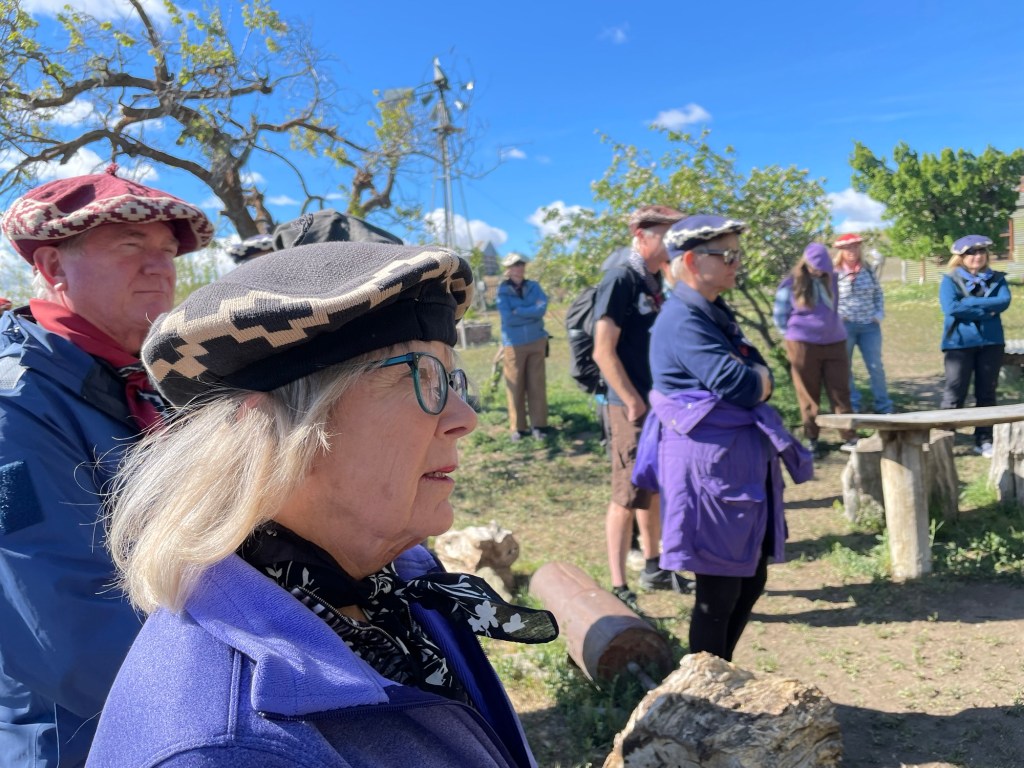
First , the proprietors wanted us to look the part, and loaned us traditional hats and scarves. Gauchos!
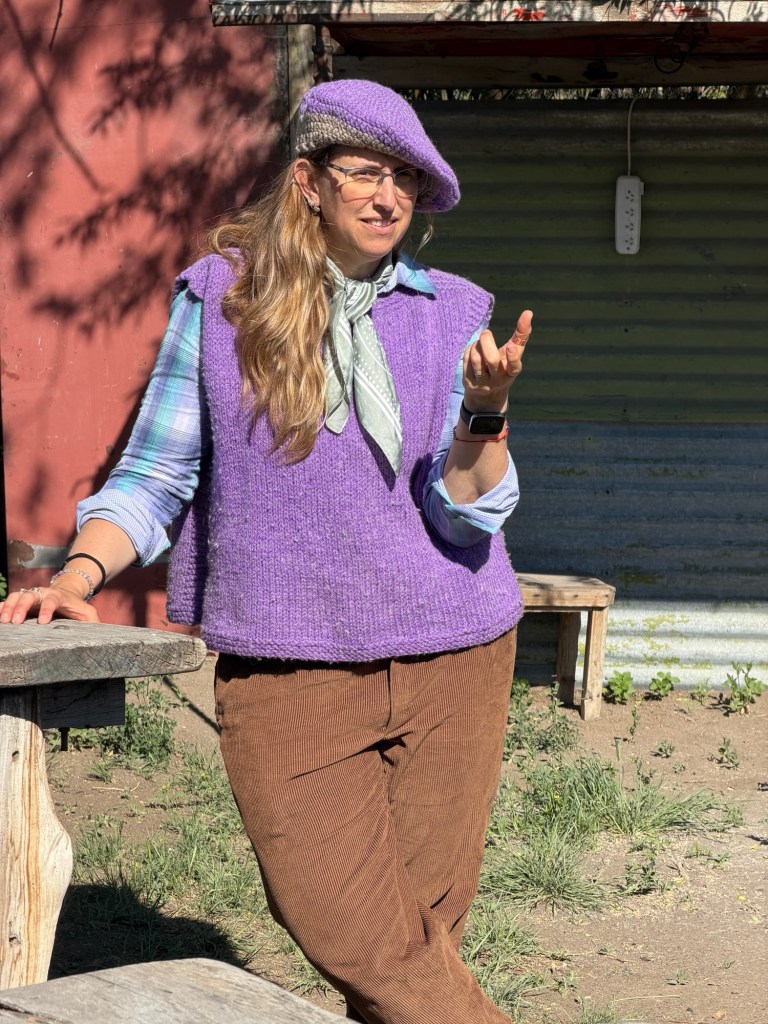
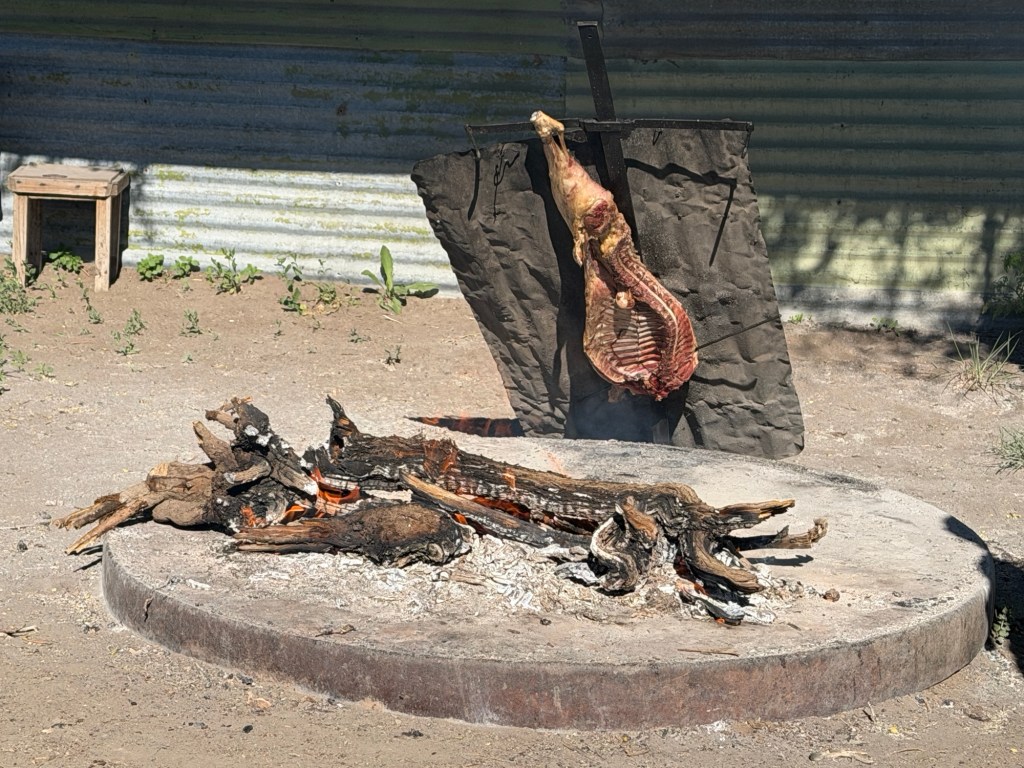
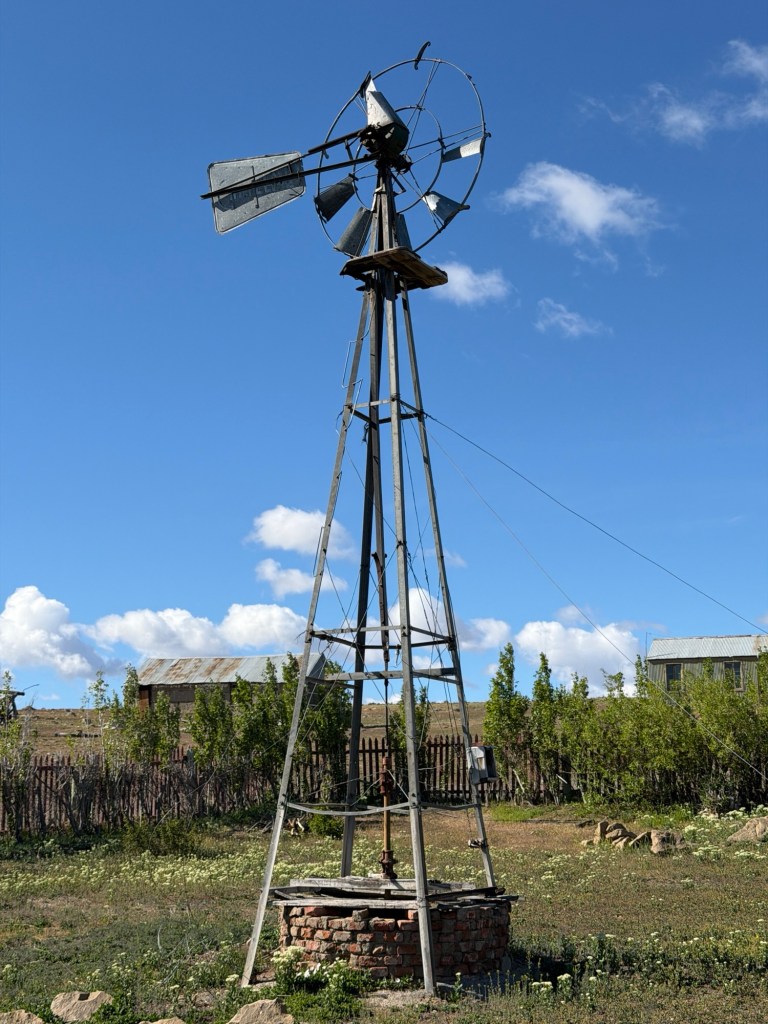
Clare and BrianSueJimenaListening to the BBQ explanation, Brian, Pam, Suzanne, Doug, Chris, Jimena, Renee and MartaJimena’s vest and hat matched every dayOutdoor BBQOld windmill
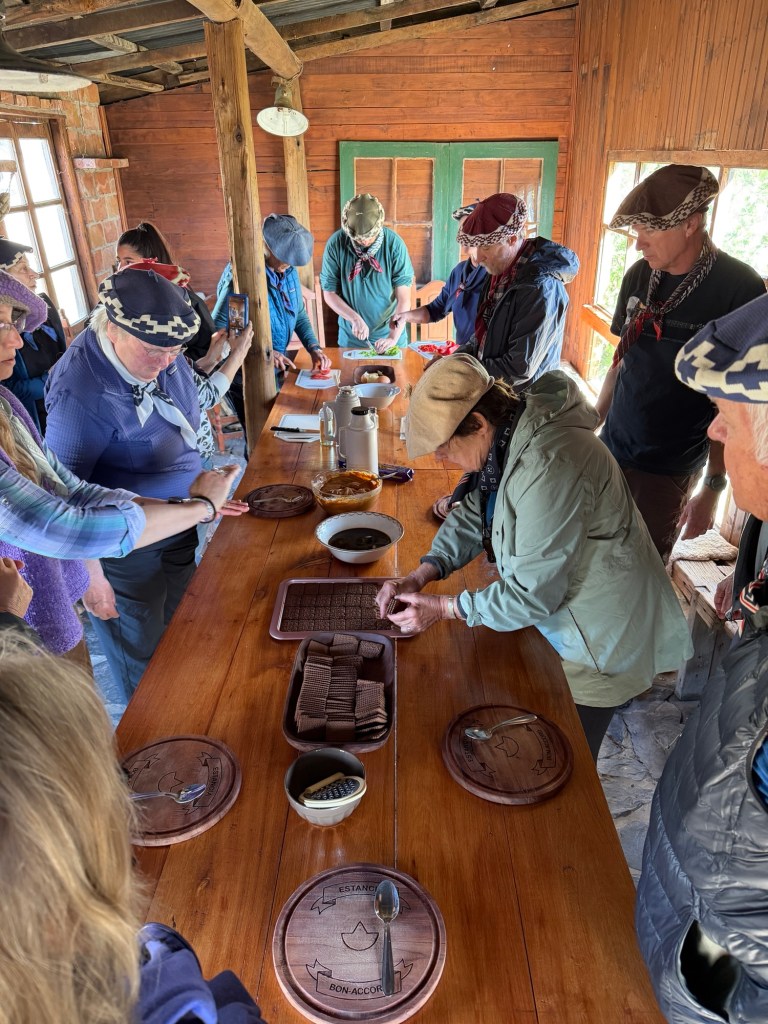
Next, we helped prepare lunch, and while the lamb cooked, we toured the ranch.
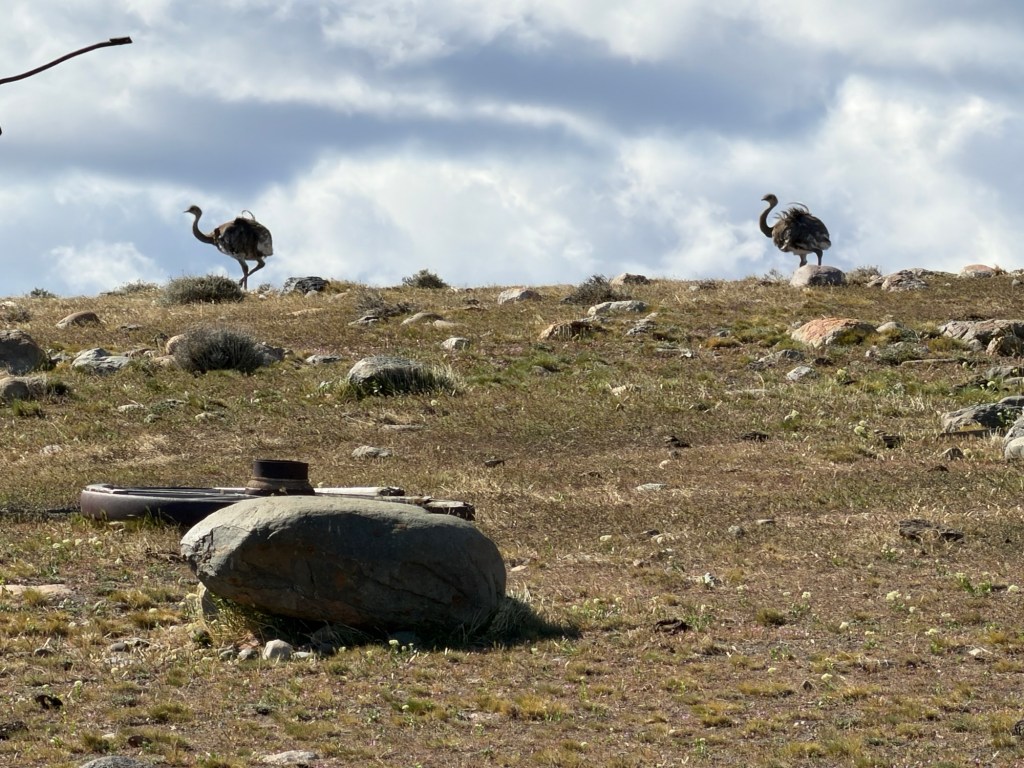
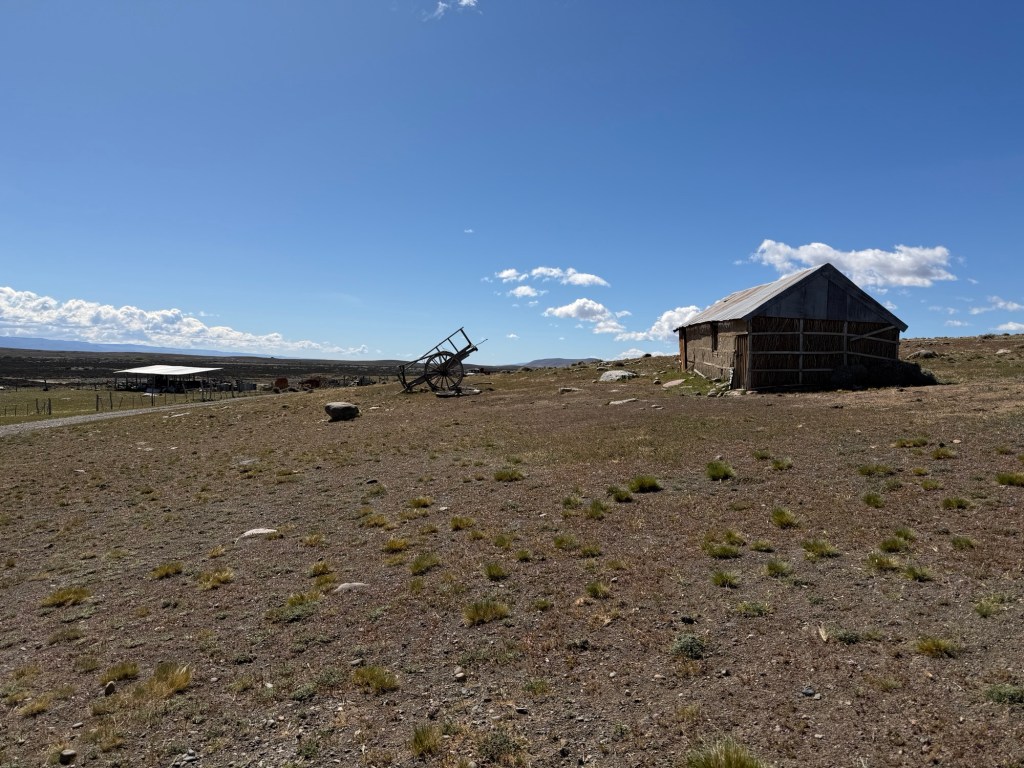
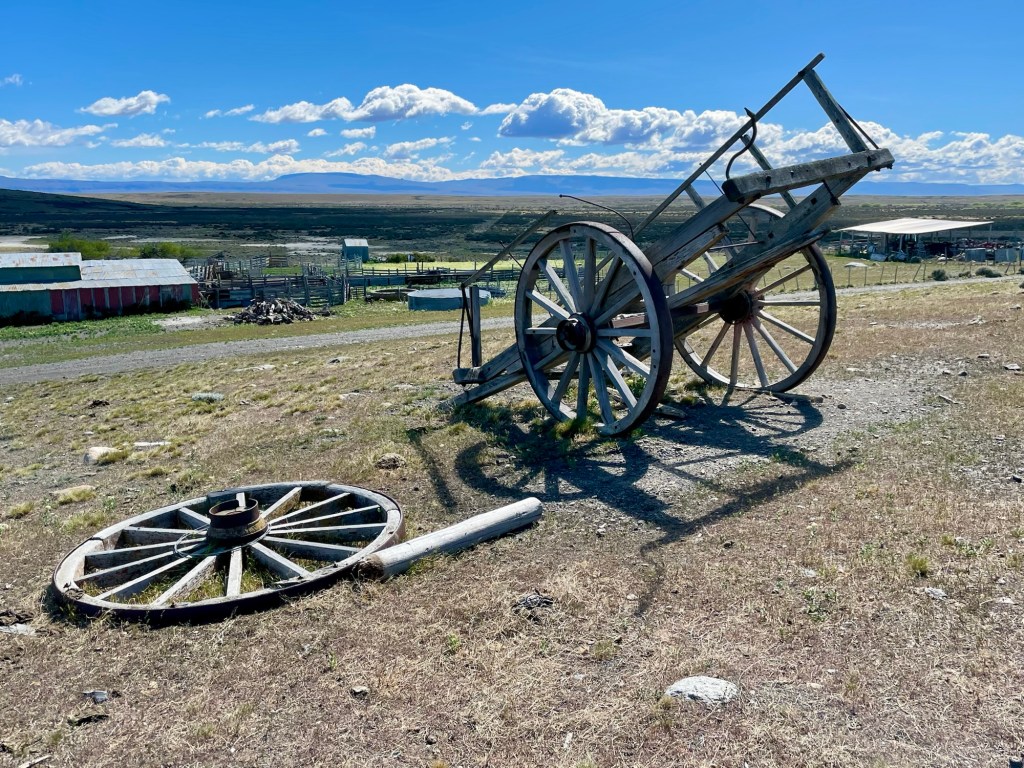
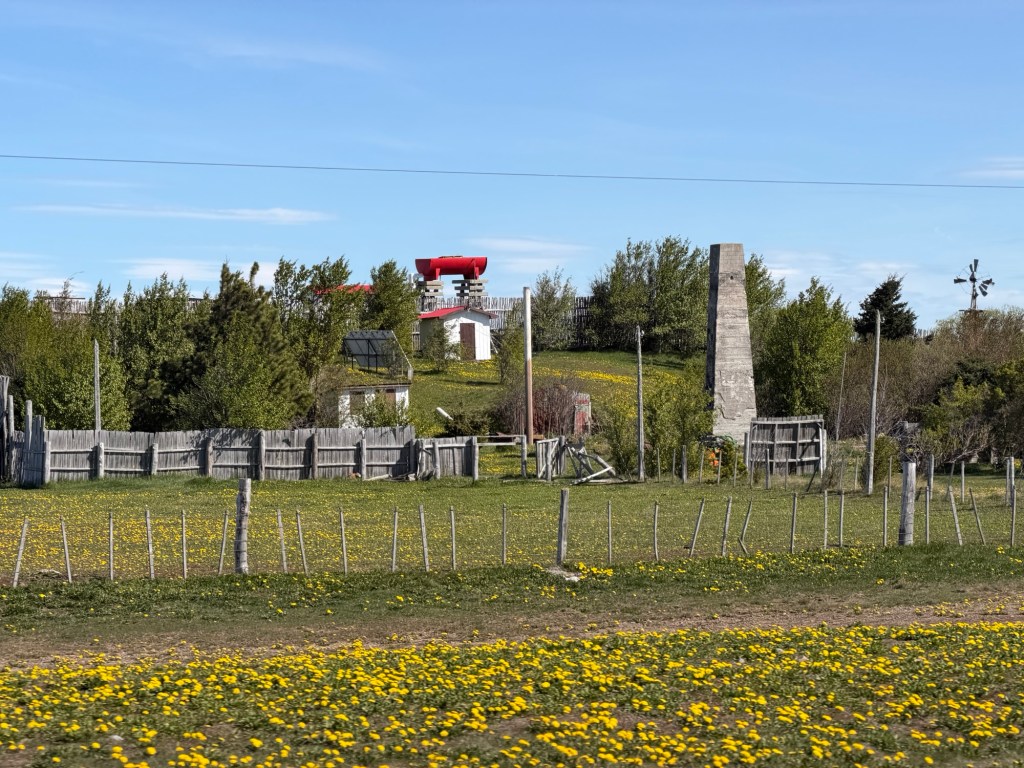
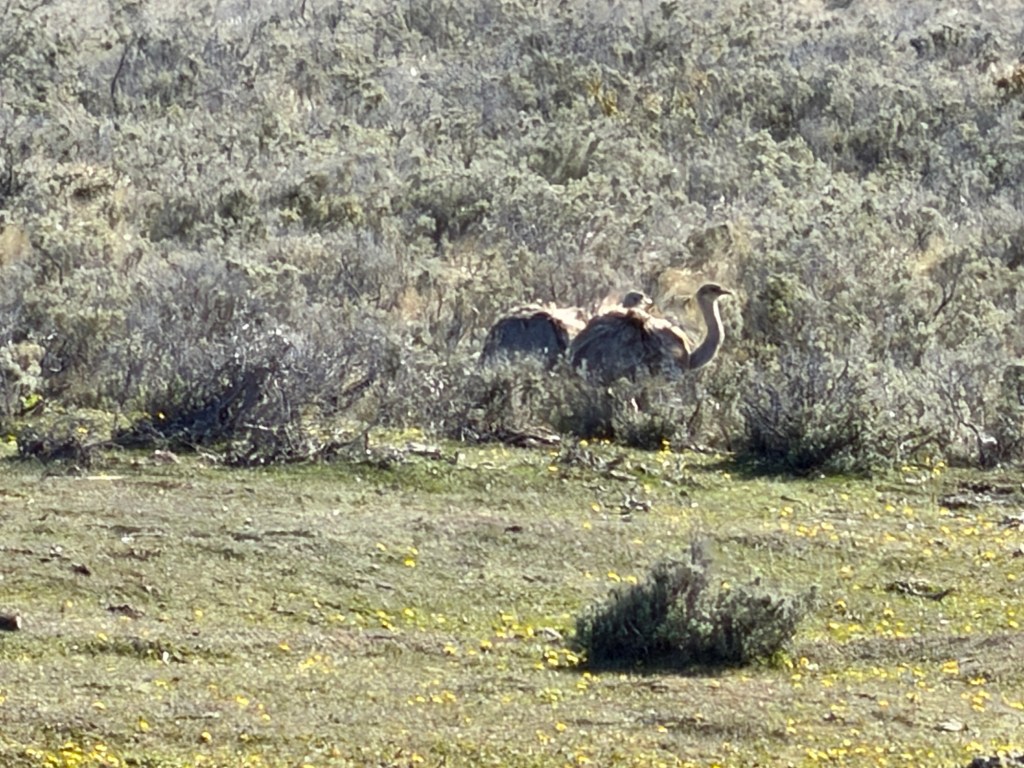
Everyone helped make a chocolate dessertMouse catcher Rheas wanted to join the party!Dry land, old wagon and an original buildingSame wagon
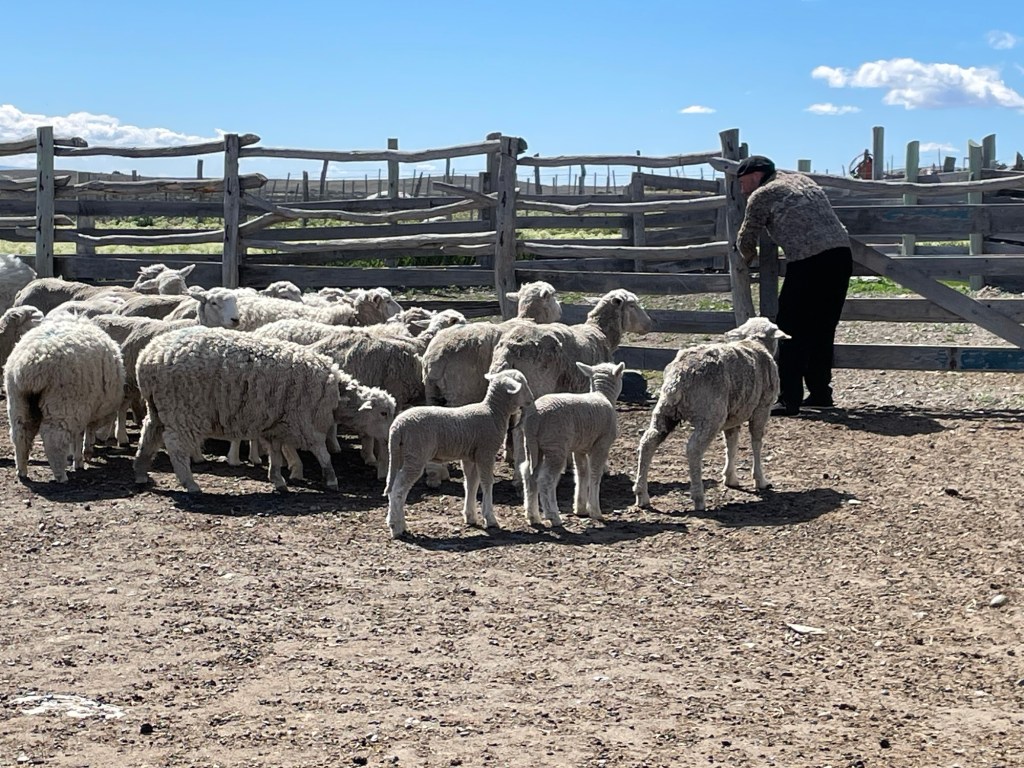
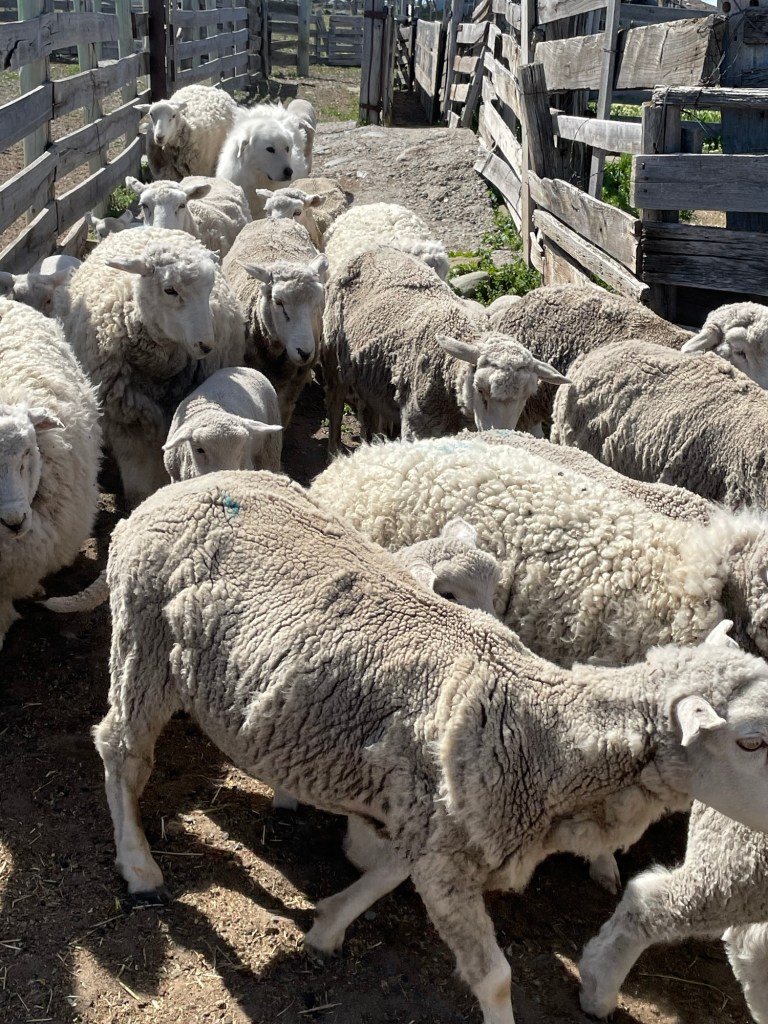
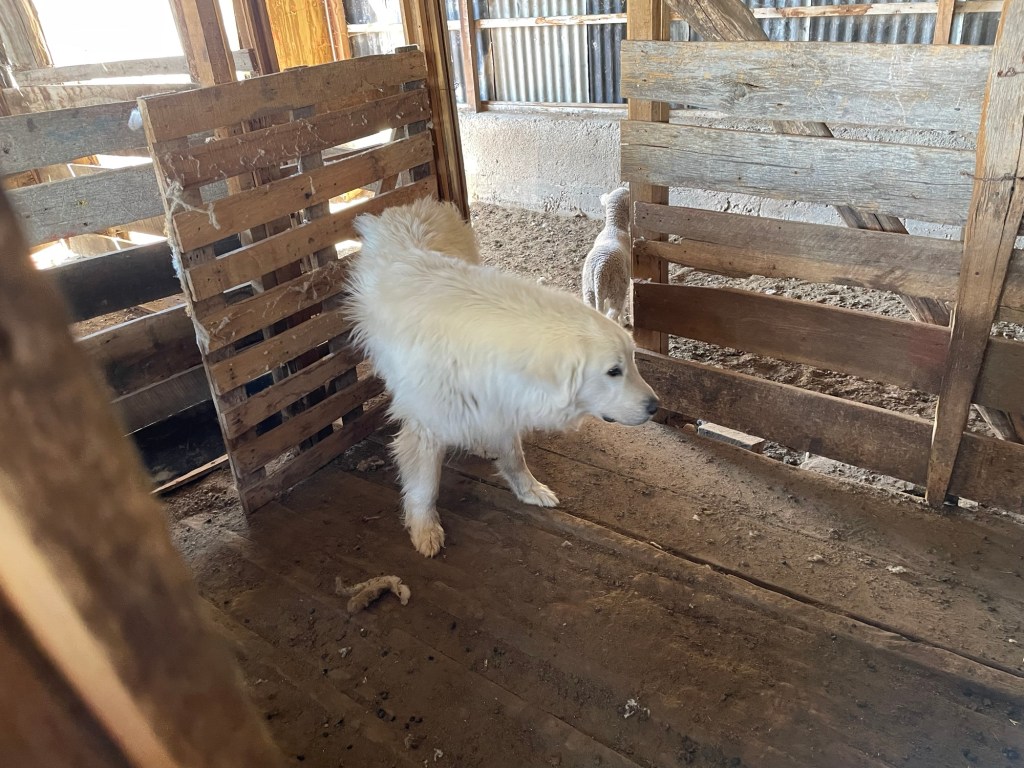
The black dog rounded up the sheep, while the larger white dog was the herd’s protector. Gerardo opened and closed fences. Prices for wool depend on the breed as well as the age of the sheep.
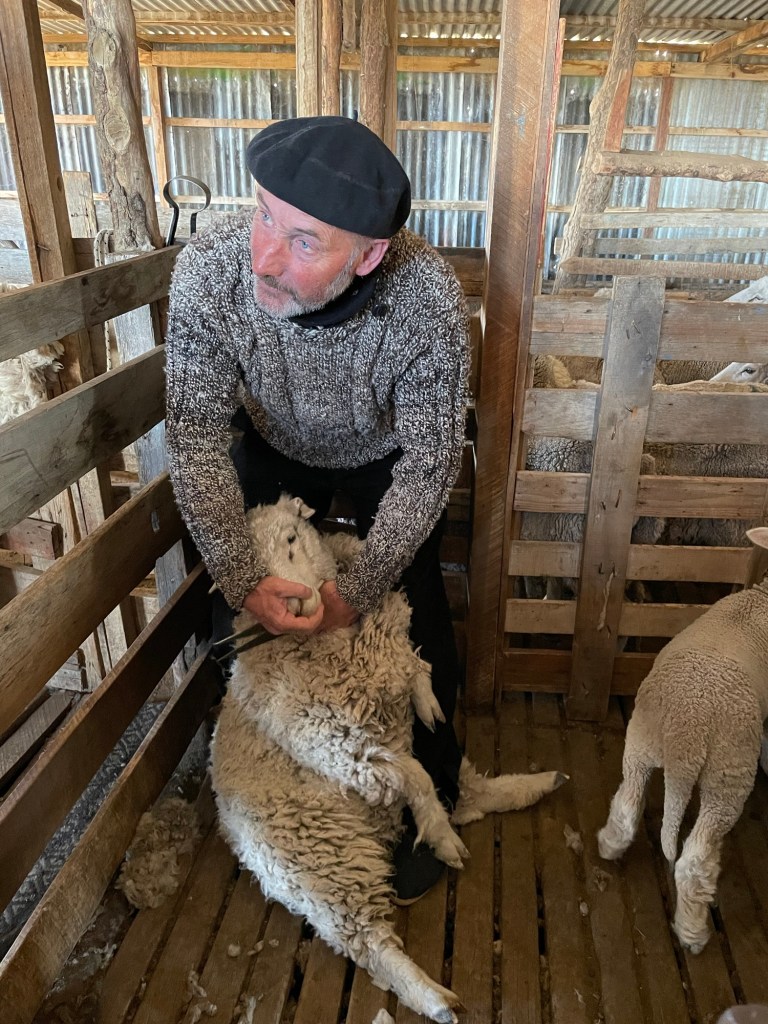
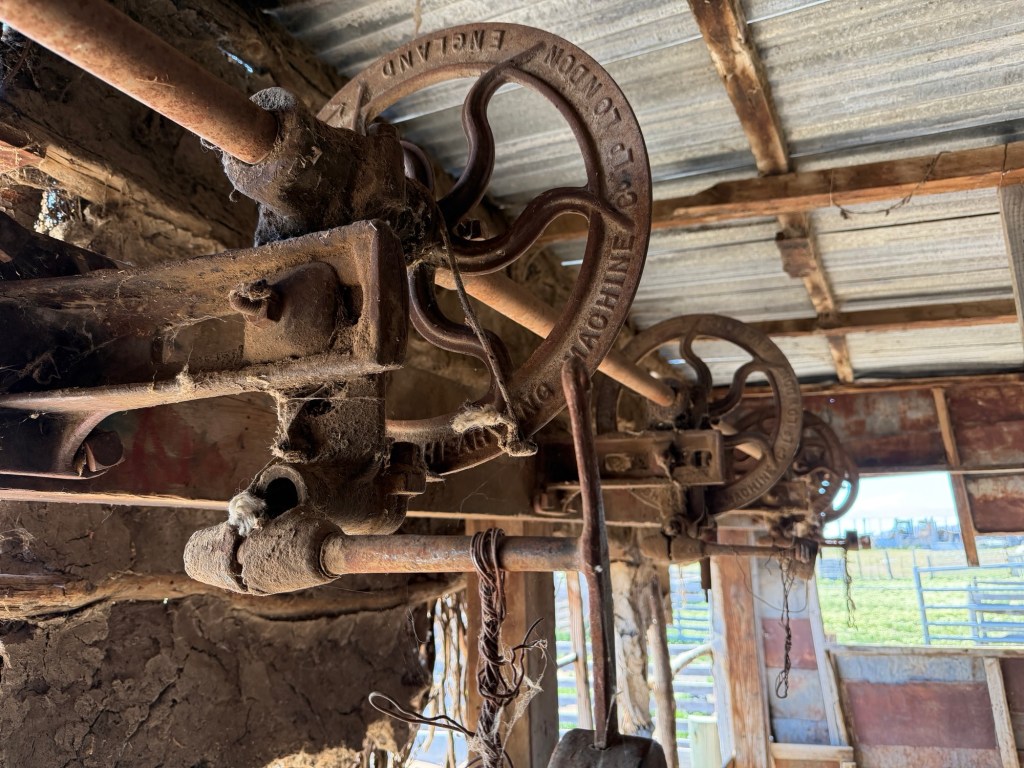
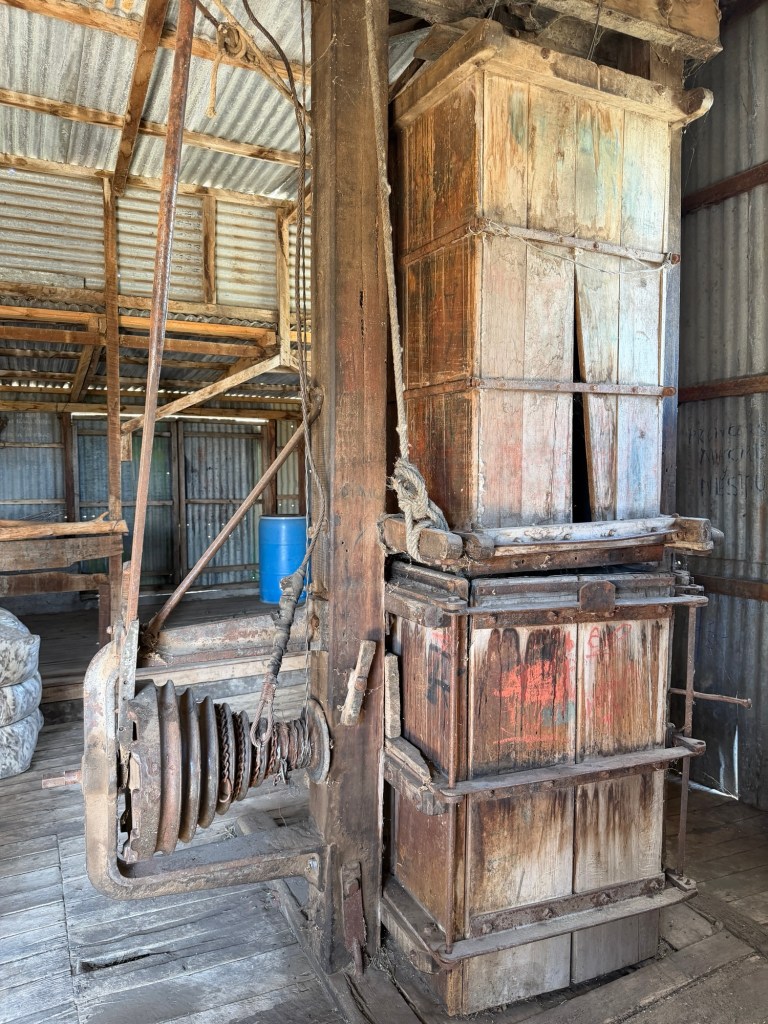
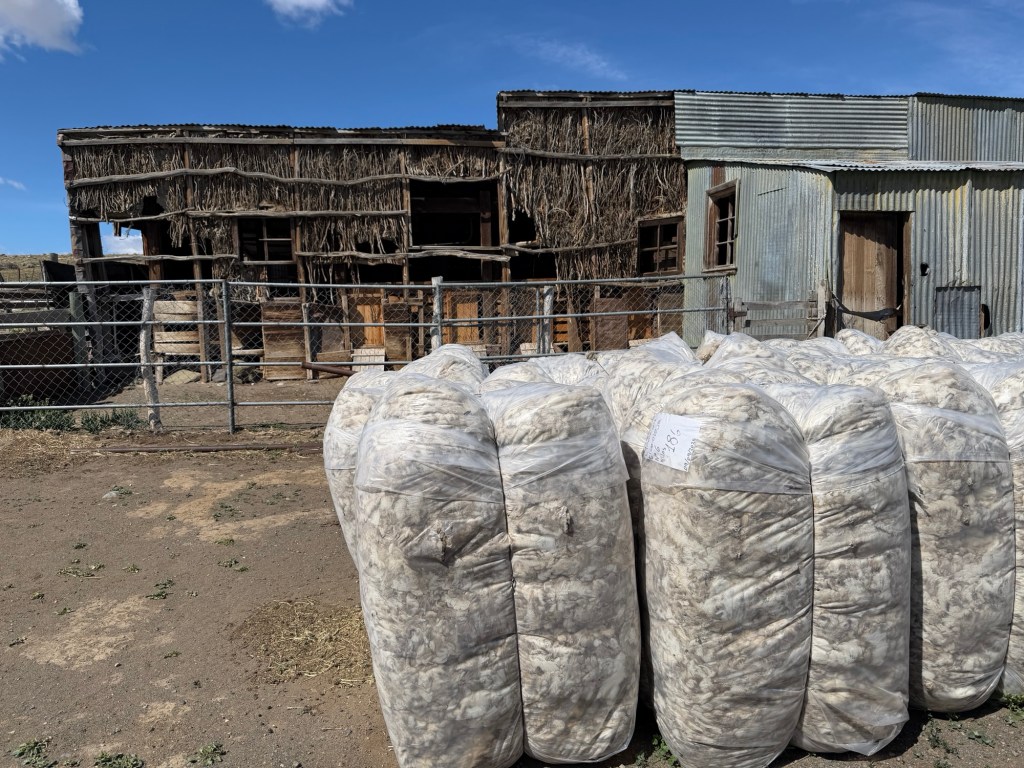
Sheep, lamb and GerardoShearing a sheepOld mechanical shearing apparatusWool presserBales of woolThe dog is hard to find, but the pumas cannot easily see him eitherDog taking care of lamb
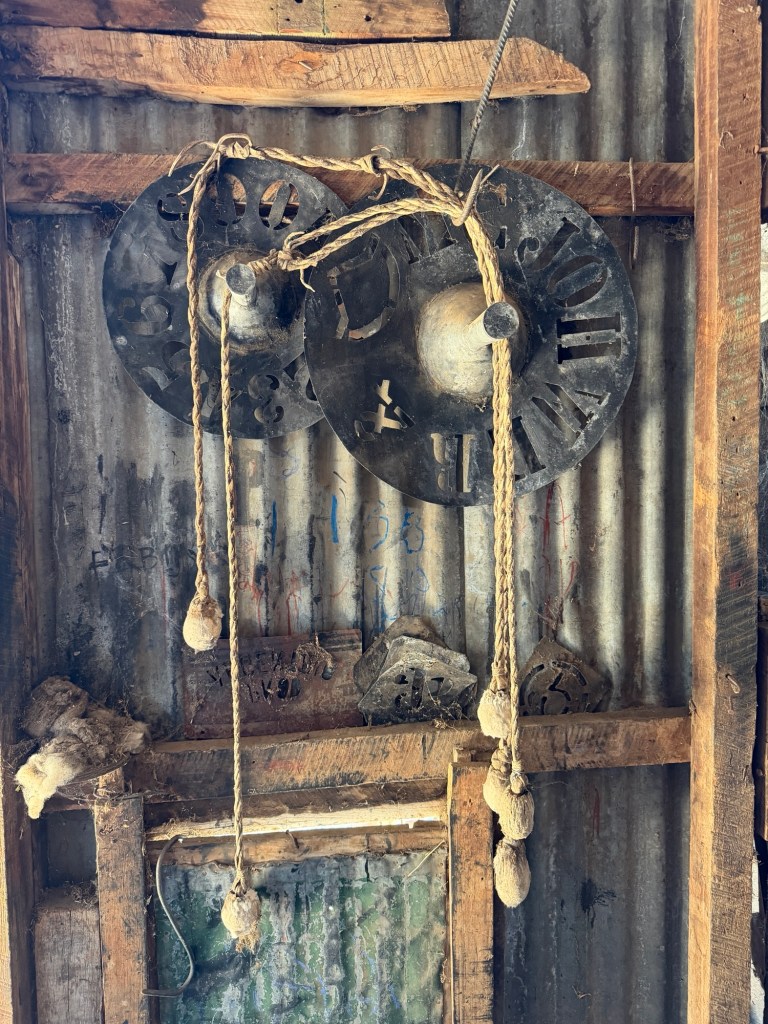
Gerardo enjoyed showing us the old ways of doing ranch chores, including throwing bolas. Some of our group tried it as well.
Bolas hanging on the wall
Gerardo is experienced!
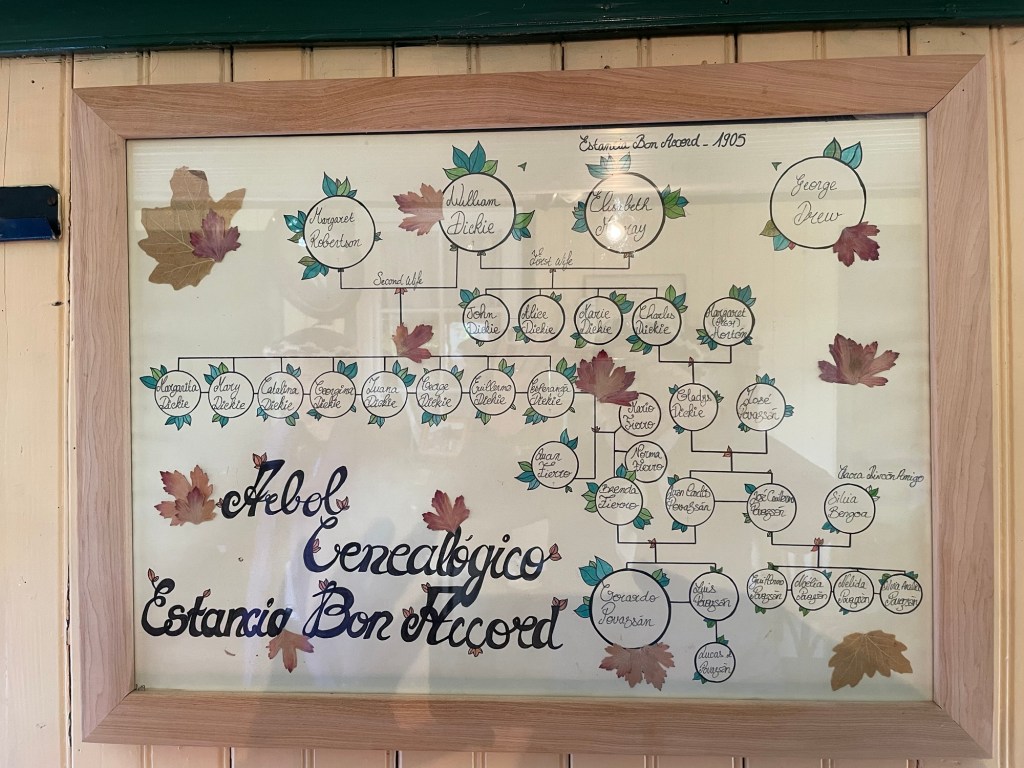
Gerardo has an interesting genealogy. His grandfather on one parent’s side is his great-grandfather on the other side. Examining his family tree certainly illustrates life in areas with sparse populations.
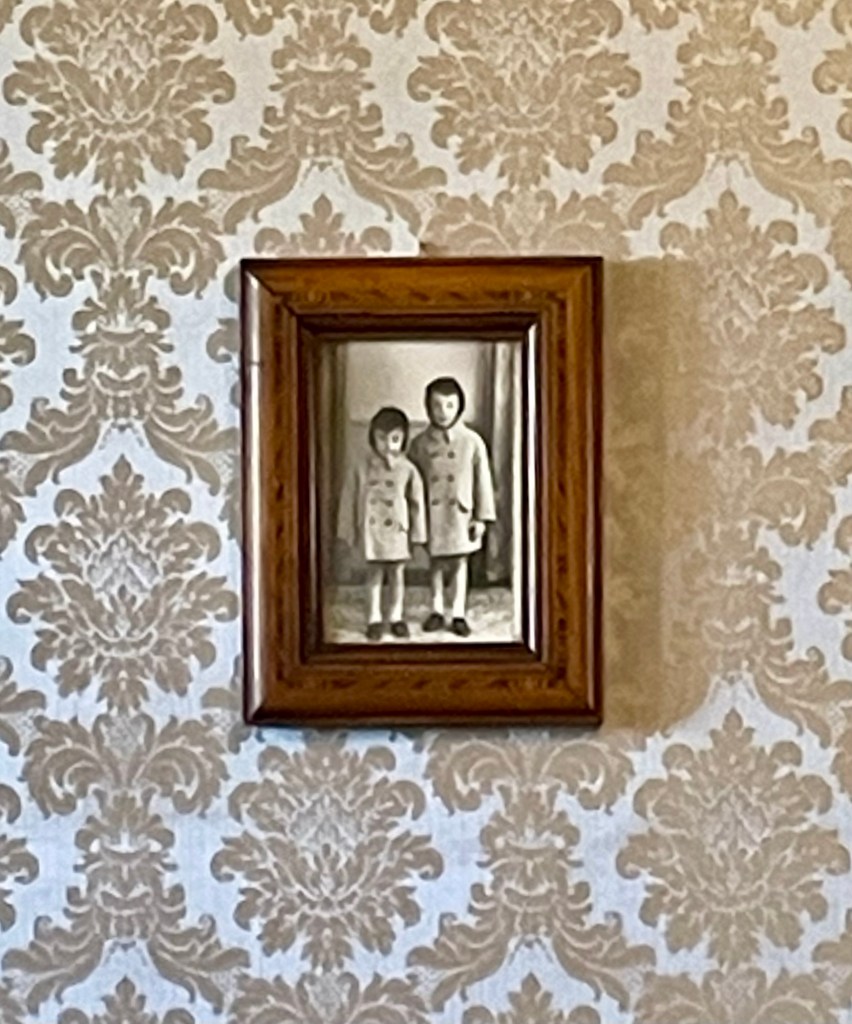
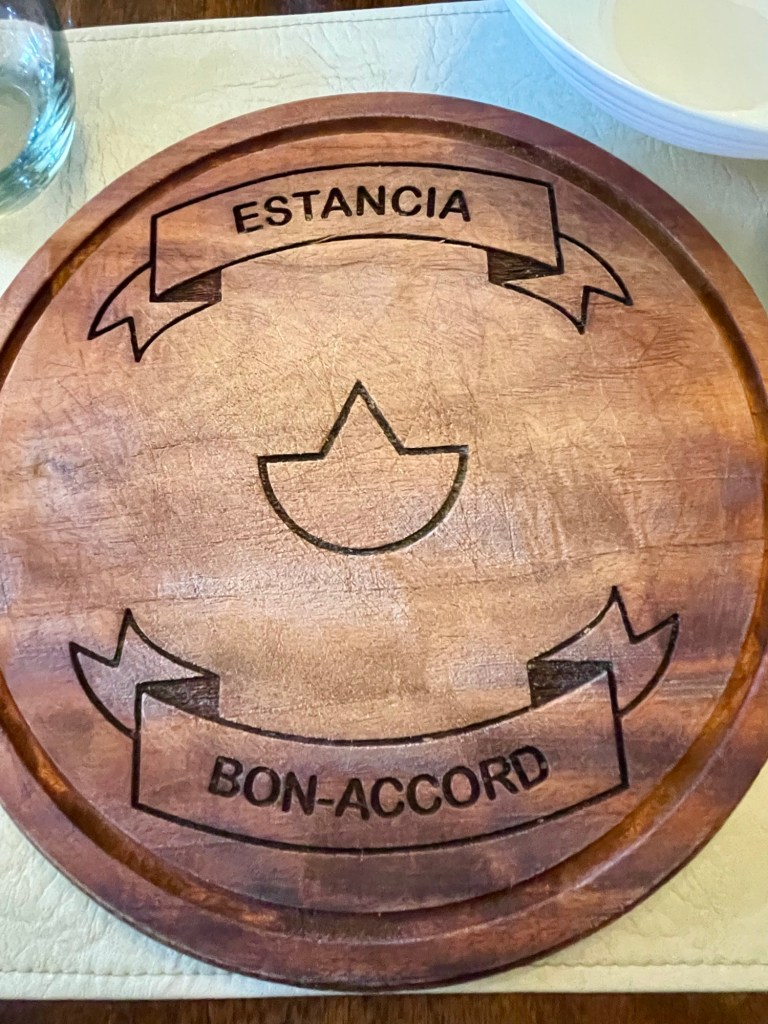
Family treeGerardo next to photo of himself and an older brotherLooks a bit like the children in “The Shining”?!Wooden plate used by ranch hands when in the fields. These were used as placemats for our lunch of BBQ lamb.
We went back to Calafate for time off at our hotel. Brian and Clare wandered around town and tasted wine.
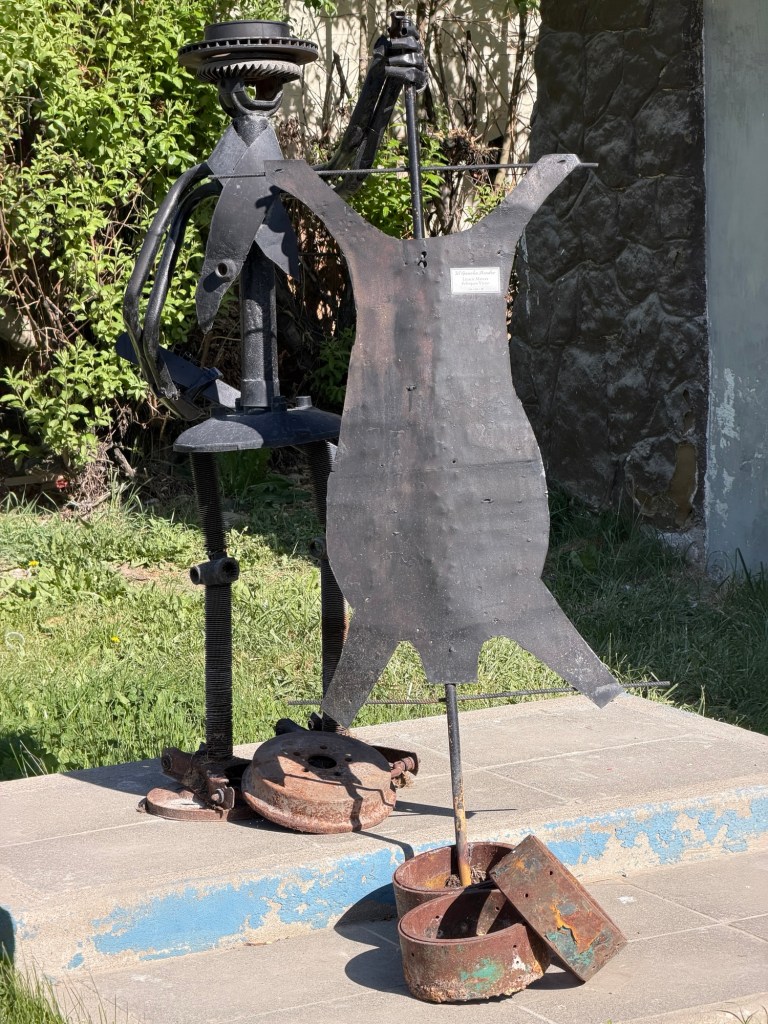
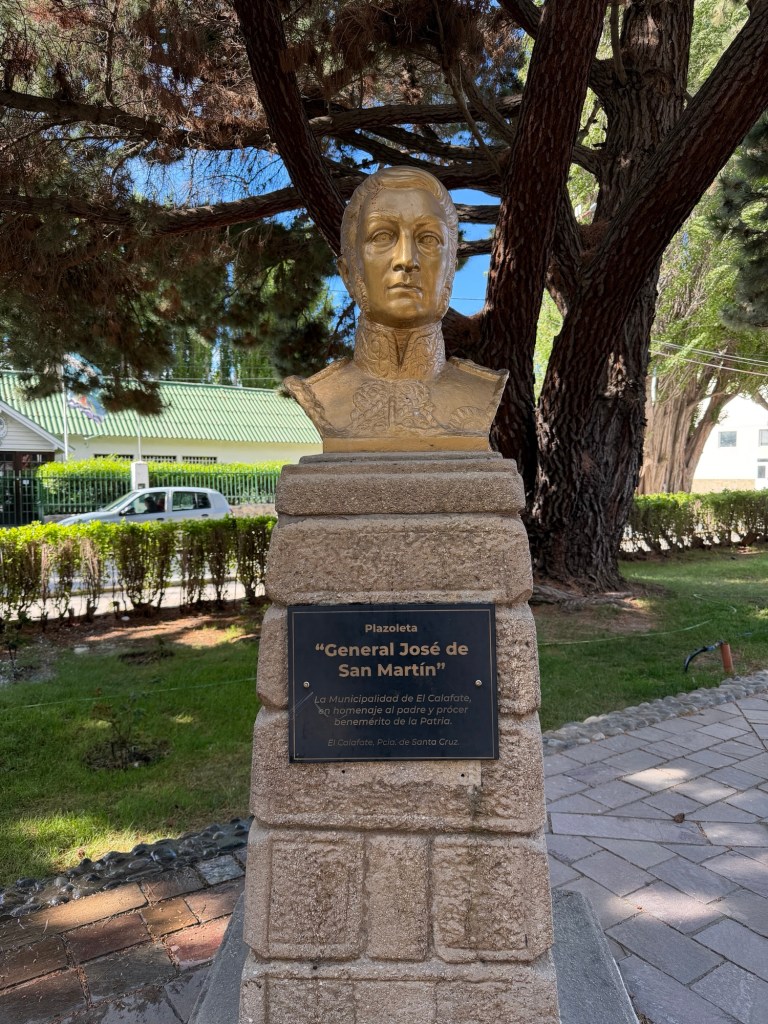
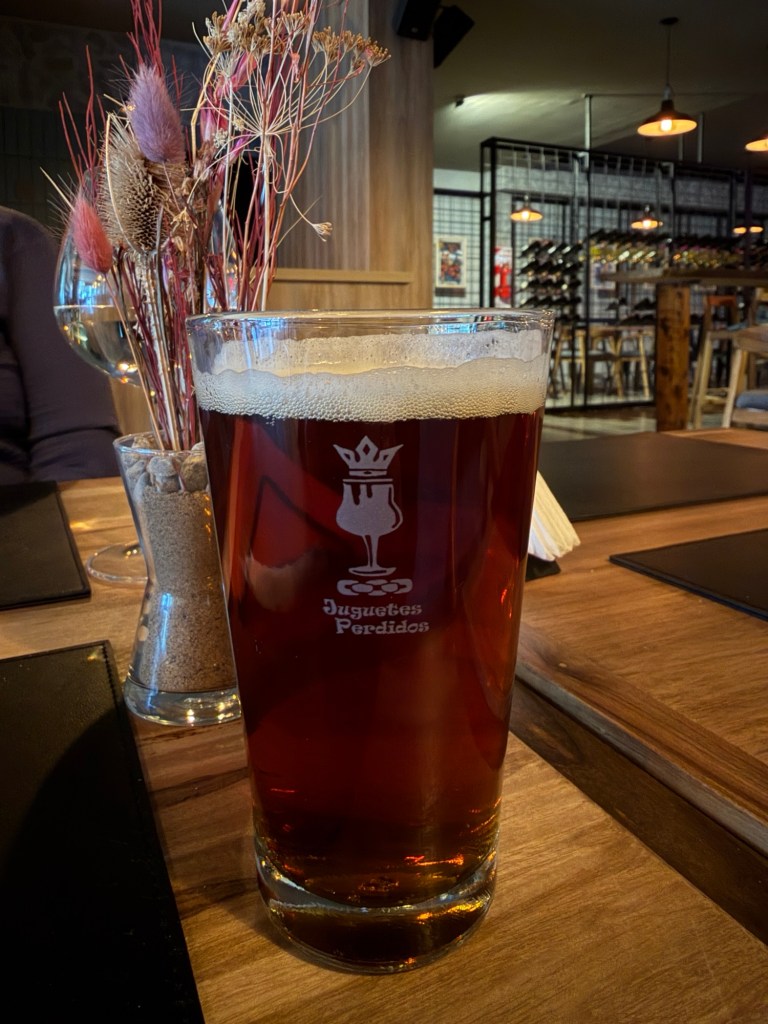
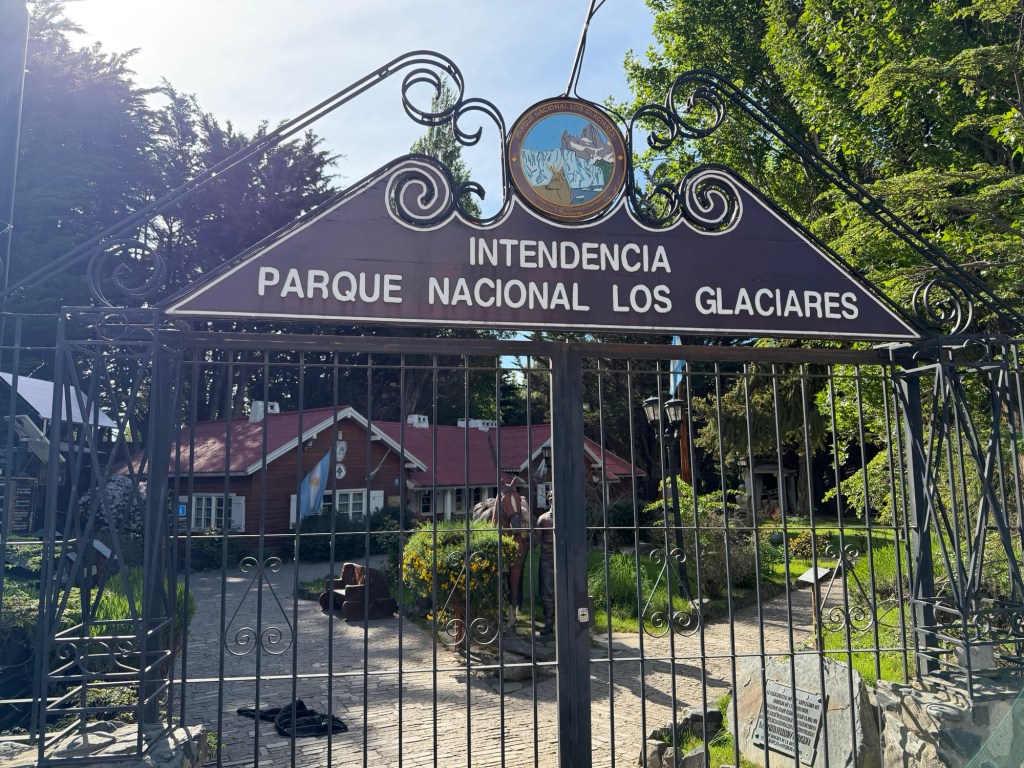
Metal BBQ sculptureSan Martín is honored everywhereLocal beer with dinner Headquarters for the park we would visit the next day
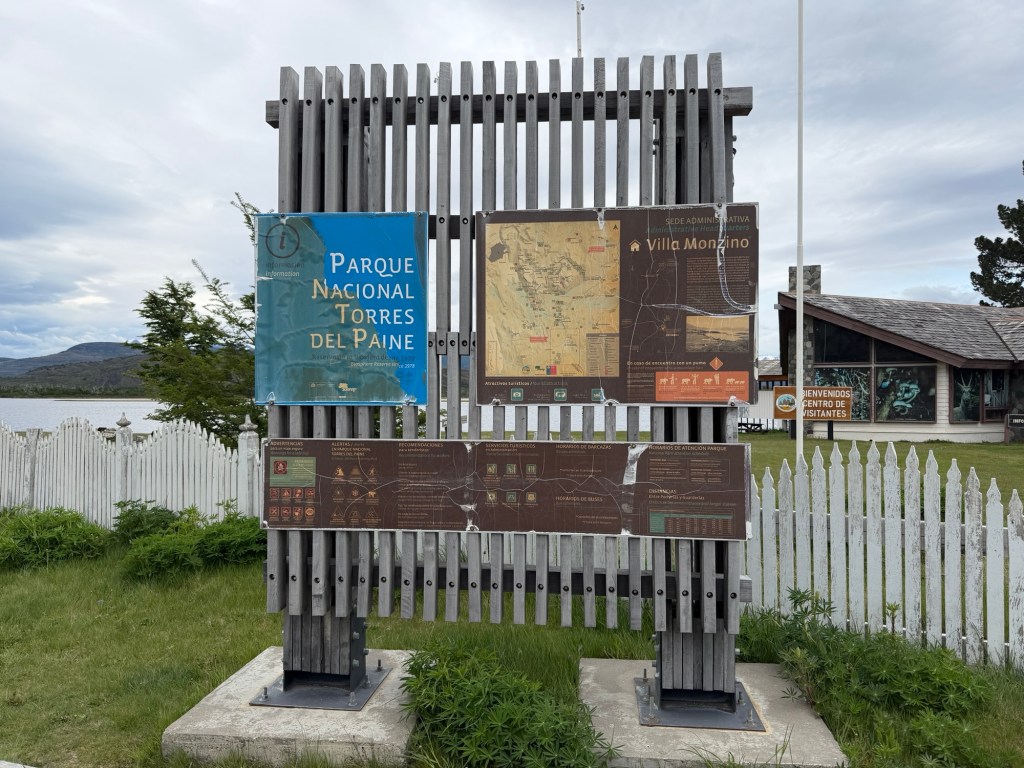
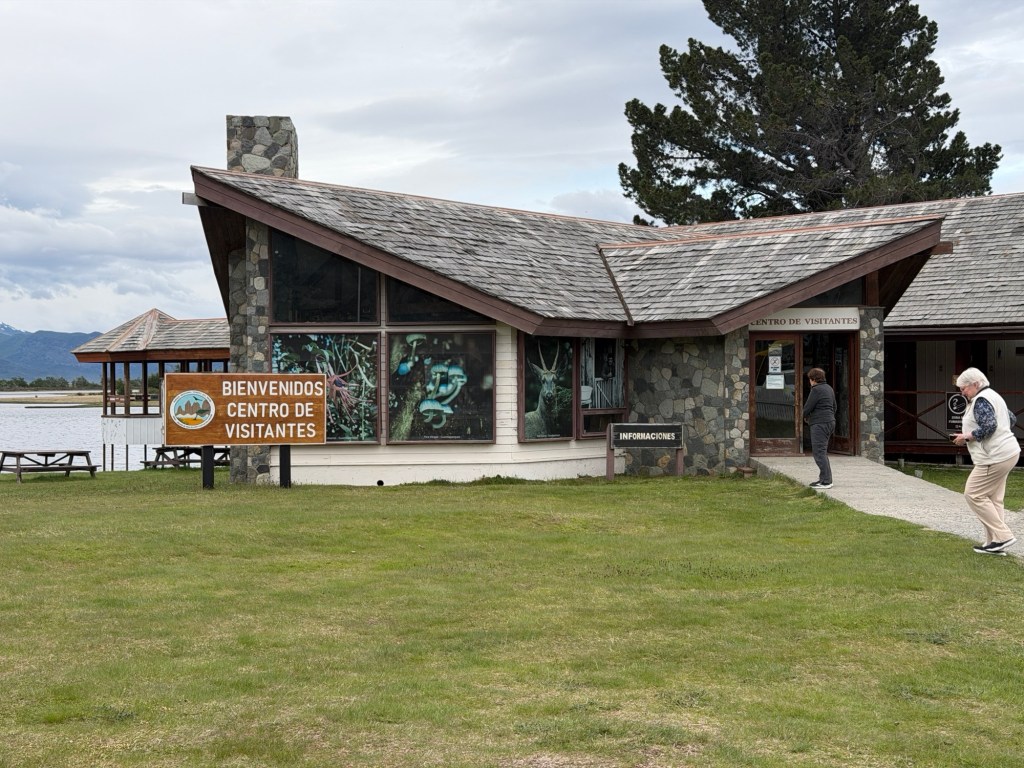
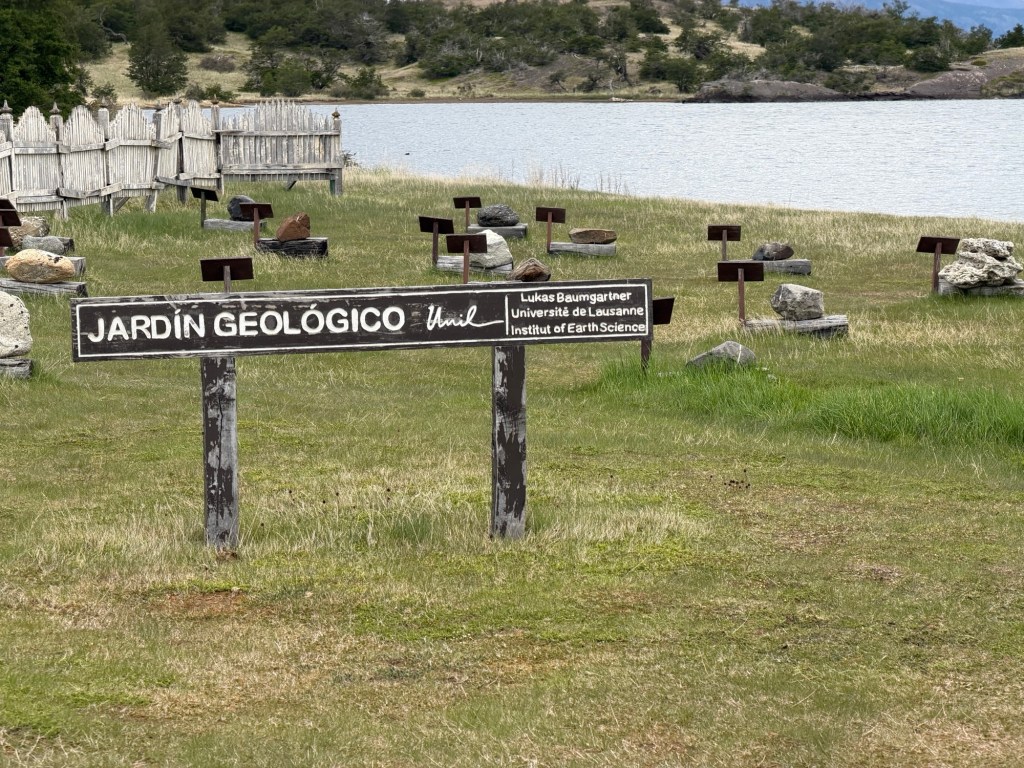
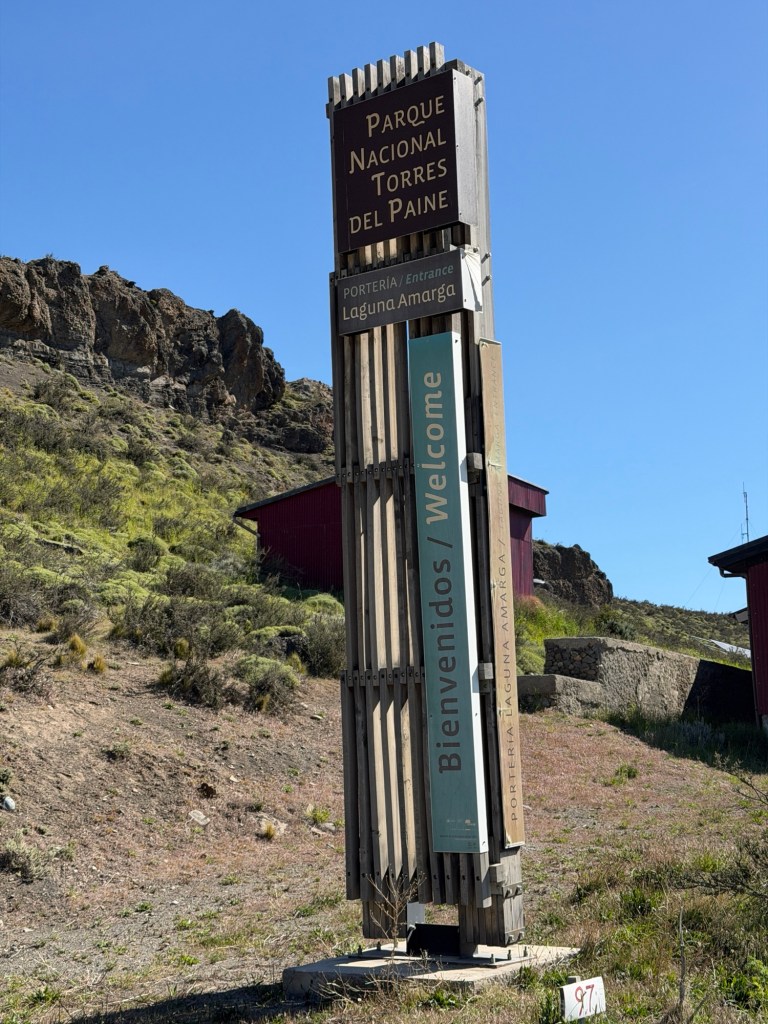
We were headed for a long driving day to get back into Argentina for another national park. Goodbye Torres del Paine, we loved your geology, hikes and plants. But first, we went to the visitor center, which had a geological garden, one of only a few we have ever seen.
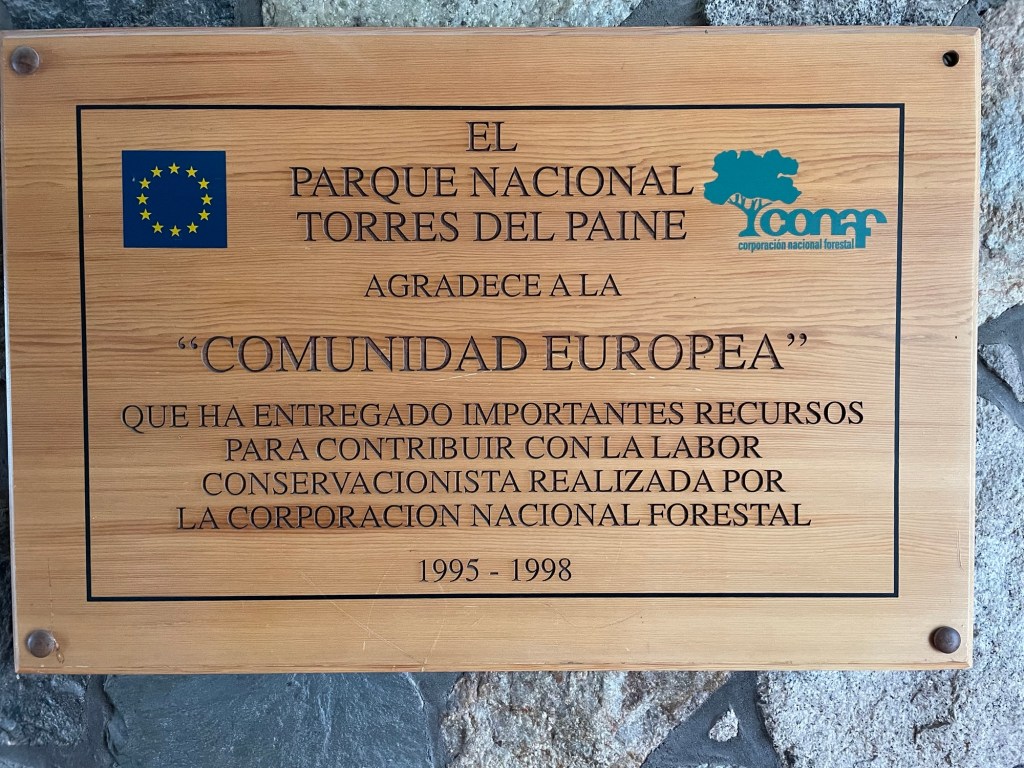
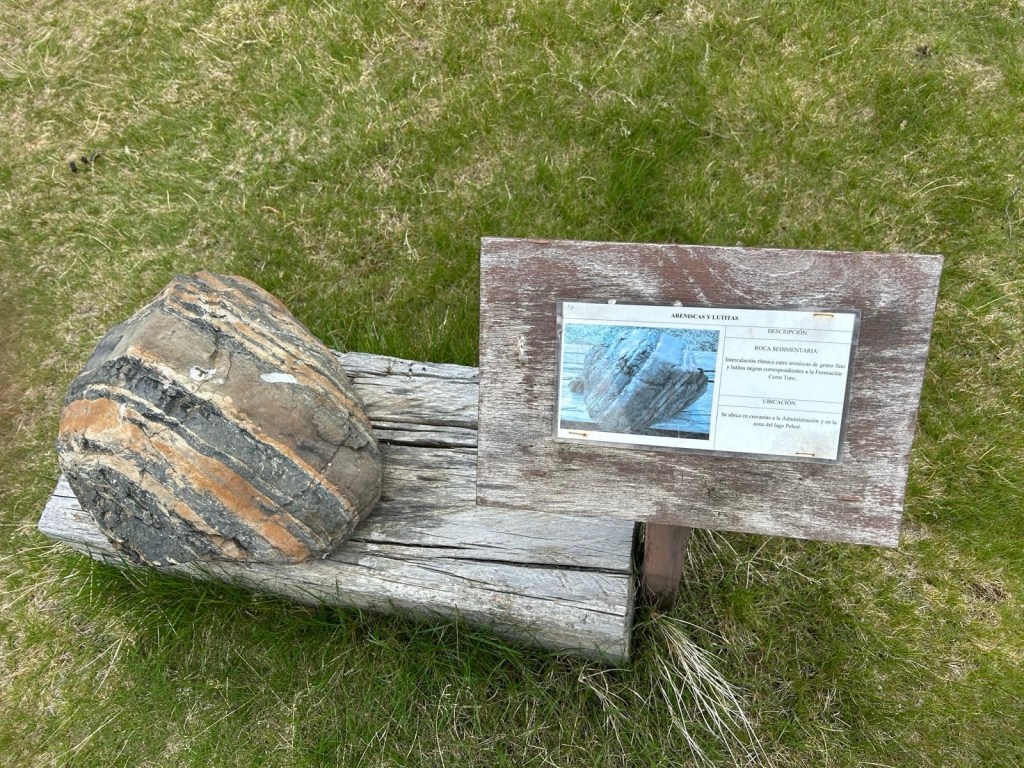
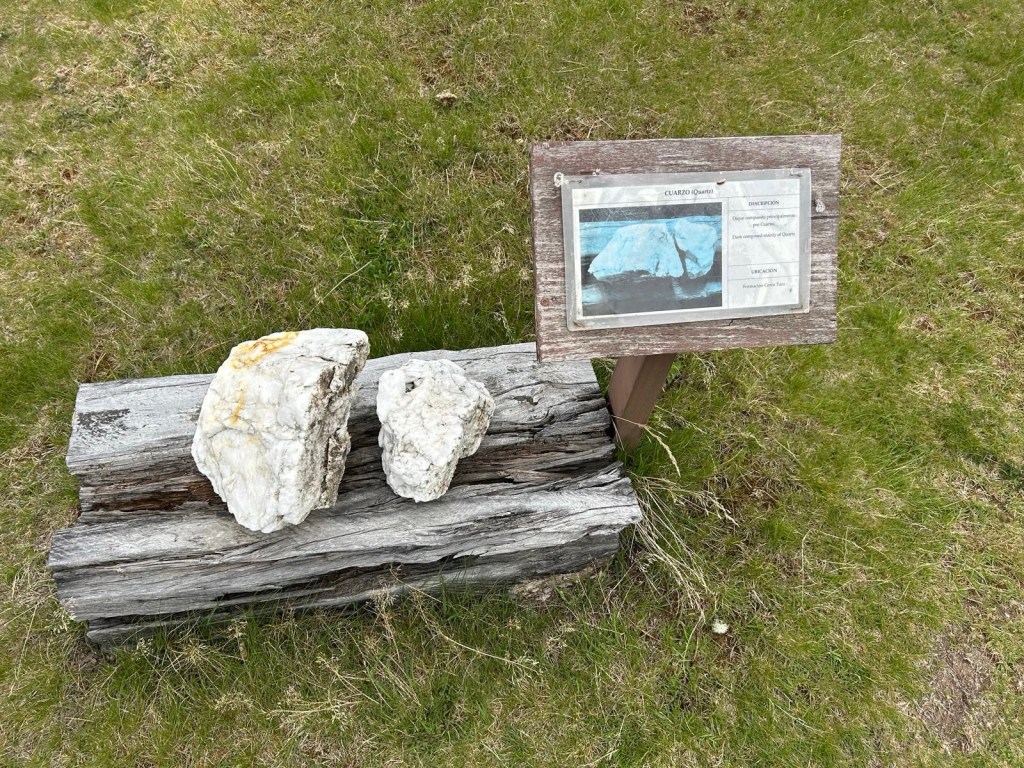
National Park Headquarters Museum and former home of original land ownerGeologic gardenThis park is also recognized by the European Union as a forest conservation area.
The museum was really good; the displays clear and informative. Rodrigo gave us a quick tour then let us explore.
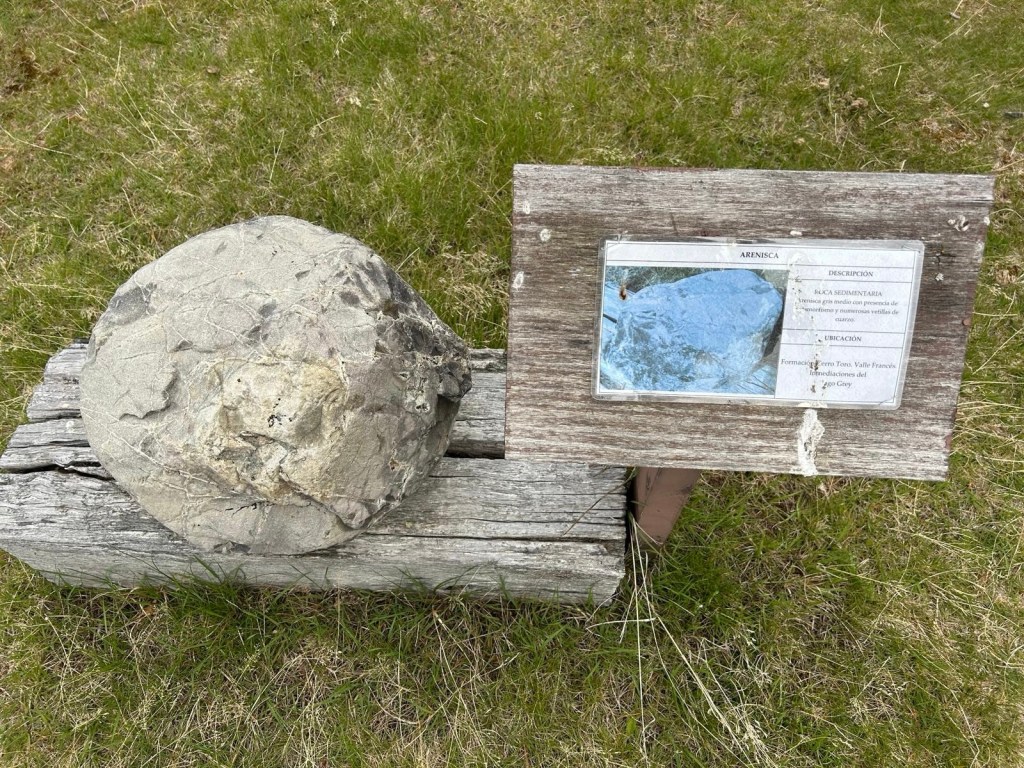
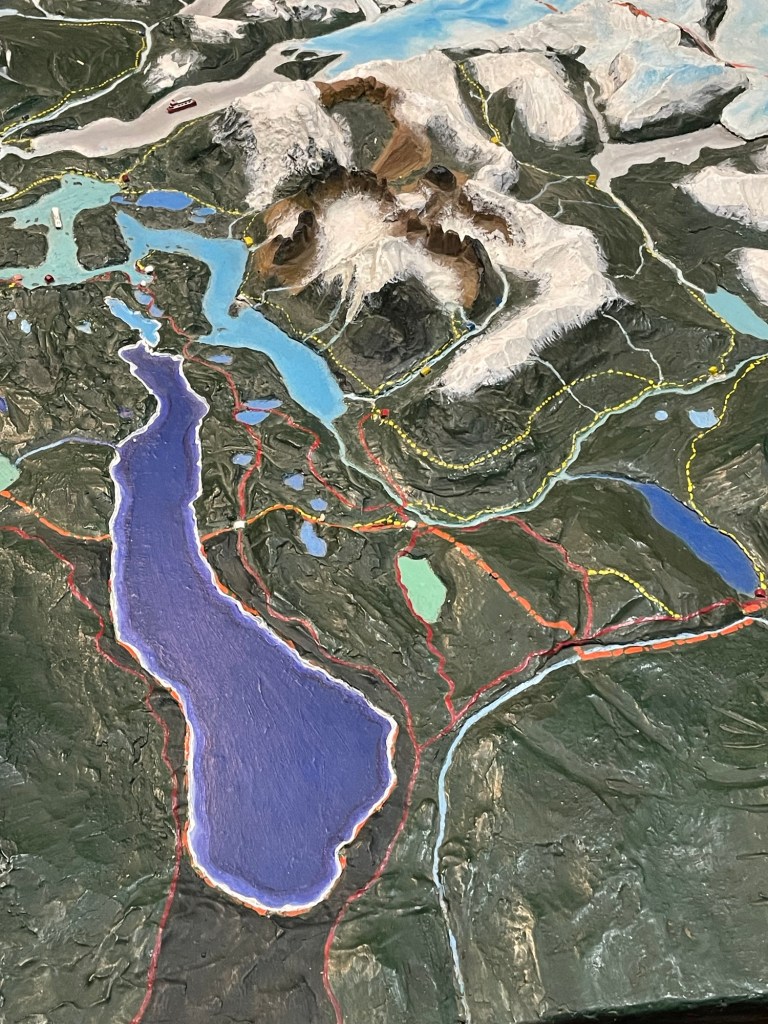
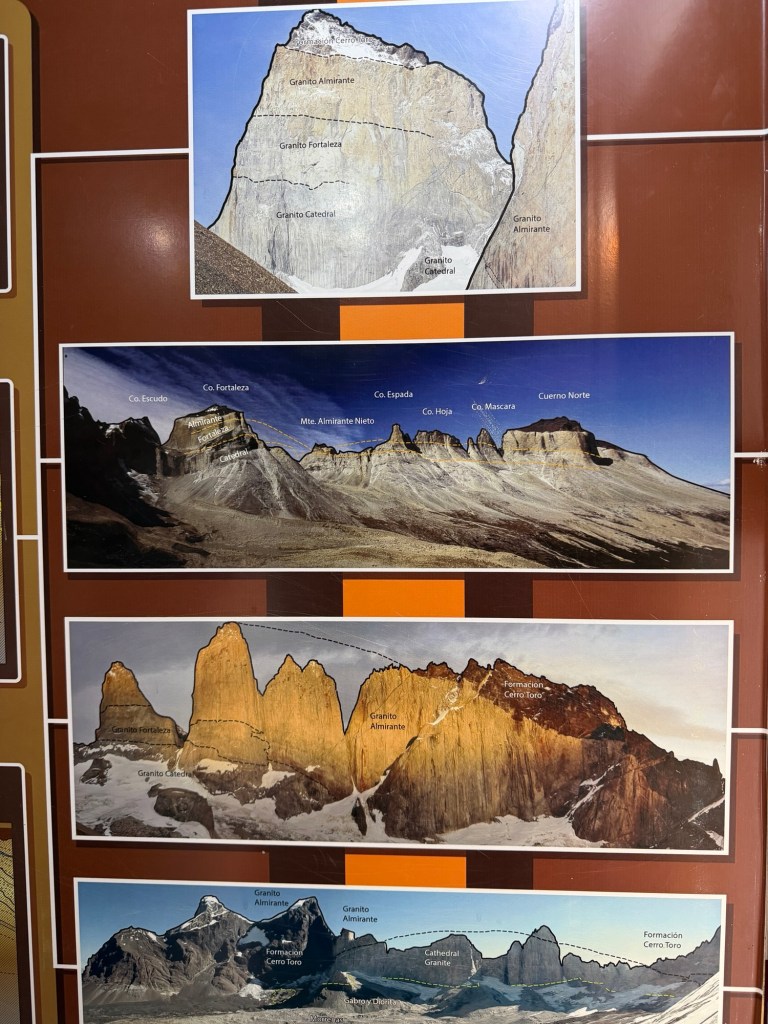
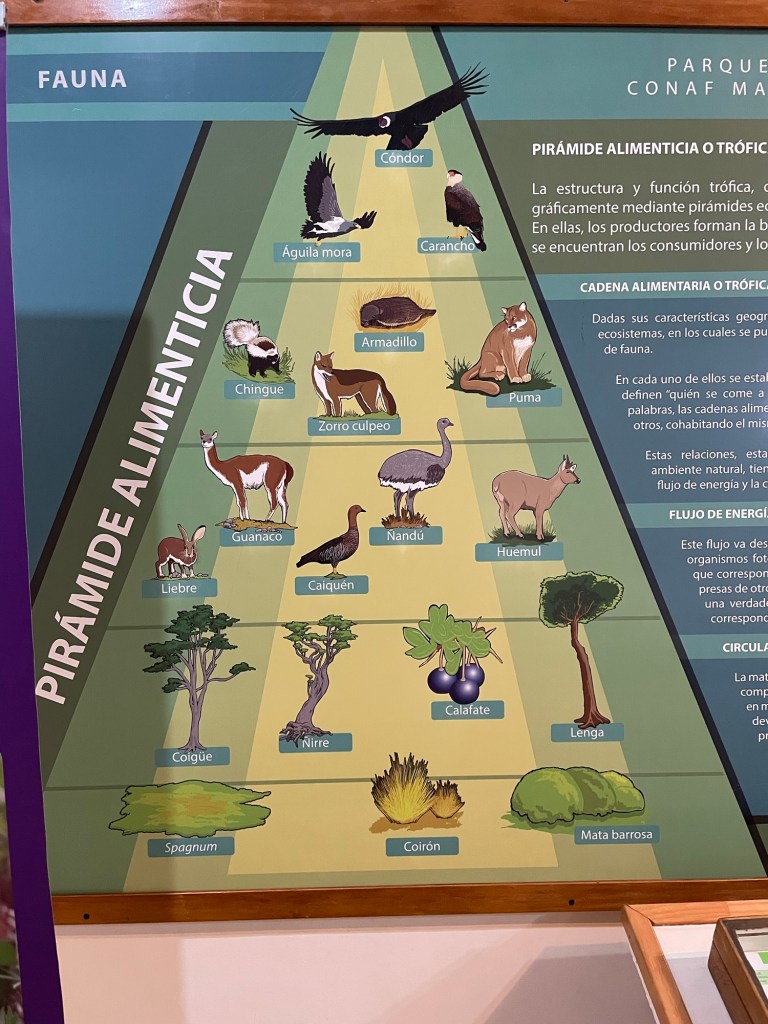
Rocks in the Geological garden3D map of the parkExplanation of the intrusivesNatural food chain with birds at the top!
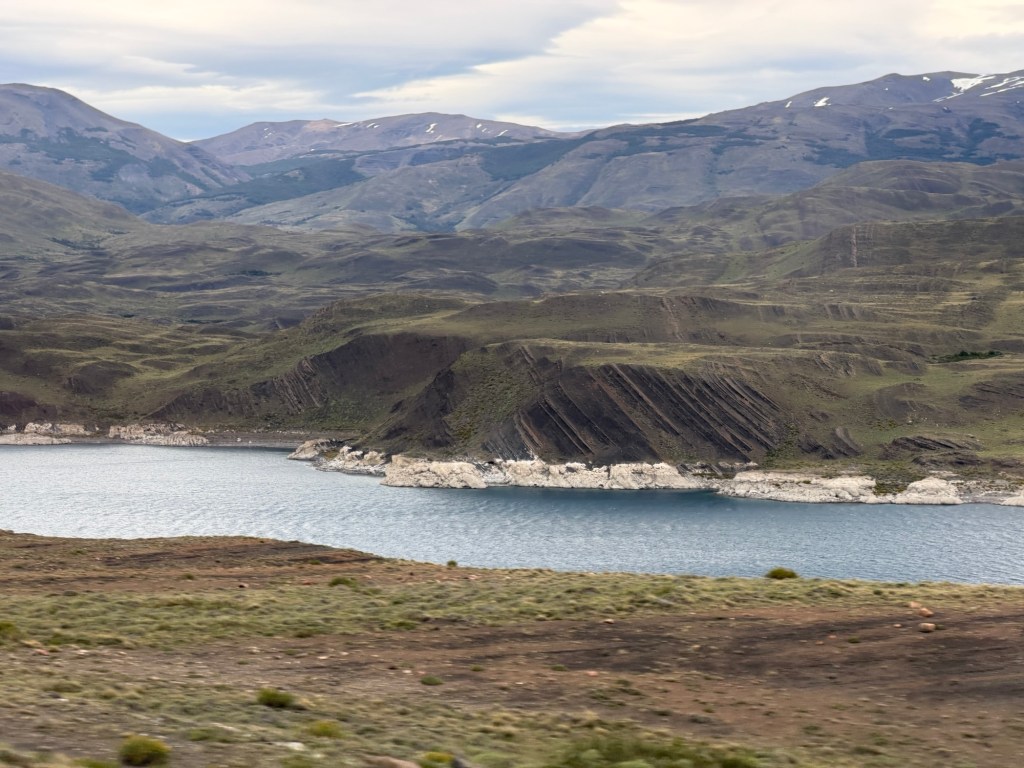
Back to the bus for gorgeous scenery. The weather was not quite as good as on our lucky previous days.
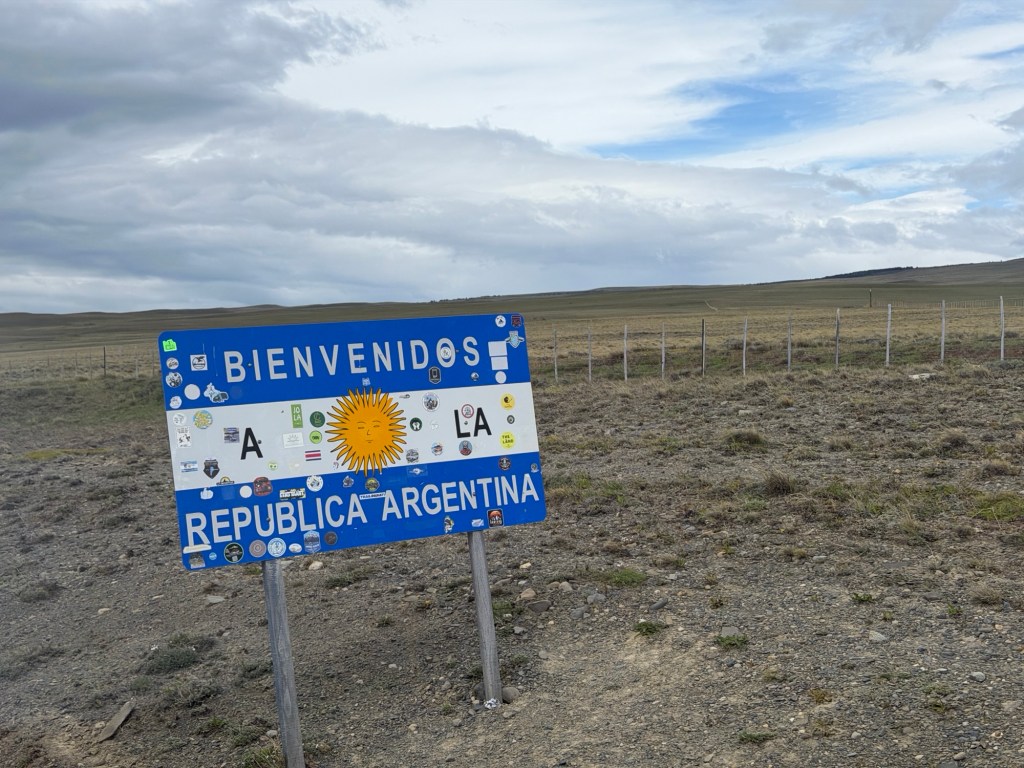
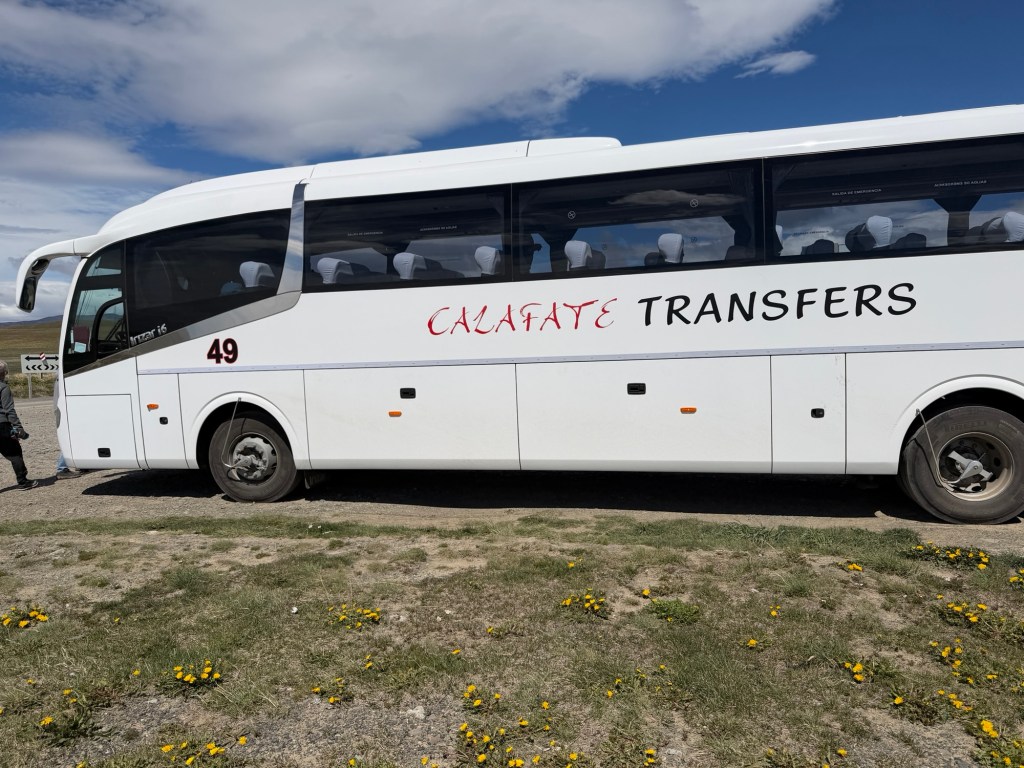
Then the border crossing from Chile to Argentina, saying goodbye to Rodrigo and hello to our new local guide, Jimena.
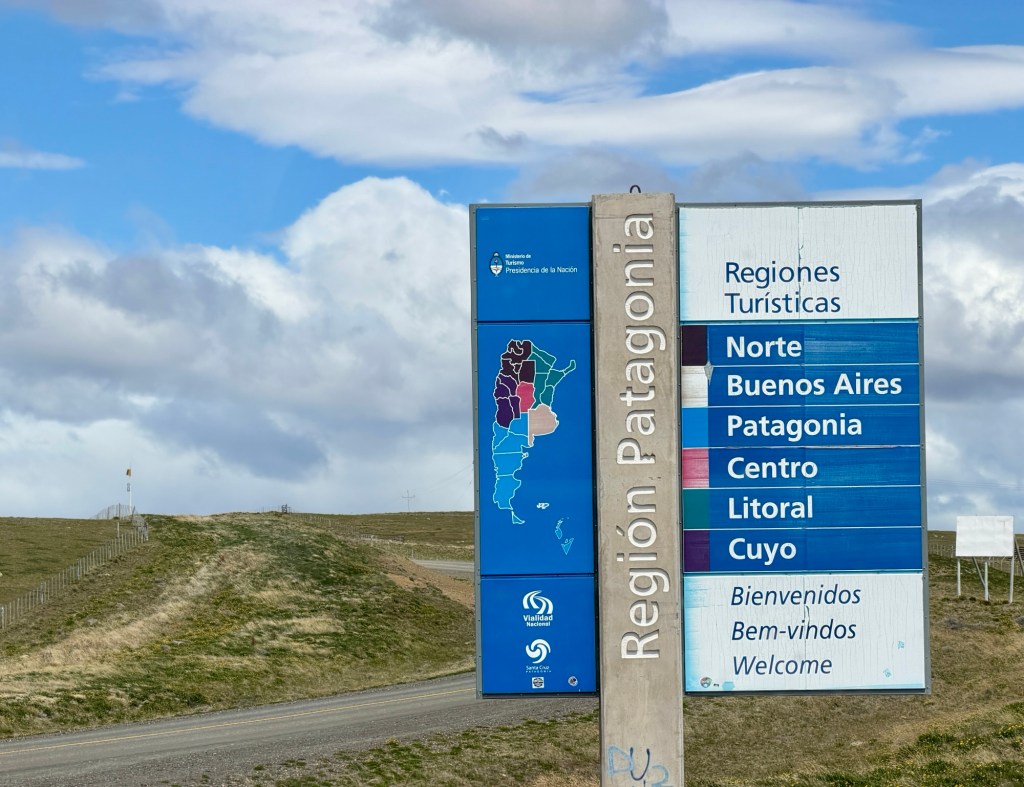
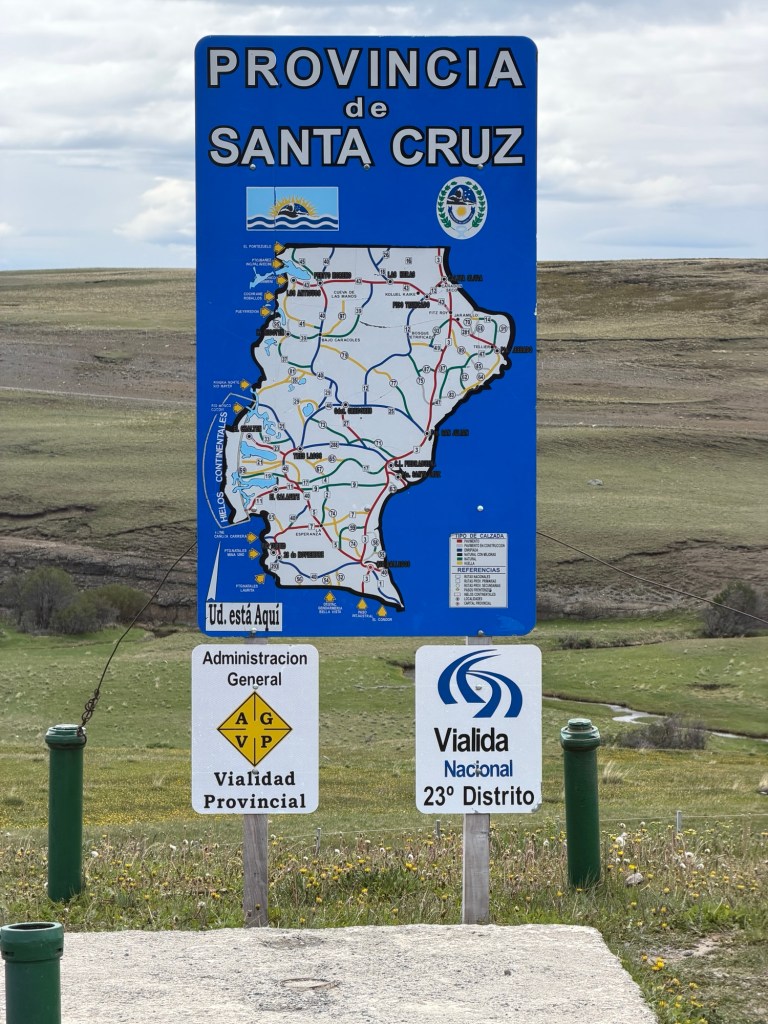
Welcome signNew bus and driver Map of Argentina’s regionsSanta Cruz is the largest region, where we will spend a few days.
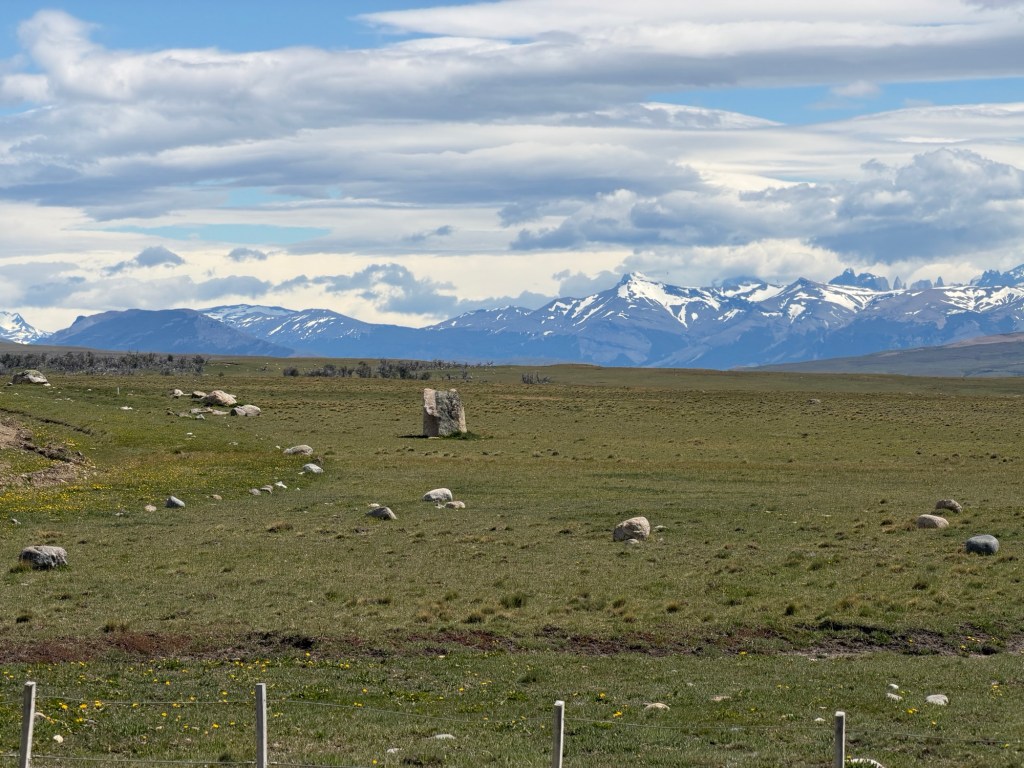
As we left the mountains, the terrain was beginning to show the flatter and drier character of the Patagonian Steppe. Plenty of glacial erratics evidence the presence of large ice sheets in the distant past. They look a bit like sheep, don’t they?
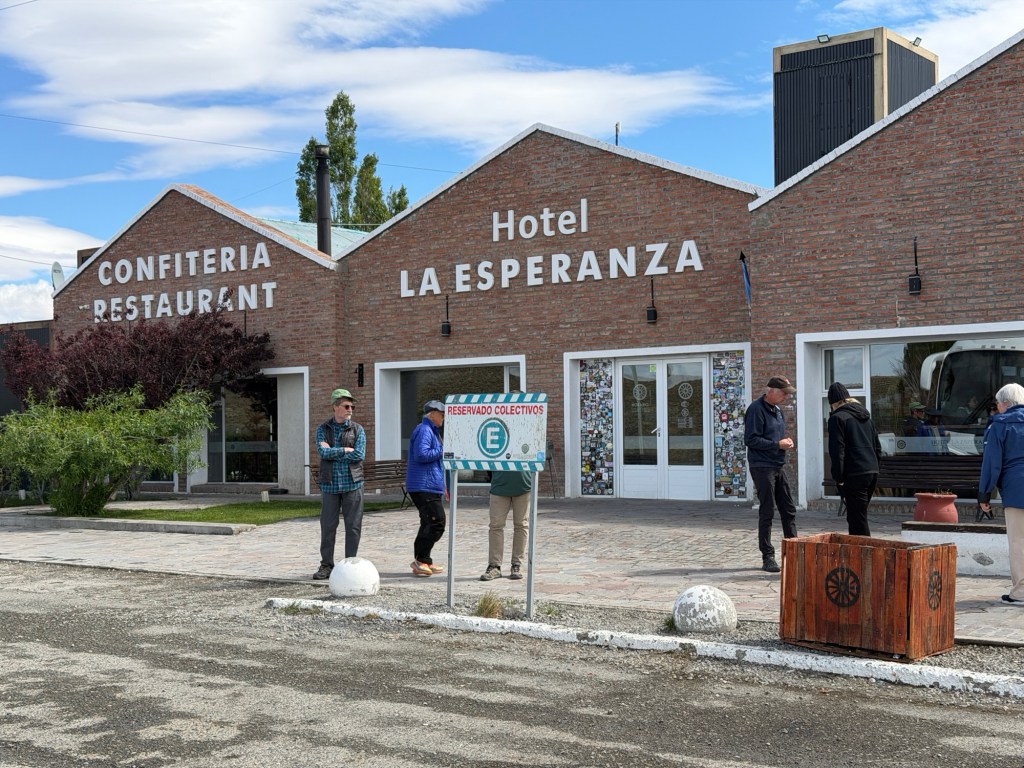
We stopped for lunch at Hostel Estancio El Ovejero in Cerro Castillo, where many of us enjoyed a hearty bowl of chicken soup with large pieces of chicken (including bones).
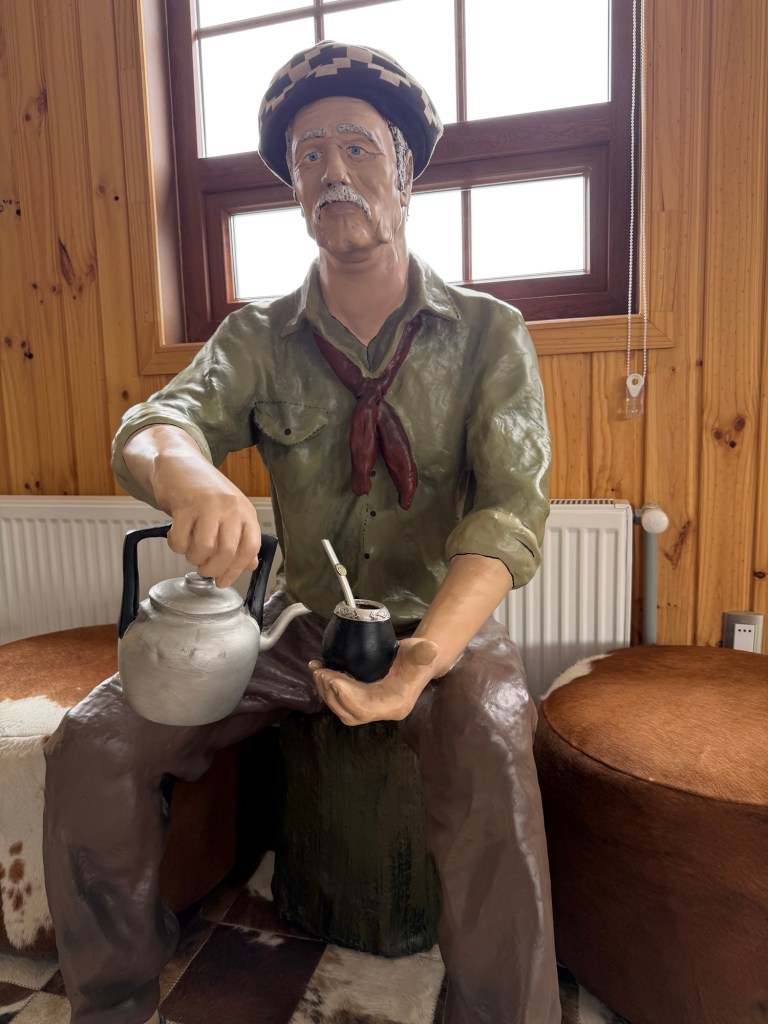
This statue of a Gaucho adding hot water to his maté was in the dining room.
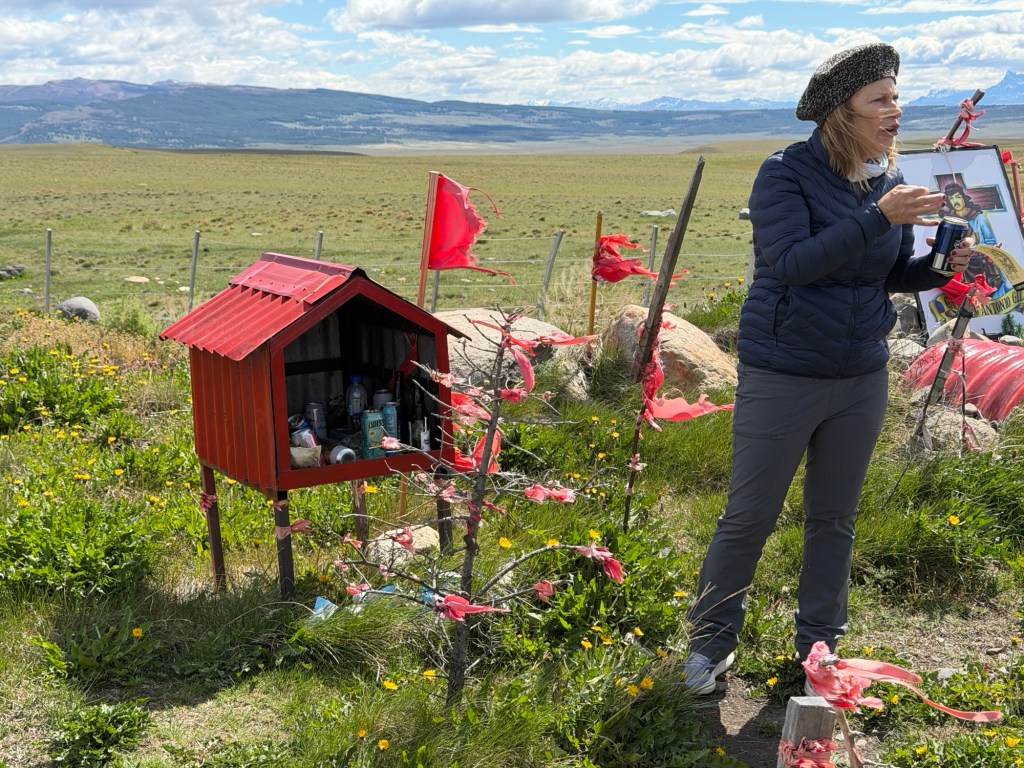
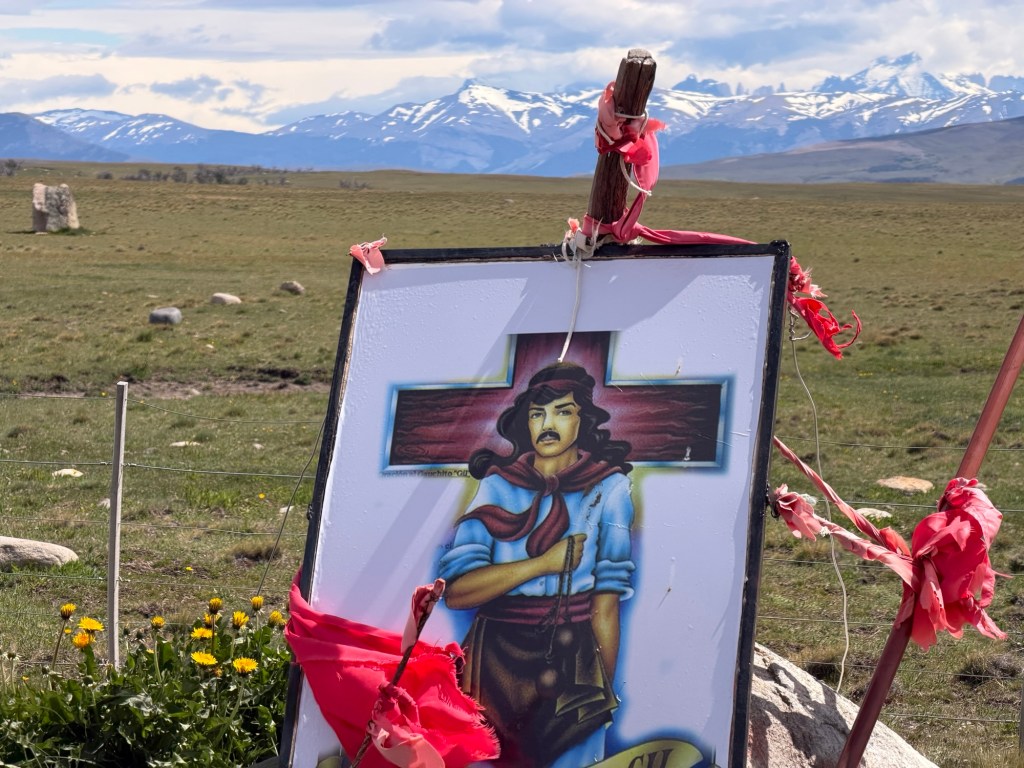
Jimena got us off the bus at reasonable intervals to stretch our legs and learn things. The first stop was at a red shrine to a local saint, Gauchito Gil who, although not Catholic, was said to have performed a miracle. The offerings to this saint are beer and cigarettes, since he was killed at a young age. Many friends in our group prayed to this young saint.
Marta telling us the storyGauchito Gil’s shrine, first of many we saw along the highways.
At another stop , Marta and Jimena got us dancing an Argentian folk dance, a little like a polka. We didn’t get pictures, but everyone participated. I think that knowing everyone made being goofy easier.
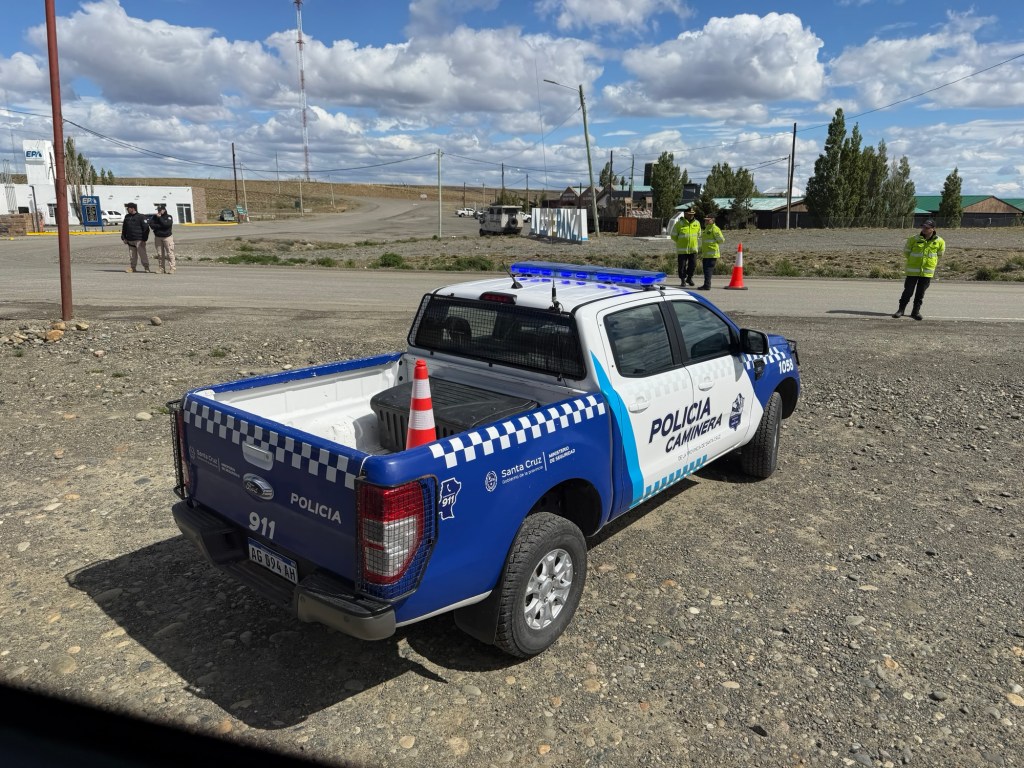
Rest stop where we danced. The police stopped and boarded our bus after we danced.
Being stopped by police, one masked, and being sniffed by dogs, made many of our group compare the experience to ICE agents in the U.S. taking innocent people. Not a good feeling, but it only was a short delay in our travels.
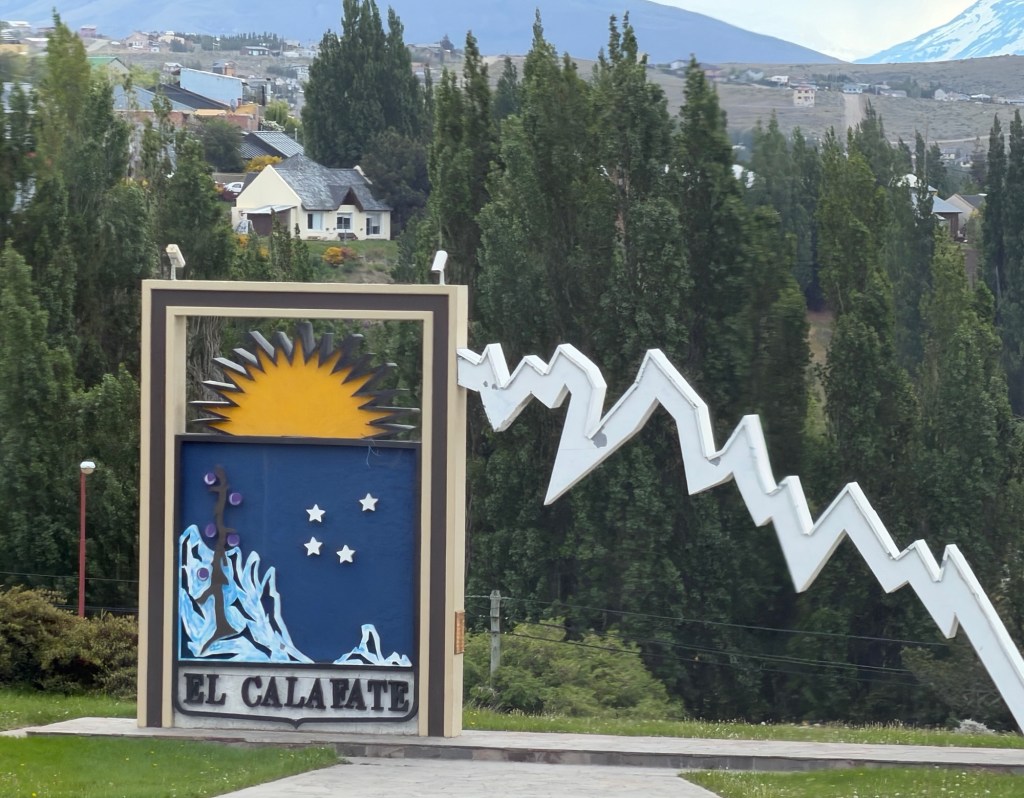
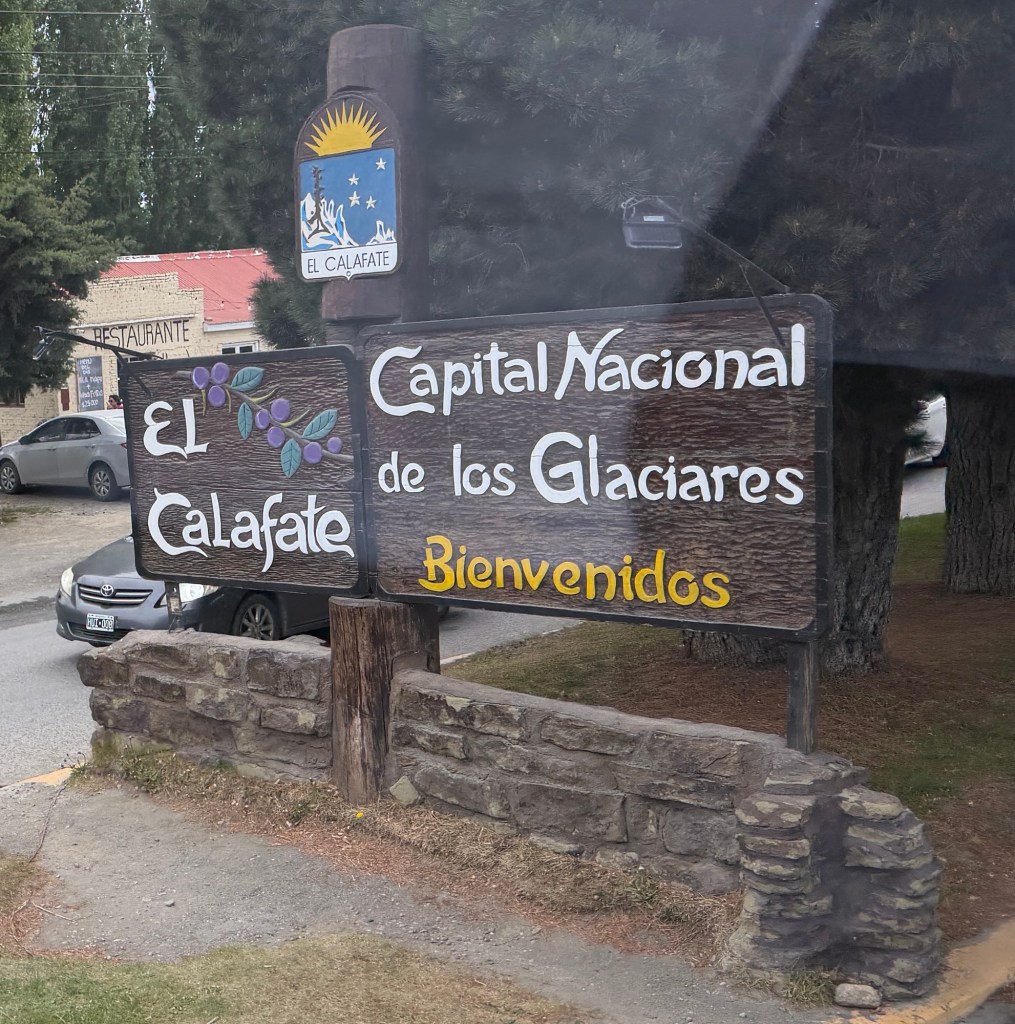
We stayed three nights in a town called El Calafate, the meeting place. The name is historic in that a big beautiful calafate tree grew here, and since ranches were huge and populations sparse, people would meet at el calafate. Gradually, buildings sprang up near the tree, growing into a town.
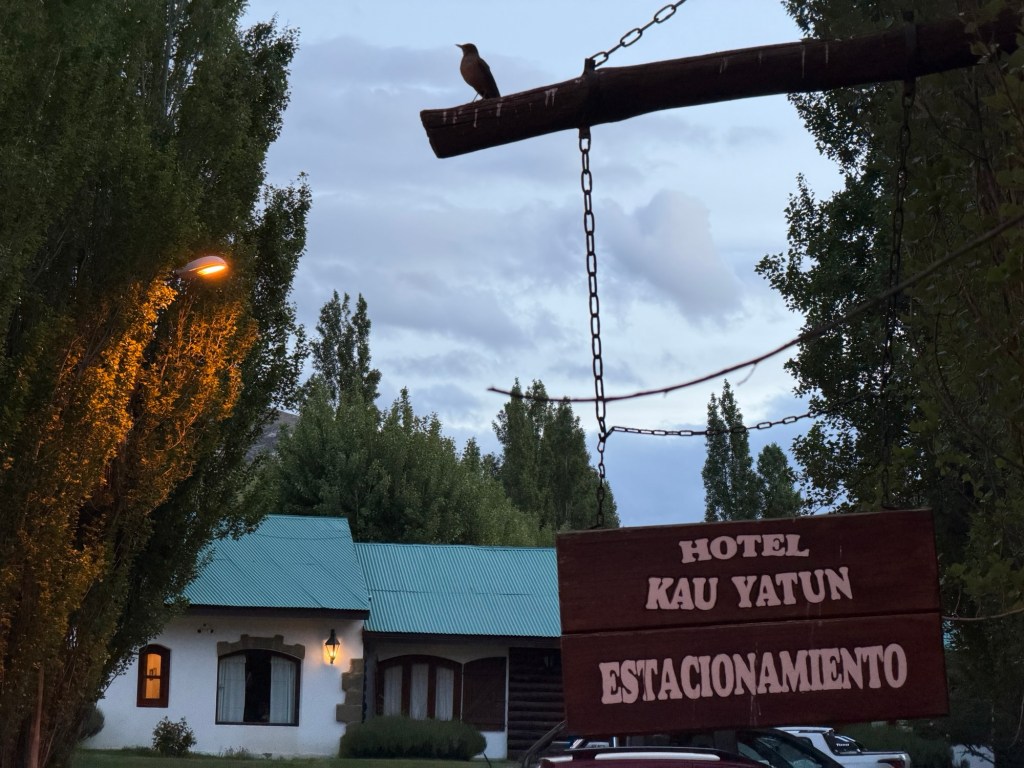
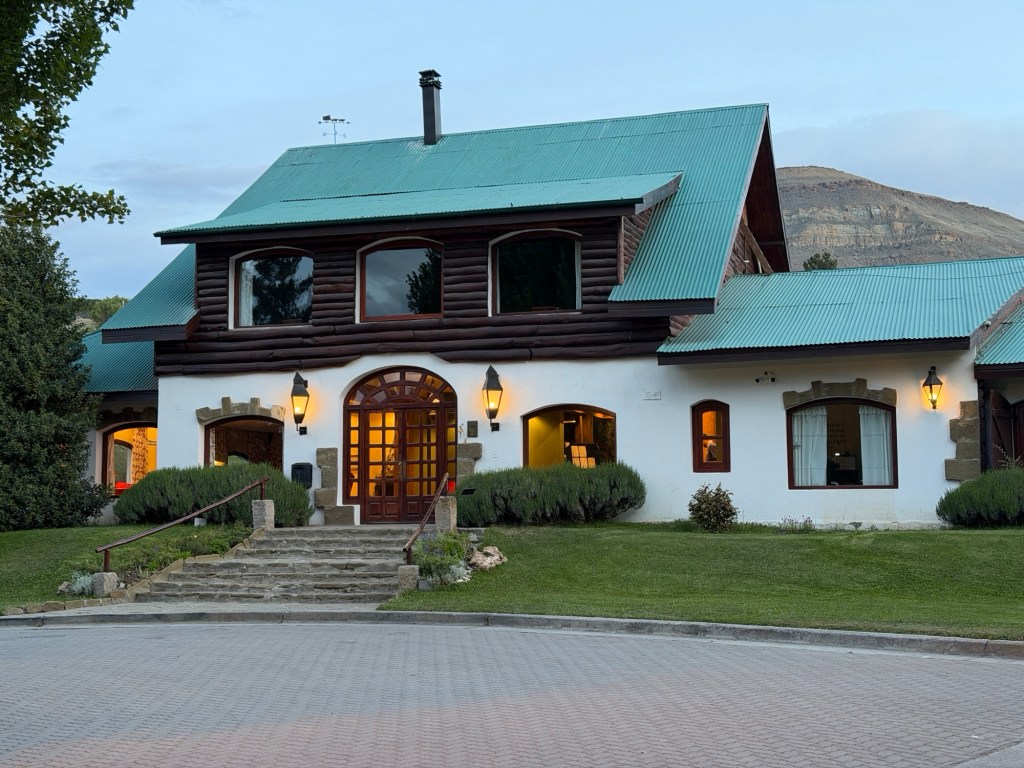
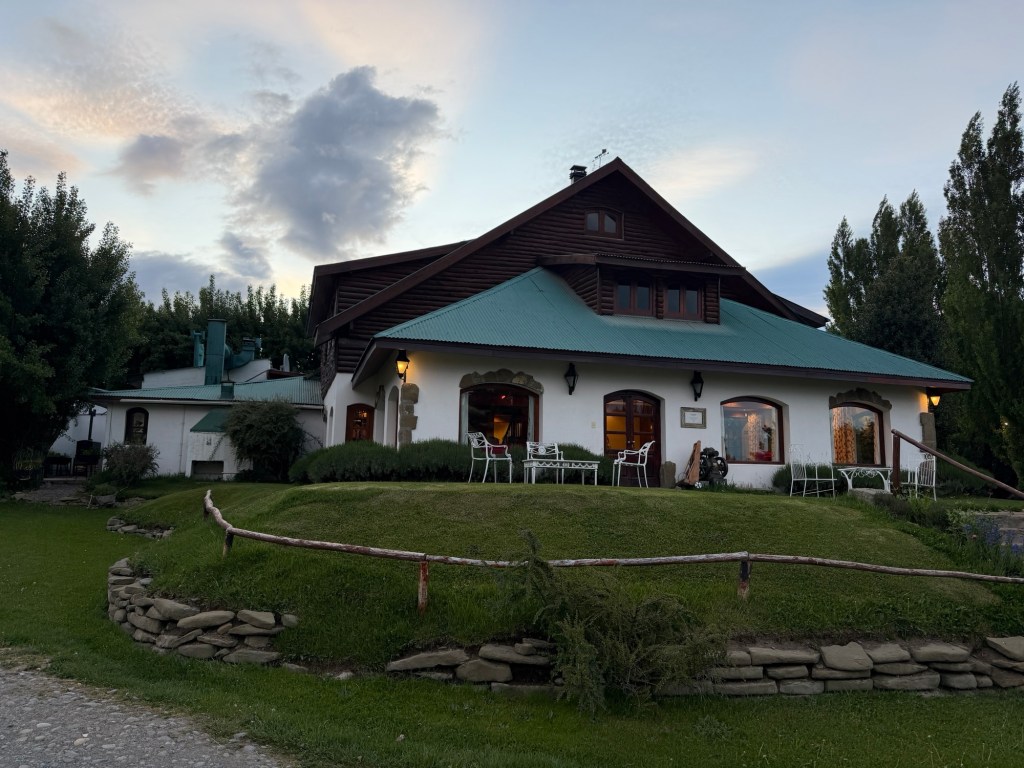
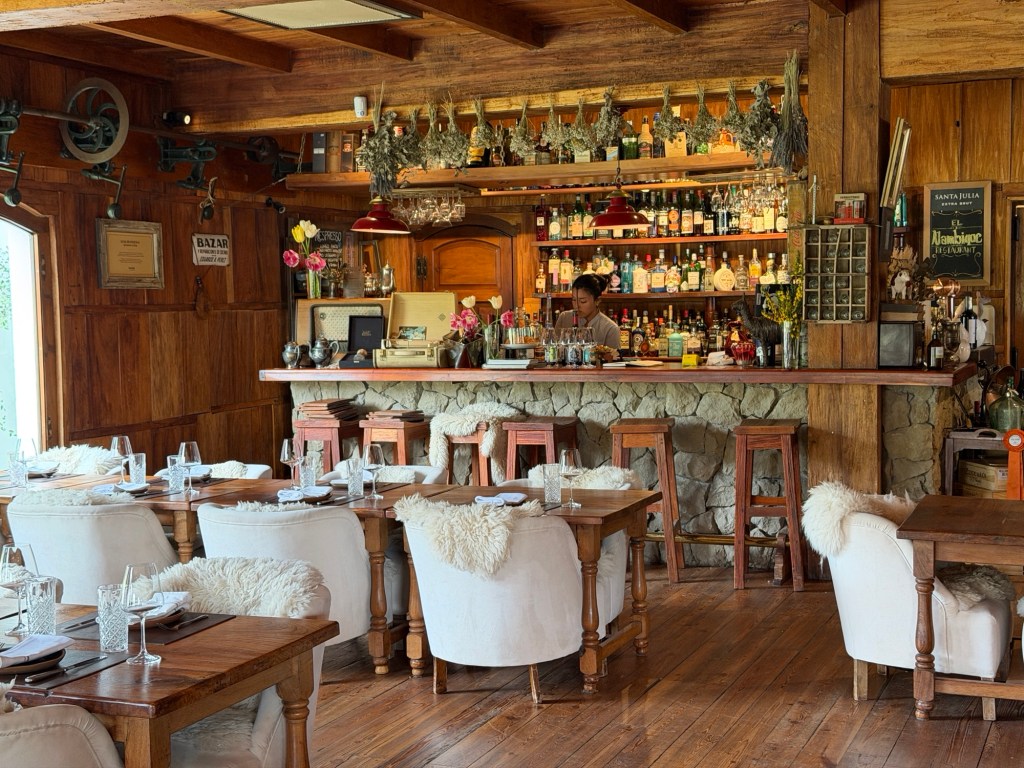
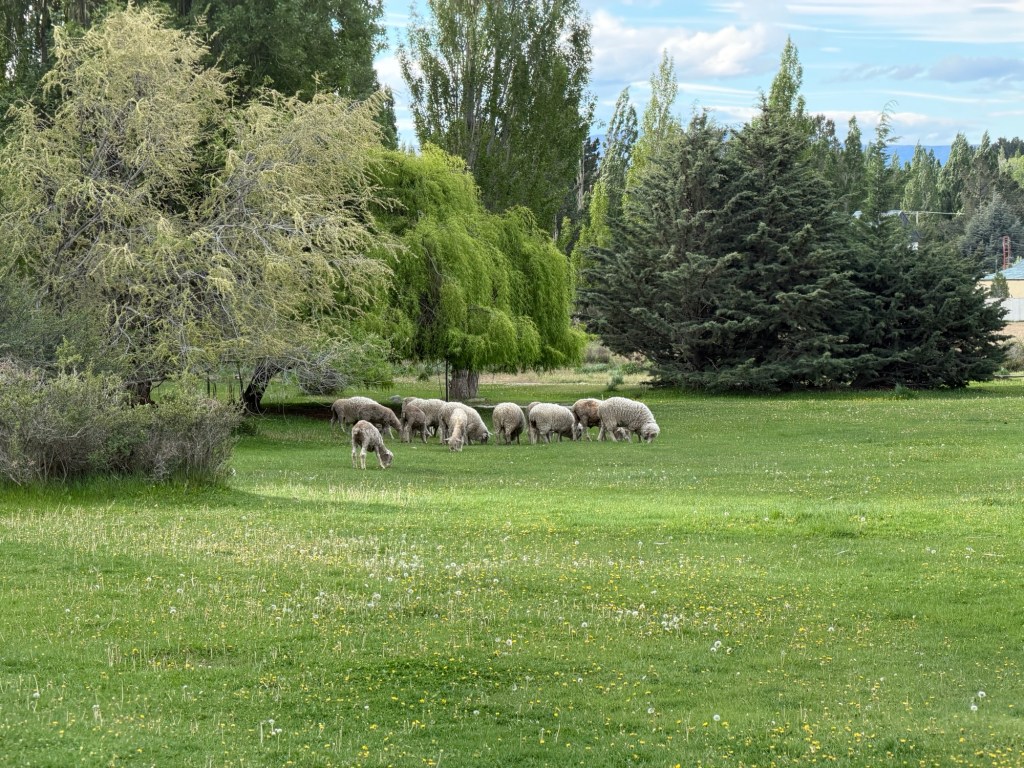
Our hotel was nice, an old ranch. The owners still had a few sheep.
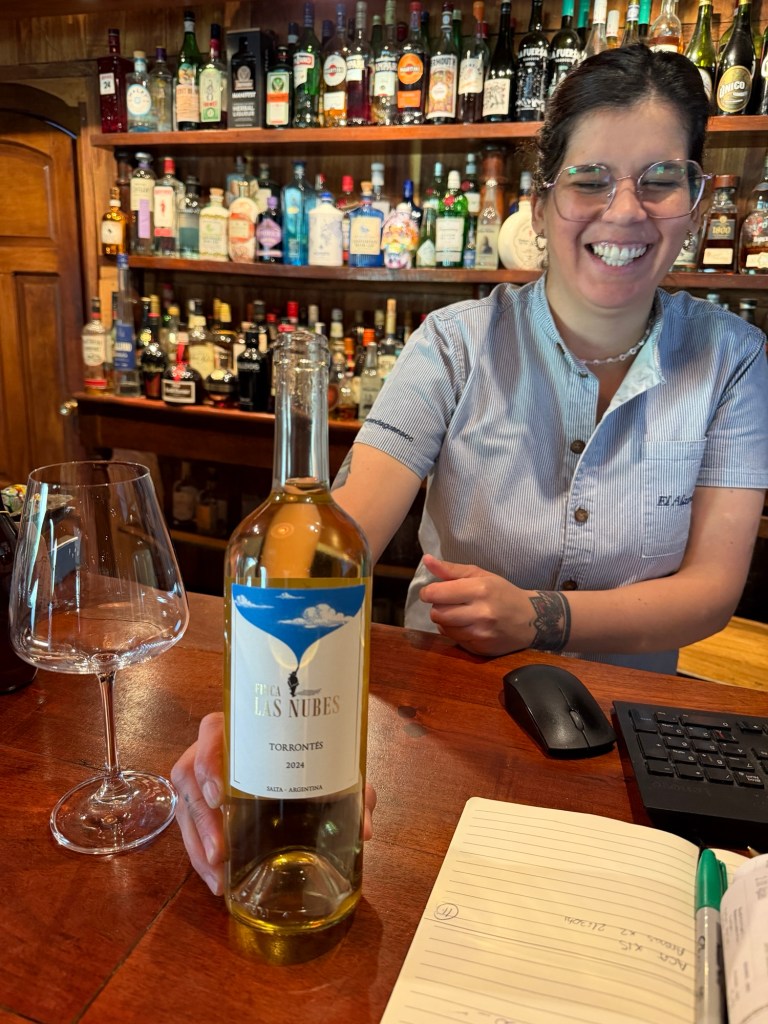
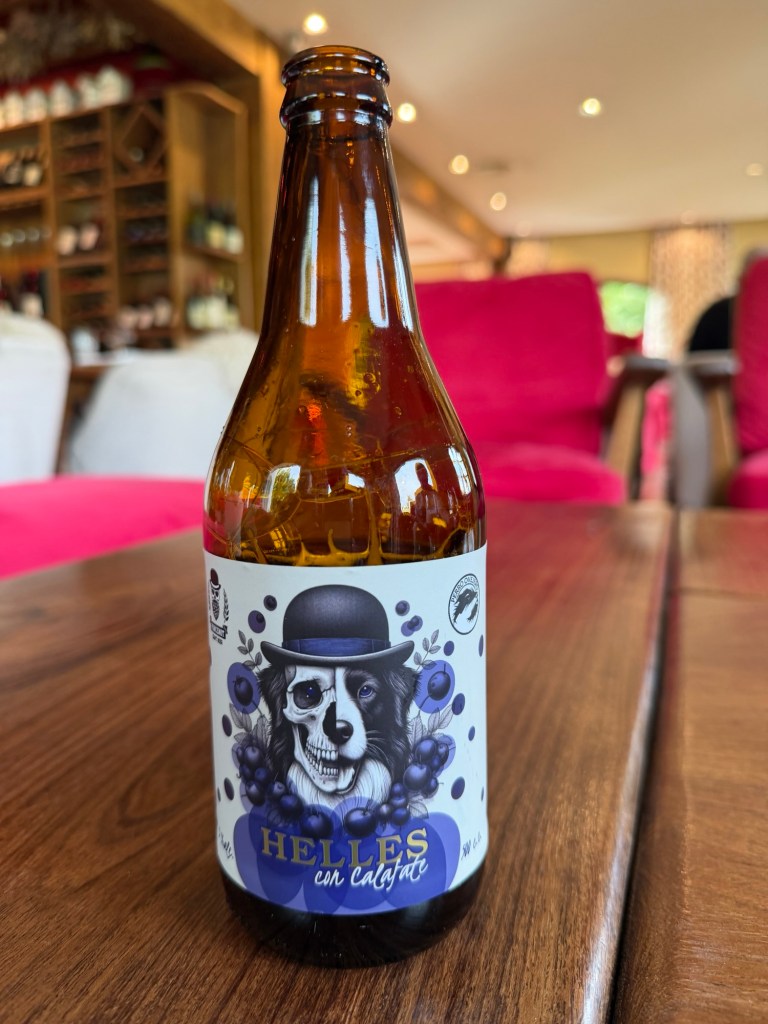
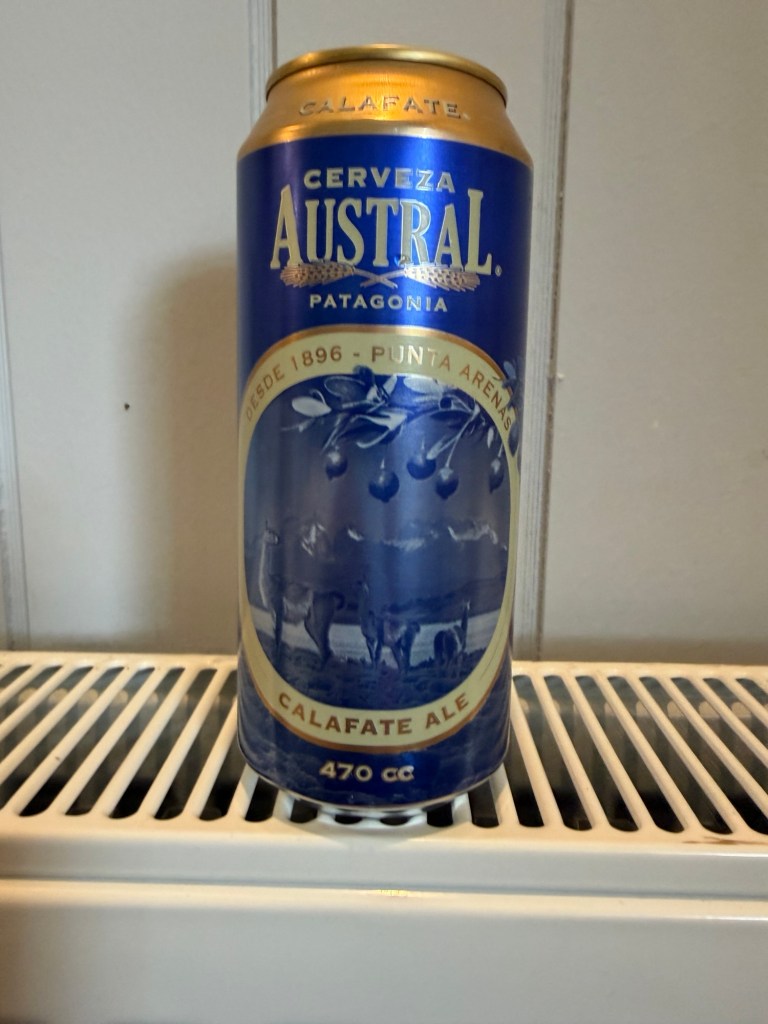
At the hotel bar, Clare asked for an Argentinian white wine, and the bartender brought out one made from Torrontes grapes. Its flavor was distinct, unusual and good. Brian’s beer contained Calafate berries and had a funky label.
Scenes around the ranch hotel.
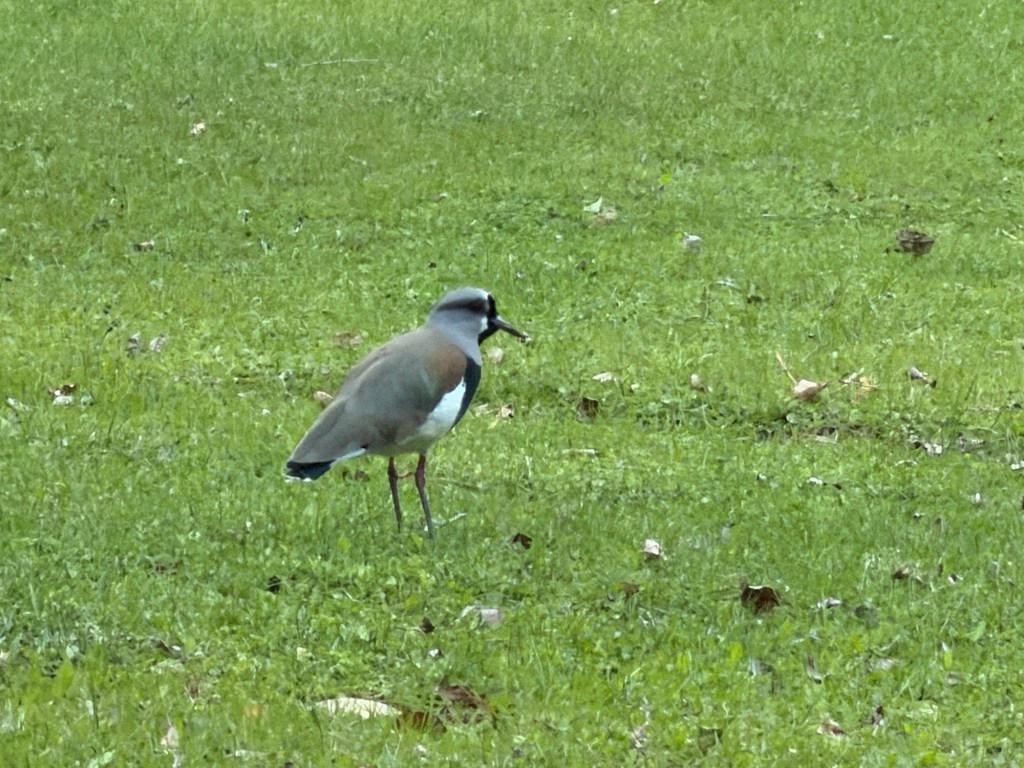
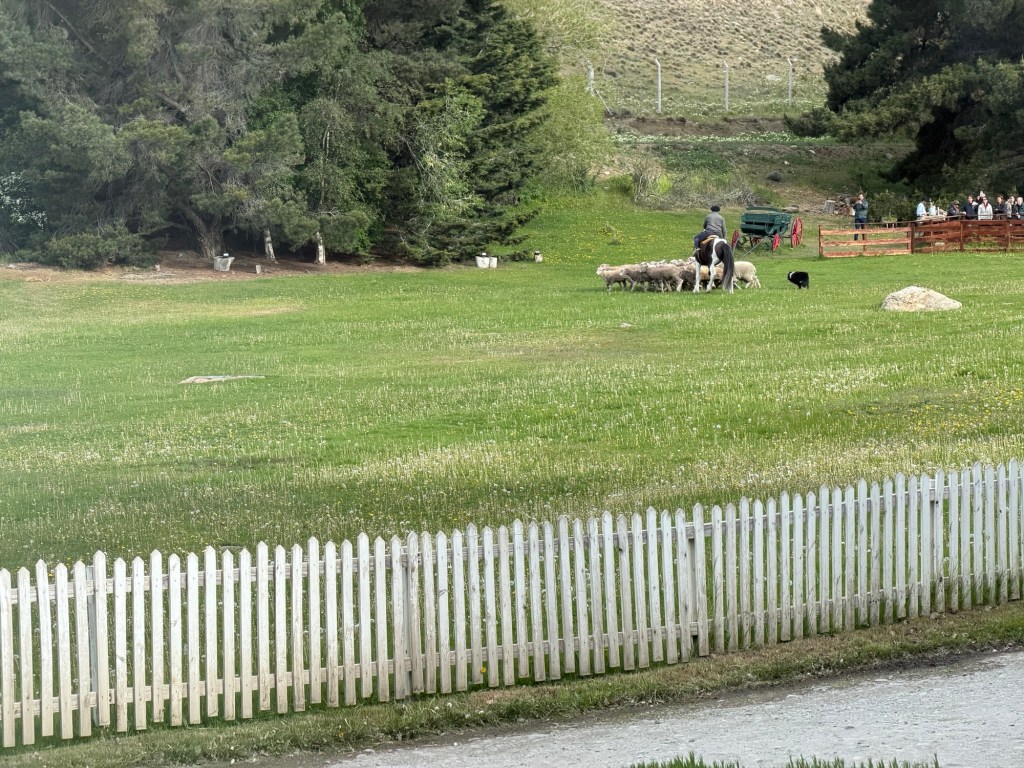
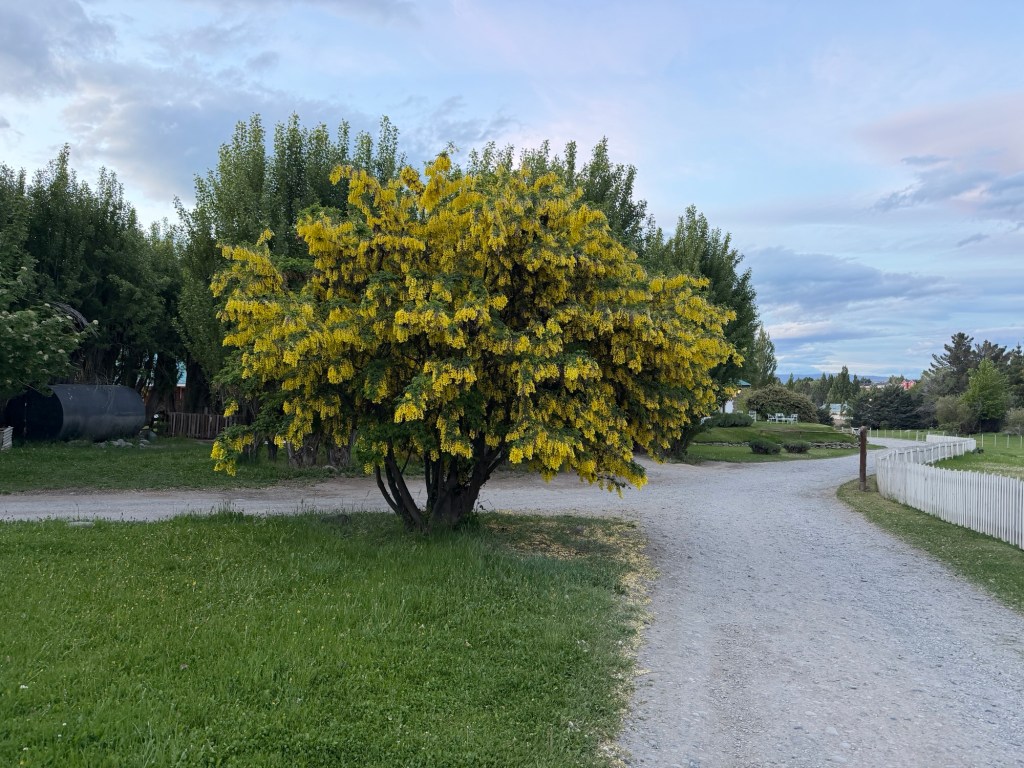
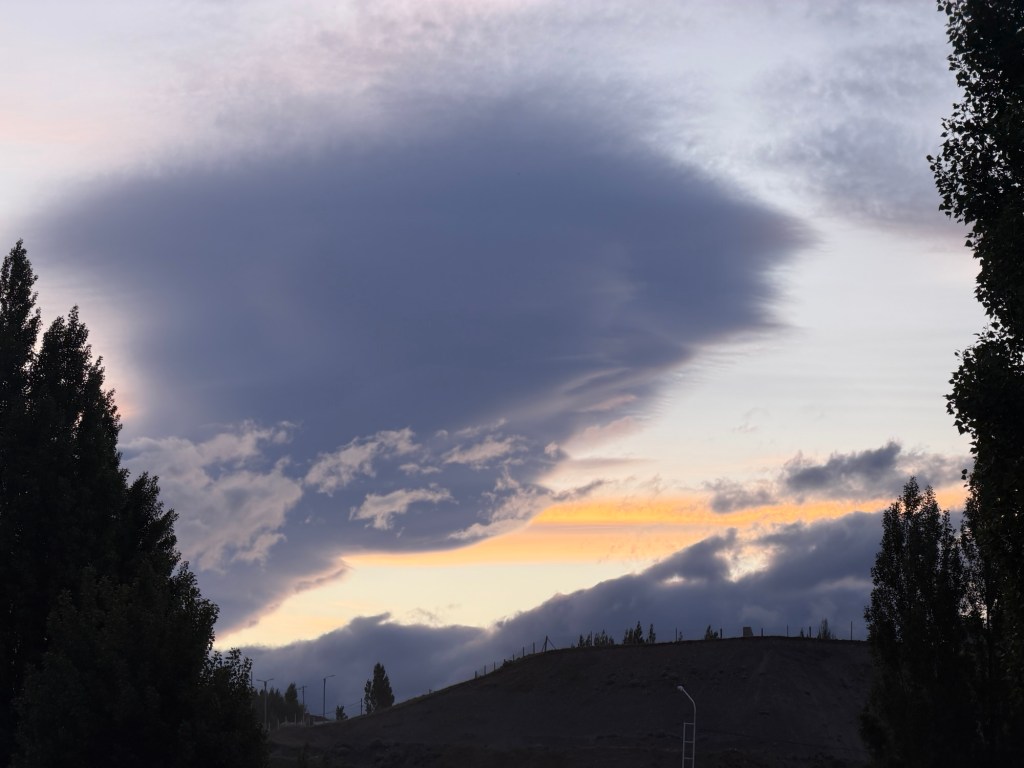
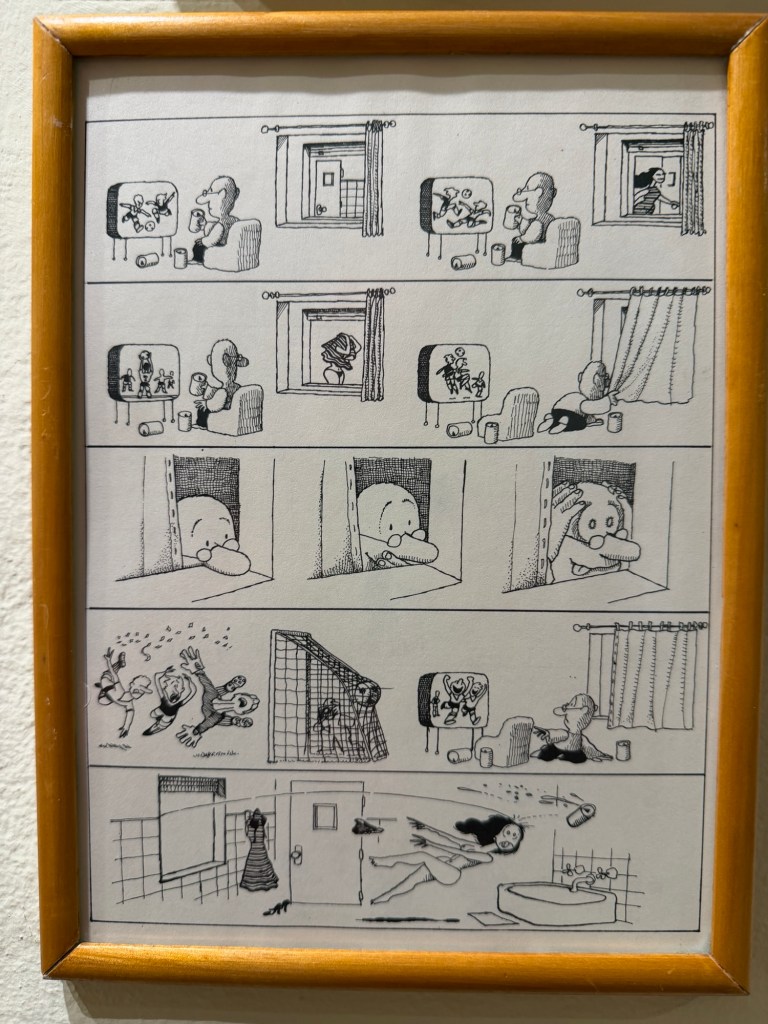
Southern LapwingSheep in a field in front of the hotelSheep being herded by rancher and dog, for guest’s entertainment Laburnum treeSunsetMarta told us to look at the cartoons, drawn by a local artist, that decorated the halls in this hotel. Clare thought this one, outside our room, particularly funny.
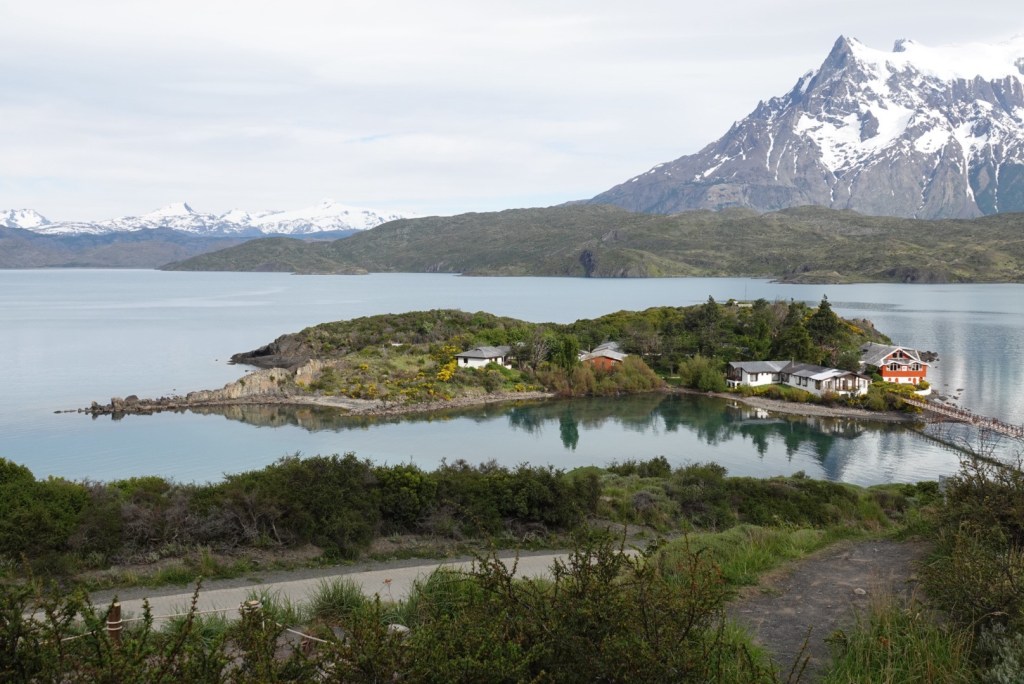
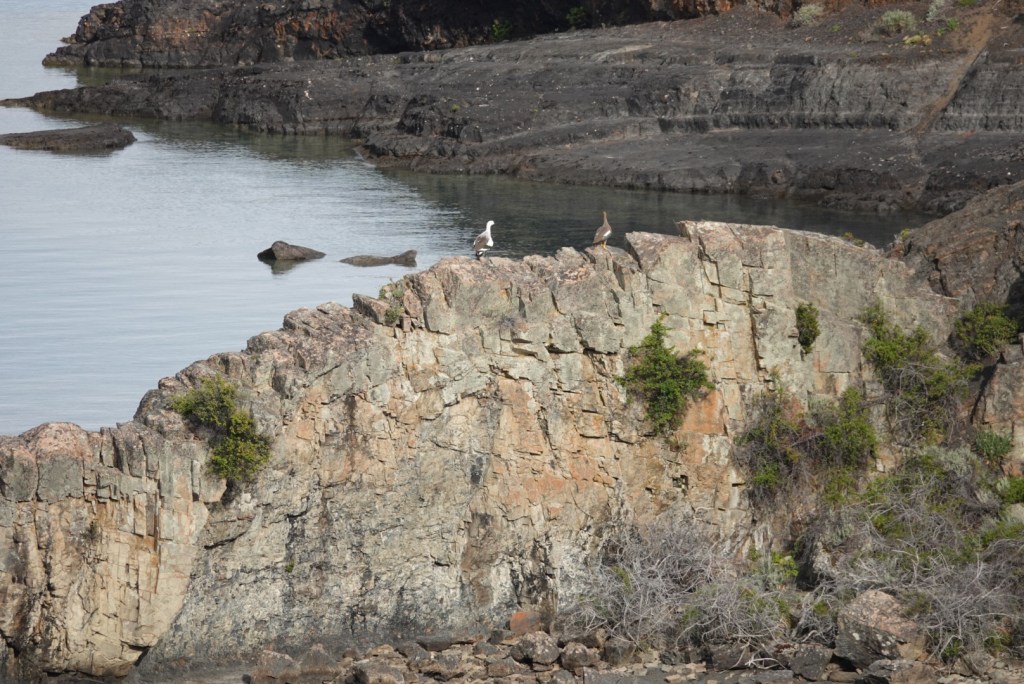
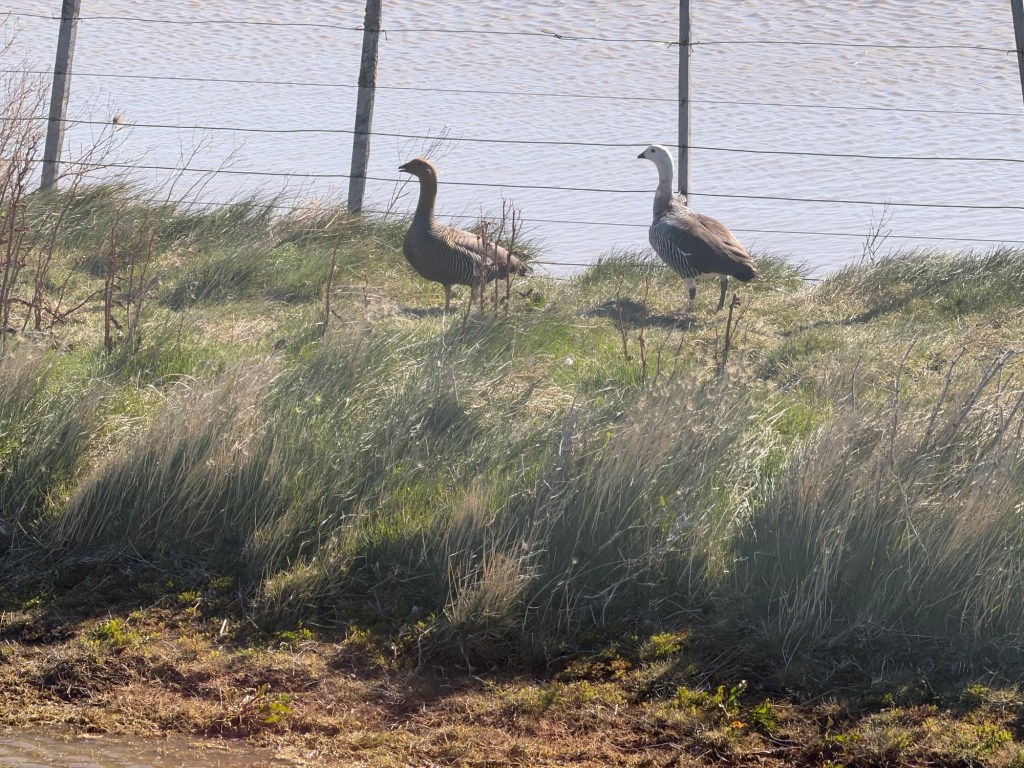
Island in the lake with a hotel? And a bridge. Close up of part of island. Granite ridge with upland geese
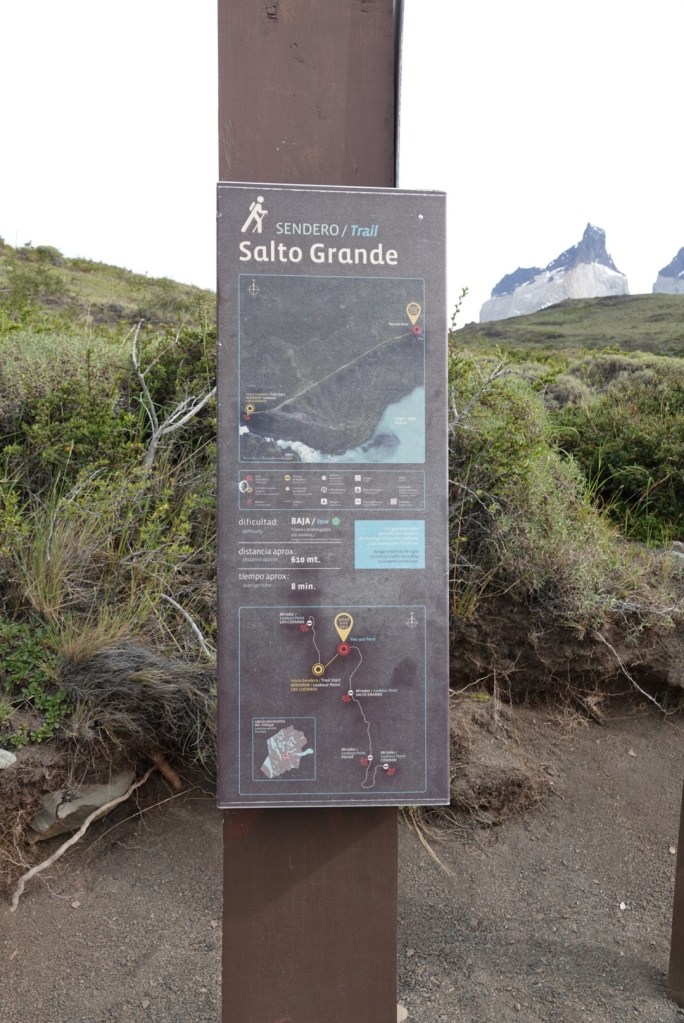
The aim of the first hike of the day was a waterfall then a lake, about 4 miles round trip.
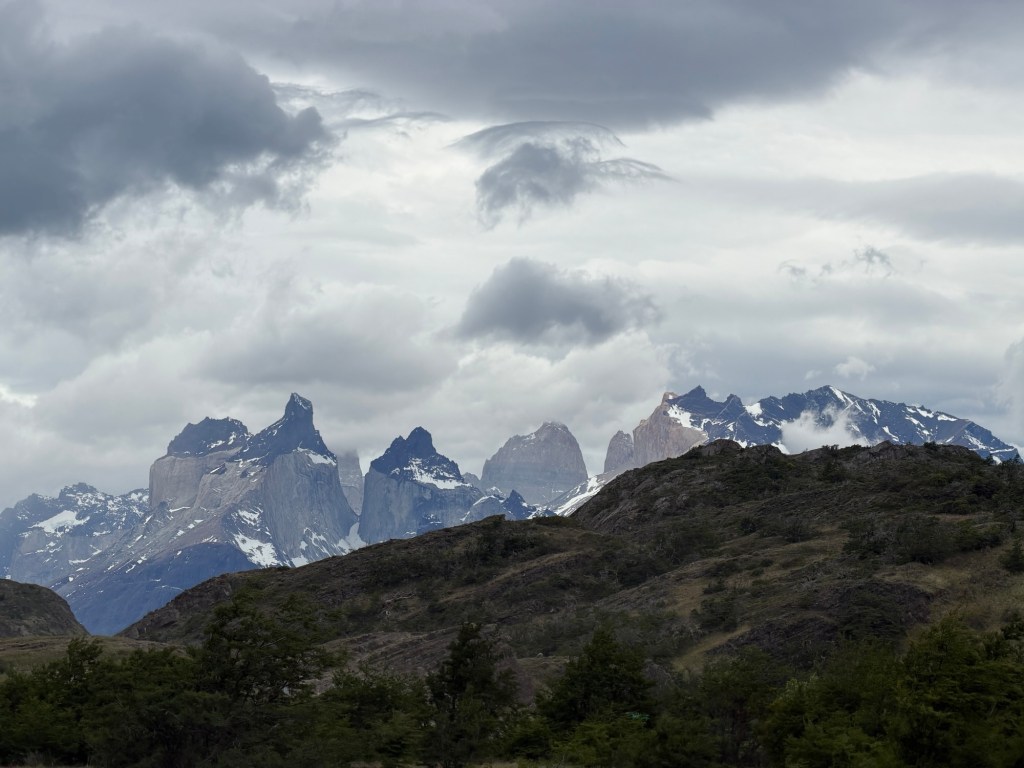
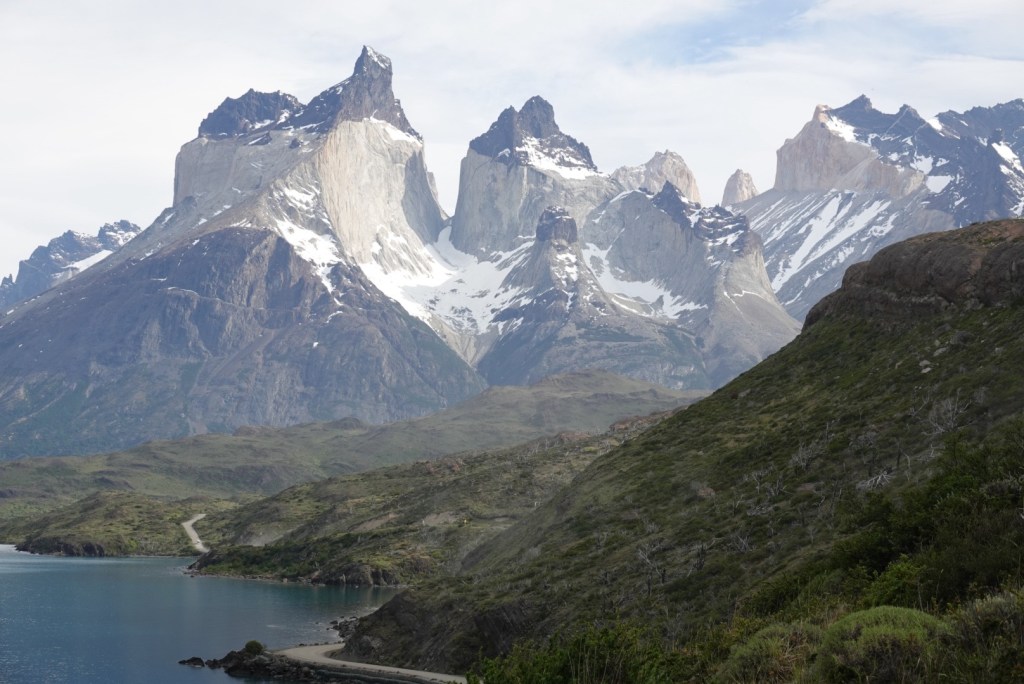
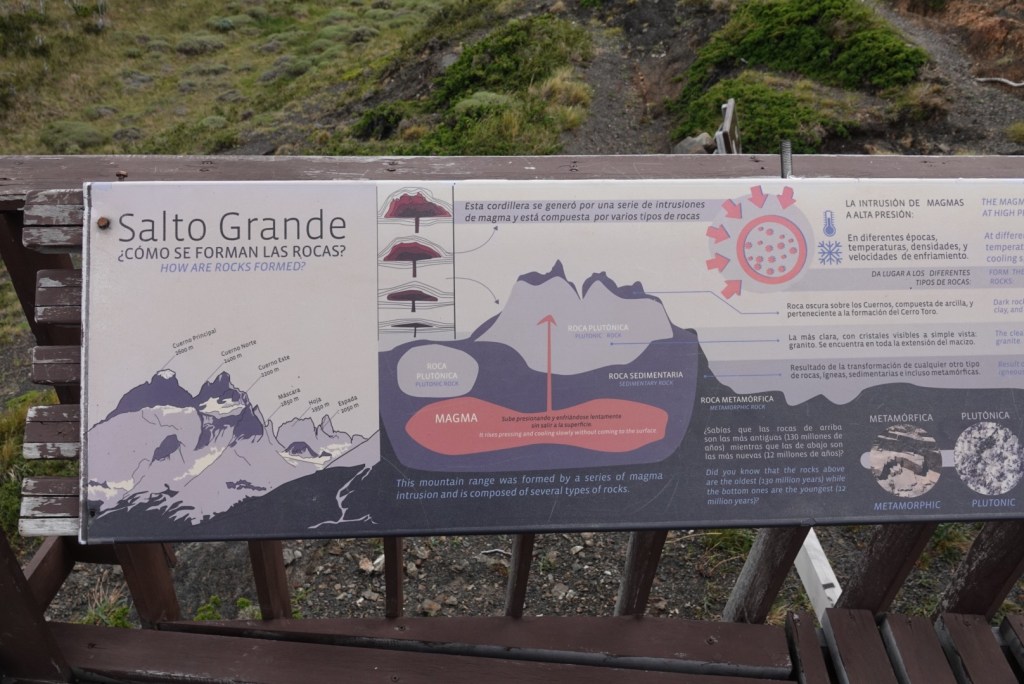
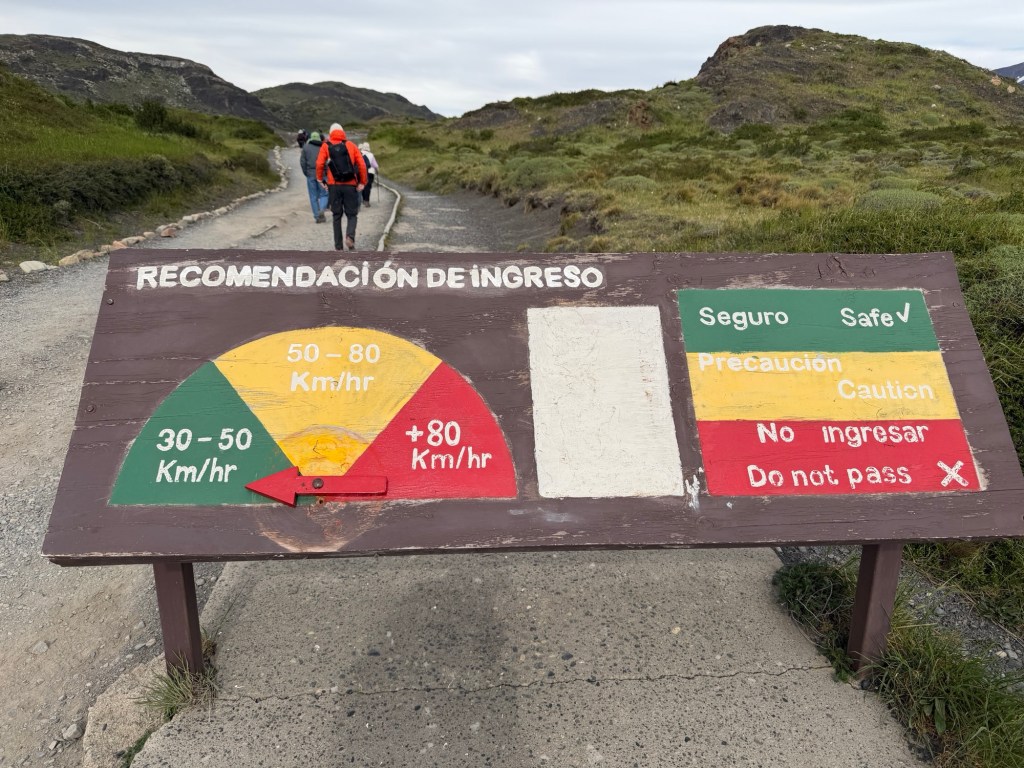
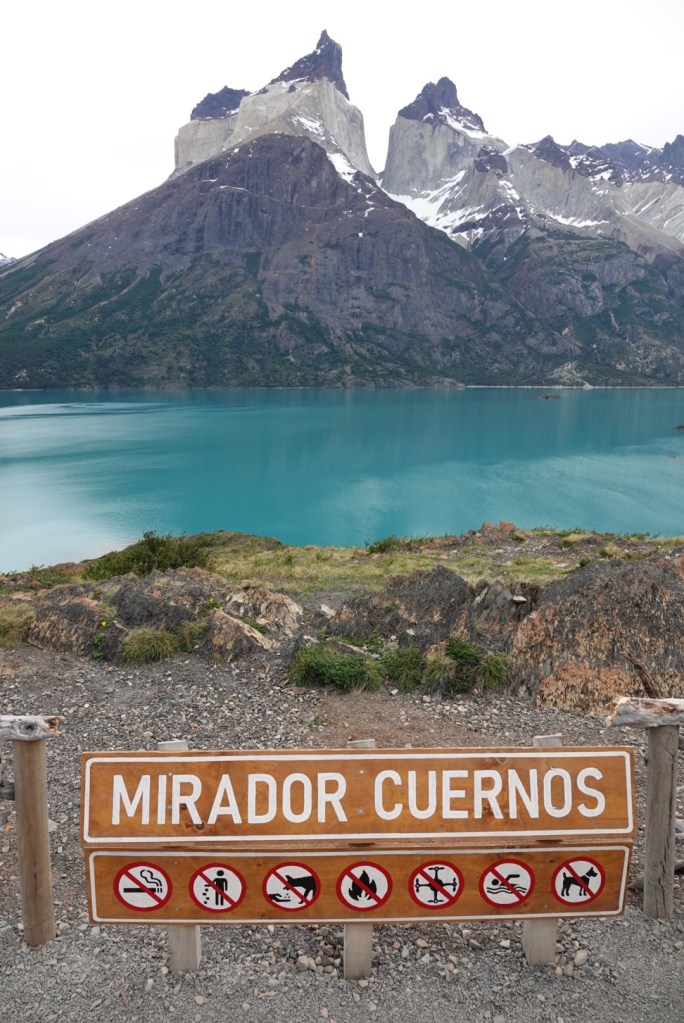
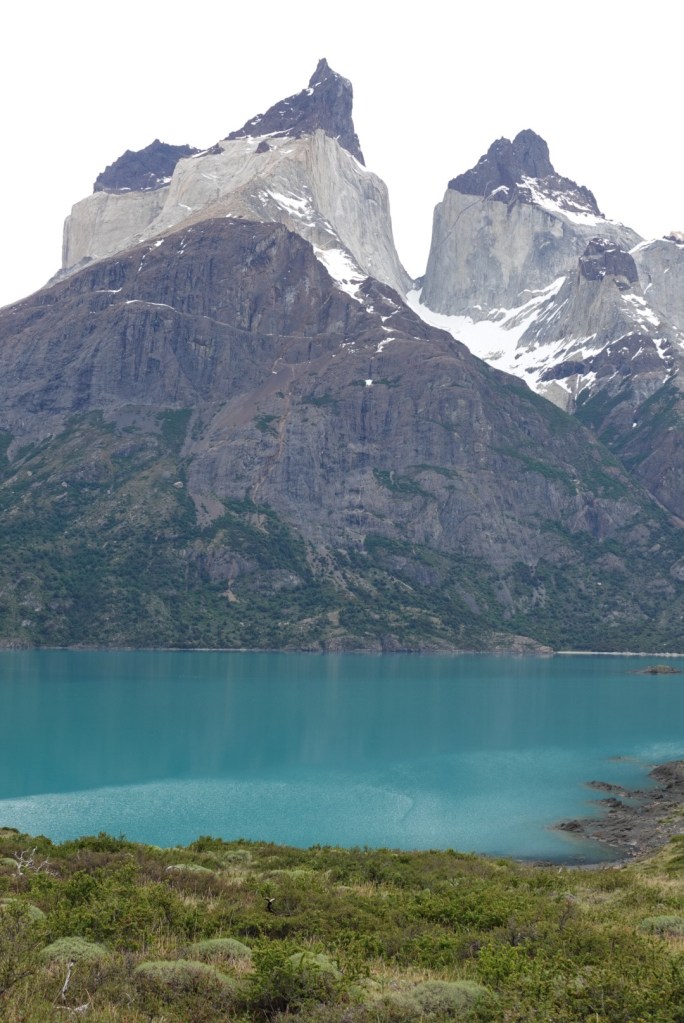
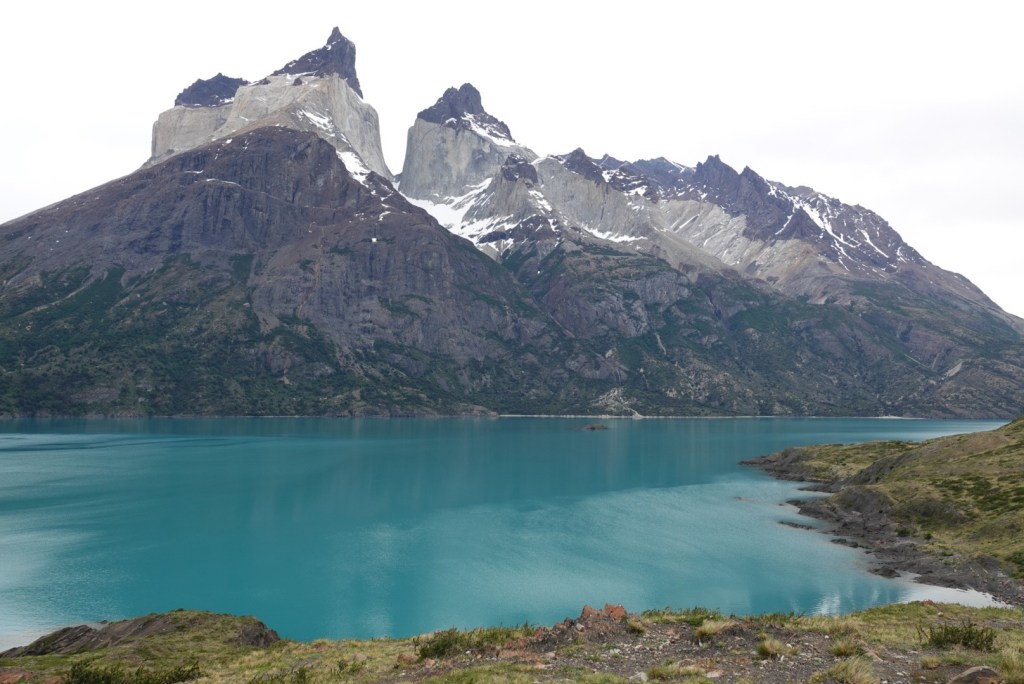
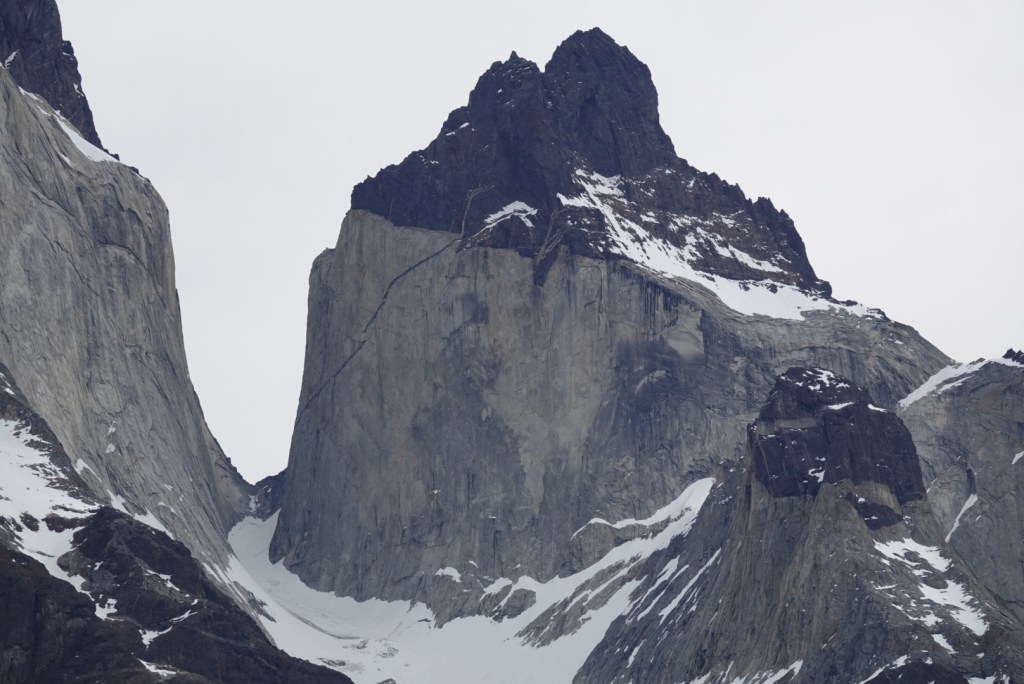
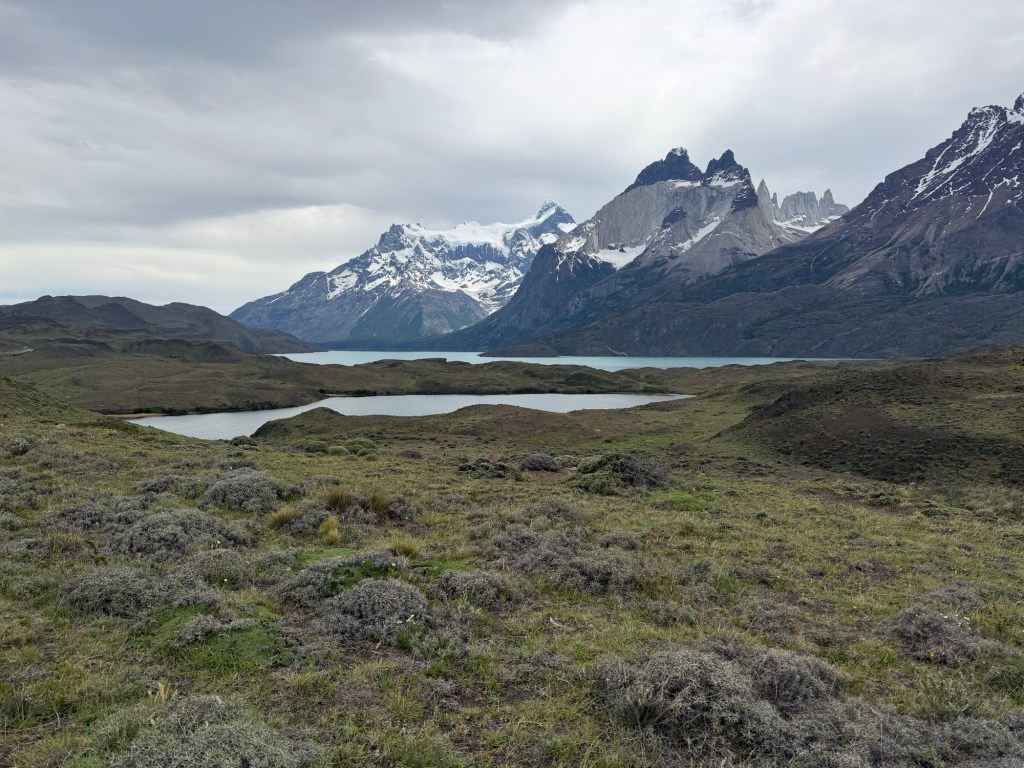
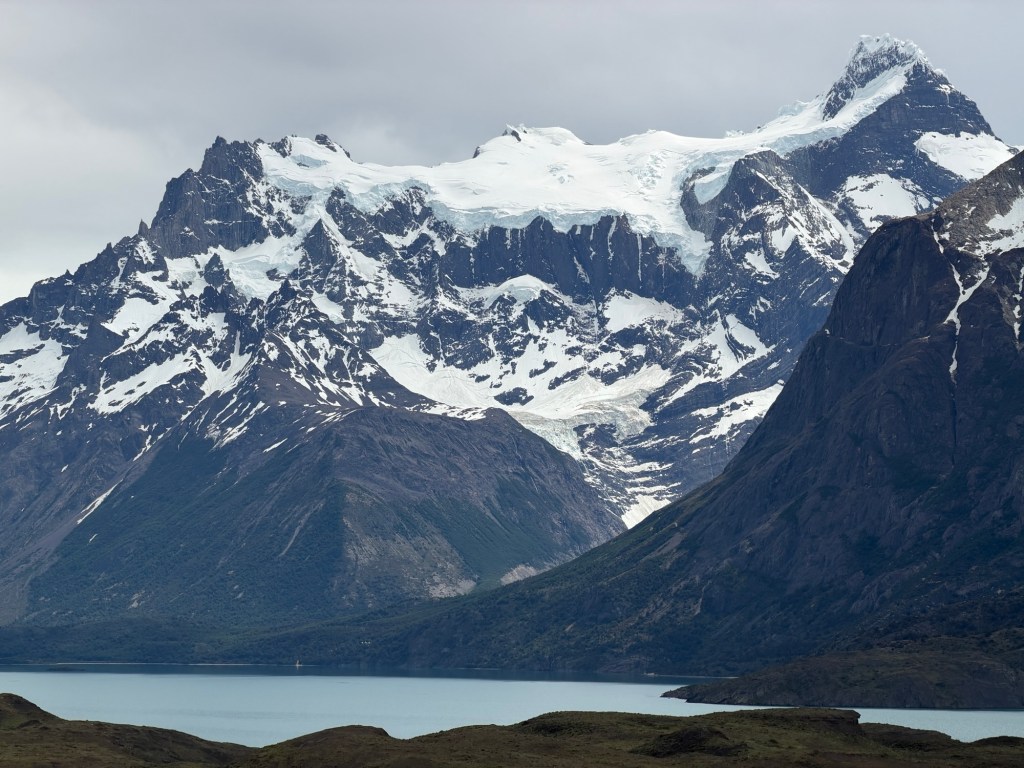
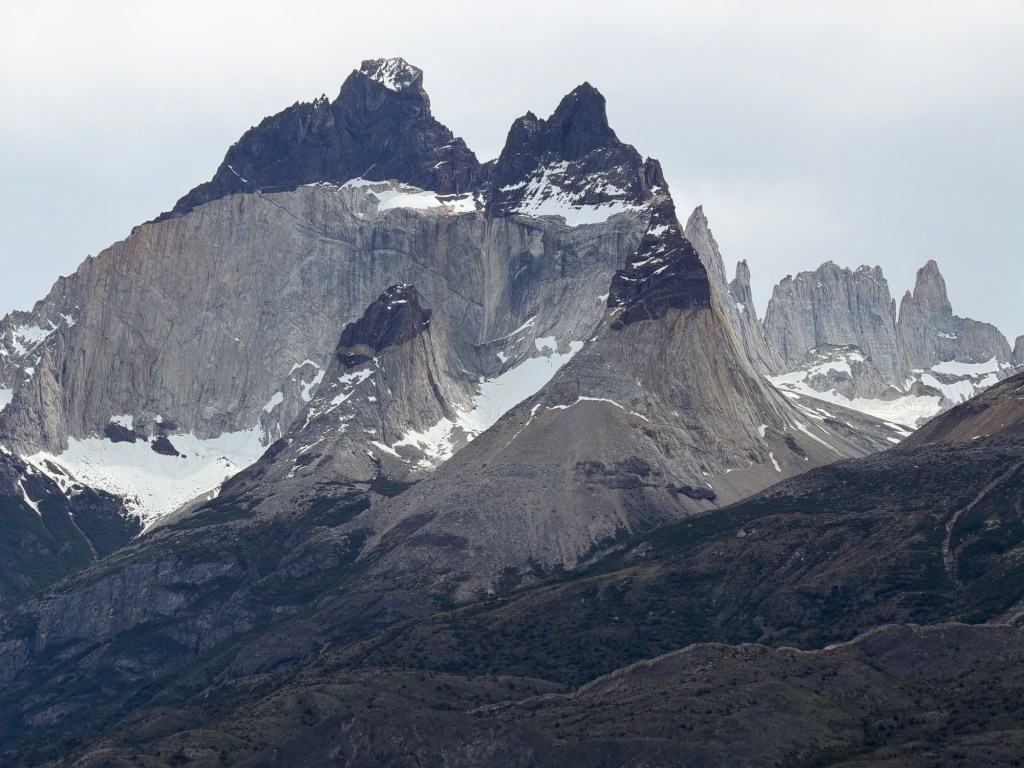
View of horns from different angleExplanation of the rock formationsMap of our hikeNotice this wind speed indicator does not go below 30 km/hour?Glacial lake and view of hornsThe hornsThe pale colored intrusion, with contact metamorphosed sediments is quite visible. Staining on the face of the pale intrusive rock resembles a gaucho on his horse.
Abundant birds graced our hike. Also, our leaders explained how many of the plants were used.
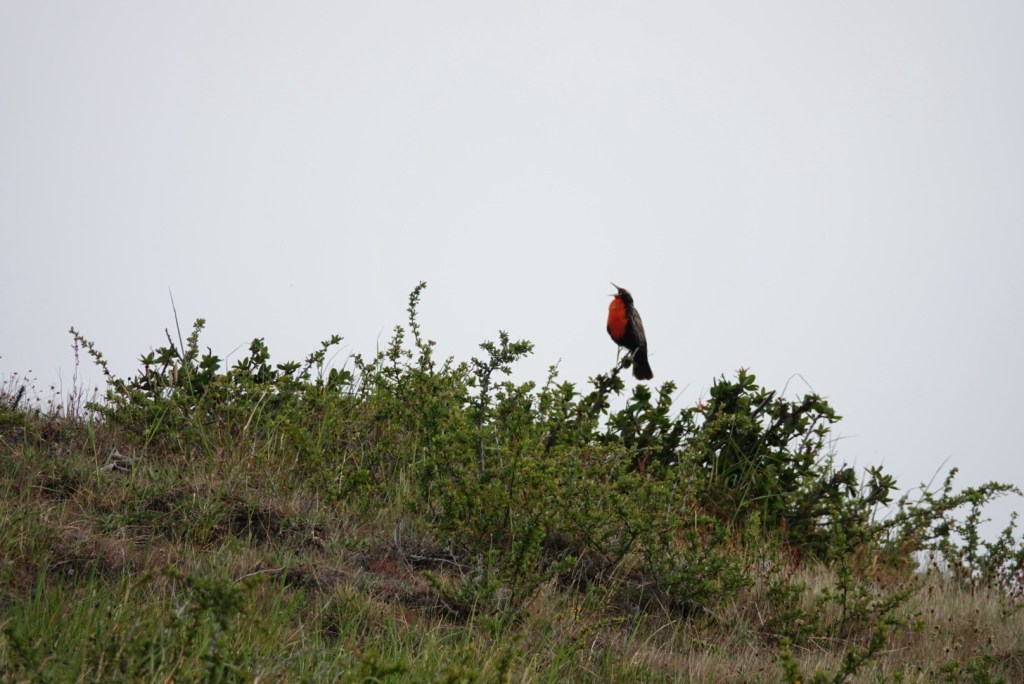
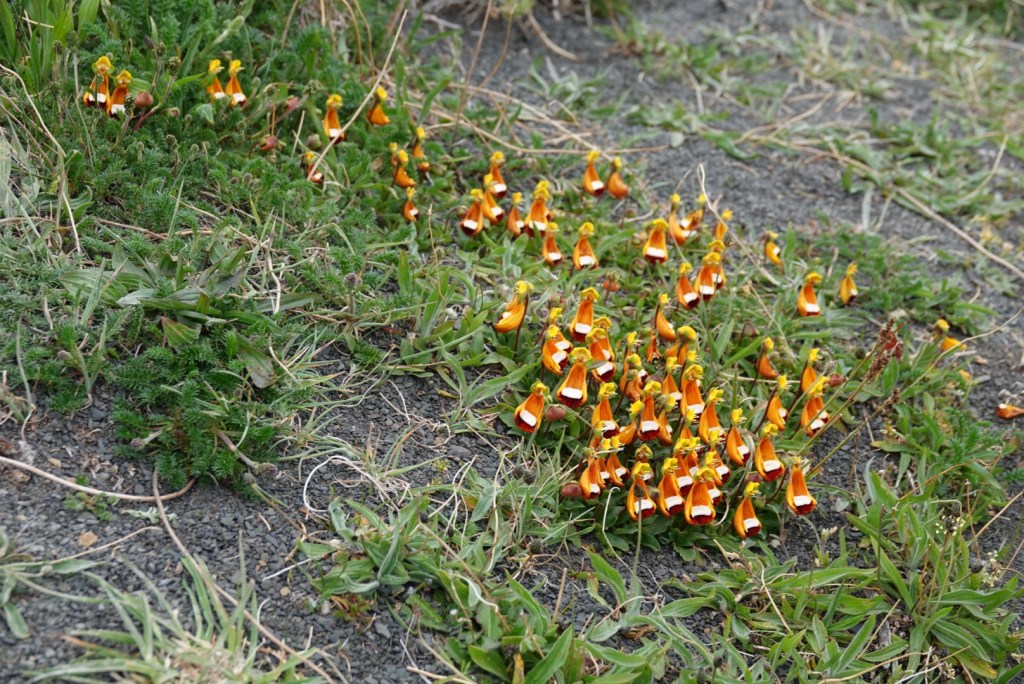
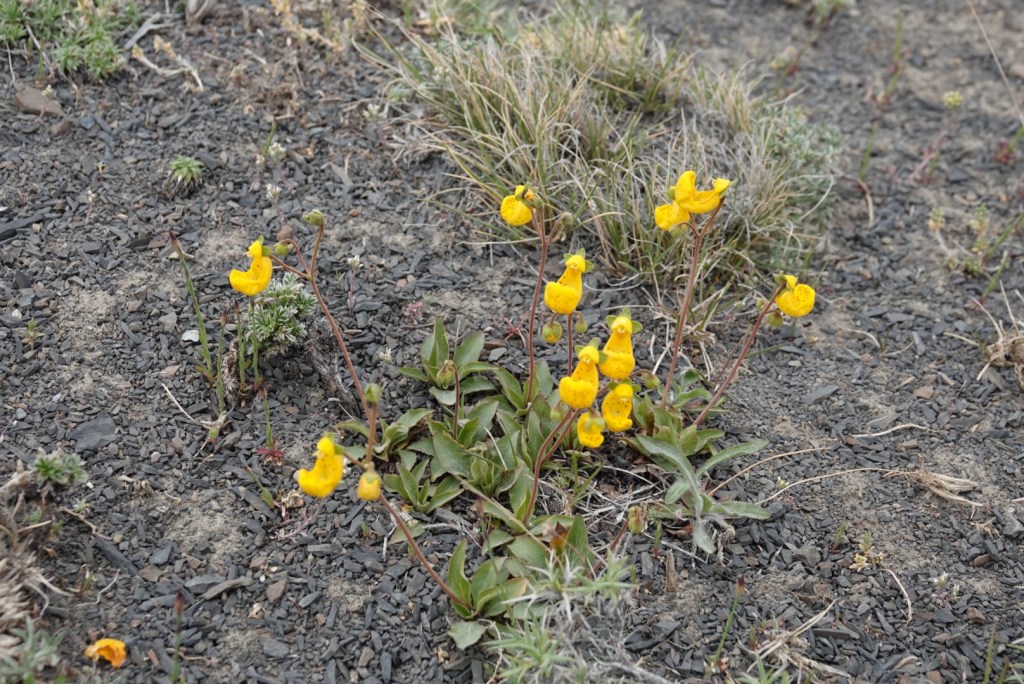
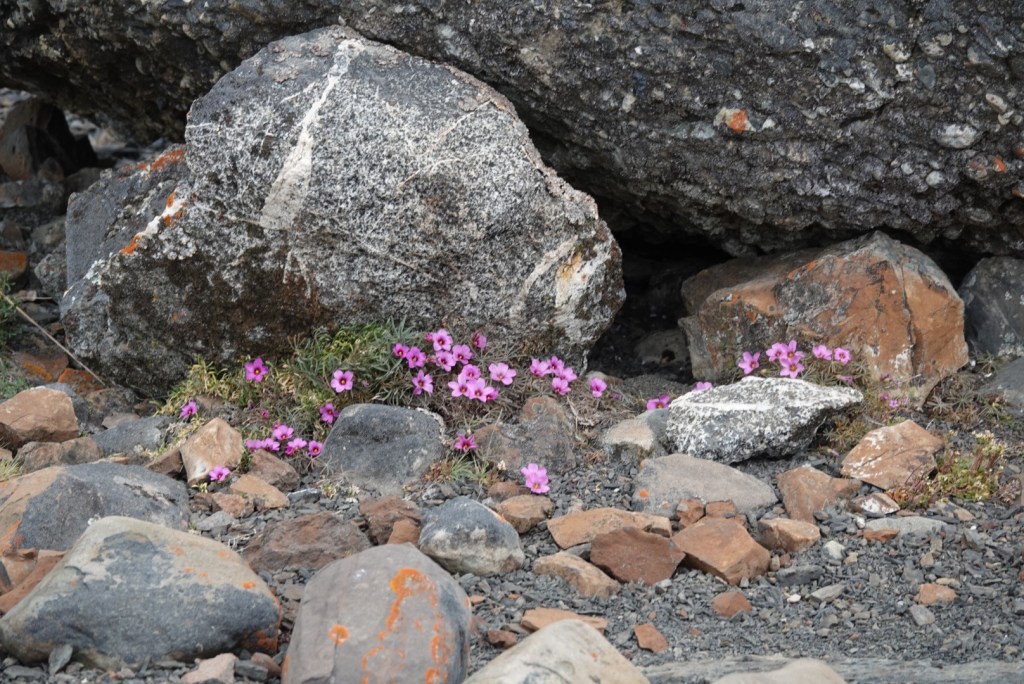
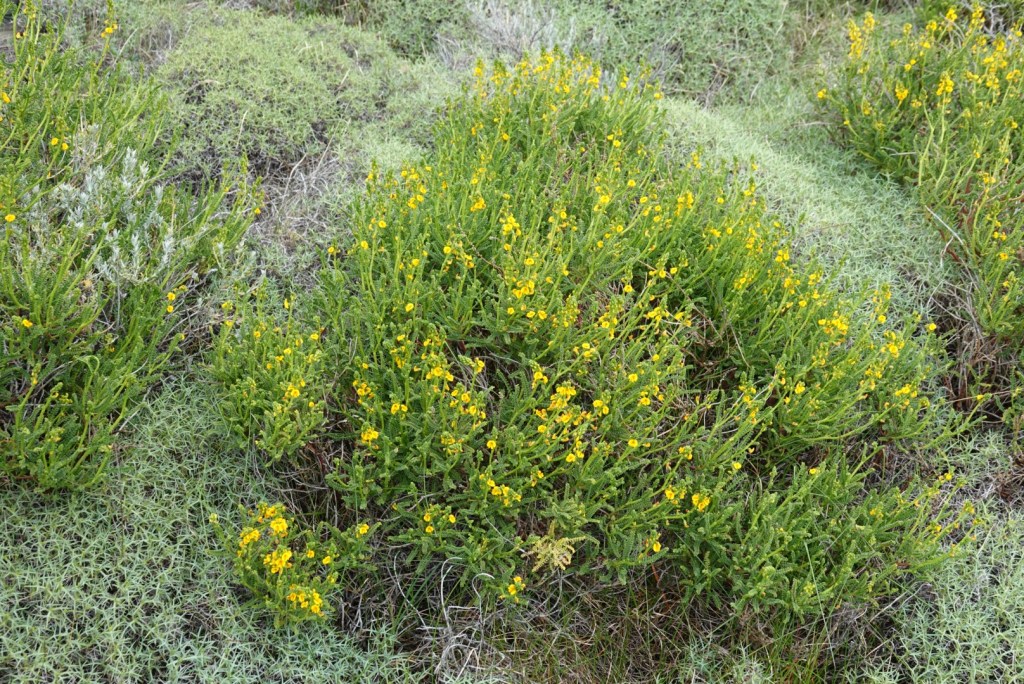
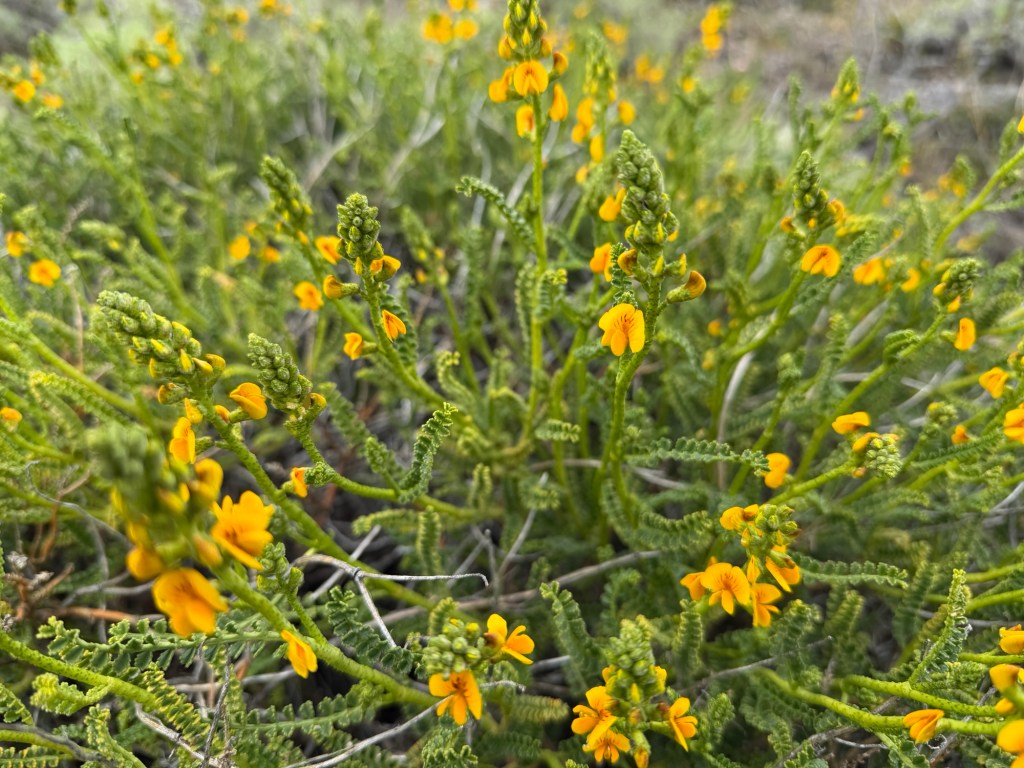
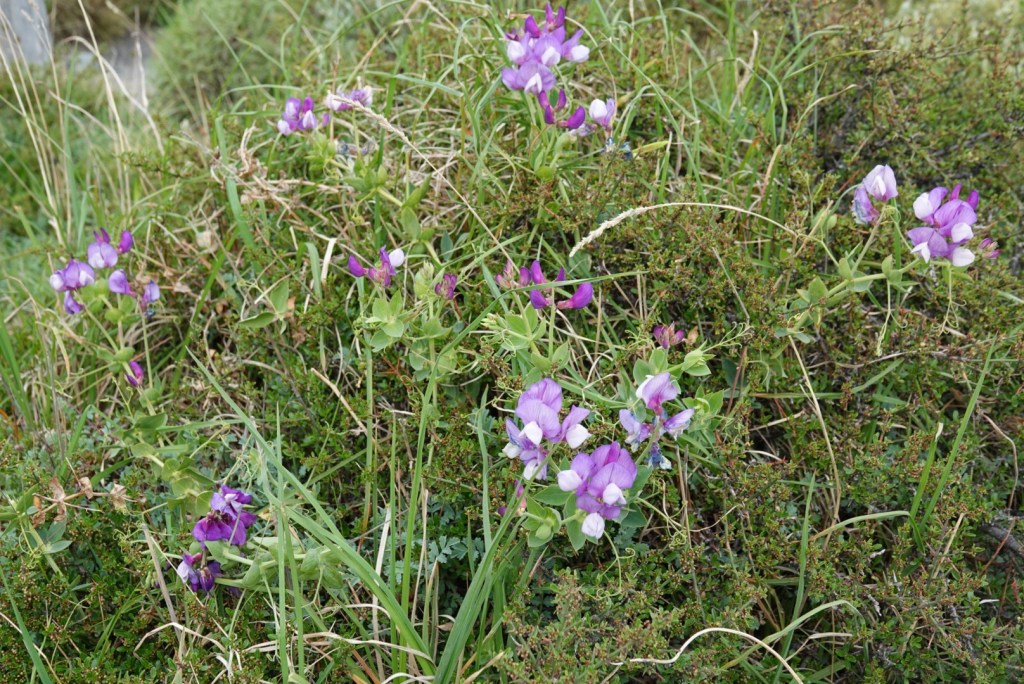
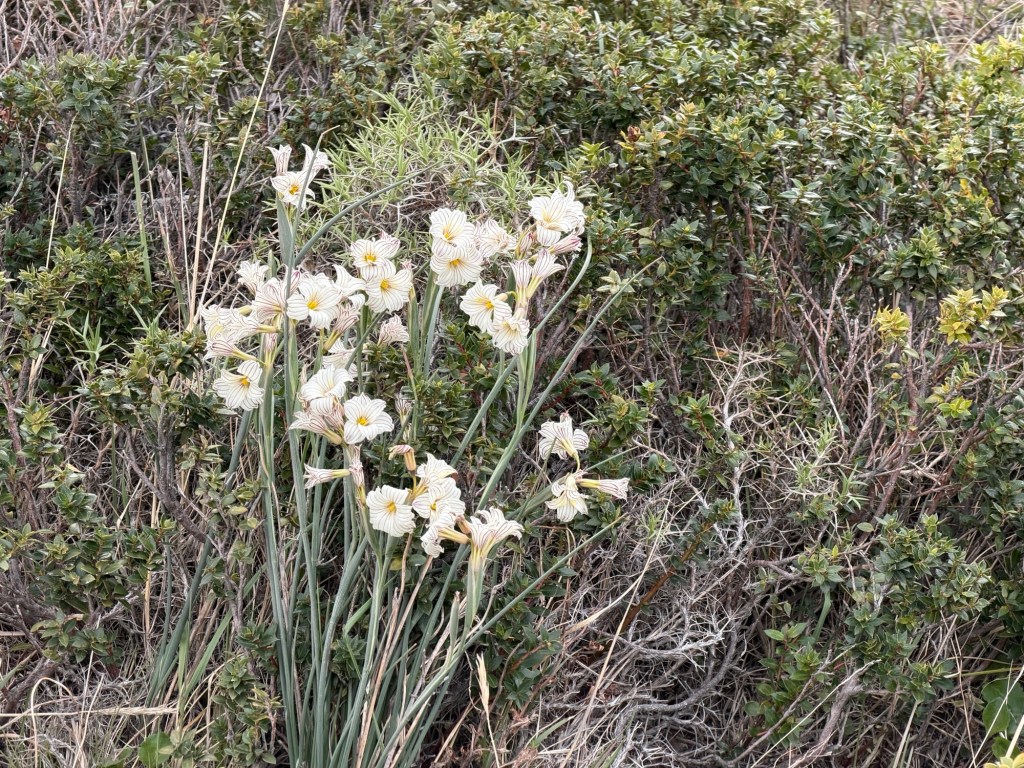
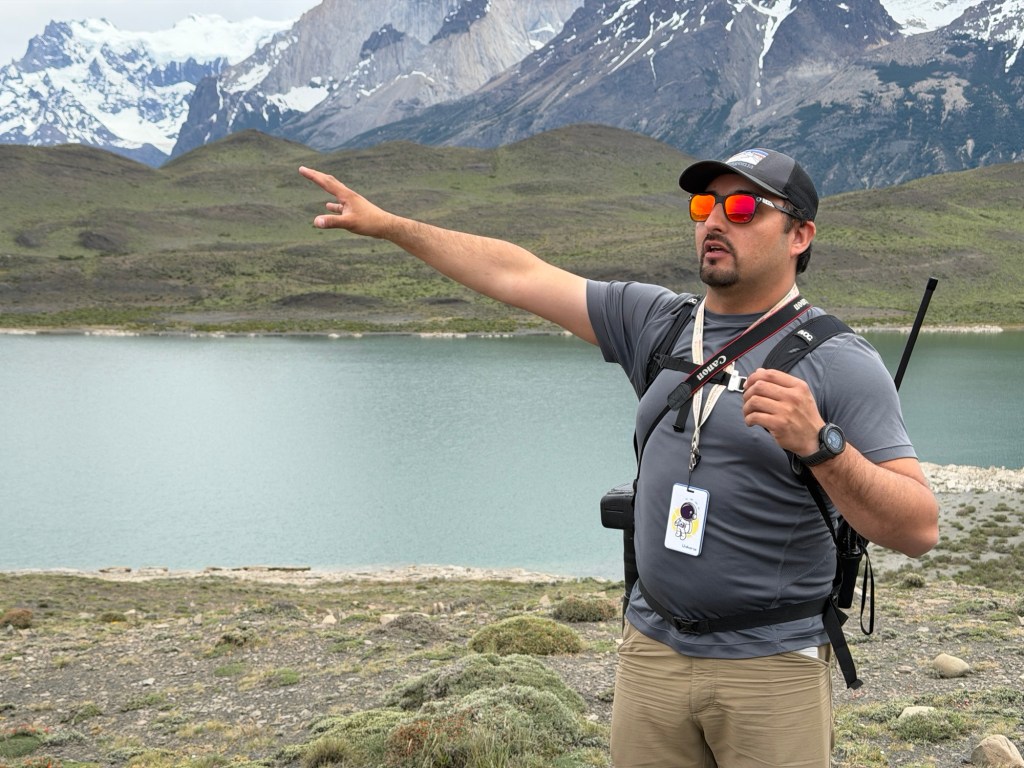
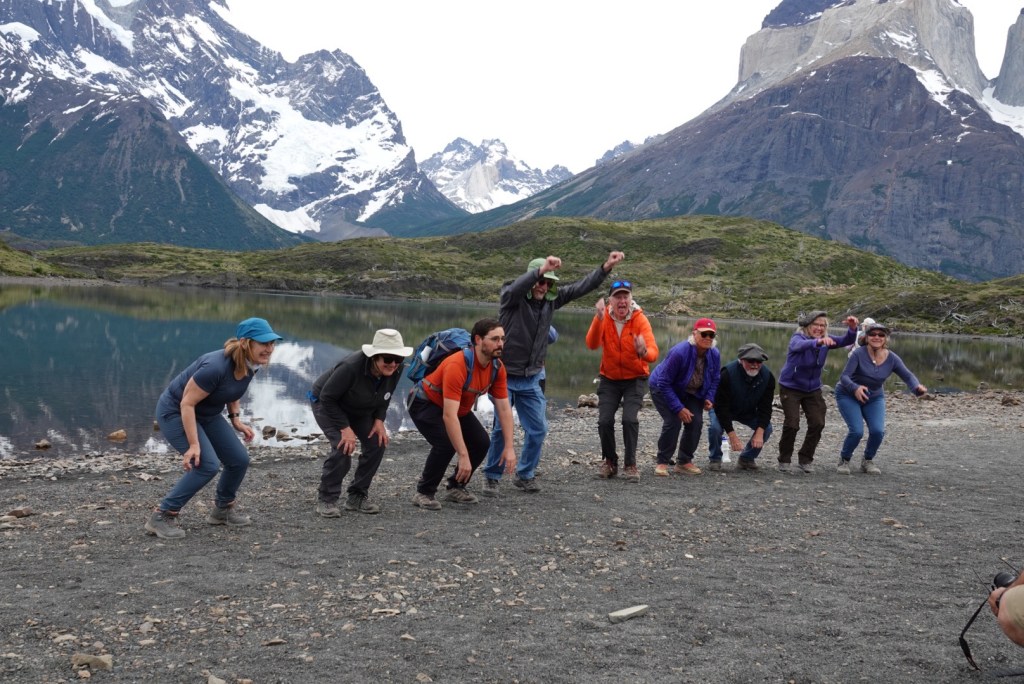
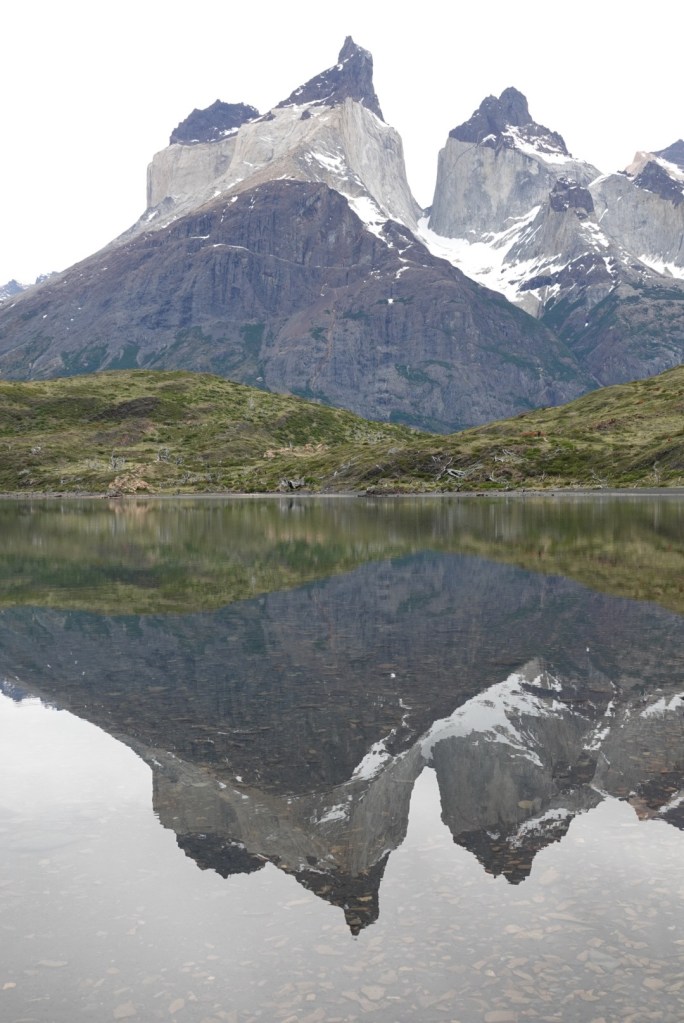
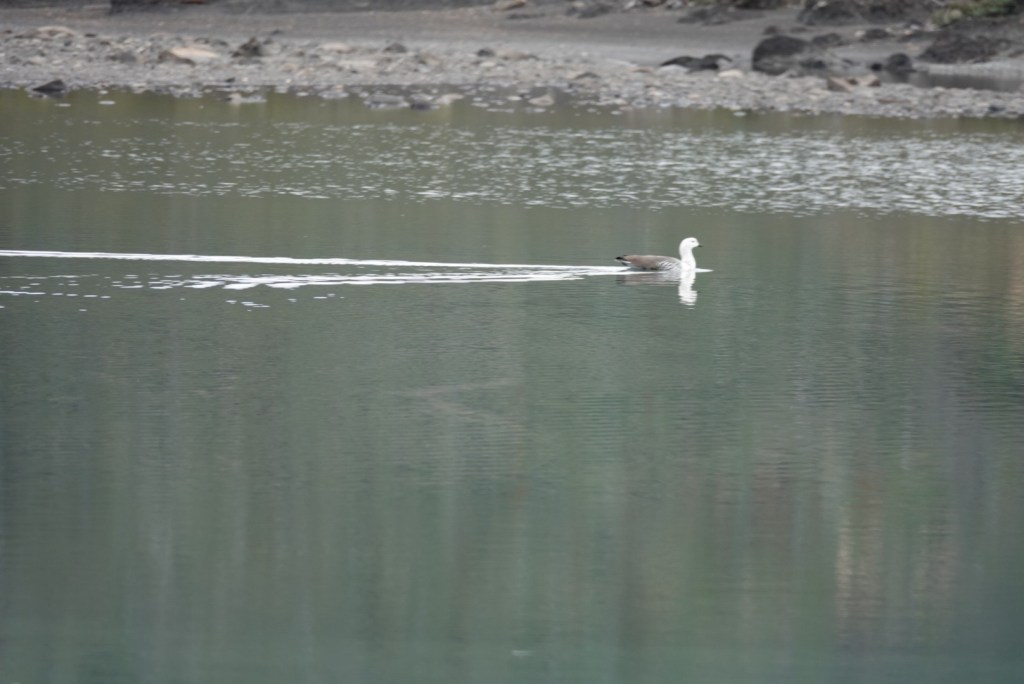
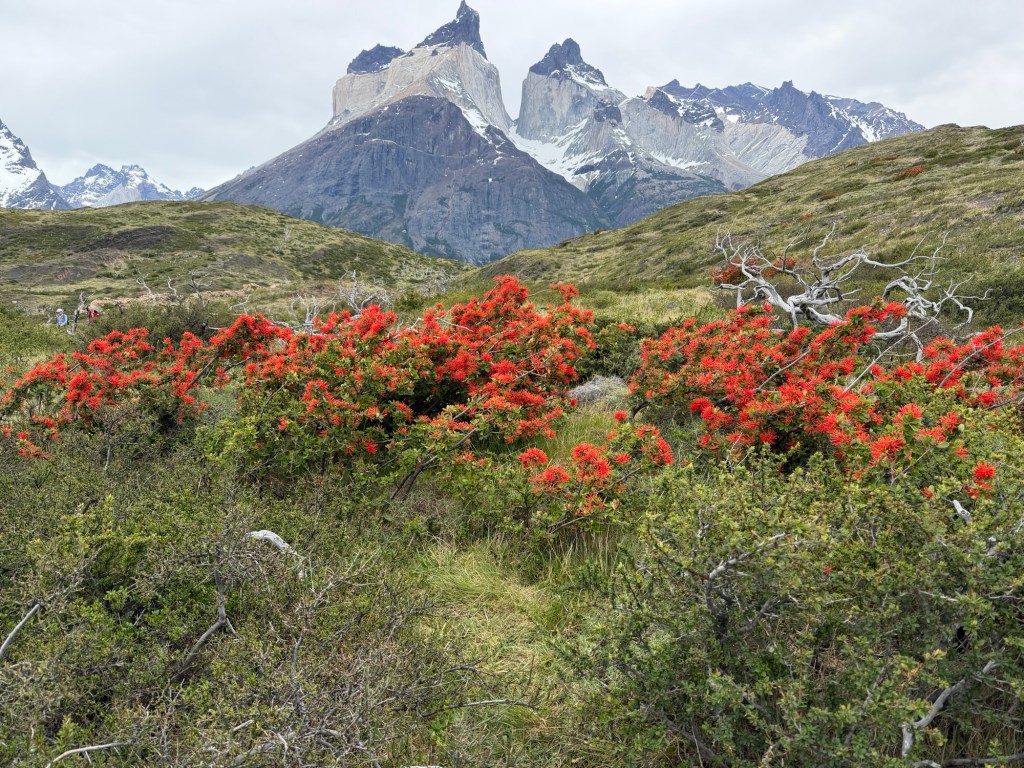
Long tailed meadowlark, who serenaded us on our hike. Pairs seemed to be conversing over our heads. Lady SlippersOther Lady SlippersPink sorrel, oxalisParamela bush, used for many medicinal purposes Paramela close upPea flowersLily, possibly Streaked MaidenRodrigo waving his arms like a geologist. Our group jumps for joy.The horns mirrored in a very still lakeLater, a goose disturbed the stillness of the lake.Same rocks with fire bush flowers
On our walk, but mostly when we stopped, we heard low rumblings of small avalanches.
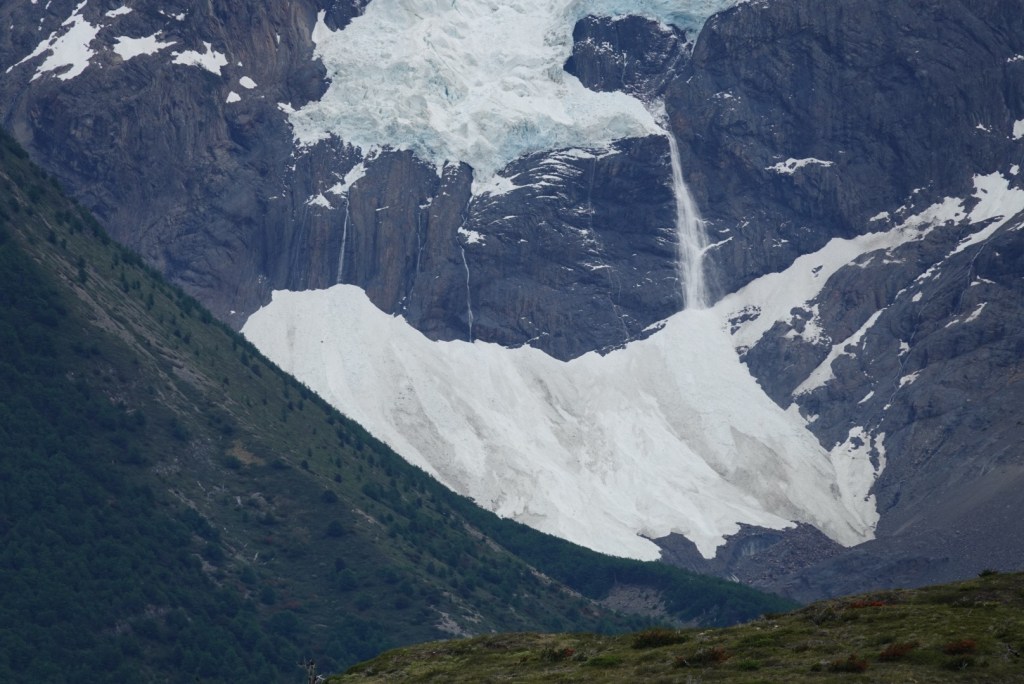
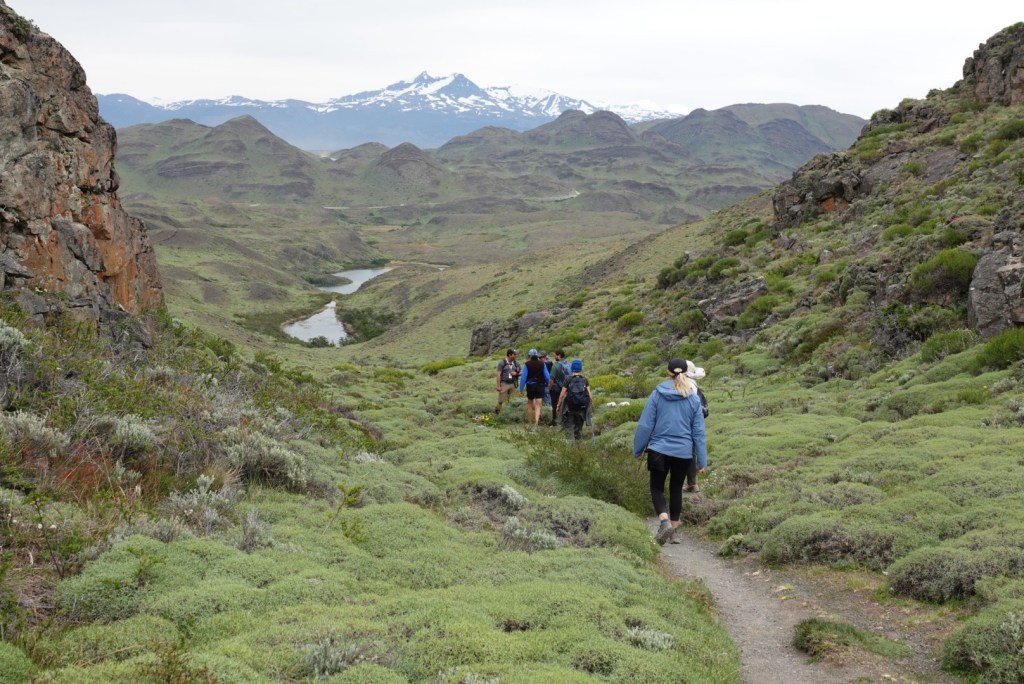
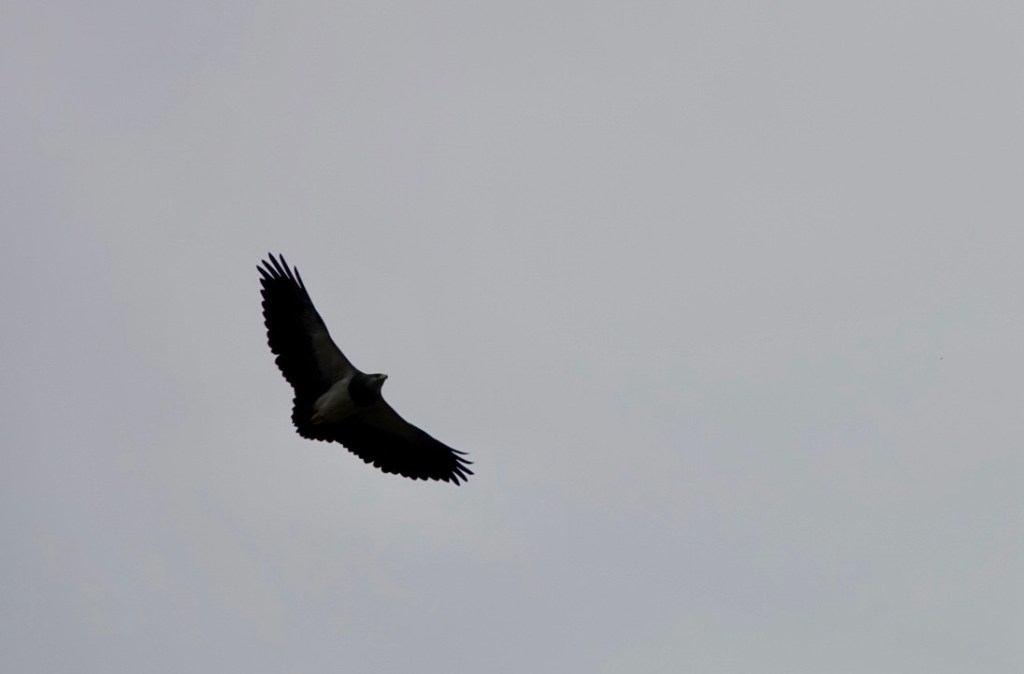
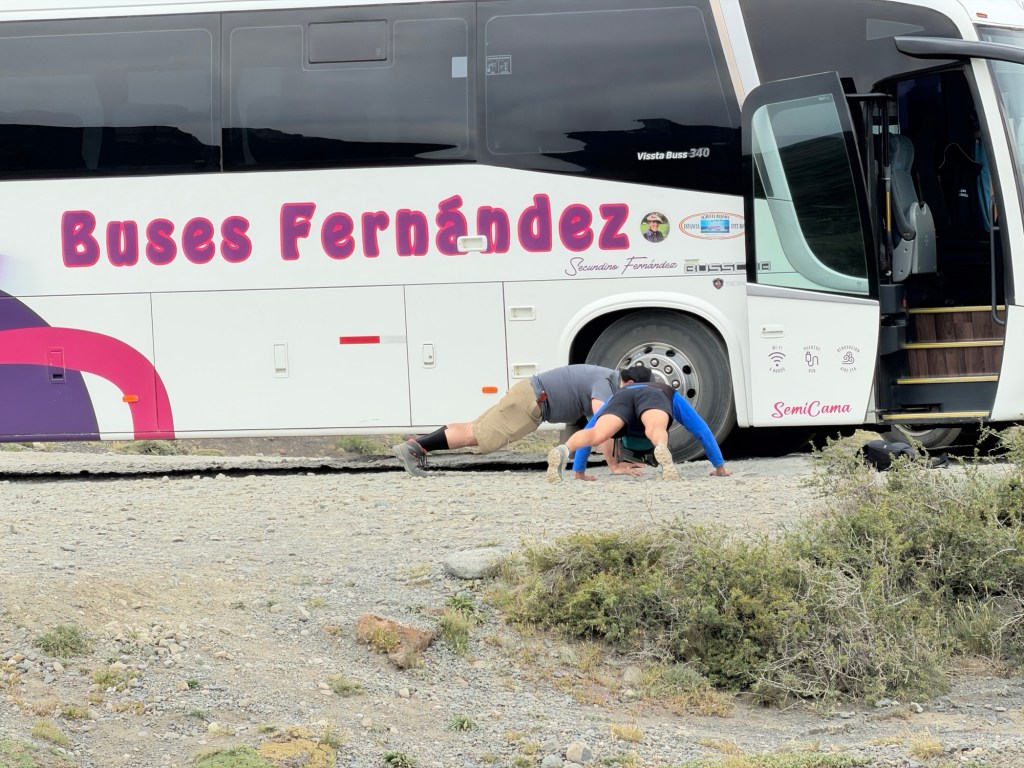
Waterfalls and a snow avalancheGreen valley on our second hikeEagle soaringRodrigo and Robin having a contestThe scenery was fantastic. This place alone could have been worth our trip.View from the Lago Grey hotel in the late afternoon
We met our new local tour guide, Rodrigo, who loves to hike and tell stories. From Punta Arenas to Torres del Paine NP, we drove alongside the Strait of Magellan. Rodrigo told us about Magellan’s journey, including the fact that he did not complete it. It was a long drive, but the OAT’s team had box lunches for us. Very efficient.
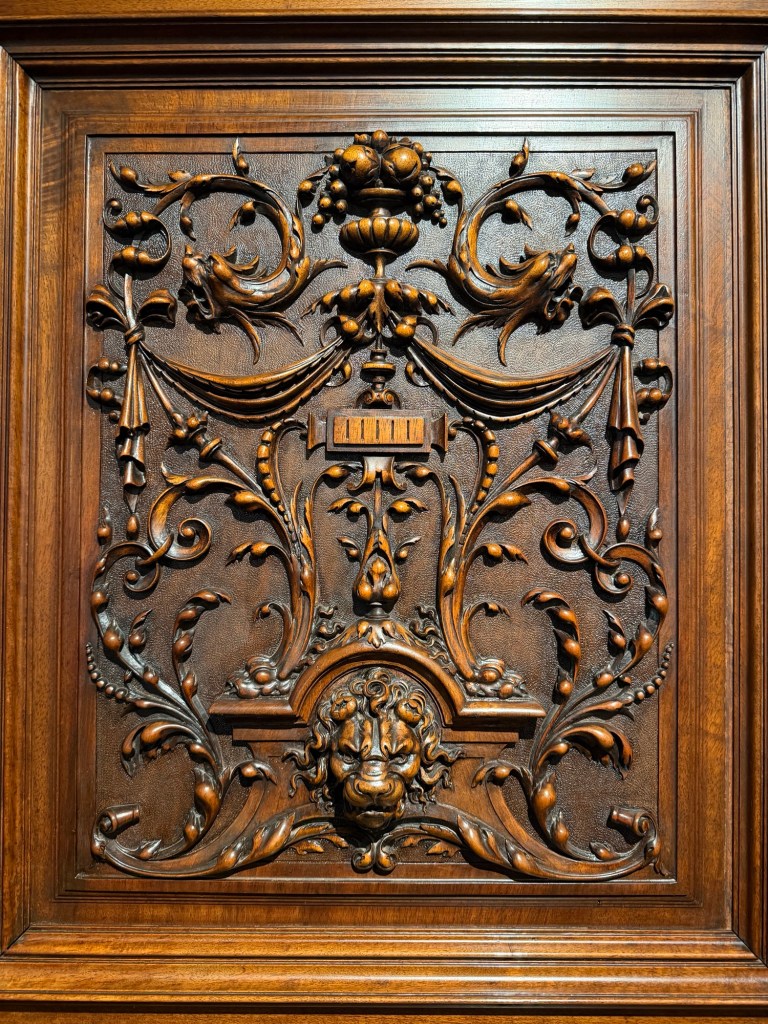
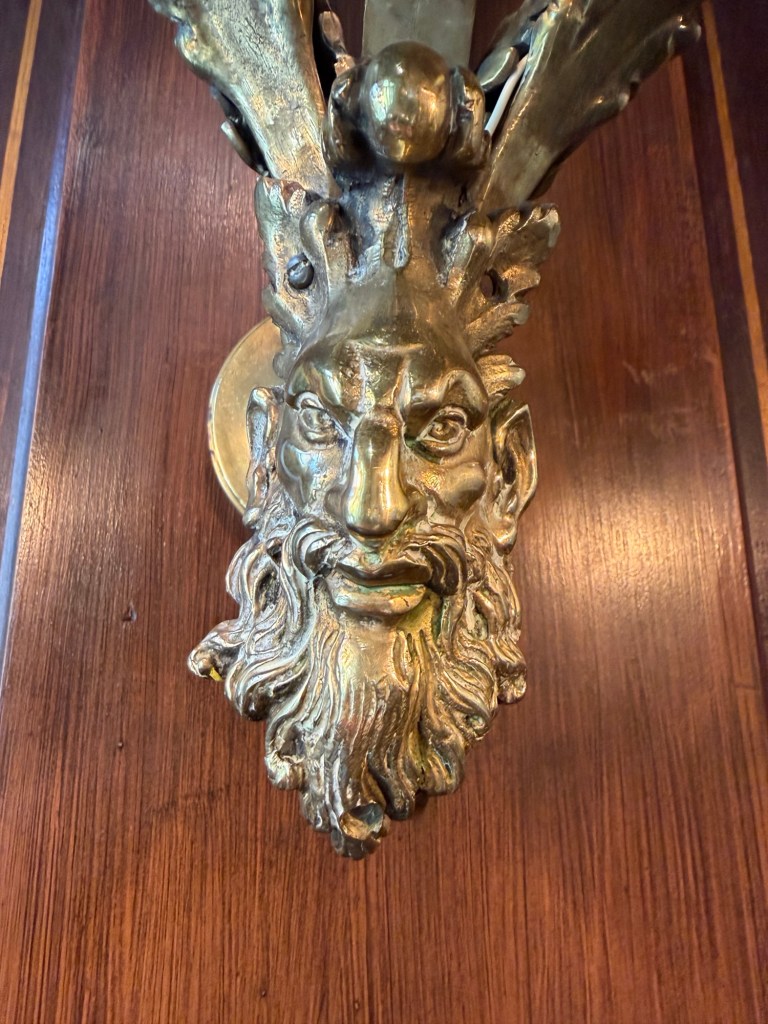
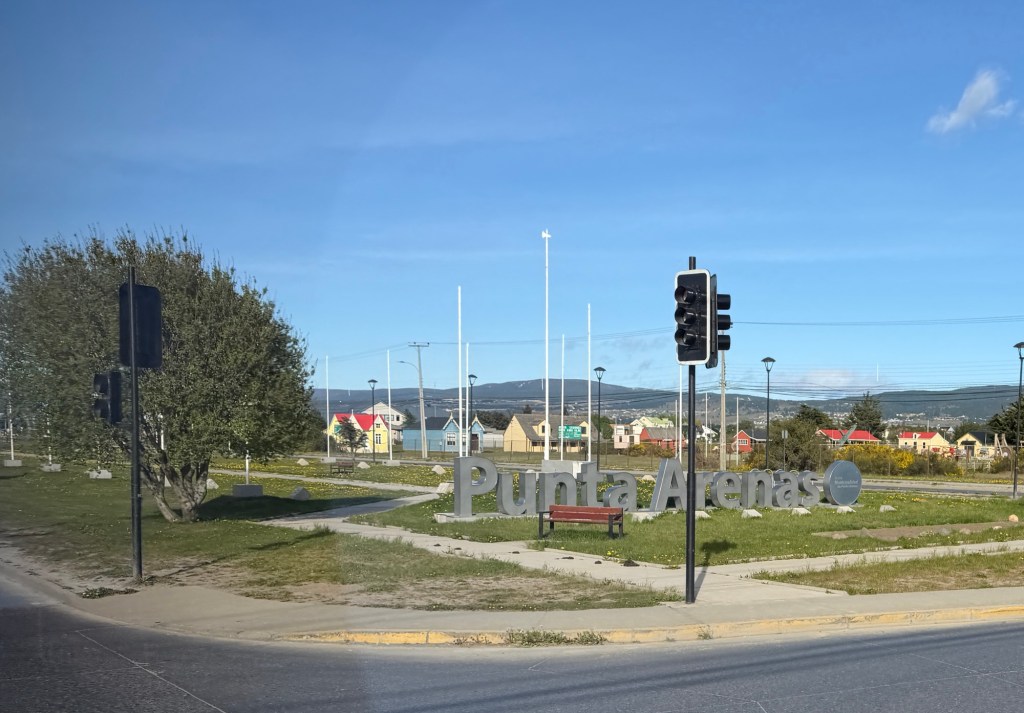
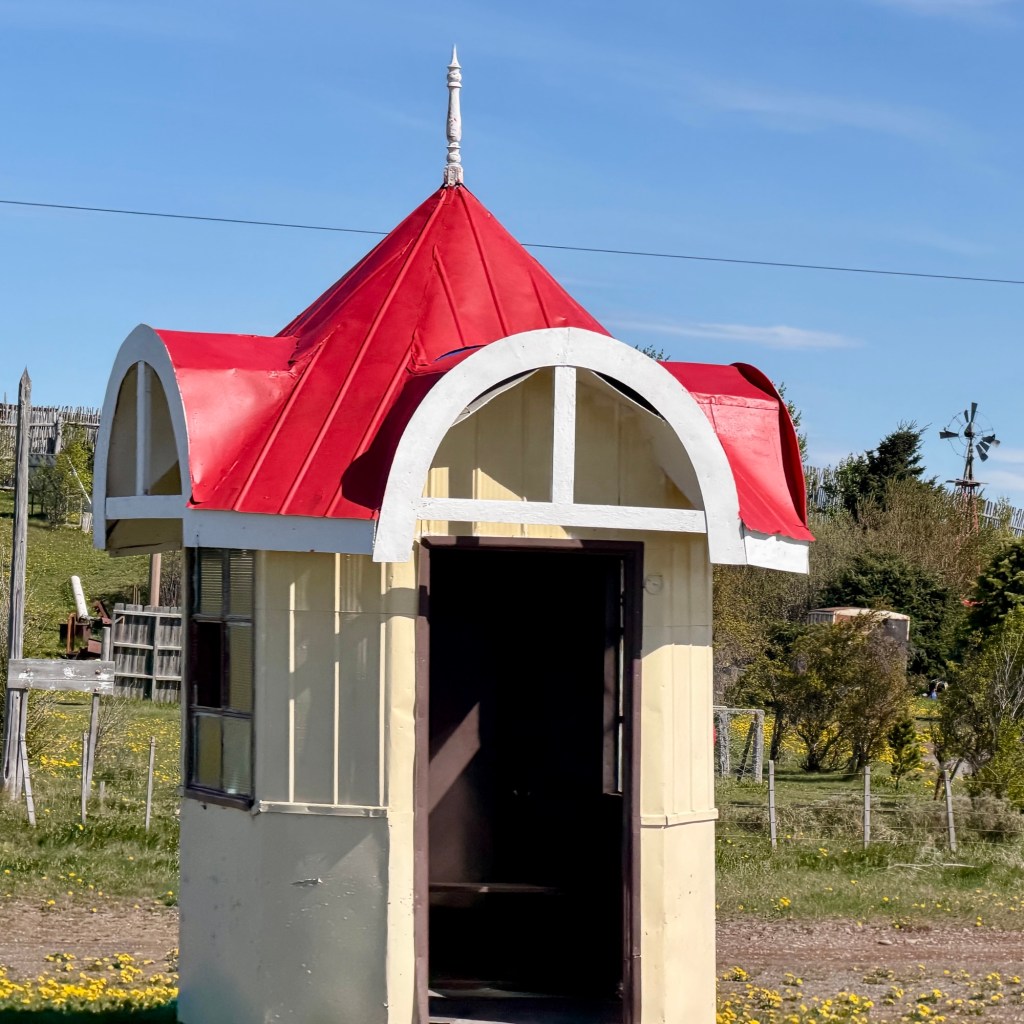
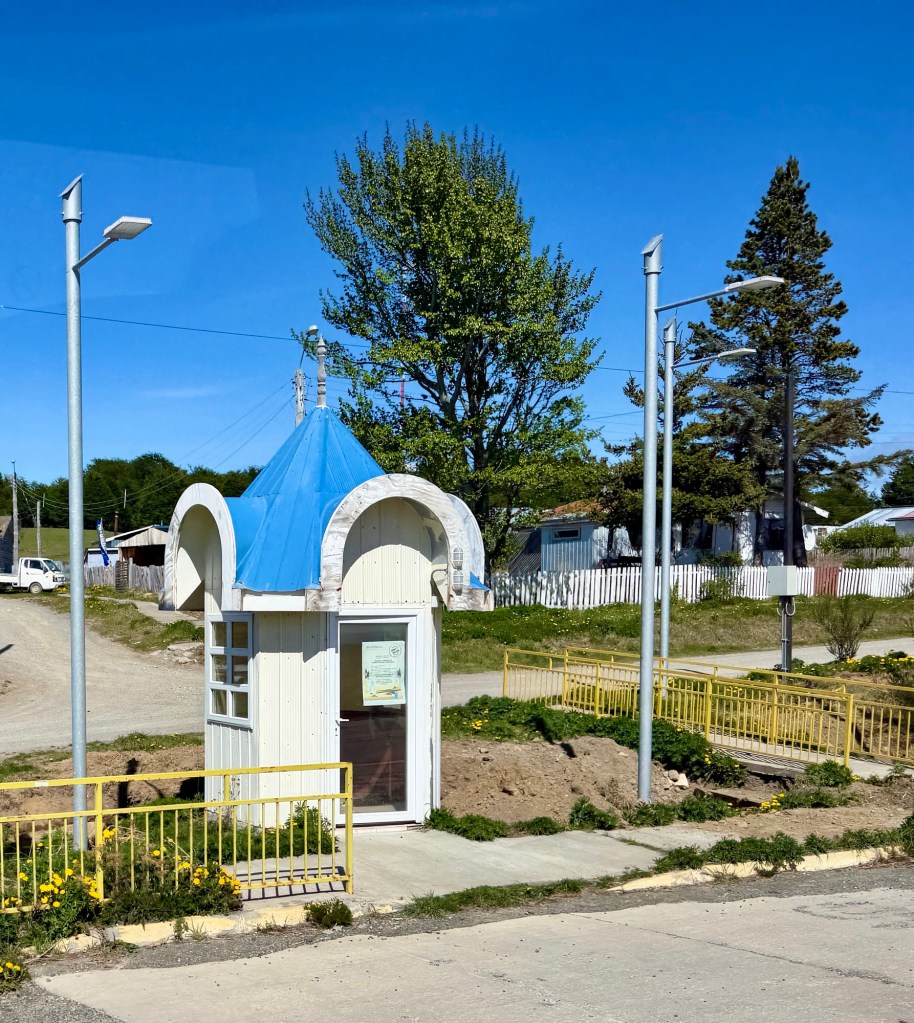
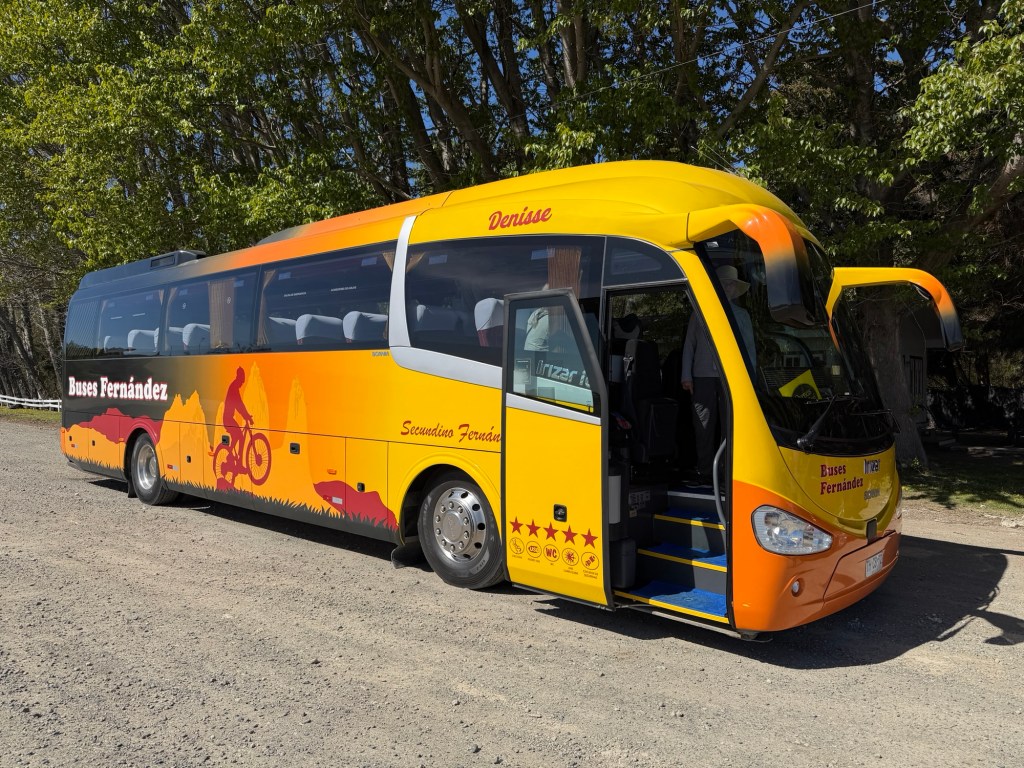
Intricate wood carving at breakfast Metal face at breakfast Sights on bus starting in Punta Arenas toward Magellan StraitSheltered bus stopSheltered bus stopOur busRanch we passed on the bus
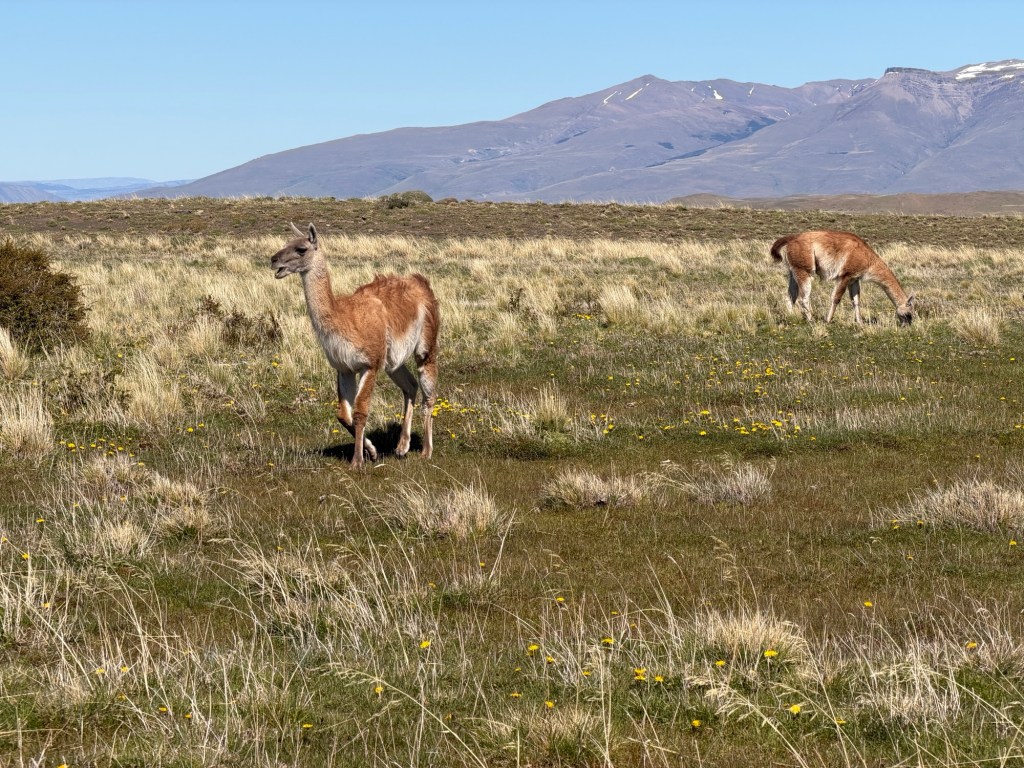
We saw new animals on the drive. Rodrigo told us that one Rhea egg is equivalent to about 20 chicken eggs. Also, Rhea chicks are raised by males, one dad many moms, in groups of forty, to start out. Usually only around ten survive out of each clutch.
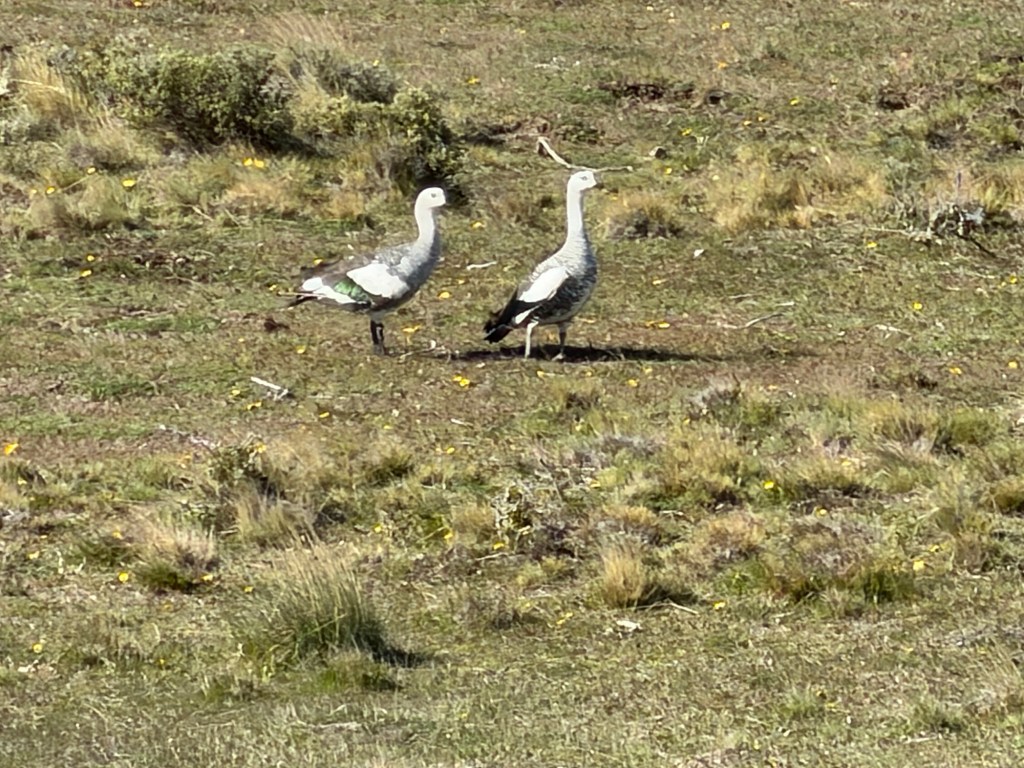
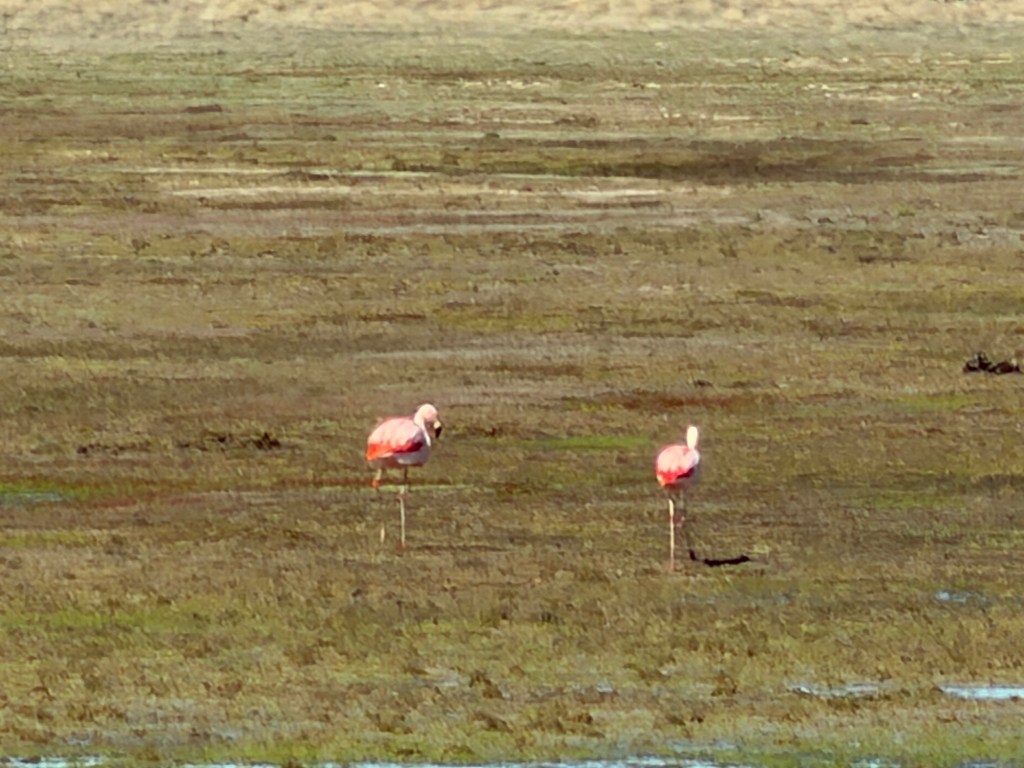
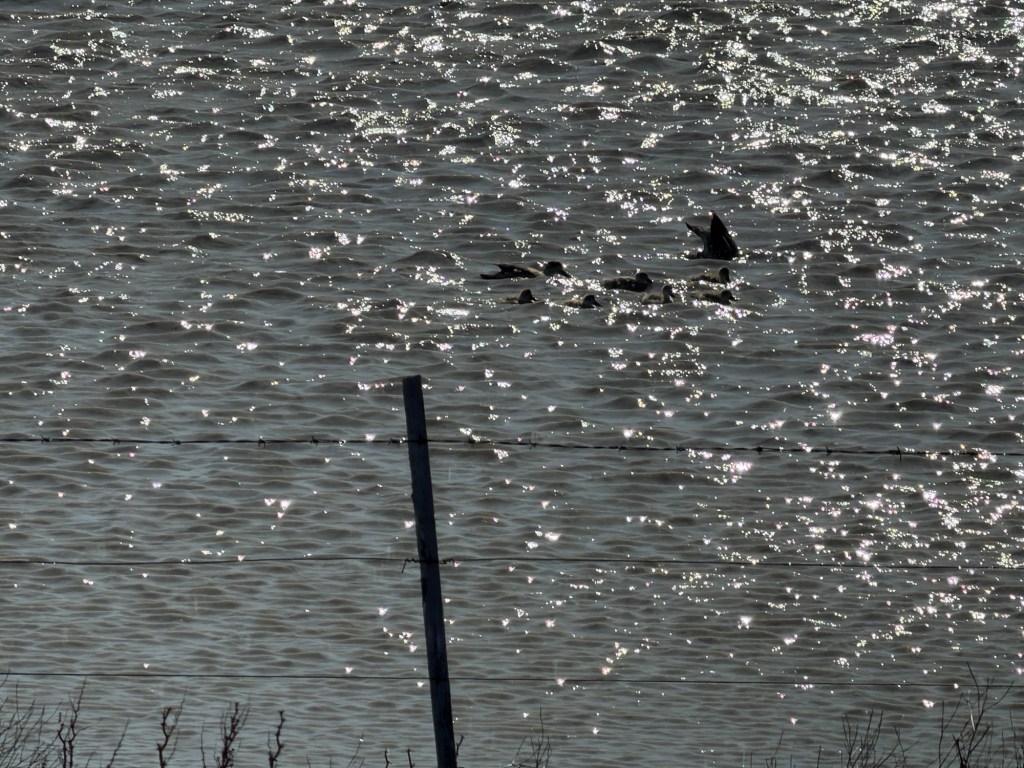
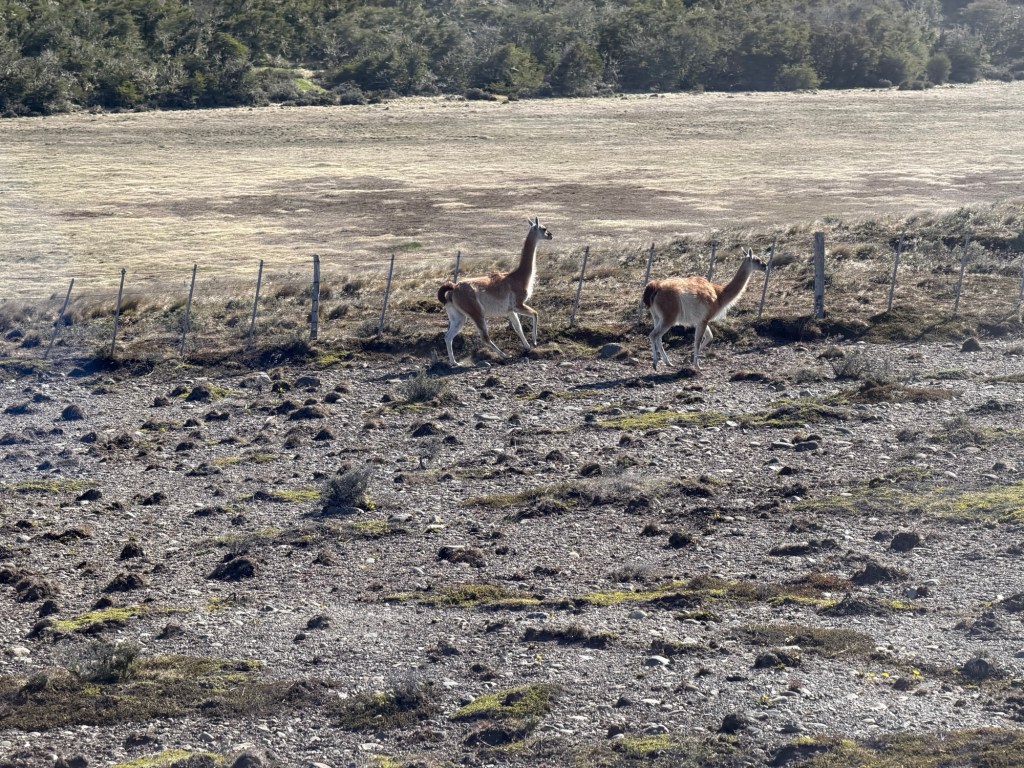
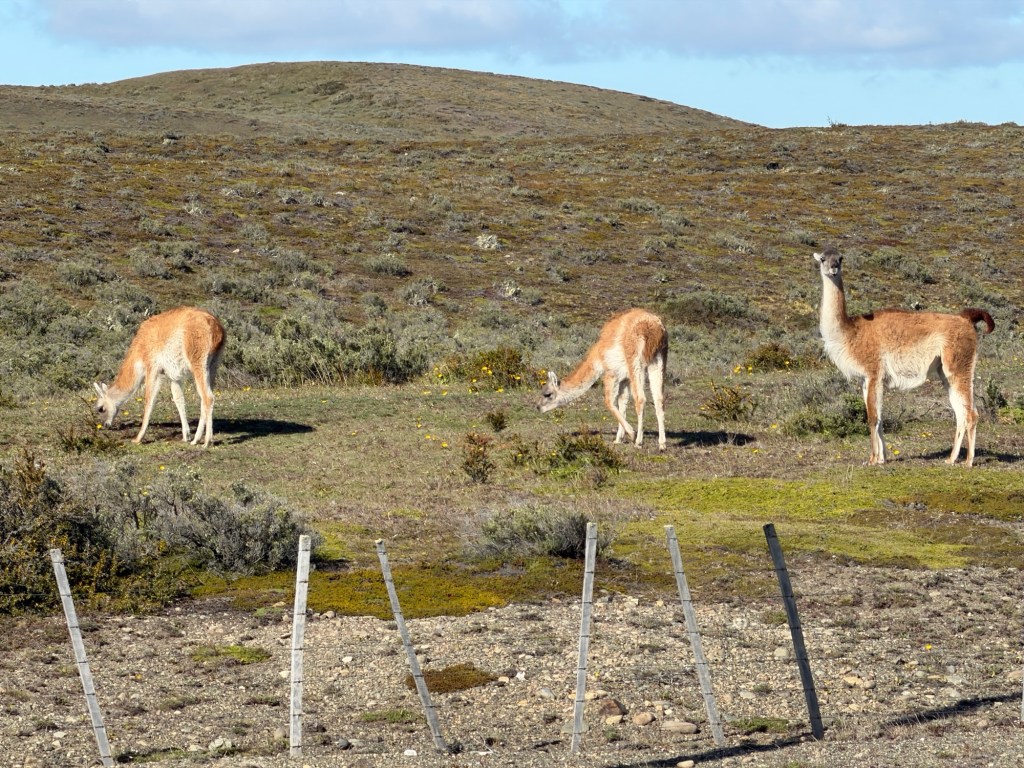
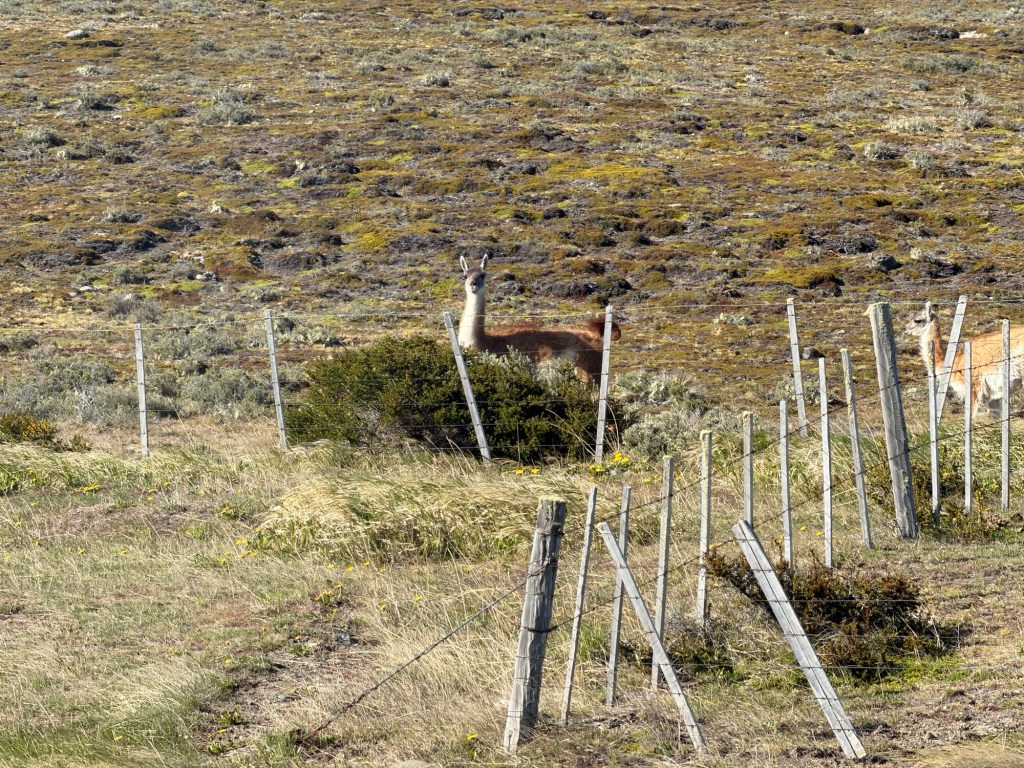
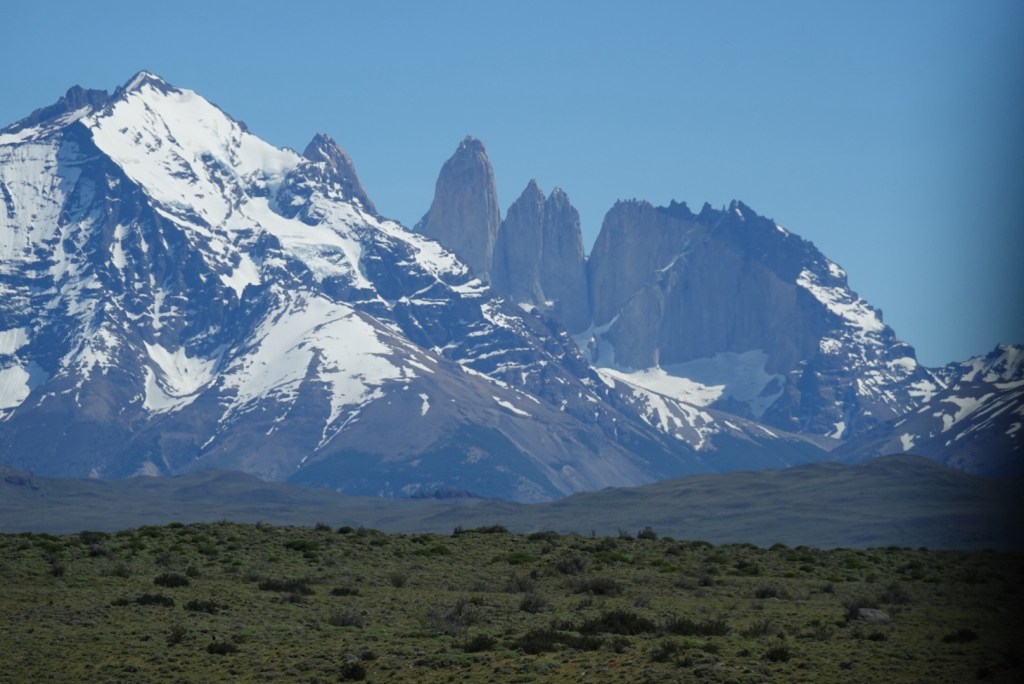
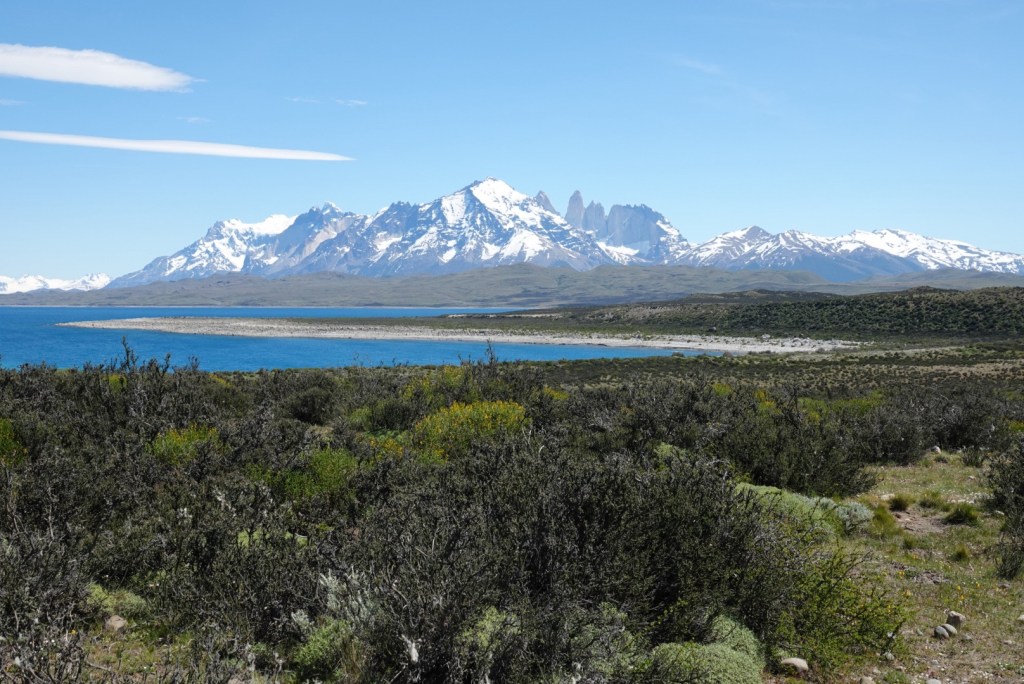
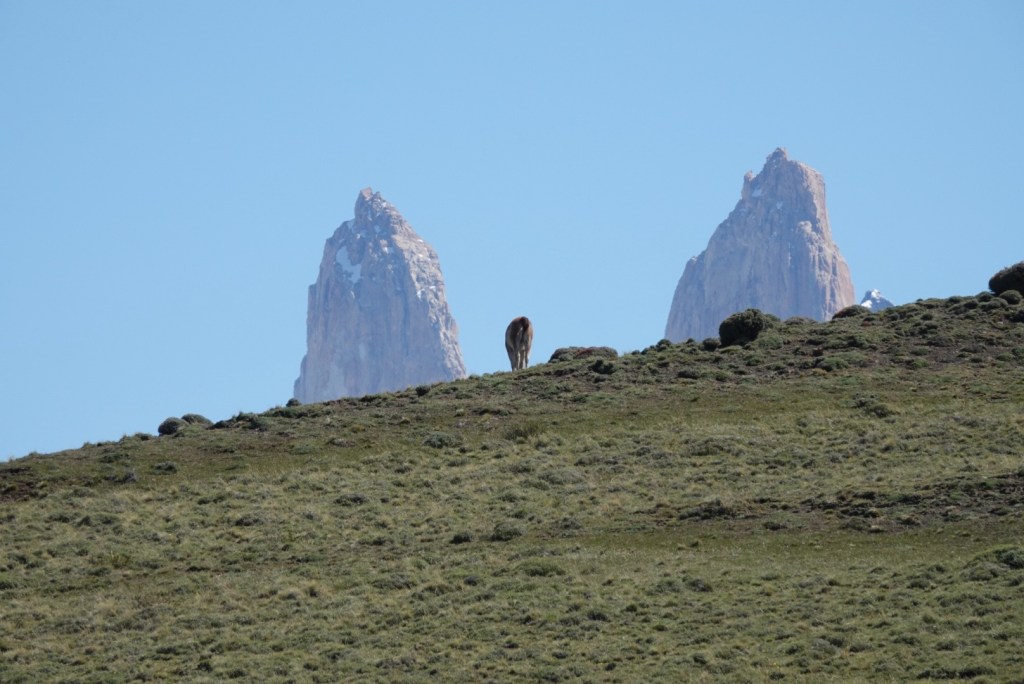
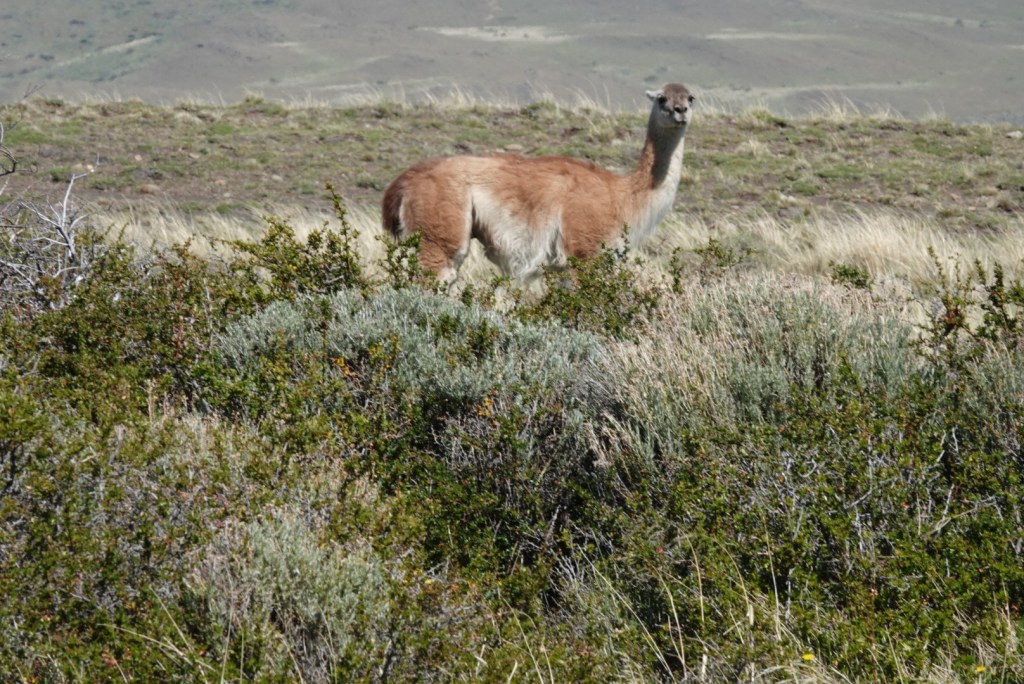
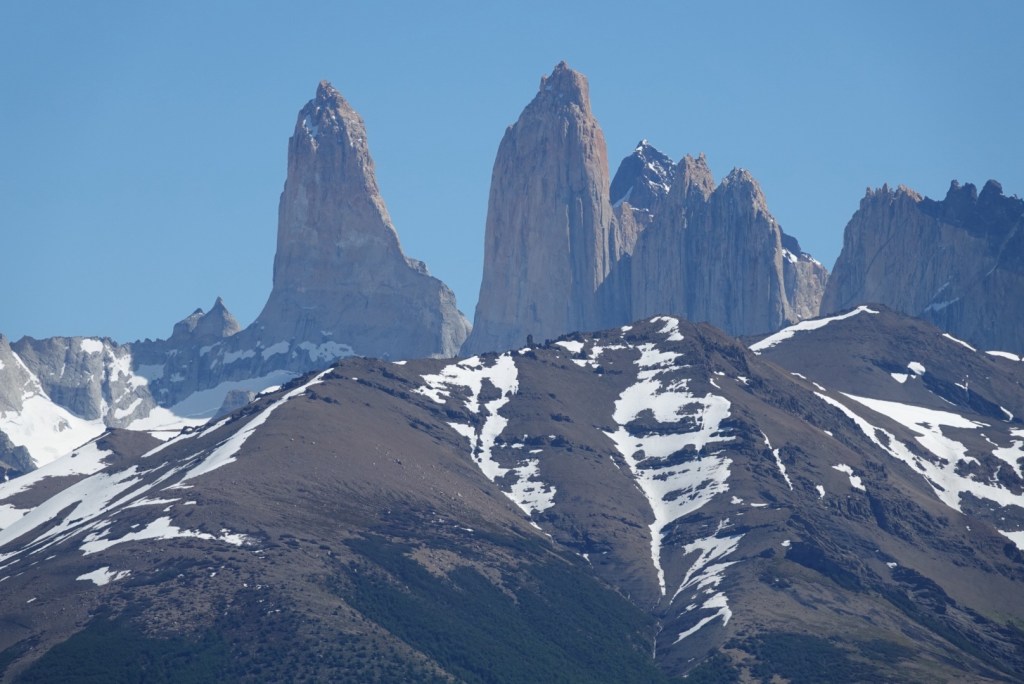
Lesser RheaUpland geeseDifferent geese?Flamingos Shoveler ducks with ducklingsGuanacosFirst view of the towers, Torres del PaineColumnar jointed basalt outcrop
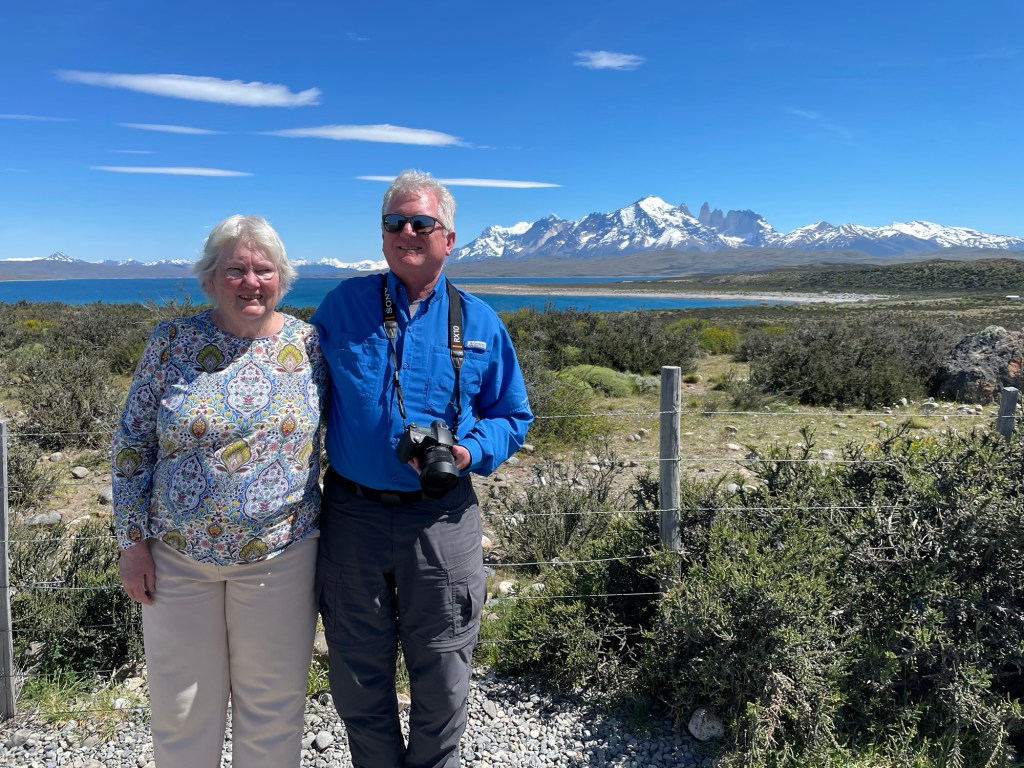
We stopped outside the park to take a two mile hike to view the most famous peaks in Chile. Again, the weather was clear and sunny. What luck!
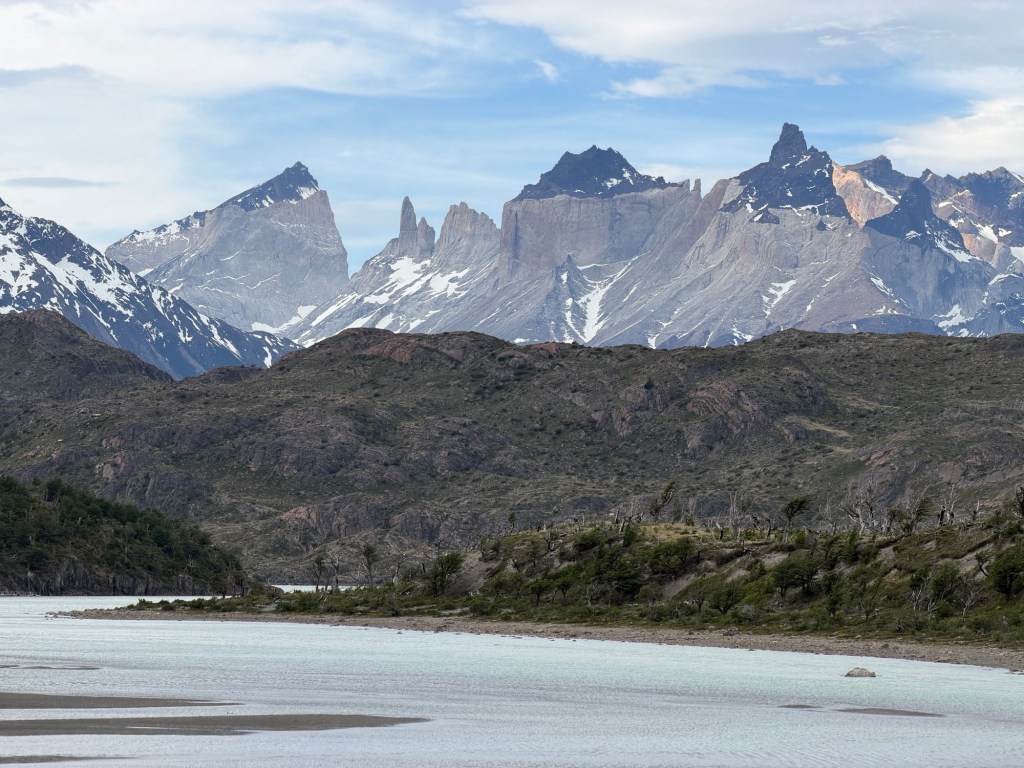
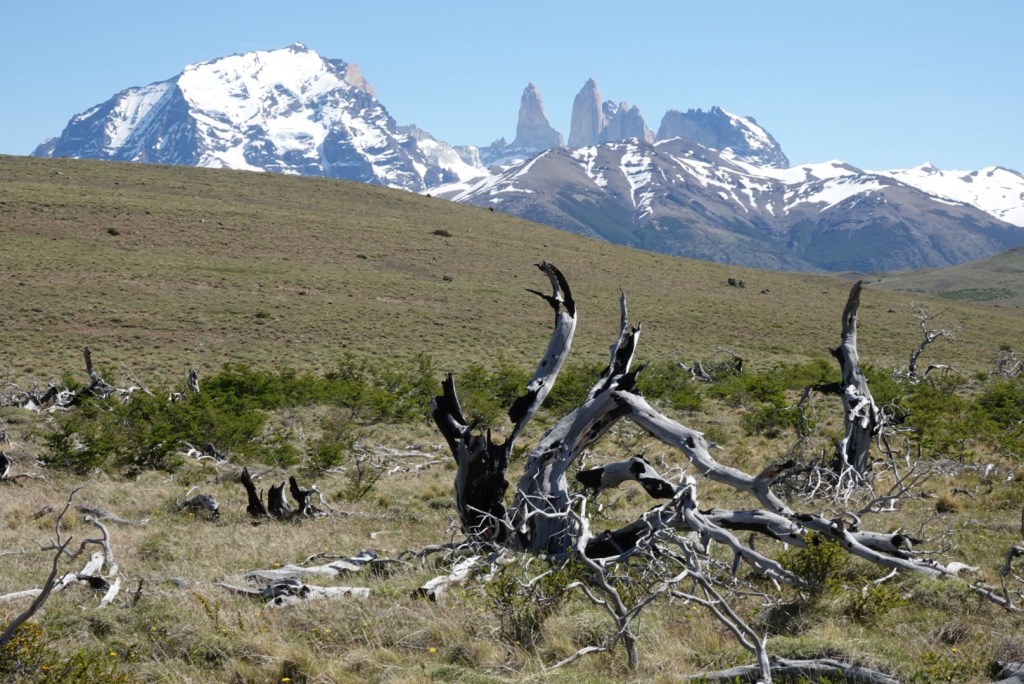
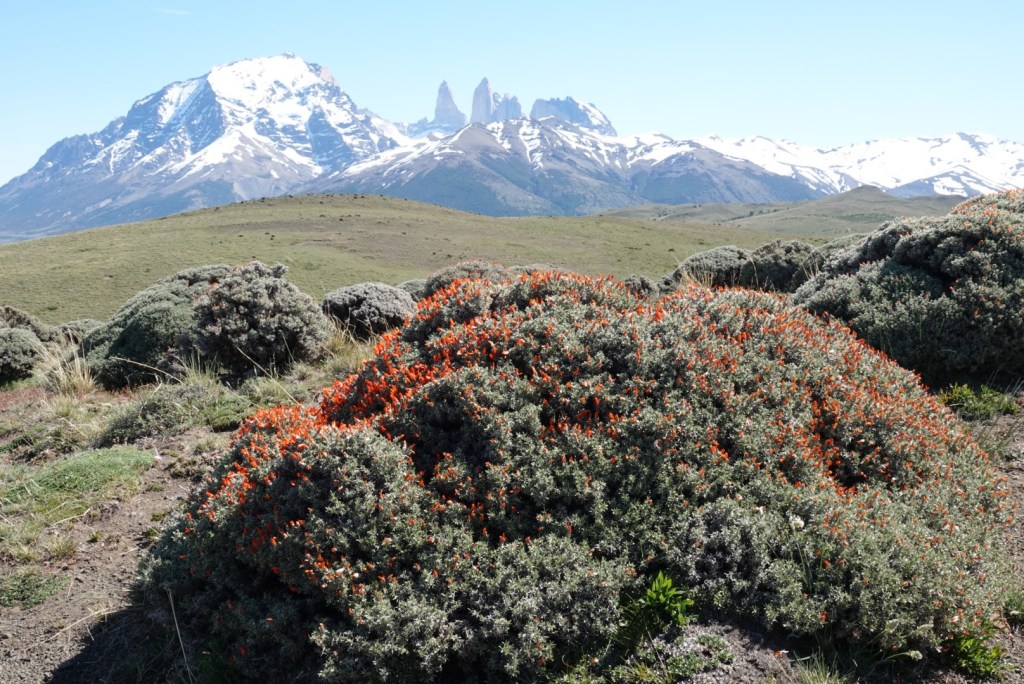
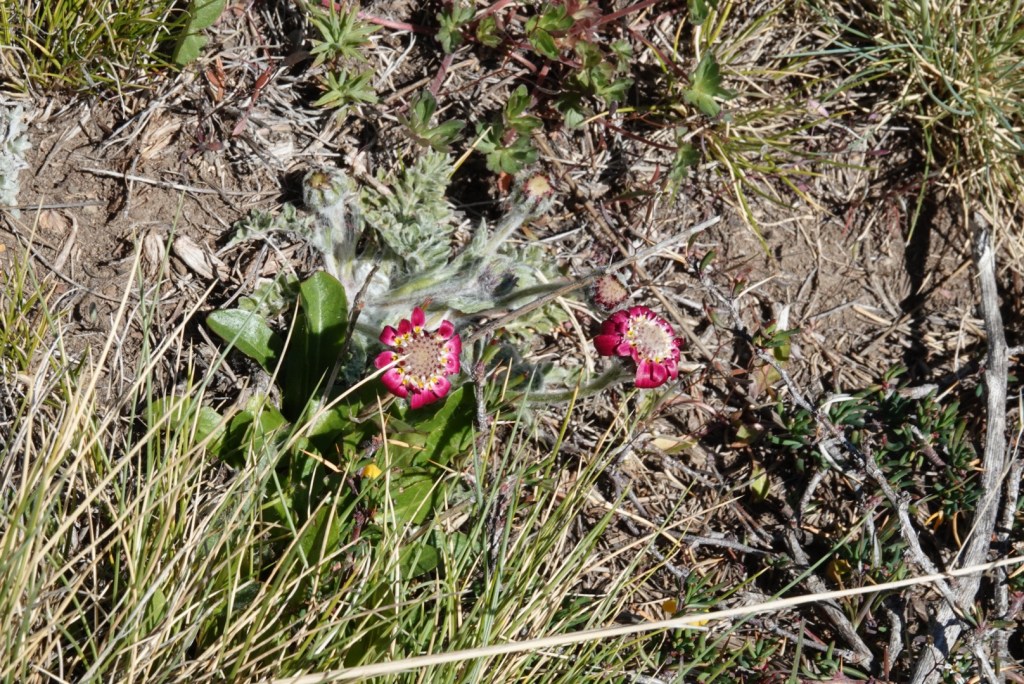
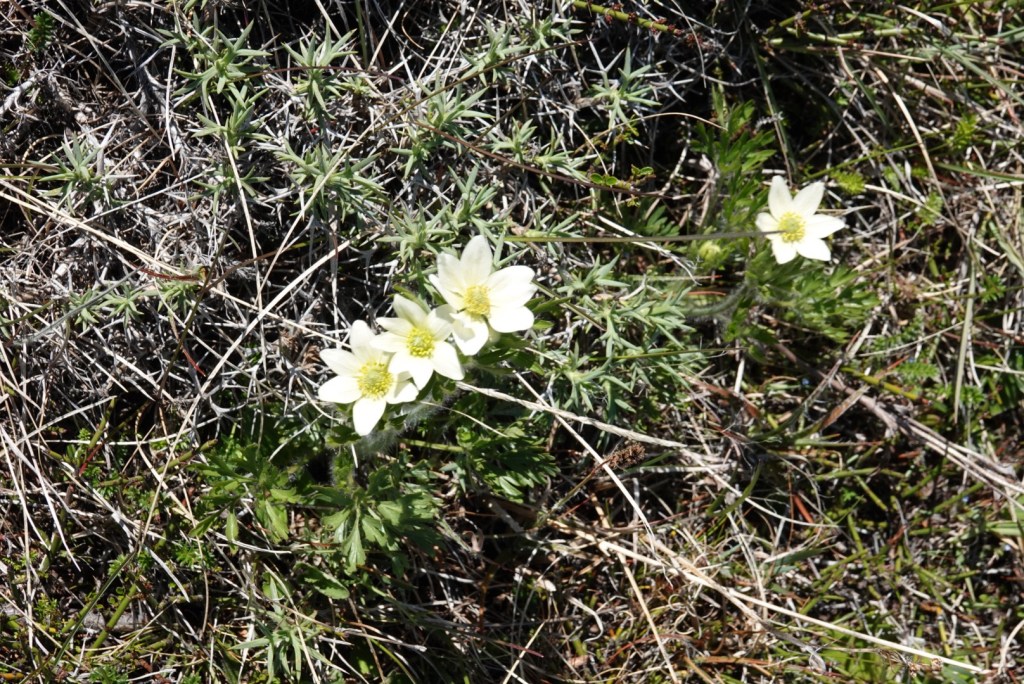
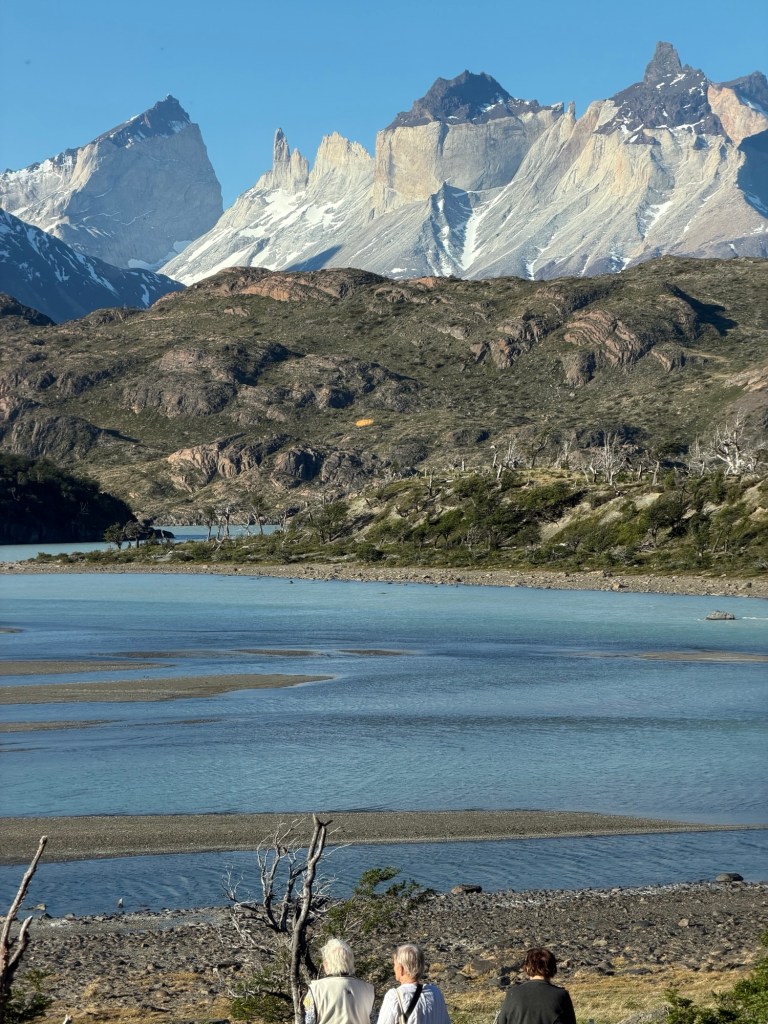
View of the towers across a large lakeTrees burned in a large fire in 2011The hemispherical plants with red-orange flowers are Fire TongueSea pink?Anemones
A fire burned almost half of the National Park. It was started by people camping illegally on Christmas Eve of 2011. Because they were burning toilet paper (in a high wind), the fire is known as the Toilet Paper Fire. The campers were found and admitted to the deed. Now there are strict laws against smoking and fires.
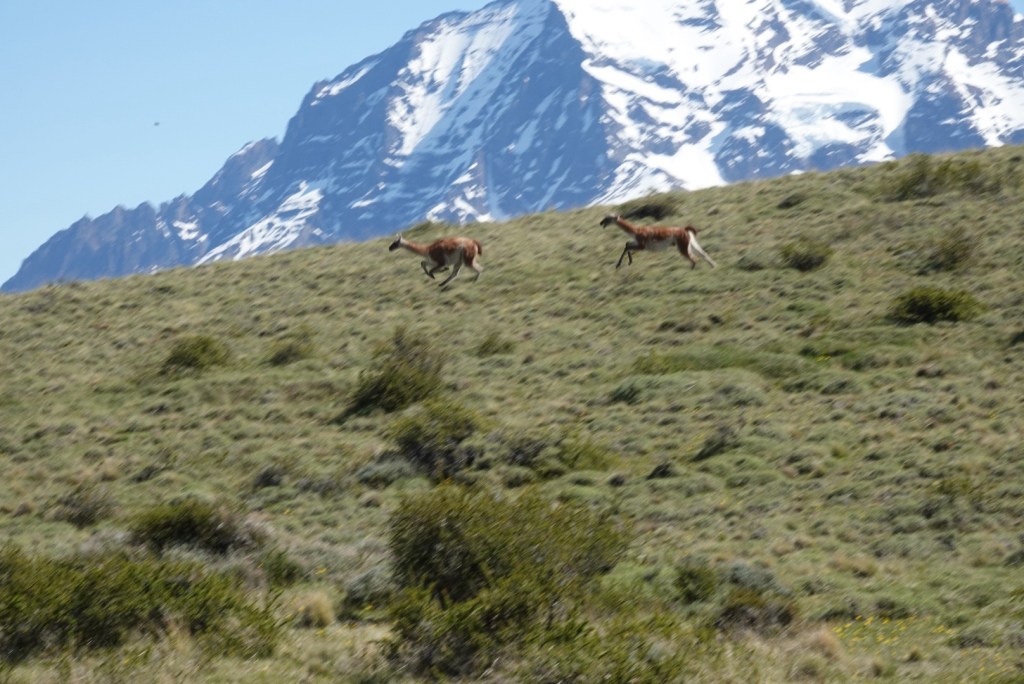
Rodrigo made us aware of possible dangers from animals in this area adjacent to the National Park. Marta told us about a different group she led that experienced a stampede of guanaco, who were being chased by a puma!
Guanacos A chase!After the chaseThe ears are back, so this guanaco is not happy.
Photographs cannot capture the awe, the majesty of the scenes we saw.
The light grey part of the towers is a shallow intrusive of granitic composition. Rodrigo told us that three pulses of magma intrusion occurred at approximately 18, 16 and 12 million years ago. The magma baked the overlying sedimentary rock to a black shade, more visible in the horns.
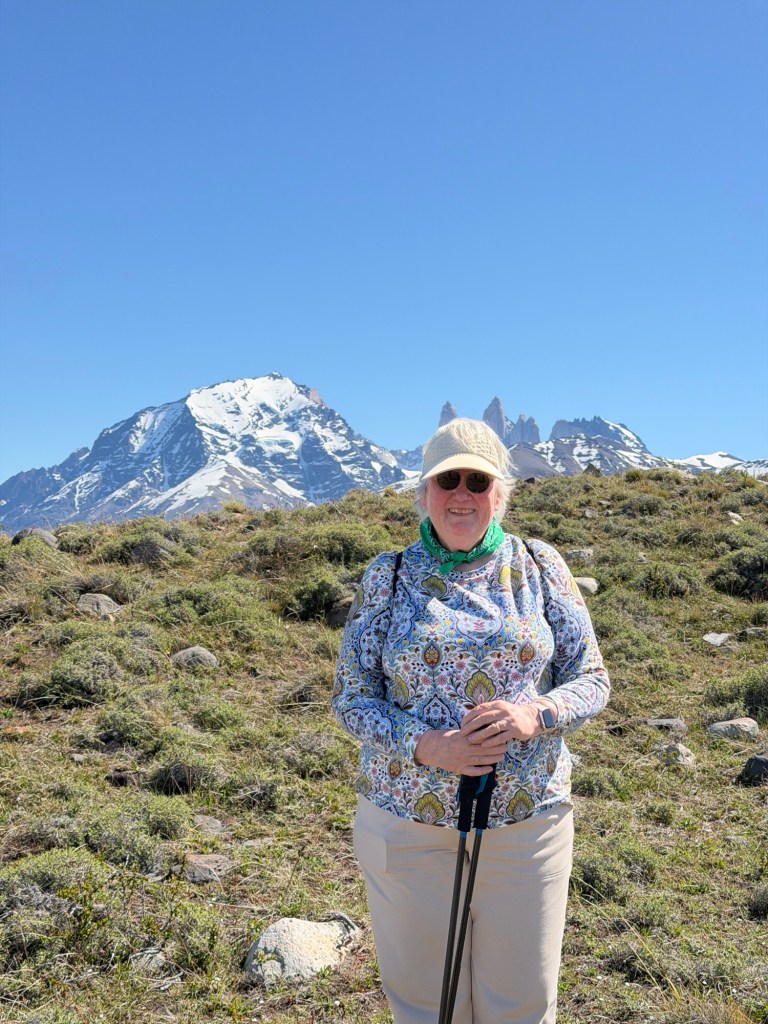
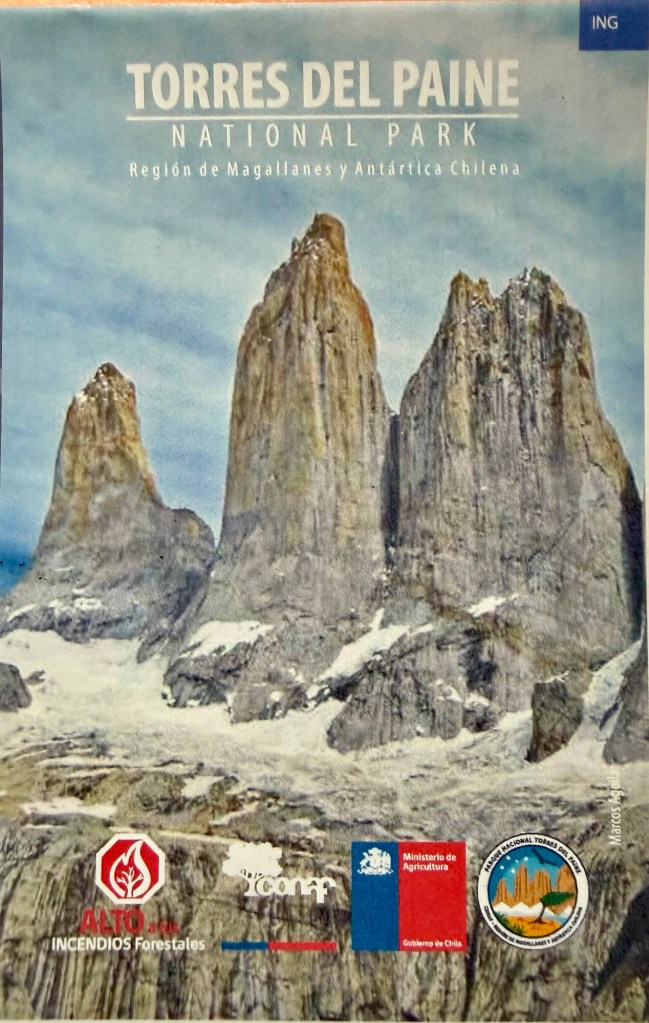
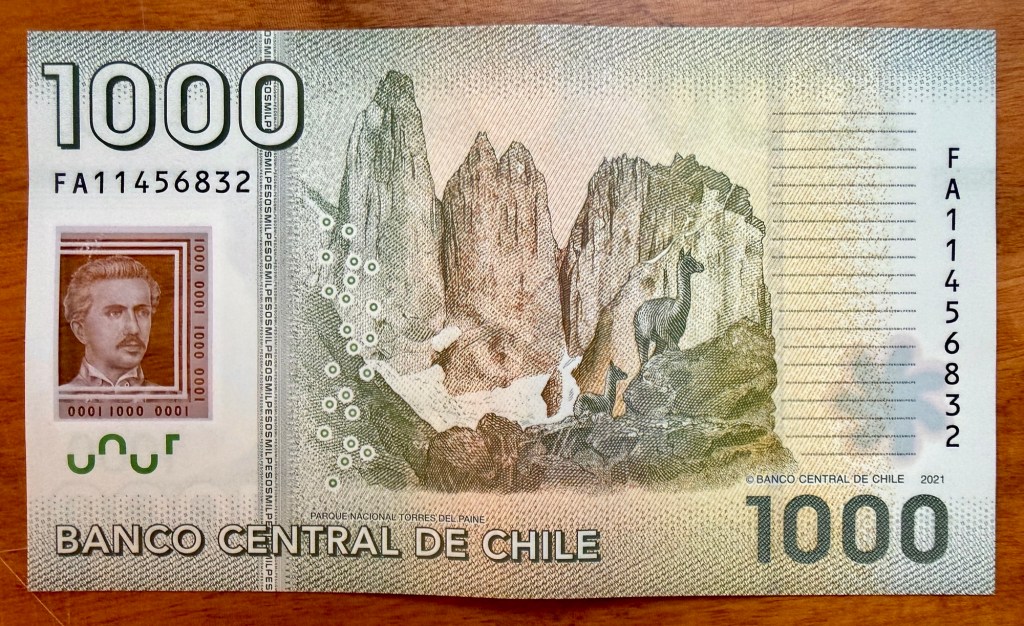
Clare and BrianClare with towers as earsThe Towers on the National Park brochureInaccurate drawing of the Towers on a thousand-peso bill
We stayed two nights in the National Park lodge, Lago Grey.
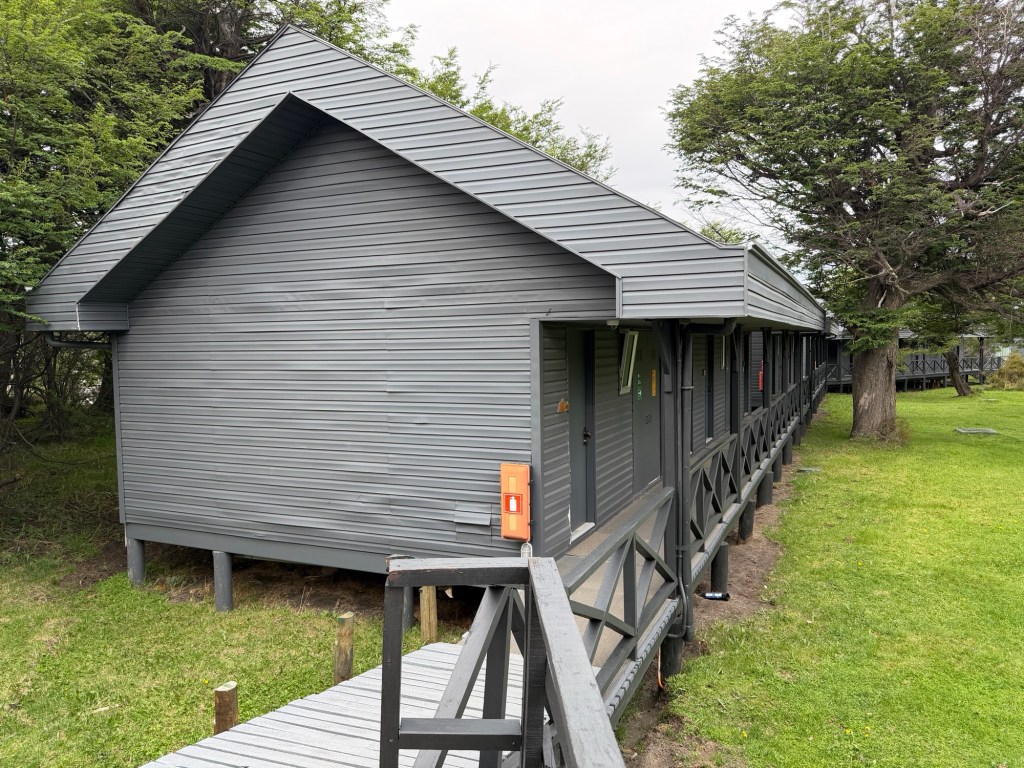
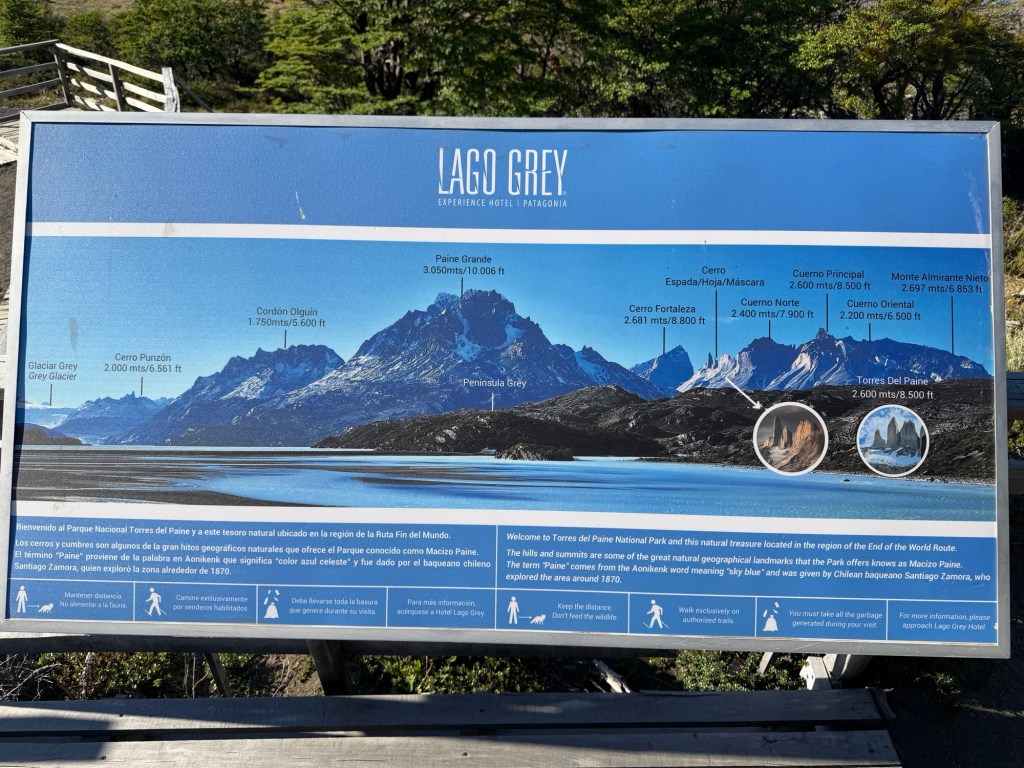
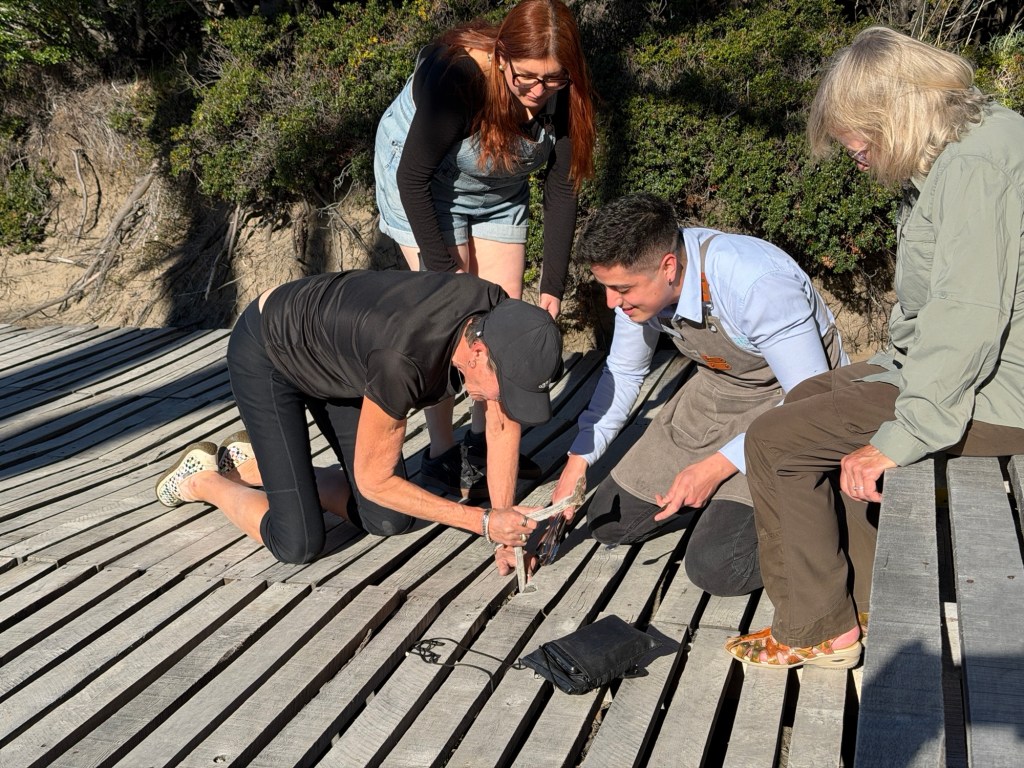
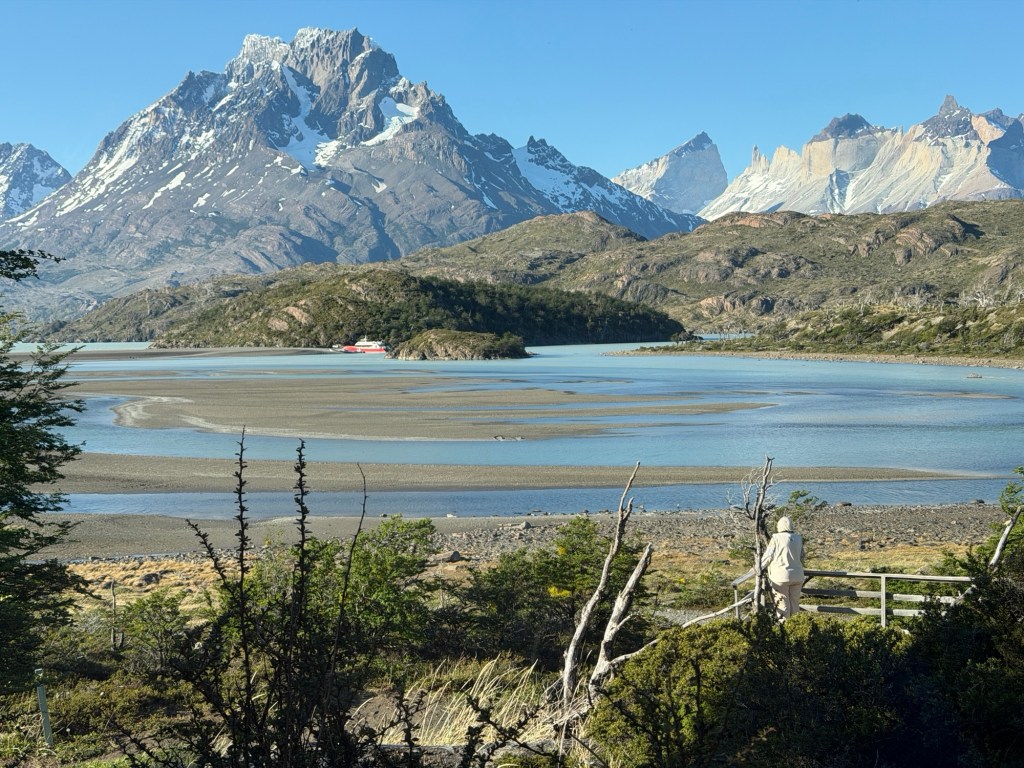
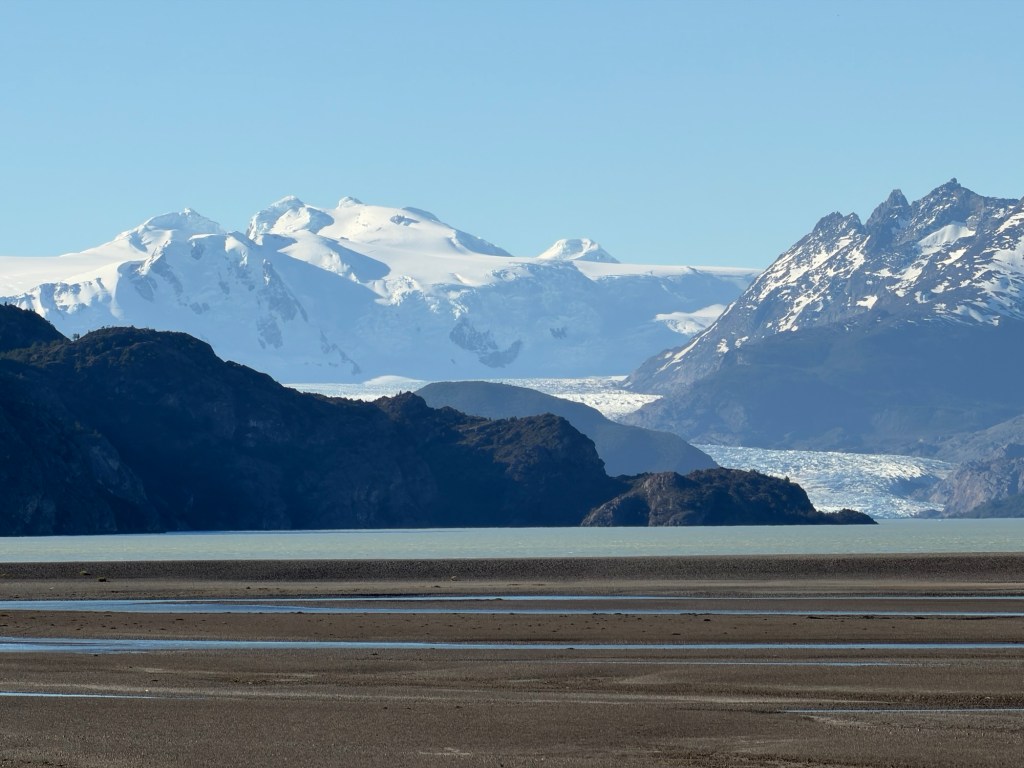
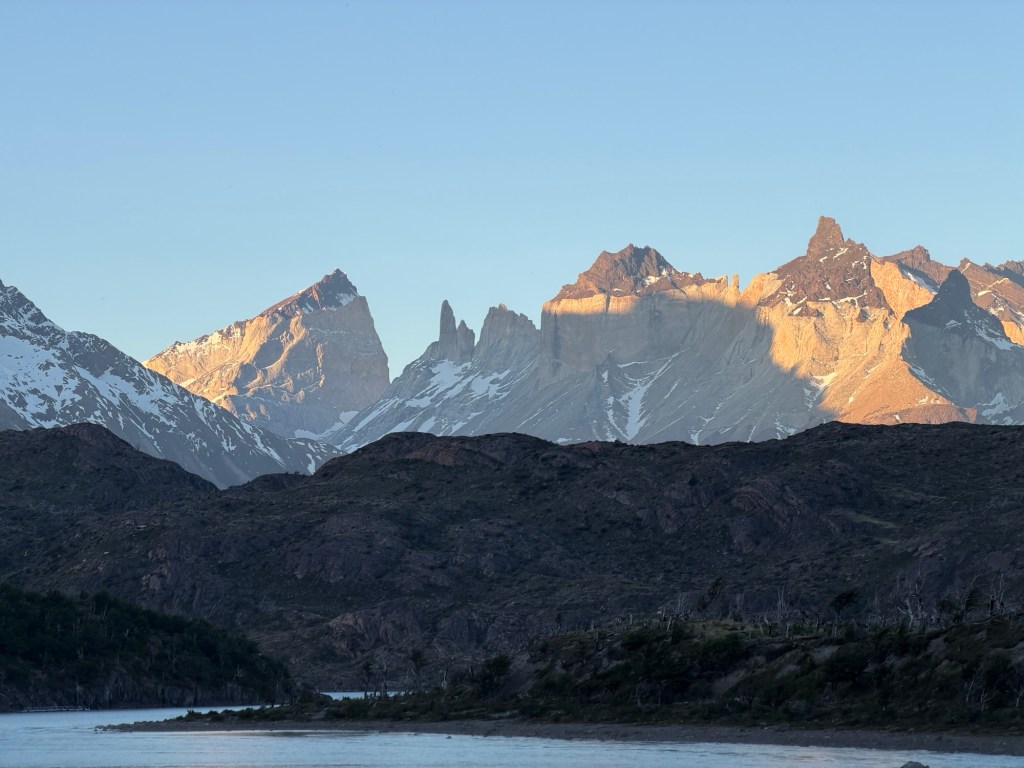
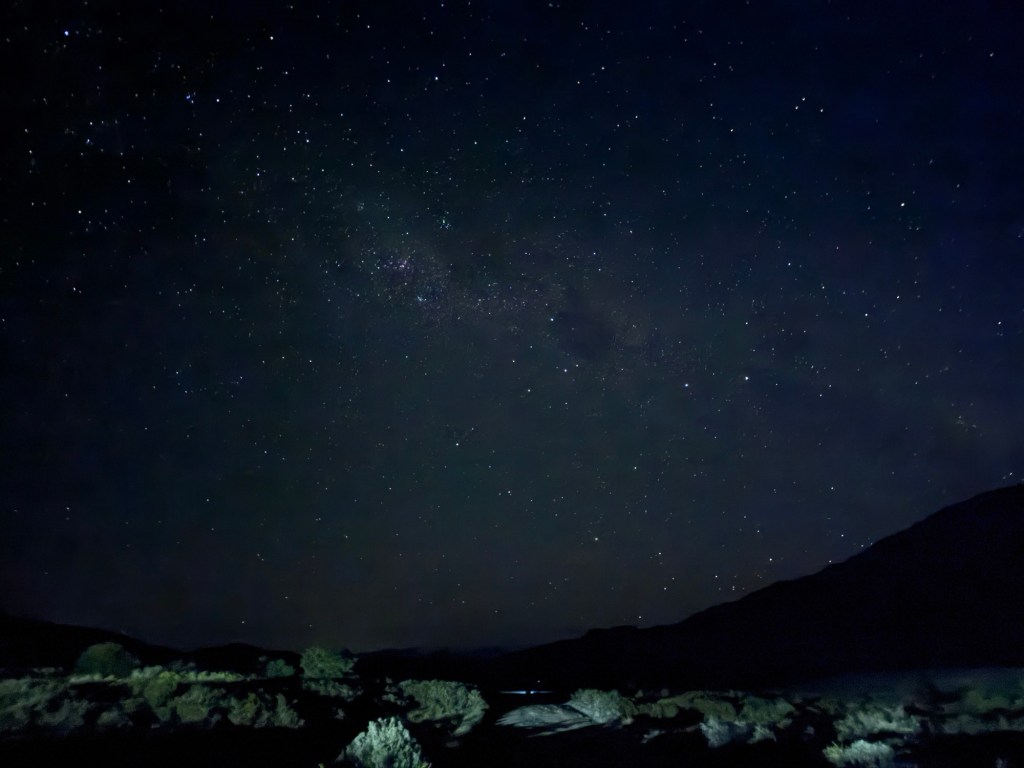
The hotel is a series of plain, grey buildings. Picnic area at the hotelPeaks visible from the restaurant at the hotelRetrieving Pam’s phone that fell through the deckLago GreyClare, Chris and Sue looking at the lakeGrey GlacierThe Horns in the setting sunlightExcellent dark beer that was also on tap at the hotel barThe Southern Cross, at about 1:30 AM


 Bunch of Geeks go Traveling