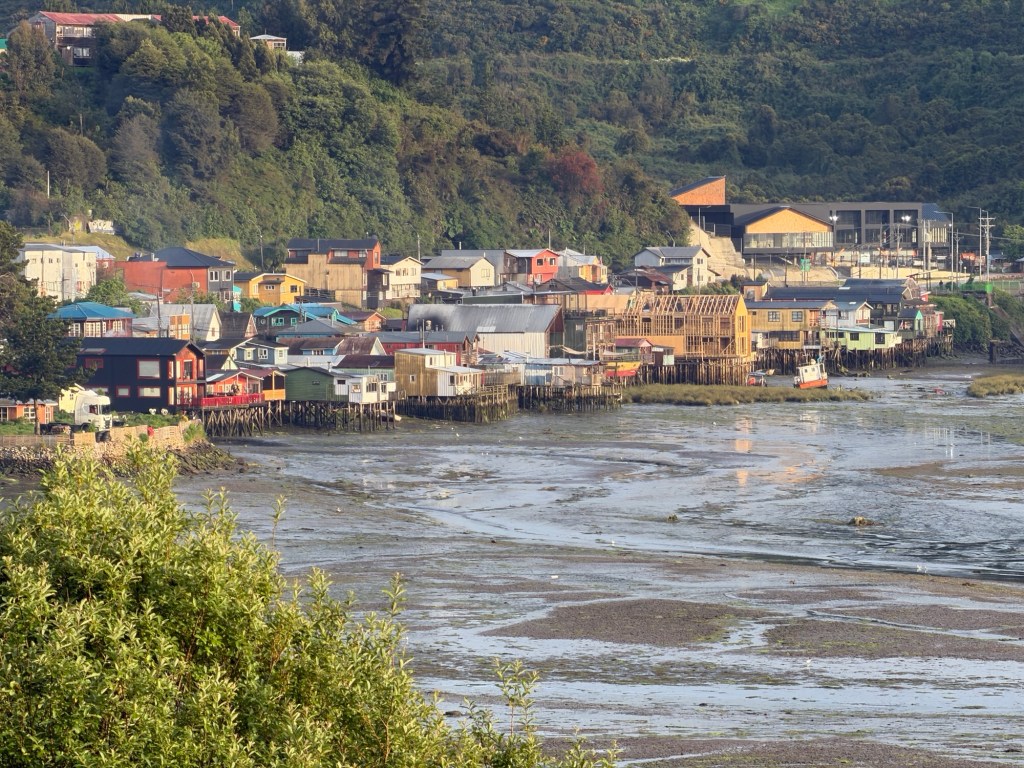
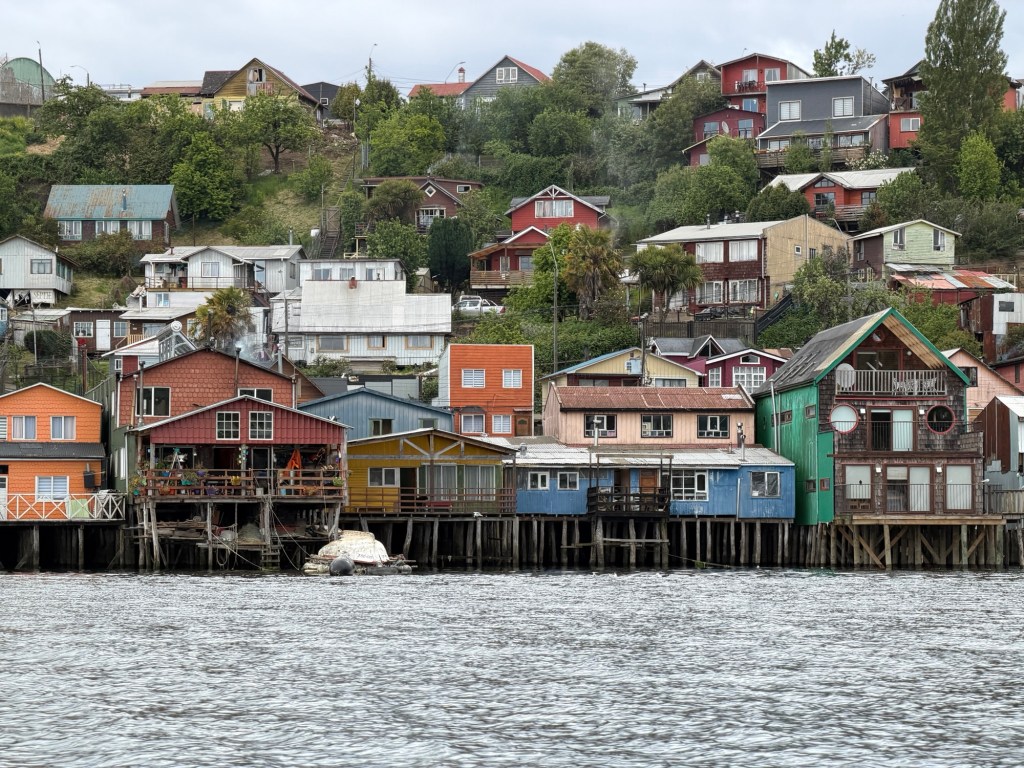
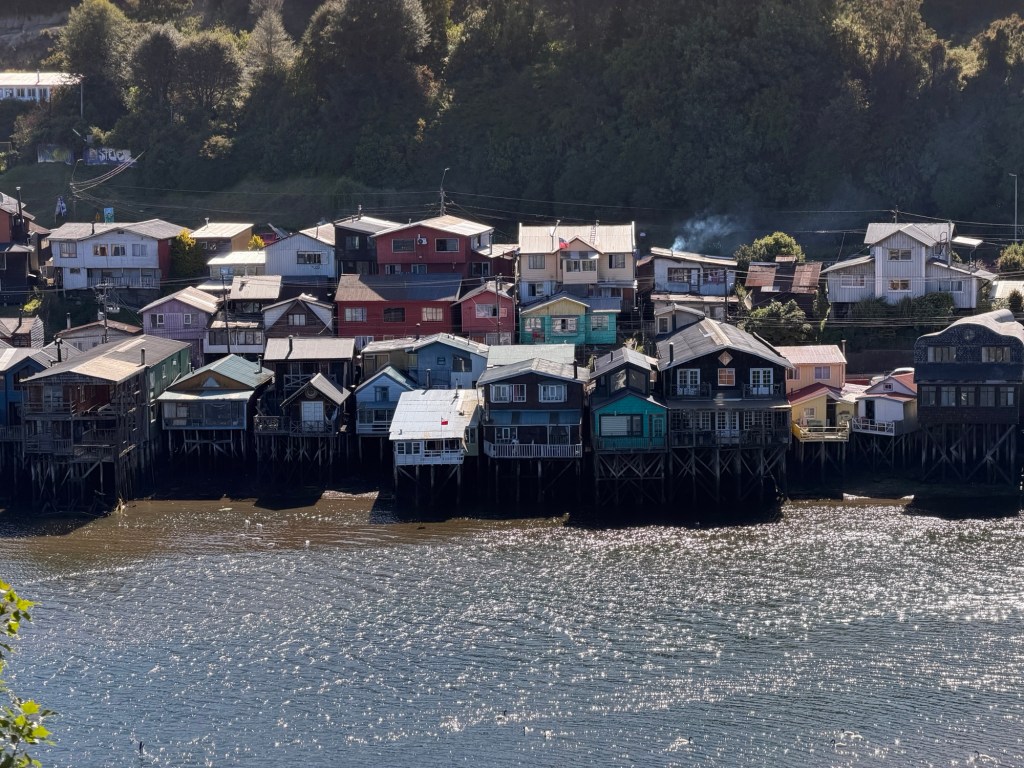
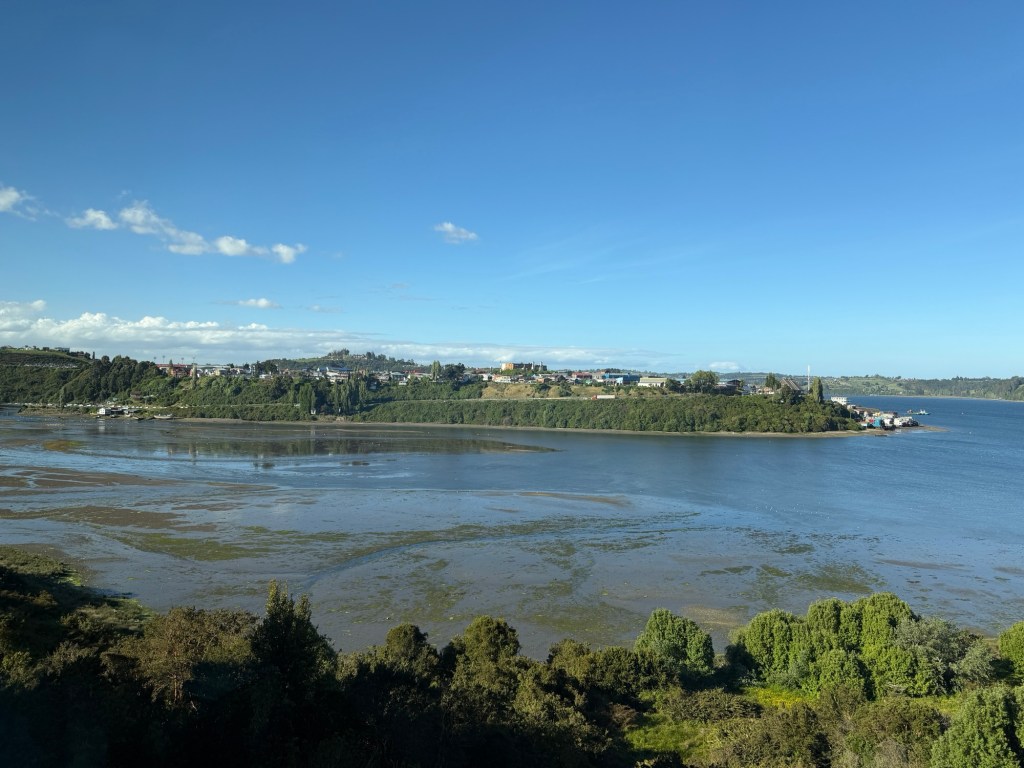
Houses on stilts from our hotel room, tide is lower.
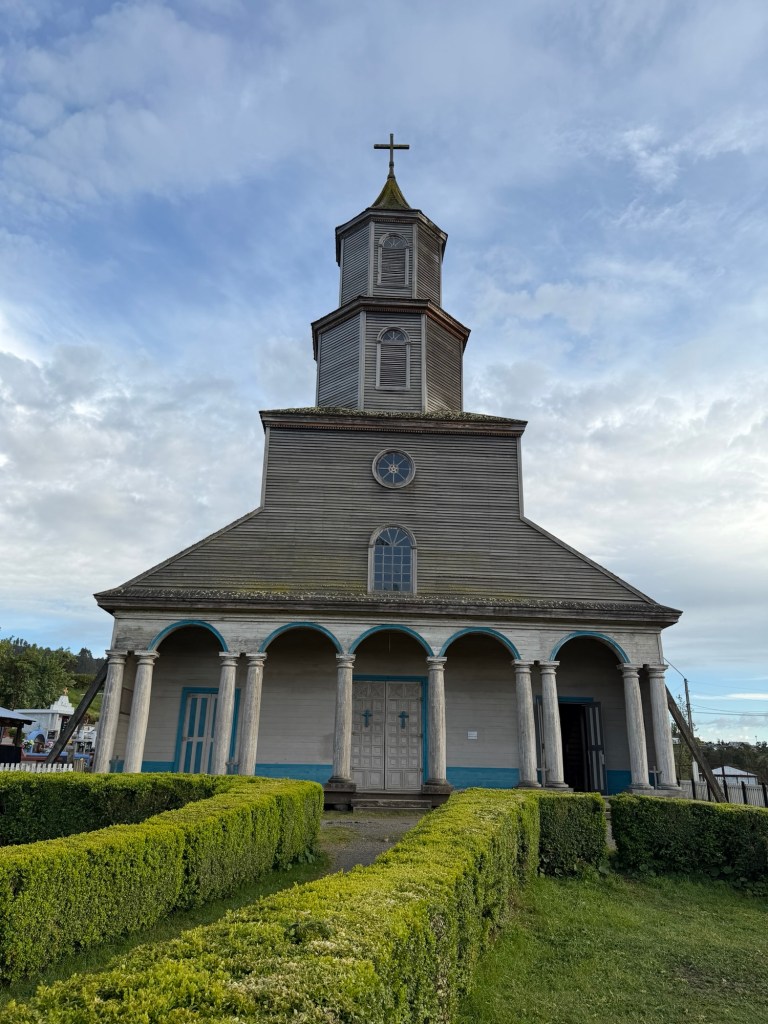
First thing in the morning, we rode to see our third UNESCO church. The woman proprietor unlocked the building and allowed us to tour in places normally reserved for locals.
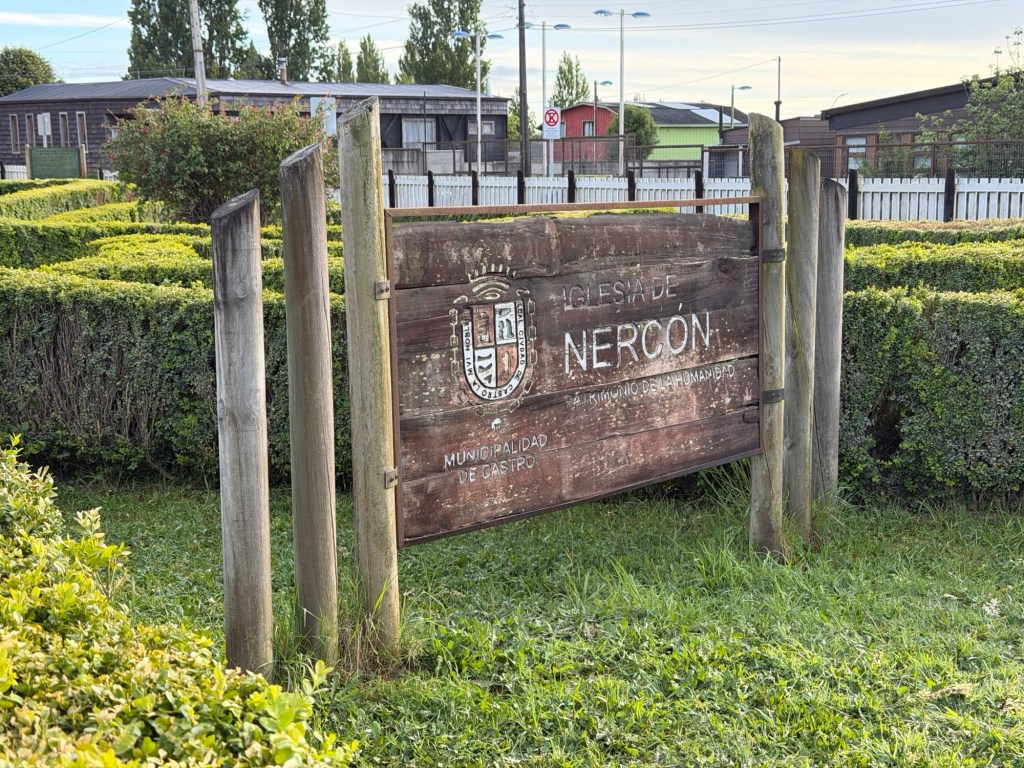
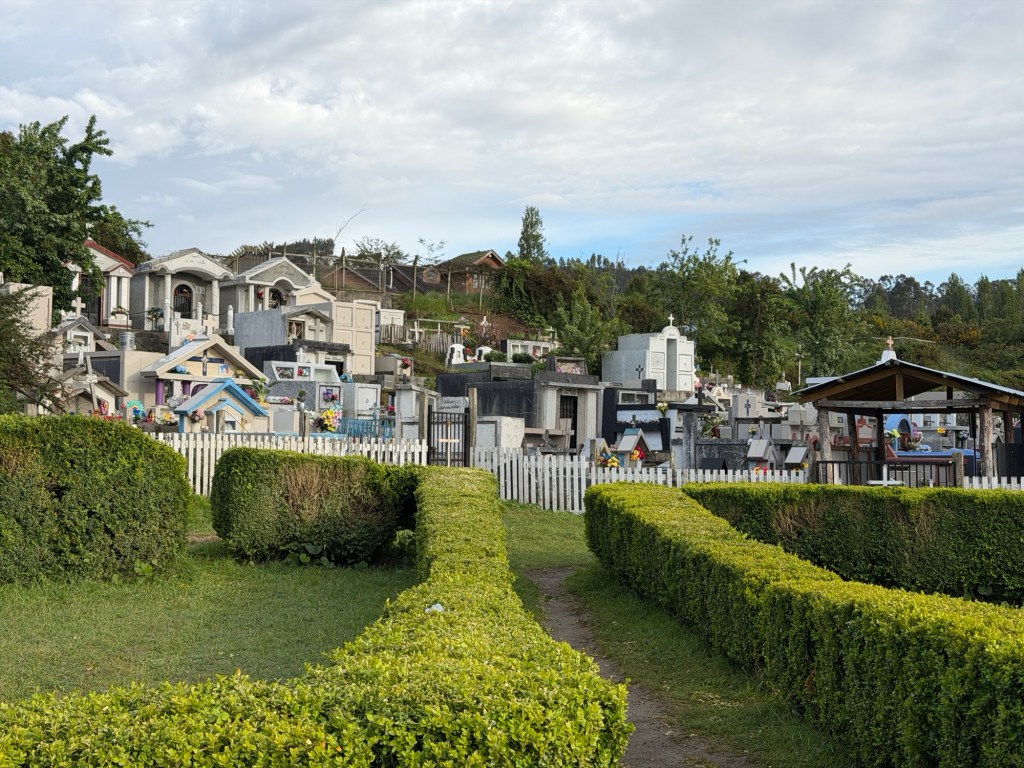
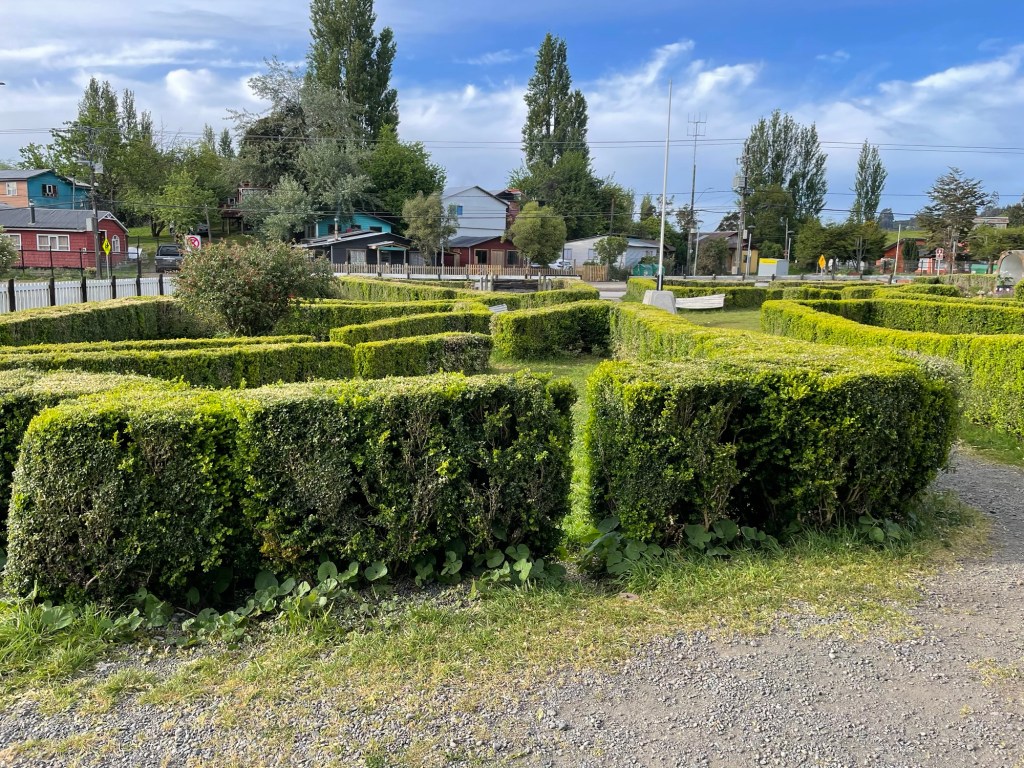
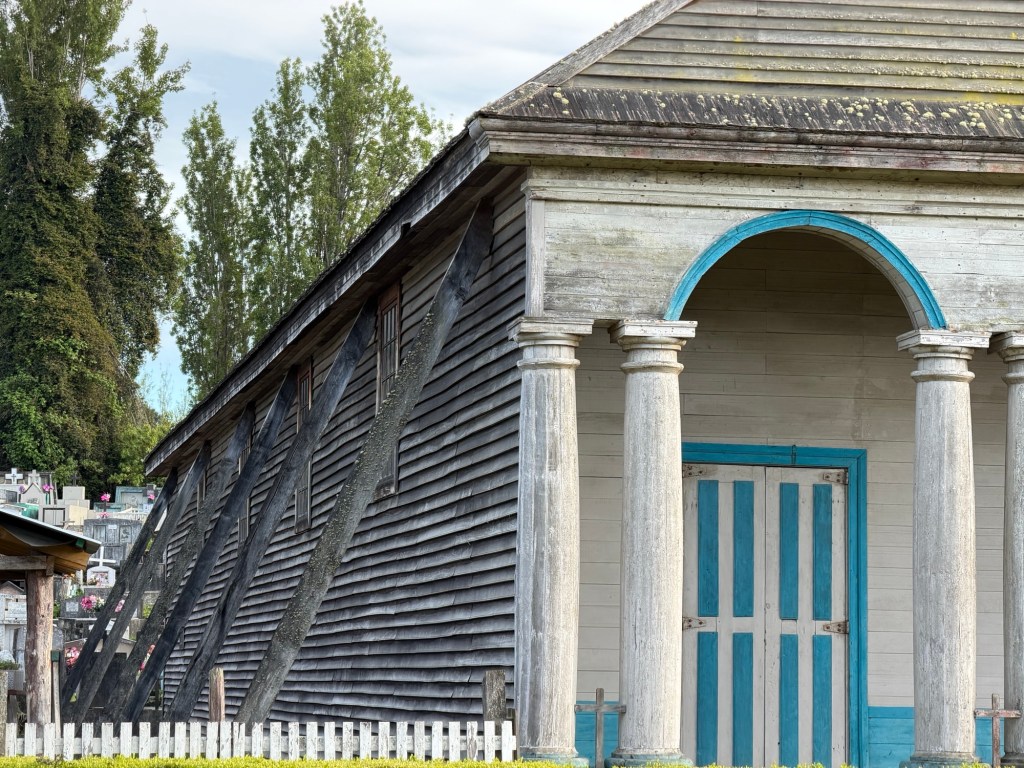
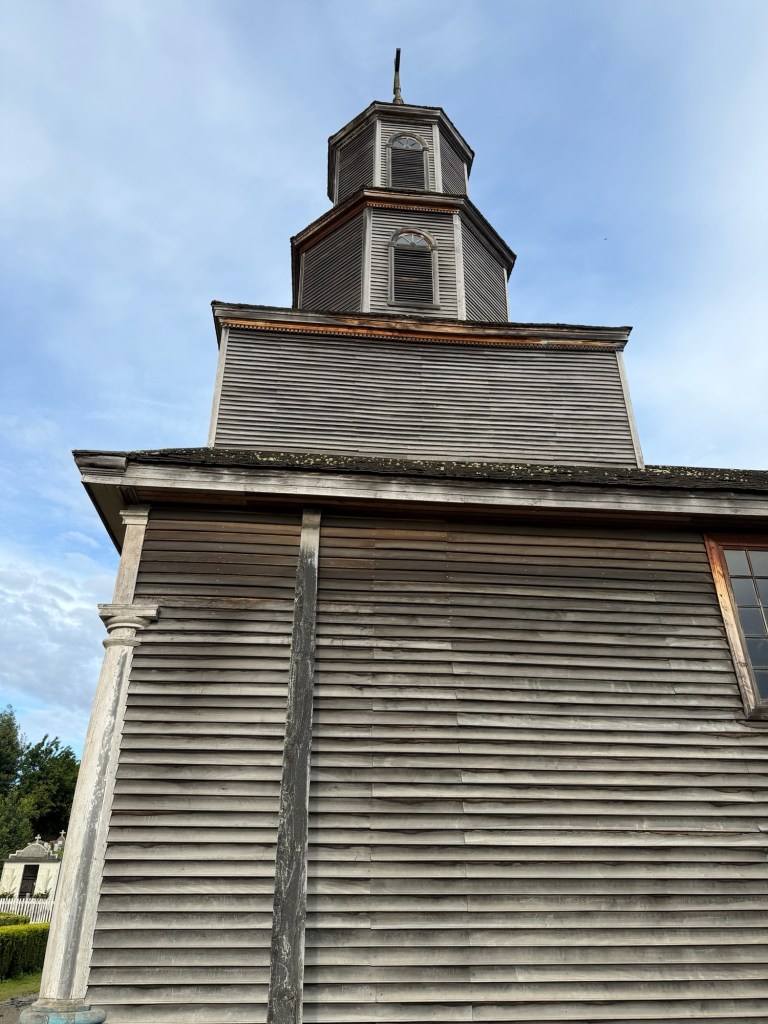
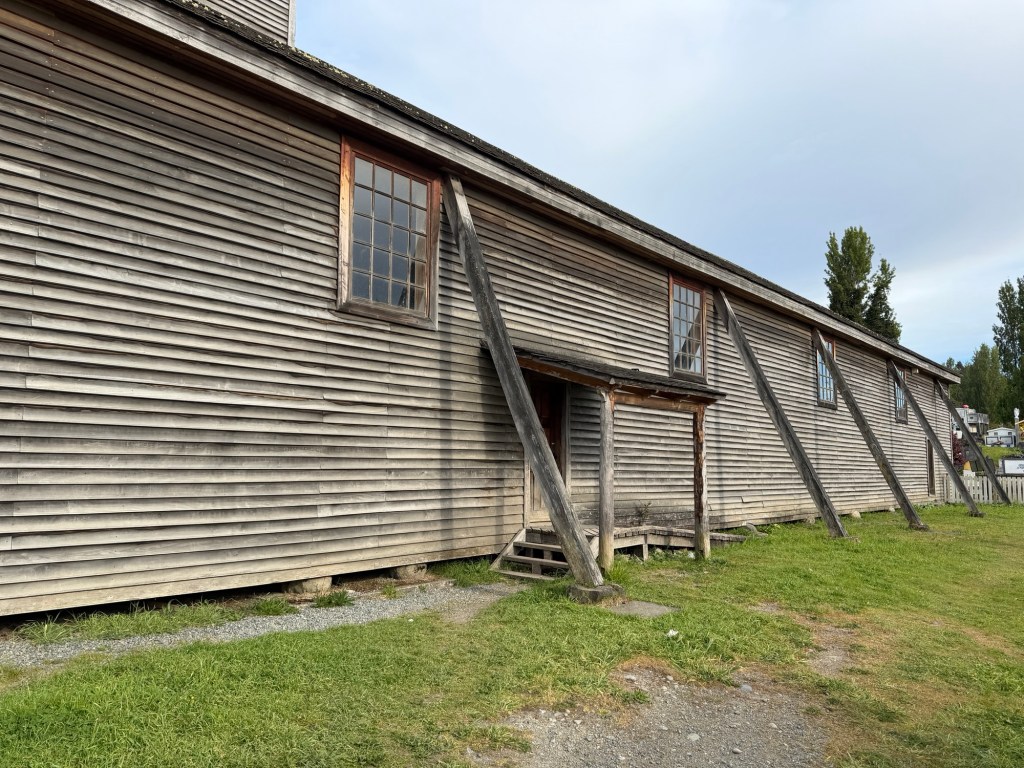
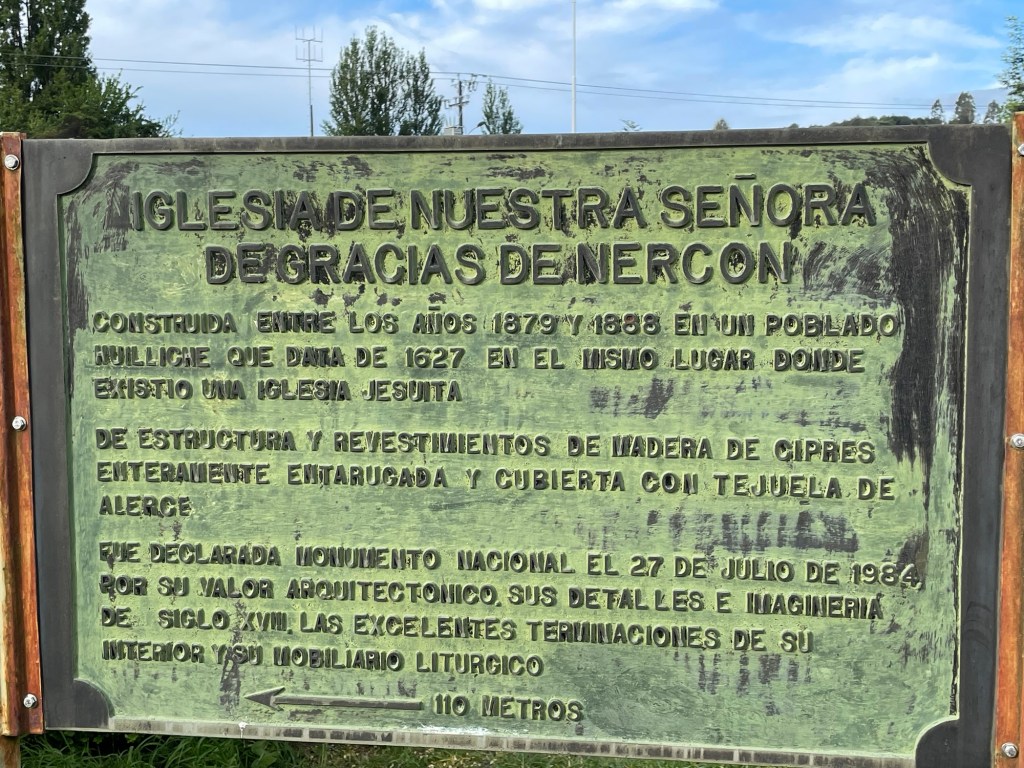
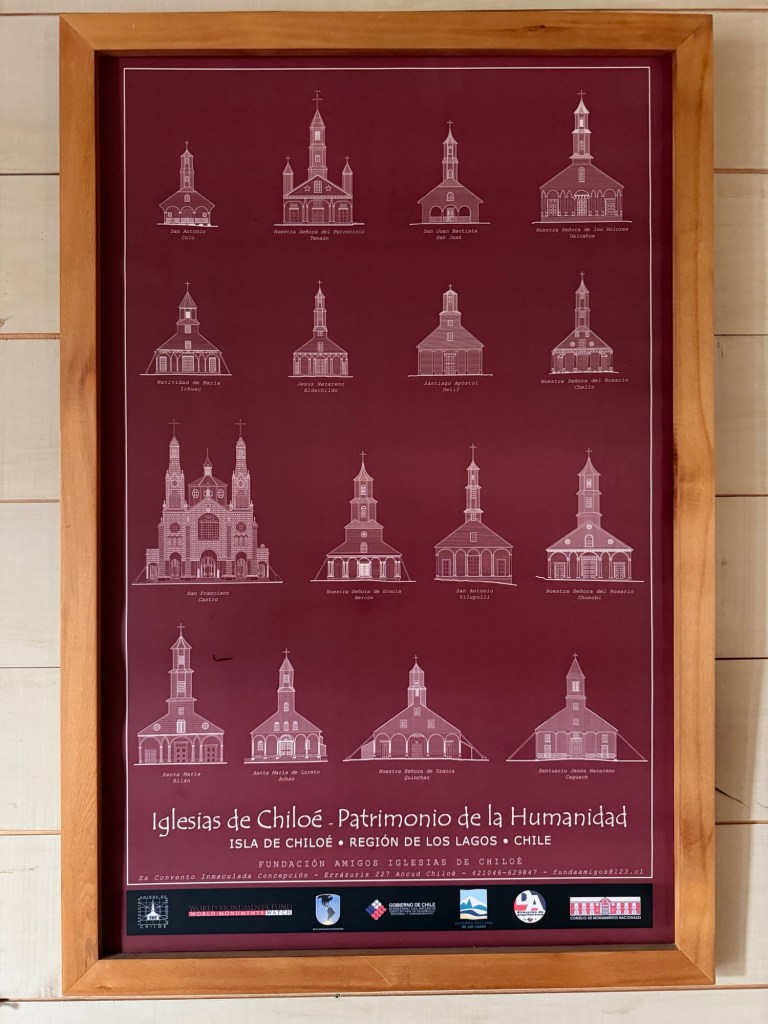
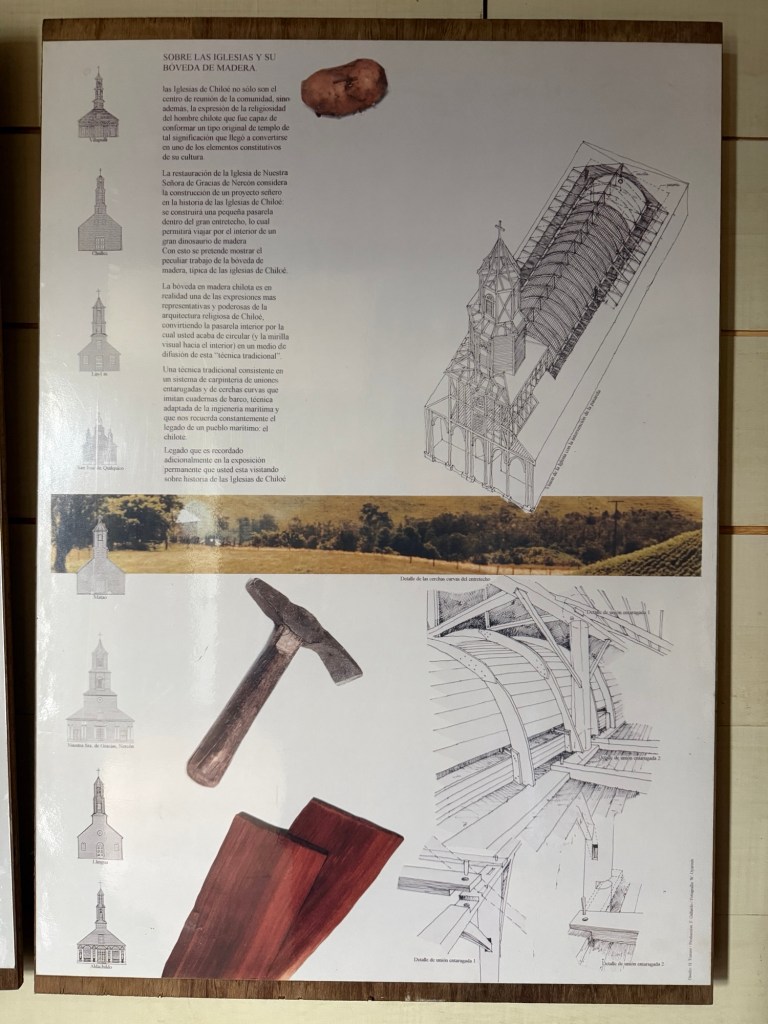
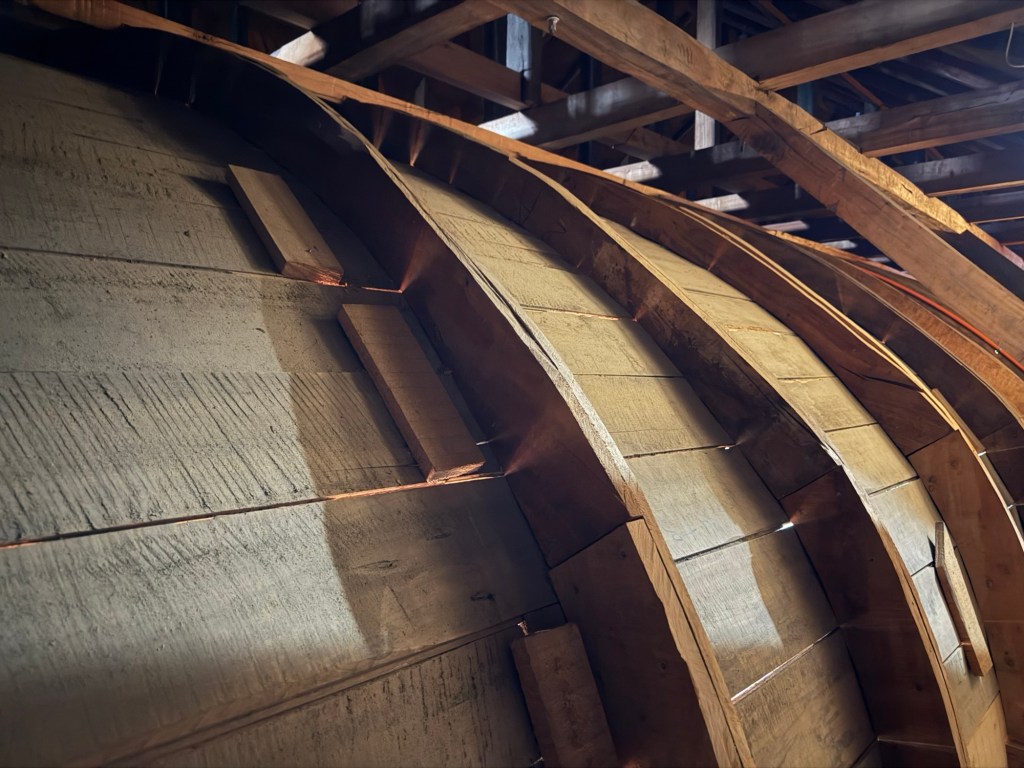
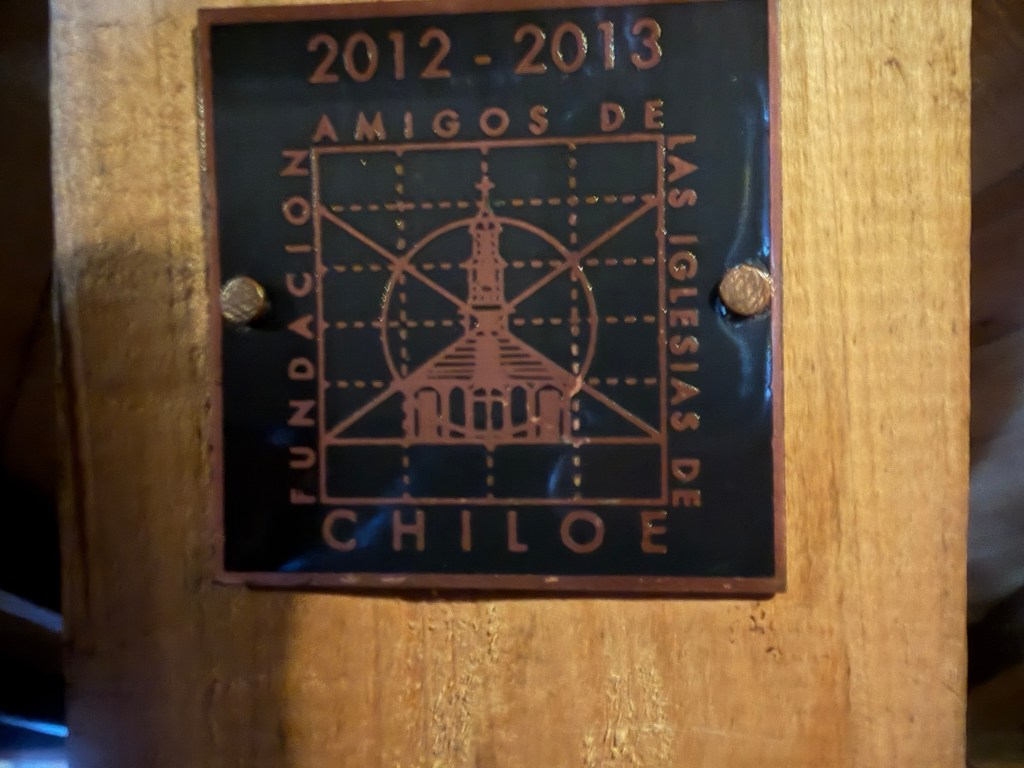
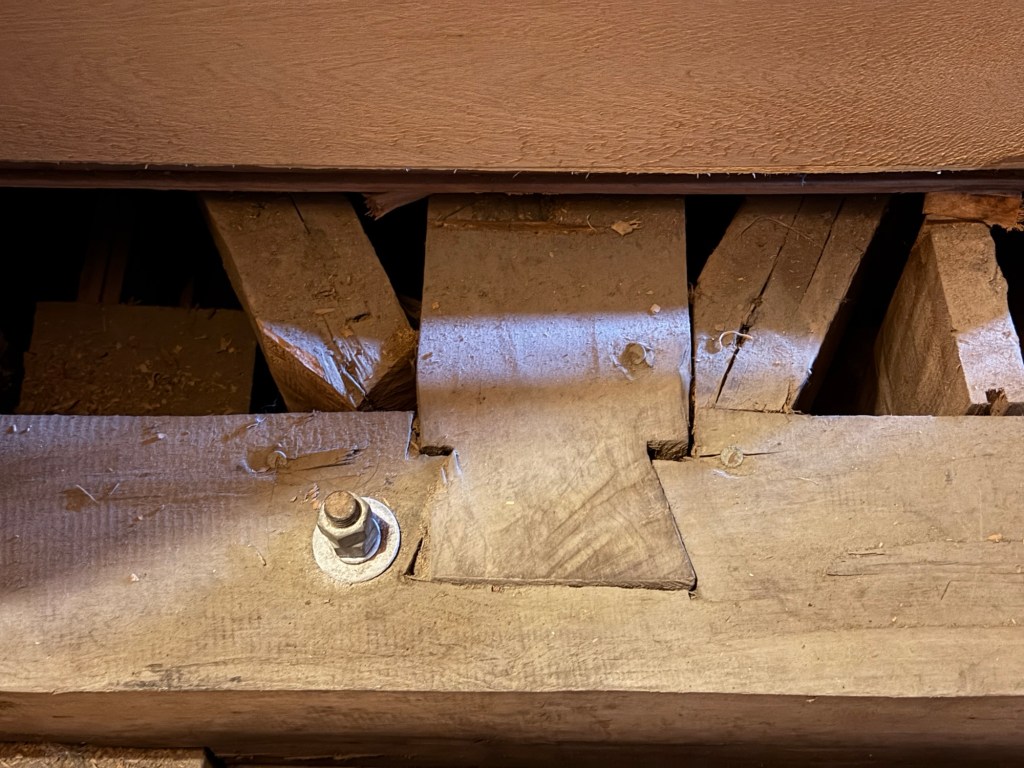
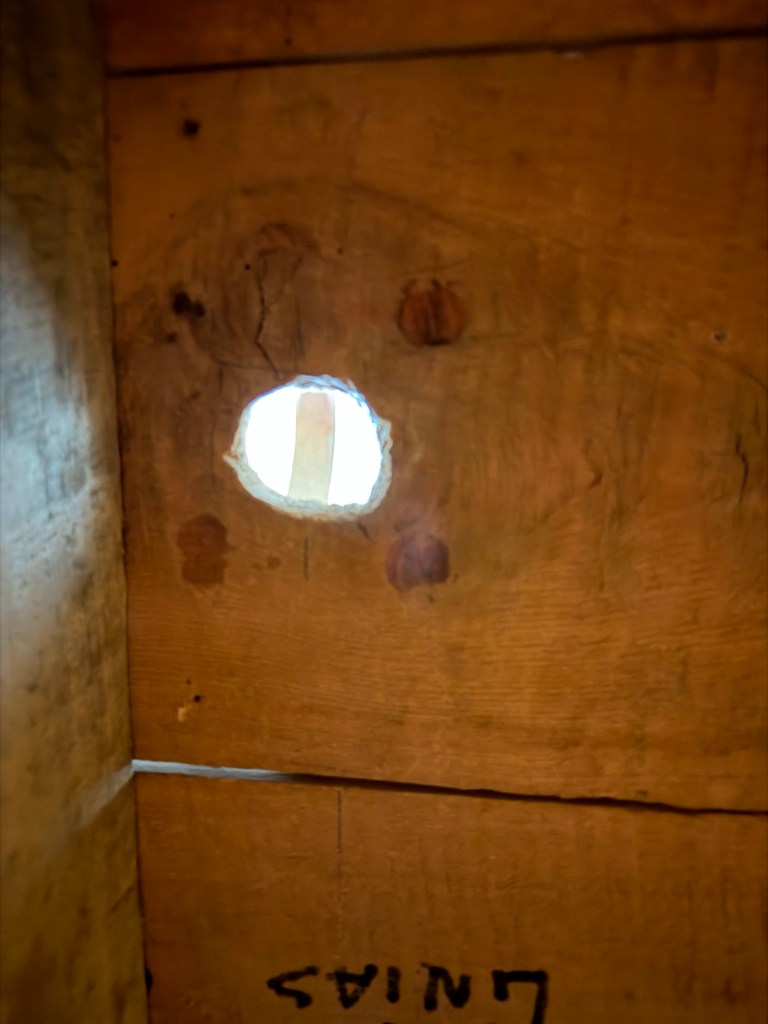
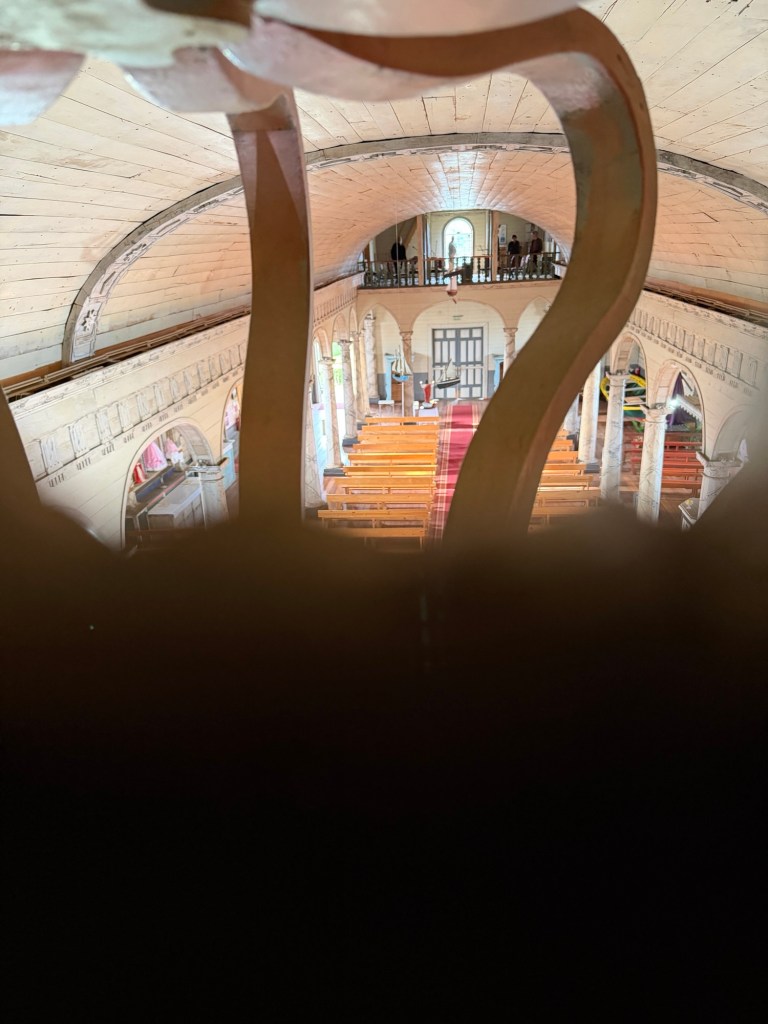
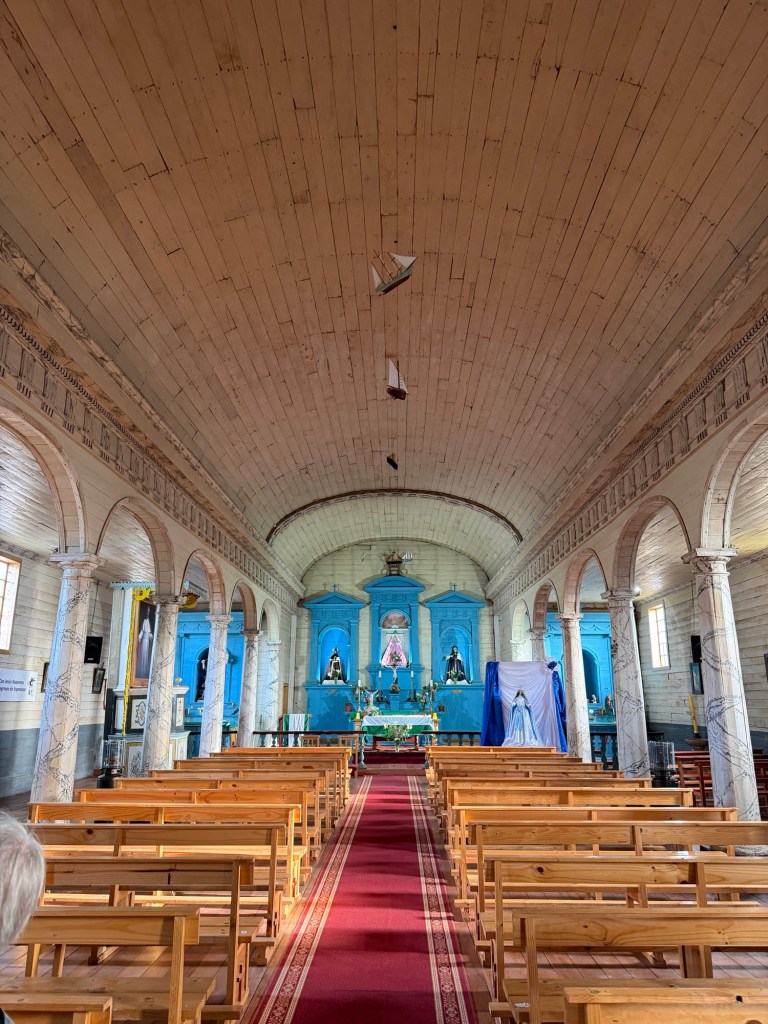
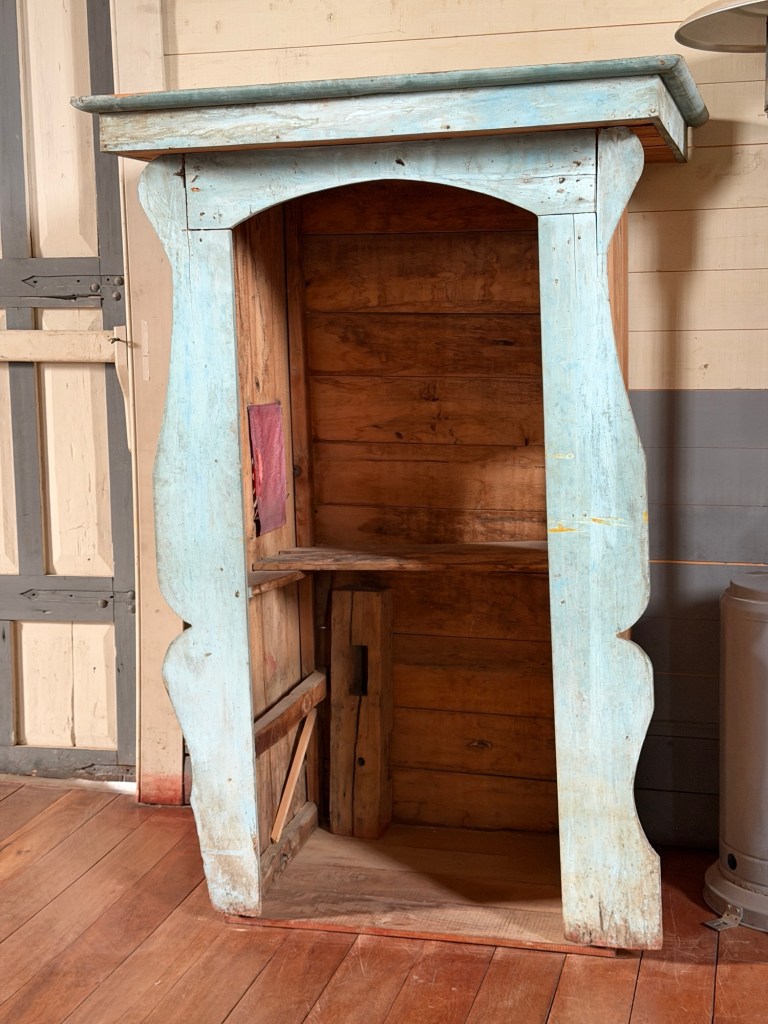
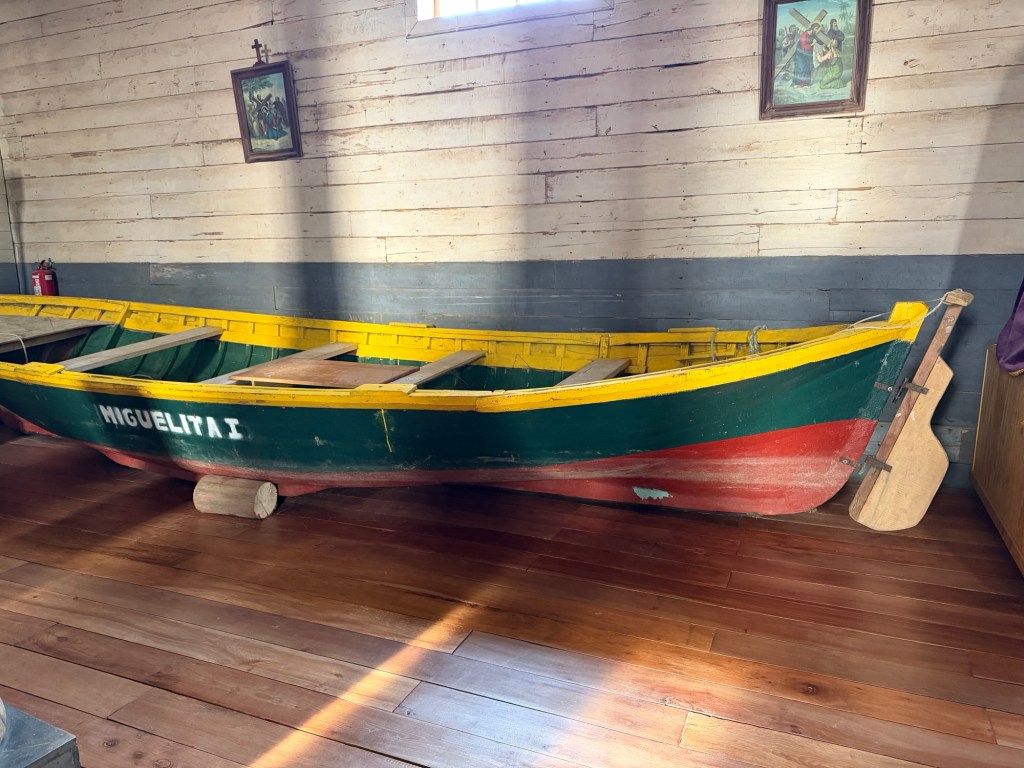
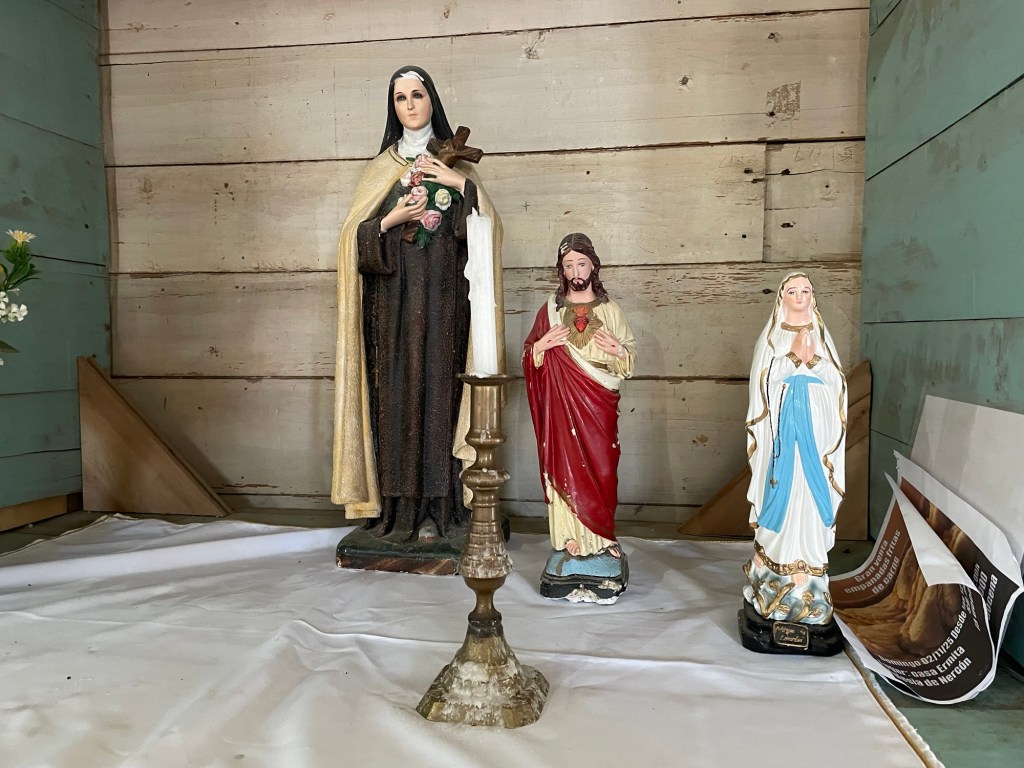
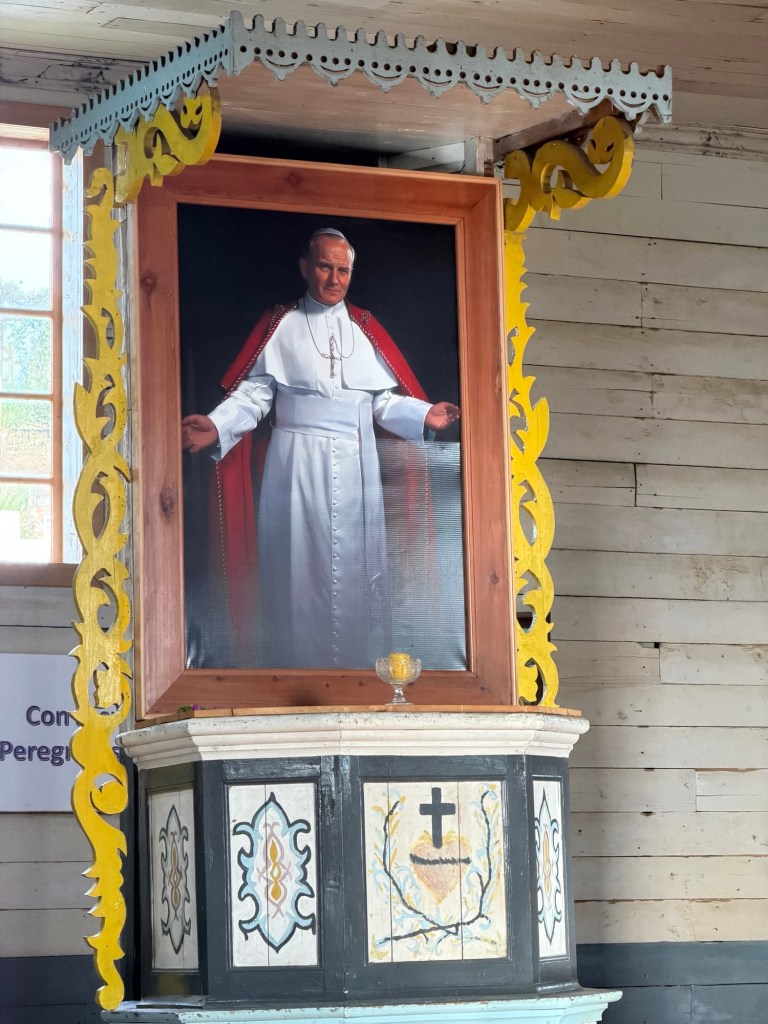
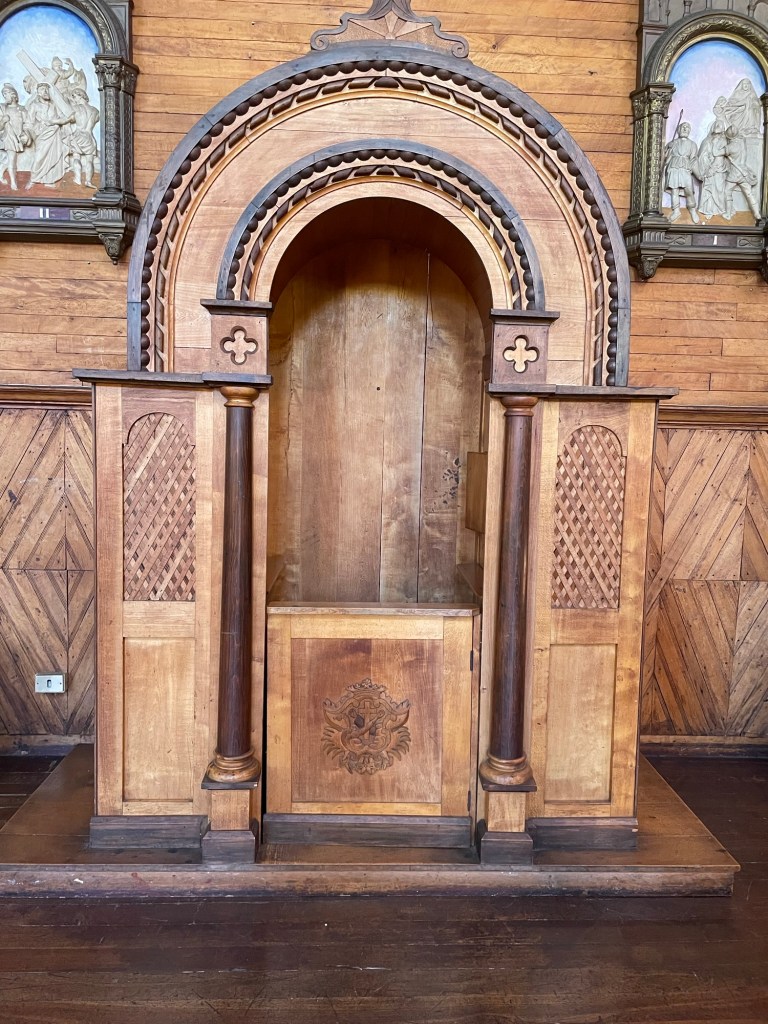
Nercón Church signNercón churchAssociated cemetery. A church must have a cemetery to be part of the UNESCO site. A maze of hedges is used during processions, so many people can walk at the same time in front of the church. Outside construction and explanatory sign. UNESCO sign naming the associated churches. Explanation of church construction. Above ceiling. We walked around upstairs to see construction. Peep hole above altar, looking toward congregation. View through peep hole. Church from back. Raùl’s boats!ConfessionalBoat showing style of construction. Many religious icons.
We said goodbye to Carolina and Chiloé Island, where her mother grew up. Off to the airport at Puerto Montt.
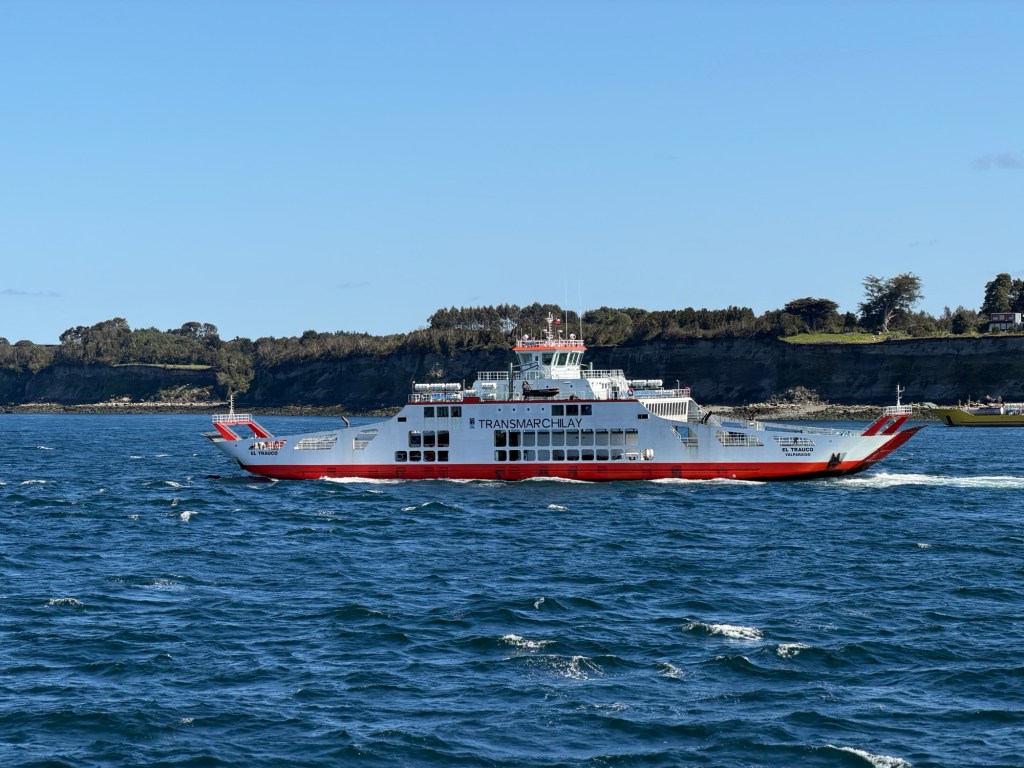
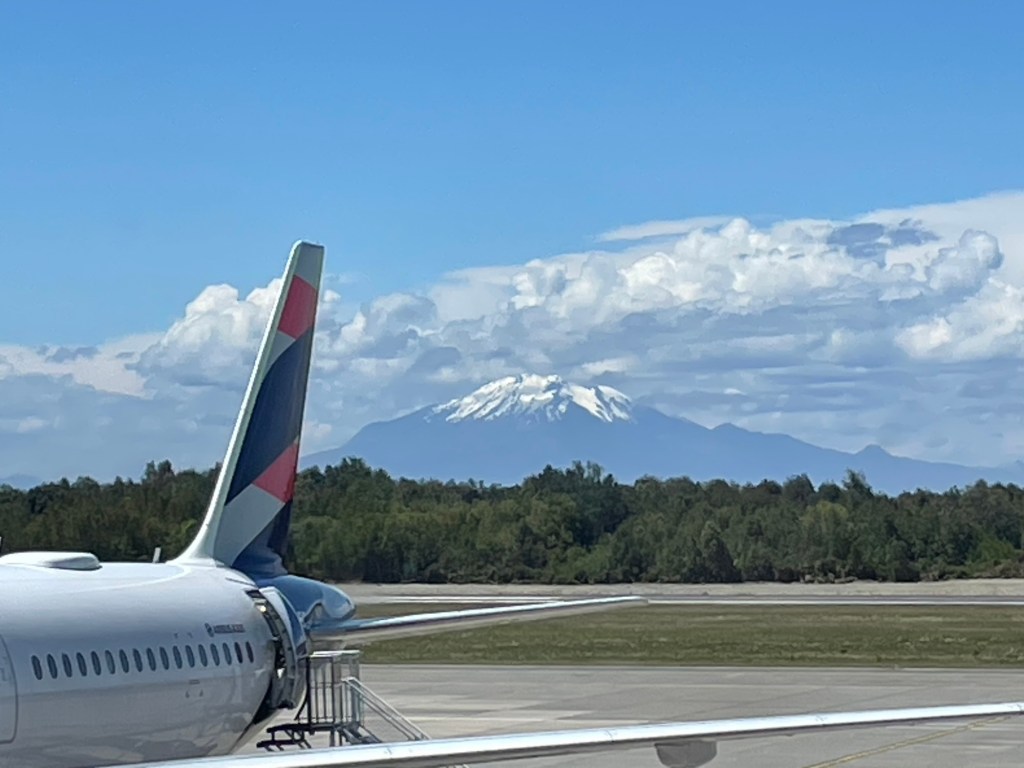
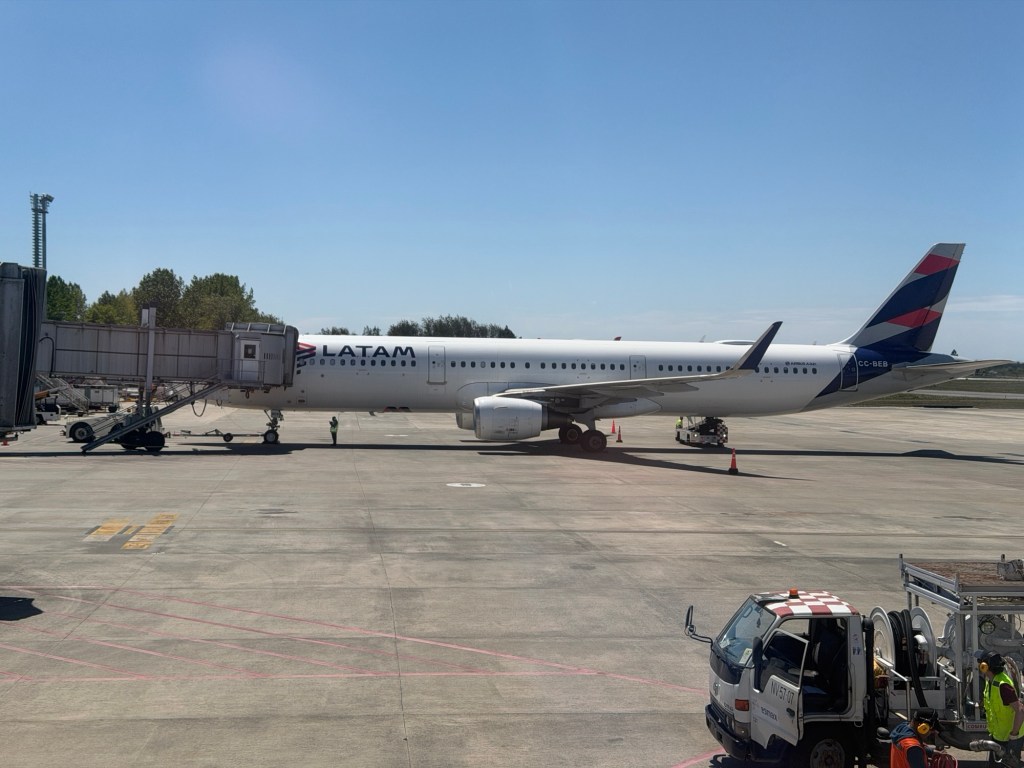
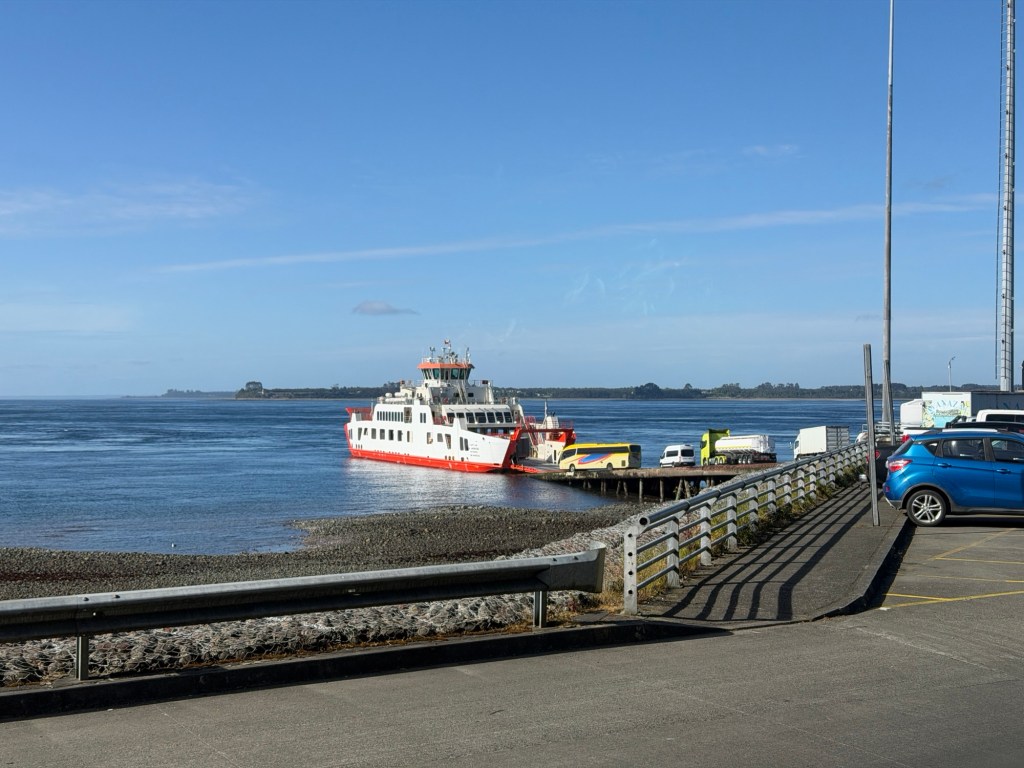
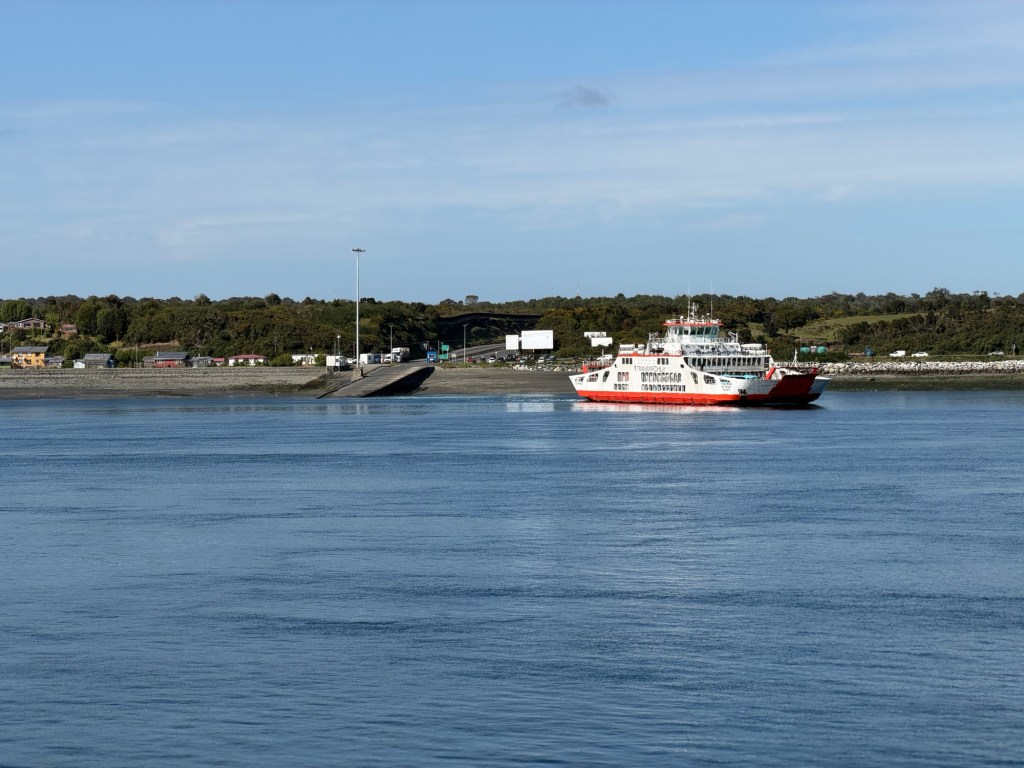
Ferry back to the mainland. Puerto Montt airport A plane like ours
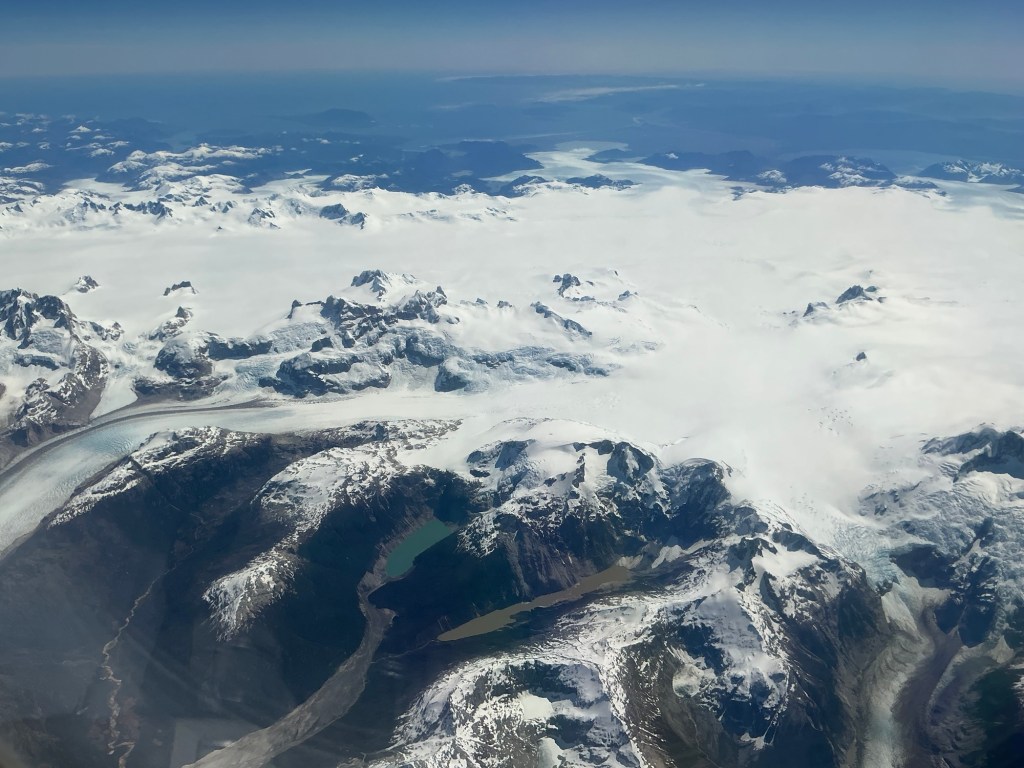
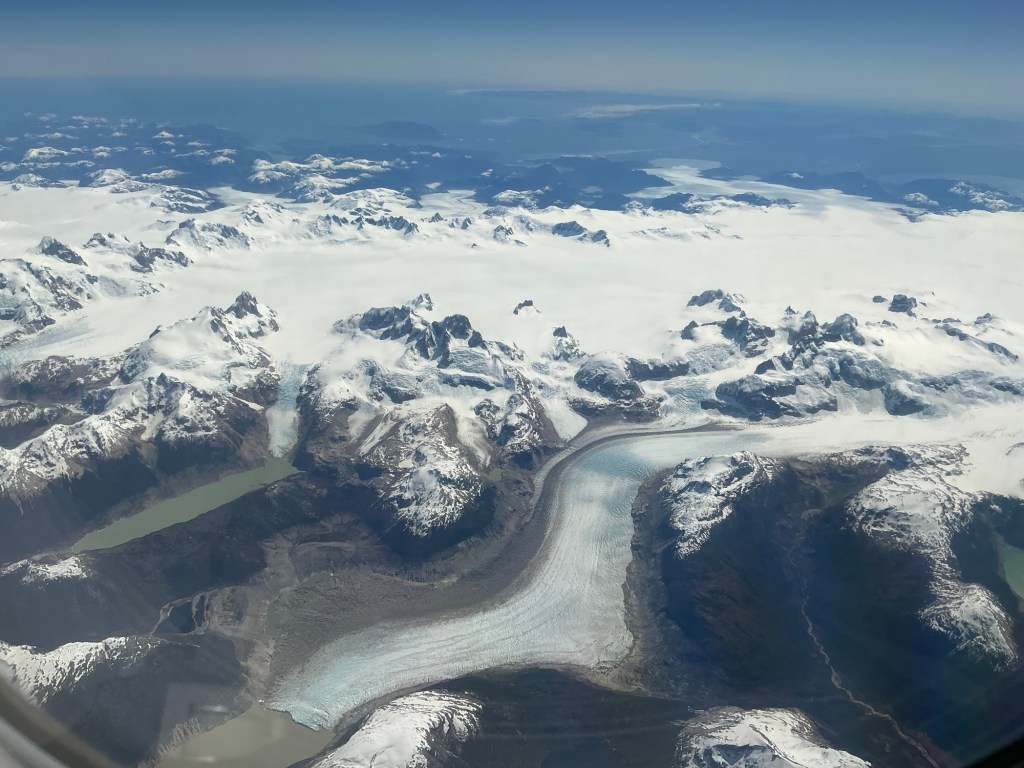
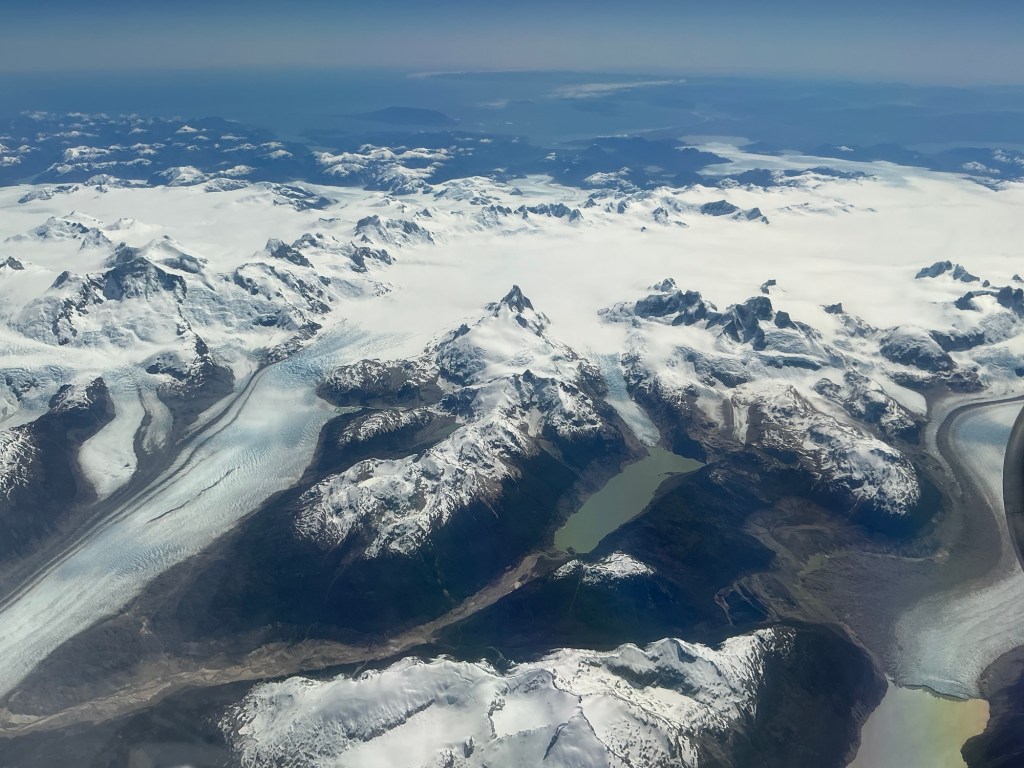
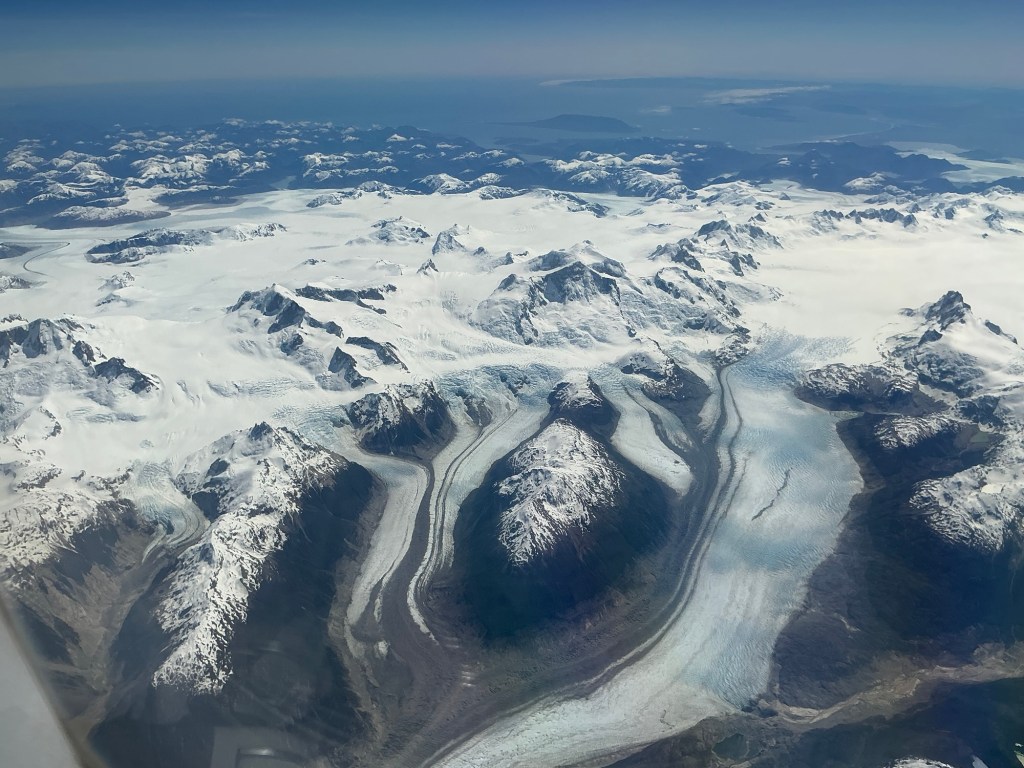
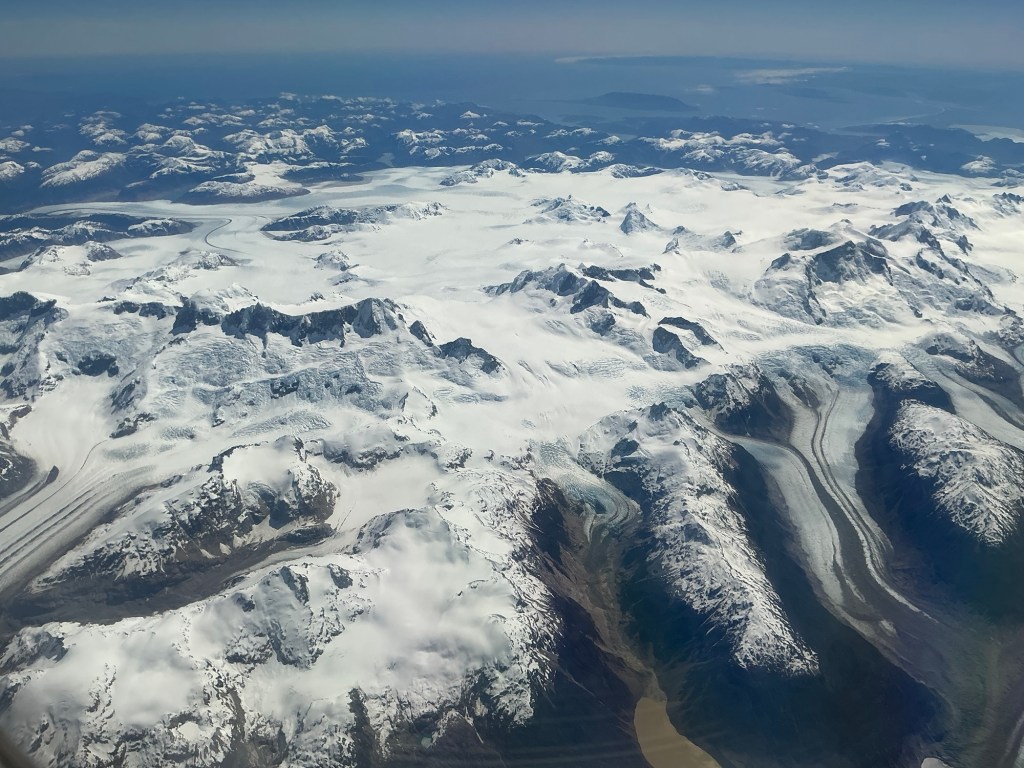
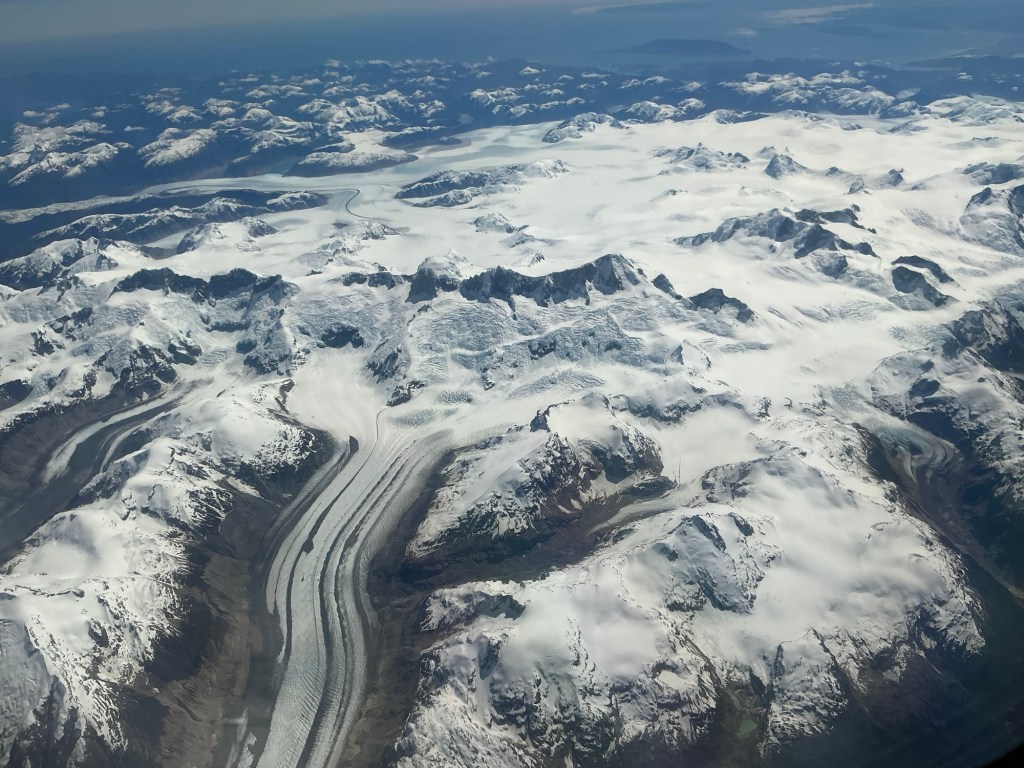
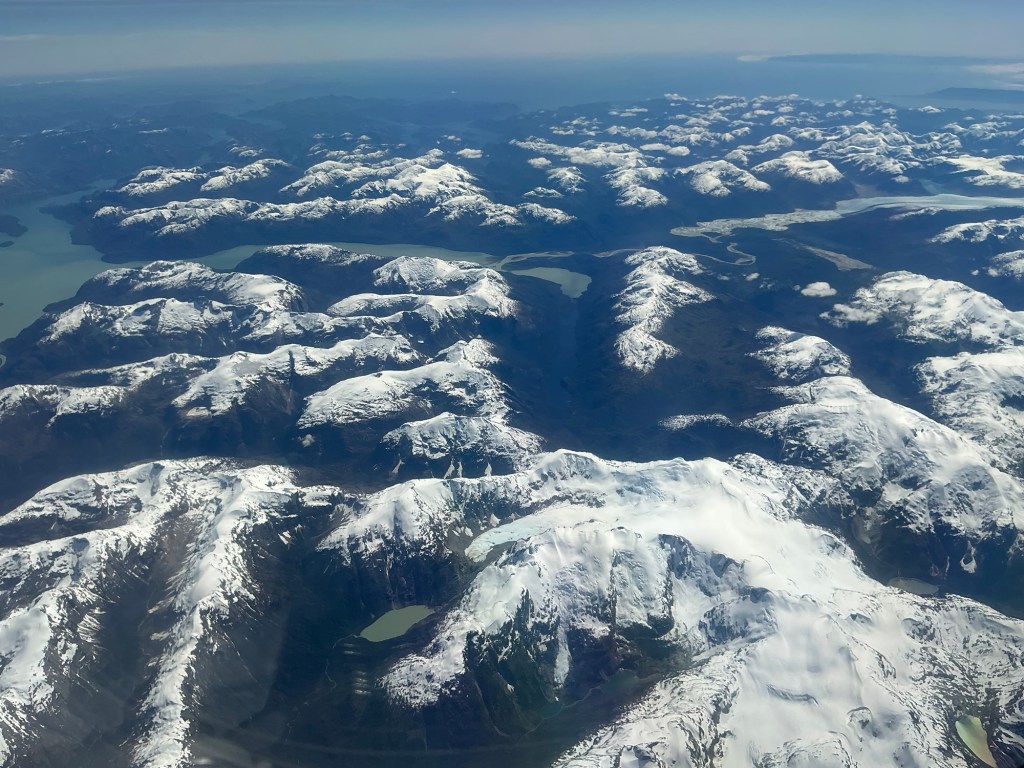
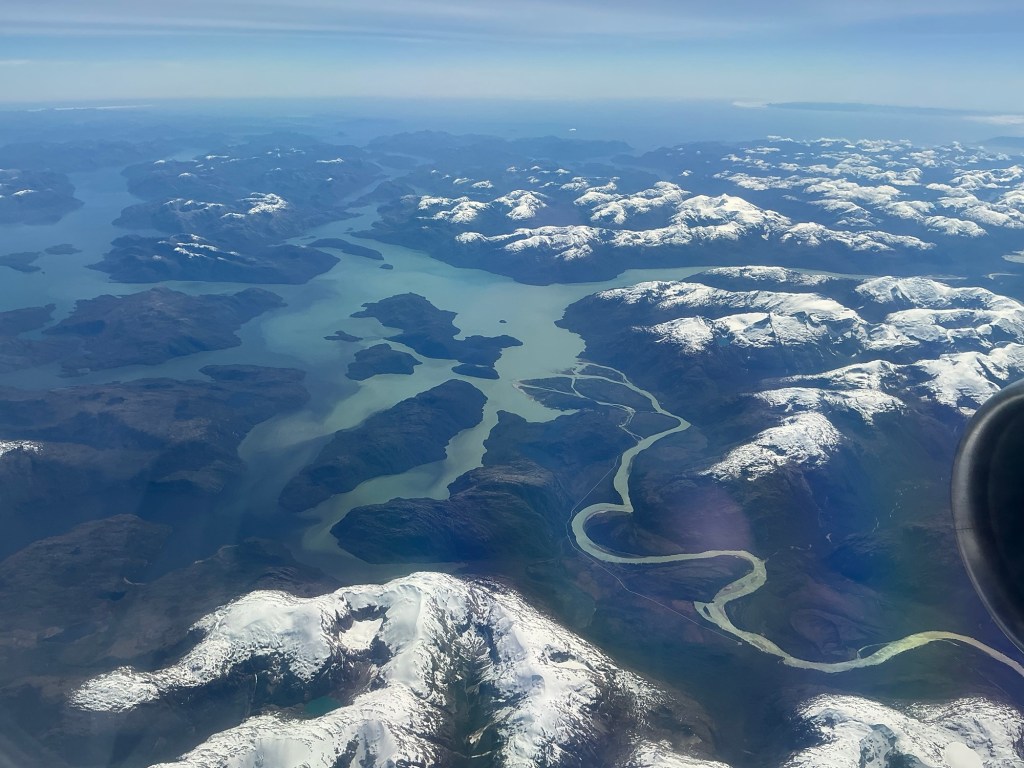
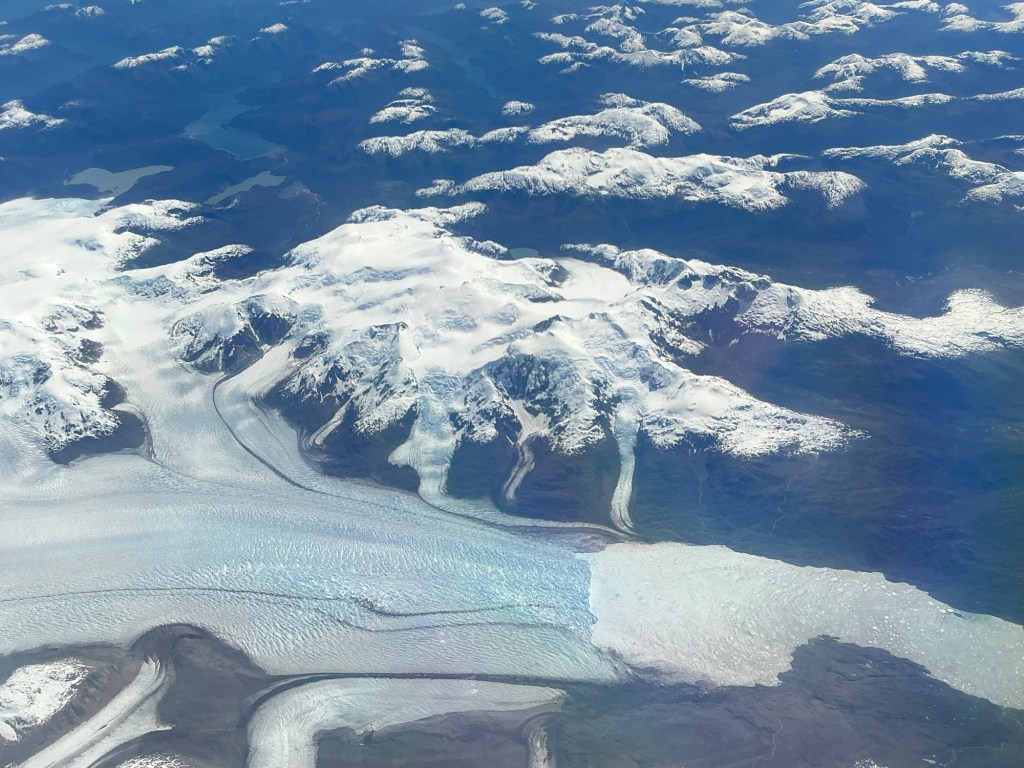
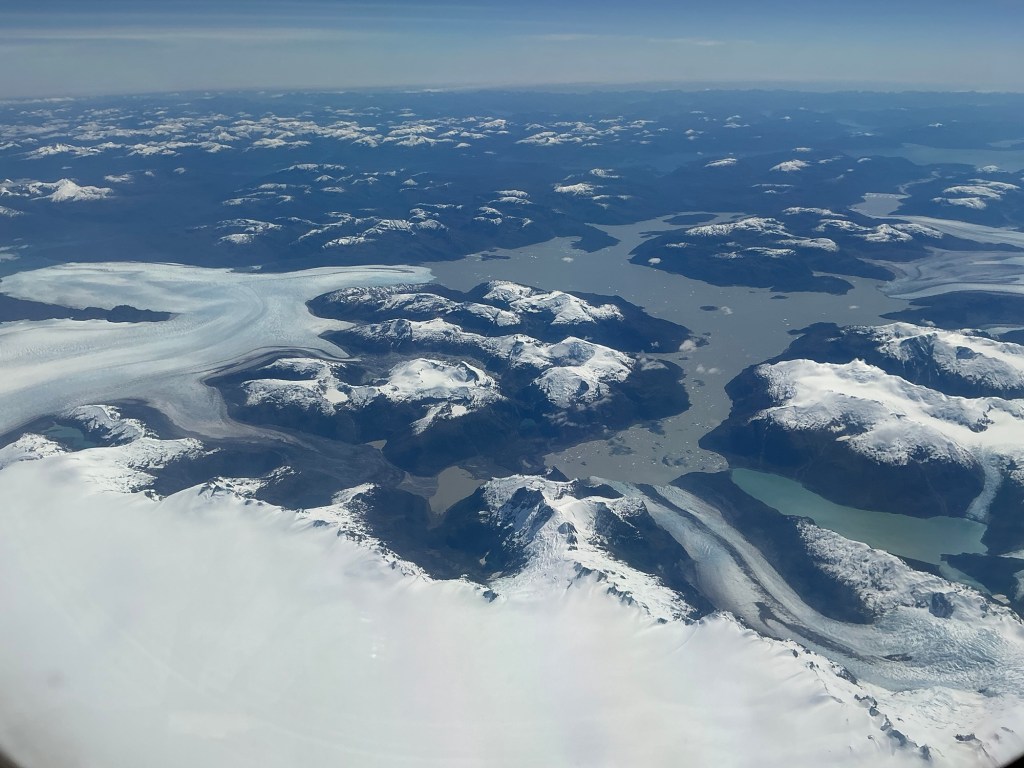
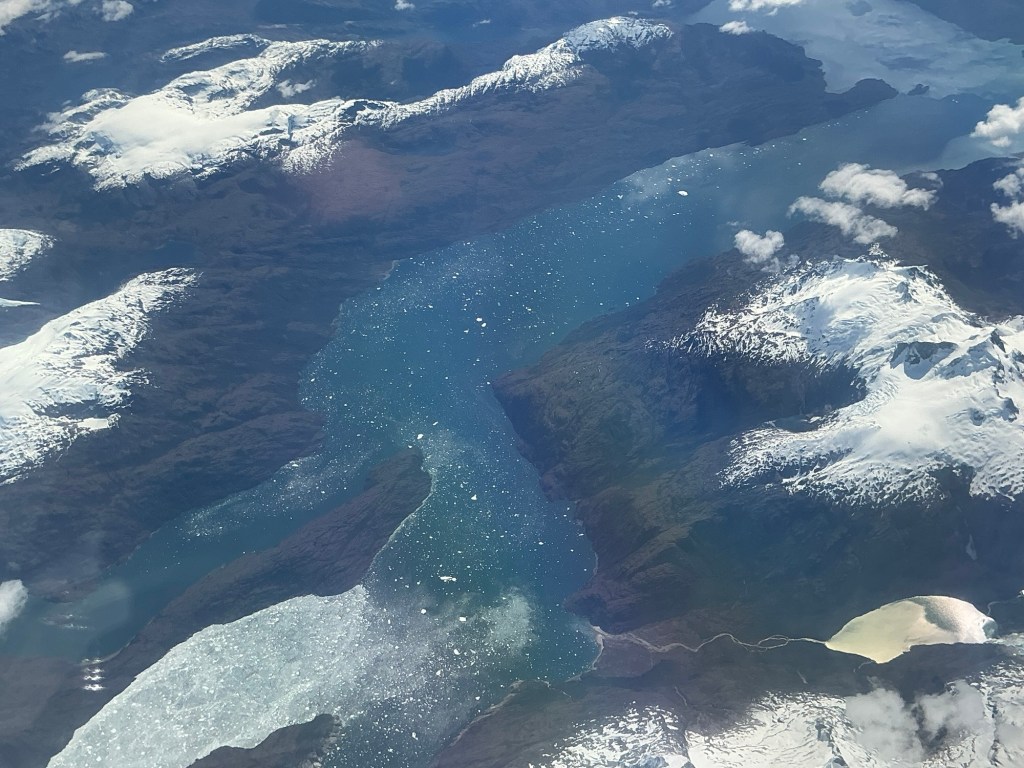
The sky for our flight was sunny and bright. Astonishing views out the window of the plane were shades of adventures to come.
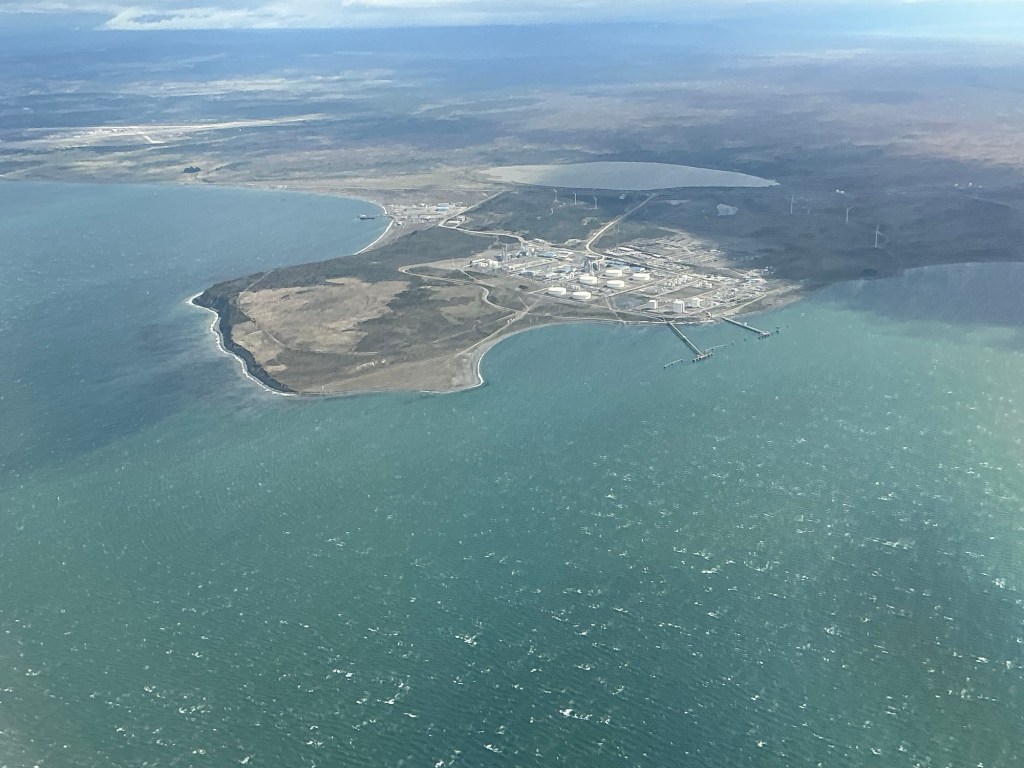
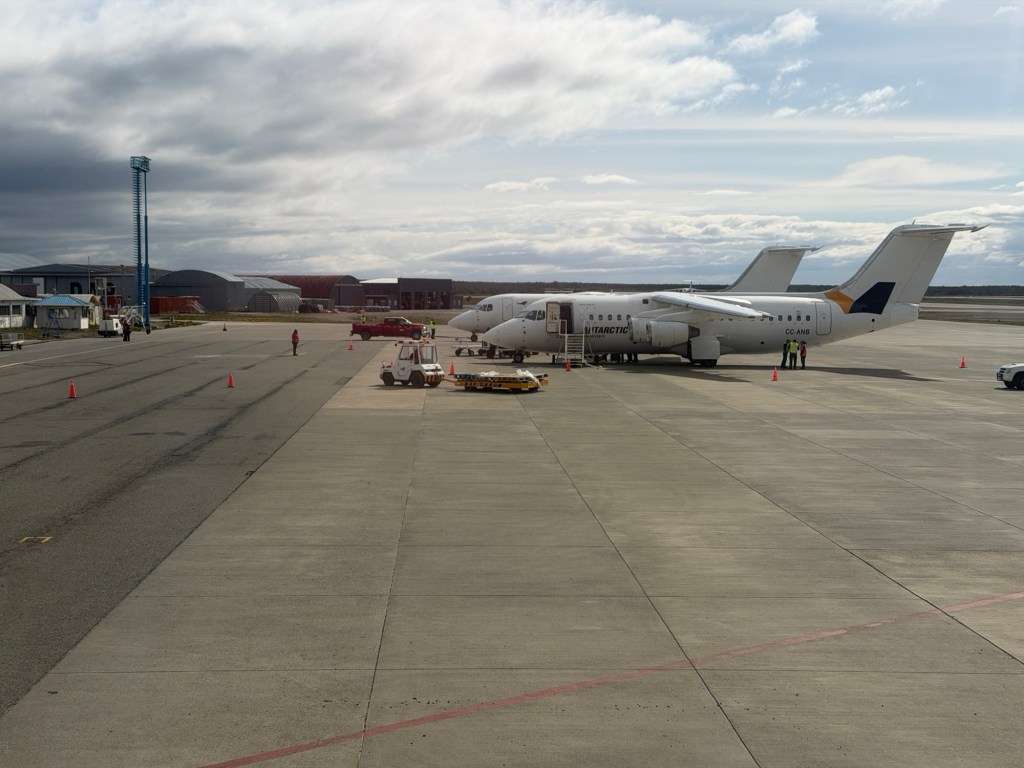
Chilean ice capGlacier, lateral (on the side) moraines (piles of rubble) visibleGlacier coming off ice cap (outlet glacier)When glaciers intersect, they join, forming medial (in the middle) morainesChilean ice cap with many outlet glaciers and glacial lakes surrounding it. Medial moraines in long glacierChilean ice capMeandering stream, lake and iceViews to marvel at! So much snow, so many glaciers. Coming into Punta ArenasAntarctic Airways plane at the airport
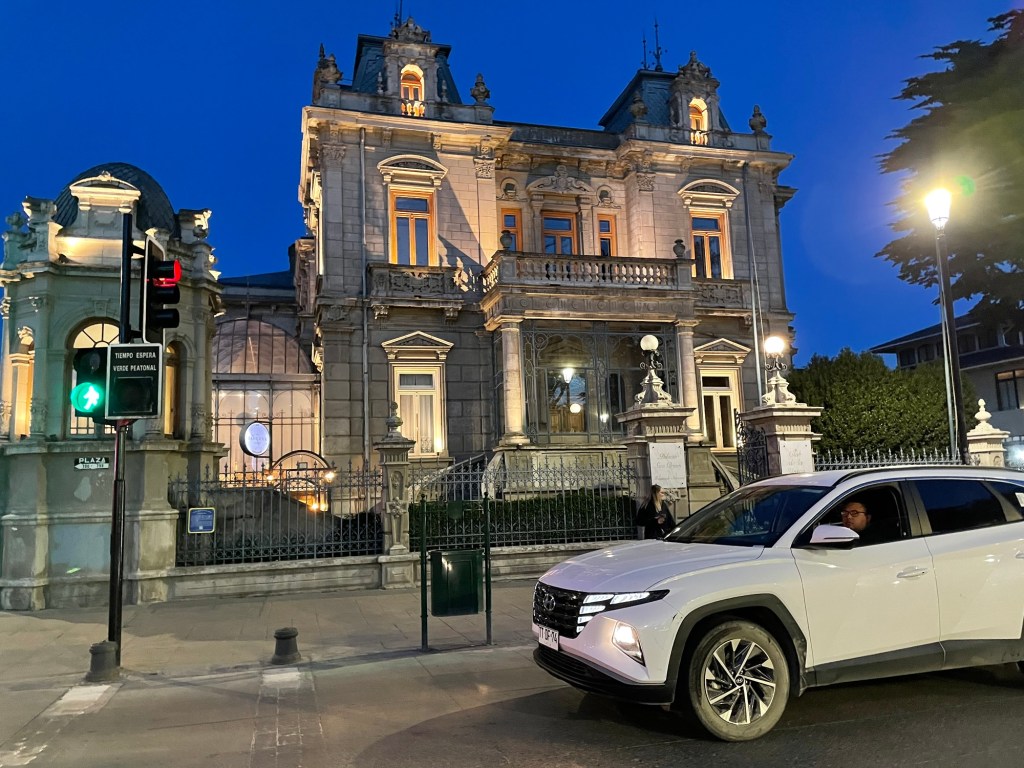
We stayed one night in a castle in Punta Arenas. The castle and 7 million acres of surrounding land were owned by Sarah Brown, an important person here.
We walked to a restaurant together for dinner.
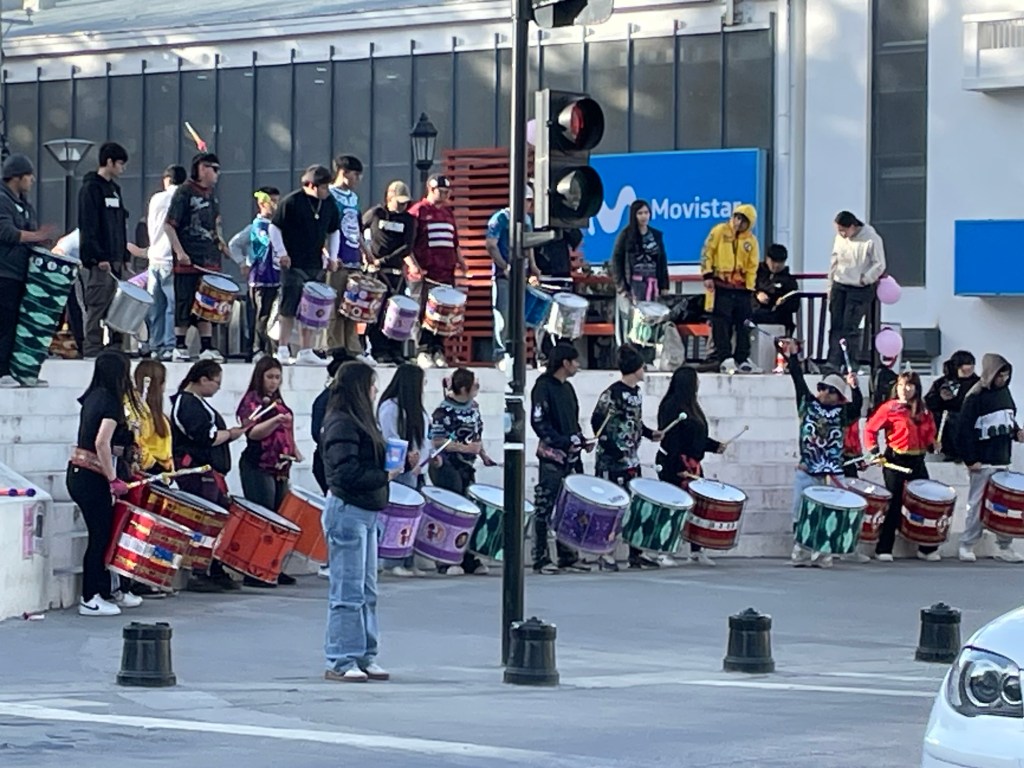
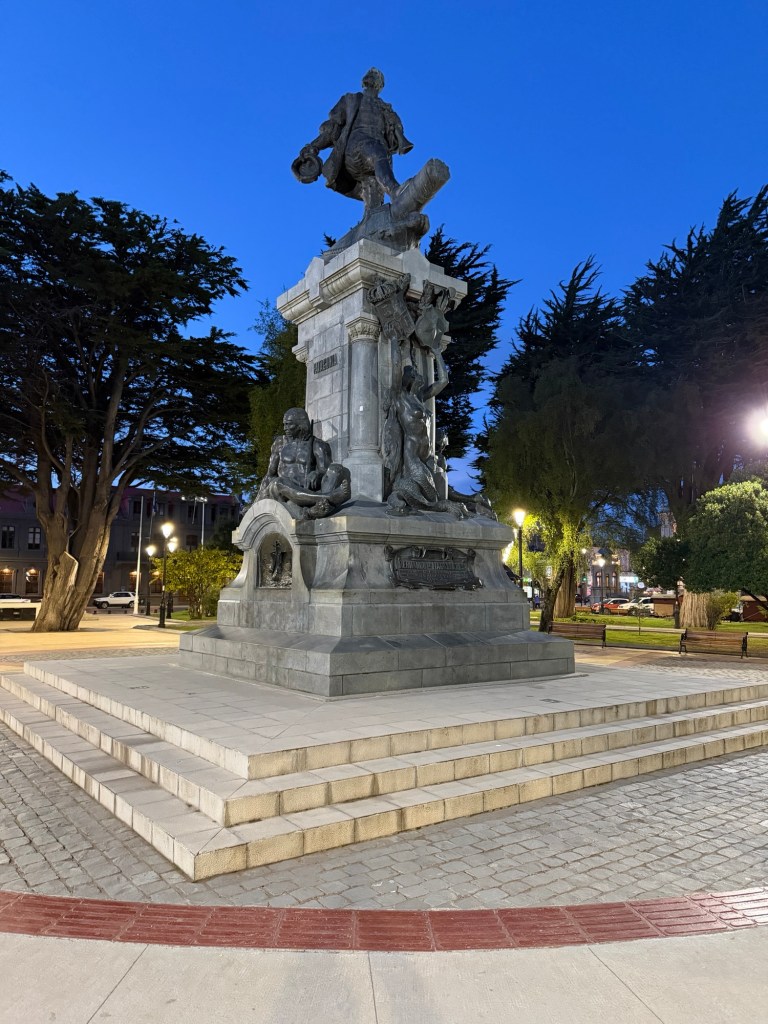
Our castle (José Nogueira Hotel)Drummers demonstrating on the streetTop of our castleStatue of Magellan
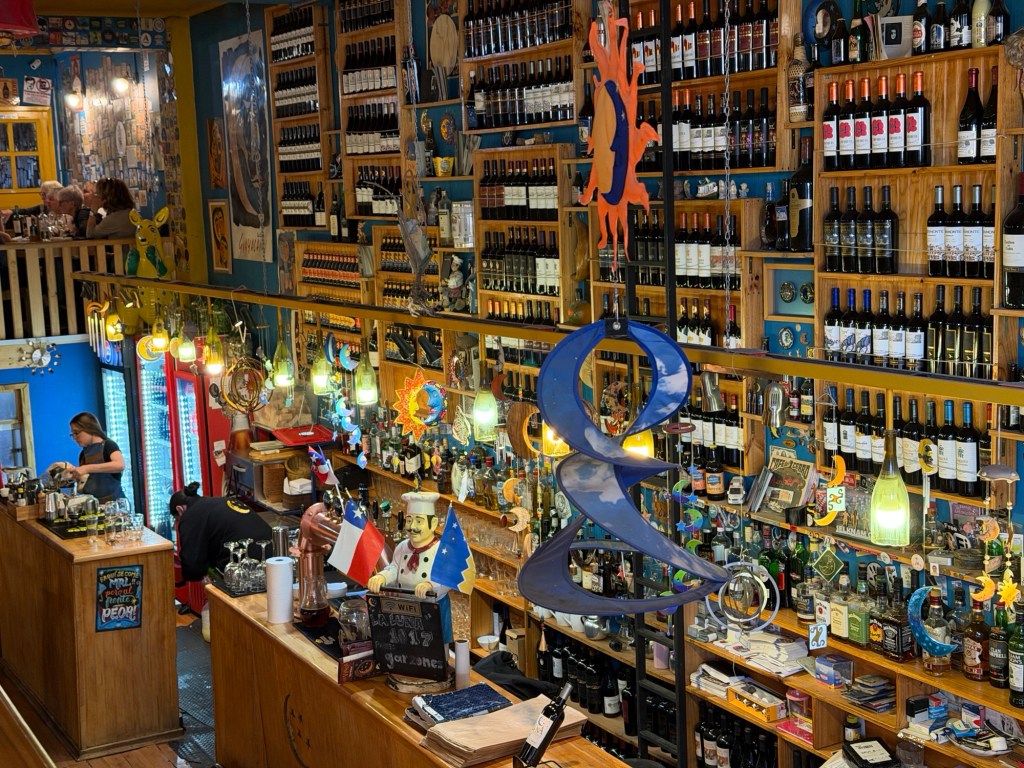
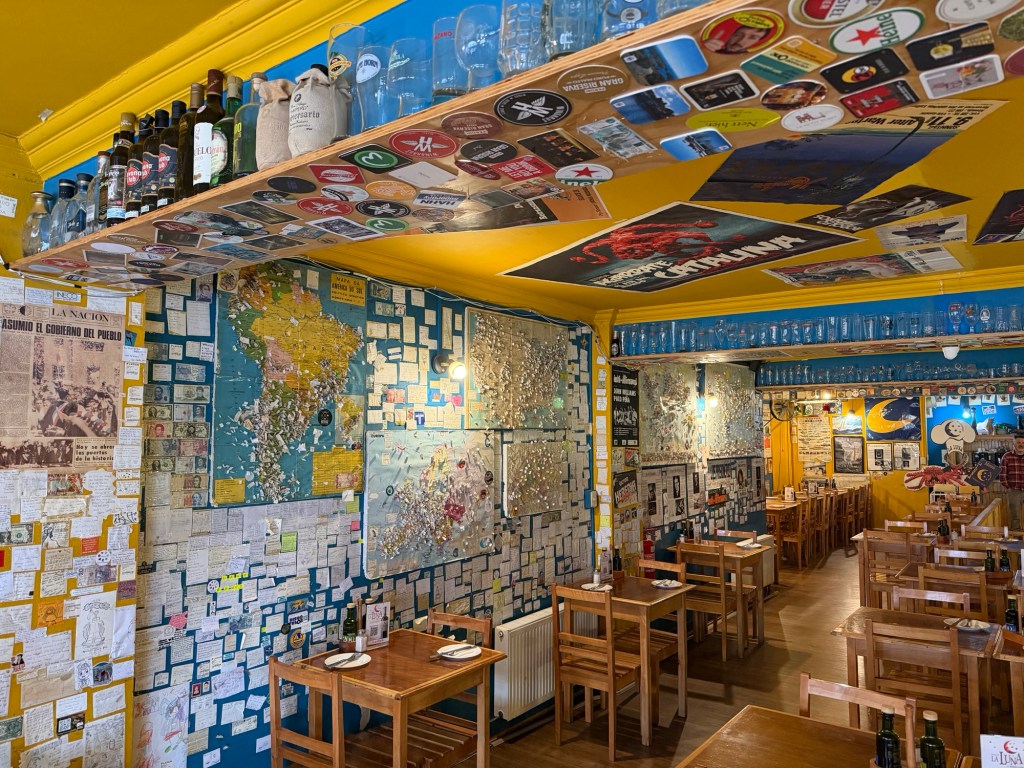
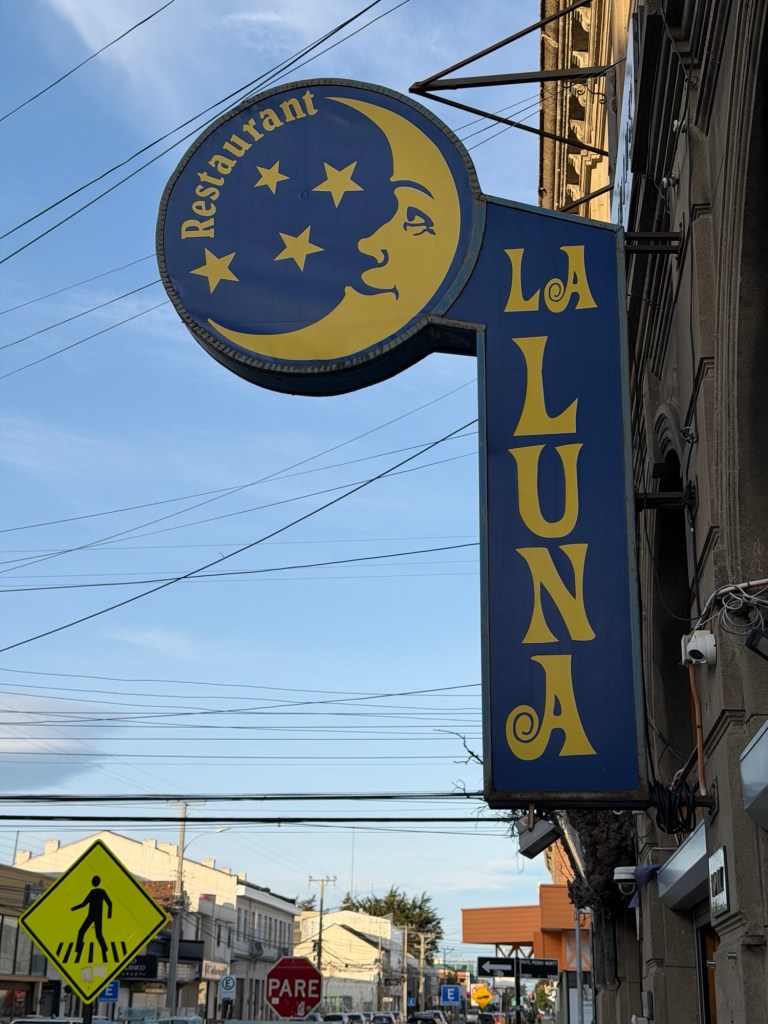
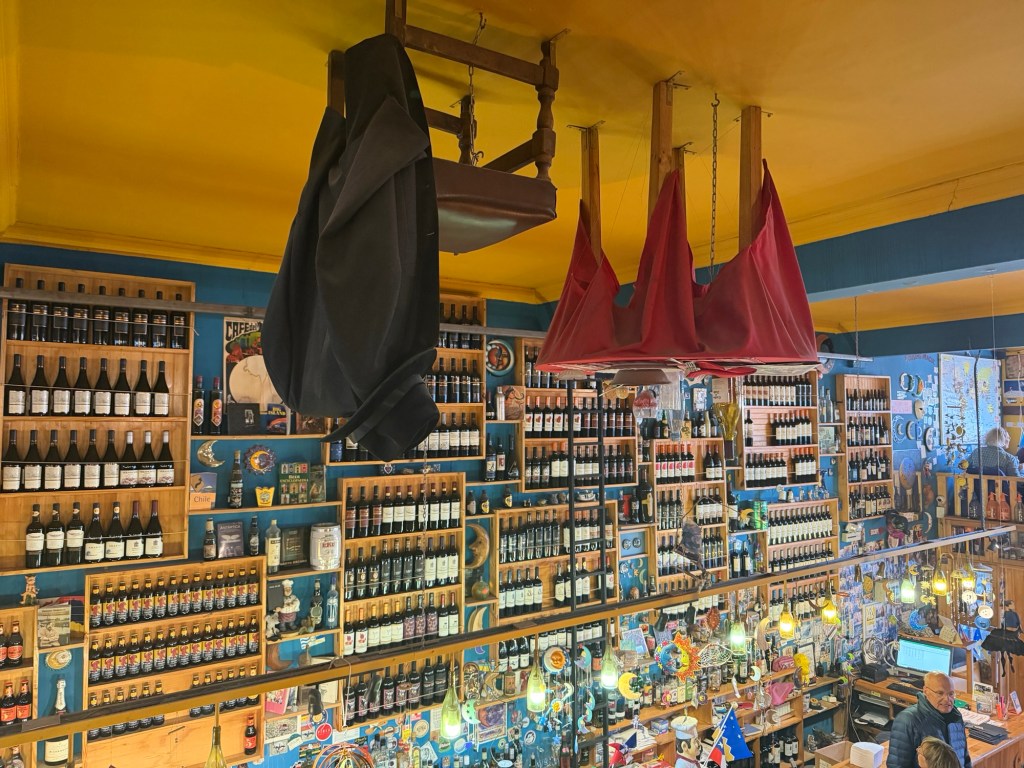
The decorations at the restaurant, La Luna, were amusing.
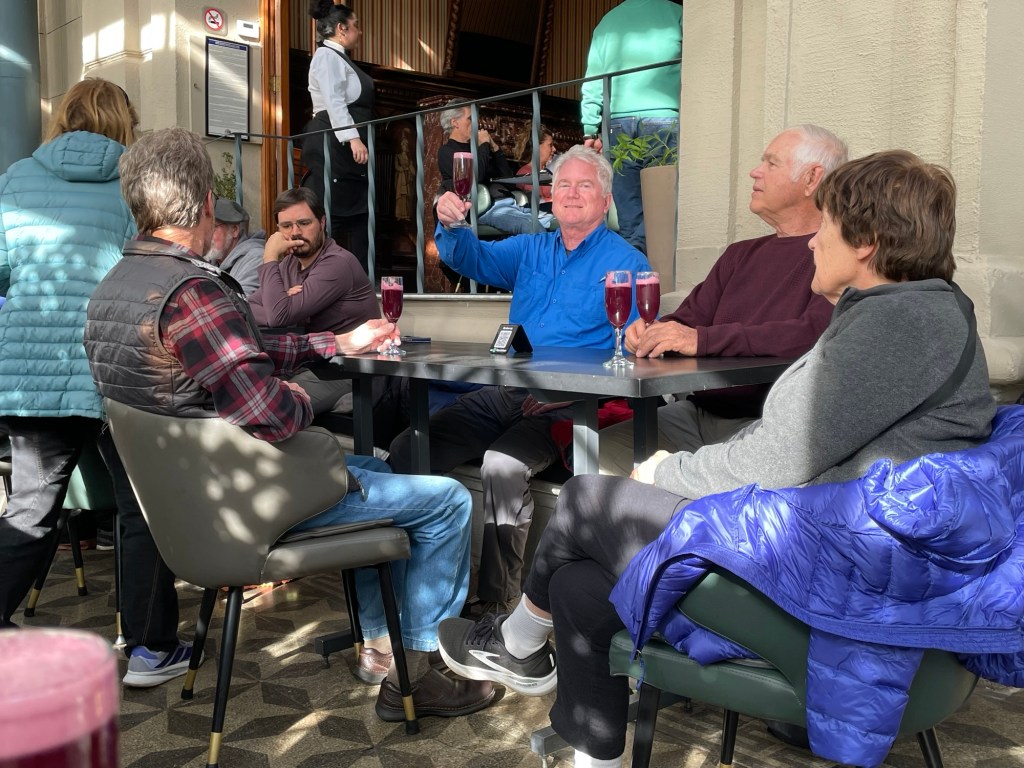
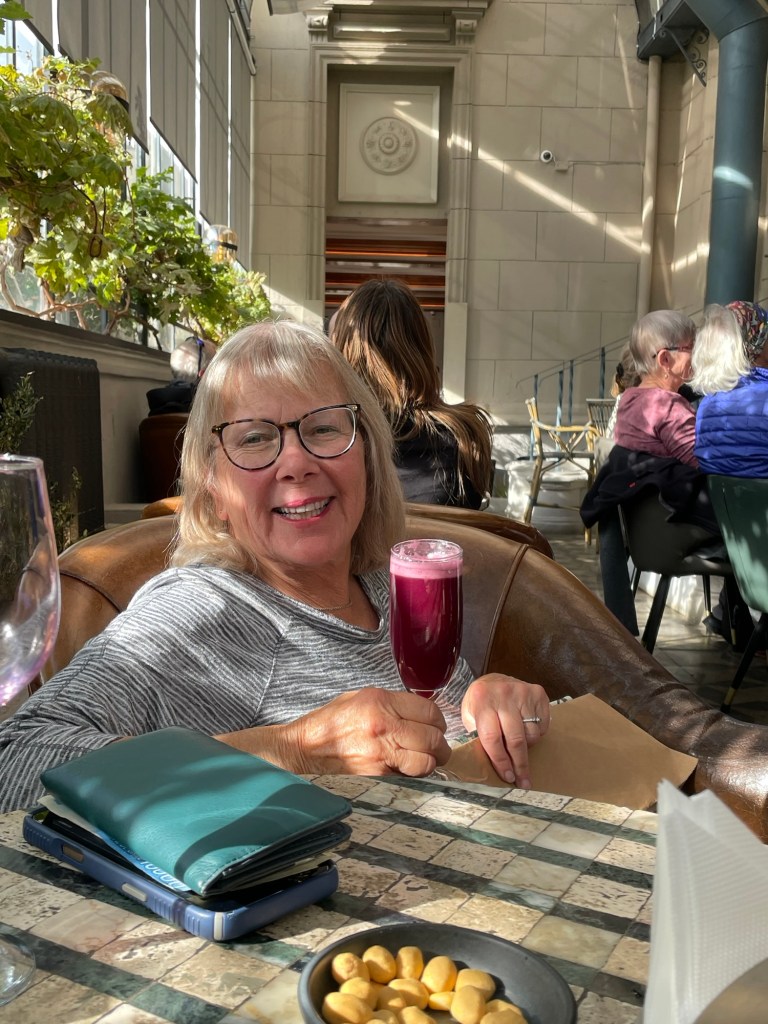
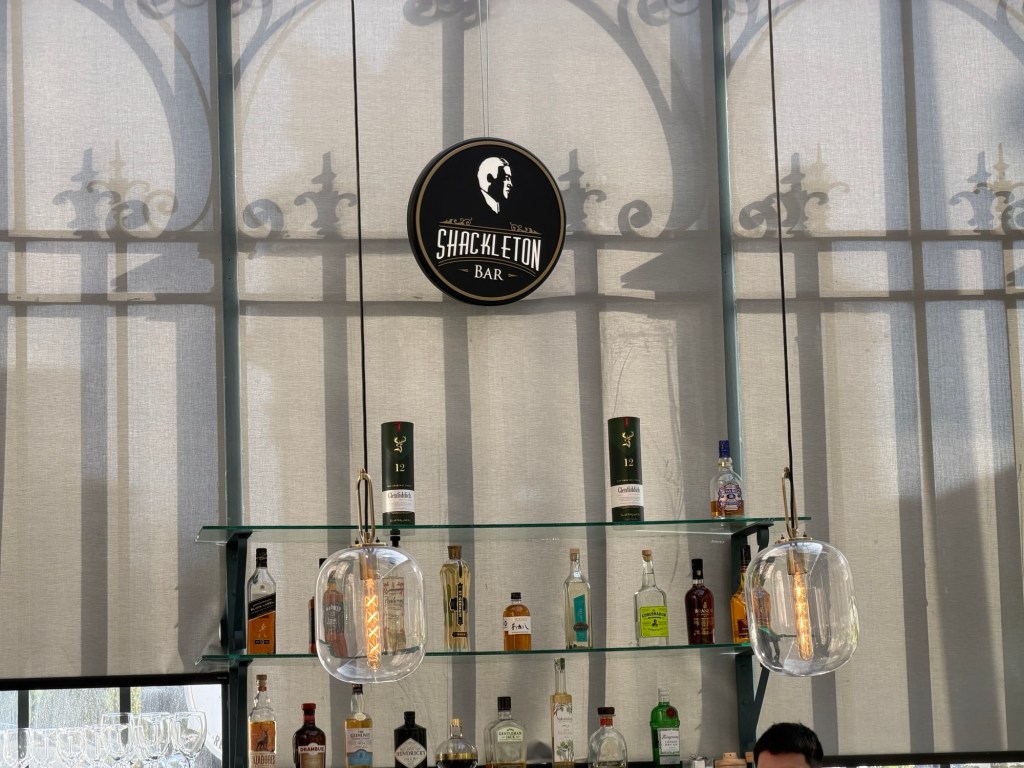
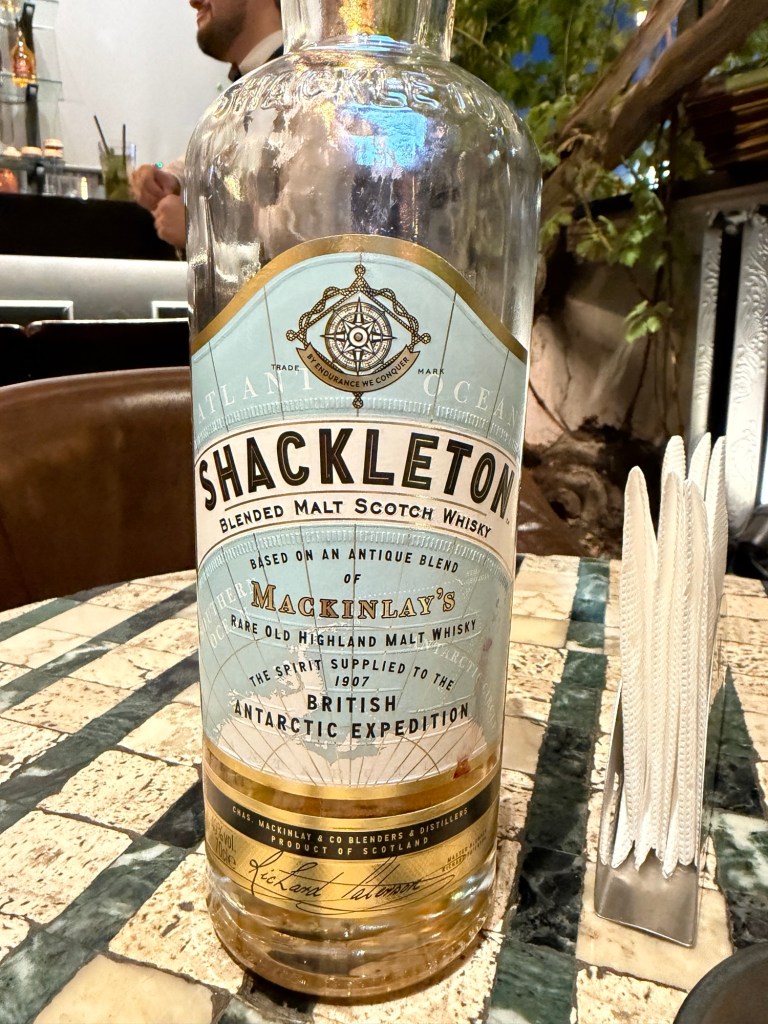
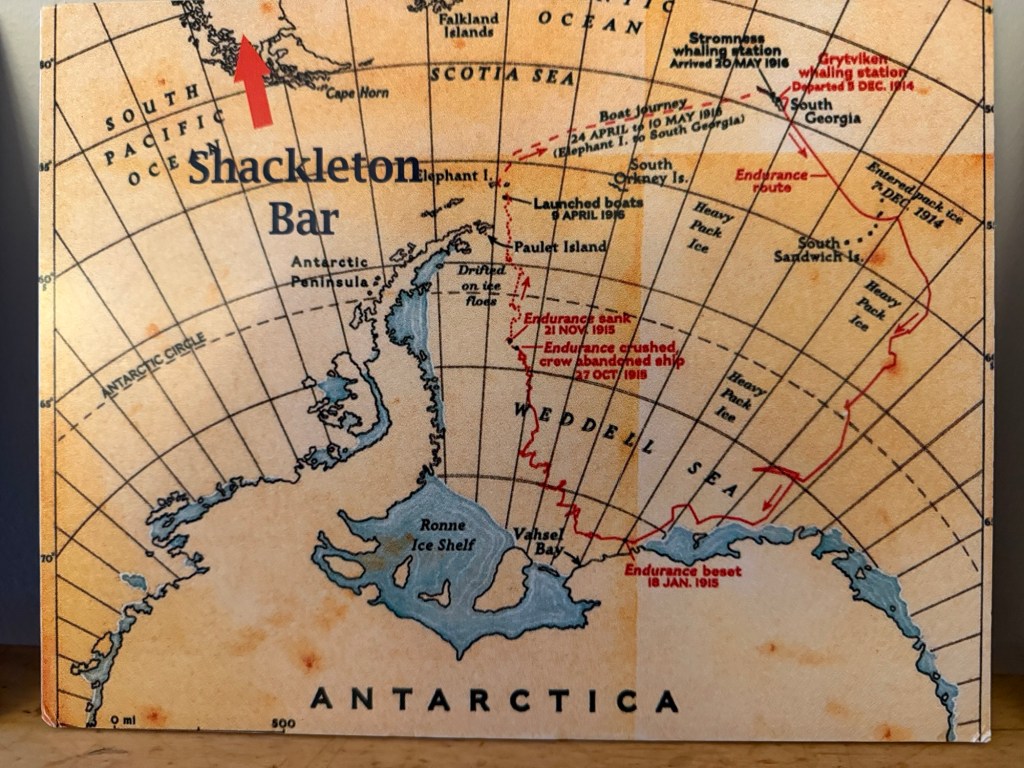
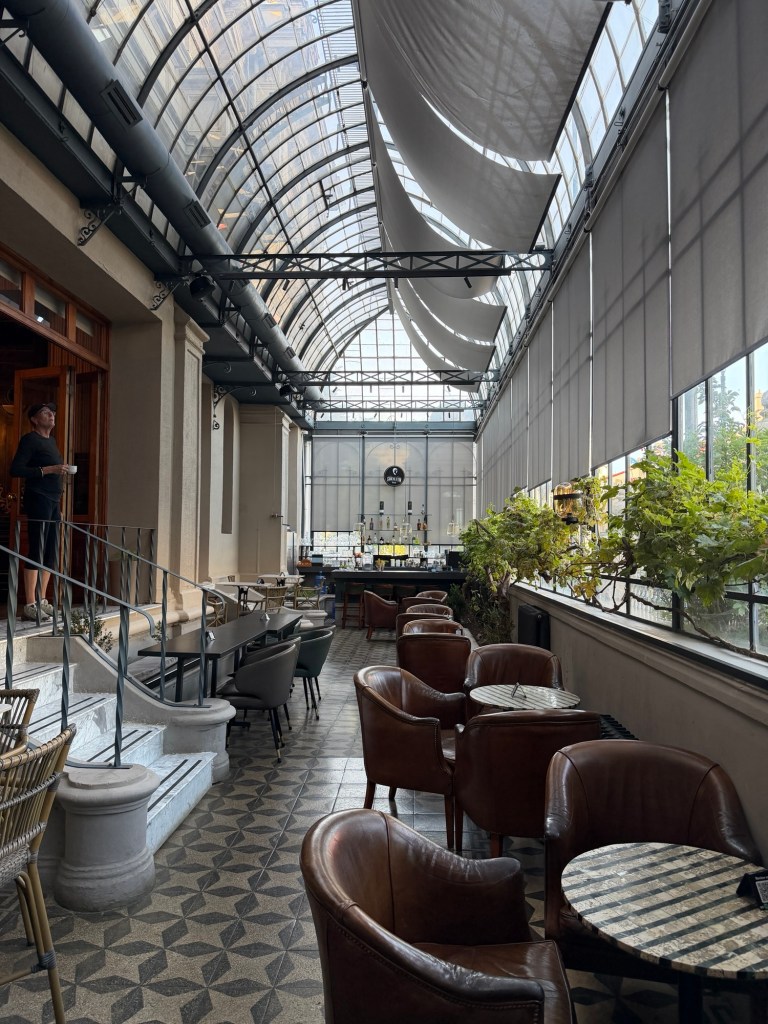
Looking toward the bar from our table. Maps with pins showing where visitors lived. Our restaurant Upside down table setting, because we are at the bottom of the world. Calafate sours at the castle hotel Pam Bar at the castleBrian enjoyed a Scotch before sleeping Map showing Shackleton’s fateful voyageThe bar has grape vines on one side
Minga translates roughly to cooperative work, and the term was explained as times when friends need to get things done that require more people than just the family. Usually, this involves the work as well as meal preparation and sharing.
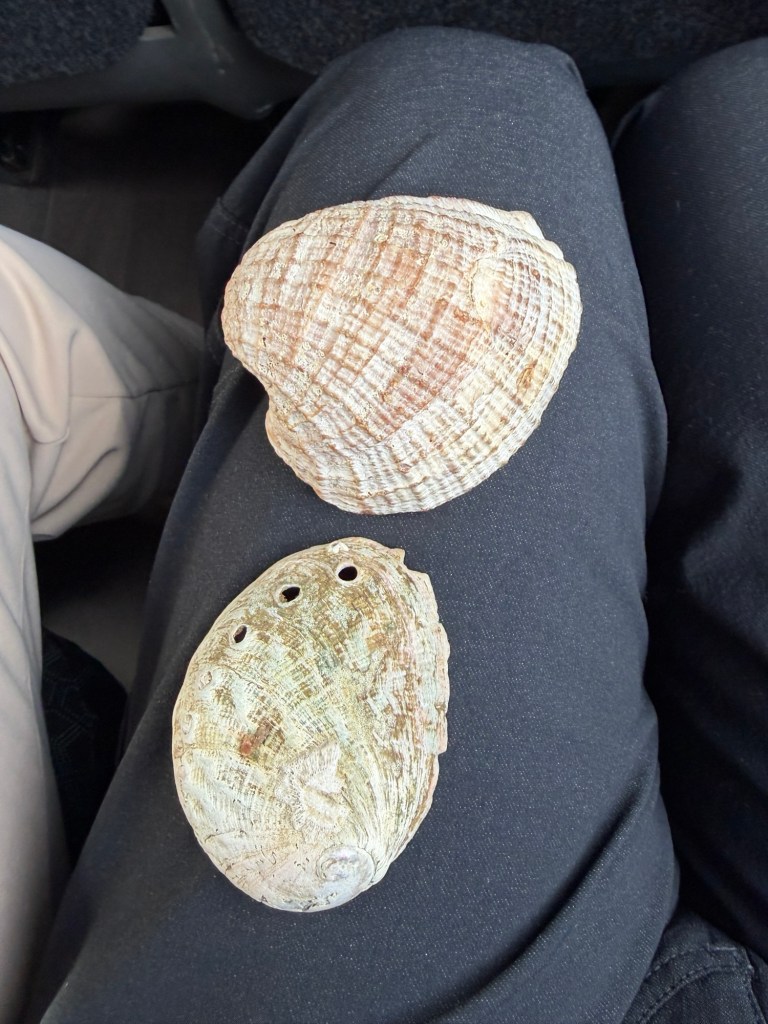
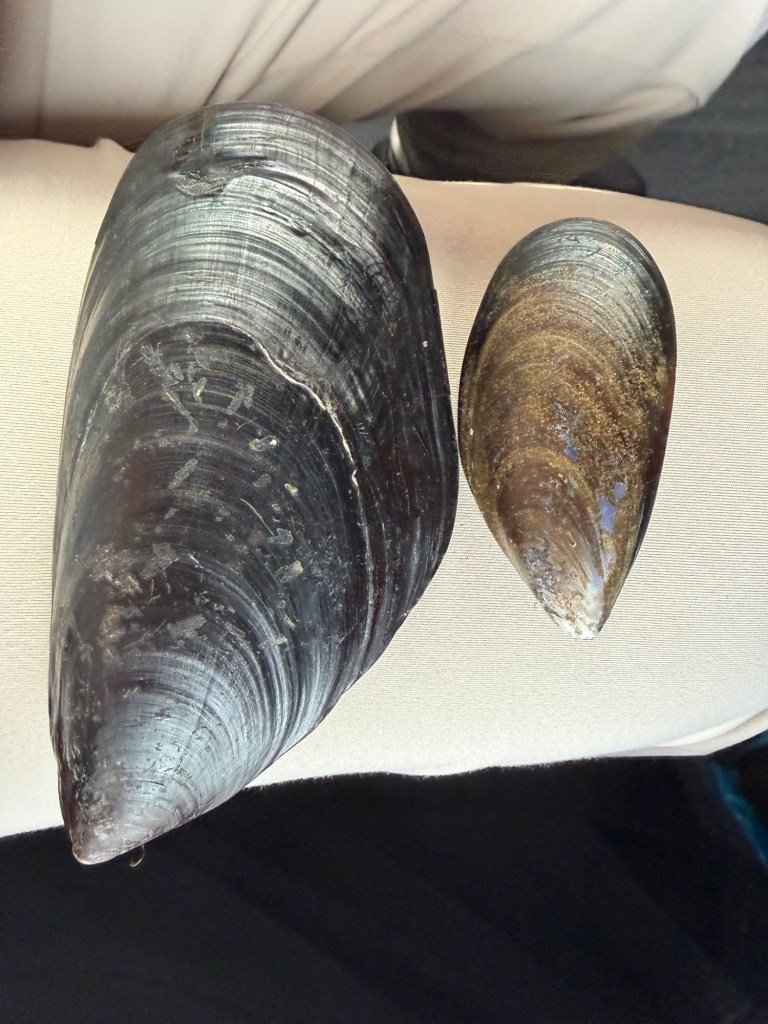
The previous night, we tried “abalone” as an appetizer, which did not taste like the California variety. We later learned they are called loco here, and look different from abalone. The mussels were also different.
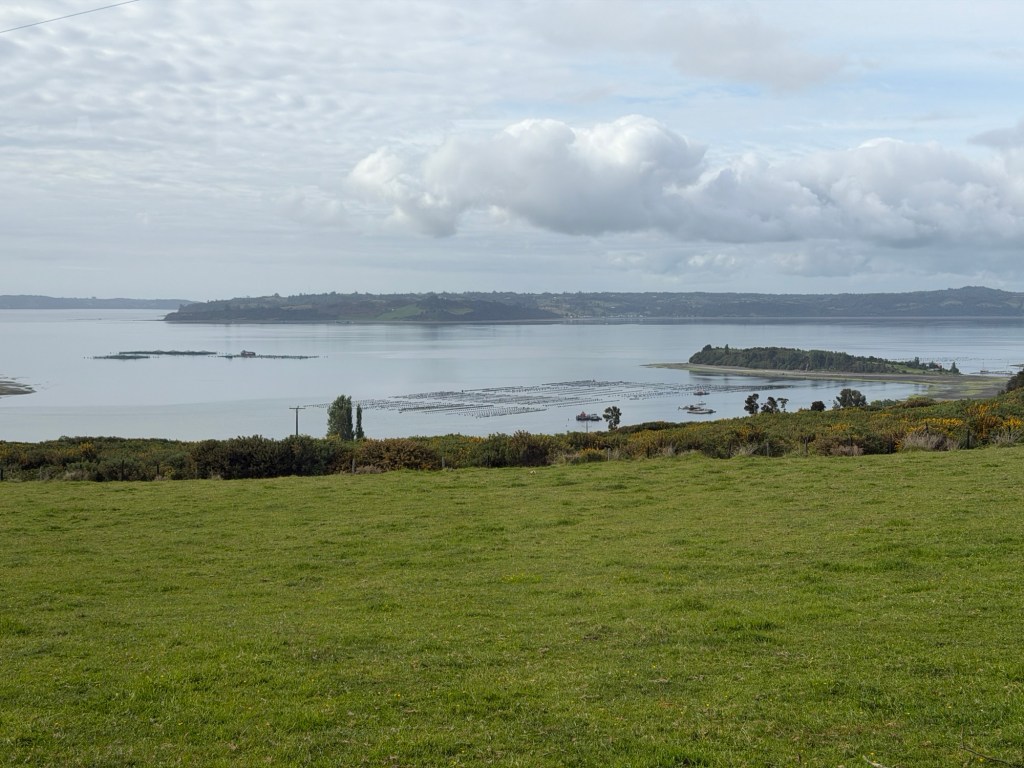
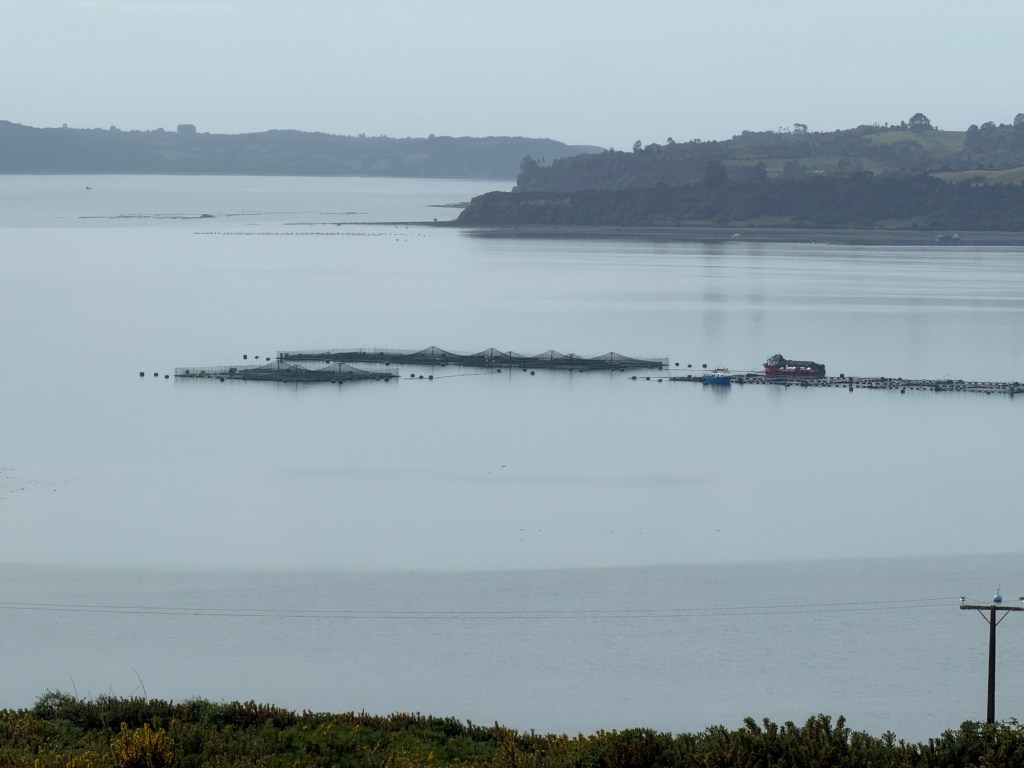
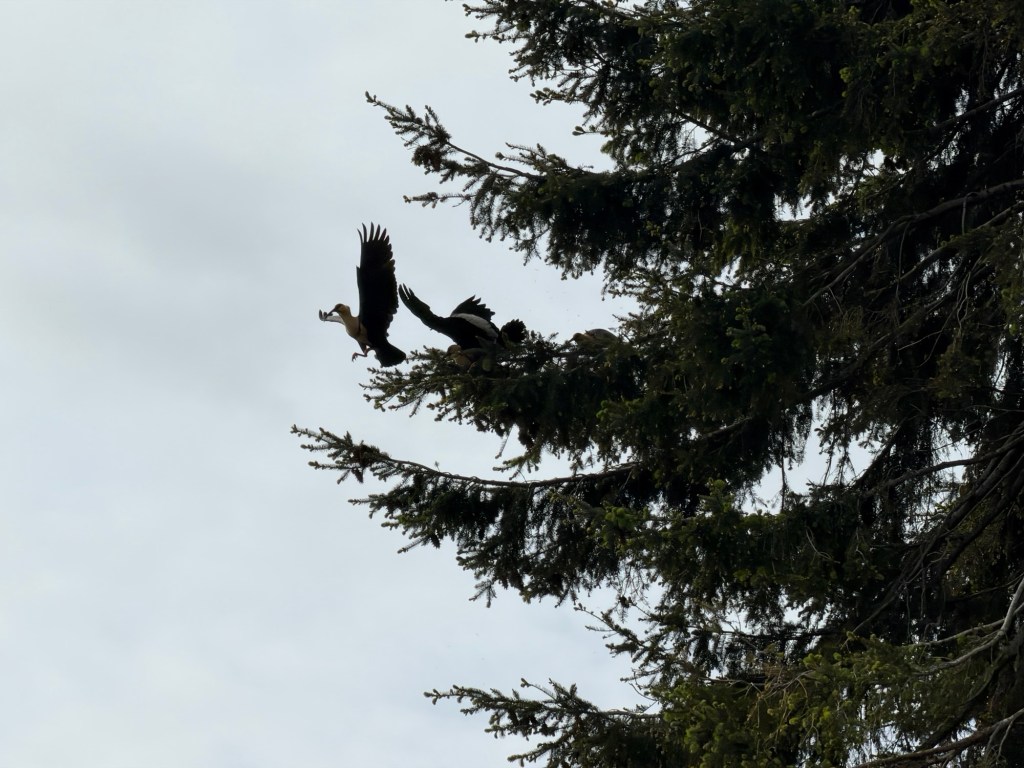
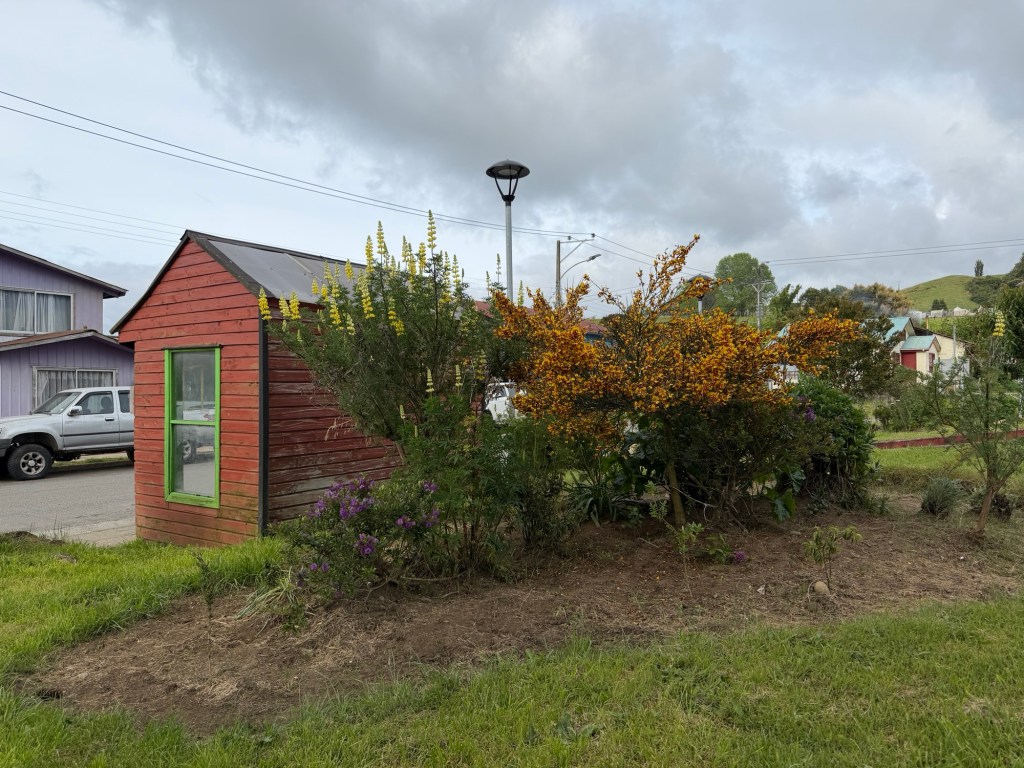
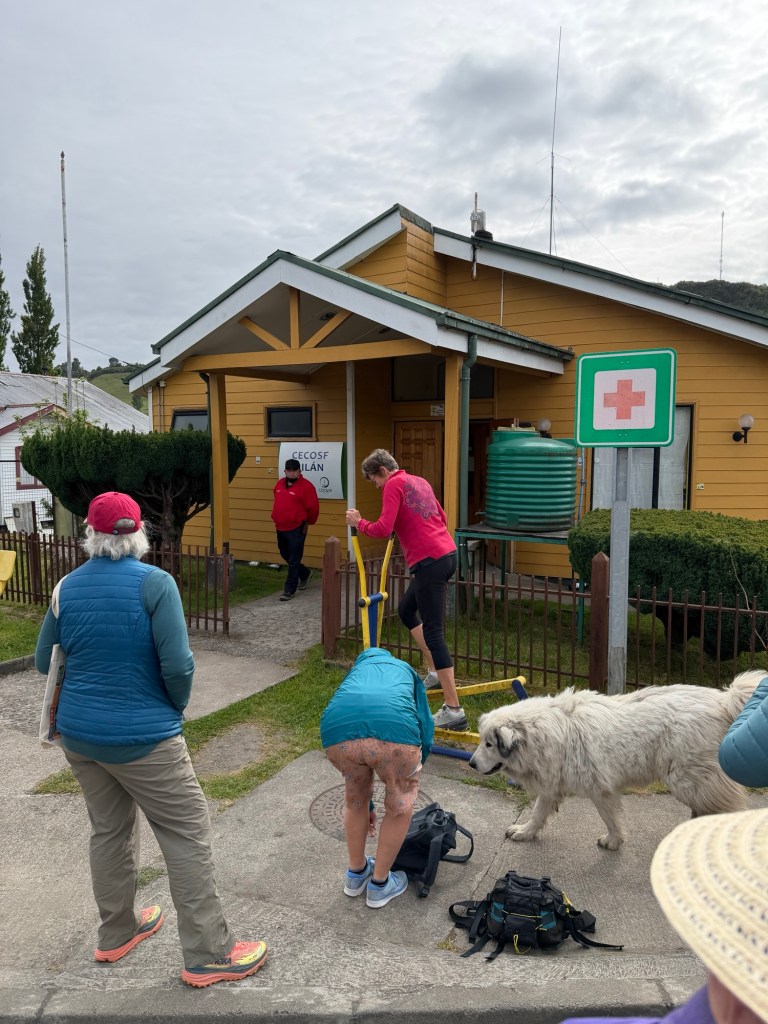
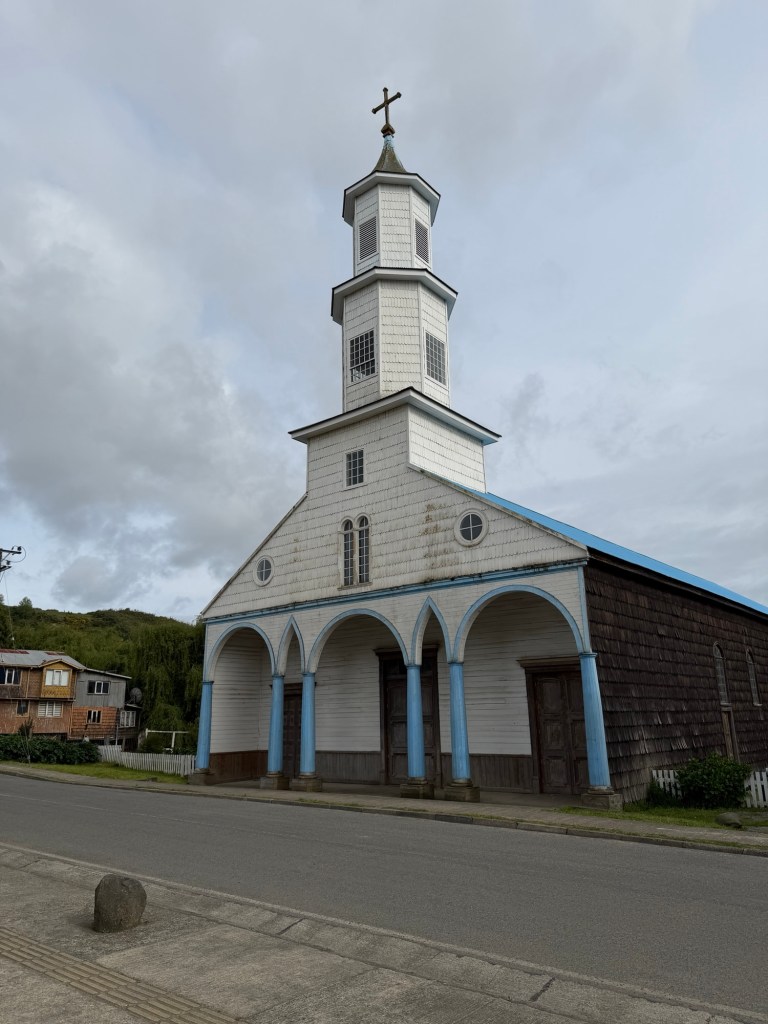
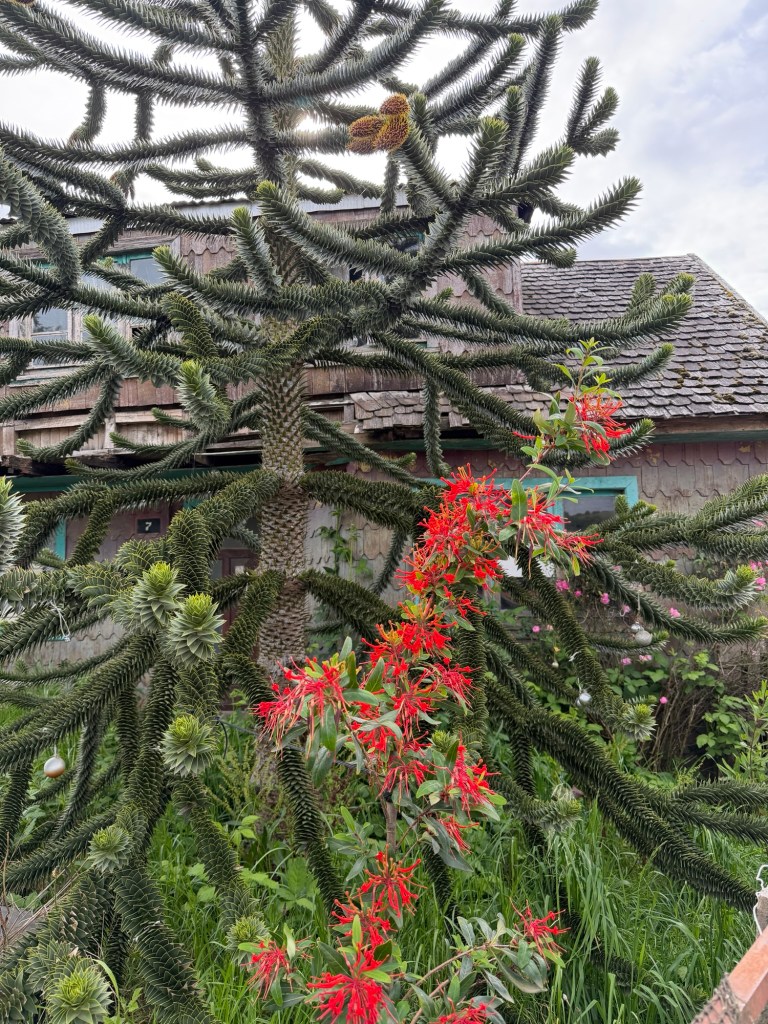
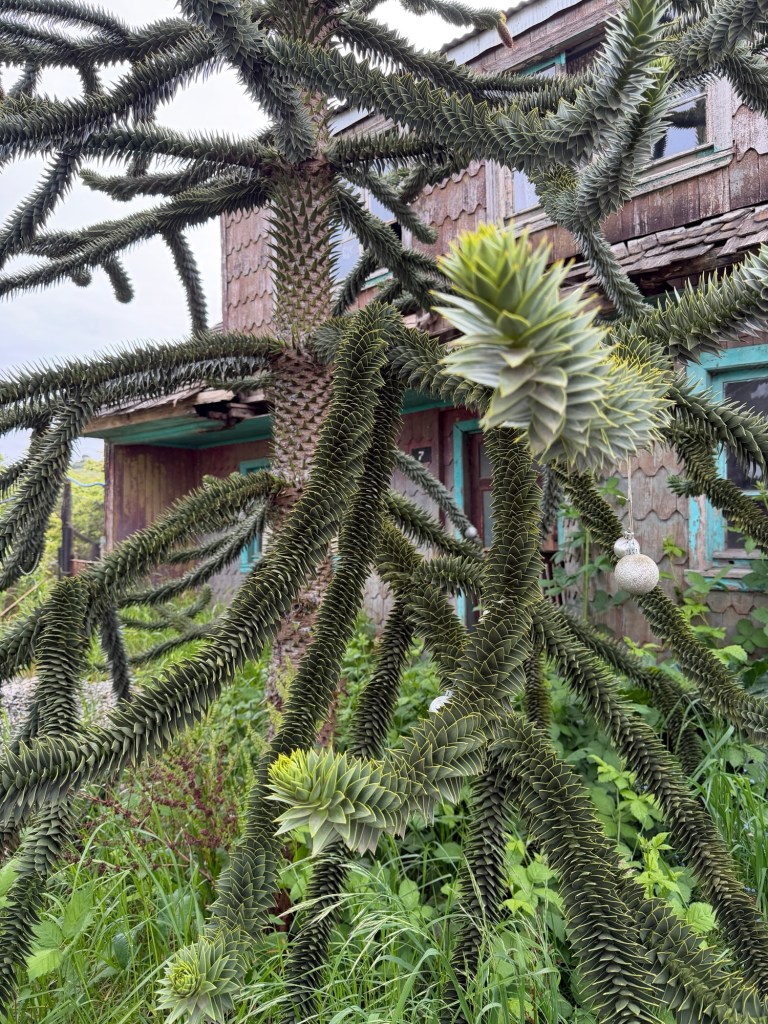
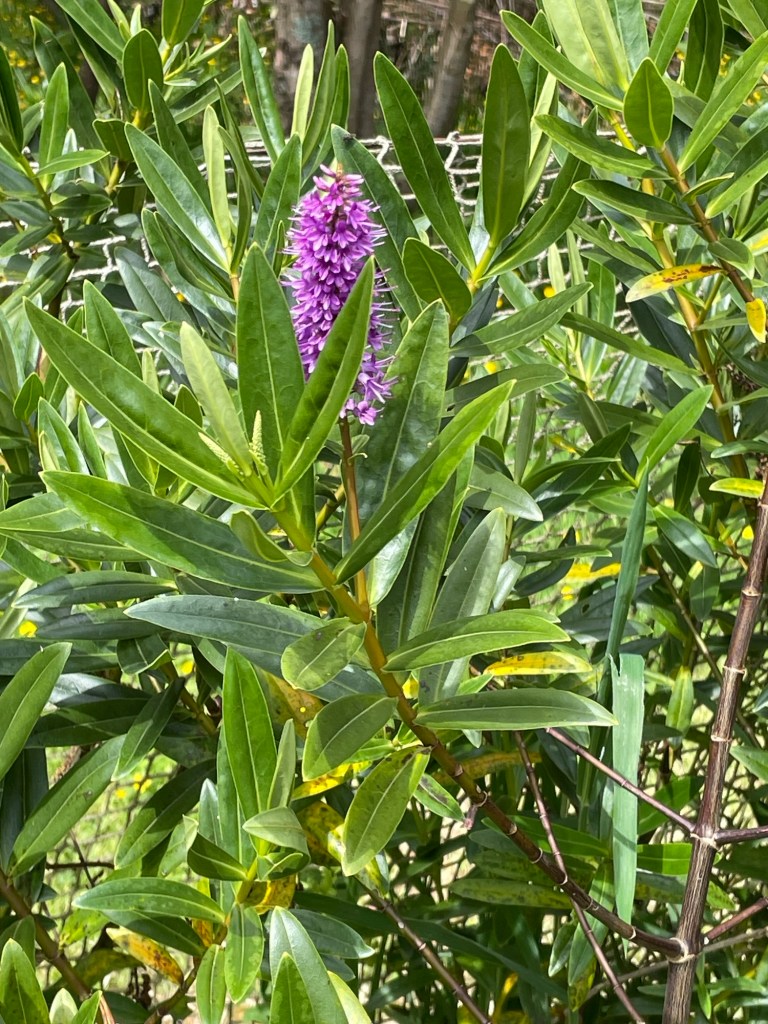
Loco on top, abalone on bottom Shoe mussel and other musselMussel farmSalmon farm. This has enhanced the economy of Chiloé IslandBlack faced ibis, who like to laugh at humans. Flowers in the town squareRobin on the exercise equipmentUNESCO Church, older than the last one.Fire bush and monkey puzzle treeMonkey Puzzle tree, decorated with ornaments
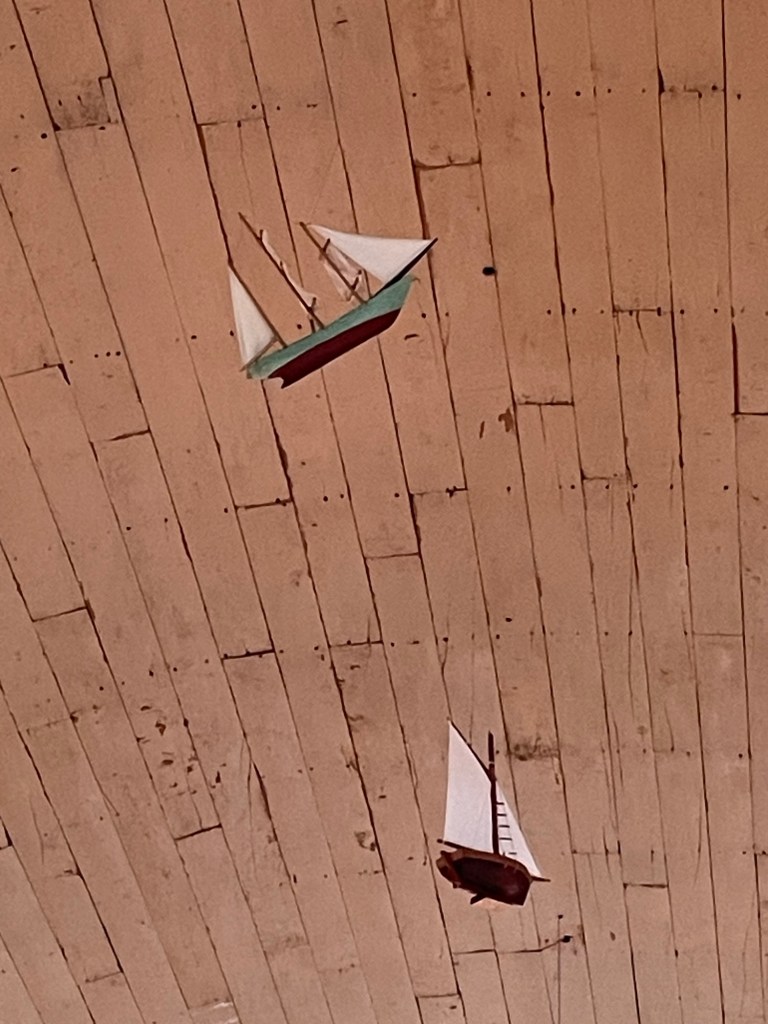
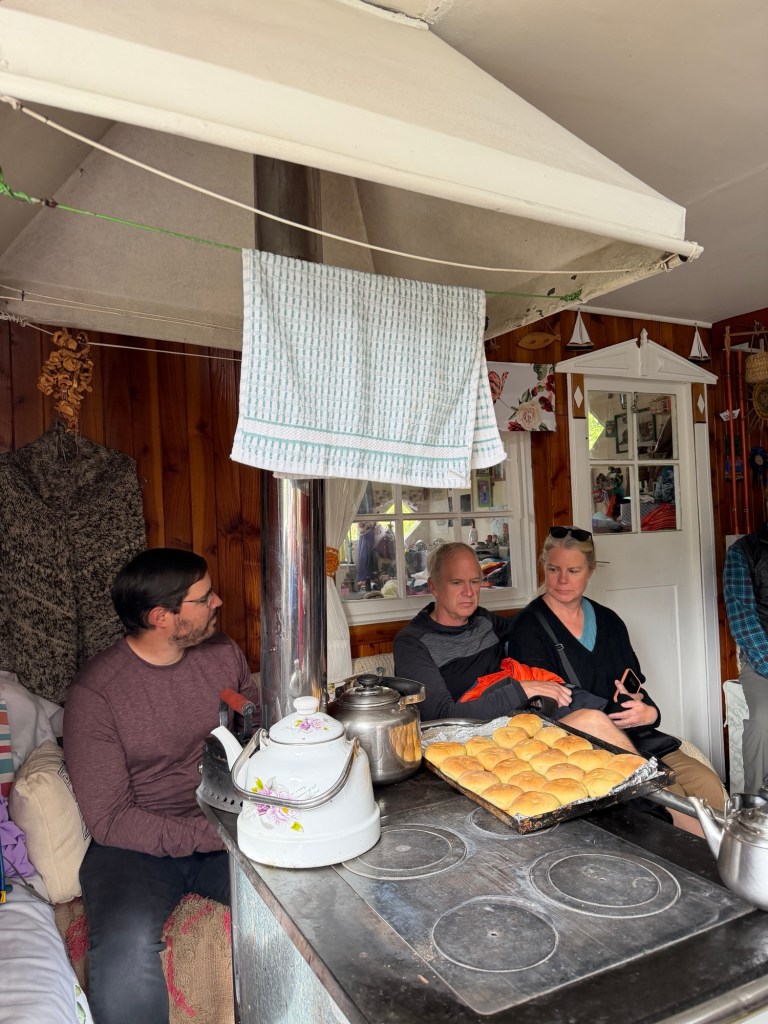
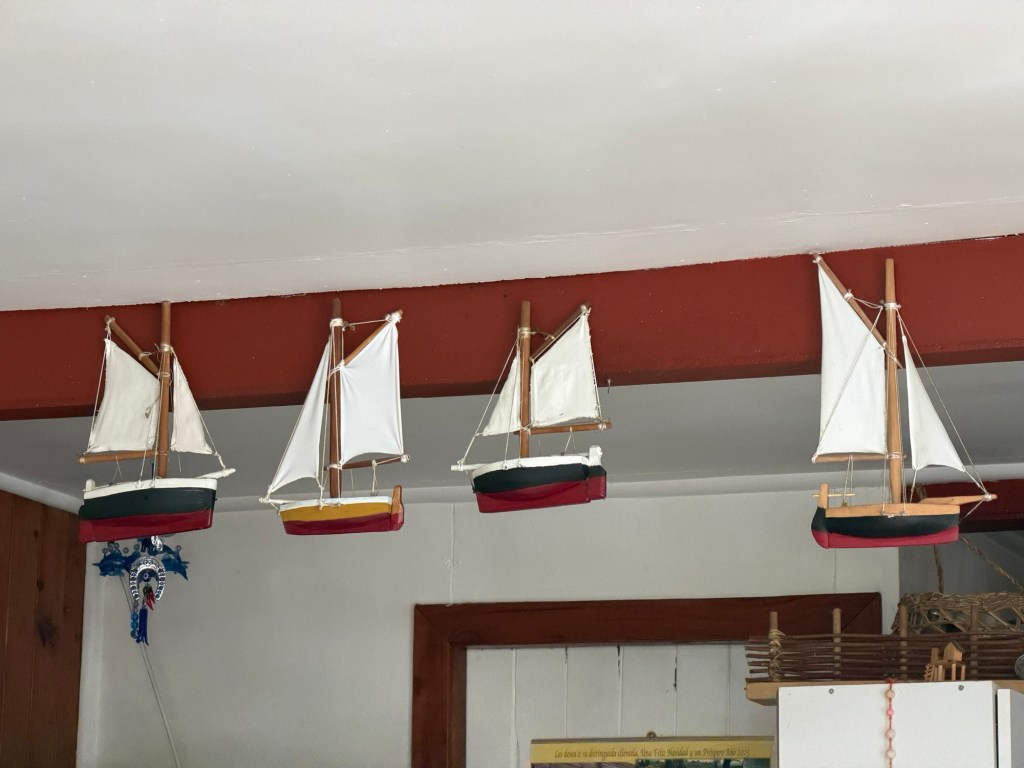
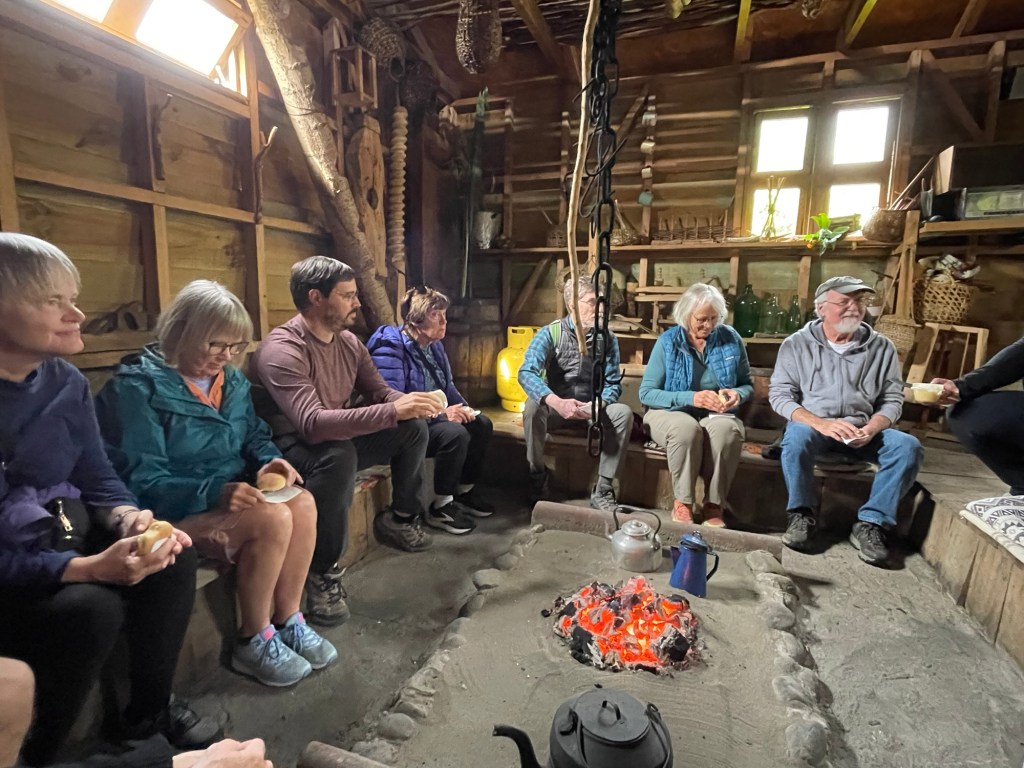
Our Minga happened at Raùl and Ilse’s house. They fed us fry bread (have to keep the workers happy), then they told us about their lives. Raùl loves to build miniature boats, and he sells them for displays.
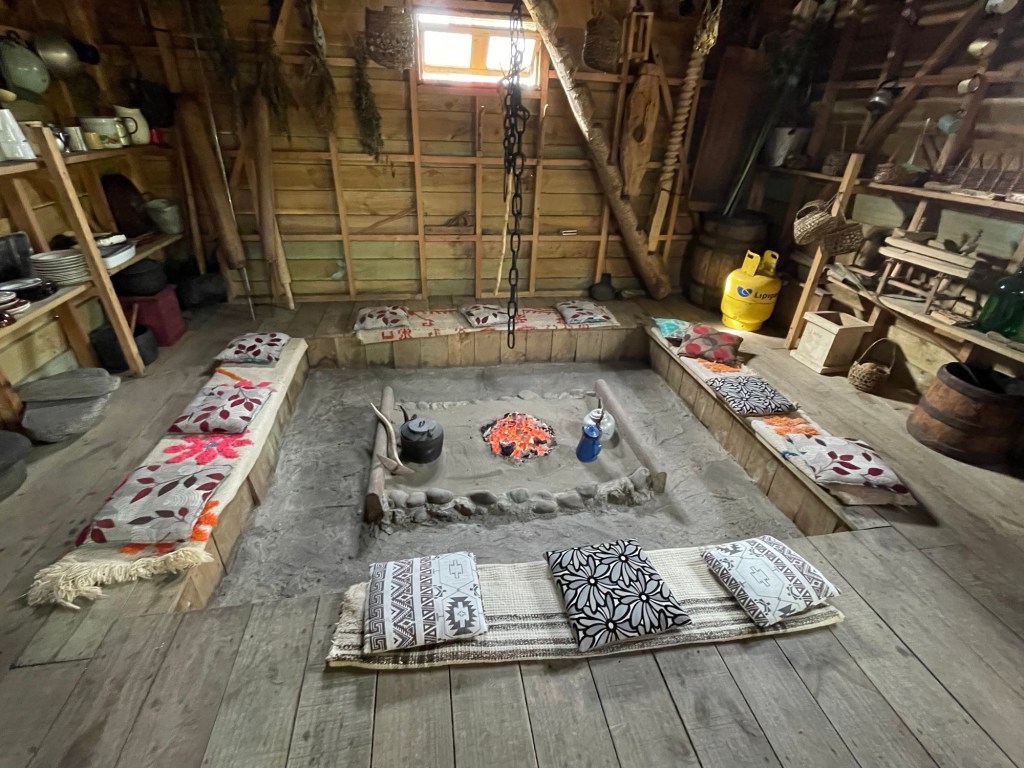
Carter, Doug and Renee with fry breadRaúl’s boats hanging from the ceiling Comfortable gathering place with fire in centerChris, Pam, Carter, Sue, Tom, Suzanne and Paul listening to the family’s stories while enjoying fry bread.
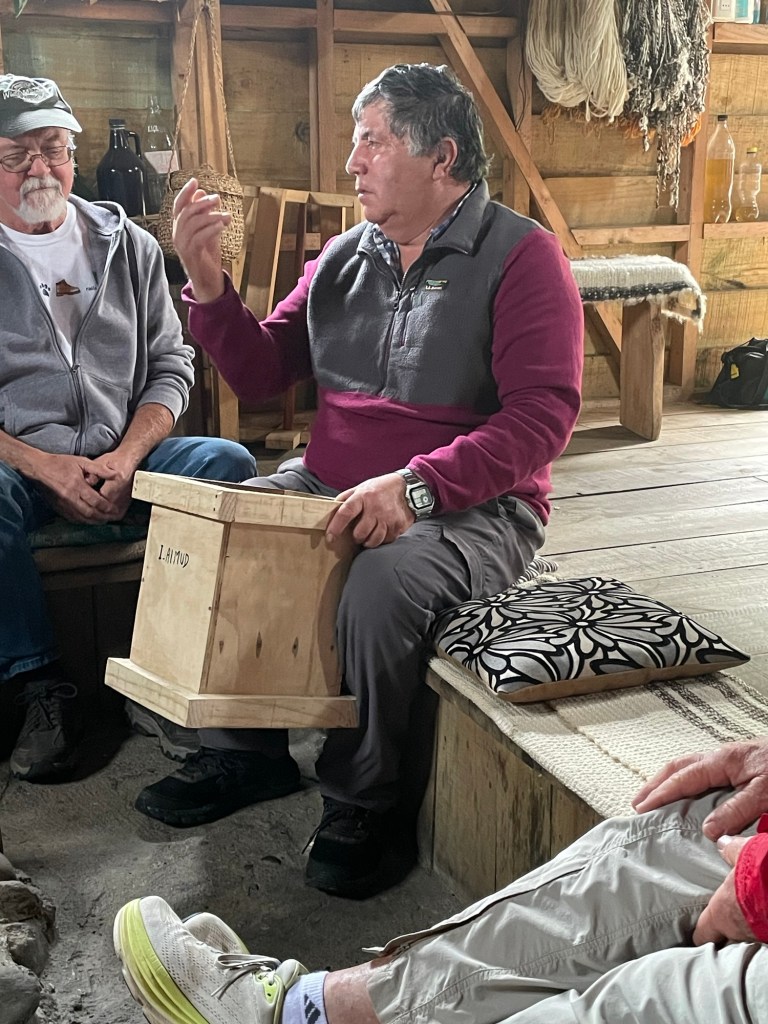
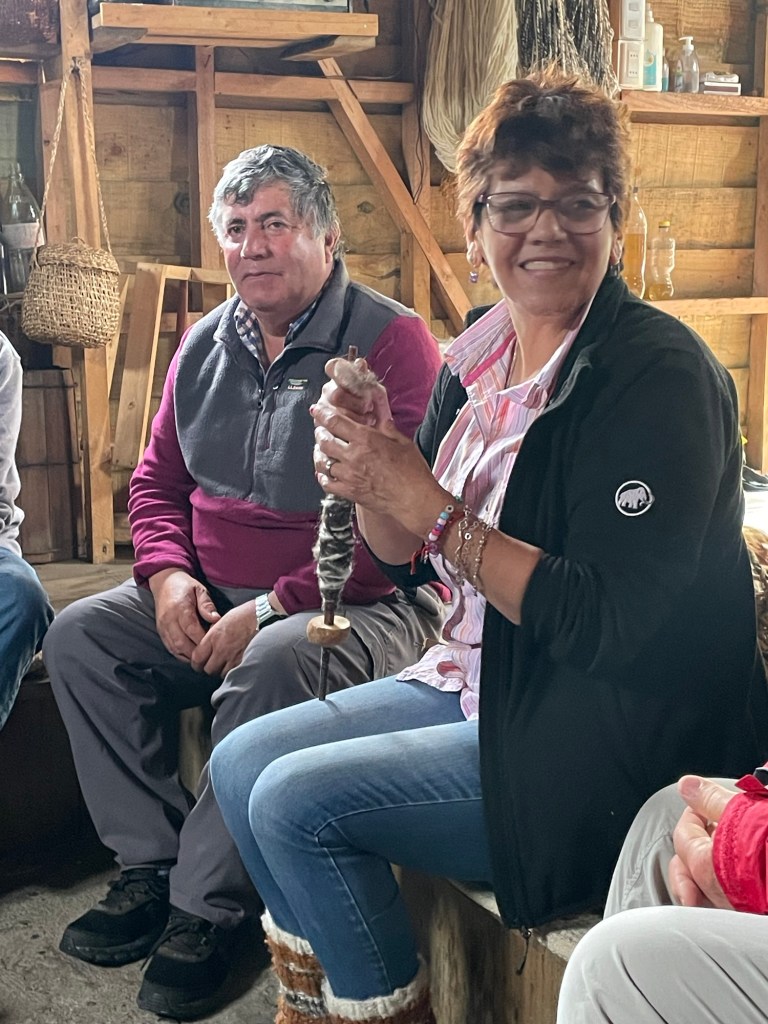
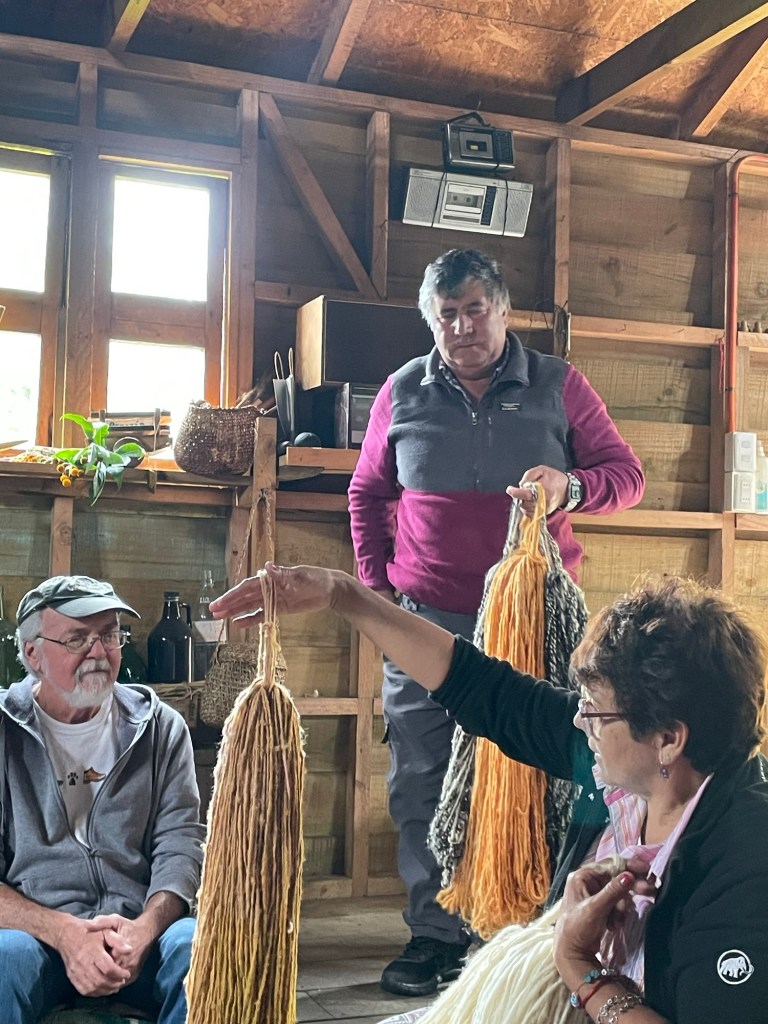
We learned how Ilse spun wool from their sheep and which natural materials she used for the dyes in her handicrafts.
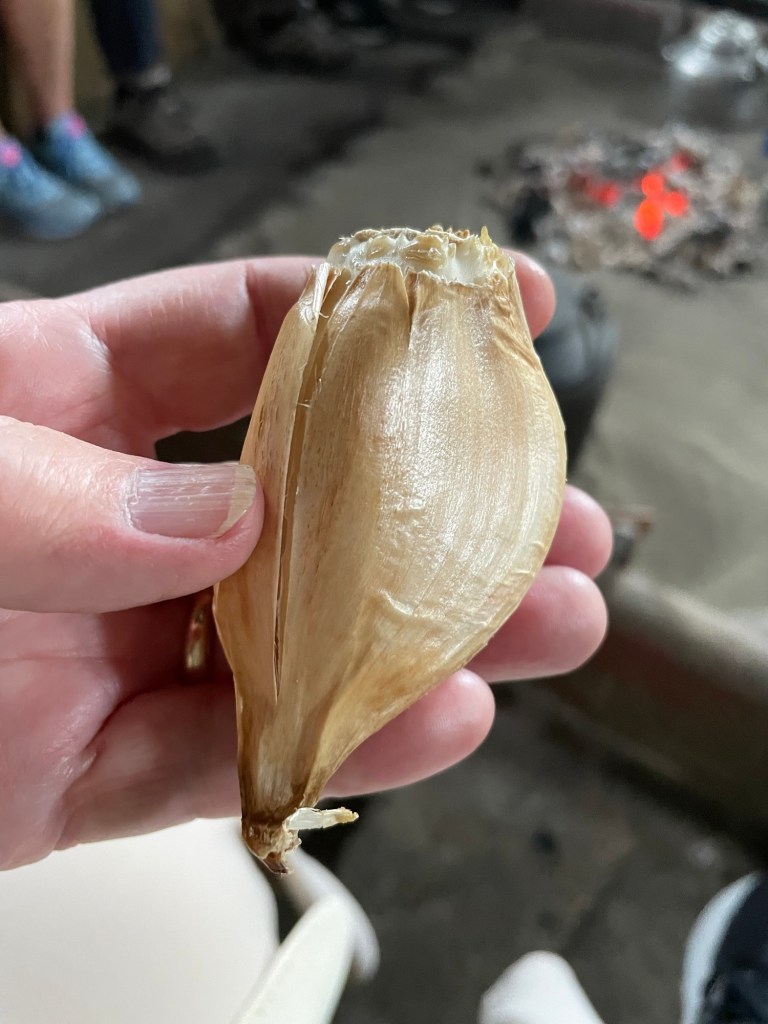
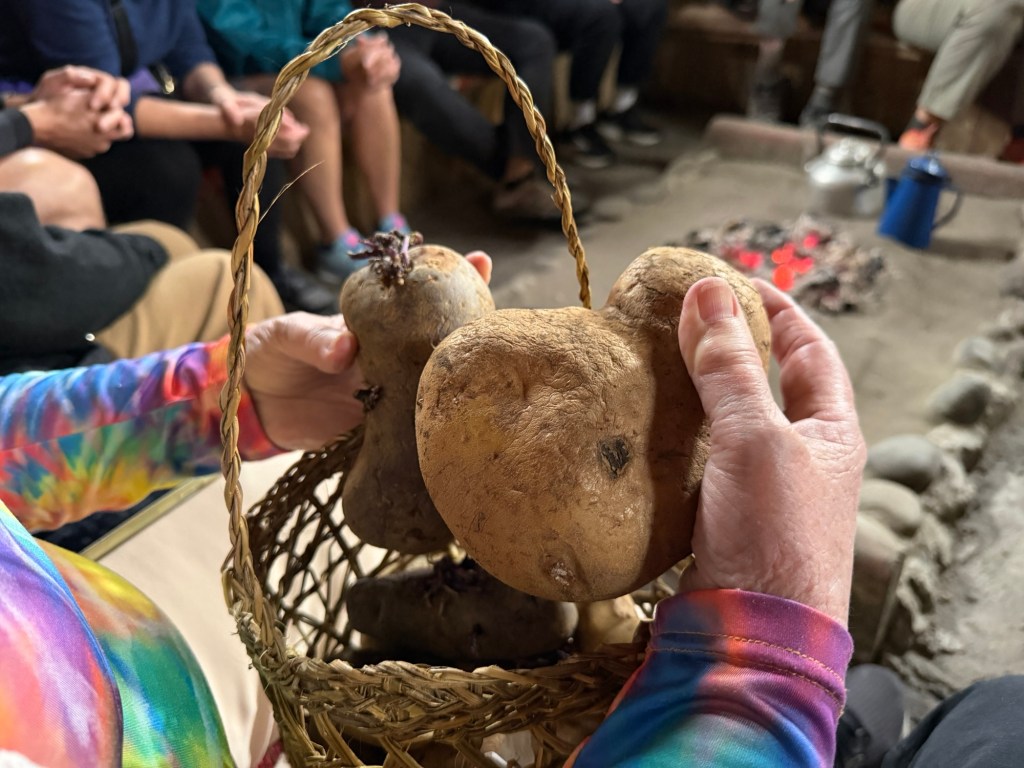
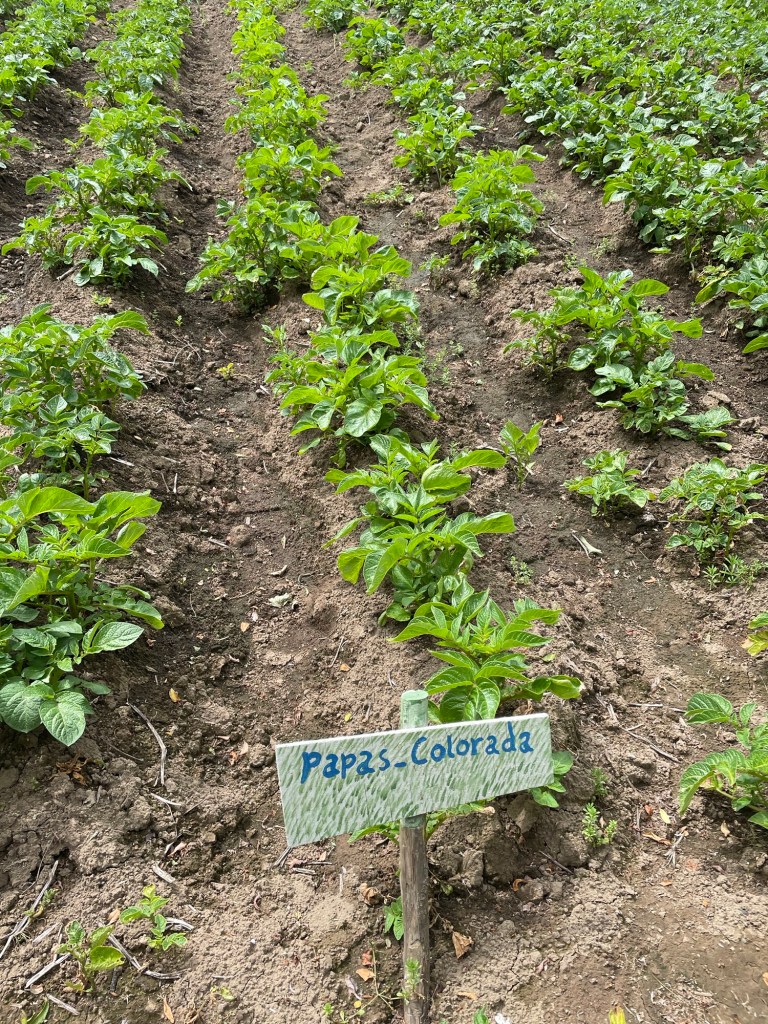
The box is a measuring tool, like a bushel Raúl watching Ilse demonstrate spinning woolIlse shows her spun wool to PaulElephant garlic (not as strong tasting as the garlic in our stores)A few of the 15 varieties of potatoes from this area
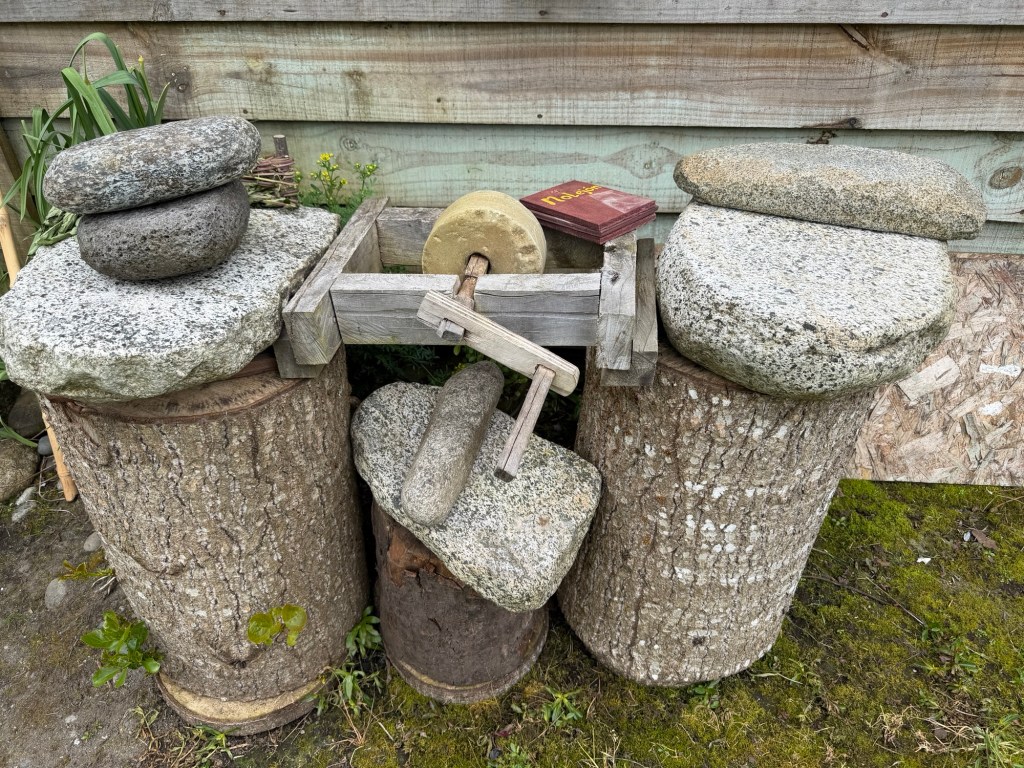
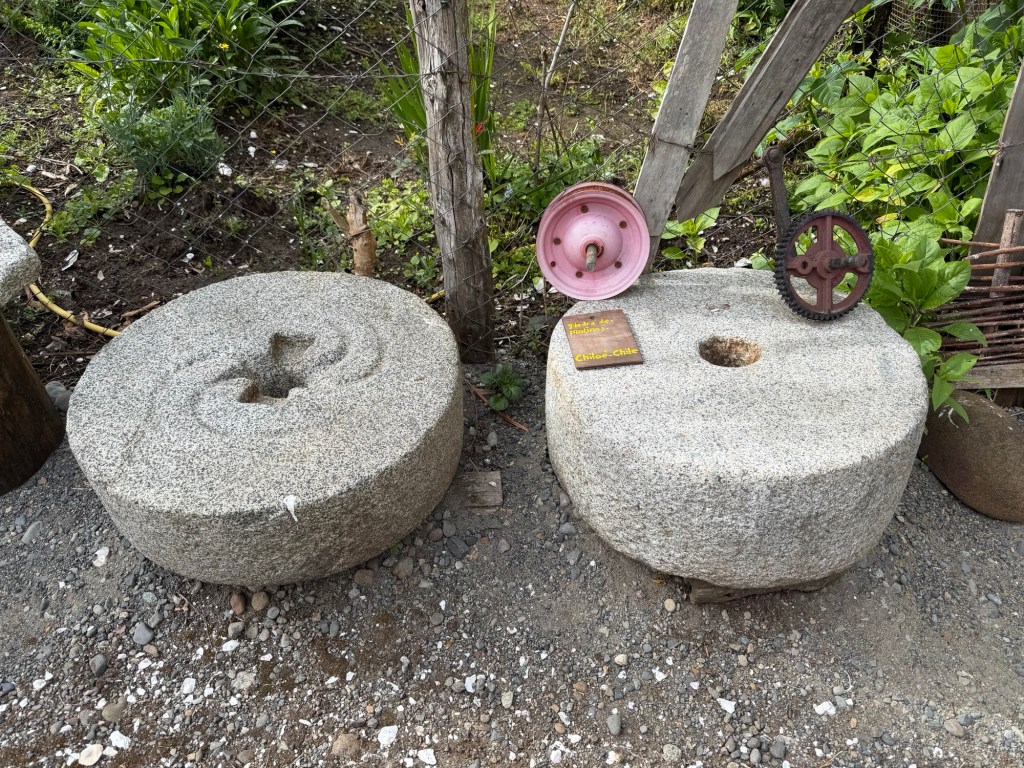
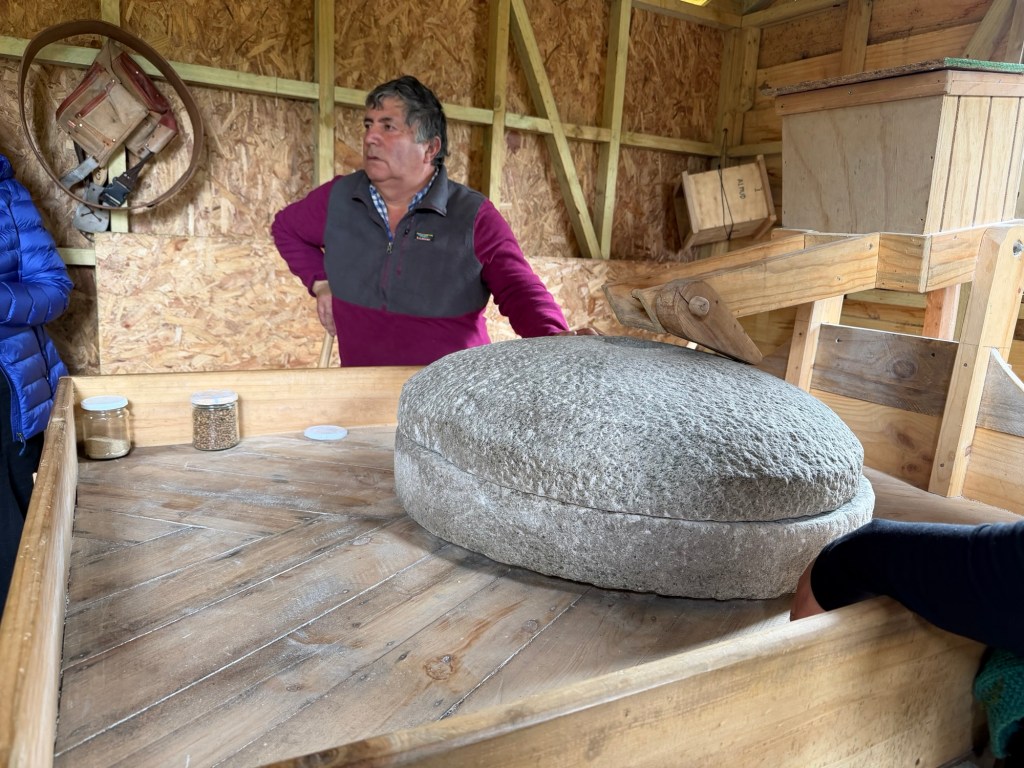
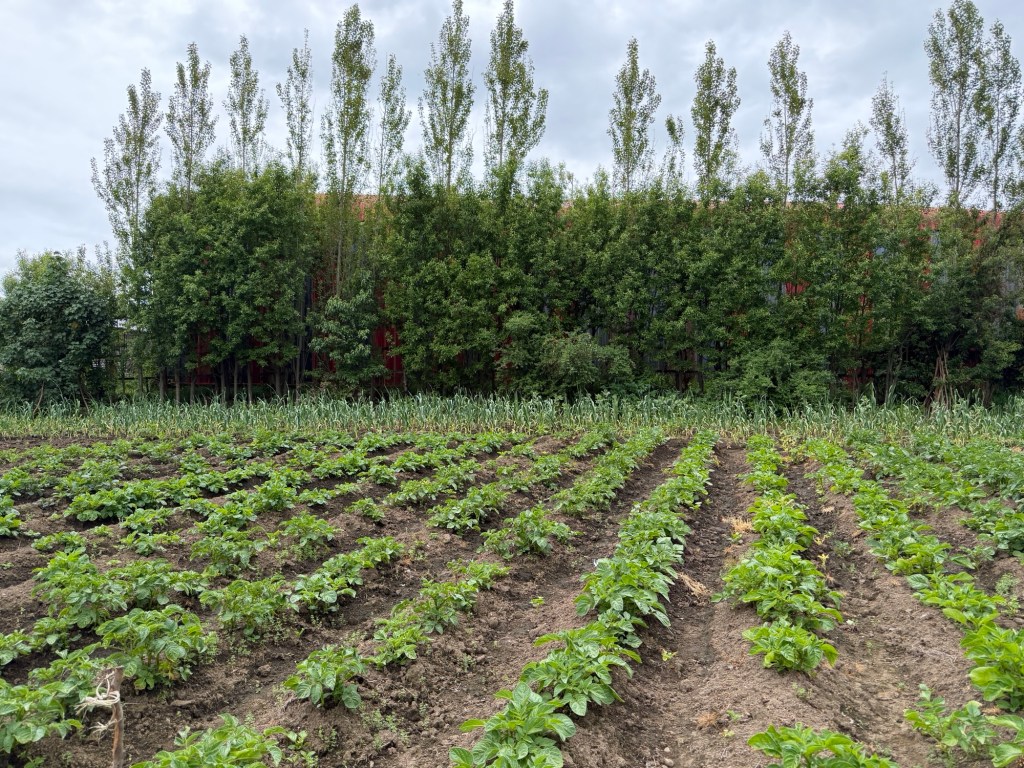
Raùl is quite the farmer, selling his potatoes and garlic, with a field of wheat on a neighboring property. He showed us his mill.
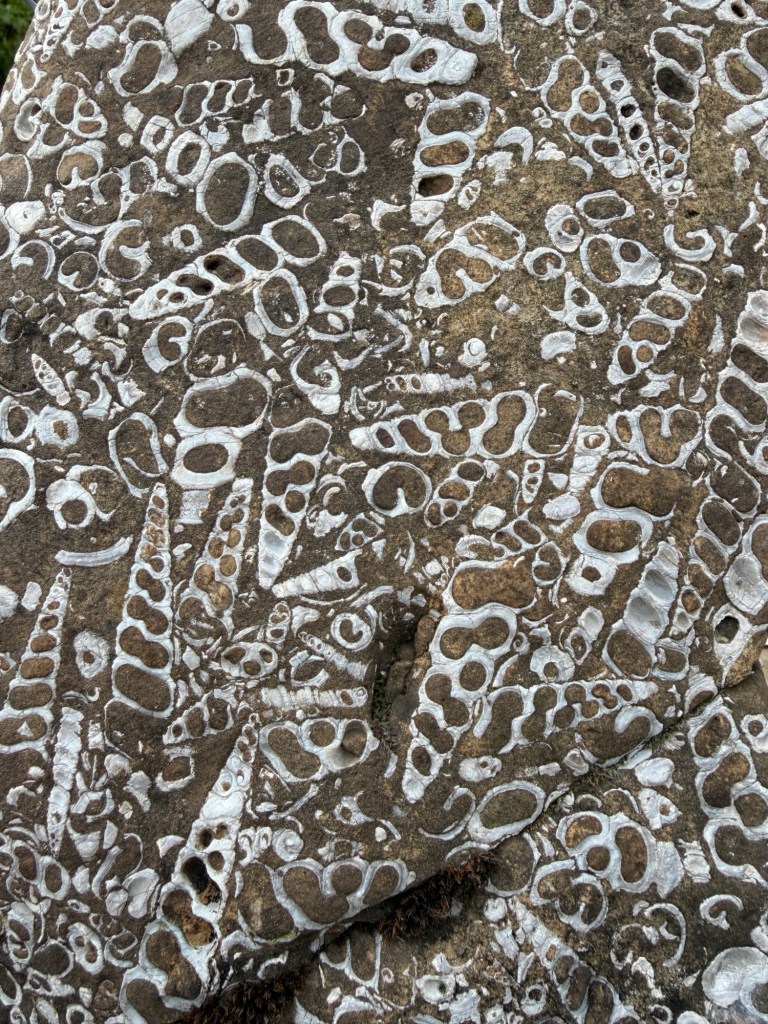
Grinding wheelMill stonesMill to make flour is operated by a gasoline motor.Limestone with gastropod fossils
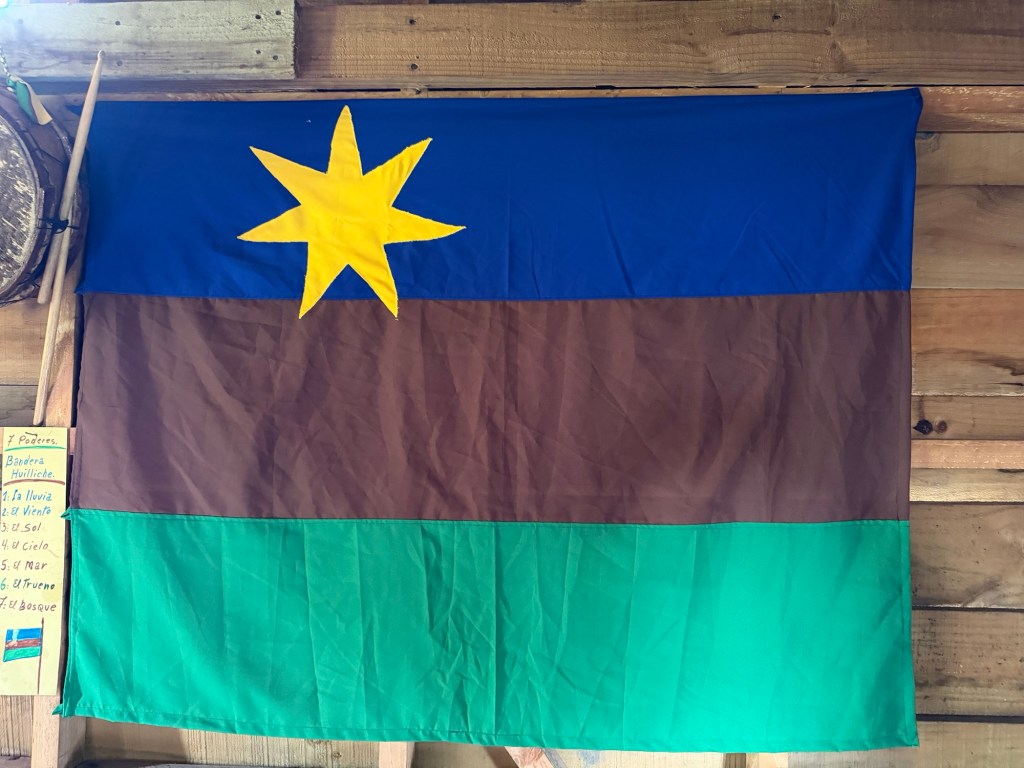
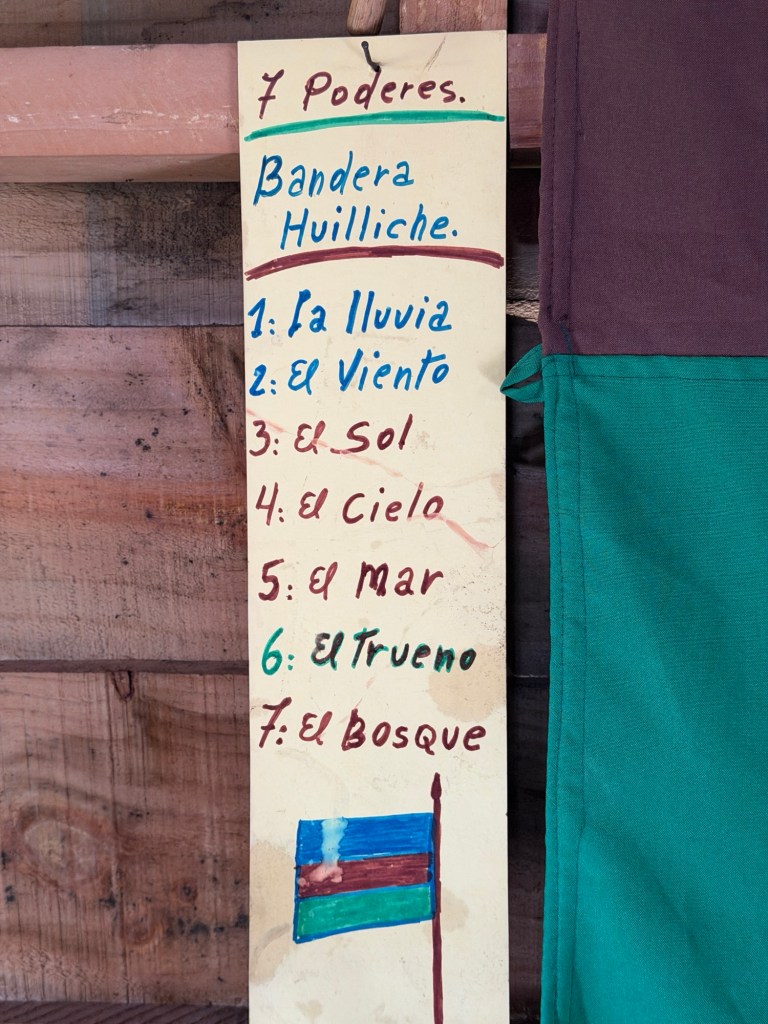
Raùl explained the flag of his people; the seven powers of Venus are the rain, the wind, the sun, the sky, the sea, the thunder, and the forest.
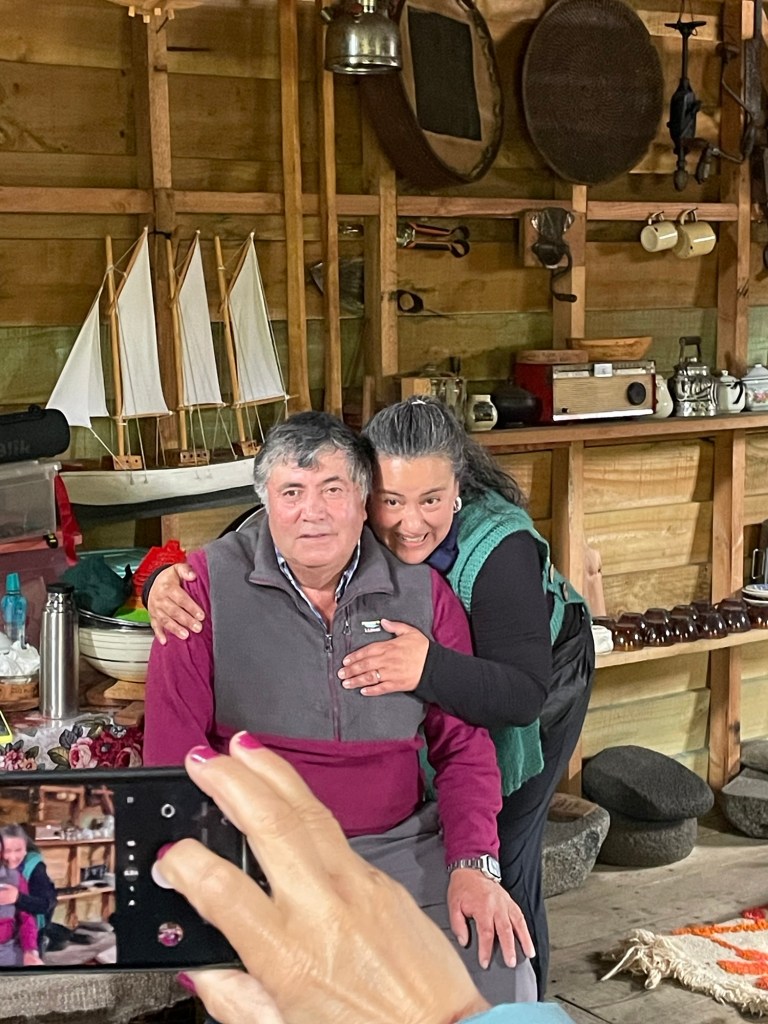
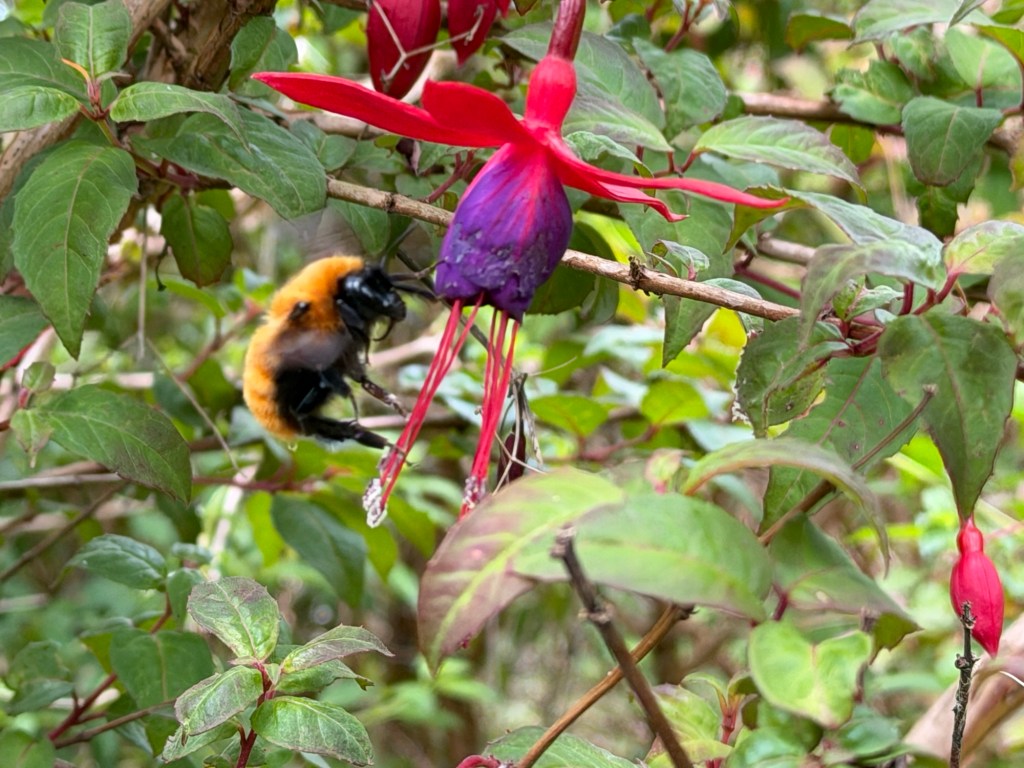
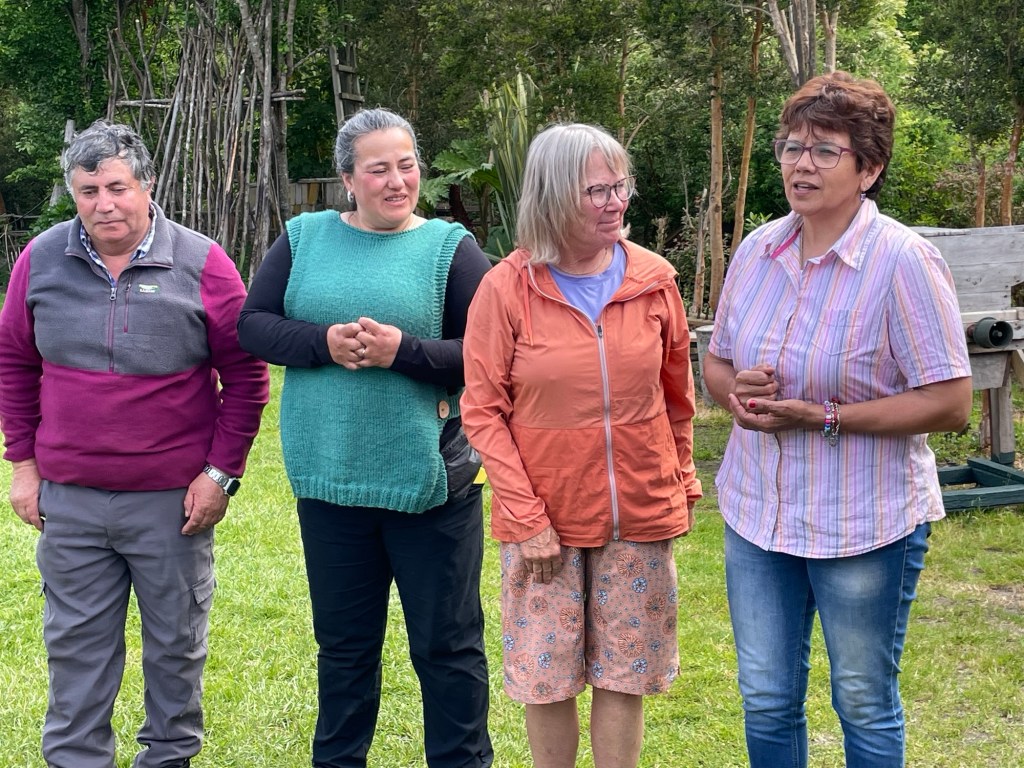
Raùl’s people’s flag: blue sky, brown earth, green sea. Star is Venus. Seven powers of VenusRaùl and CarolinaBee enjoying a fuschia flower
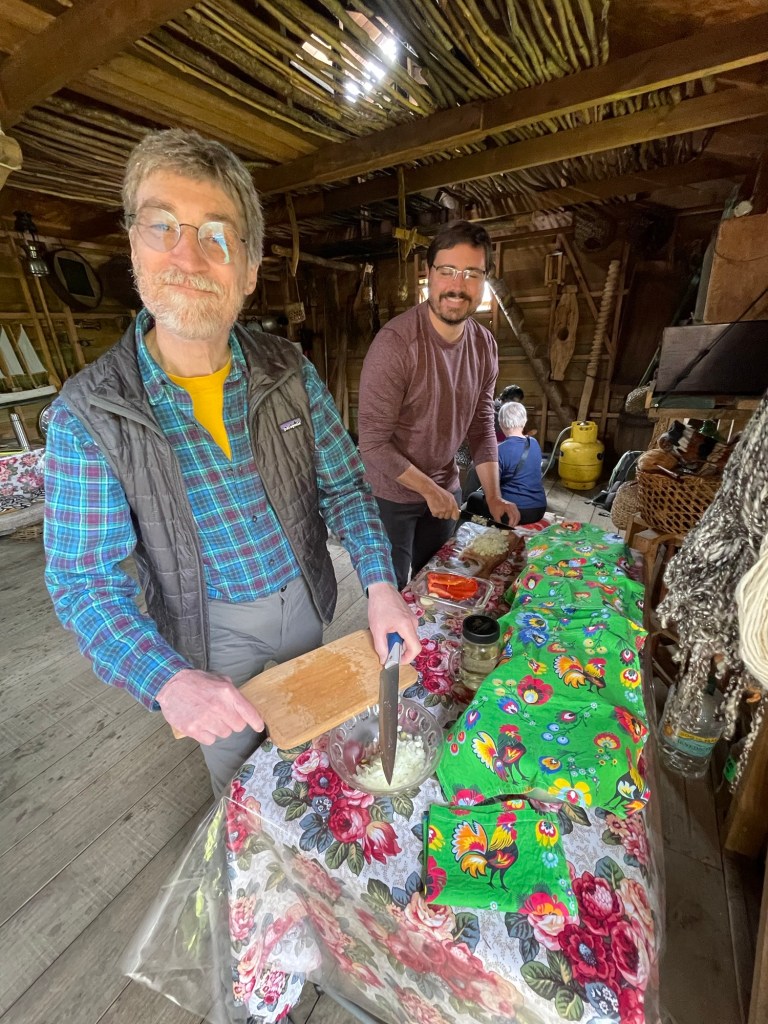
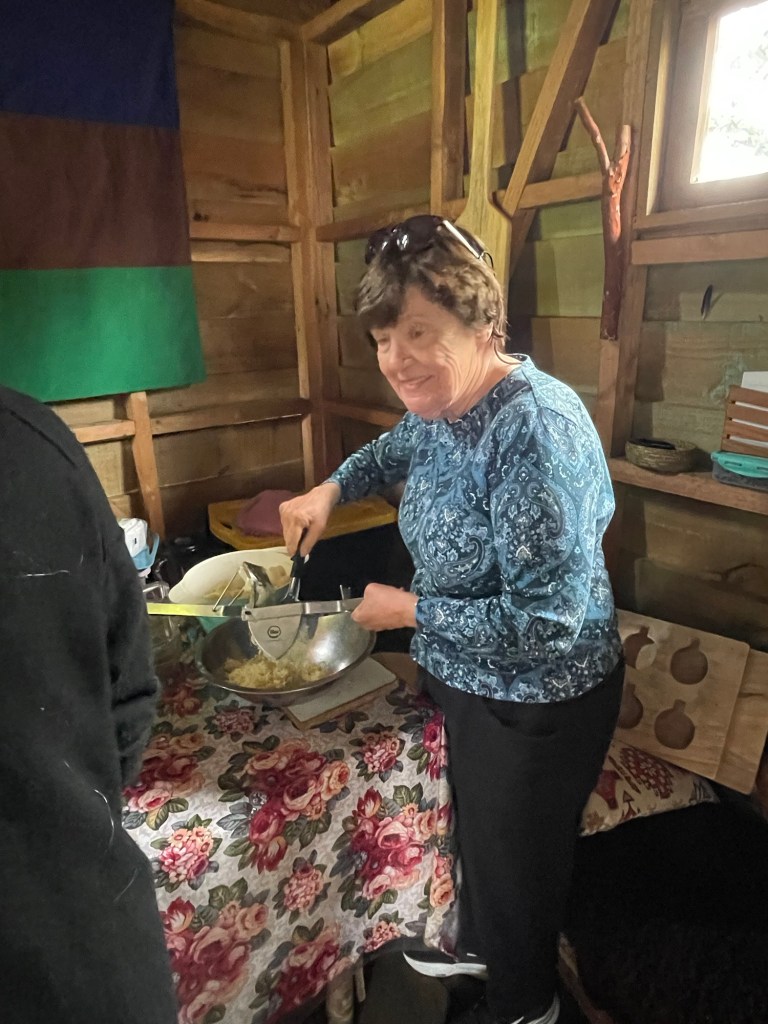
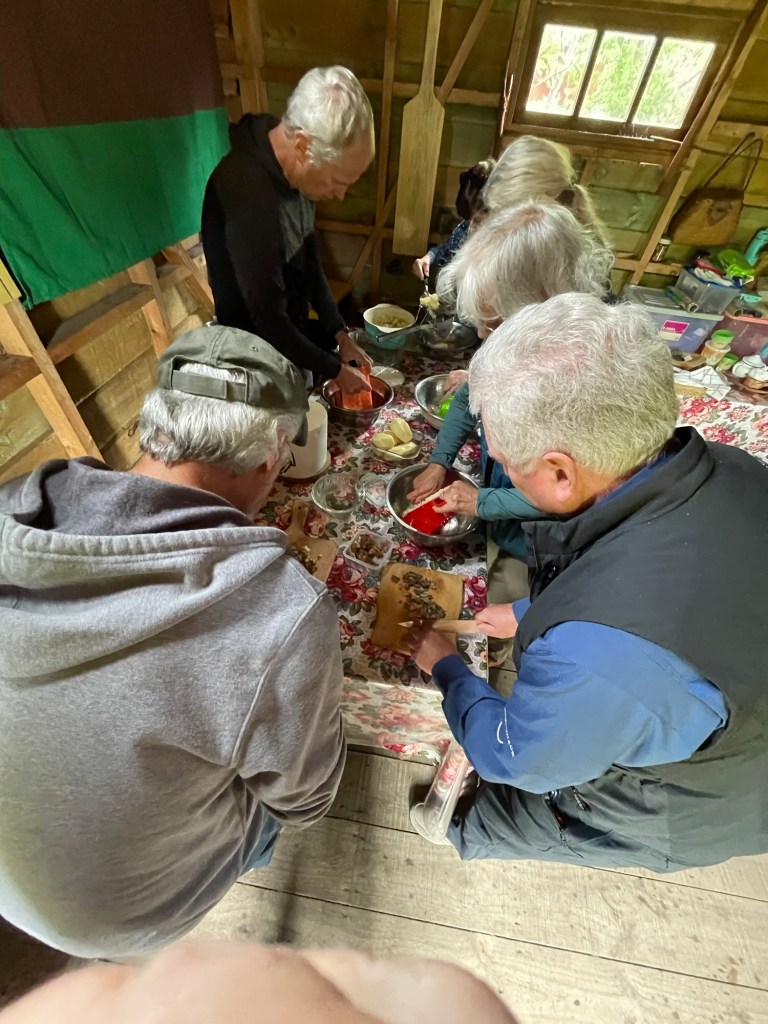
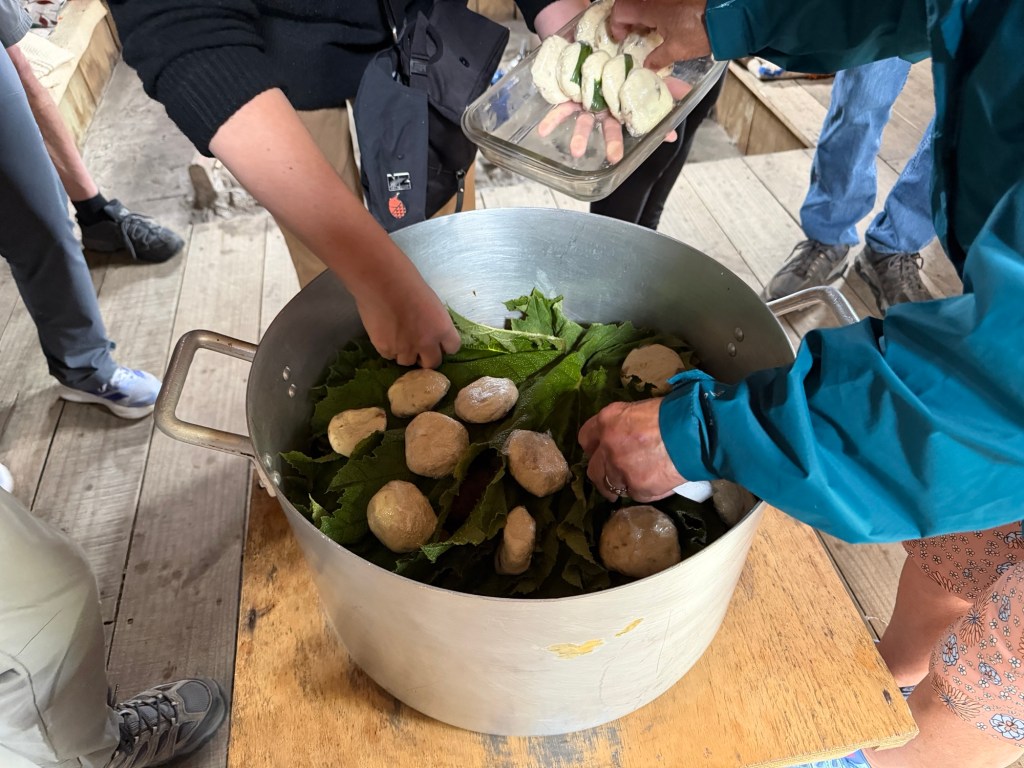
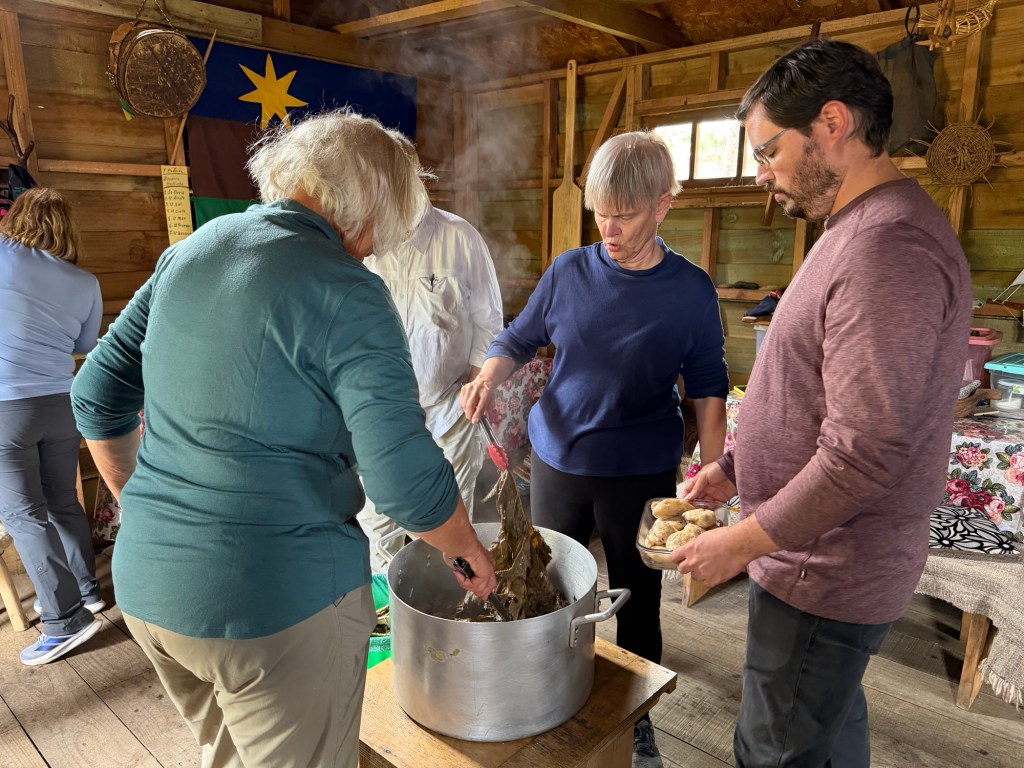
Our group helped prepare food, which needed to cook for a couple of hours before consumption.
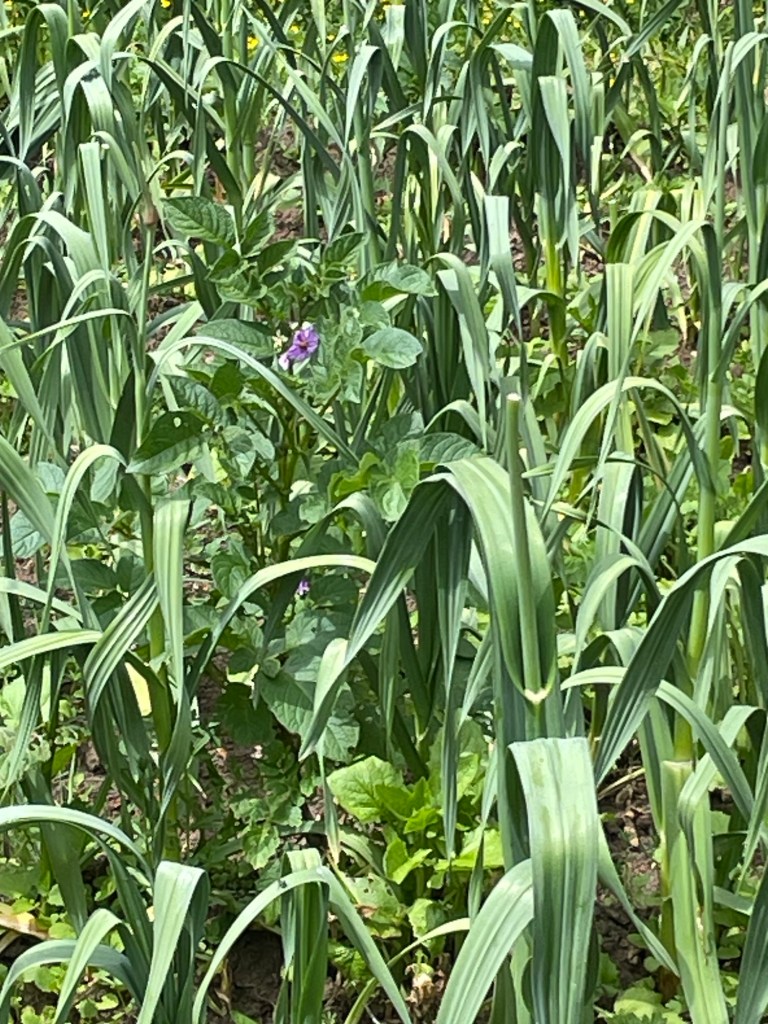
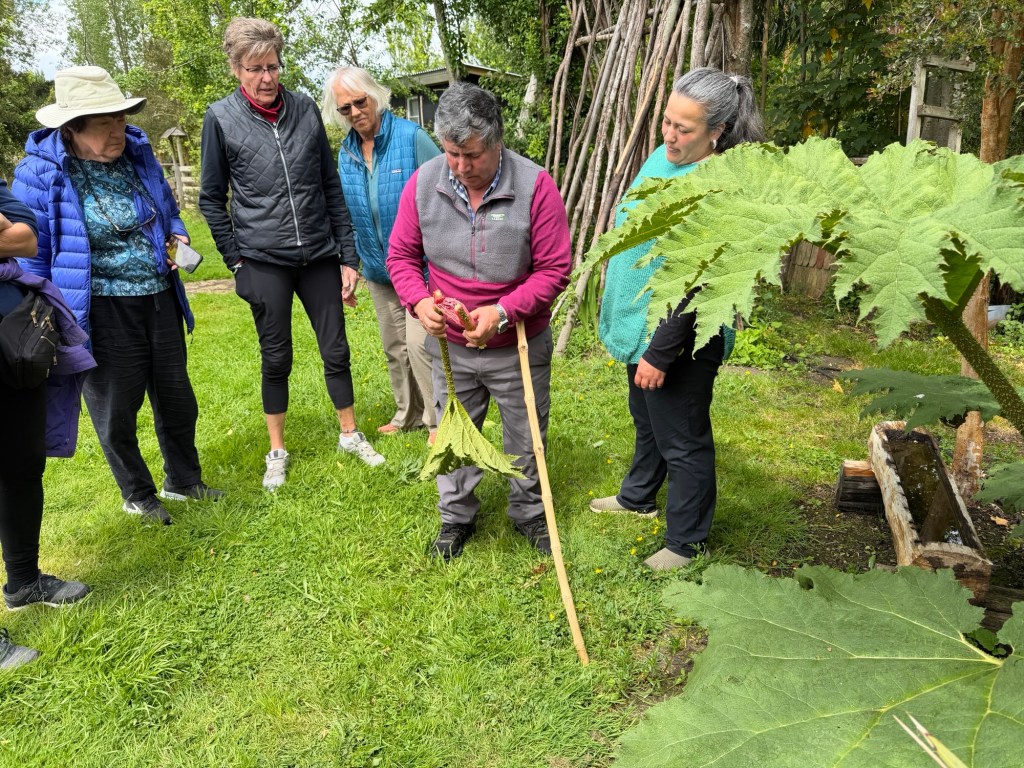
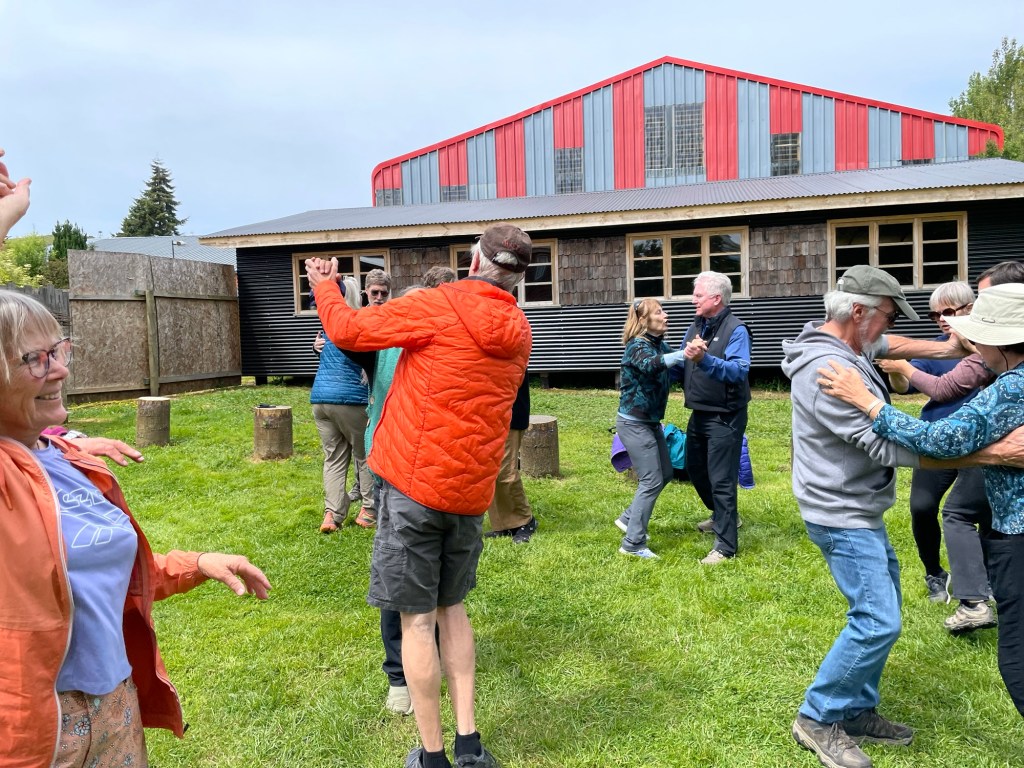
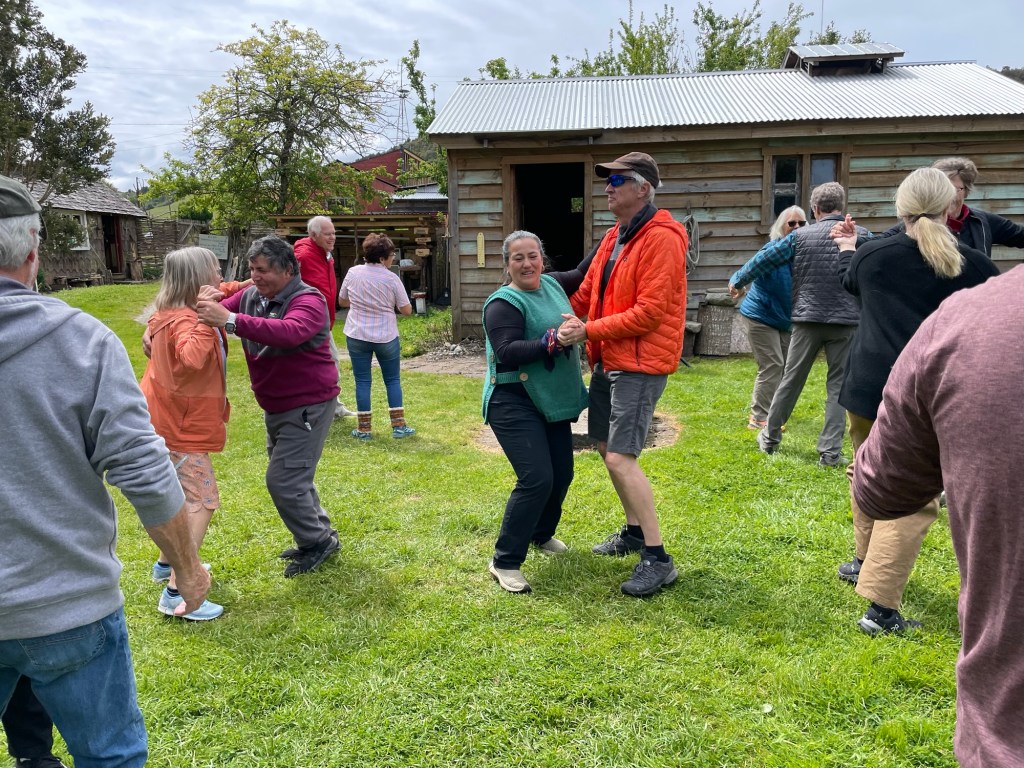
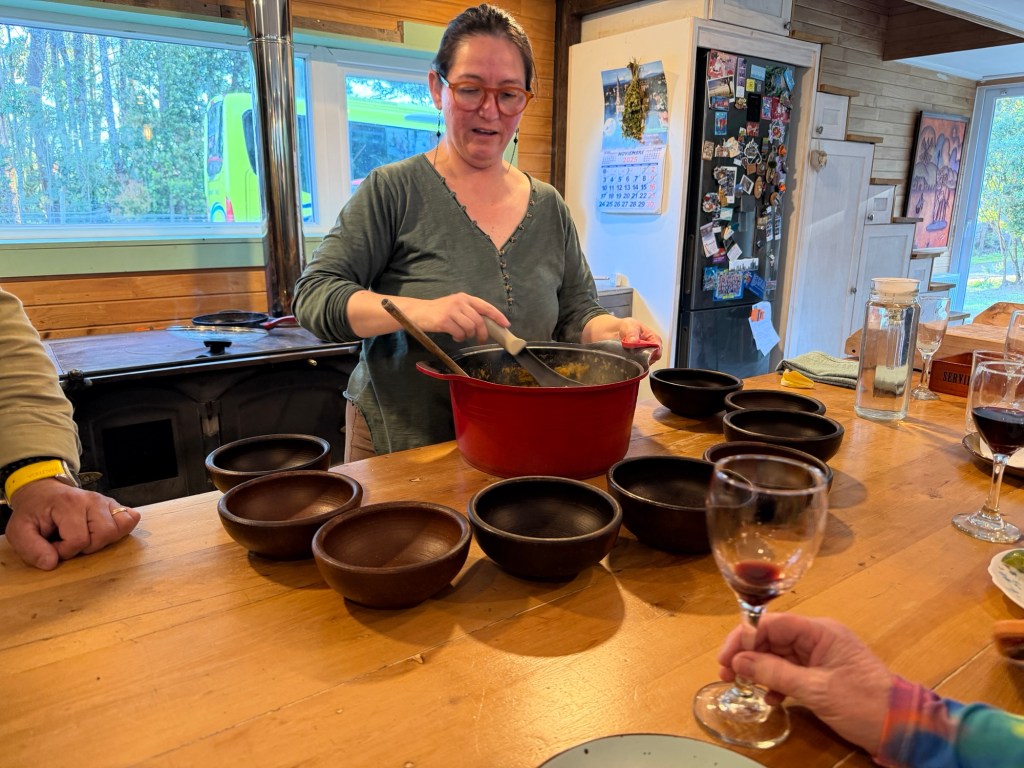
Choppers, Tom and CarterGrater SueChoppers, Paul and BrianVery large pan for the broth. Steaming potato dumplings Suzanne, Chris and Carter layering the dumplings with leavesRaùl’s garden: garlic and potatoesRaùl showing us the plant with the leaves for the stewDancing!Dancing!Raùl, Carolina, Pam and Ilse
We then got a tour of their property.
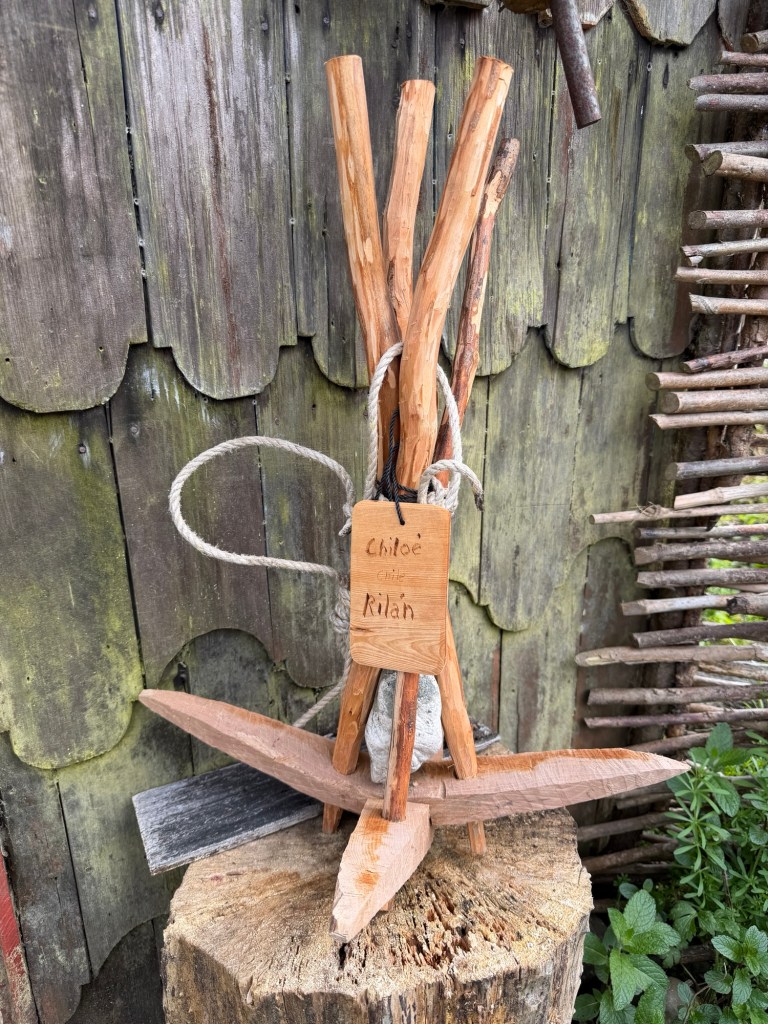
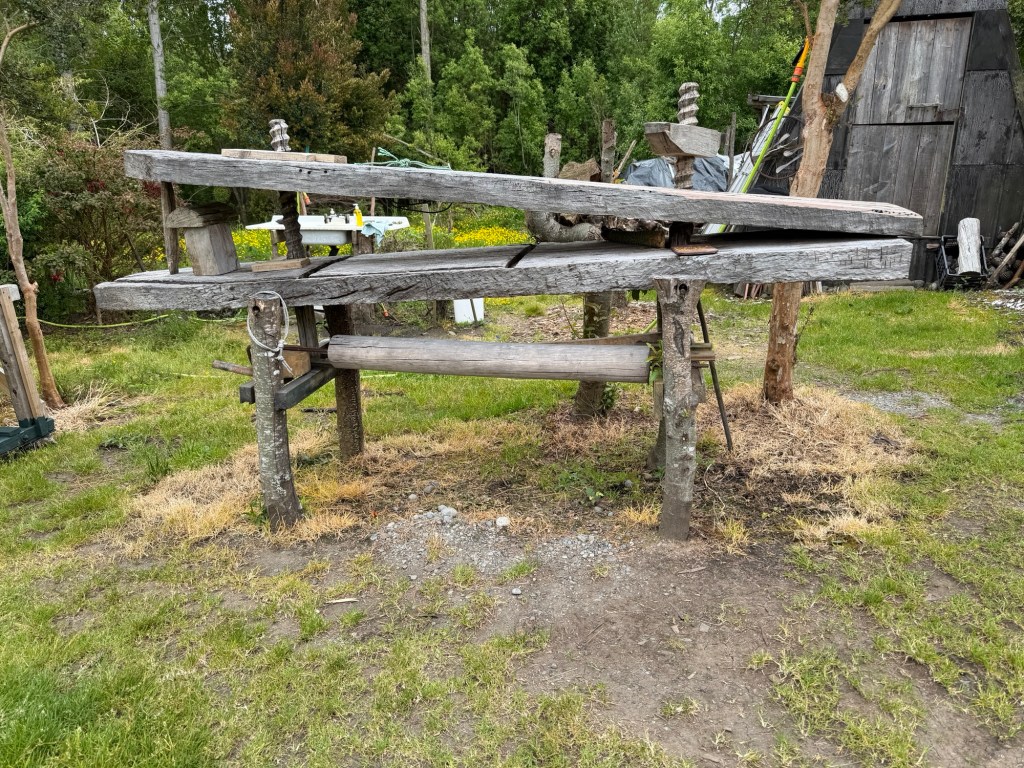
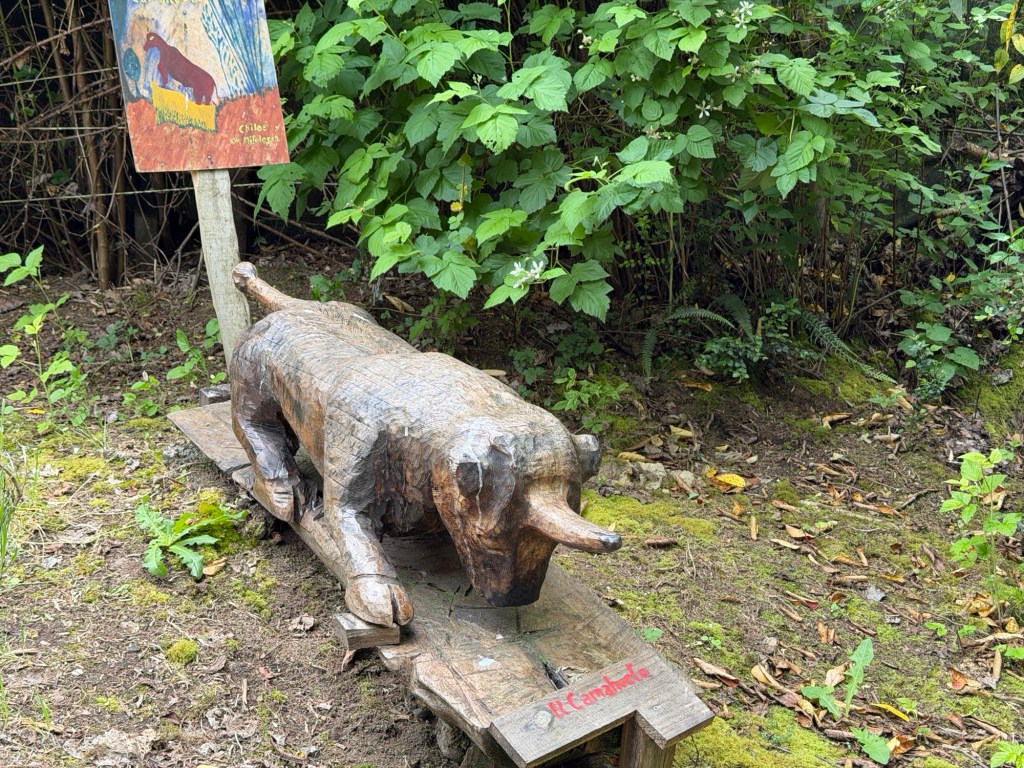
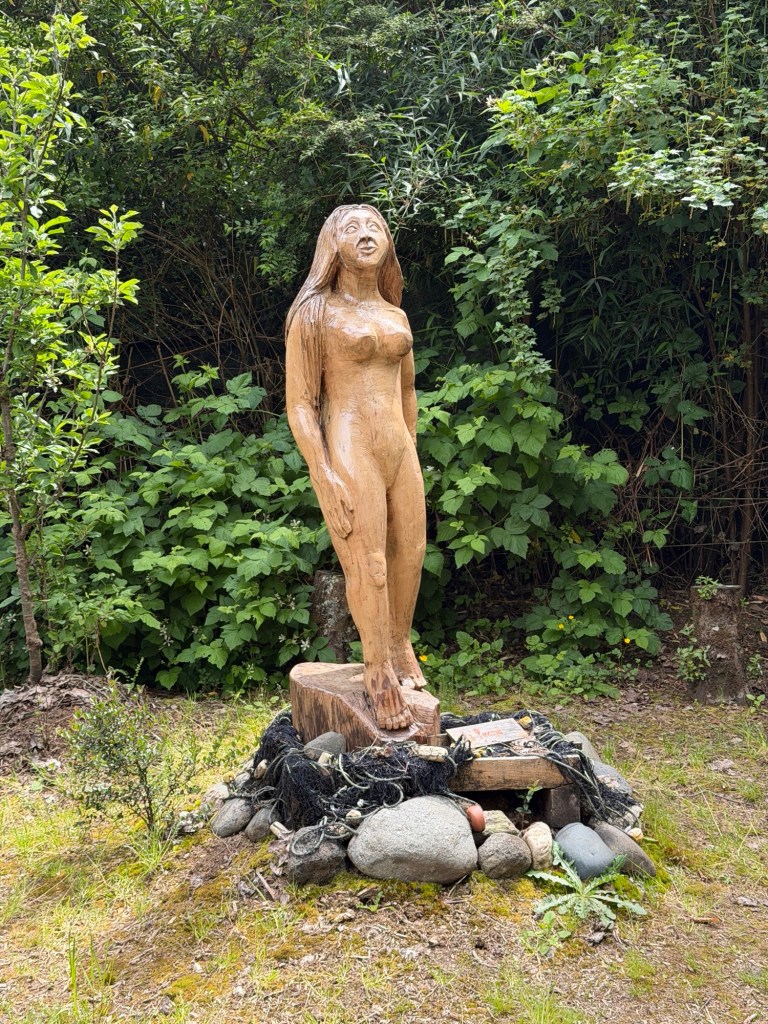
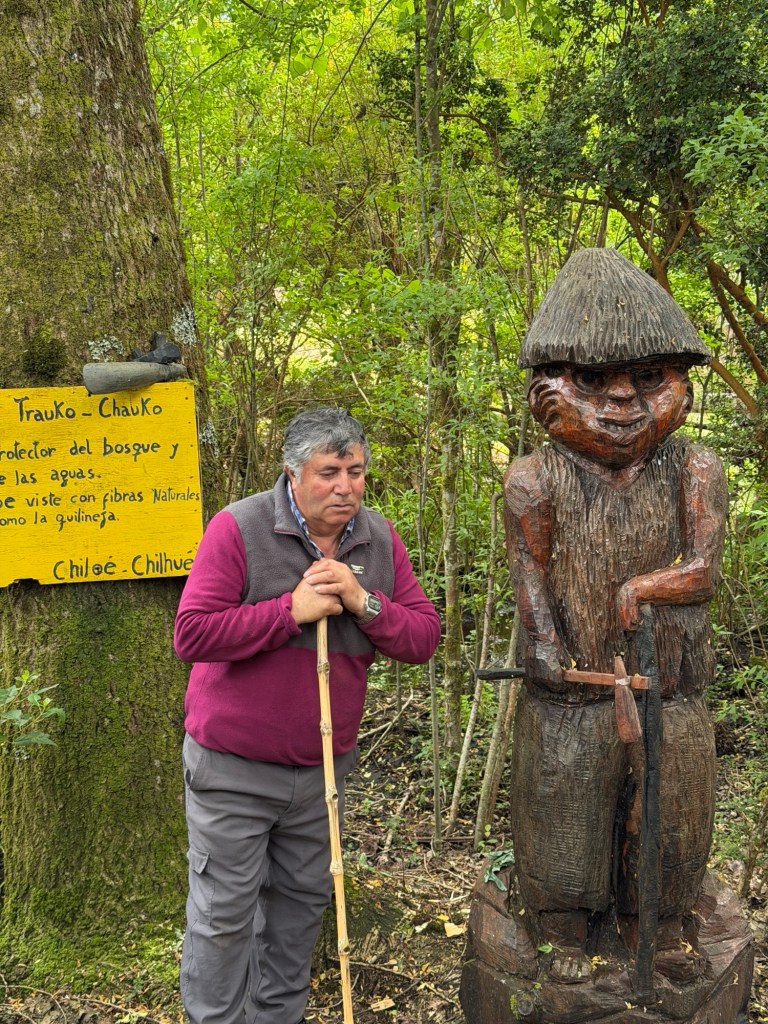
Wooden anchor with rock for weight Apple pressThe Camahueto is a legendary bull in Chiloé mythologyThe Pincoya is a female water spirit of the Chilotan SeasThe Trauko is an ugly being with superhuman strength. He carries a magical staff and an axe.
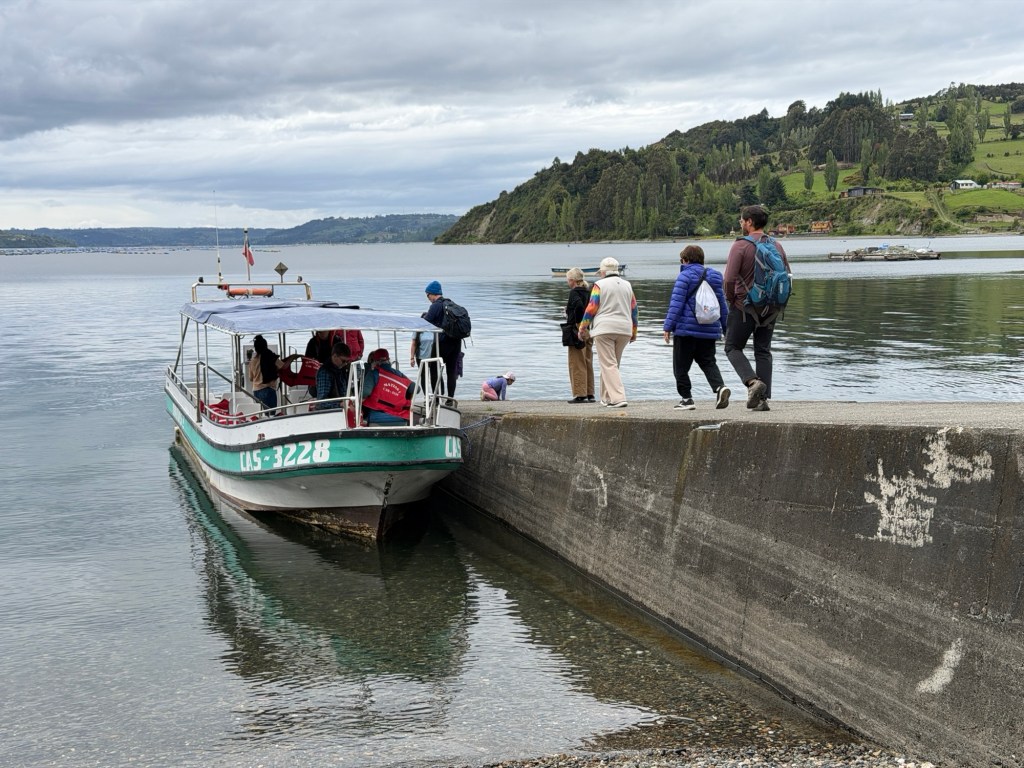
We took a boat across the bay rather than the bus to get back to Castro.
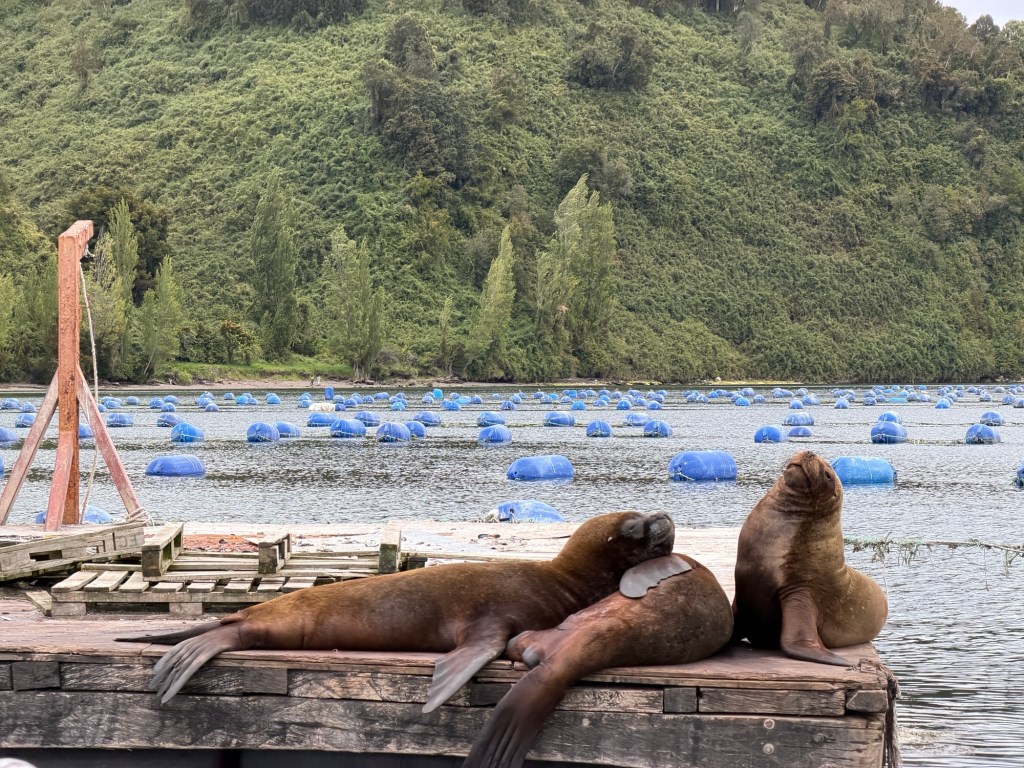
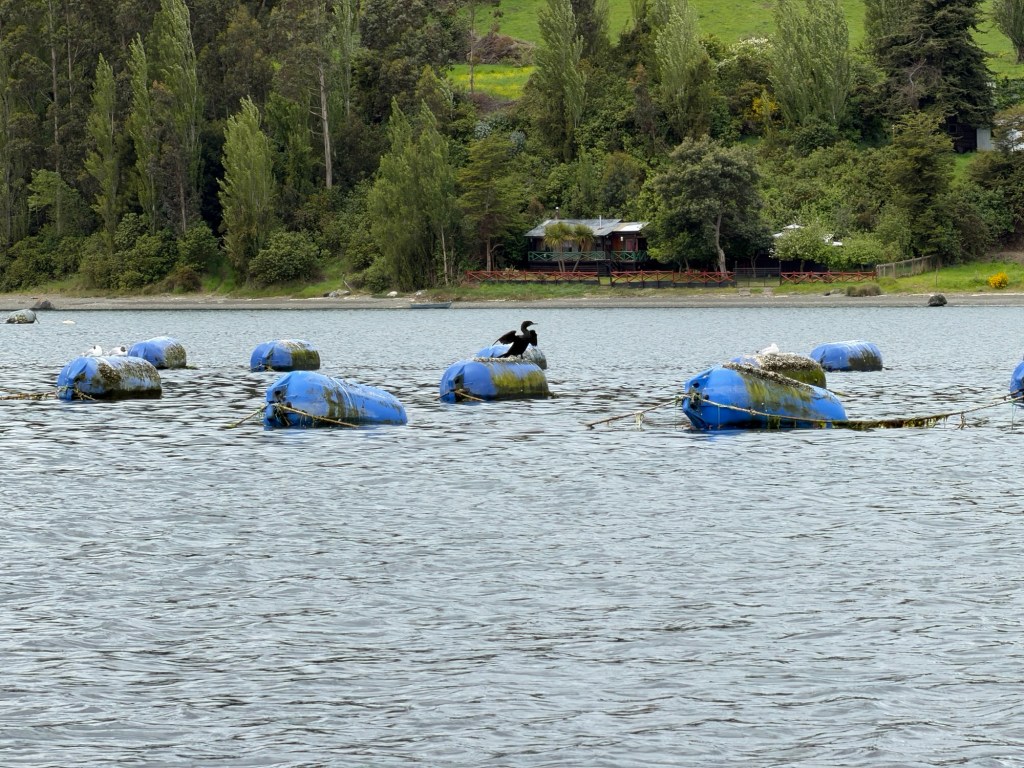
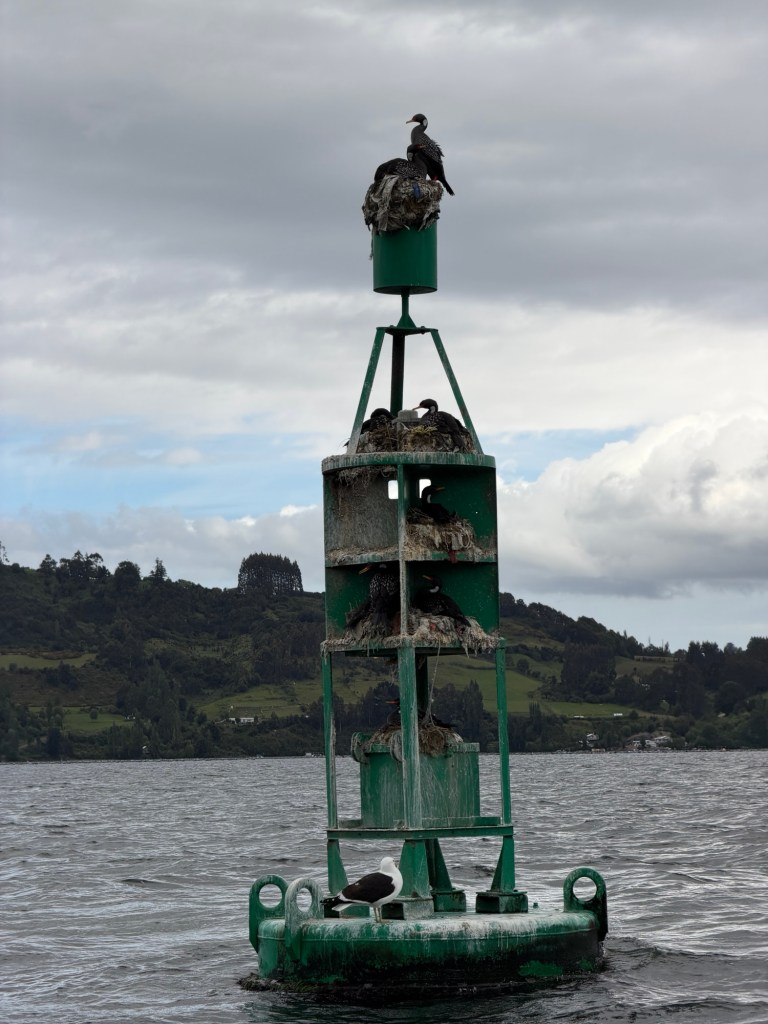
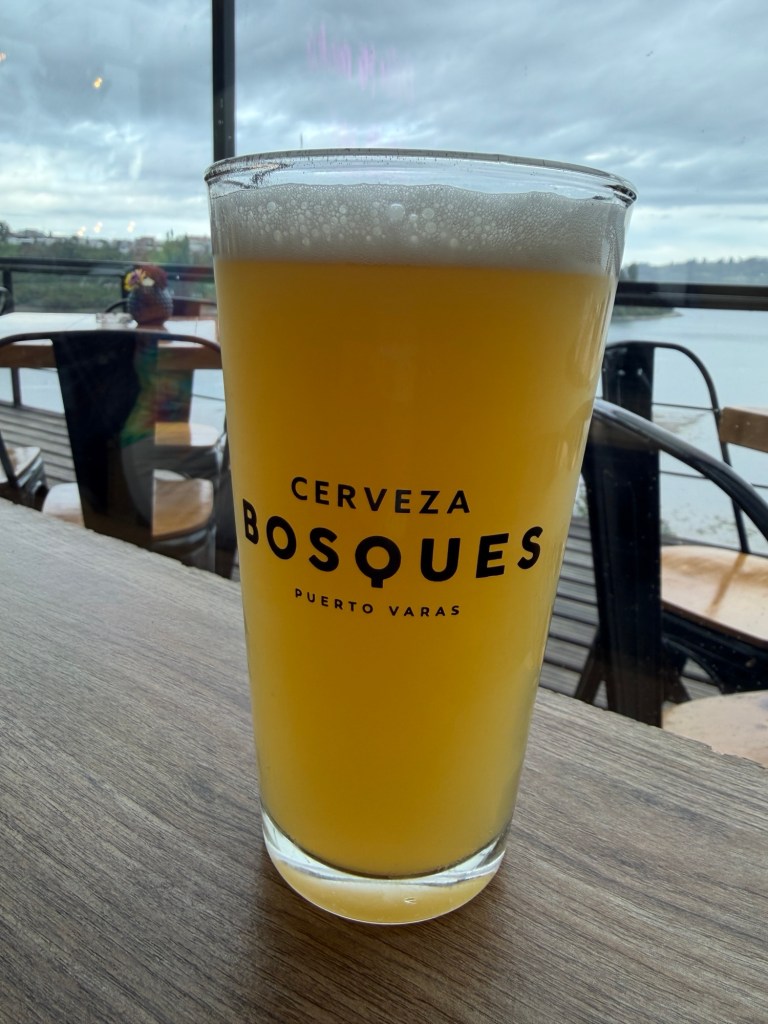
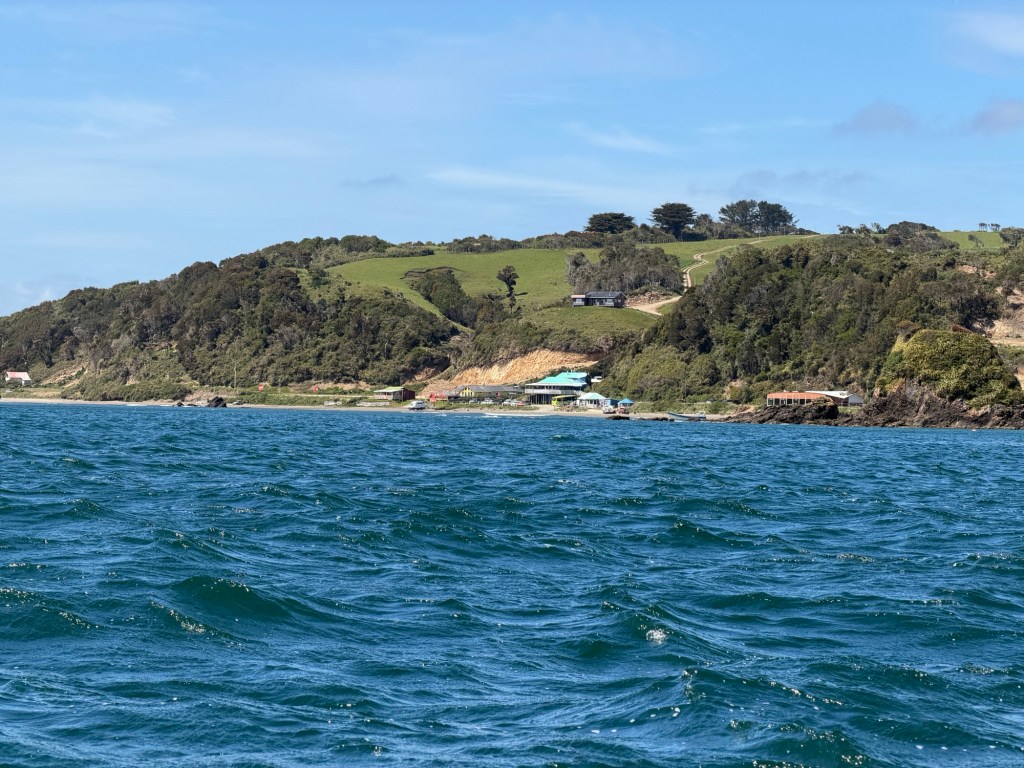
Walking to the boatSea LionsCormorant on a buoyCormorant condominiums Chiloé Island’s famous houses on stiltsA beer to end the day.
Marta and Carolina were impressed with the weather, and changed our plans to go to see penguins and other fascinating birds. First, we took a ferry to Chiloé Island, where we would spend two nights.
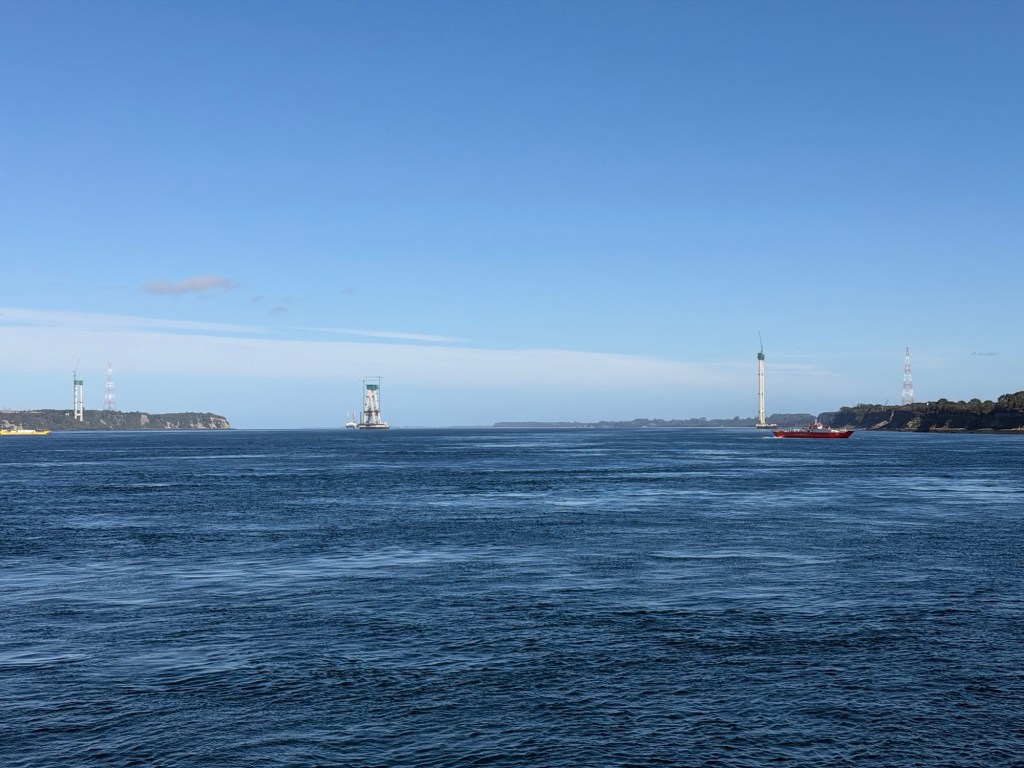
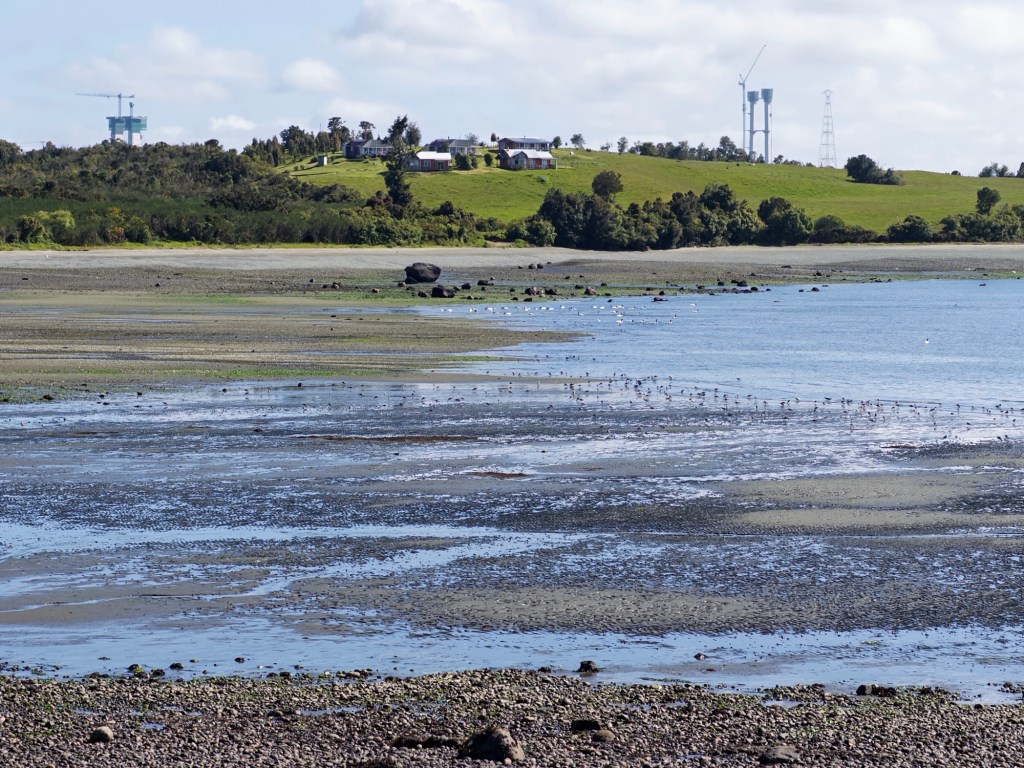
Our bus boarded this ferry.Bridge being built to replace the ferriesChris, Renee, Clare and DougAnother ferry leaving the place we were about to dock. We walked along a beach for a while, seeing many gulls and sandpiper-like birds.
After we drove through the town of Ancud, we wandered around, exploring the island.
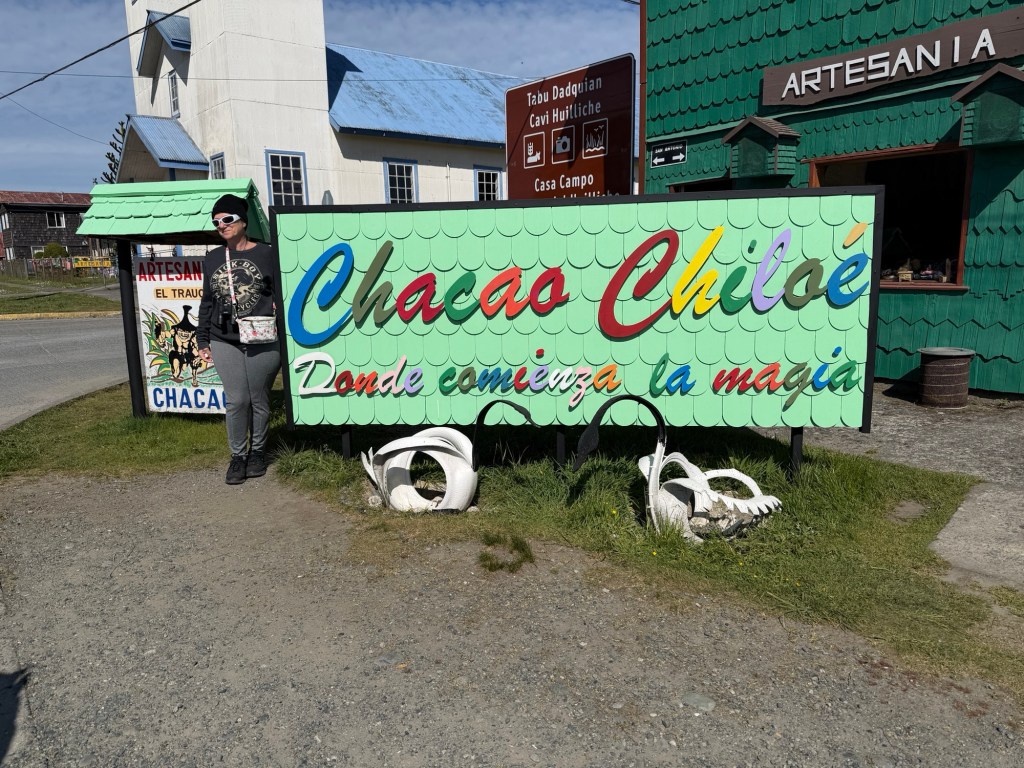
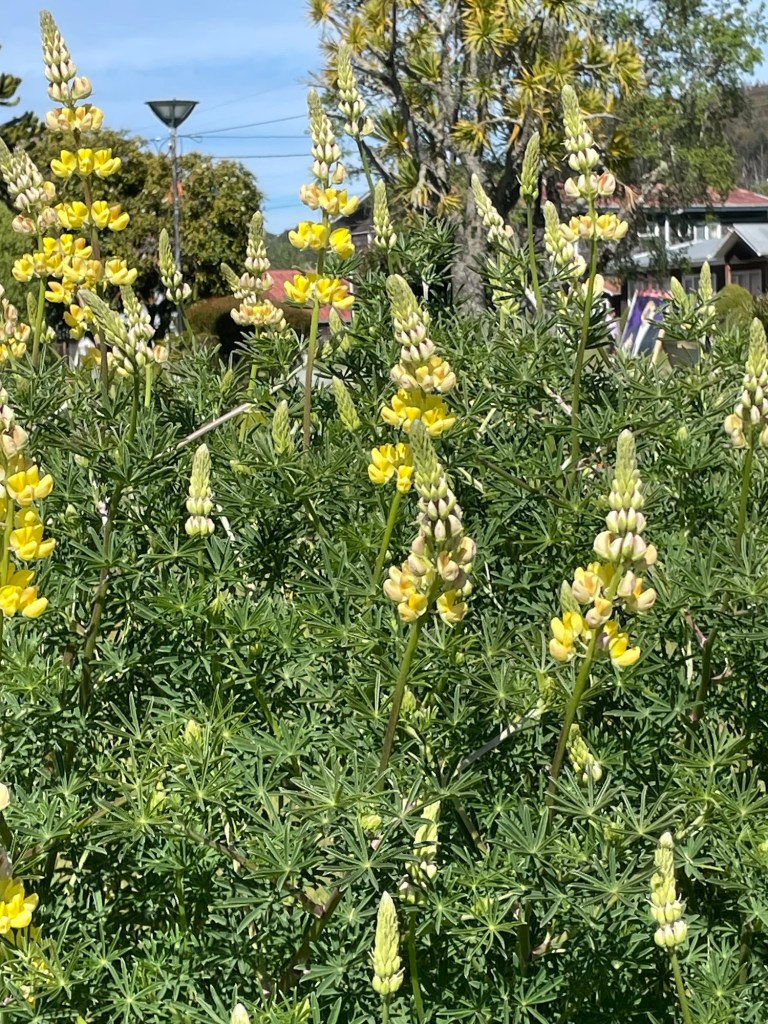
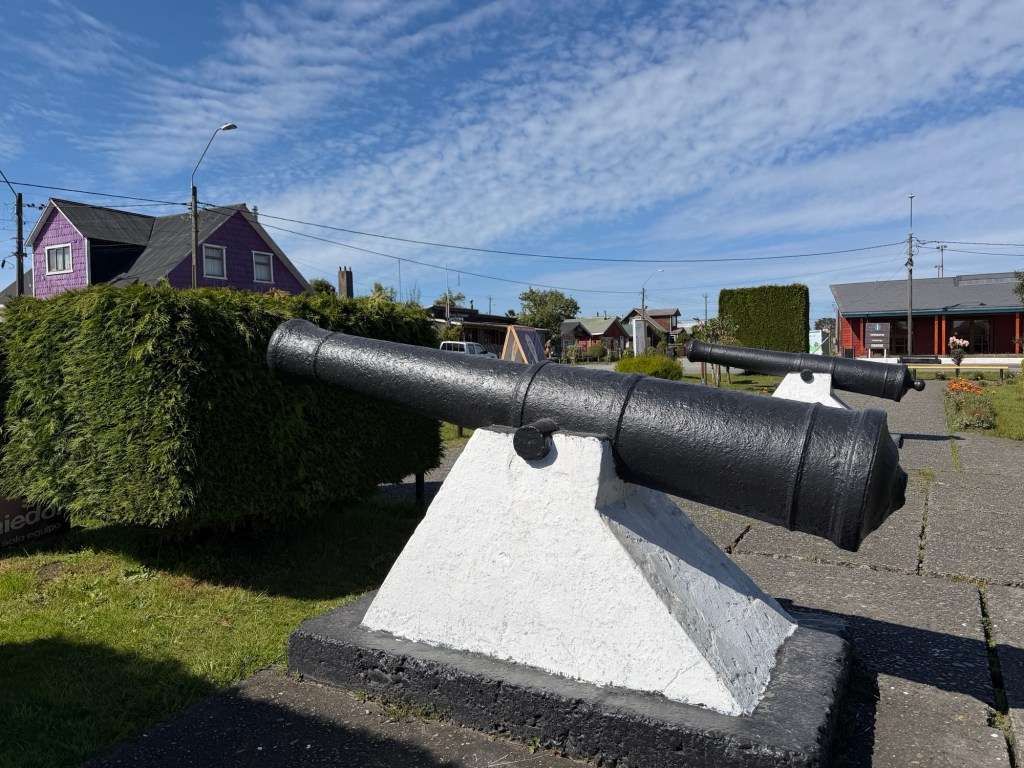
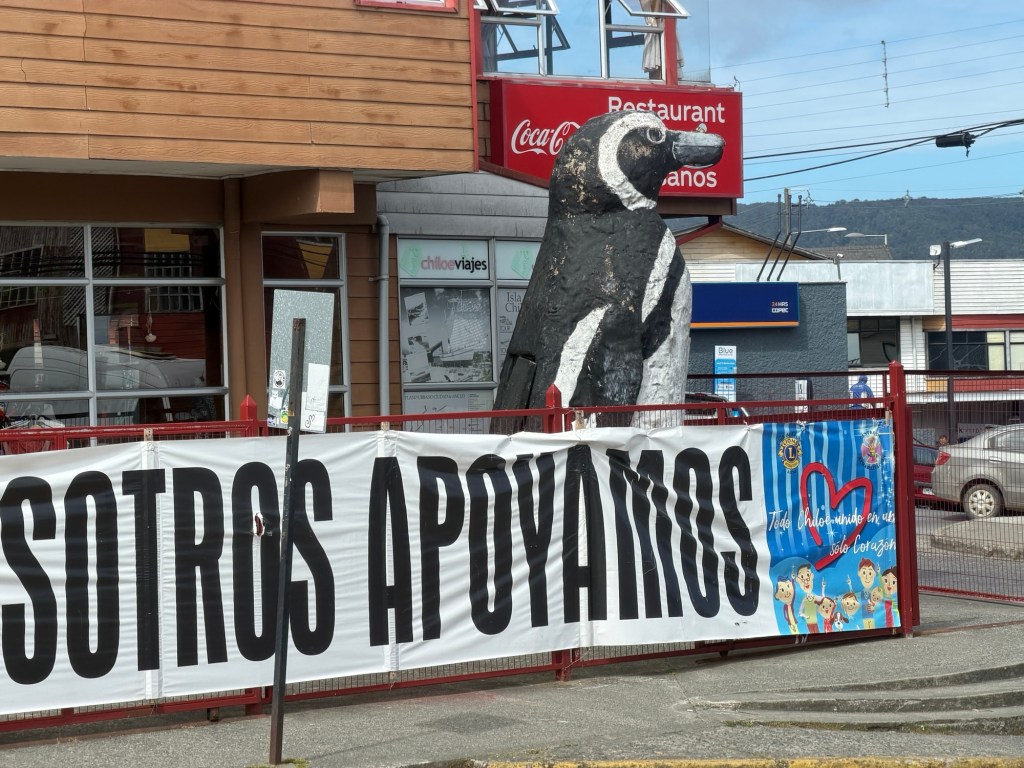
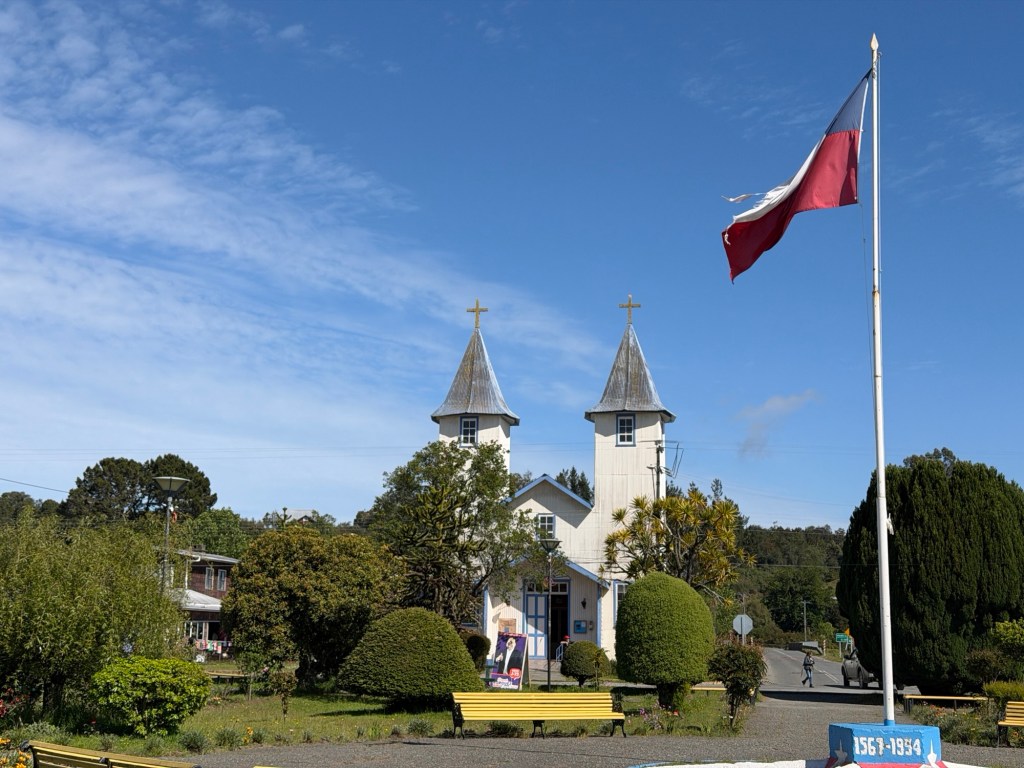
Where the Magic Begins, sign with Deb next to itLupines!Cannons in a small squareGiant penguin sighting near Ancud!Church on the square
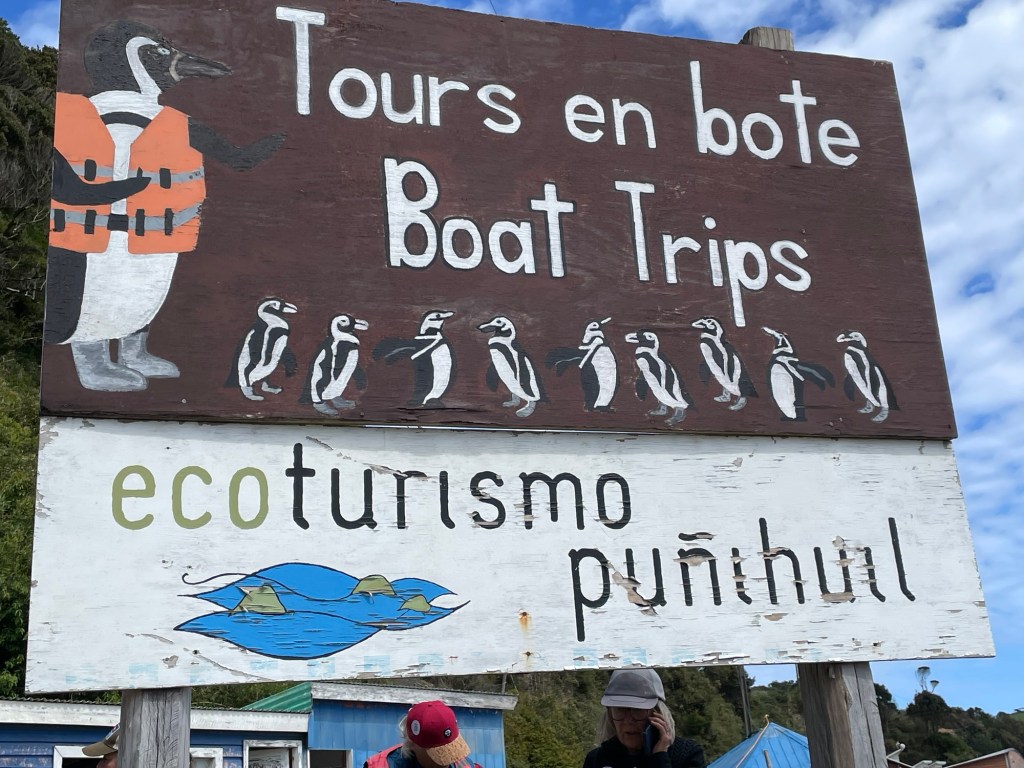
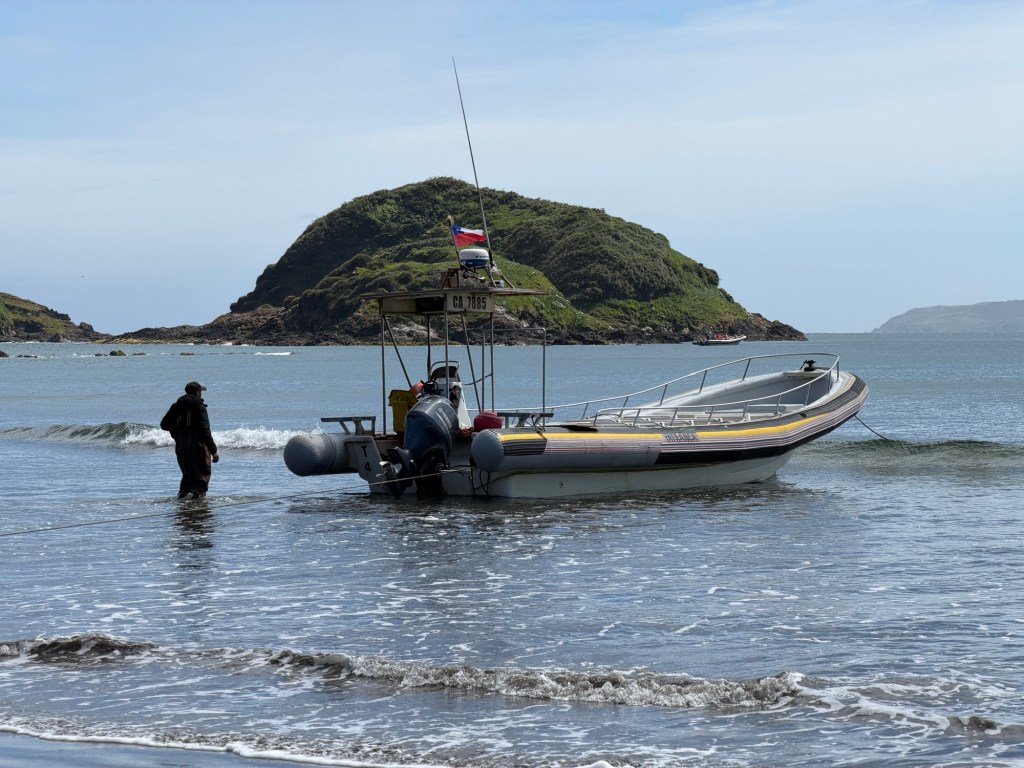
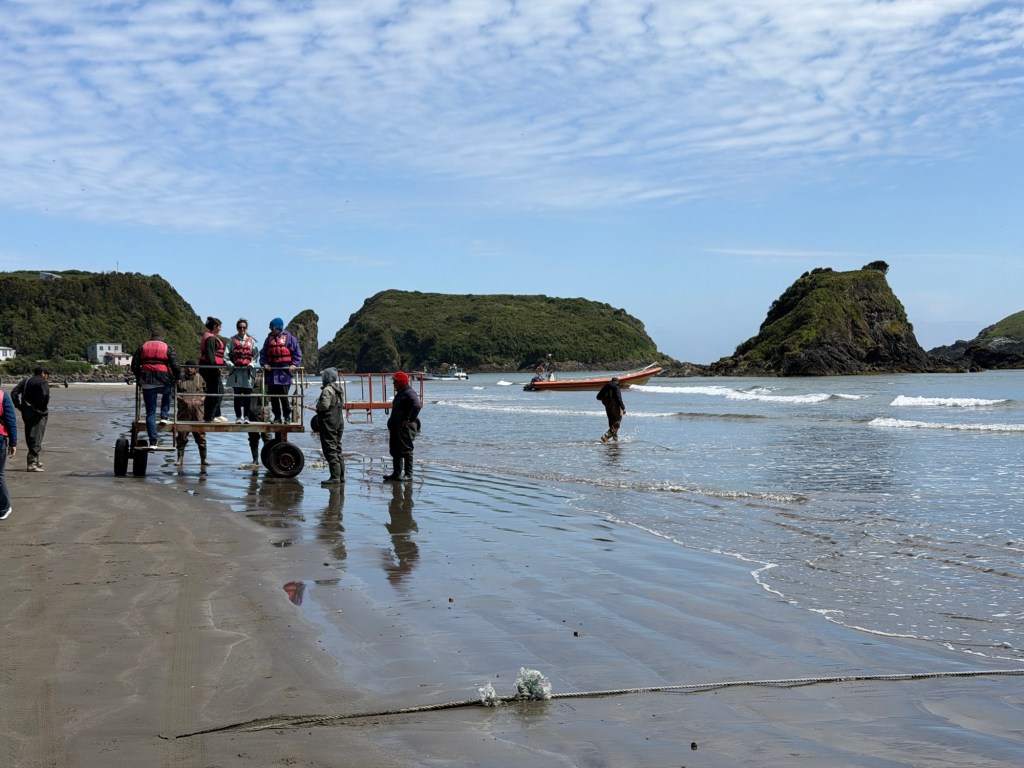
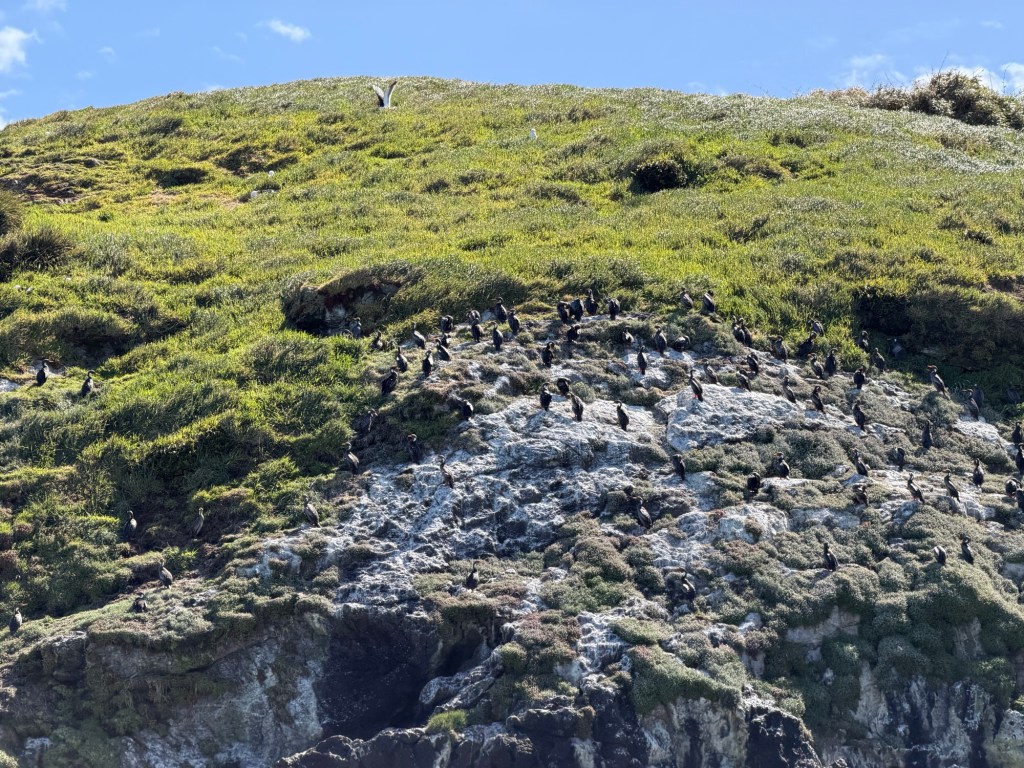
After a short walk, we found the place where our tour started, to take a boat around three islands to view the birds in the nature preserve. Getting on the boat was a unique experience; we climbed onto a platform on wheels, and three guys pushed the platform out to the boat.
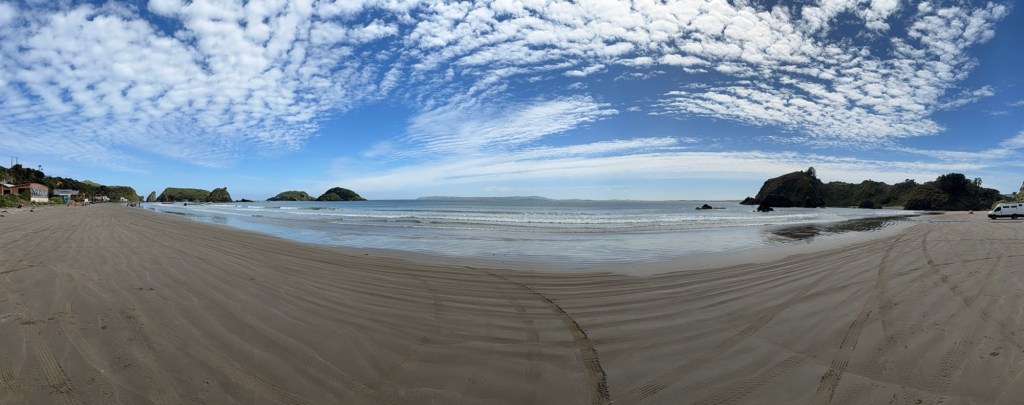
We boarded a boat like this one.No dock, so this wagon was used to board about 10 people at a time.Our bus drove onto the sand!
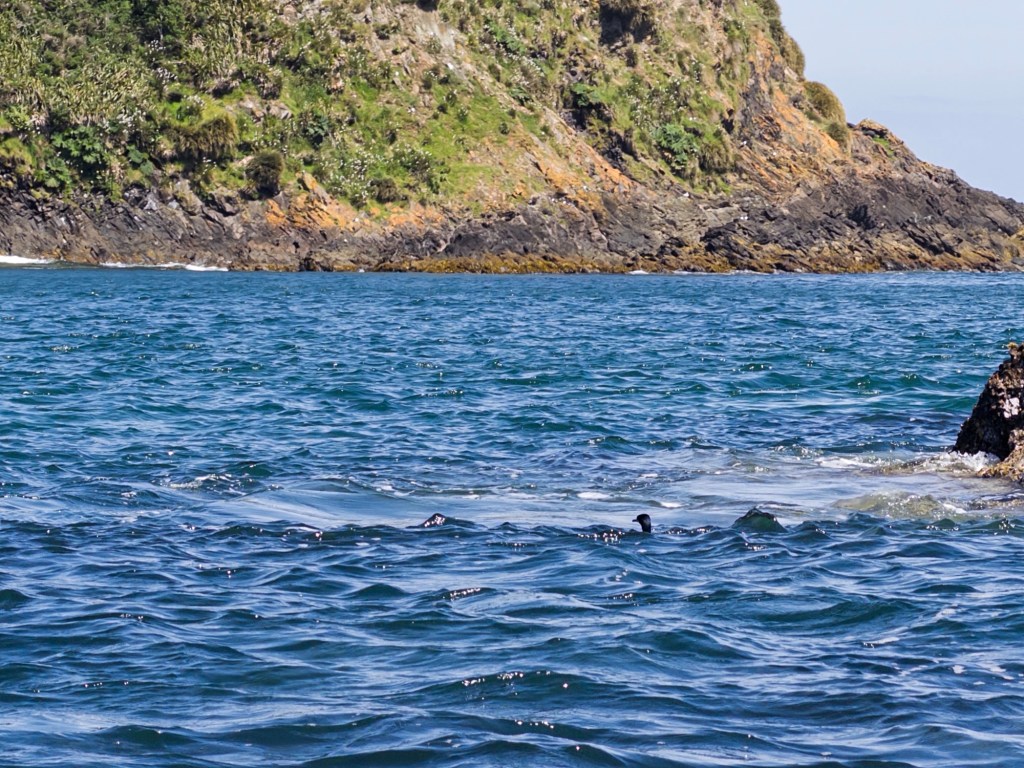
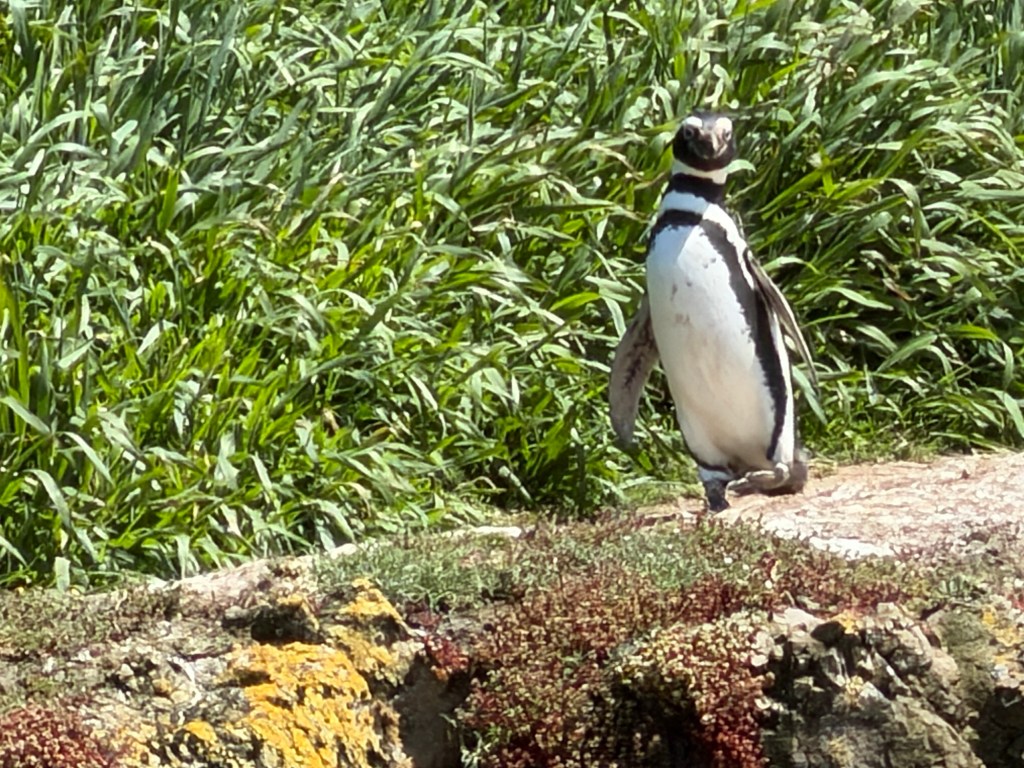
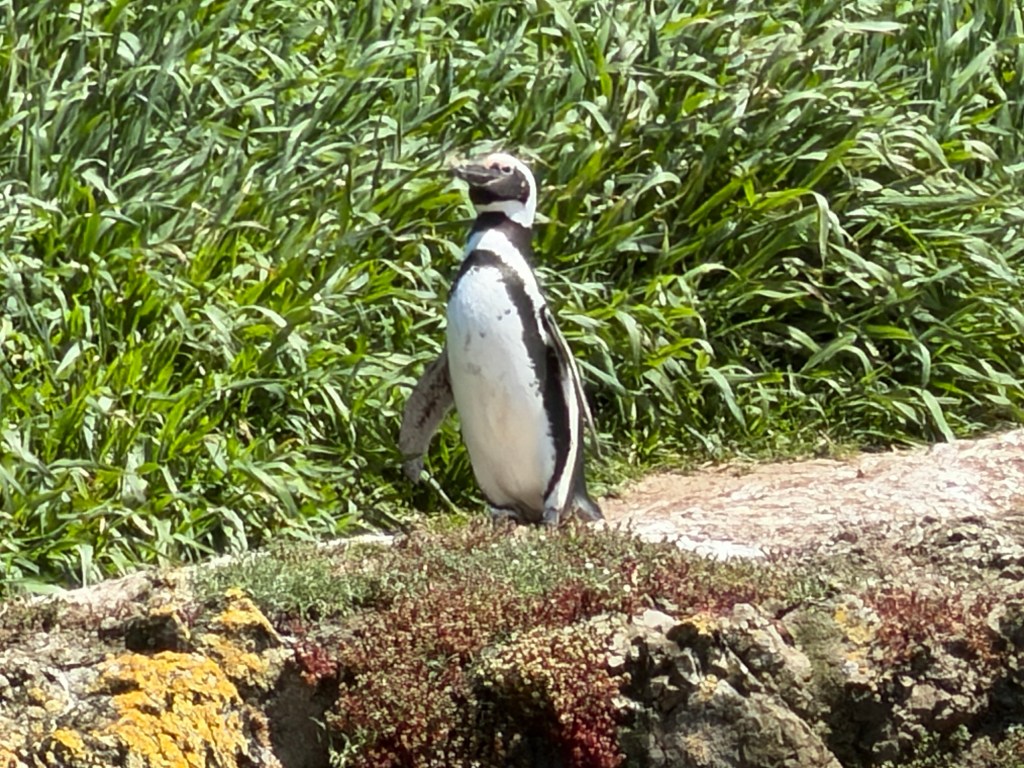
Now, we were rewarded with sightings of beautiful birds.
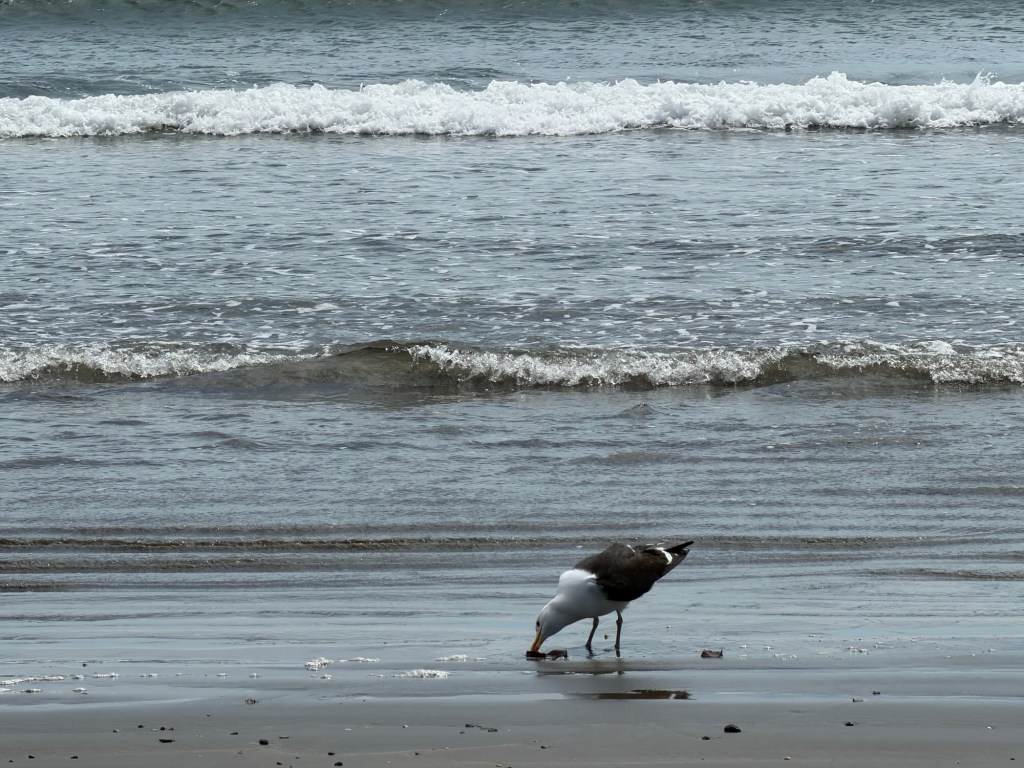
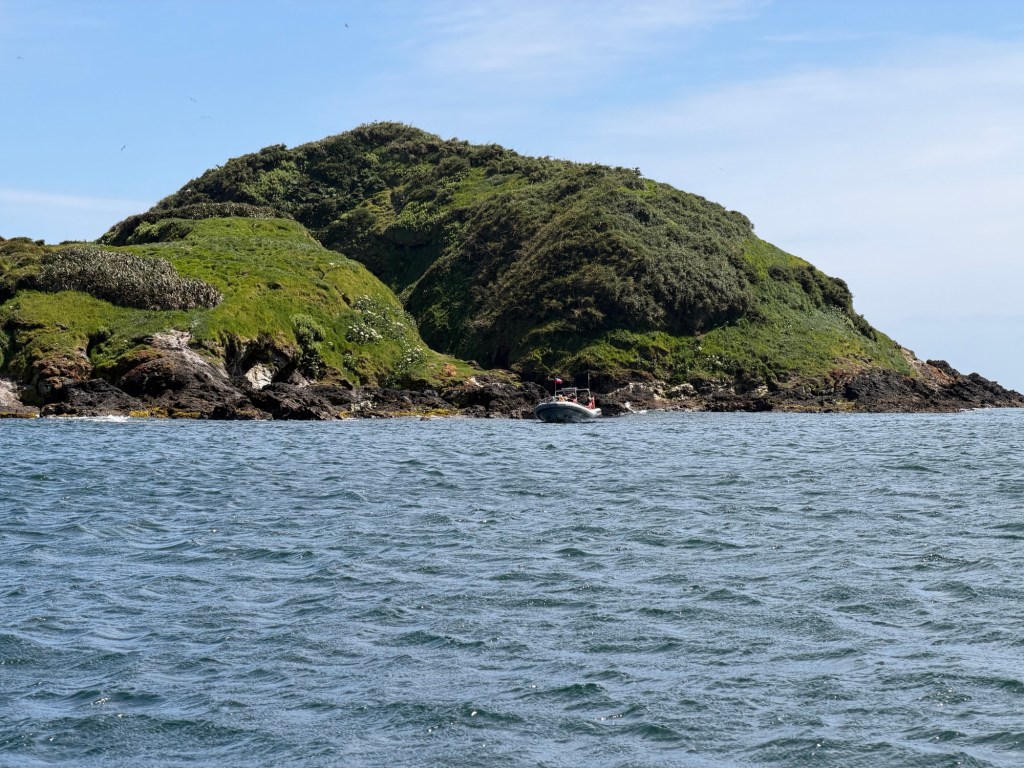
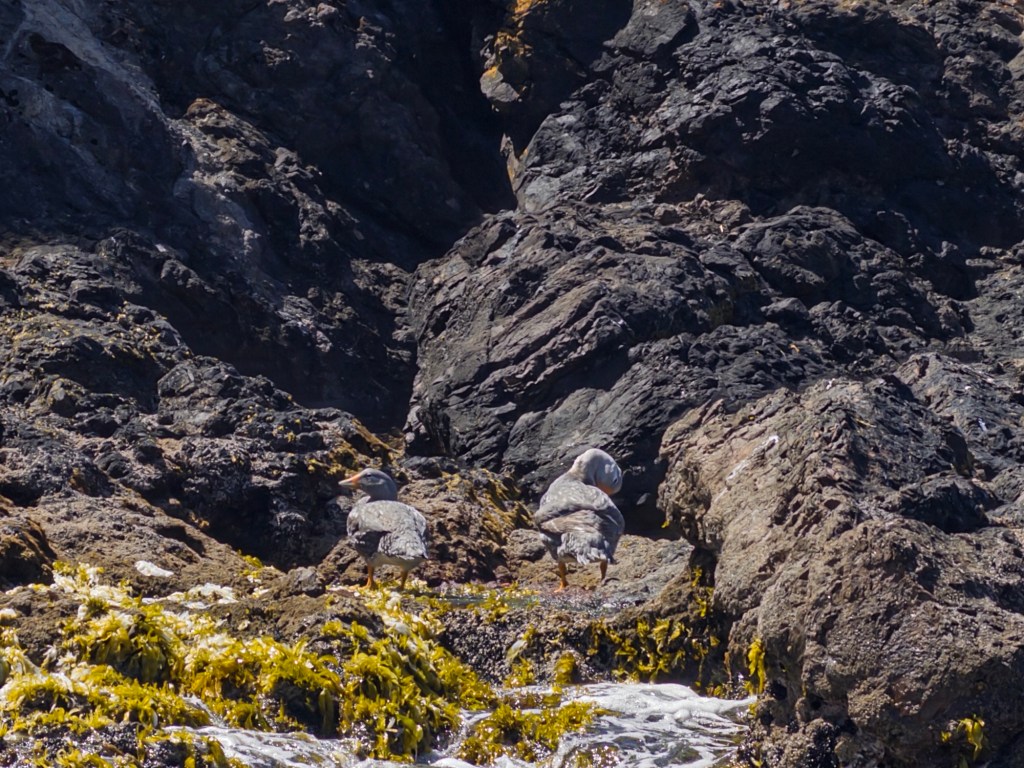
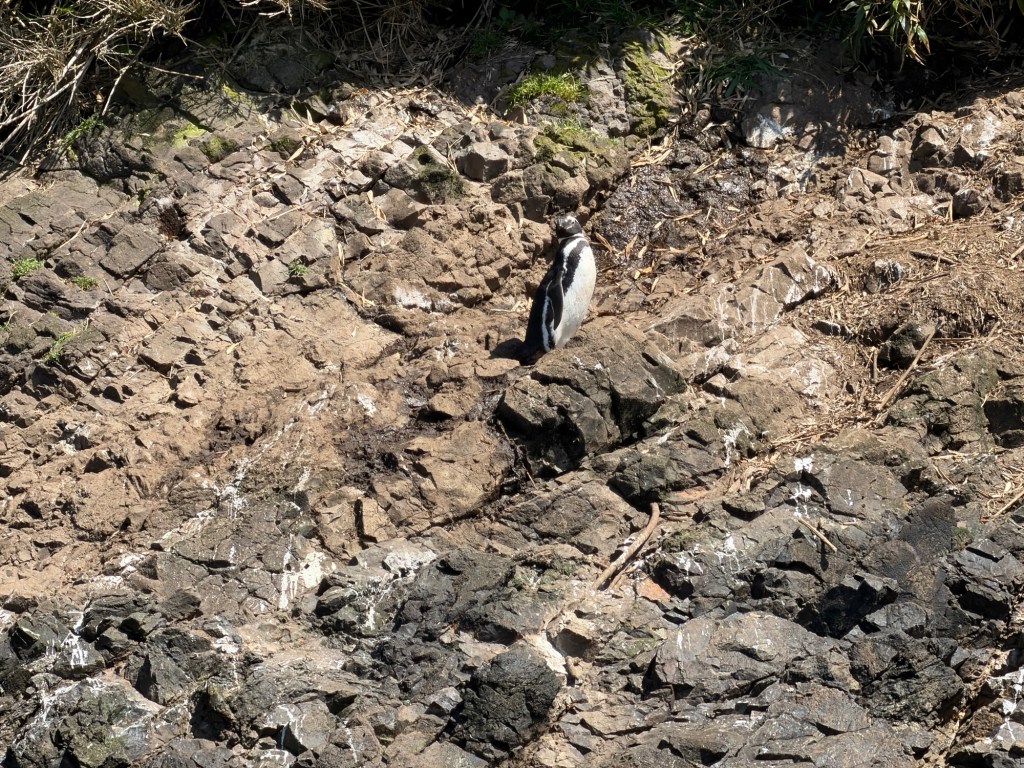
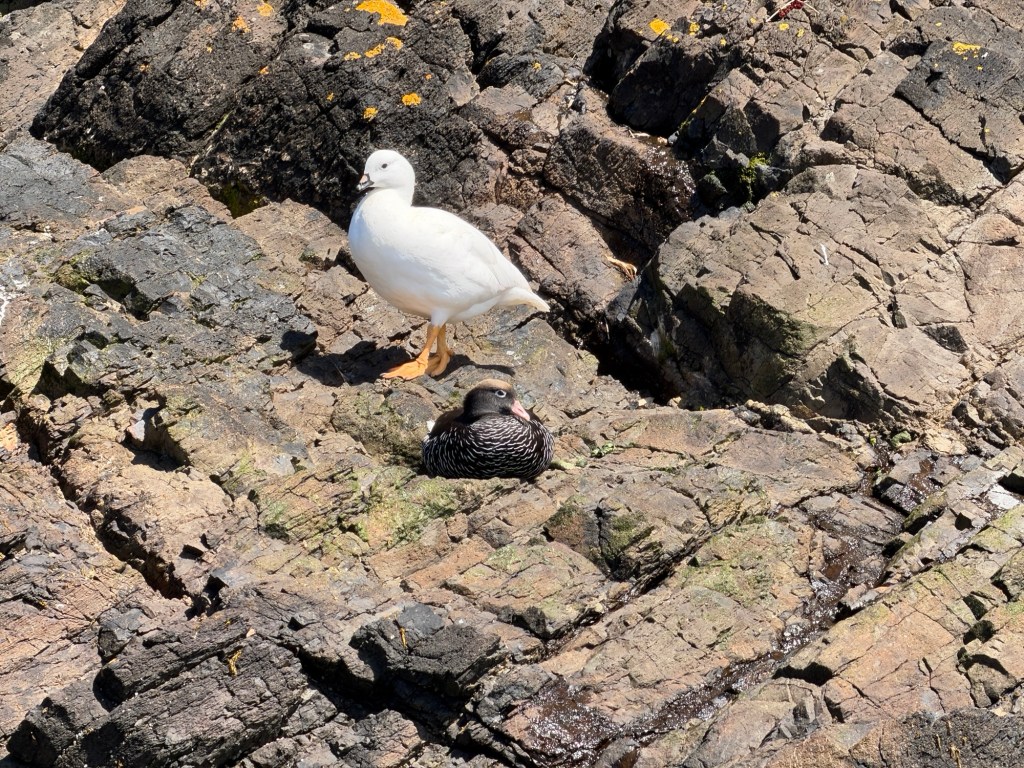
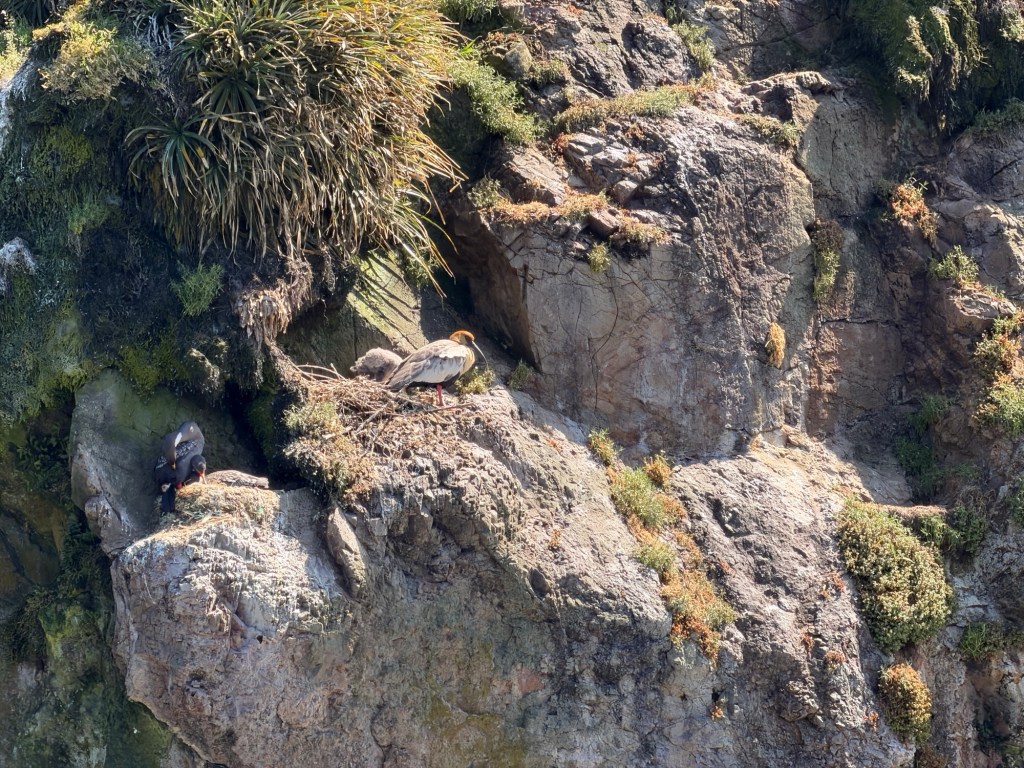
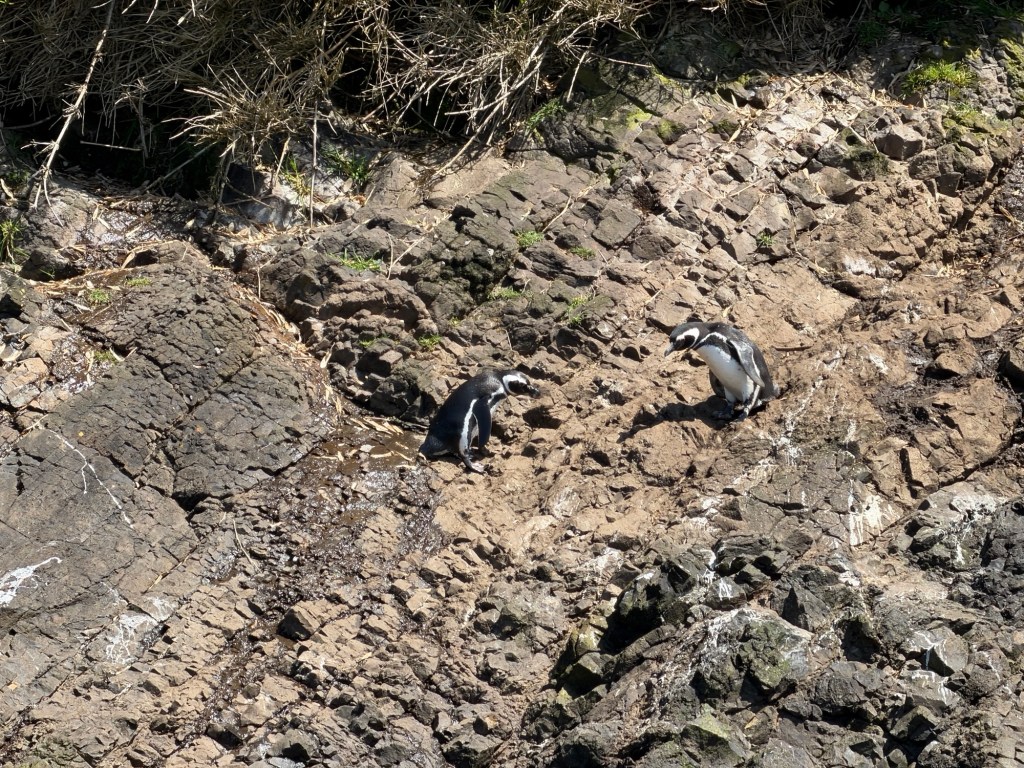
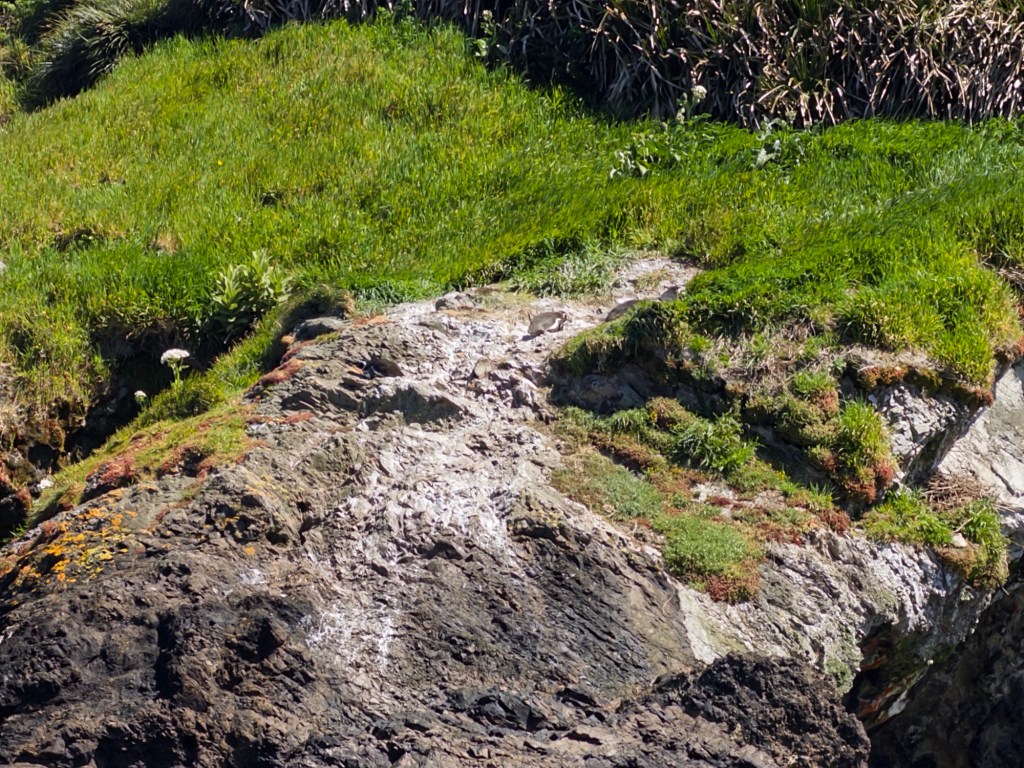
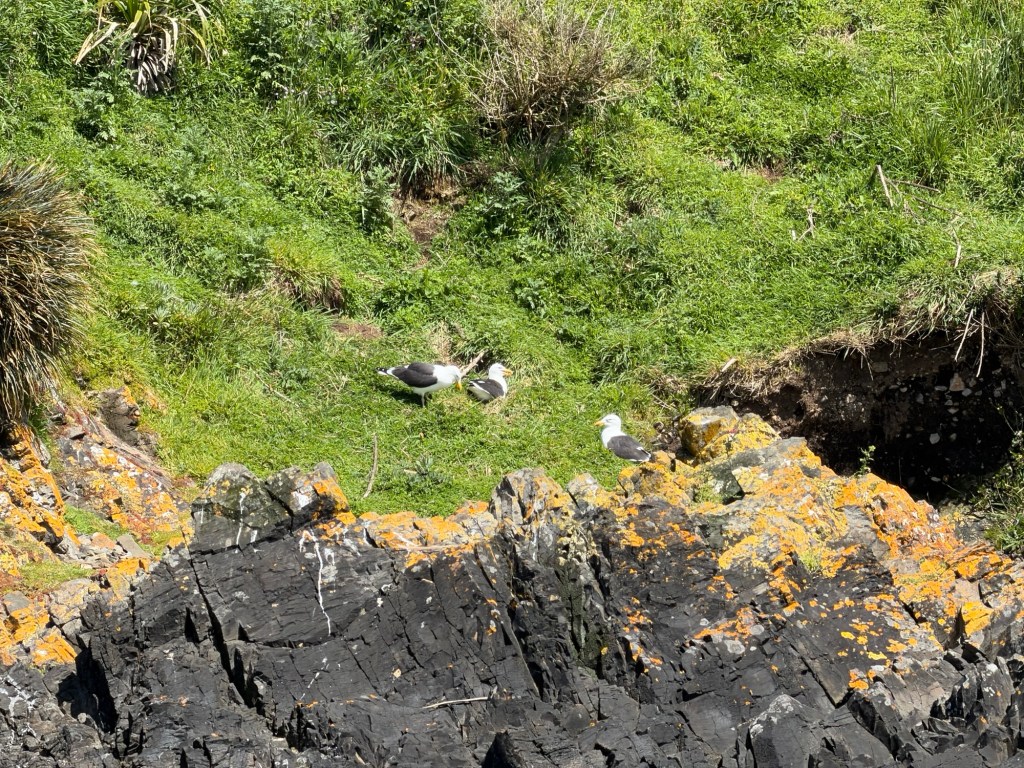
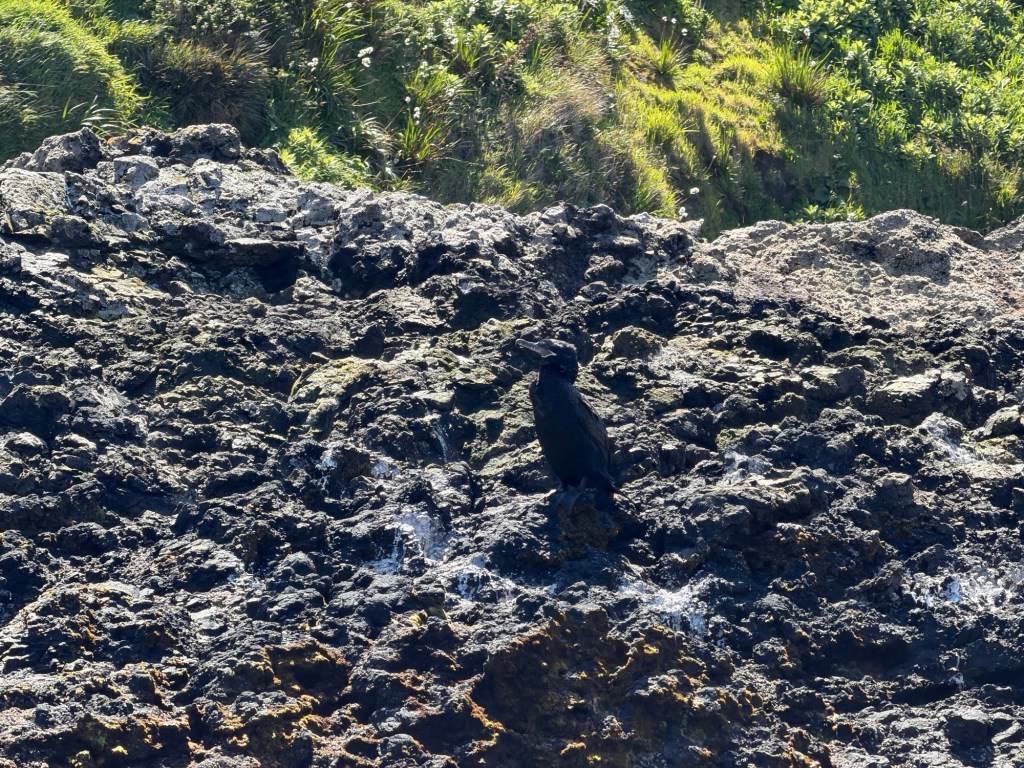
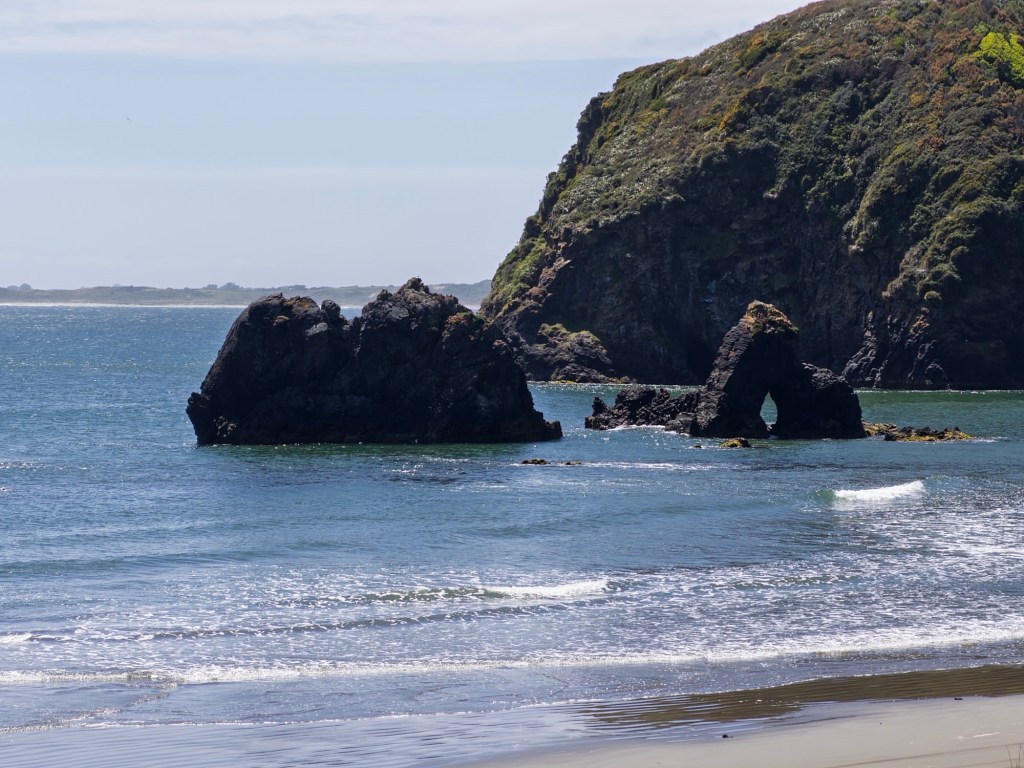
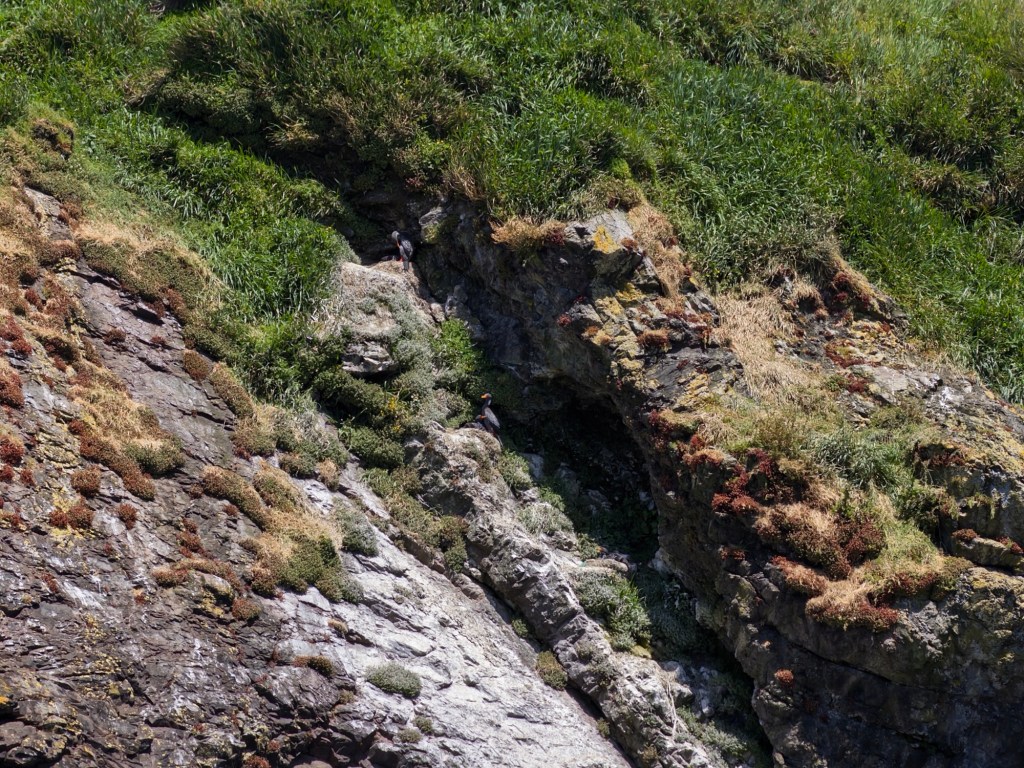
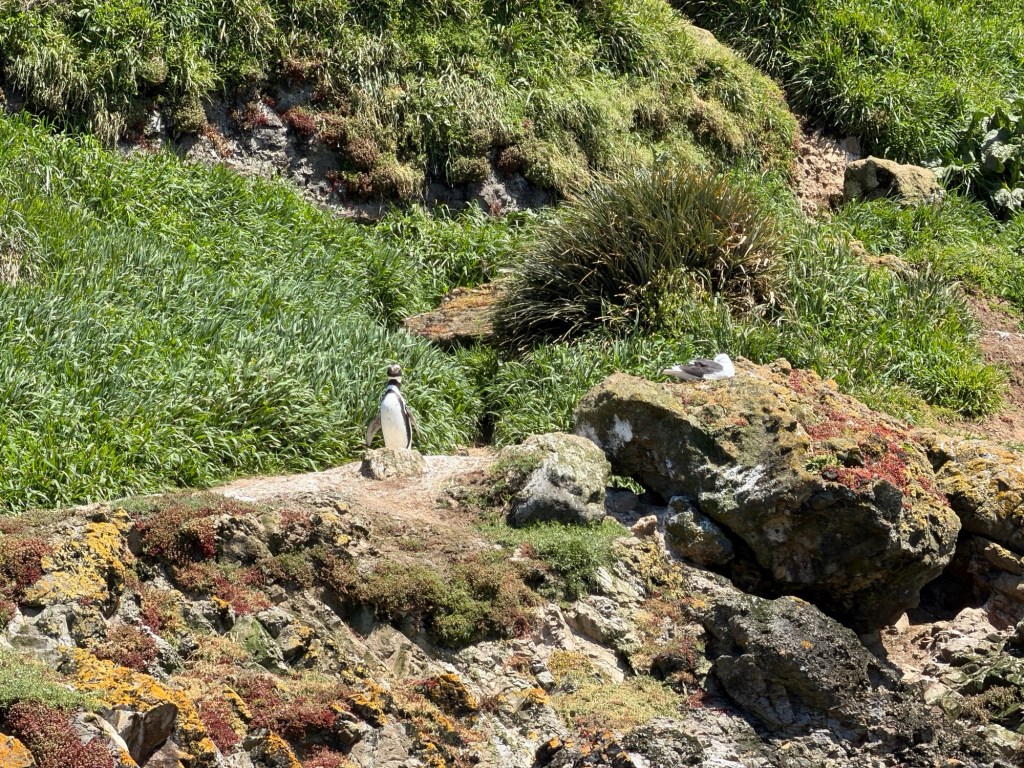
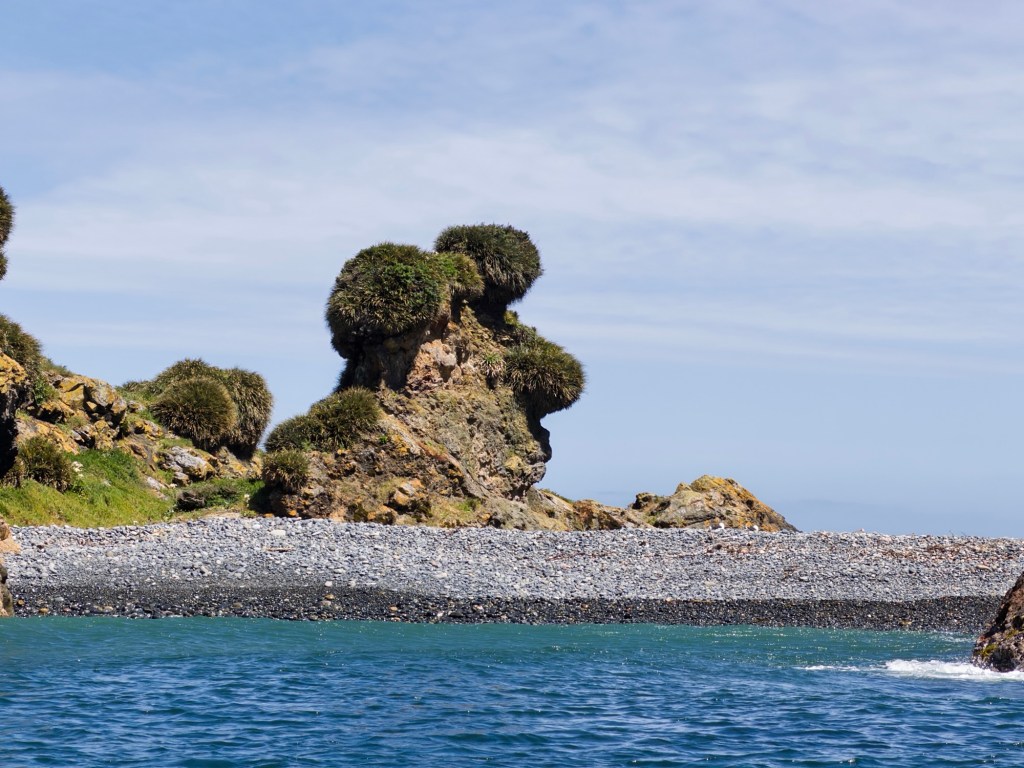
GullAnother boat near the first islandView back to the beachSteamer ducks don’t flyMagellanic penguinPair of kelp geesePair of red-legged cormorants and a pair of ibisPenguin encounter!CormorantsSwimming cormorantMagellanic PenguinMarching to the sea!Penguins lying downMany gullsNeotropic cormorant barely visible on the dark rocksView of a rock windowCormorants Penguin and gullRock “Bear” that appeared after a large earthquake in 2010
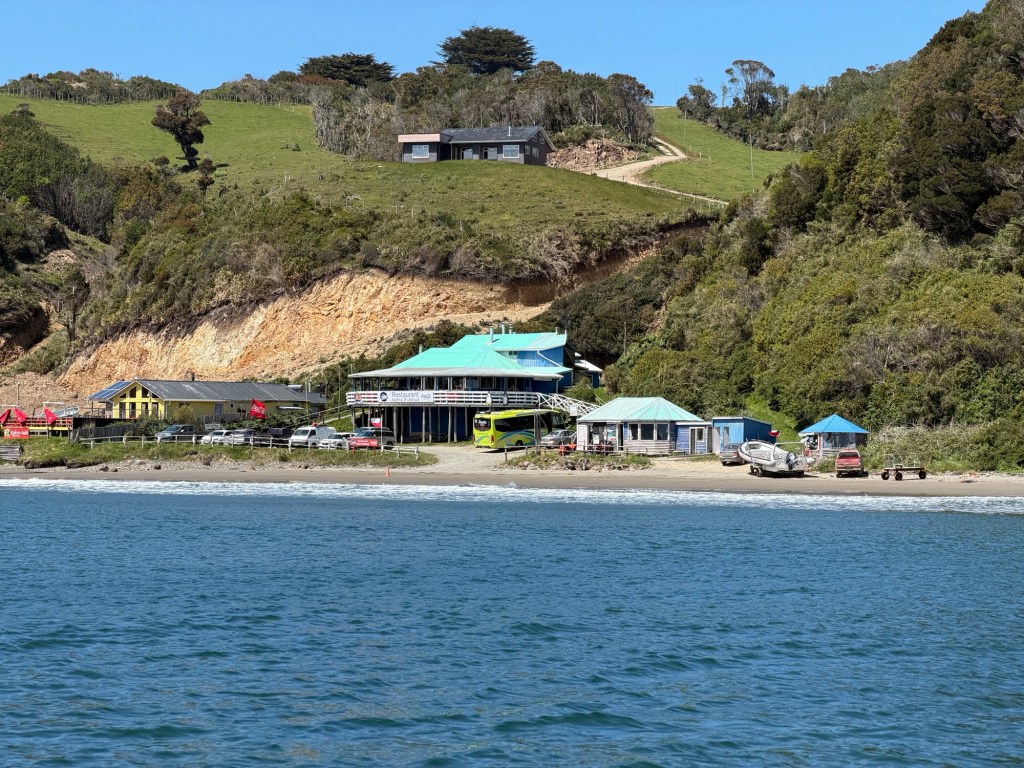
Lunch was at a restaurant on the beach — great food and views.
Lunch at the aqua-roofed restaurant on the beachBrian tried a new beer
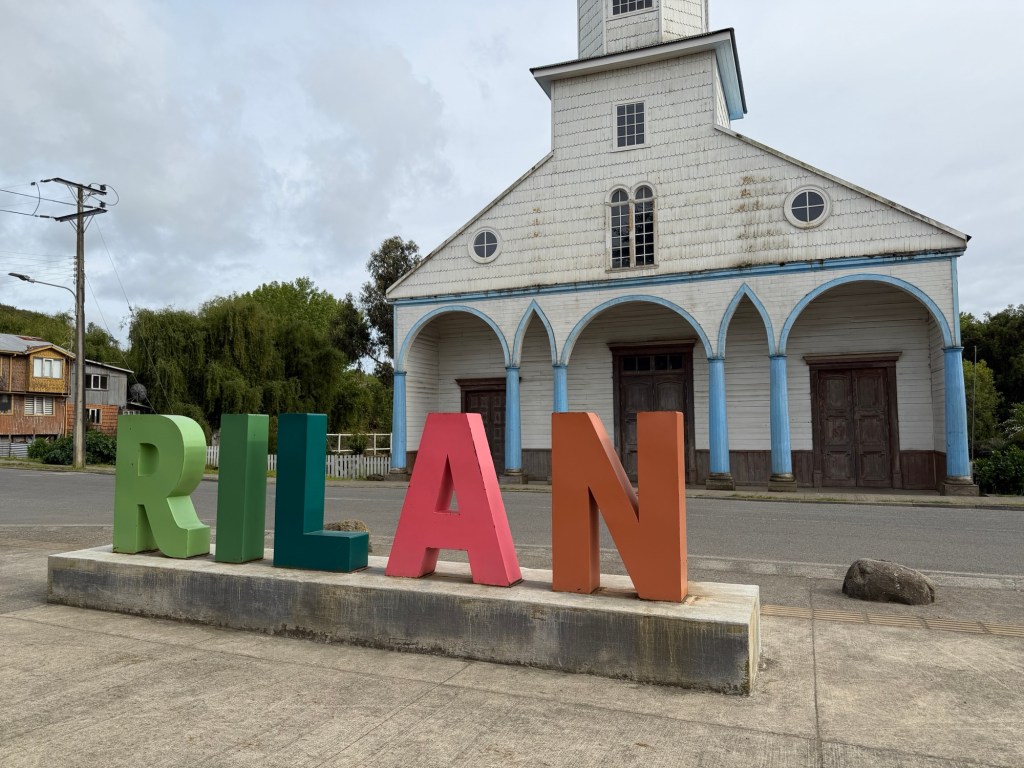
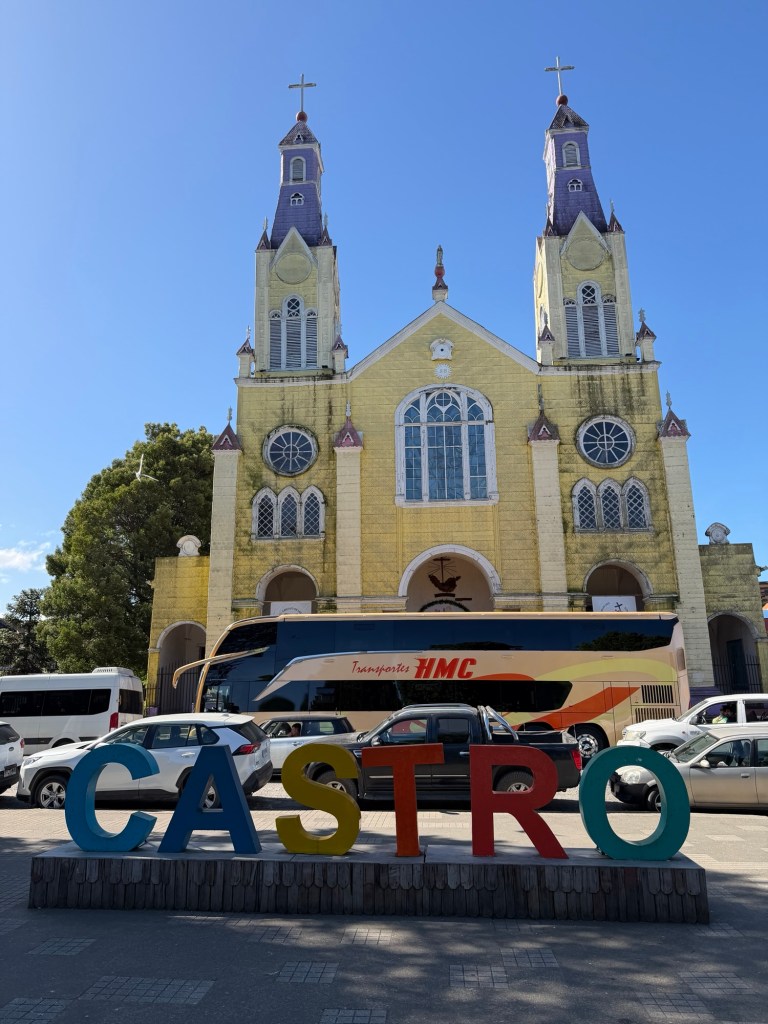
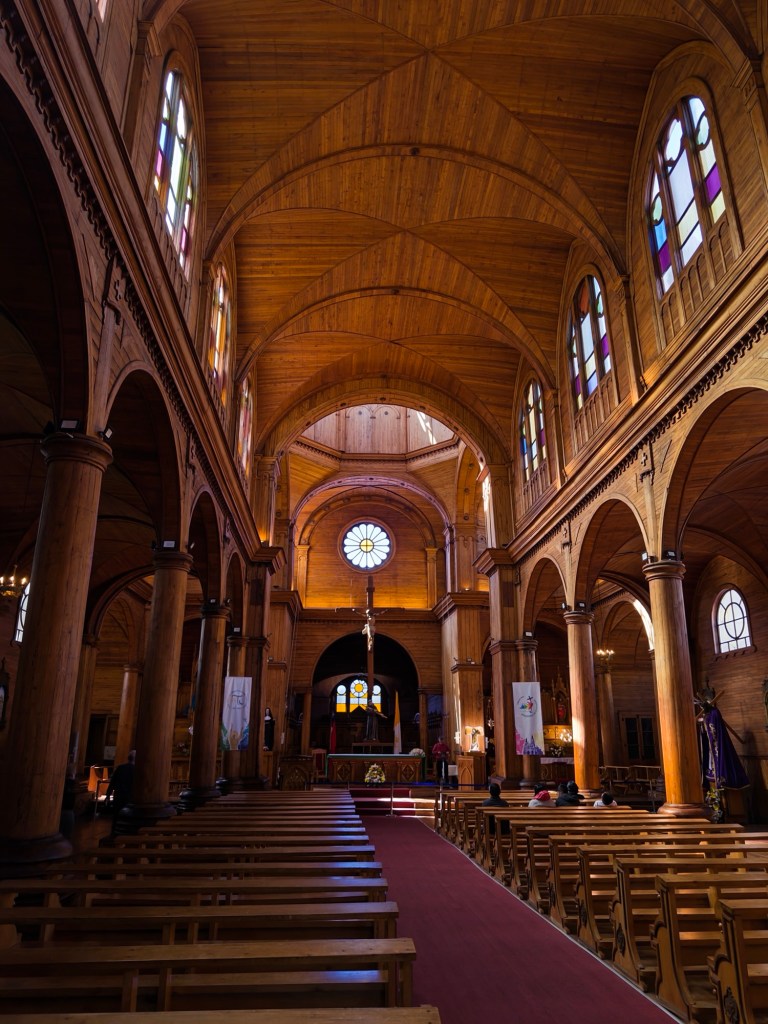
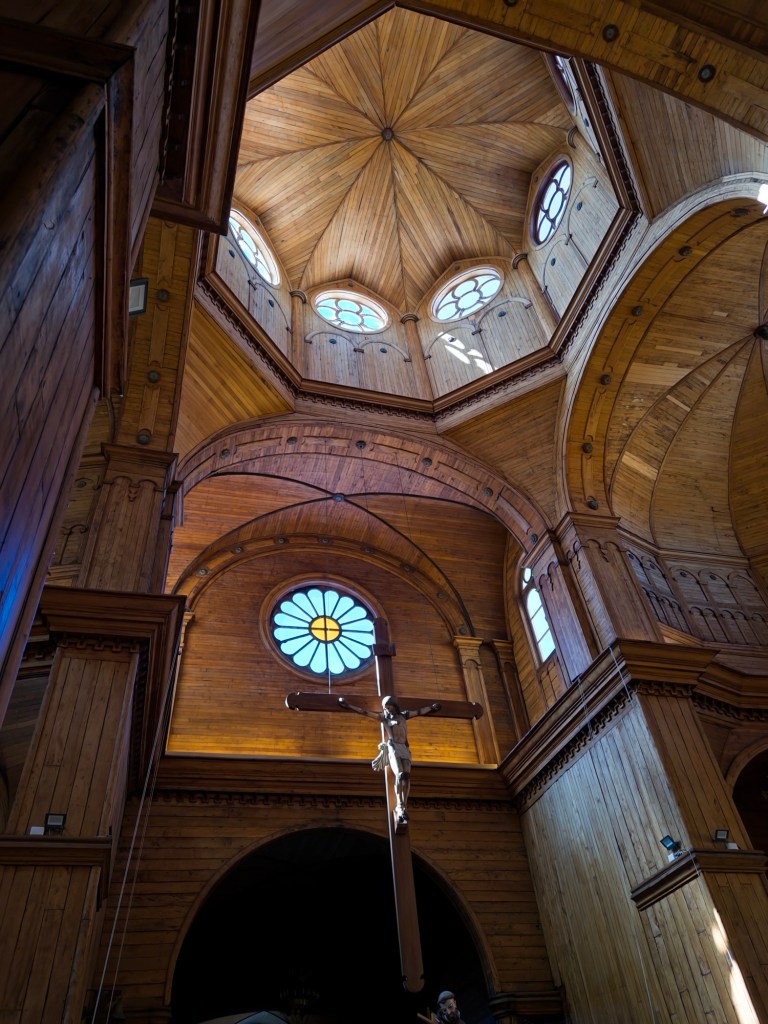
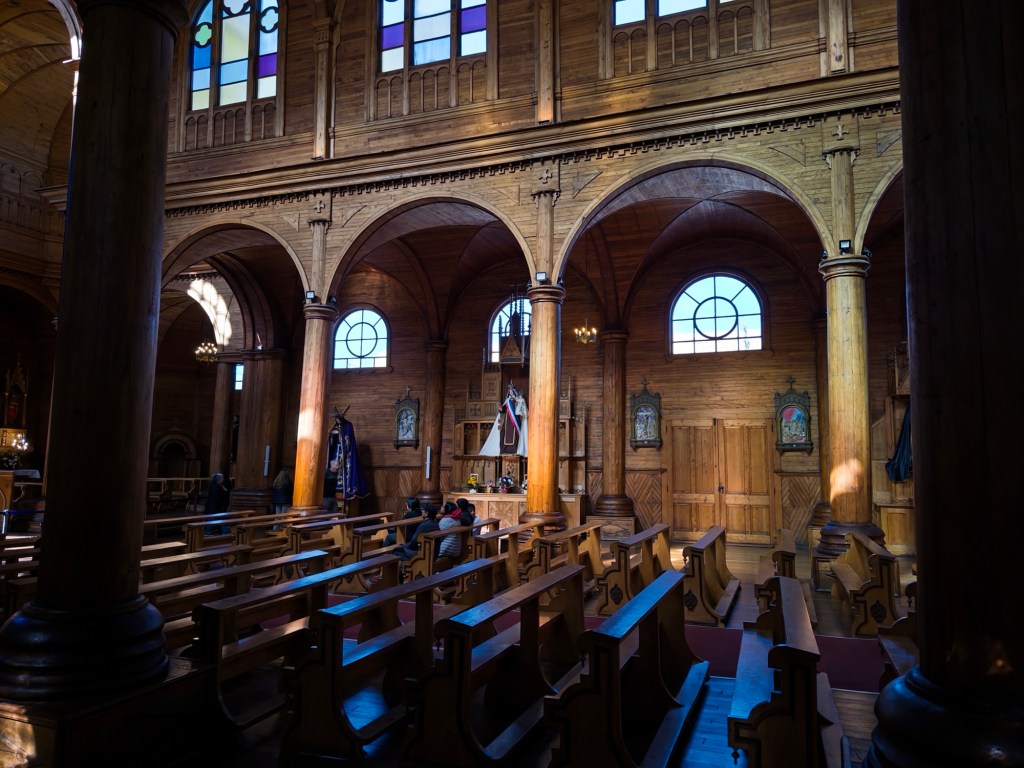
The bus ride to Castro was uneventful, but then we stopped at a church that is part of an UNESCO World Heritage Site, consisting of 17 churches. The first we saw, completed in 1910, showed a melding of native people’s construction talents with European styles. This is one of the last churches built here.
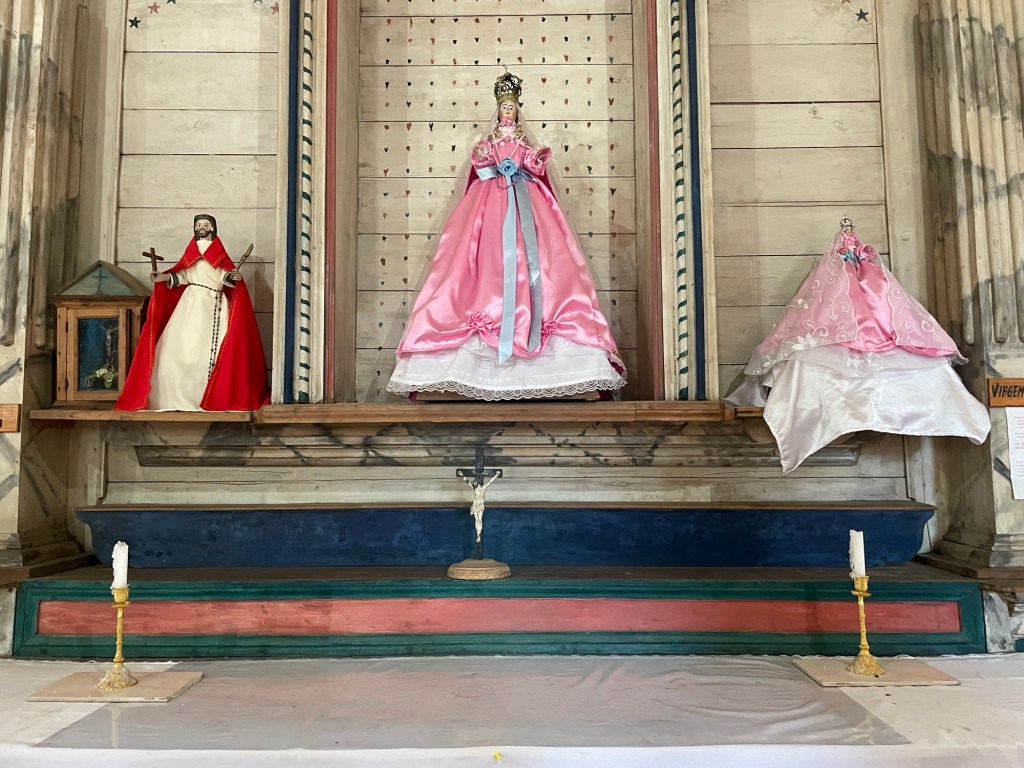
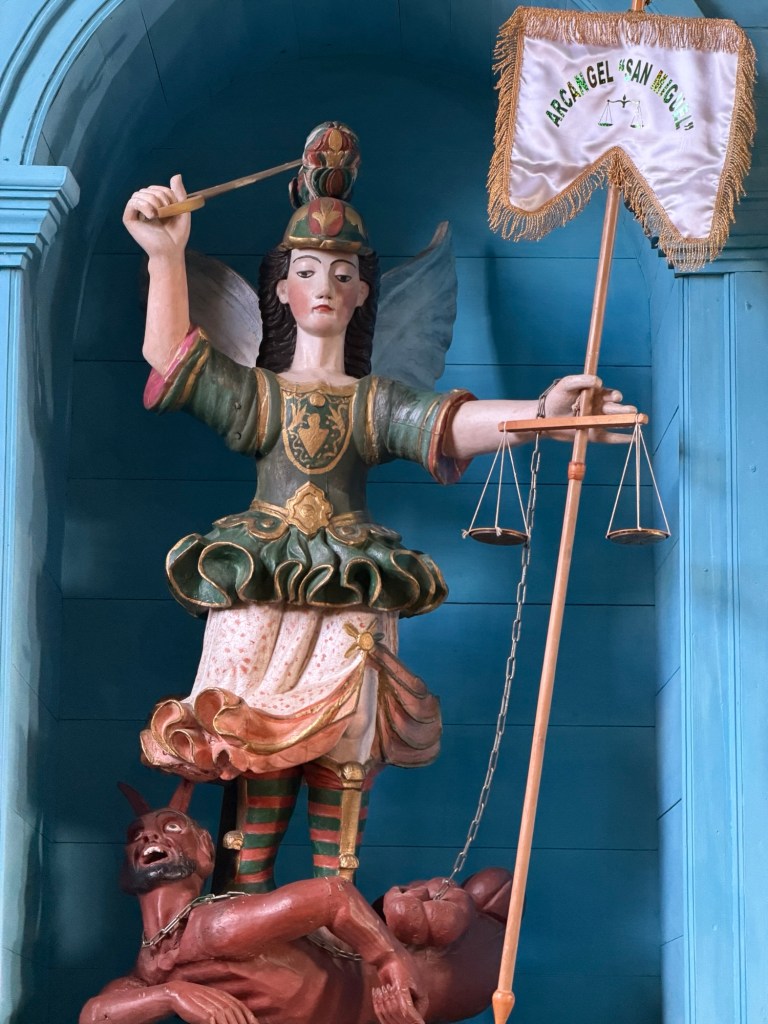
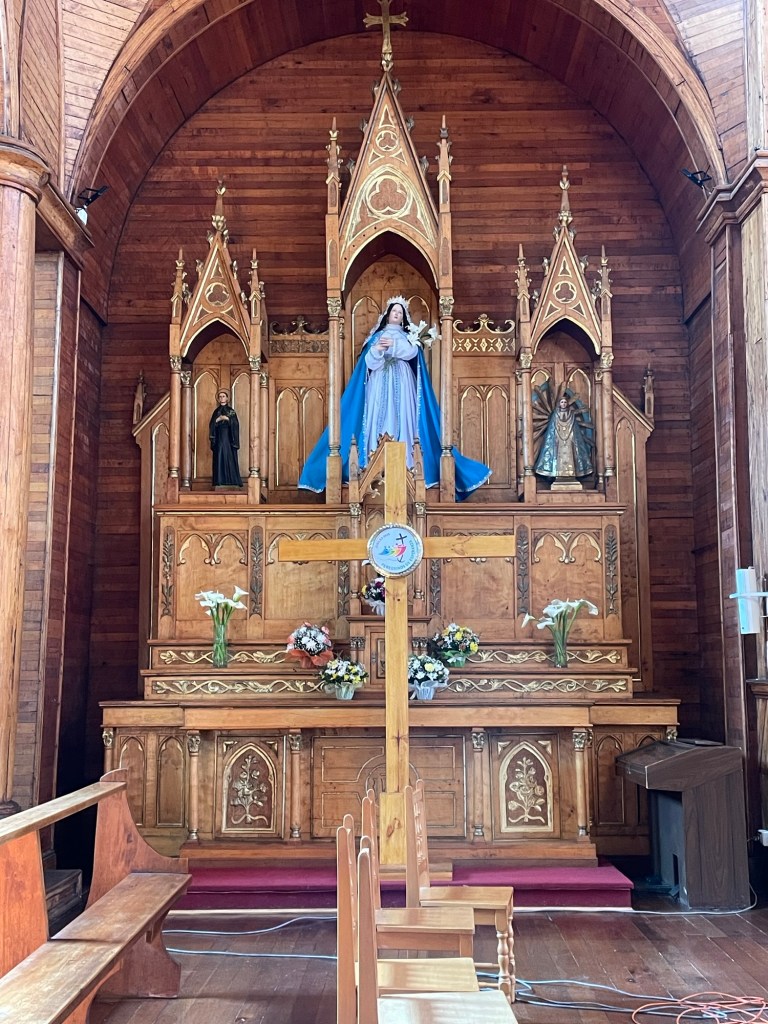
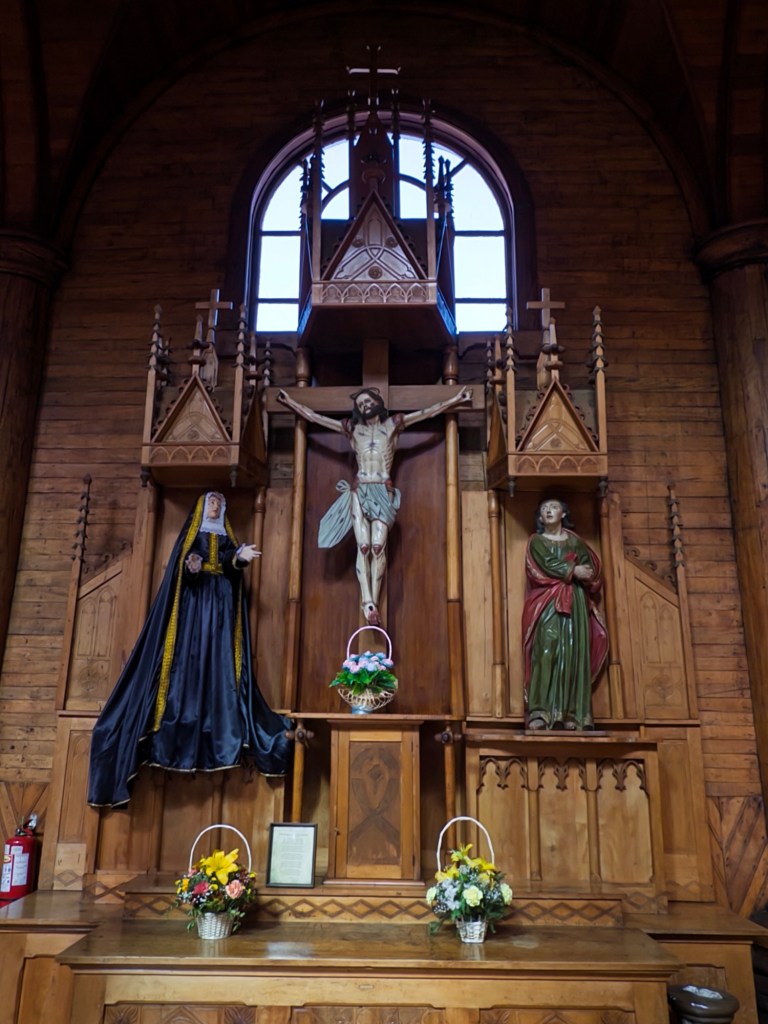
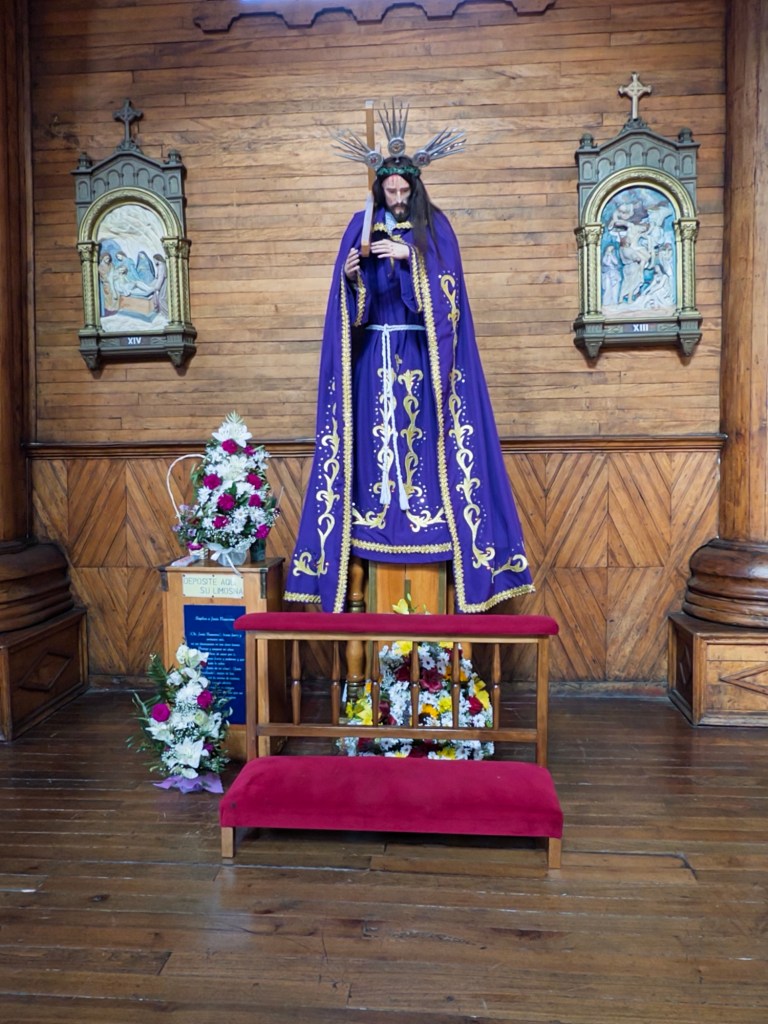
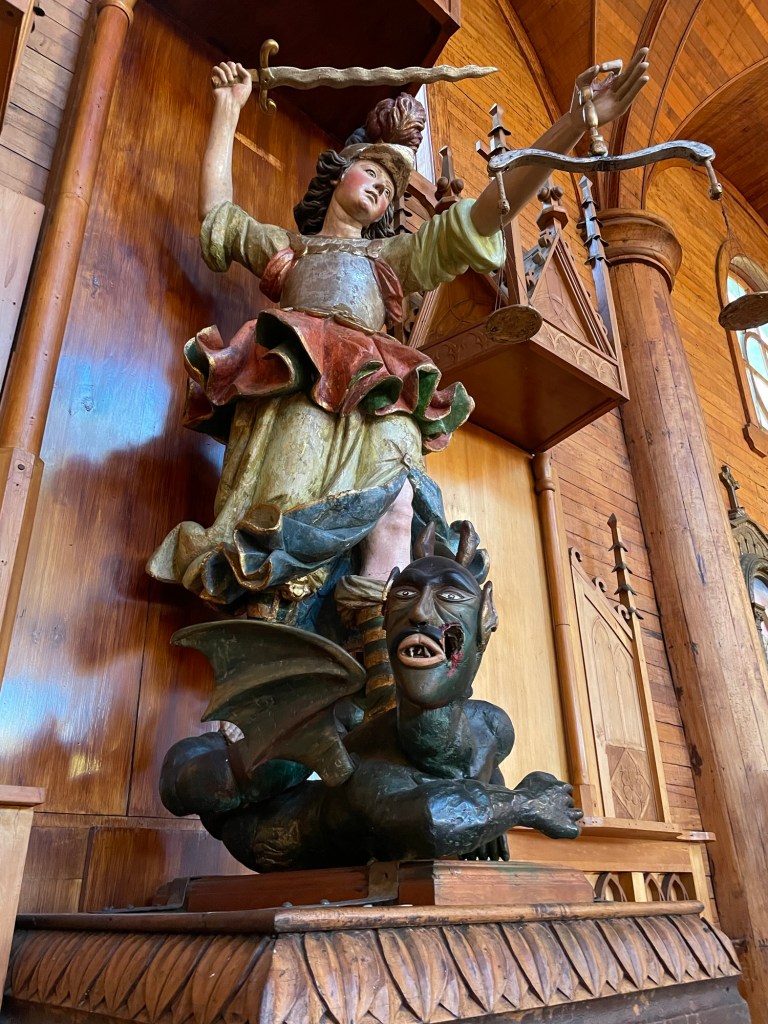
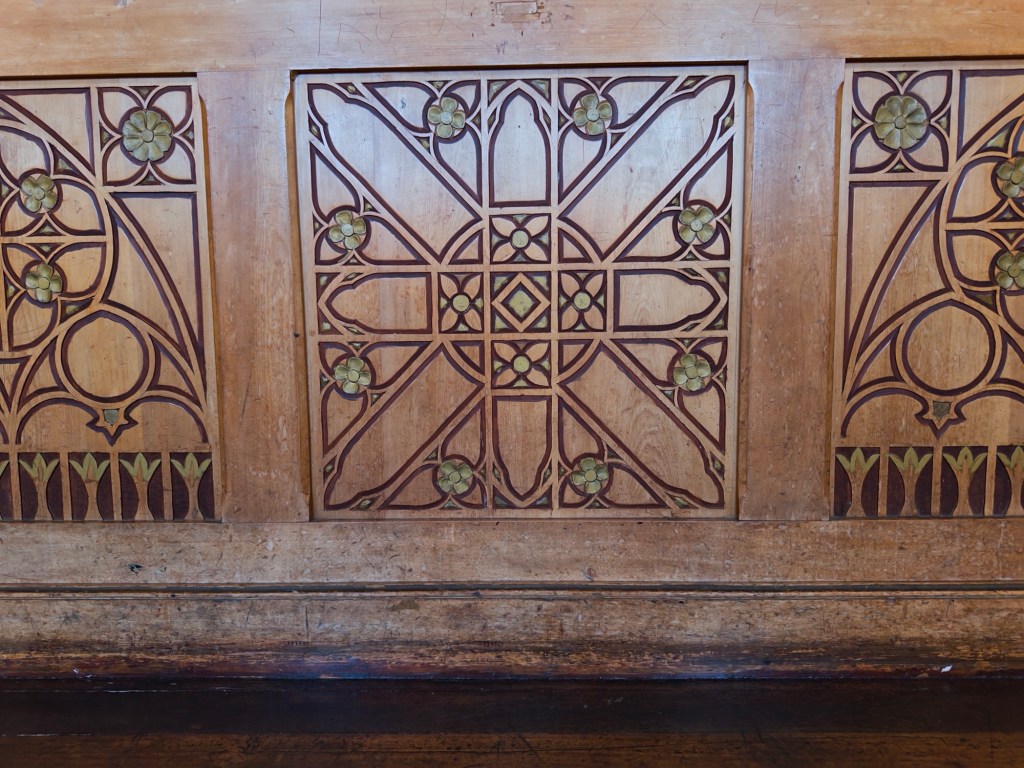
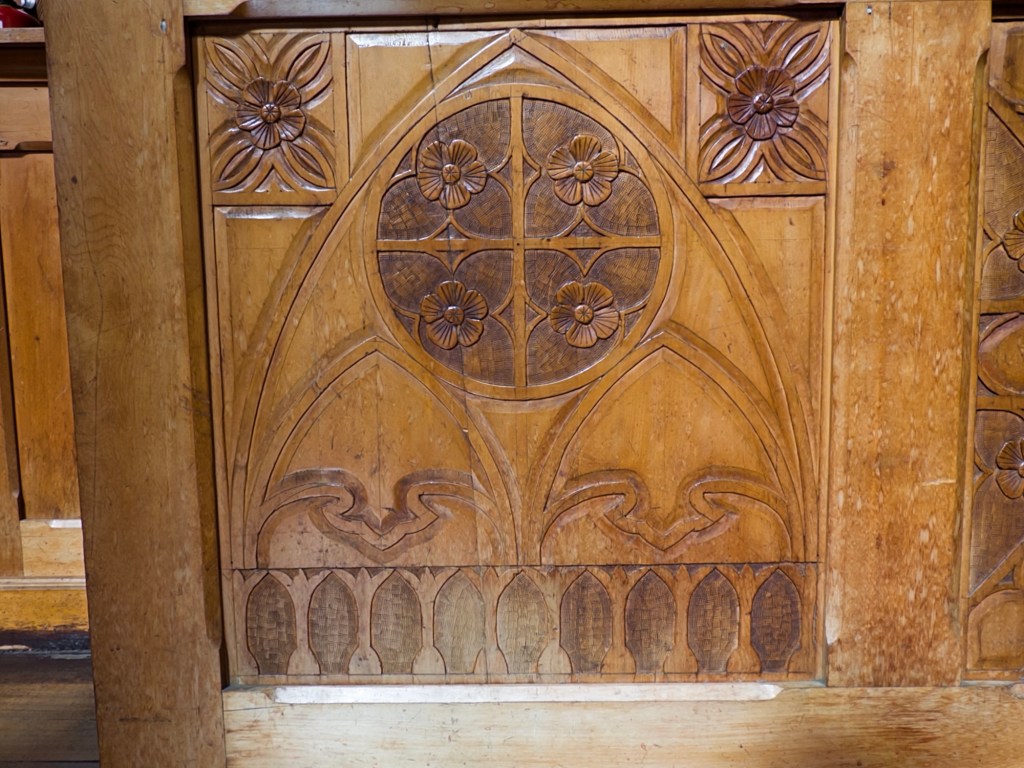
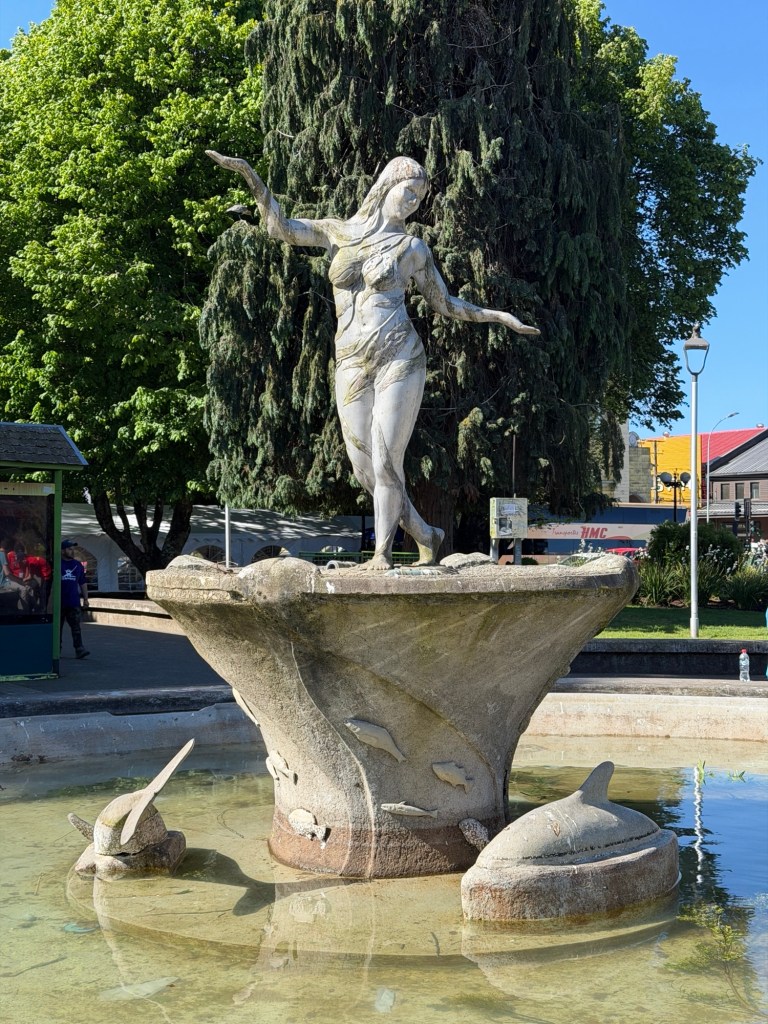
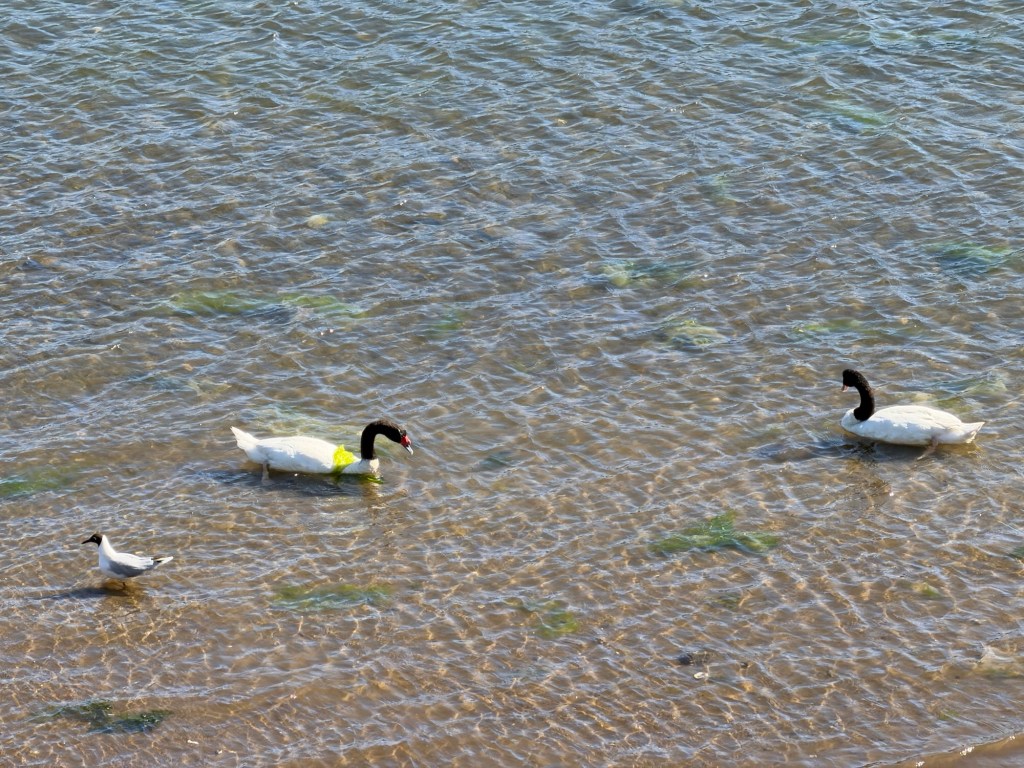
Outside of the church was always painted bright colors, to be easily seen from the ocean. The ceiling is constructed like the native people’s boats, upside down. Other parts of the ceiling were more European in style. Pillars and walls all made of wood. Altar to MaryMany statues of Jesus wear purple robes, which are changed every season.St. Michael expelling the devil. Design in woodConfessionalWooden pedestalFountainHomes on stiltsBlack necked swans
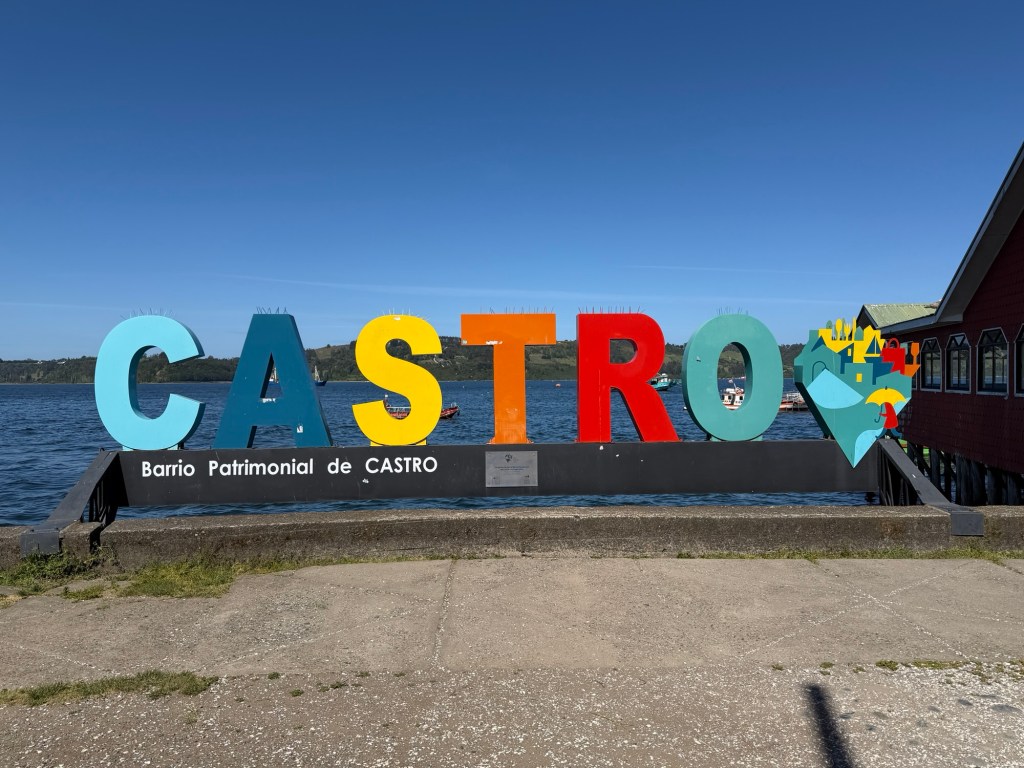
Around Castro.
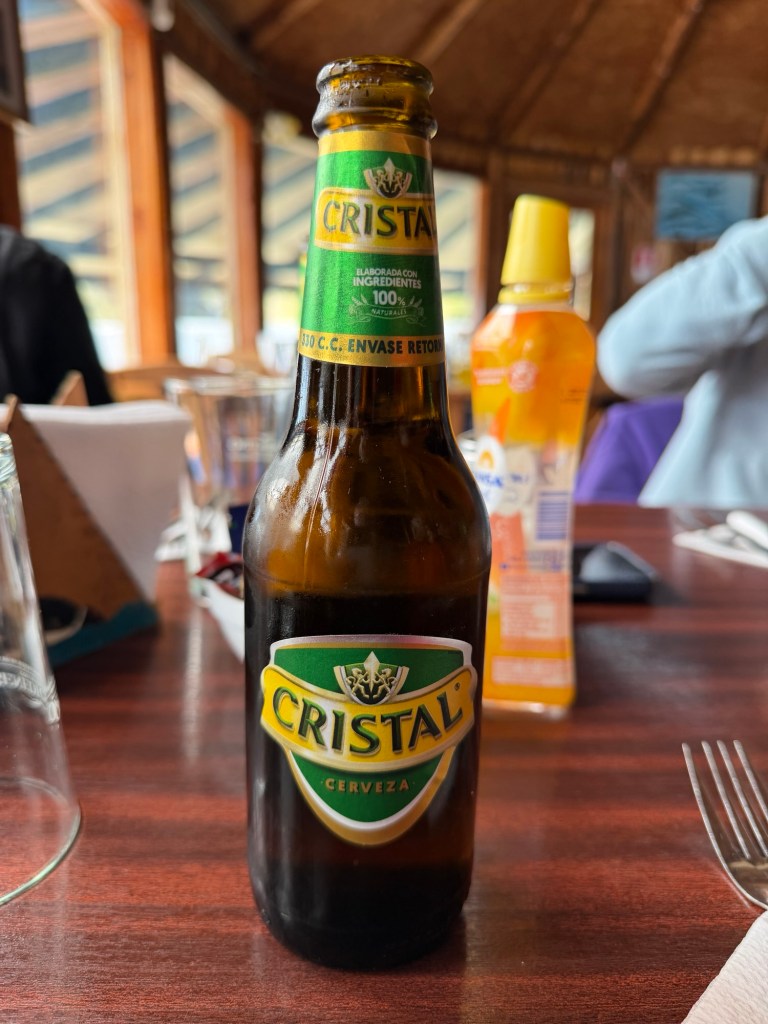
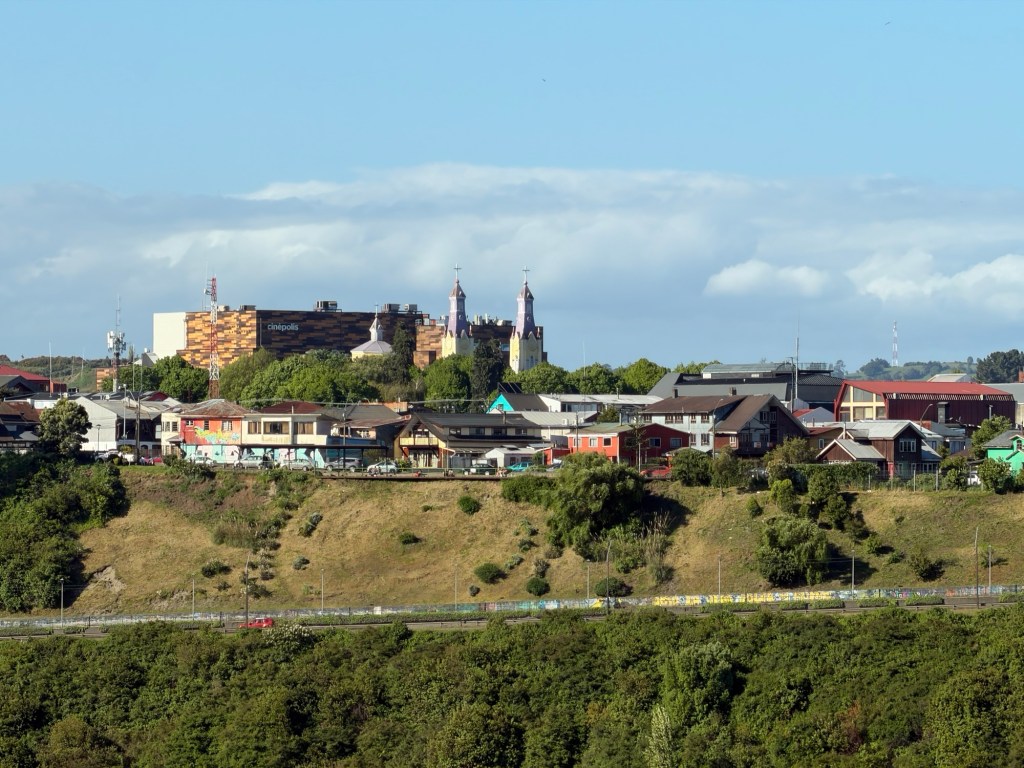
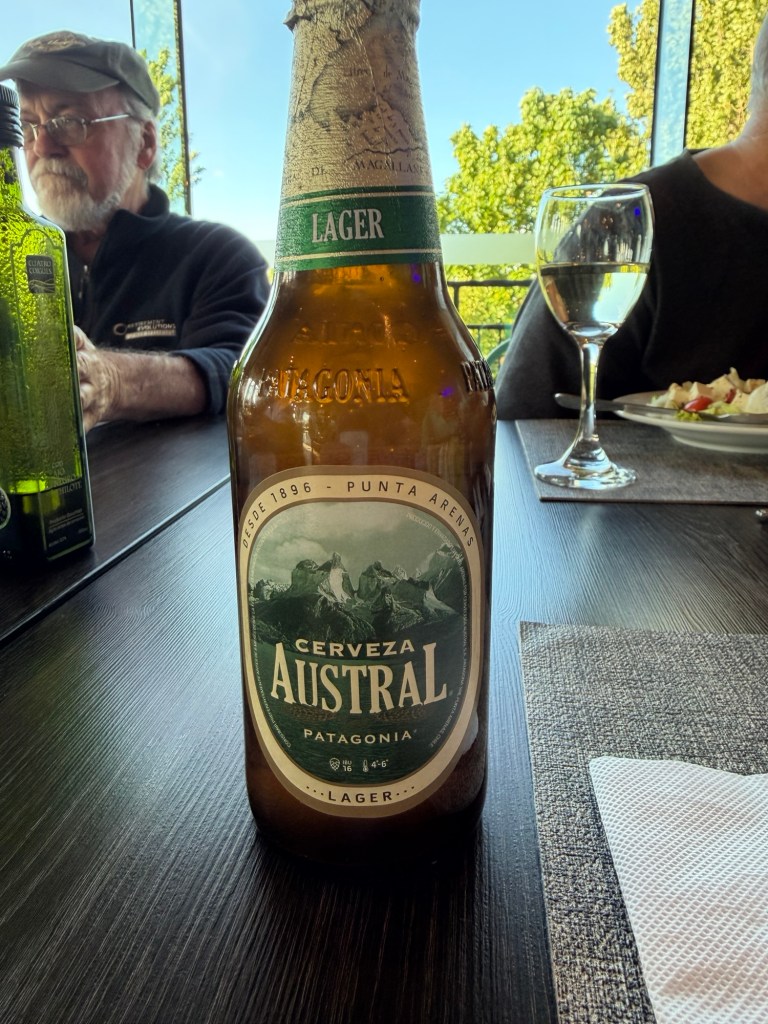
Our hotel adjoined a casino.View of estuary between our hotel and the main squareThe cathedral and ugly mall building from our hotelA beer with a label better than the product!
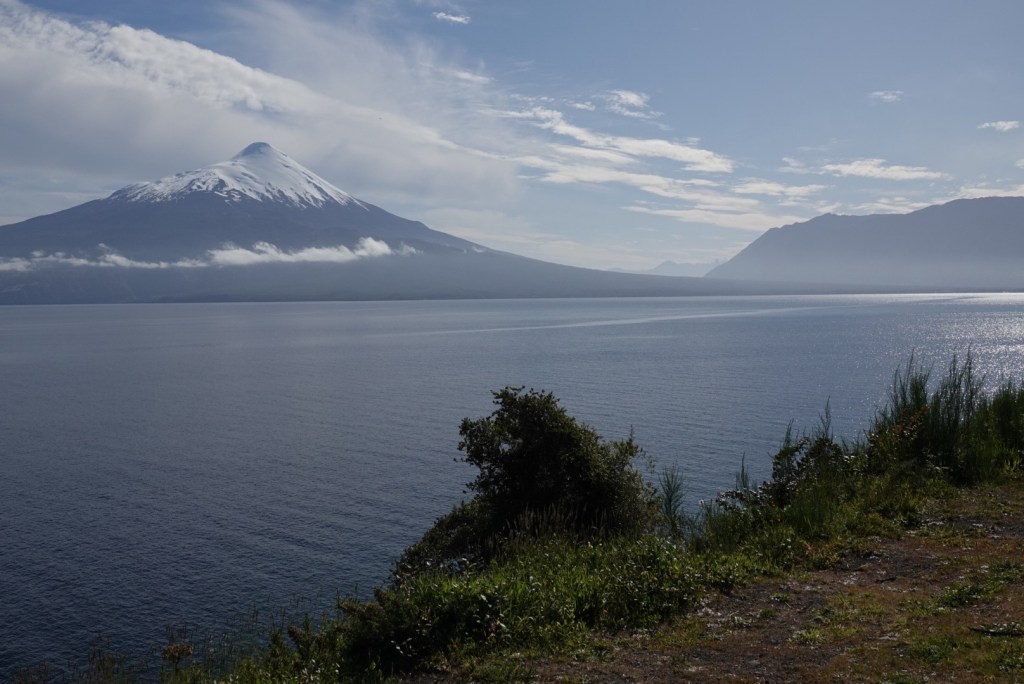
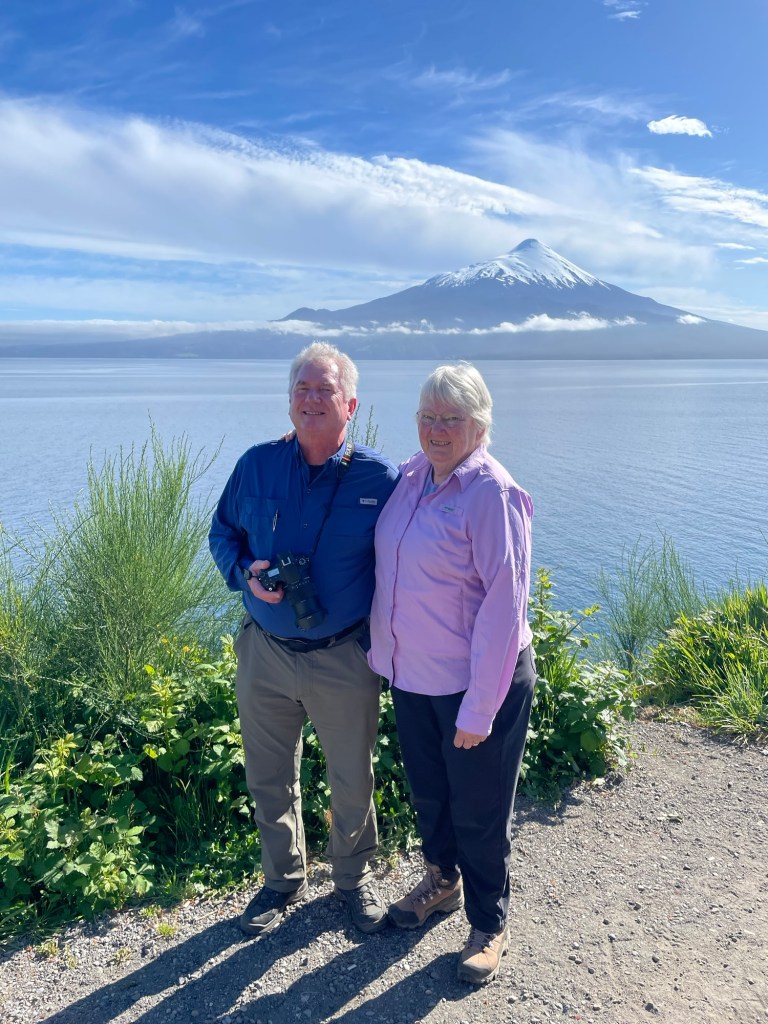
When we got up this morning, both of the large volcanoes that had been visible last night were obscured by clouds. People who live here told us this is normal. But by the time we were ready to start the day, they had emerged again. Just for us.
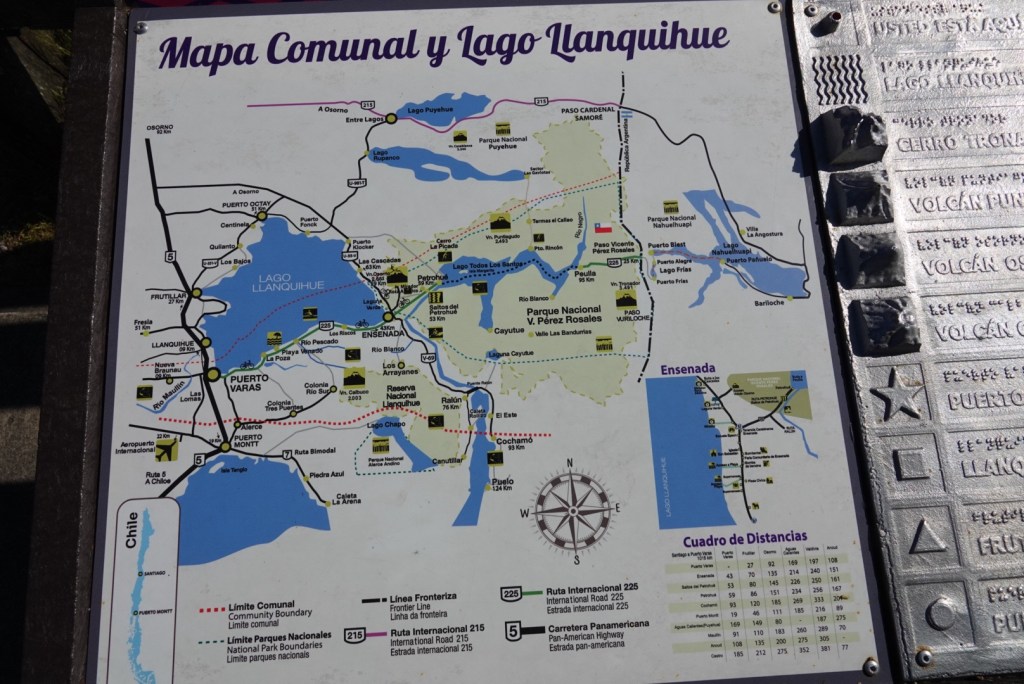
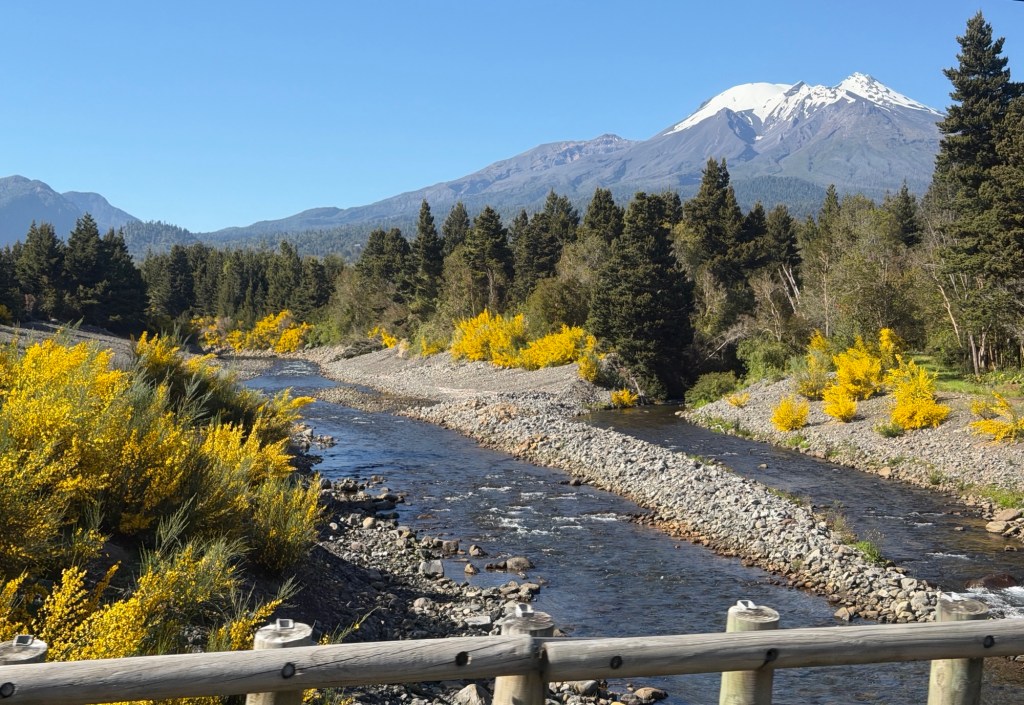
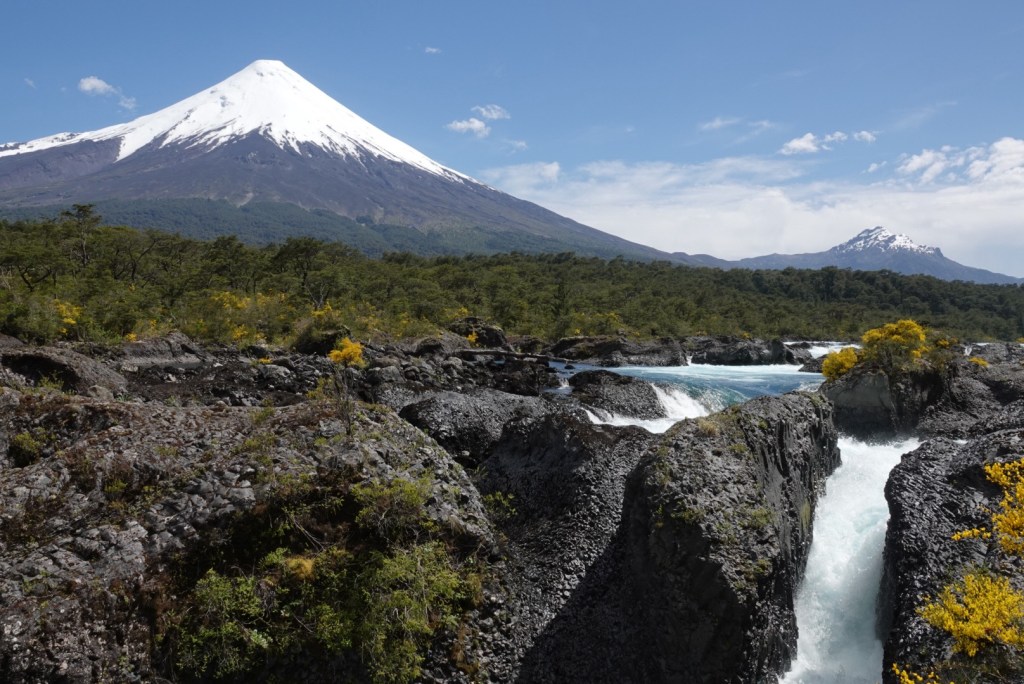
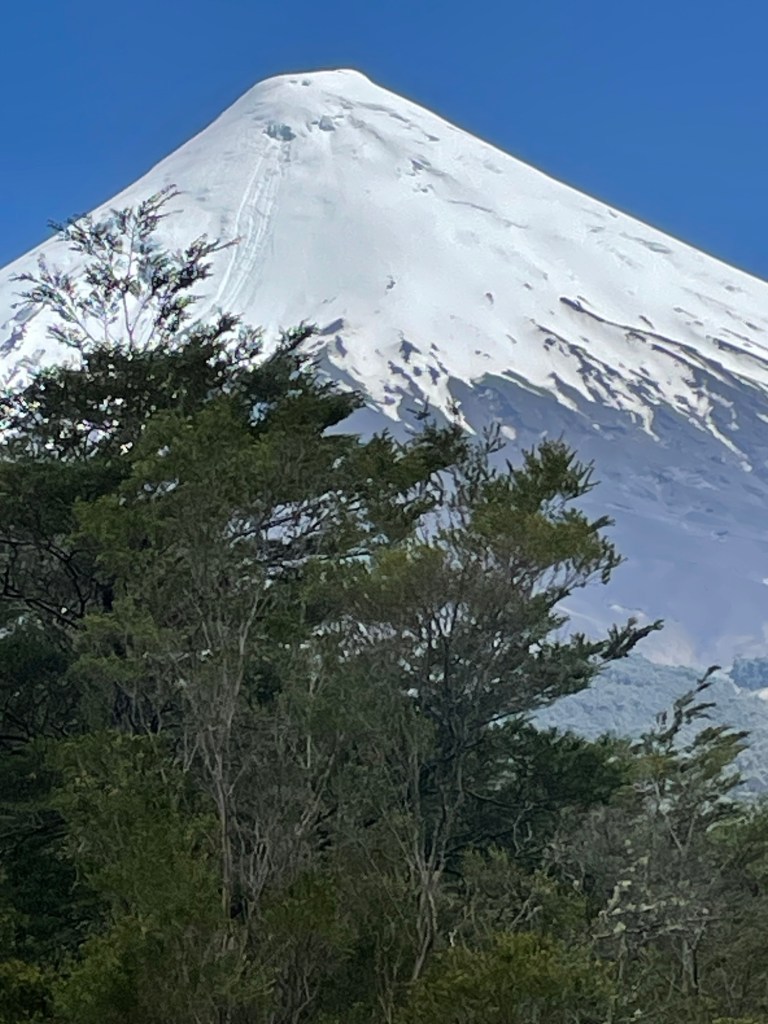
Volcán OsornoGreat weather conditions!Map showing lakes and volcanoes in this areaVolcán Calbuco with lots os Scotch Broom in foreground
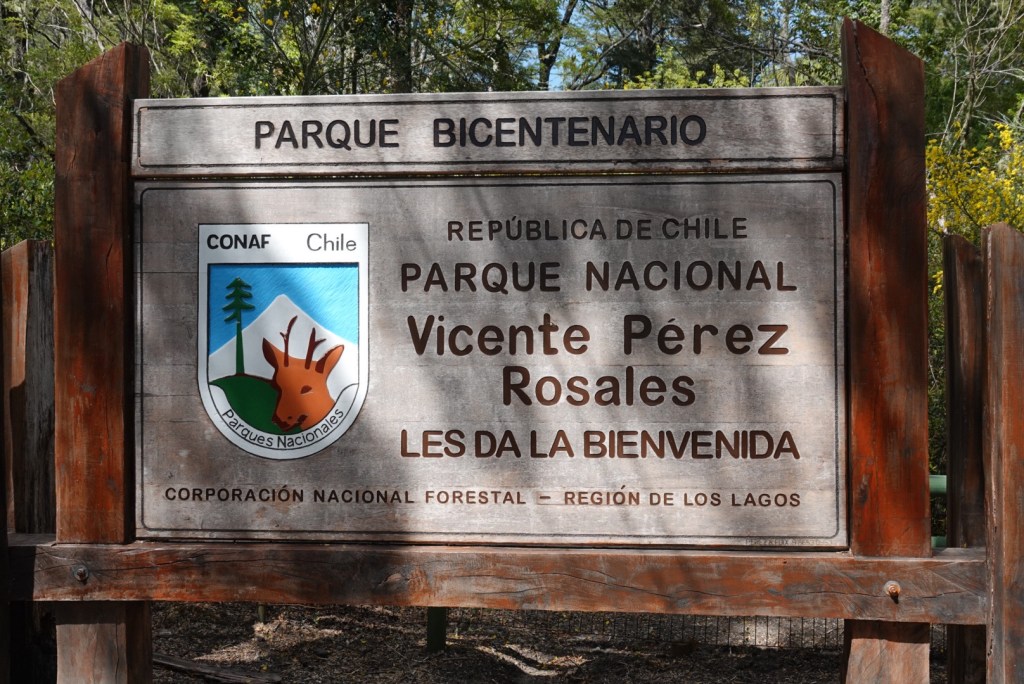
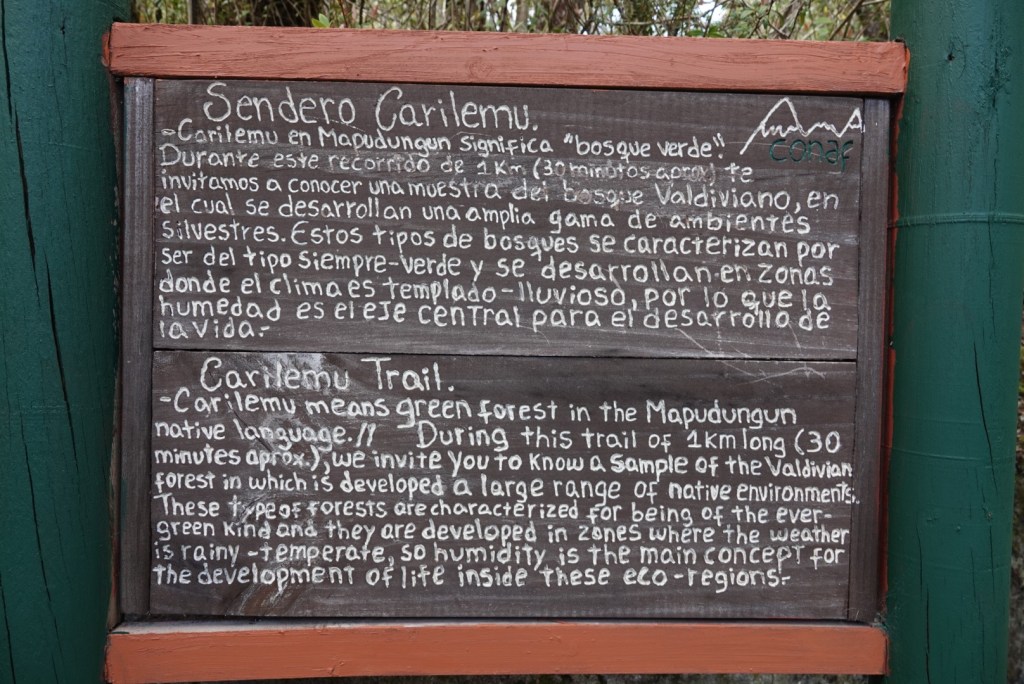
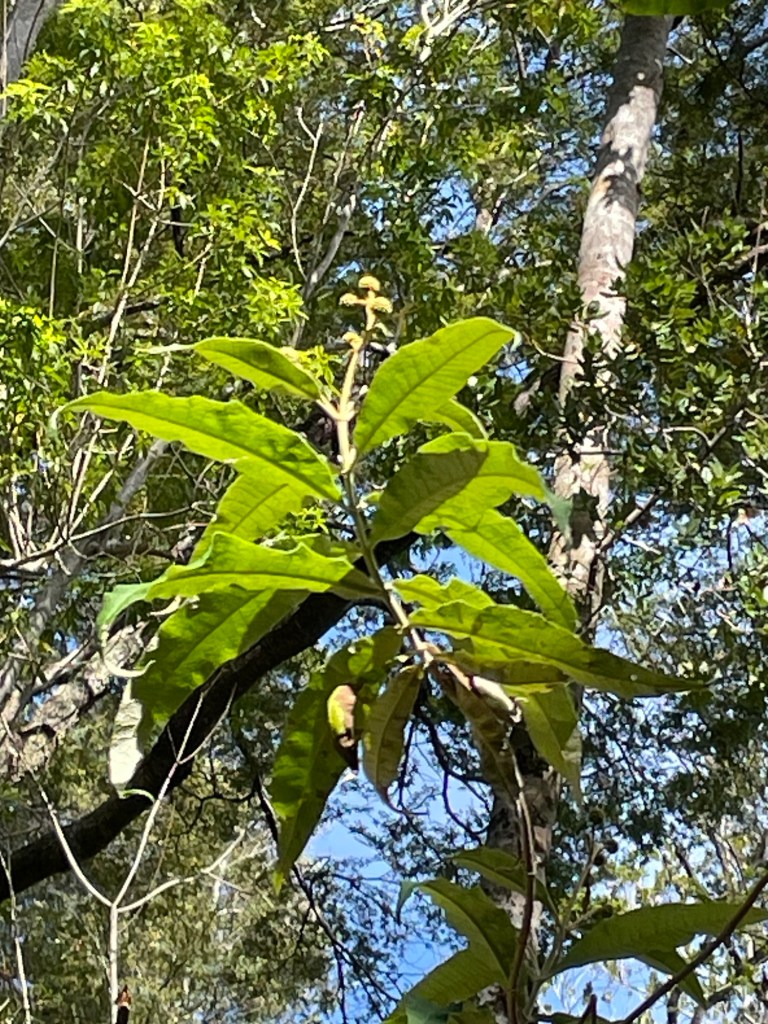
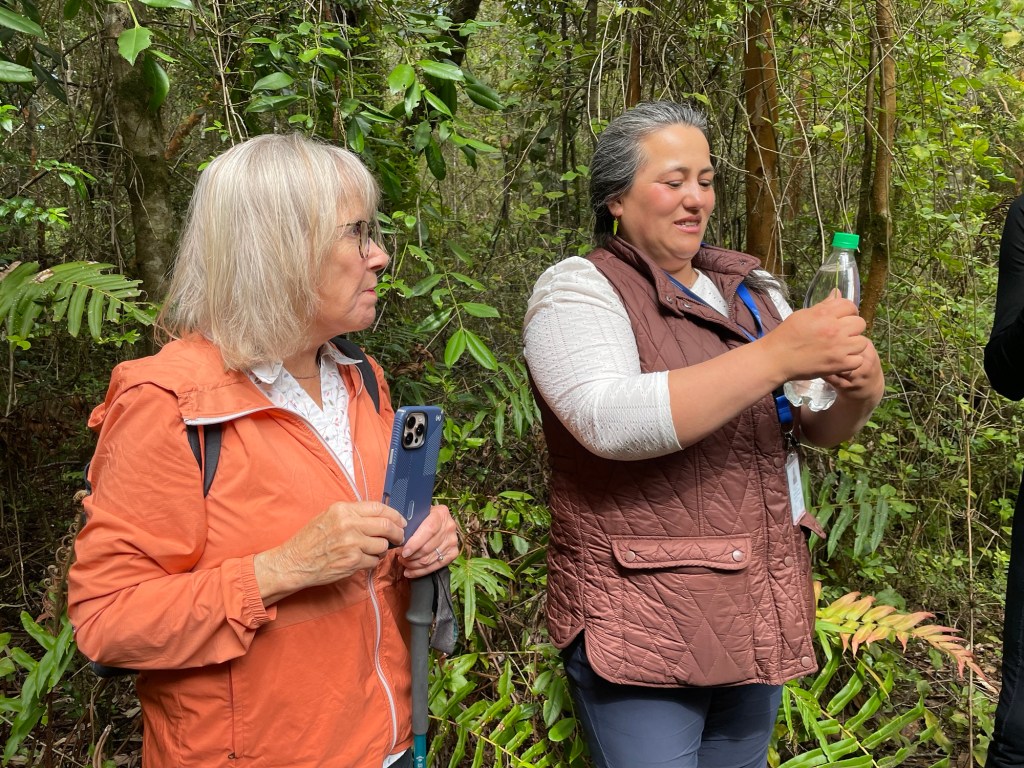
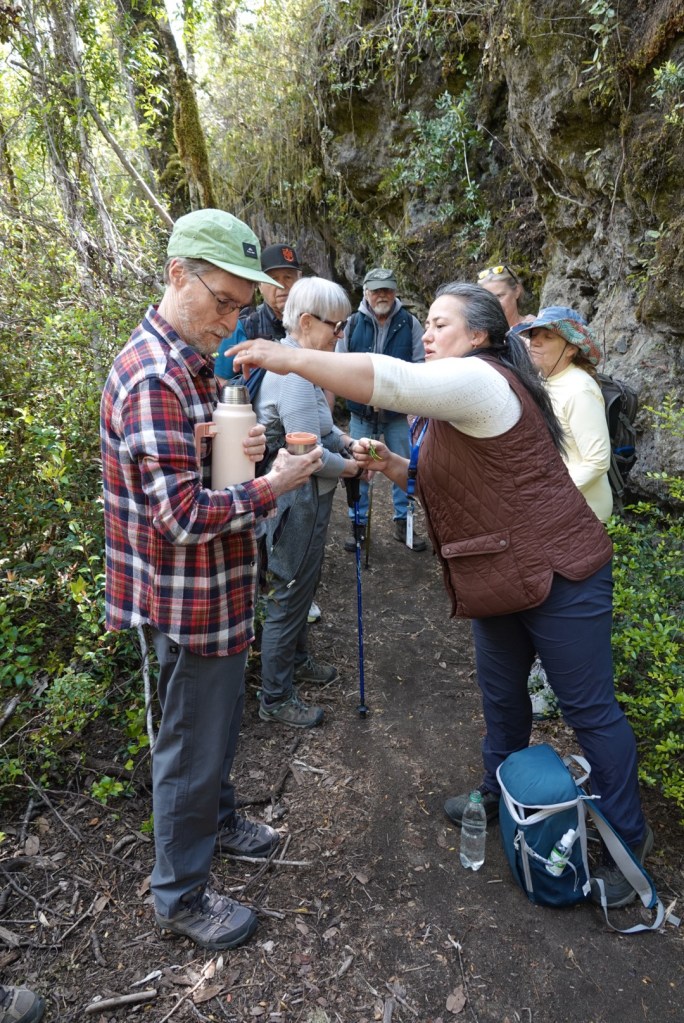
The short bus ride to the center of the national park, Vincent Perez Rosales, was filled with stories from Carolina, our local tour guide. She gave us ways to see and feel the forest from a Chilean point of view. We walked a quiet trail, Carolina picking leaves from certain plants.
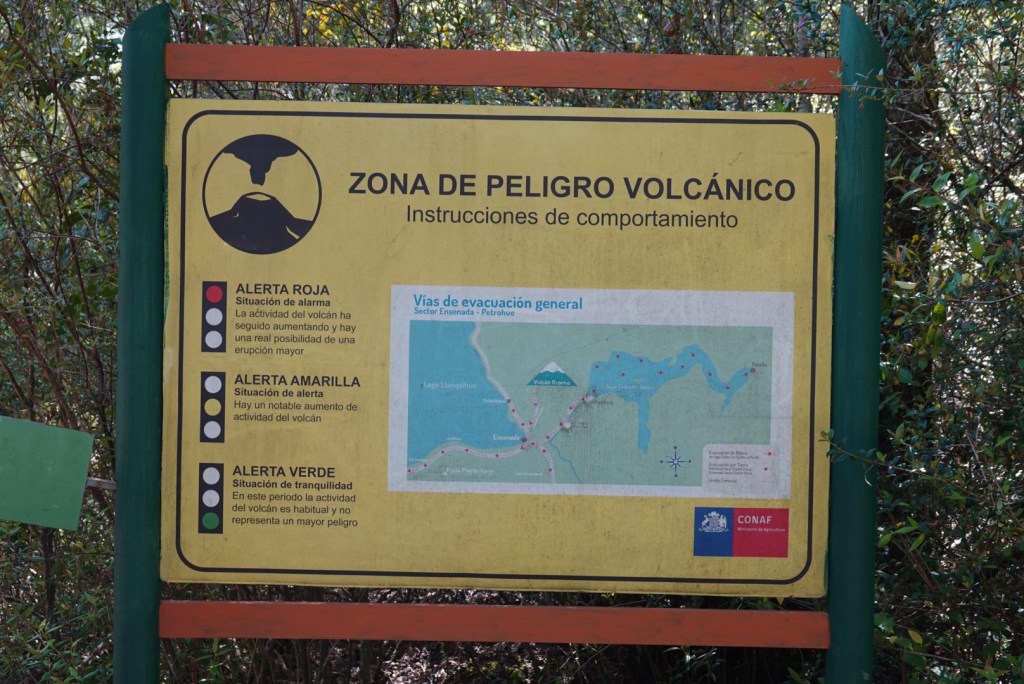
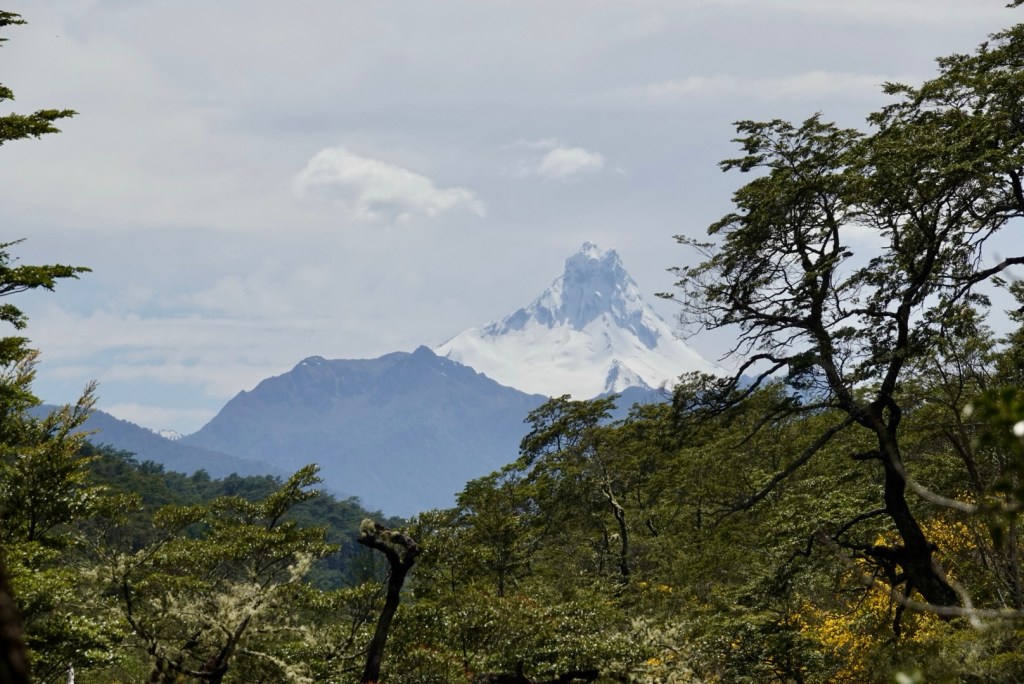
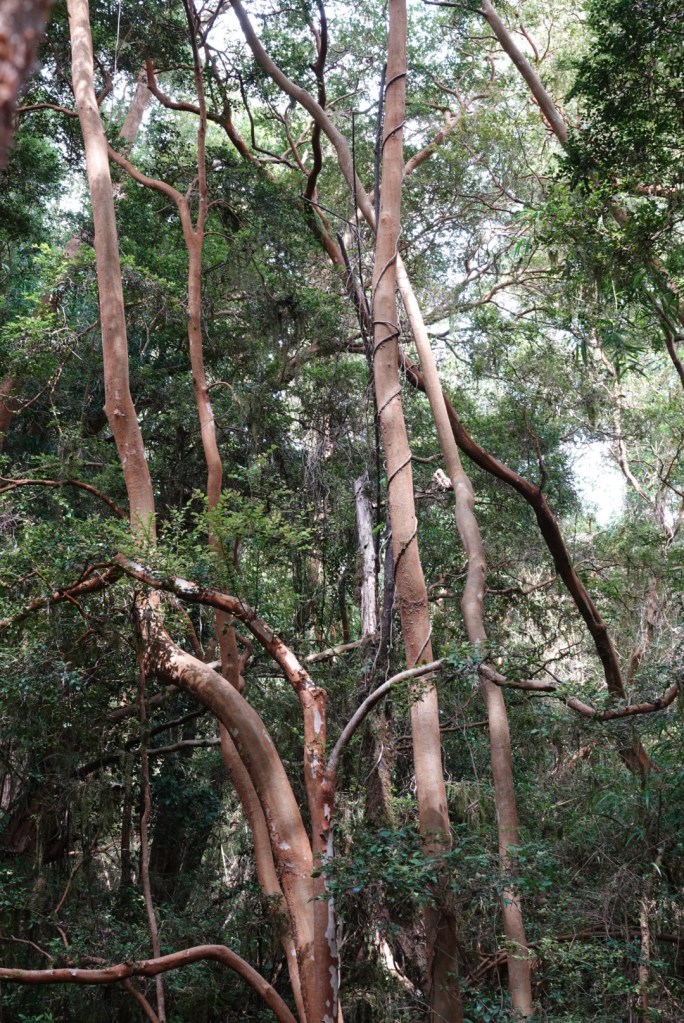
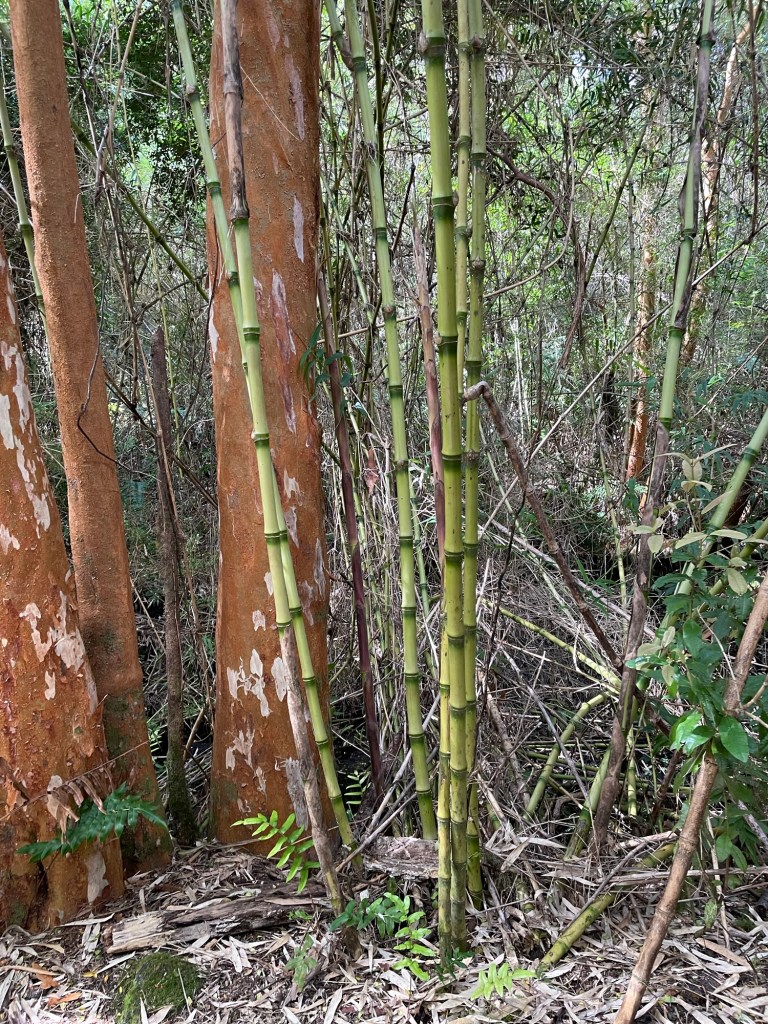
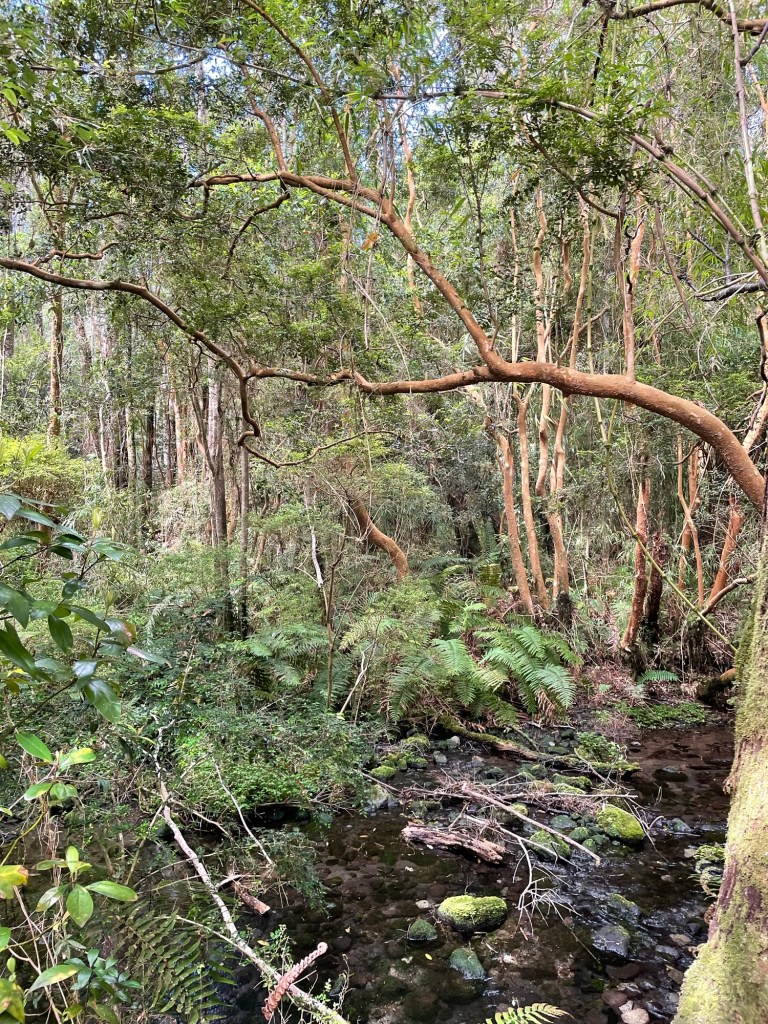
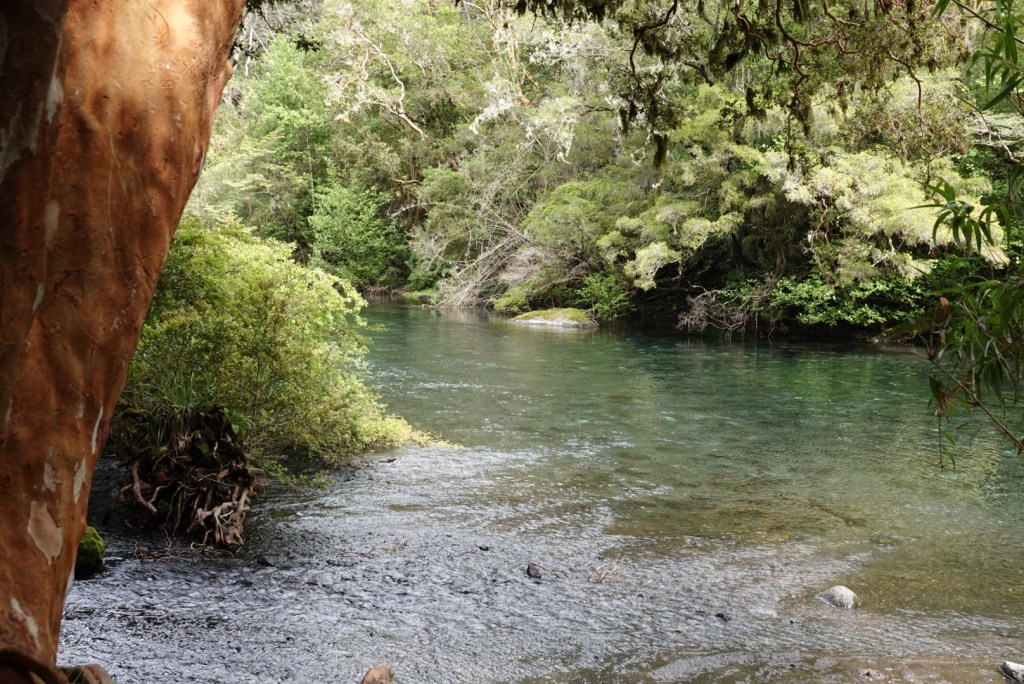
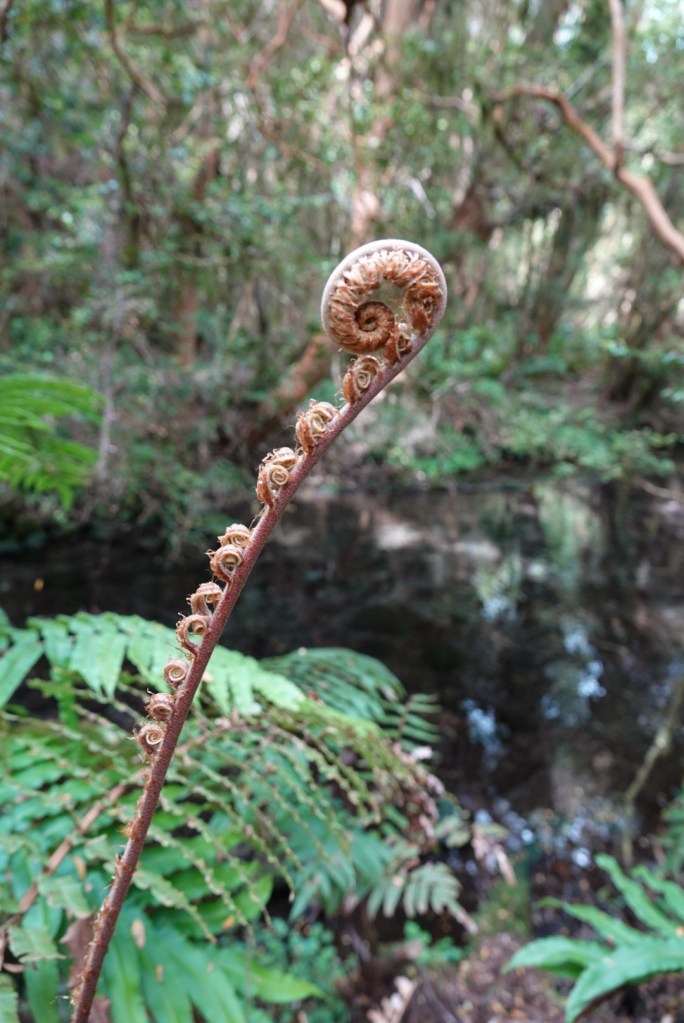
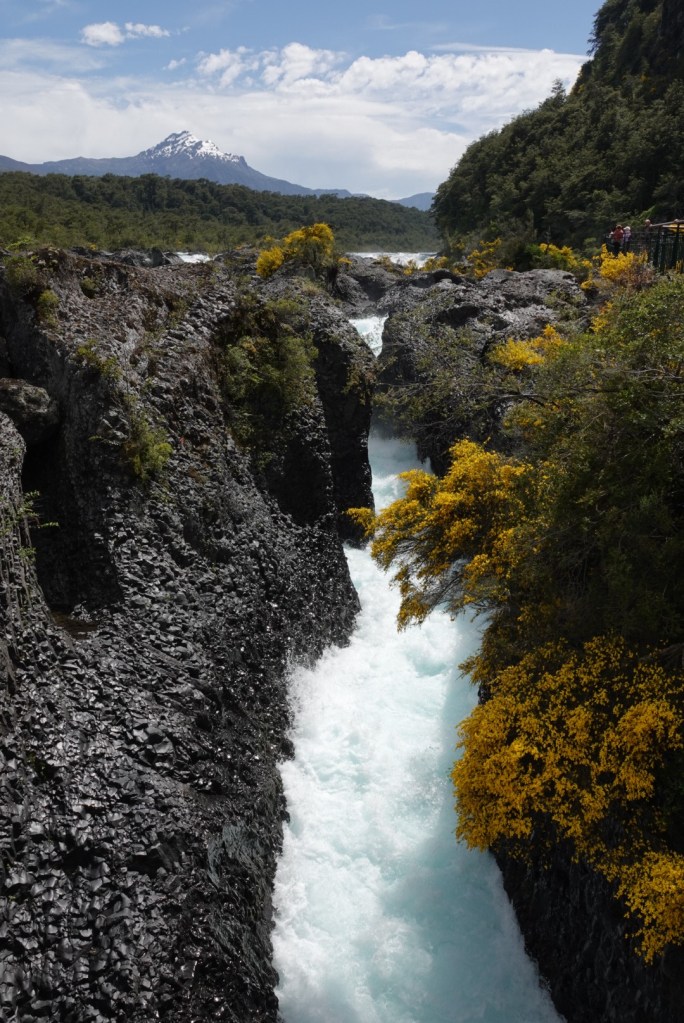
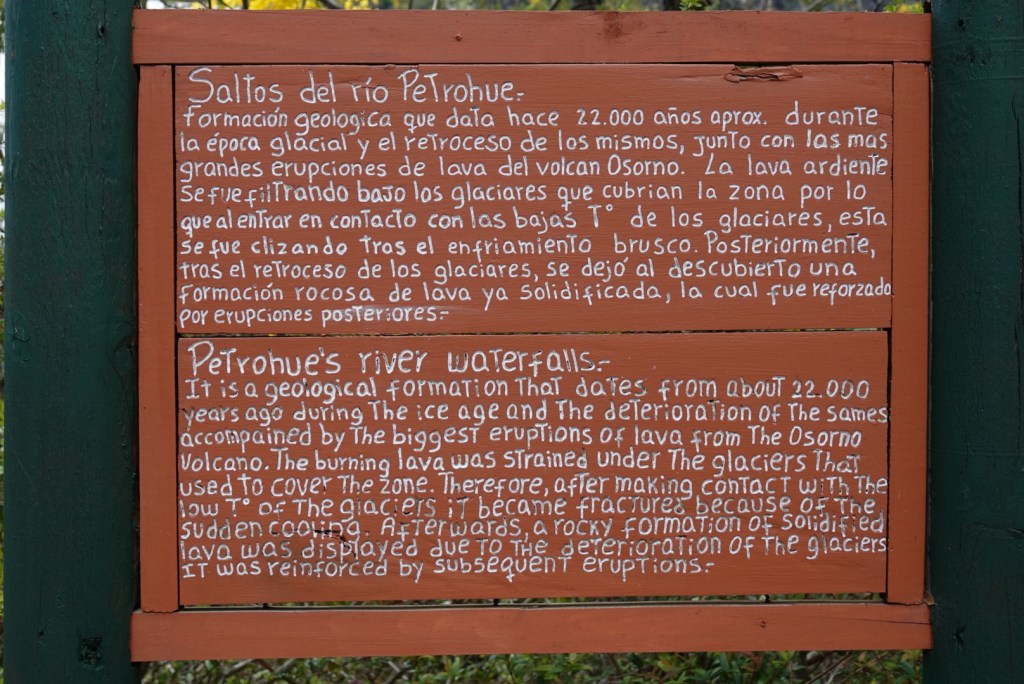
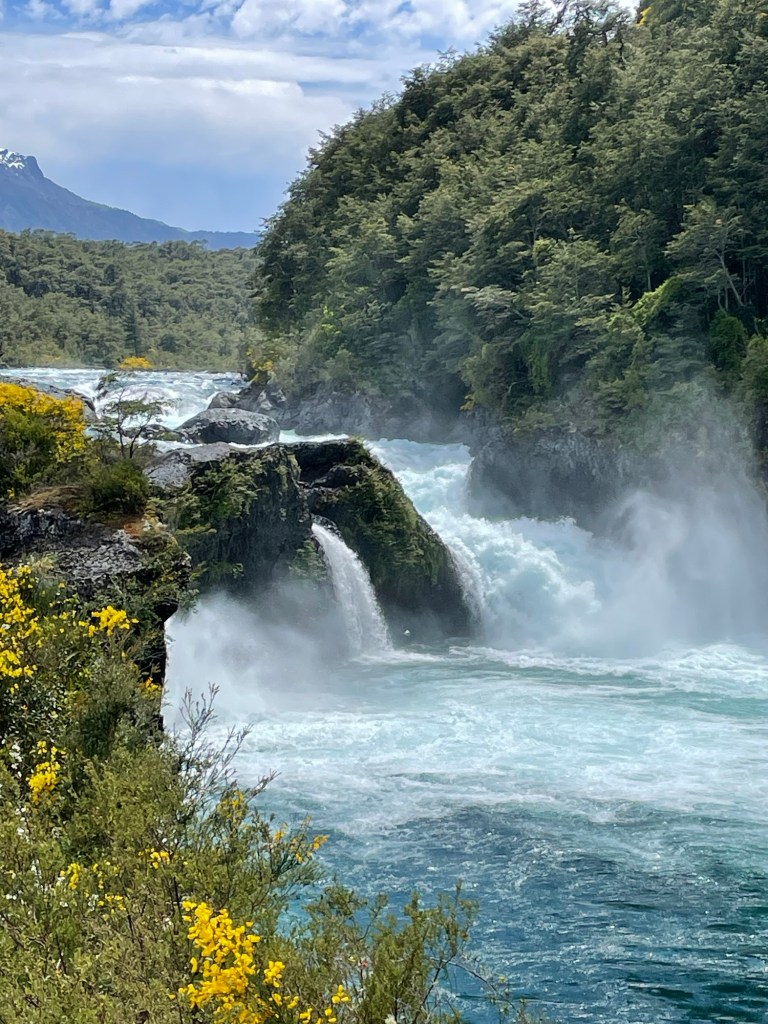
Beware of eruption warnings!Volcán Tronador, near the border with ArgentinaSome leaves that were steeped into the teaPam and local guide CarolinaTom helping Carolina make tea from fresh herbsTree trunks with interesting shapes, some with vines spiraling up.Bamboo and canelo treesDeep rain forestSmall river in rain forestCurled fern leavesWaterfall on Petrohué RiverAnother waterfall, same riverWater eroding basalt. Volcán Osorno, with evidence of rock or snow avalanches
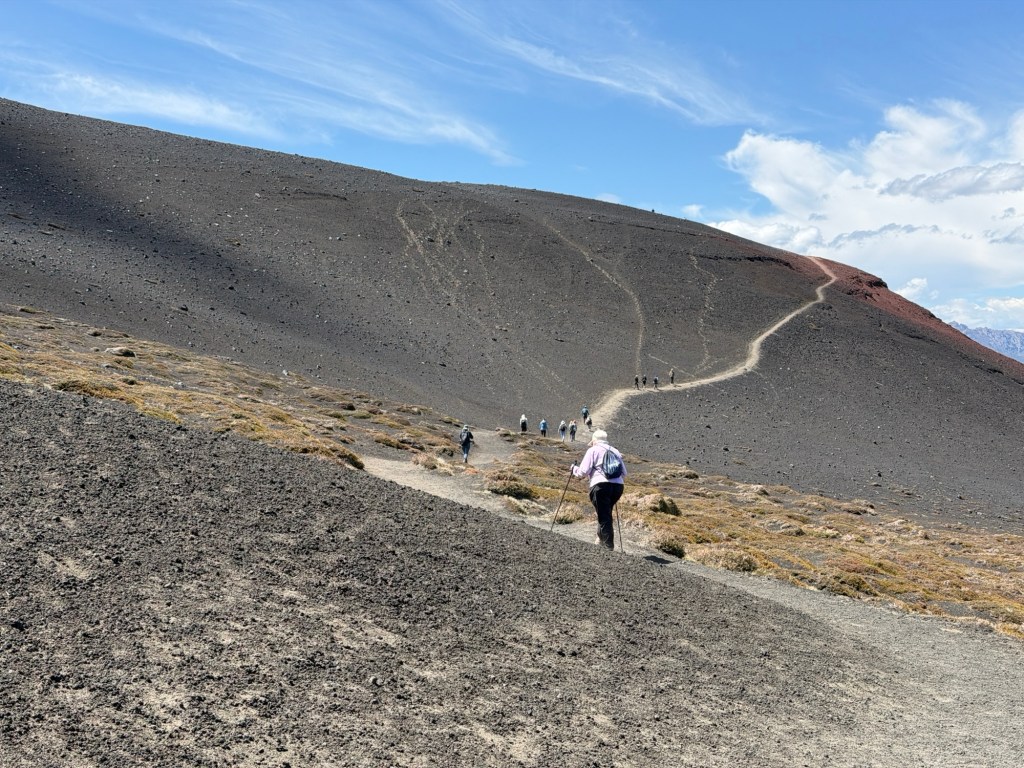
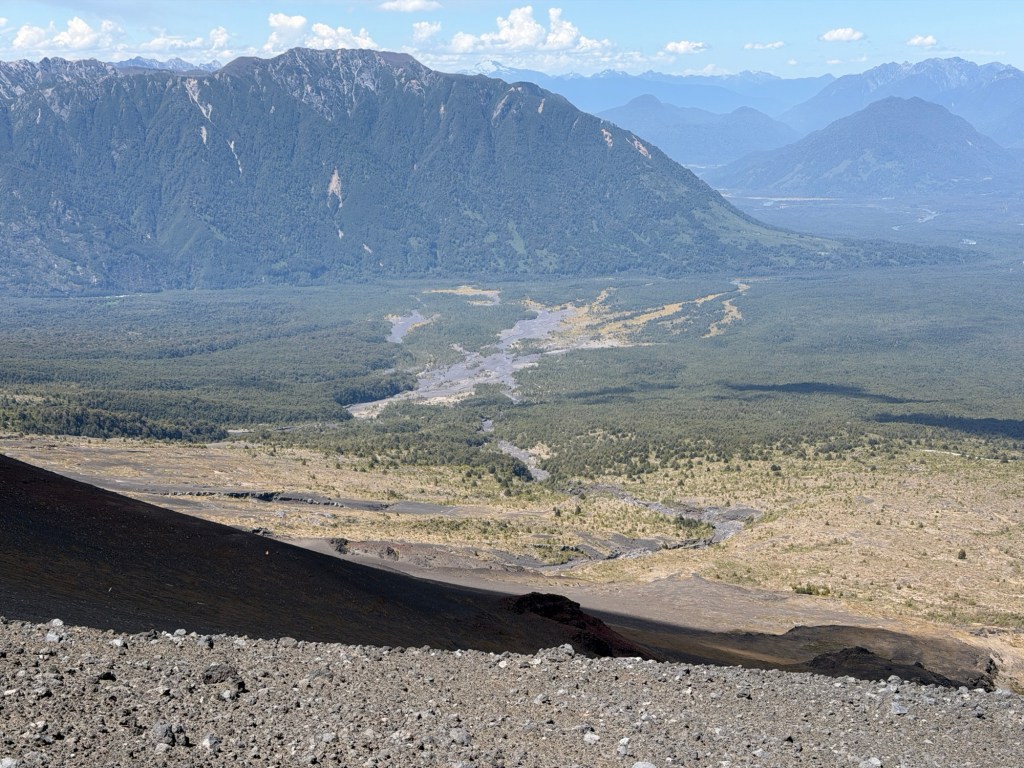
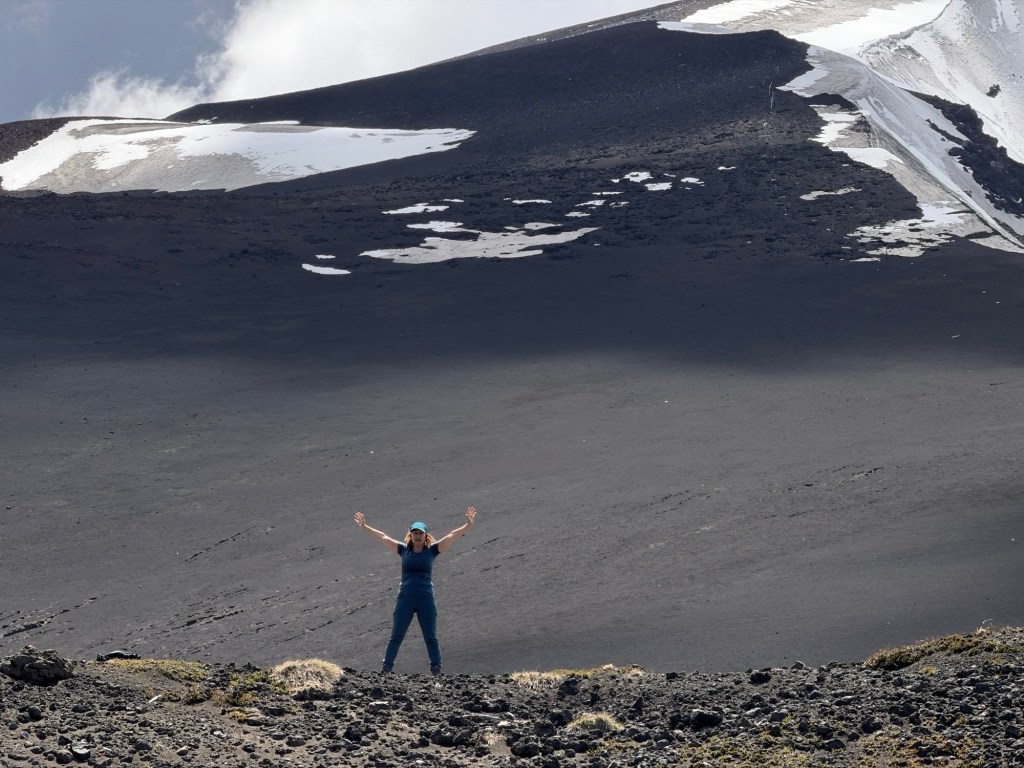
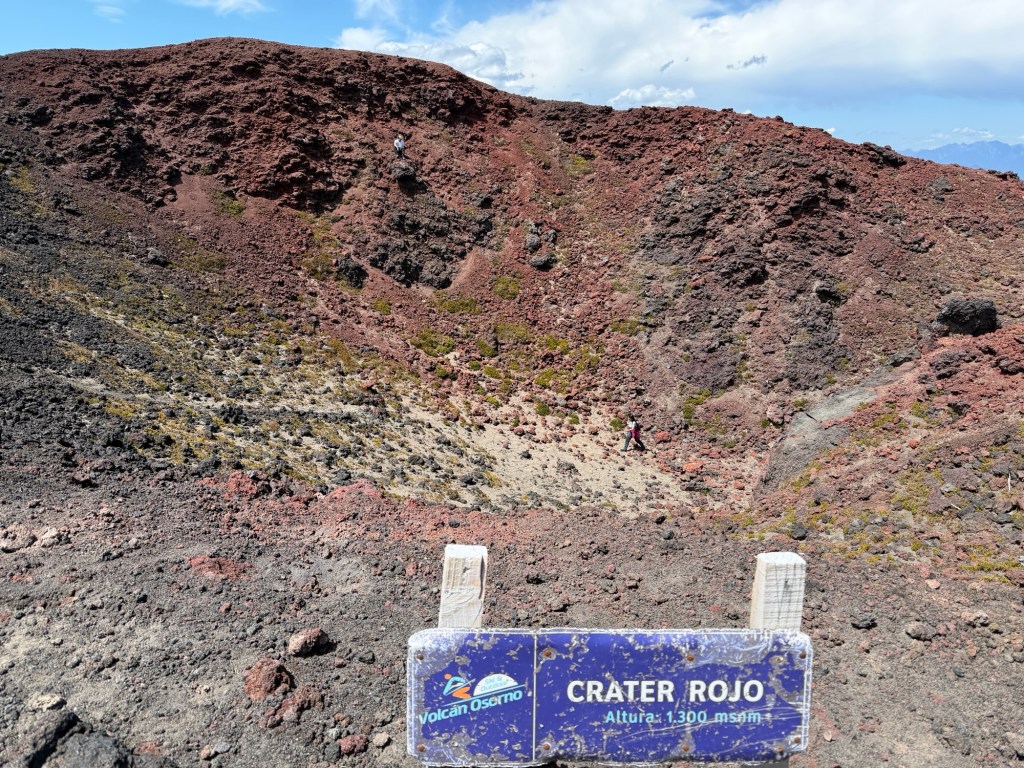
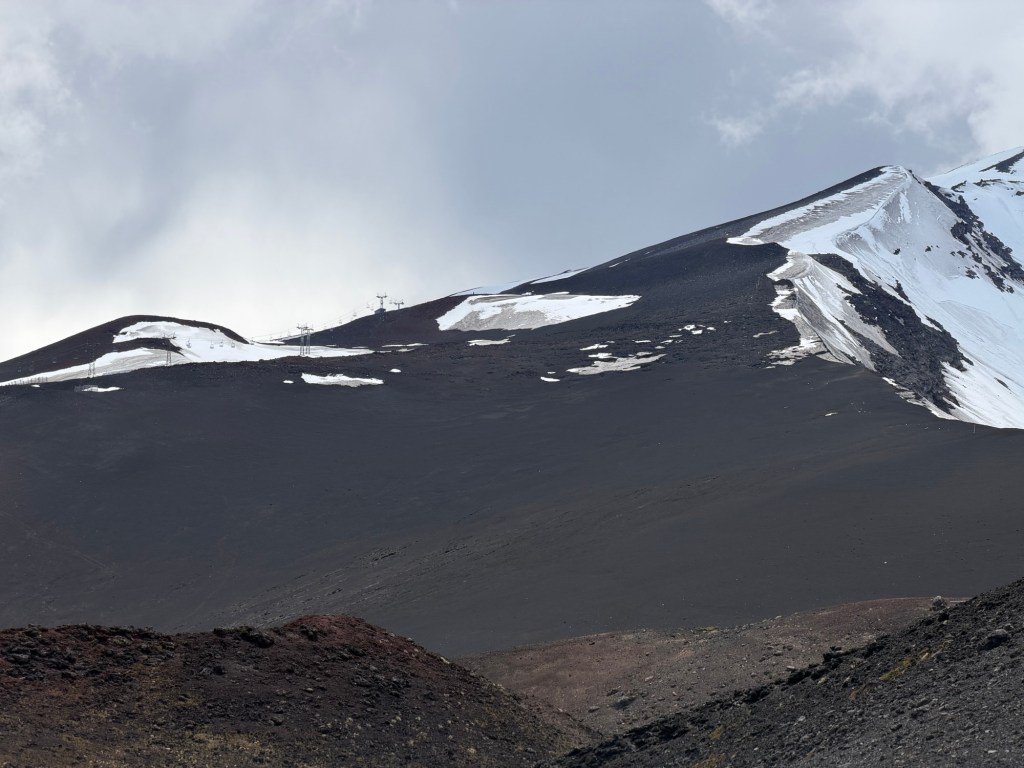
After the rainforest, most of our group took another bus to hike up to Crater Rojo, a two mile round trip and slightly steep hike.
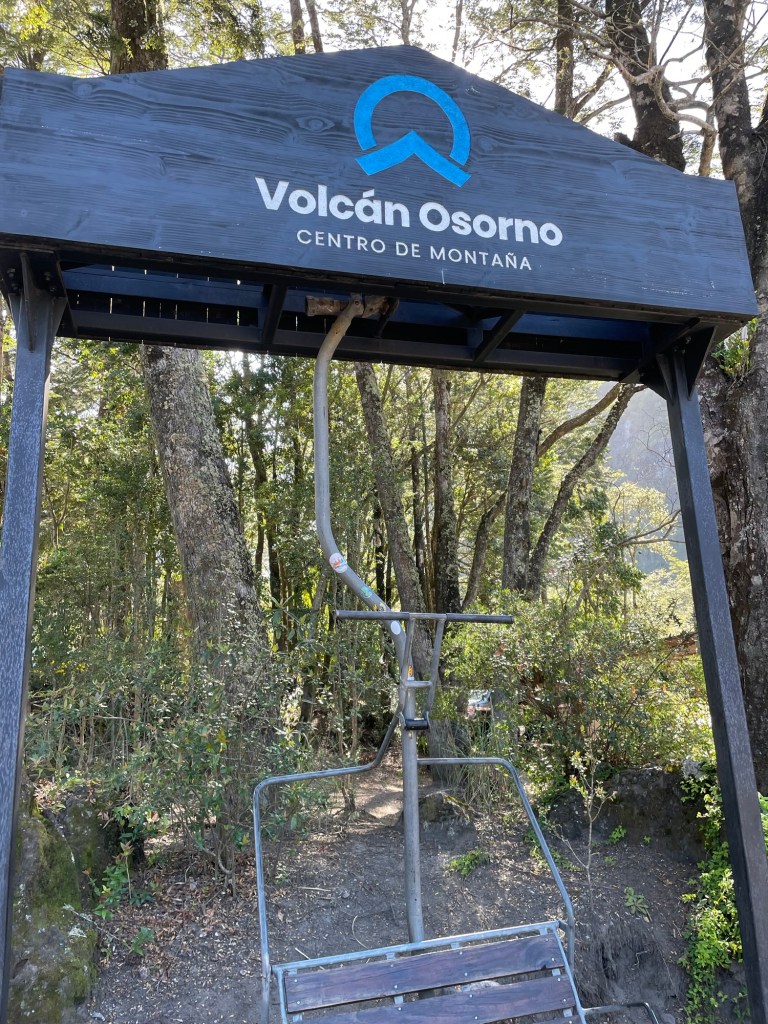
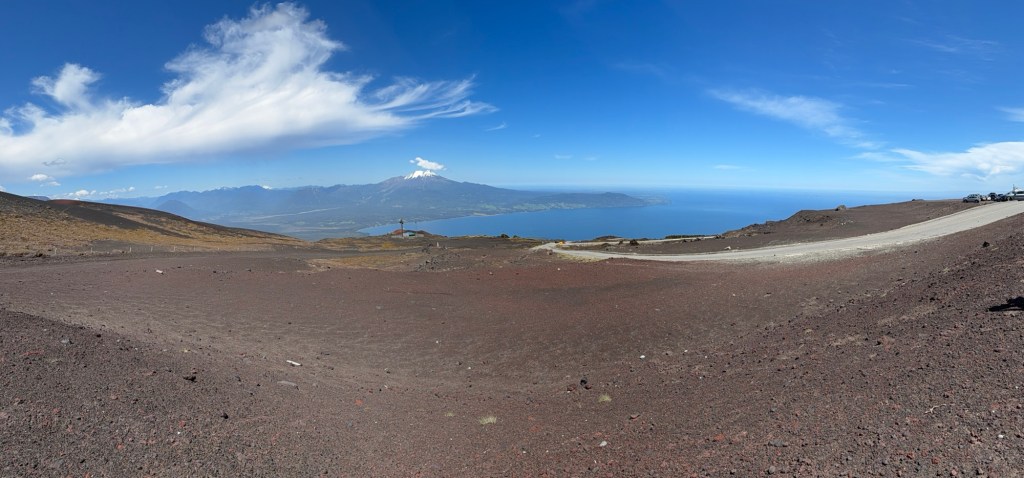
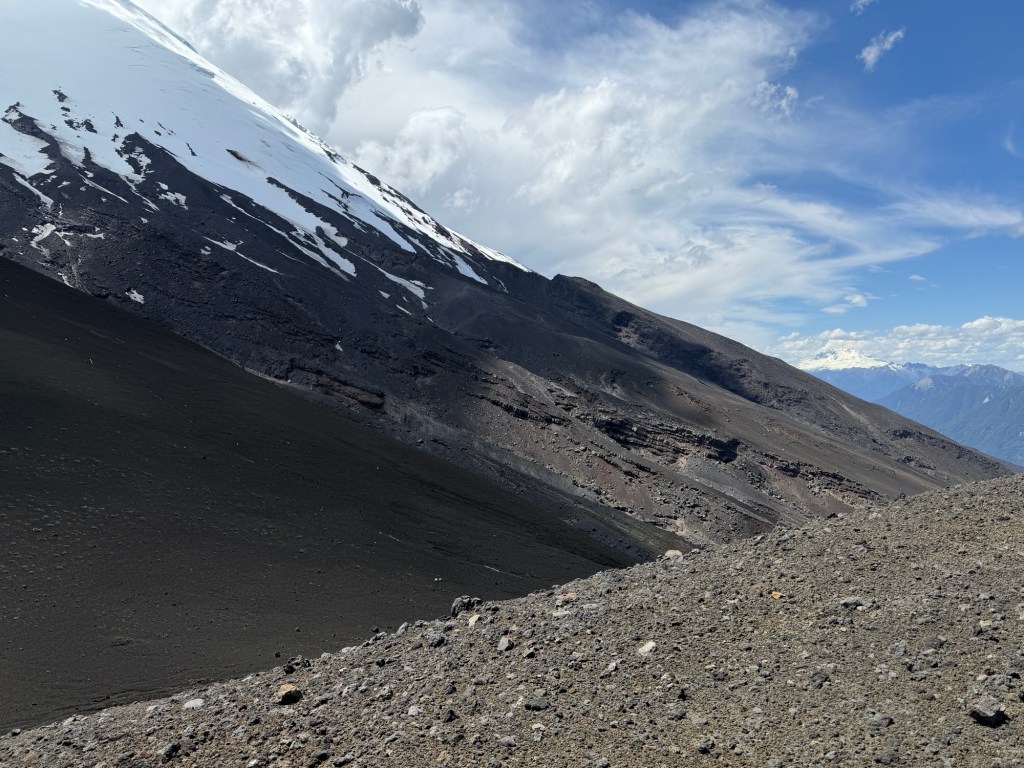
Nice trailView from near topMarta, on the other side of the craterOur destination Ski liftLava flows at a high angle on this stratovolcano
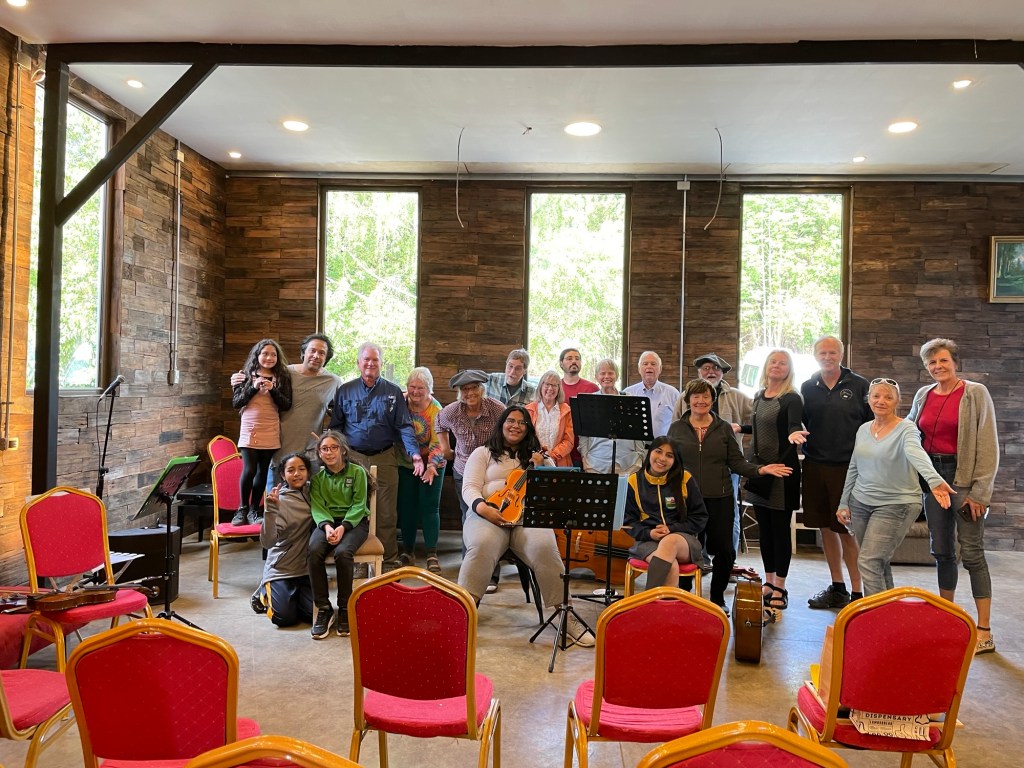
We had a few moments to change clothes before going to the music school sponsored by OAT’s foundation. Our group put money together to purchase strings for instruments and a few blank music books for the school.
Children from the school with our group.
After the concert at the music school, our group was split into two, seven in each half, each to visit a family and share a family dinner with them. Our hosts were Jacqueline and Roberto, in their fifties with two grown children (in college). They have been hosting OATs group for four years now, about one group a week. They were both charming and friendly. They showed us their back yard — all native plants, and gave us Pisco Sours before dinner. Then Jacqueline taught us how to make cheese empanadas. We each had to eat the one we created.
Dinner was a normal Chilean dinner for families; you would not find this in restaurants. A potato and squash stew with sausage slices on top. Delicious! Everyone talked about all subjects, answering questions, joking, like a happy family dinner.
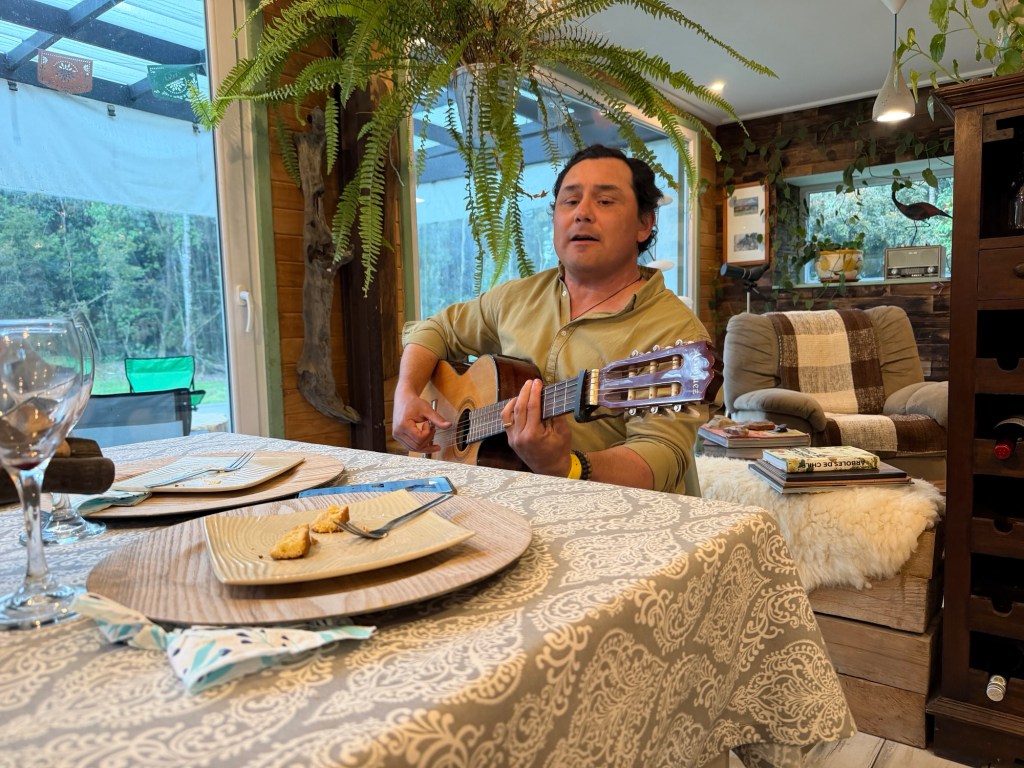
Jacqueline teaching us to make empanadasRoberto singing, mostly to Jacqueline
After dinner, Roberto got out his guitar, and they sang beautiful duets at the table. The love that passed between them, in their eyes, was strong. Later, Roberto started playing Cat Stevens! So we all sang along. So much fun. We got along so well that Brian gave Roberto his business card, in the hopes they visit us in Colorado sometime.
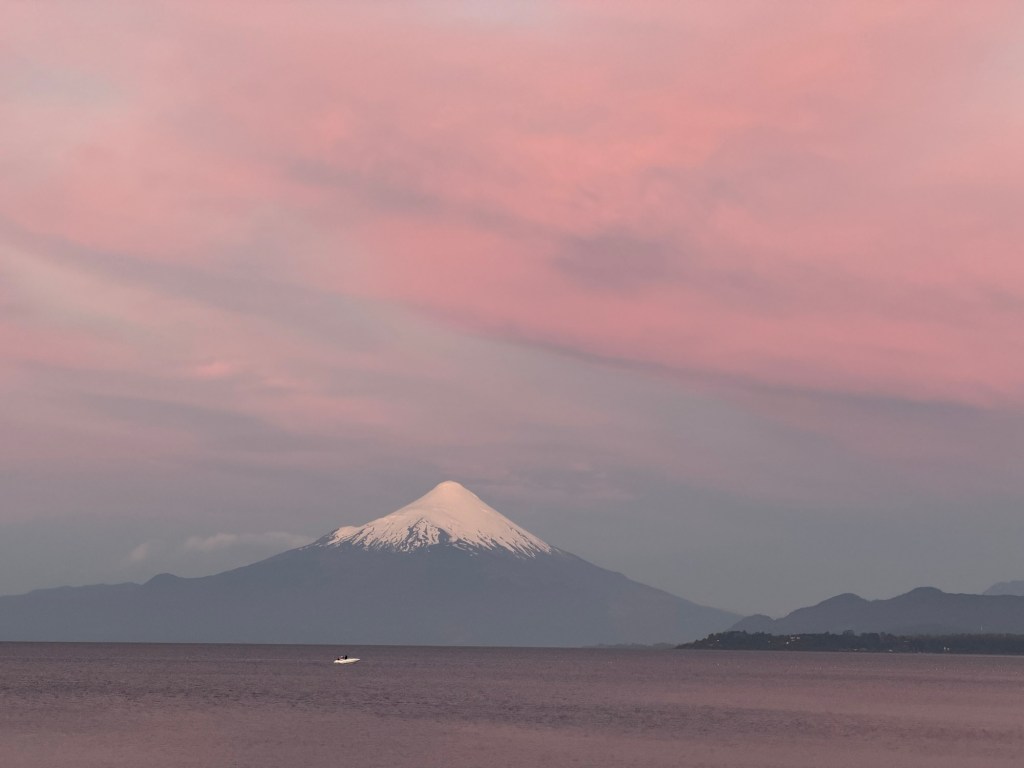
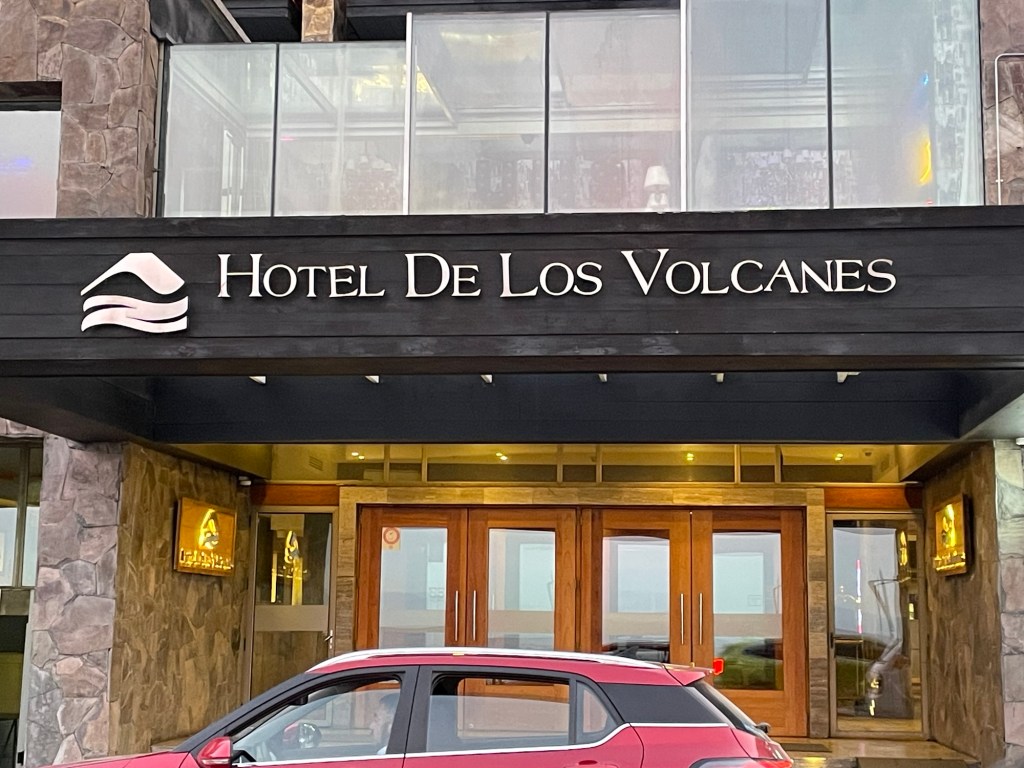
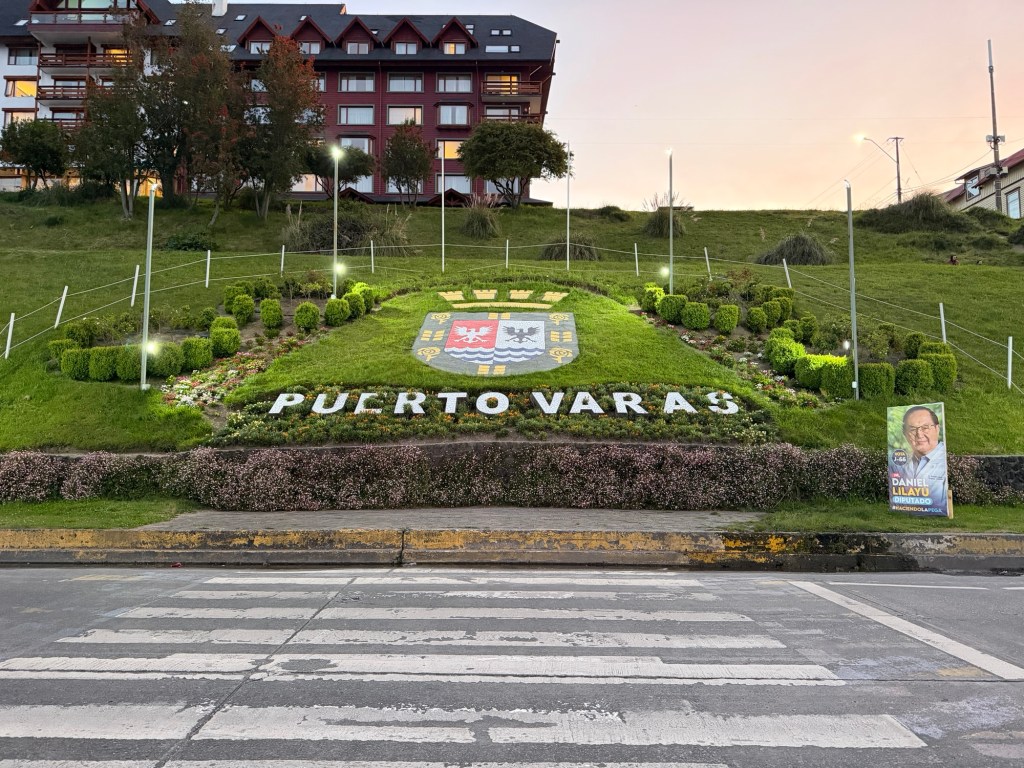
Volcán Osorno in the eveningGreat name for a hotel in Puerto Varas!The shield of the town
 Bunch of Geeks go Traveling