Category: 2025

From Argentina to Chile —Across the Andes

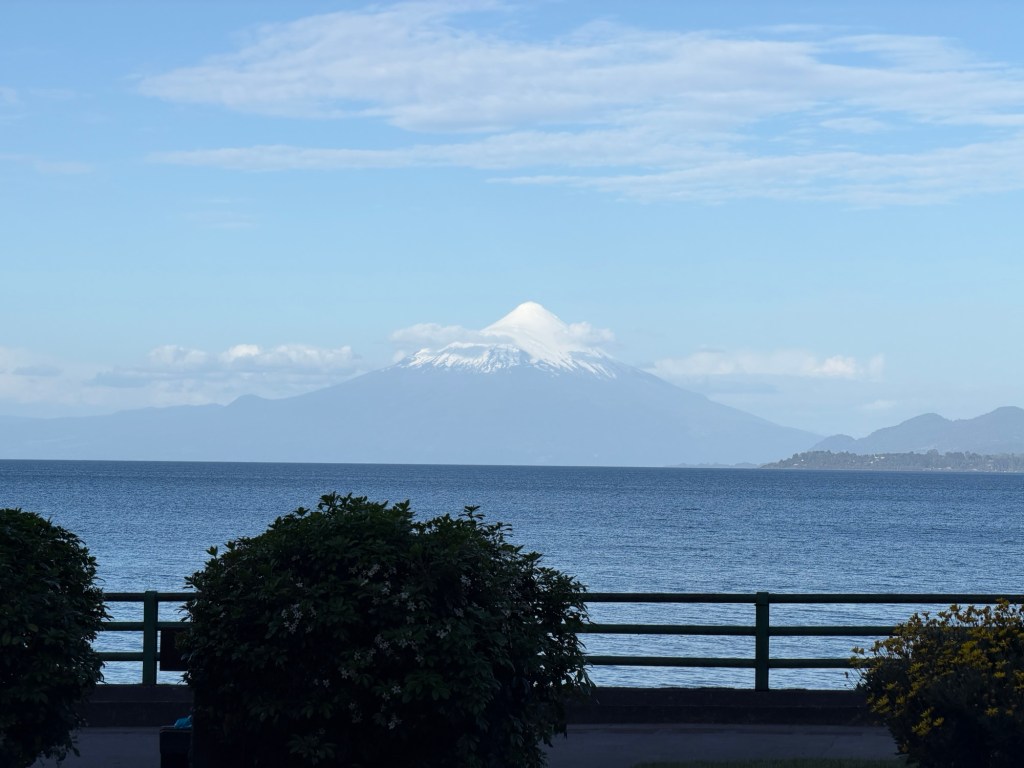
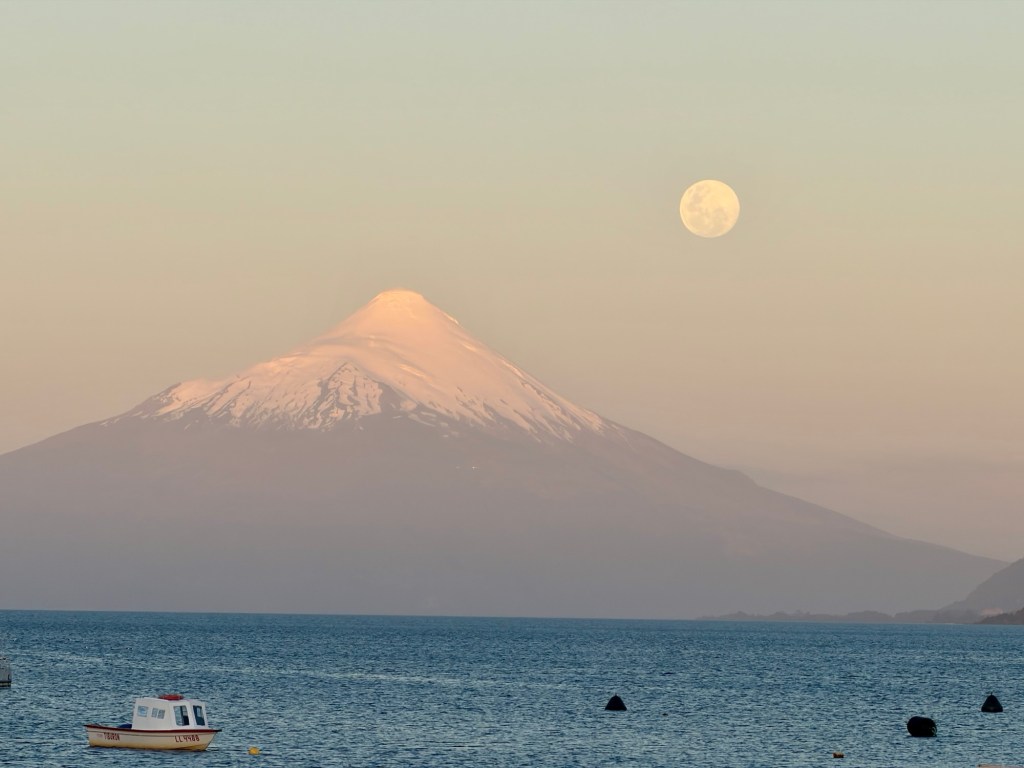
Annoyance averted, crossing the Andes, moonlit volcanoes

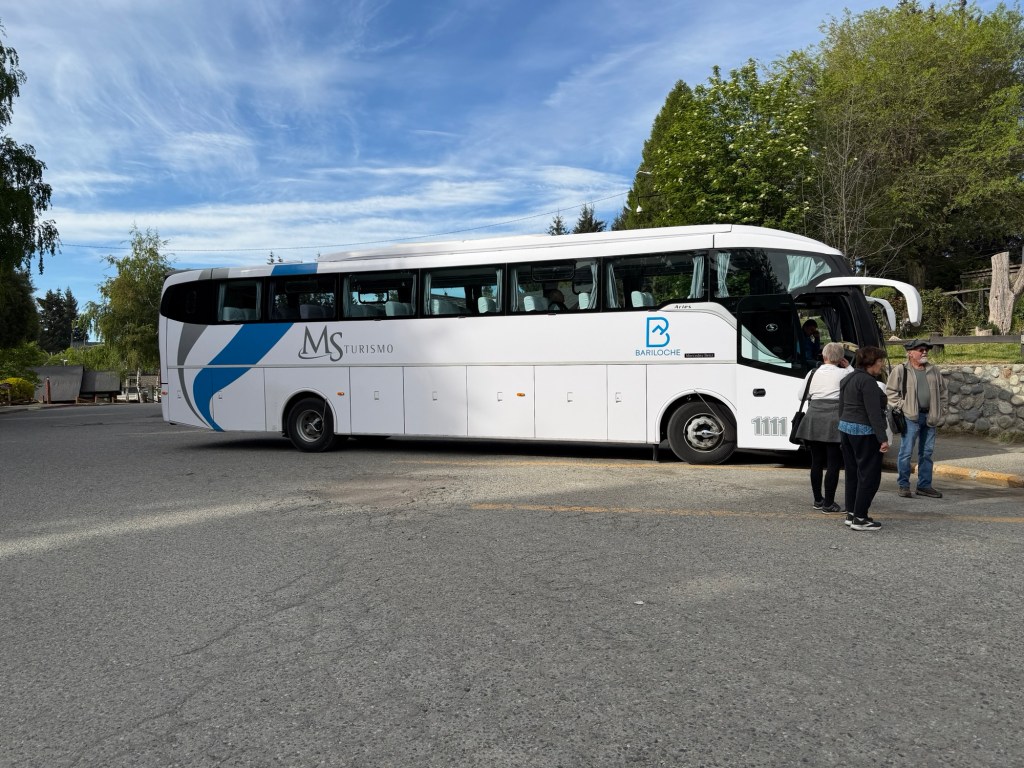
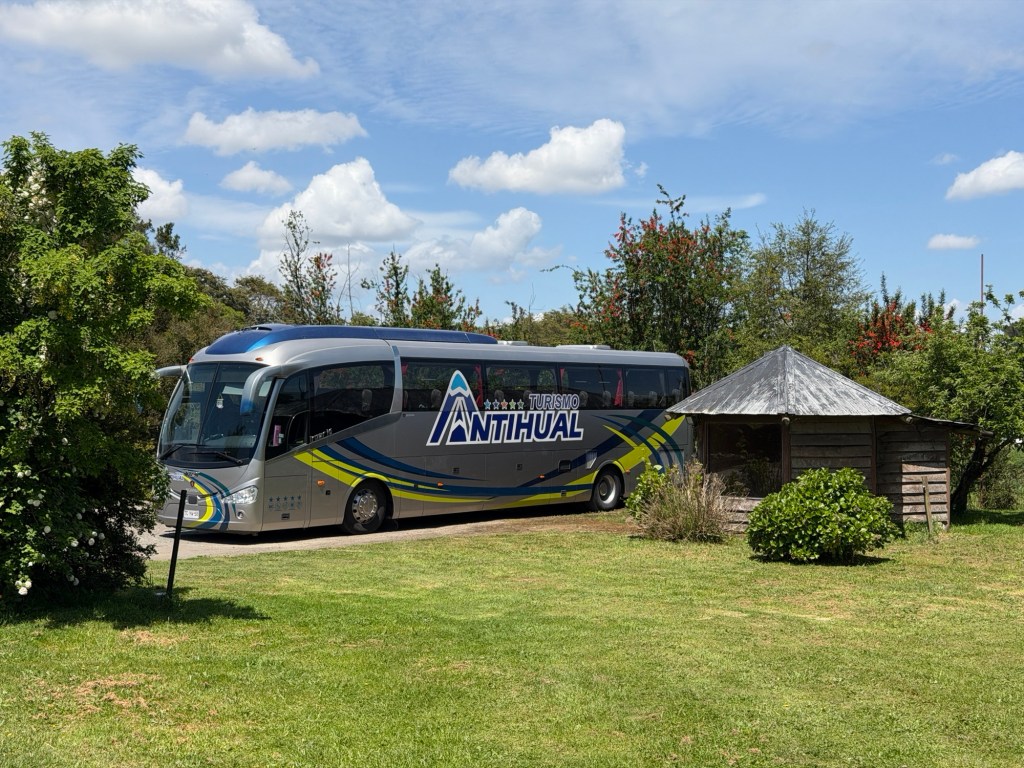
This morning, we were awakened by a frantic message from our trip leader Marta that a bridge was being worked on, and we had to get going earlier than planned to avoid an enormous detour. Skipping breakfast at the hotel, scampering into the bus bleary-eyed, watching the bus driver taking curves a bit quickly, we made it past the construction. Passing also involved Santi (local guide from a day ago) showing papers to police indicating that our weight of vehicle could cross before 8AM. Twice, I think. In any case, the OAT team marvelously helped our bus through the construction zone. Marta called a restaurant, before it was open, left a message, and got us deliciously fed in record time.
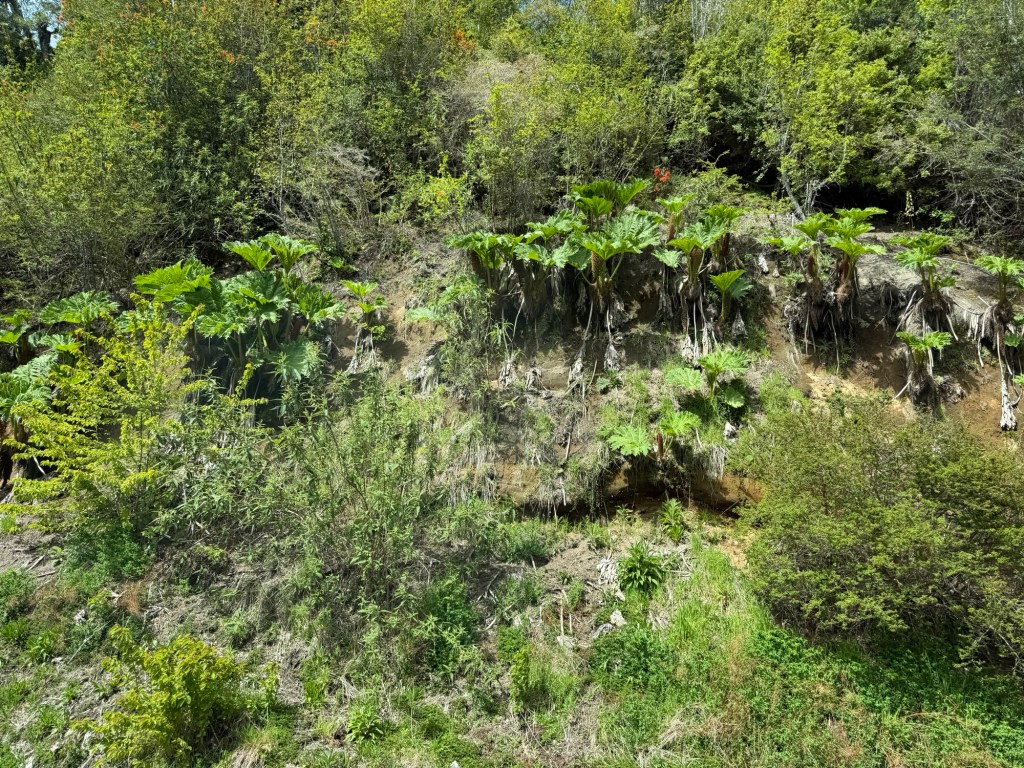
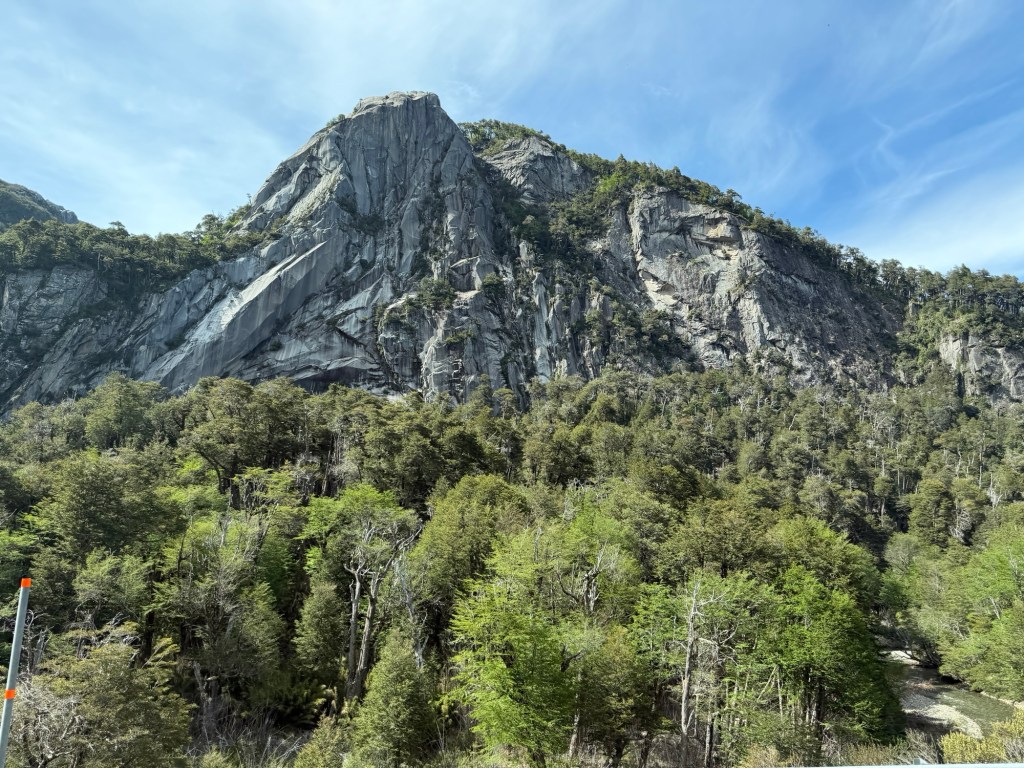
Santi told us to watch for the change in ecosystems as we climbed into the Andes. As we drove west, the number of trees increased dramatically due to larger precipitation. Along this pass, paralleling a railway that Teddy Roosevelt took around the turn of the last century, the scenery was incredible.

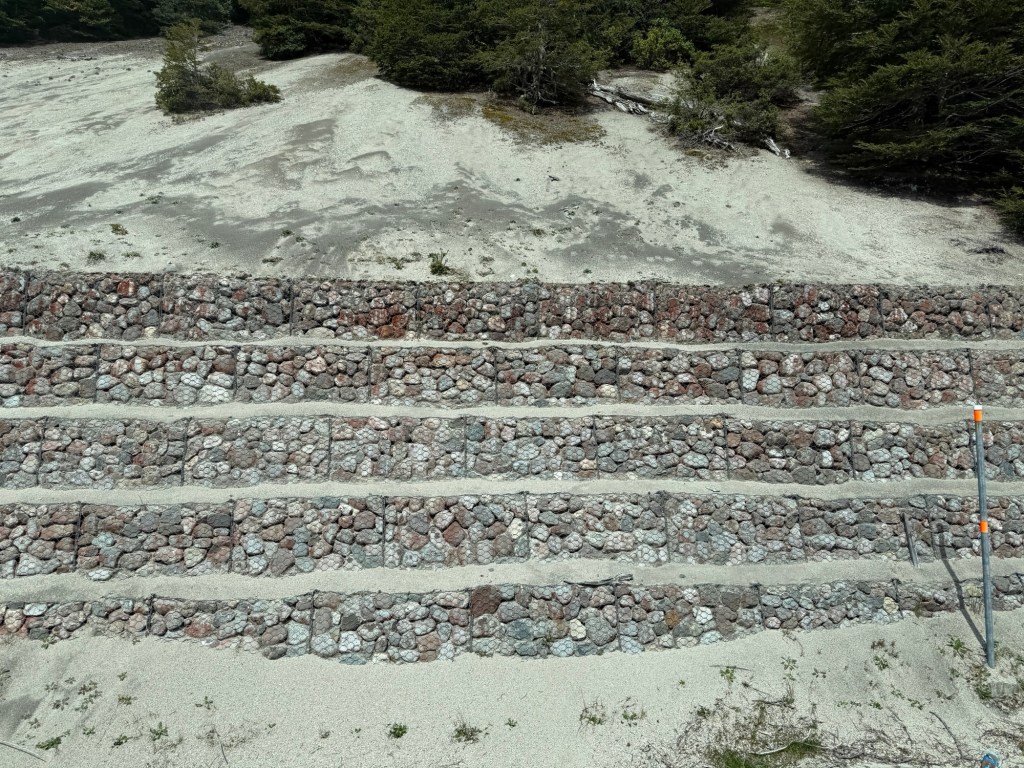
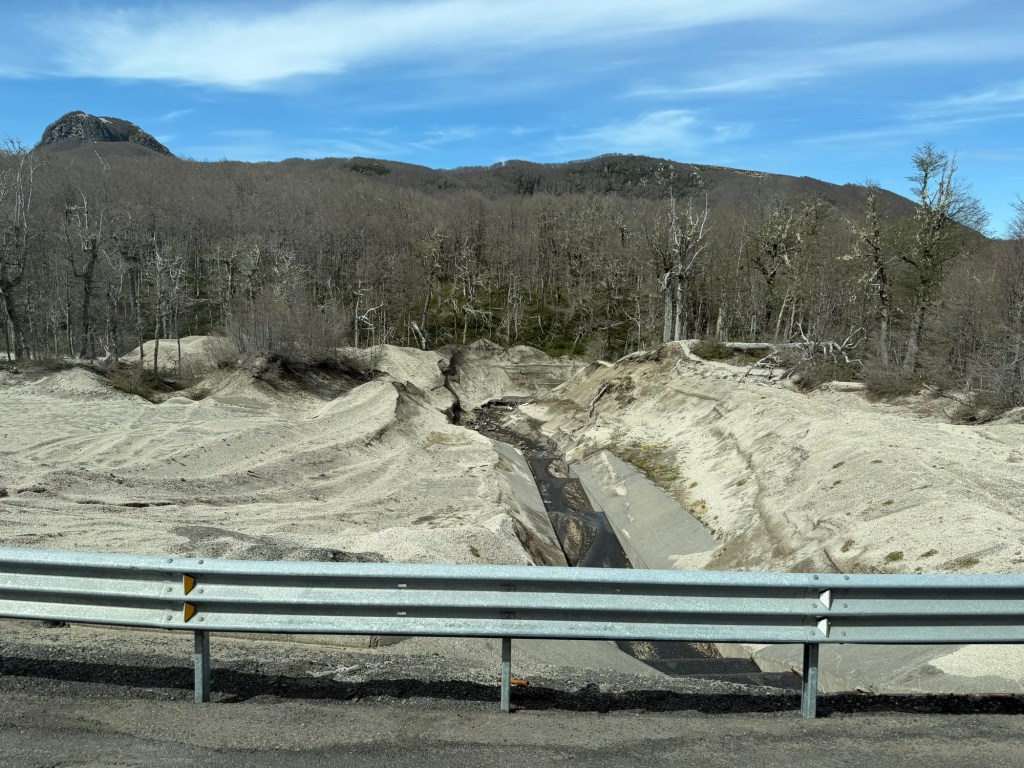
We passed an area of dead trees and learned from Santi about a 2011 volcanic eruption that coated Bariloche, the town we spent a few days in, with ash. Mostly pebble-sized pumice and smaller ash, but the photos were impressive. One showed our local guide sweeping the pumice behind a bush (not under a rug) in his backyard.
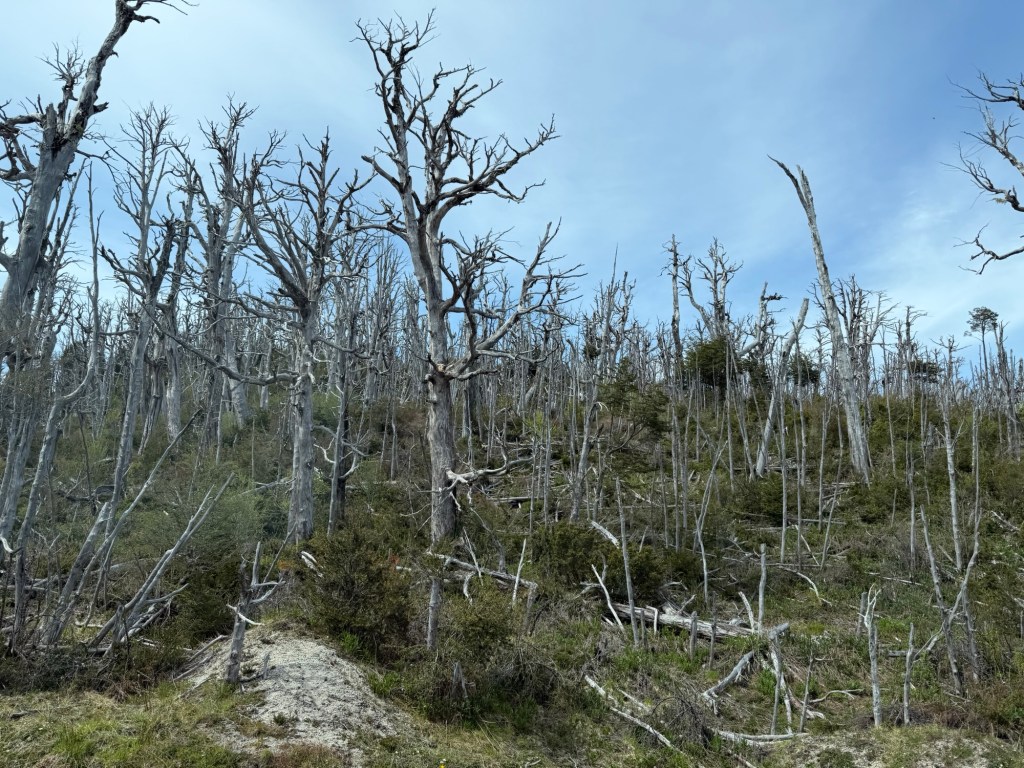
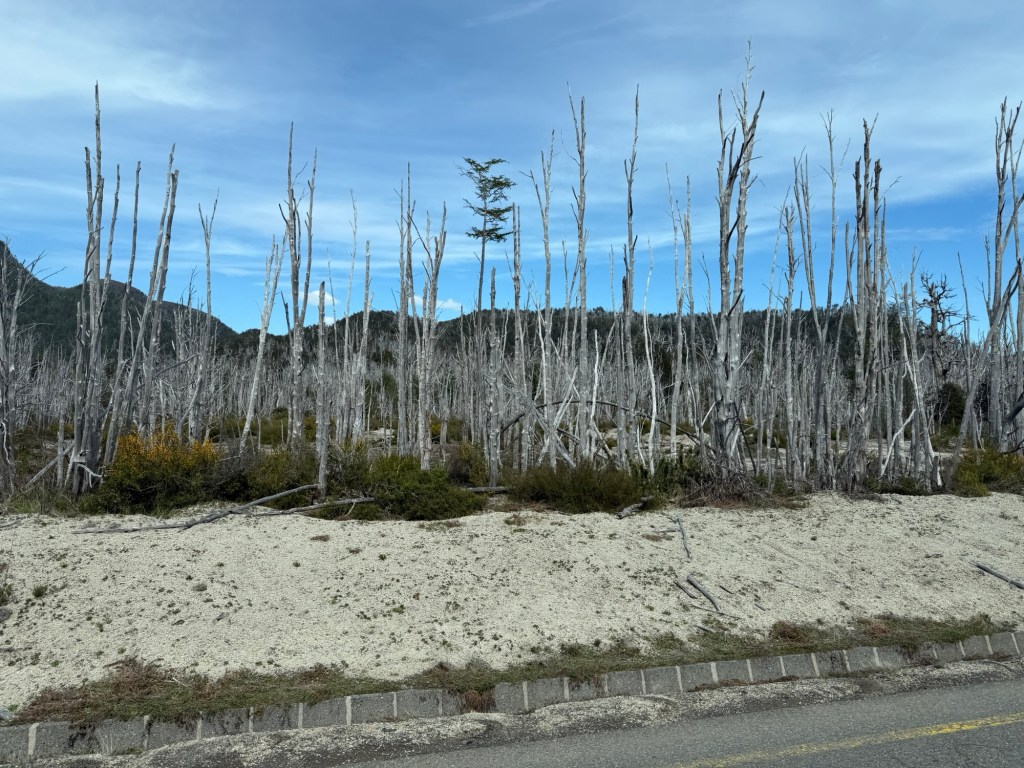
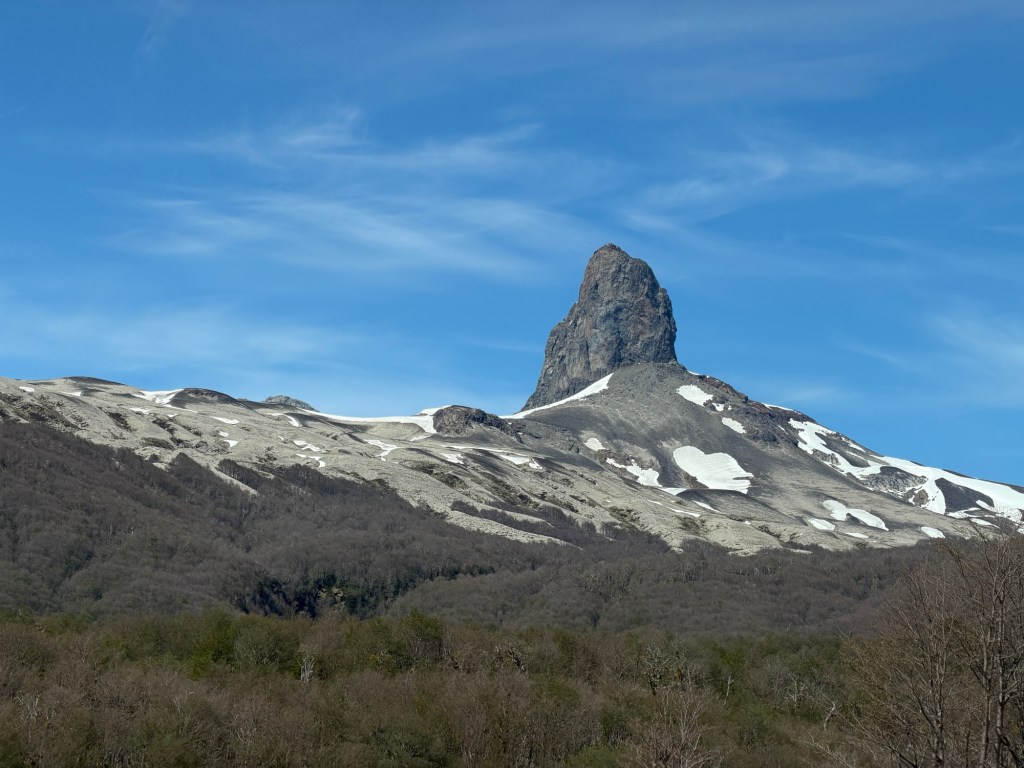
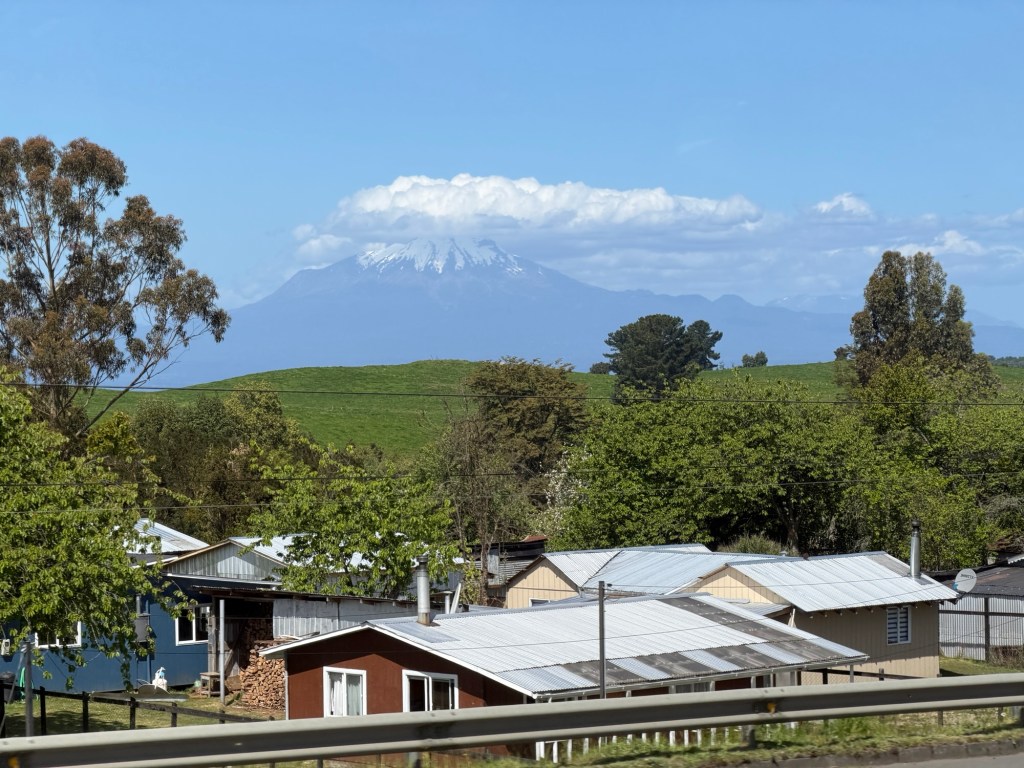
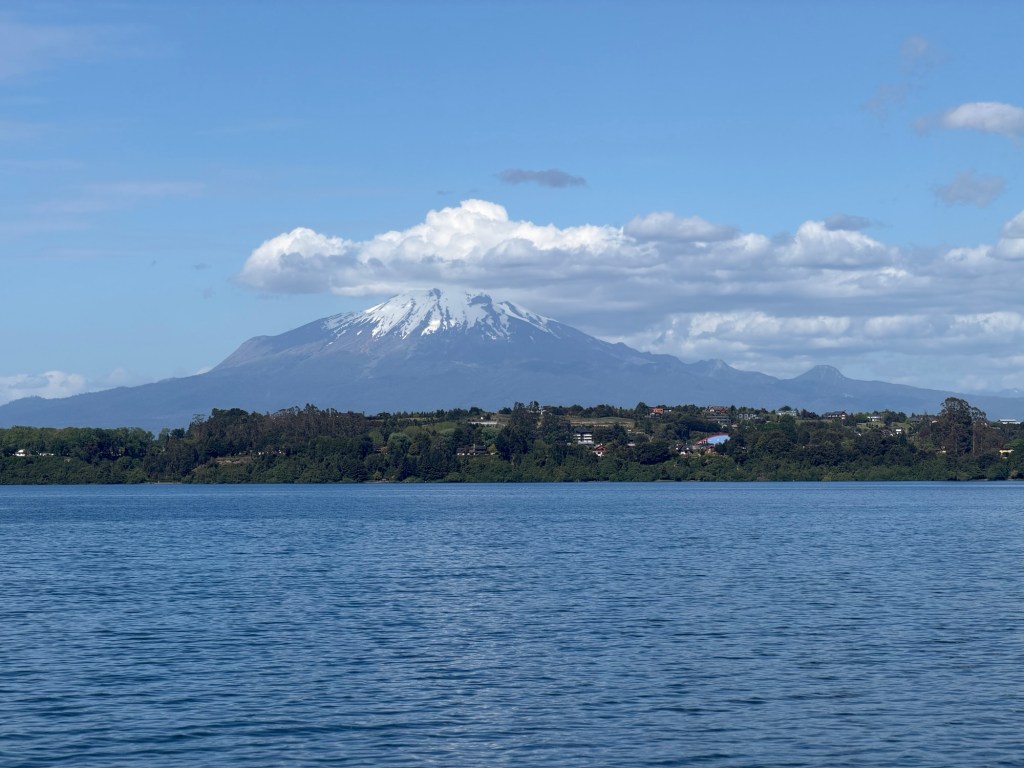
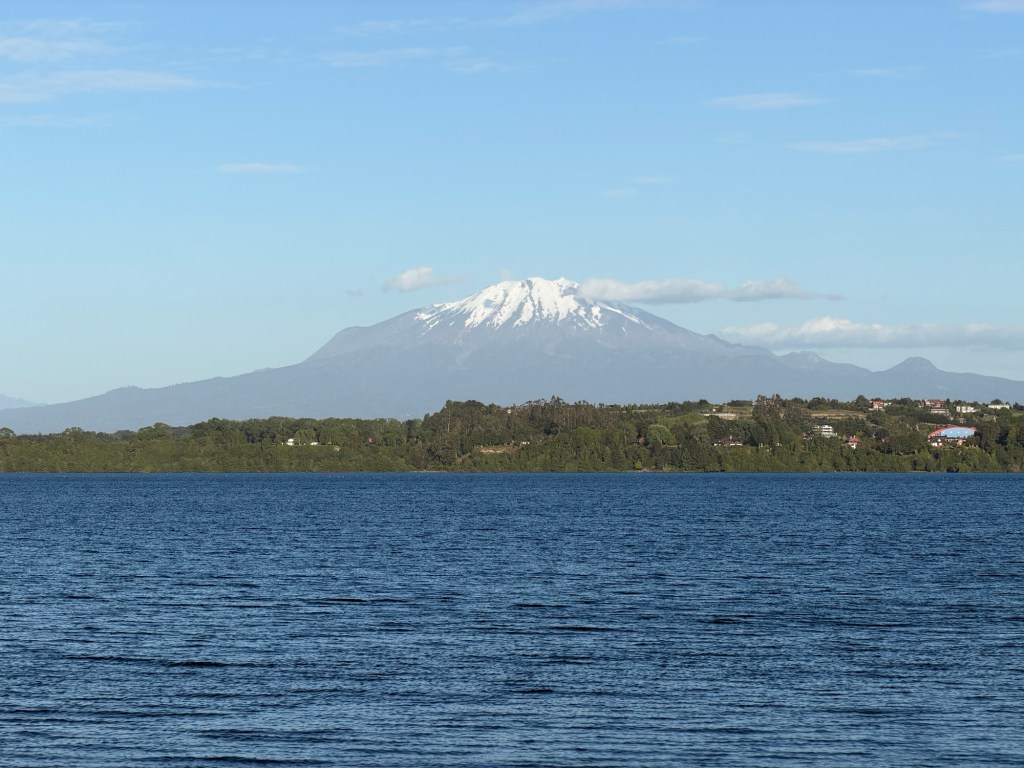
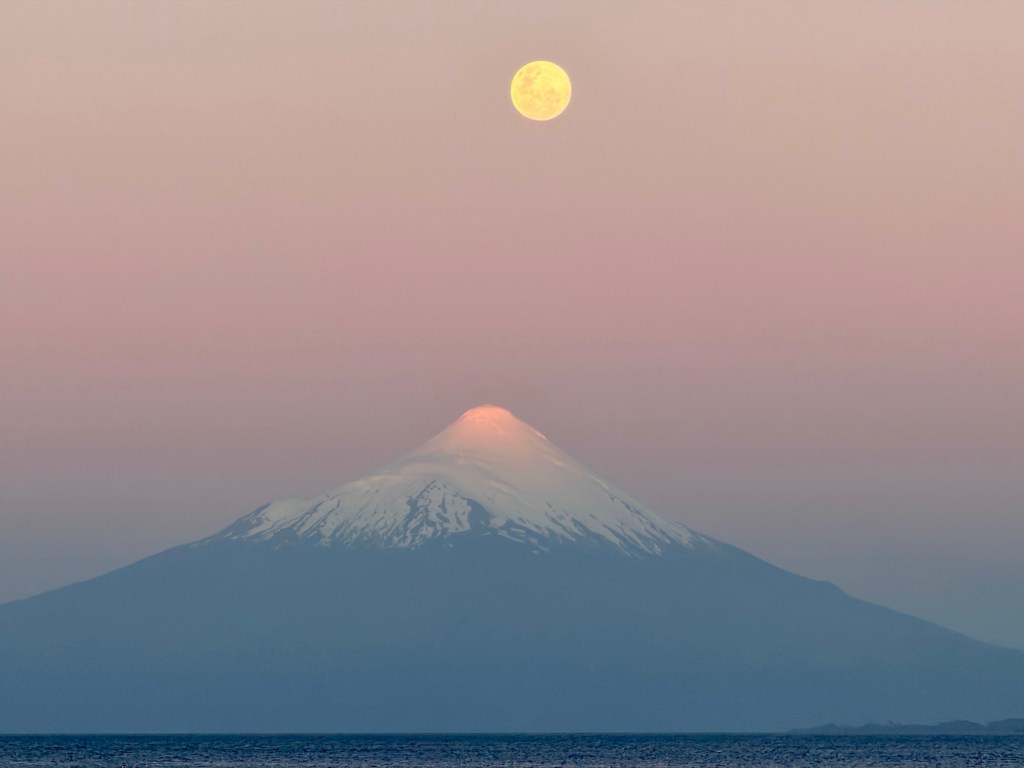
Our group was lucky with the weather, because we were able to see the volcano that caused the eruption, more inland, eastward, than most of the Andes chain.
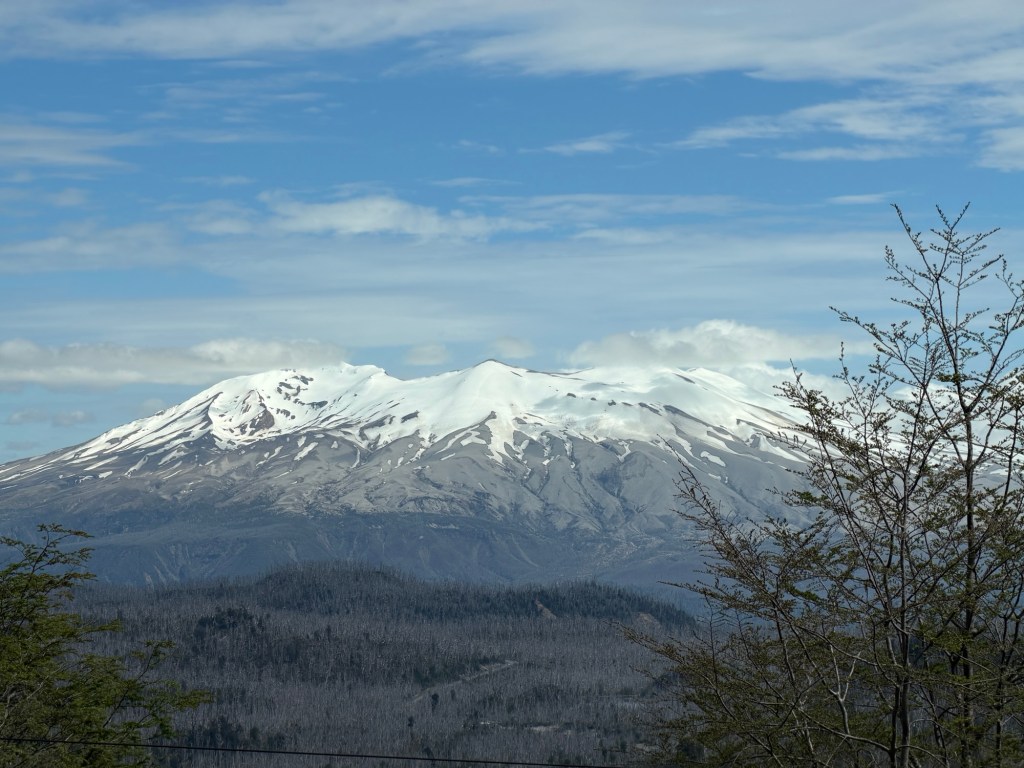
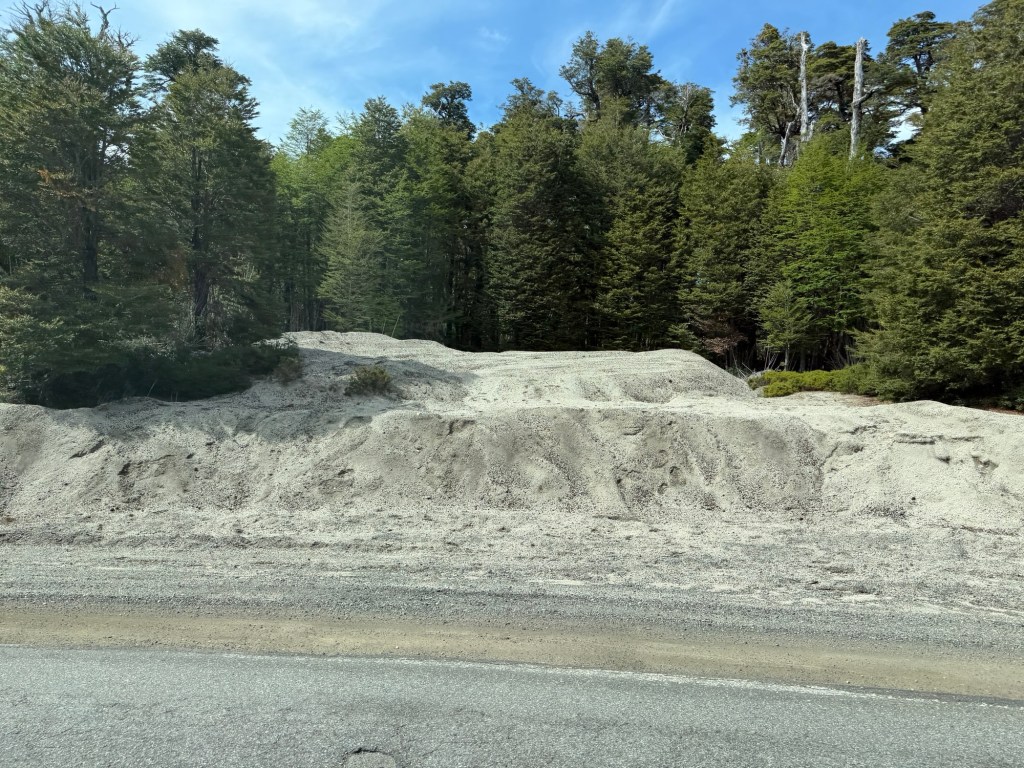
Puyehue, erupted June 2011 through April 2012. The ash plume from the eruption circled the globe, interrupting air travel in the southern hemisphere.

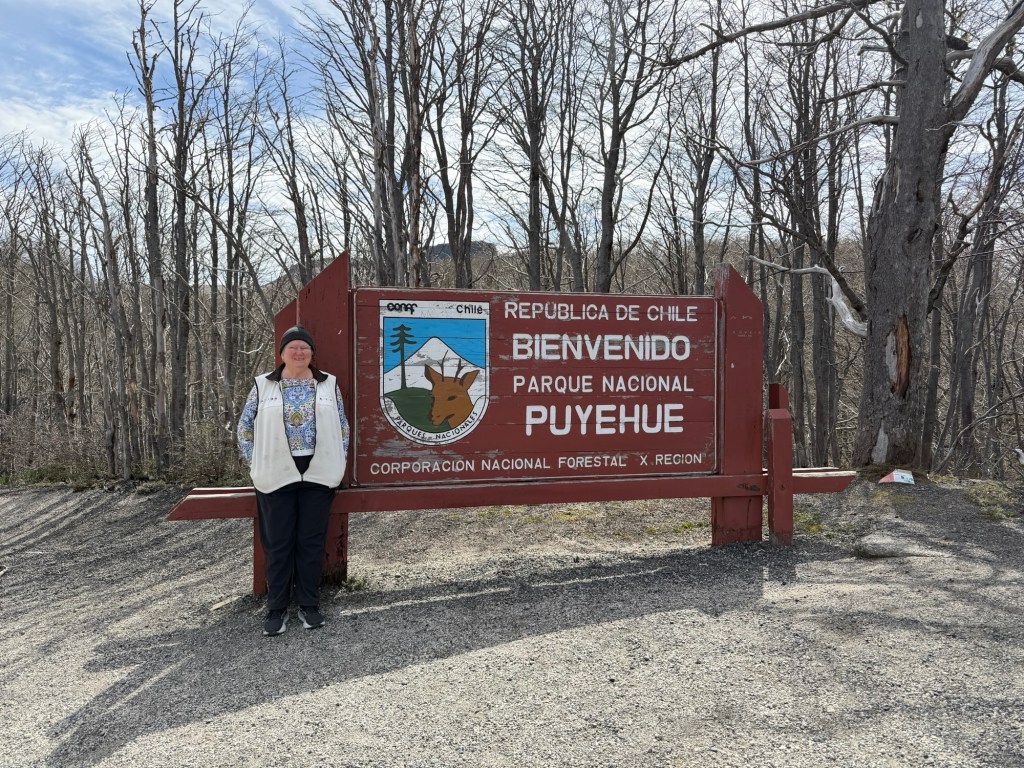
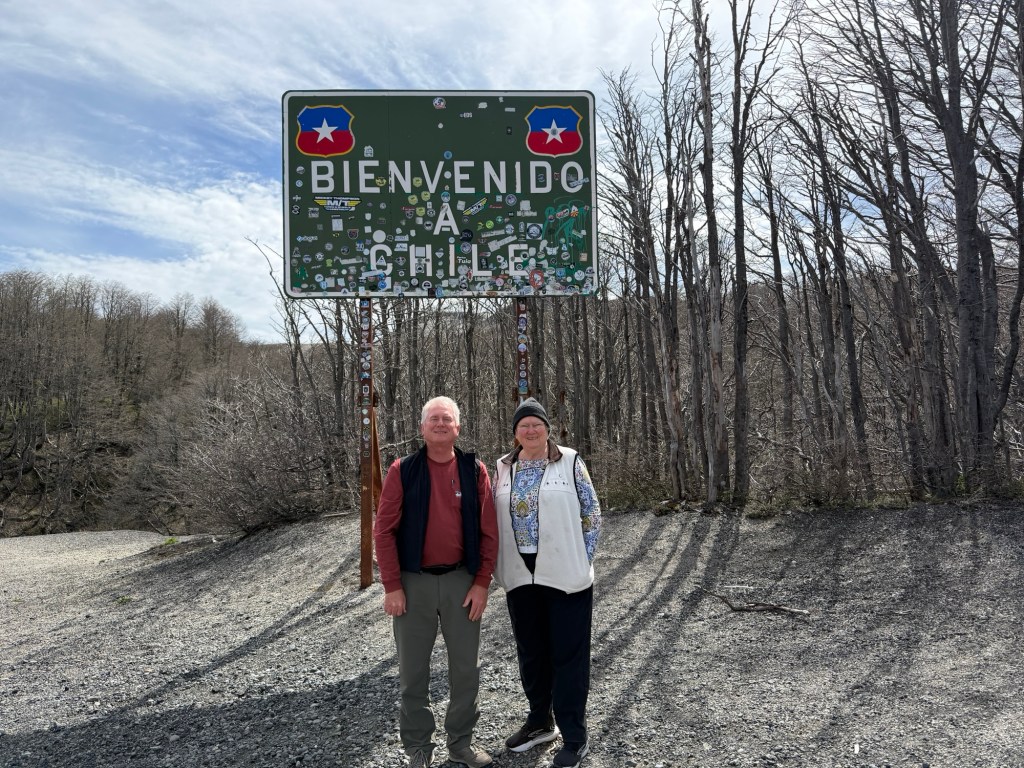
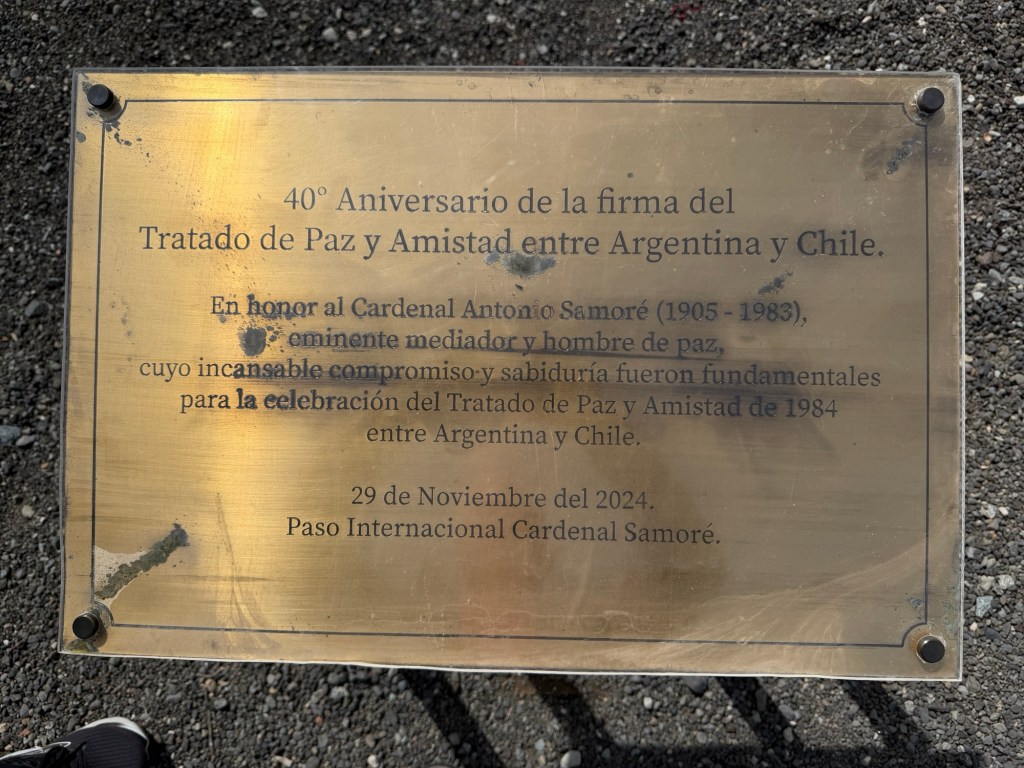
We went from one National Park to another in a matter of hours. At the top of the pass, the continental divide, we could walk from Argentina into Chile in a second.
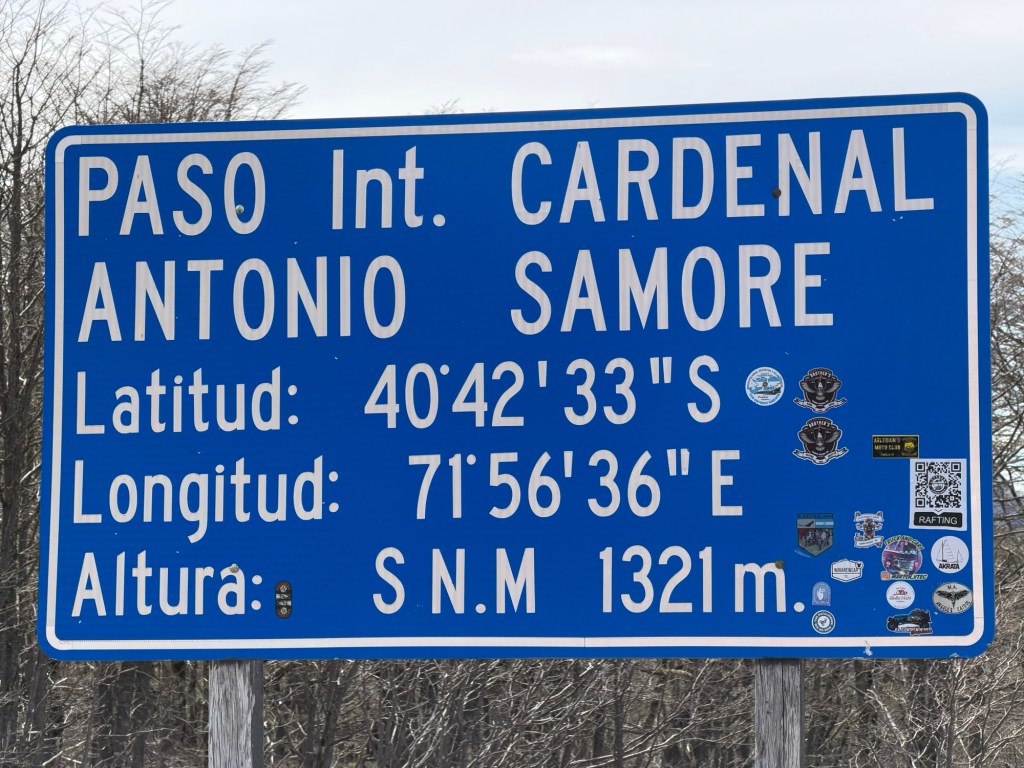
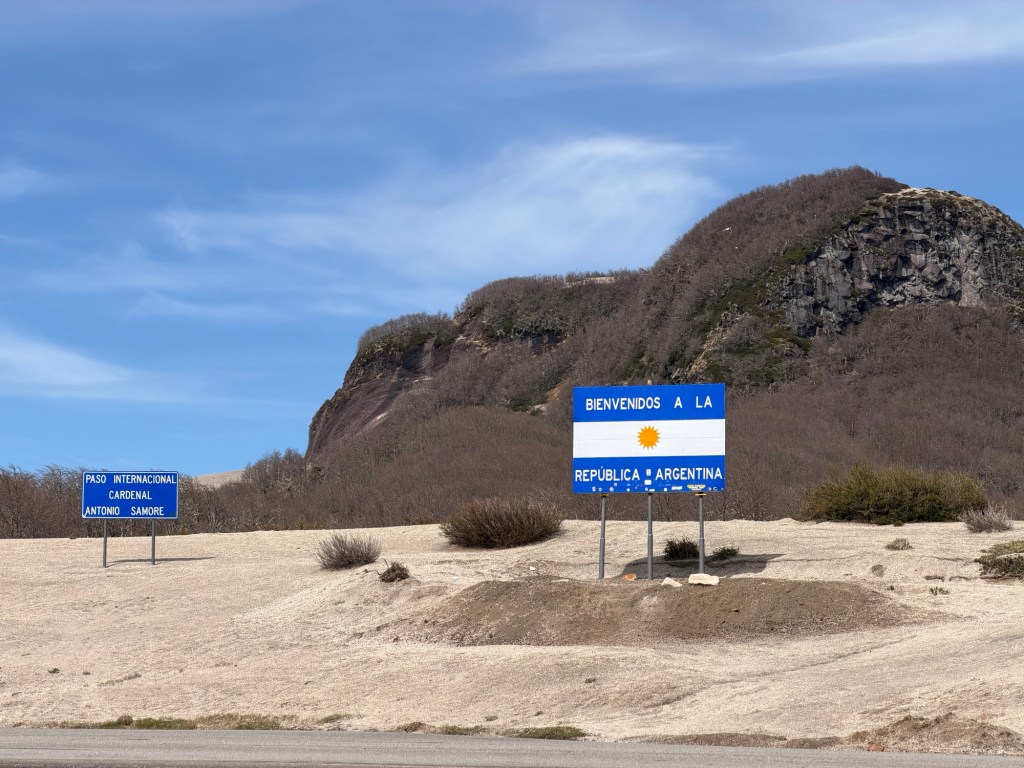
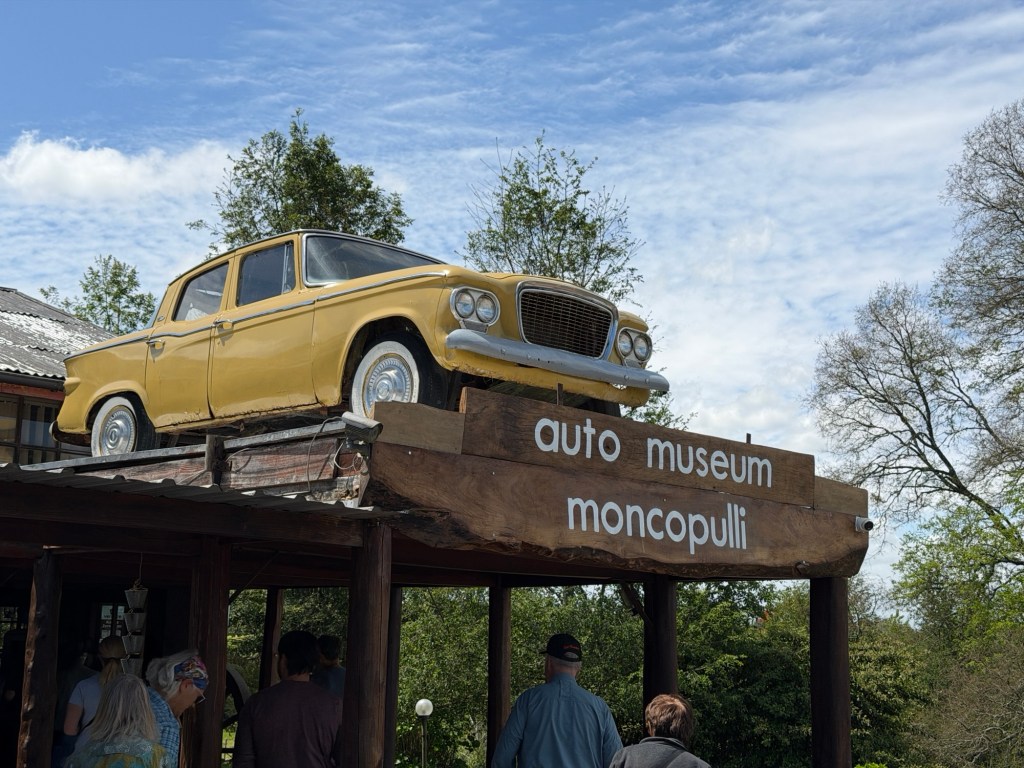
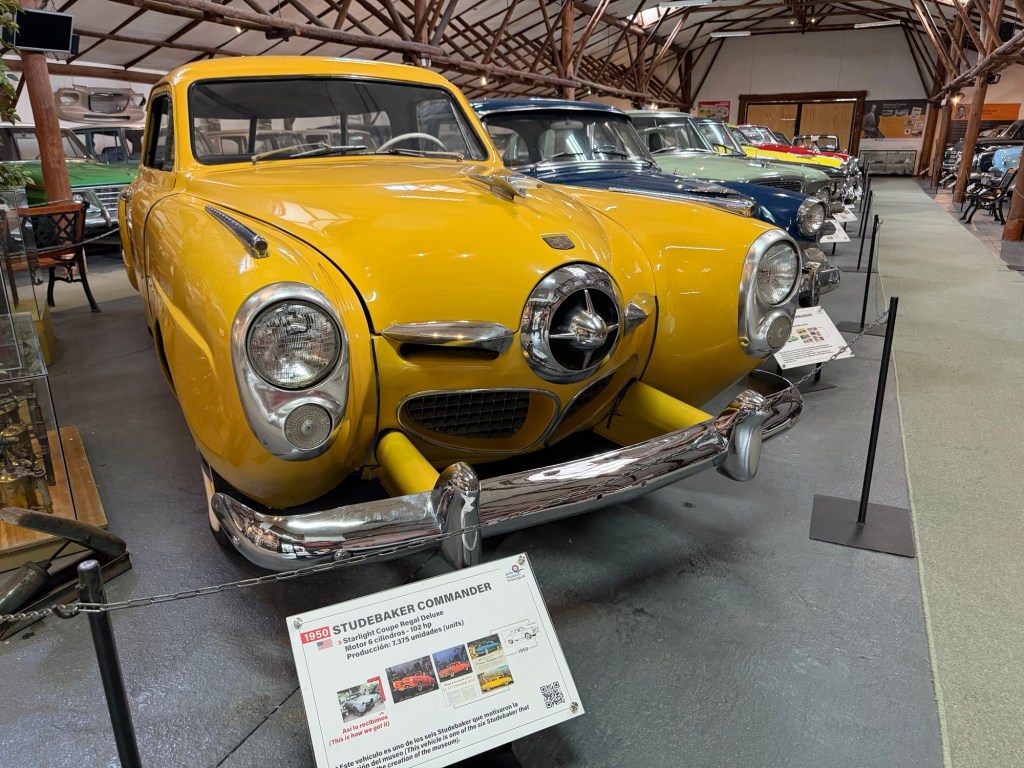
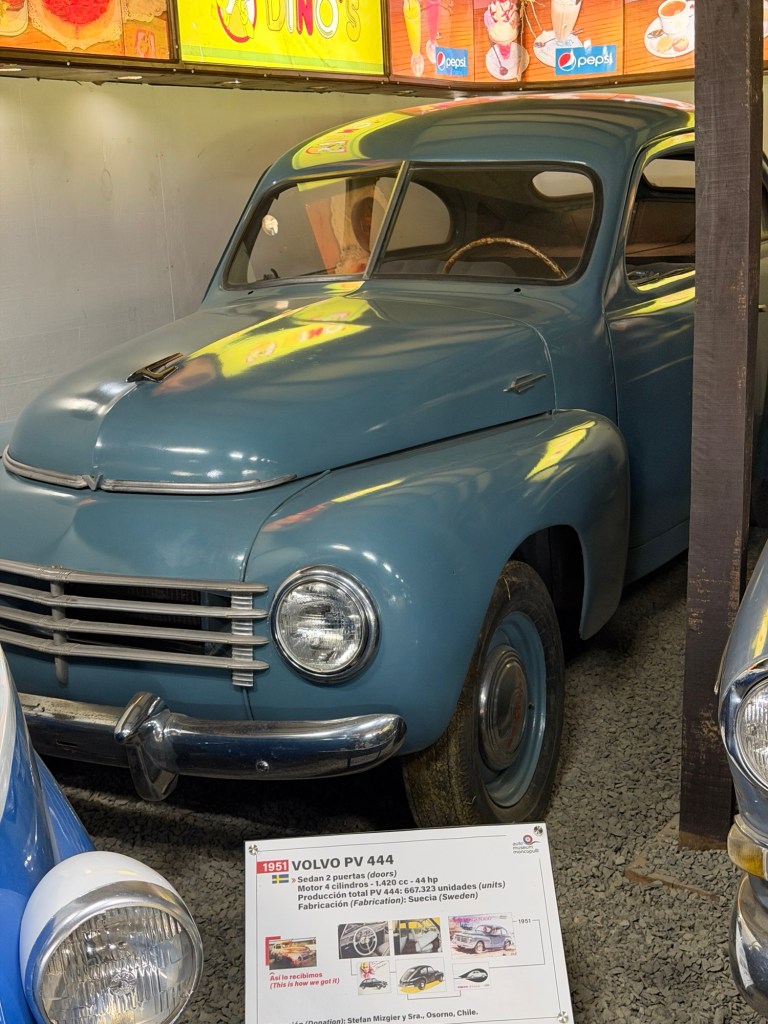
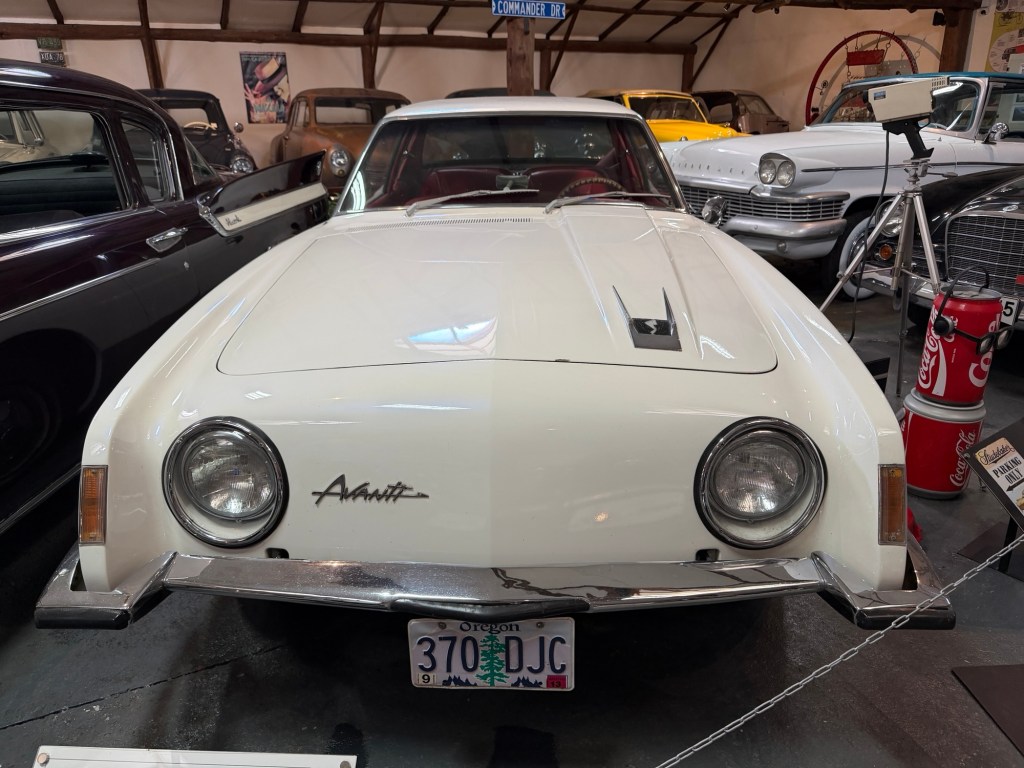
We stopped for lunch at a car museum.
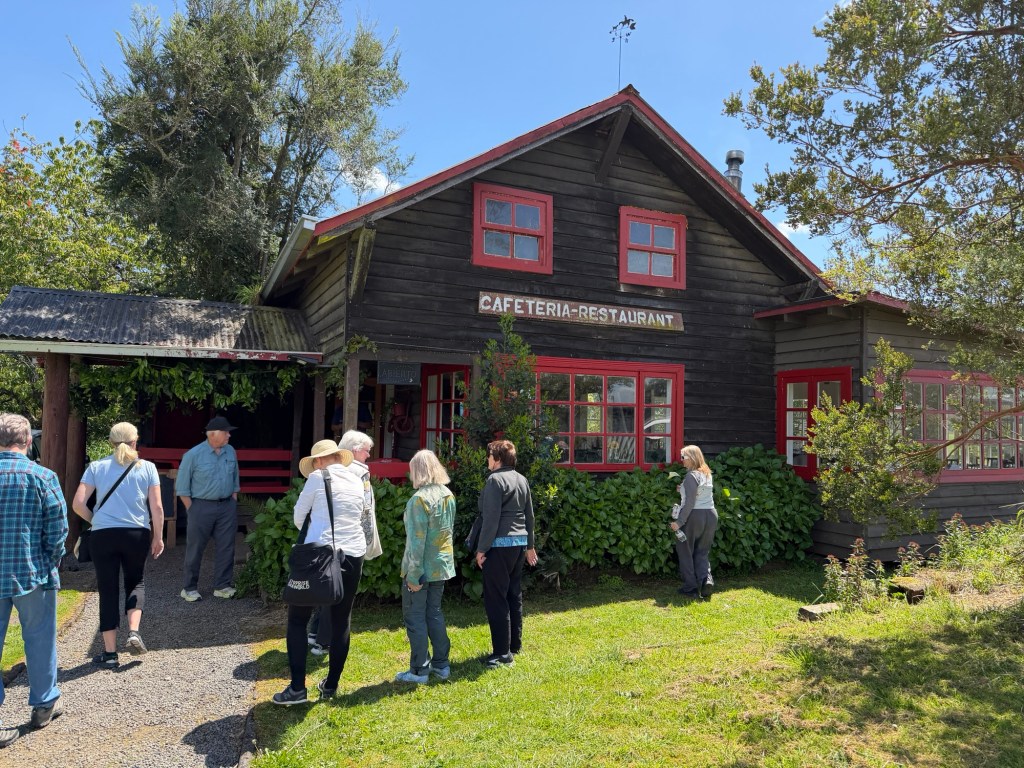
Marta took us on a tour of the town. The beautiful woman statue, a sacrifice to the gods of the volcano, was our goal.
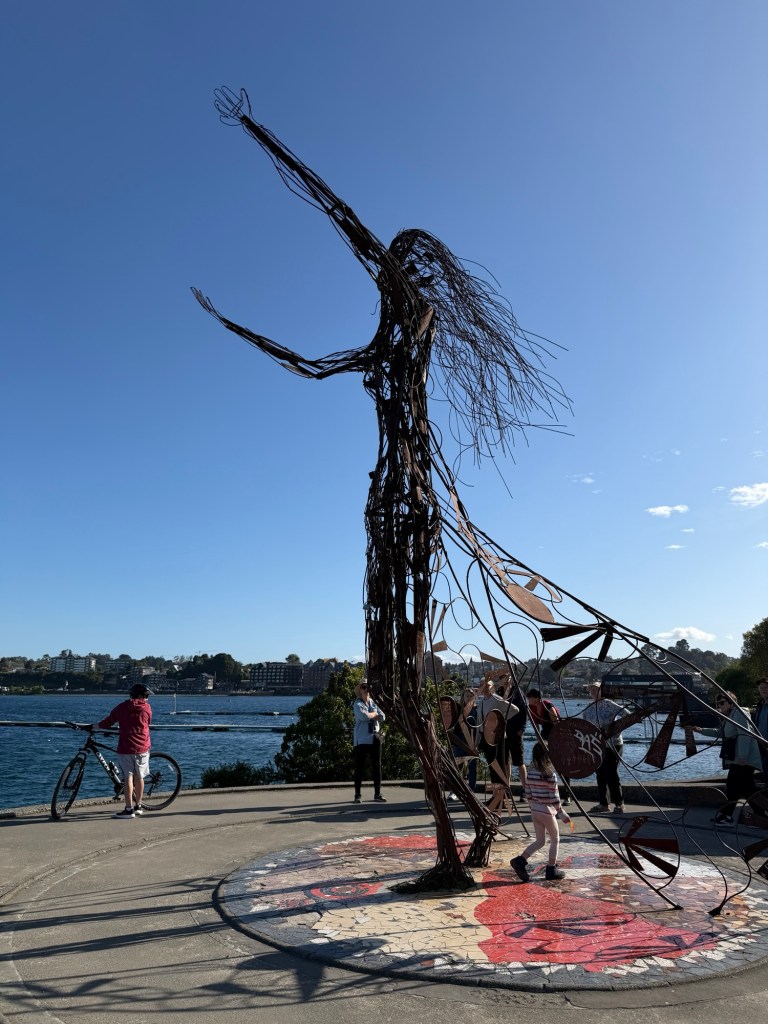
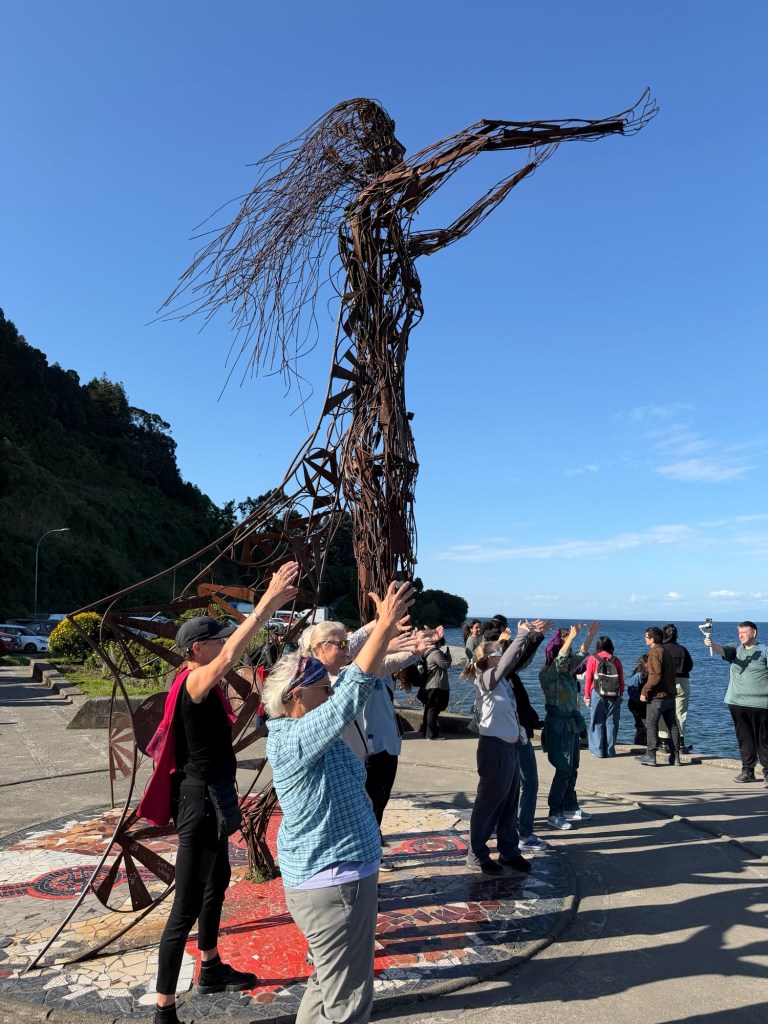
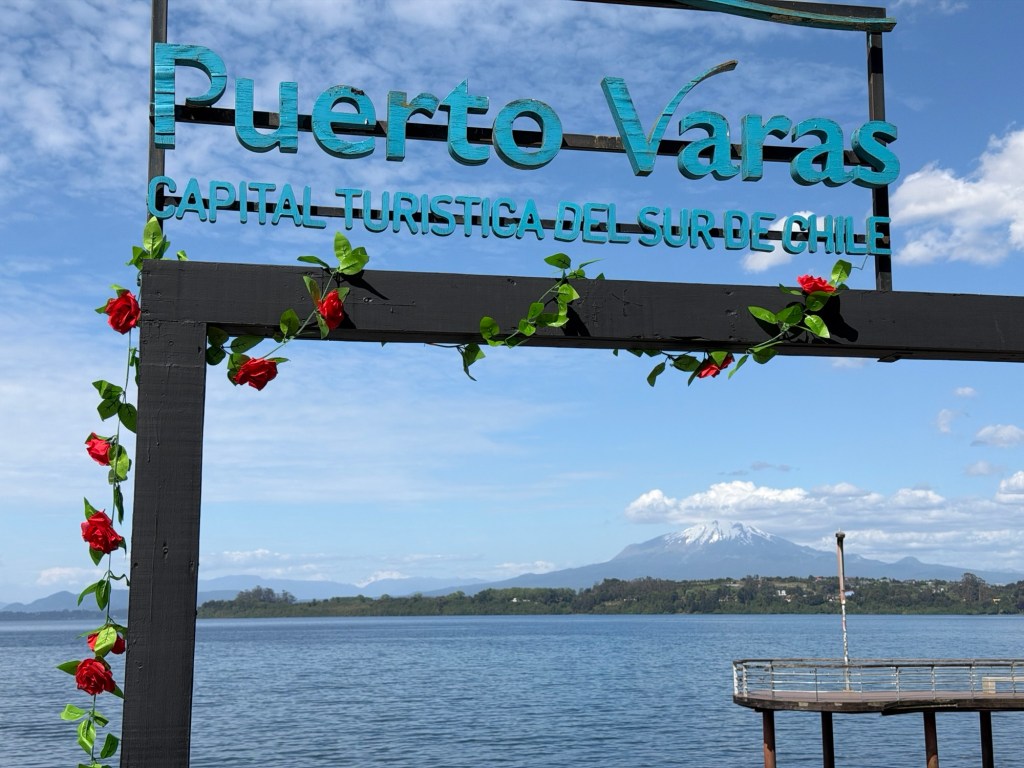
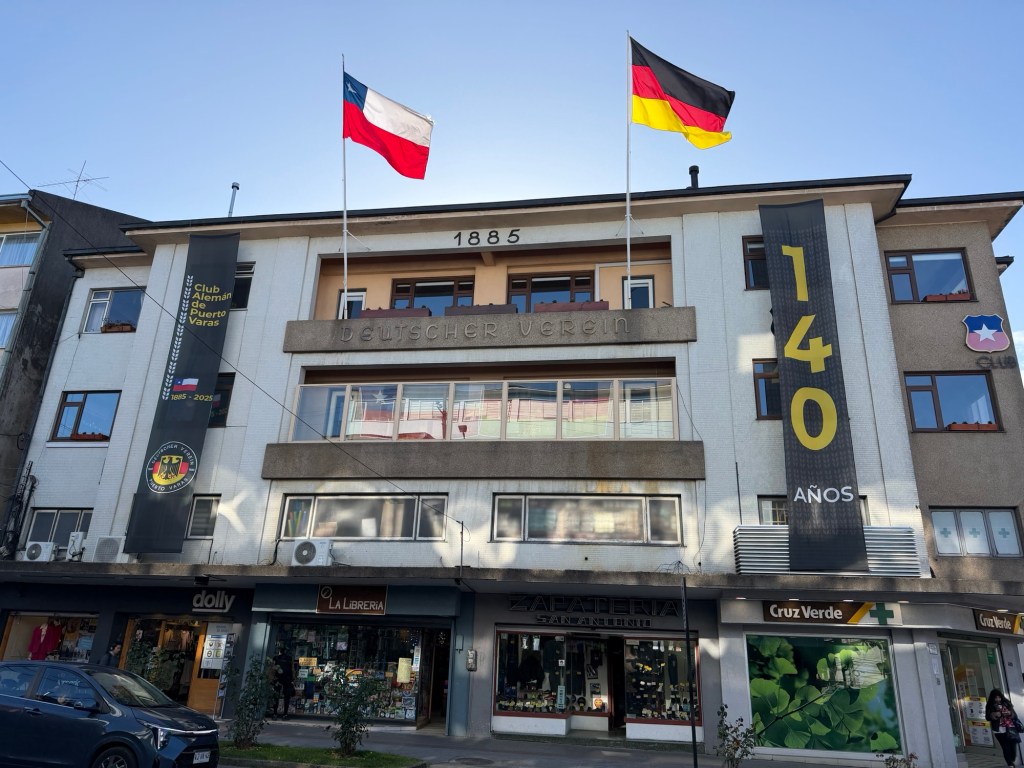
Puerto Varas was founded in the 1850s by German immigrants. This is their association building.

Native American presentation and Ranch

Right after breakfast, we met with a Mapuche man who explained the history of his people. His tribe is the largest that survived the wars, so similar to the wars in the U.S., and finally the group had enough people left to fight for their rights.

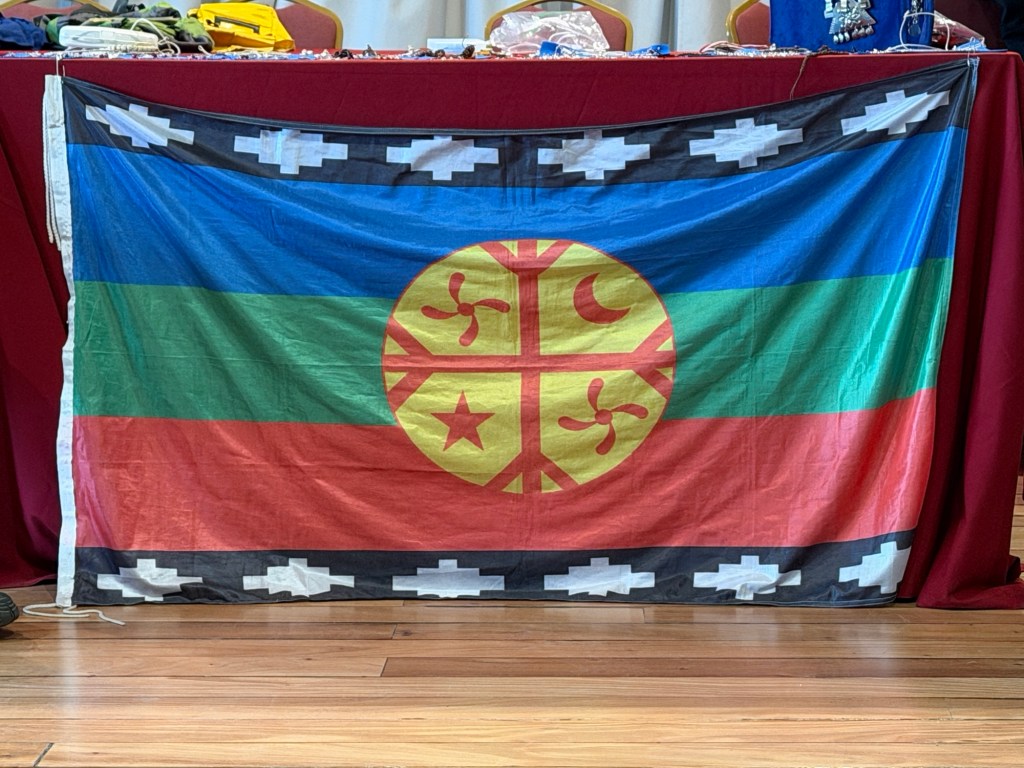
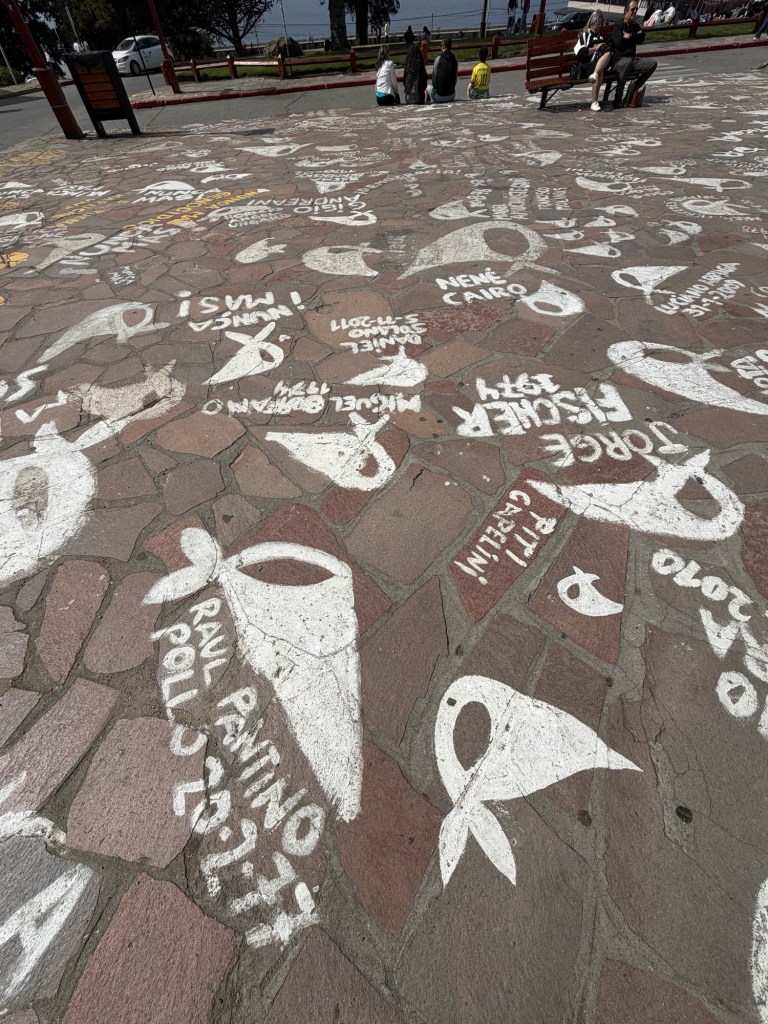
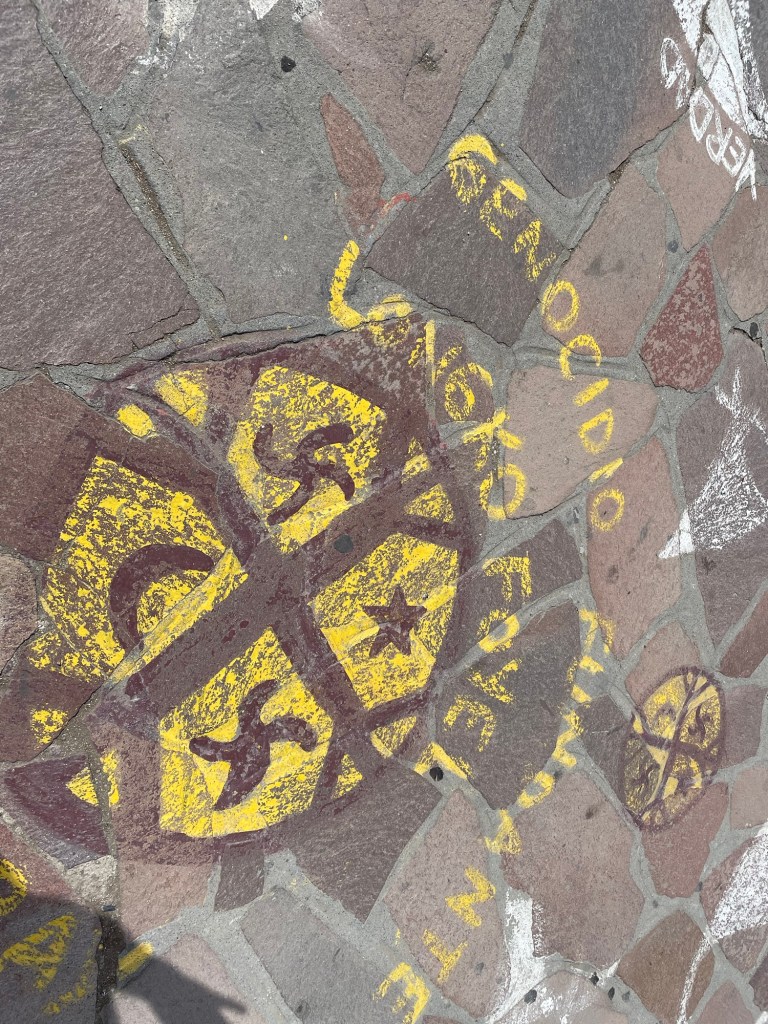
He showed us his flag and explained the meanings of the colors and symbols. These symbols were also on the sidewalk in the plaza the previous day.

Colors: blue for the sky and a heaven-like place at the top of flag; green, next color down, for the land nature, plants and life; red at the base for blood and the earth, because the earth is alive with volcanoes and earthquakes, which are called tremors here. Black areas ask for life, rain. The white is for science and culture. The bright yellow is for ceremonial drums, men dance, women sing. Four is a special number because of the Southern Cross constellation. Old man, old woman, young man, young woman. Four footprints of the Lesser Rhea are on the edges. Two suns are for the summer and winter solstices.

The ancestors understood that the only life form on Earth that destroys nature is the human.

Interestingly, though earlier on this trip, we learned that a different group, smaller in numbers, were descended from Maori peoples, now living in New Zealand, while the gentleman speaker’s group was descended elsewhere. Isn’t DNA remarkable?

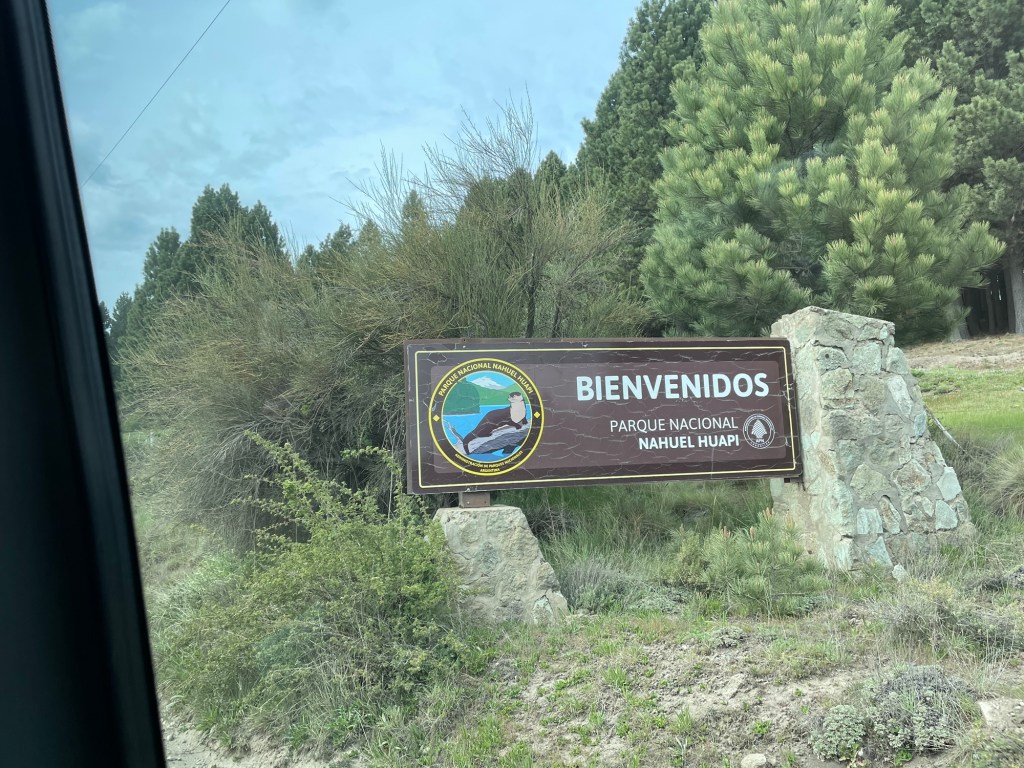
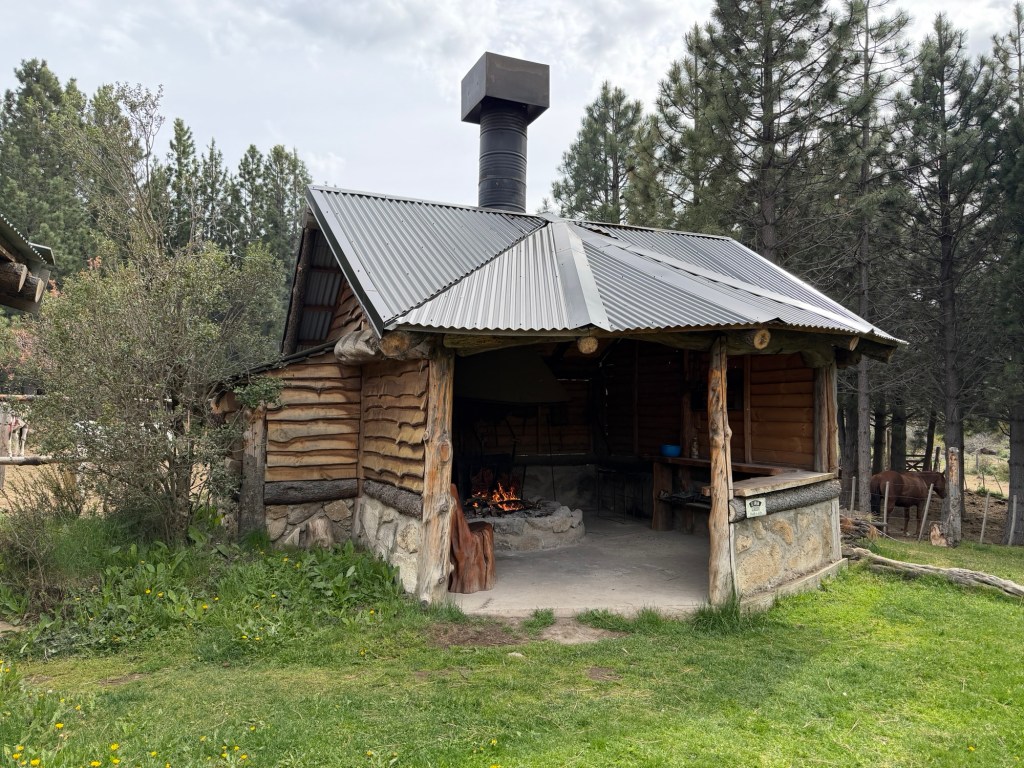
Most of our time in Bariloche was in this National Park alongside the lake with the same name. The first official sign that we noticed was on the way to a private ranch which adjoins the park.

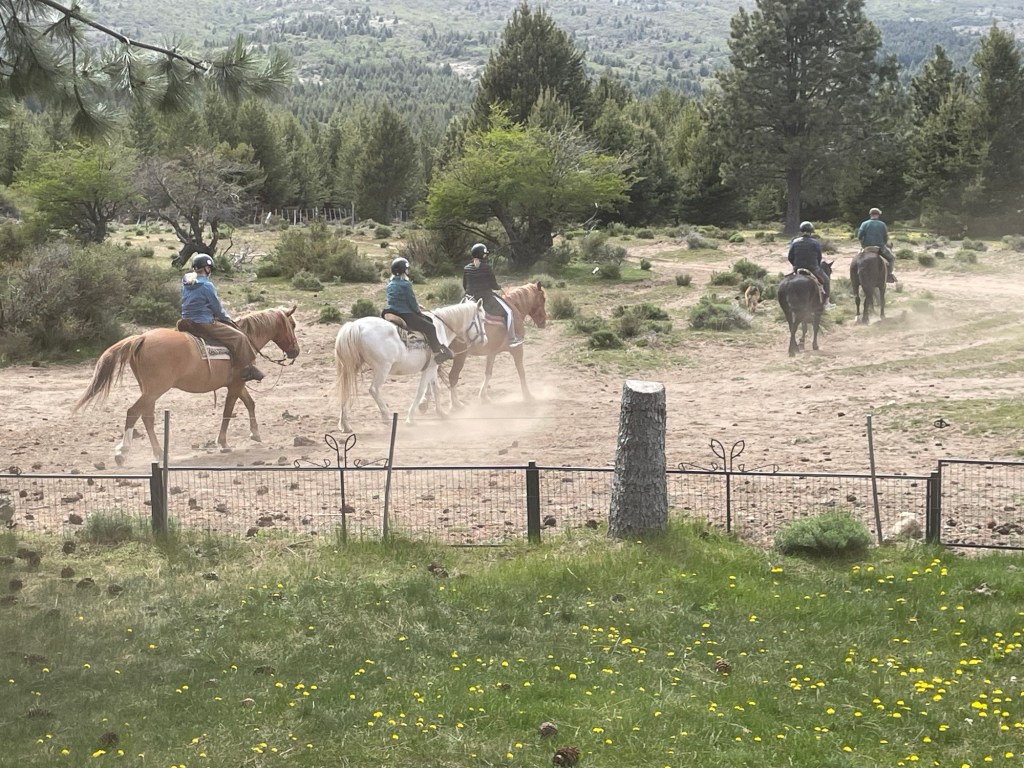
After the Mapuche presentation, we left for the ranch to ride horses and have lunch; the road was bumpy gravel.

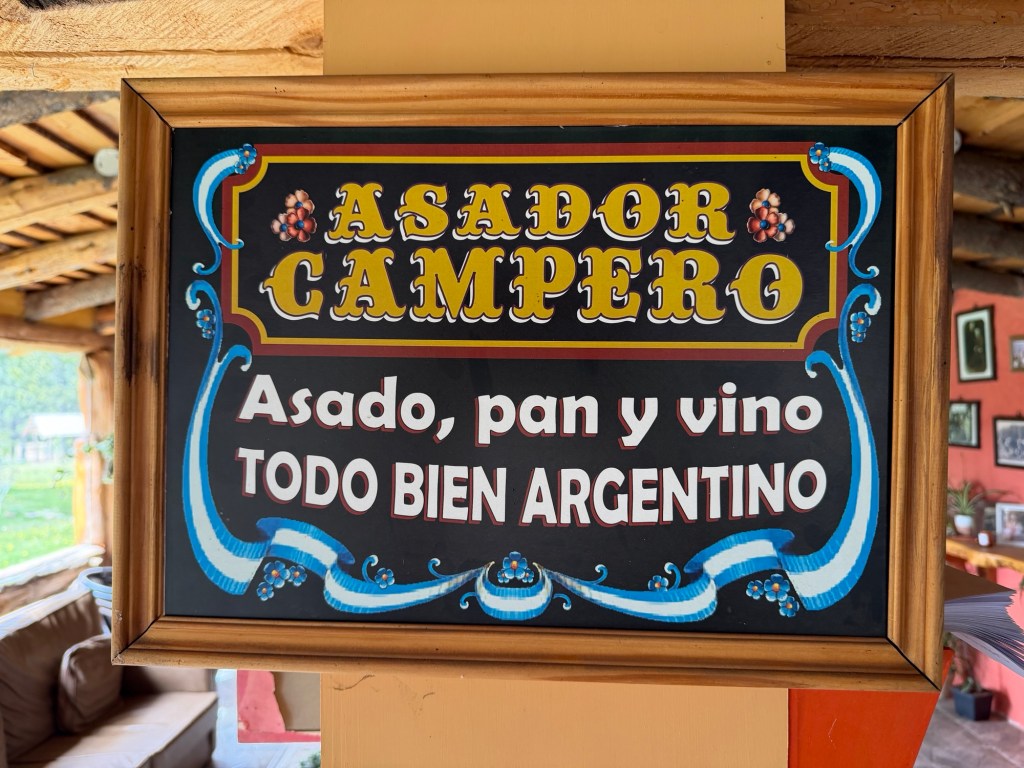
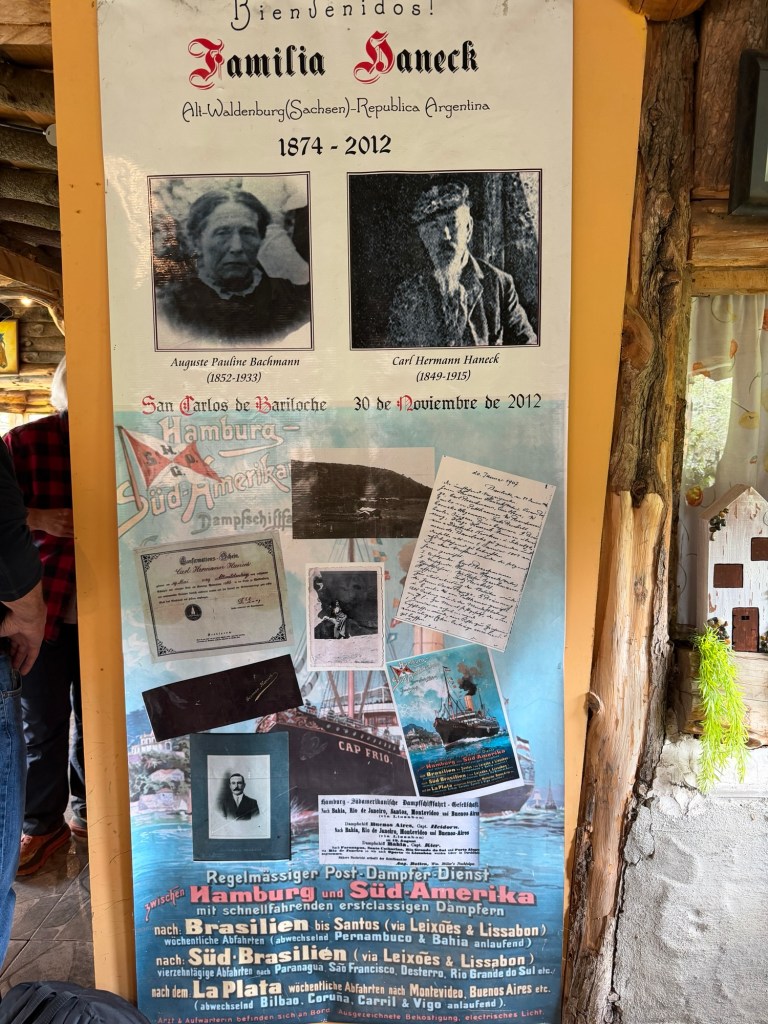
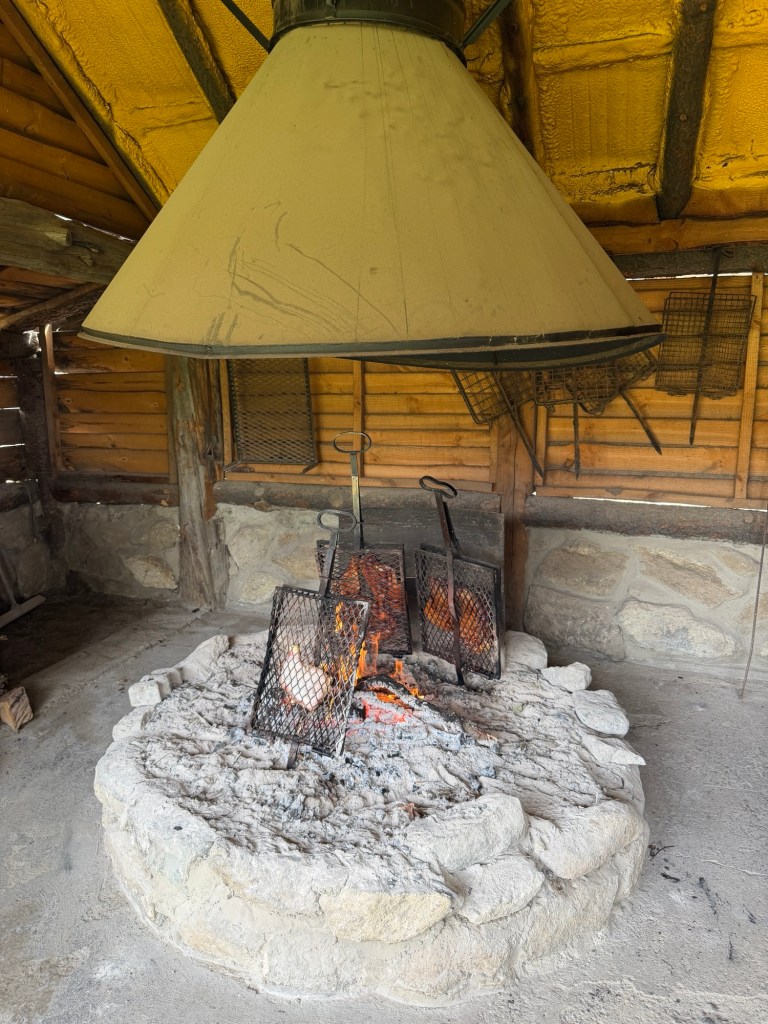
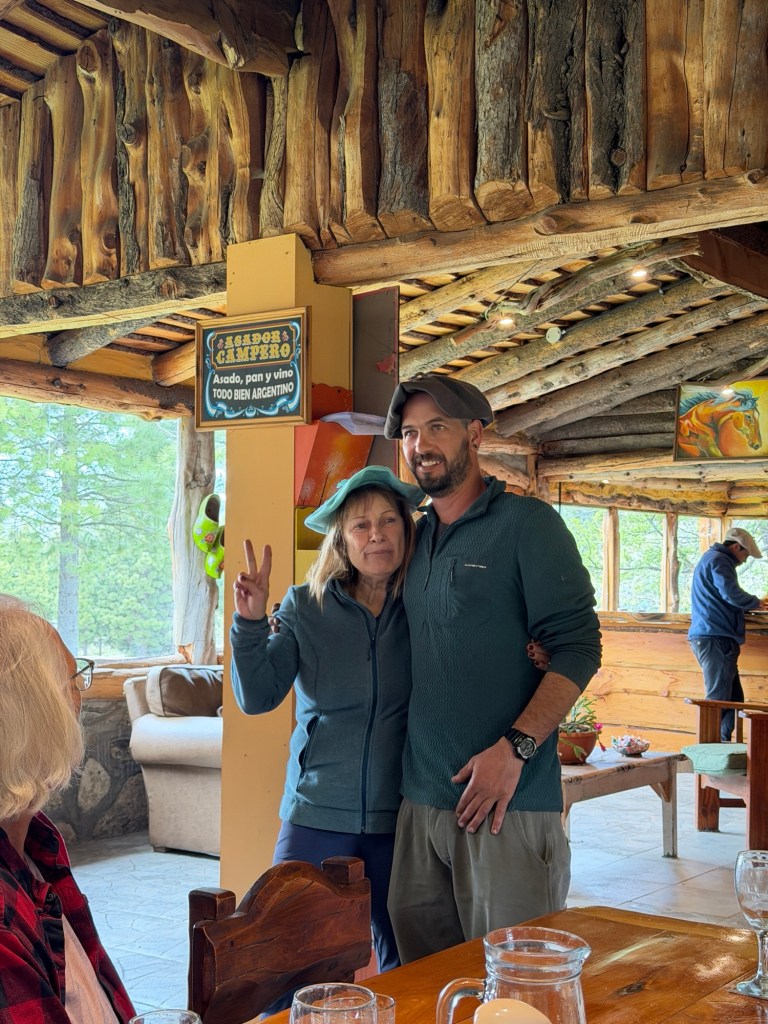
The ranch, within the National Park, has been owned for generations of a European mixed family; a father, mother and son were our guides. The son spoke English well, and explained how his grandfather, many generations back, acquired the land where they lived.

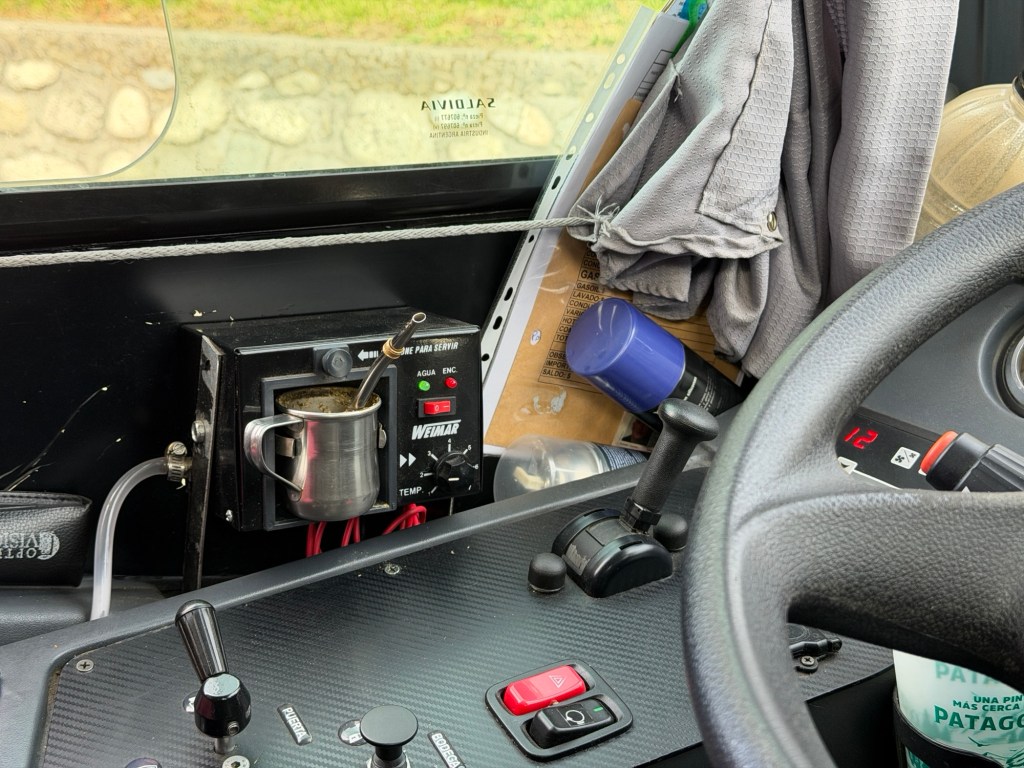
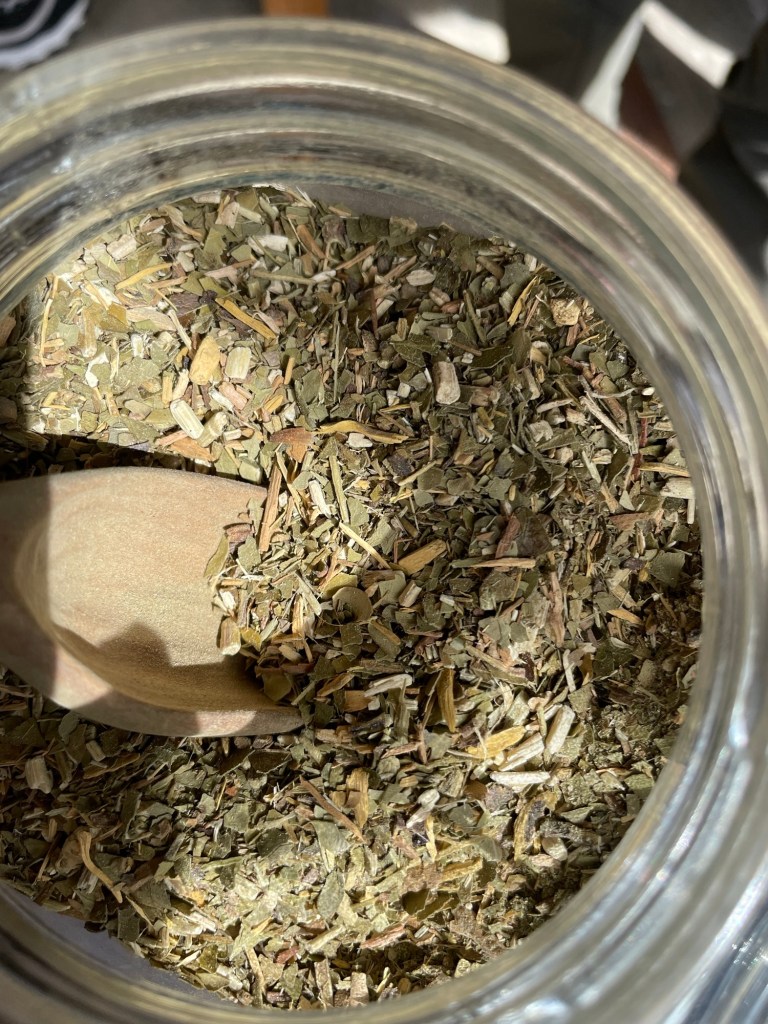
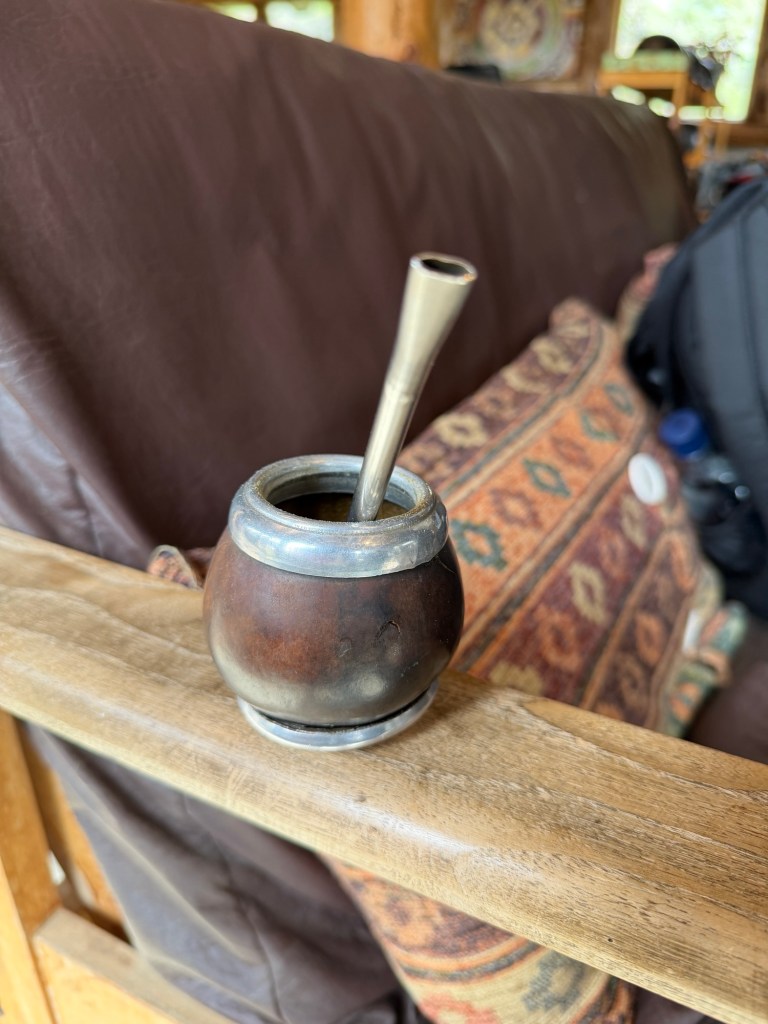
At the ranch, we learned about maté, a favorite drink of Argentina.

Marta loves her maté, basically sipping it all day. The process is precise. Place 5 or 6 spoonfuls of the leaves into your cup. Turn the cup over and tap its bottom to get the dust out of the leaves. Do this several times. Shape the leaves into a slope, filling half the cup at a diagonal. Pour a bit of hot water onto the base of the sloped leaves. Carefully put your special straw into the damp leaves and don’t let it move again pour more hot water onto the leaves, saturating them. Sip the maté through the straw. Tasty!
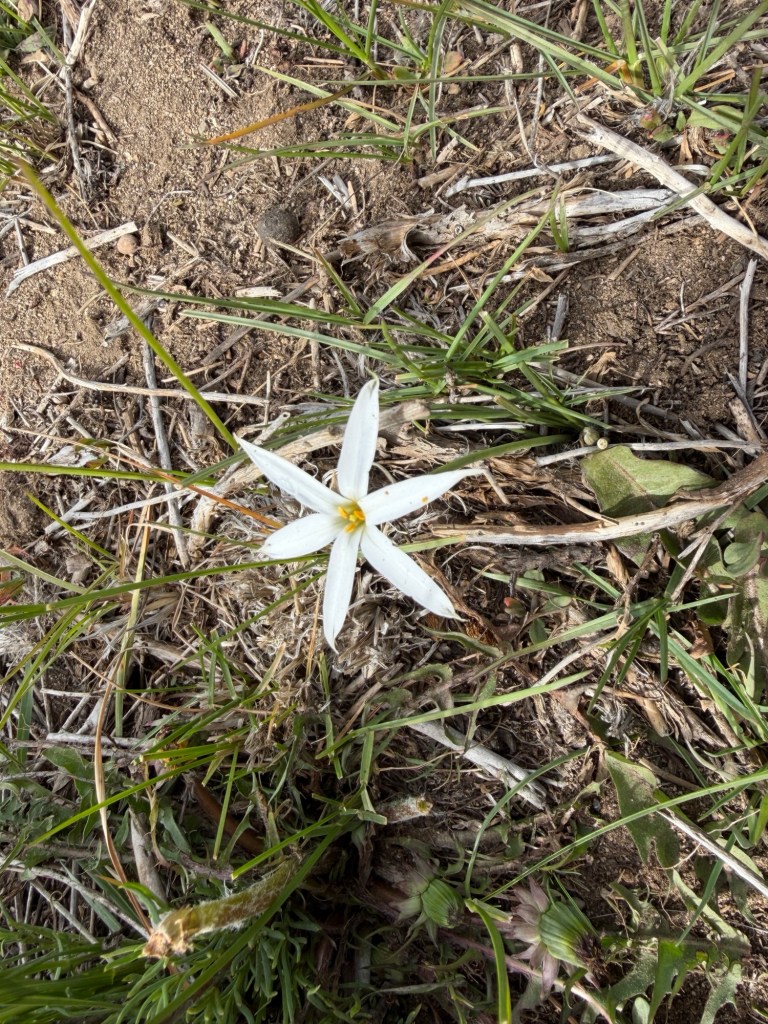
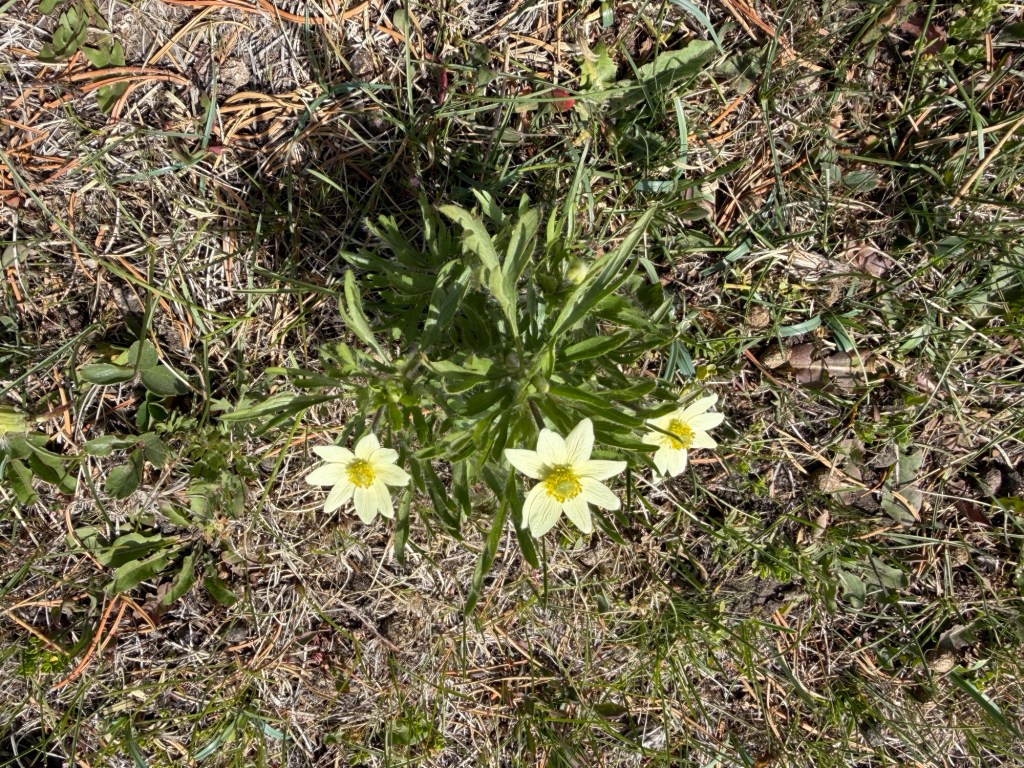
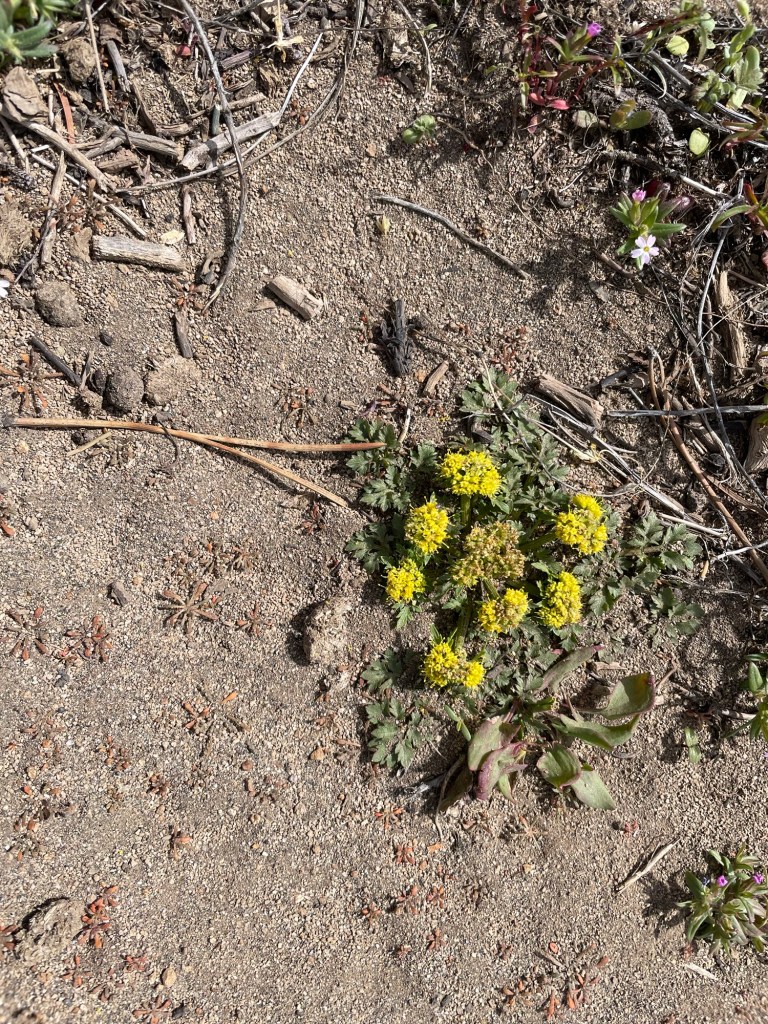
Six of the fourteen of us decided to ride horses. Neither Brian nor Clare chose that option. So, we joined the eight who walked into a field to look at the plants.

And away they go!

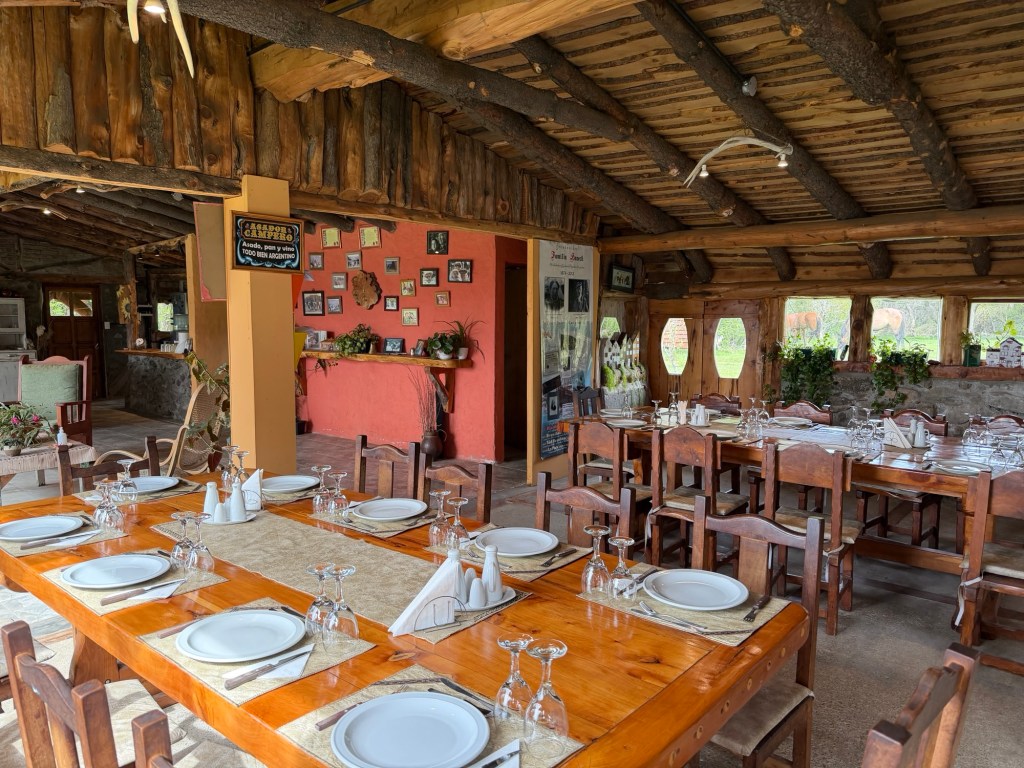
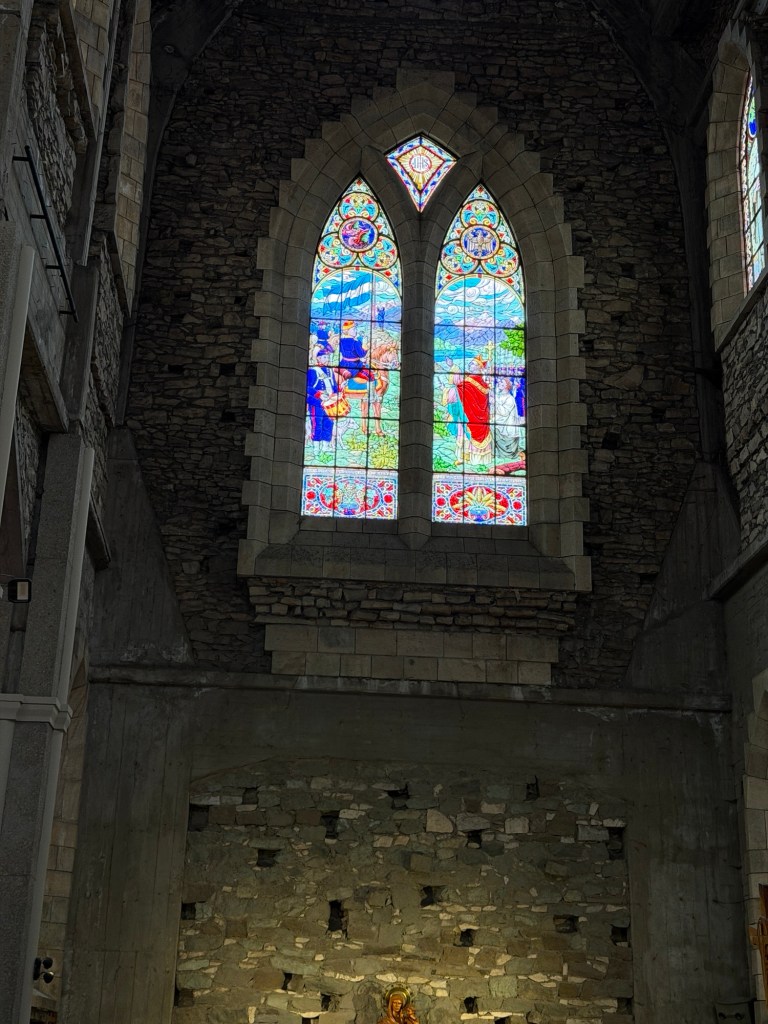
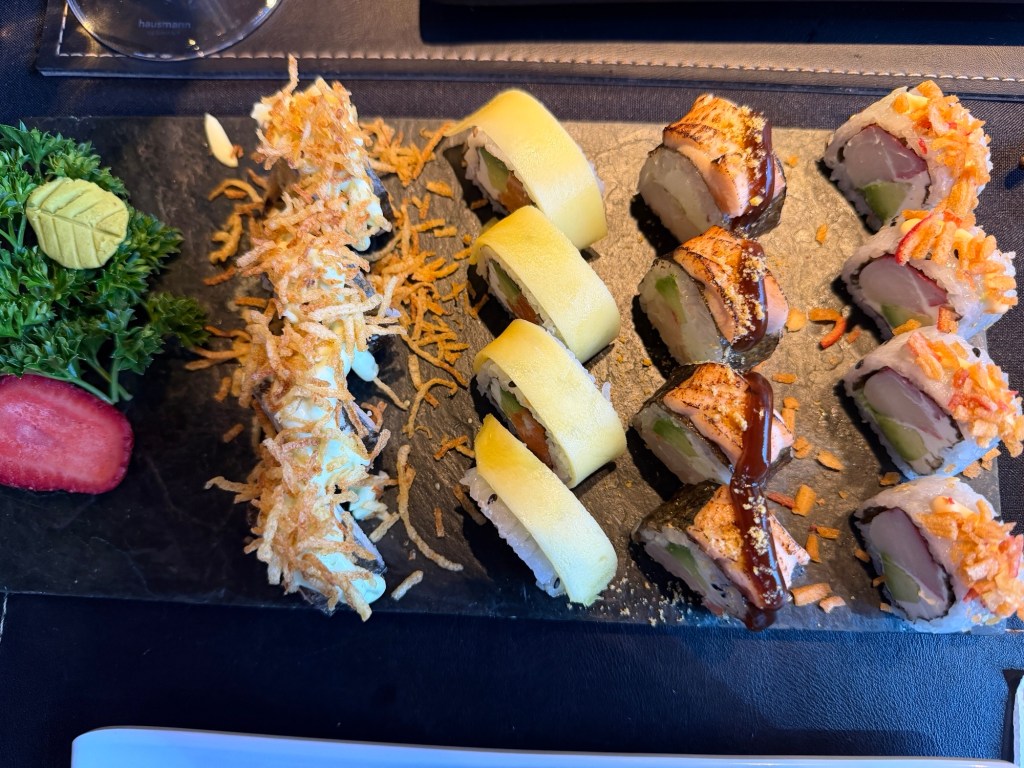
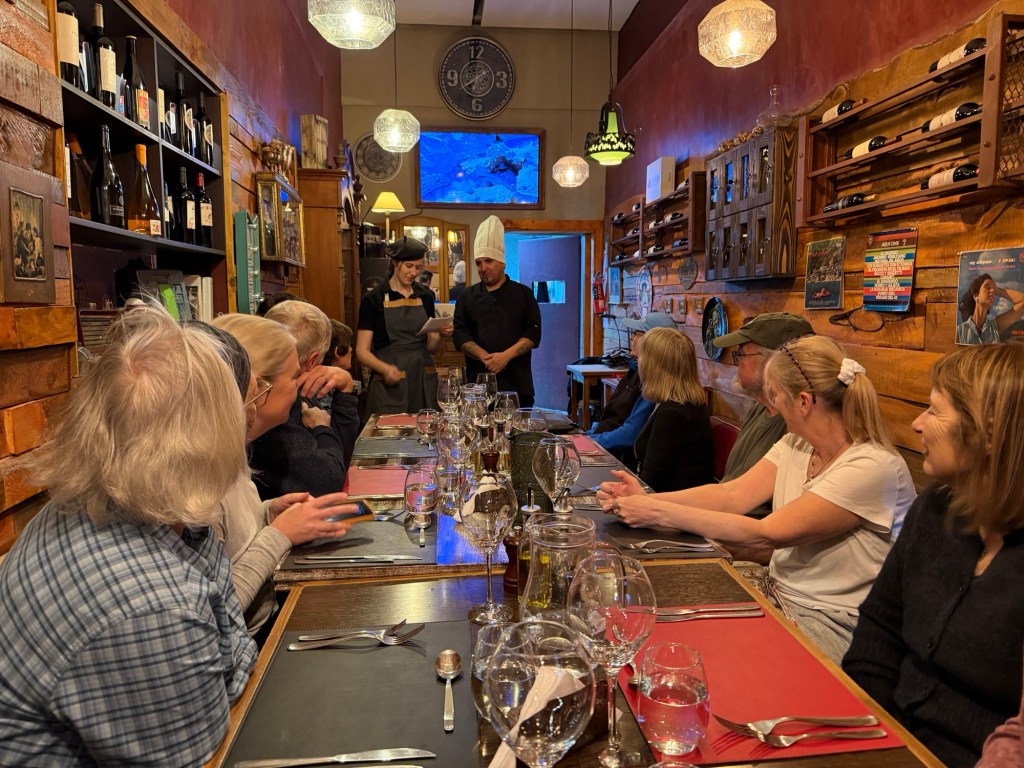
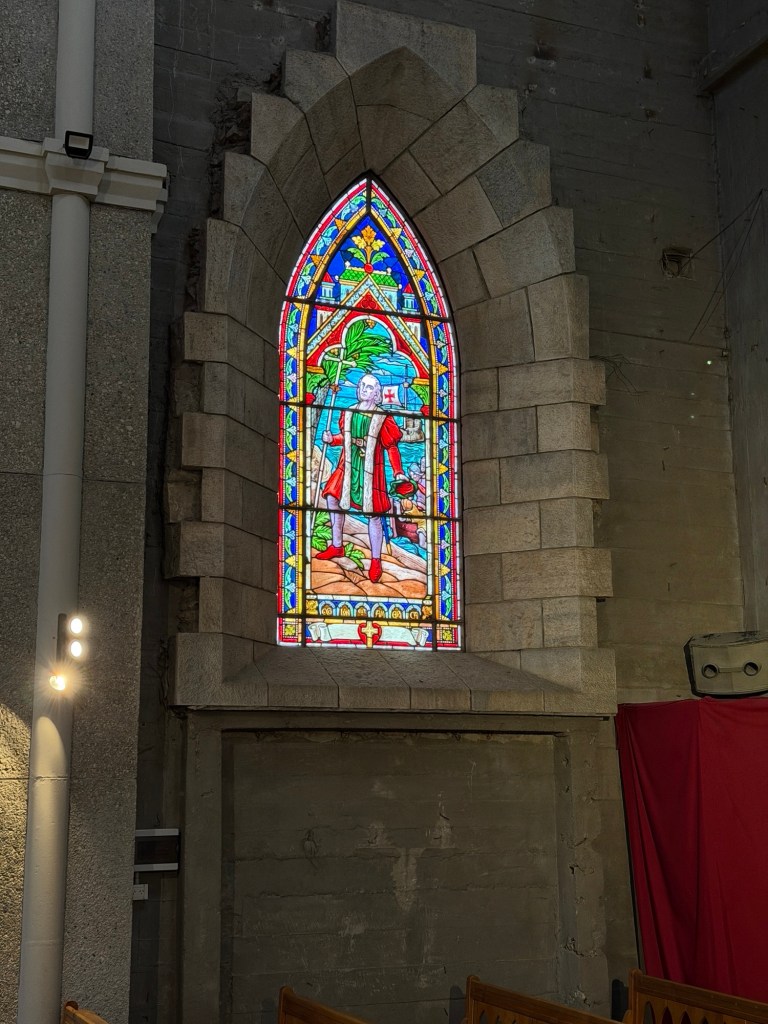
After a delicious lunch at the ranch, we went back to Bariloche, toured the cathedral, visited a brewery, and went out to a small restaurant for supper.

Nahuel Huapi National Park & Bariloche on Nov. 2

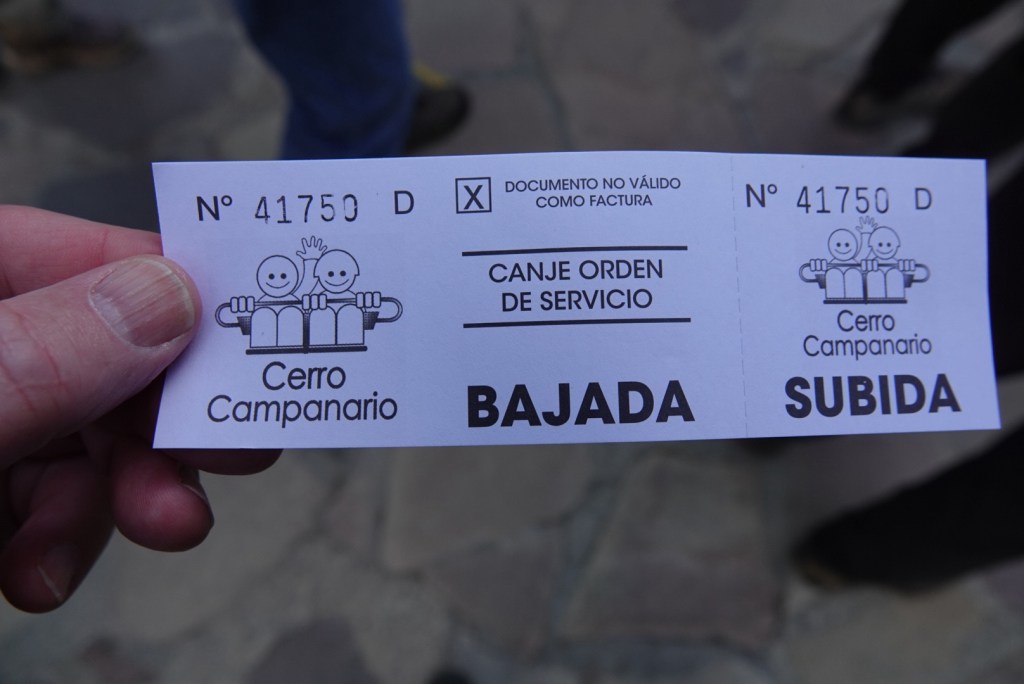
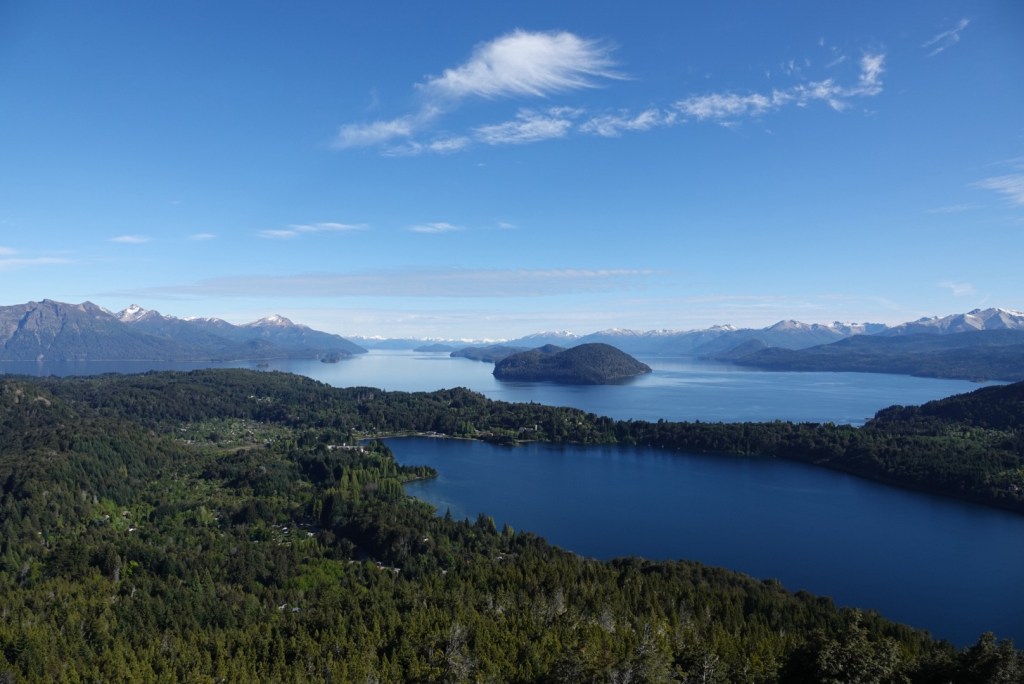
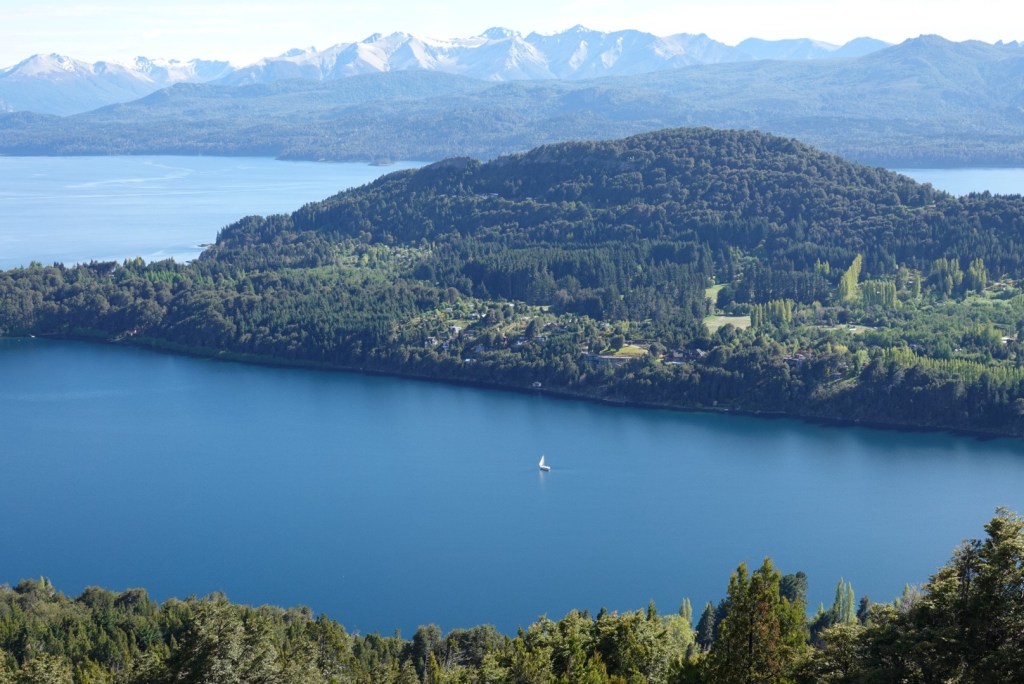
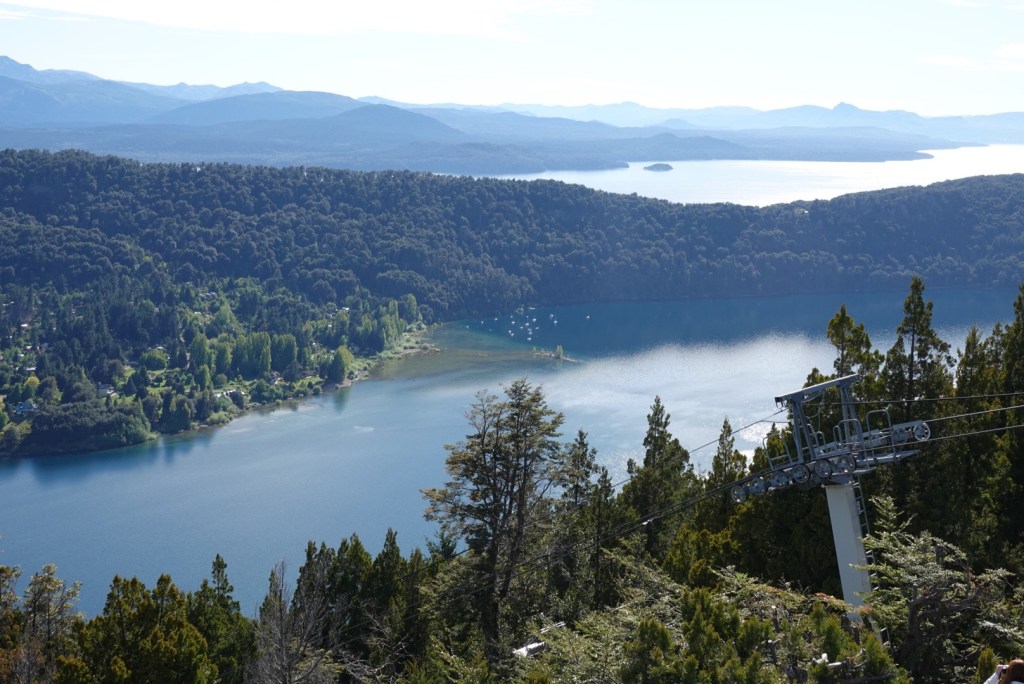
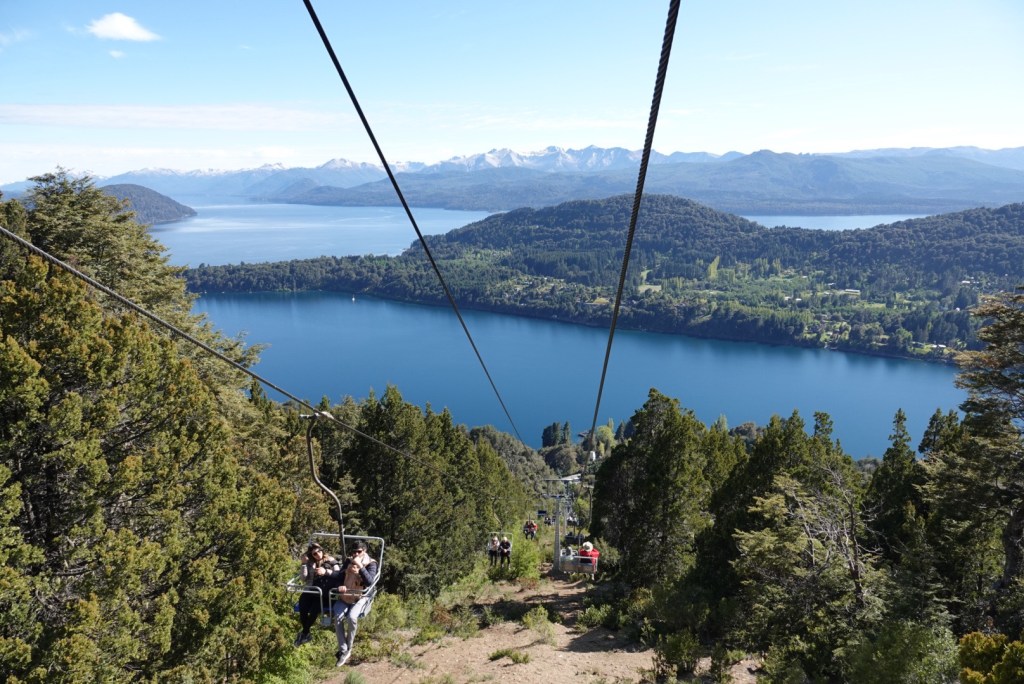
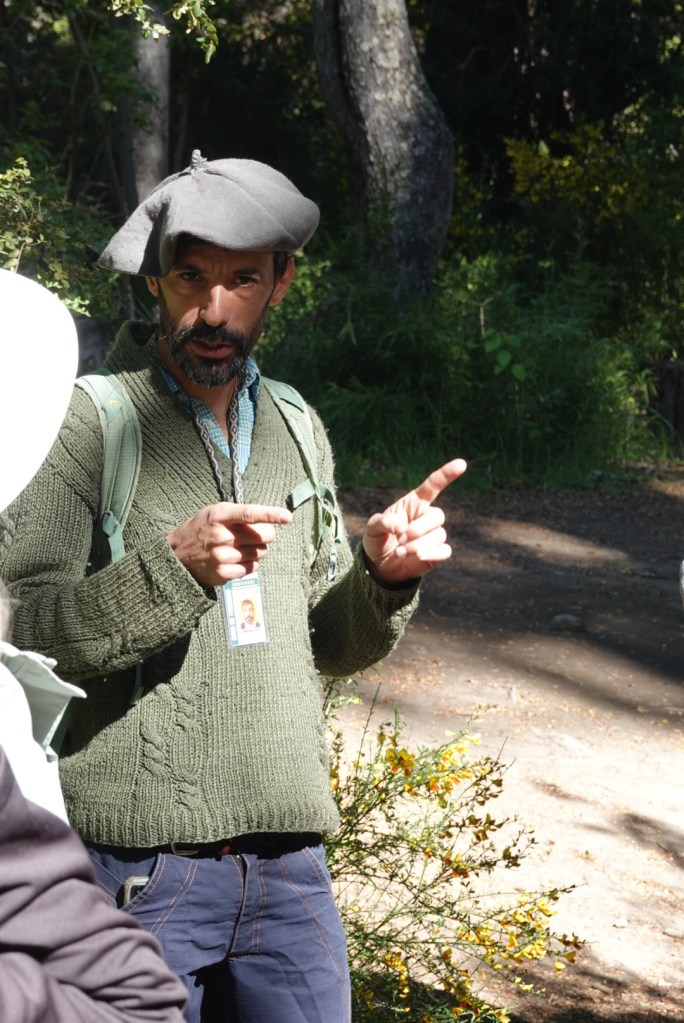
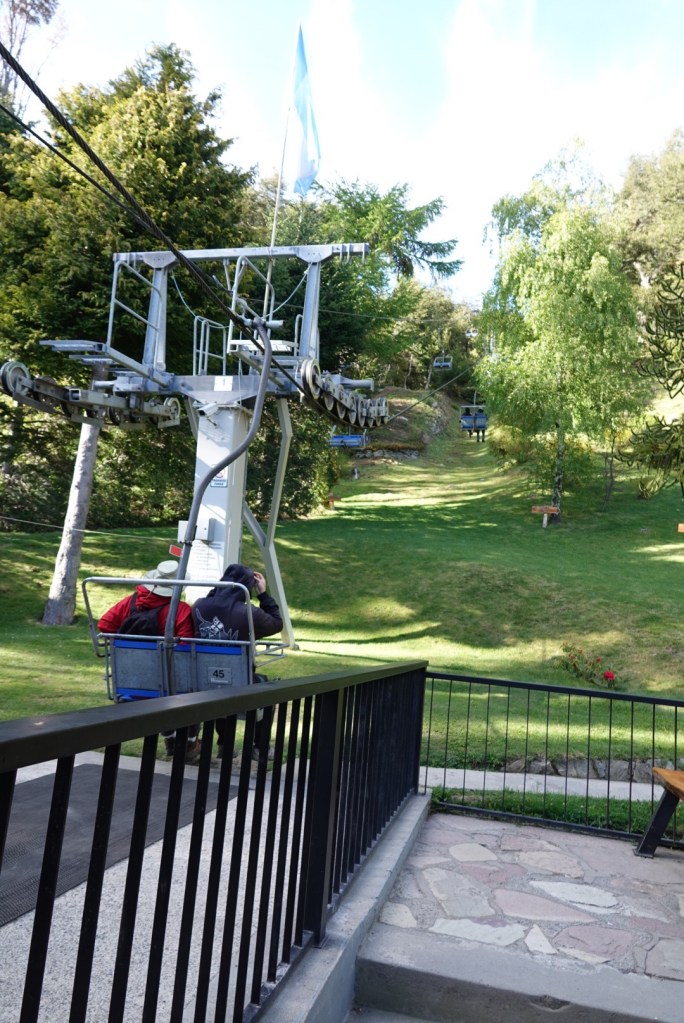
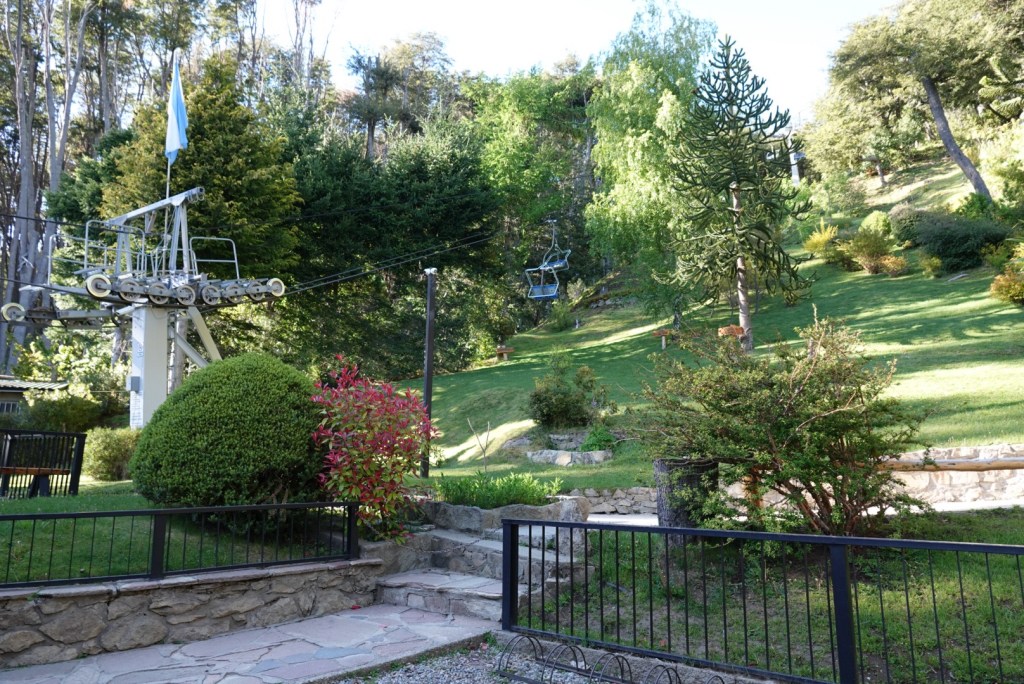
Our local guide, Santiago, Santi for short, was a knowledgeable, humorous gentleman. The first stop in the National Park was a chairlift to the top of Cerro Campanario (Bell Tower Hill), 1050 m above sea level about 350 m above Lake Nahuel Huapi.

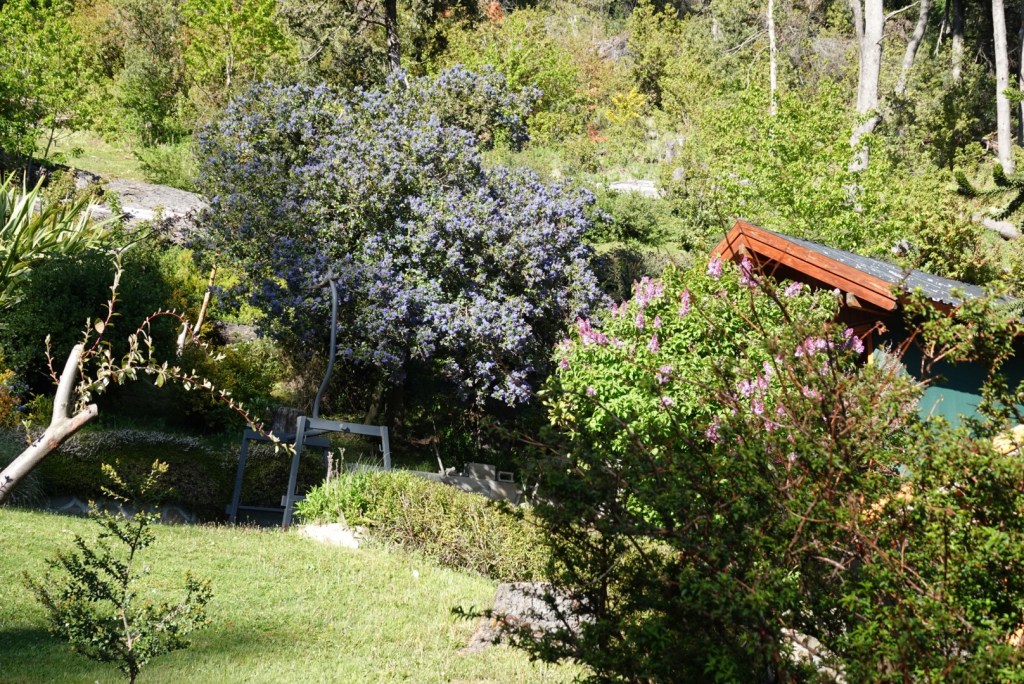
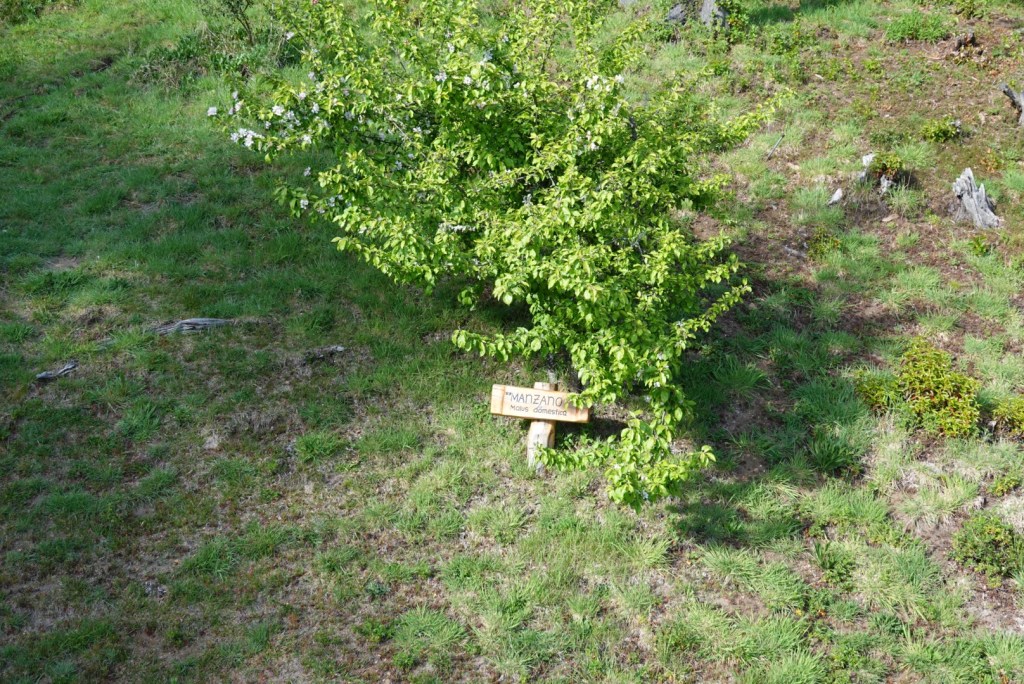
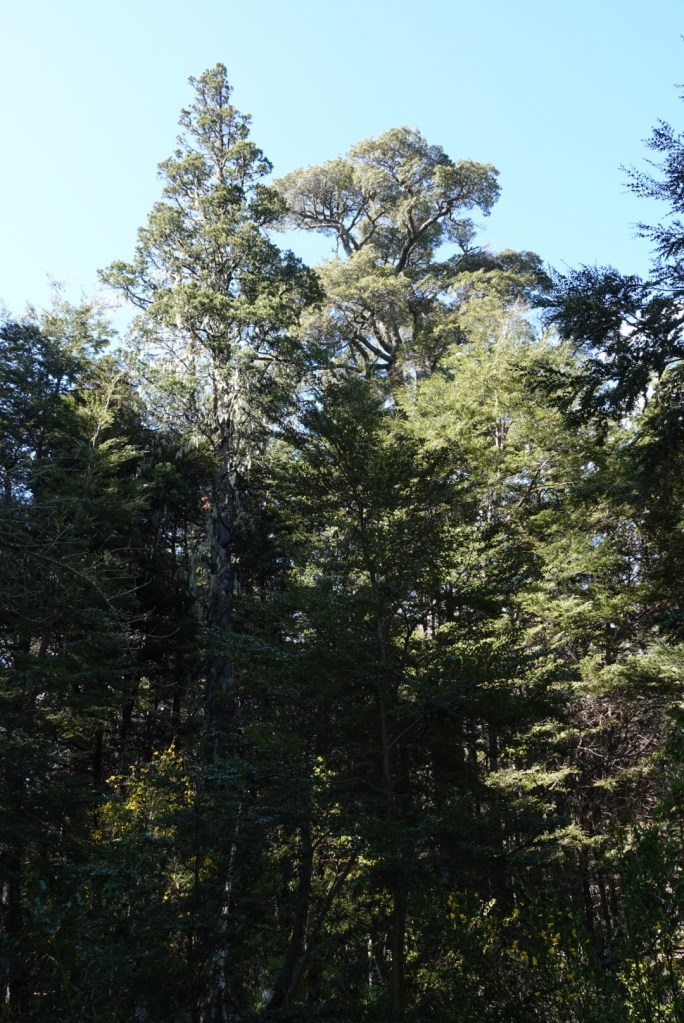
This part of the national park presents many more native plants than our last hike, like a vertical arboretum! Identifying signs are made of wood, and many are easily read from the chair lift. Magnificent!

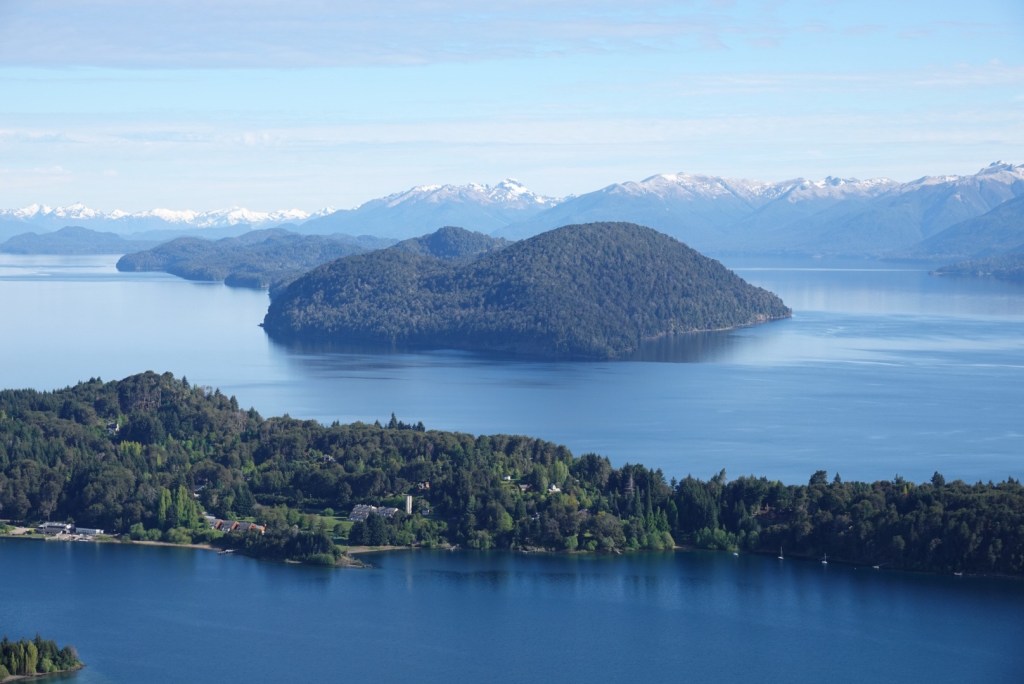
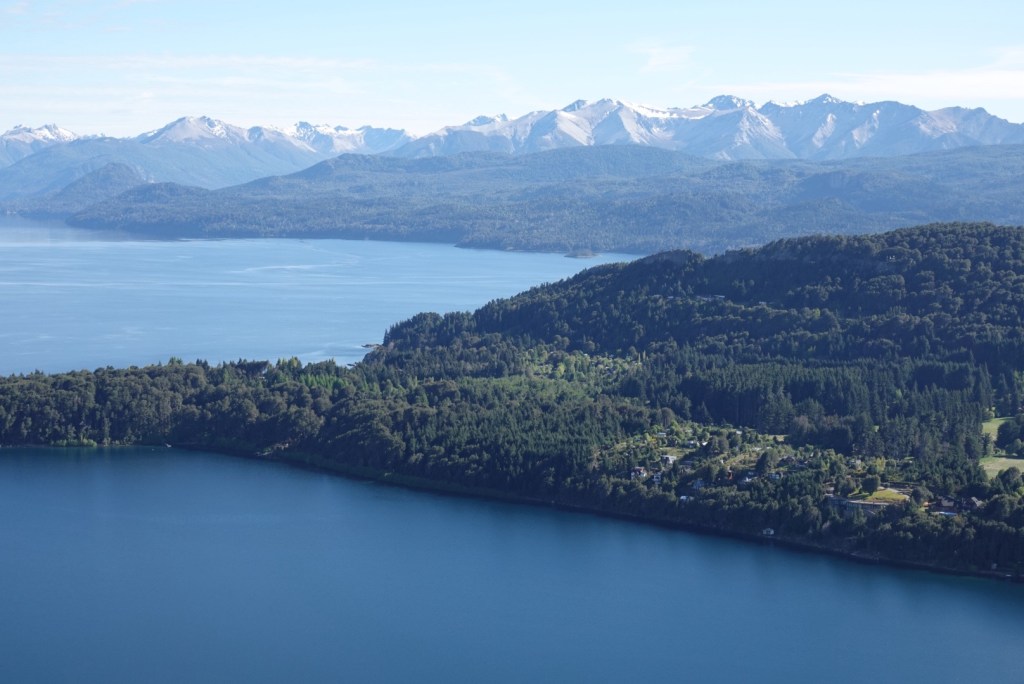
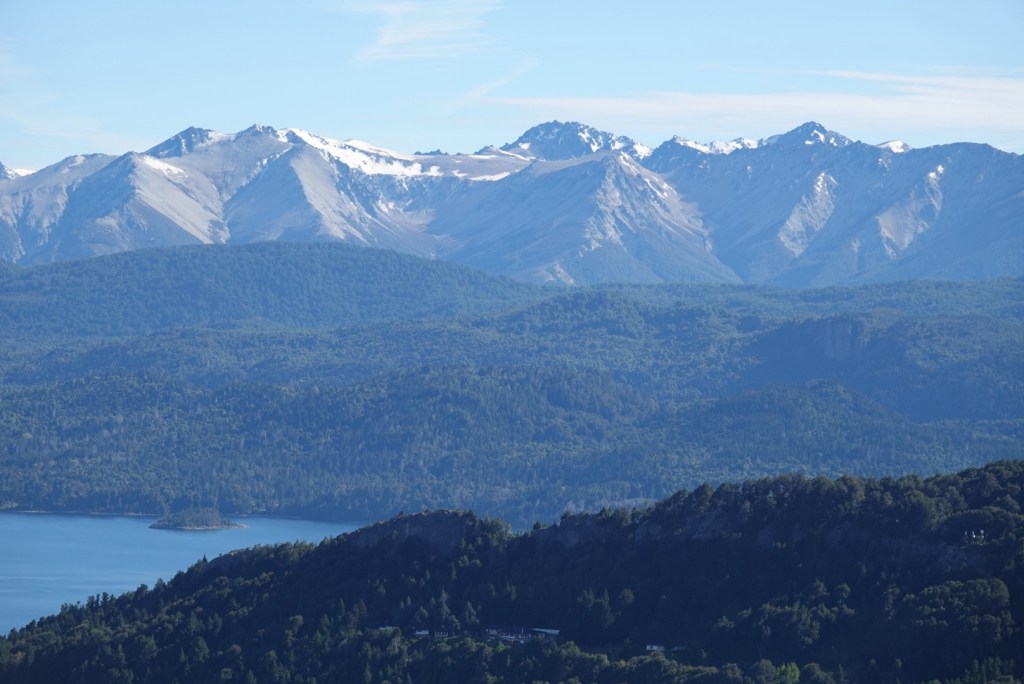
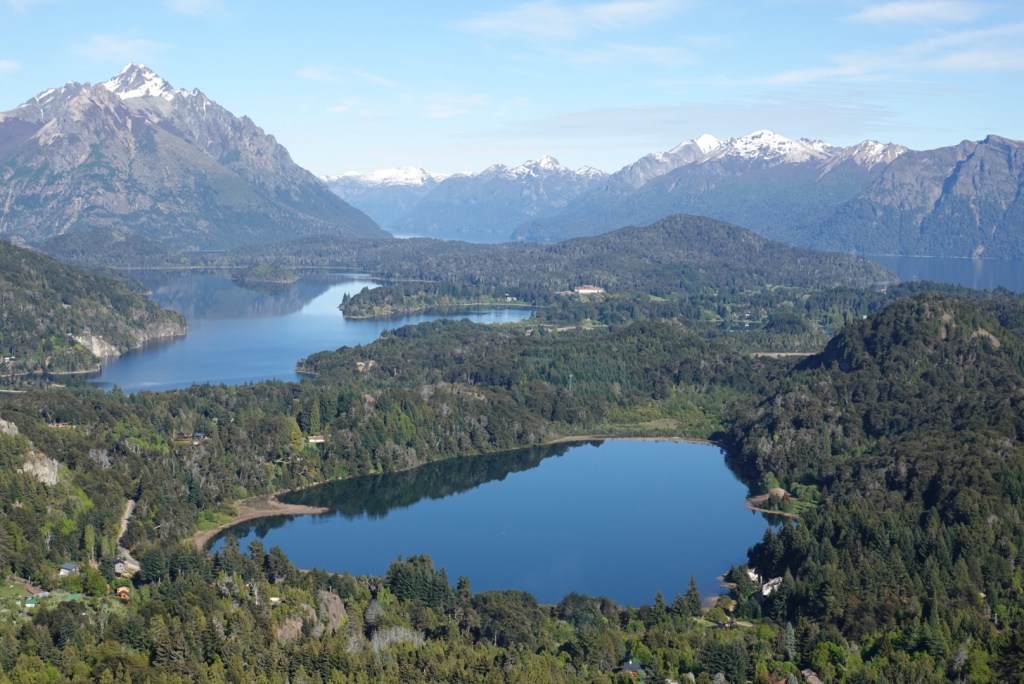
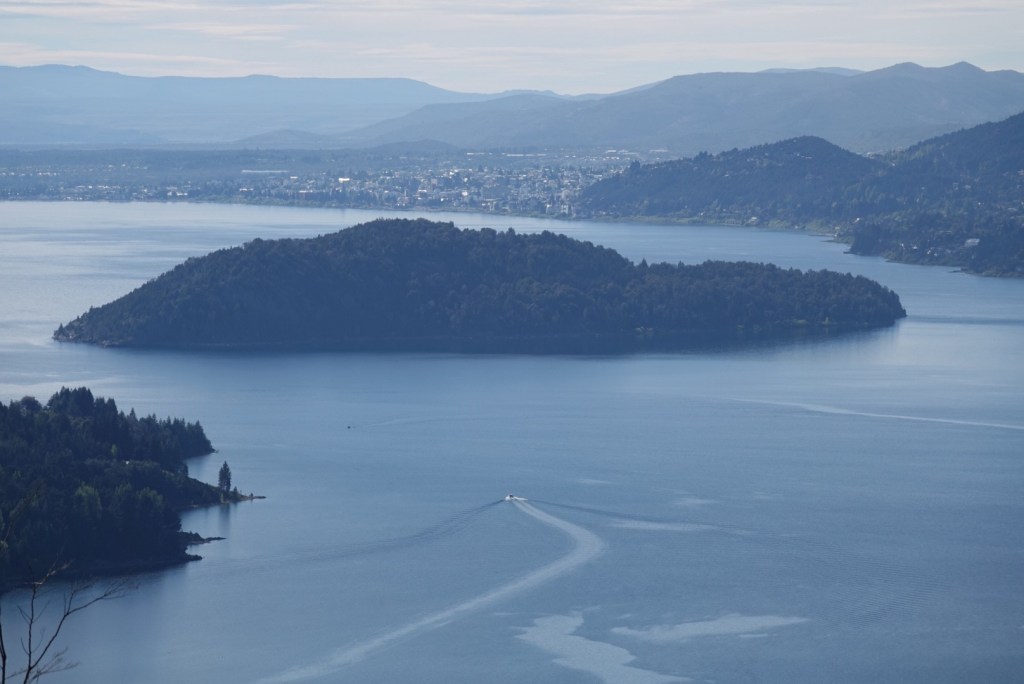
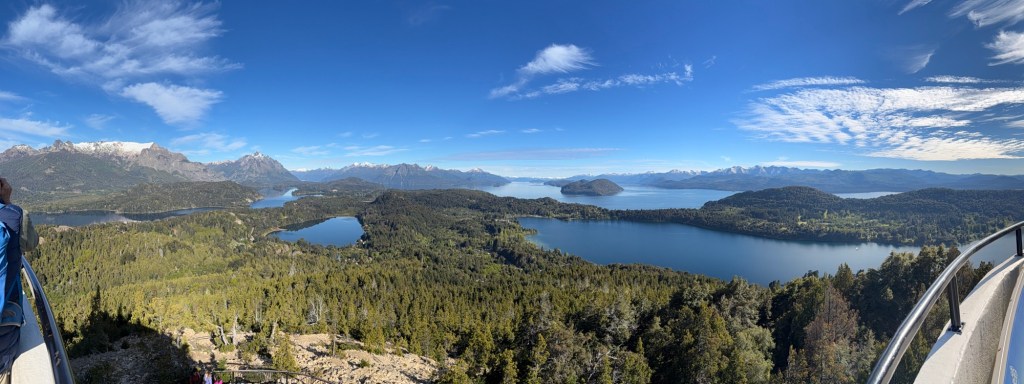
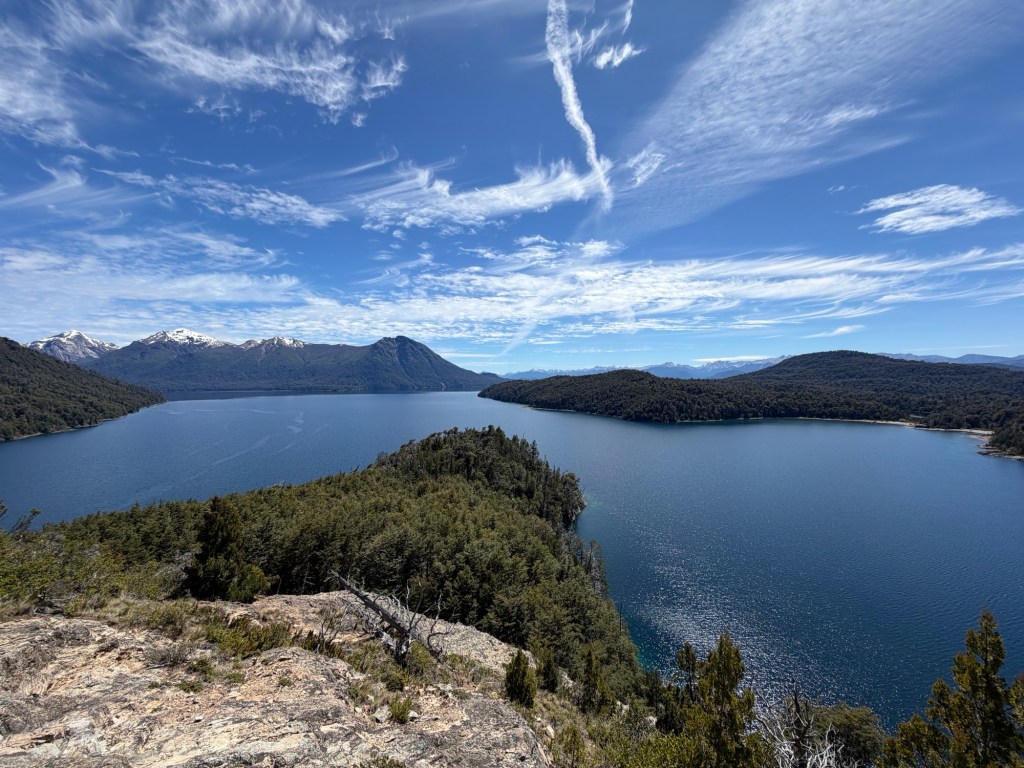
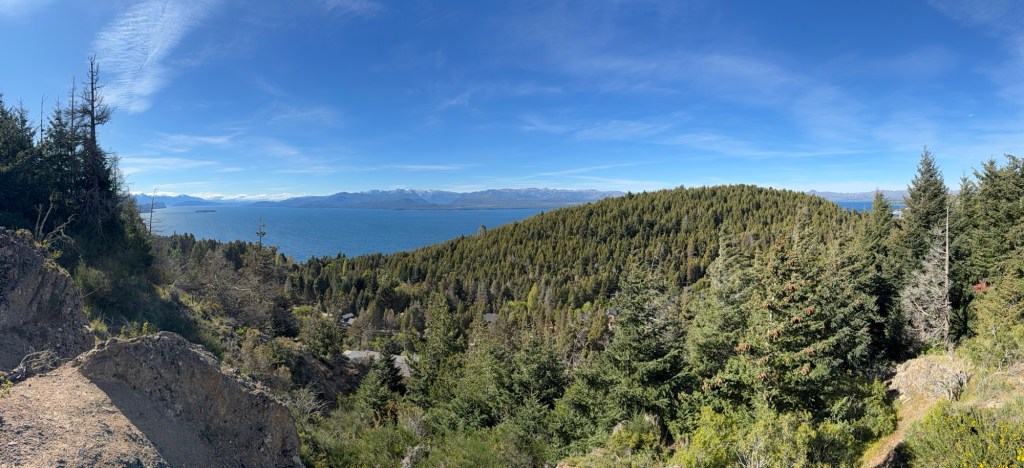
Views in 360 degrees were beautiful! Again, our group was lucky with clear, sunny weather. Most of the water is one big glacial lake with many bays — named the same as the National Park.

Panorama from the top
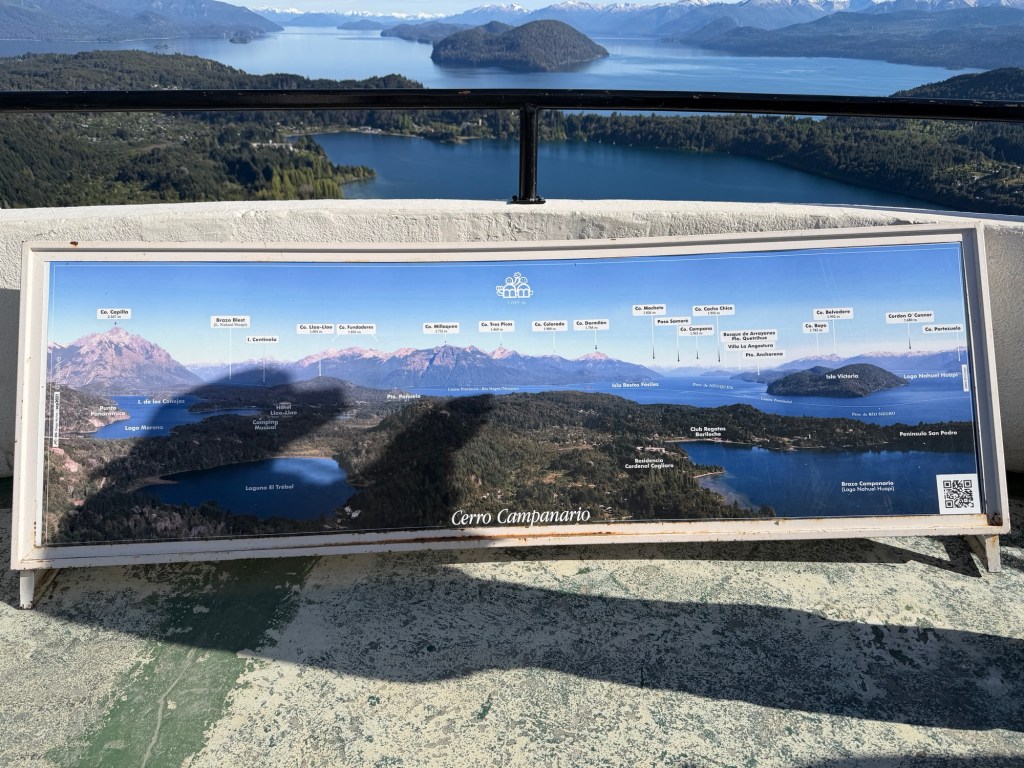
A sign with many peaks named (Co. is the abbreviation for Cerro).

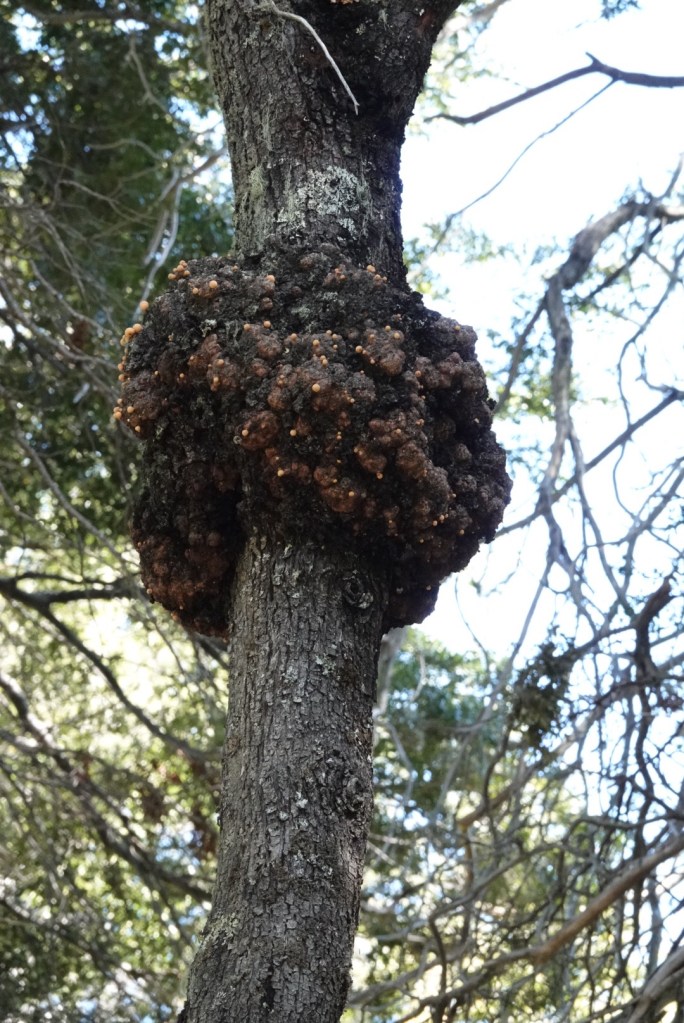
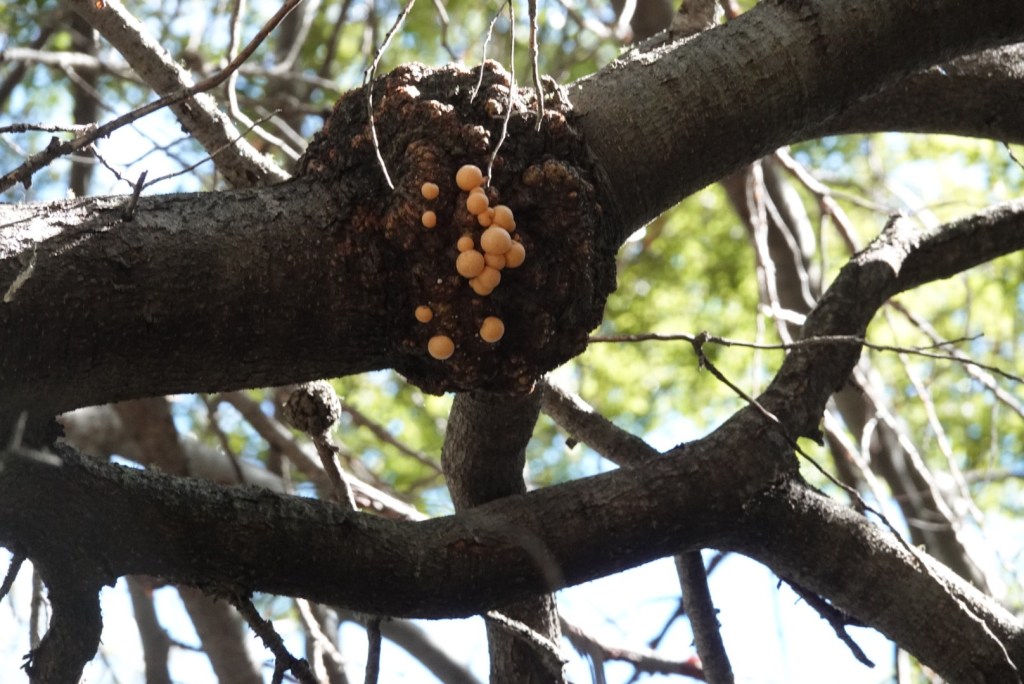
On the way to a local family-owned brewery and restaurant, we stopped in the forest for a nature walk. Santi told us about a mushroom named Llao Llao (pronounced shao shao) meaning sweet sweet (the way to say very is to repeat the word in the indigenous language of the area). When he first moved here, he was excited to try it. But, unknown to Santi, before European invasions, the native plants were low in sugar, so what to the people here at the time was sweet was almost tasteless to him.

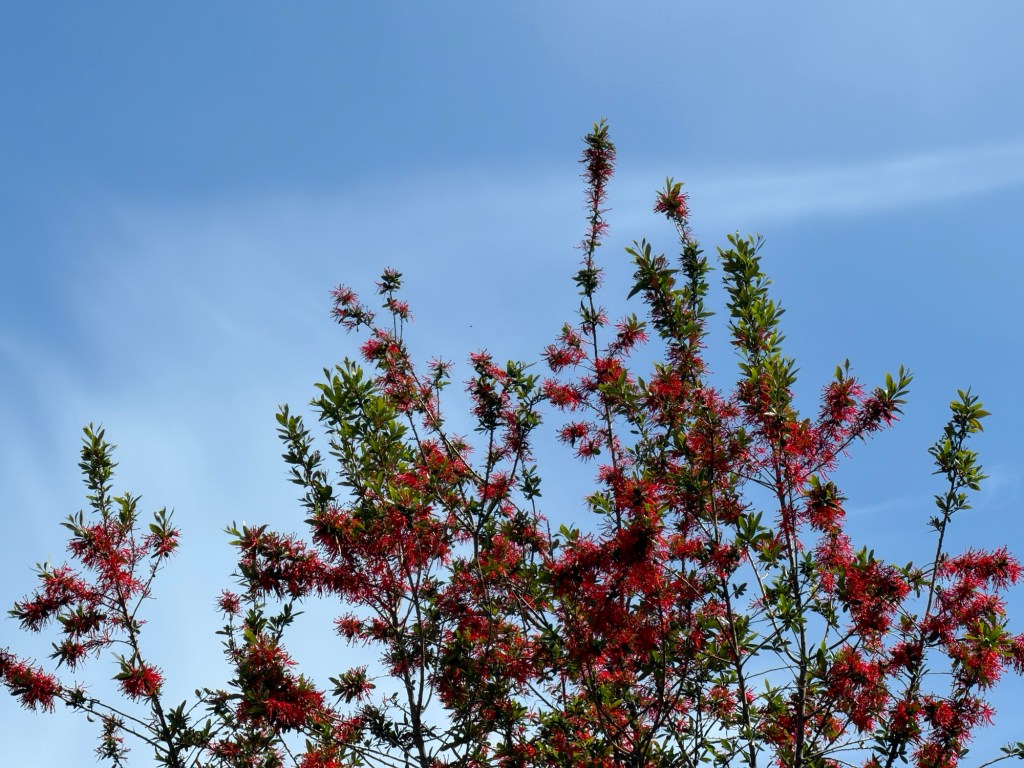
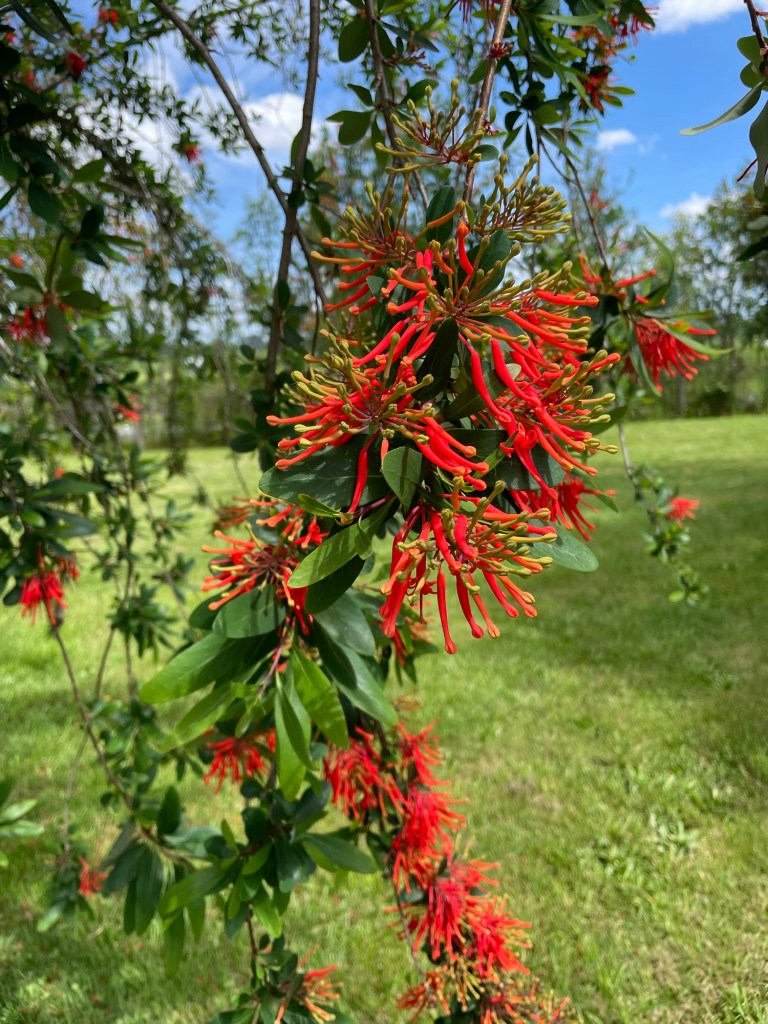
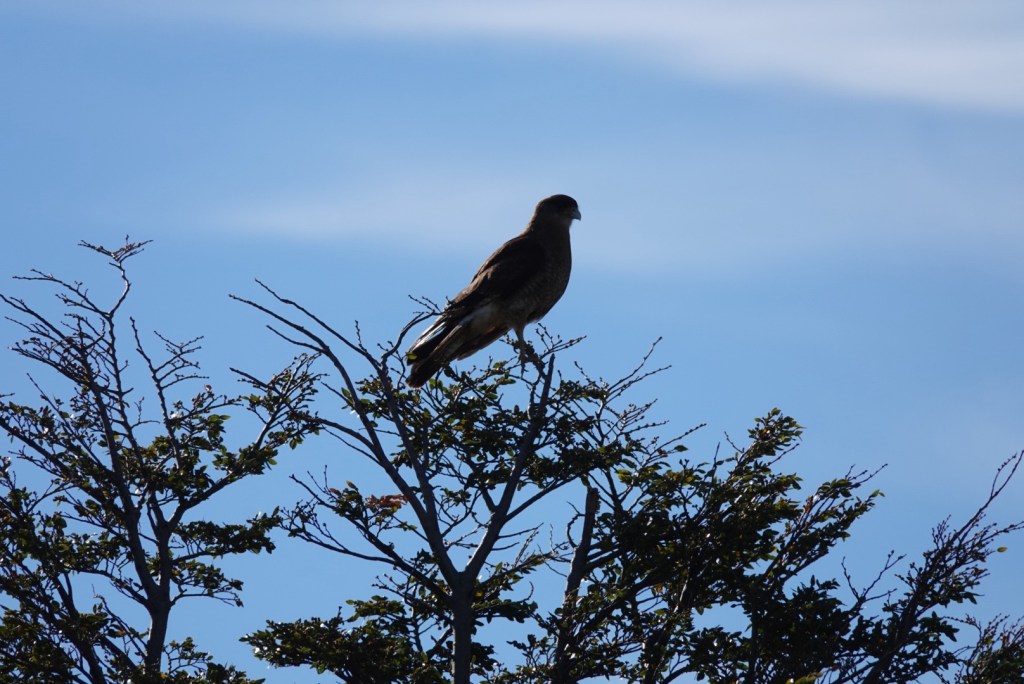
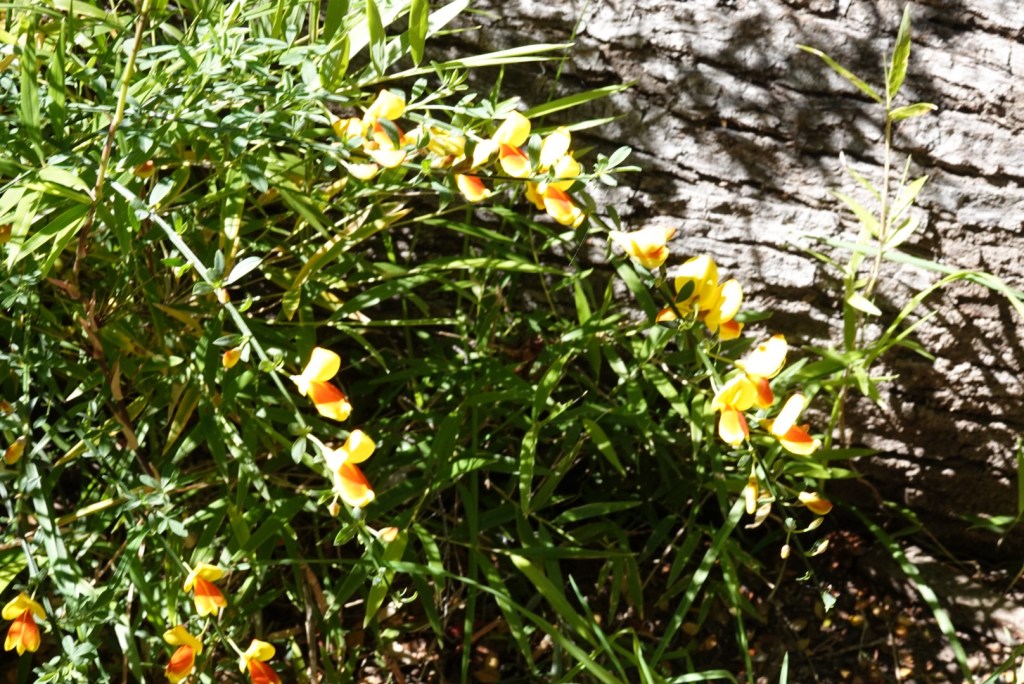
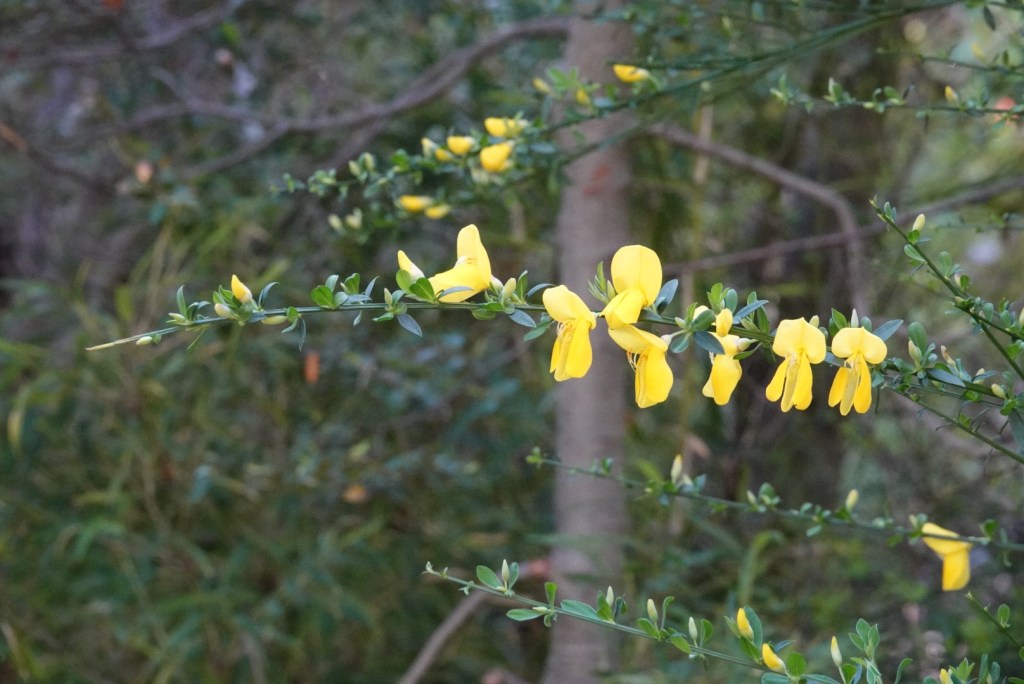
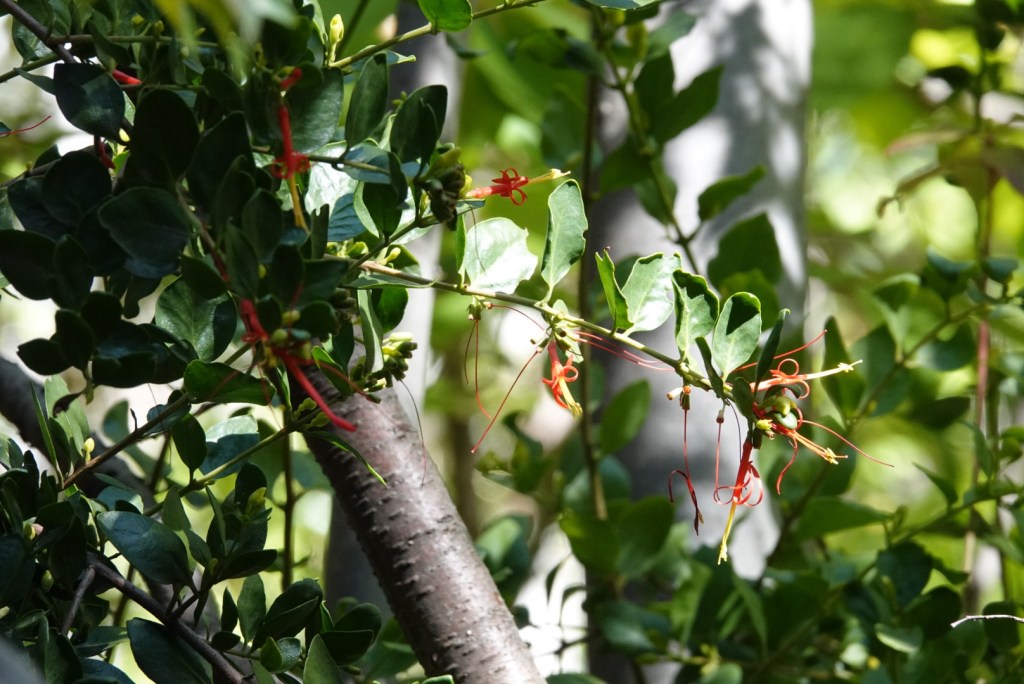
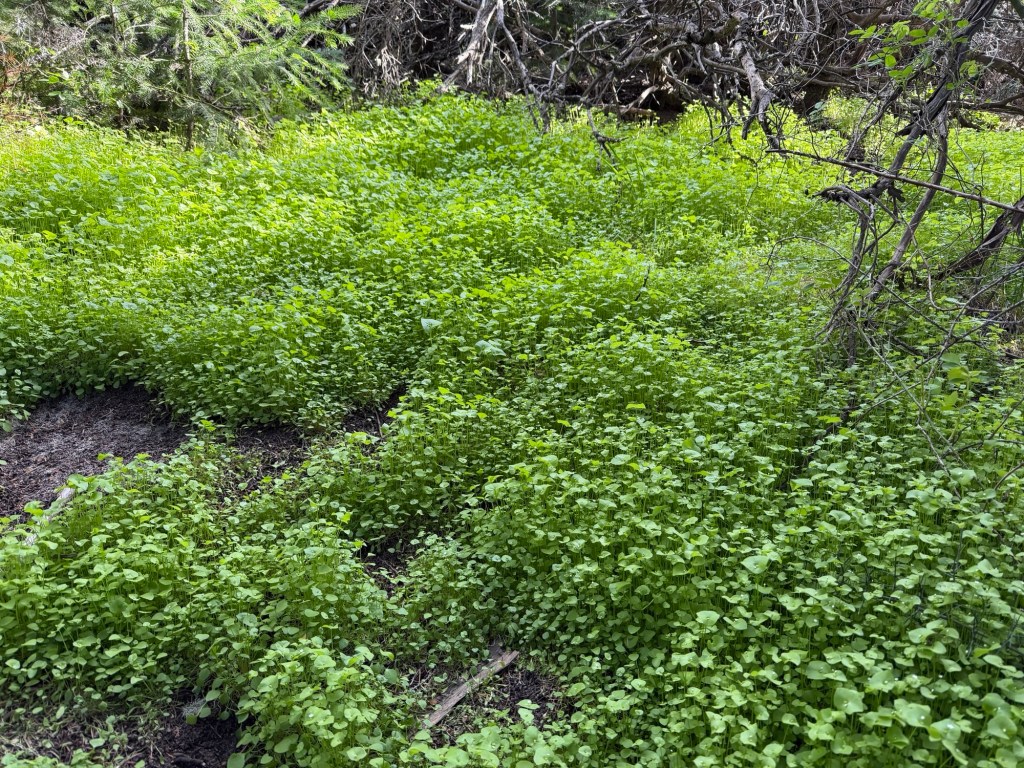
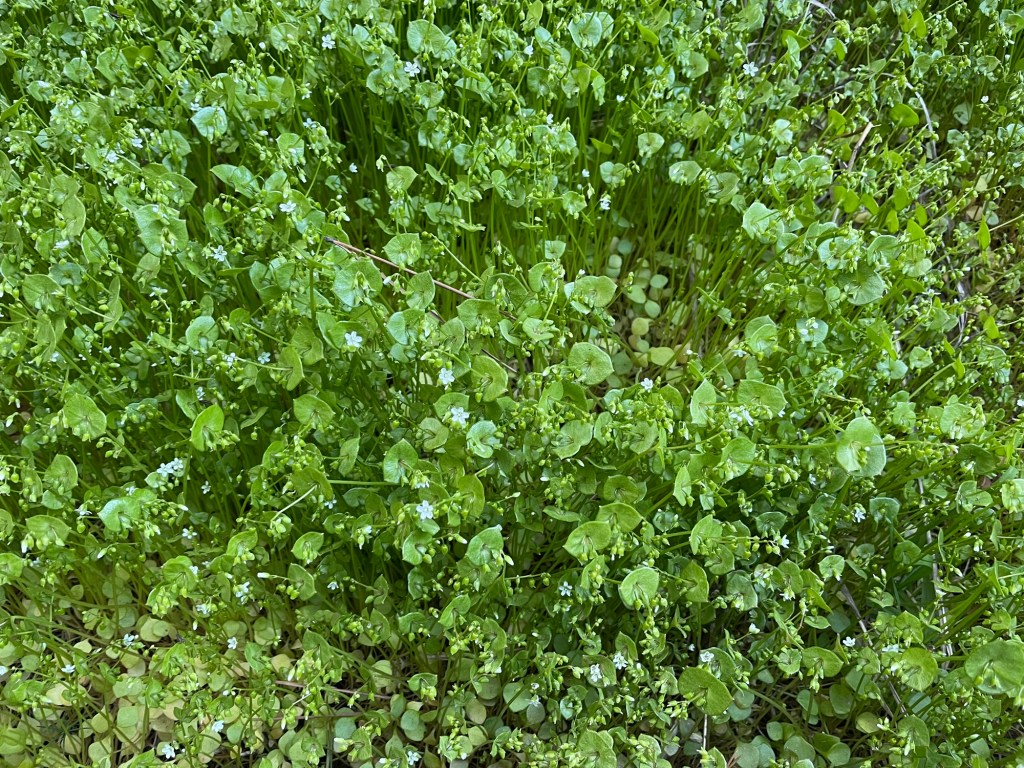
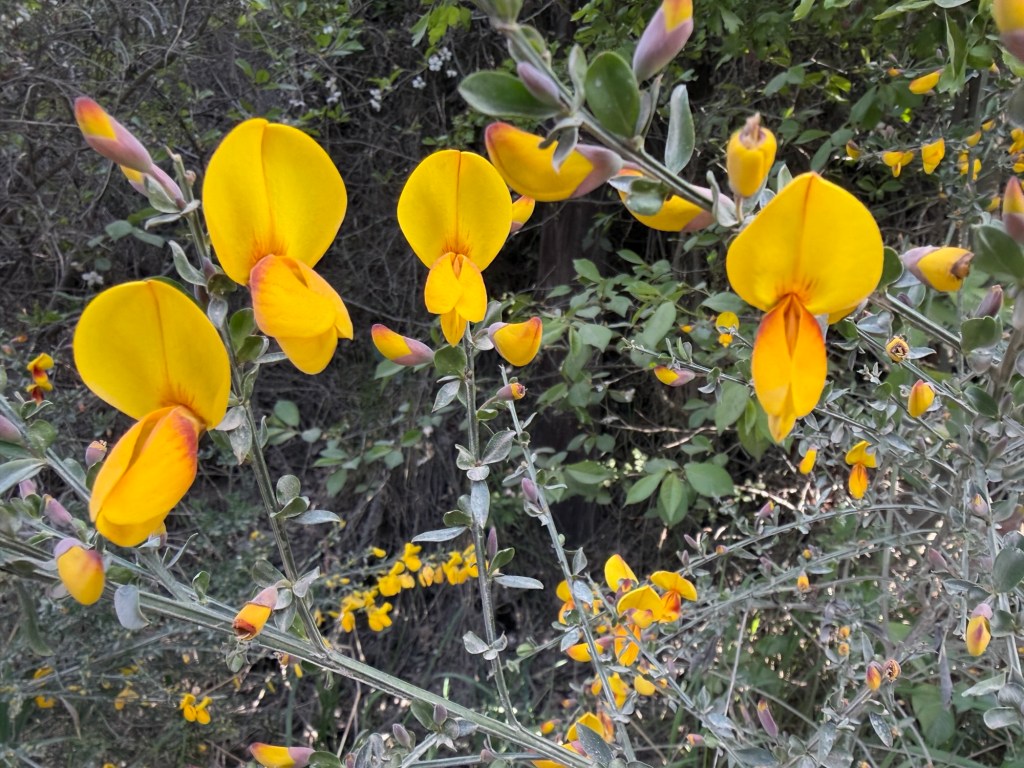
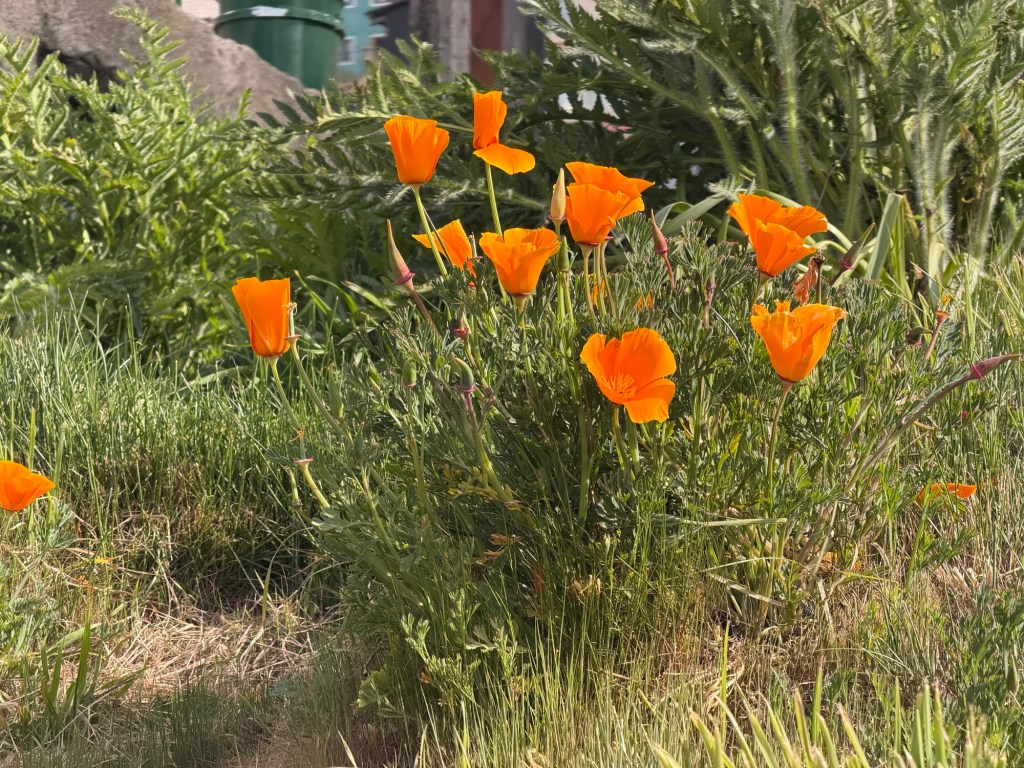
Lots of beautiful flowers greeted us on the short nature walk. We listened to many birds as well.
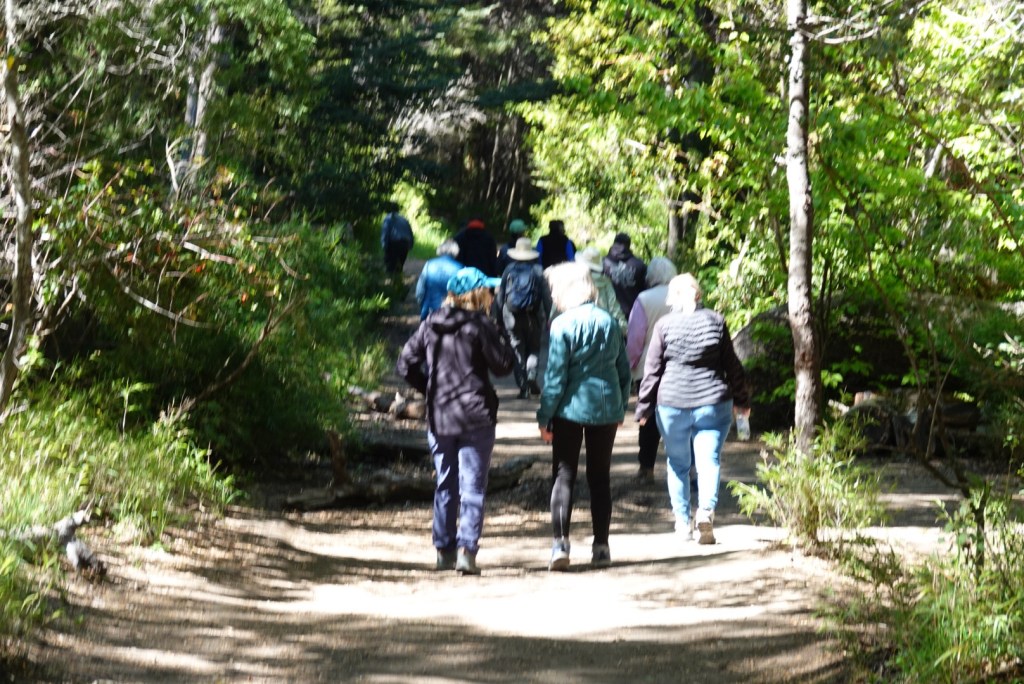
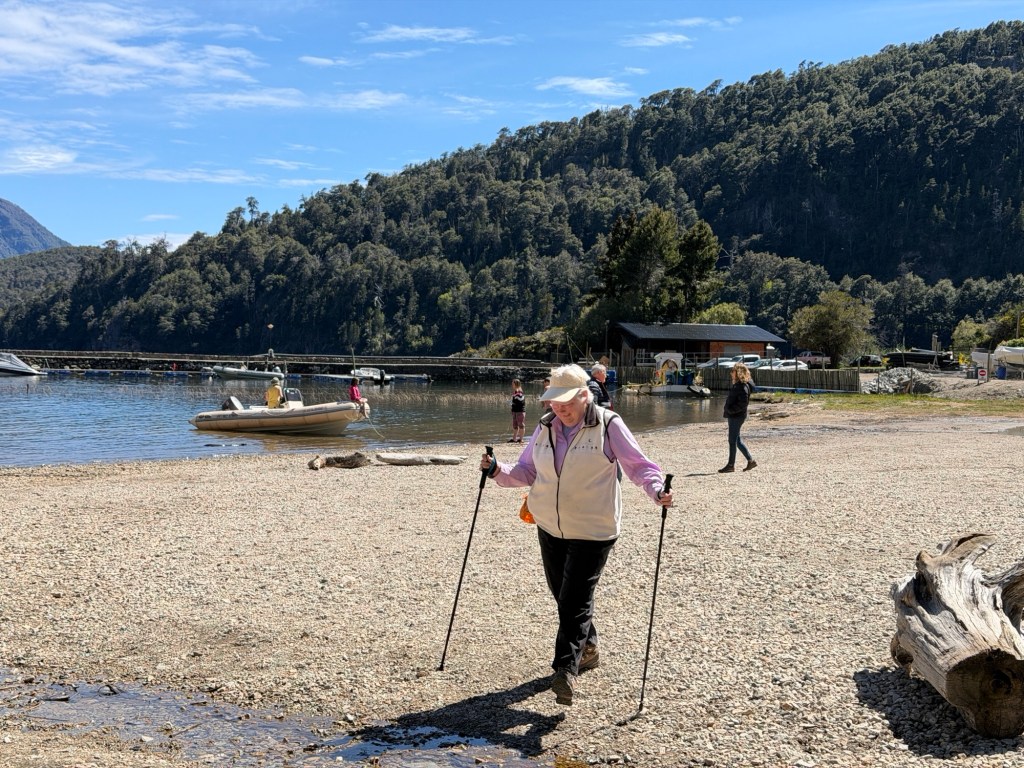
We stopped again for another nature walk where walking sticks were recommended.
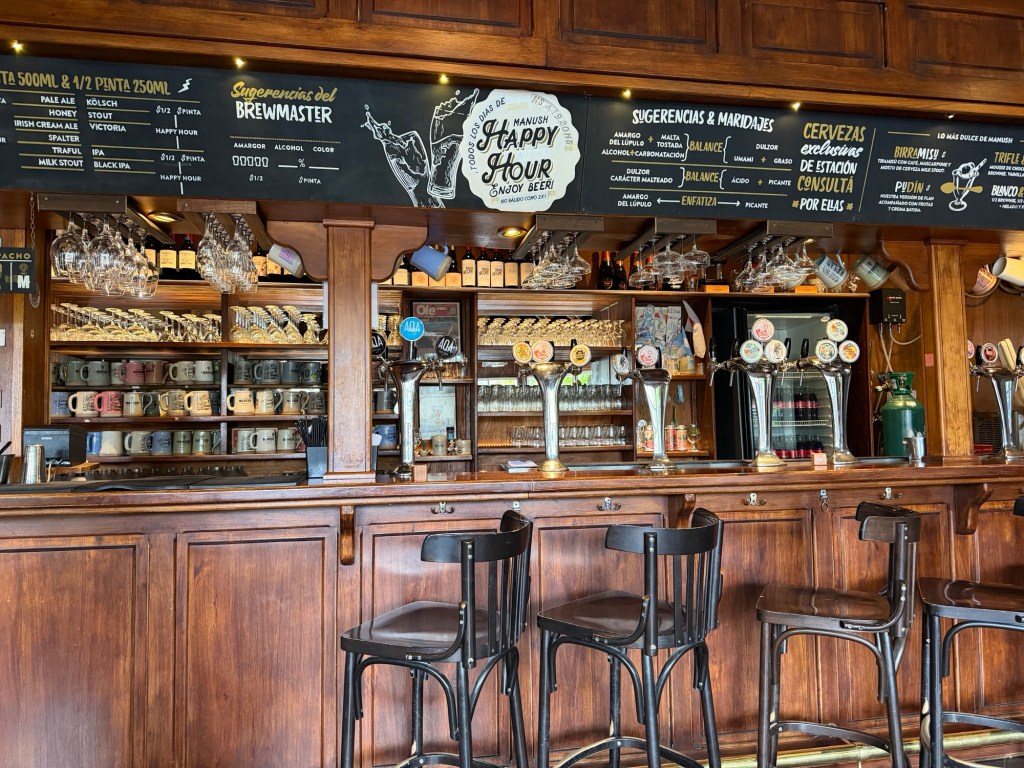
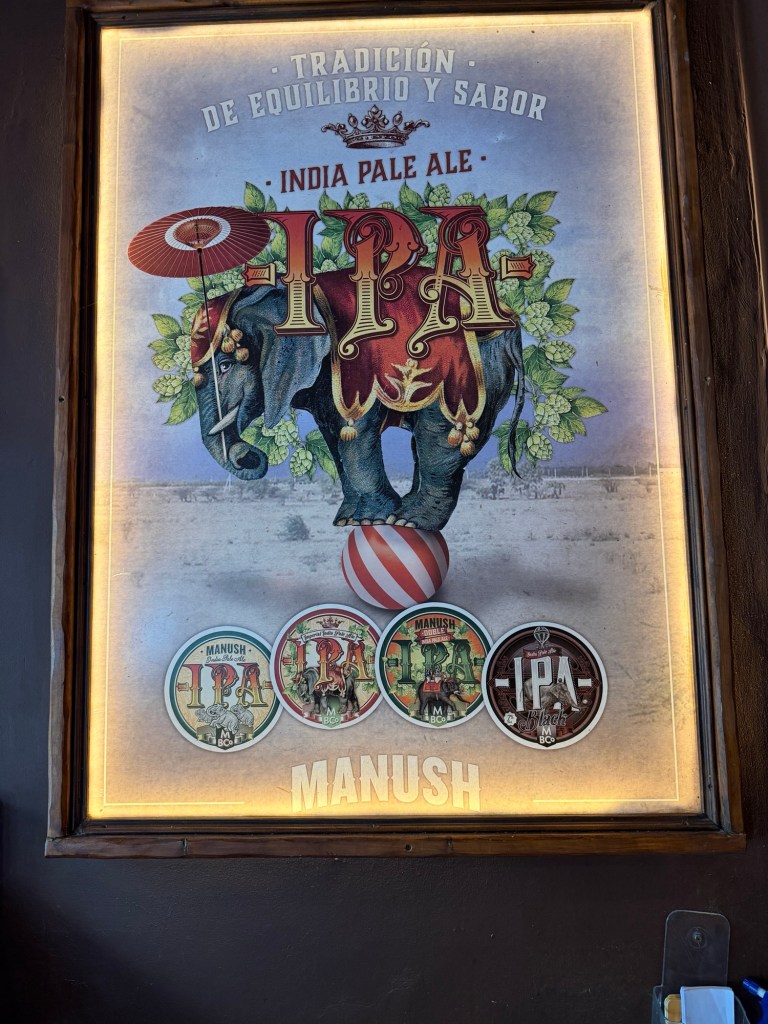
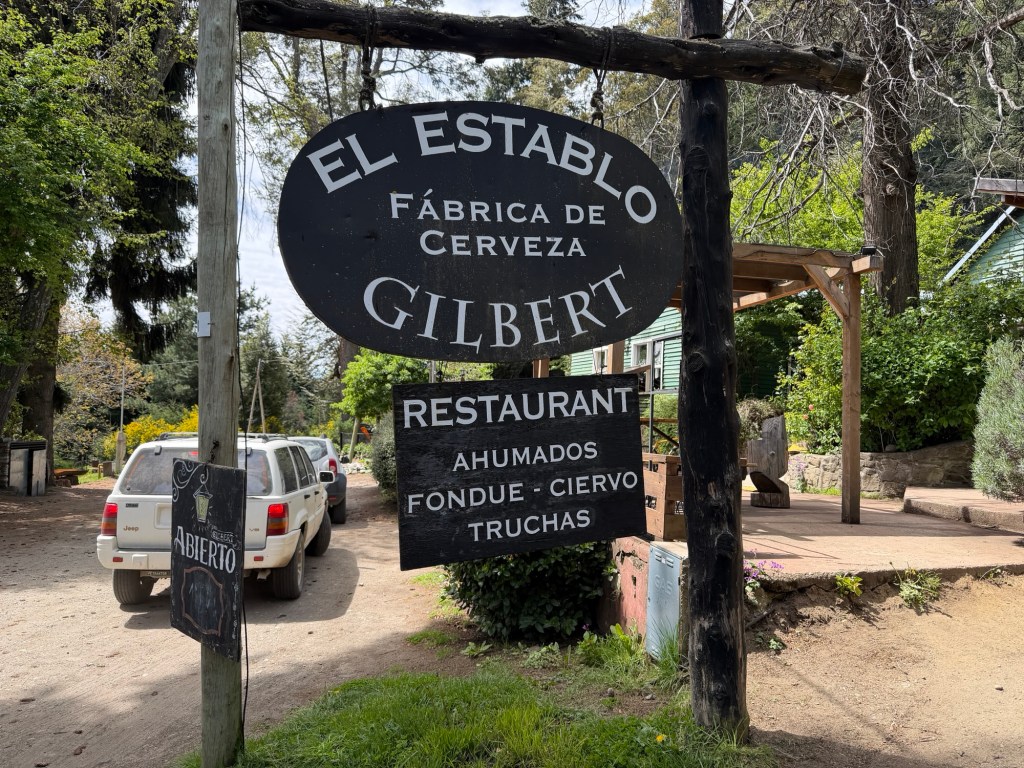
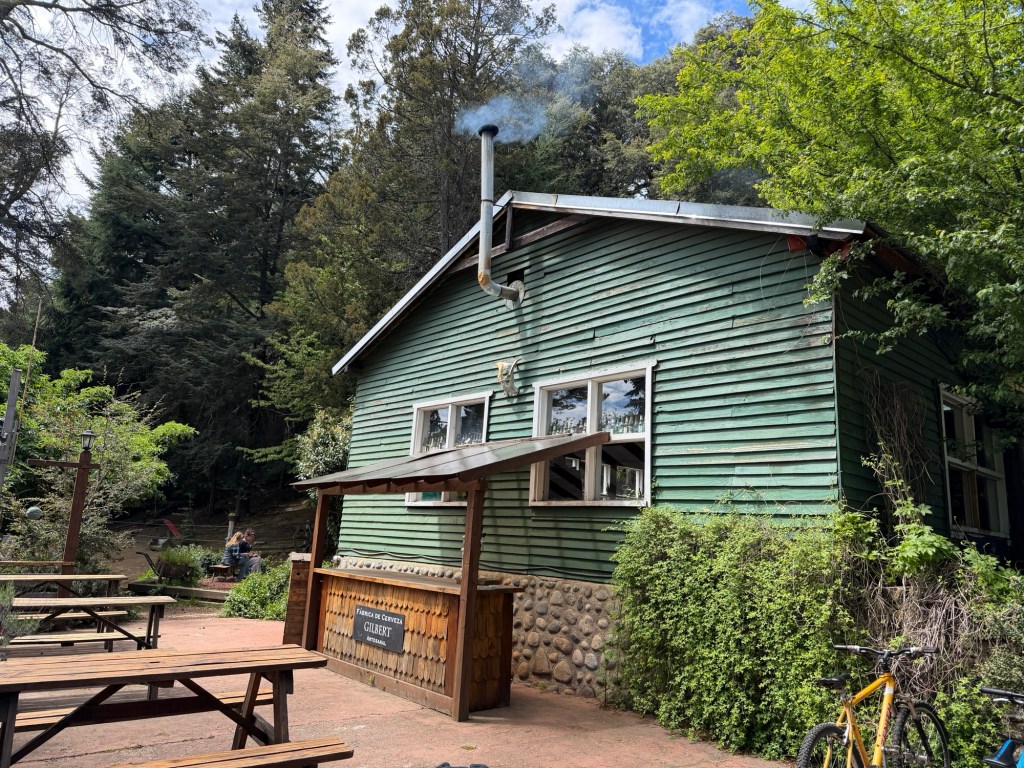
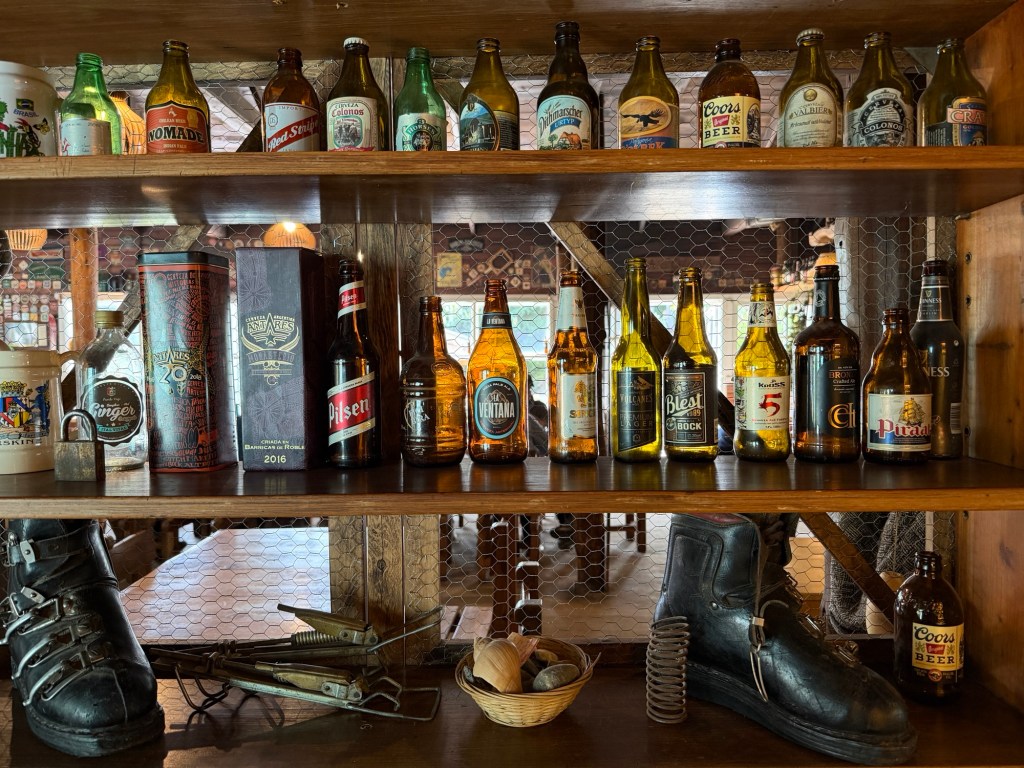
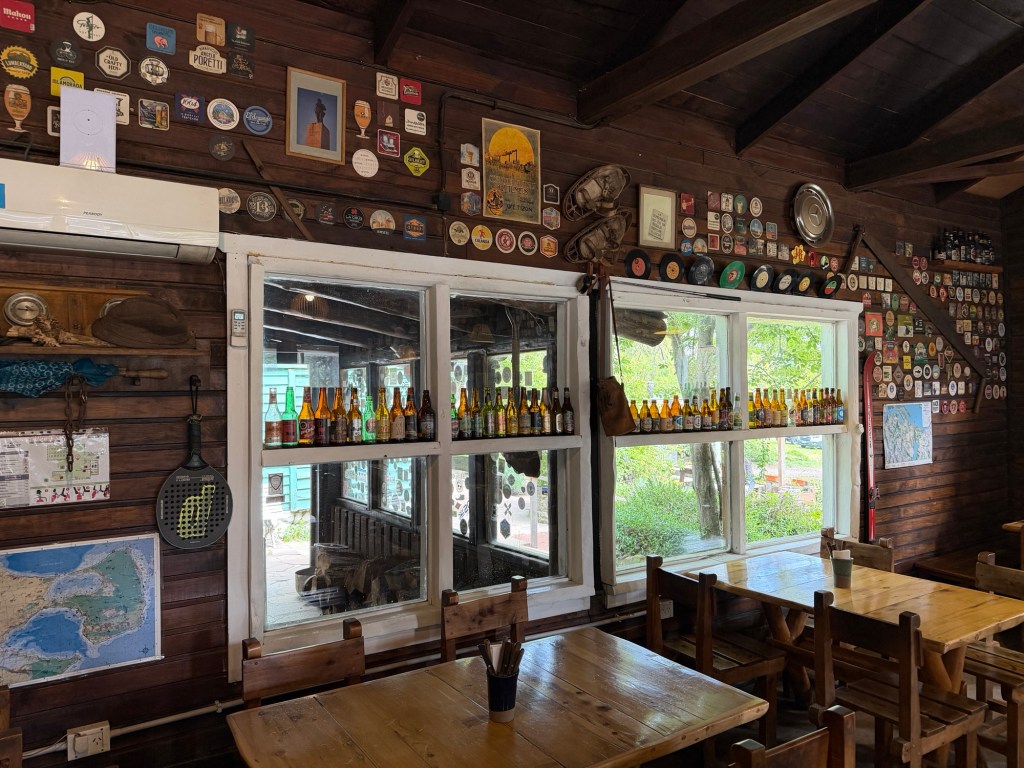
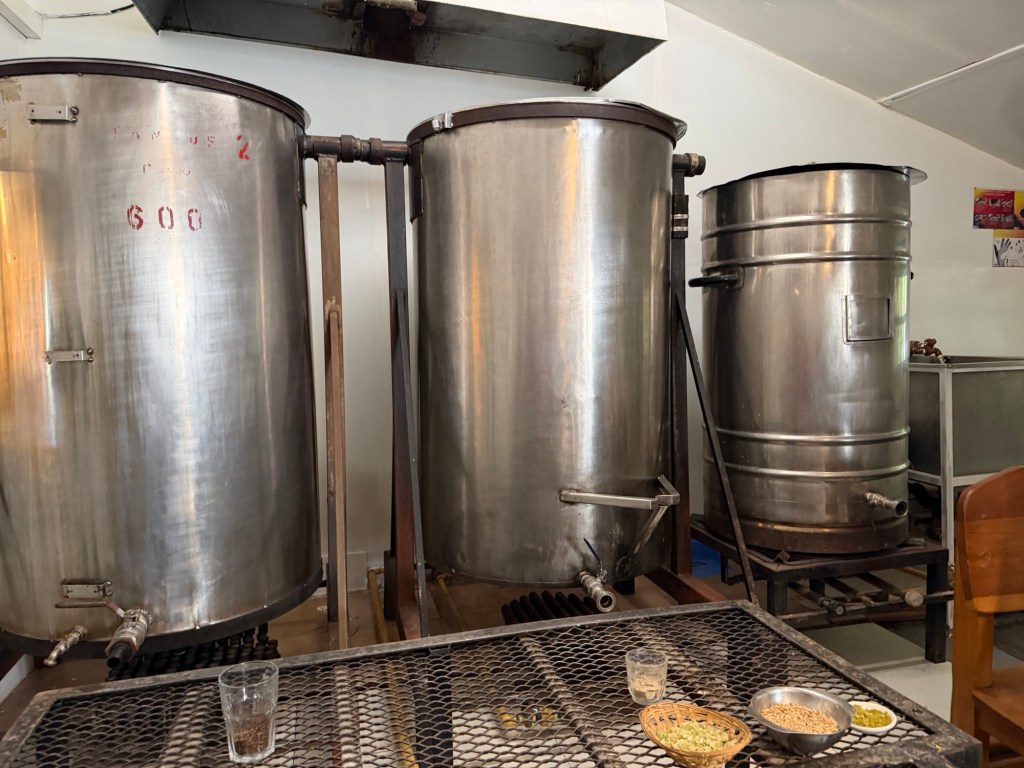
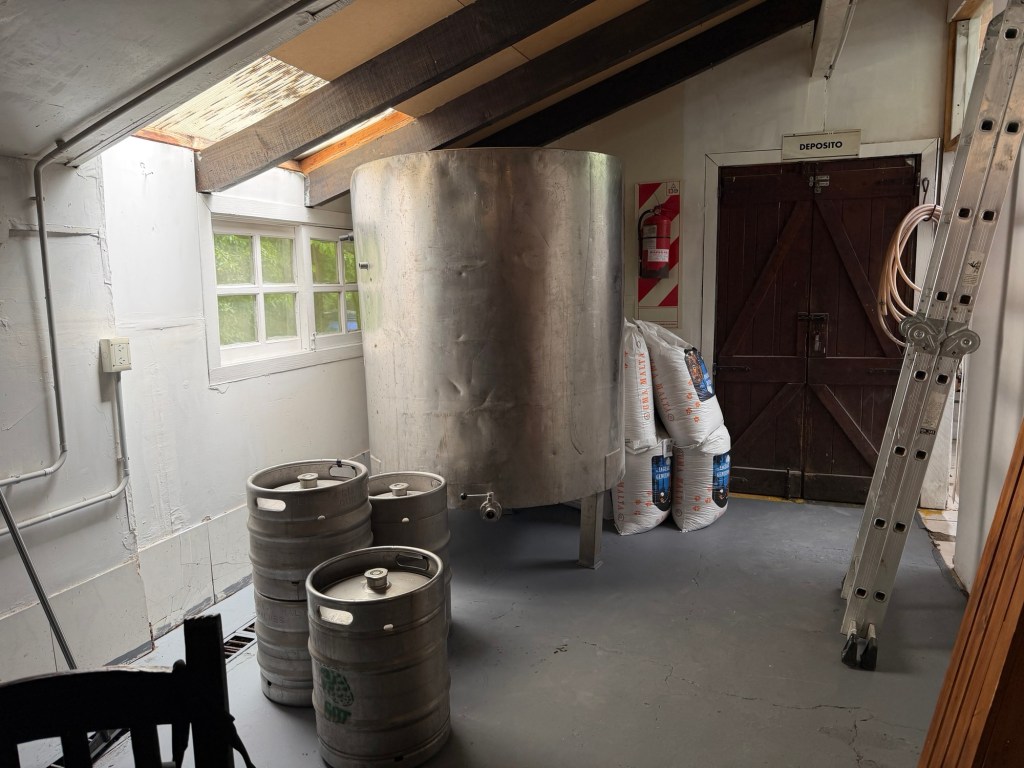
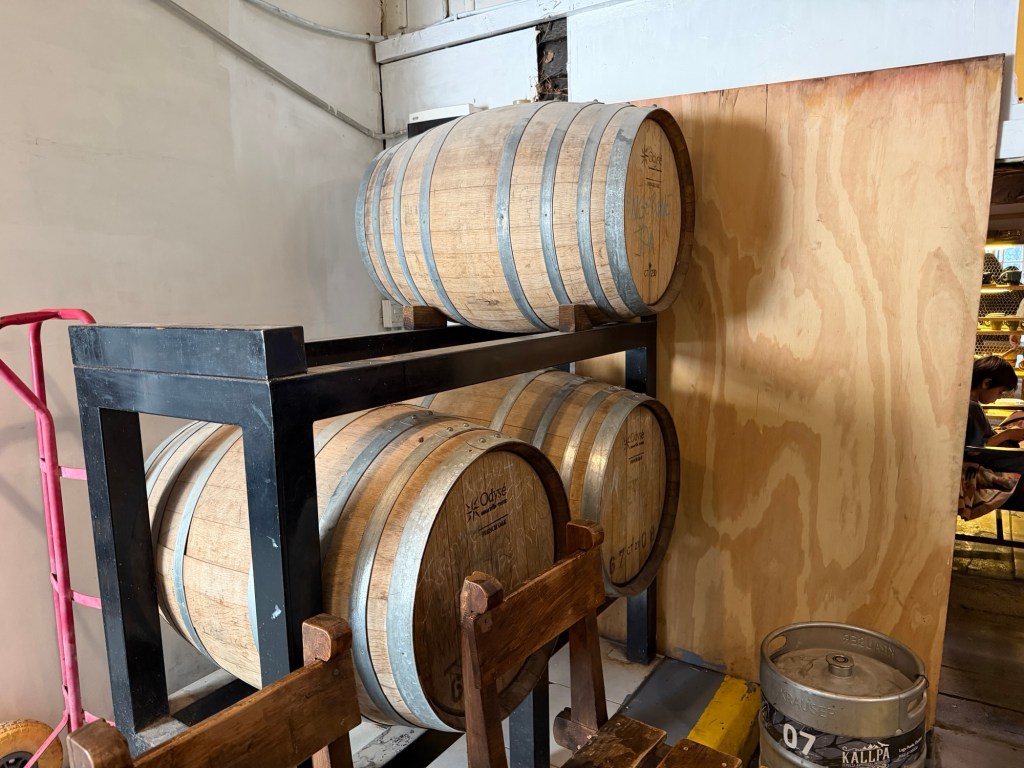
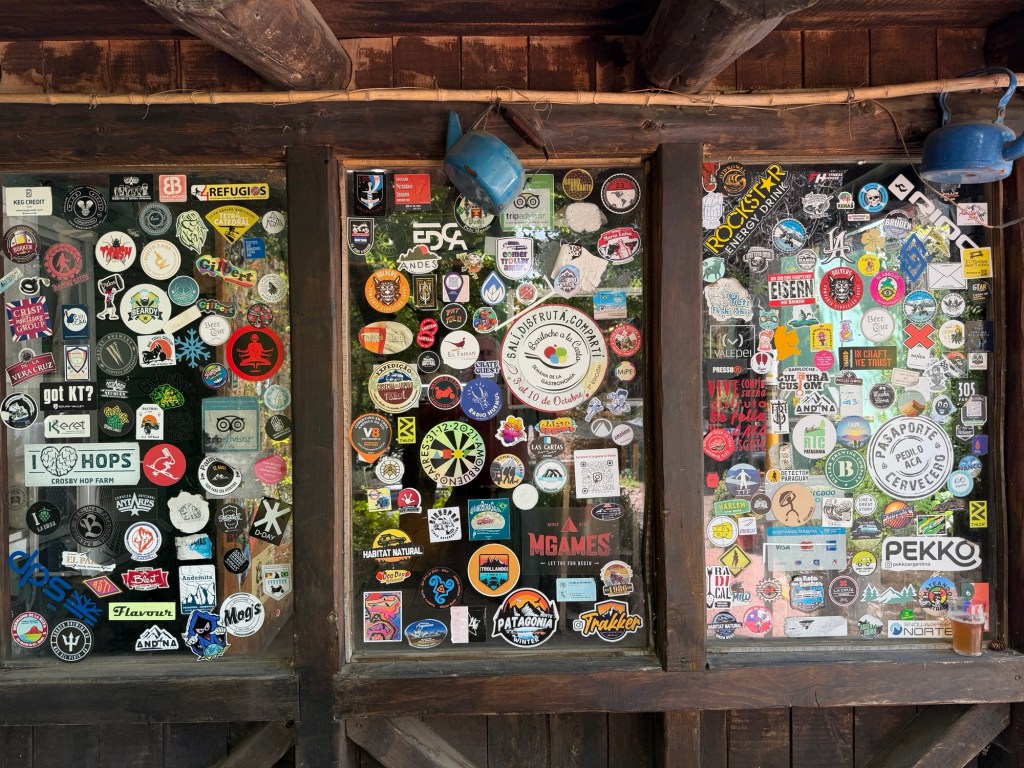
At the Gilbert family brewery, the son explained the process he used to make his beer as well as the history of his family’s presence. There was a Patagonia brand brewpub just down the road; we were told this was placed for tourists and the brand is owned by Anheuser-Busch.

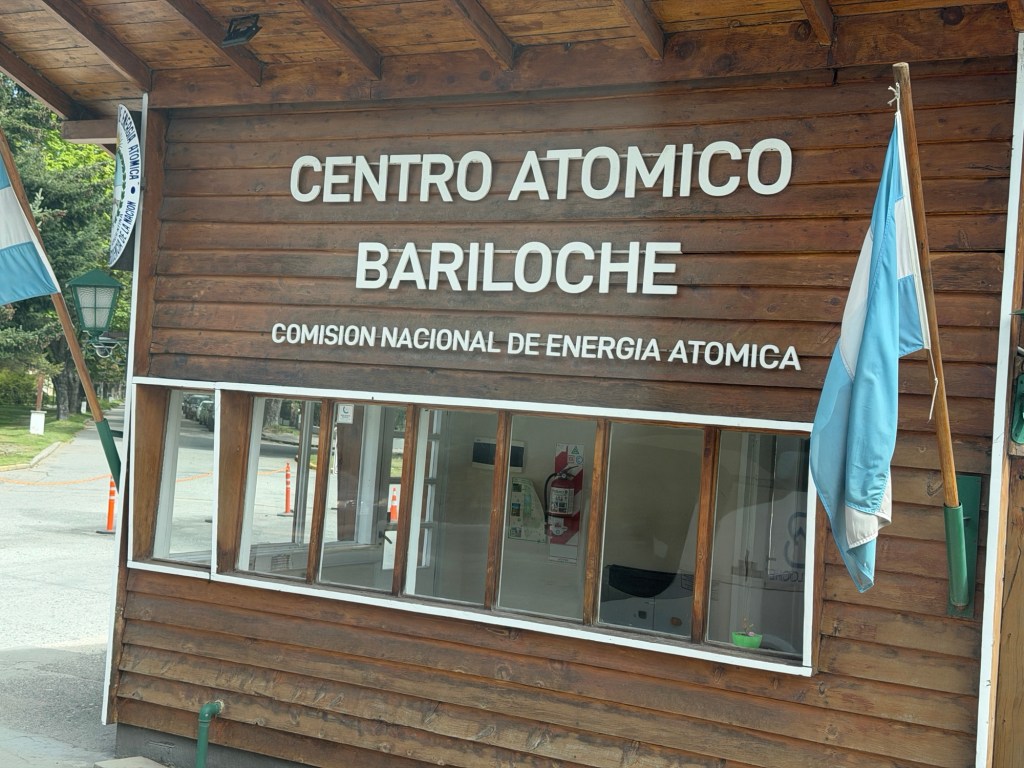
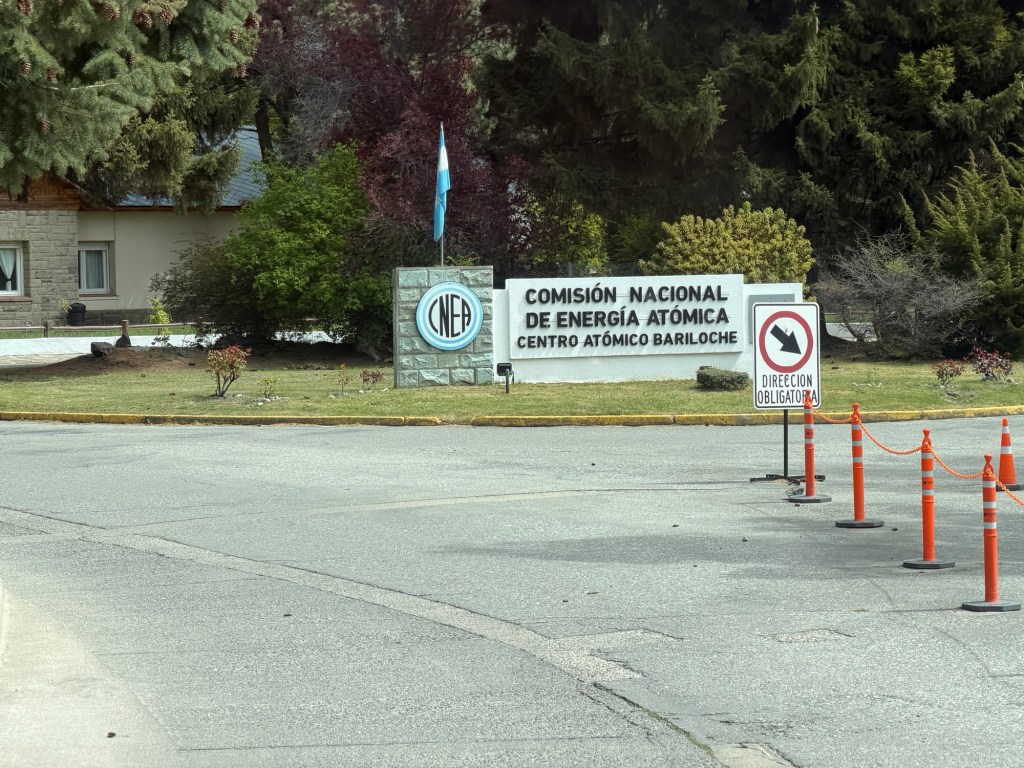
Our guide, Santi, explained that Bariloche is the center for atomic physics in Argentina. The program, promulgated by a German scientist, to construct a research nuclear reactor on an island in the lake failed. But the Center for Atomic Energy is here, the premier institution for nuclear energy research in Argentina.

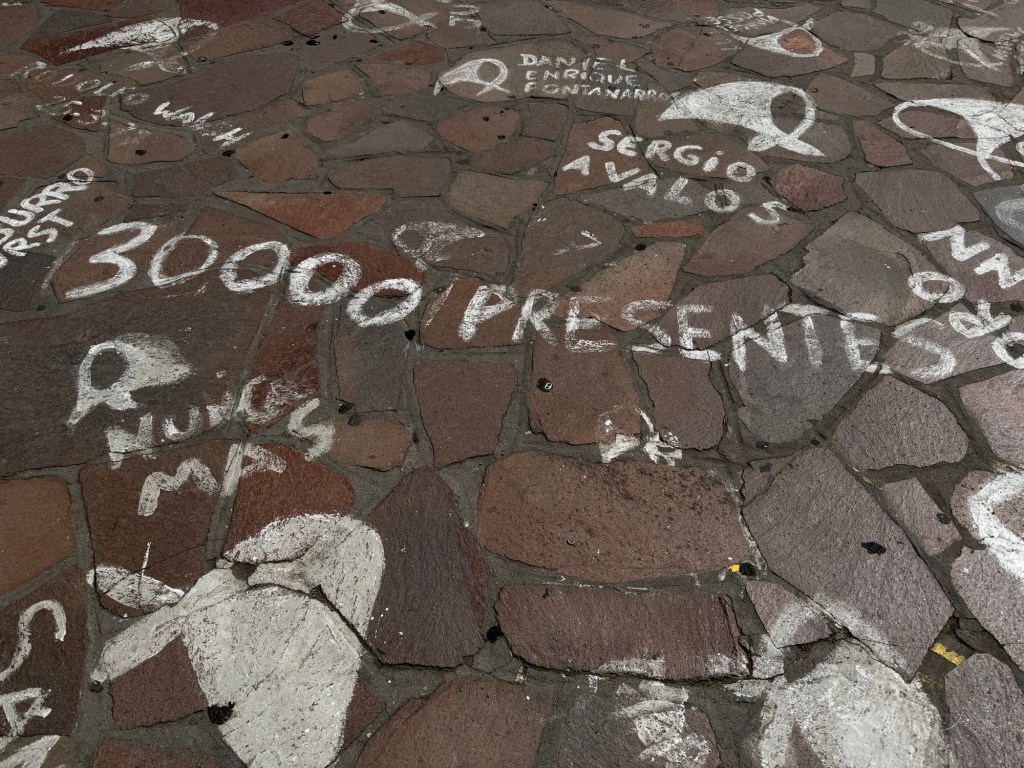
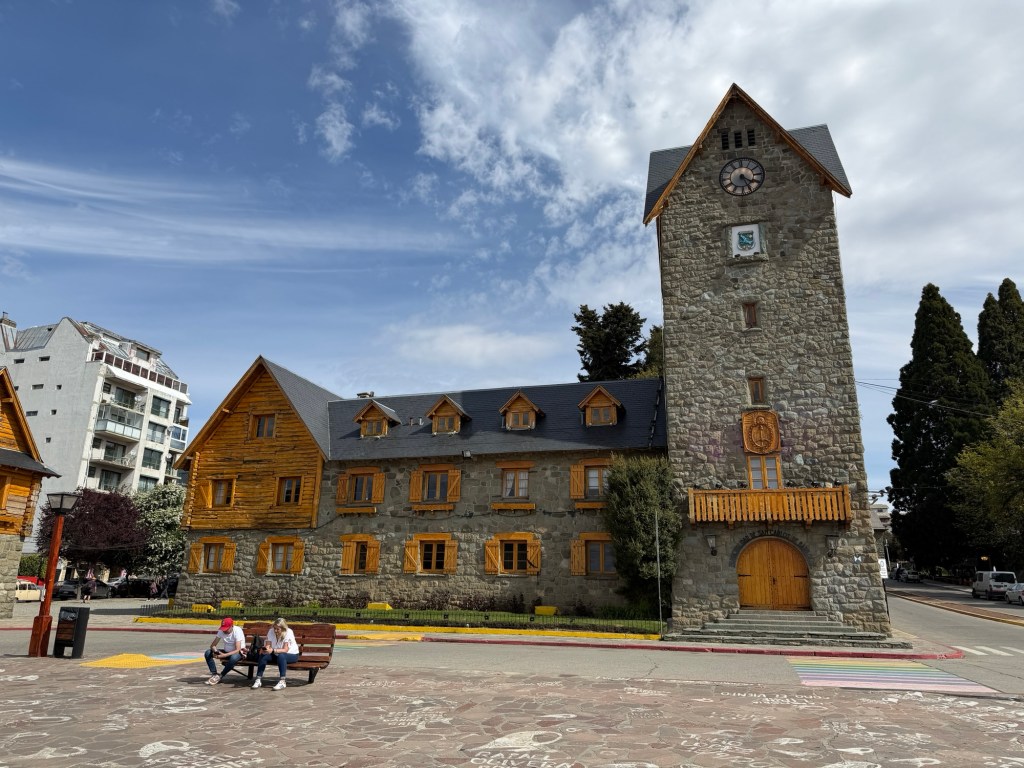
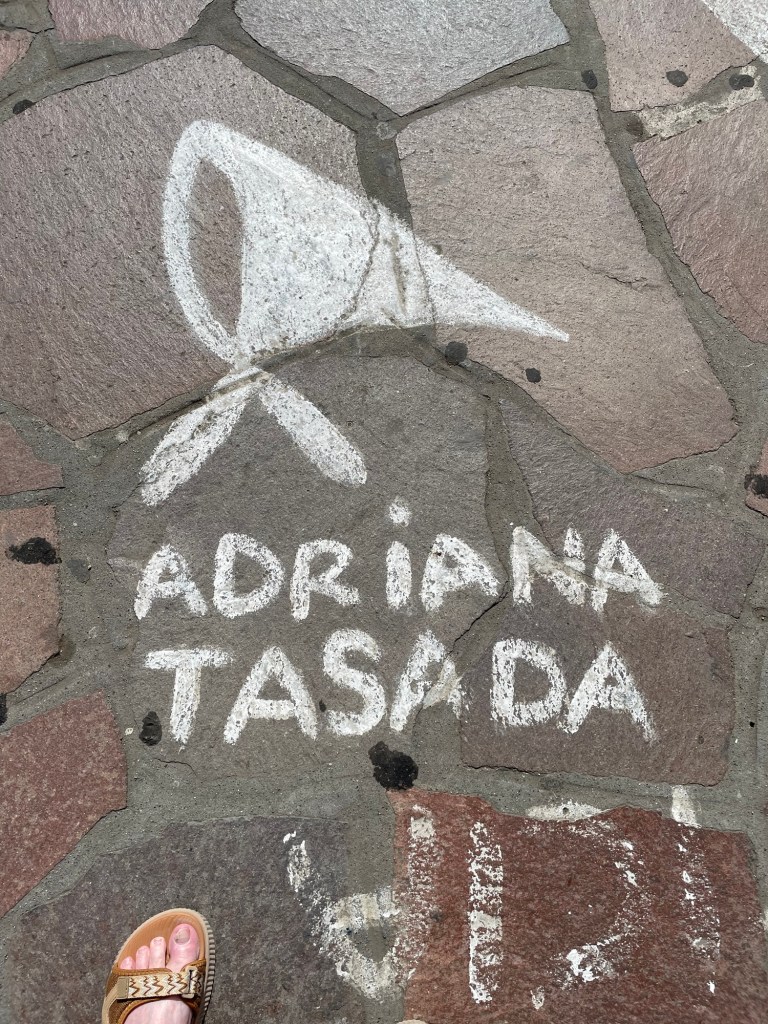
Back in the town of Bariloche, we walked to the central plaza where the grandmothers were celebrated again, for their protest of the disappeared.

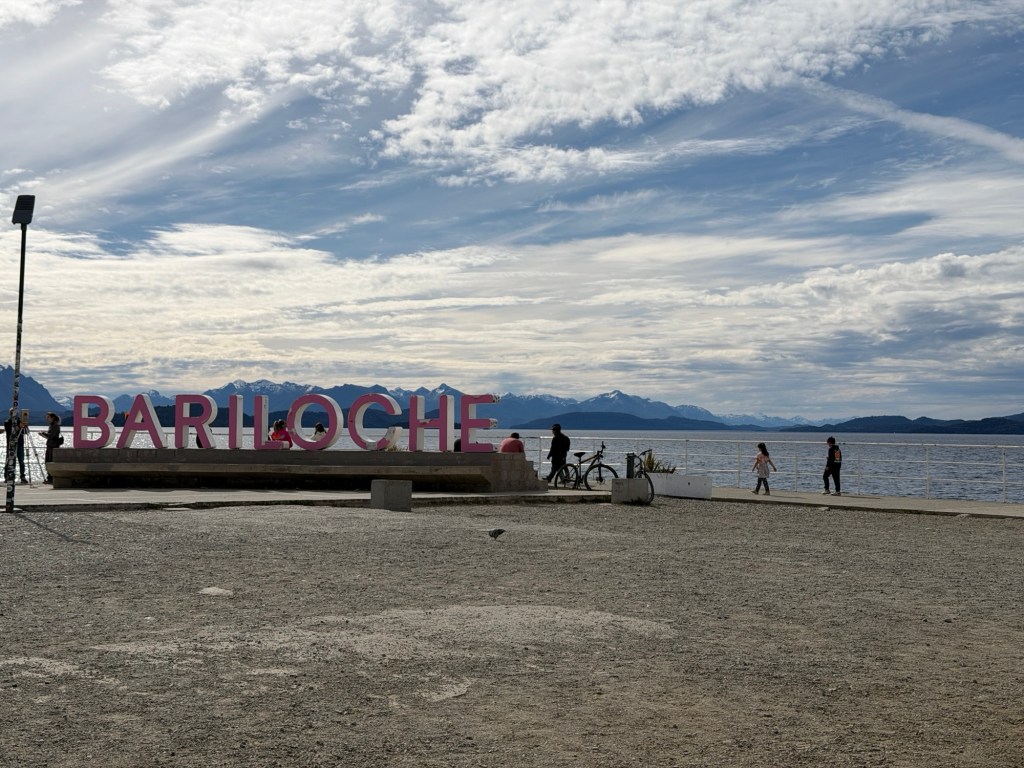
After walking with our group for a while, we split off to go back to the hotel along the lakeside.

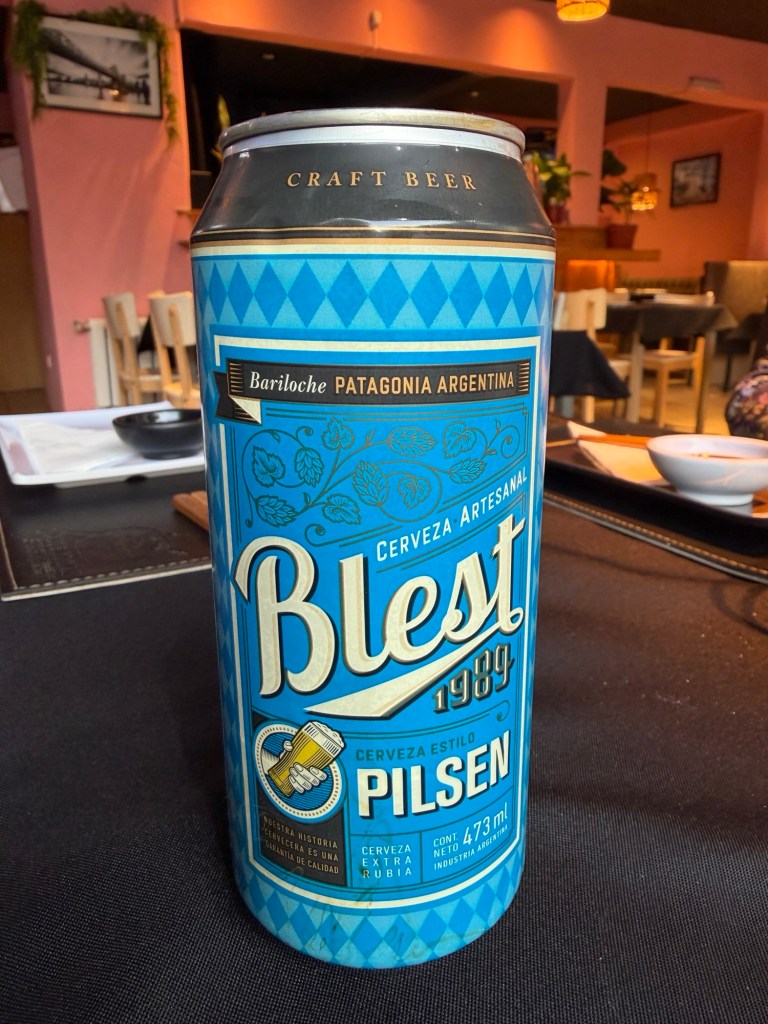
It was a blessed day, and Brian enjoyed a local craft beer with dinner.

Buenos Aires to Bariloche

What a travel day!

We assembled to leave the hotel at 7:30, to catch a bus to the domestic airport nearby. Our plane was scheduled to leave at ten, so plenty of time. Check in and security went smoothly, and we regrouped around gate 9 near a board that listed gates for all departing flights. Ours was listed but did not have a gate yet, but we didn’t worry.

The domestic airport was people friendly, with many small stores for snacks or meals and all kinds of other things. Lines were short because of the large number of stores. Really nice.

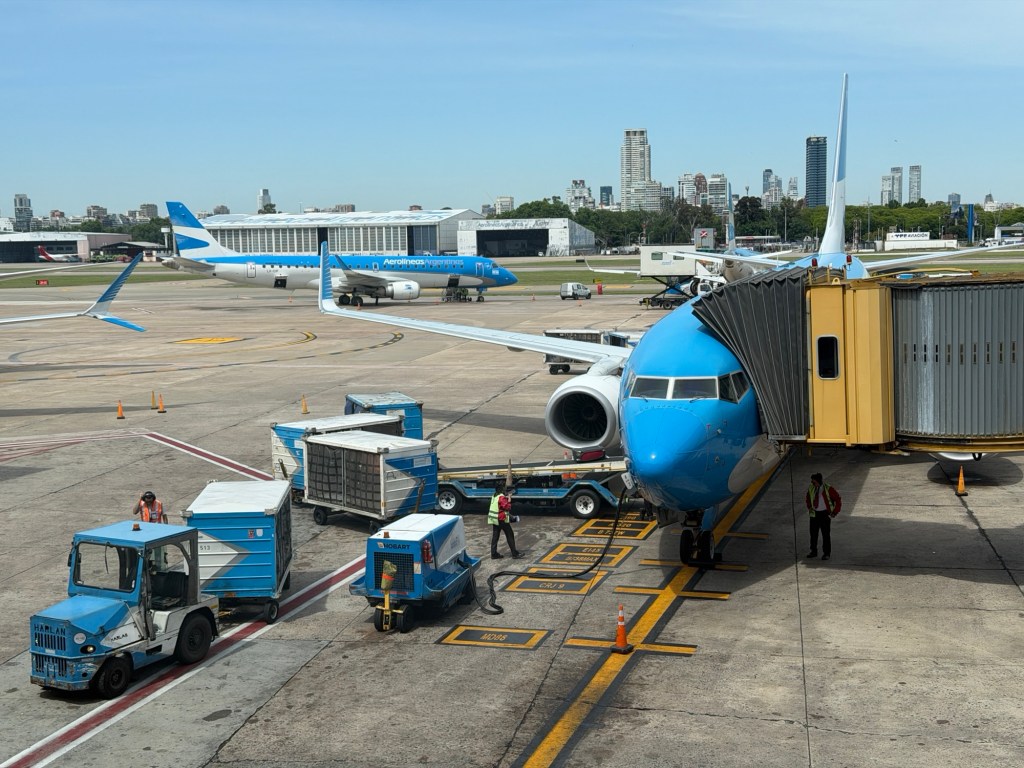
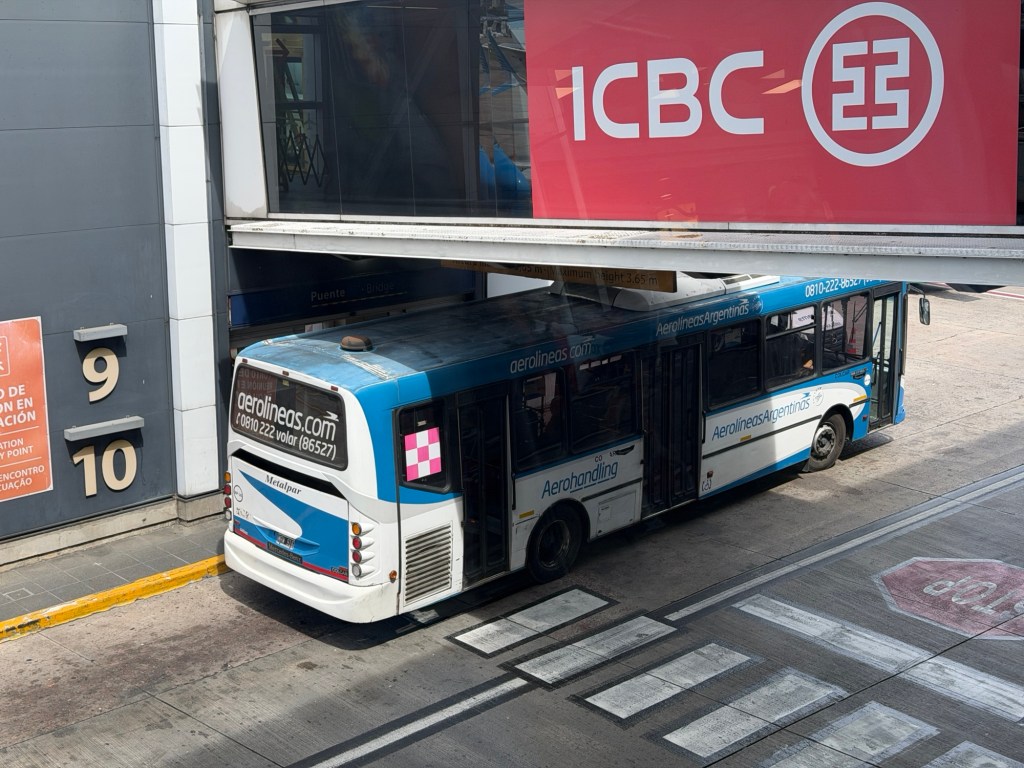
We started noticing something was amiss when the announcements, like plane now boarding at gate number whatever, but there were no people at that gate. And, to our knowledge our plane was not assigned a gate number on the board. But, there were some announcements in Spanish; our fearless leader kept us updated. Plane now at gate five. So we went. Plane at gate nine. Ha! Where we started, so we went. Plane now at gate fourteen. So we went. From 14, we took a bus to the plane, which sat on the tarmac for a long time, eventually getting refueled, before we left, more than two hours later than planned. Sigh.

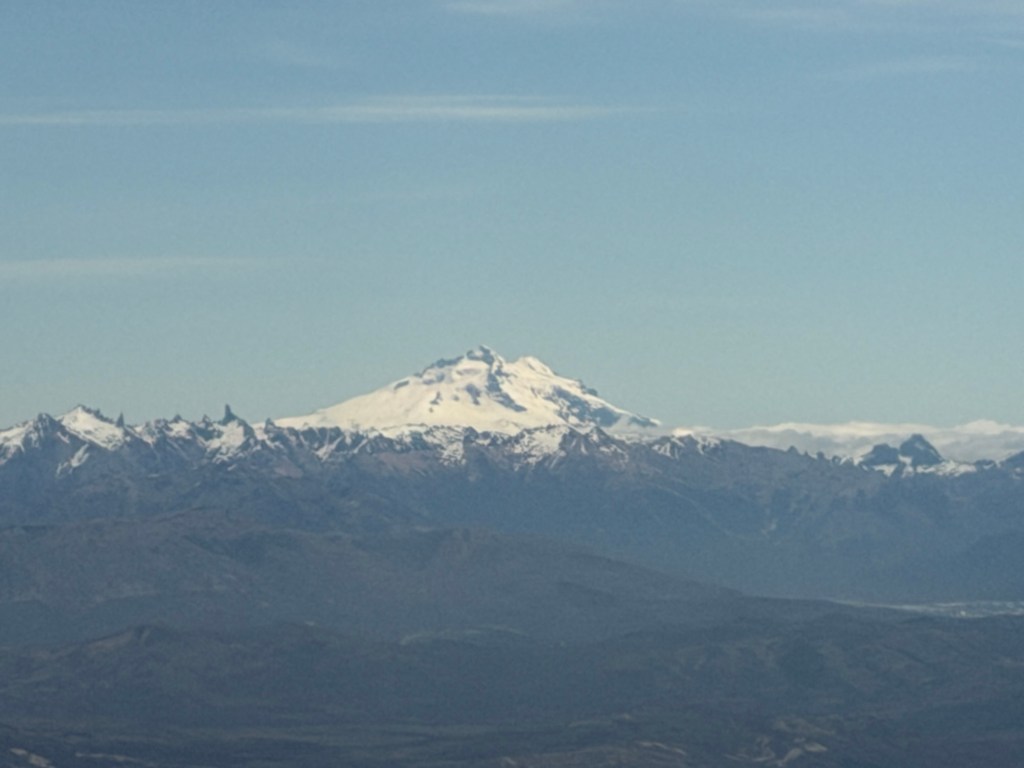
View from the plane window of a beautiful volcano in the Andes, possibly Volcan Lanin
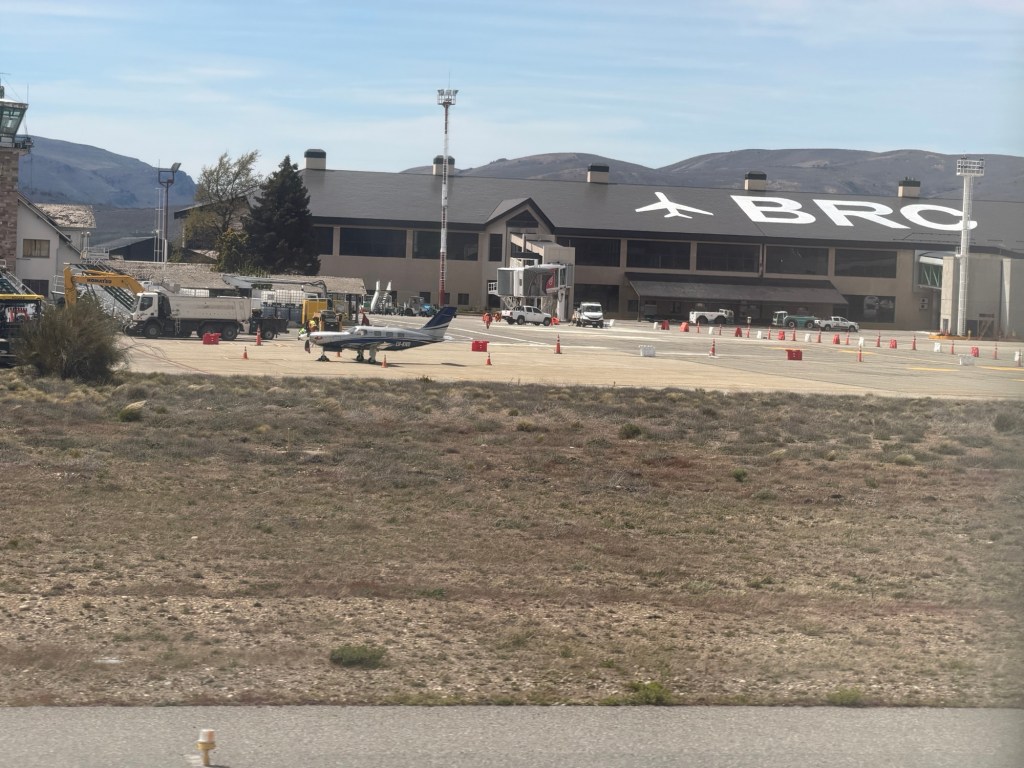
Bariloche airport

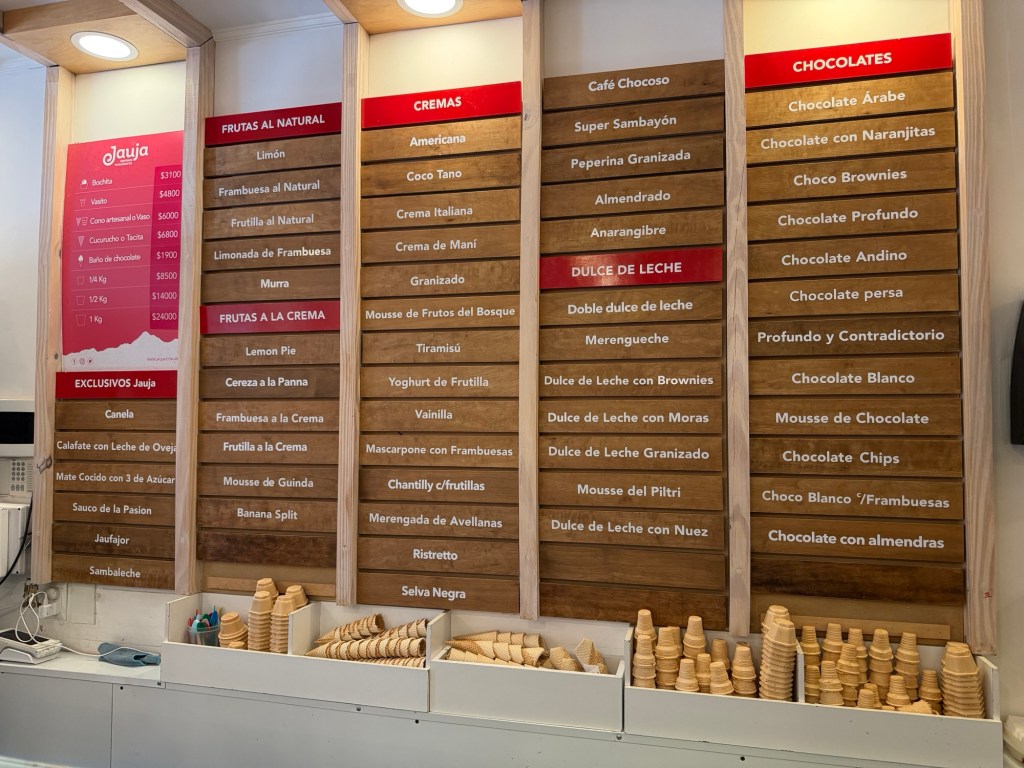
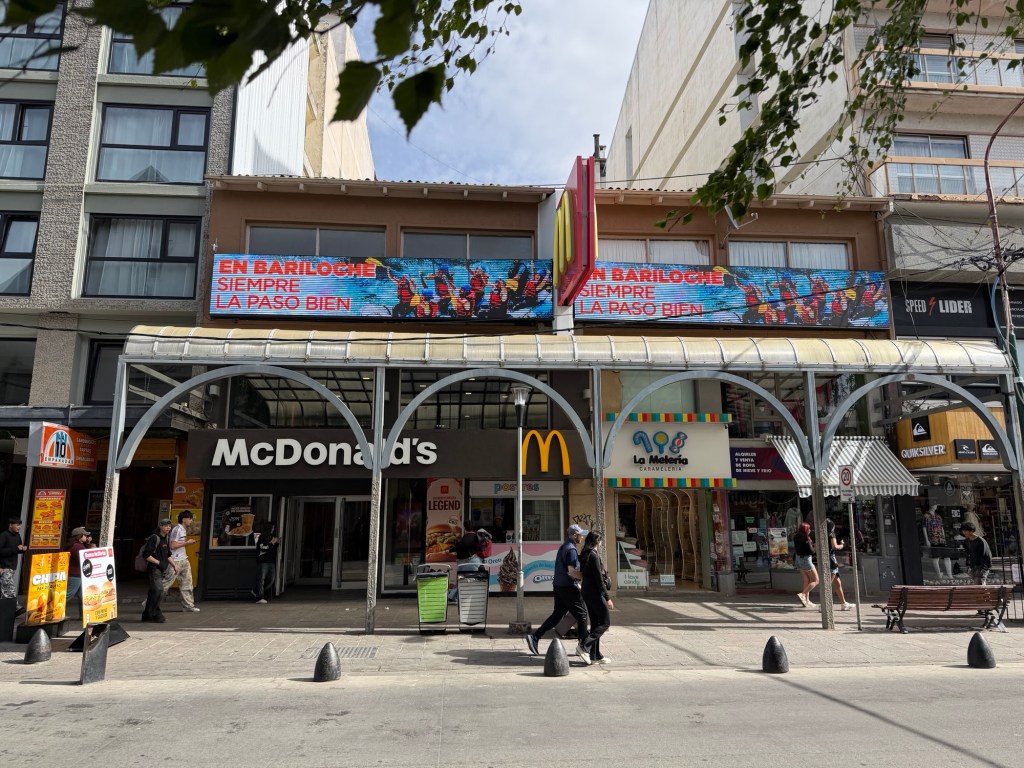
Most of us were hungry by the time we landed in Bariloche and took a bus to the town itself. So, we went to a gelato place for a snack (dinner was scheduled). Delightful!

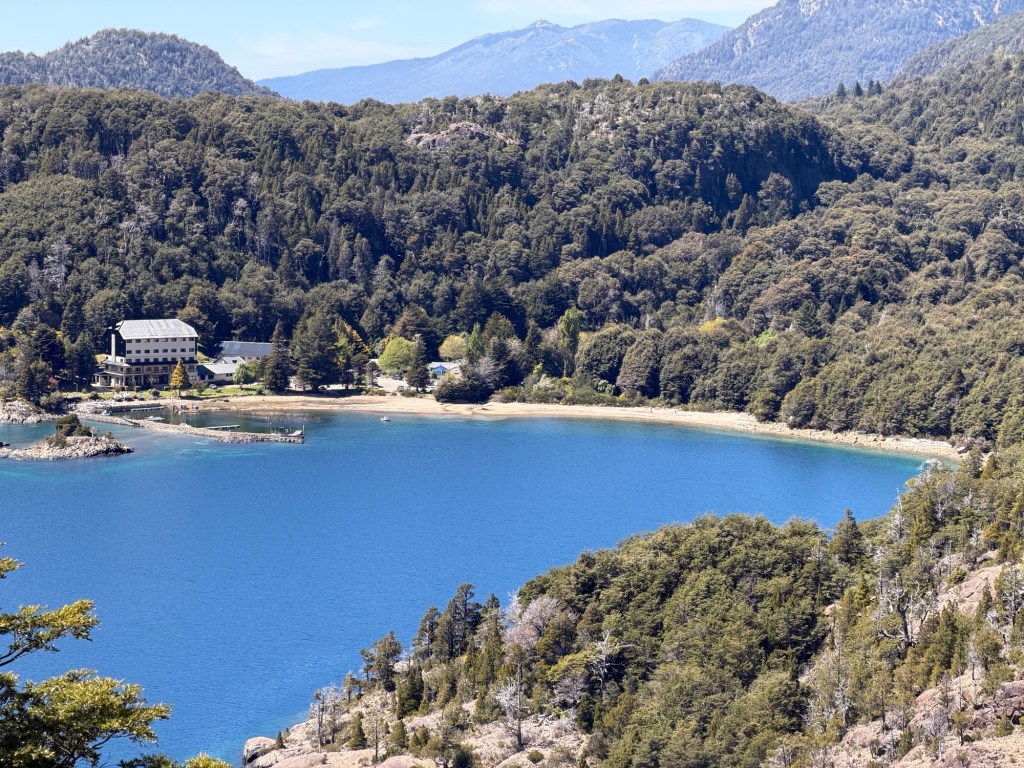
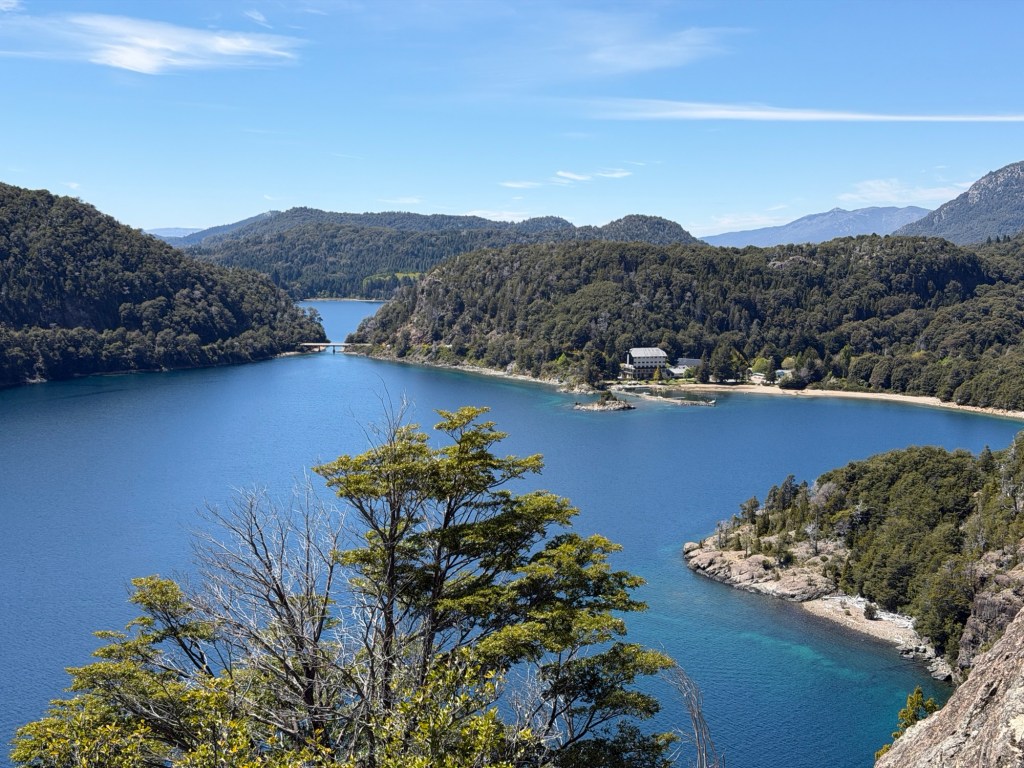
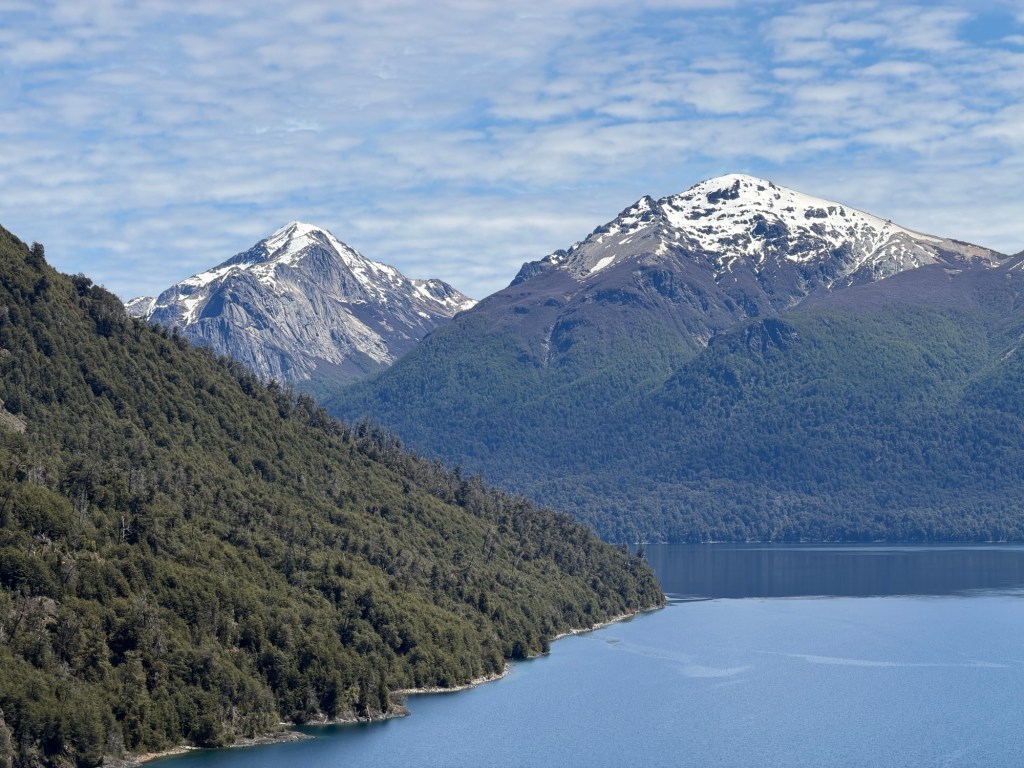
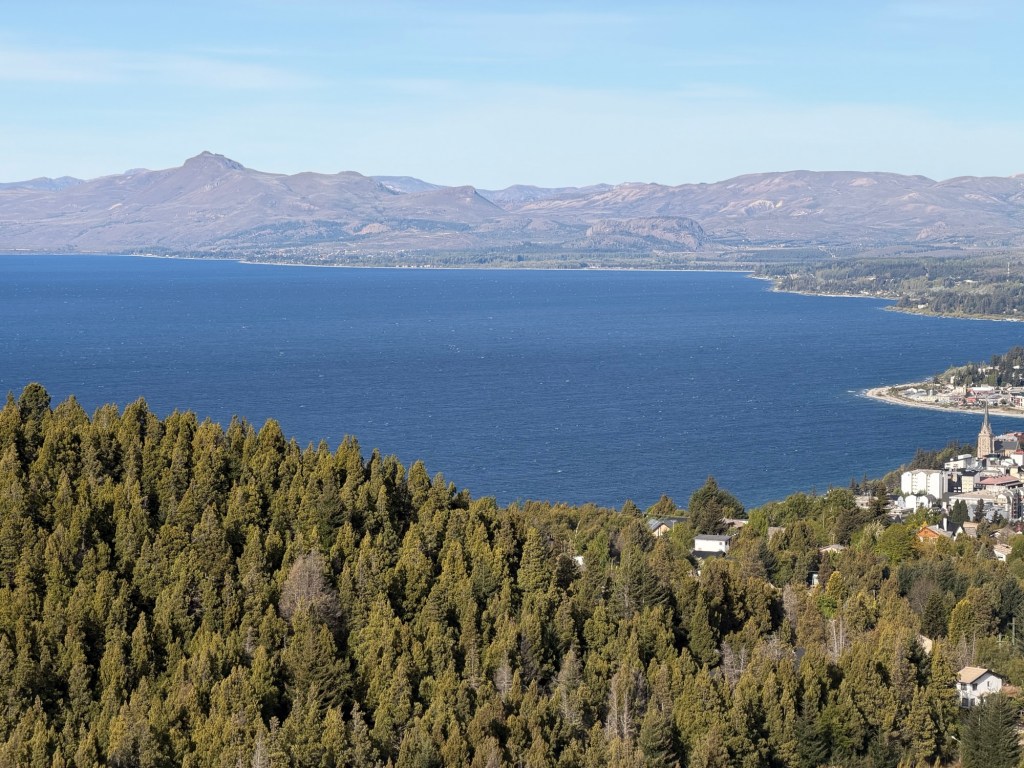
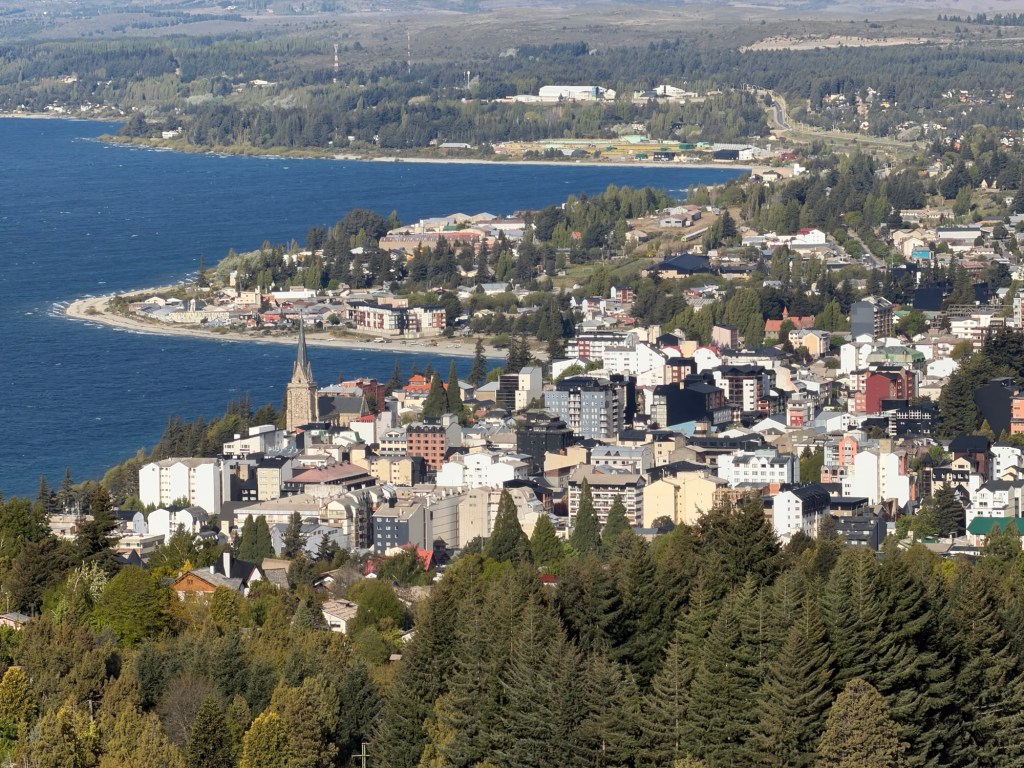
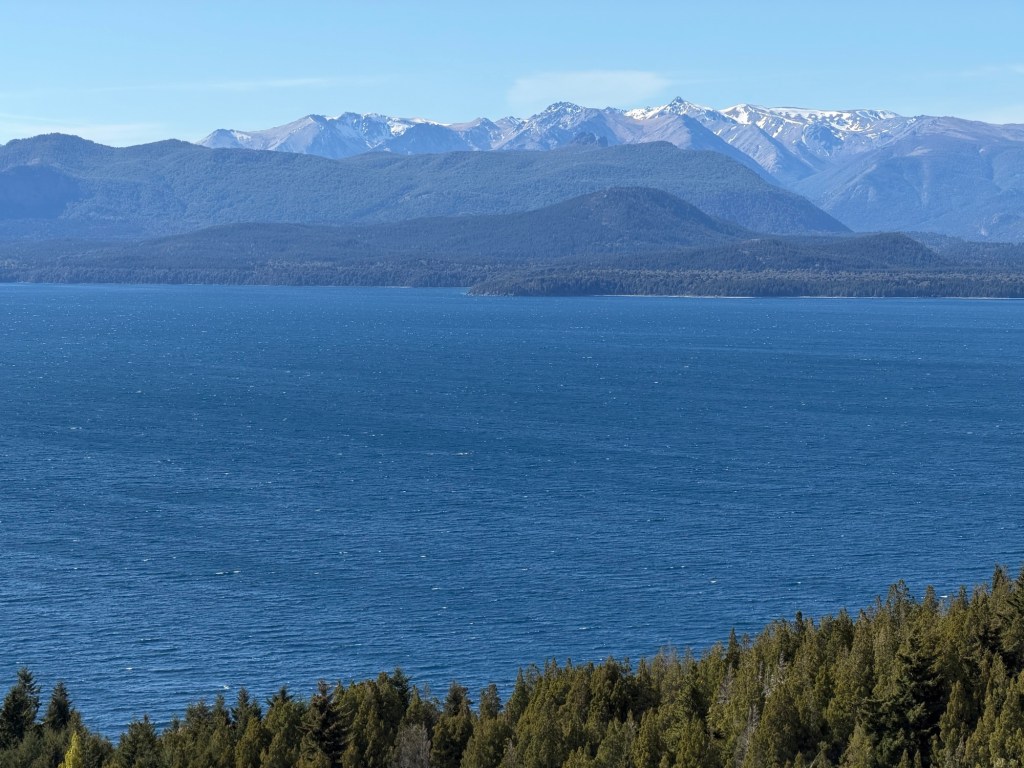
Then we took taxis to a local park to climb in a forest for beautiful views of the glacial lake and surrounding mountains. So refreshing after the hassles of the airport. Just what we needed!

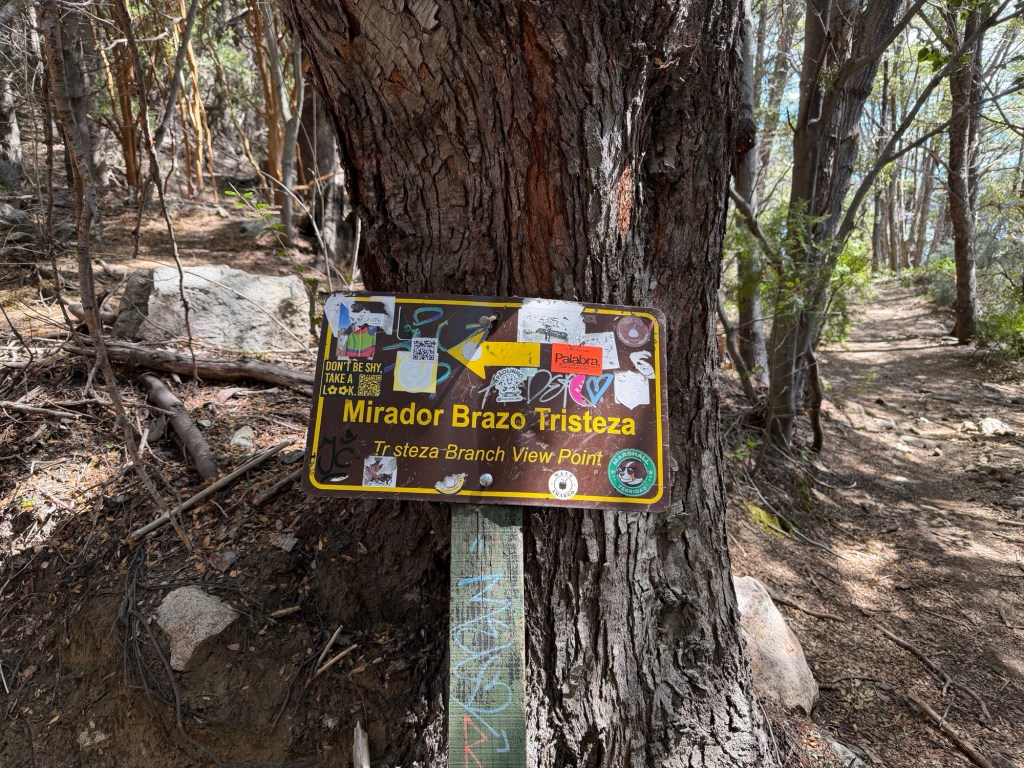
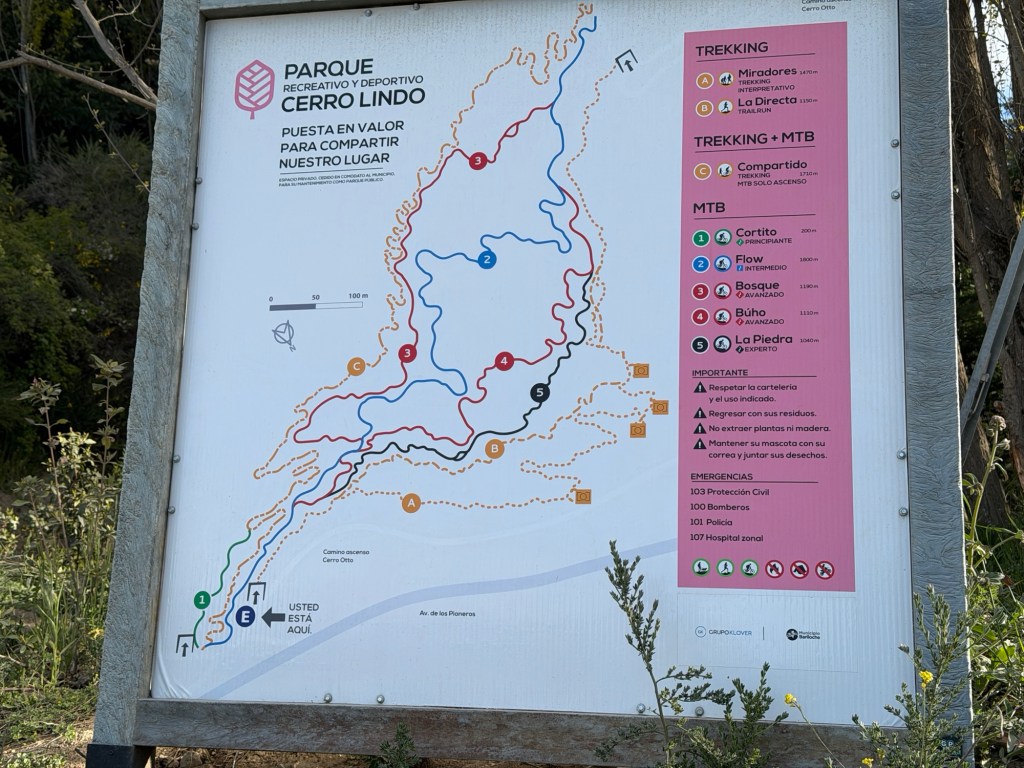
Map of the park where we hiked. We went up the trail that did not allow bicycles, but had four viewpoints to look at the lakes and mountains.

We hiked the Miradores trail, which was quite steep. There were many mountain bikers descending on an adjacent trail. We learned about the trees, which were mostly planted here, and took pictures at viewpoints.
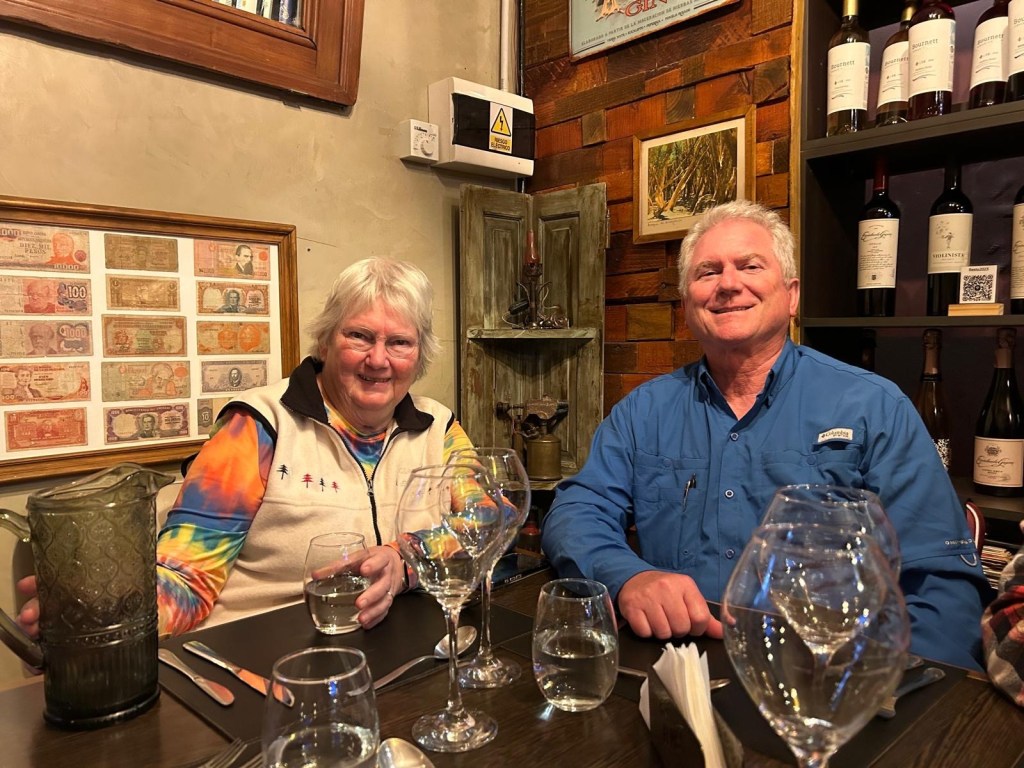
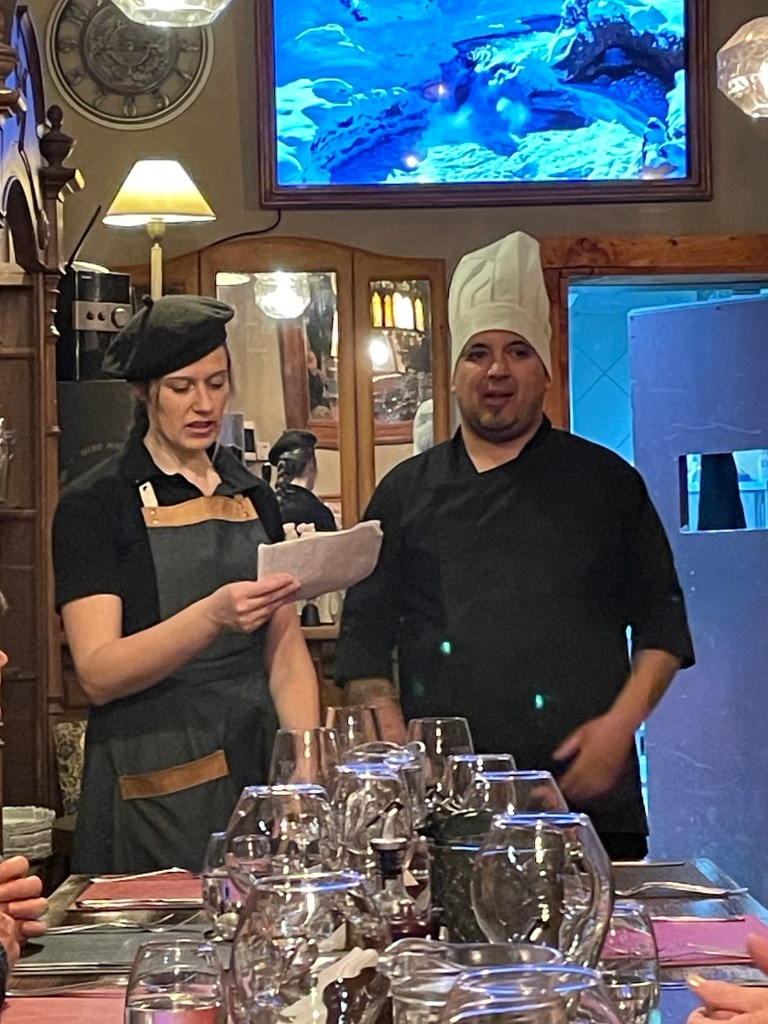
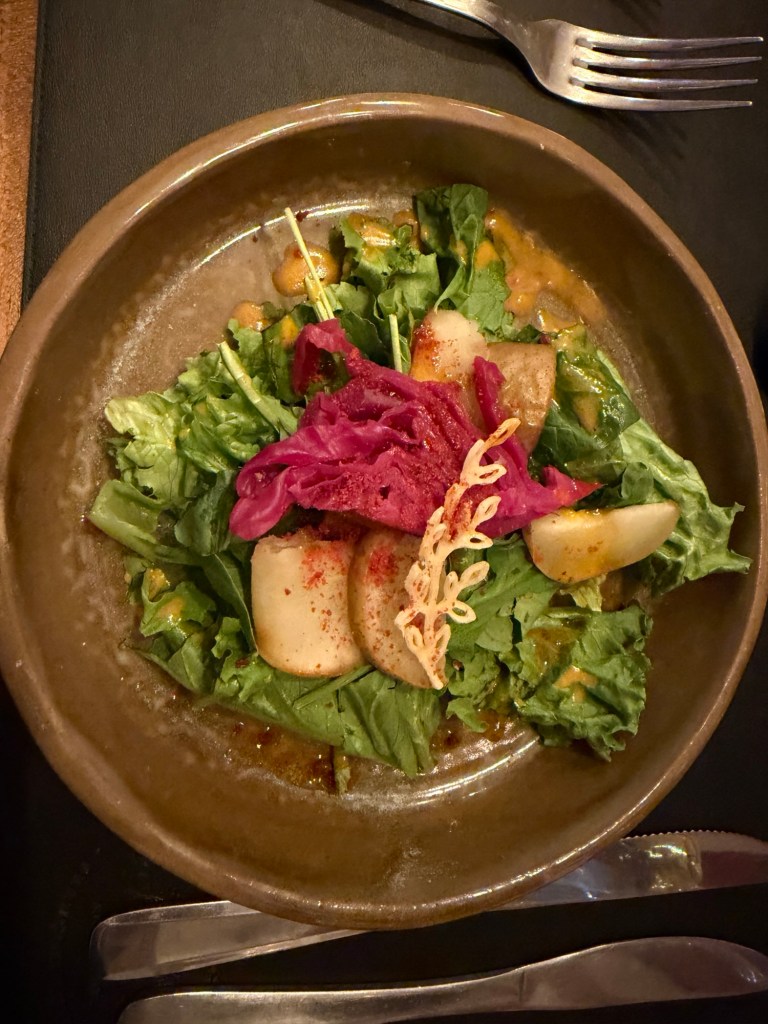
Since Bariloche is Marta’s home town, she knows the best places for everything. The dinner we shared was proof of this.

Although the travel time was longer than planned, it still was a good day thanks to our leader and the group being flexible!