Beginning in late October, us two geeks will be joined by some members of our hiking club and friends for a tour with Overseas Adventure Travel: Chile & Argentina: The Andes to Patagonia.
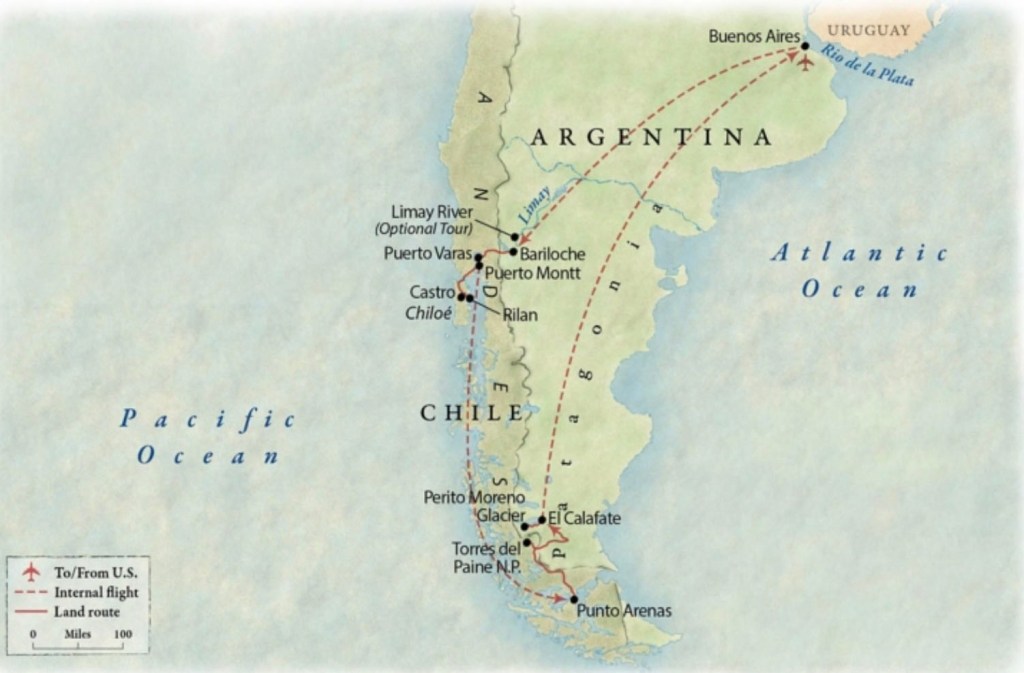
Here is a map of the tour route.
The tour begins and ends in Buenos Aires.
Because of the large distances between places of interest, the tour includes two flights within Argentina and one flight within Chile.
It will be Spring when we arrive in a couple of weeks and begin blogging.
We stayed with the cruise people until Wednesday morning. The hotel where we stayed was deep downtown, so that morning we wandered around the piers and Pike Street Market. After a delicious lunch featuring crab, we went back to that hotel and walked to another for the rest of our Seattle stay, visiting with friends and family. That night, we shared dinner with Clare’s sister.
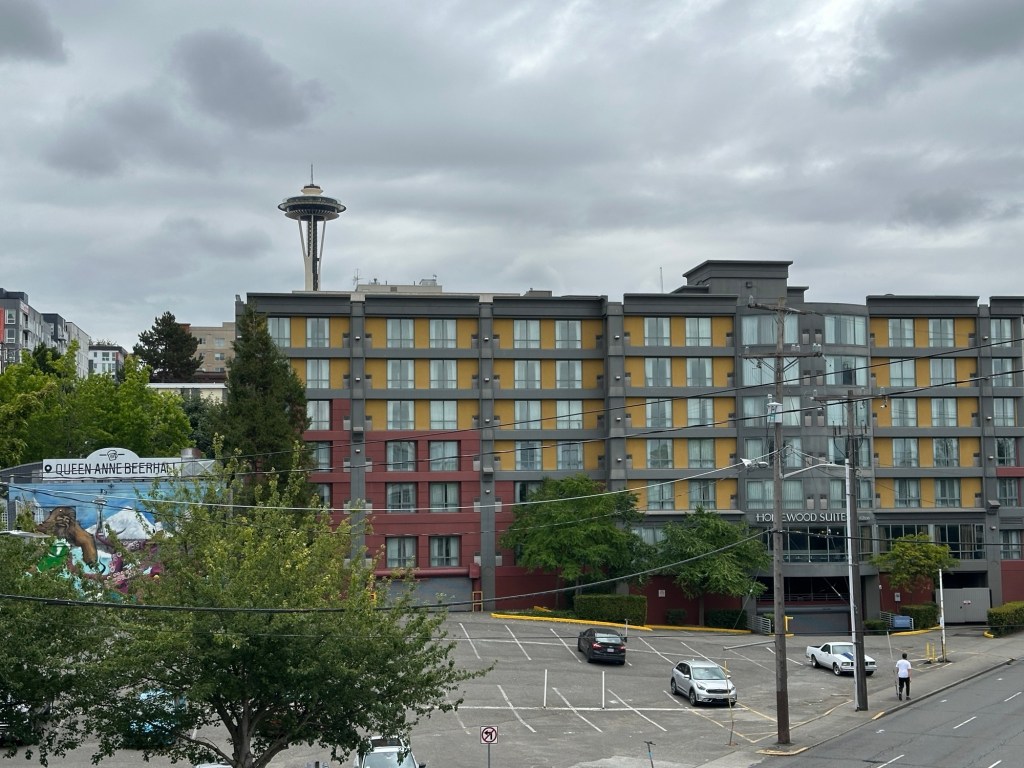
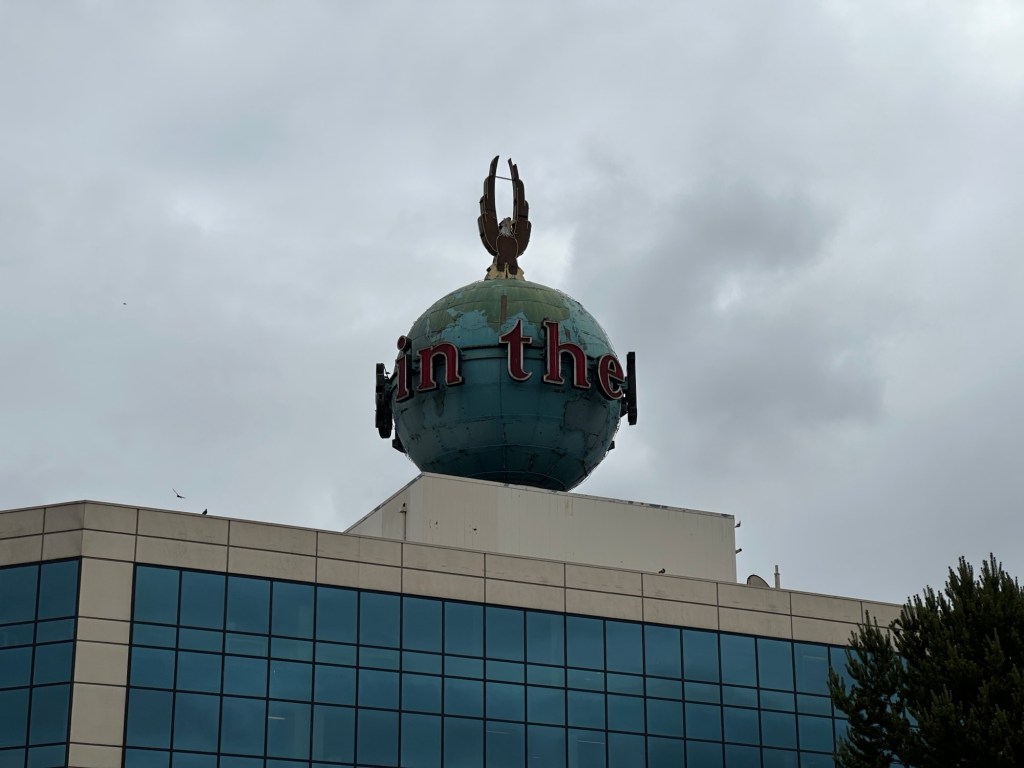
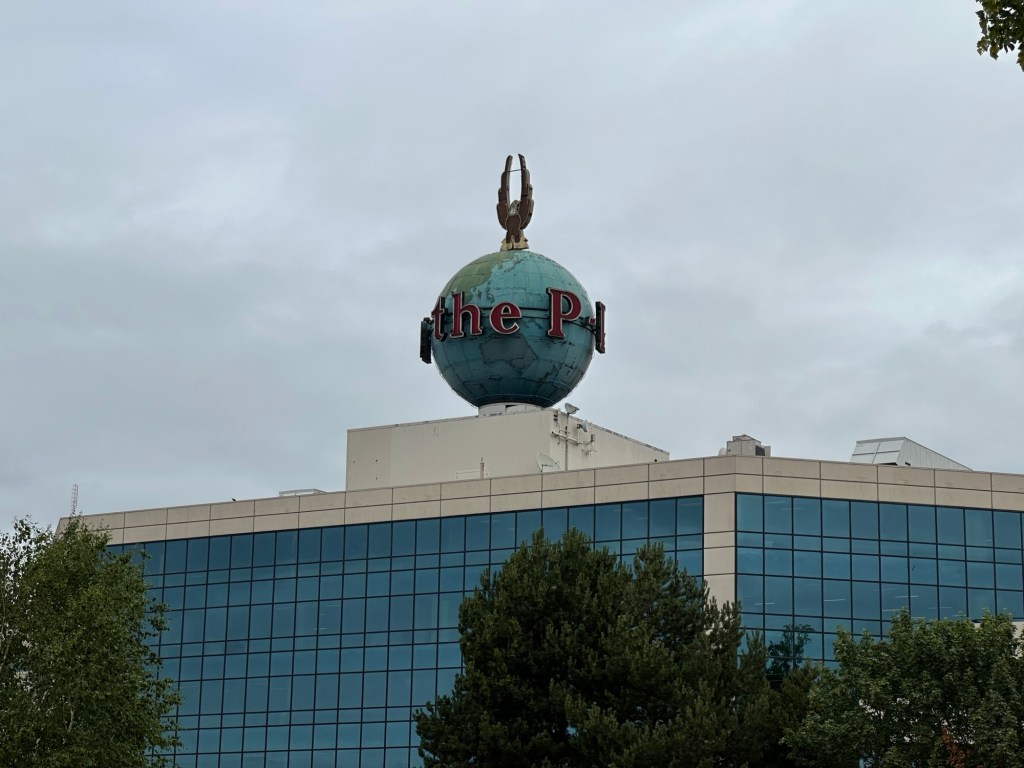
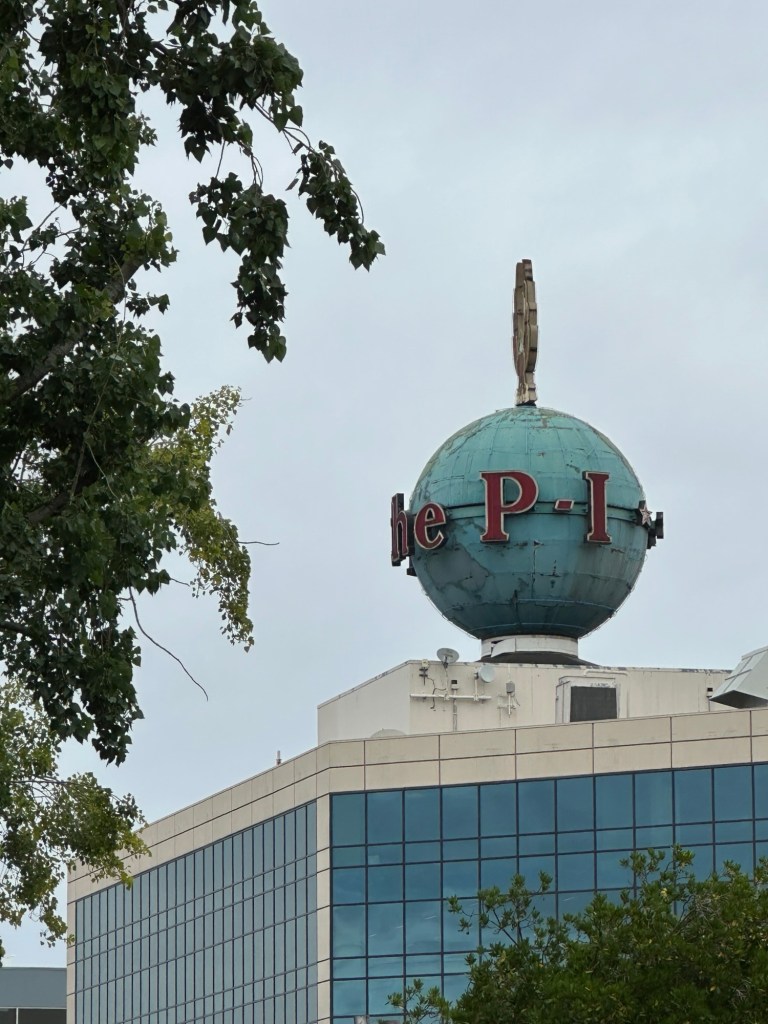
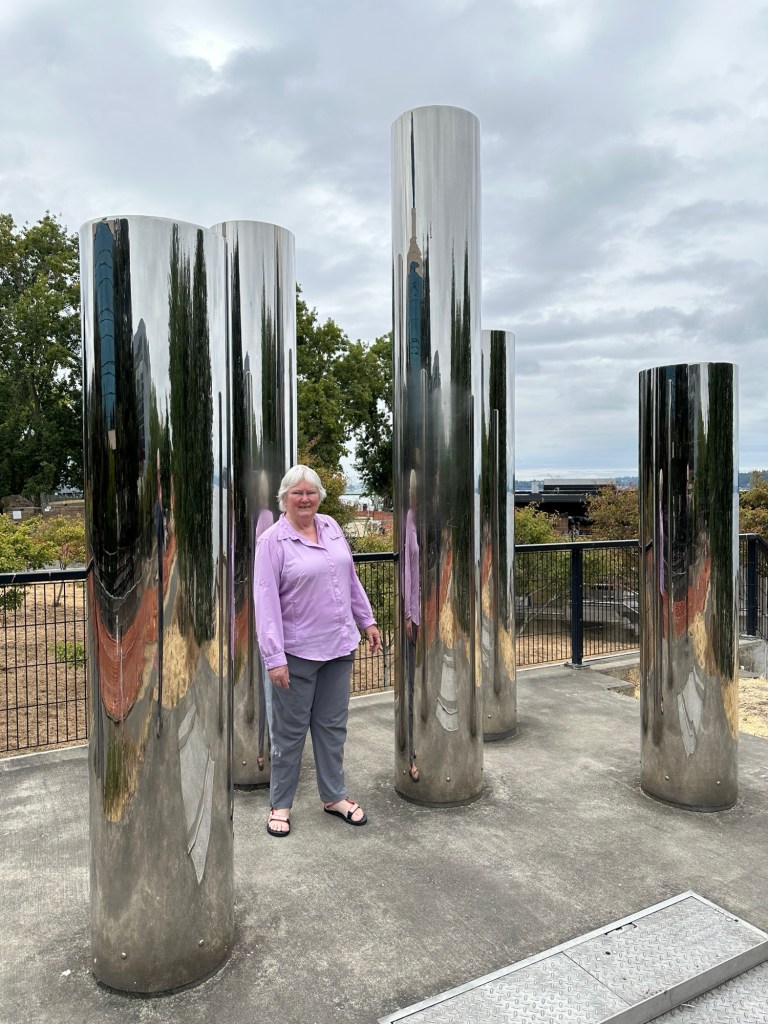
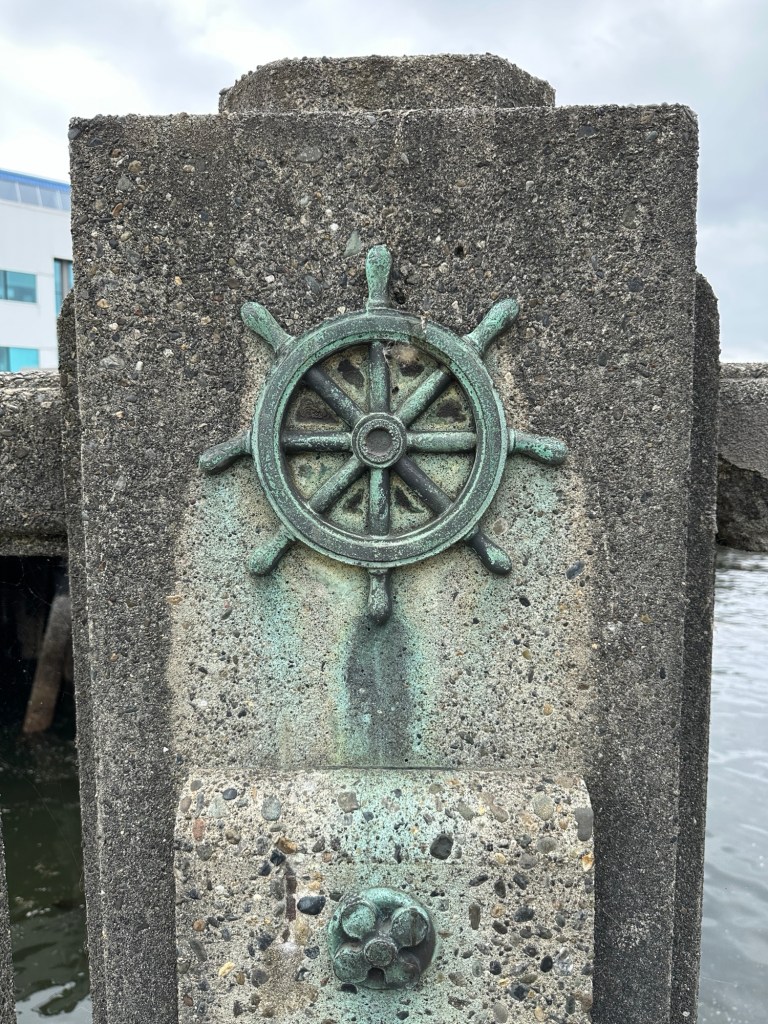
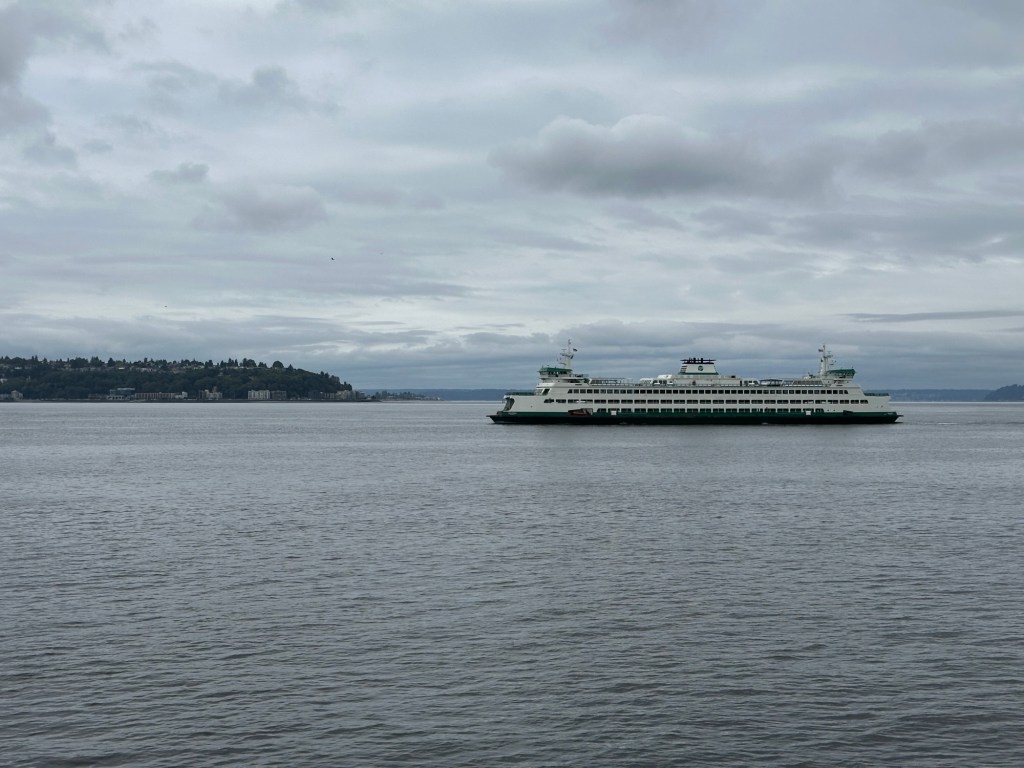
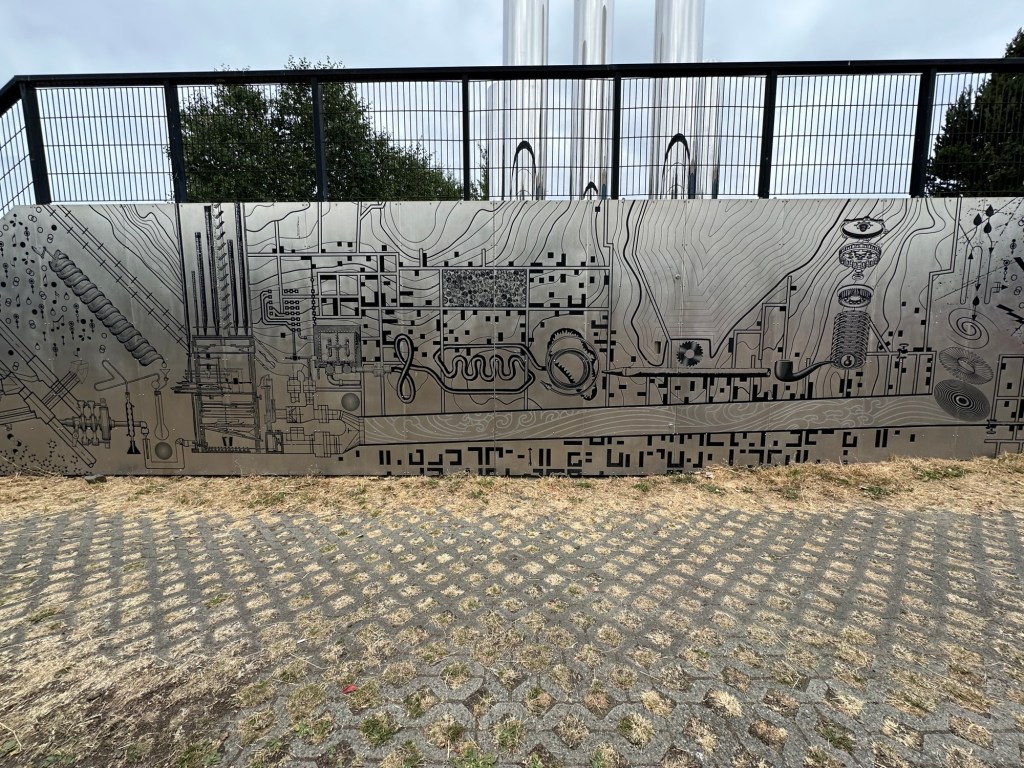
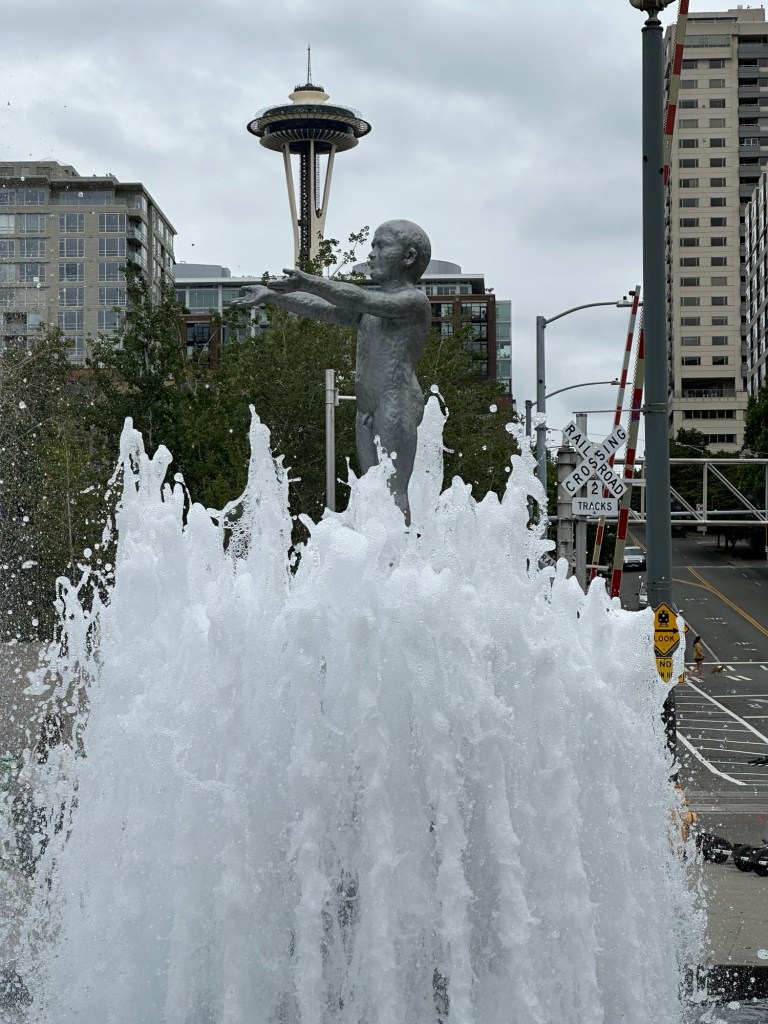
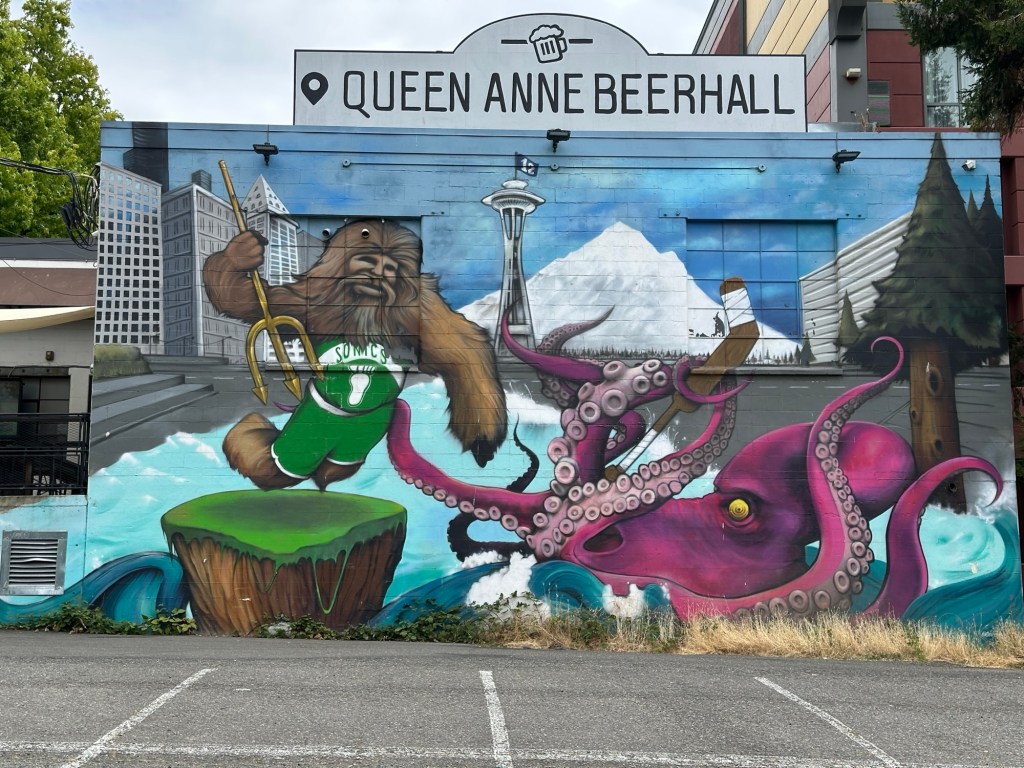
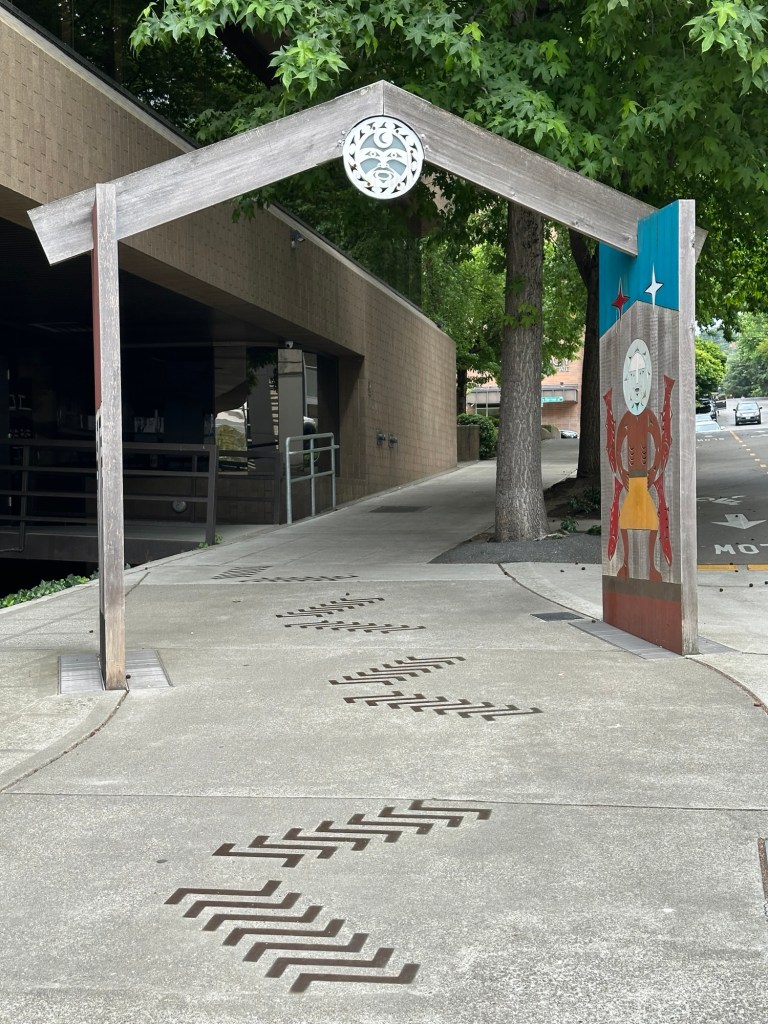
Our hotel near the Space Needle“in the”“the P-““P-I”This building faces Puget Sound near our hotel. Brian finally remembered that the local newspaper is the Seattle Post-Intelligencer or P-I!Clare in a shiny sculpturePost near Pier 70Washington State Ferries connect communities to SeattleArt beneath the shiny pipesBoy holding up the Space NeedleMural on the Queen Anne Beerhall, where we ate dinnerArch at end of the pedestrian bridge that leads to the Sound
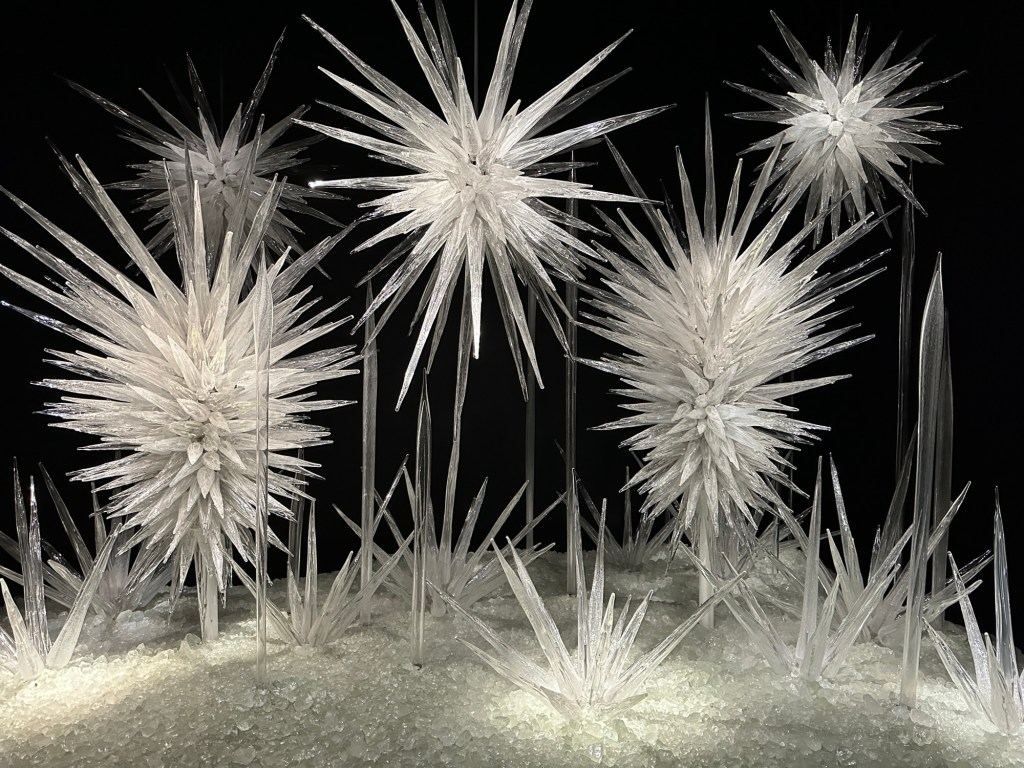
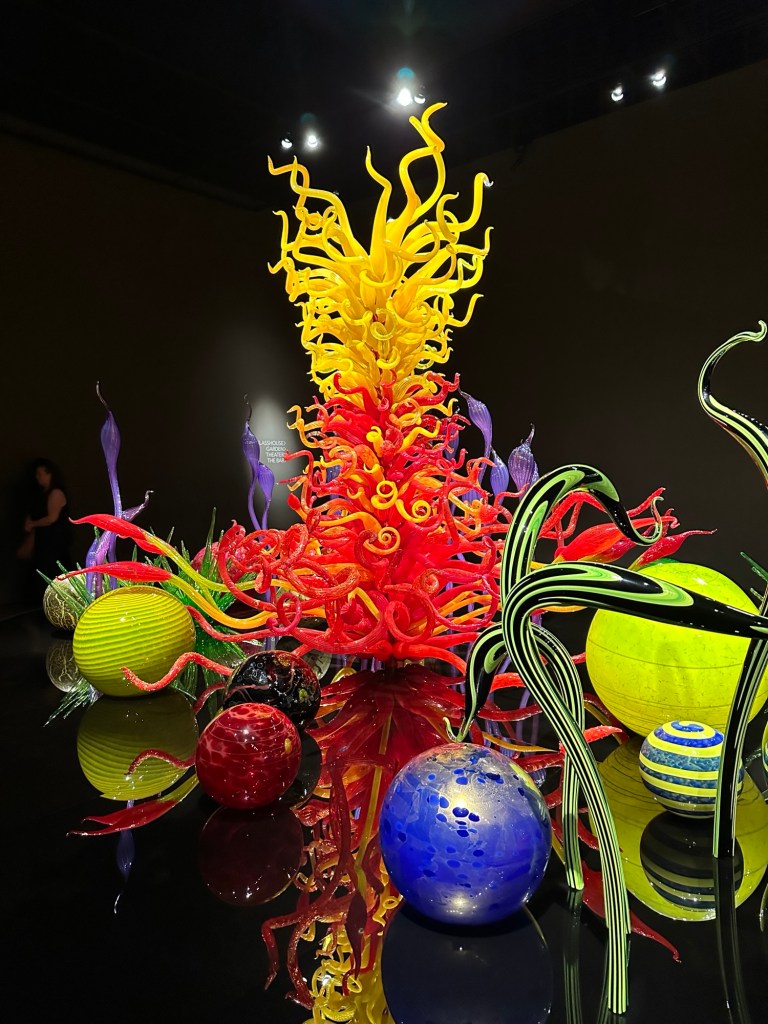
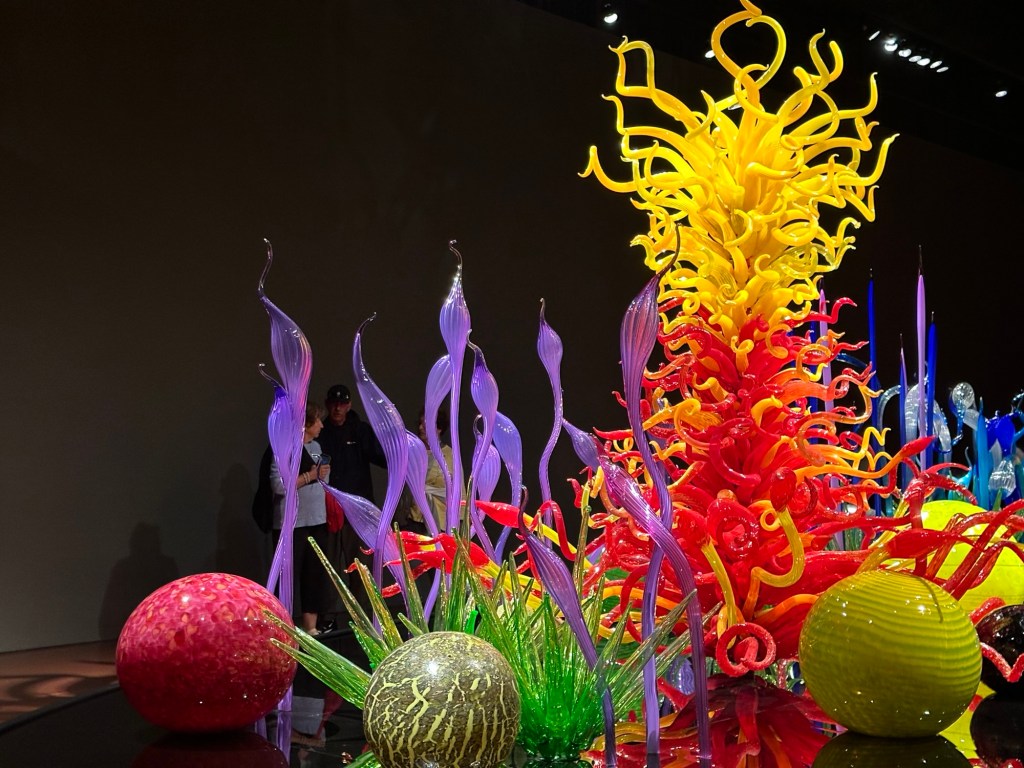
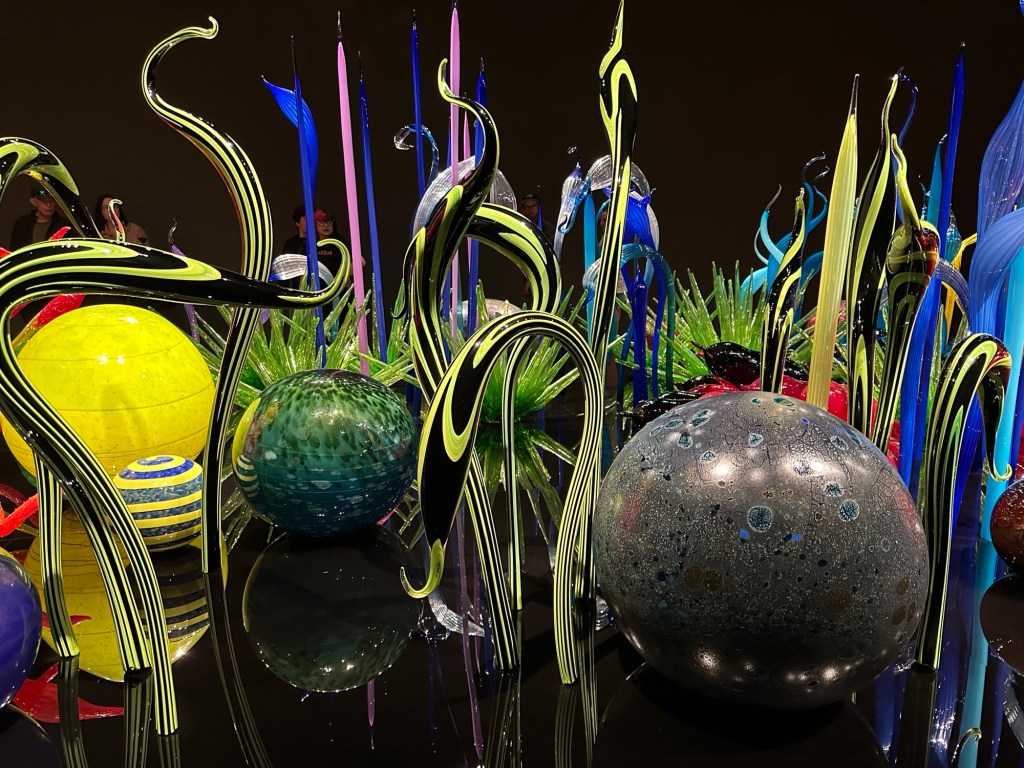
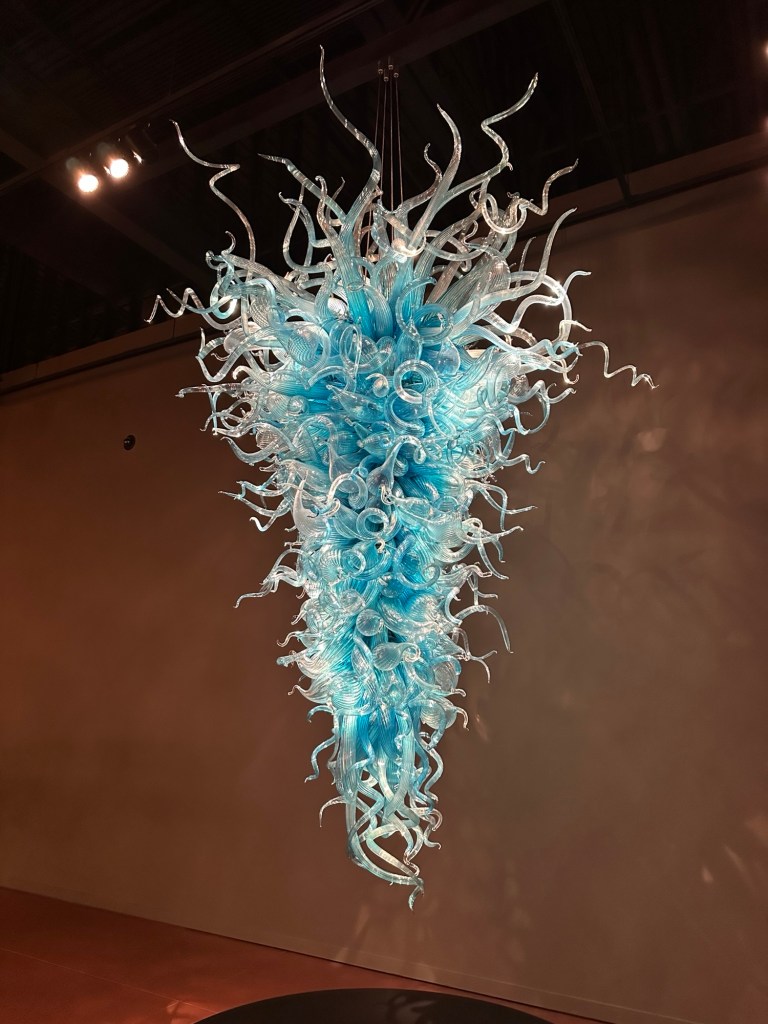
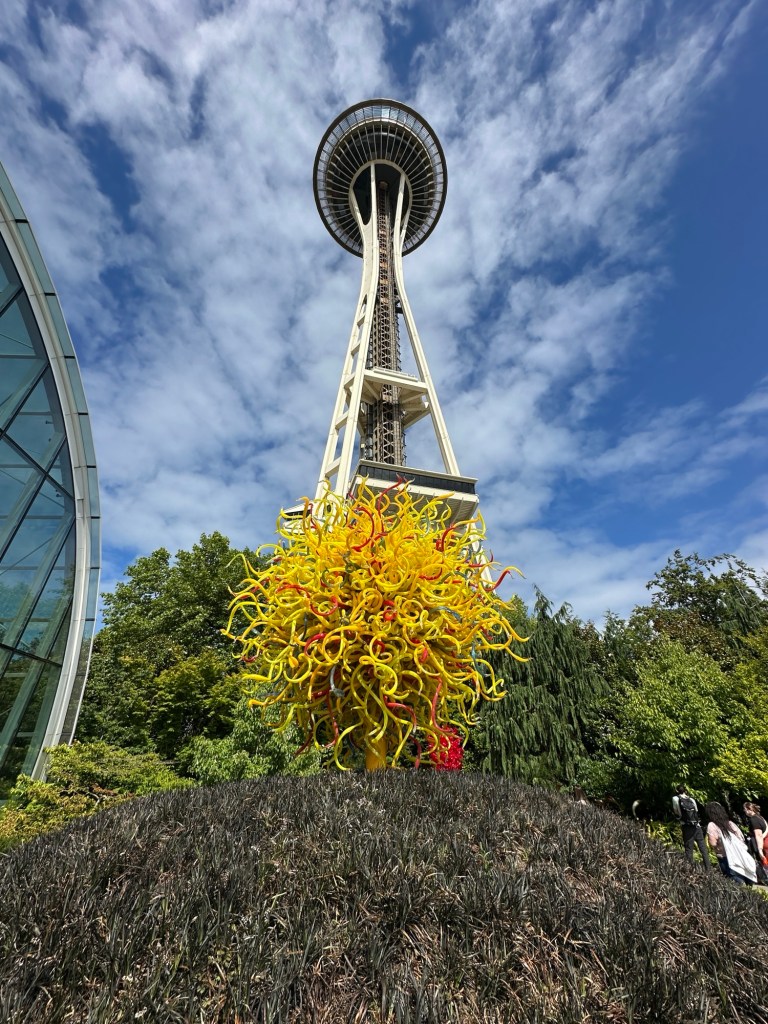
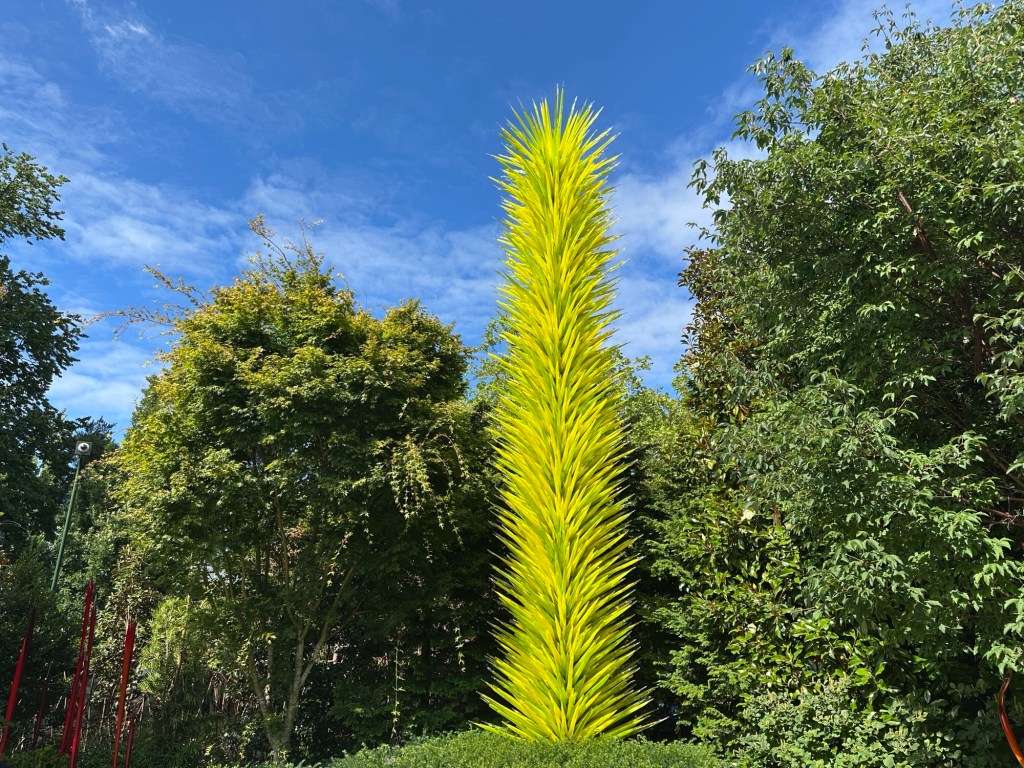
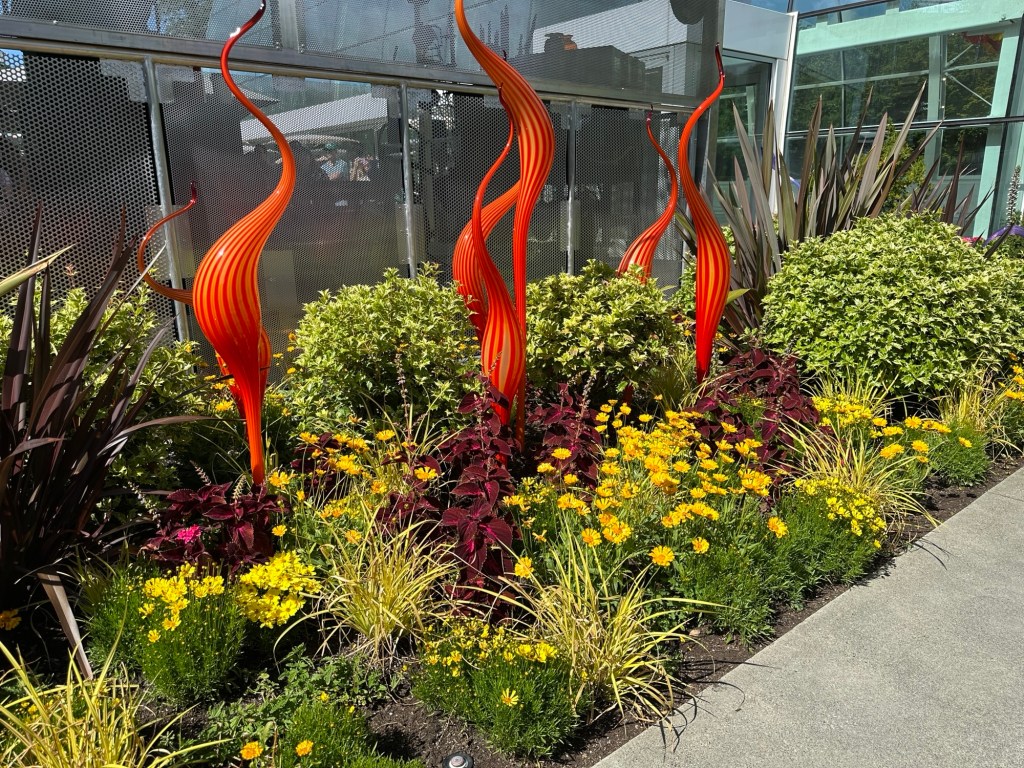
Although we have visited Seattle a few times, we had never seen the Chihuly Garden & Glass Museum. Spectacular!
We were happy that so many friends and family members made time to visit with us. We shared dinner with geo-buddies from graduate school days, an entire day with a high school friend, and met with two nieces, three grand children of one of Clare’s sisters and a different sister, for an enjoyable evening of hotdogs, hamburgers, and S’mores. A perfect end to our Alaska adventures.
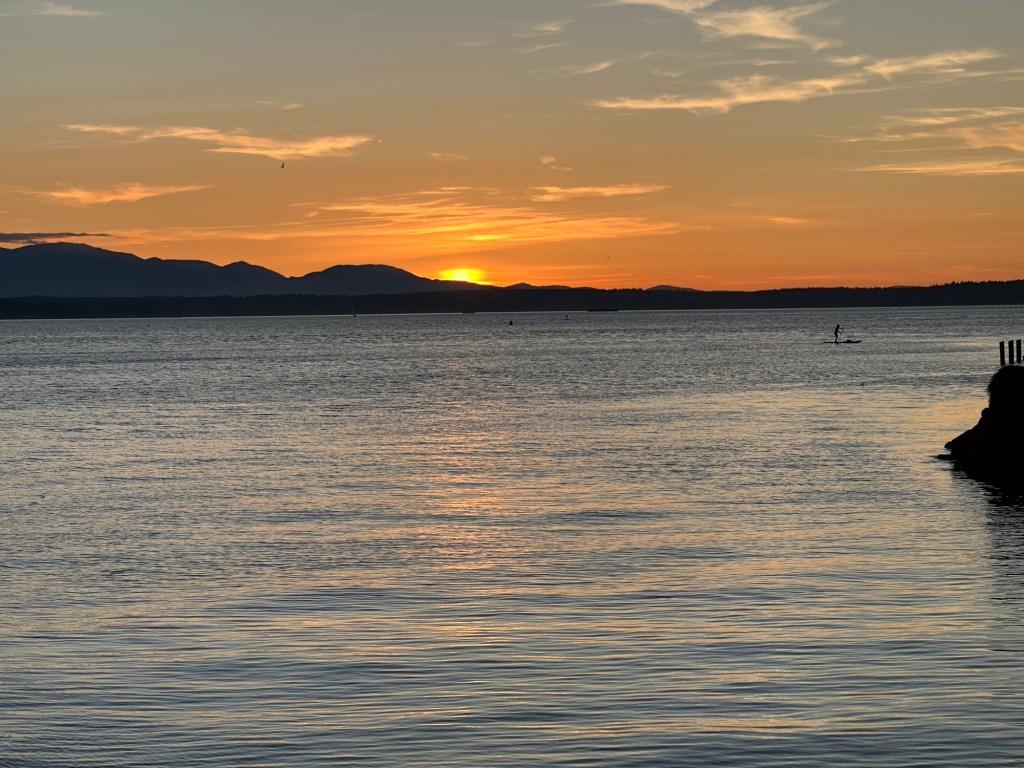
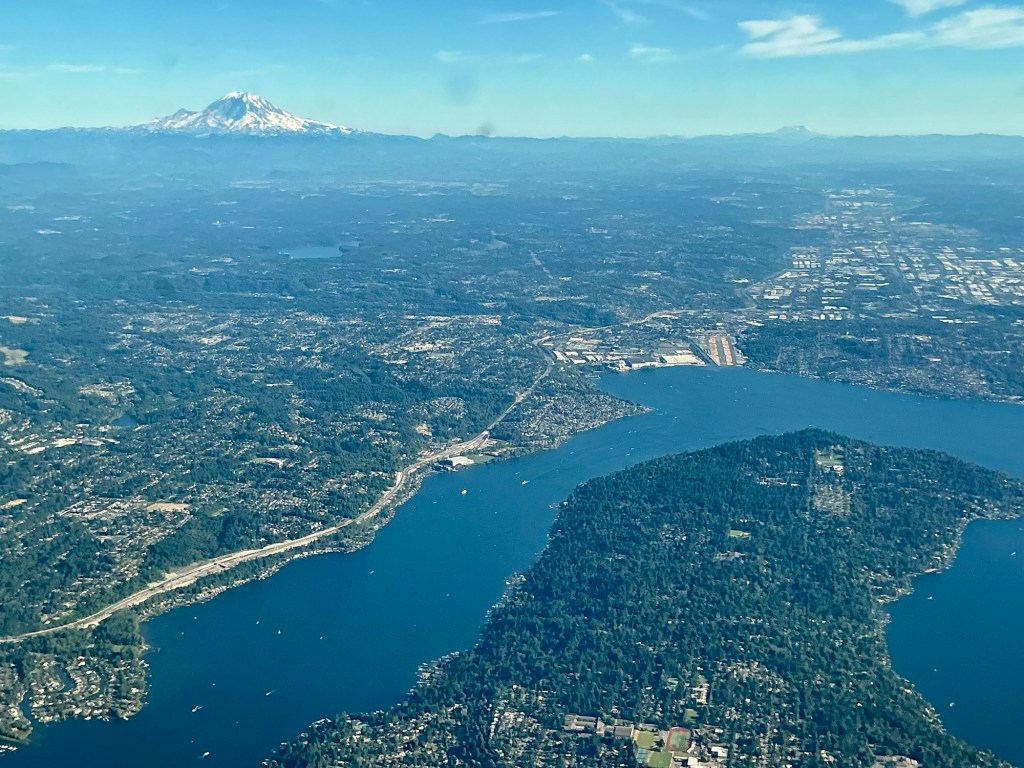
Sunset over Puget SoundSouthern Puget Sound and Mount Rainier from the plane as we left for Denver
Packing for leaving the ship can be complicated. They need your luggage the night before, but you have to sleep, and know what you need to wear the next day. No changes.
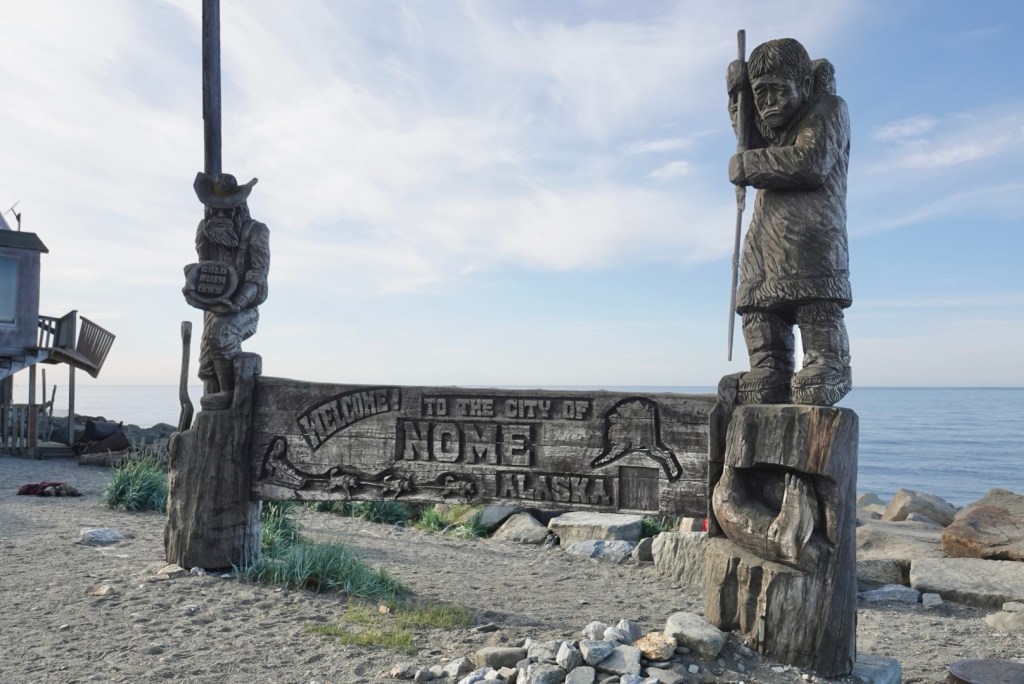
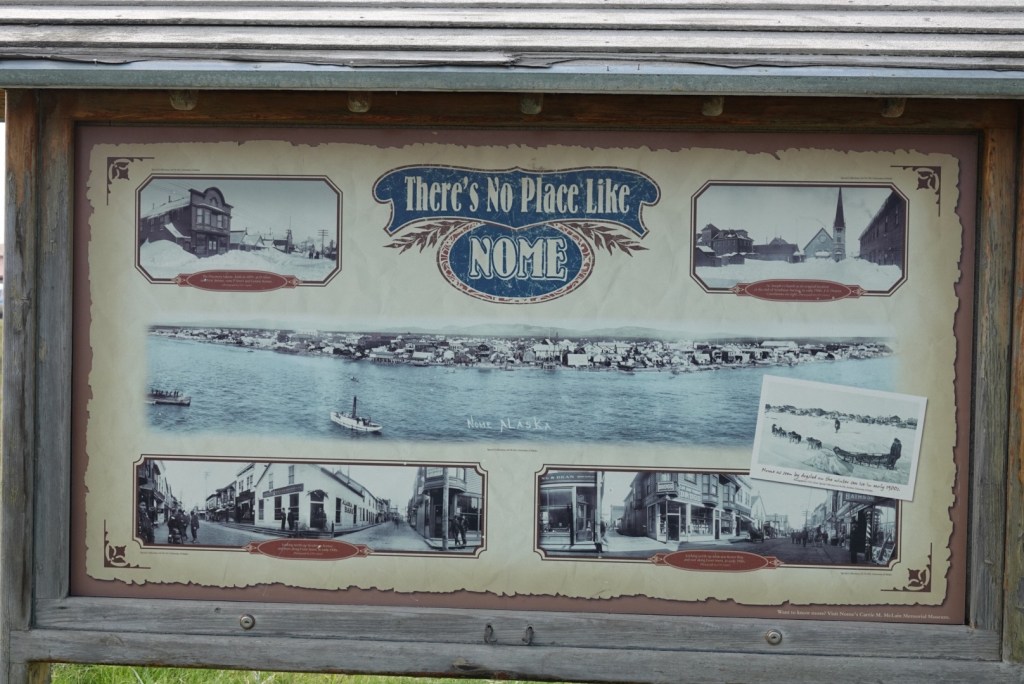
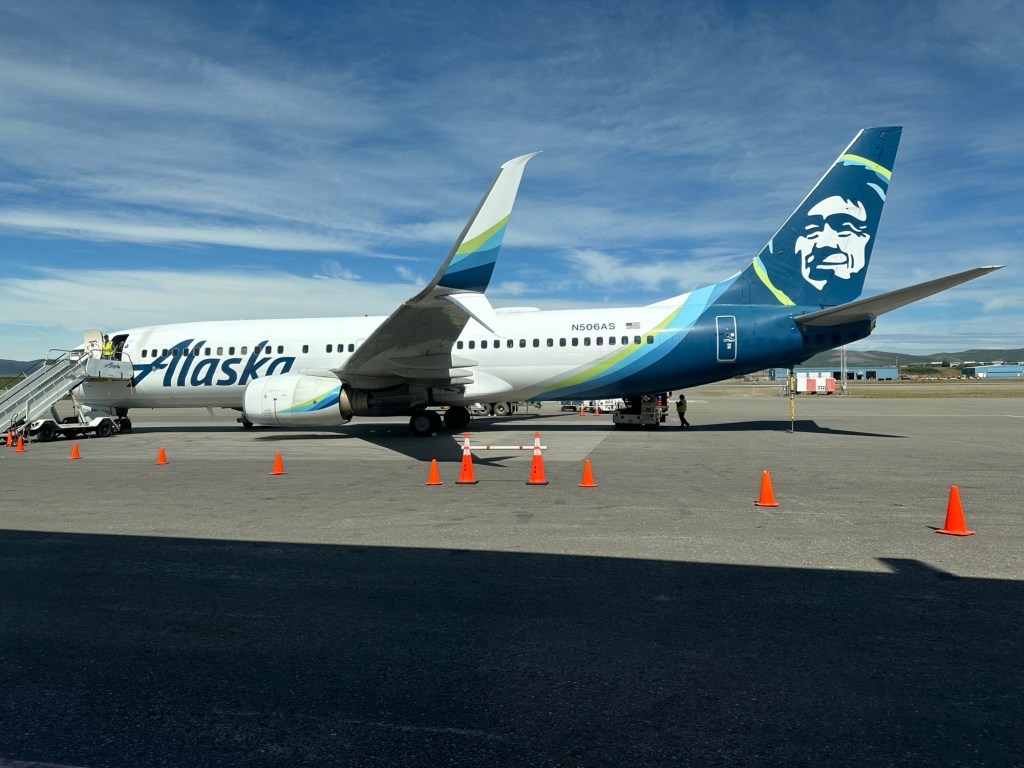
Our group was leaving Nome late for the flight to Seattle. We wanted to see Nome – no place like it – and we had a half a day. But what was the weather going to be like? Since we were landing in Seattle that night, where we have both friends and family, choosing the correct gear for the time we would be in Nome and the later flight was challenging.
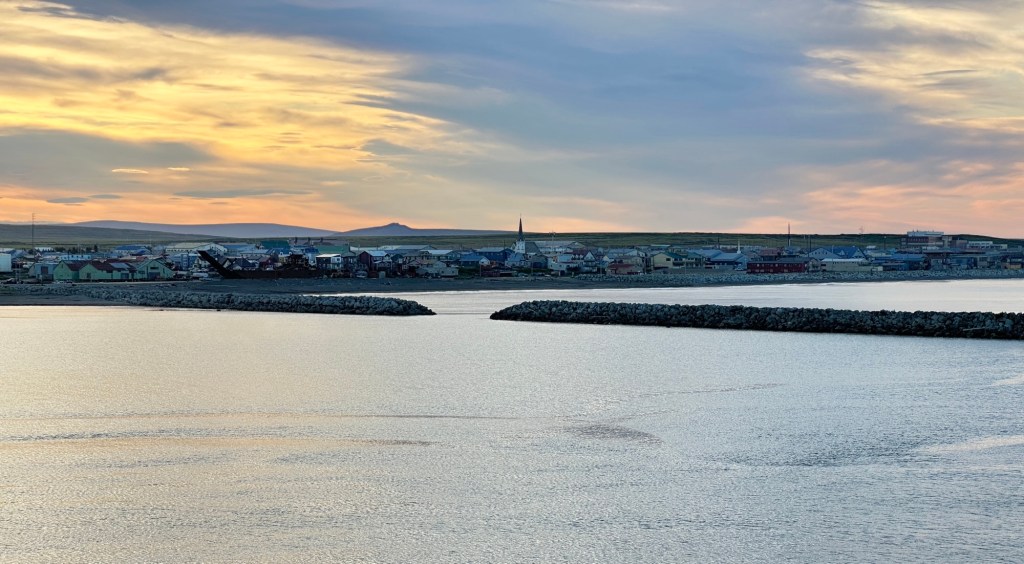
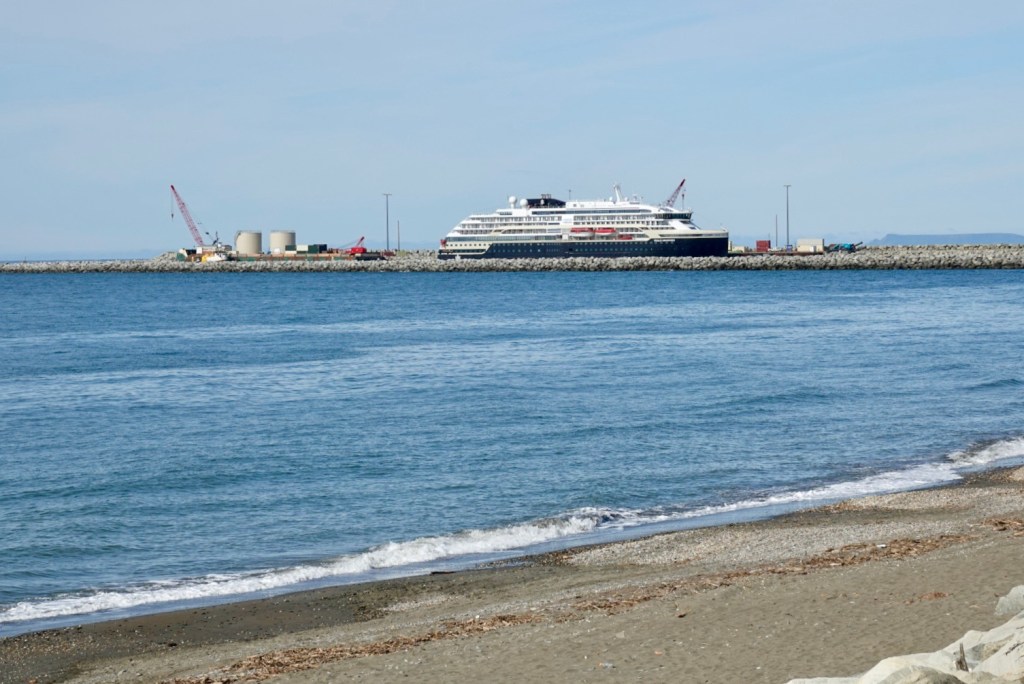
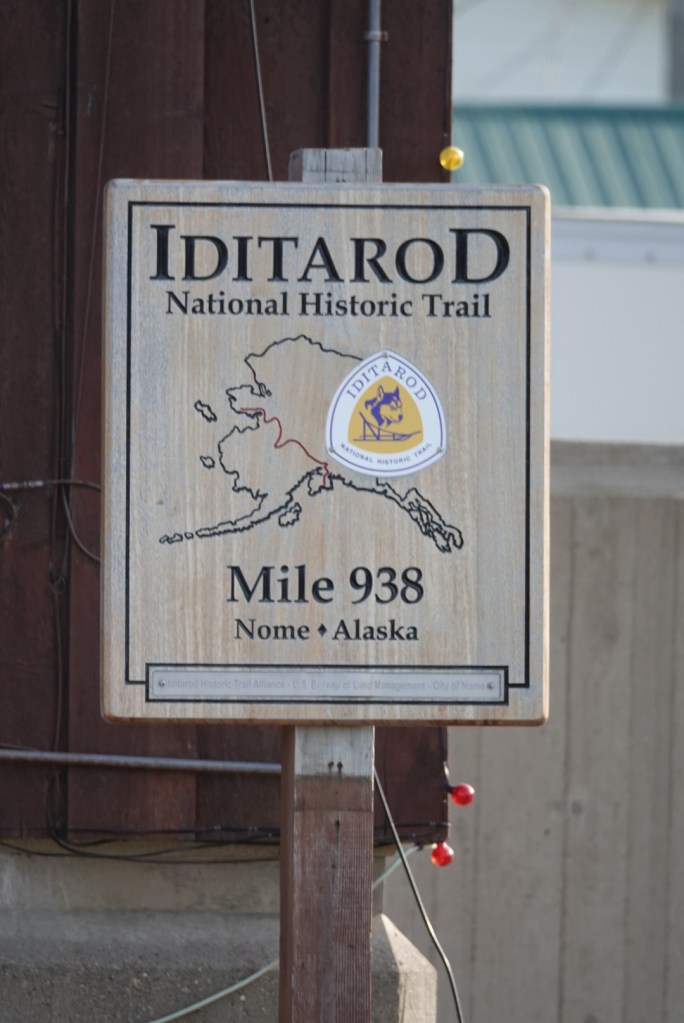
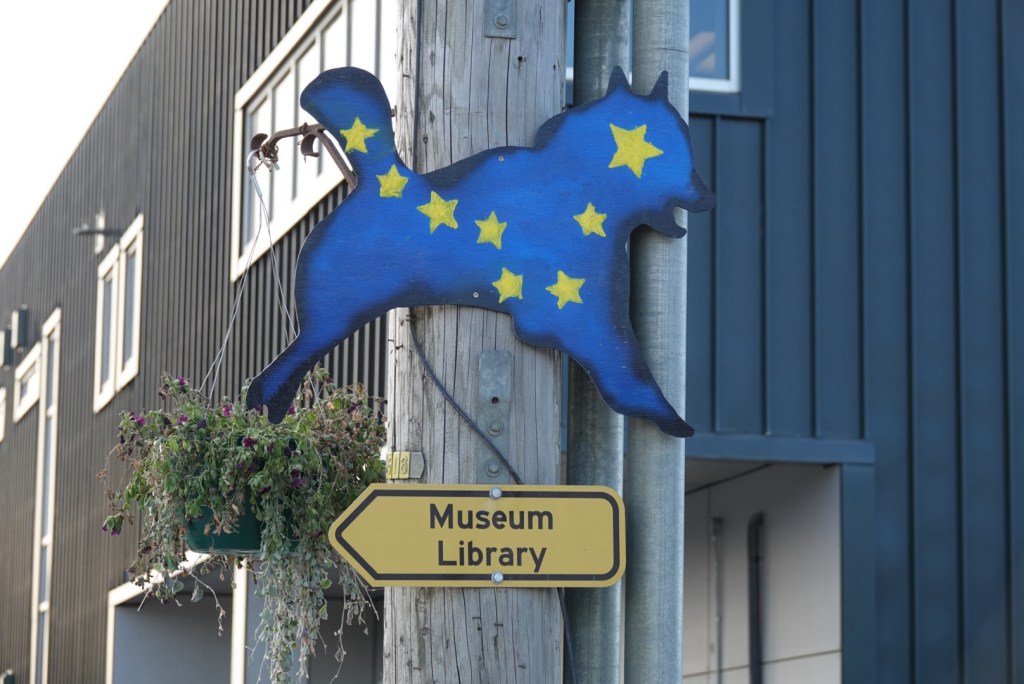
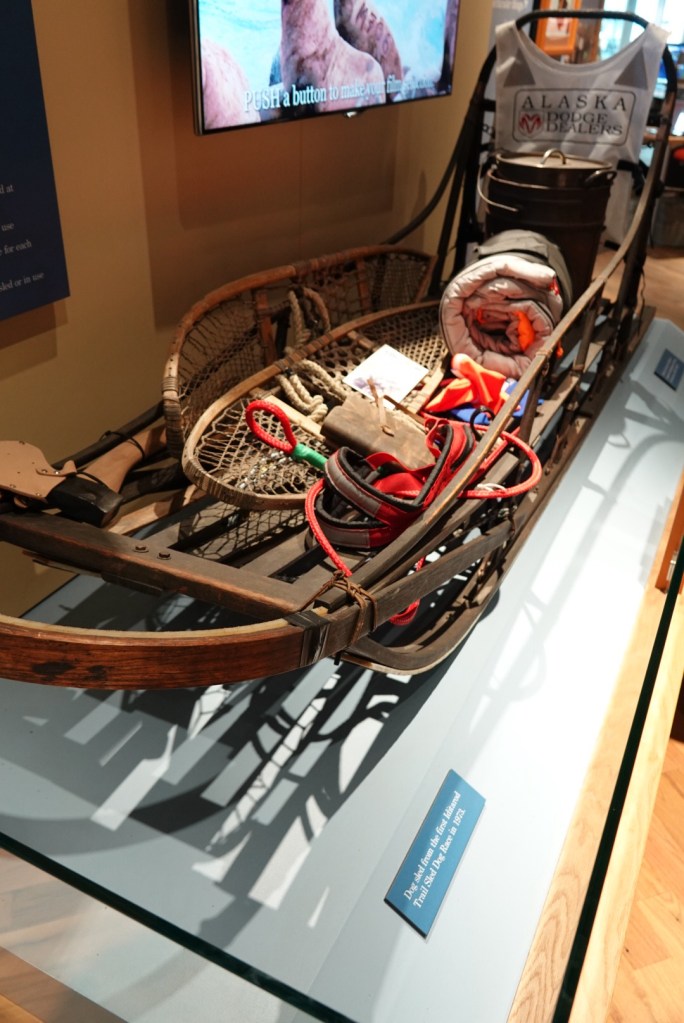
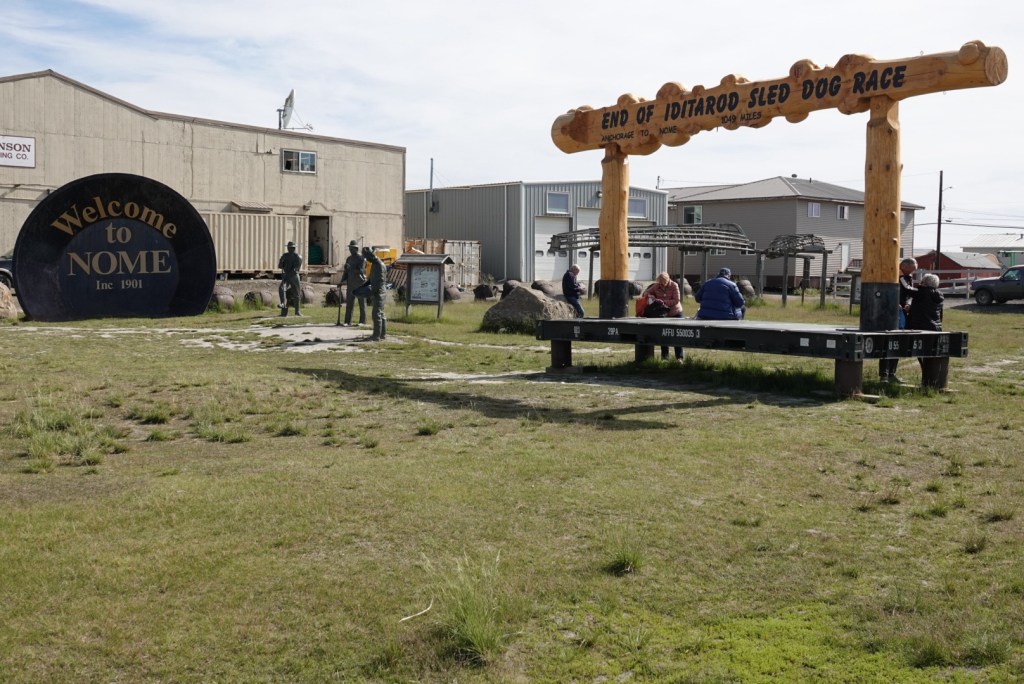
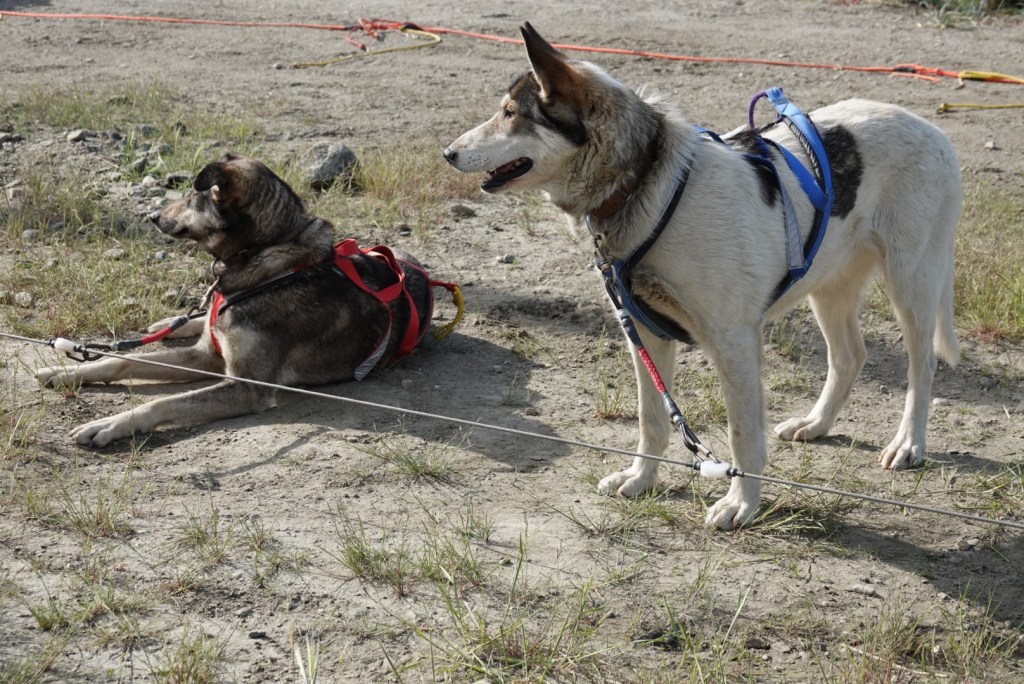
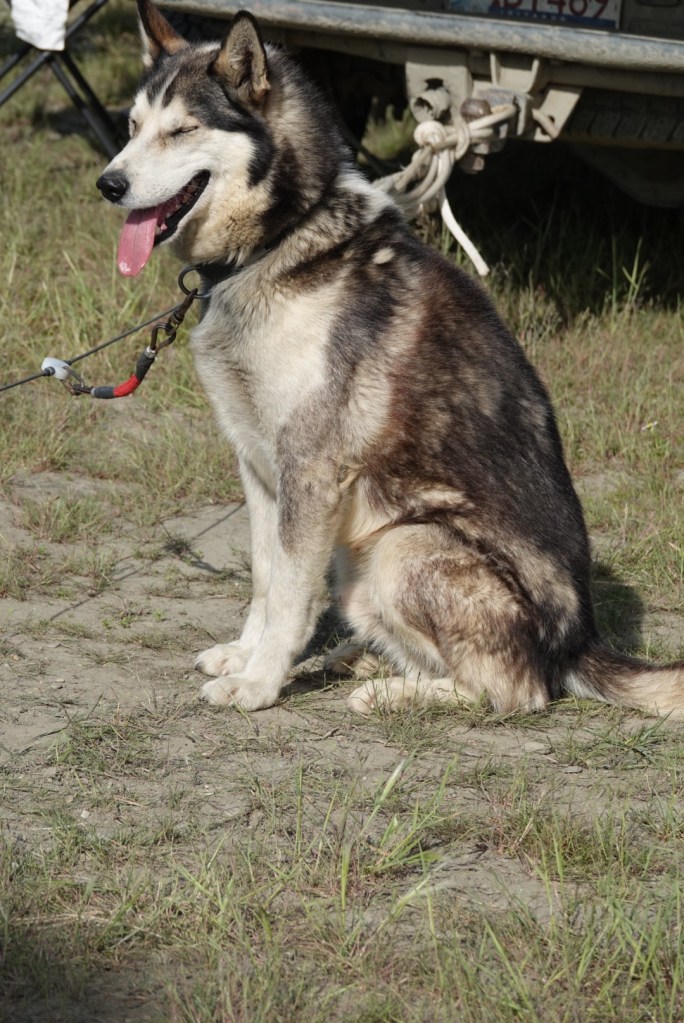
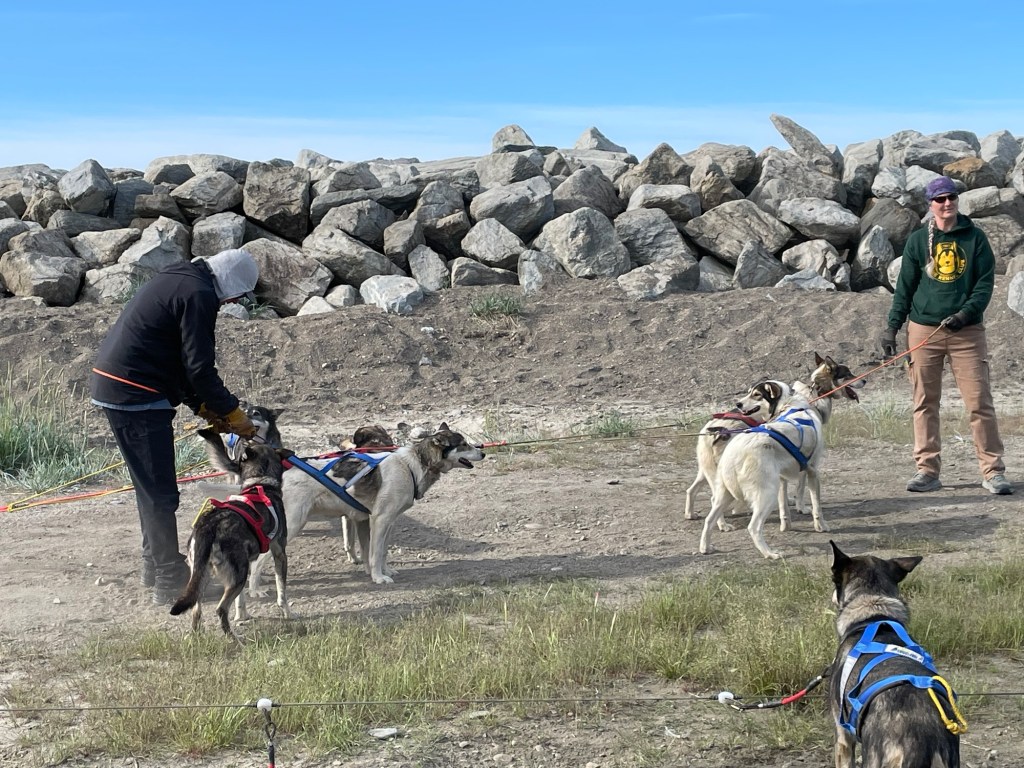
A bit rougher as we go farther north in the Bering SeaNome in the morningOur ship docked in Nome.An old welcome sign“No place like Nome” is a slogan that is printed on shirts and hatsNome is at the end of the Iditarod dogsled race in winterCute sled-dog signs with varied artworkHistoric dogsled from first race in 1973Arch that marks the finish line is kept at Anvil Square parkSled-dog demonstration
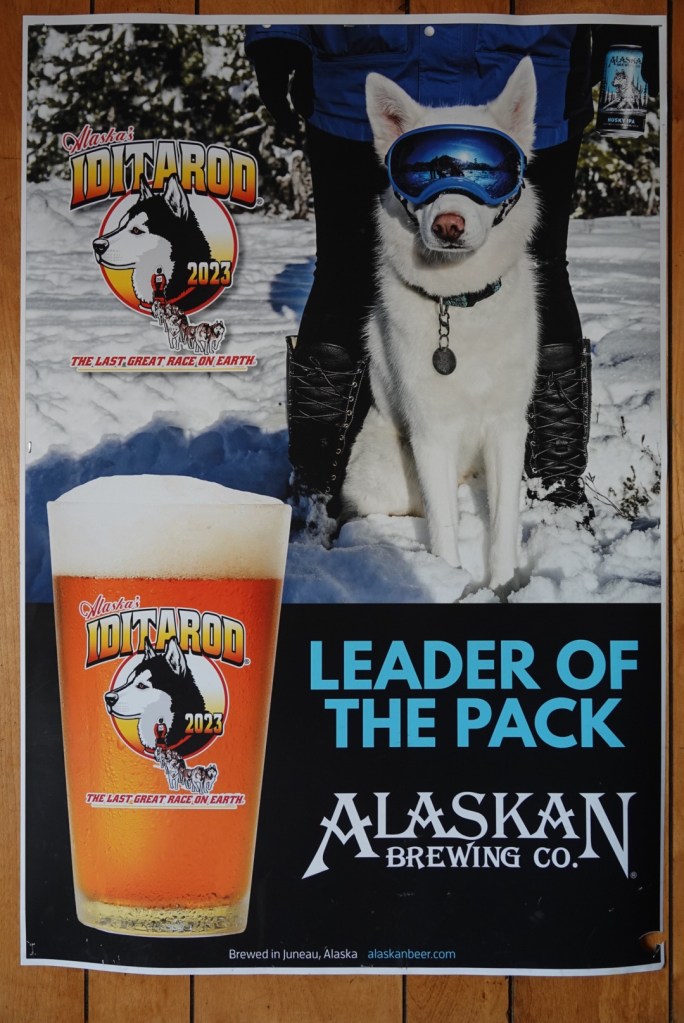
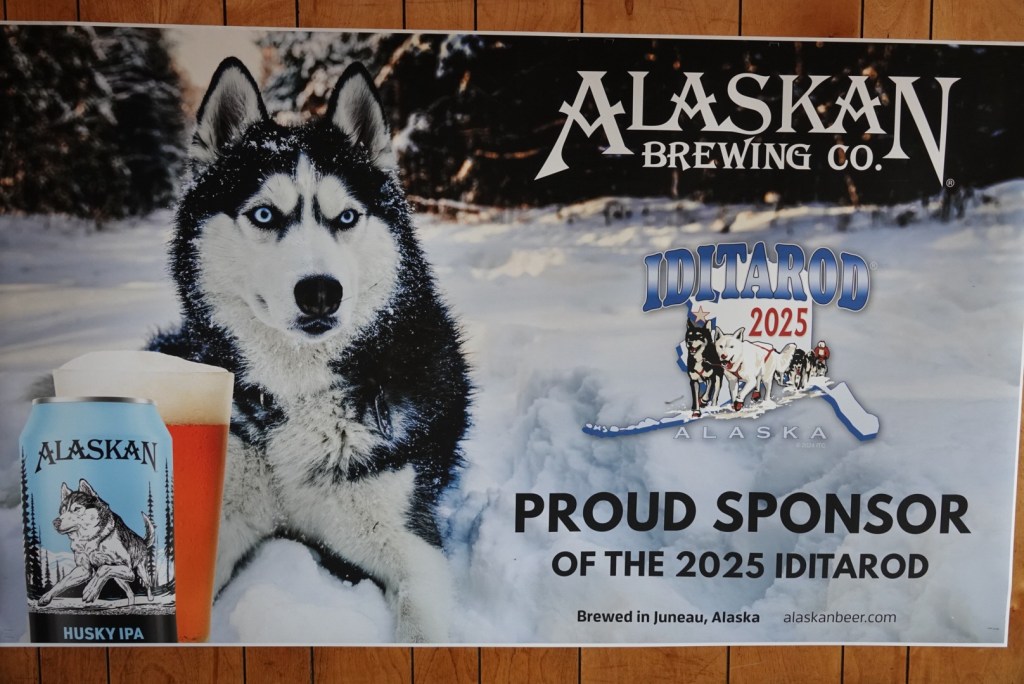
Posters in the Board of Trade bar
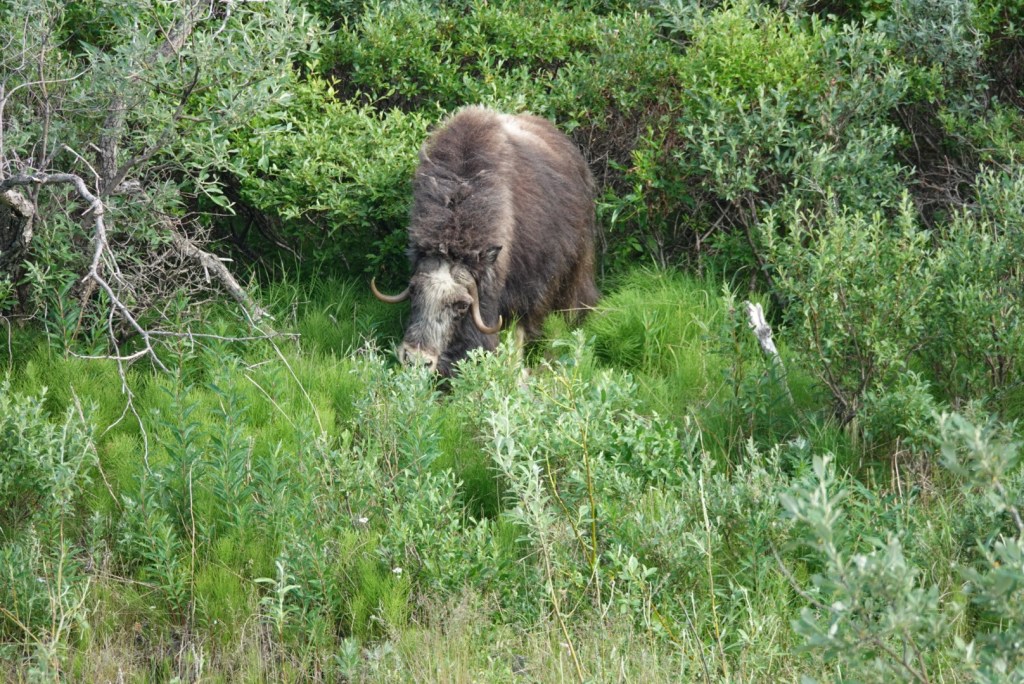
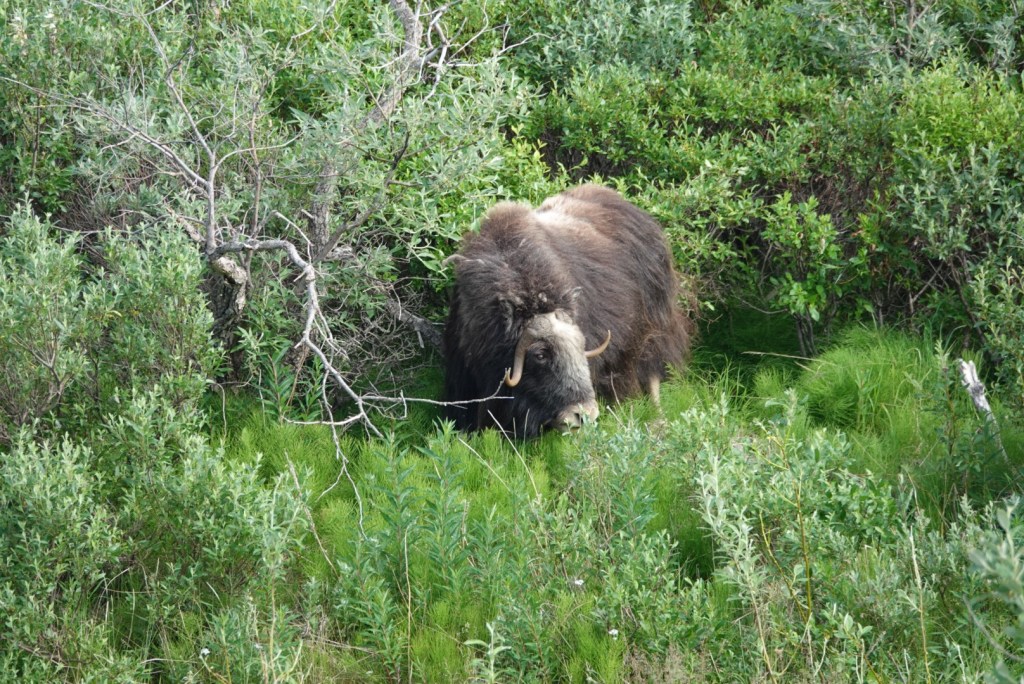
All the locals were friendly on the streets. We received lots of smiles, hellos and welcomes as we wandered around. The 3500 humans and 2500 musk oxen seemed to want us there.
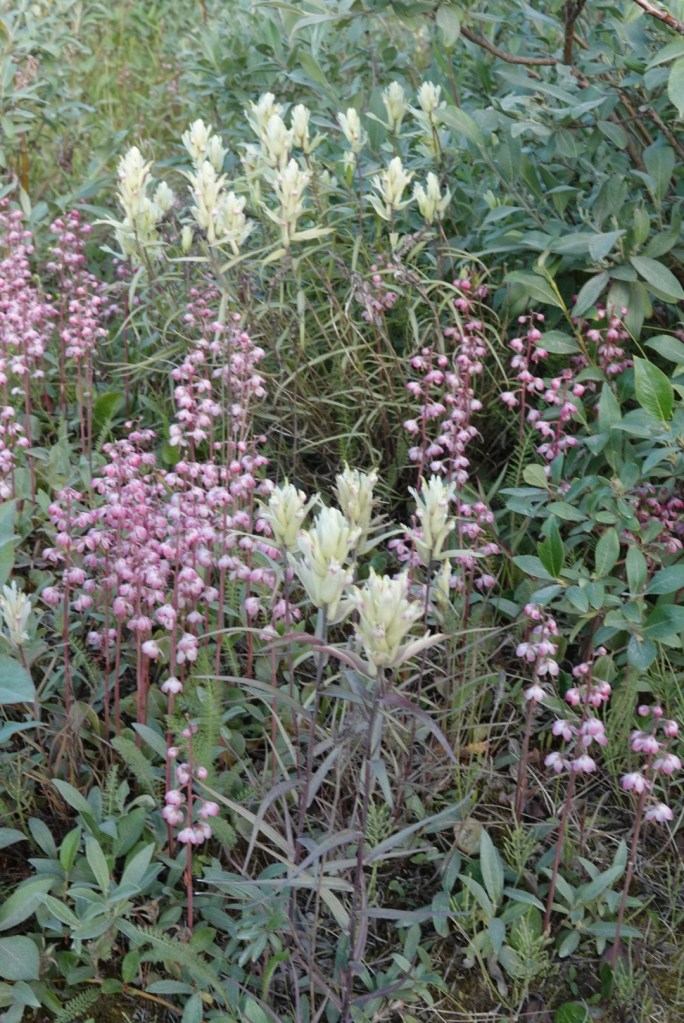
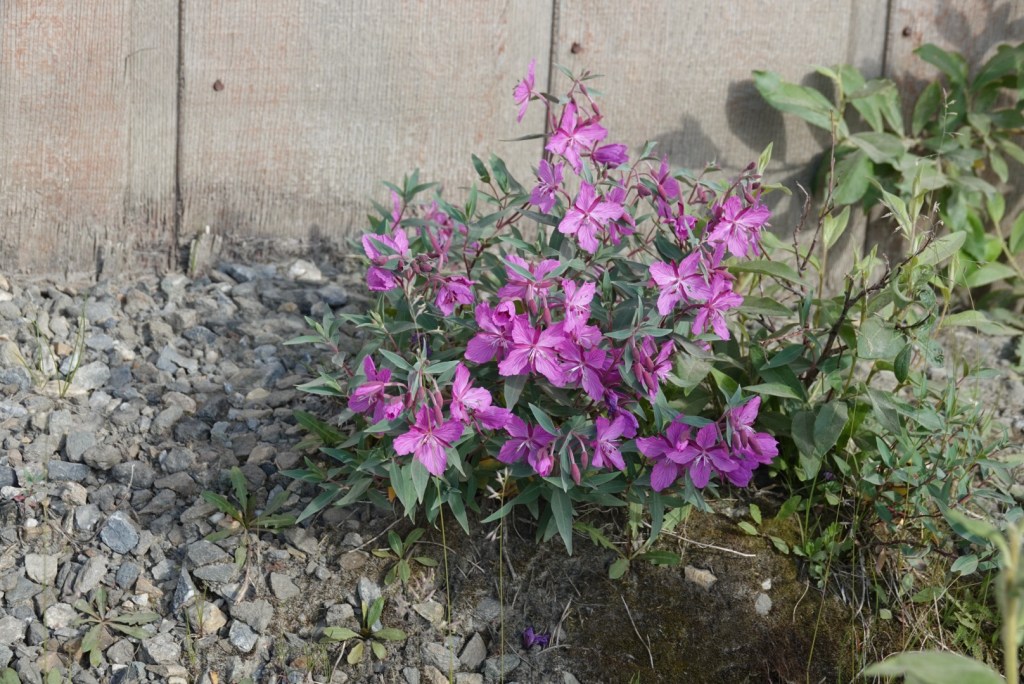
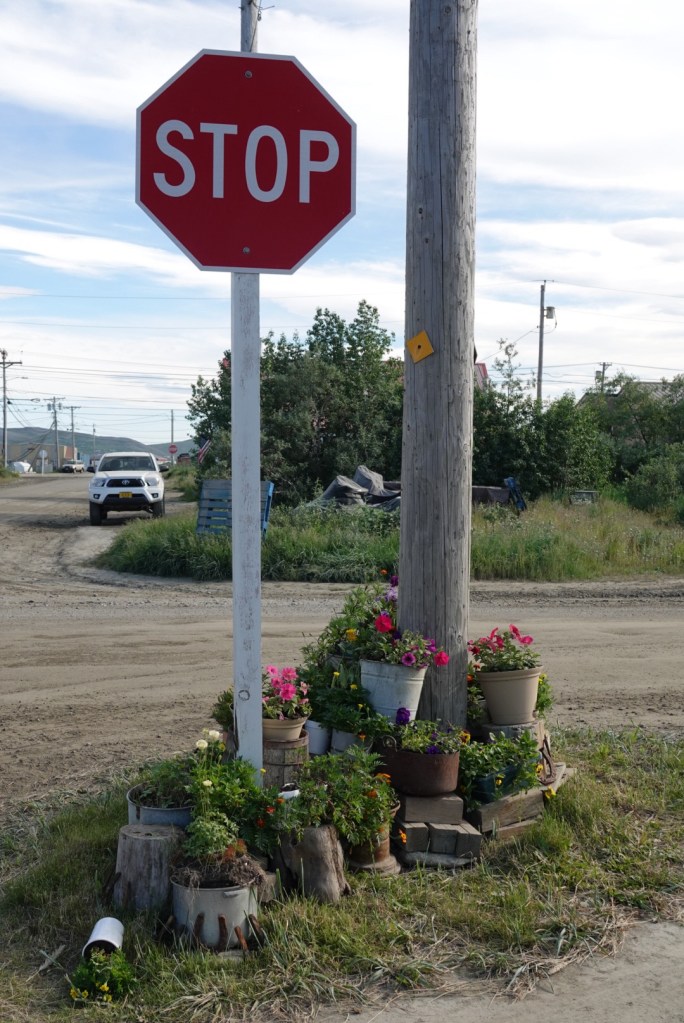
Don’t go near the musk ox. They are large and their horns very sharp. Flowers, wild and otherwise, on the streets
One of the locals told us that the Fish and Game department had to kill a young grizzly that morning. It had been rummaging through the garbage at an apartment complex near the town’s museum, which many cruise passengers would visit. She didn’t know who would get the meat or fur.
In the parts of Alaska where we met people who lived there, the desire to use every part of everything they had was strong. In general, everyone ate the meats of the local animals. When asked about musk ox, one said that they taste like beef, but more tender.
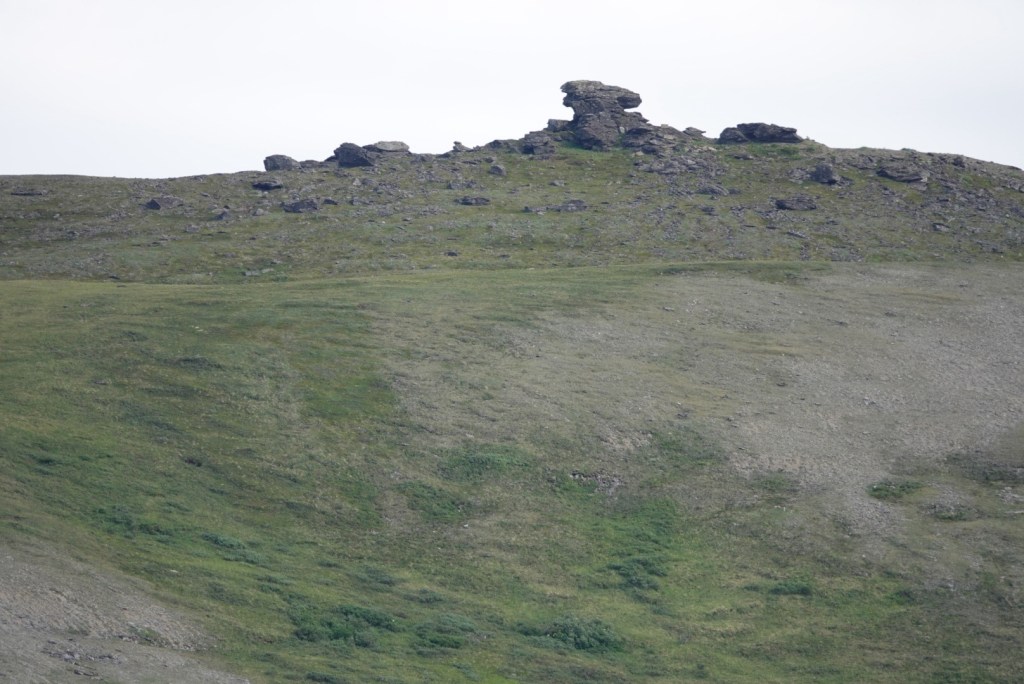
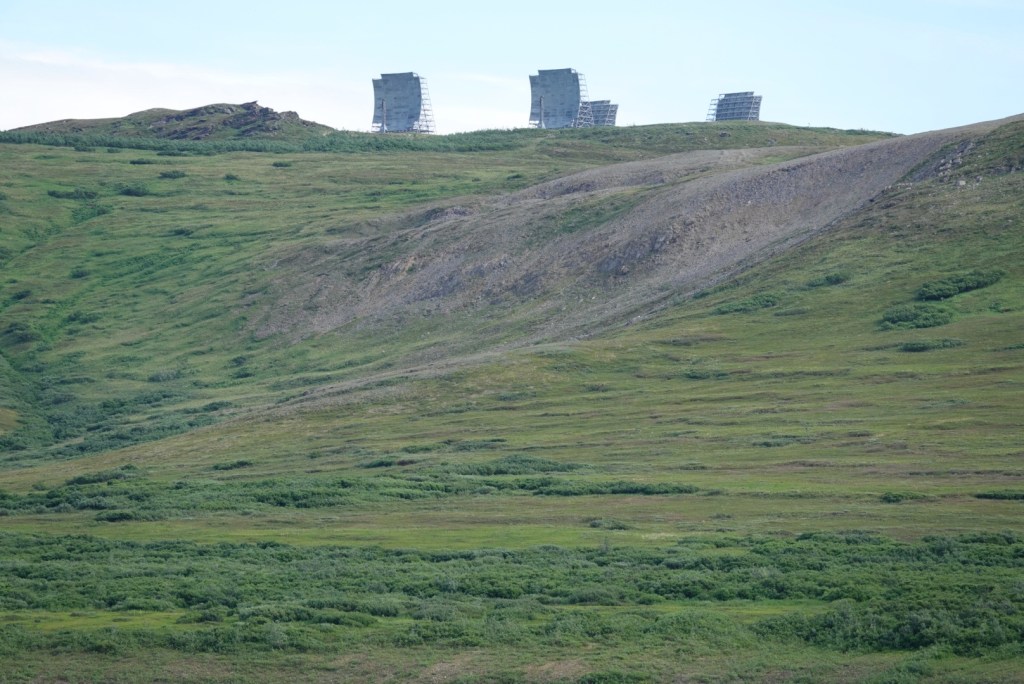
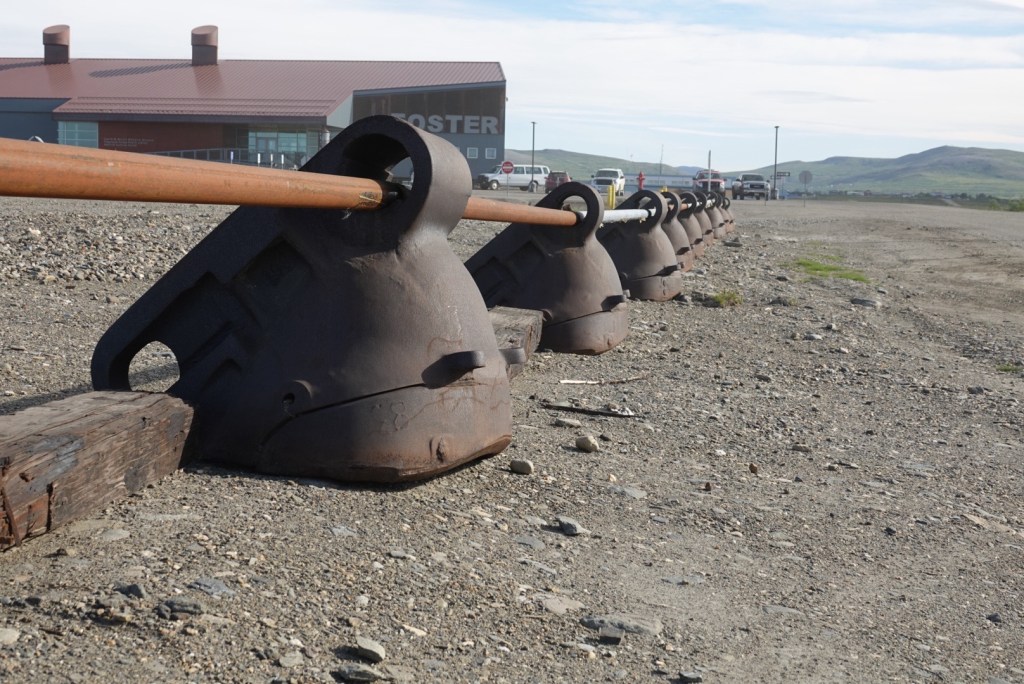
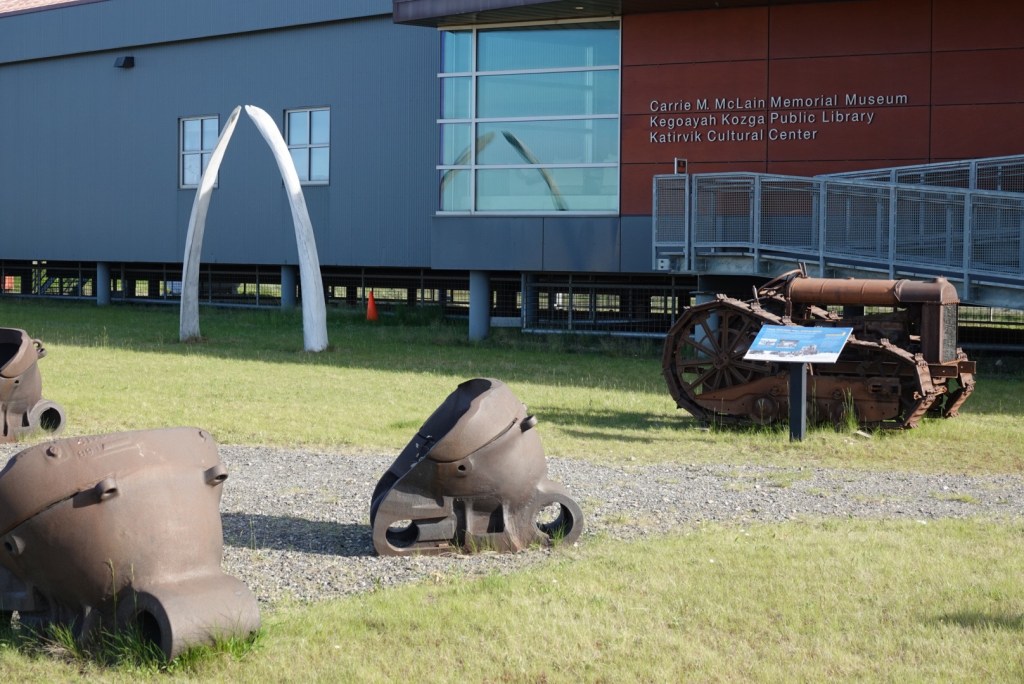
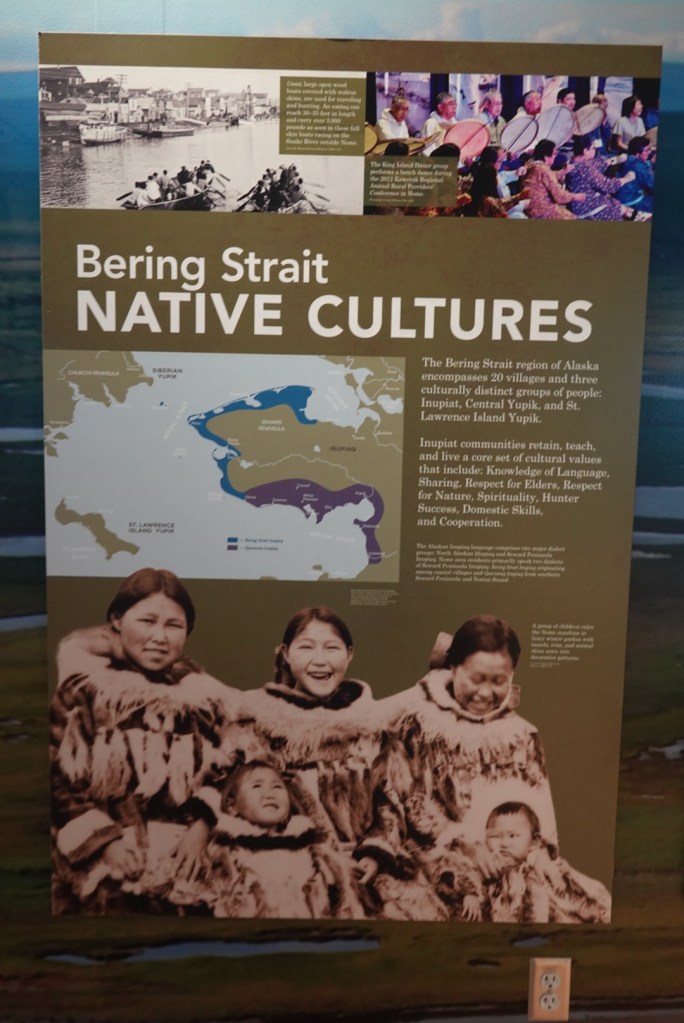
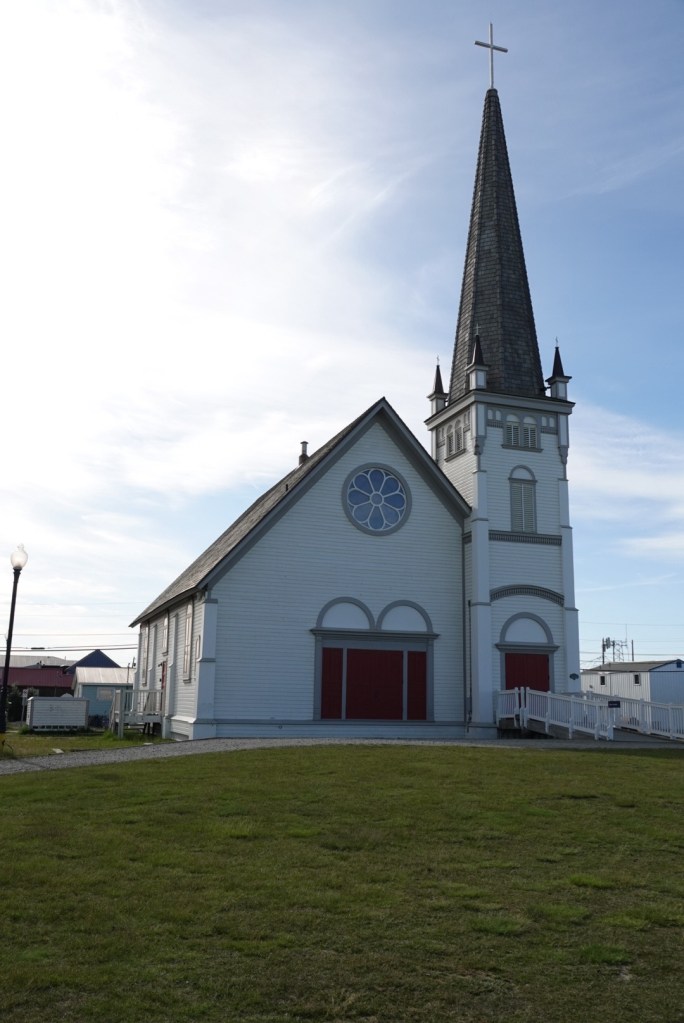
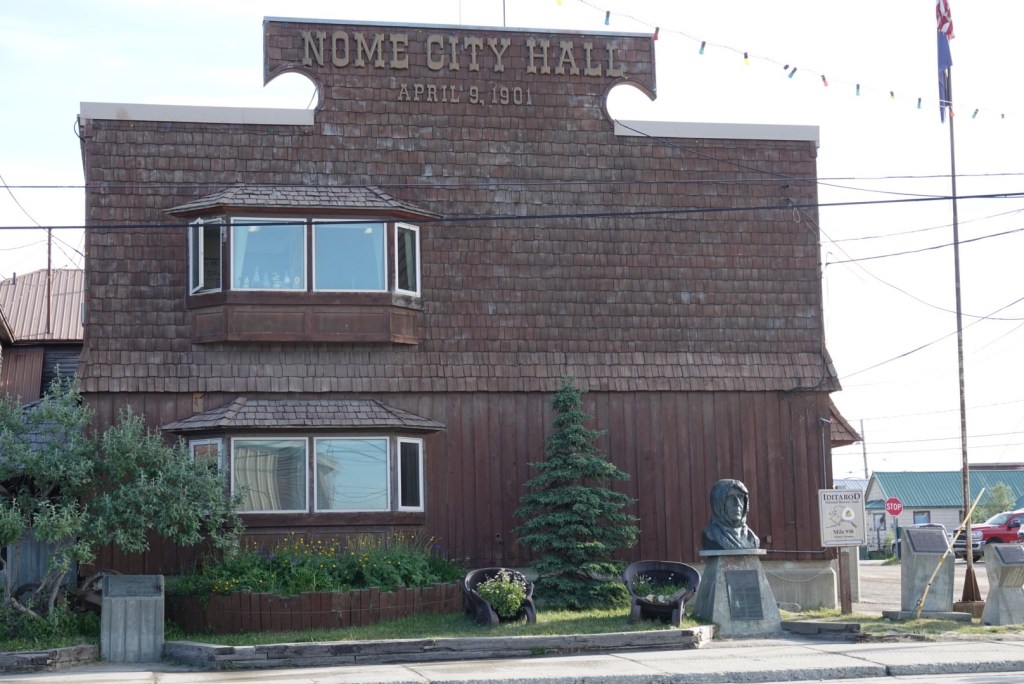
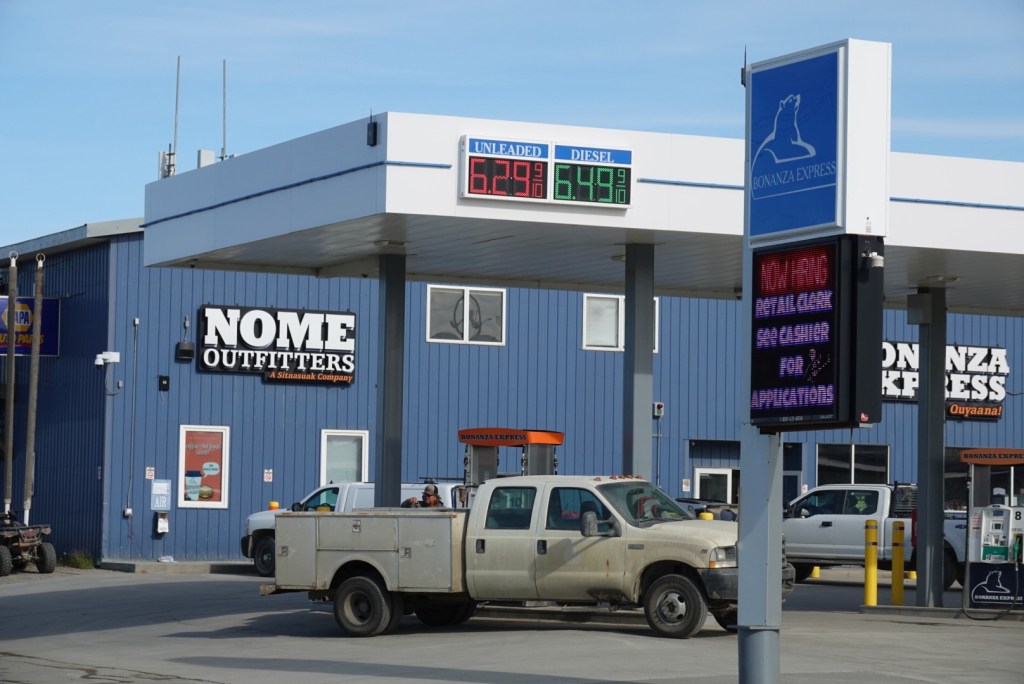
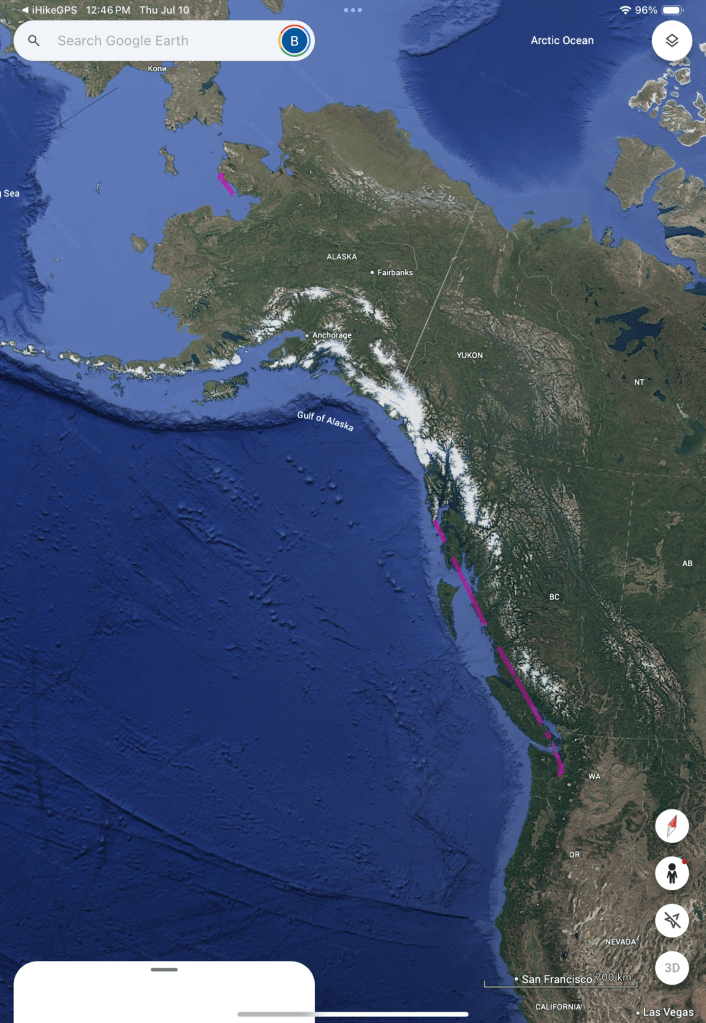
Anvil MountainRadar dishes installed during WWII are kept as a landmark for local pilots and other travelers. Old dredge buckets are now used as barricades or flowerpots.Whale bones, early Fordson tractor and dredge bucketsThree distinct cultural groups inhabited this region historically.Old St. Joe church, where we ate a catered lunchNome City HallFuel is expensive!Our chartered plane to take us to Seattle was one of two required to hold the cruise ship passengers. Dinner and drinks were served during the smooth 4-hour flight.Part of the flight path (in pink) was over the Inside Passage, where we sailed on the early part of our voyage.
On this day, we are sailing northeast to arrive in Nome tomorrow morning. The weather is sunny, but there is nothing to see but open ocean and seabirds. We hope to see Orcas, but not as of this writing.
Here is more about the ship. The Roald Amundsen and its sister ship, the Fridtjof Nansen, were built in Norway in 2019 and 2020. We wrote earlier about the hybrid drive system and some of the features that we learned about while visiting the bridge. Further information was gleaned from a Q&A session with the ship’s officers.
The ship makes its own fresh water by taking in seawater and purifying it through reverse osmosis. The ship needs to be traveling at higher speeds (>10 knots?) in order to take on seawater. Production of fresh water is on the order of tens of cubic meters per day!
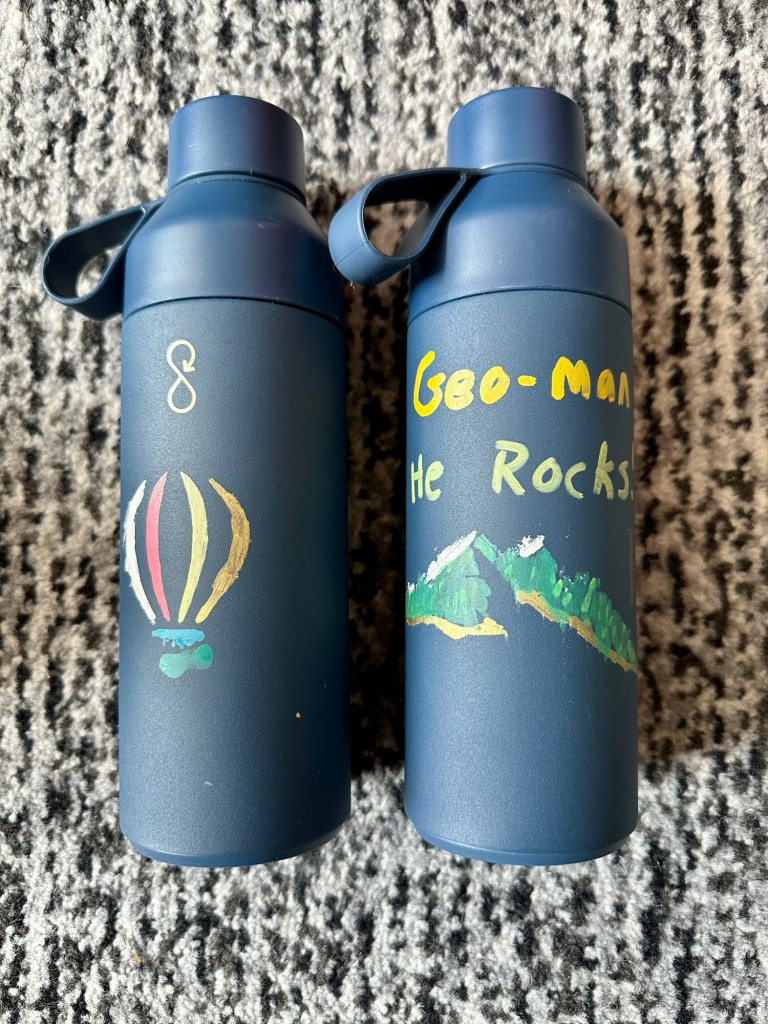
There is no single-use plastic on board the ship. We were given nice insulated water bottles to keep; Clare decorated them! Chilled and filtered water refill stations were placed on each deck. One could also drink the tap water in the stateroom, but it had a chlorine flavor.
Our personalized water bottles
Gray water, sewage, and food waste are treated onboard and discharged at sea in accordance with maritime regulations. We were told that this effluent is essentially drinking-water quality.
There are about 150 crew on the ship, which can accommodate up to 530 passengers. On this voyage, only around 280 guests are traveling. While discussing the food, which has been excellent, with a crew member, we learned that the ship is only re-supplied with provisions every two to three months. It seems amazing that so much of the food appears to be fresh, although perhaps most has been frozen.
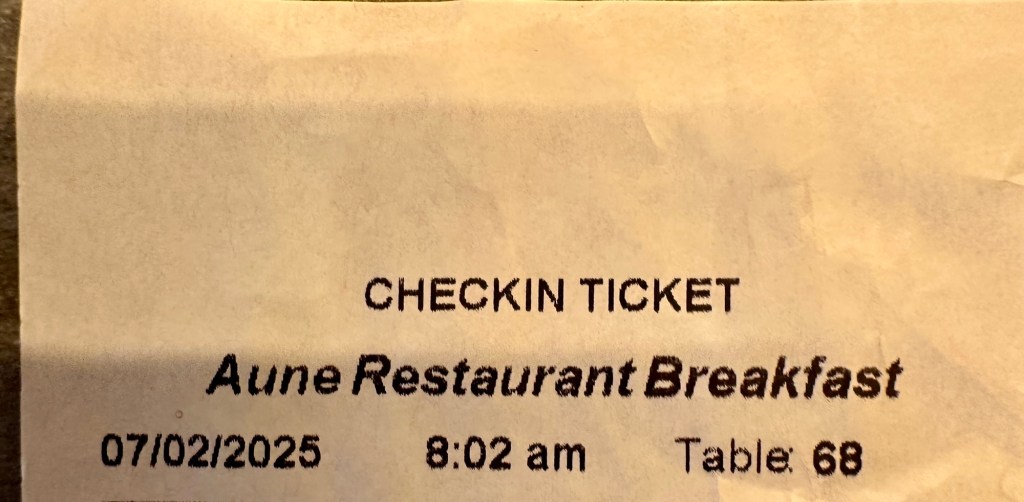
The main restaurant is a breakfast and lunch buffet, but a-la-carte table service for dinner. Menus are only available through an app, not printed. The alternative all-day lunch restaurant has burgers and various small plates. The fries were quite good! The main restaurant assigns a table via computer at the maître d’ stand.
A table ticket for the buffet breakfast
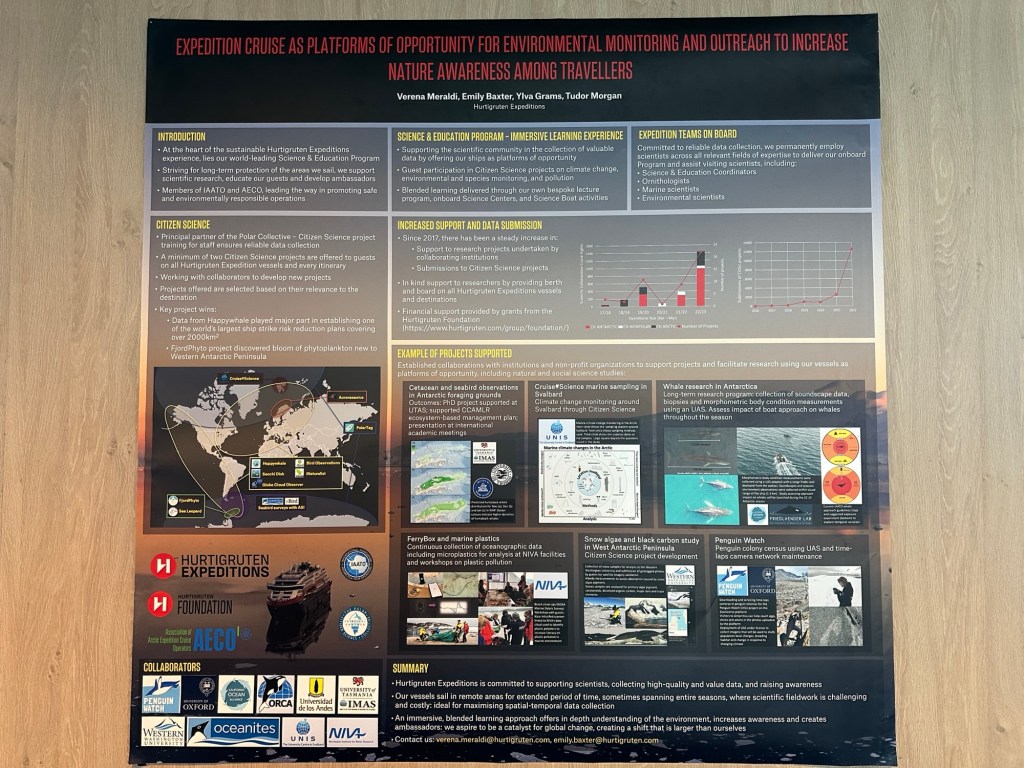
The ship features various science activities involving guests in both collection and analysis of samples. We only went to the lectures on subjects that were interesting and (or) unknown to us. The geology presentations were too elementary for us (not a surprise), but the speaker was entertaining. David was the comedian (and geologist) of the science team!
A poster outside the main restaurant explaining the types of scientific activities that Hurtigruten encourages and the cooperating organizations.
Last night, an auction was held to raise some additional funds for the Hurtigruten Foundation. One item auctioned was the pride flag that was flown on the ship during June. It was signed by the expedition crew members.
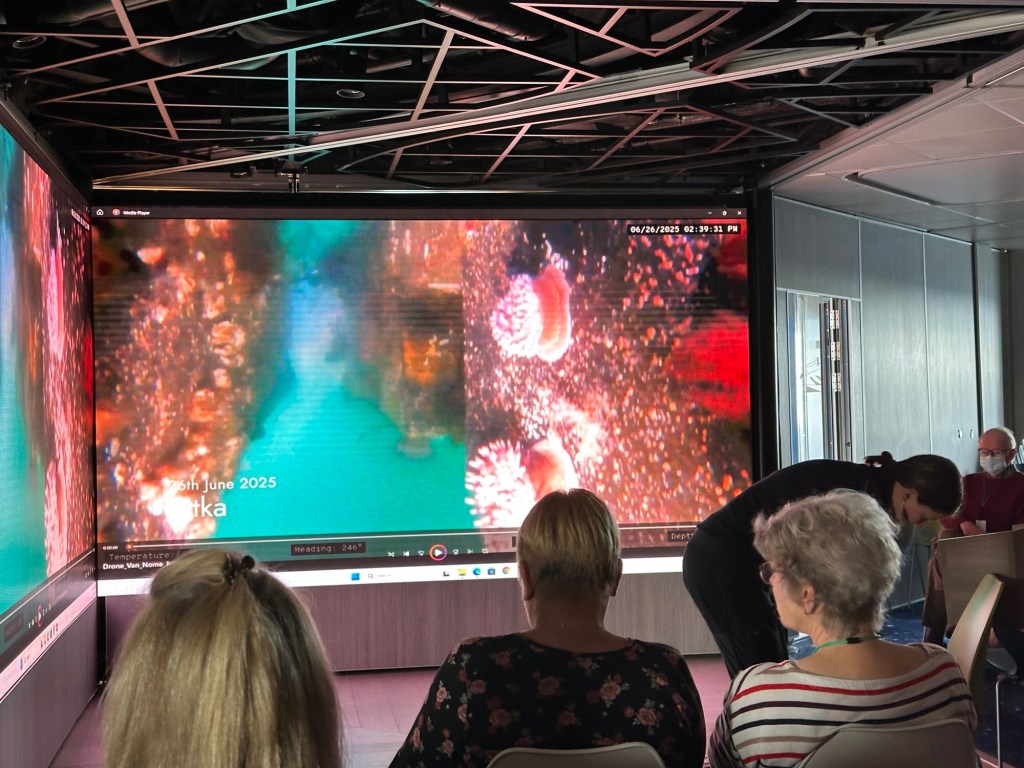
The lecture hall was used for numerous presentations, many of which were simultaneously translated for the German guests. Most were also streamed to the televisions in the staterooms.
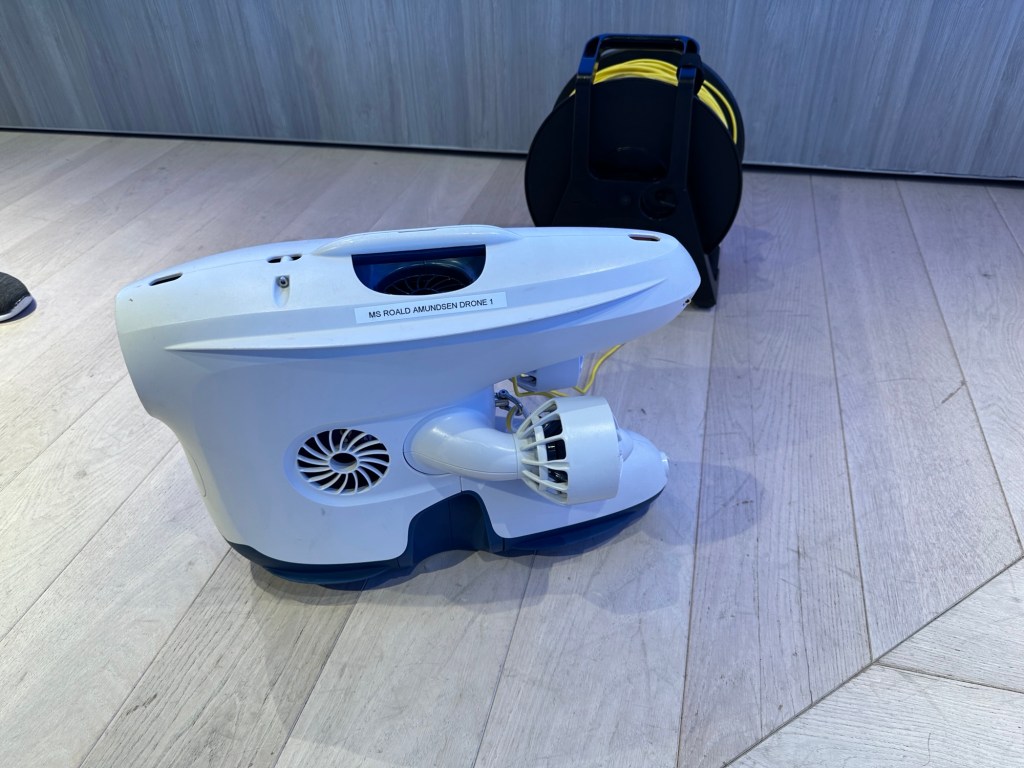
Lecture hall screen showing video taken by underwater droneThis is the droneWatch video taken using the underwater drone on various voyages here: https://youtube.com/@hxunderwaterdronefootage
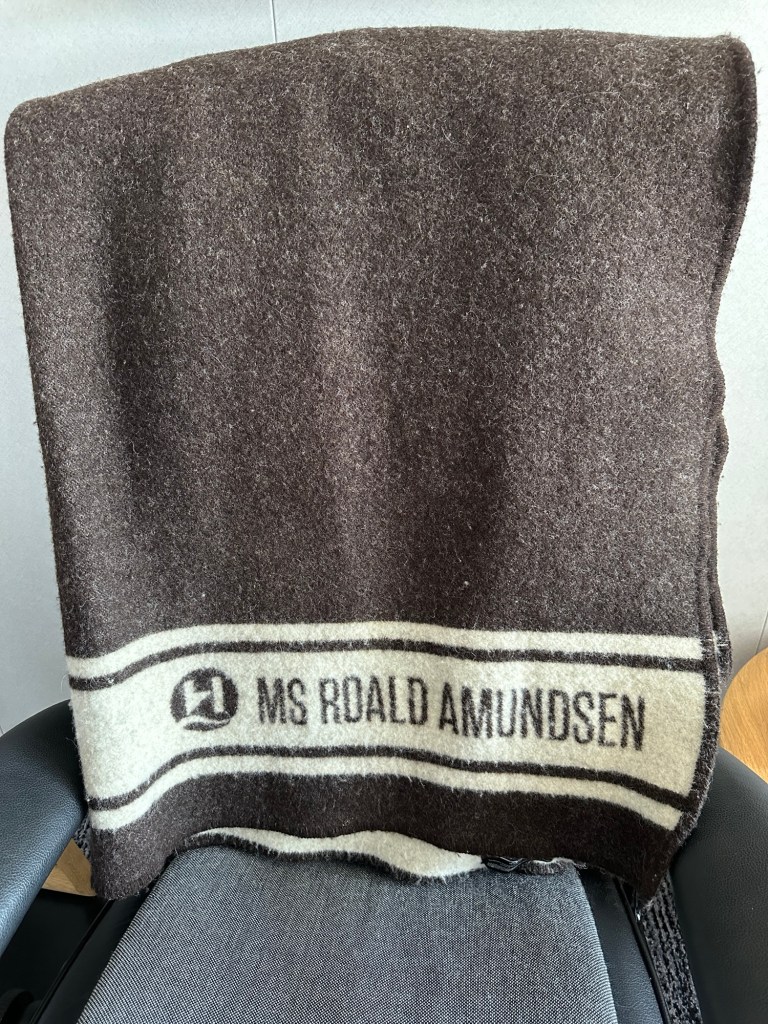
There was a nice wool blanket in our stateroom that we never needed!
BlanketChampagne glasses readied for toasting the officers and crew
 Bunch of Geeks go Traveling