So long. So steep. Centuries to create. One of the Eight Wonders of the World. Our group arrived at Mutianyu base with access to a portion of The Great Wall, walked through shopping stalls then hopped onto chair lifts to get to the top. Two of our group planned to ride toboggans down.
Decorative umbrellas Retaining wall along the path to the chair lifts
The Great Wall is not contiguous in total. It consists of many smaller subparallel walls, built using different techniques and materials through time. Mostly, it runs along ridge tops, capping the steep mountains.
East section ends at a summit lookout.
Our guide told us the eastern side from where we were dropped off by the chair lift was more challenging, while the west was less steep. Almost all of us started toward the more difficult side to begin.
Down from chair lift stationBunch of new friends Walking could be difficult Pictures of our group at various points on the wallGroup photo
The steps on the wall varied in height and spacing depending on the grade, making for challenging walking. Rocks varied from granite and gneiss to dark basaltic volcanics. It is difficult to imagine the immense effort to build these walls centuries ago.
MillipedeGreen beetleWild catWildlife on the wall!
The cats looked well fed. Perhaps tourists gave them snacks, or maybe lots of small rodents were available.
Second piece of wallLookout where fires could signal invasionCannon
Brian walked up to the lookout at the top of a hill, pictured below. He said that the view from this lookout was obscured by trees; the lower one had better views.
Photographs cannot capture the immensity of this human-made entity. We walked a tiny portion, overwhelmed.
People from all over the planet, speaking multitudes of languages were visiting while we were there. The wall is a gift to humanity.
Up on a face of a mountain, five large Chinese characters remind people of their duty to the government.
“Be Loyal To Chairman Mao”
We both took dozens of pictures, and they didn’t seem enough. The mountains in the area we visited were magnificent as well.
We re-met everyone at the base, ready for a lovely lunch. Then a bus ride back to Beijing.
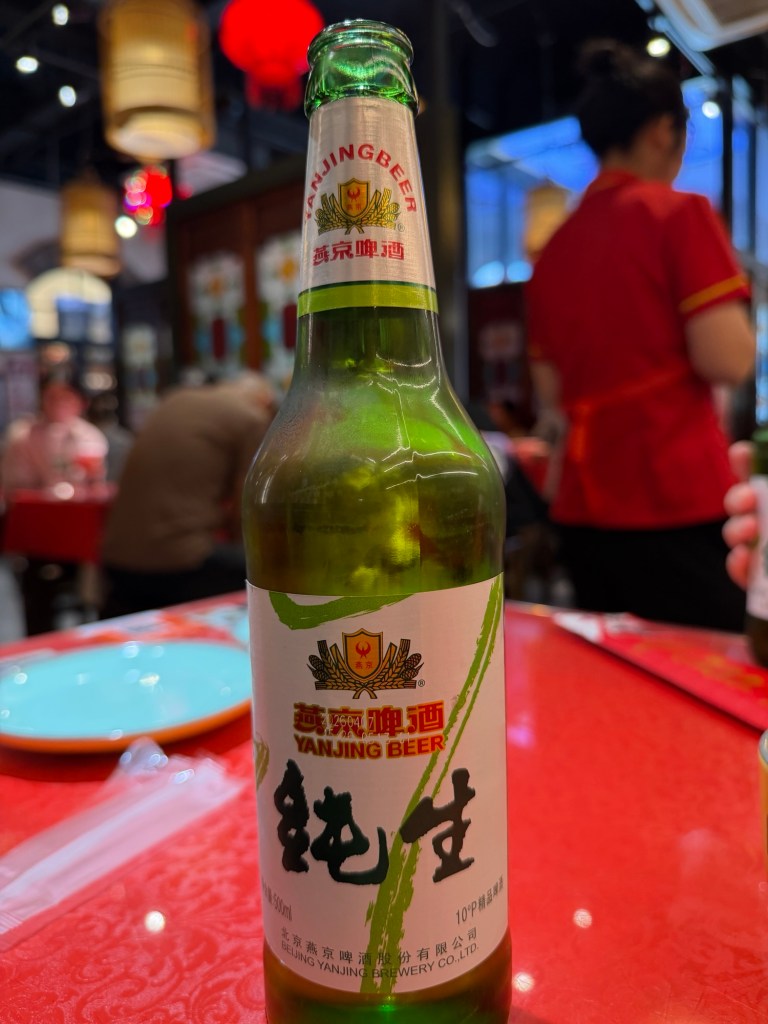
Helicopter tours were also availableHeading back downBeer at lunch
We wandered around Beijing for our last evening in the huge city. Spying crowded food stalls in an outdoor mall, we inhaled unusual scents and eyed delightful food temptations. The fresh fruit looked perfect, both here and at other street stalls.
Fisherman at a waterwayGate to pedestrian mallRoast duck
The food mall was found by accident. Our goal was a craft brewery that Nick and Mikey had visited. We found the Great Leap brewery and had a couple of delicious beers.
Cat on a roofCraft beer!We also bought breads and sweets for next morning’s breakfast.
Dinner was strange but tasty pizza at a cute hole-in-the-wall spot near our hotel.
Tiananmen (Gate of Heavenly Peace) is the main passageway to the Forbidden City. The famous Square was a place of many political rallies and protests. We visited both.
Friends on a public bus on the way
Near the Forbidden City, we were again subjected to three police searches and identification checks. Going through Tianamen Square, knowing some of the history through the Great Course we watched before arriving, Clare felt a bit subdued, awed perhaps. So much happened here, and our guide was not allowed to talk about it. We wandered for about 45 minutes through the square then rejoined our group for the Forbidden City.
Only place in China where photos of soldiers are allowedMao’s portrait is changed on October 1st every year.
Since Peter told us this was our only chance to photograph soldiers but to ask permission first, Clare asked a few young men (mostly using gestures) if she could take their pictures. About half said no, but some were OK with it.
Great Hall of the PeopleThe important building is featured on the 100 yuan note.Mao’s mausoleum (a full-sized replica of his body lies here)Monument to the People’s Heroes, martyrs of revolutionary struggles in the 19th and 20th centuries. Note, no monument to the protesters who died in 1989.
The center of the square is empty, ready for another rally? The edges were full of decorative flowers and sculptures.
National Museum of China
The giant balls of flowers are actual bushes, replaced with other bushes as soon as the flowers fade.
The flag that flies in Tiananmen Square is changed daily. The old flags are used to honor veterans at their funerals.
Group photoWe cross the moat!
And now we see the forbidden.
Female guardianMap of Forbidden City
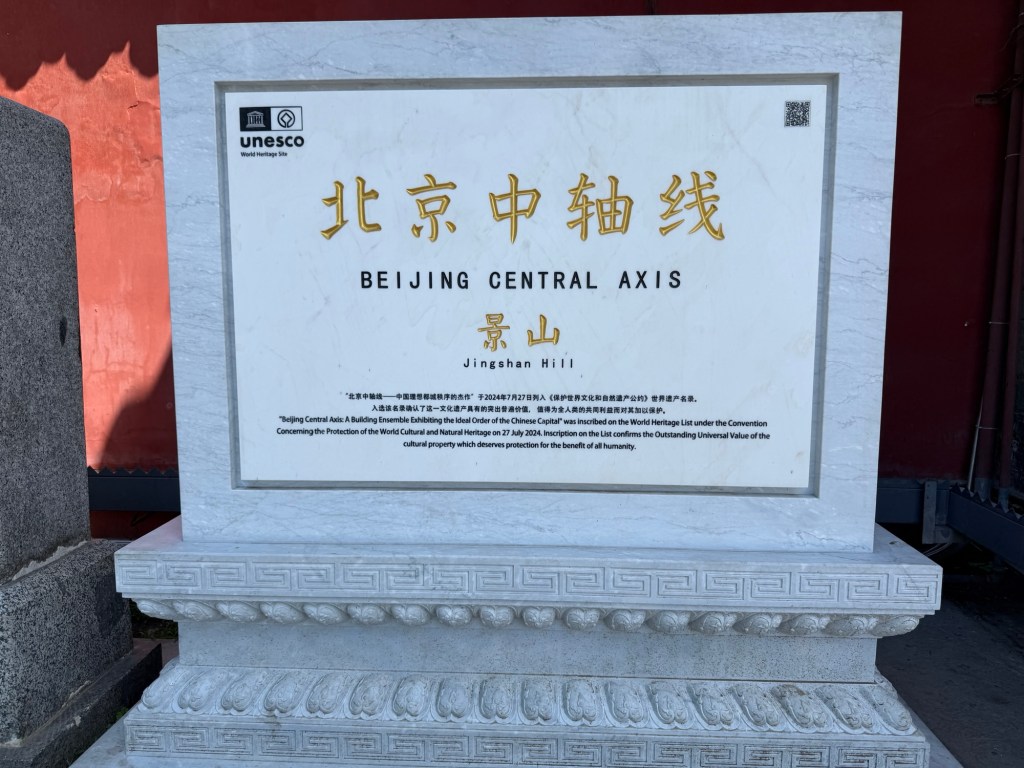
Beijing Central Axis, a UNESCO Heritage Site, includes Tiananmen Square, the Forbidden City and many other buildings along this meridian, including those we walked to on the hill yesterday.
81 studs, the square of 9, a powerful number squared only for the Emperor’s door.
The name forbidden makes humans curious, wanting to see it. This is a popular destination. We passed through the Gate of Supreme Harmony into the inner parts of the city, where the emperor, empress and all the concubines and eunuchs resided, each in their separate sections. The movie, “The Last Emperor,” is the only movie actually allowed to film at this site.
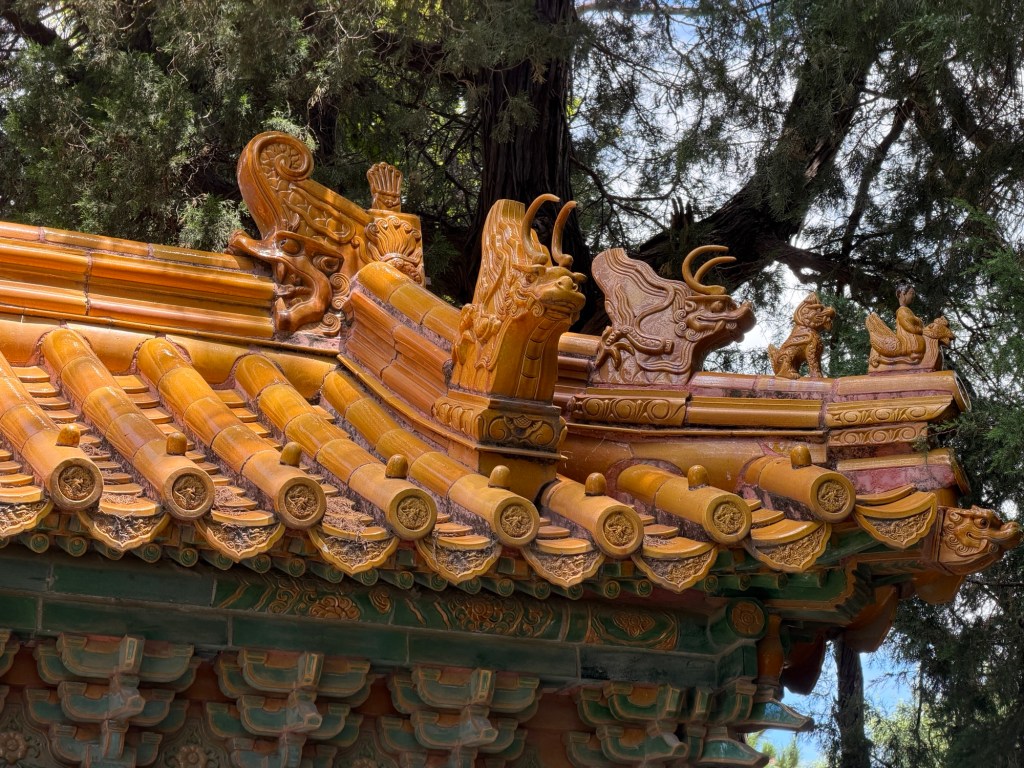
The water cauldrons for fire suppression were heated in winter to prevent freezing.Hall of Middle Harmony 9 guardians7 guardians5 guardiansThe odd numbered statues on the apices of the roofs, 9, 7, and 5, are for the protection of the people who live there, larger numbers for more important people. They were mainly thought to ward off fires.Hall of Supreme Harmony
The Forbidden City has 9,999 rooms. Powerful.
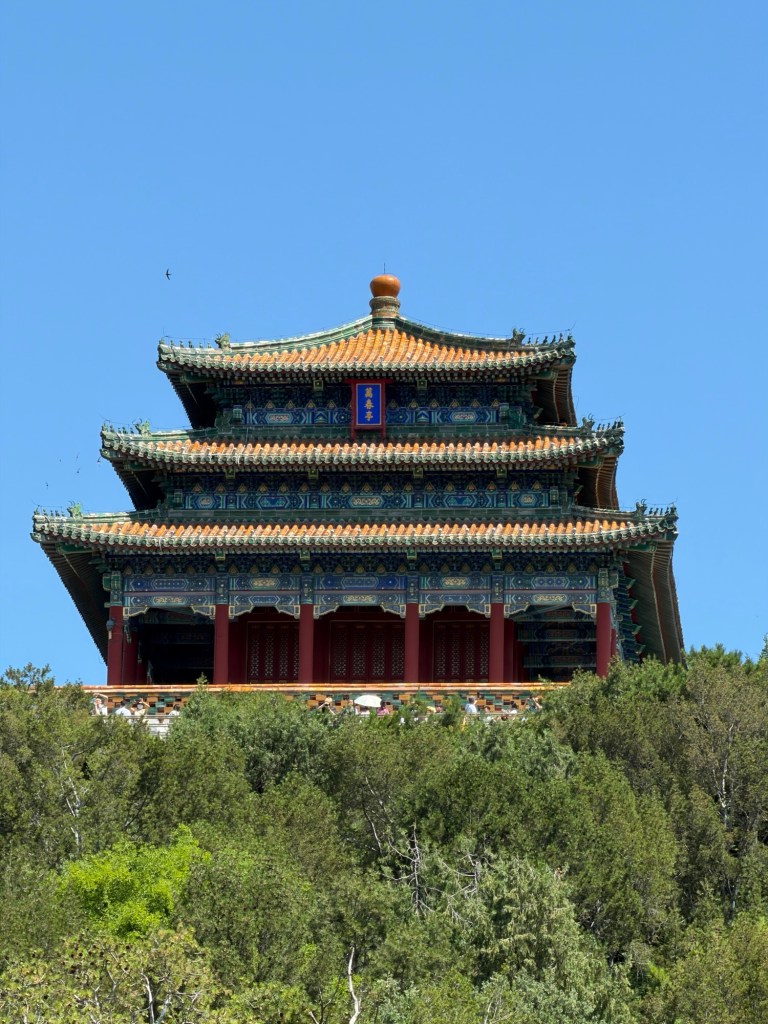
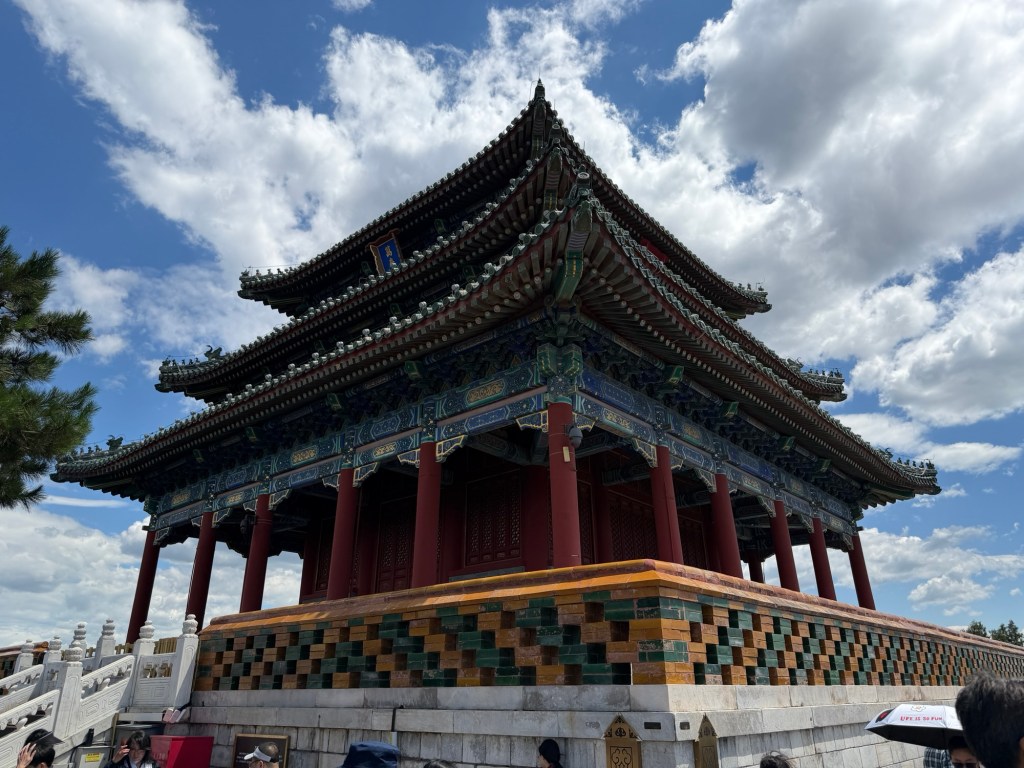
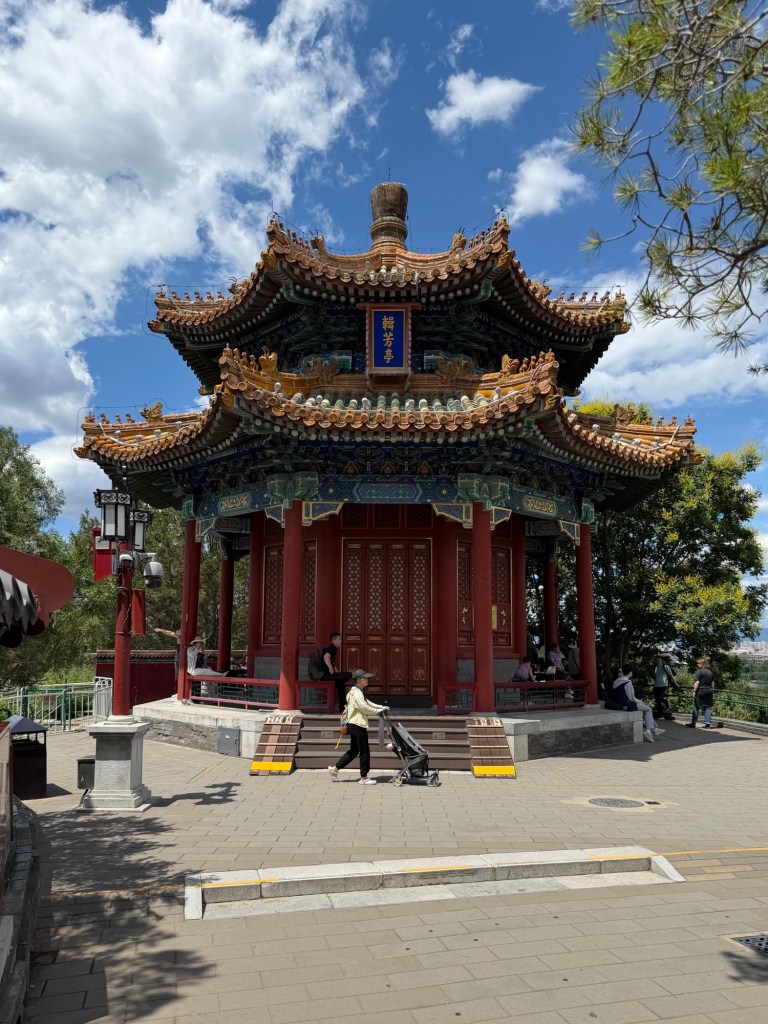
The emperor’s and empress’s chambersPeter explains everything to us, especially about concubines. There were at times over 1000.Another powerful door with 81 studs and more colorful decorations on walls.Interesting statues and a quartz crystalThe garden had many rocks on display, most appeared to be from springs.Pavilion on the top of Jingshan Hill, also on the meridianSmall lanterns in trees adjacent to the moatArrow pavilion at corner of Forbidden CityFancy drink at lunch near hotel
After lunch we hopped in a couple of cars to ride to an acrobatic show near the Olympic Park,
Columns emplaced for the 2008 Olympic Games depict sporting events related to each of the 56 ethnic groups in China.
After the fantastic acrobatics show, which concluded with 5 motorcycles riding inside a steel mesh sphere, we hopped on a city bus to ride to the center of the Olympic Park. Here is a video from seats on the second level.
Strange buildings that may be a large data centerOlympic towersThese trees were moved here prior to the 2008 gamesMap of the Olympic ParkClare holding the torchClare at the stadiumThe Bird’s Nest stadiumThe wall lists the names of all award-winning athletes of the 2008 Olympic and Paralympic games. The path lights are cute!Sculptures and characters designed for the 2022 Winter Olympics along with a view inside the Bird’s Nest
To make Olympic Park, the government started in 2000 to clear people’s houses and businesses out of the large acreage needed for the games. The people had no choice but to leave because the land belonged to the government and they were renting from the government. But one old temple remained. The story is told that when government workers tried to cut down the building with large machines, the machines broke down. The temple was untouched. So, workers with sledge hammers were sent in to flatten the temple, but a tornado blew them all away. The story made one person in our group name it the “Temple with a Tempest”.
This temple was designated as an historic site in order to be saved from the extensive demolition that occurred to make way for the Olympic Park. People are not allowed to worship here because the temple is too powerful. The pedestrian mall in Olympic Park is on the Beijing Central Axis; this view shows the Bell Tower in the distance.
Brian and Clare shared dumplings for dinner after a busy day.
25 million people. We got a feel for that this day when we went to a park with a hill and lots of good views of Beijing.
On the walk toward our park we passed beautiful buildings and interesting monuments.
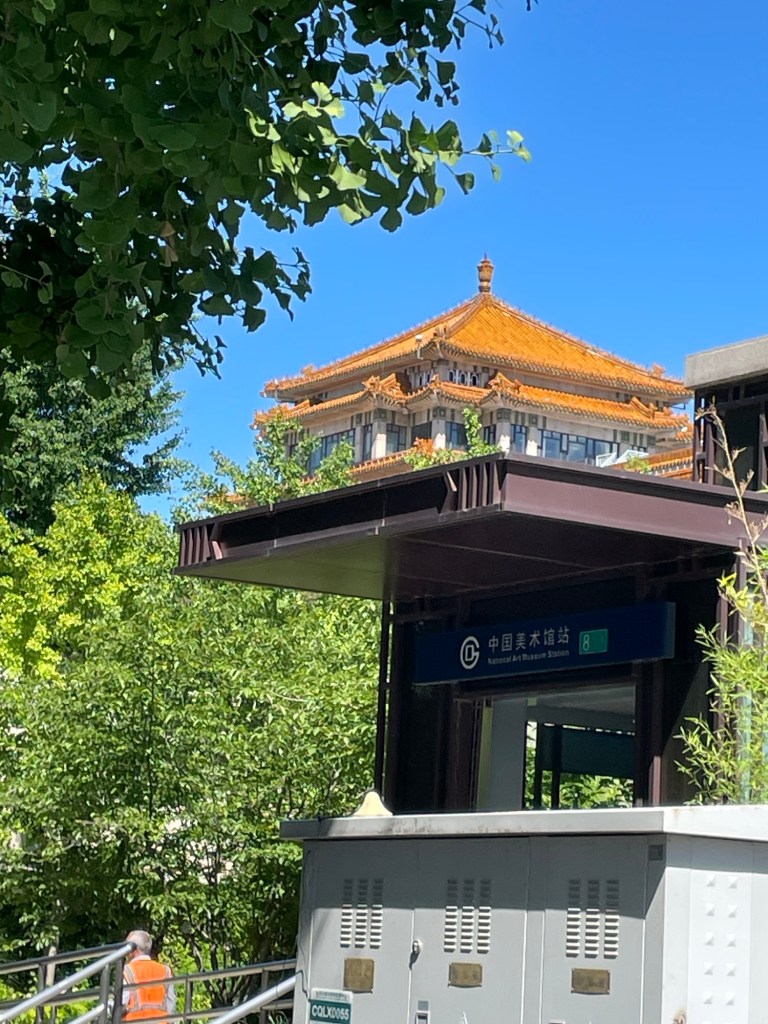
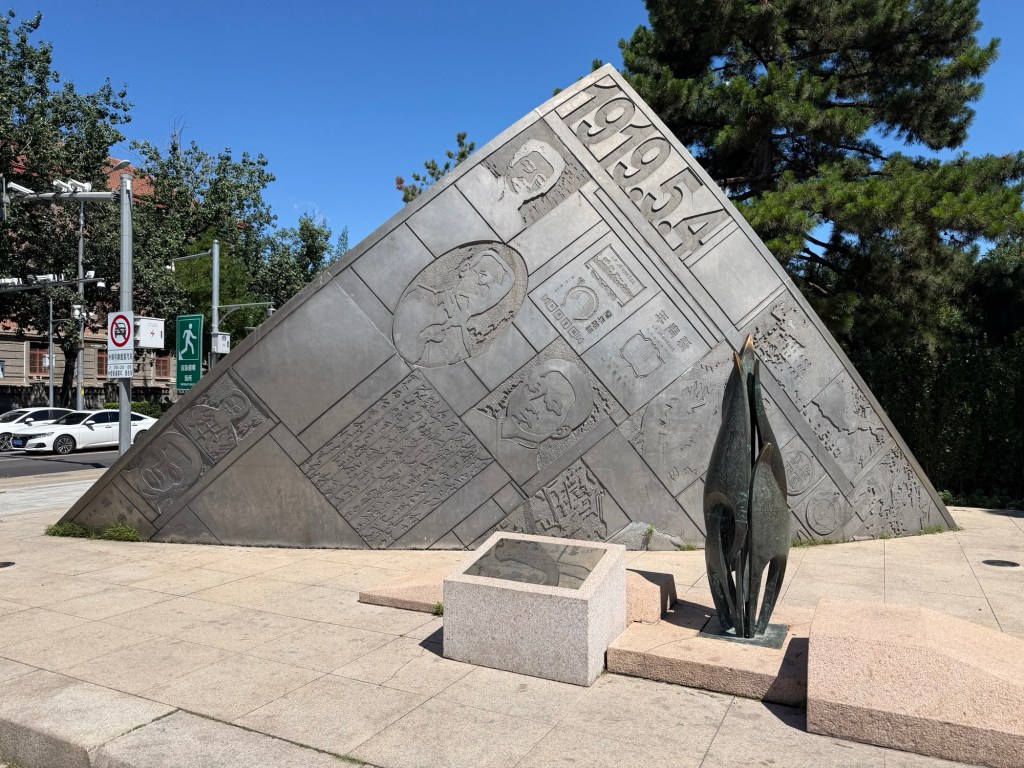
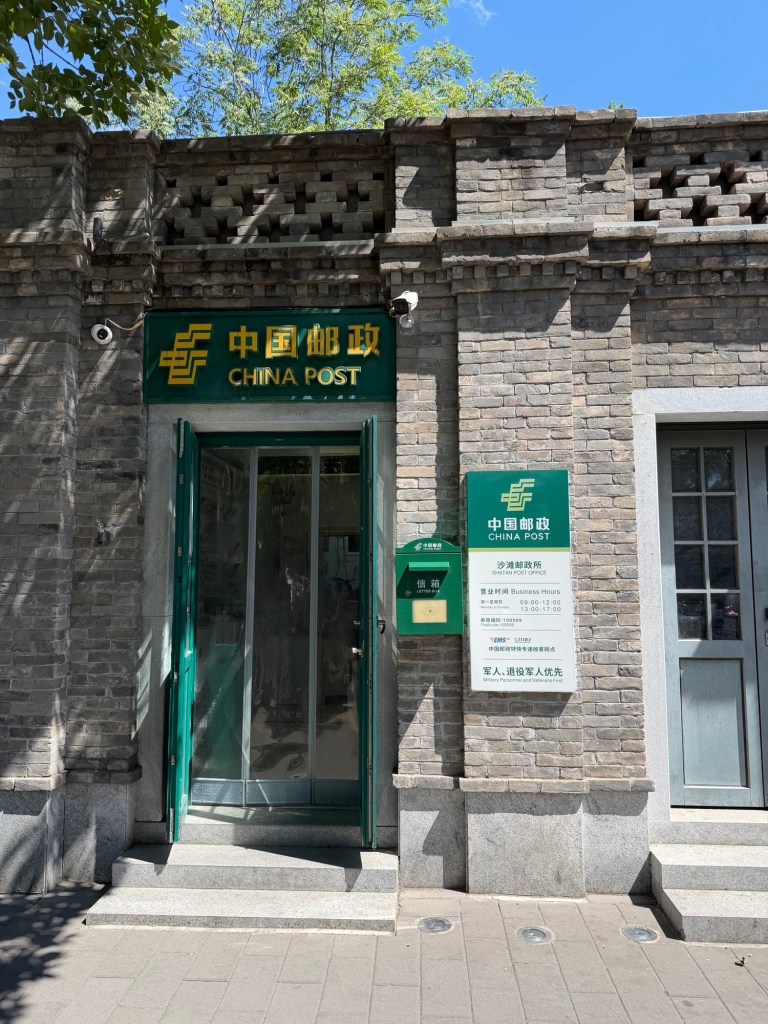
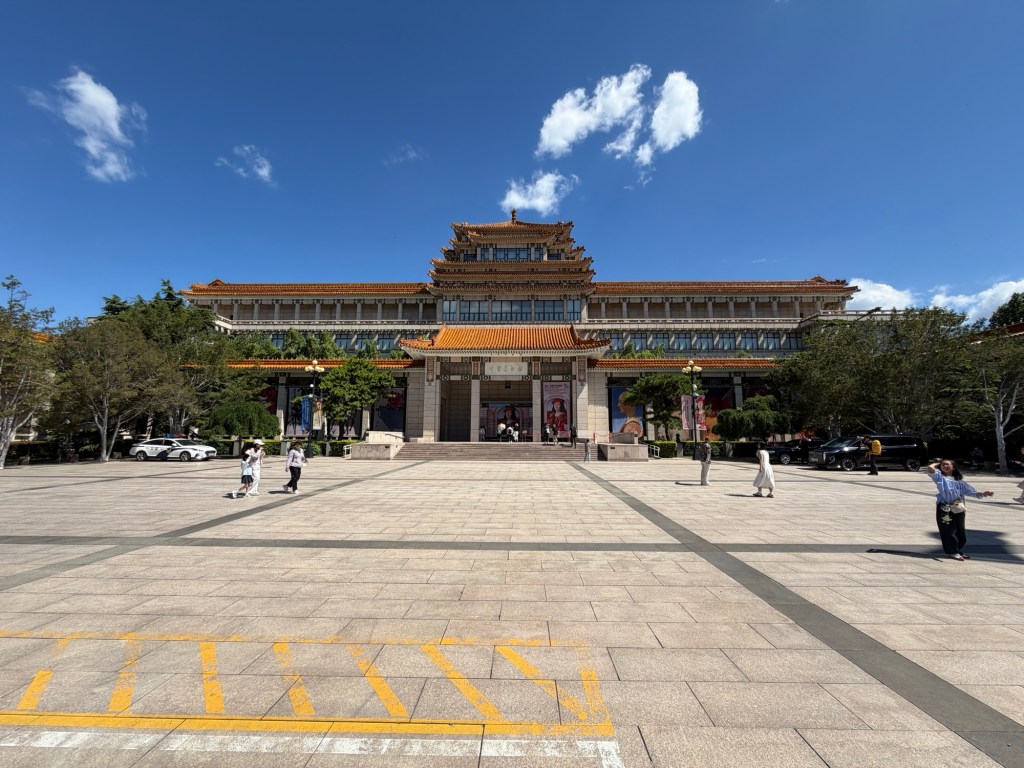
Appears that the top of the art museum sits on the subway station.Monument for May 4, 1919 when students protested the Treaty of VersaillesPost Office tucked inside an old building National Art MuseumForbidden City. Dirt removed from this large moat was piled up to make the hill at Jingshan Park!
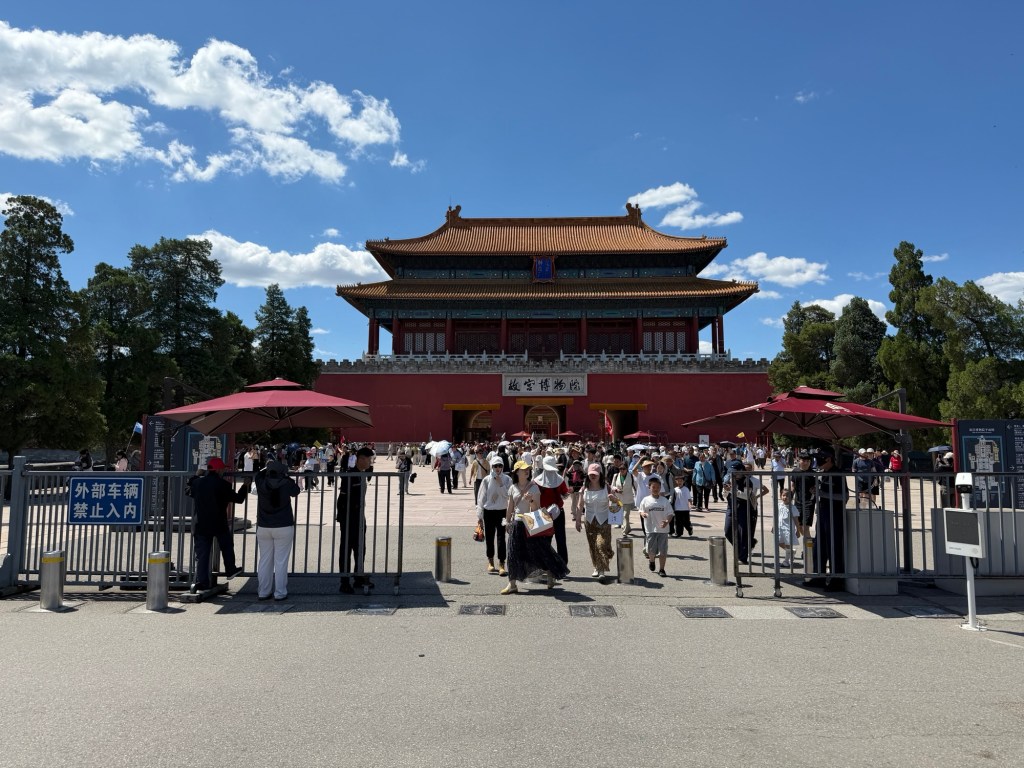
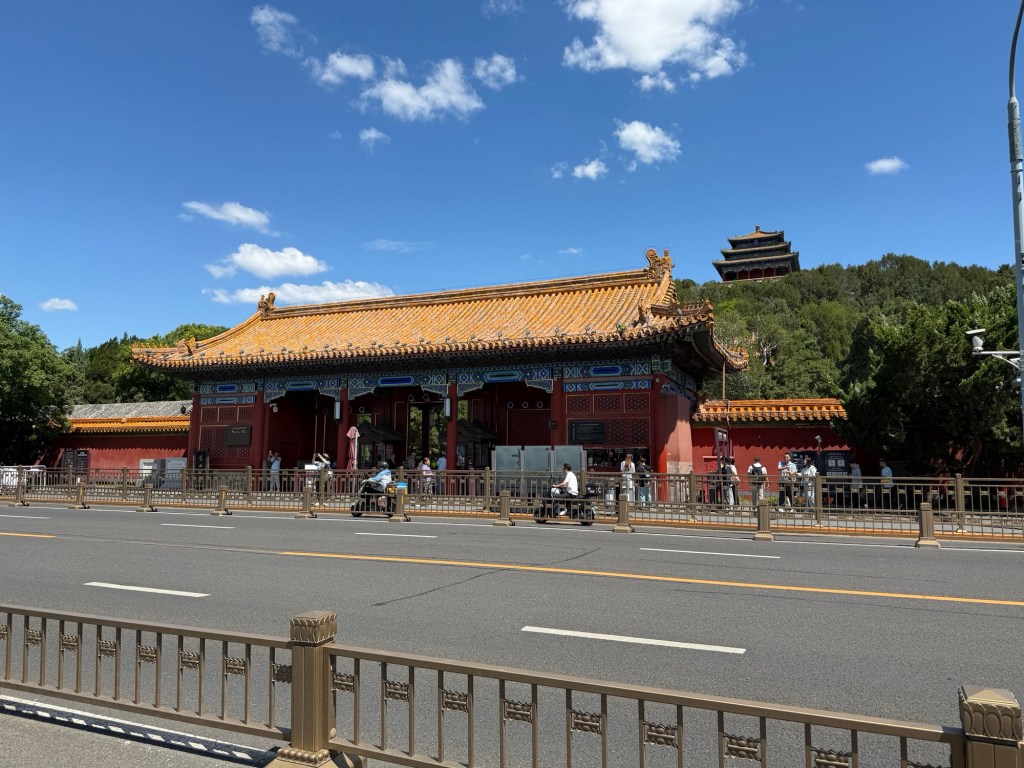
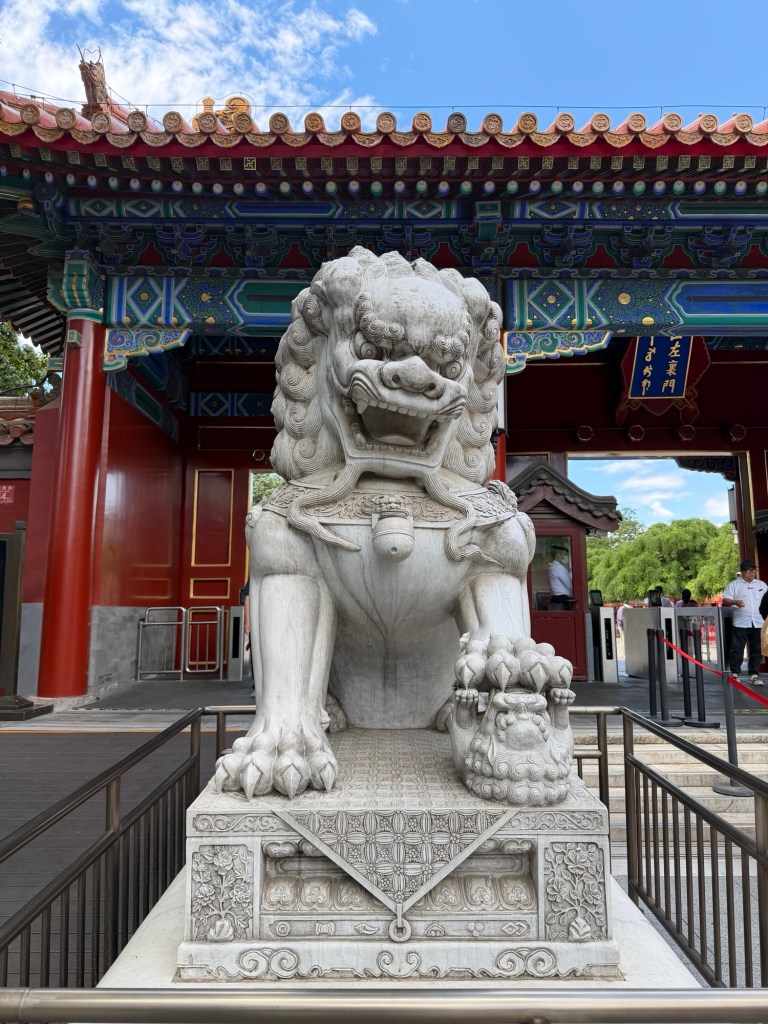
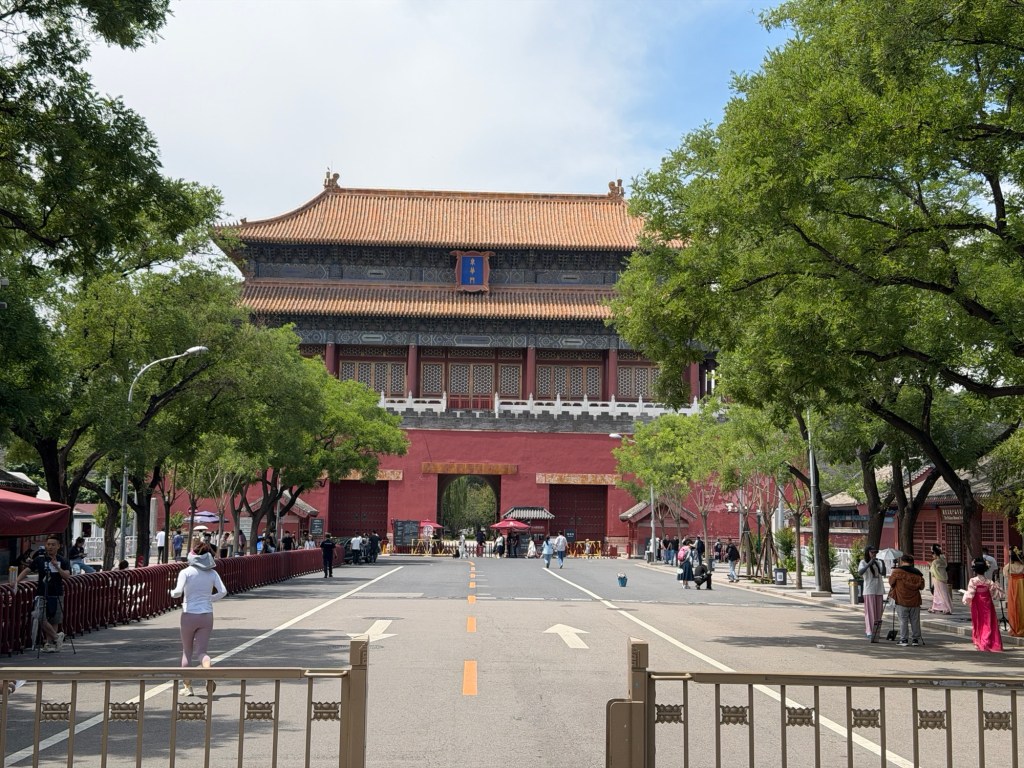
At Jingshan Park just across the street from the Gate of Divine Prowess, we were willing to pay the entrance fee but they waved us in, possibly because of our age. The ticket agent looked at our passports carefully.
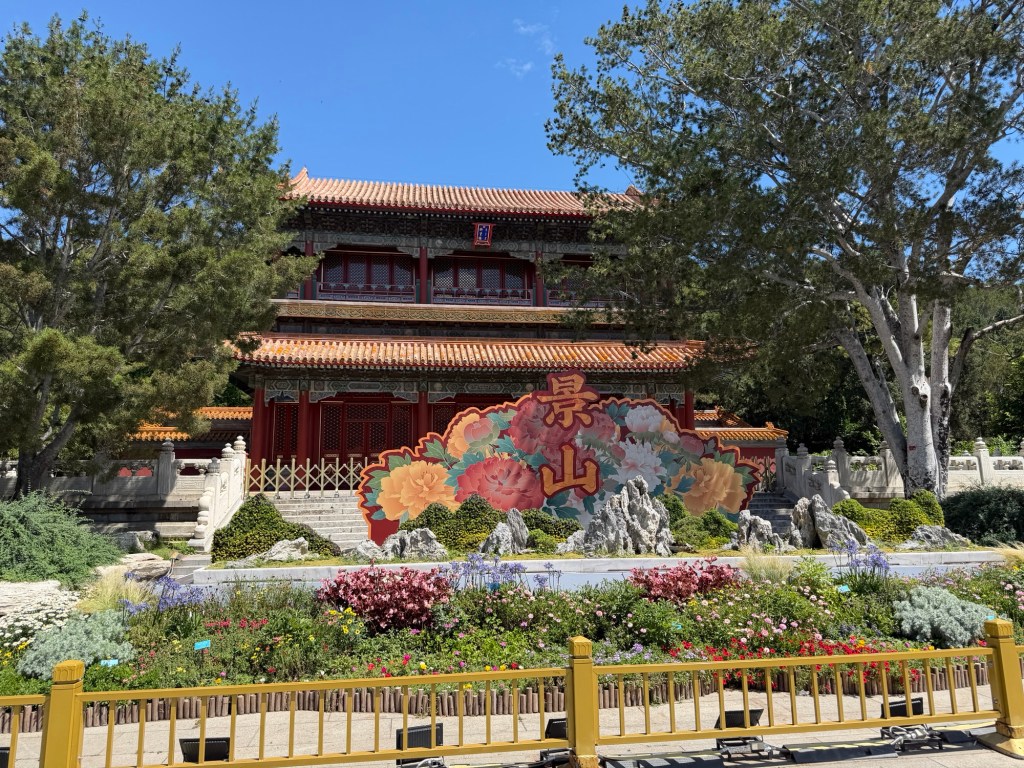
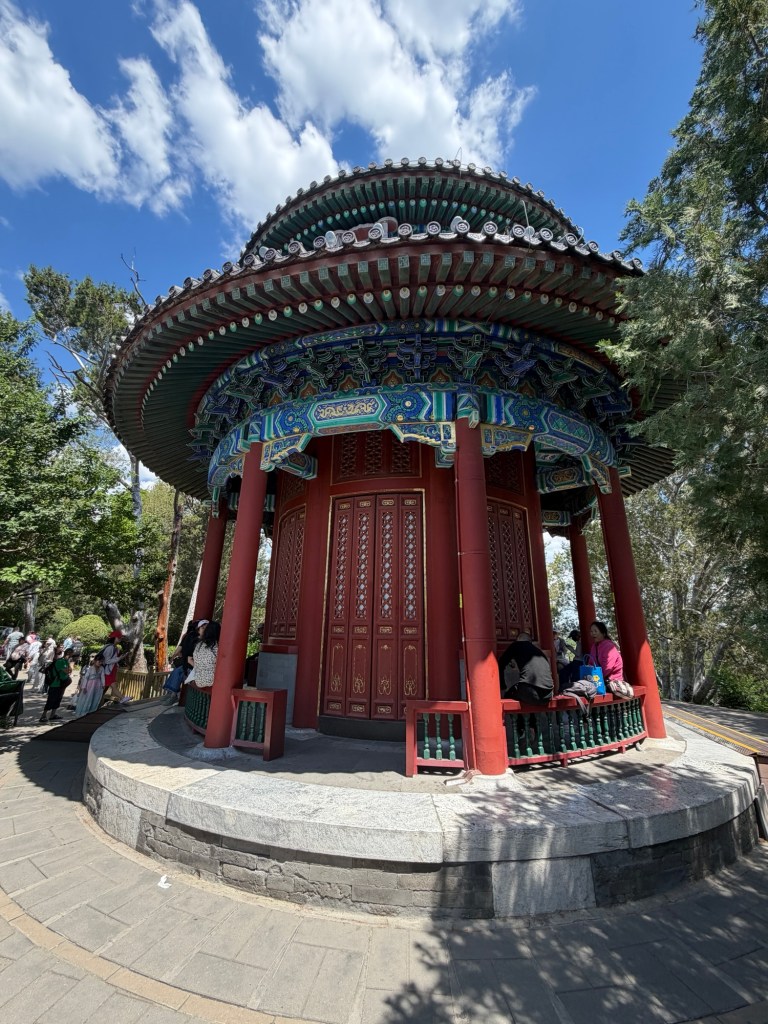
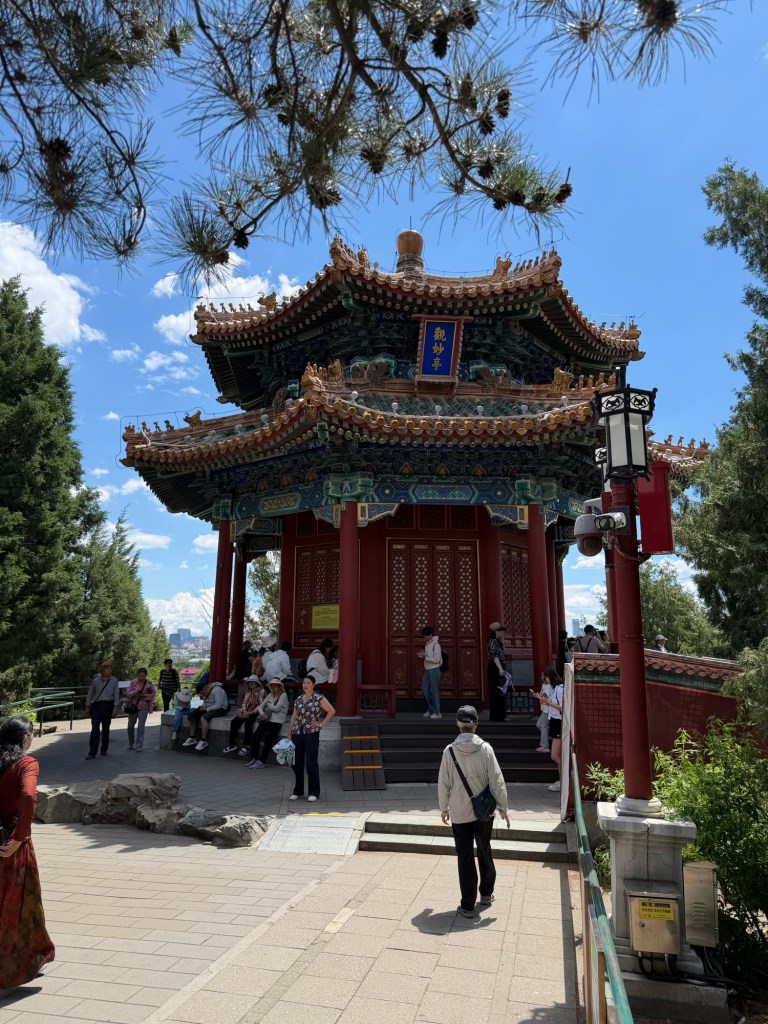
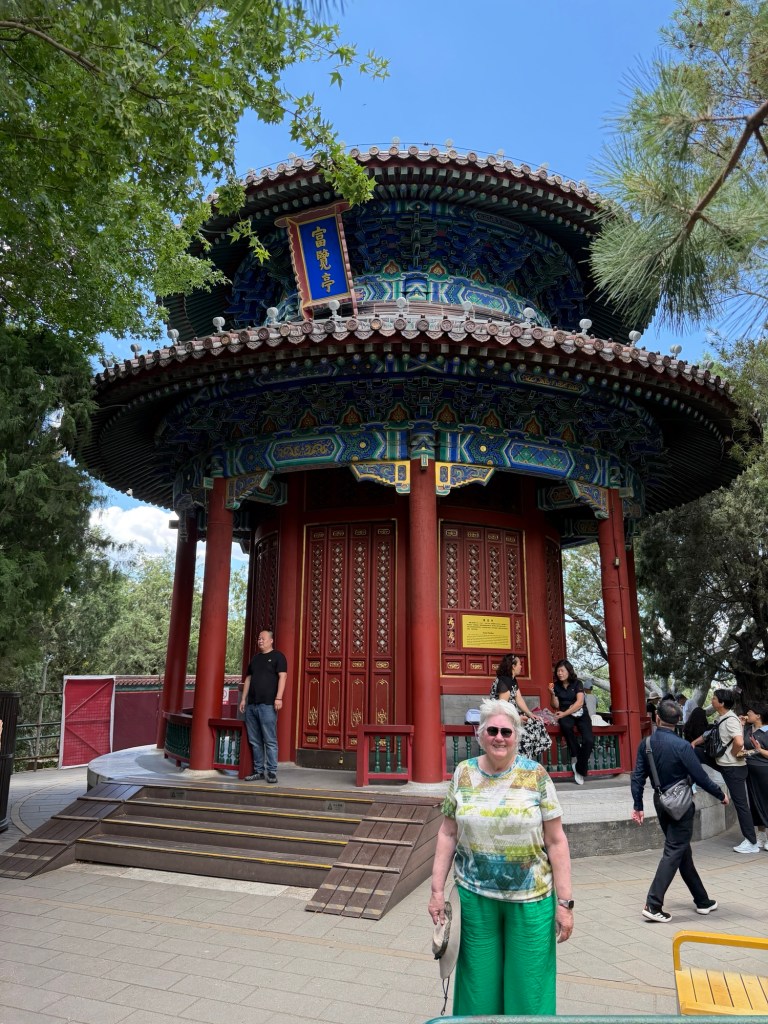
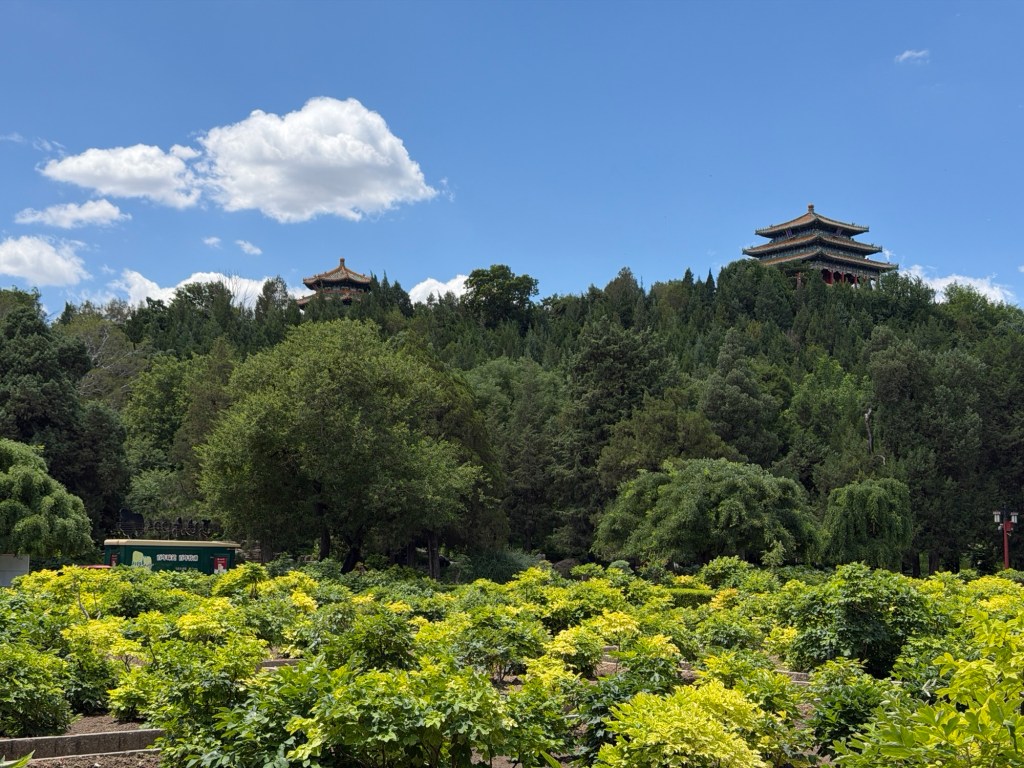
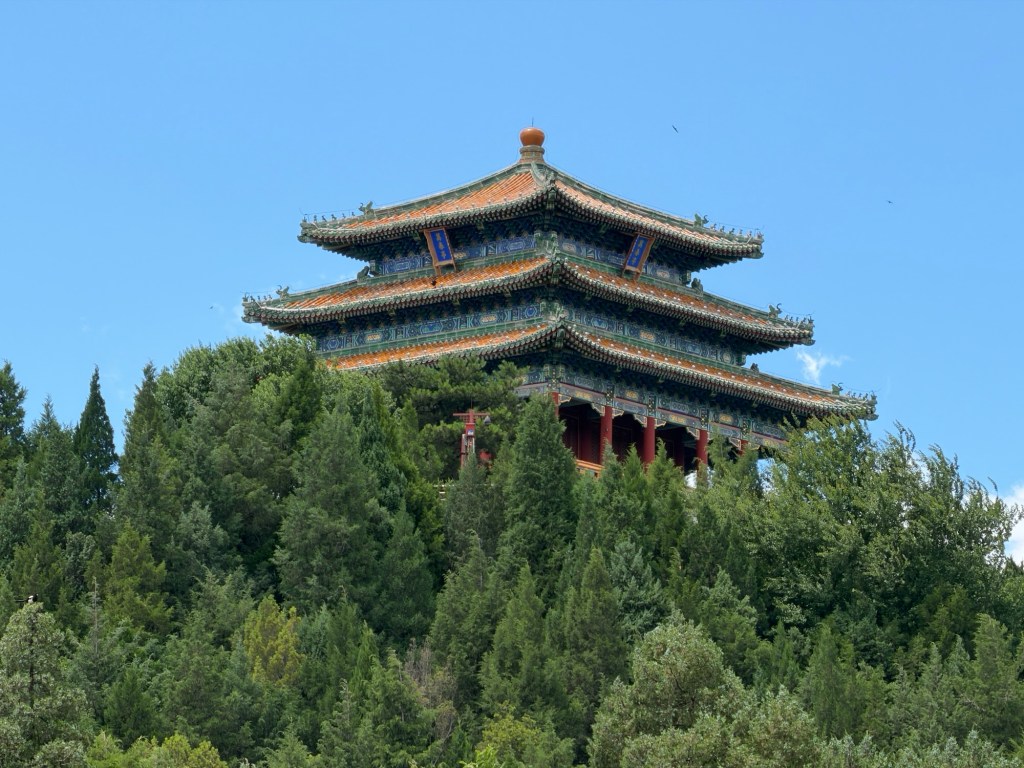
Entrance to Jingshan ParkTop PavilionUNESCO plaqueJingshan Park, one of many Beijing Central Axis sites
What a gorgeous park! The wide variety of trees was exotic to us. Some smaller bushes and plants were likely native, but many were recognizable European species.
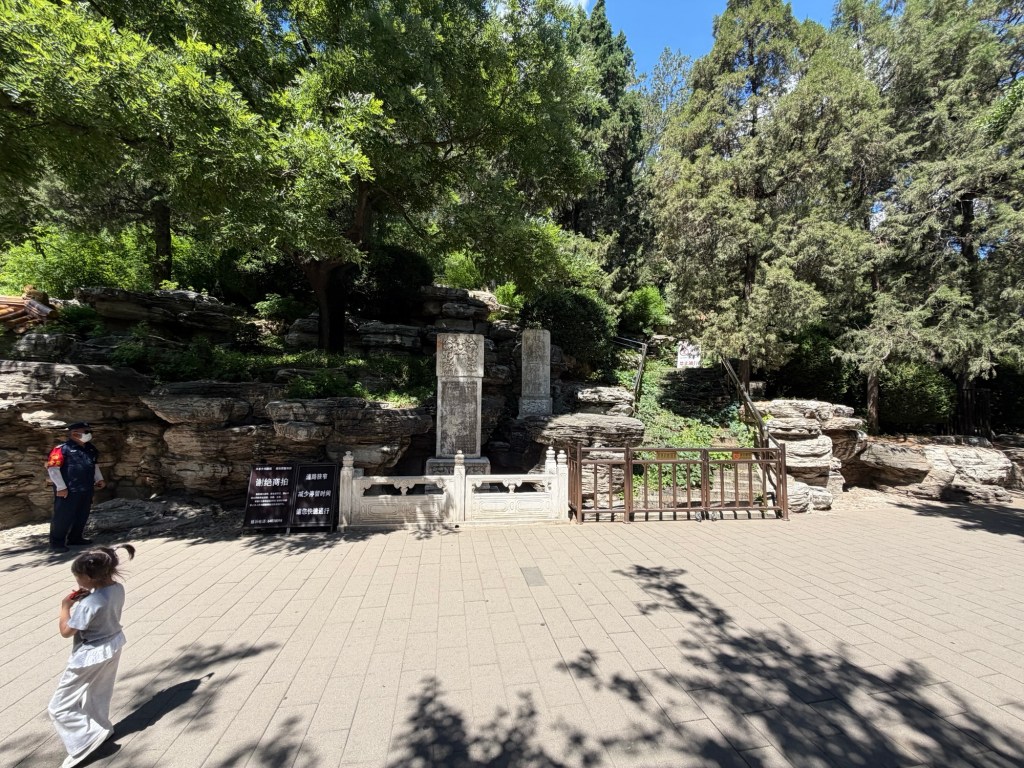
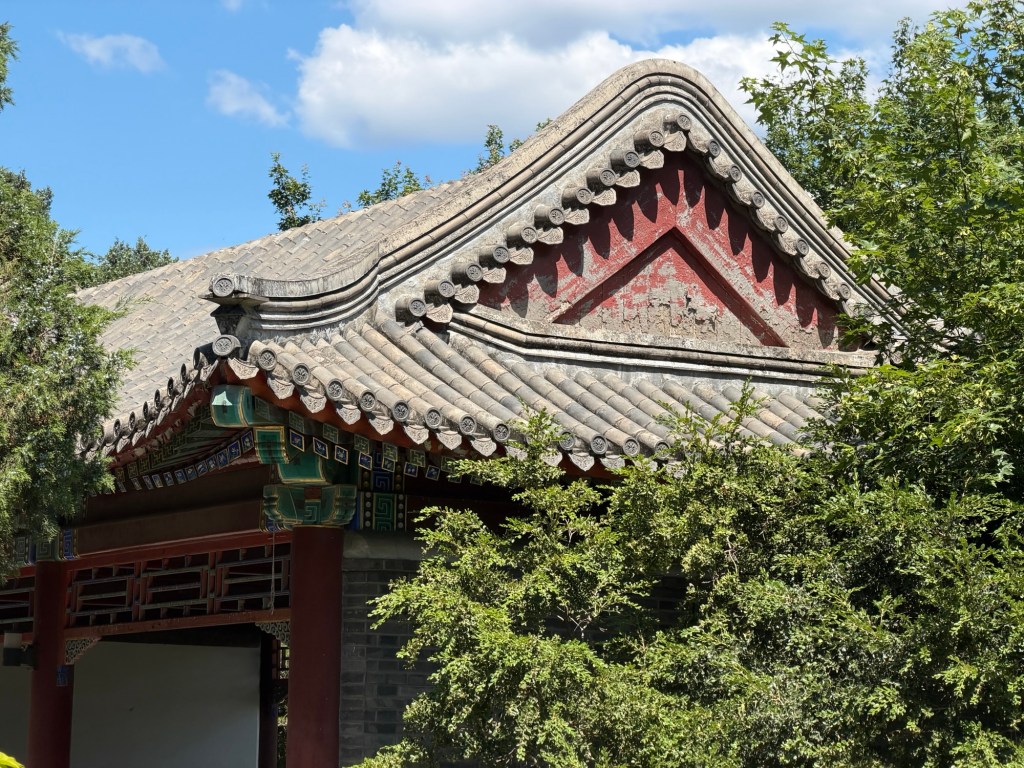
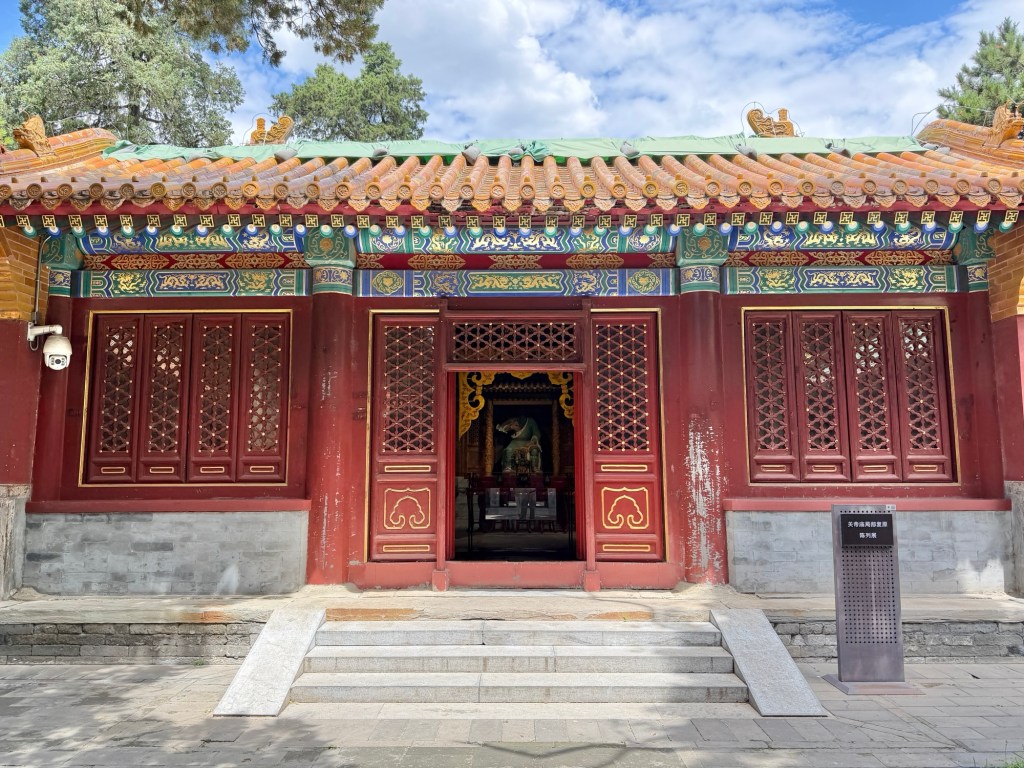
Site where an emperor committed suicide in the 17th centuryOld tile roof
We started up the hill to see the pavilions, all built in 1750. The trail was steep in parts but well made and not too long.
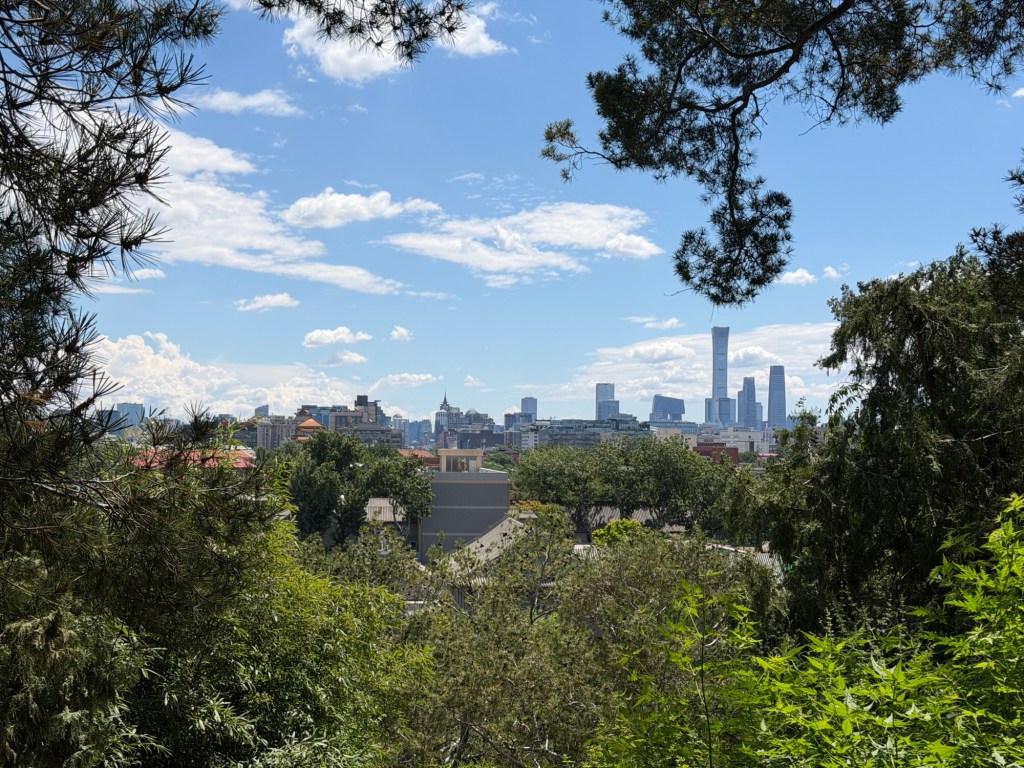
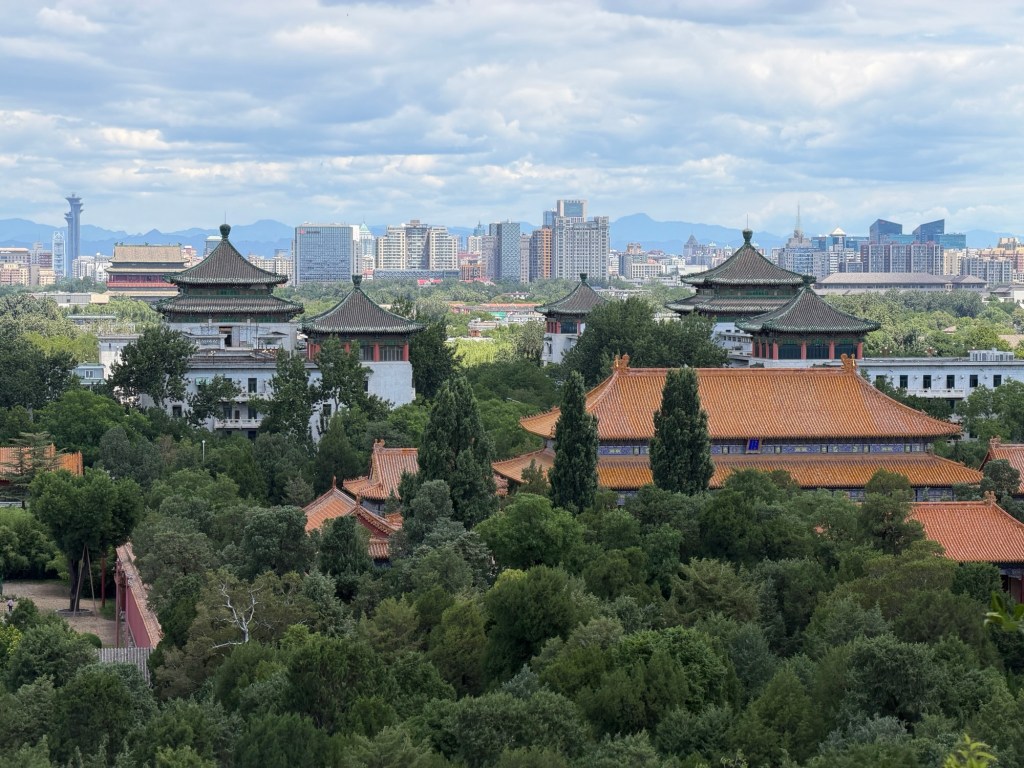
The pavilions were similar but not the same, and the views of the city were certainly worth the hike up the man-made hill.
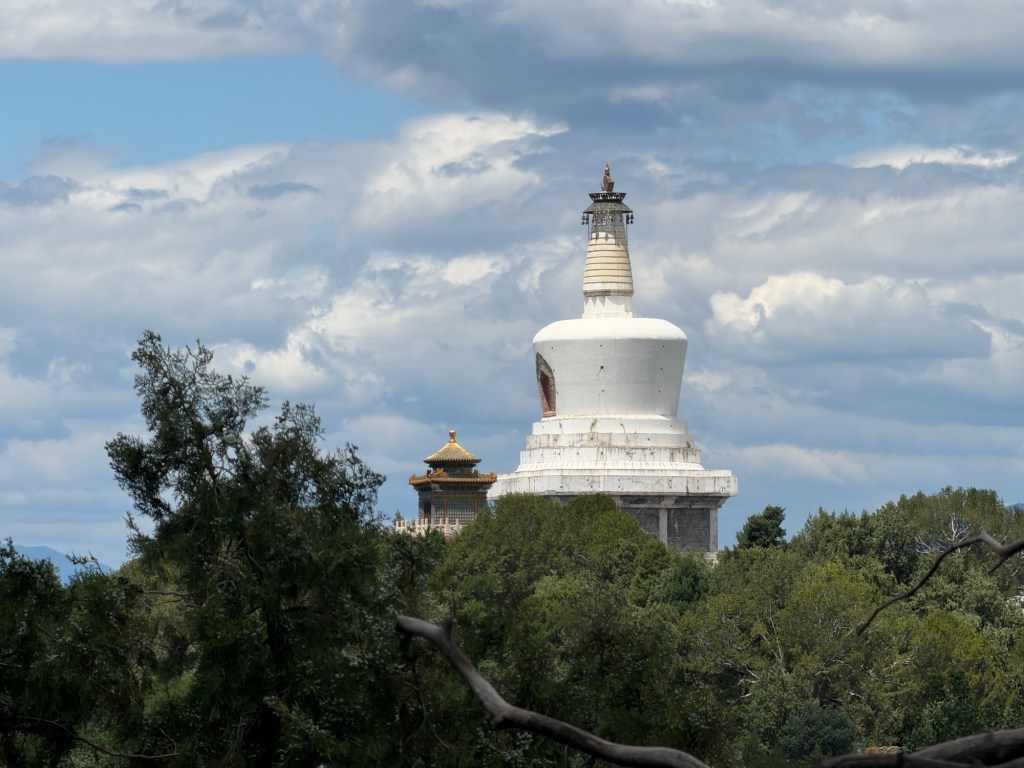
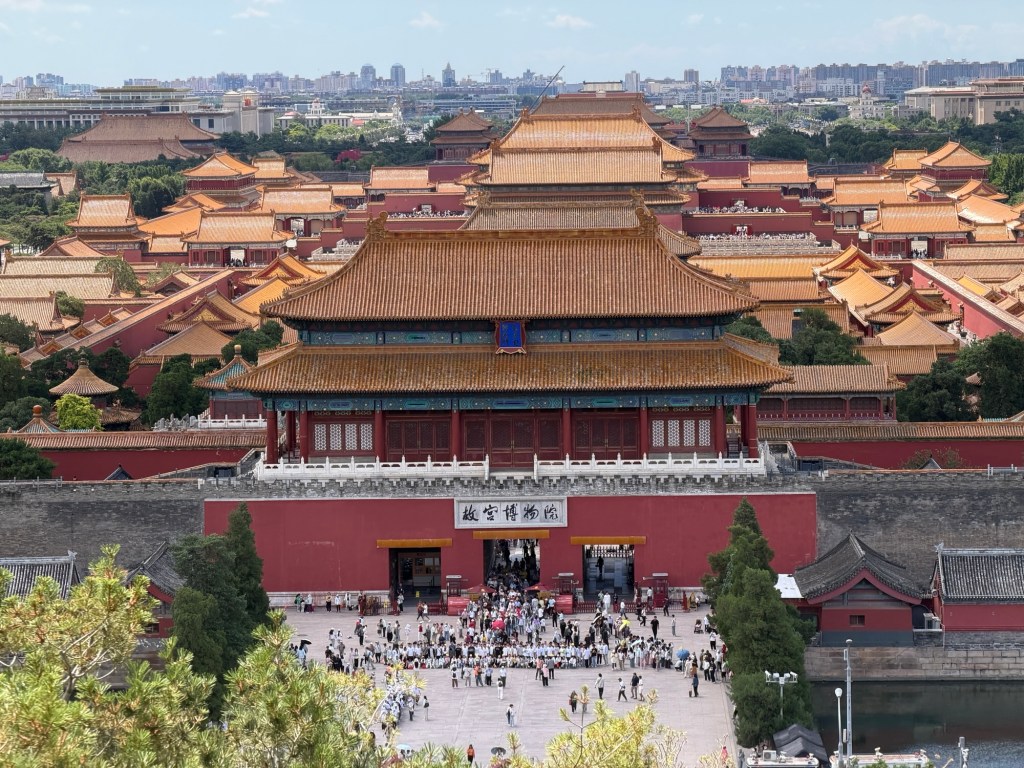
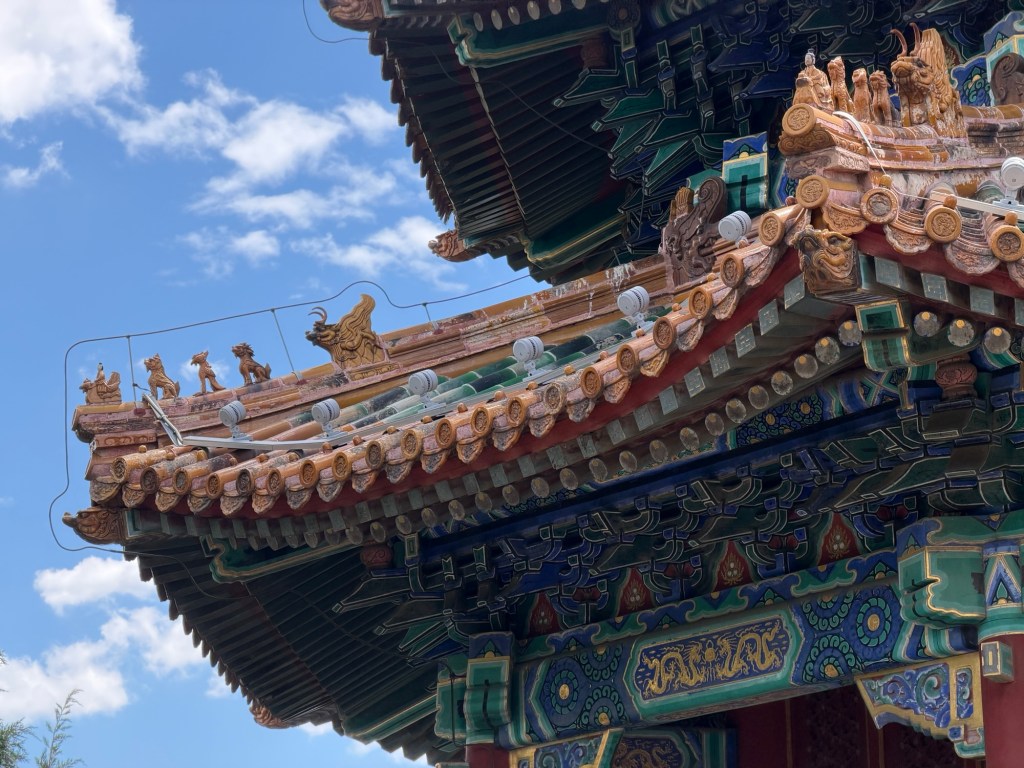
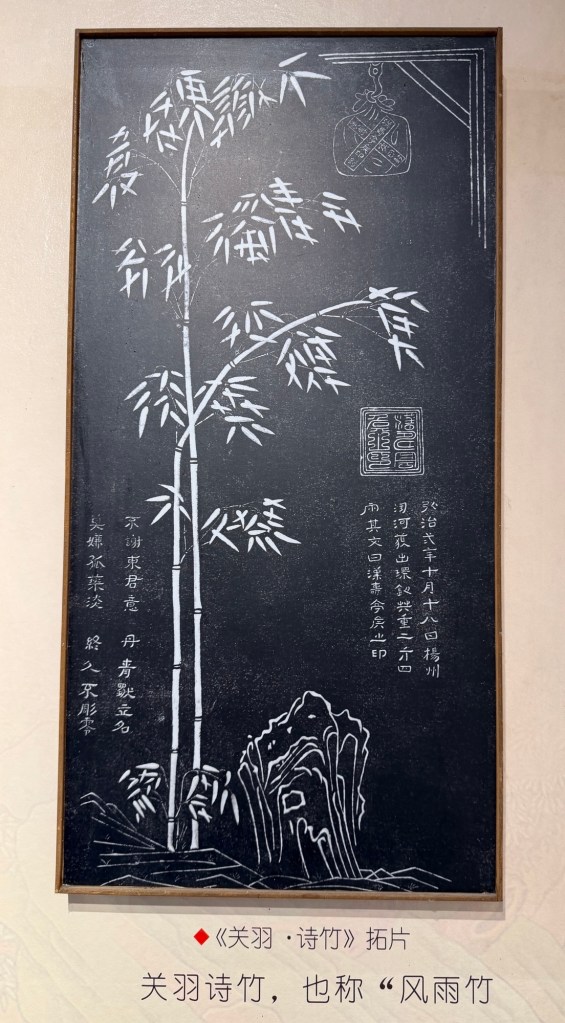
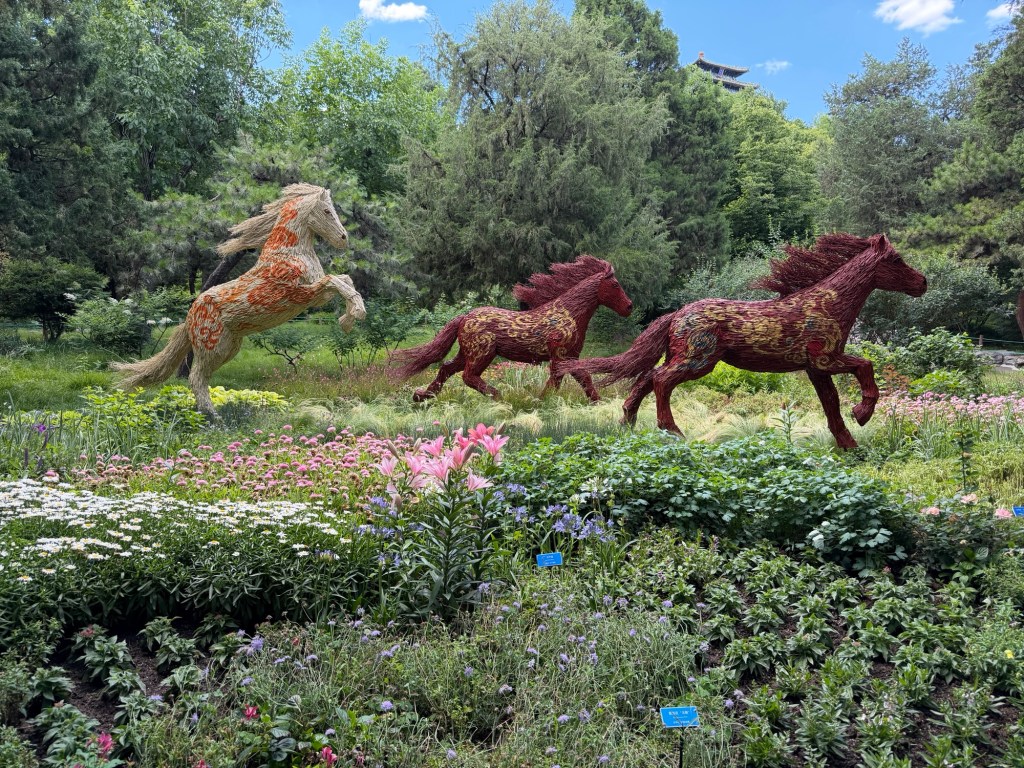
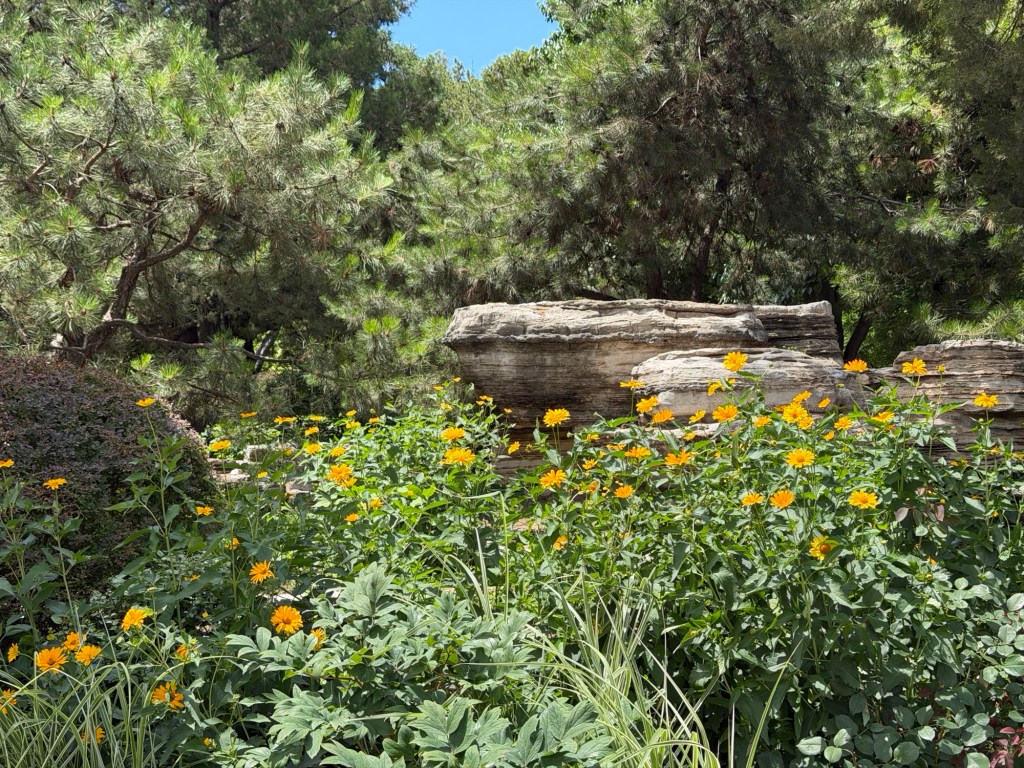
The White Dagoba (upper right) in a park west of the Forbidden City is a Tibetan stupa built to honor the visit of the 5th Dalai Lama in 1651. The picture above is a view of the Forbidden City.Tile roofCloseup of roofSmall building we were able to enter Bamboo artworkPavilion from far belowHorse statues made of twigsNatural looking limestone in pondWhat did the cub do?
Outside the garden, we walked through the area near Beijing University, seeing buildings that could have been dorms and some classrooms or research centers.
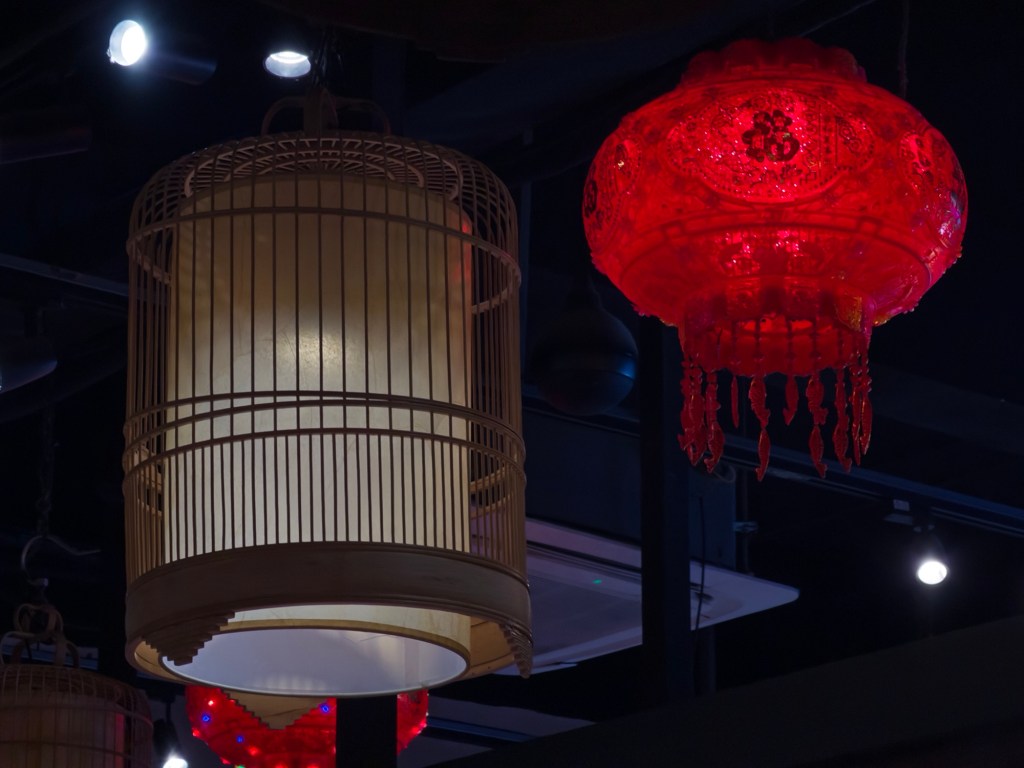
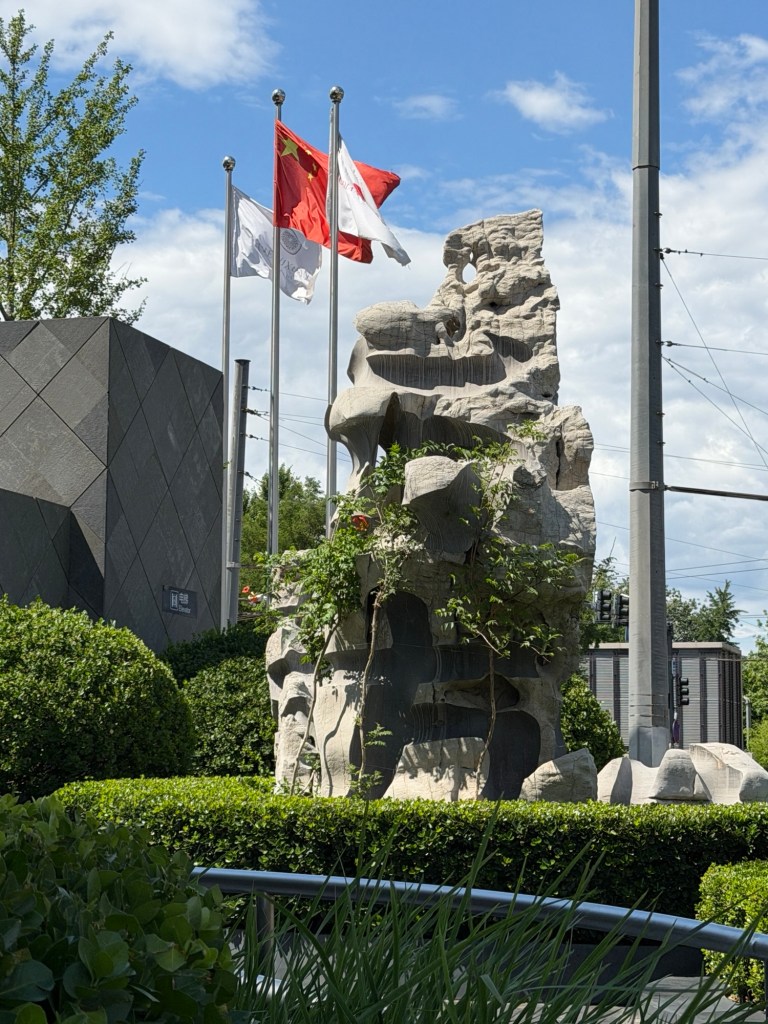
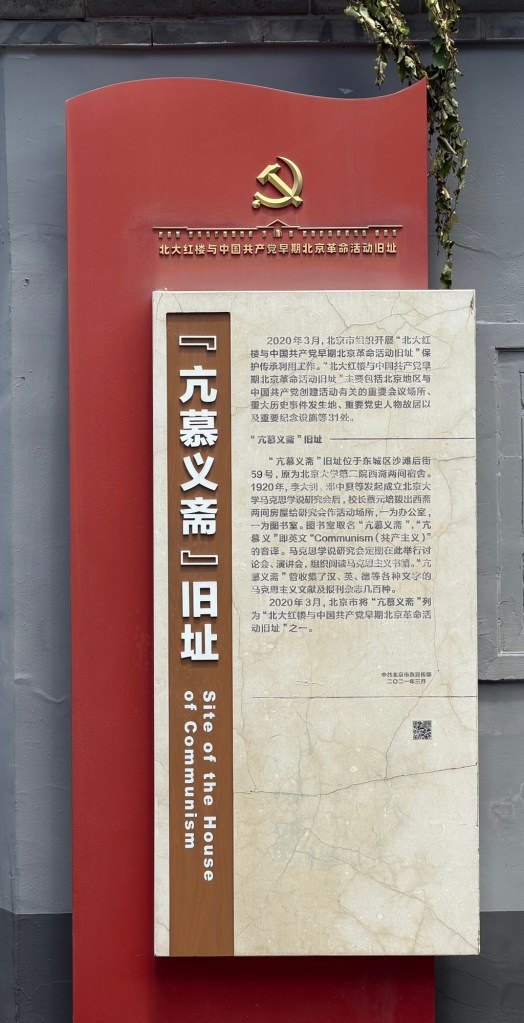
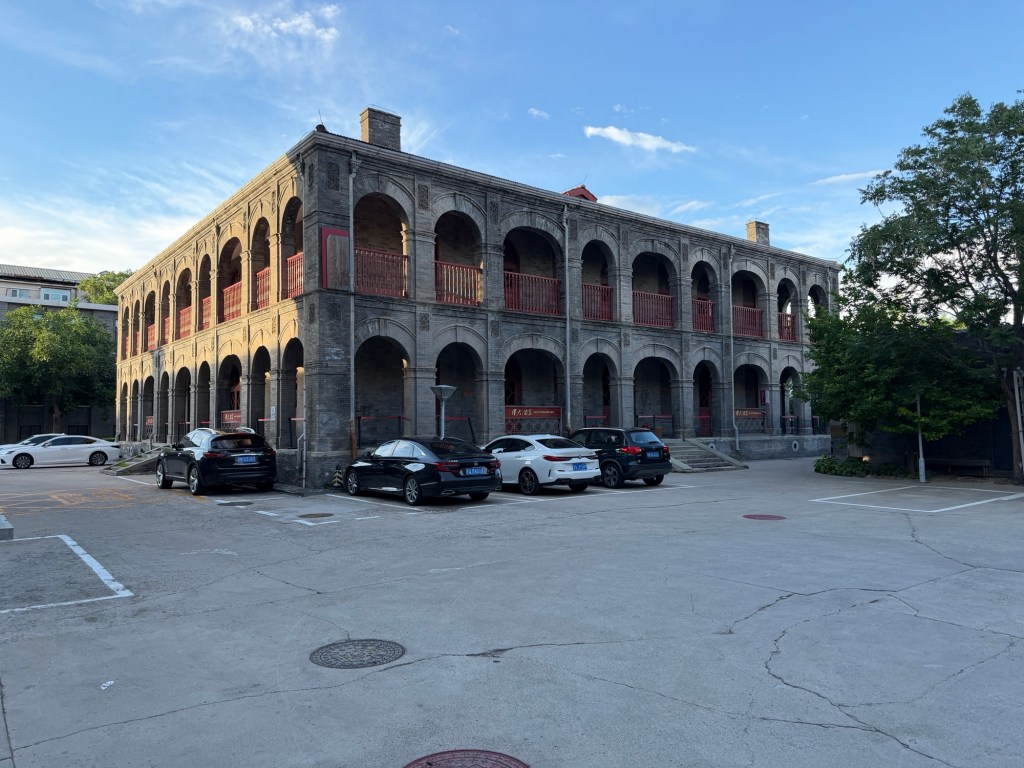
Lunch at a college hangout Lanterns at lunchFace sculpture using natural lines of the limestone Russian influence This old building is adjacent to the hotel.A section of the Communist Party holds conferences in the old building pictured above, the former math building of Peking University. It was the home of an empress until the Cultural Revolution.
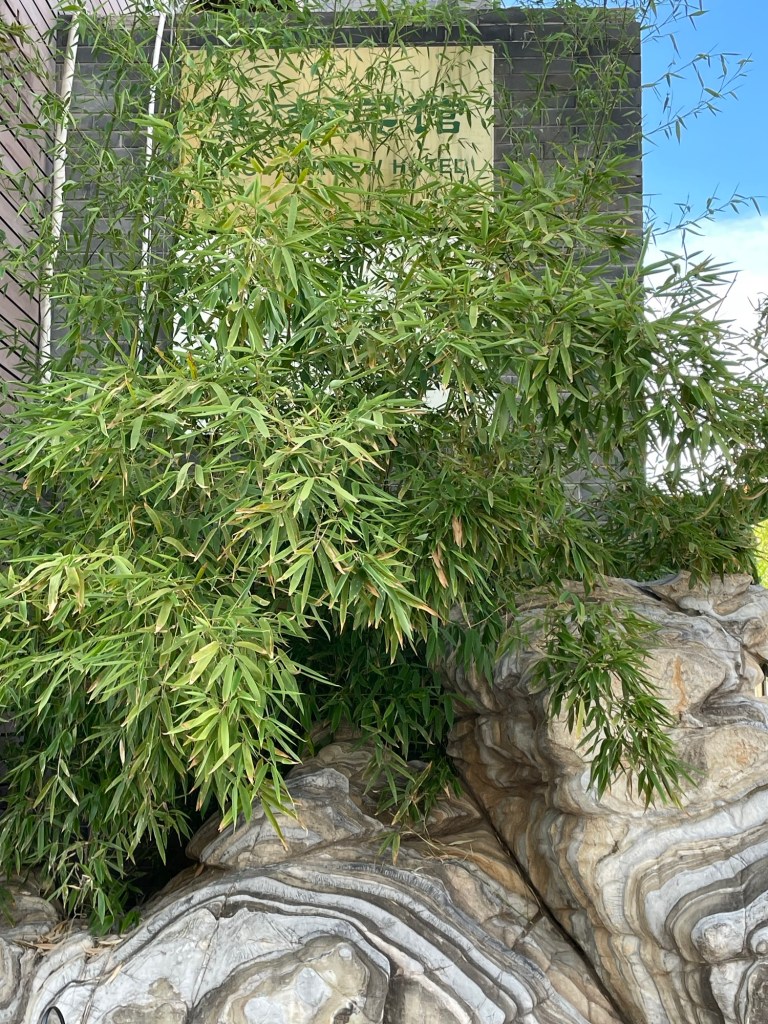
Our hotel, the King Parkview, was very hard to find! It is in an older area on an alley or hutong. We walked up and down all the adjacent alleys before finally finding where we would stay. Later, we saw this nice sign obscured by bamboo.
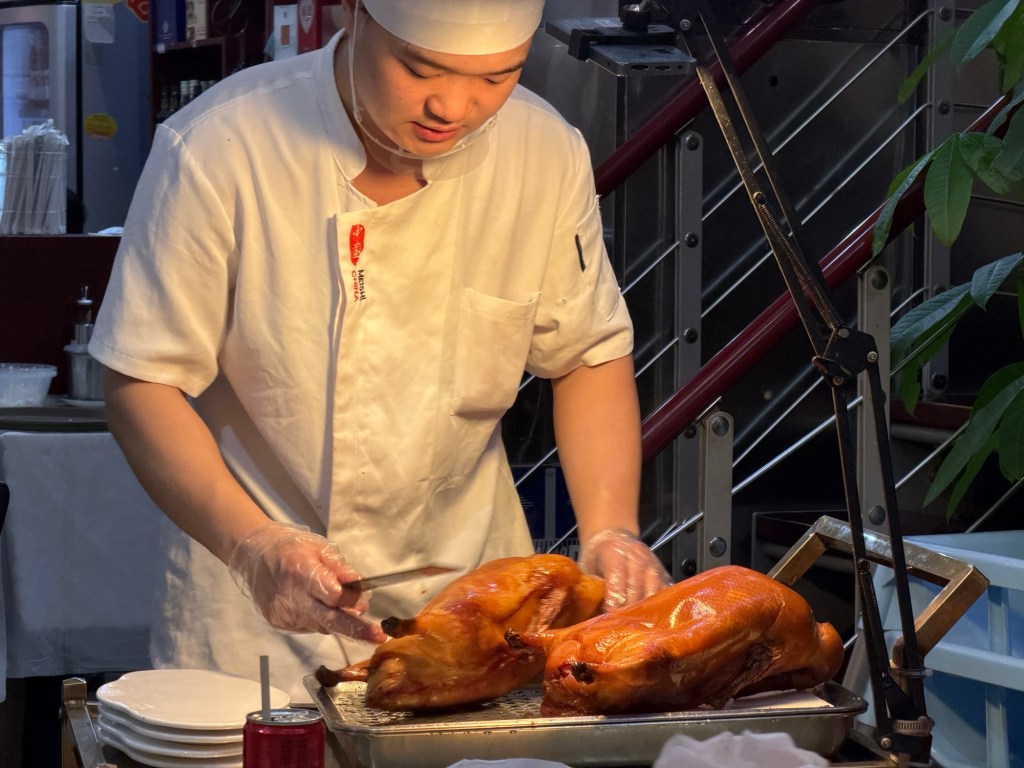
After meeting our fellow travelers and guide, we all went out for Peking Duck. The chef is carving two roast ducks for our table.
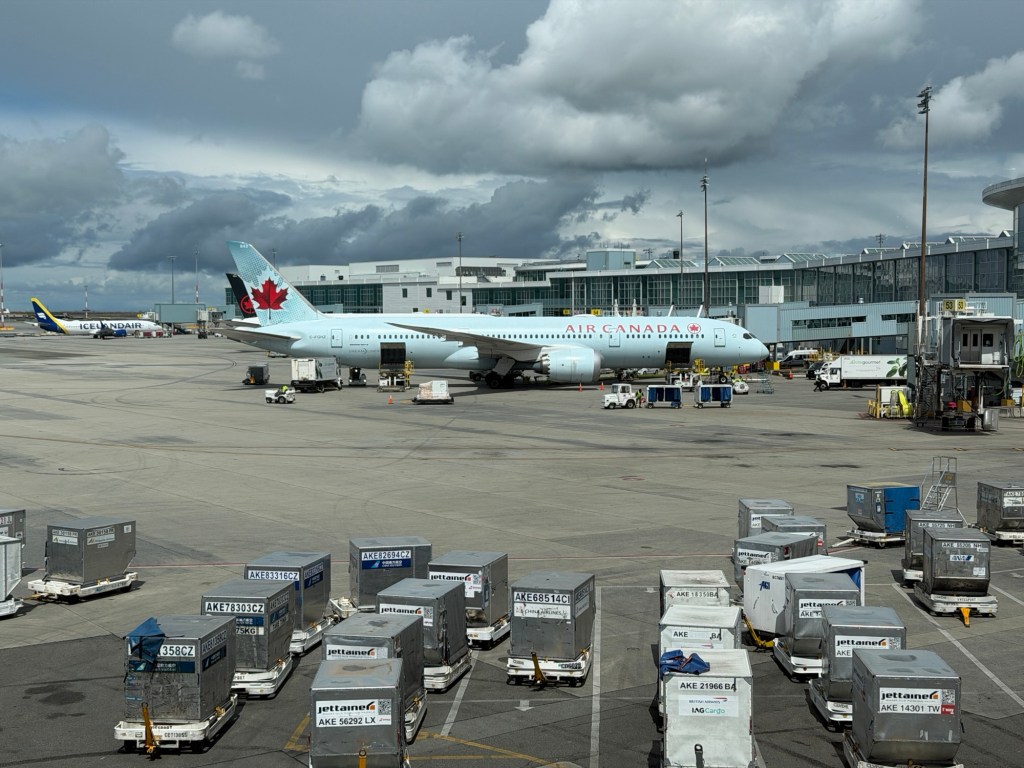
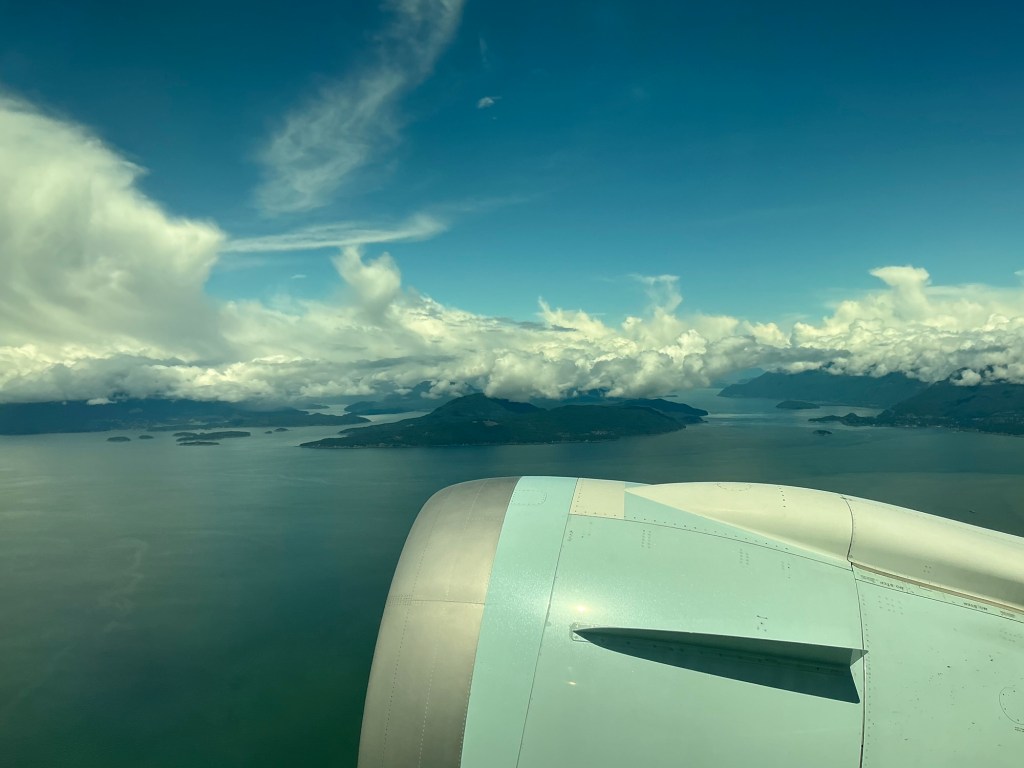
Vancouver airport, our planeGaining altitude over Straight of Georgia
Half way around the world.
Yesterday evening we arrived in Beijing after a quick visit in Vancouver BC to see Checkers and their family. In the plane, we noticed that the path started on a Great Circle, shortest distance between points on the surface of a sphere. But as we went further west toward Asia, we deviated off the circle. It seemed we were avoiding flying over the Russian Kamchatka Peninsula by angling south. Another small deviation seemed to avoid North Korea. Neither of us knew how long such air traffic deviations have been occurring. Data from past flights appears to show that this is routine for this route.
Crossing the International Date Line was fun to watch on the phone. Suddenly, Saturday disappeared into Sunday! Or, more accurately, the date changed from 6 to 7 in a flash. This happened after the 12.5 hour flight.
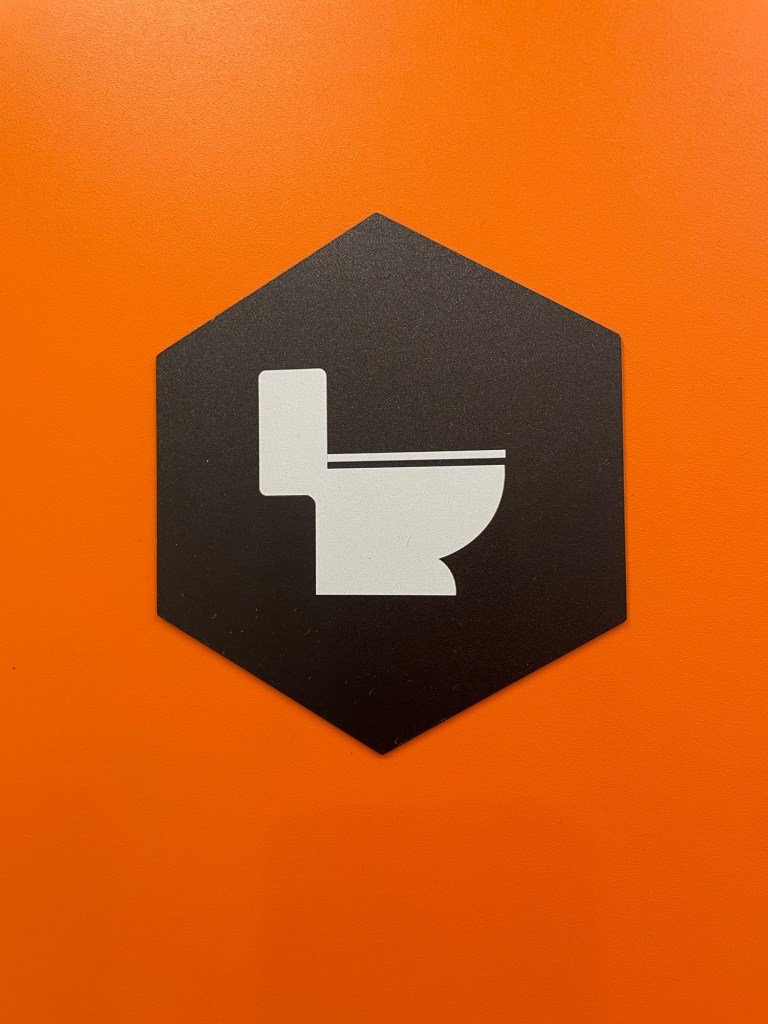
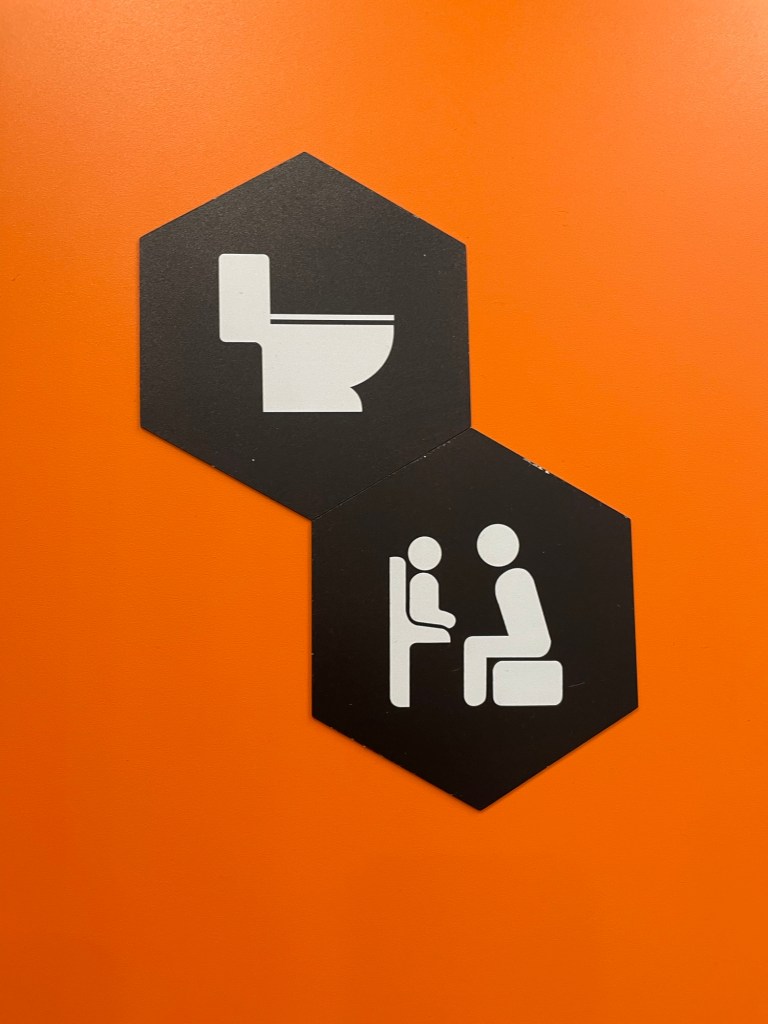
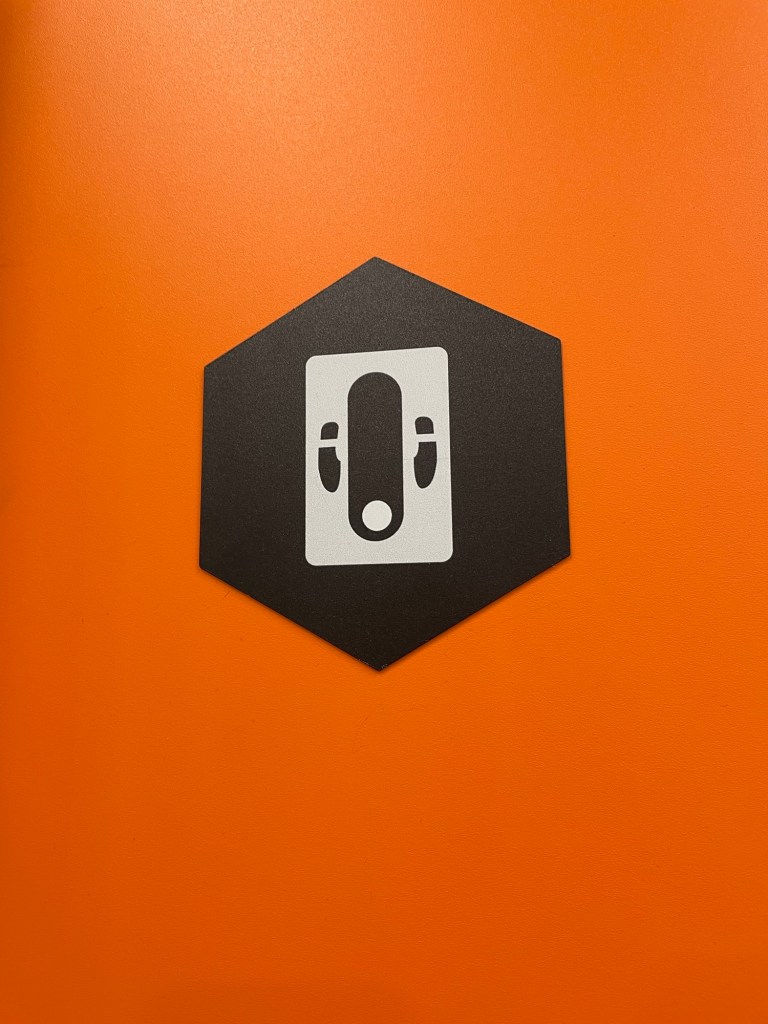
At the airport women’s bathroom, the stalls were labeled.
We took a train part way then walked about 40 minutes to our hotel and had dinner at the hotel. So far, understanding English with Chinese accents shortly after weeks of French accents has been bemusing. Our ears will surely improve.
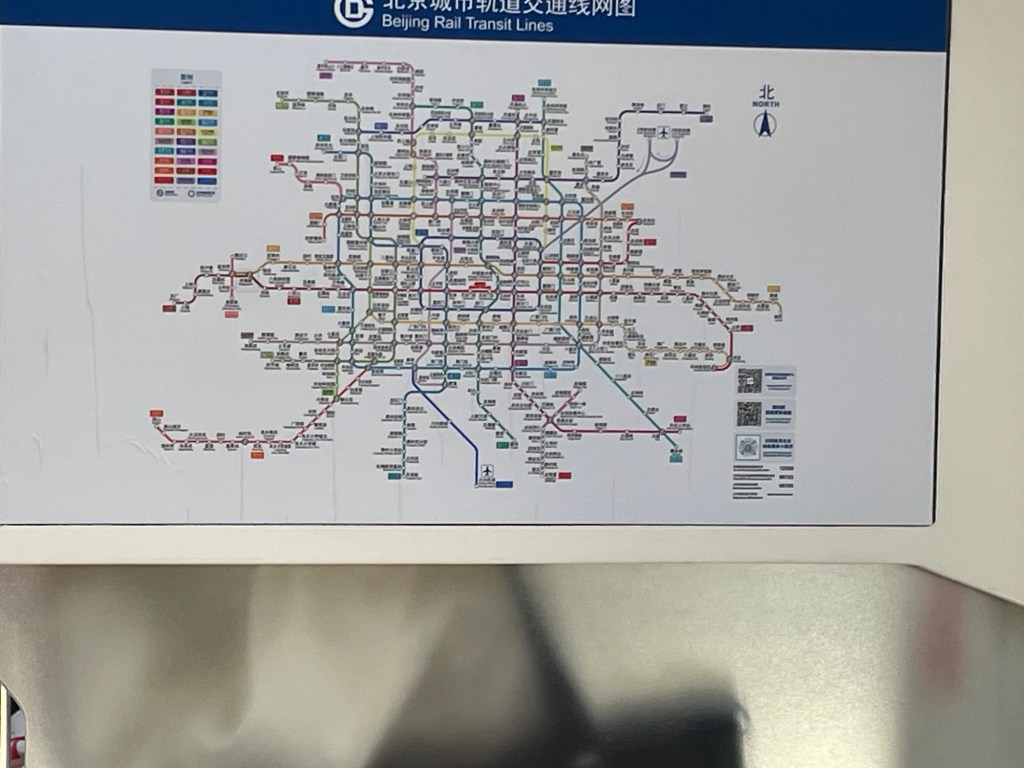
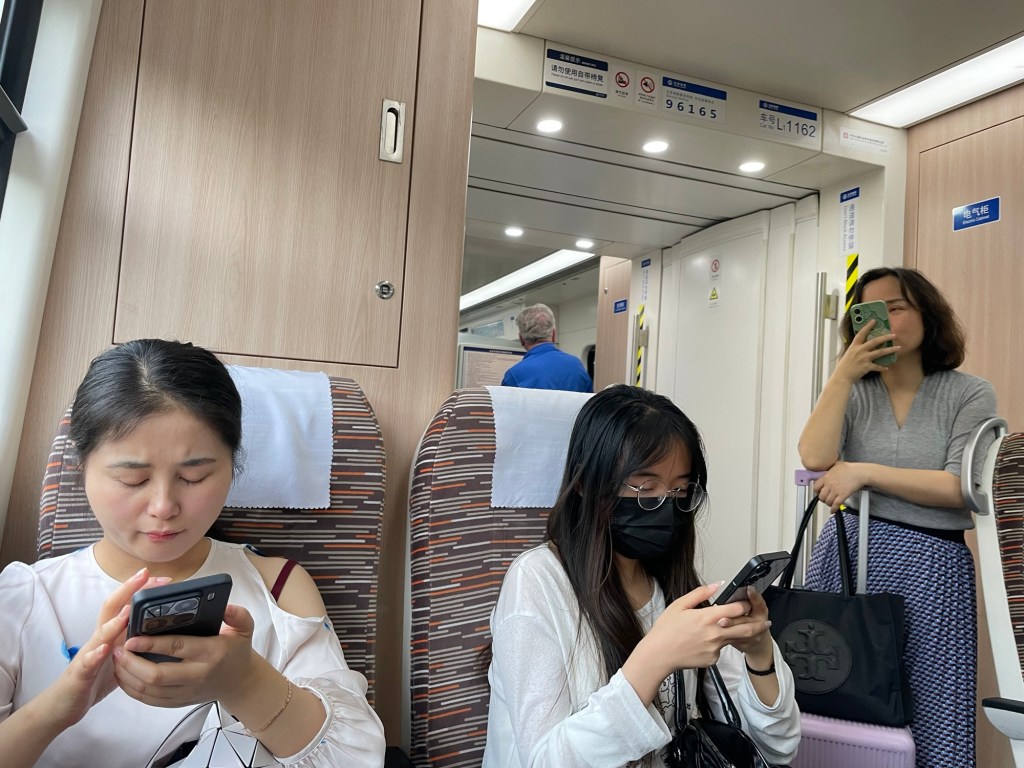
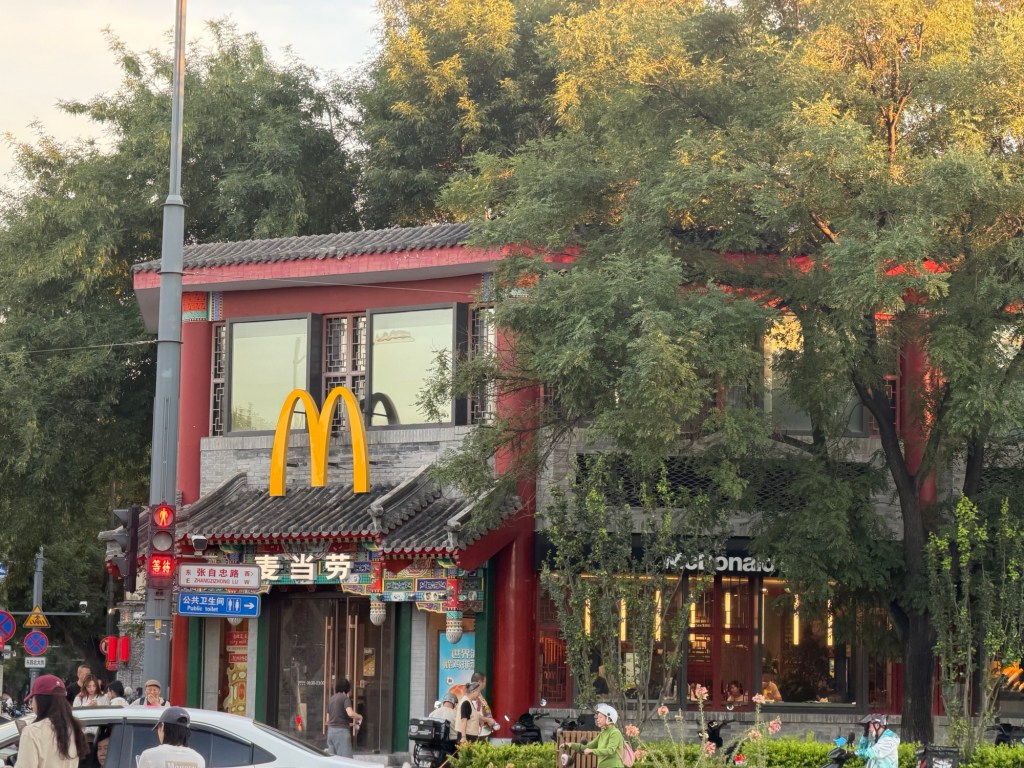
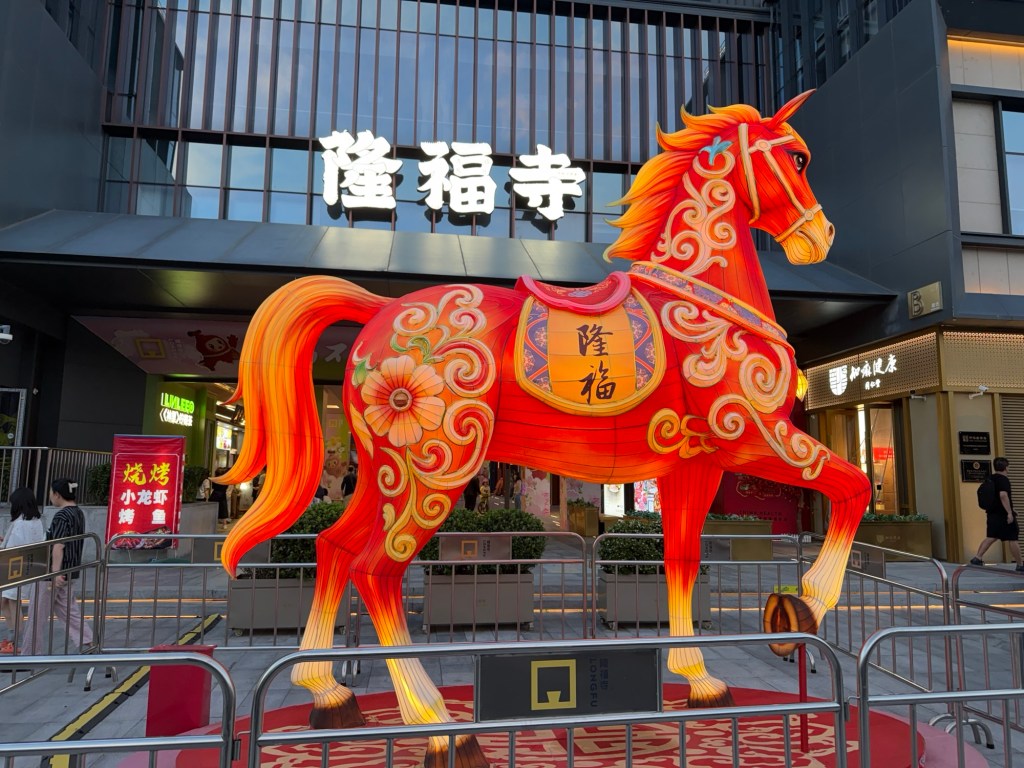
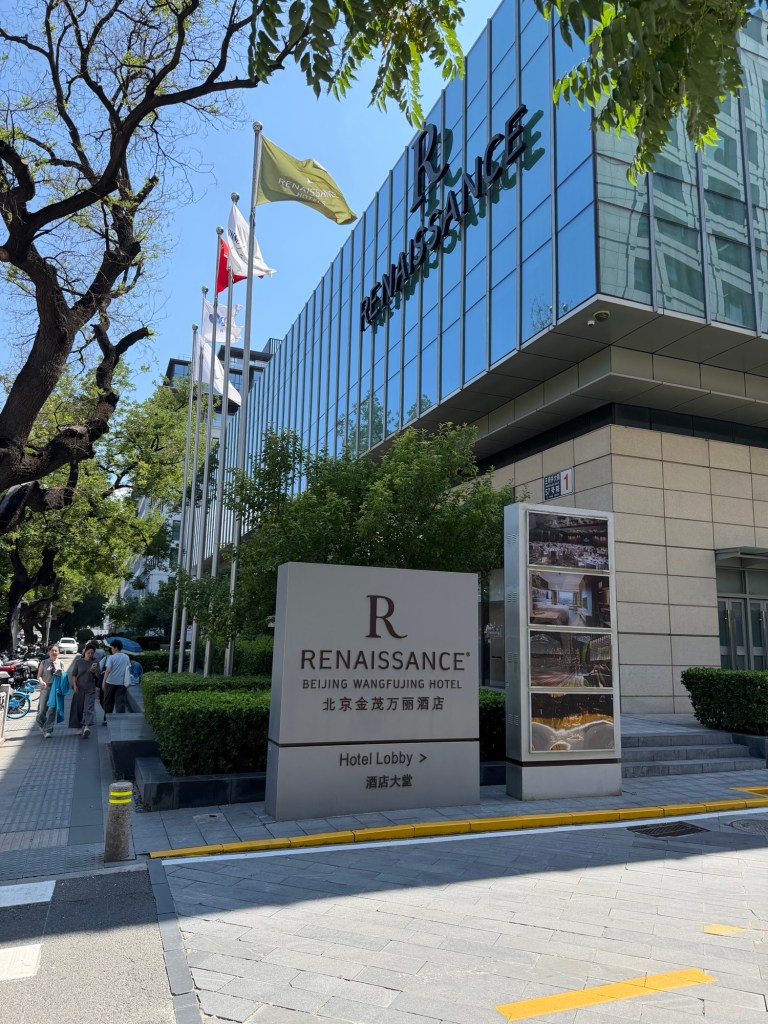
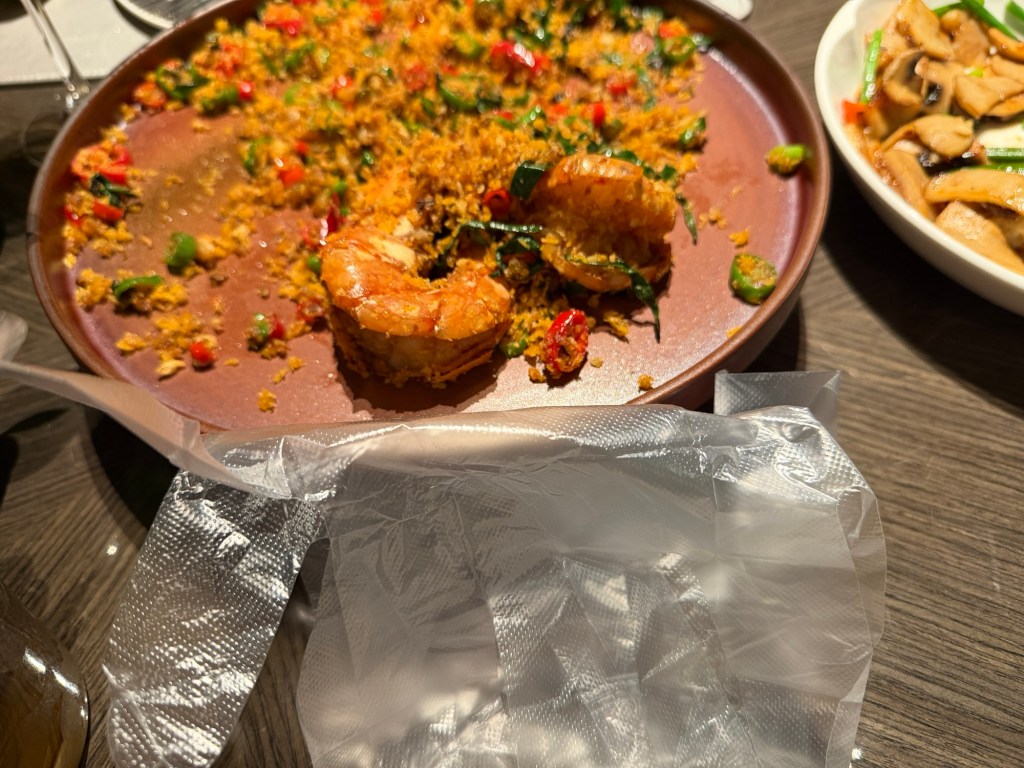
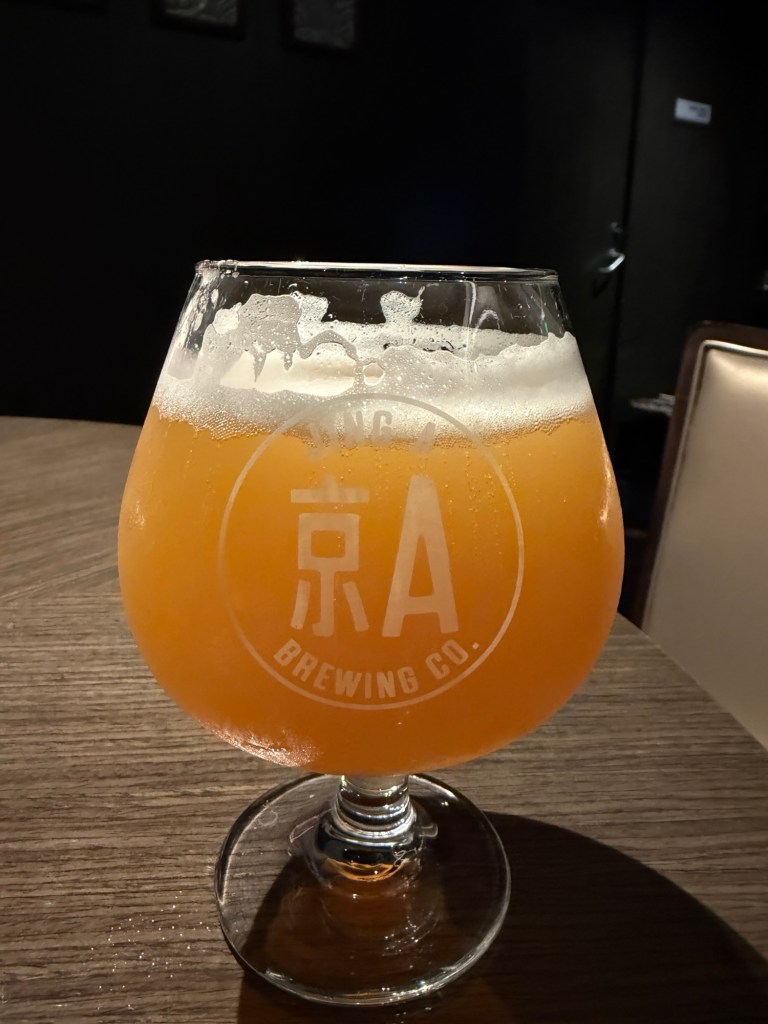
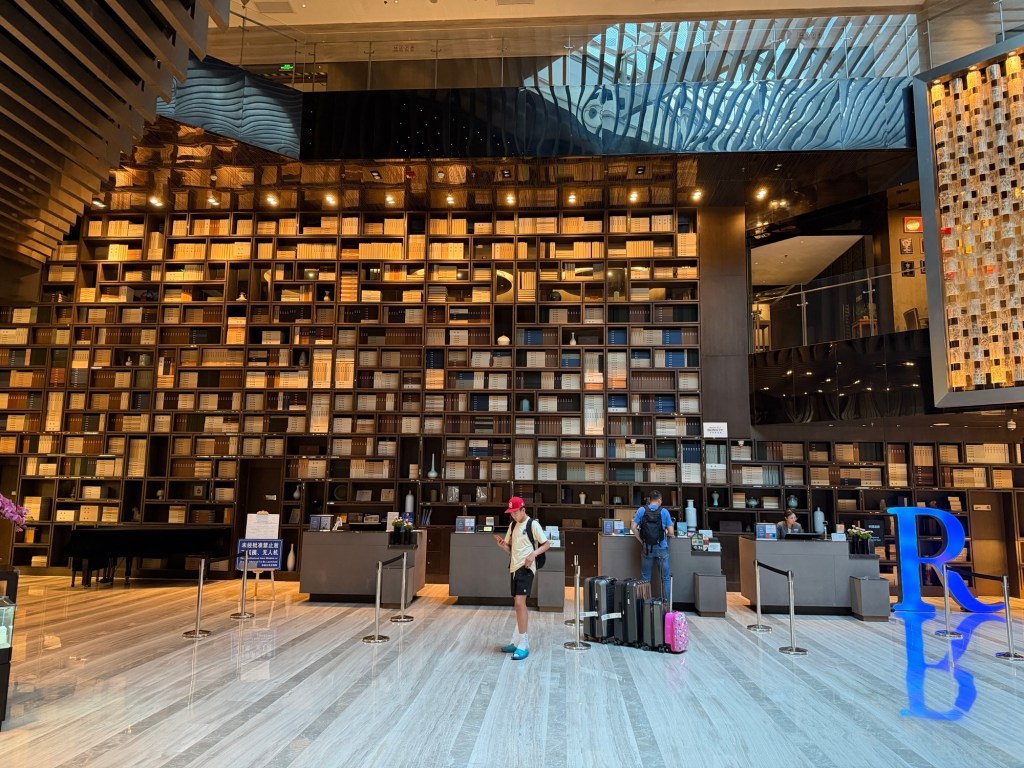
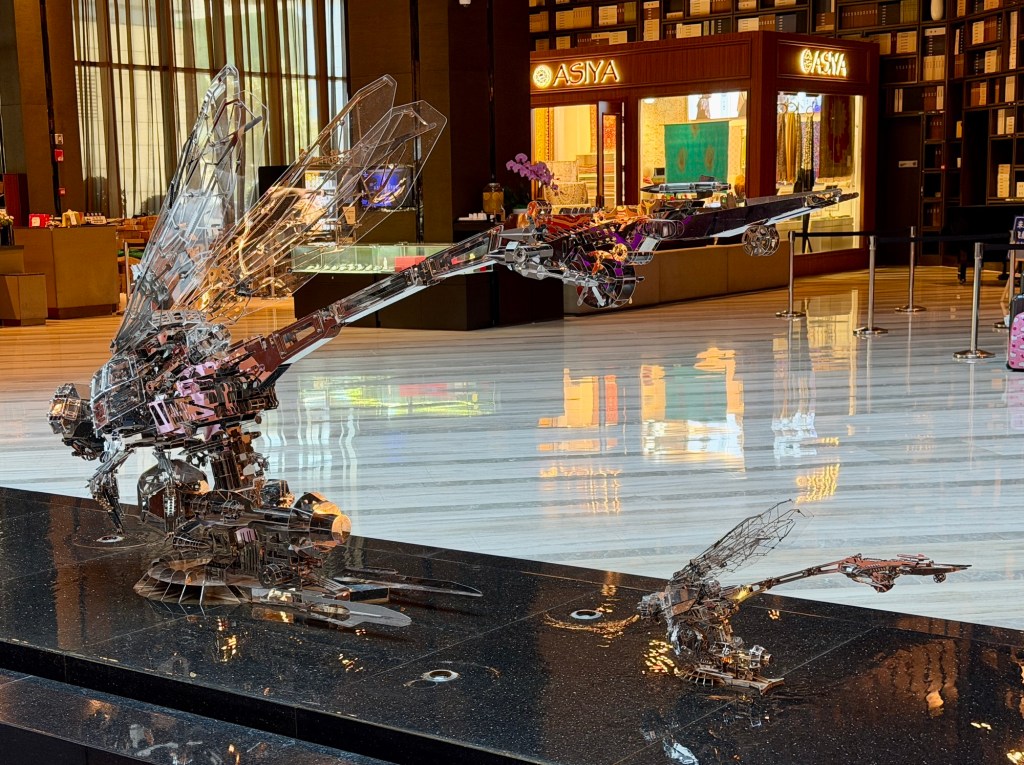
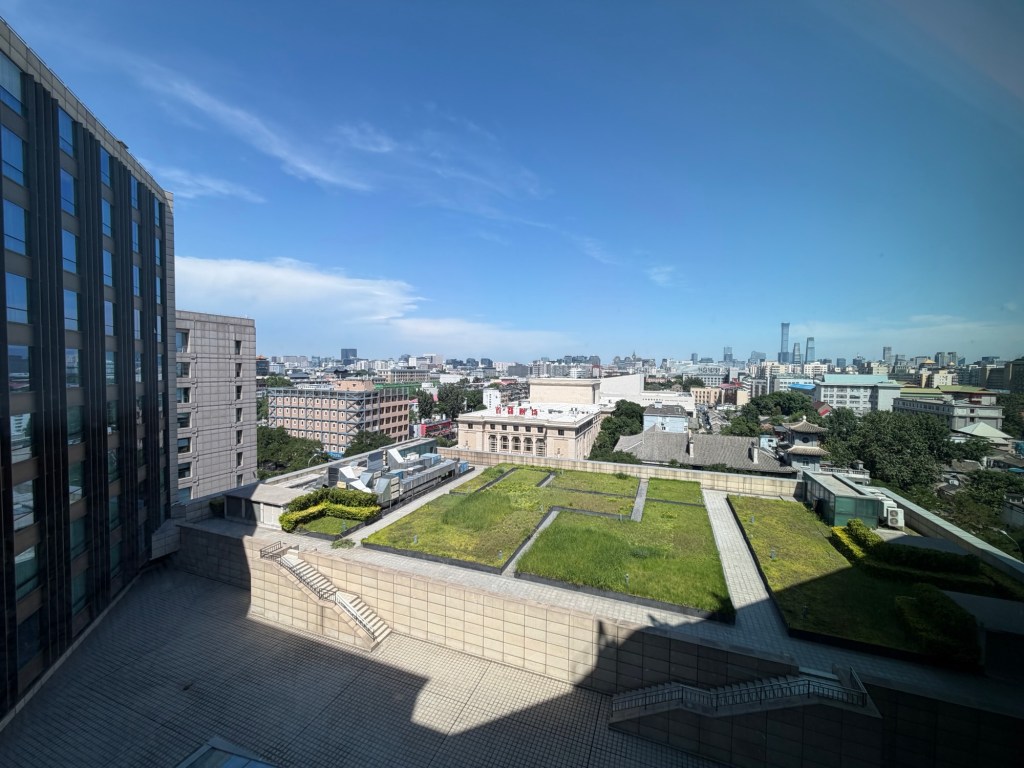
Map of subway system Passengers all on cell phones, just like homeNice looking McDonald’sOur hotel is on Wangfujing Street, part of a tourist walk.Year of the HorseOur hotel Prawns for dinner with gloves so you can remove the shellsTasty local craft beerHotel lobby wall lined with faux booksMom and baby dragonflies on pond in lobbyView from our window
Later, we noticed there is no fourth floor in our hotel. In Chinese the pronunciation of the number 4 resembles that for death so it is avoided. Tetraphobia shapes everyday life in China..
In the morning, we followed a walking tour here in downtown Beijing.
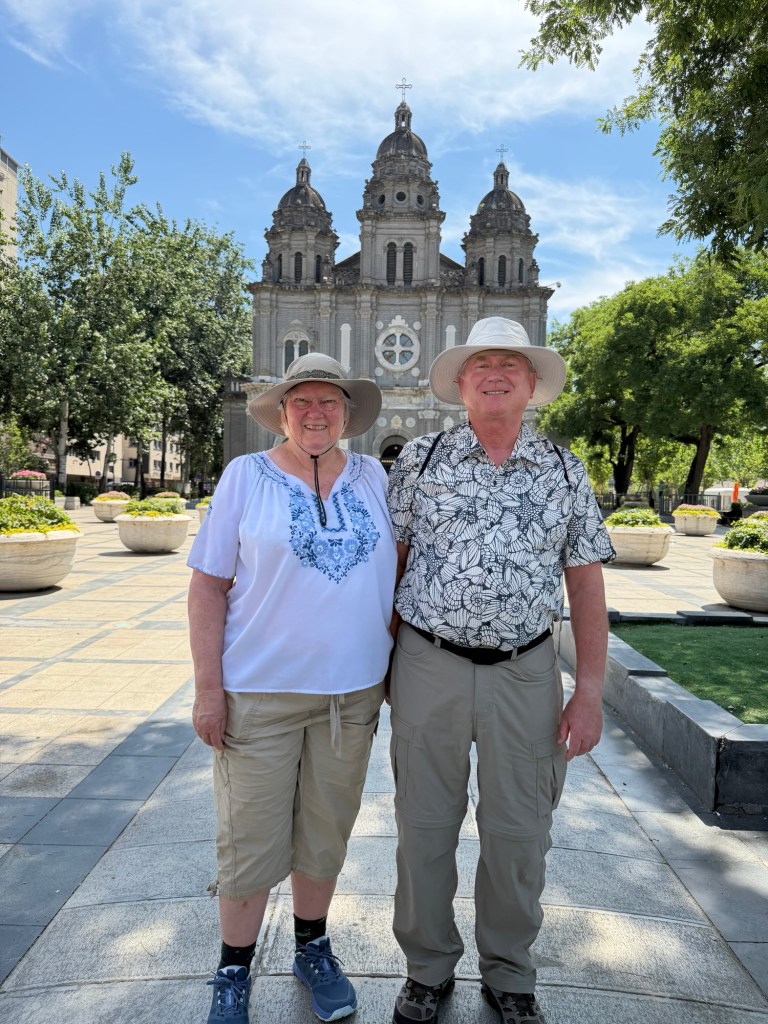
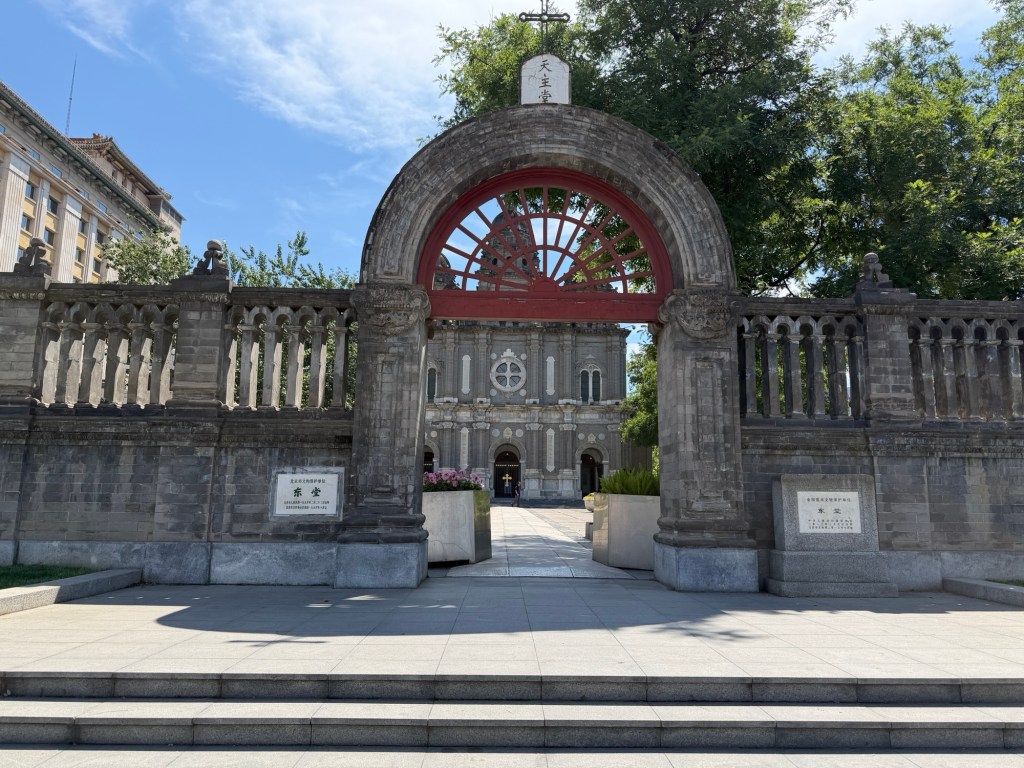
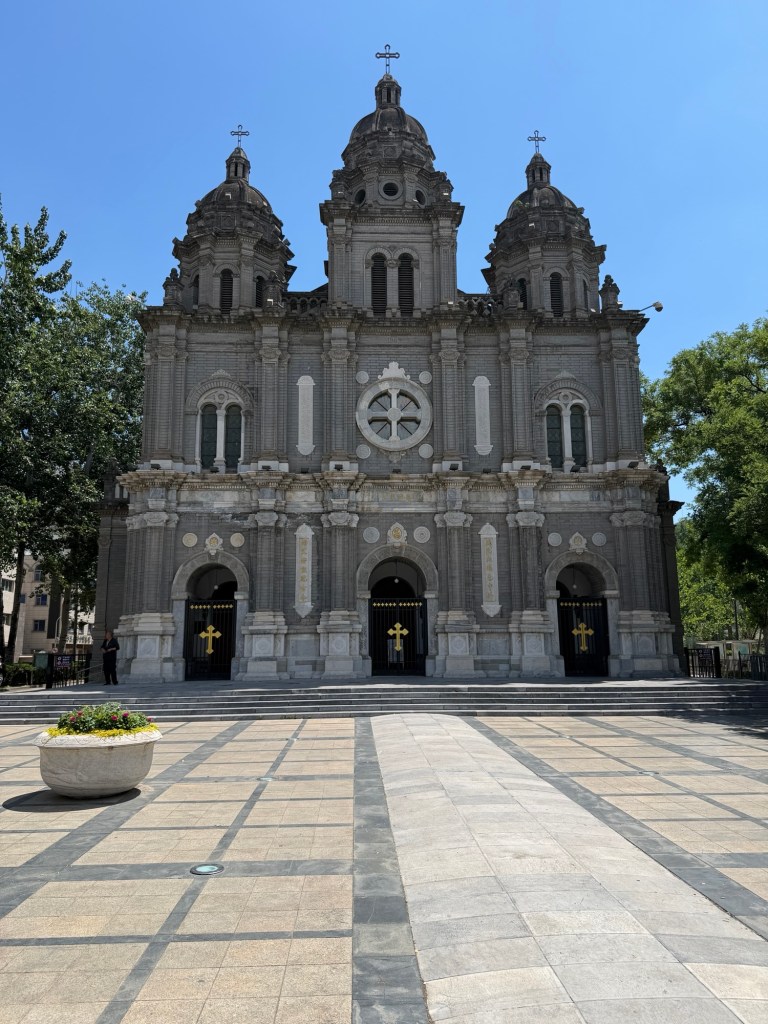
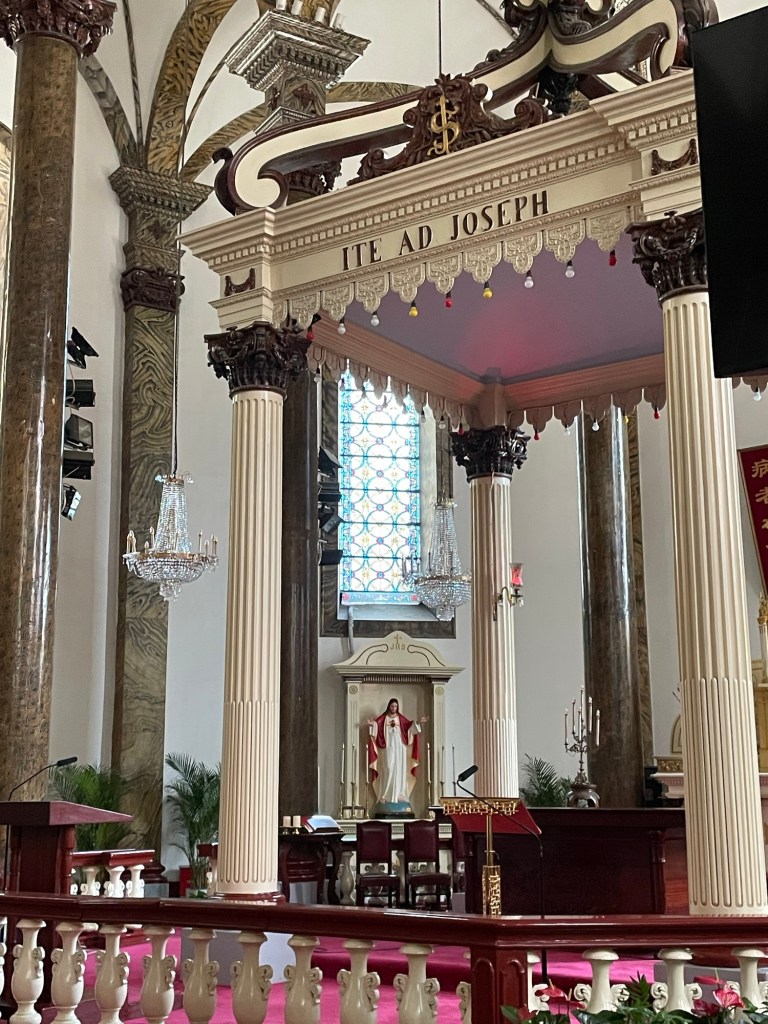
Us in front of St Joseph Church
Outside St Joseph’s, we met two teachers who spoke English well. One taught English and both taught art. They took our picture in front of the church and told us many things about Beijing. They brought us to an exhibition by their students and teachers from their school. The original artwork, paintings, calligraphy, embroideries and glassware painted on the inside were for sale. We felt welcomed to China.
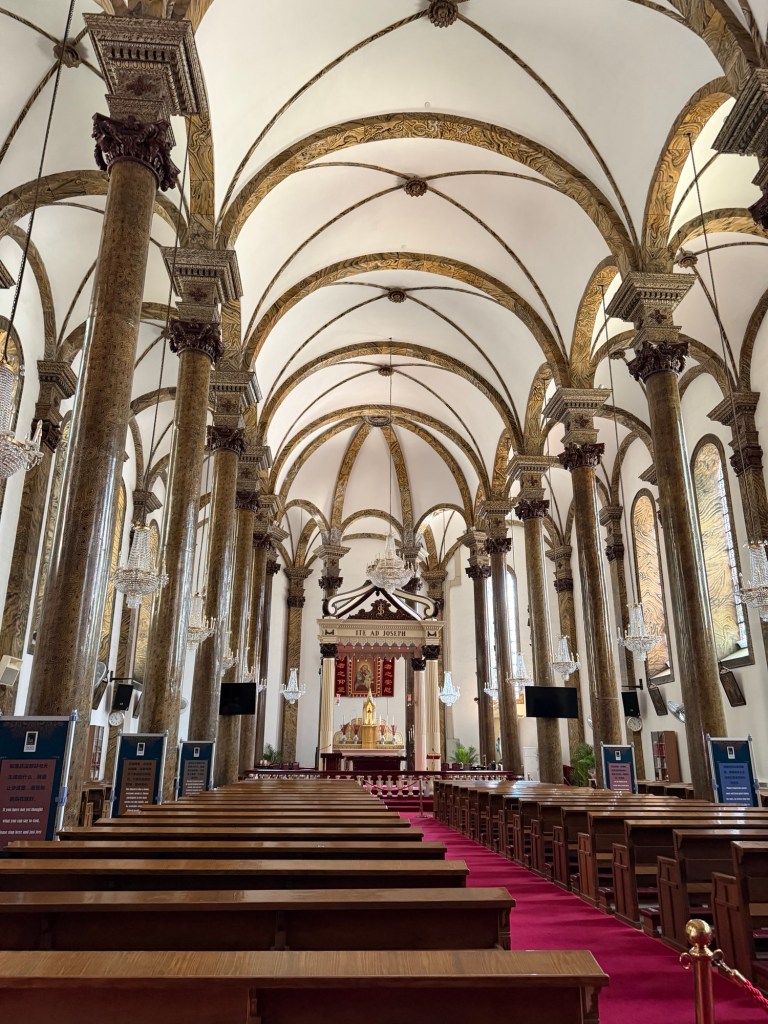
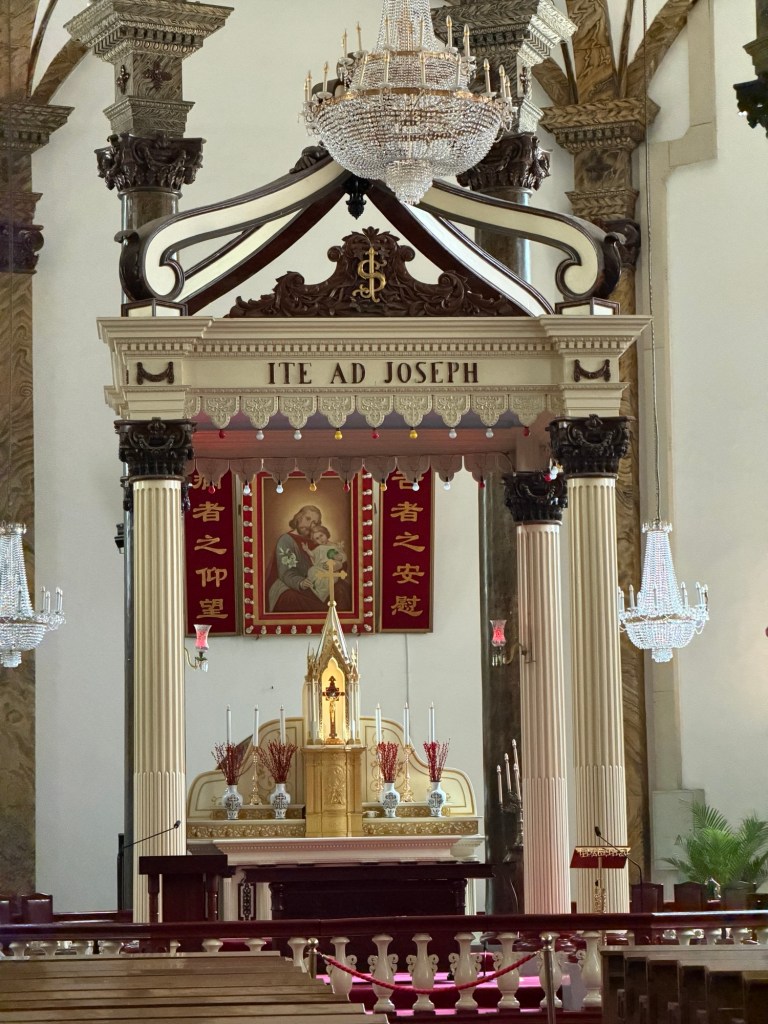
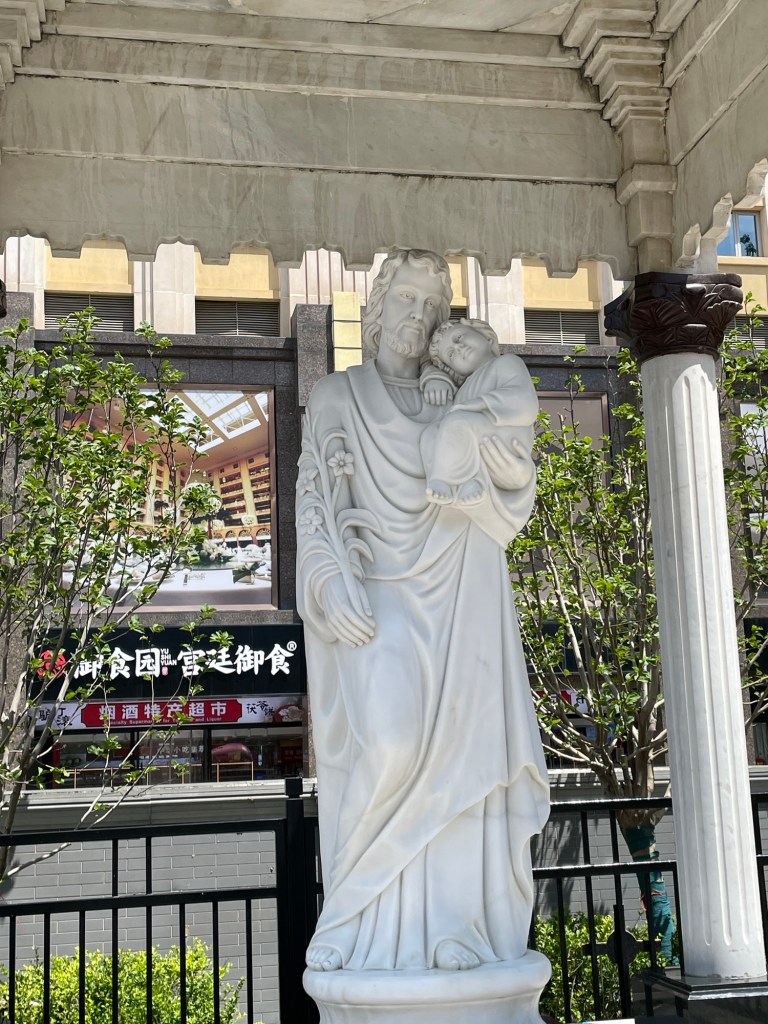
We liked that the Earthly father (rather than the mother) of Jesus was honored here. After we toured the church area, another teacher started talking to us. He, too, was informative, telling us what we were looking at (otherwise many photos would not be labeled) and walked with us along the tour we had planned. One fact, in front of St Joseph’s Church was that this church symbolized Eastern Christianity rather than Western.
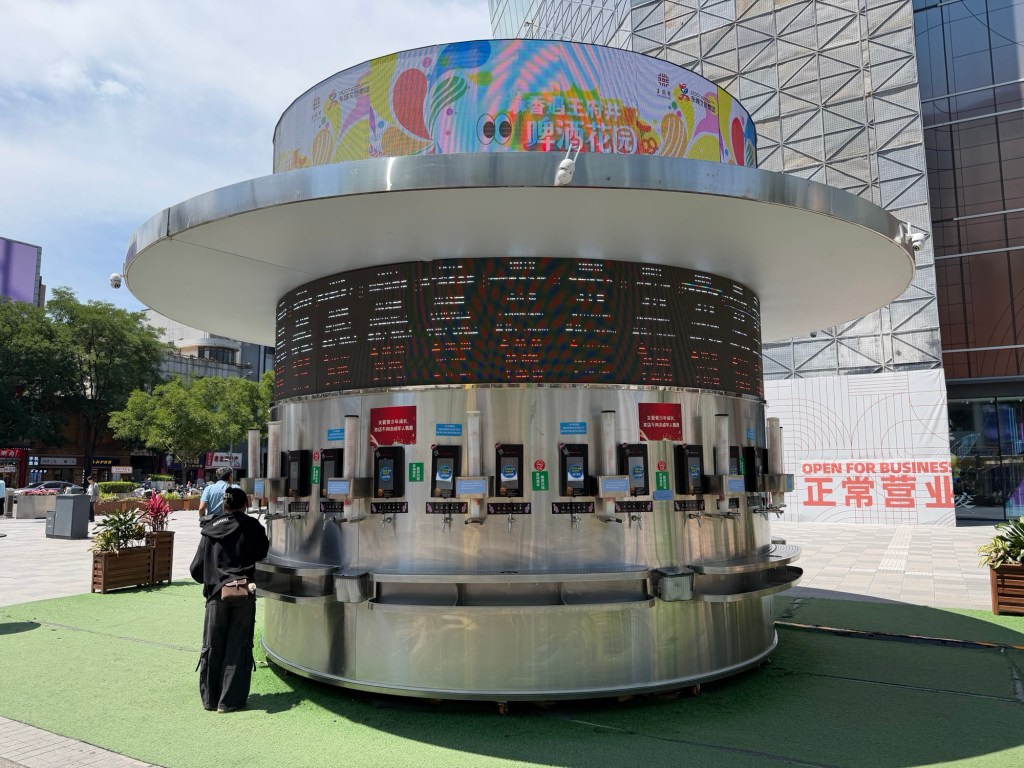
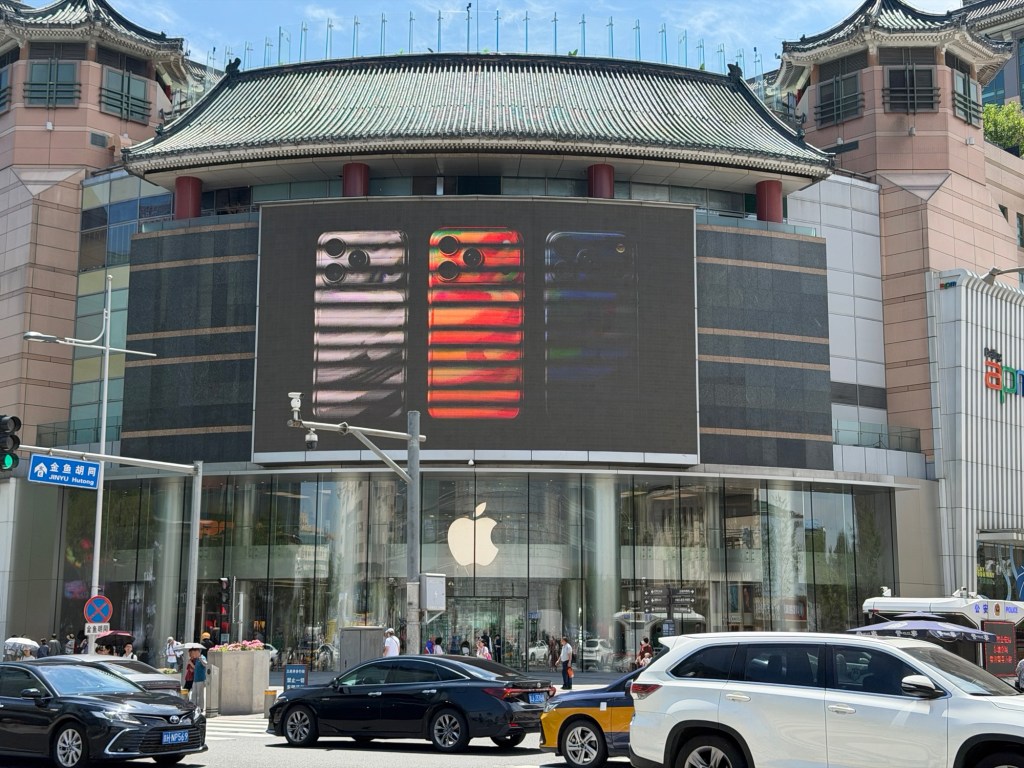
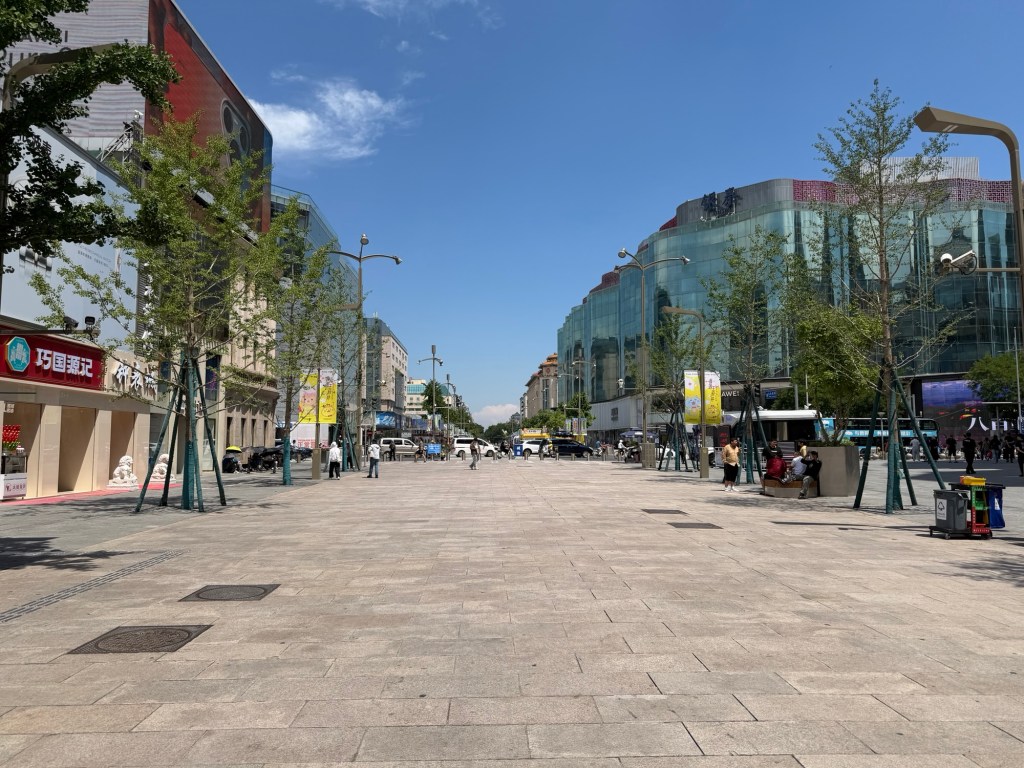
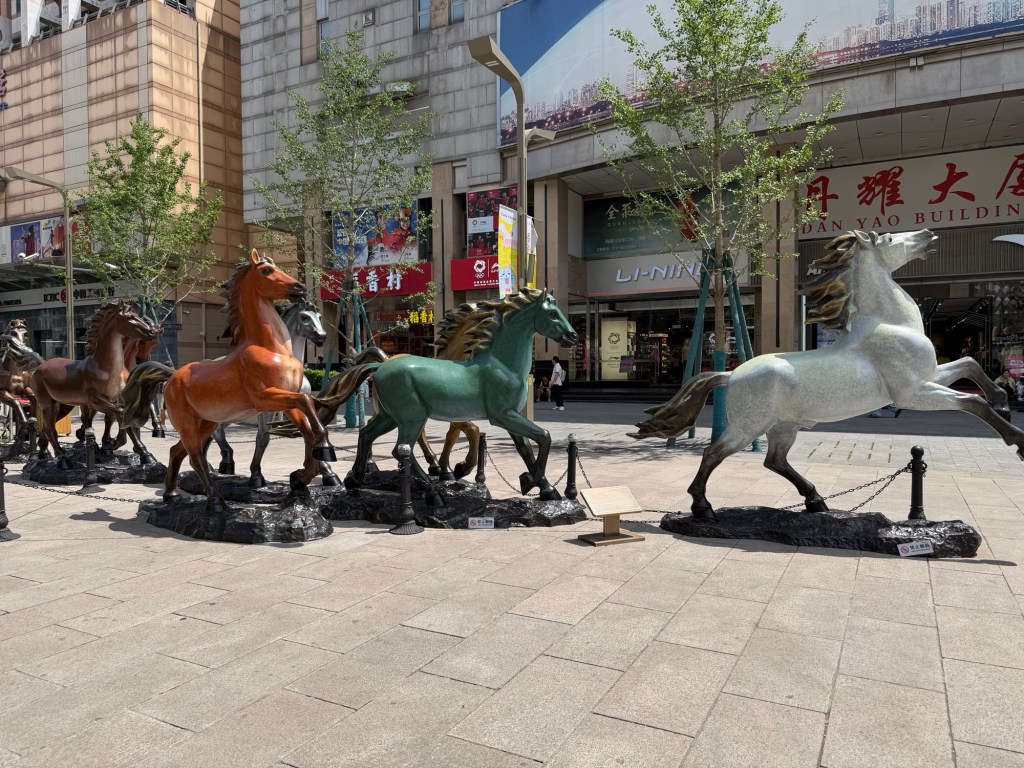
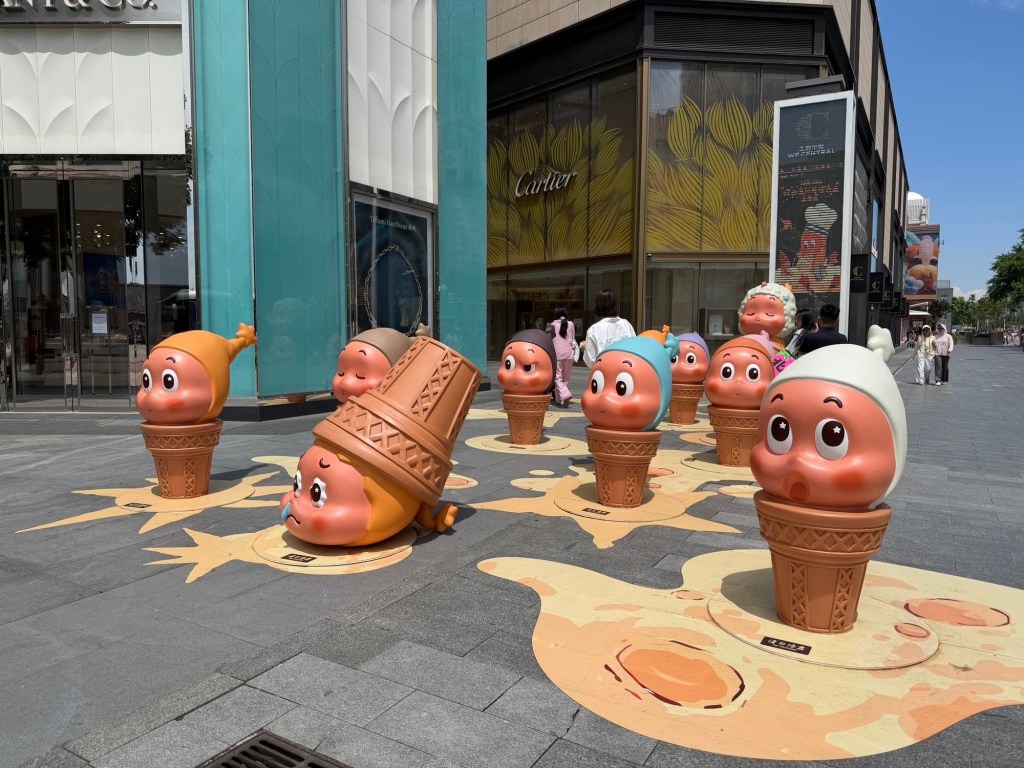
Beer kioskApple Store, once the largest in Beijing South of our hotel, Wangfujing Steet is a pedestrian mall.8 horses. 8 is a lucky number. Ad for ice cream cones attractive to children?
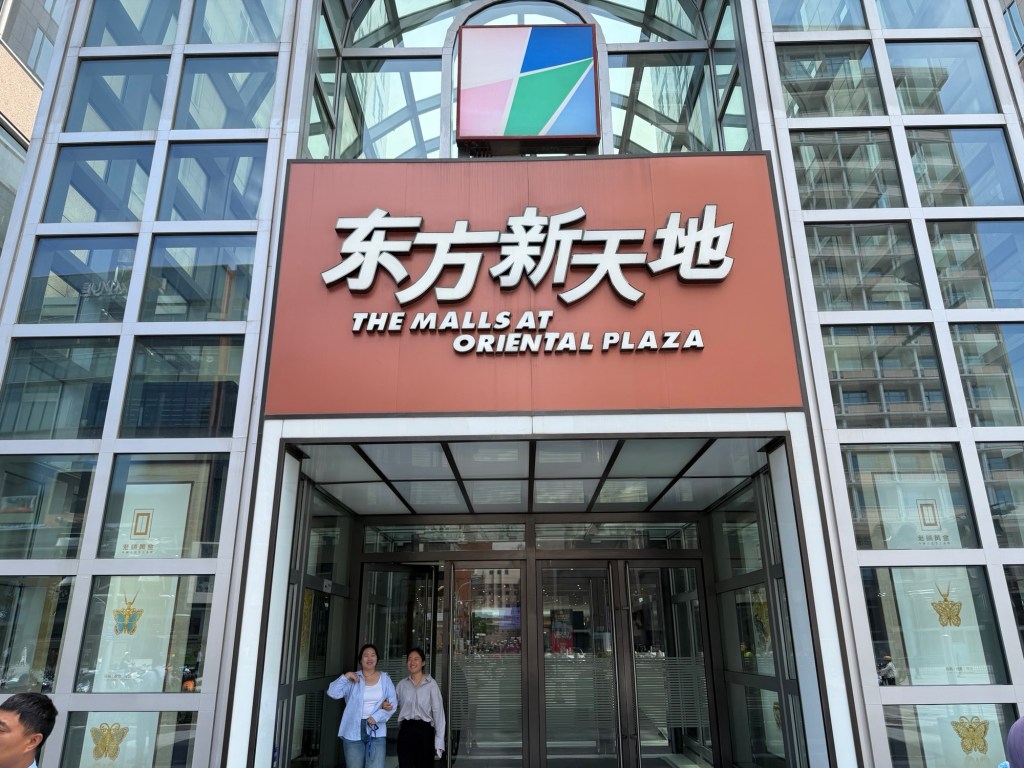
This pedestrian mall has many smaller indoor malls on both sides. The entrances can be ornate.
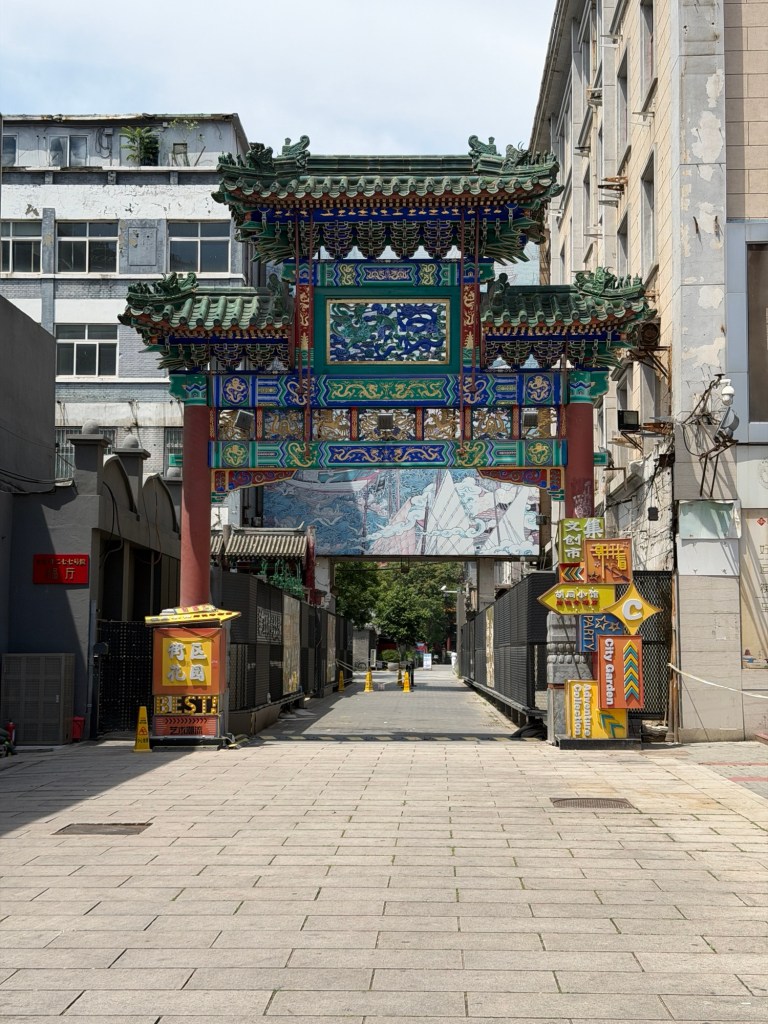
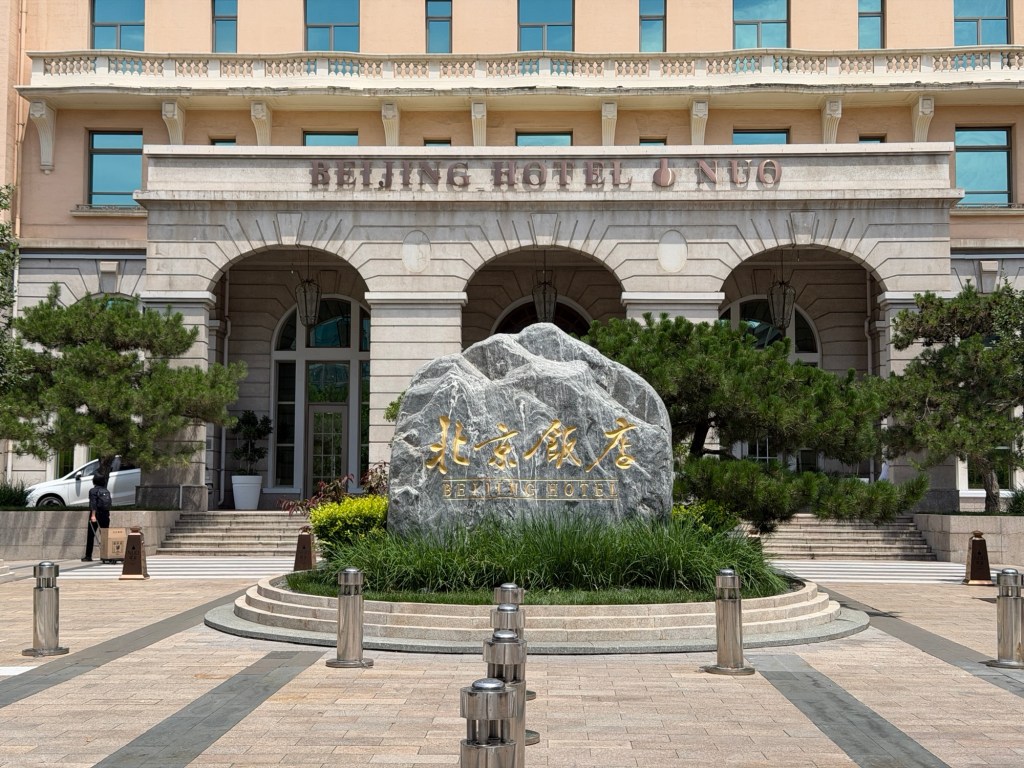
Unusual to have English wordsNice painted gateRock labeled in gold at a famous old hotel
Then we walked towards the Forbidden City, which was closed for the day. The huge police presence around that famous place stopped us twice just for walking by. We had to show ID (electronic picture of passport worked) and the small backpack was searched. Police tents were on almost every corner on the wide street where an entrance was located.
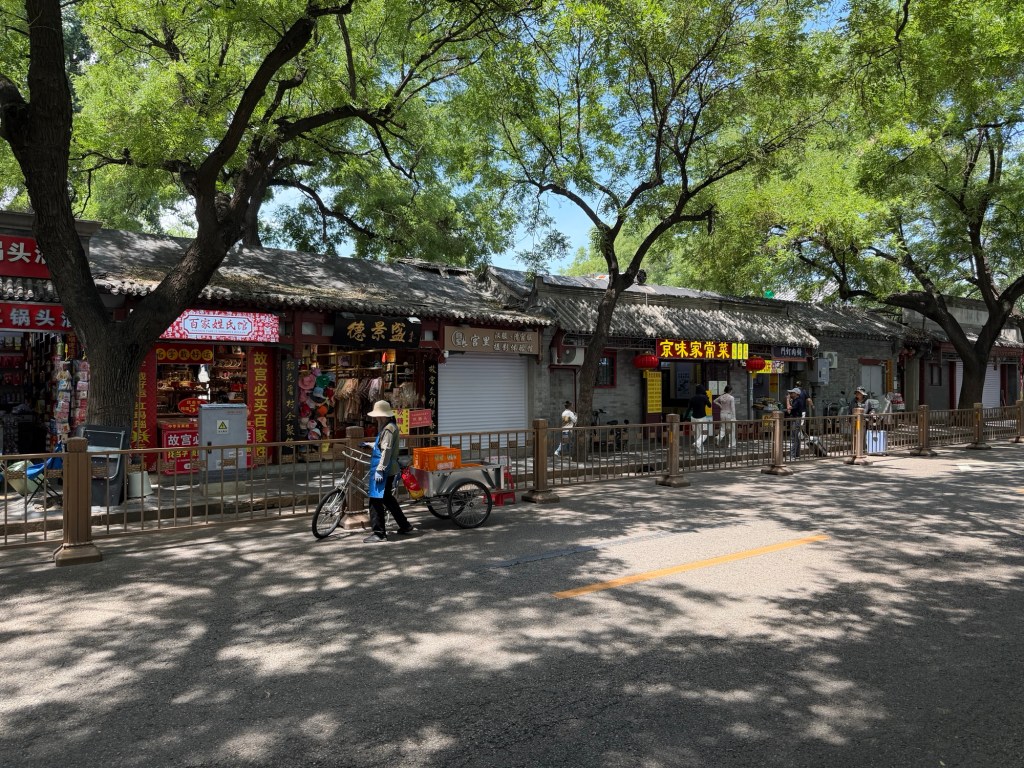
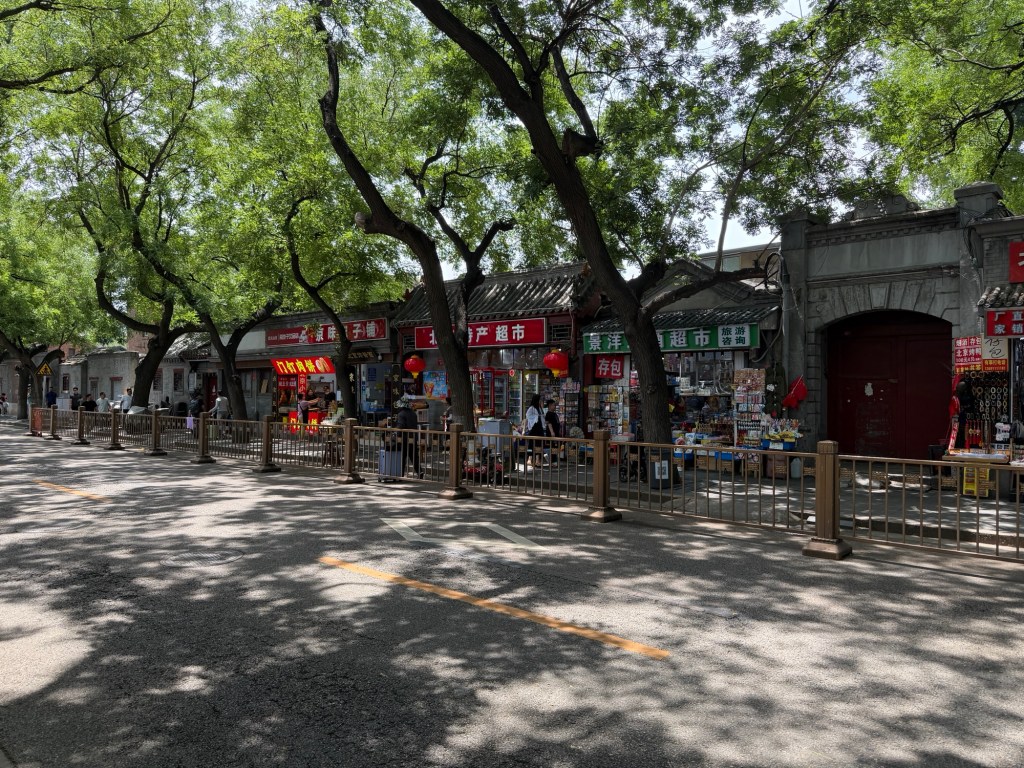
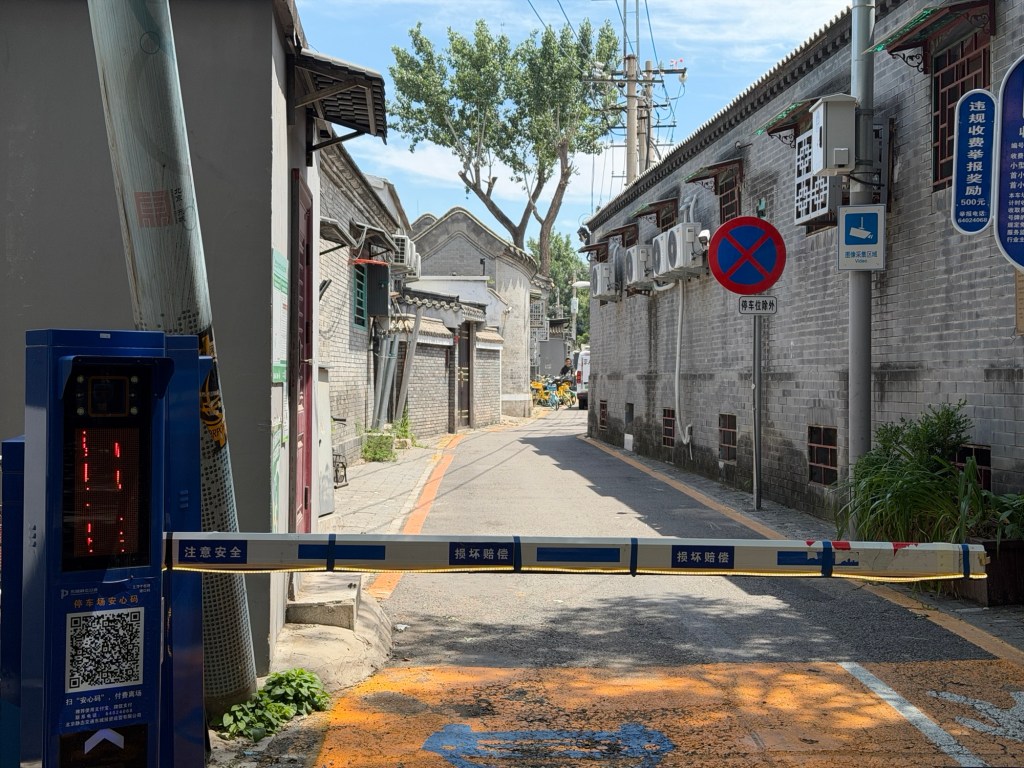
So we turned onto a small street and parallel the edge of the Forbidden City. This street featured many tiny stalls selling trinkets or food.
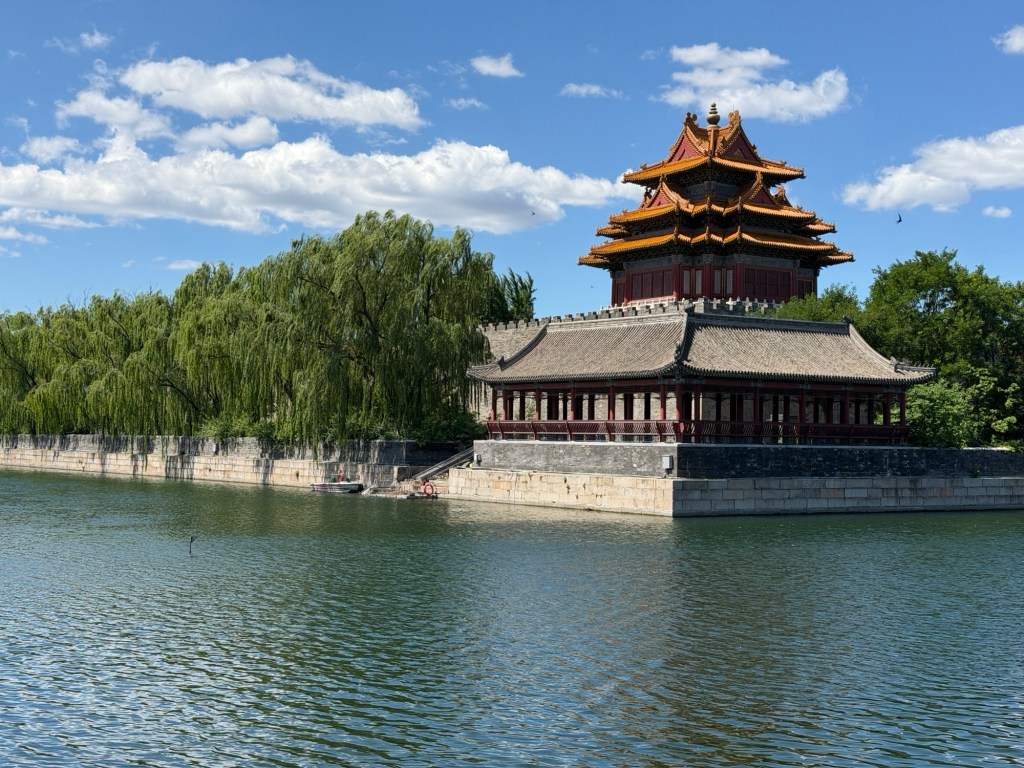
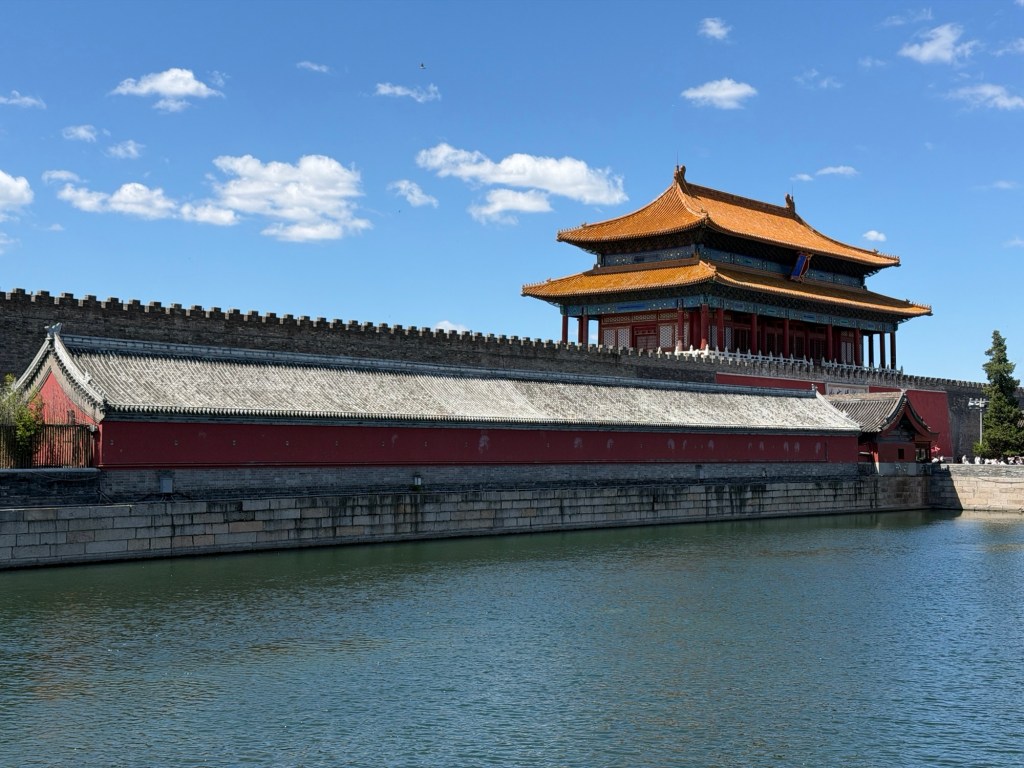
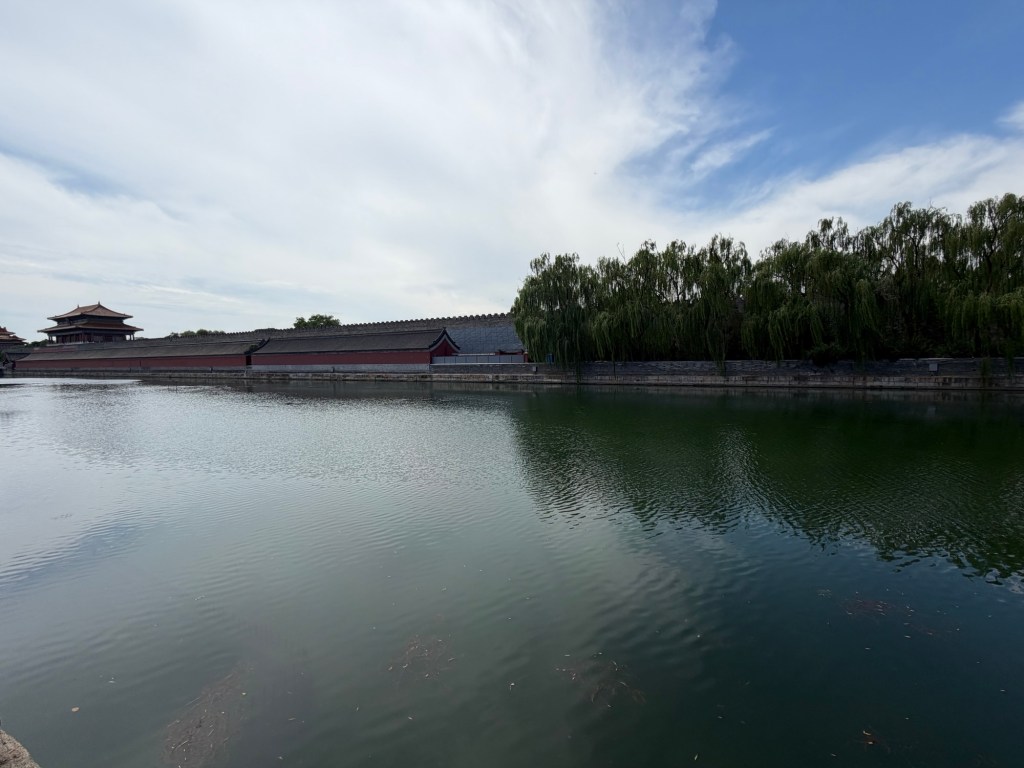
Older, small buildings with tile roofsLots of storesAlleys (hutongs) can be quite narrow.View of small side entrance to Forbidden City Wide moat and wall around Forbidden City
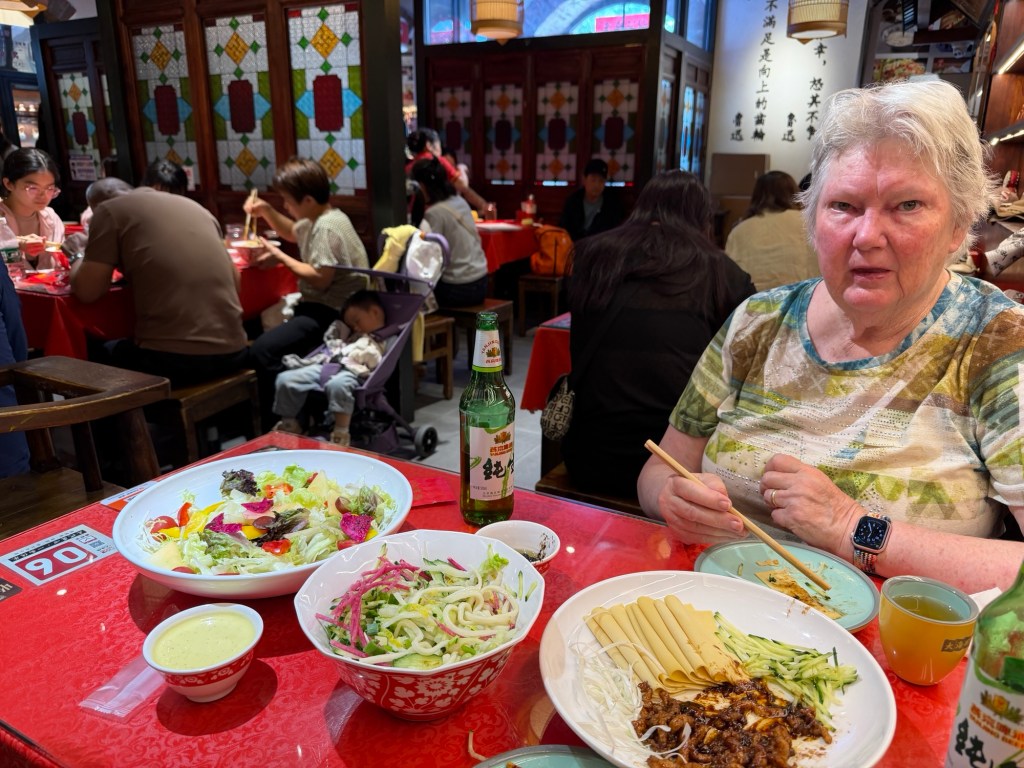
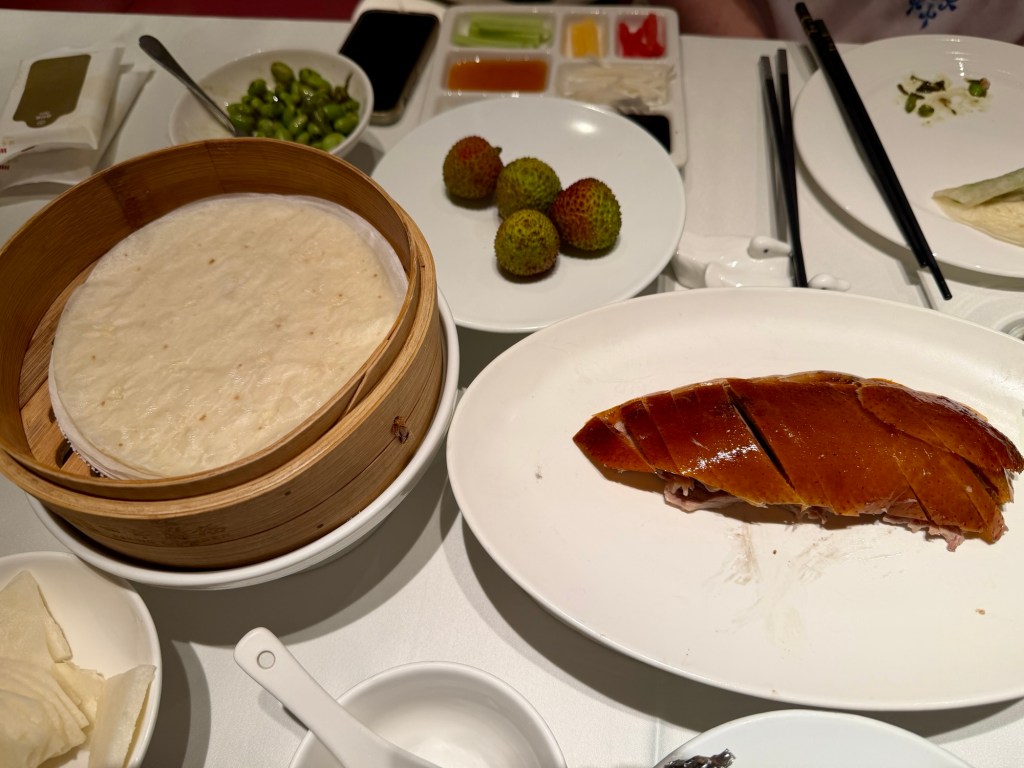
Lunch was at Siji Minfu, a fabulous restaurant famous for roast duck; we ate half a duck with bean sauce wrapped in rice pancakes. A server showed us how to eat this delicious dish. Later, we learned that there can be hours long lines to eat here.
“Peking Duck” is not the same as you might find in the U.S.