Kodiak Island, June 29

We woke to partly cloudy skies and no fog. Crossing the Gulf of Alaska was unusually smooth, the crew members said.

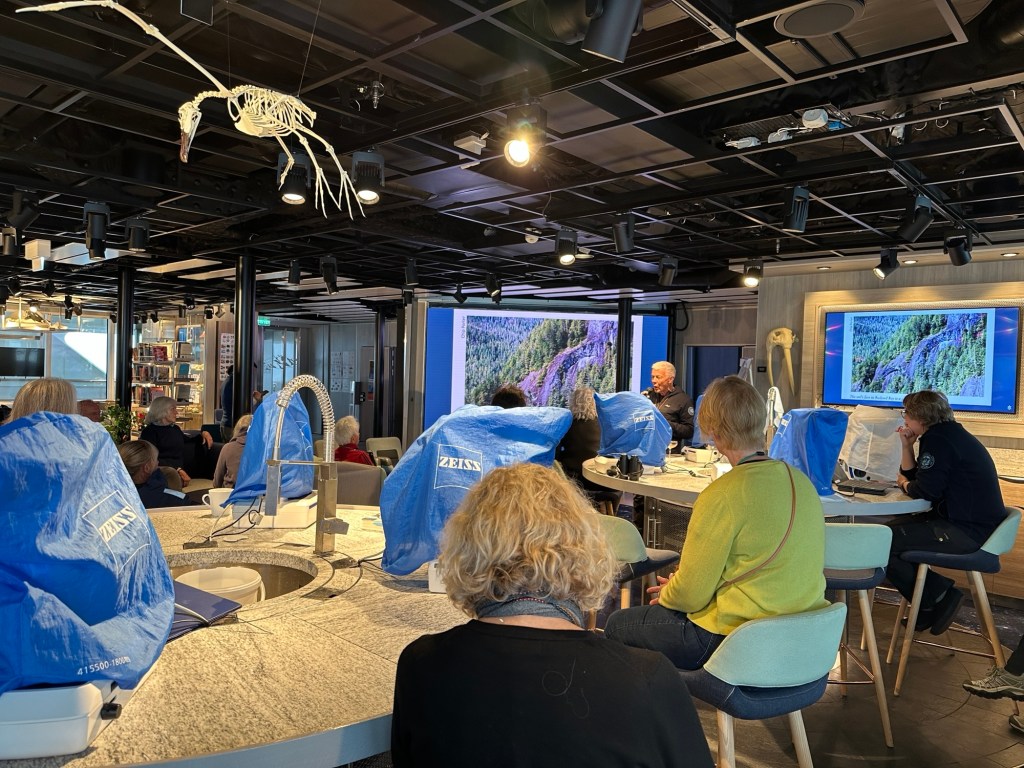
We started the morning with a presentation about bears. Again, we learned a lot. You never know how ignorant you are if you stop learning.

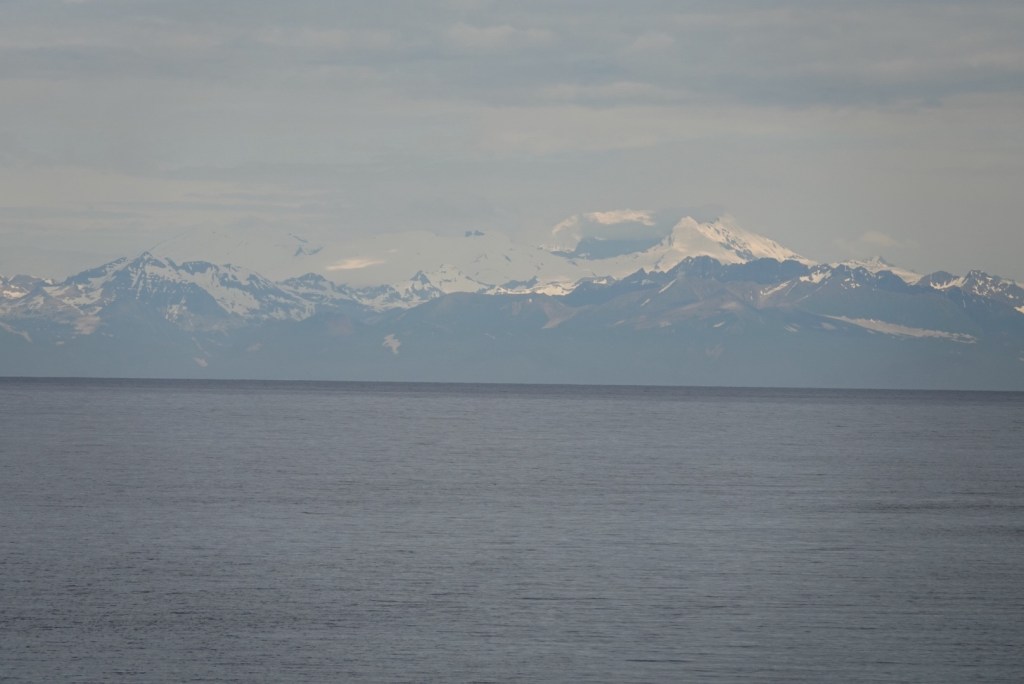
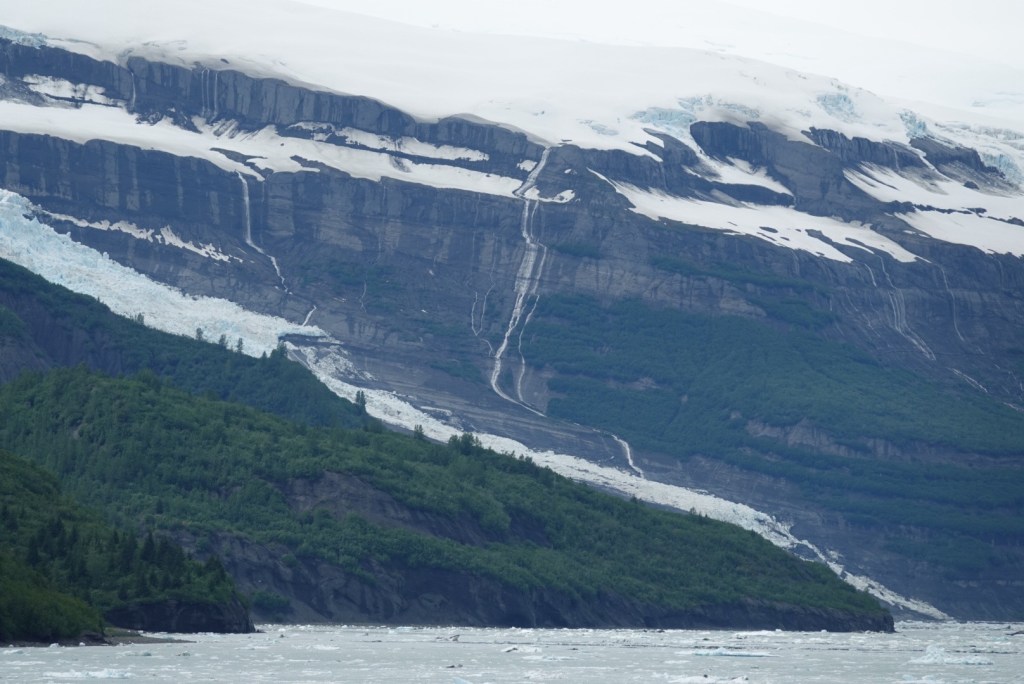
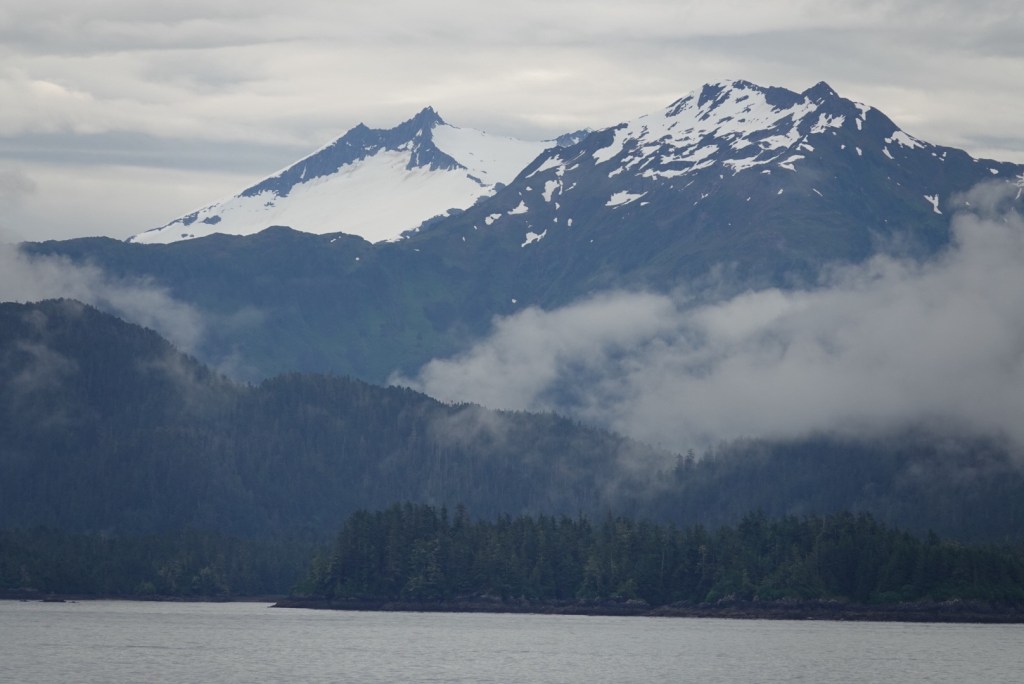
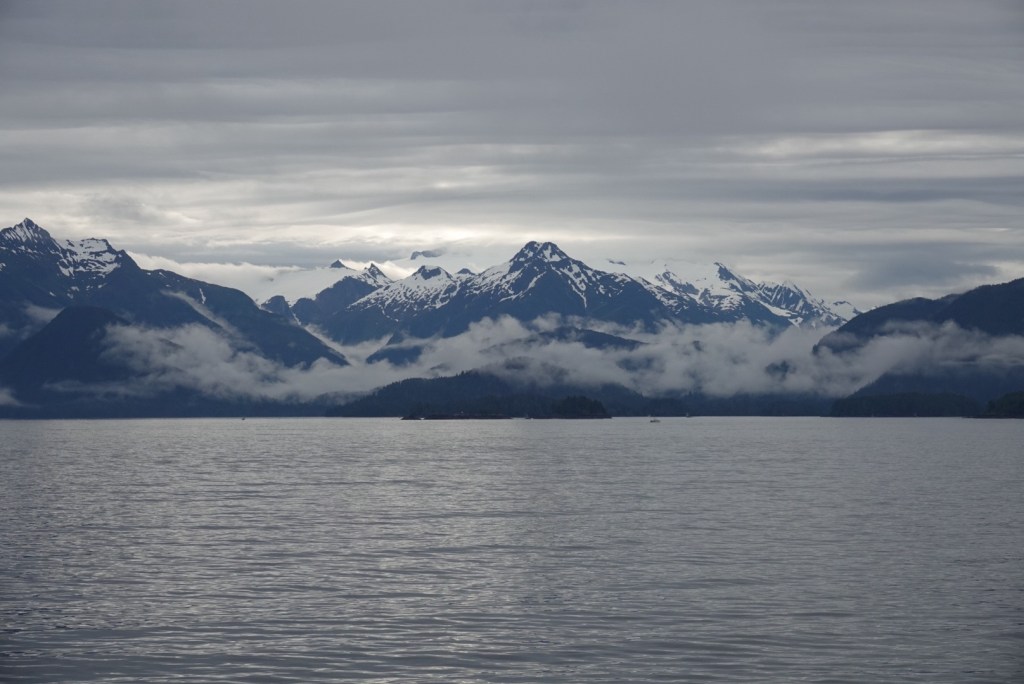
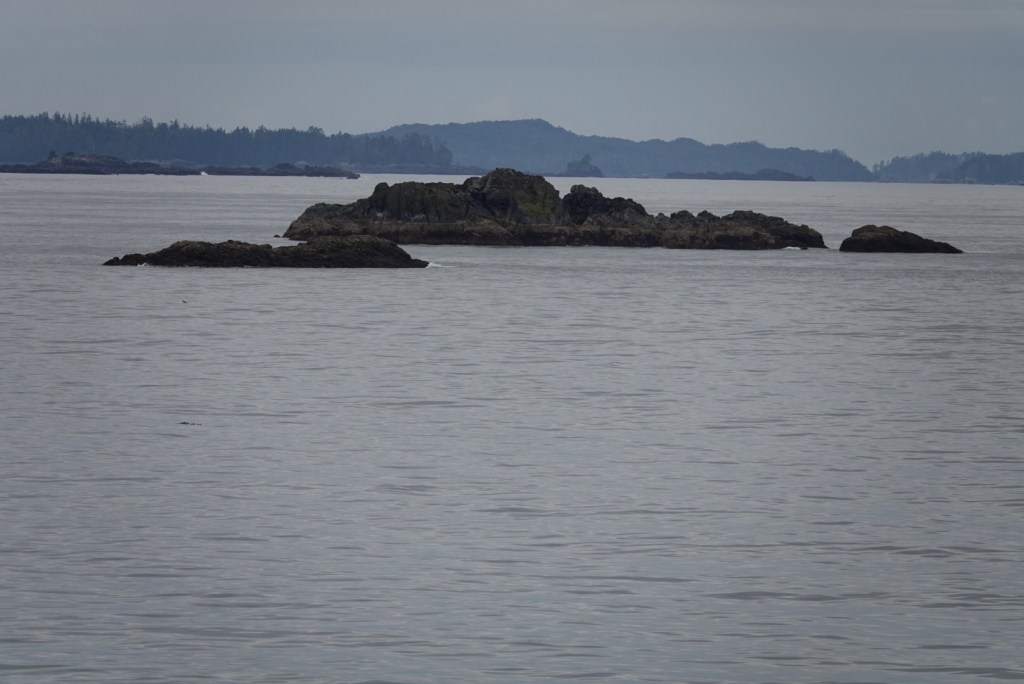
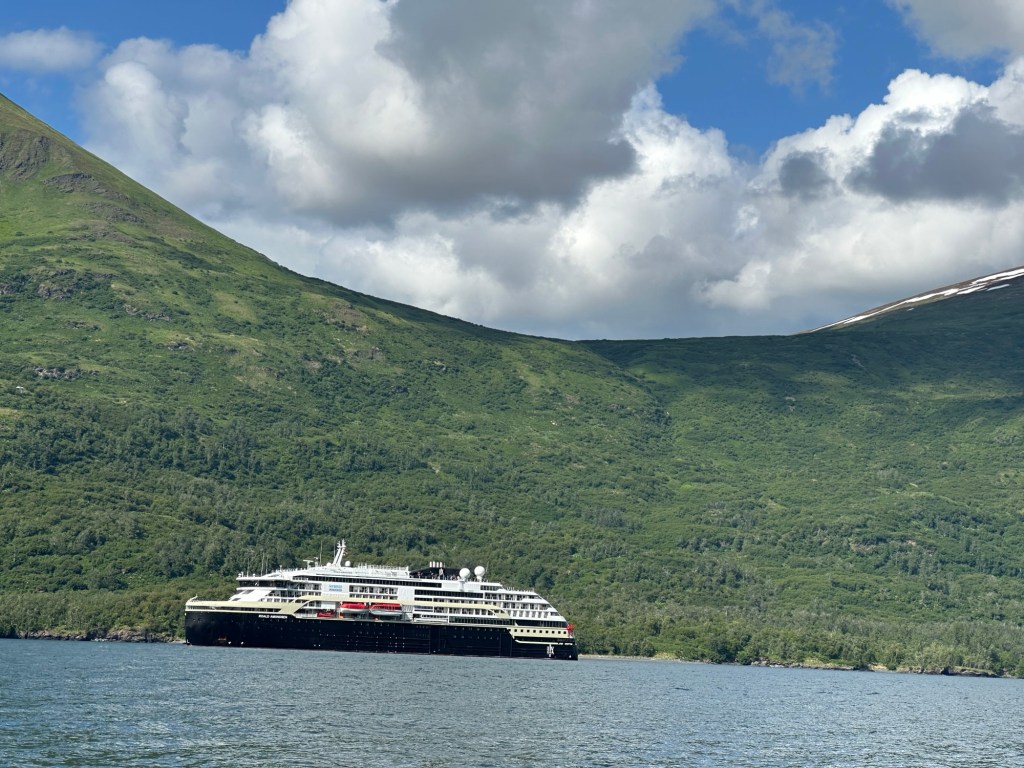
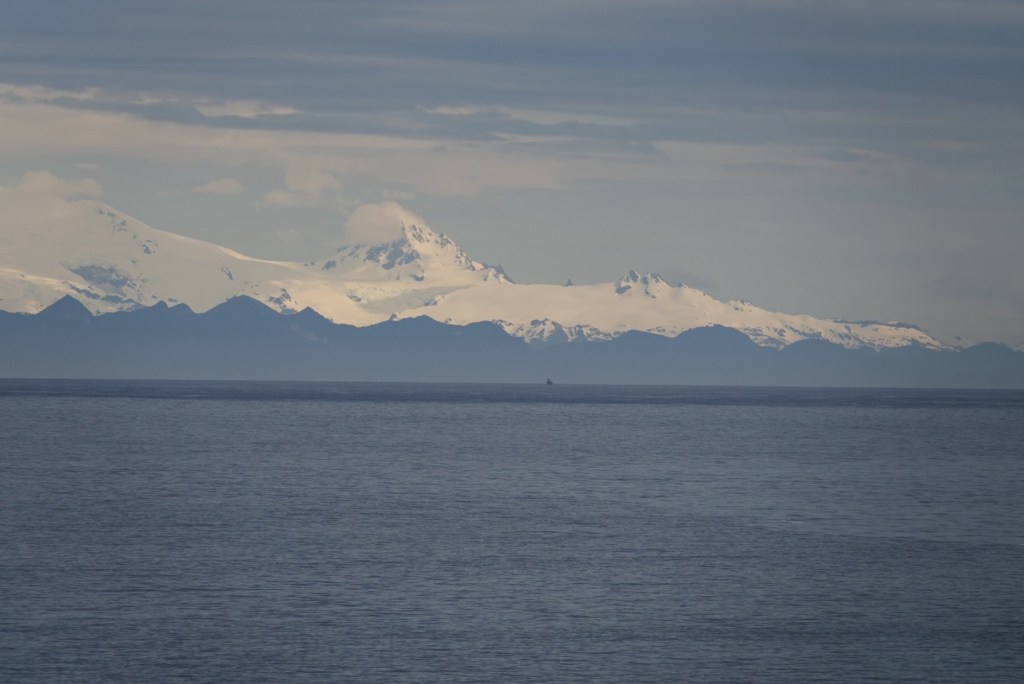
We were closer to land, and the seas were calm. We were surrounded by green islands with snow-capped mountains.
We were out on deck when the first sea otter was spotted. As the morning continued, we saw a whole raft of them!
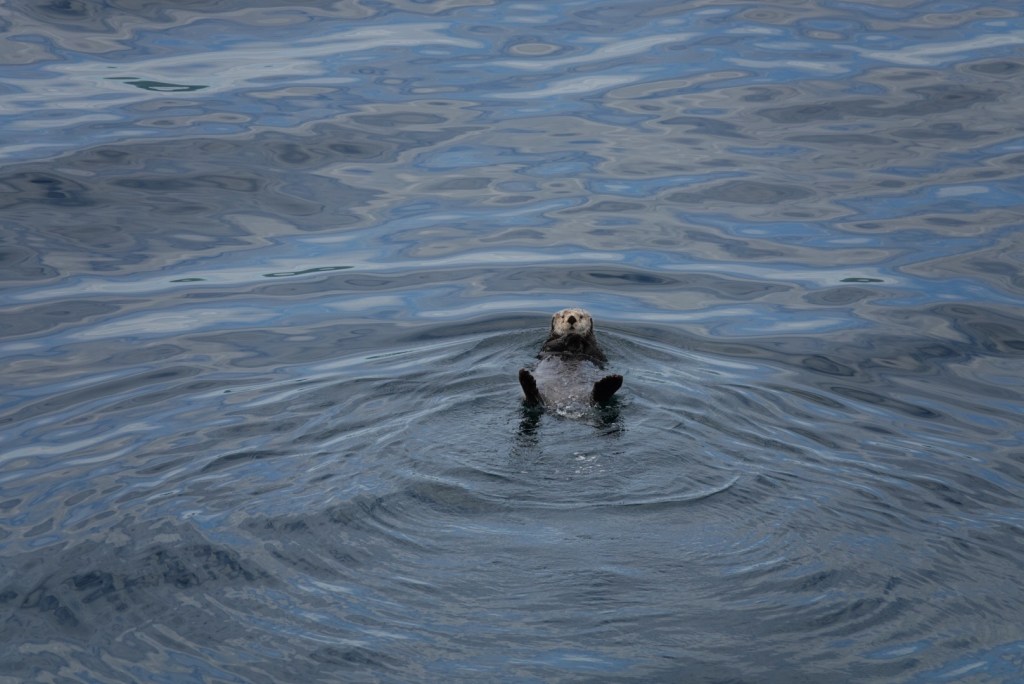
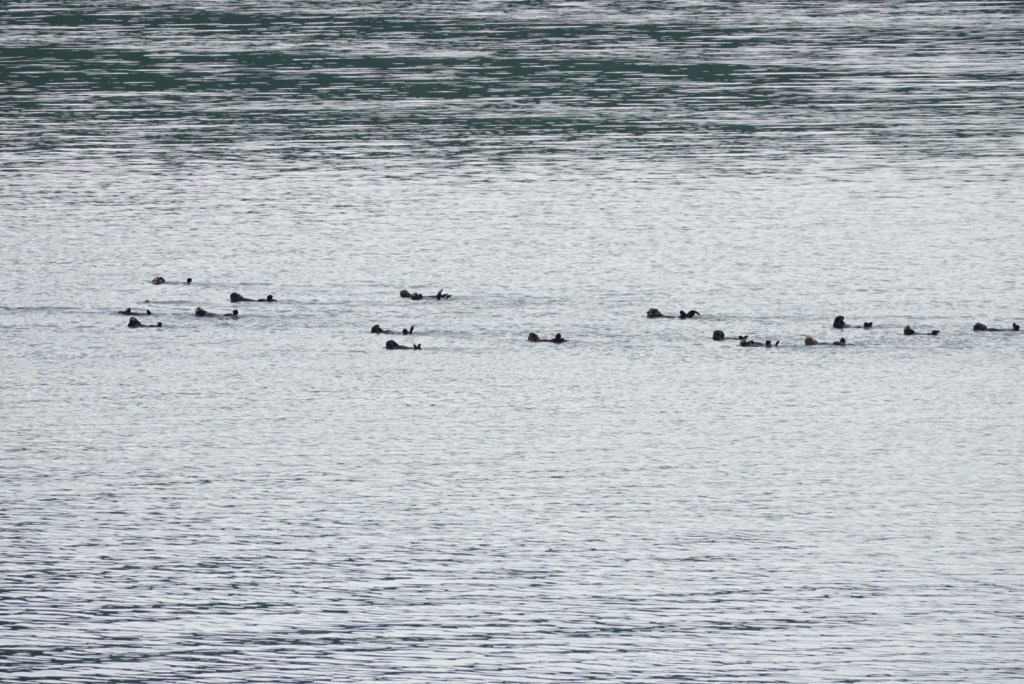
Sea otter, just waking up from a nap
Raft of sea otters, relaxing on their backs
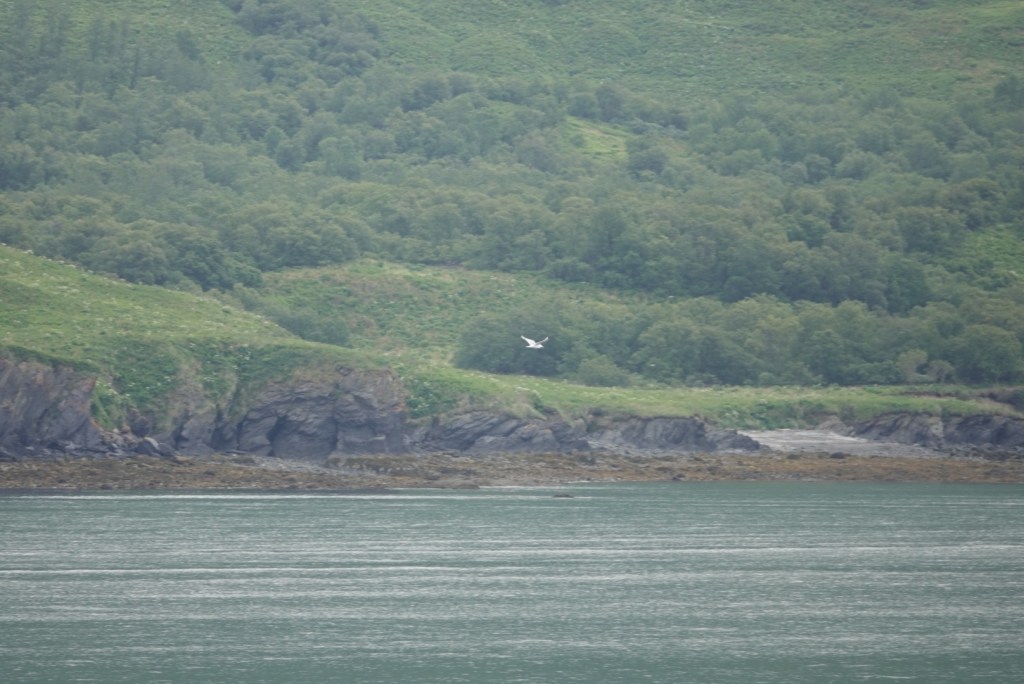
A bird flying past the island’s edge

Going up the fiord, we were near enough to the islands to see many shades of green. Unlike the Tongass National Forest, these greens were from bushes, shrubs and grasses, not pristine or clear-cut forests. I speculated that this was due to the glaciers being in this area more recently, being farther north, and the naturalist agreed.

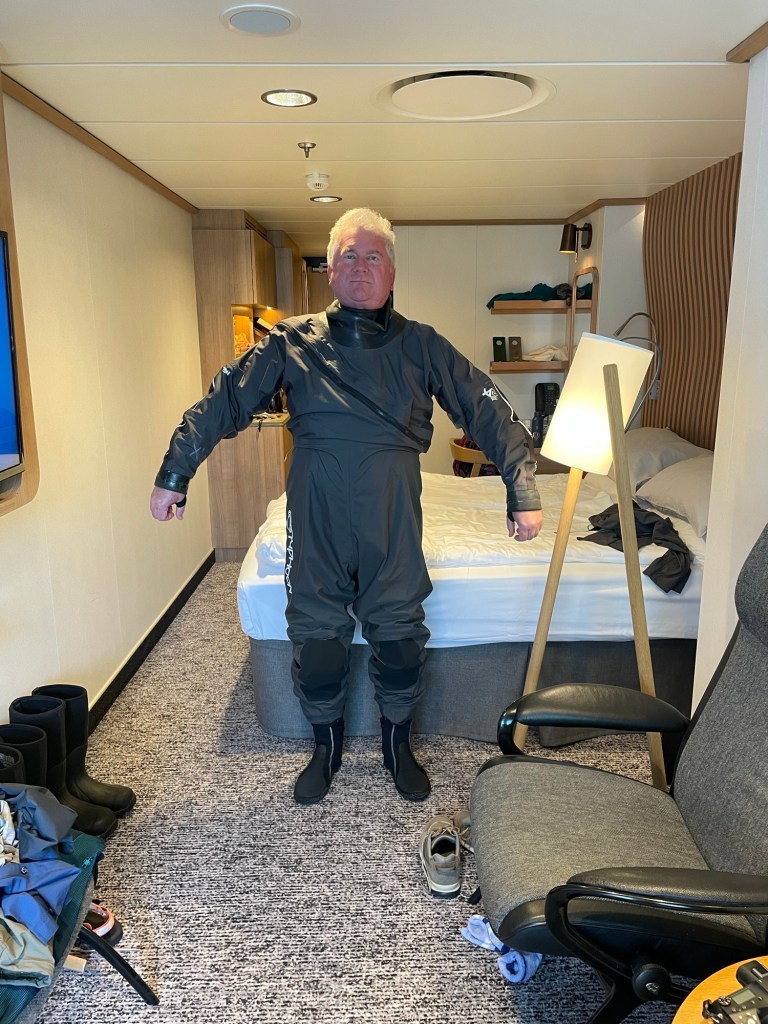
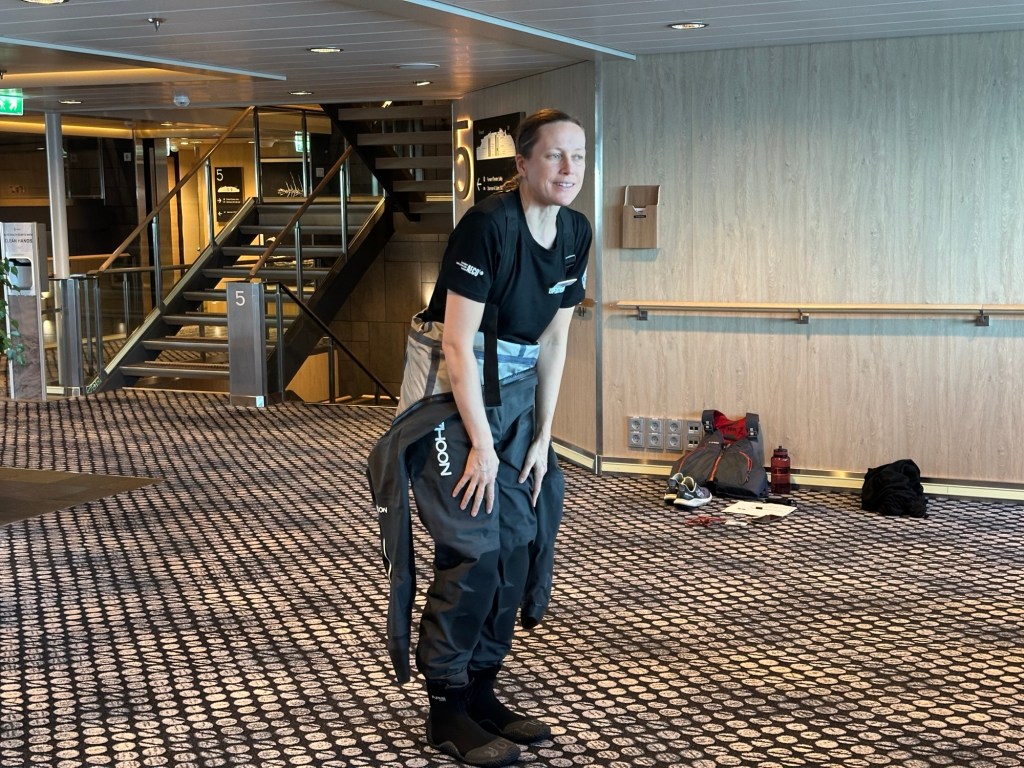
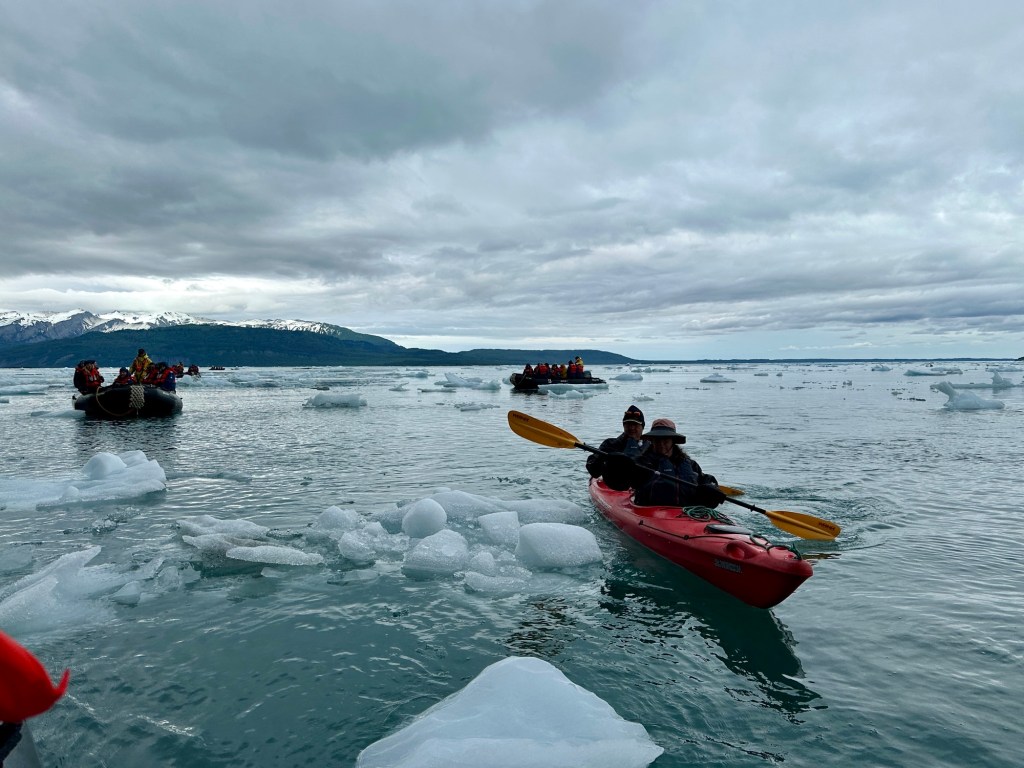
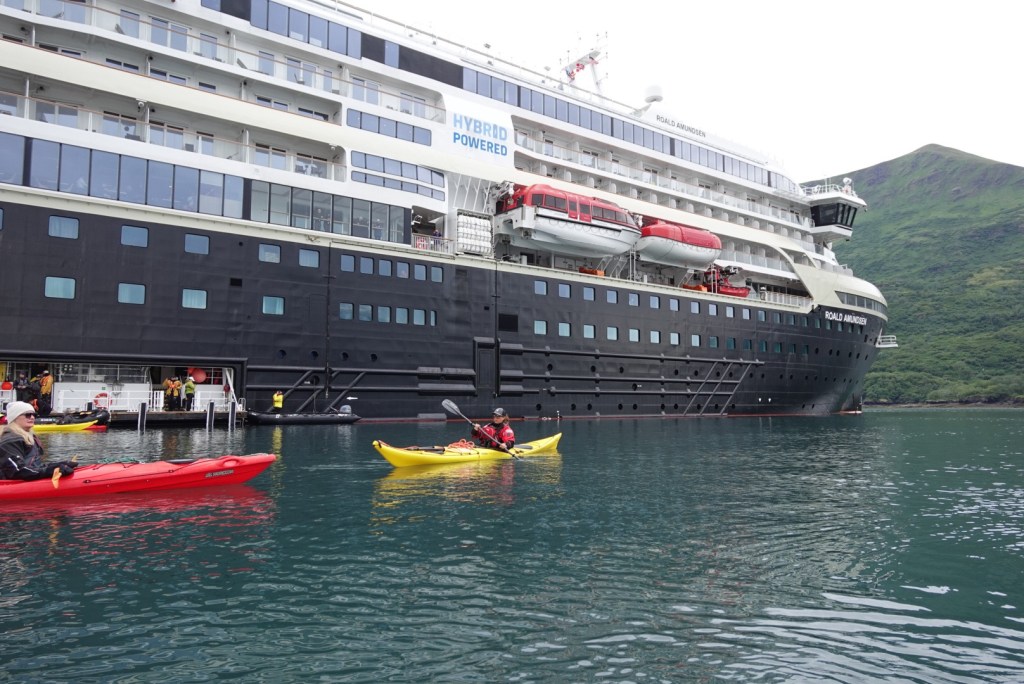
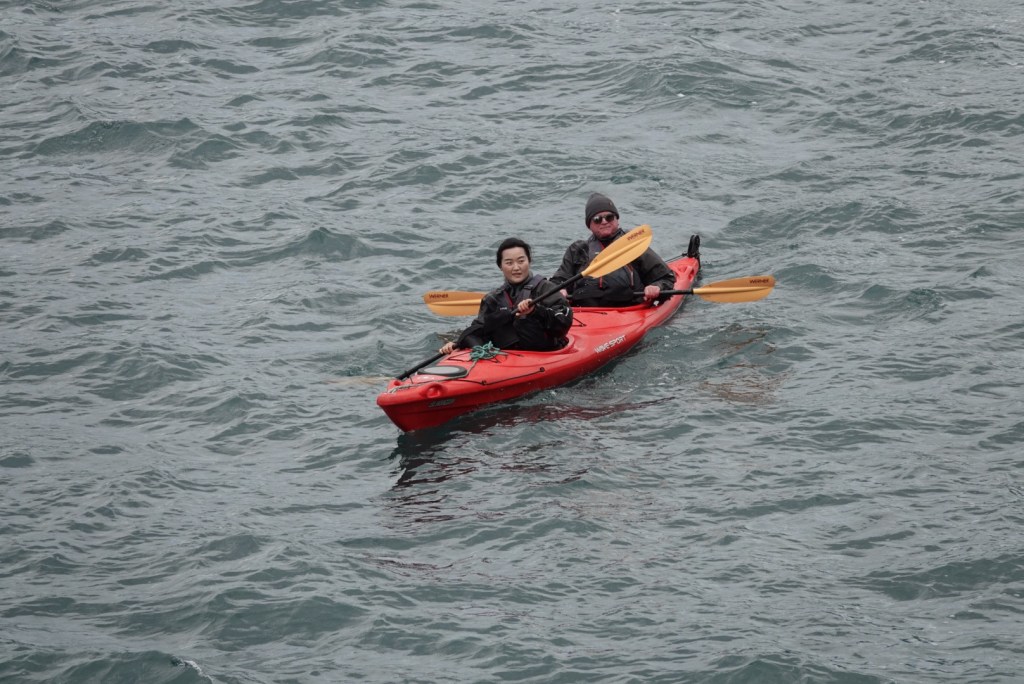
Soon, we needed to get ready for the next adventure. Brian signed up to go kayaking! It took a good 15 minutes for him to get into all the gear. Kayaking in Alaska can be cold.
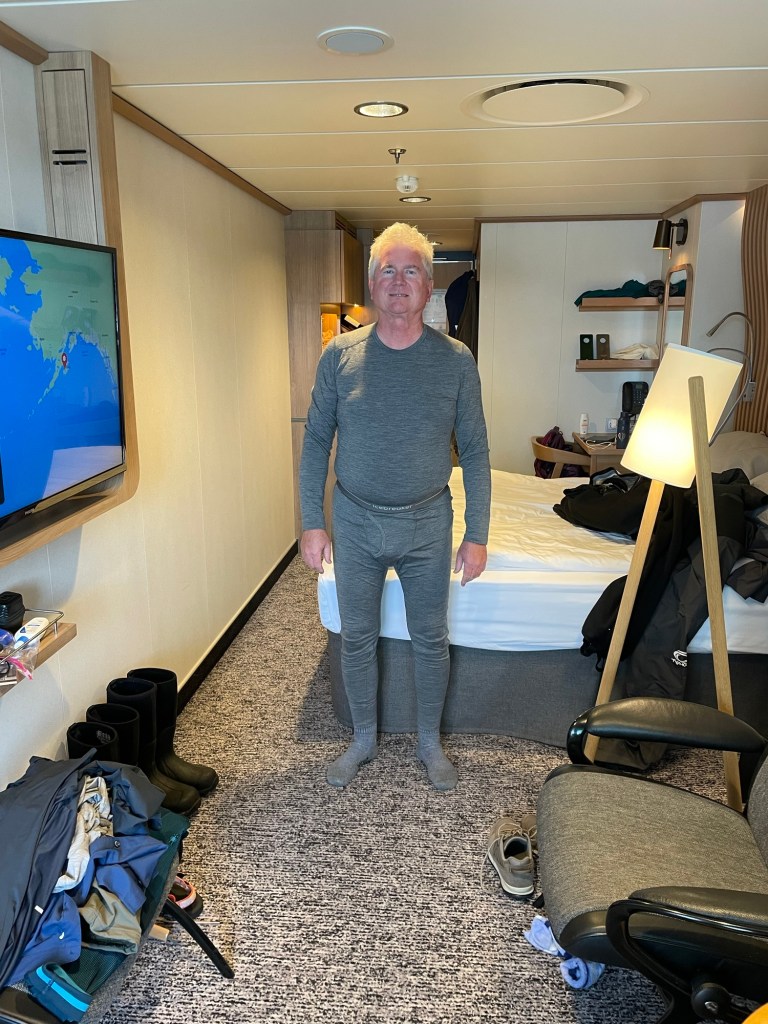
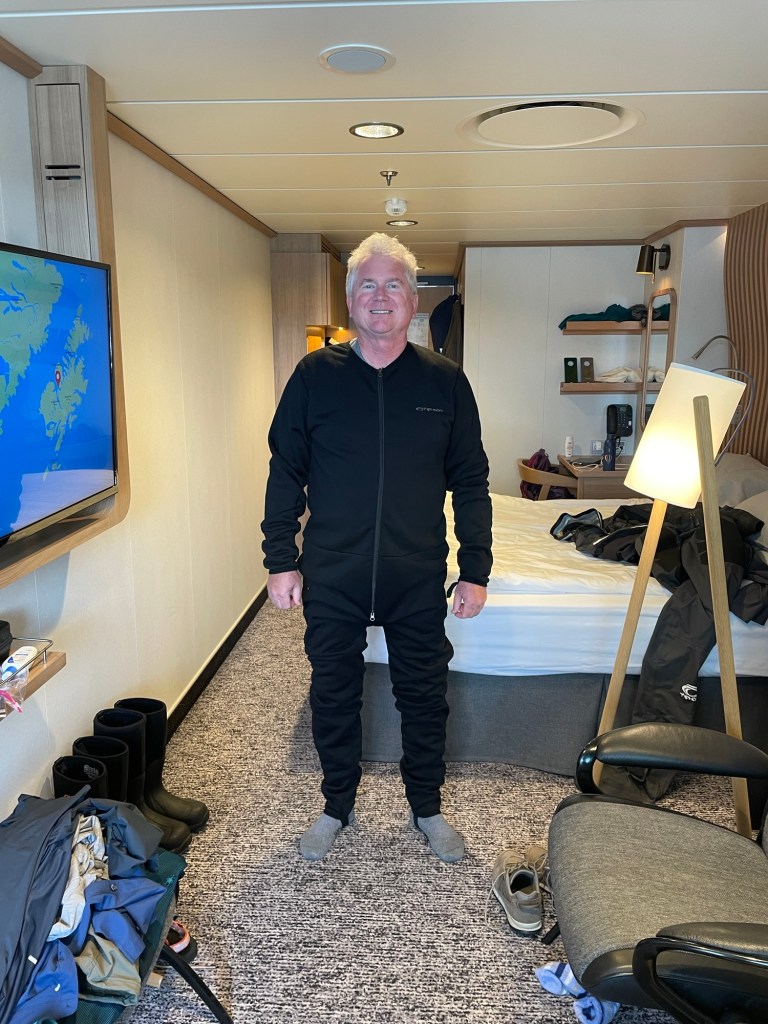
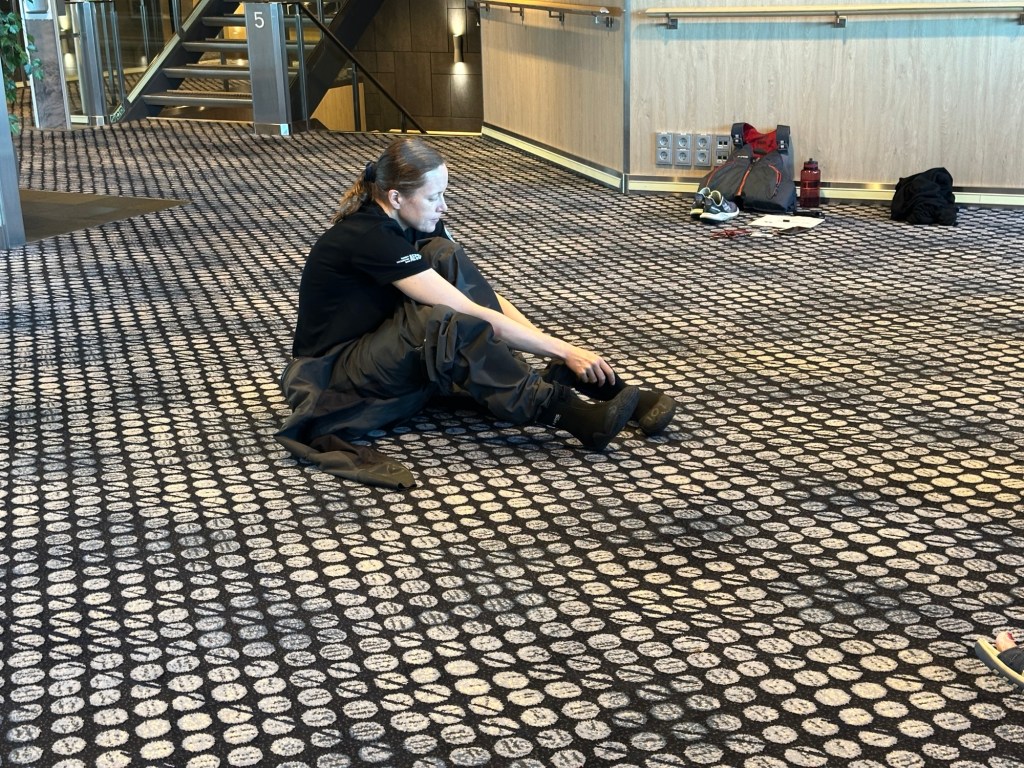
In the kayak launching area adjacent to the pit, 16 passengers donned their gear. After zipping up the dry suit (inner and outer zippers) with help from crew, the final step was to burp the suit. Putting one hand to vent the latex around your neck, you do a deep squat to expel the air trapped in the suit. A lot of air escapes!

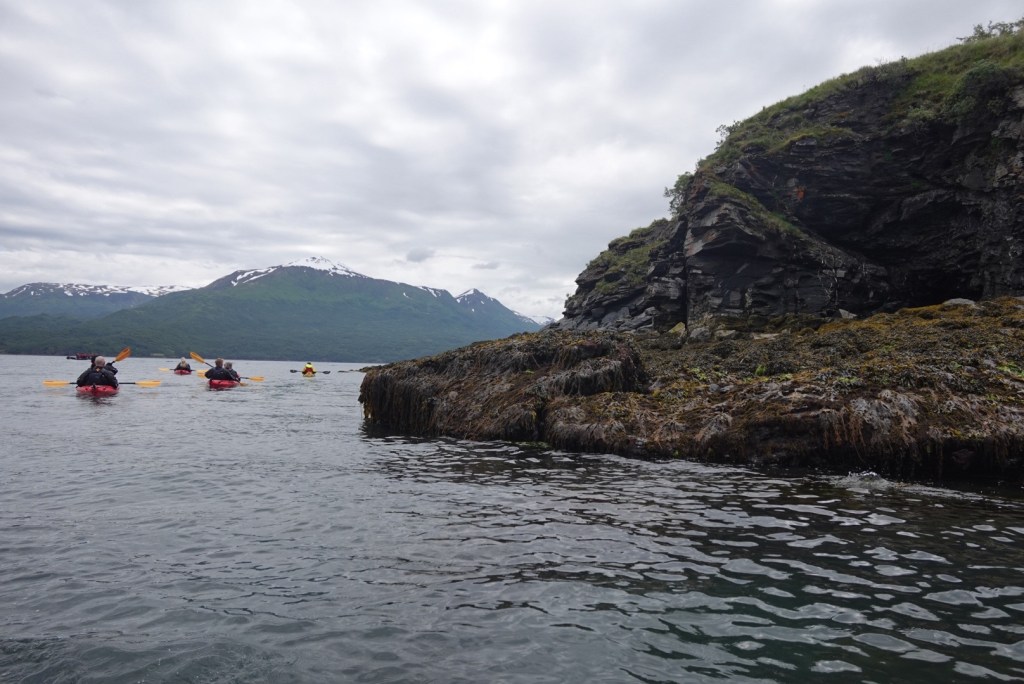
The two-person kayaks are laid out inside the ship and each pair of passengers get fitted to the seats, with crew members adjusting the position of foot pegs or rudder pedals. The “captain” sits in the rear and operates the rudder and the “general manager” sits in front. Brian partnered with a young woman from China; it was agreed that Brian is captain. Brian had operated the rudder on a sea kayak before in New Zealand.
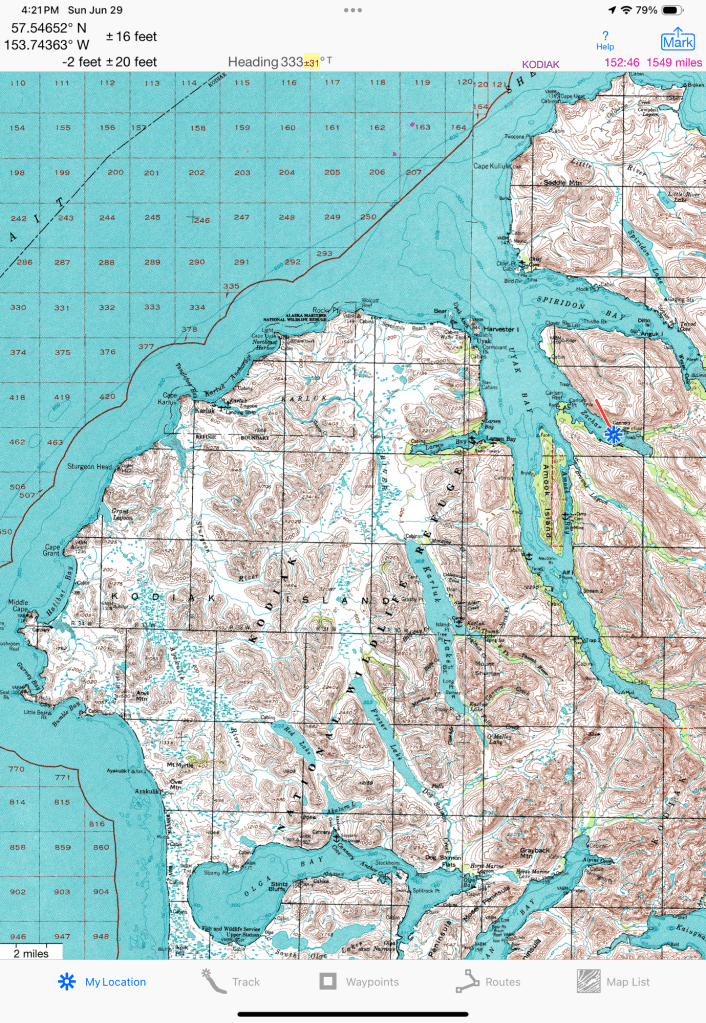
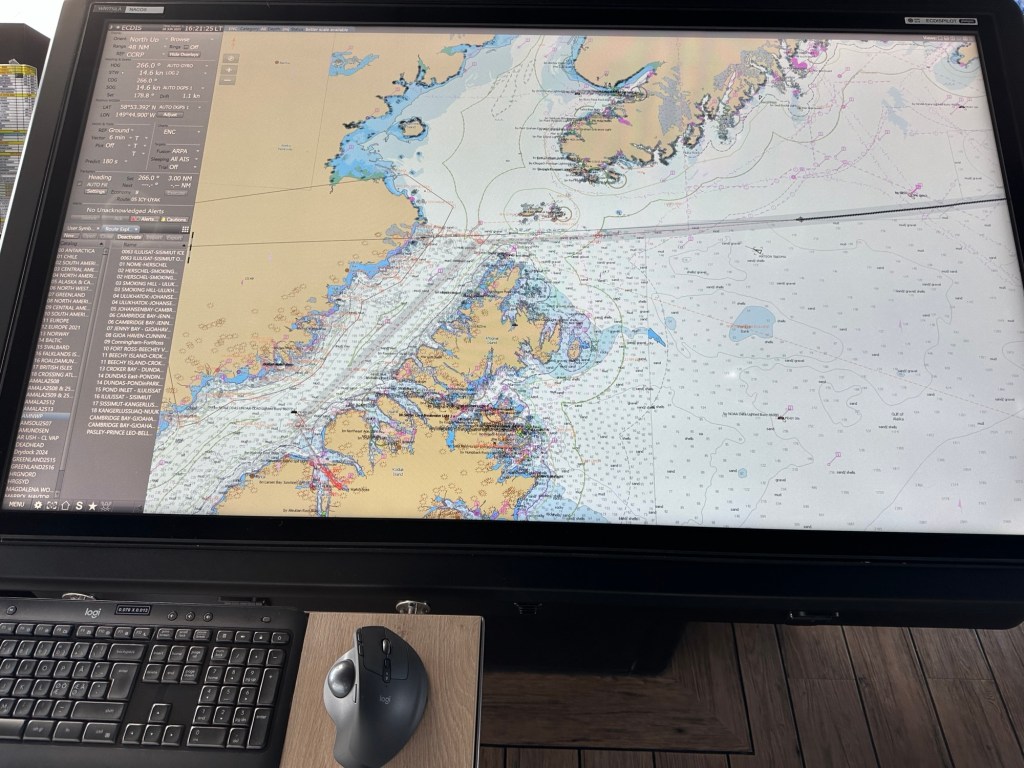
Map showing position of our ship in an arm of Uyak Bay on Kodiak Island

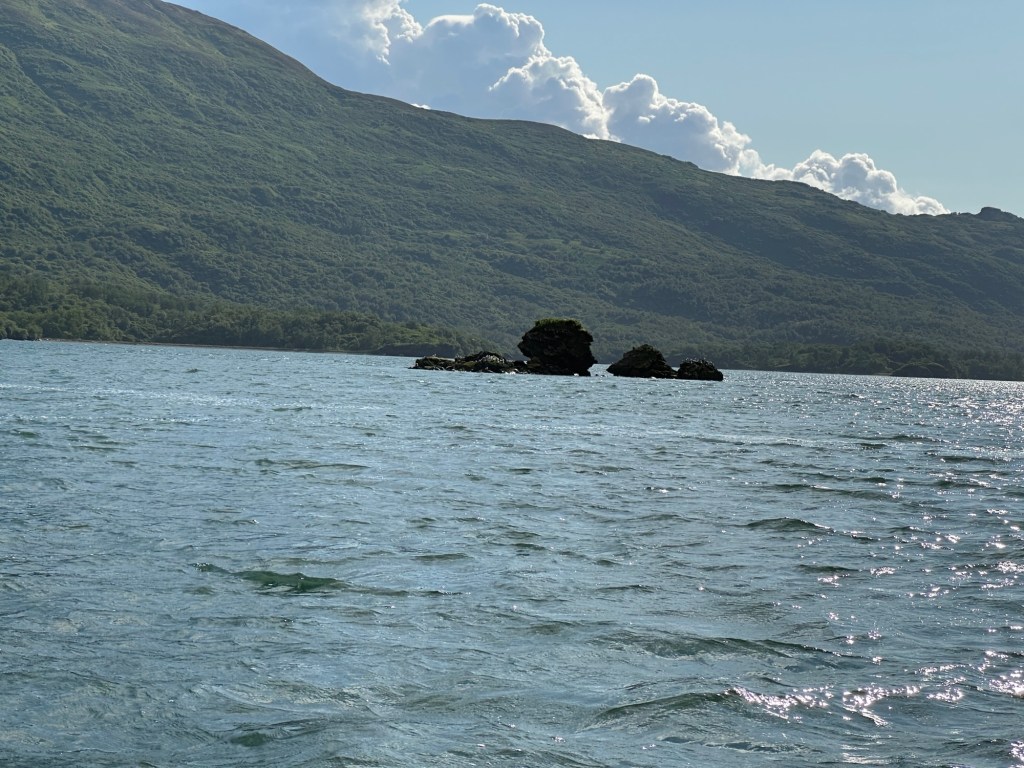
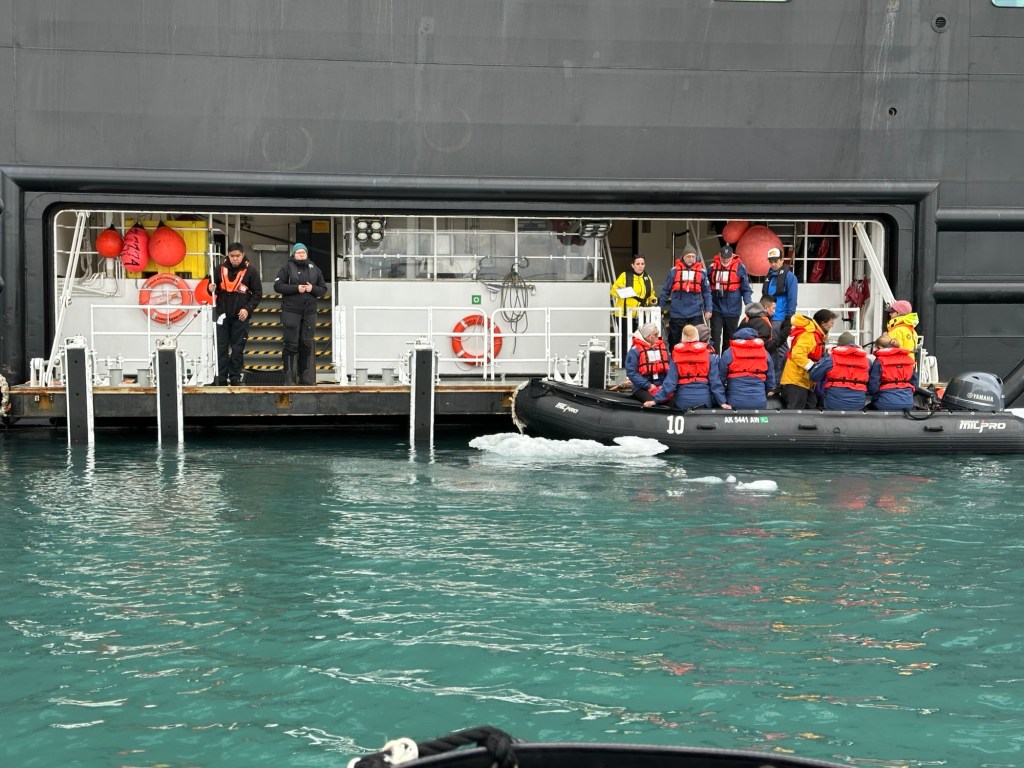
Later that afternoon, both of us went on a Zodiac tour of the same bay. Not only are the Zodiacs faster, but the tide had risen. We were able to go deep into the bay. And, sun shone the entire trip. Our drivers/naturalists were thrilled with the unusual conditions.

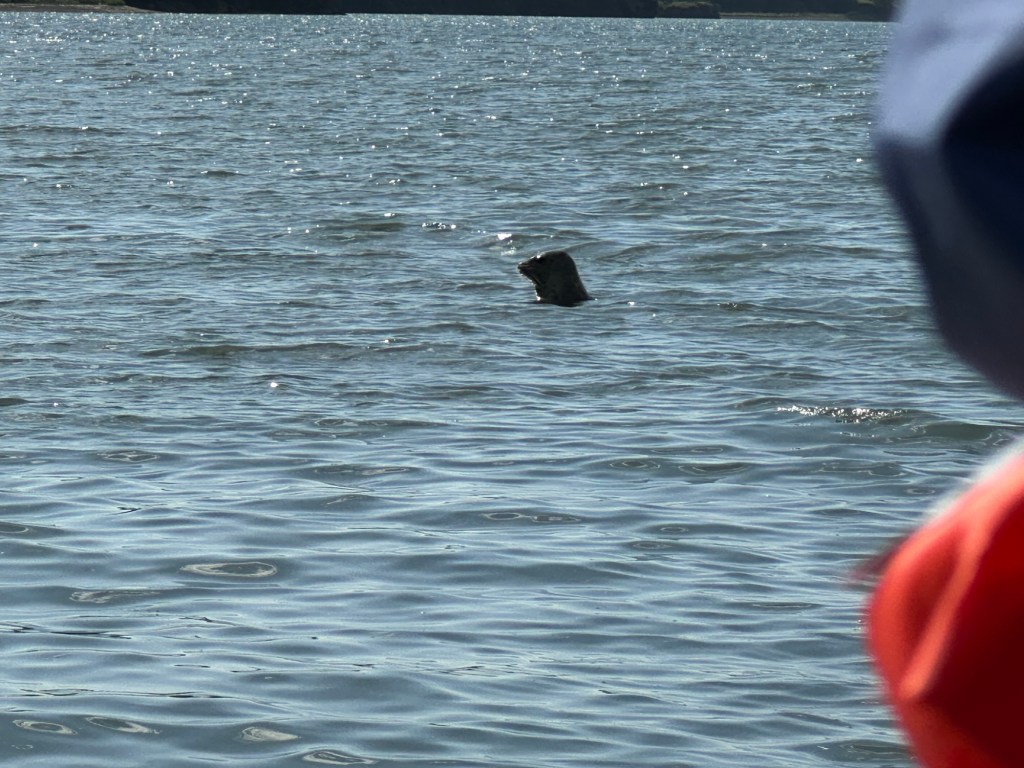
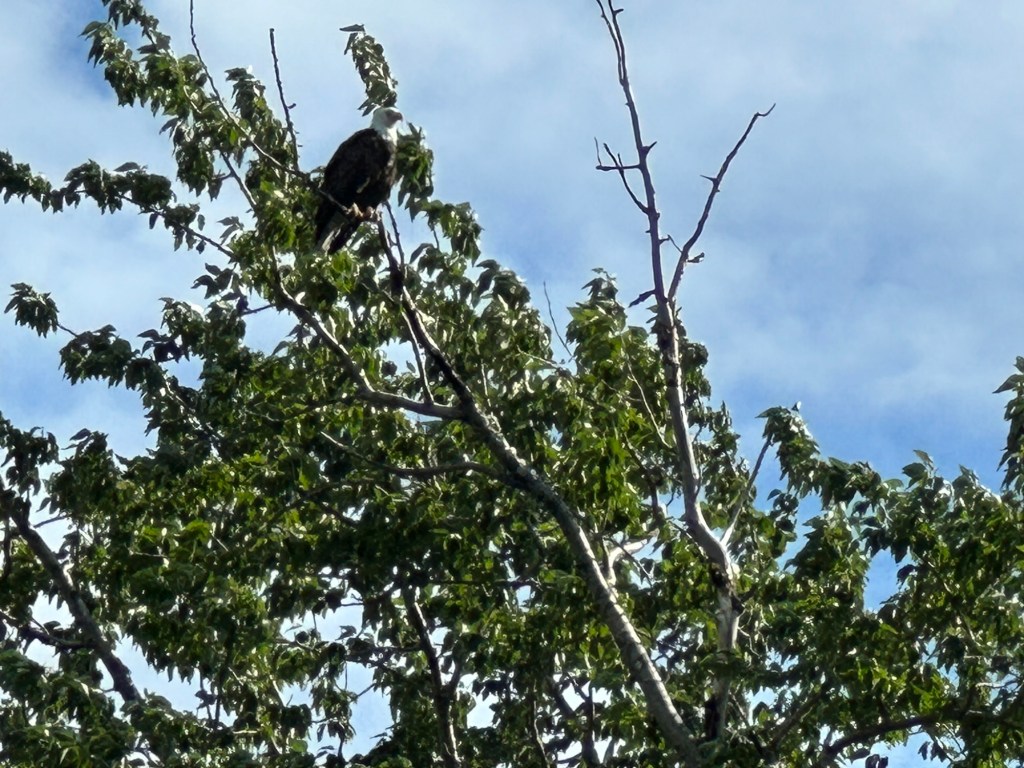
We saw a lot of sea otters and harbor seals. No bears. Interesting birds dove for food or soared adjacent to the shoreline. We thought maybe three types of white birds? A few salmon jumped above the water; we didn’t know why. Much later, Brian saw a salmon jump about seven times in a row. We guess that the fish jump for bugs to eat.
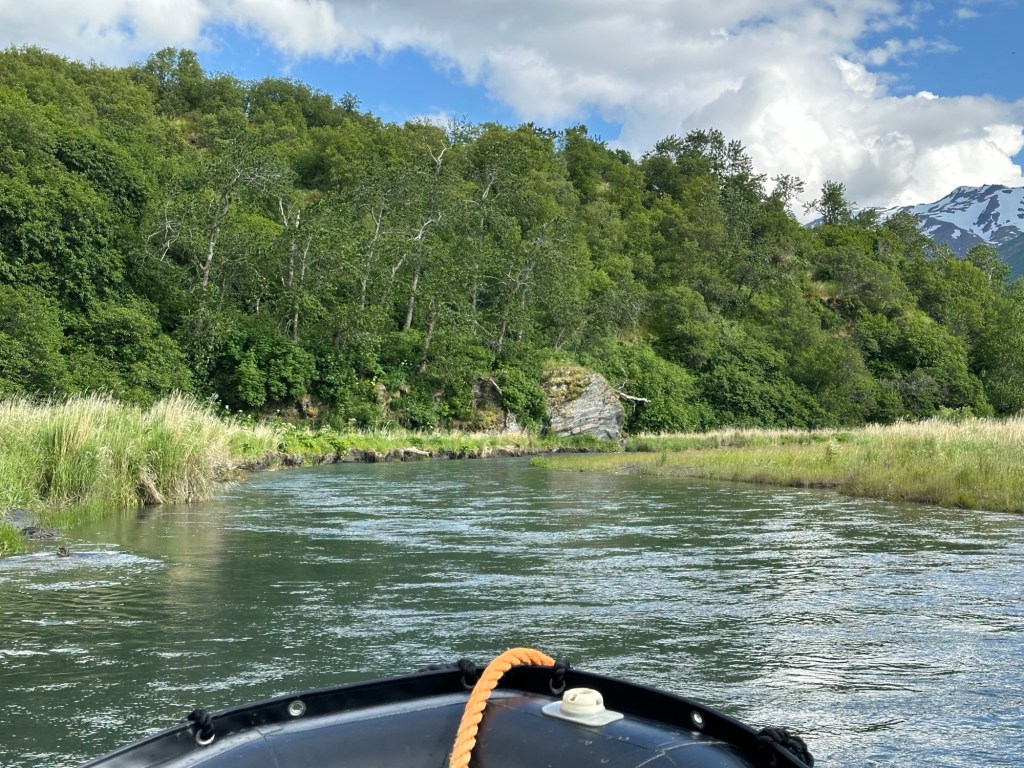
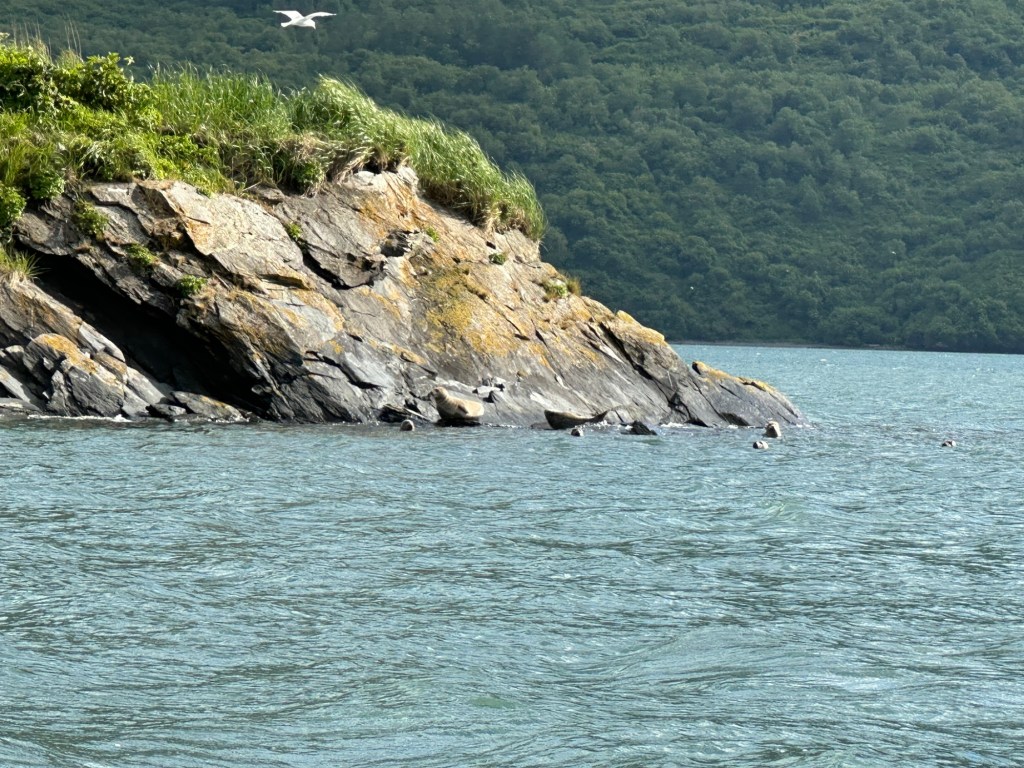
It was good to ride in a Zodiak with only half the usual number of passengers.

Gulf of Alaska on June 28

This morning we woke to blue skies, the first we’d seen since boarding the cruise ship. Of course it’s a sea day.

I felt ignorant about Alaska before we arrived. Even though I saw the multitude of islands on the map, I didn’t understand. The islands control the culture, in a weird way similar to our visit to Sweden. But here, unlike Sweden, the islands are steep-sided, not easy to land in many places.

Geologically, Alaska consists of tectonic terrains, smashed together over millions of years to form the mountains and other landscapes. When we visited Wrangell, we remembered that one of these terrains is called Wrangellia! Fun fact!

The undefined Inside Passage had been an easy oceanic experience, smooth as can be. Crossing the Gulf of Alaska has more waves, but is also fairly smooth.

The excursions are well organized. The guests, as we are called, are collected into named groups, the mighty whale, majestic eagle, sleek seal. We are in the group of cute, mischievous sea otters. I feel right at home!

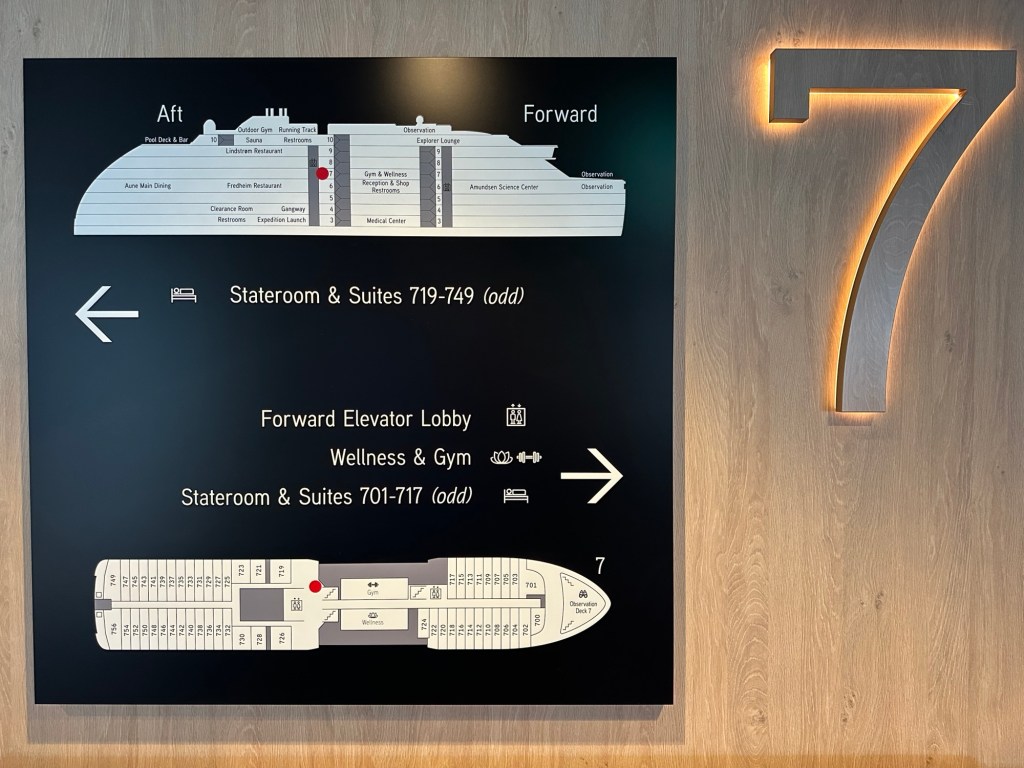
On deck six, one below our cabin, are the active rooms including art and science. In the art lab on our first day, Clare painted our water bottles to distinguish them. This helped when she left it somewhere but got the right one back.

The Science Center has libraries, maps, and various equipment and specimens. Some presentations are given here, but most lectures are given in the Lecture Hall just beyond the Science Center; these presentations can be streamed to the TV screens in the cabins.
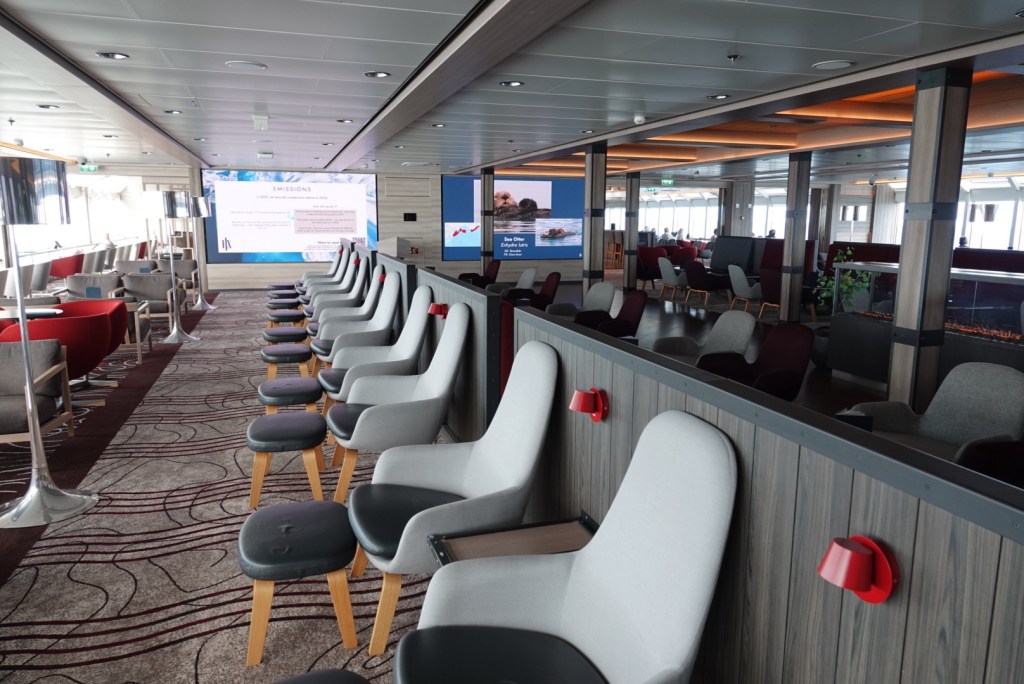
The Explorer Lounge on Deck 10 is also used for presentations; the bar is open almost all day and night.
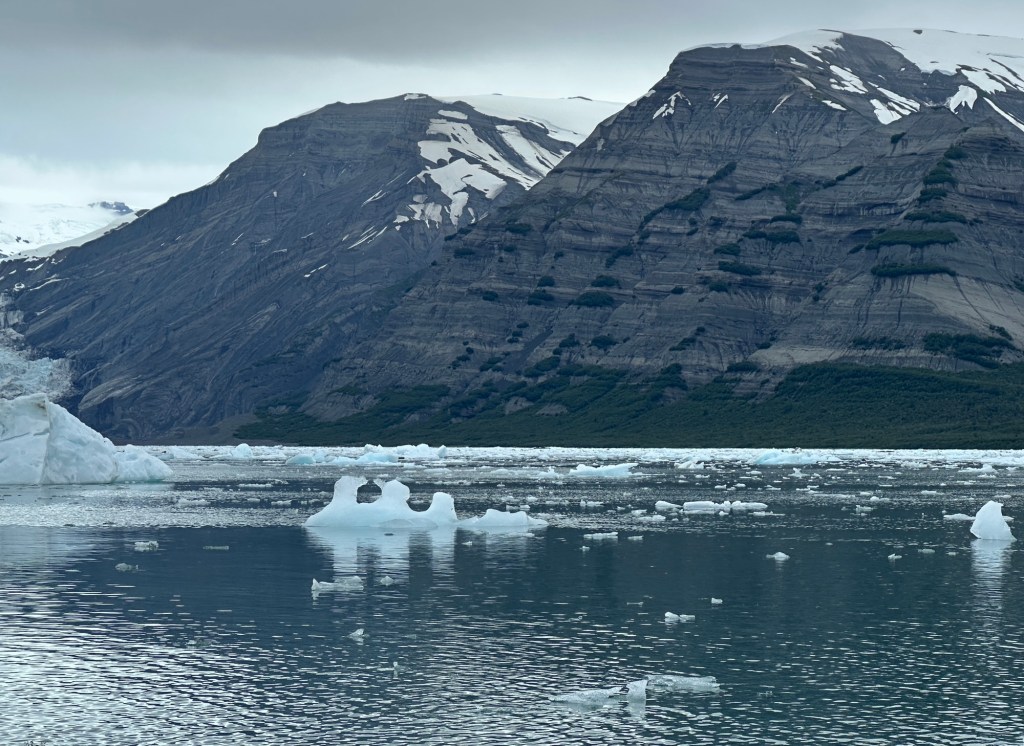
Nice sunny day going west across the Gulf of Alaska

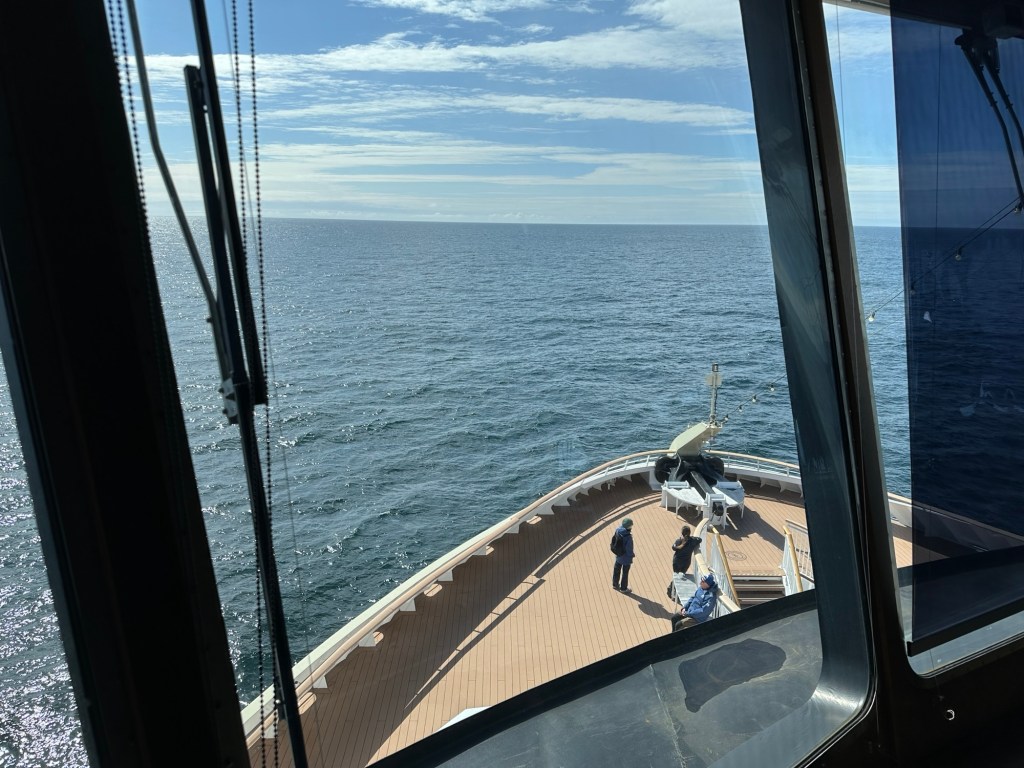
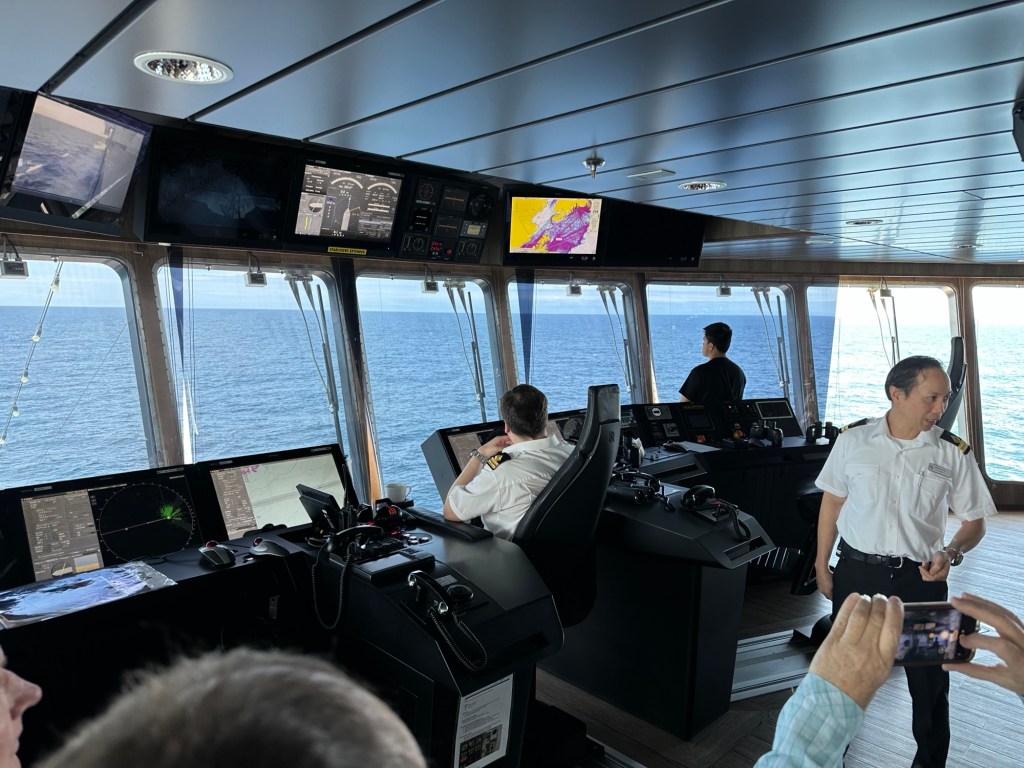
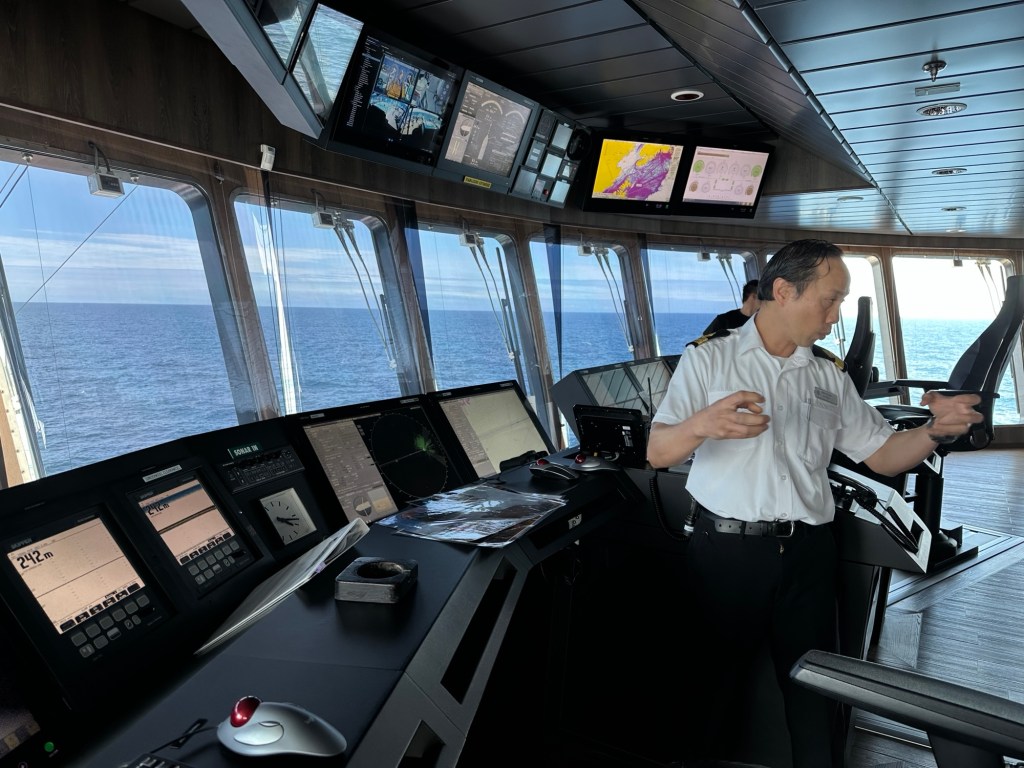
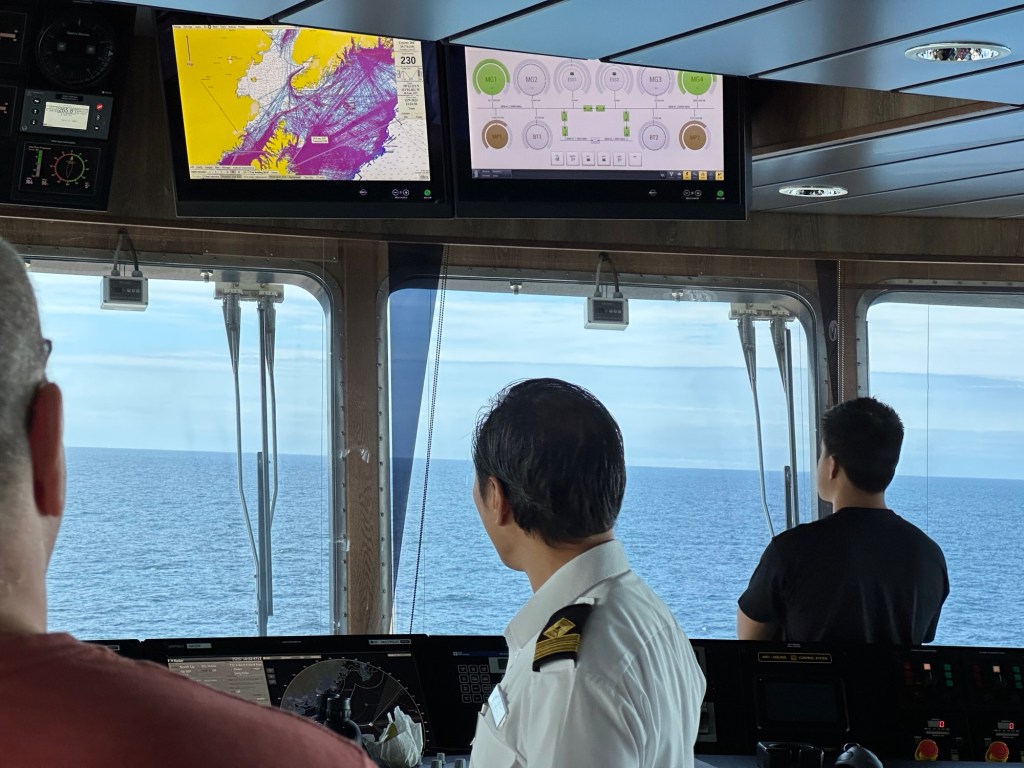
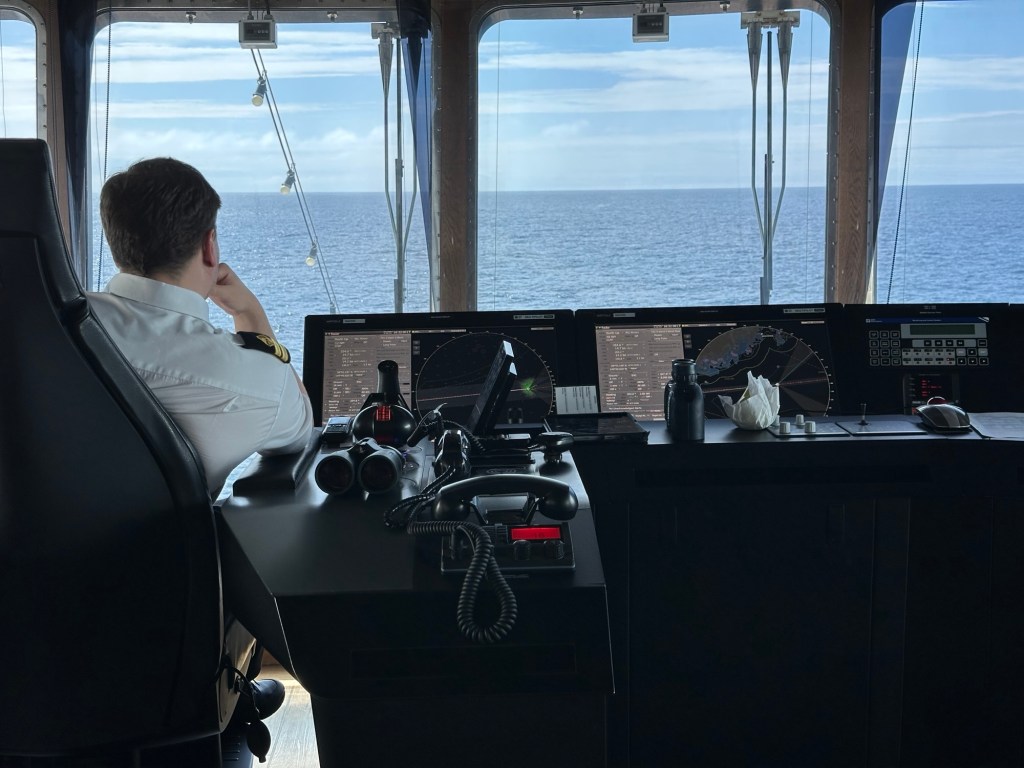
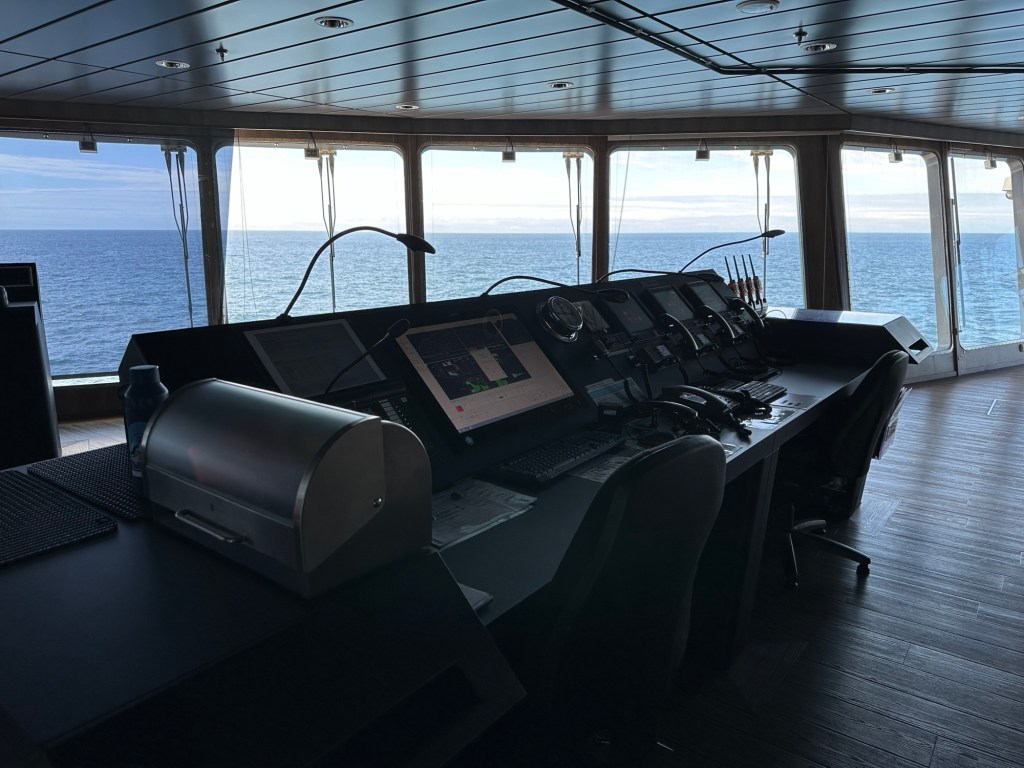
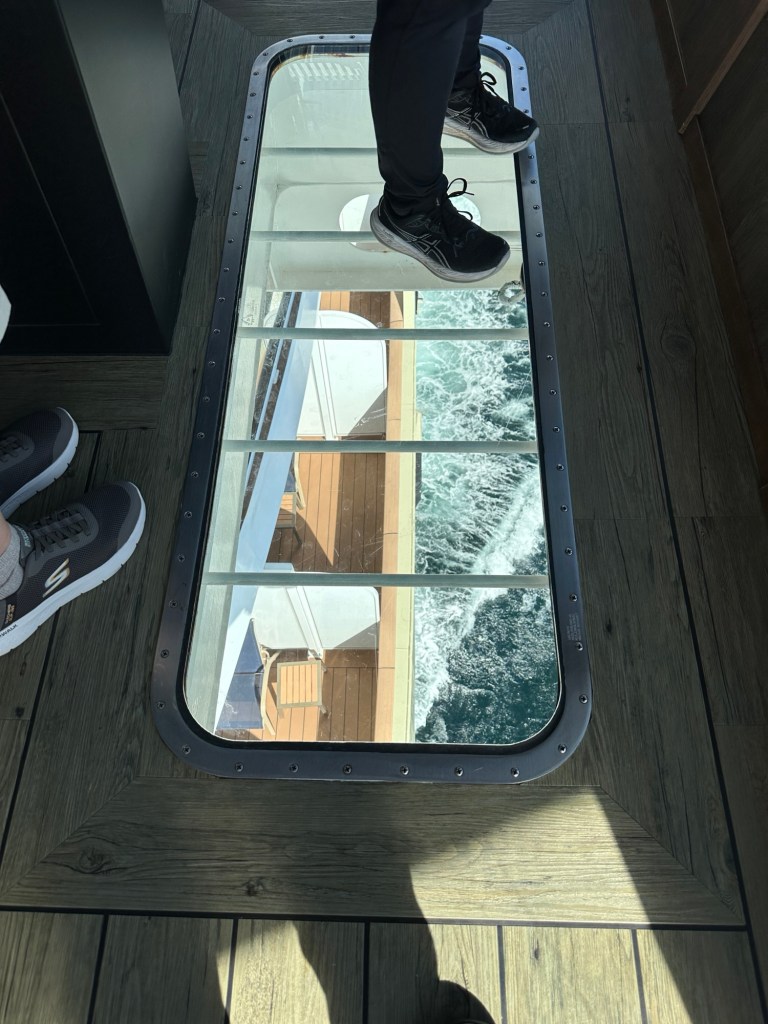
In the afternoon, our group (sea otters) got invited to the bridge for a brief tour.
The best view on the ship is from the bridge!

Icy Bay on June 27

We woke to fog, with islands dimly visible. It’s a long sea day, so the organizers planned lots of lectures and activities to keep us informed. Our excursion isn’t until late in the afternoon.

As we head north, snow line gets closer to sea level and the mountains seem higher, although that might be more a function of distance and visibility.

In the first lecture, Lancy spoke about sea birds, with cute cartoons emphasizing how to distinguish related birds in the awk clad. He named the “little brown bird” that our zodiac driver was so excited about the other day. The Marbled Murrelet is rare, in part because it nests in old-growth forests, which are disappearing from the area. They dive deeply for food and fly through the water like penguins.

After the bird presentation, we went to the hot tub and sauna. In the tub, it was fun to watch the effect of the ocean waves on the adjacent swimming pool water. It’s actually fun walking around, trying to go in a straight line.

Julian gave a presentation about glaciers, with examples from all over the world. He used clips from a video called Chasing Ice showing ice calving that Clare used when teaching at the Community College of Denver! She was proud to have chosen so well.

The next presentation told of tides – more than I ever knew. Again, well done and informative. Near Anchorage, adventurous folks surf the tidal boar.

Then we learned that the ship had made good time, and our excursion into Icy Bay would be earlier. Hooray!

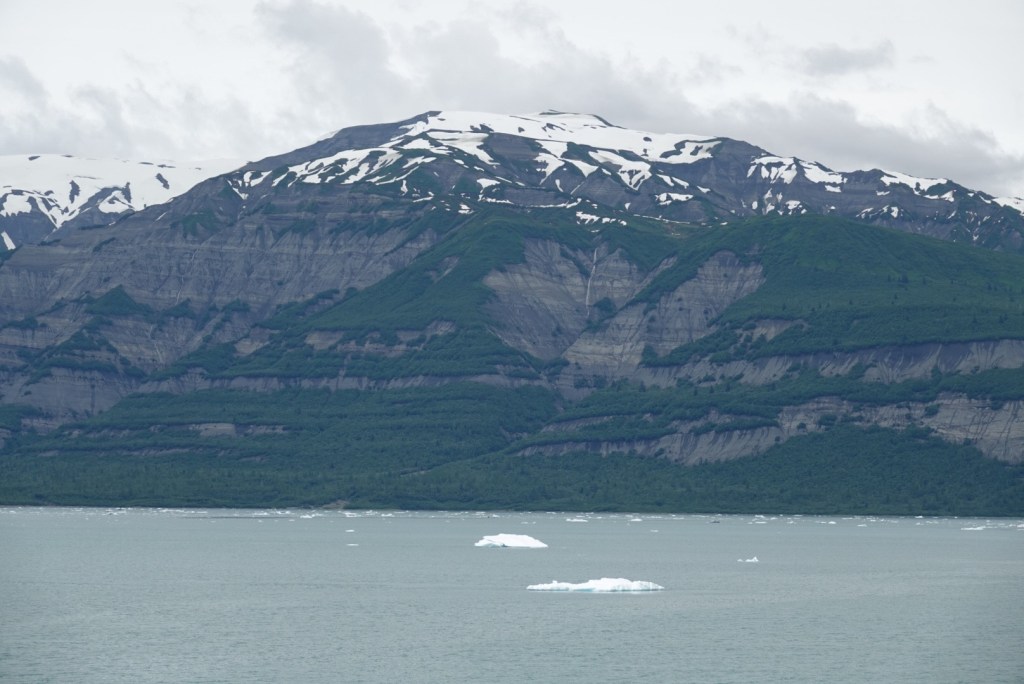
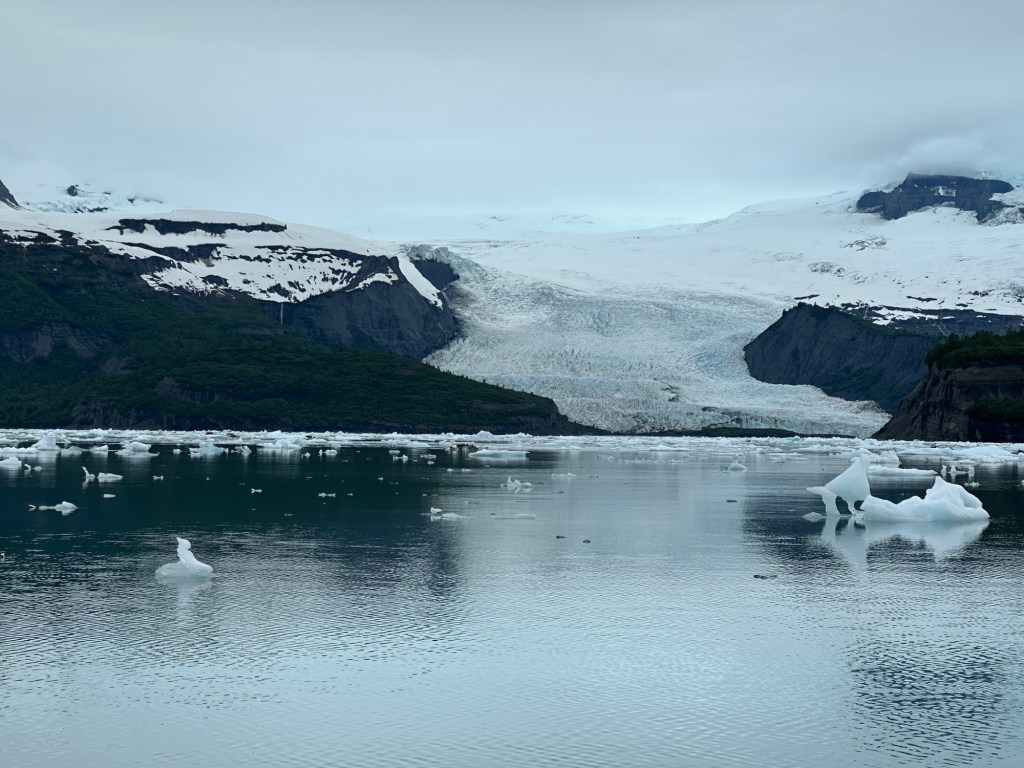
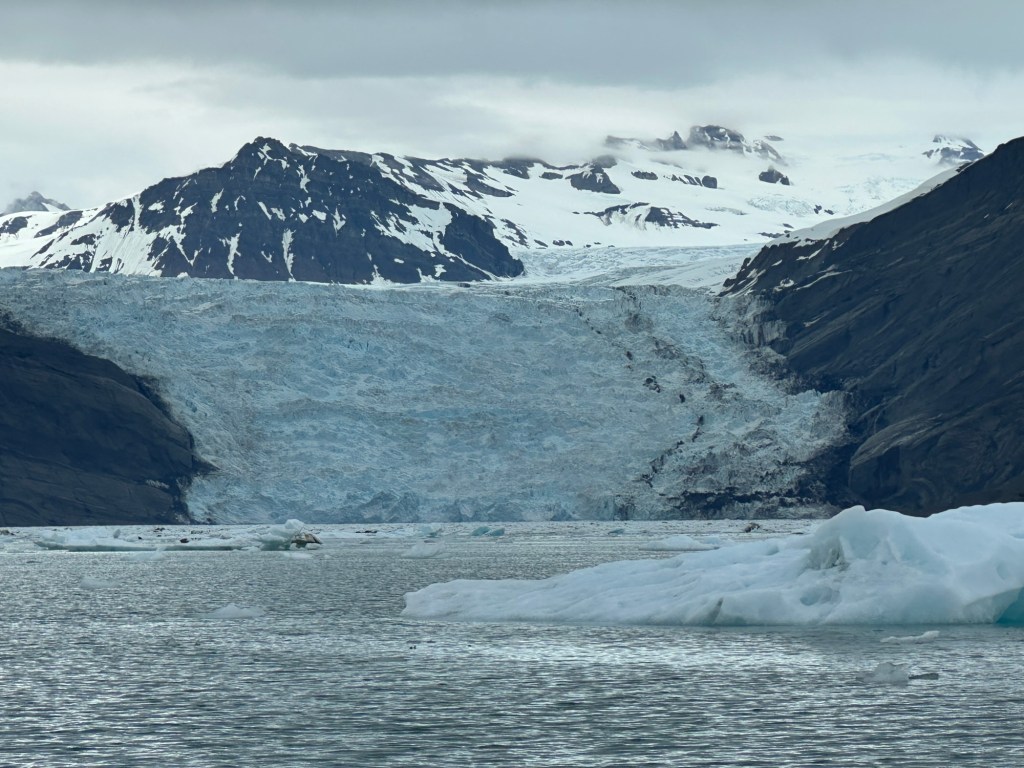
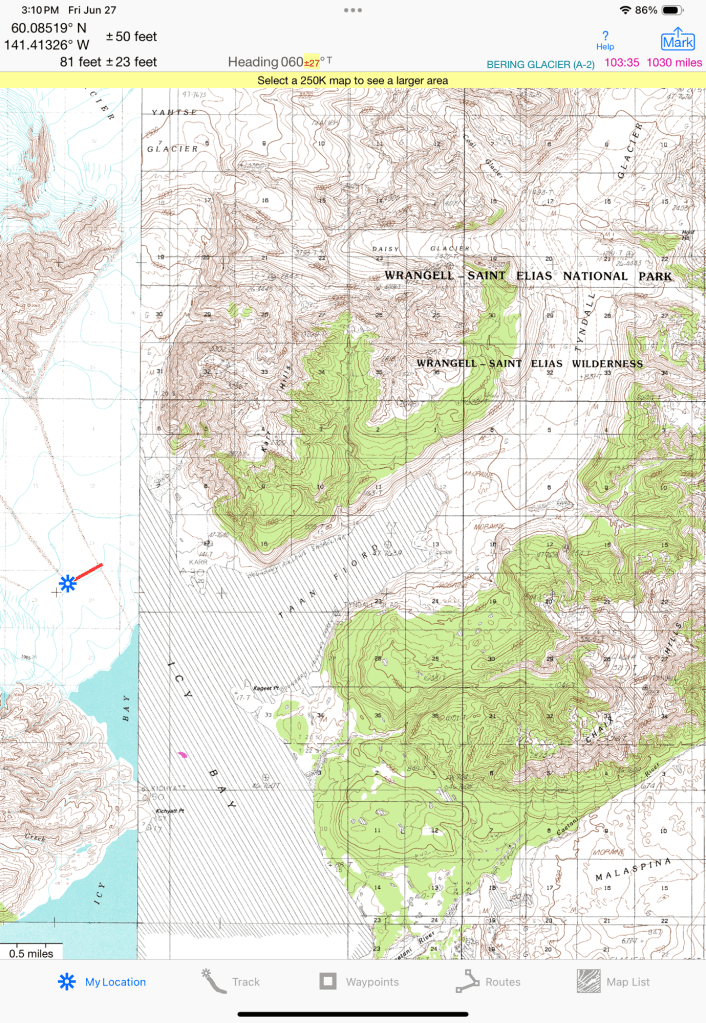
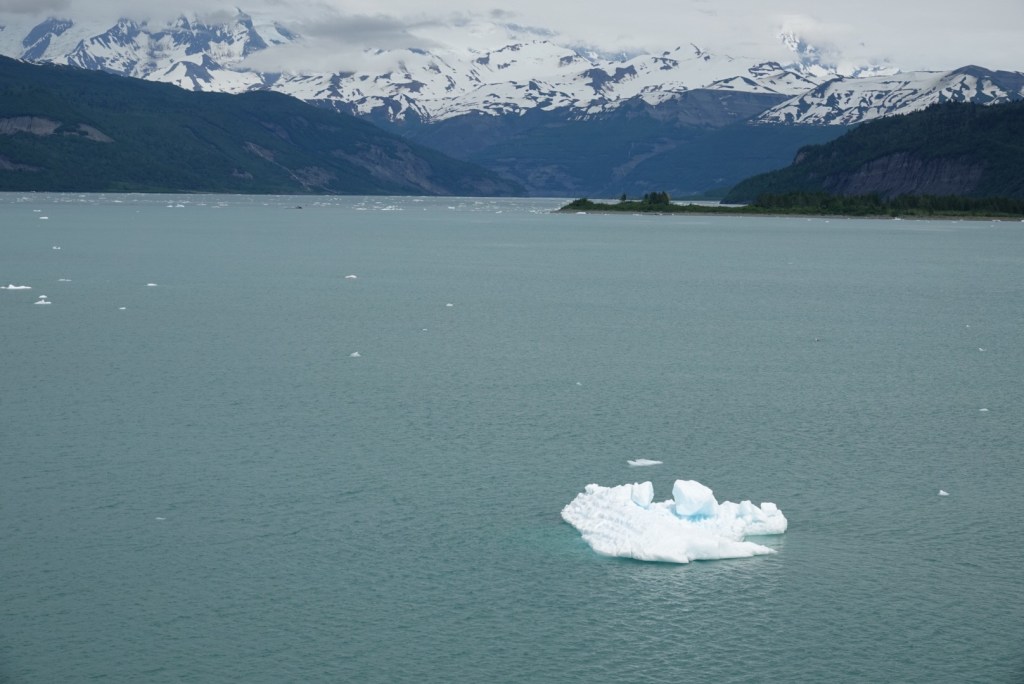
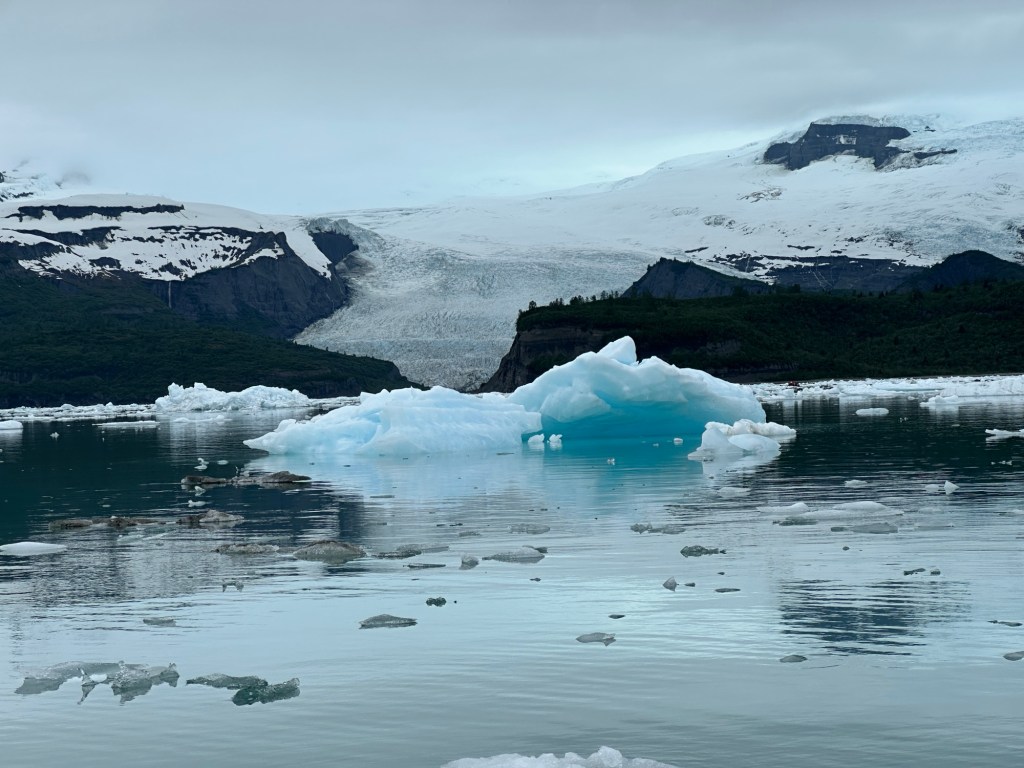
Icy bay is wonderful, beautiful, exciting and a little sad. Sad mostly because of how transient this phenomenon must be, as the glaciers retreat into oblivion. The spot where our cruise ship anchored was under ice just fifty years ago

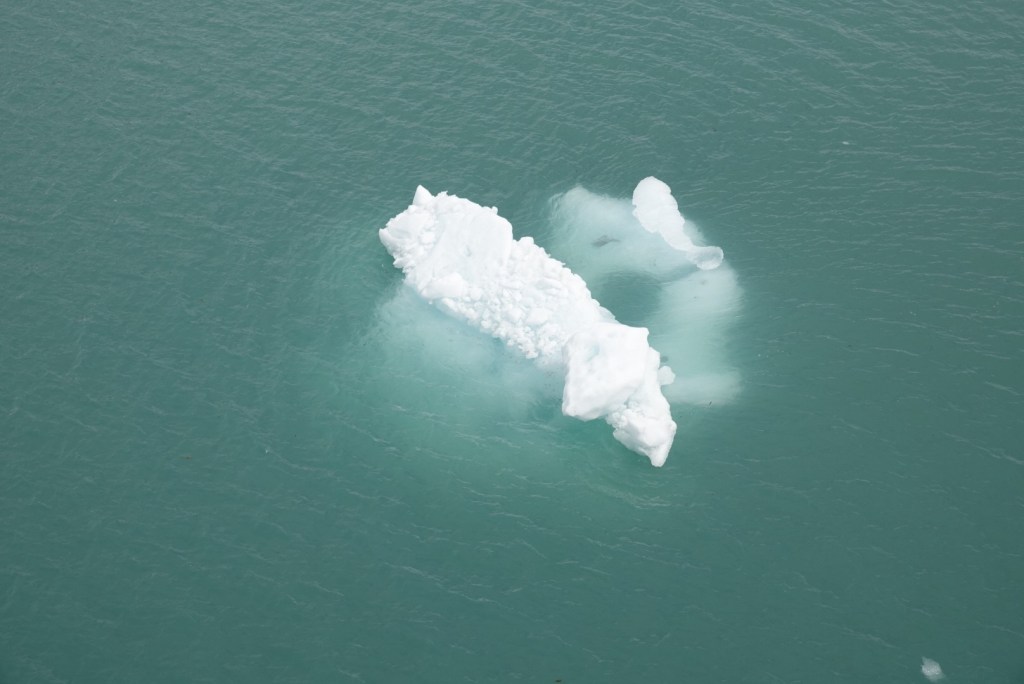
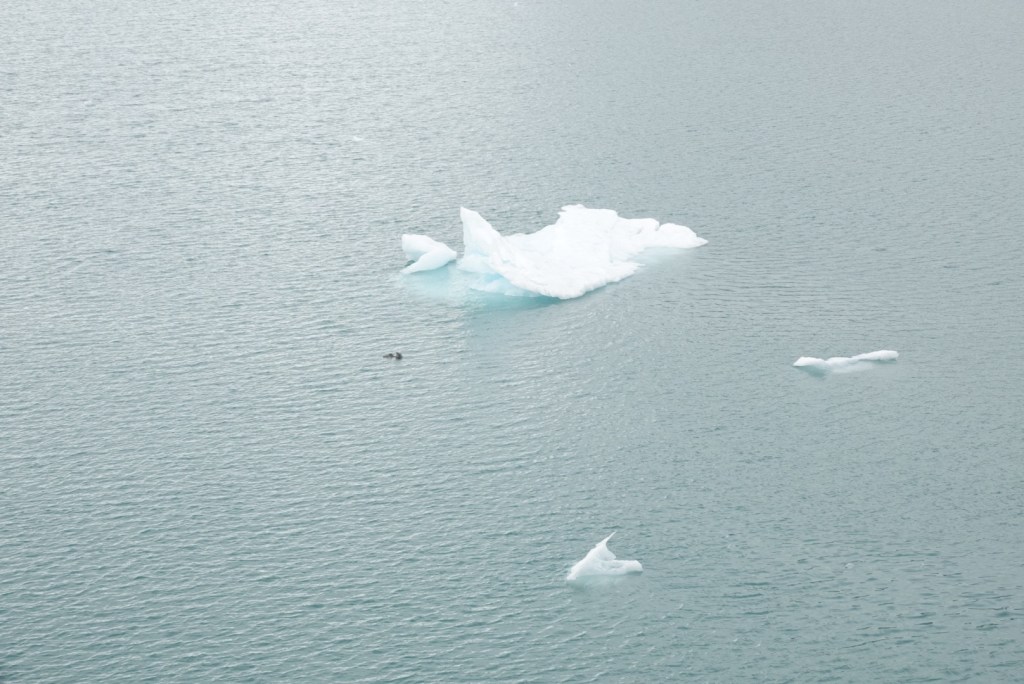
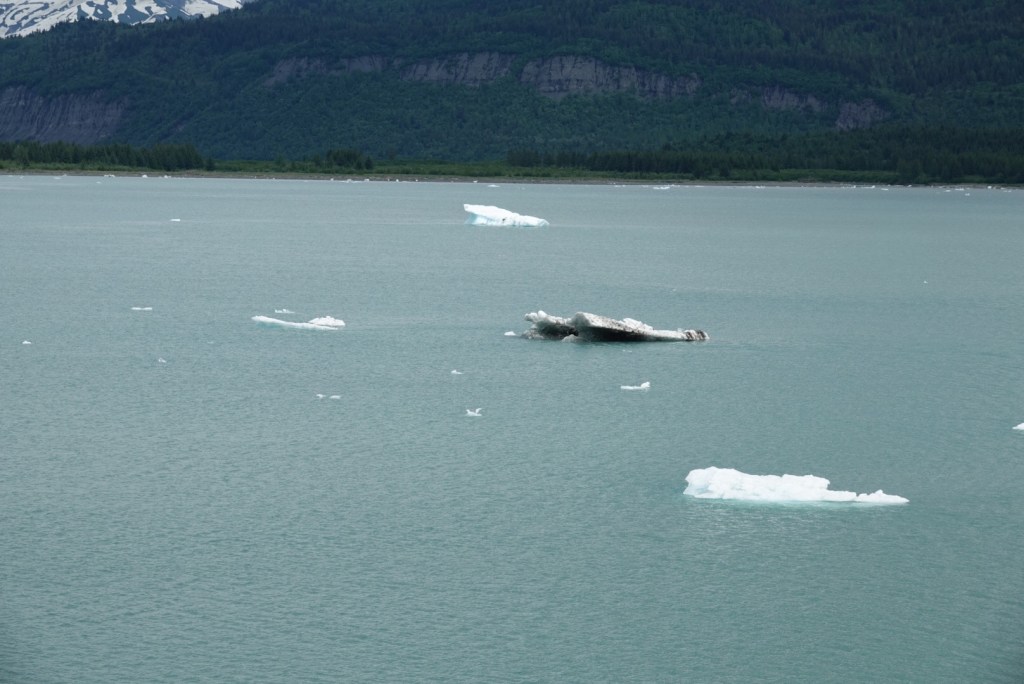
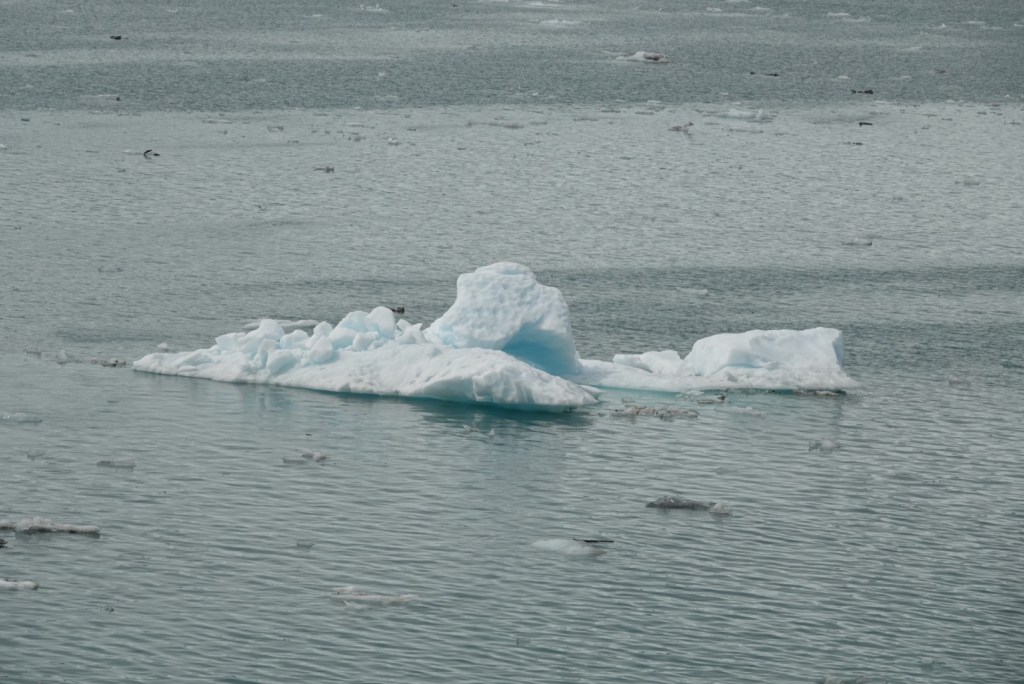
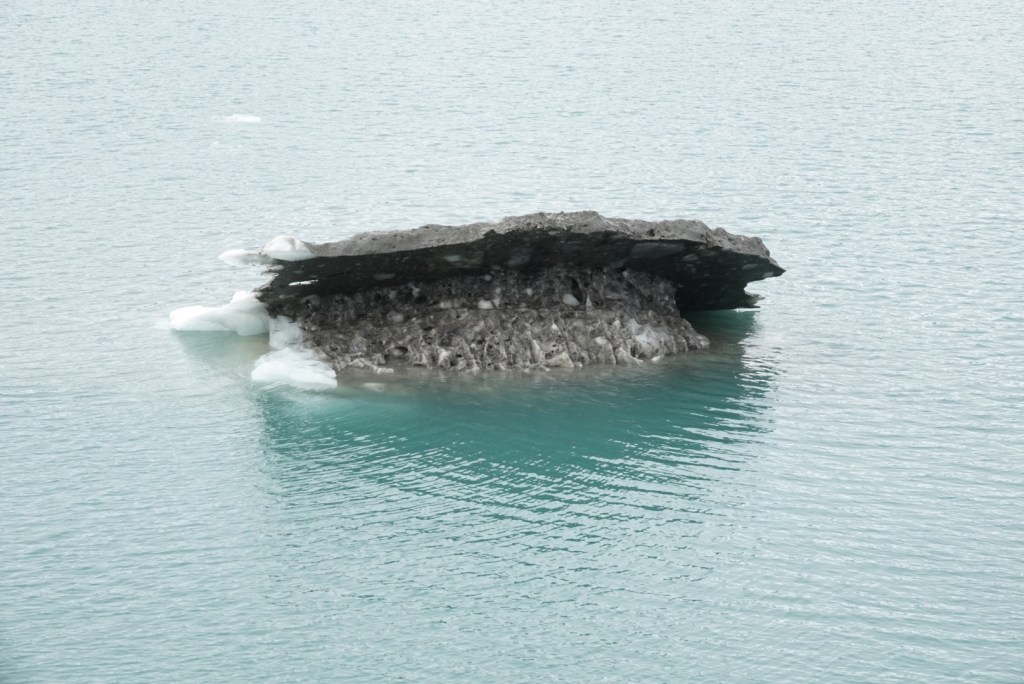
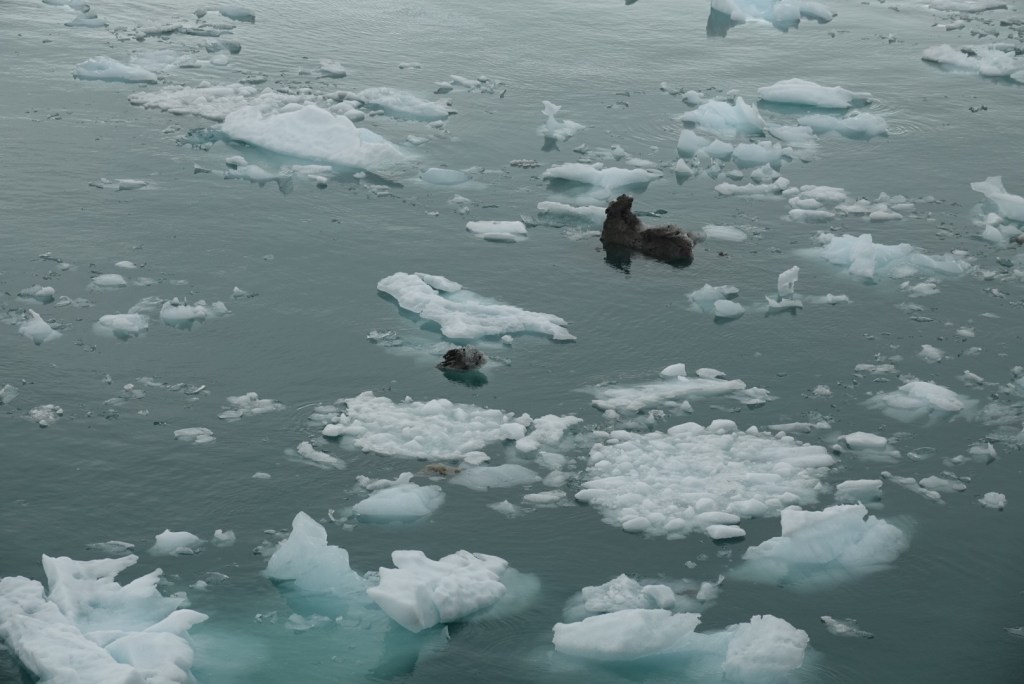
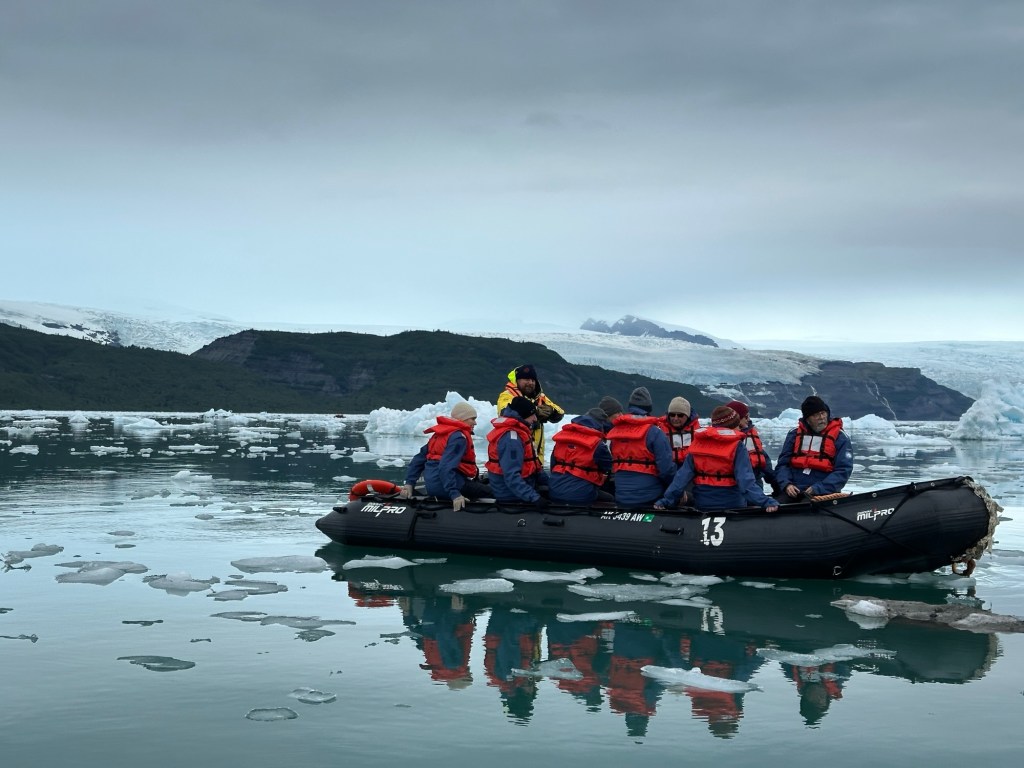
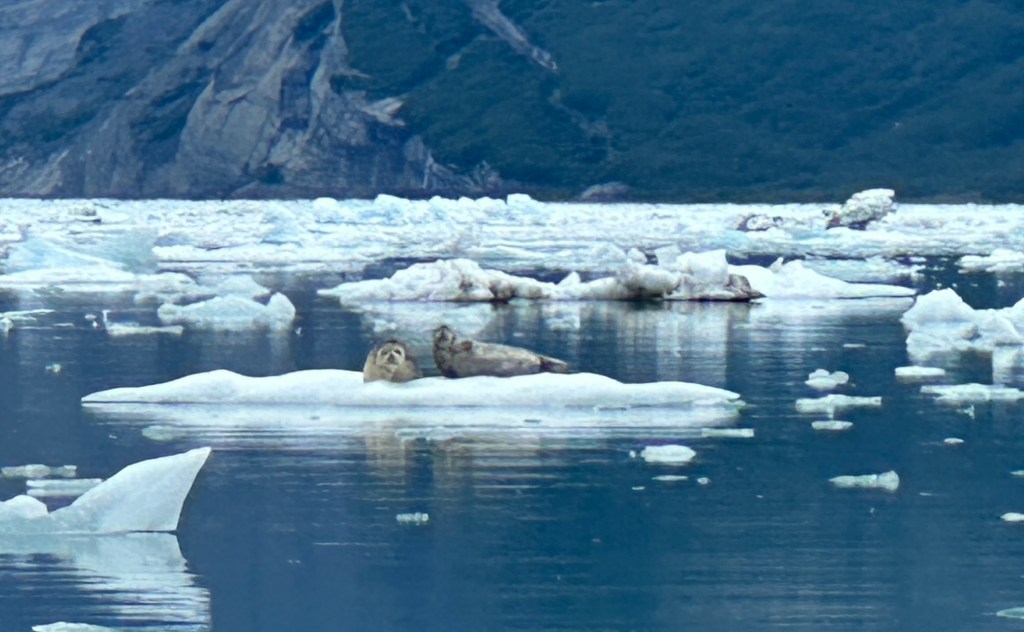
Our Zodiac trip was more vocal, interactive than the last one, probably because of the lack of rain (thankfully!). We passengers delighted in naming the floating ice bits, like one does with interesting shaped clouds. We also competed in seal sightings. The Zodiac captain, Kai from Hawaii, said our group saw more than any of his previous groups.

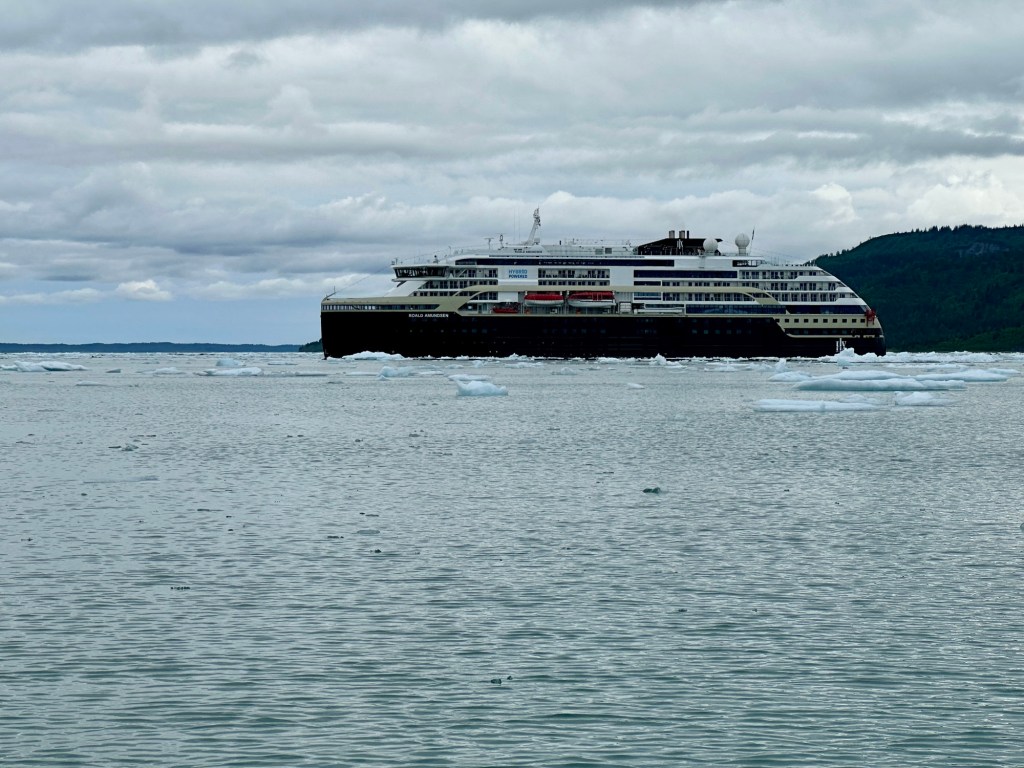
Our ship appears small in the expanse of Icy Bay.
Cruising through ice

Sitka, Alaska on June 26

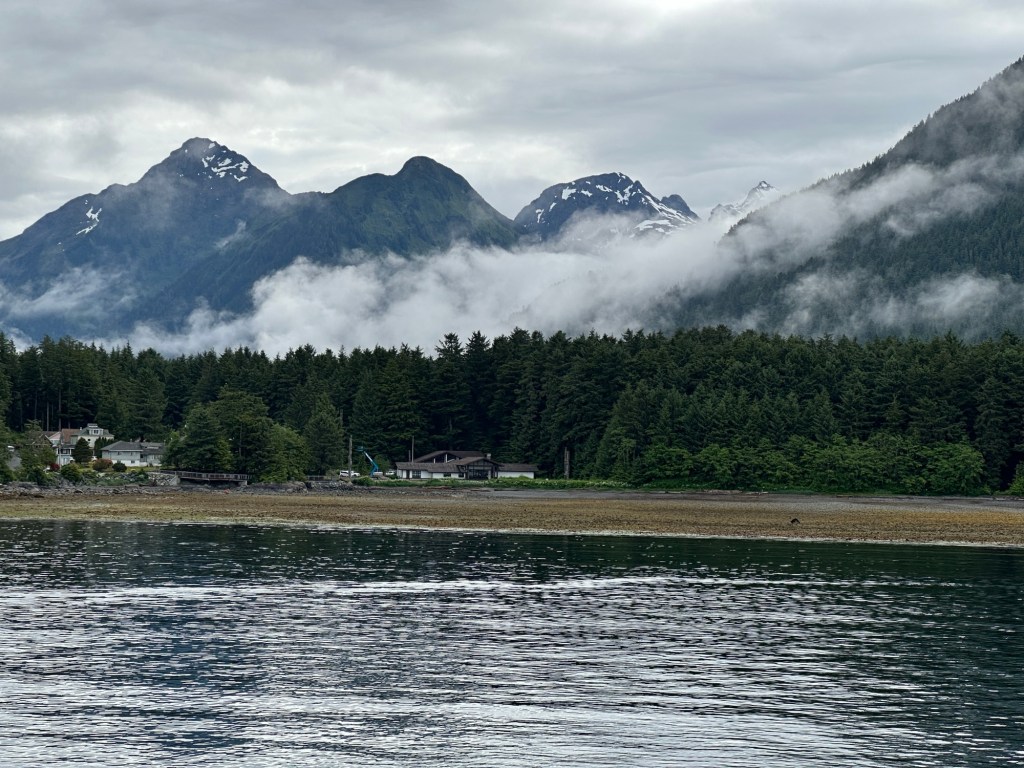
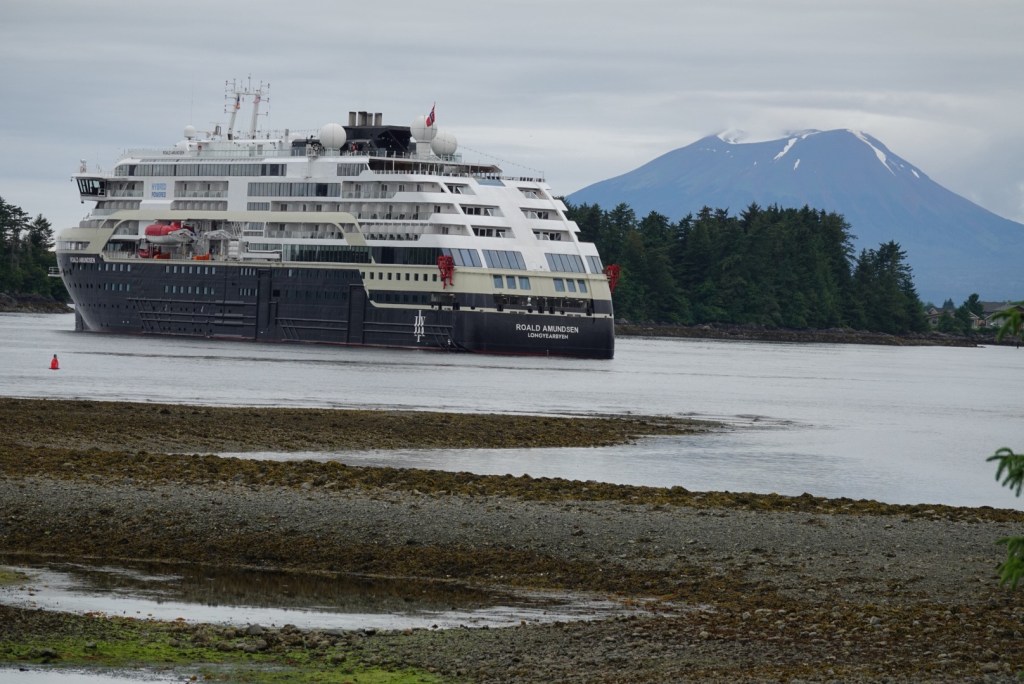
We woke to steep, snow-capped mountains rising above the sea. The air was clear but the sky cloudy. The ship rolled a bit during the night, making us appreciate the smooth seas of the inside passage.

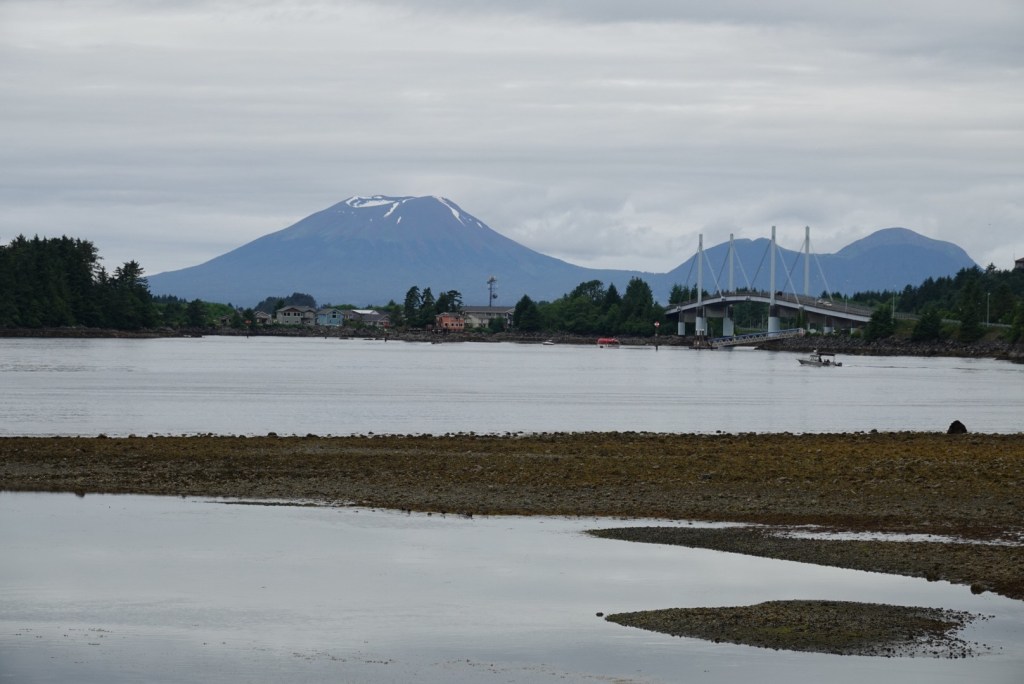
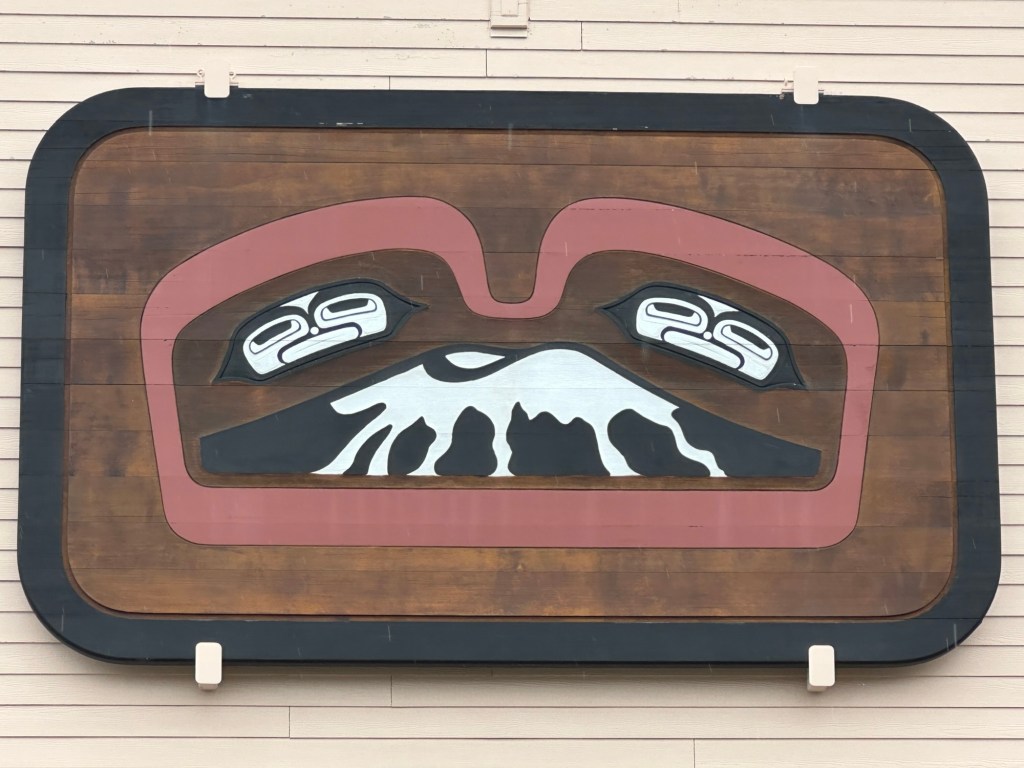
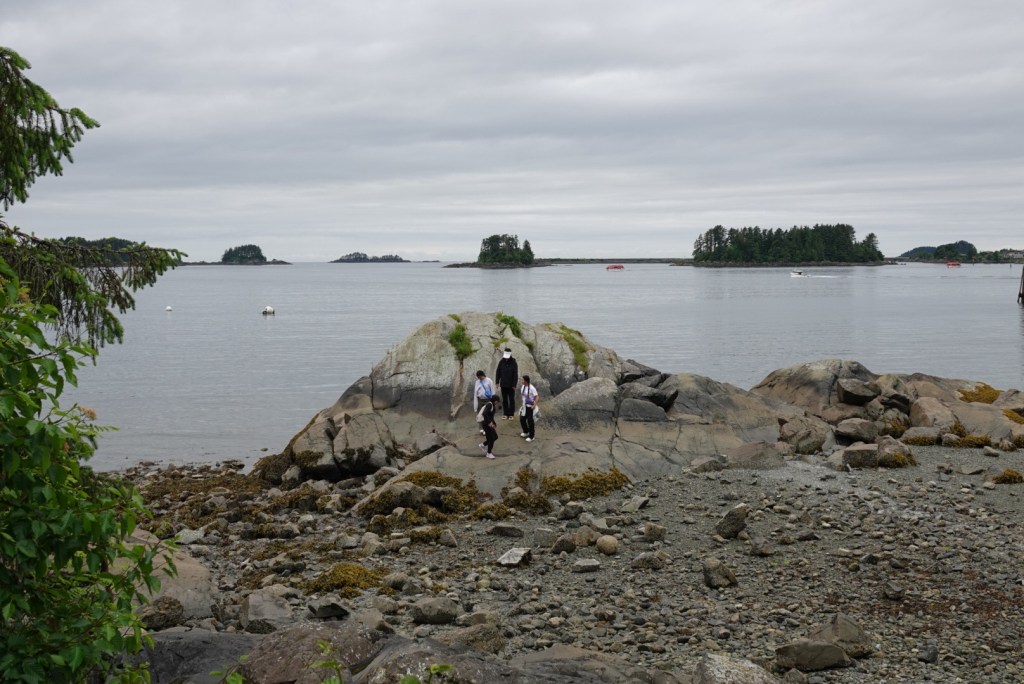
The first thing noticeable on the approach to Sitka by sea is the large number of islands in the bay adjacent to Baranof Island. The second thing is the sharp mountain peaks with snow on them. We watched the mountains go by during breakfast.

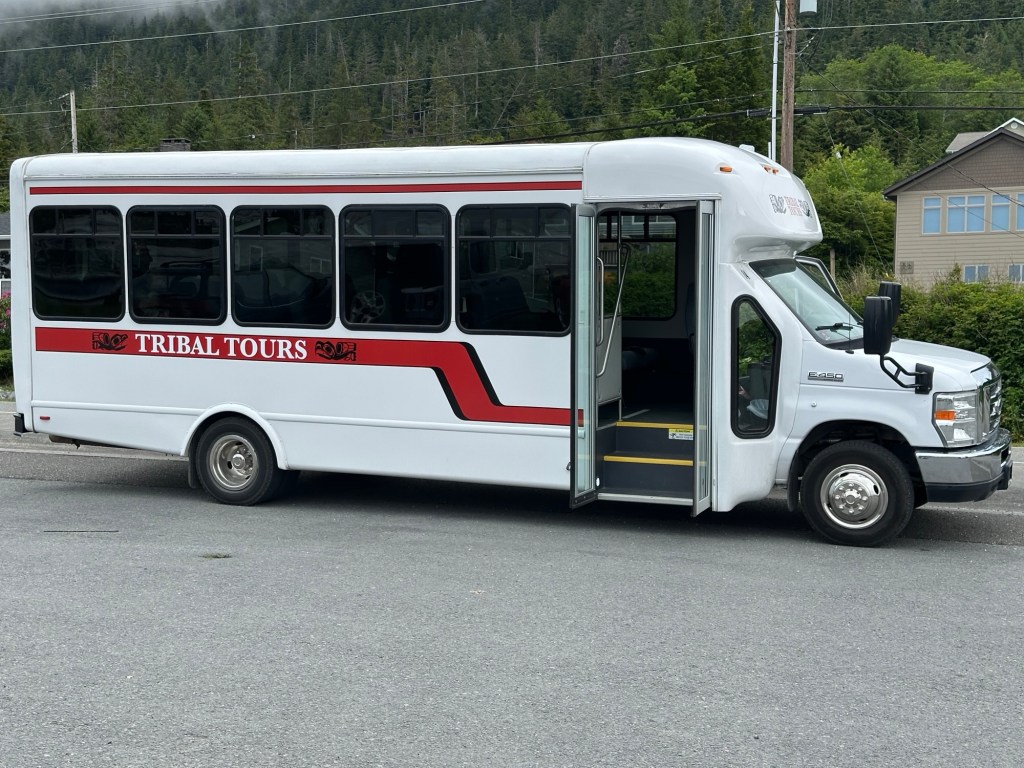
We went to shore on a tender again, meaning we didn’t have to bring life jackets. Then we met our bus driver and guide for our adventure.

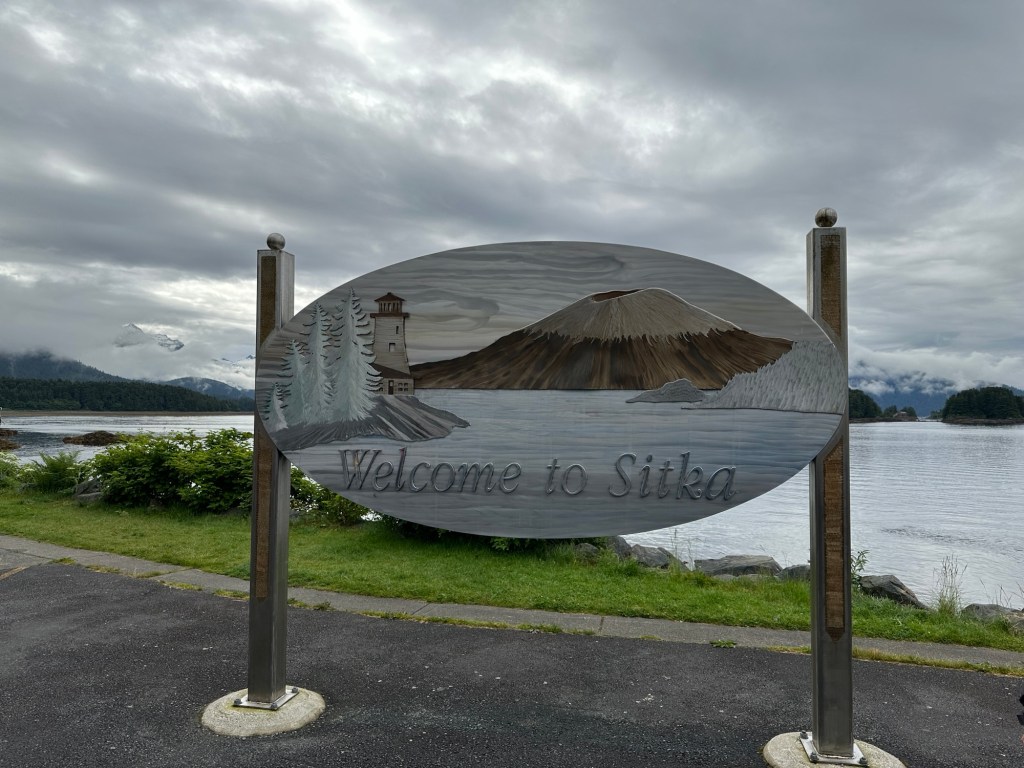
Our excursion started early and lasted all morning. Owen guided a group of 21 fellow travelers through the complex history of the Native people, Russian invaders and later the US invaders. First, though, he told us about the Edgecumbe volcano on a close island across Sitka Sound, which last erupted about 4000 years ago.

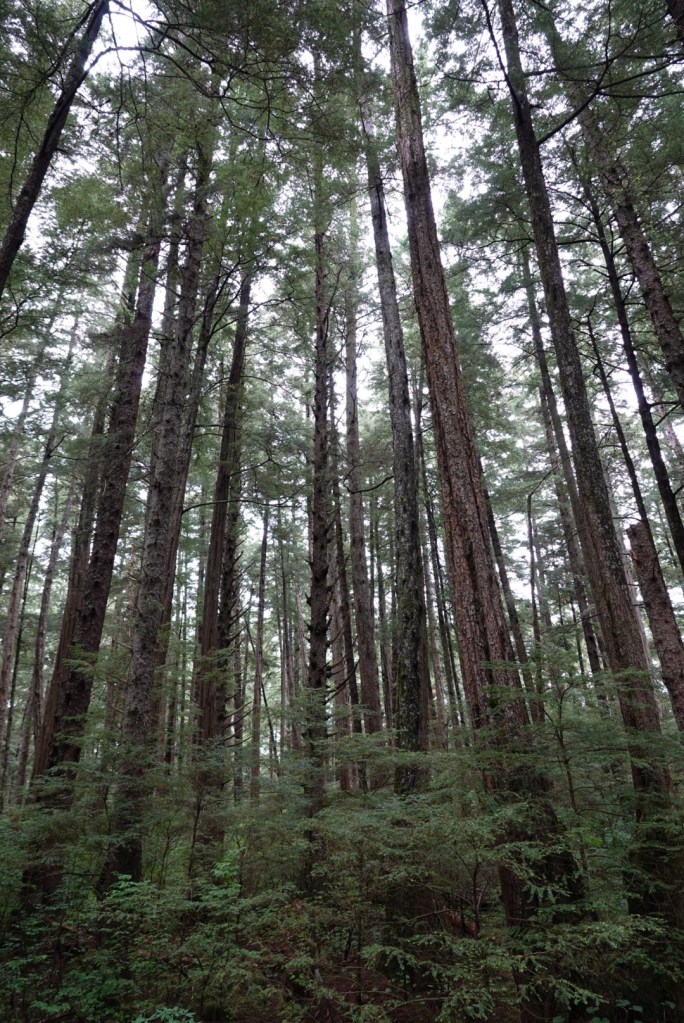
Owen first drove the bus to the end of the road, seven miles from the town center. Both the main roads end seven miles out, at the edge of the wilderness in the Tongass National Forest. This area has been roadless since being designated by the Clinton administration, but Owen worries that the current administration will redefine it. This would be disastrous for the entire planet because these old-growth trees provide oxygen to the air and help maintain the pristine water. We started there because it is also the site of one of the first Russian forts built near Sitka, which was burned to the ground by the Tlingit people in the early 1800s.

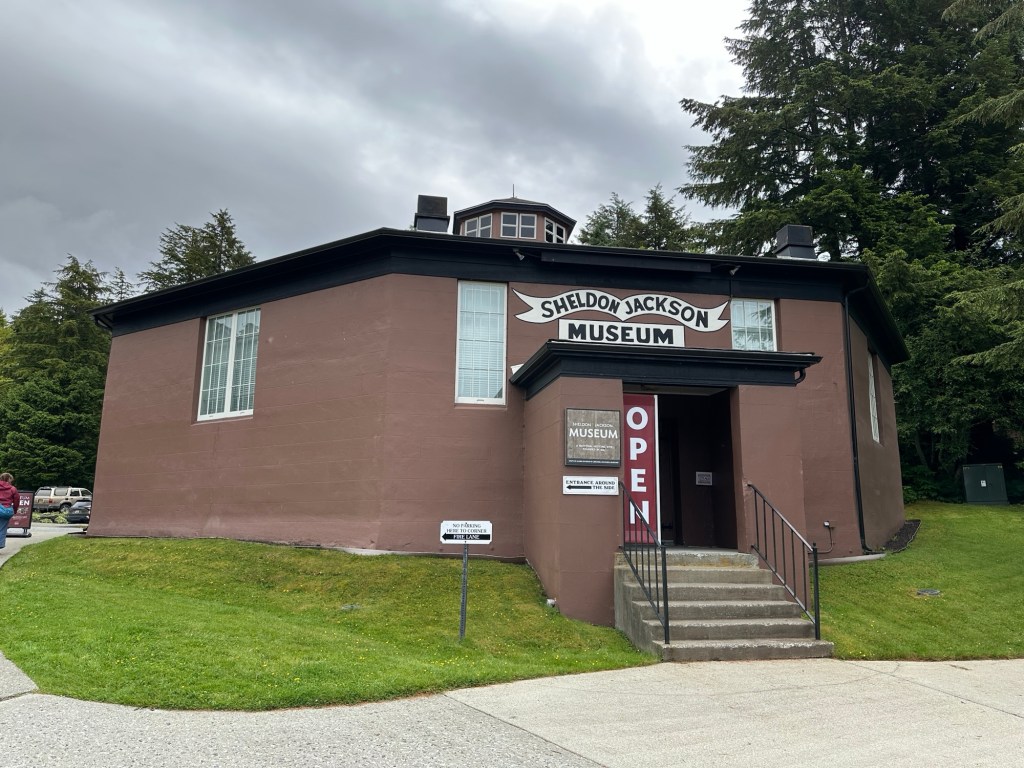
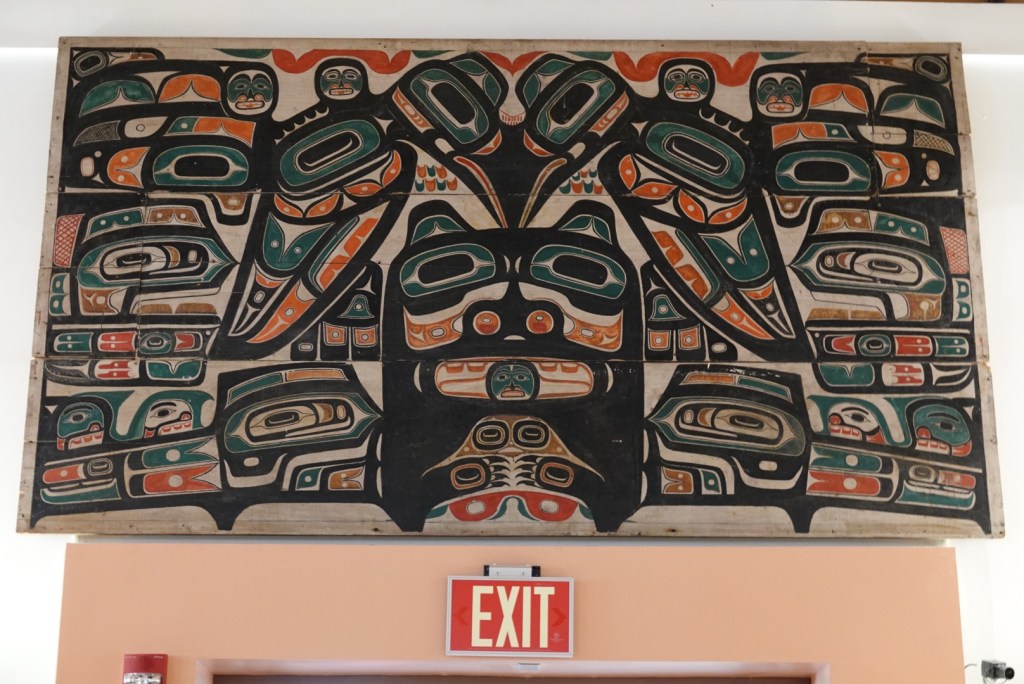
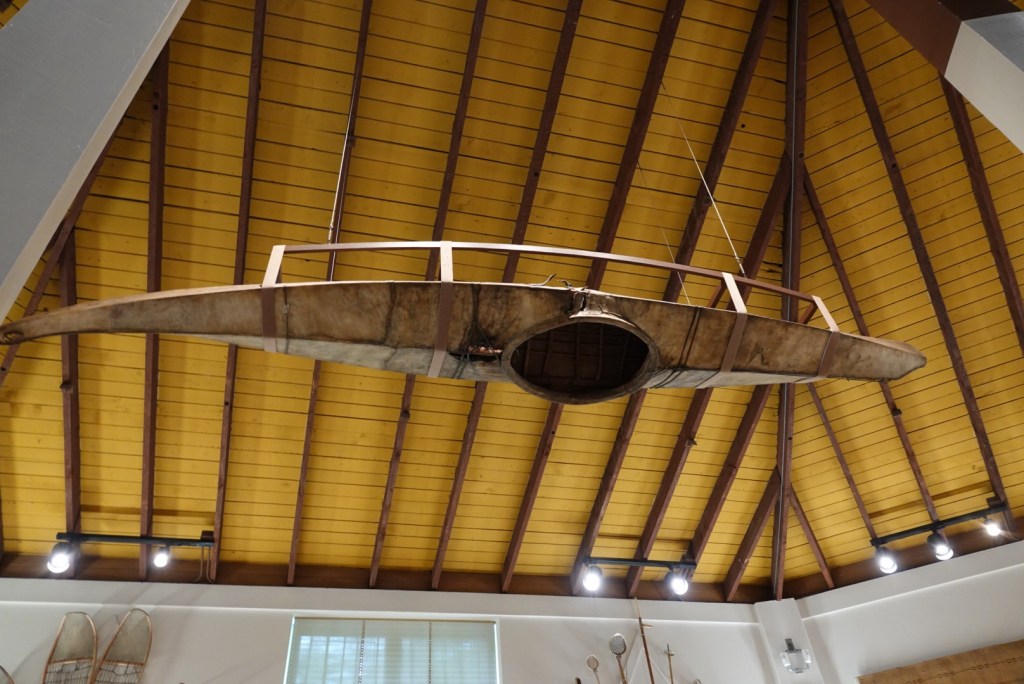
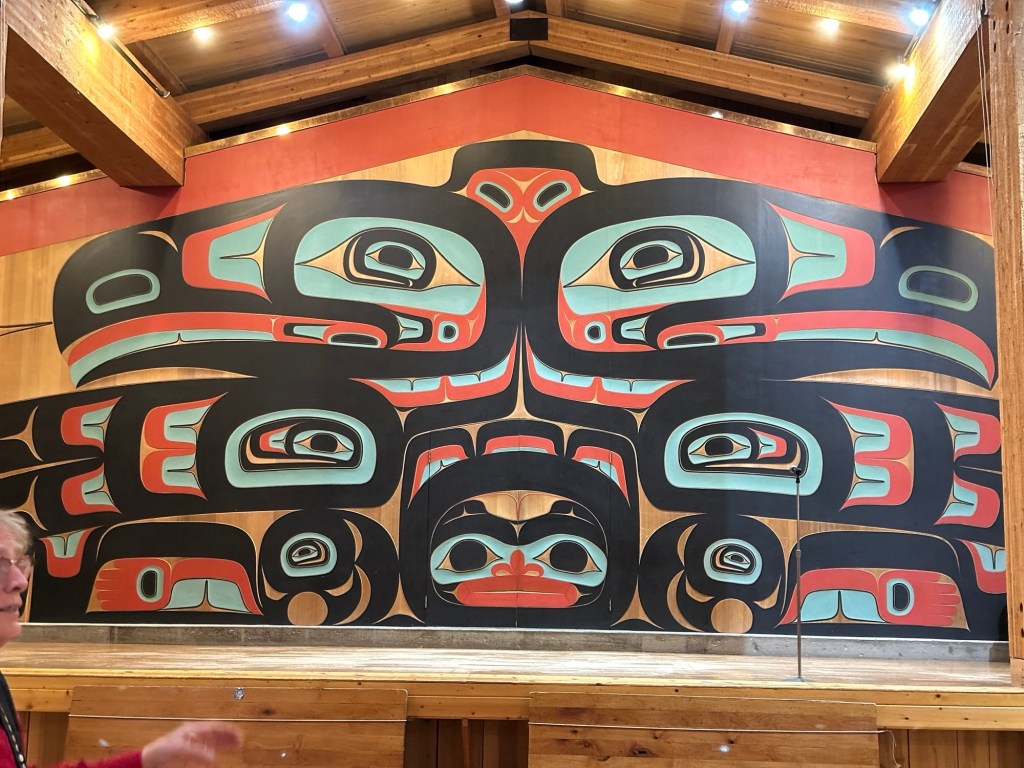
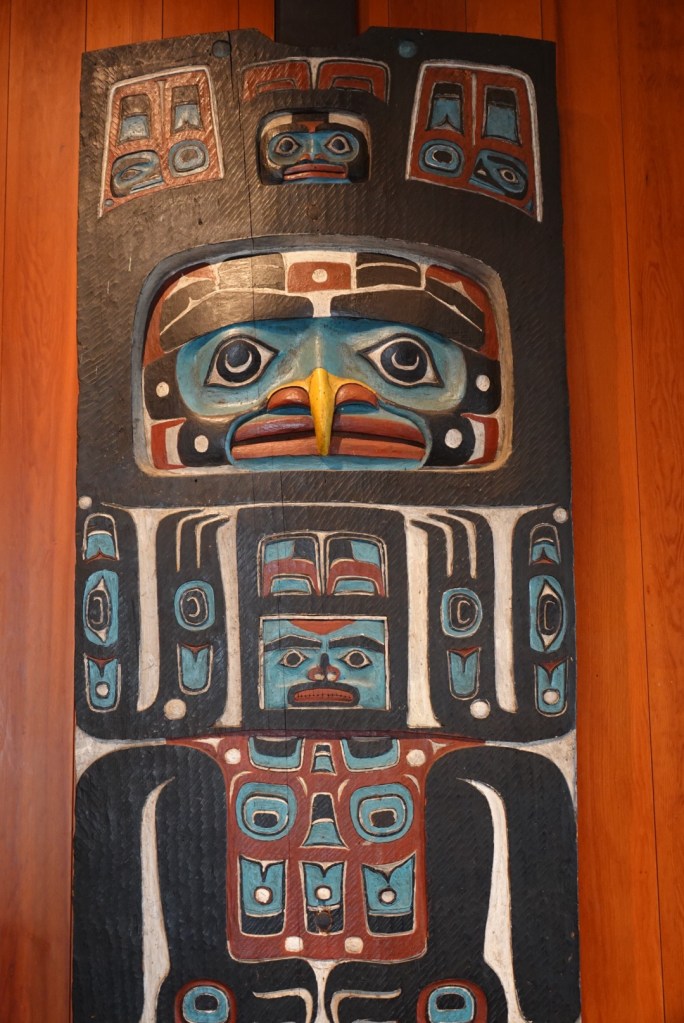
We spent an hour at the Sheldon Jackson Museum, a well organized and user friendly exhibit in an octagonal building, the first structure in Alaska with concrete walls. The native people were curious about how to build something from powder, rock, and water, but the US engineers just asked them to build the framework, then watch. Concrete structures have been popular ever since.

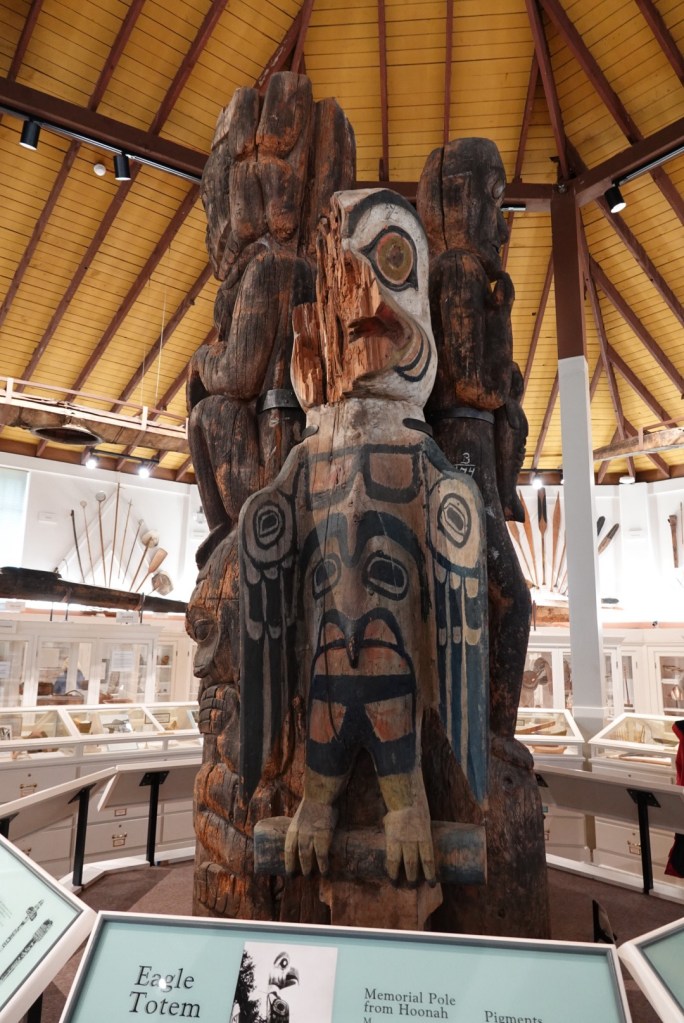
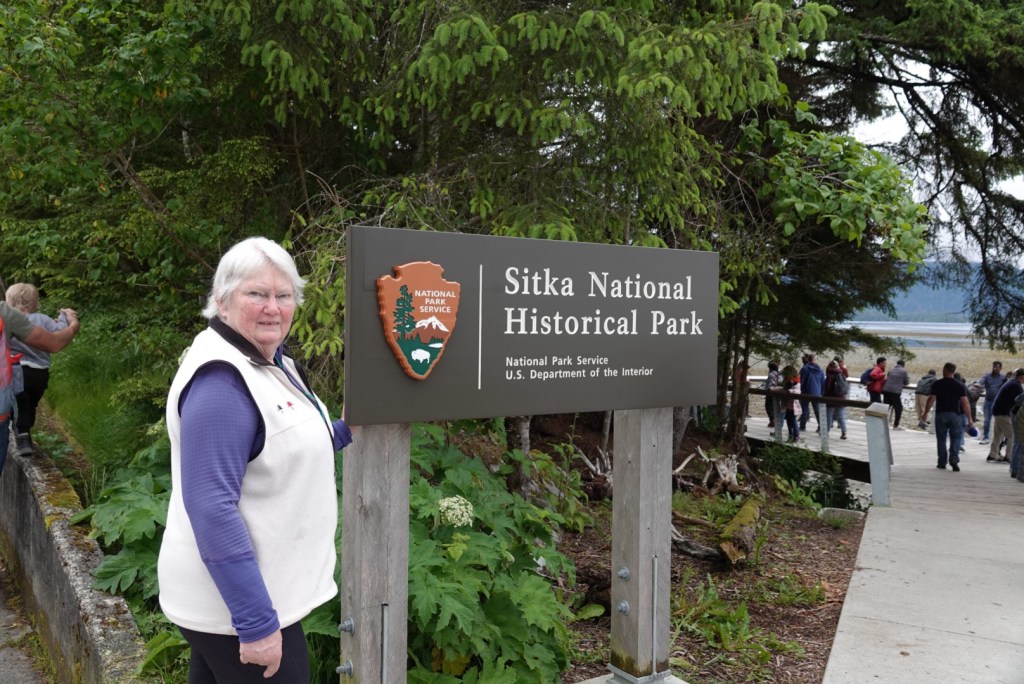
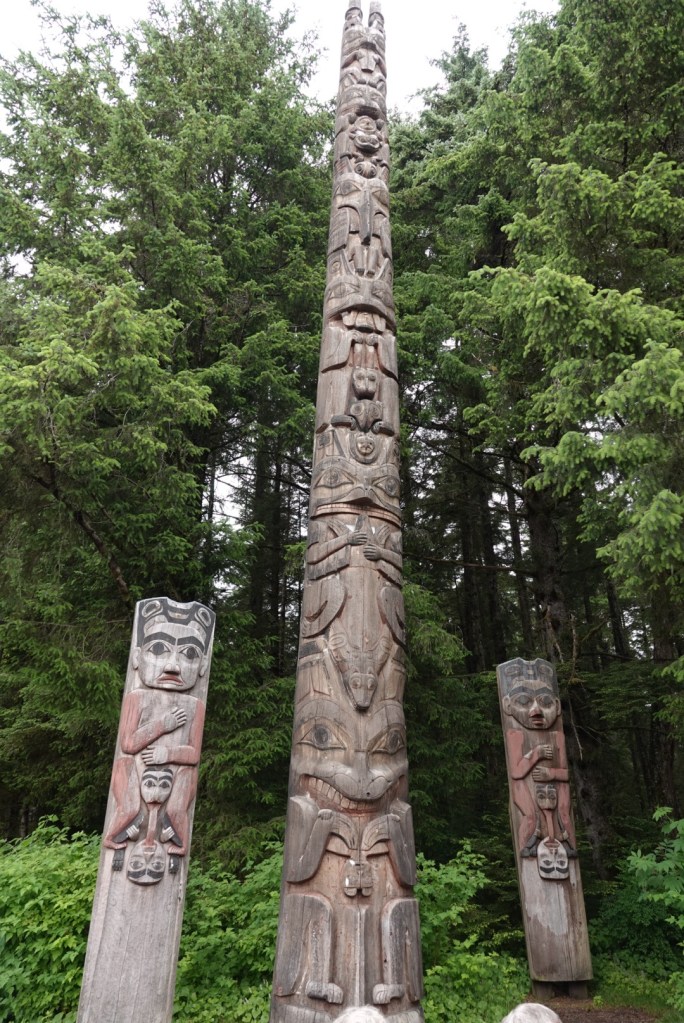
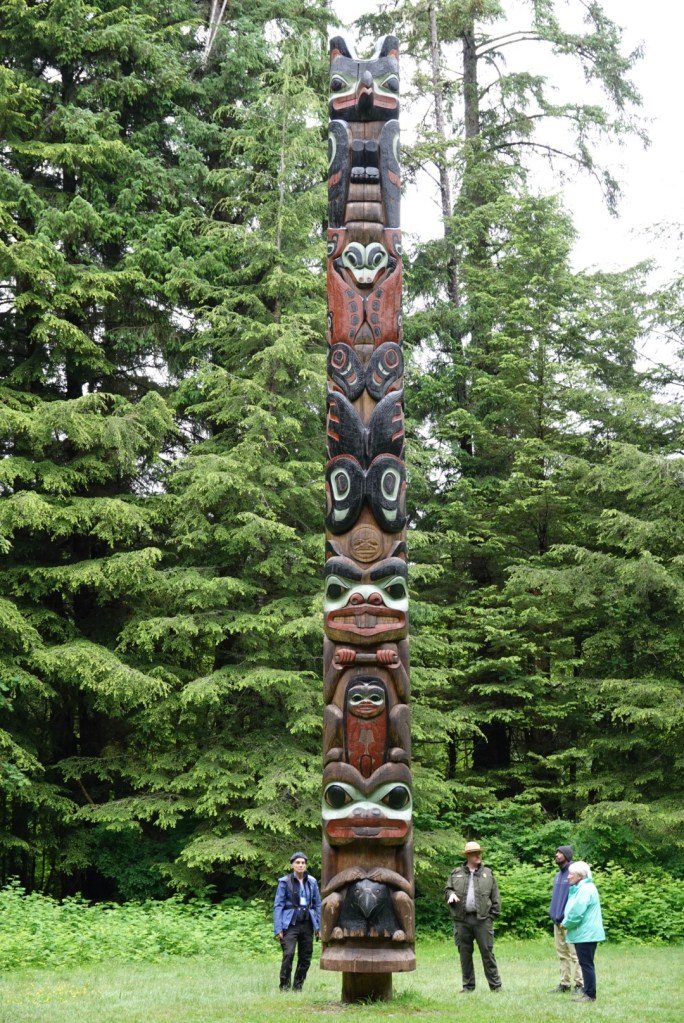
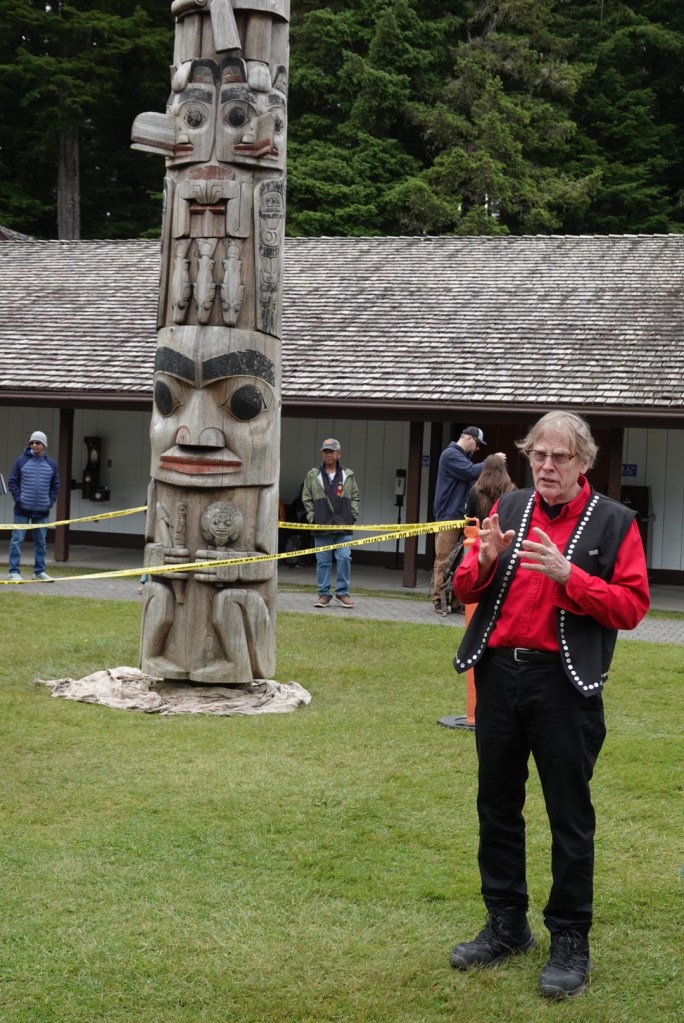
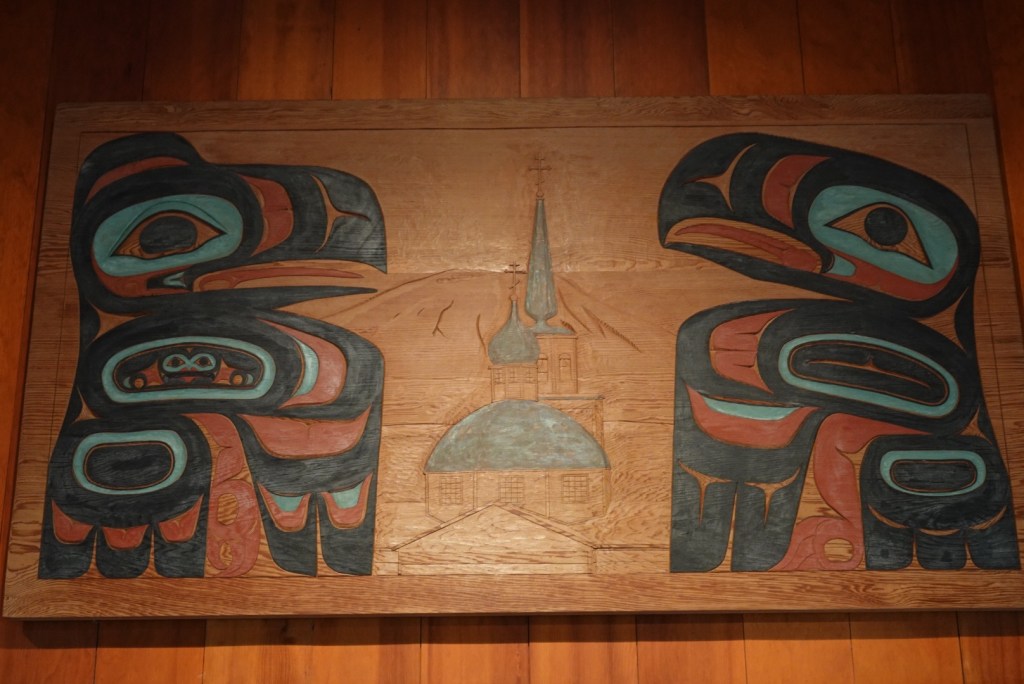
The Sitka National Historic Park was our next stop, where we walked through a display of totem poles in the forest. We learned quite a bit about totems. The phrase “low man on the totem pole” is a misnomer because the lowest person on the totem is actually the most powerful or most respected. In the family totems, this would typically be a grandparent. In the totem at the battlefield, the lowest person is the leader of the Tlingit people, represented by a raven with a notch in its beak to indicate a wound that he suffered before killing his assailant with a blacksmith hammer.

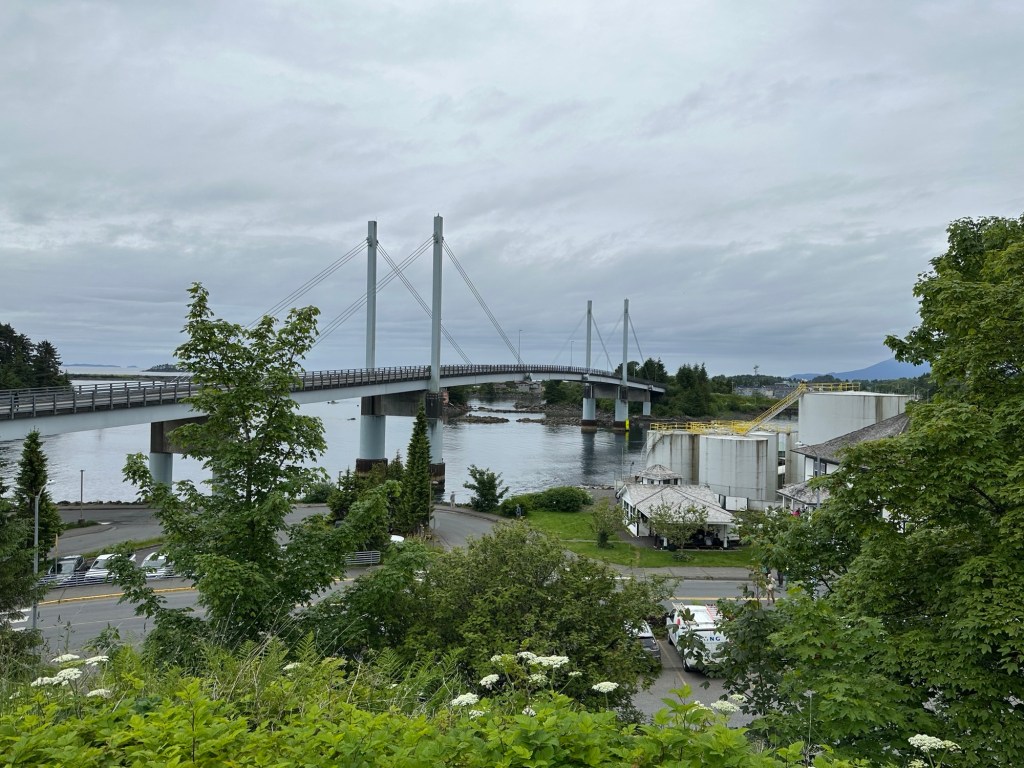
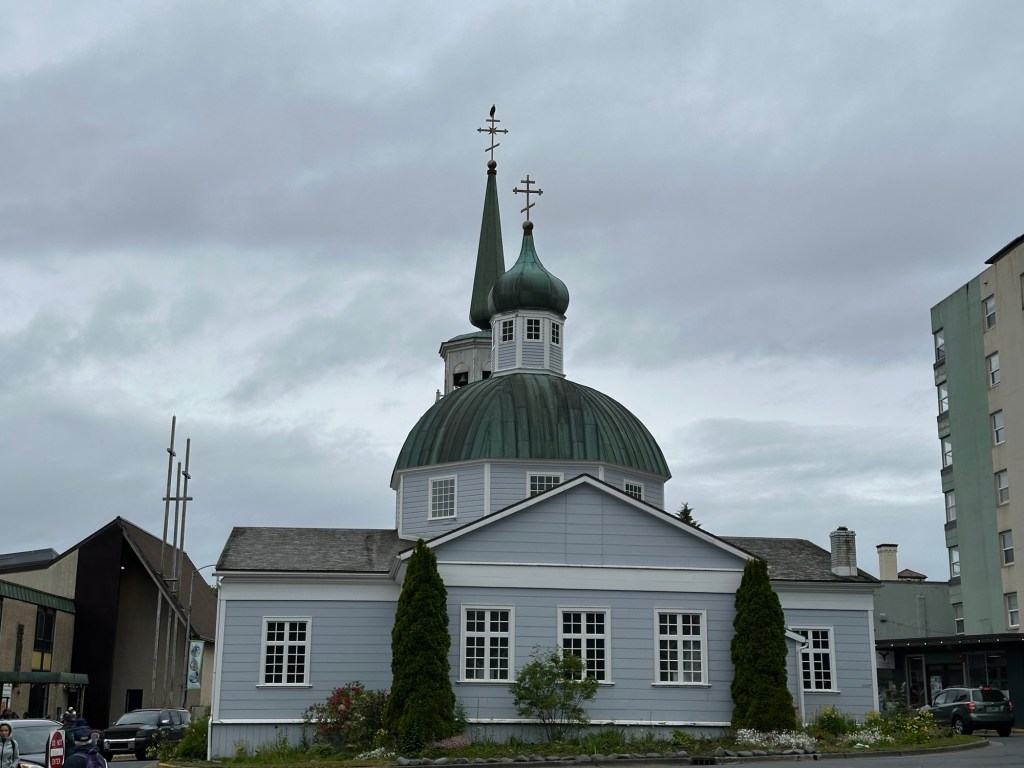
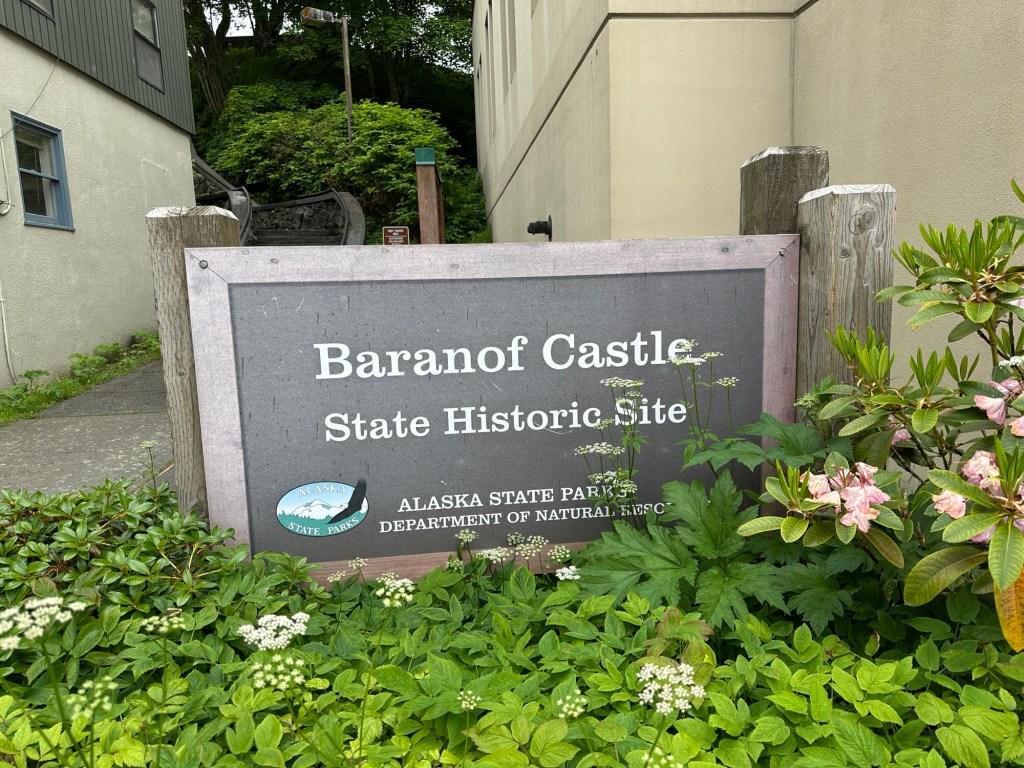
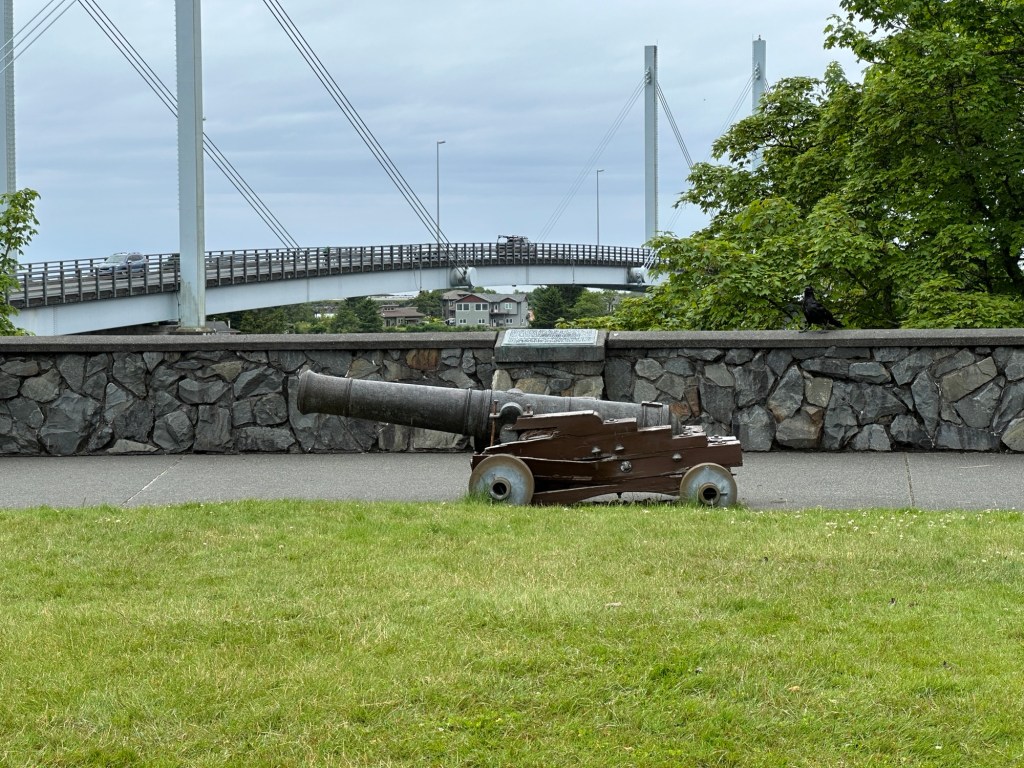
After the official tour, we wandered around Sitka, a uniquely historic town.

Another really good day.