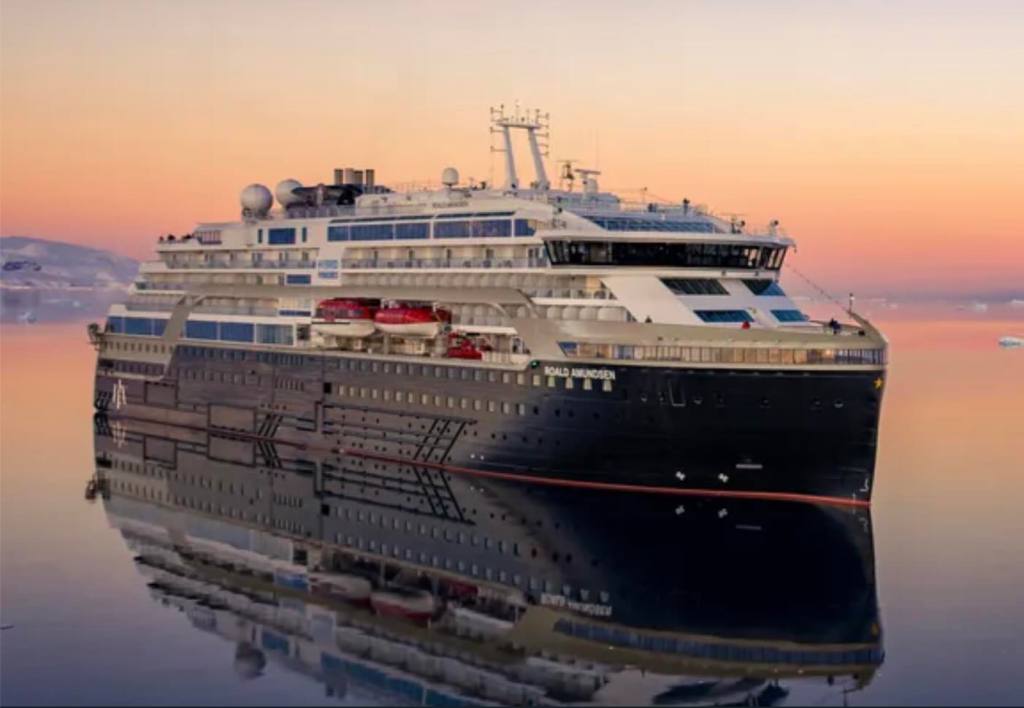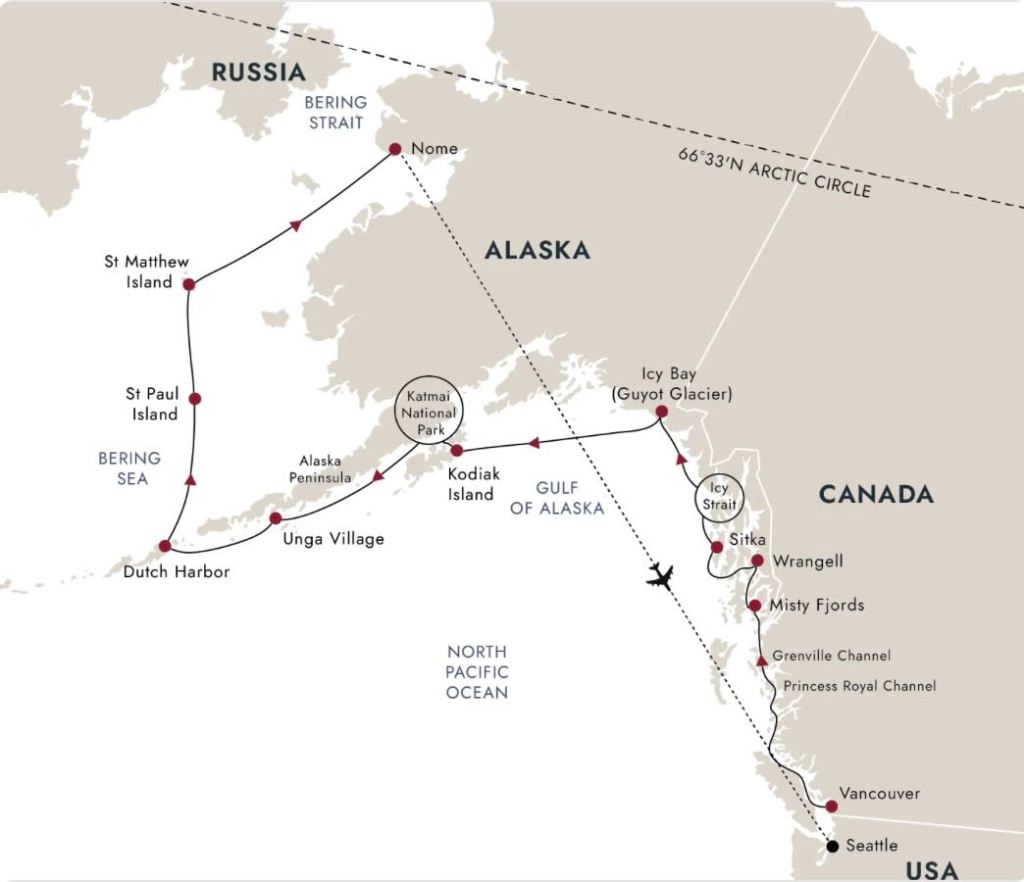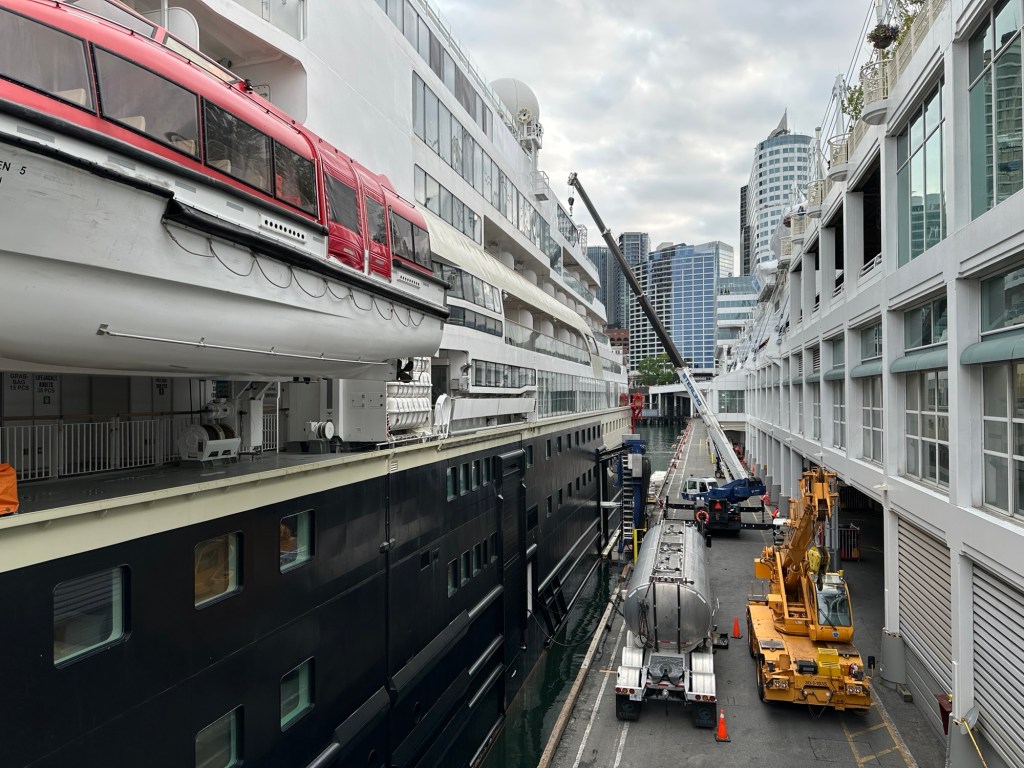
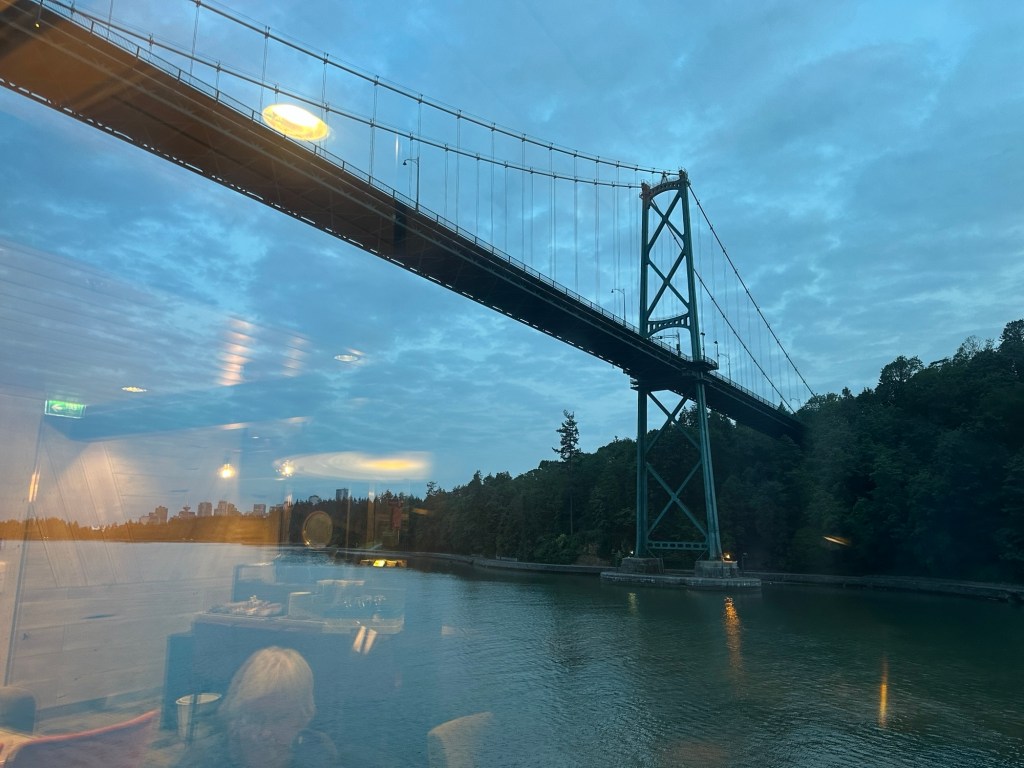
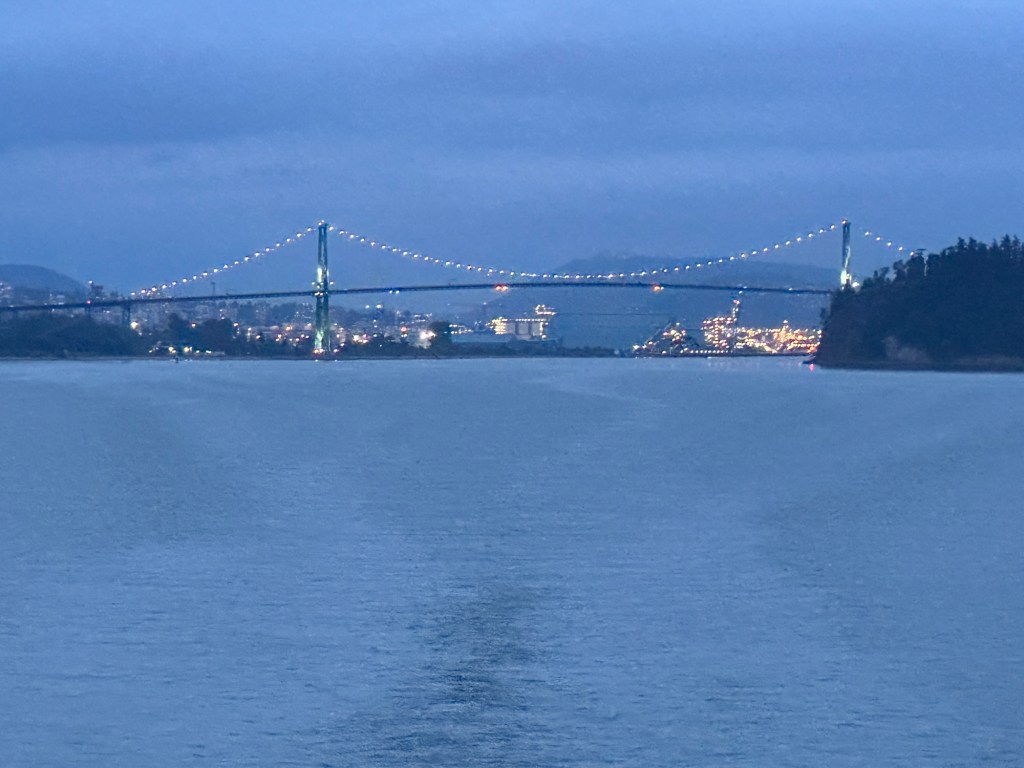
After Vancouver, we start out with a full day on the ship, learning the ropes, so to speak (which deck has food and which has observation areas etc.). The ship went through the Inside Passage (not well defined geographically), starting in the southern part as a wide seaway then narrowing so we could see land on both sides.
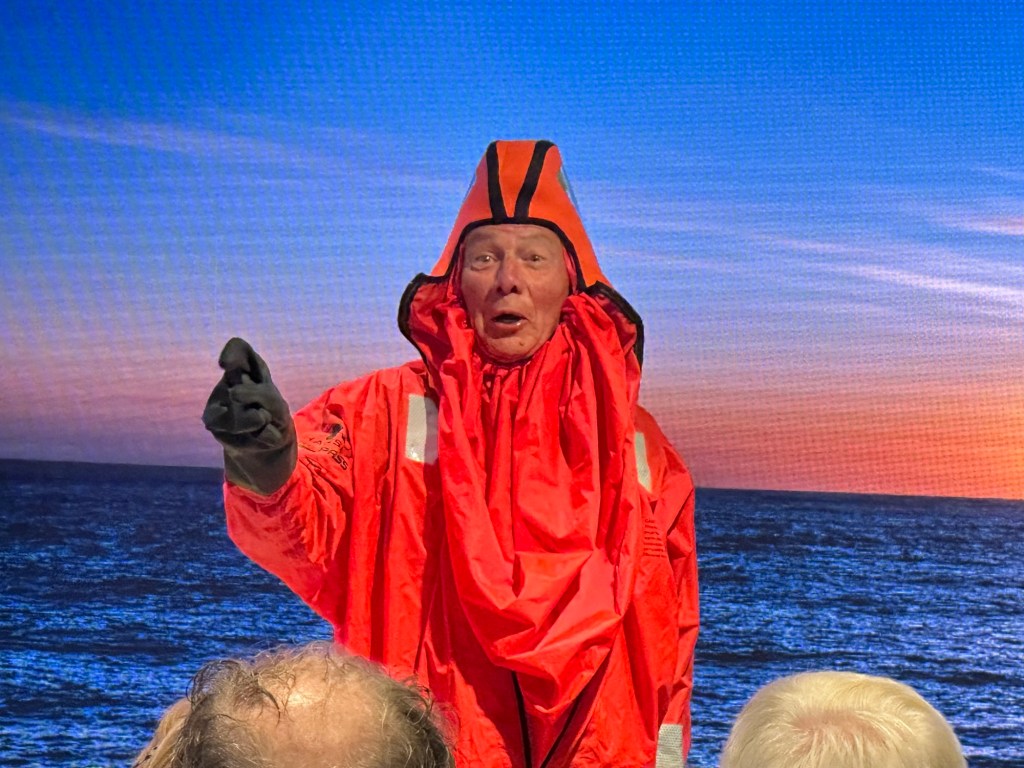
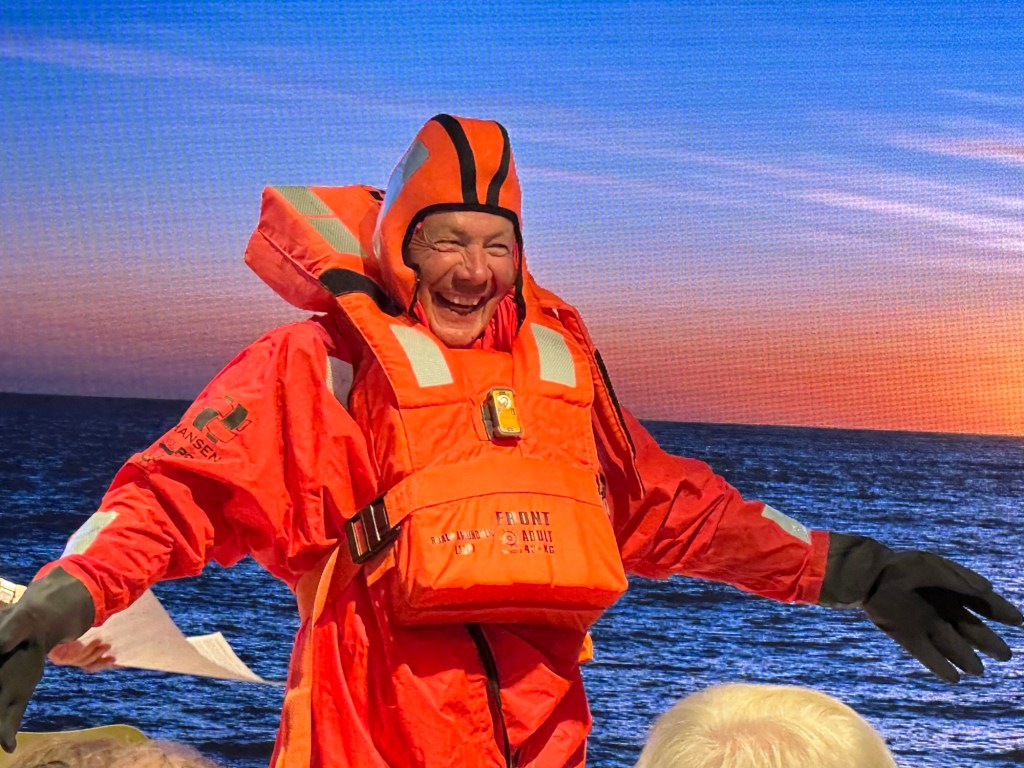
A demonstration about emergency safety procedures was made humorous by a guy named David who obviously felt a bit silly in the rescue suit. We hope we won’t need to learn more about that!
Clare was a bit hyper, wanting to see everything at once, figuring out good viewing points from the ship, so she was outside when the first spouts from two Orcas were sighted. Unfortunately, no binoculars or camera, but the double spouts were impressive.
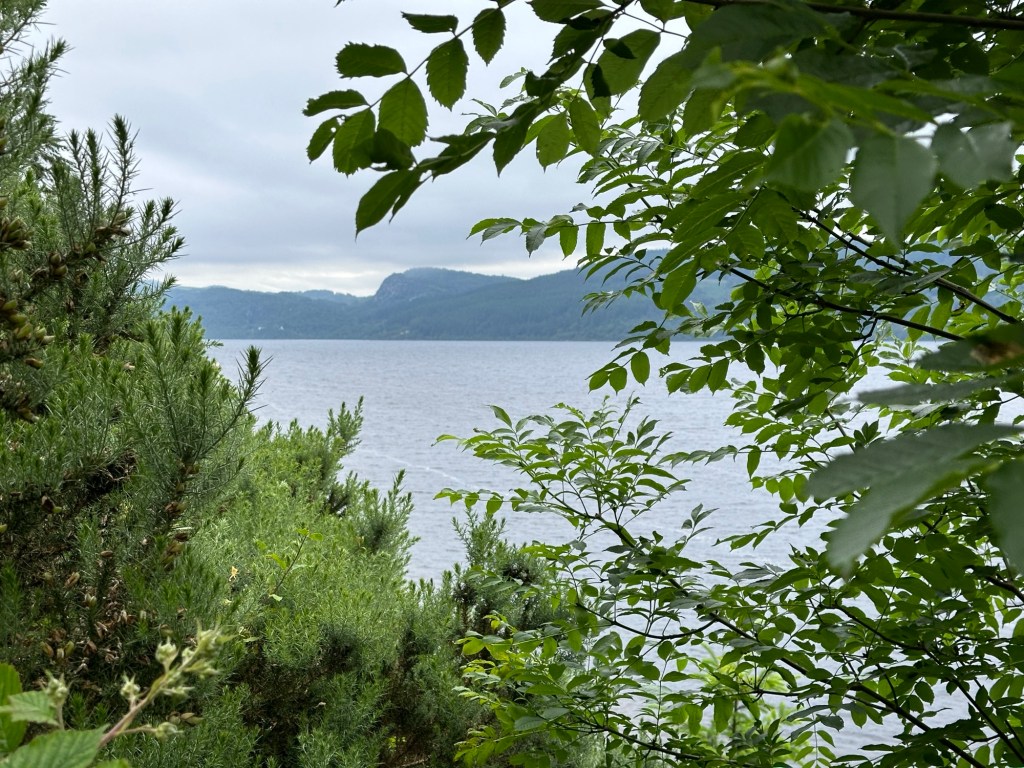
Once we could see land on both sides, the changes in green colors were interesting. We finally realized that the paler greens are young trees, growing out of clear cut areas in the forest, darker greens are older trees. Beautiful greens everywhere, with tiny villages set into valleys.
The landscape is fascinating! Tiny steep-sided tree-covered islands,with narrow water passages. Sometimes we can see up to three mountain ranges toward mainland British Columbia, the highest peaks capped with snow.
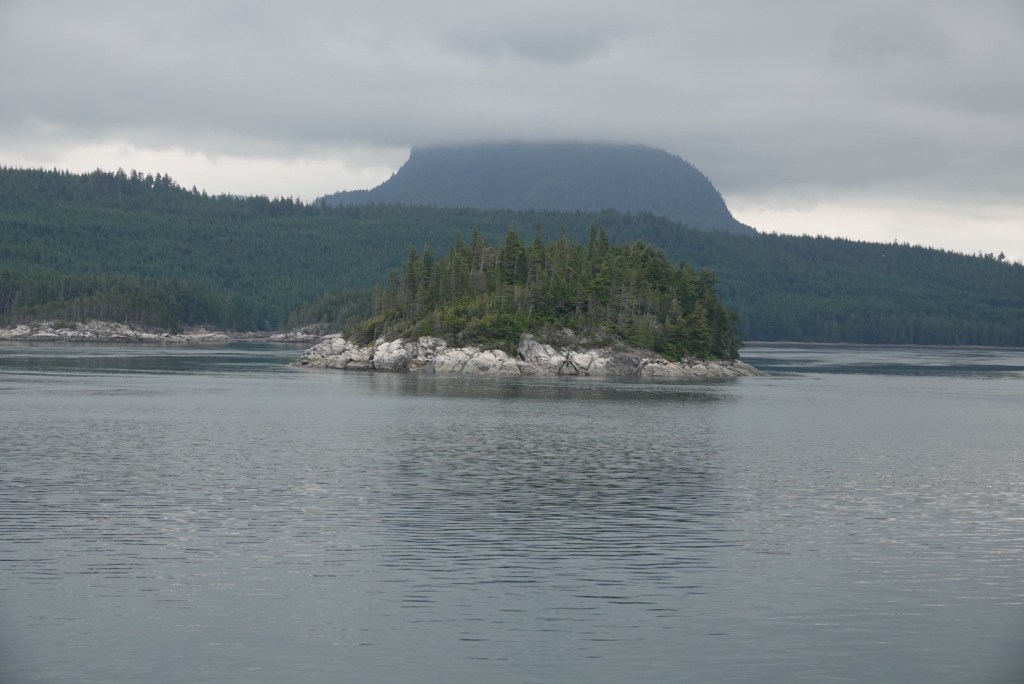
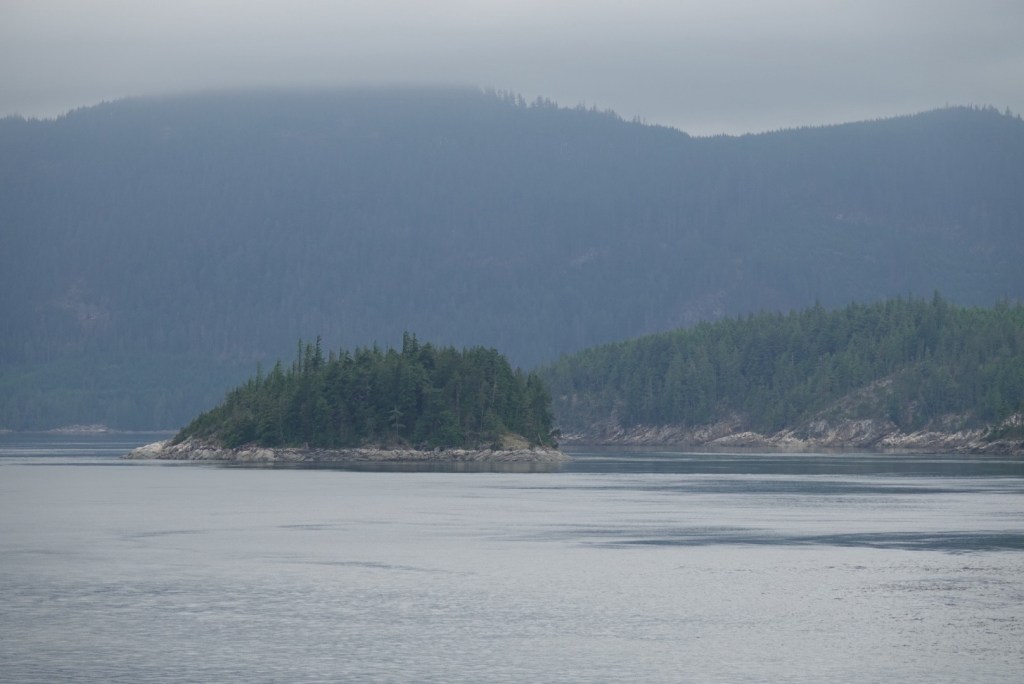
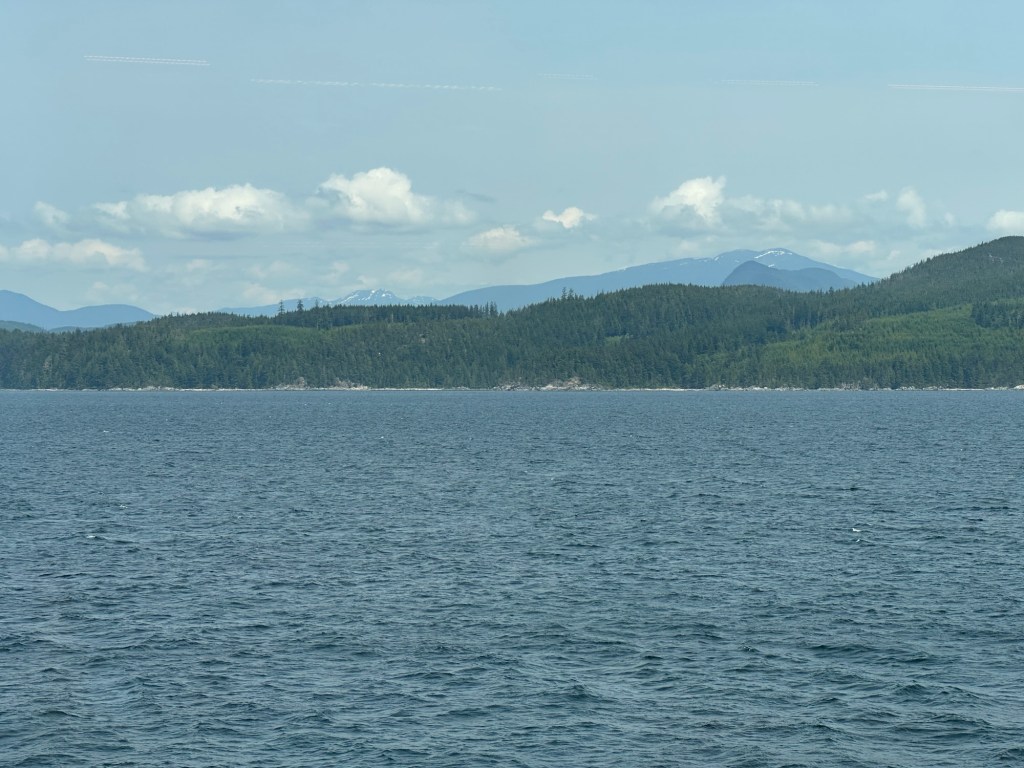
The ocean showed varying colors, ranging from pale blue where no wind disturbed the surface to deep green or black closer to the ship. The water is about 1,000 feet deep here in the narrower part of the passage. With breezes, small white caps appear and disappear, making us want to pretend that a large group of seals are playing nearby. But no.
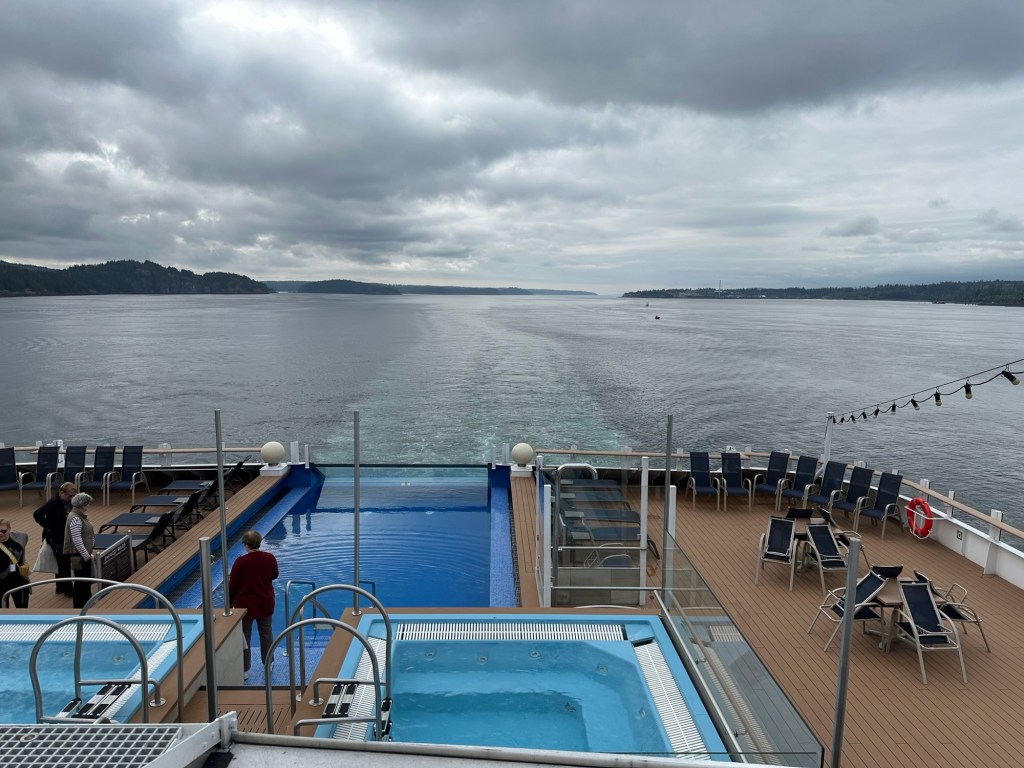
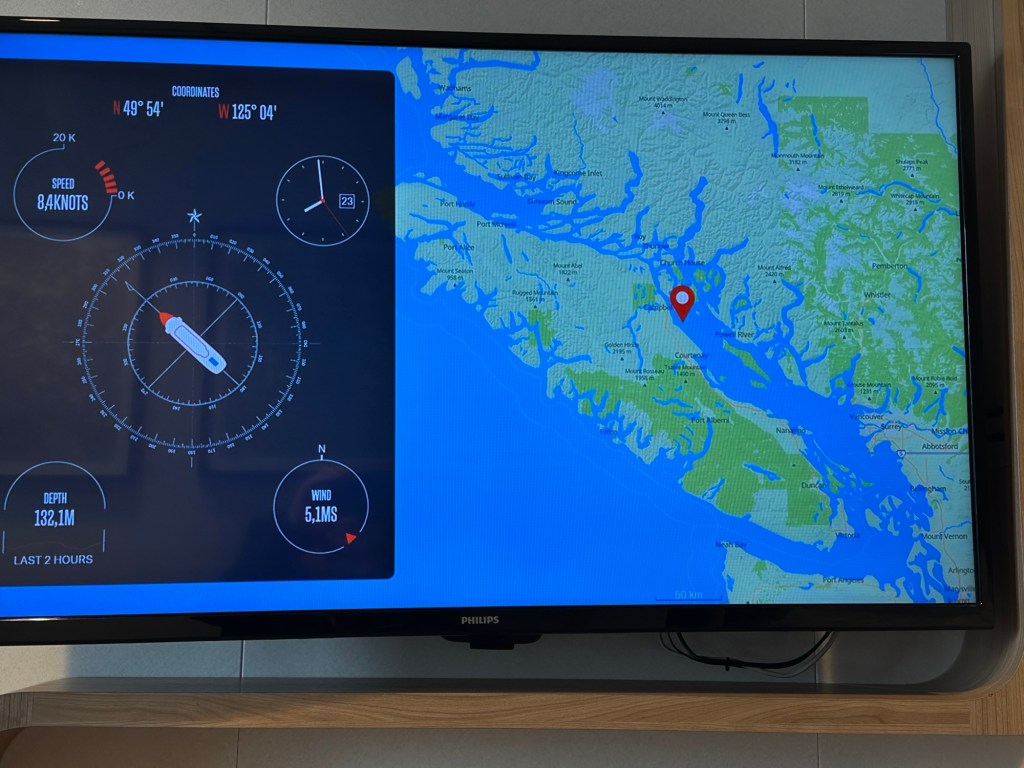
The ship is small enough to easily find your way around after a few exploratory walks. Lots of stairs, but there are elevators too. With only 300 guests on board, very few events seem crowded. We have been assigned to the “Sea Otter” group for assembling for excursions to avoid crowding the departure deck (level 3). Our cabin is on deck 7, starboard side. In the sheltered sea of the inside passage, the sailing is so smooth that you can hardly tell it is moving; speeds range from 10 to 15 knots most of the time.
The passengers are from all over the globe. We have observed folks from Germany, France, Switzerland, China, New Zealand, and the US. Tonight at dinner we were seated next to a couple from Montrose, Colorado! The only official languages on the ship are English and German, but if you want to go kayaking you must know rudimentary English, a maritime law requirement.
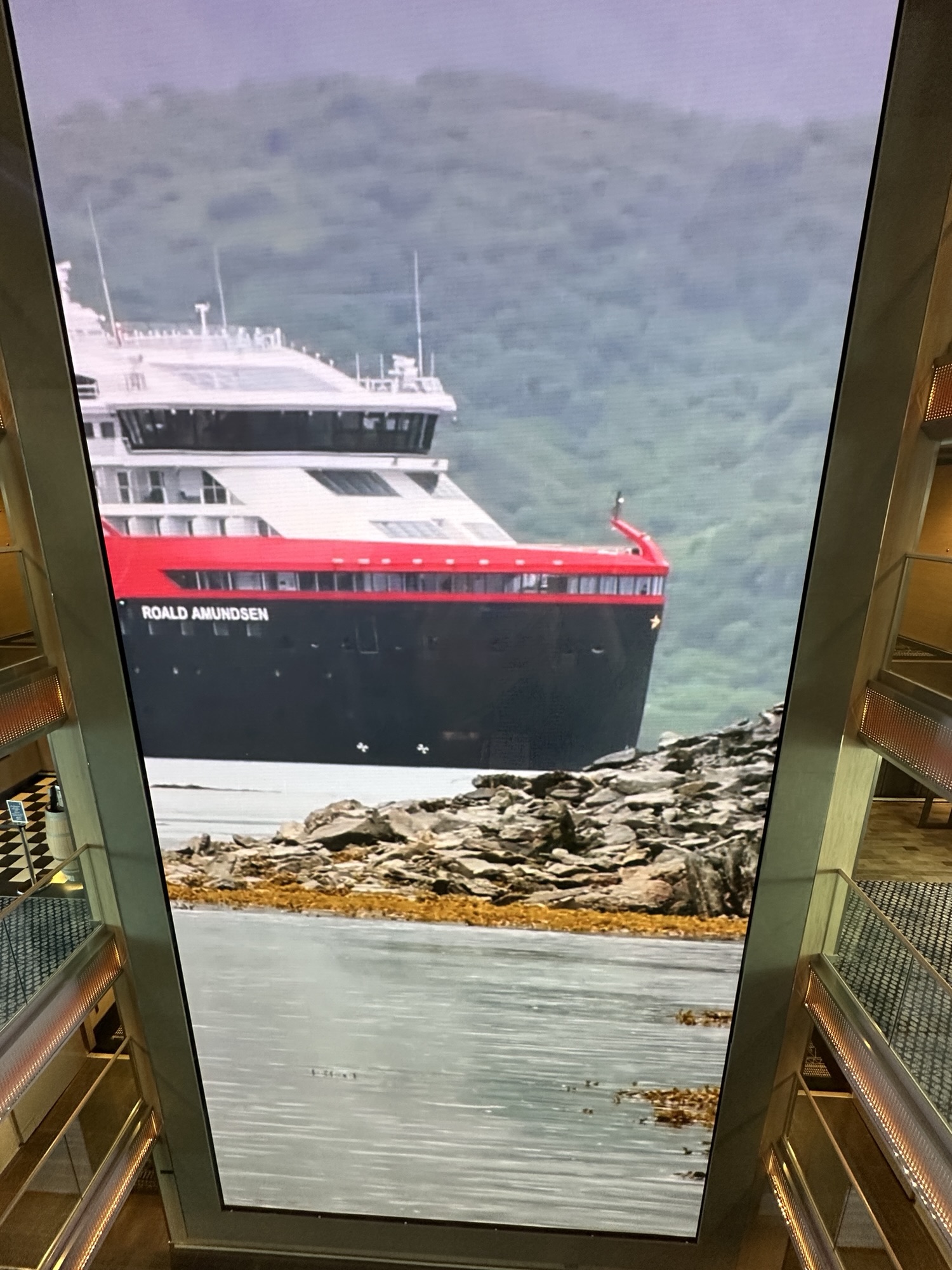
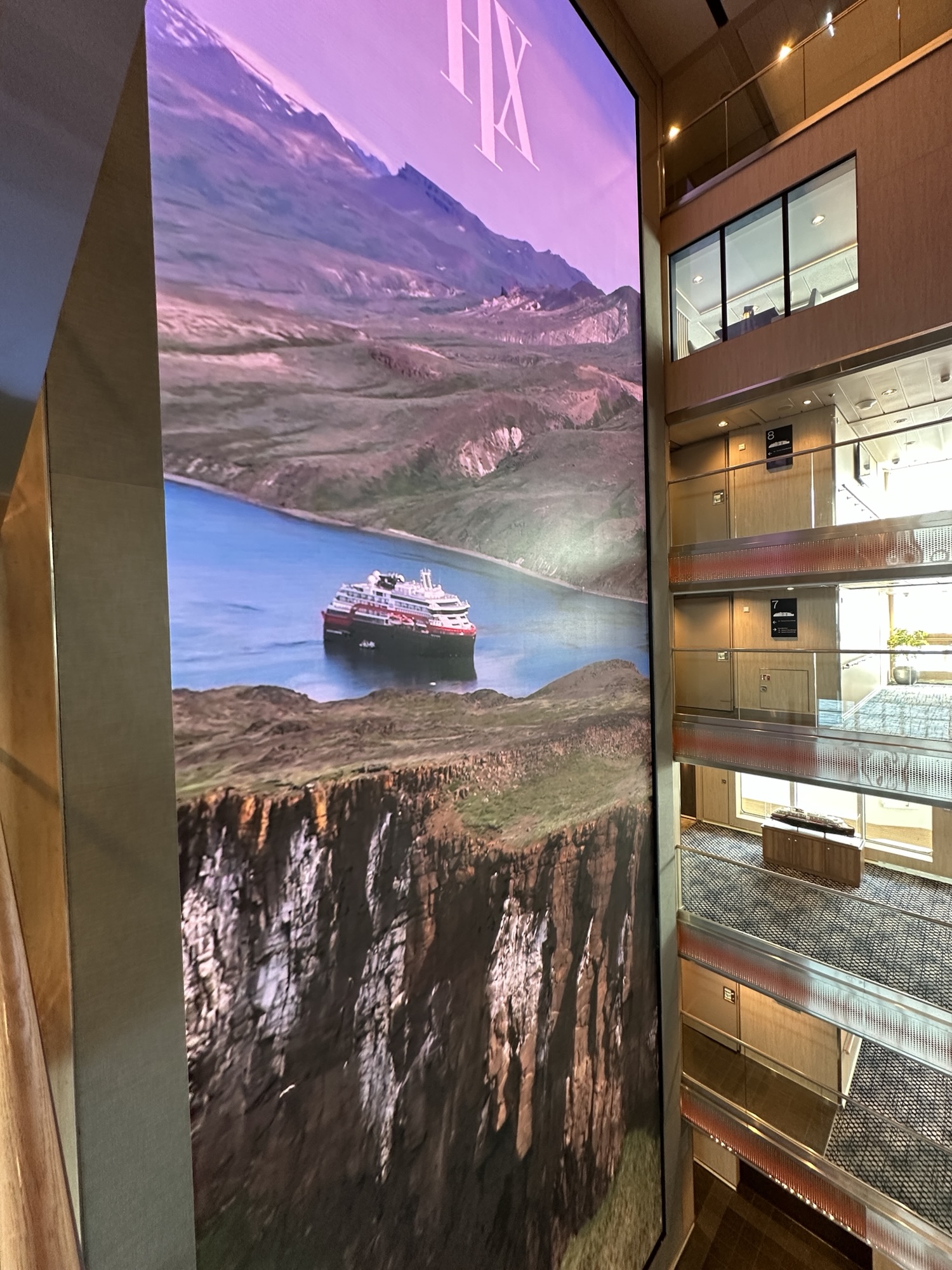
Adjacent to the main elevators is a huge screen showing images and videos from previous expeditions on Hurtigruten. The screen is many decks tall as you can see. Impressive!
That is all for the first full day; tomorrow we will explore an area in Alaska by small boat.