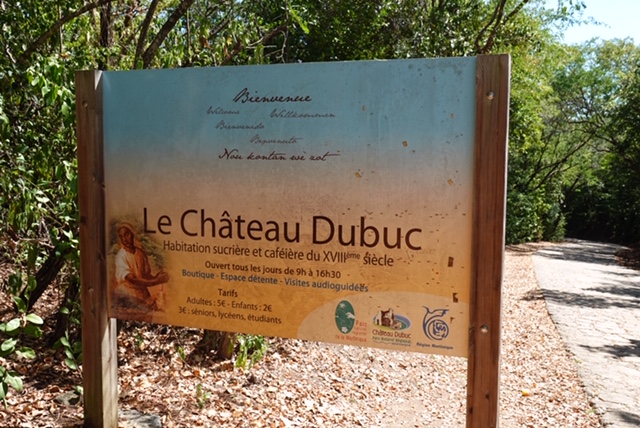
We drove out to the eastern edge of Martinique, to see the stone remnants of an 18th century processing plantation for sugar, coffee and rum.
The proprietor of this facility in the 1700s placed a big light up high on his land, to fool sea captains into thinking it was a lighthouse so the proprietor could collect all the wreckage when the visiting ships crashed.
The plantation was huge in its heyday. The French brought expert stonemasons and other professional workers to engineer this complex area.
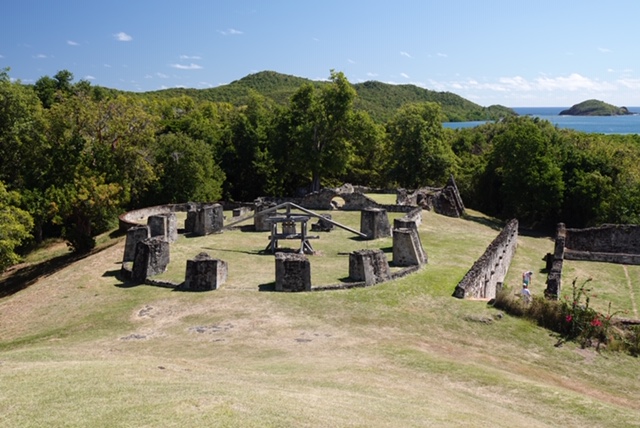
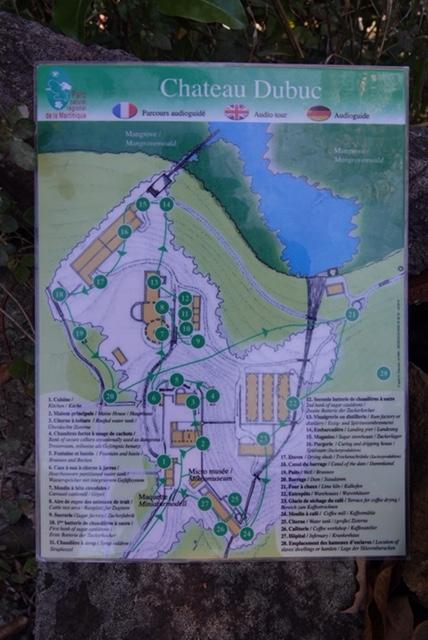
A Caribbean Stonehenge? Nope! A mill for pounding sugar cane to release the juice. Mules were tied to the two boards leading from the middle, and slaves brought the cane. The apparatus in the center today is much smaller than when this was in use. The audio tour explained that the mules had to be changed every two hours, but did not mention how often the humans were exchanged from this job. The audio tour worked by touching one end of the device to numbers shown on the map above.
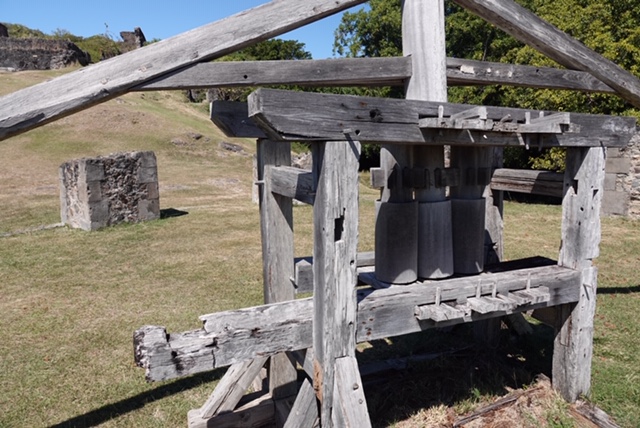
This is the middle of the apparatus for extracting cane juice which ran into a trough and then dribbled into an underground channel to get to cauldrons below.
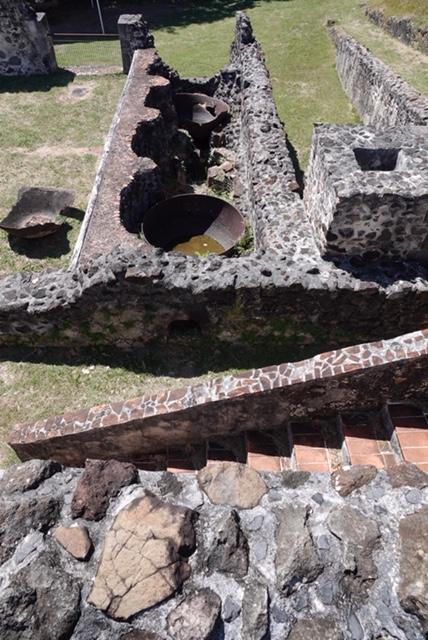
The cauldrons, heated by wood fires, crystallized the sugar. Sugar was the main product for many years, but later rum was also produced.
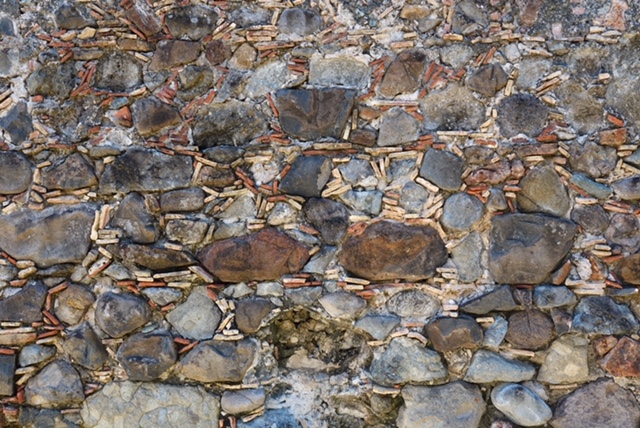
Walls at the chateau were composed of local rock, with cement and pieces of clay tiles. There was a lime kiln on the property to make cement or mortar from shells and coral.
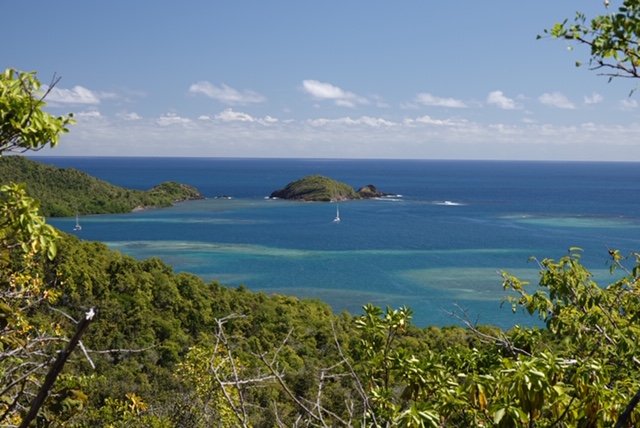
View from the plantation, looking out to the Atlantic. We had hopes of seeing mangrove swamps, which encircle the plantation, but a fence kept us out of that part of the peninsula. Notice all the reefs in the bay! A dangerous landing for ships even during daylight.
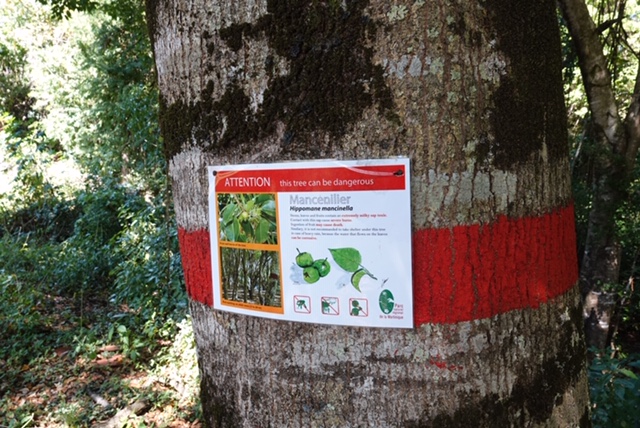
Some trees were marked with red because they are poisonous to the touch! Even the berries, leaves, trunk. We worried a bit about walking on the dried berries, but once they are dry, they are no longer dangerous.
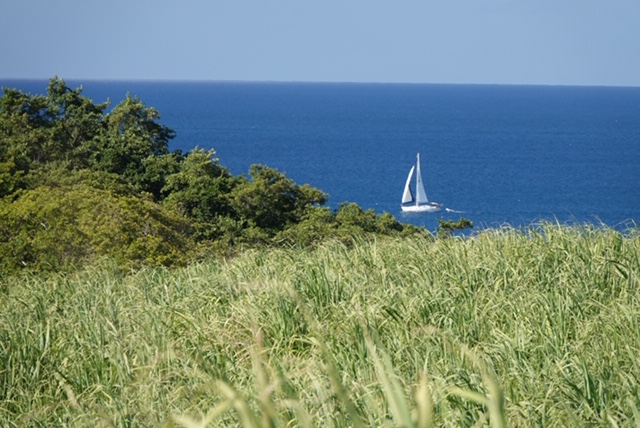
Sailboat, from the peninsula, with sugarcane in the foreground.
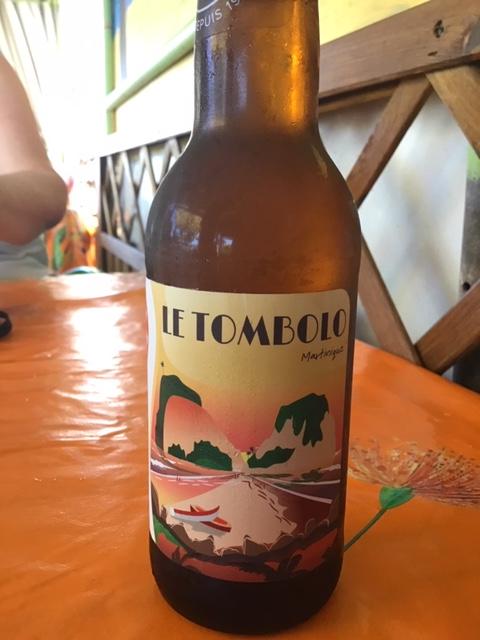
Brian found another local beer that is really just relabeled Lorraine beer. The site, Le Tombolo, in the label artwork is just north of the peninsula with Château Dubuc.
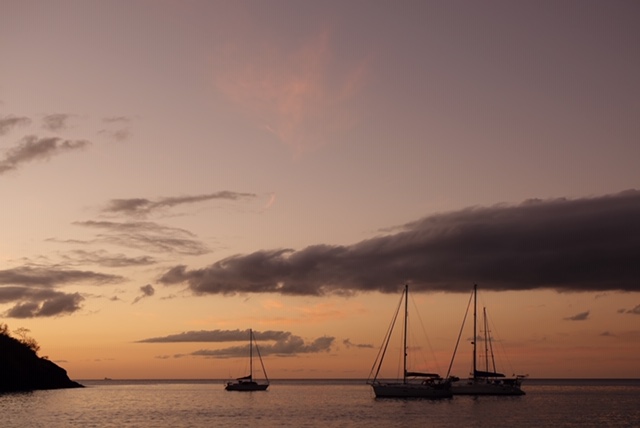
Lovely sunset in our black cove.
 Bunch of Geeks go Traveling