Category: 2020

Climbing a Recent Volcano

Mount Pelée erupted in 1902, killing 25,000 to 28,000 people in St. Pierre, which at the time was the French capital here and was considered the Paris of the Caribbean. But first, we had to try the rum! Martinique is known world-wide for the production of rum (it accounts for 2% of the total rum production). We visited a distillery that recently received some awards.
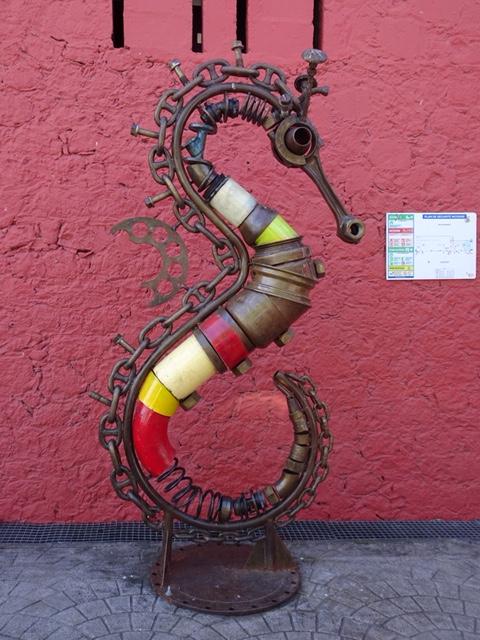
Artwork is displayed here at the distillery, and actually all over the island. We particularly noticed how the centers of the roundabouts showed an interesting variety of sculptures.
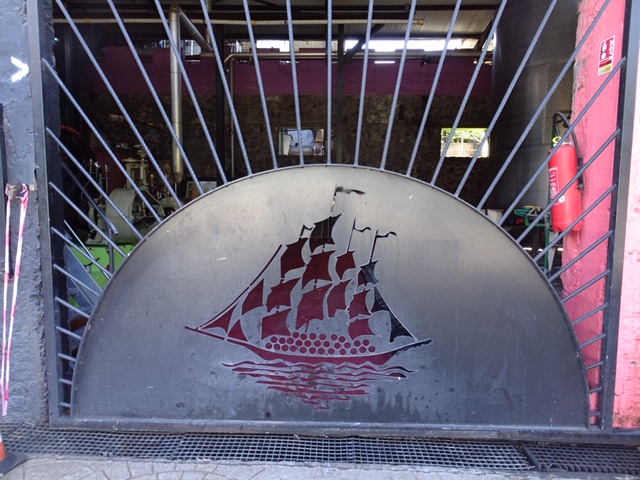
The logo of Neisson distillery. The Neisson distillery is known for using the sugar cane syrup rather than molasses as is often used in rum production.
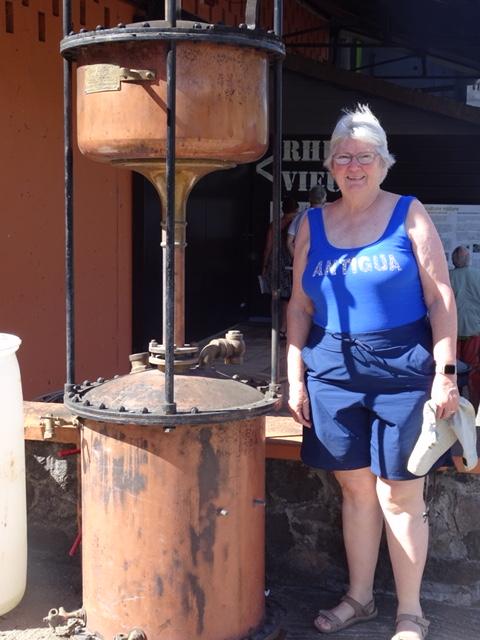
Clare standing next to an old distillery apparatus.
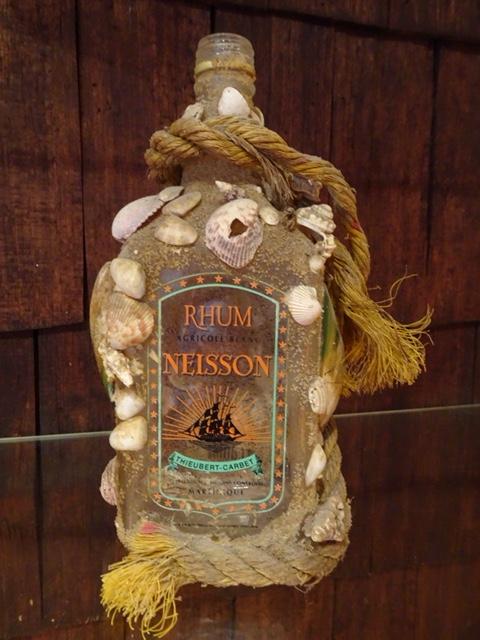
Perhaps this bottle was recovered from a sunken ship!
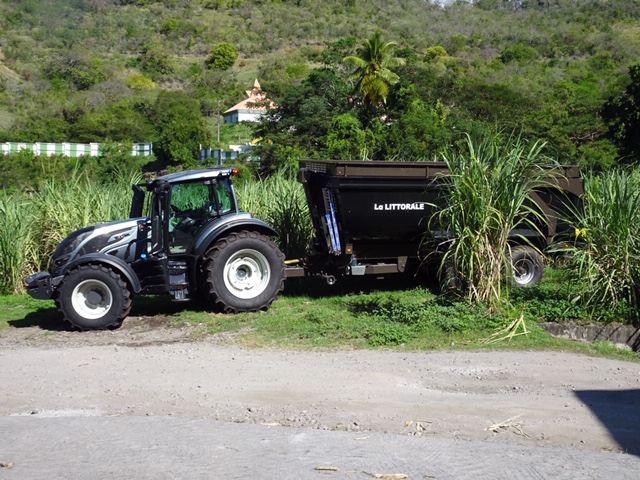
Giant tractor, to bring the cane to the distillery. Nothing was going on when we visited, but the production season is planned to start soon. We also were here on a Sunday when only one employee was here.
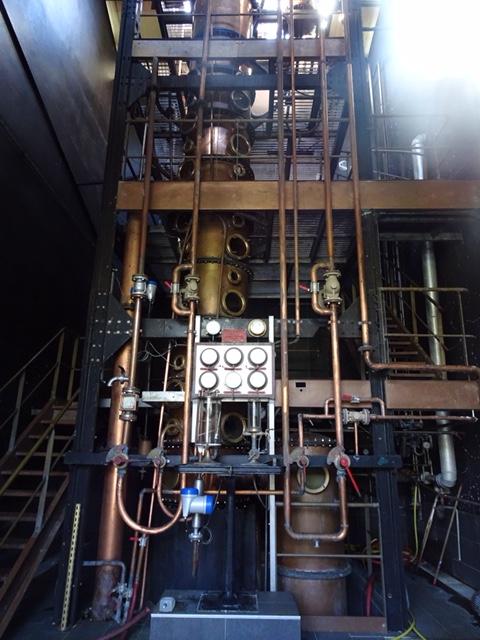
Very tall distillation column.
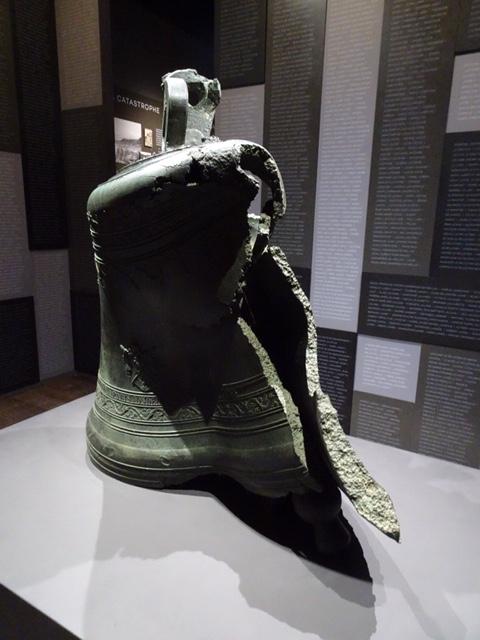
We then went into St. Pierre, the city destroyed in 1902; the Frank Perret volcanologic museum of the Mount Pelée eruption. This bell was deformed when the ash cloud descended on the city. Ships in the bay spontaneously ignited from the intense heat.
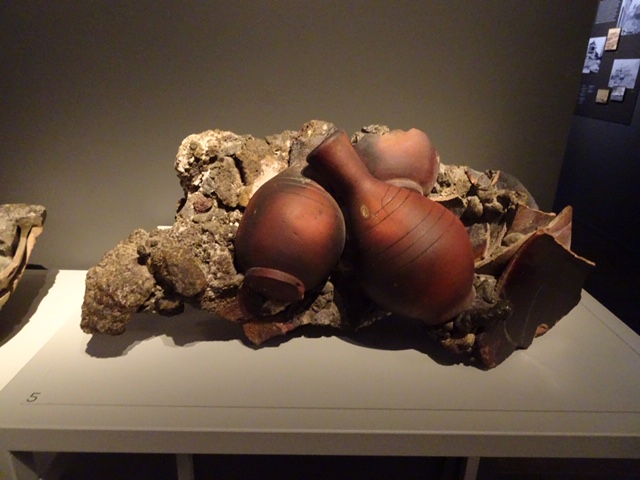
Pottery fused with volcanic material. The museum had electronic guides in English, which allowed us to listen to many of the stories both before and after the catastrophe. Postcards sent to France just before, from people who died during the eruption as well as letters from survivors, like the family that fled the valley because of earthquakes and other warnings. Heartbreaking.
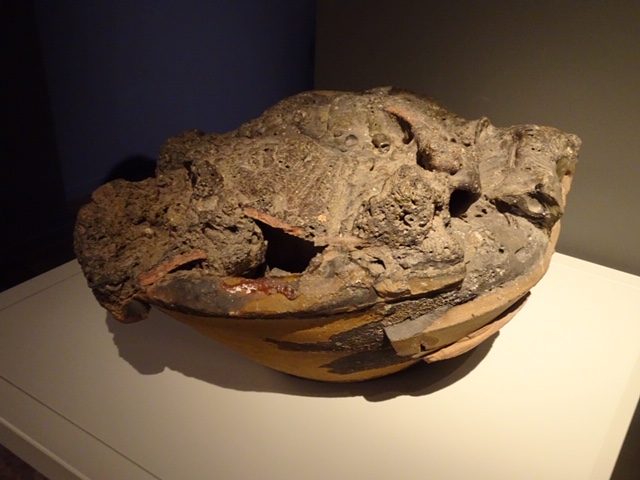
Household materials fused with volcanic ash..
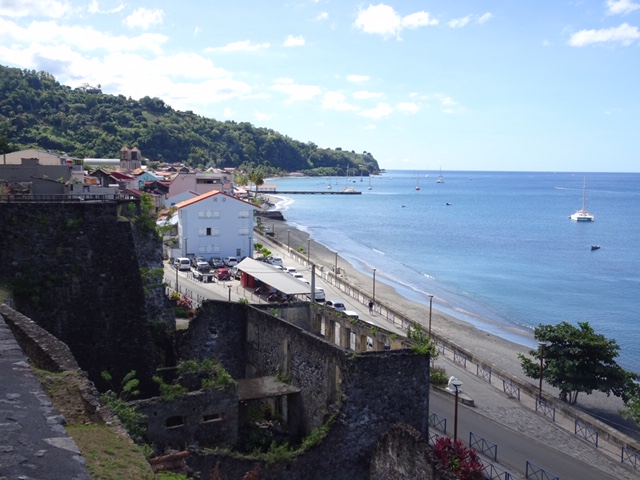
Outside the museum, buildings that suffered through the 1902 eruption that have been kept as a reminder. A room in the museum displays the names of those who perished on its four walls.
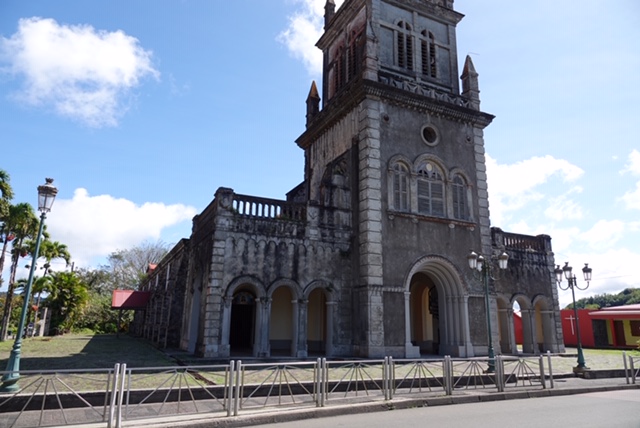
Next, we drove through Morne Rouge, a town that was not as destroyed by the eruption, and visited a church.
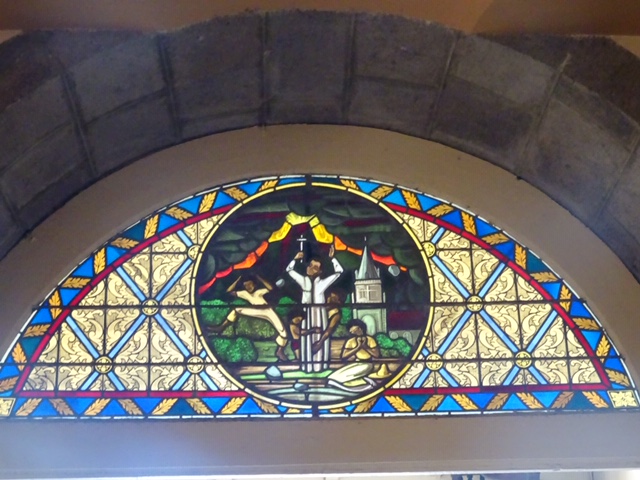
It had many stained glass windows, but Clare liked this one the best.
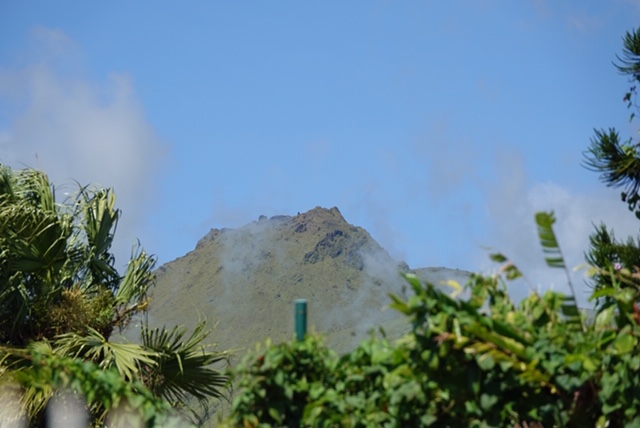
And now, the volcano, Mount Pelée itself! We took many pictures because we were sure that the top would be soon obscured by clouds. But it became even clearer!
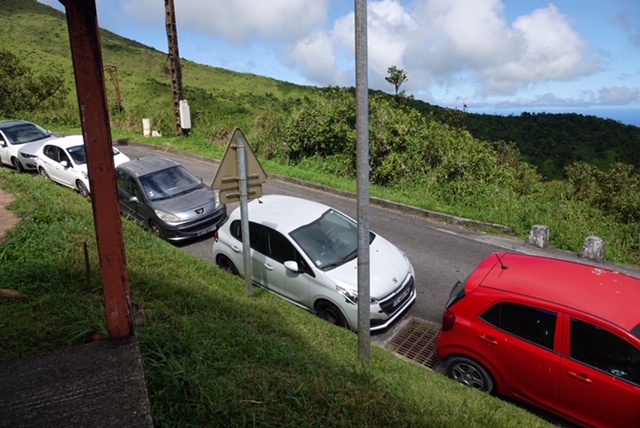
Parking is a problem, but we found a spot not too far from the trailhead. Our car is a white Peugeot diesel 6-speed. Nice small car, but it took a minute or two for Brian to figure out how to shift to reverse (a ring on the shifter to pull up).
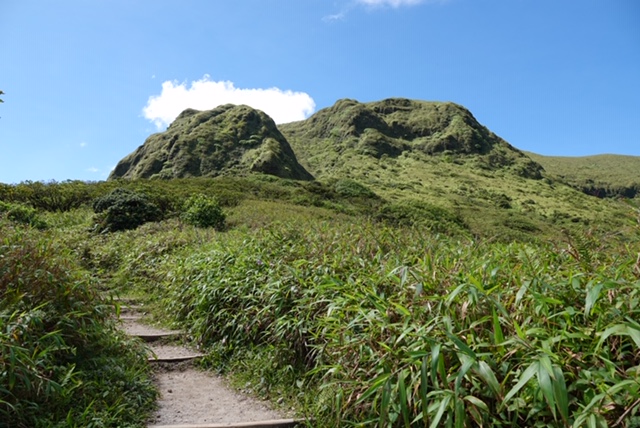
We walked up the trail about half a mile. The weather was cooperative and we had views all around the island, even to the island of St. Lucia south of Martinique.
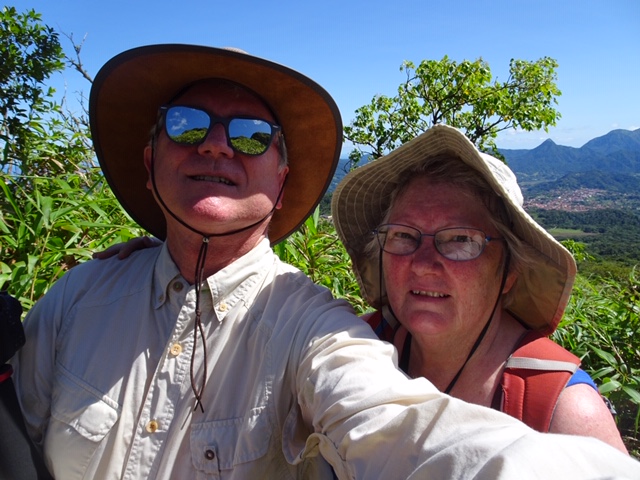
Goofy geologists on the trail. Mount Pelée is reflected in Brian’s sunglasses.
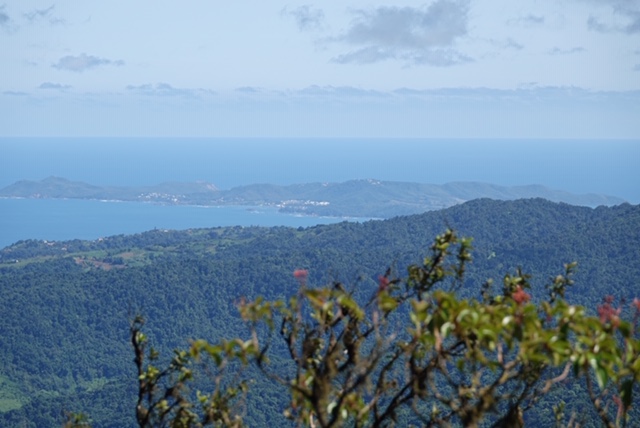
This peninsula extending into the Atlantic Ocean has a ruin that we plan to visit later.
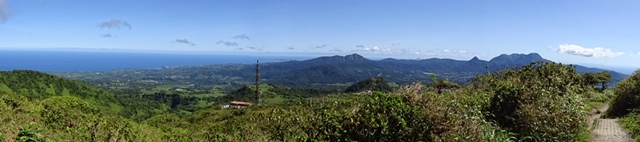
Panorama from the volcano looking south; Atlantic Ocean on the left.
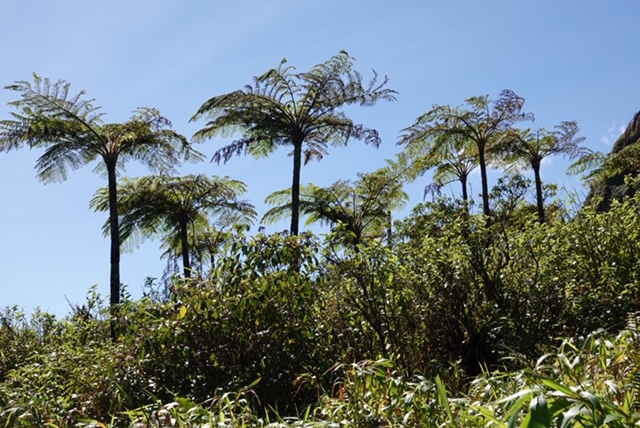
Beautiful tree ferns on the lower slopes. Overall, an exquisite day, mixing sad history with natural beauty.
A Peninsula into the Past

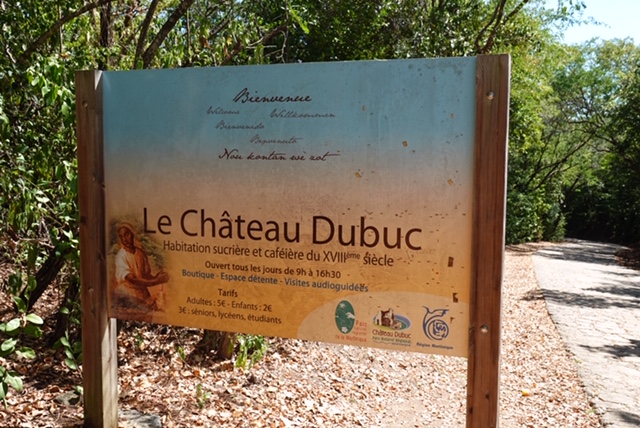
We drove out to the eastern edge of Martinique, to see the stone remnants of an 18th century processing plantation for sugar, coffee and rum.

The proprietor of this facility in the 1700s placed a big light up high on his land, to fool sea captains into thinking it was a lighthouse so the proprietor could collect all the wreckage when the visiting ships crashed.

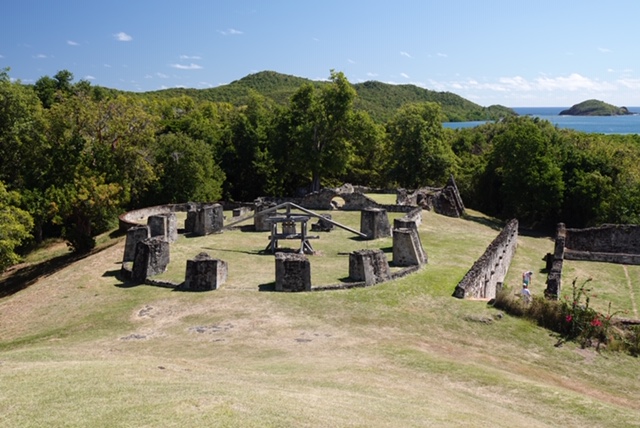
The plantation was huge in its heyday. The French brought expert stonemasons and other professional workers to engineer this complex area.

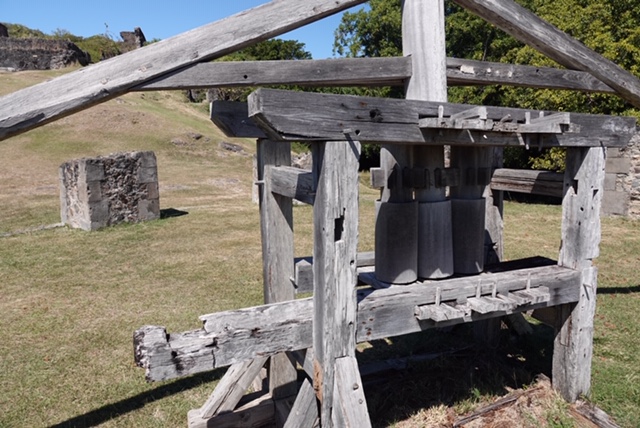
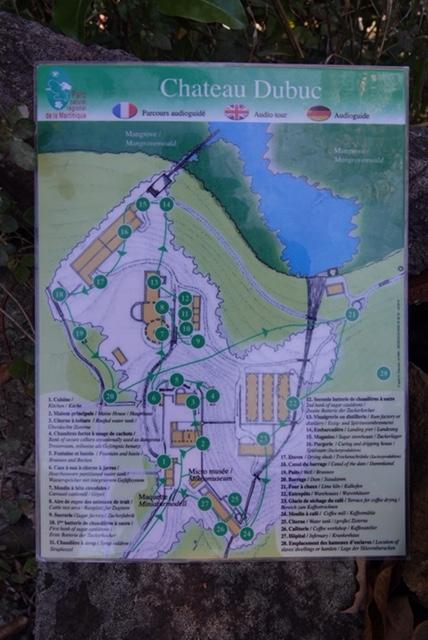
A Caribbean Stonehenge? Nope! A mill for pounding sugar cane to release the juice. Mules were tied to the two boards leading from the middle, and slaves brought the cane. The apparatus in the center today is much smaller than when this was in use. The audio tour explained that the mules had to be changed every two hours, but did not mention how often the humans were exchanged from this job. The audio tour worked by touching one end of the device to numbers shown on the map above.

This is the middle of the apparatus for extracting cane juice which ran into a trough and then dribbled into an underground channel to get to cauldrons below.

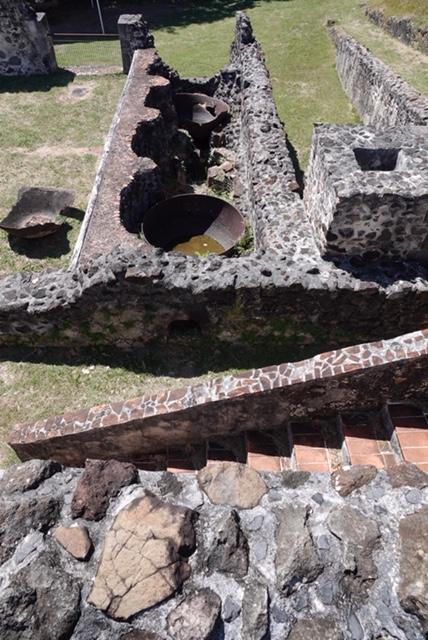
The cauldrons, heated by wood fires, crystallized the sugar. Sugar was the main product for many years, but later rum was also produced.

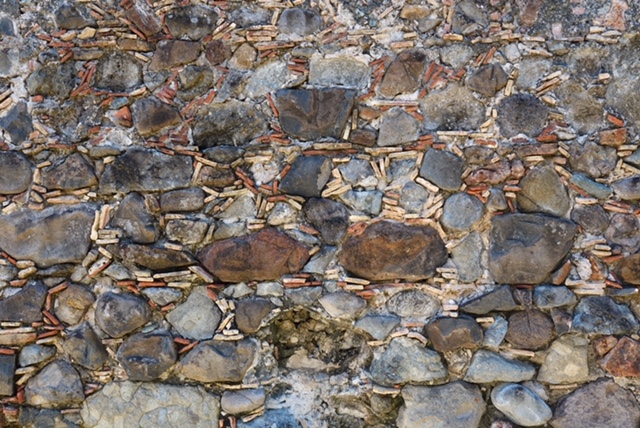
Walls at the chateau were composed of local rock, with cement and pieces of clay tiles. There was a lime kiln on the property to make cement or mortar from shells and coral.

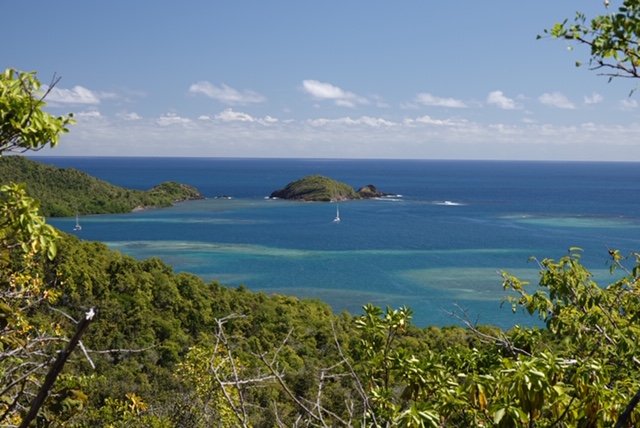
View from the plantation, looking out to the Atlantic. We had hopes of seeing mangrove swamps, which encircle the plantation, but a fence kept us out of that part of the peninsula. Notice all the reefs in the bay! A dangerous landing for ships even during daylight.

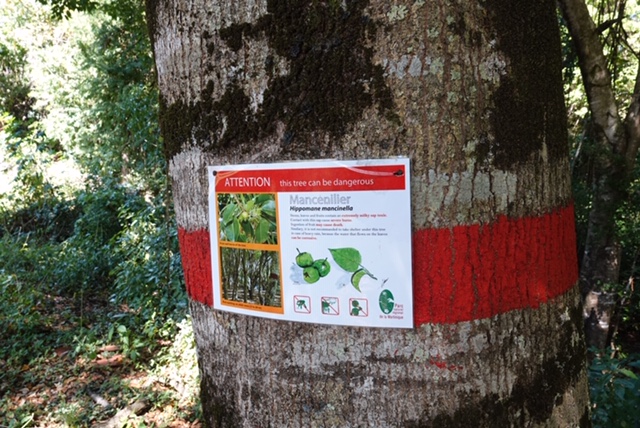
Some trees were marked with red because they are poisonous to the touch! Even the berries, leaves, trunk. We worried a bit about walking on the dried berries, but once they are dry, they are no longer dangerous.

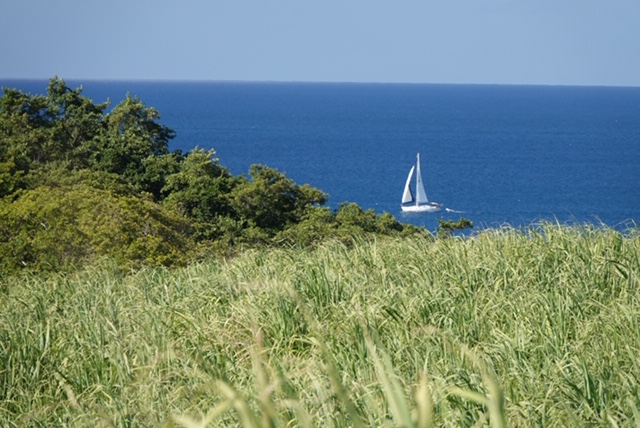
Sailboat, from the peninsula, with sugarcane in the foreground.

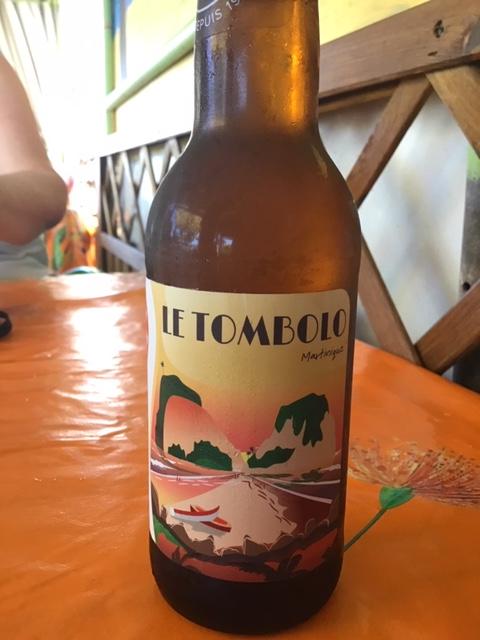
Brian found another local beer that is really just relabeled Lorraine beer. The site, Le Tombolo, in the label artwork is just north of the peninsula with Château Dubuc.

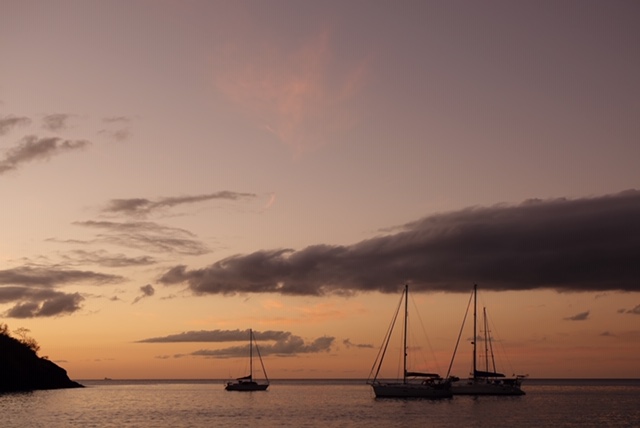
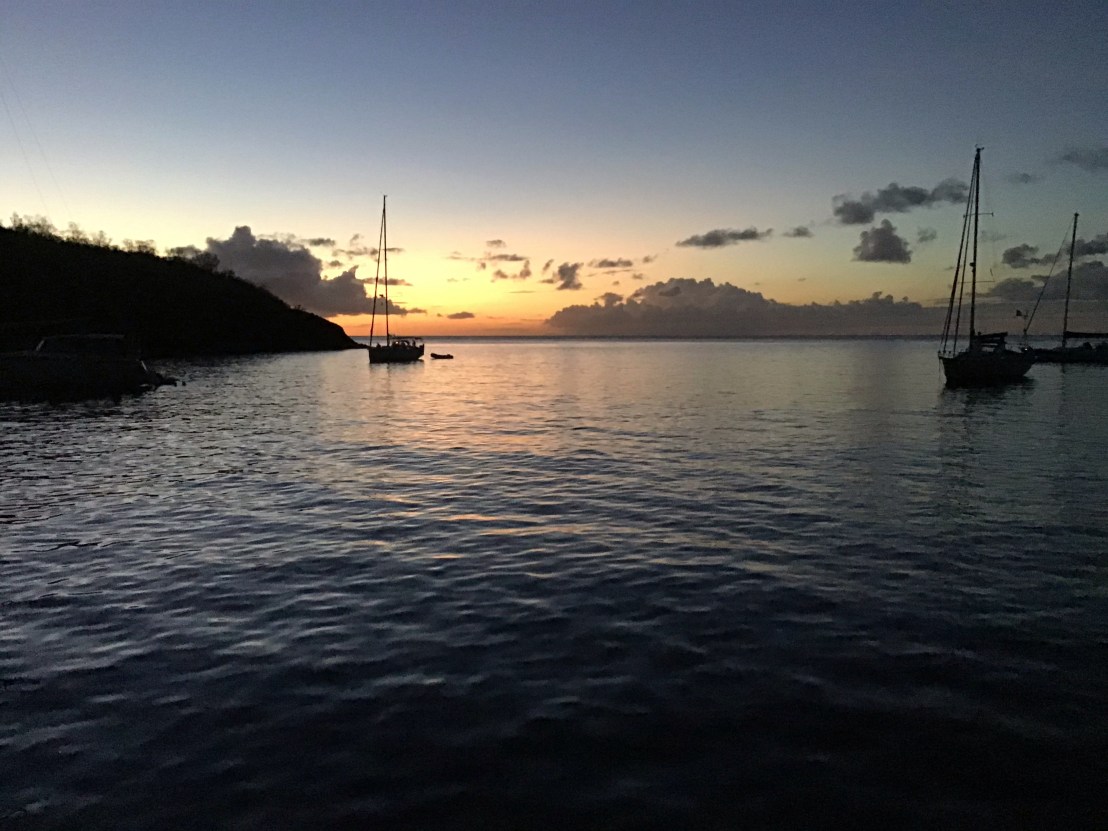
Lovely sunset in our black cove.

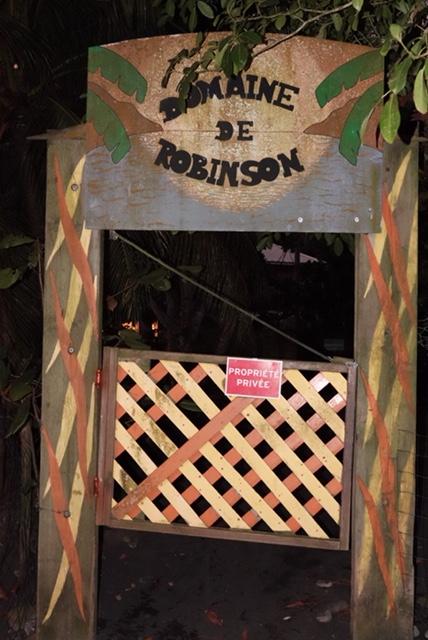
Domaine de Robinson

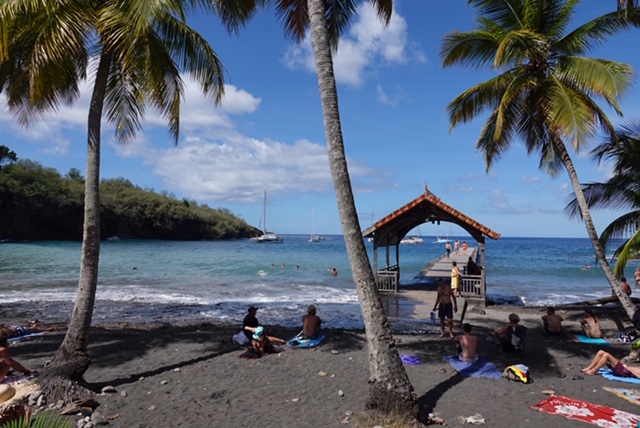
We took a day off, here in the black cove. Brian took a few pictures of the place and Clare watched the waves. We both played in the waves, even swimming out past the pier, practicing for an adventure later this week. We read books, washed some clothes in the sink, and relaxed.

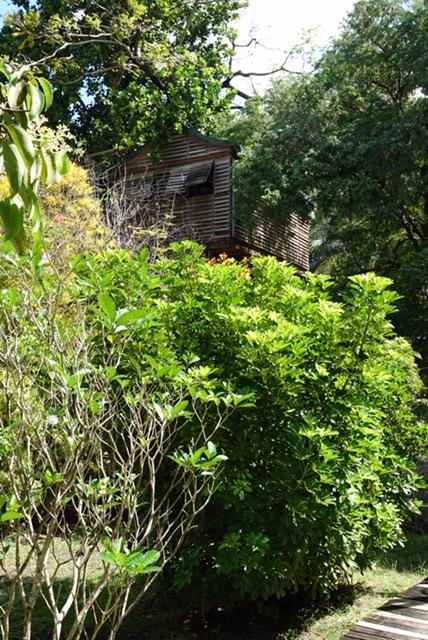
One unit is a treehouse with a makeshift elevator to bring stuff up and down.

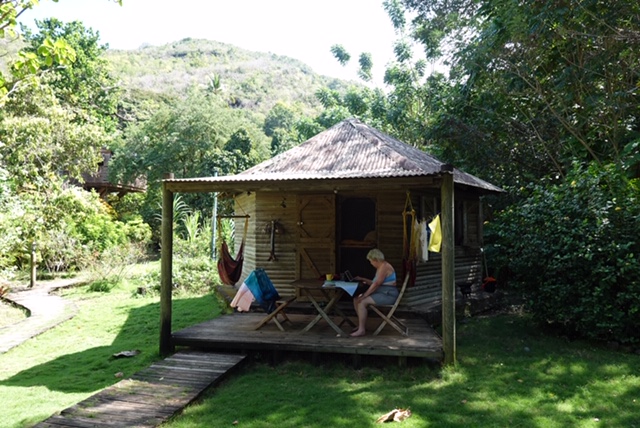
Like Swiss Family Robinson? Clare blogging outside our bungalow.

We were in bungalow one, as you can see!

It is very well made!

Our view. Easy to see why Clare was happy to watch the waves. Great day for both of us. We walked out on the pier at night to look at stars; the constellation Orion was almost directly overhead. We also recognized Cassiopeia.

Dominica to Martinique

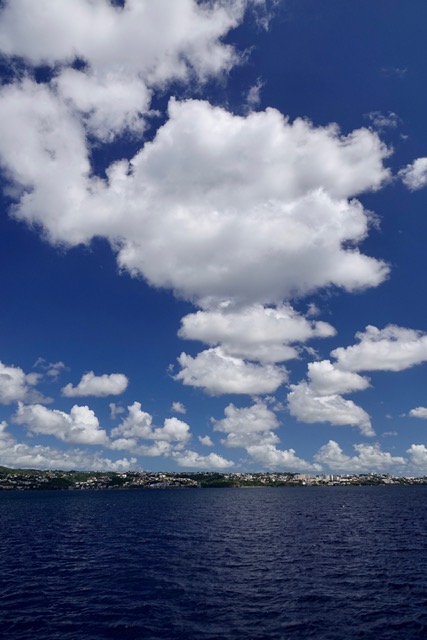
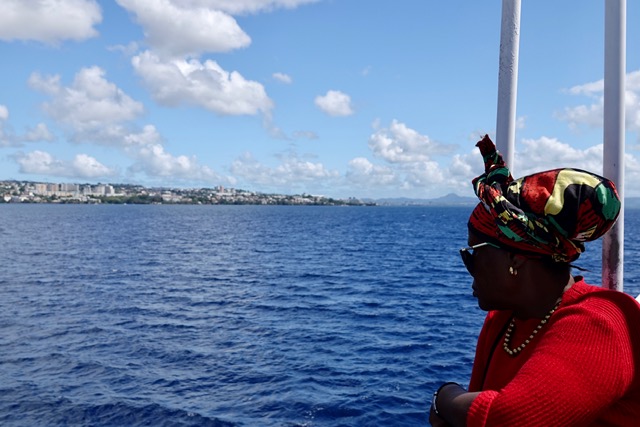
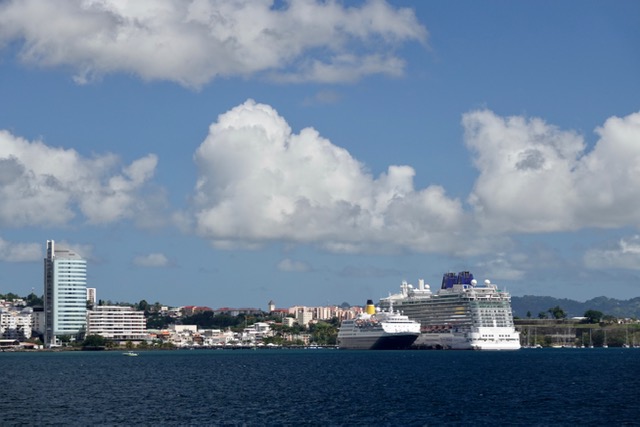
The ride on the ferry was beautiful yet again. Nice way to travel between islands in the Lesser Antilles! This is the outskirts of Fort-de-France, Martinique.

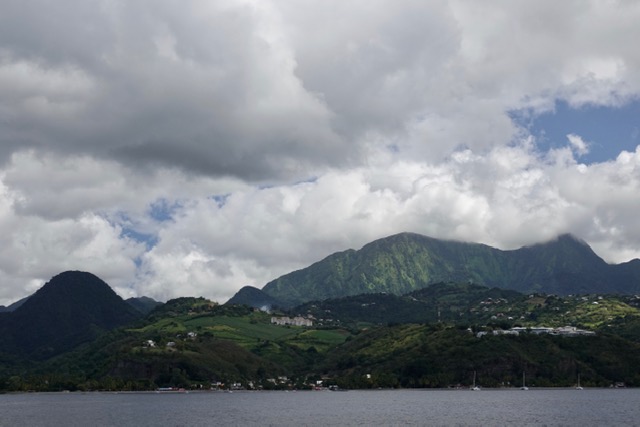
From the ferry, the differences between the (once British) island we just left, Dominica, and the one where we arrived, Martinique are profound. Each island is of similar size. But Dominica is not very populous while Martinique has houses on (seemingly) every hill.

This woman’s colorful scarf is covering her braids, a common hairstyle here which can be quite elaborate. Look at all the buildings on Martinique.

Some of the settlements. We thought the gently sloping fields of lighter green might be sugarcane.

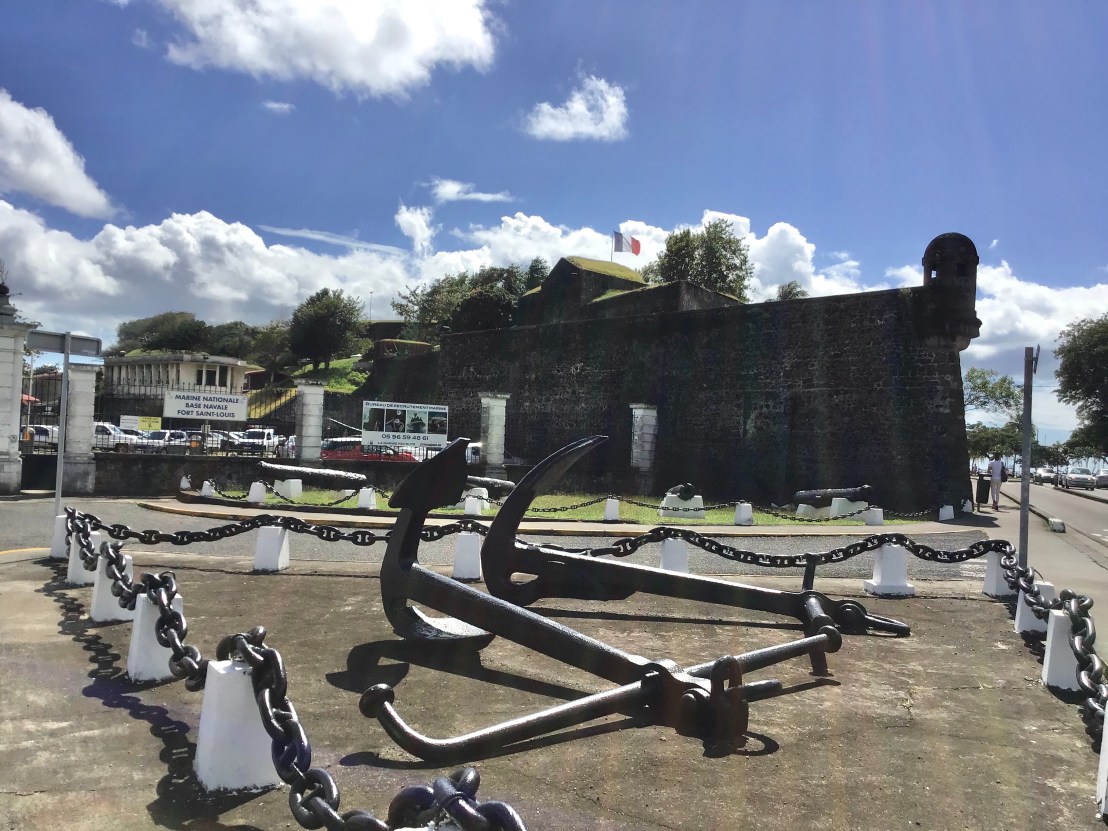
Fort St-Louis (military base today) in Fort-de-France, with anchors in front.

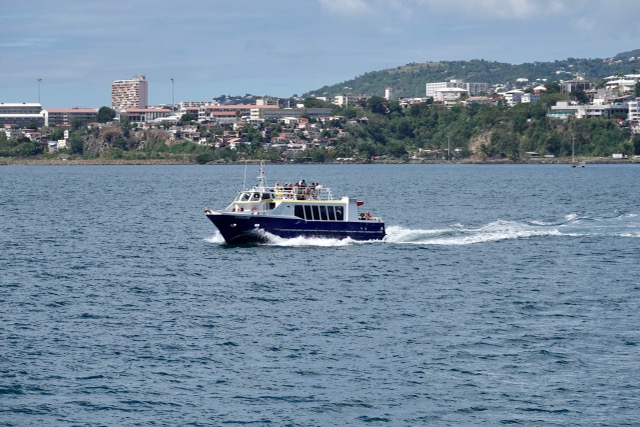
This is the type of ferry we were on to travel from Fort-de-France to Pointe du Bout. Standing room only for this 15-minute ride.

In Dominica, the cruise ships overwhelm the tiny city of Roseau; in Fort-de-France, they are not as significant although there were three on the day we arrived.

So, now that we are back in civilization, what did we do? As soon as we got off the ferry in Fort-de-France, we raced for the “beach” ferry, a short walk away. We crossed the bay to Pointe du Bout, rented a car, and drove south to a remote place called Anse Noire (cove black), stopping for croissants, vegetables, and groceries. The bungalow we rented for the next five nights is rustic. No towels provided. We make all our own food. We have to take out our own trash and sweep the floors when we leave.

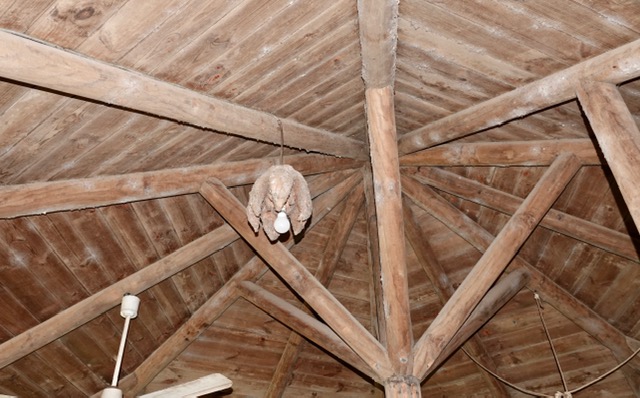
Our bungalow was constructed by the owner of the property, Claude. No metal in evidence, except the kitchenware. This guy is talented!

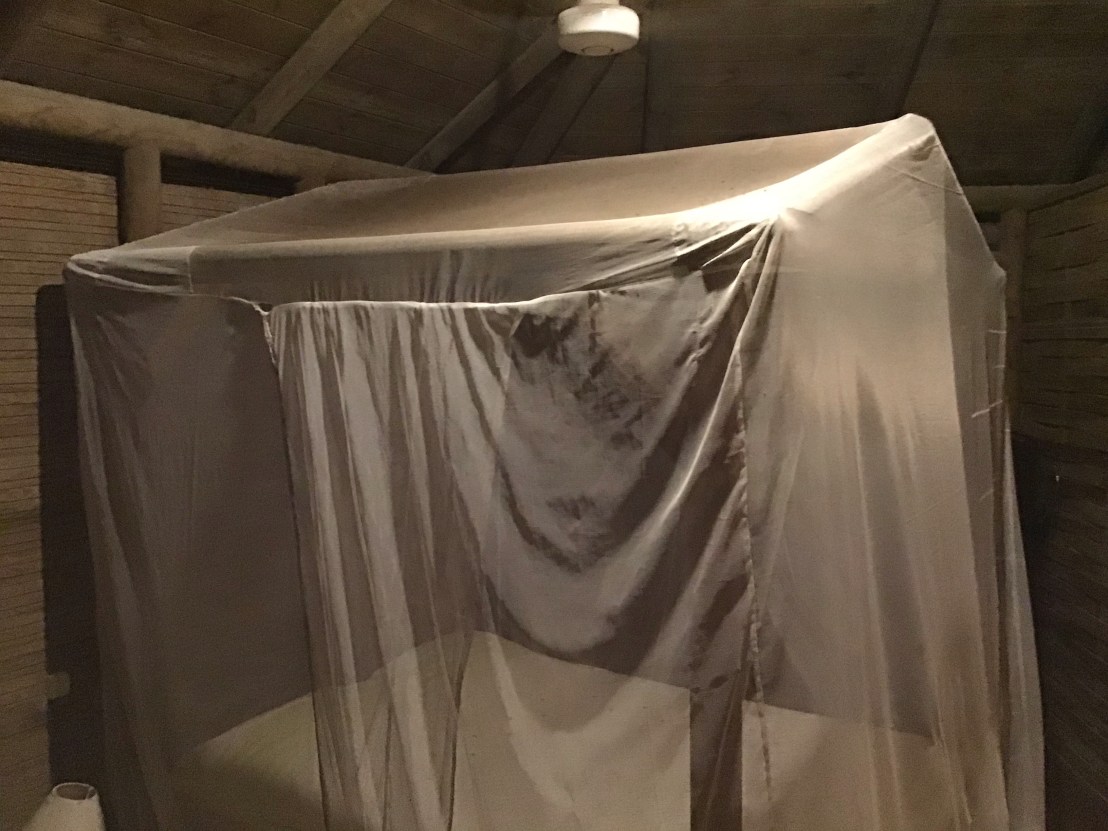
Our bed is covered with mosquito netting. Claude said that it was not mosquito season now, so we should be OK. But both Brian and Clare have seen a few in our bungalow.

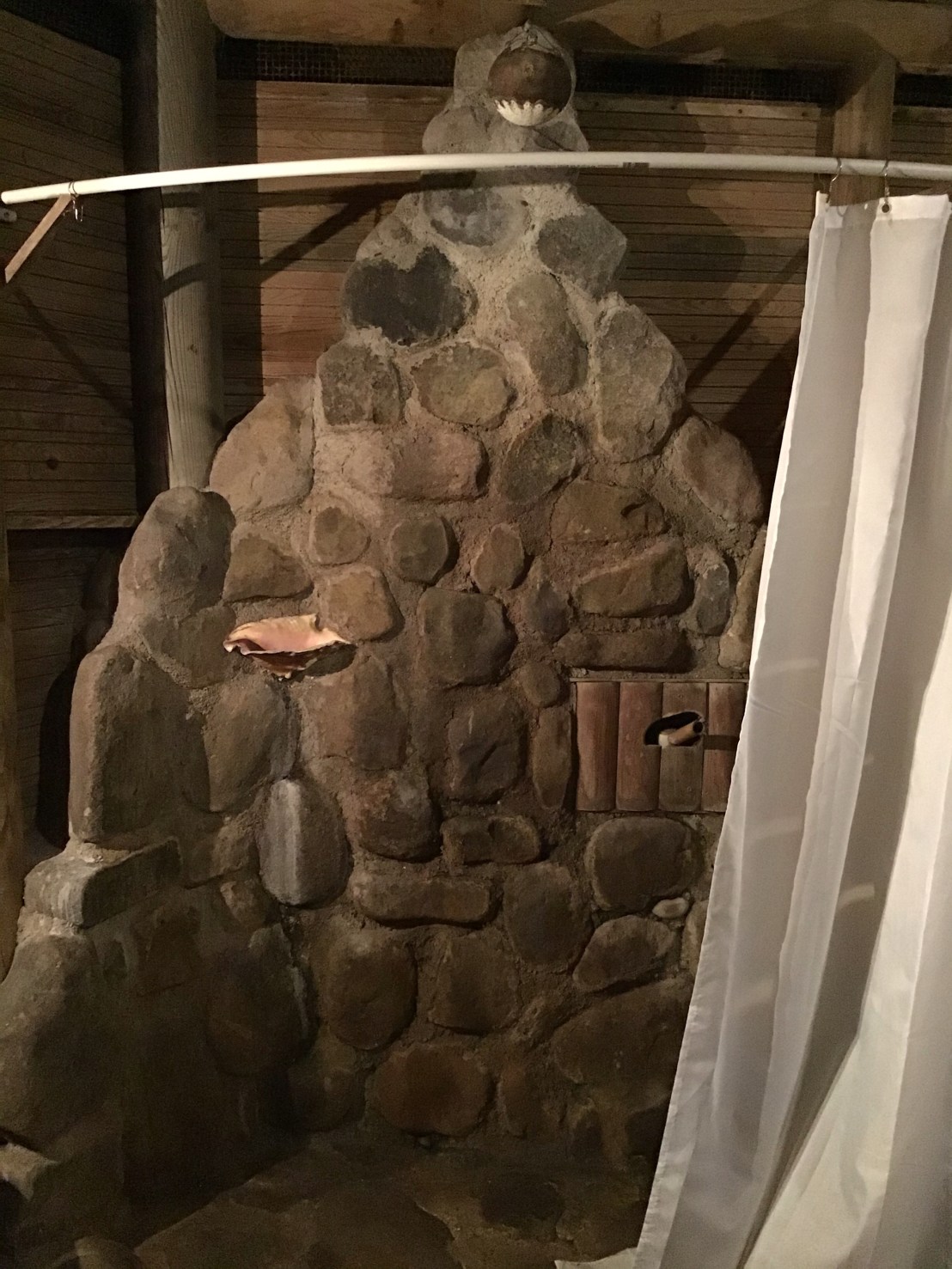
The shower is made of rock, with a conch shell for the soap dish, a gourd for the shower head (not coconut, thank heavens) and a wooden lever to turn on and off the water. It seems a bit like a chimney with a drain.

This is the reason for the rustic, romantic setting. An almost private cove, calm water for snorkeling, listening to the waves crash all night long. Happy.