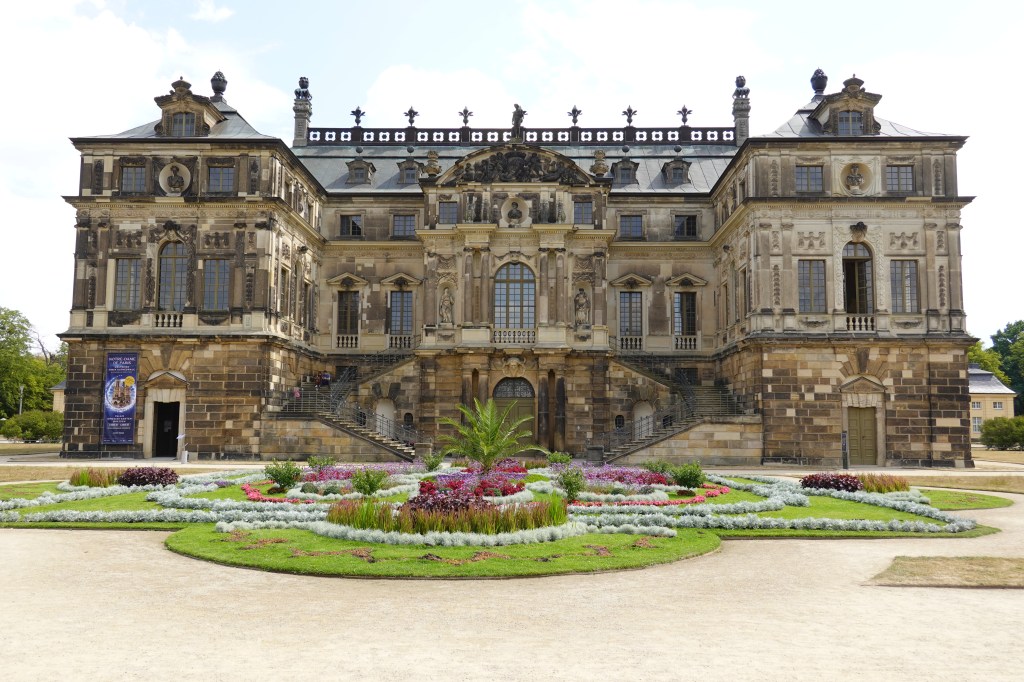
What an incredible climax to all the castles, cathedrals, artwork, and amazing human-made artifacts is Dresden. Baroque, overboard, exquisite. Our last couple of days on this trip are in this often rebuilt city.
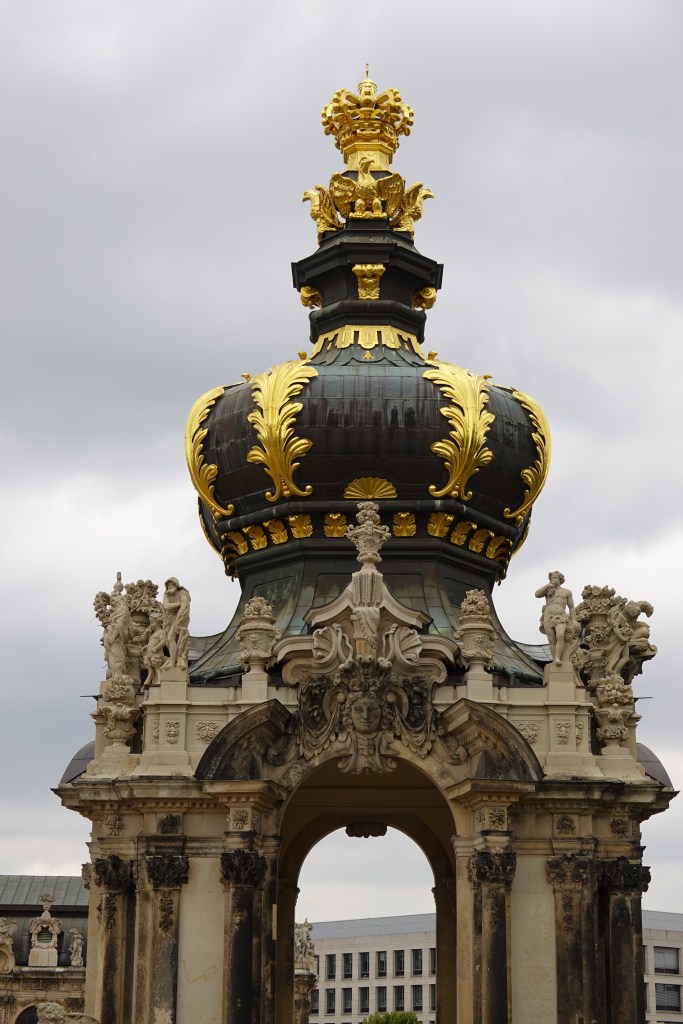
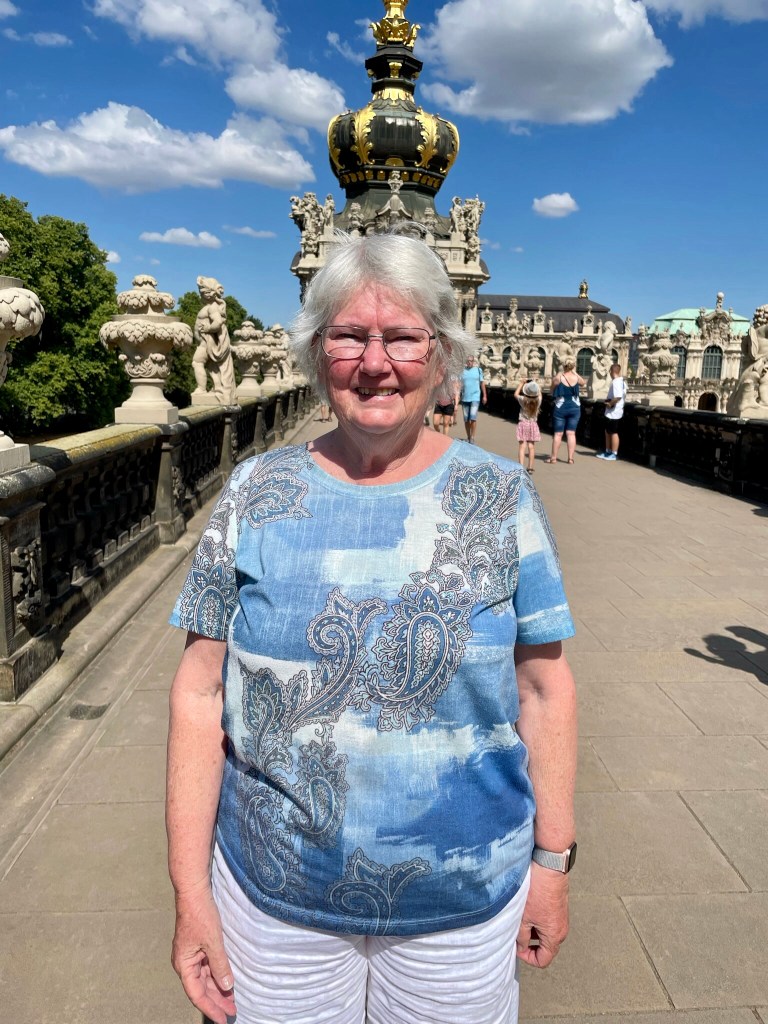
Crown atop one wing of the Zwinger Palace (building which houses many museums)
Clare went with people from the conference for half a day while Brian went with other attendees to see the Dresden Ion Beam Center. She met Marta, who kept Clare from getting lost (by stopping to gape at the incredible buildings in the city).
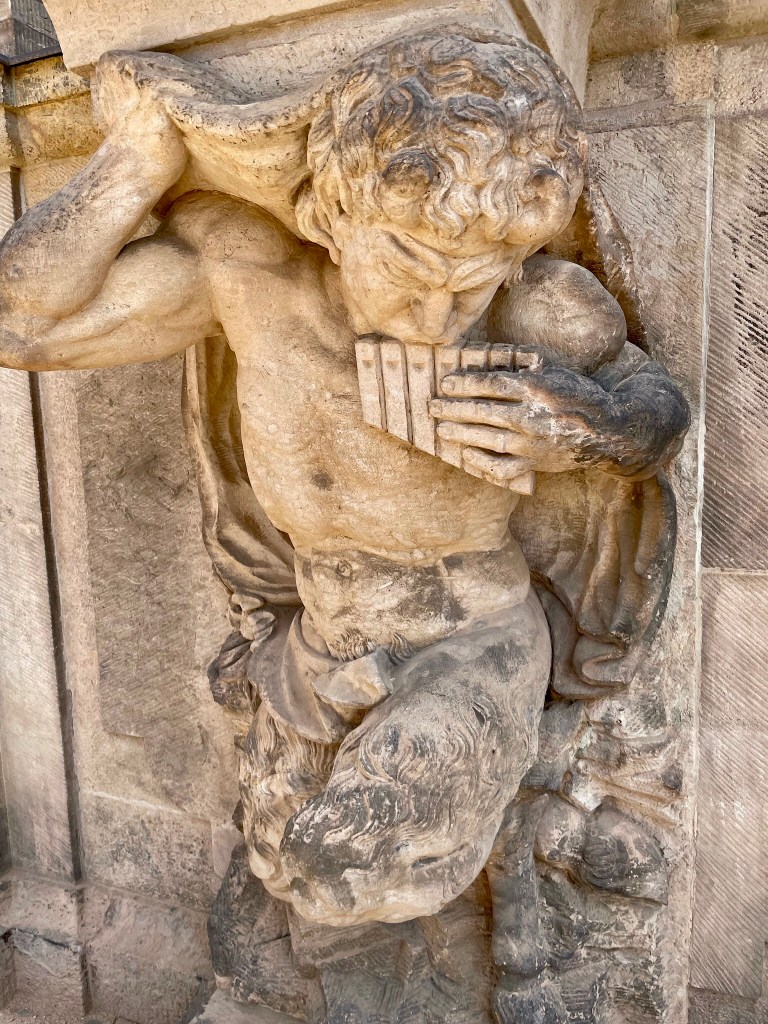
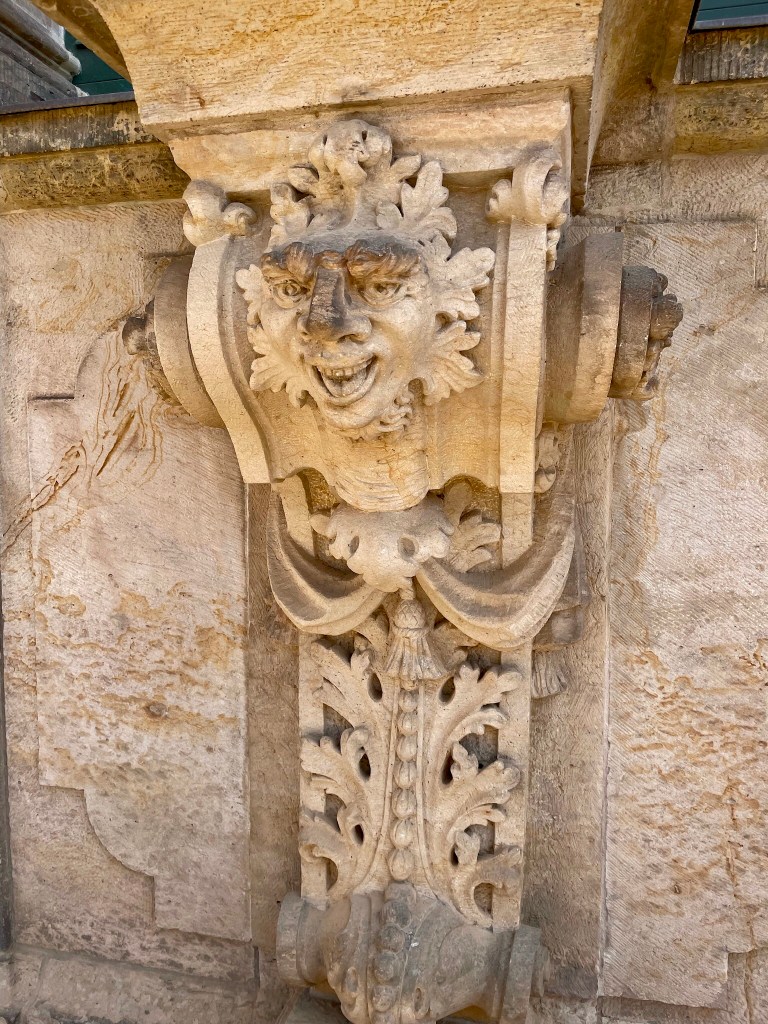
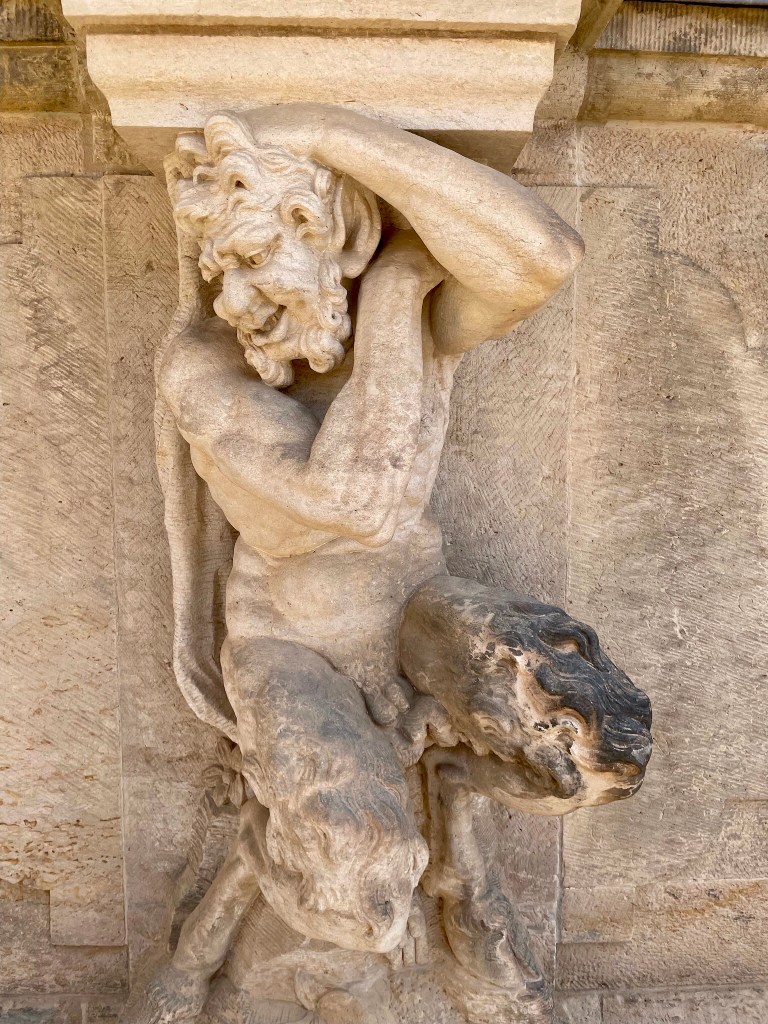
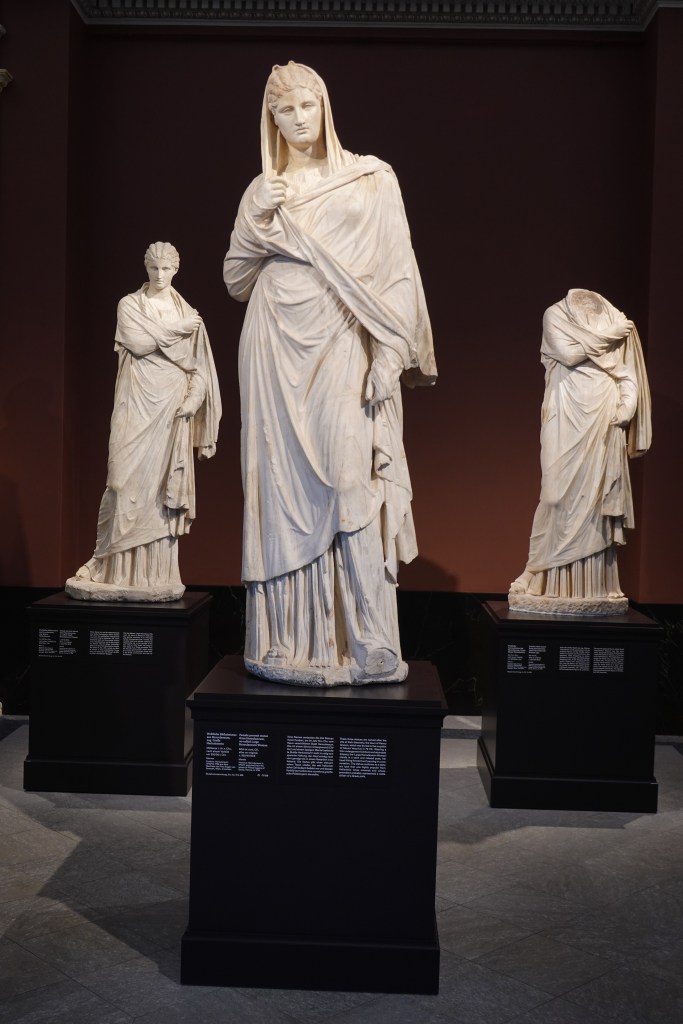
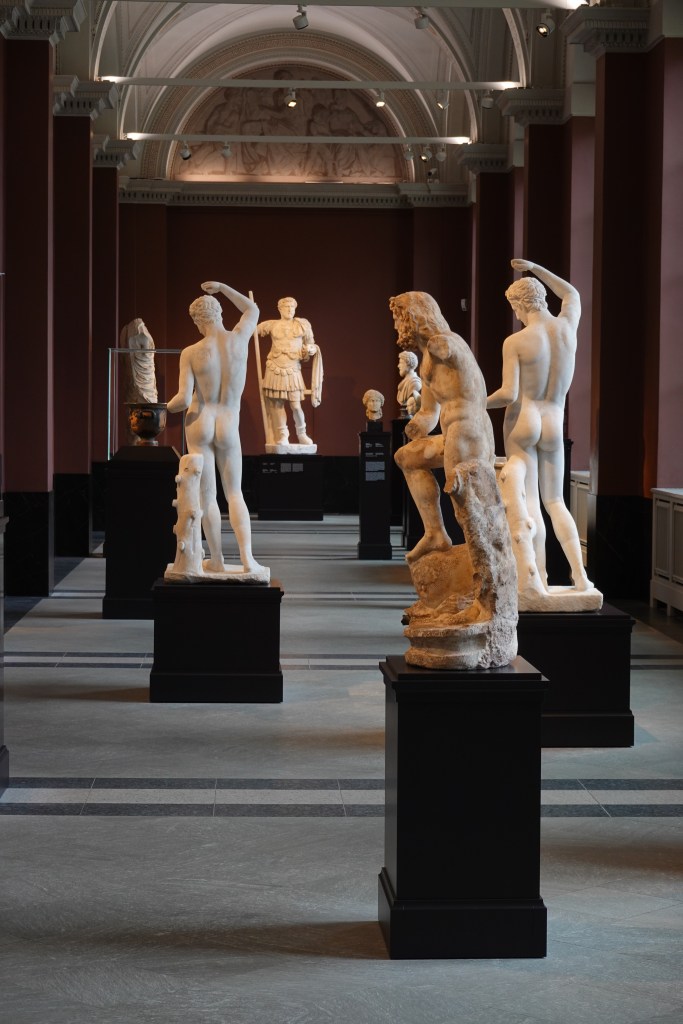
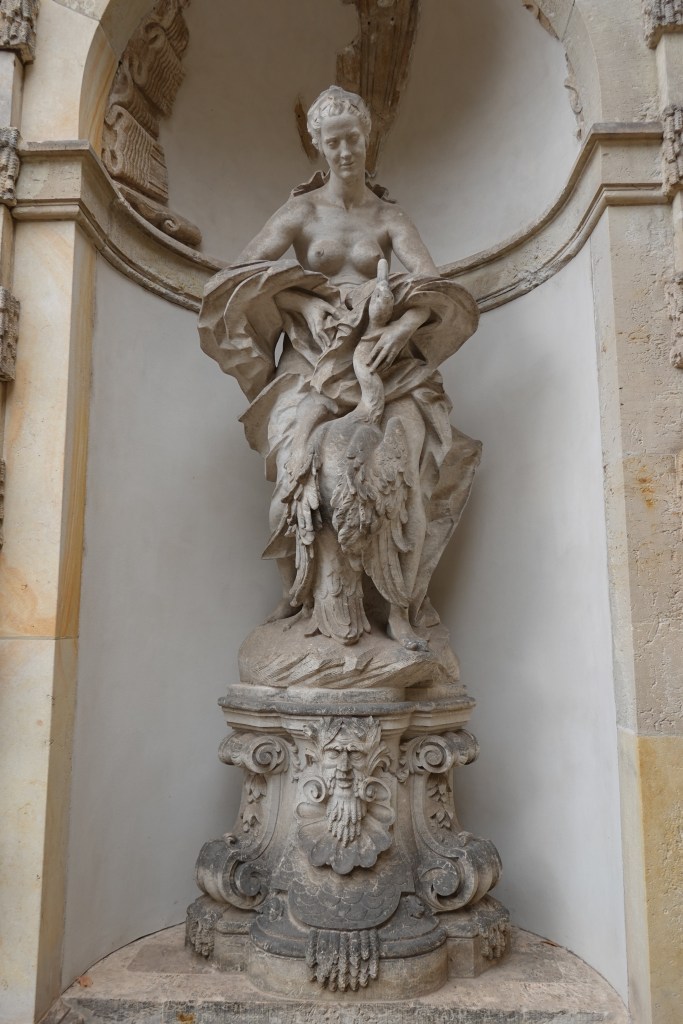
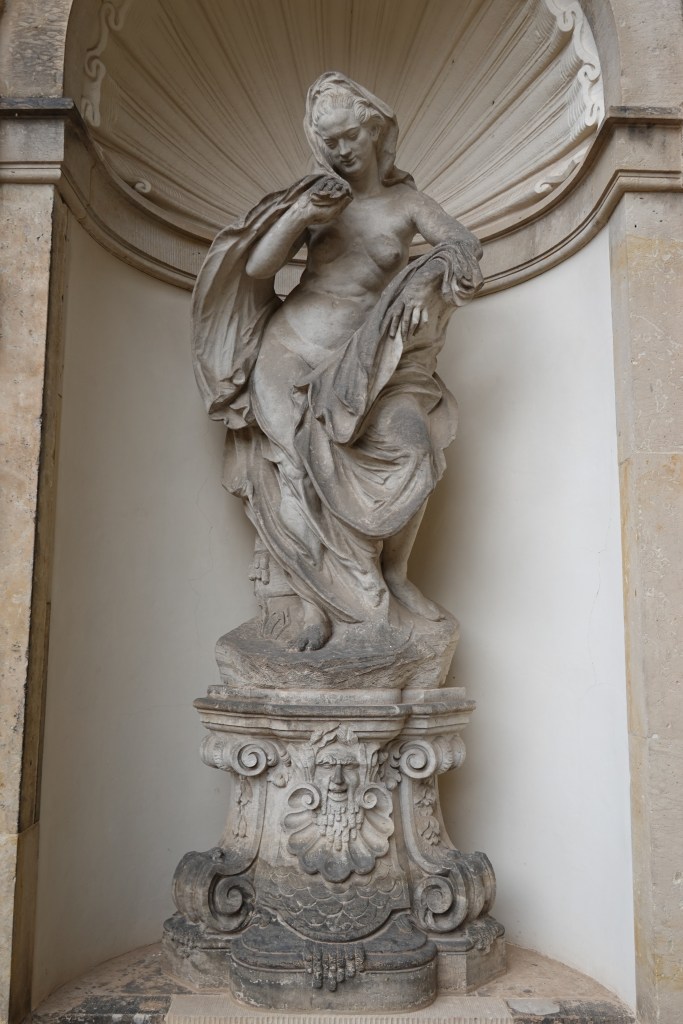
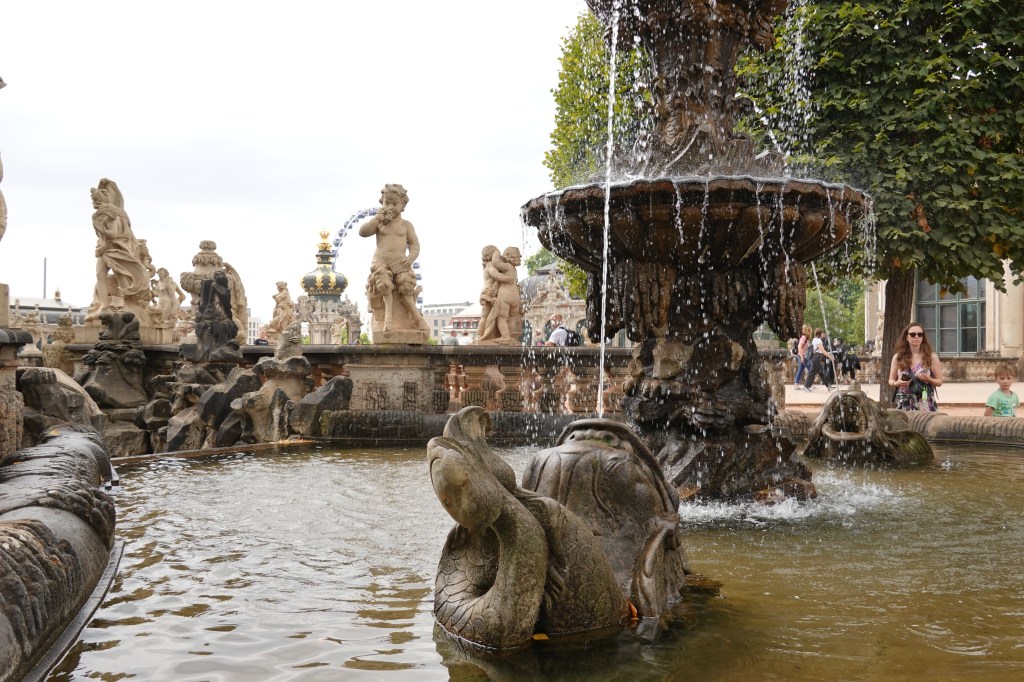
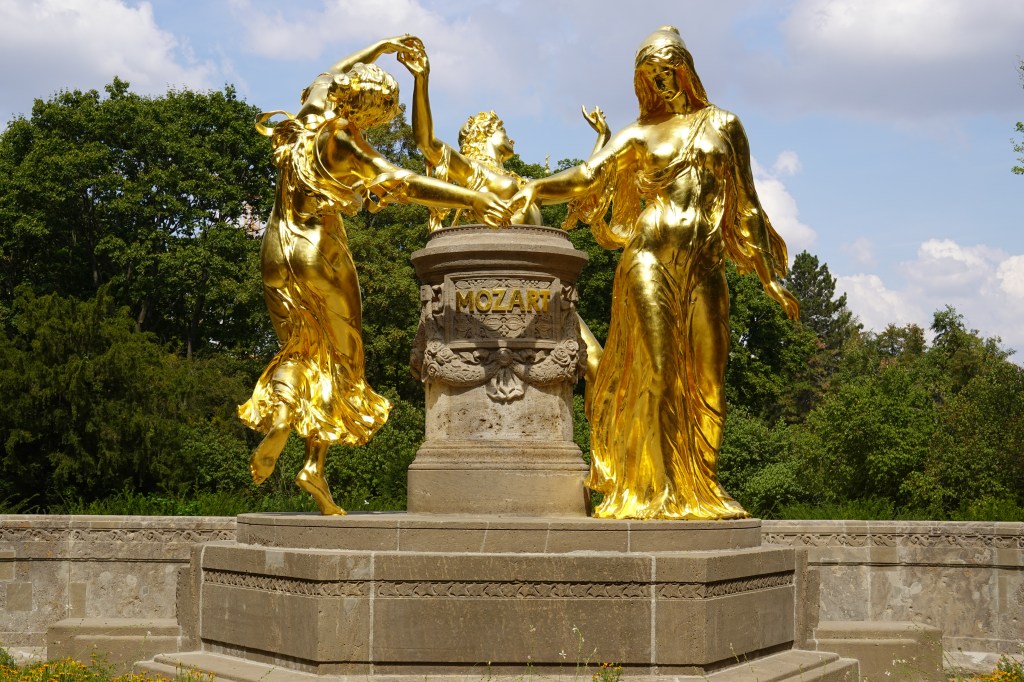
When Marta got a phone call, Clare took pictures of these statues at the edge of the Zwinger courtyard, all so very different!
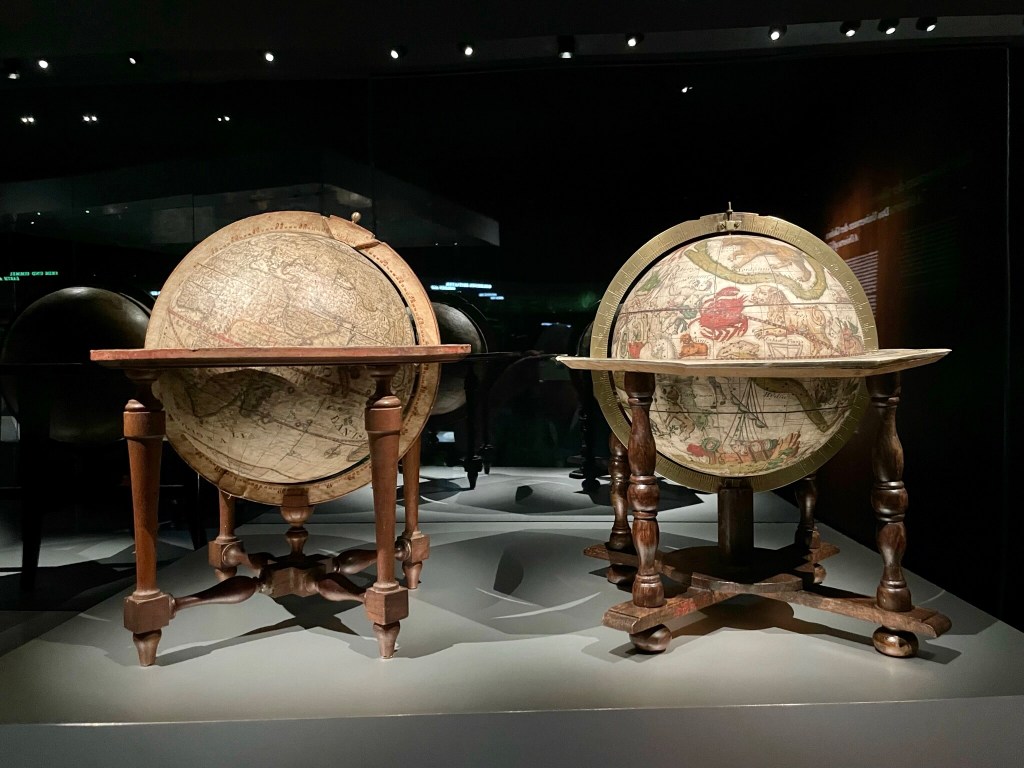
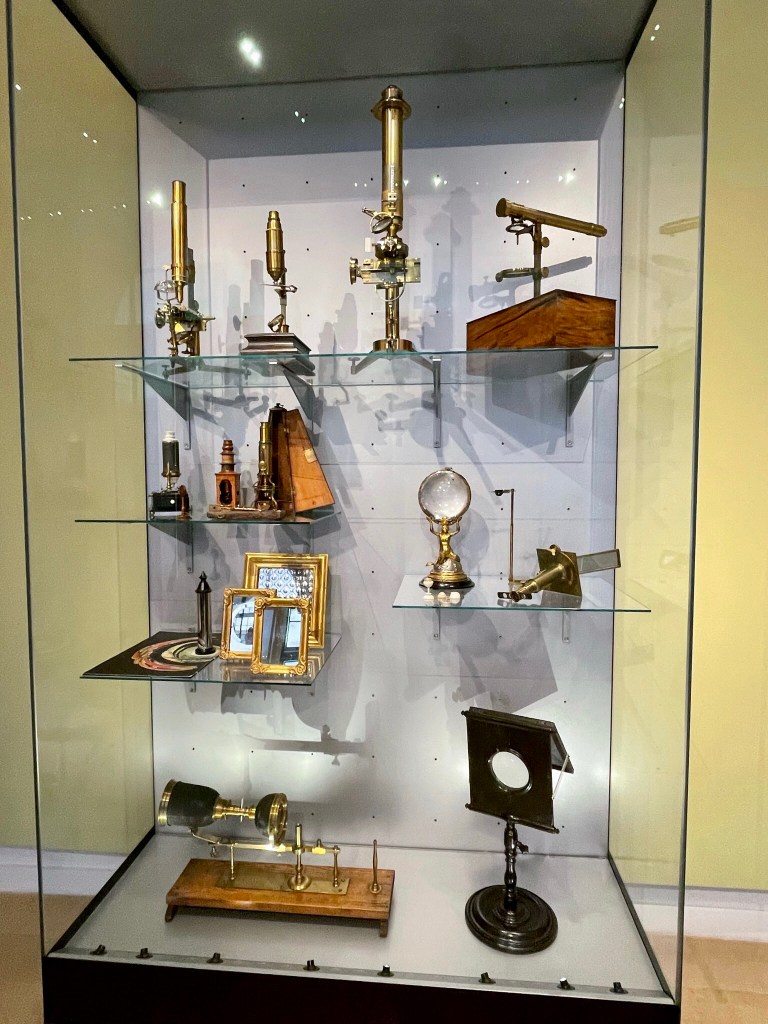
Clare’s group first went to the Mathematisch-Physikalischer Salon to see old clocks, globes, drafting tools, and other scientific instruments.
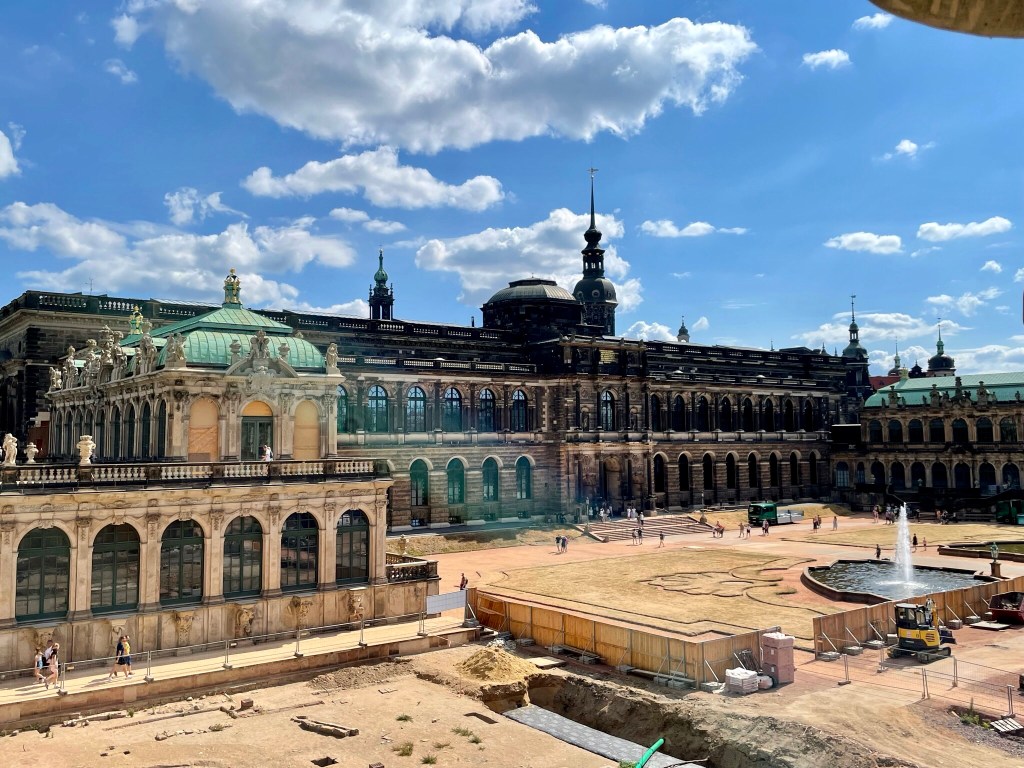
Old globe and star mapView from the roof of the Math Physics Museum Marta took this picture of Clare wearing a very large crown!Small sample of the instruments in the museum.
Later, Clare’s group went to the Green Vault to see amazing gold, silver, ivory and gemstone collections. Unfortunately, photographs were strictly forbidden. The rest of this post is when Clare and Brian were together in Dresden.
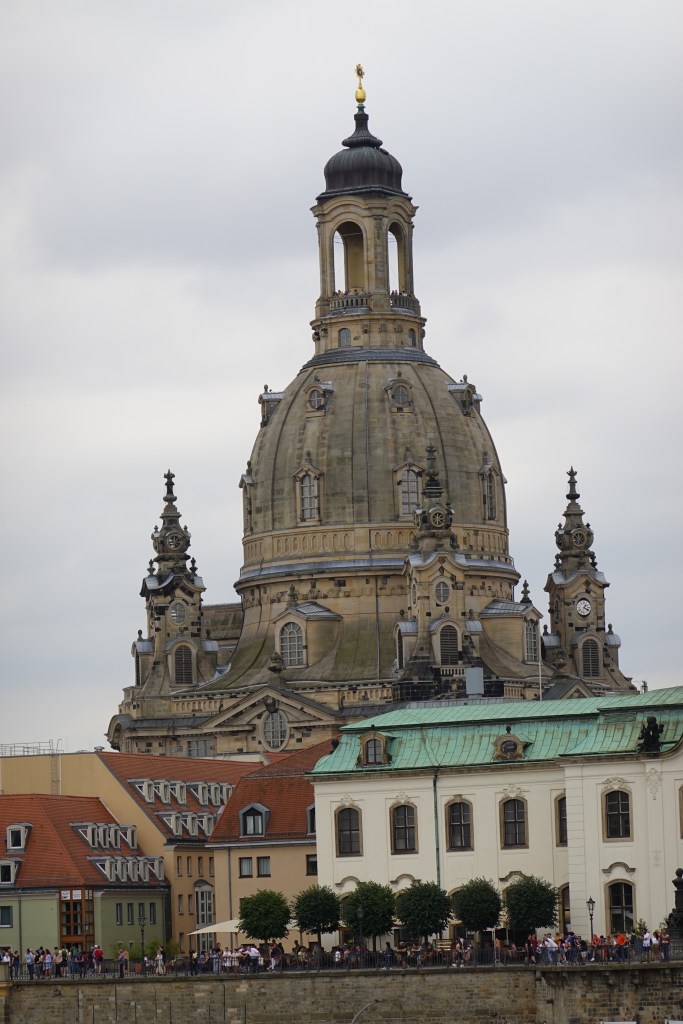
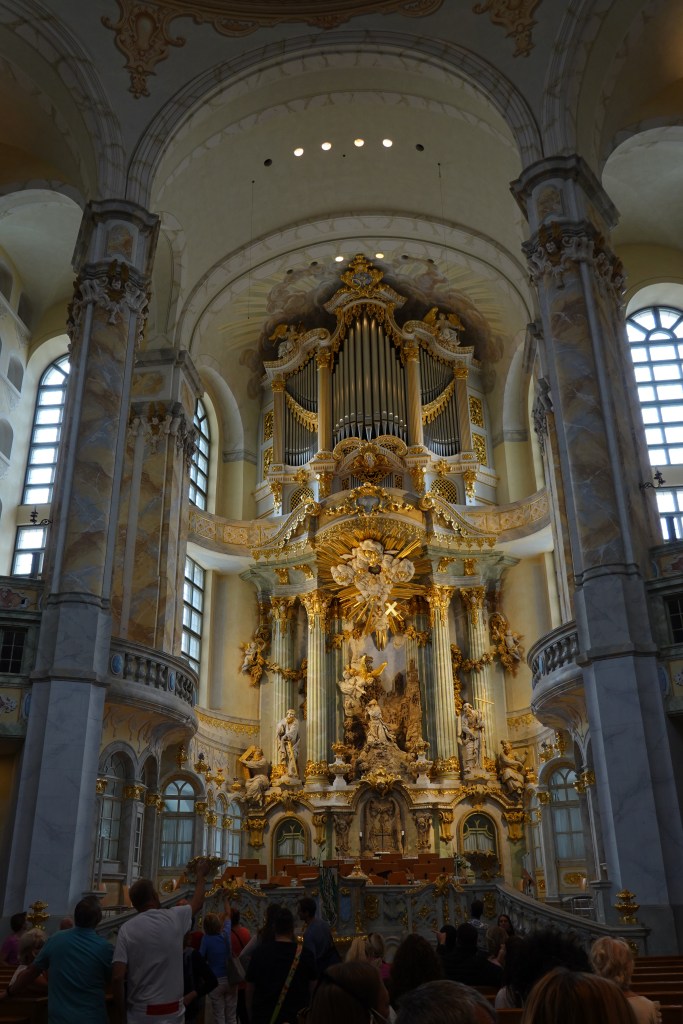
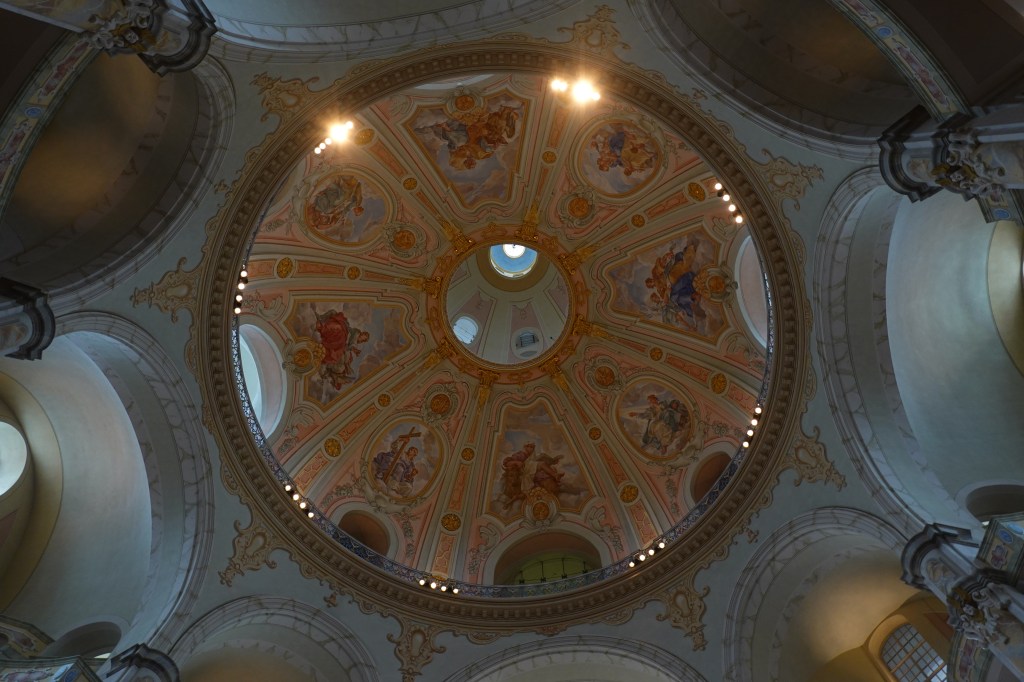
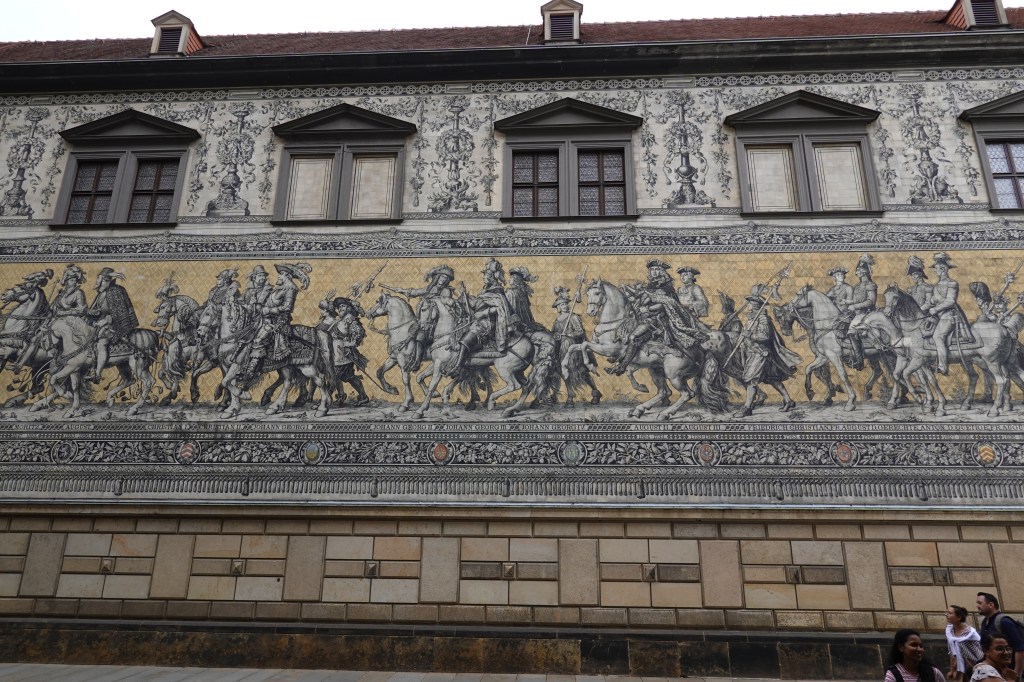
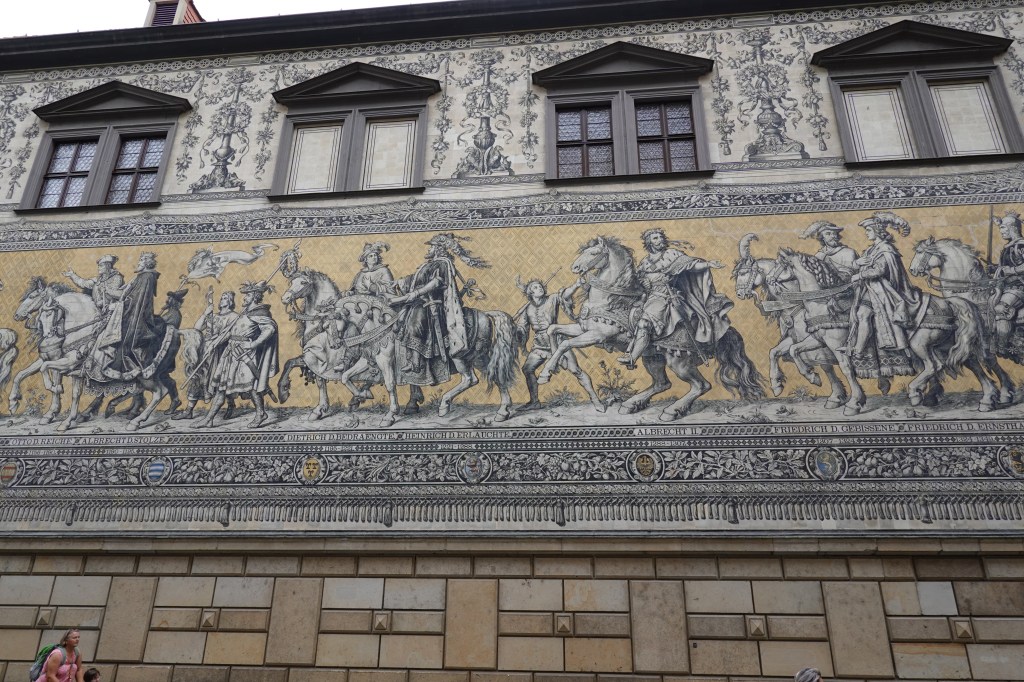
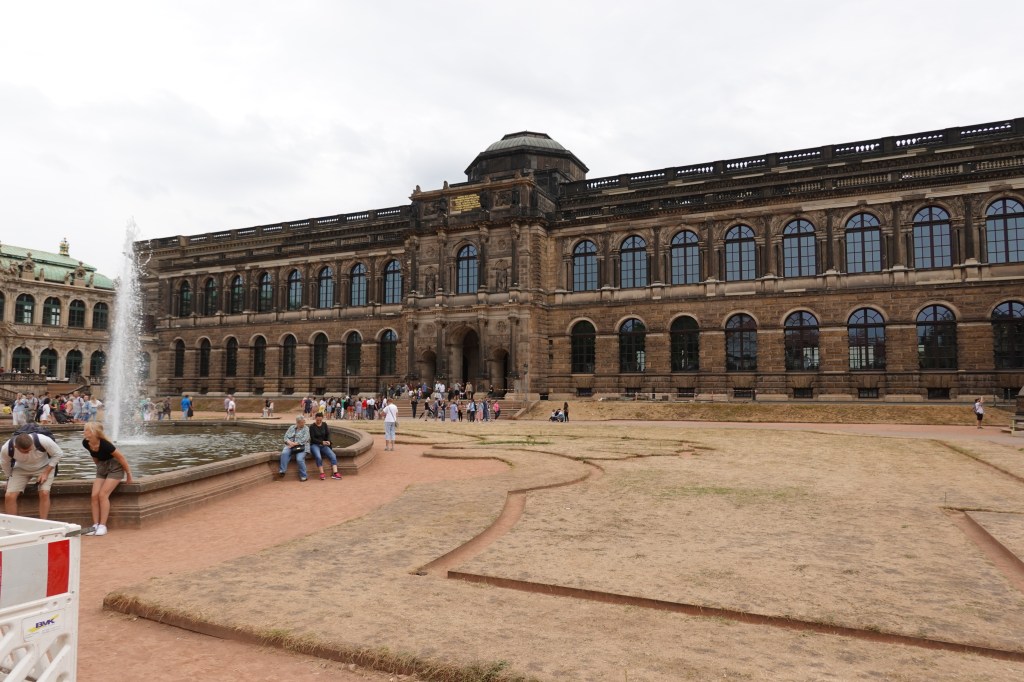
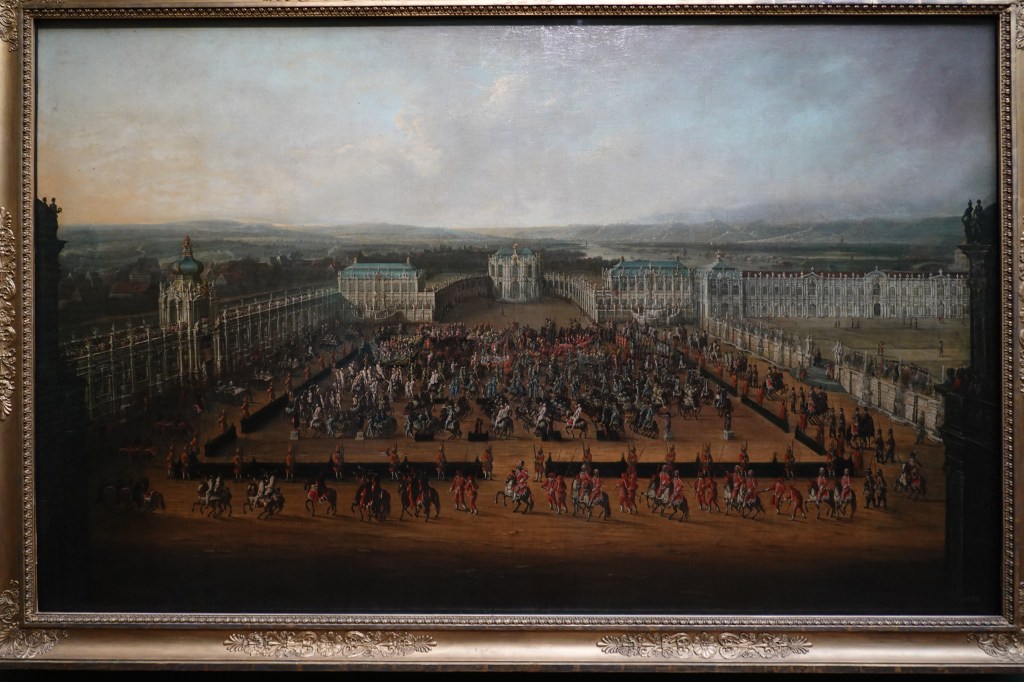
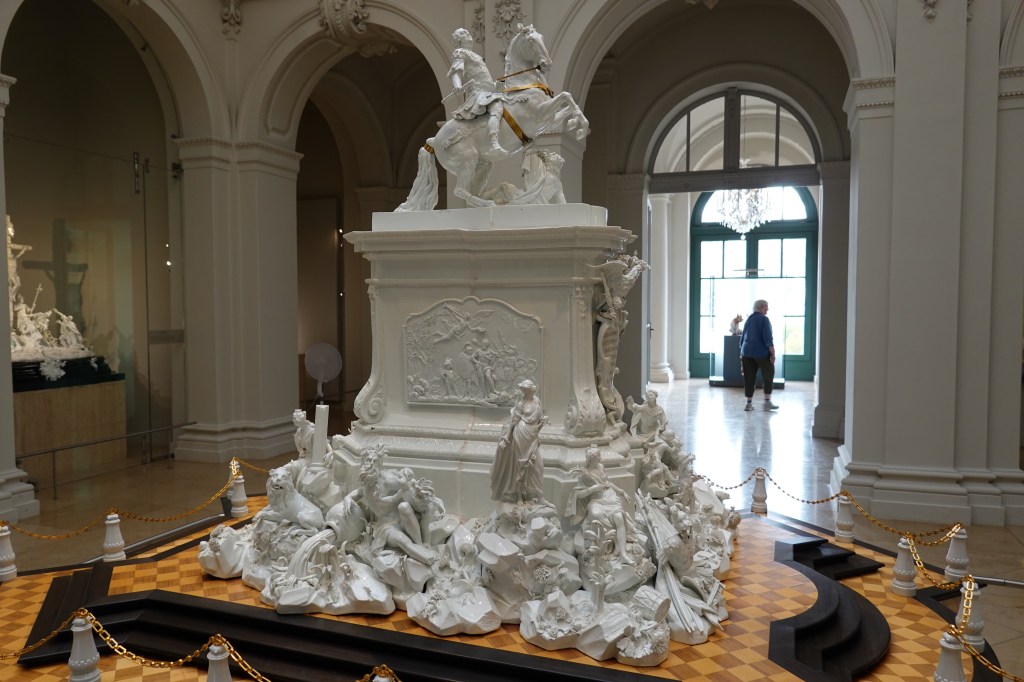
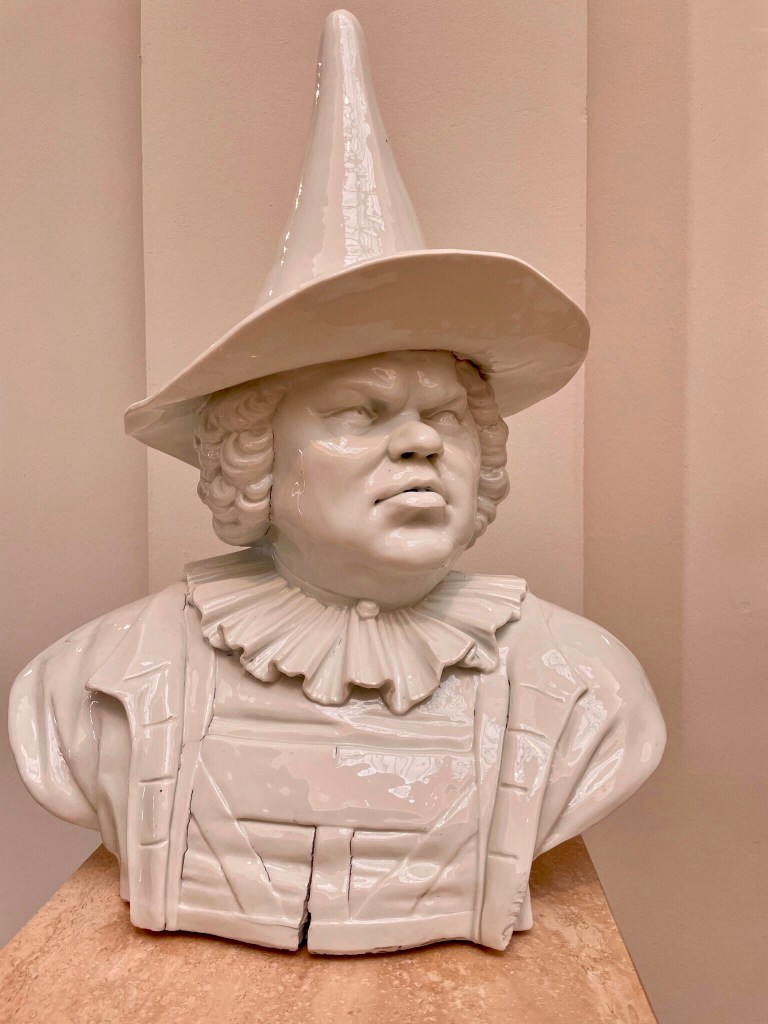
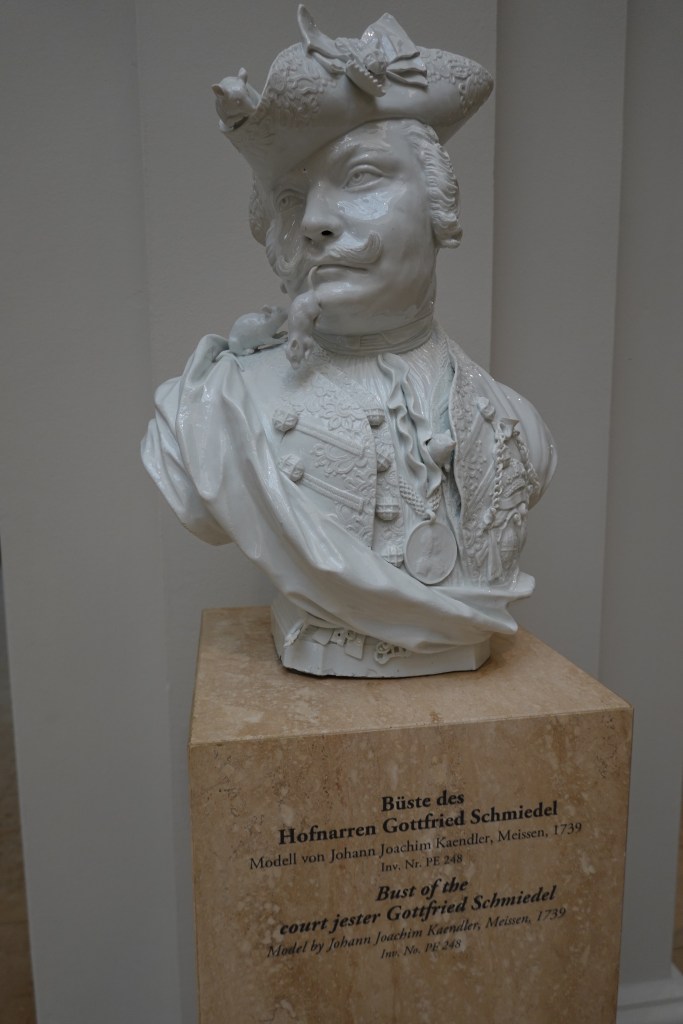
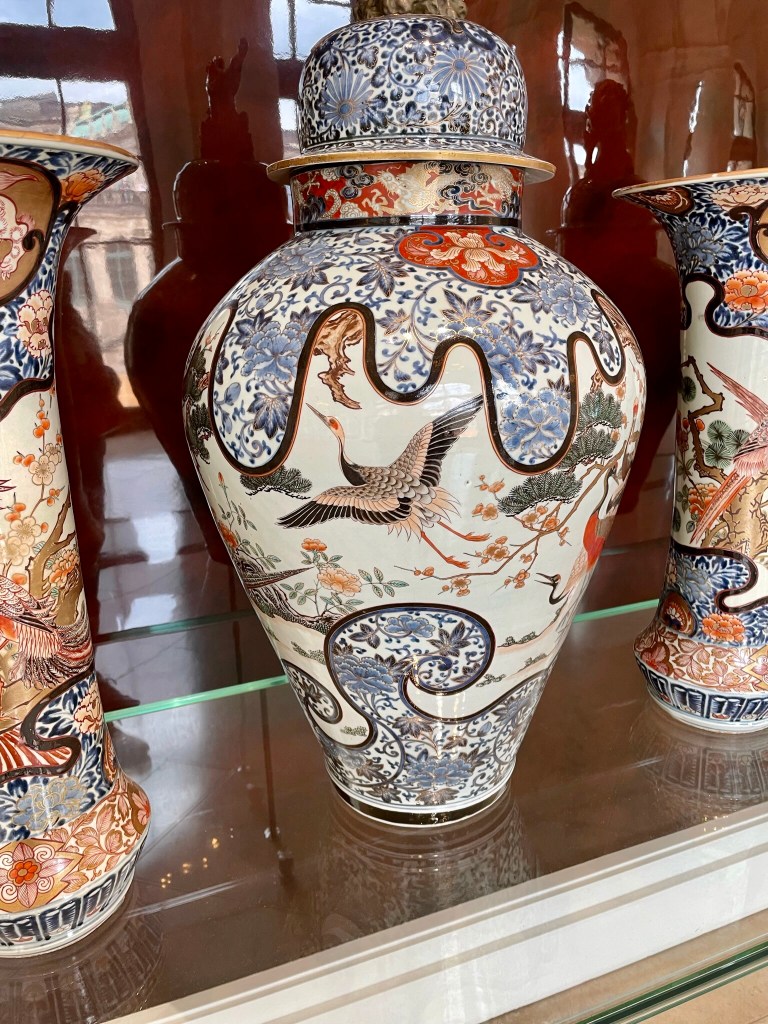
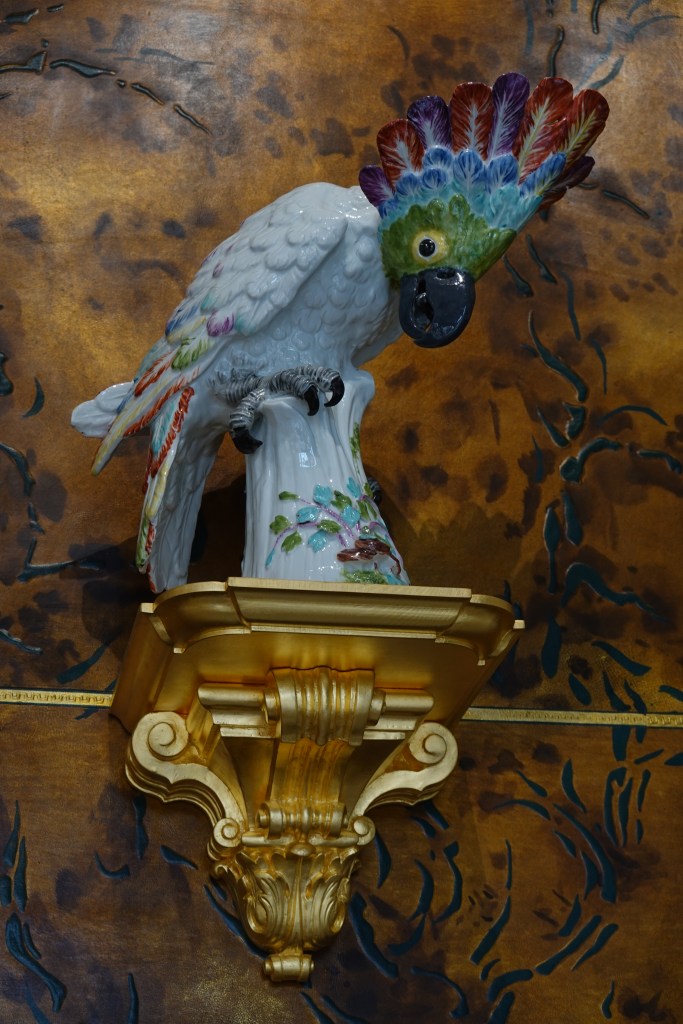
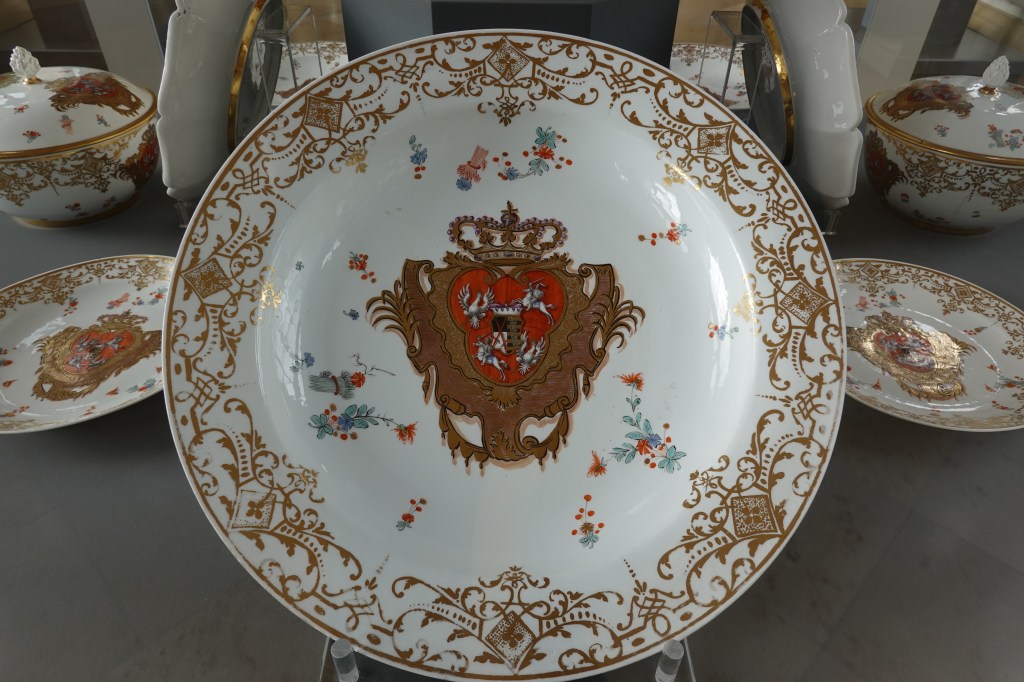
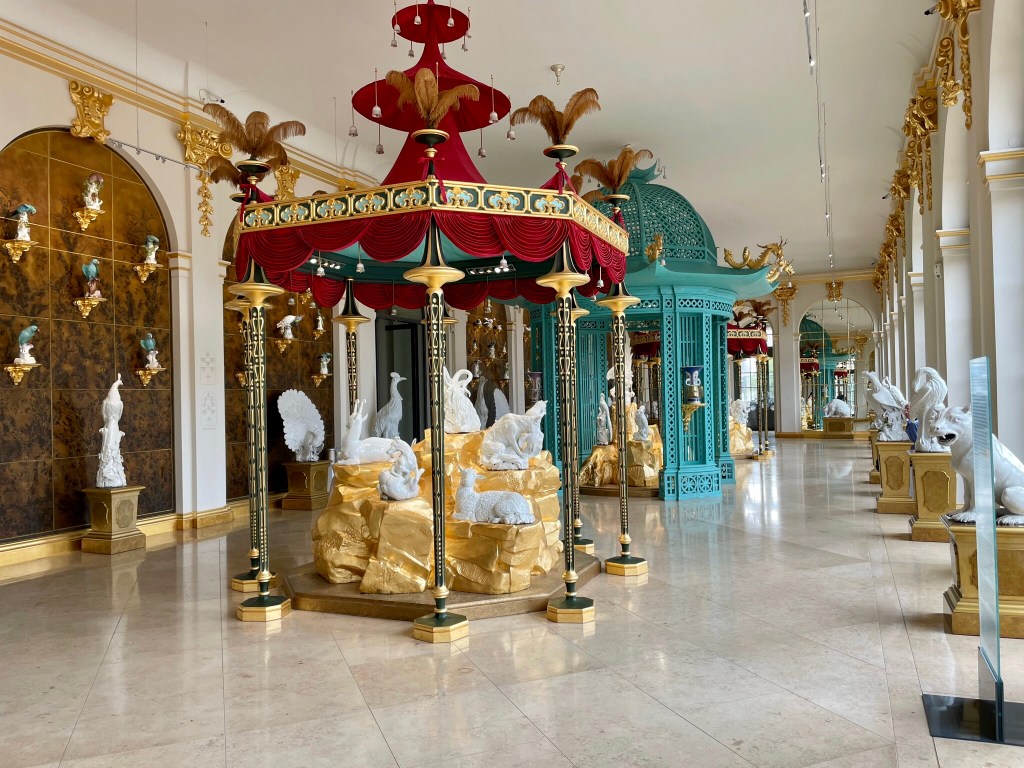
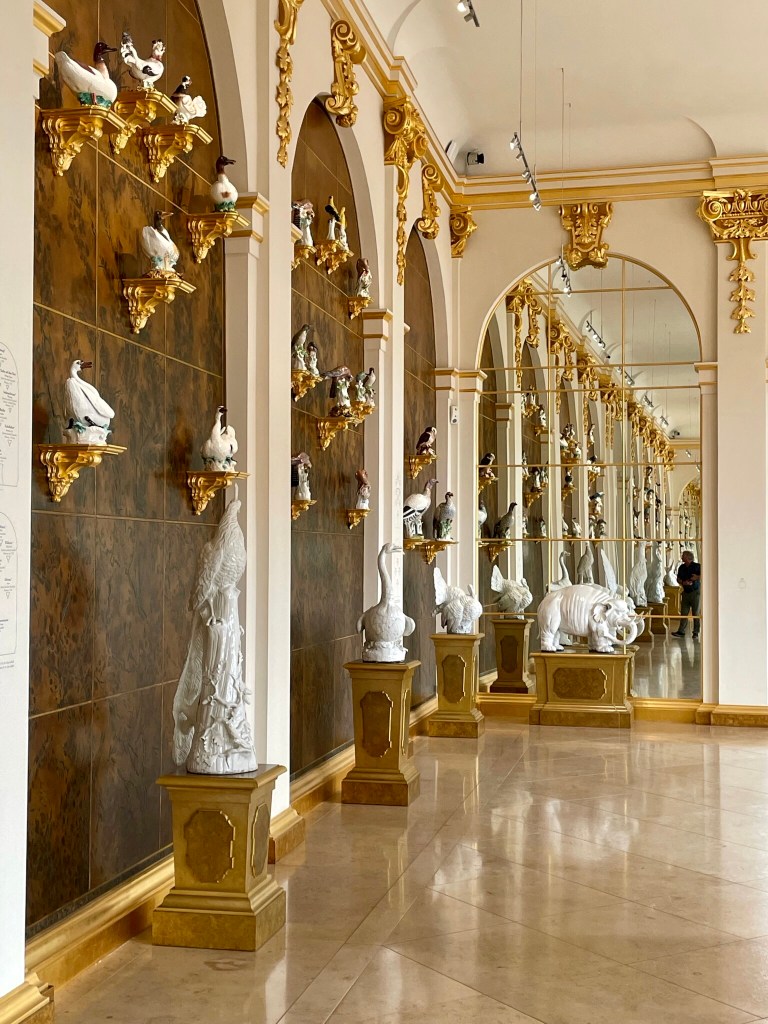
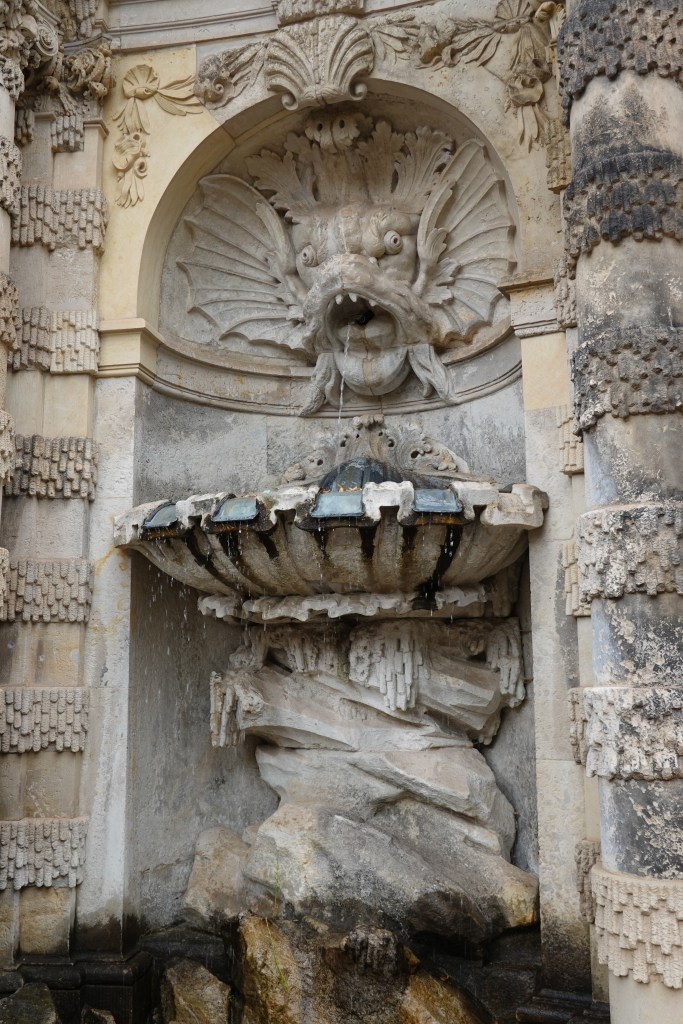
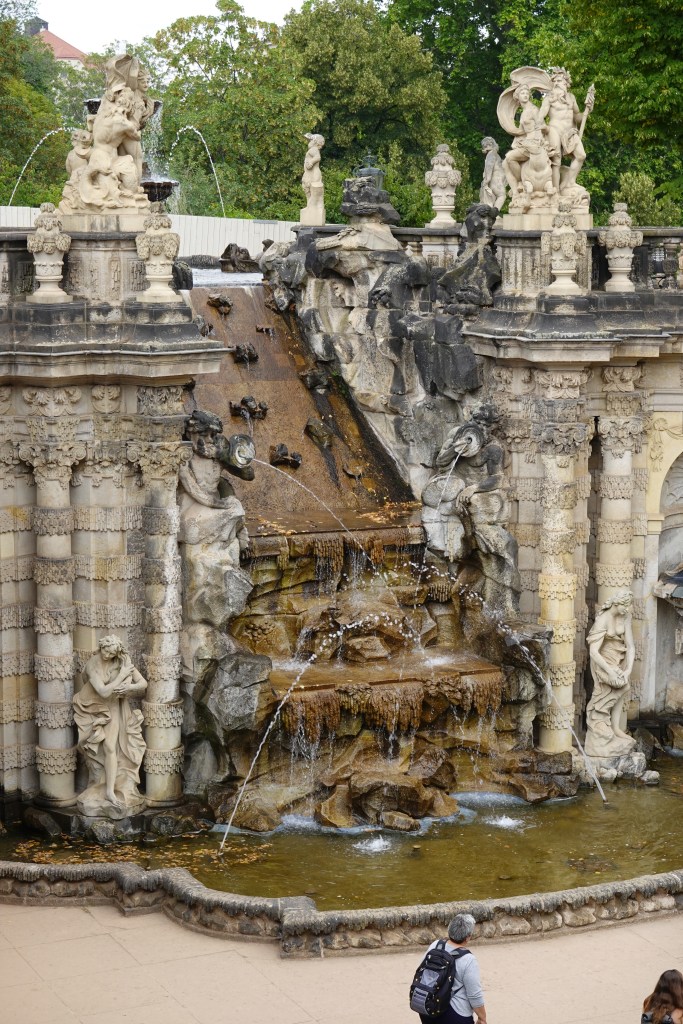
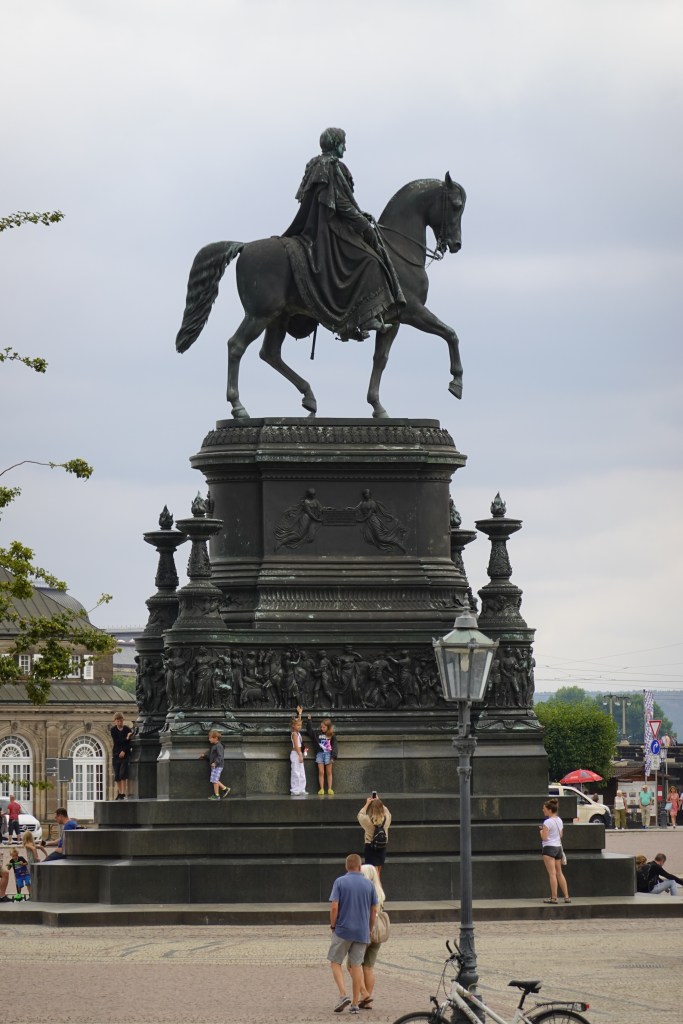
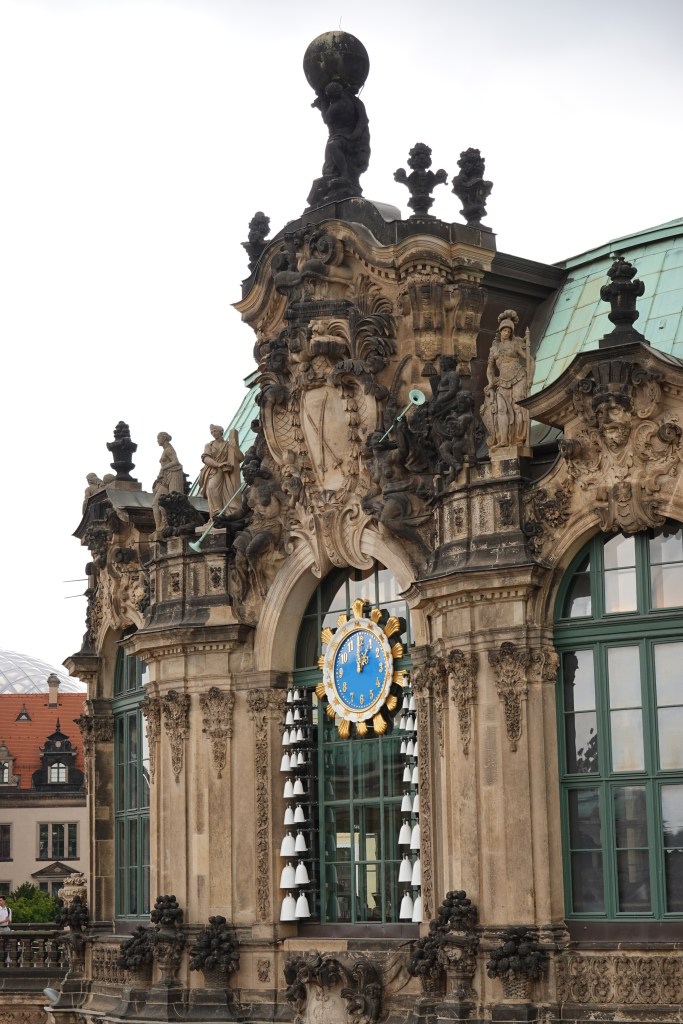
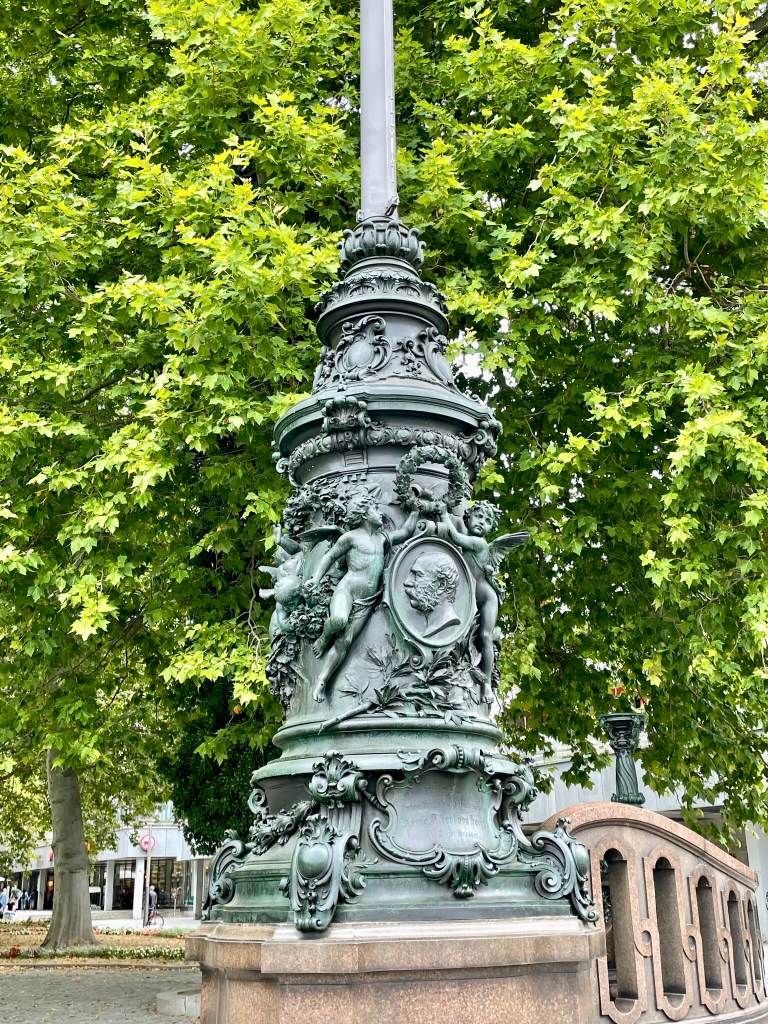
Frauenkirche (Our Lady’s Church)The Frauenkirche was not rebuilt until after the reunification of Germany. The restoration was completed in 2005, in time to celebrate the 800th anniversary of Dresden.We walked by this large mosaic many times. Called the Procession of Princes, it depicts the sequence of royalty that occupied Dresden over the centuries.Painting of the original fortressThe Zwinger consists of four long buildings surrounding a courtyard. Built at the direction of Augustus the Strong in the 18th century, it was to be Dresden’s answer to Versailles. Some areas were under construction, but we were able to see some of the collections of statuary and porcelain.The statues and porcelain collections are extensive.Many animals are depicted in porcelain; some of the china was made for coronations or weddings.Outside, on top of the Zwinger and in a small courtyard, we found more exquisite sculptures!Waterfall leading from the fountain above into the courtyard19th century King John of Saxony in front of the Opera HouseClock with porcelain bells
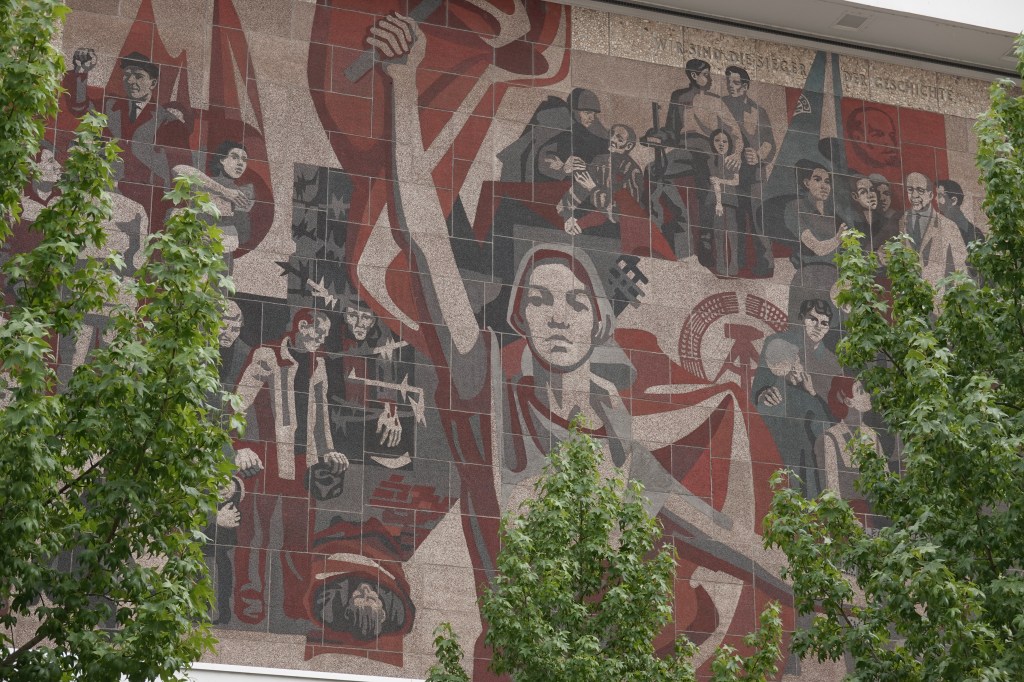
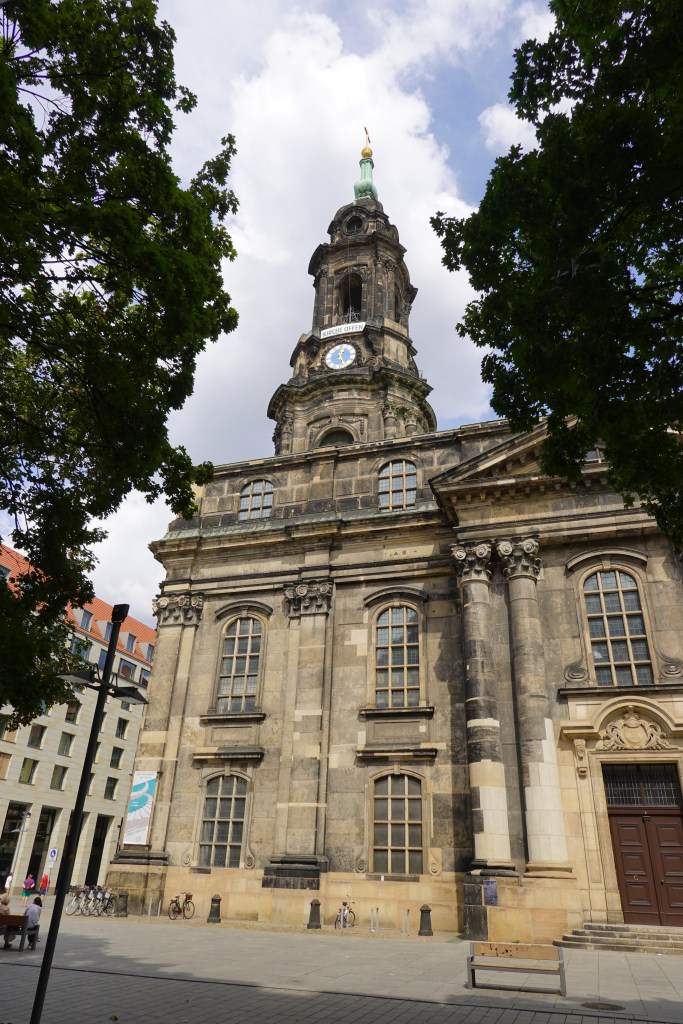
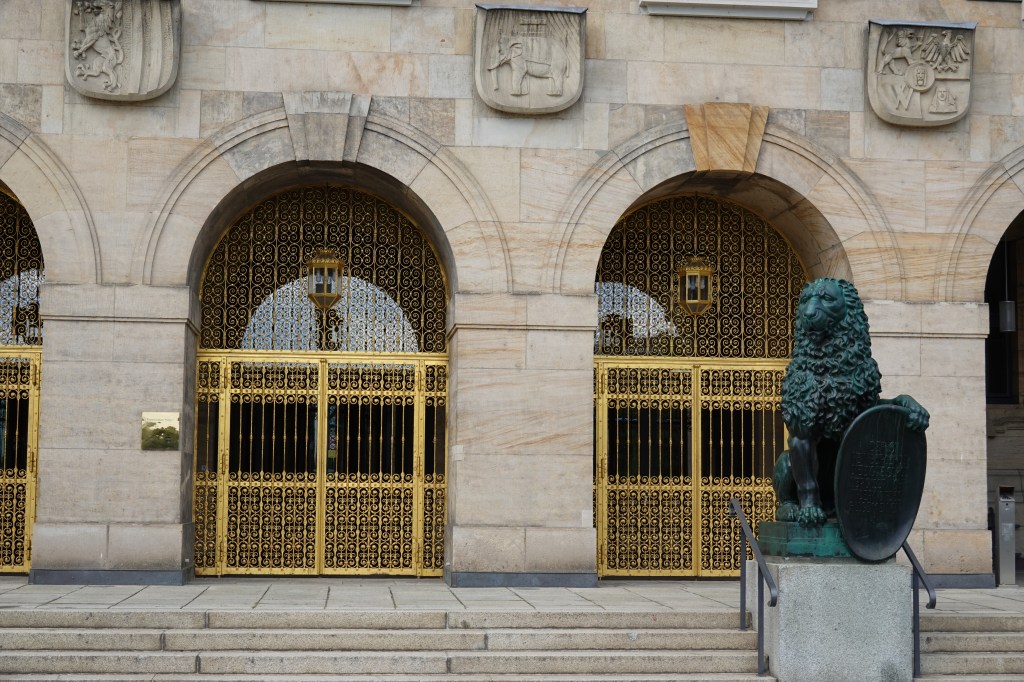
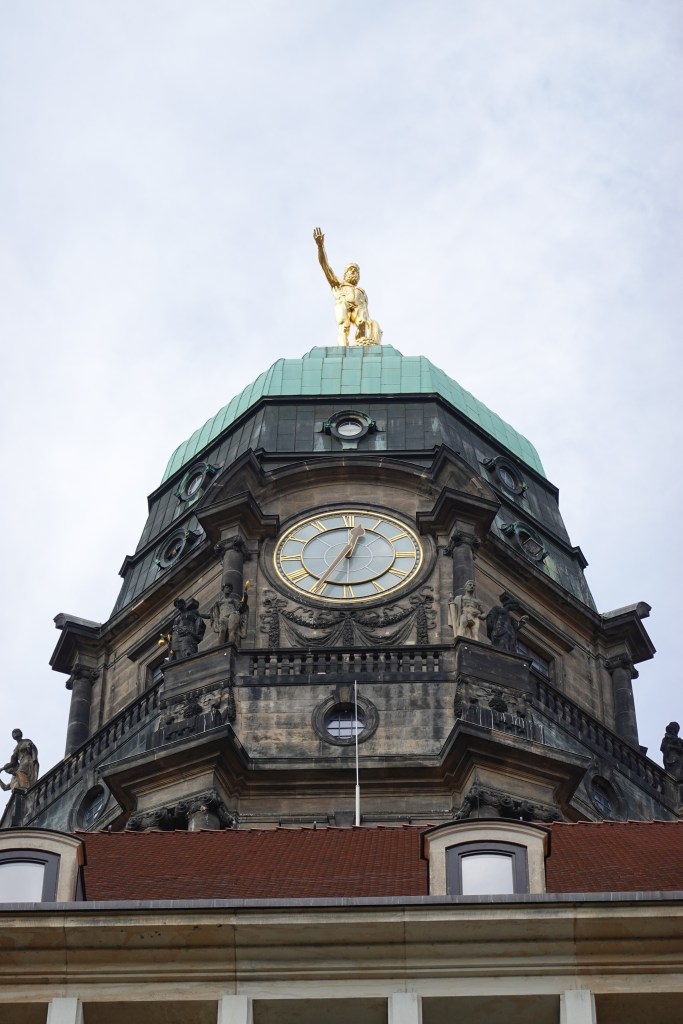
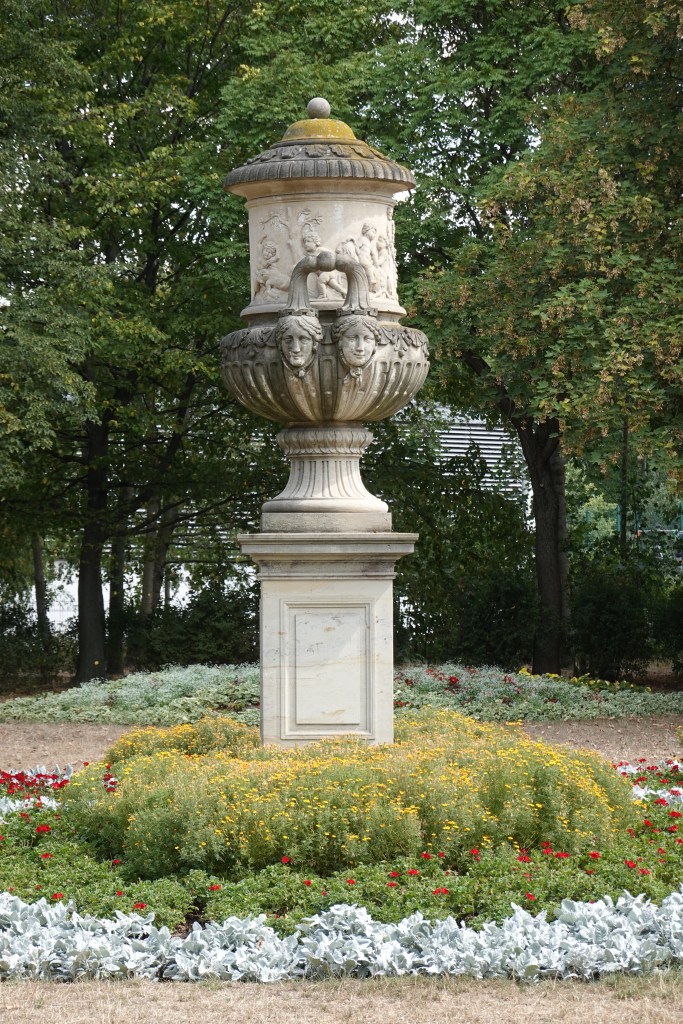
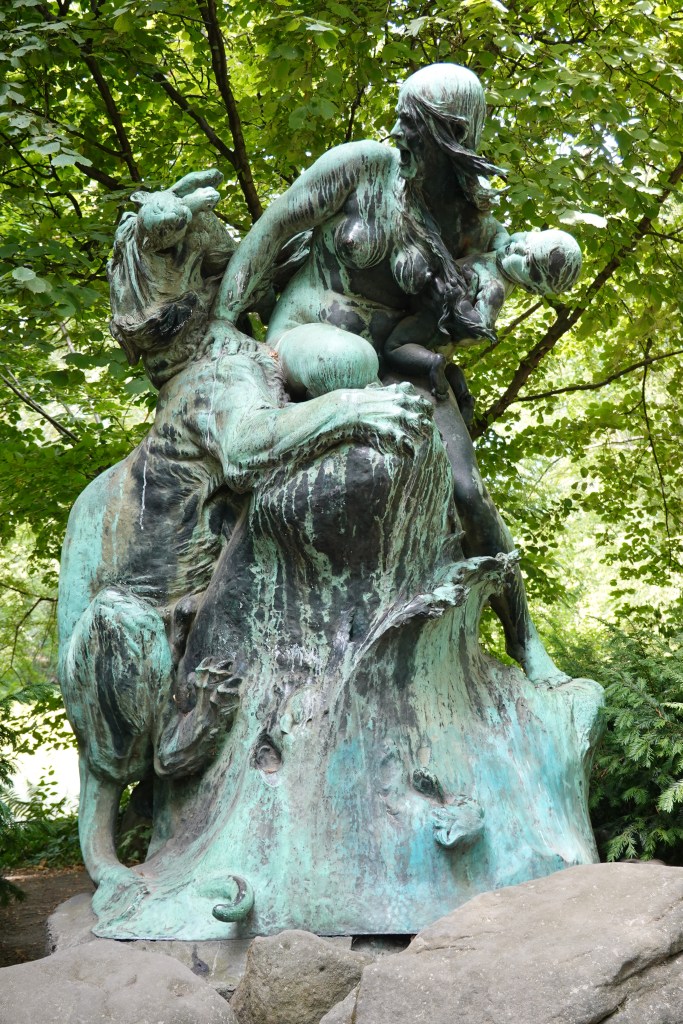
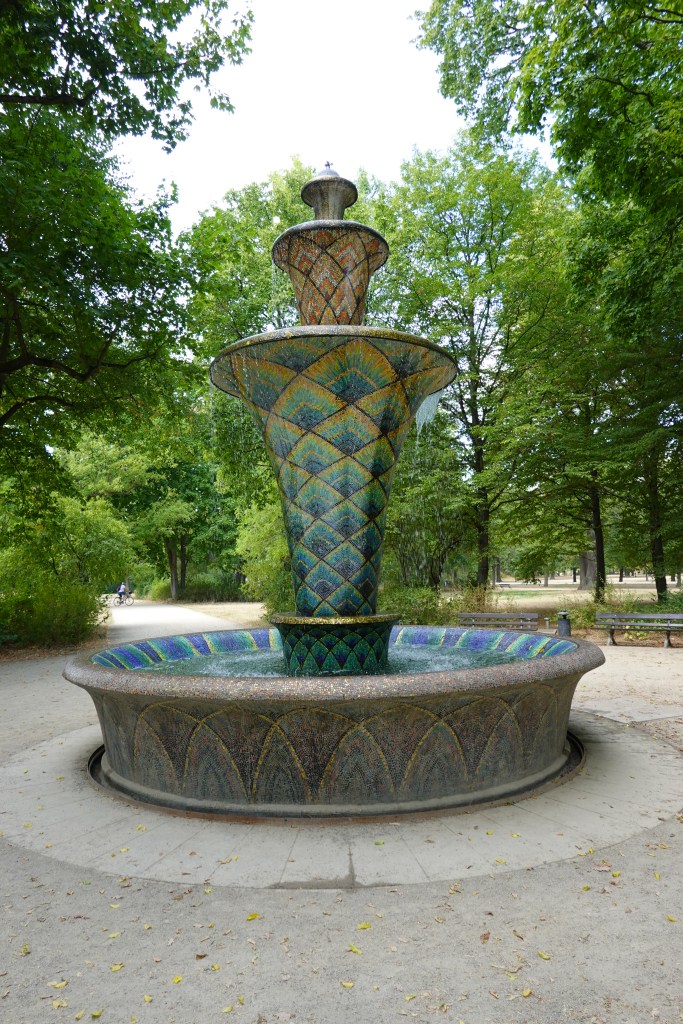
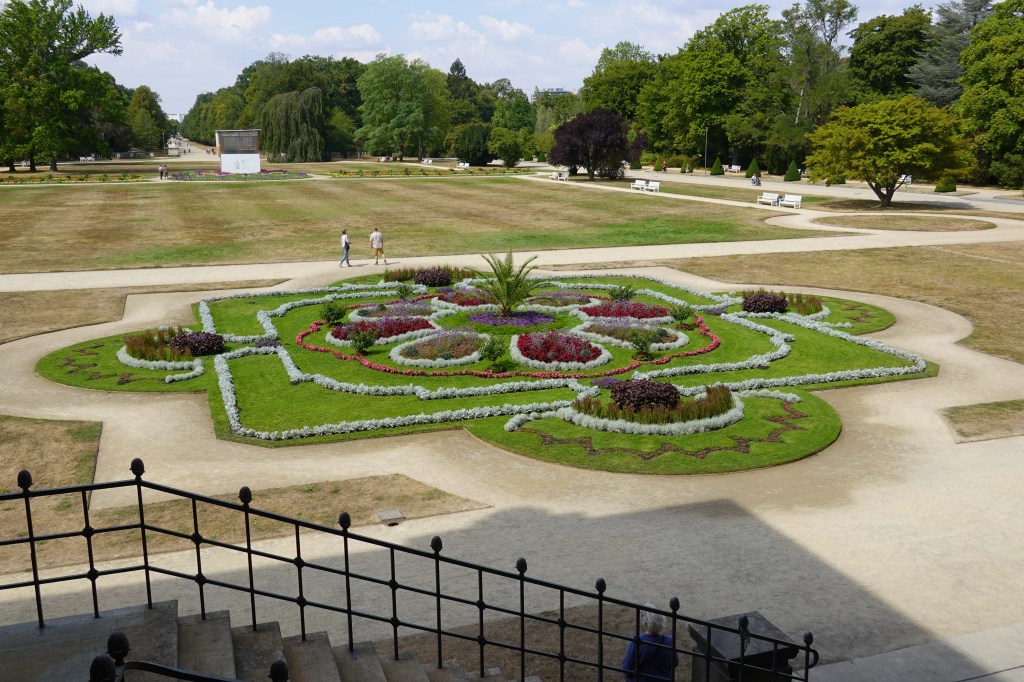
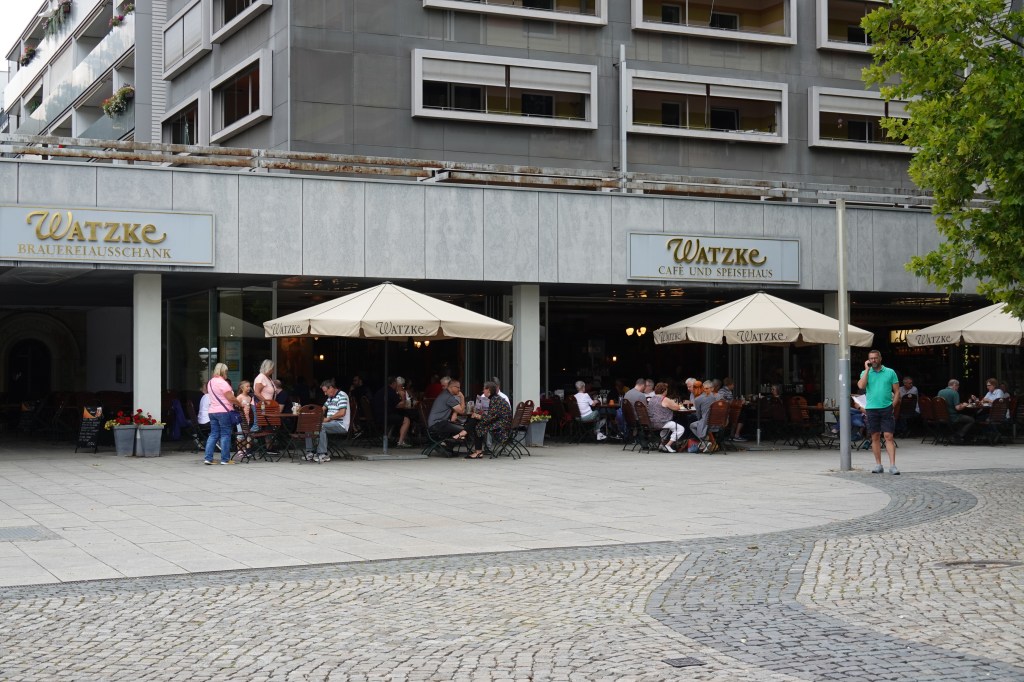
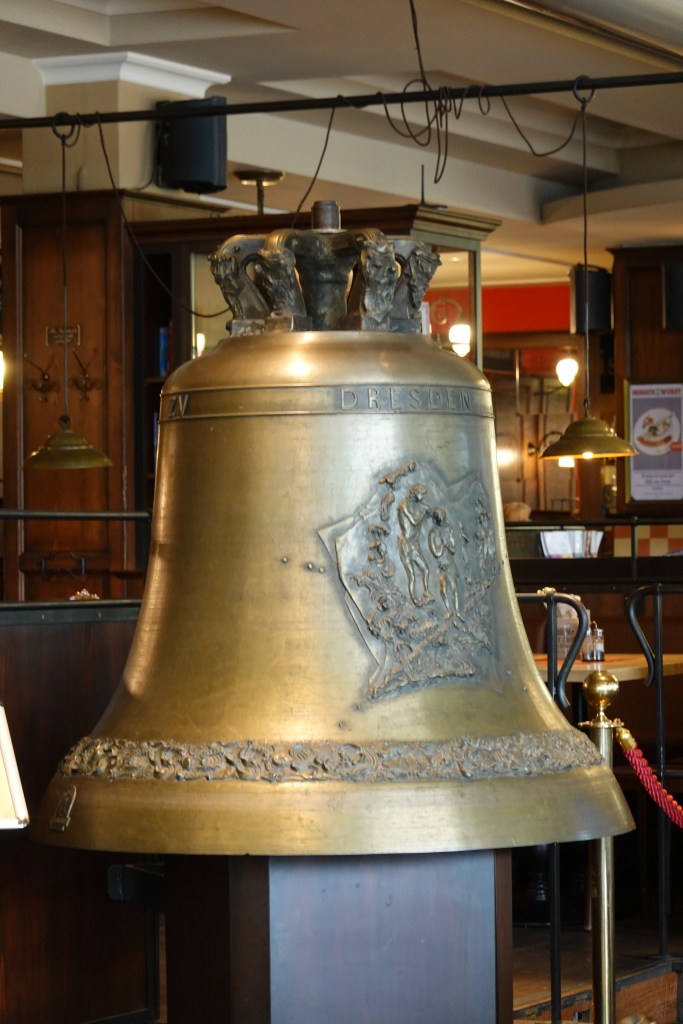
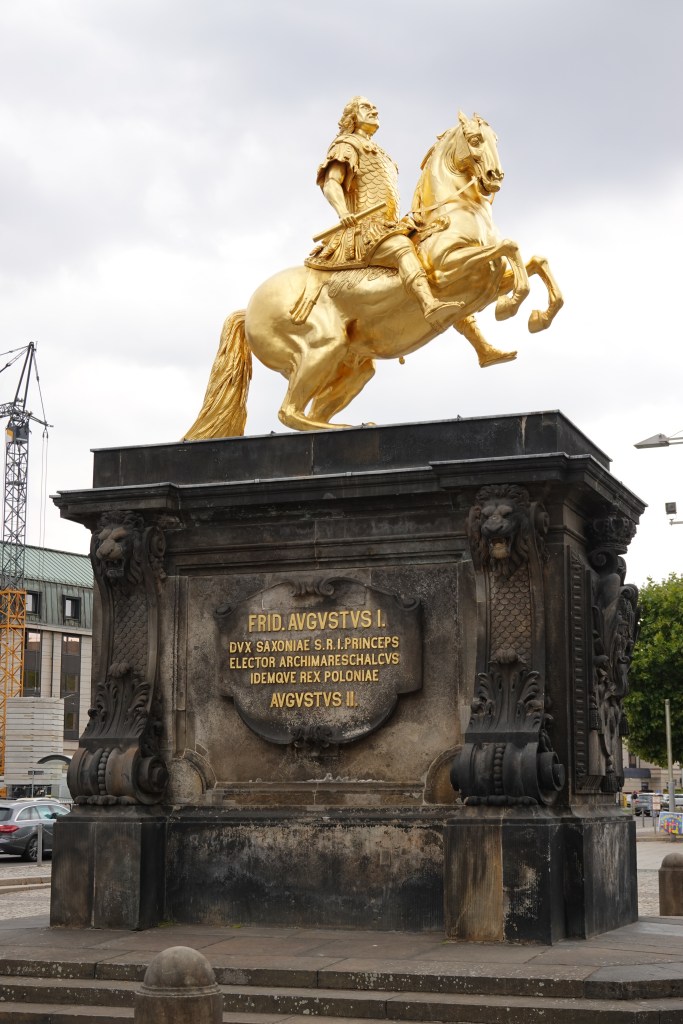
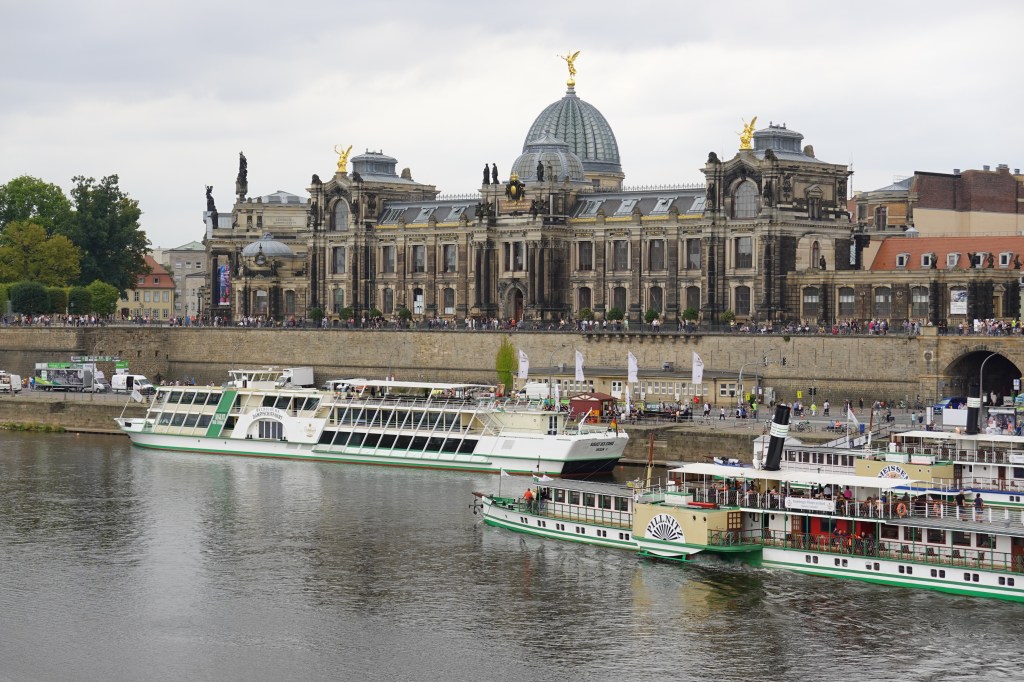
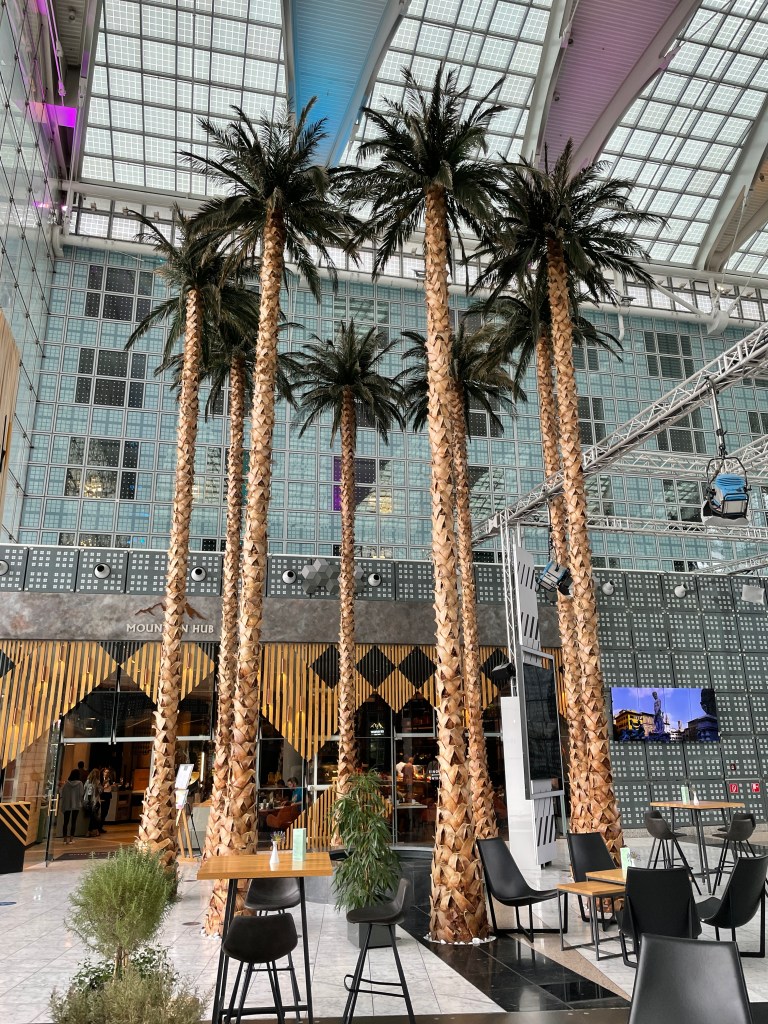
The clock struck one.Mosaic remnant of the German Democratic Republic depicting a worker and the hammer and compassKreuzkirche (Church of the Holy Cross)Town HallGold Hercules statue atop the clock tower of the town hallStatues and fountain in the Bürgerwiese park that we traversed on our way to the palace in the Grand Garden of DresdenAcross the Elbe River, we had lunch at the Watzke brewery, advertised as a craft brewery. The bell rung on the hour is an old Dresden city bell. Outside the brewery are columns commemorating the unification of Germany in the 19th century and a gold statue of Augustus the Strong on horseback. The view back across the river shows tour boats and the royal palace.Between airplane flights, we spent the night at the Hilton in the Munich airport. We were told that these palm trees are alive and that they occupy the tallest hotel atrium in Europe. Our flight to Denver was on time and very smooth.
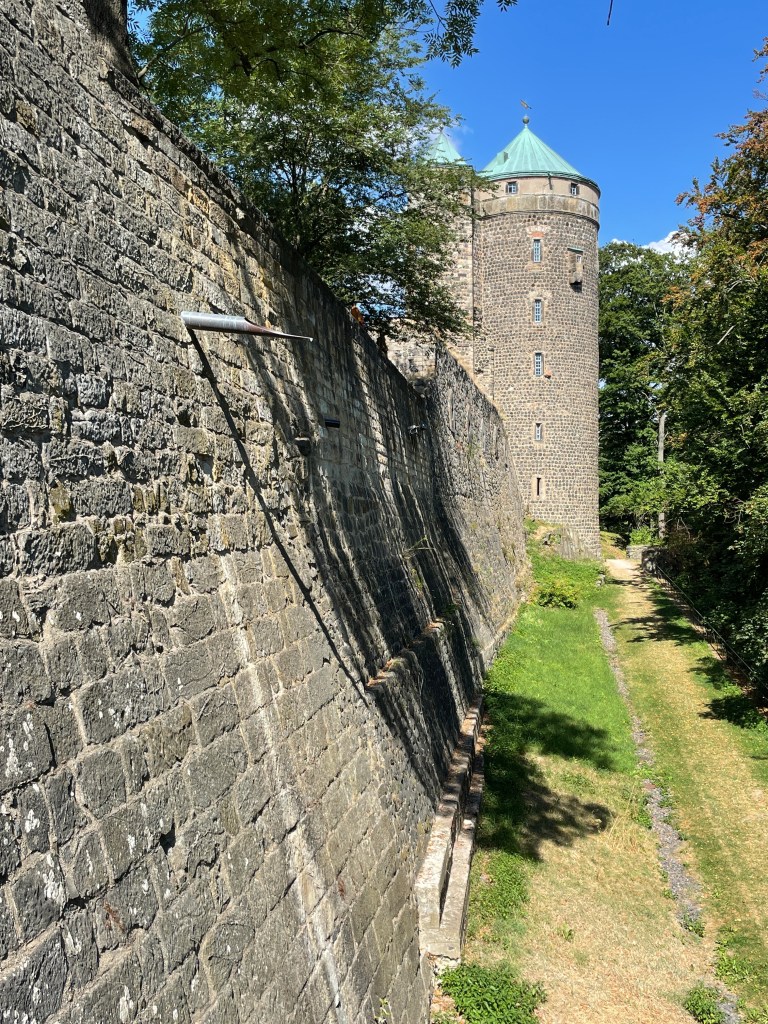
The last day of the conference was actually a field trip to (sort of) three castles. Basalt and sandstone: the first providing the building materials for a hilltop castle and the latter providing spectacular pinnacles that long ago supported a fortress castle. The conference provided the opportunity to visit these sites in a field trip, followed by a dinner at another castle closer to Dresden.
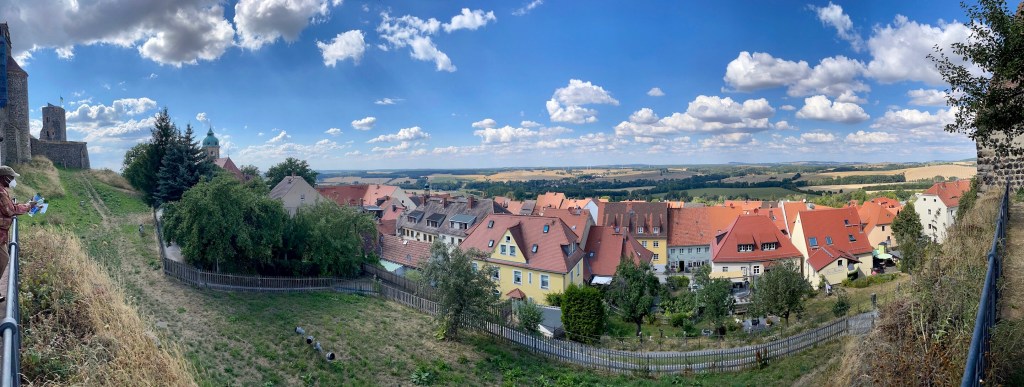
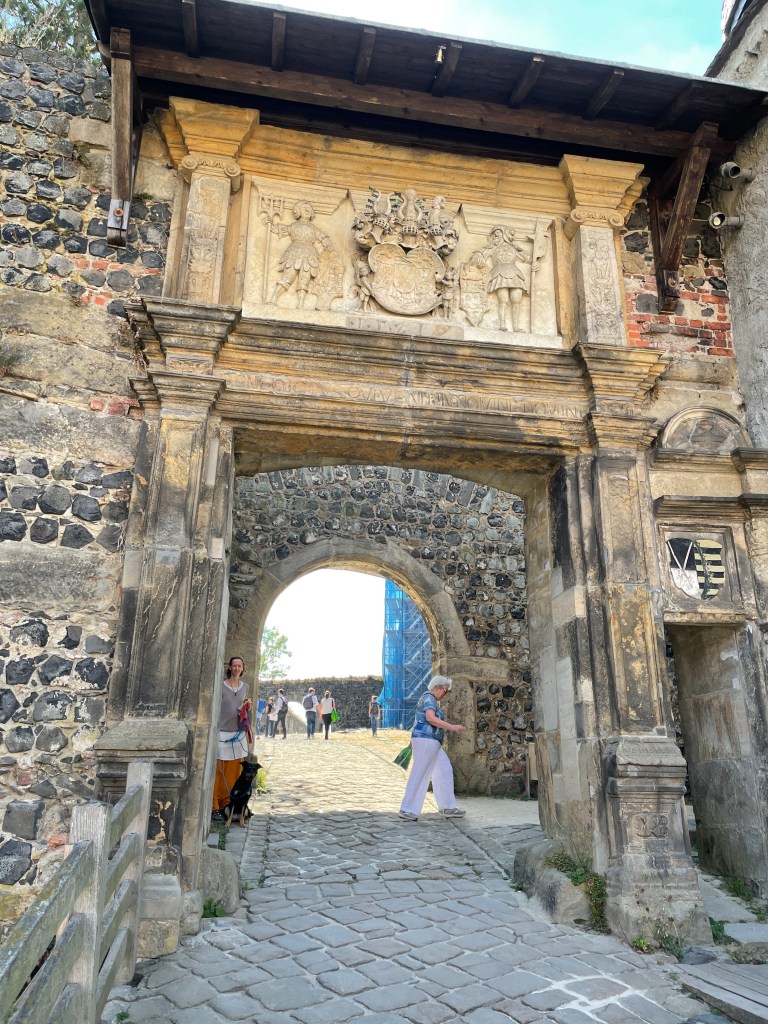
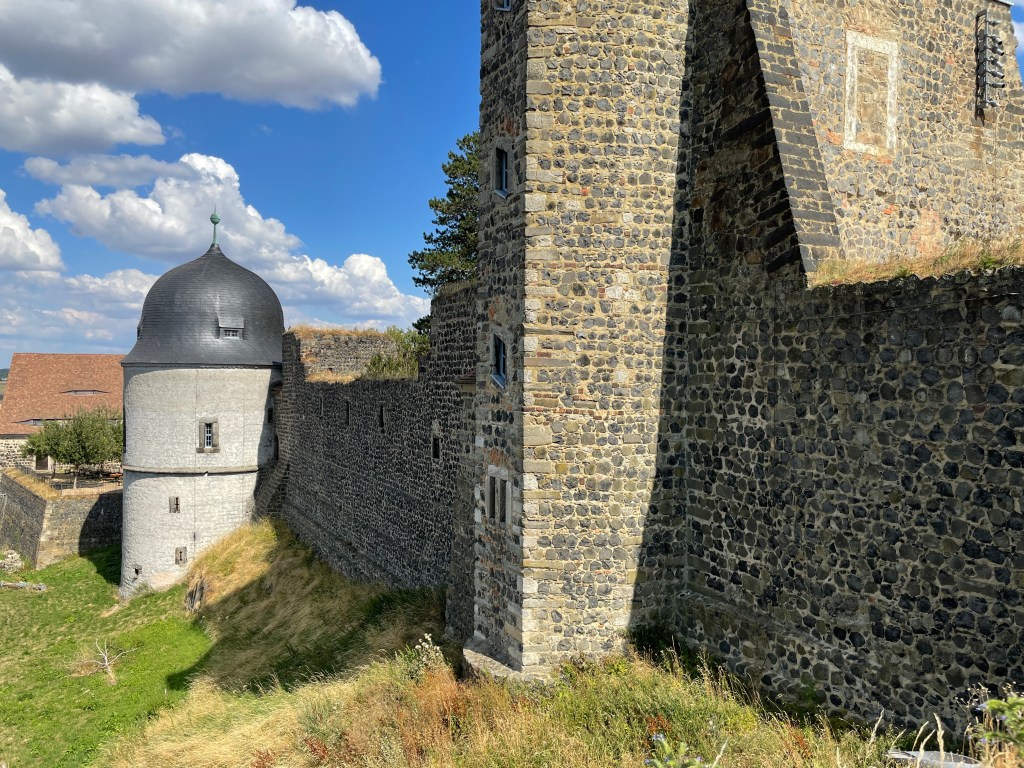
View from Stolpen Castle – the one made with basalt columns
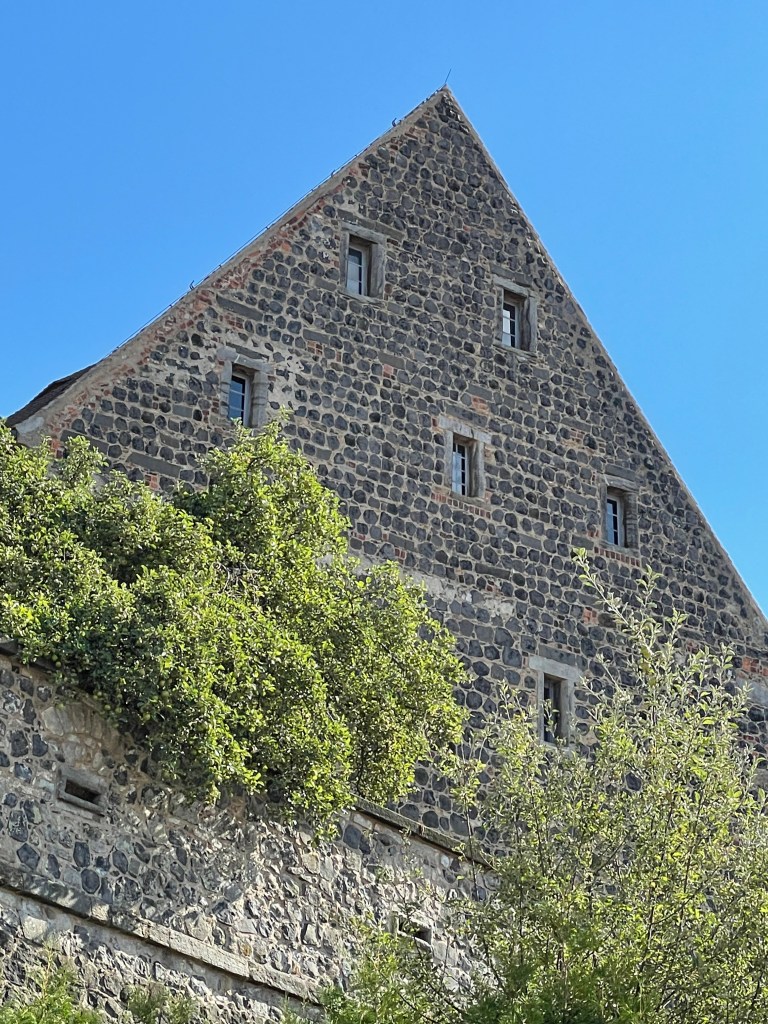
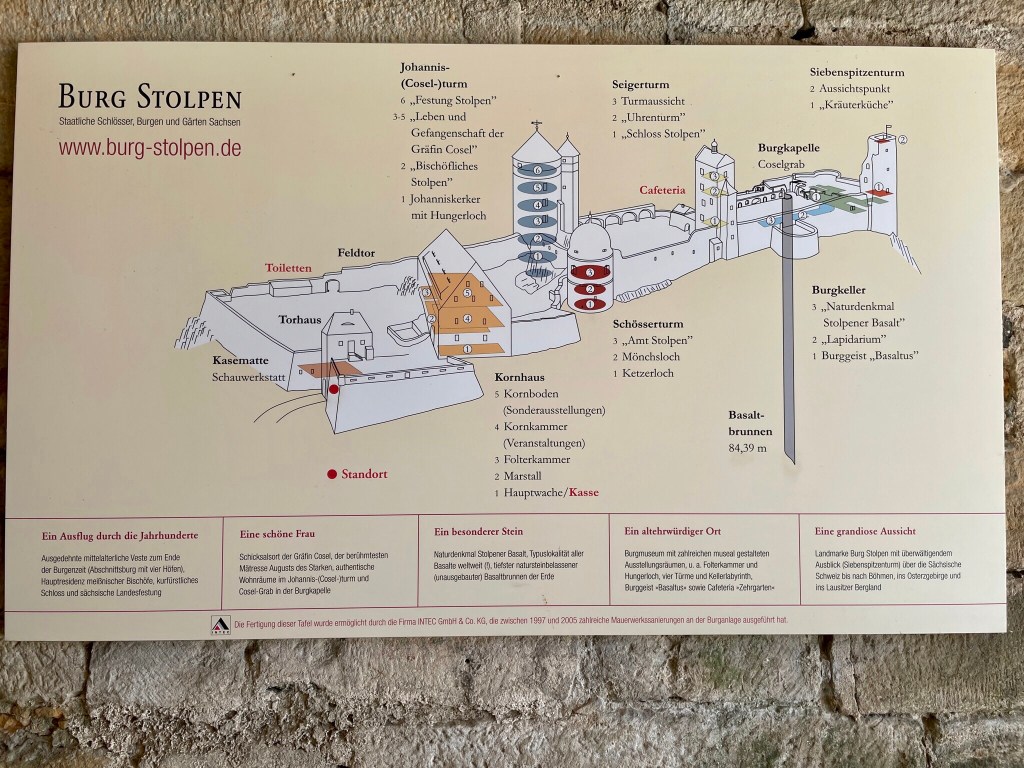
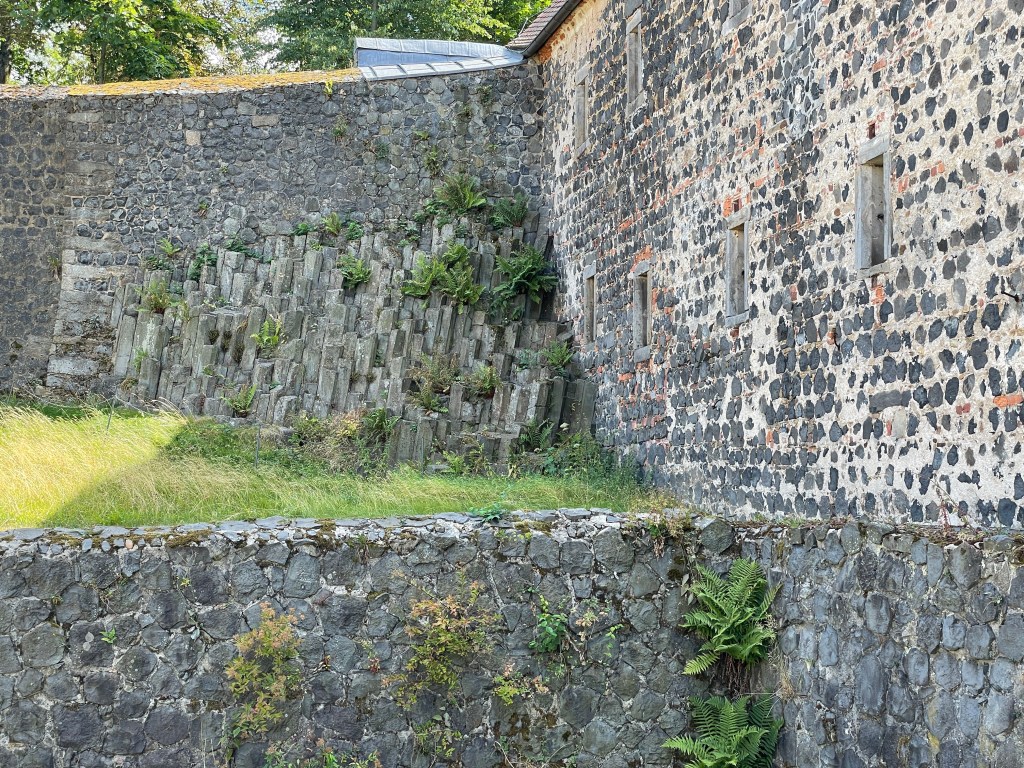
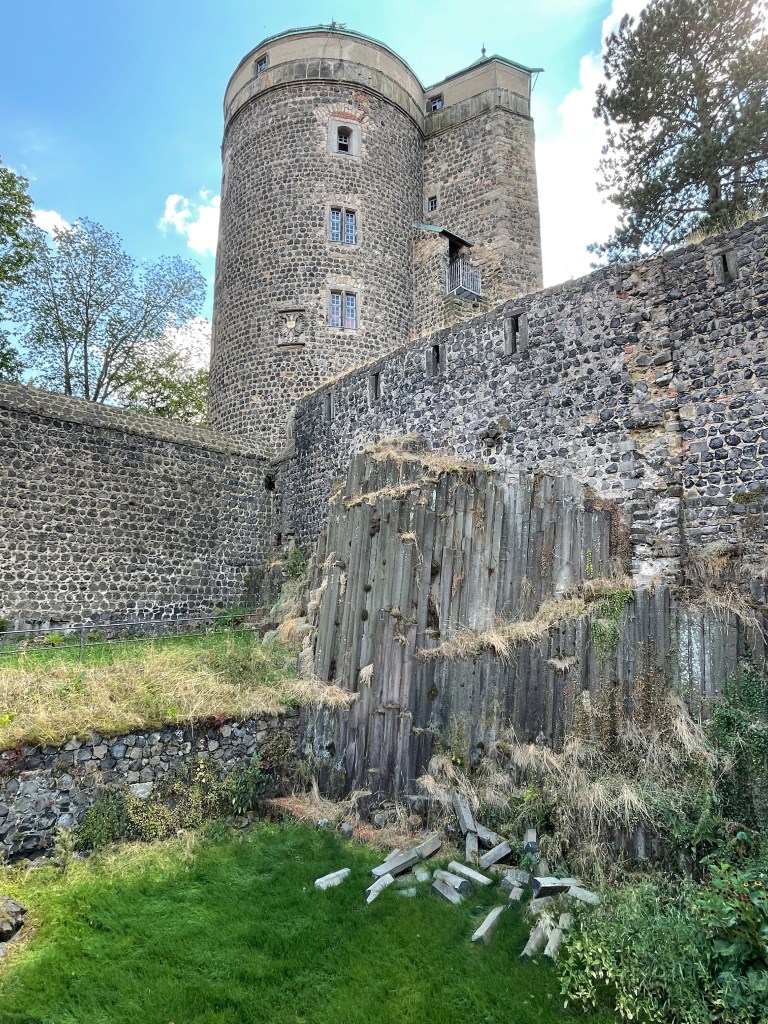
Most visitors to Stolpen Castle are interested in the “torture” part of the displays in the castle, so our group was a bit unusual. How many tourists happily look at the rocks? Basalt seems an unusual stone to build a castle!
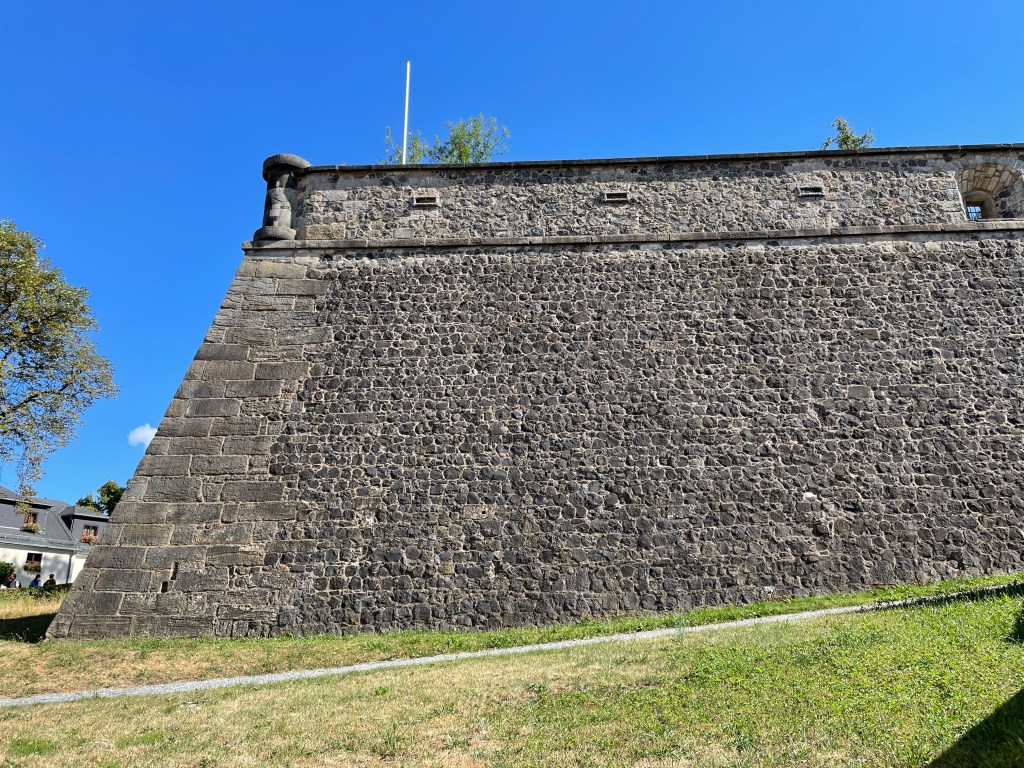
The shape of the columns must have made construction of the walls easier. We guessed that the blocks at the end of this were more recent than the original – from the 13th century. Workers dug a well to get water to the castle – at about 1 to 1.5 cm a day – yikes!Stolpen Castle is on a hilltop outcrop of a basalt flow with well developed columnar joints. It is said to be the type locality of basalt. The basalt columns provided building stones for the castle walls that could withstand attacks better than other materials.
The fun part of wandering around a castle built of basalt was all the cool (temperature) rooms in every direction. This was important because we walked up a hill to get to the castle, and we were all hot.
We visited the lapidary area in the lowest portion of the castle, where rocks were shaped into regular hexagons and other works are done.
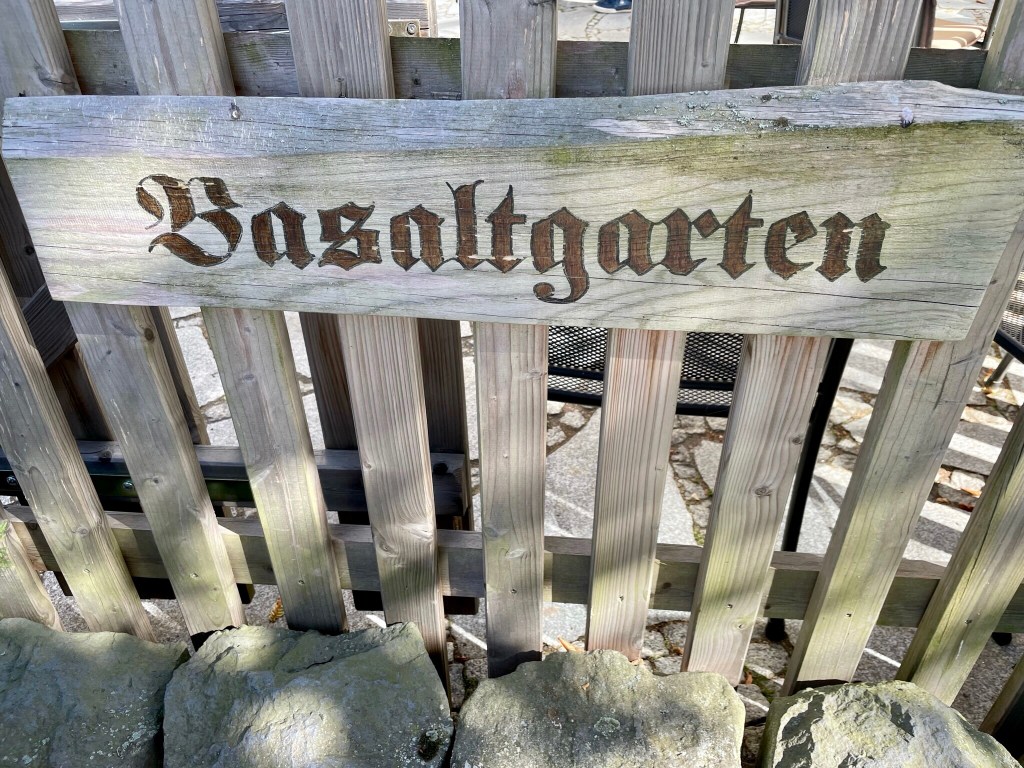
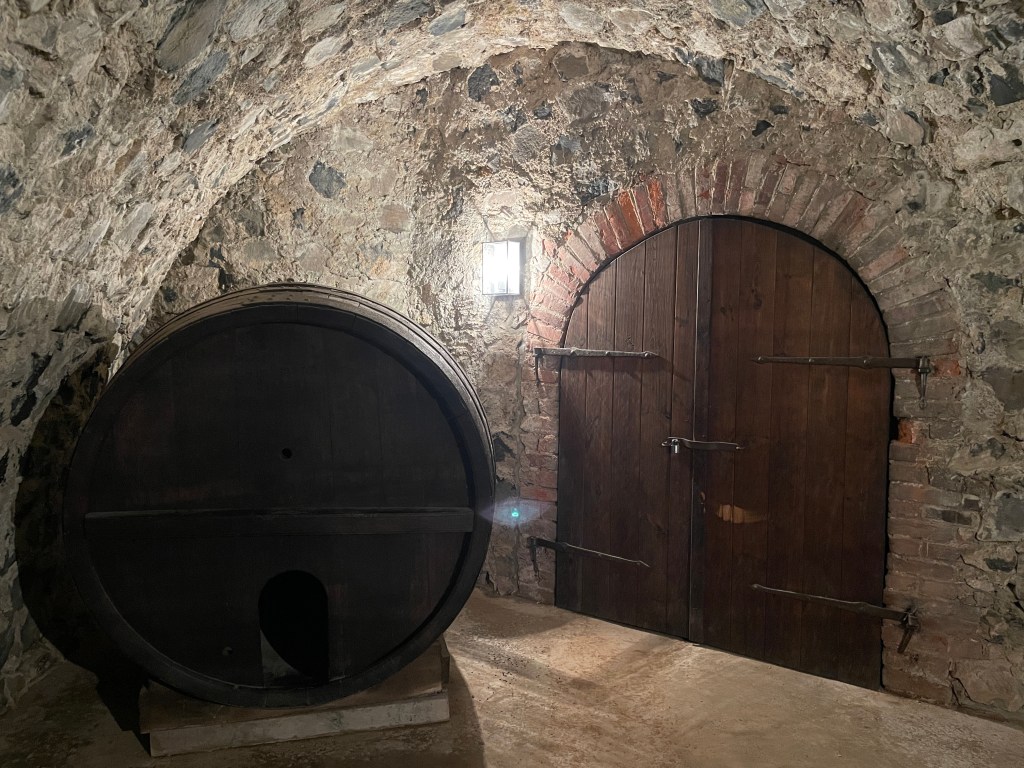
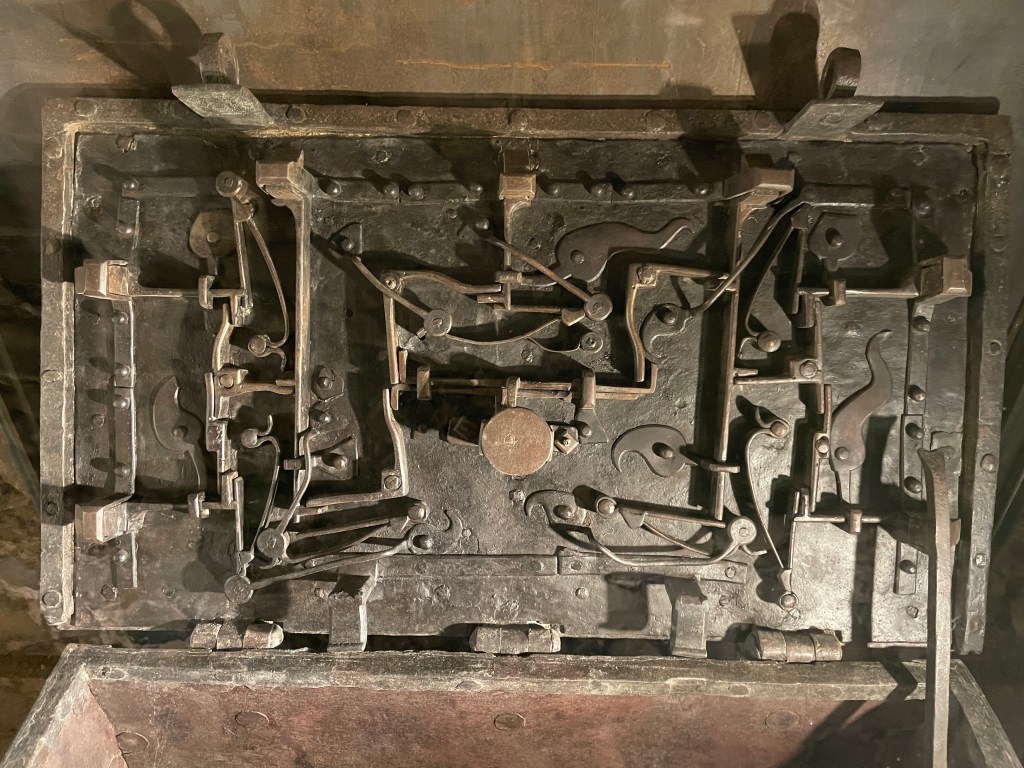
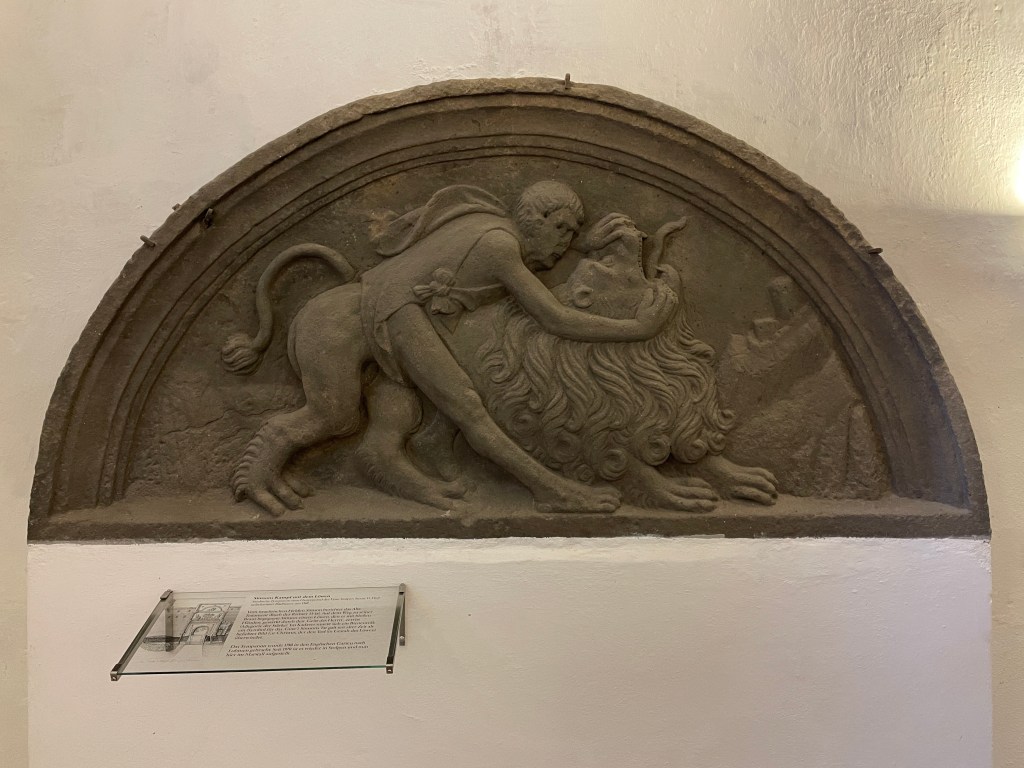
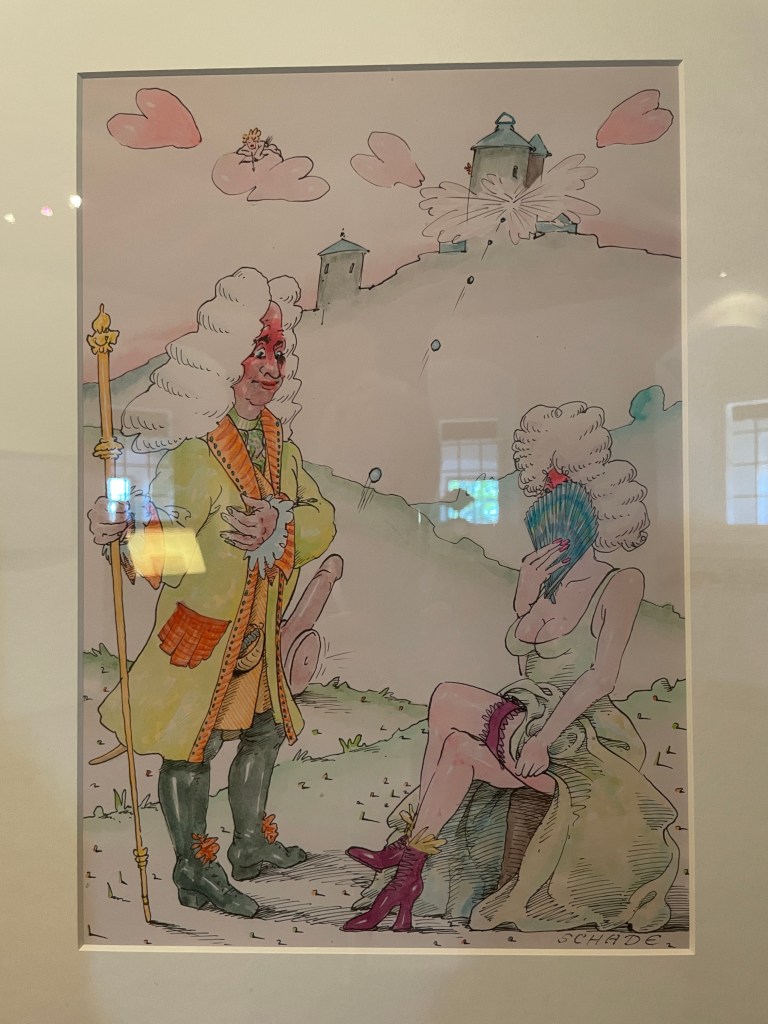
Outcrops of columnar basalt and walls of the castleActually a beer garden but featuring basalt columns as decorClare found where the wine was cellaredComplex mechanism for unlocking the lid of a chestThis relief used to be over the entranceThe Countess Cosel became mistress to Augustus the Strong after he showed the strength of the castle walls. This is an amusing artist’s interpretation of the legend!
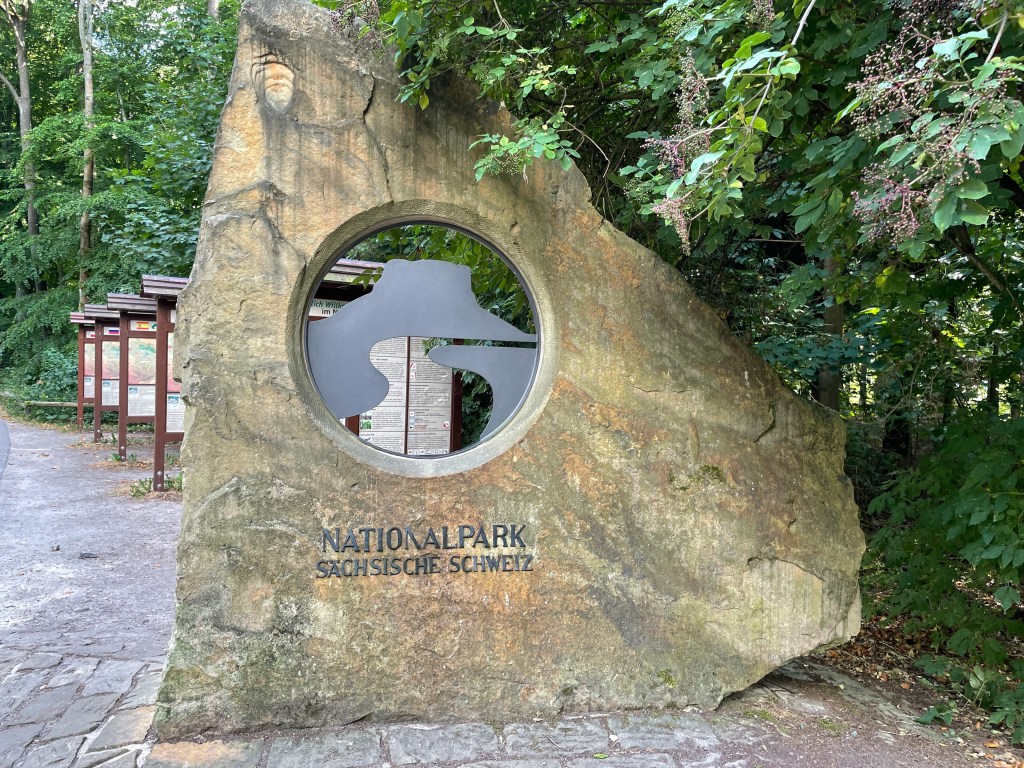
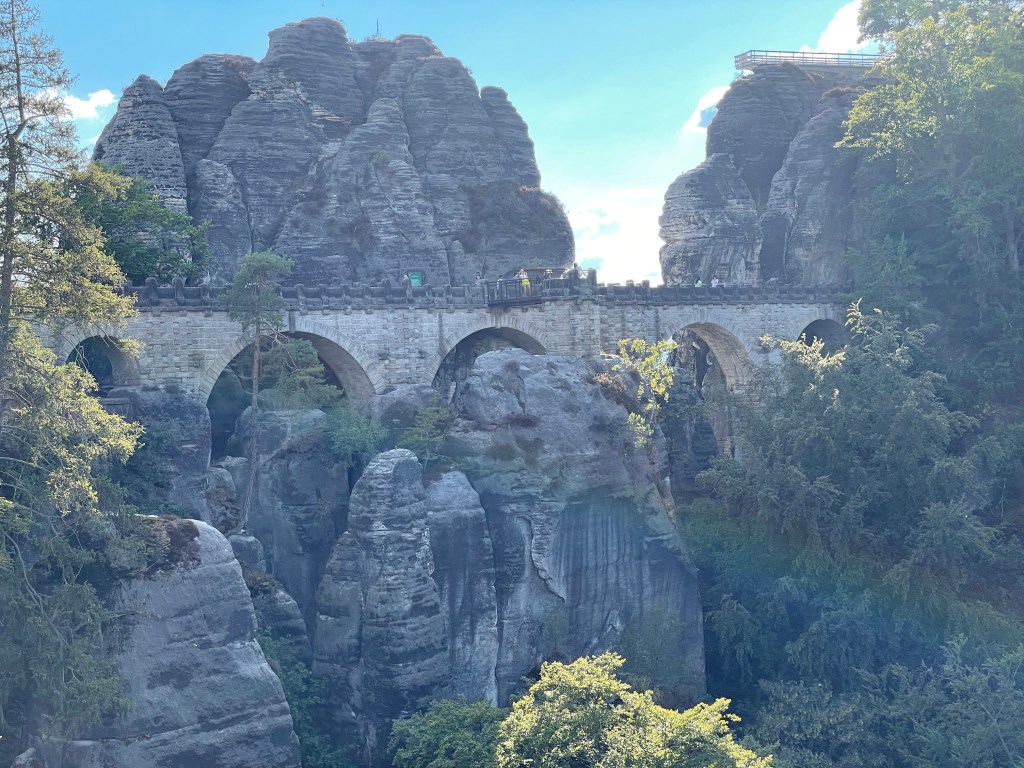
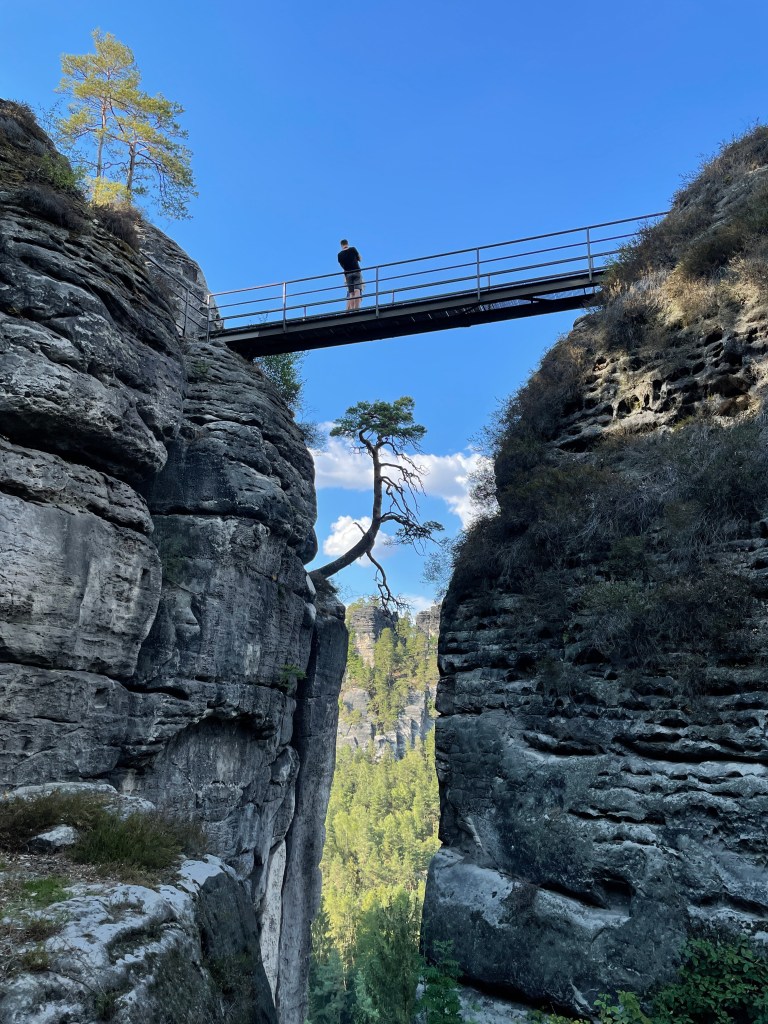
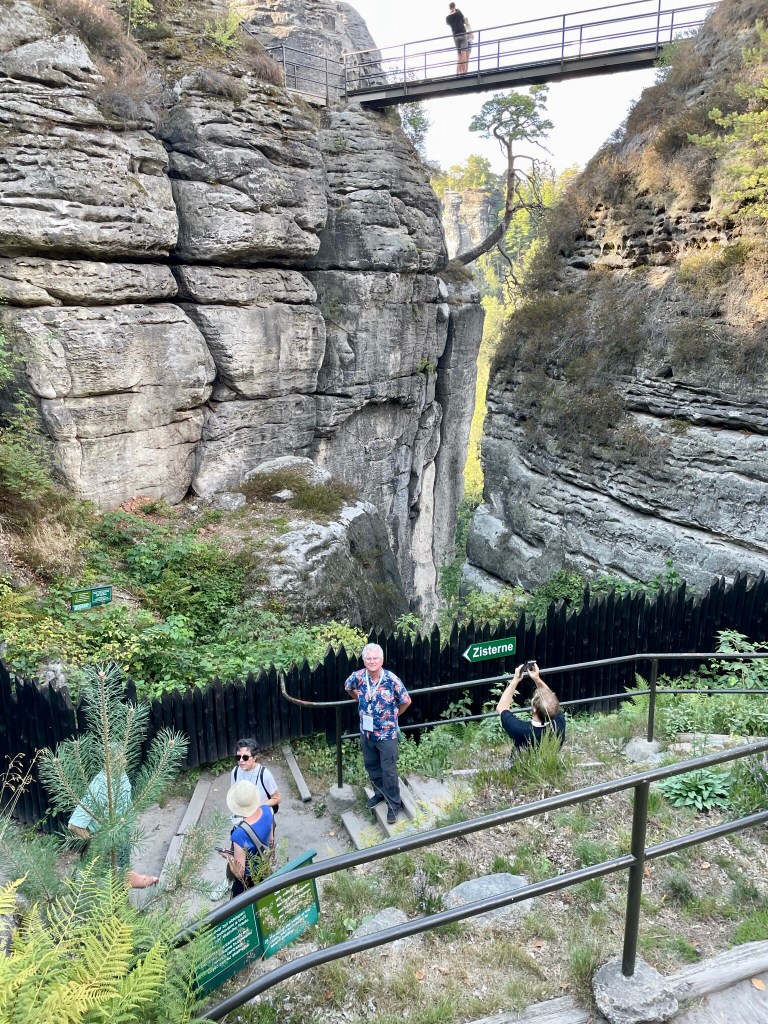
Saxon Switzerland National Park is a beautiful area with a castle built in the Middle Ages on top of extremely steep outcrops of sandstone. Our entire group of field trip participants climbed down the stairs and across the bridges to get to the castle ruins.
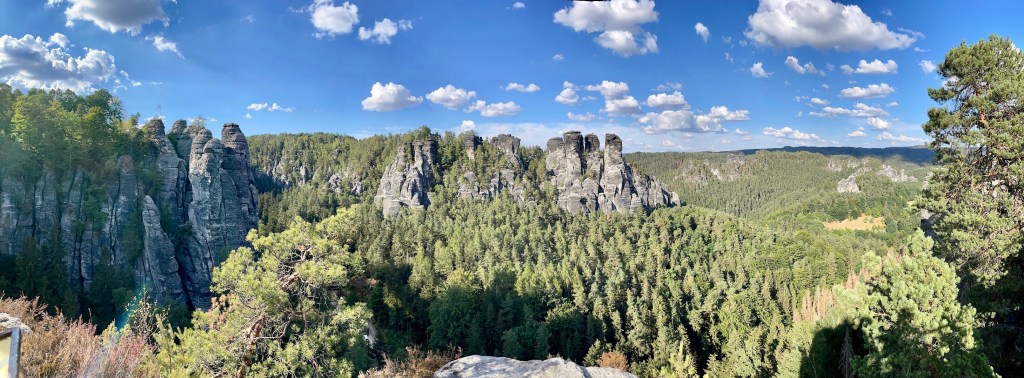
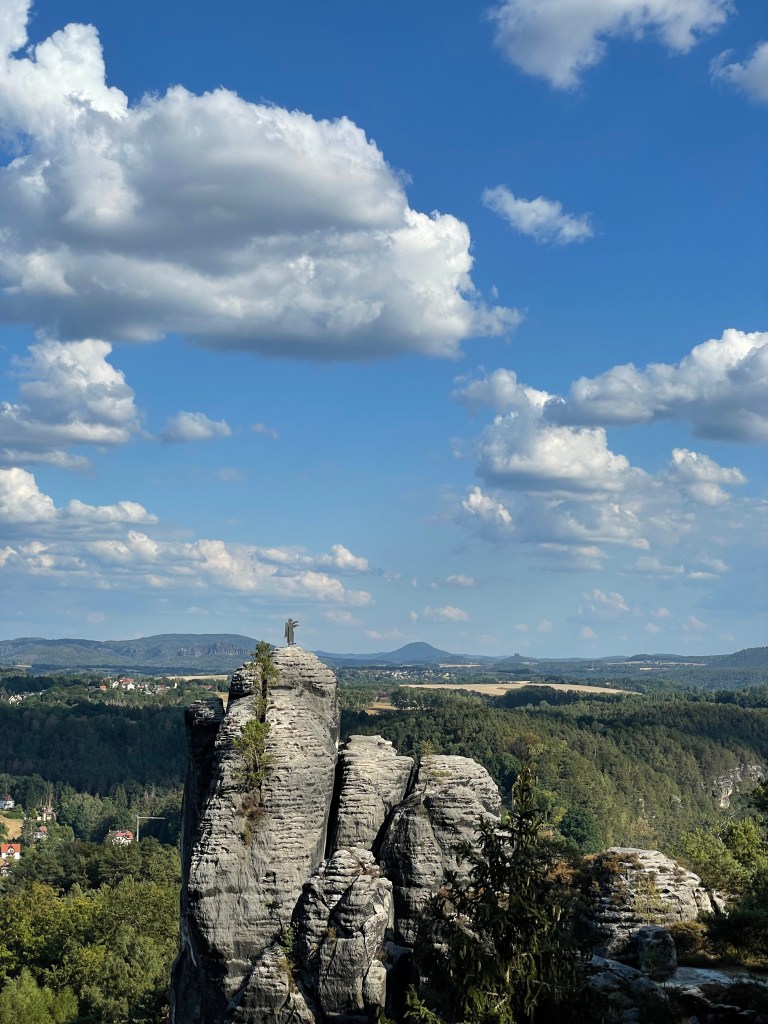
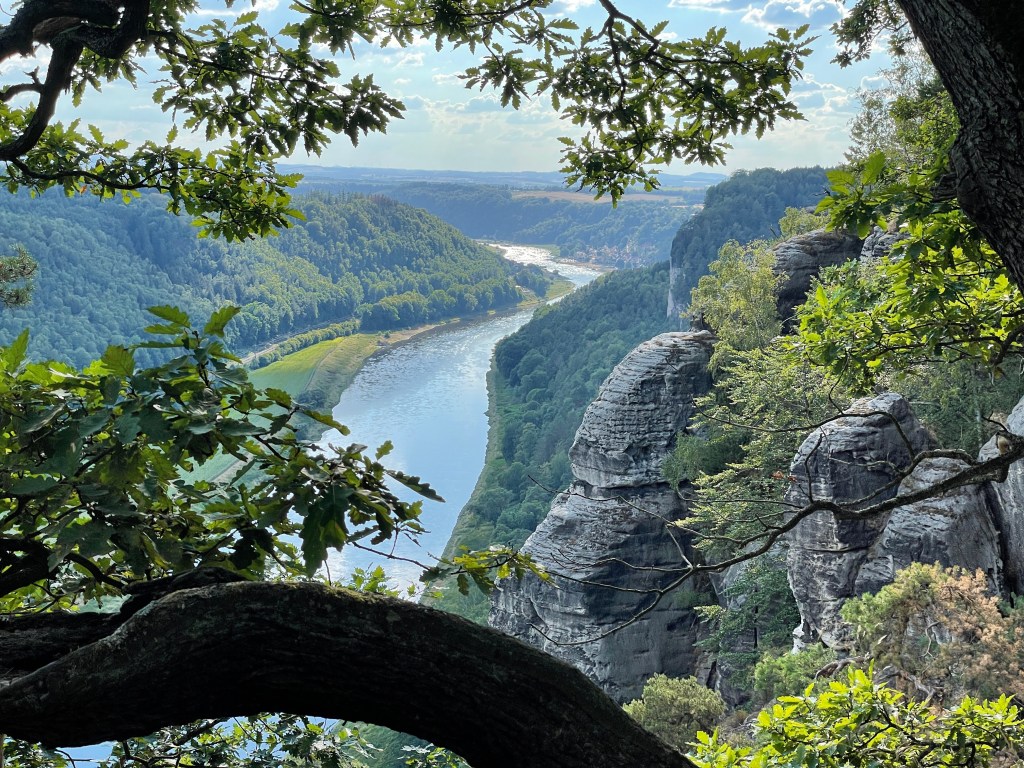
Saxon Switzerland National Park is Germany’s only rock National Park. It features pinnacles of Cretaceous sandstone and the remnants of a castle fortress. Some dizzying heights indeed!The rocks formed these columns in a similar way to the columns in Bryce Canyon NP in the US, except that the sandstones at Bryce are much softer.Views of the sandstone pinnacles and looking down upon the Elbe River
Our third castle of the day was where our group had dinner together. Great food, great conversation. From there, Brian and Clare took a tram to Dresden.
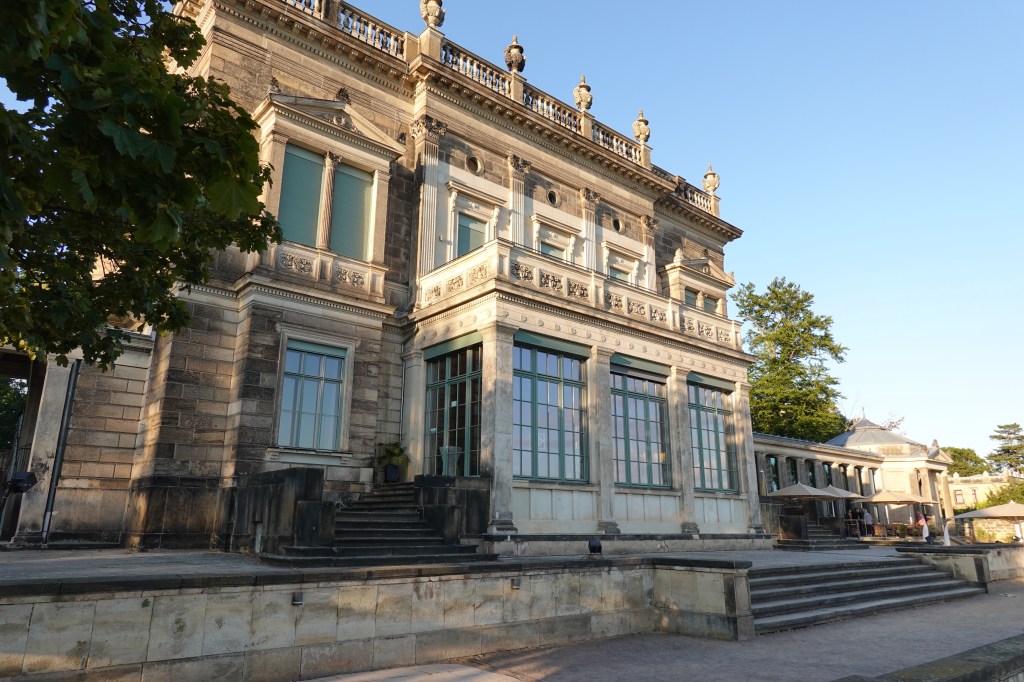
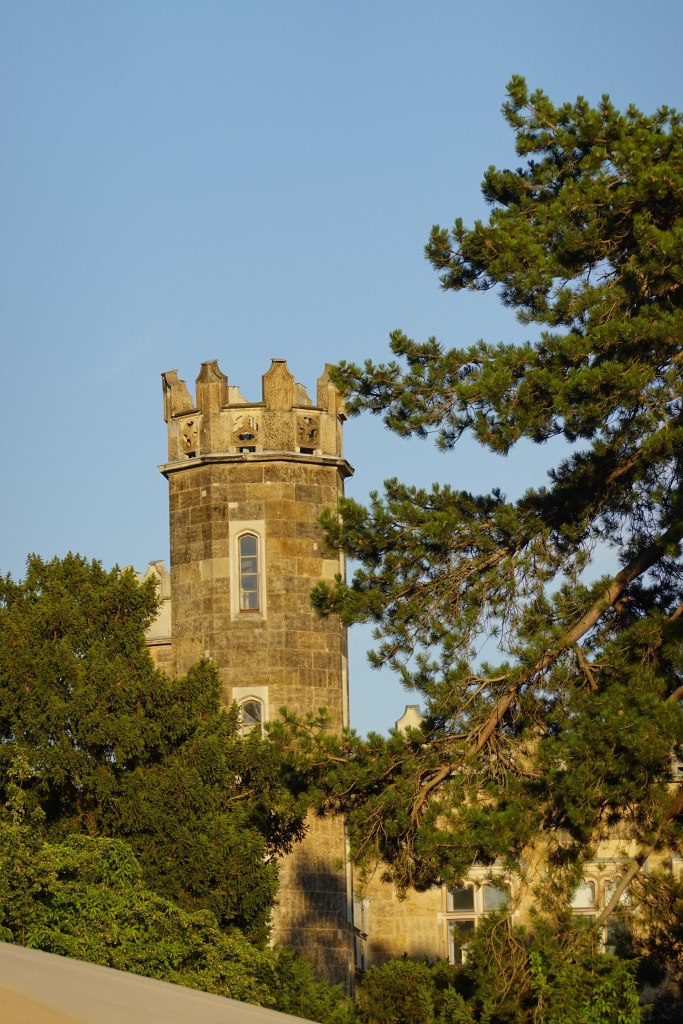
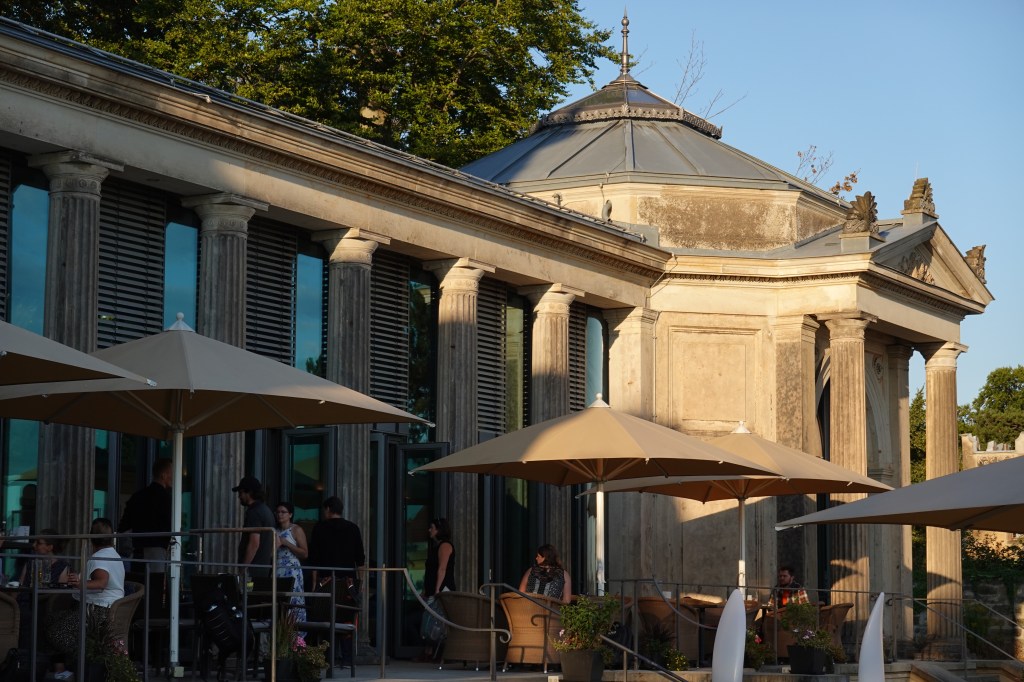
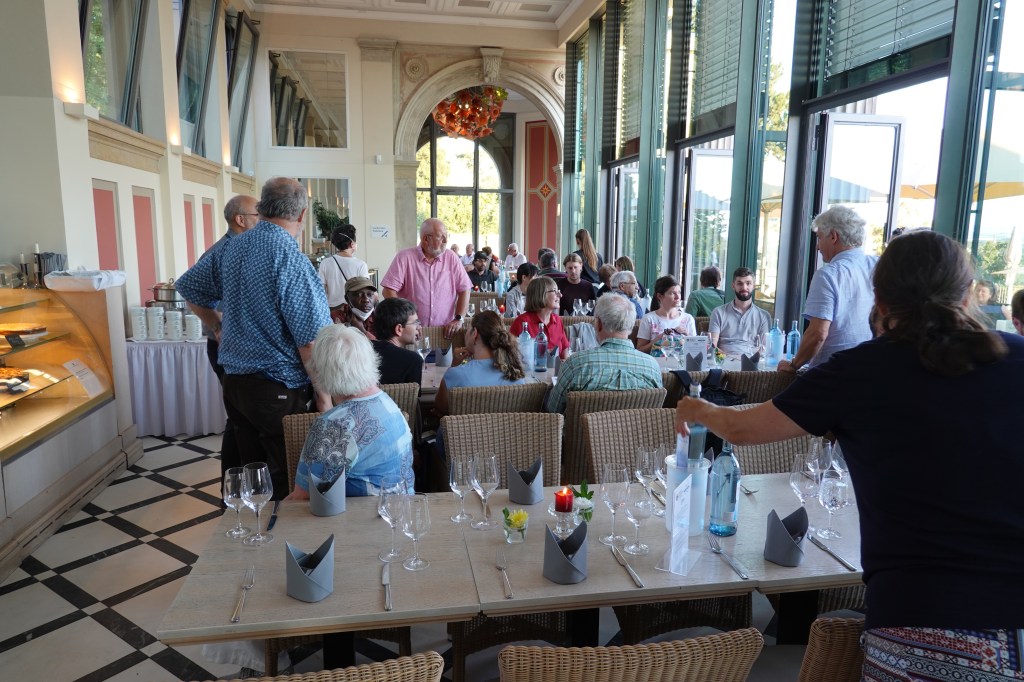
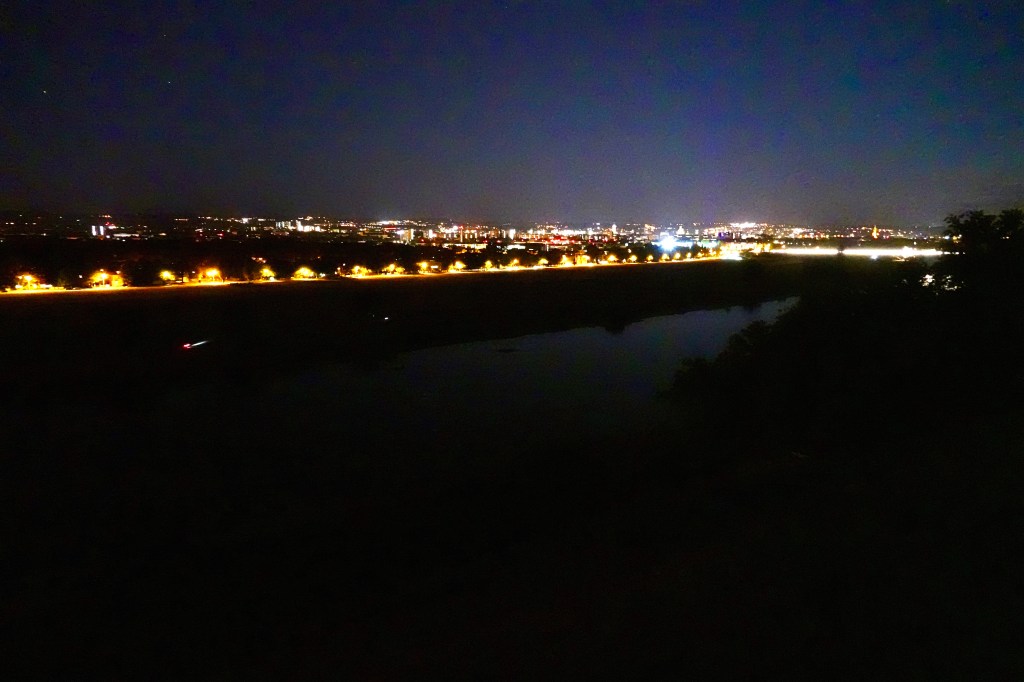
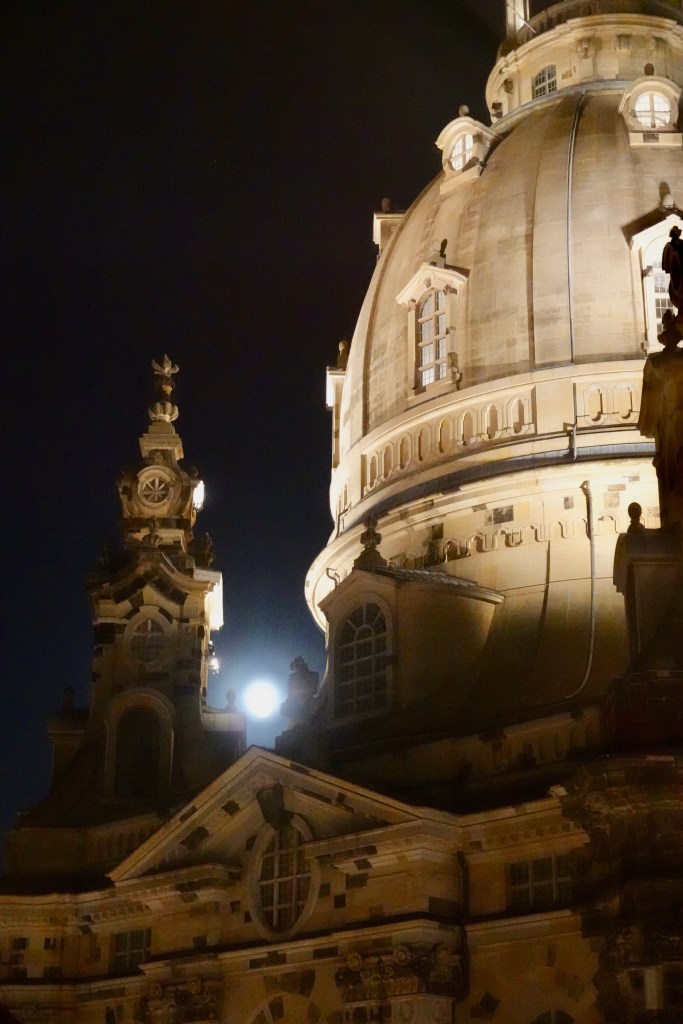
The conference dinner was held at Lingnerschloss castle above the Elbe River to the east of Dresden.View from Lingnerschloss toward Dresden and the full moon rising adjacent to the Frauenkirche dome from our hotel room
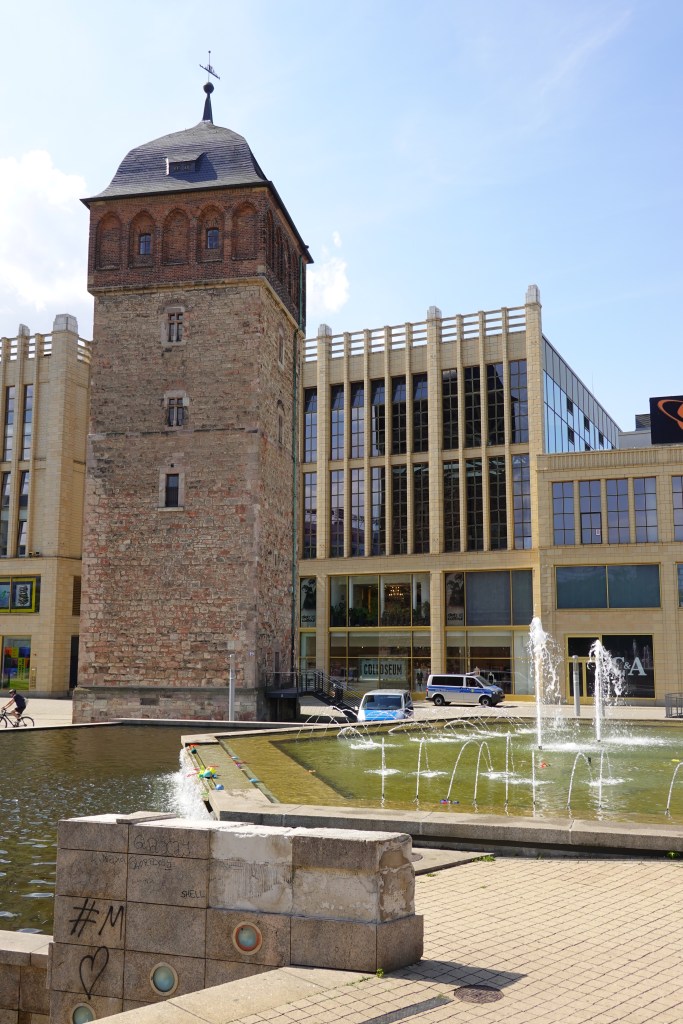
Brian took a day off from the conference, and together our travelers took a train to another small town in former East Germany. Chemnitz was called Karl-Marx-Stadt beginning in the 1970s, but the people of the city voted to return to the historic name as soon as possible after the reunification of Germany in 1990.
This is simply called Red Tower.
Near the Red Tower, we met a woman also visiting, who spoke excellent English. She was from former West Germany, and lamented that her visit to this town makes her believe that Germany is still divided. The unification was only a generation ago; perhaps more time is needed.
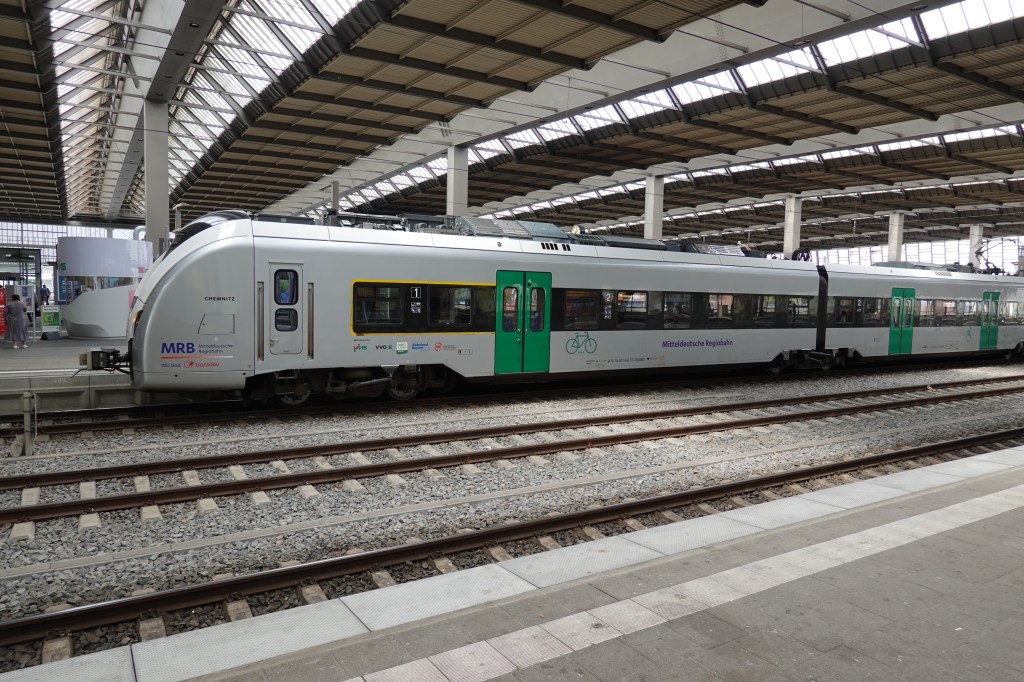
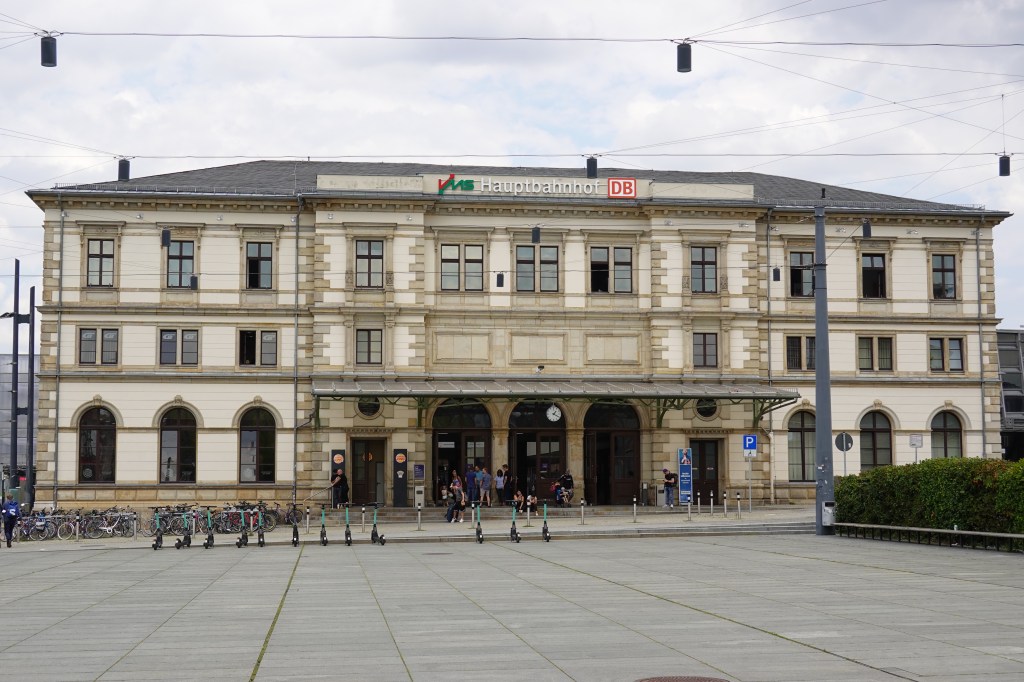
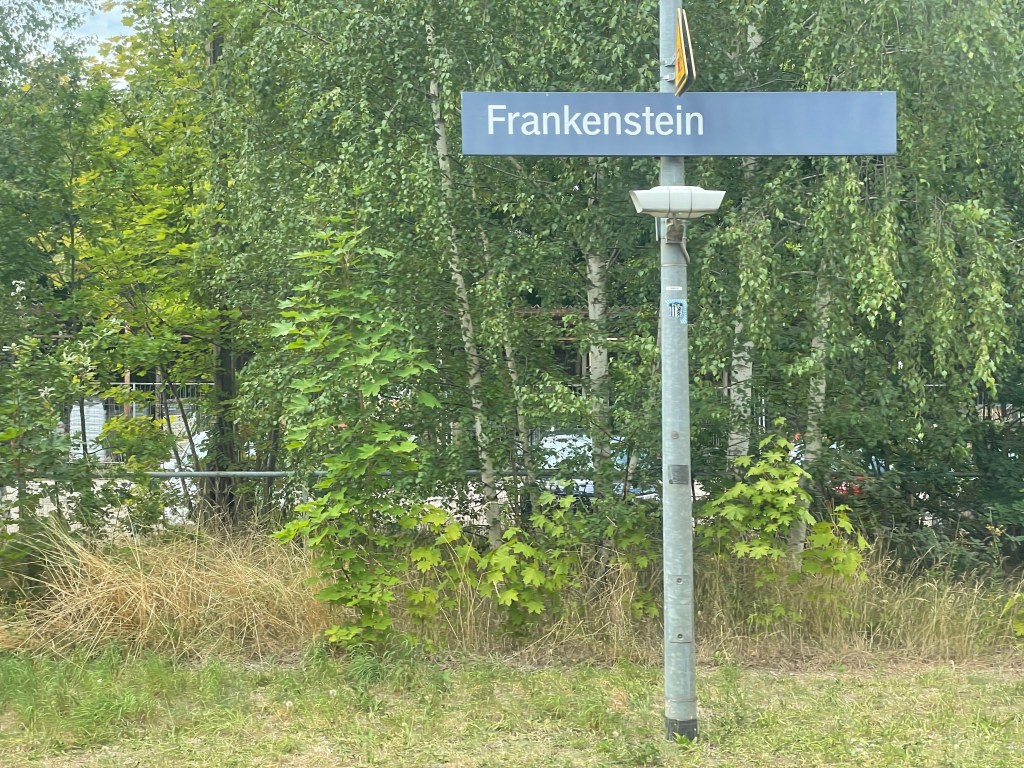
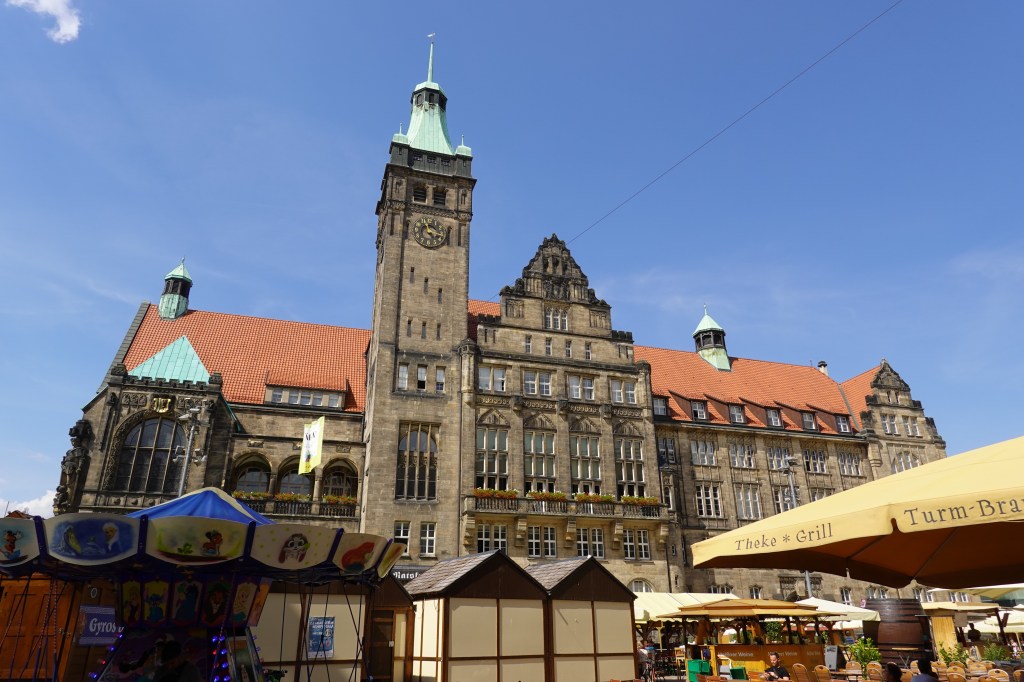
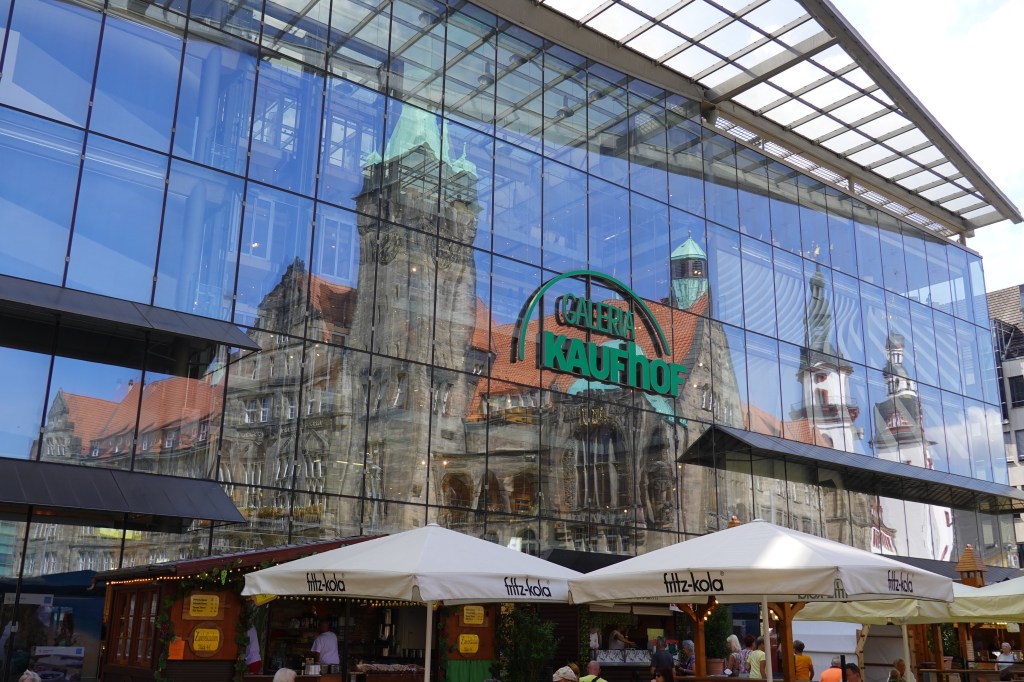
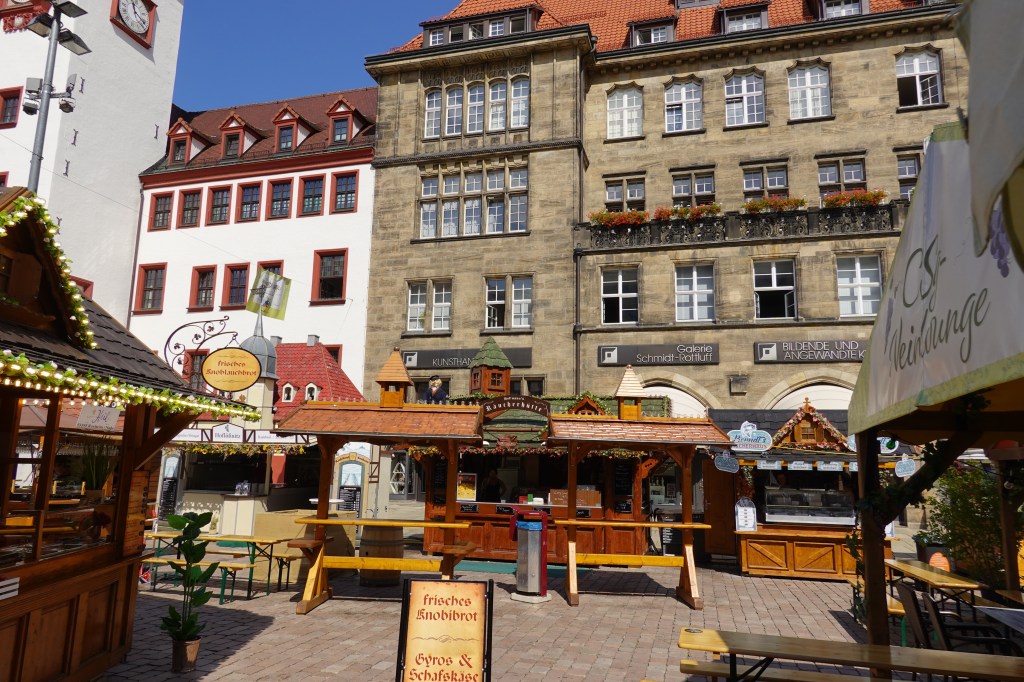
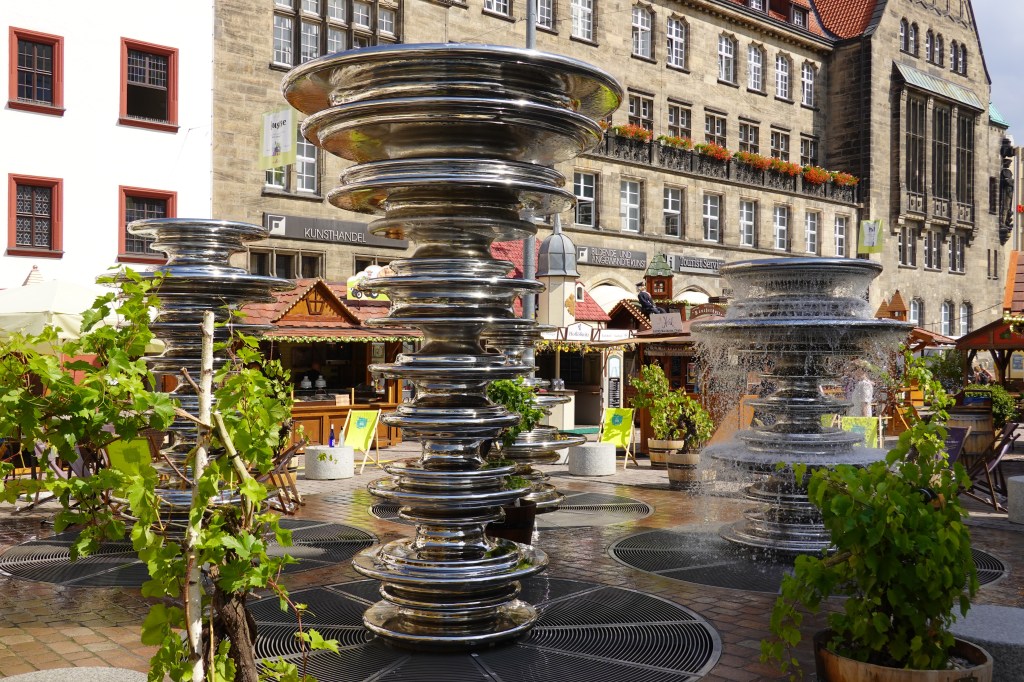
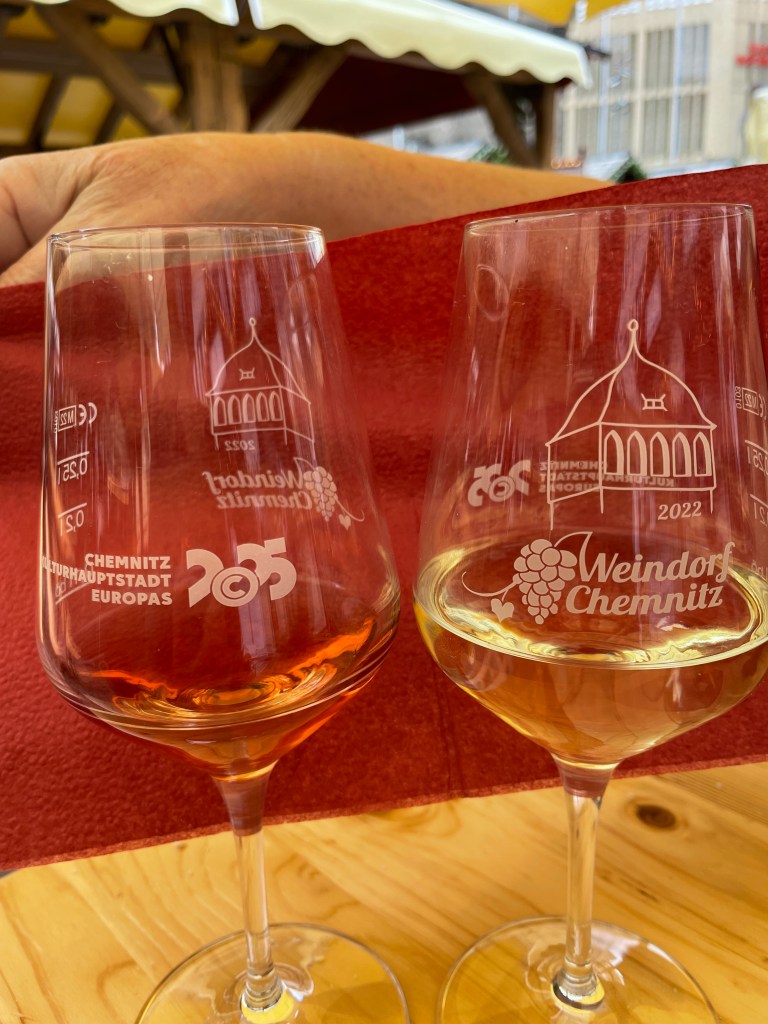
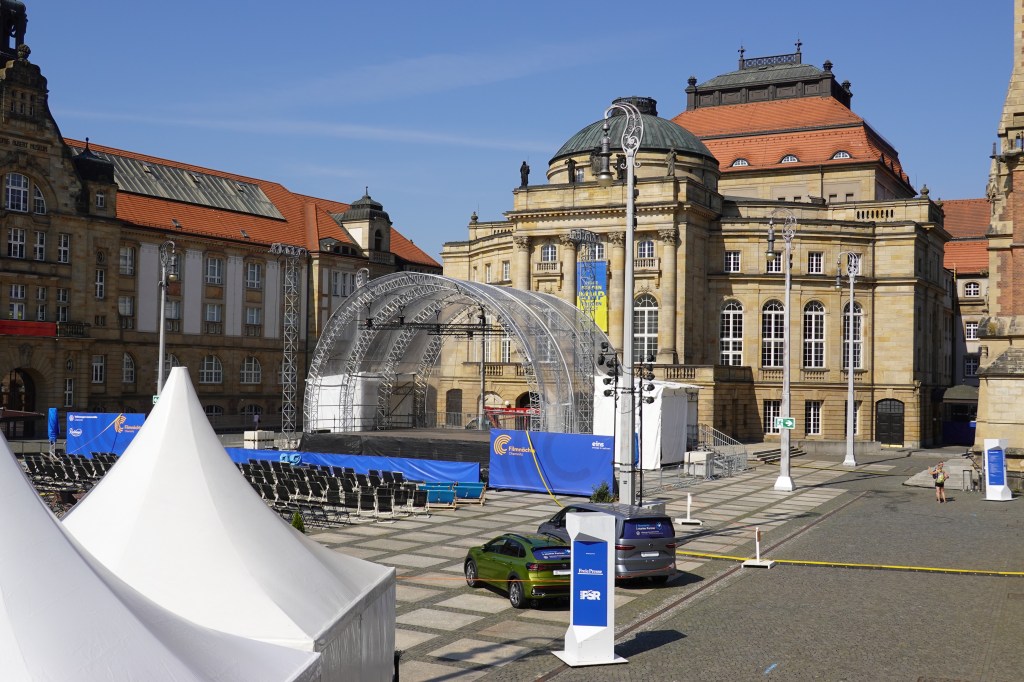
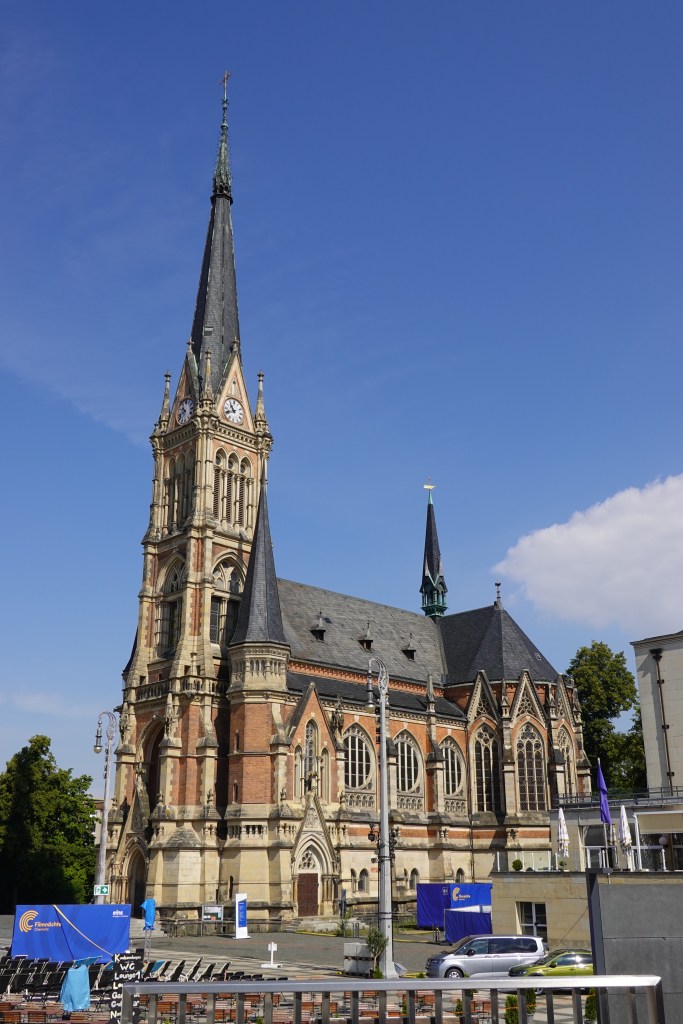
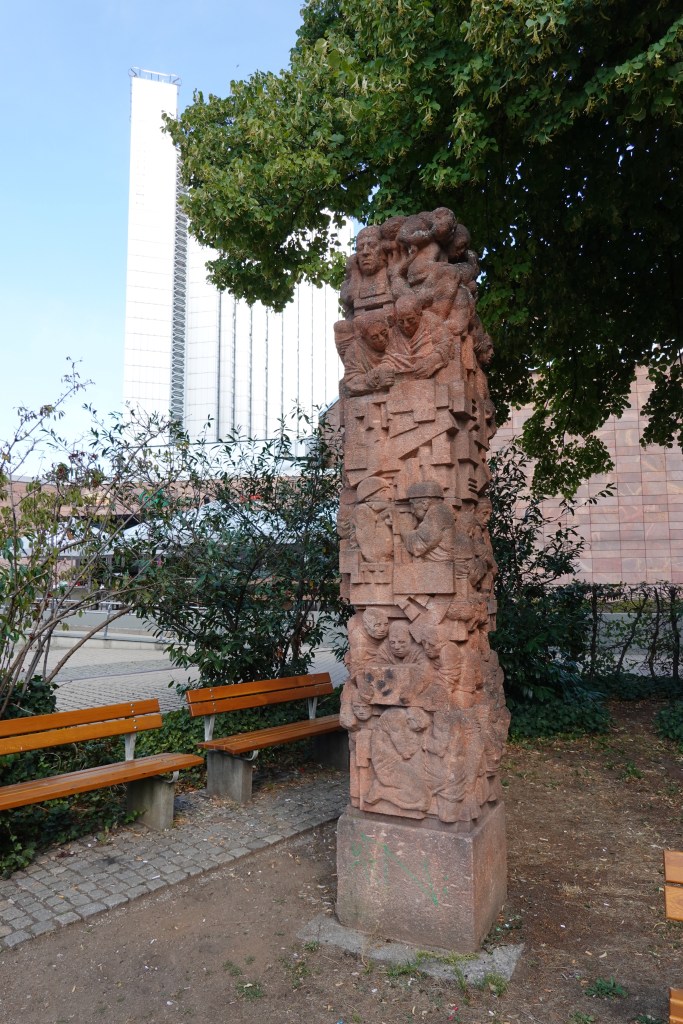
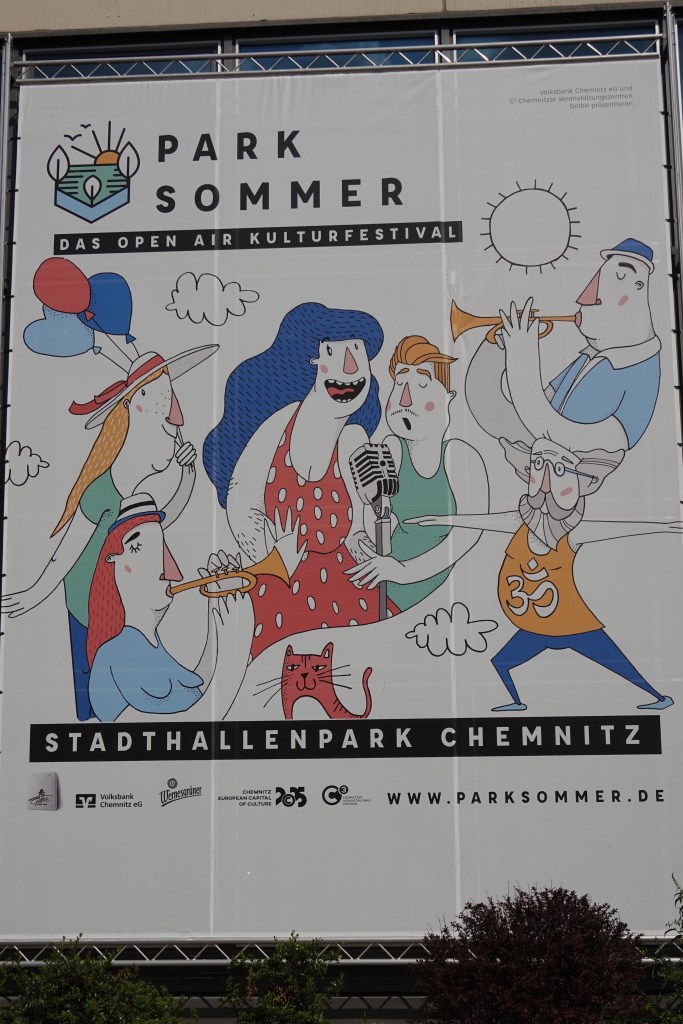
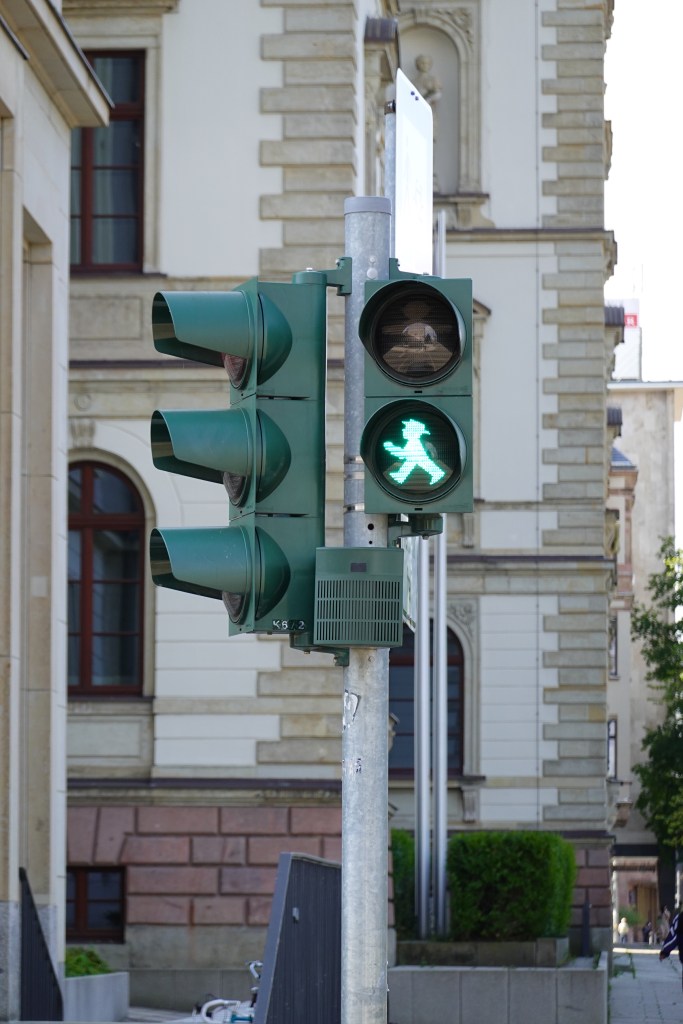
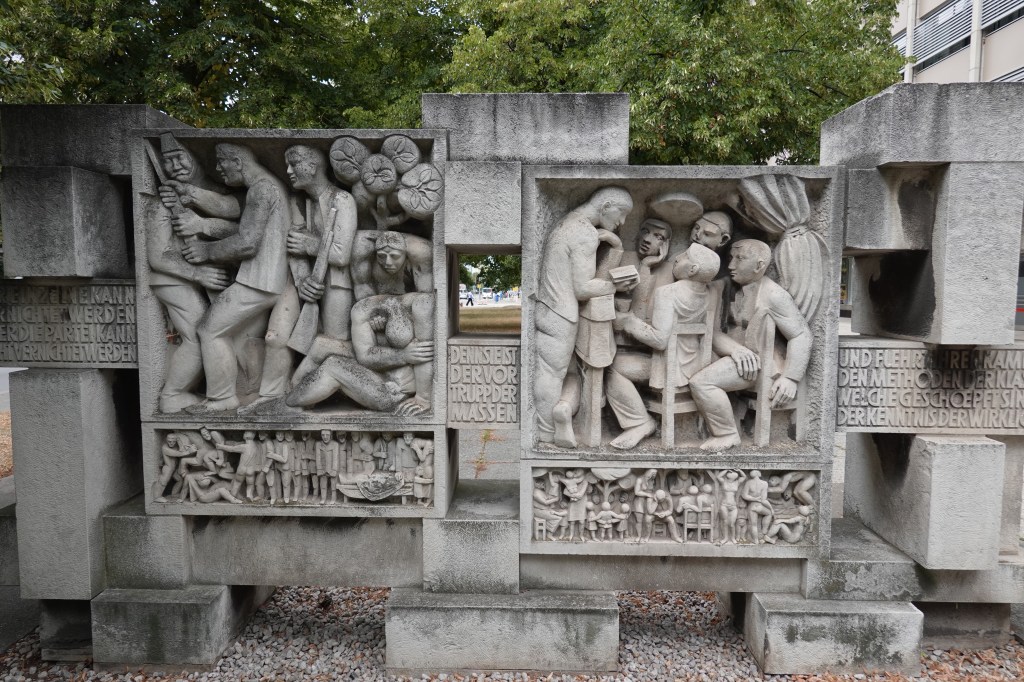
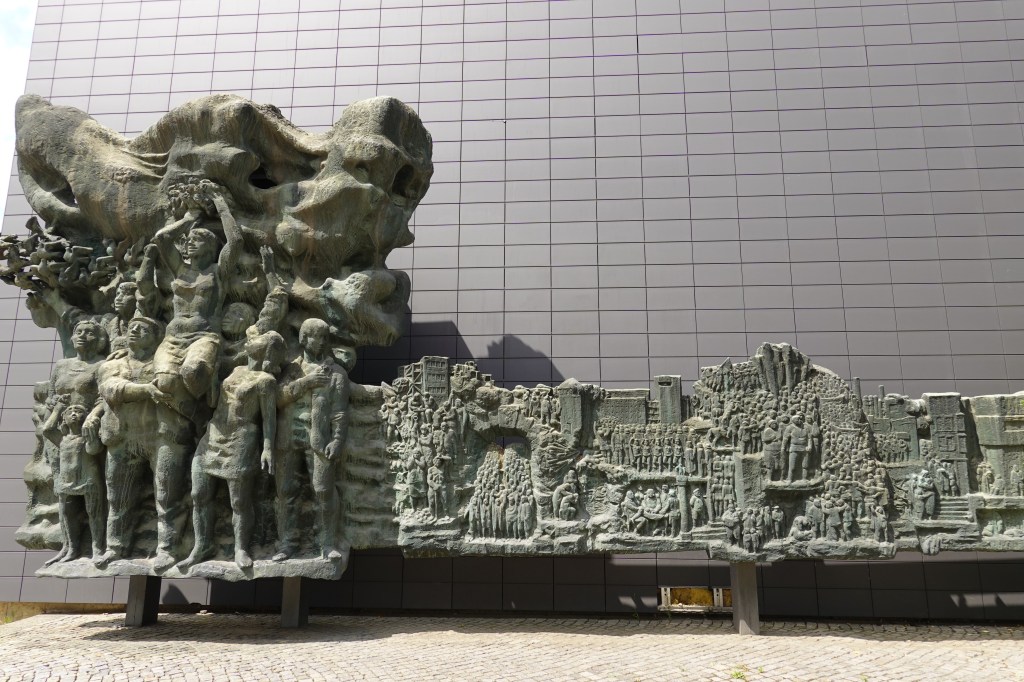
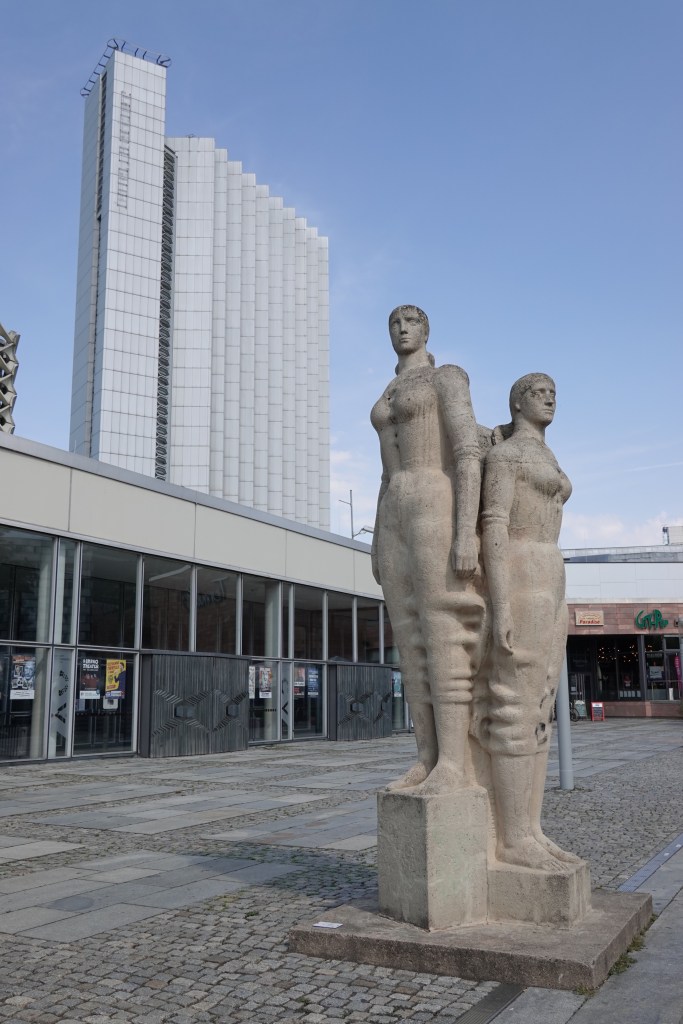
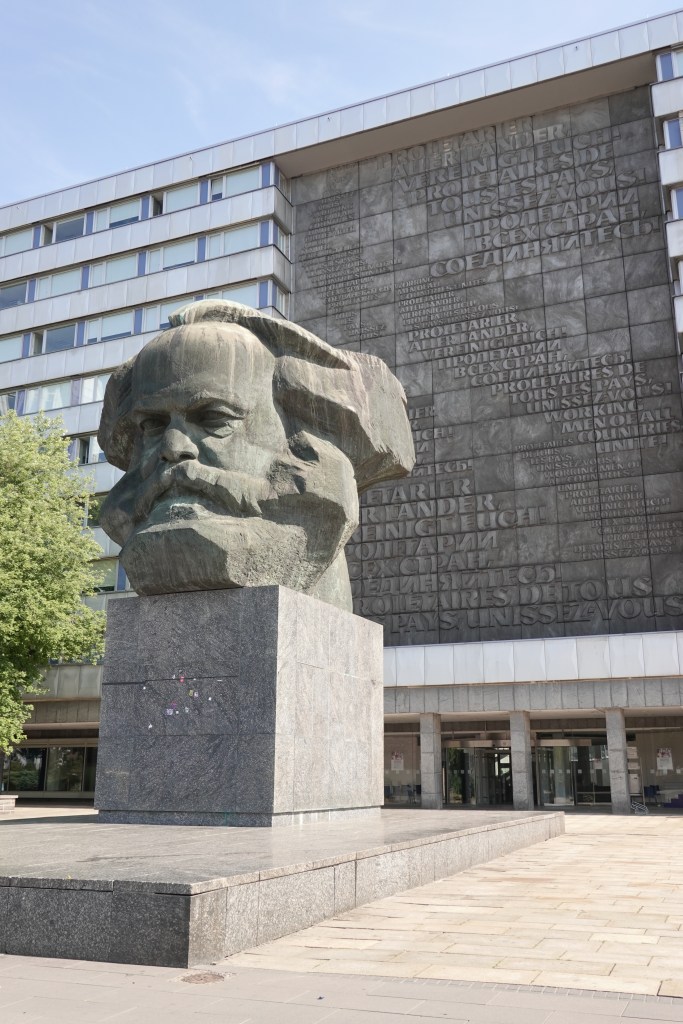
Train and train station in Chemnitz. We went through the town of Frankenstein on the way!Beautiful architecture, showing an interesting mix of old and new.Clare and Brian happened upon an outdoor month-long wine festival, with semi-permanent stalls and a lot of picnic benches for visitors. We tasted a nice white wine from Meissen.The opera house and outdoor theatreA very large cathedralSculpture, we assume from GDR timeNote the yoga guy on lower right with the Om symbolWalk signal kept from the East German designDepressing art, we assume from the GDRPeople are being squashed …This sculpture has some hope in itKarl Marx monument
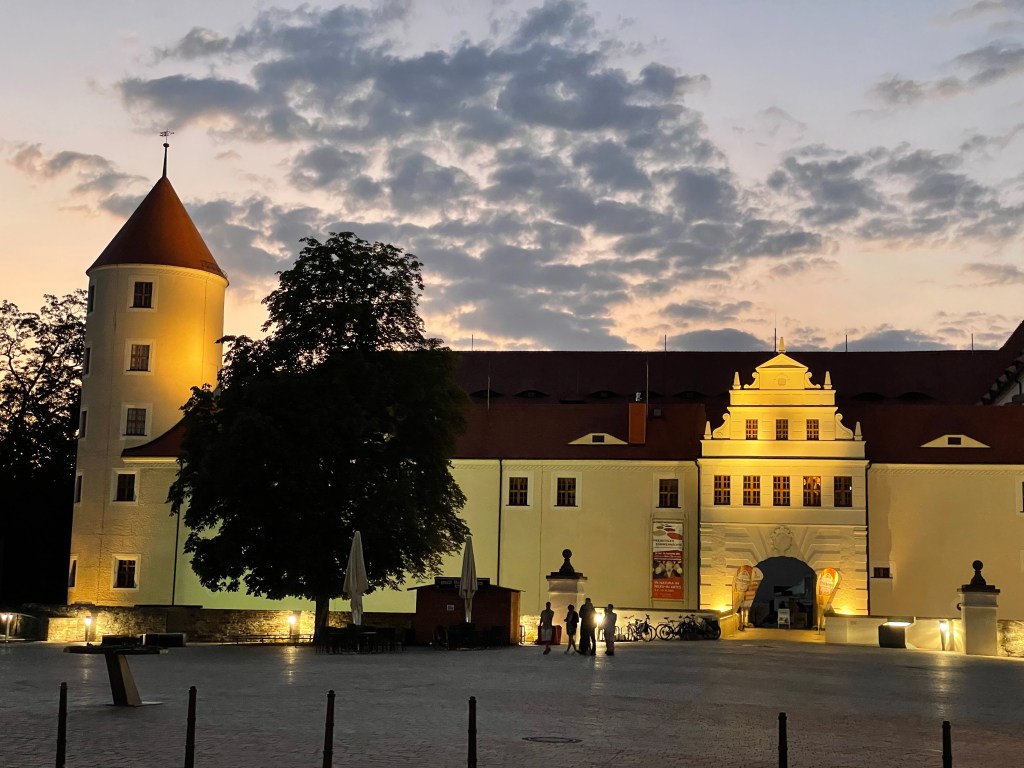
The museum in this old castle was the site of the opening reception for the Geoanalysis conference. Plentyof food and drink were arranged throughout the galleries.
The “best mineral museum in the world” is indeed fantastic. It’s organized primarily by continent. The Hall of Europe divides the minerals into chemical groups, carbonates, salts, silicates etc. This took Clare a while to figure out, because of the Covid arrows on the floor, directing visitors to take a certain path to minimize contact. The arrows, of course did not follow the chemical groupings.
Native silver, from near Freiberg
Big specimens. Unbelievably big. But without scale, photographs cannot capture the awe felt by visitors to this place. Instead, Clare concentrated on showing pictures of fun or unusual minerals from these collections.
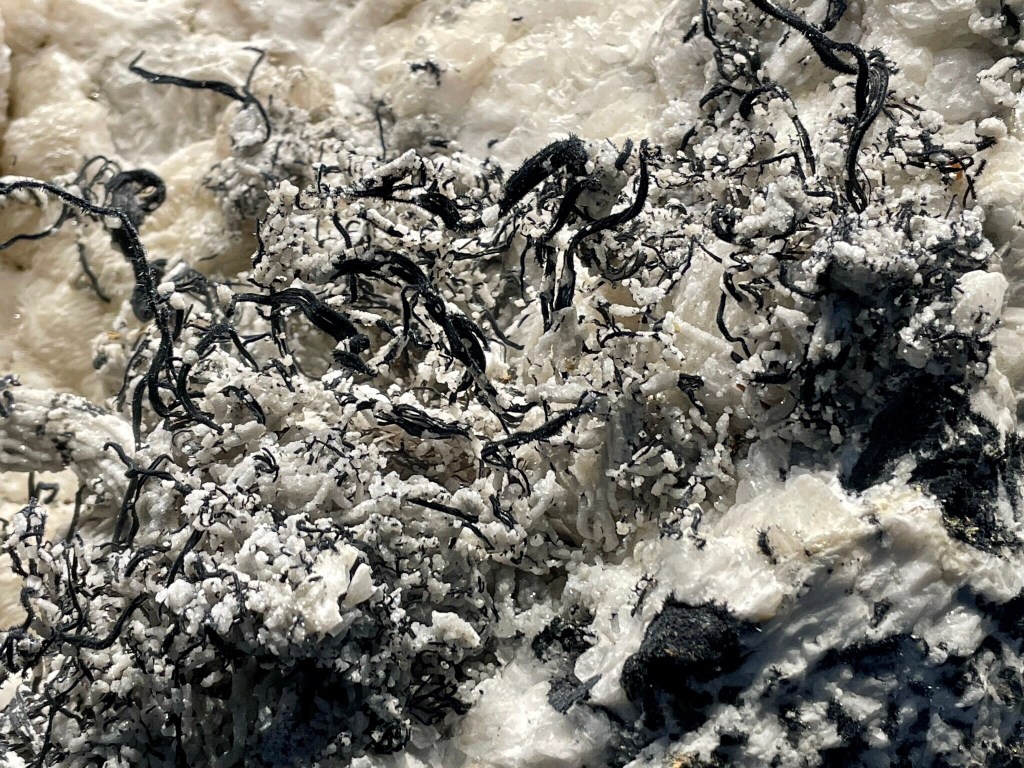
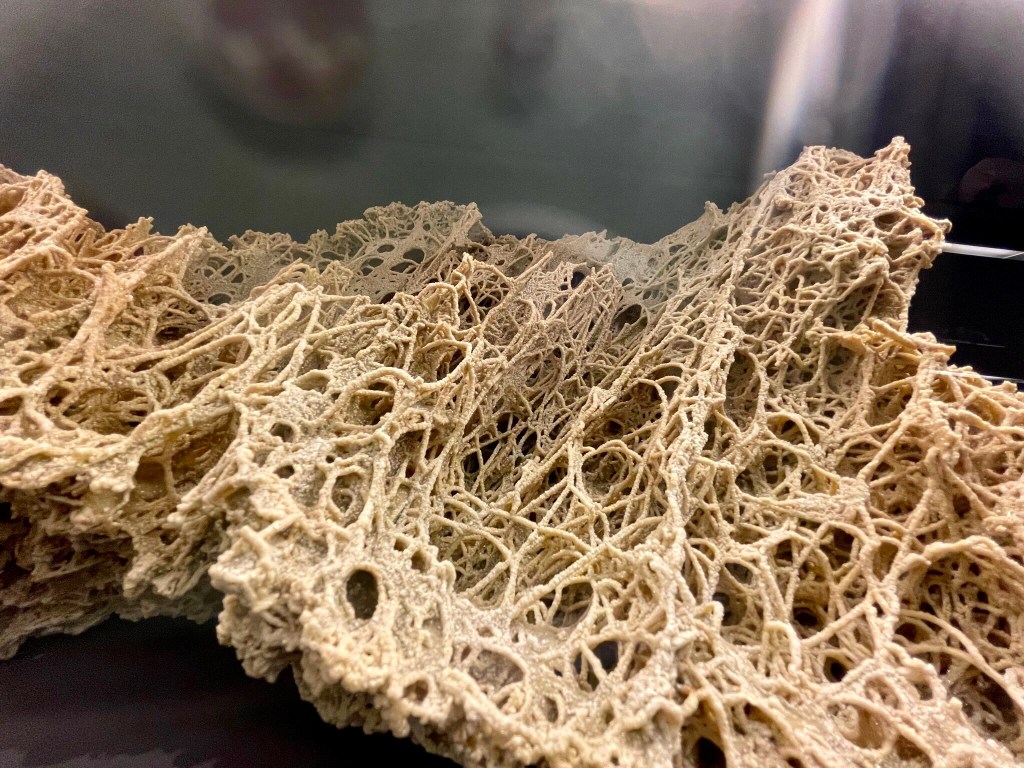
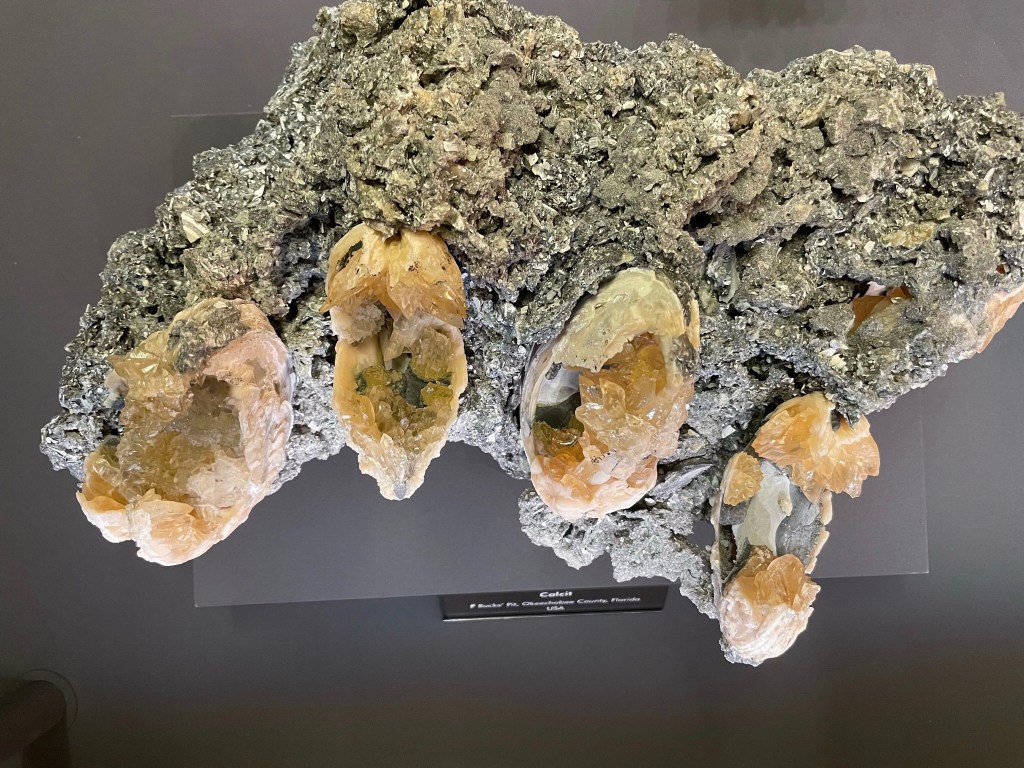
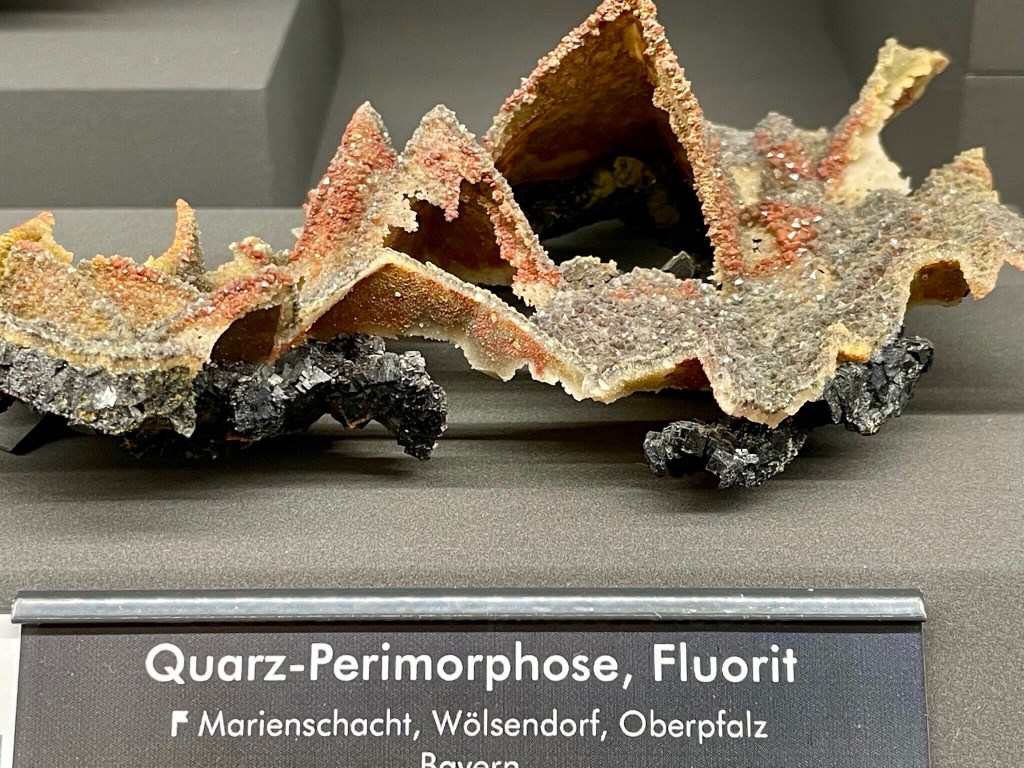
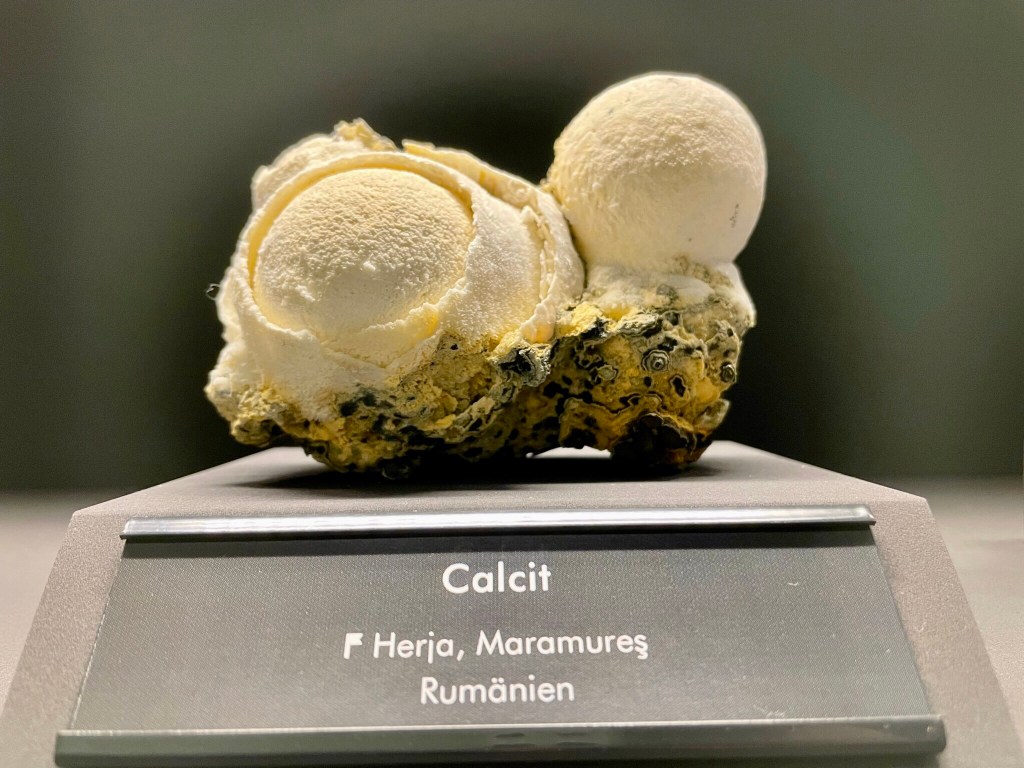
Lacy carbonate, probably formed in a caveA sulfide, with calcite that looks like eggs (pseudomorph after fluorite)
The explanations of the genesis of minerals in the Hall of Europe included pegmatite, skarn and hydrothermal veins, all environments where crystals can grow freely, forming perfect crystal faces. These large, graphic displays are all in German, no other translations.
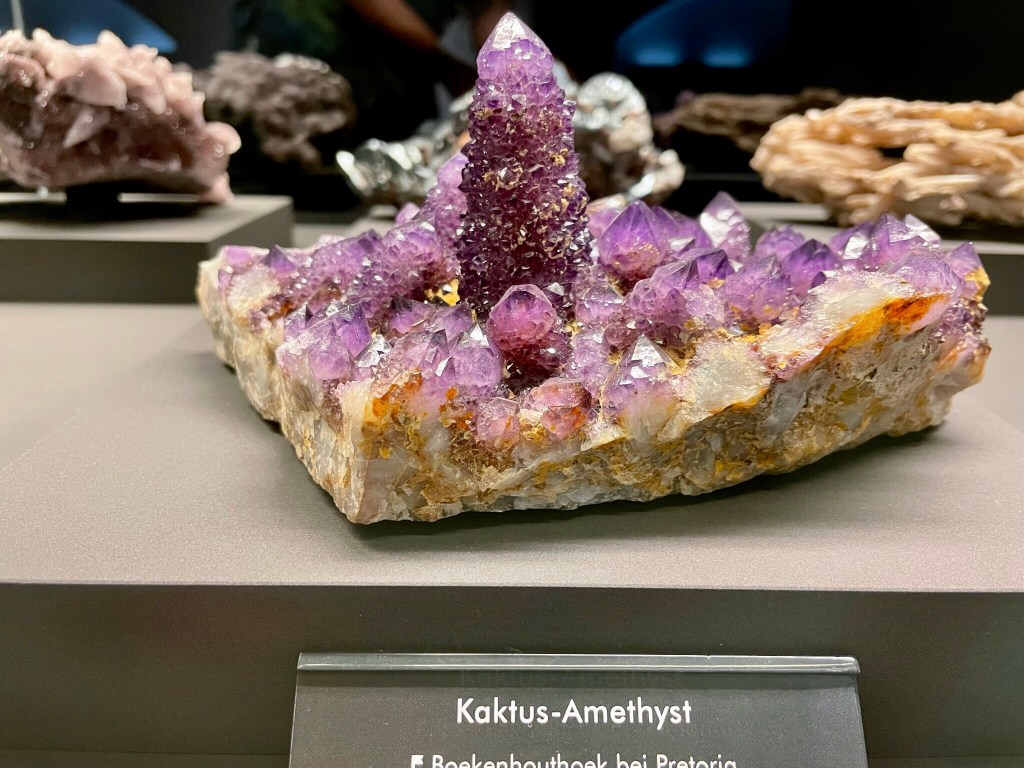
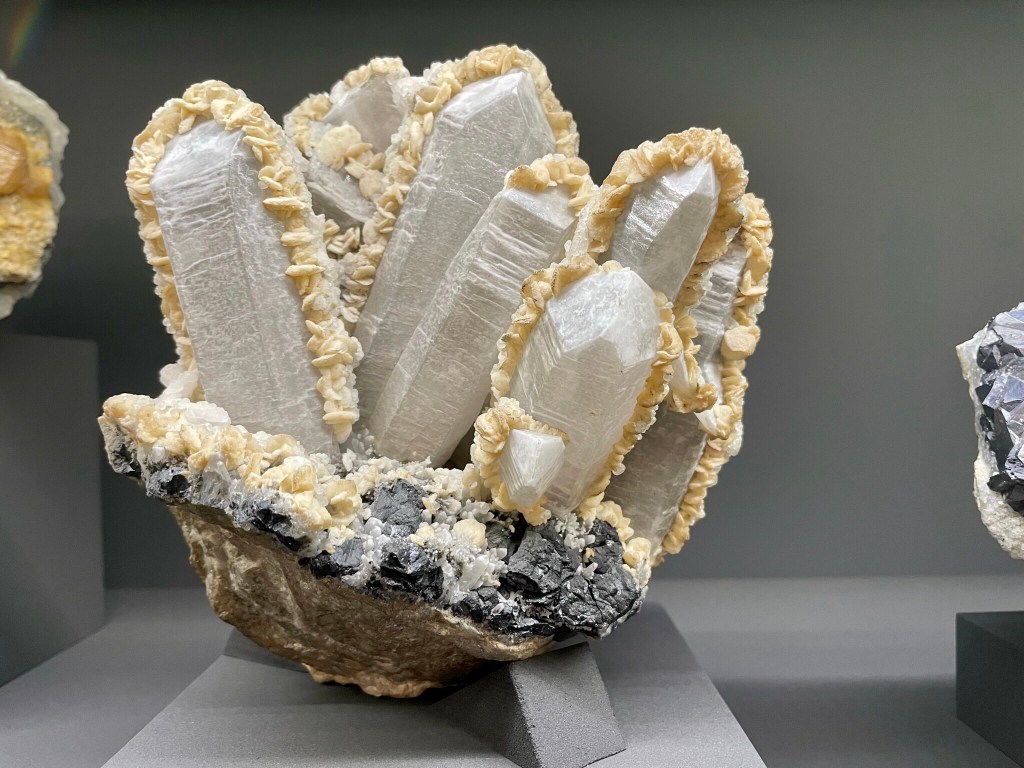
Cactus amethyst – smaller crystals grow as cactus spines on the larger crystalSimilar, calcite coating quartz crystals, like people singing Christmas carols. Shark’s mouths!
The Hall of Africa is divided geographically and by mining region. The explanation signs, at the ends of cabinets, were translated into English (hooray) and, reading them, Clare learned a lot about the genesis of many unique ore deposits and the minerals found in each.
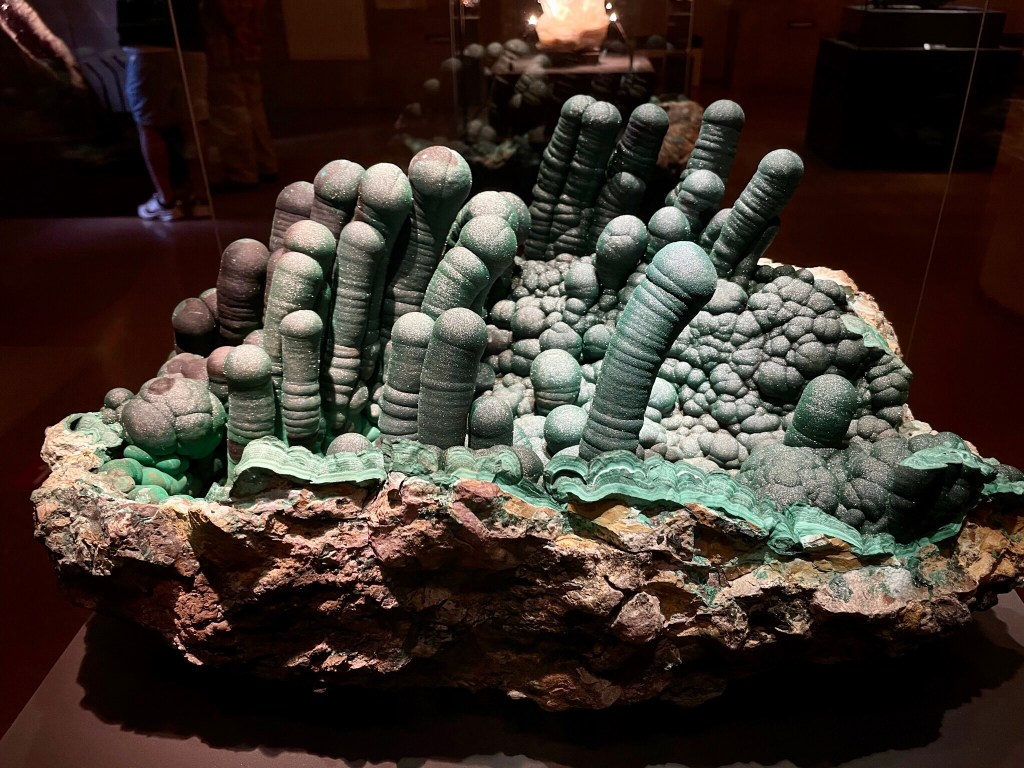
Cave formations make interesting mineral morphologies!Green Mushrooms, malachite stalactites
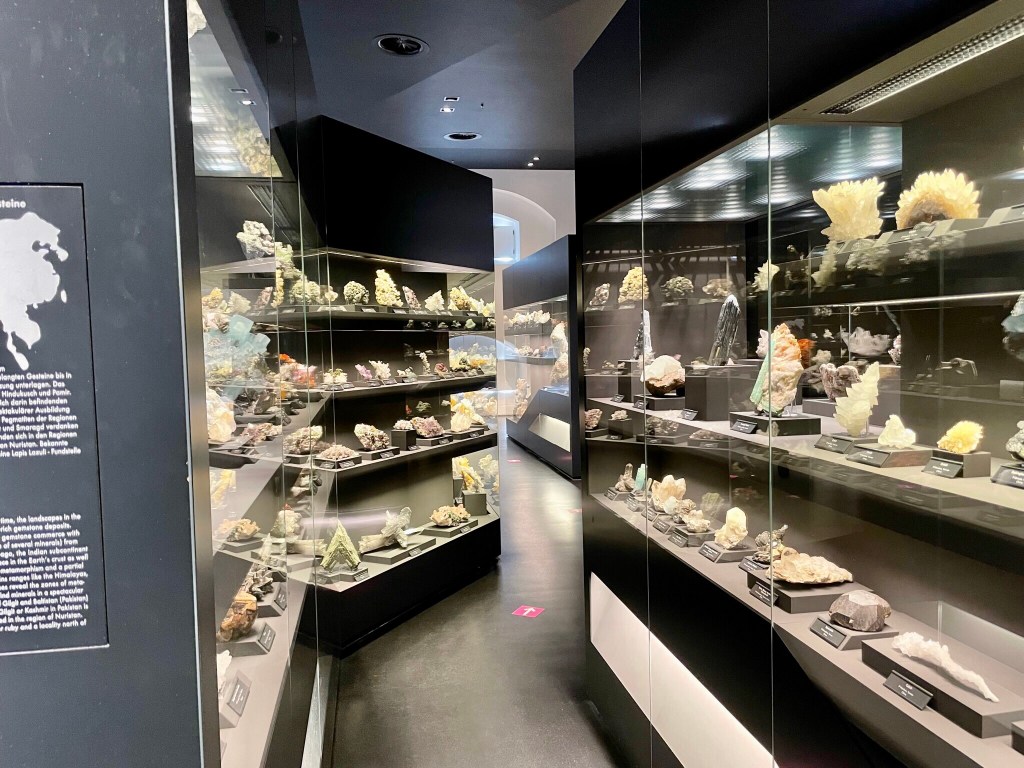
Display cases in each of the rooms varied a lot. All were controlled environments with good lighting, but the way minerals were displayed was different.
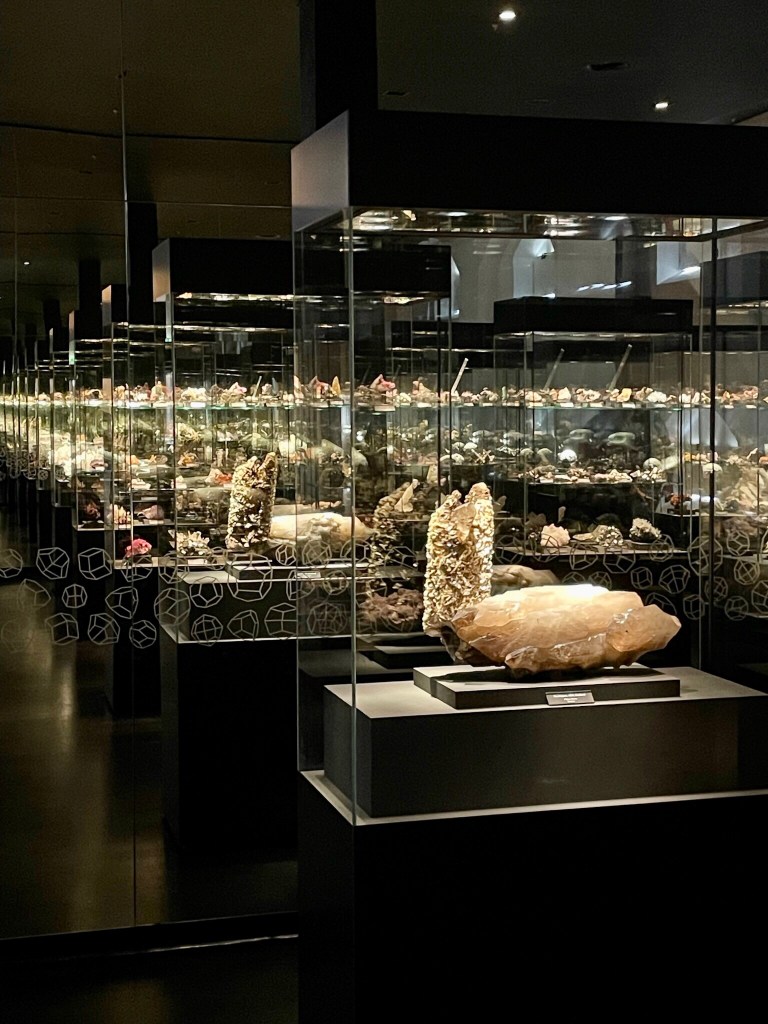
One of the rooms made the mineral cases reflect to infinity, the way minerals work.Cases typical of mineral displays, overwhelming with too much to see.Cases that show individual minerals to their best, in 3-D.
The Americas were combined into one room, north and south together. Clare was happy to see rhodochrosite from Alma, the official state mineral of Colorado in the same case as benitoite, California’s official state gemstone. Asia and Australia were combined into one room as well.
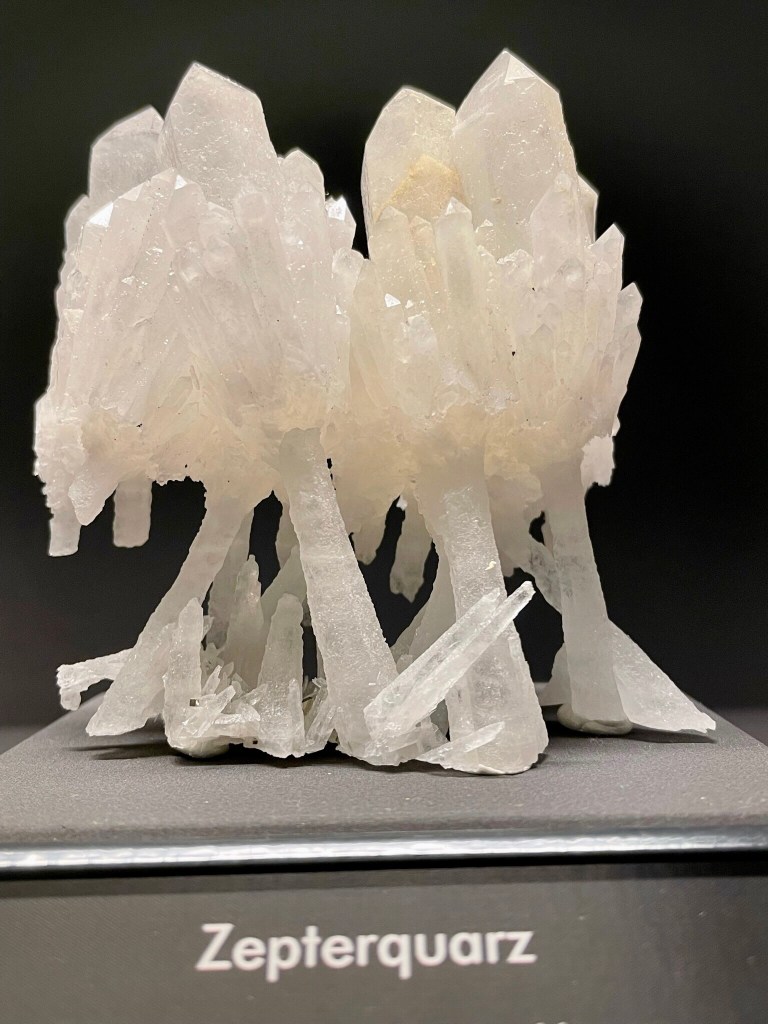
Scepter Quartz, or crystals dancing
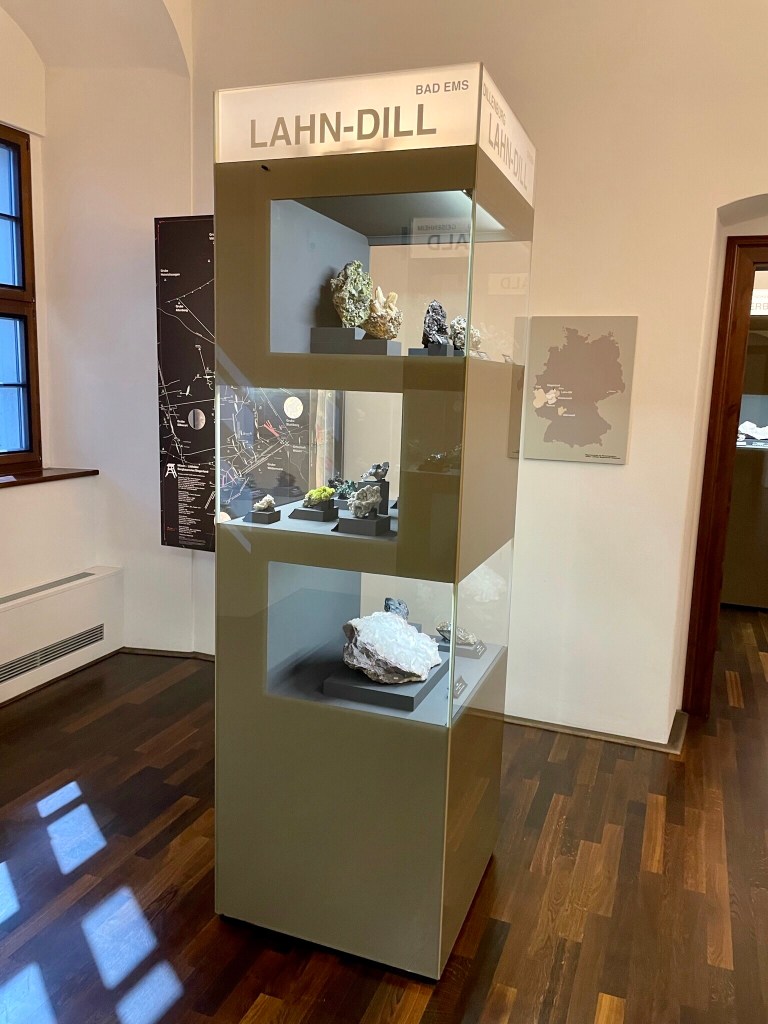
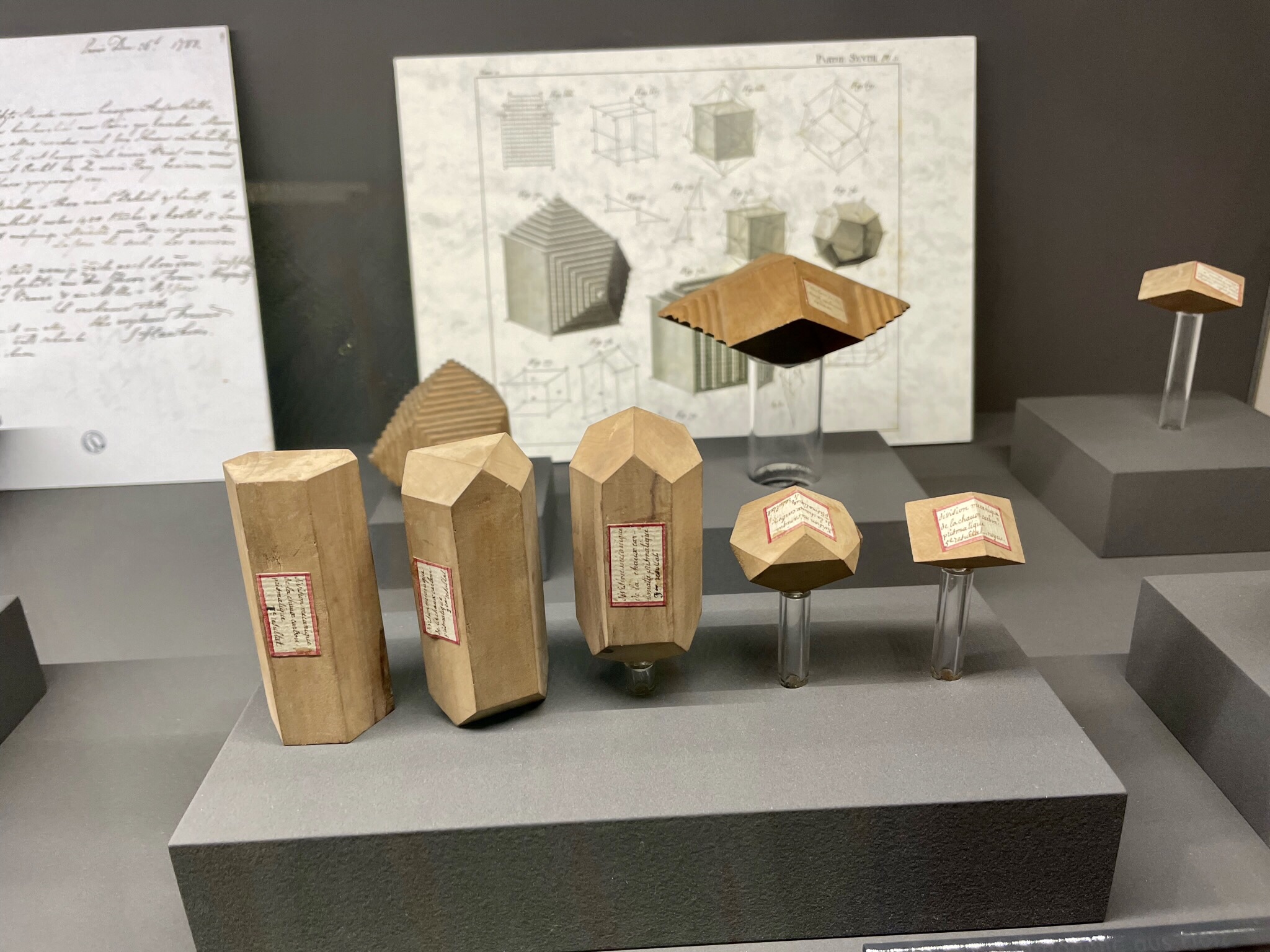
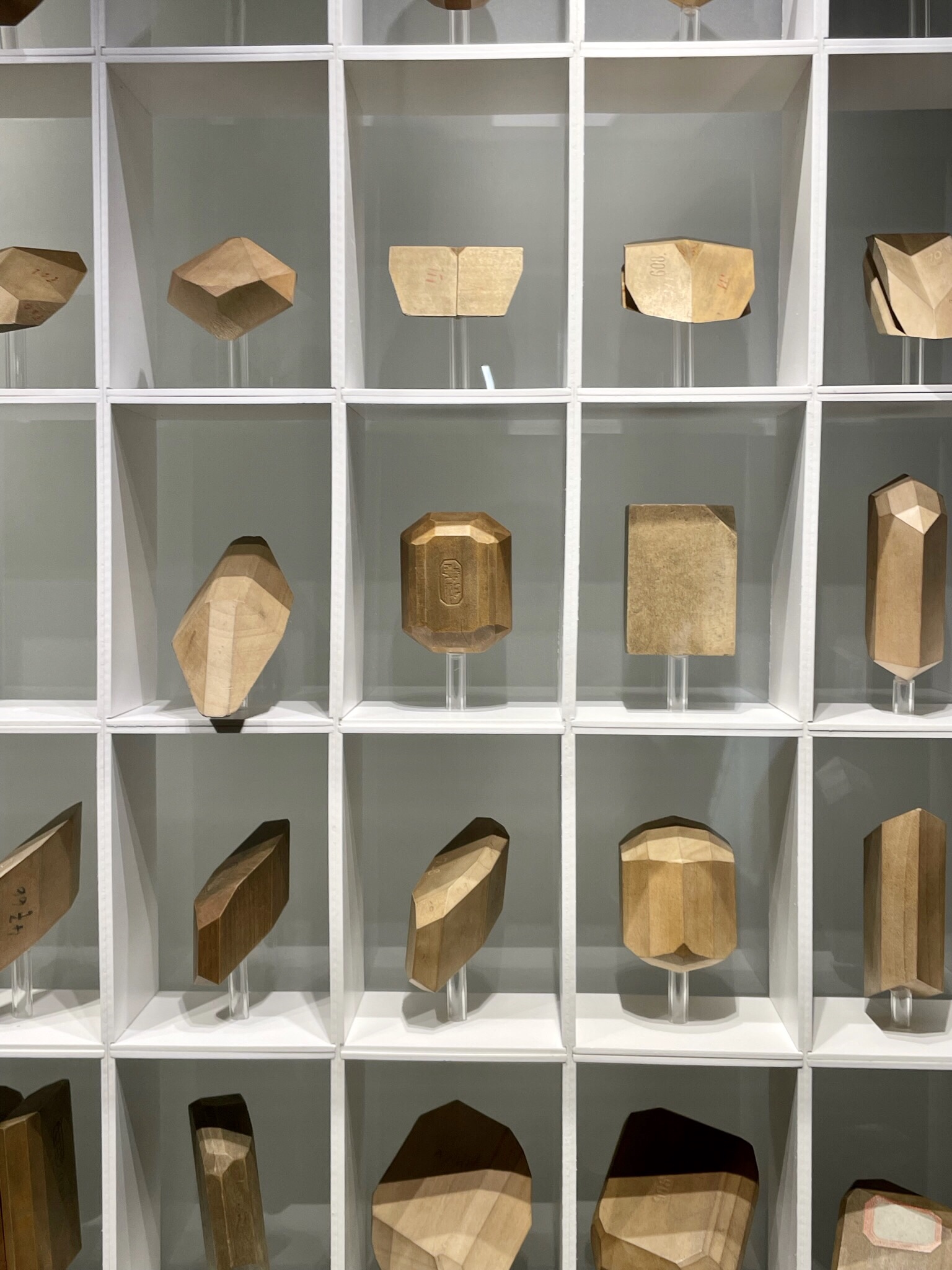
Another area, not in the castle, showcased minerals of Germany. but the first room you walk into shows crystal faces in wooden models. So many times when teaching, Clare wished for such models to explain symmetry.