Getting to Verderonne, near Paris, for the wedding is a long drive, so we cut it in half by spending one night in Caen — at a hotel. The only hotel in our northern France adventures. First, of course, we tidied up the AirBnB, meeting the owner when we were ready to leave. He talked about the tidal bore we tried to see the previous two nights — when it is very large, he and his friends like to ride the wave along the Sélune River from a long way. This didn’t happen when we were there.
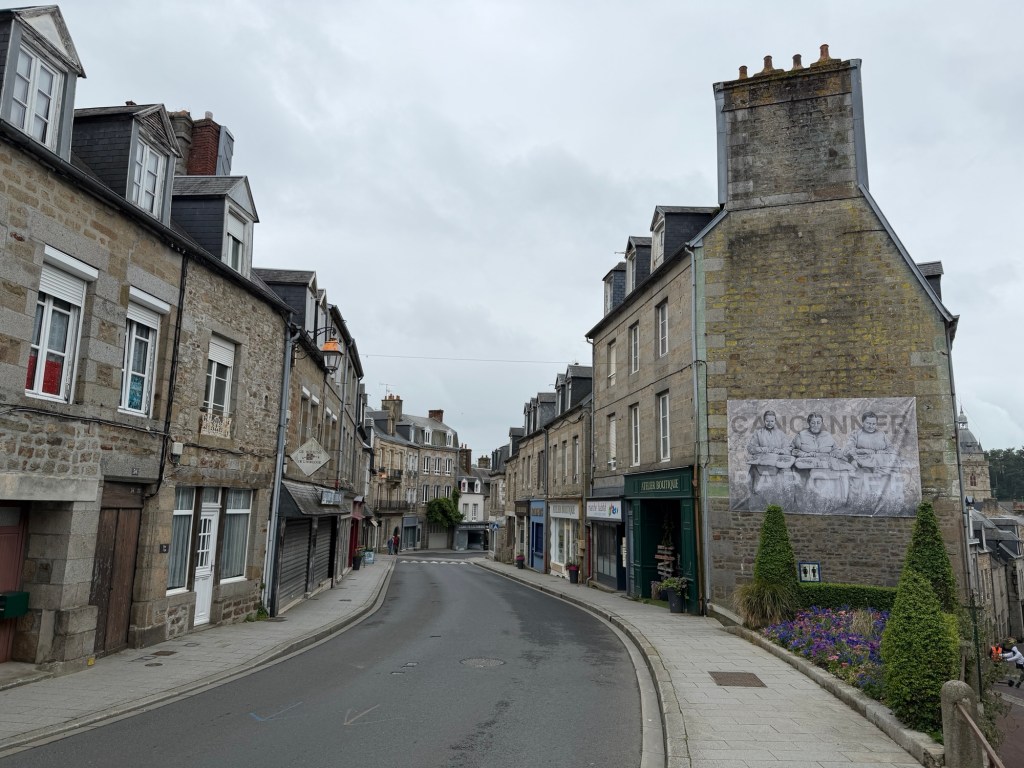
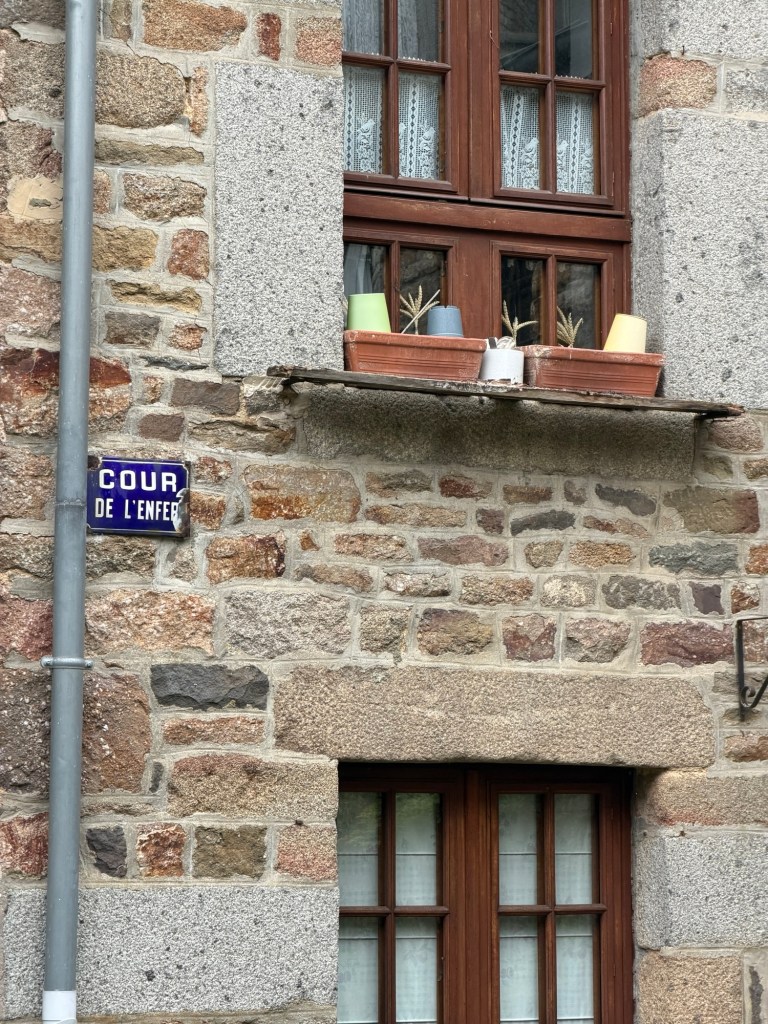
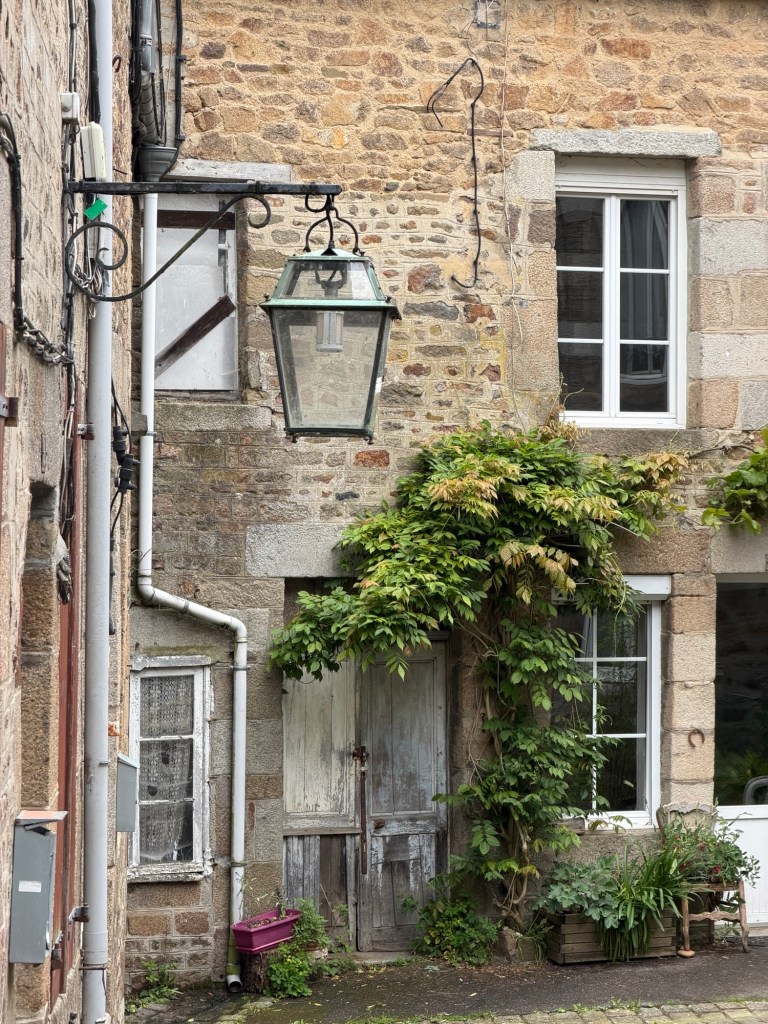
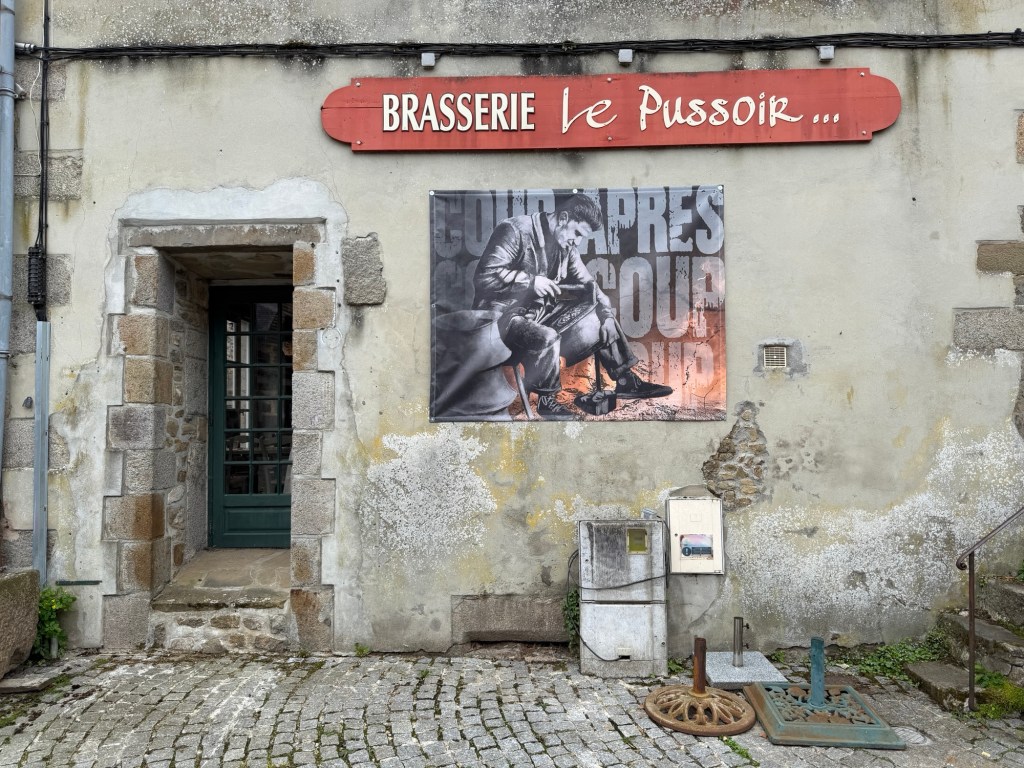
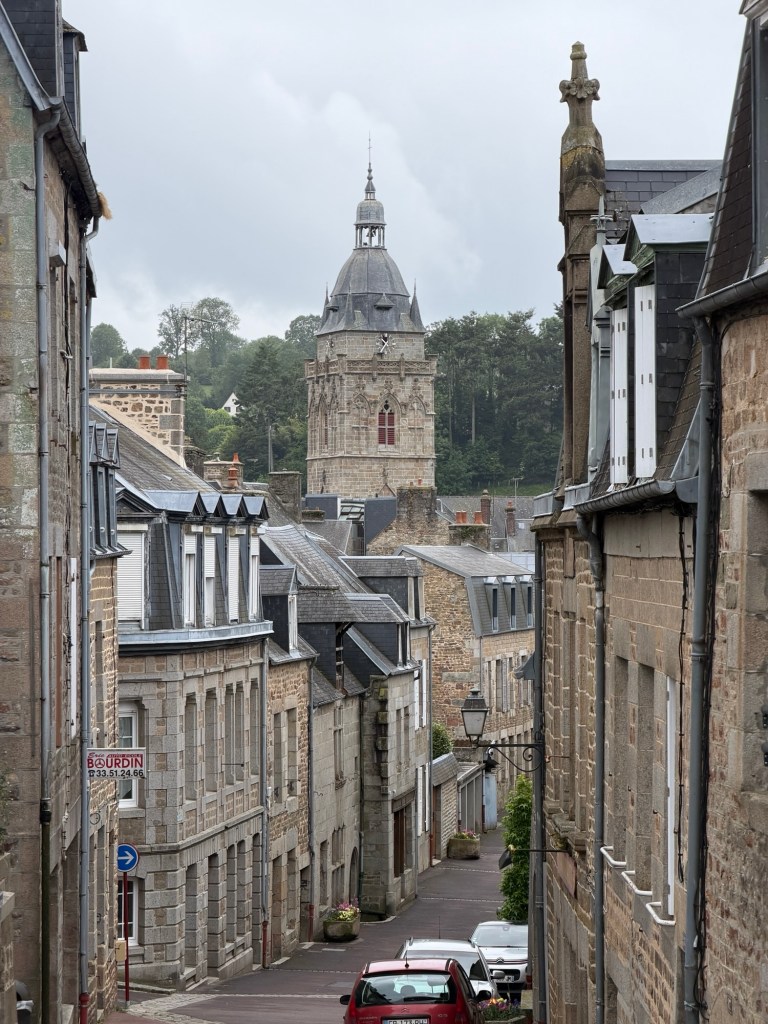
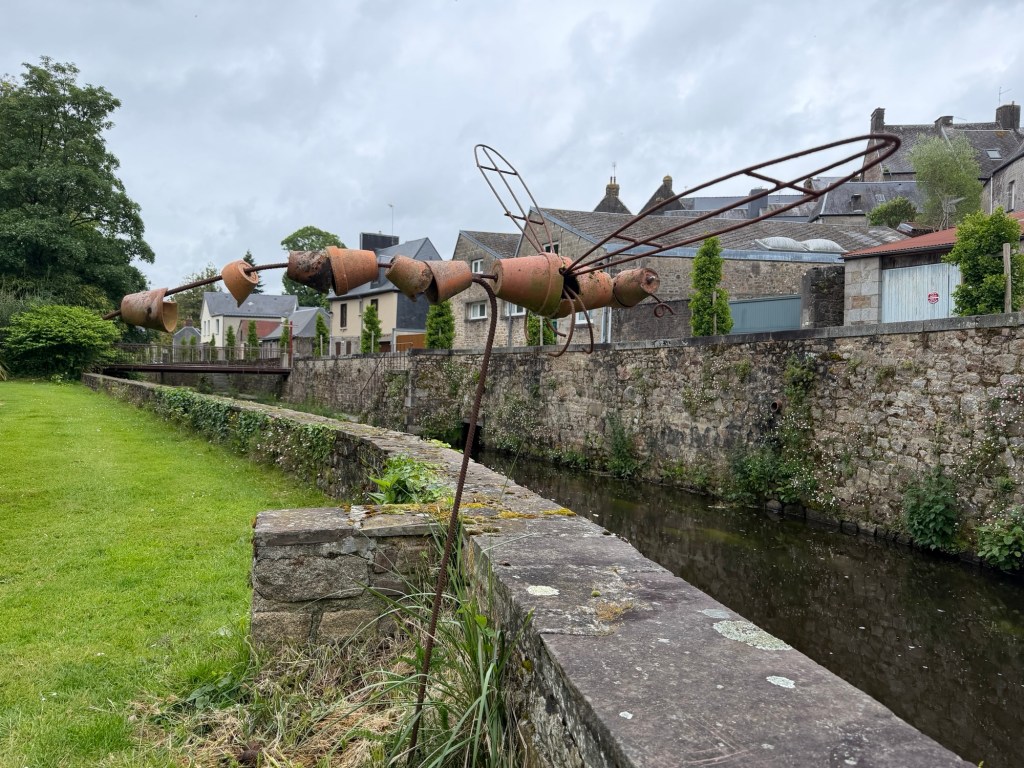
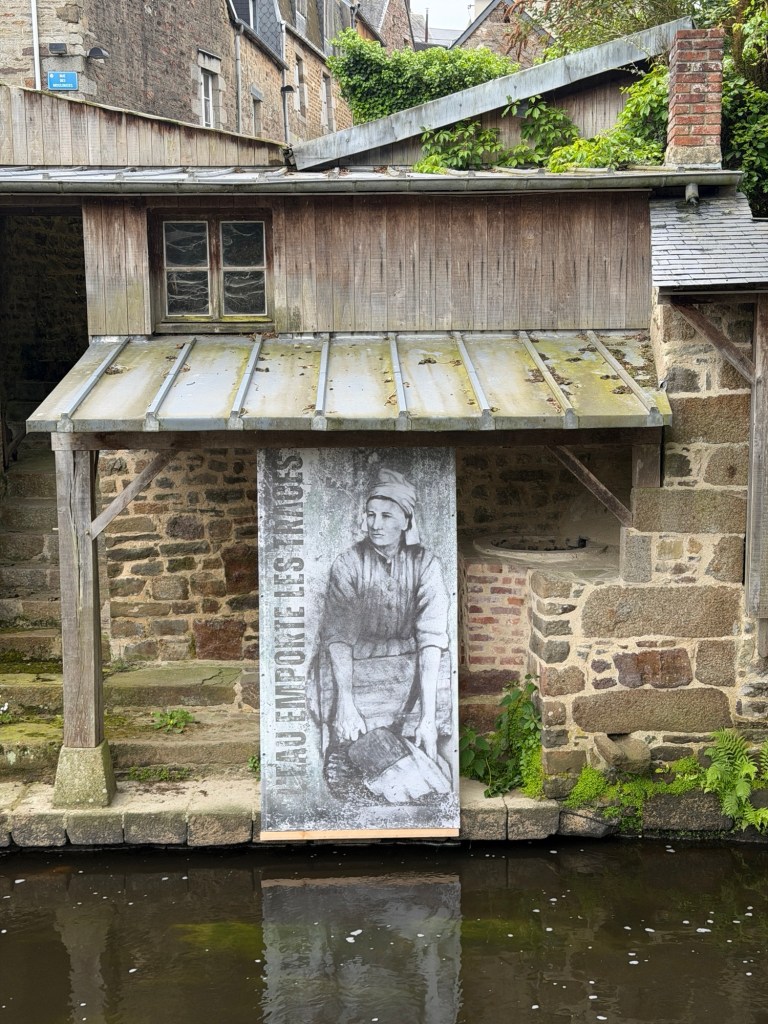
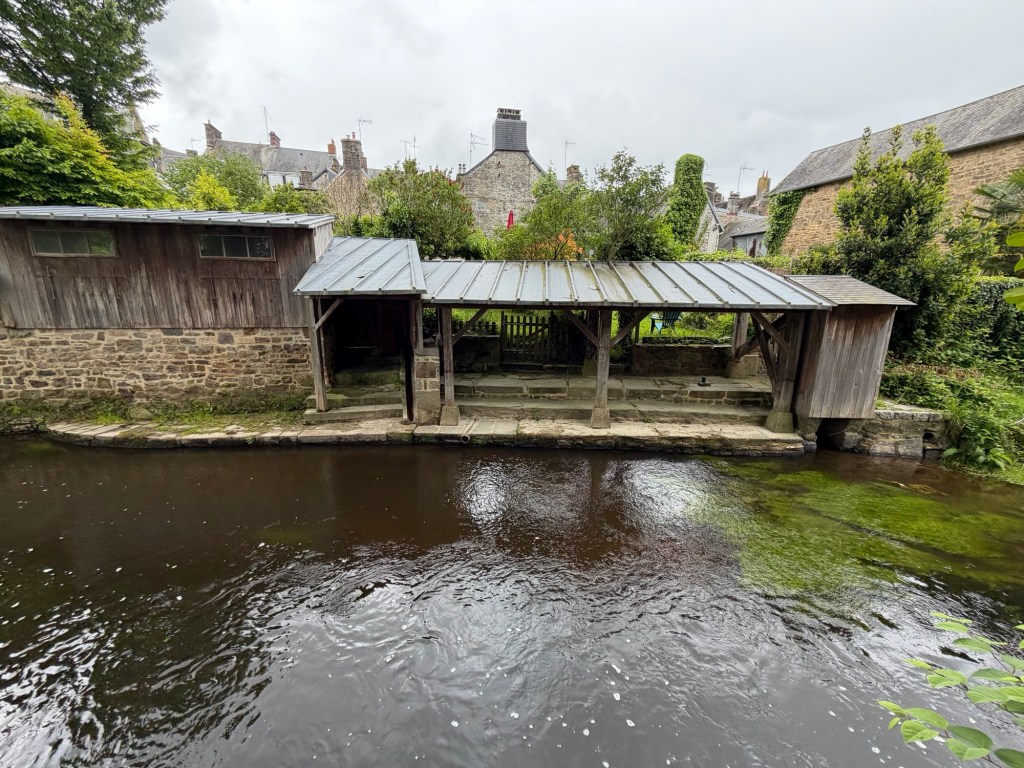
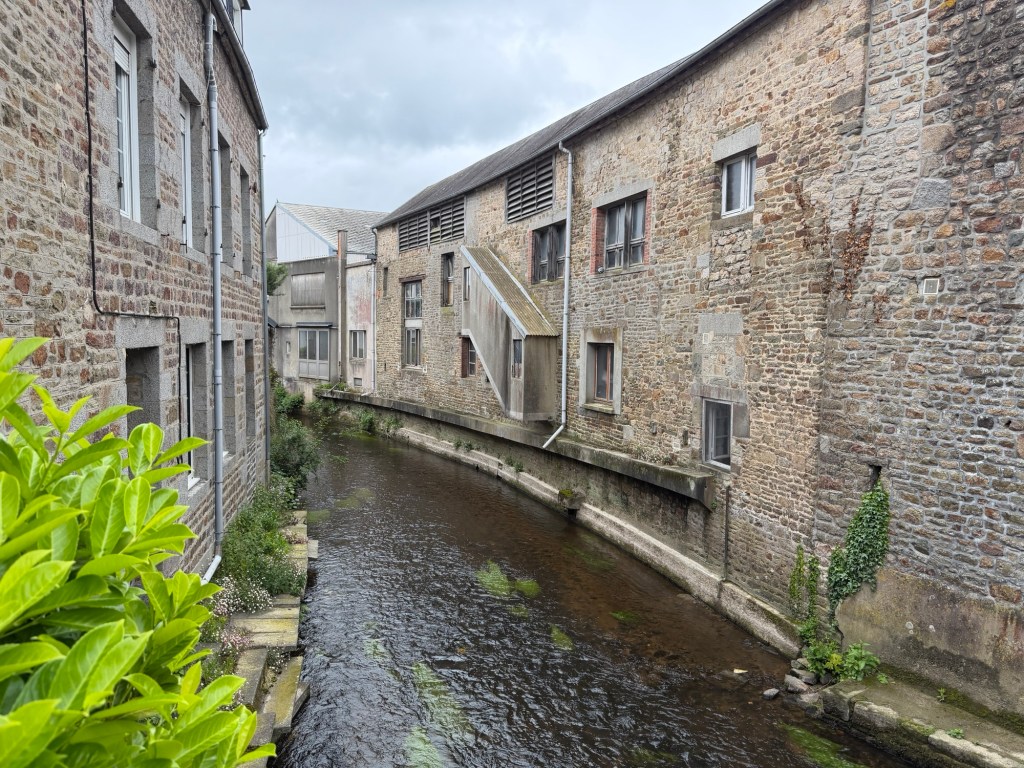
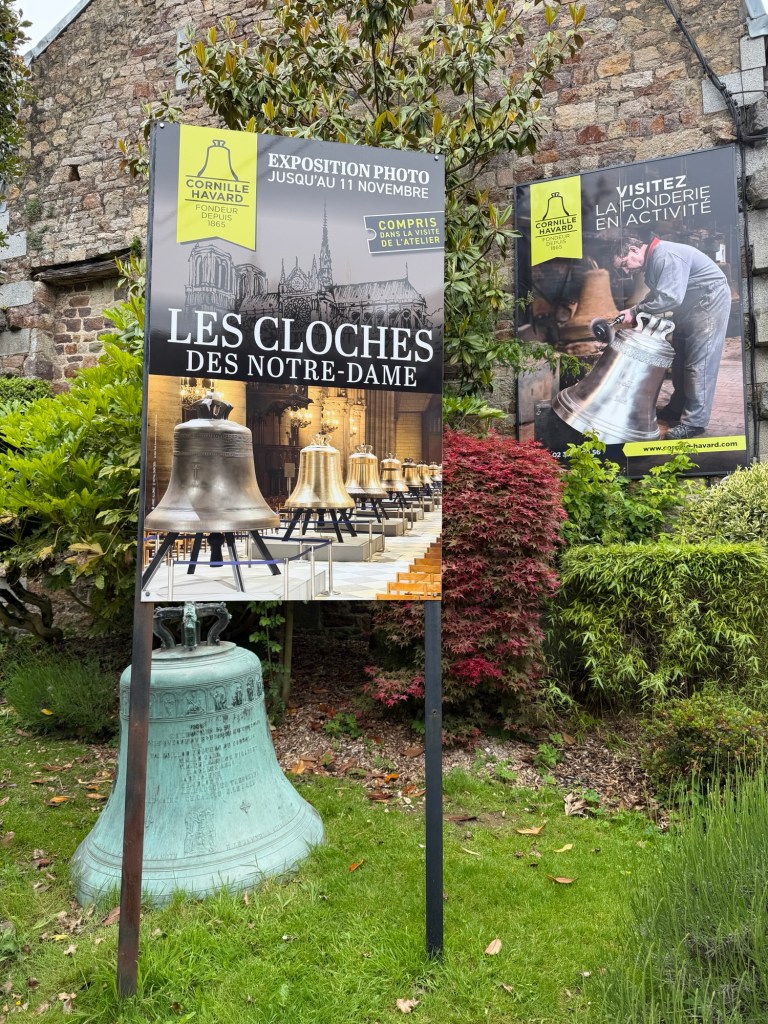
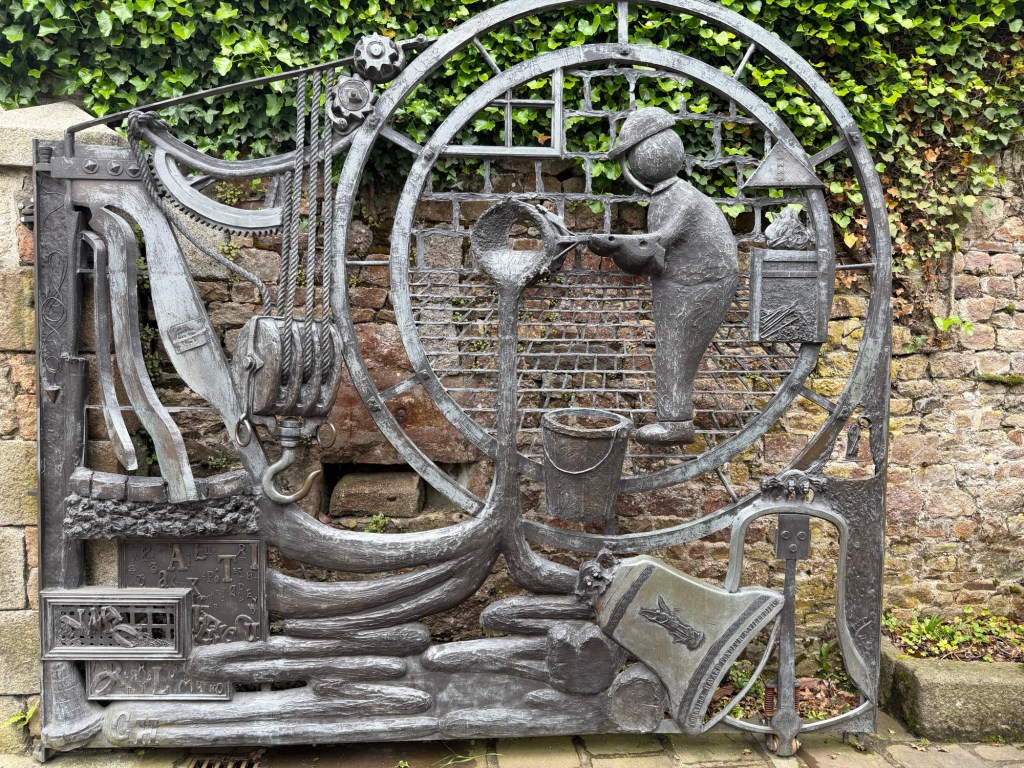
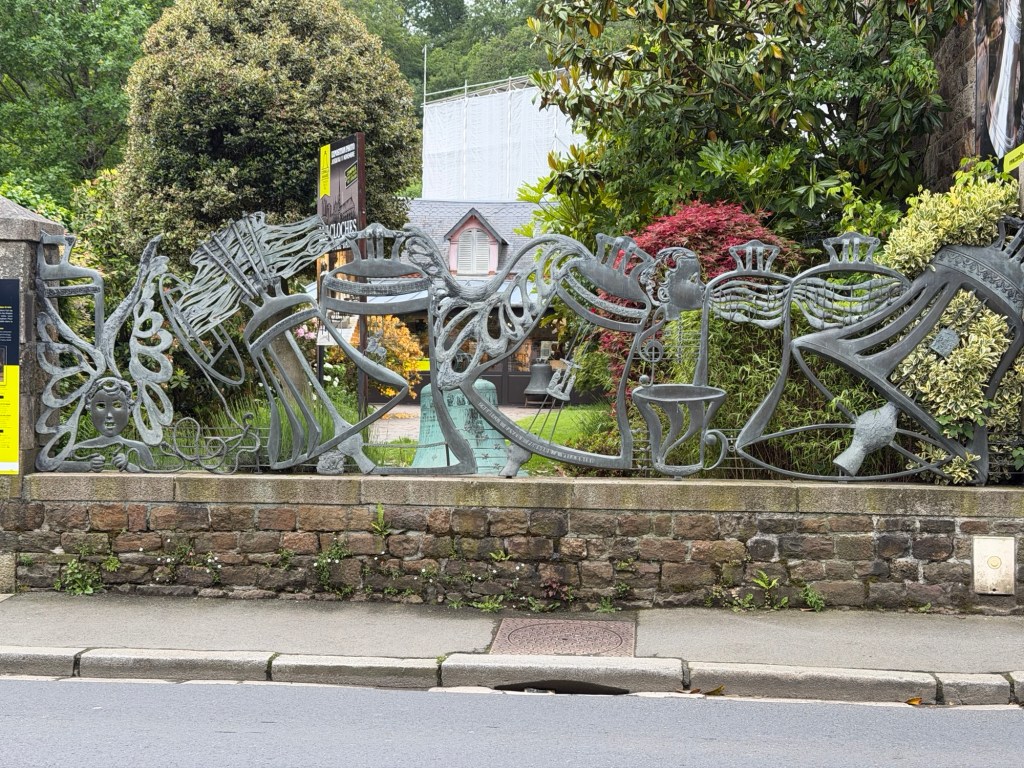
Our first stop was a small village, Villedieu-Les-Poêles, which was a center for copper smelting and other metal works. Being one of only three places in France that still makes bells, the factory is busy replacing the bells that were damaged in the 2019 fire at the Notre Dame Cathedral in Paris. We wandered around the village, enjoying many metal sculptures and views.
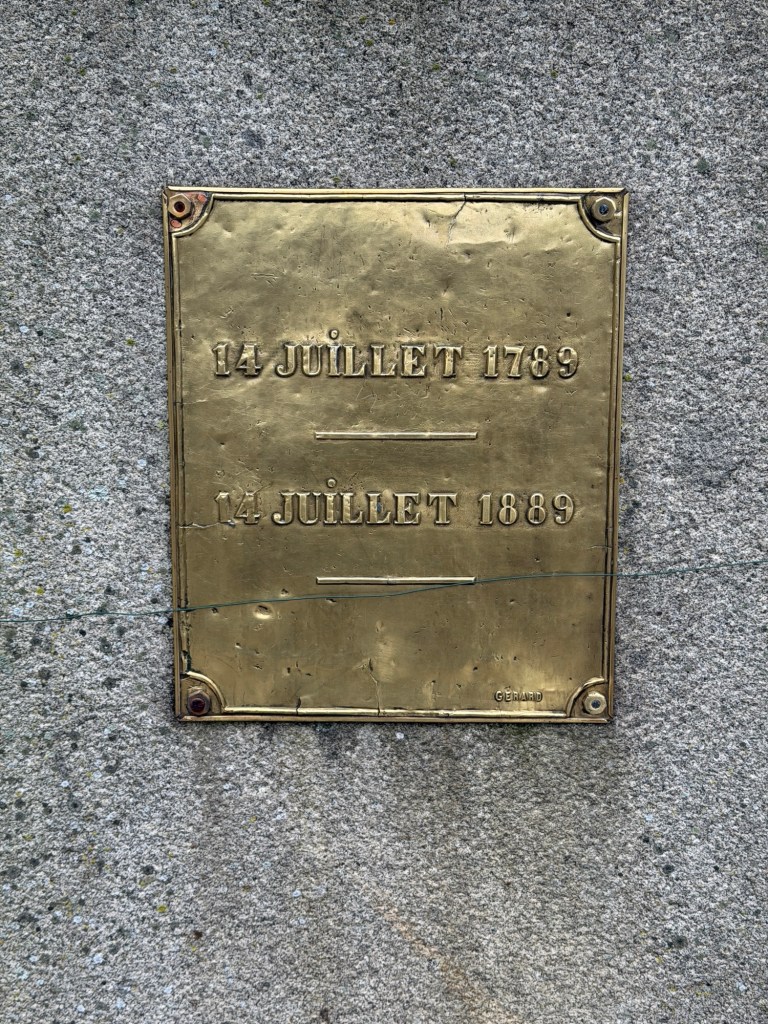
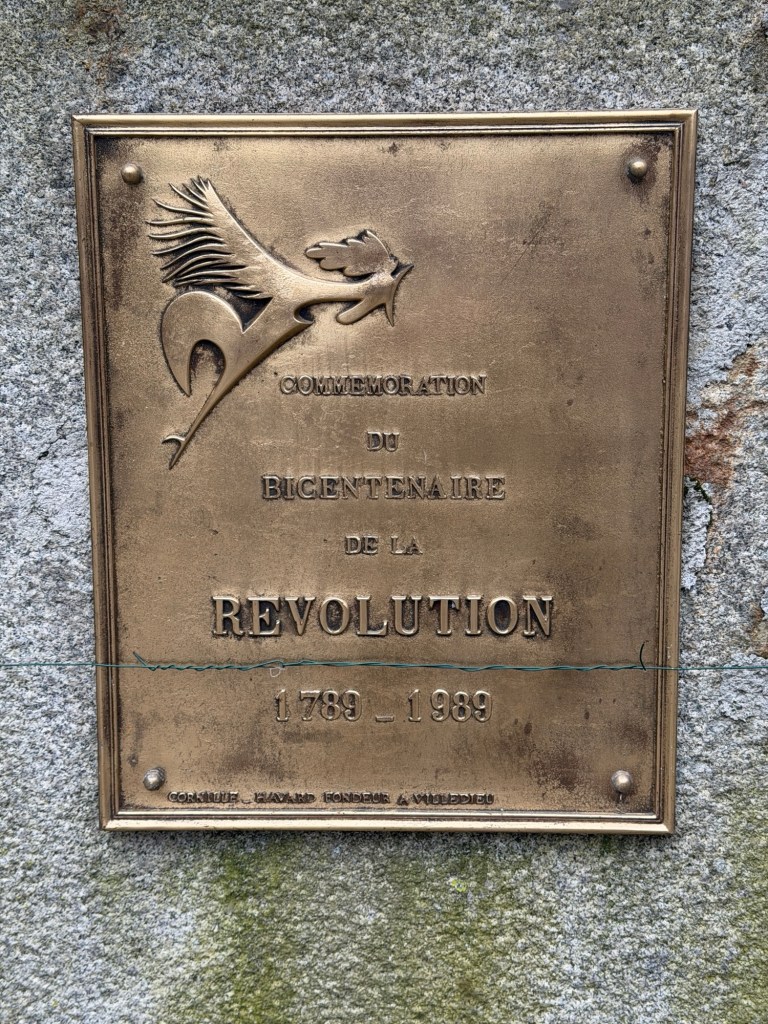
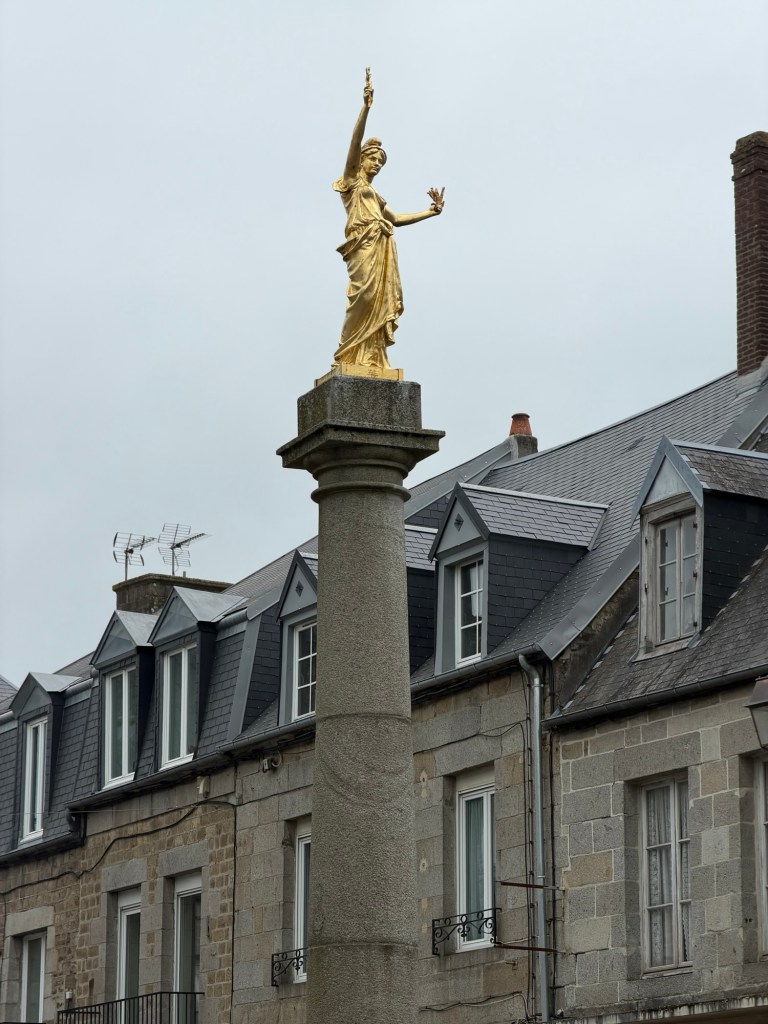
Marianne is the national personification of the French Republic, symbolizing the core values of liberty, equality, fraternity, and reason.
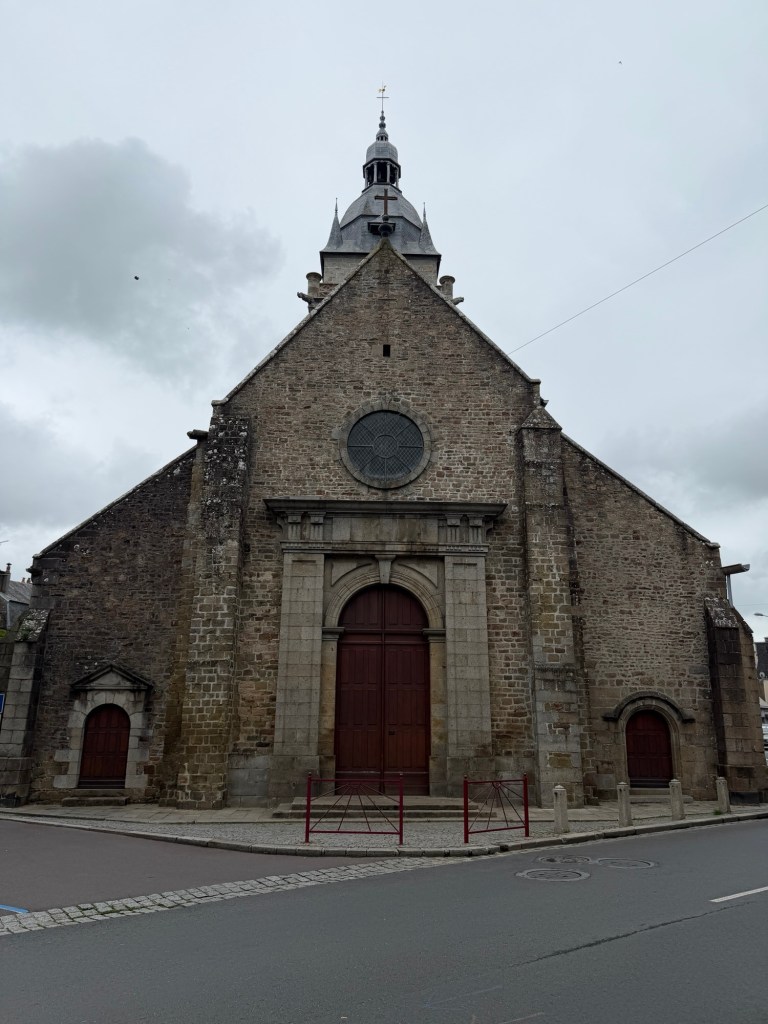
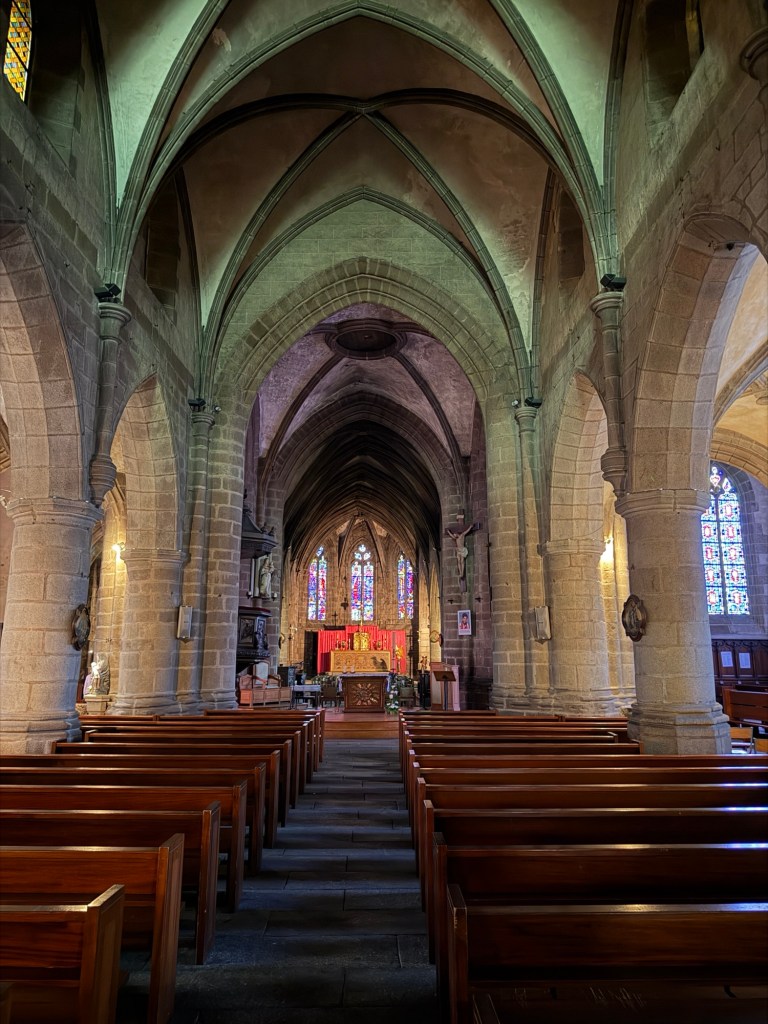
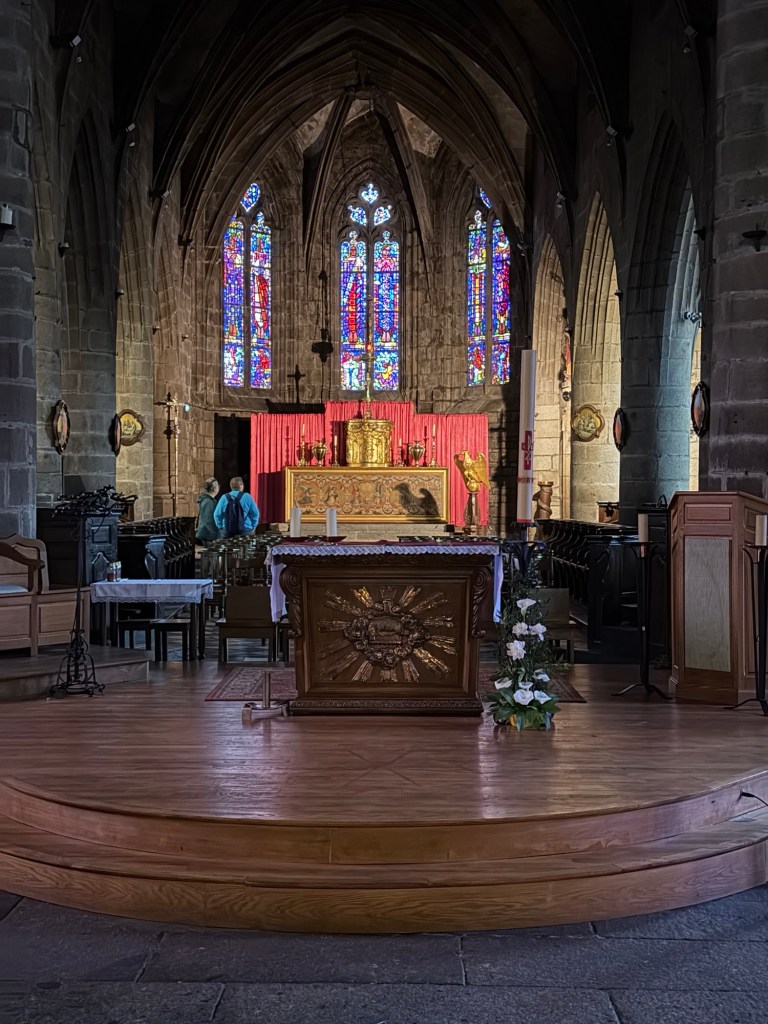
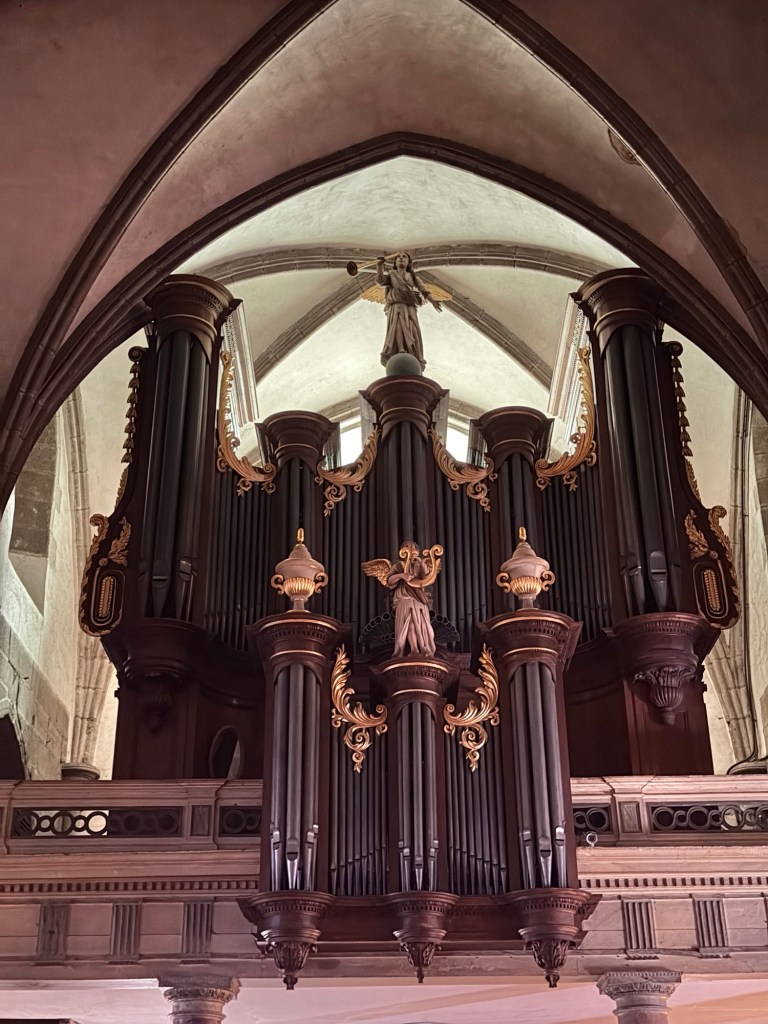
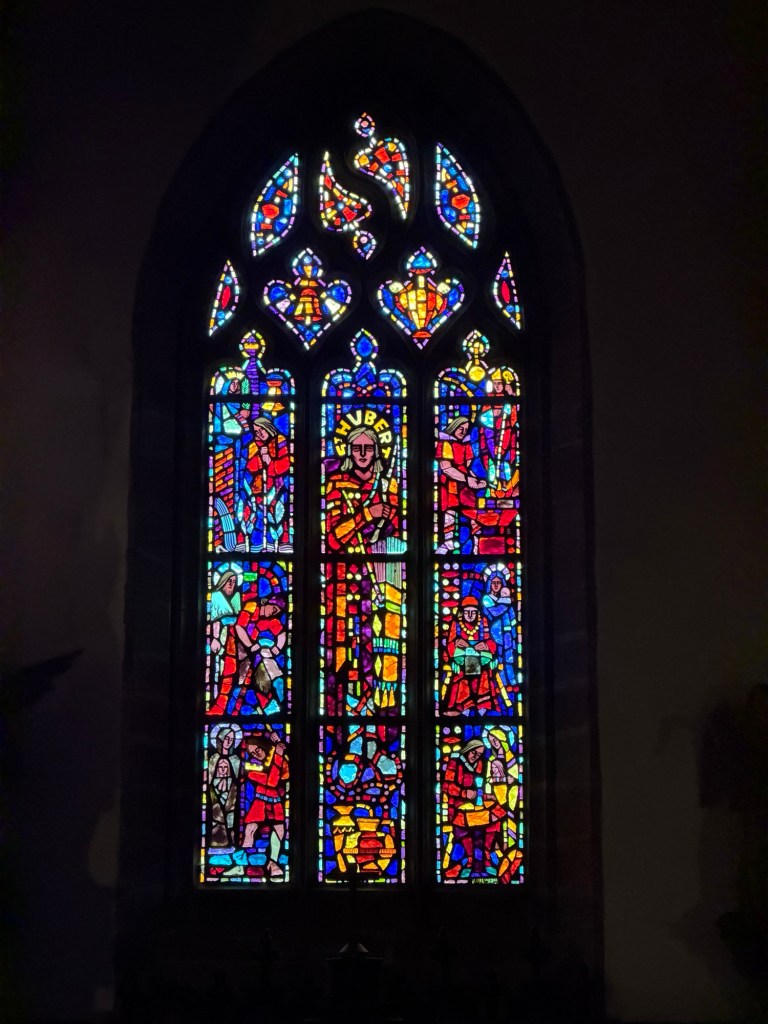
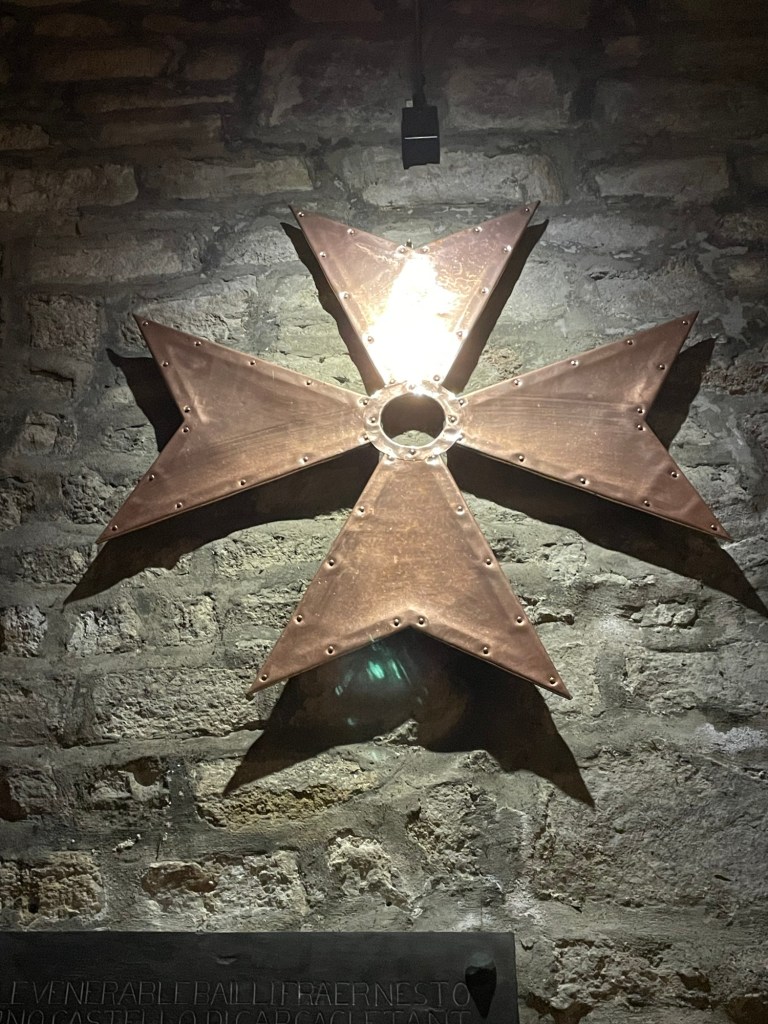
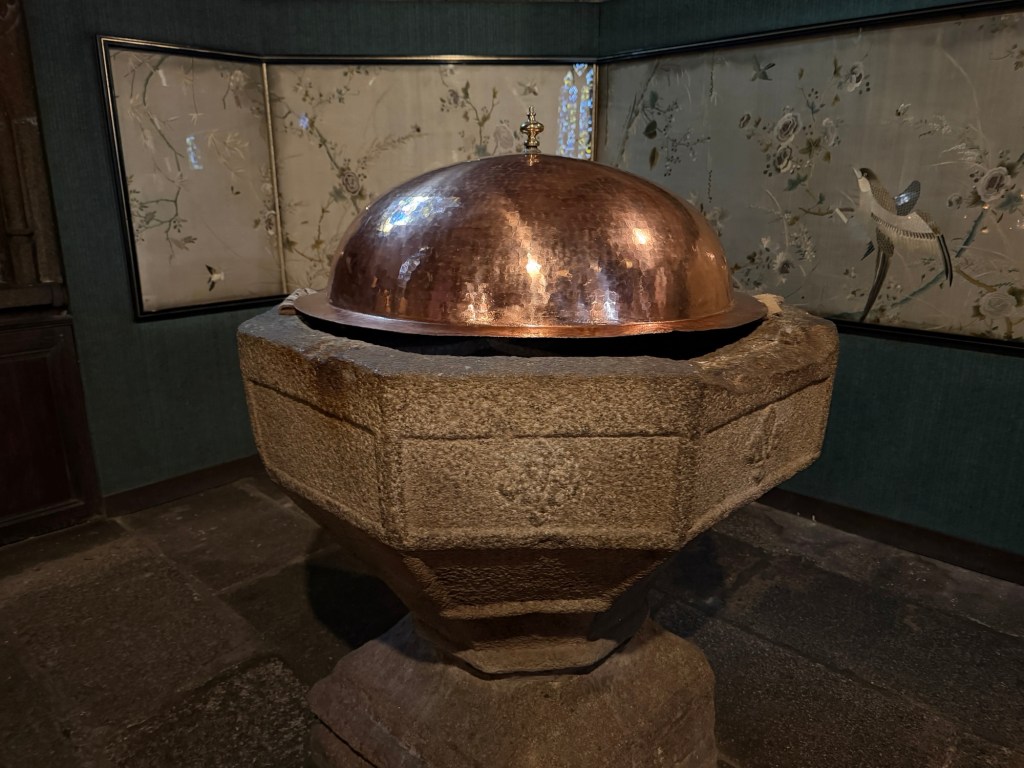
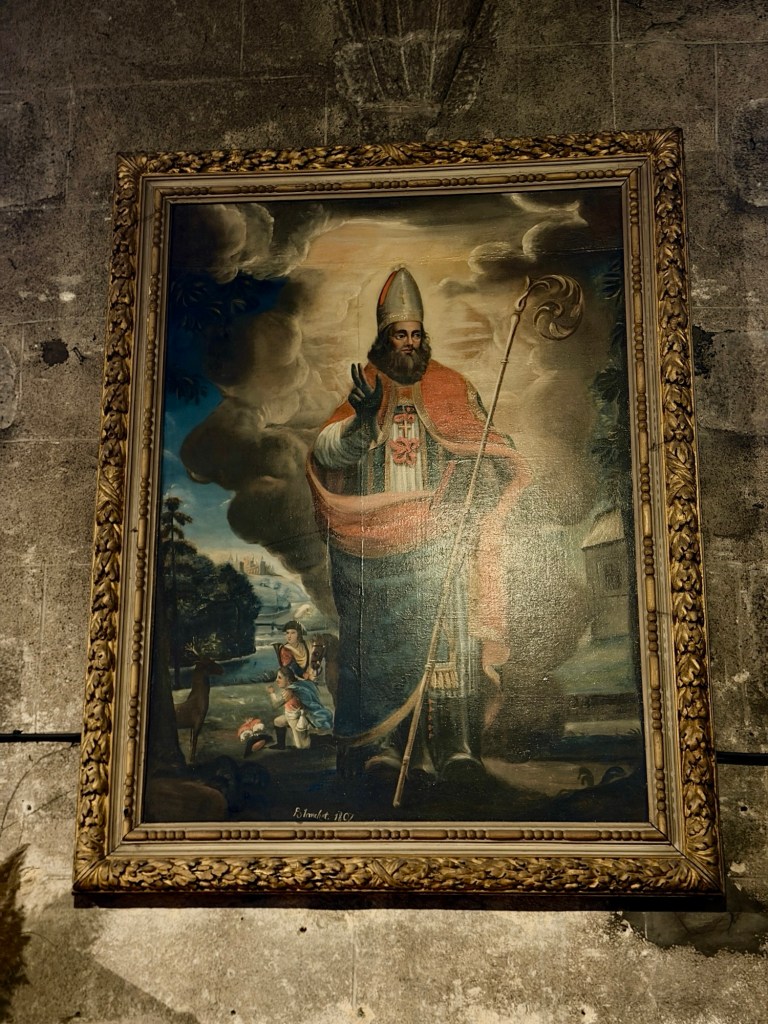
Portrayals of Saint Hubert as he is a patron saint of hunters, mathematicians, opticians and metalworkers. Note the many items made of copper.
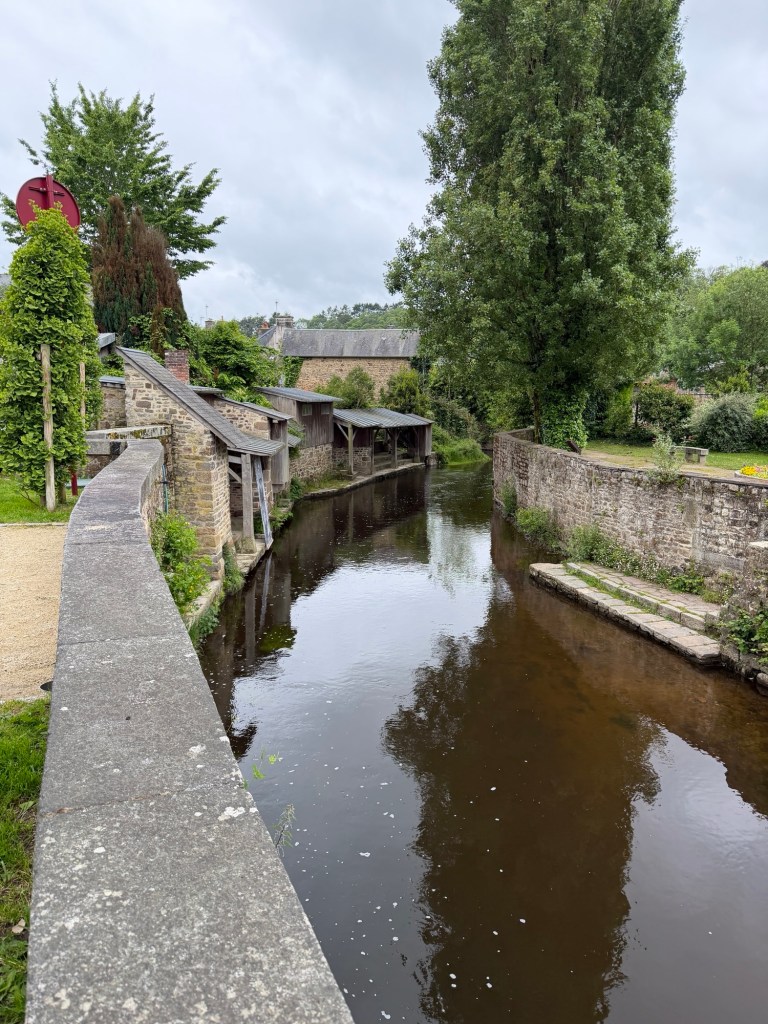
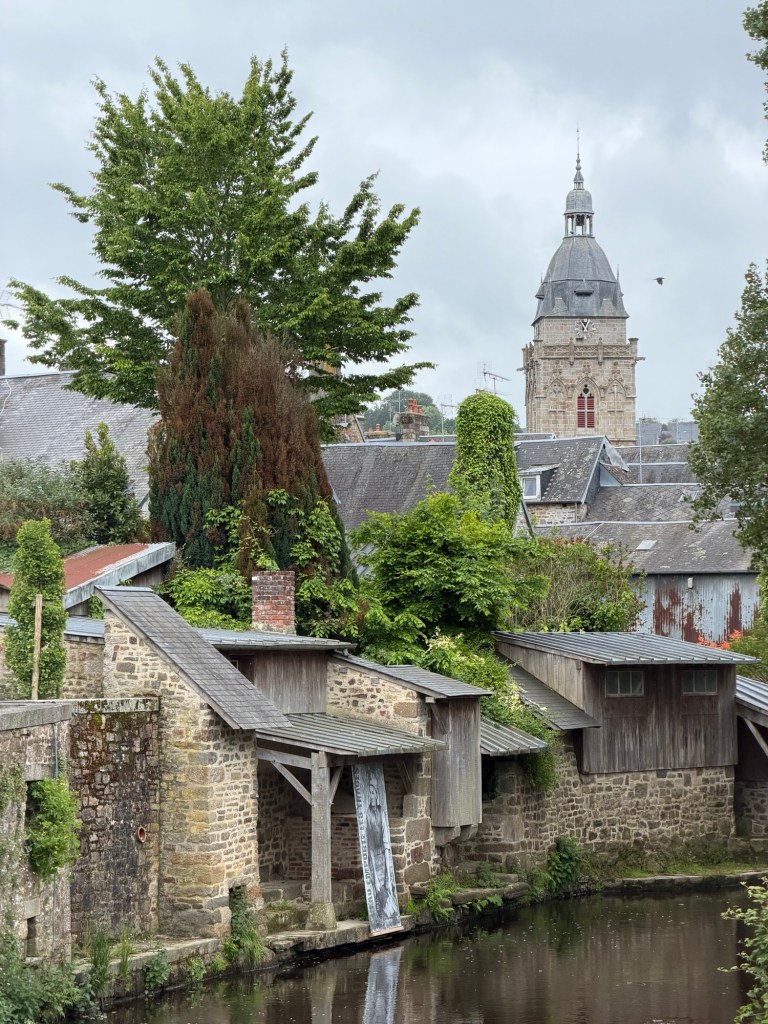
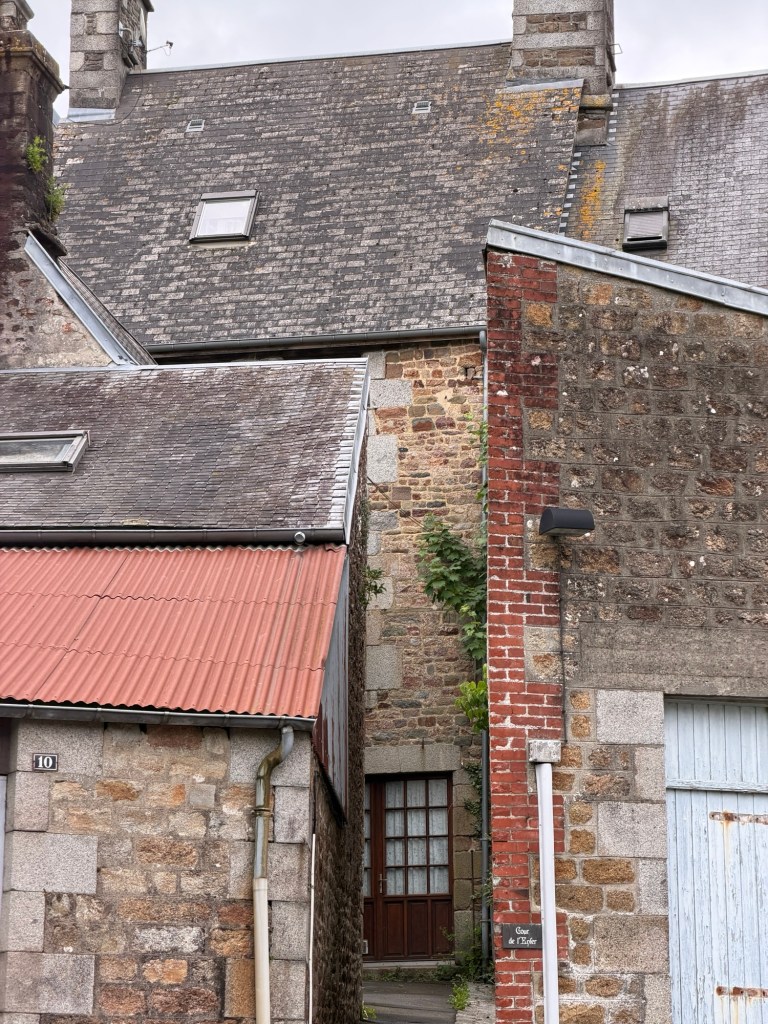
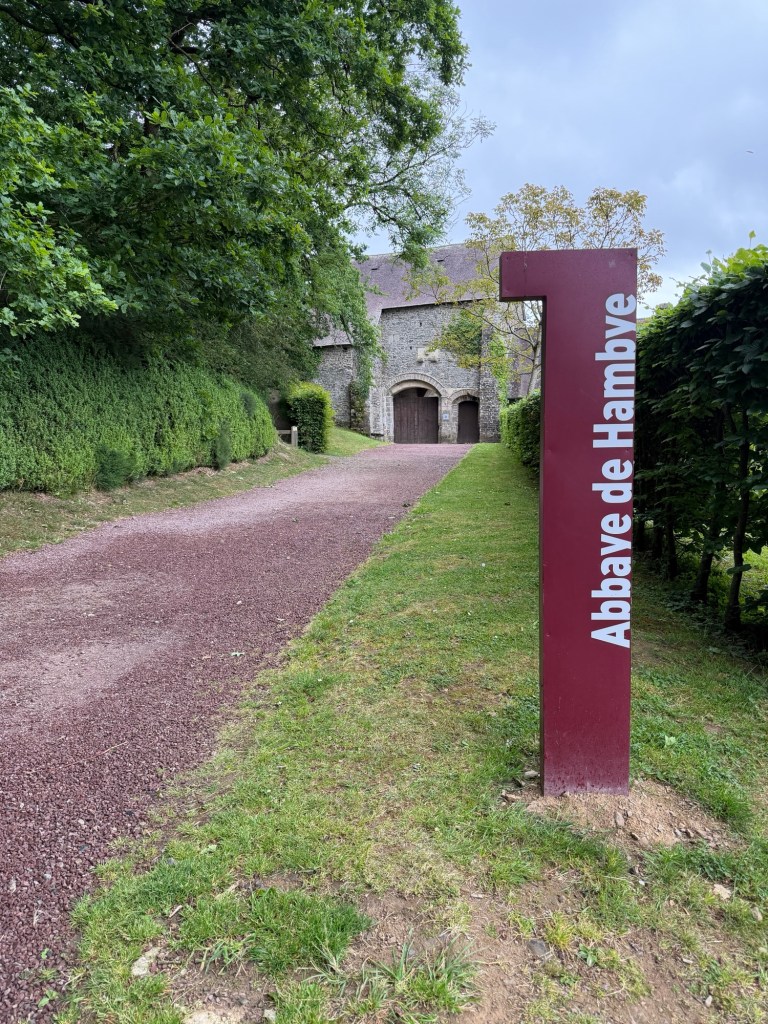
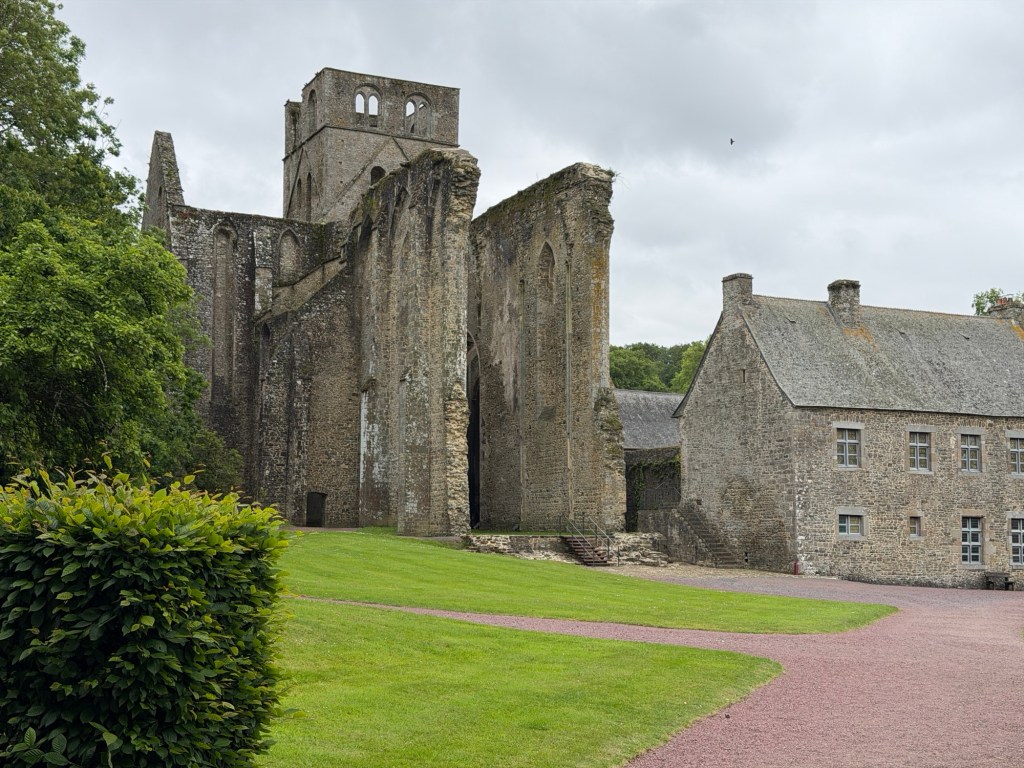
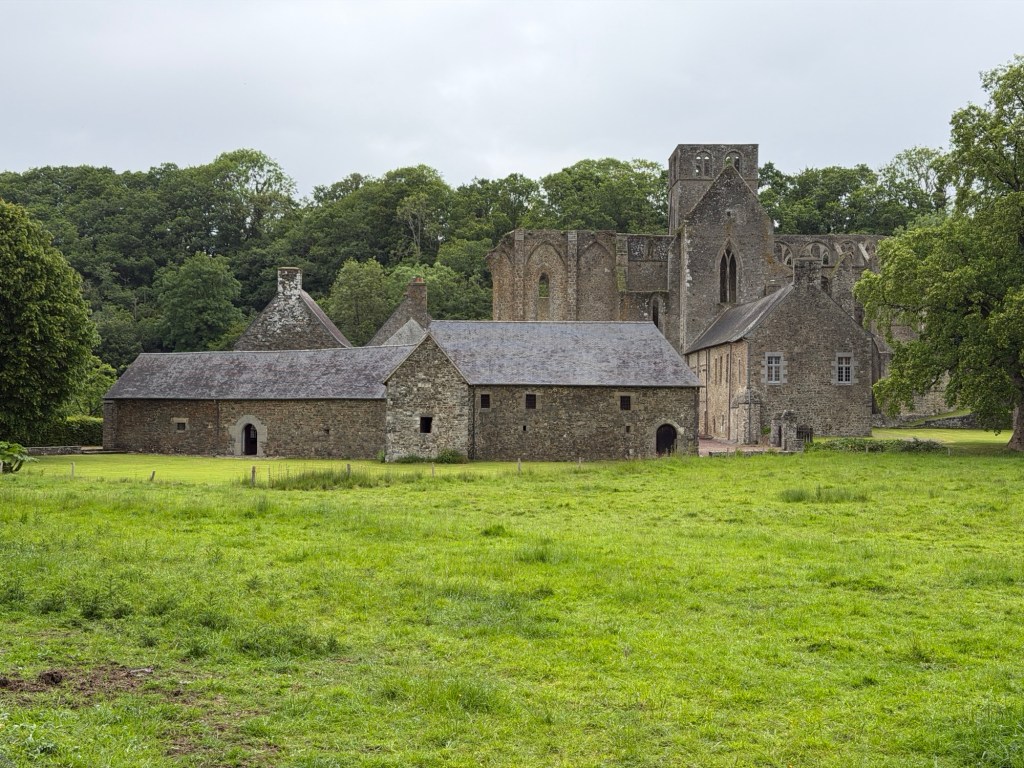
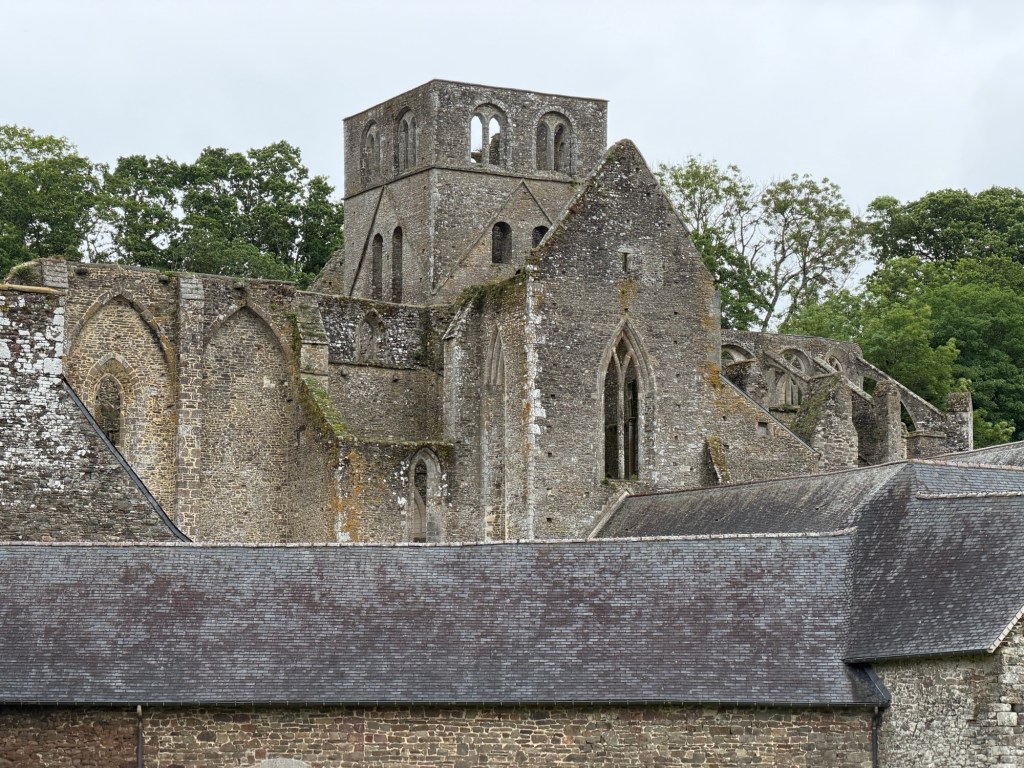
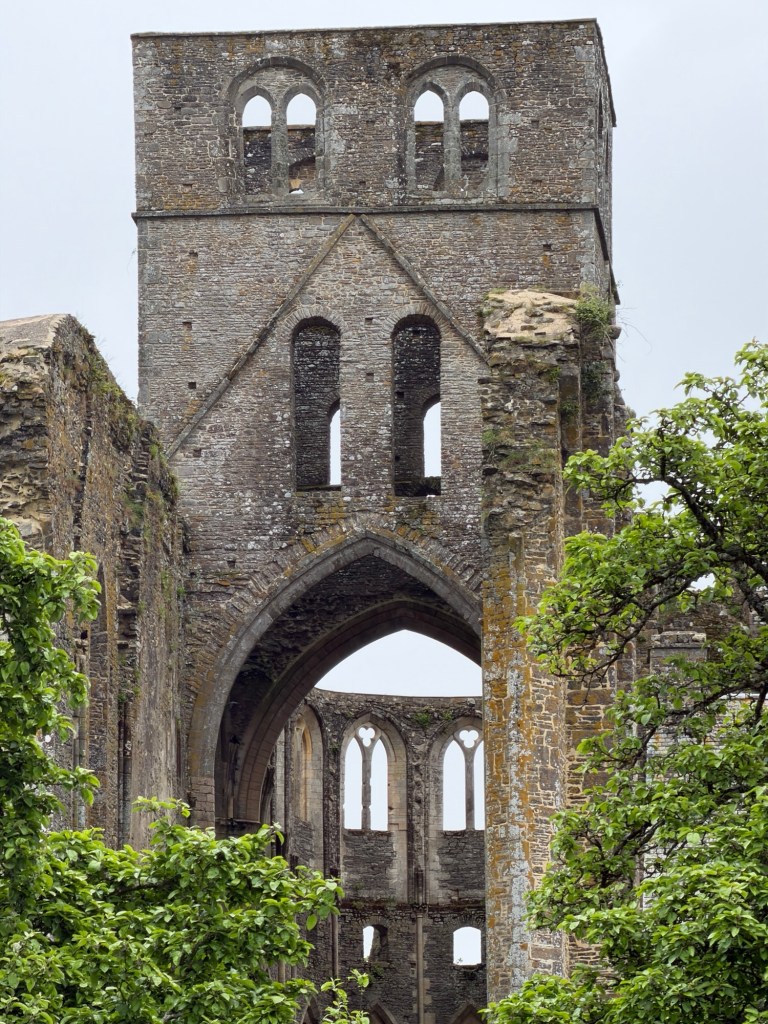
Our next stop was the Abbaye de Hambye, founded in 1145 but partially destroyed by revolutionaries at the beginning of the French Revolution. Sold in 1790, the Abby was partially dismantled, used as a stone quarry. We arrived at 11:30, willing to pay the entrance fee, but were told that it was closed from 12 until 2. They would not let us in. Undaunted, we followed a trail through the forest that circled the Abbey, in search of views of the dismantled buildings.
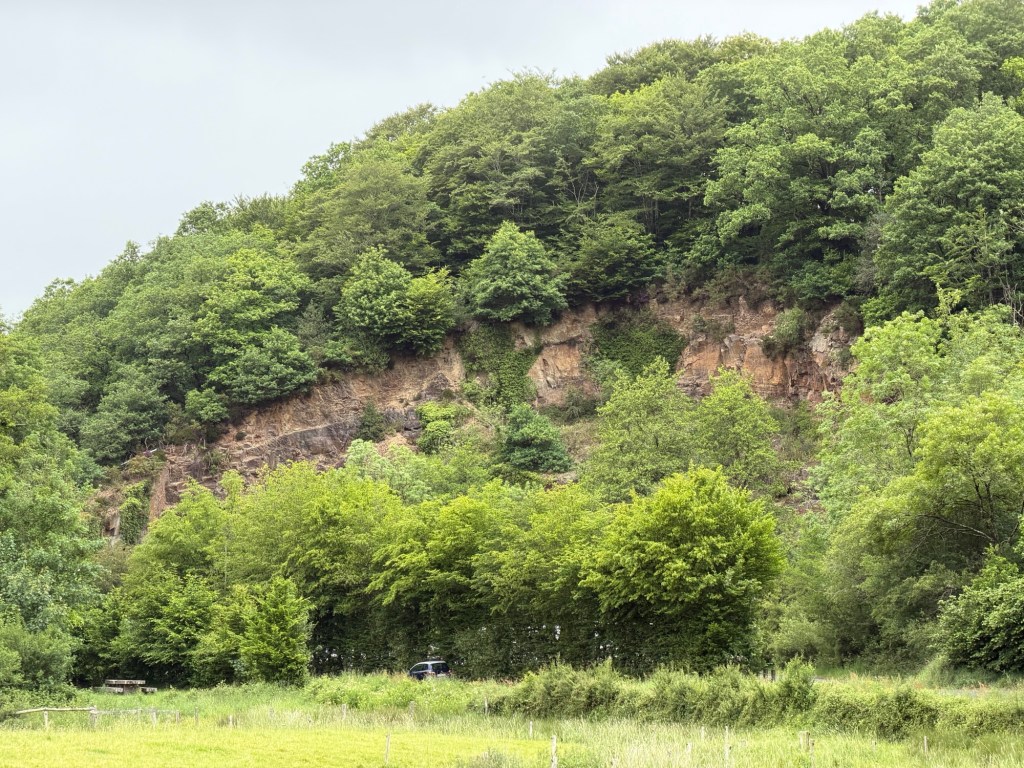
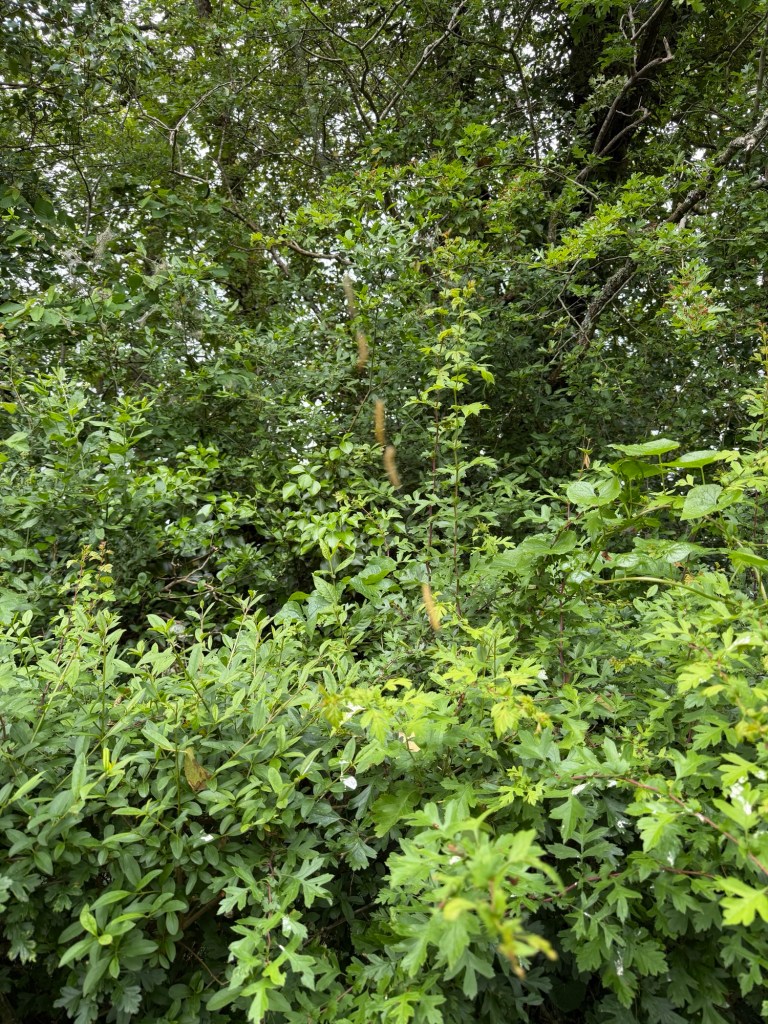
In the forest, Joëlle stopped suddenly to alert us to thin strings, like spider webs, with small beige things along them. These processionary caterpillars are poisonous to humans and can kill small pets! Brian tried for a long time to get a picture of them, but what came out is rather blurry.
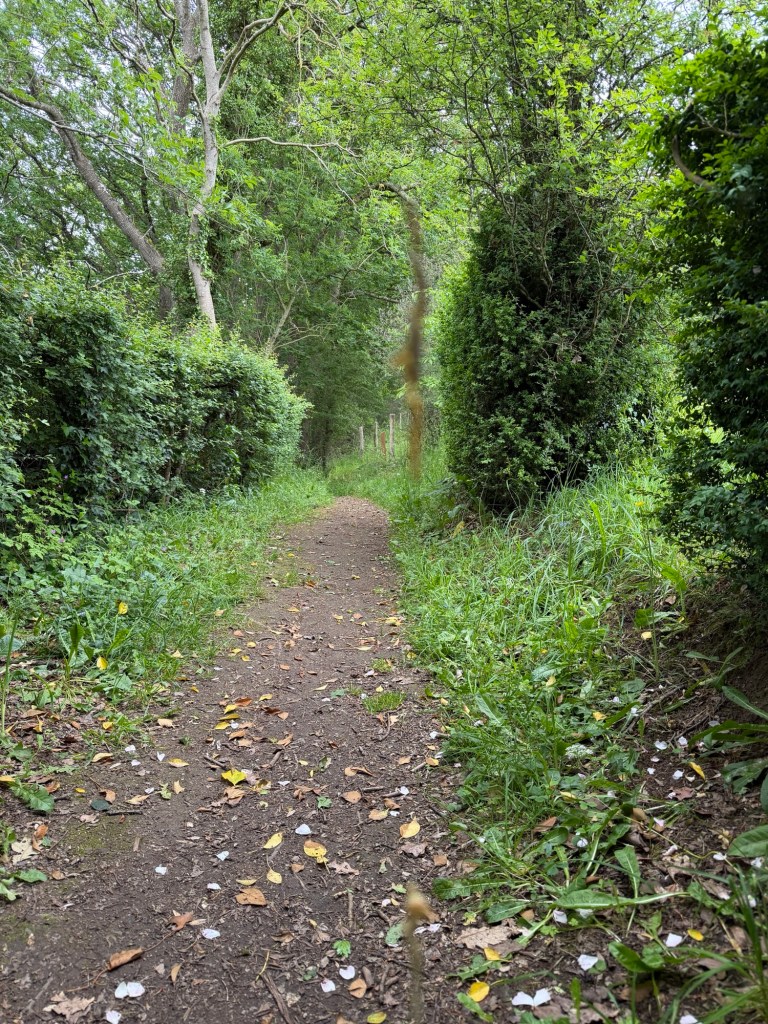
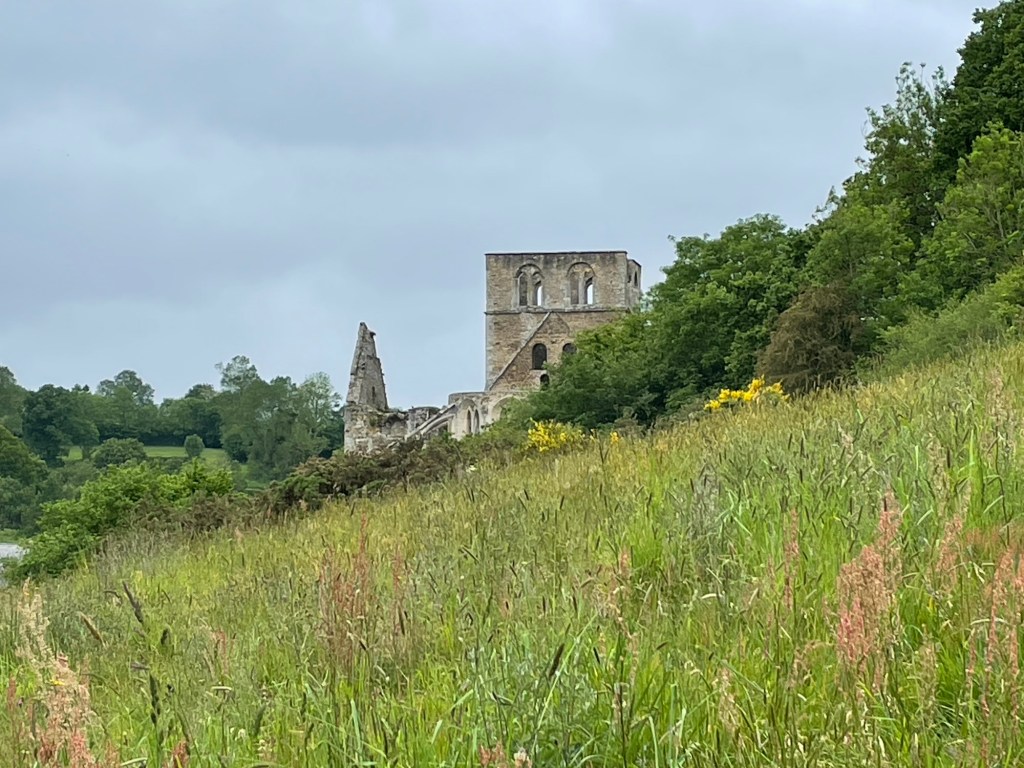
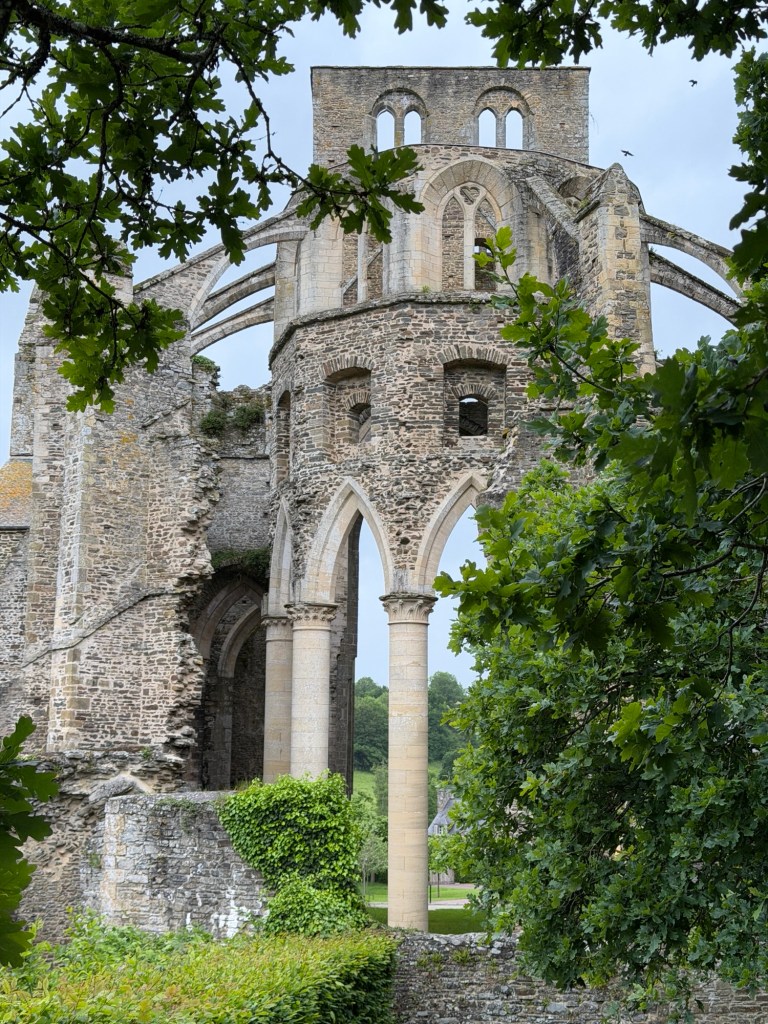
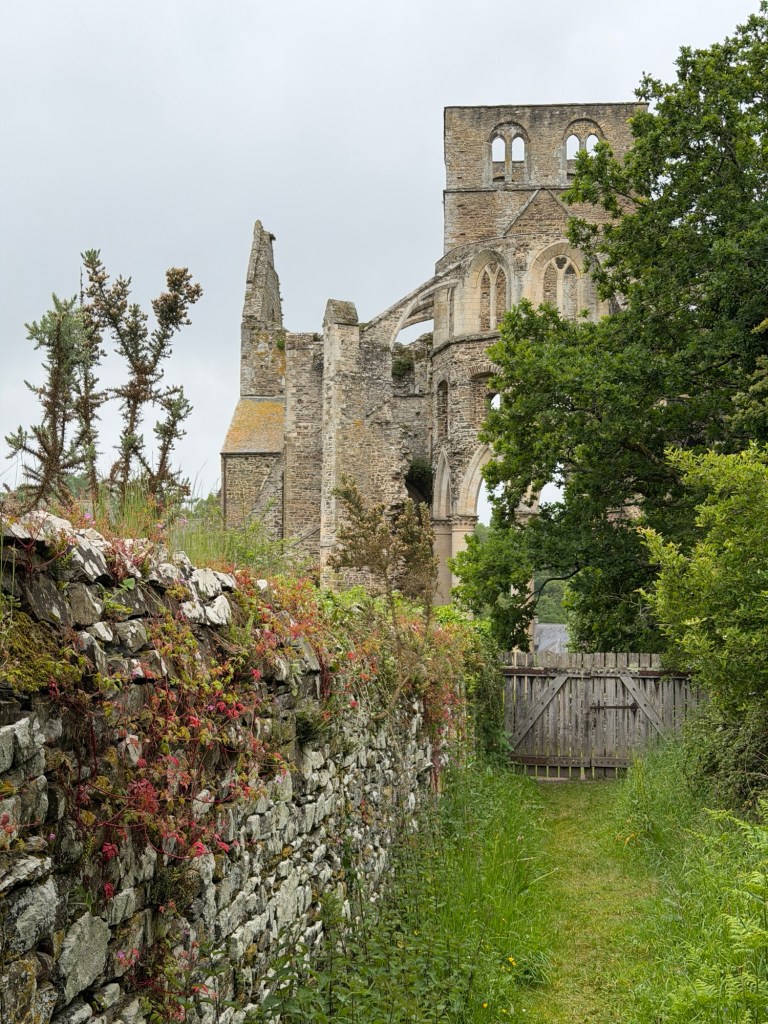
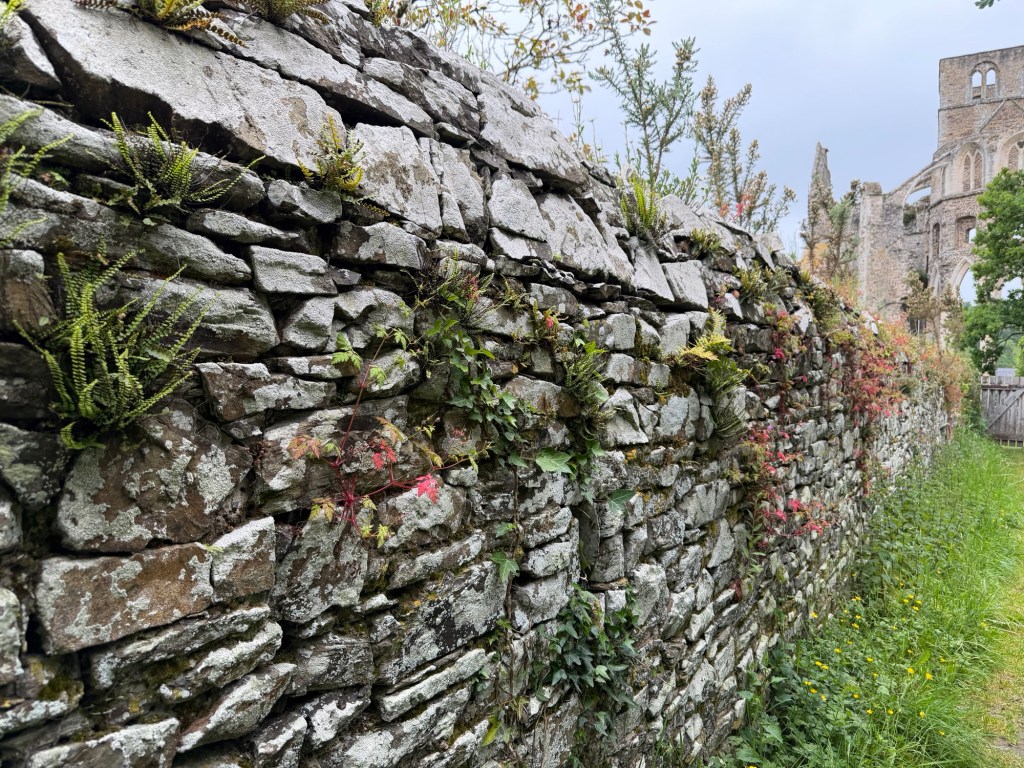
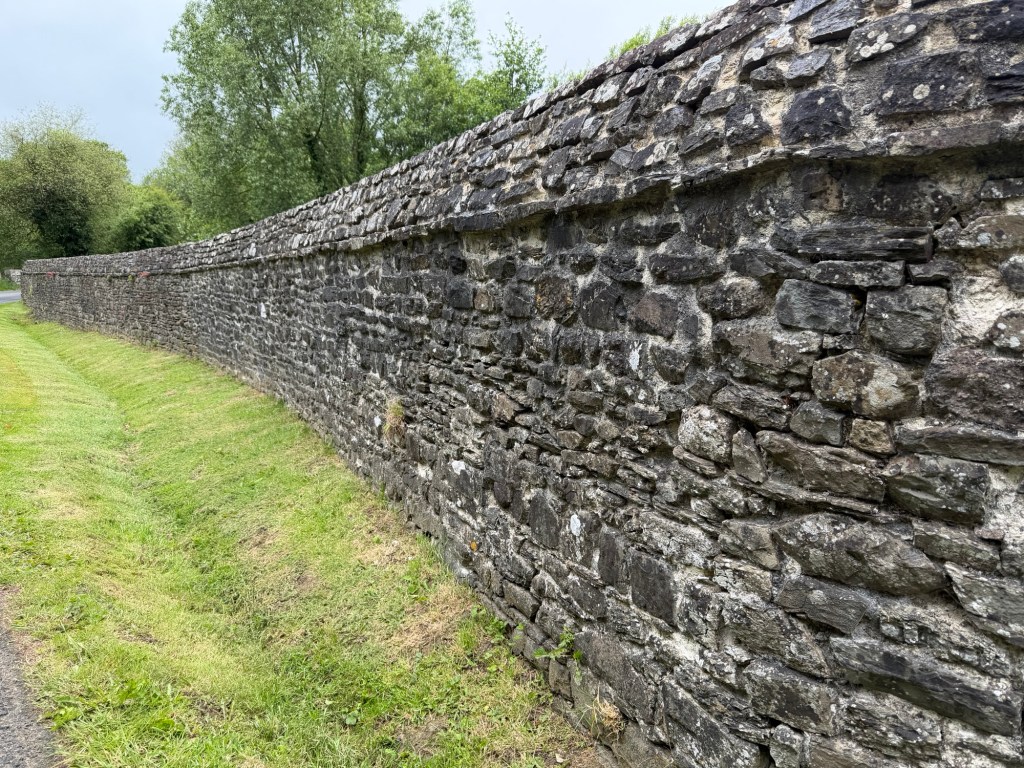
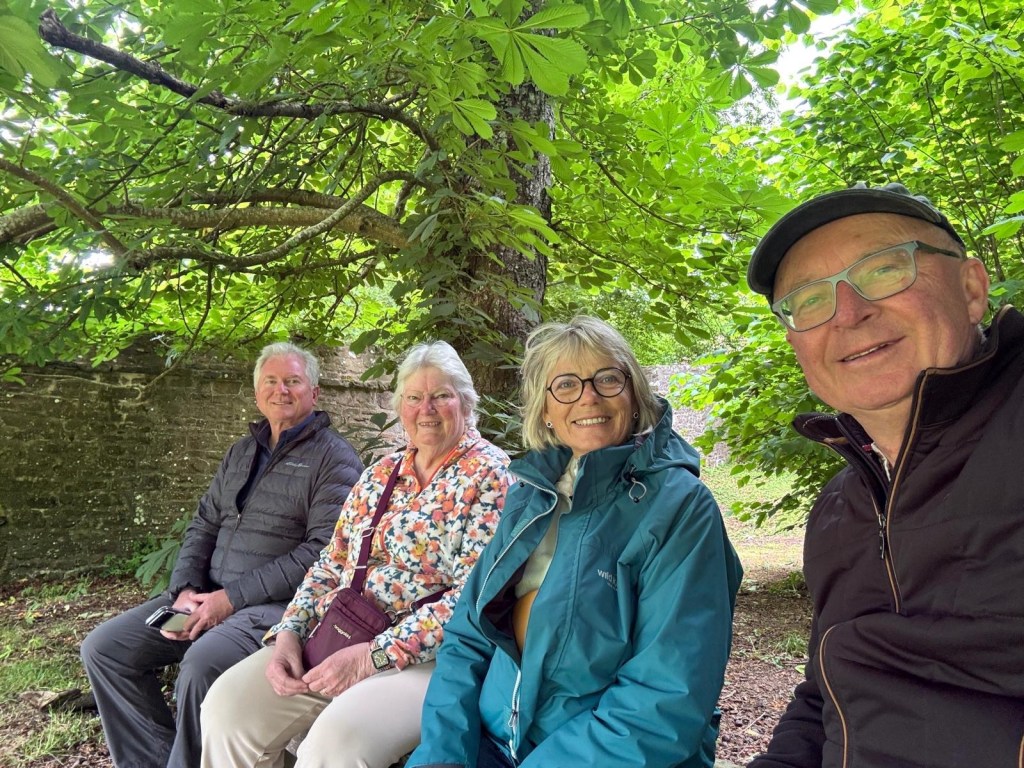
We continued along the trail around the Abbey, trying to get a view. Finally, about 80% around, we arrived at a road. The forest cleared and we could see the abbey.
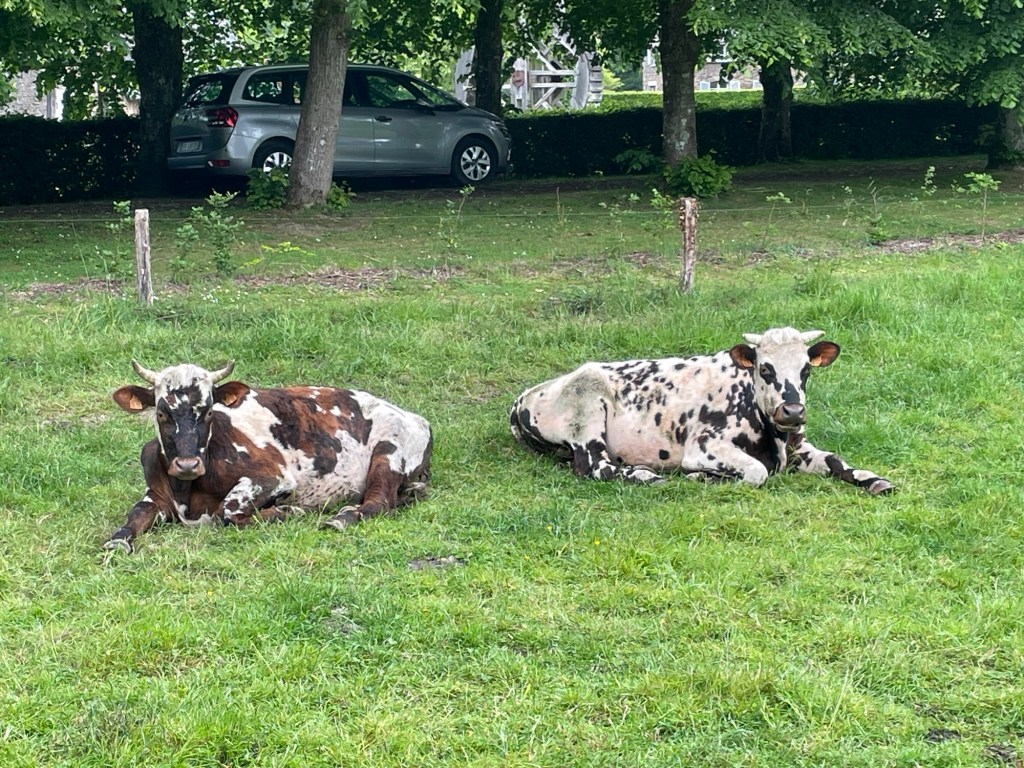
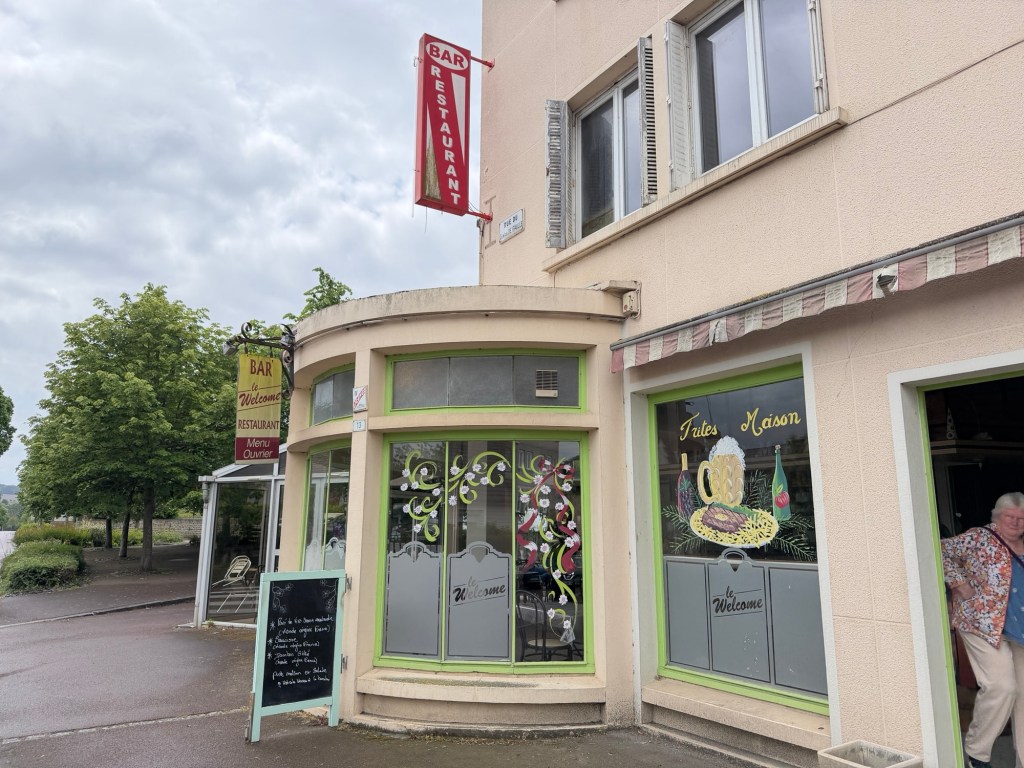
We ate lunch at a local restaurant in a small town.
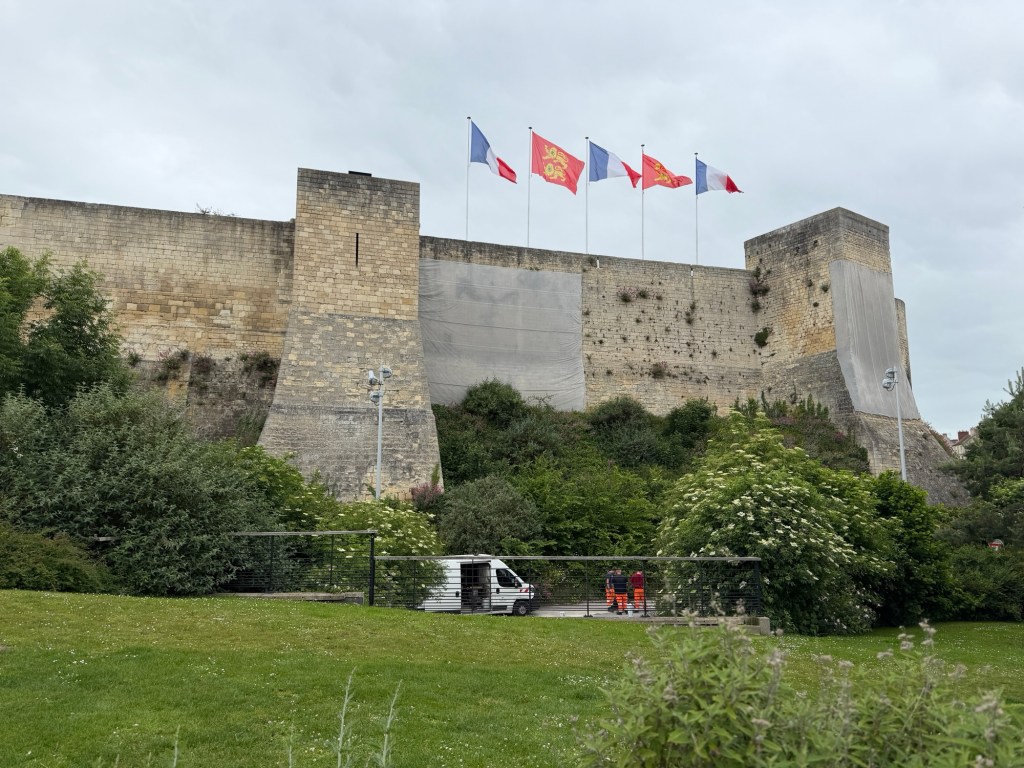
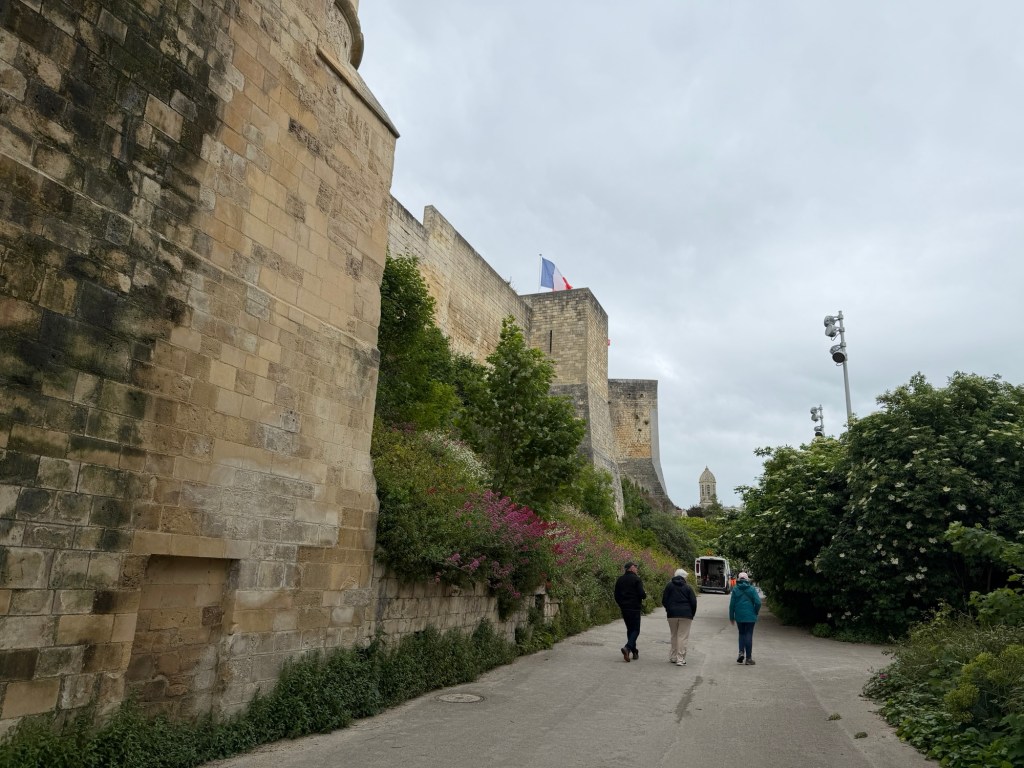
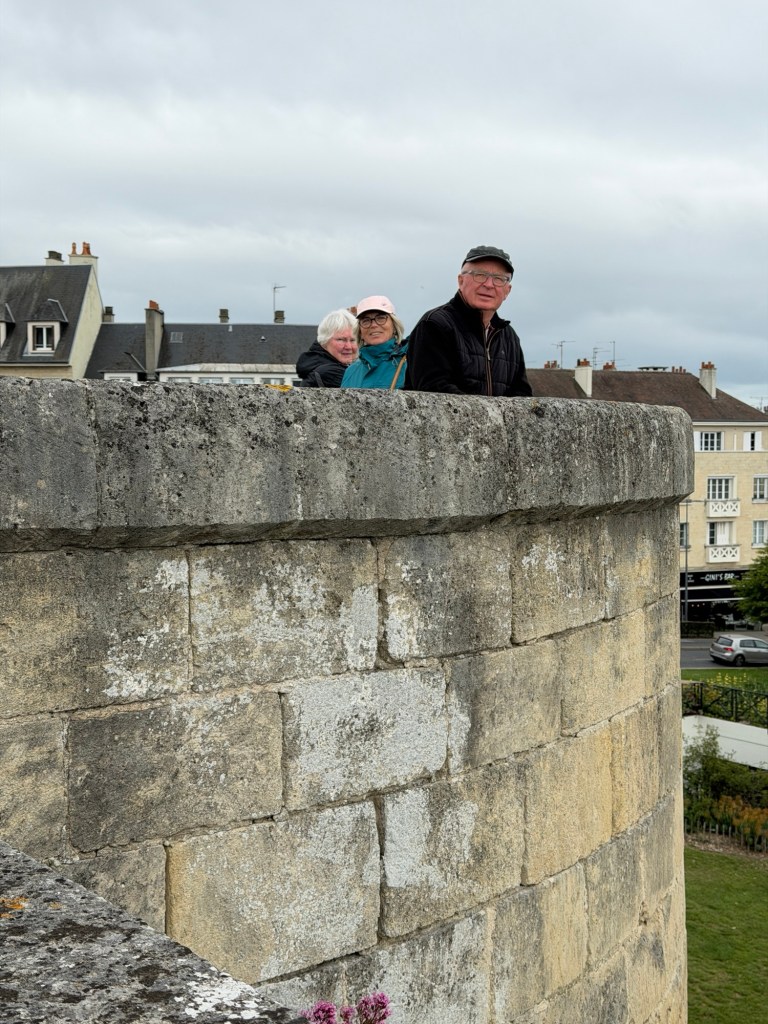
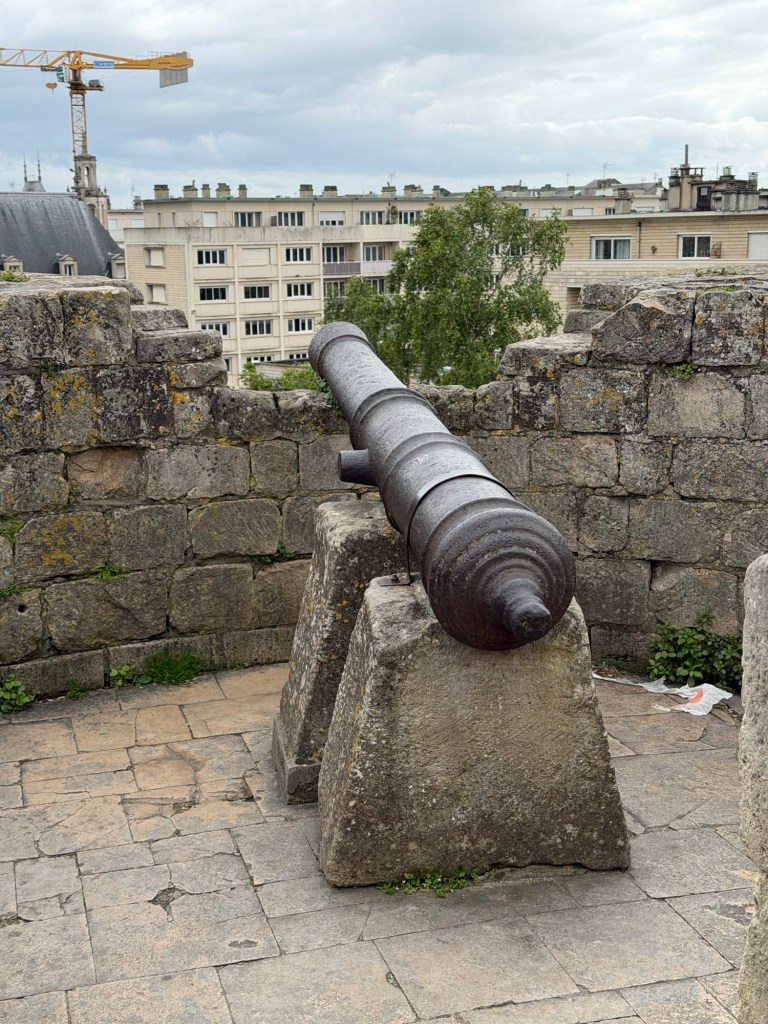
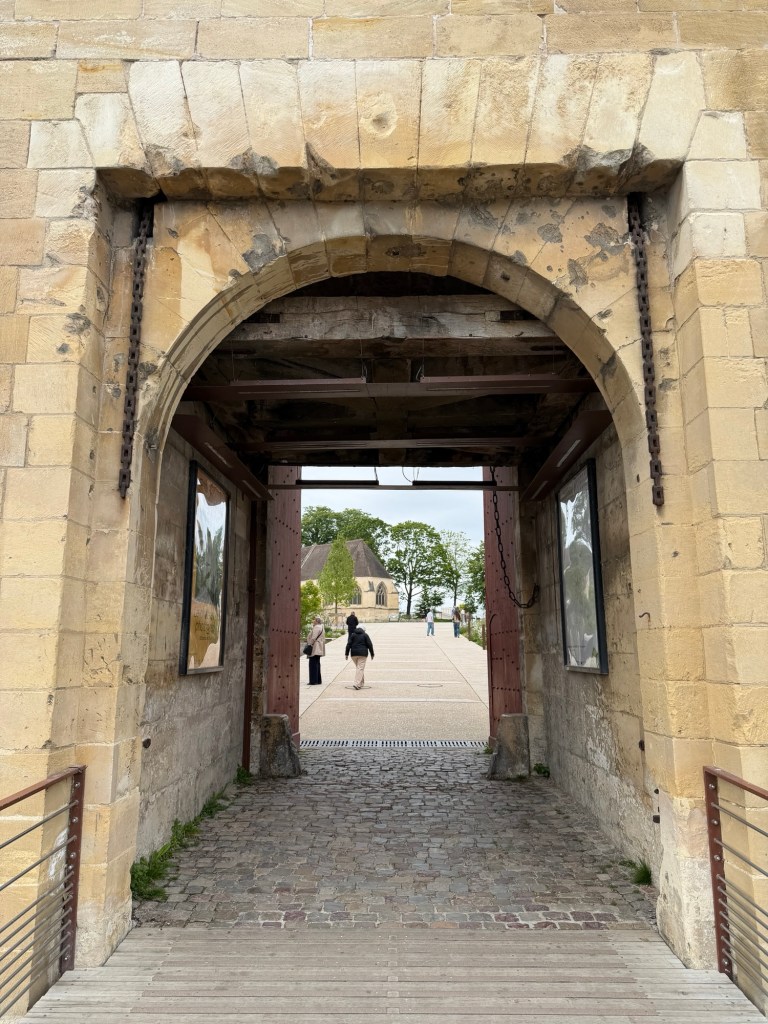
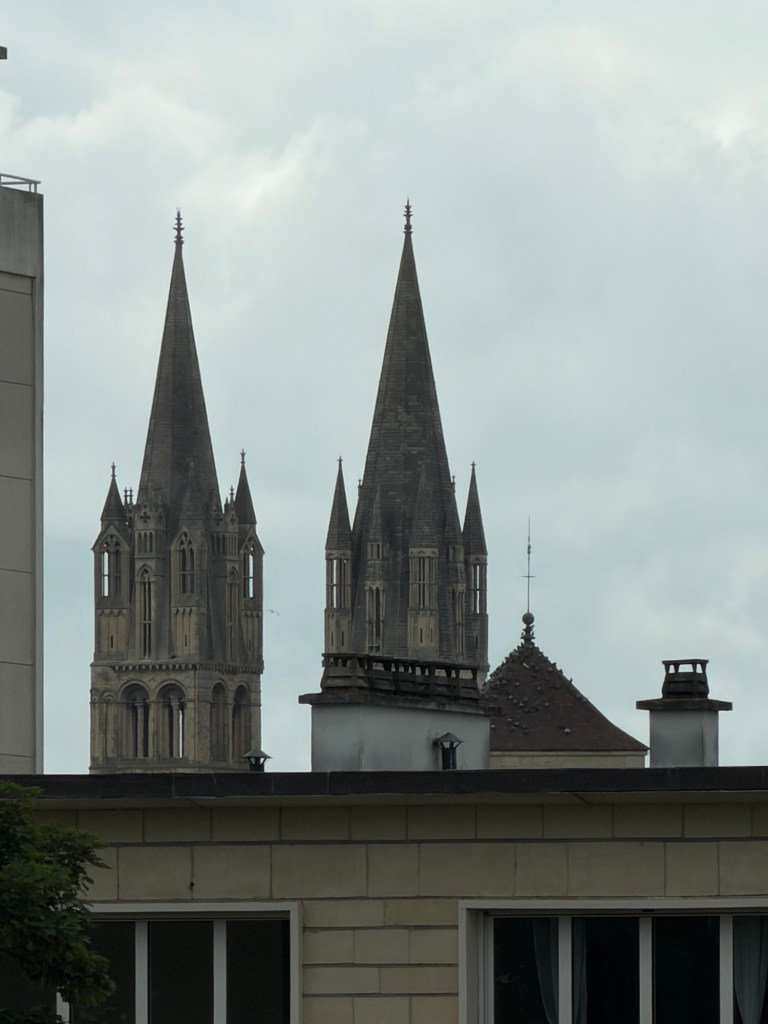
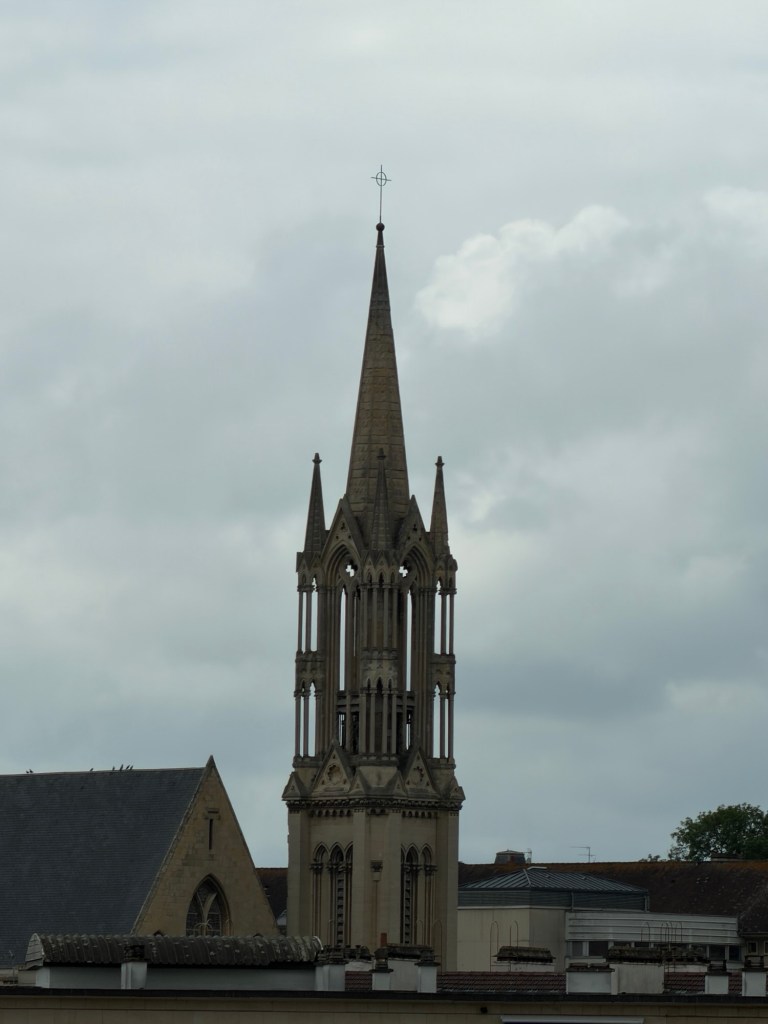
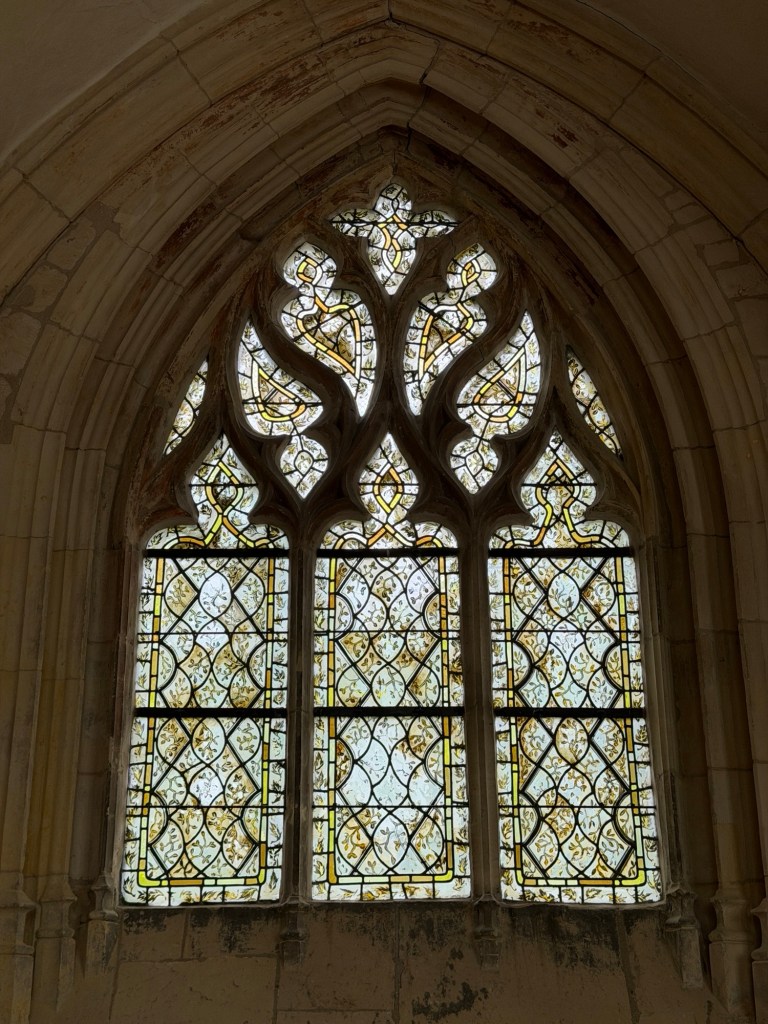
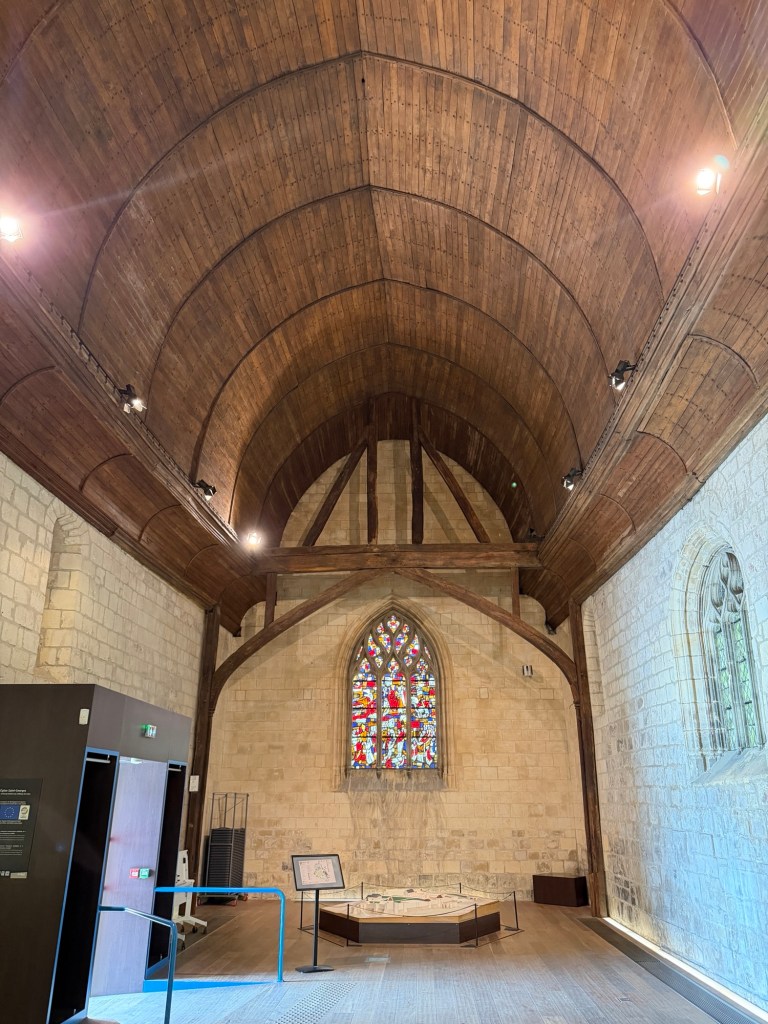
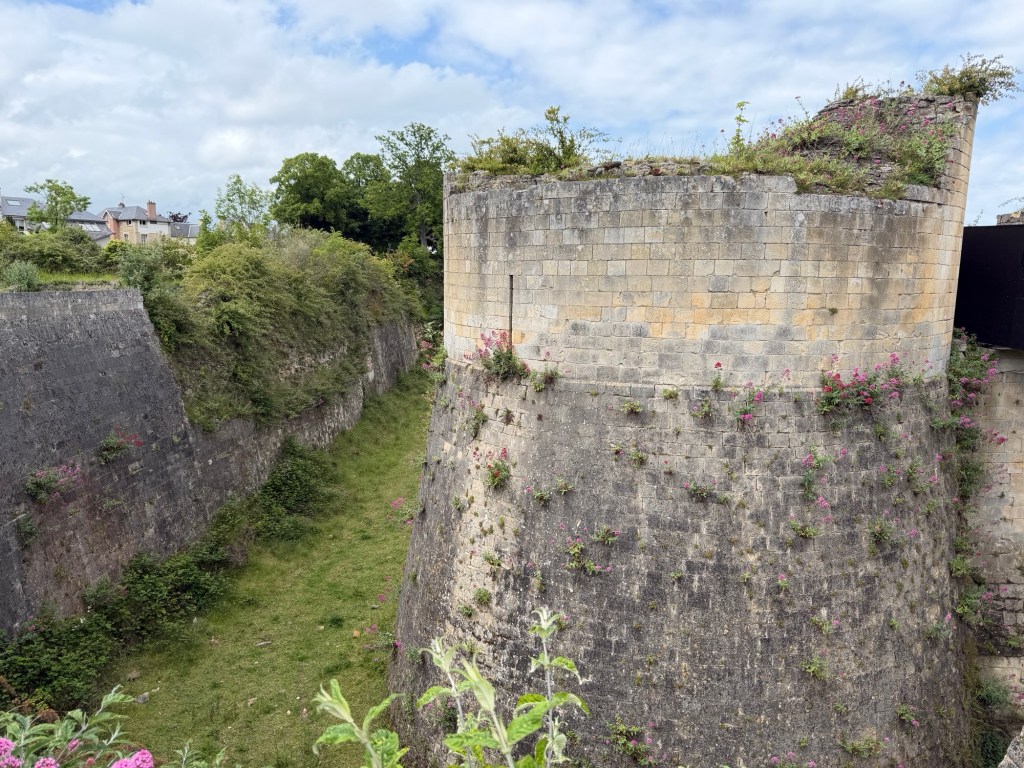
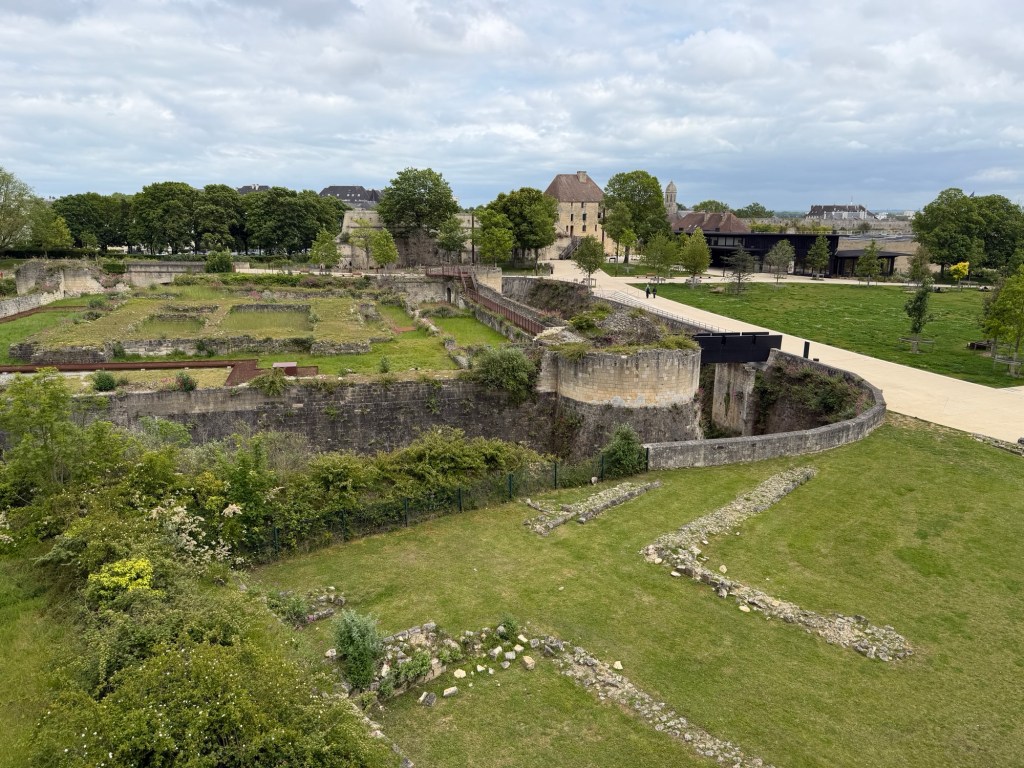
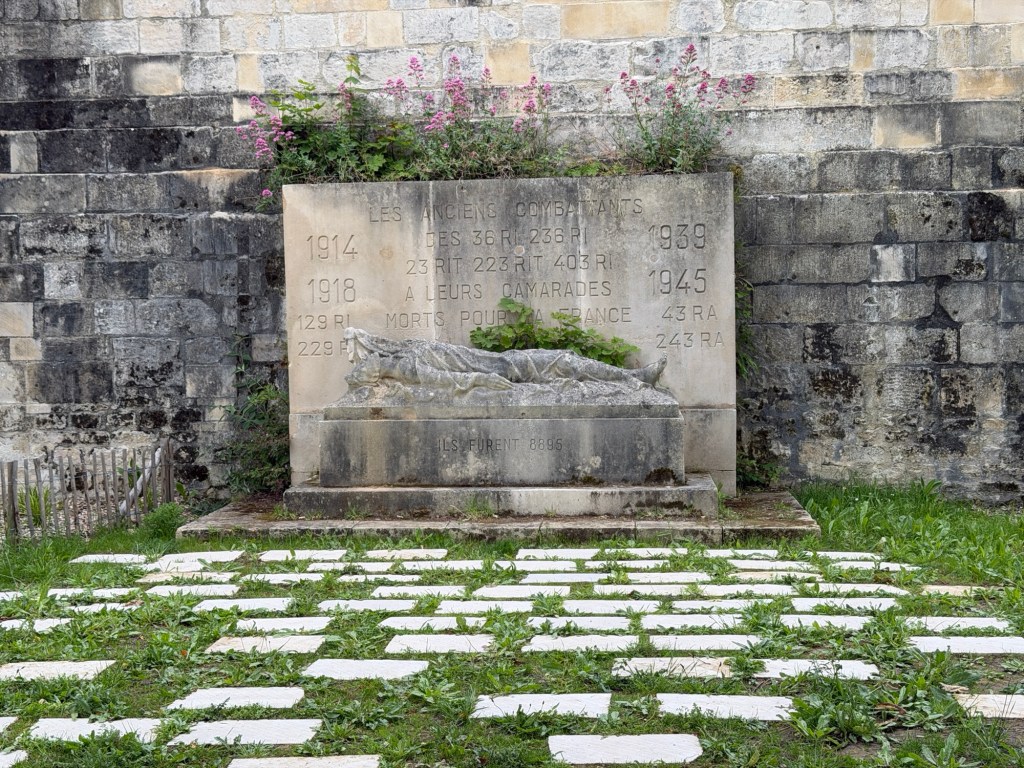
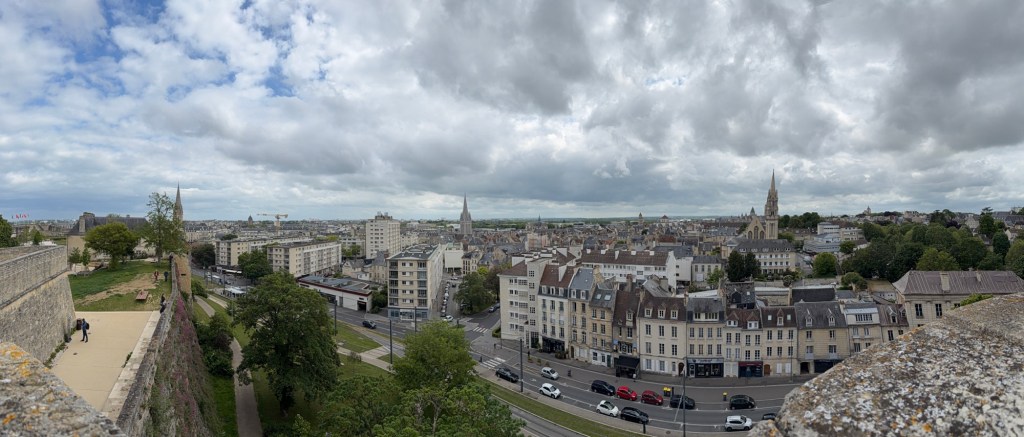
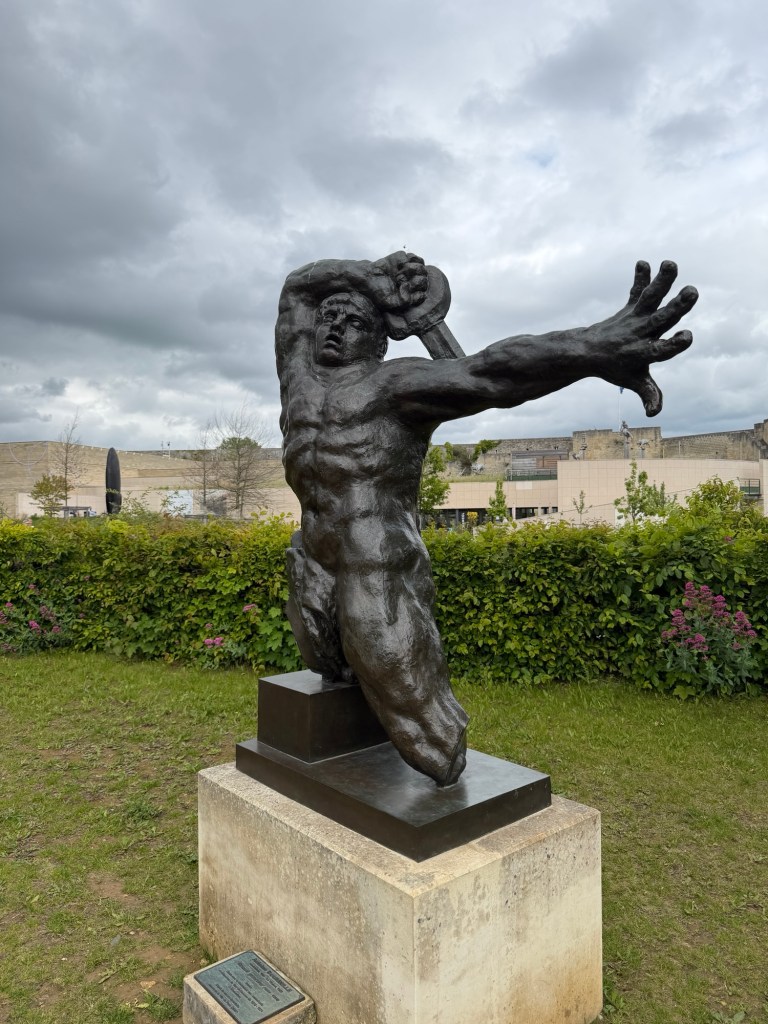
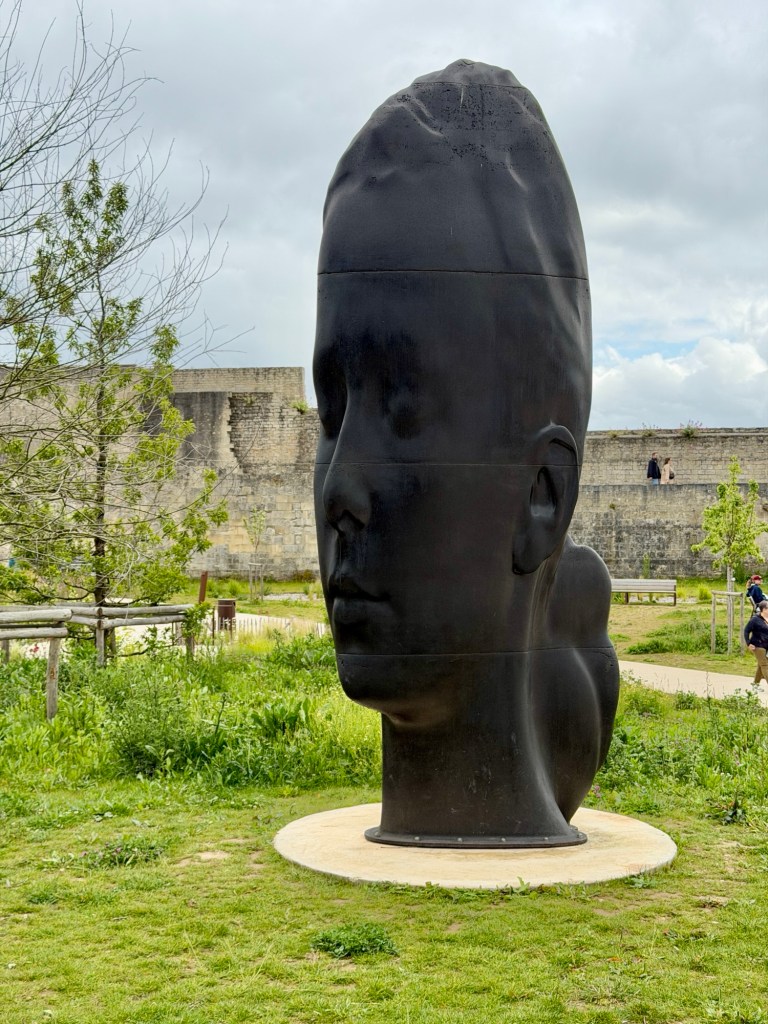
That afternoon, in Caen, we first explored a huge yellow-walled castle. Quite a fortress.
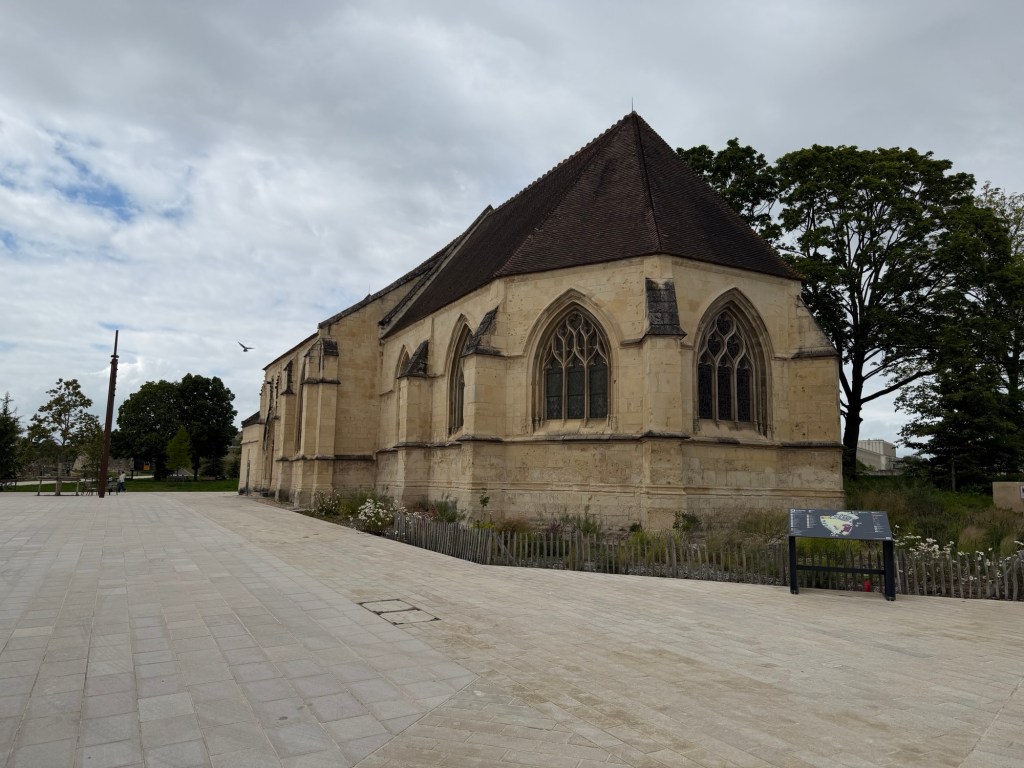
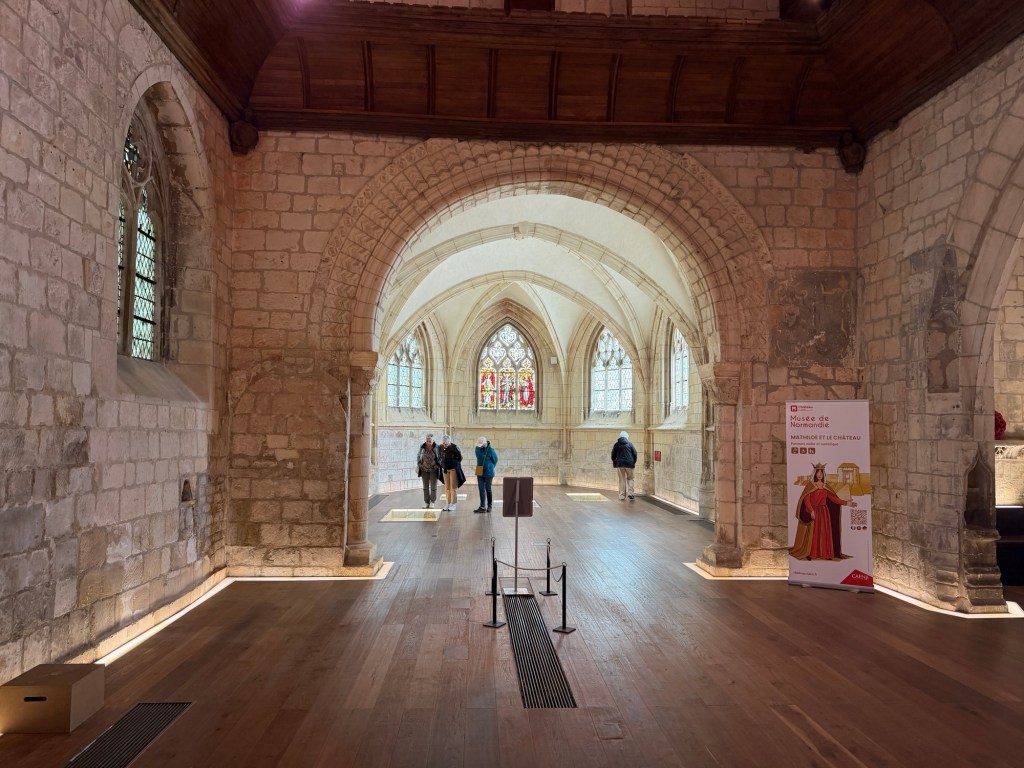
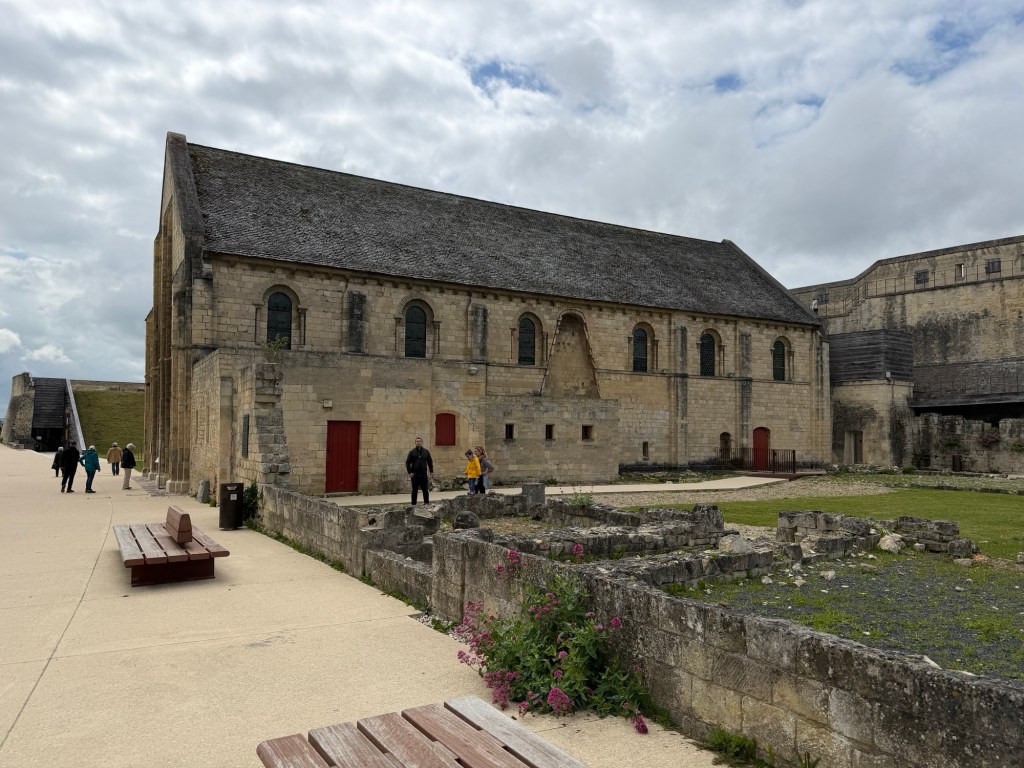
The Dukes of Normandy’s Great Hall (photo below)
The great reception hall at Caen castle has a beautiful Romanesque façade, often mistaken for that of a church. The hall was probably built for receptions at the court of King William II (William Rufus) (c. 1098). It was named the Exchequer Hall in memory of the sessions of the fiscal and administrative court that was sometimes held there (counting with tokens on a chequered table).
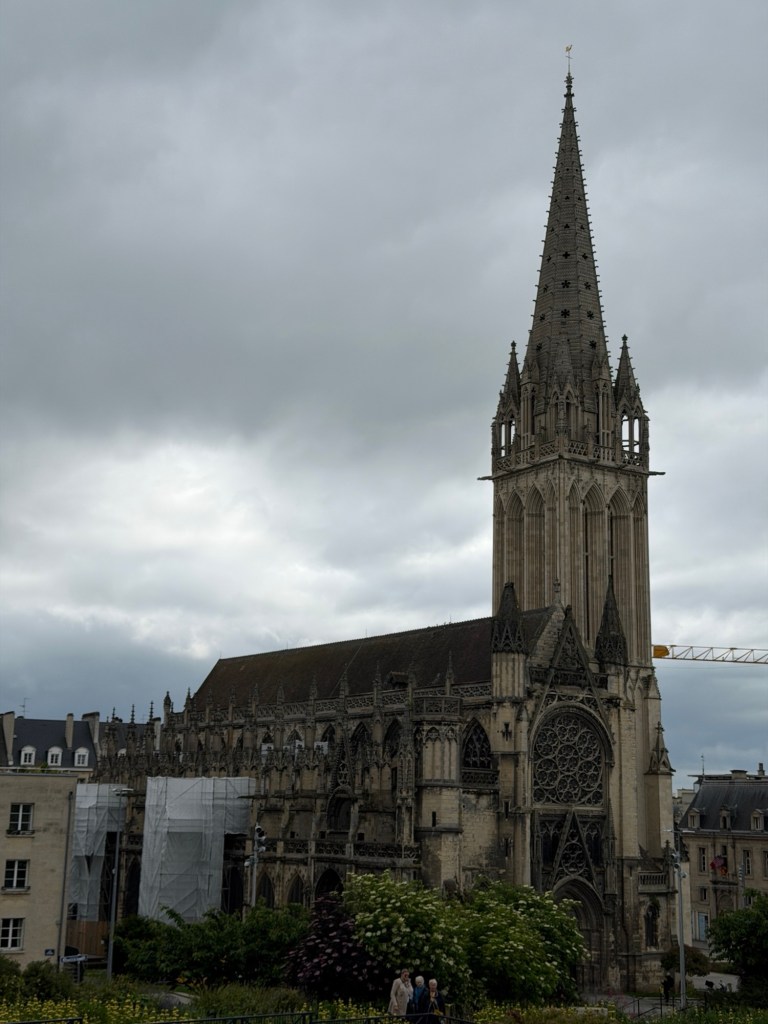
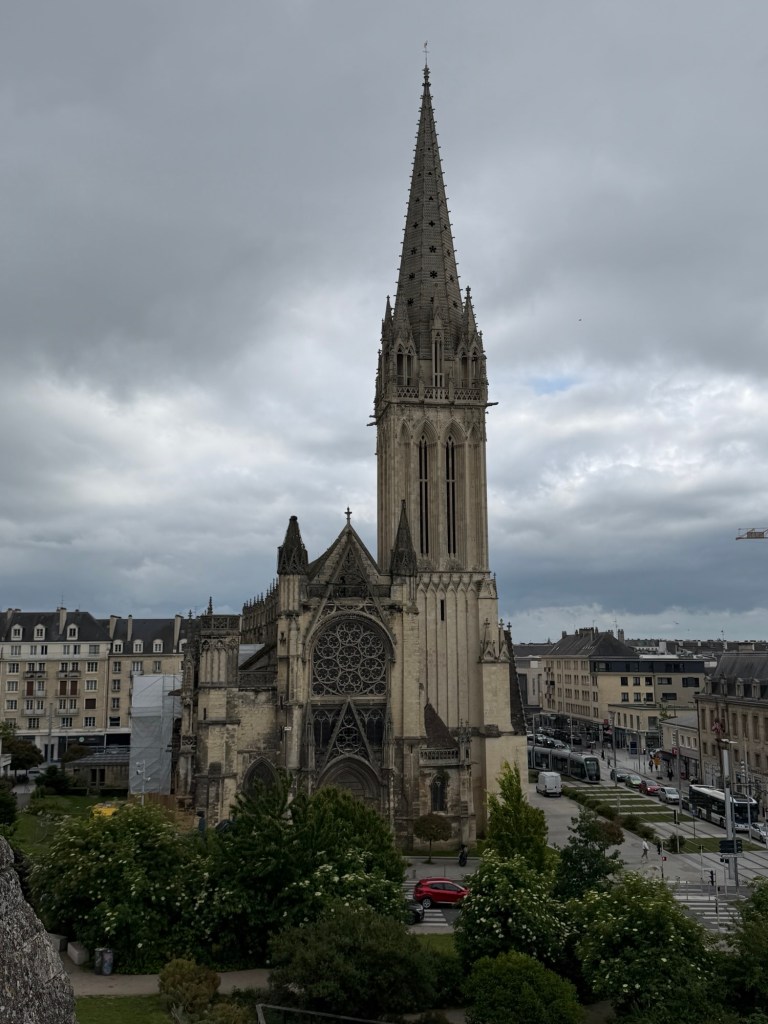
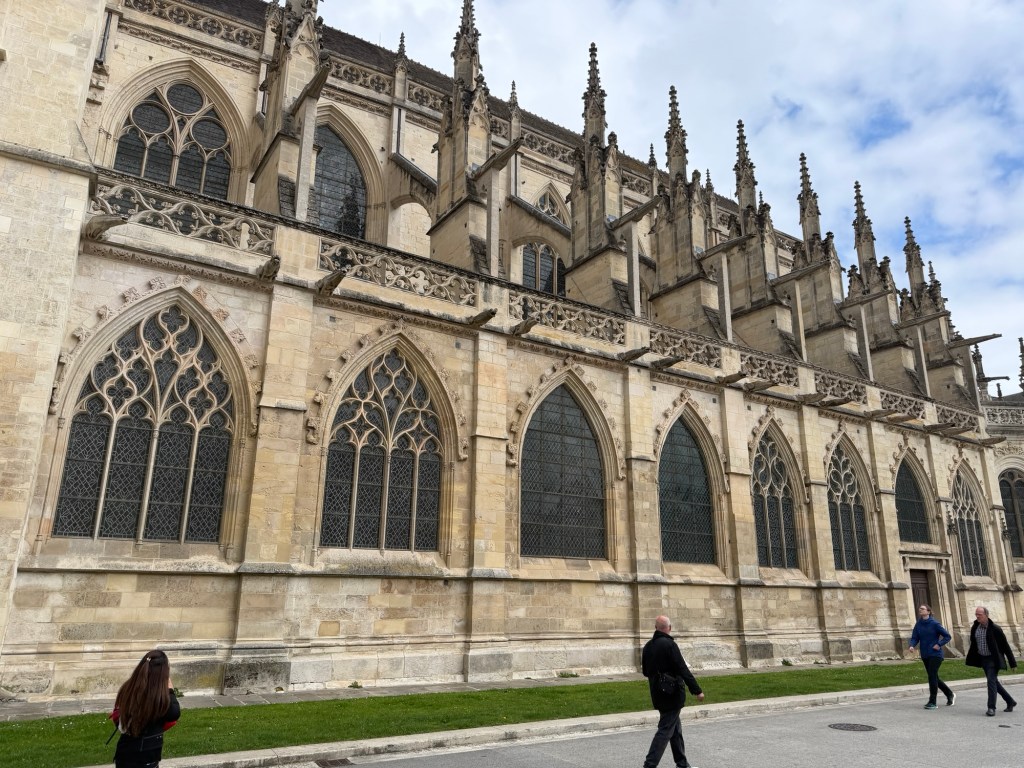
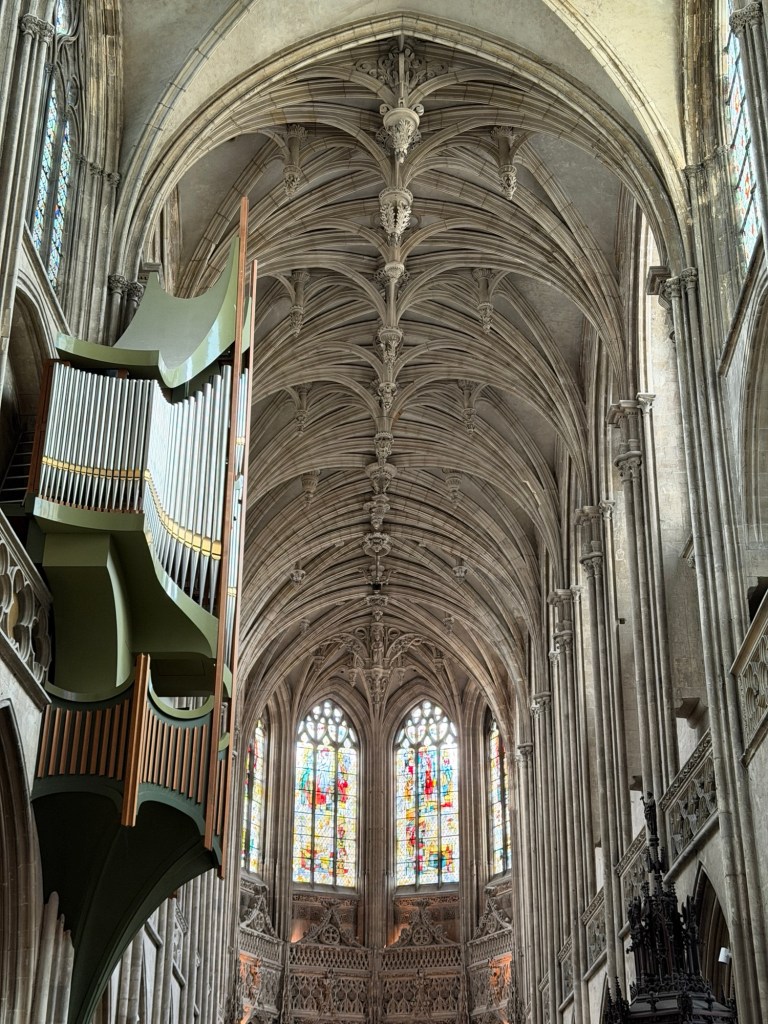
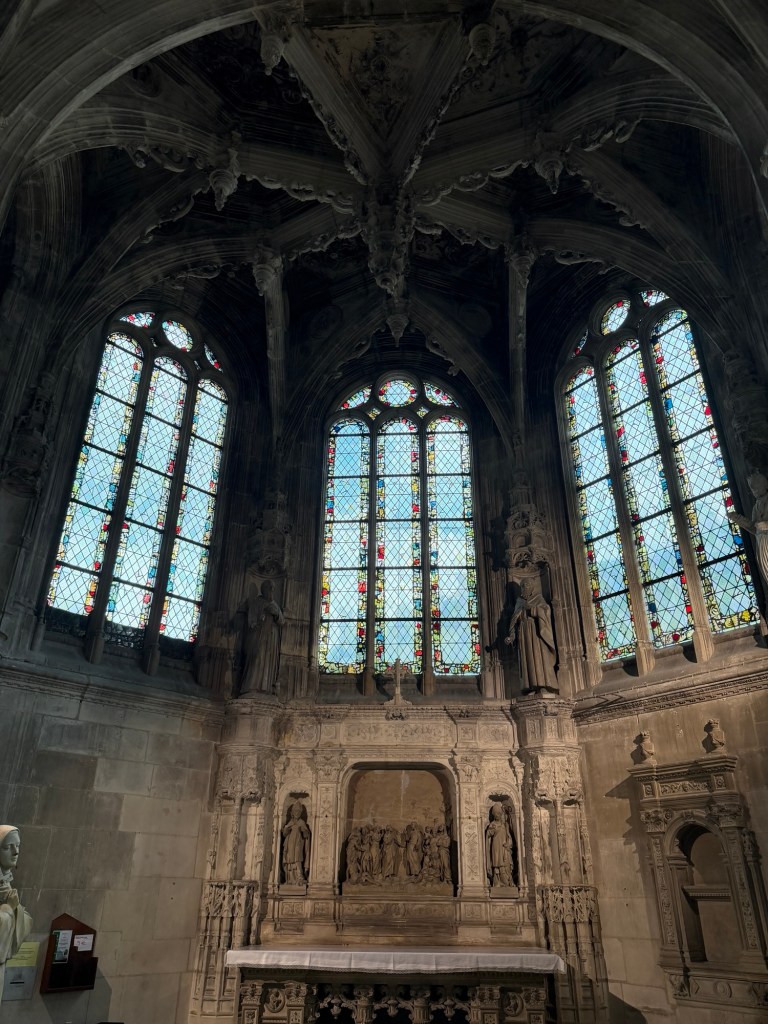
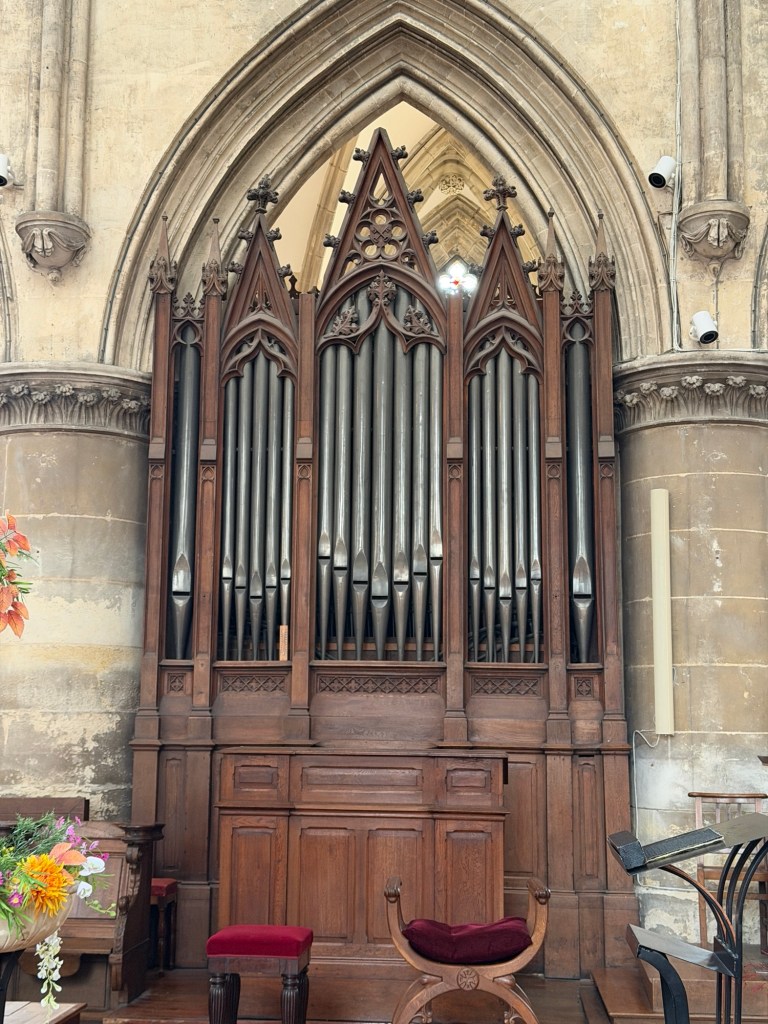
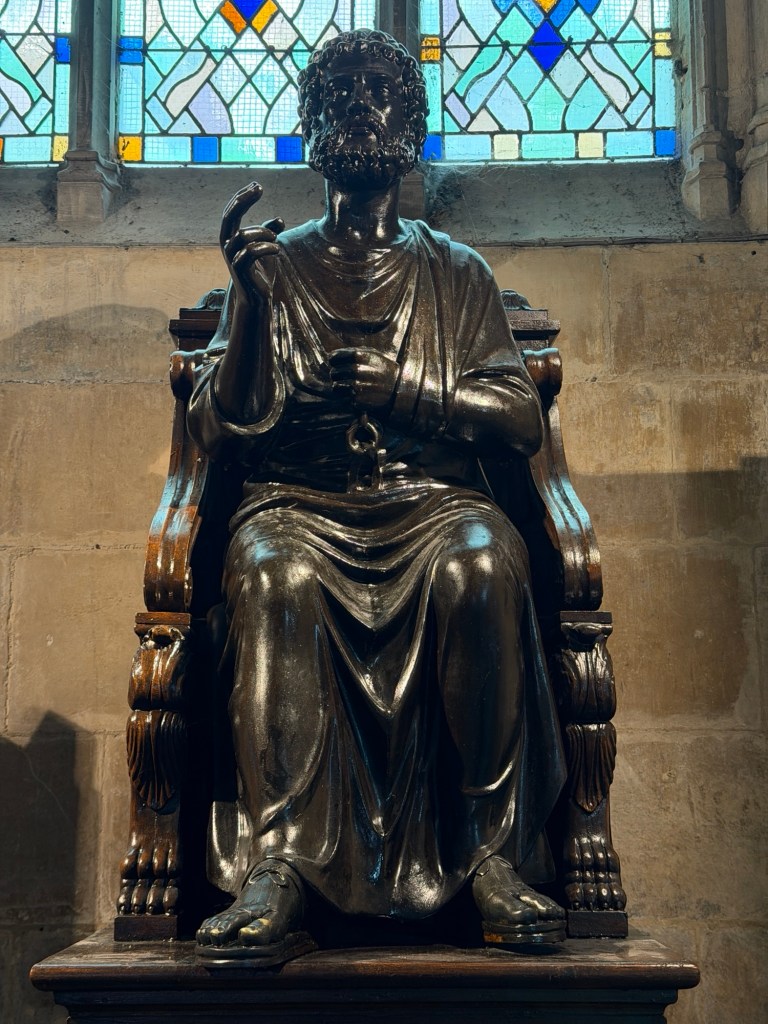
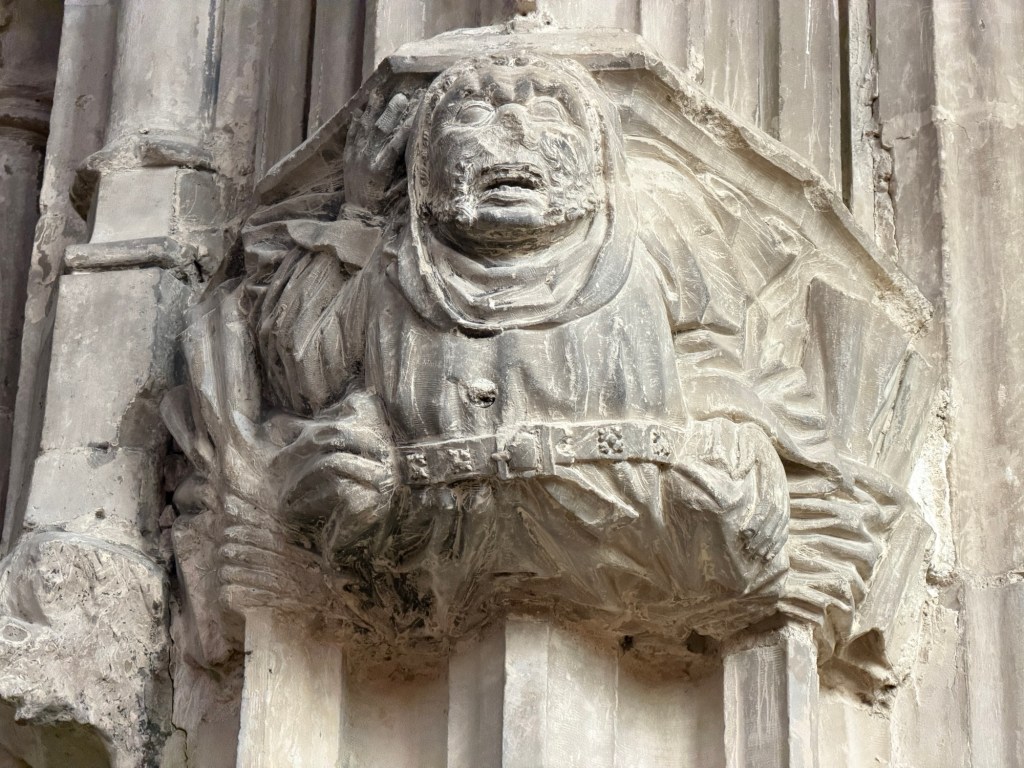
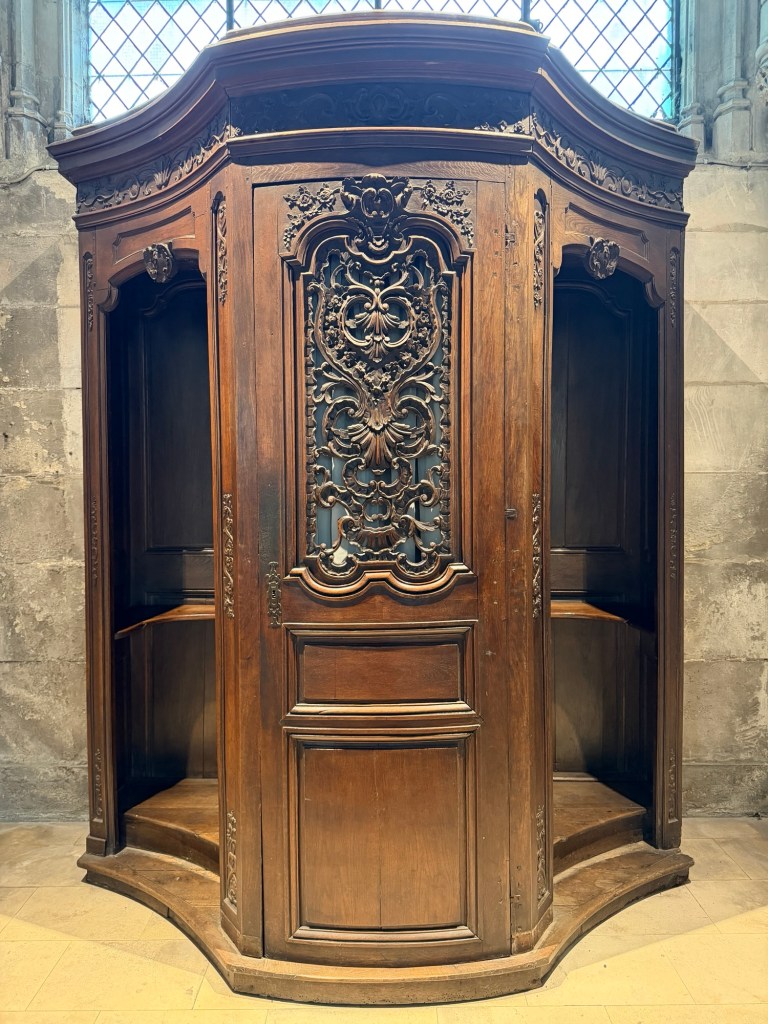
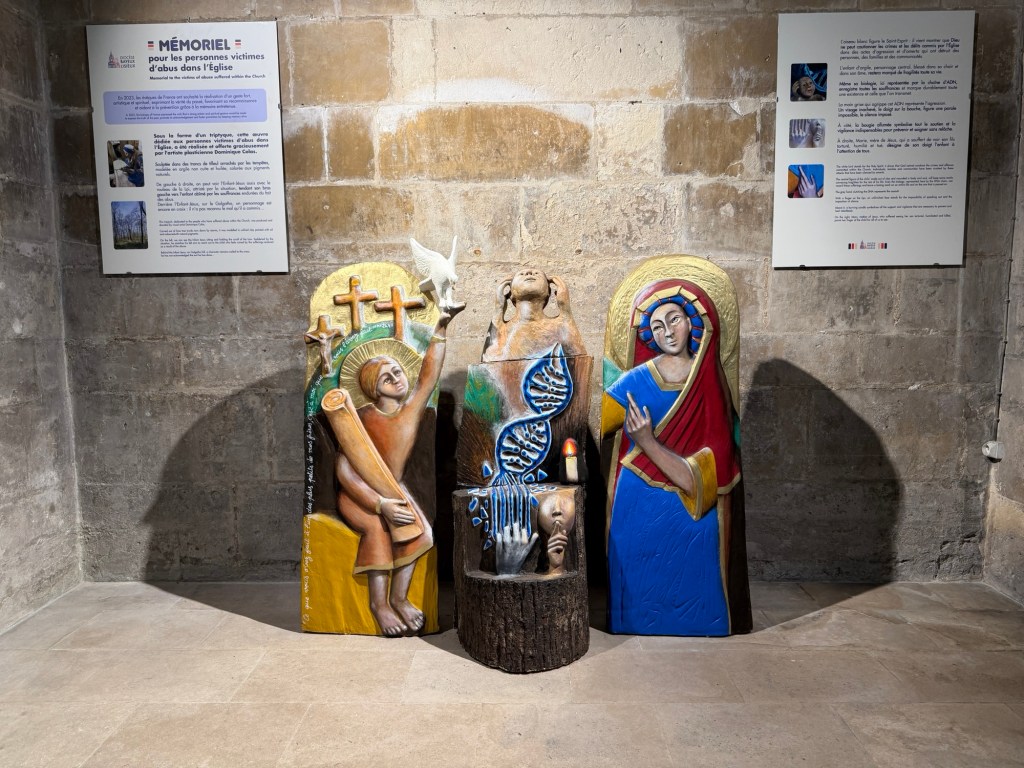
The cathedral adjacent to the castle was worth a quick look. Fortunately the doors were open.
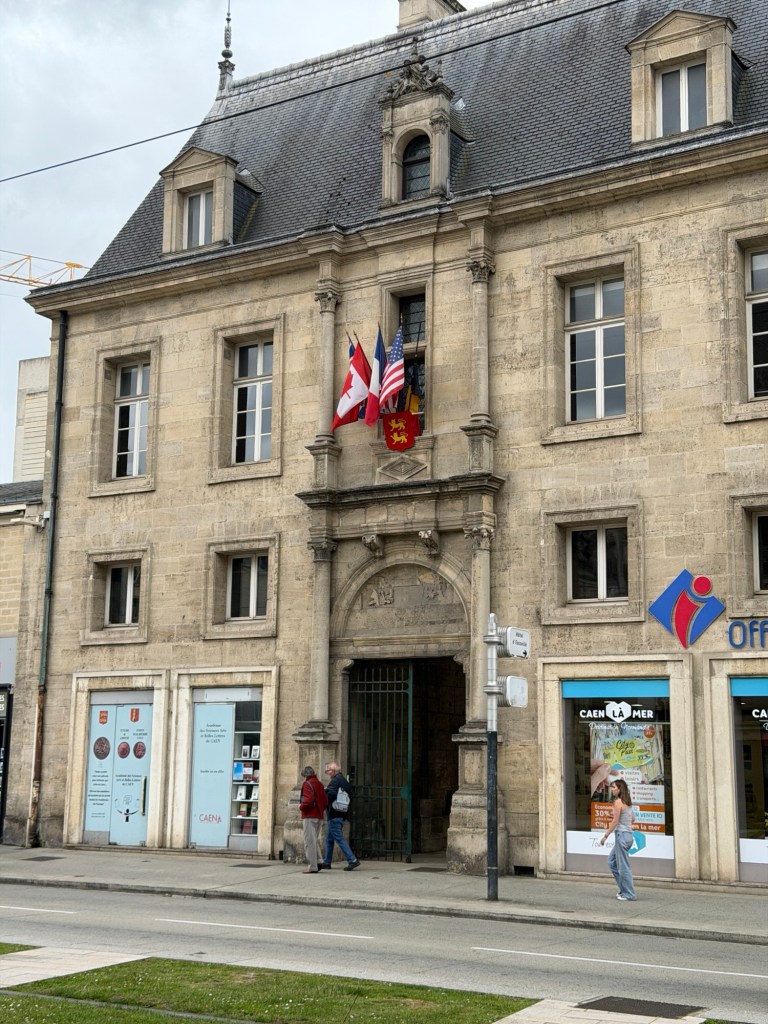
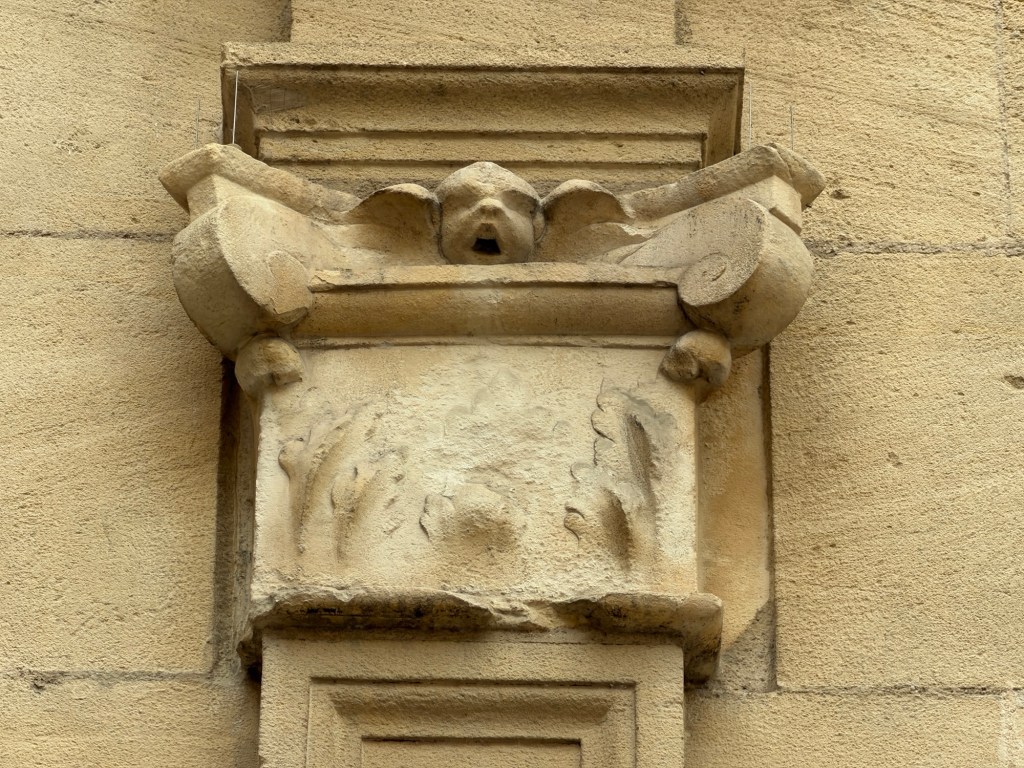
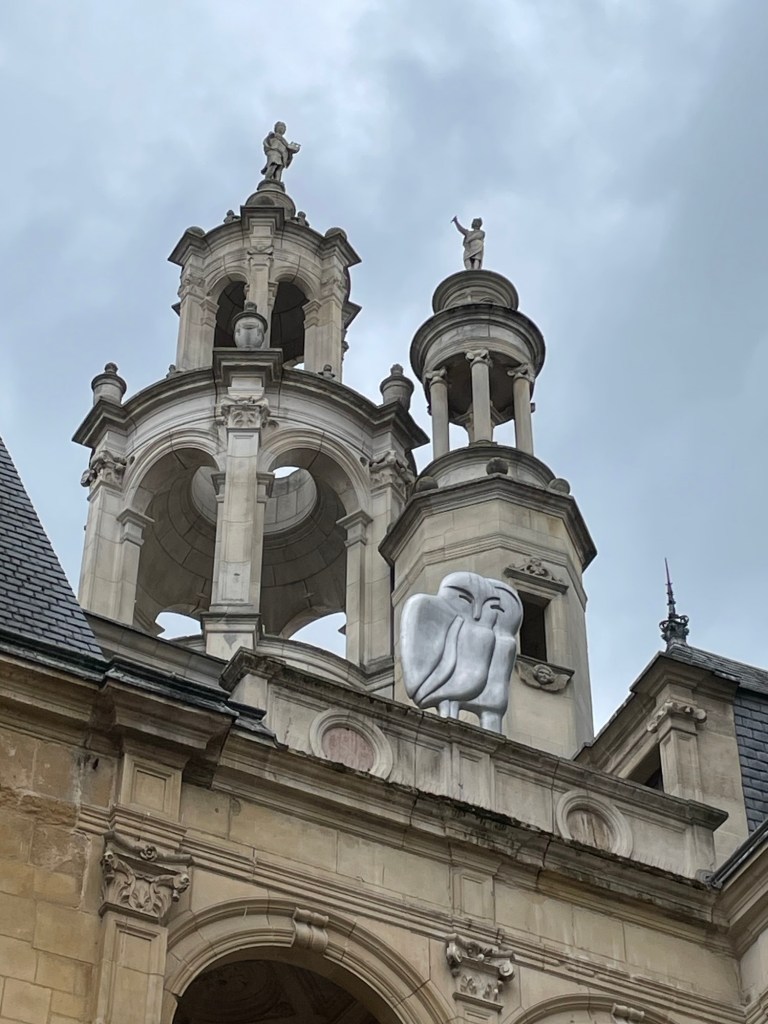
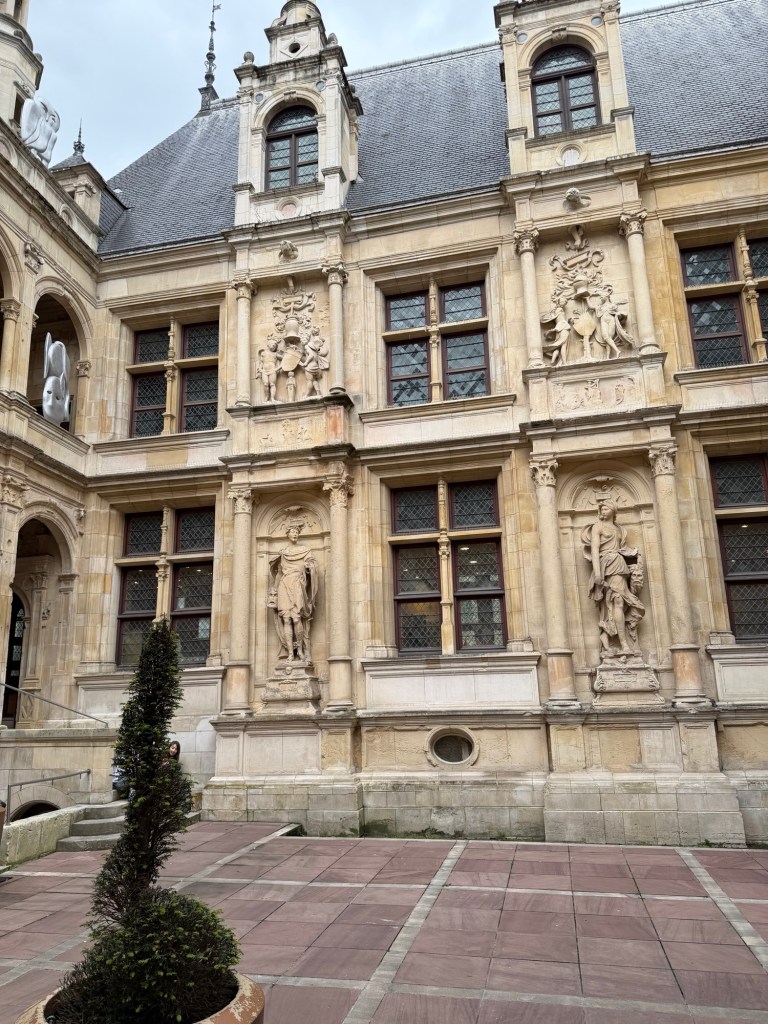
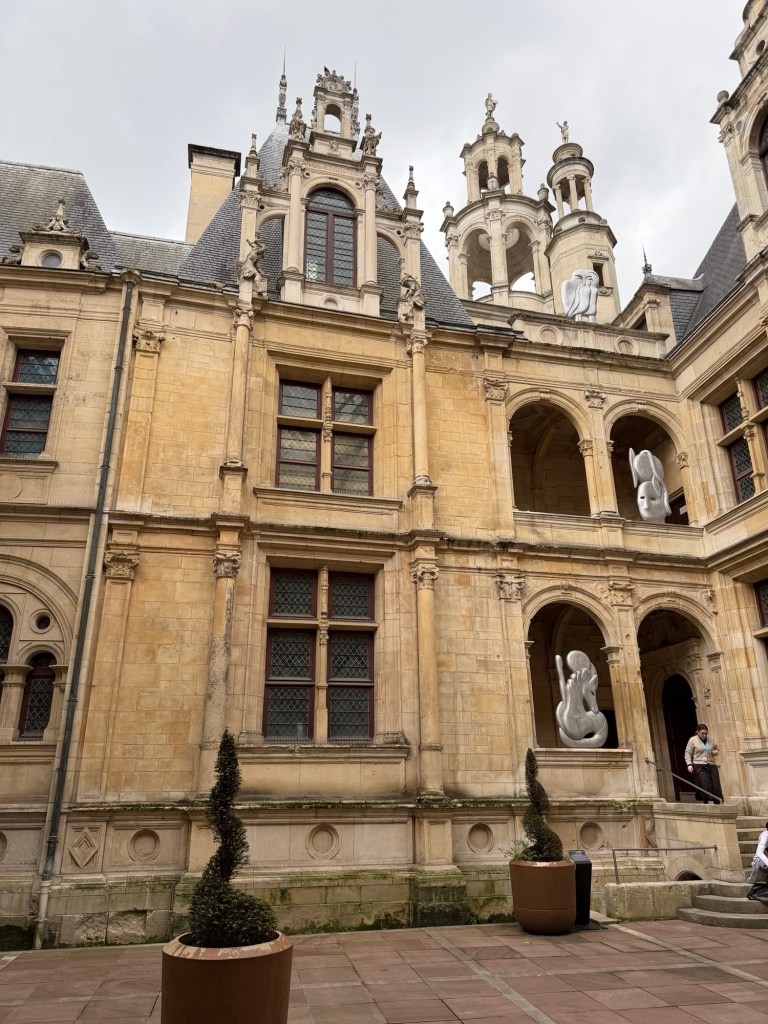
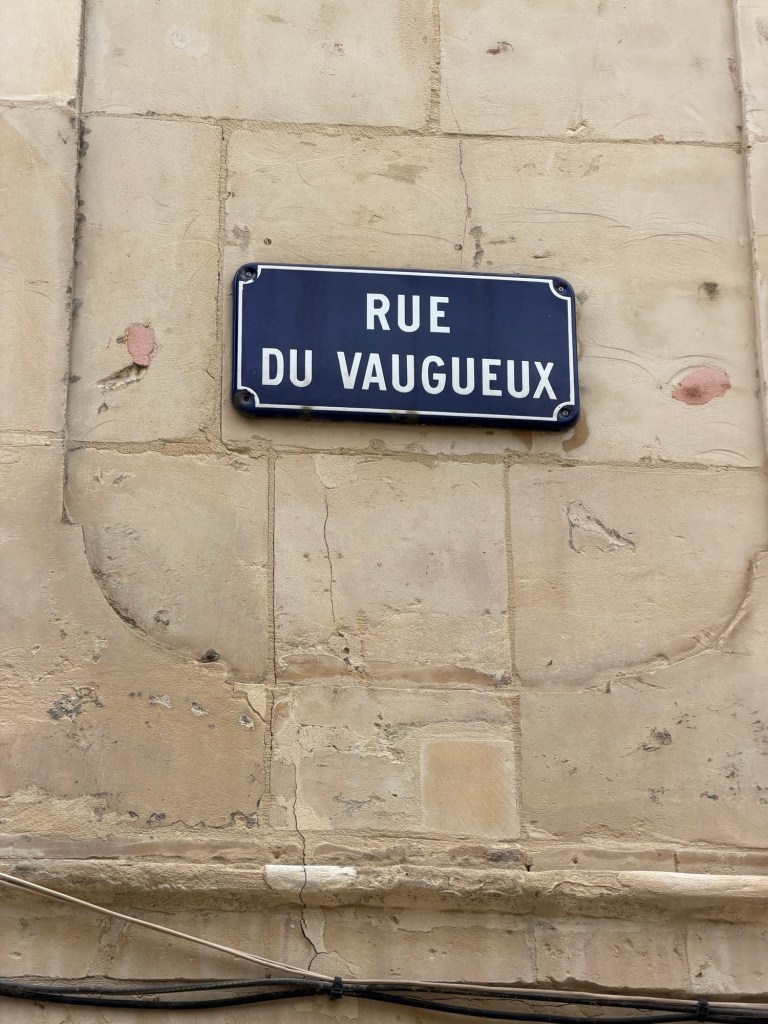
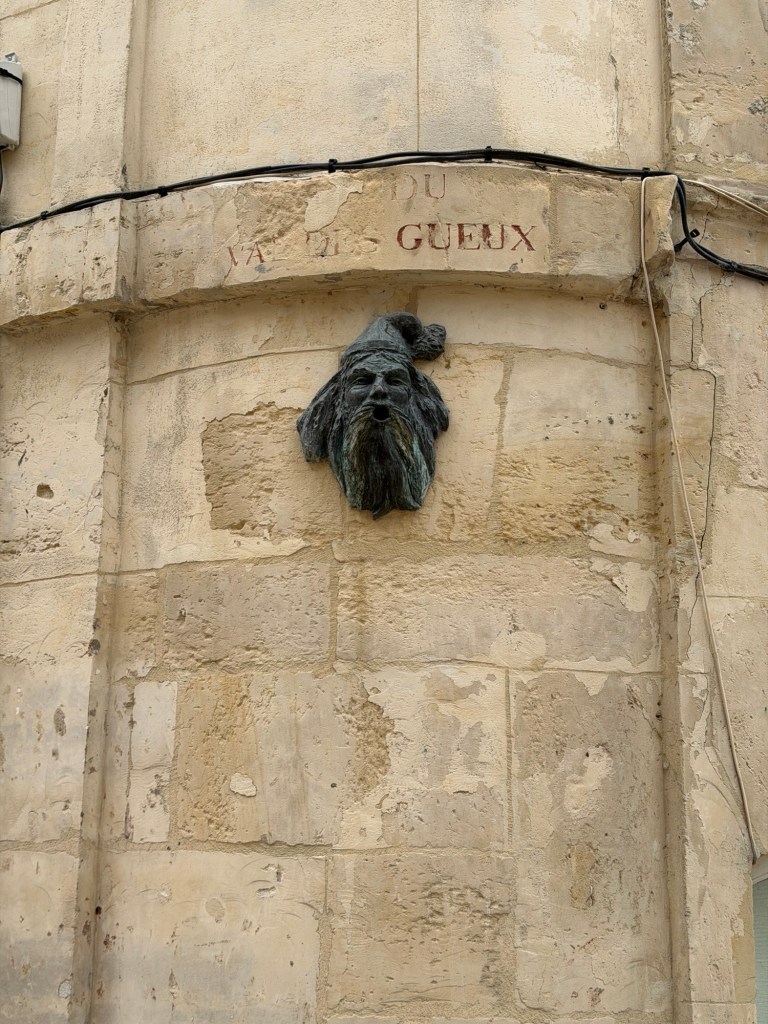
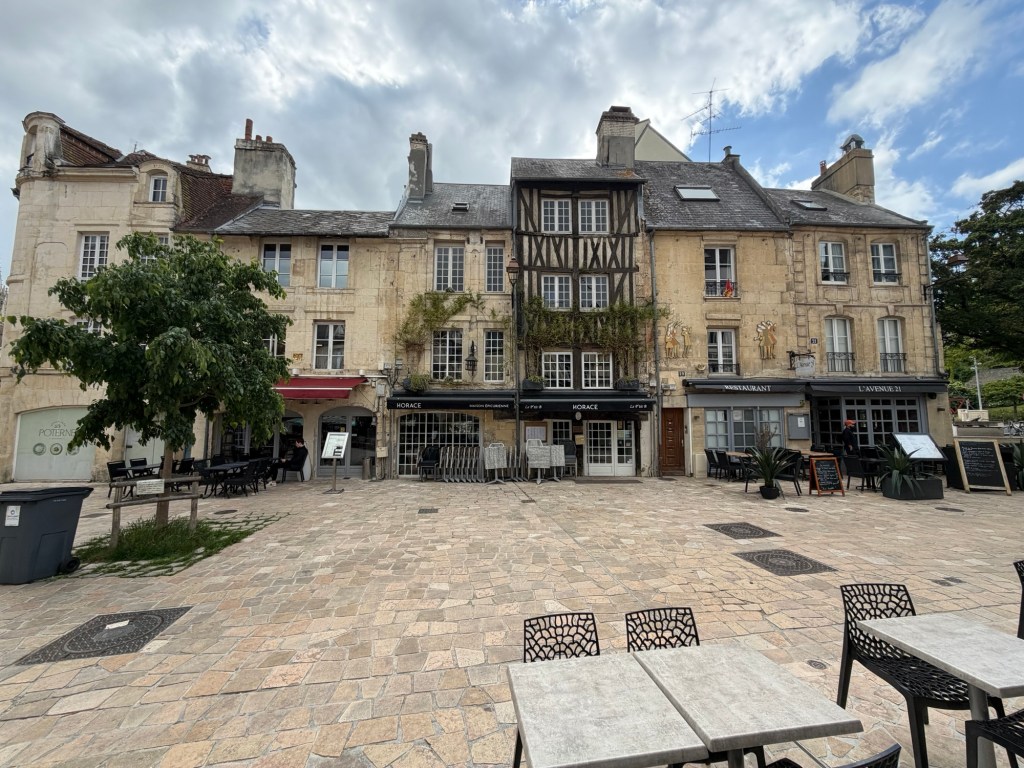
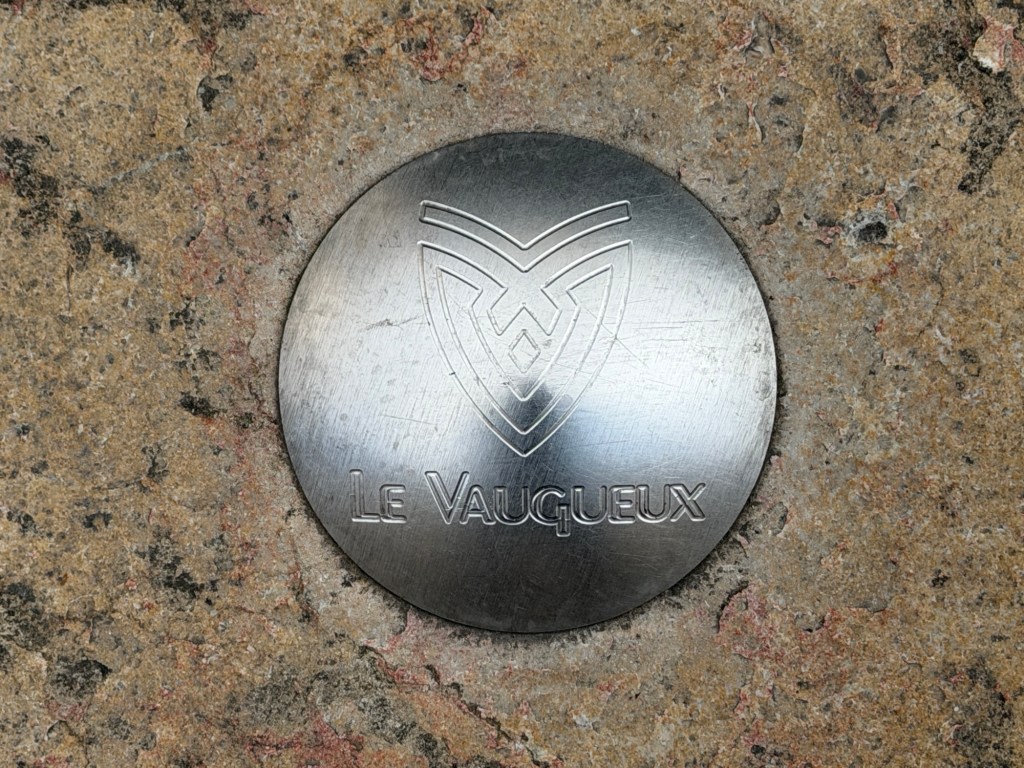
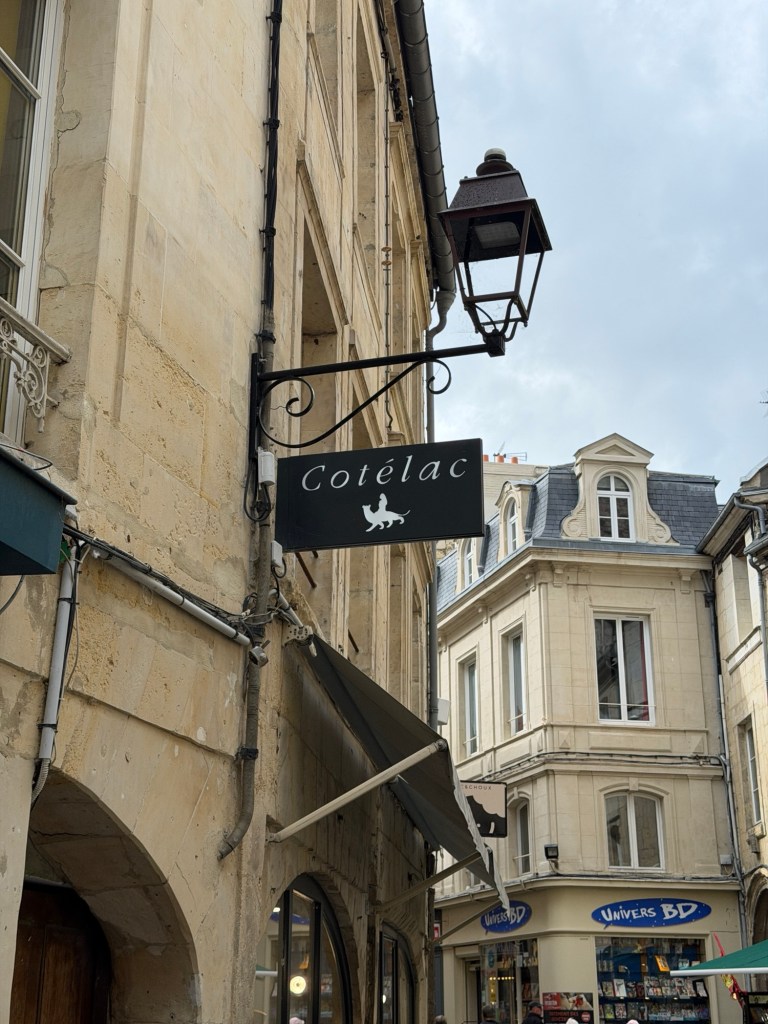
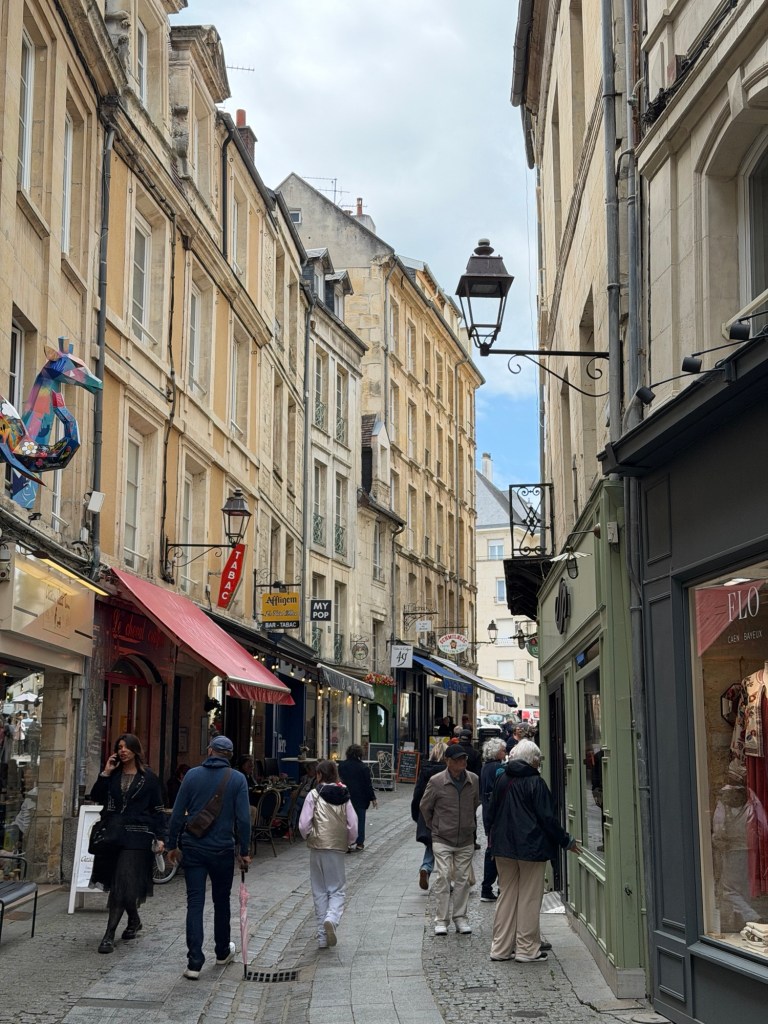
Vaugueux is the oldest part of Caen; it was spared from the destruction of World War II.
 Bunch of Geeks go Traveling