Author: bdmarsha

Arromanches and Bayeux, Saturday

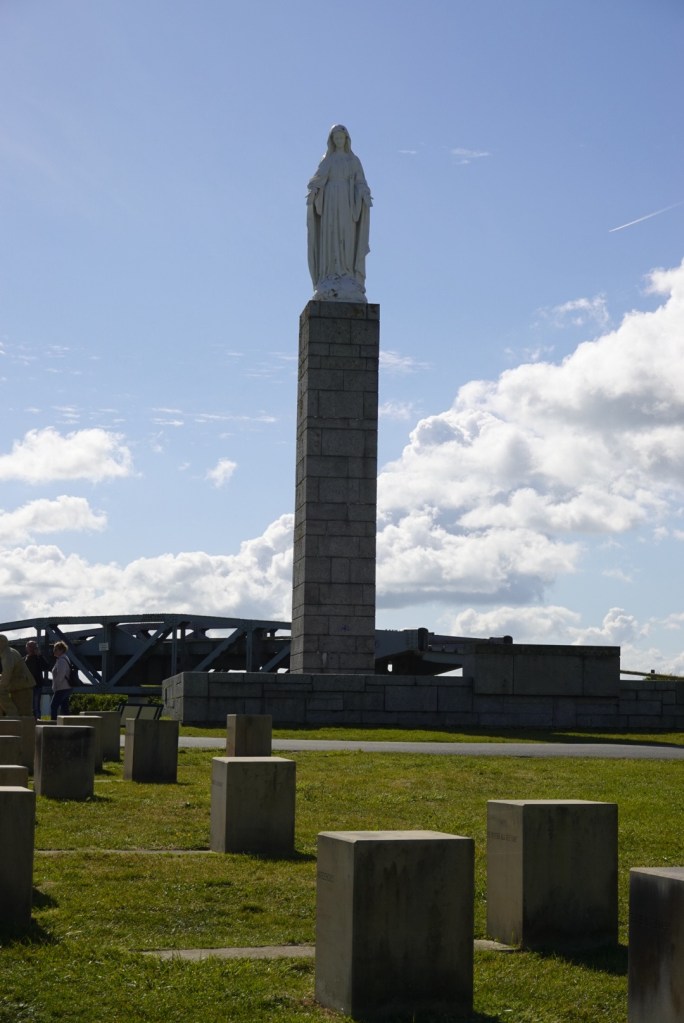
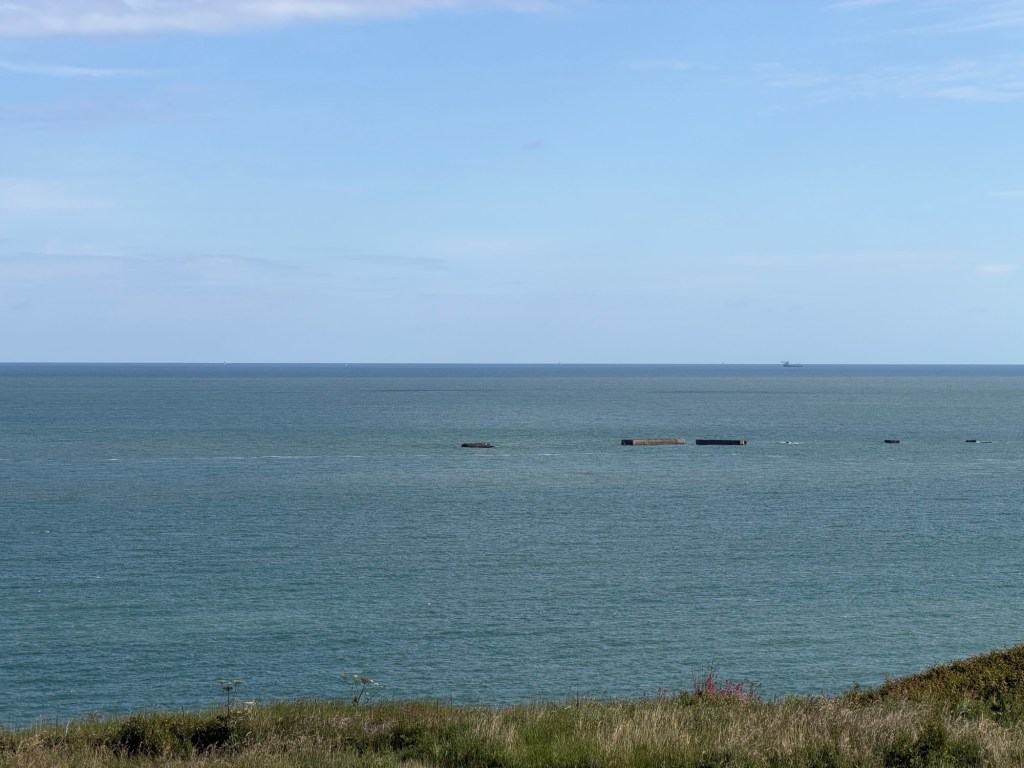
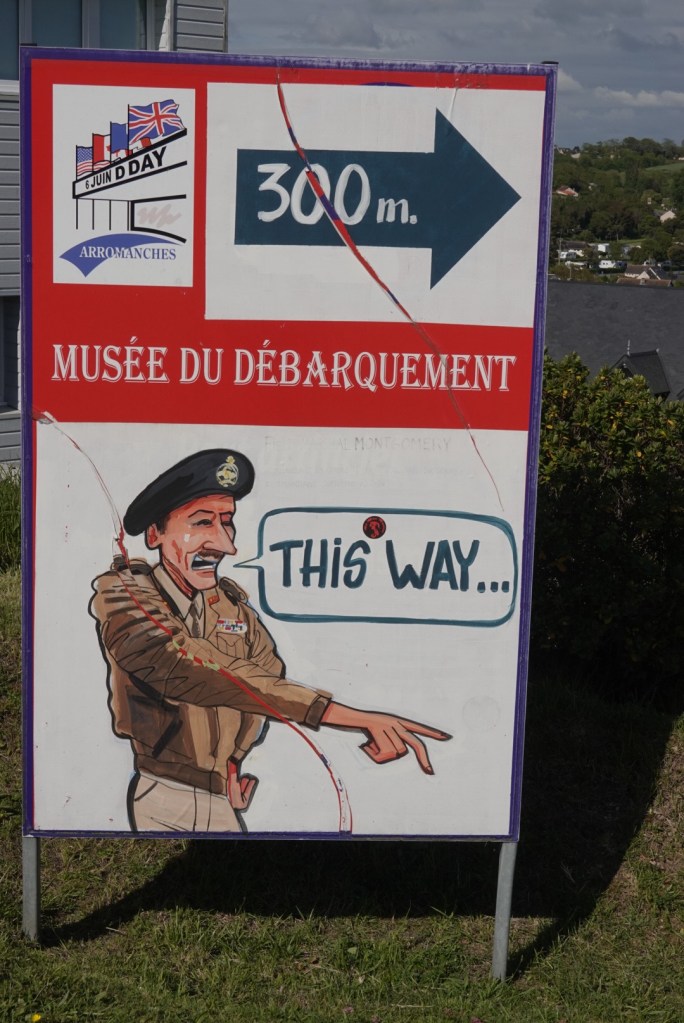
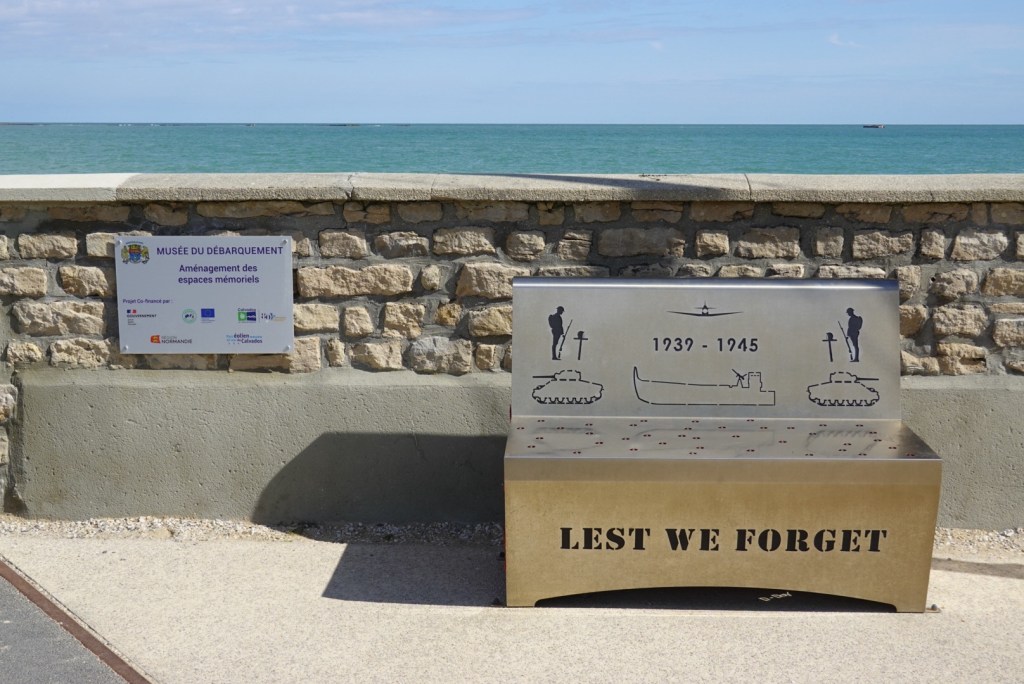
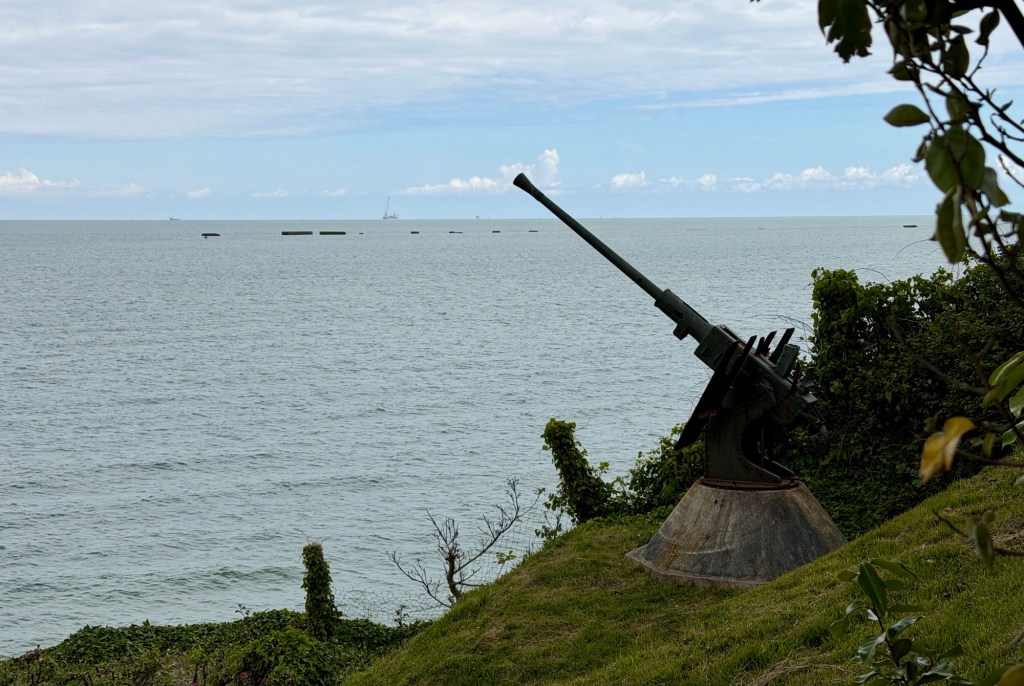
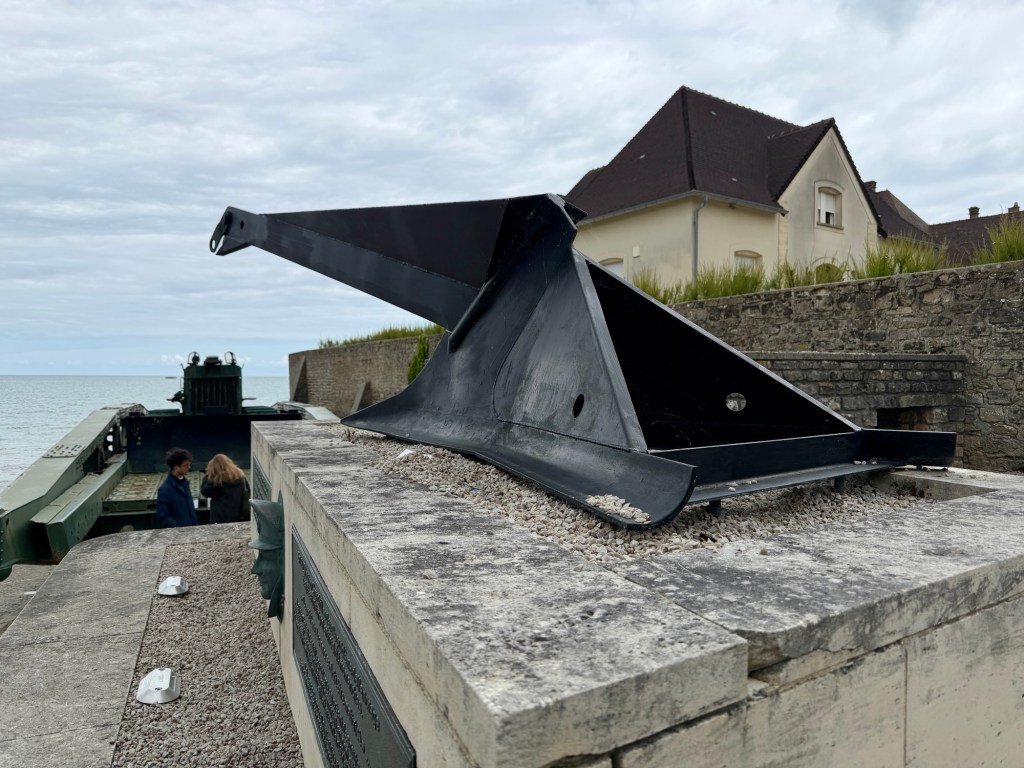
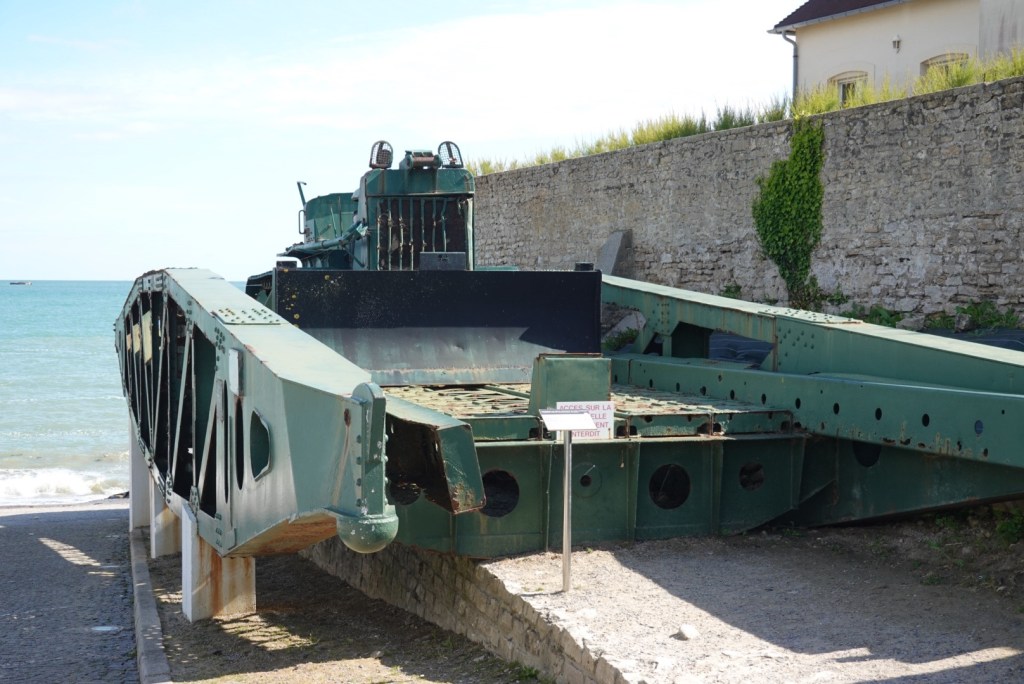
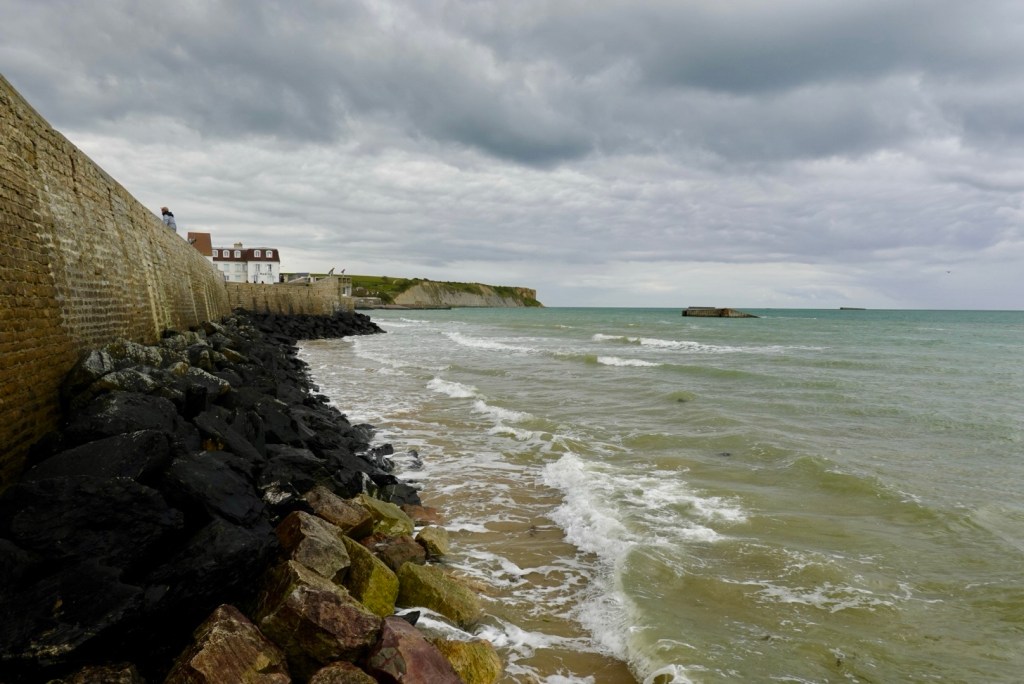
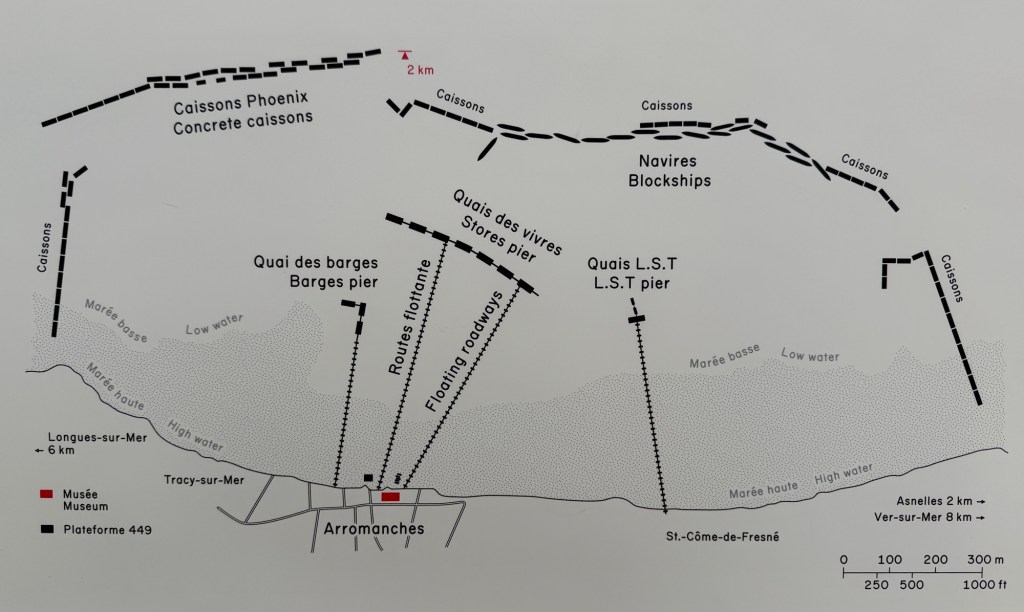
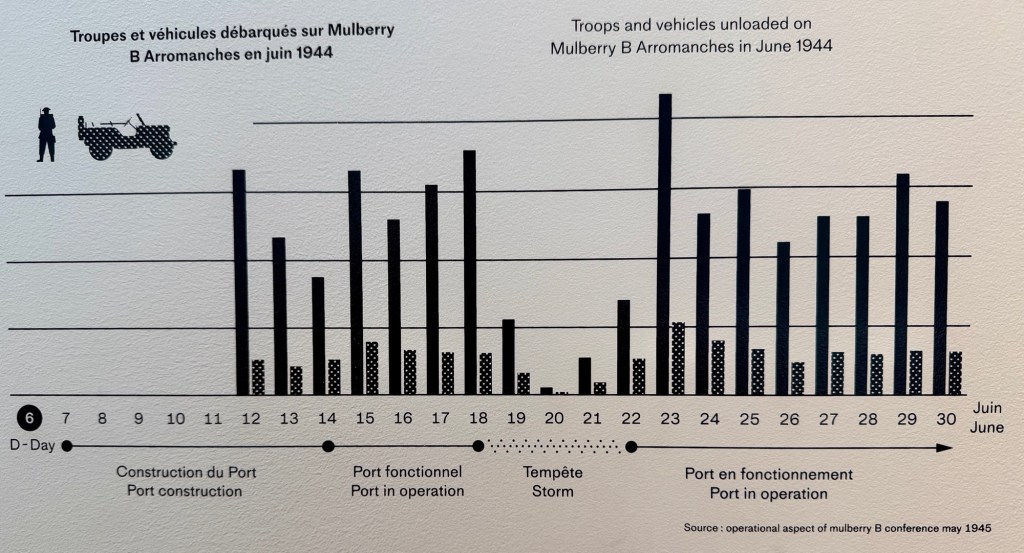
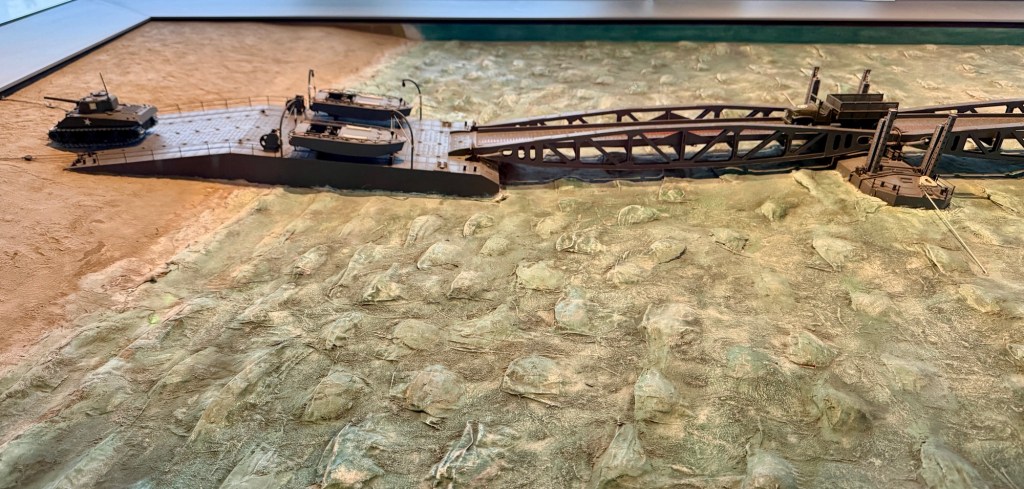
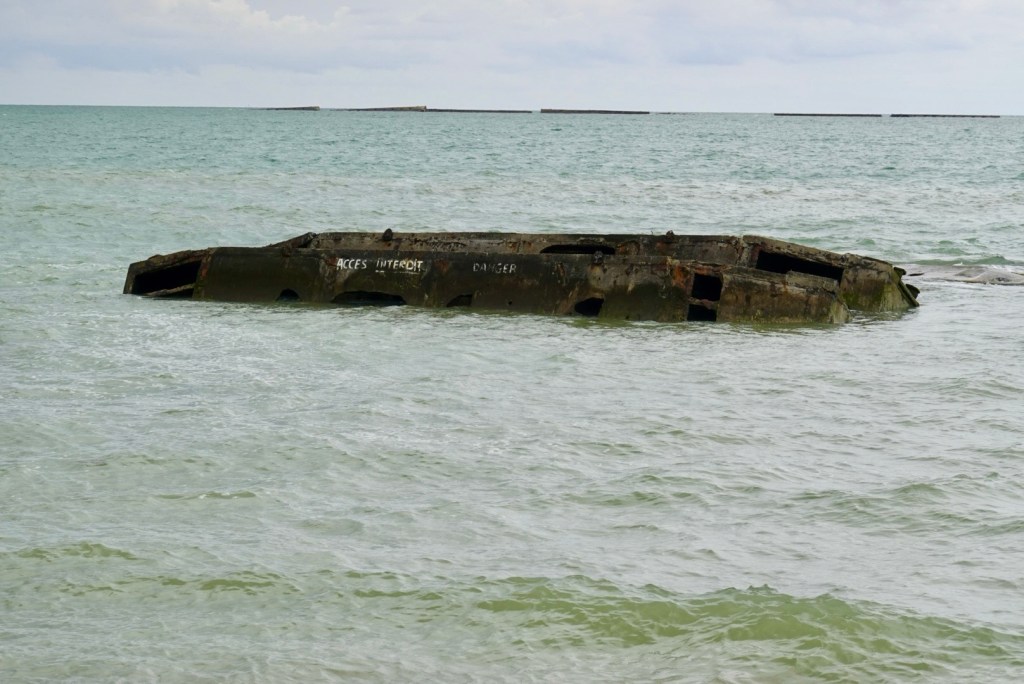
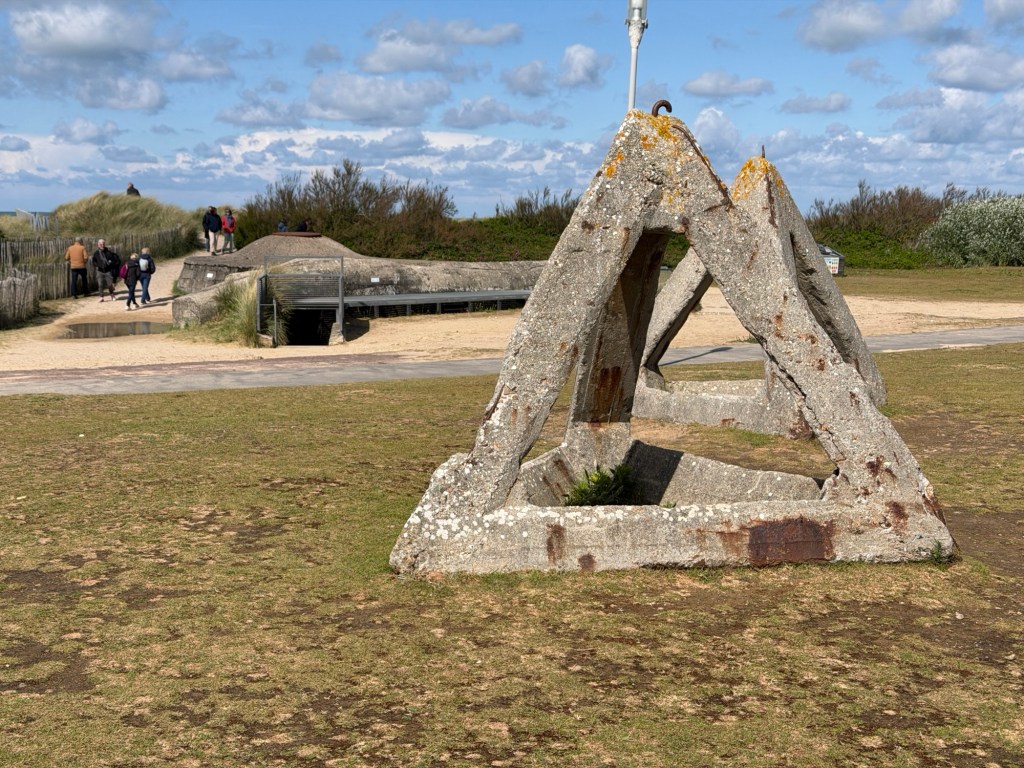
Today, with Jèrome and Cèdric, we visited more D-Day sites. The first area was Arromanches, where British soldiers and engineers built a harbor in six days. Incredible! The Germans had blocked all the natural harbors, so this was the only way to get the large numbers of men and matériel to shore efficiently.
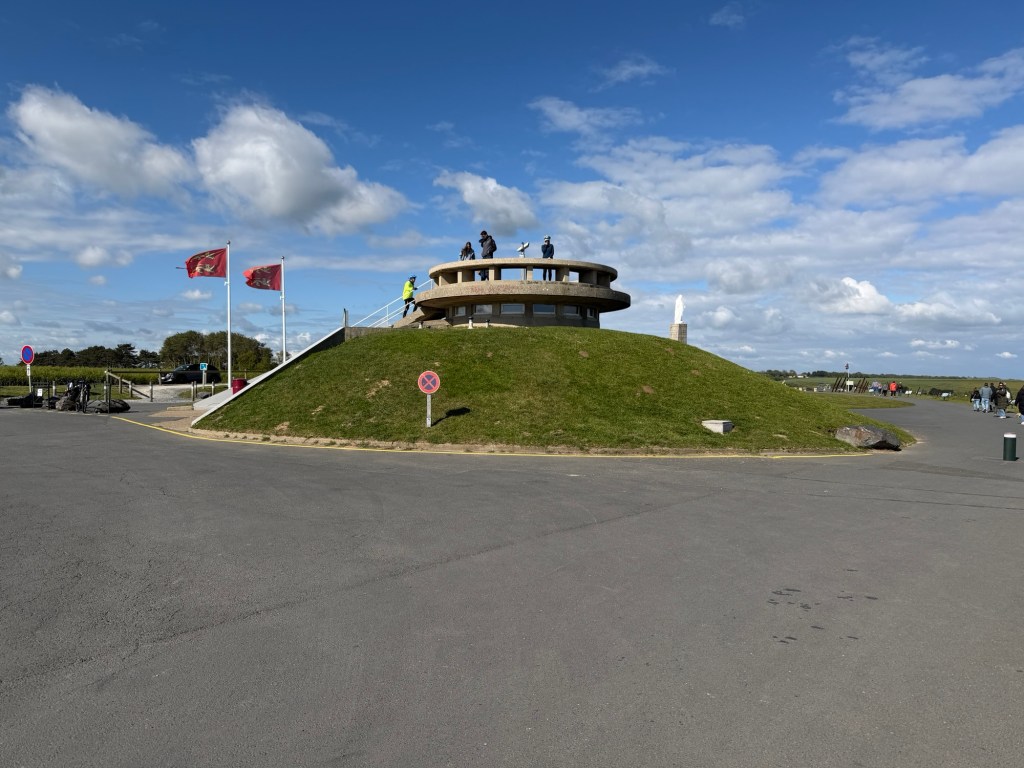
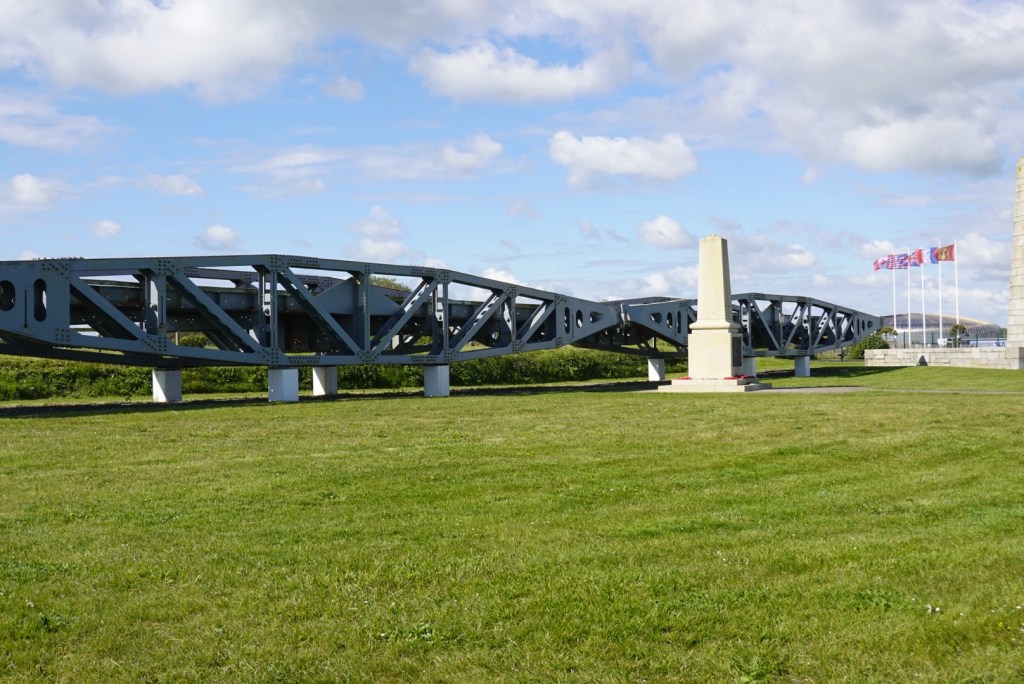
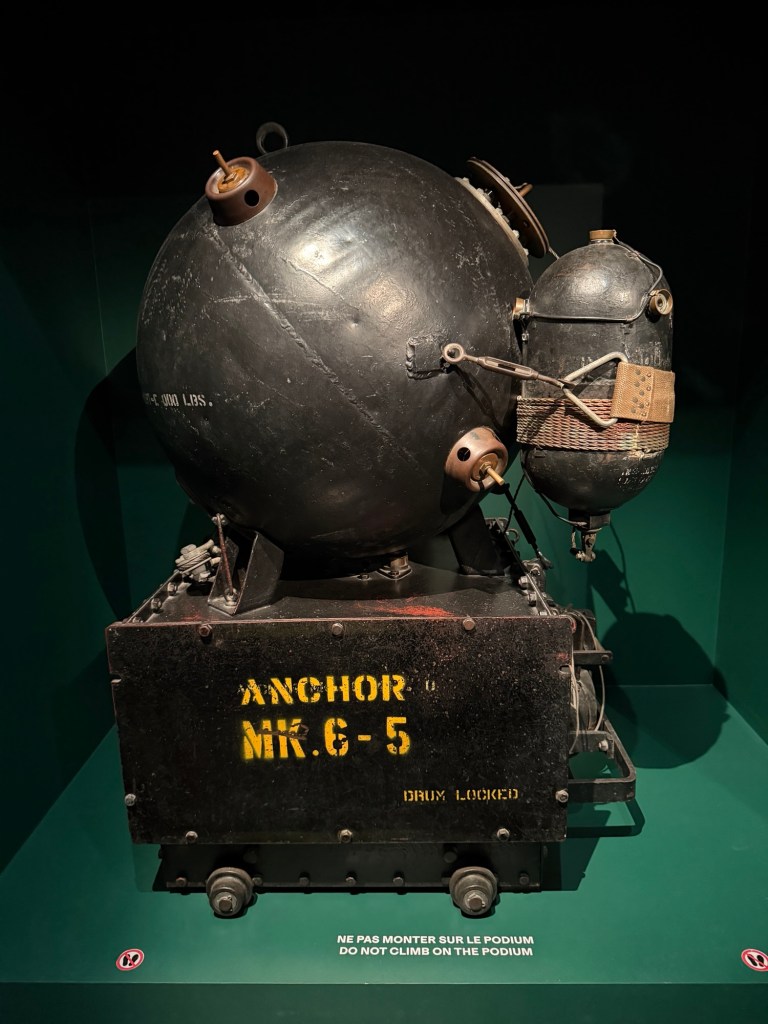
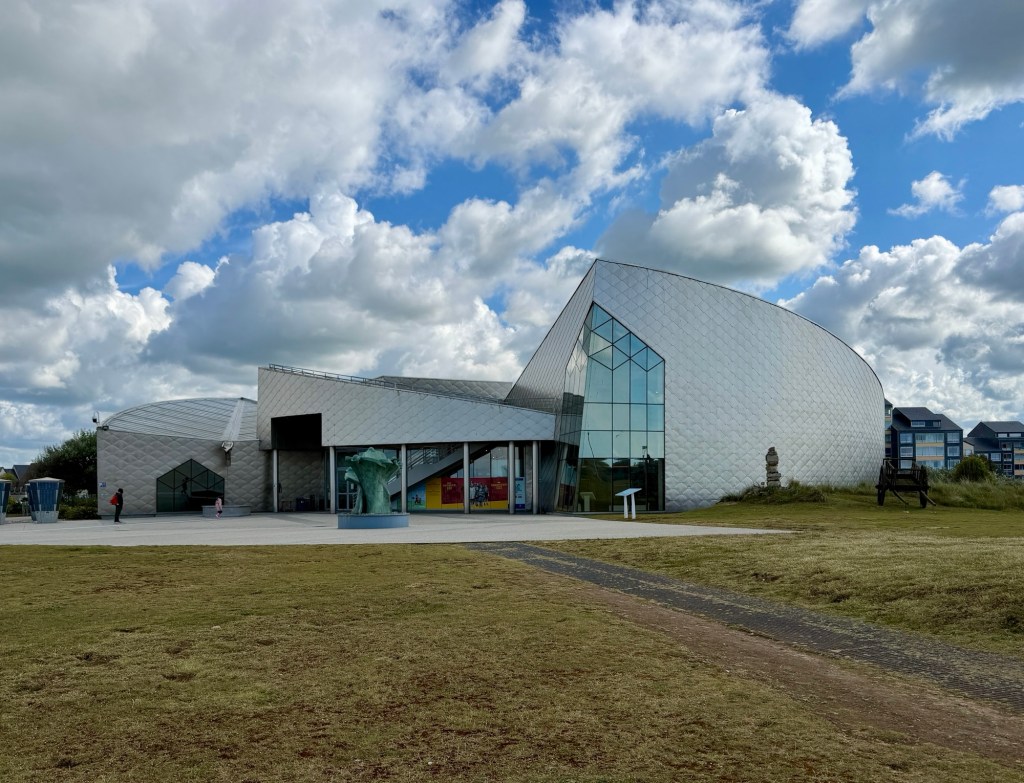
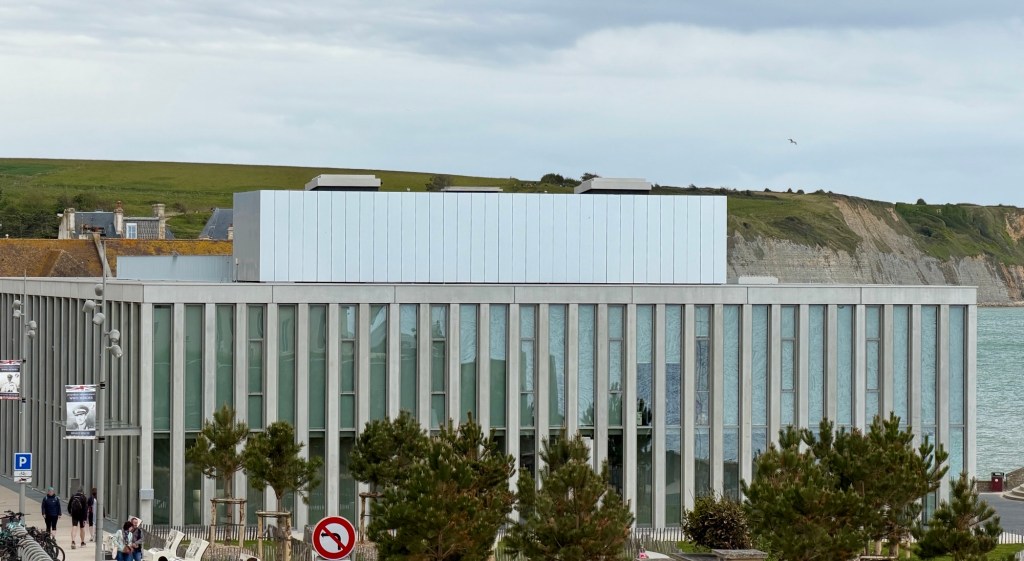
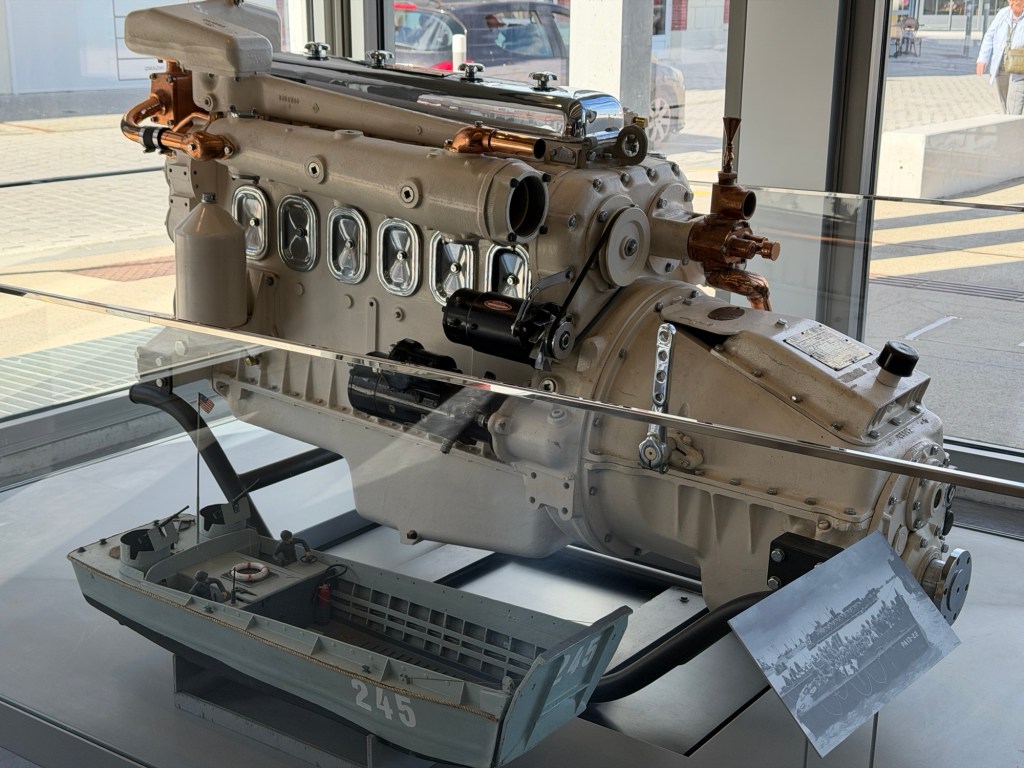
The modern D-Day Landing Museum was fantastic, with many videos and educational displays centered on the construction of the artificial harbor.
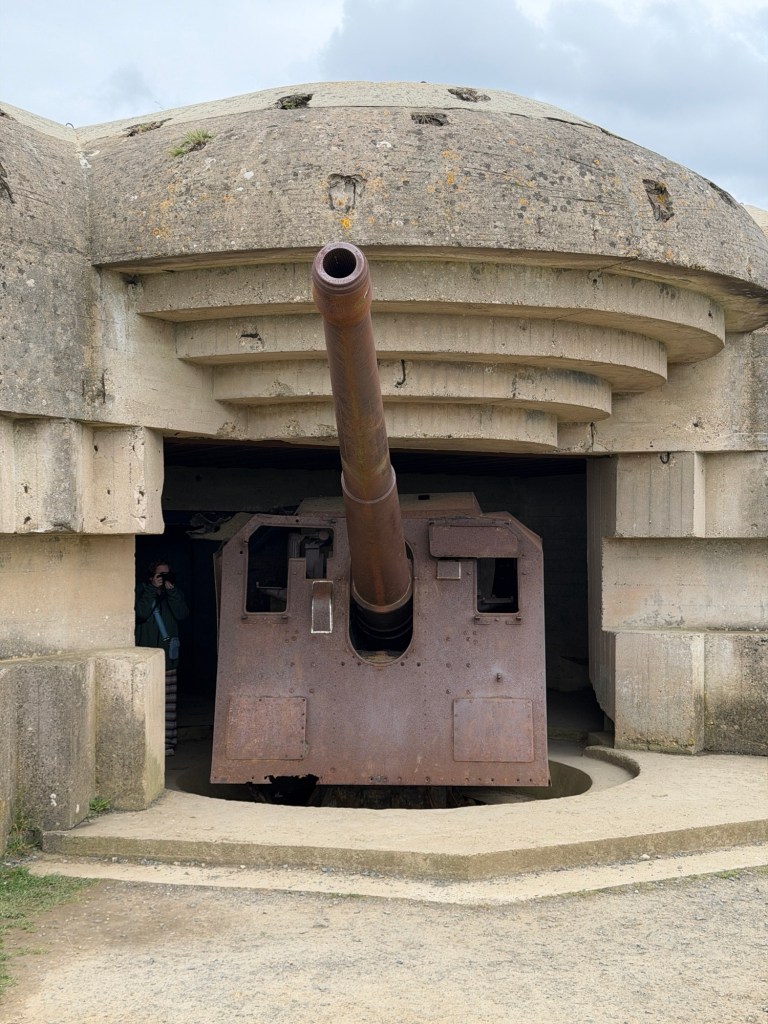
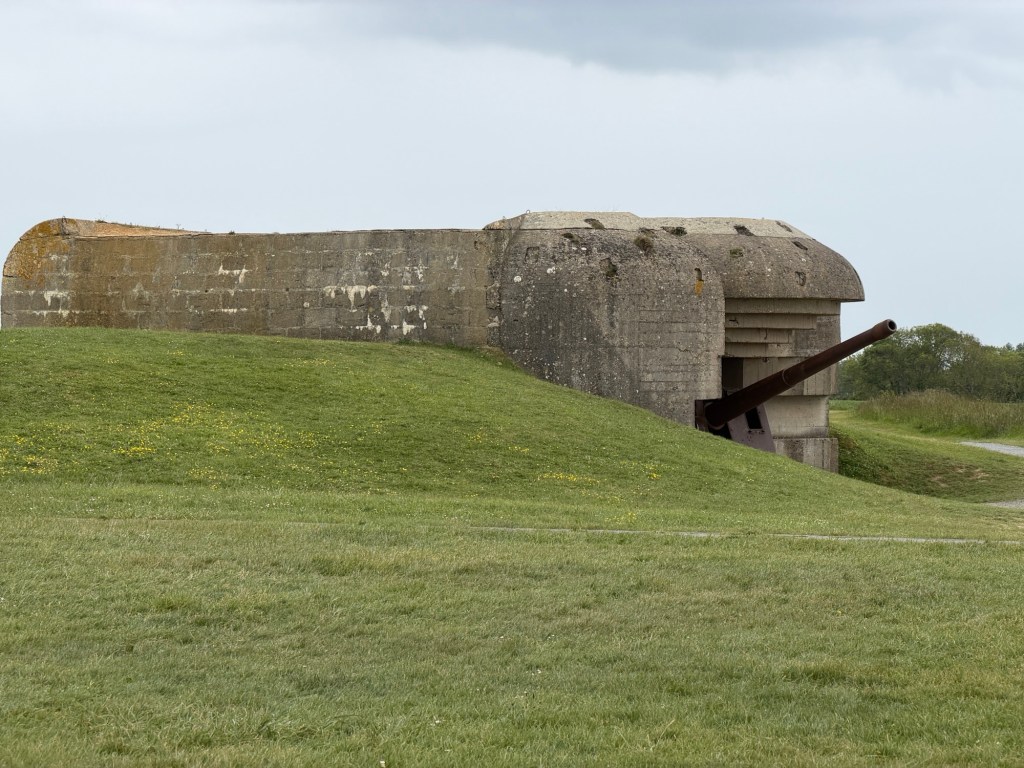
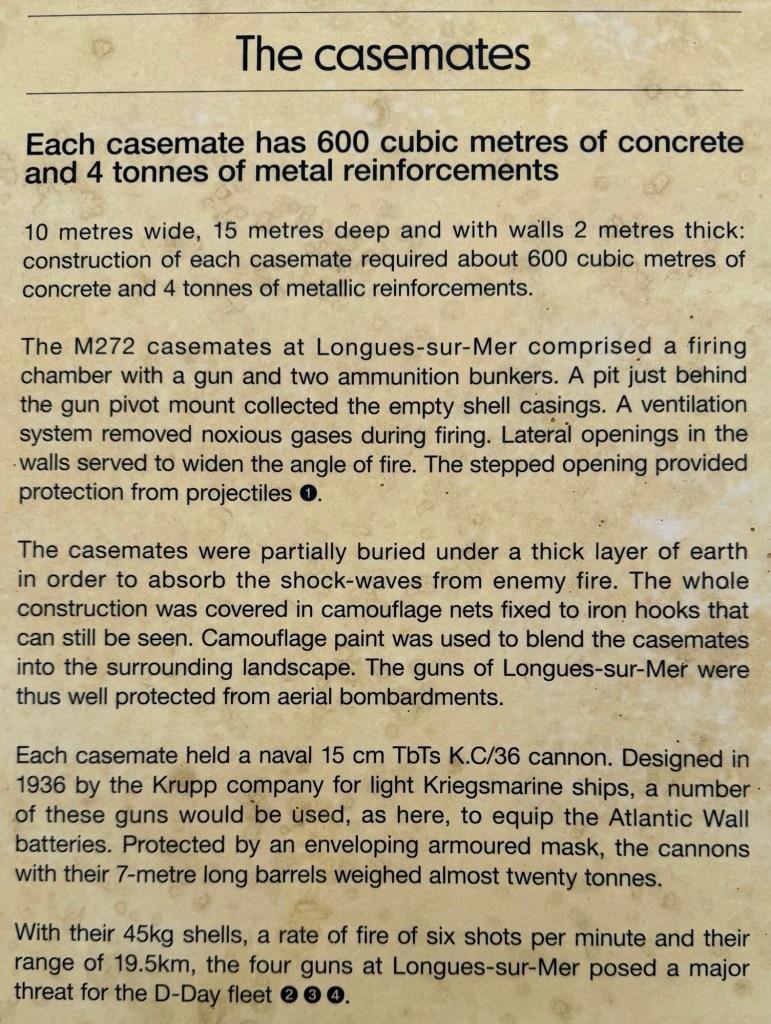
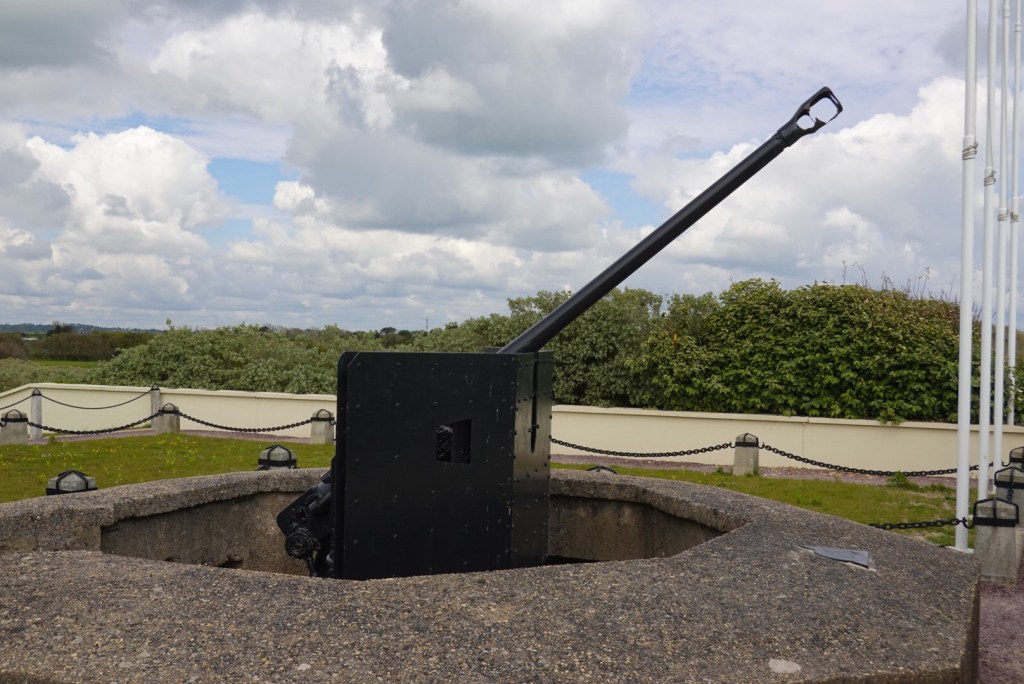
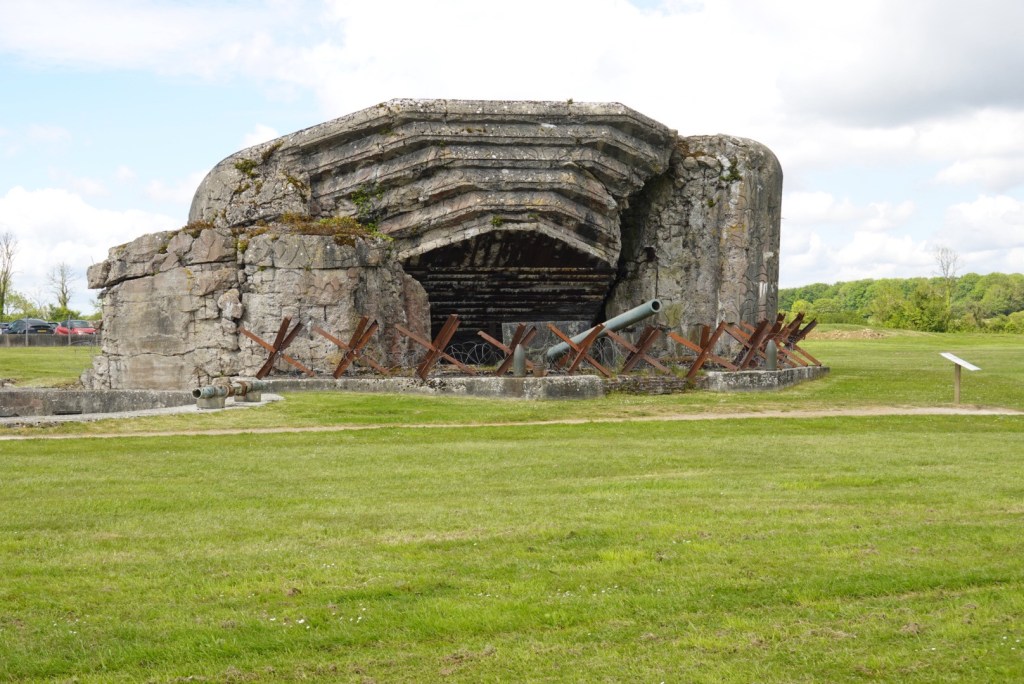
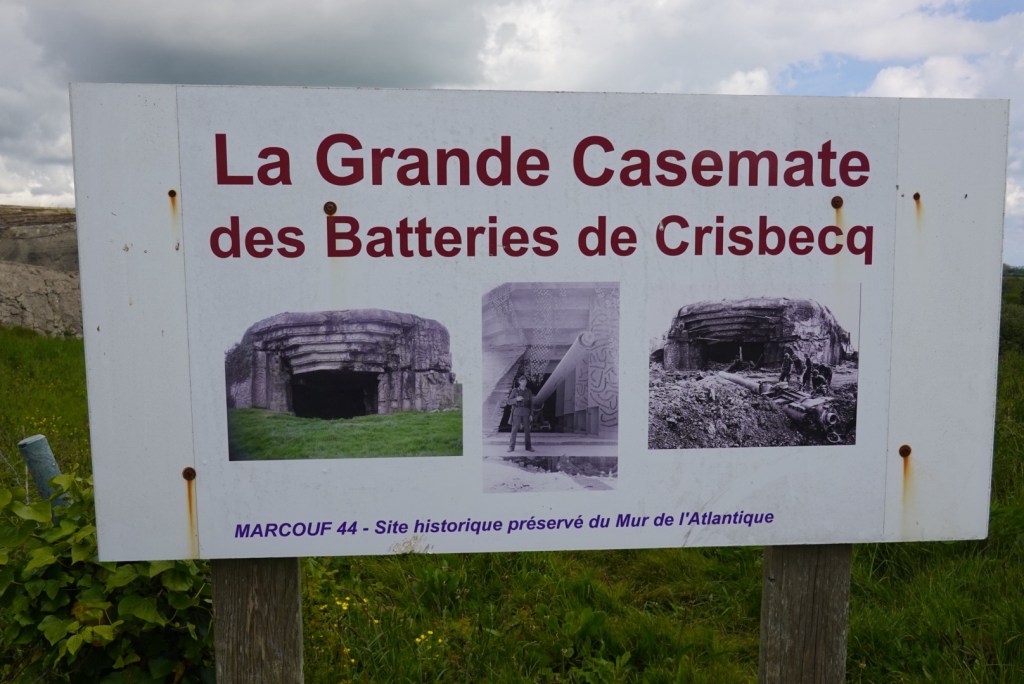
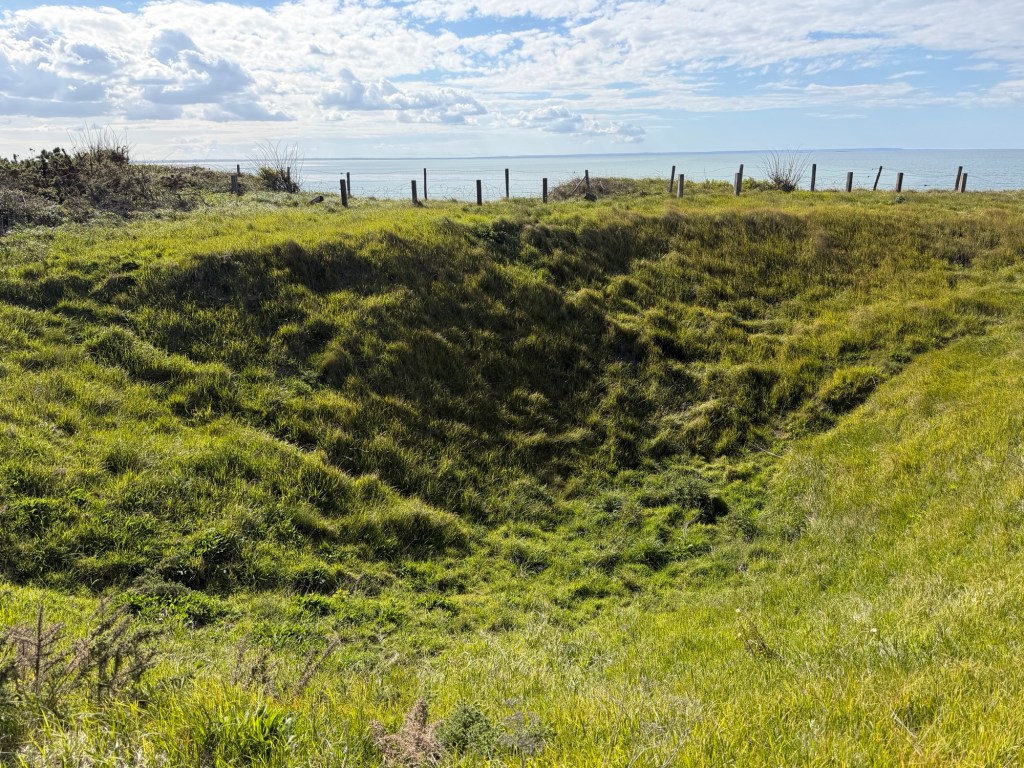
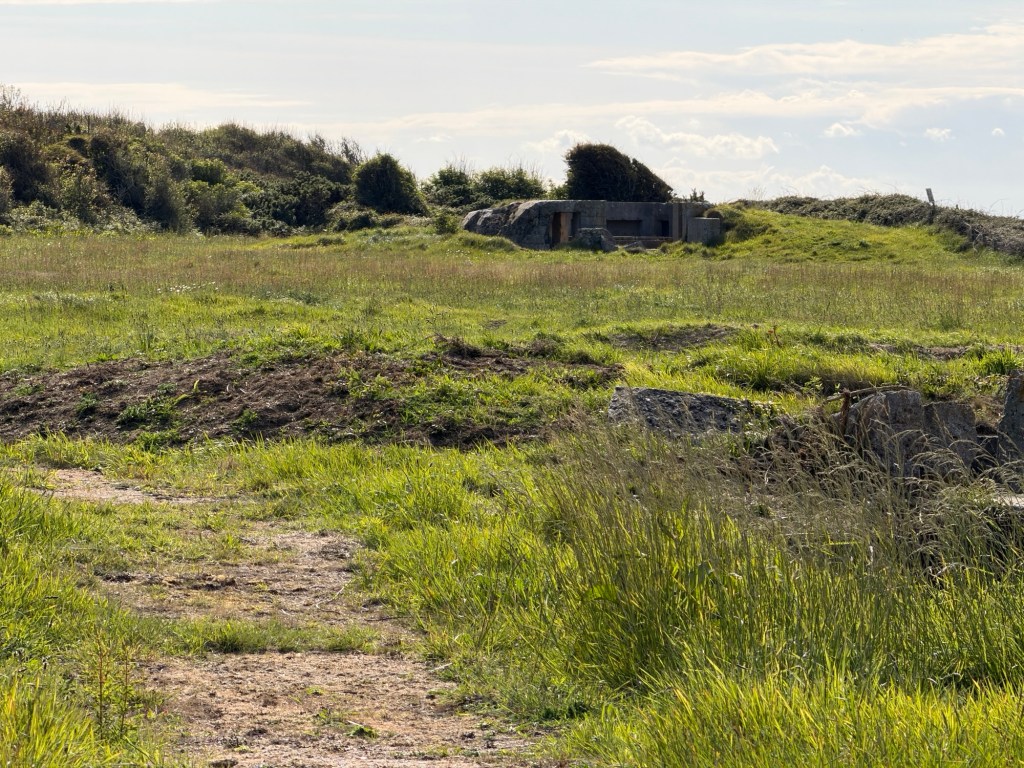
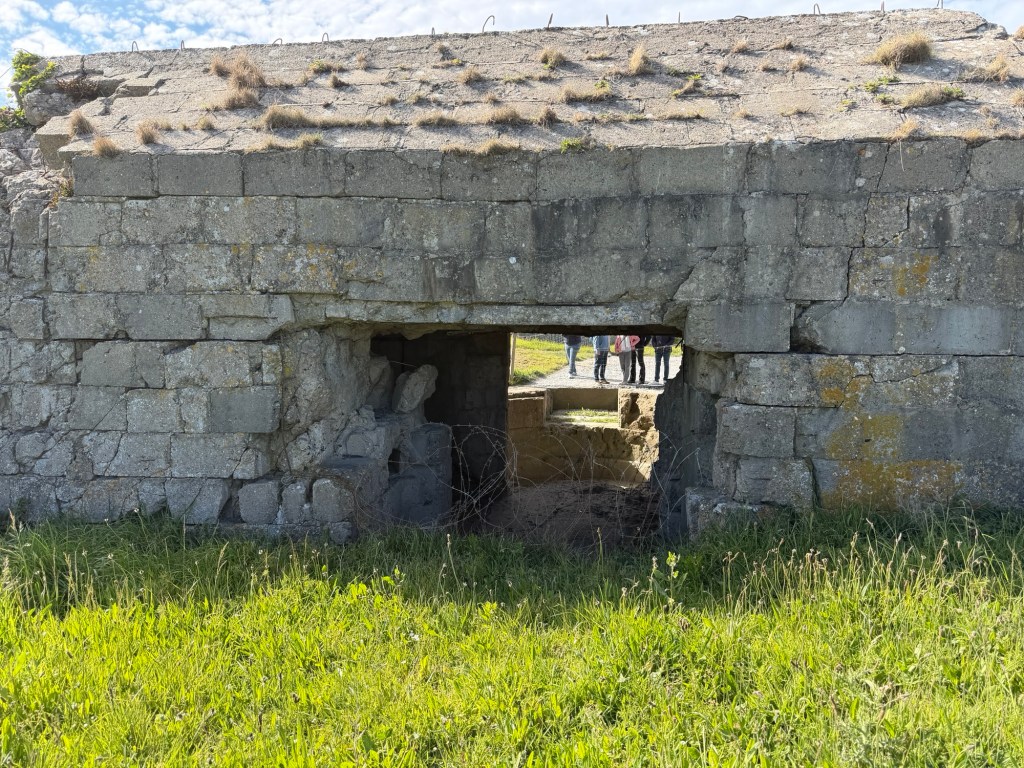
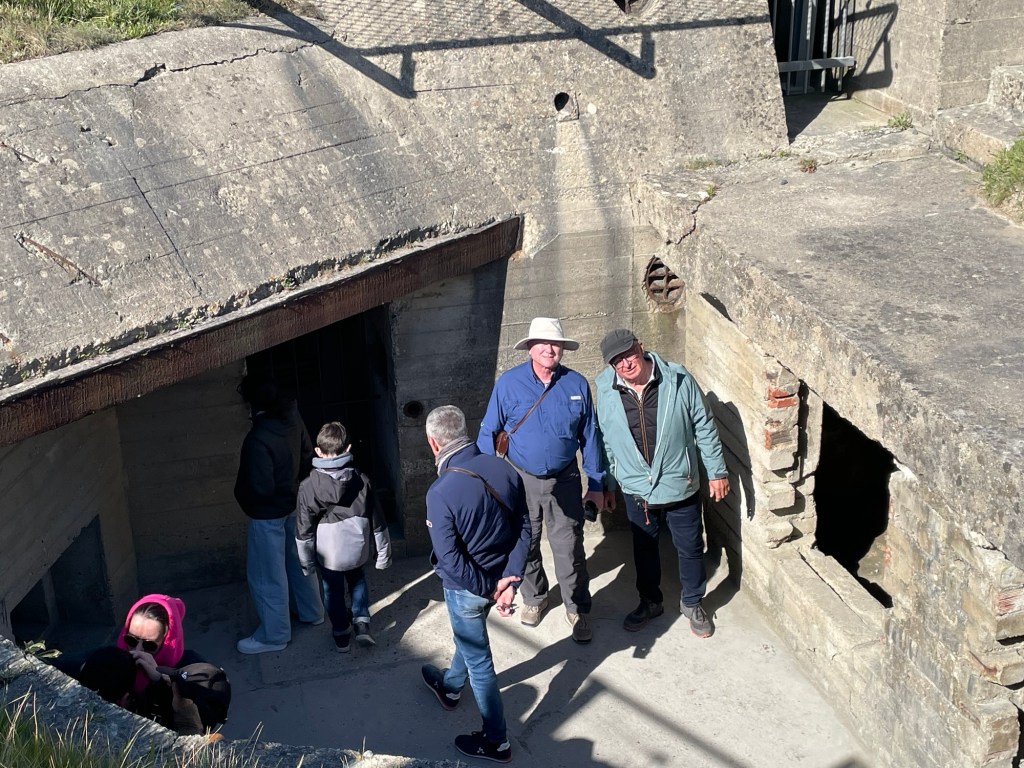
After lunch we drove to a more intact gun battery at Longues-sur-Mer
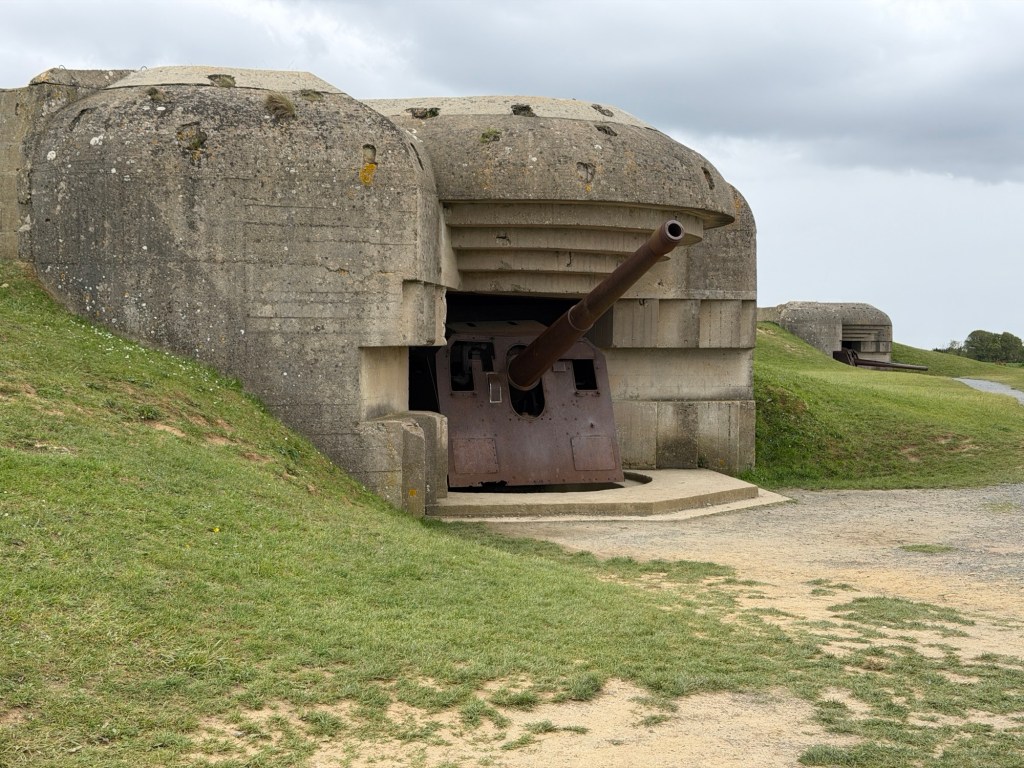
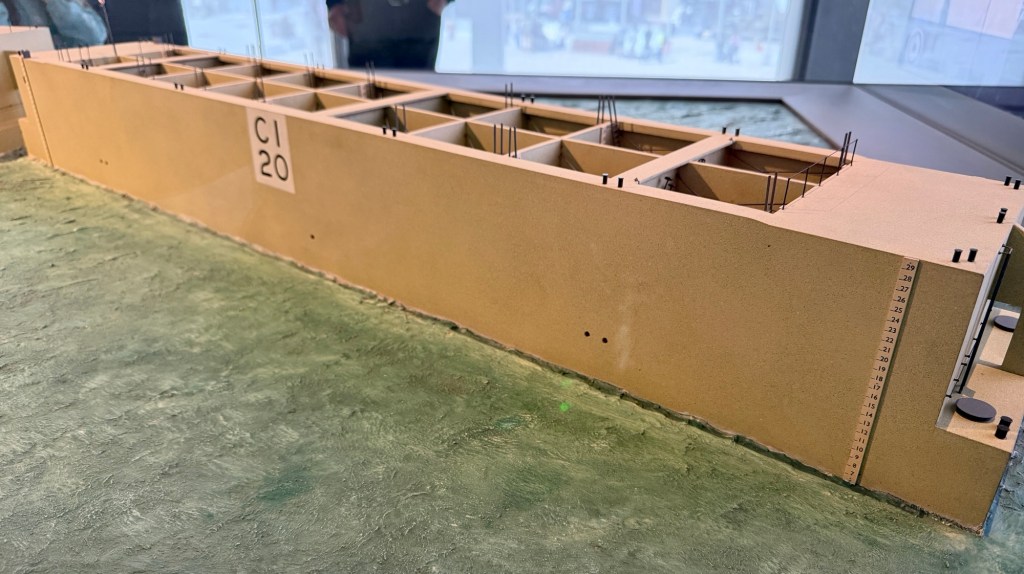
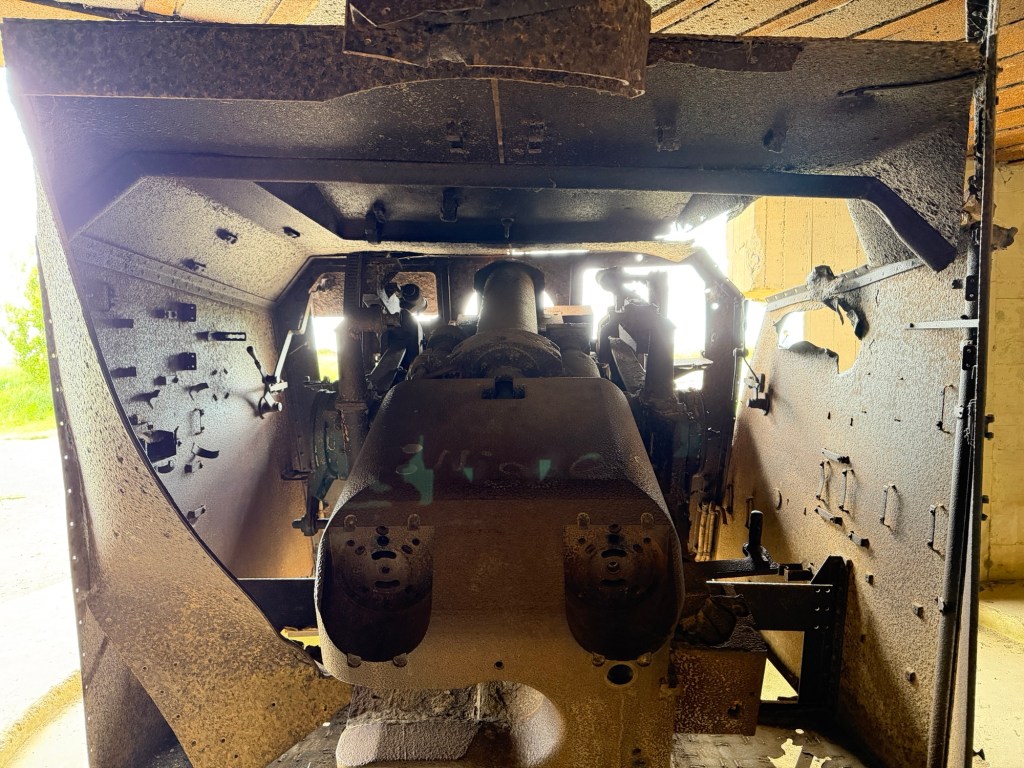
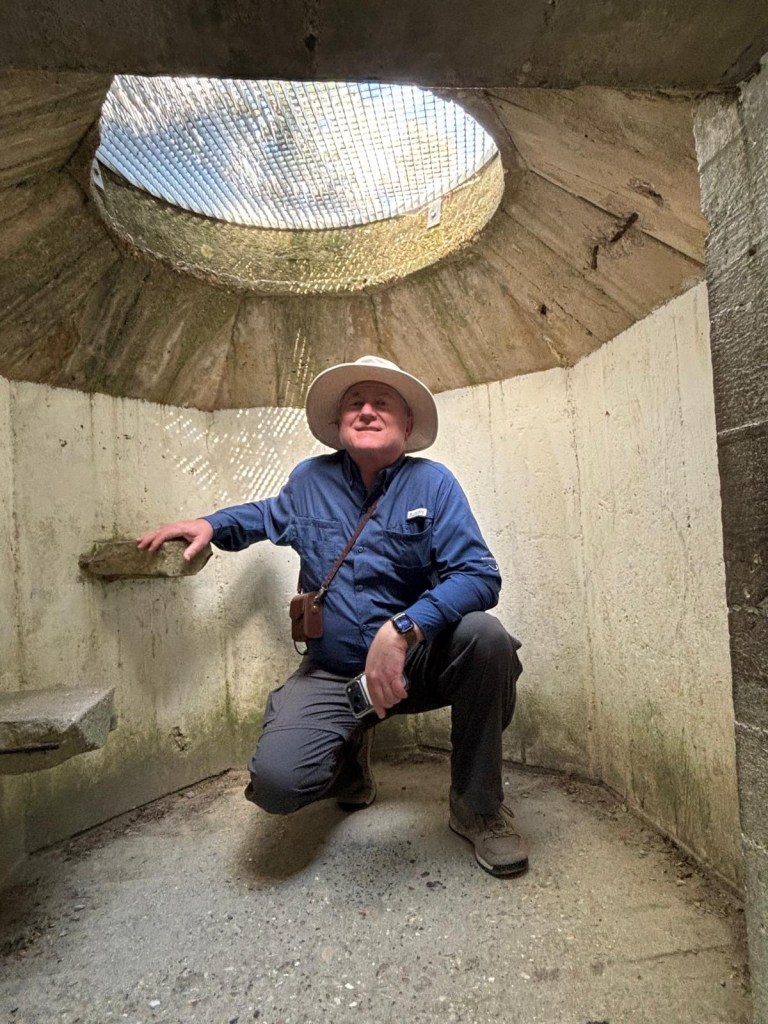
Details of the amazing construction
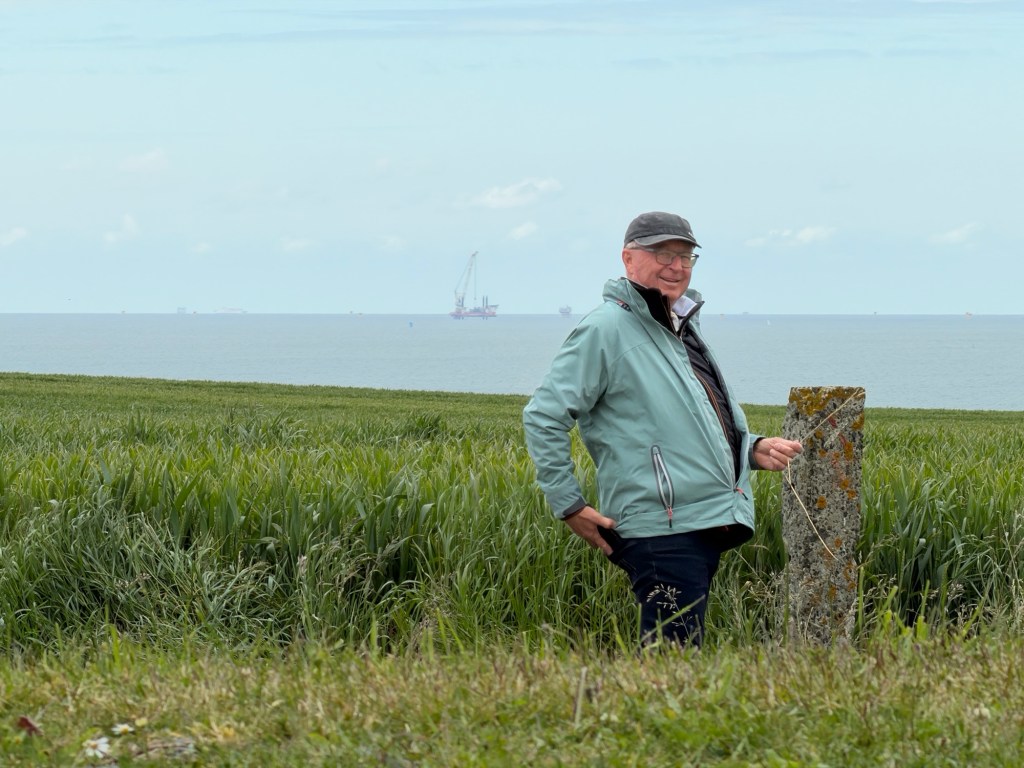
Marc finds a geochache?

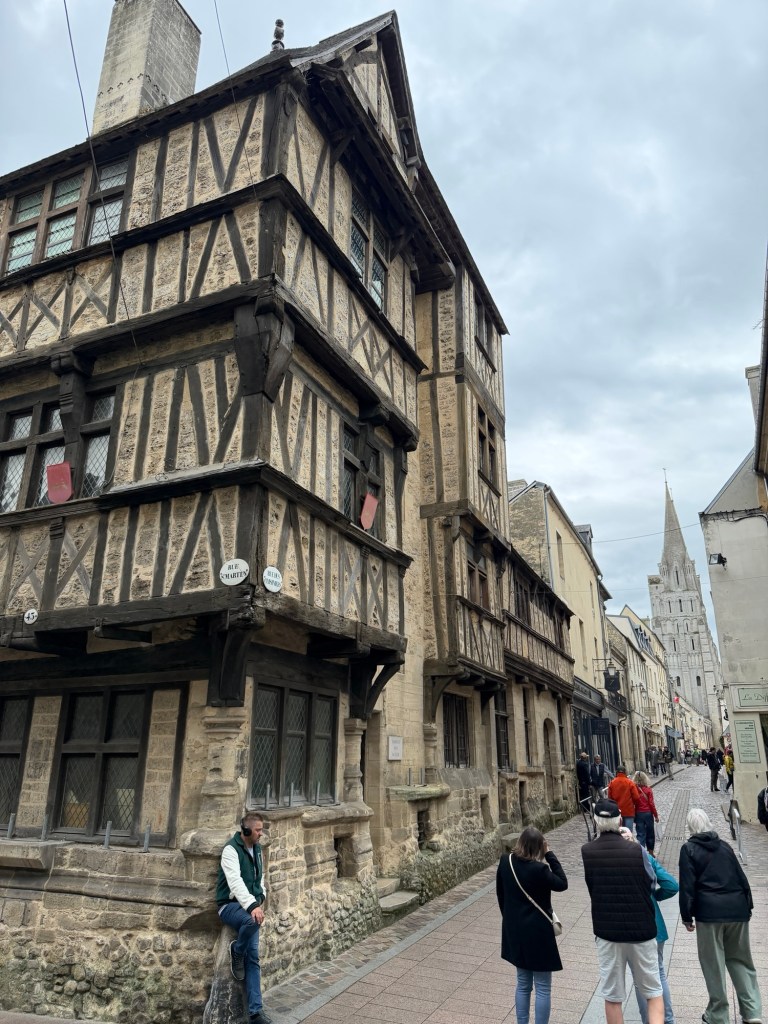
Next, Valerie showed us some favorite sites in Bayeux
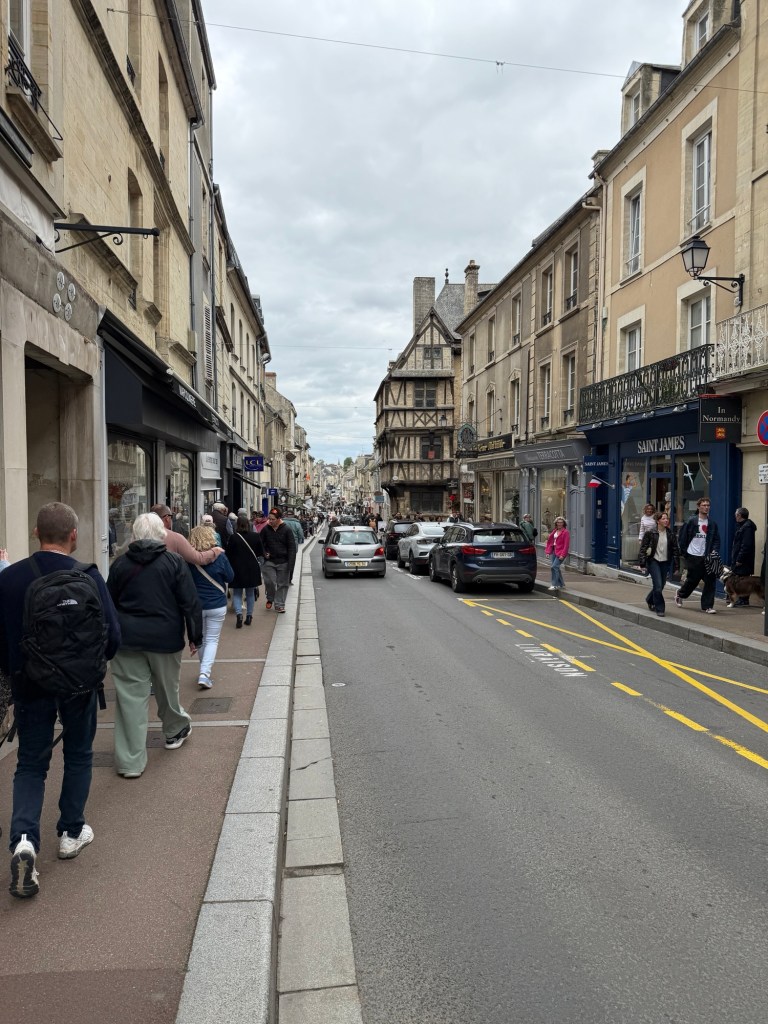
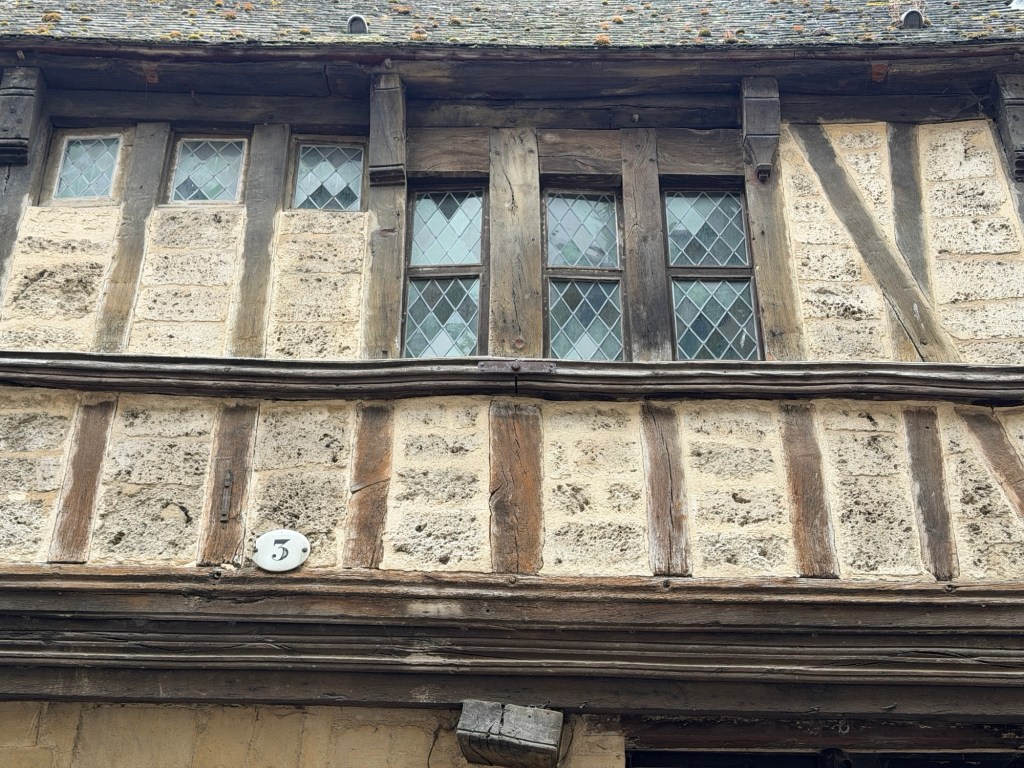
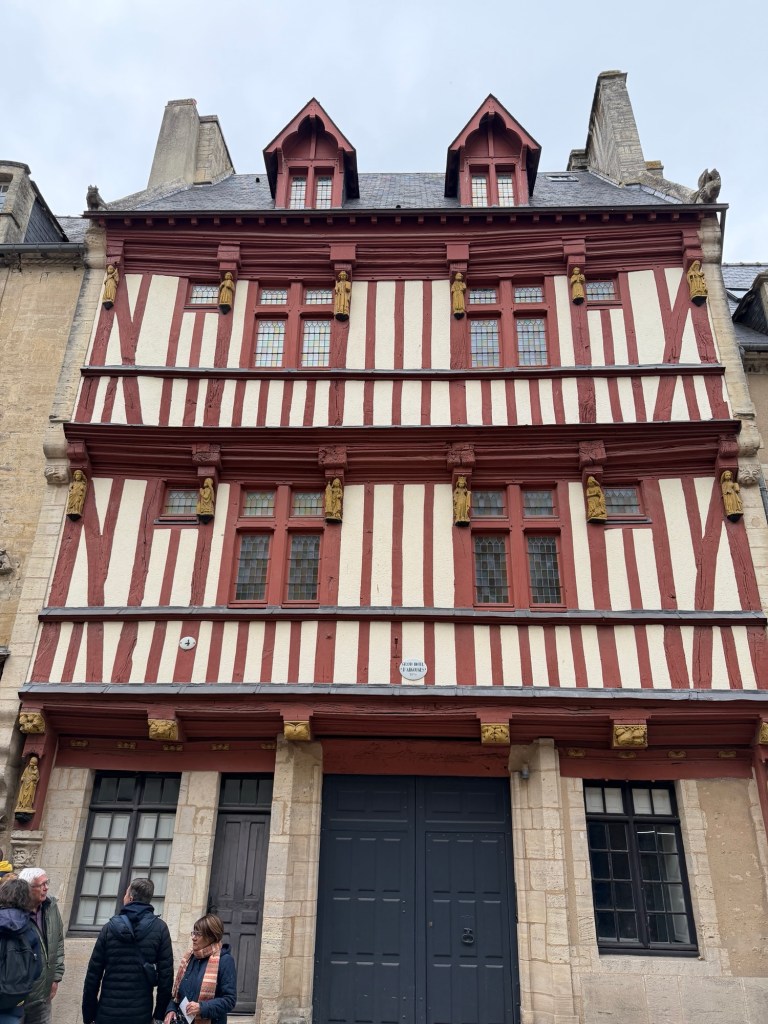
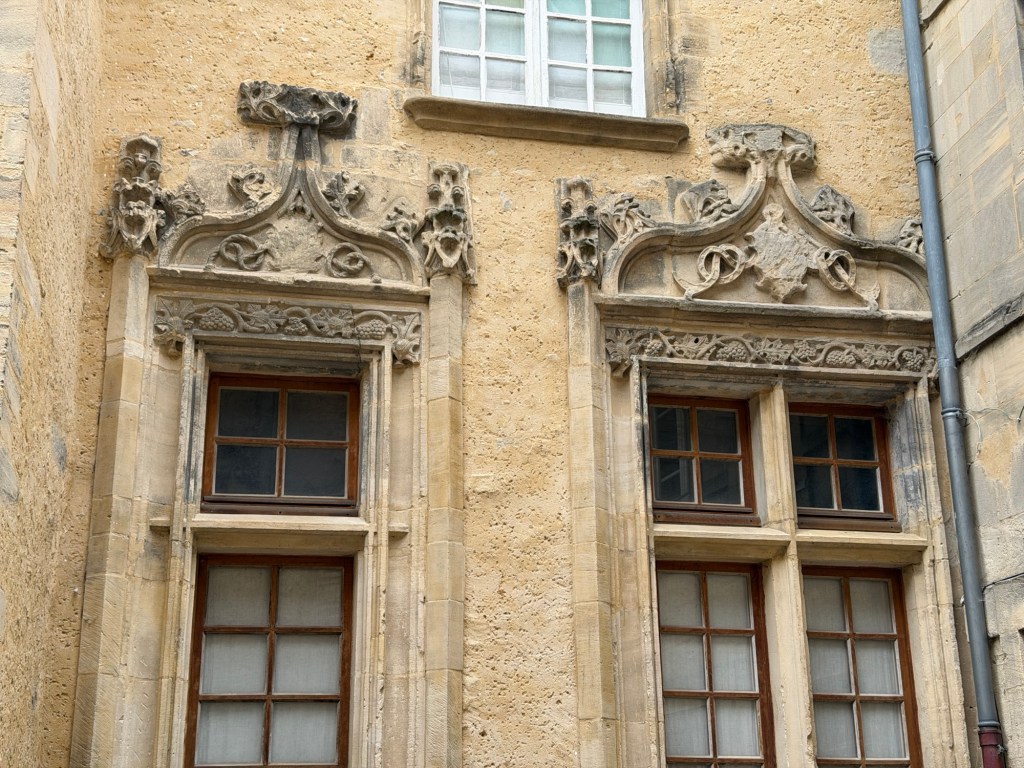
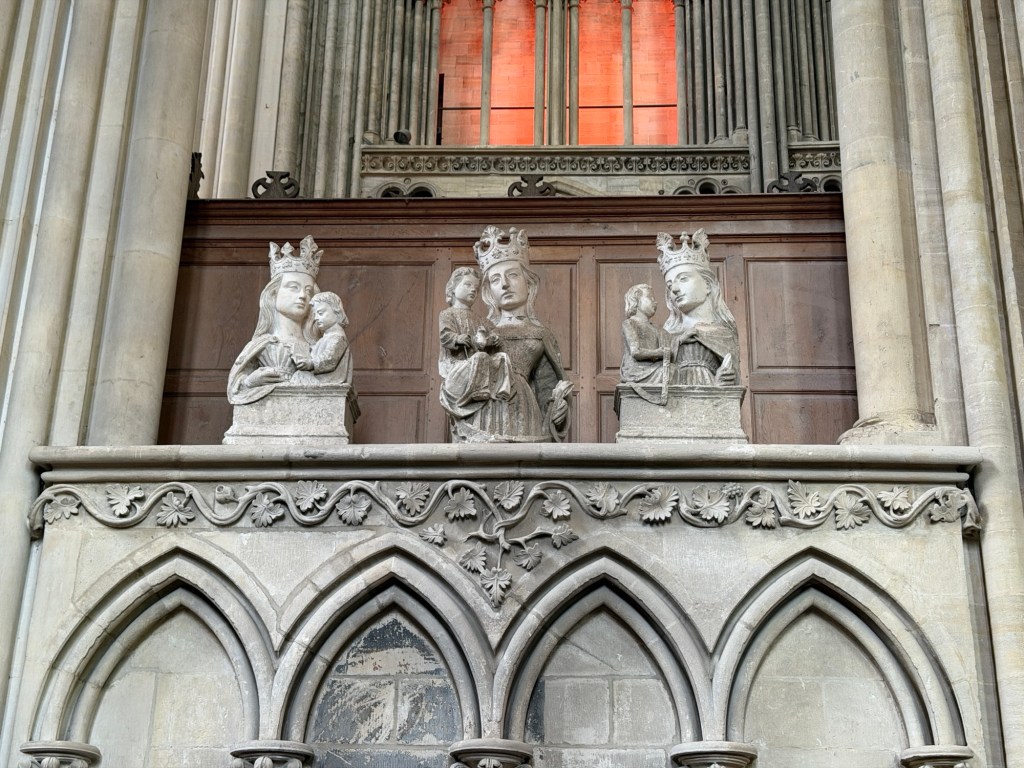
Note the missing sculptures above the windows; during the French Revolution, people rebelled against royalty by removing the faces of the old guard.

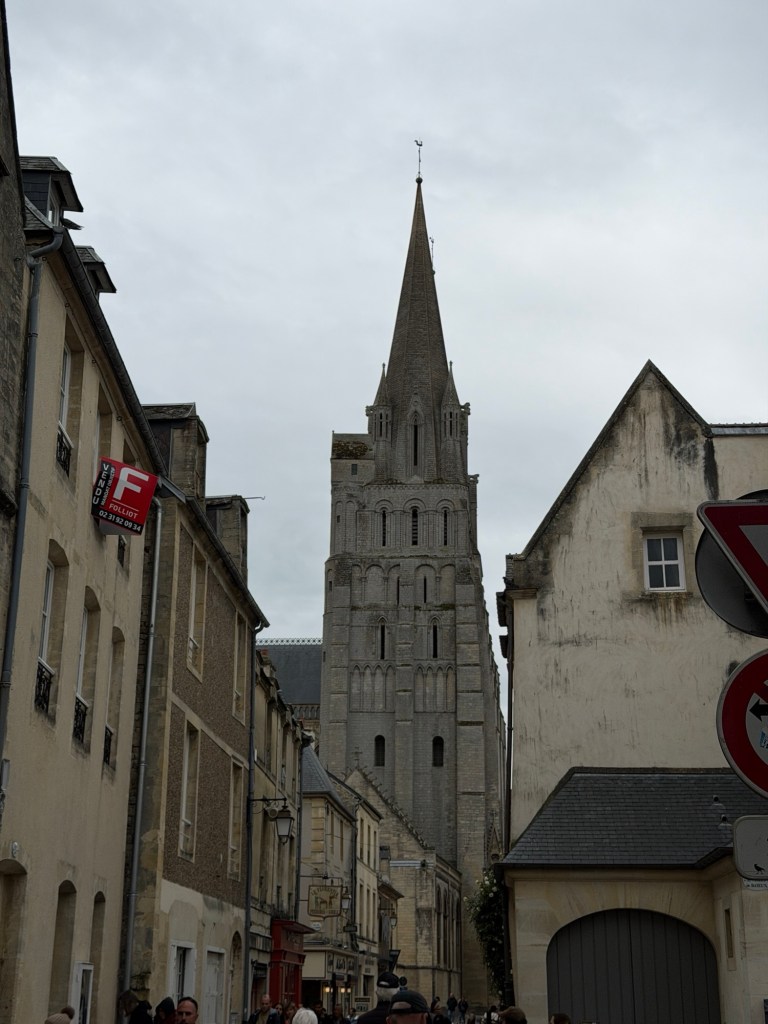
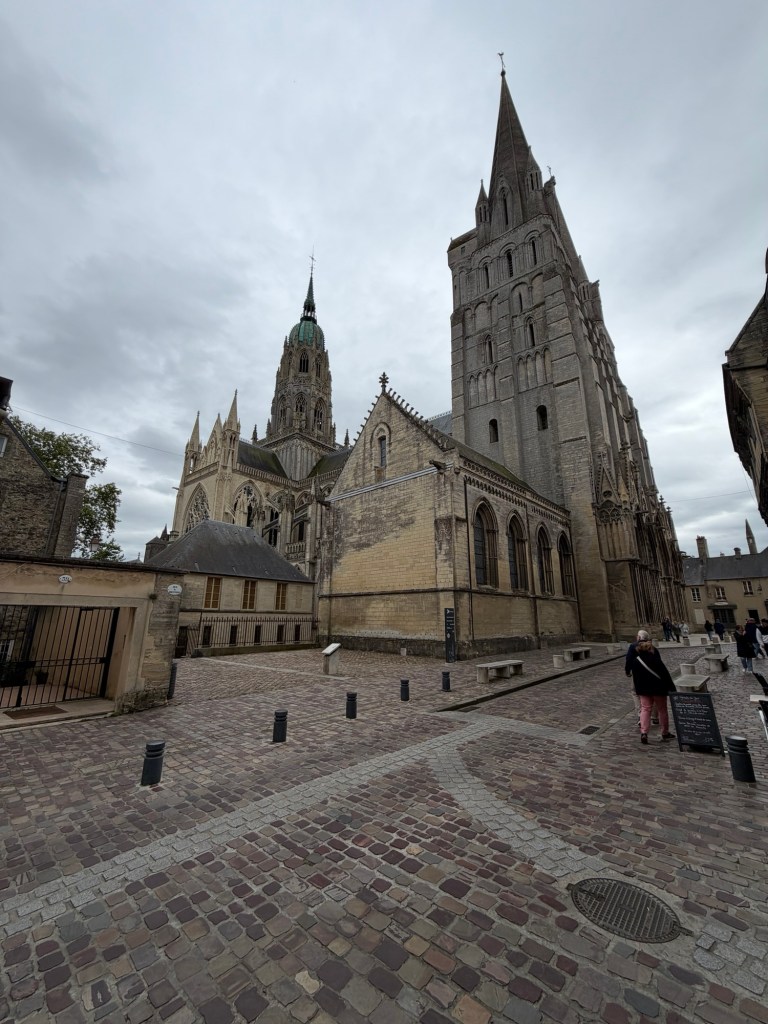
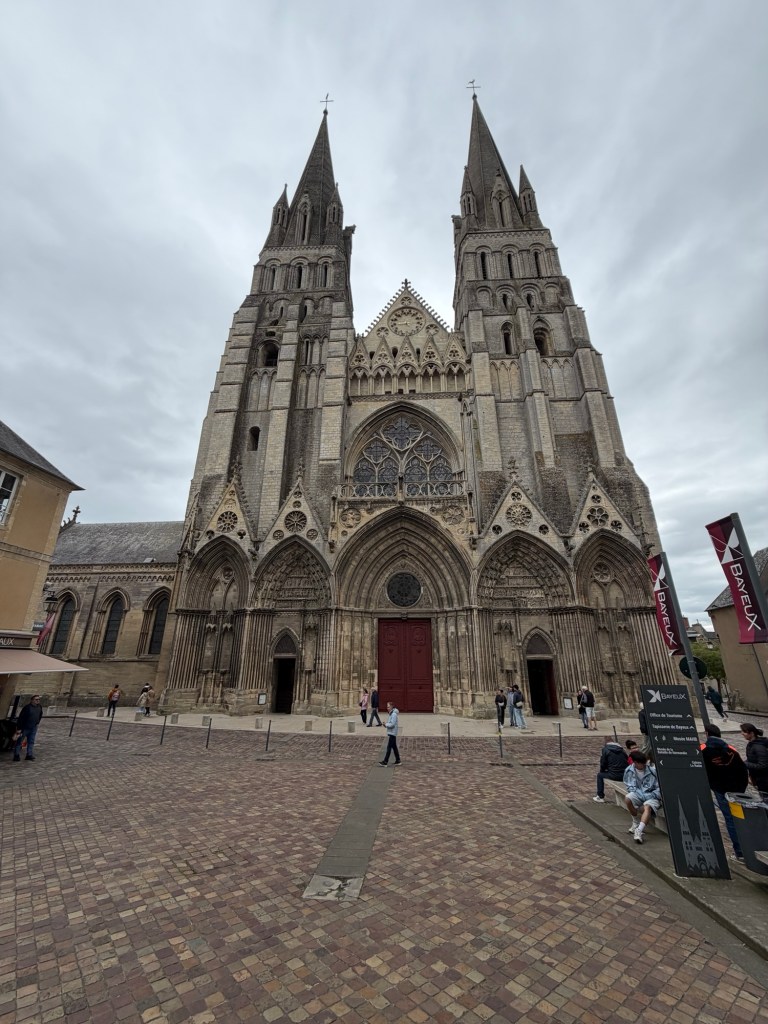
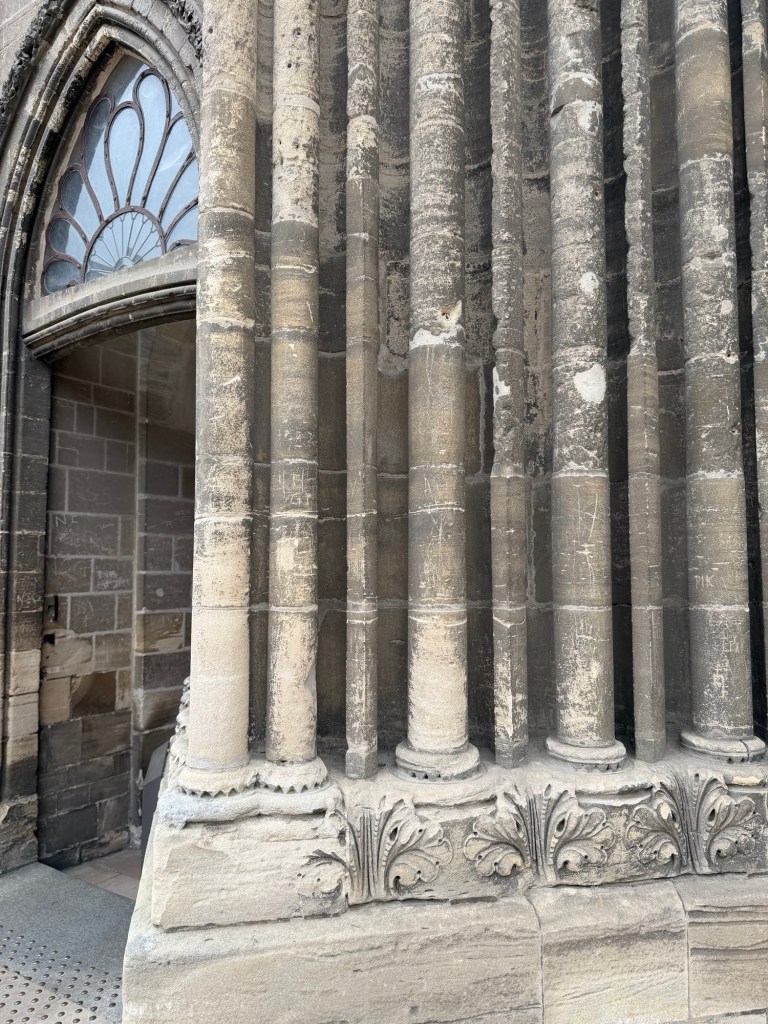
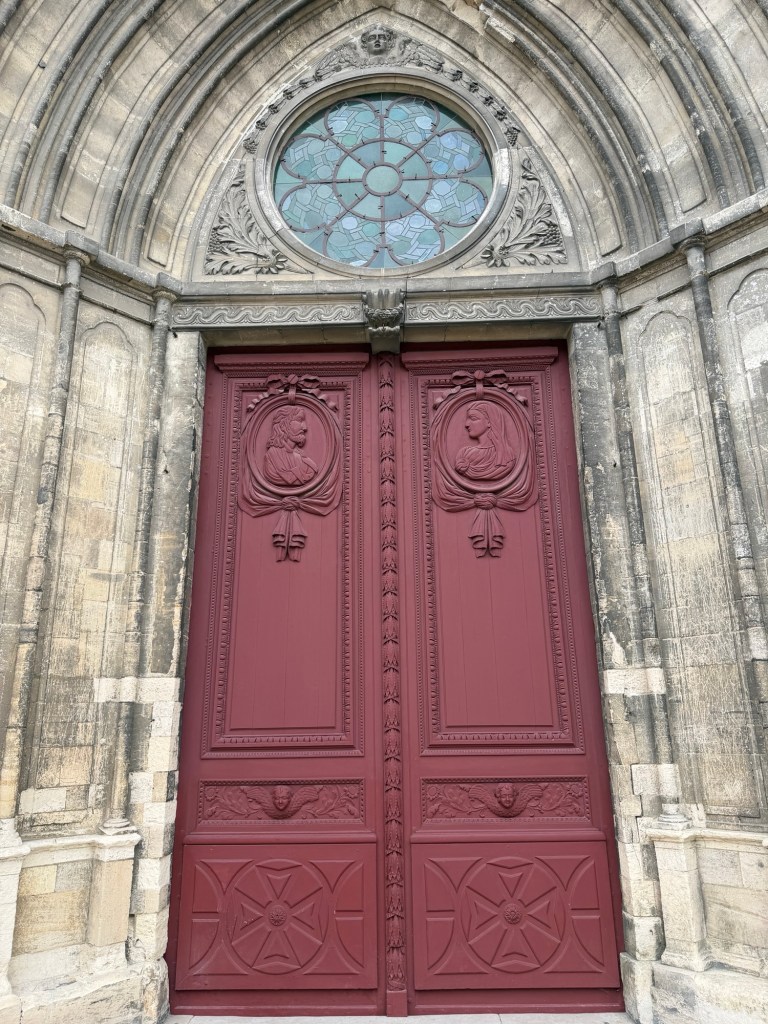
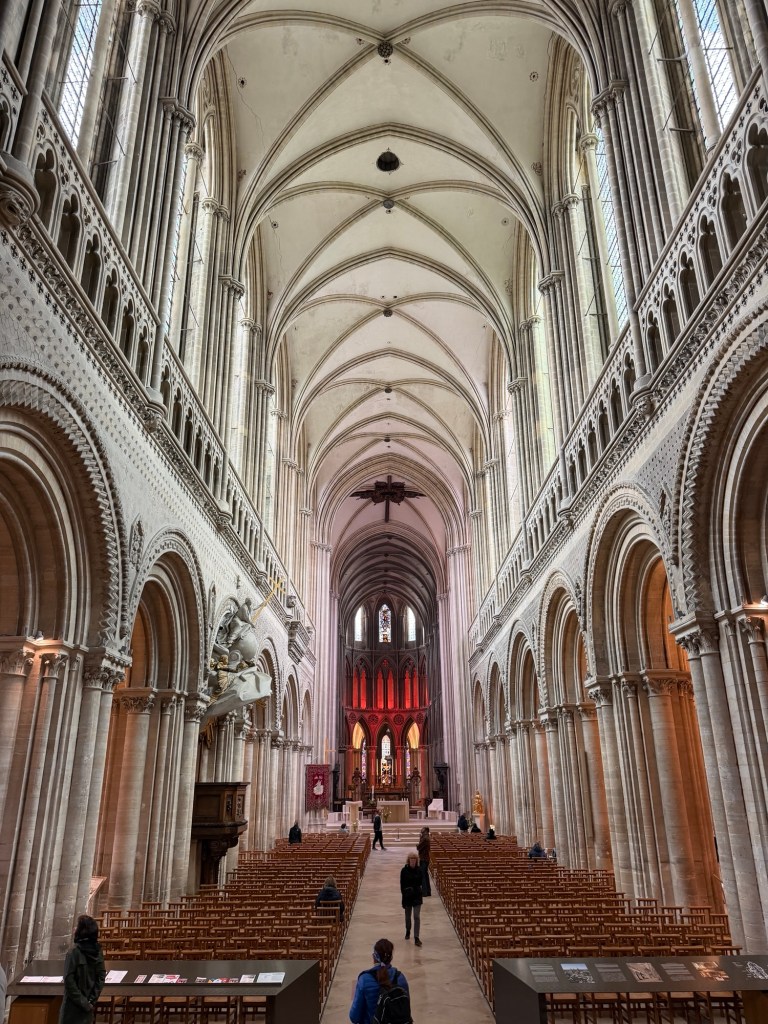
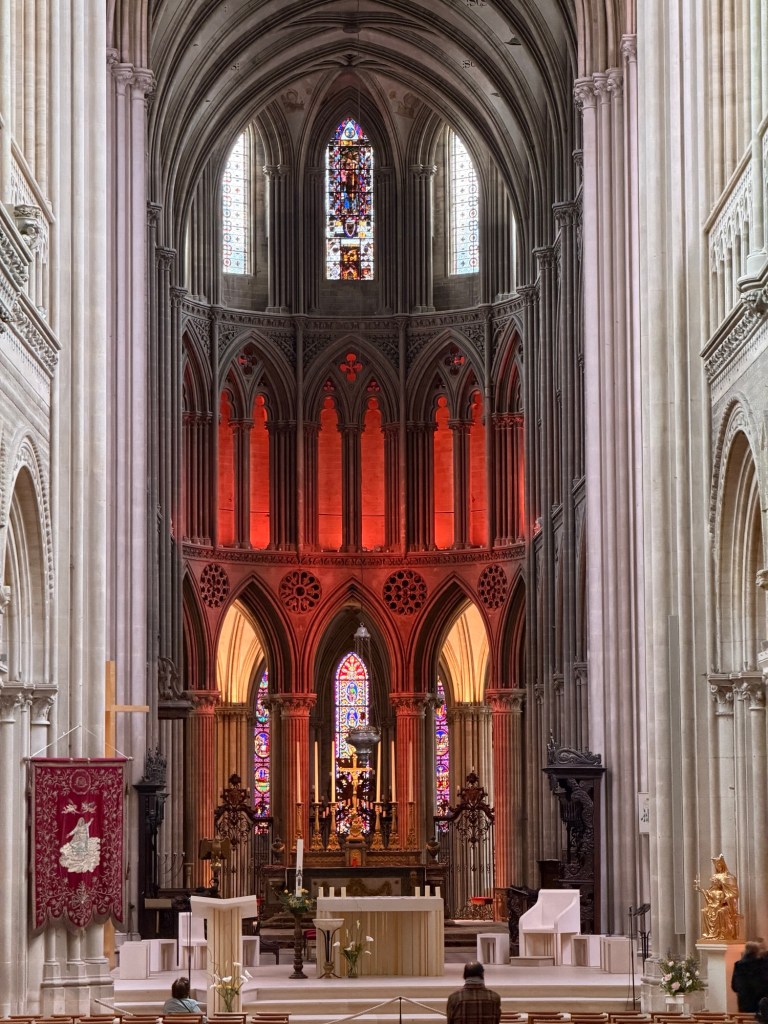
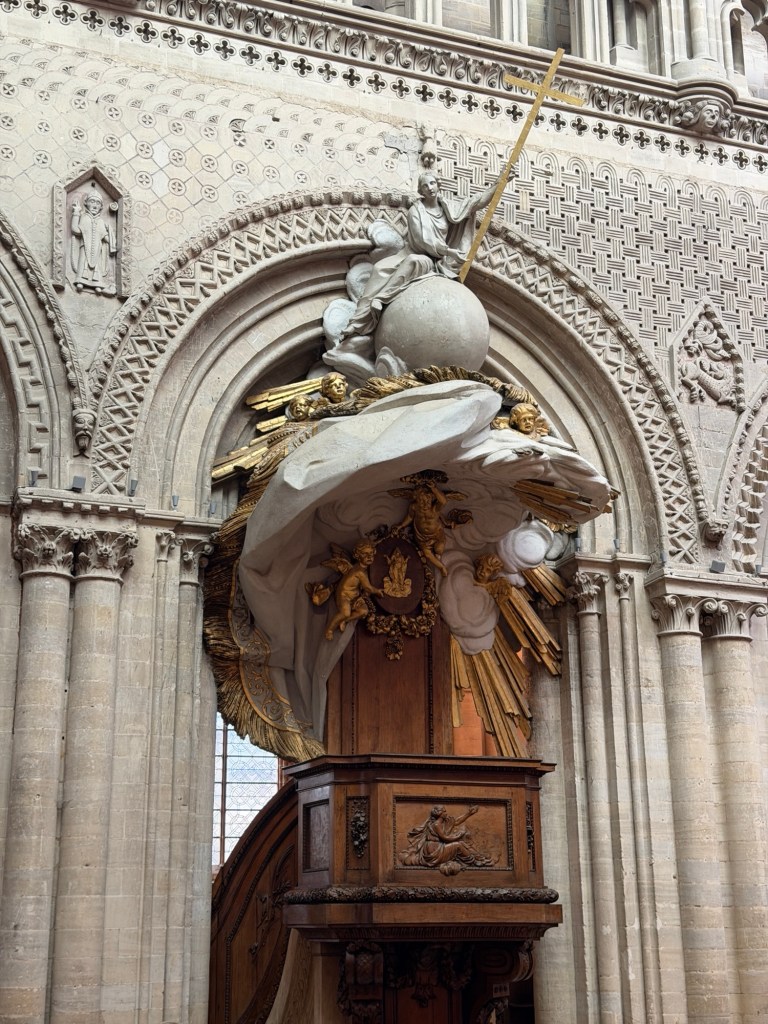
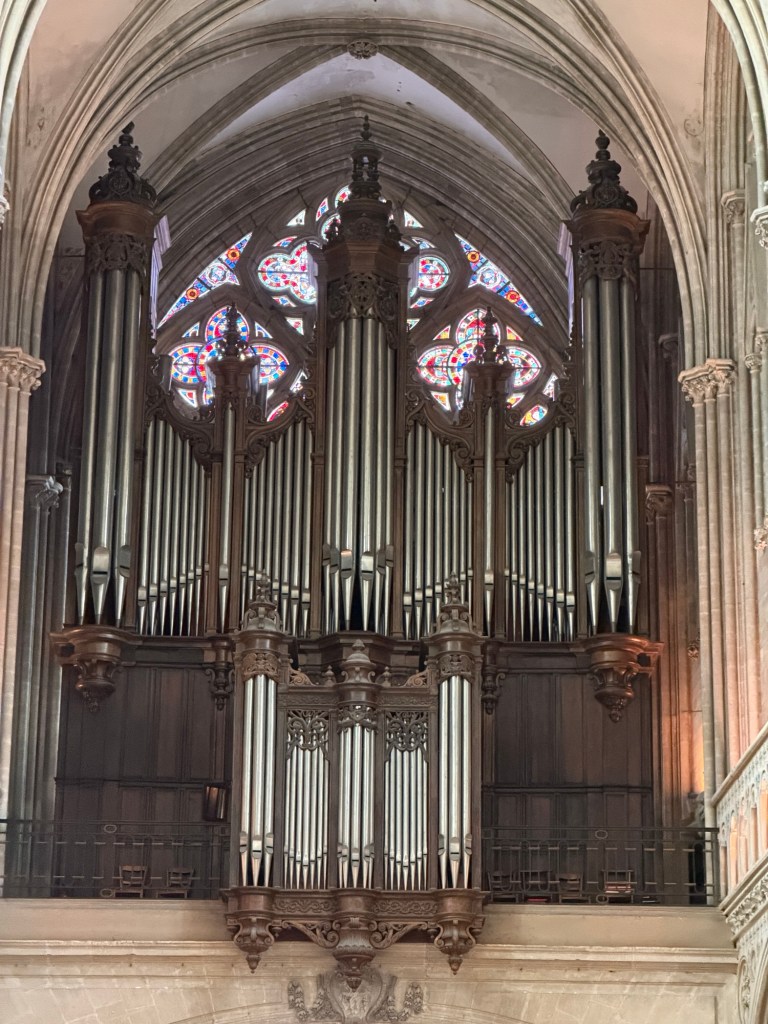
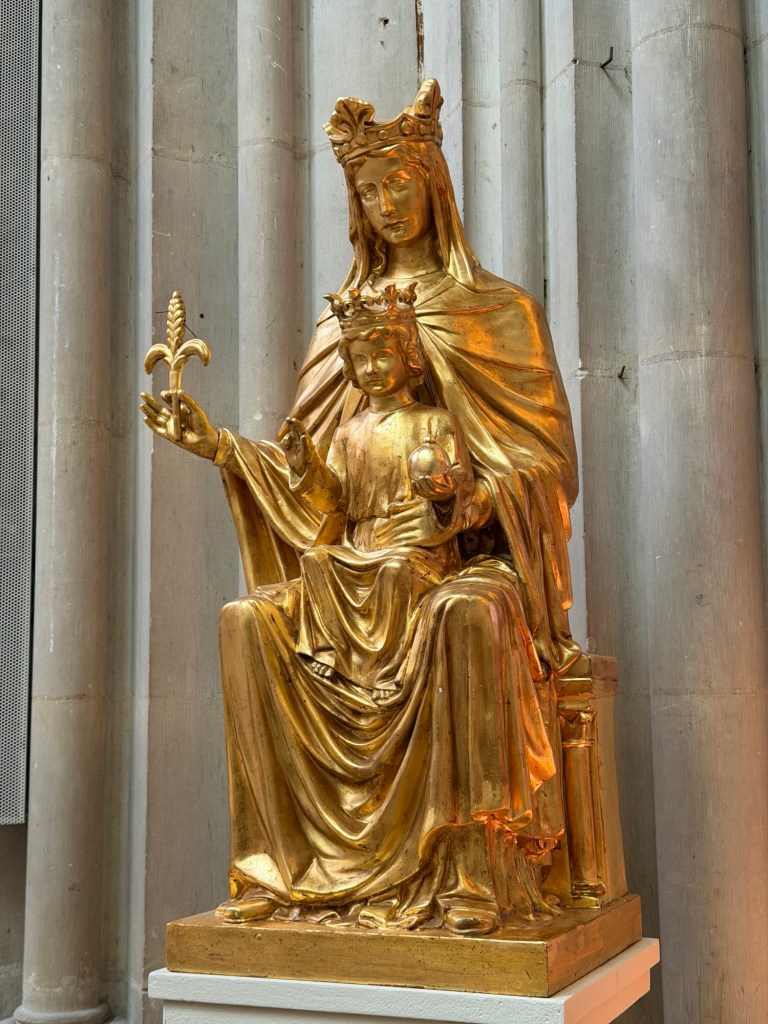
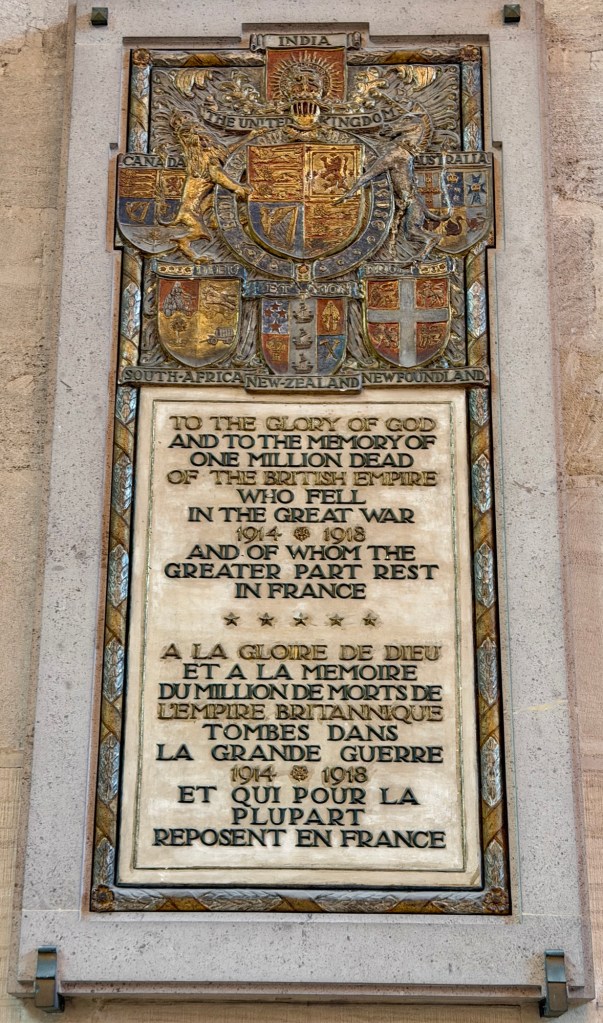
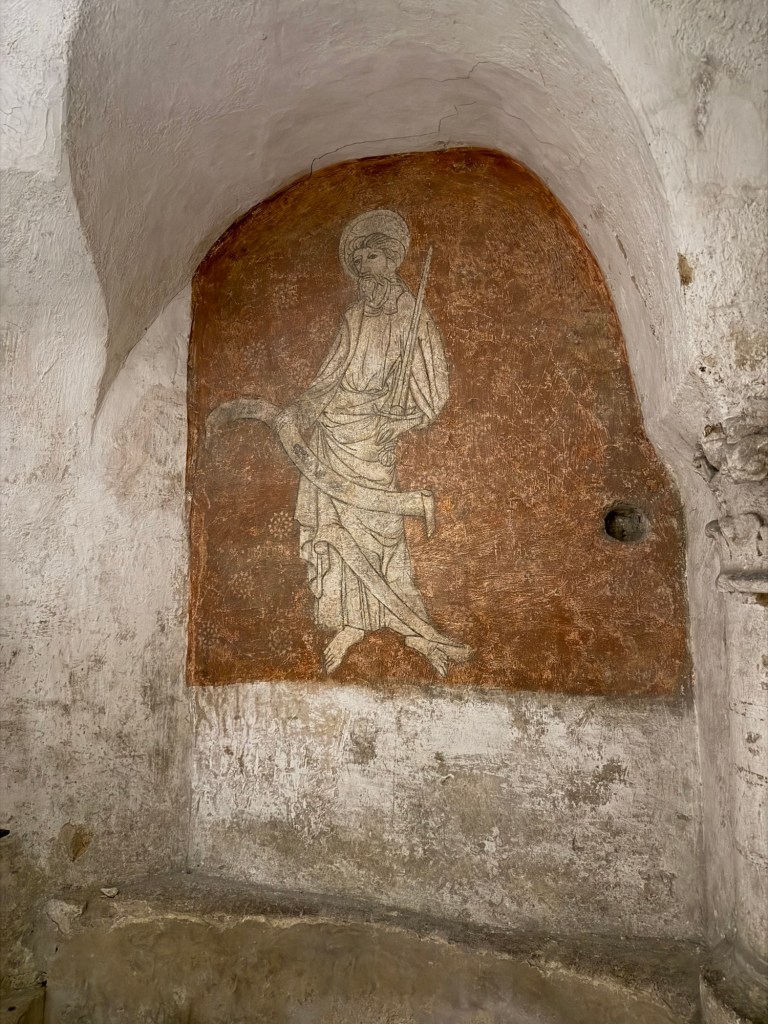
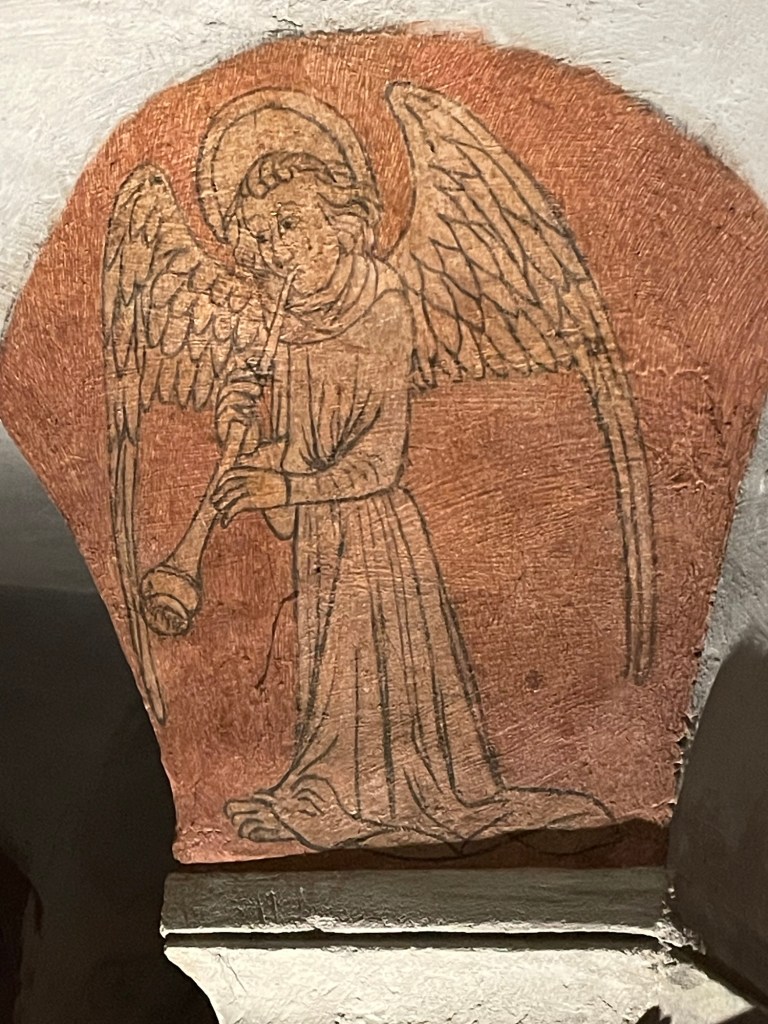
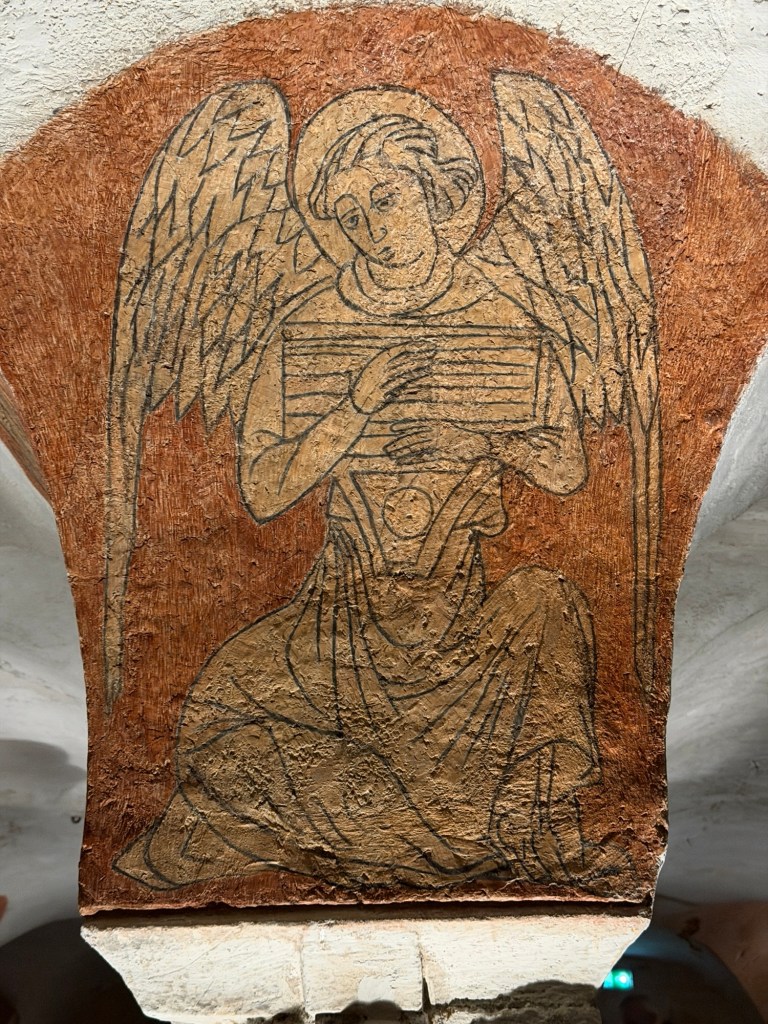
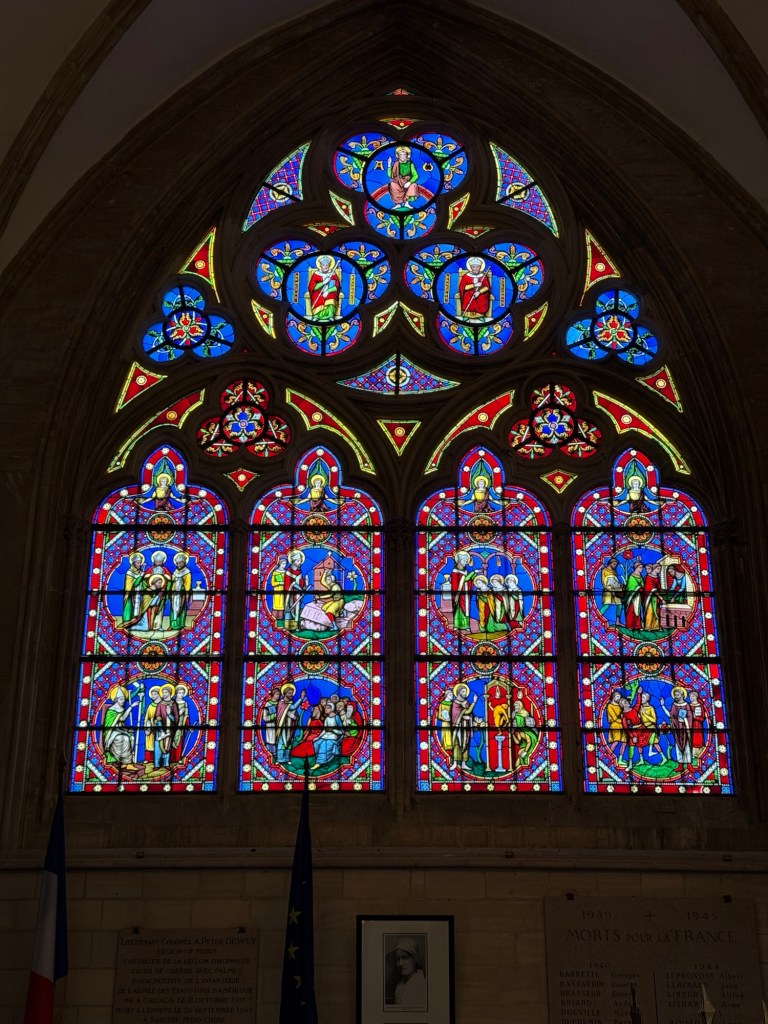
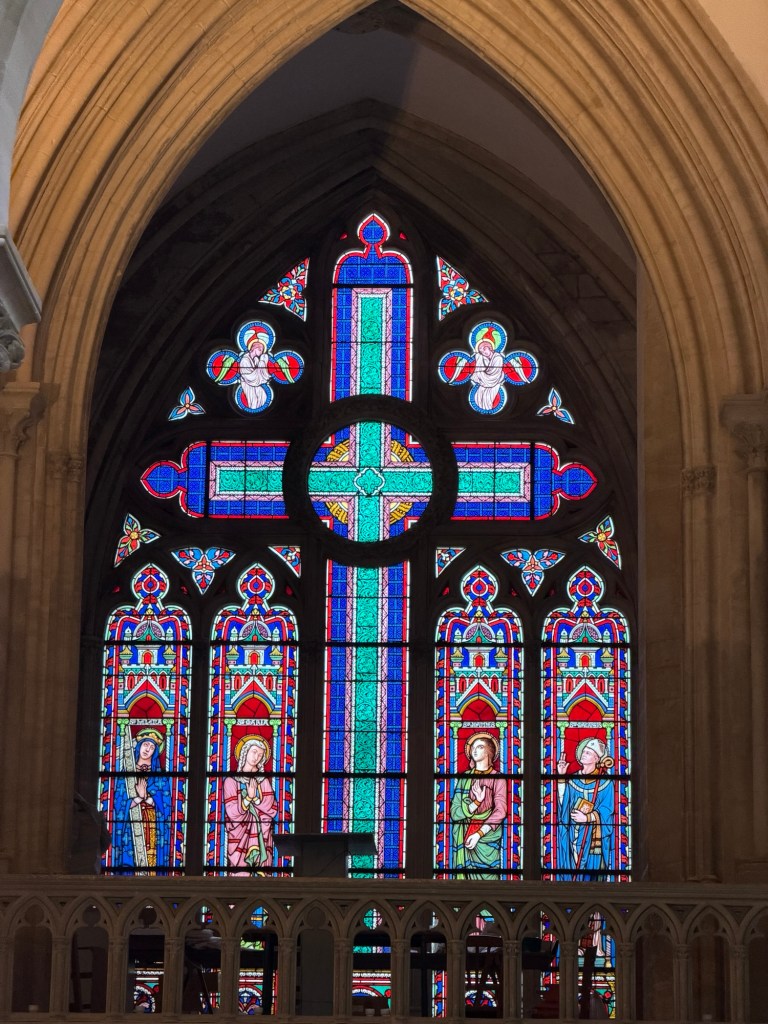
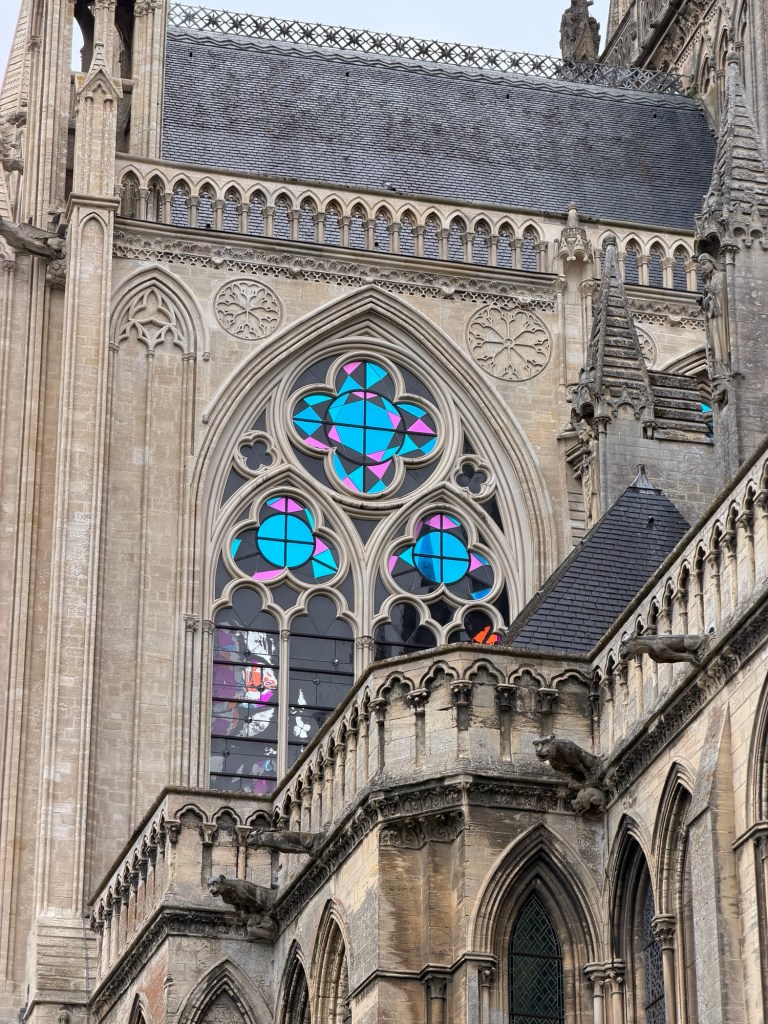
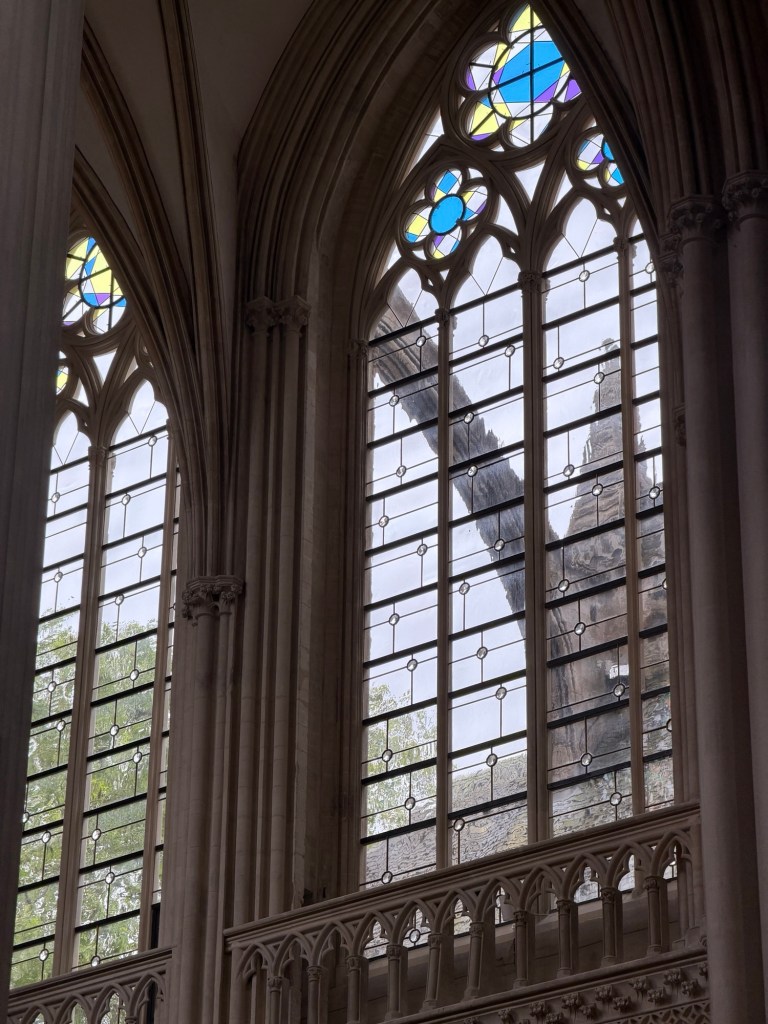
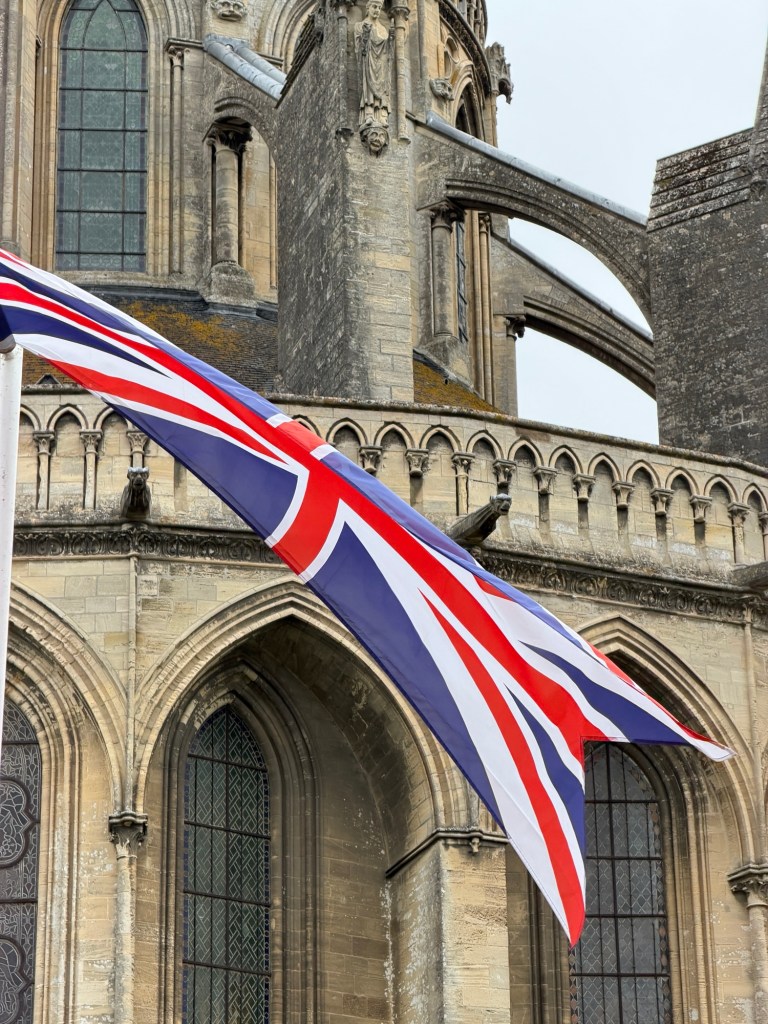
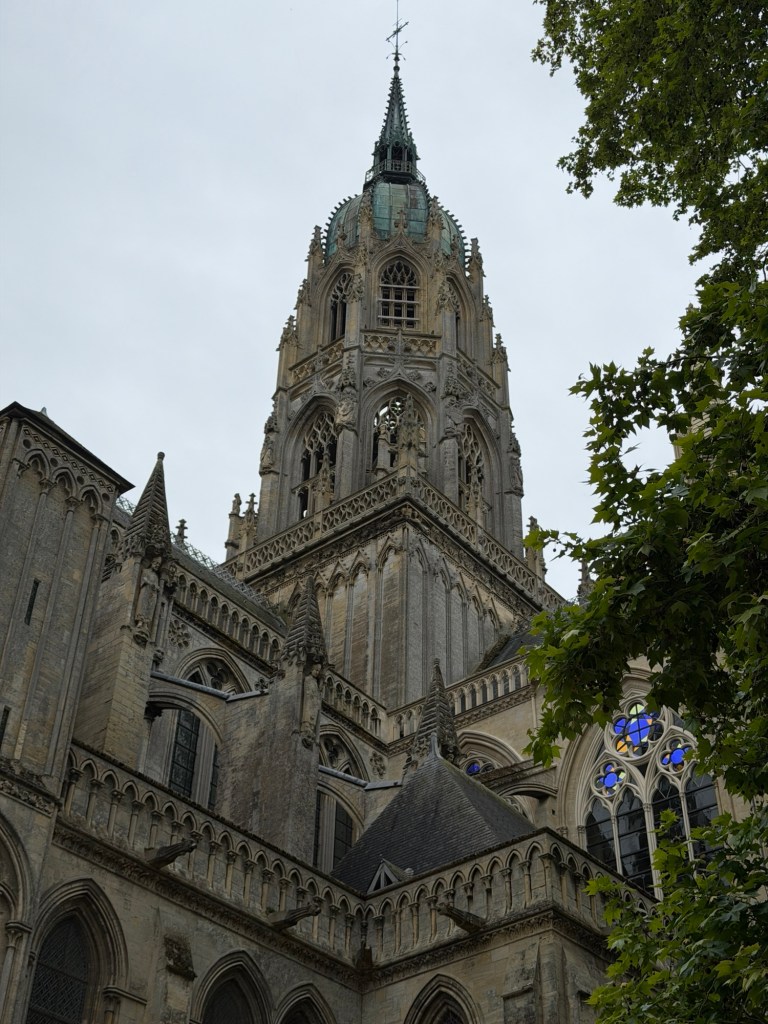
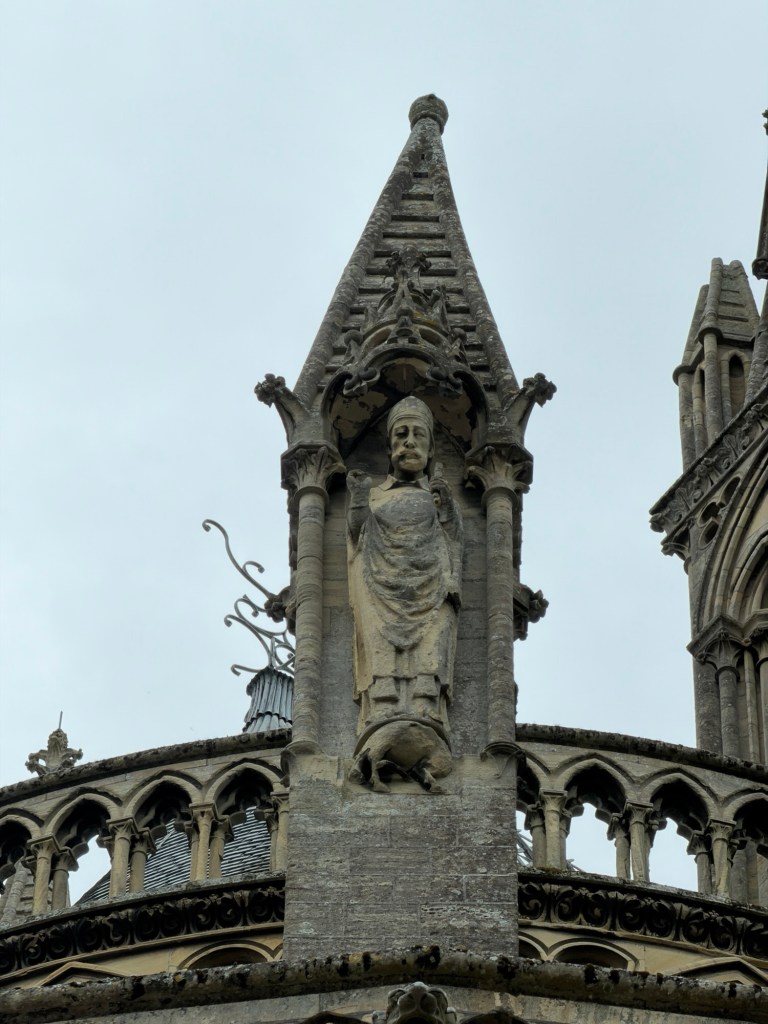
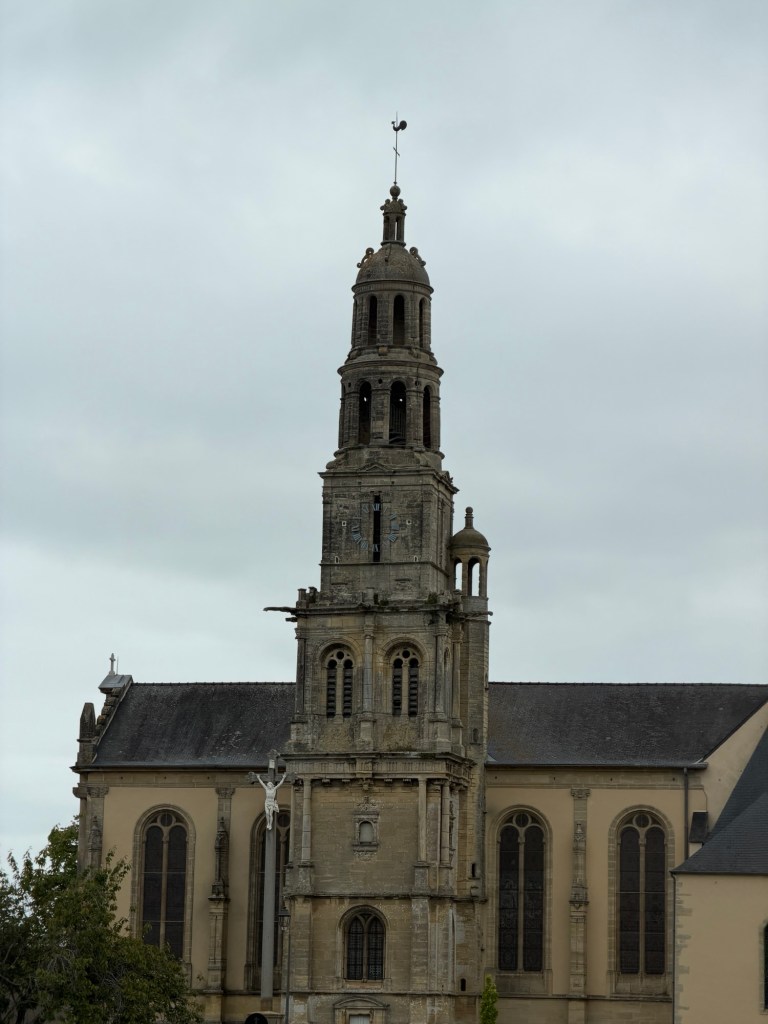
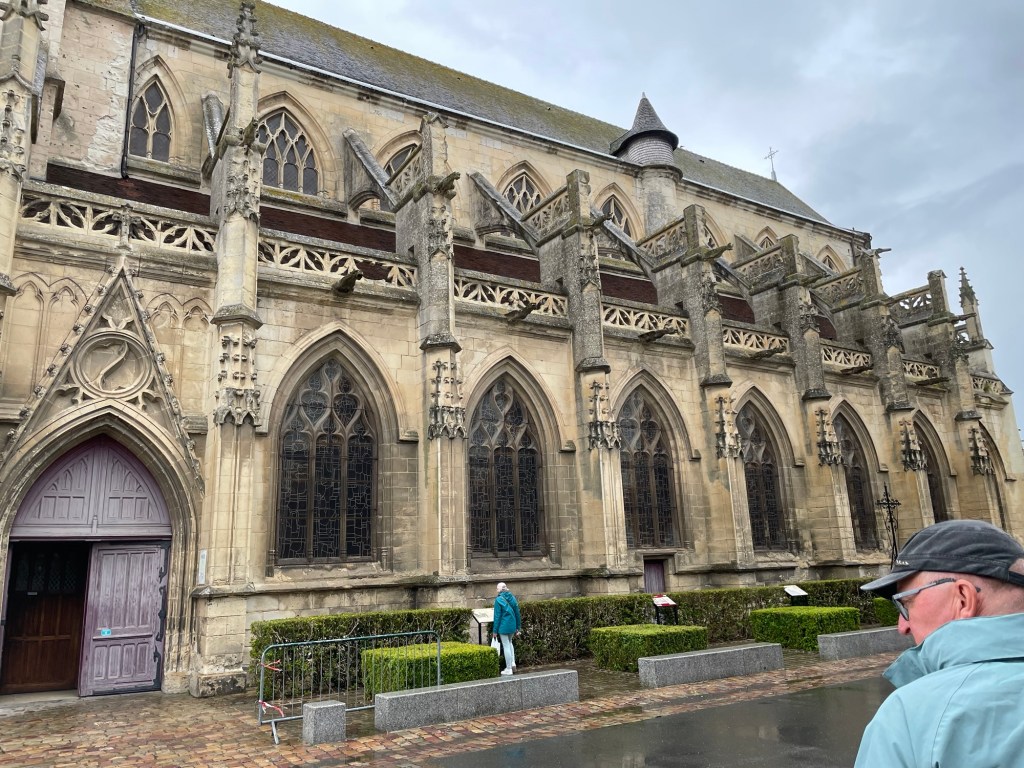
Bayeux Cathedral
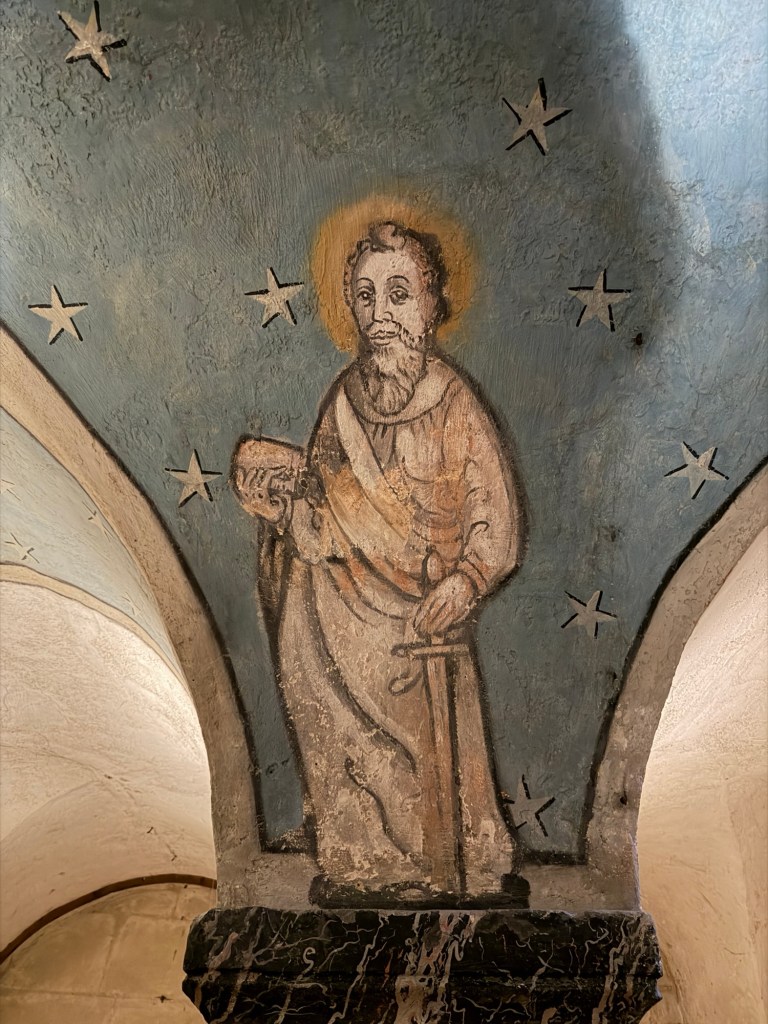
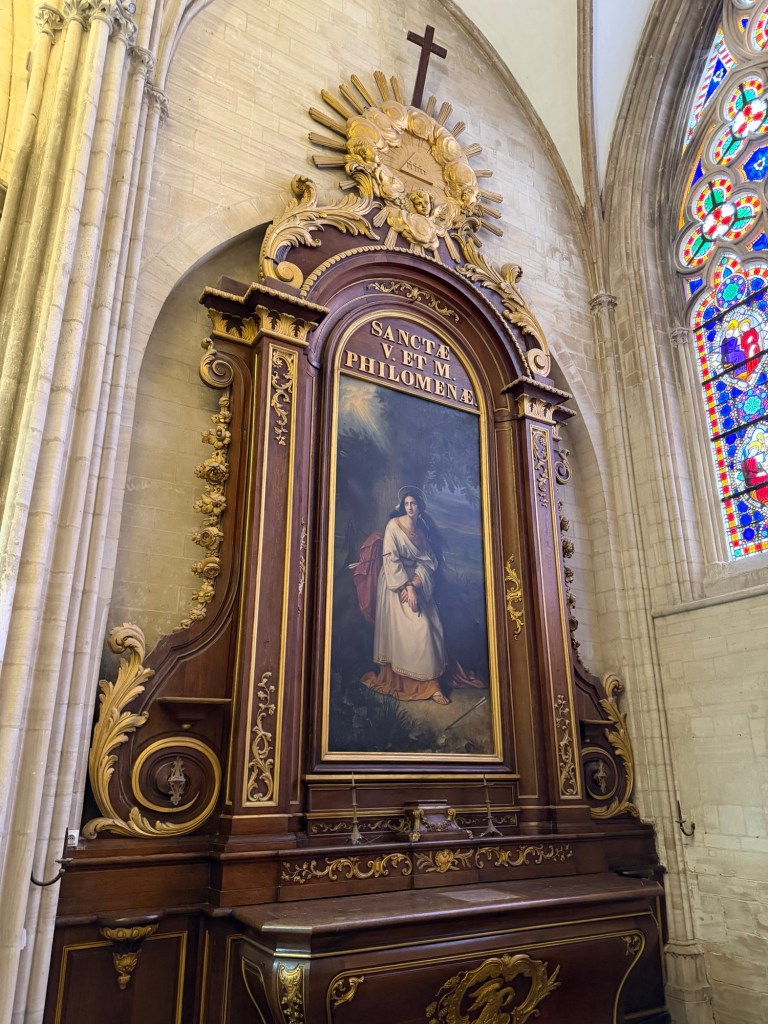
Clare’s middle name is after this saint.
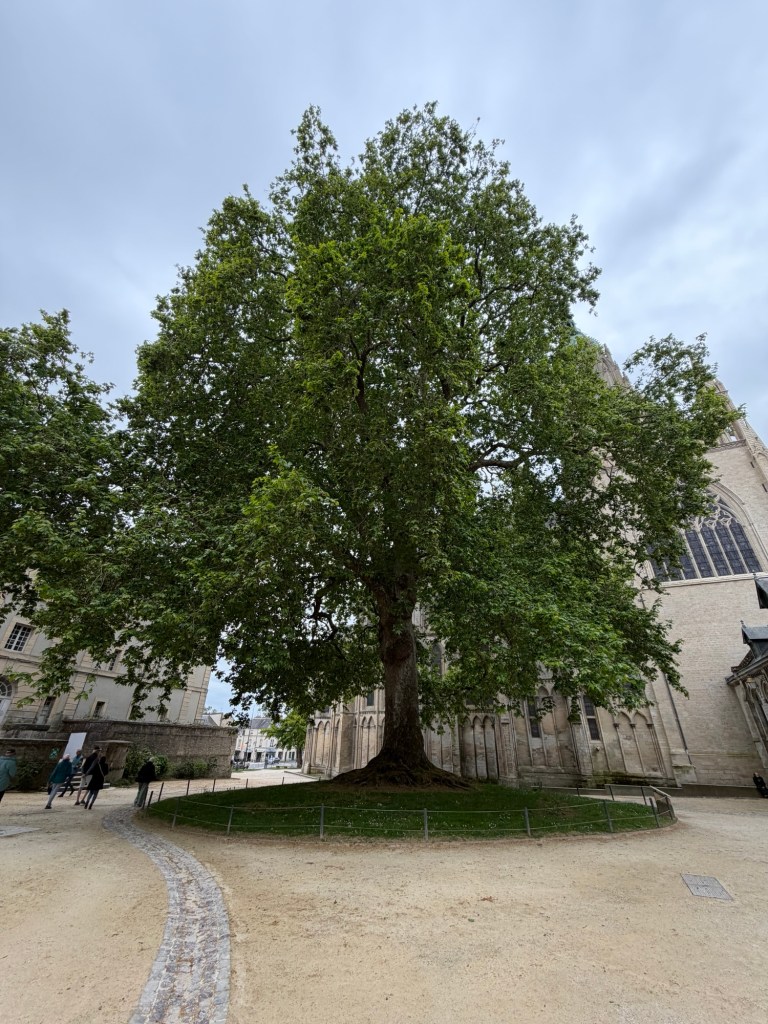
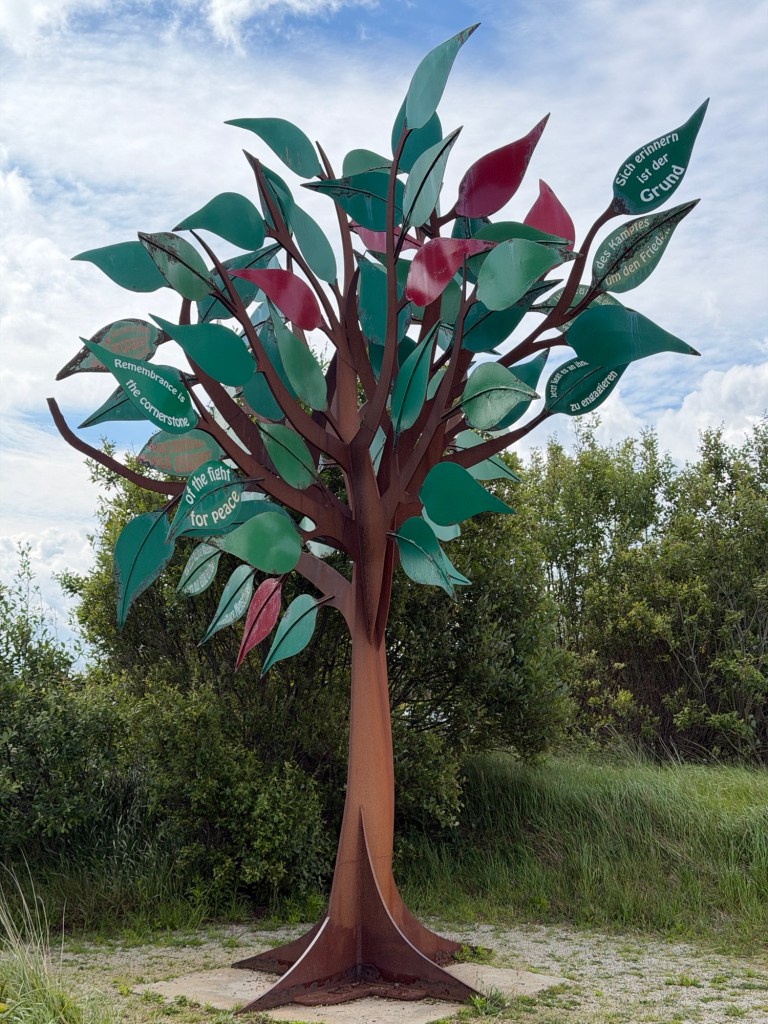
Liberty trees such as this were planted throughout France in 1793, when the king was beheaded.

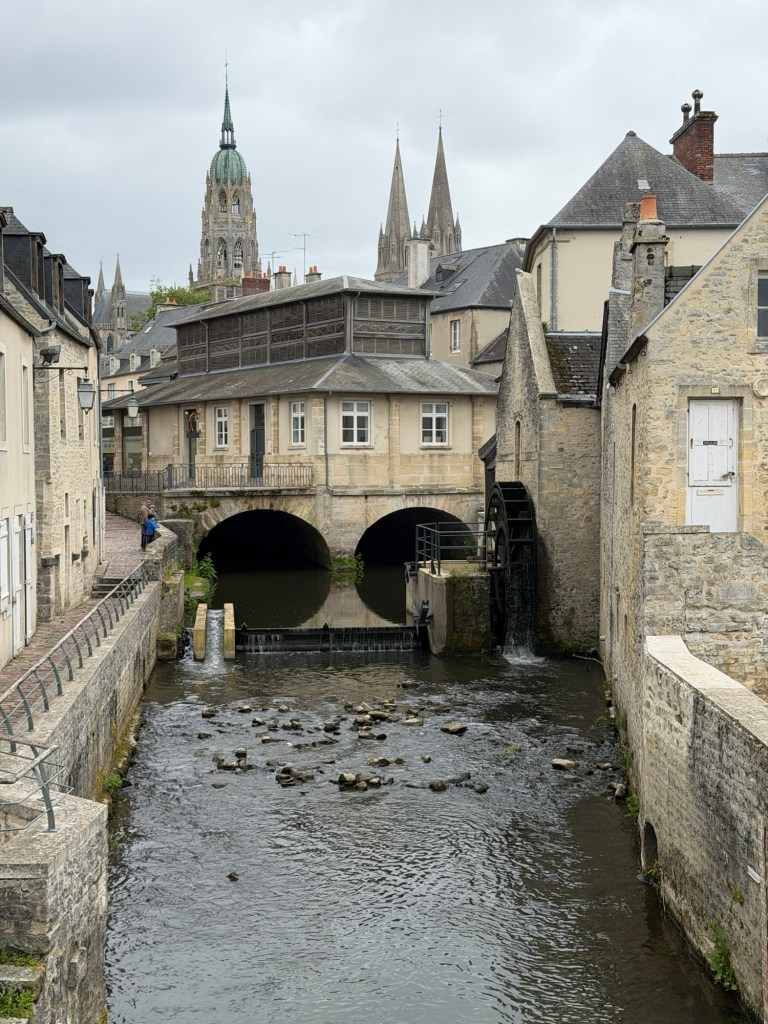
The following text is from a sign near the water features:

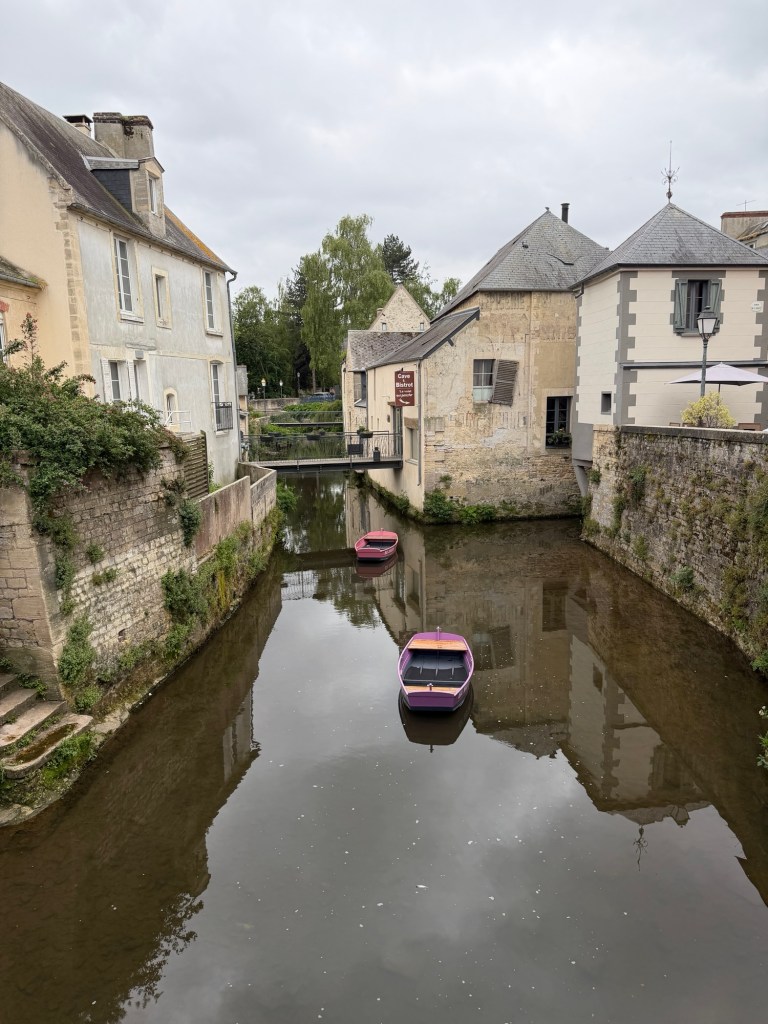
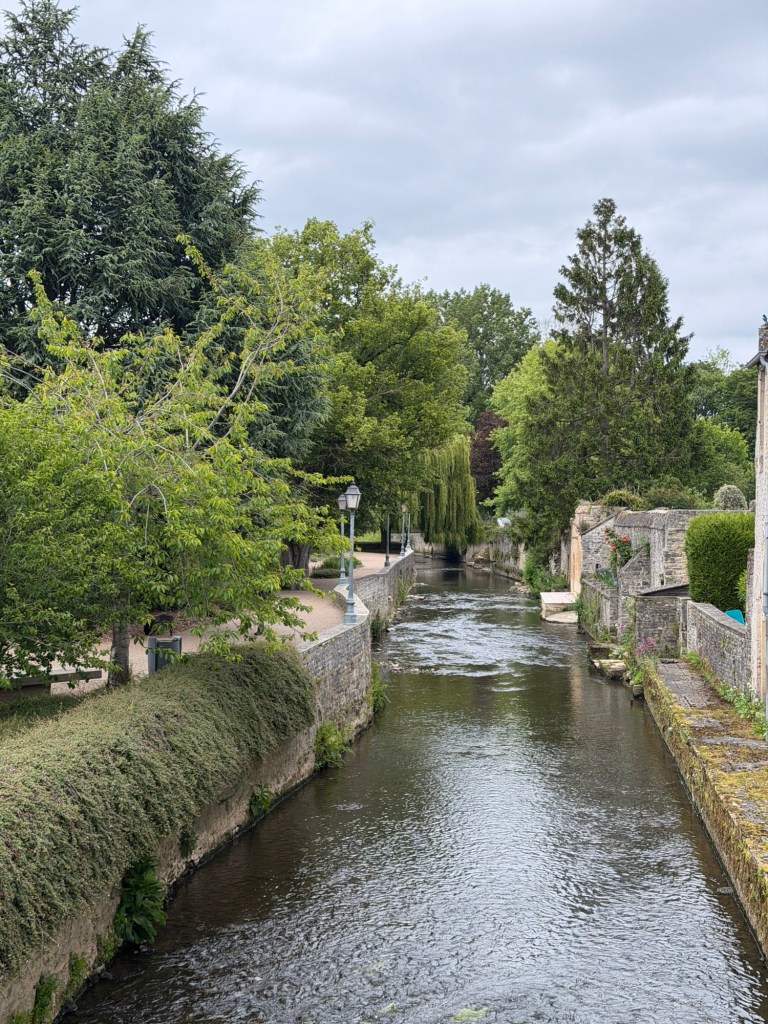
Two thousand years ago, the town of Bayeux was established on the western bank of the river Aure, now running through the city from the south to the north. From Gallo-Roman times to the beginning of the 20th century, a vast number of craft industries have grown up along its banks.

First, there was fishing. Part of the river, upstream of the lock gates, was thus set aside as a fishing reserve for the Bishop’s exclusive use.

Those craft industries requiring vast amounts of water were also concentrated along the banks: dyers, tanners, laundries. The wash-house that can be seen from the d’Ornano car park, on the opposite river bank, still bears witness to these activities.

Finally, water was used as an energy source as hydraulic power for the various mills: flour mills, tannin mills or even colza oil mills.

In the Middle Ages, some of the mills, such as the one facing us, belonged to the Bishop of Bayeux who derived considerable income from them.

The river has greatly influenced the city’s development. Stone bridges have been built at the main crossing points, notably here where the Aure was transformed into a canal as early as the 13th century to pass under the former Hôtel-Dieu hospital.
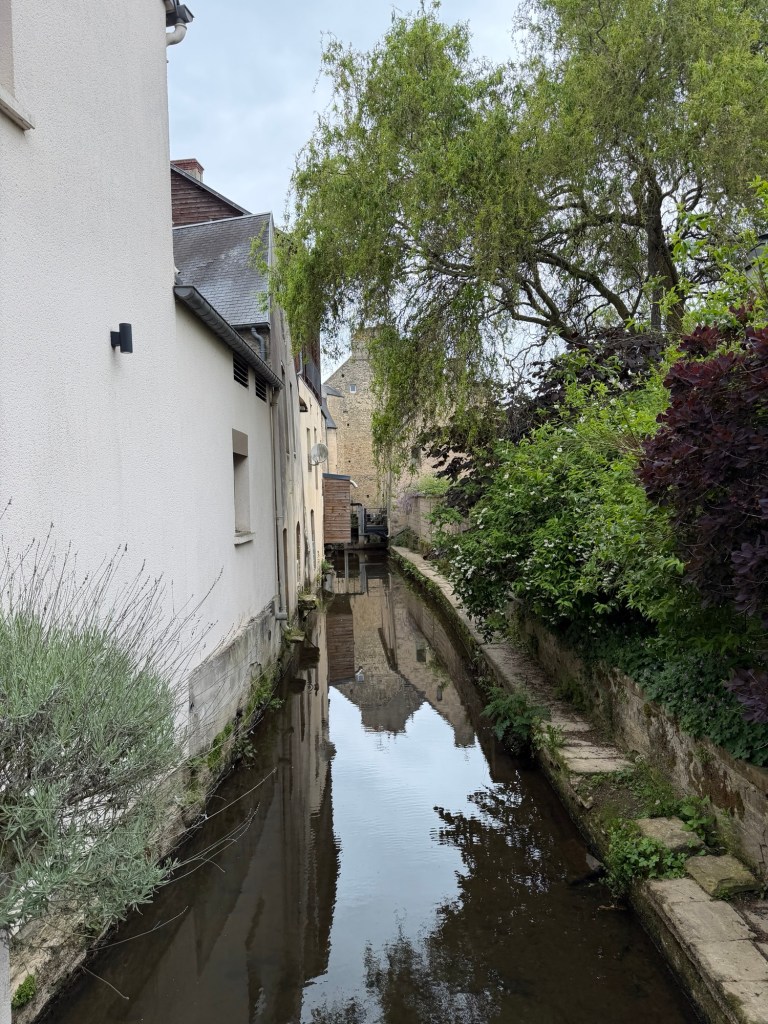
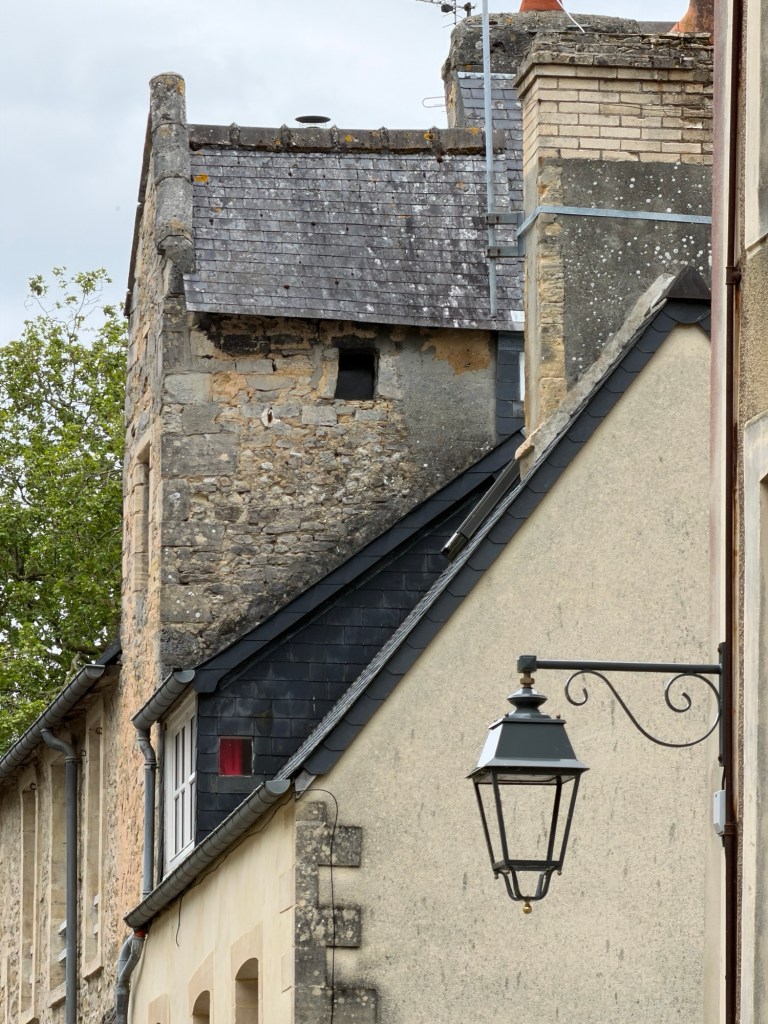
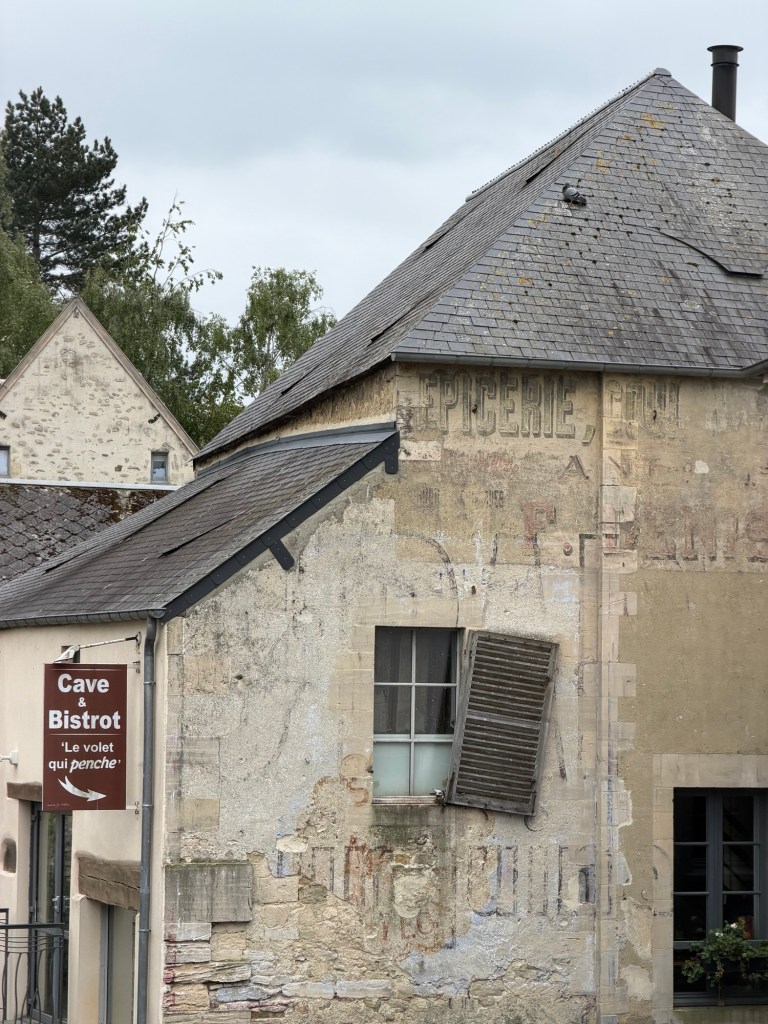
The tilting shutter (Le violet qui penche) can never be repaired because it is the name of this wine cellar & bistro.

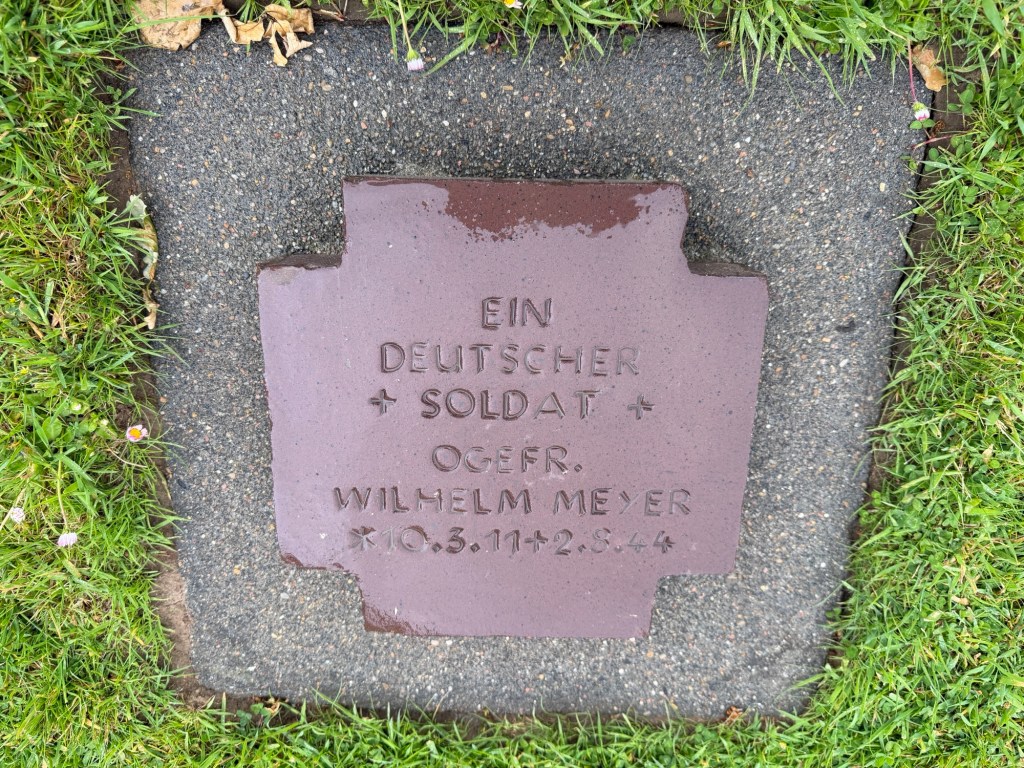
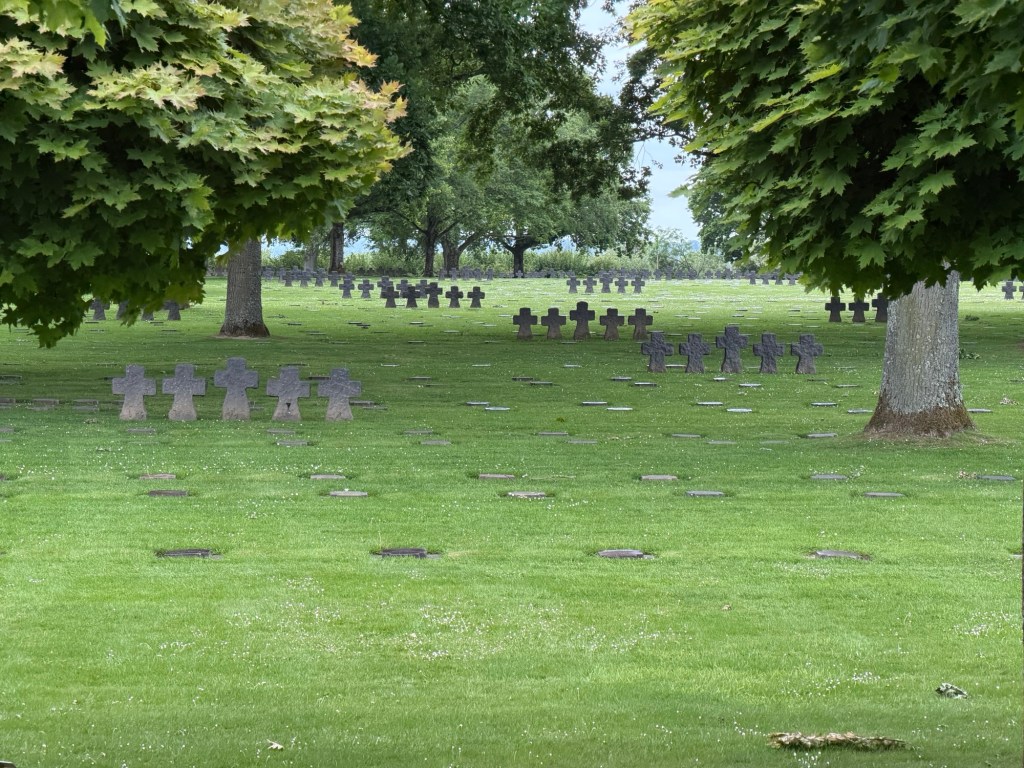
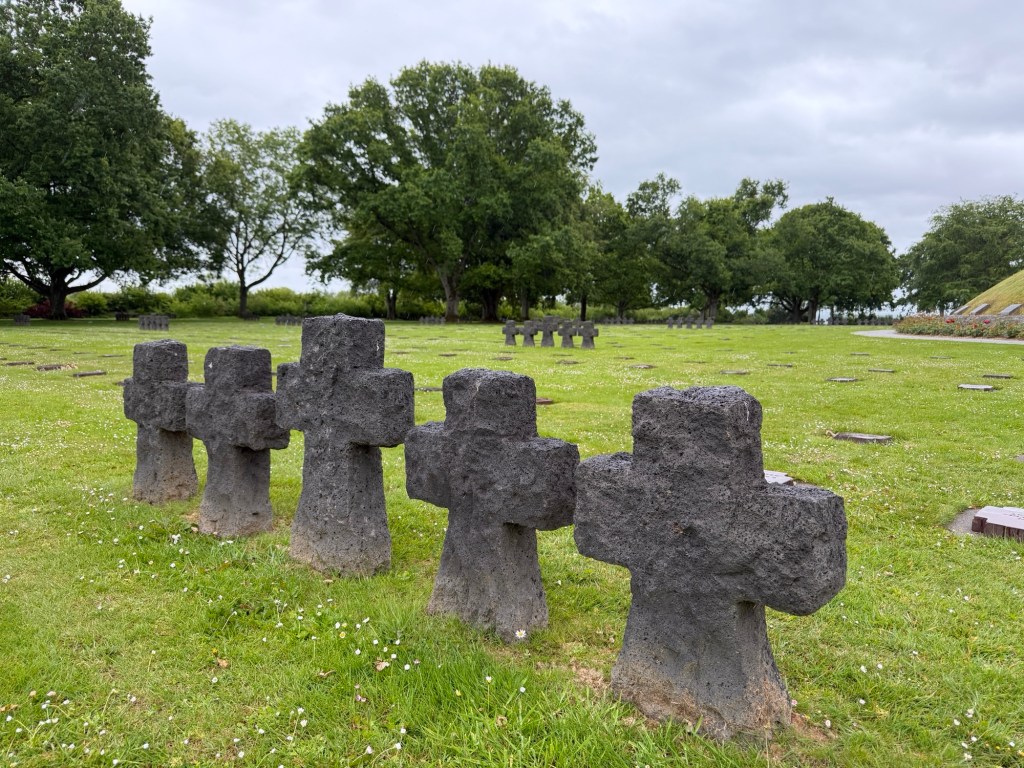
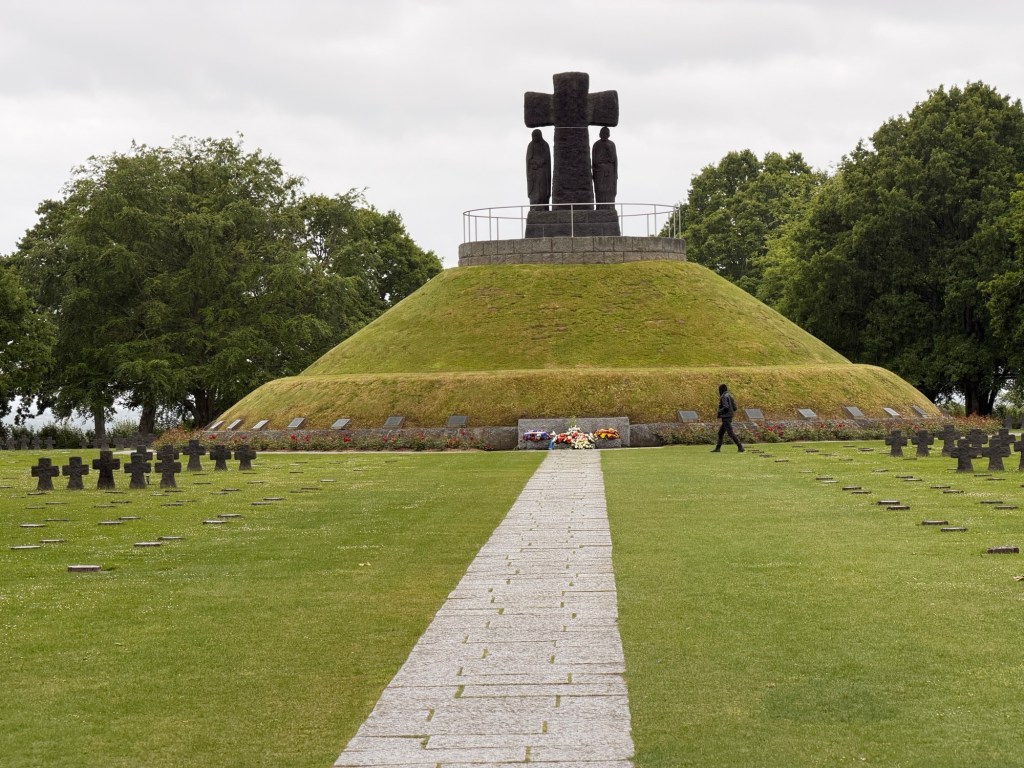
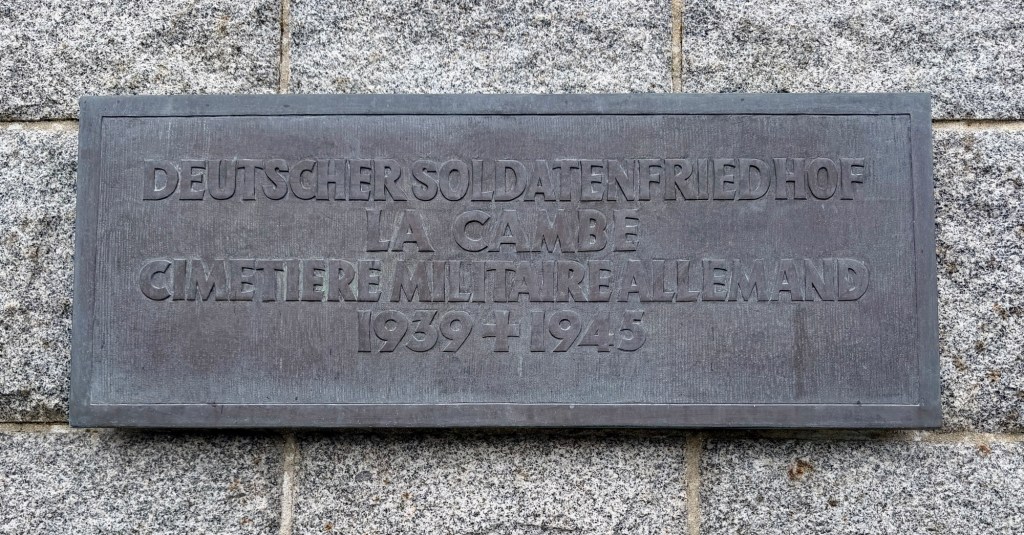
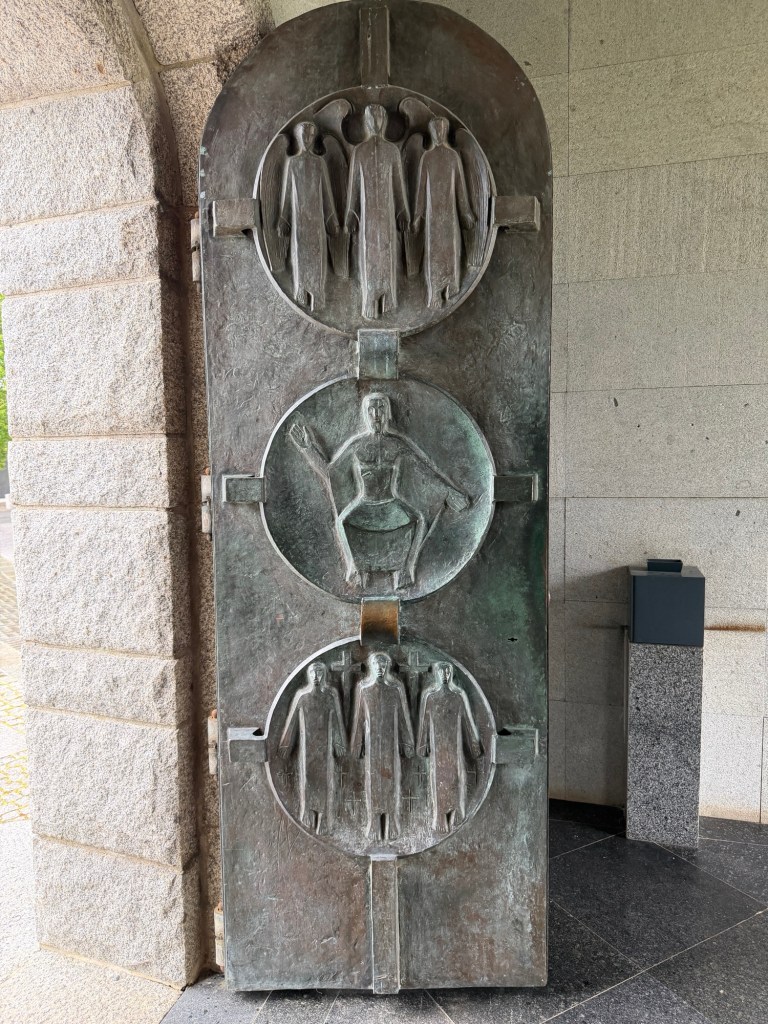
We also visited the large German cemetery at La Cambe where 21,000 soldiers are buried, many unidentified.
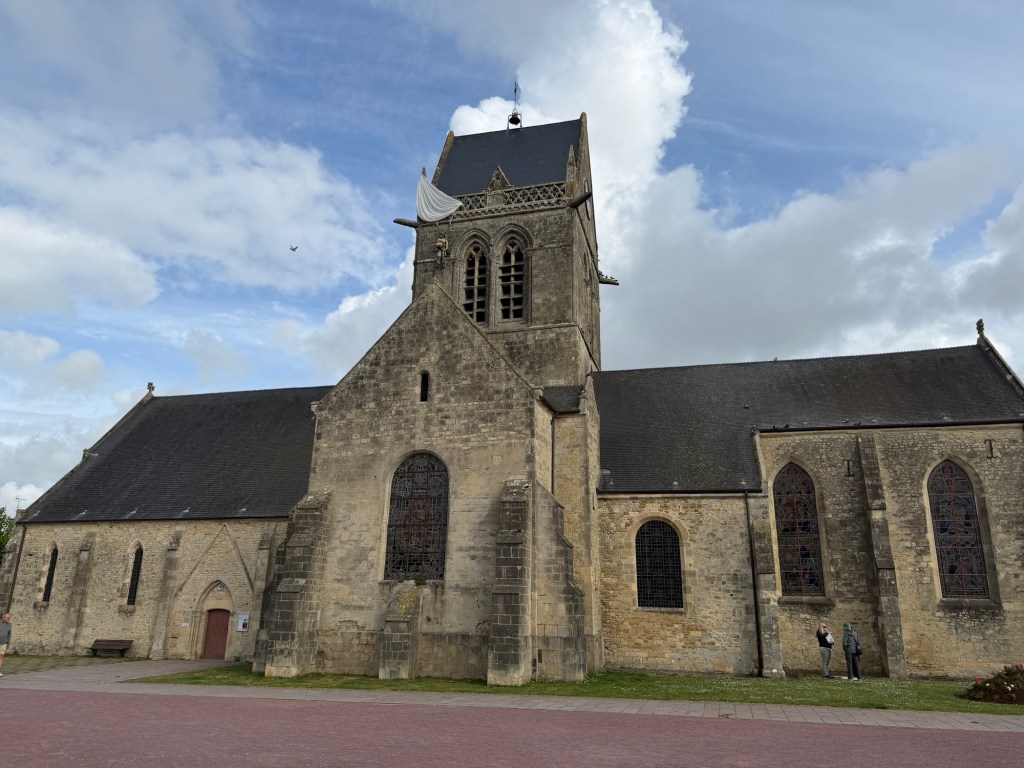
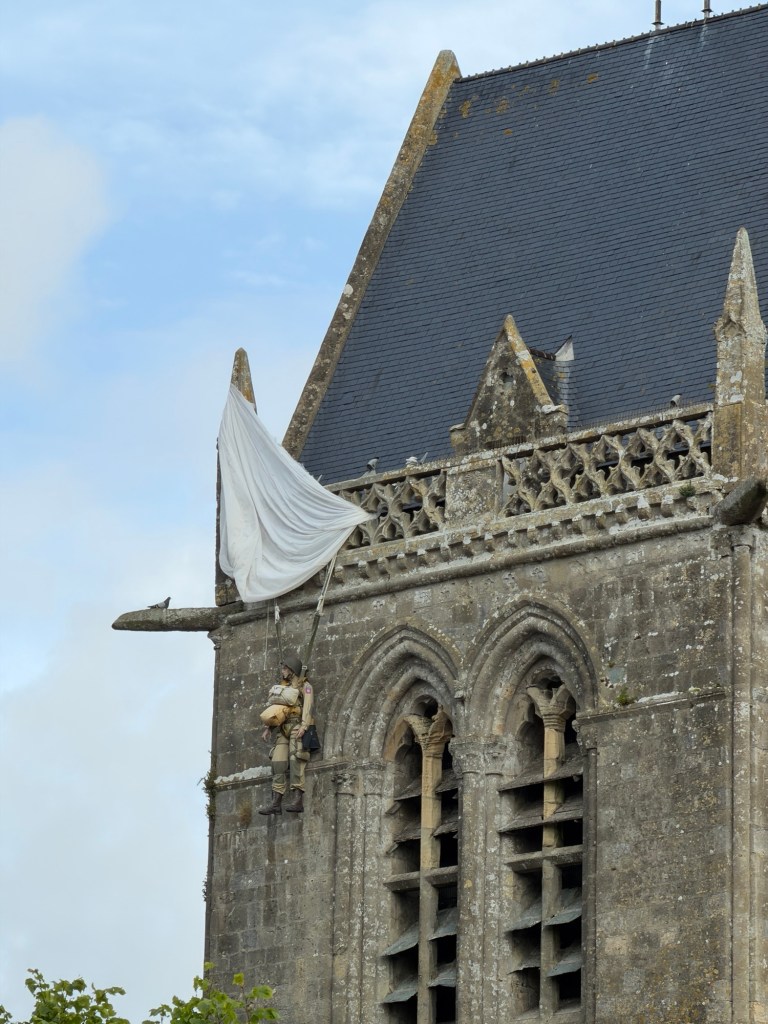
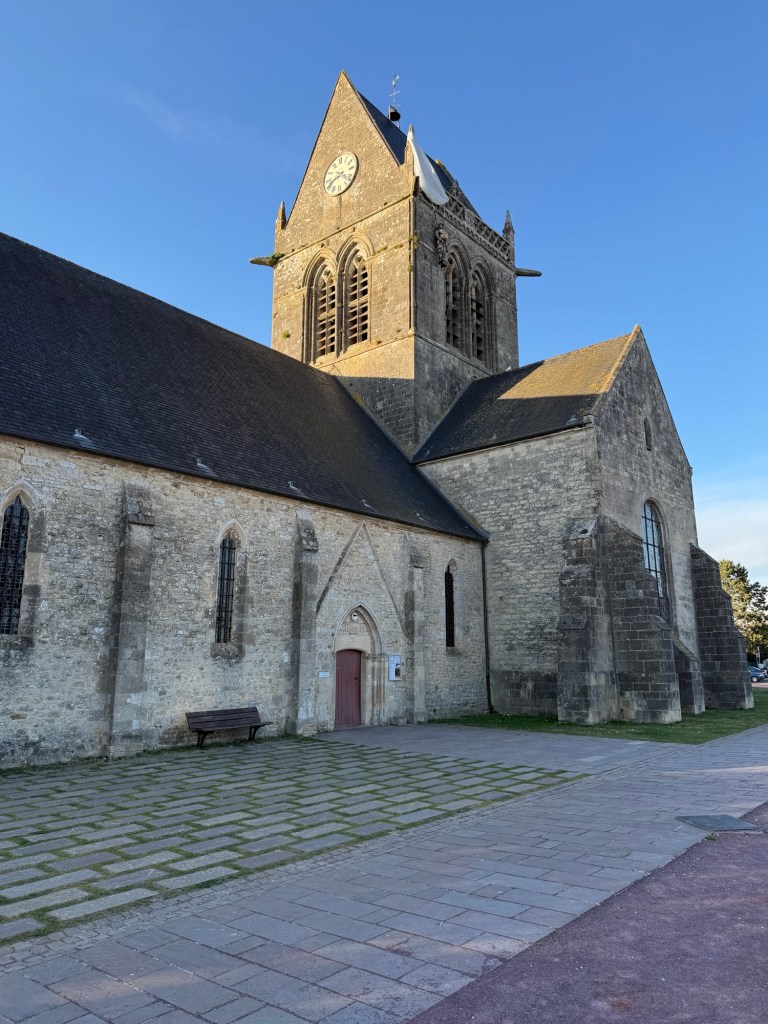
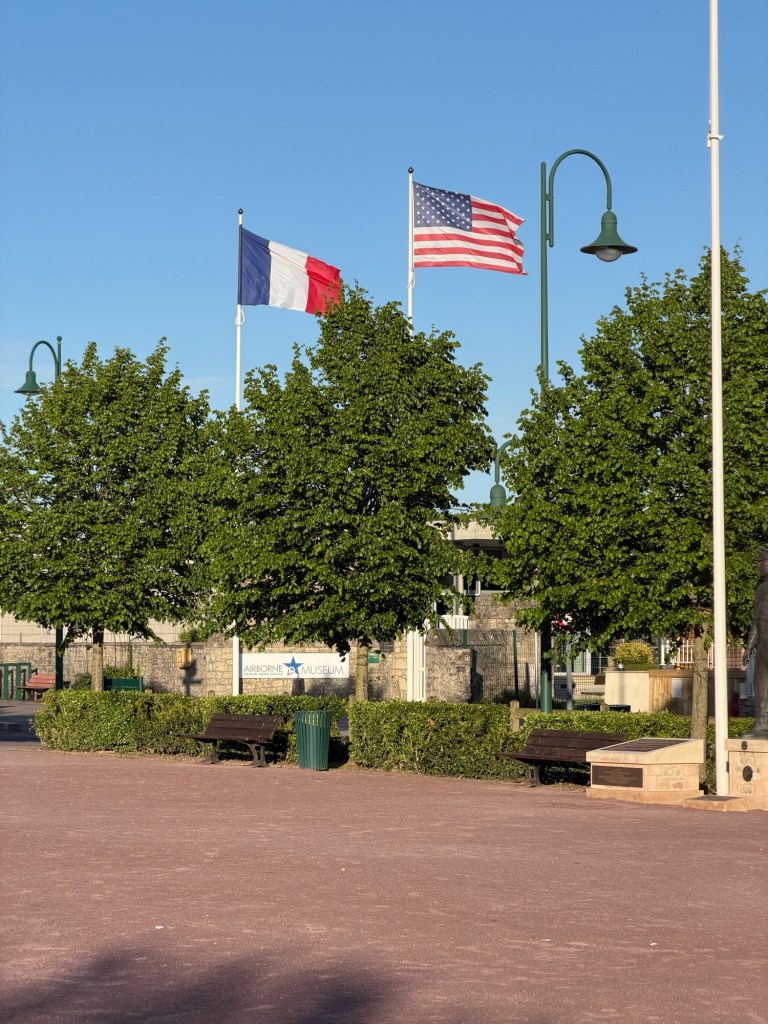
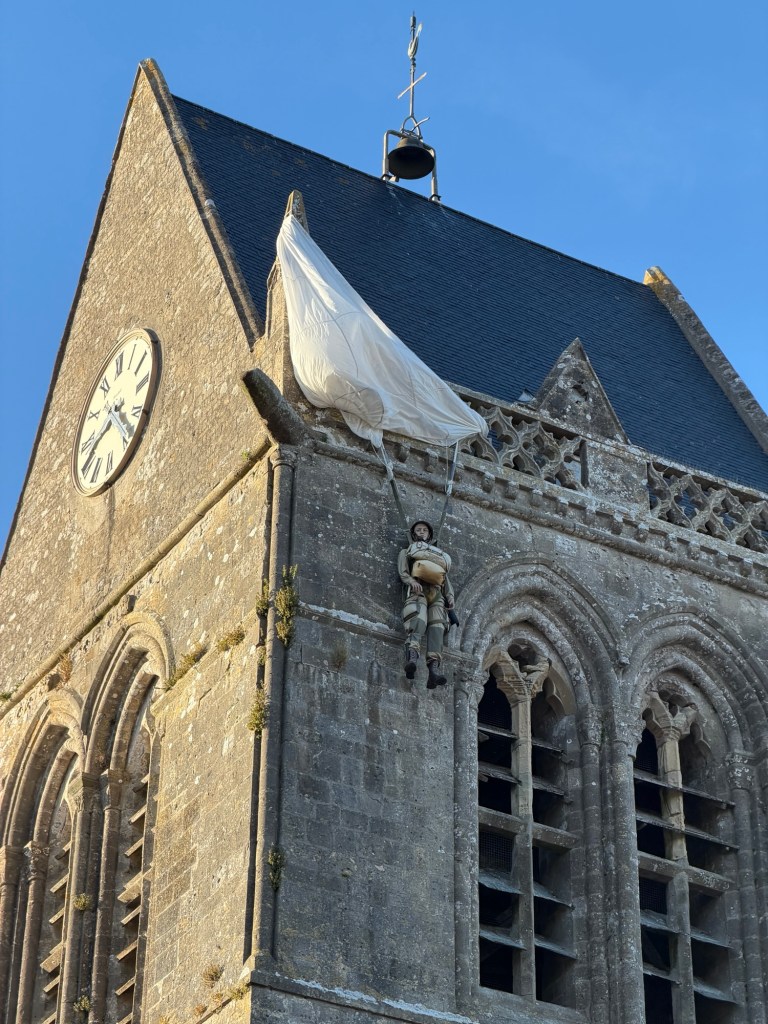
We then proceeded back to Ste-Mère Eglise.
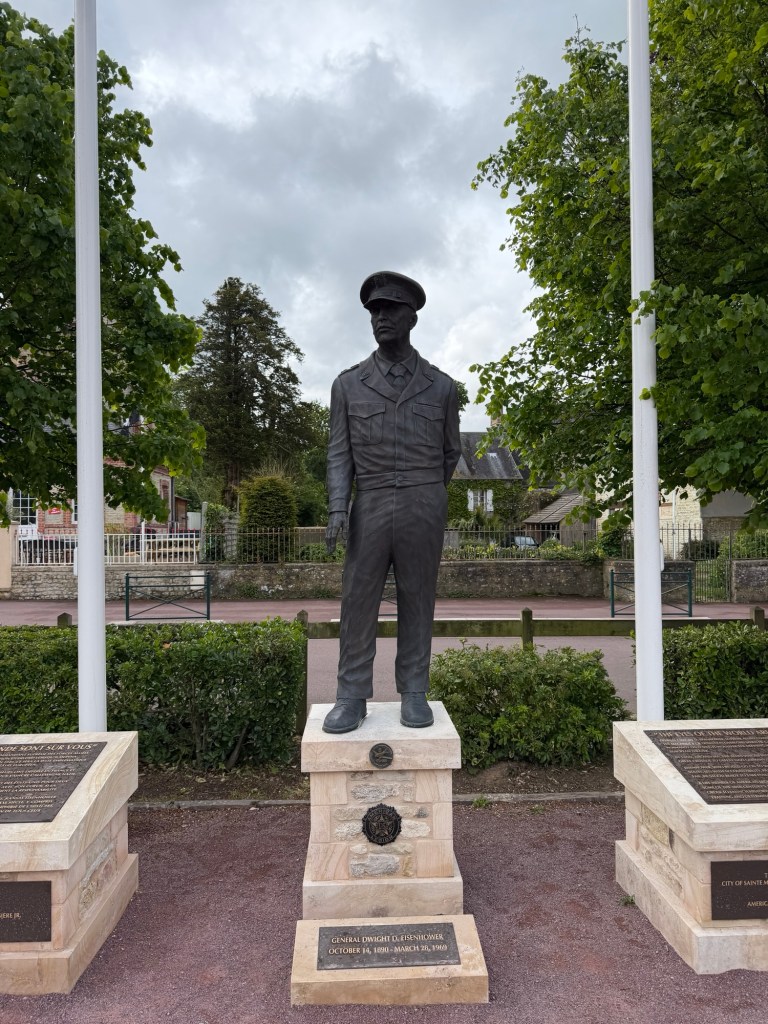
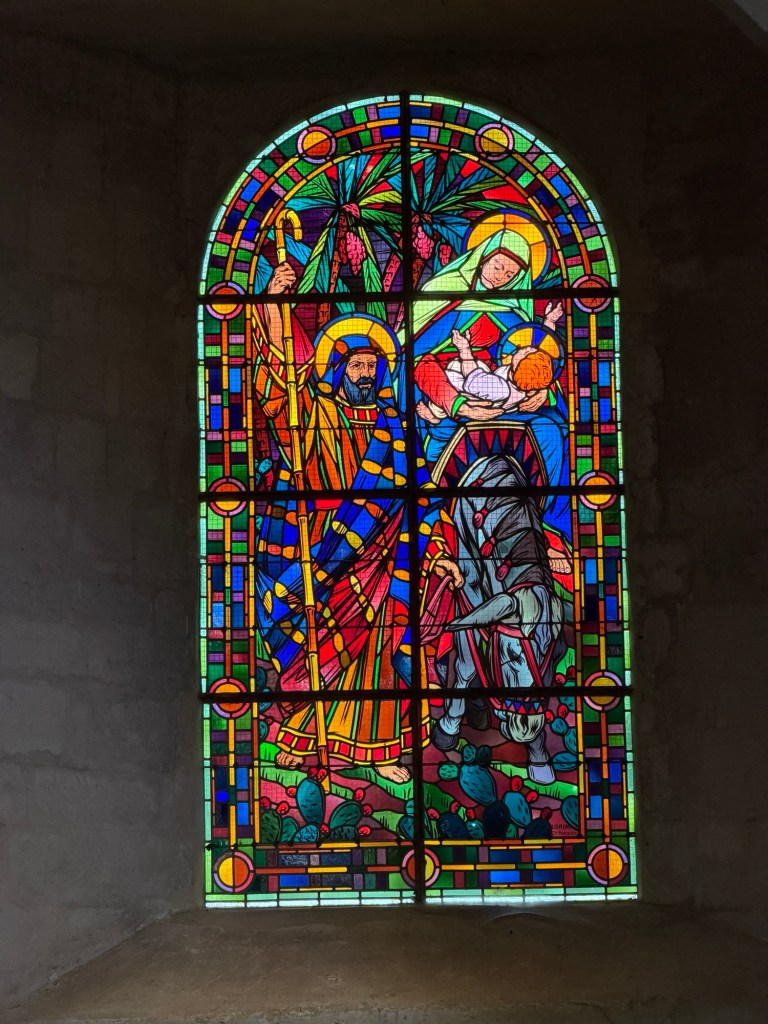
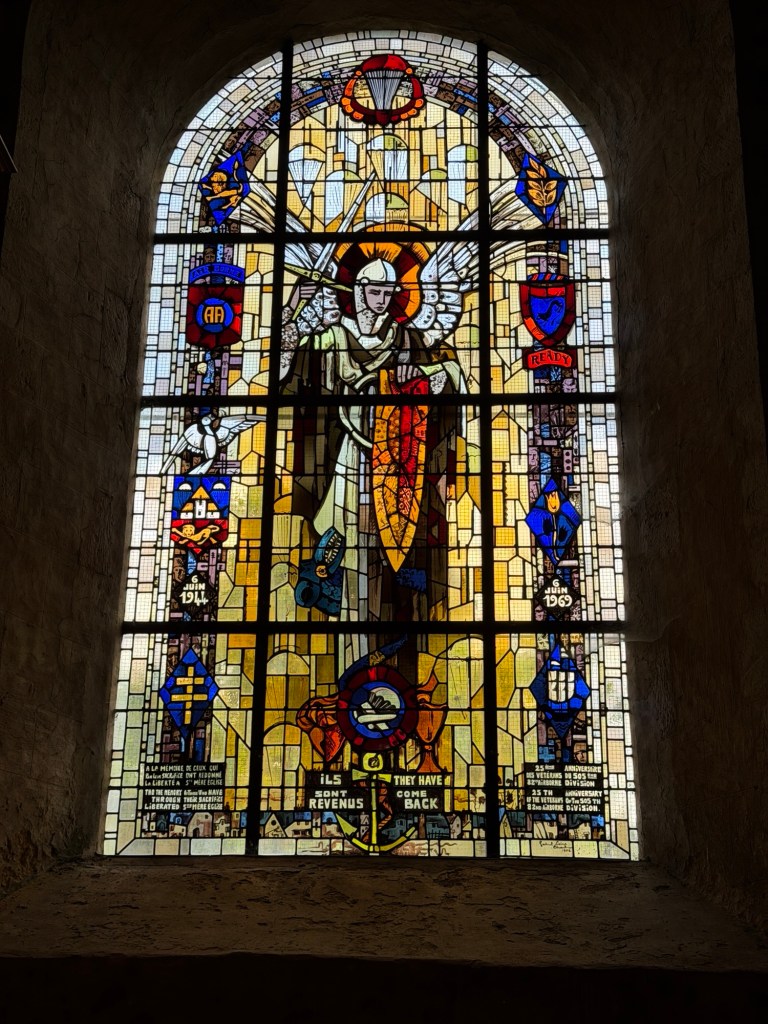
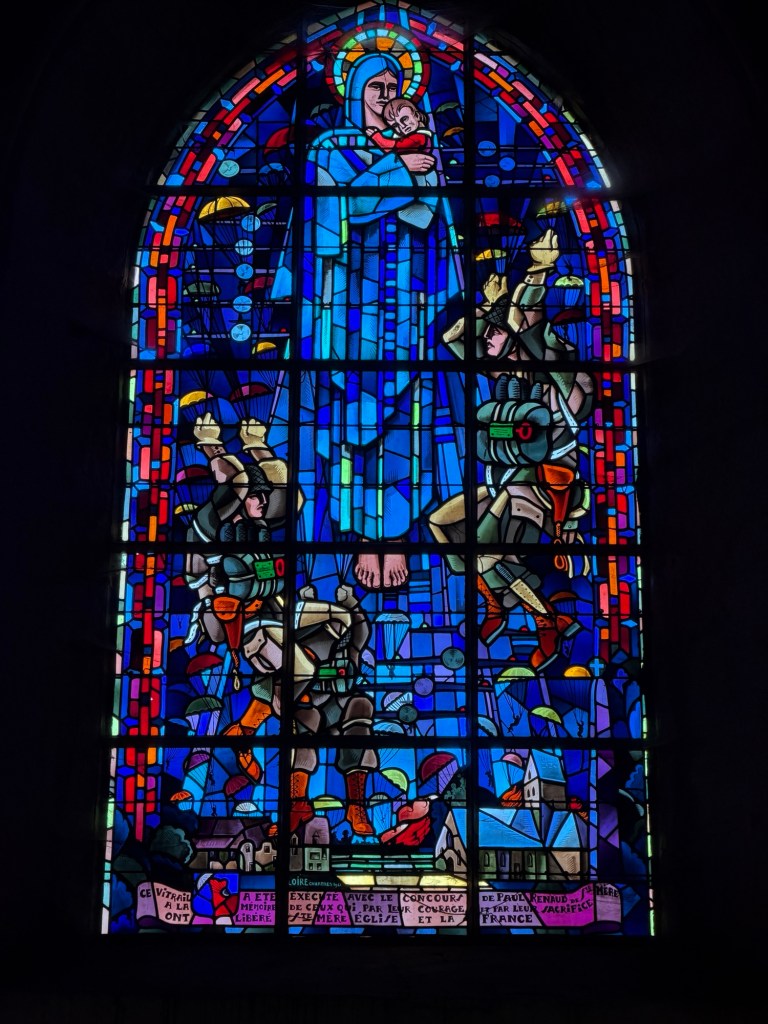
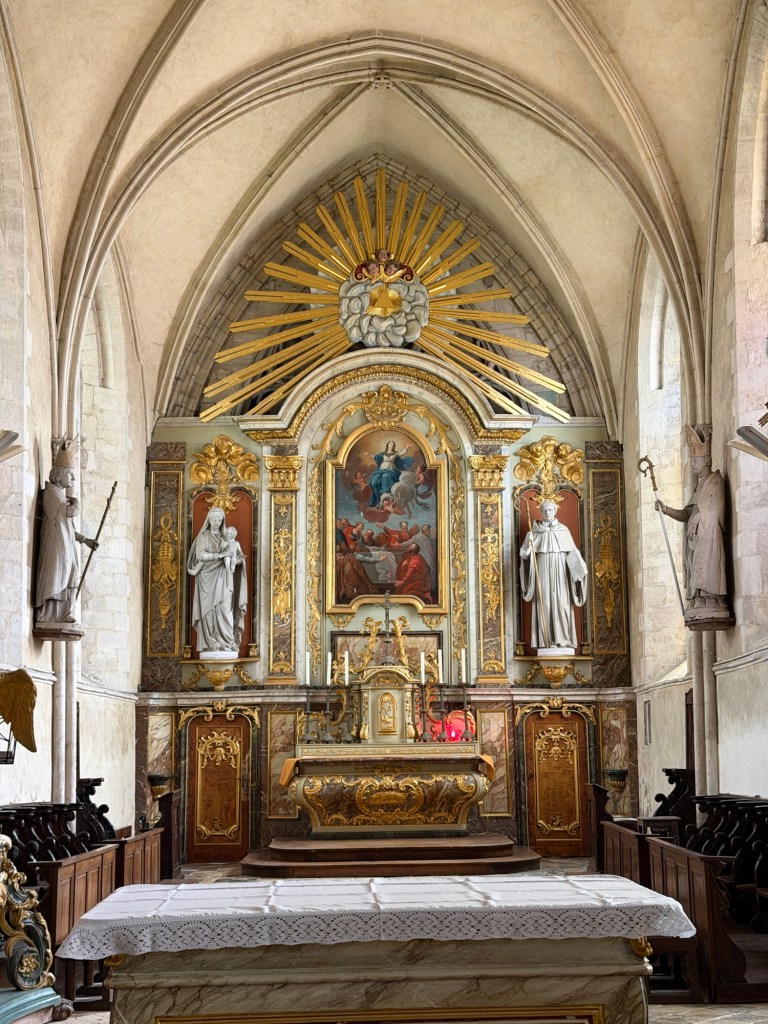
The church was closed, but we went back the next morning to see the inside.
Colleville-sur-mer, Utah and Omaha Beaches, Pointe du Hoc (Friday)

We stayed in Chef de Pont for three nights at Marc’s brother’s place —a wonderful, gracious host. The first night, Thursday, we met not only Jérome, but his daughter Léa and son Cédric, when we shared dinner. Cédric and Jérome will join our adventures for a few days.

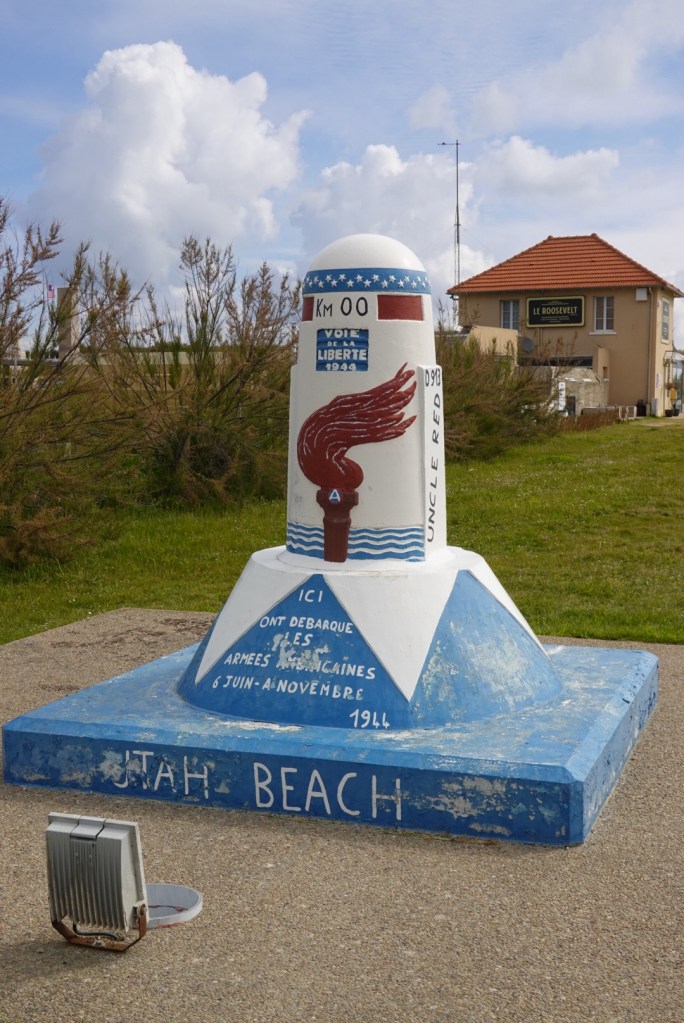
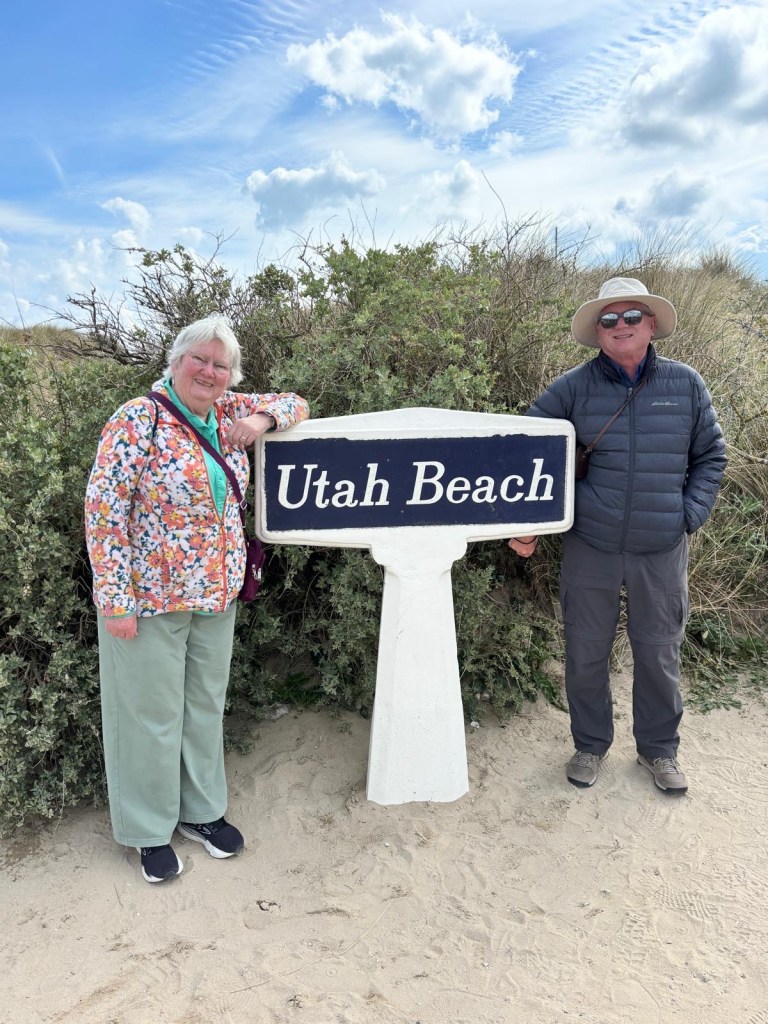
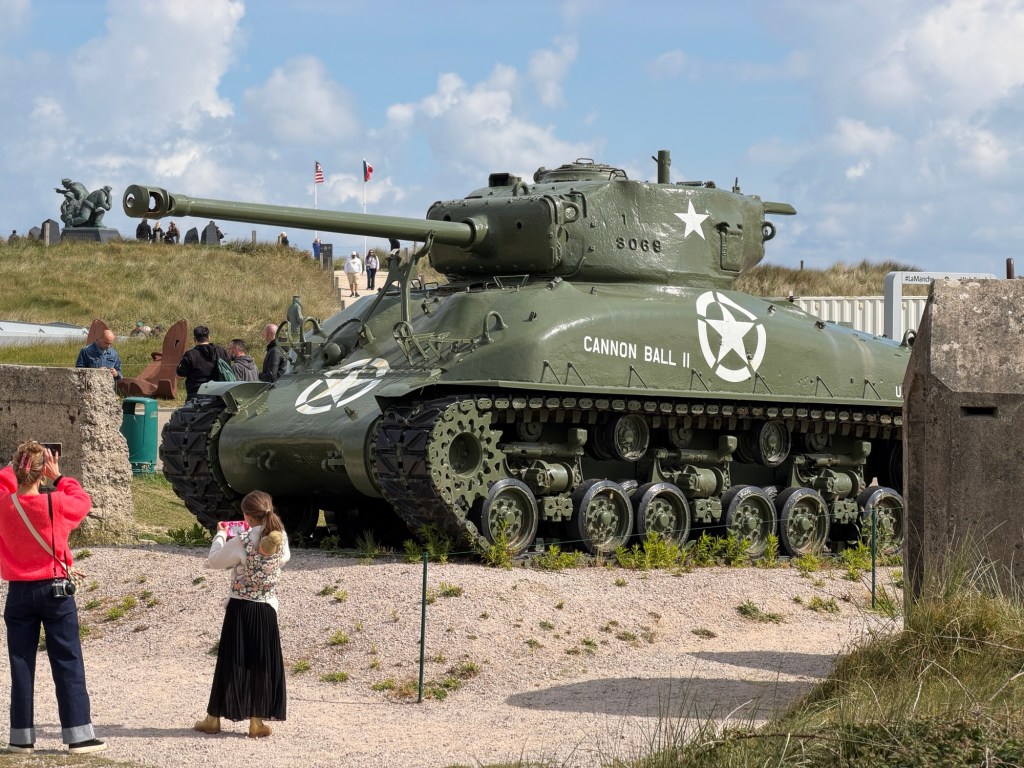
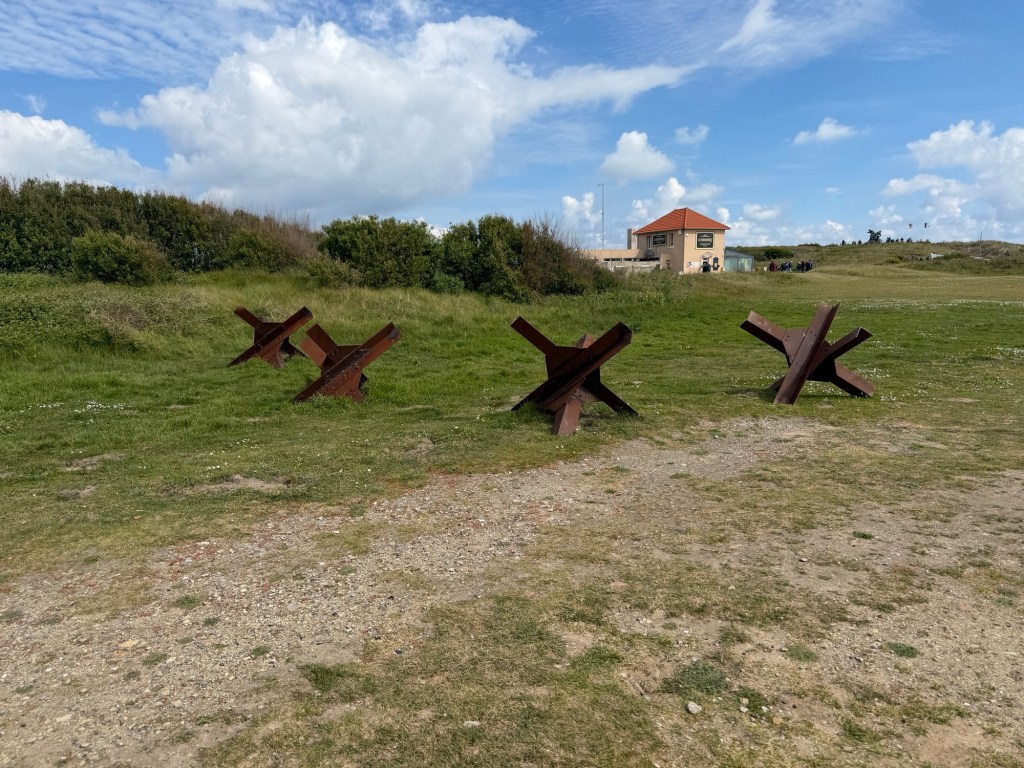
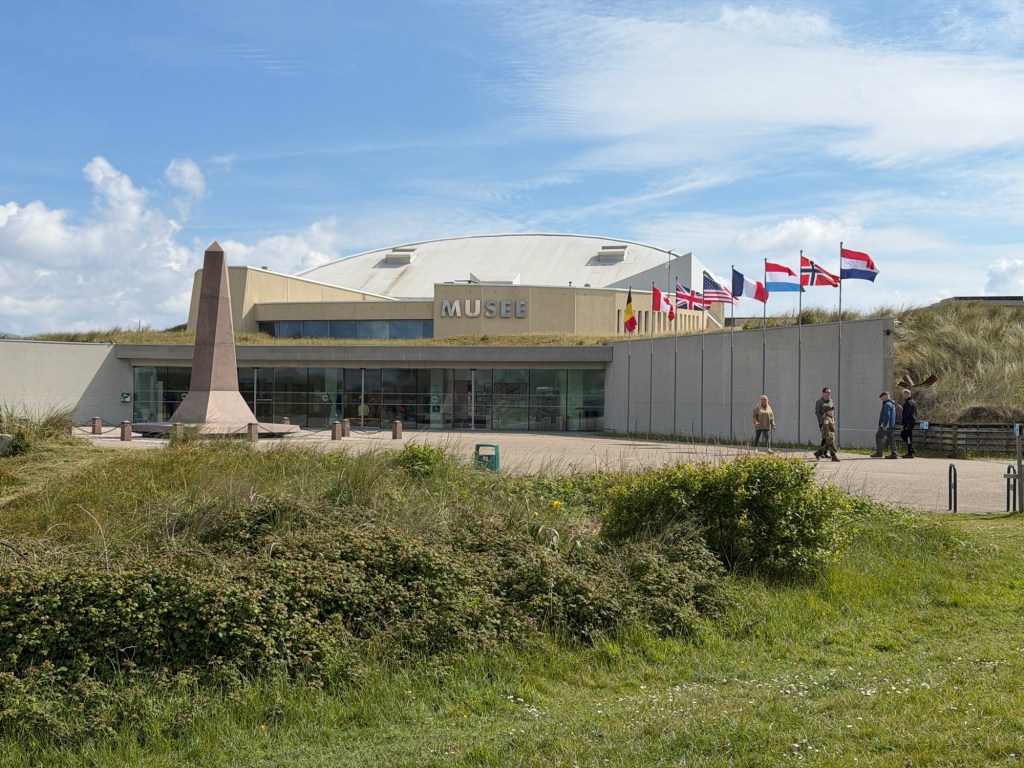
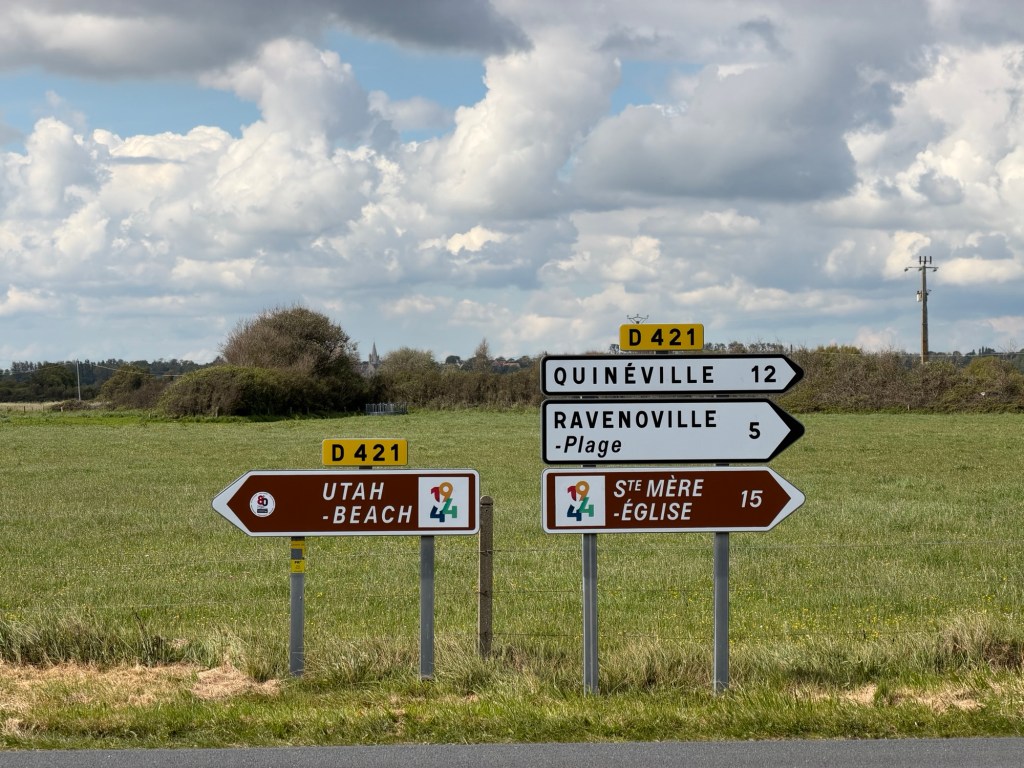
The first place we visited this day was a wetland area inland from Utah Beach. As a possible defense against invasion, the Germans partially flooded this area to cut off the Cotentin Peninsula. This would have slowed invading Allies landing at Utah Beach and isolated the port at Cherbourg. It is now park land.

Liberty Tree
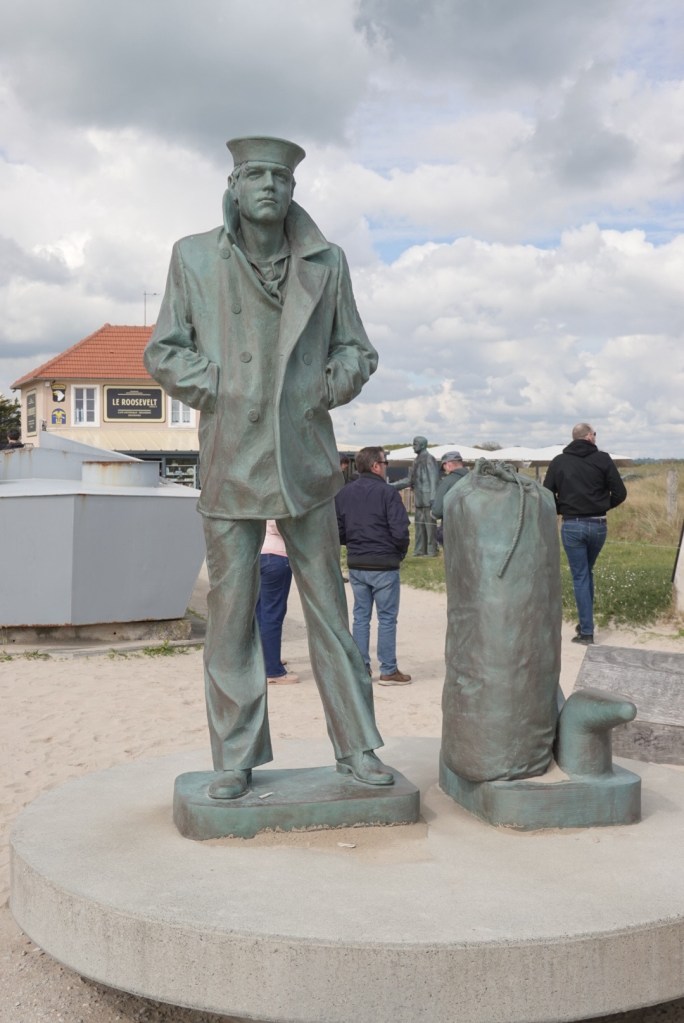
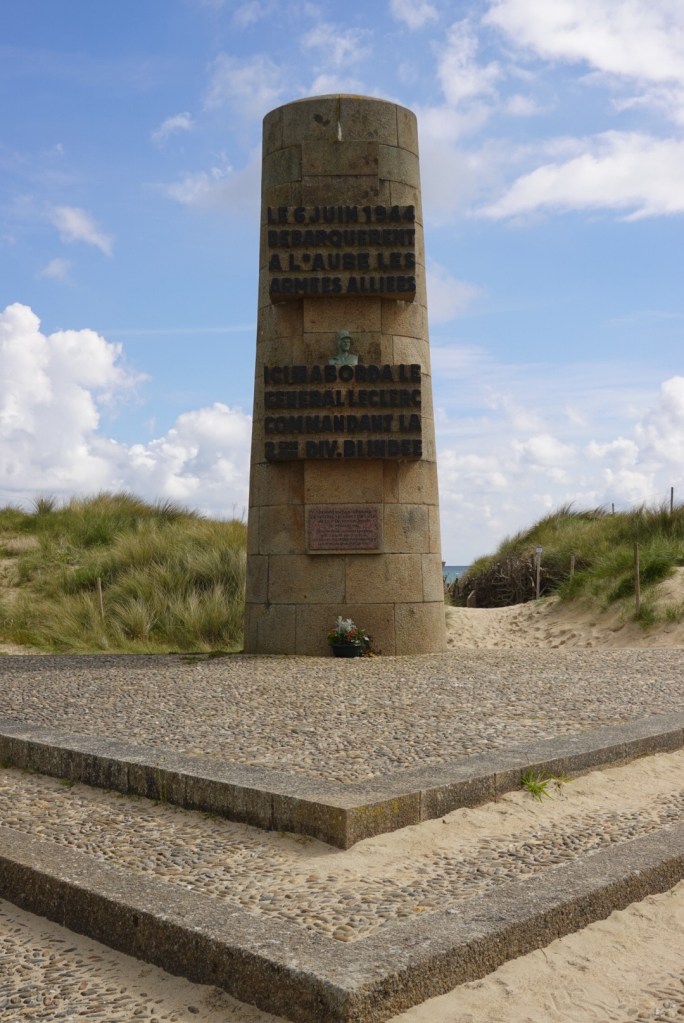
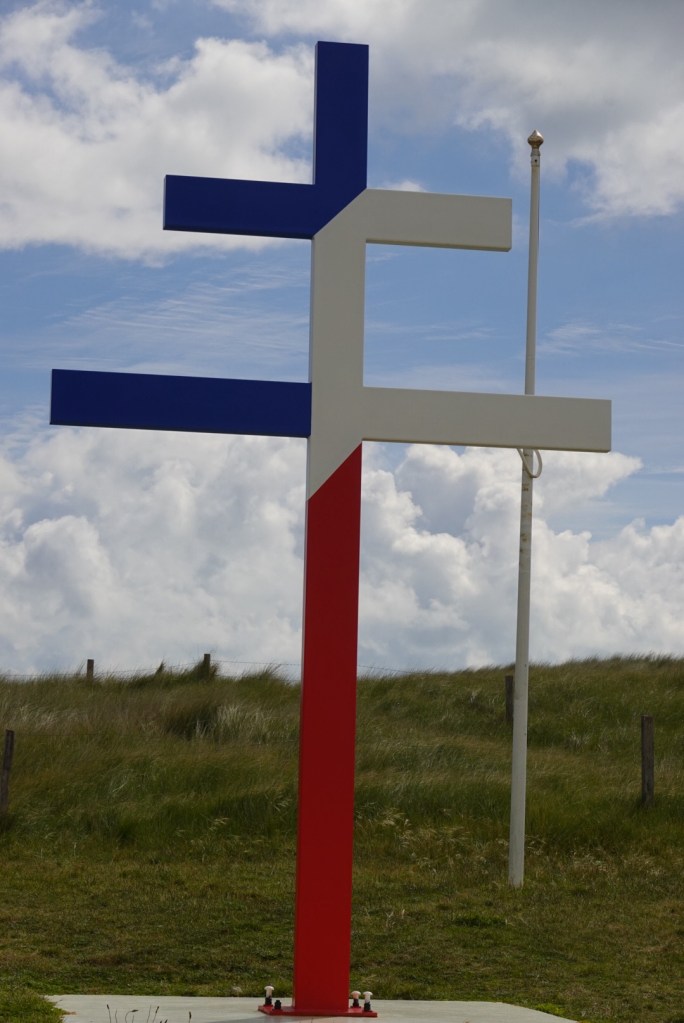
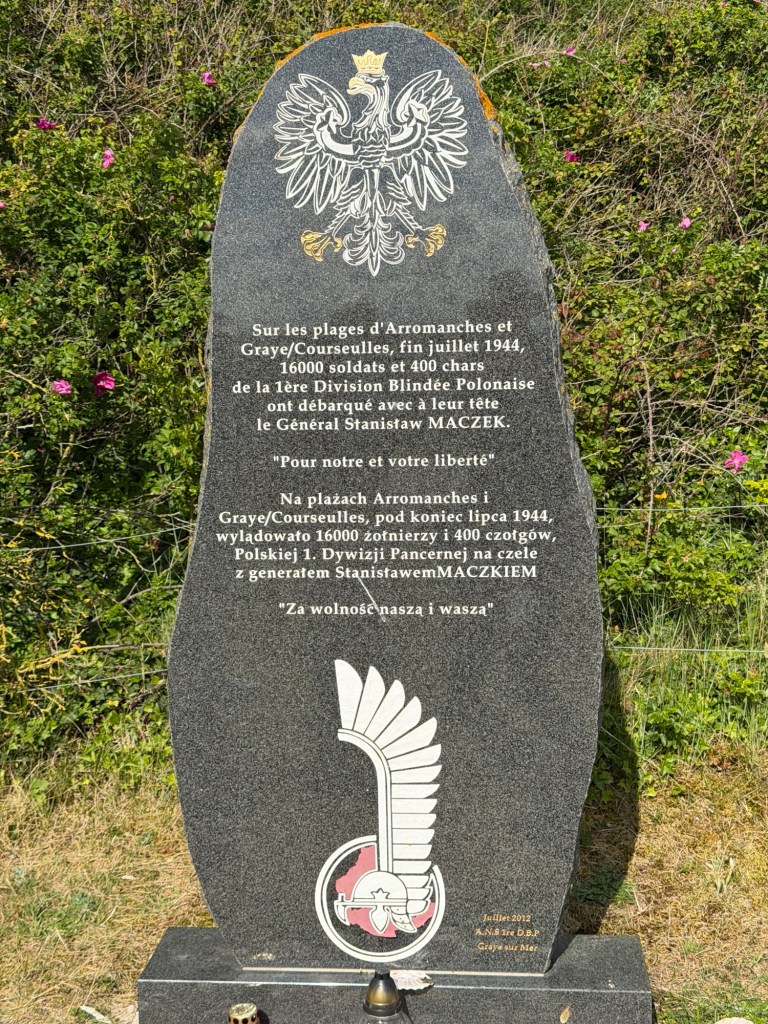
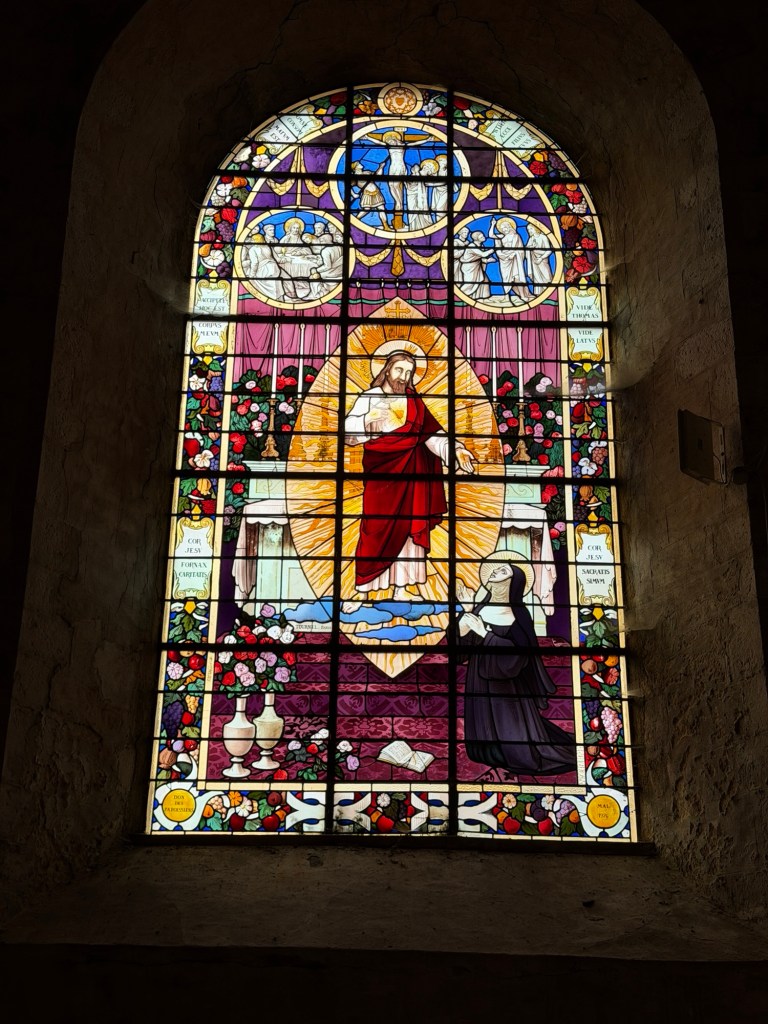
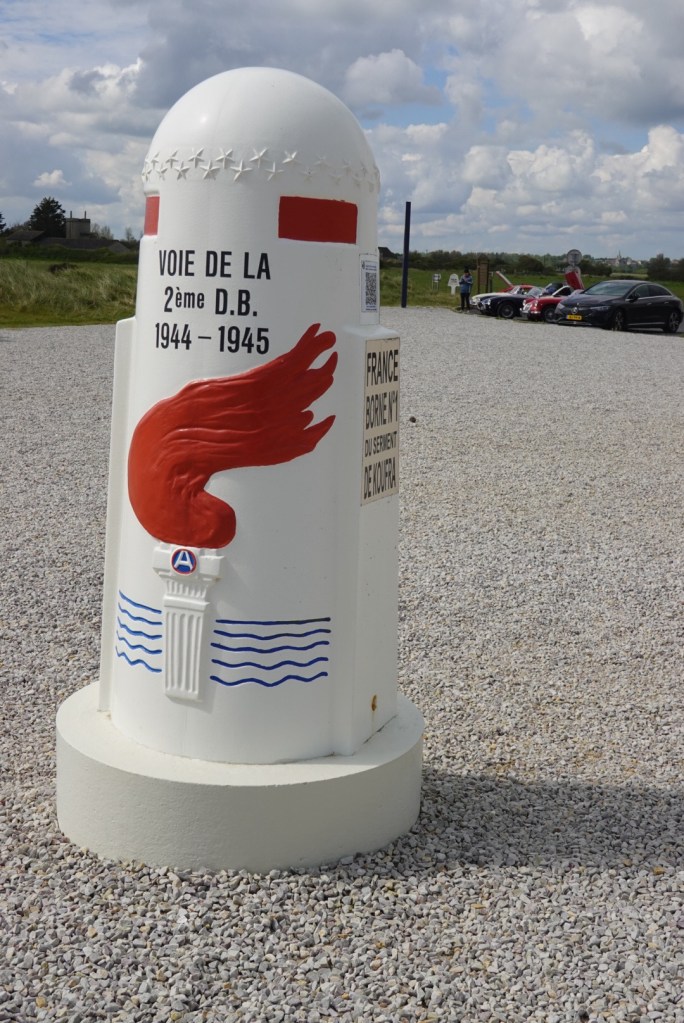
This monument honors General LeClerc (pseudonym used to protect family), who commanded French troops that landed in July.

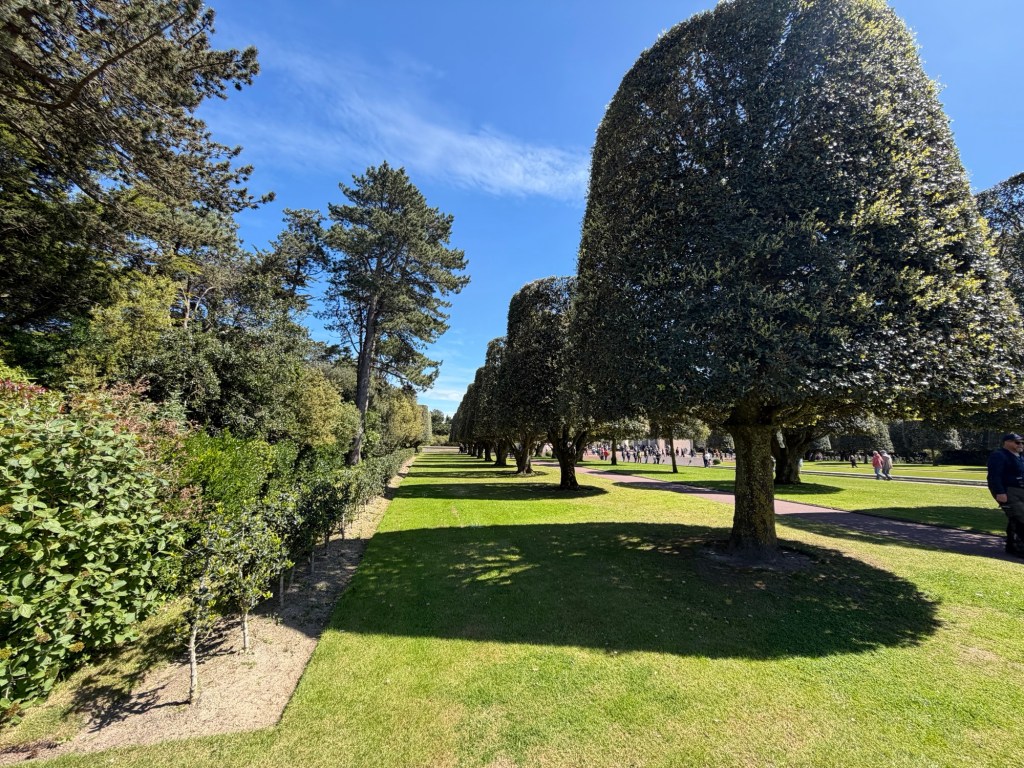
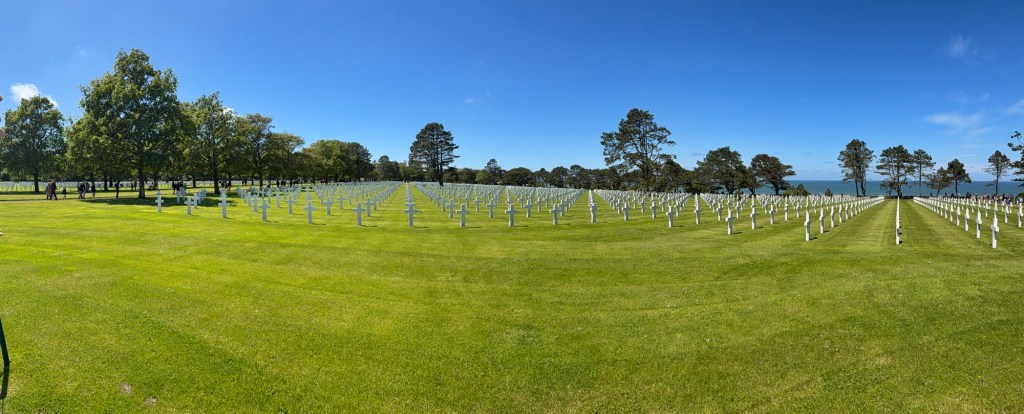
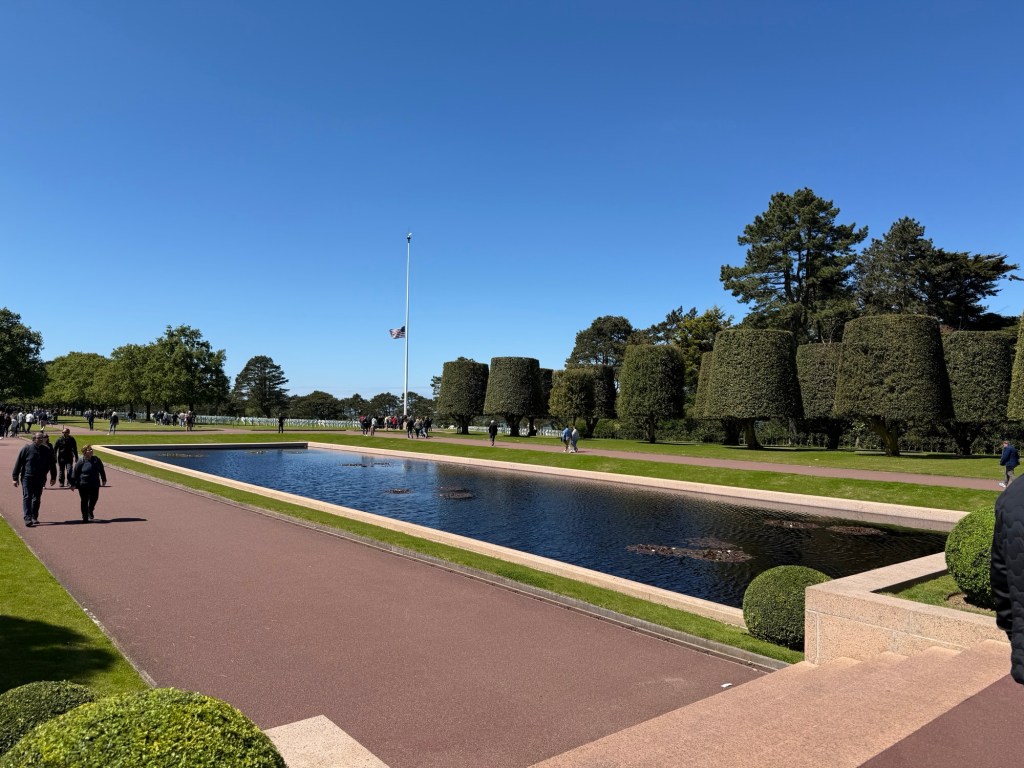
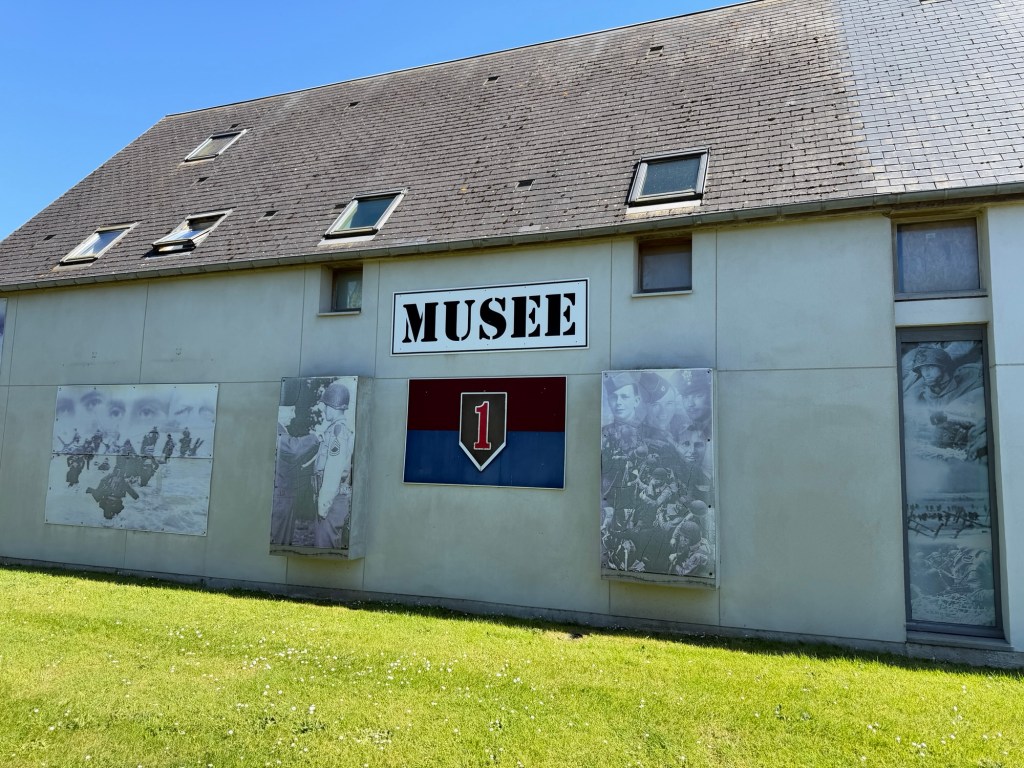
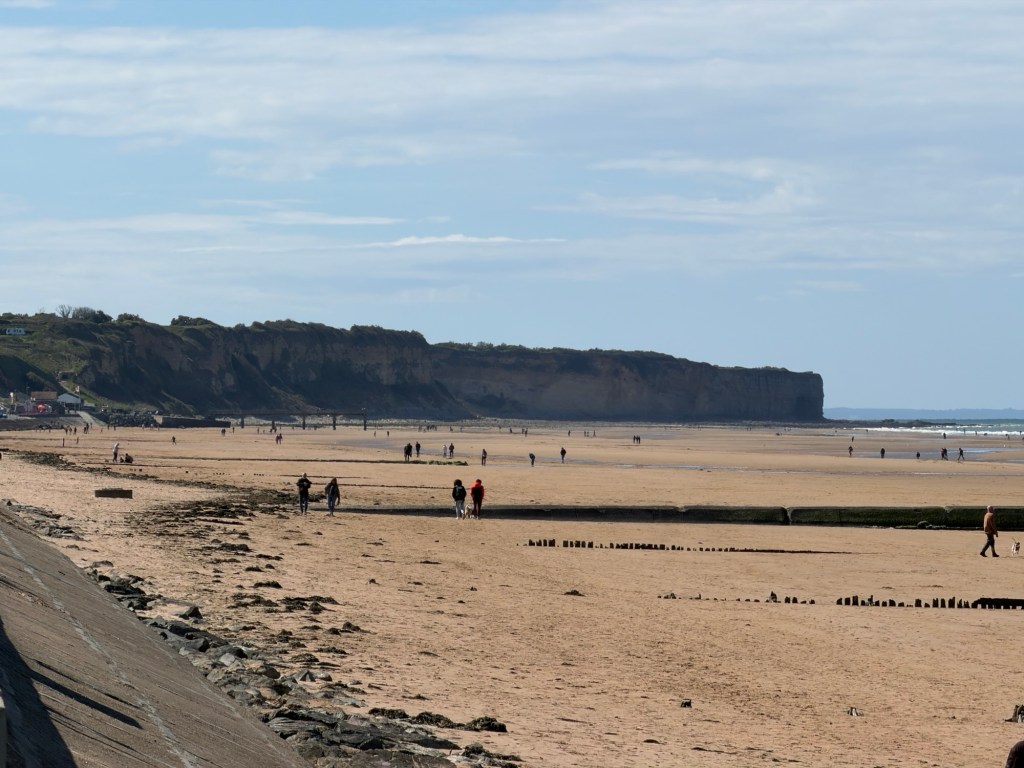
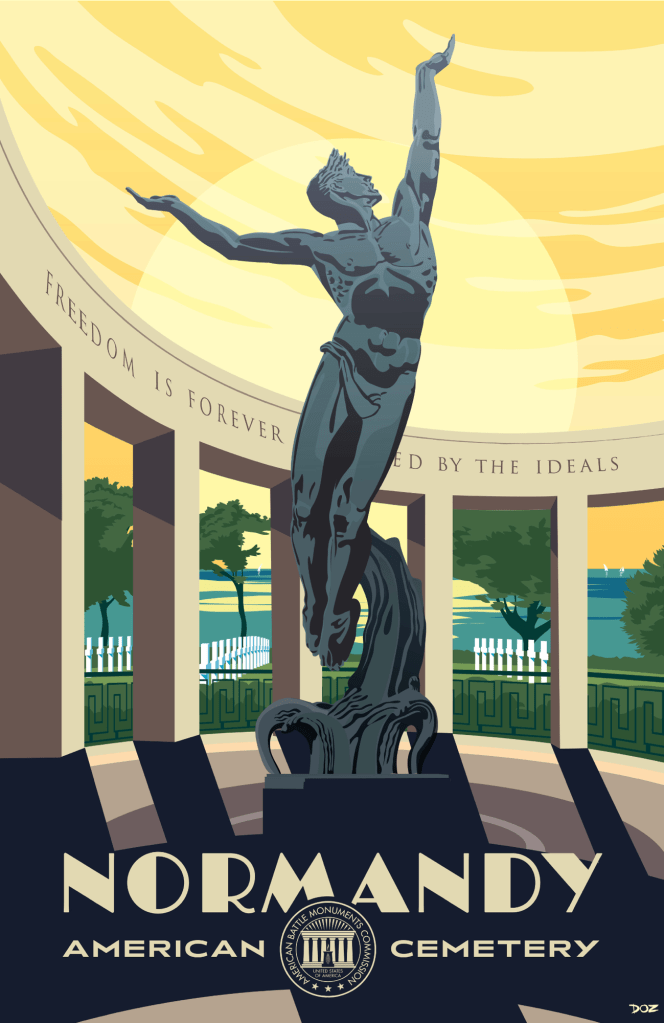
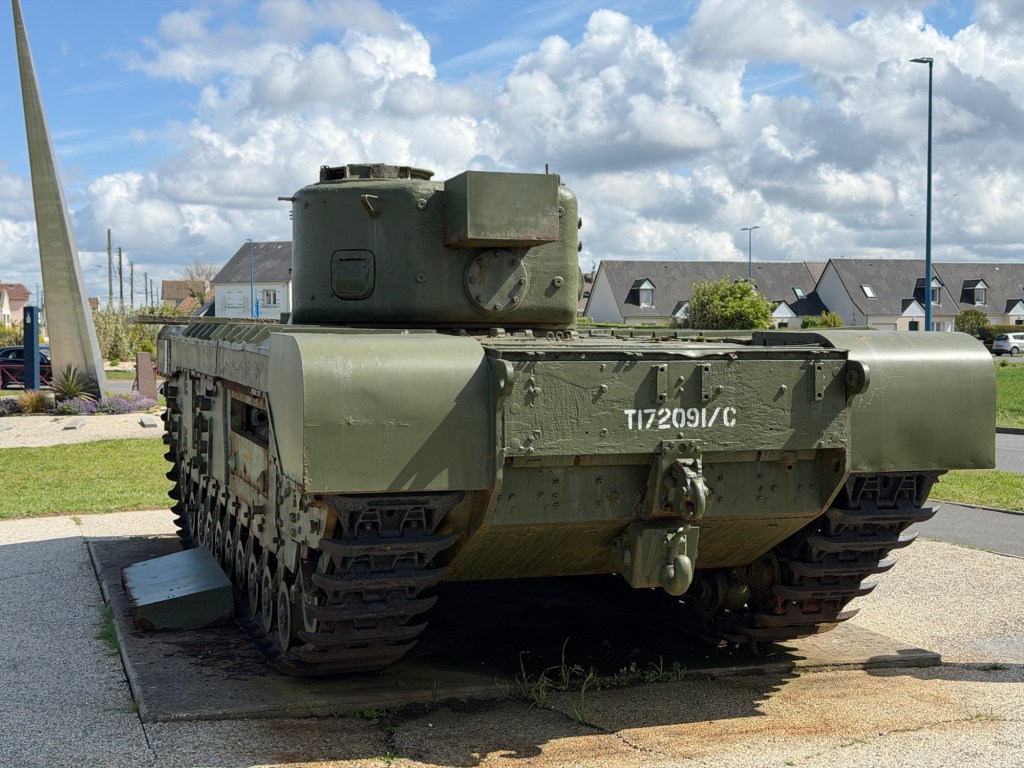
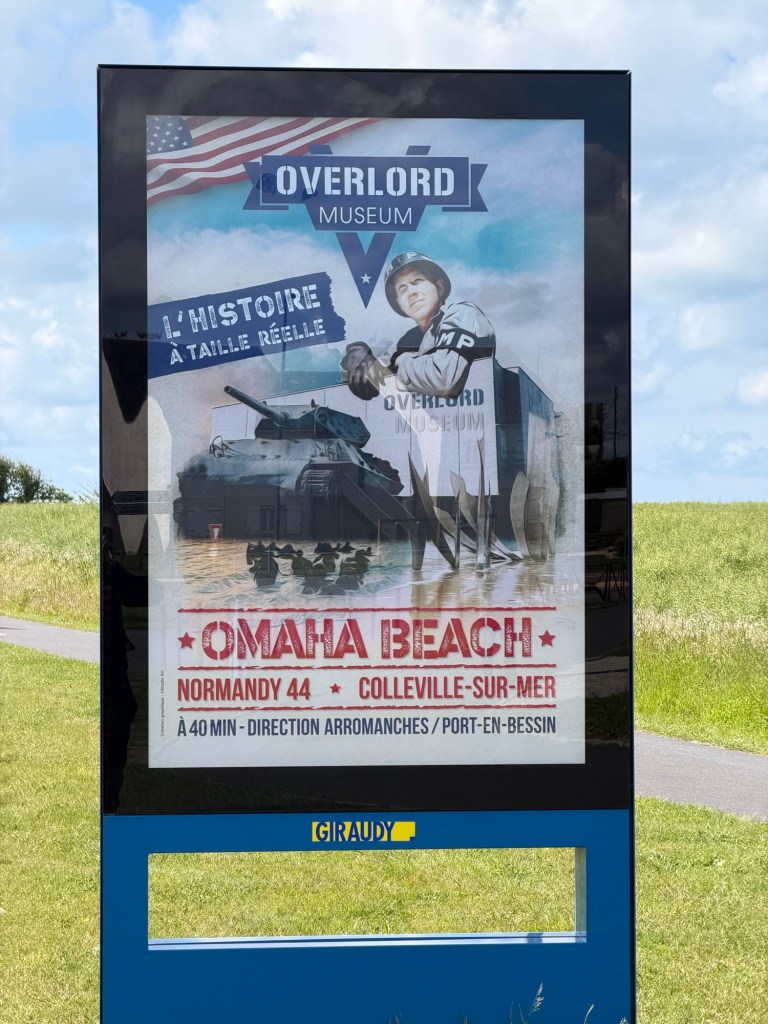
In Colleville-sur-Mer, we visited the American cemetery and the Big Red One museum. Traffic and parking were difficult!

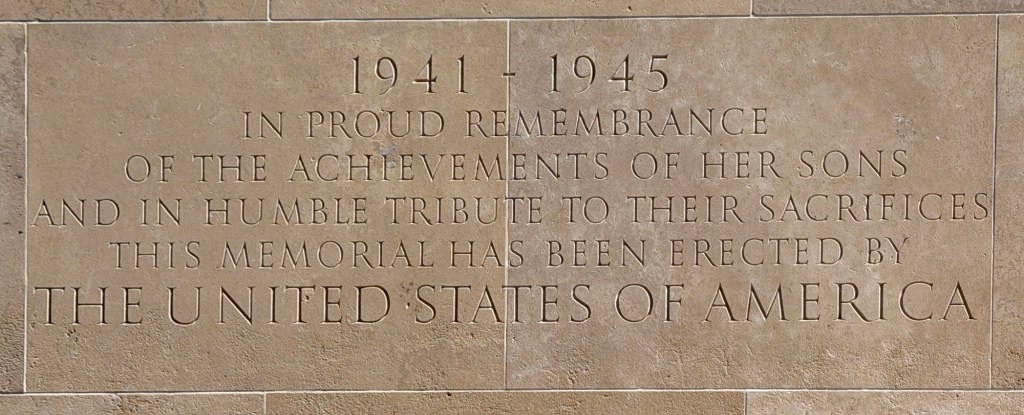
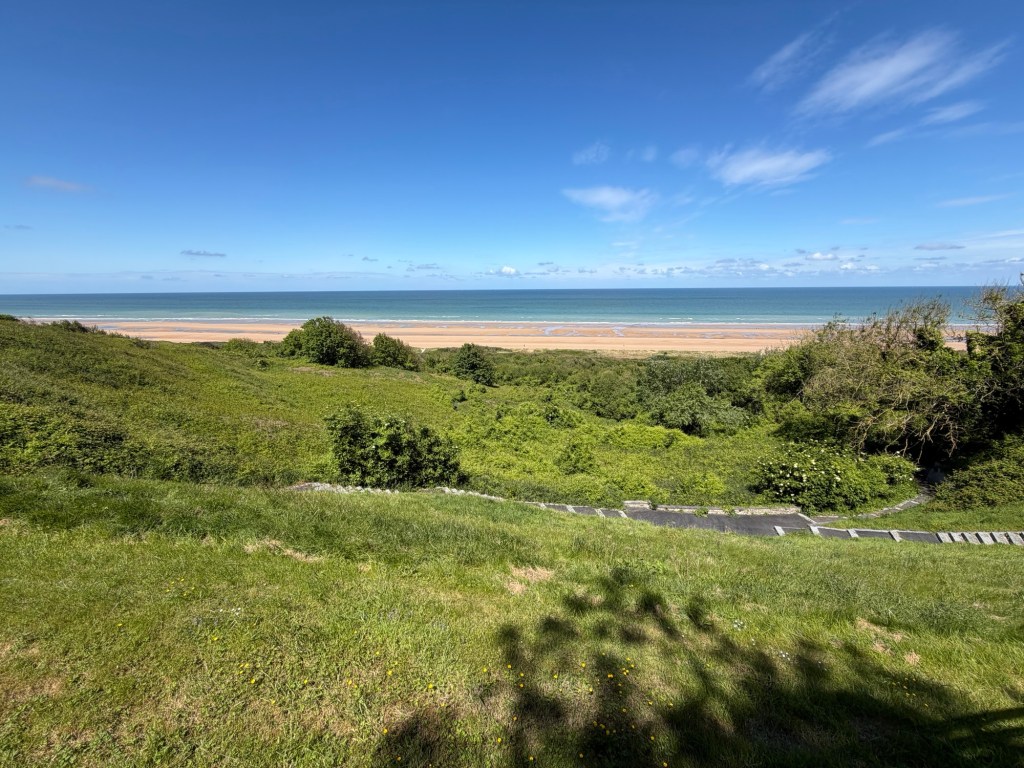
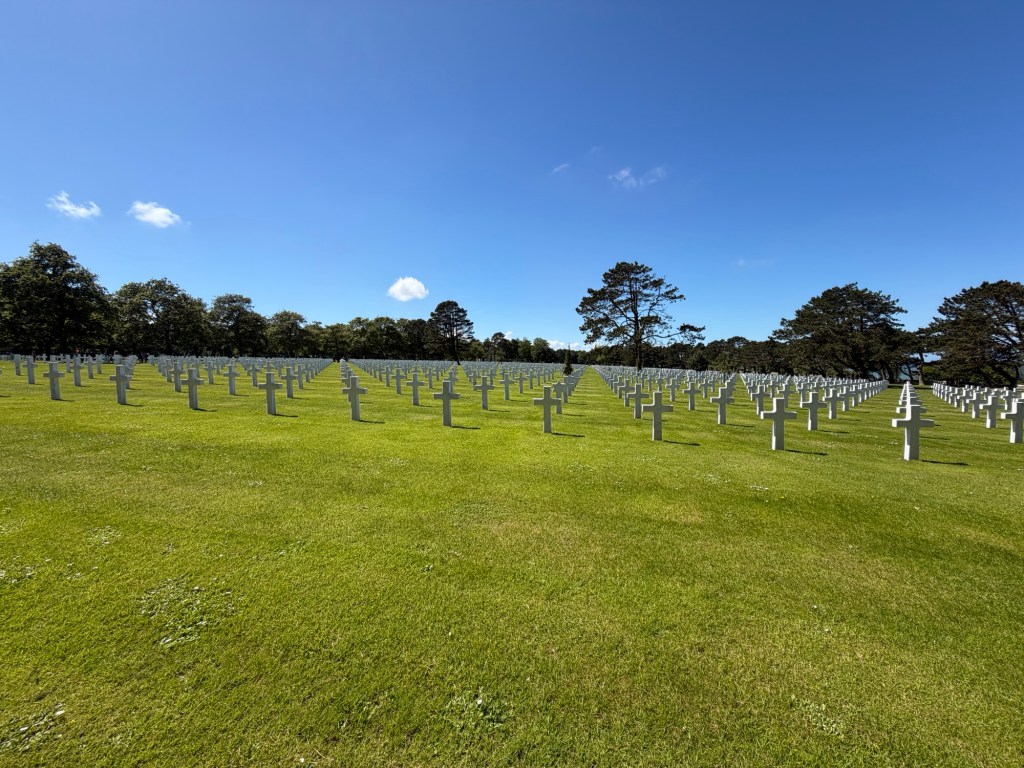
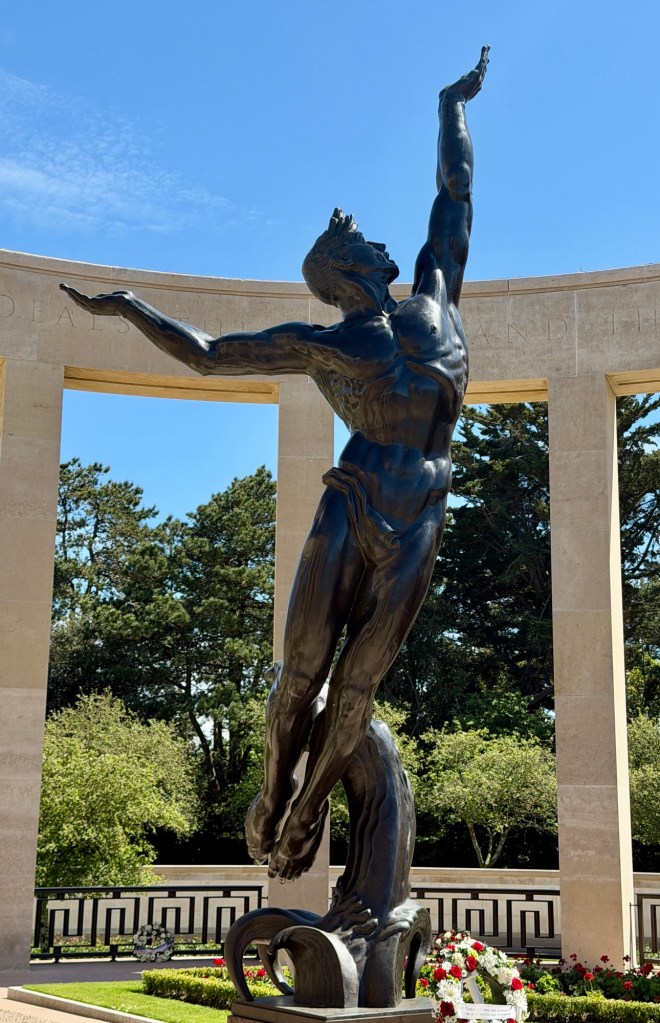
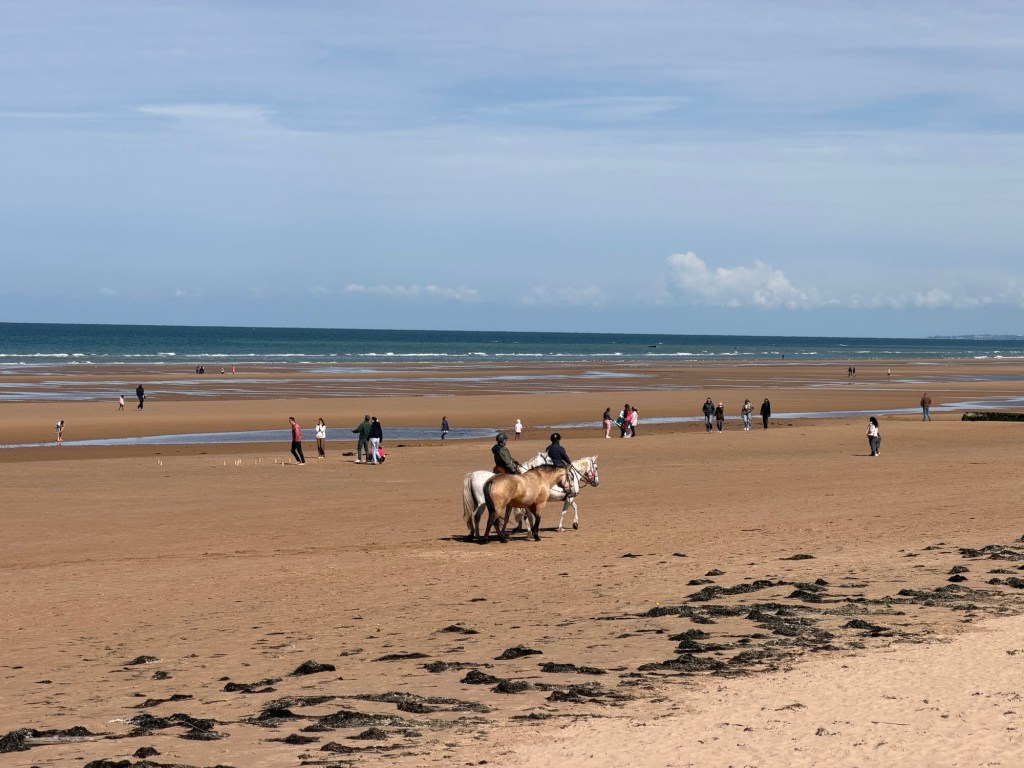
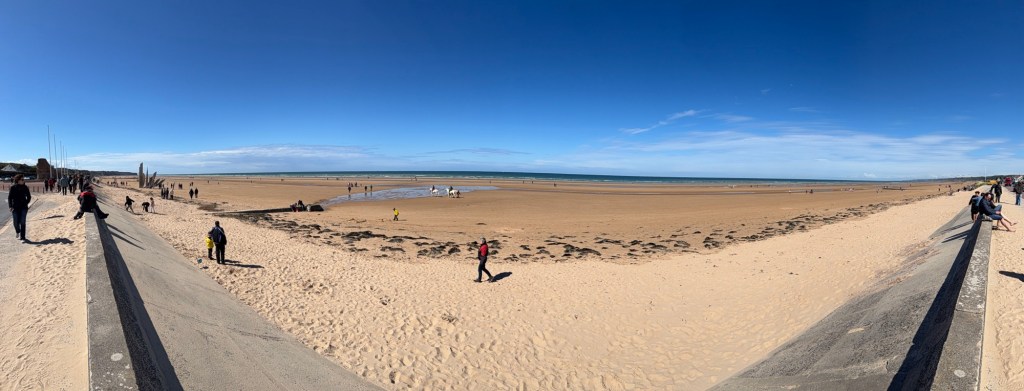
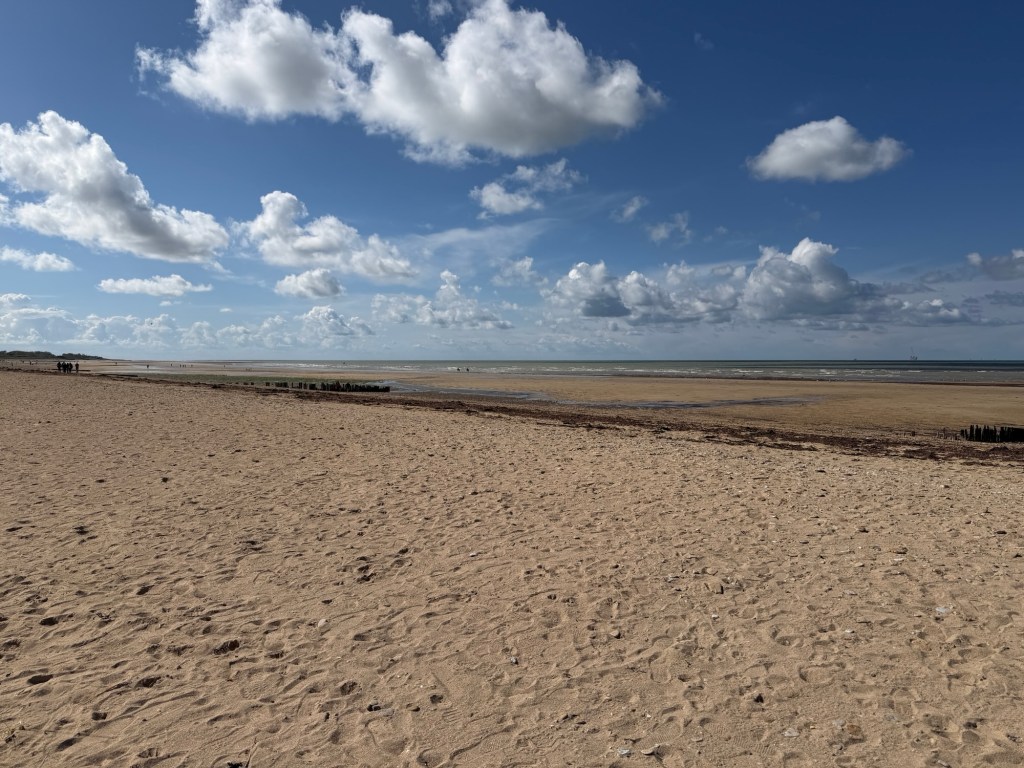
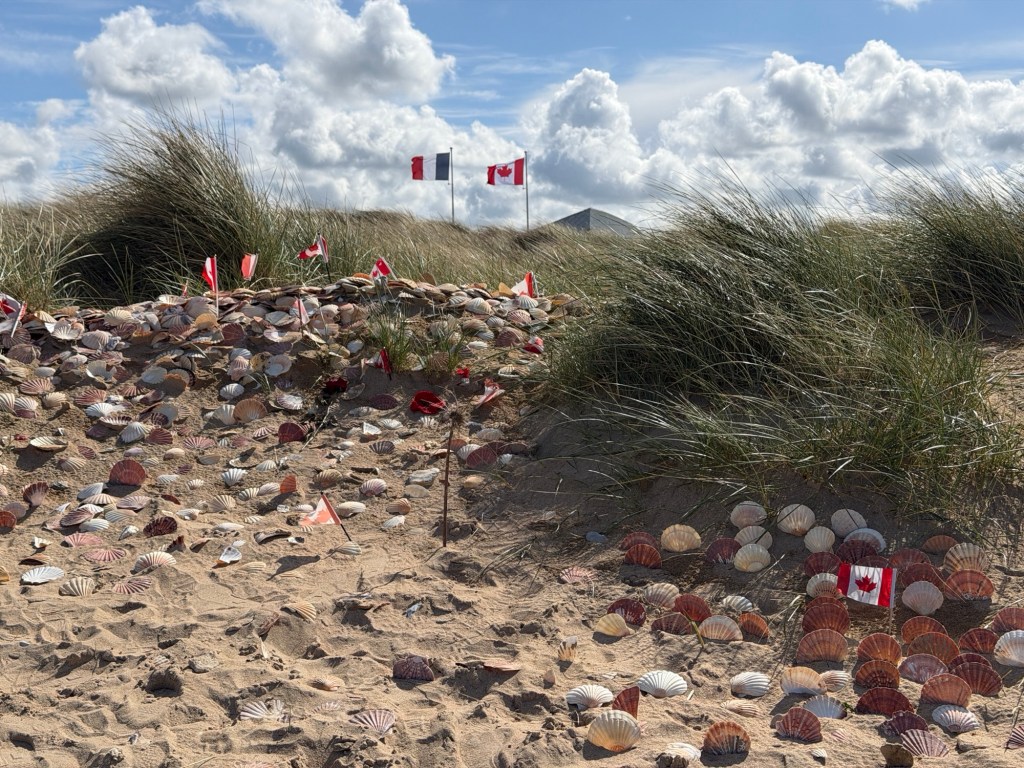
The American cemetery on the terrace above Omaha Beach contains the graves of almost 10,000 men! The land is U.S. territory,

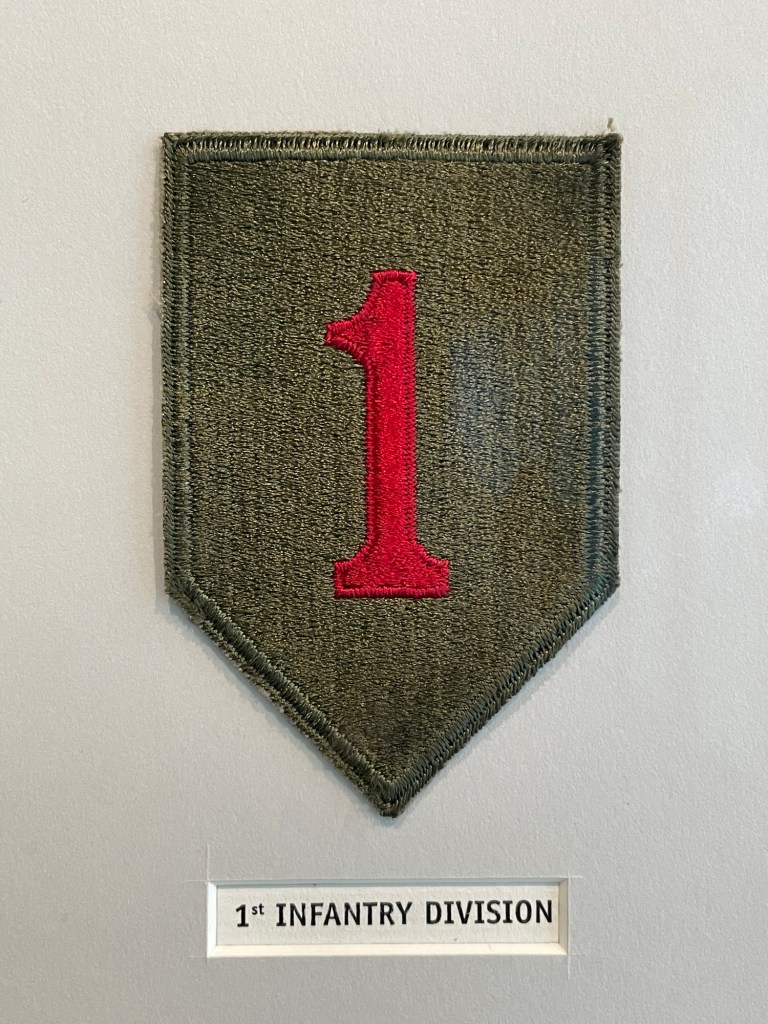
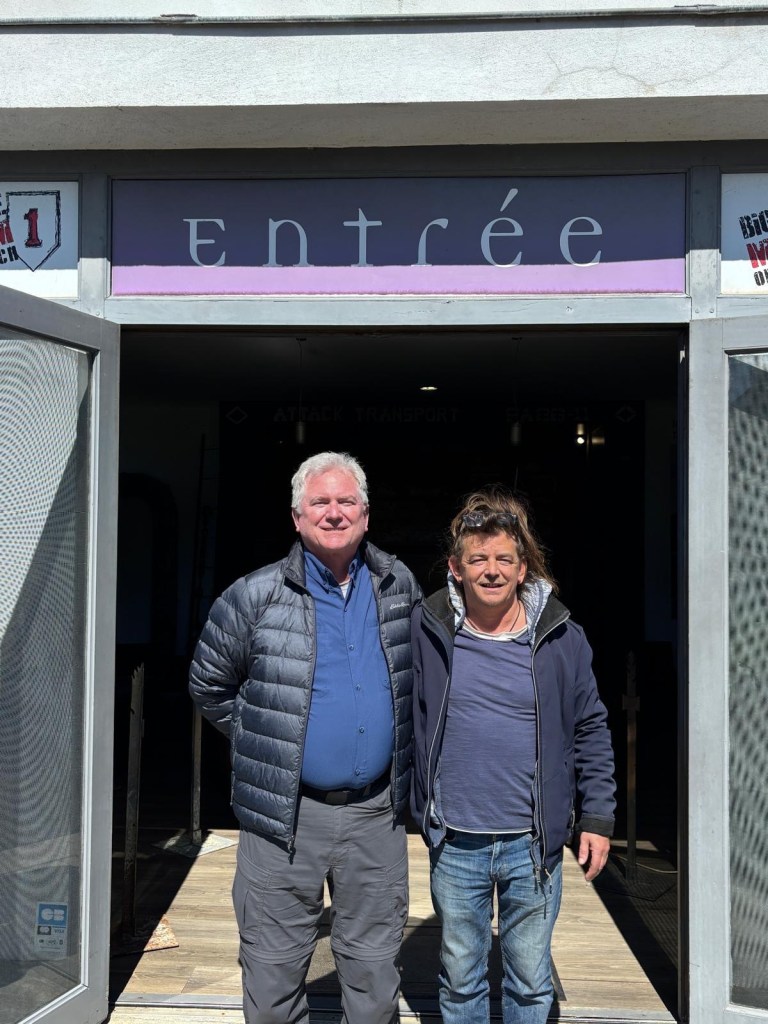
The Big Red One Museum, referring to the U.S. Army First Division, has many artifacts from the D-Day landings on Omaha Beach. These objects were collected by Pierre over decades. Brian’s great uncle George A. Taylor, led the 16th infantry as a Colonel. Pierre gave us a personal tour as he was excited to meet relatives of soldiers who fought in the landings.

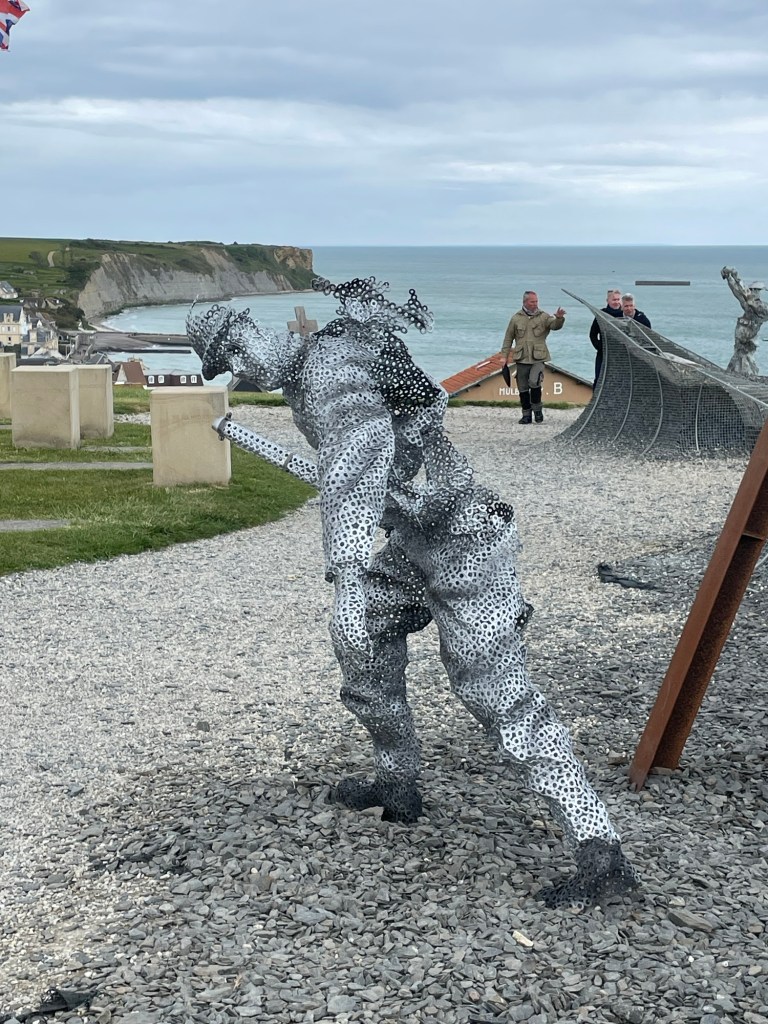
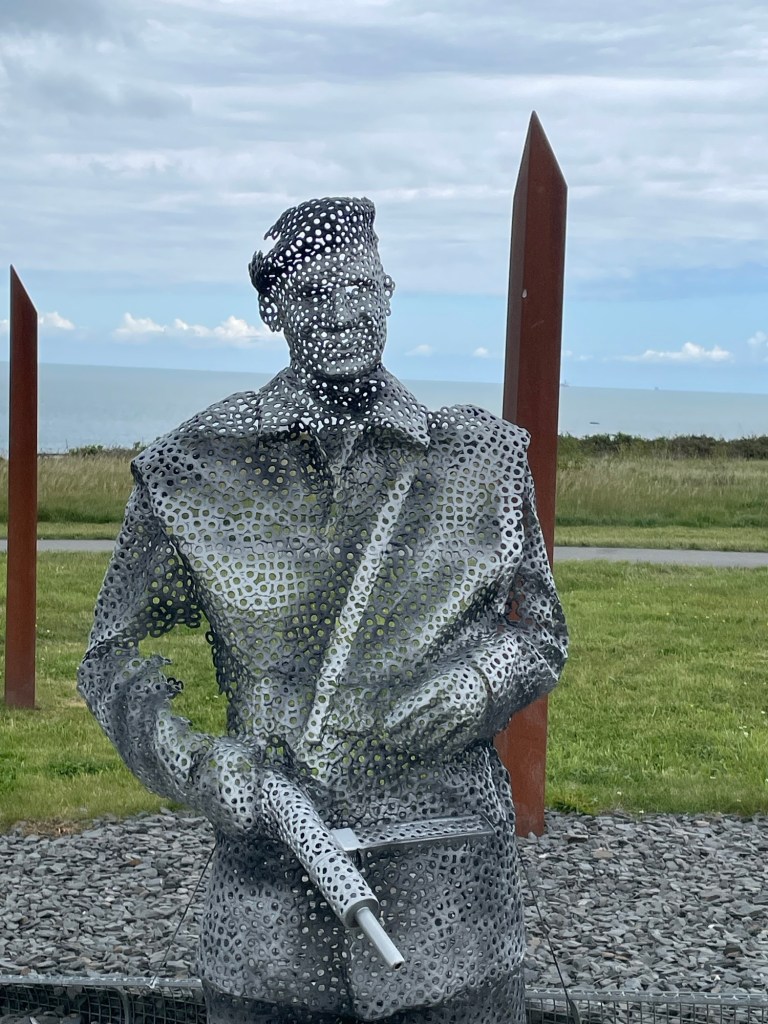
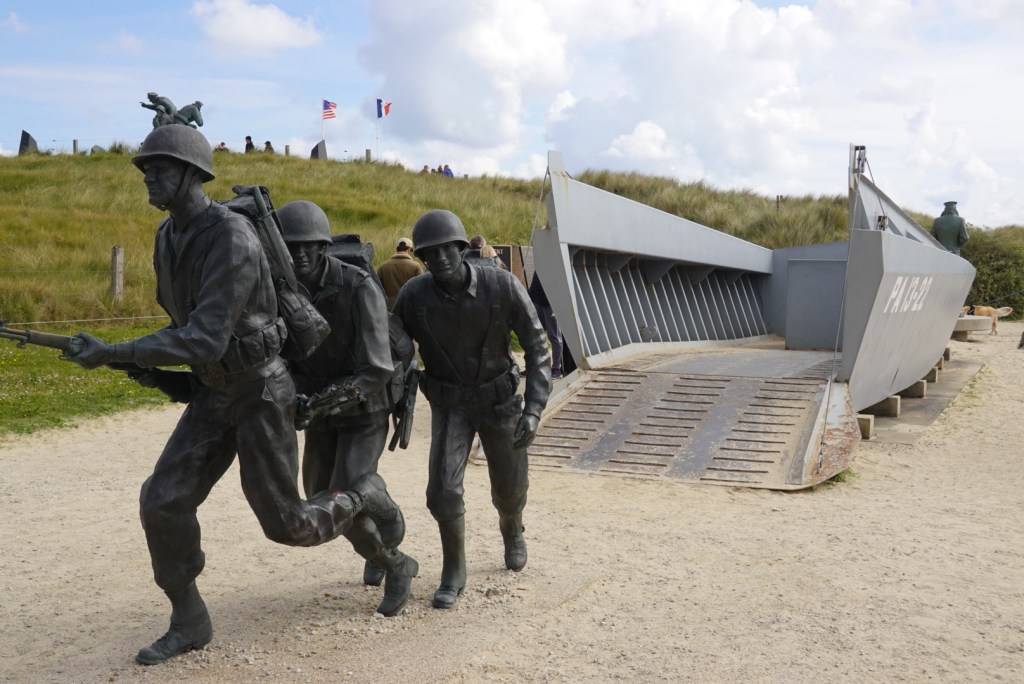
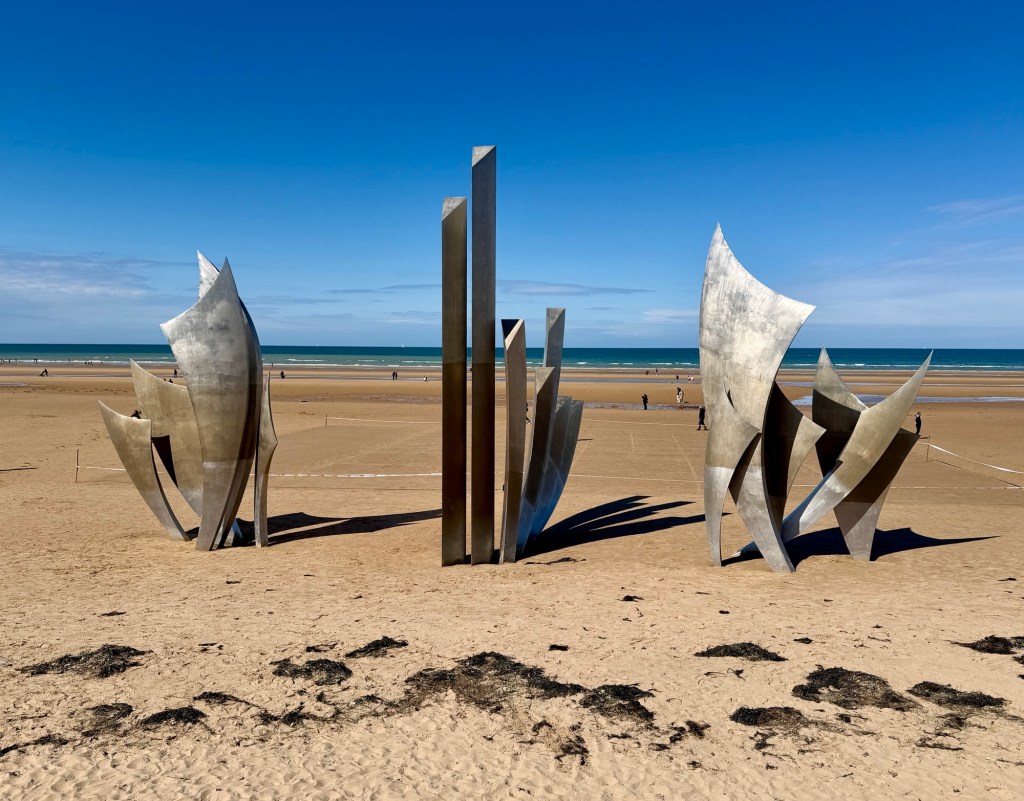
The artist, Anilore Banon writes:

I created this sculpture to honour the courage of these men, sons, husbands and fathers who endangered and often sacrificed their life in the hope of restauring their fredom to the French people.

The sculpture THE BRAVE is made of three elements:

The Wings of Hope

So that the spirit that carried these men on June 6th, 1944 continues to inspire us, reminding us that together it is always possible to change the future.

Rise, Freedom!

So that the example of those who rose against barbarism helps us remain standing up against all forms of inhumanity.

The Wings of Fraternity

So that this surge of brotherhood always reminds us of our responsibility towards others as well as ourselves.

On June 6, 1944, these men were more than soldiers, they were our brothers.

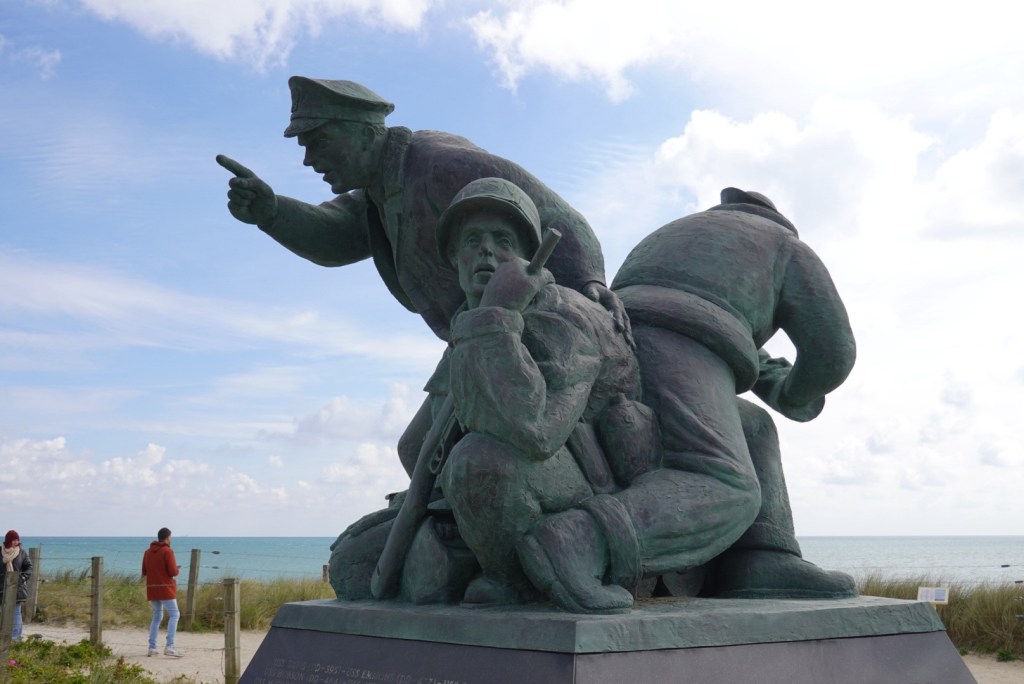
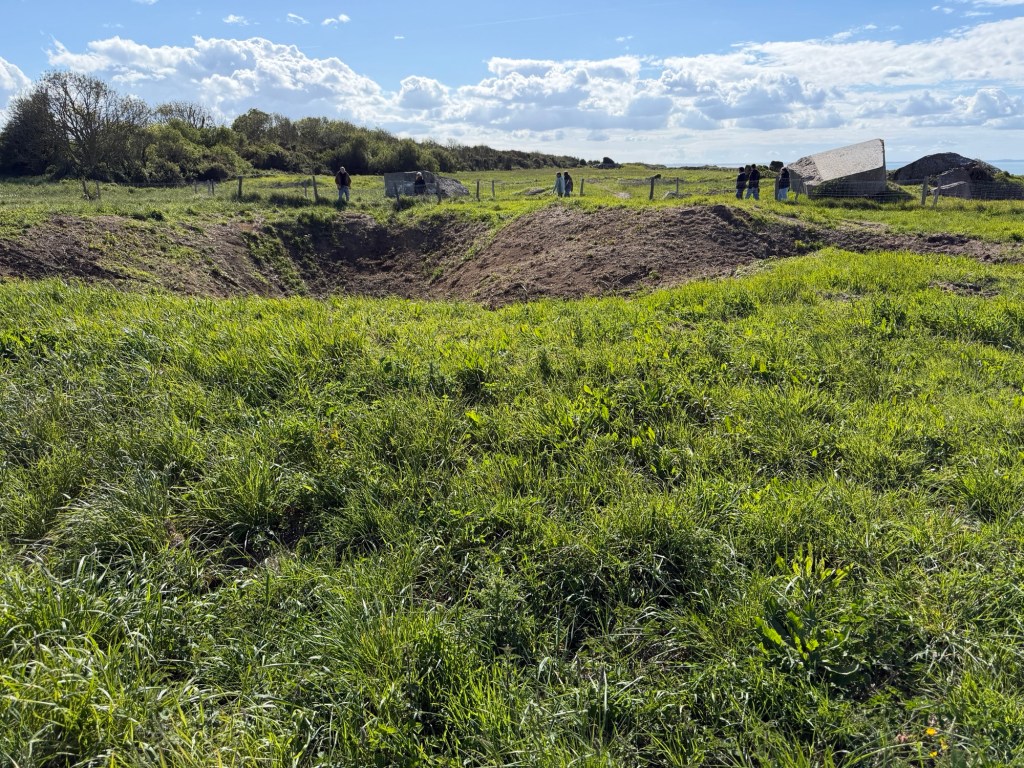
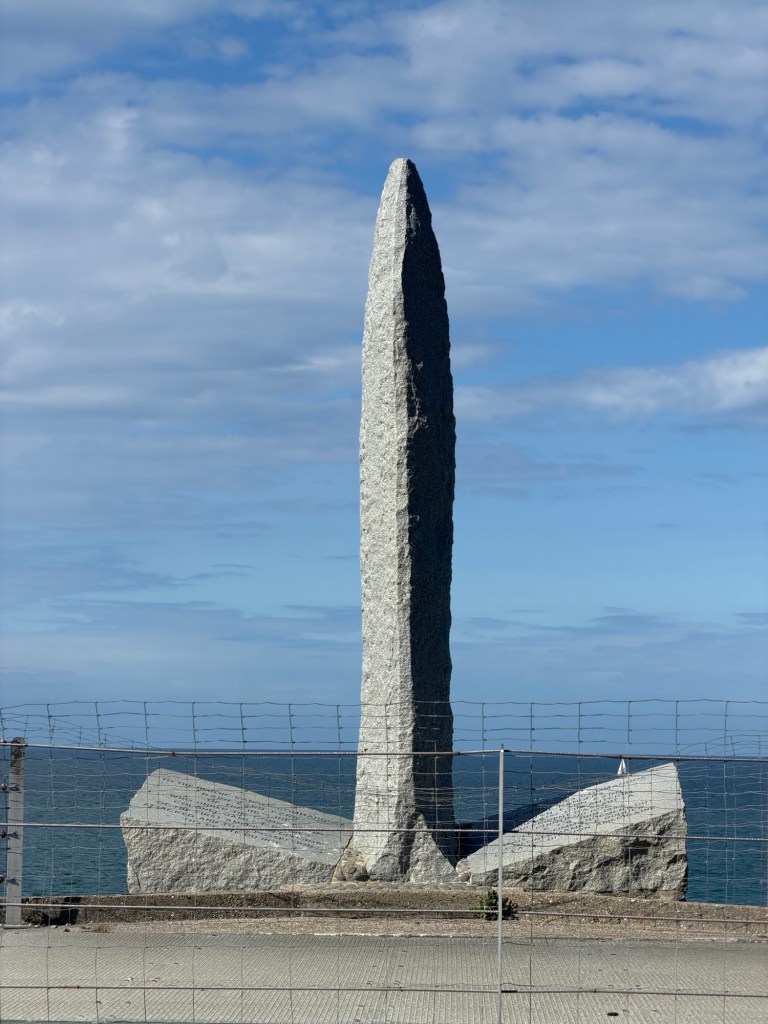
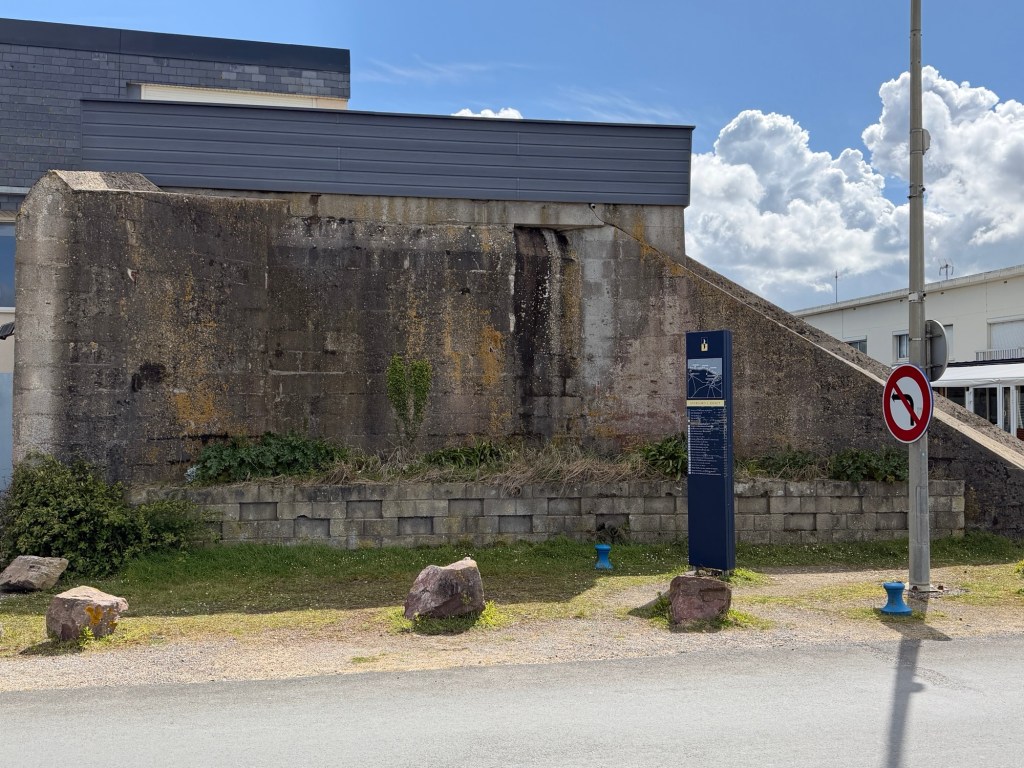
Monument on a bunker at Pointe du Hoc installed by the French to honor the American Second Ranger Battalion.
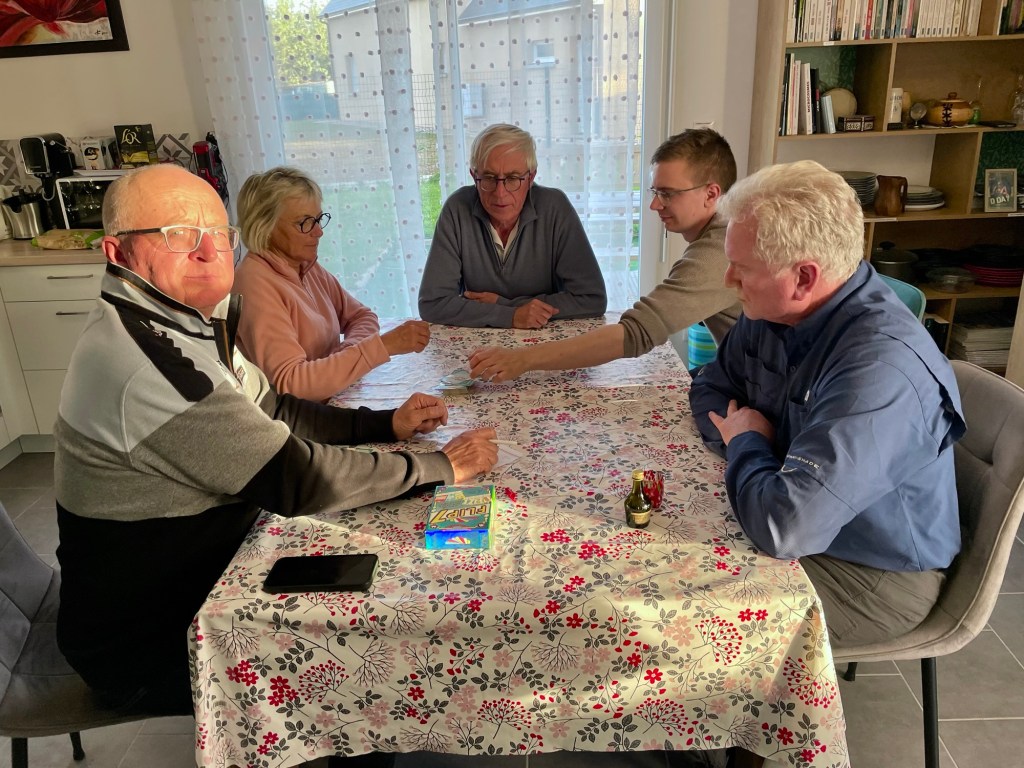
An evening game of Flip7 at Jéromes house to end the day

Lisieux and Cabourg, Sword and Juno beaches on Thursday

We packed in the morning to move to a different location, Marc’ brother’s home.

This morning was important to Clare, because she tried to get to Lisieux twice before, with her mom in 2003 and much later with her mom and daughter. The first was foiled by a transportation strike in France, the second because her mom got sick. She’s fine now, over 100 years old.

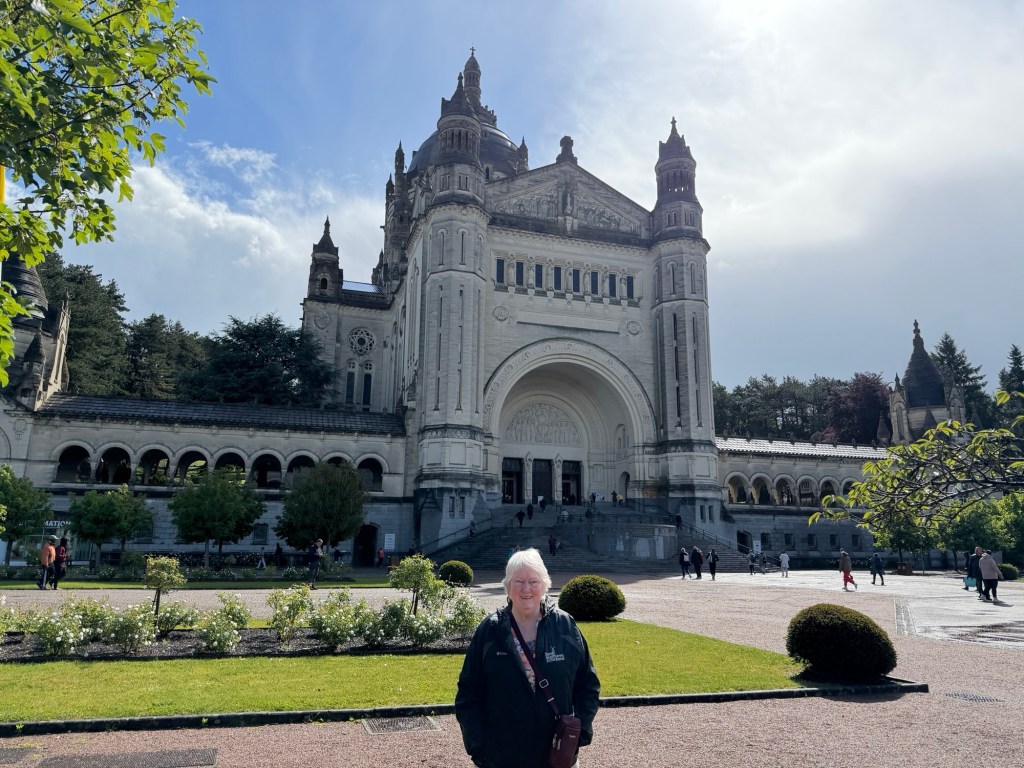
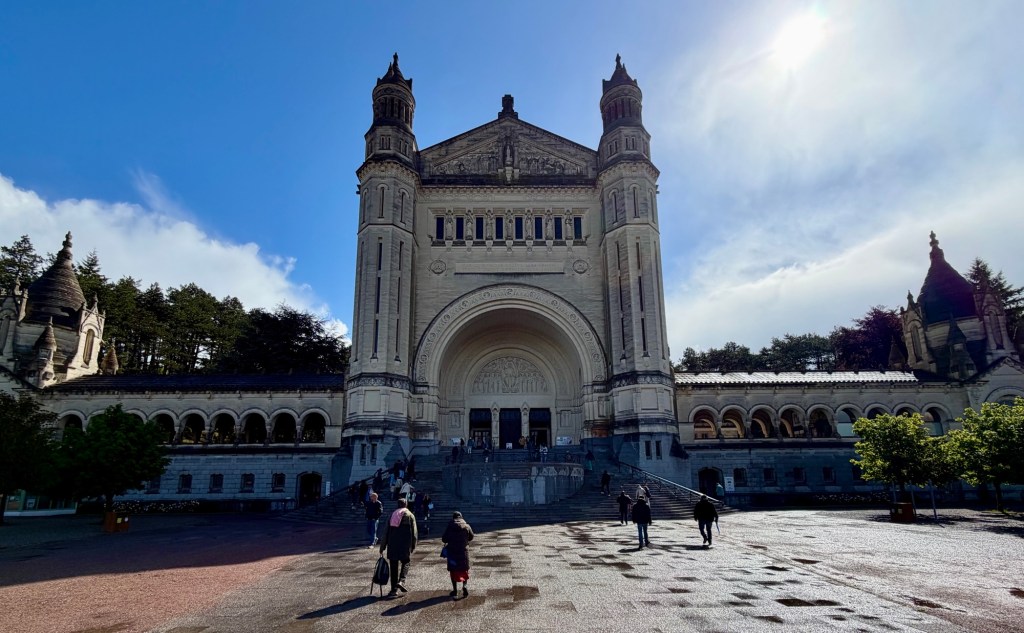
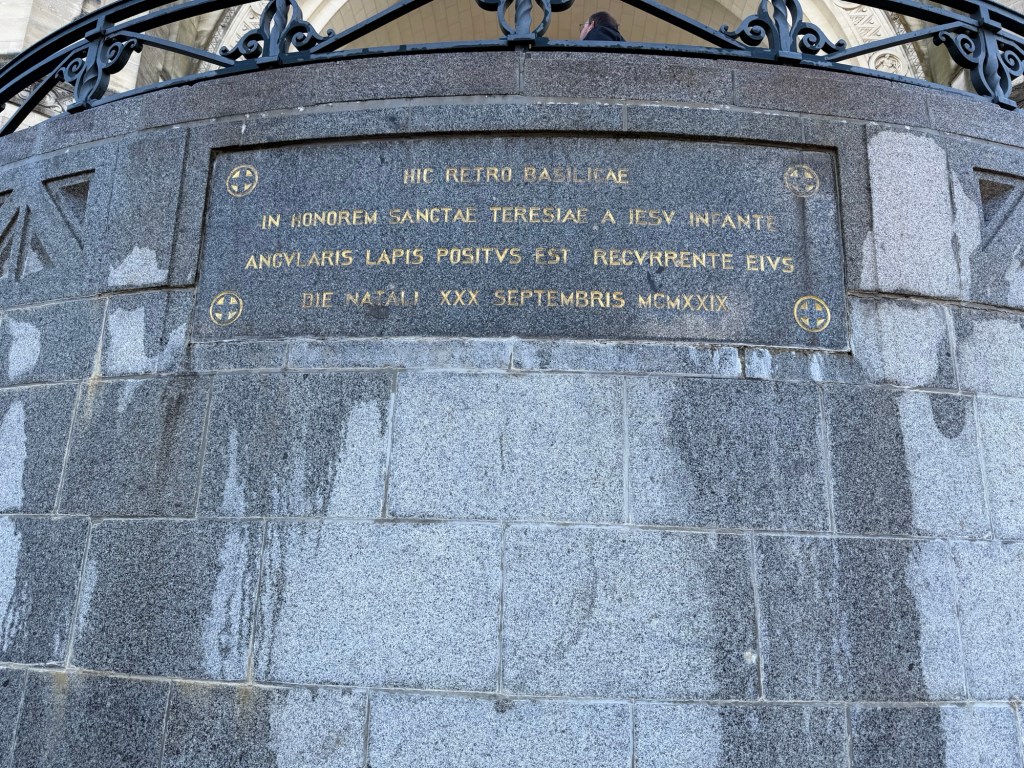
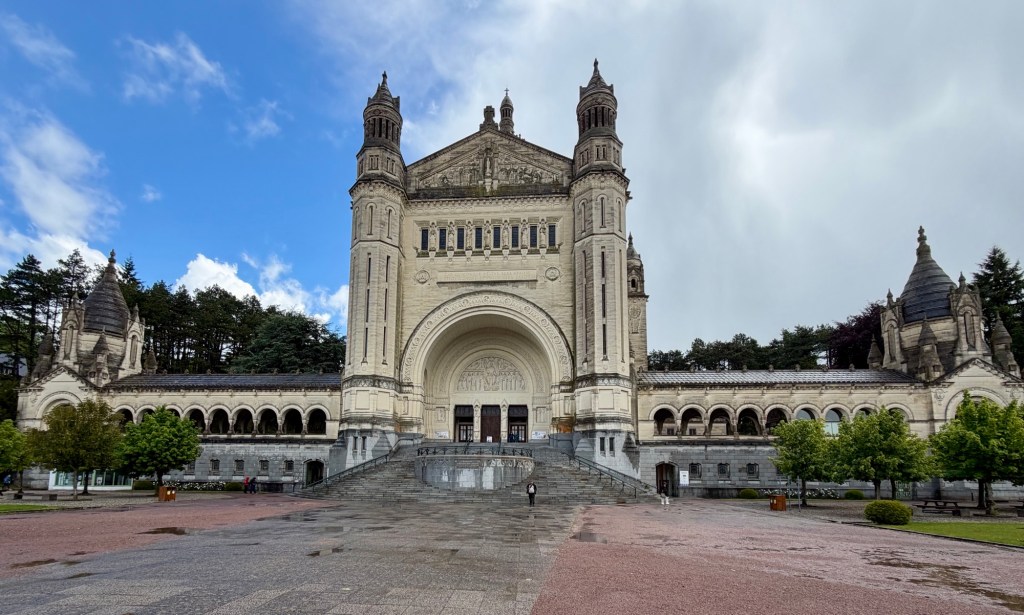
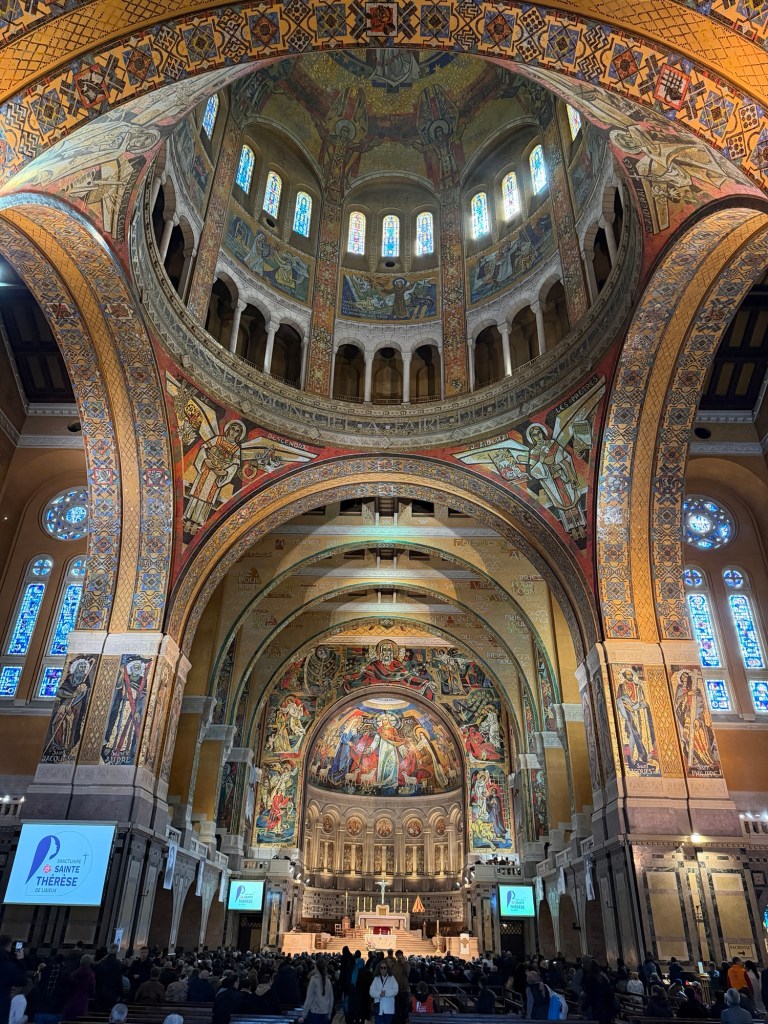
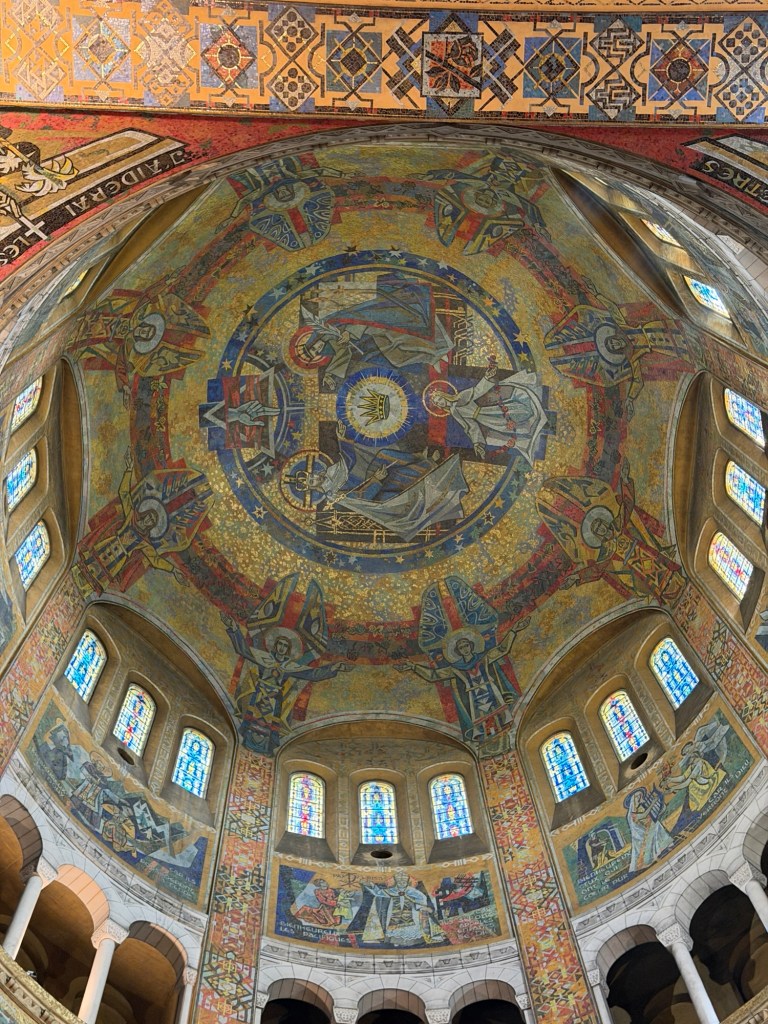
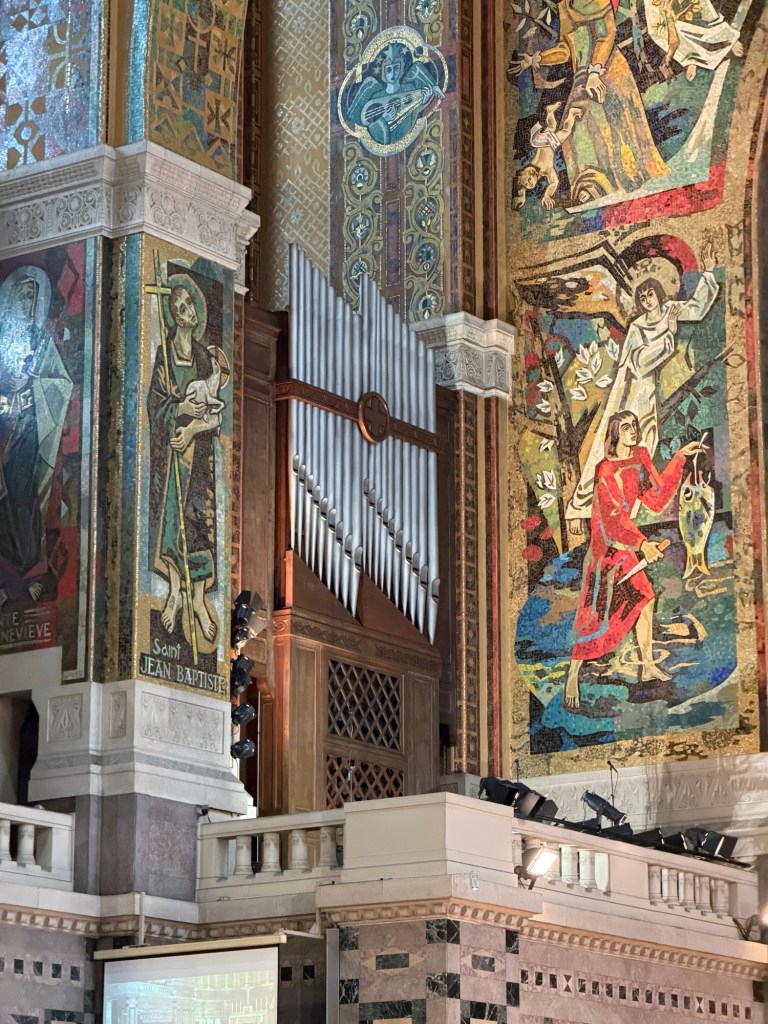
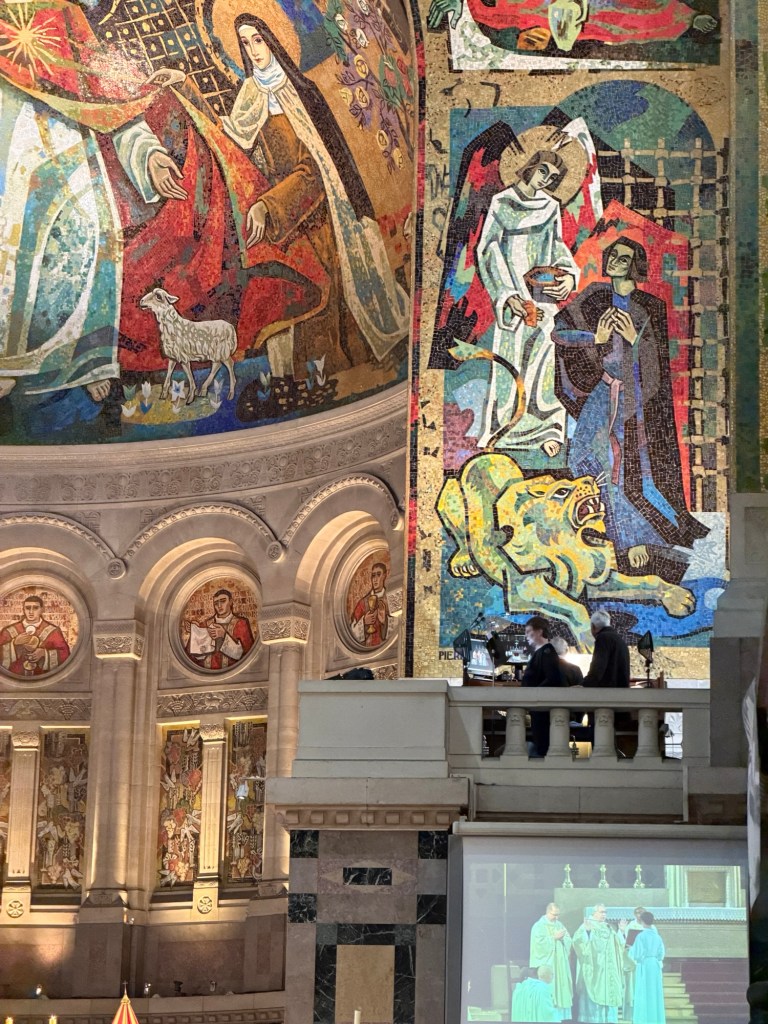
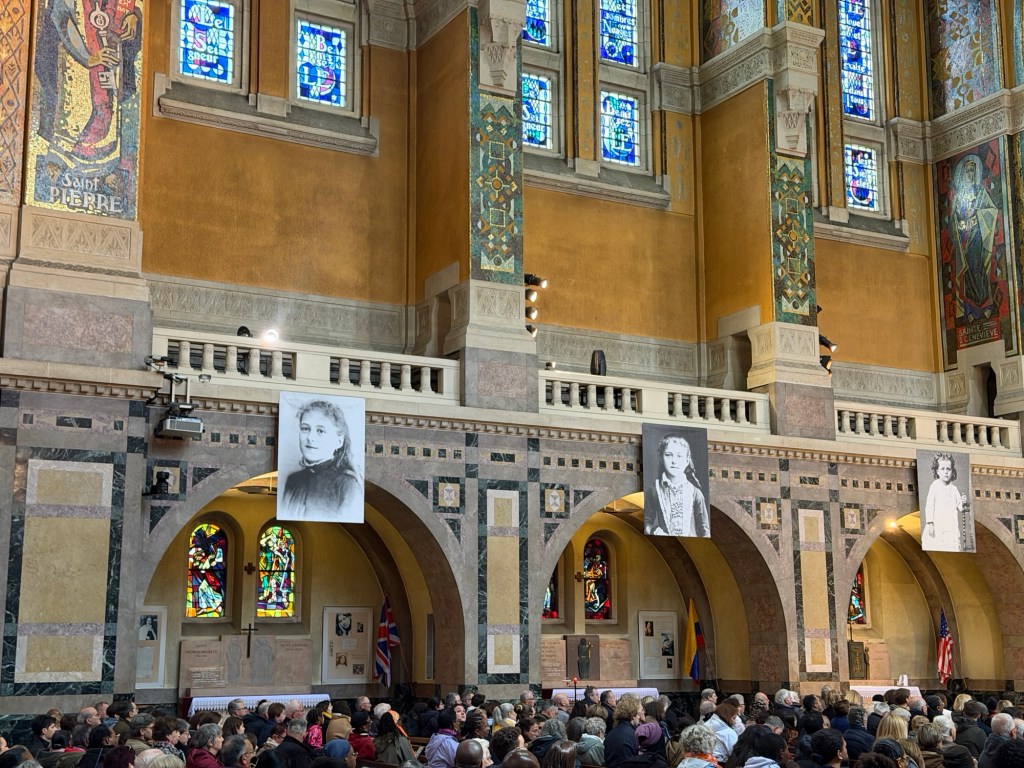
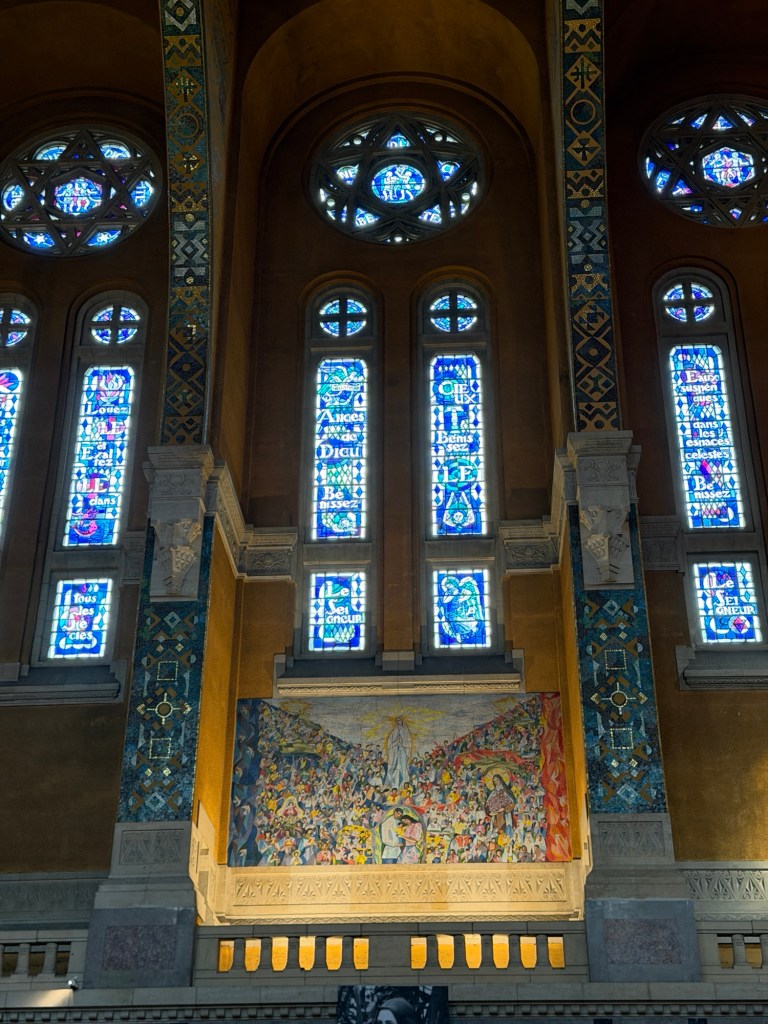
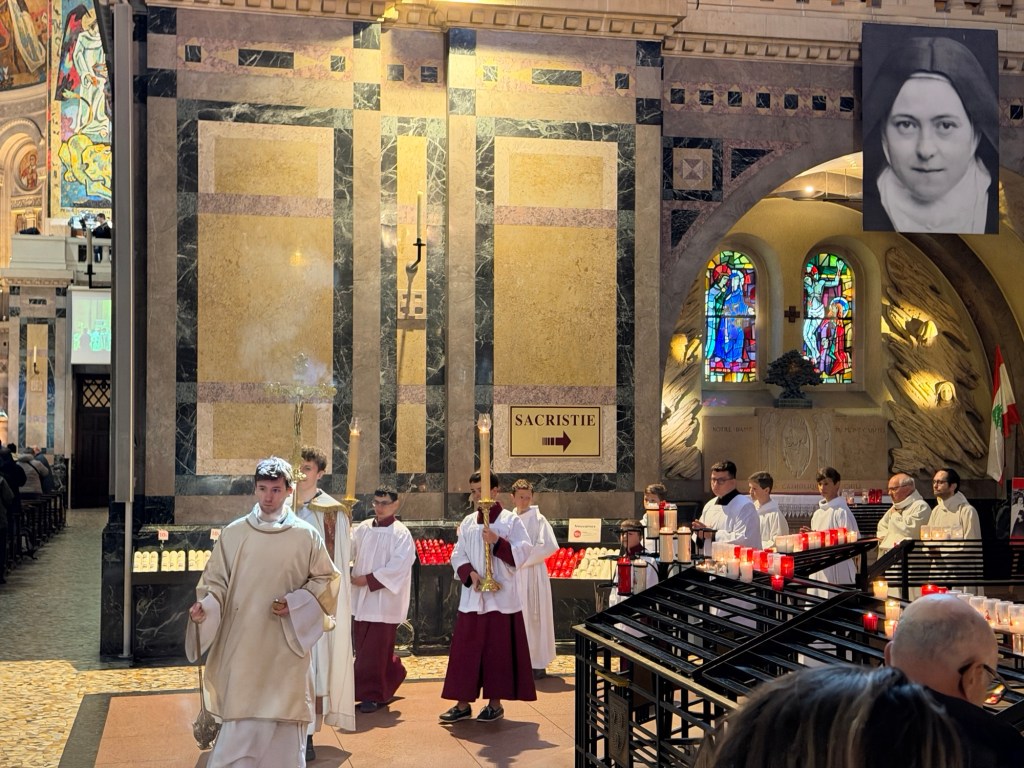
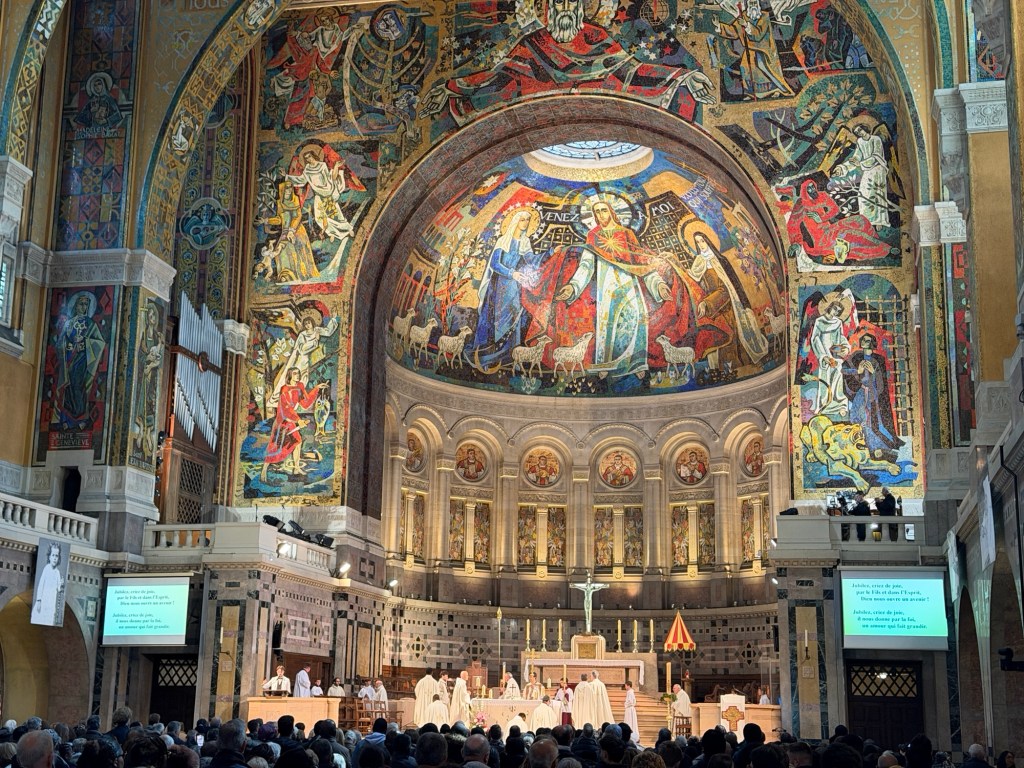
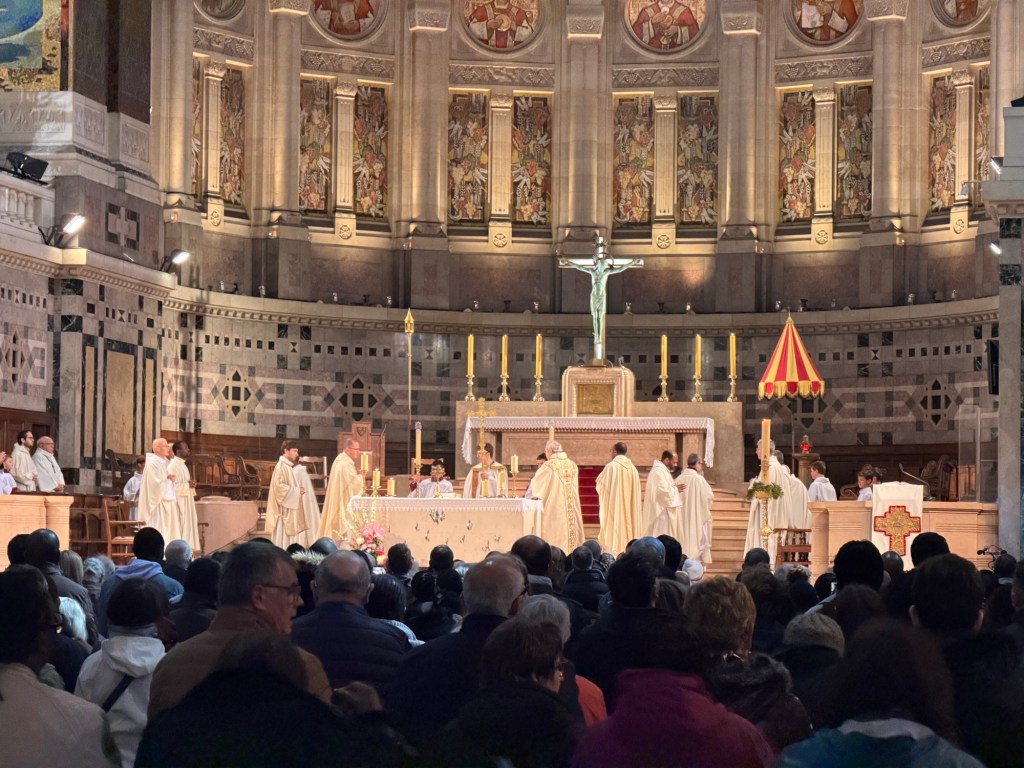
The Basilica du St Thérèse is magnificent, big and bright inside.
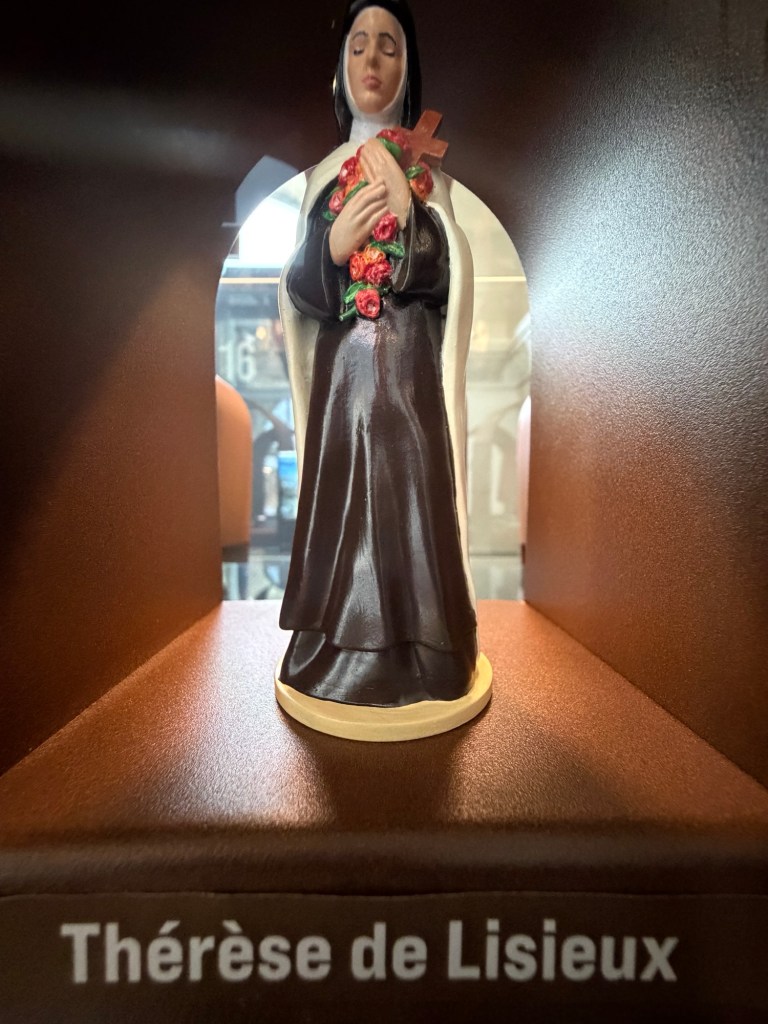
We learned about St. Thérèse and her life in Lisieux. She had four older sisters, all of whom also became nuns at this convent. Thérèse was the youngest. Although she only lived for 24 years, she was well known for writing prayers that people liked to say and distributing hope and flowers in equal measure.

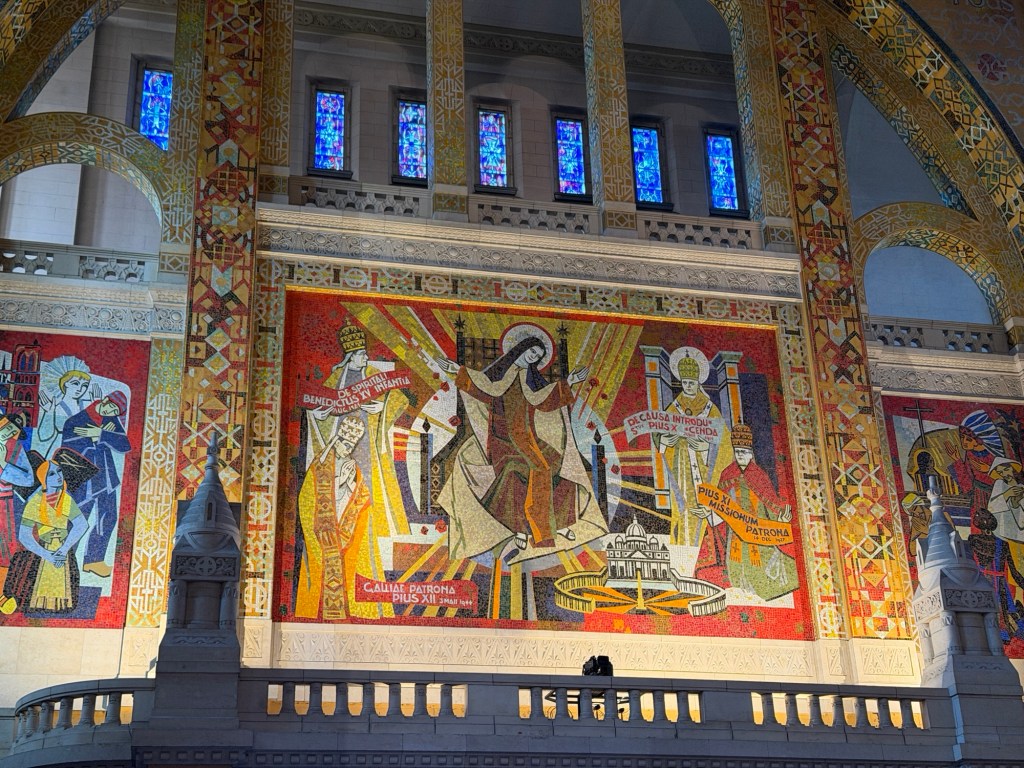
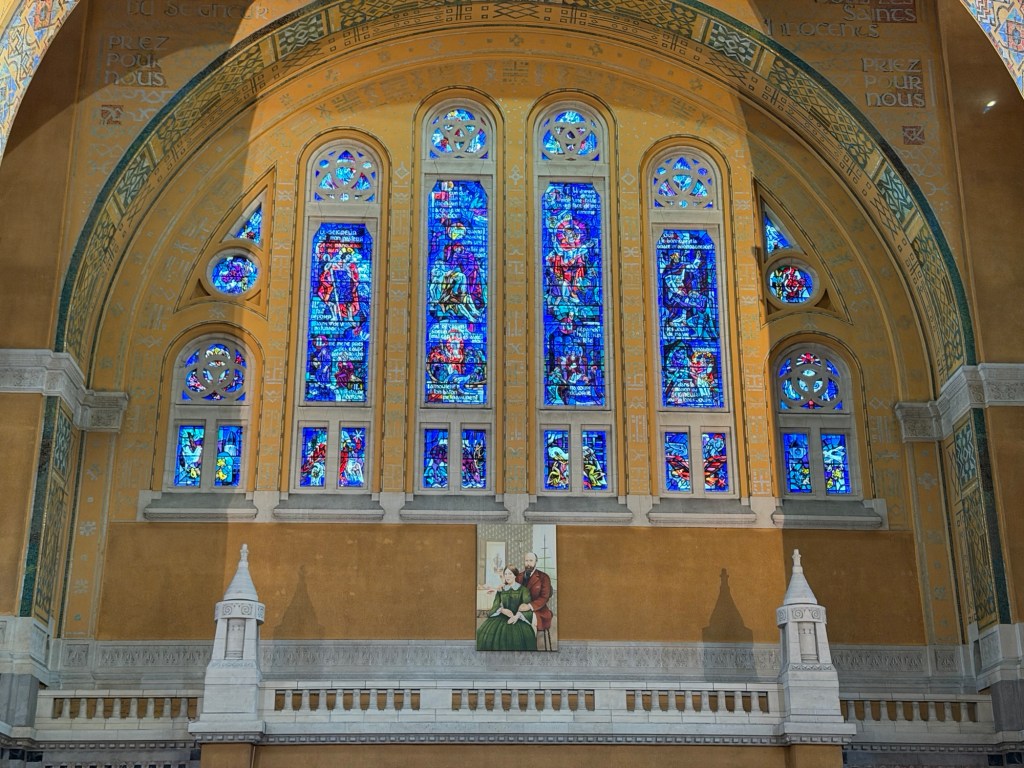
The pictures don’t give the scale of the brightness inside. The colorful mosaics and stained glass added to the beauty.
Seeing this large Basilica dedicated to a woman felt right, somehow. Celebrating life is good for us all.

We were still inside when a mass started, so we stayed for a while. The mass was held on this day because it was Ascension Day, a holiday in France, of course this would affect the number of visitors at D-Day sites over the 4-day weekend.
There was an adjacent museum with dioramas depicting events in Thérèsa’s life, including figurines of many saints.

Now, we start on our exploration of the WWII history of this area. We begin in the eastern part, working our way west over the next few days. A big goal,later, is to learn more about Brian’s mom’s uncle, Brian’s Grand Uncle George A. Taylor, who participated in the D Day events of June 6, 1944.

Driving to Cabourg, on the coast, we were glad that the rain and hail occurred while we were inside the basilica and museum.

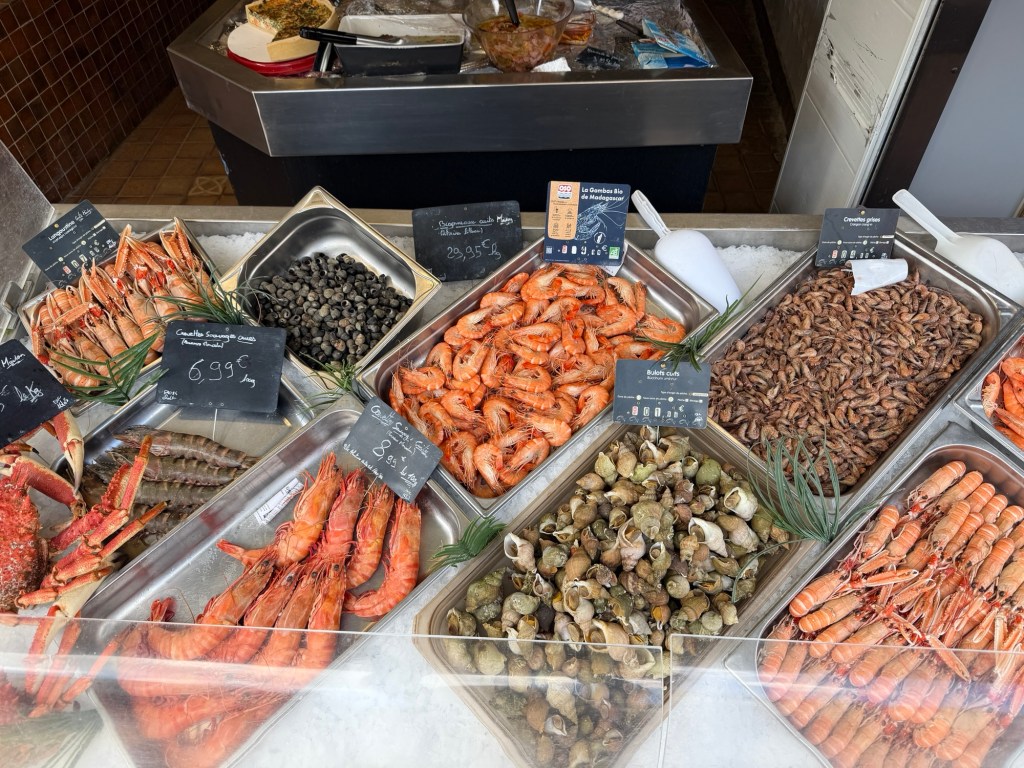
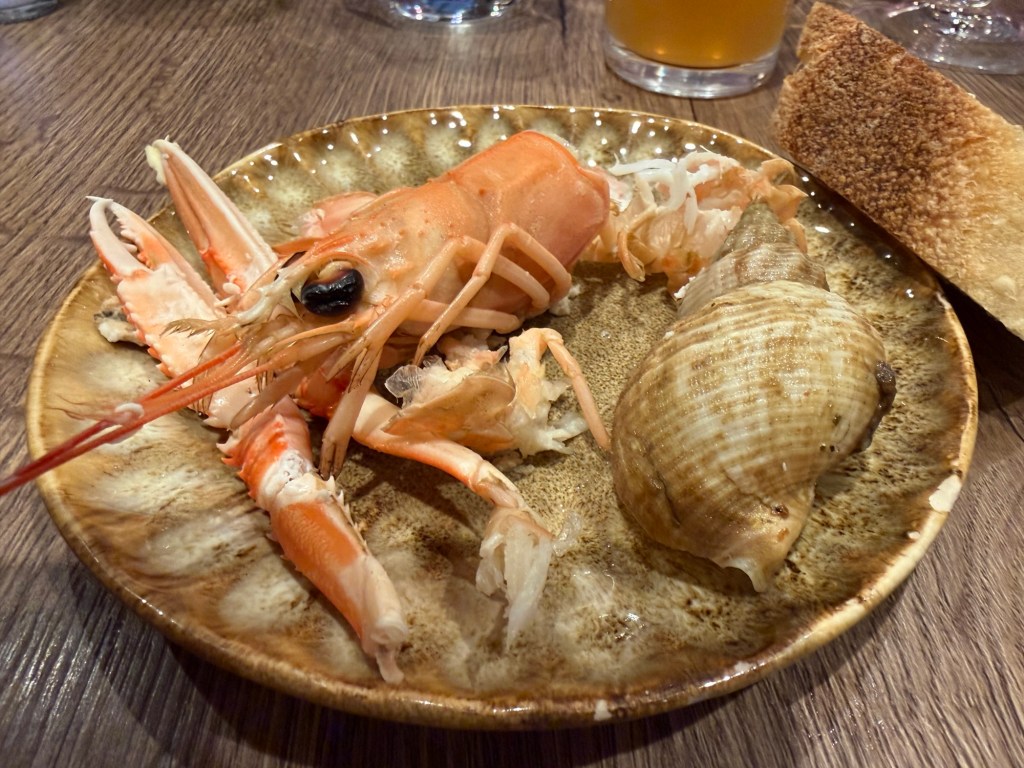
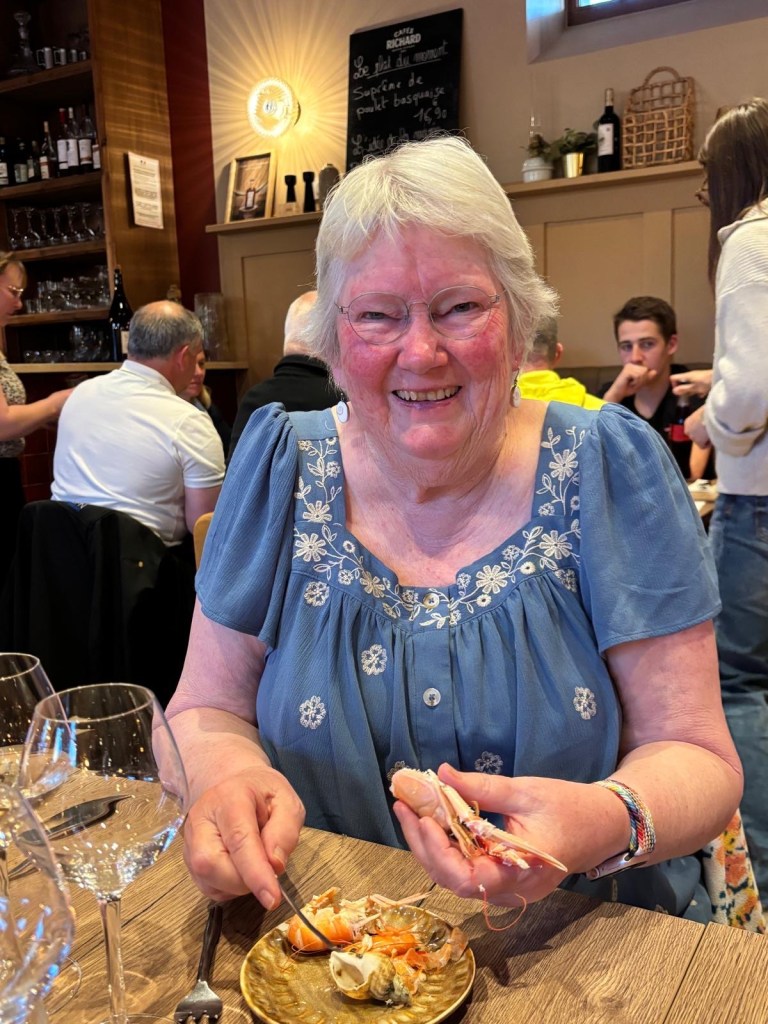
Fruits de mer

We now begin visiting the D-Day sites in Normandy, guided by Marc and Joëlle, as well as Marc’s brother, Jérome. Of course we will also be observing the countryside and villages. We begin in Ouistreham.
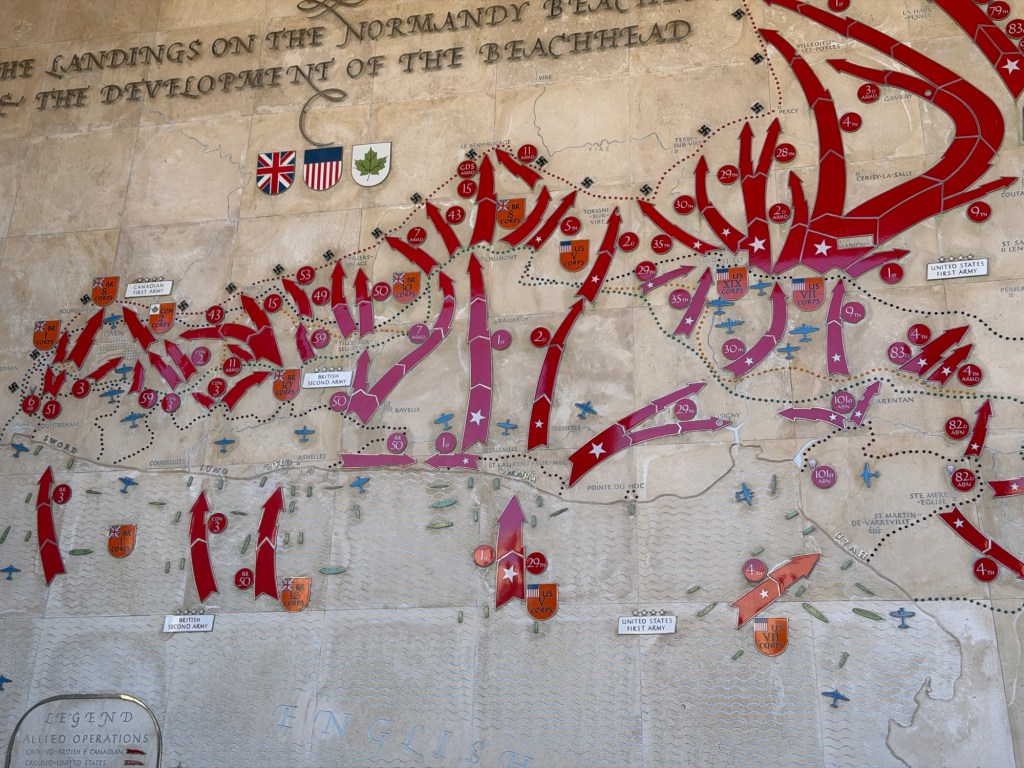
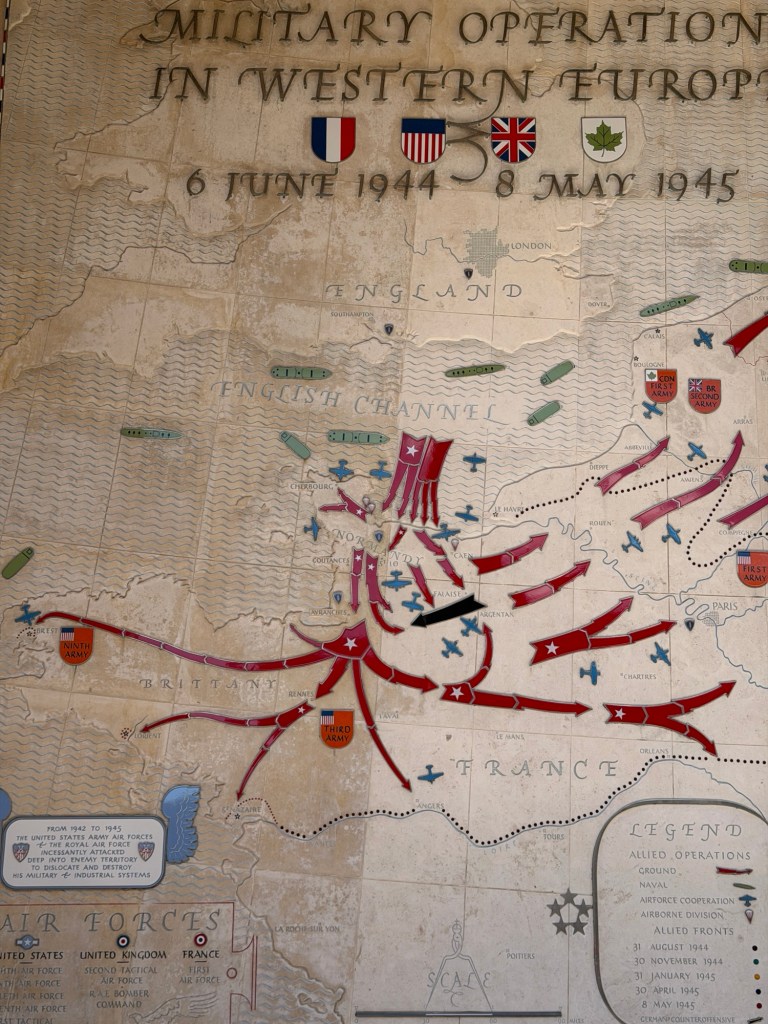
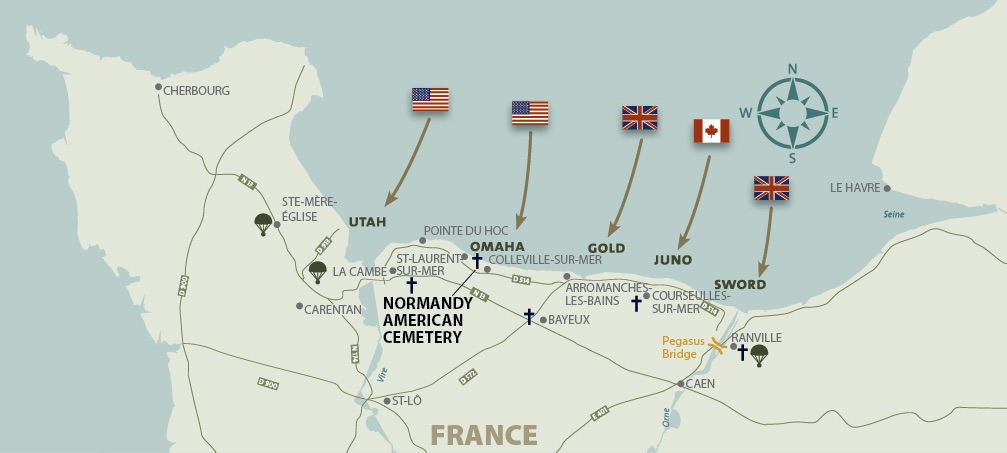
Map of the major sites of D-Day landings

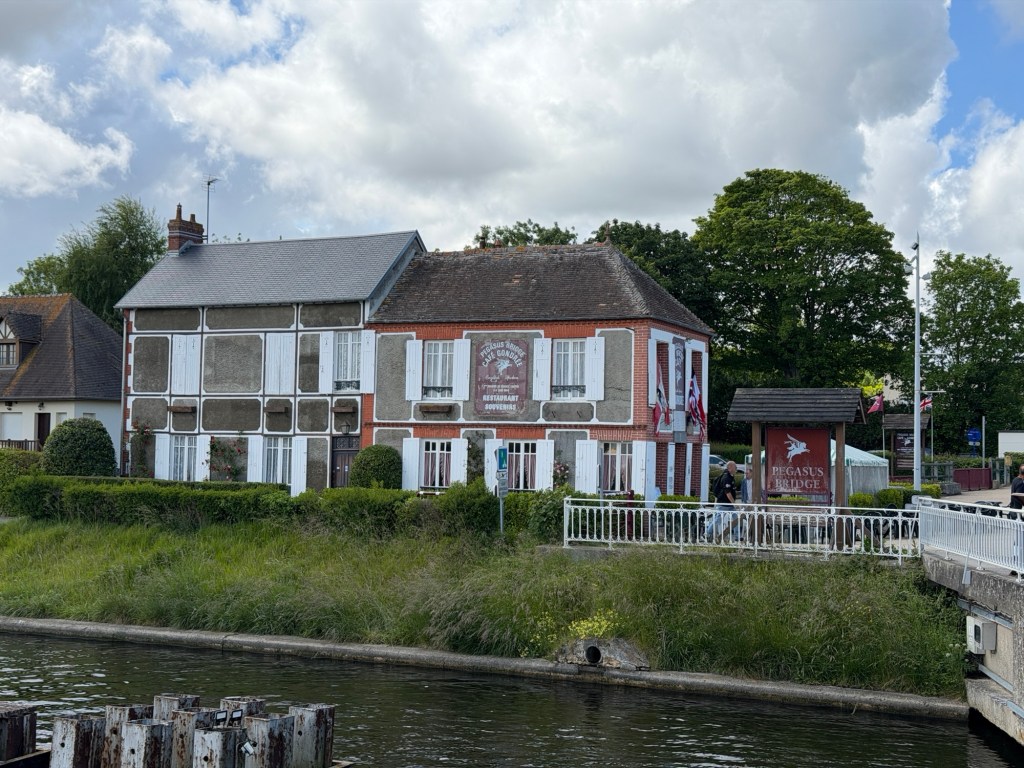
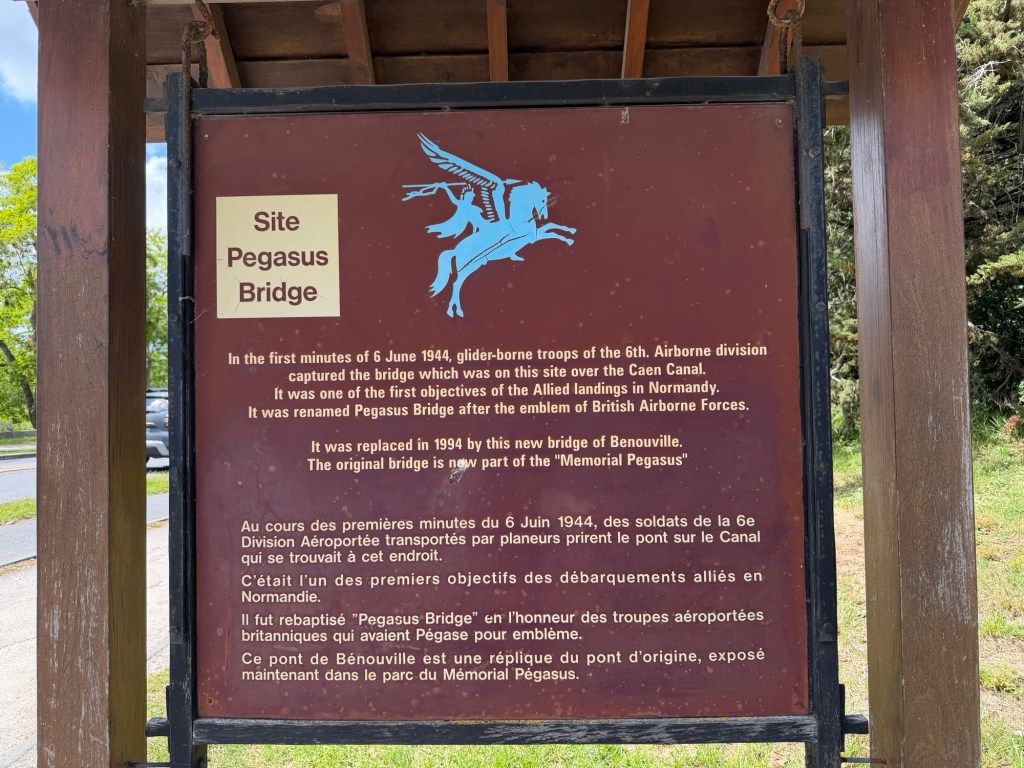
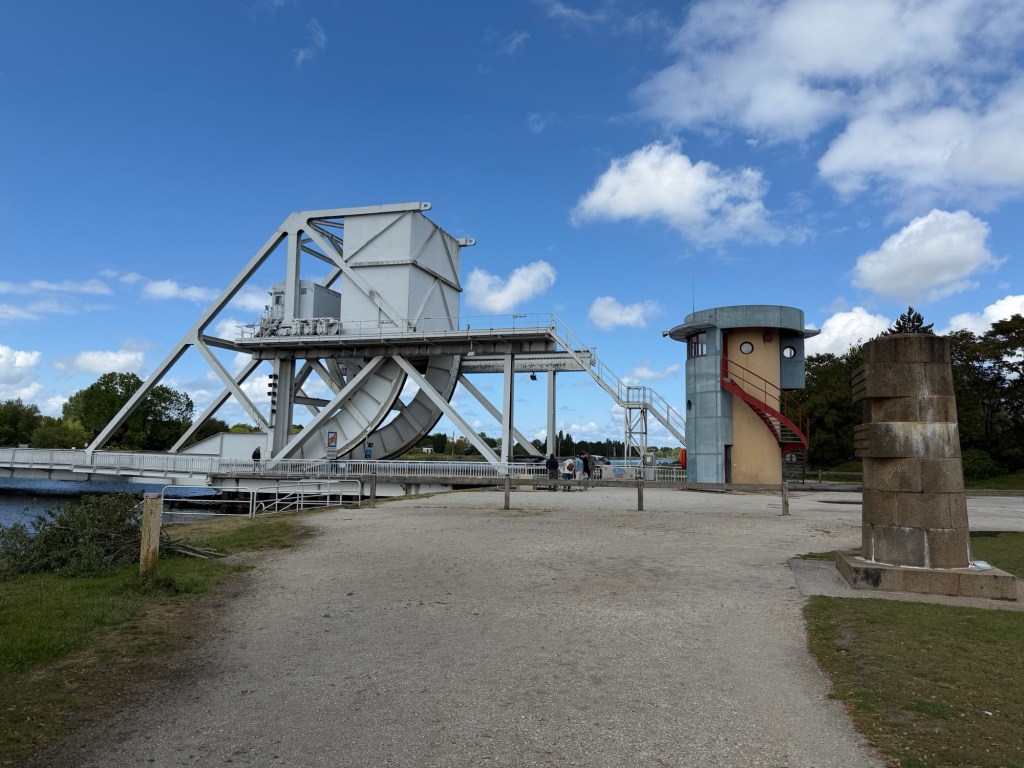
Securing the Pegasus bridge facilitated the landing of British troops on nearby Sword Beach.

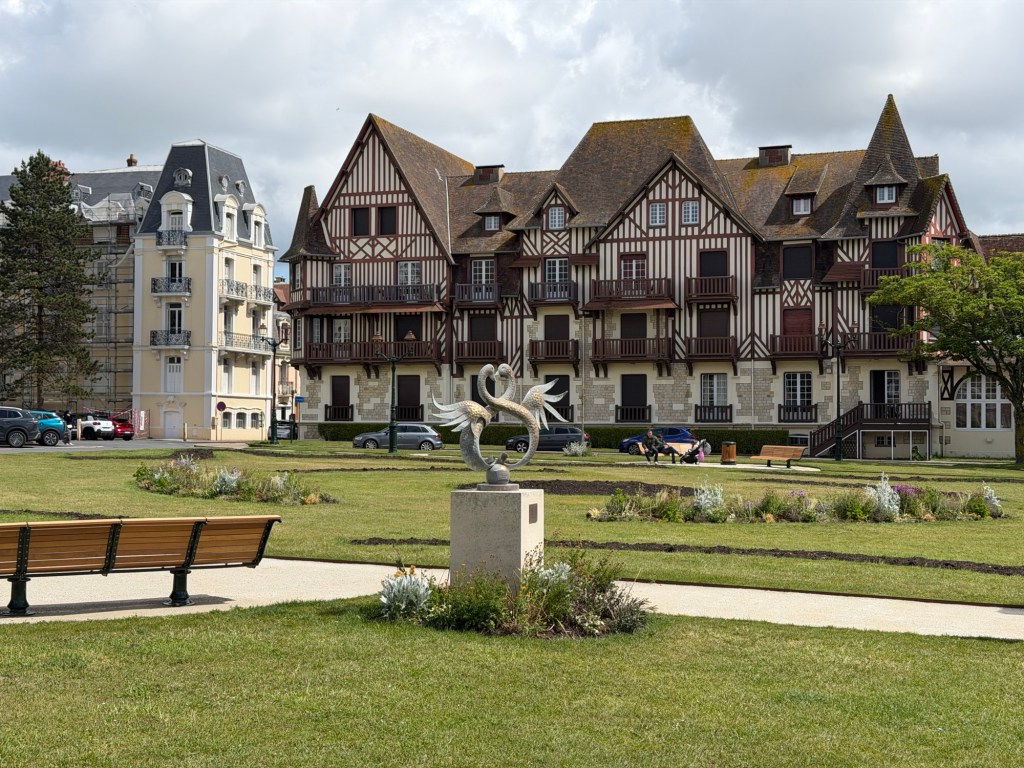
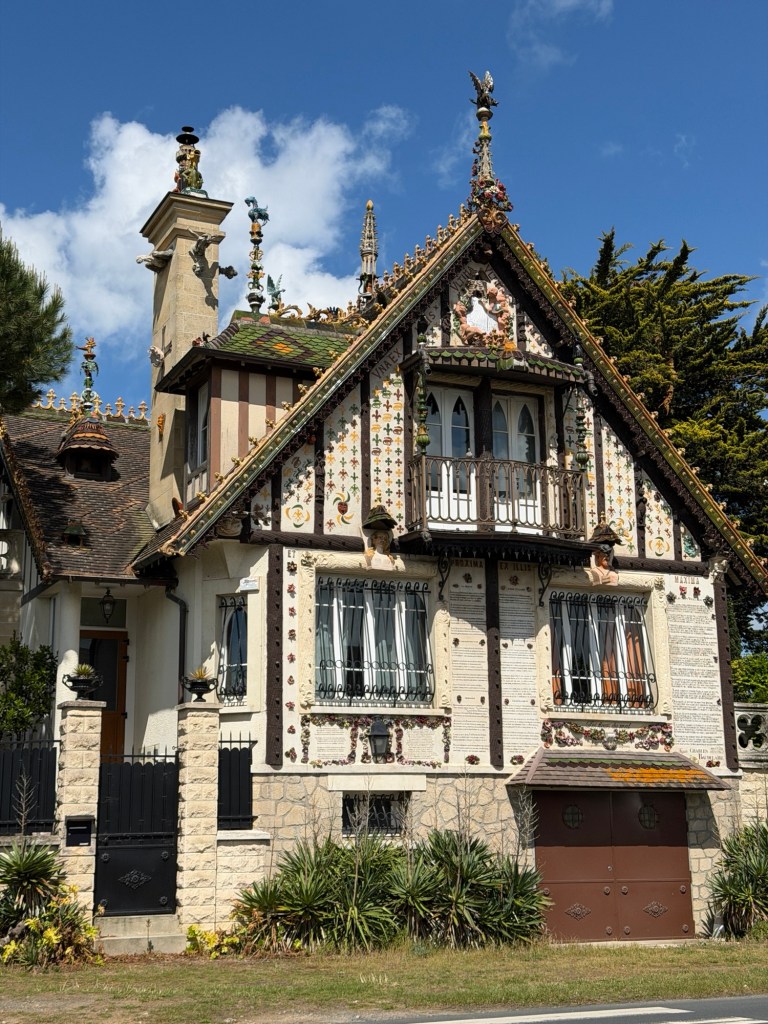
A few blocks from Sword Beach, Marc found this old, decorative house because there was an Earthcache to conquer!
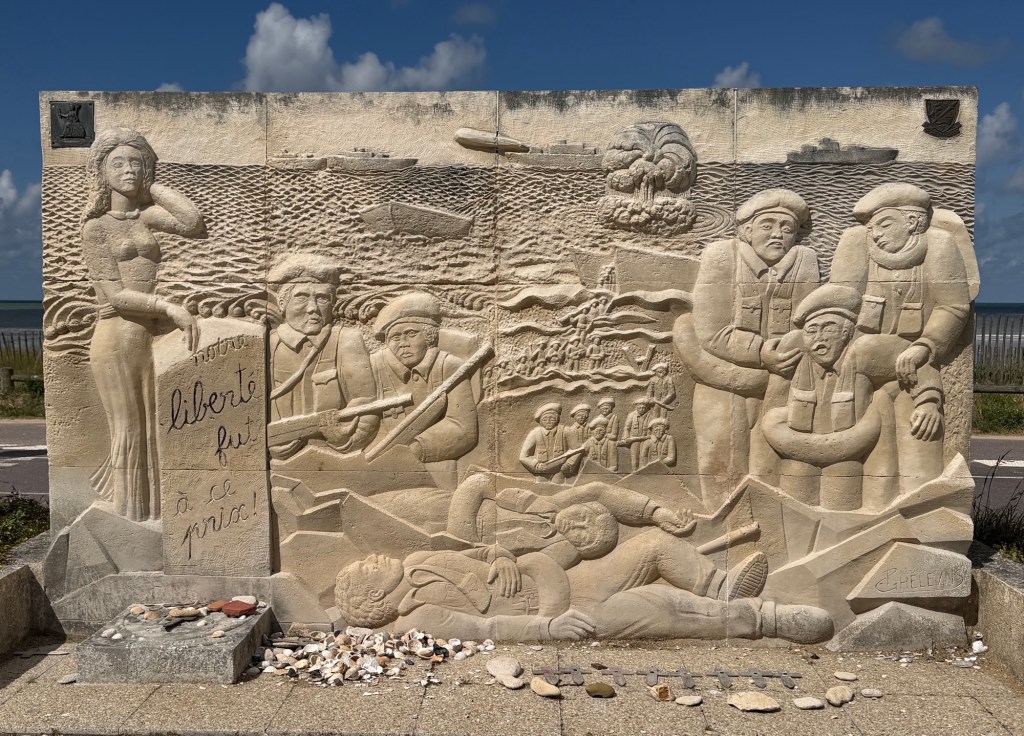
Monument dedicated to British Marines at Lion-sur-mer

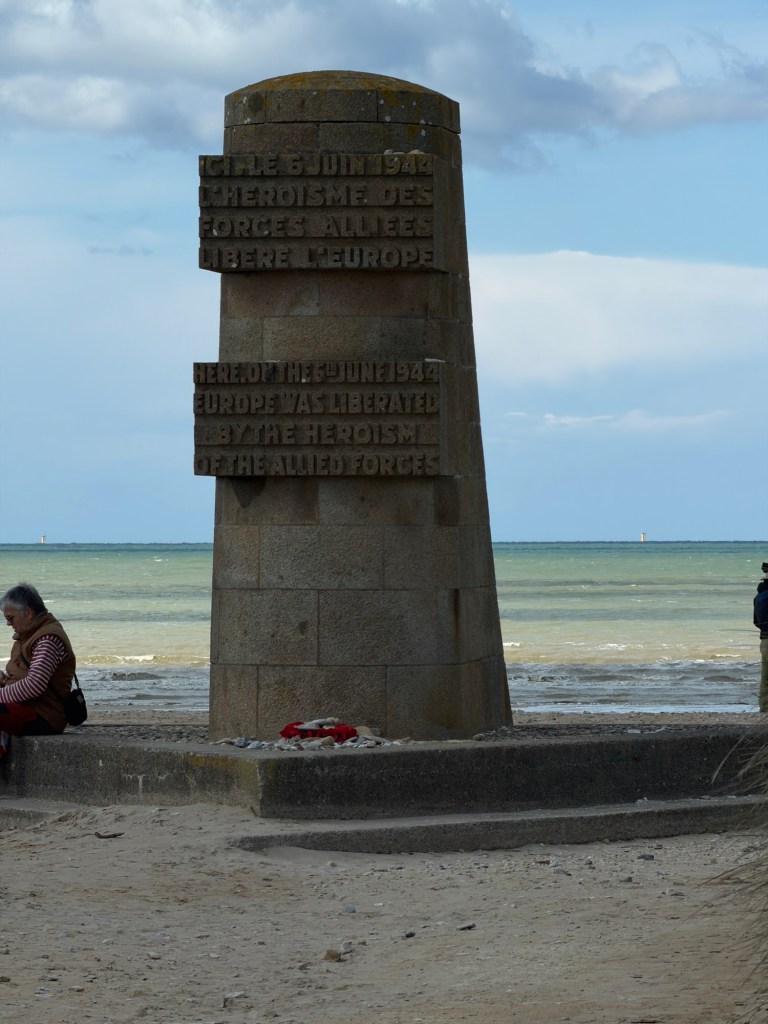
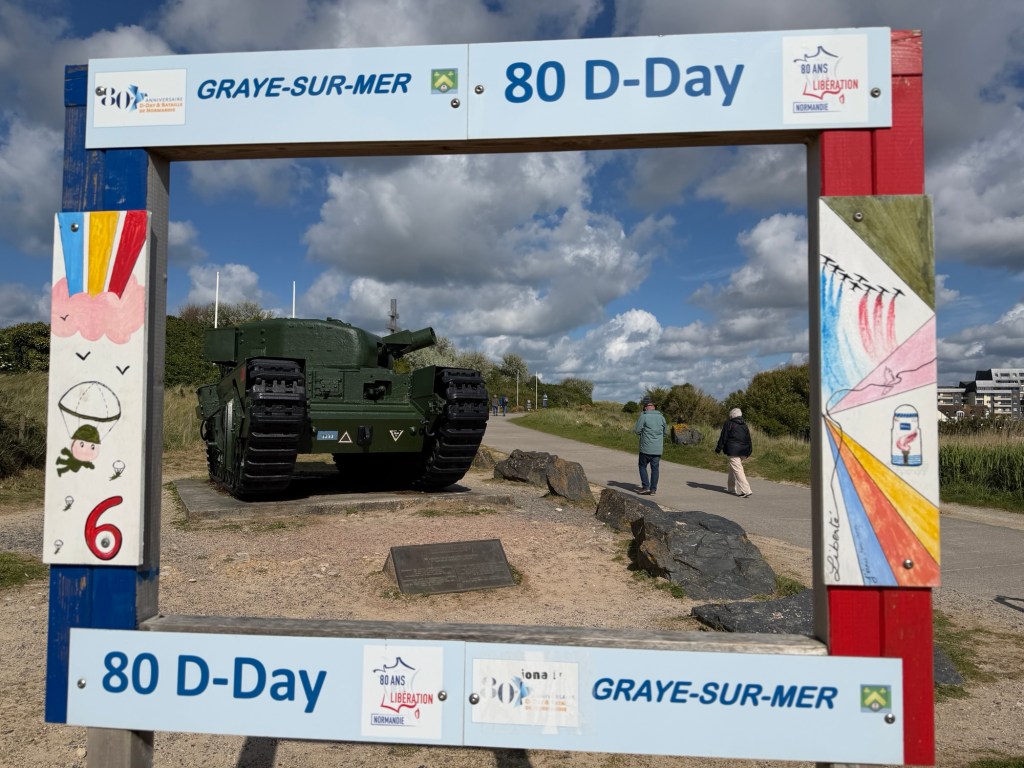
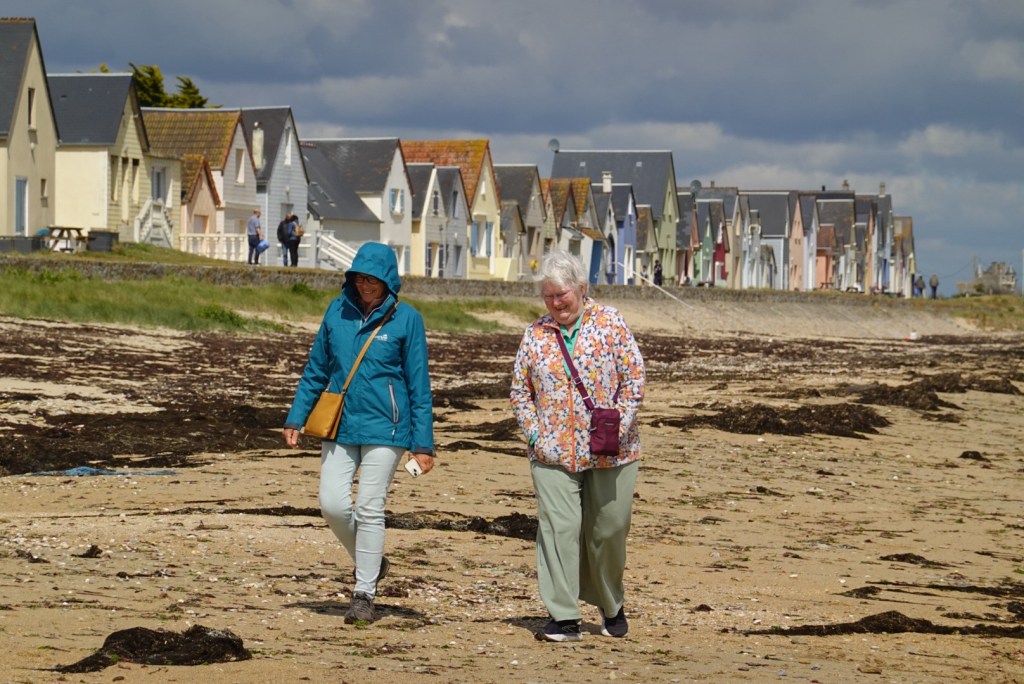
Canadian forces landed on Juno Beach, west of Sword Beach.

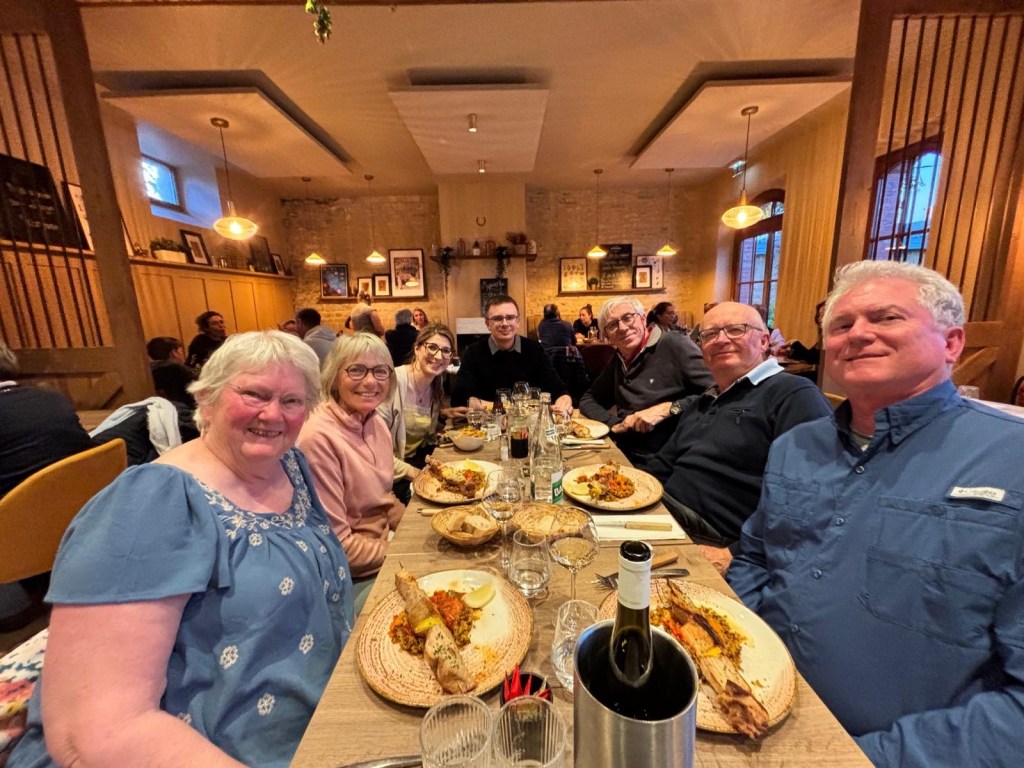
Dinner, arranged by Jérome, was in a restaurant in Sainte-Mère-Église.

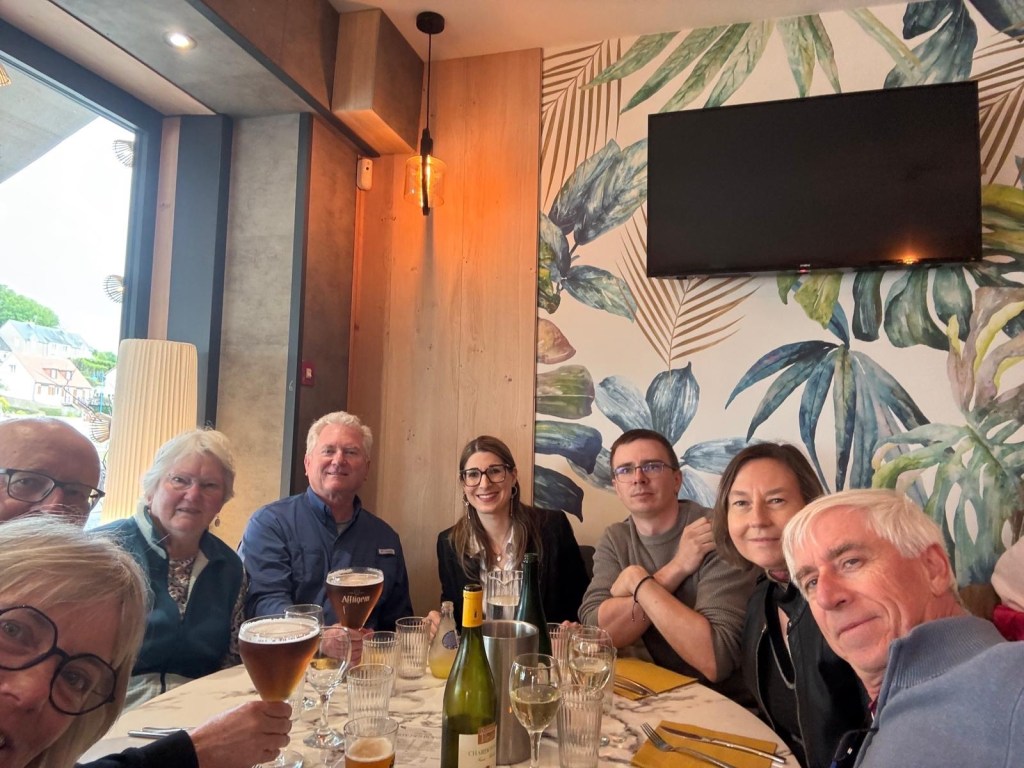
Clare, Joëlle, Léa, Cédric, Jérome, Marc, and Brian enjoying a fine meal!

Big Wooden Church and Old School

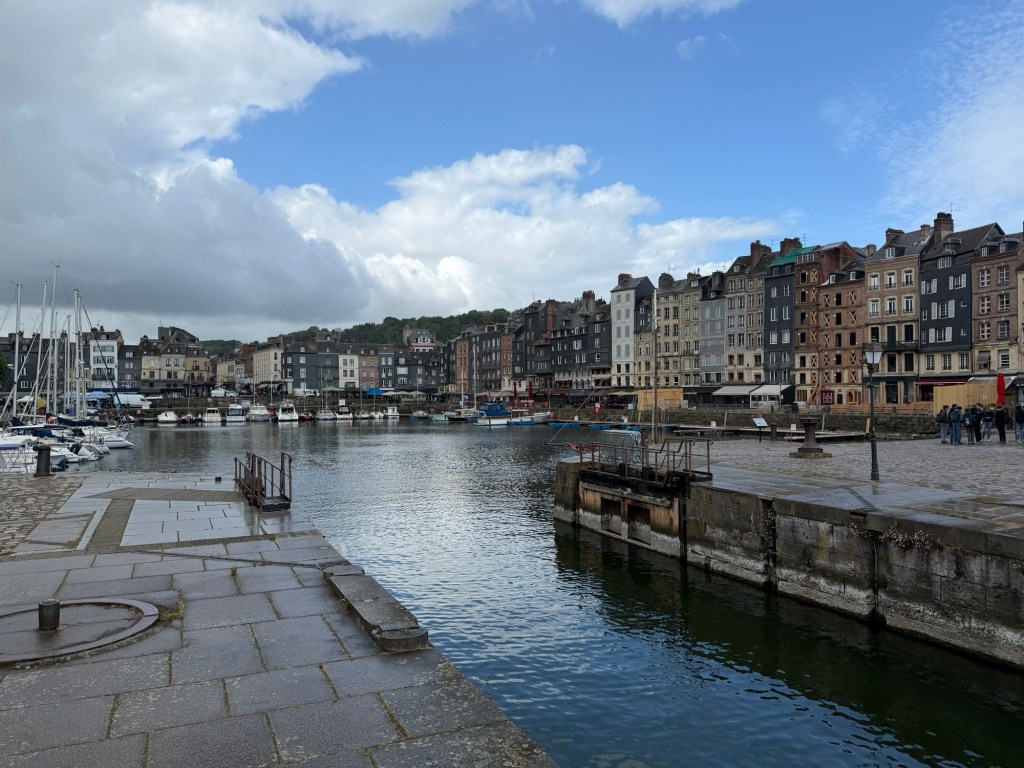
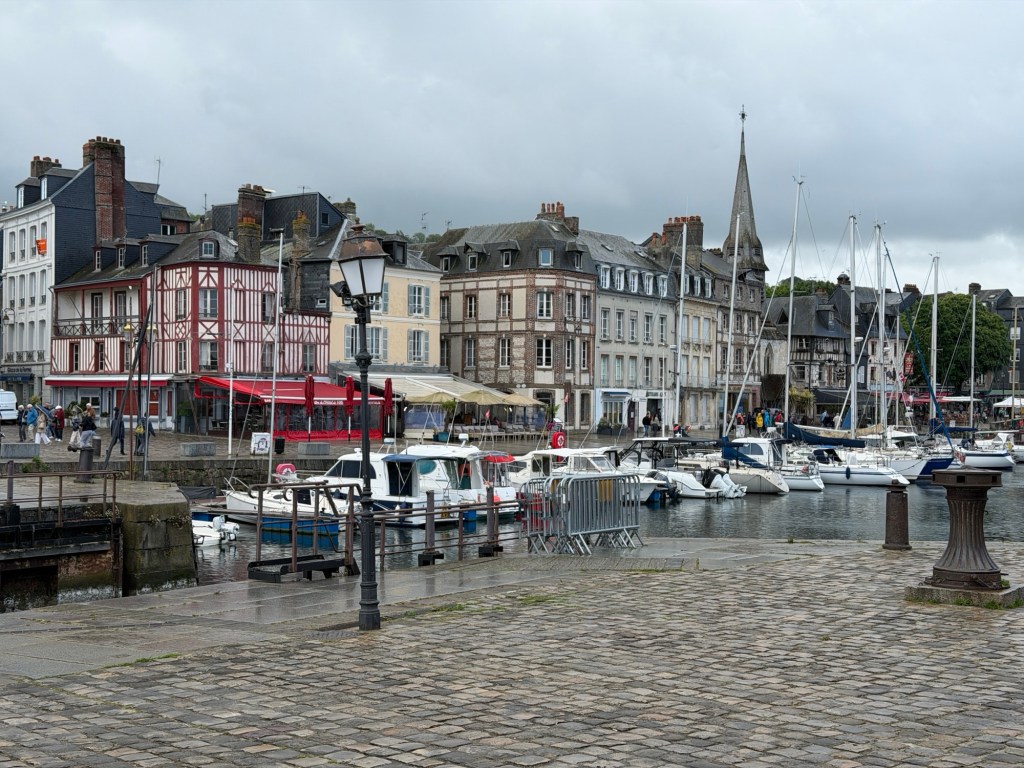
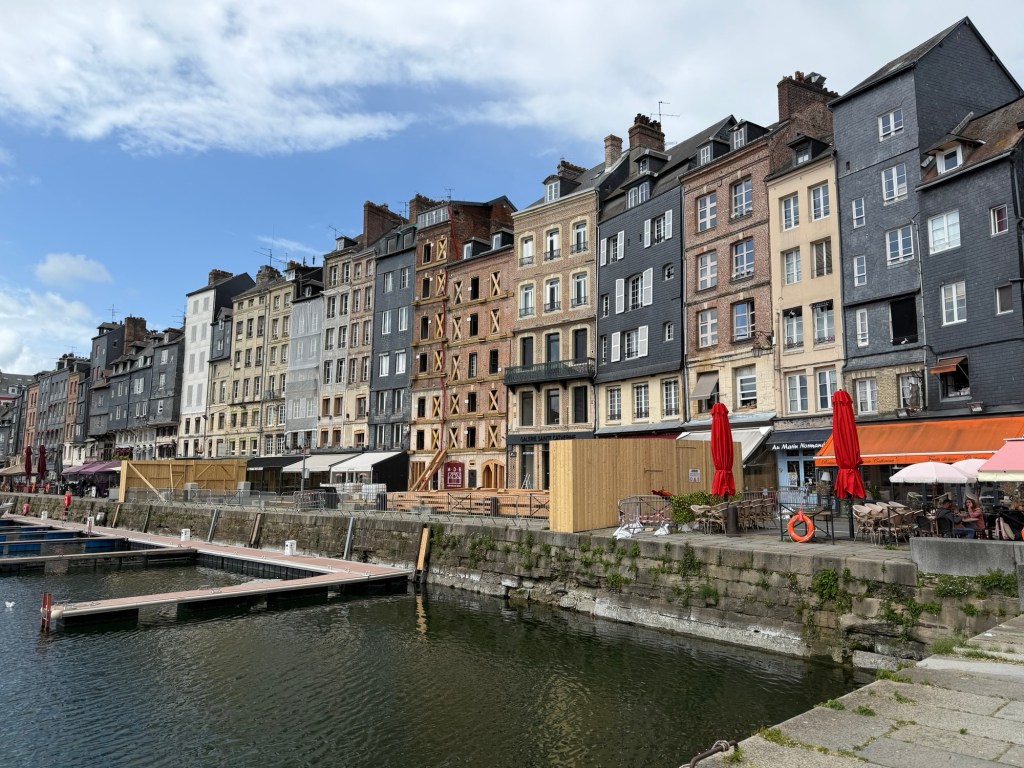
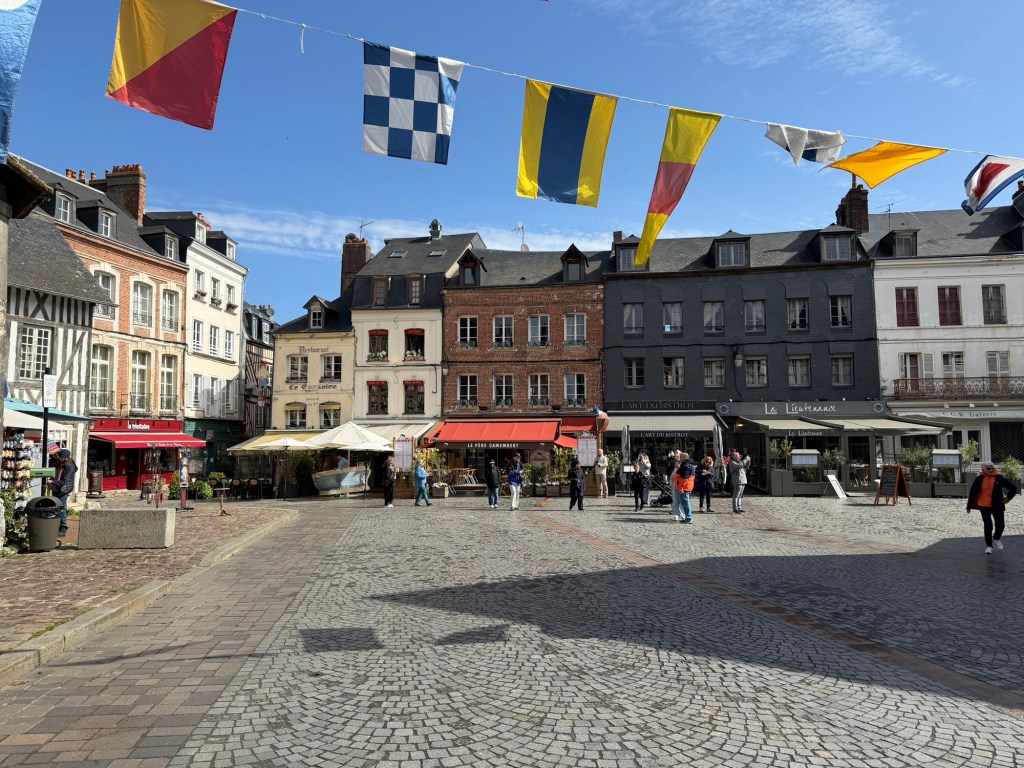
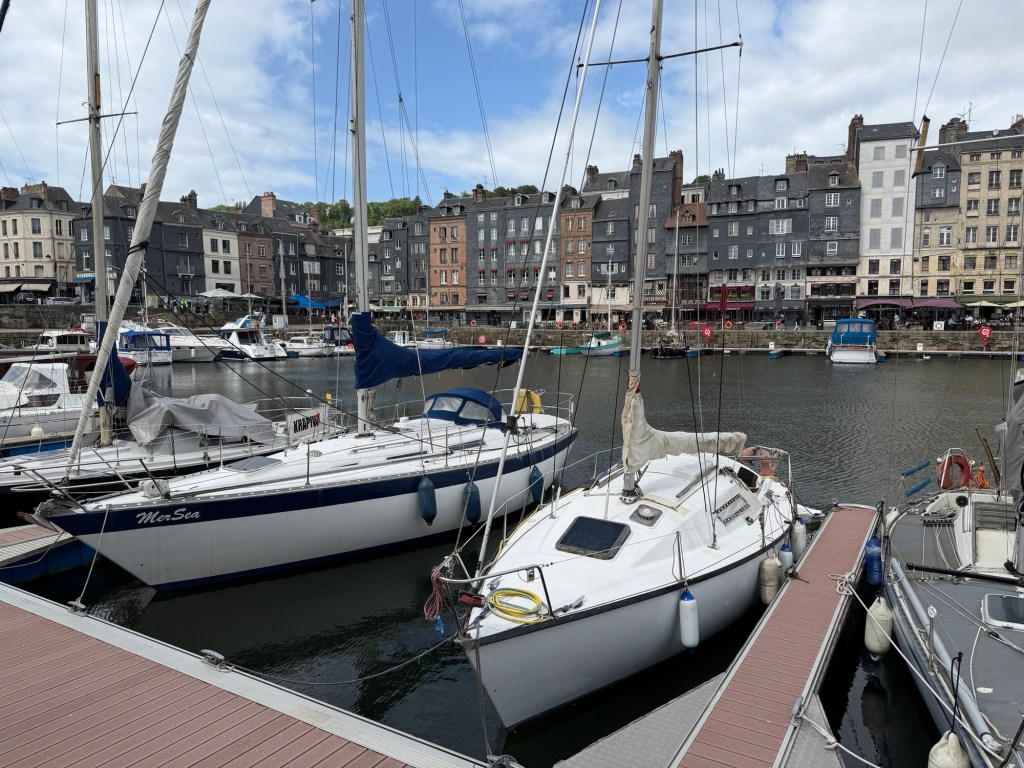
Honfleur is northwest of Pont-Audmer.

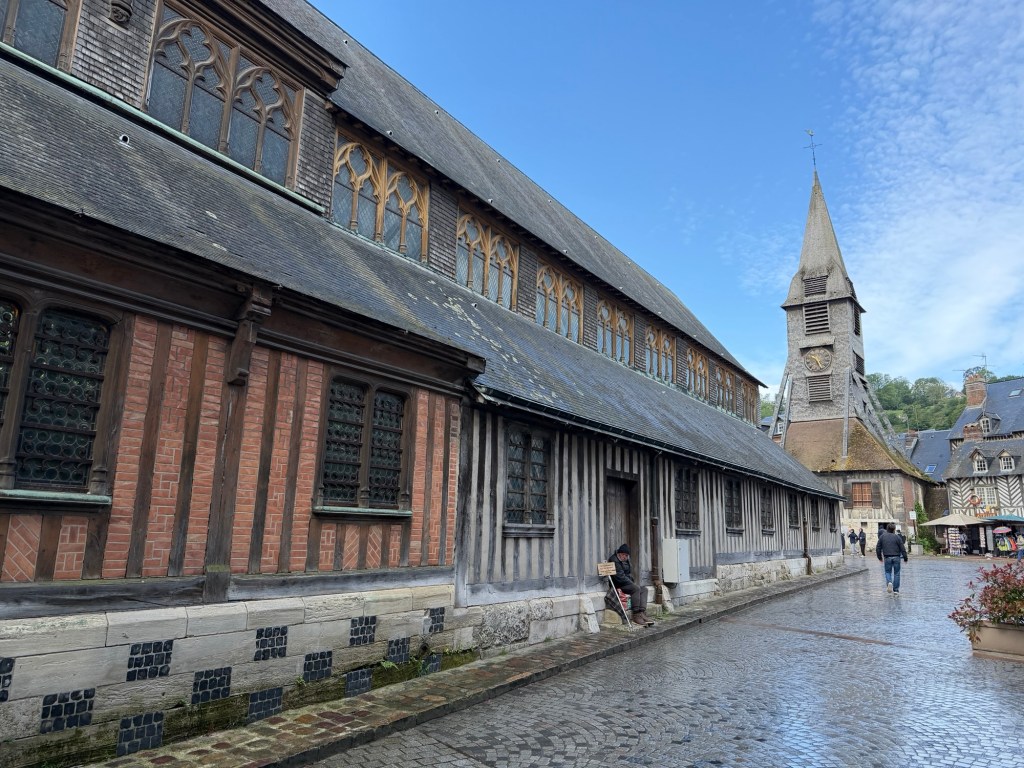
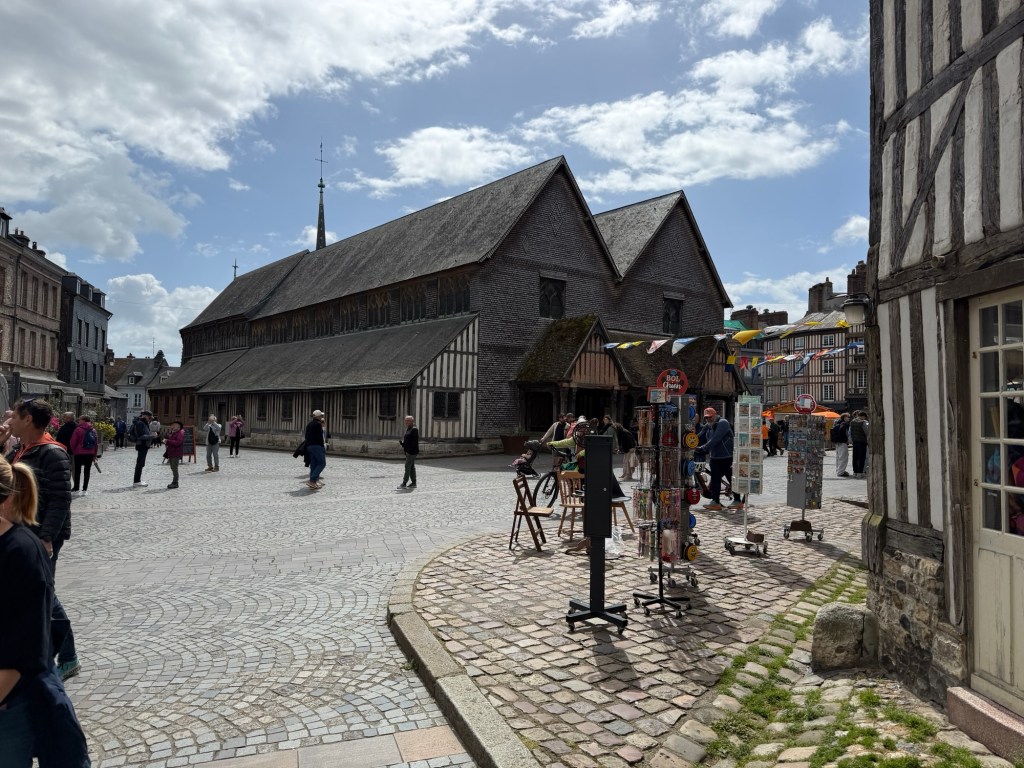
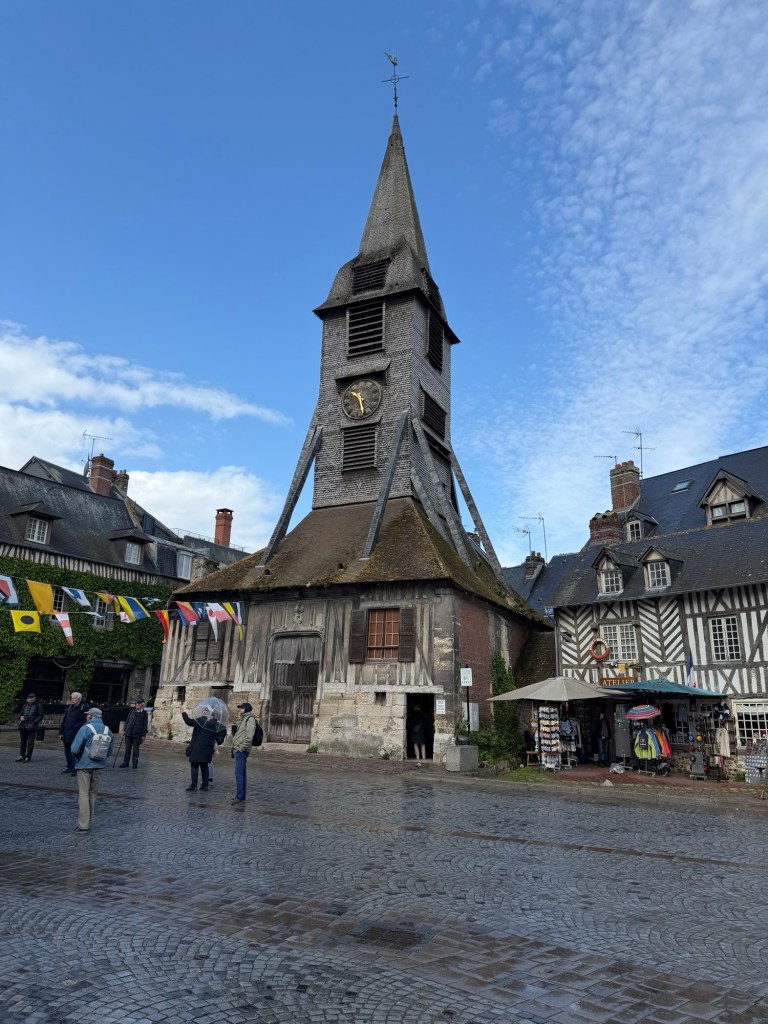
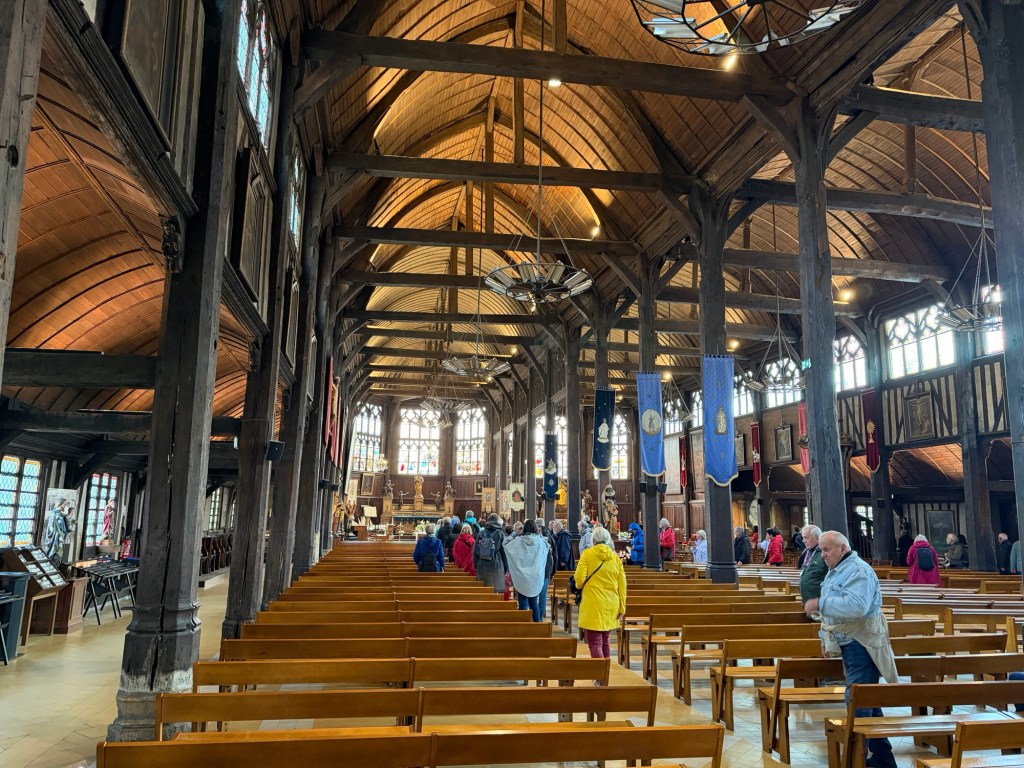
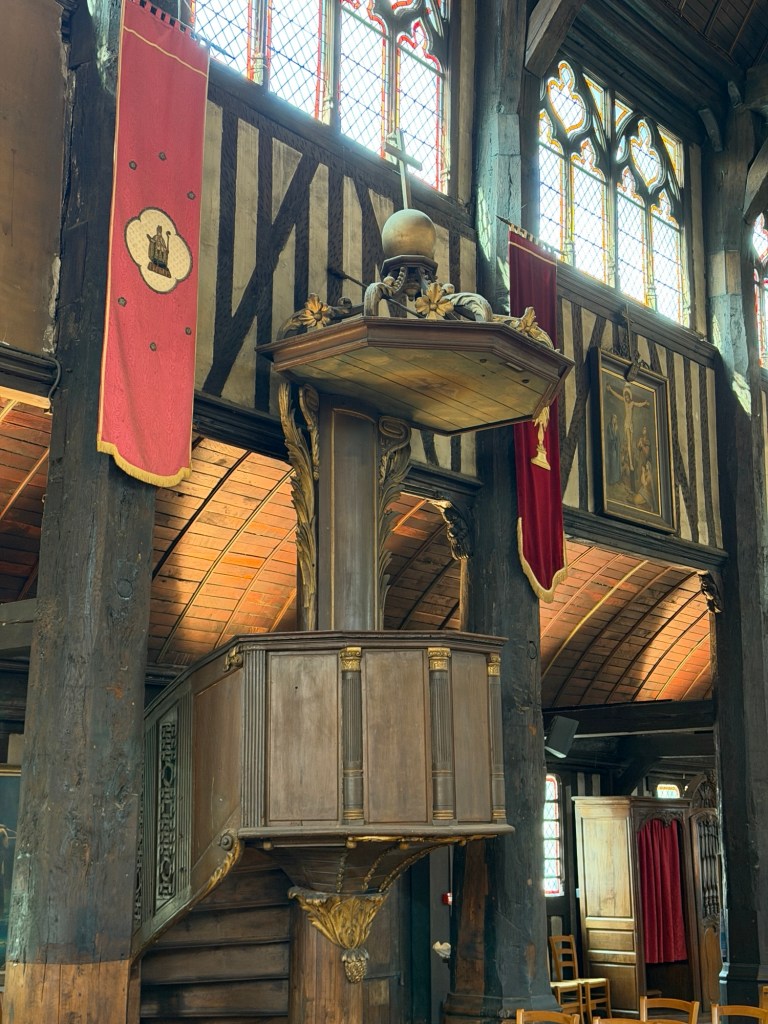
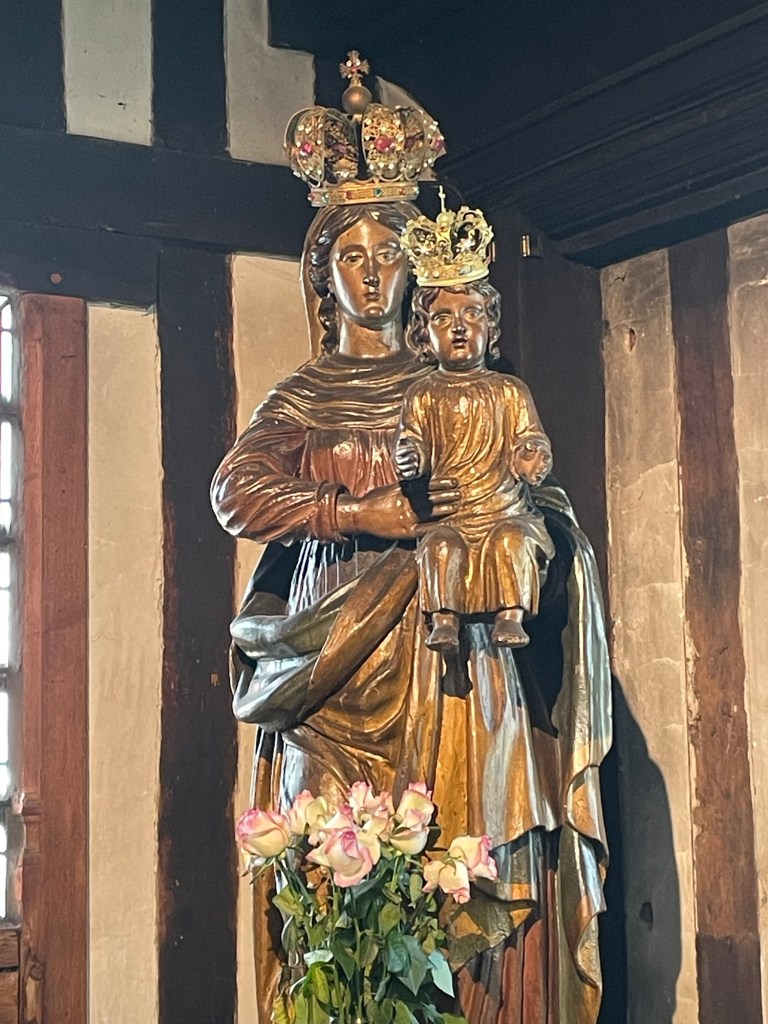
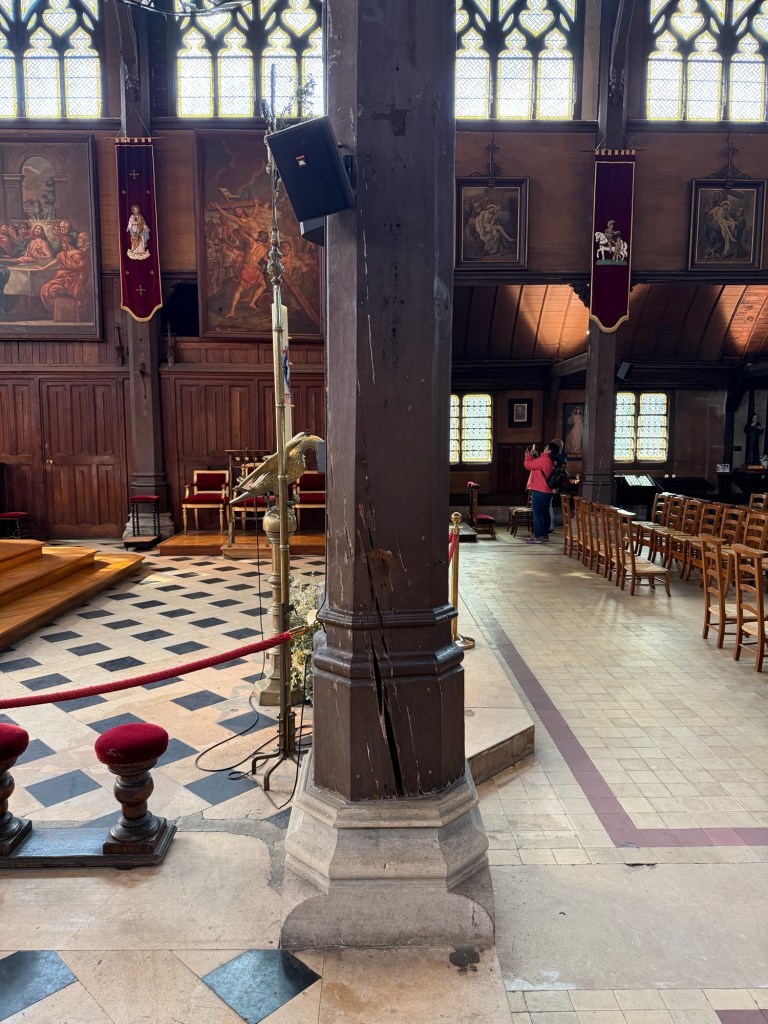
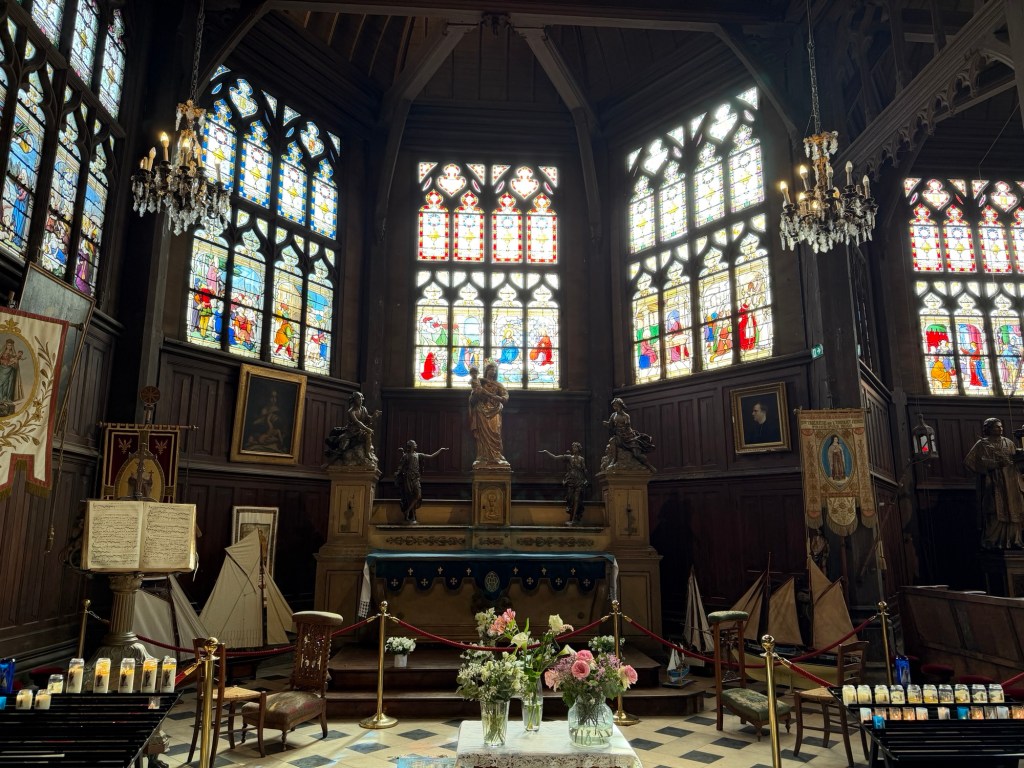
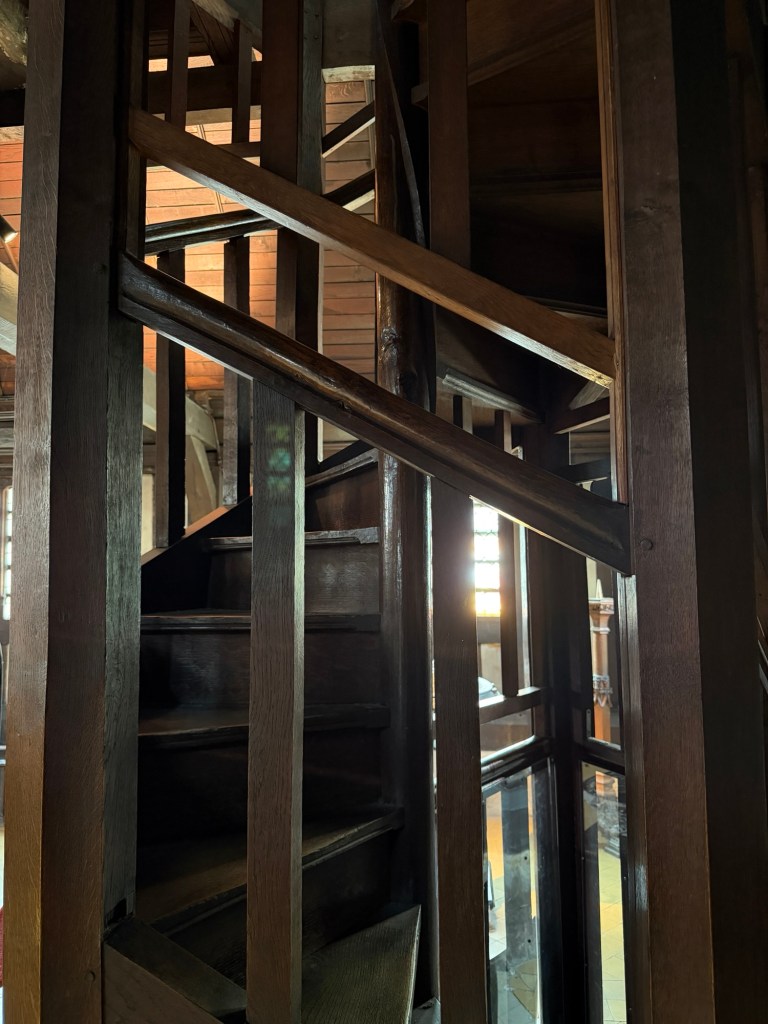
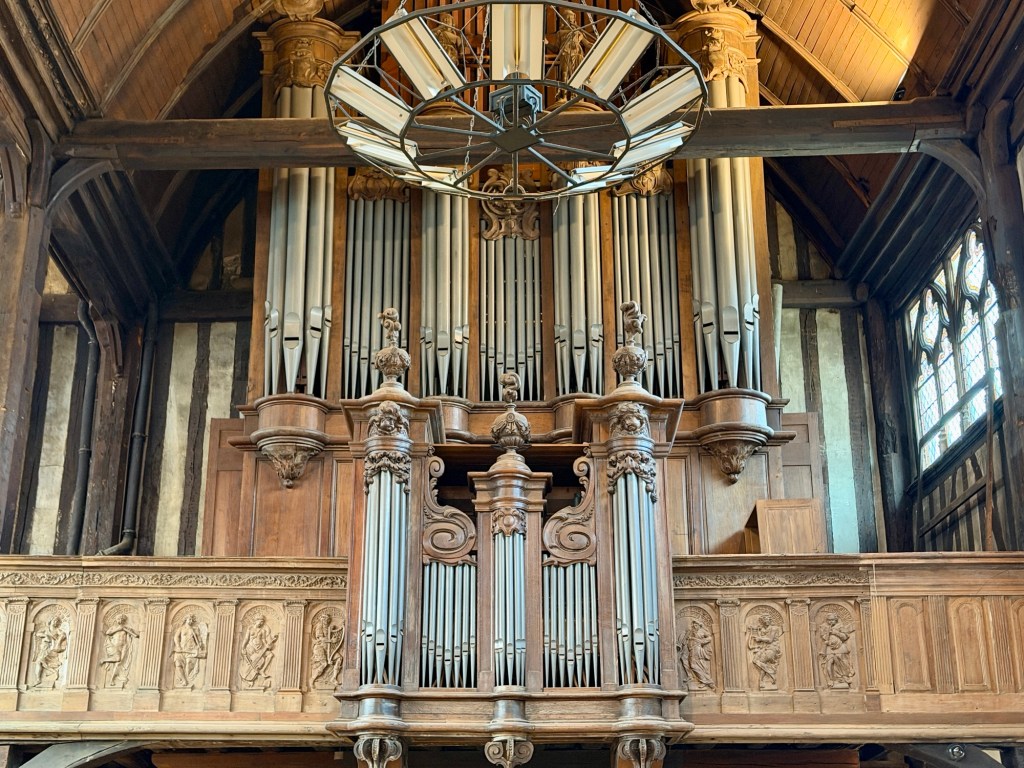
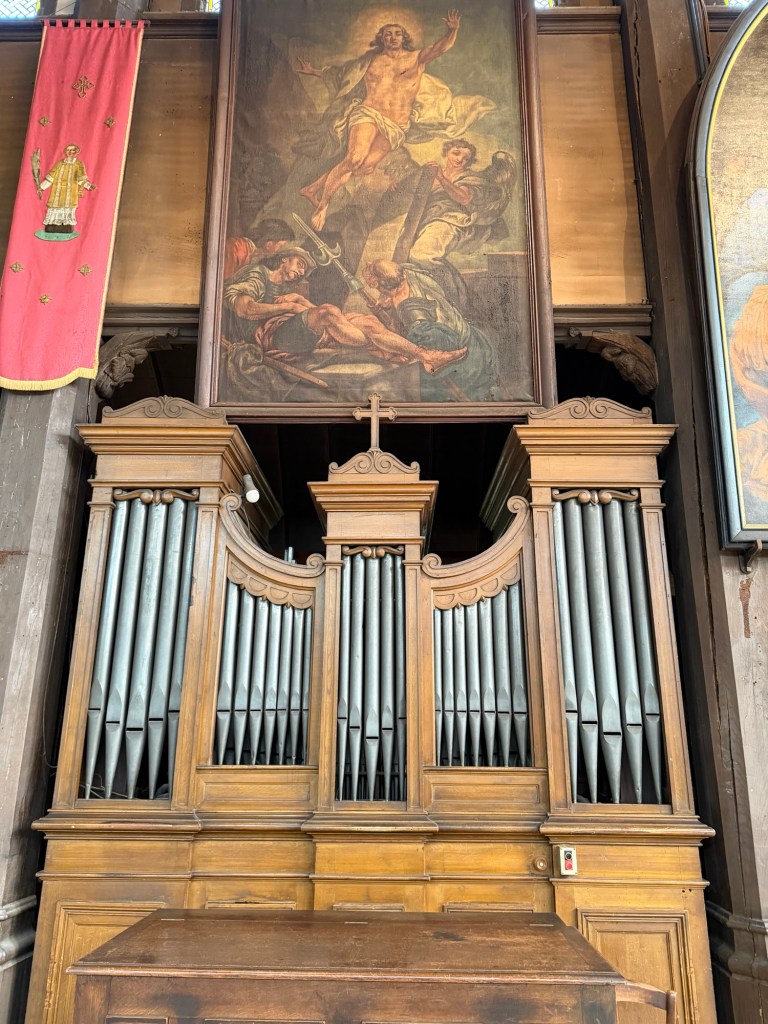
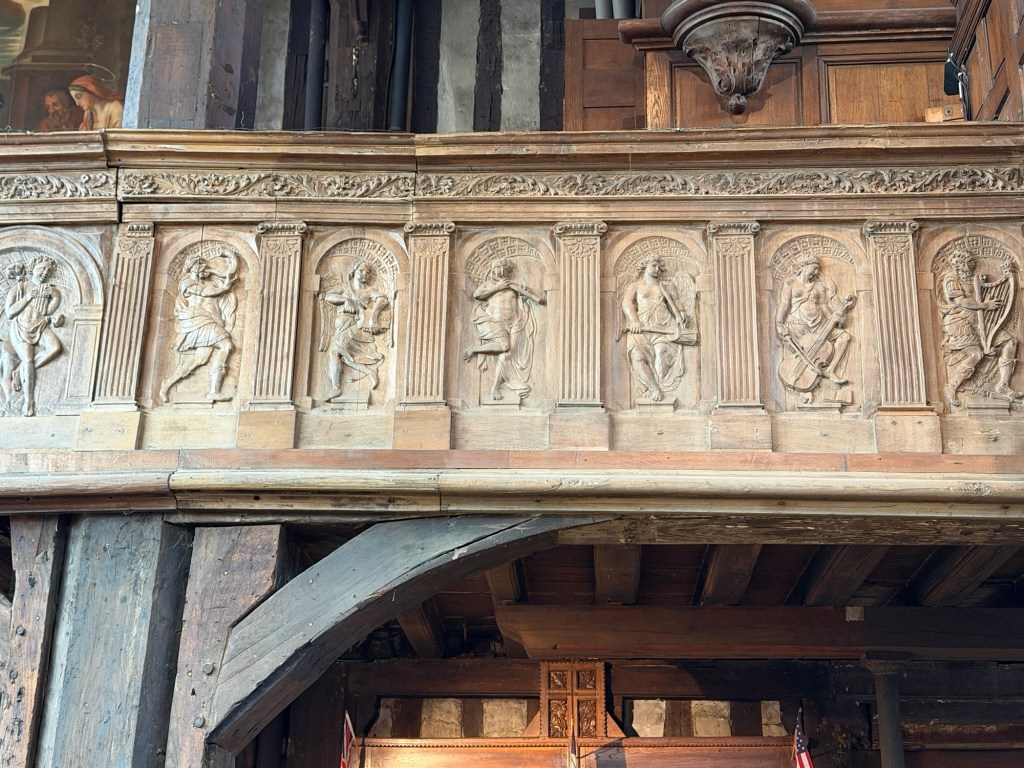
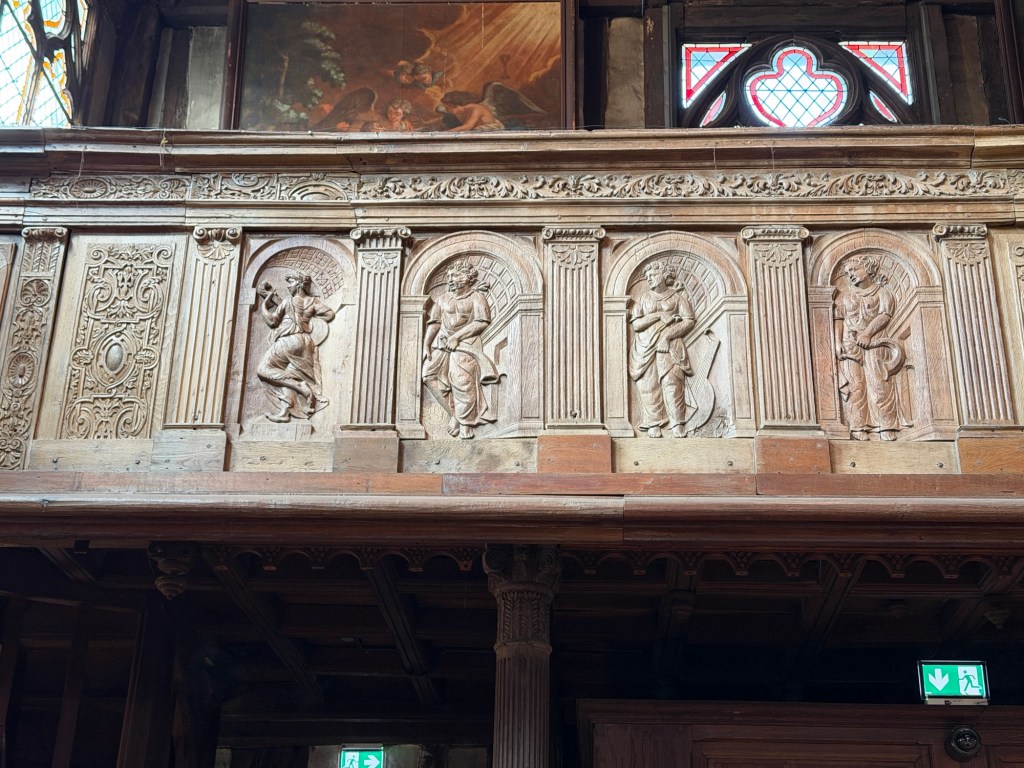
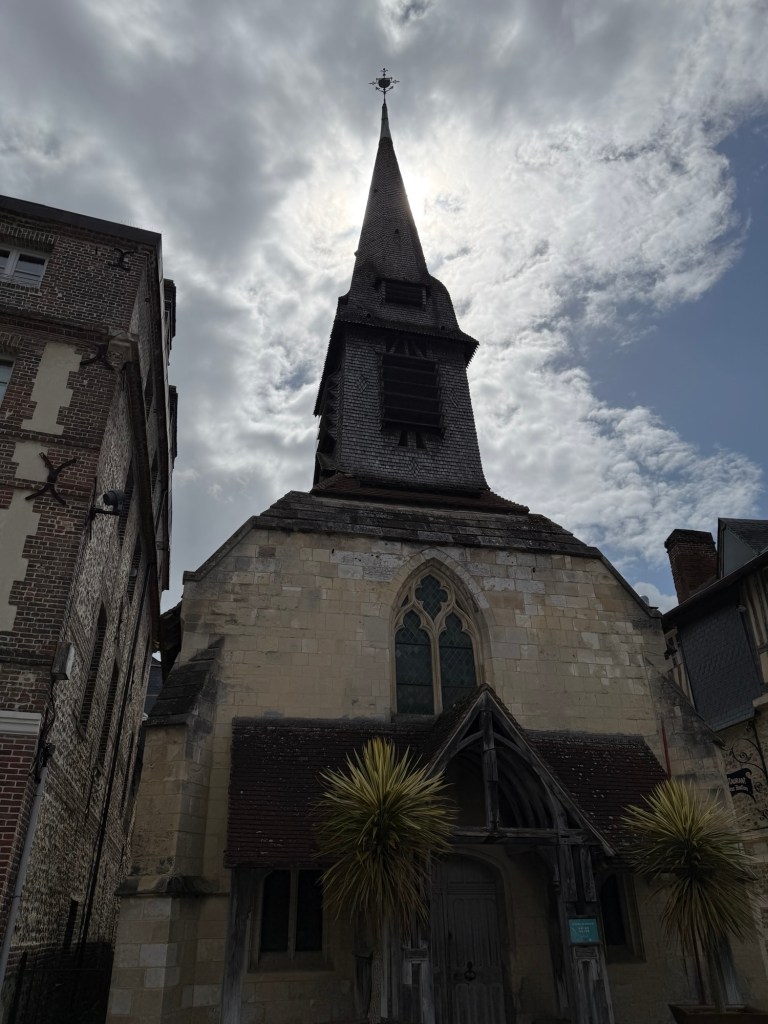
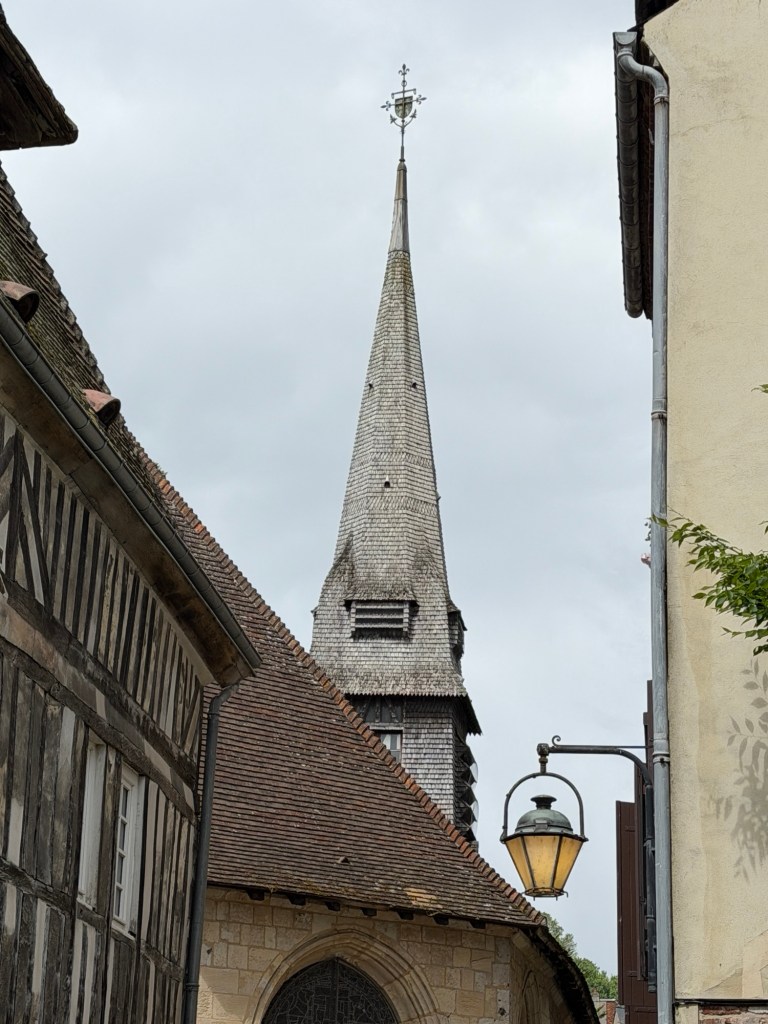
We set out to see the largest wooden church in France. Inside, the church was bright and airy.

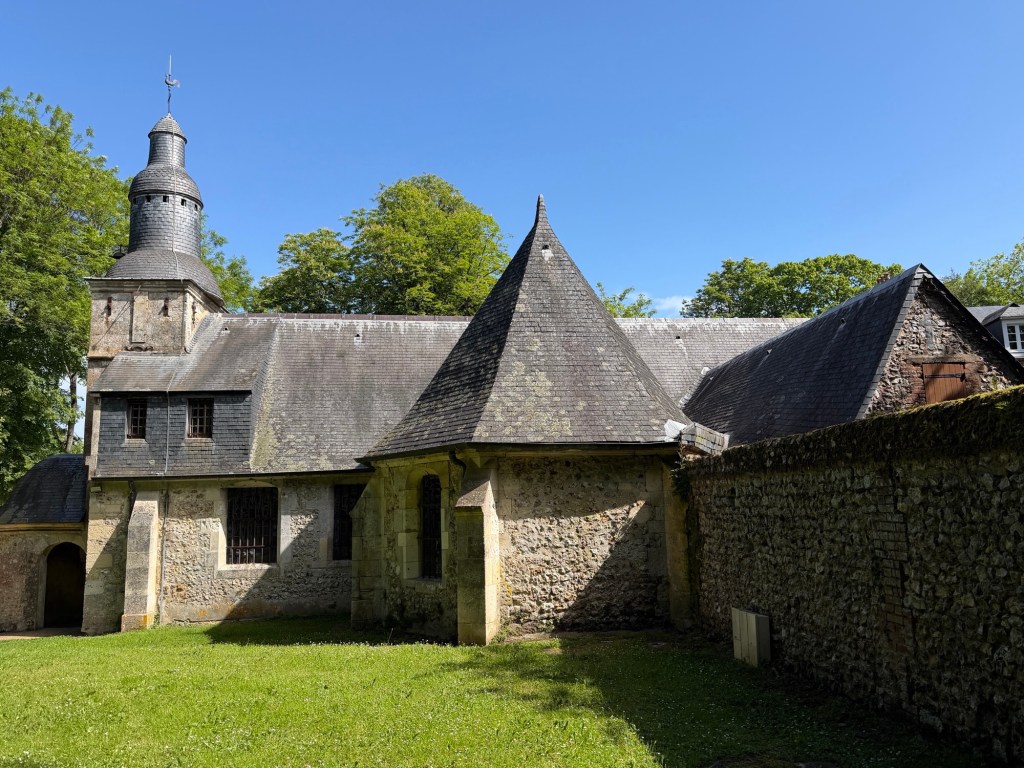
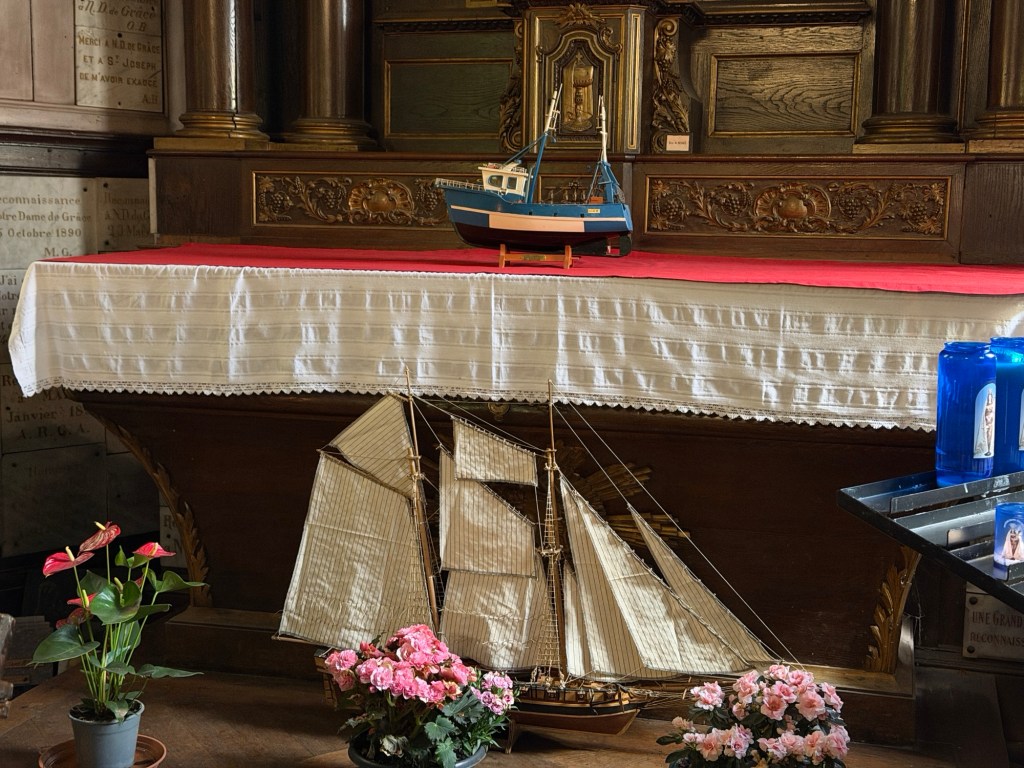
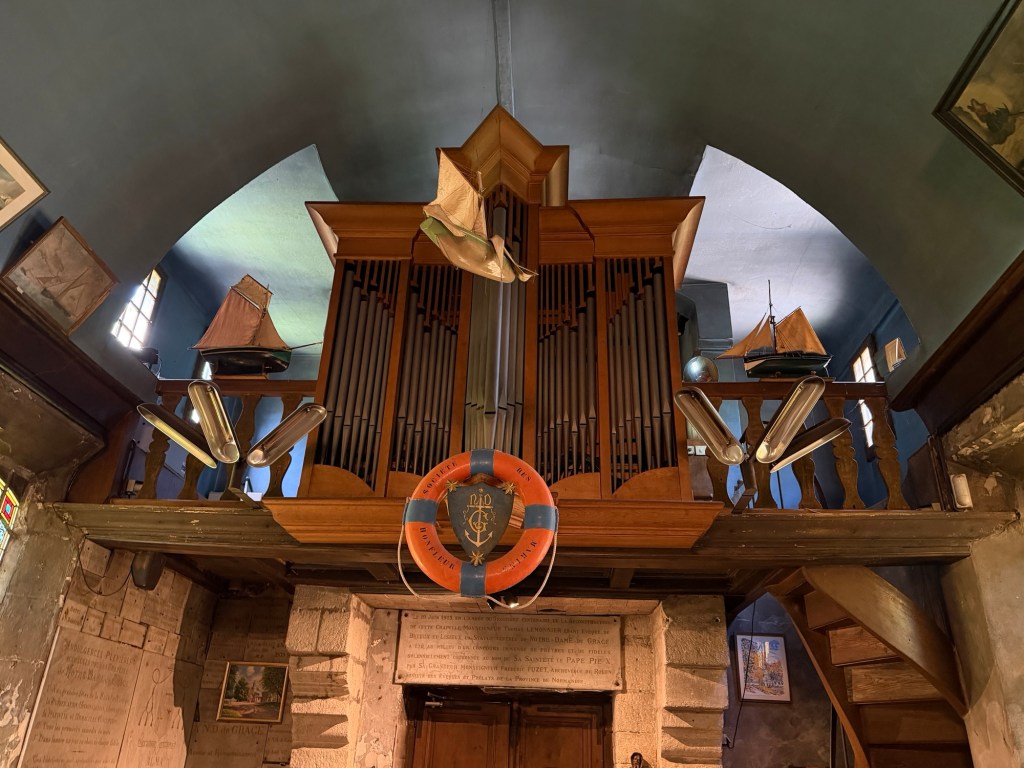
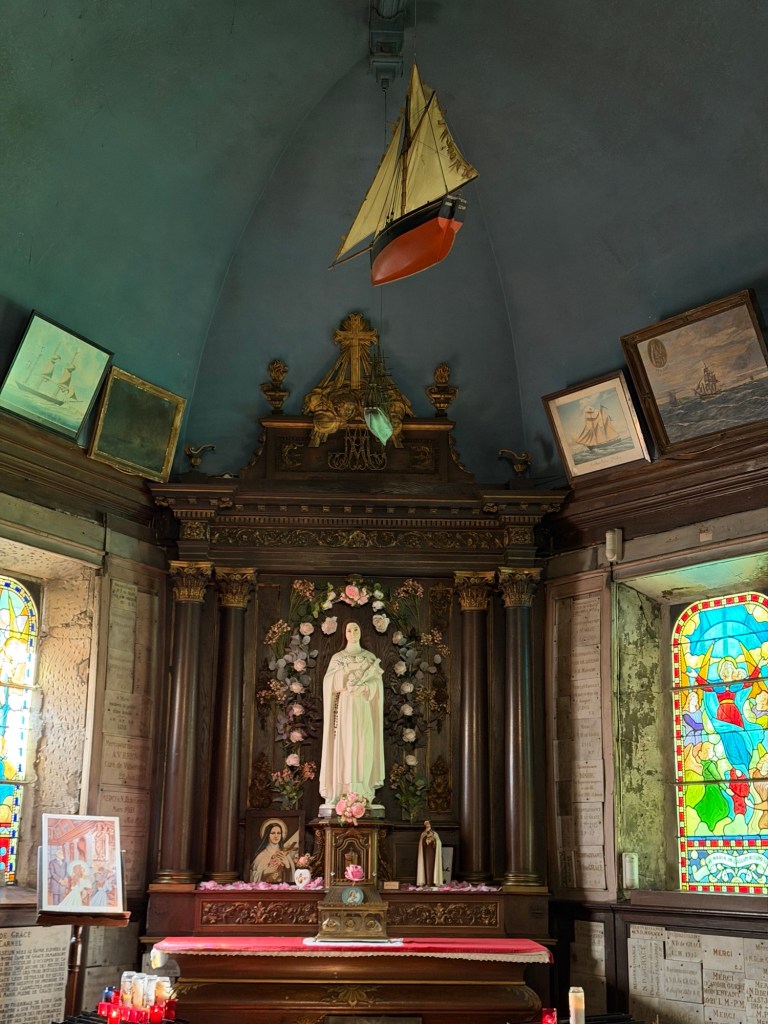
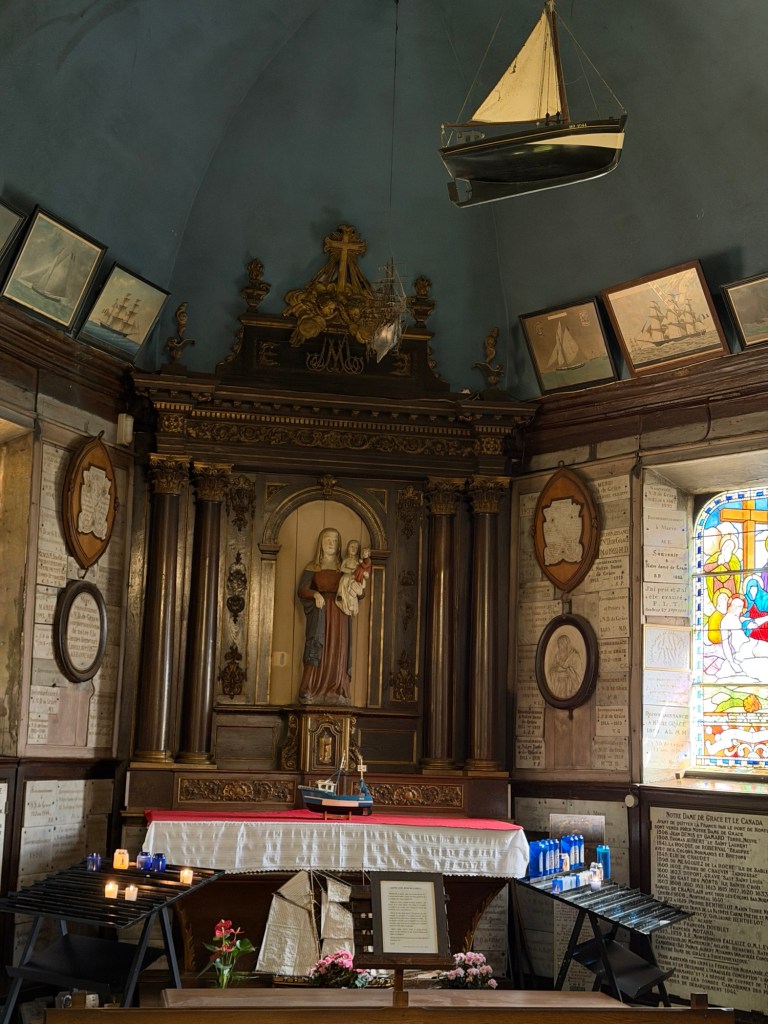
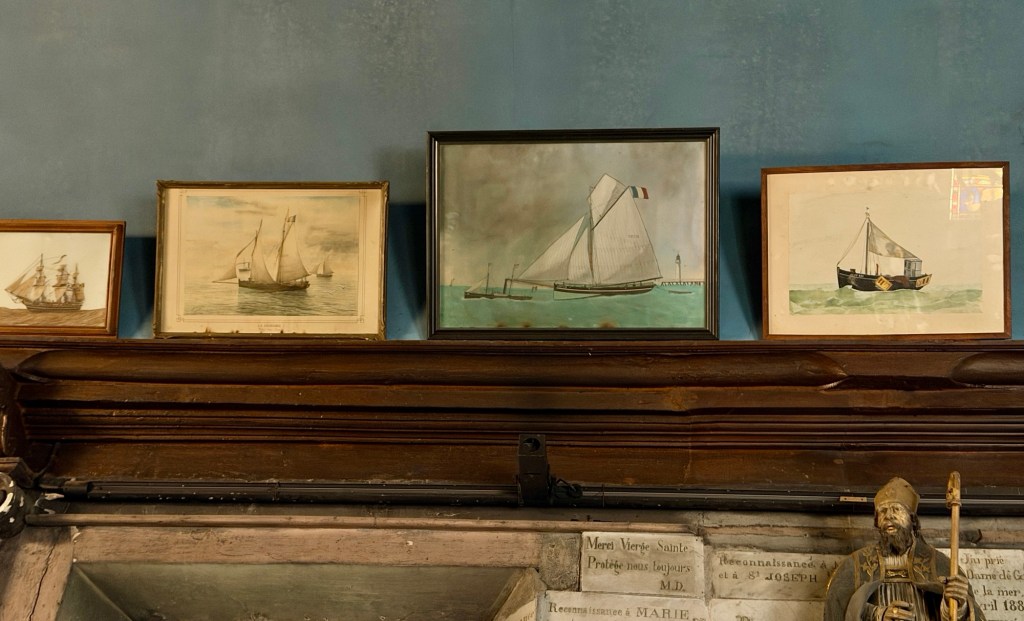
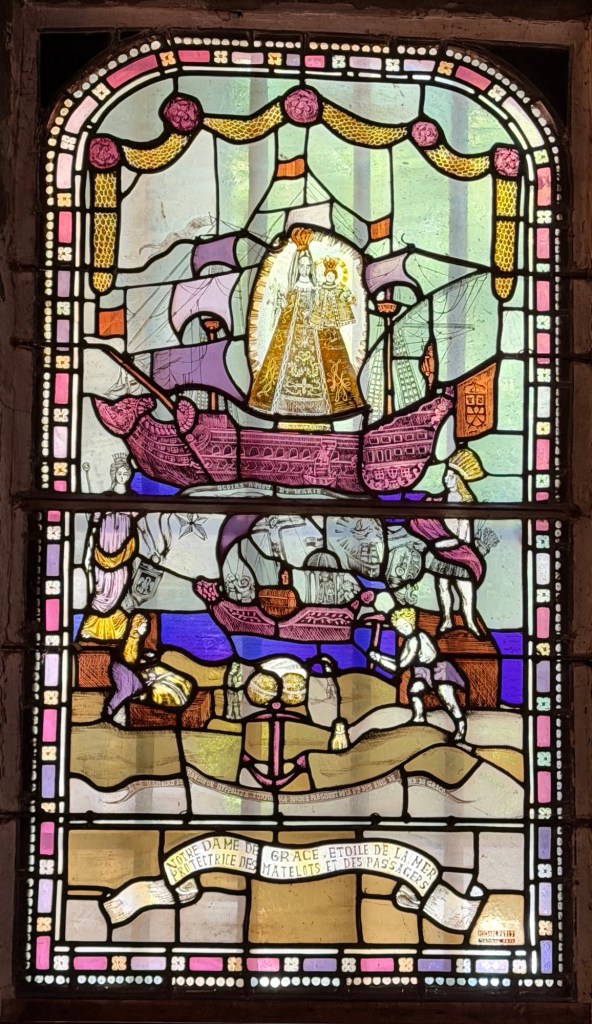
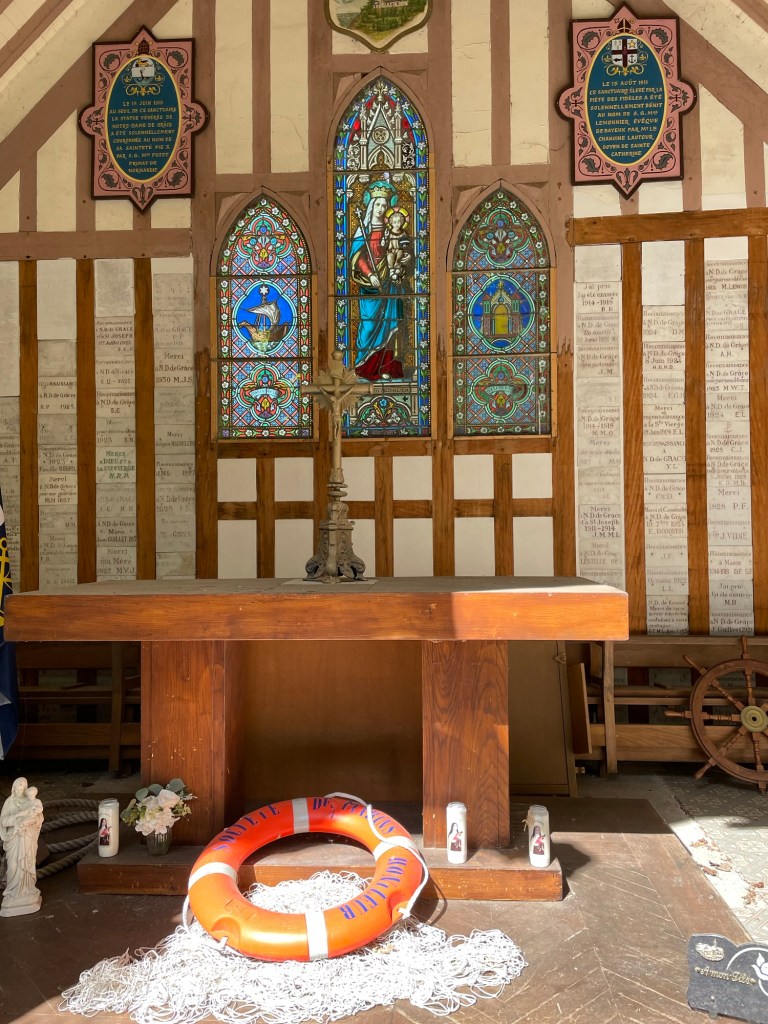
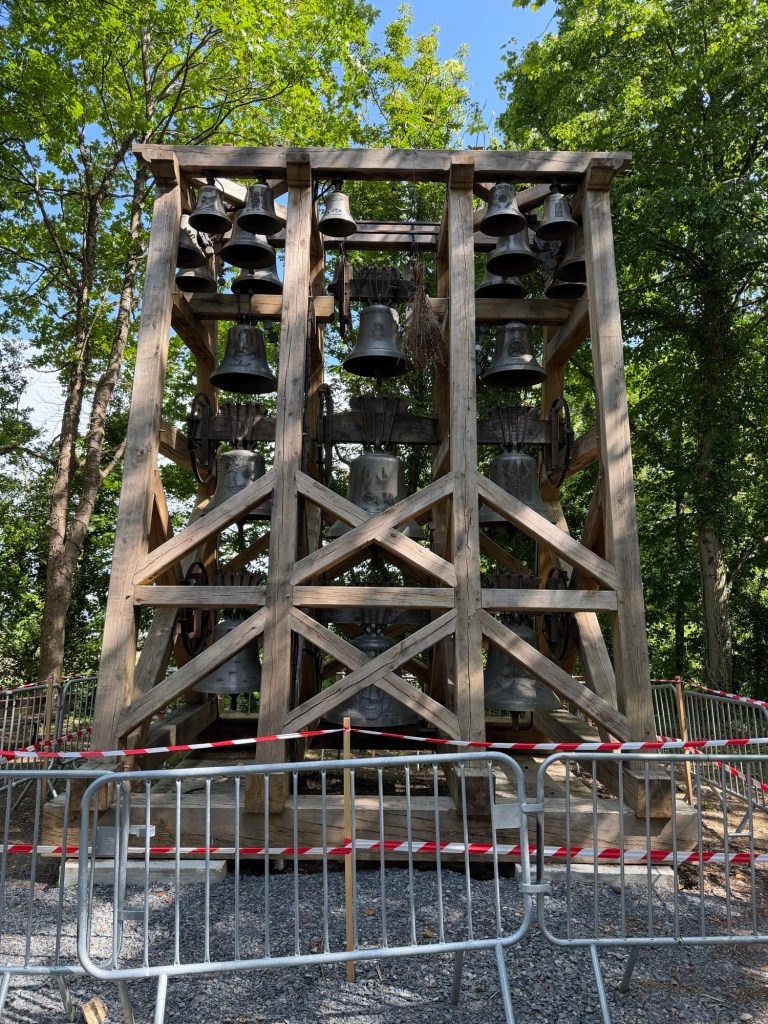
We walked up a hill to see a different church, Notre-Dame de Grace, Our Lady of Grace, which was the name of the elementary school Clare attended for eight years. She felt right at home.

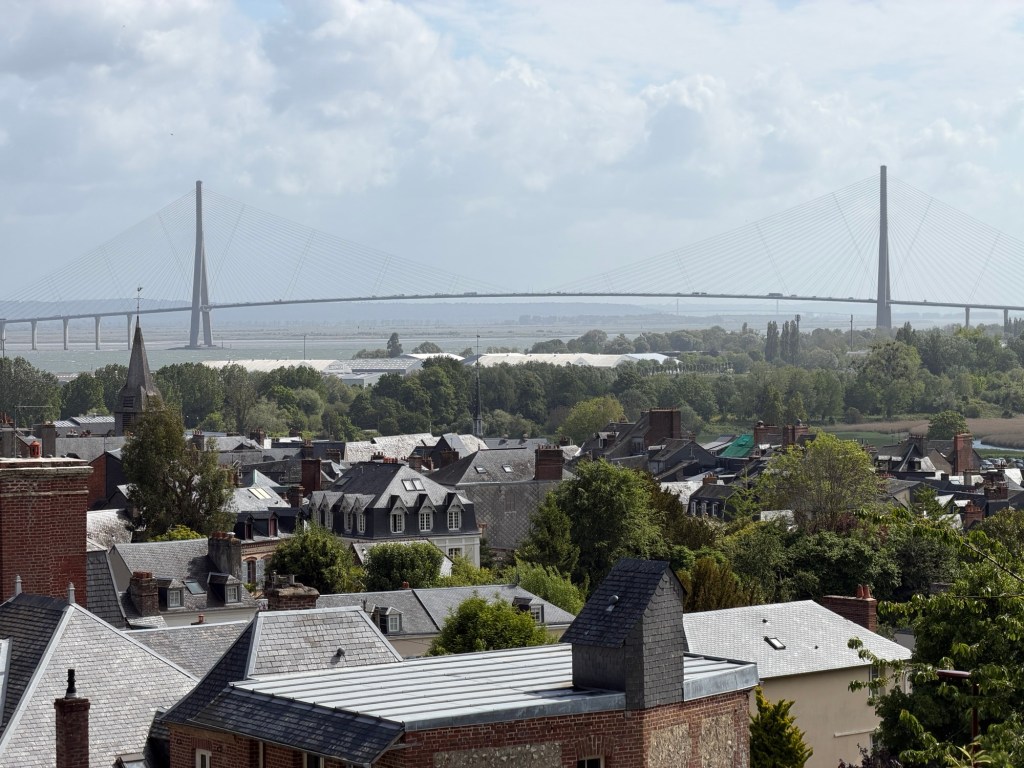
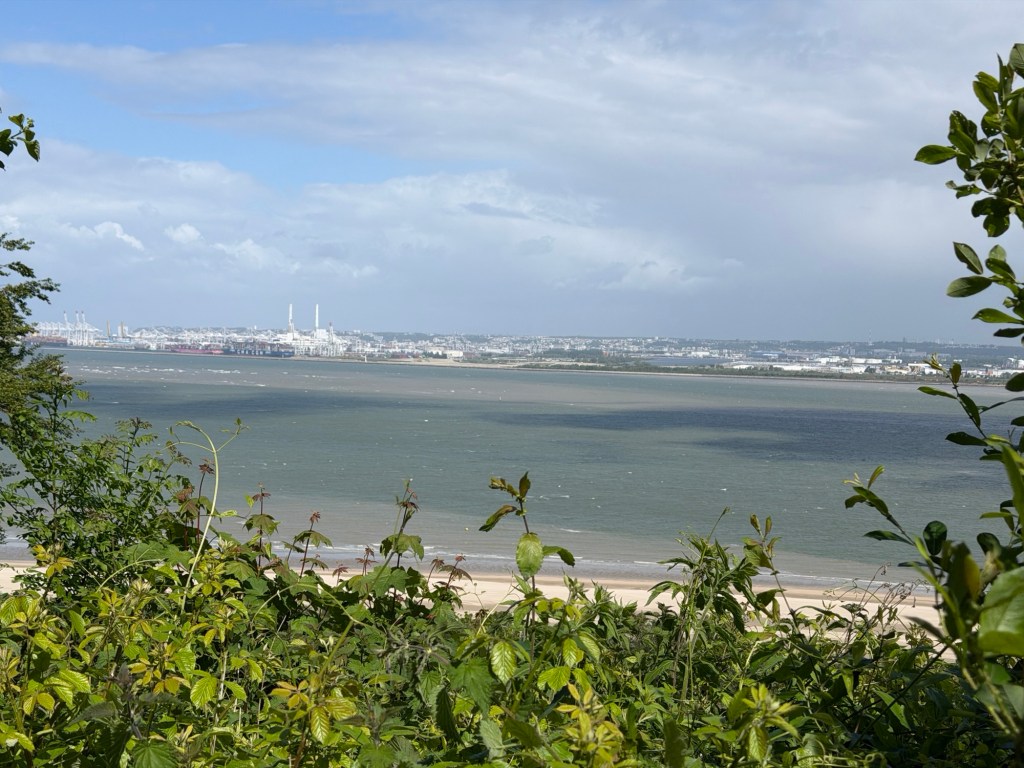
The walk was a little steep, but well worth it, with nice views of the town and the Seine.

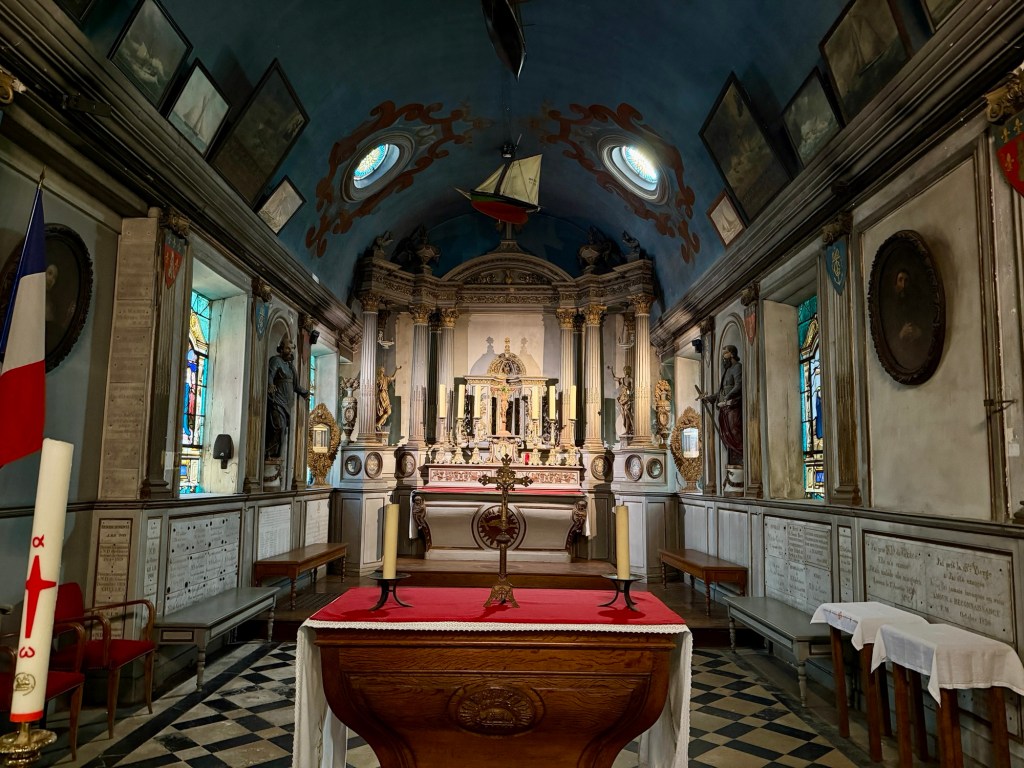
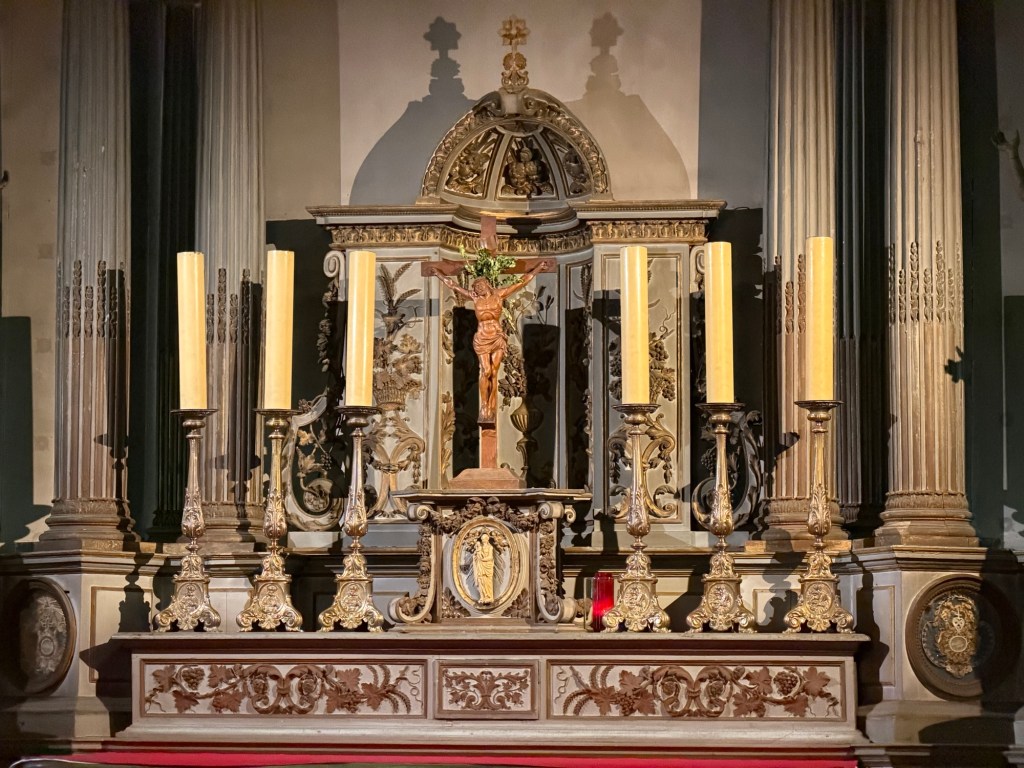
The church, built in the 17th century by mariners, features many boats. Even the ceiling looks like the bottom of a large boat.

Then, we drove to the more affluent town of Deauville.

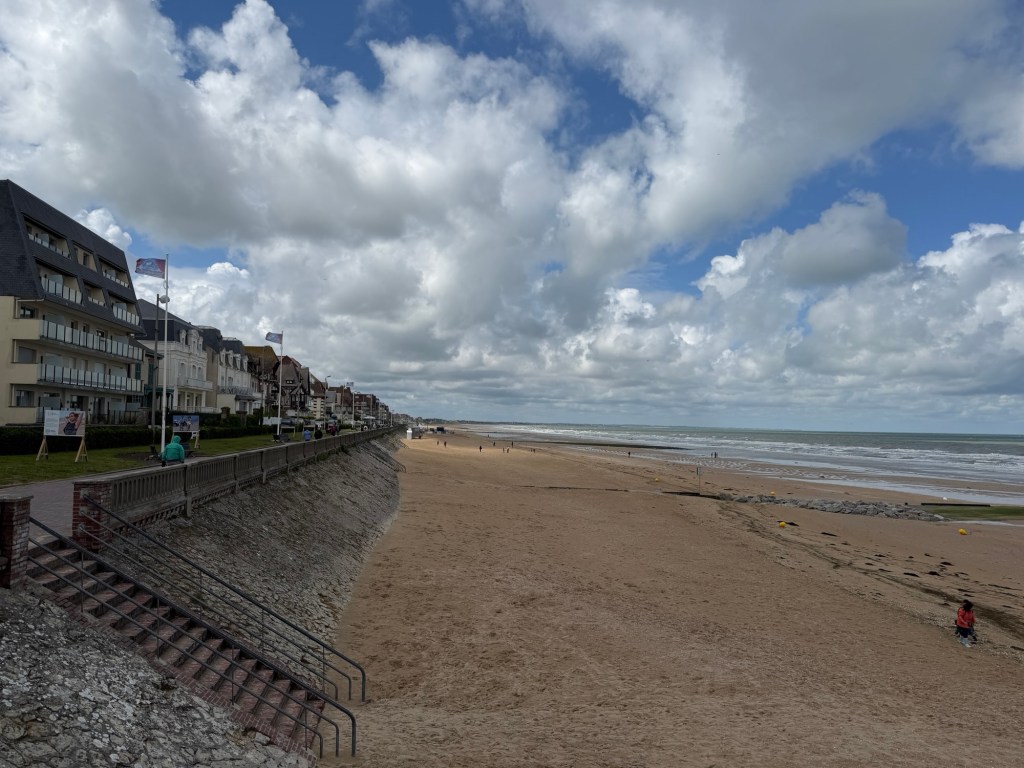
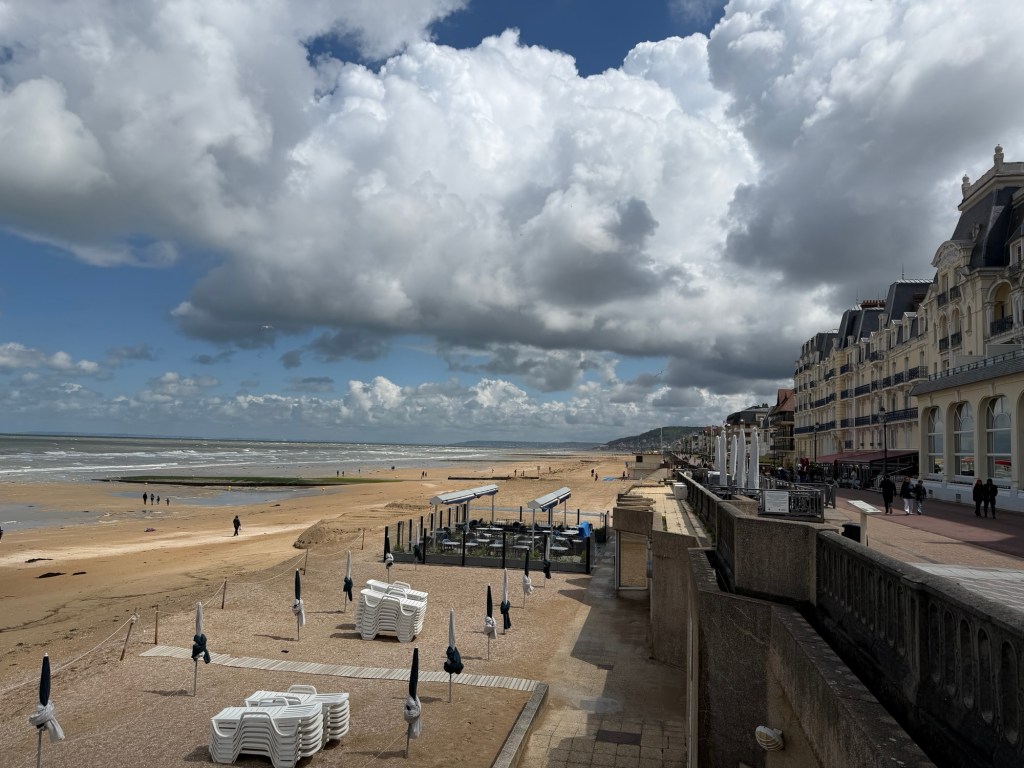
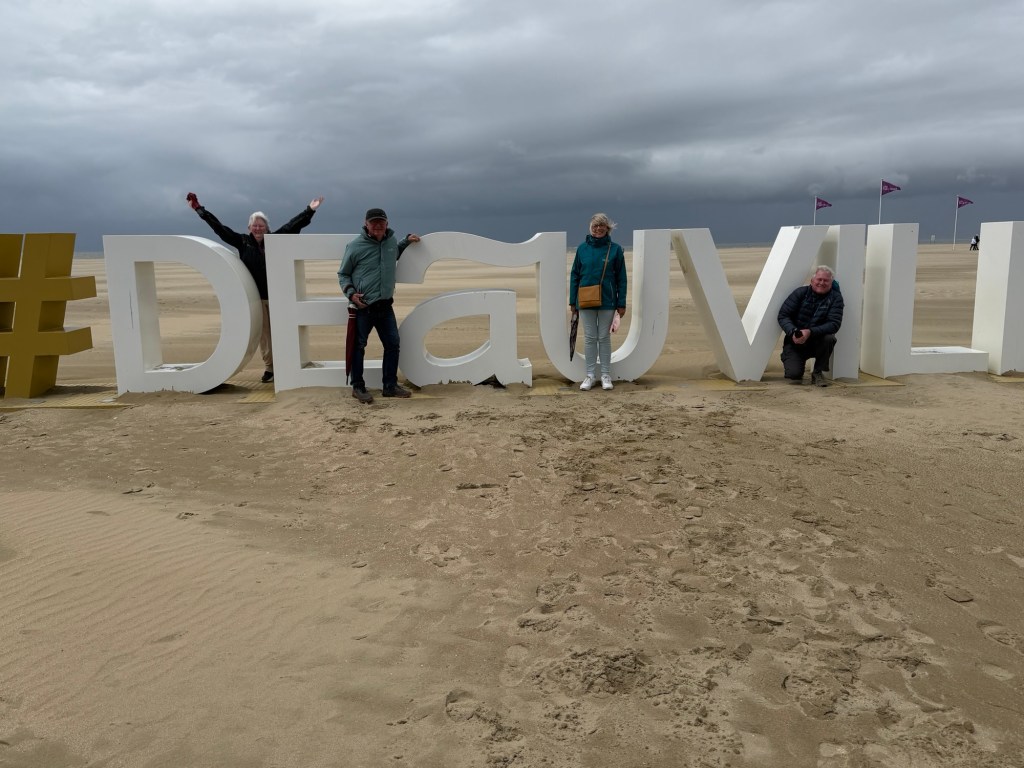
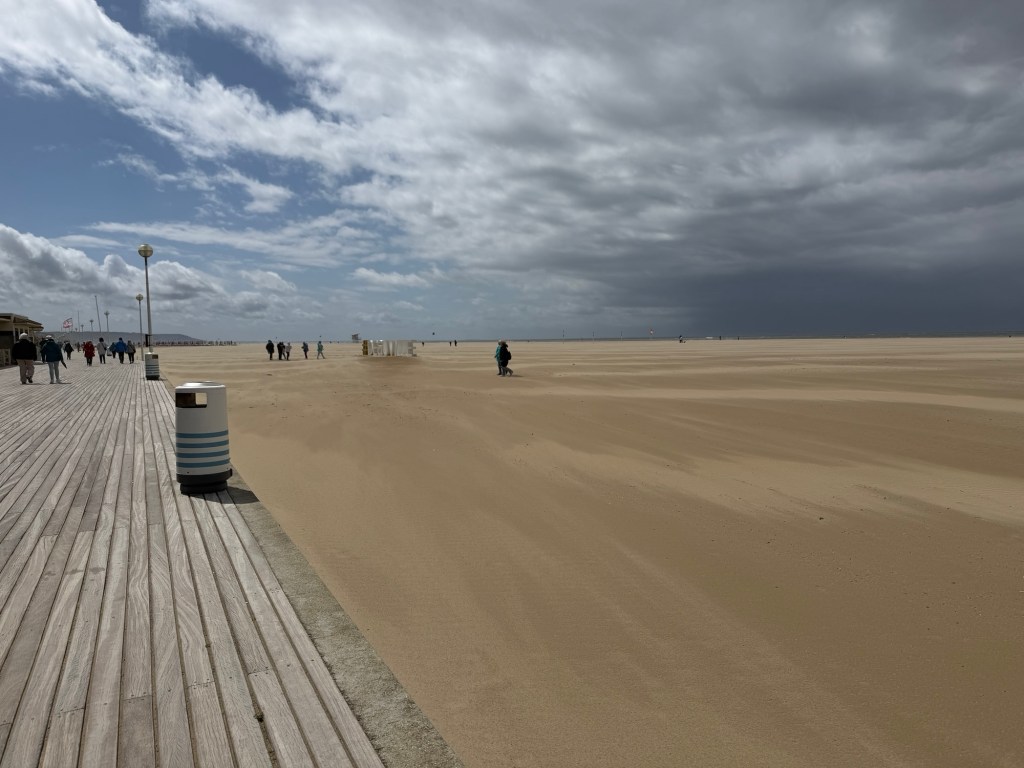
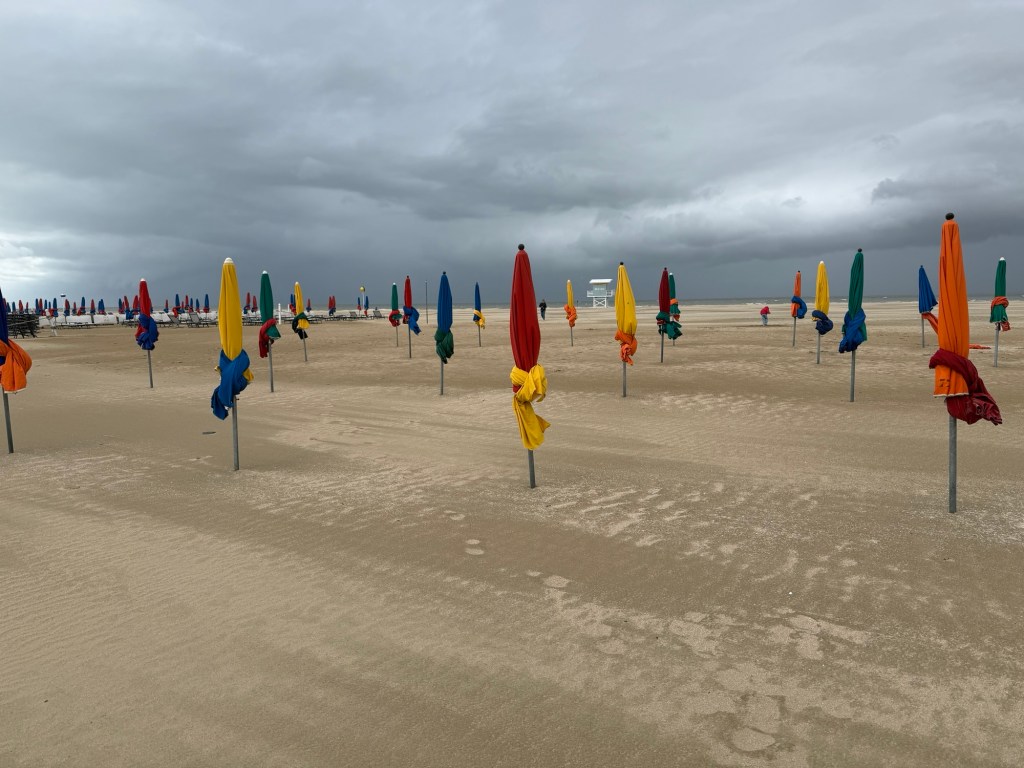
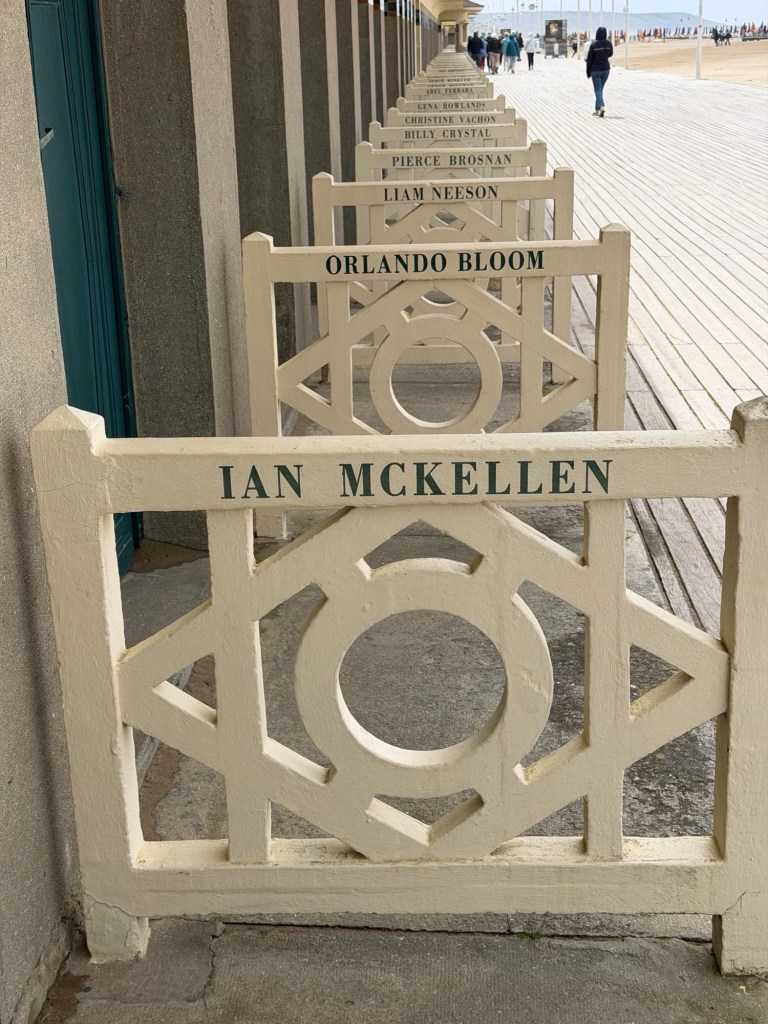
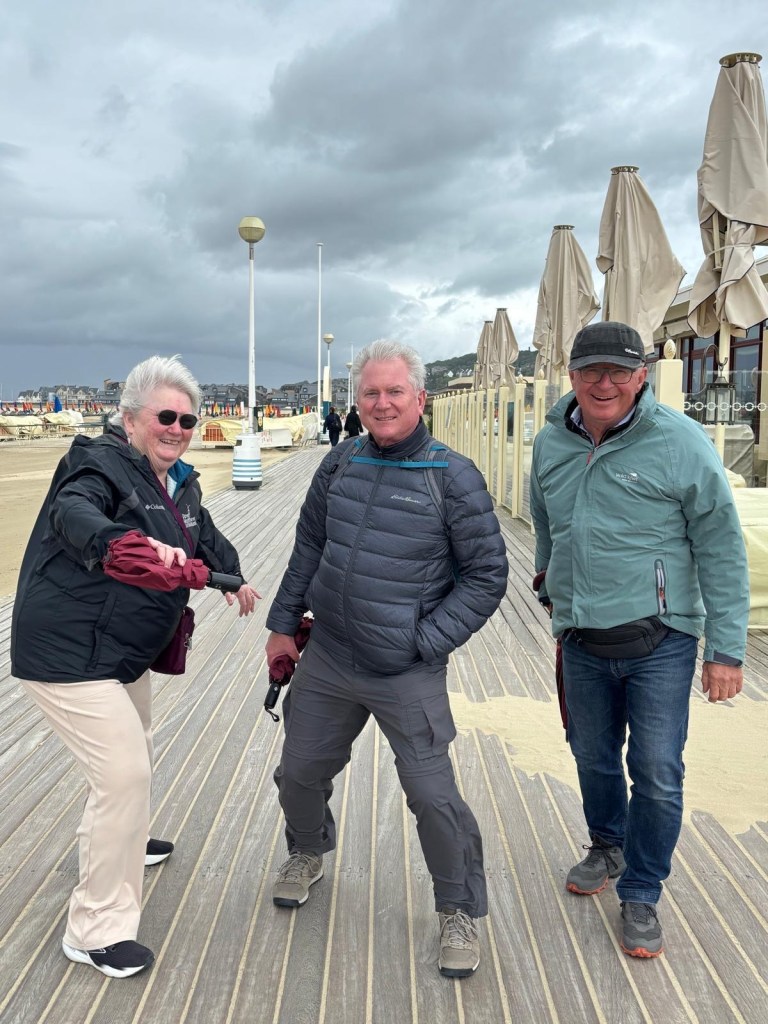
Deauville features a wide, flat beach with a long boardwalk. It must be very crowded in the summer!

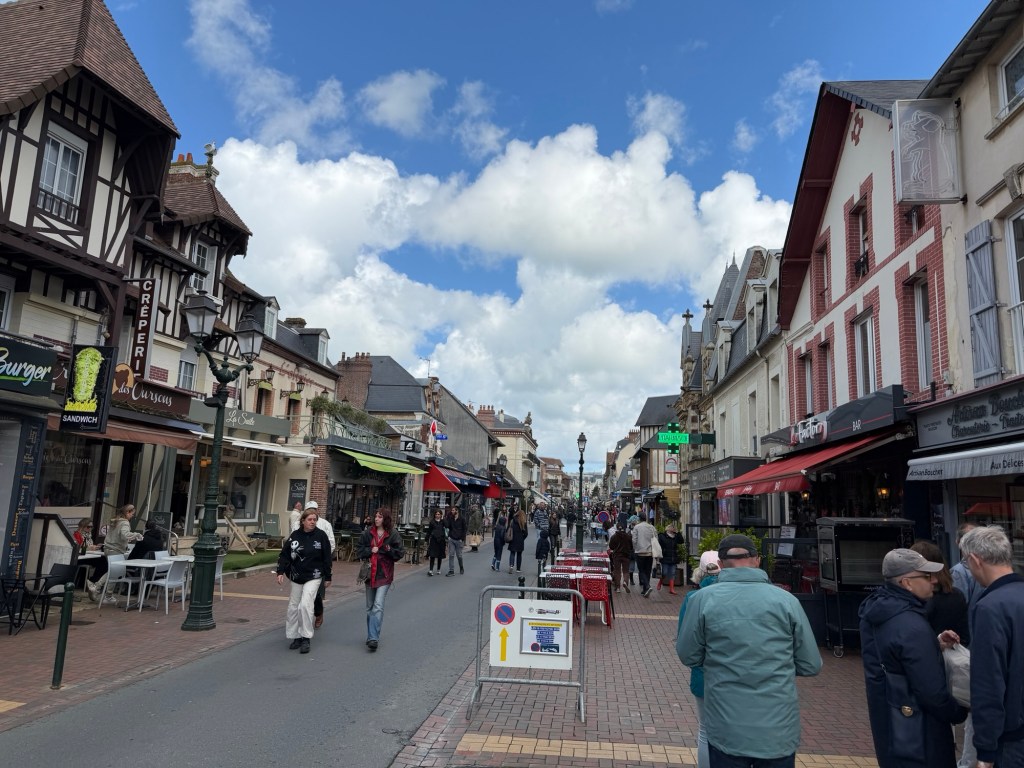
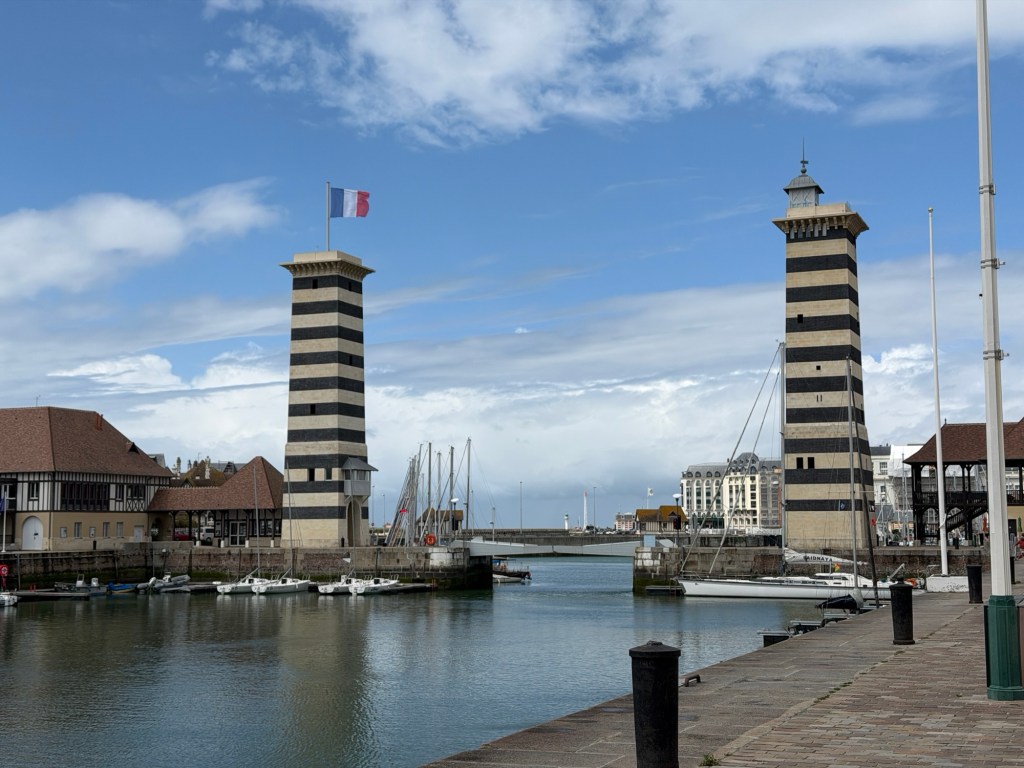
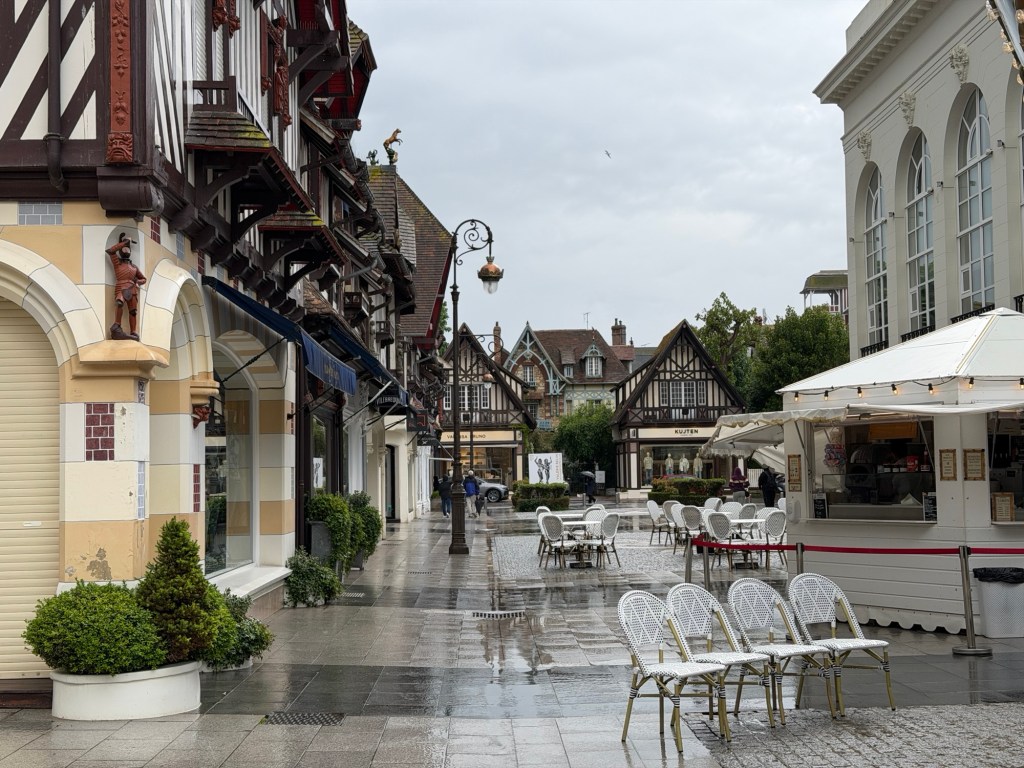
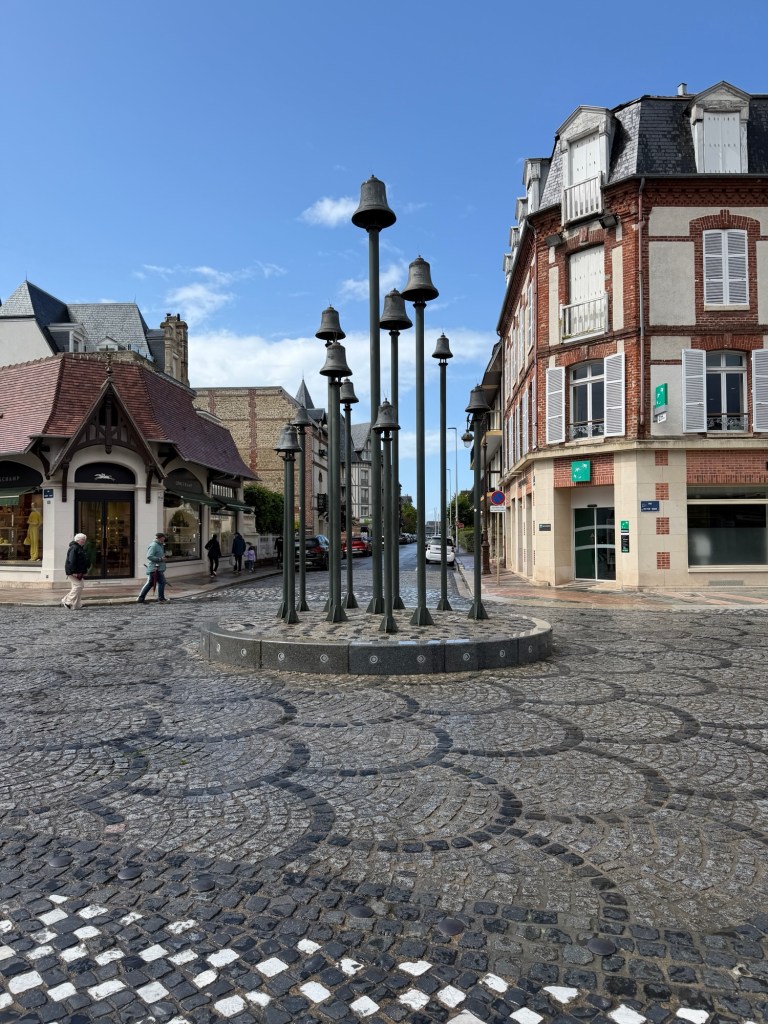
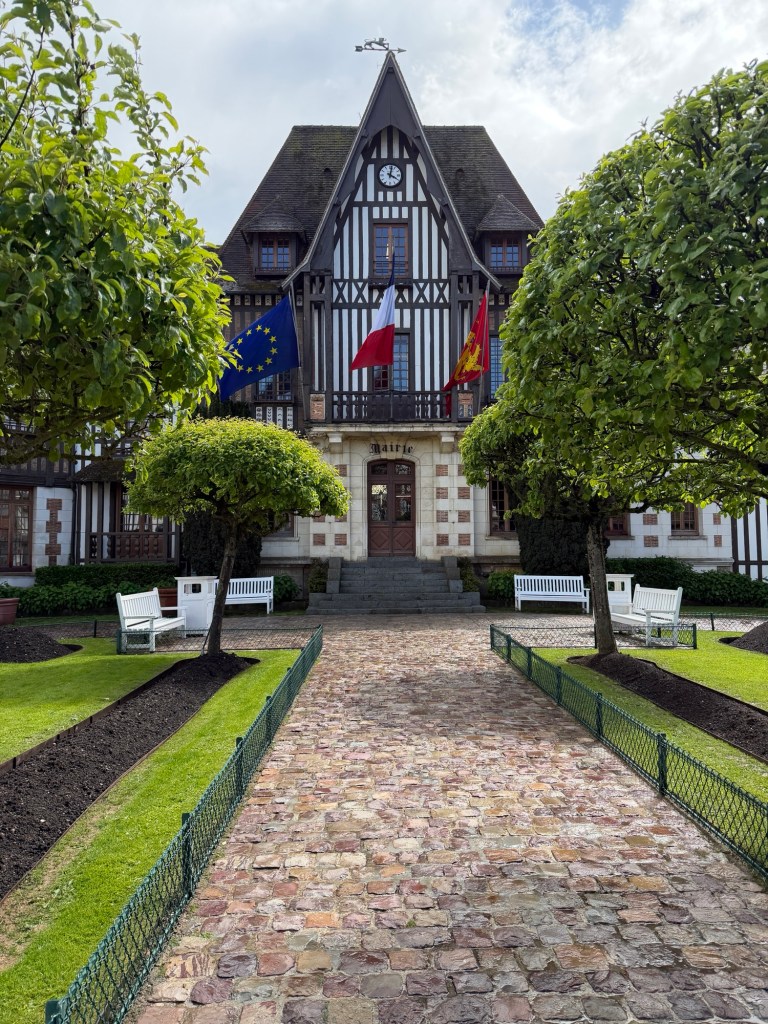
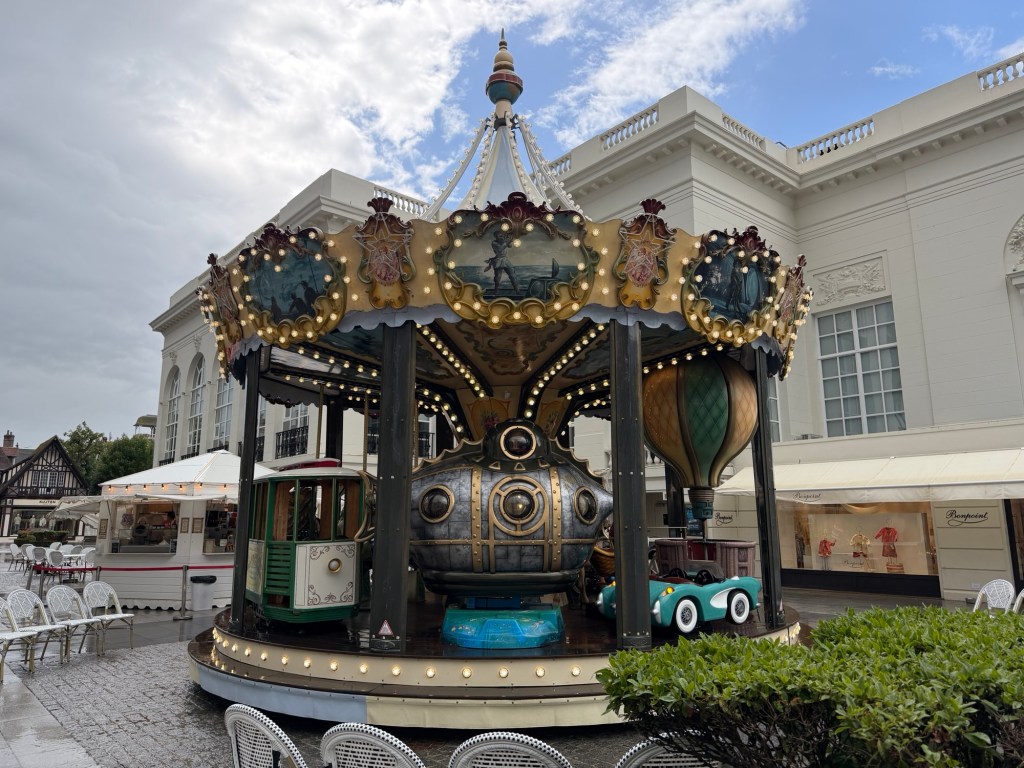
Deauville shows off its affluence along streets lined with expensive shops and entertainment for tourists.

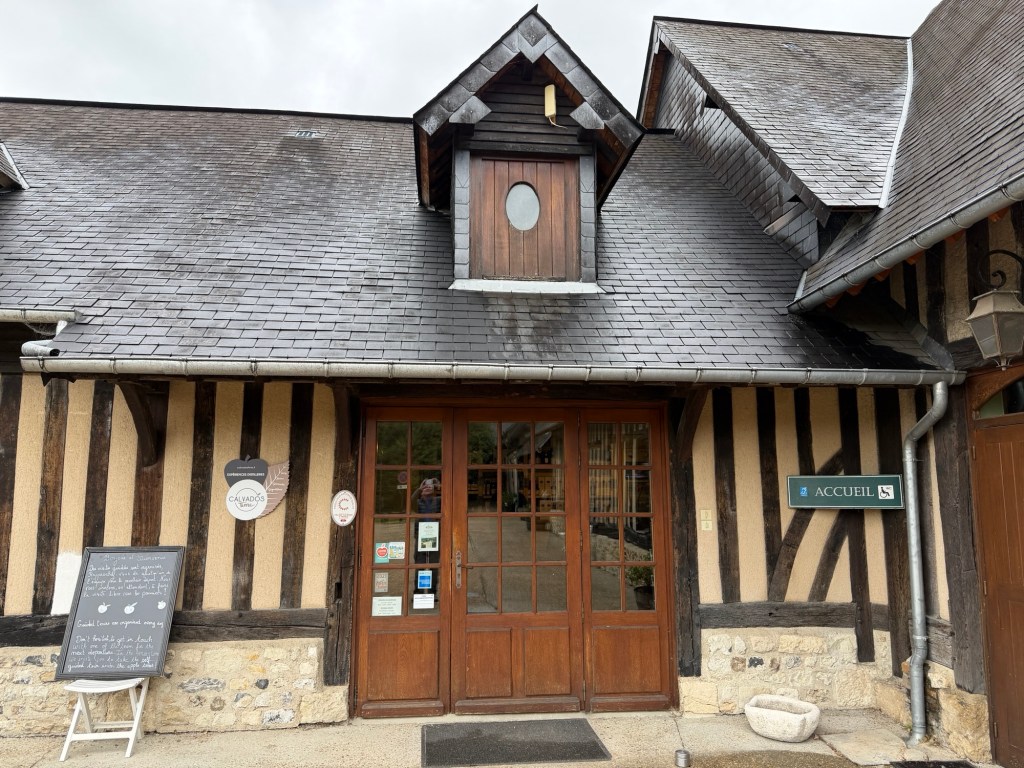
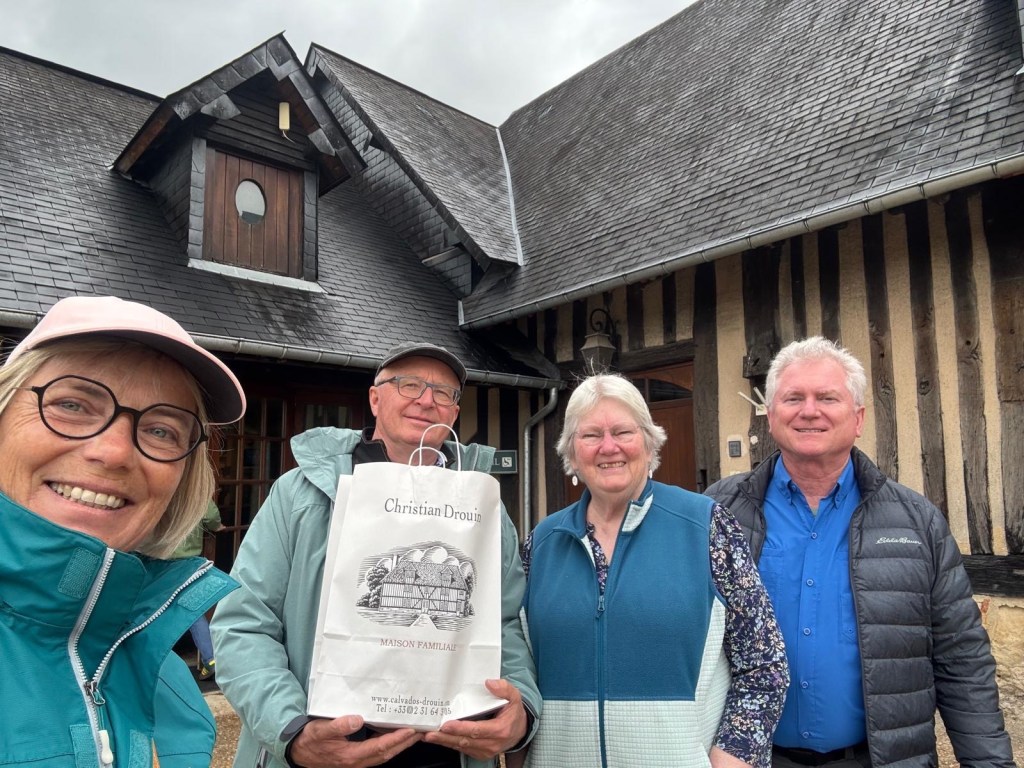
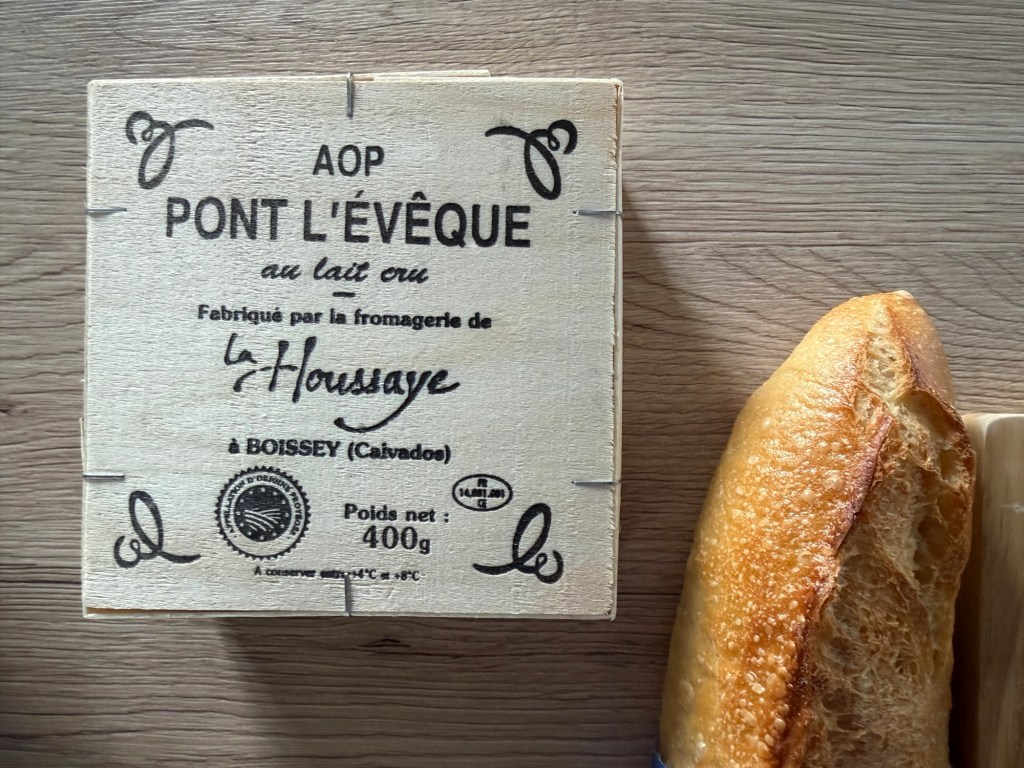
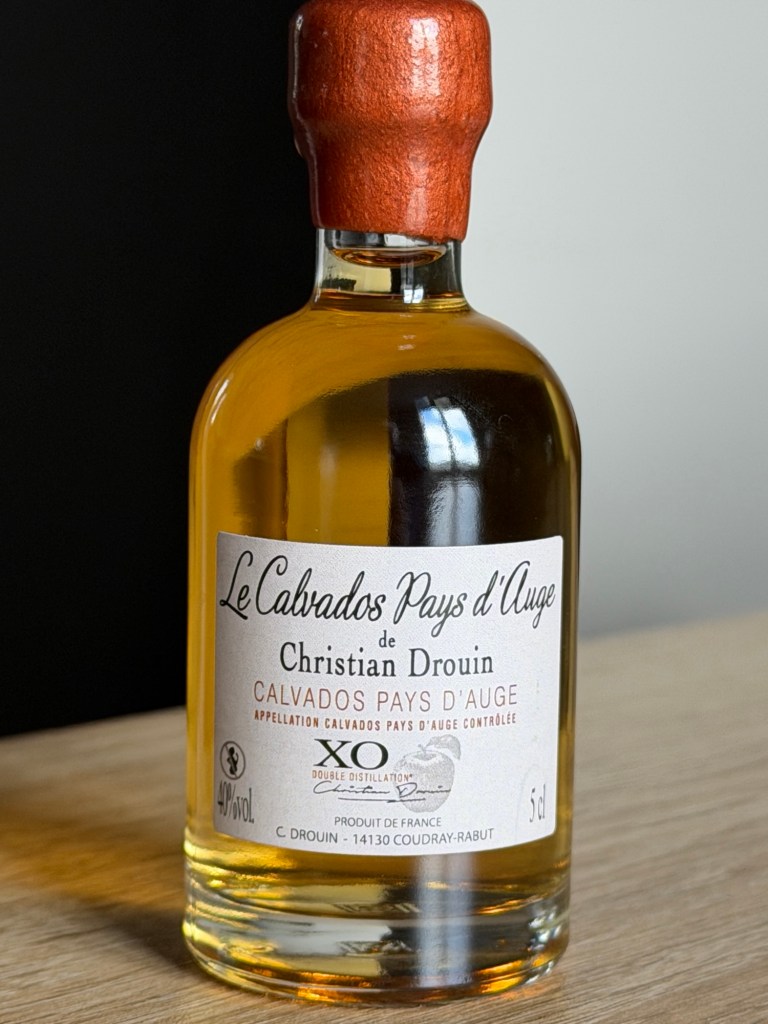
We then visited a distillery where apples are used to make brandy called Calvados. We also purchased cheese in Pont l’Évêque.

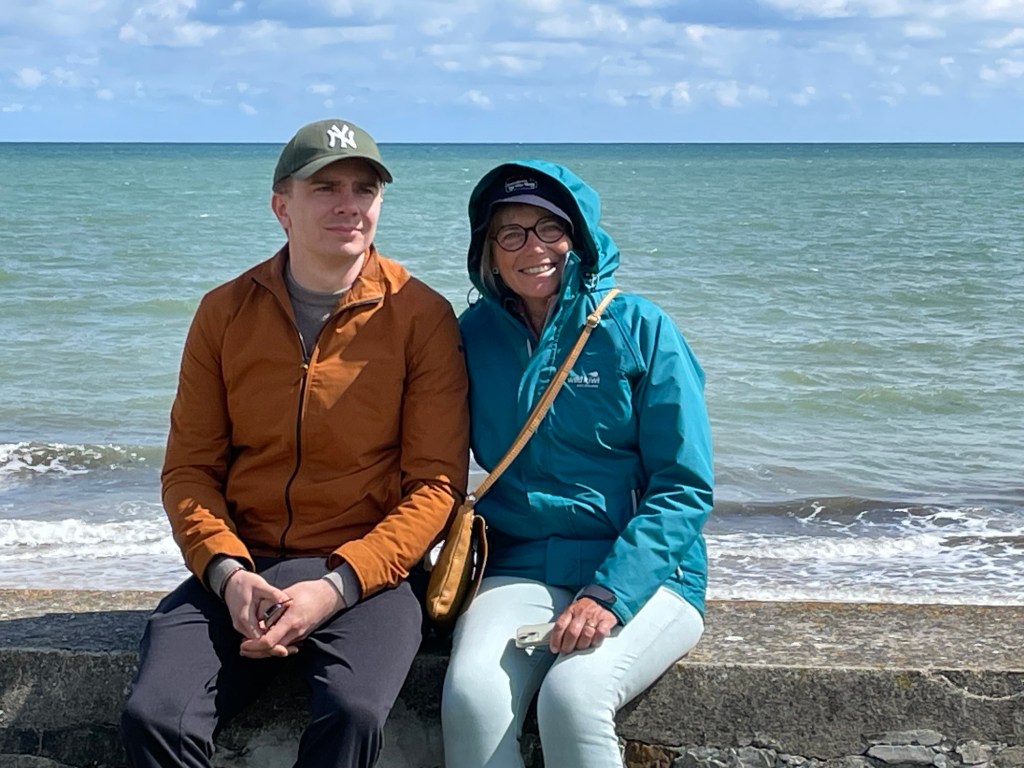
Crazy tourists on the windy boardwalk.