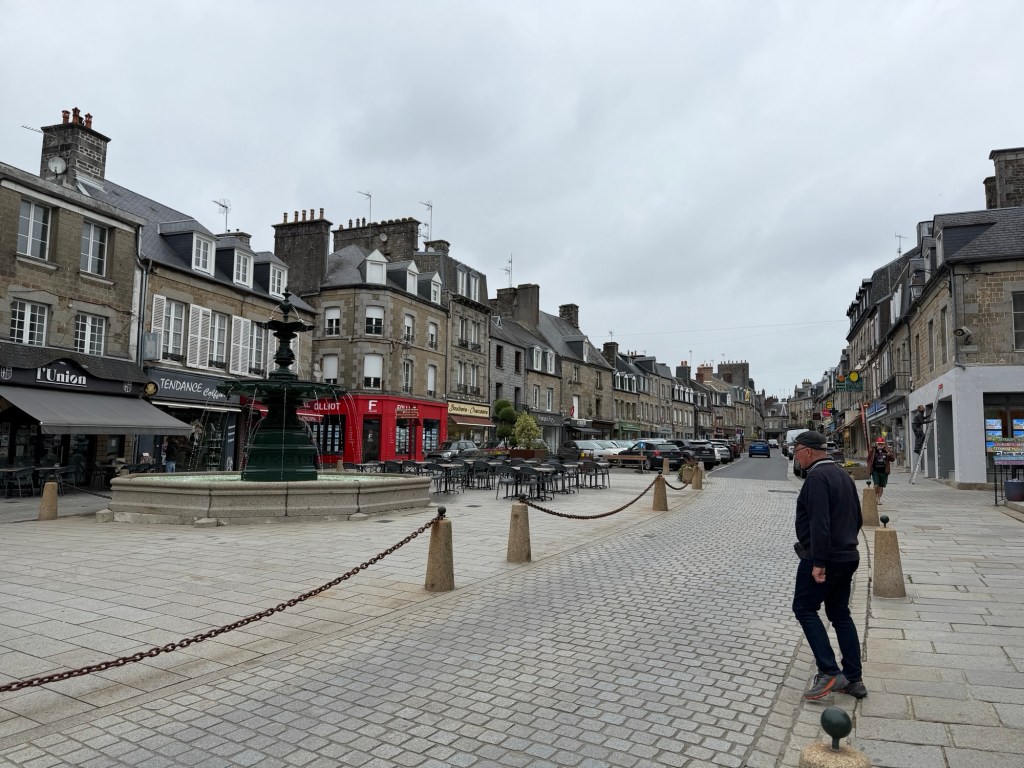
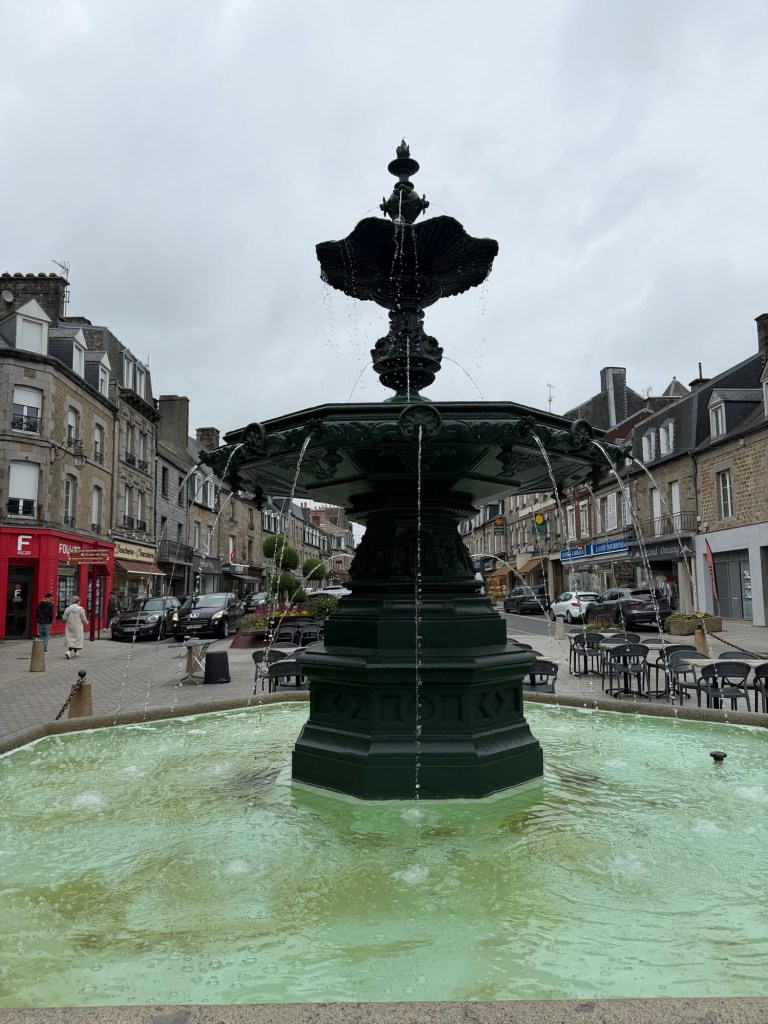
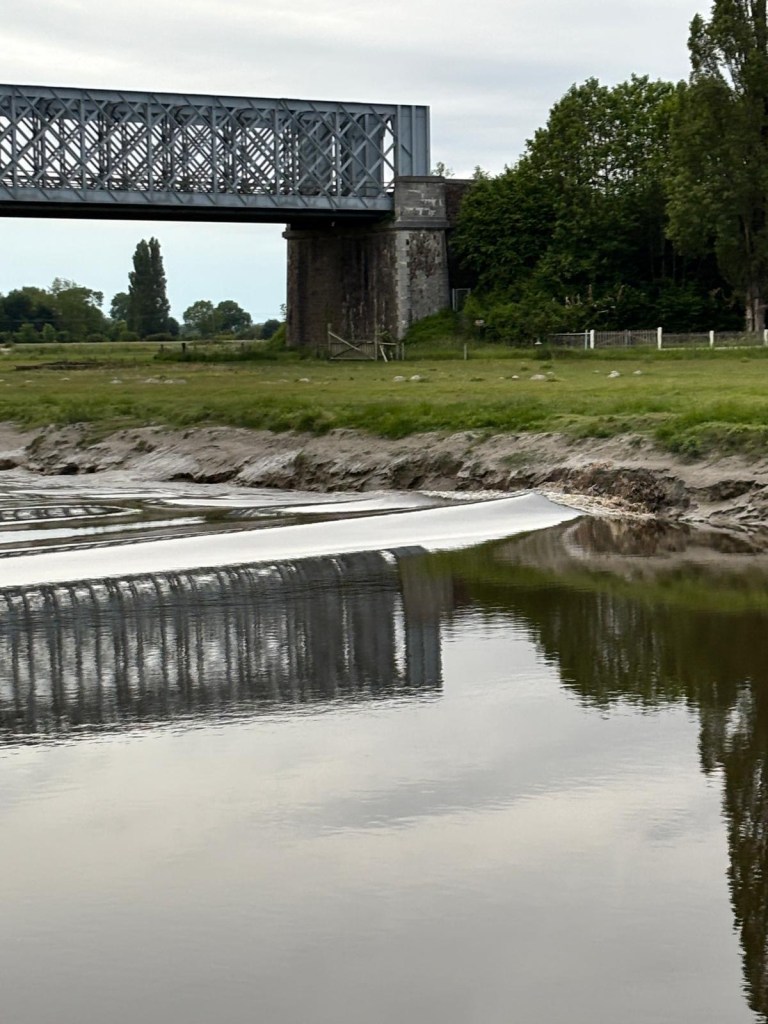
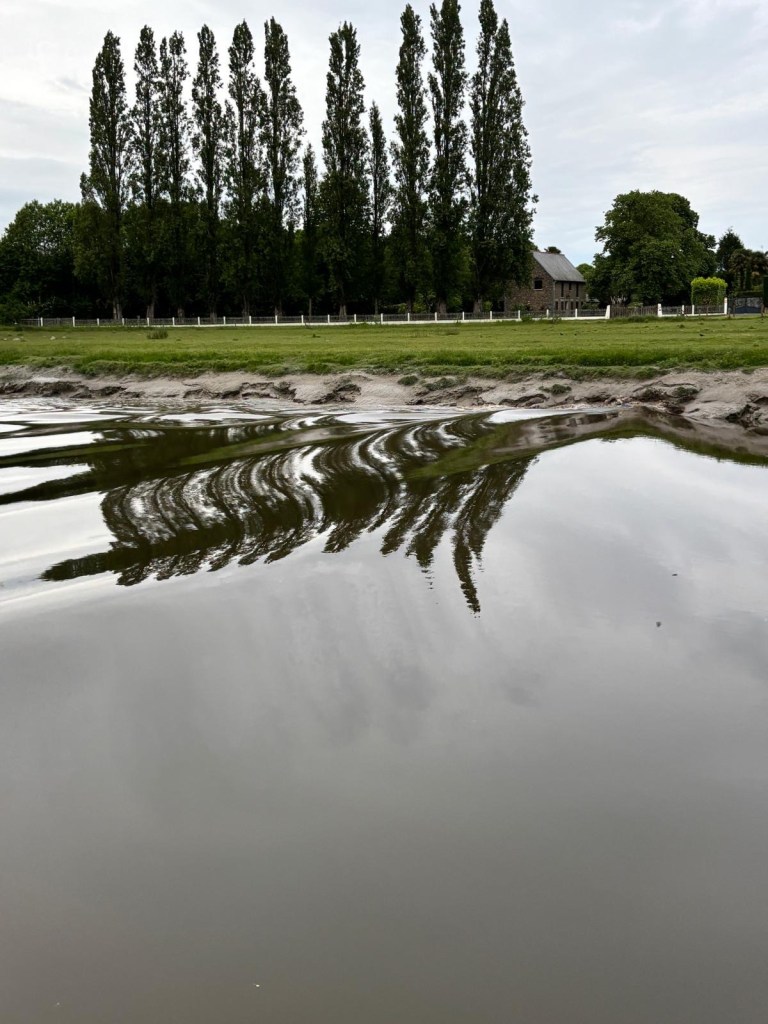
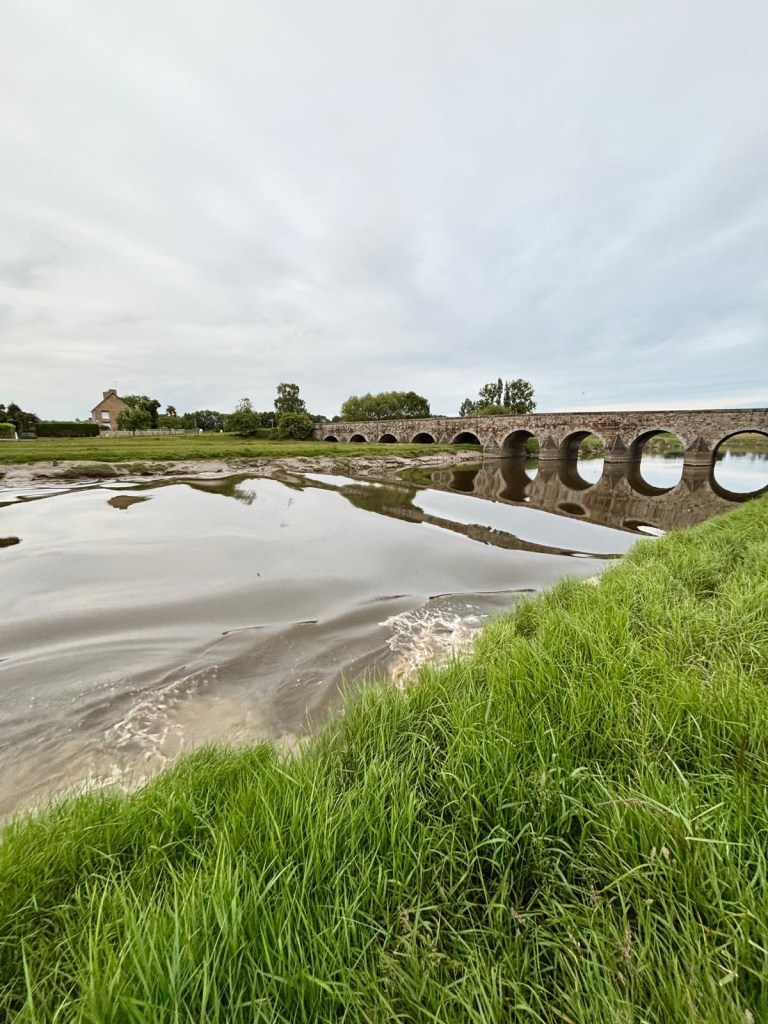
Getting to Verderonne, near Paris, for the wedding is a long drive, so we cut it in half by spending one night in Caen — at a hotel. The only hotel in our northern France adventures. First, of course, we tidied up the AirBnB, meeting the owner when we were ready to leave. He talked about the tidal bore we tried to see the previous two nights — when it is very large, he and his friends like to ride the wave along the Sélune River from a long way. This didn’t happen when we were there.
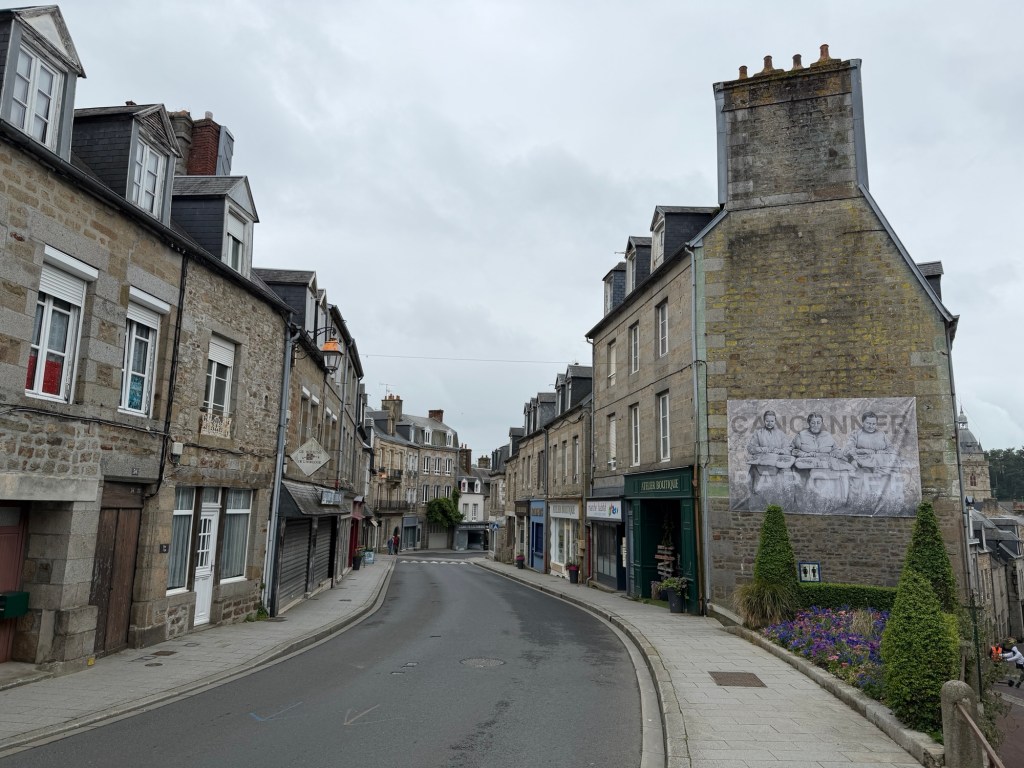
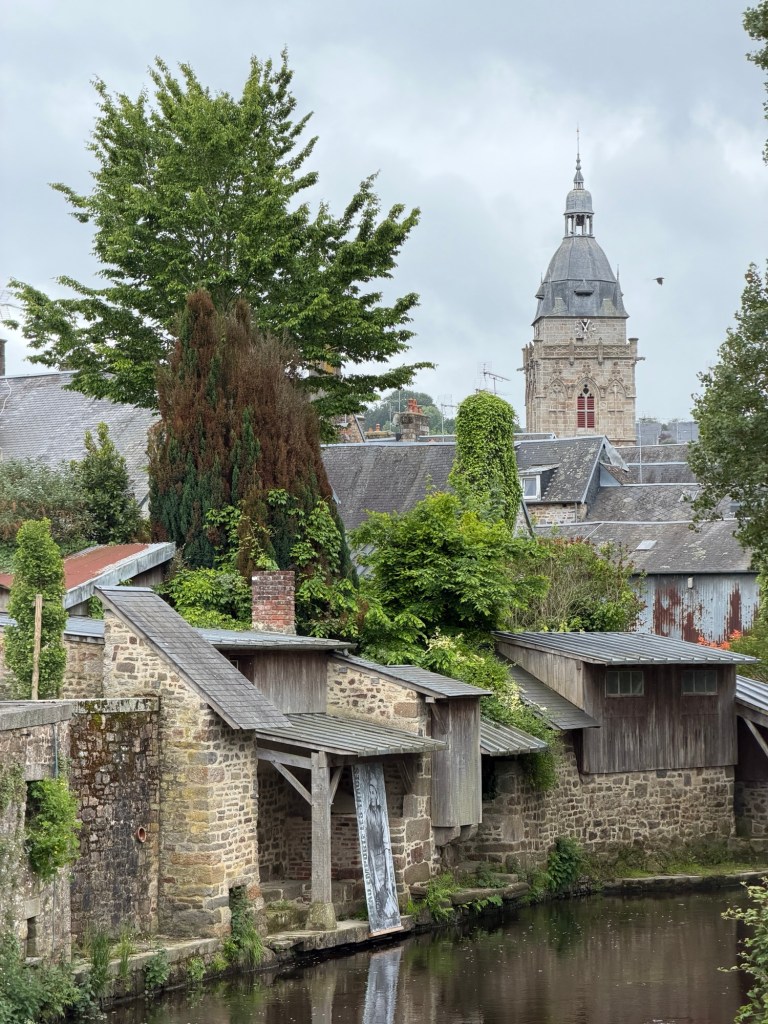
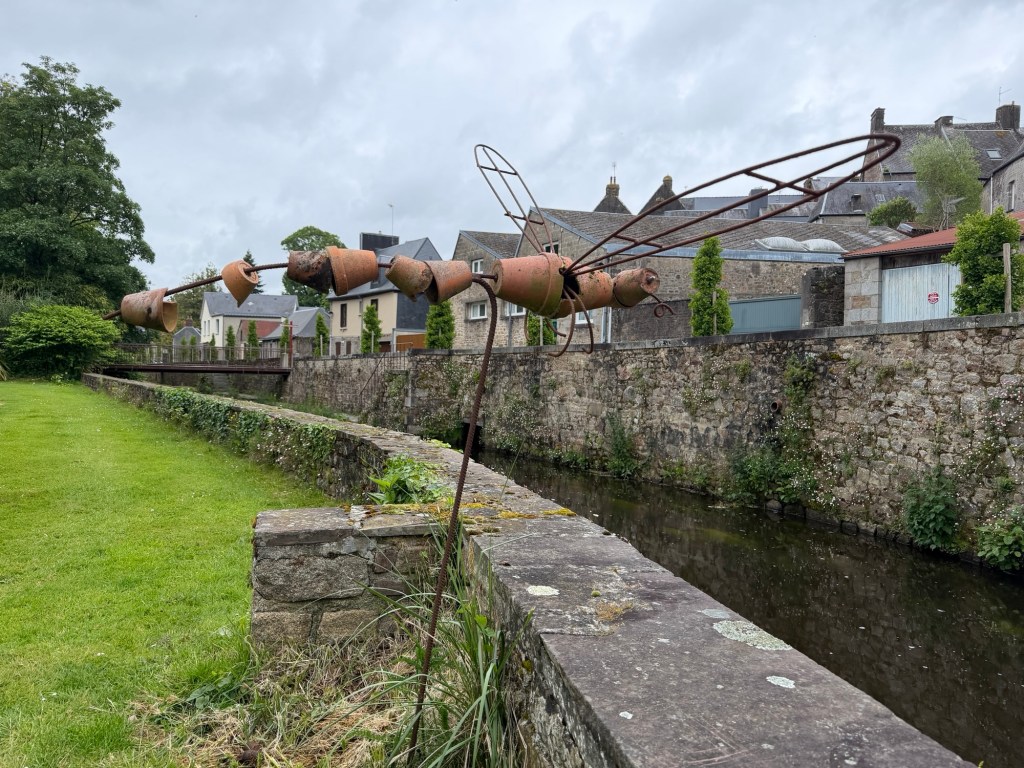
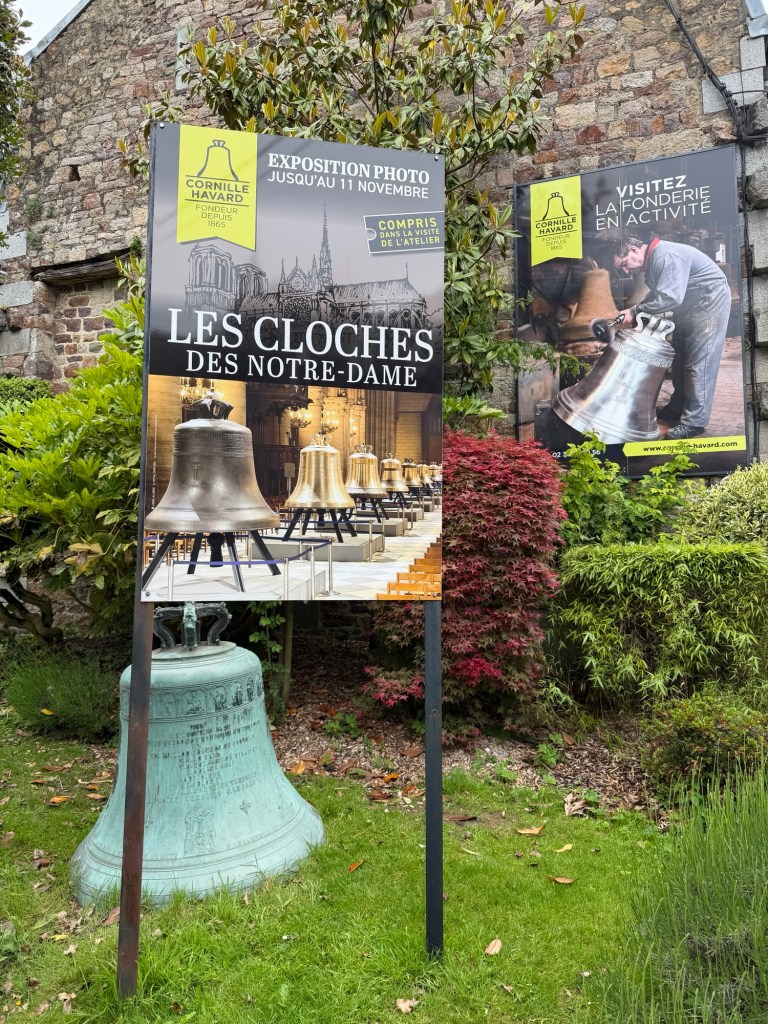
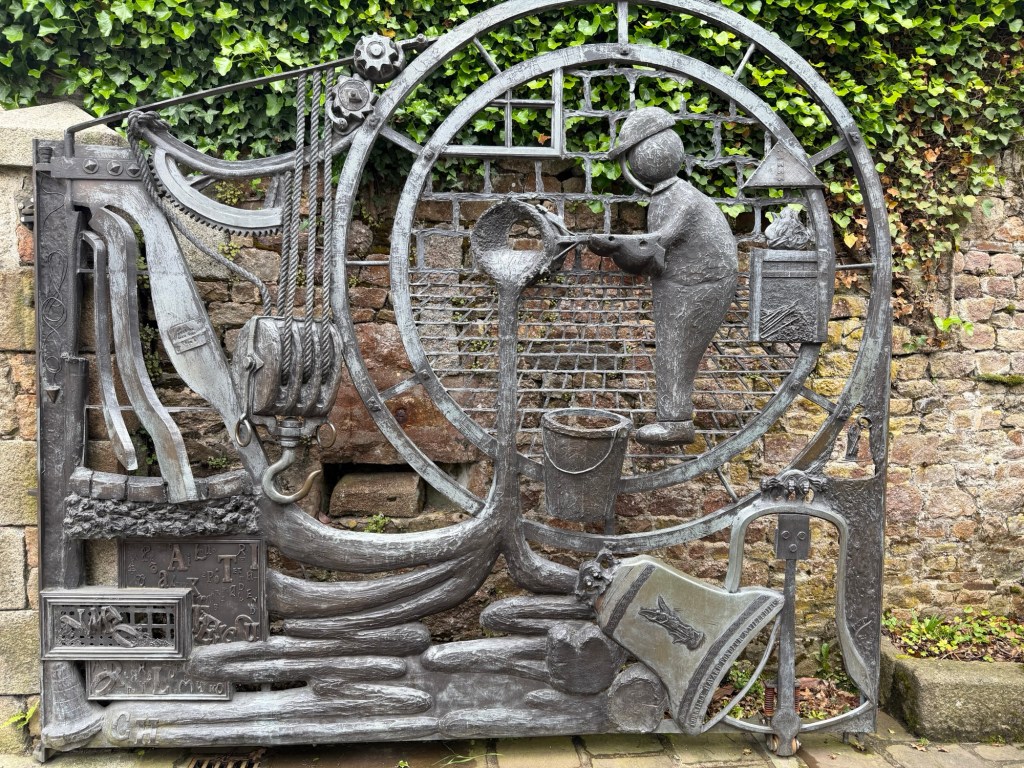
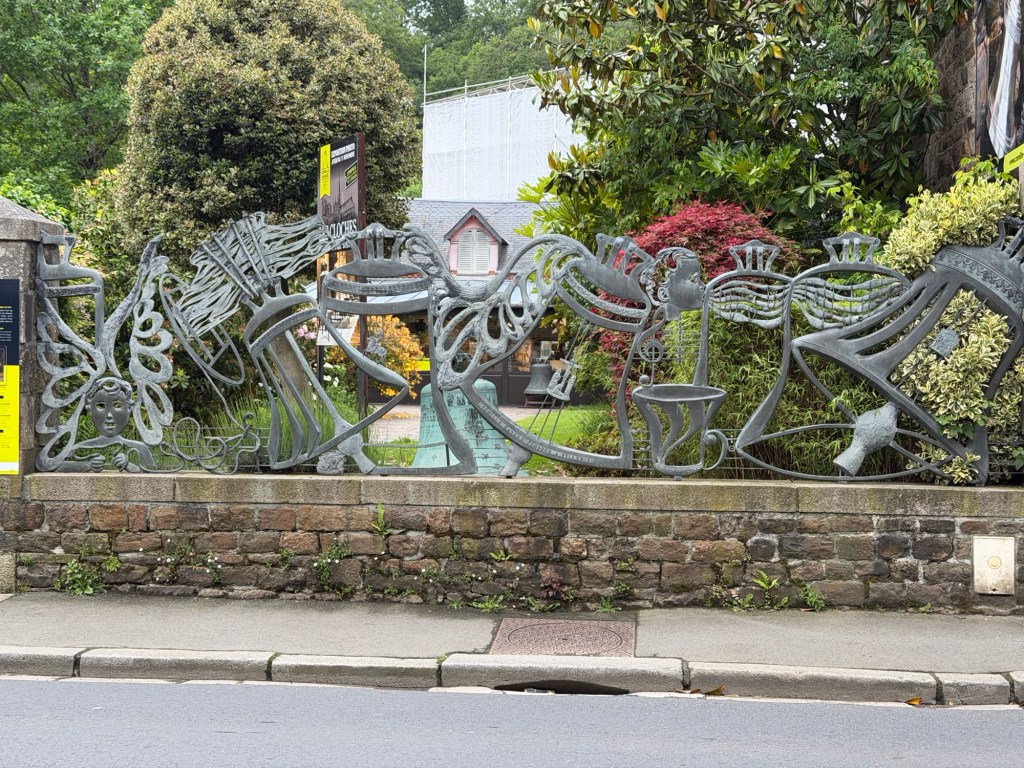
Our first stop was a small village, Villedieu-Les-Poêles, which was a center for copper smelting and other metal works. Being one of only three places in France that still makes bells, the factory is busy replacing the bells that were damaged in the 2019 fire at the Notre Dame Cathedral in Paris. We wandered around the village, enjoying many metal sculptures and views.
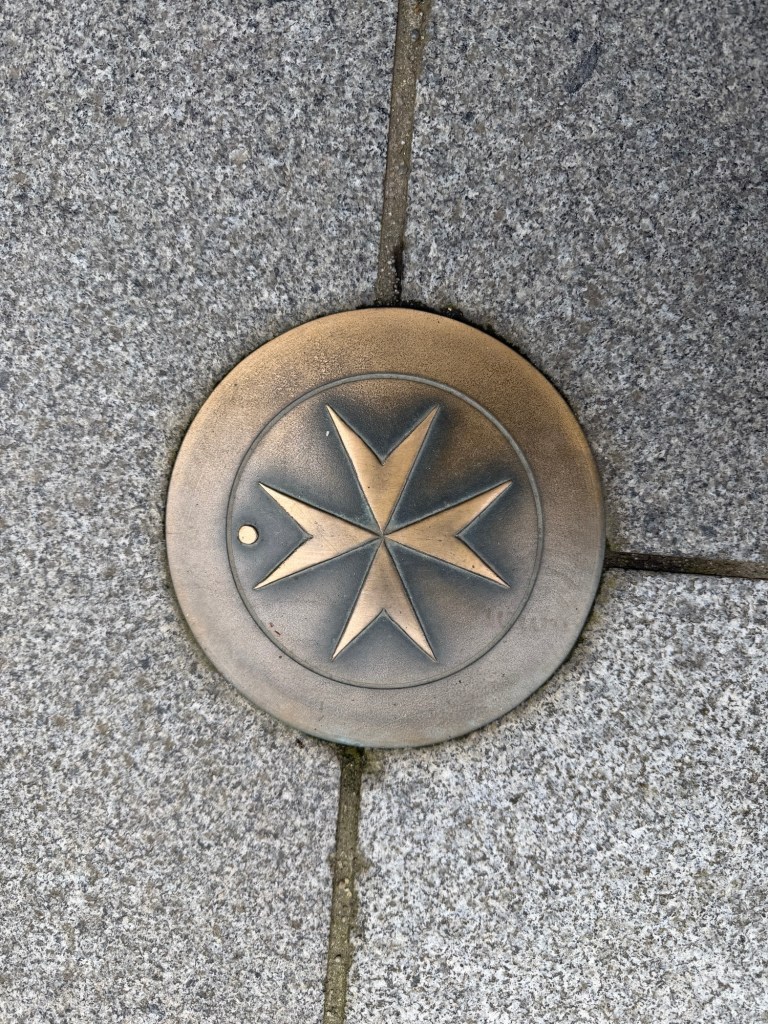
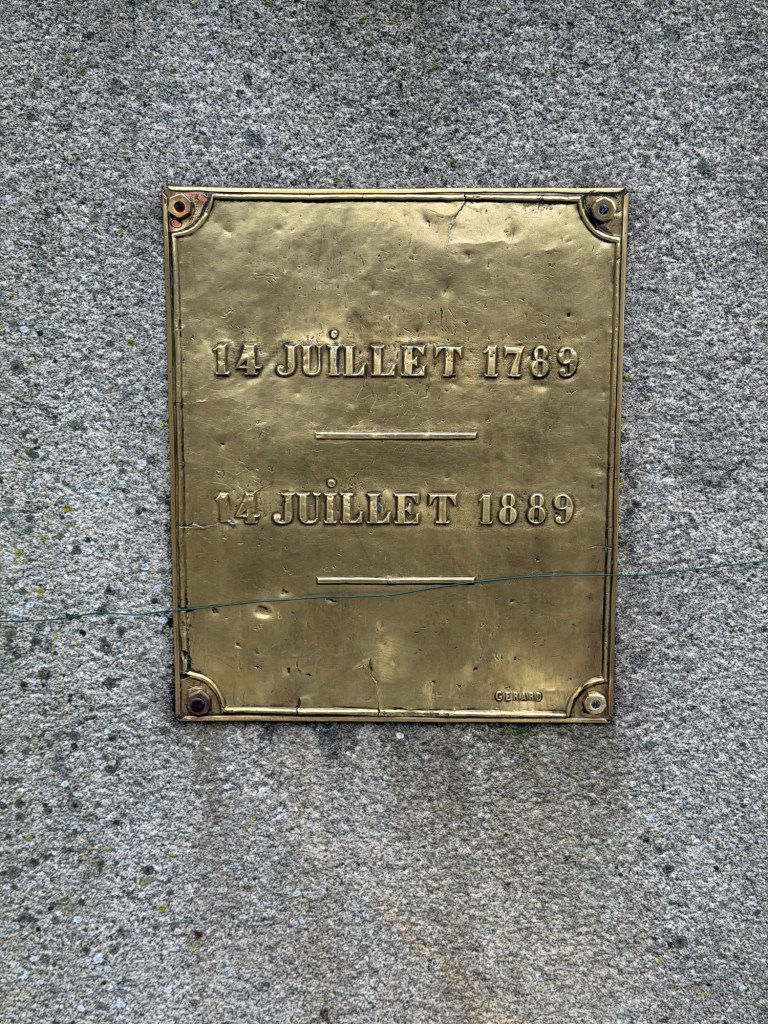
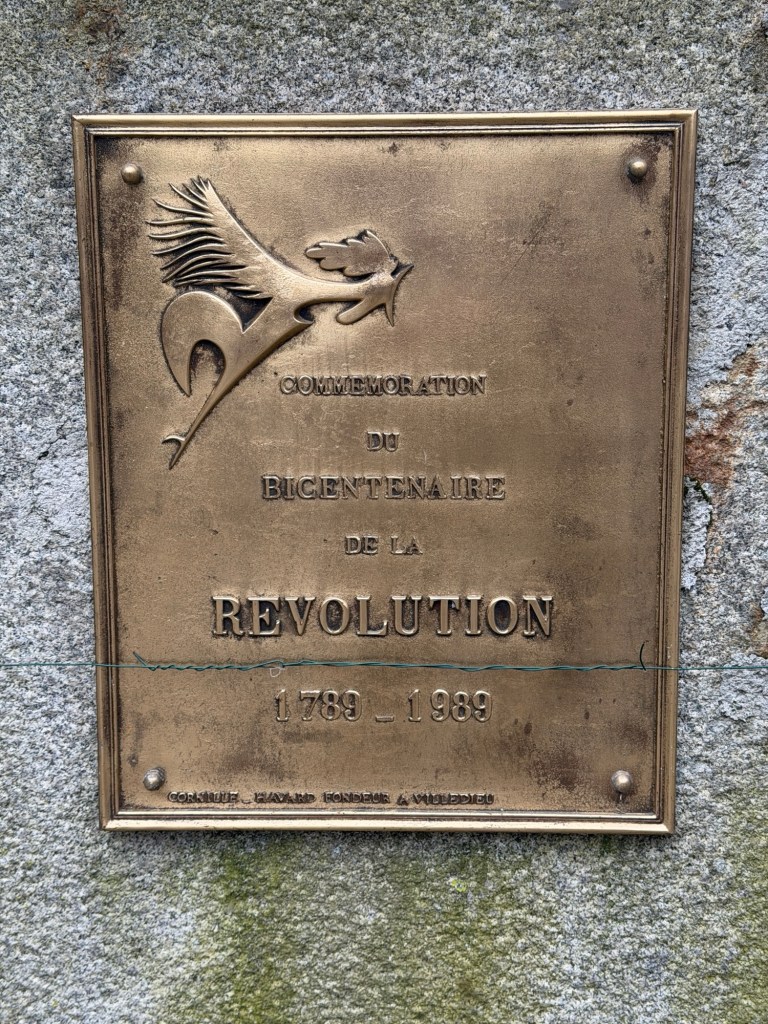
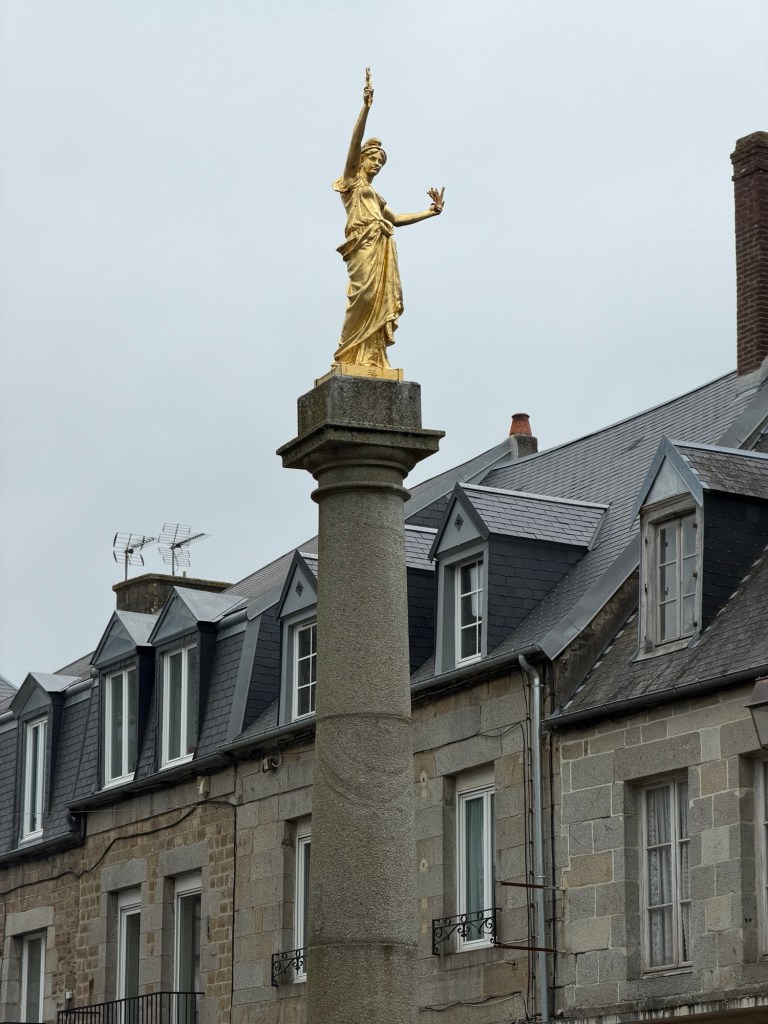
Tour indicator image on sidewalkGolden statue of Marianne with placques commemorating the anniversaries of the French Revolution.
Marianne is the national personification of the French Republic, symbolizing the core values of liberty, equality, fraternity, and reason.
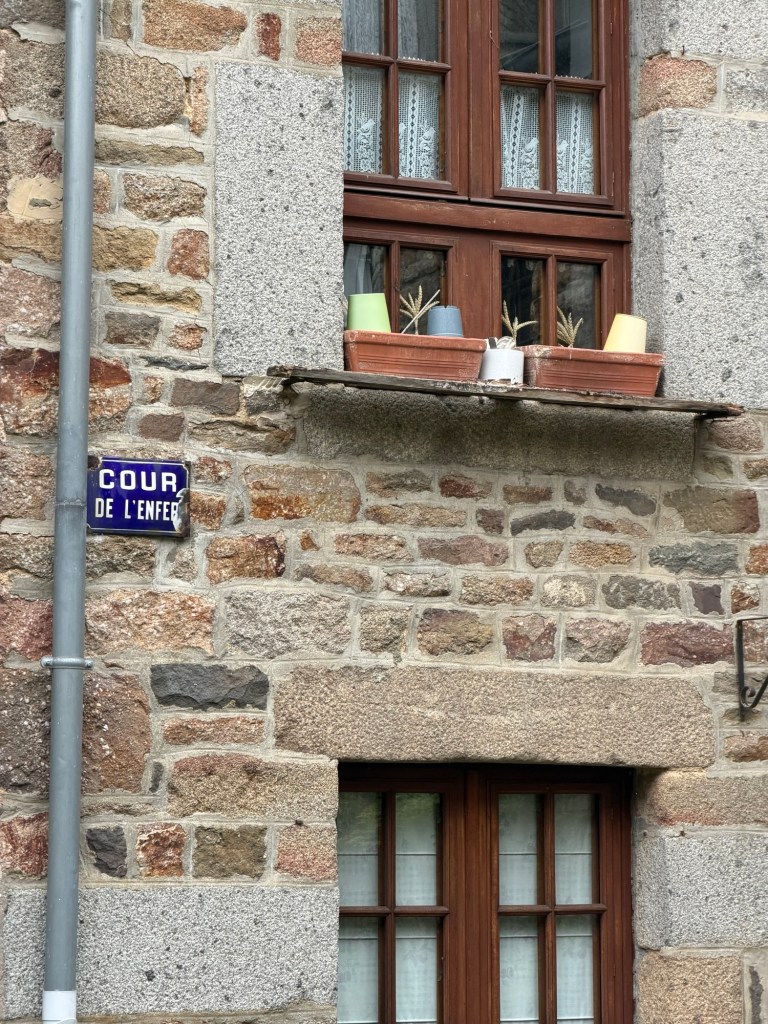
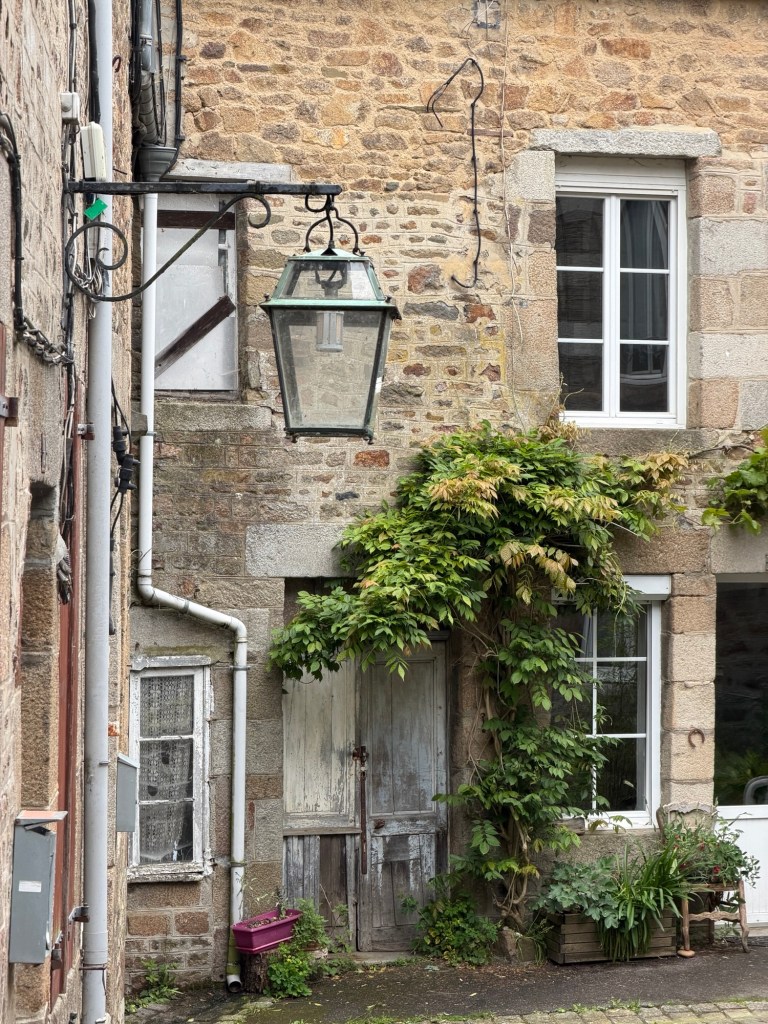
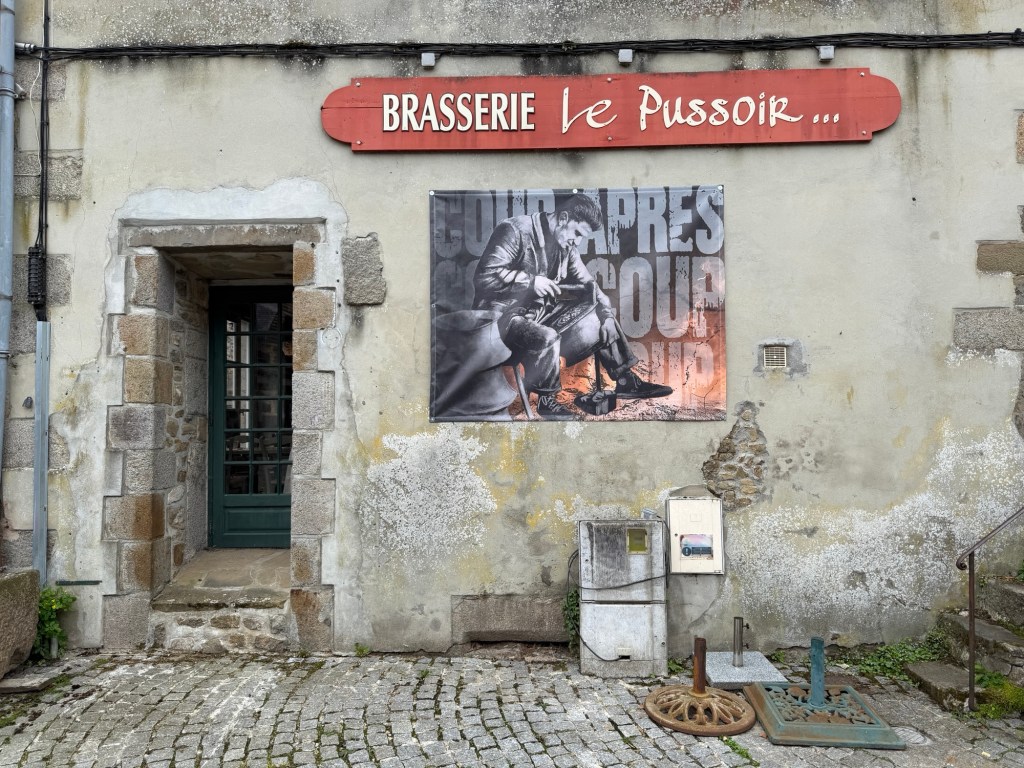
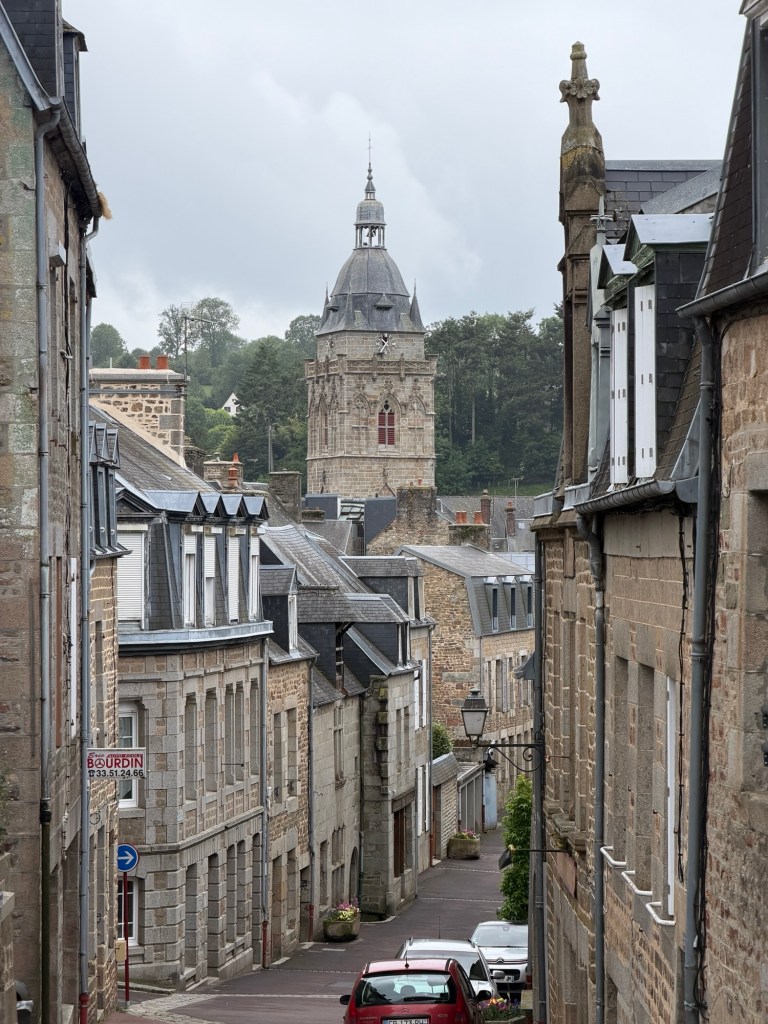
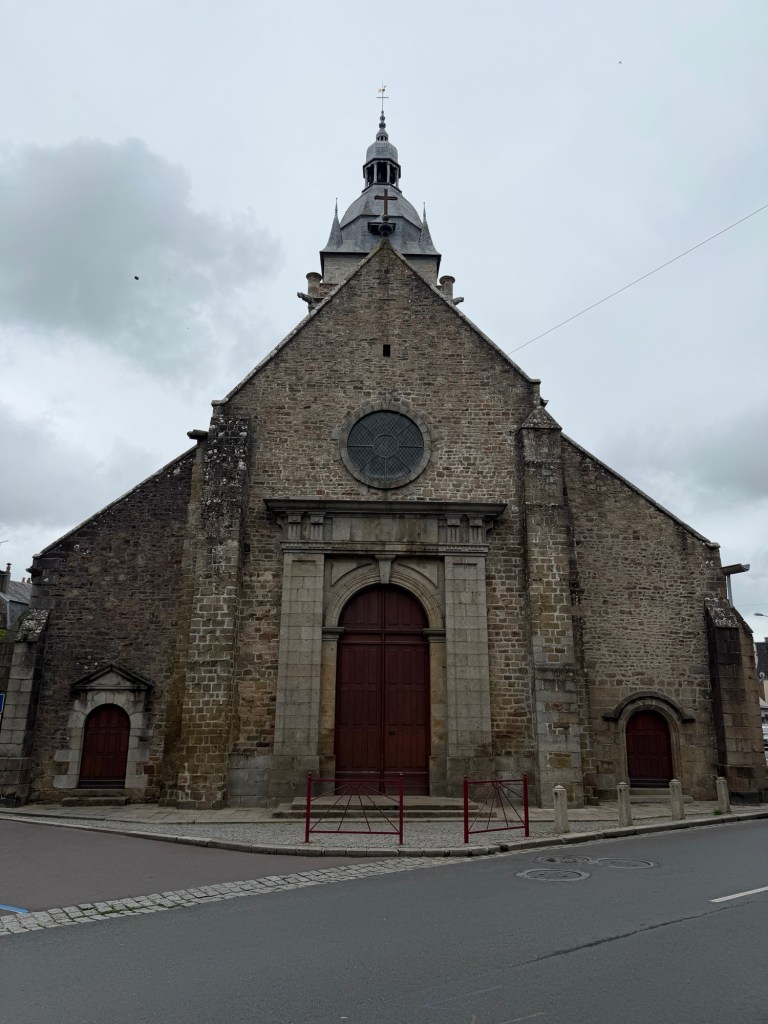
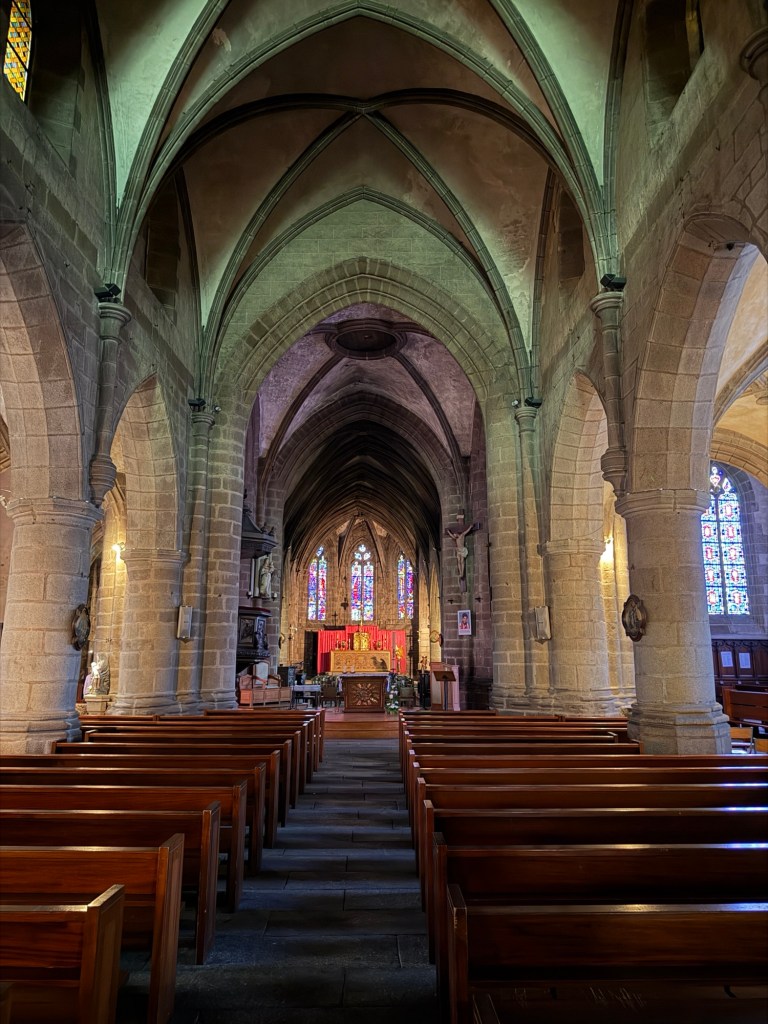
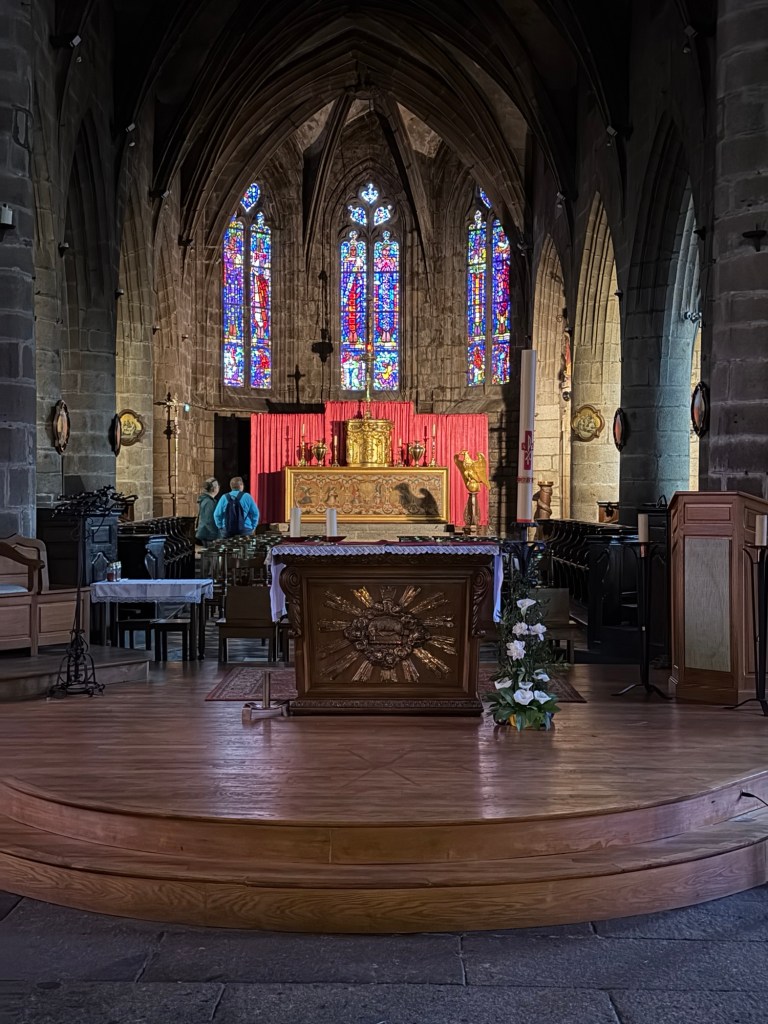
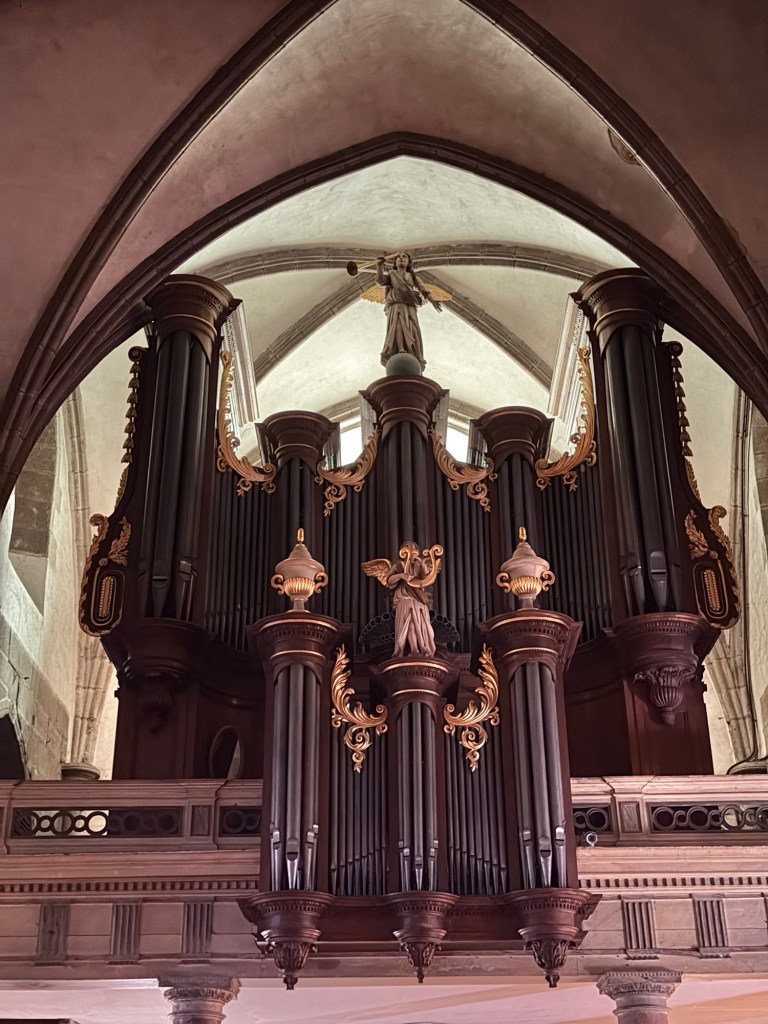
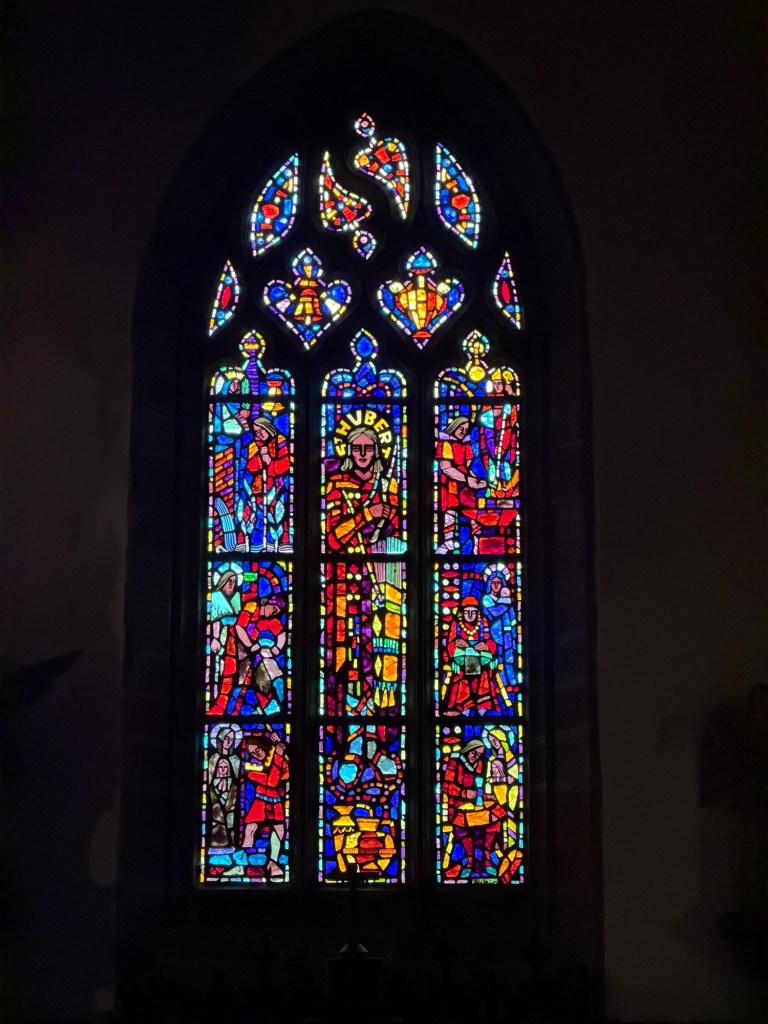
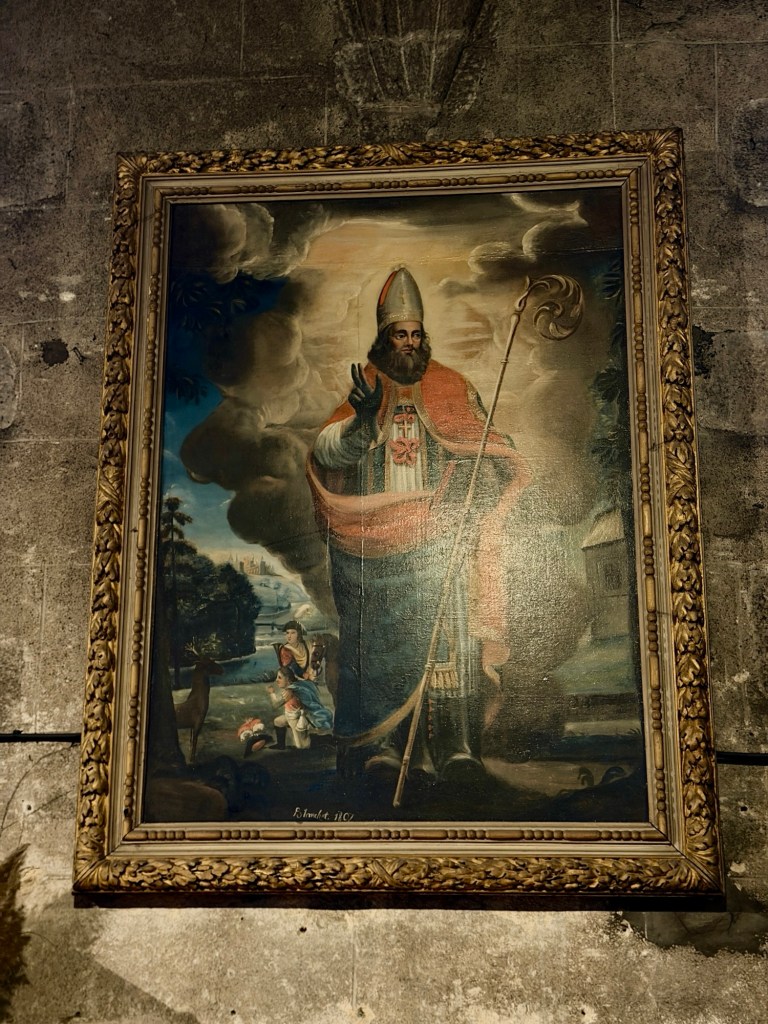
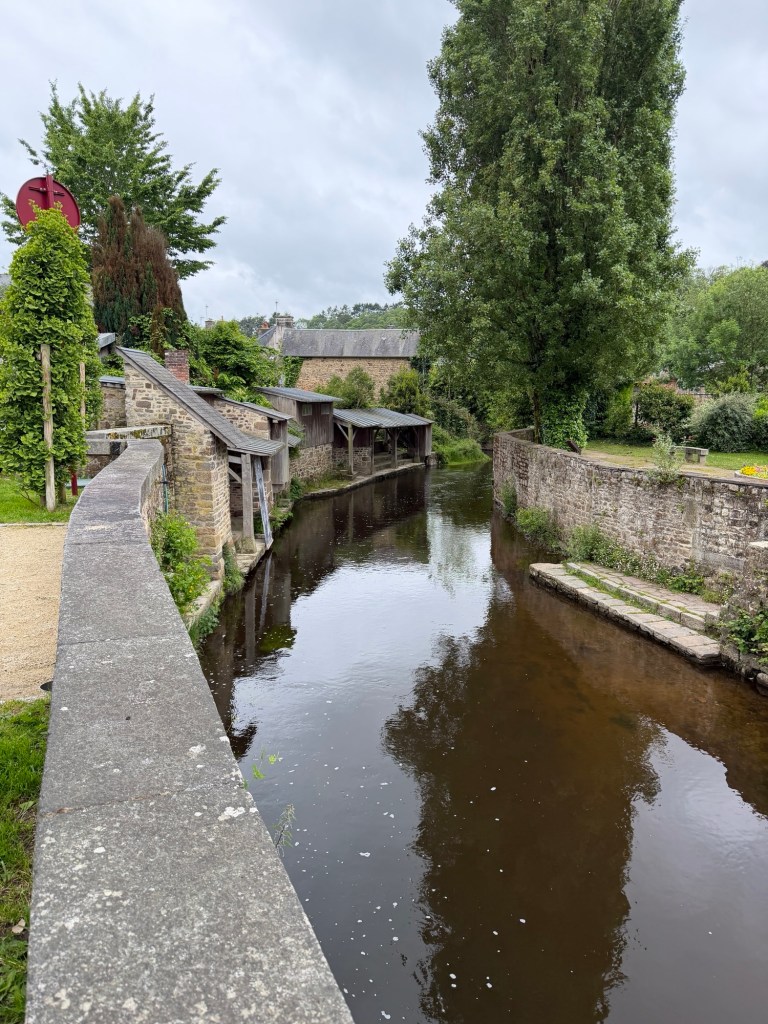
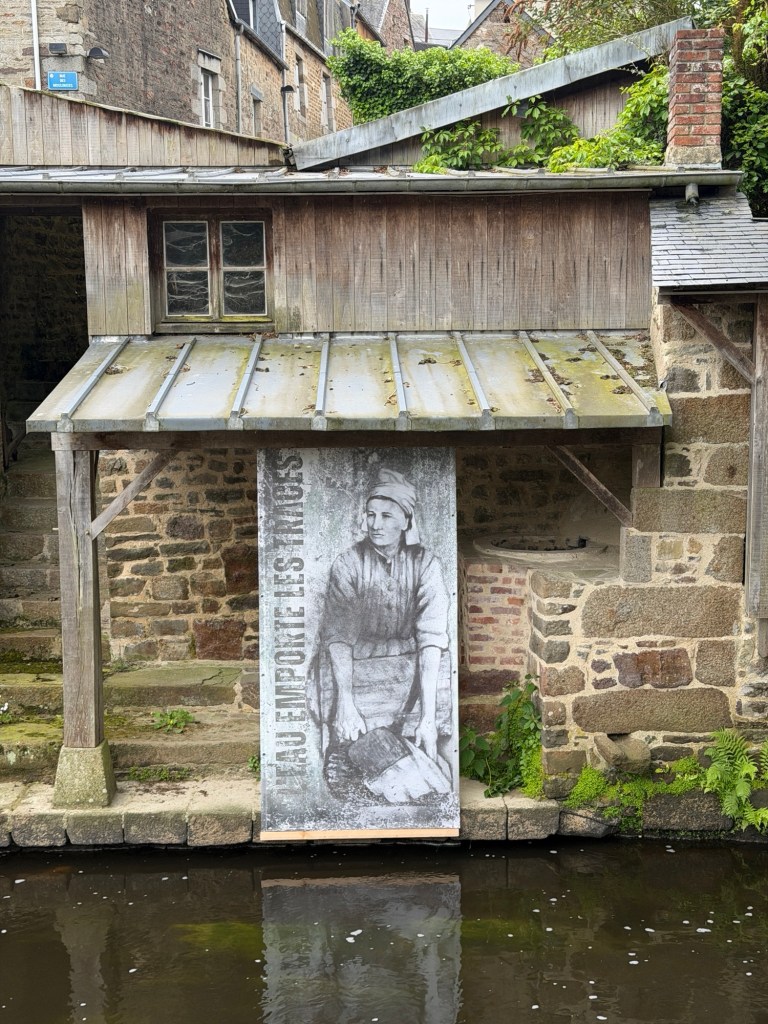
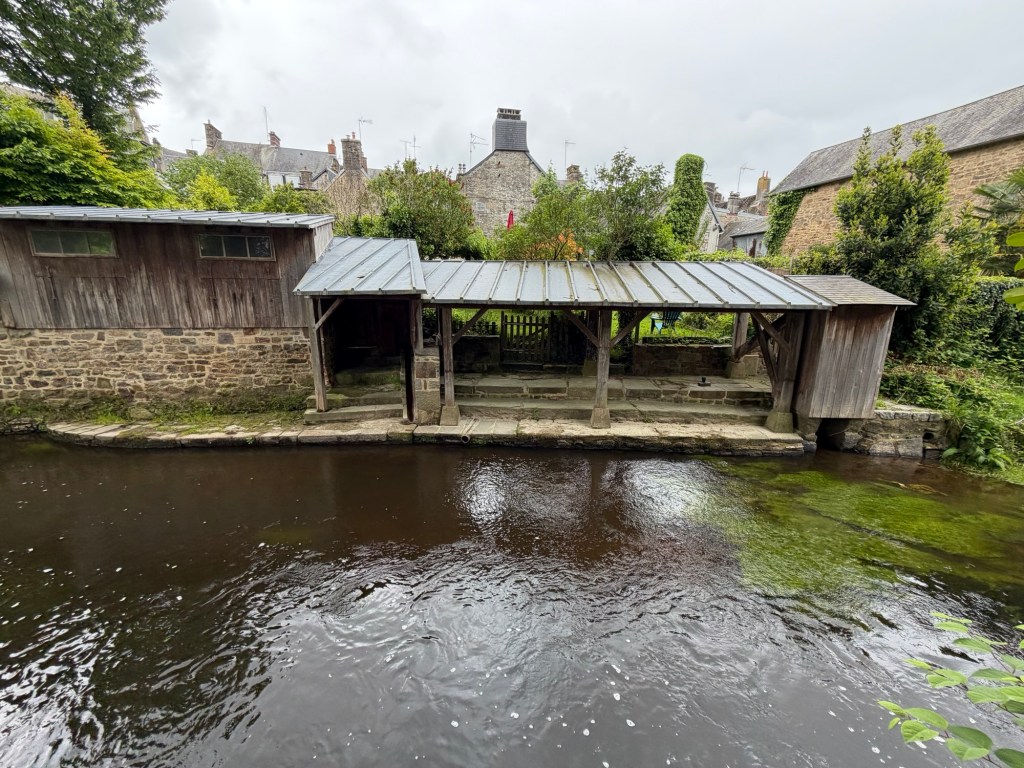
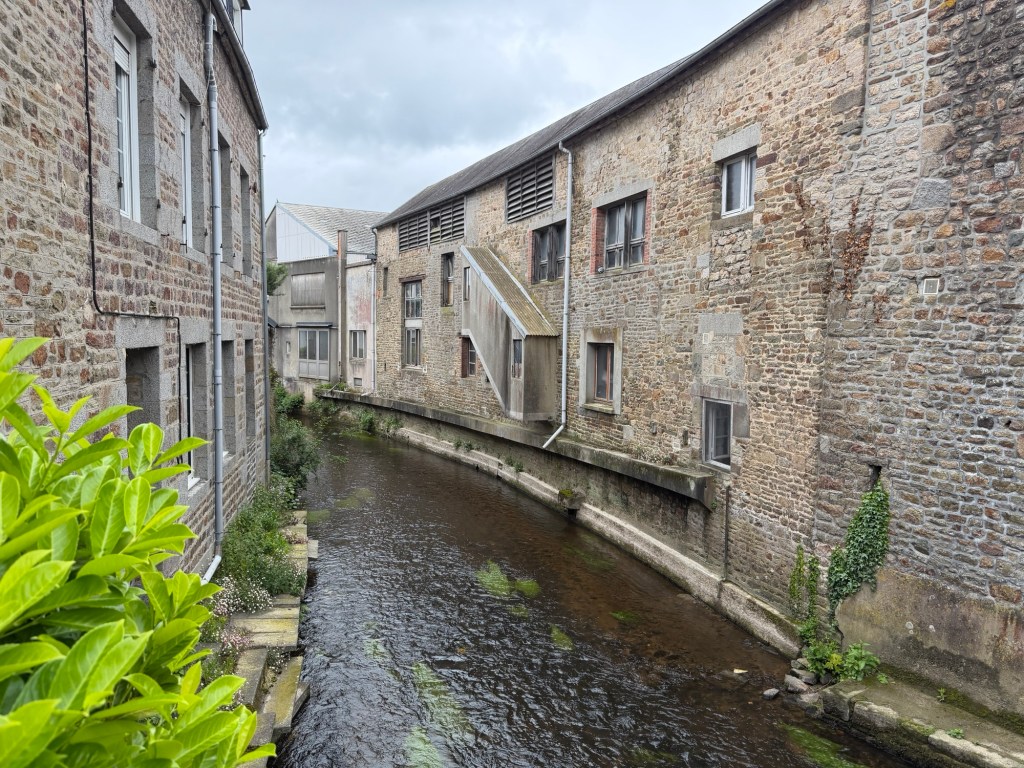
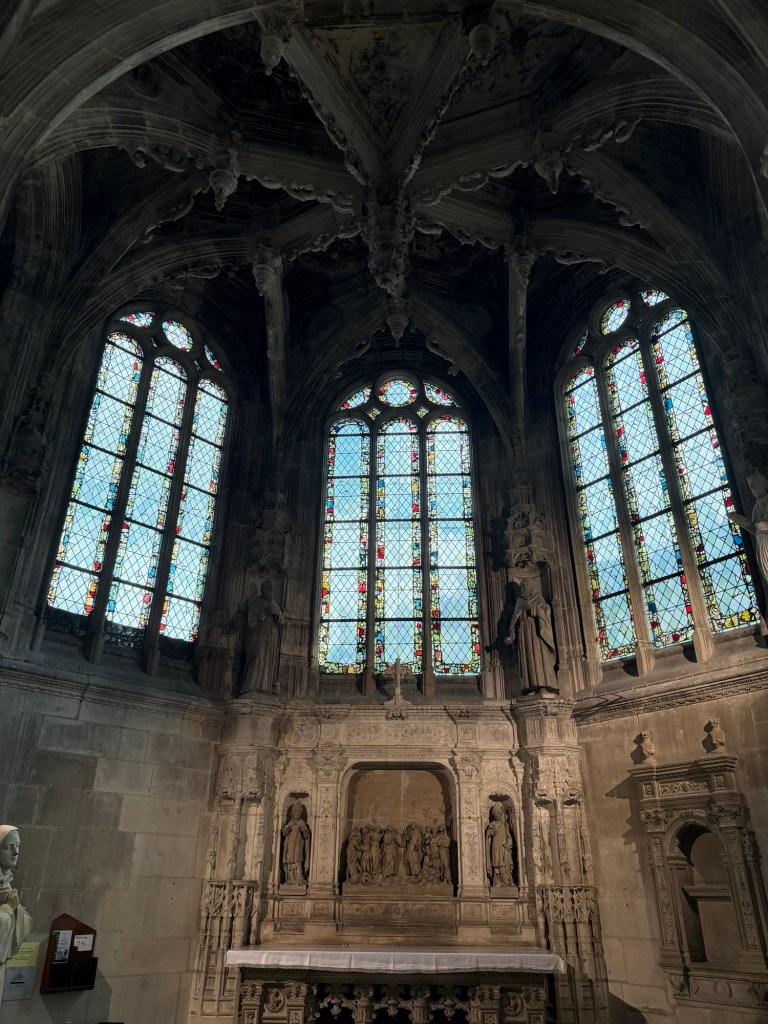
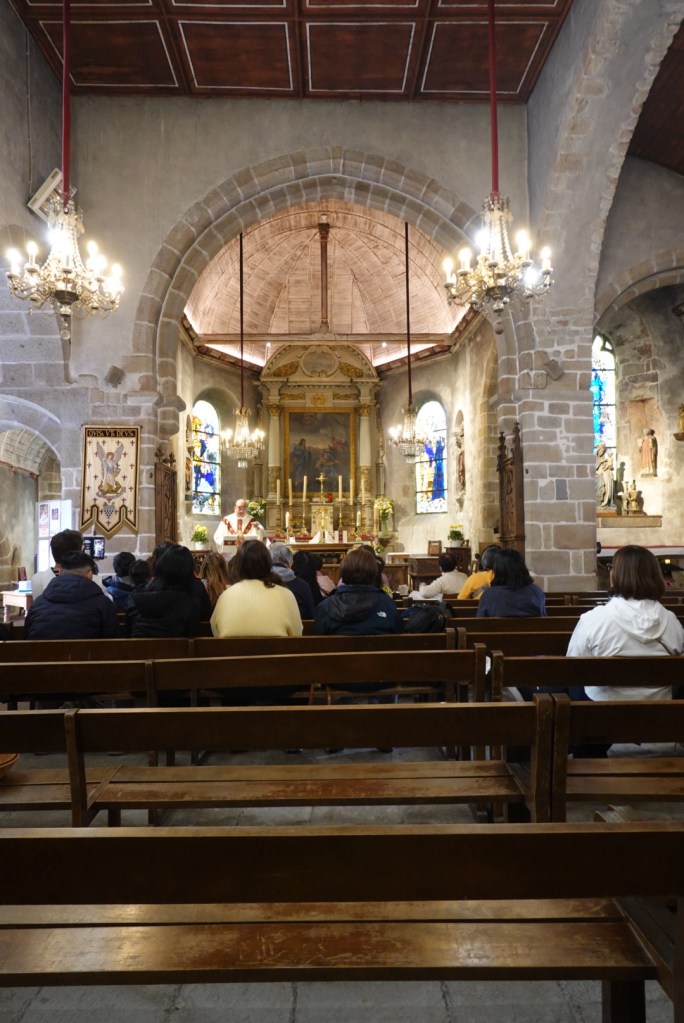
Pictures in the courtyard of hell, a mural of a worker making a copper bowl, and a pretty view of a Main StreetLocal church (Notre Dame), which was open so we went in. Portrayals of Saint Hubert as he is a patron saint of hunters, mathematicians, opticians and metalworkers. Note the many items made of copper.This one bugs me. 😉Washer women did laundry in the canalBell factory and lots of metal sculptures
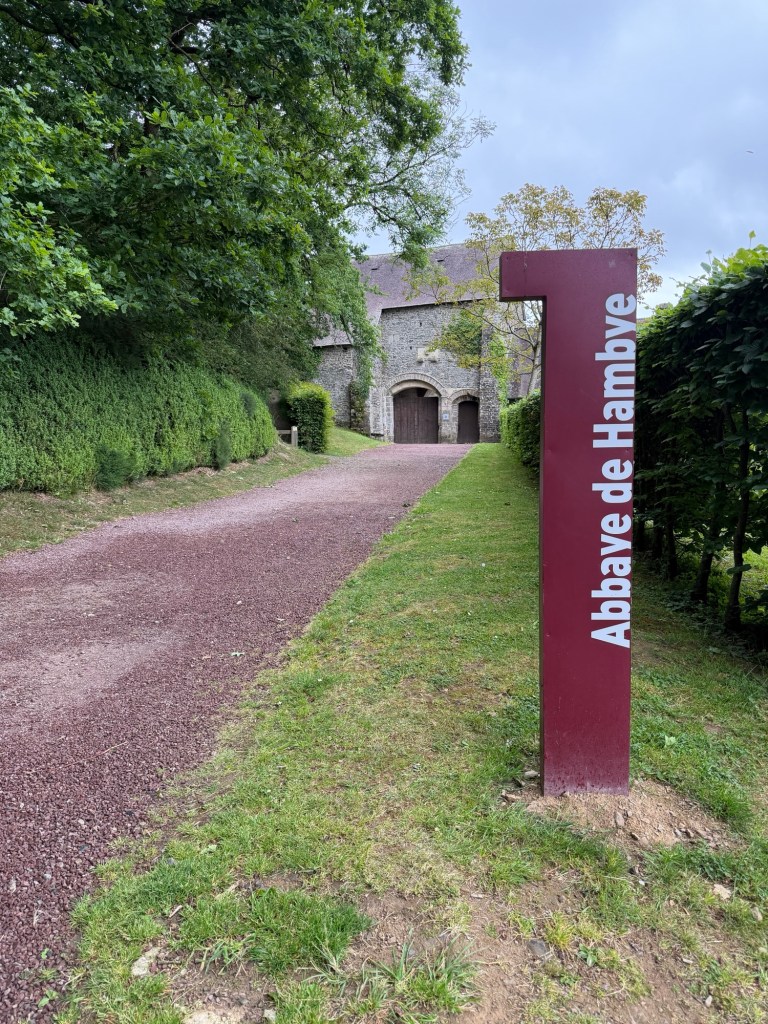
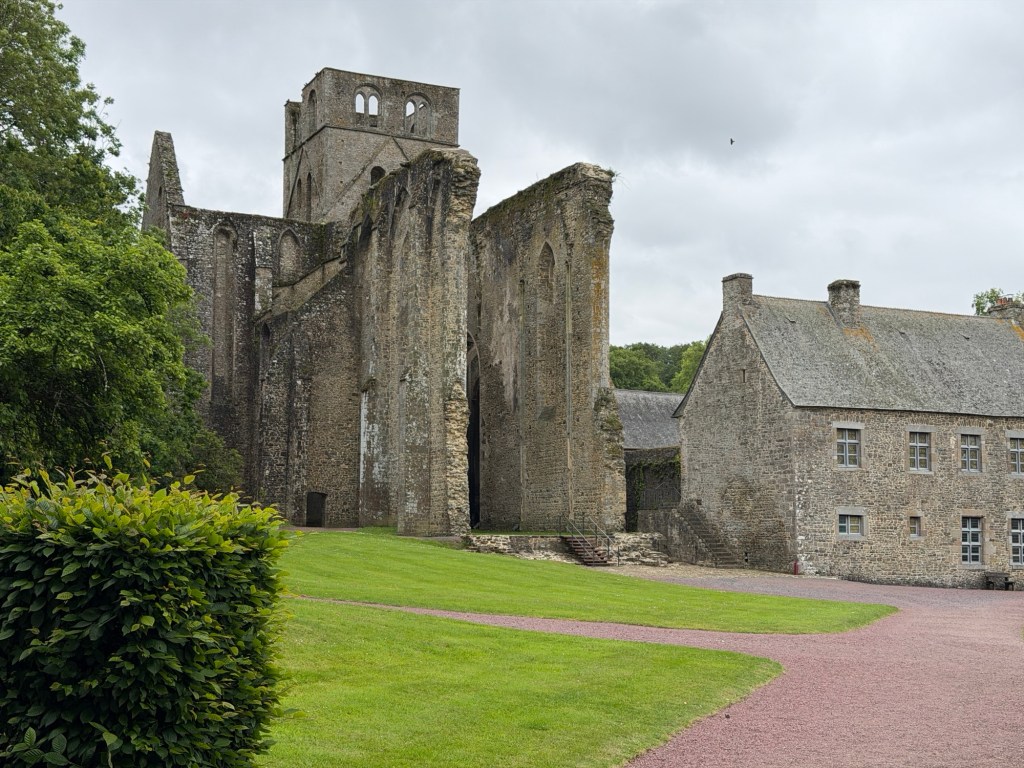
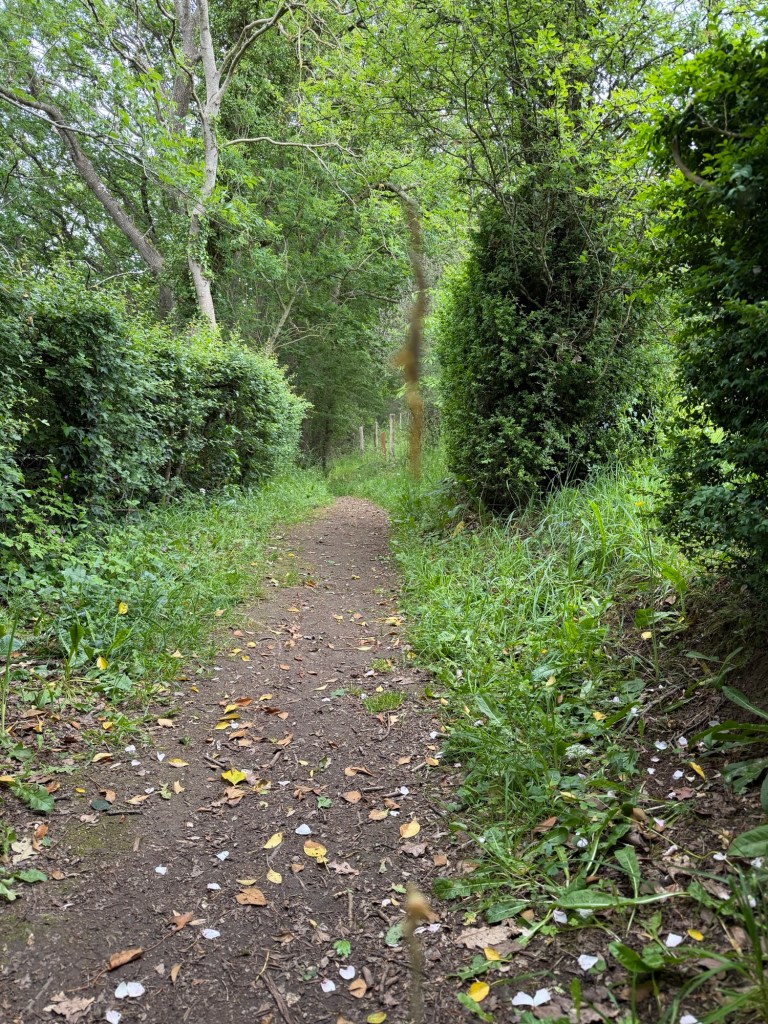
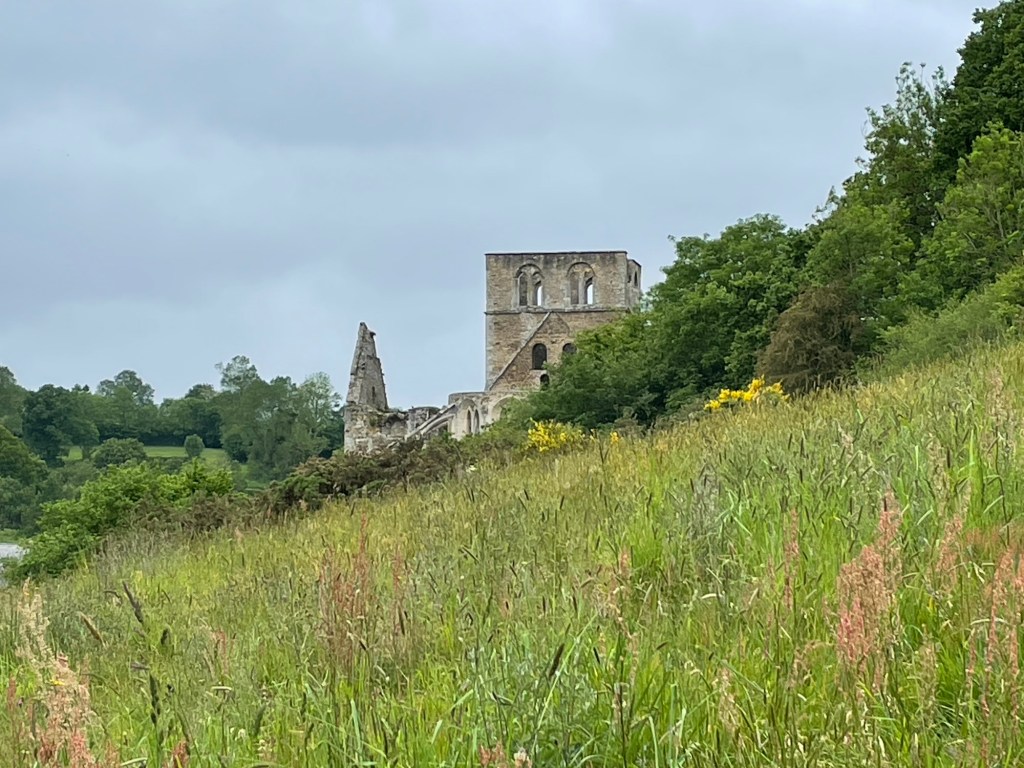
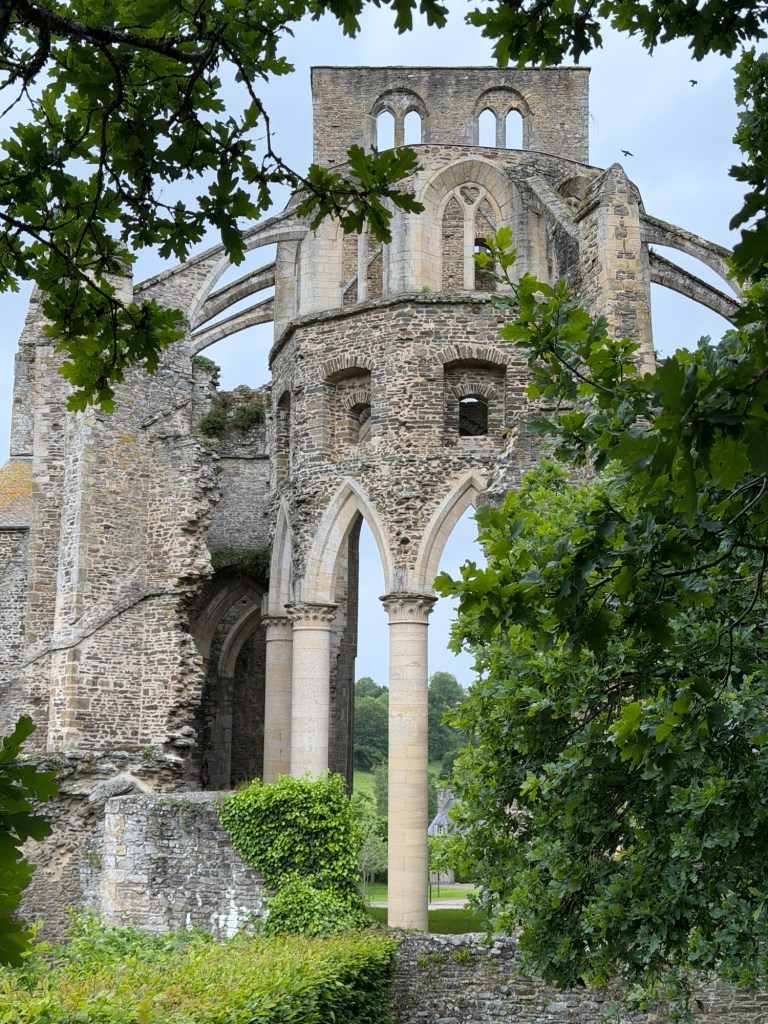
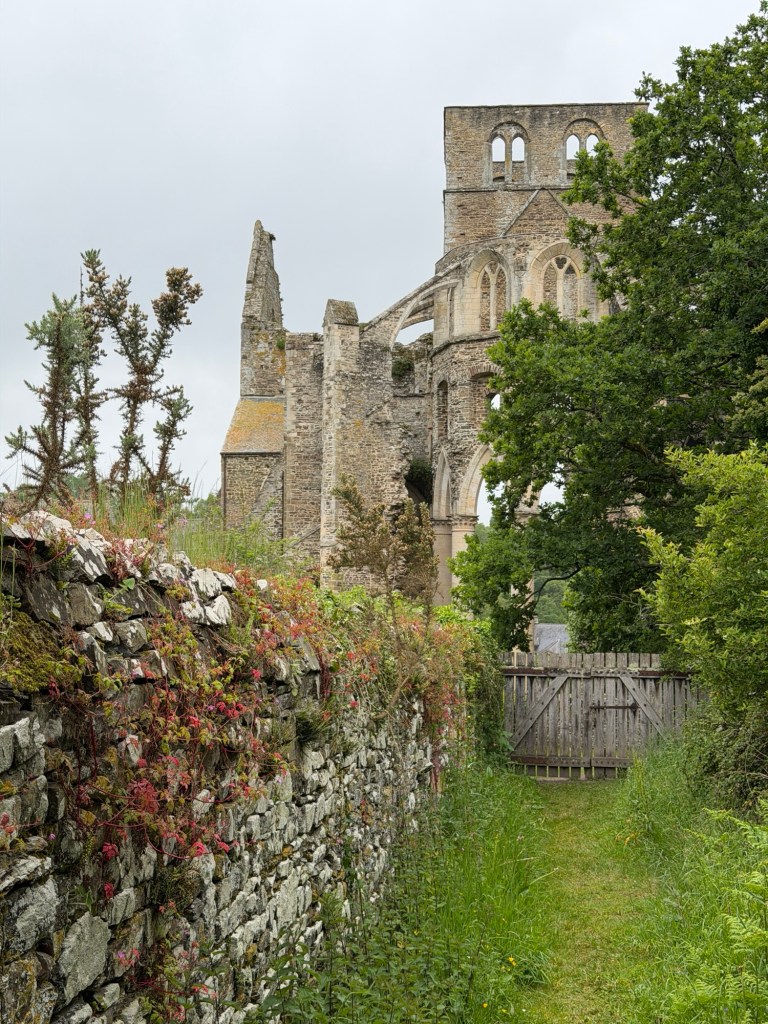
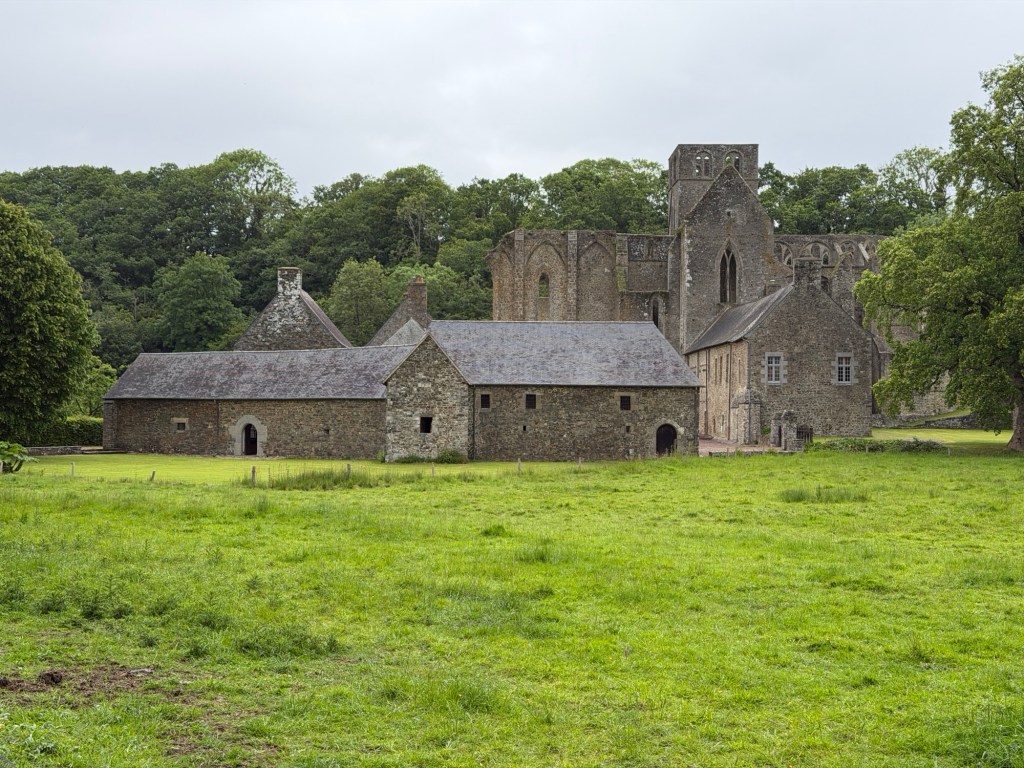
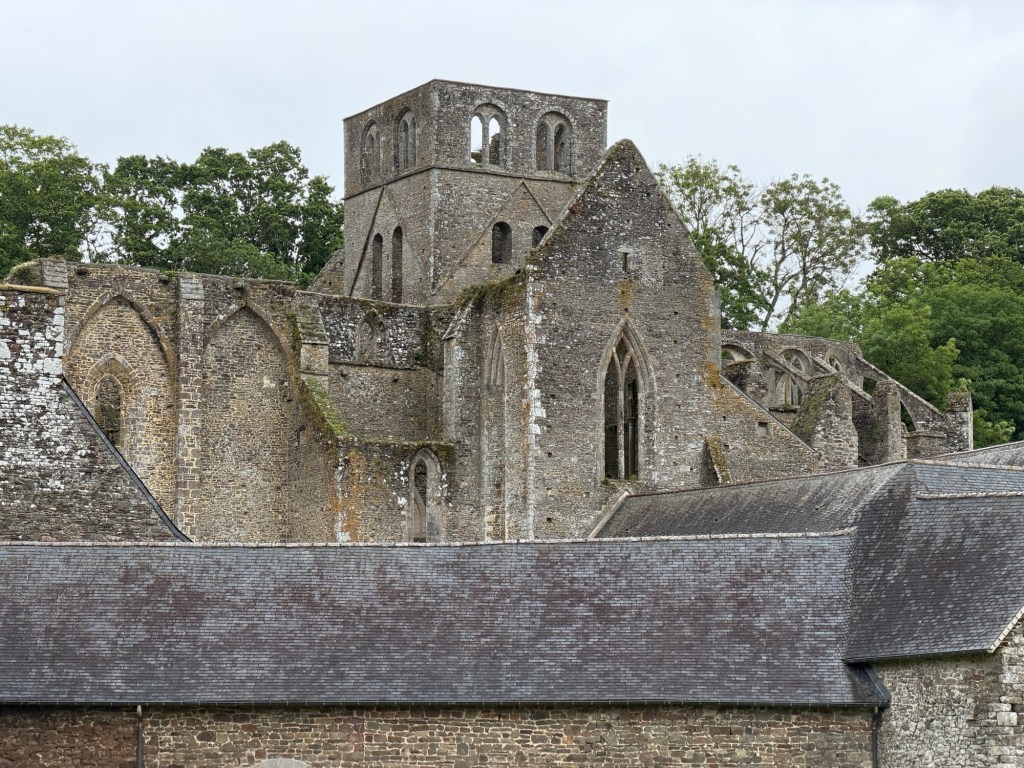
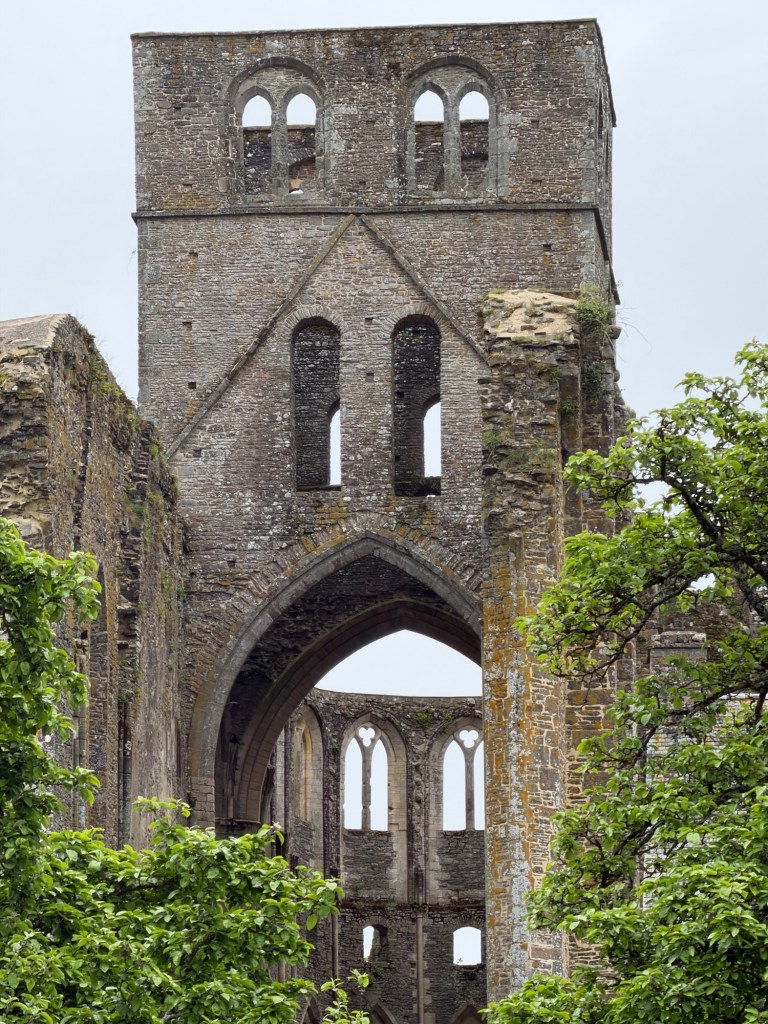
Our next stop was the Abbaye de Hambye, founded in 1145 but partially destroyed by revolutionaries at the beginning of the French Revolution. Sold in 1790, the Abby was partially dismantled, used as a stone quarry. We arrived at 11:30, willing to pay the entrance fee, but were told that it was closed from 12 until 2. They would not let us in. Undaunted, we followed a trail through the forest that circled the Abbey, in search of views of the dismantled buildings.
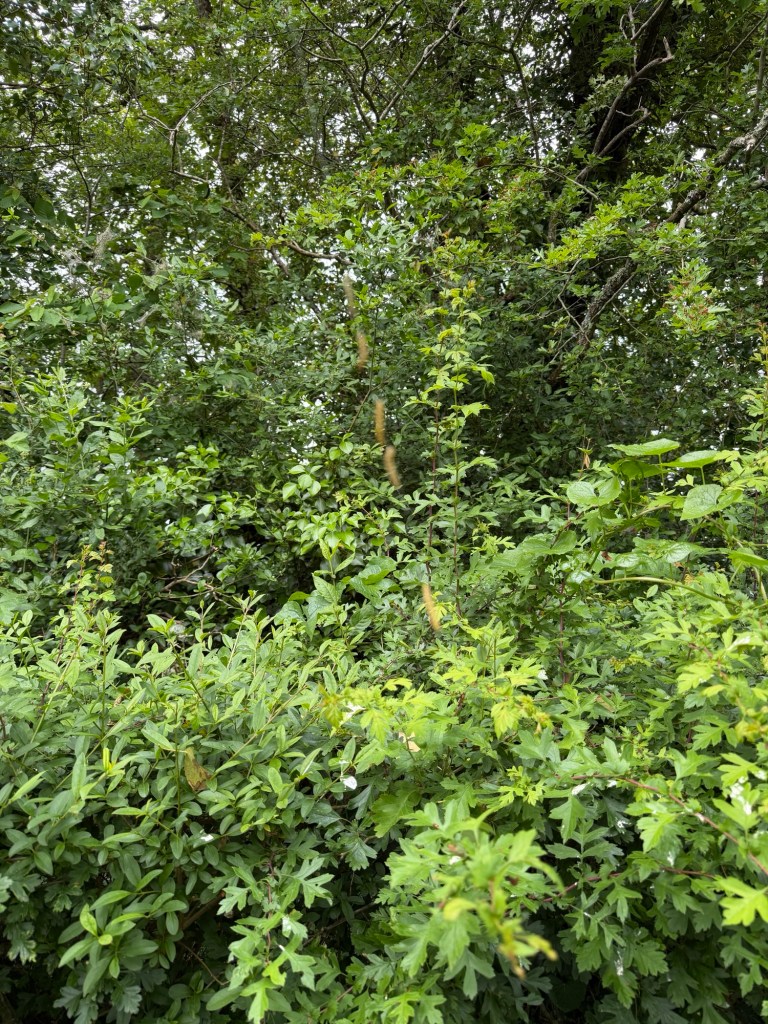
In the forest, Joëlle stopped suddenly to alert us to thin strings, like spider webs, with small beige things along them. These processionary caterpillars are poisonous to humans and can kill small pets! Brian tried for a long time to get a picture of them, but what came out is rather blurry.
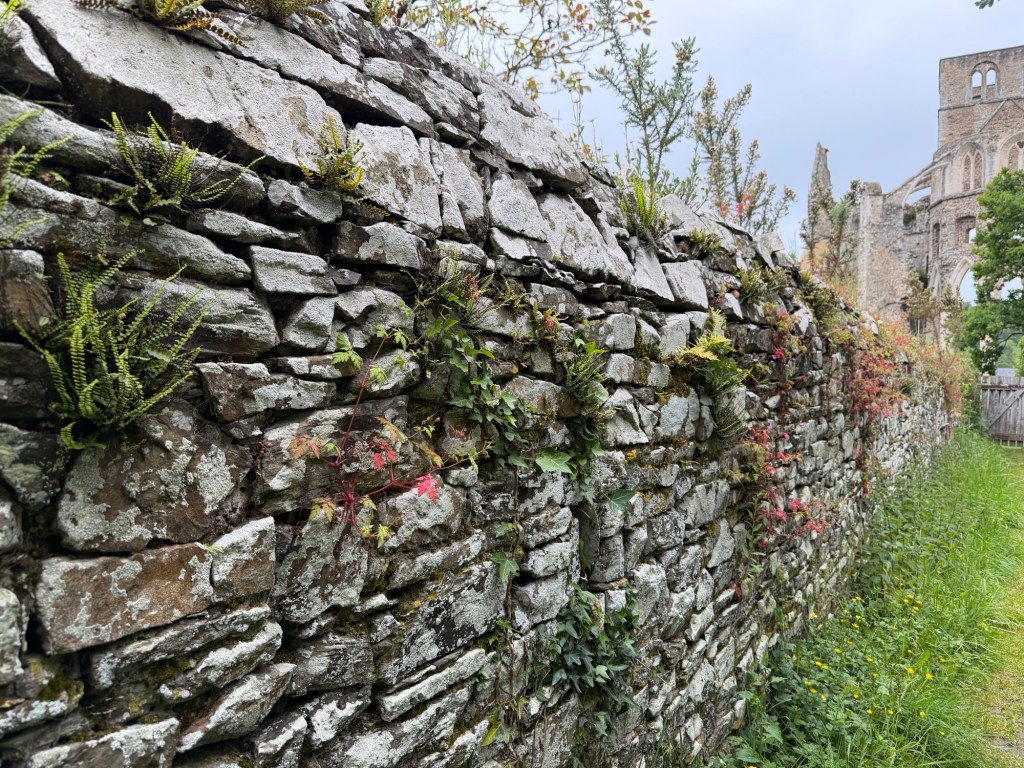
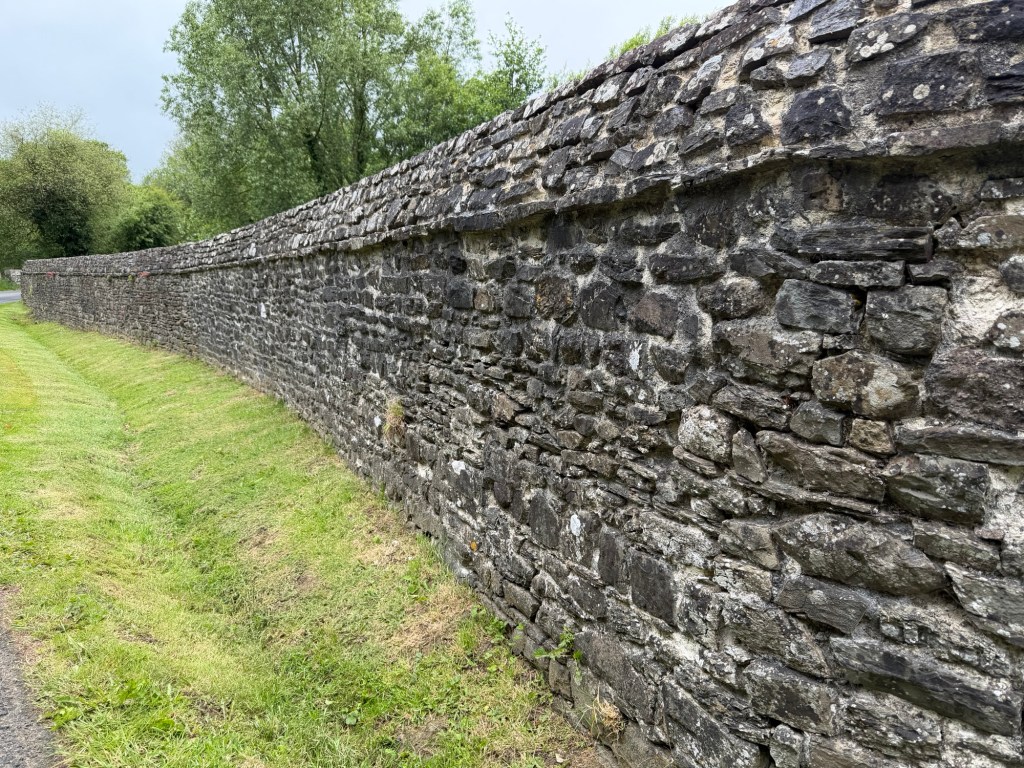
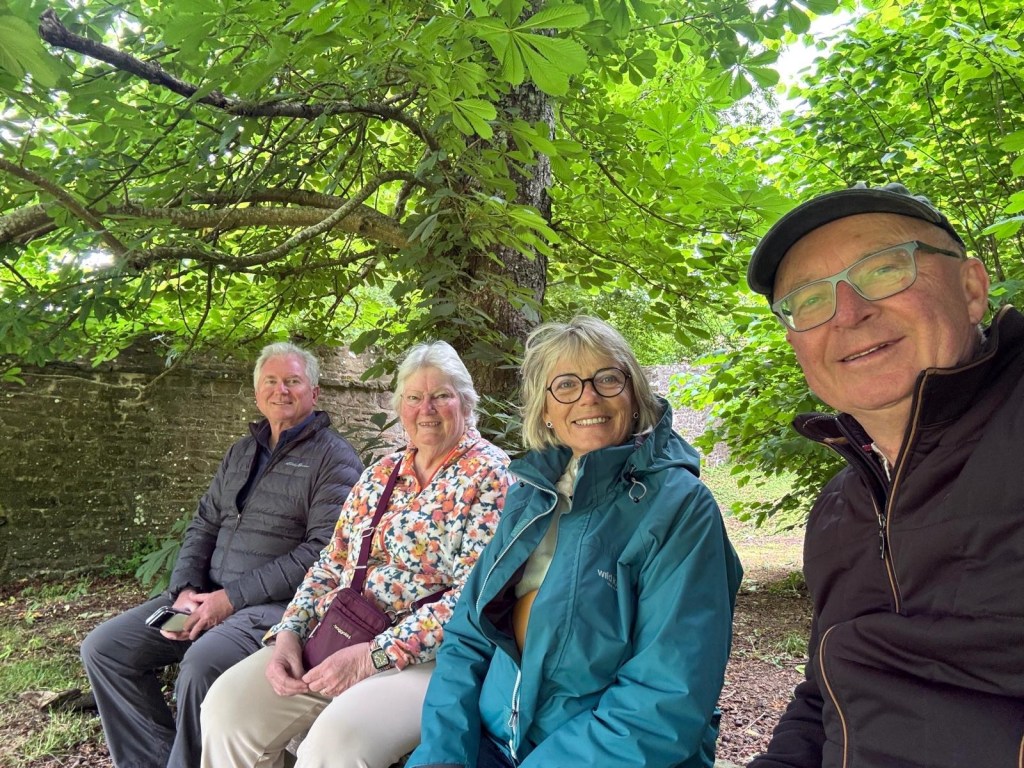
Beautiful forestBlurry caterpillarsFirst view of the abbey on our hikePartial viewOld abbey wallNewer wall around the propertySitting under a large tree, waiting for the rain to pass
We continued along the trail around the Abbey, trying to get a view. Finally, about 80% around, we arrived at a road. The forest cleared and we could see the abbey.
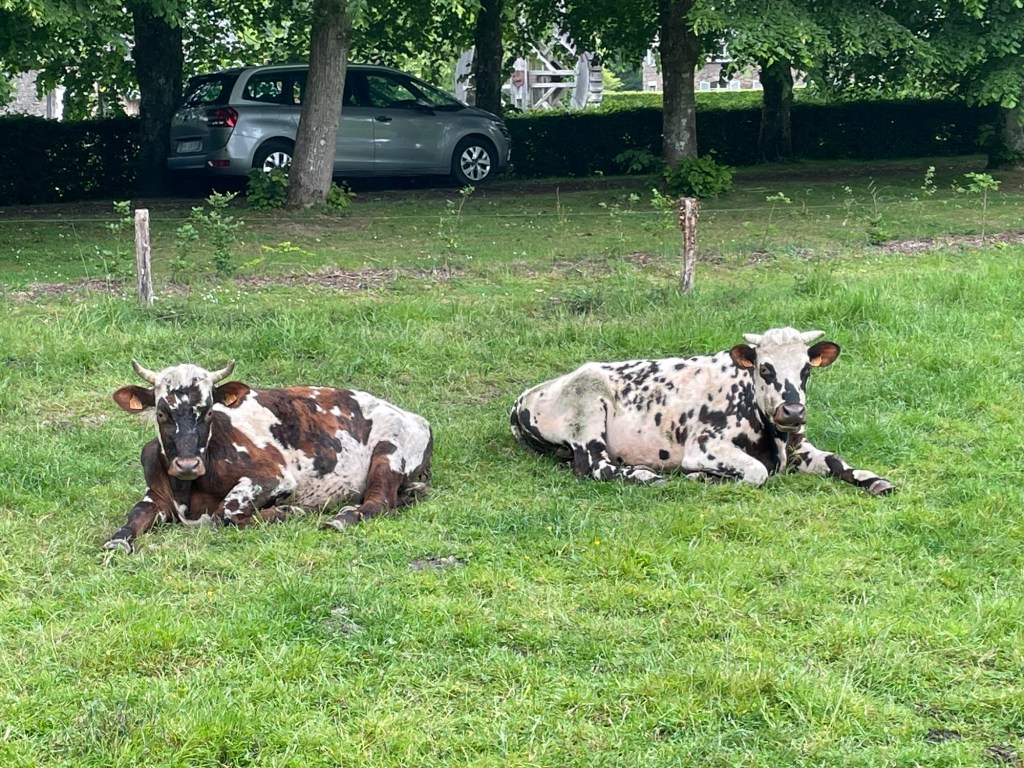
Abbey and wary cows.
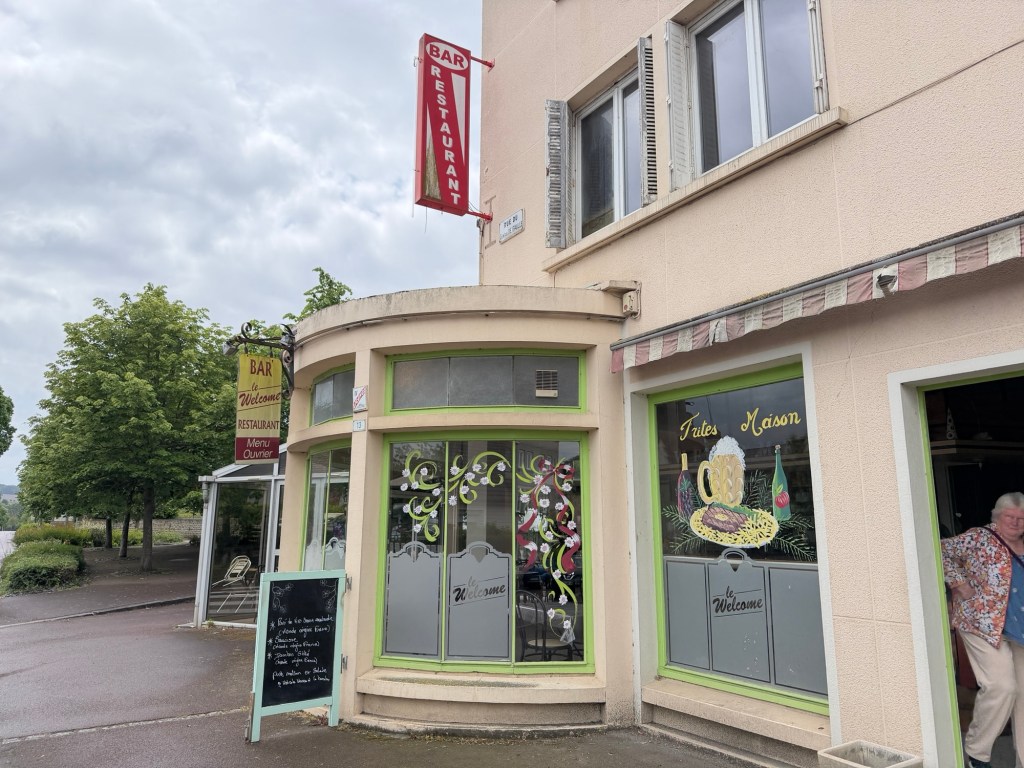
We ate lunch at a local restaurant in a small town.
It’s called Le Welcome.
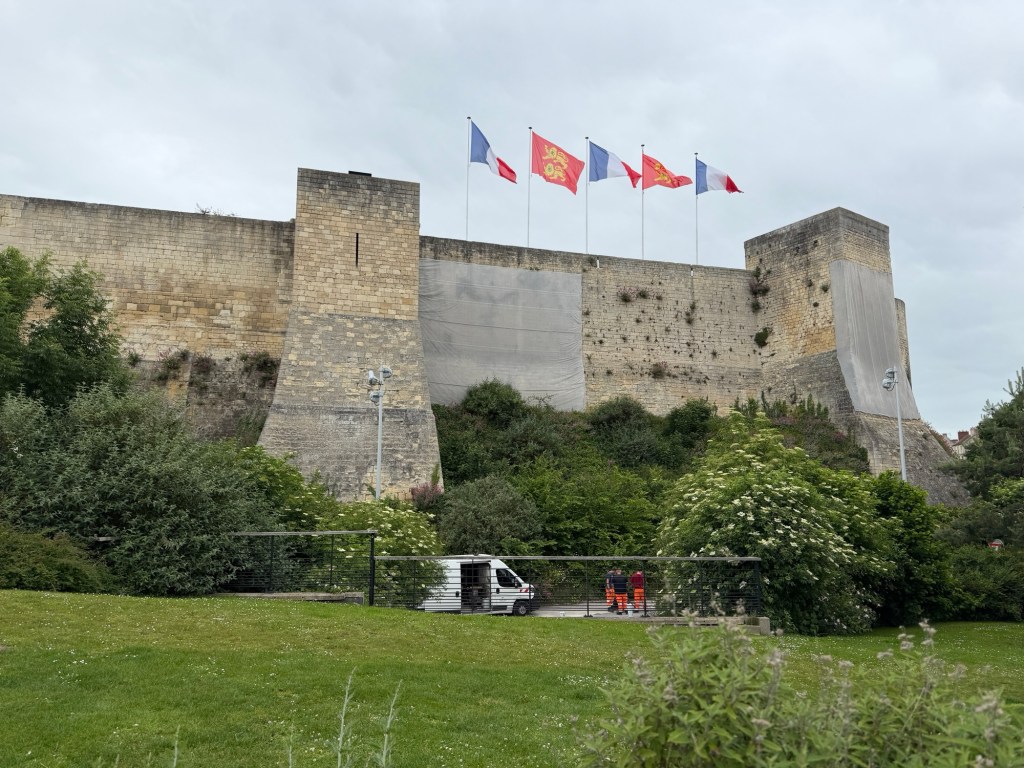
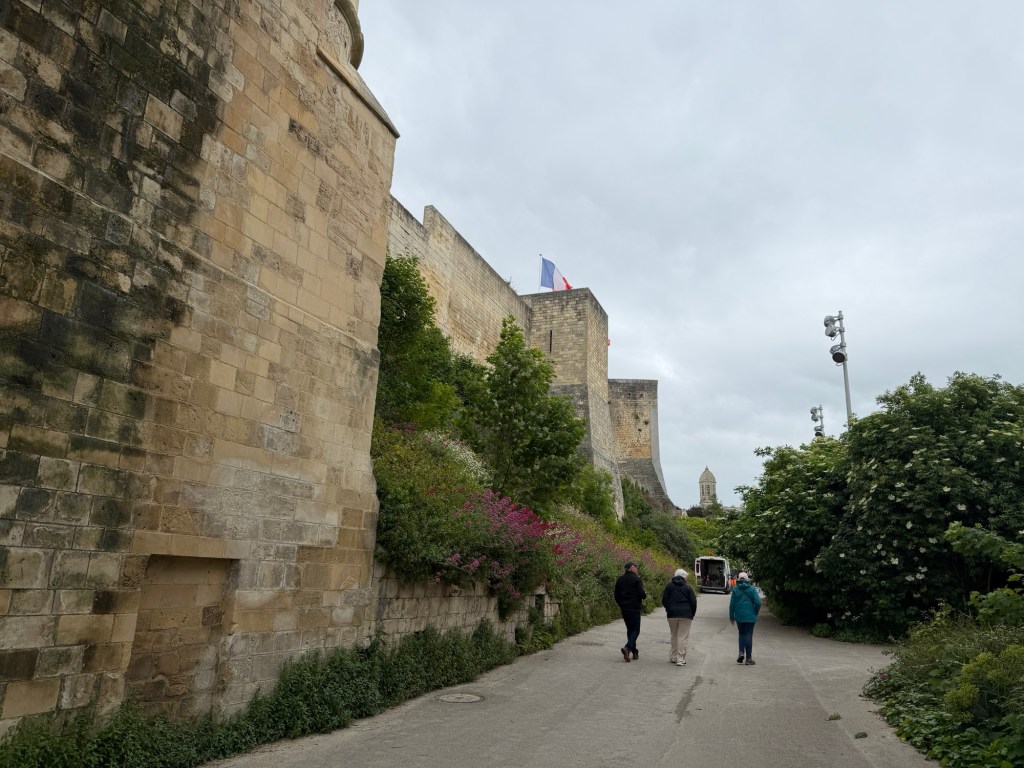
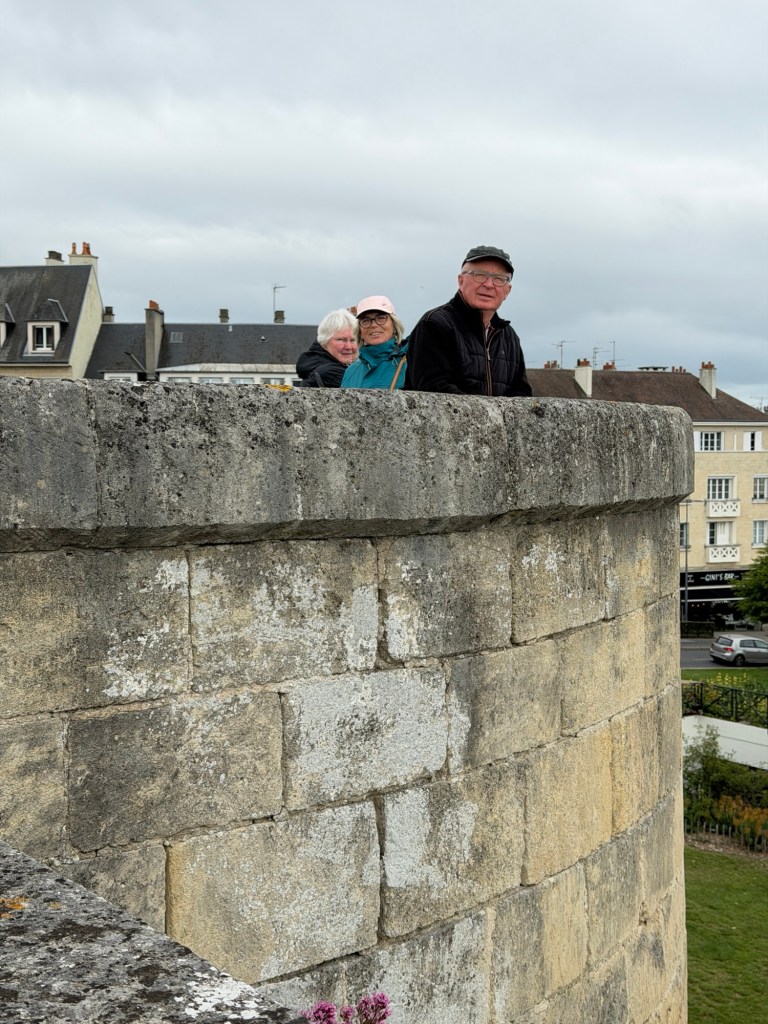
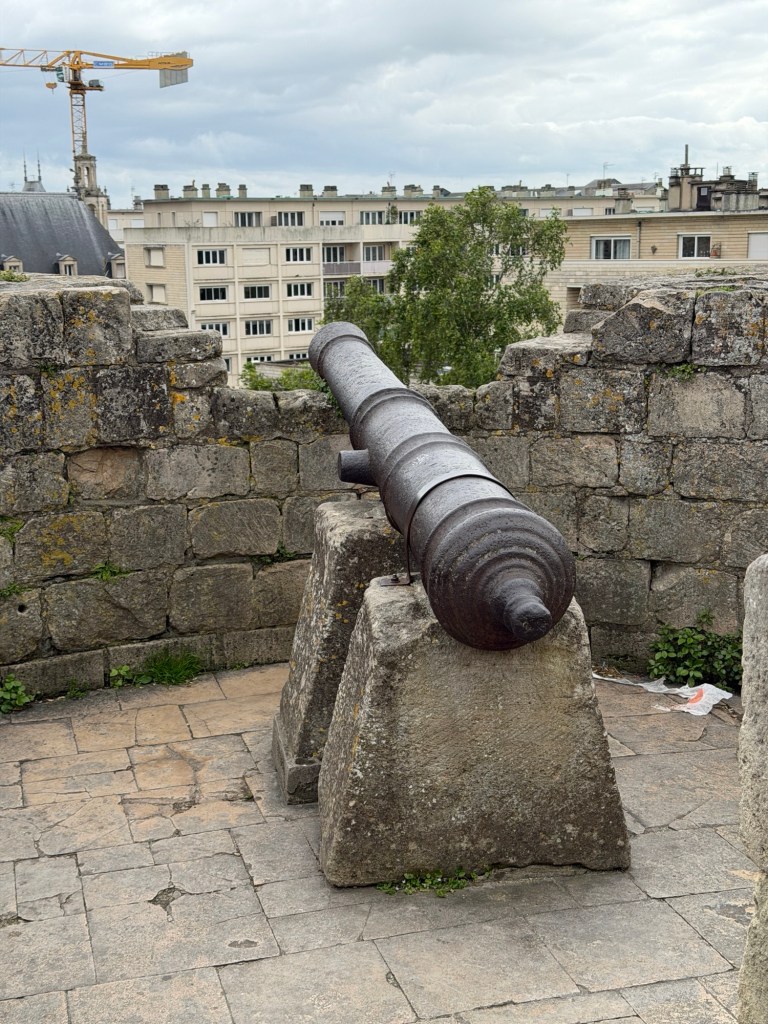
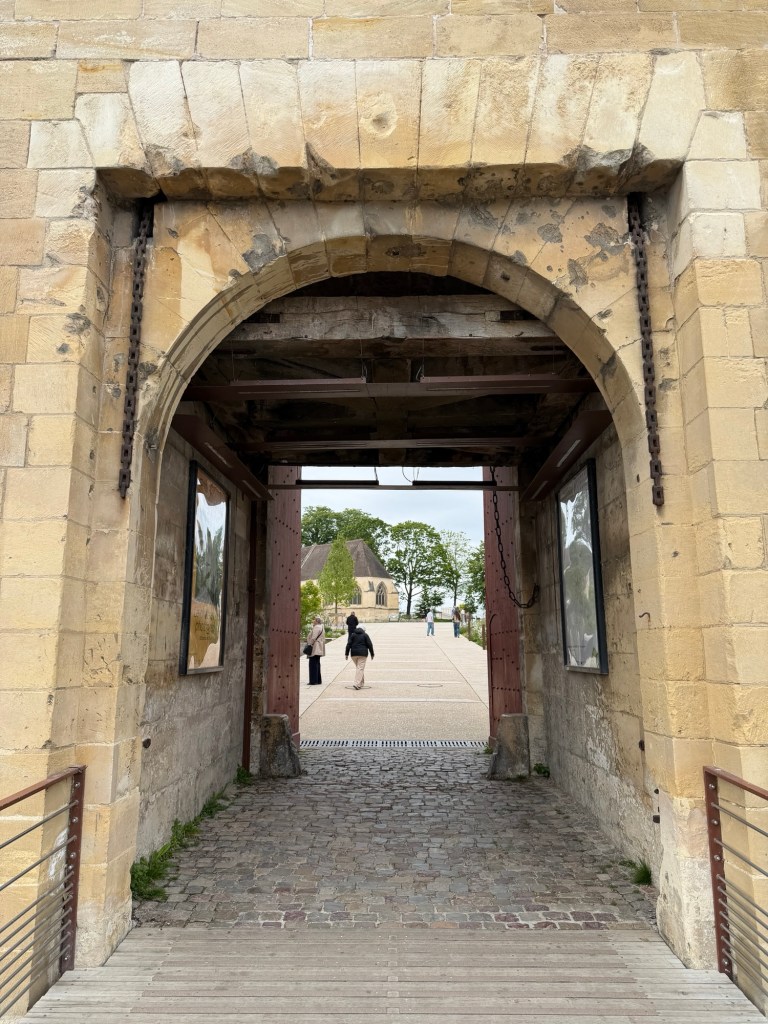
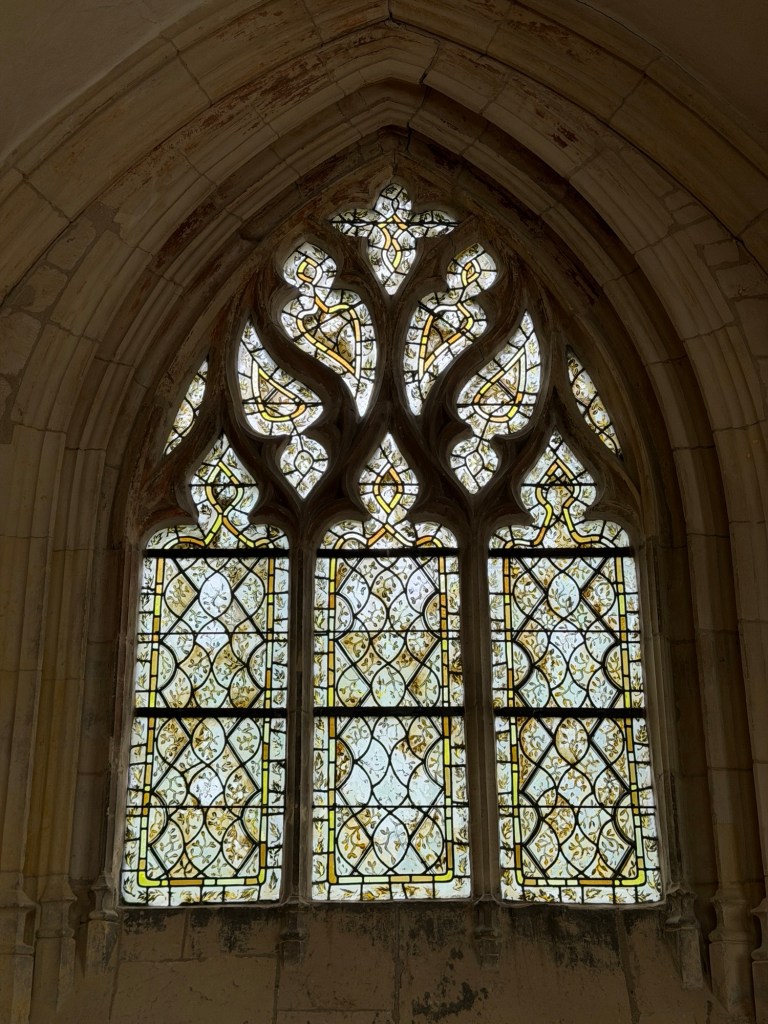
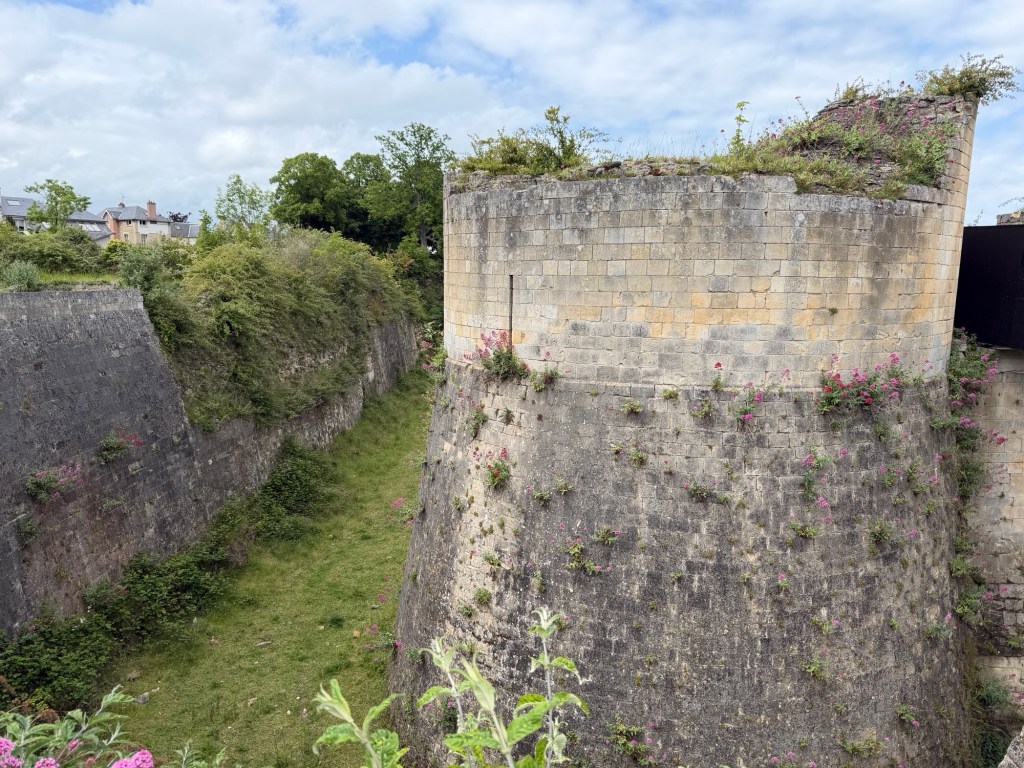
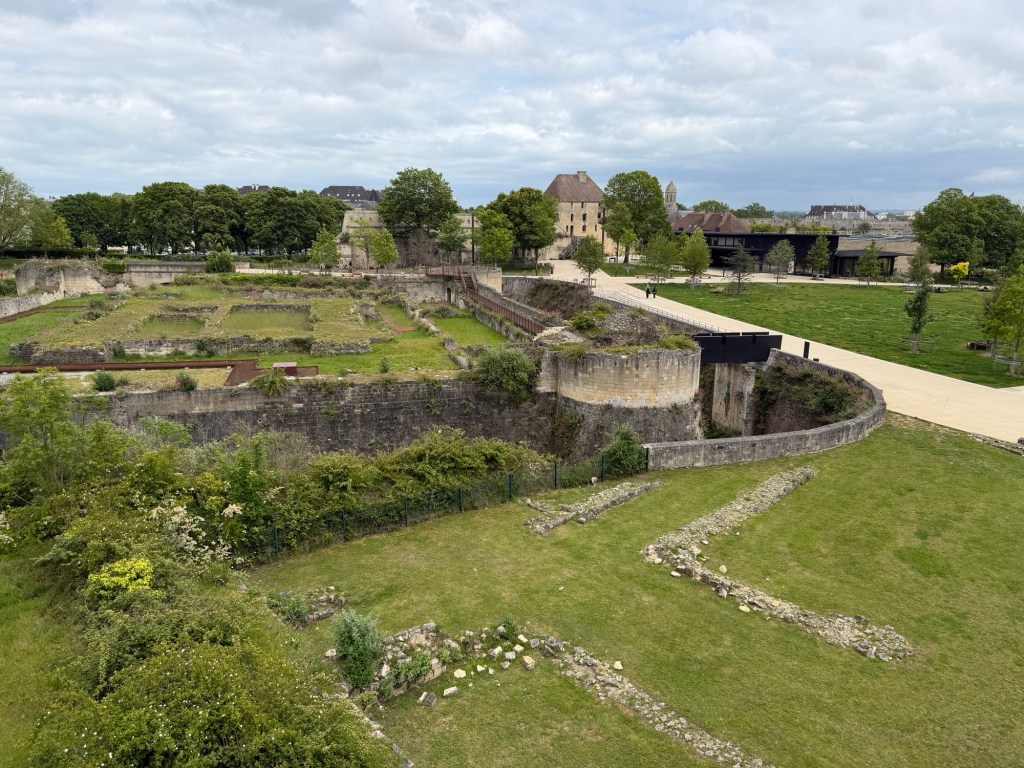
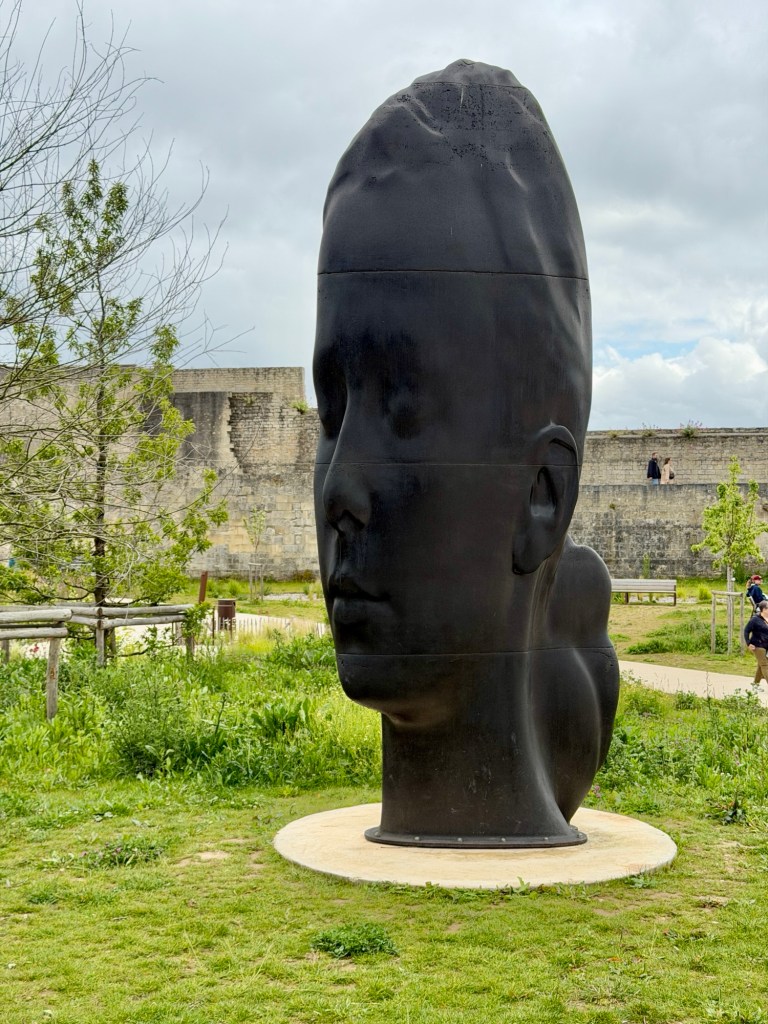
That afternoon, in Caen, we first explored a huge yellow-walled castle. Quite a fortress.
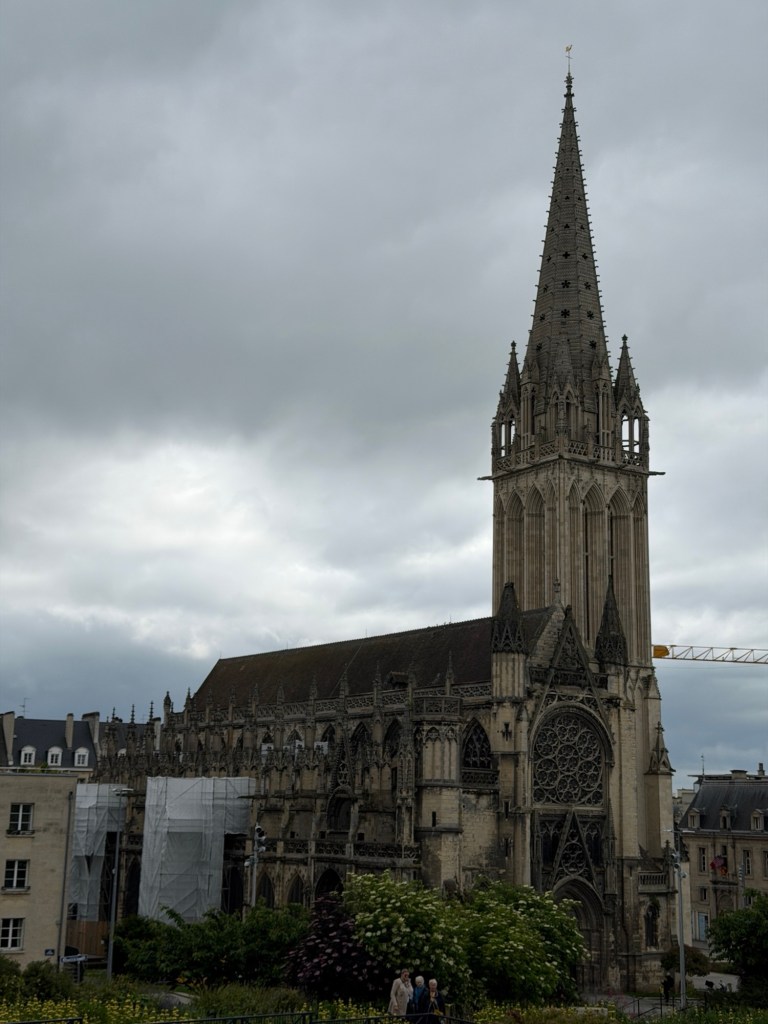
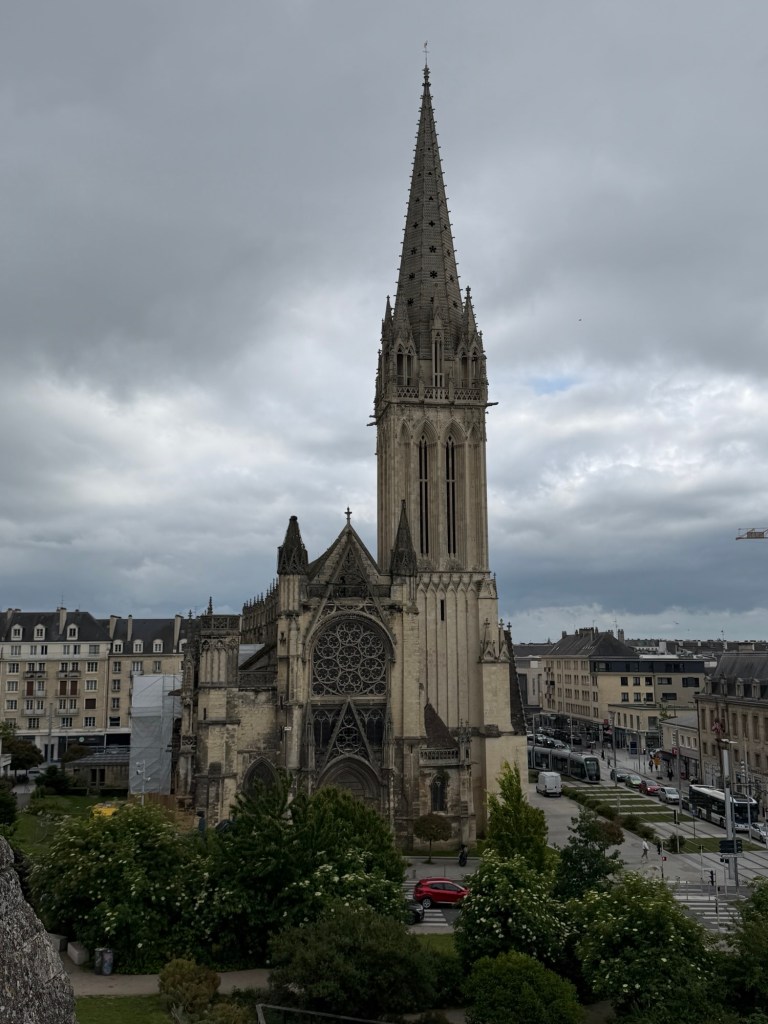
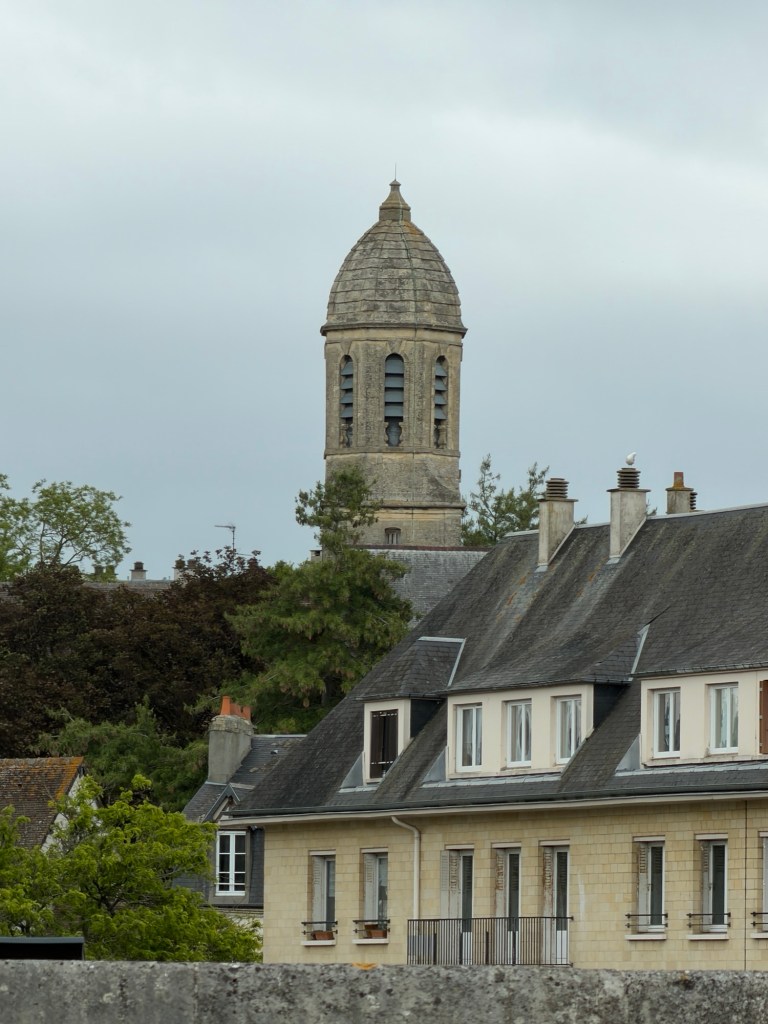
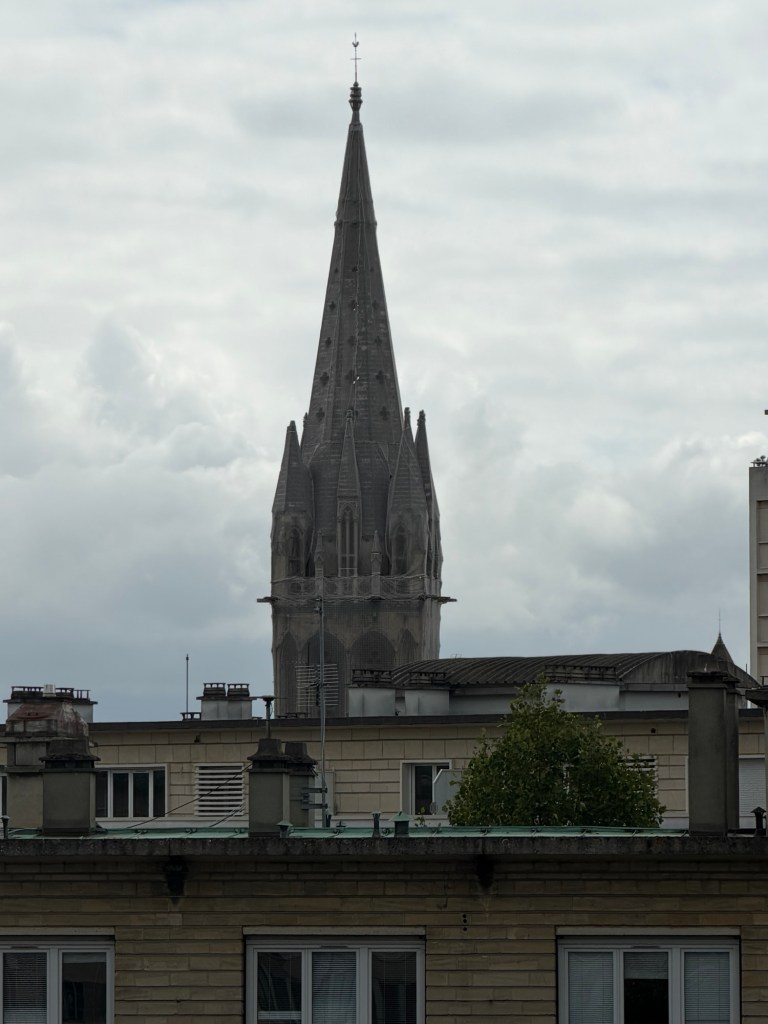
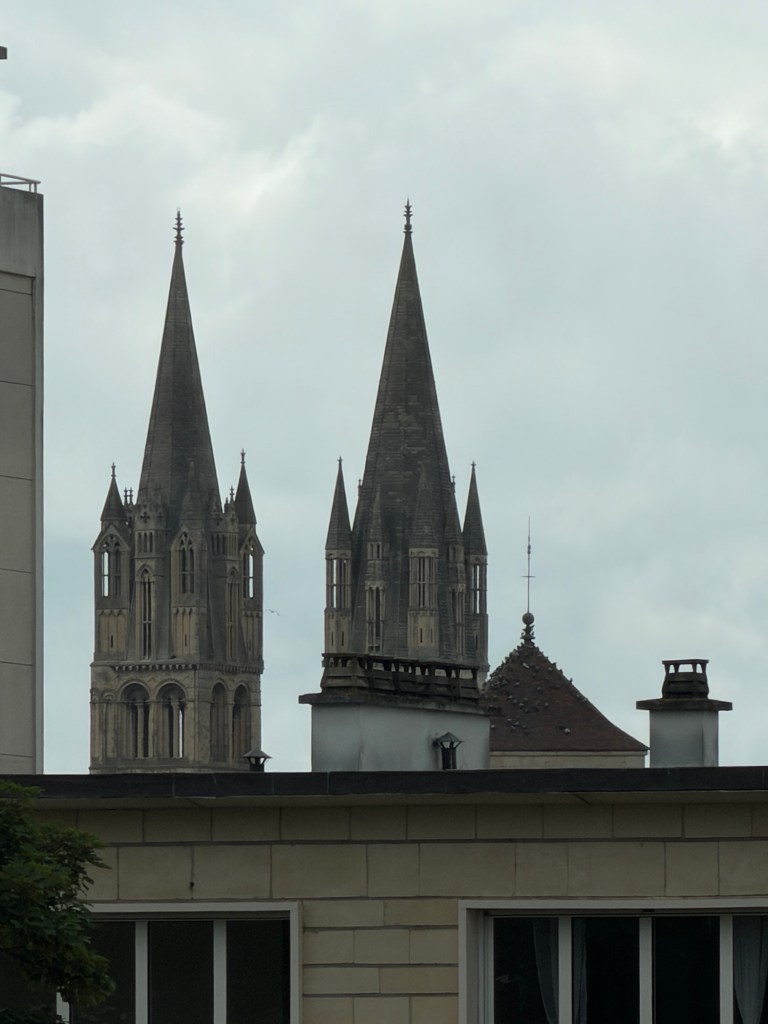
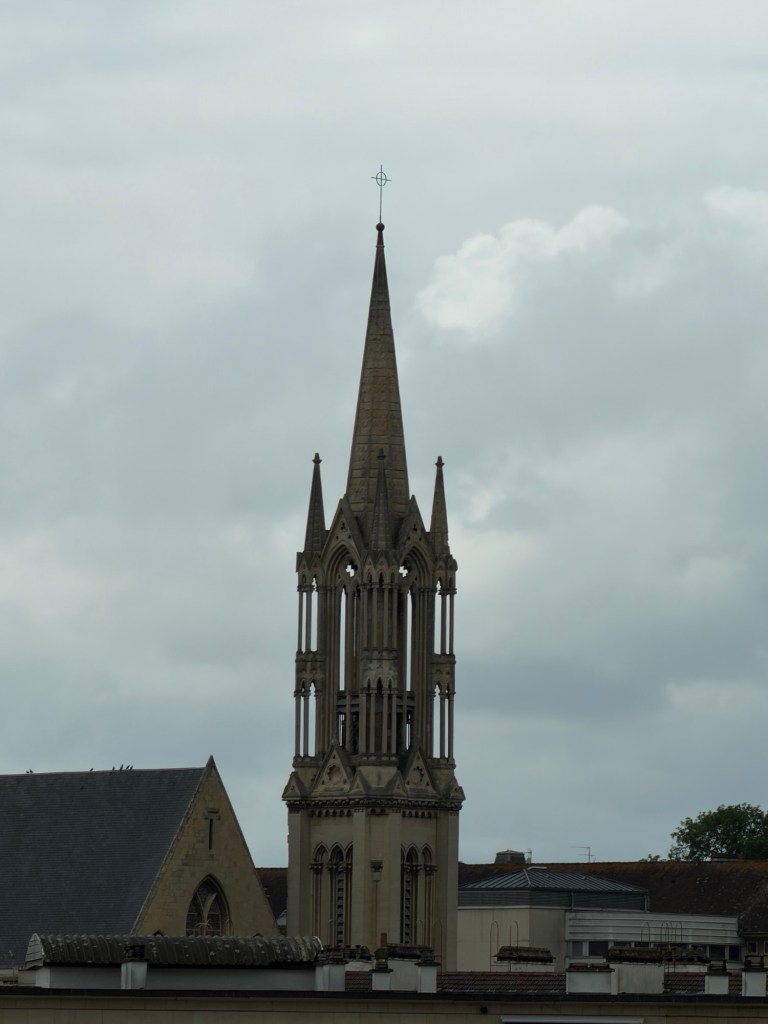
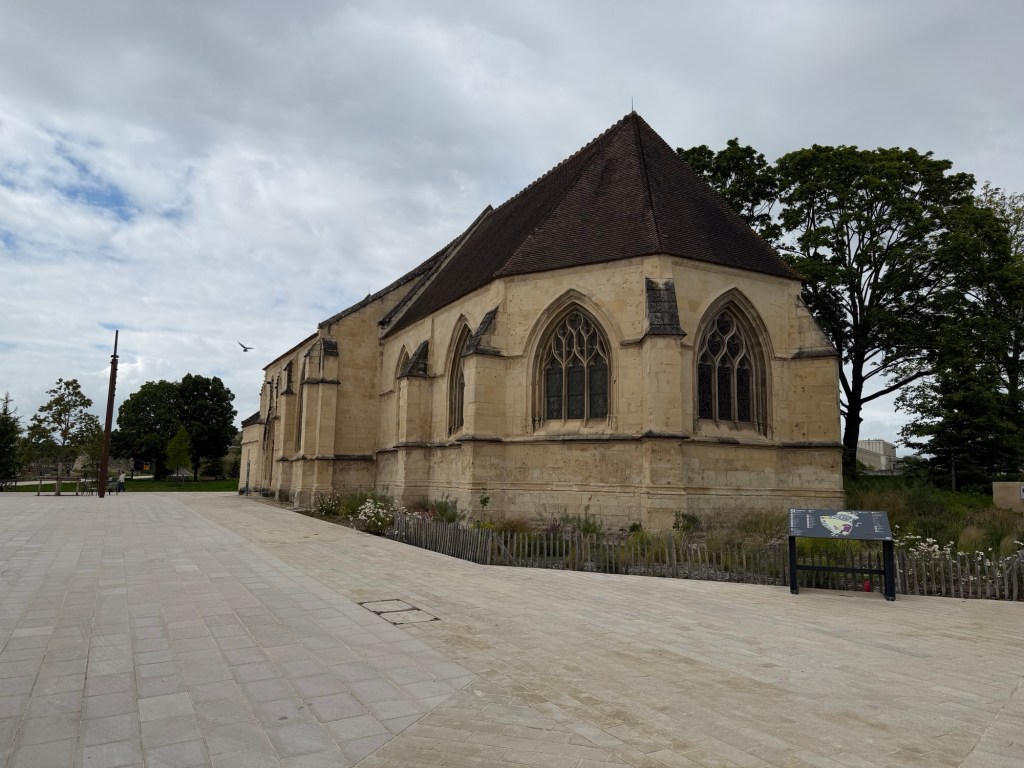
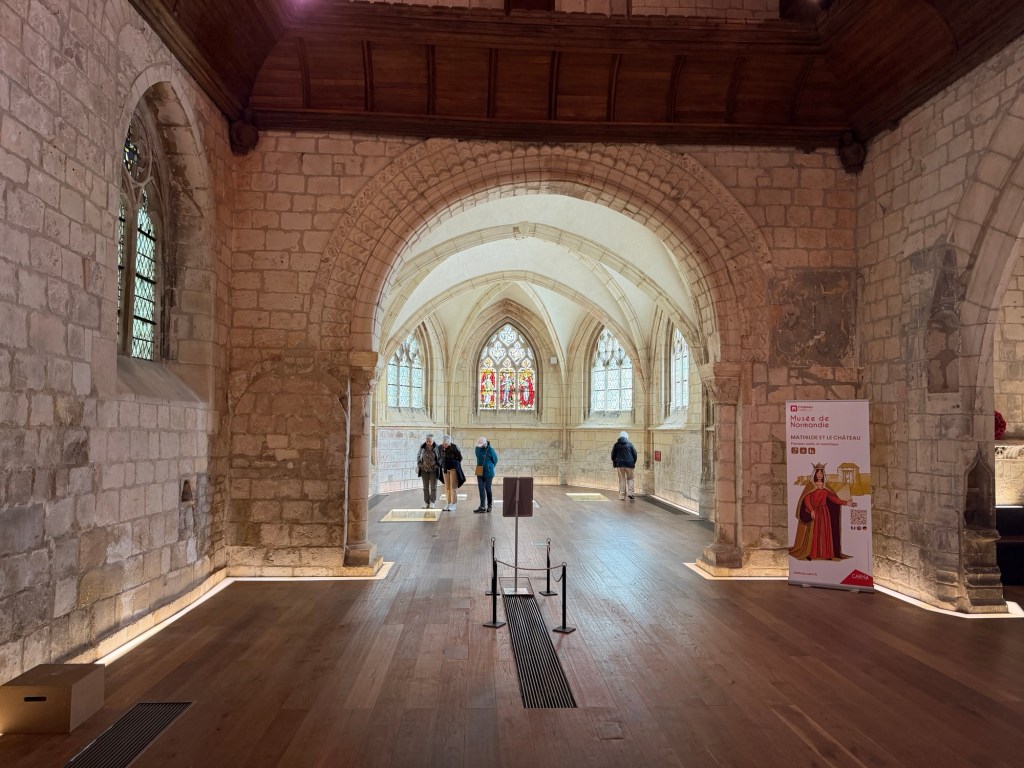
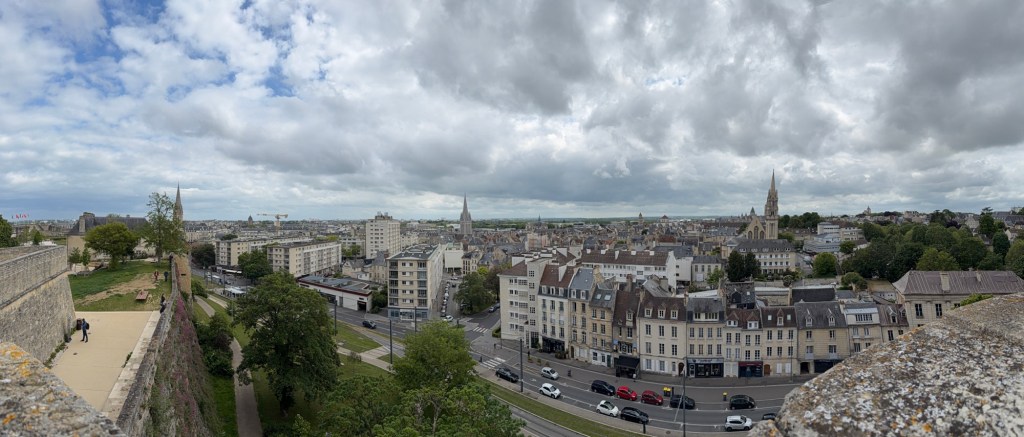
The castle walls surrounded the entire town in the past.Views from the castle of several church steeples in Caen.Chapel inside walls of the castle
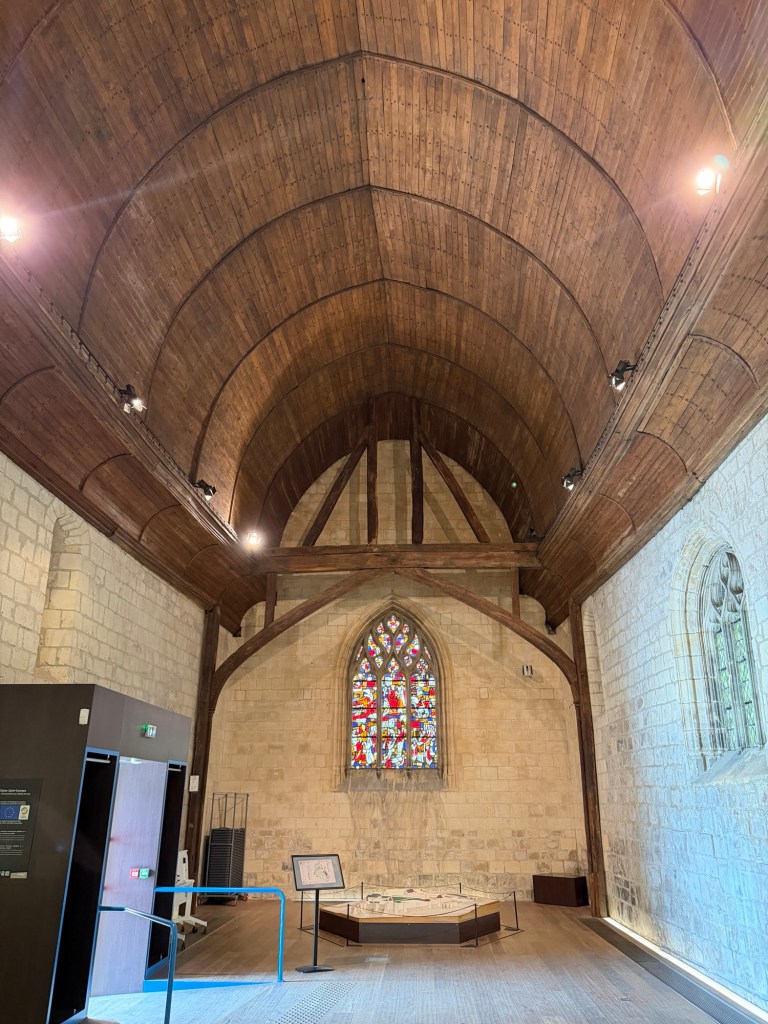
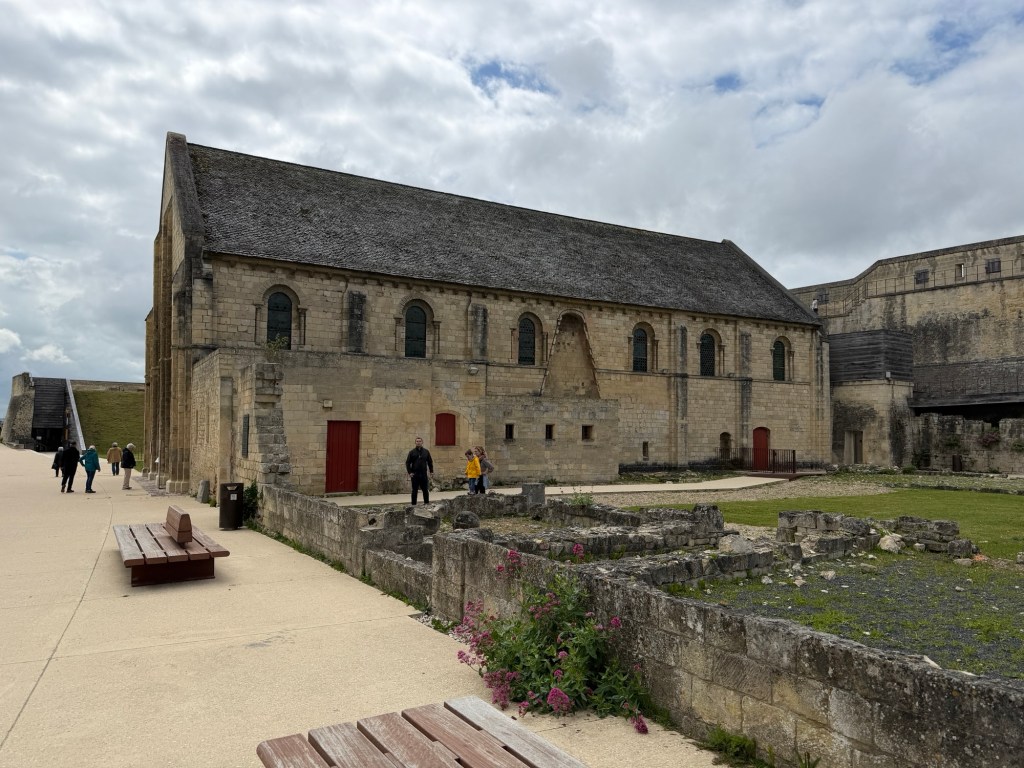
The Dukes of Normandy’s Great Hall (photo below)
The great reception hall at Caen castle has a beautiful Romanesque façade, often mistaken for that of a church. The hall was probably built for receptions at the court of King William II (William Rufus) (c. 1098). It was named the Exchequer Hall in memory of the sessions of the fiscal and administrative court that was sometimes held there (counting with tokens on a chequered table).
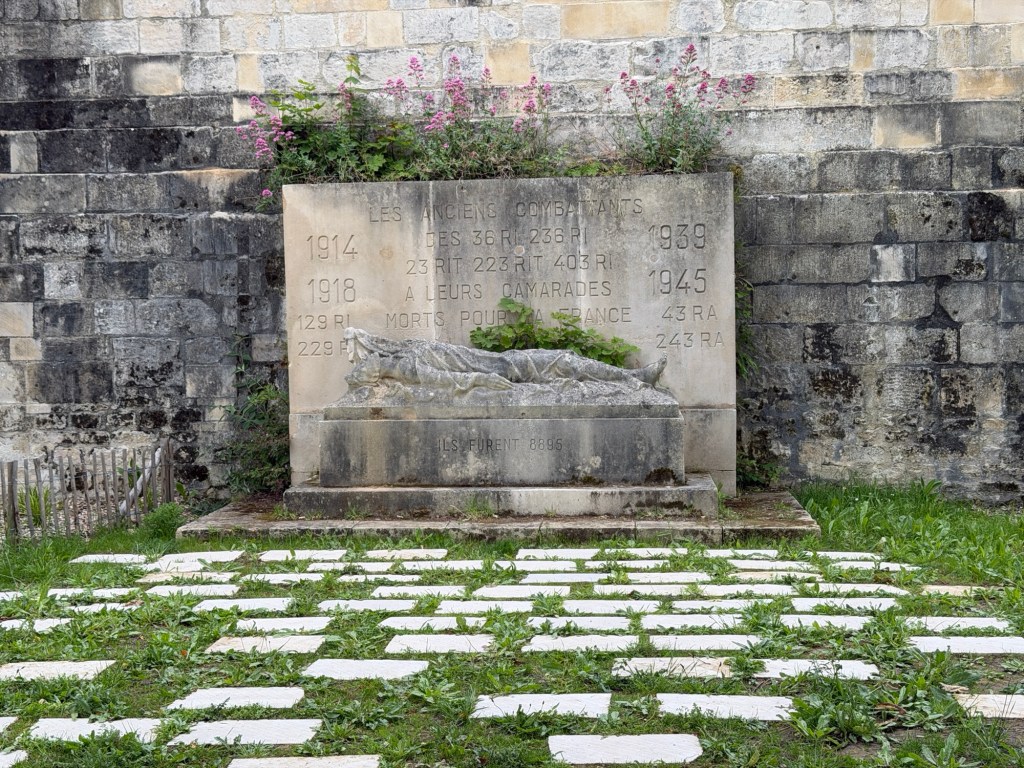
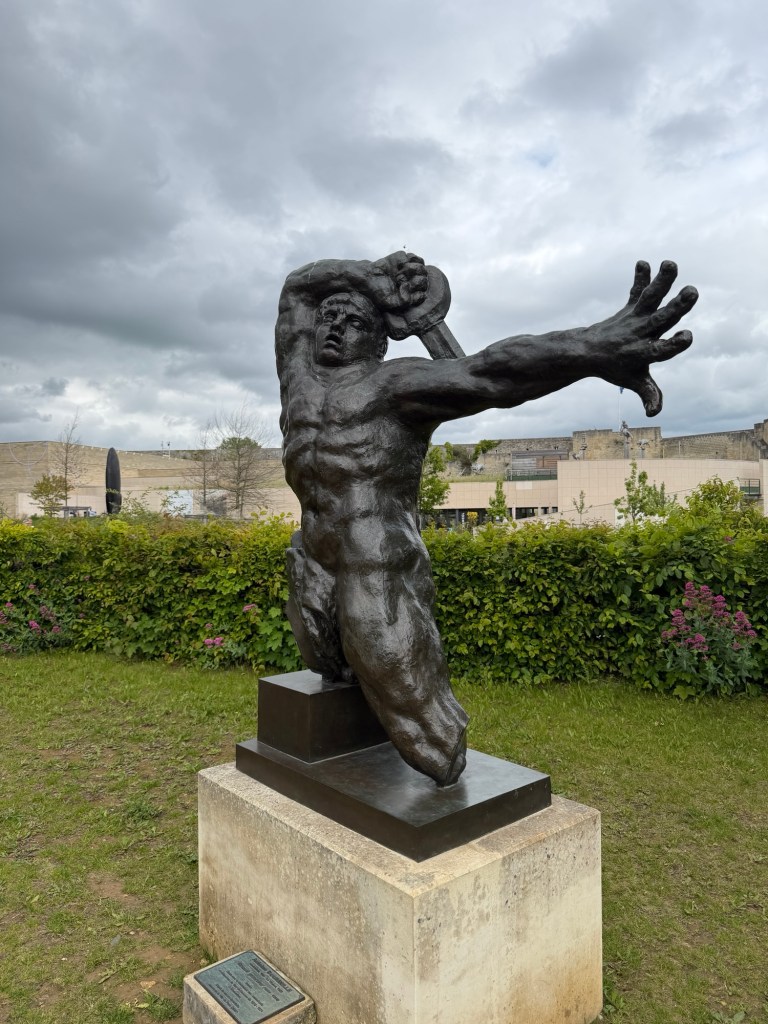
Reception HallMoat formerly around palaceRuins in and outside palaceMemorial for people who died in many wars. Panorama of Caen from castle wallAn art gallery inside the castle with a variety of interesting works using different media.
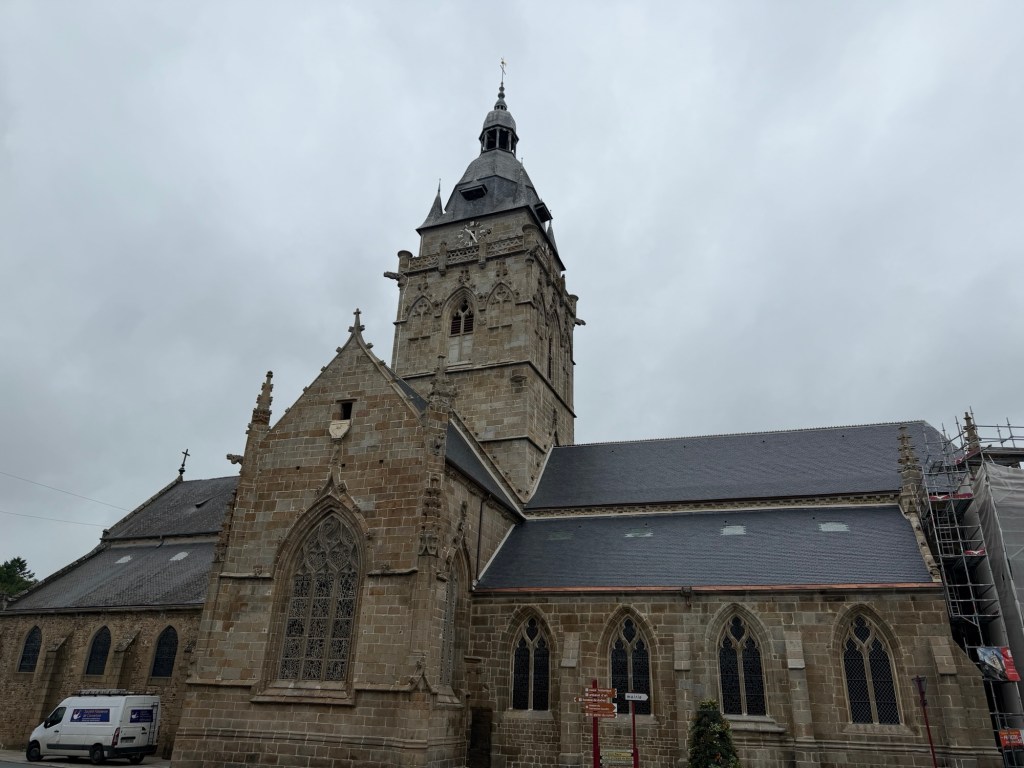
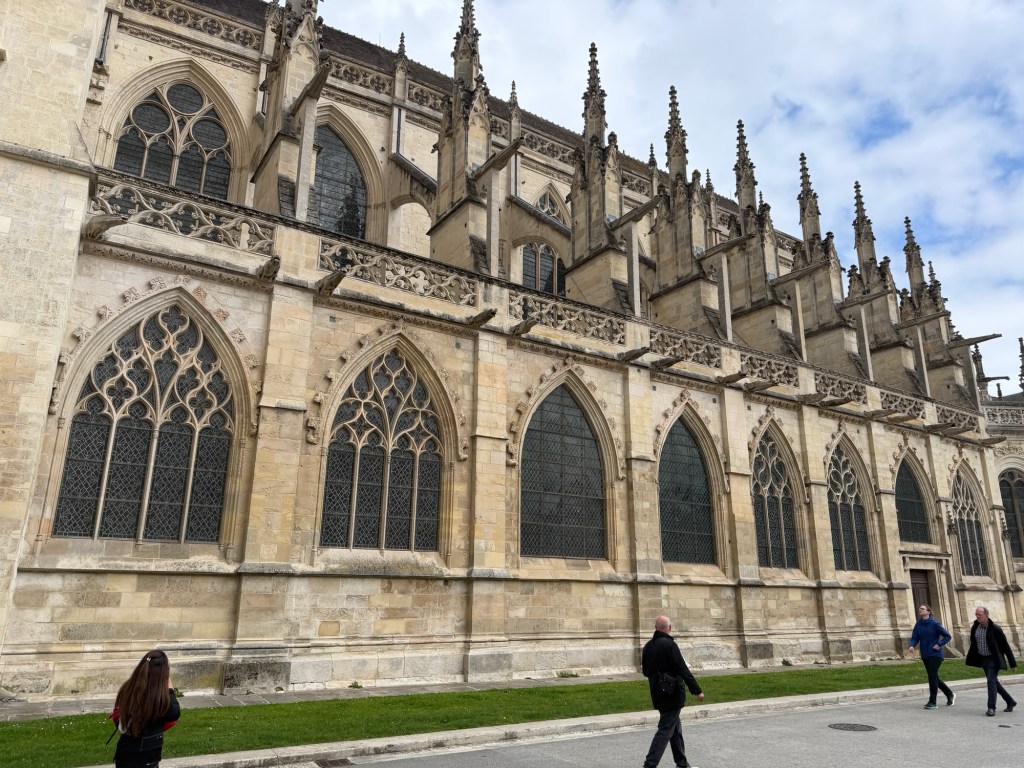
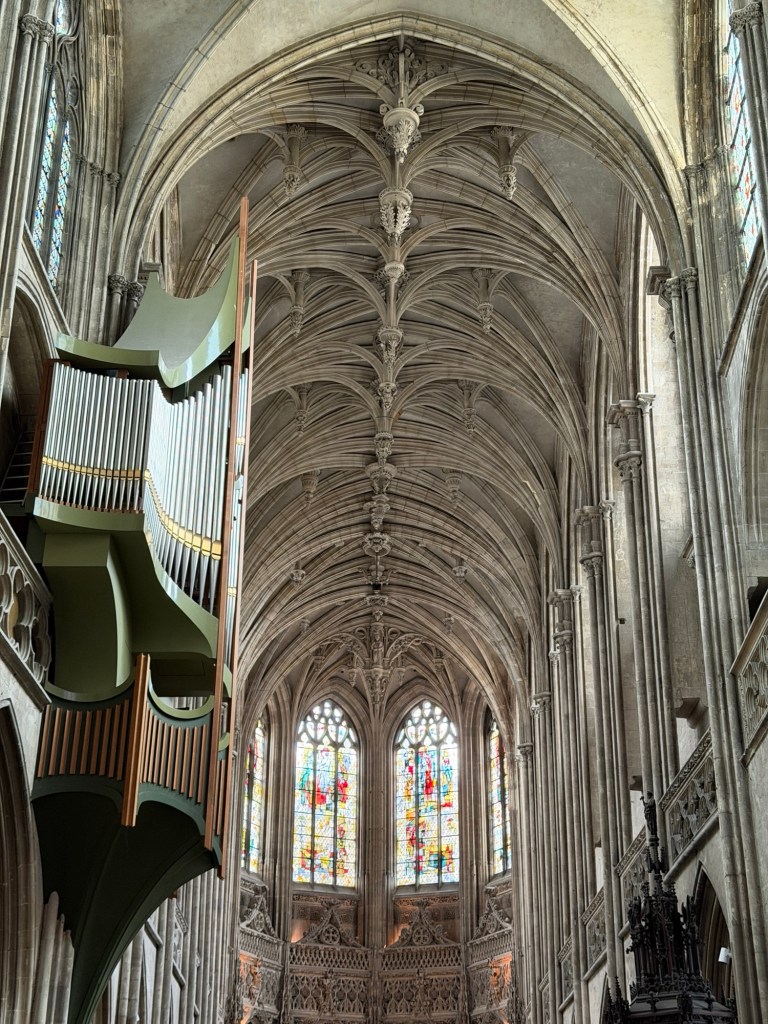
The cathedral adjacent to the castle was worth a quick look. Fortunately the doors were open.
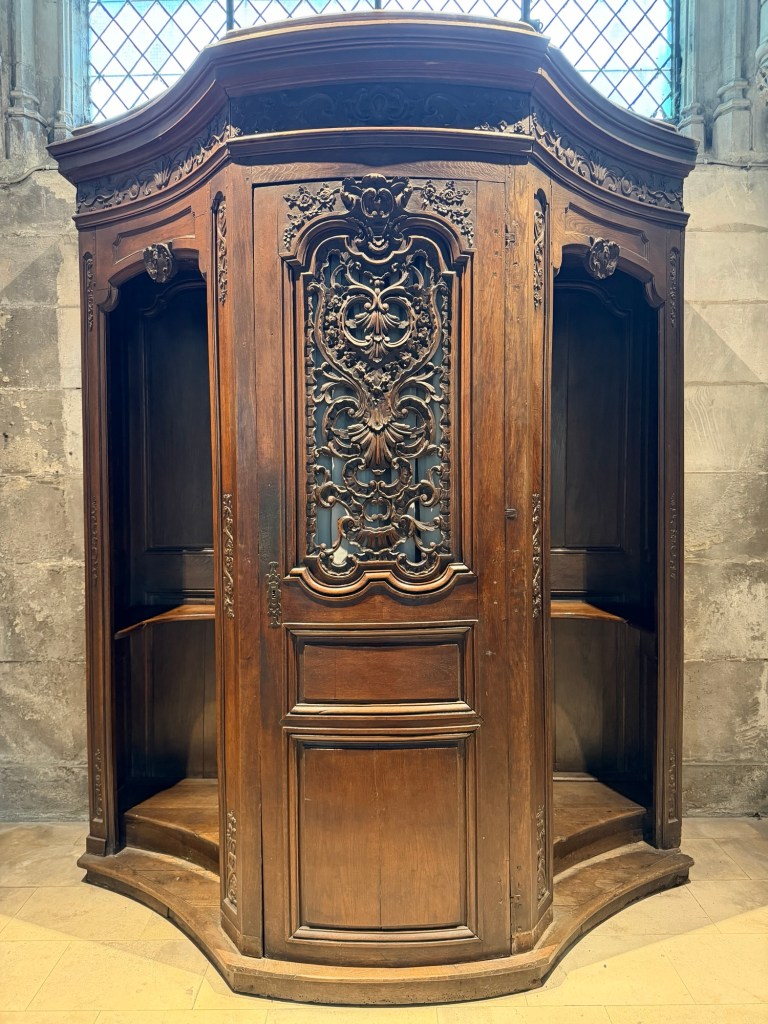
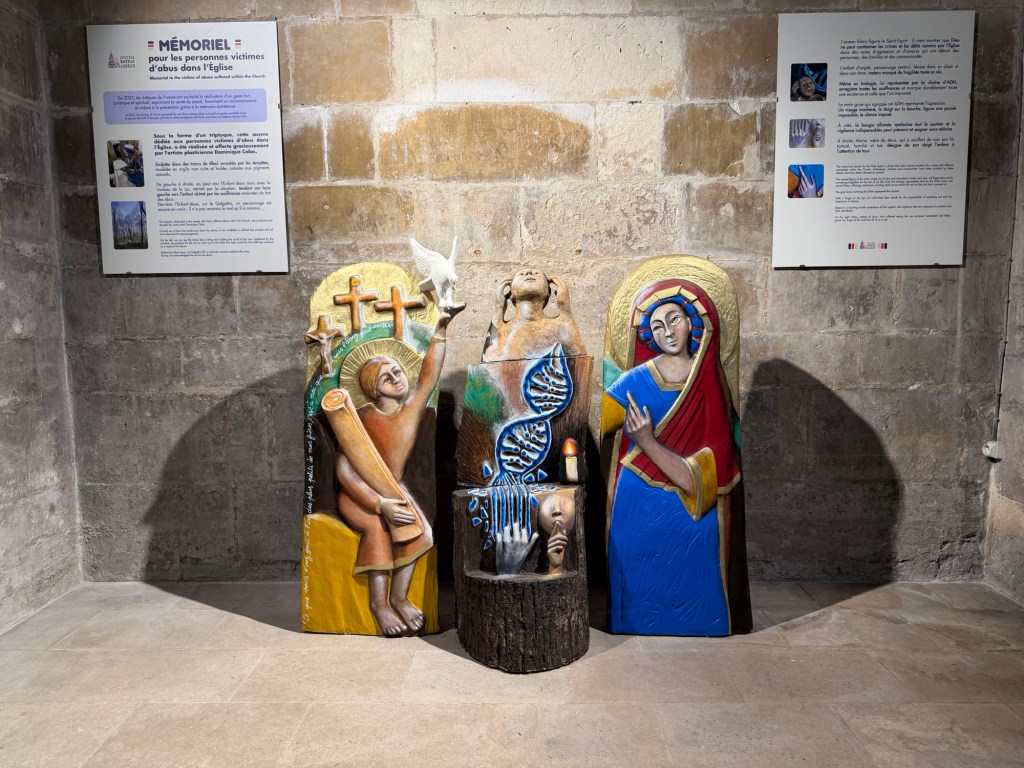
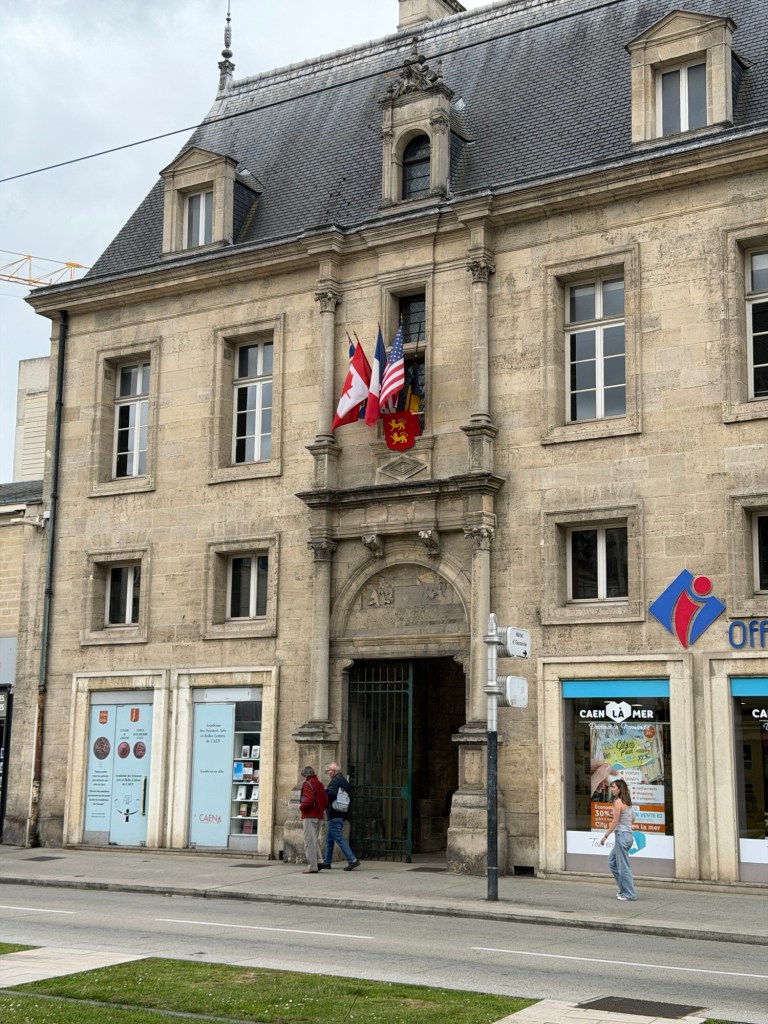
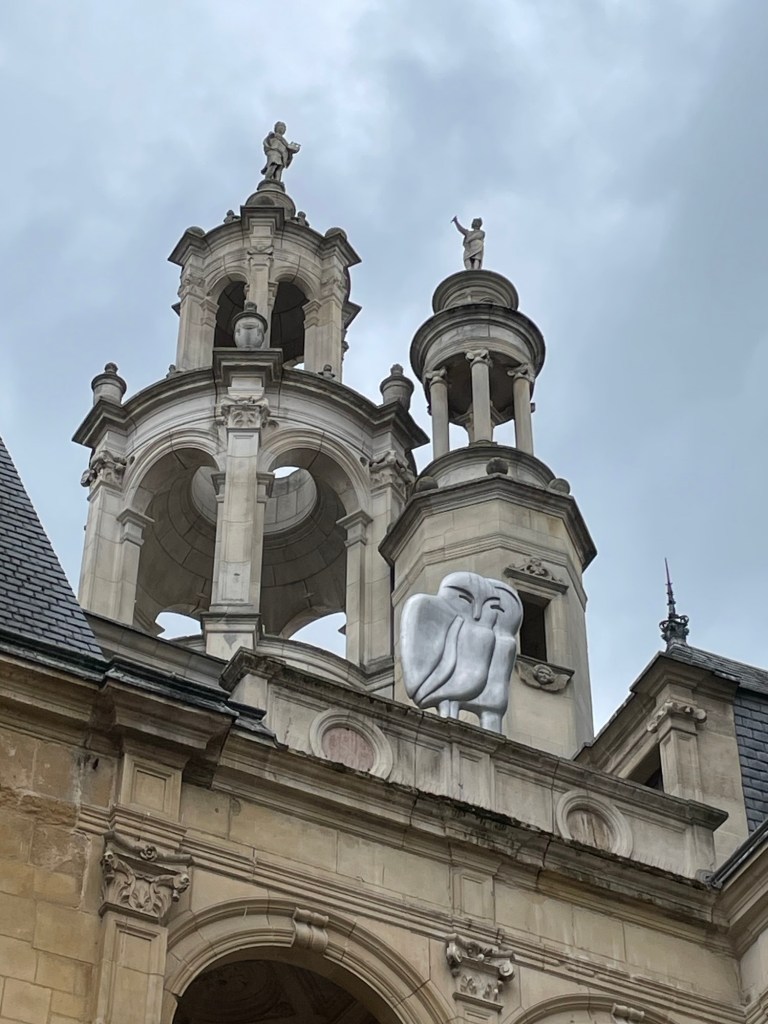
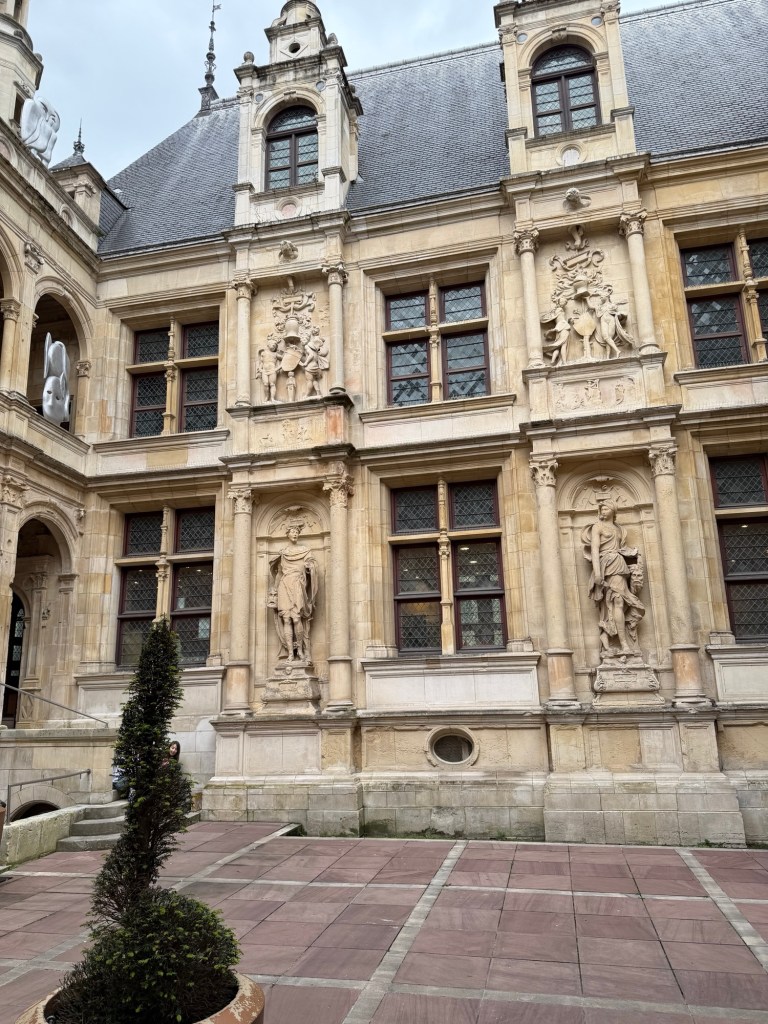
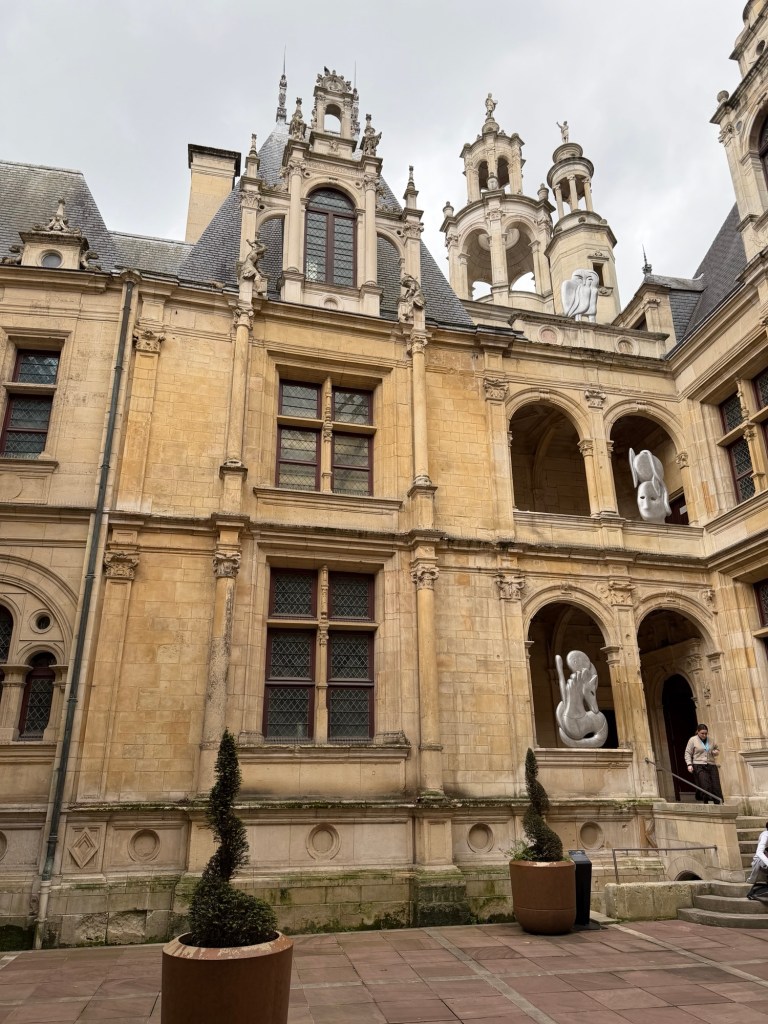
Confessional For children abused by priests. City Hall and a pretty courtyard
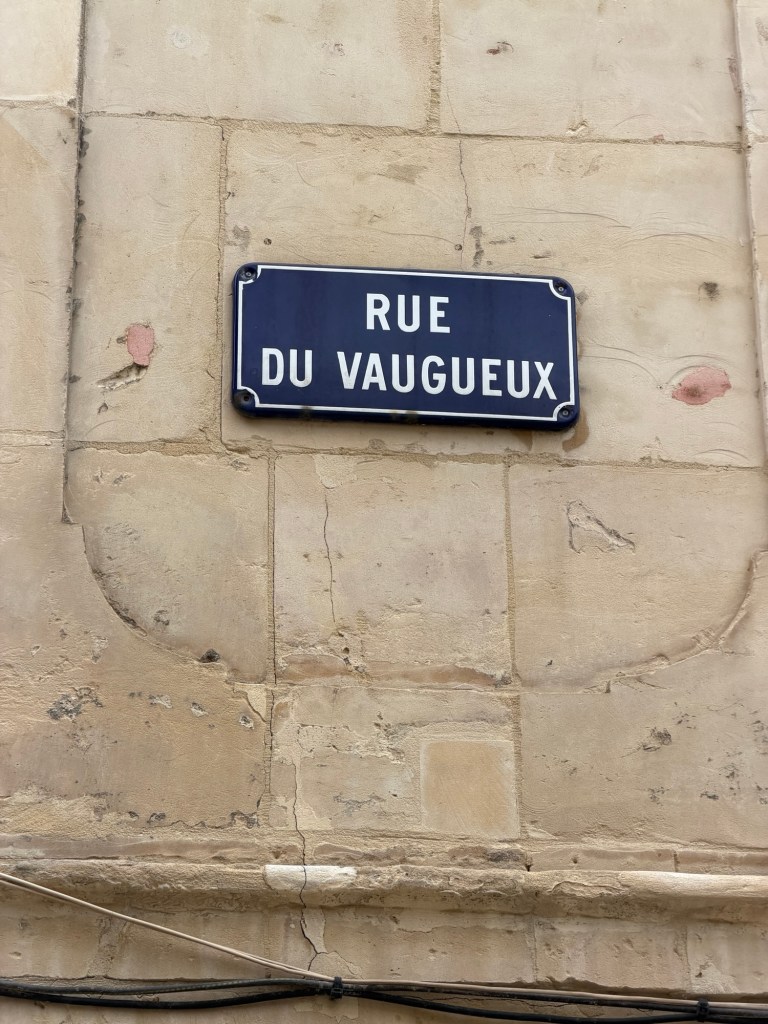
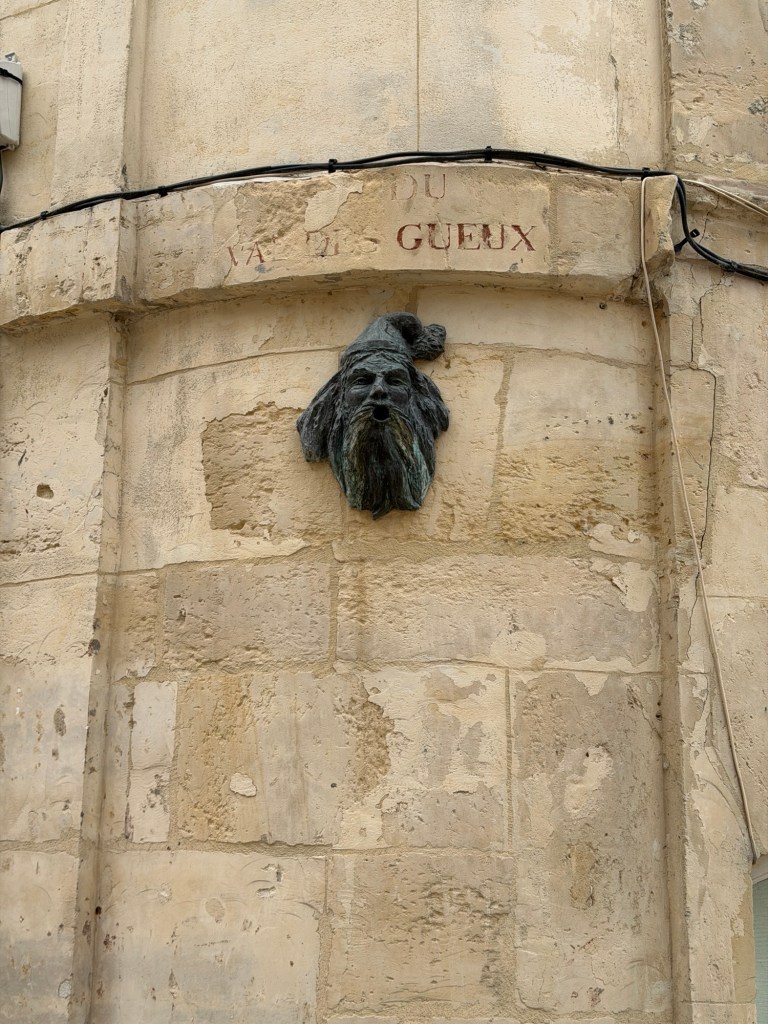
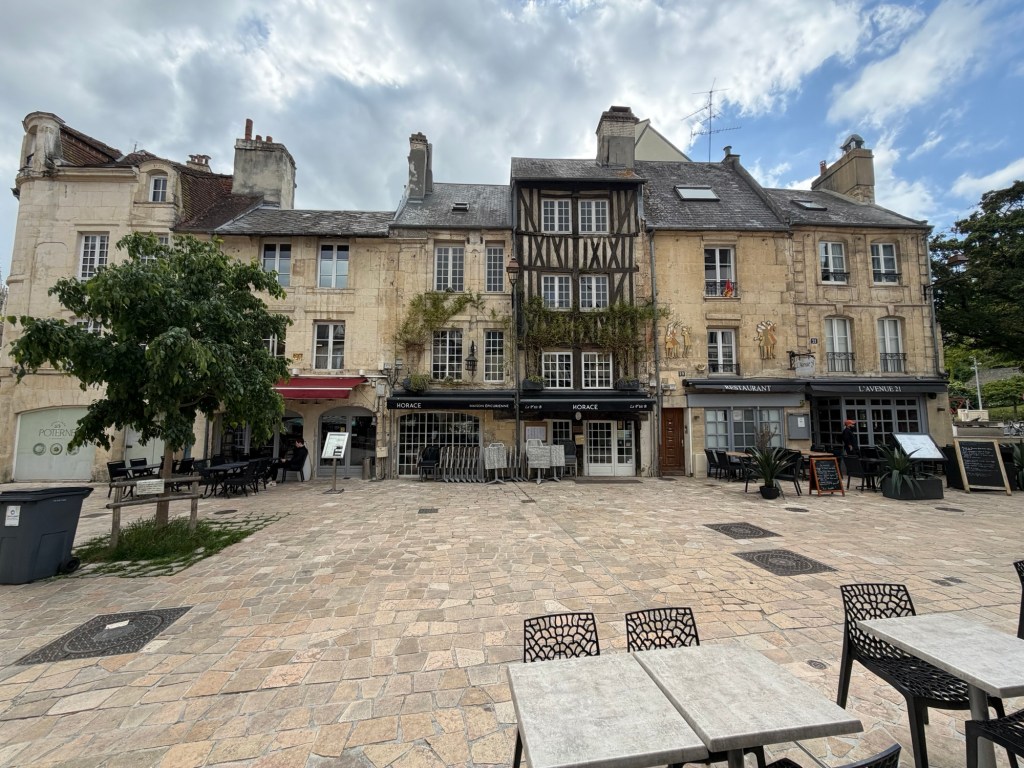
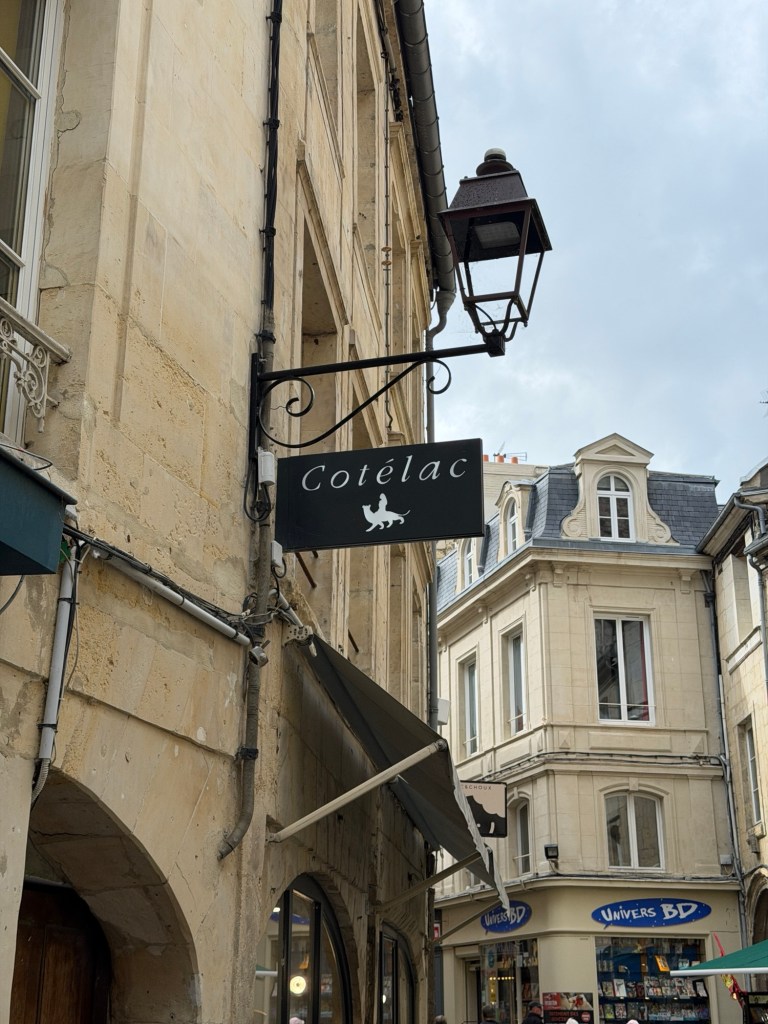
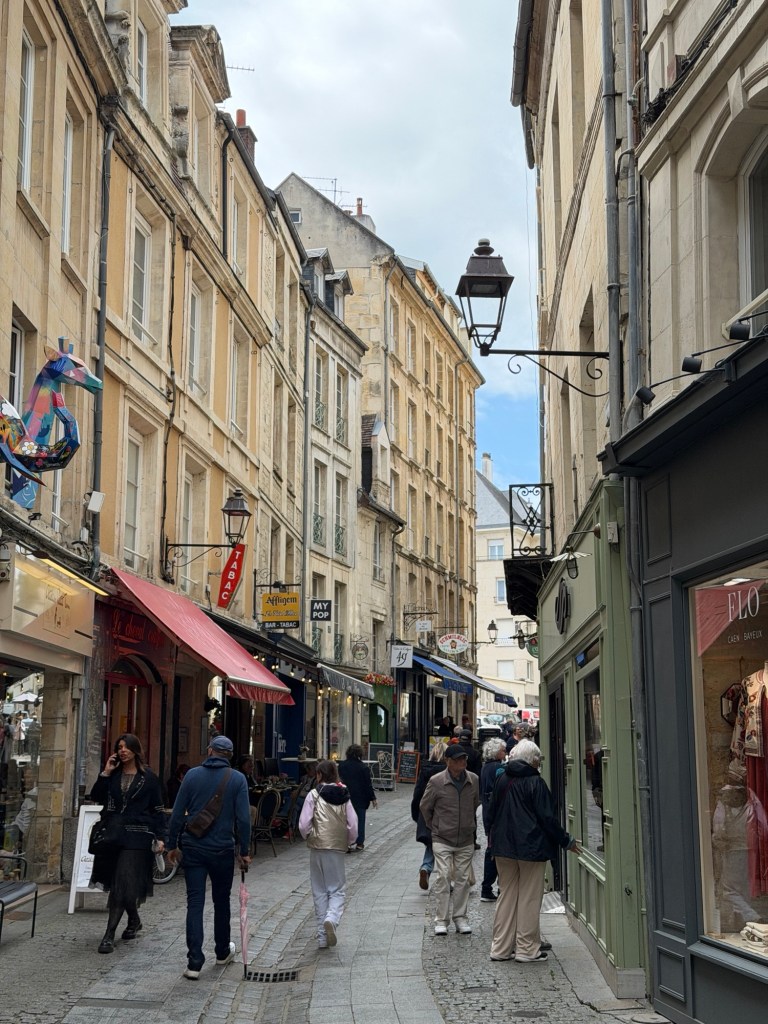
Vaugueux is the oldest part of Caen; it was spared from the destruction of World War II.
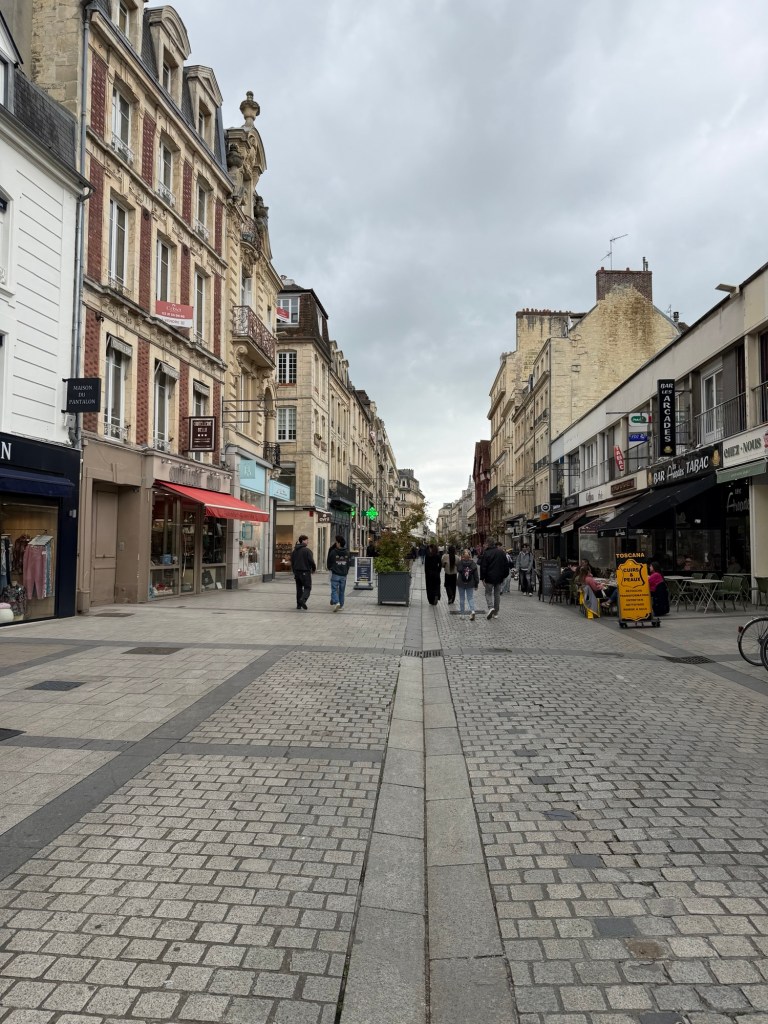
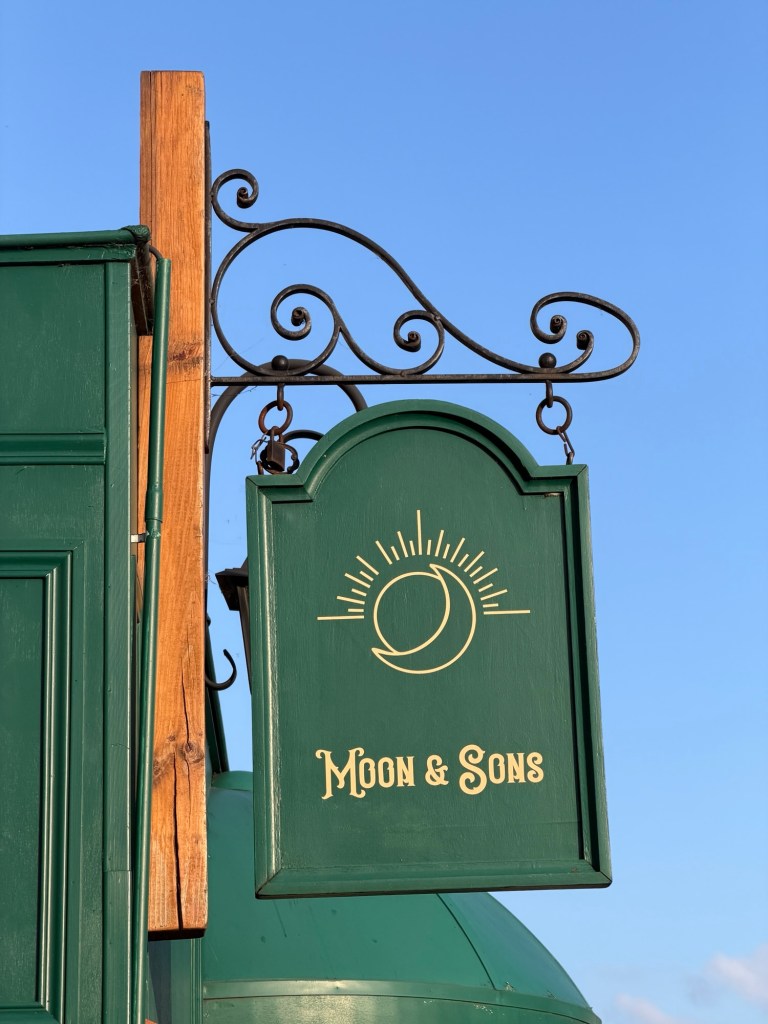
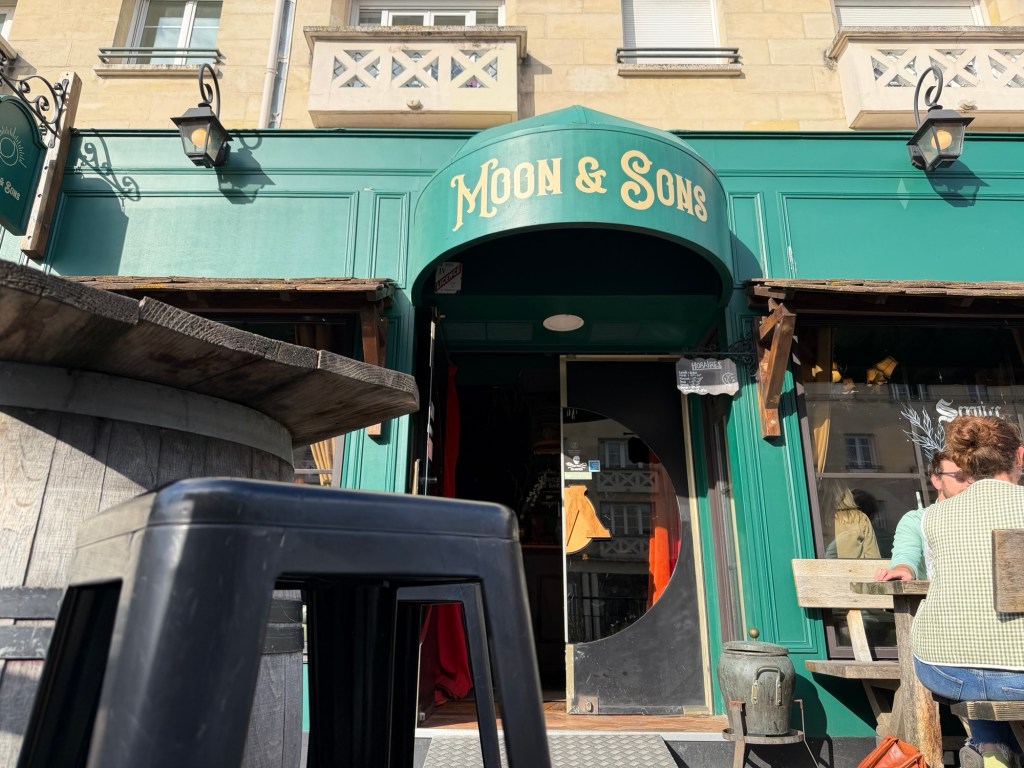
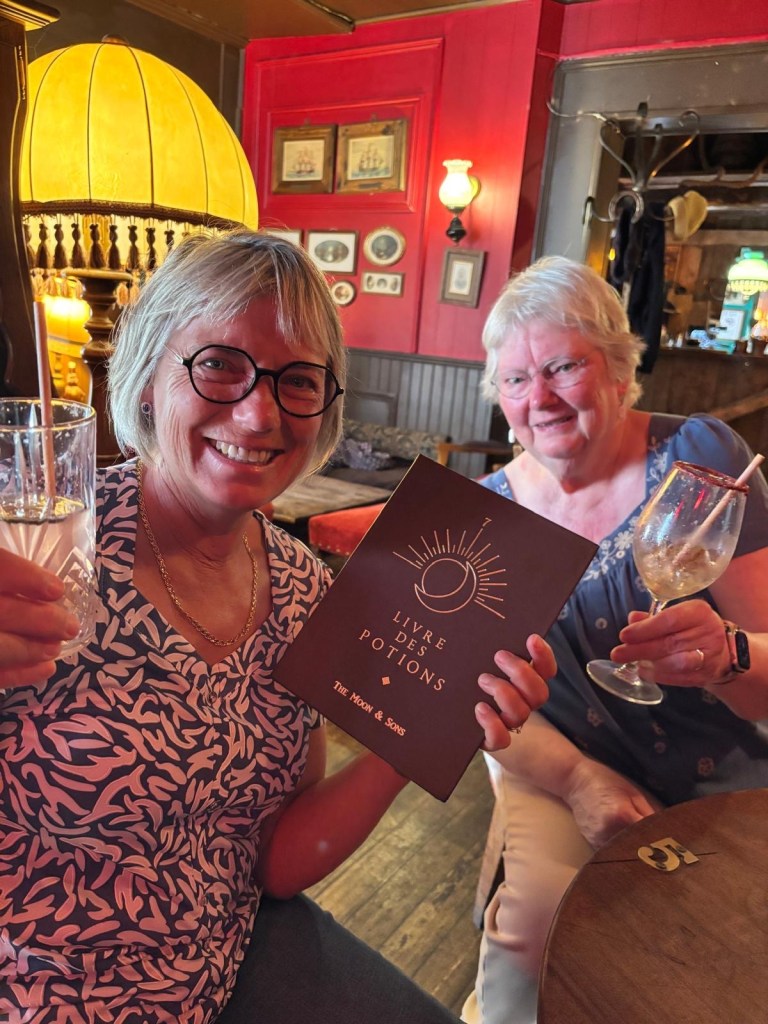
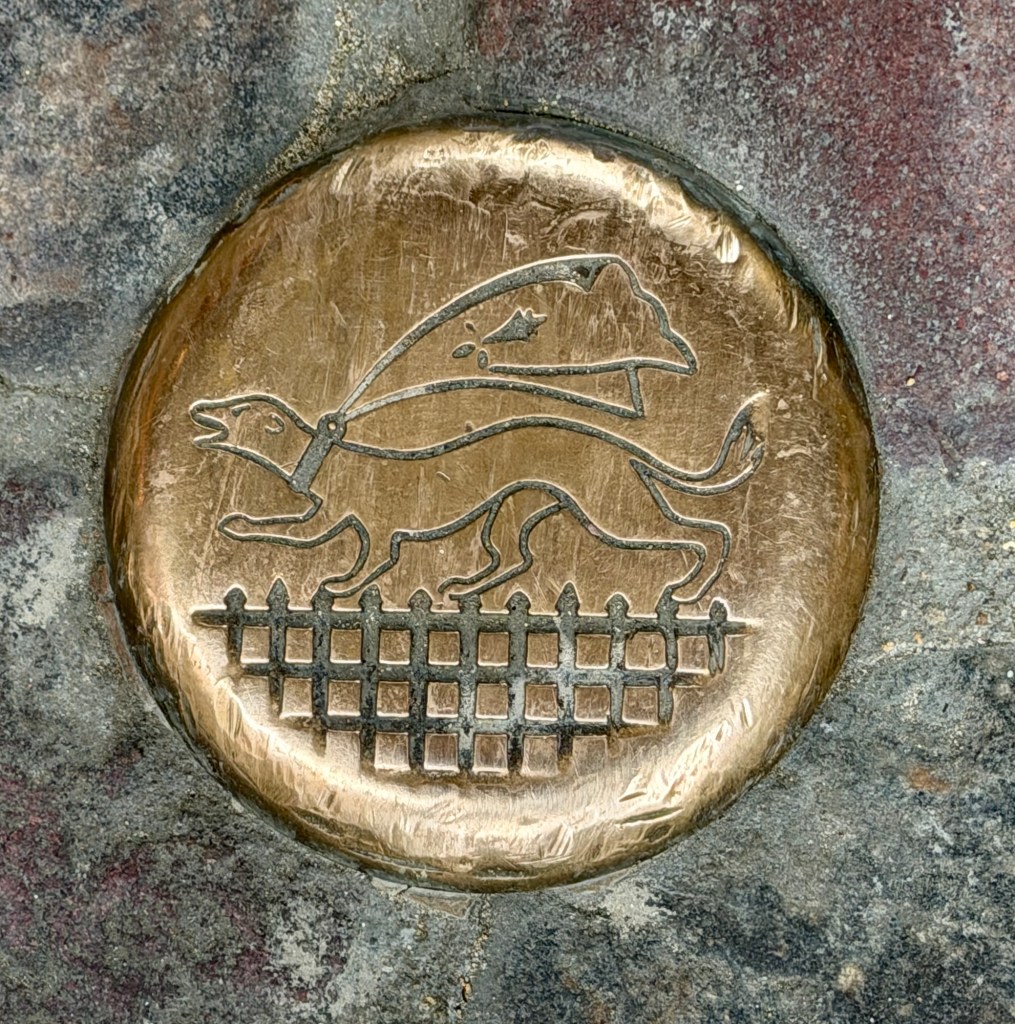
We ate dinner in Vaugueux, and walked back to our hotel along this pedestrian mall.Tour markers on the ground and other sites in the city. At Moon & Sons bar, the Book of Potions was styled after Harry Potter books. Joëlle and Clare each tried a potion with few ill effects!
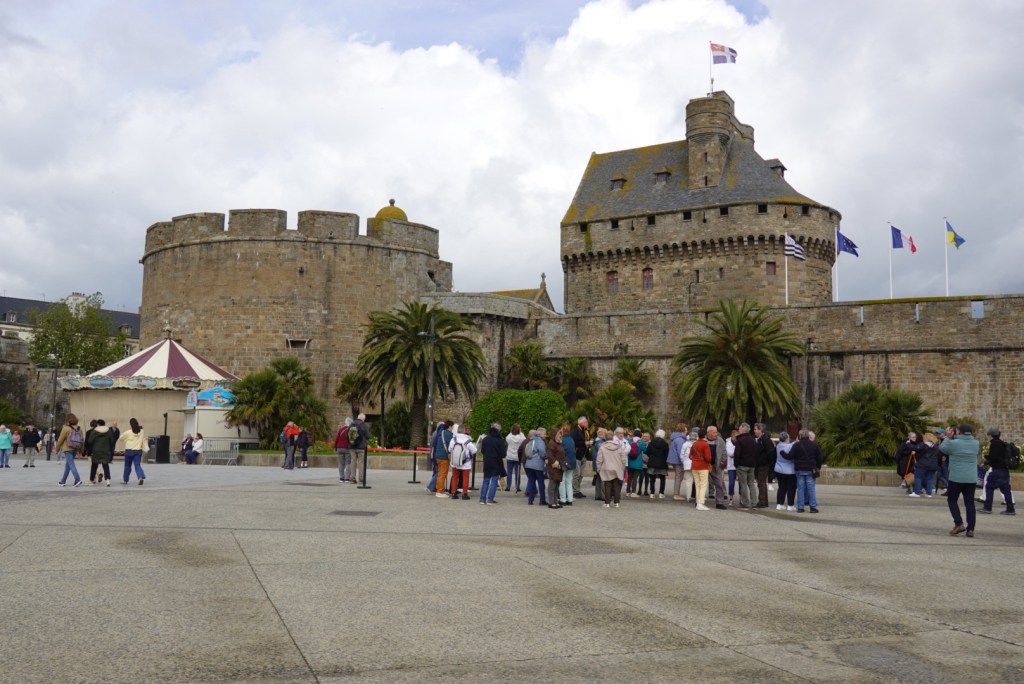
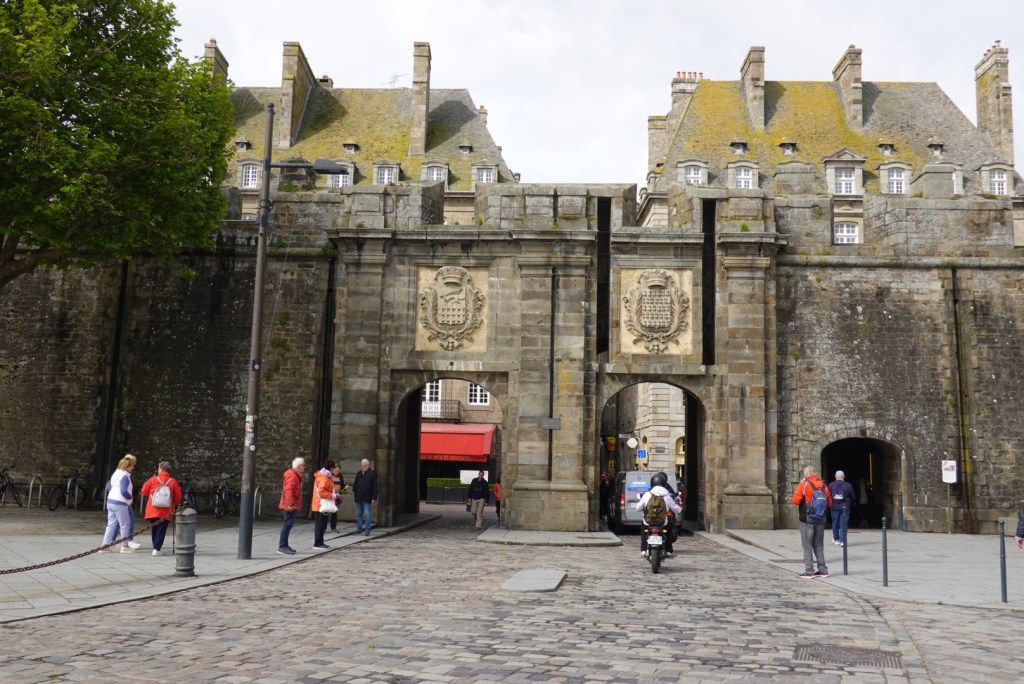
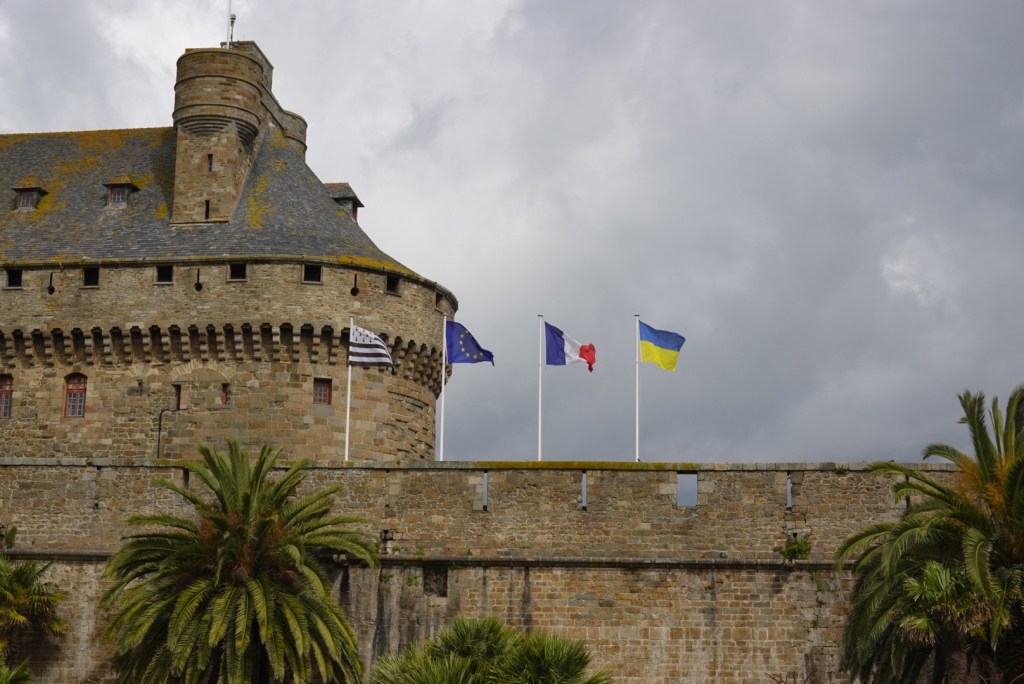
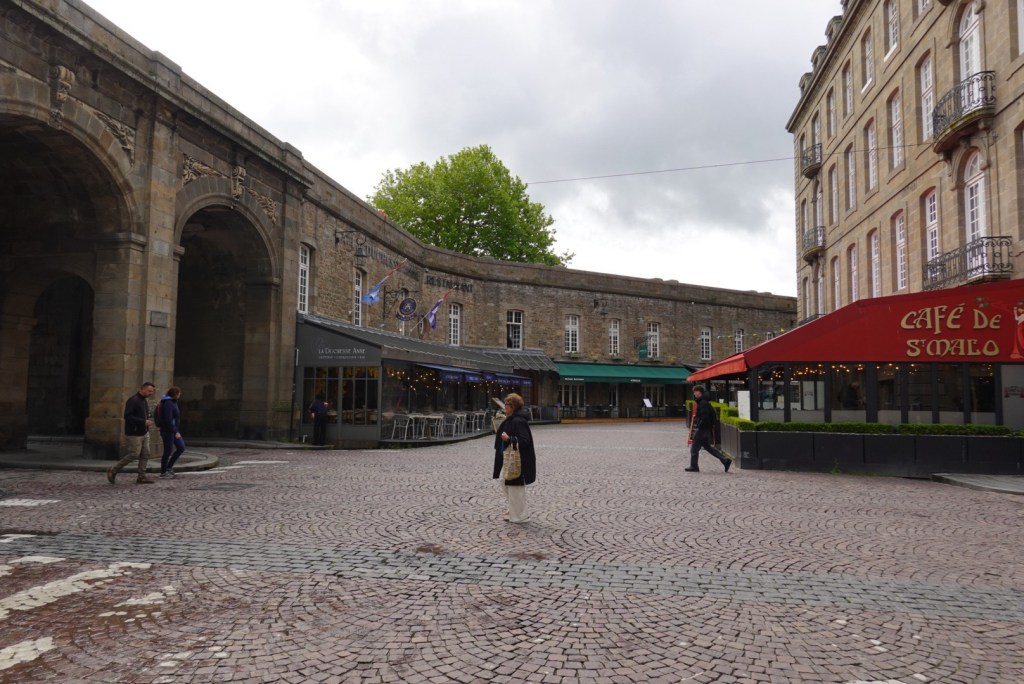
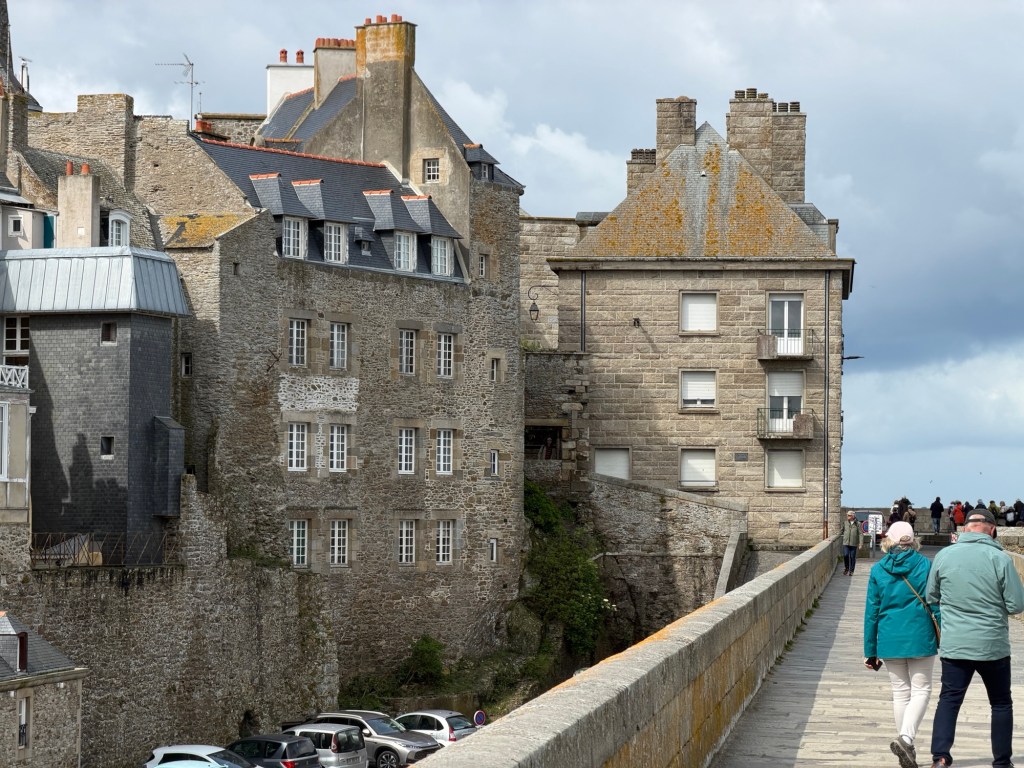
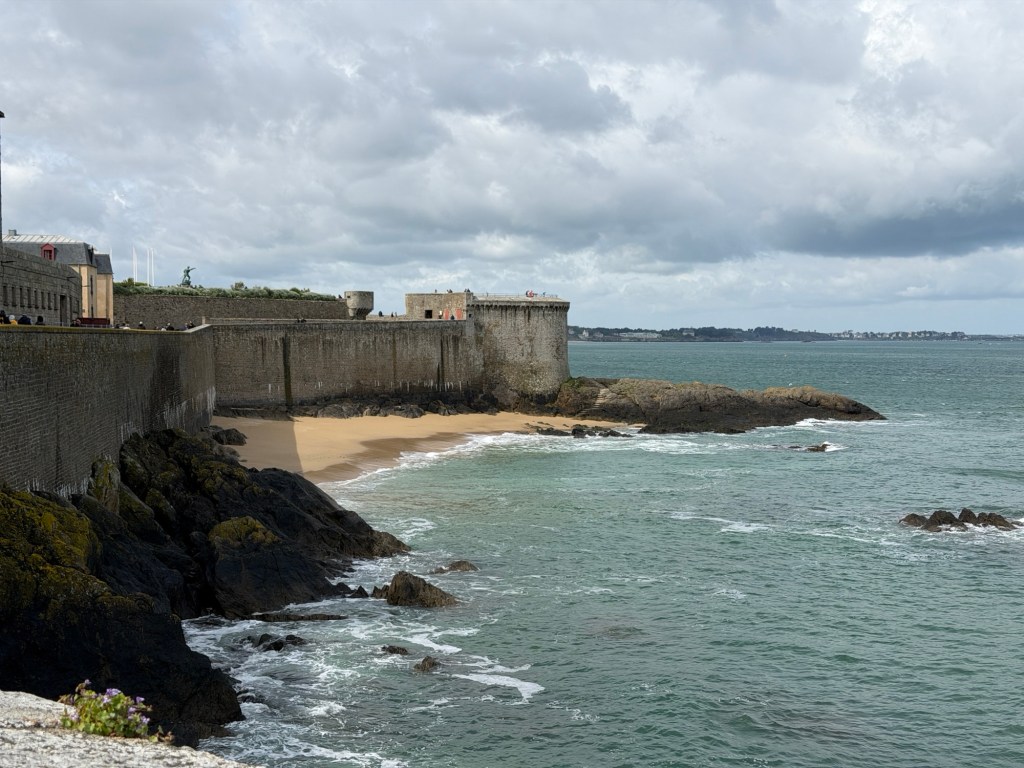
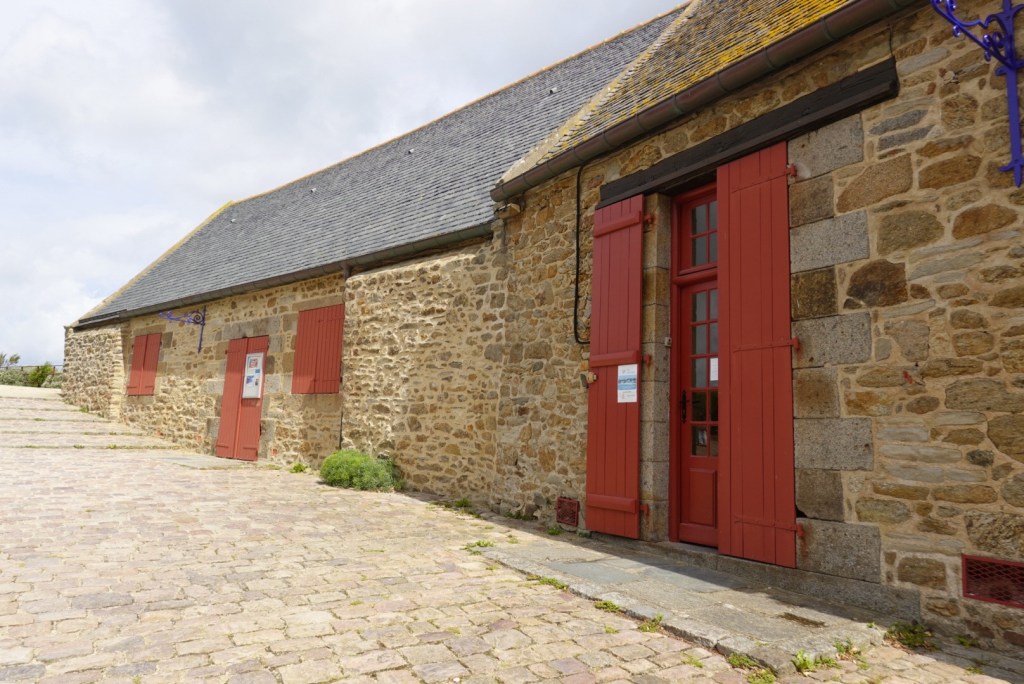
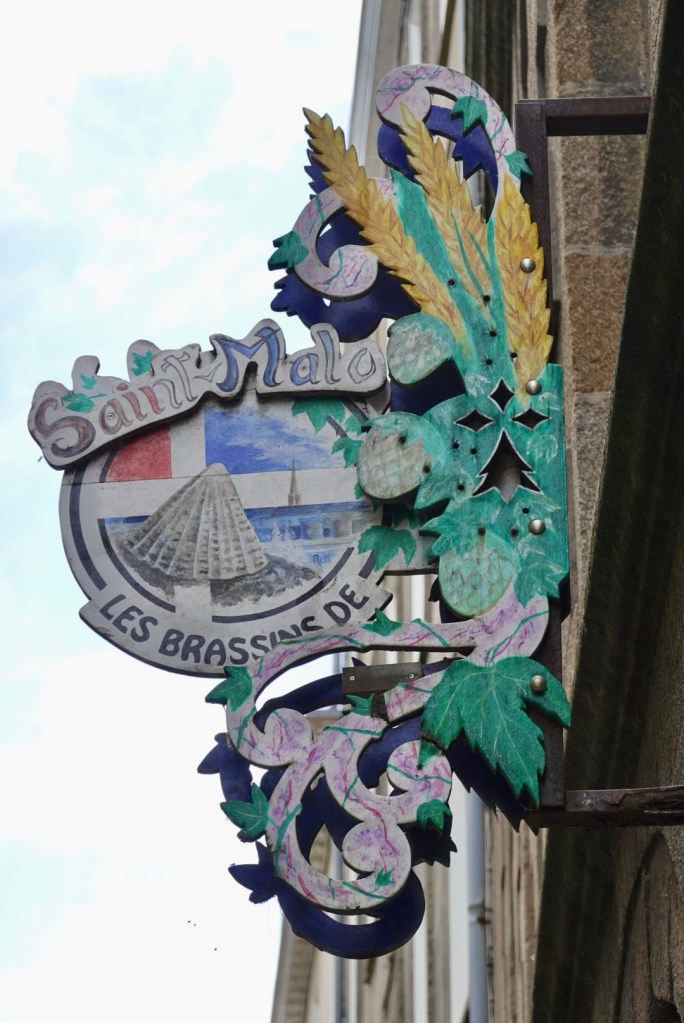
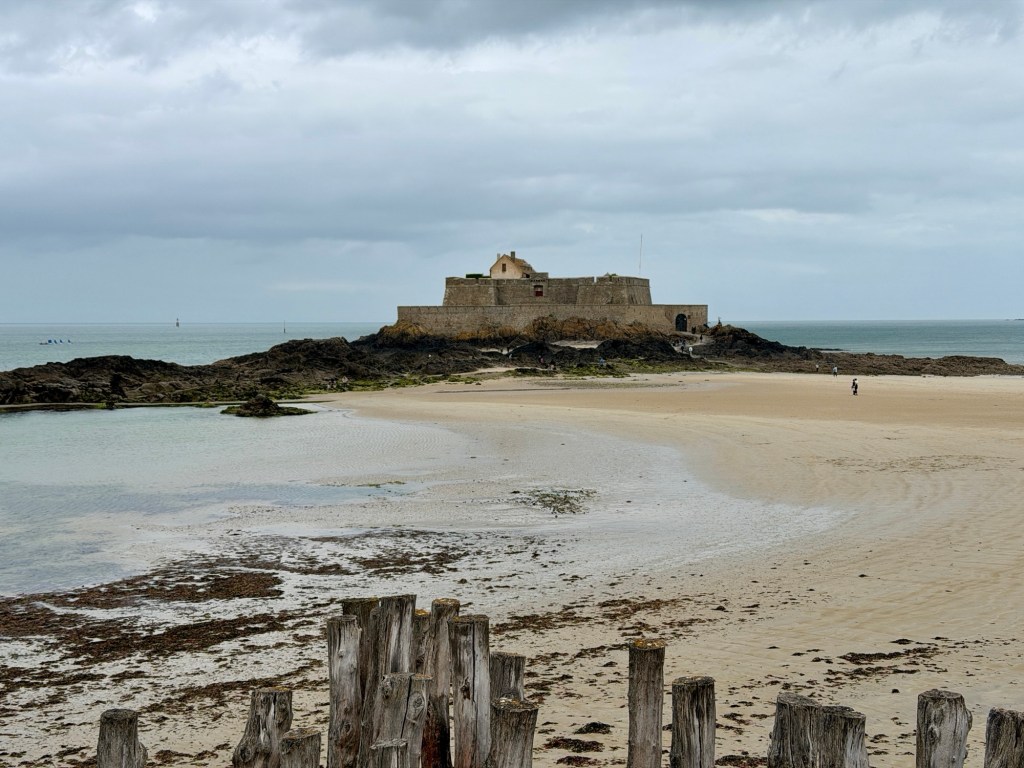
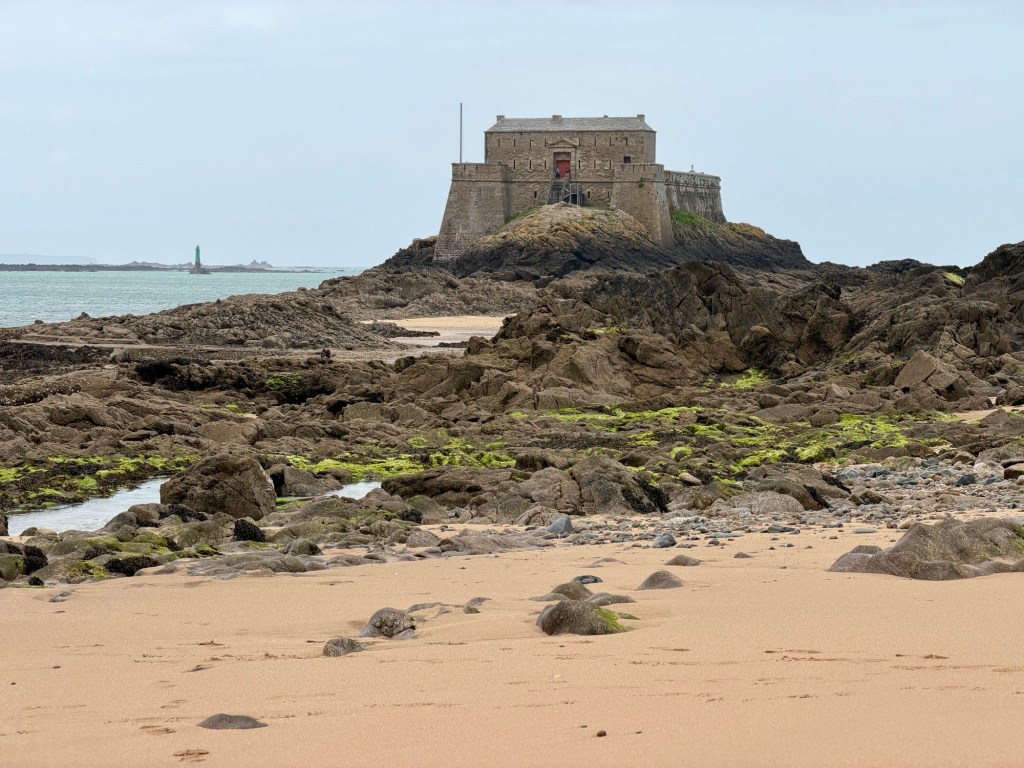
Who would have thought you could see a similar phenomenon two days in a row and still be fascinated? St. Malo is a port city in Brittany, surrounded by thick stone walls. Historically, it was run by privateers, pirates working for the government. It, too, has wide flat beaches and a high tide differential.
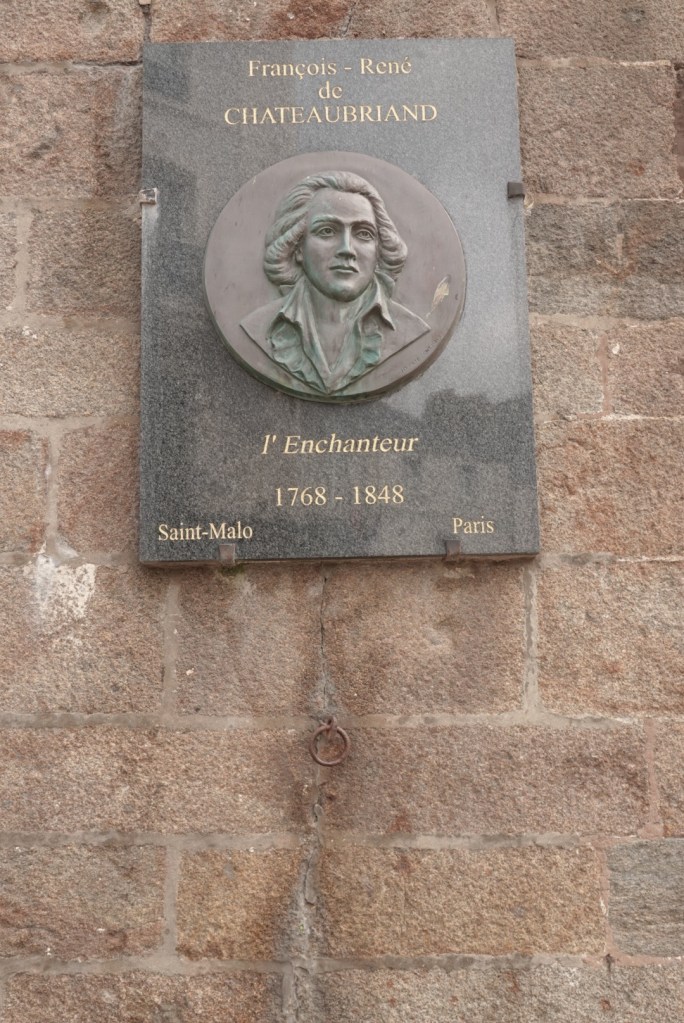
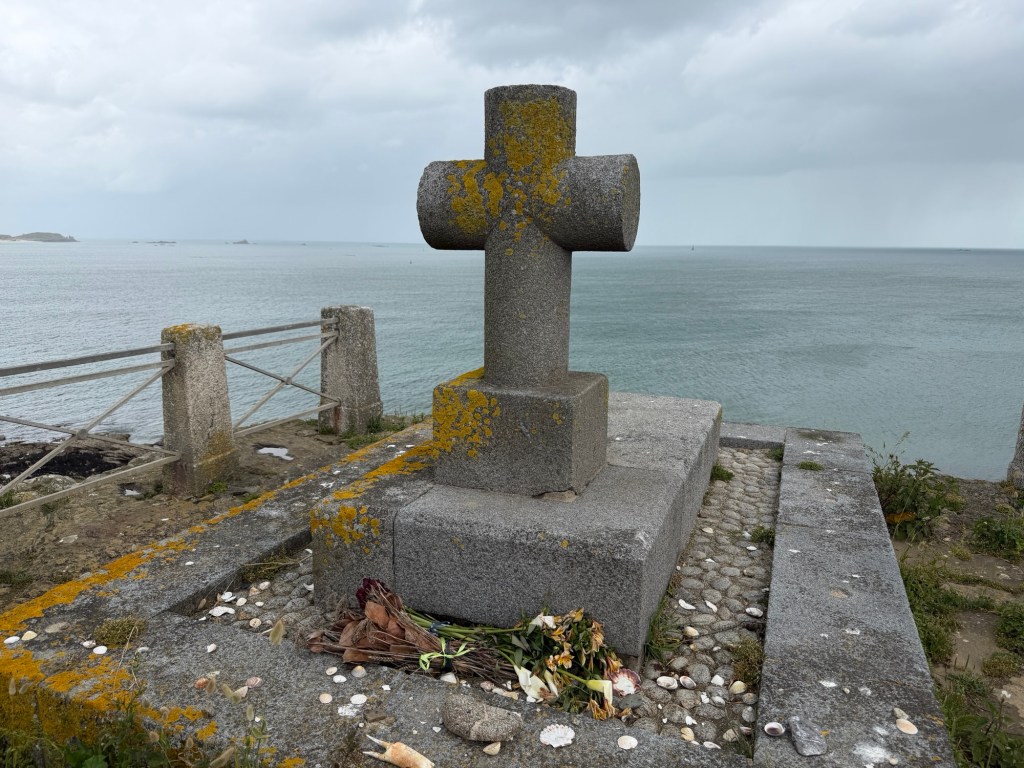
Lots of tourists visit St MaloViscount of St Malo, writer, translator and diplomat, his grave is on an island we walked to later.
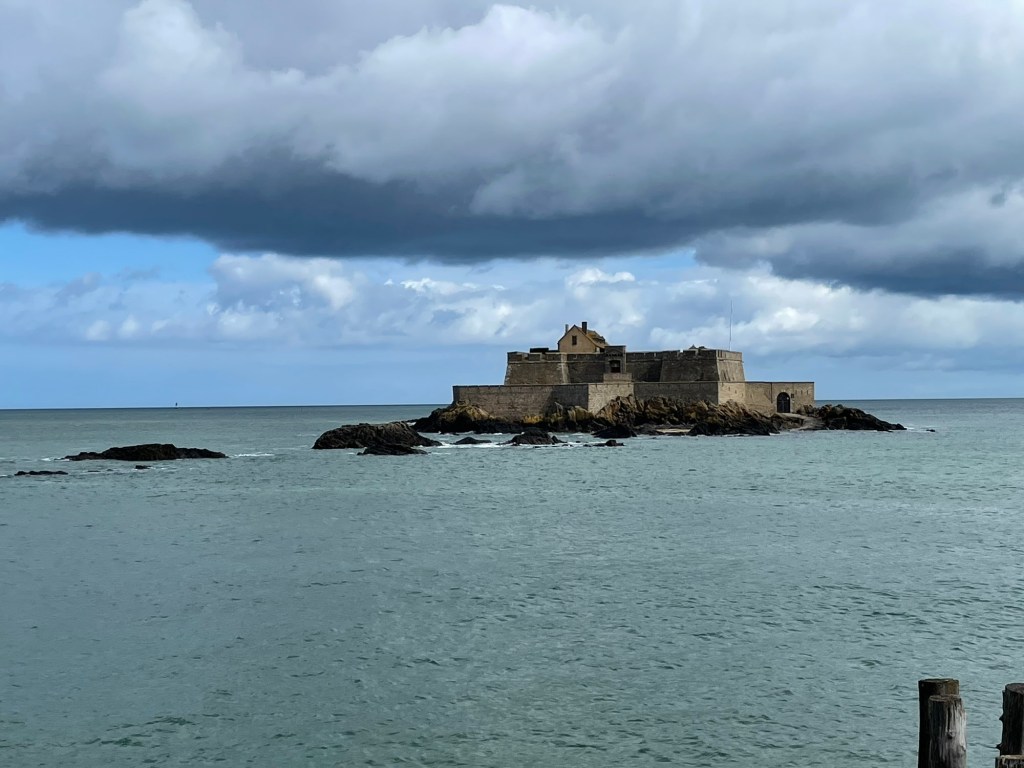
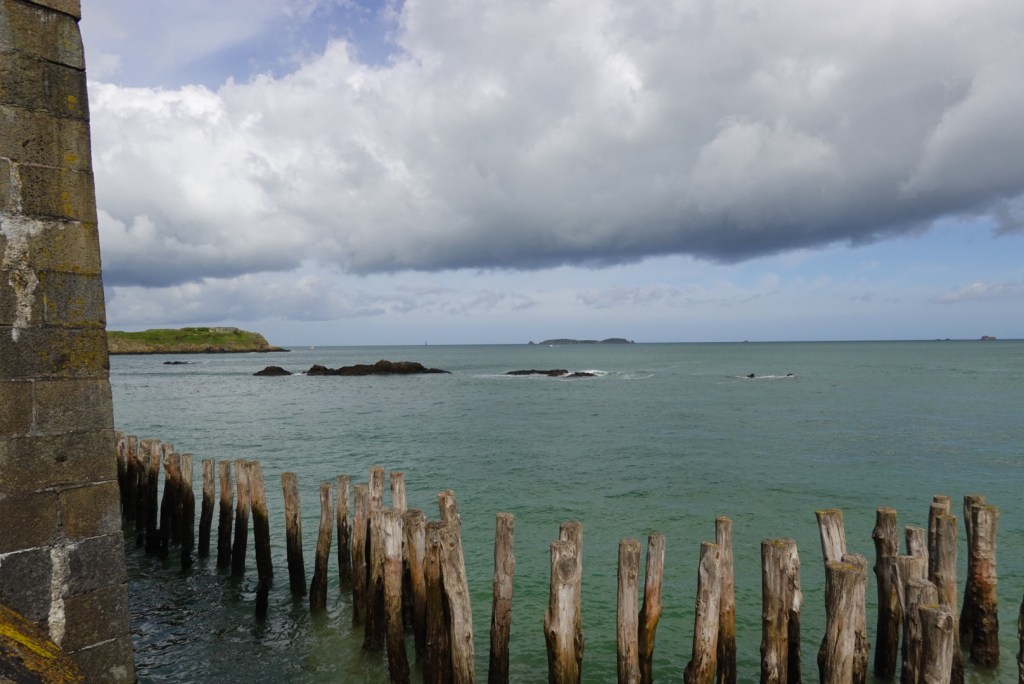
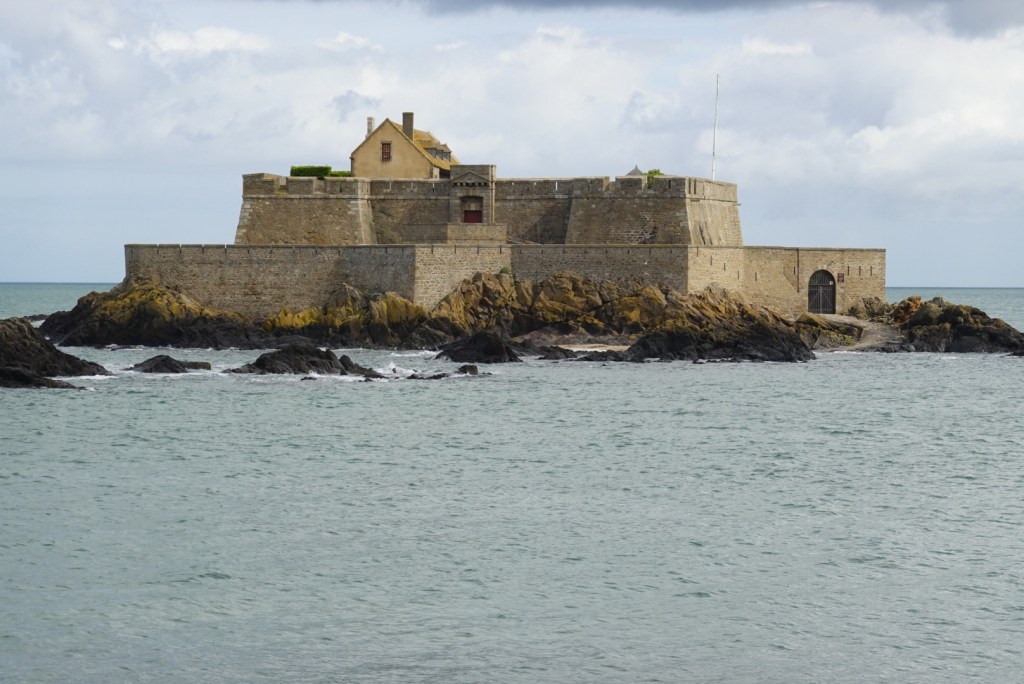
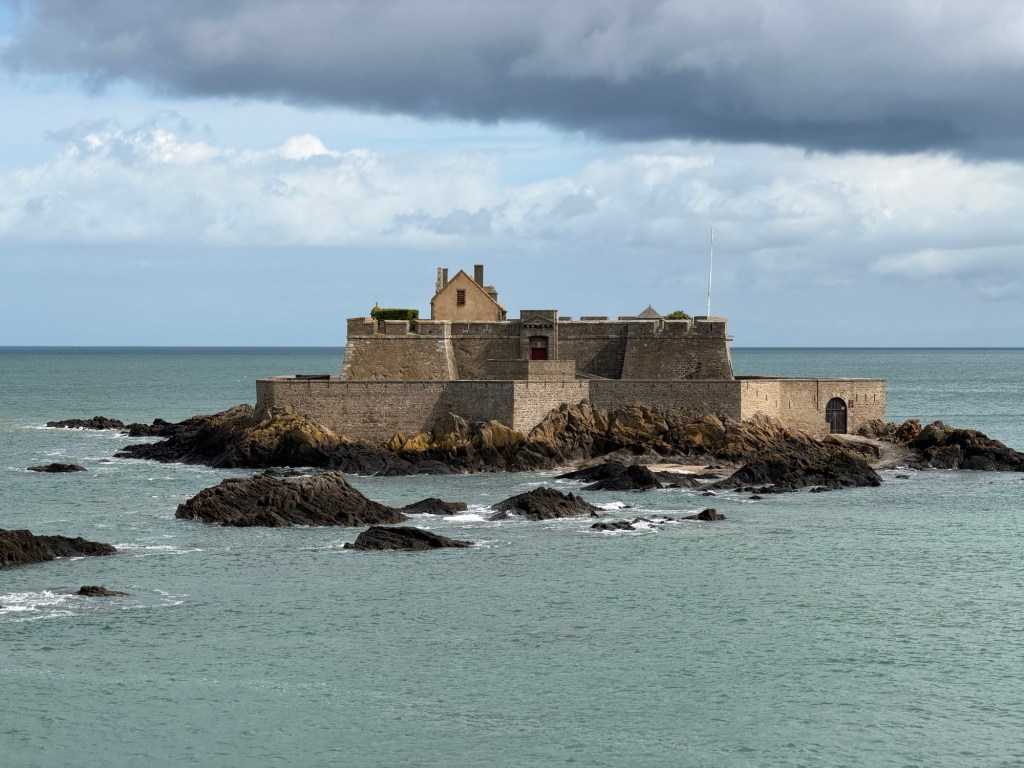
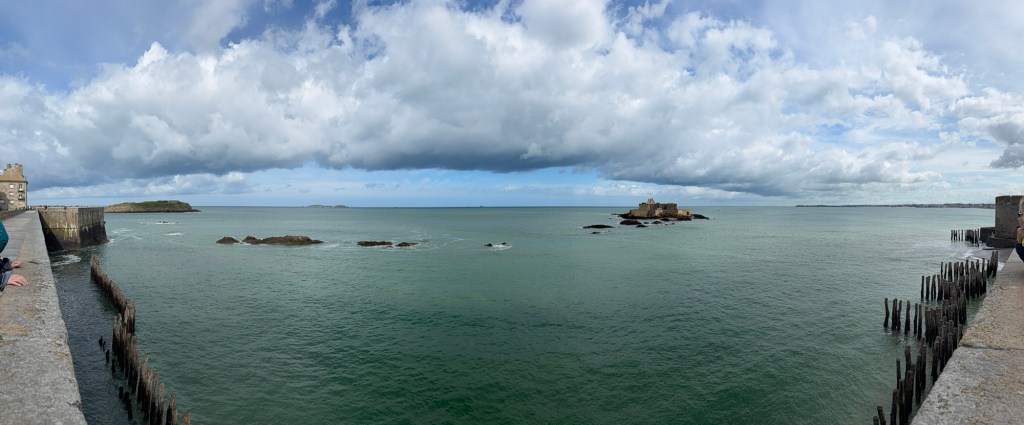
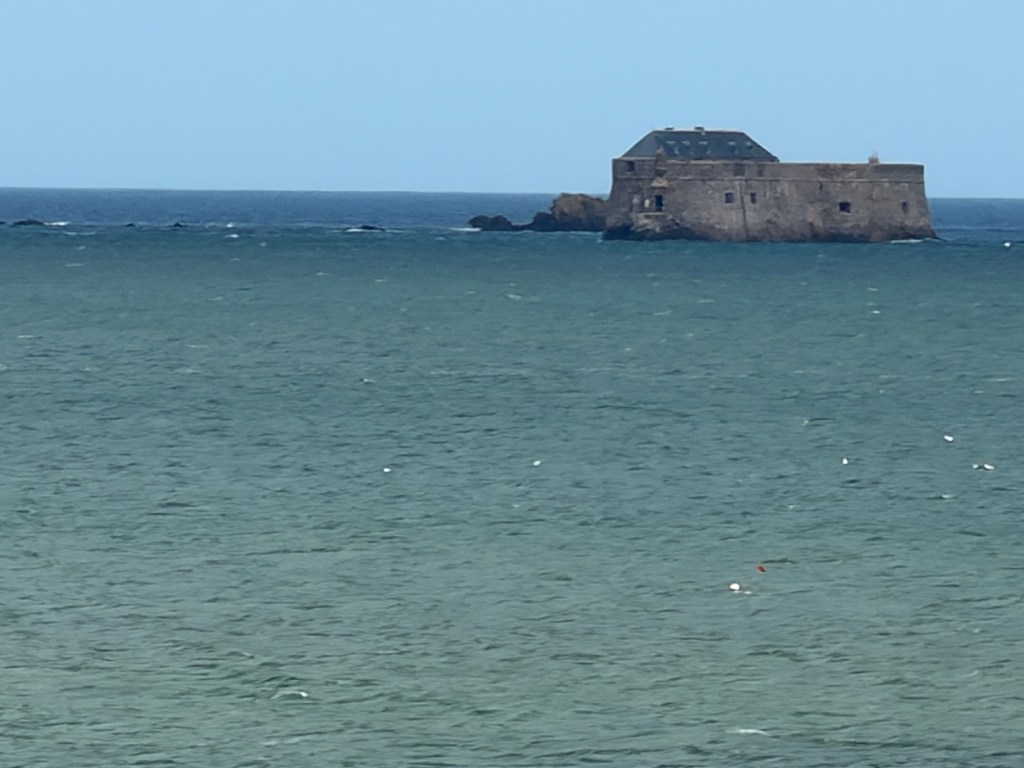
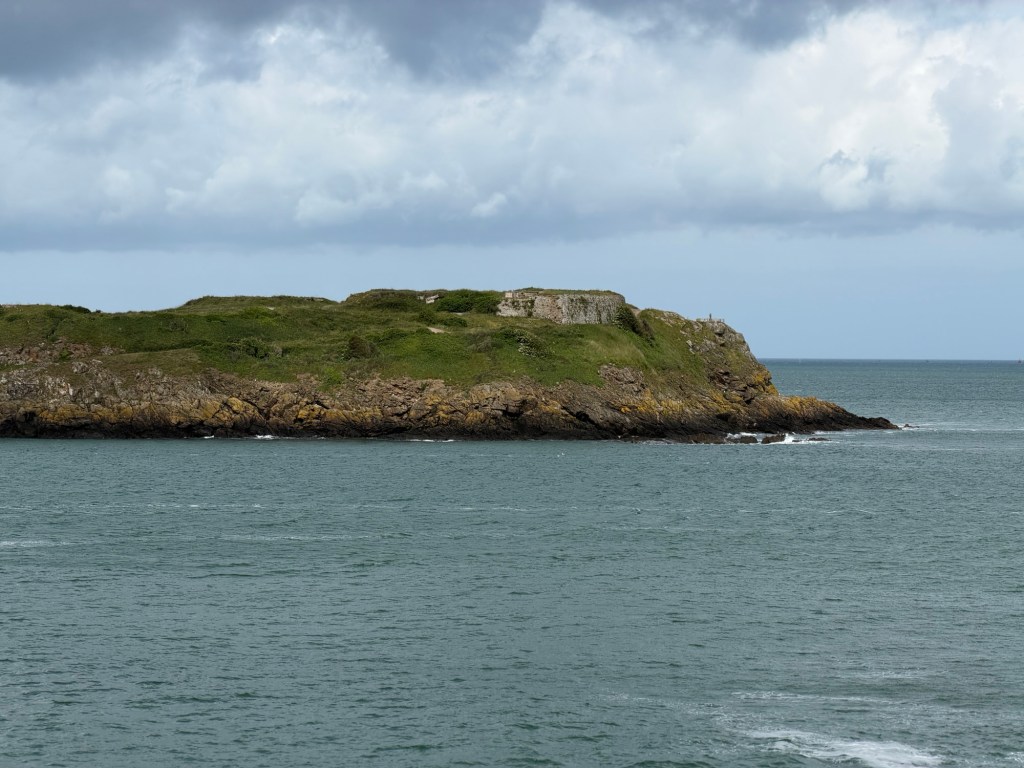
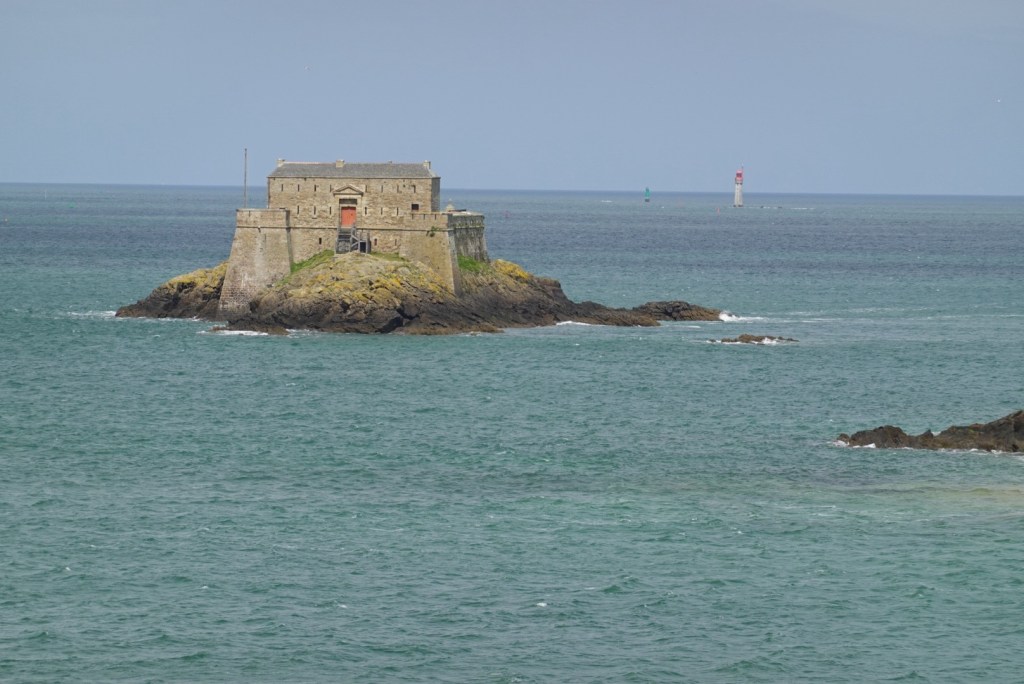
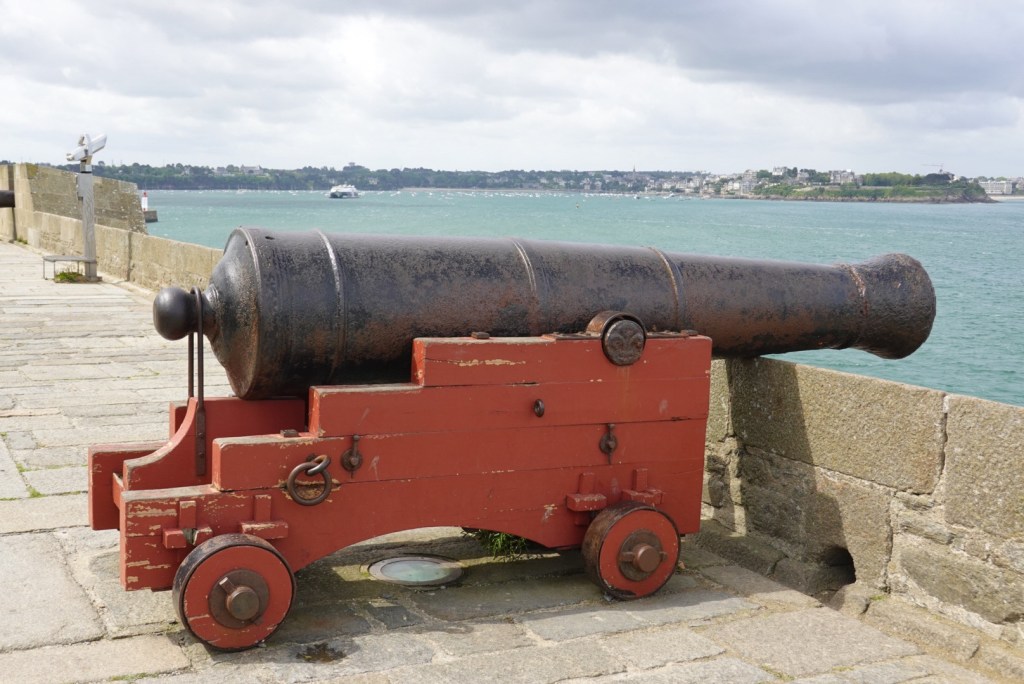
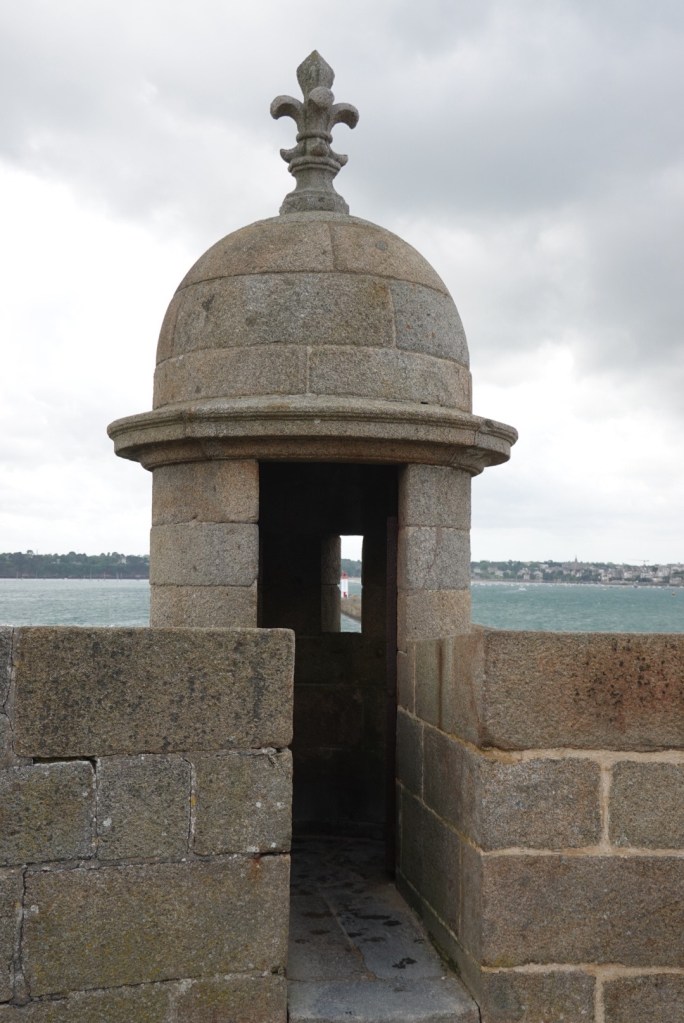
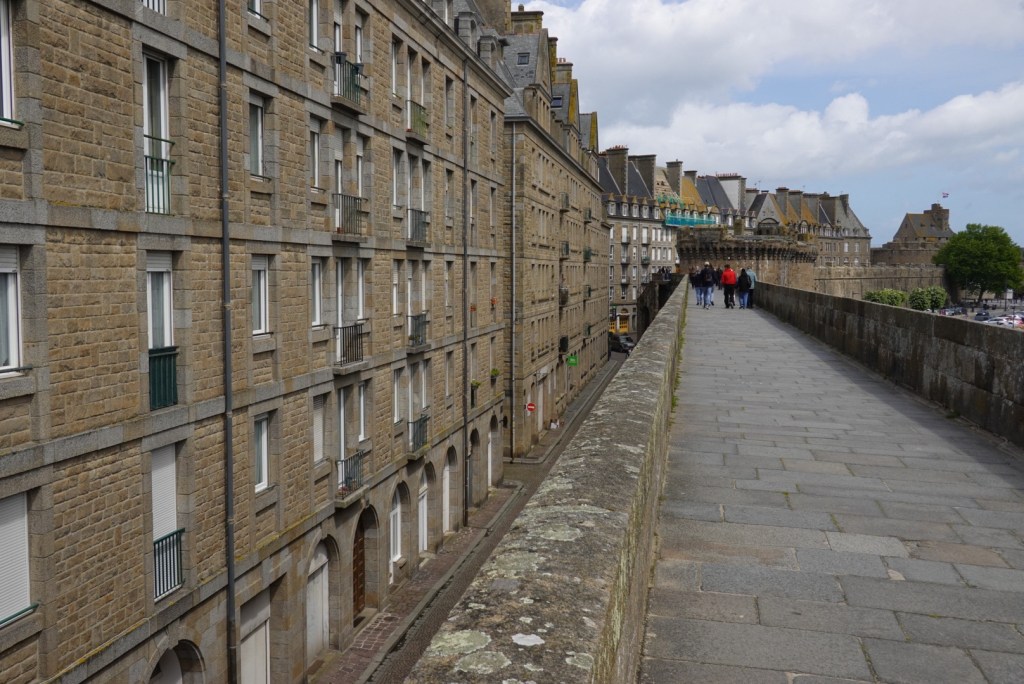
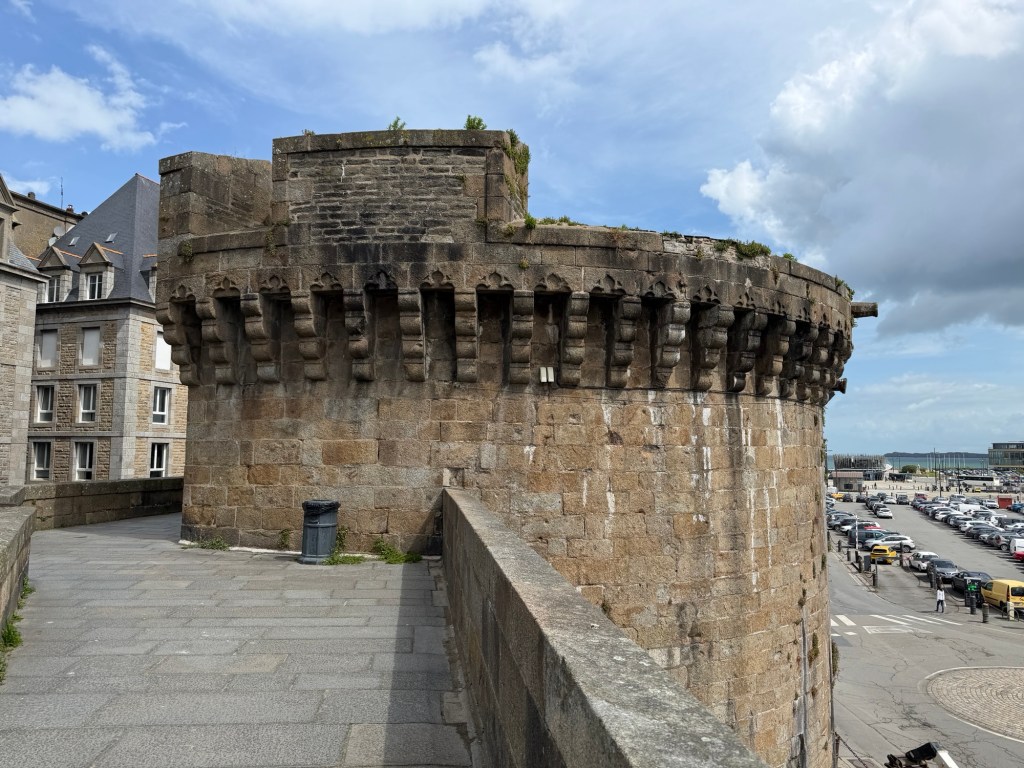
We wandered the ramparts around the fortress at high tide, viewing islands close to the shore.
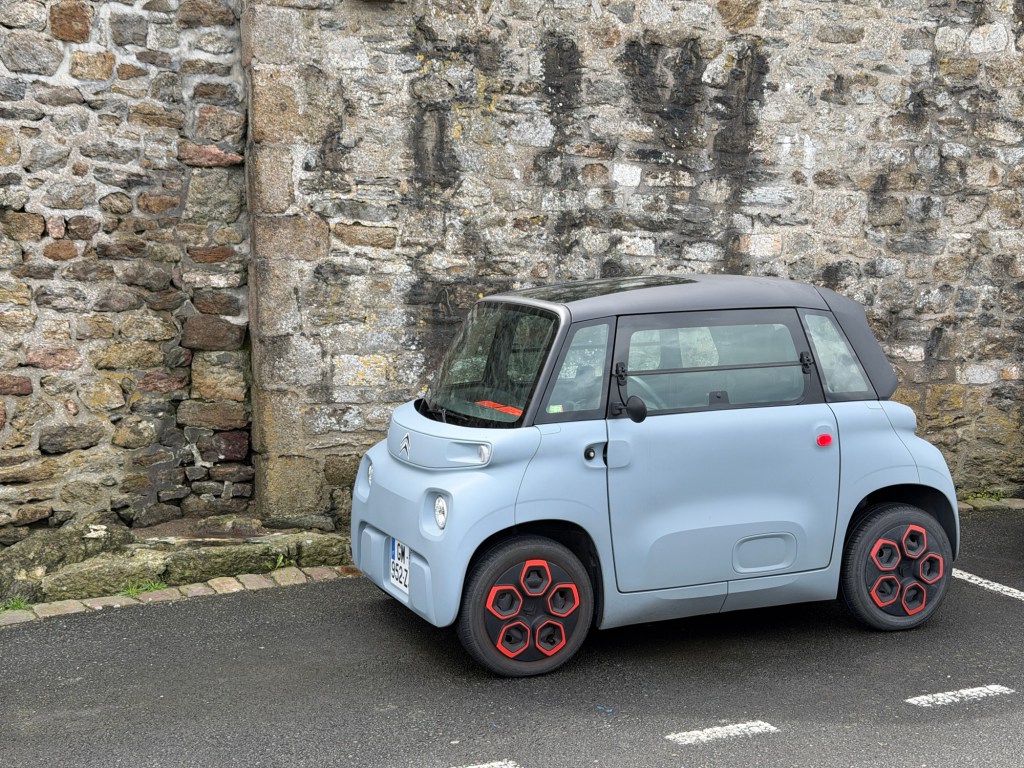
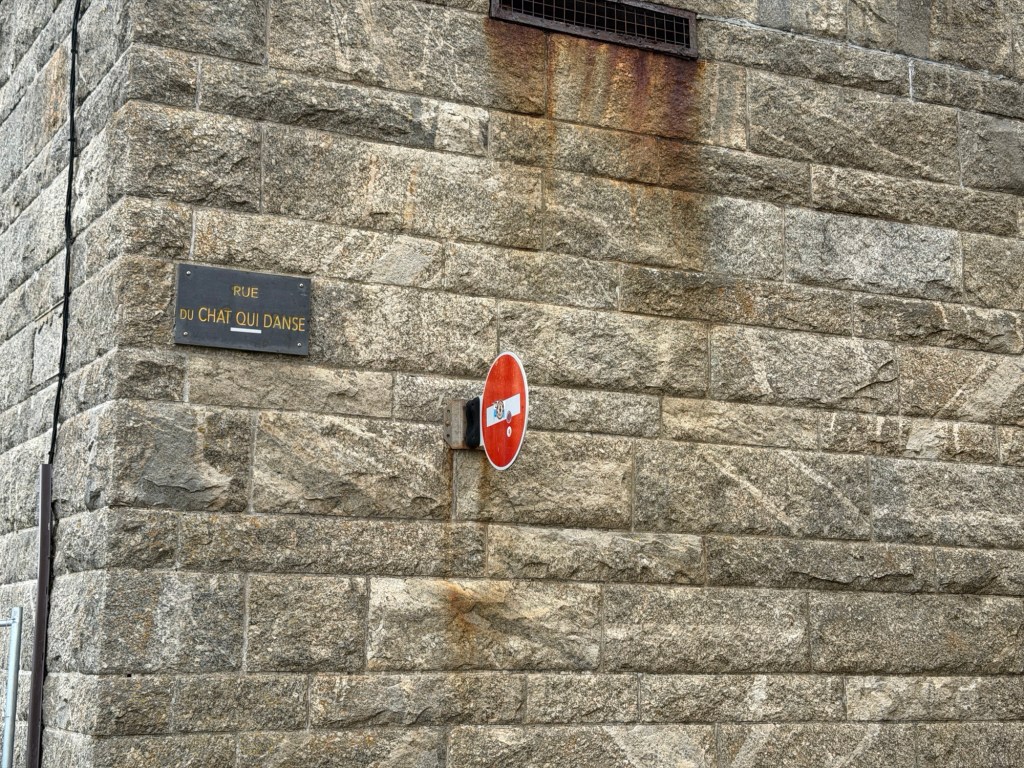
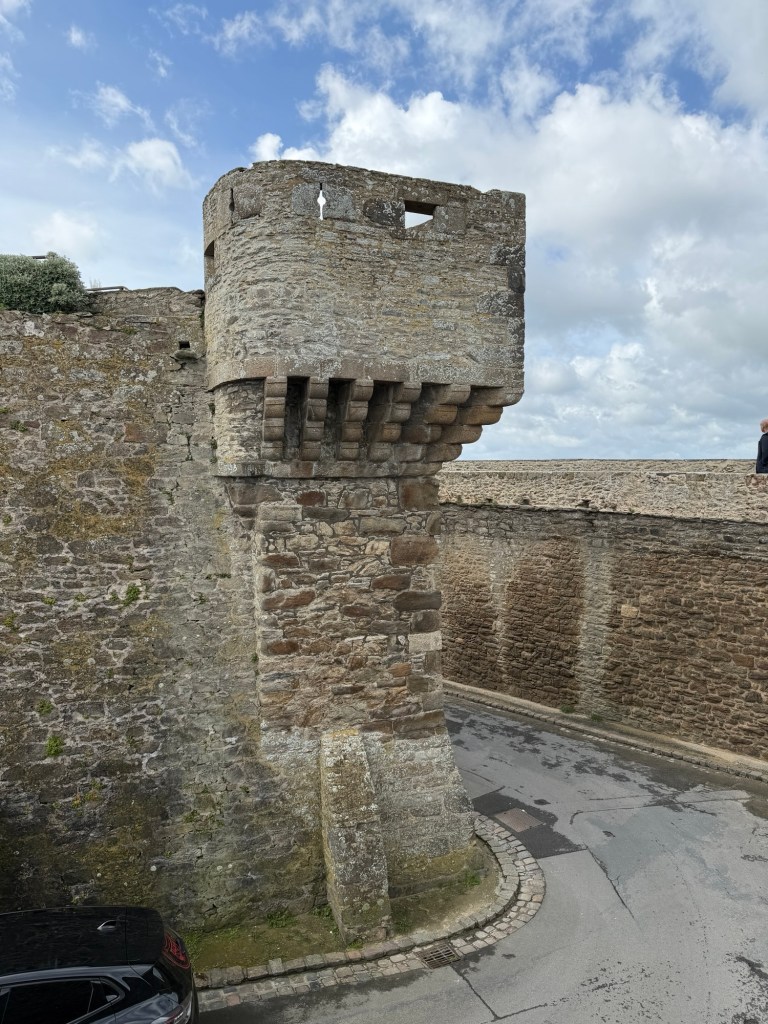
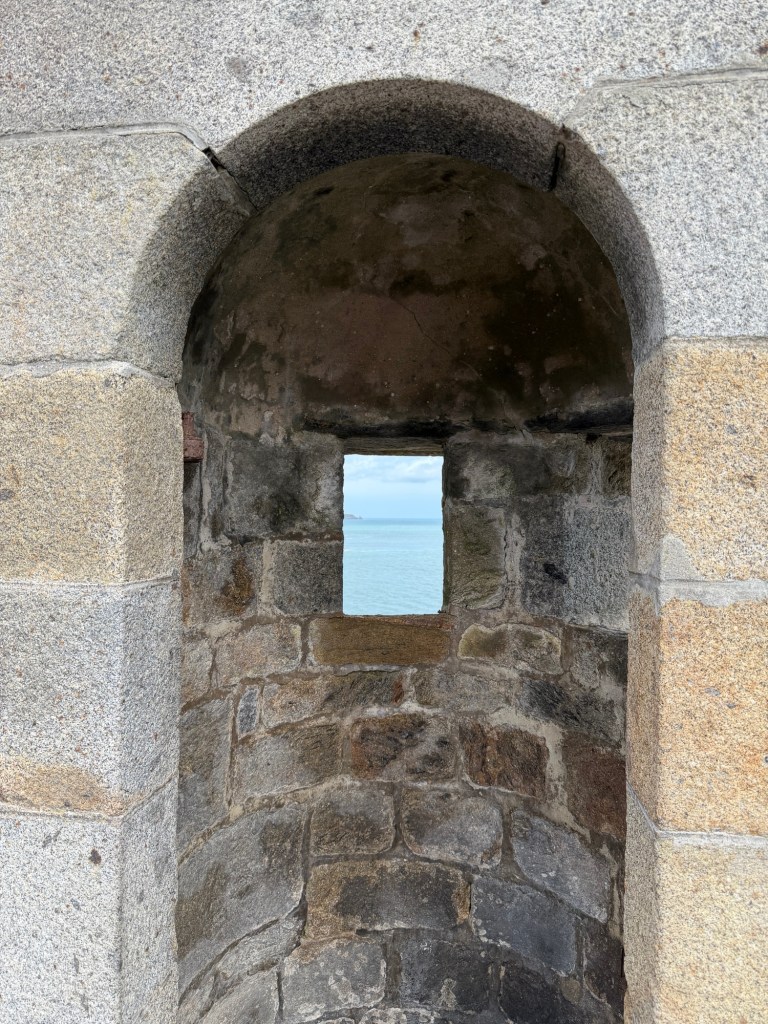
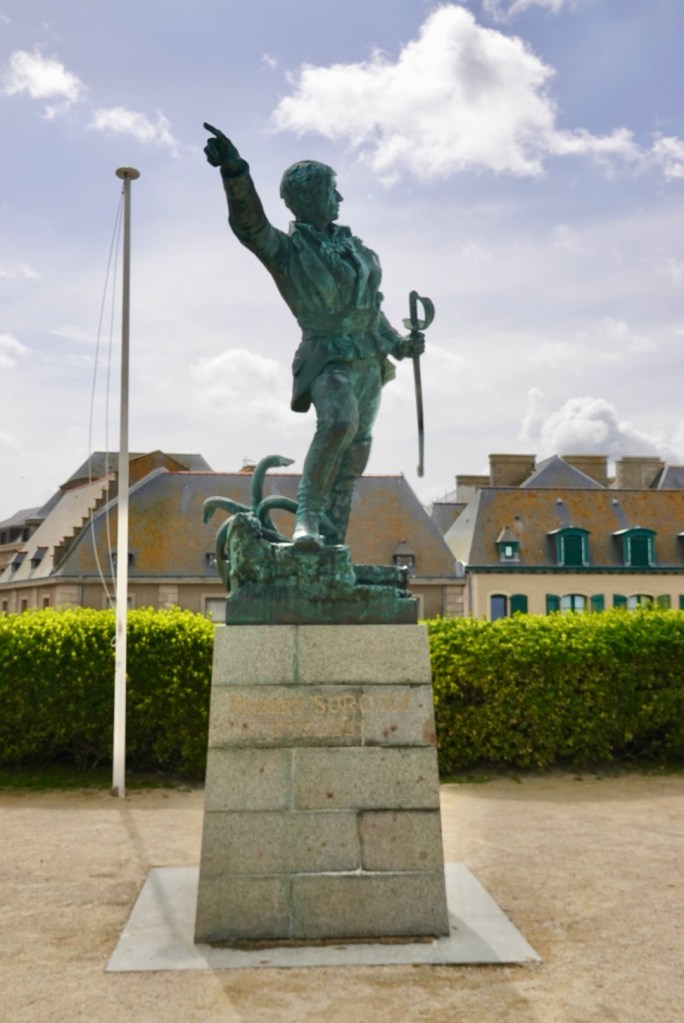
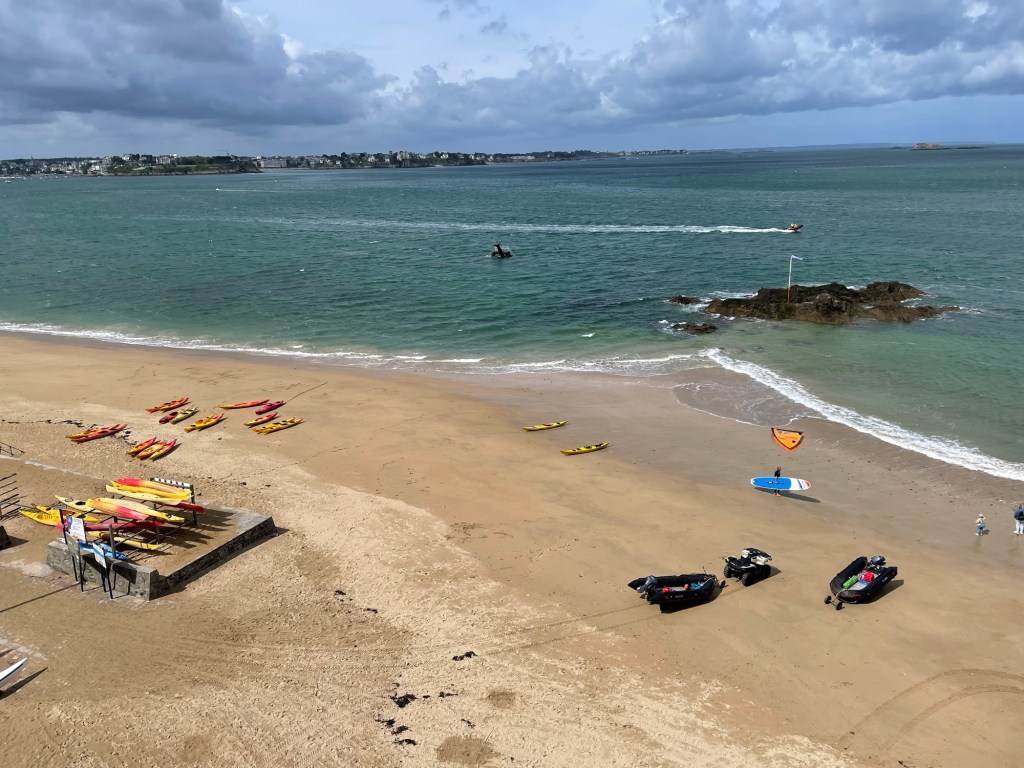
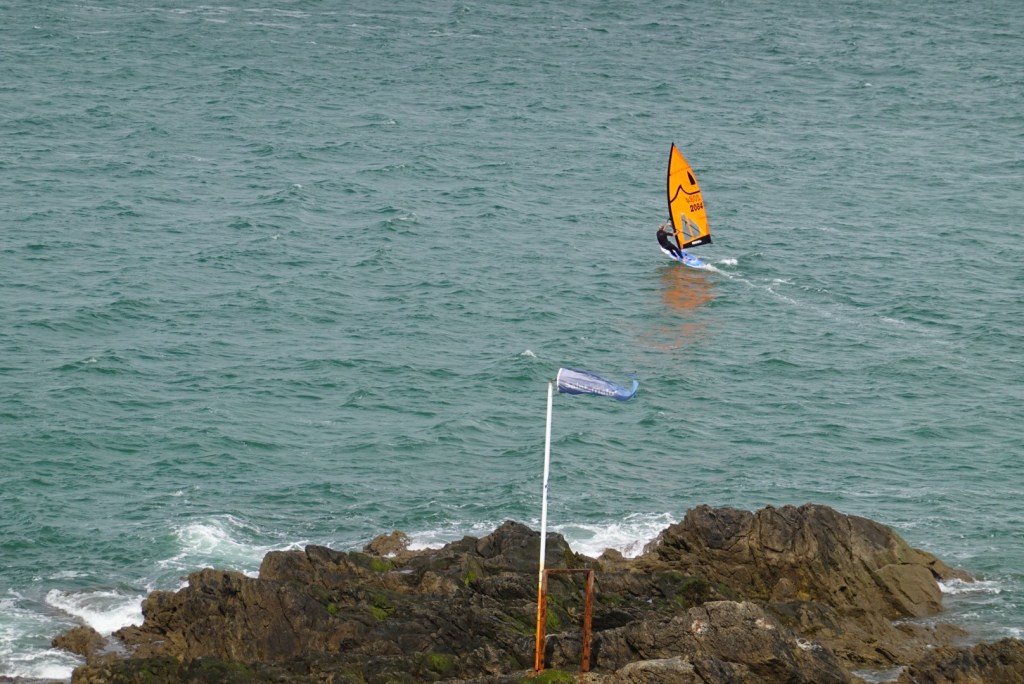
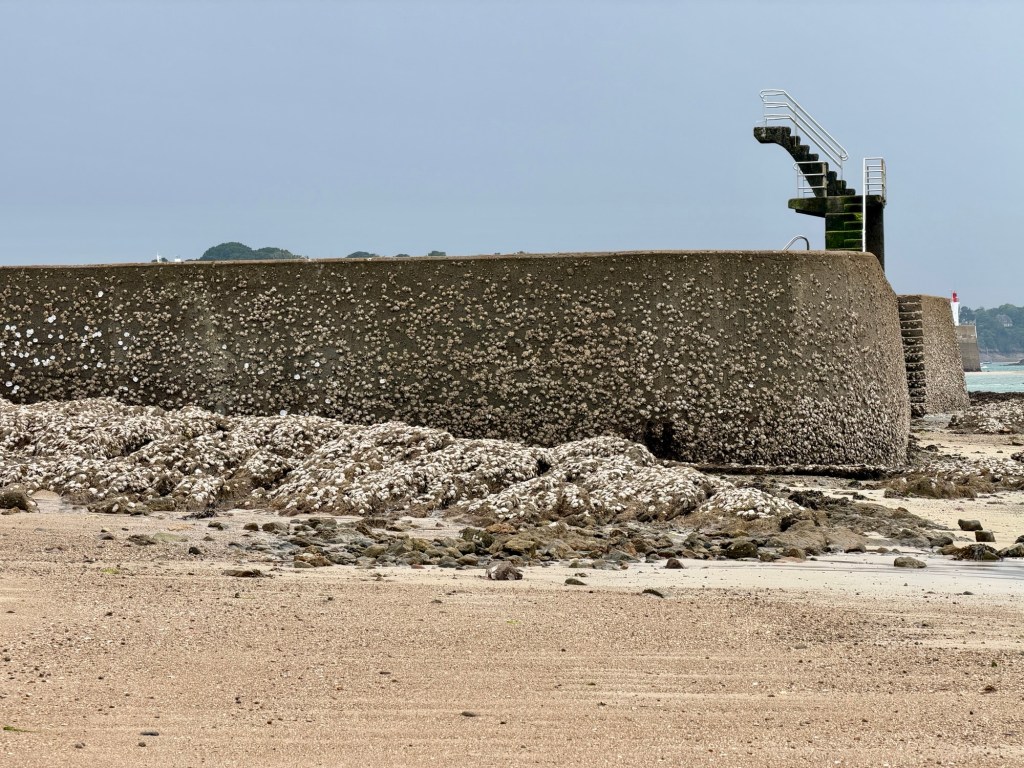
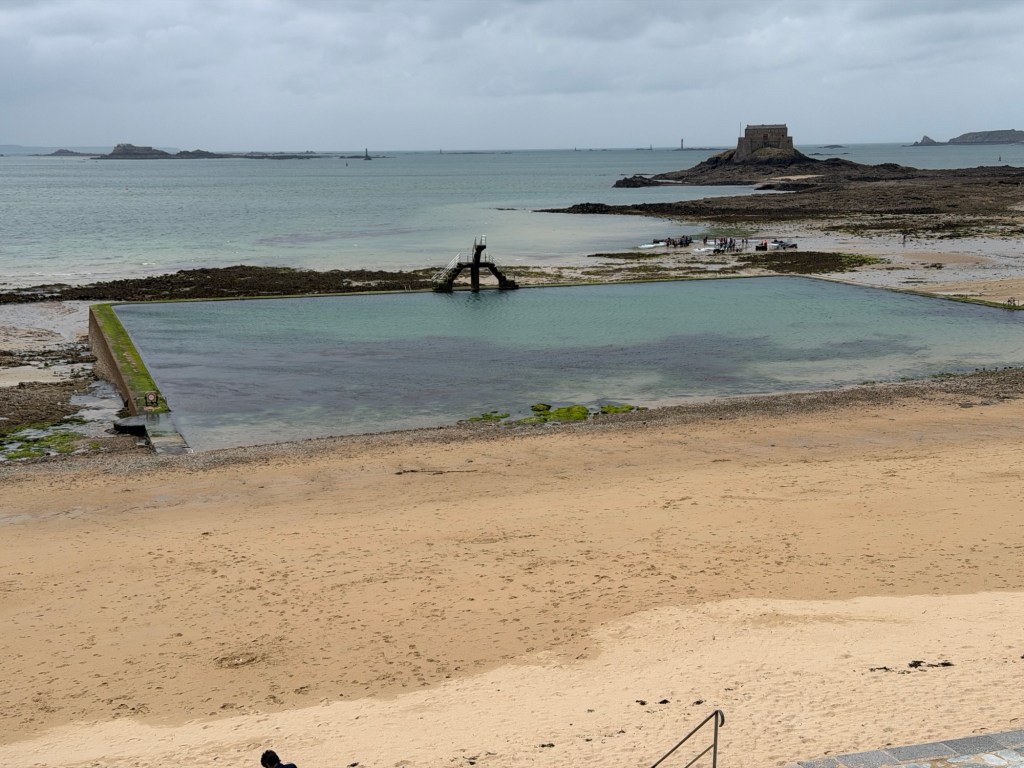
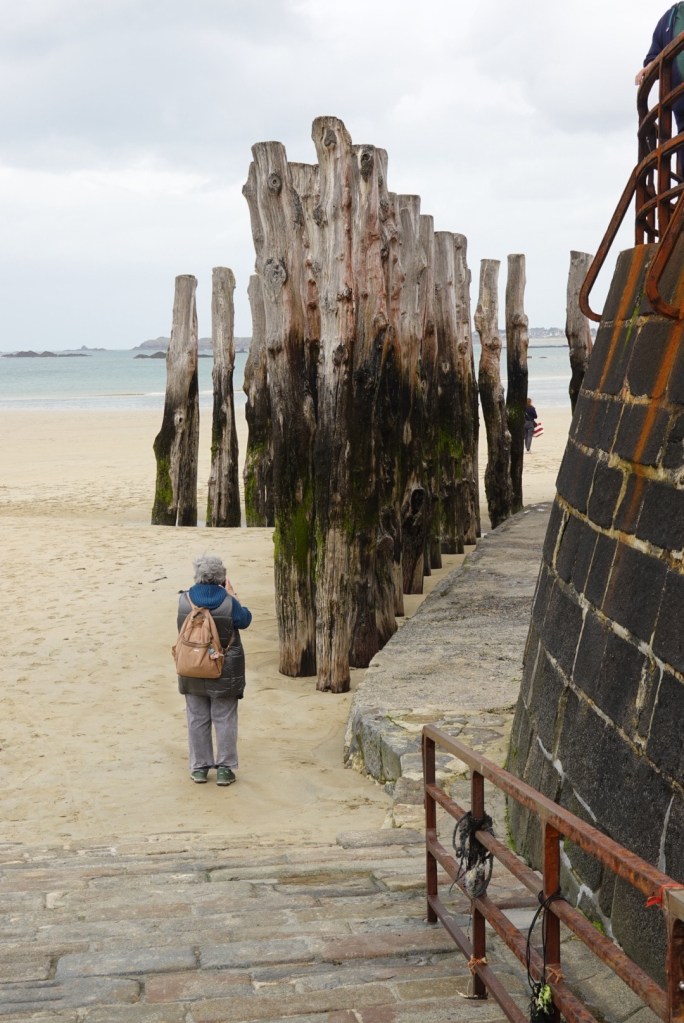
These are islands only at high tide.The islands look far away in this panorama. The wood pilings protect the walls from wave damage.This island has the grave of Chateaubriand, facing the sea.These tiny cars are used by people who have too many violations or are learning to drive; they have a maximum speed less than 70 mph.Marc was looking for humorous street signs for a virtual geocache. This one: street of the cat who dance.Portholes for weaponsSmall alcove that looks out on the seaHouse of QuebecRobert Surcouf, French privateer and slave trader, was born here in 1773. A diving board in the middle of the ocean?The tide is starting to go out. Judging by the sock, this wind-surfer is very strong.
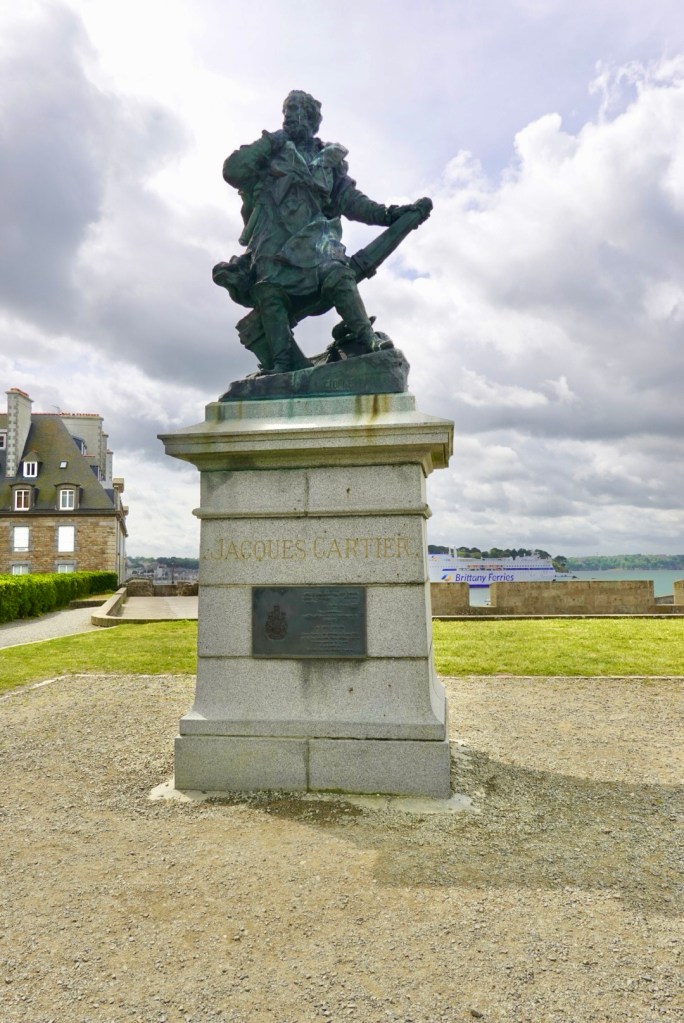
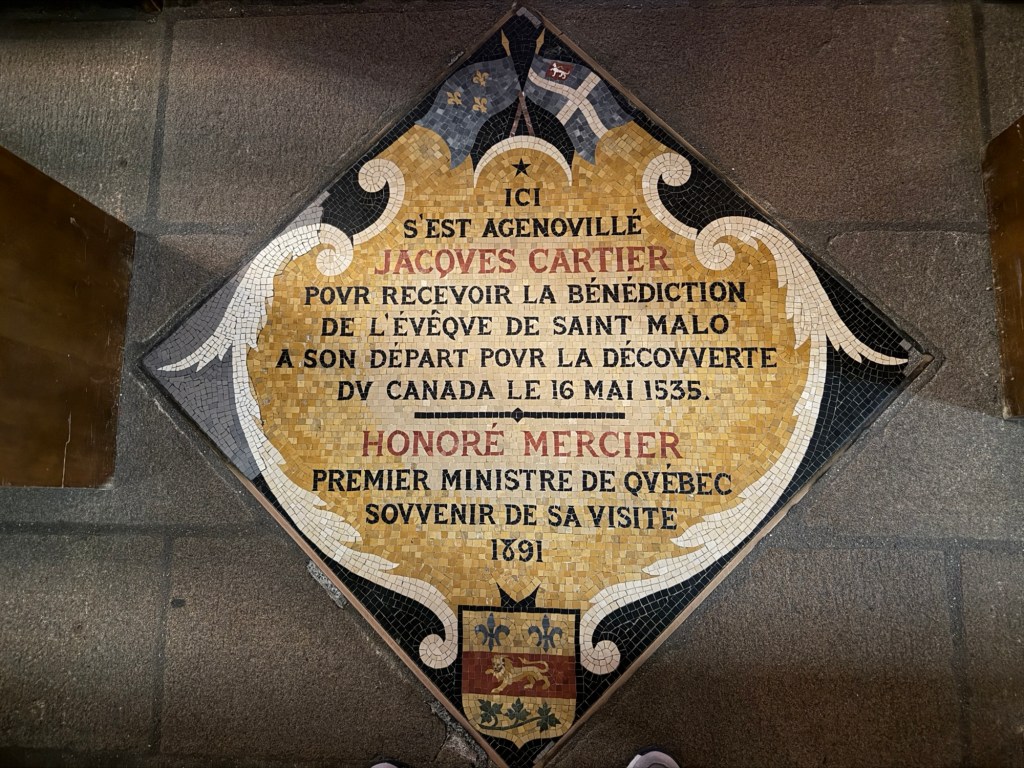
Jacques Cartier, whose statue is here, was an explorer known for being the first person to use the name Canada, our North American neighbor, “discovering” Quebec in the sixteenth century.
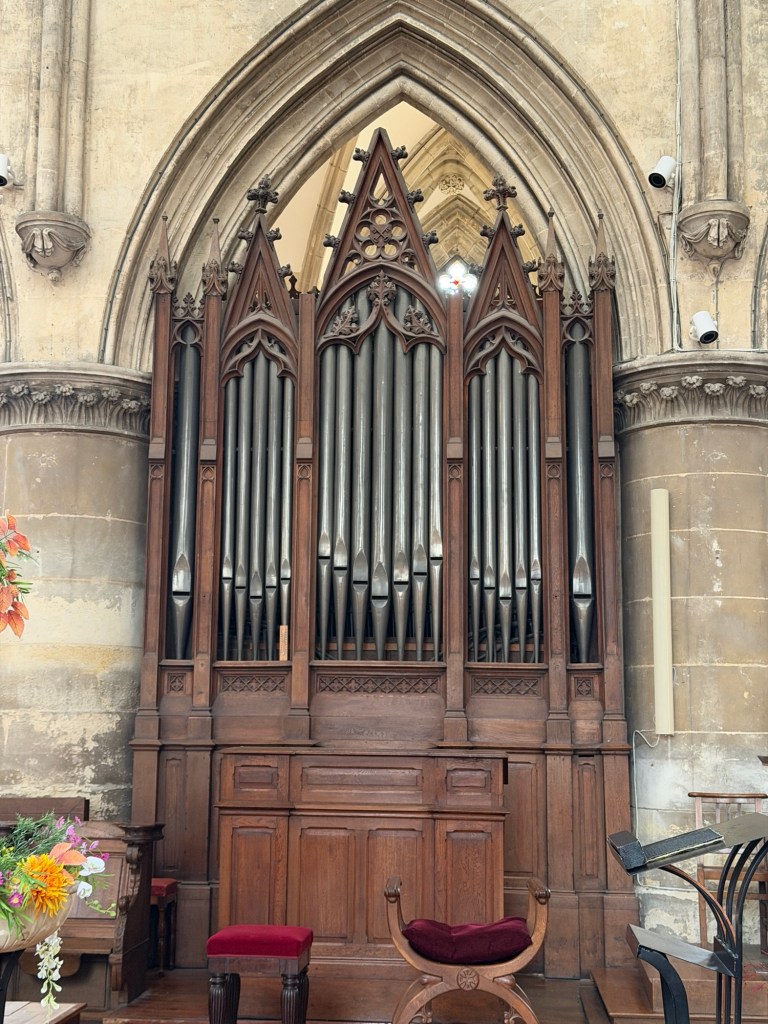
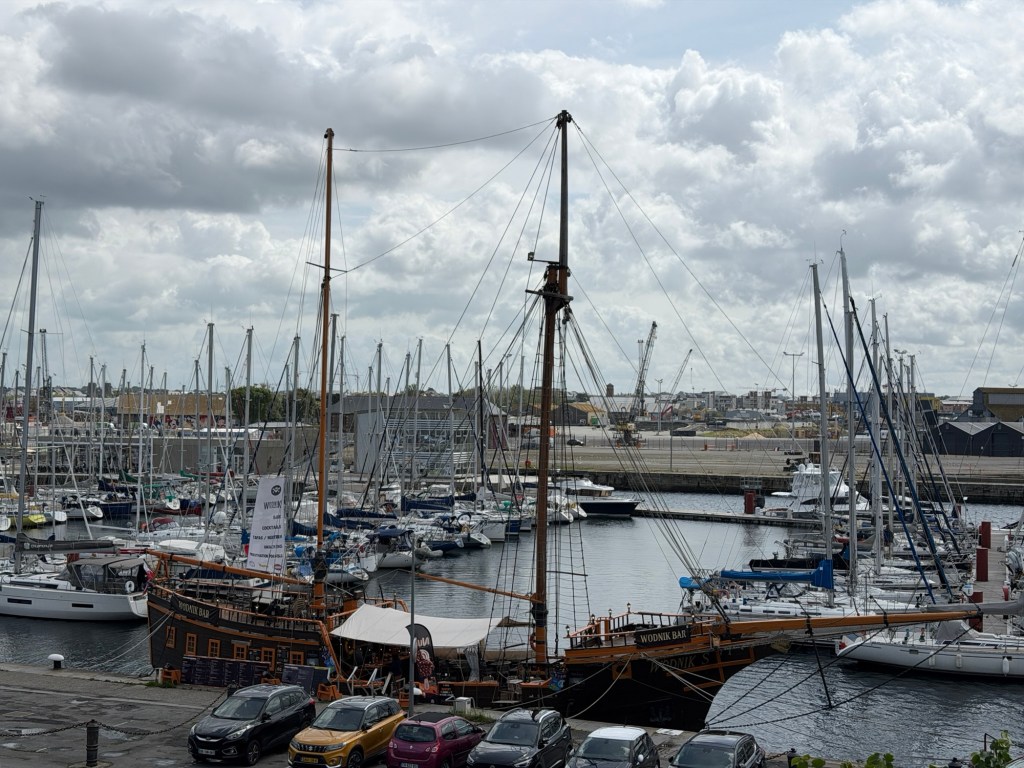
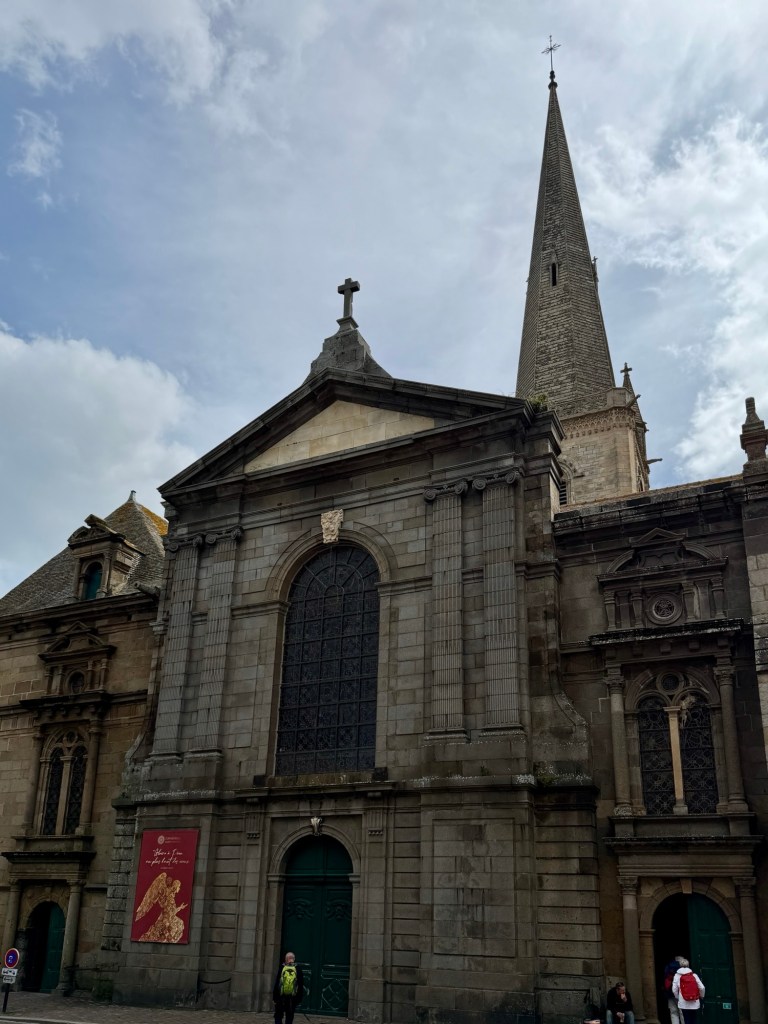
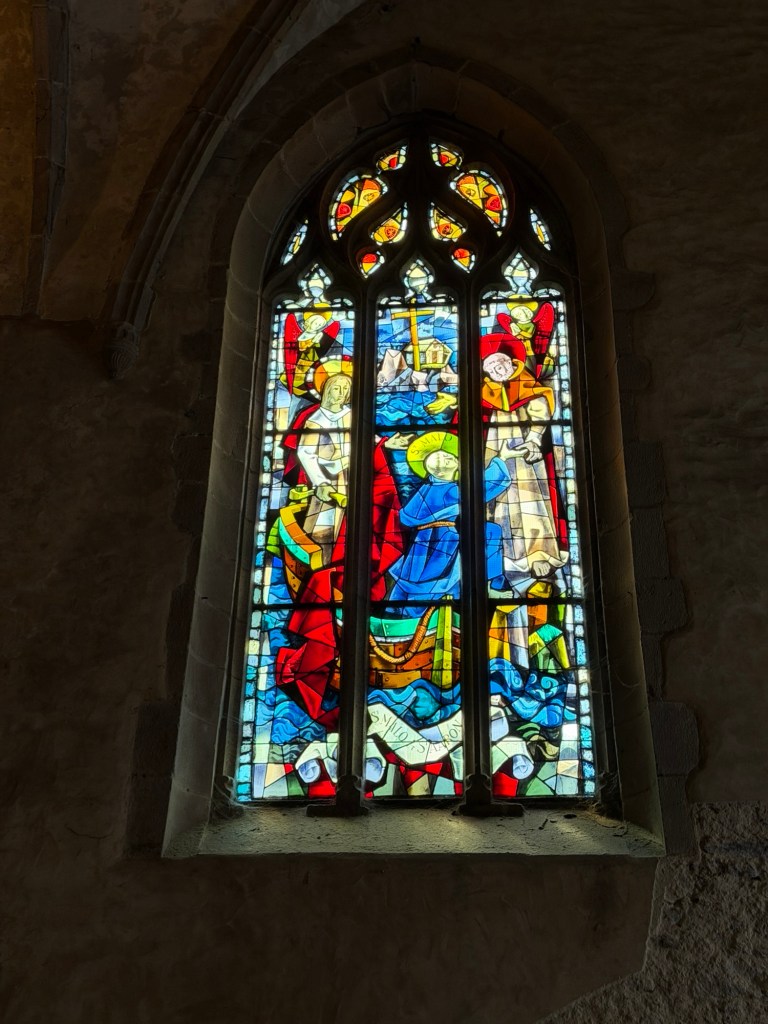
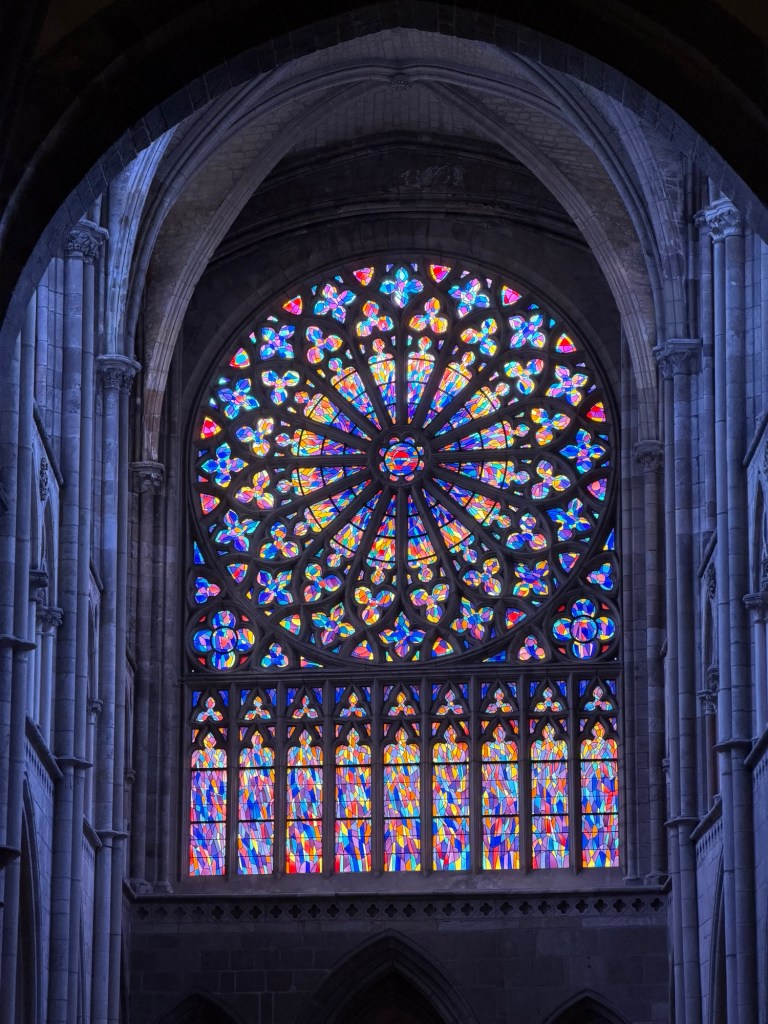
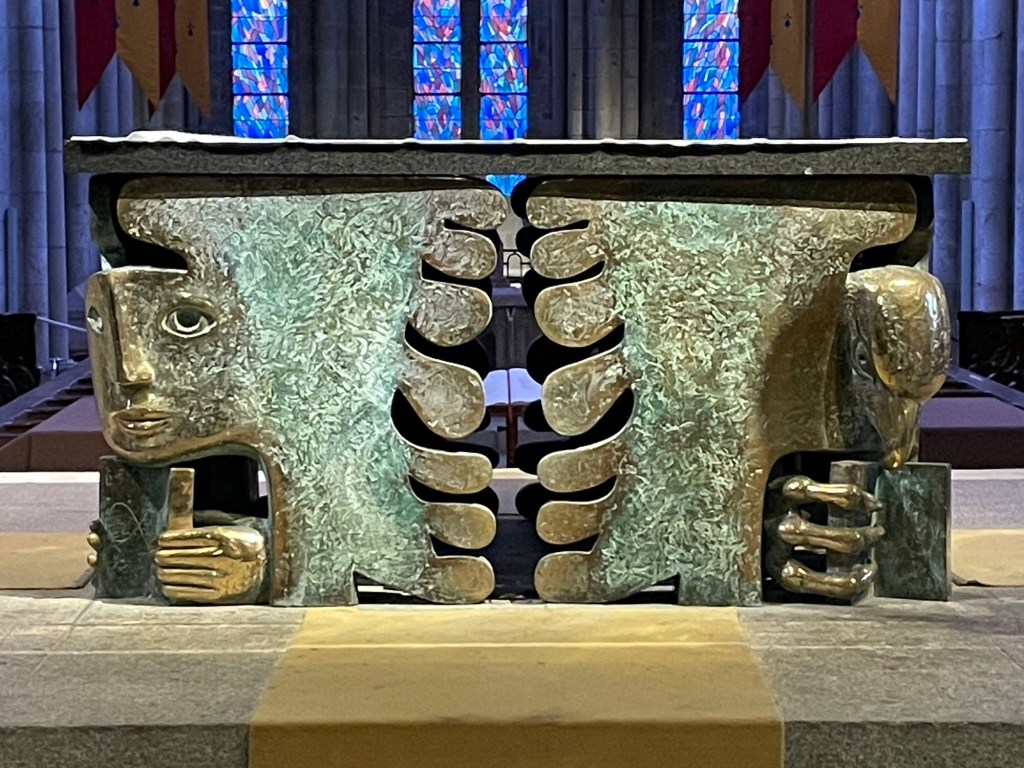
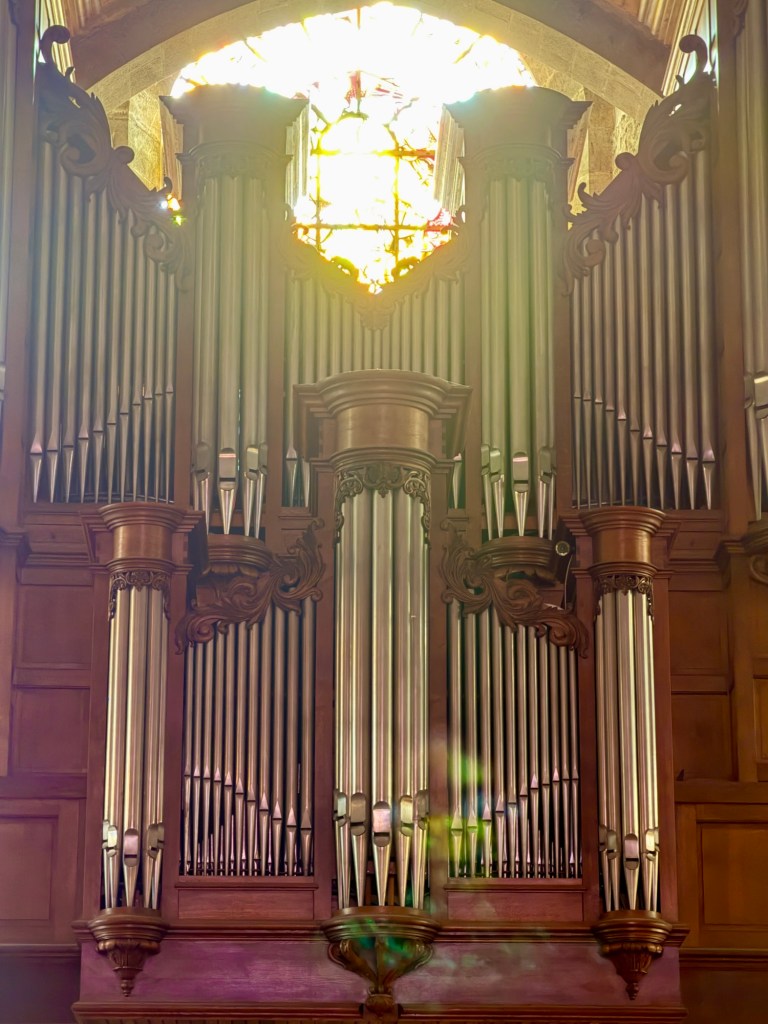
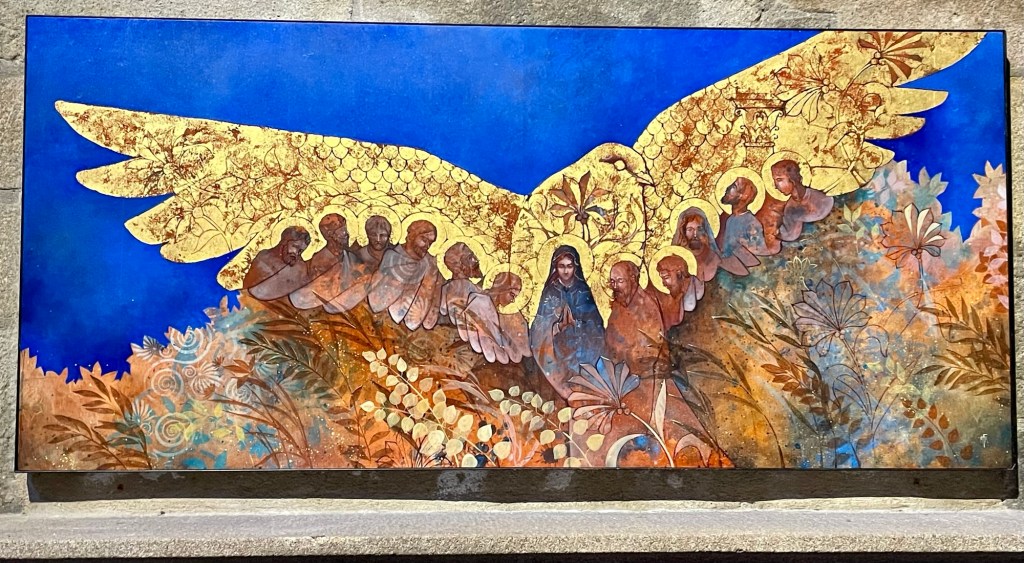
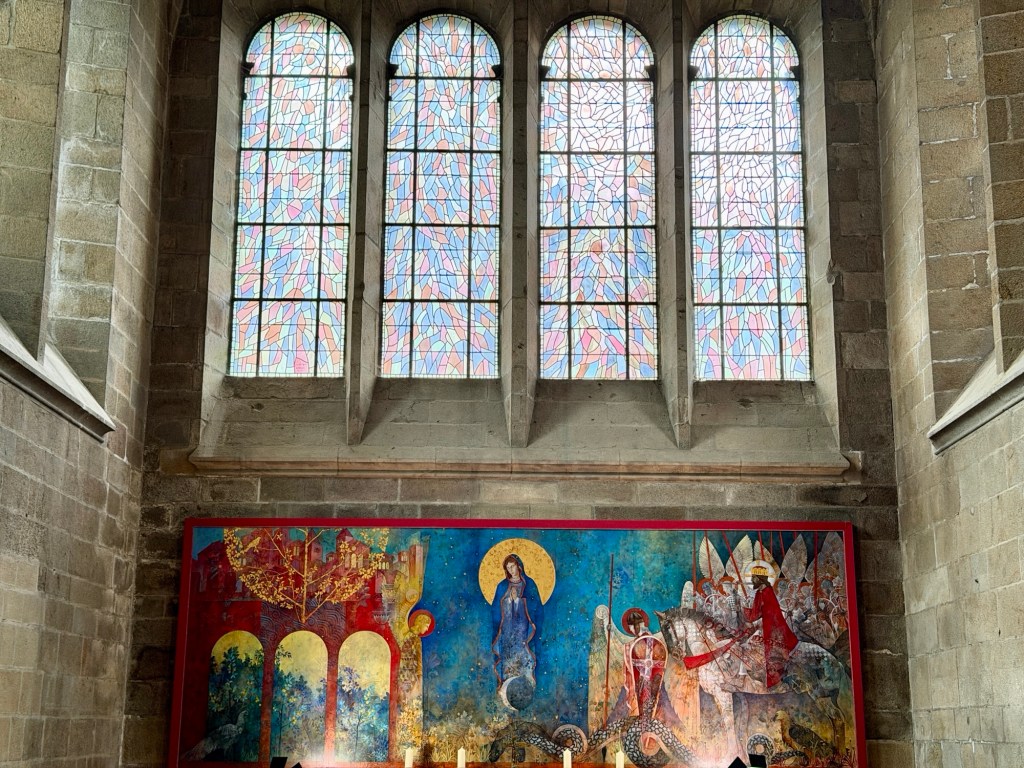
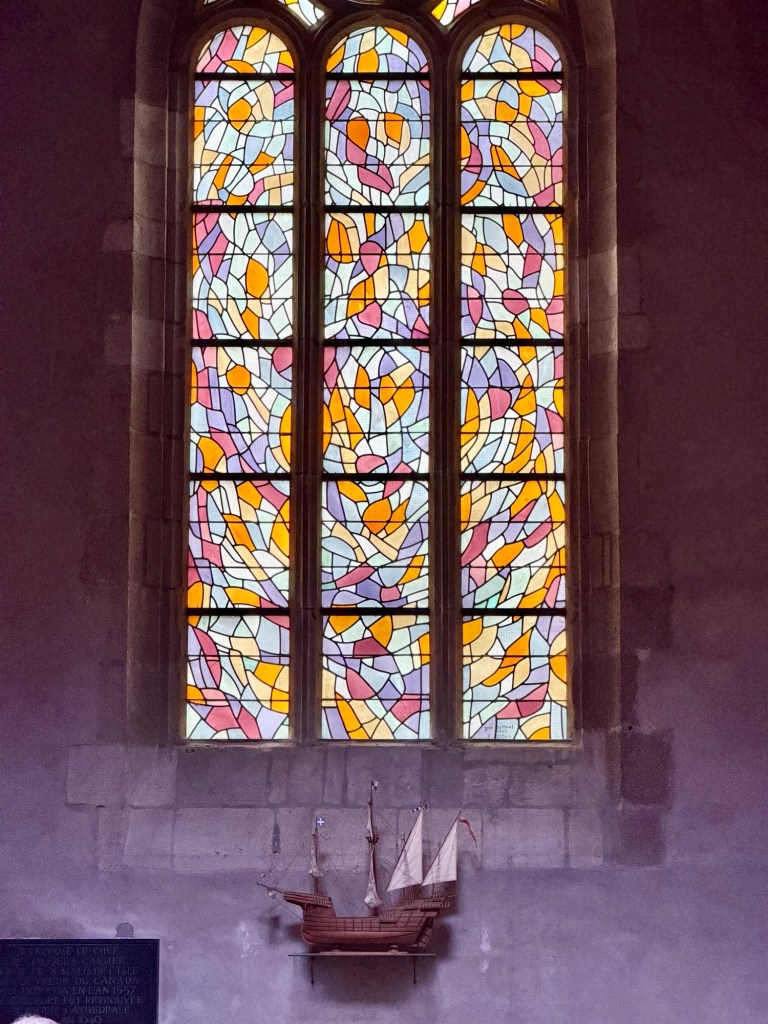
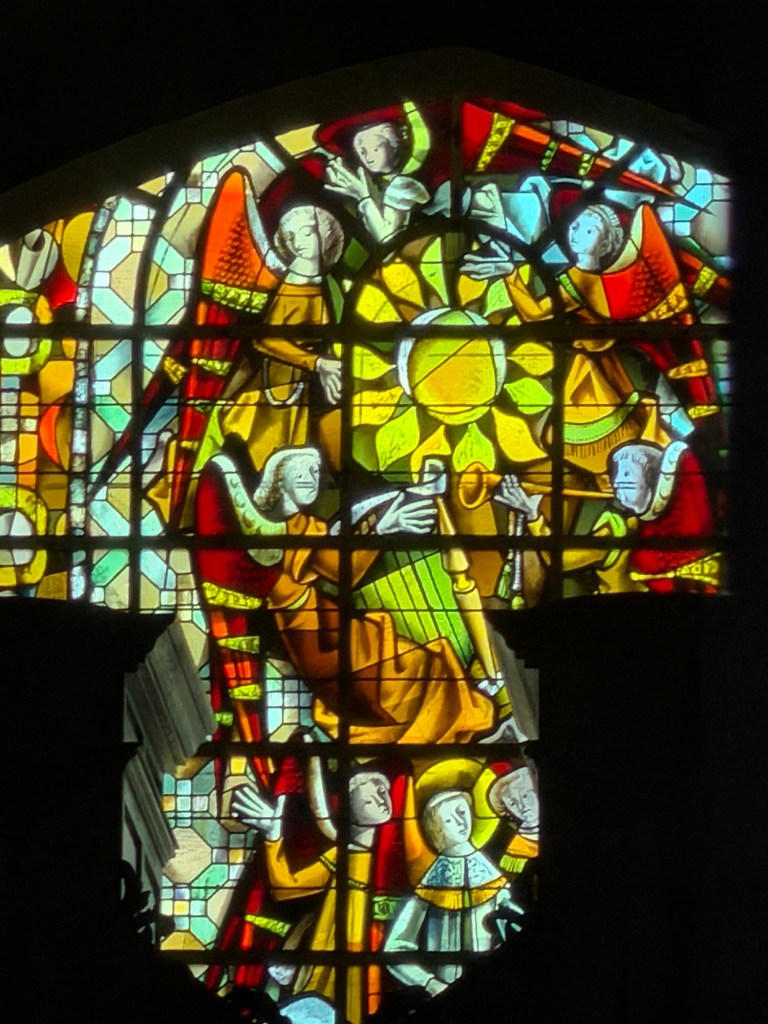
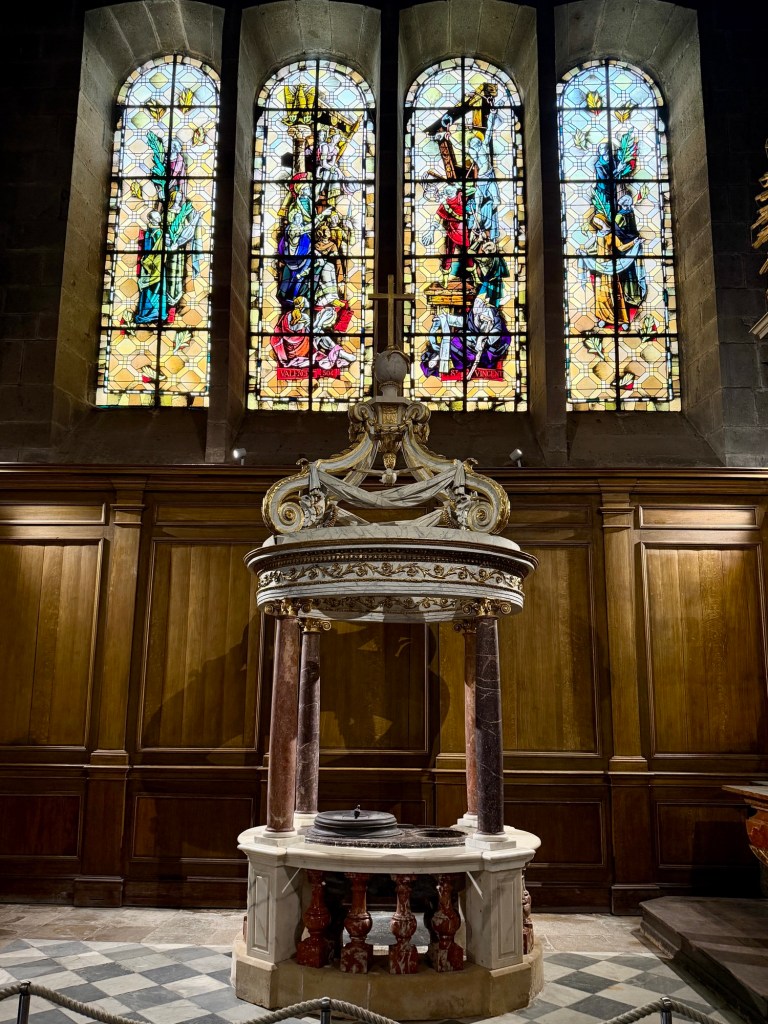
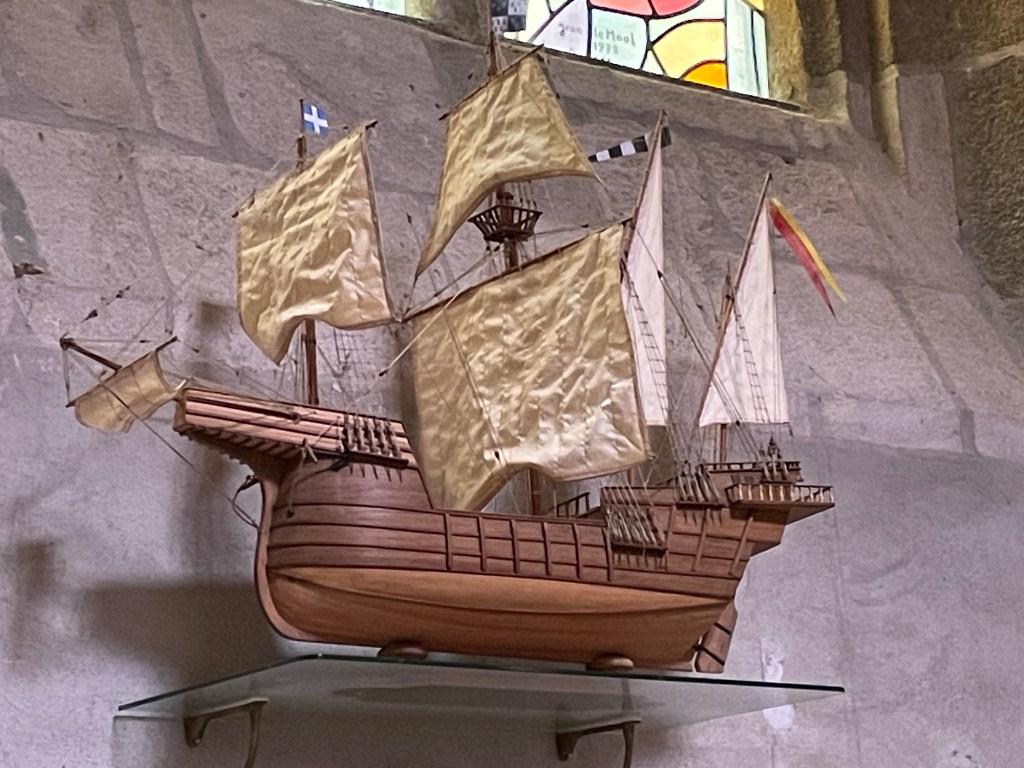
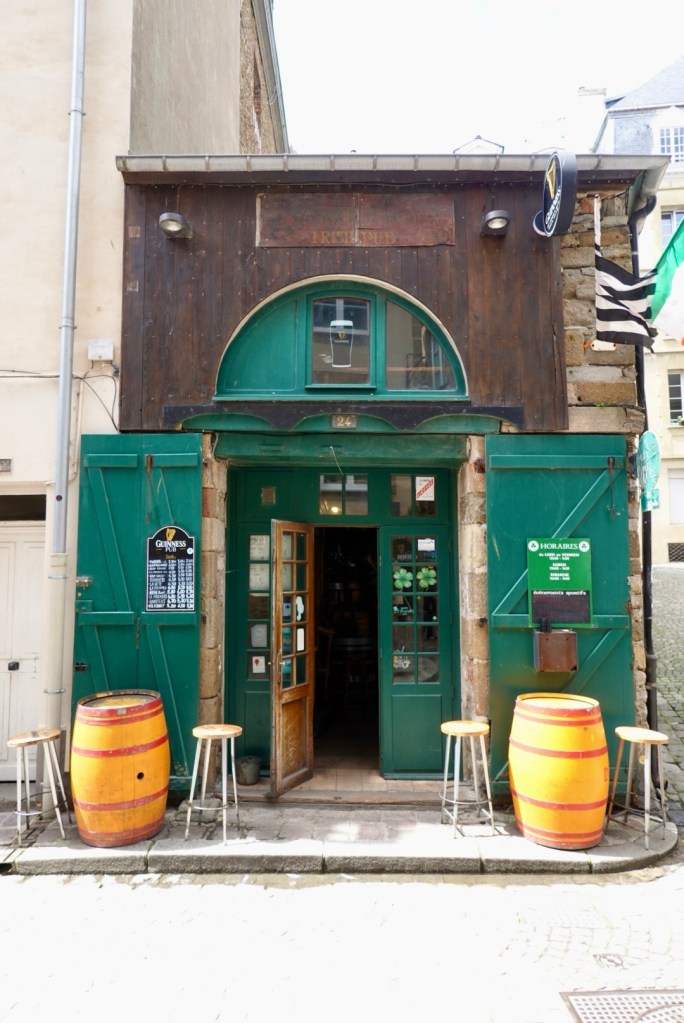
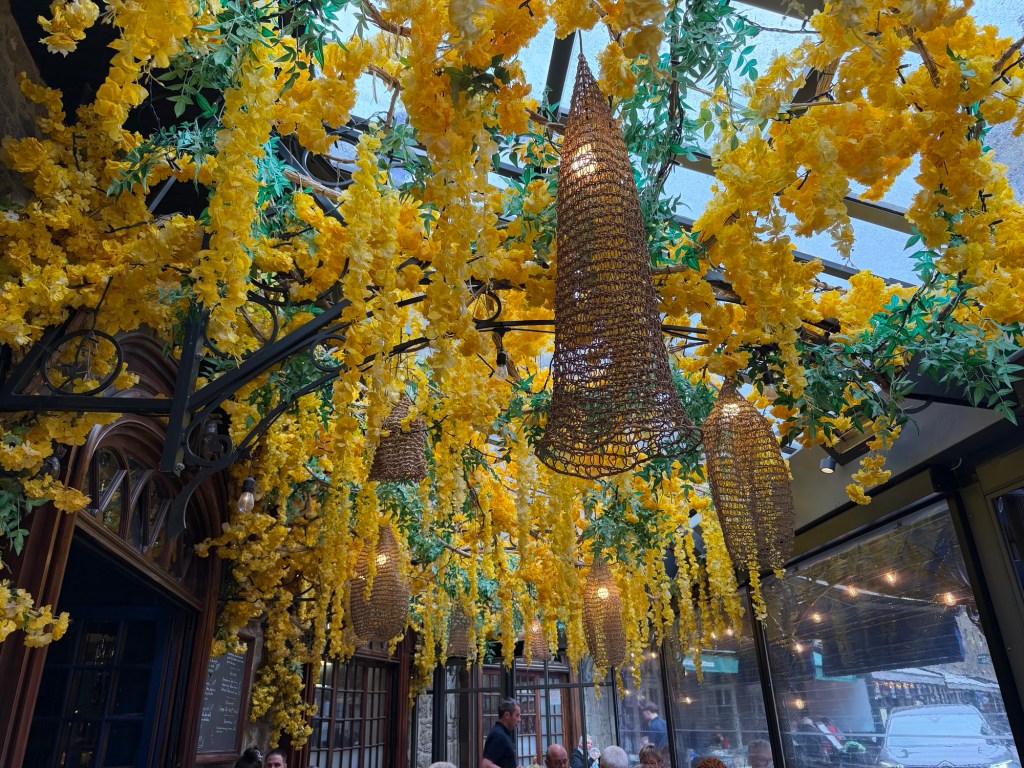
A gull looking to dump on Clare; ramparts and rowers; lots of boats in the harbor, including one serving as a bar.St. Vincent CathedralTh altar’s unusual artworkPipe organPainting, after Jesus died? Only 11 apostles and Mary. Fancy holy water!Another ship in a church. Fishermen must feel a need for prayers.Towers and lanterns; Joëlle and Clare looking at closed church at the highest point in the city.Bars, including an Irish pubPlastic flowers hung over our lunch table.
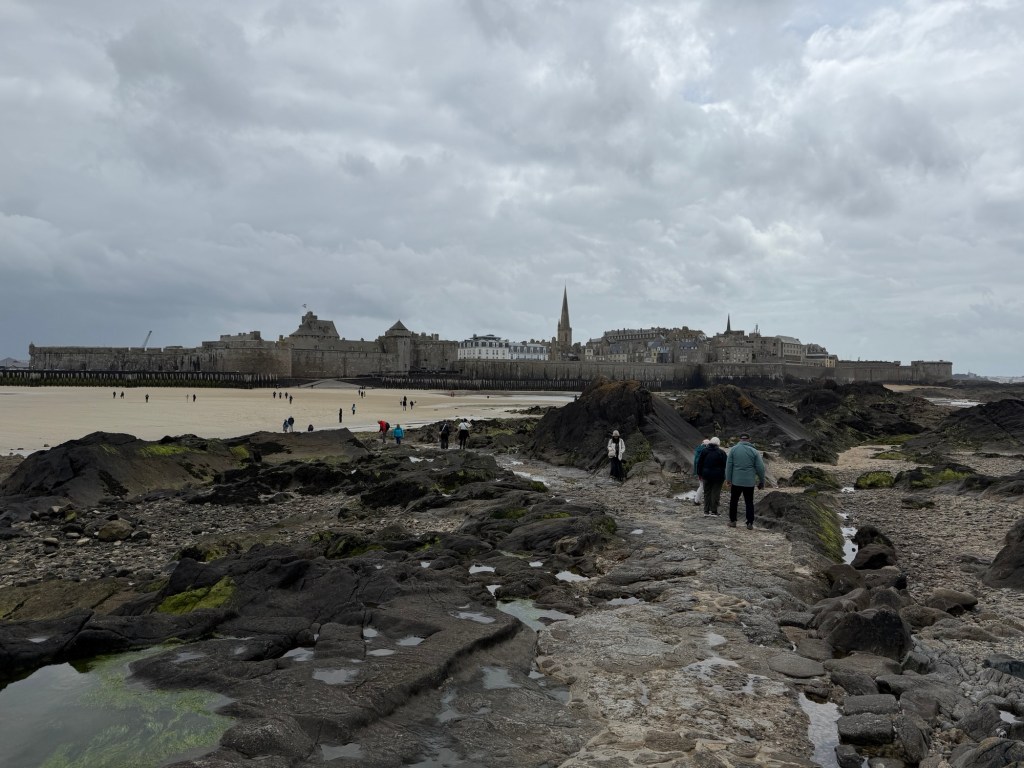
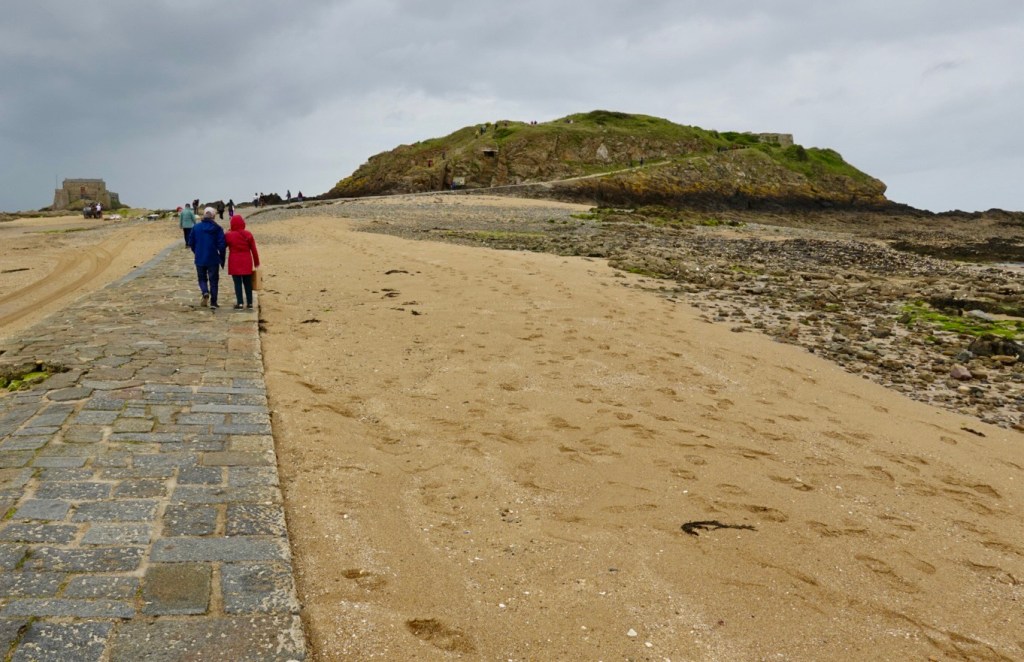
After lunch, we walked out to the rocks that were no longer islands!
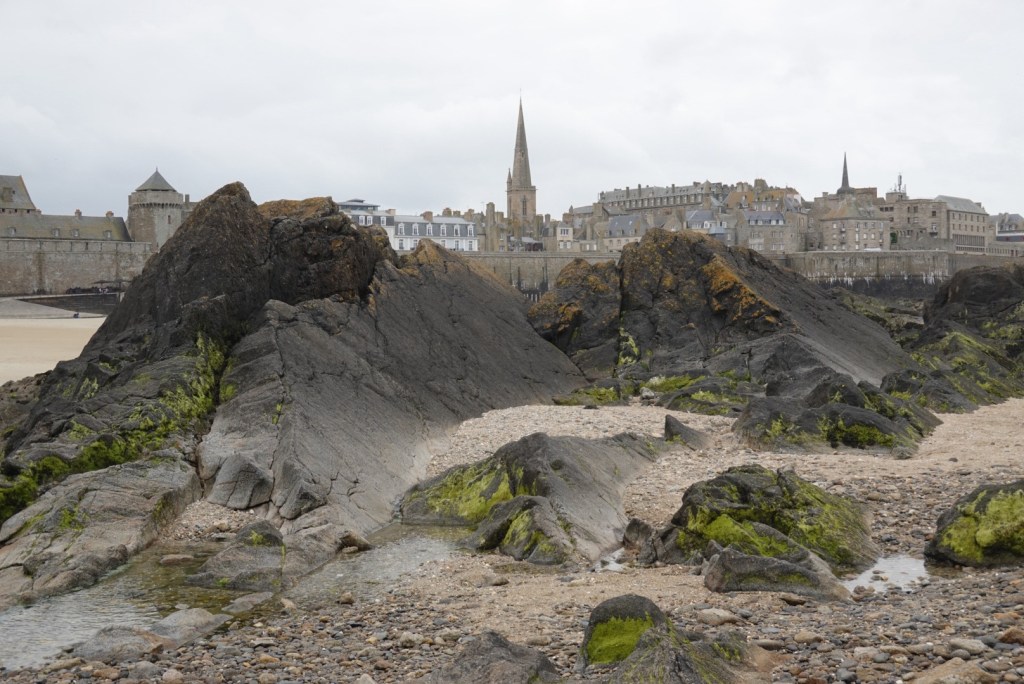
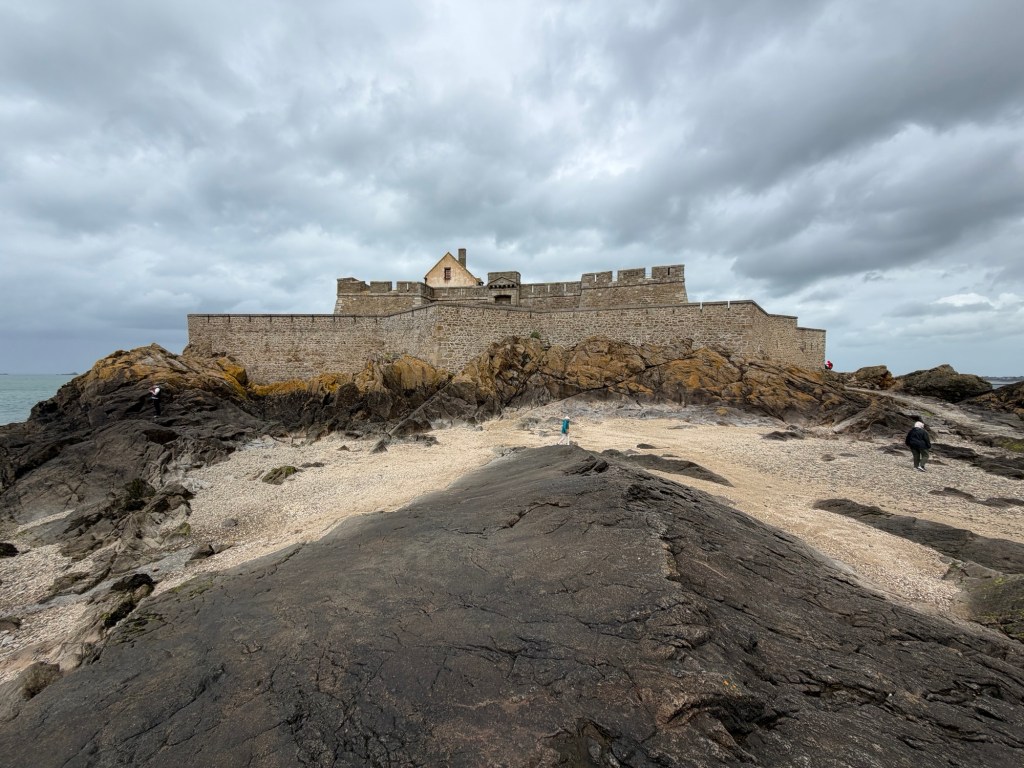
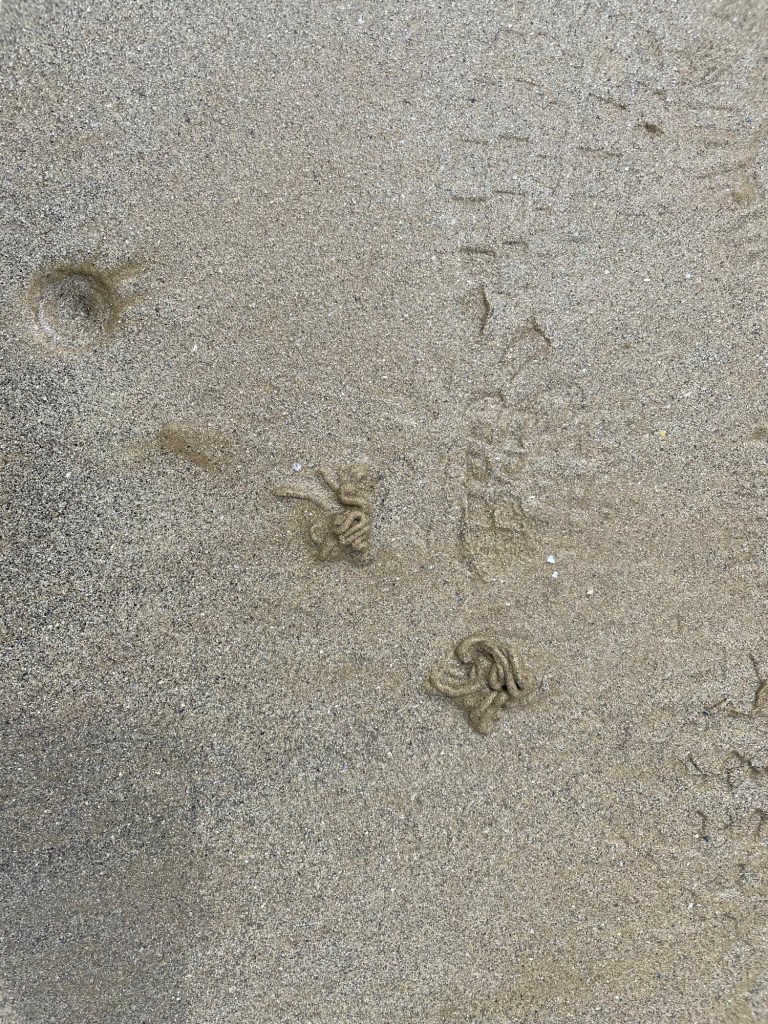
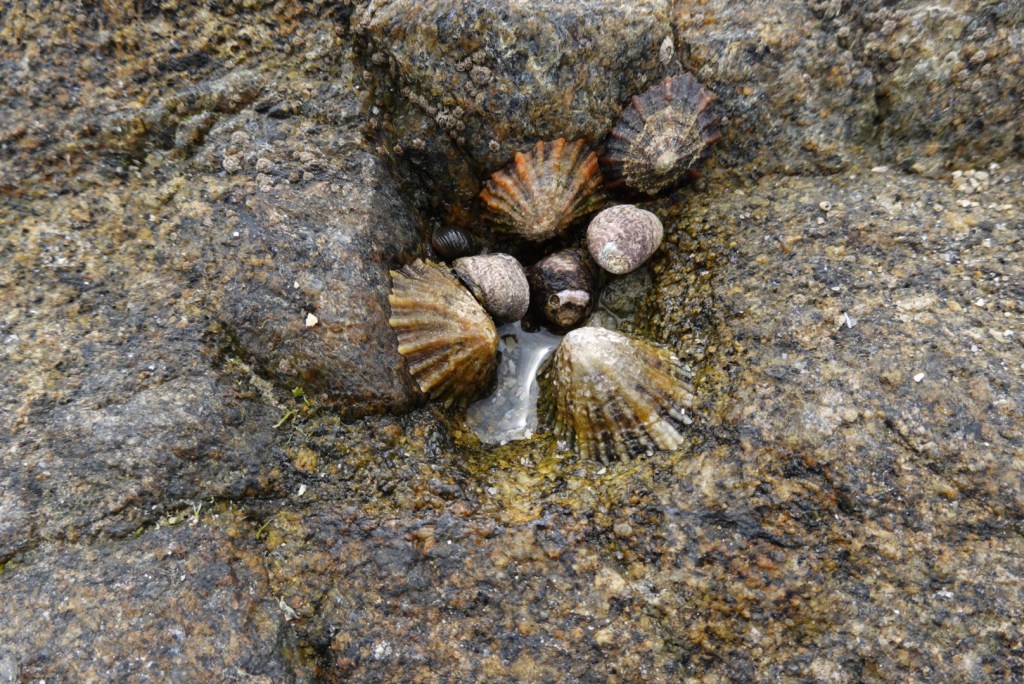
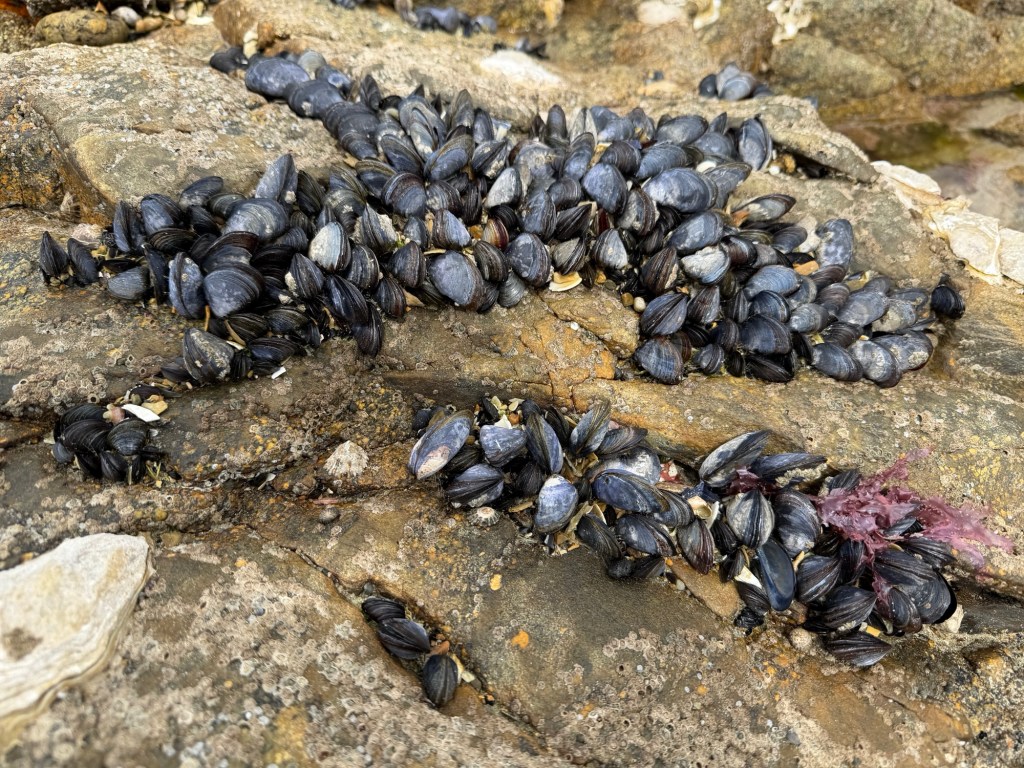
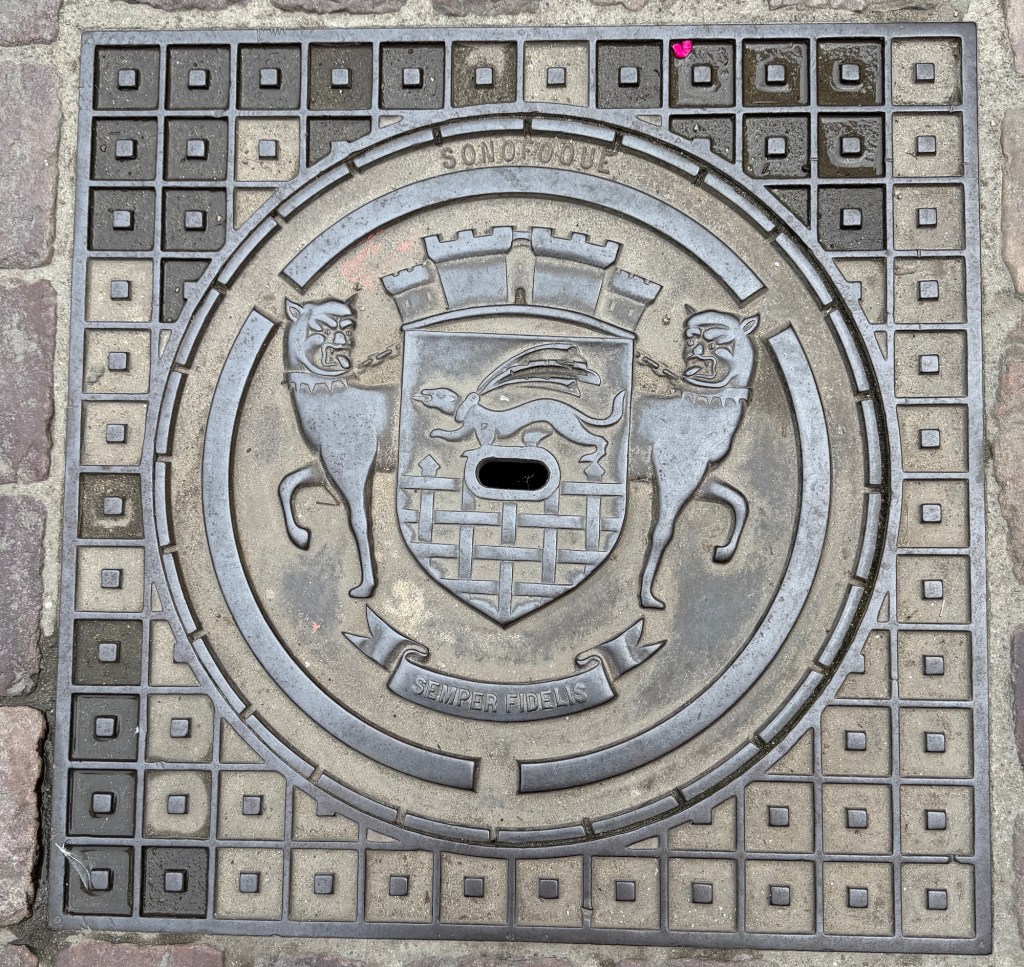
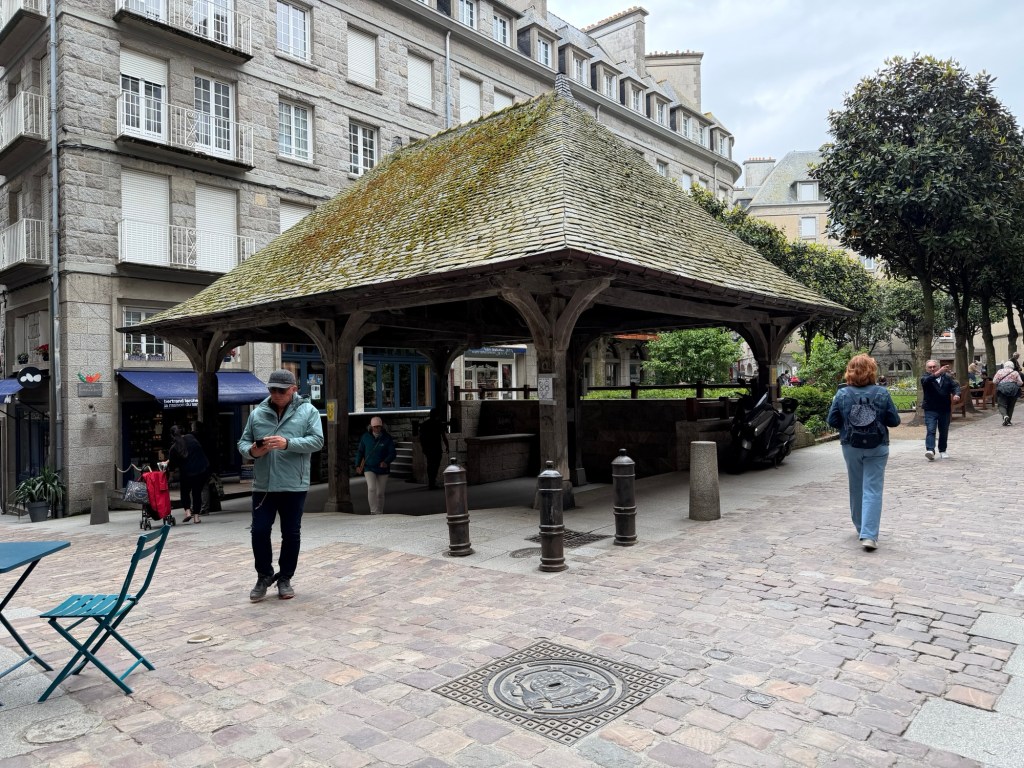
Bedrock, sand and a view of the walled cityDeposits made by sand worms.Cluster of shellsMusselsOn the walk to the cross marking Chateaubriand’s graveAh! An explanation of the diving board. This beach-side swimming pool is exposed at low tide, as well as the wood pilings.Manhole cover and tour marker, unusual wood building (Marc looking for a geocache), and pretty flower beds.
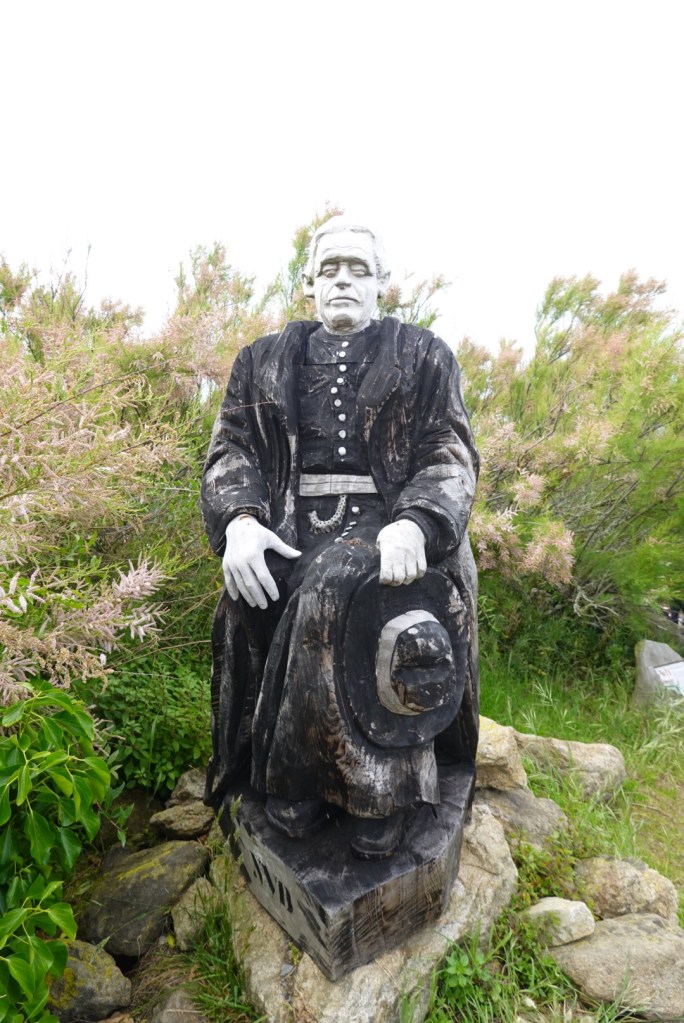
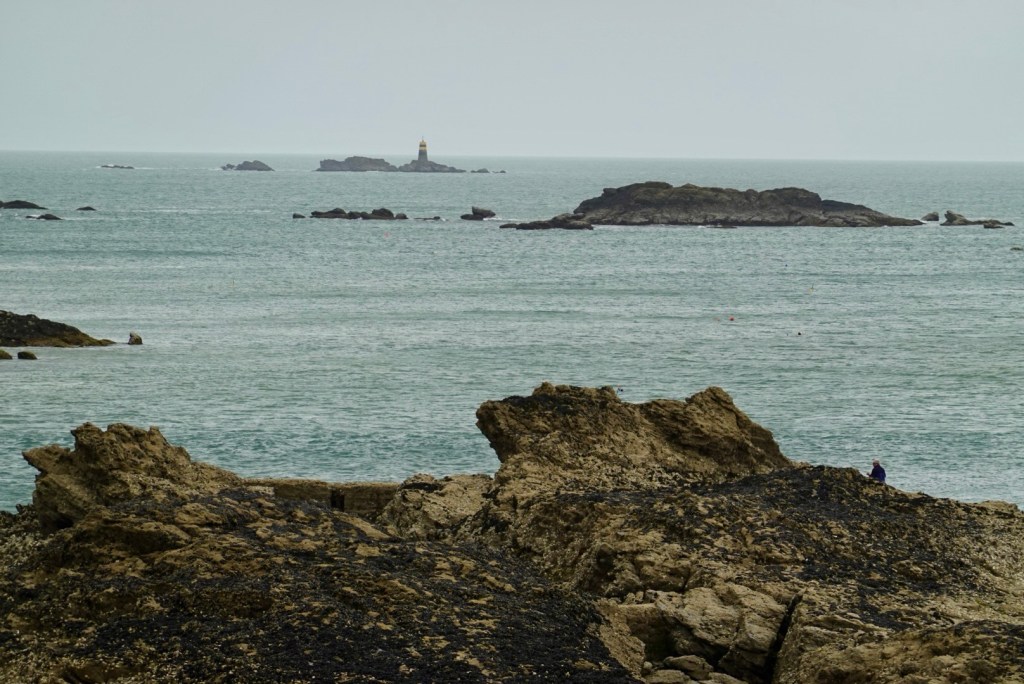
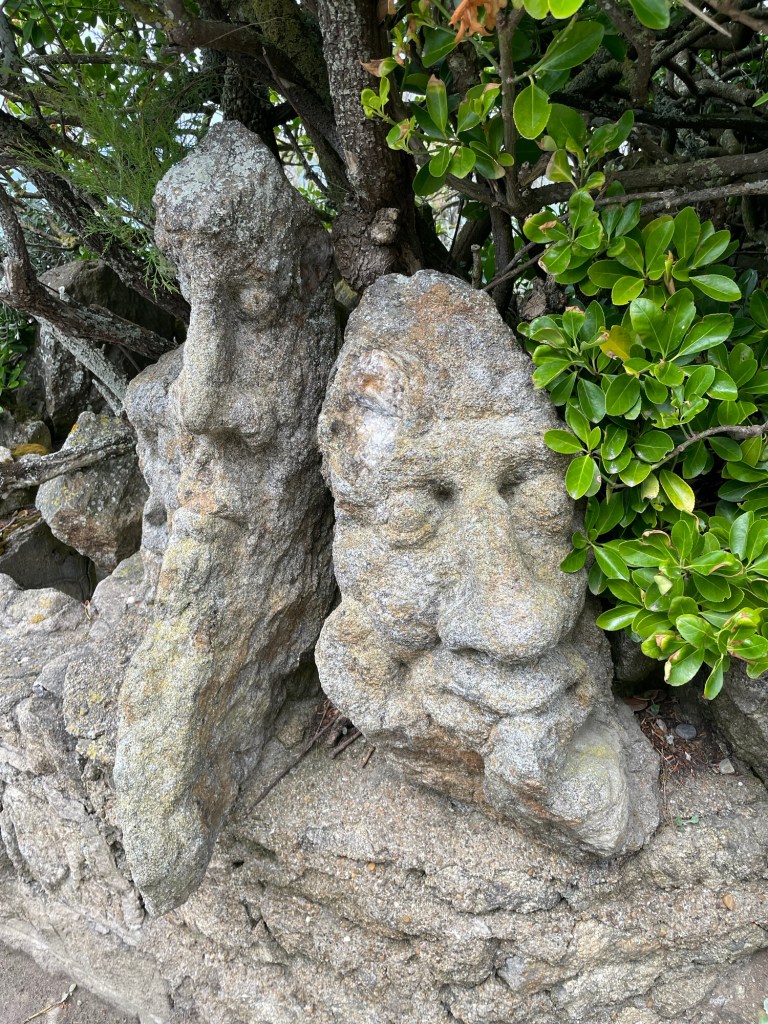
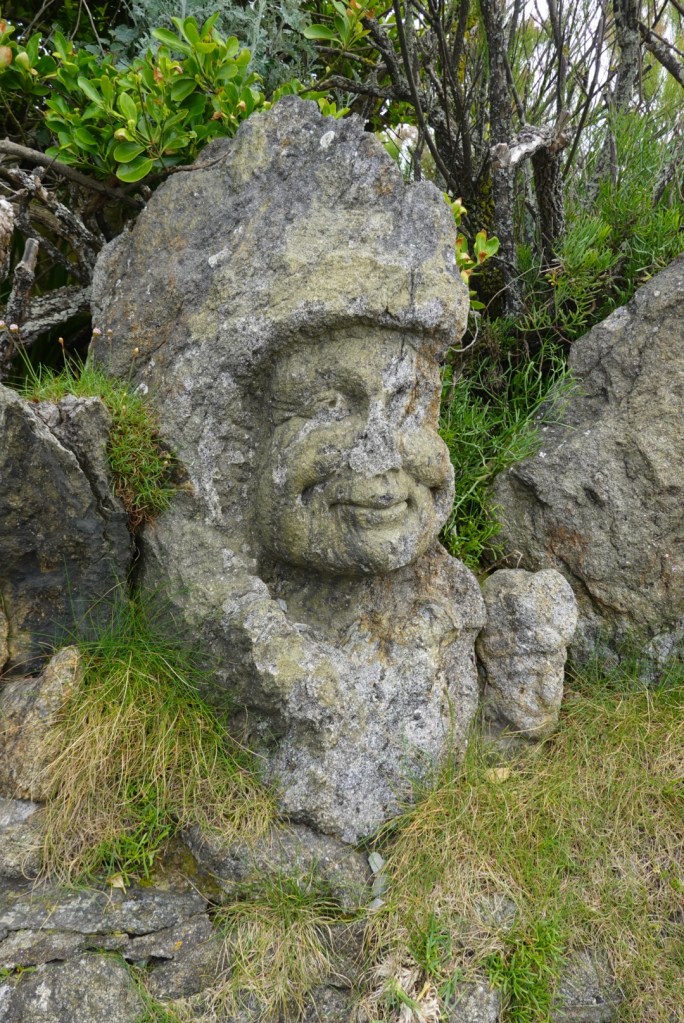
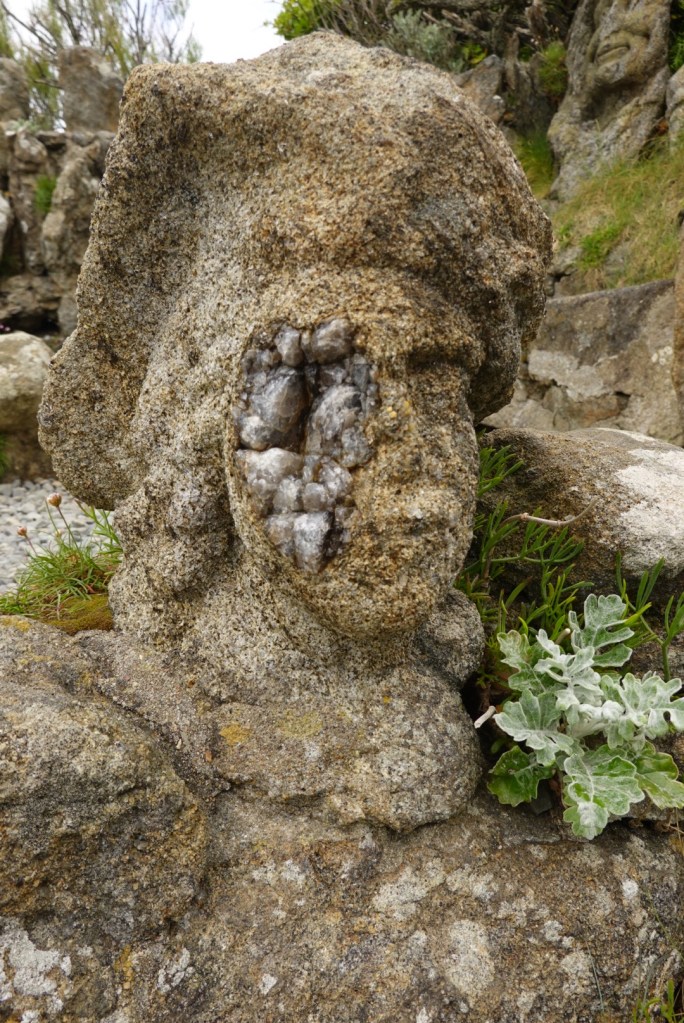
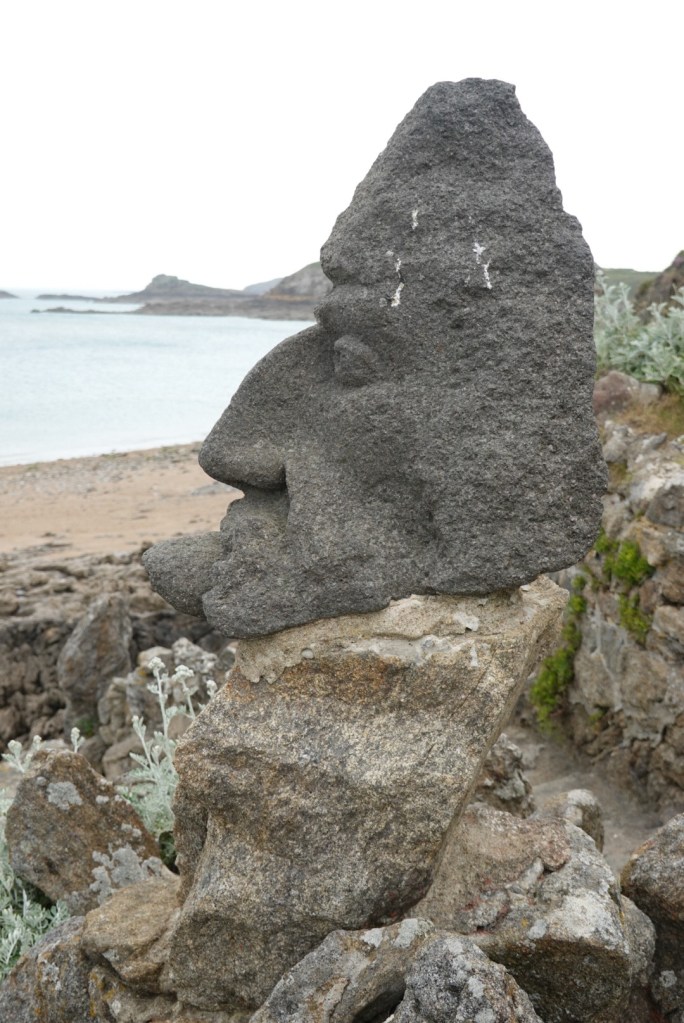
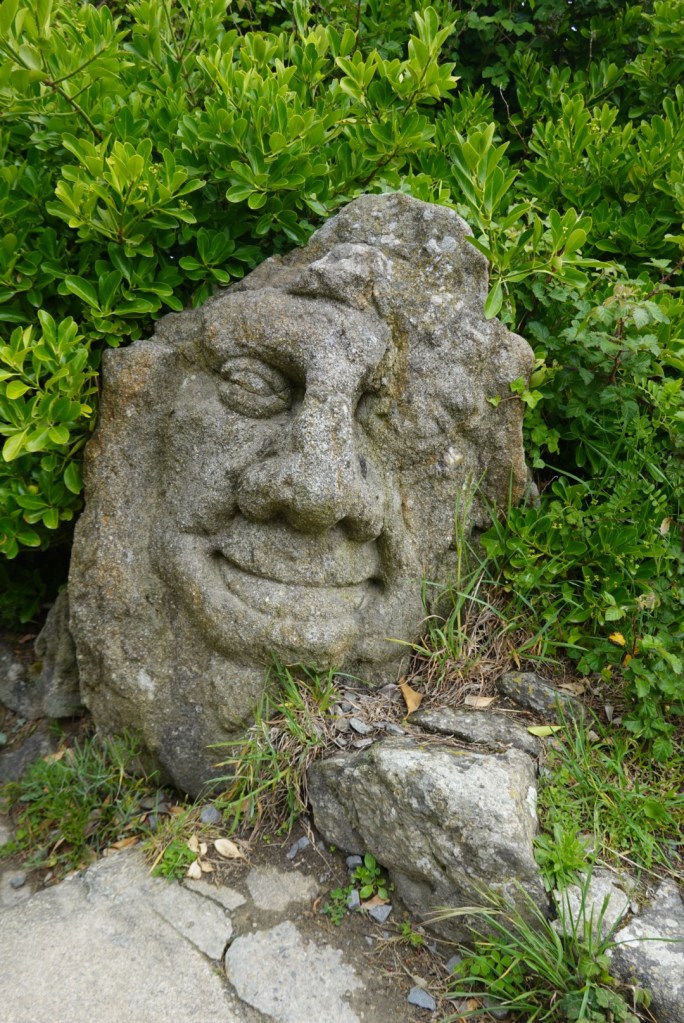
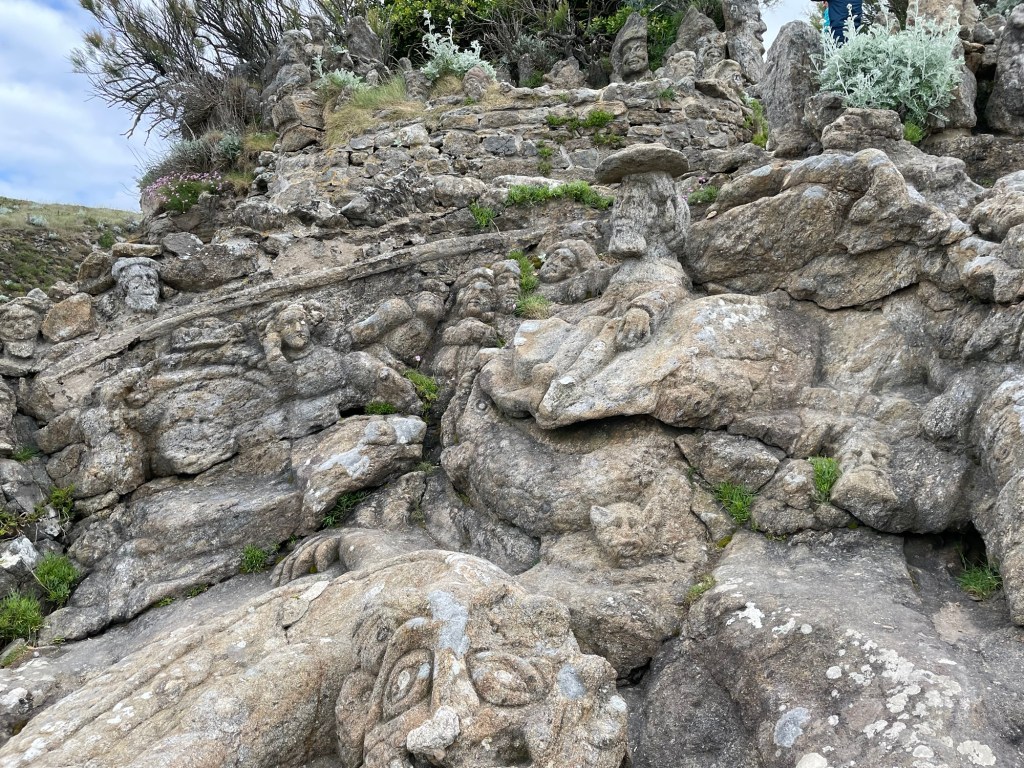
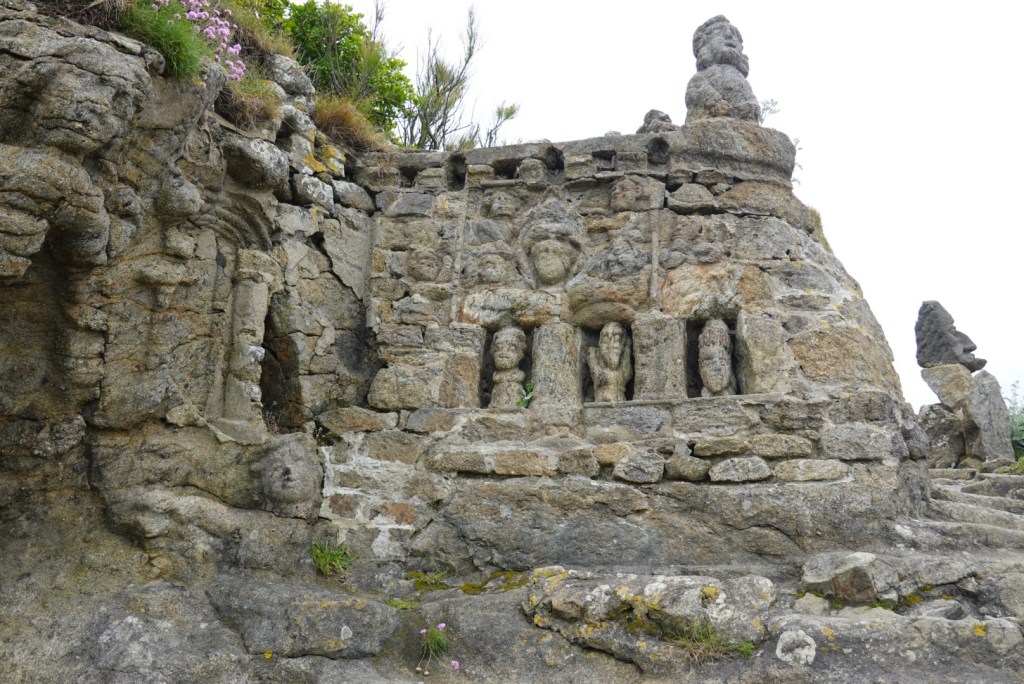
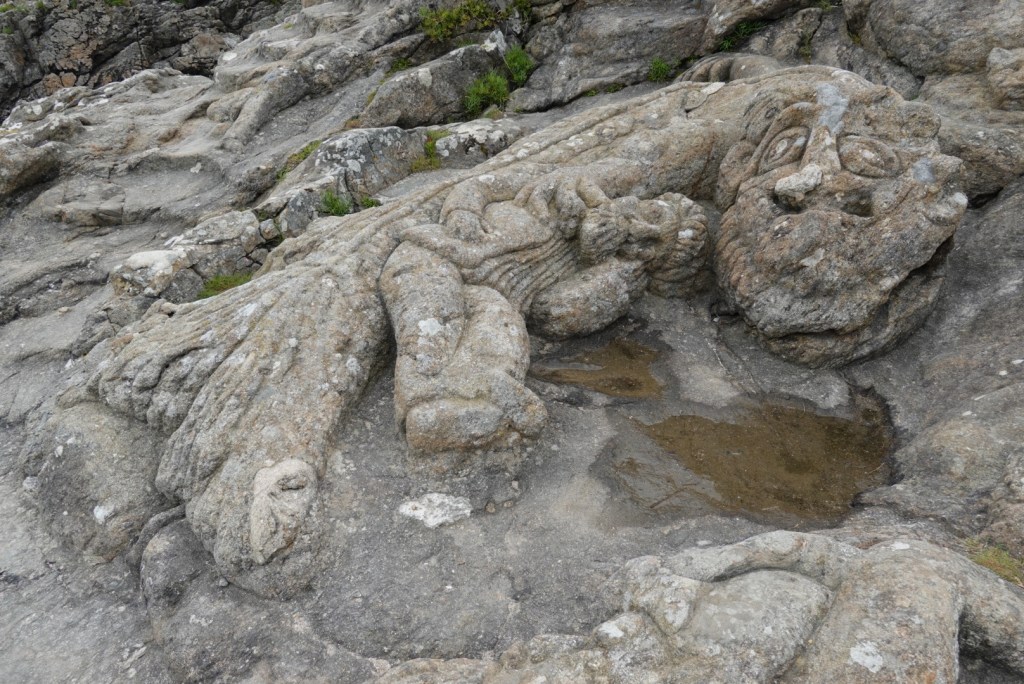
Later, a few kilometers away, we found an obscure outdoor museum, Rock Sculptures of Abbe Foure, filled with statues carved out of the bedrock near the shoreline. The artist, Foure, had a paralyzing stroke at age 30, then retreated to this area, the Cliffs of Rotheneuf, to make his statues.
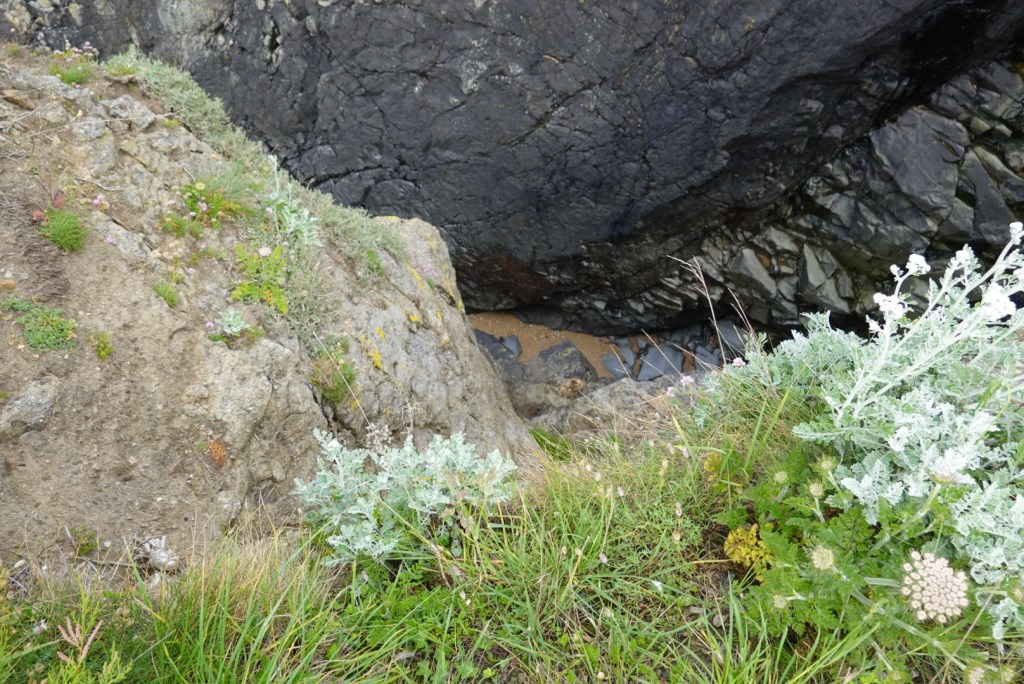
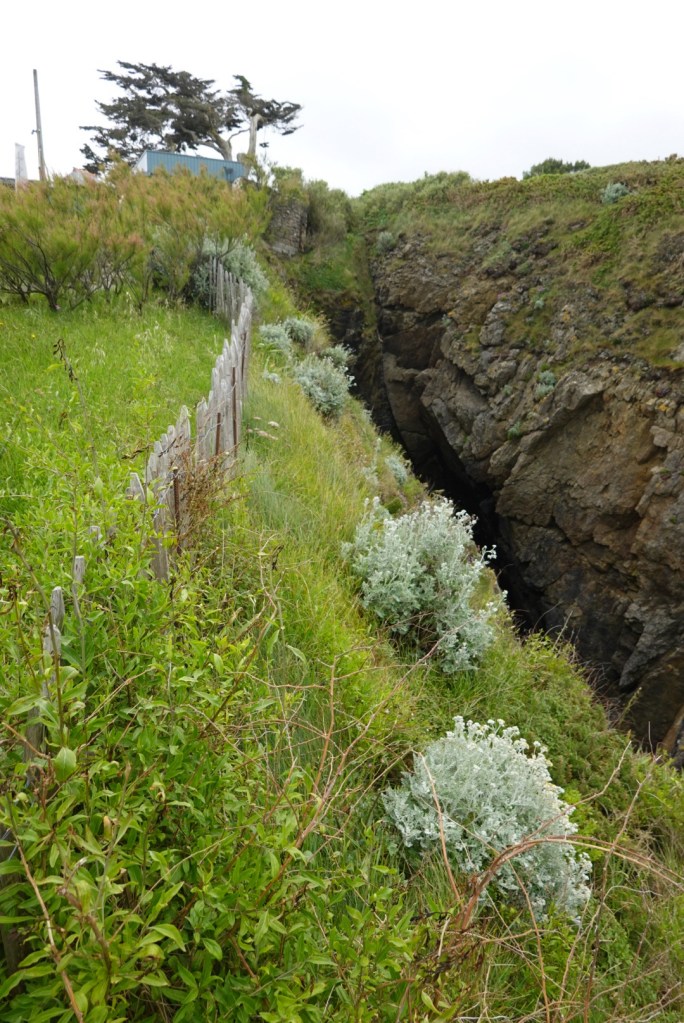
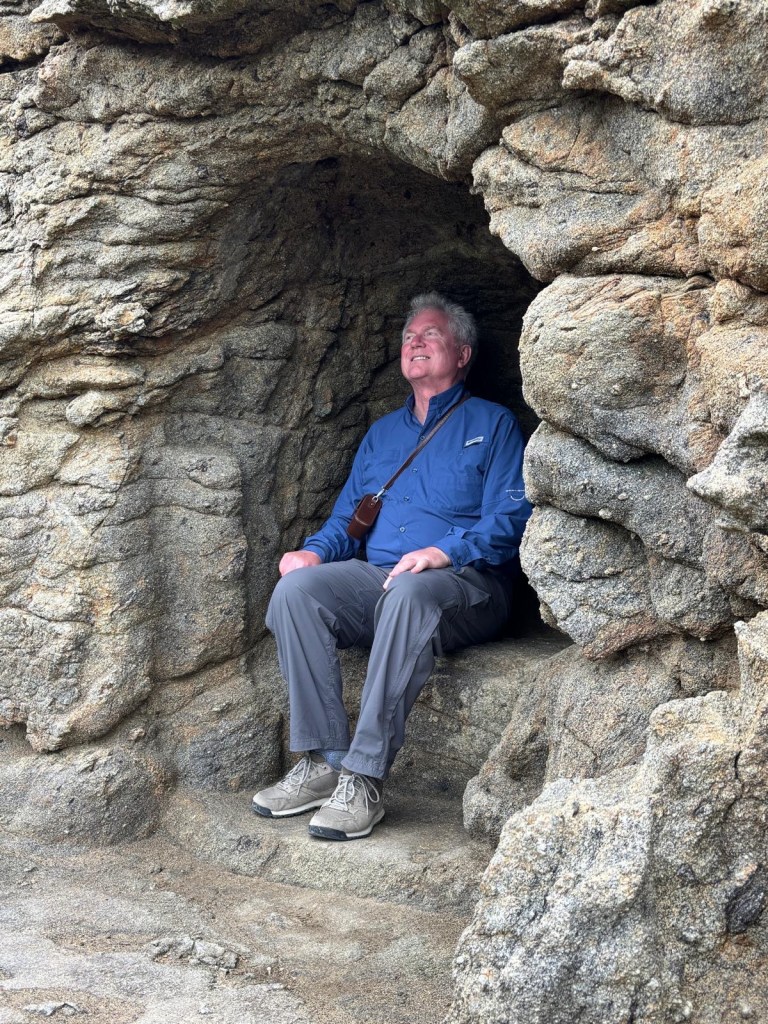
Wooden sculpture of the artistCanyon on one side Canyon on other side View from the Rock sculpture areaOver 300 carvings depict images from old tales of pirates, or the Rotheneuf family, the land owners. Many sculptures and Brian contemplating the sea from an alcove where a sculpture may have stood in the past.Foure began carving the statues in 1870, investing 25 years of his life as a hermit artist.
Since an undergraduate class, the first time Clare saw the fortress on an island that turned into a castle surrounded by sand, she wanted to visit it. Growing up in Southern California, she thought she understood tides. Here, however, the difference between high and low tides can be up to 50 feet, and the intertidal area is extremely flat, even flatter than other beaches we have recently explored.
Luckily, low tide was at 9:00 AM. We left our AirBnB early to have breakfast on the island.
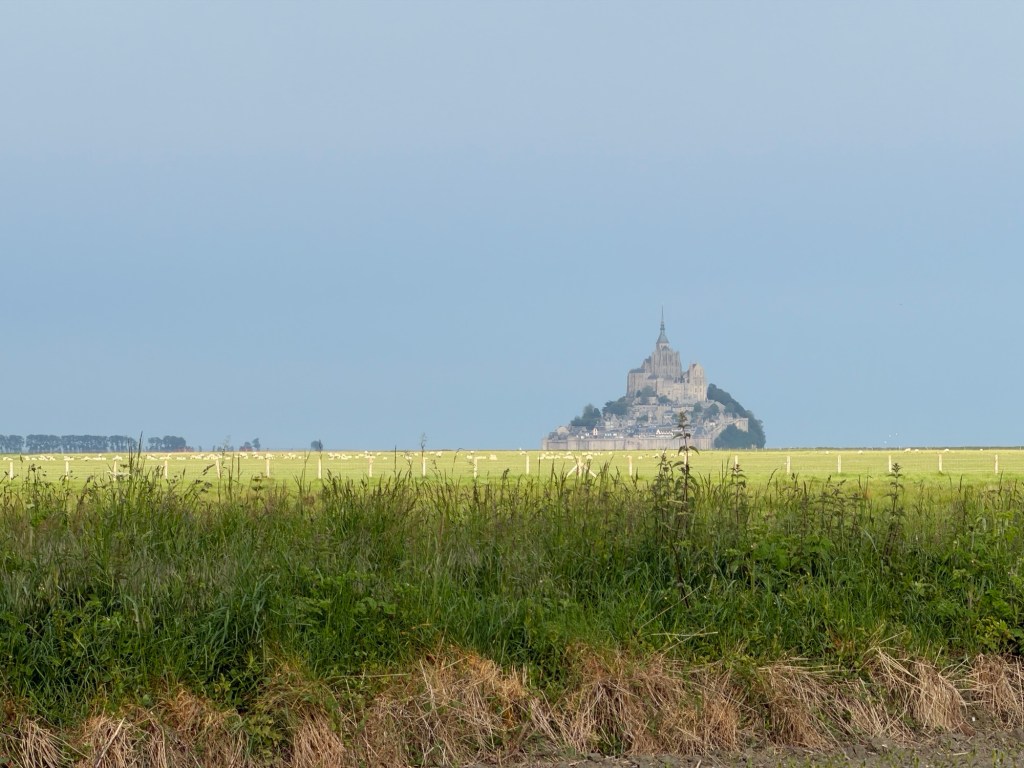
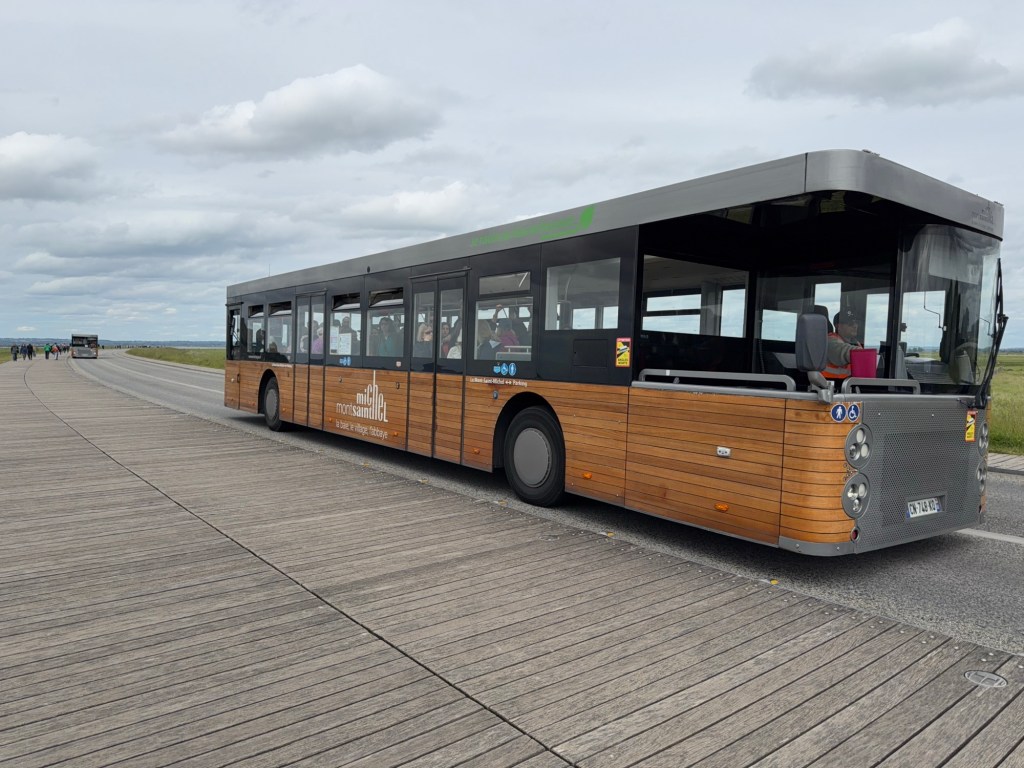
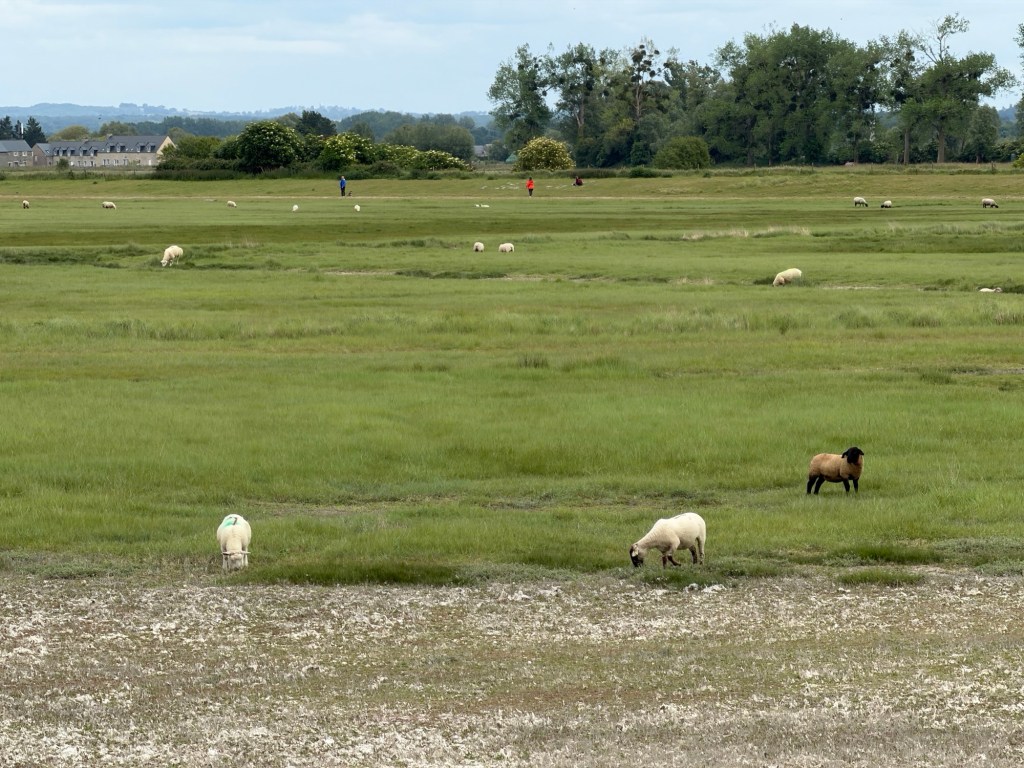
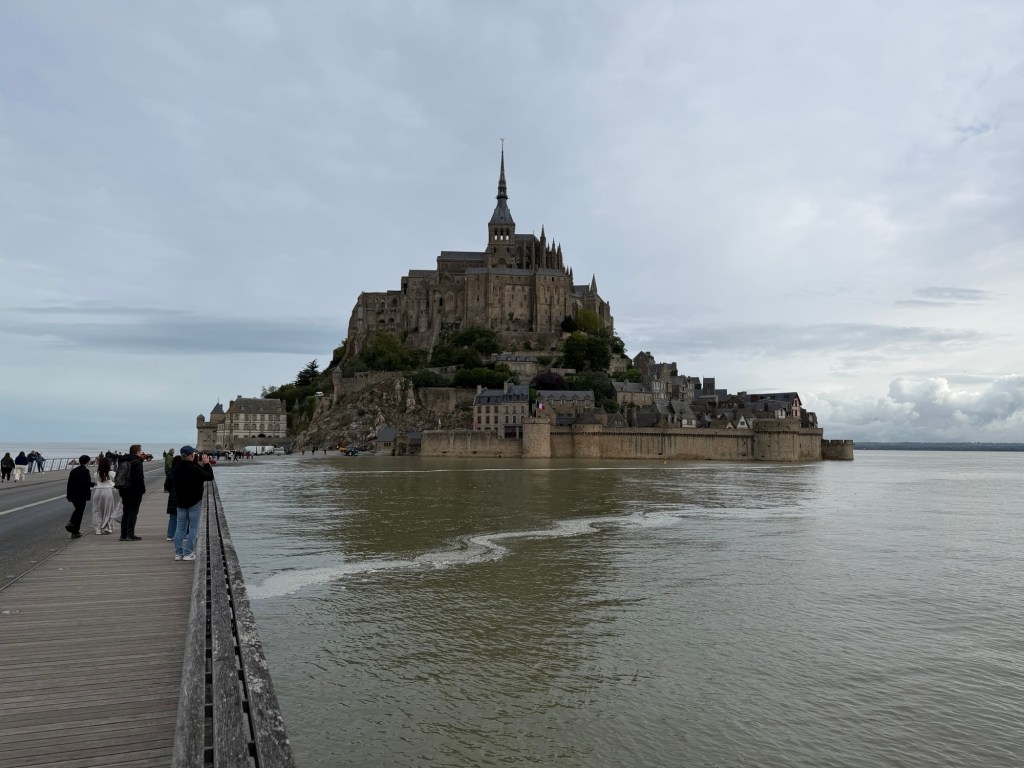
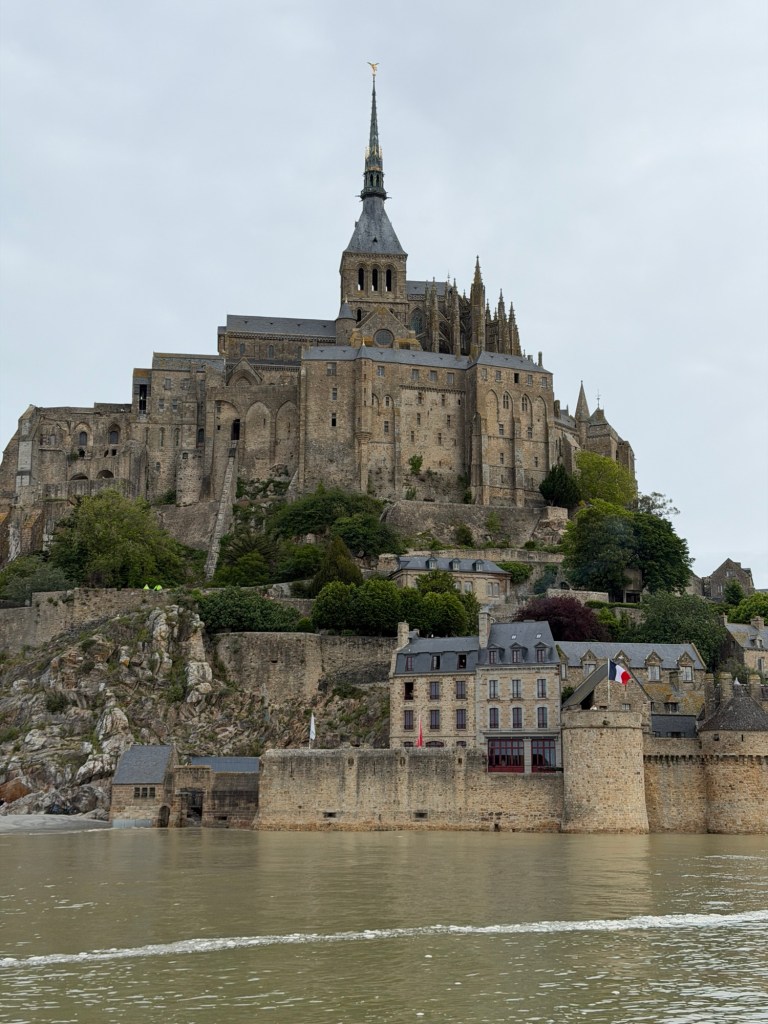
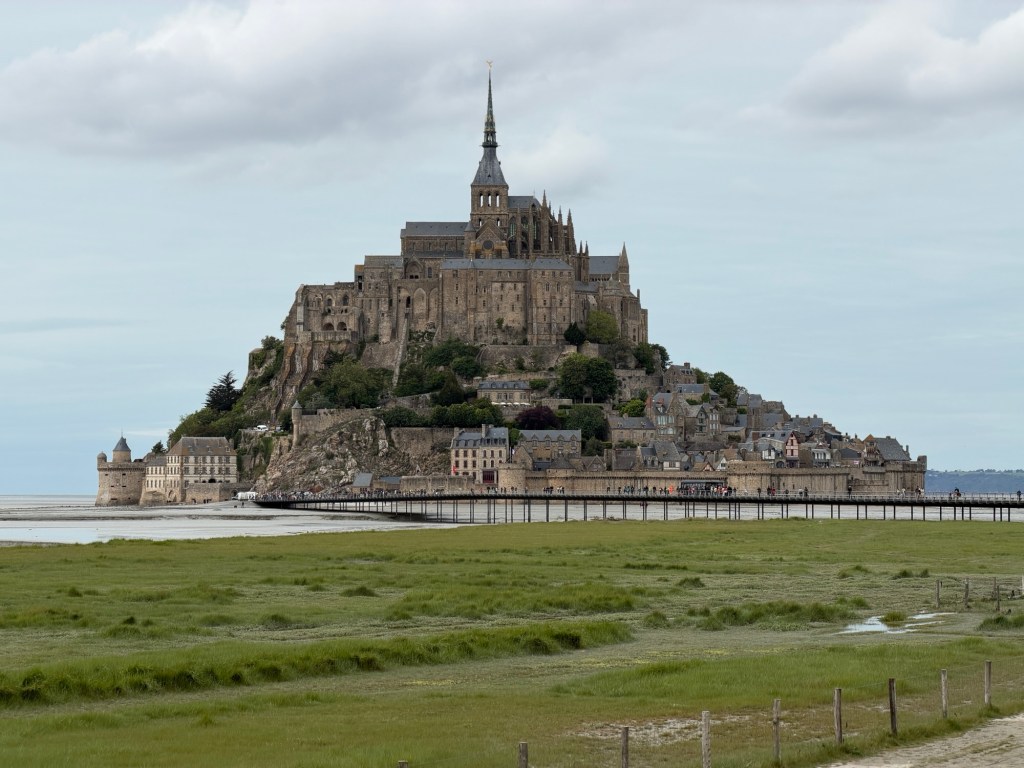
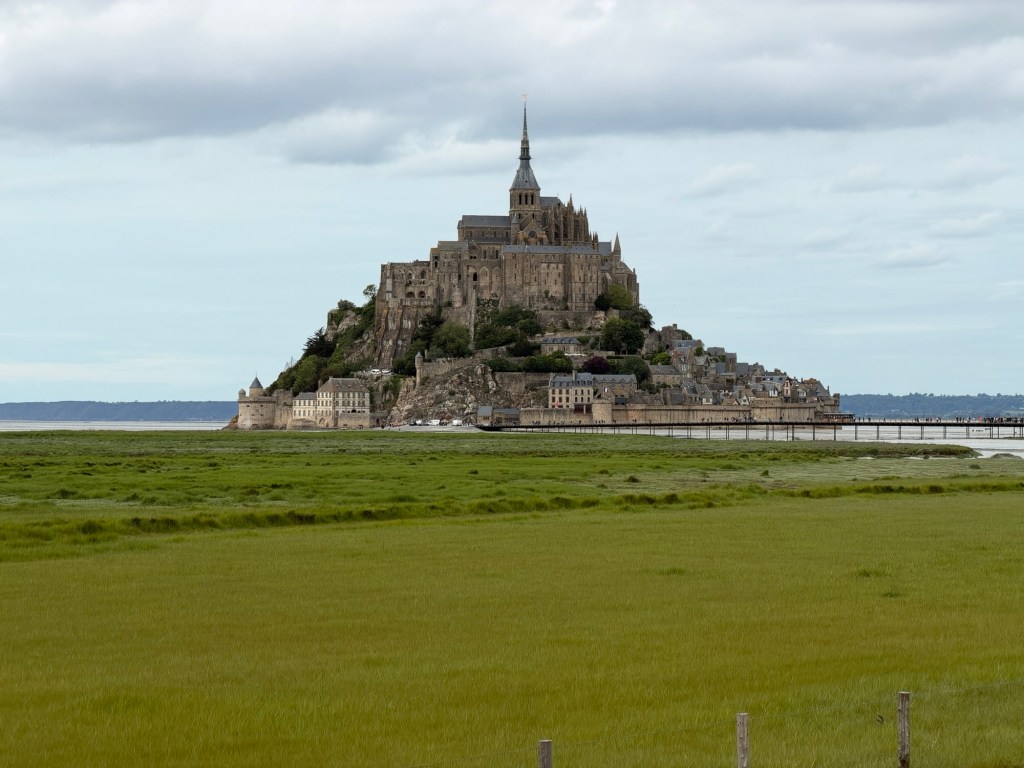
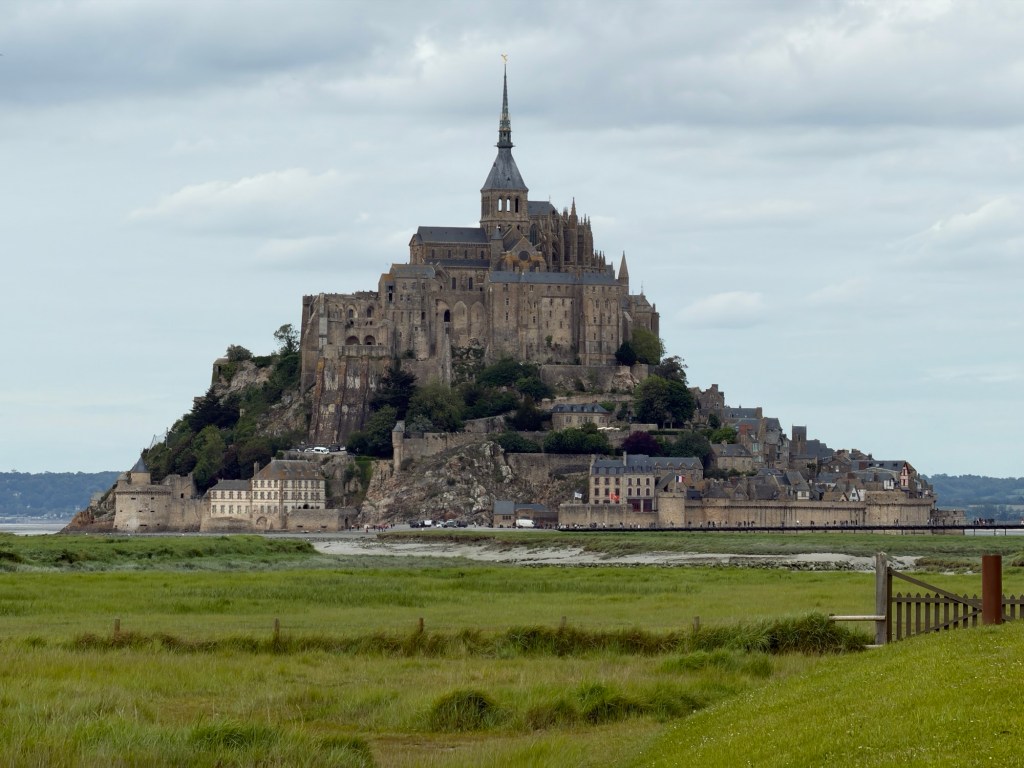
First view of Mont-St-Michel from the roadTram from parking lot to Mt-St-MichelLots of sheep grazing on salty grassWalking towards the island on the bridge
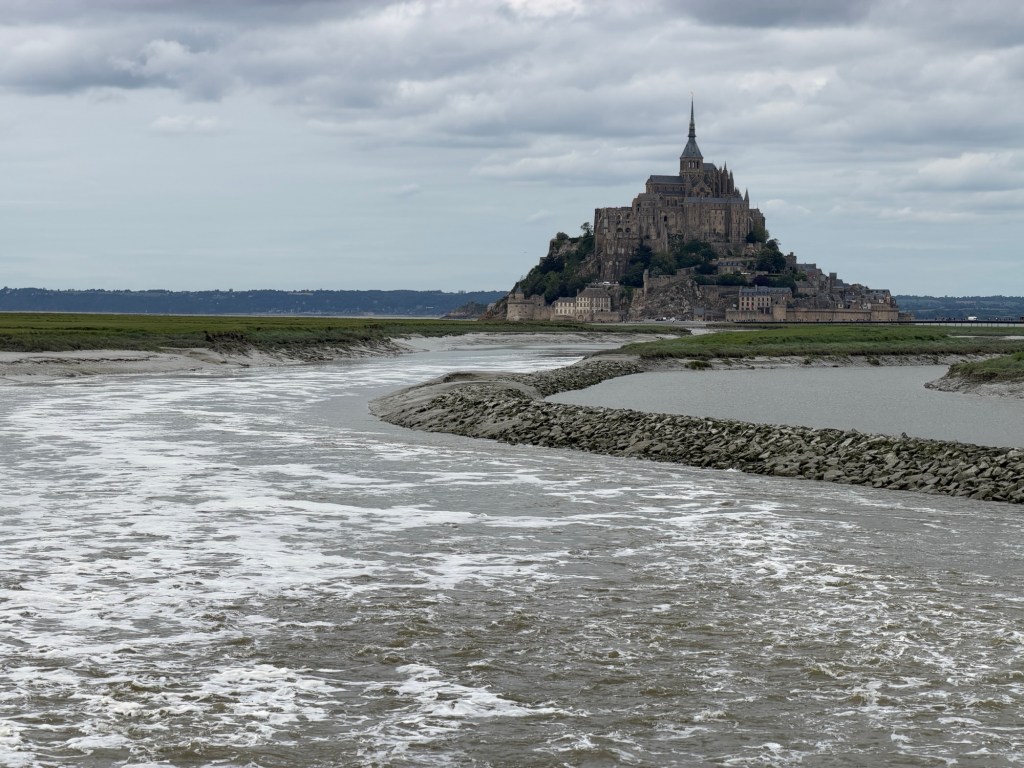
Looking around at high tide, it’s difficult to imagine this solid rock island becoming part of the continent. As the day progressed and the tide went out, it did.
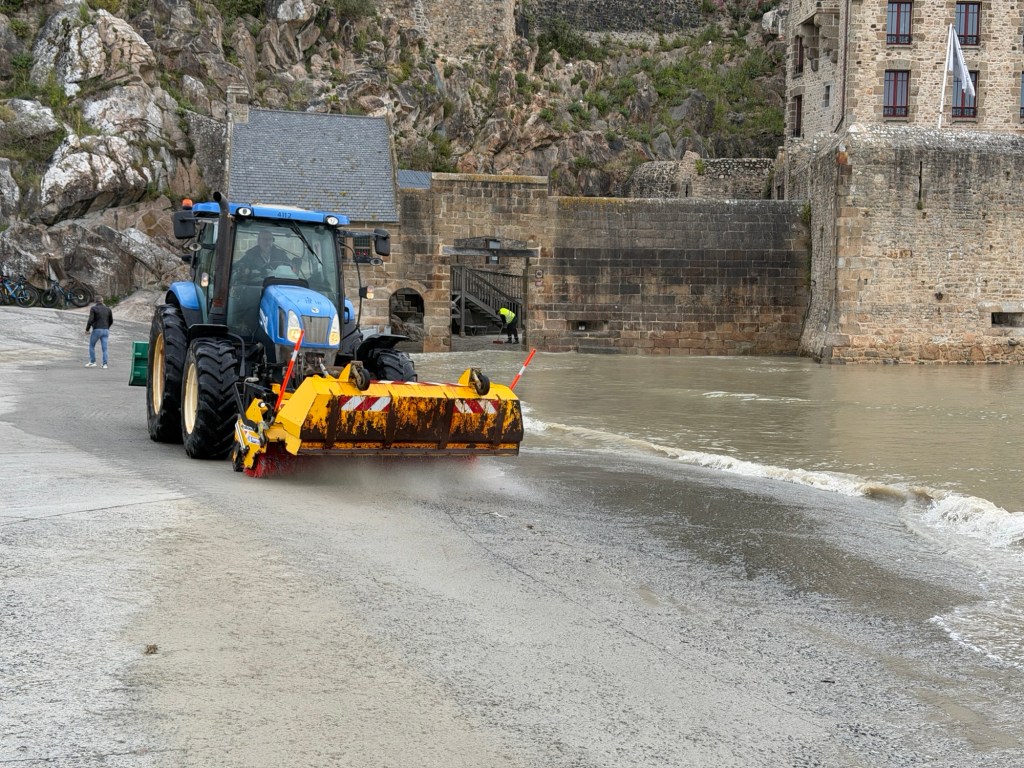
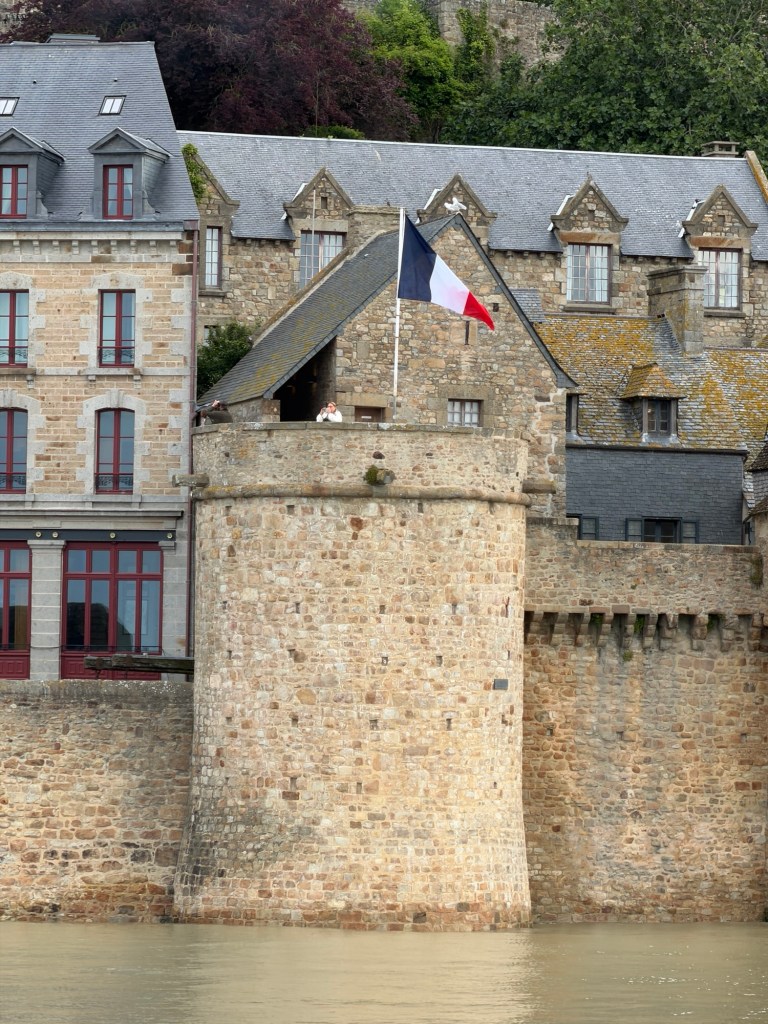
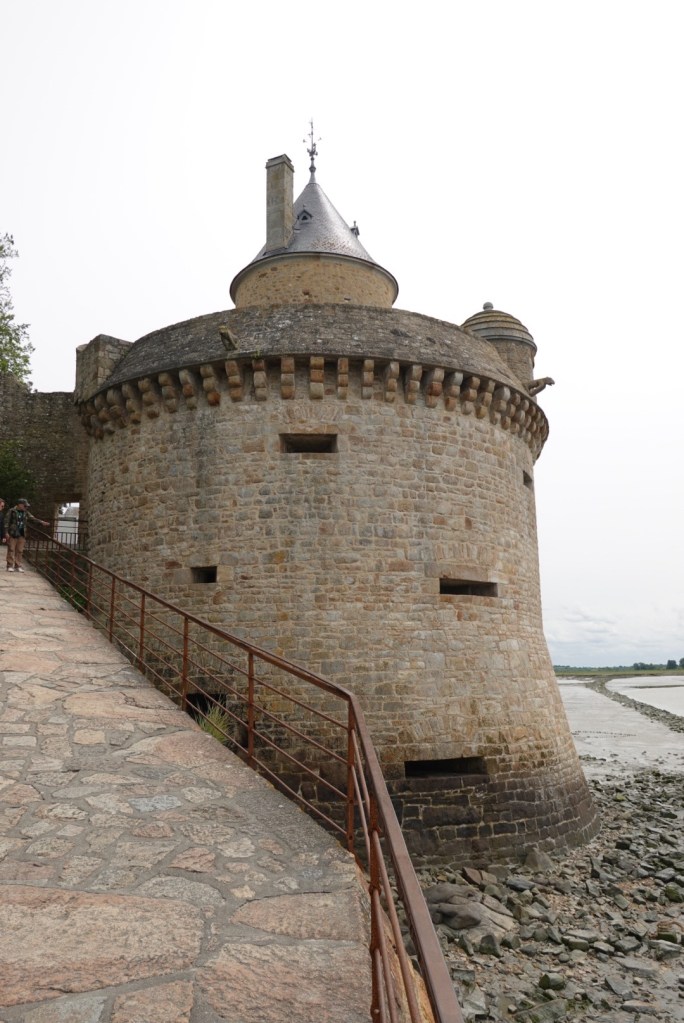
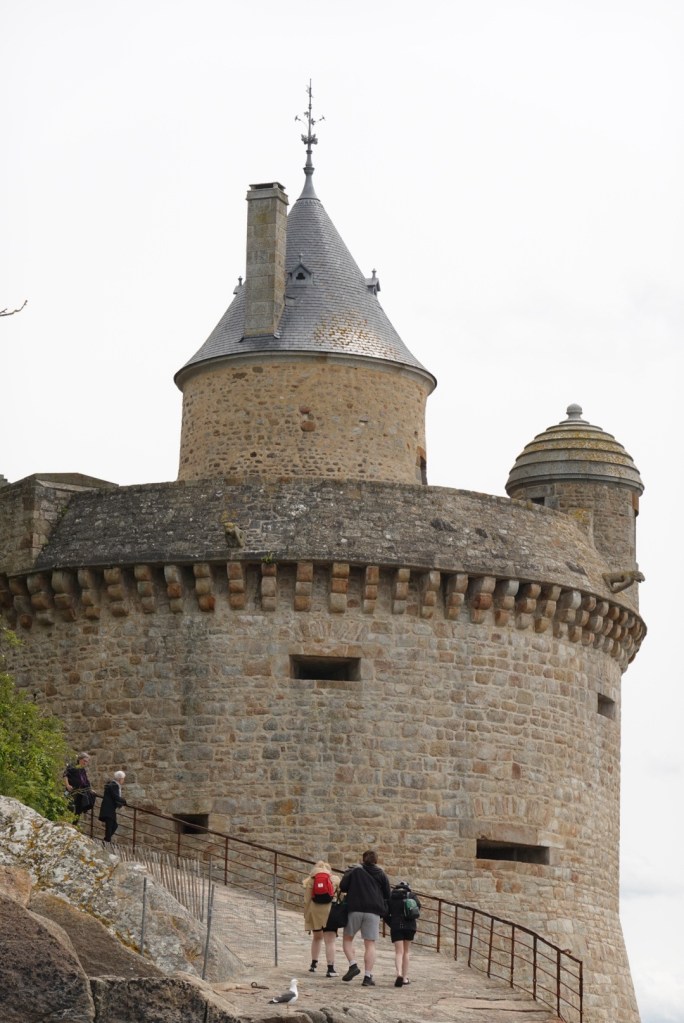
Cleaning sand off walkwayOne of the towers — note water around base
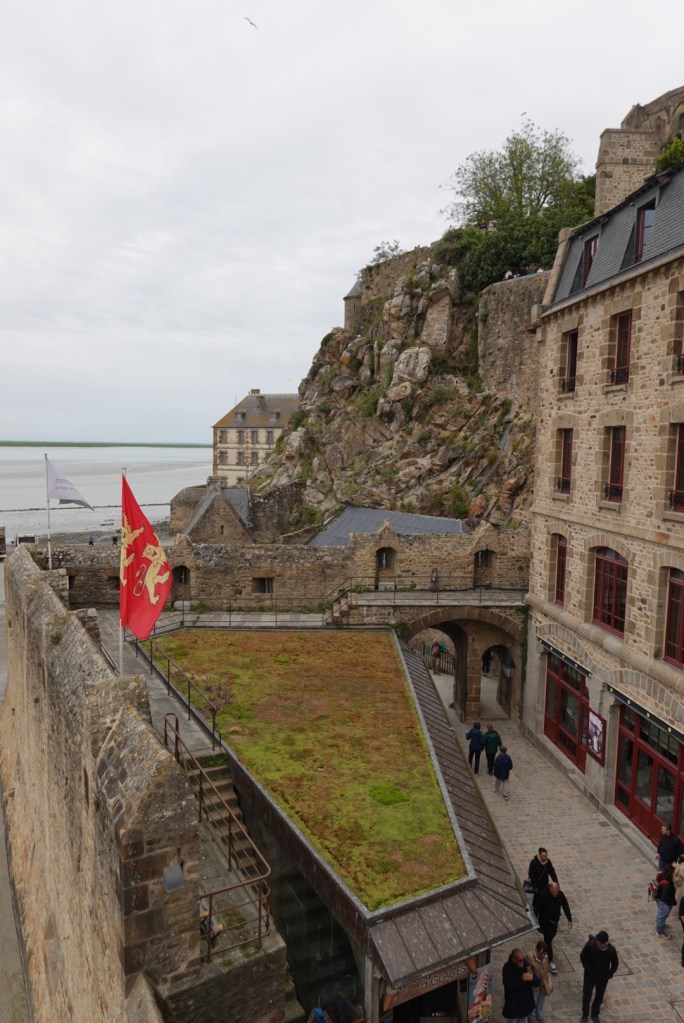
The trams from the parking lot disembark tourists on the bridge. The trams never need to turn around as they can be driven from either end! When we arrived, near high tide, the lowermost entrances were flooded, so we had to climb up a ramp initially.
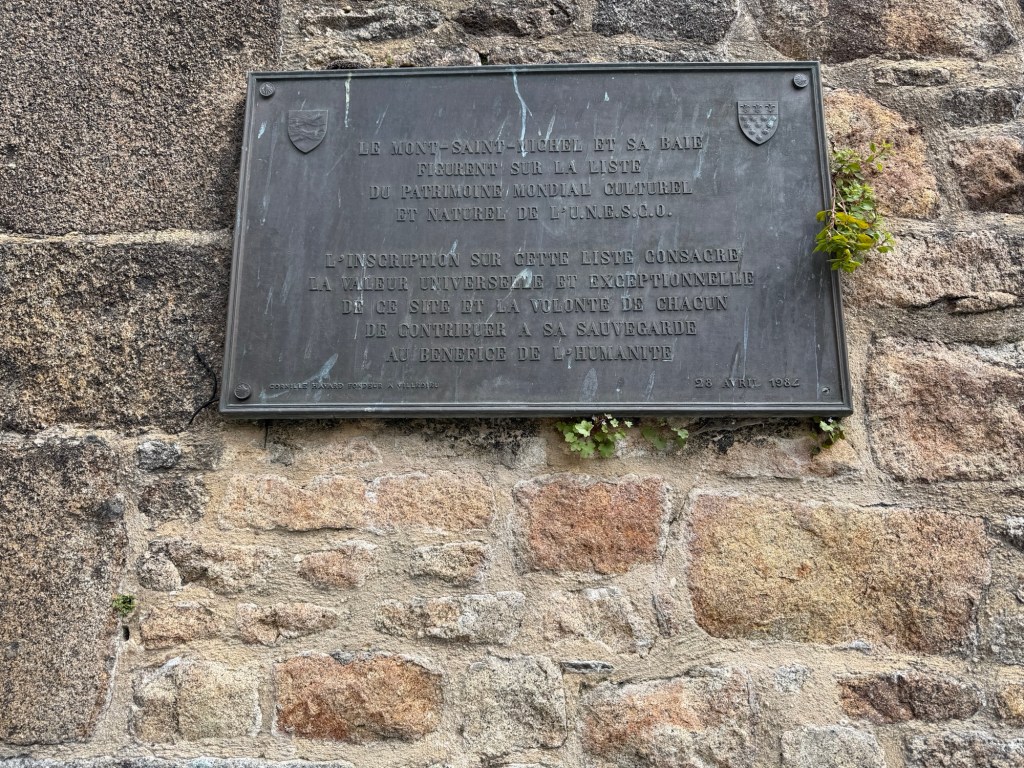
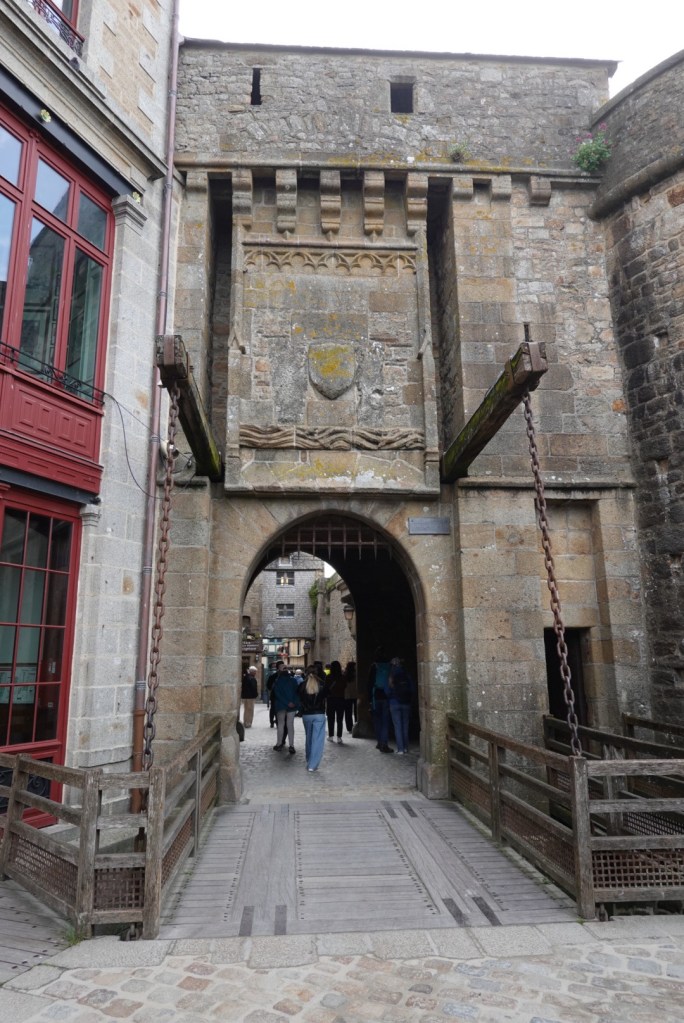
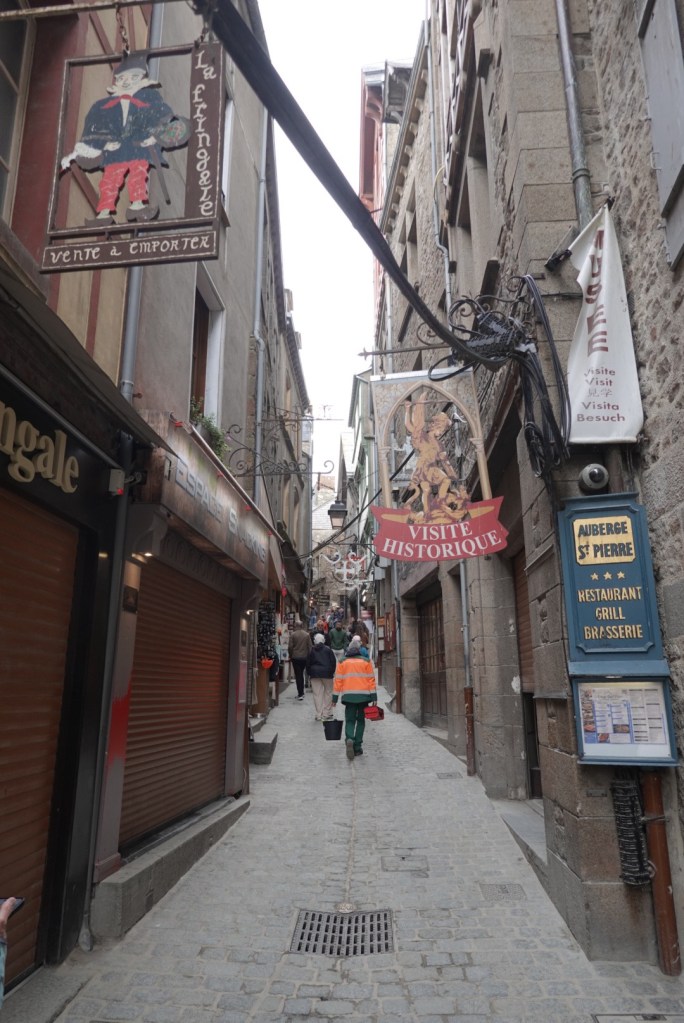
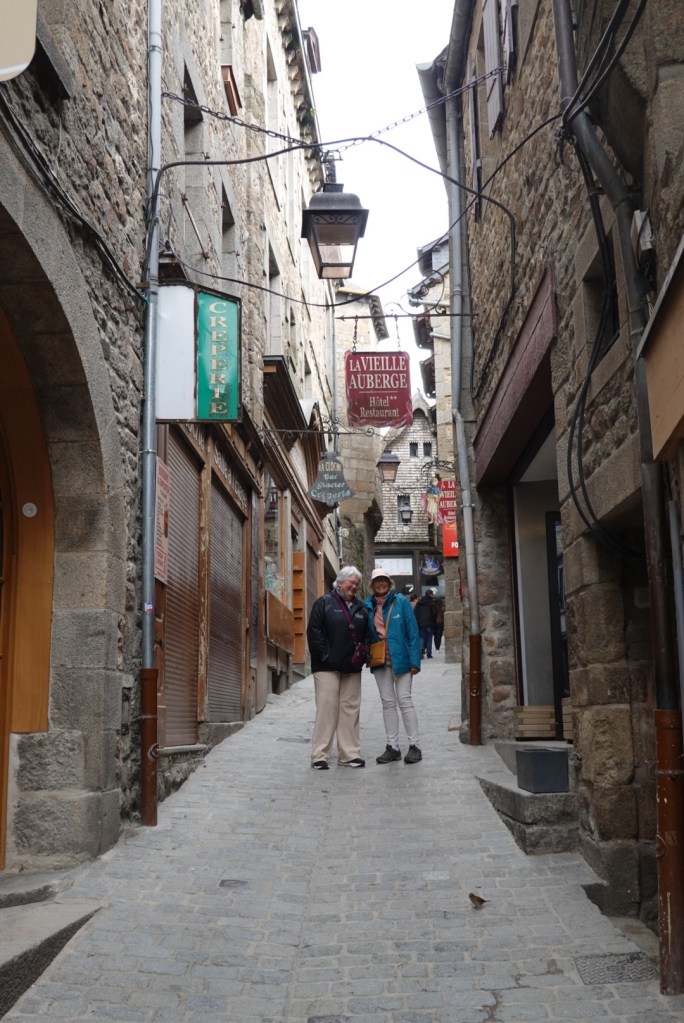
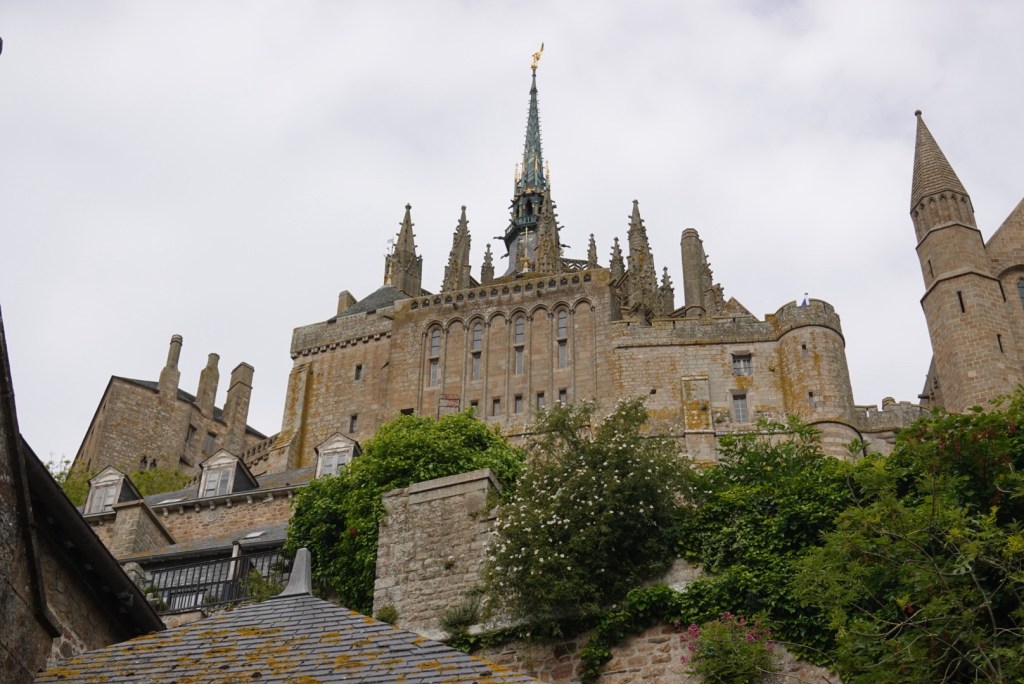
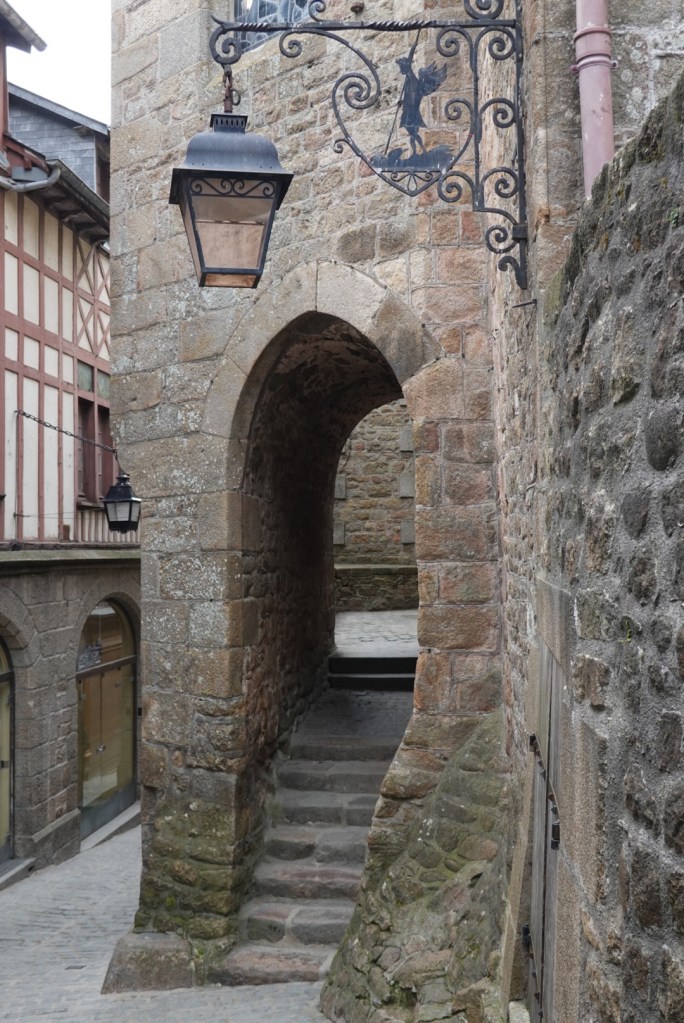
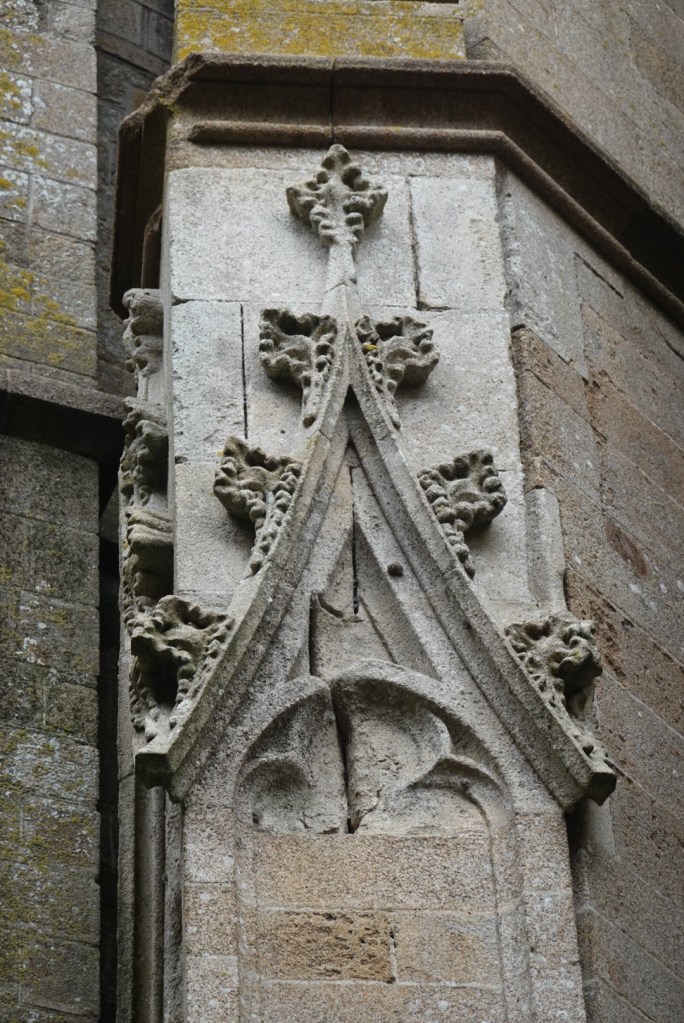
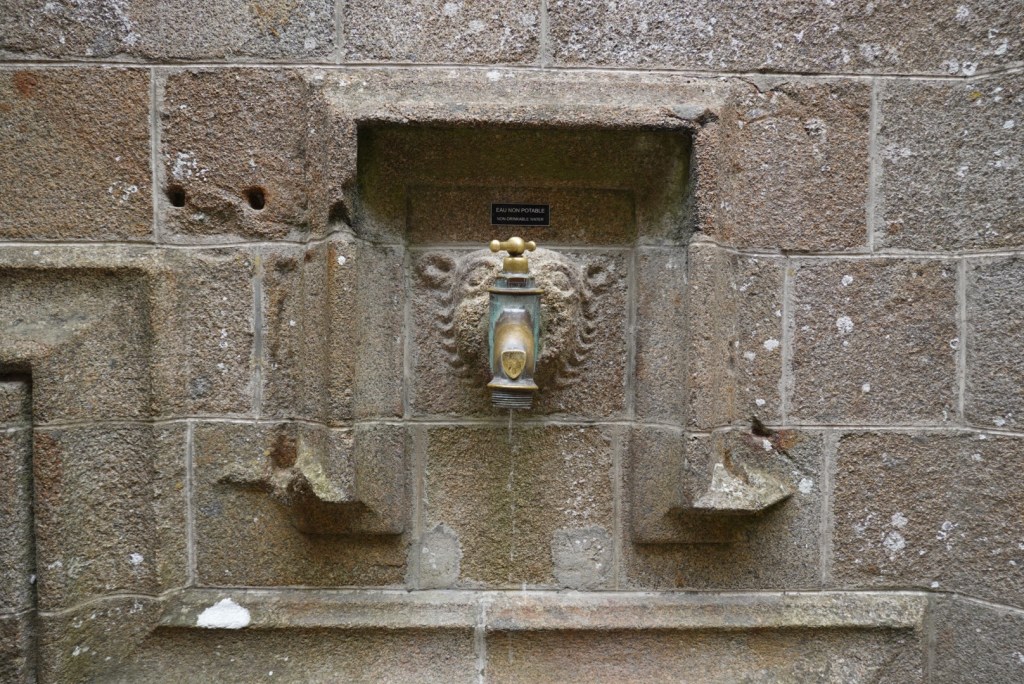
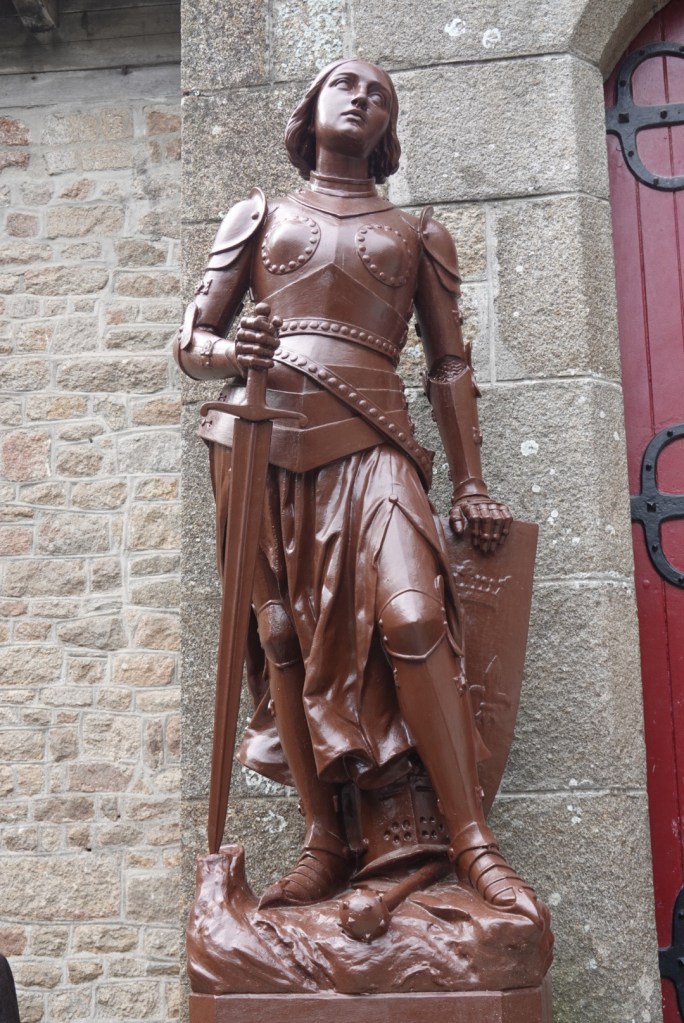
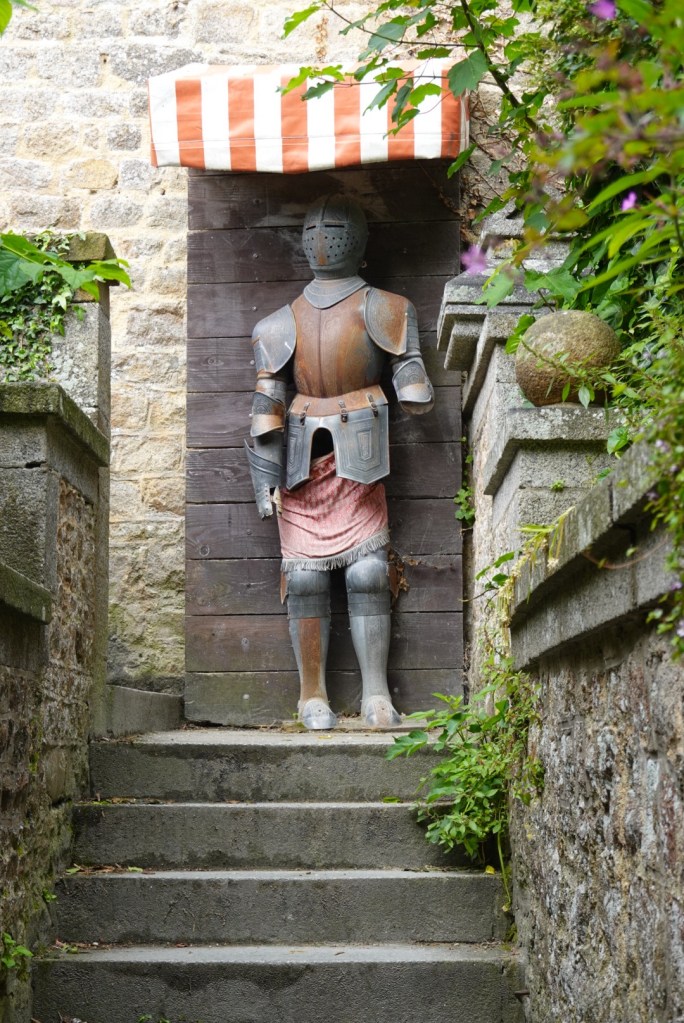
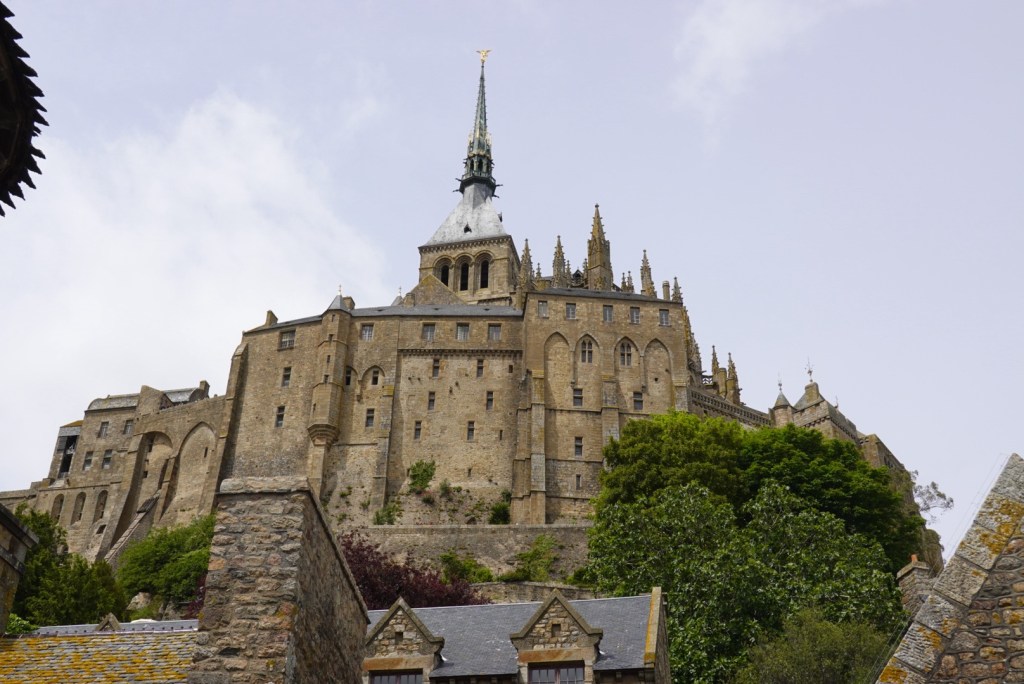
Water, water everywhere!This place became a UNESCO World Heritage Site in 1979.Part of the old drawbridgeMany shopsClare and JoëlleFirst view of the abbey on the summitLamp with St. MichaelFancy stone ornamentationLion water spigotJoan of Arc statue placed when she became a saint in 1909A knight in not-so-shiny armor!
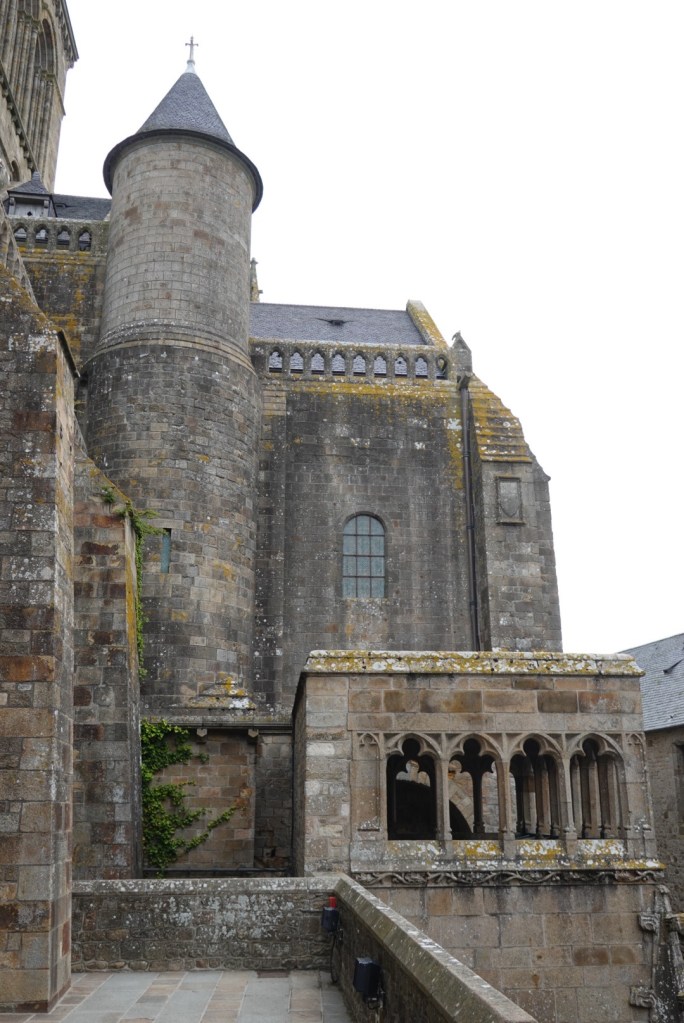
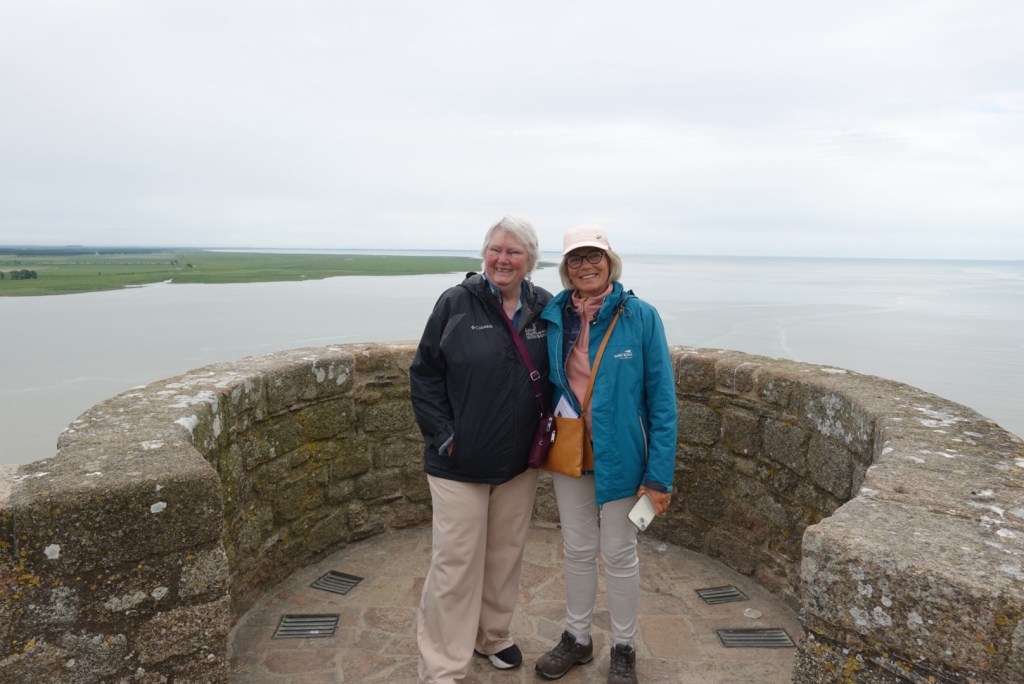
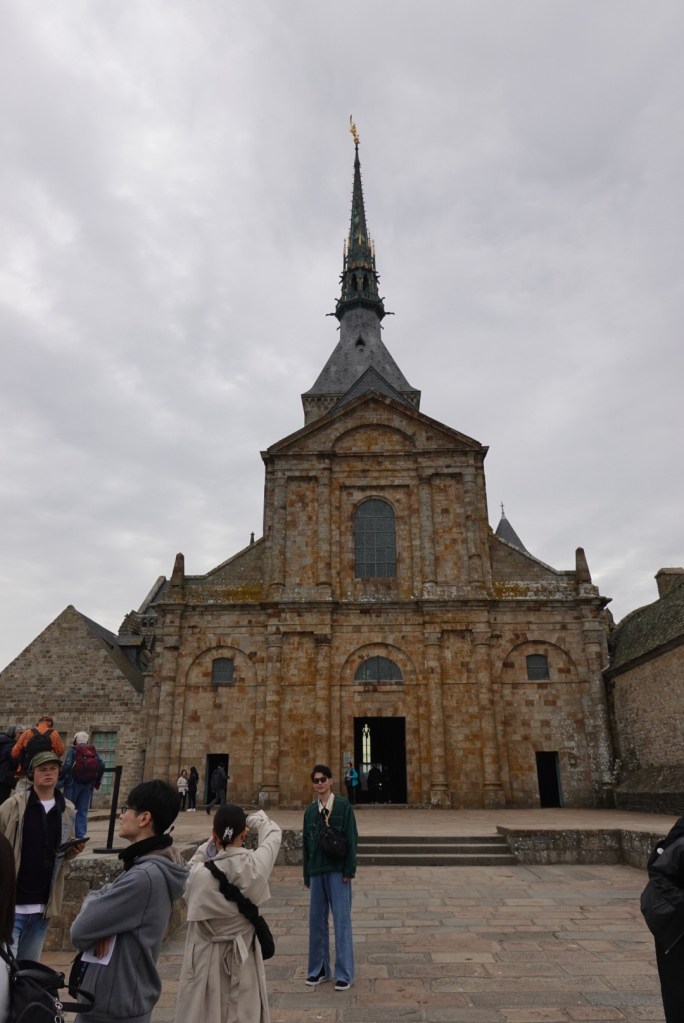
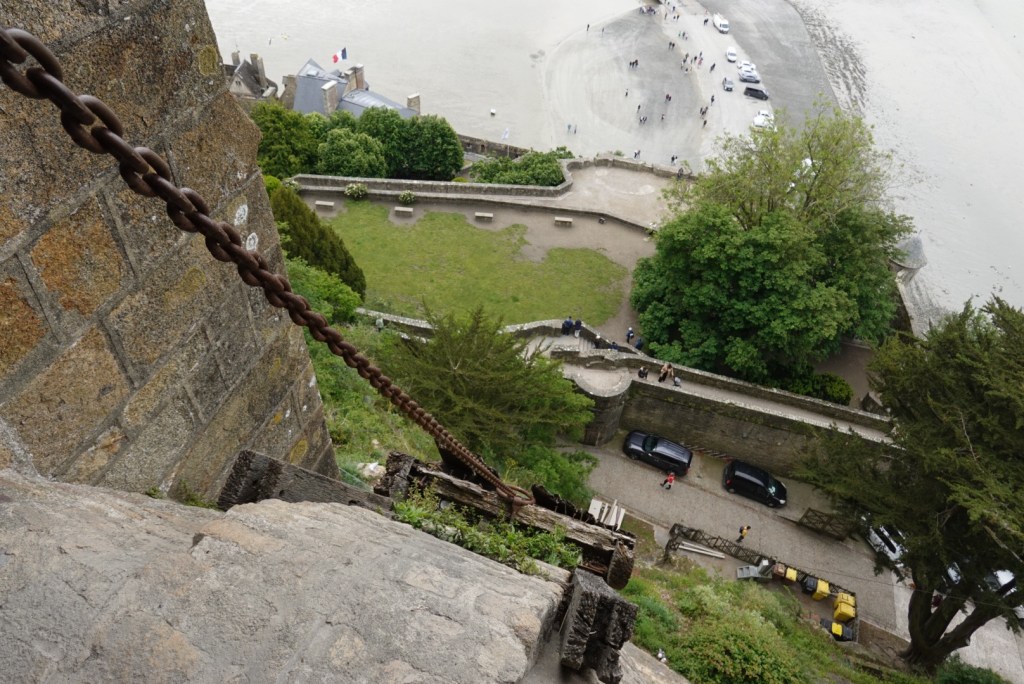
After climbing up many staircases, we reached the west terrace of the abbey. It is here only because a fire destroyed the west end of the church in 1776.
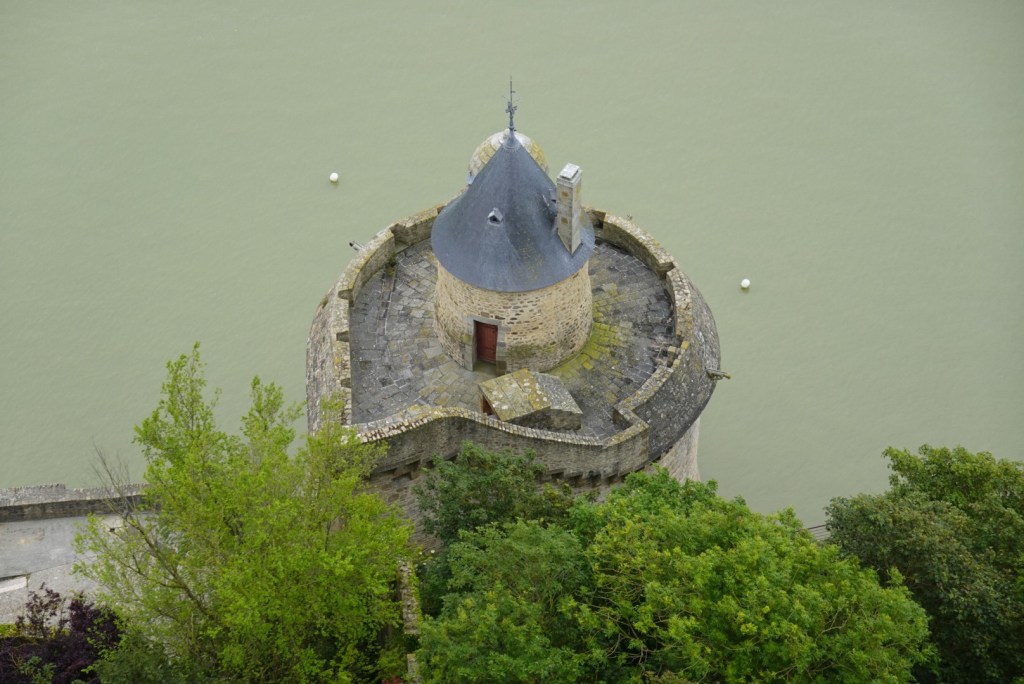
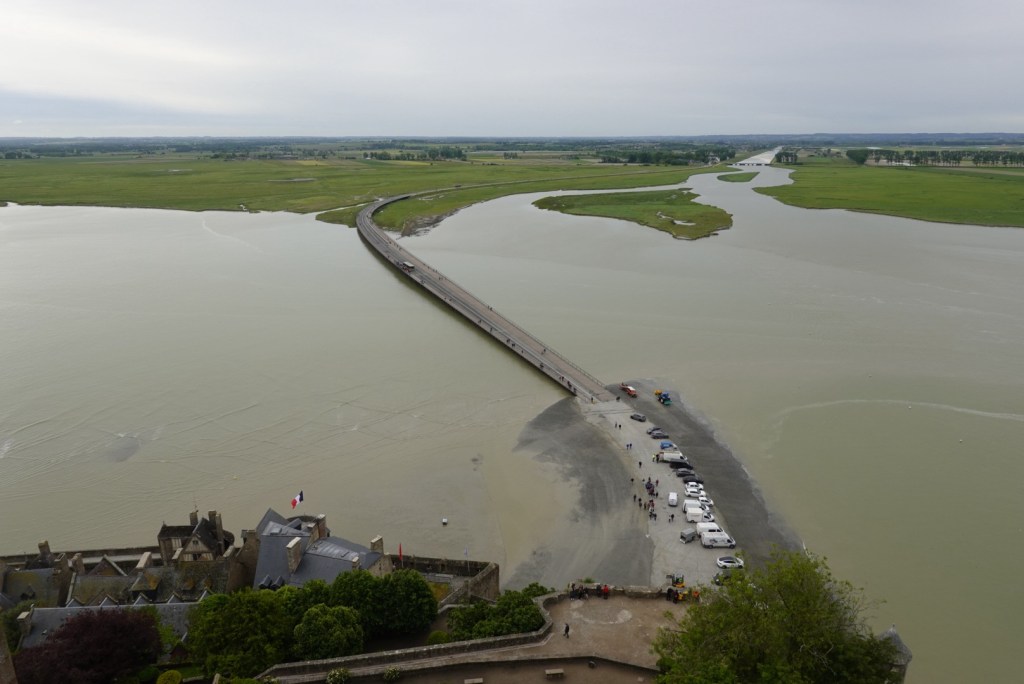
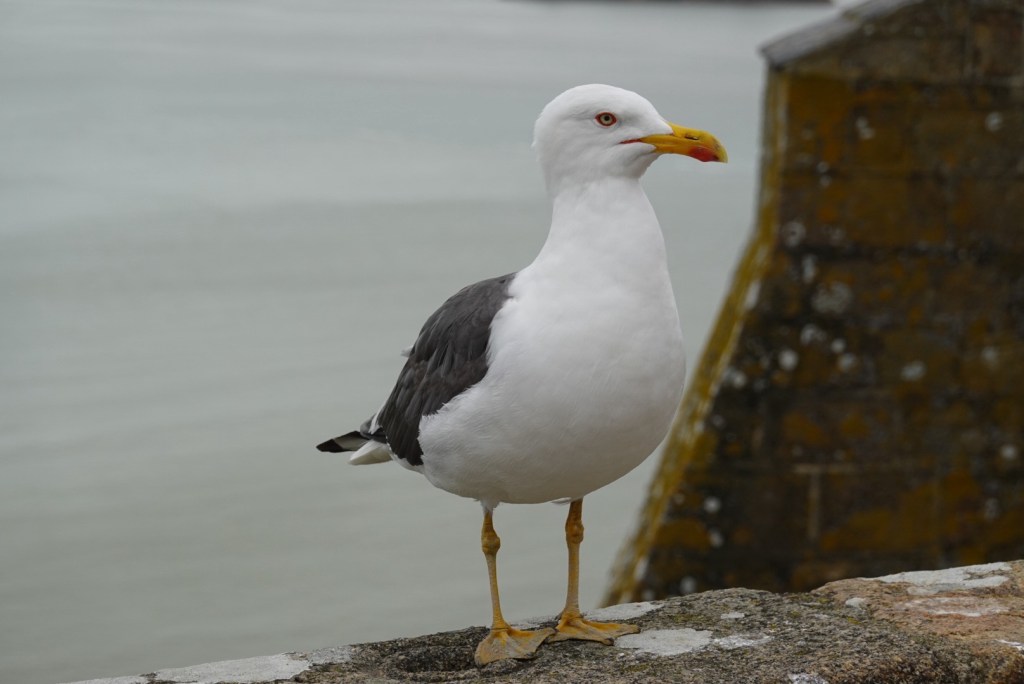
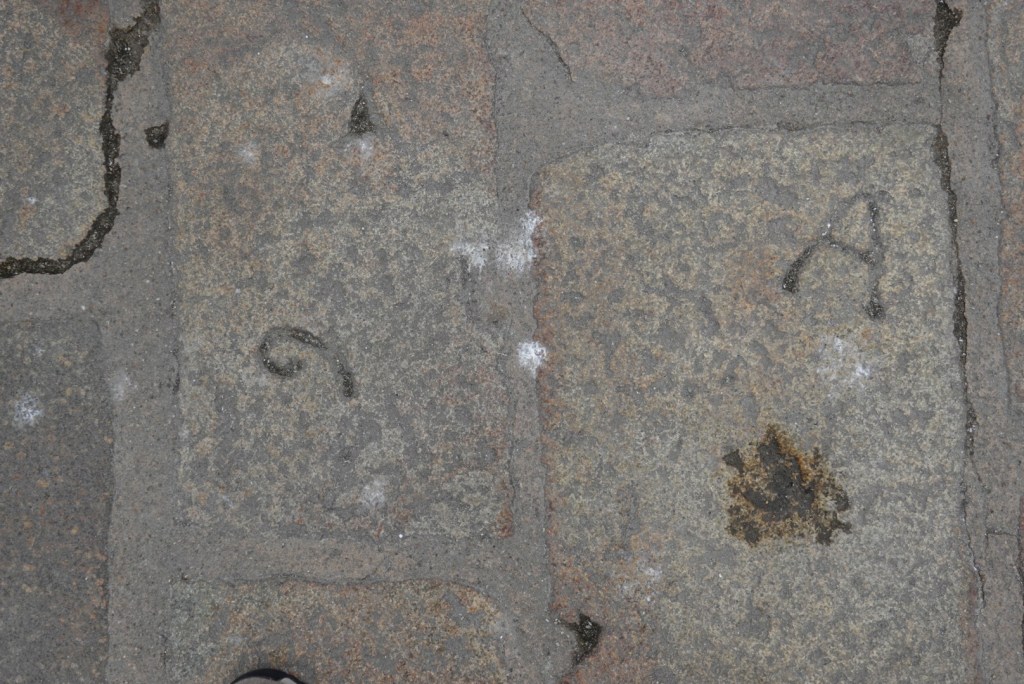
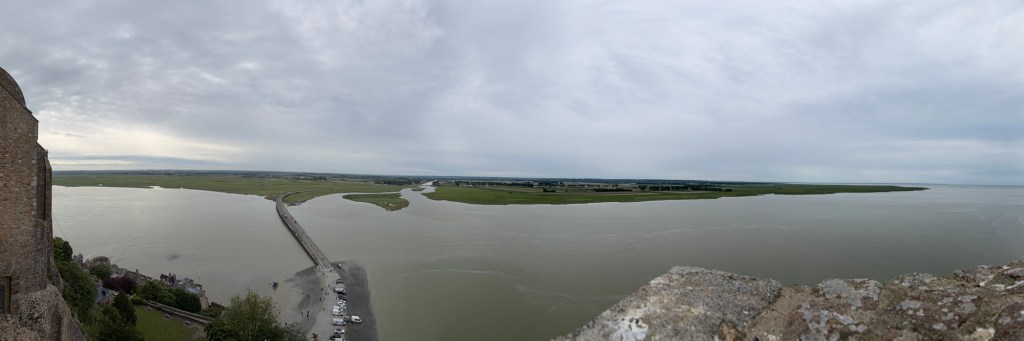
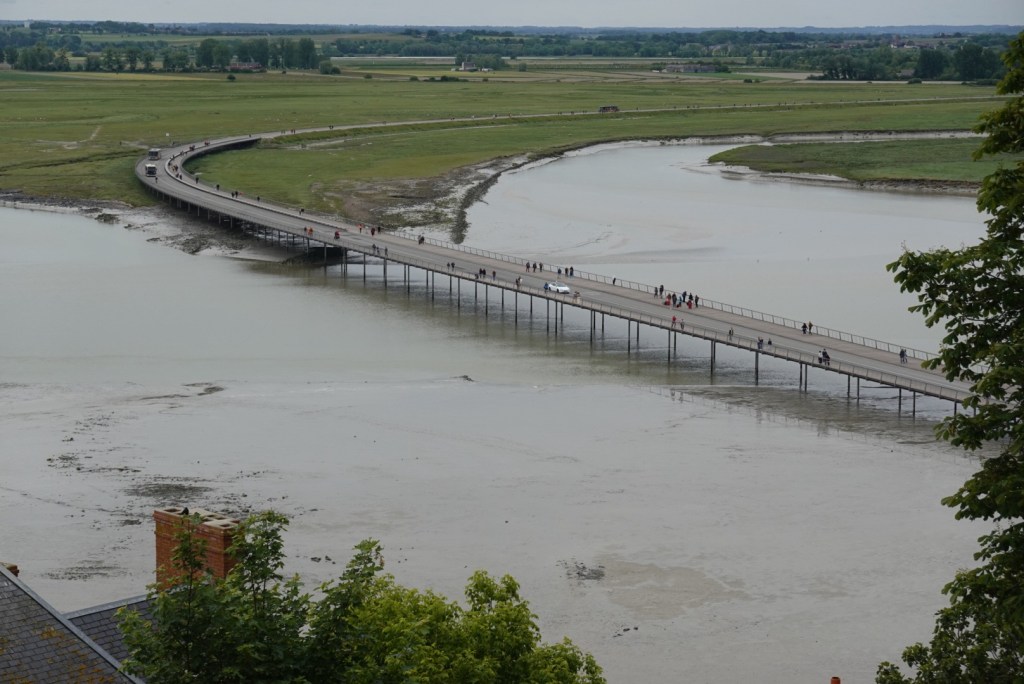
Looking down on a towerLooking down at the bridge installed in 2014Posing gullClare and JoëlleStone mason’s marks on terrace stonesPanorama of the bay and adjacent shore
Years before, humans built a road to the fortress, which blocked the flow of water. Both Marc and Joëlle remember visiting here as children and driving right out to the base of this fortress. Later, in 2014, engineers changed the road into a bridge to allow water to flow around the island and prevent the build-up of mud and sand..
We enjoyed exploring every part of the island-castle-fortress.
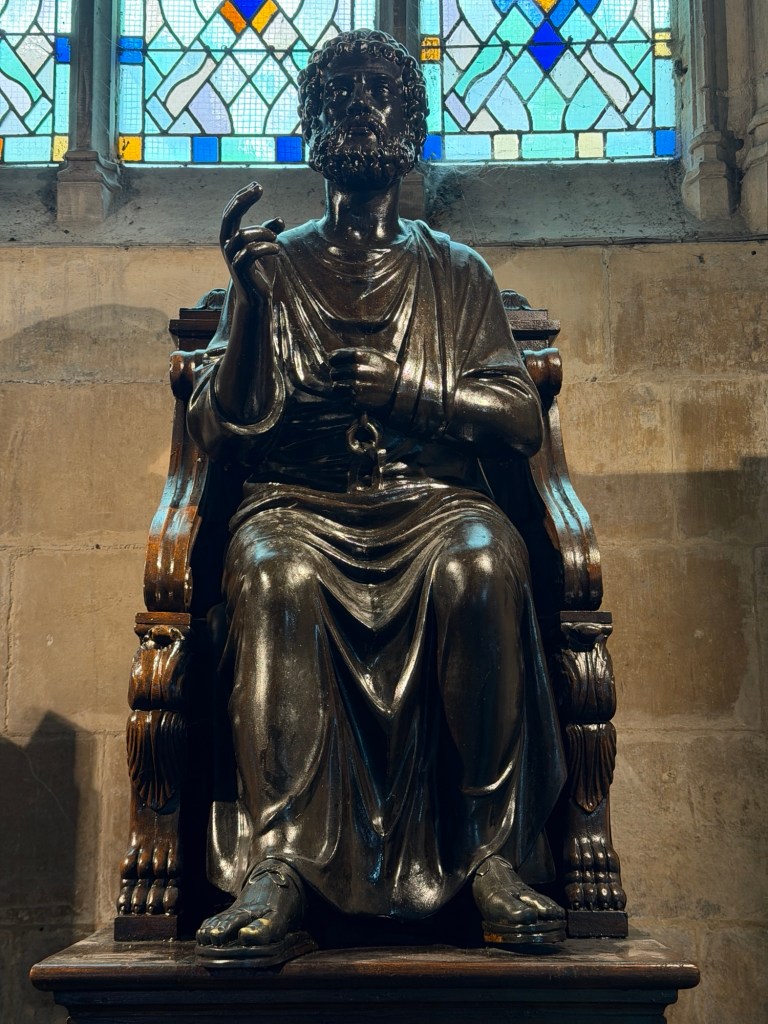
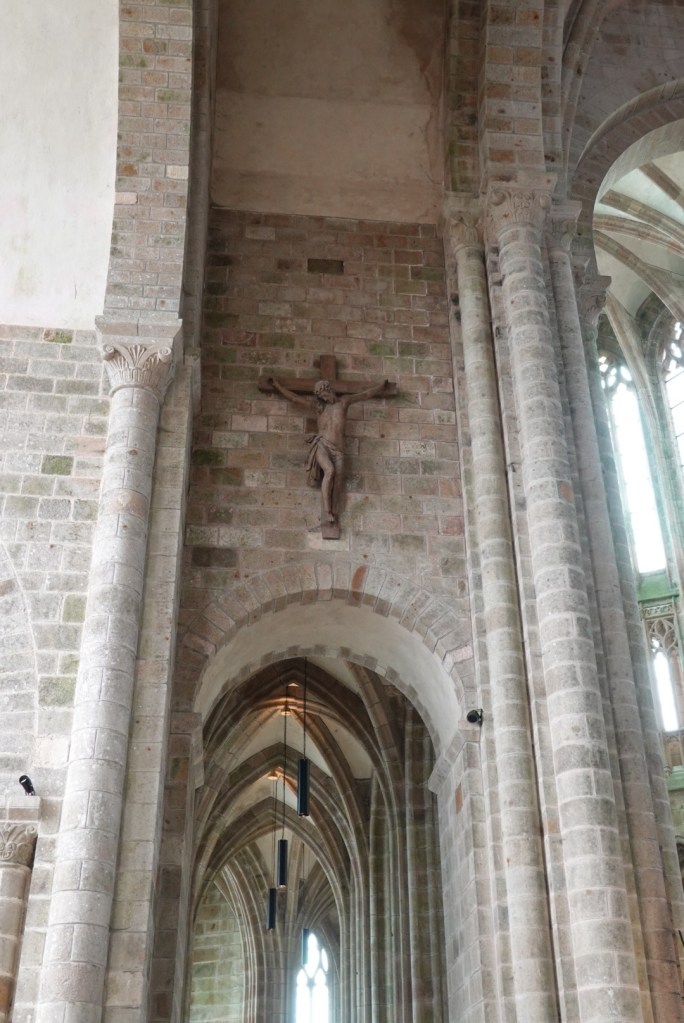
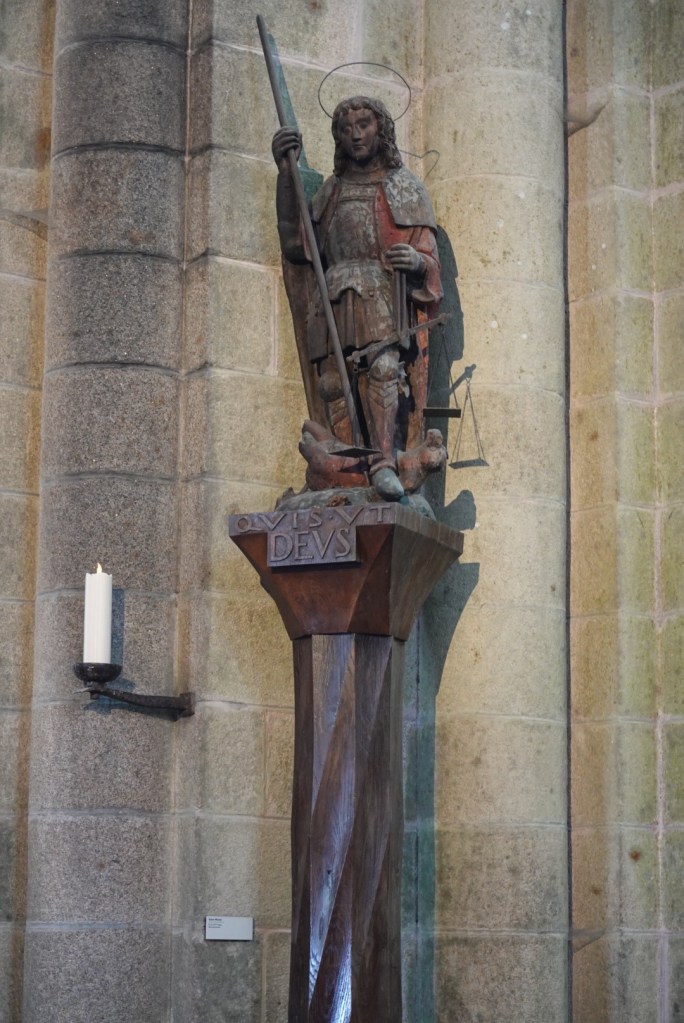
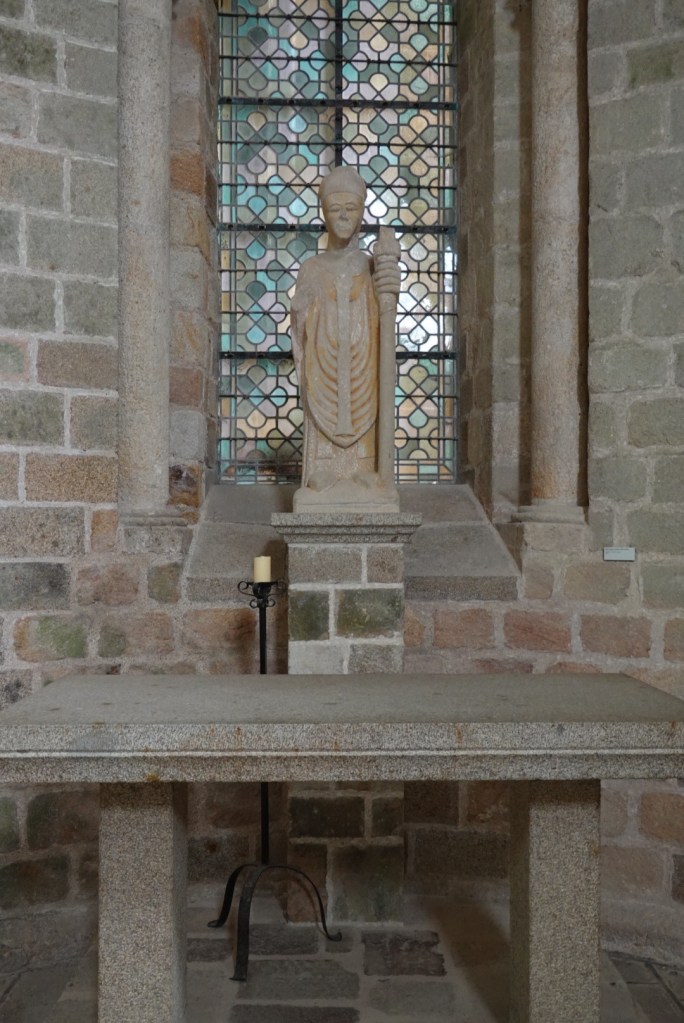
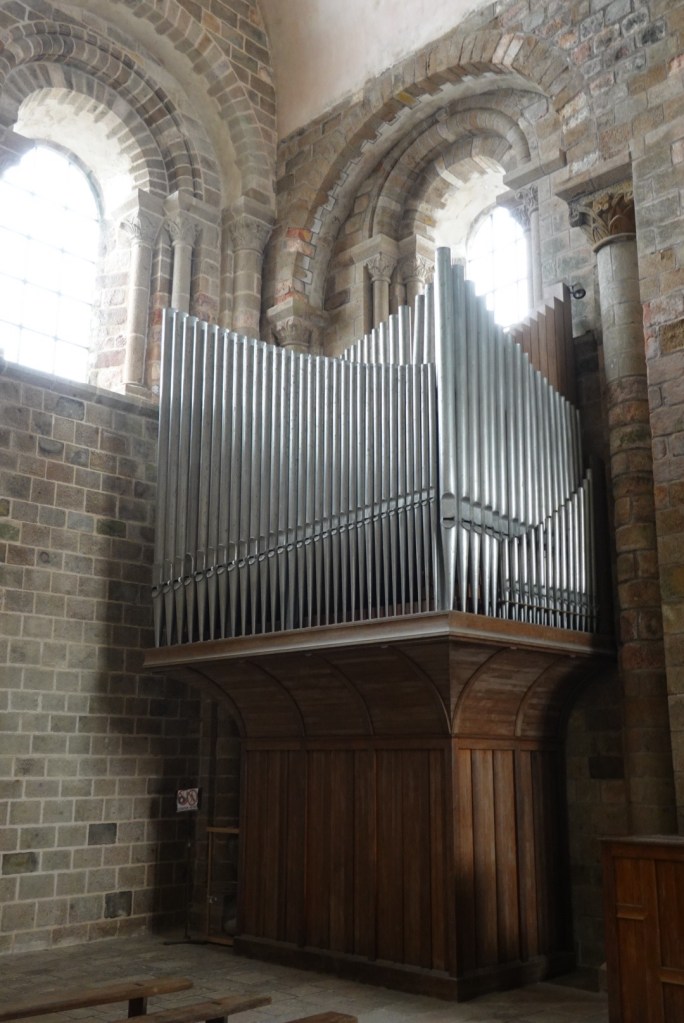
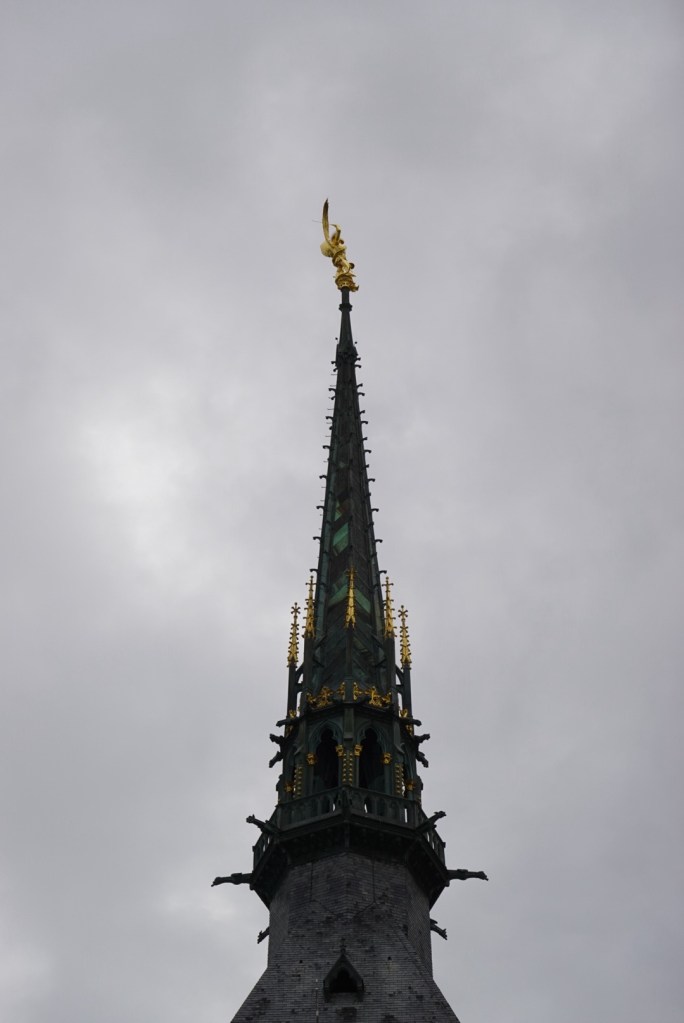
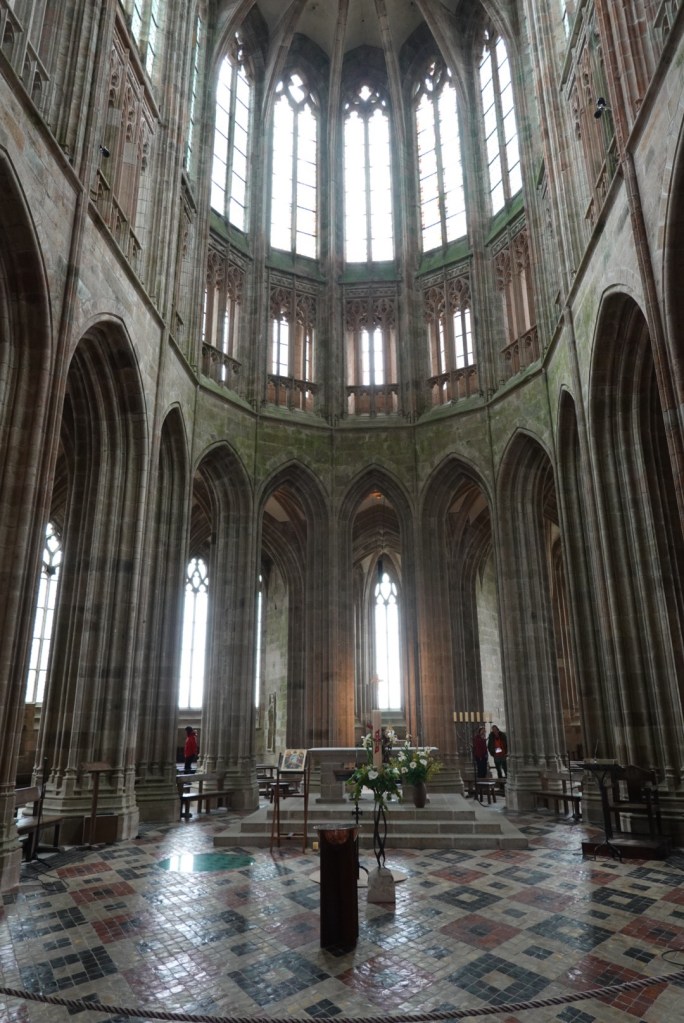
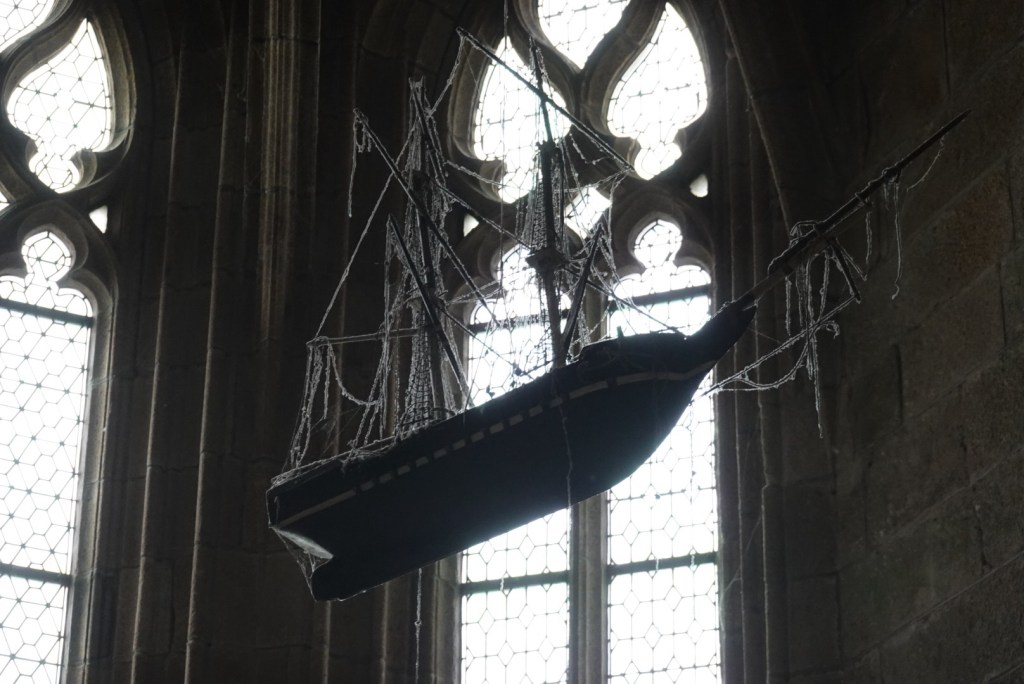
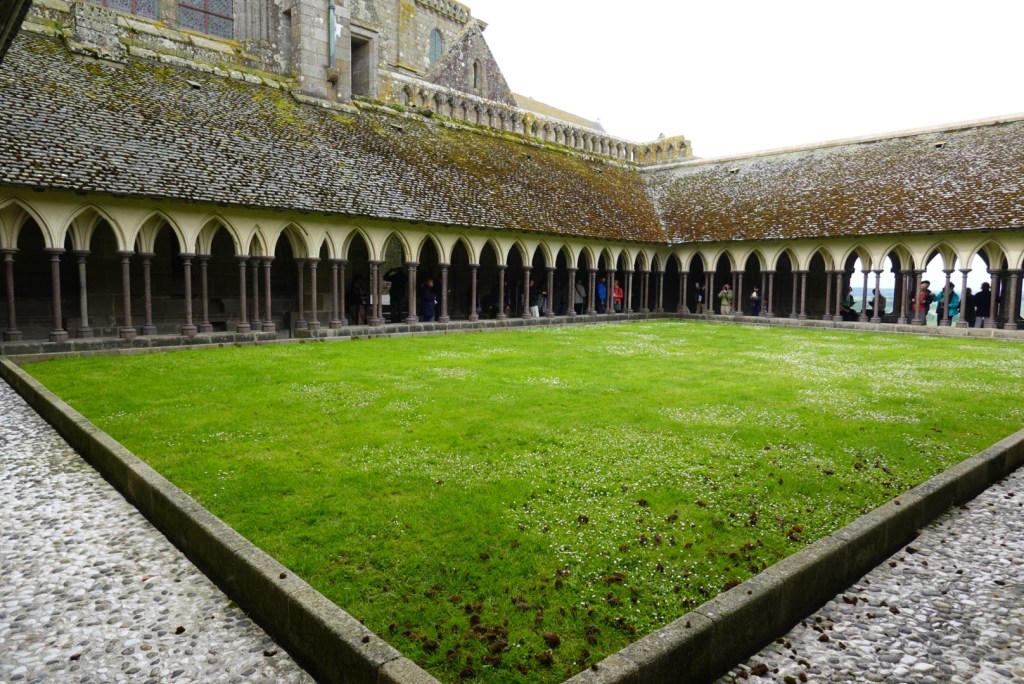
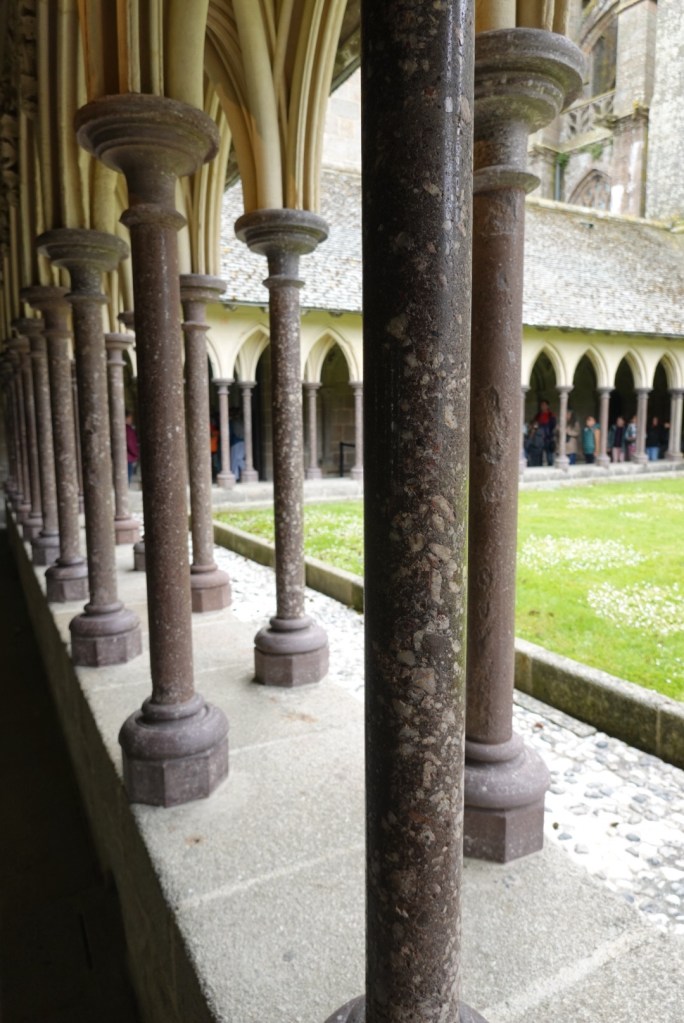
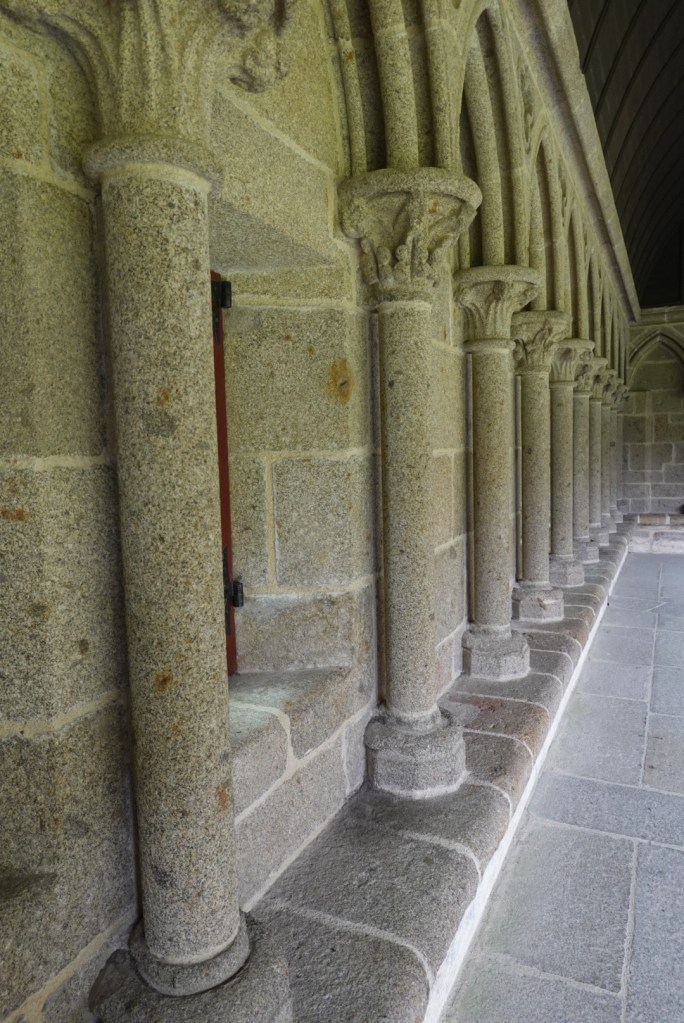
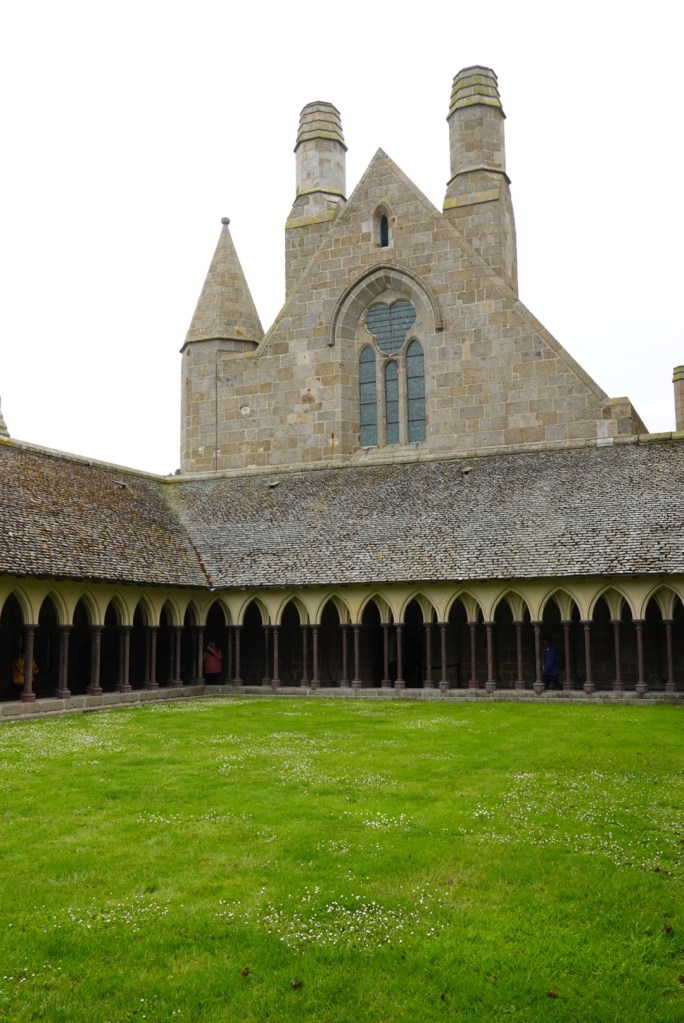
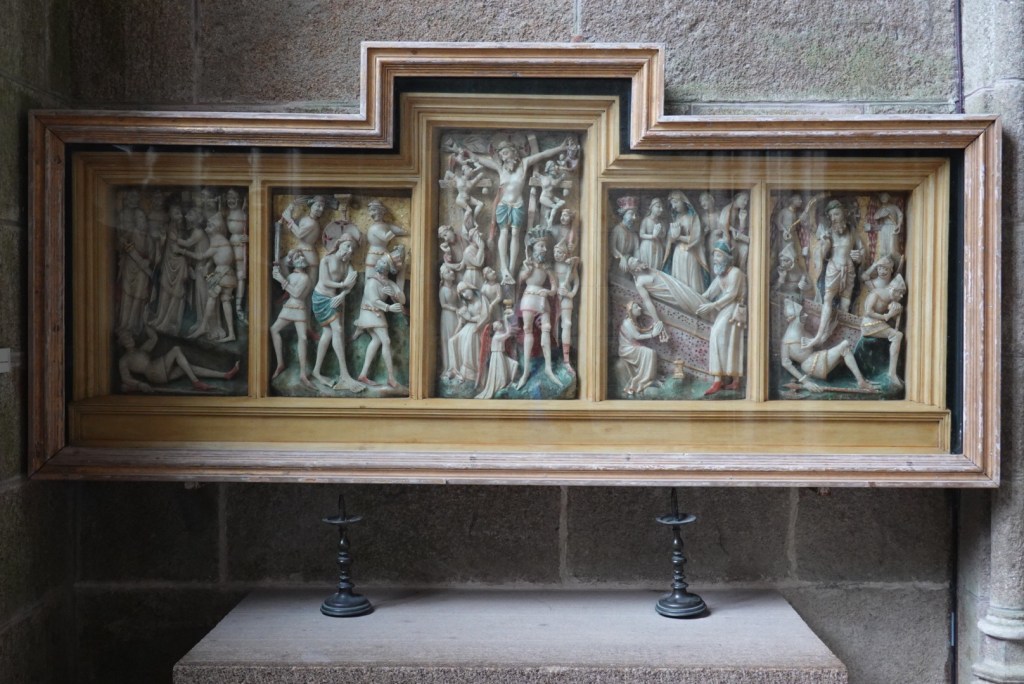
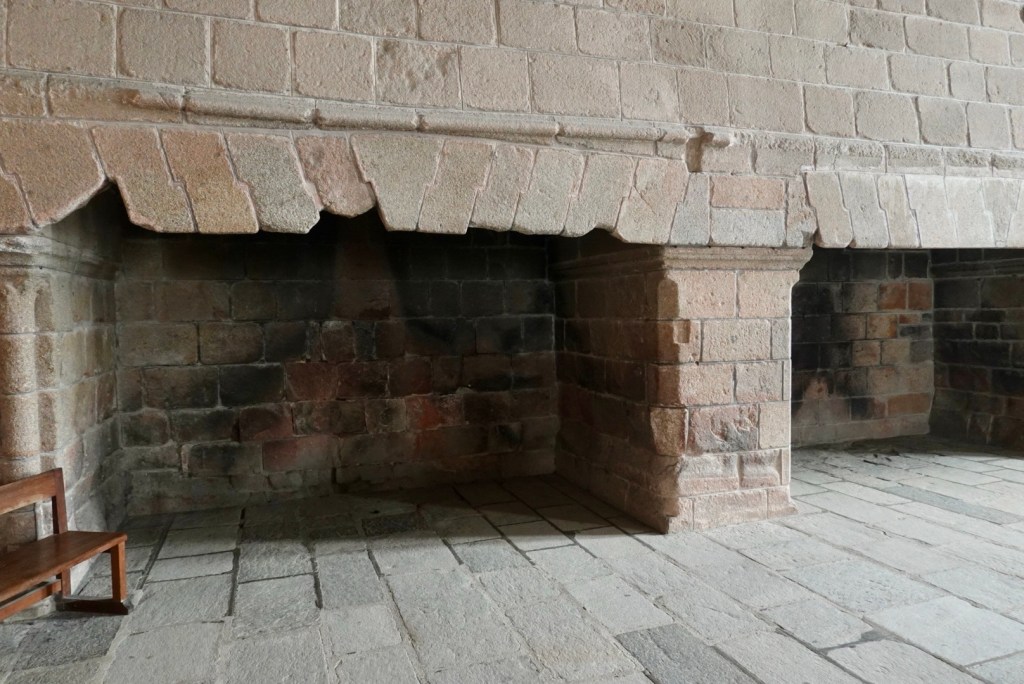
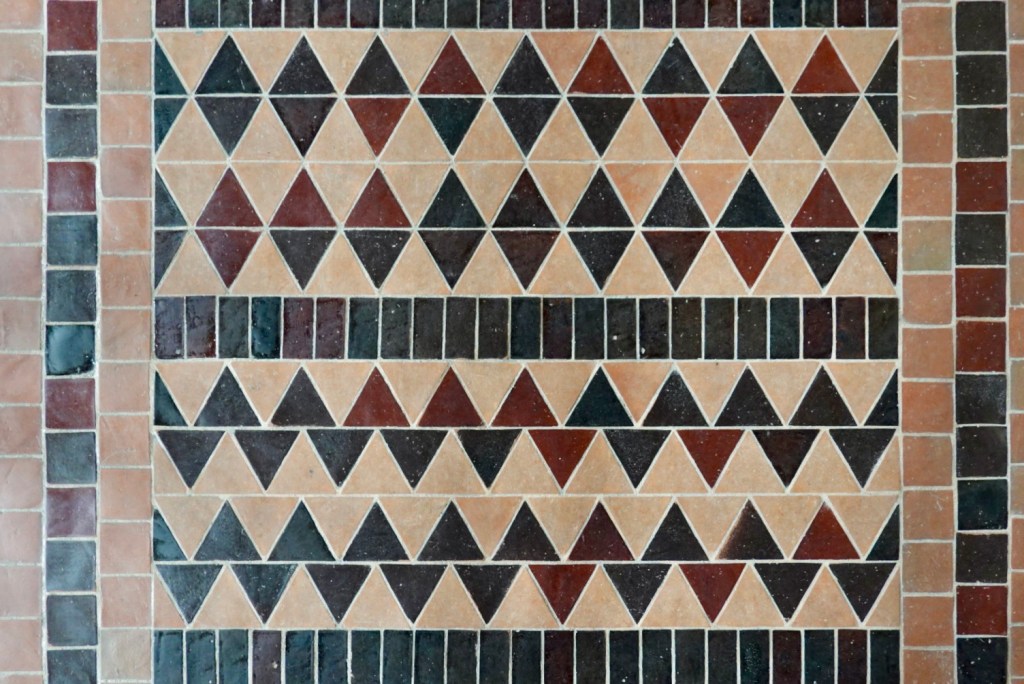
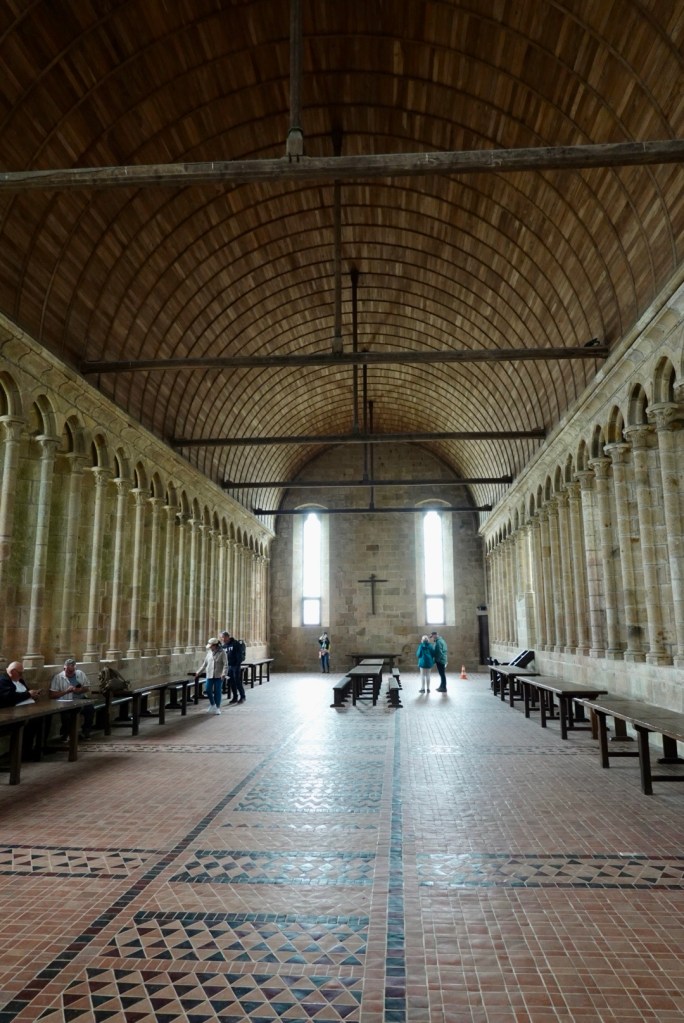
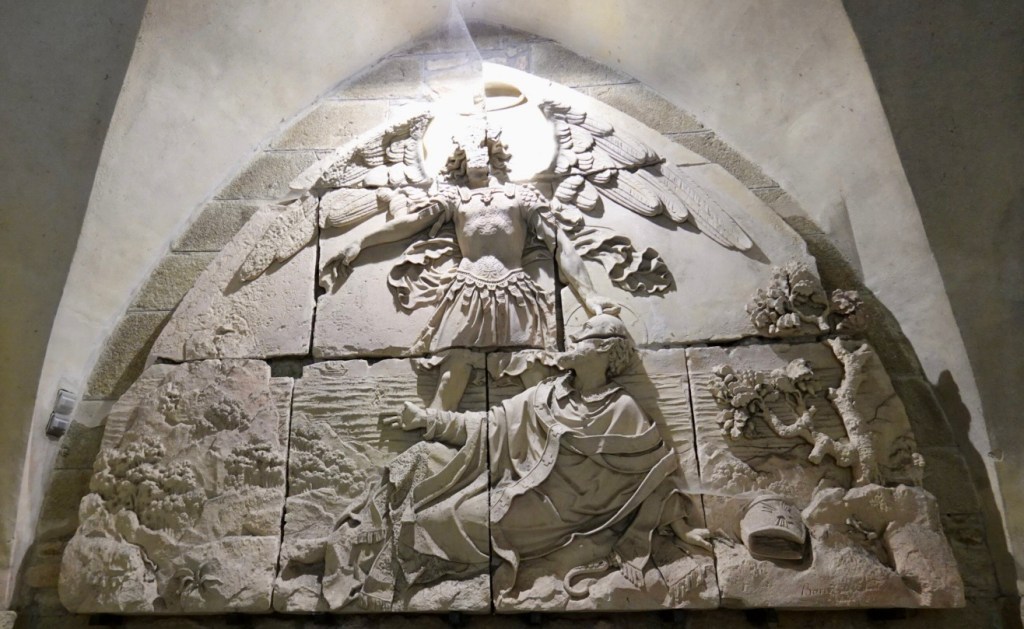
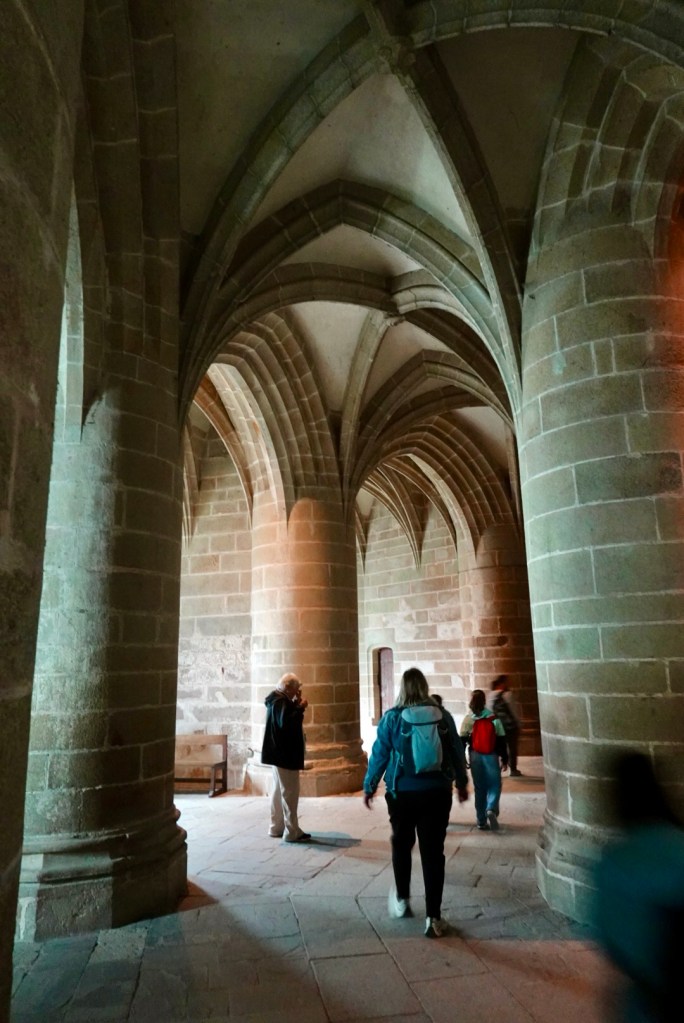
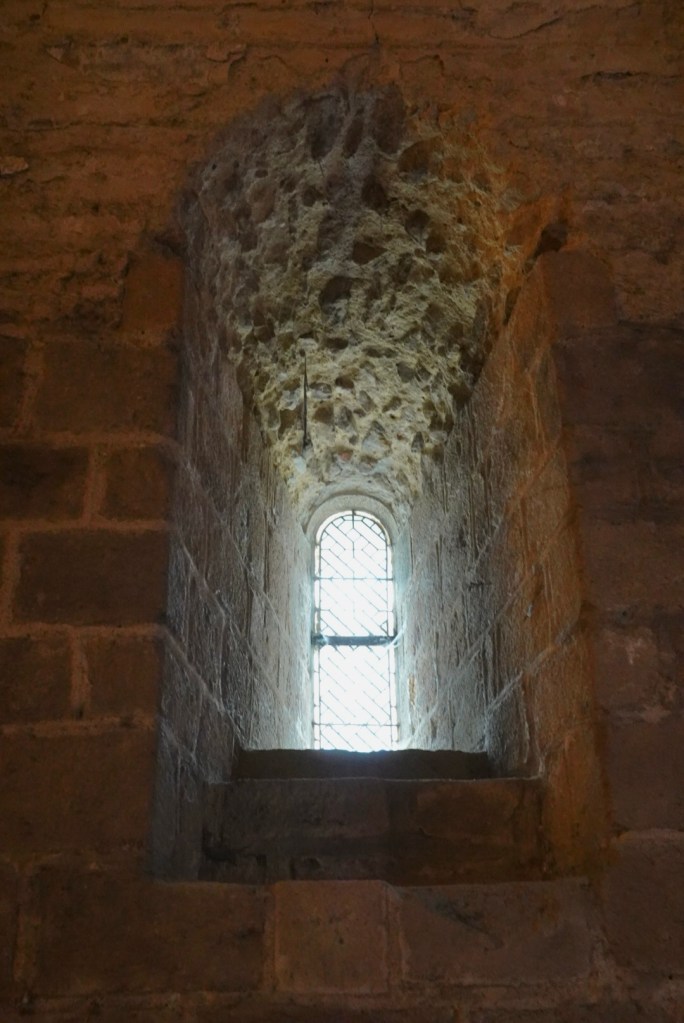
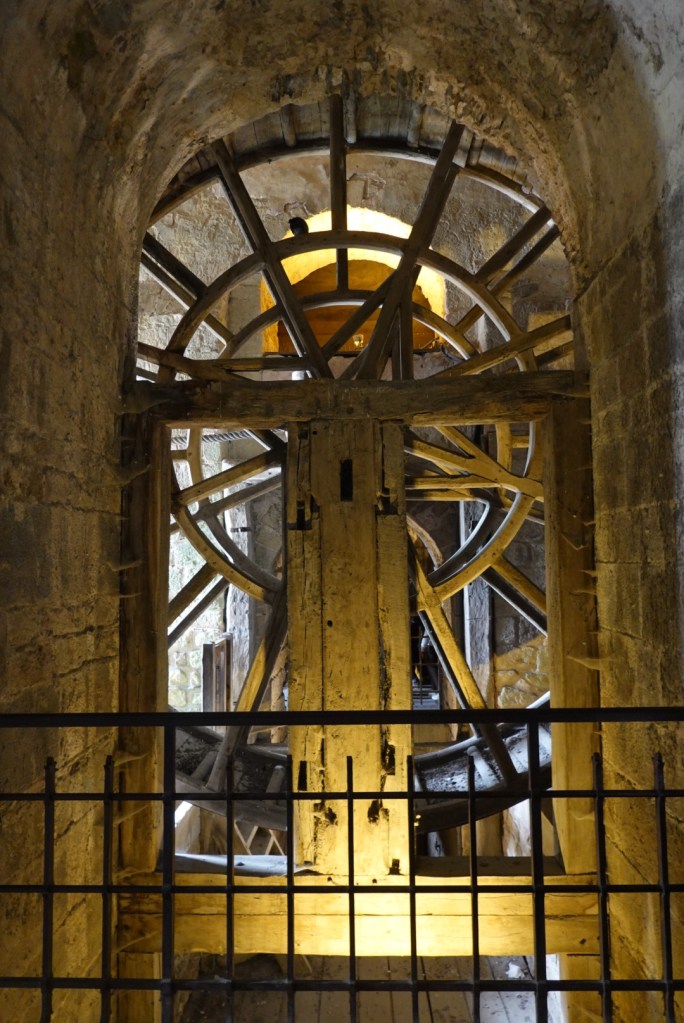
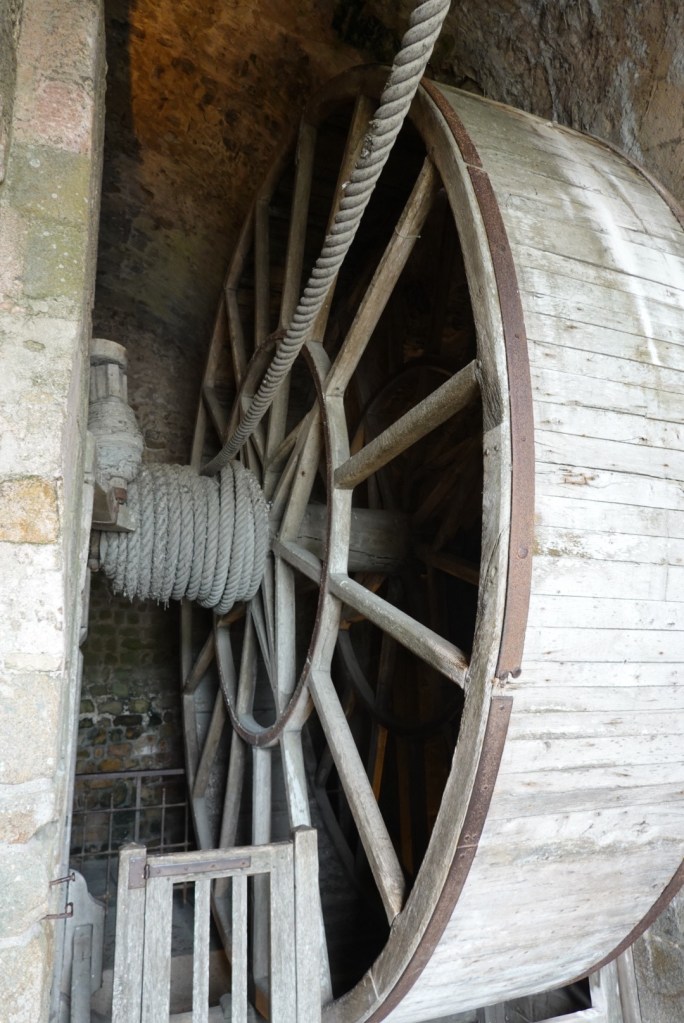
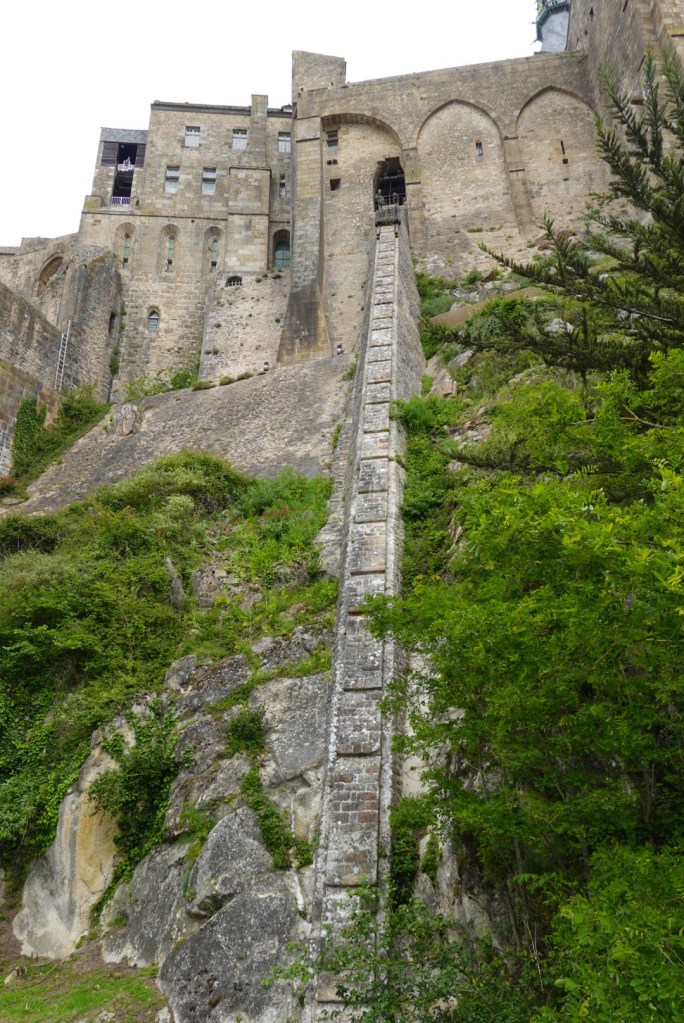
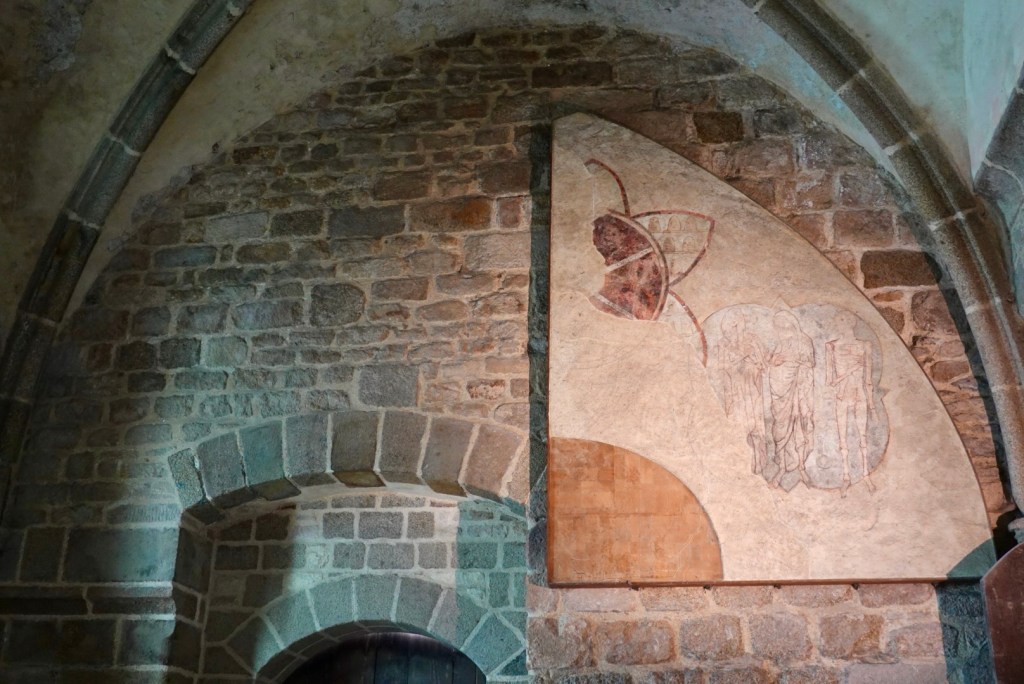
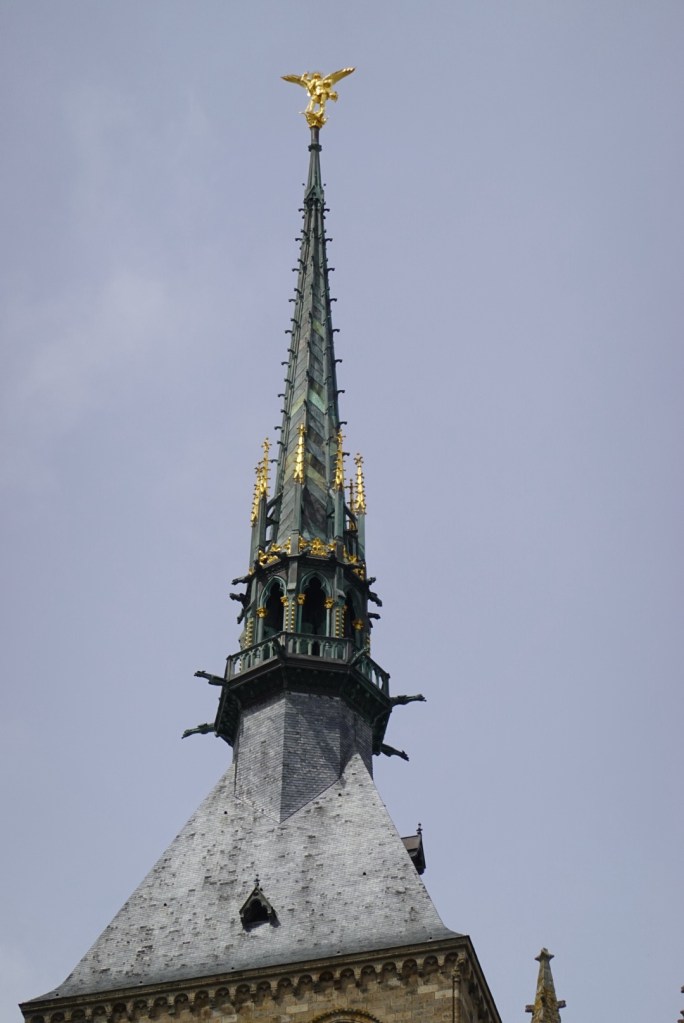
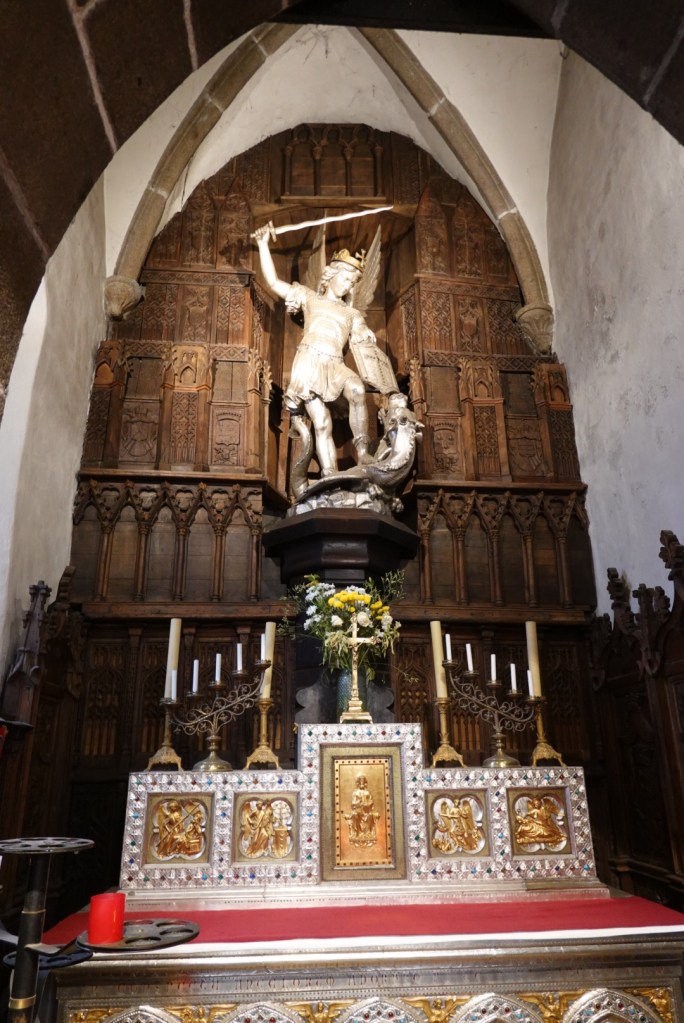
St. MichaelSt. Aubert, founder of the abbeyAn unusual layout for a pipe organ!The current church is not fancy, dating from the 12th to 15th centuries.Façade rebuilt in 1784Steeple, St. Michael on topAltarSuspended pirate ship?The cloister, with different columns on the inside and outside. The pillars were offset, minimizing the possibility of monks accidentally seeing each other.Carvings in a side chapelHuge fireplaces to heat the large room used to greet royal guestsFloor tile patternsMonks ate their meals here while one read from scriptures.Carving depicting Archangel Michael putting his thumb on St. Aubert’s head to convince him to construct the abbey here.Huge pillars support part of the church aboveThick wallsReplica of the wheel turned by imprisoned monksImagine treading on the inside of the wheel with another monkLooking down at the hoist operated by the wheelLooking up at the hoist cablewayRemnant of 13th century fresco
A group of musicians were performing for school children in a multi-story hall as we left the abbey.
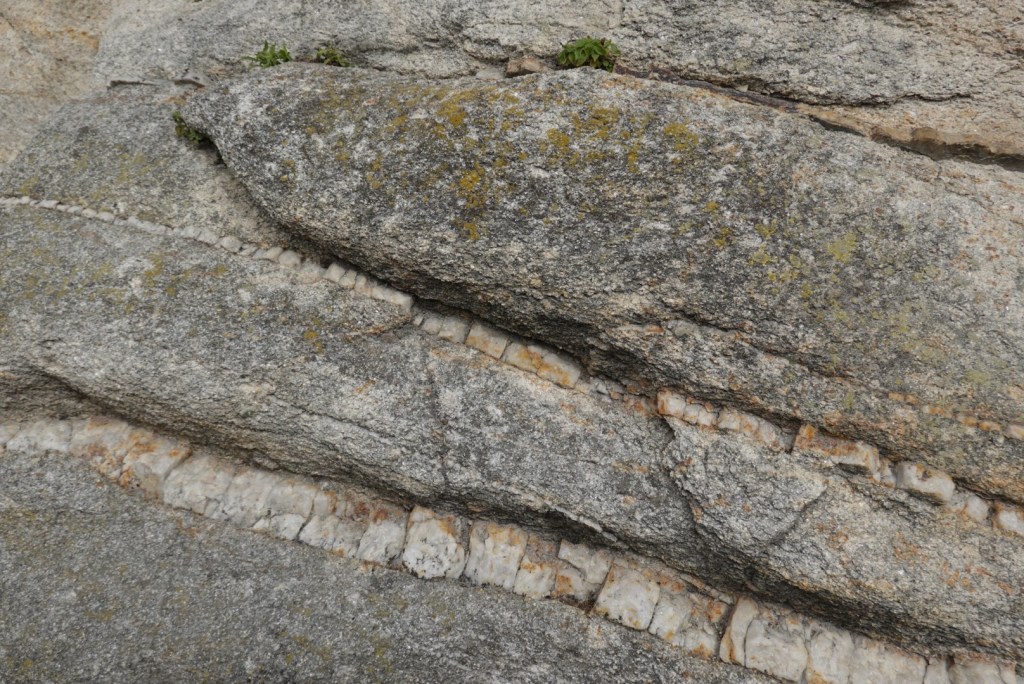
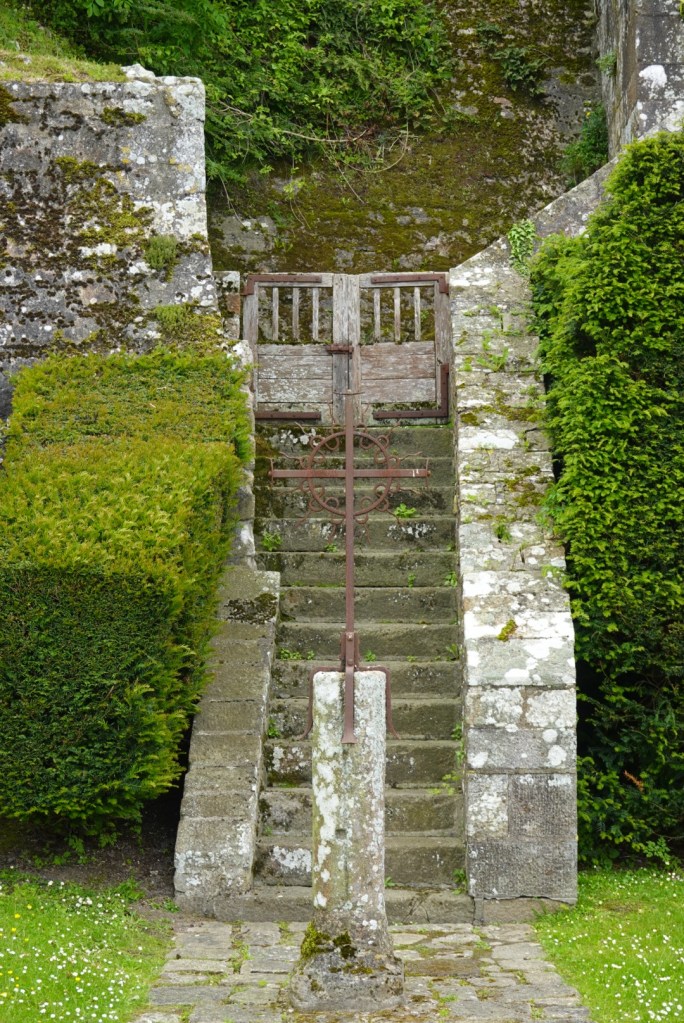
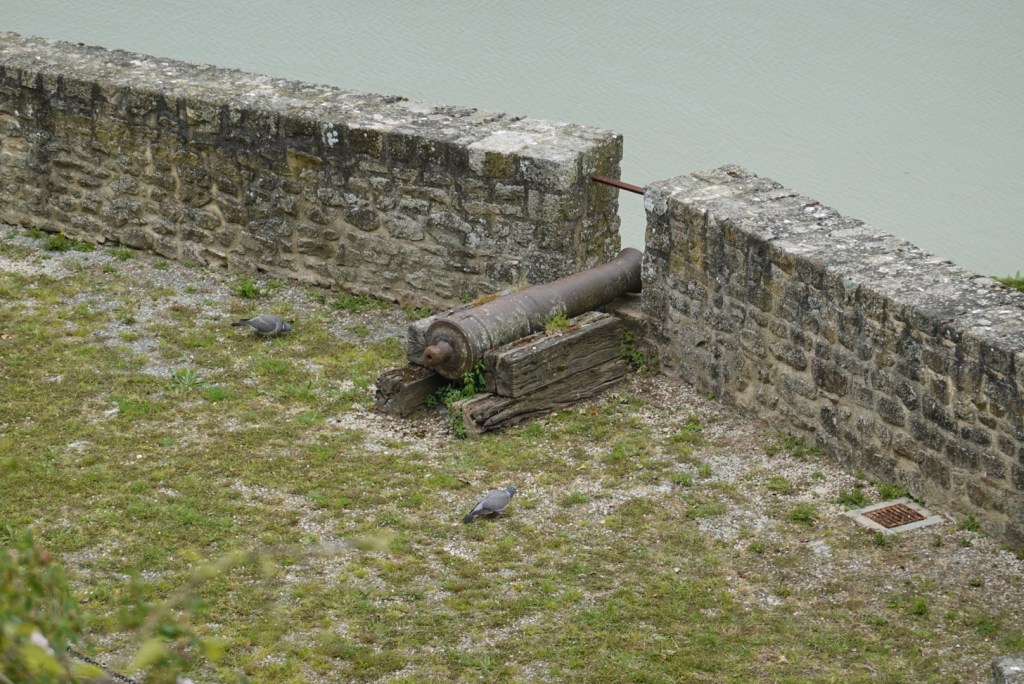
Bedrock with quartz veinsCross by the stairsCannonThe tide is going out
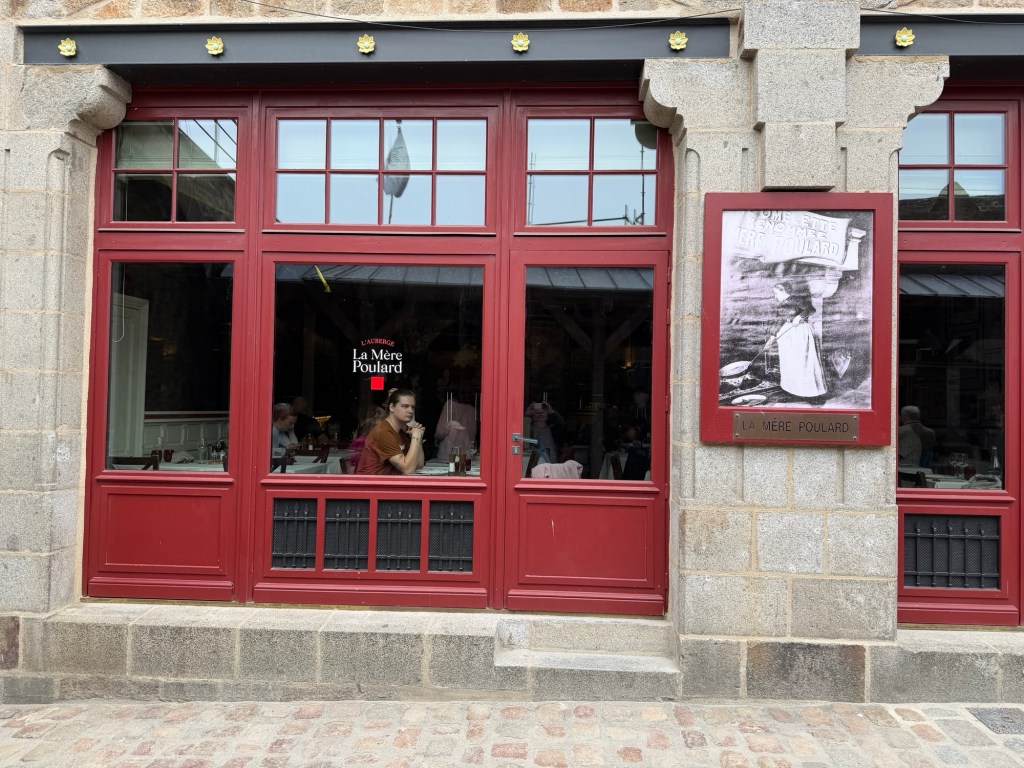
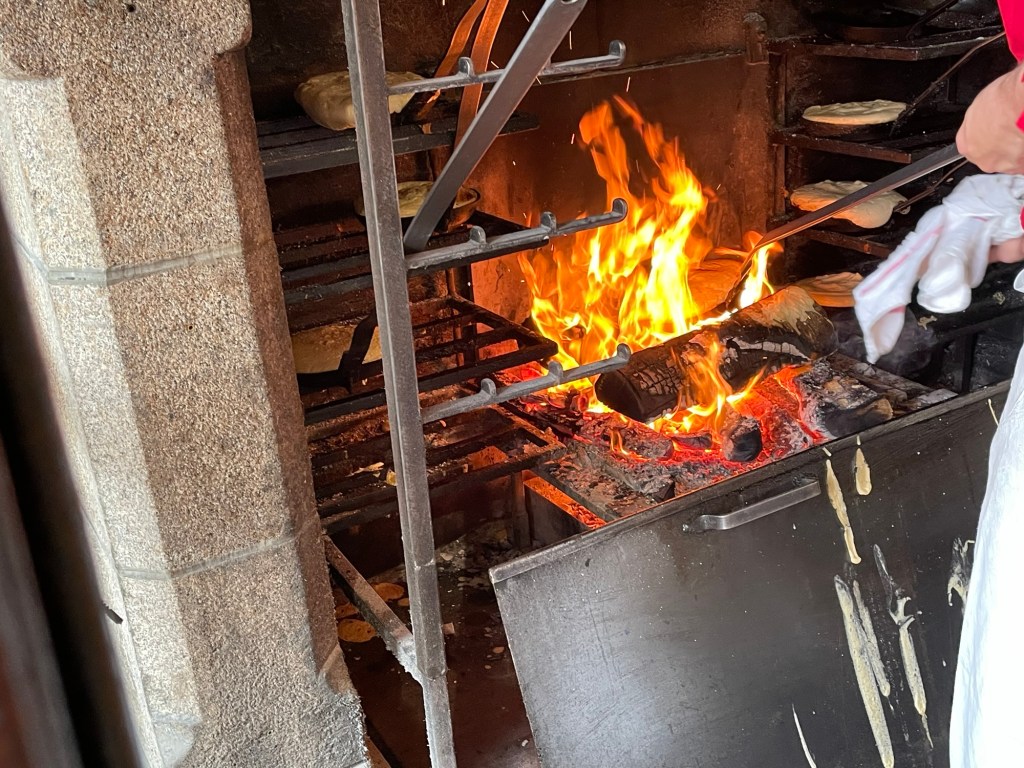
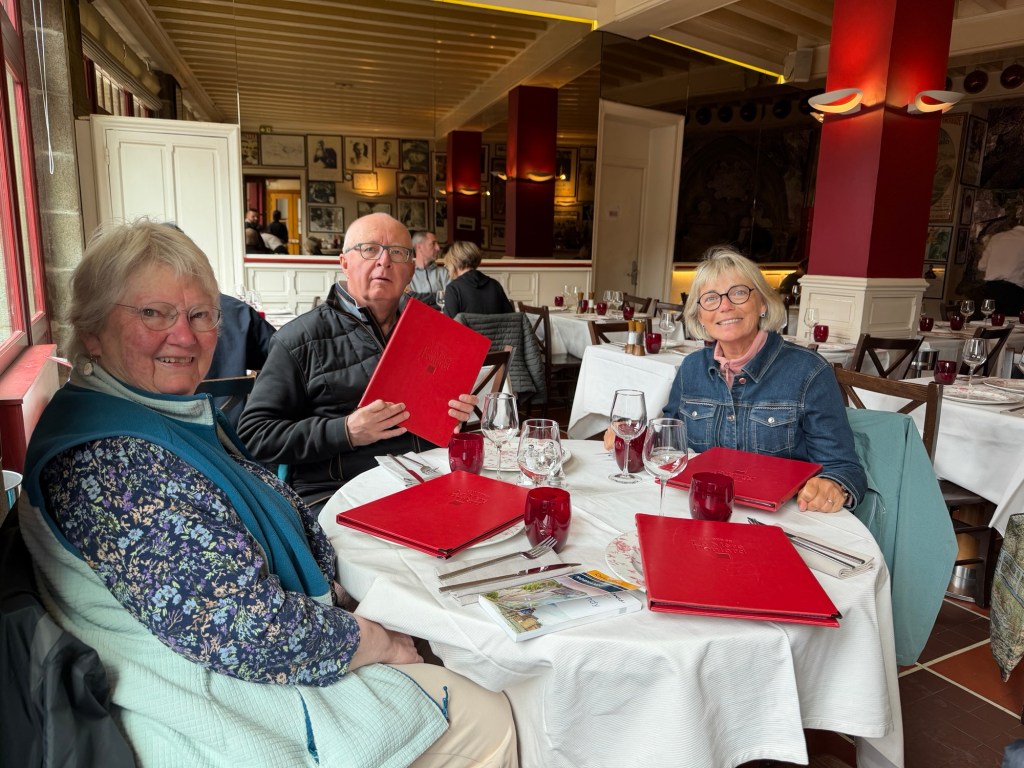
We enjoyed an unusual lunch in a fancy restaurant on Main Street, La Mère Poulard, famous for its omelettes.
Window of restaurant with La Mère herself in photograph Omelettes, cooked over the fireQuite a fancy table!
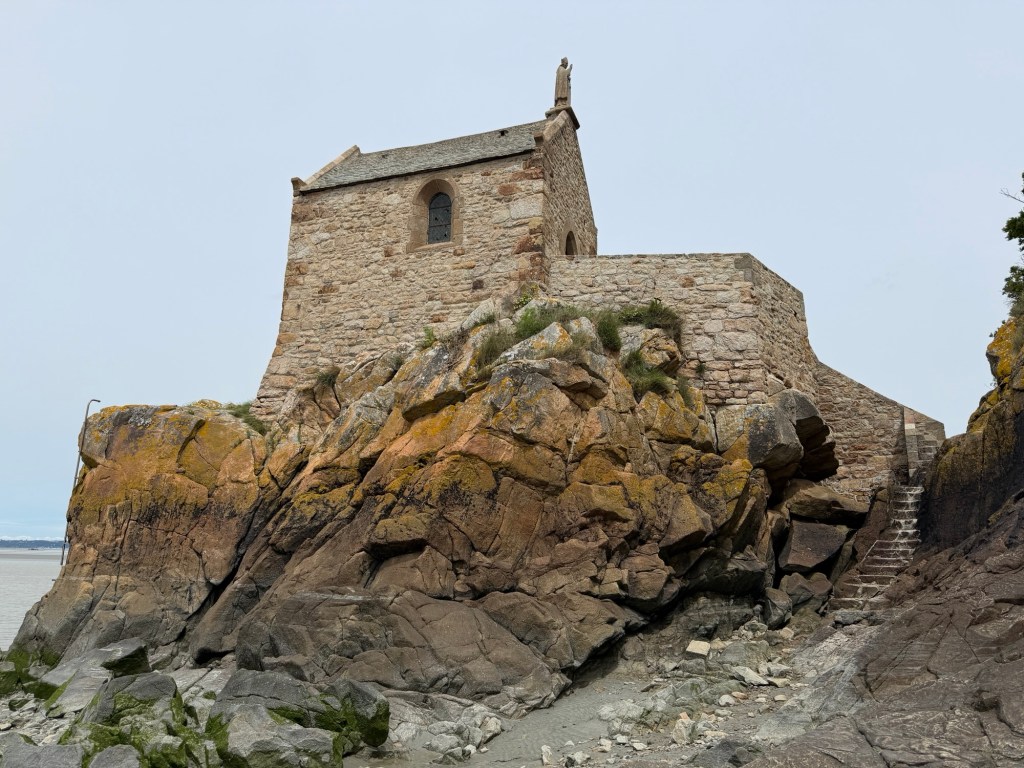
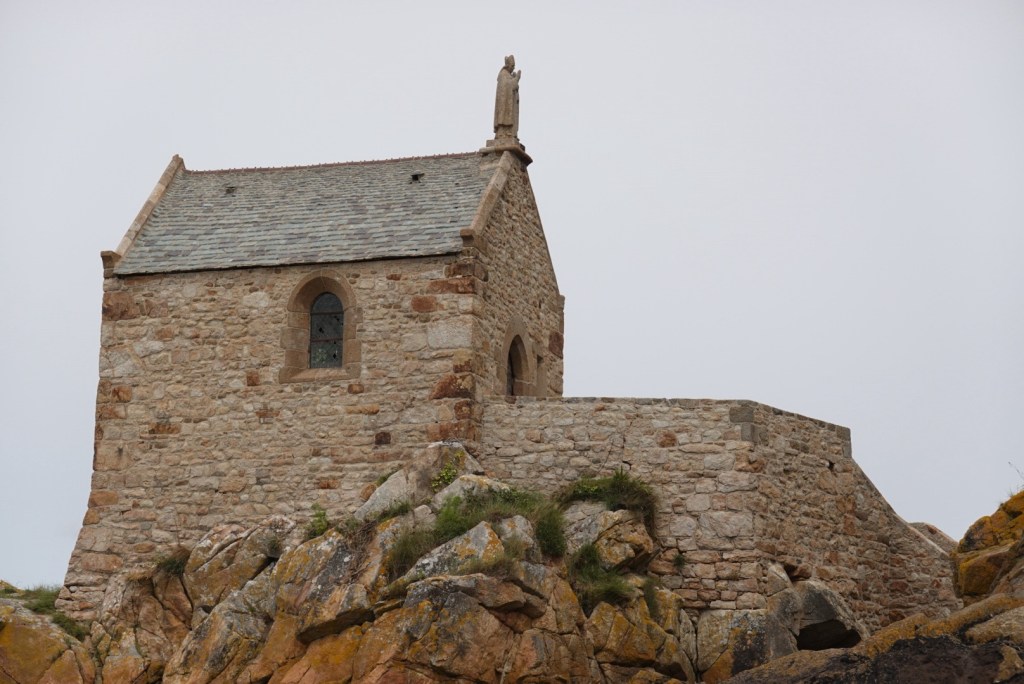
Soon after lunch, the tide was low enough for us to venture outside the castle walls for a view of a small adjacent chapel.
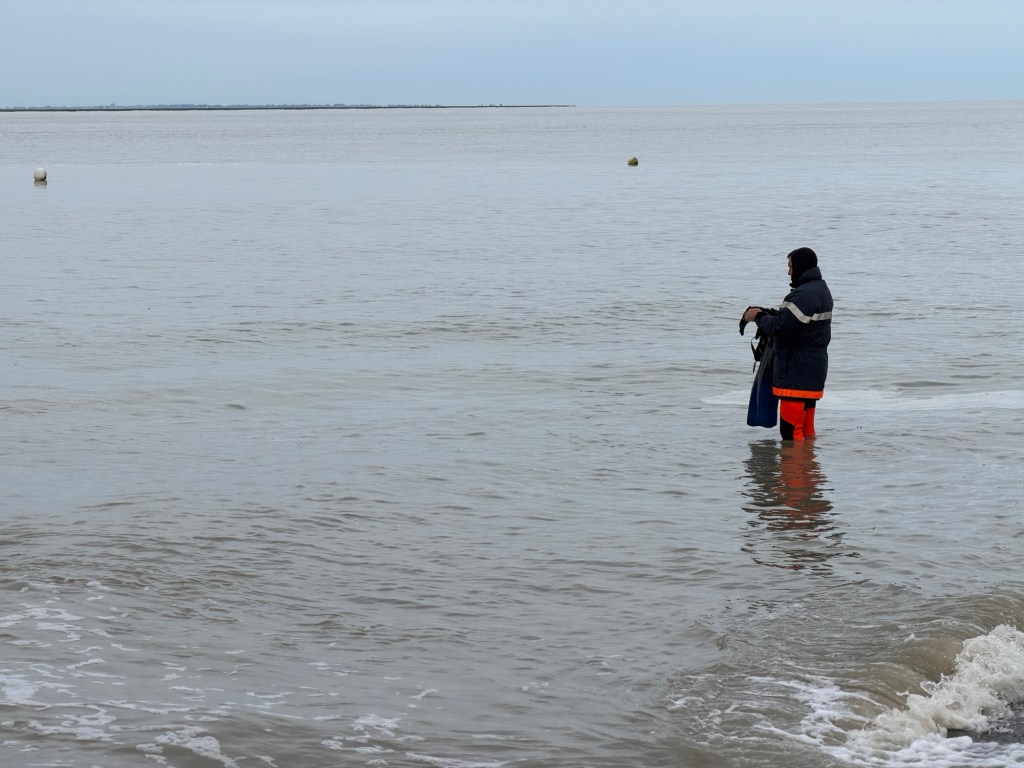
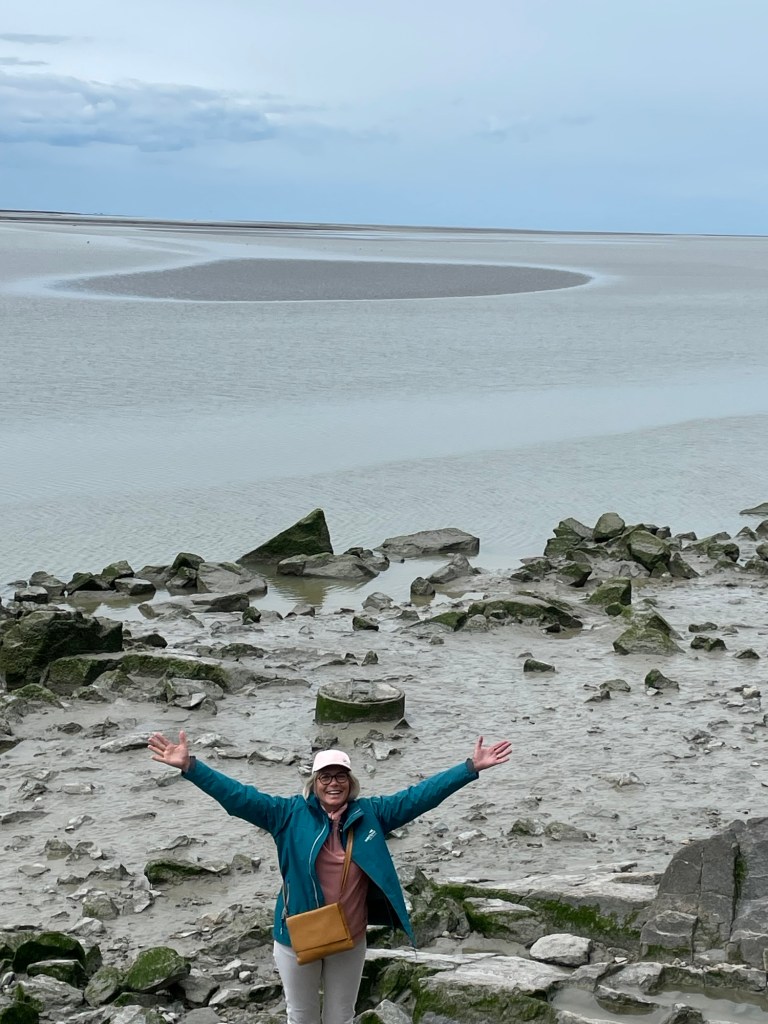
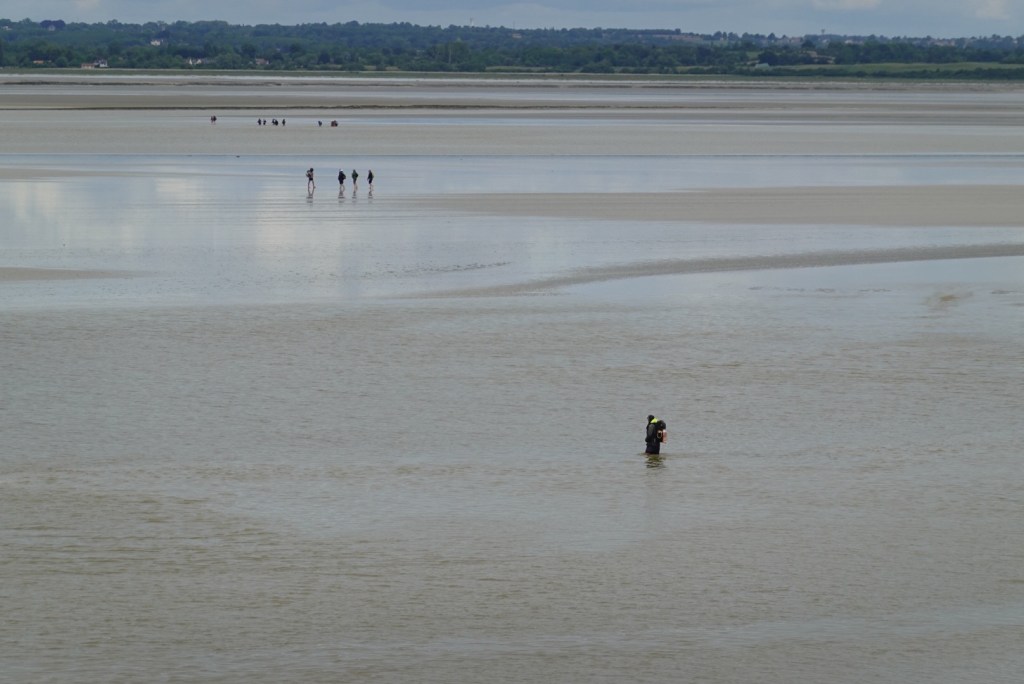
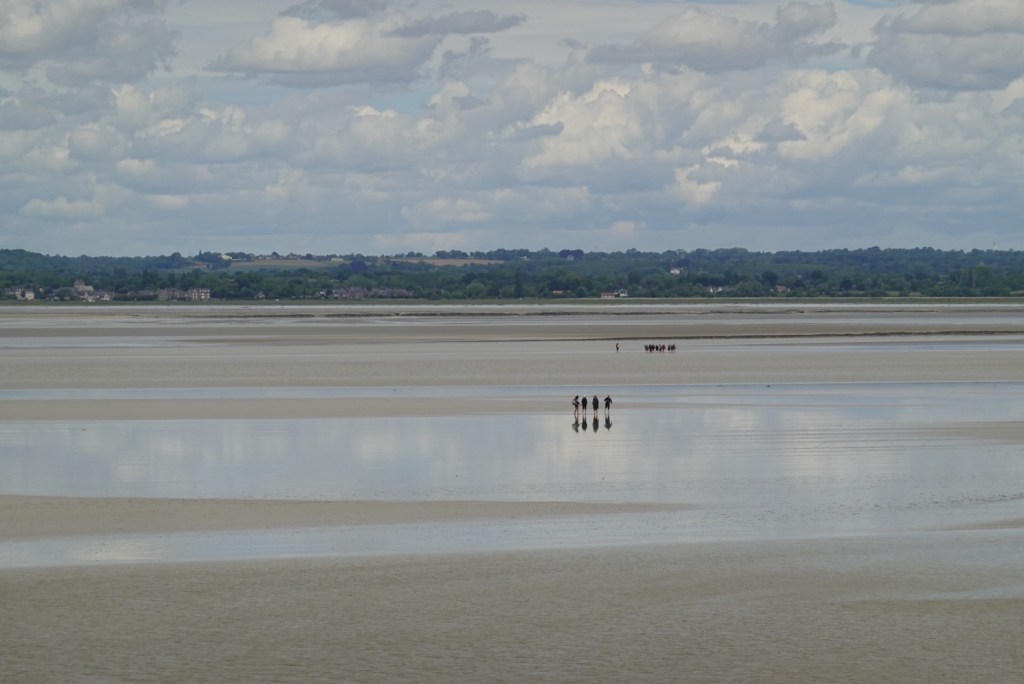
No water around this tower at low tideJoëlle testing the mudThe Gabriel TowerWader and walkers on the mudMany groups, some heading to adjacent islands where rock for the abbey was quarried
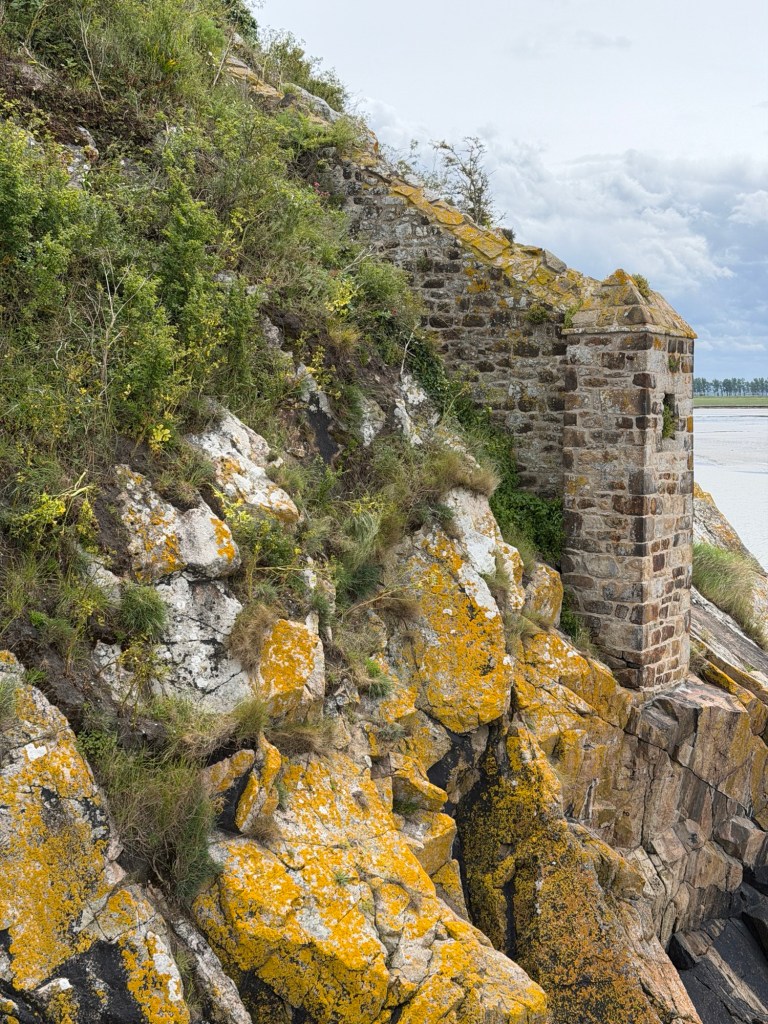
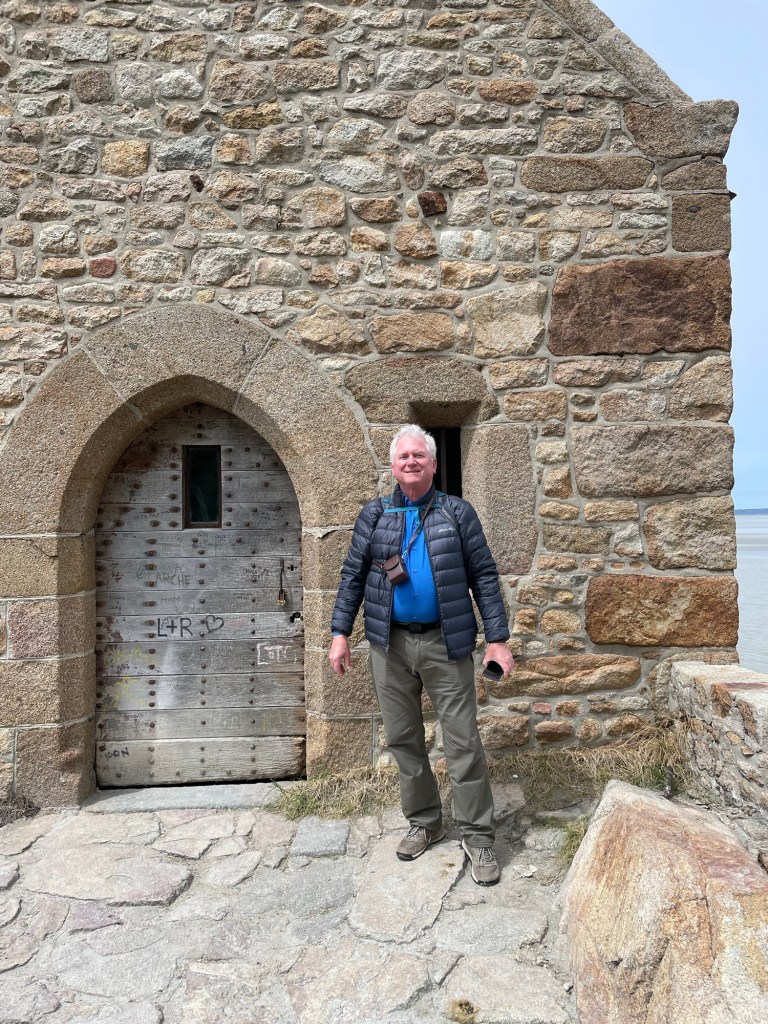
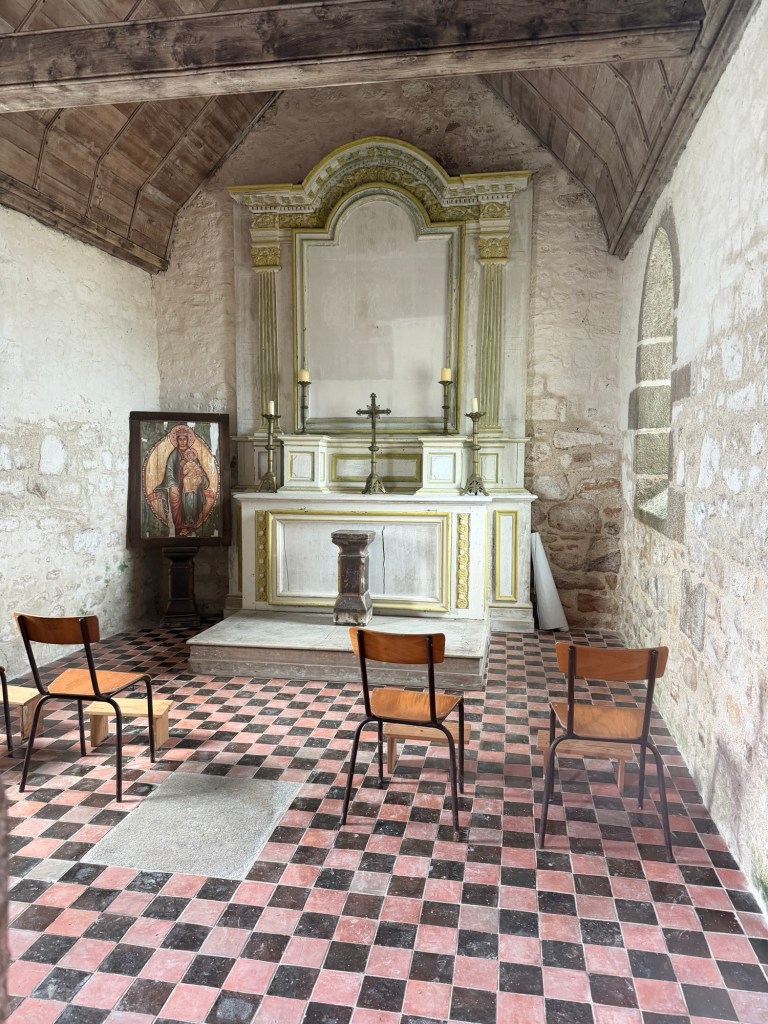
Getting down to the sand on the side near the small chapel was adventurous but worthwhile. We scrambled over some rocks, walked on the muddy sands, to find our way to the little chapel.
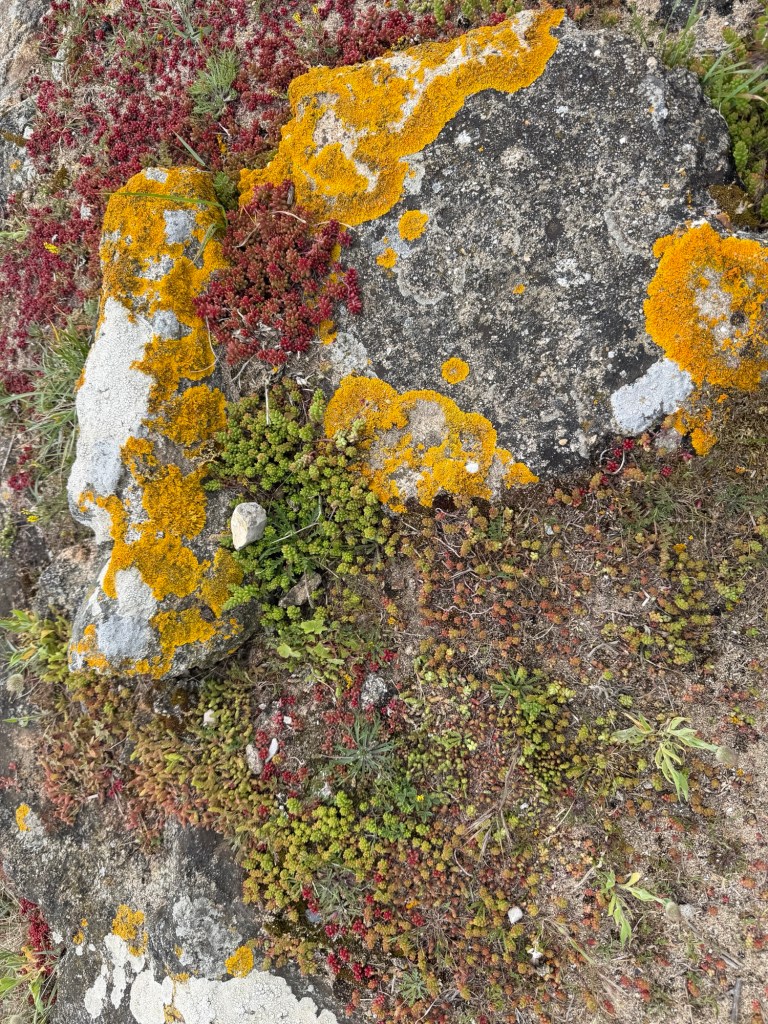
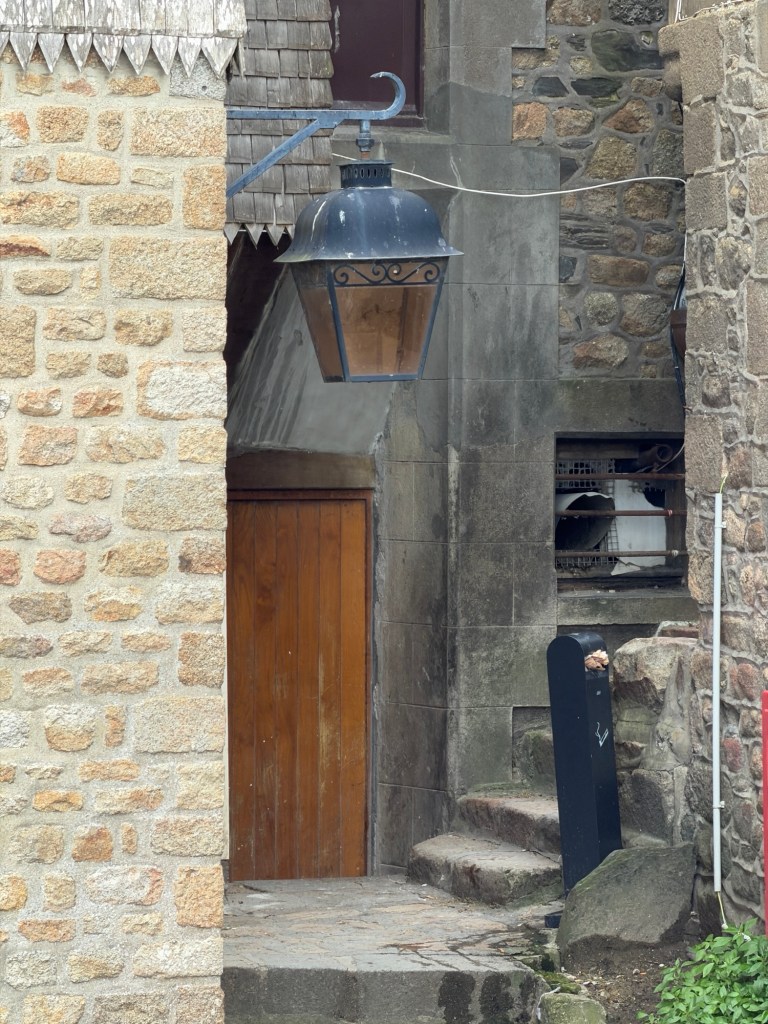
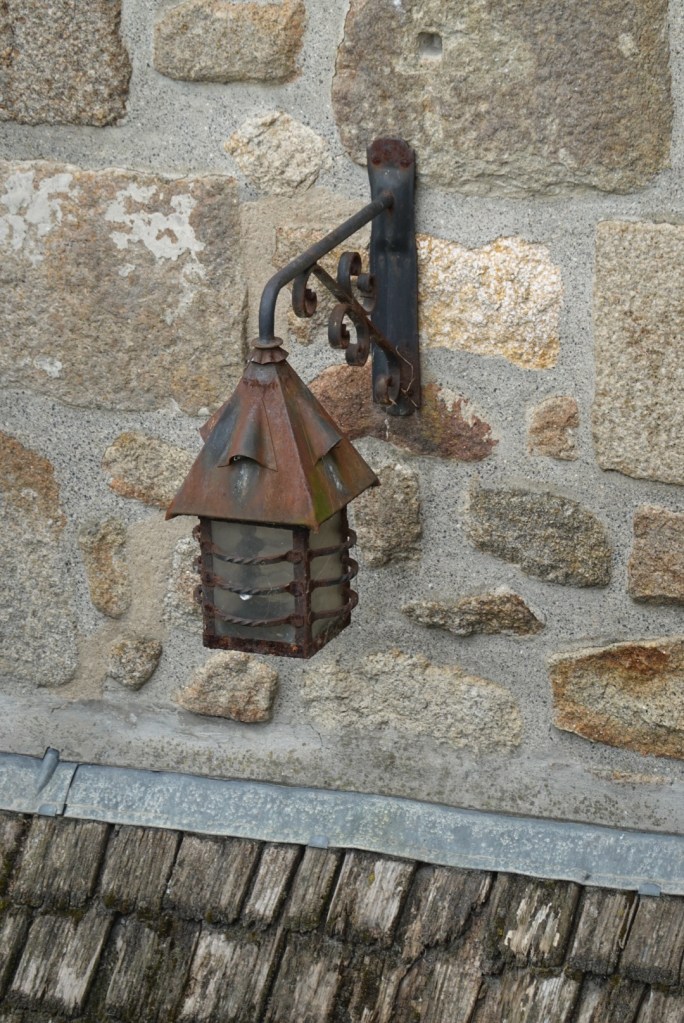
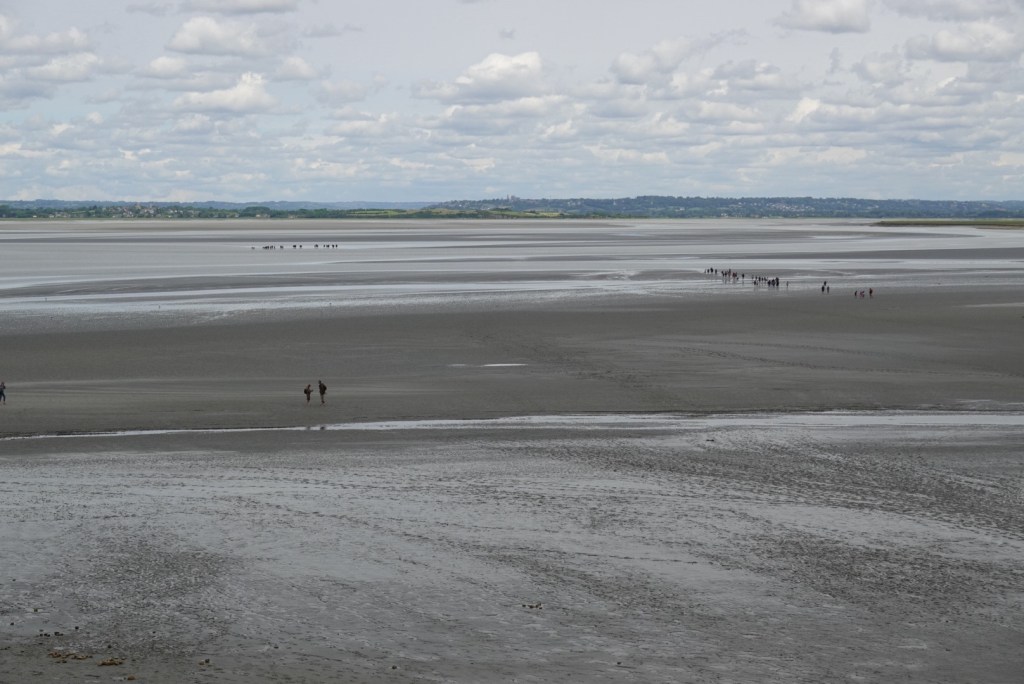
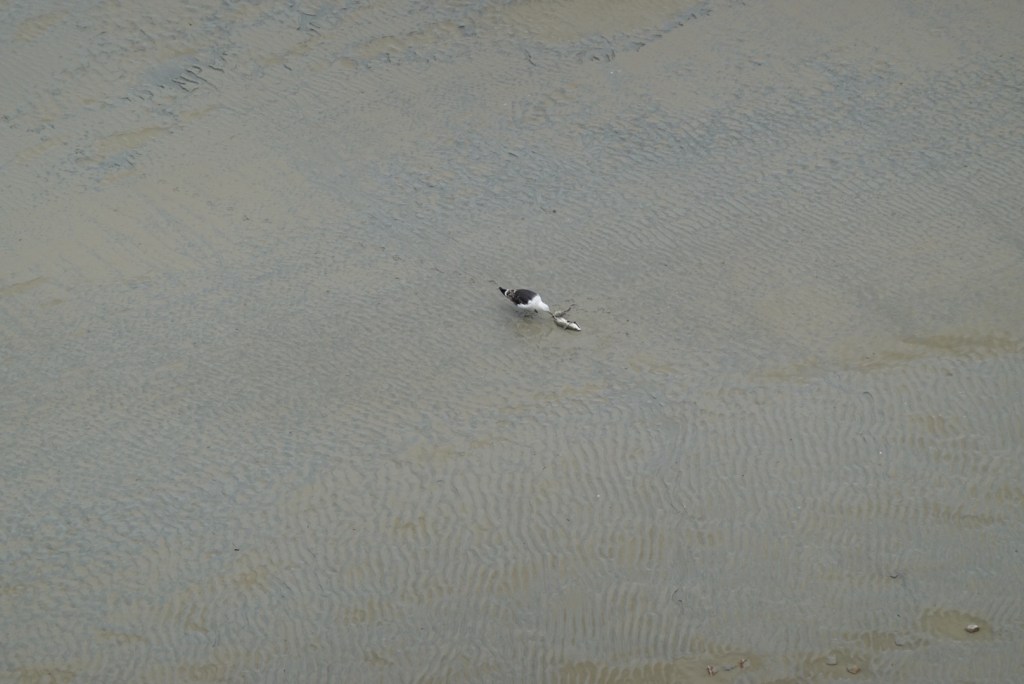
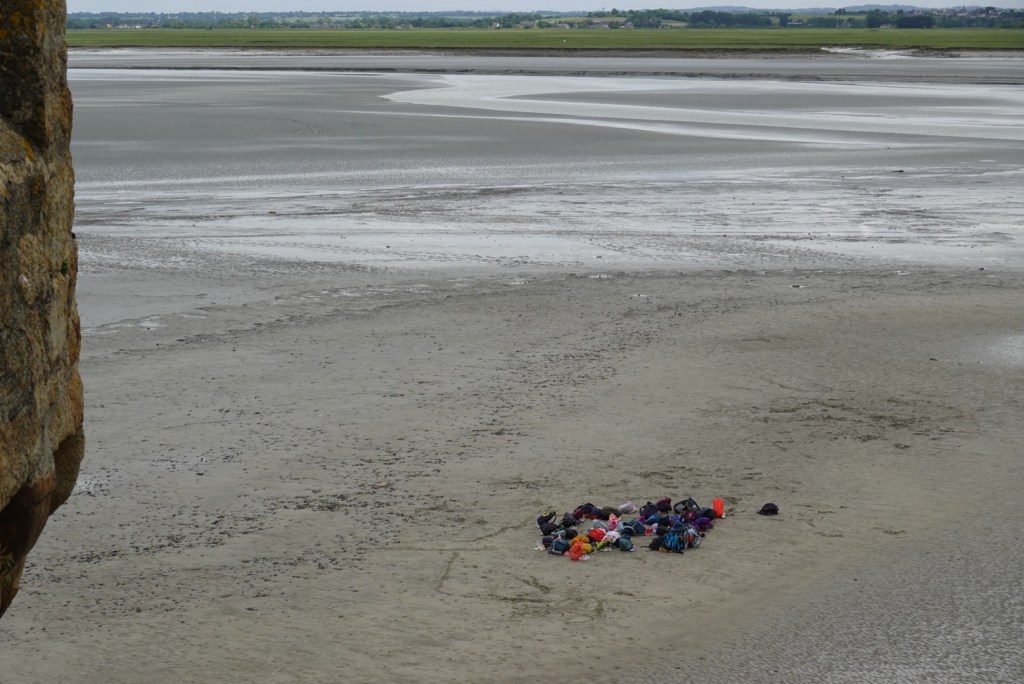
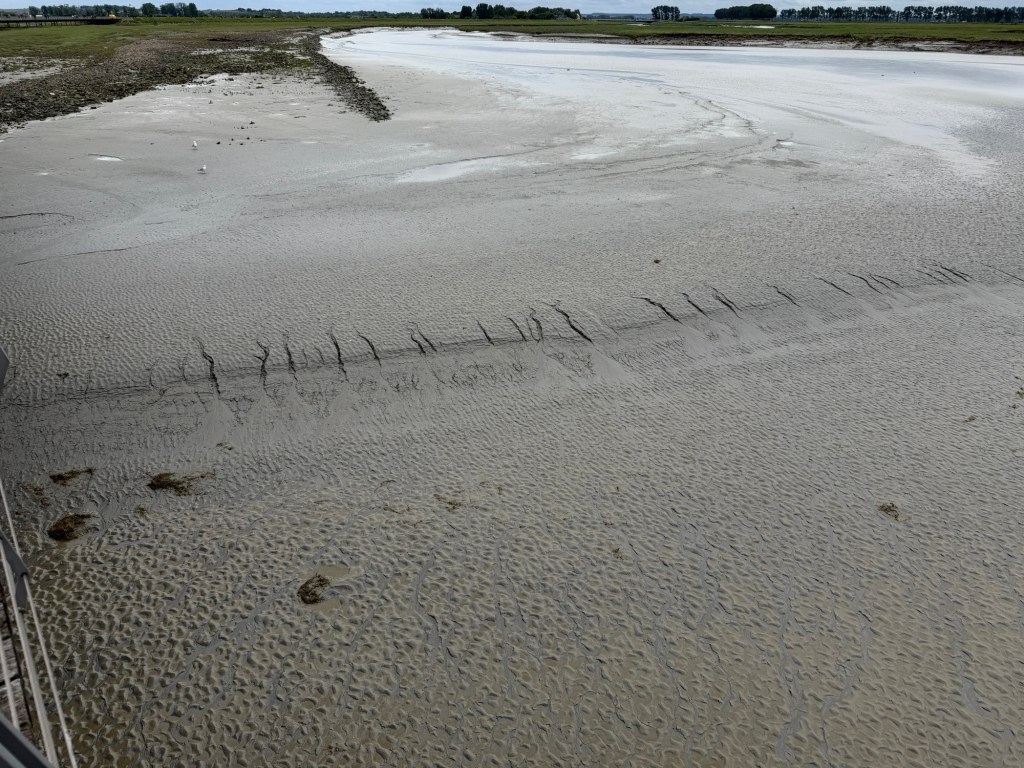
Beautiful lichenChapel on a hillBrian after taking photo of inside the chapelInside the chapelSt. Aubert ChapelViews from the ramparts that partially encircle the fortressClare at top of some stairsInside St Peter’s ChurchSt Peter slaying a dragonTwo varieties of lanternsGull finding lunch!Bags left by hikers planning to get back before high tide!Ripple marks evidence the currents caused by tides.Rivulets create miniature canyons in the sloping sands.Views of the mud flats near low tide
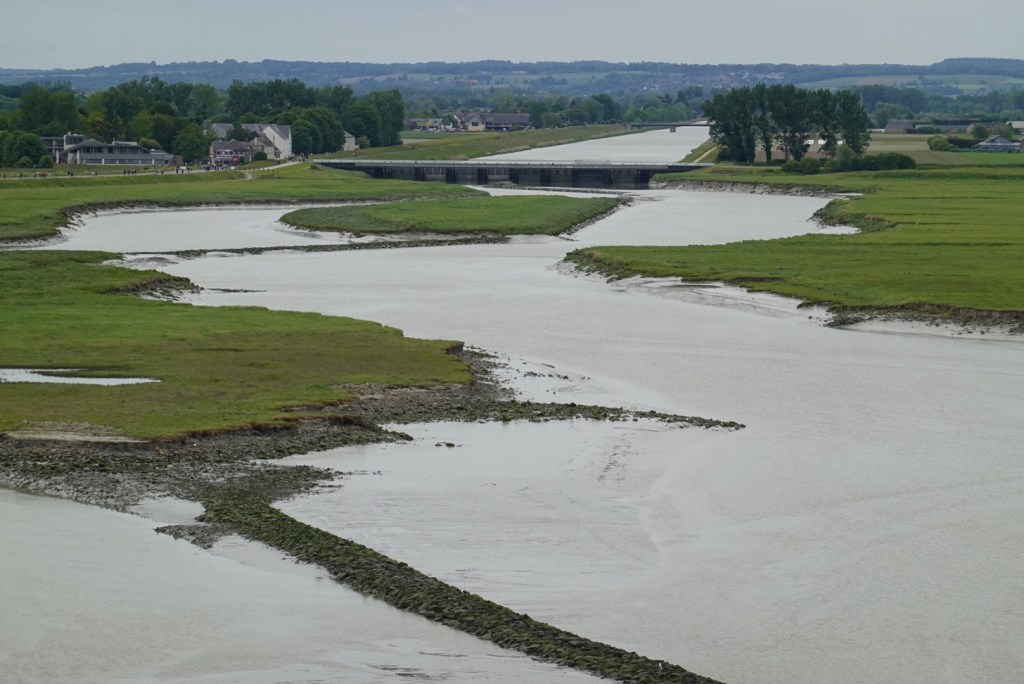
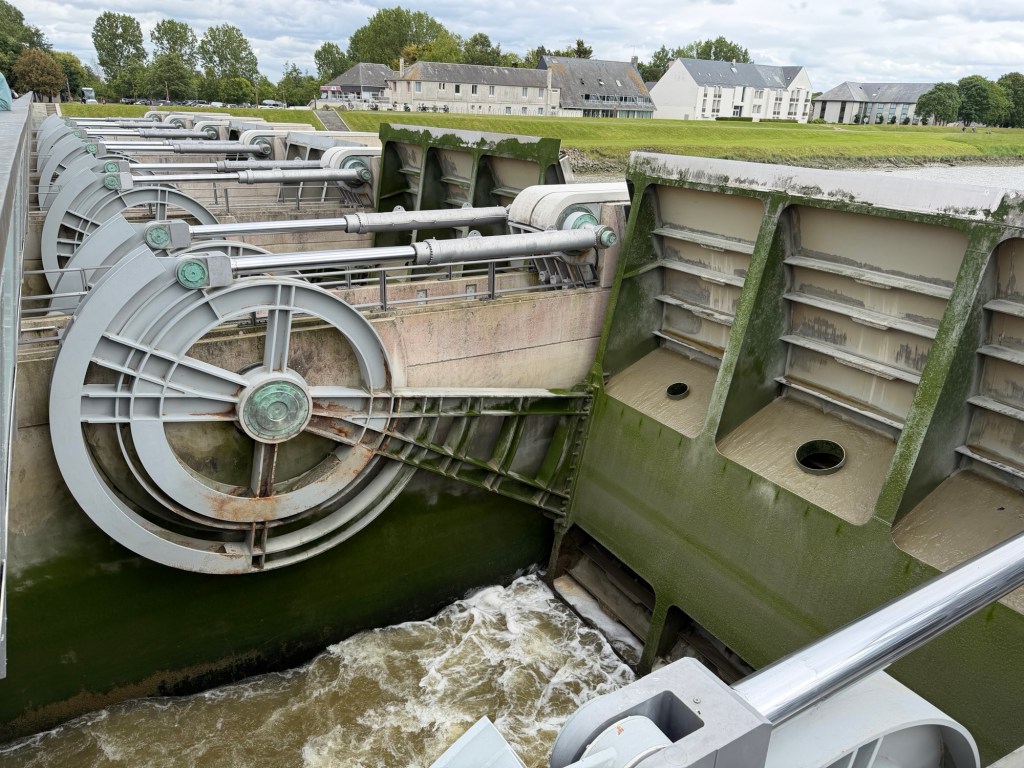
We walked back on the bridge past the first tram stop to see a dam constructed to release a lot of water at once in an effort to minimize sand deposition around the site. Brian turned back many times for photos.
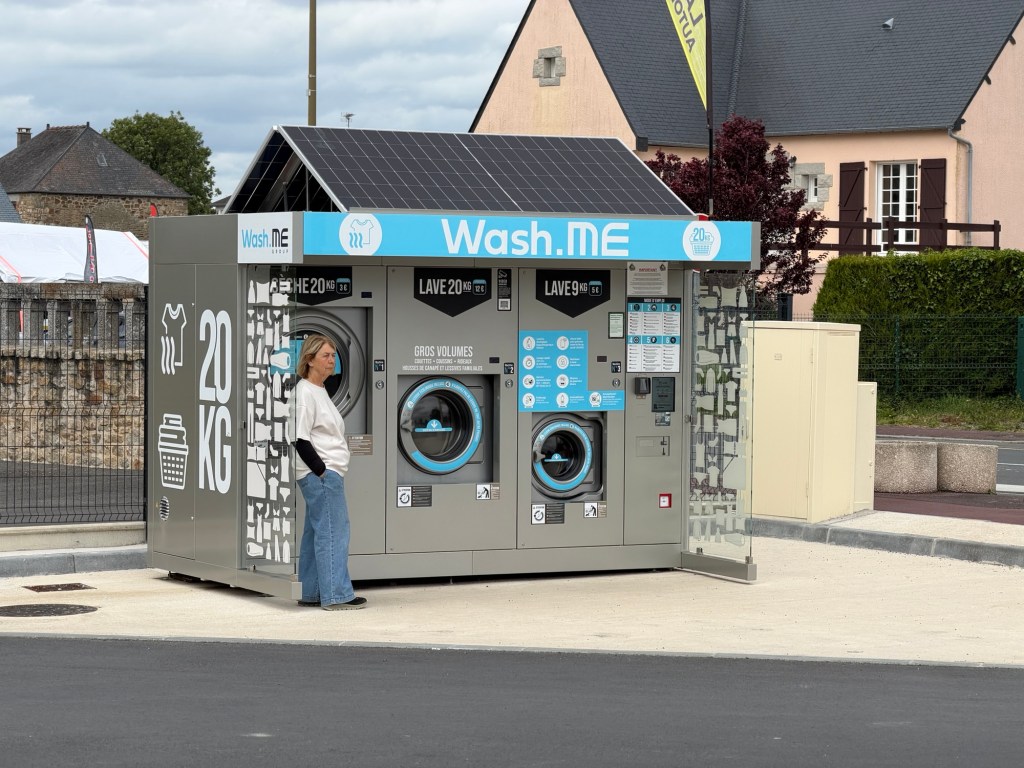
One does not tire from the views of Mont-St-Michel!River water released from the damTwo dam floodgates were opened Clare resting her legs at the damAt the market, there is an outdoor coin laundry! This one is conveniently close to a camping area.
In the evening, Marc and Joëlle went to the river to see the tidal bore (mascaret in French), a wave-like surge that occurs at high tide when the tide opposes the natural flow of the river into the sea, affecting areas for miles. The tidal differential varies, as does the height of the wave when it occurs, technically twice a day. Our friends were able to take a video and pictures of the surge, the wave about a foot or two high.
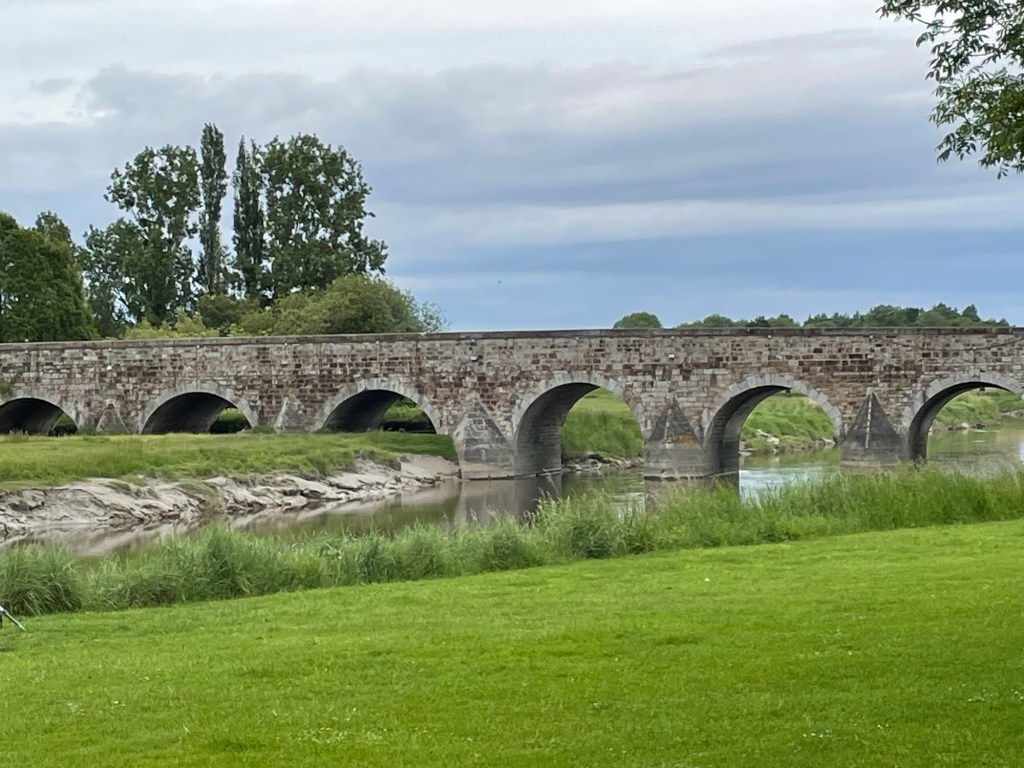
Auto bridge in Pontaubault, near our AirBnB, when water was flowing normally, toward the ocean. Views as the wave passed Marc and Joëlle. Clare and Brian missed it.
Video showing river flow starting to reverse, natural flow right to left, changing to left to right in this view.
We left Jérome and his lovely home to stay at an AirBnB in Pontaubault. We are heading mostly north to some beaches and harbors, then heading south along the west coast of the Cotentin Peninsula to Pontaubault where we will stay for three nights in an AirBnB. This day was for relaxation while traveling.
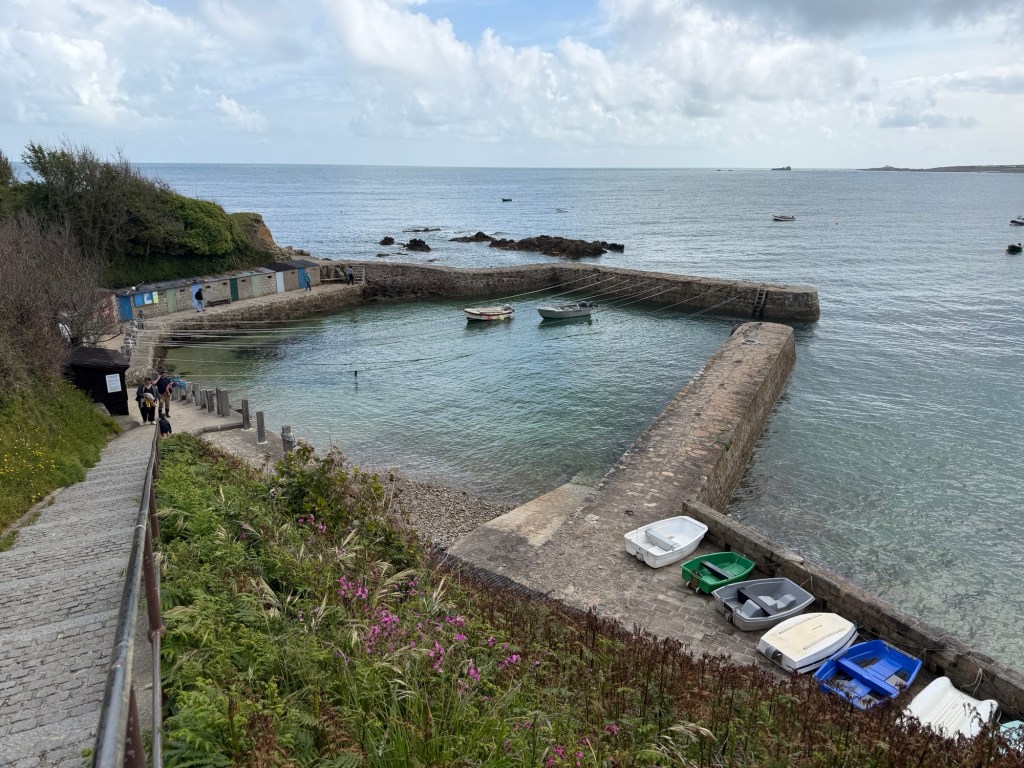
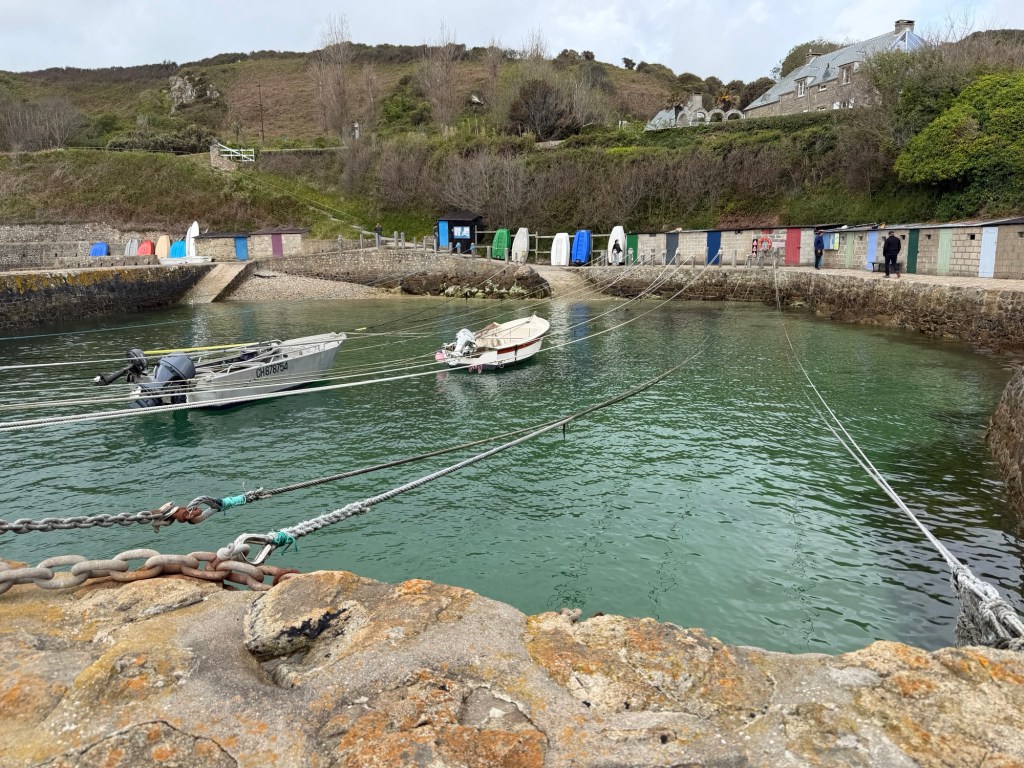
The smallest harbor in France, Port Racine, was originally built by a pirate. It is on a small peninsula west of Cherbourg. We parked nearby and walked all around there.
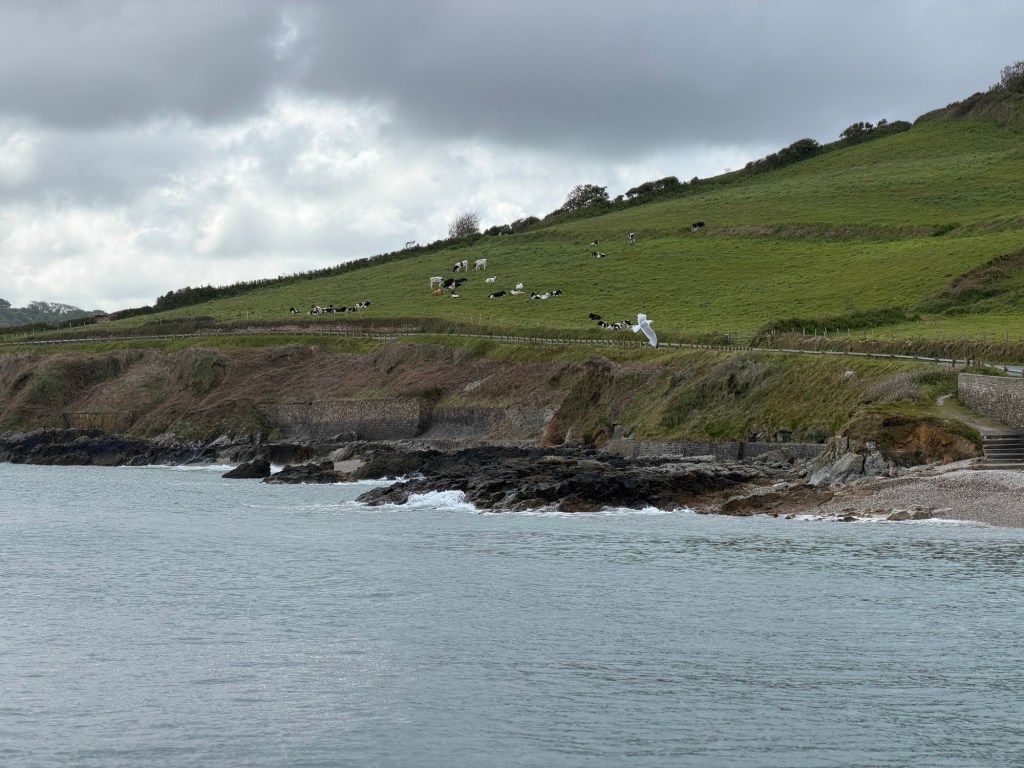
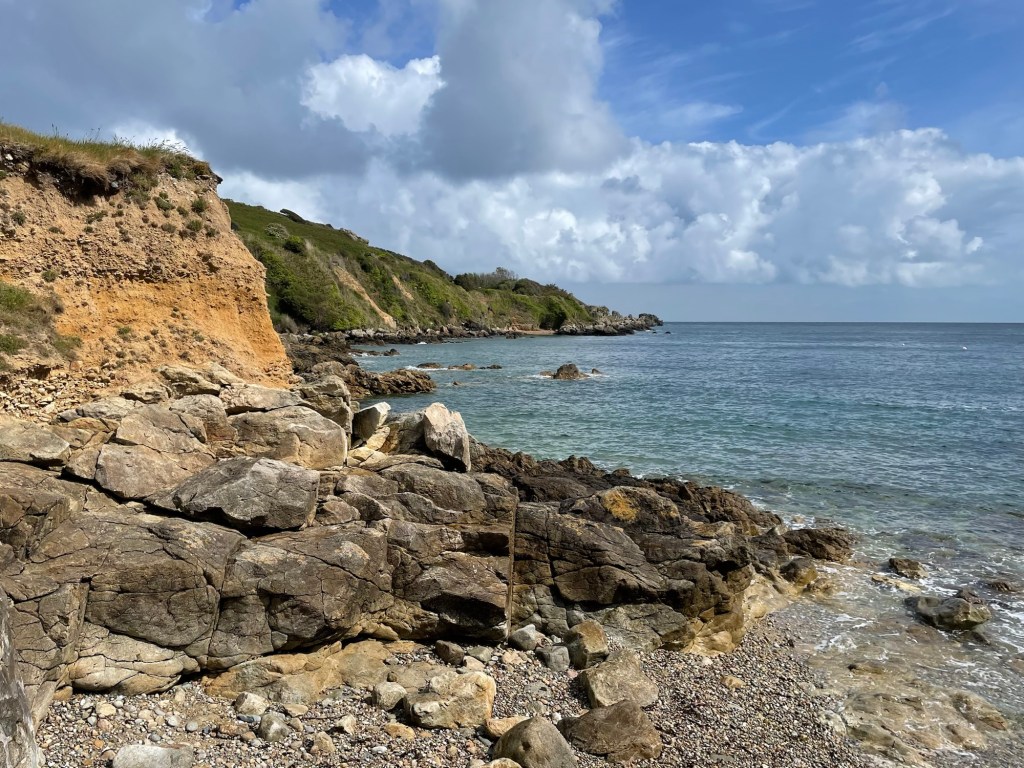
Coastline to leftView of Port Racine from aboveCoastline to rightUs geoscientists noticed the unconformity (gap in time) at the base of the cliff.
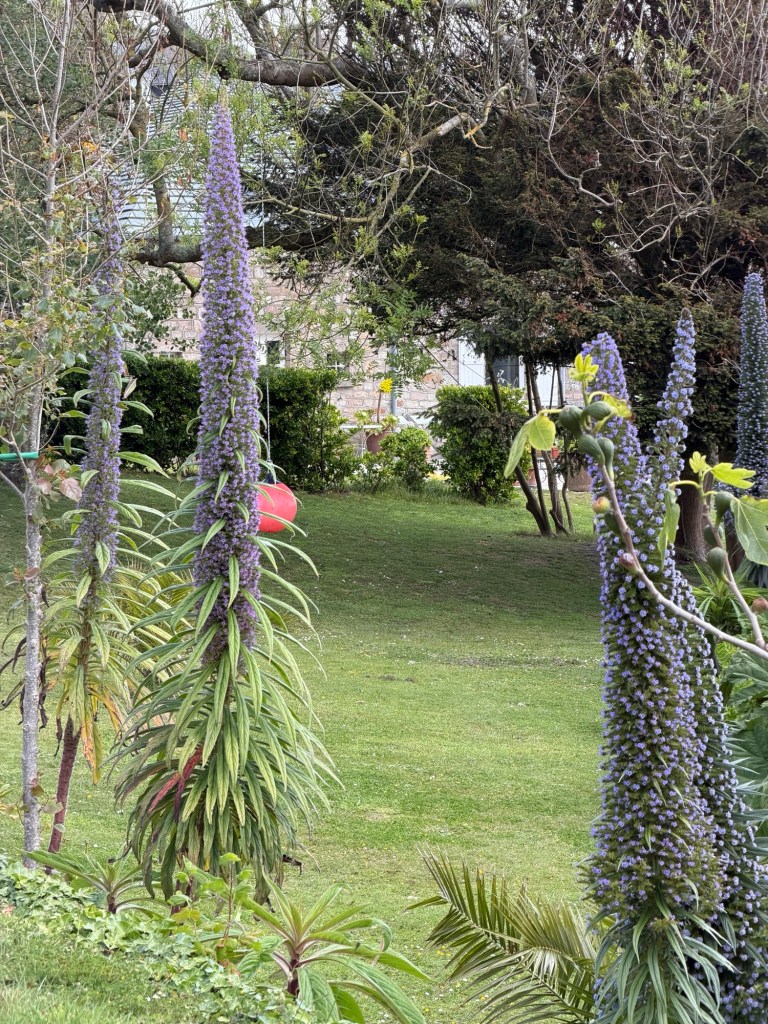
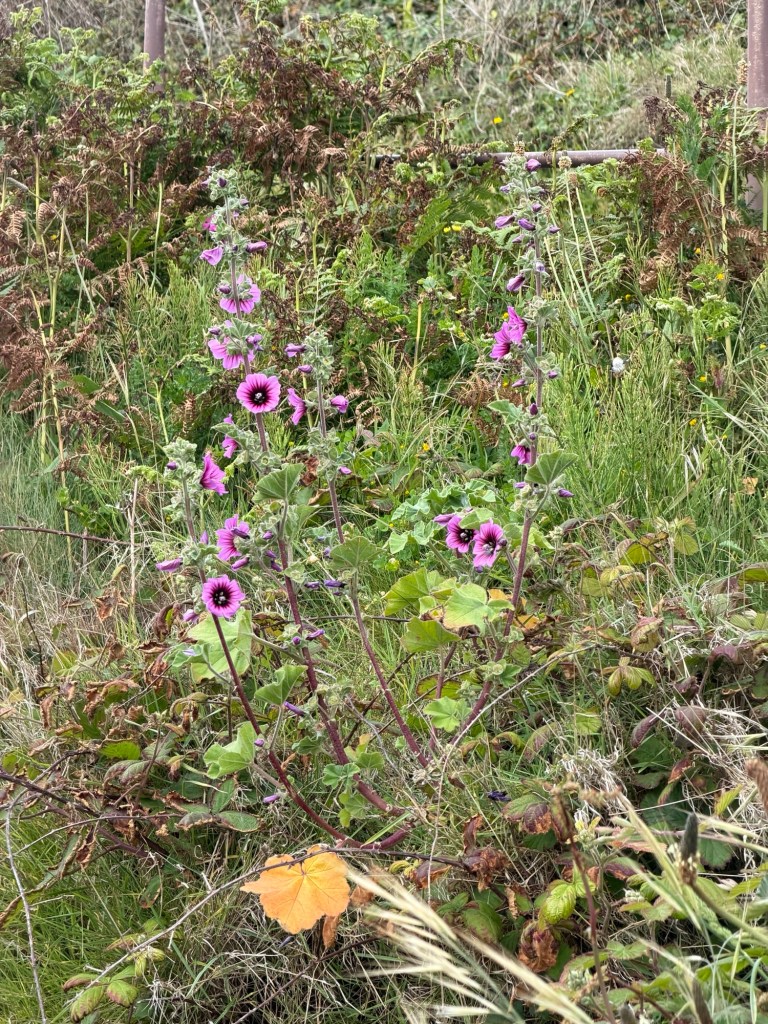
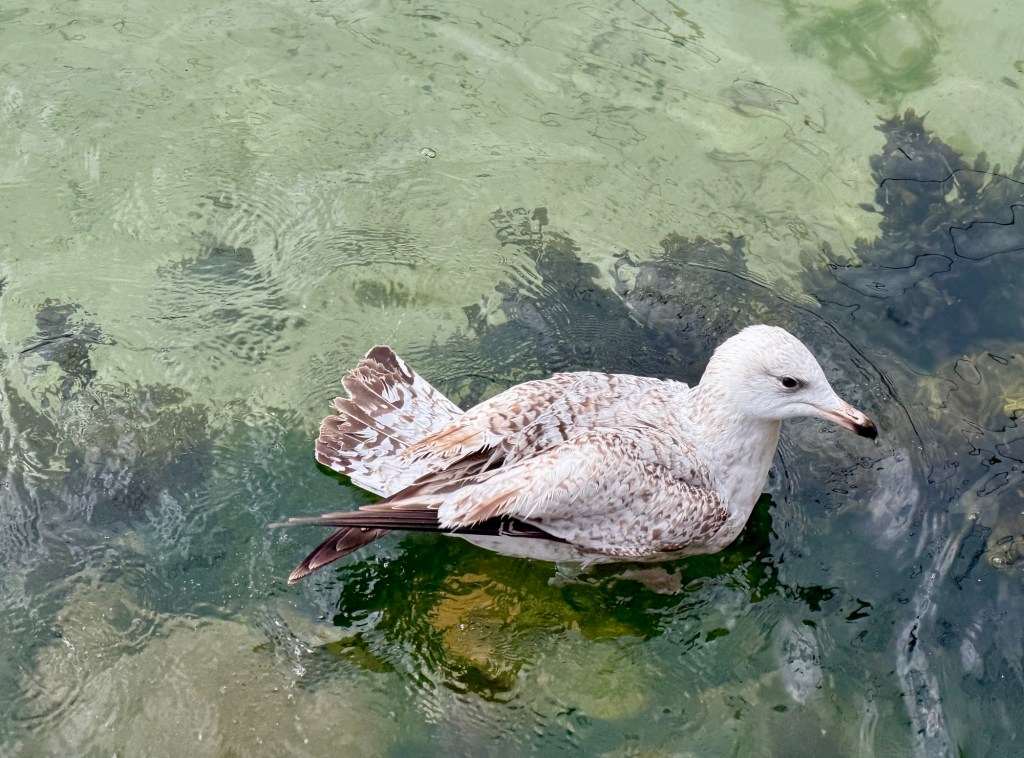
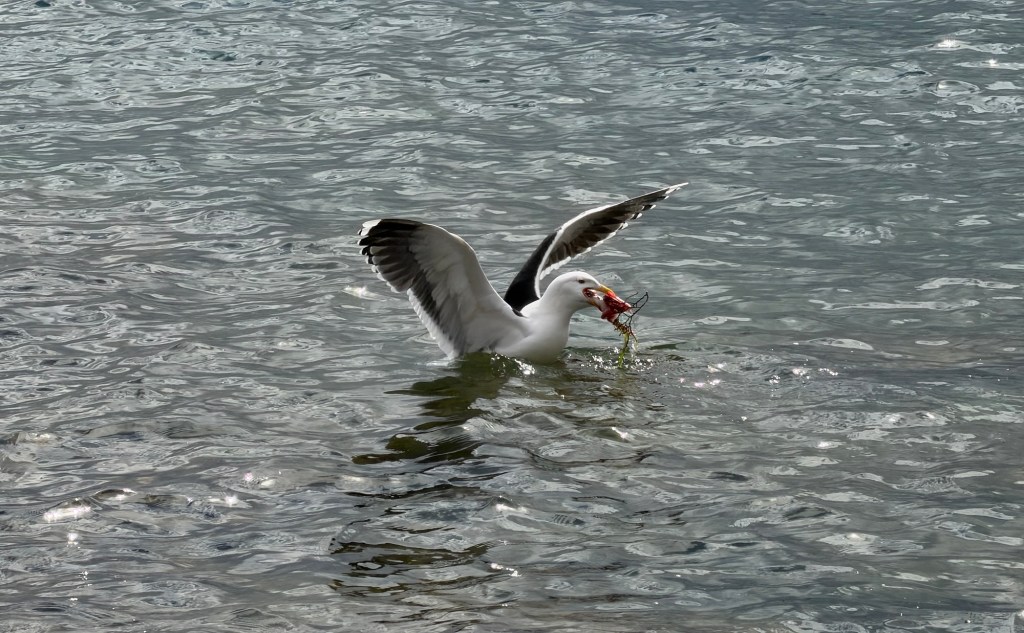
Peaceful sounds at Racine HarborLarge flowers!Gull in the harborA gull catching seafood
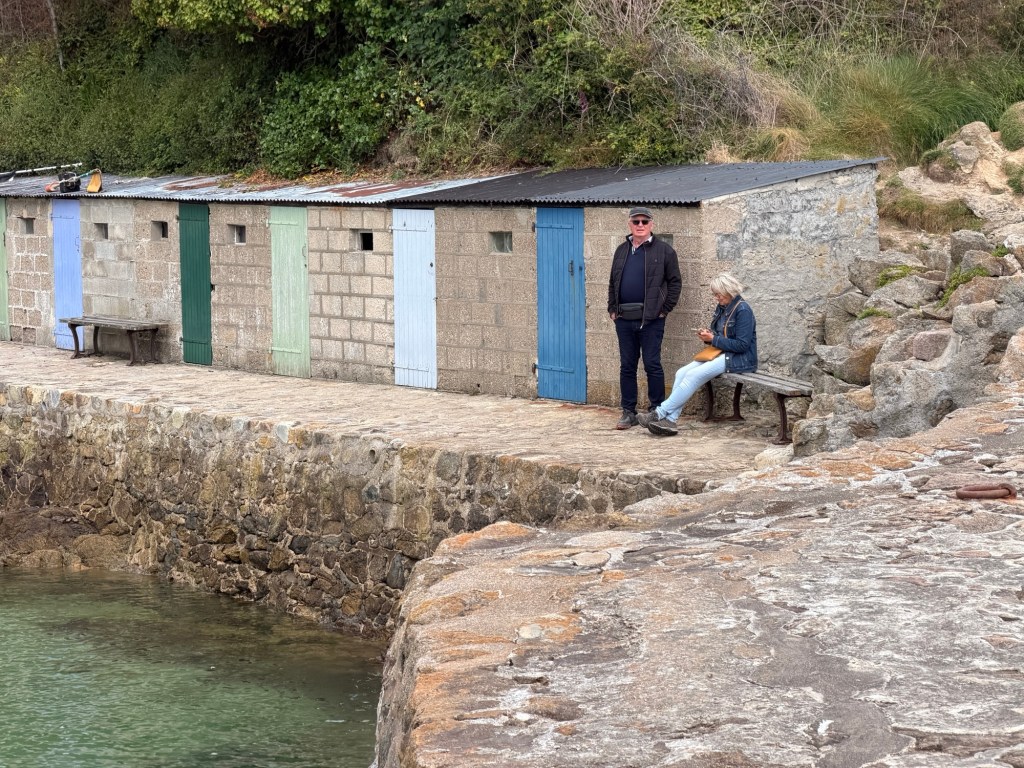
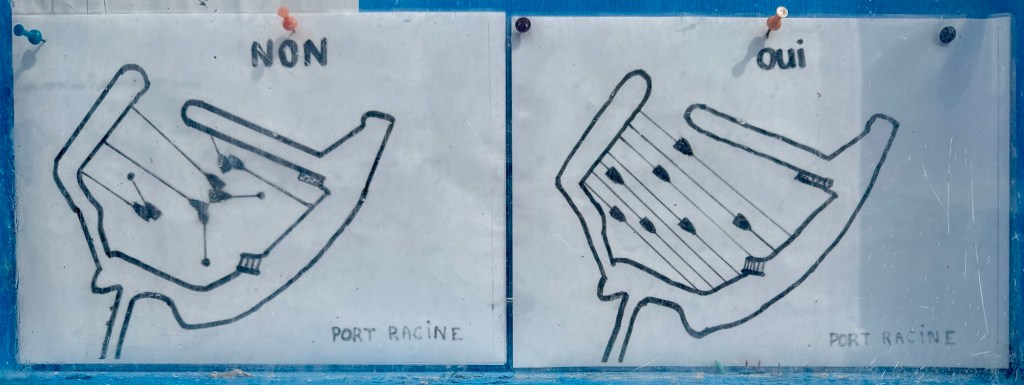
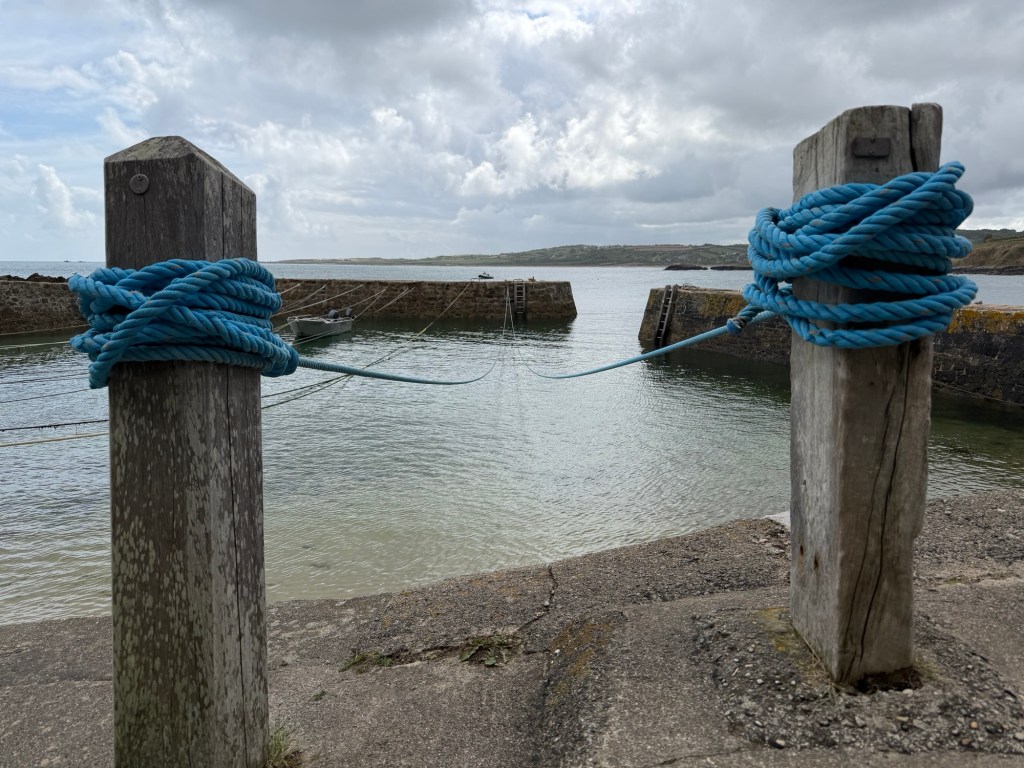
Little cabins are rented by boaters to store equipment. The small harbor has ropes for the boats to tie into.
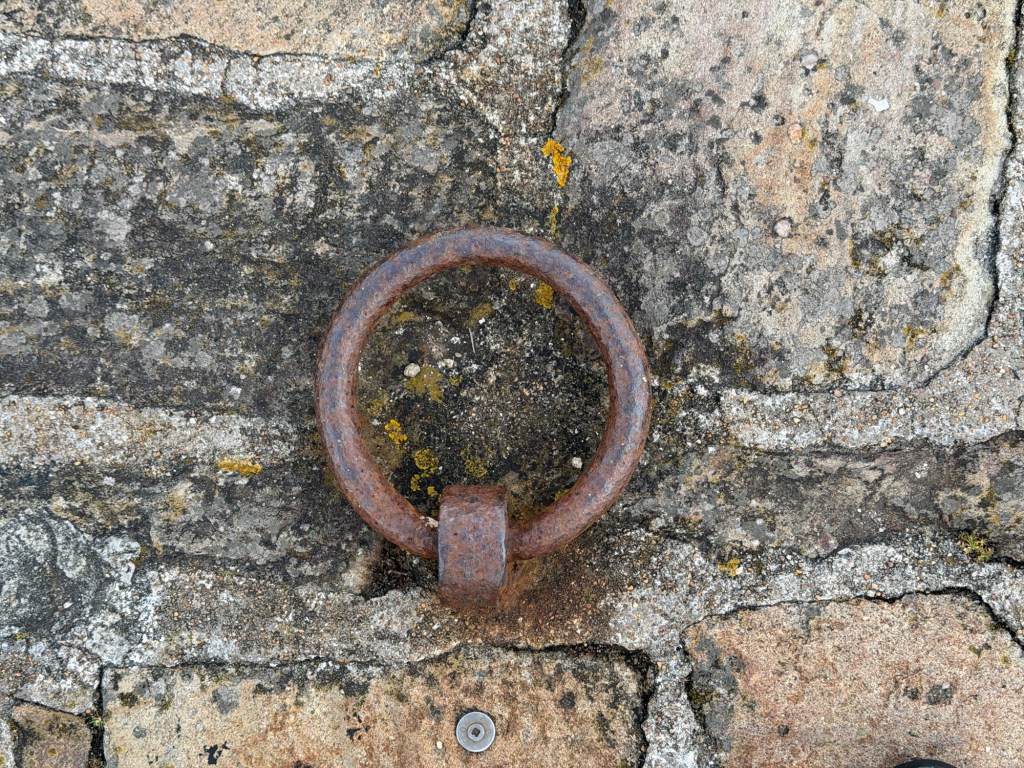
Marc & JoëlleTie your boat neatly!Lots of ropesNewer ropesTie-down ring on top of the barrier
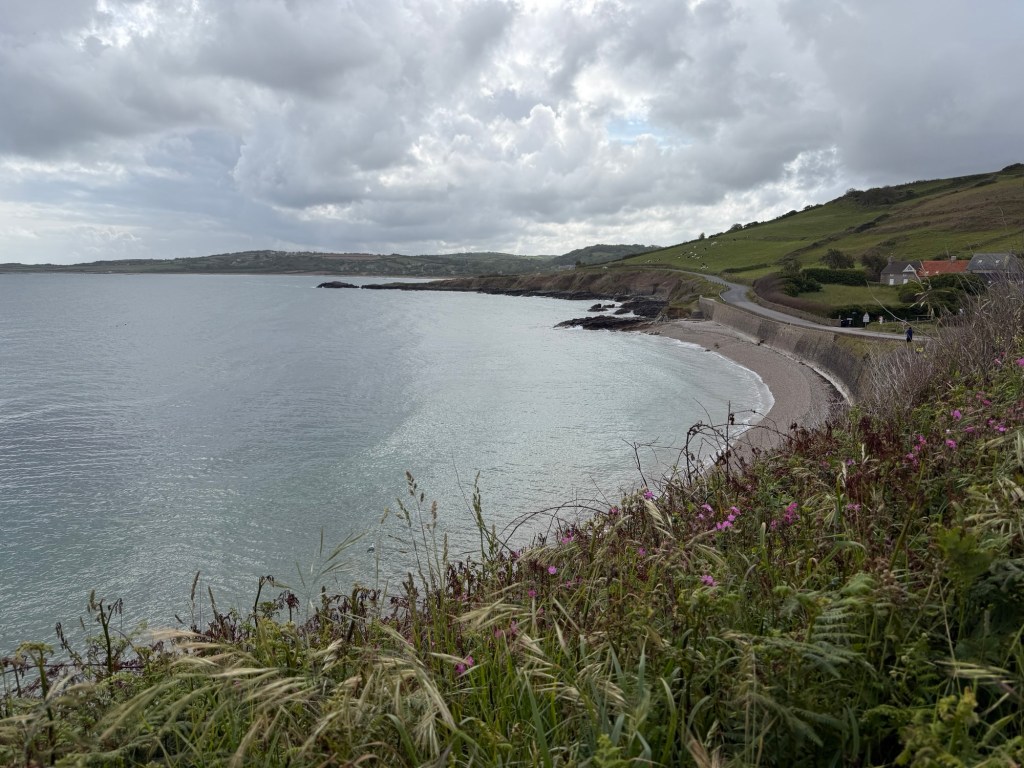
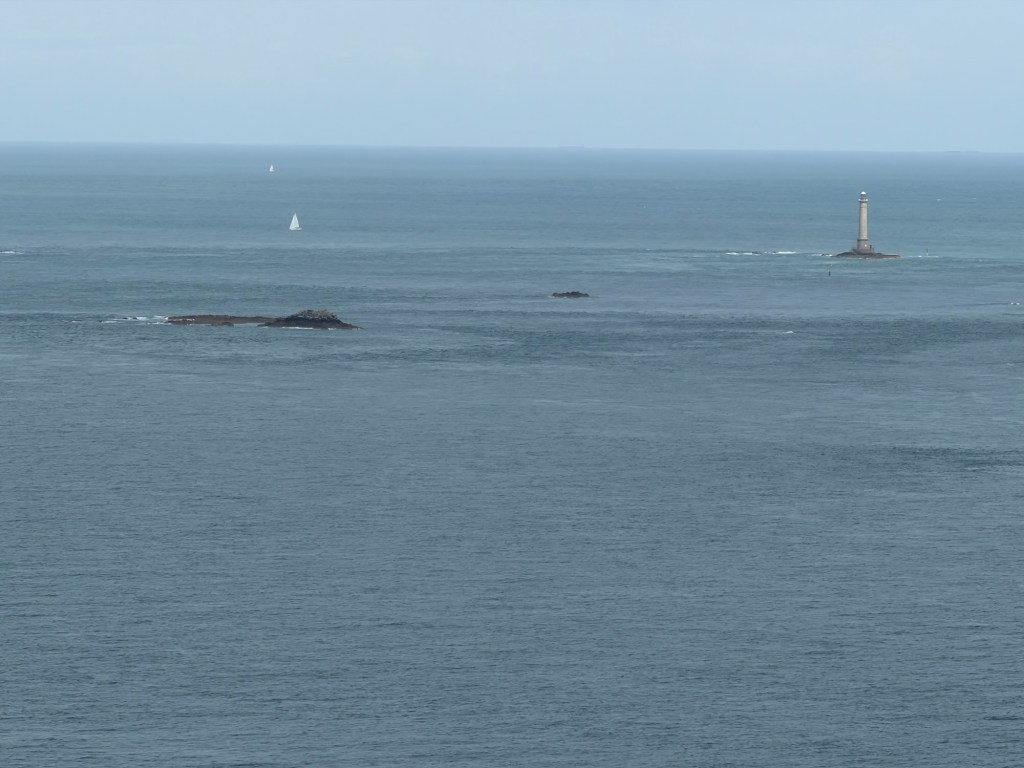
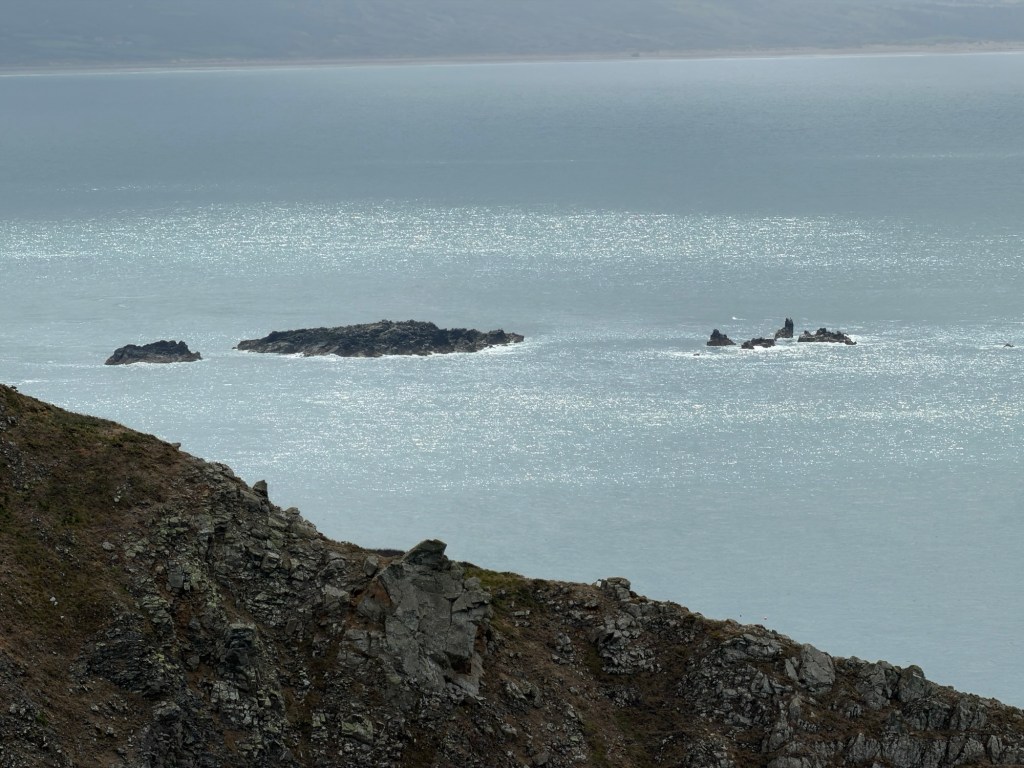
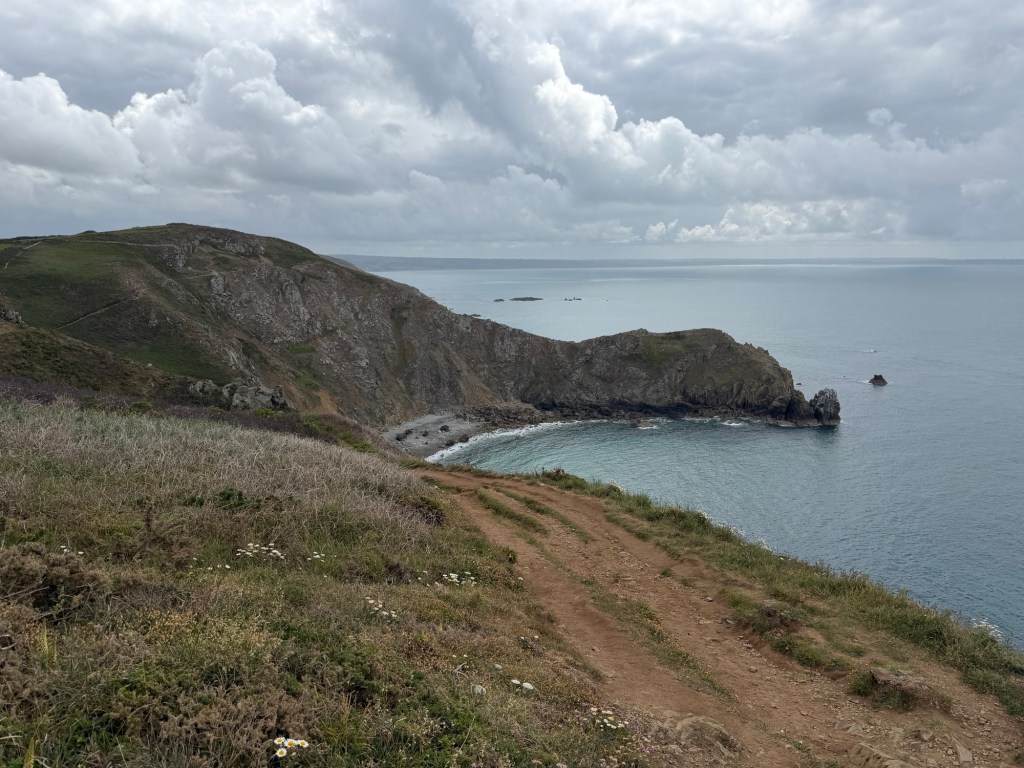
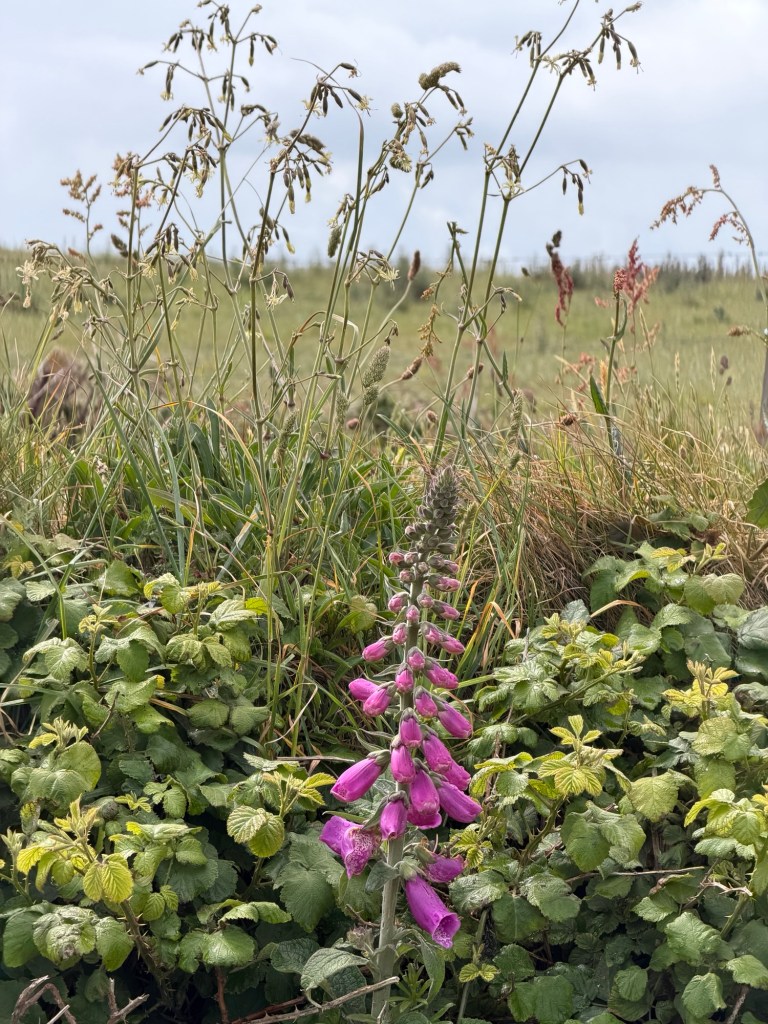
Next, we arrived at Jobourg Cliff for views of this part of the English Channel. We walked around the peninsula for a bit.
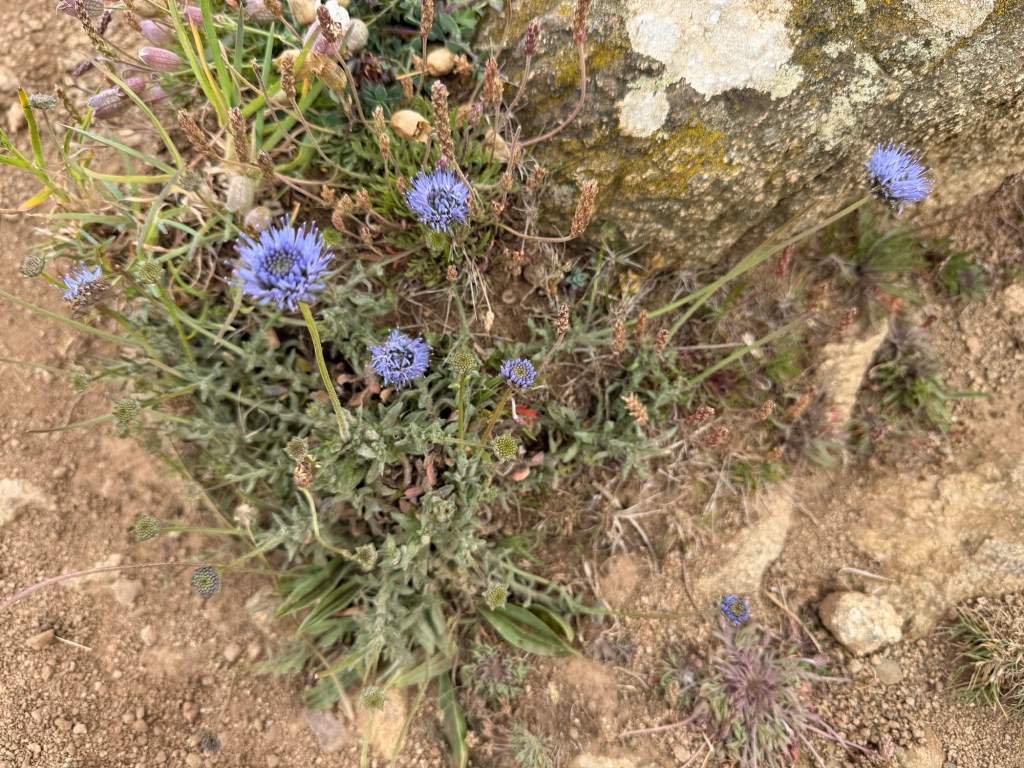
Lighthouse in the distanceSmall natural islandsPretty coveWildflowers
In the region of Hague, we followed a tourist route to stay close to beaches on small roads. In the town of Siouville, we found a place for lunch.
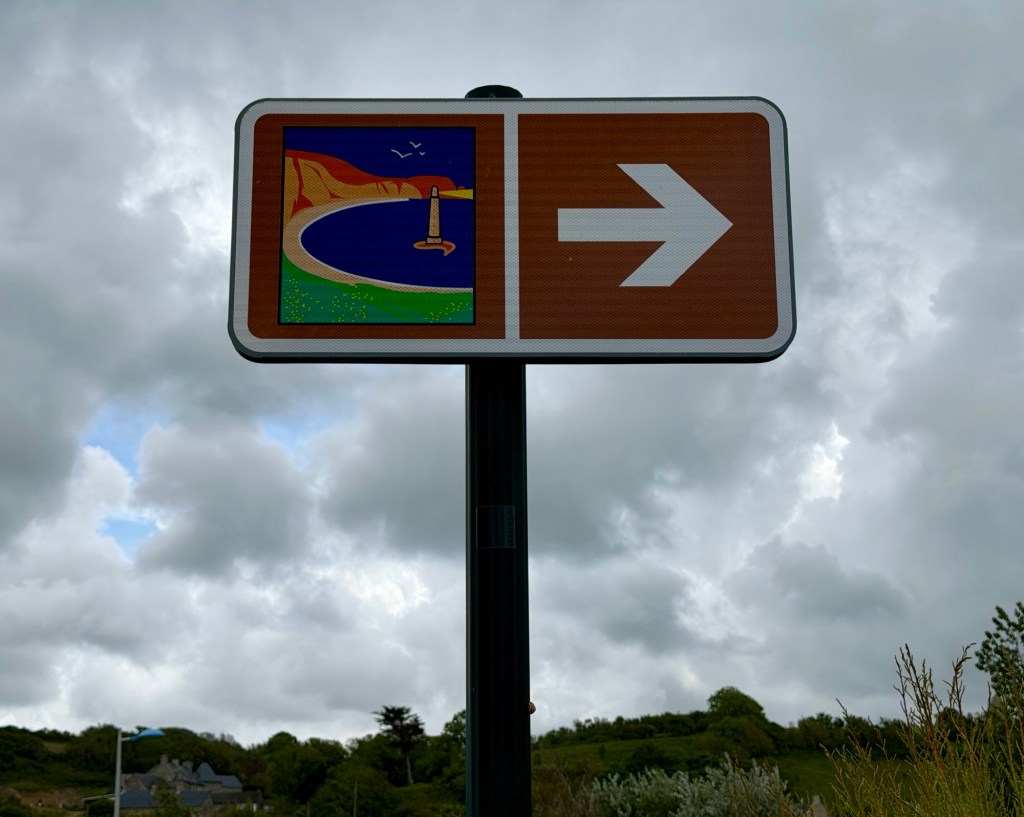
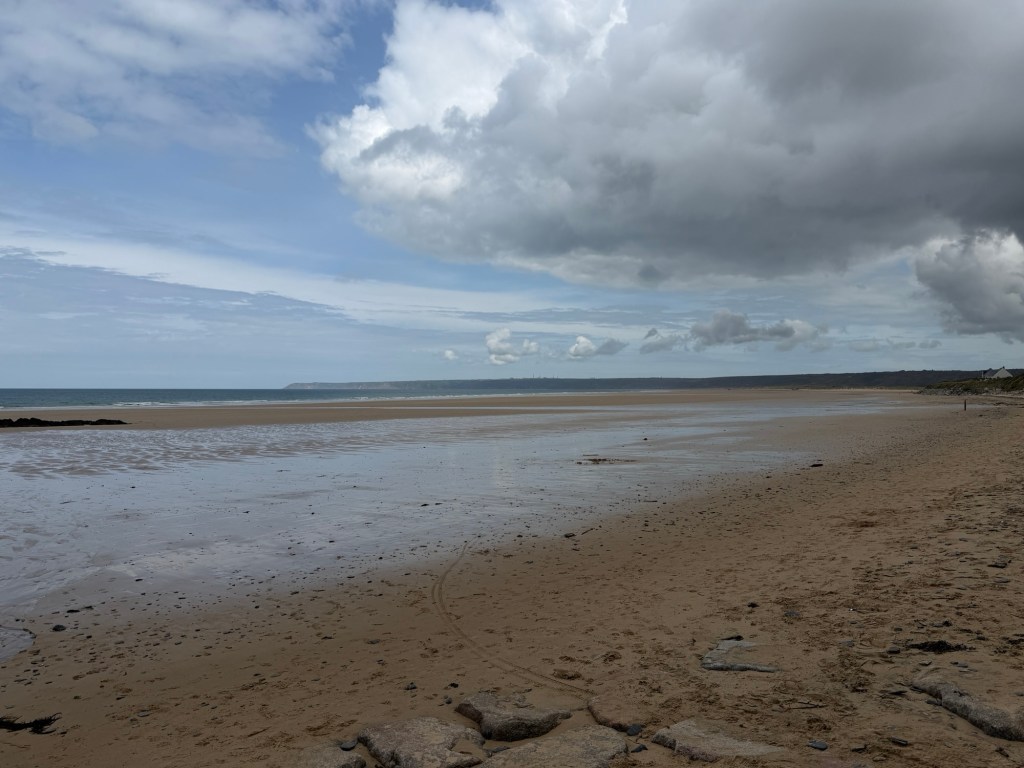
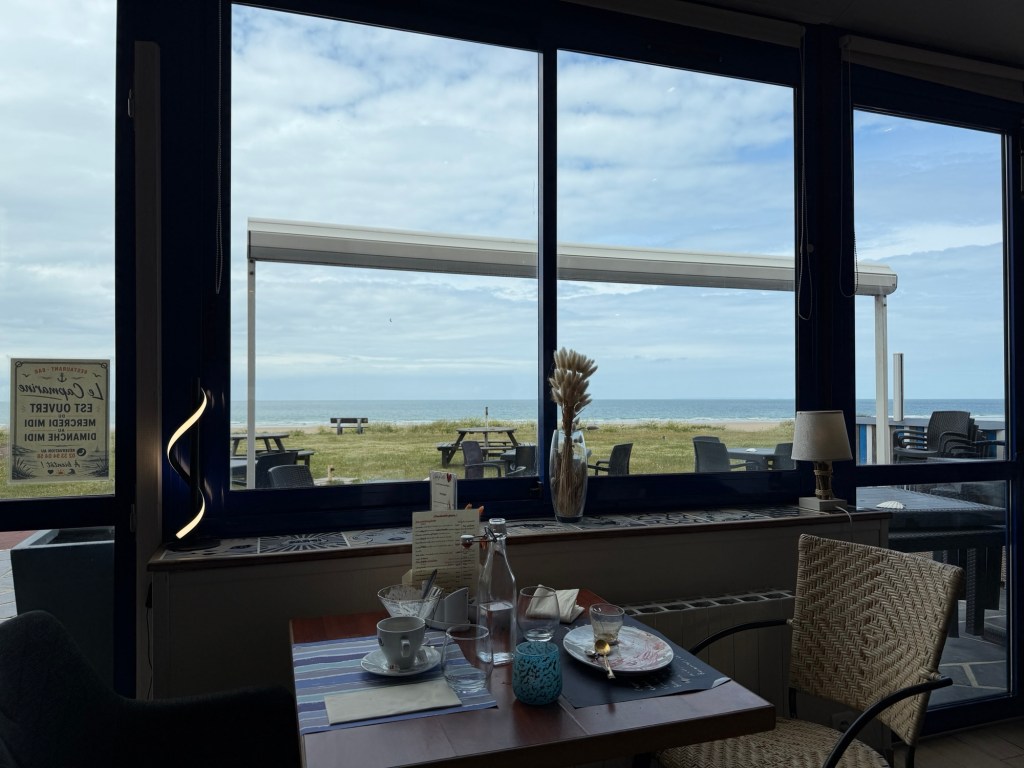
Cape Route signWide beachLunch at Au Cap Marine restaurant
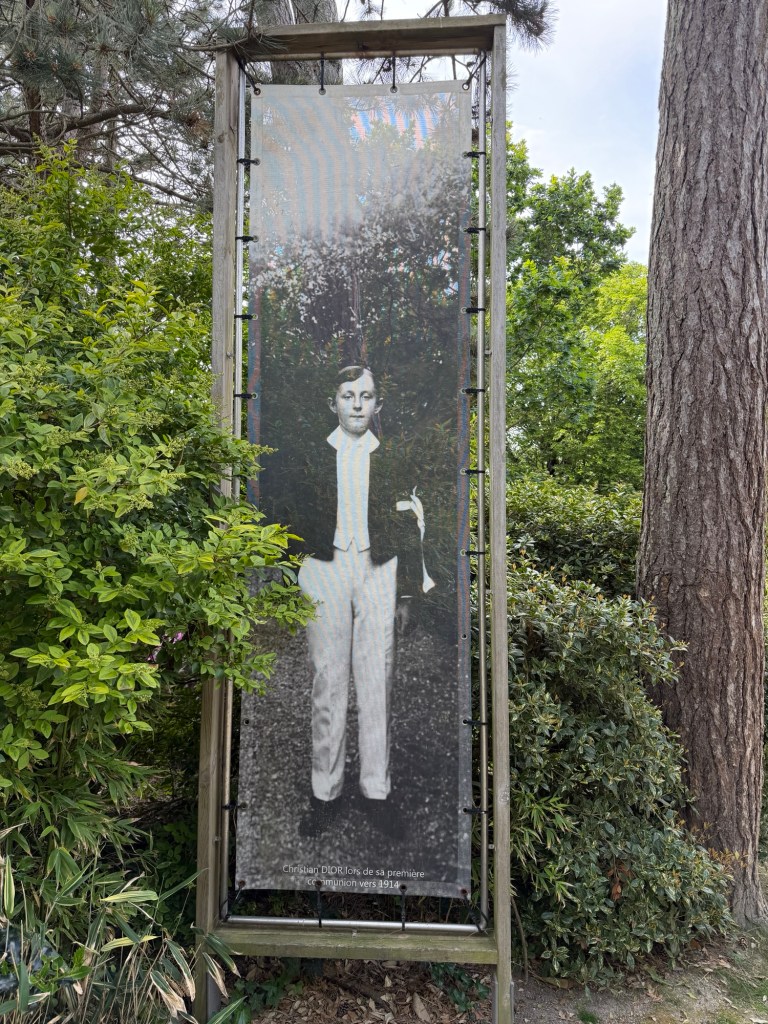
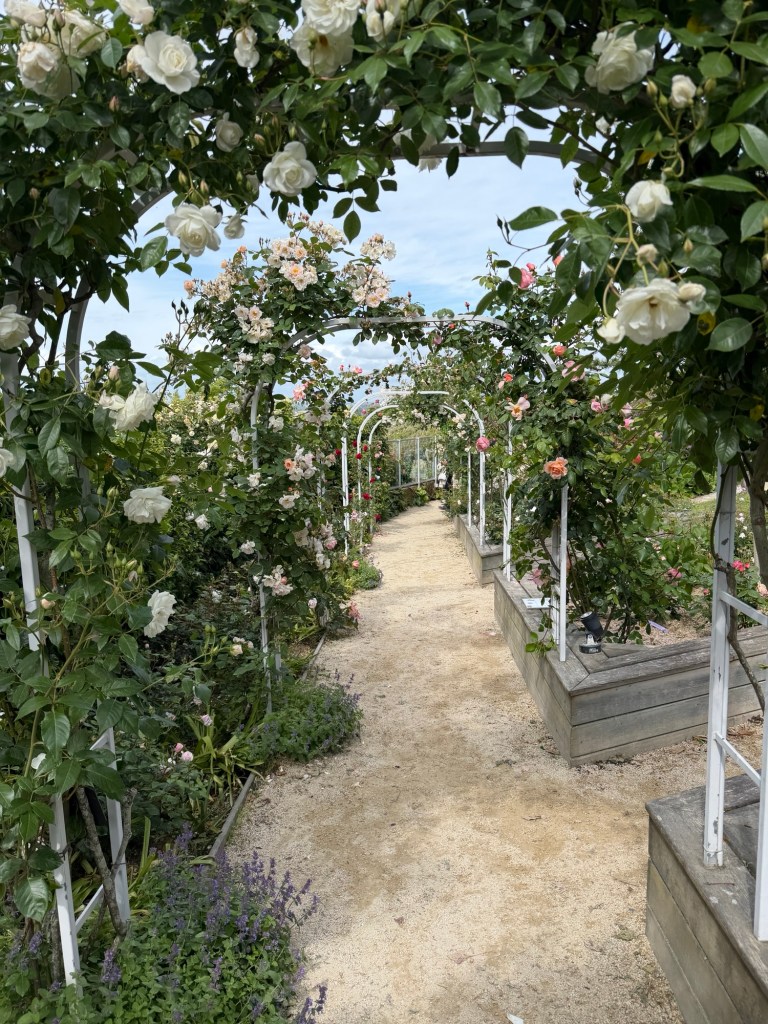
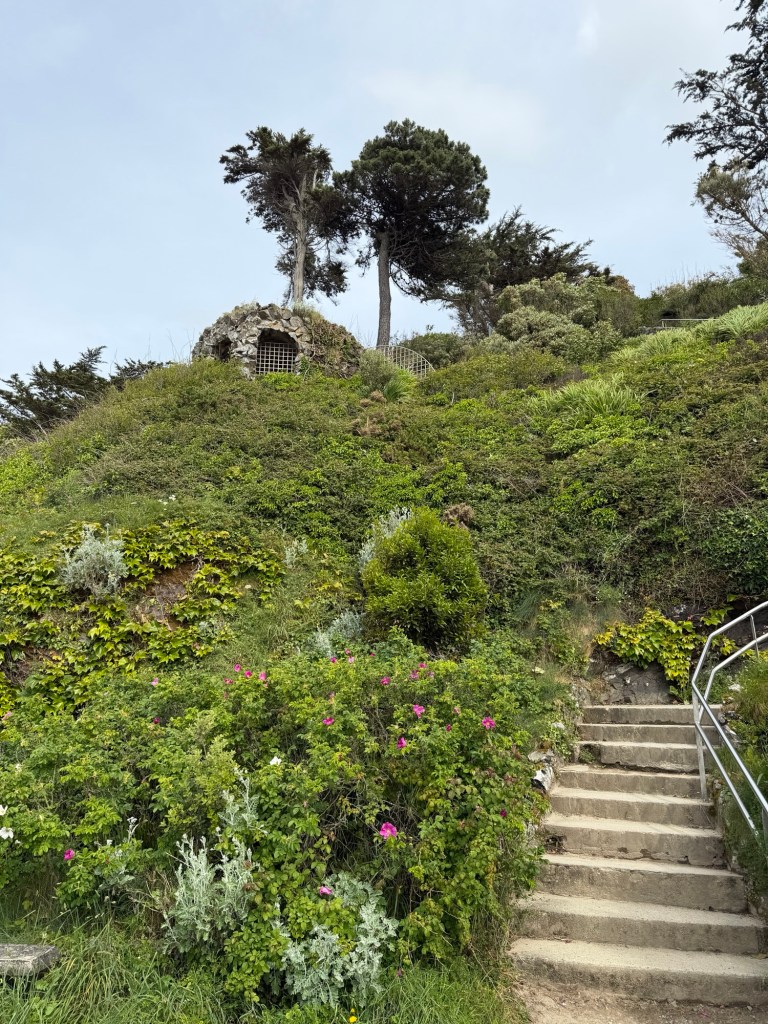
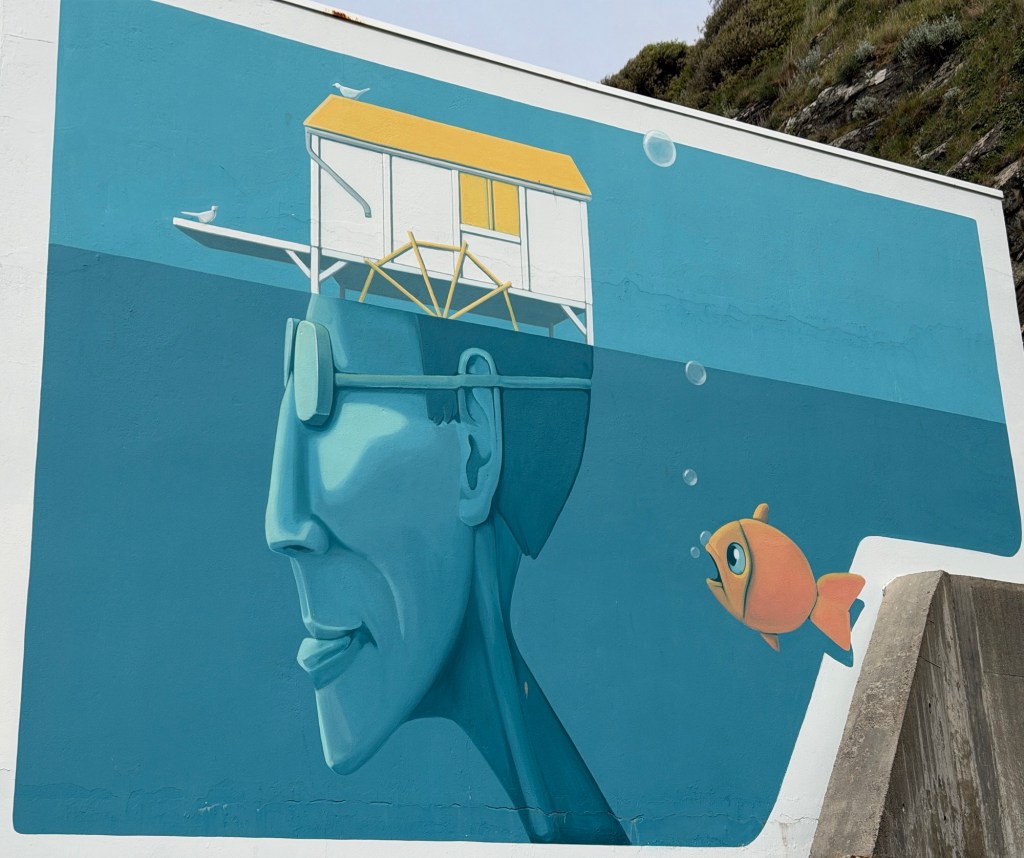
Next, we visited the gardens around the home of Christian Dior, open to the public. The beautiful gardens are well kept. This much larger town is Granville.
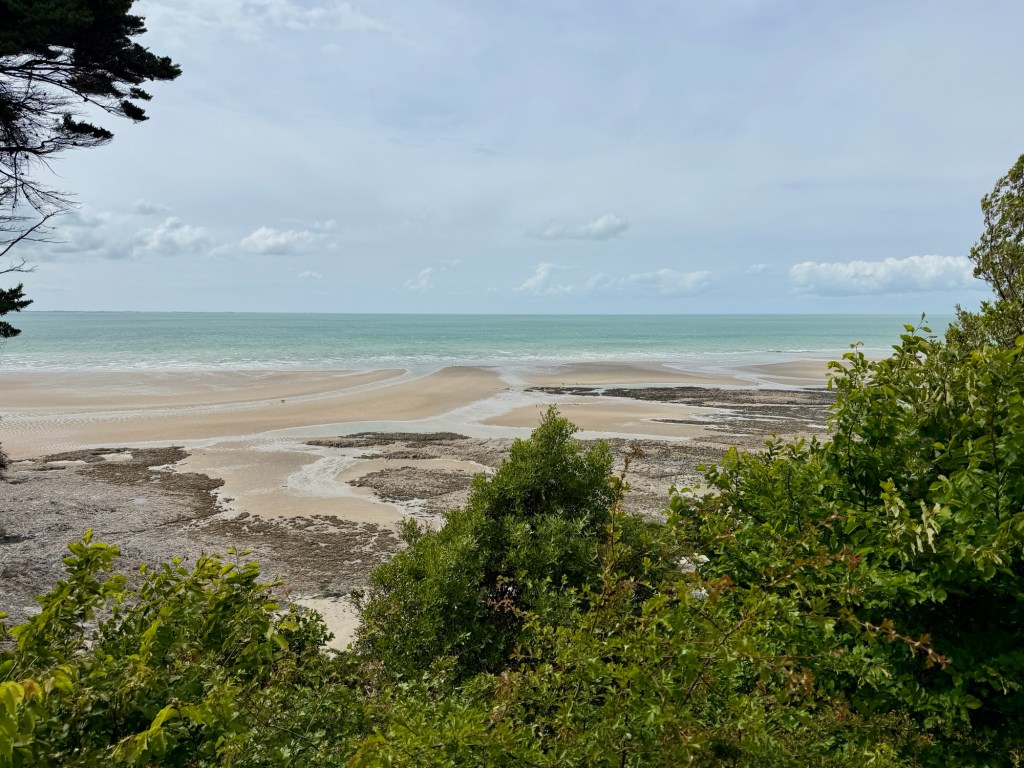
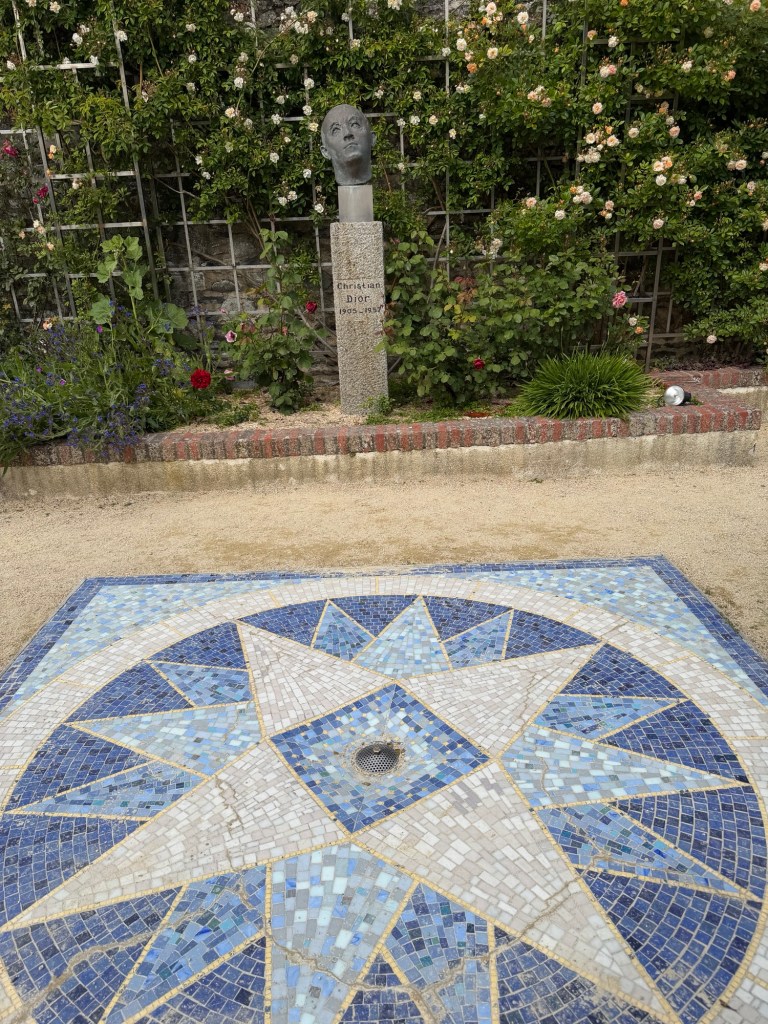
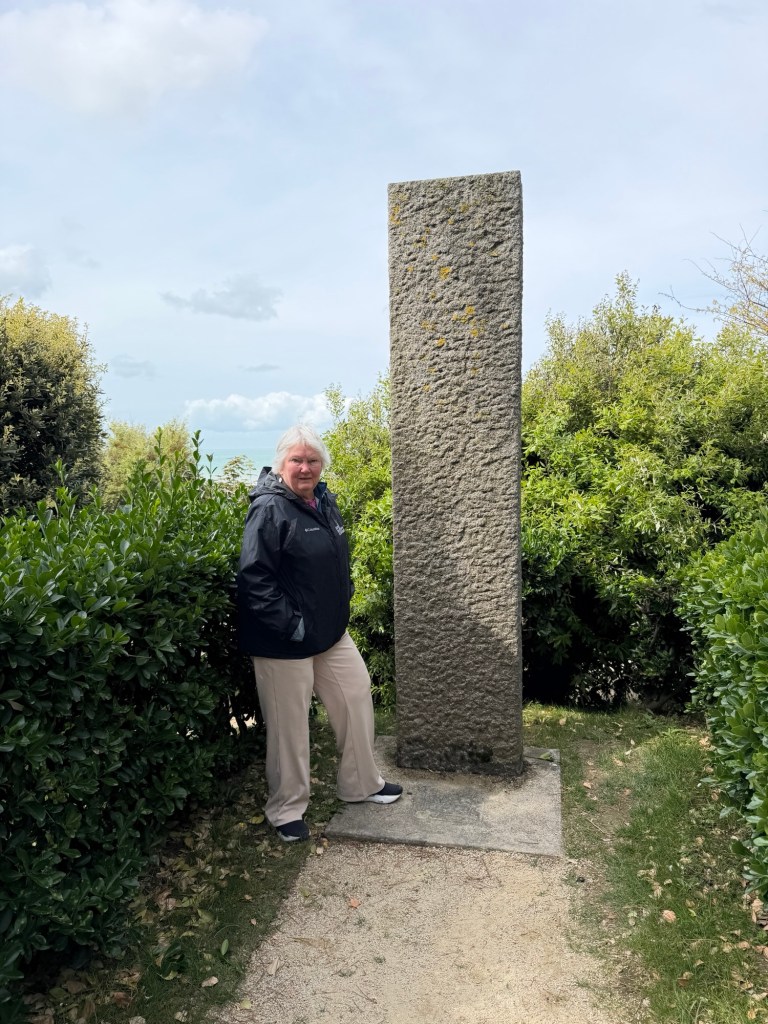
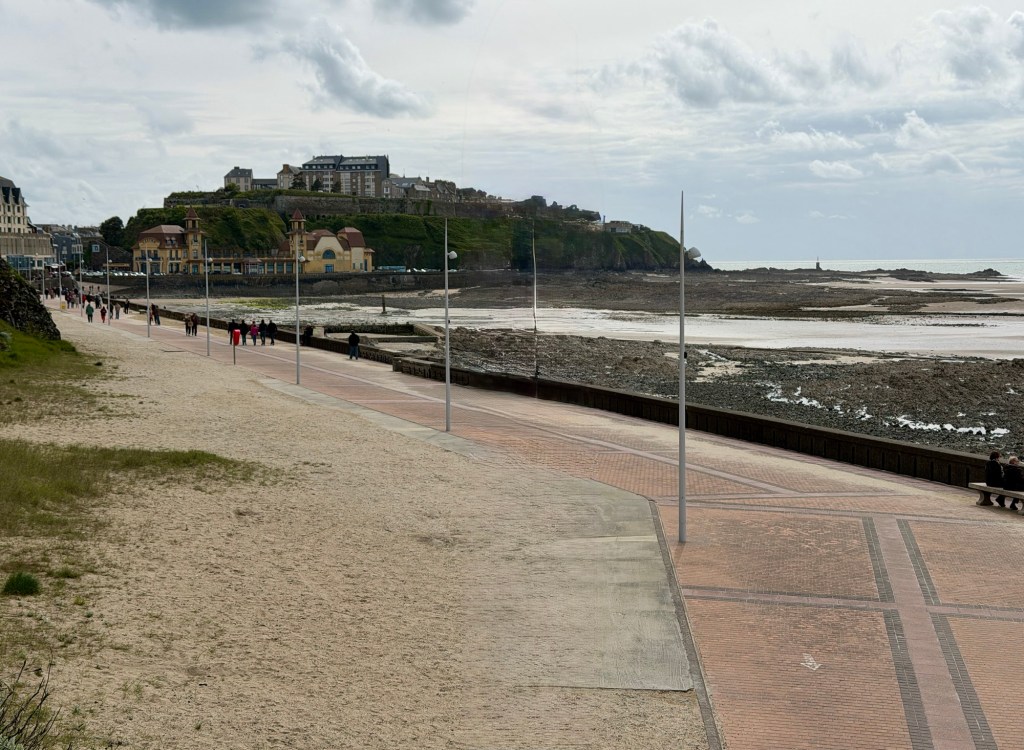
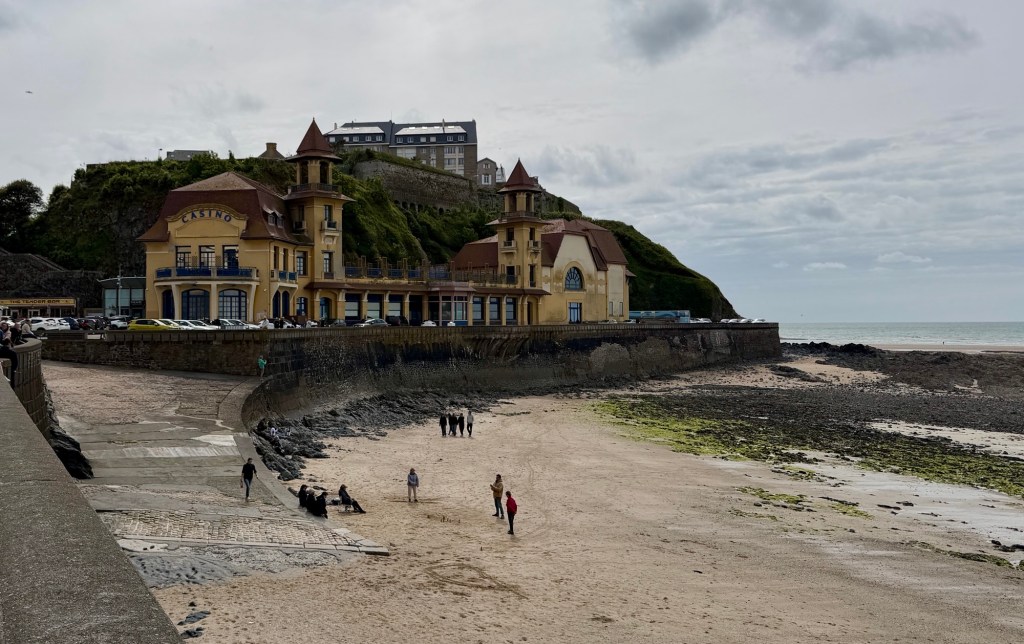
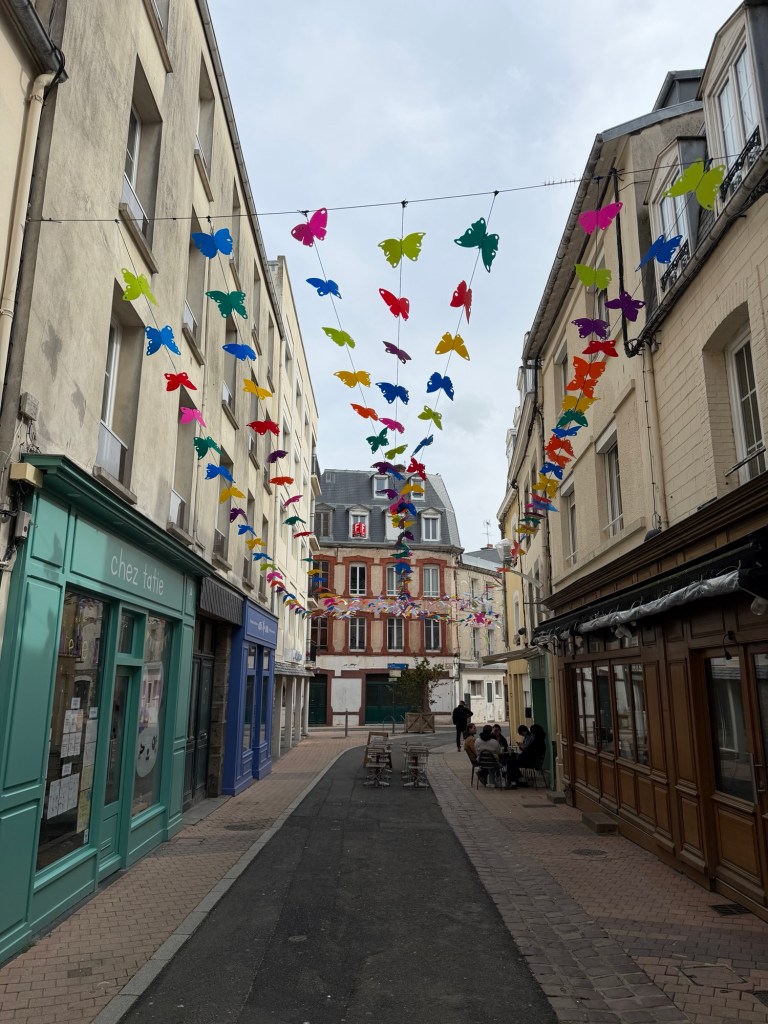
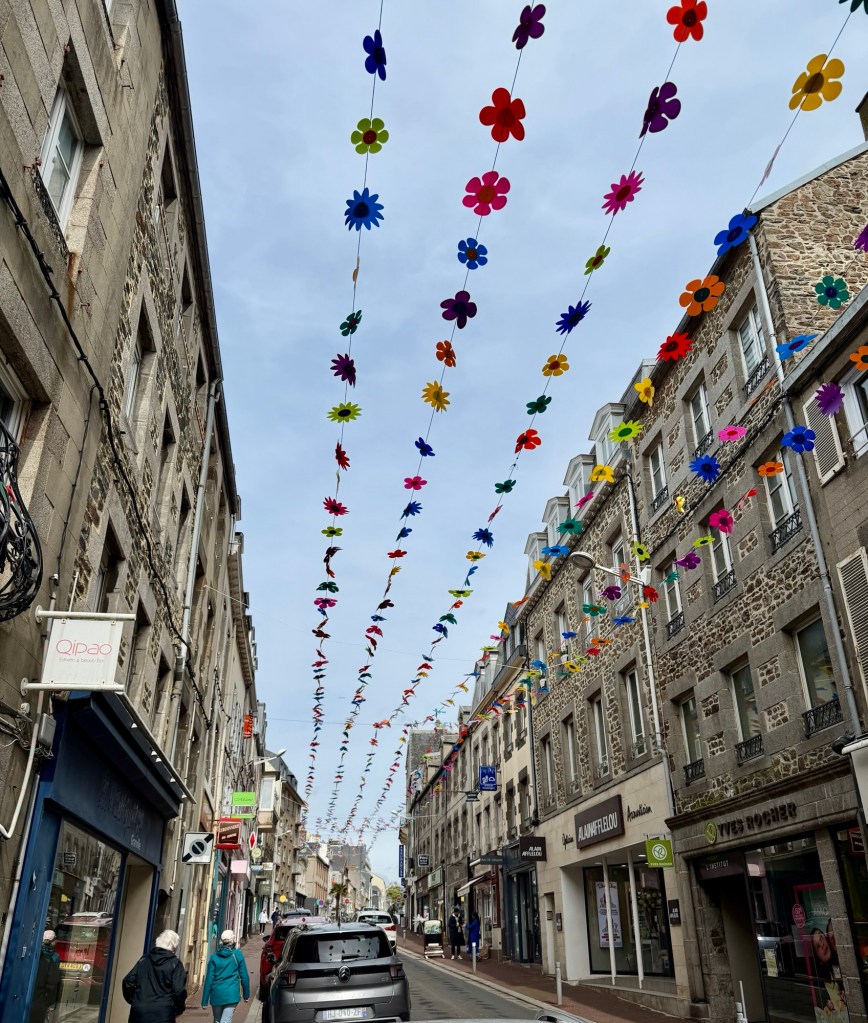
Christian at around age 9The coast from the gardenRose trellisCompass star mosaicUnnamed monolithStairs to the beach from the gardenWalk along the promenade to townFirst view of town is a casinoFunny posterStreets decorated with flags of butterflies and flowers.
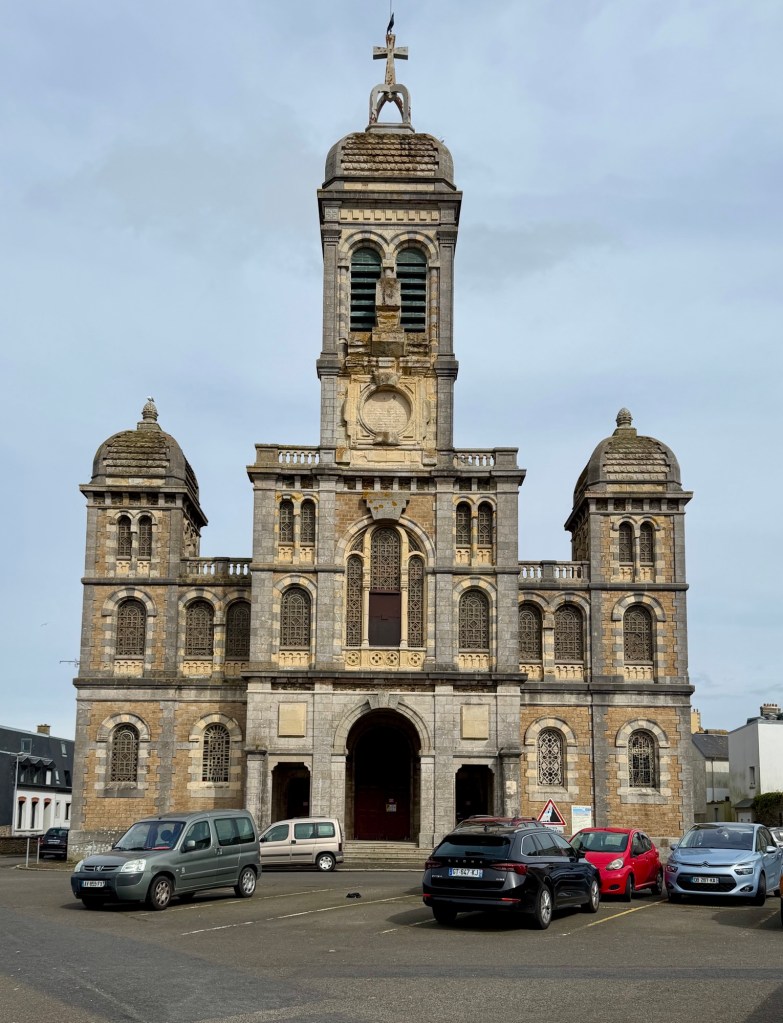
We walked along the promenade then to to the local church, which was not open to enter due to disrepair. The stairs to the church are called “The Stairs of St Paul”.
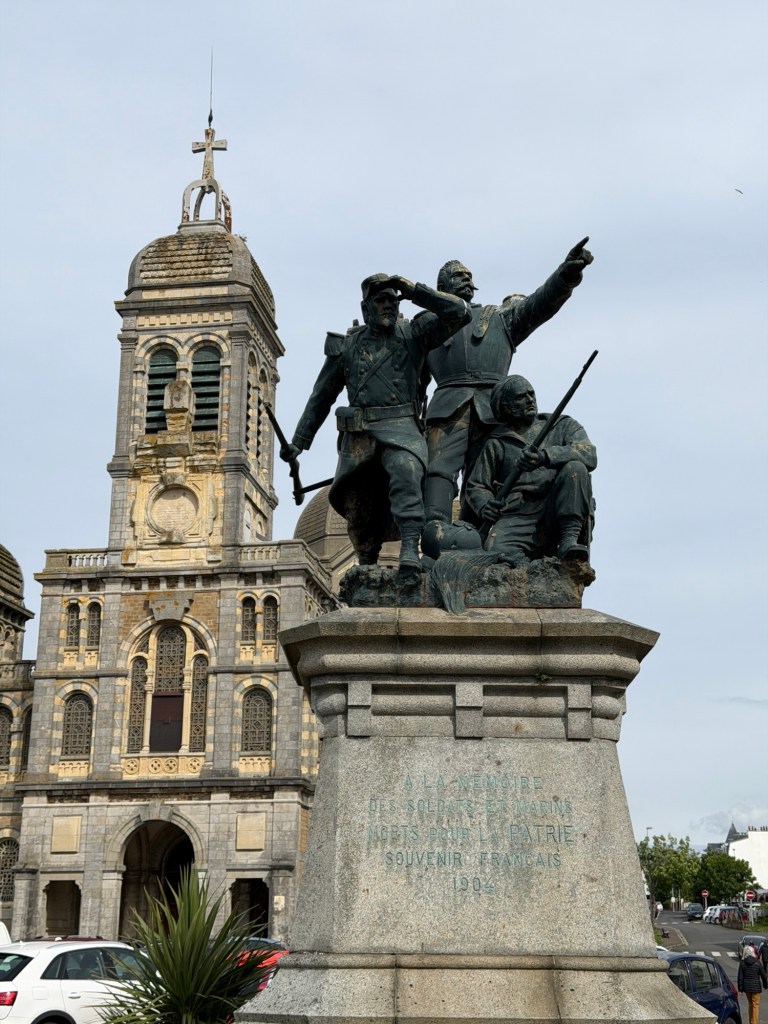
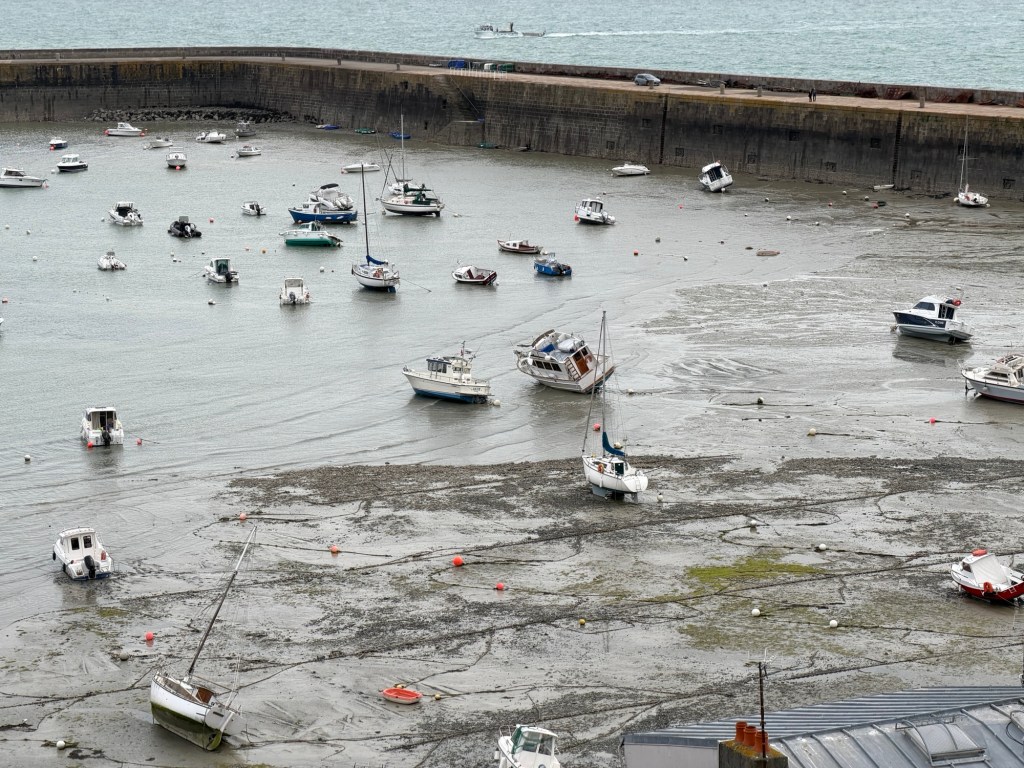
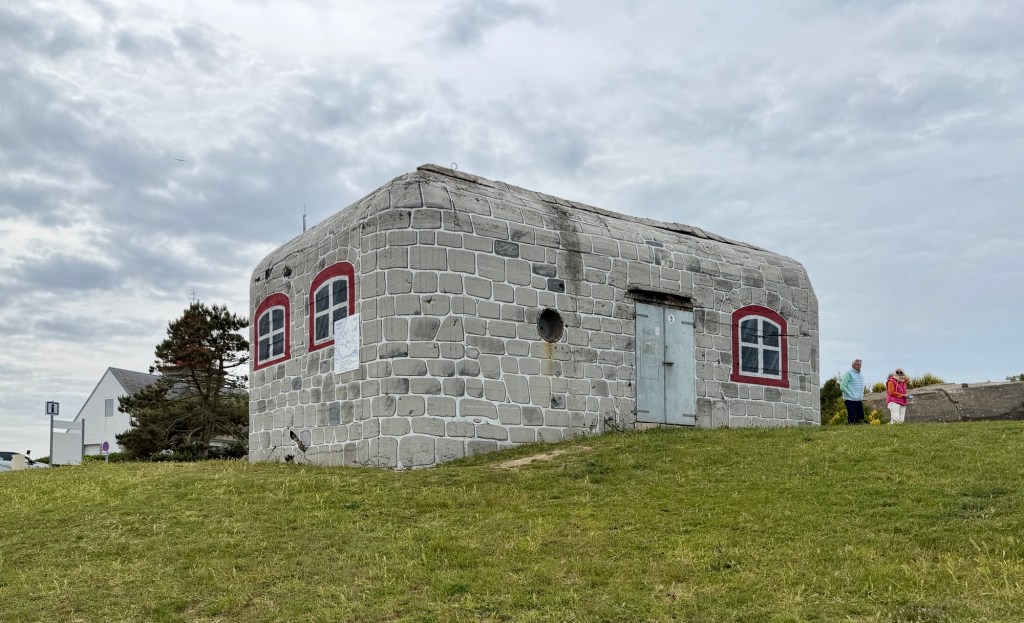
St. Paul ChurchMemorial to soldiers and sailors who died for FranceBoats at low tide in part of Granville harborOld German bunker, painted to make it appear as a house..