Rhine River Cruise: Strasbourg, France

Starting just north of Strasbourg, the Rhine River becomes the border between Germany and France. The cruise director had all kinds of jokes about crossing borders on the ship!
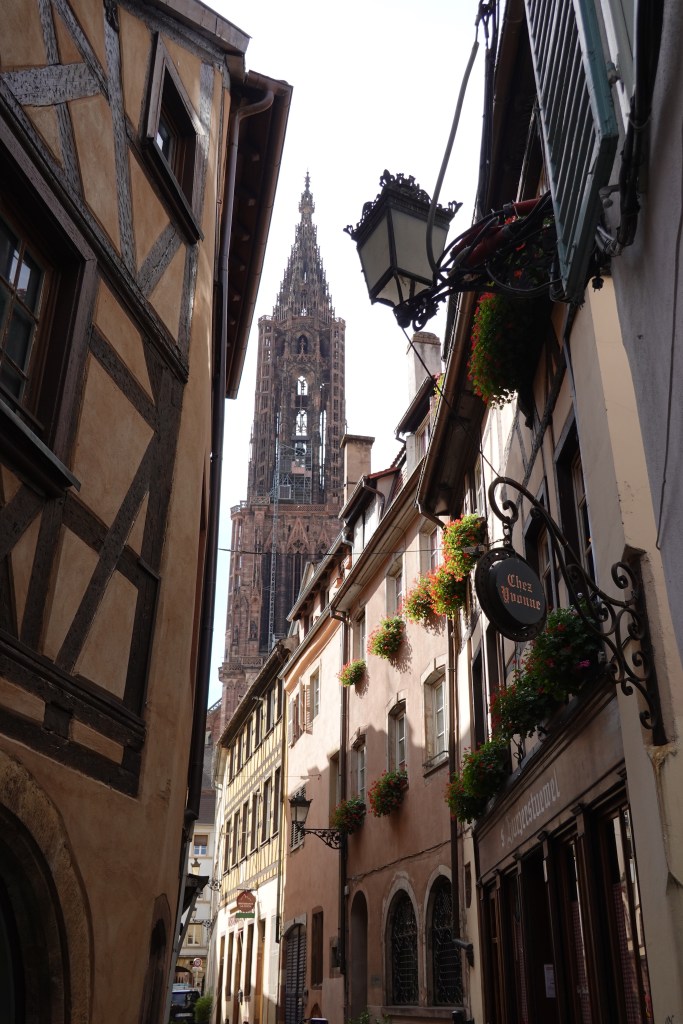
The cathedral spire was built to be the same as the elevation of the town so it is almost 500 feet high. It is hollow to save weight, also making the sky visible through the spire structure.

The cathedral is the tallest building in town; by decree no other buildings can be made higher than half the height of the cathedral spire. You would think that would make the spire easy to see from anywhere, but in actuality, you had to be on certain streets or alleys to see it at all. Fortunately, the tour guide knew all the right pathways.
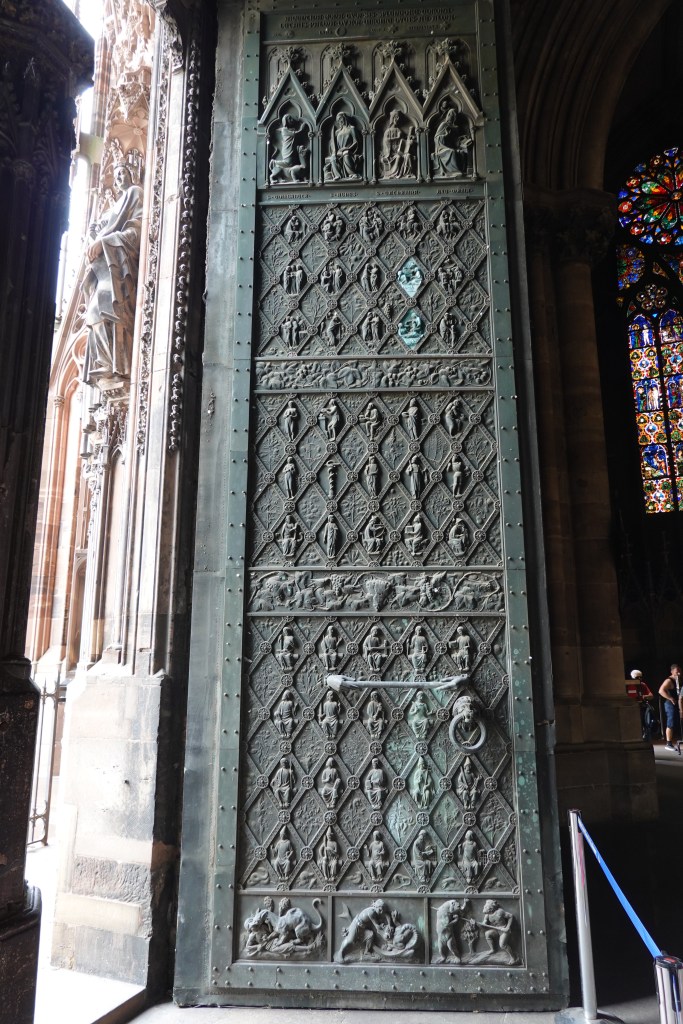
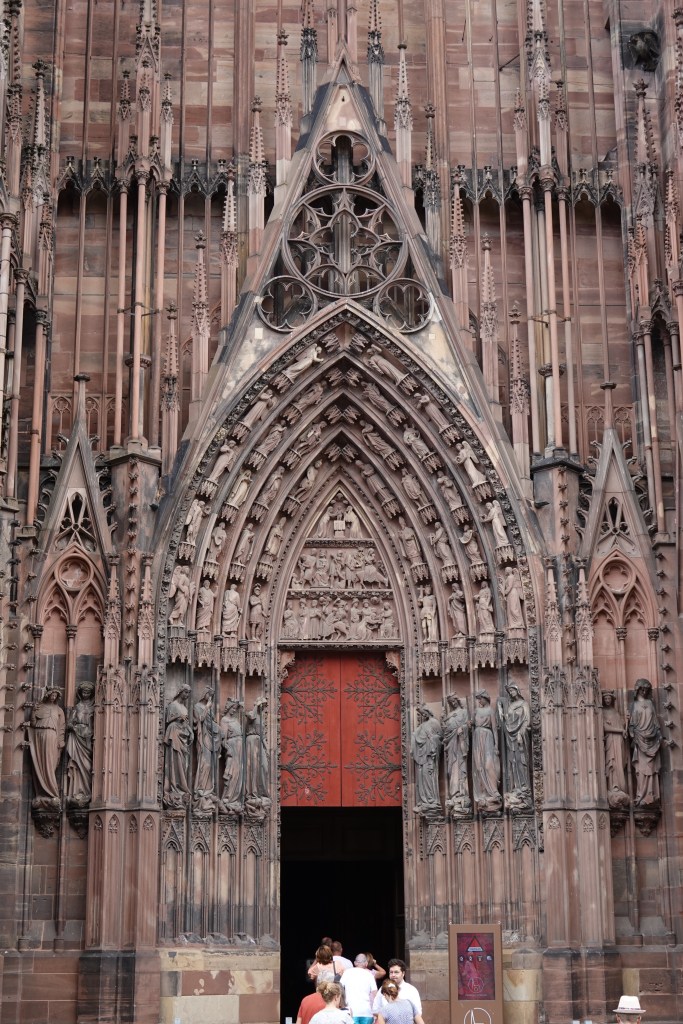
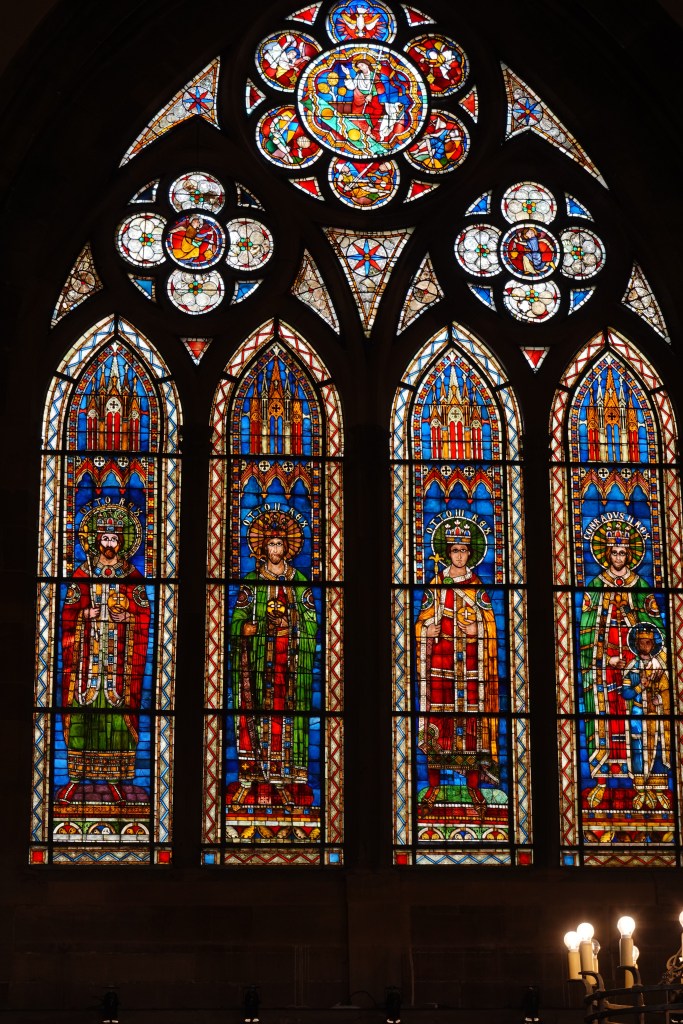
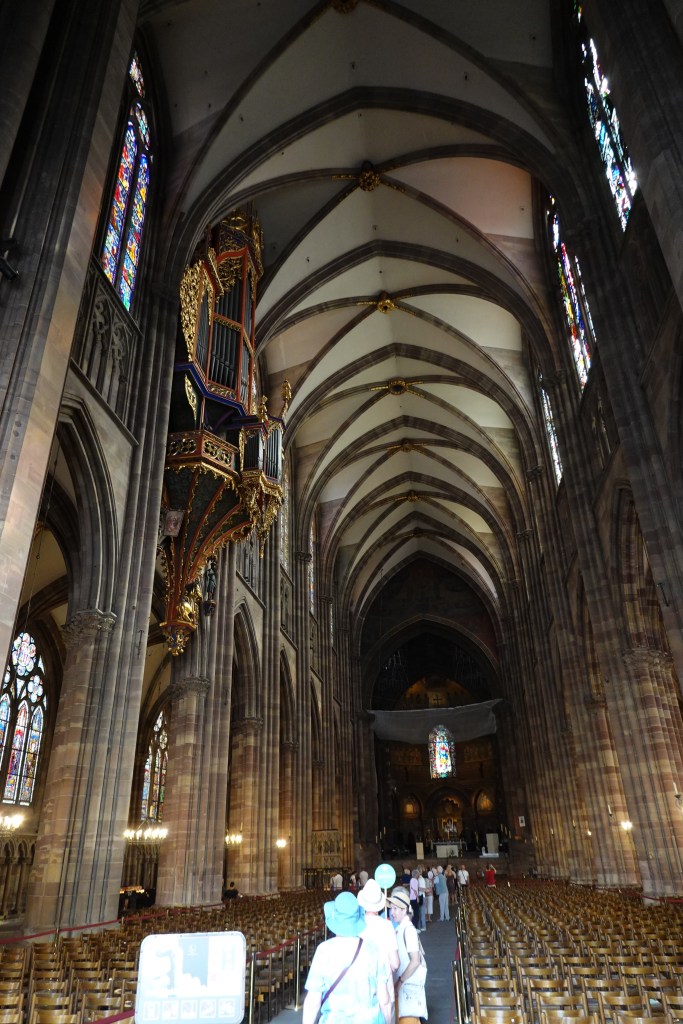
And, the cathedral is quite beautiful. Gothic and Romanesque architecture are seen in its structure. Most of the stained glass windows were taken out of the church during WWII, and hidden in the basement of another structure, so that most of the stained glass is original – such intense colors.
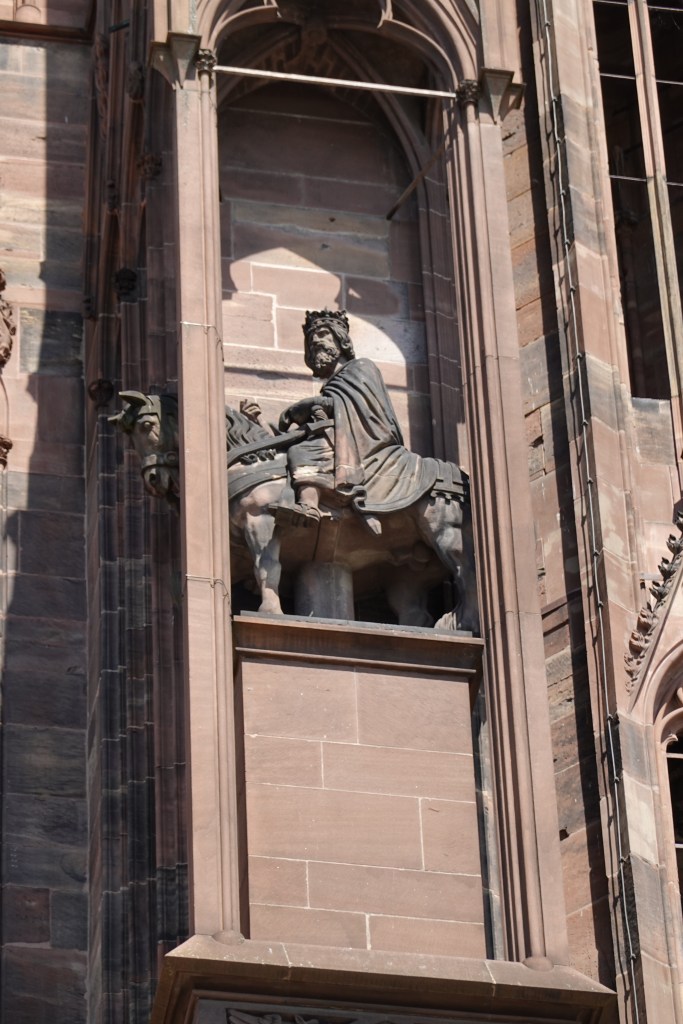
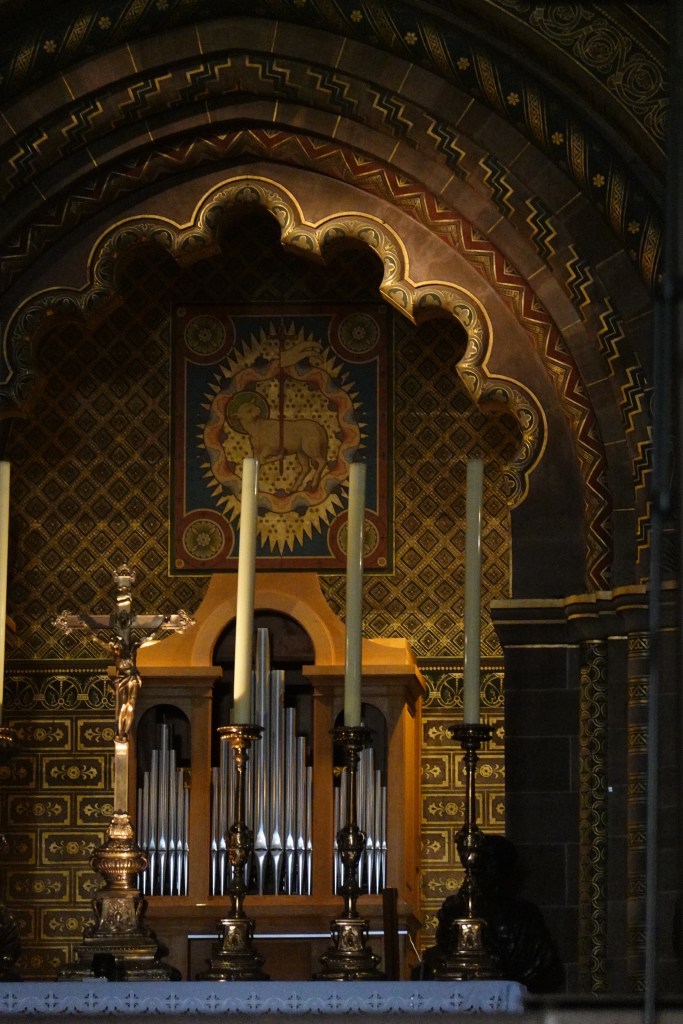
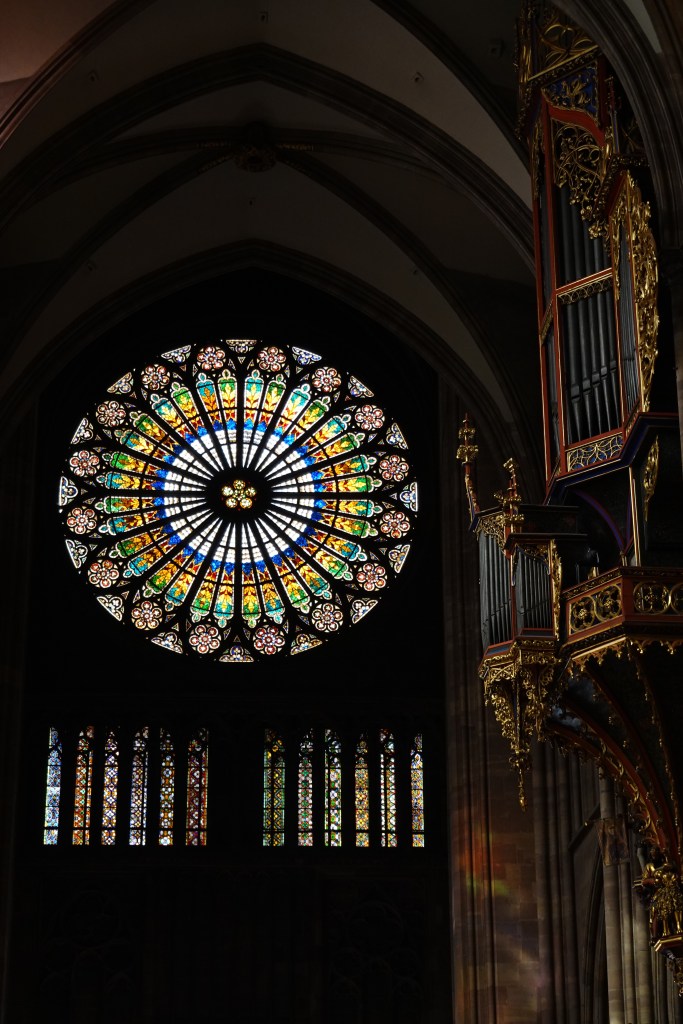
The tour guide mentioned that their cathedral is older and taller than the Notre Dame in Paris, and the one in Strasbourg has a larger flower circular window as well. People sure do like to be competitive.
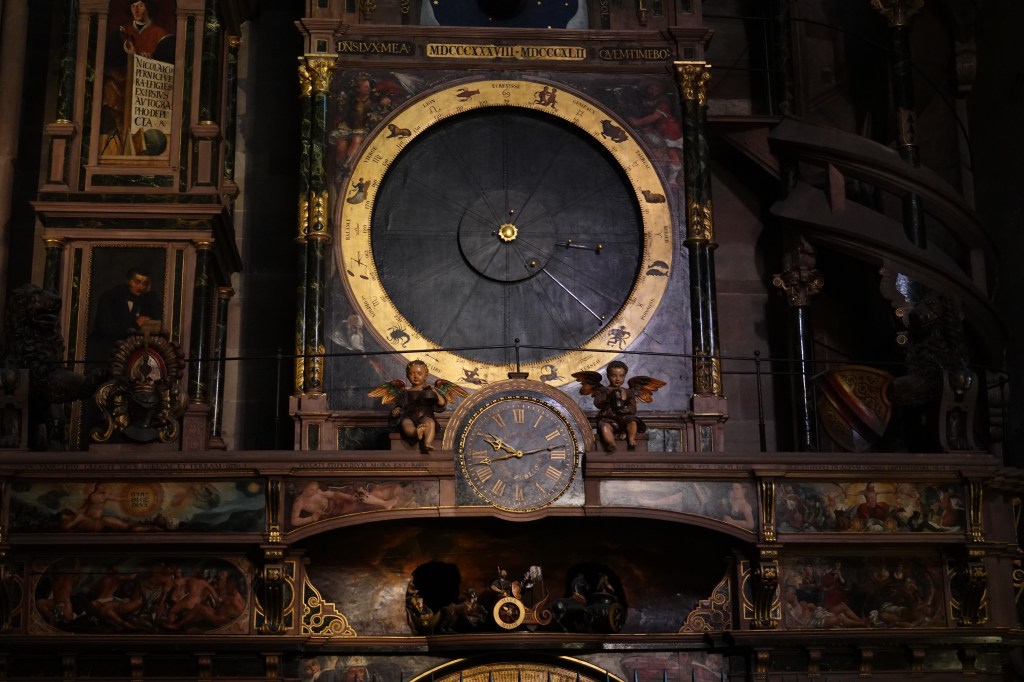
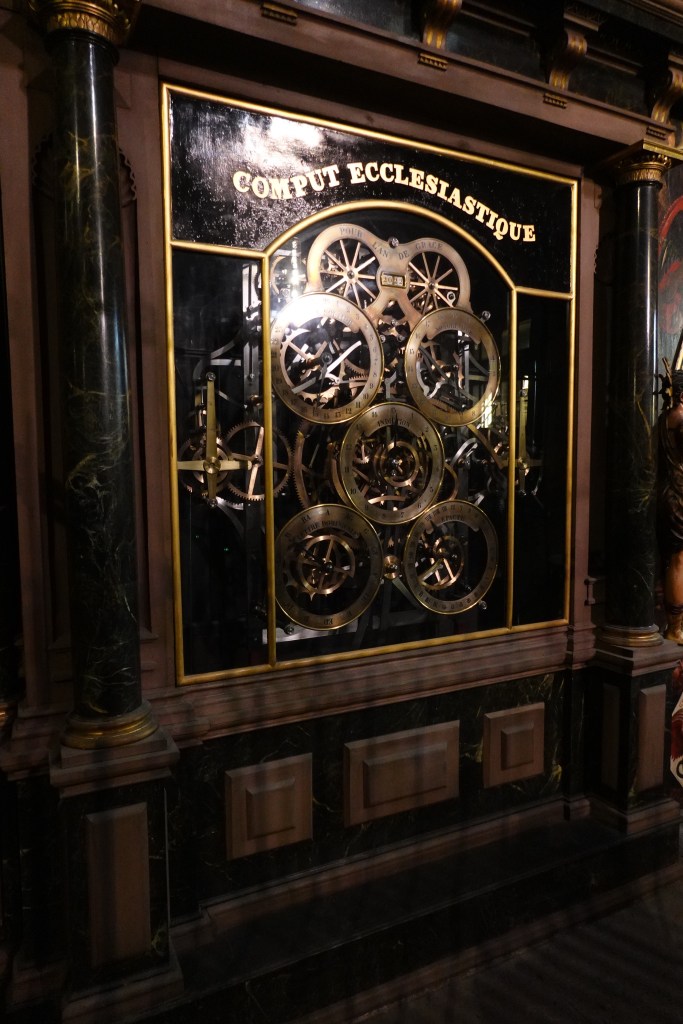
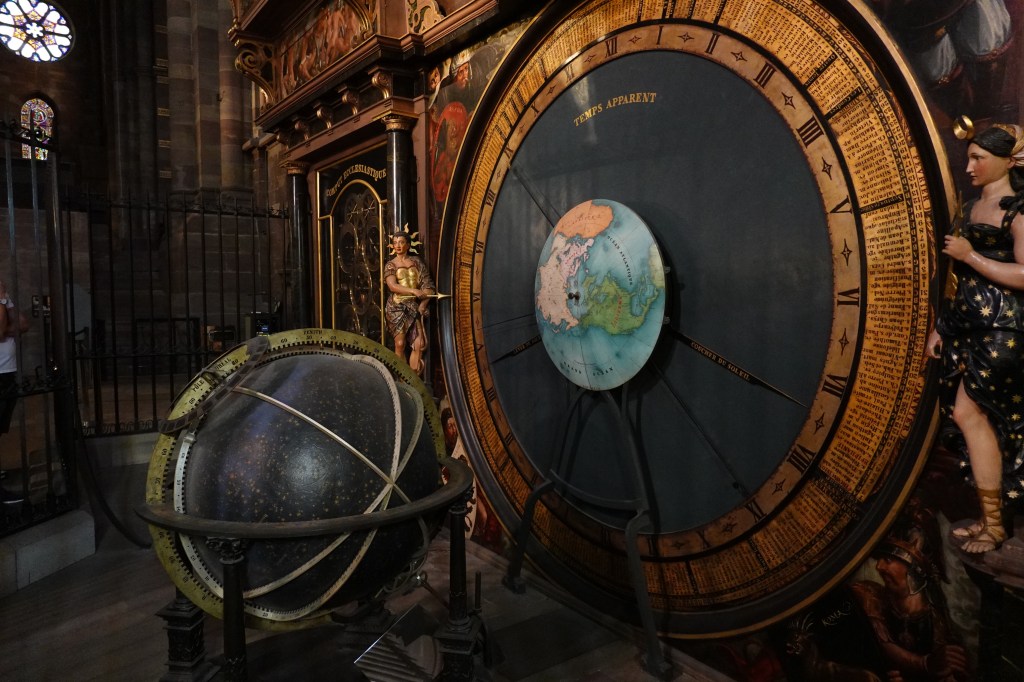
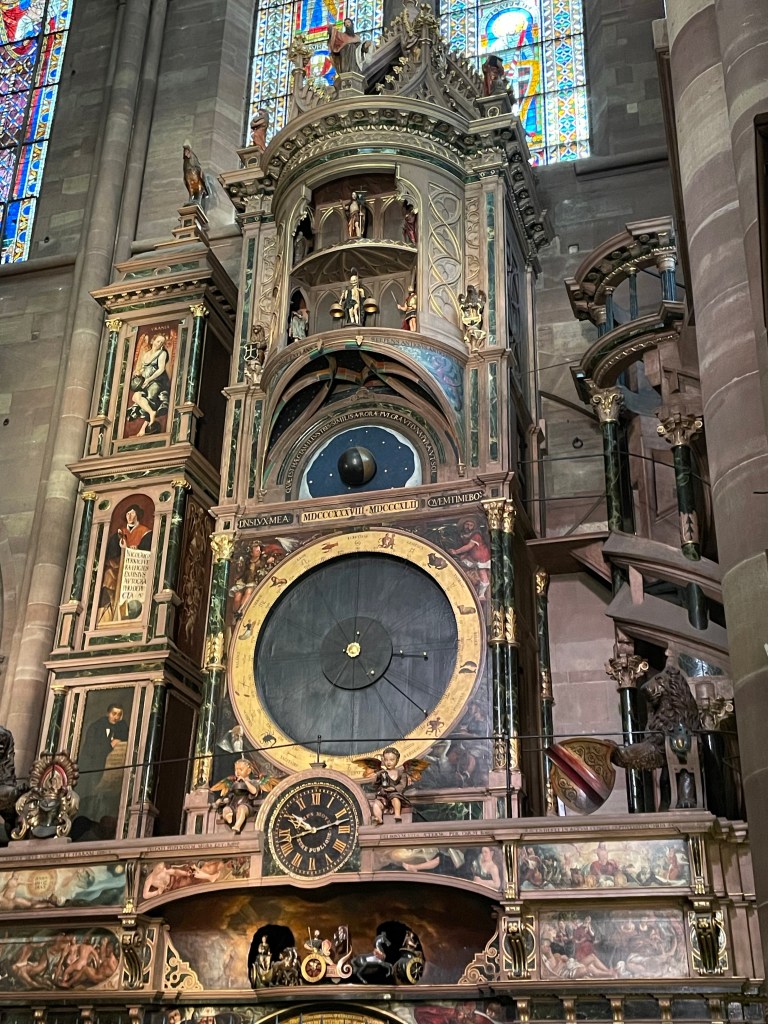
Clare’s favorite part of the cathedral is the astronomical clock, huge, complex and still working. It showed the placement of the planets, the moon and sun, where on Earth is in night and where in daylight, Zodiac signs, so many scientific things. And it had puppets (characters representing stages of life) walking past the death every 15 minutes: first a child, next a young man, then an old man. For the hour, different puppets moved higher up. The little angels adjacent to the base also moved every quarter hour, one turning an hour glass and the other ringing a bell.
Watch the video of the clock – child changing into adult

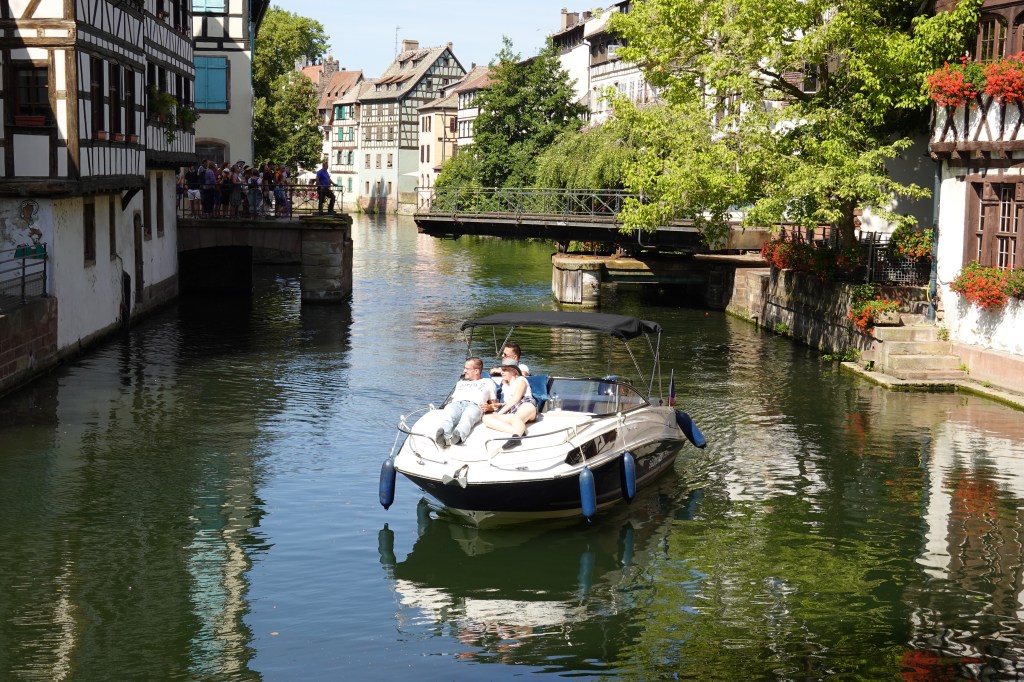
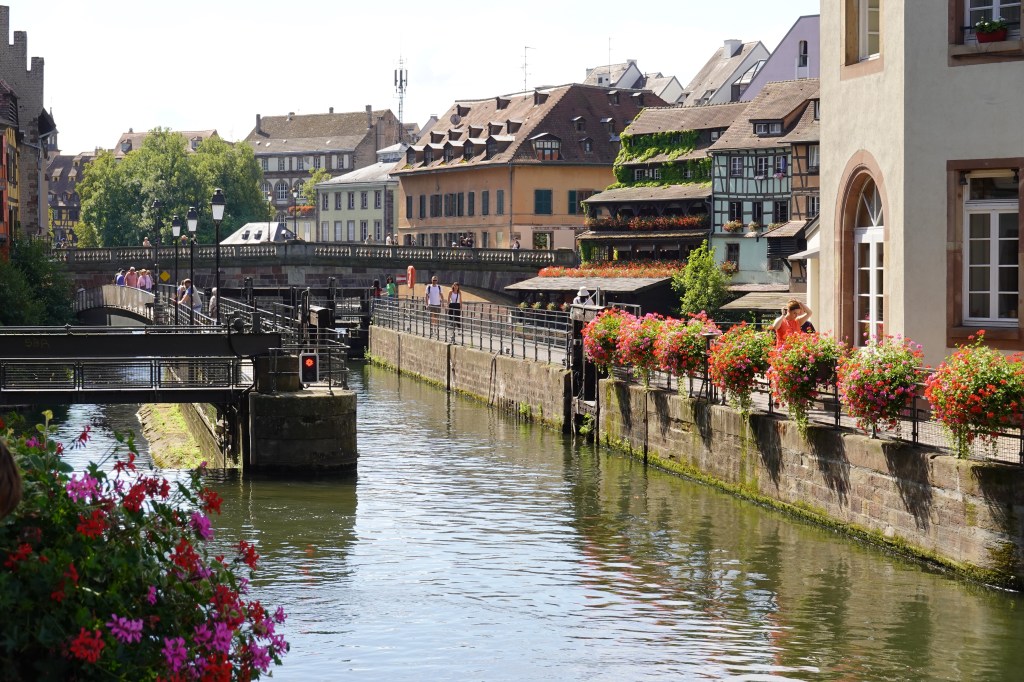
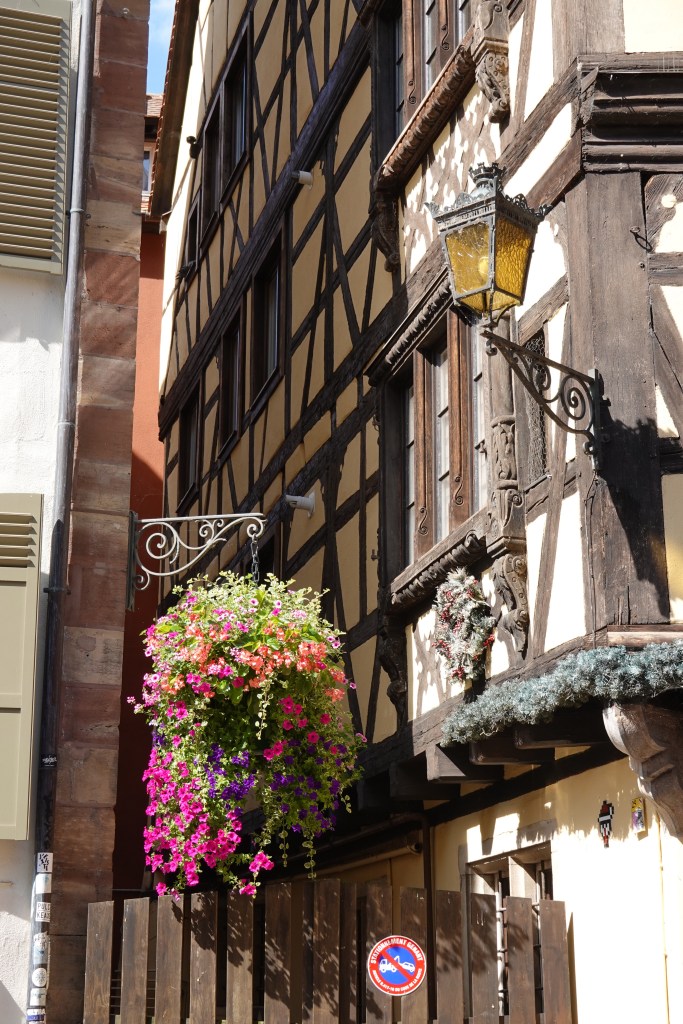
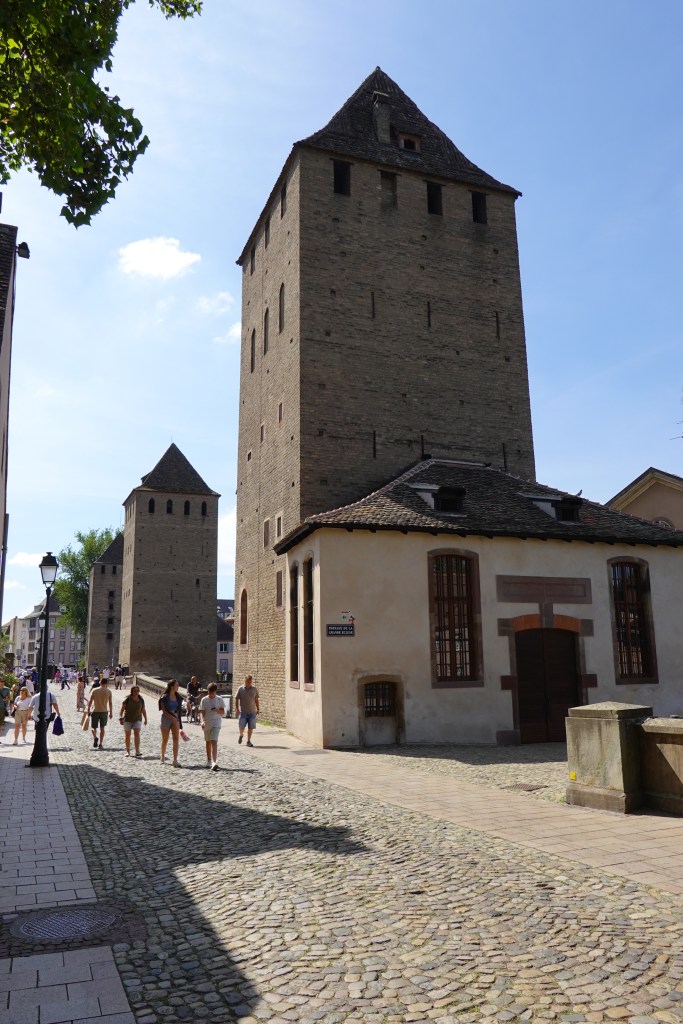
Lots of canals around Strasbourg are decorated as you would expect in France. Some of the bridges rotate out of the way to allow boats to go at prescheduled times.
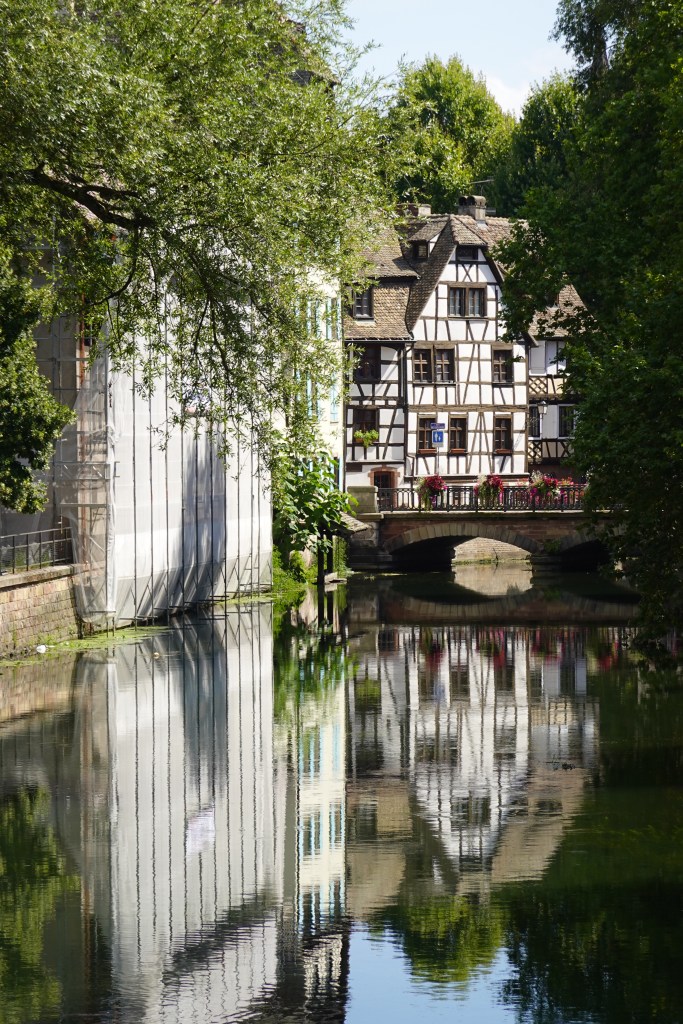
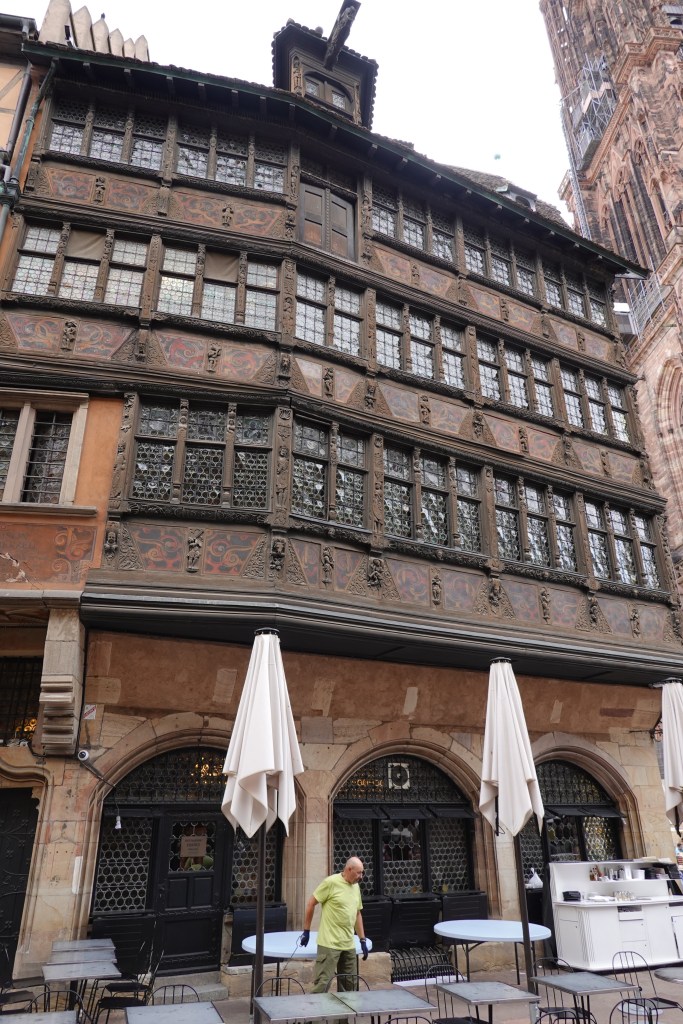
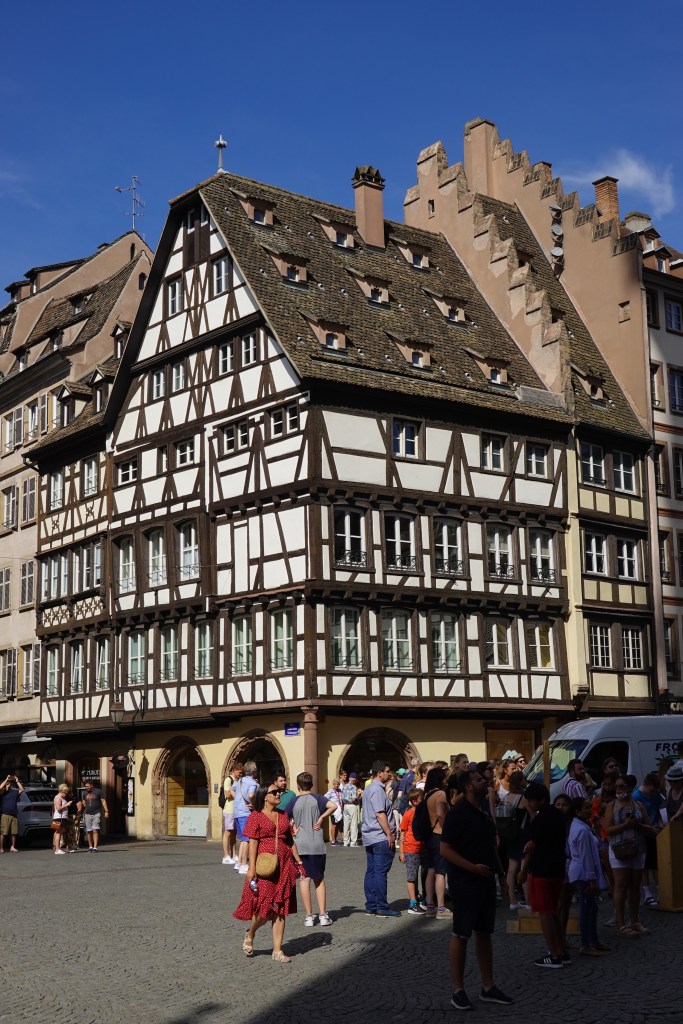
The town is very much a mix of French and German. Our tour guide indicated that most of the people consider themselves European rather than one or the other, because ther parents and grandparents had to change nationality and religion several times in order to stay in the town.
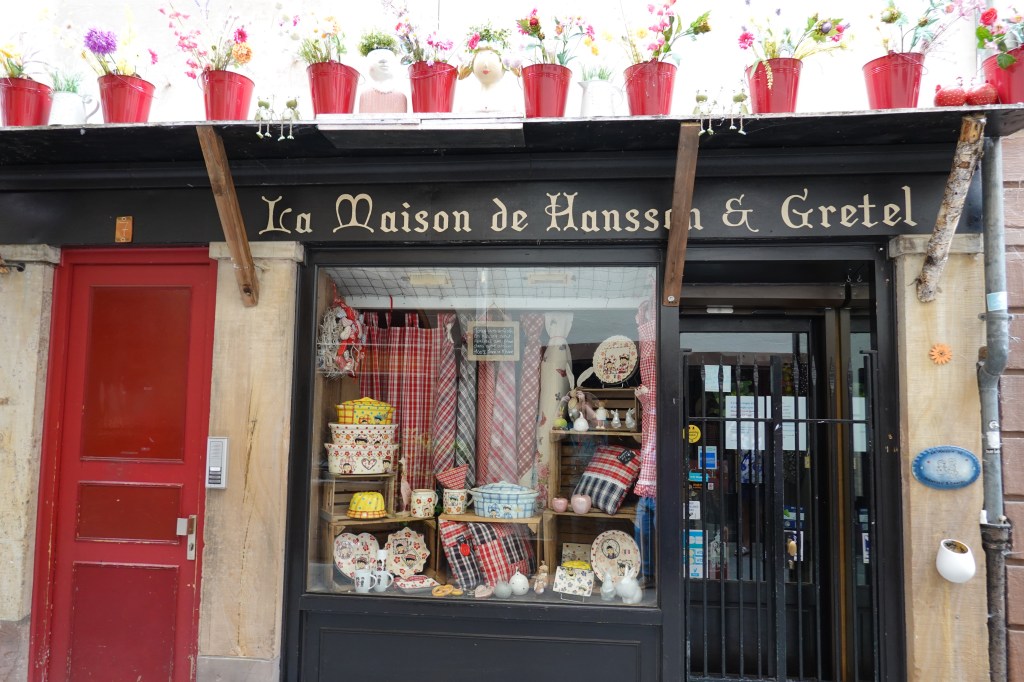
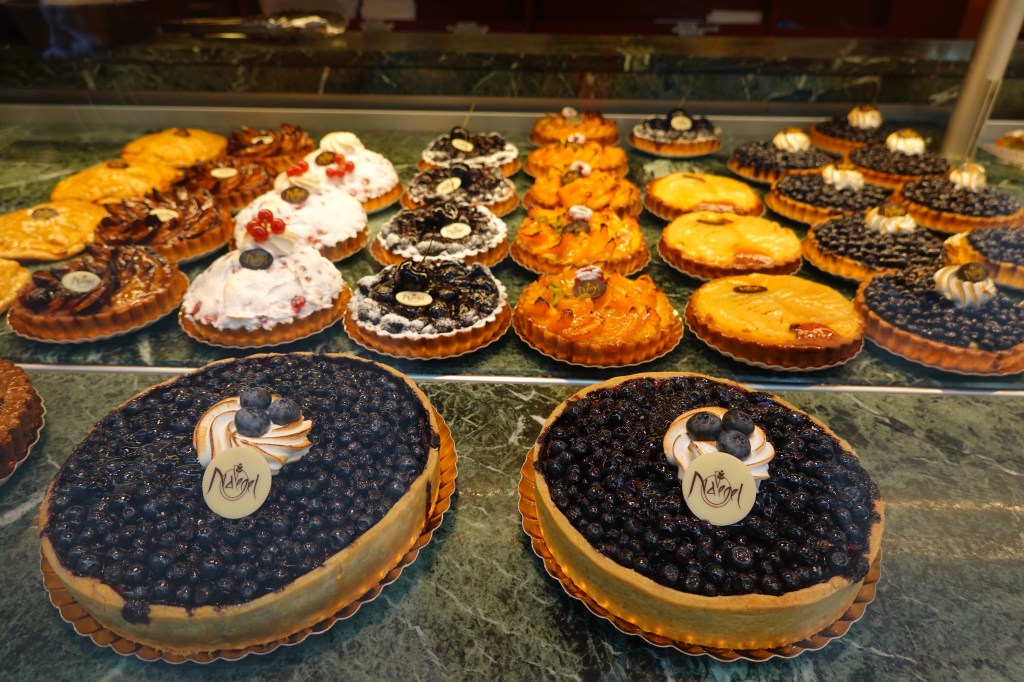
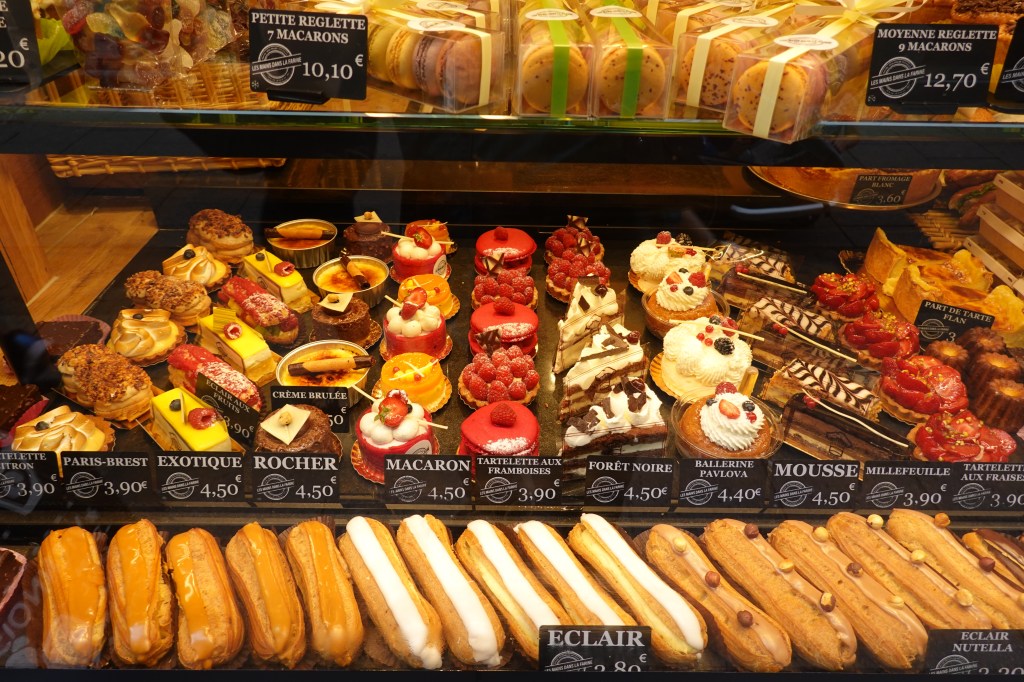
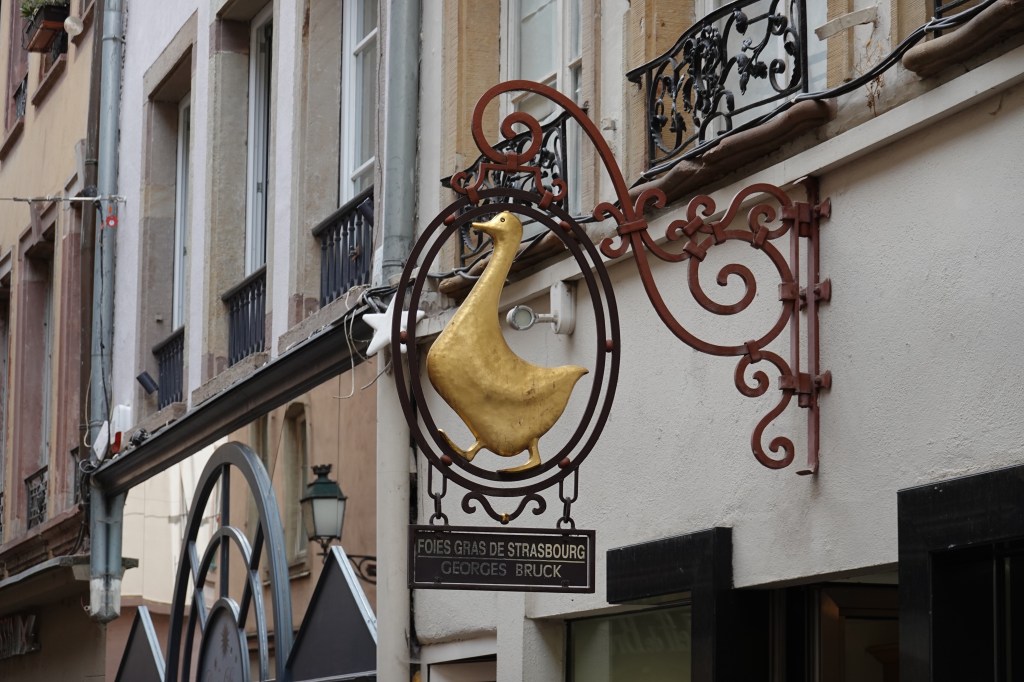
The tour guide joked that people cross the river to the German side to buy manufactured goods while they cross to the French side to buy food, such as pastries, foie gras, and cheese.
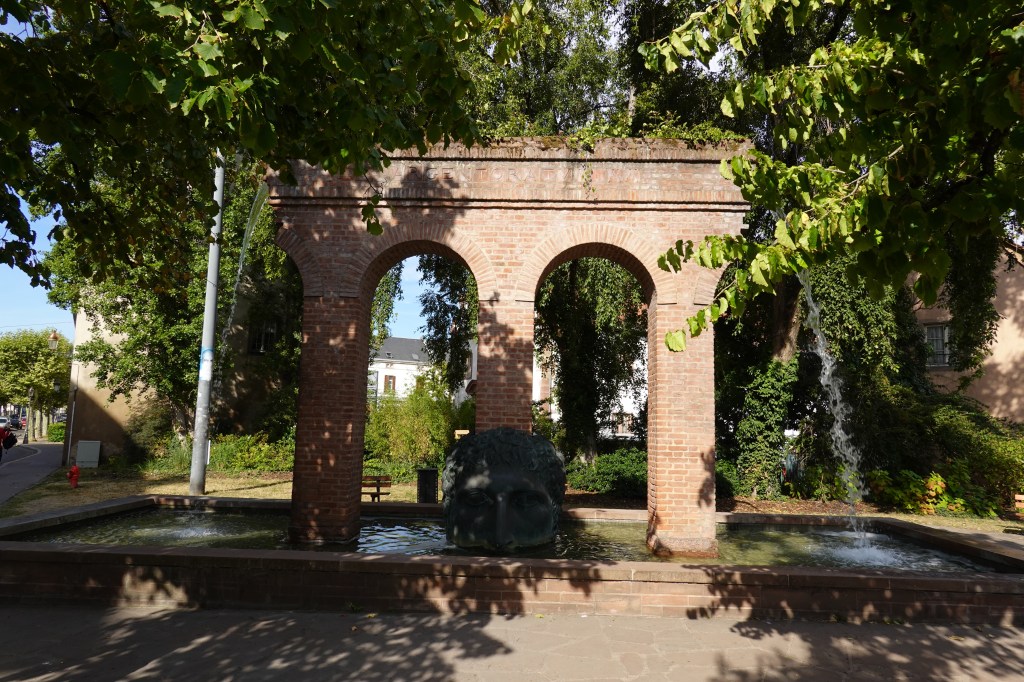
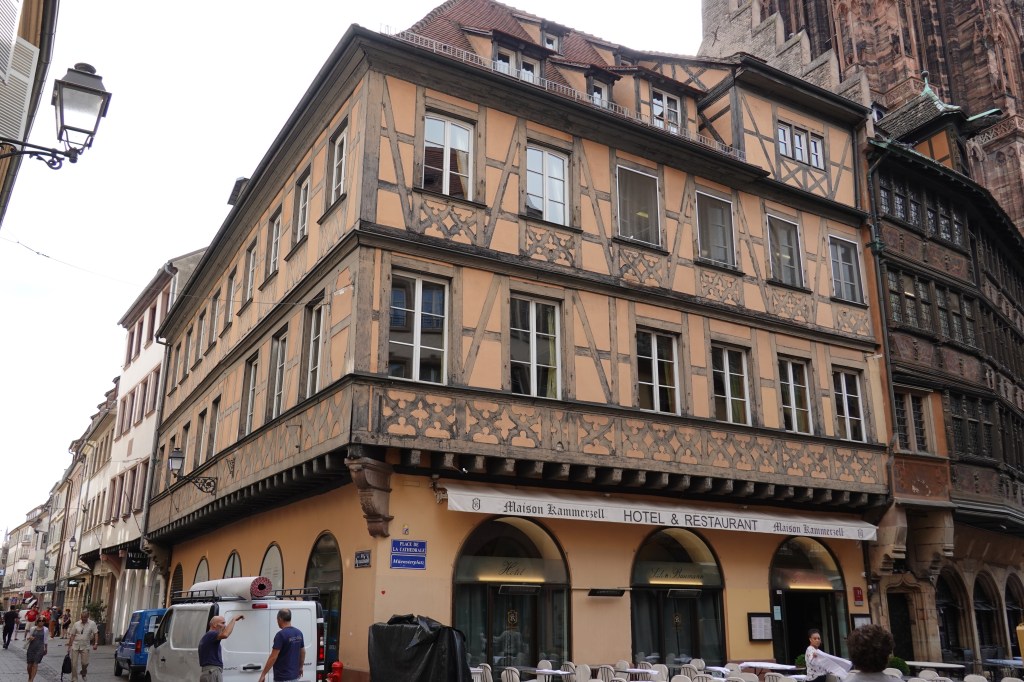
The architecture is not only French and German, but Roman as well. As in many places in Europe, ruins and reconstructions of Roman structures are everywhere.
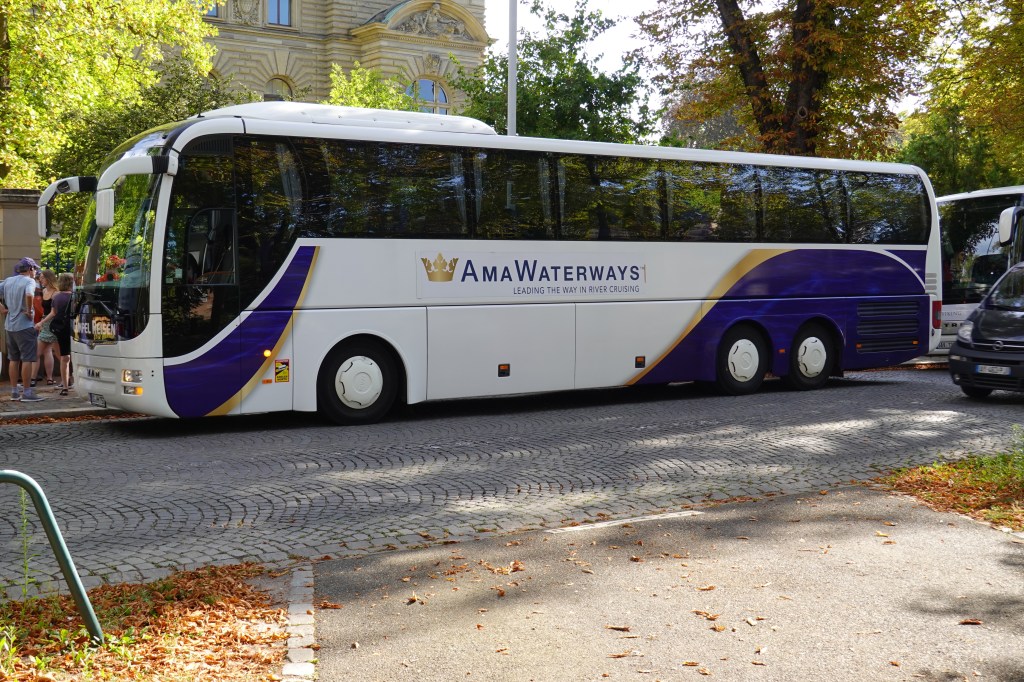
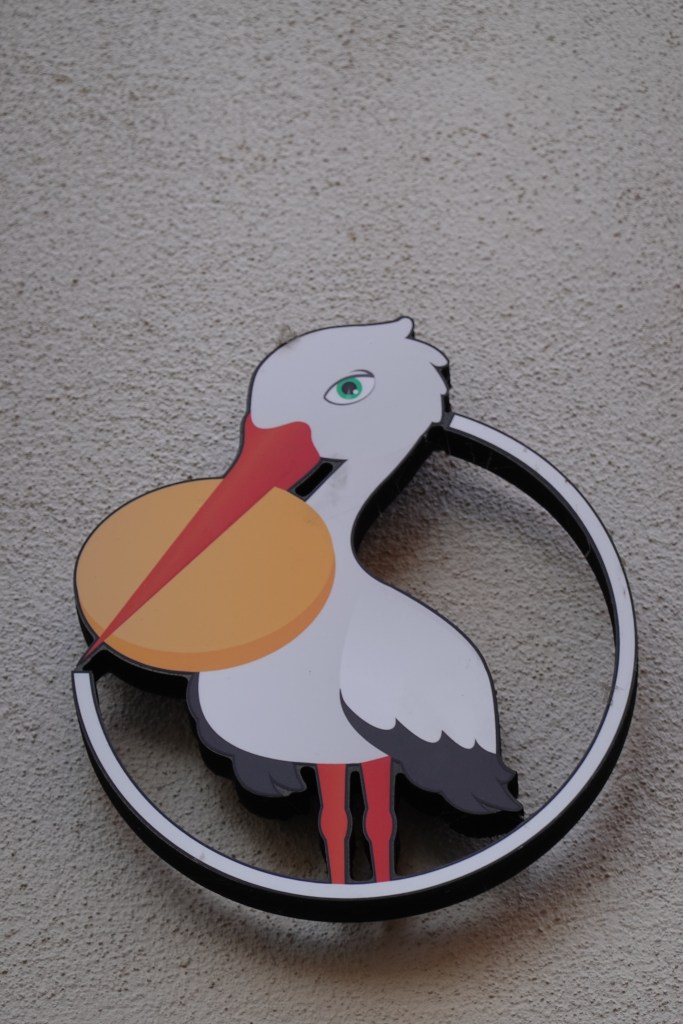
The stork is the town mascot, and many stork’s nests were pointed out on our bus drive from the river to the old town, but only in the Parc de l’Orangerie. The storks return to their nests year after year, like the citizens, but the storks do their Spring cleaning by throwing debris out of their (very large) nests, sometimes hitting unsuspecting humans below. So the people have encouraged the storks not to nest near where humans live.
Rhine River Cruise: Heidelberg, Germany

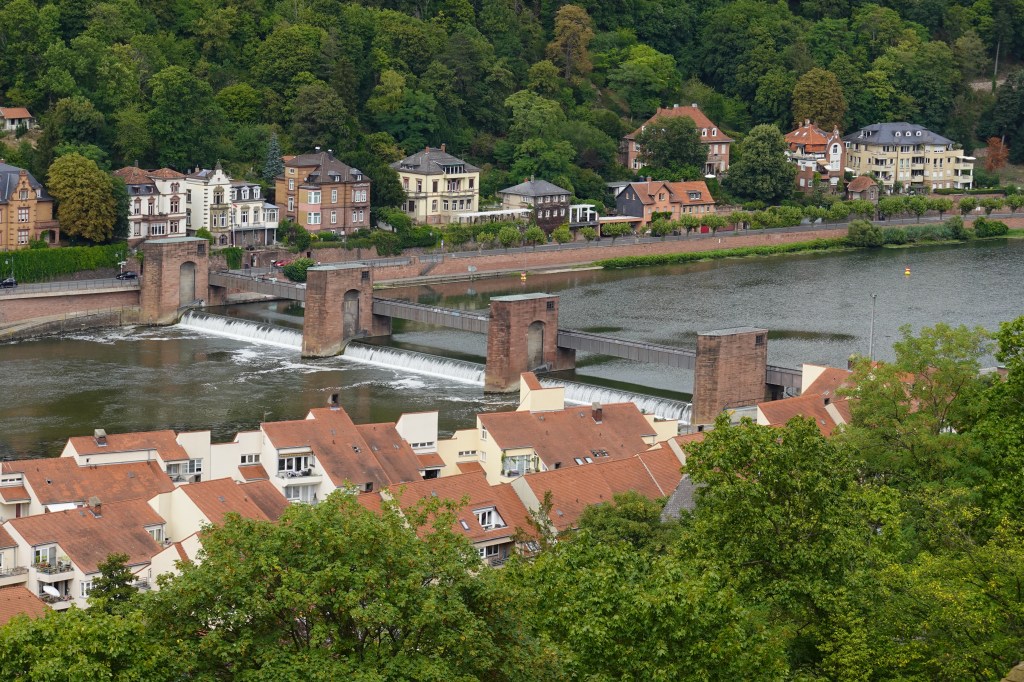
Heidelberg is on the Neckar River, a tributary to the Rhine, so we took an hour bus ride to see this awesome place.
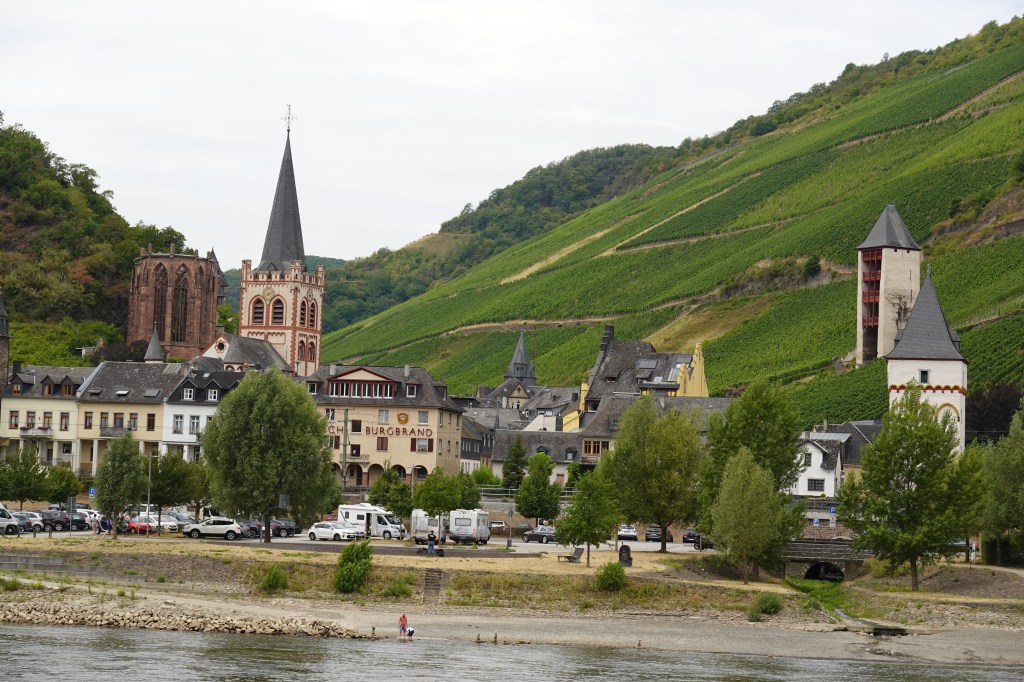
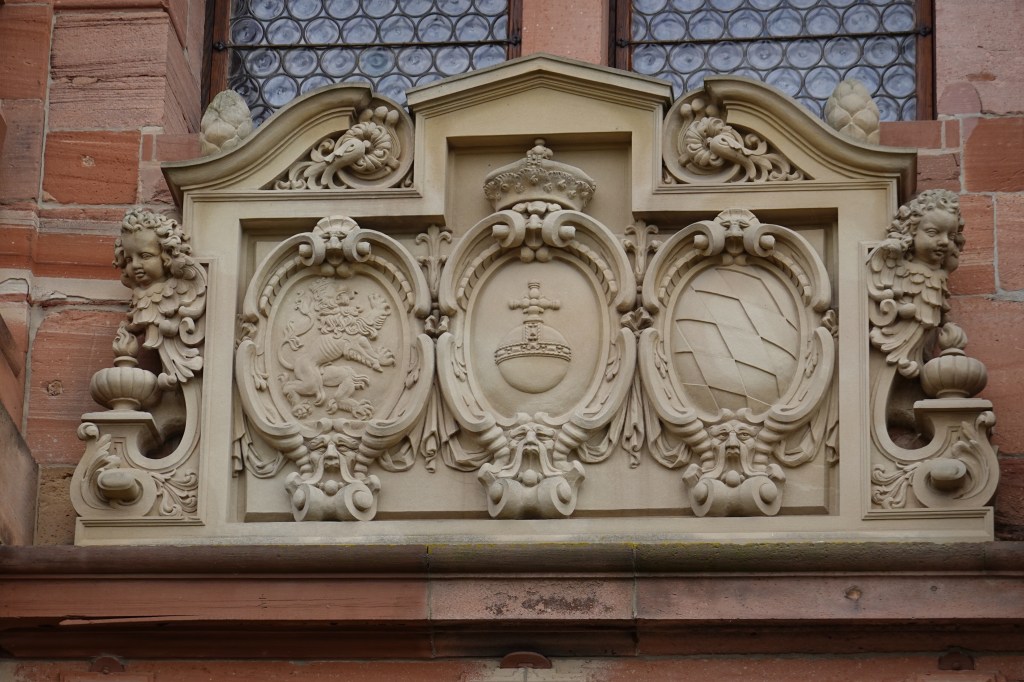
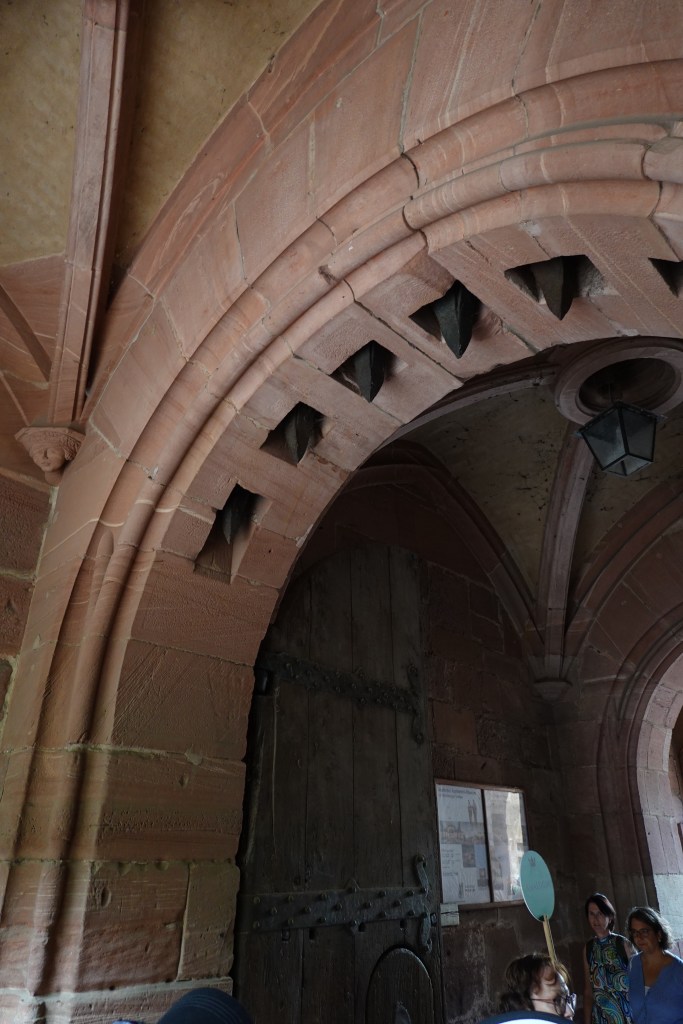
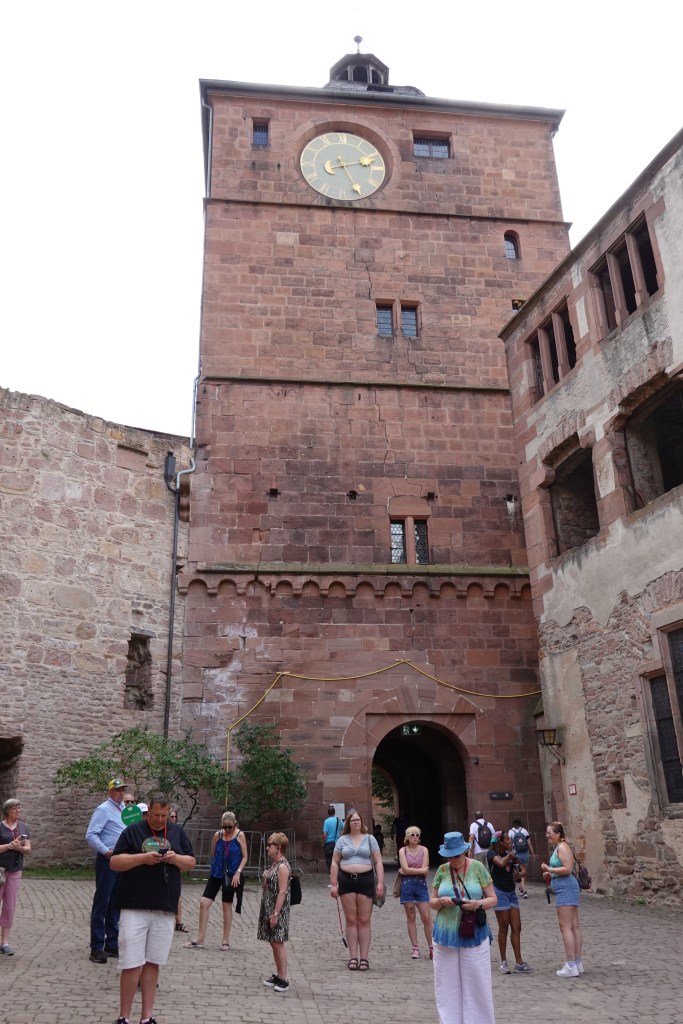
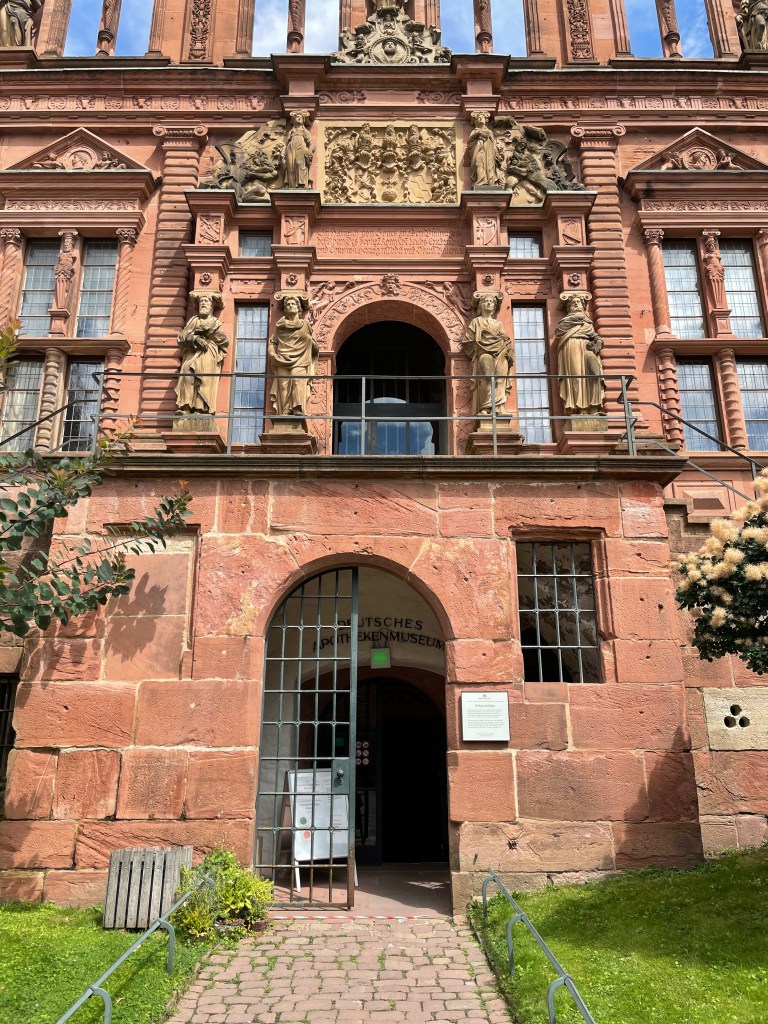
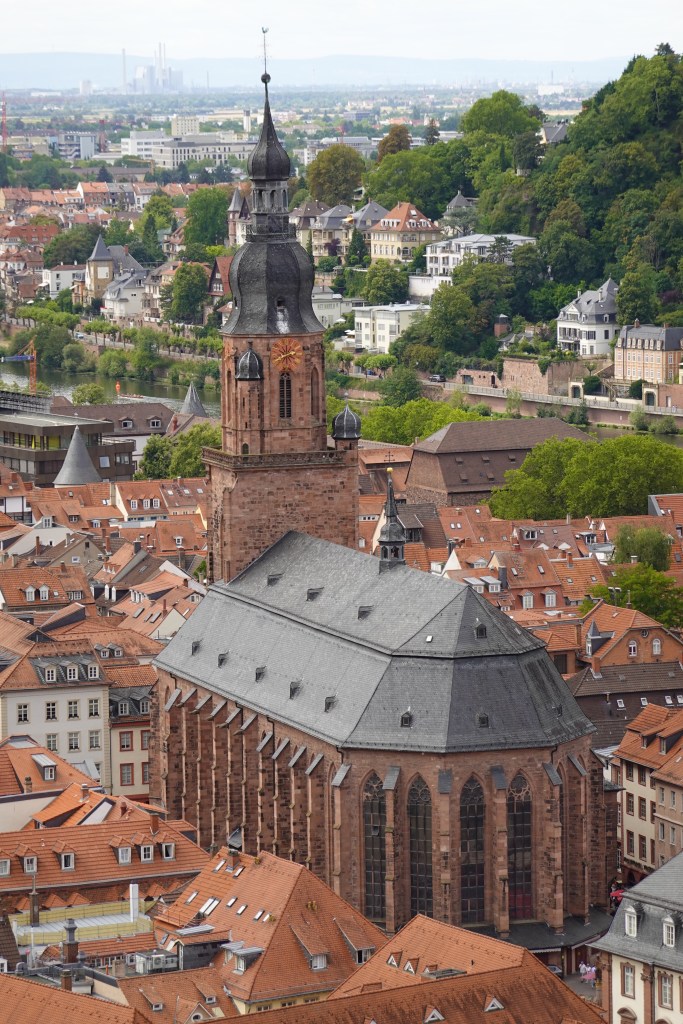
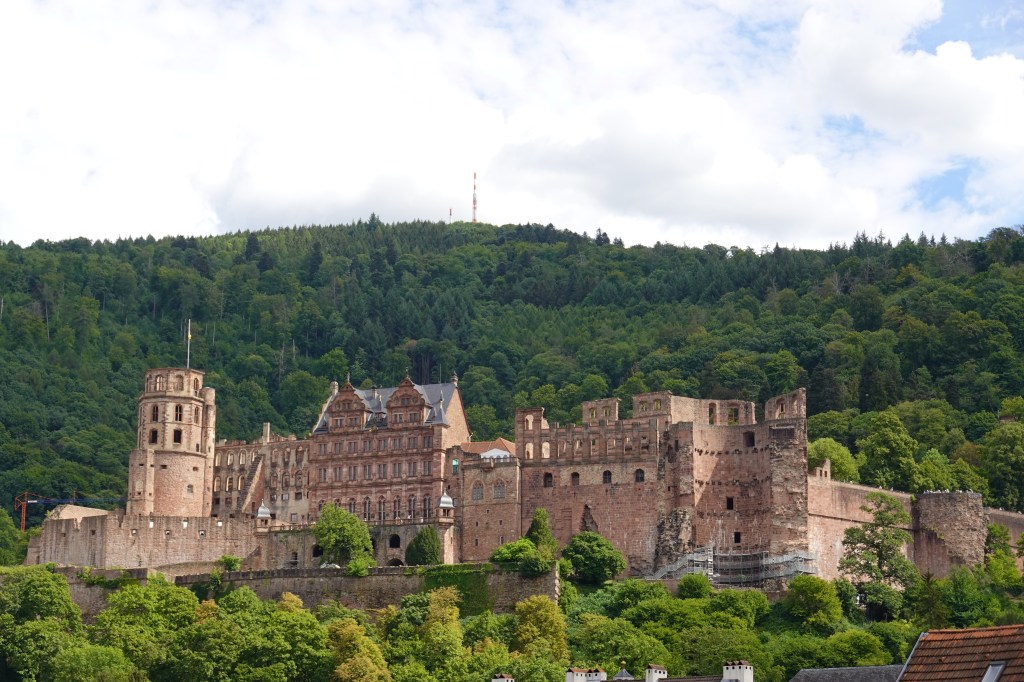
Heidelberg castle from the town, some of the most important Renaissance constructions in the area, only partially rebuilt.
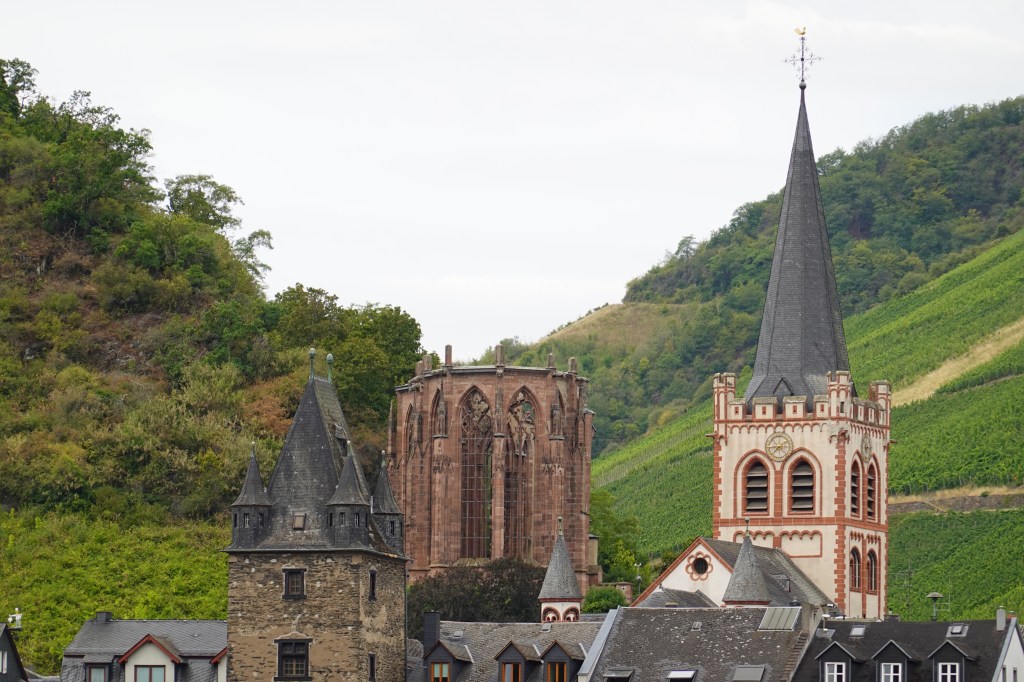
We listened to our guide, then were set free to figure things out on our own. The university is very famous, was founded in 1386.

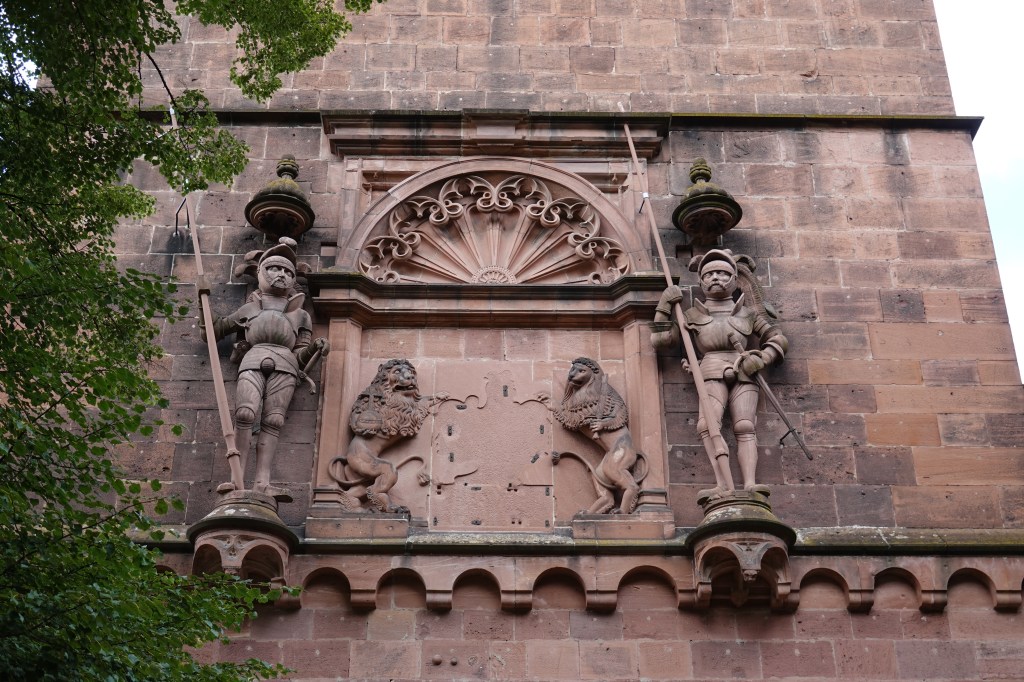
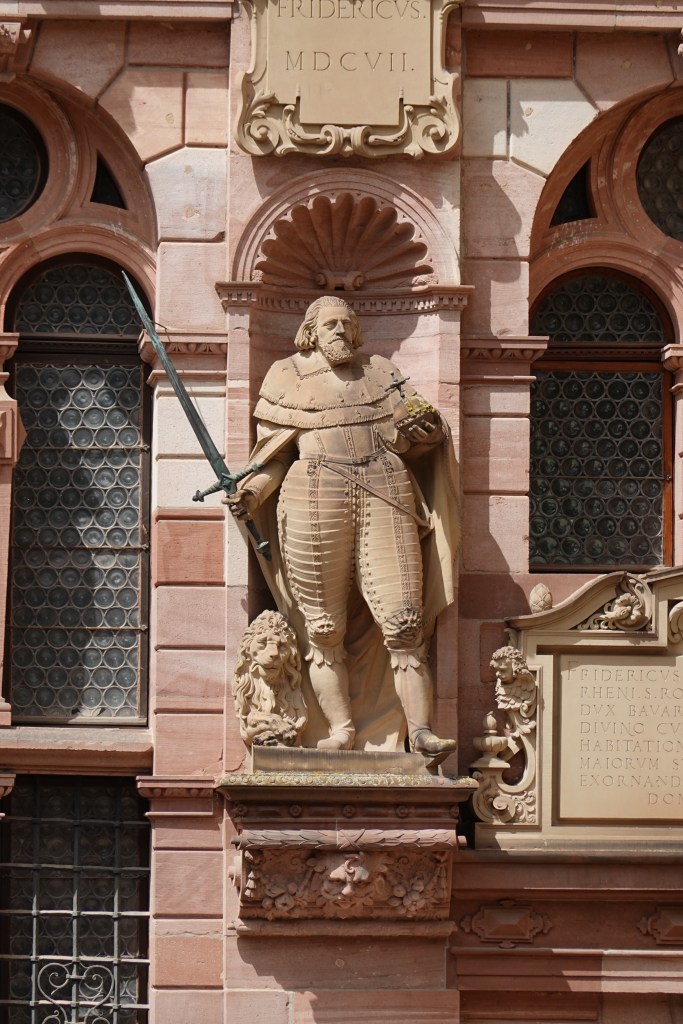
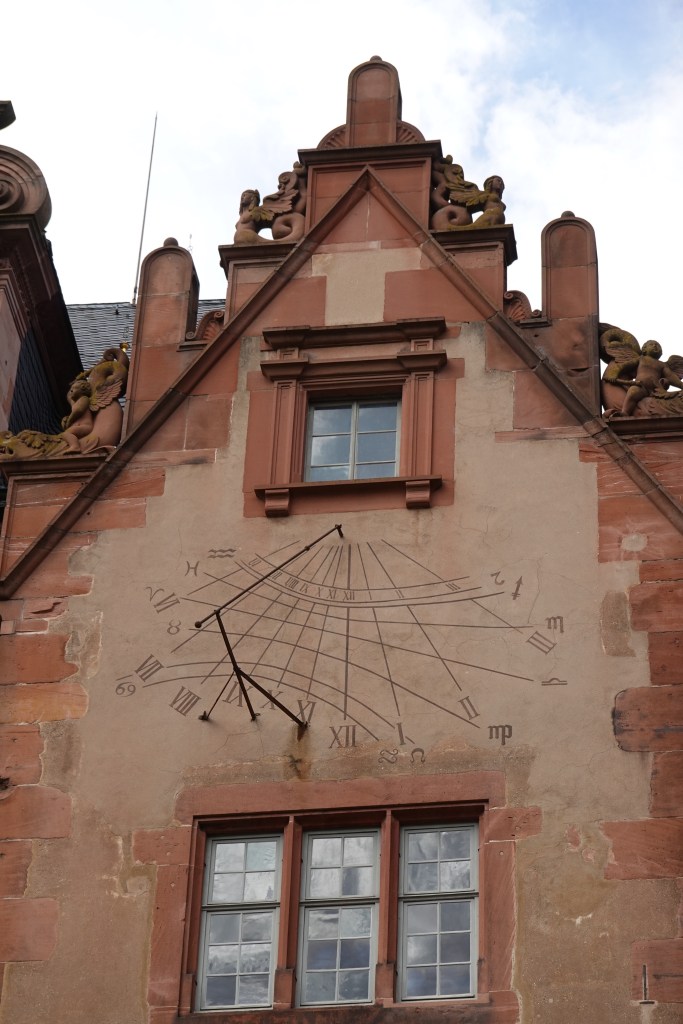
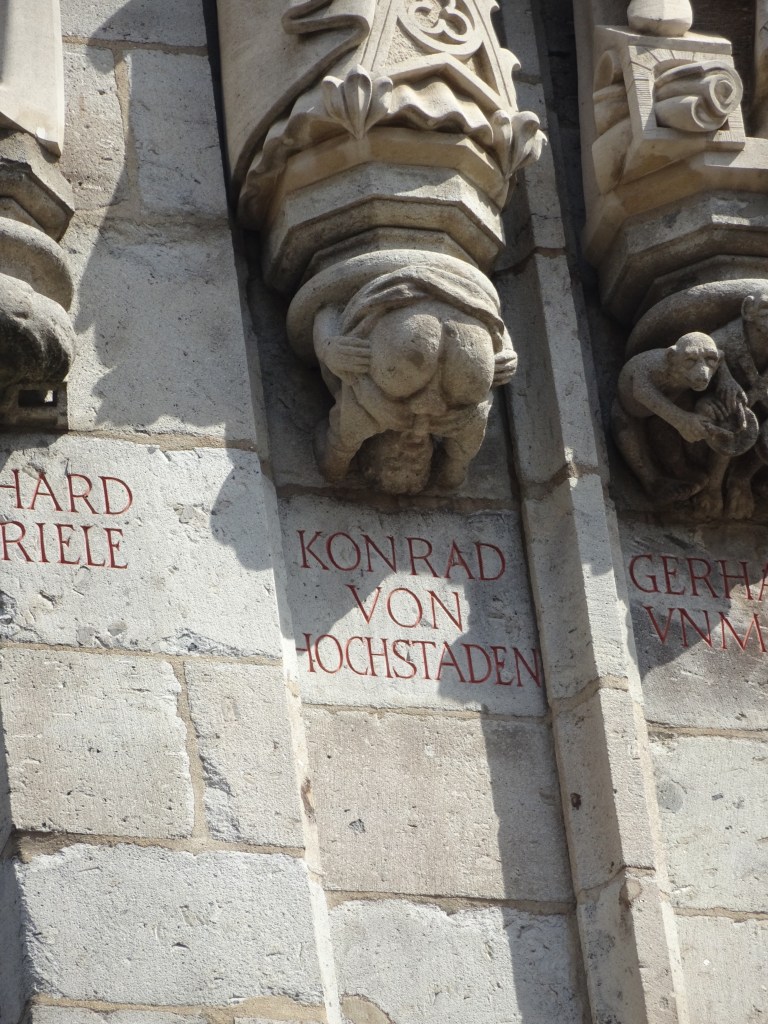
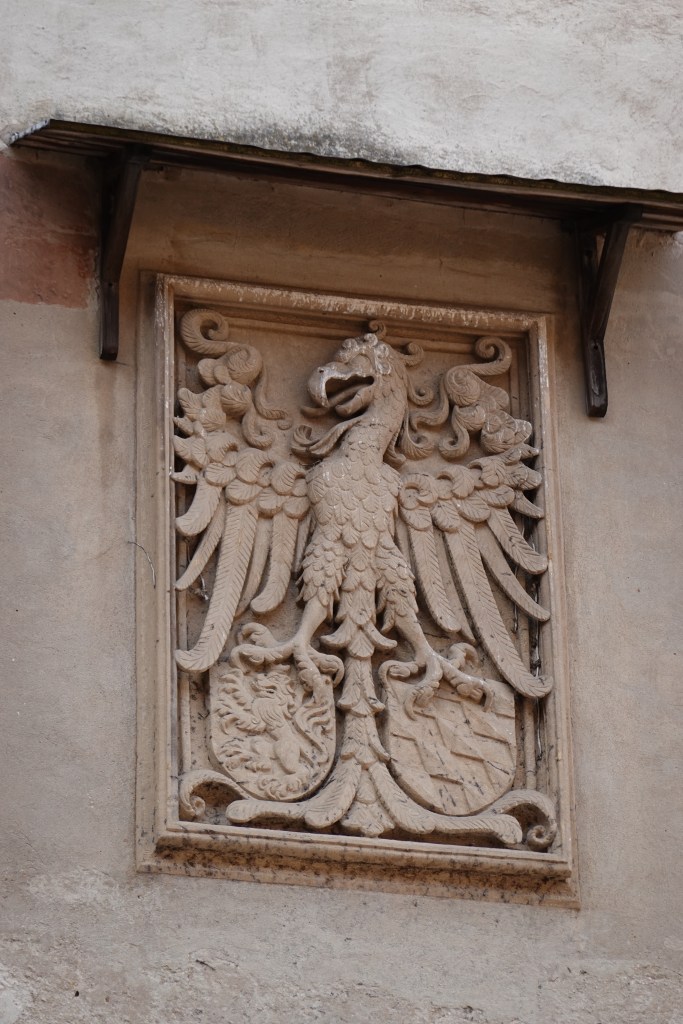
All kinds of interesting carvings. The town was designated a “City of Literature” by UNESCO.

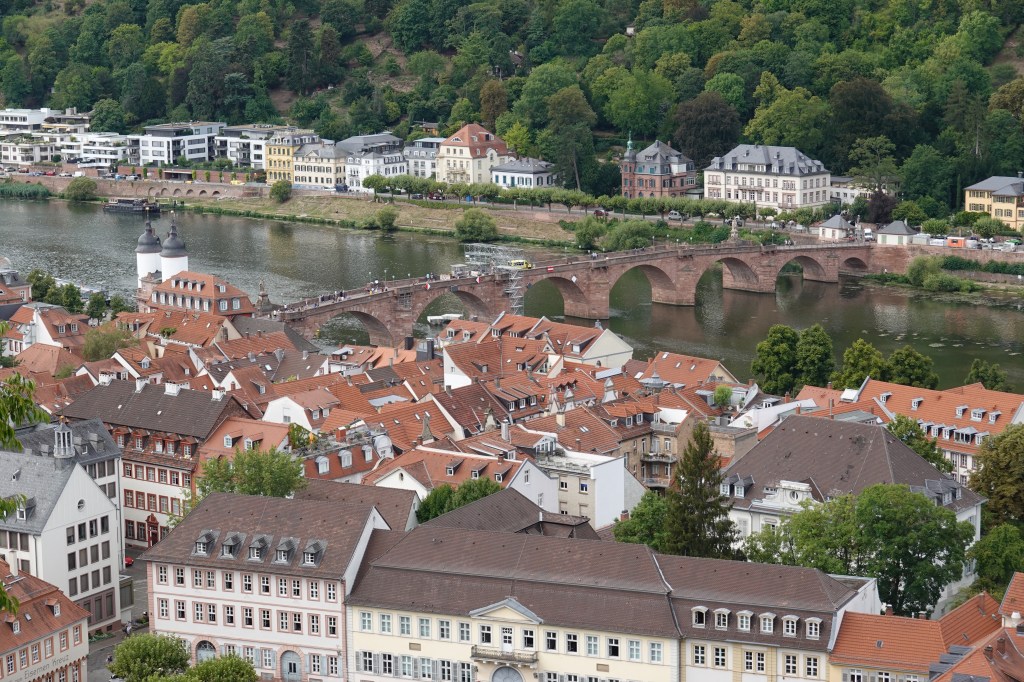
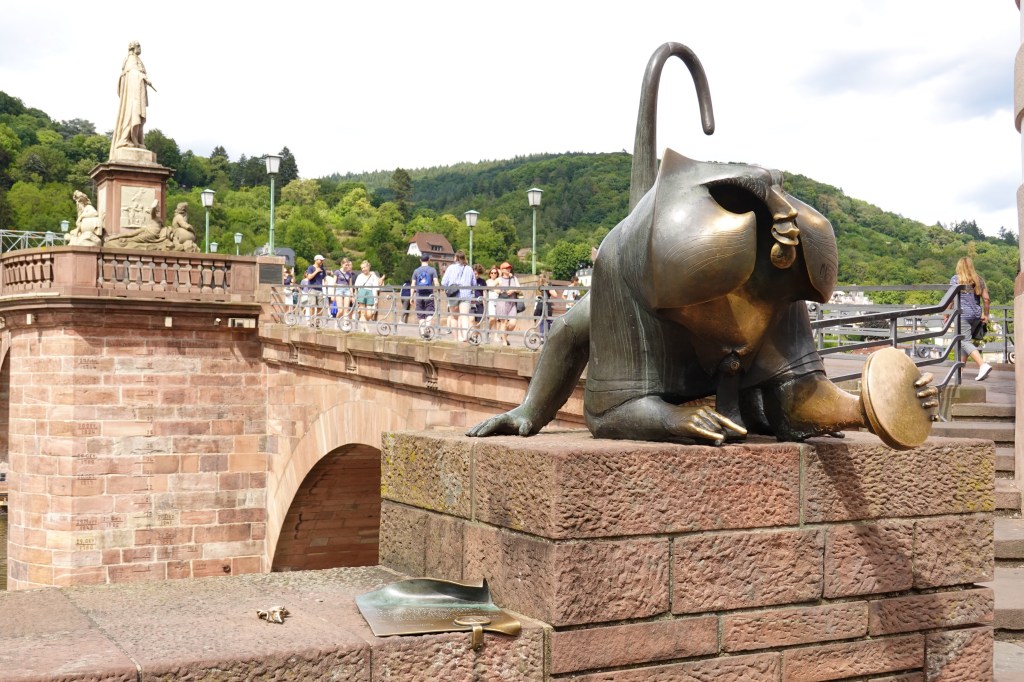
Poem for the Bridge Monkey: Why are you staring at me? / Haven’t you seen the old monkey of Heidelberg? / Look to and fro / There you will find many more of my own kind.

Rhine River Cruise: Koblenz to Rudesheim

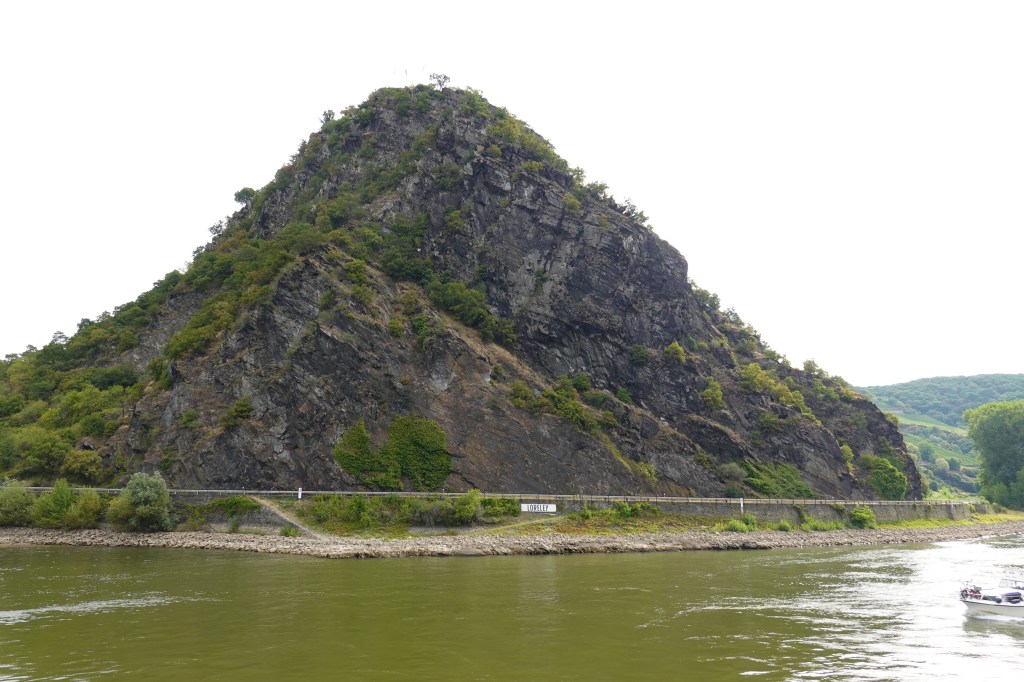
To many people, the “Middle Rhine” is the high point of their journeys along this famous river, because of all the castles visible along the cliffs above the river itself. The first part of this entry is the middle Rhine. We tried to name all the castles for you, but it’s difficult. Fortunately, the cruise line gave us good maps and the cruise director told us stories of the castles as we passed.

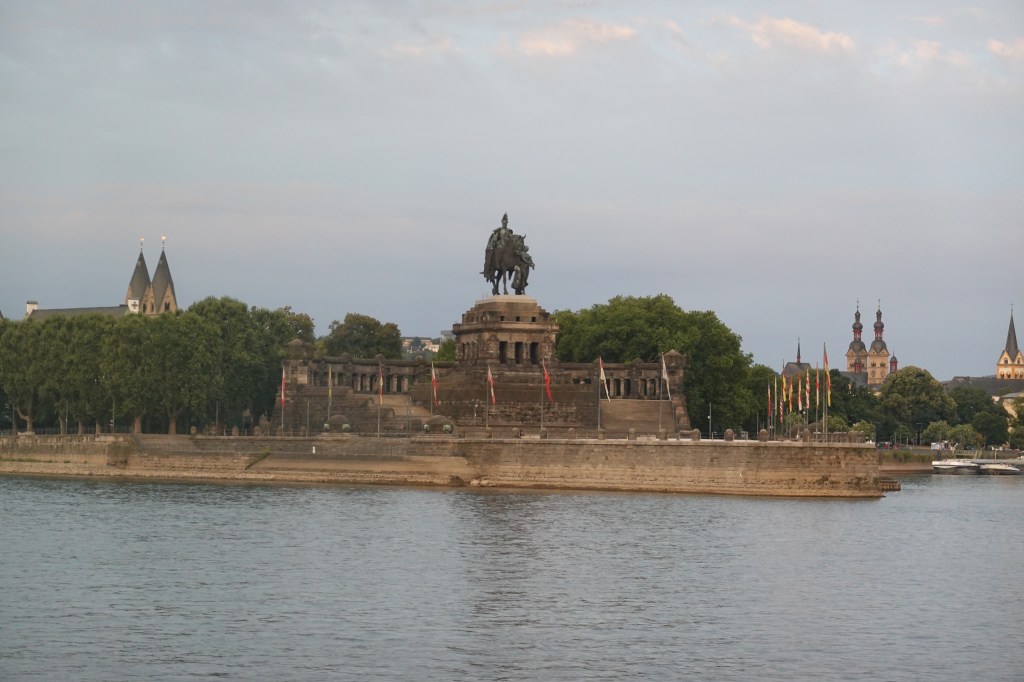
The Deutsches Eck promontory in Koblenz where the Mosel River (to the right) joins the Rhine River. The statue of William I on horseback commemorates his role in the unification of Germany in the late 19th century.

Fortunately, we woke up early and grabbed some breads and drinks to take up to the top deck to watch the castles and cute towns of the Middle Rhine as we sailed upstream.

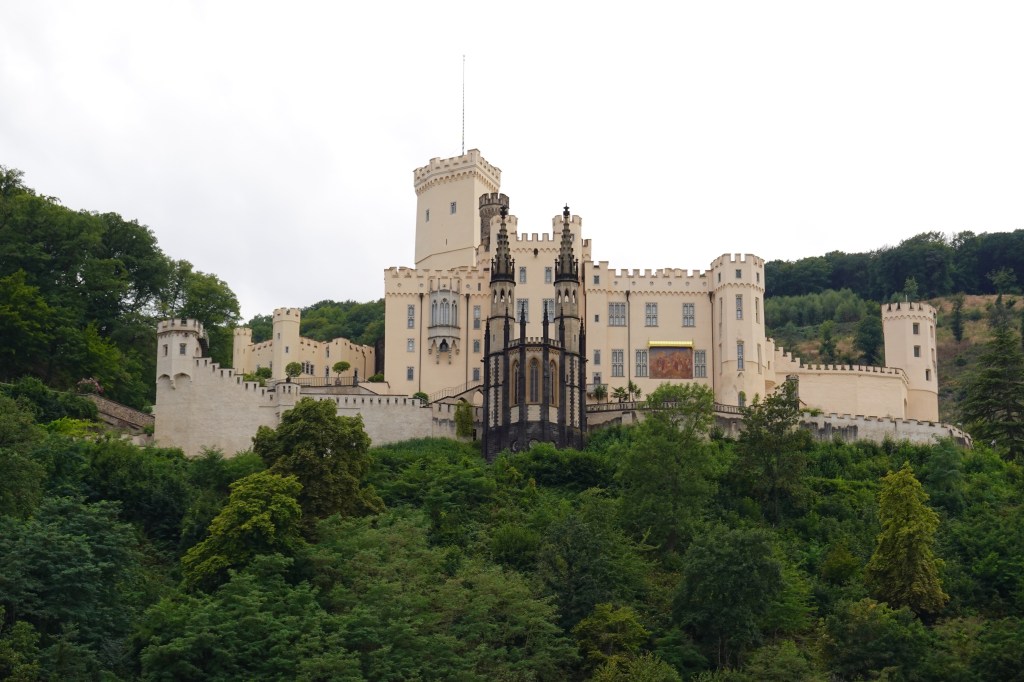
Castle Stolzenfels in Kapellen at 585 km from Constance, Switzerland (headwaters of the Rhine River)

We noticed large numbers on the Rhine River, which tell us how many kilometers we are from the source of the Rhine, and helped a lot in identifying the castles as we sailed past.

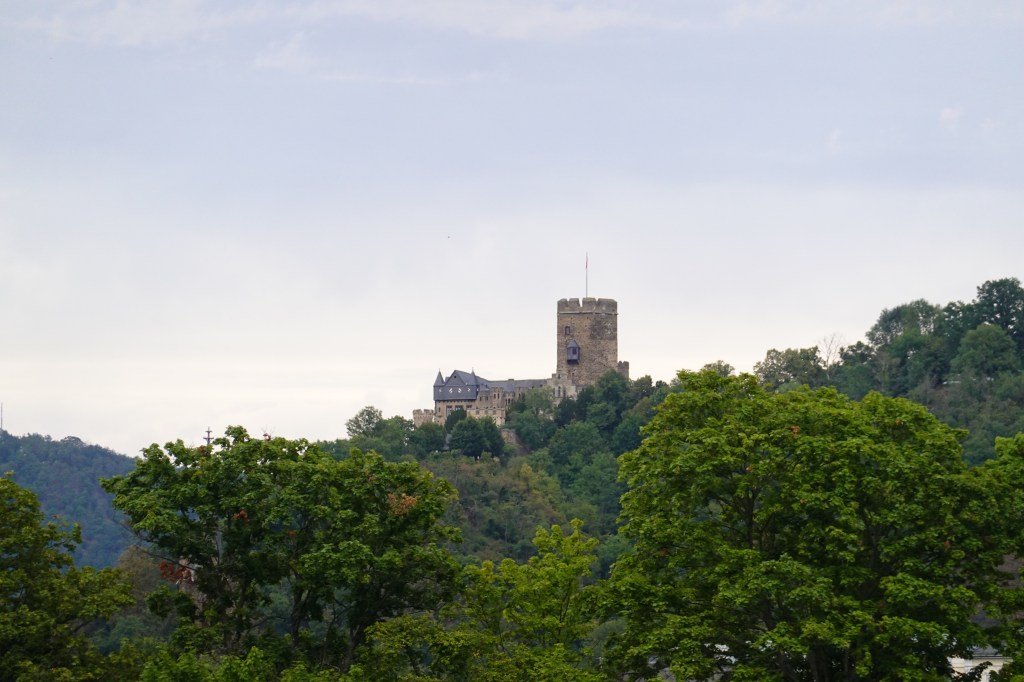
Lahneck castle in Oberlahnstein at 585 km
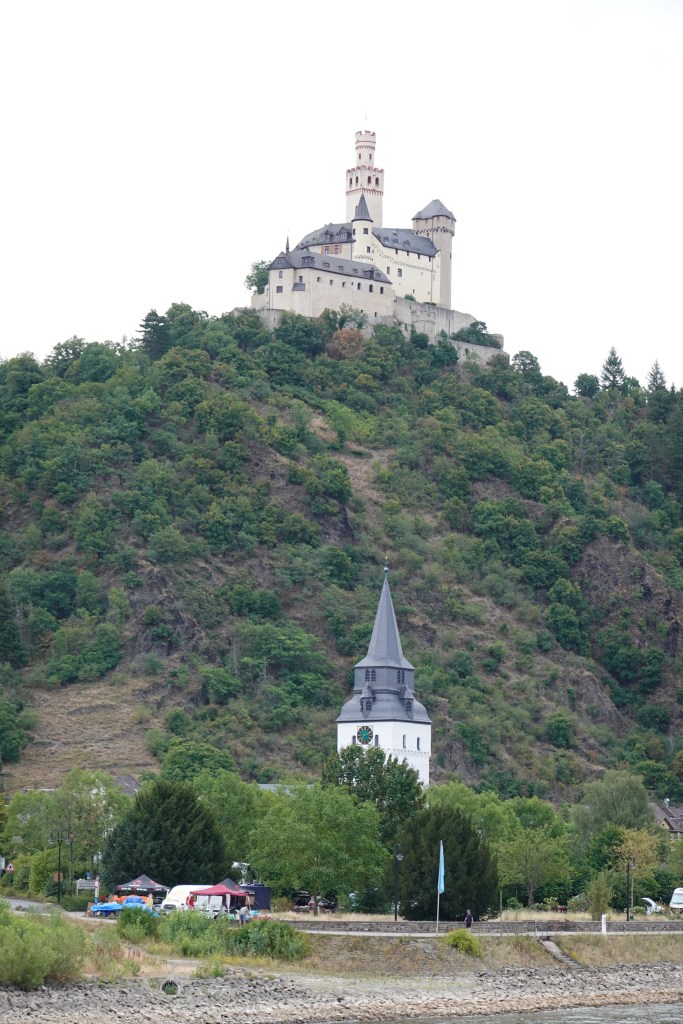
Marksburg Castle in Braubach at 578 km

The most fun was seeing how the architecture of the castles varied. Some of the differences were due to the approximate date the castle was constructed, other differences were in style, from the identity of the castle owners.

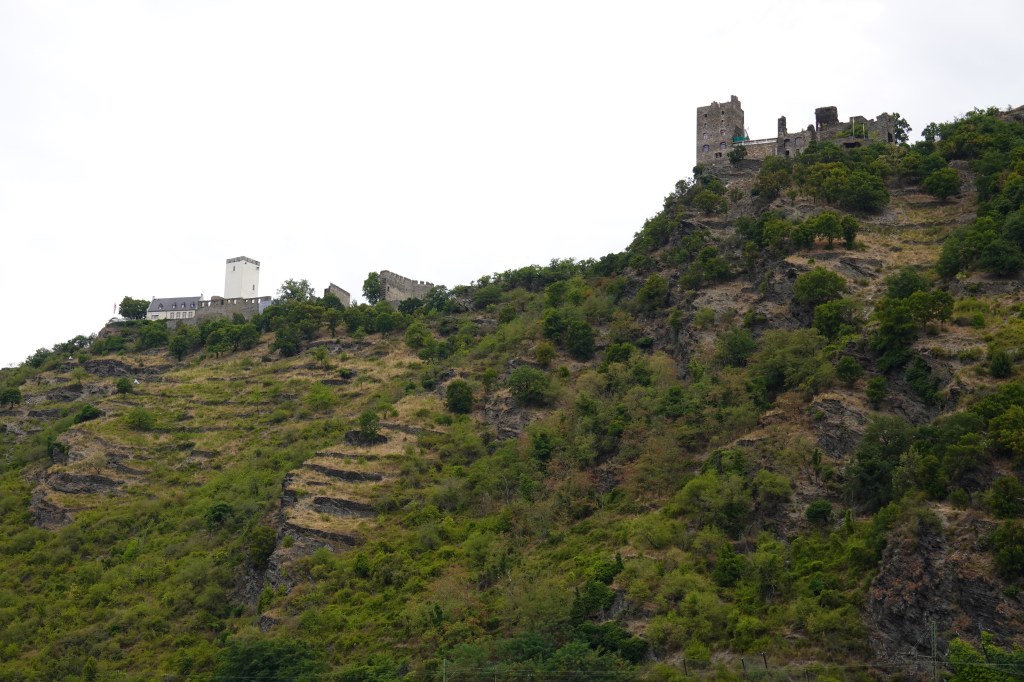
Sterrenberg and Liebenstein castles in Kamp-Bornhofen at 566 km were built by two enemy brothers; the wall between them was built to quell the feud.

So much complexity of history here, most of which did not affect the world, just the sites along the river. Many of these areas were tiny kingdoms in their own rights.

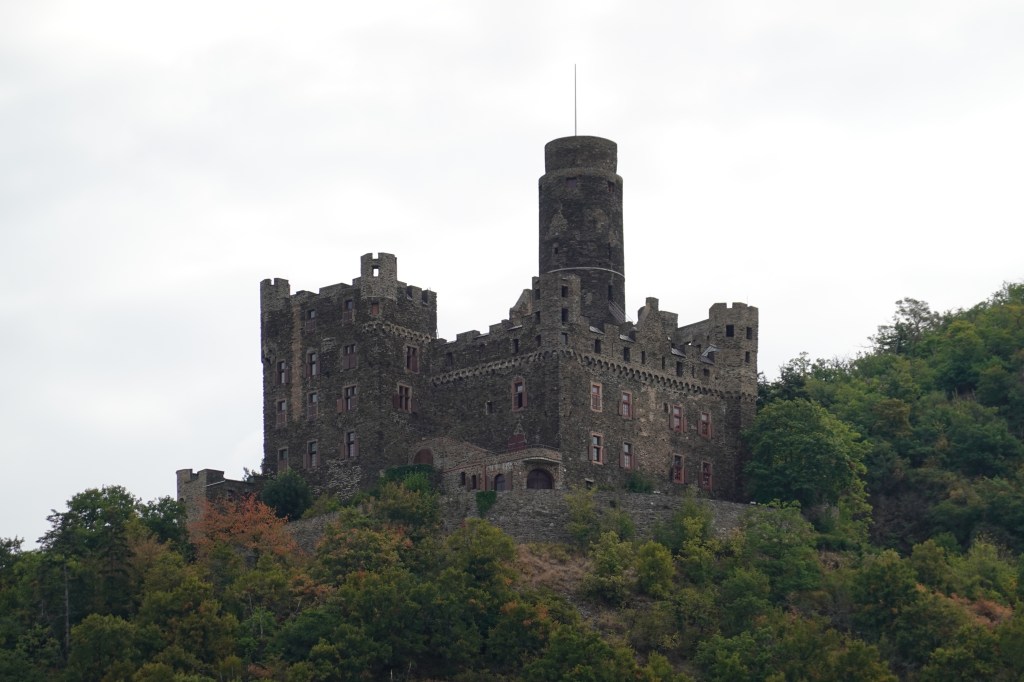
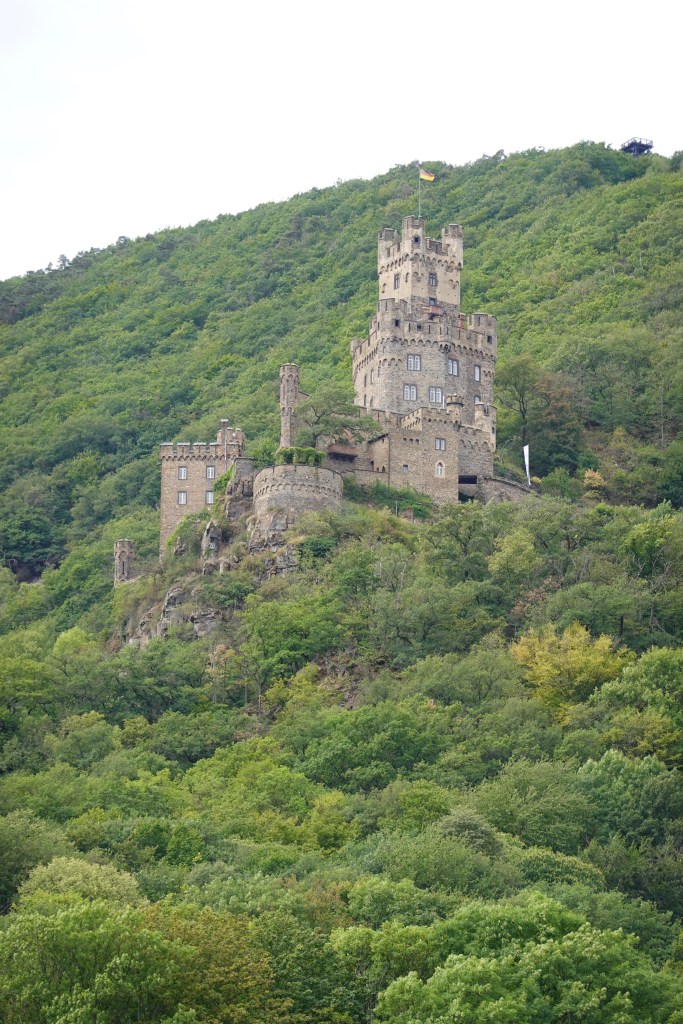
Maus castle in Wellmich at 557 km
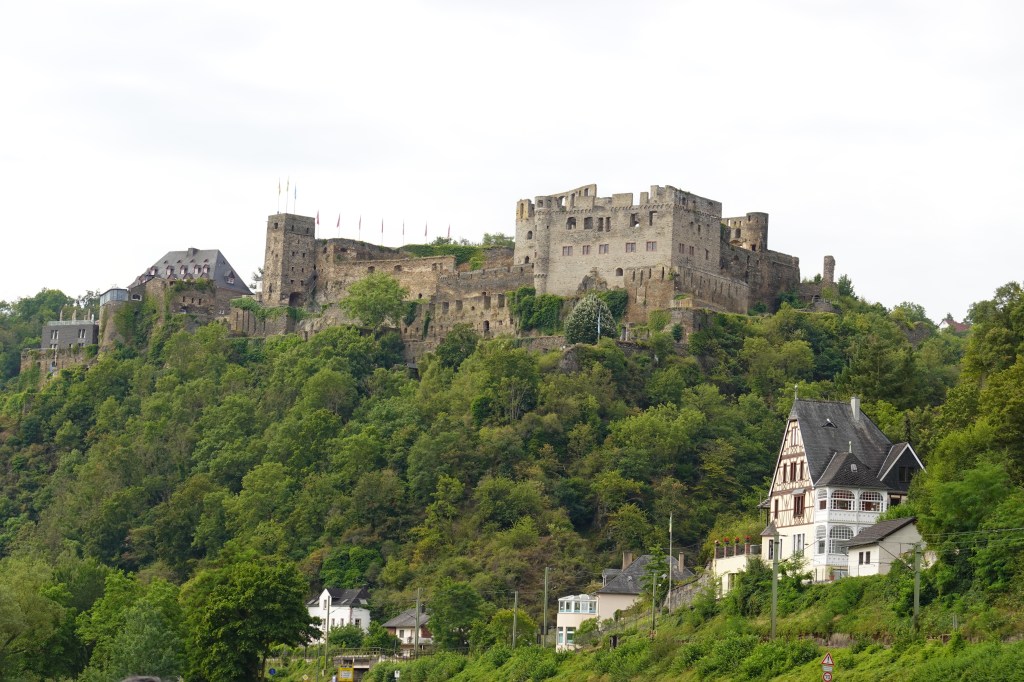
Rheinfels castle in St. Goar at 556 km
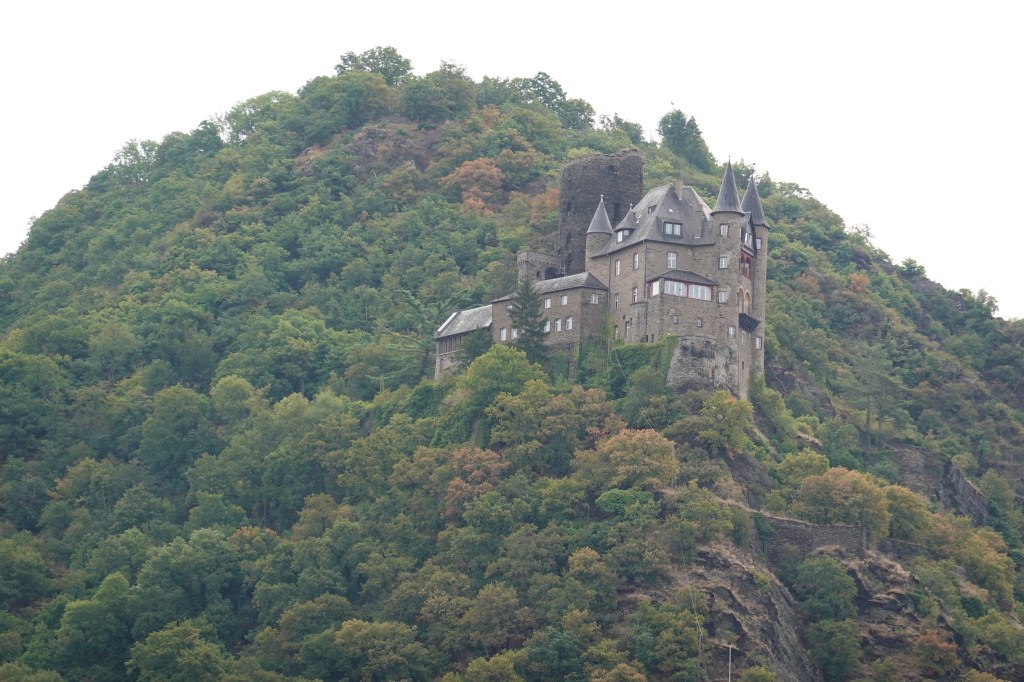
Katz castle in St. Goarshausen at 556 km
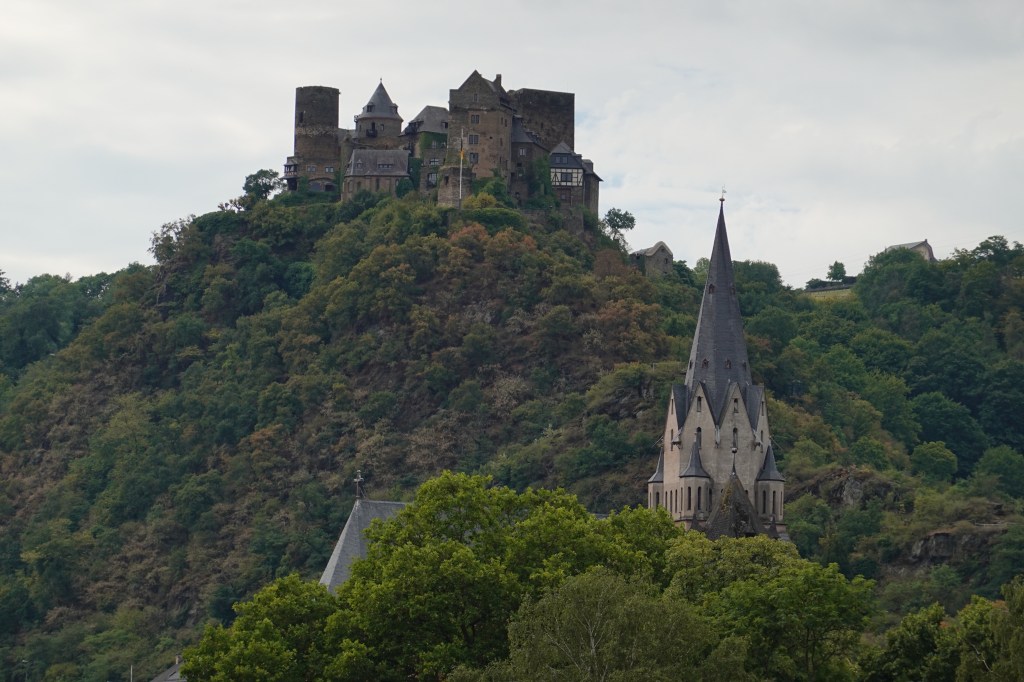
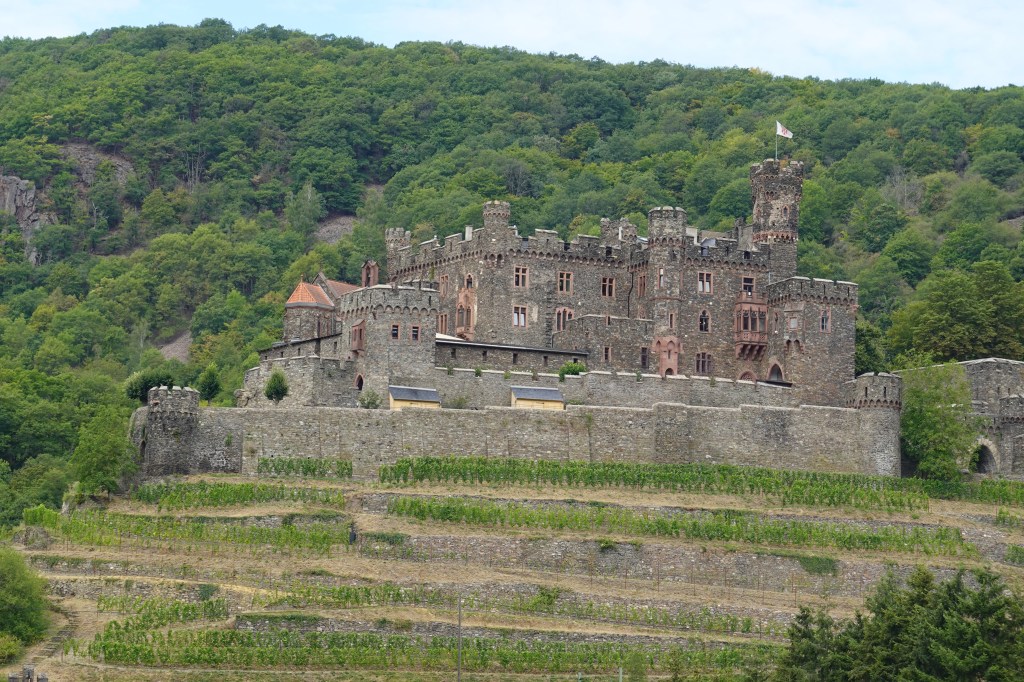
Castle and church, we can’t remember the names
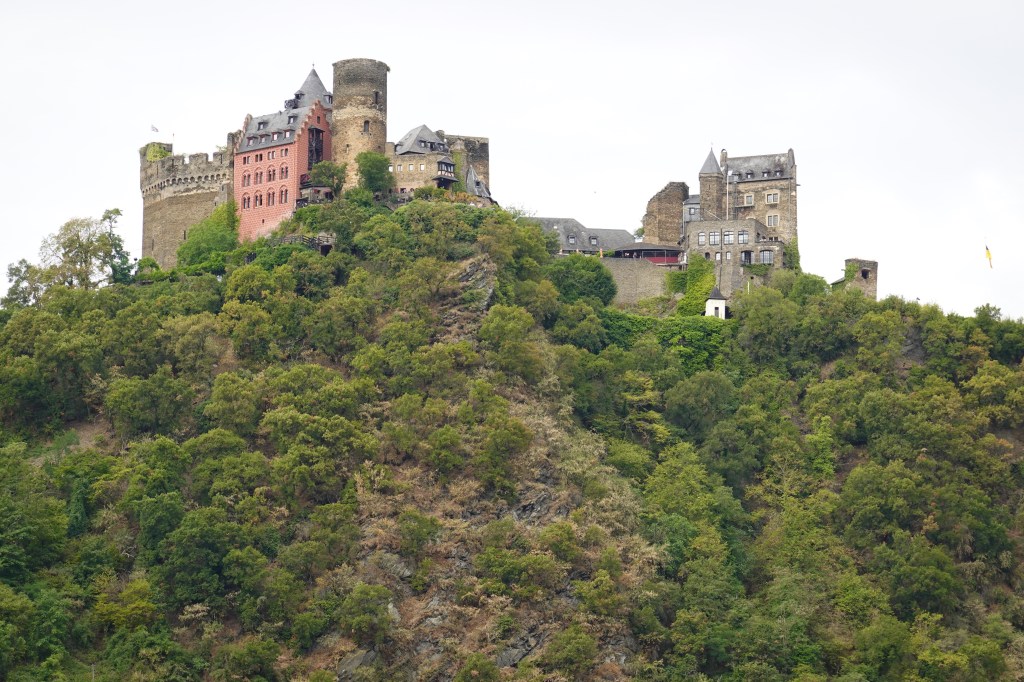
Schönburg castle in Oberwesel at 550 km is also a hotel.
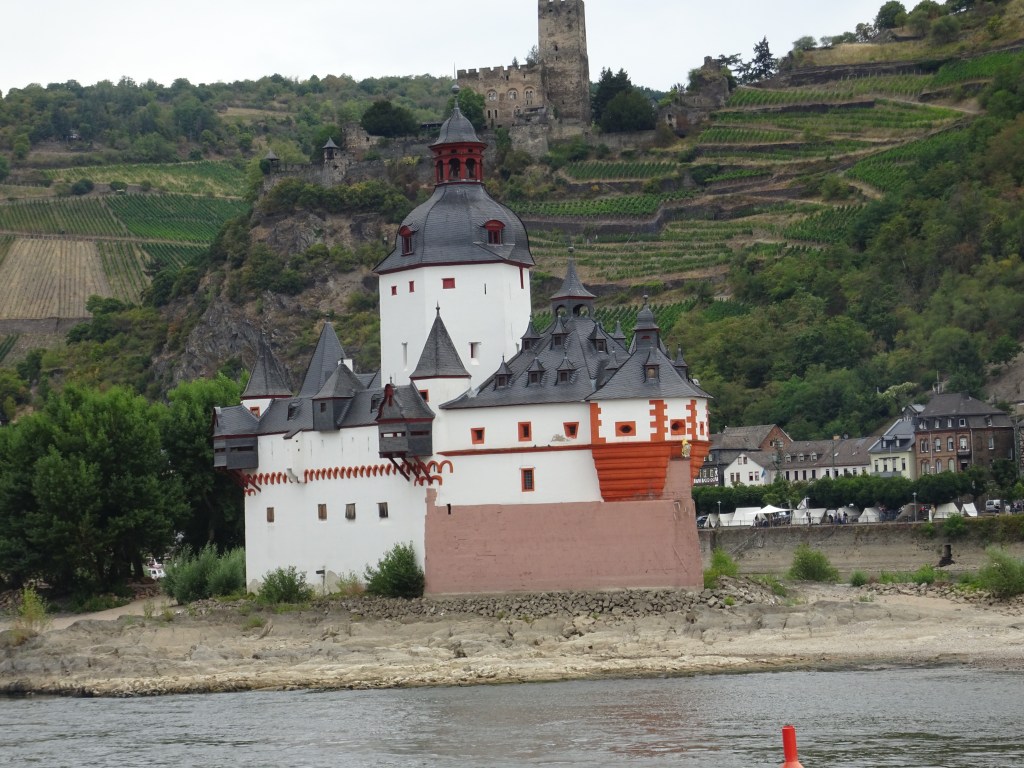
Pfalzgrafenstein castle in on an island near Kaub at 546 km
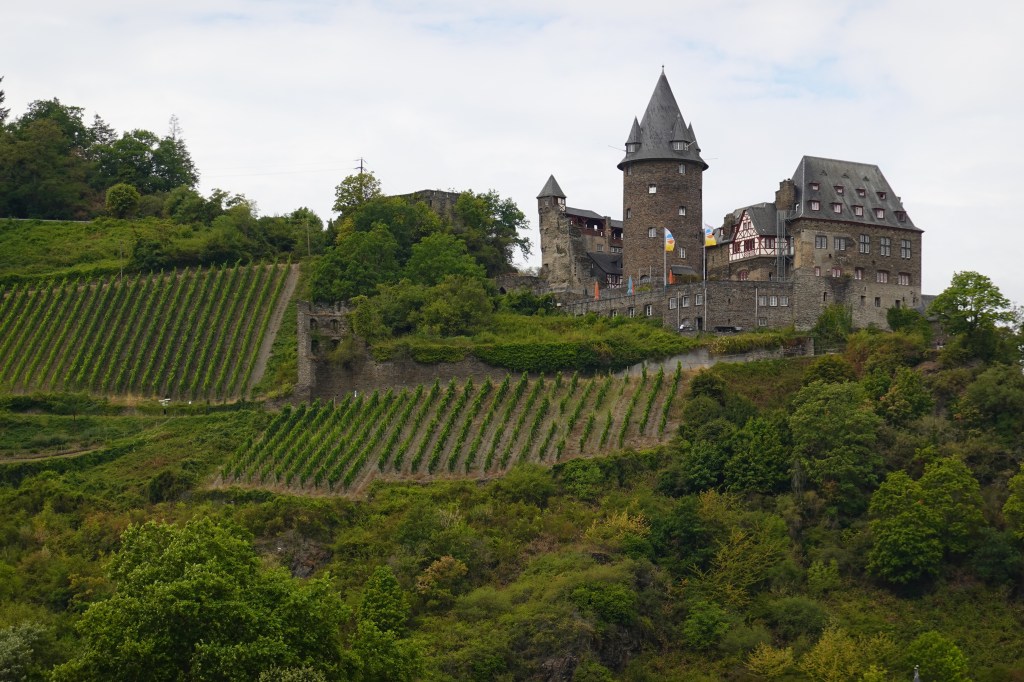
Stahleck castle in Bacharach at 544 km
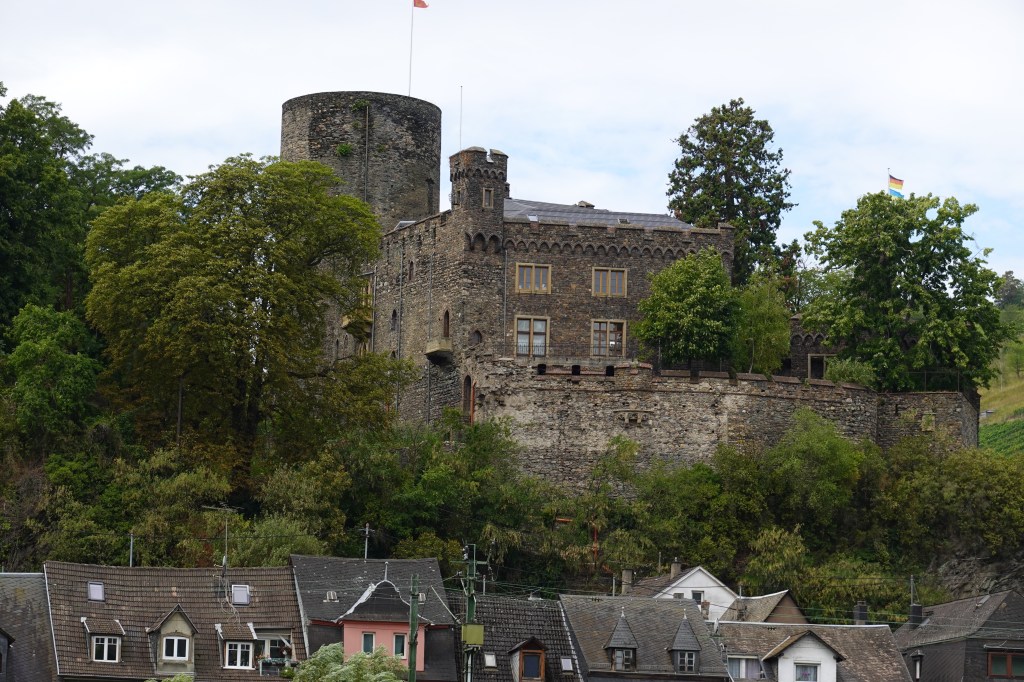
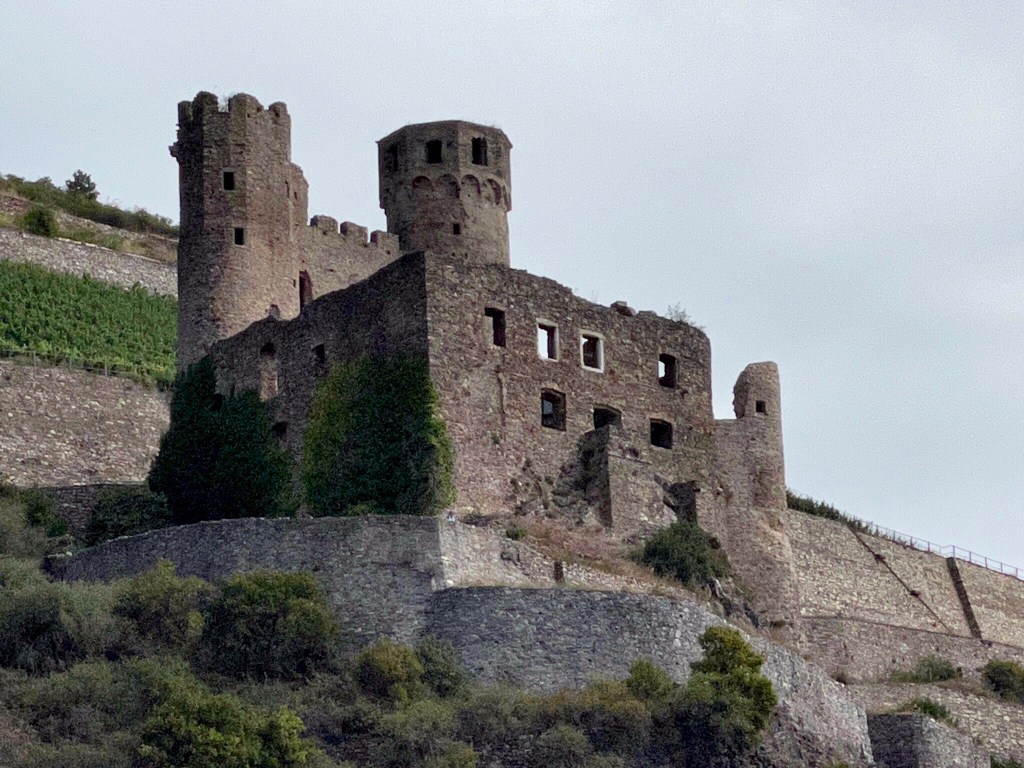
Another castle we could not identify
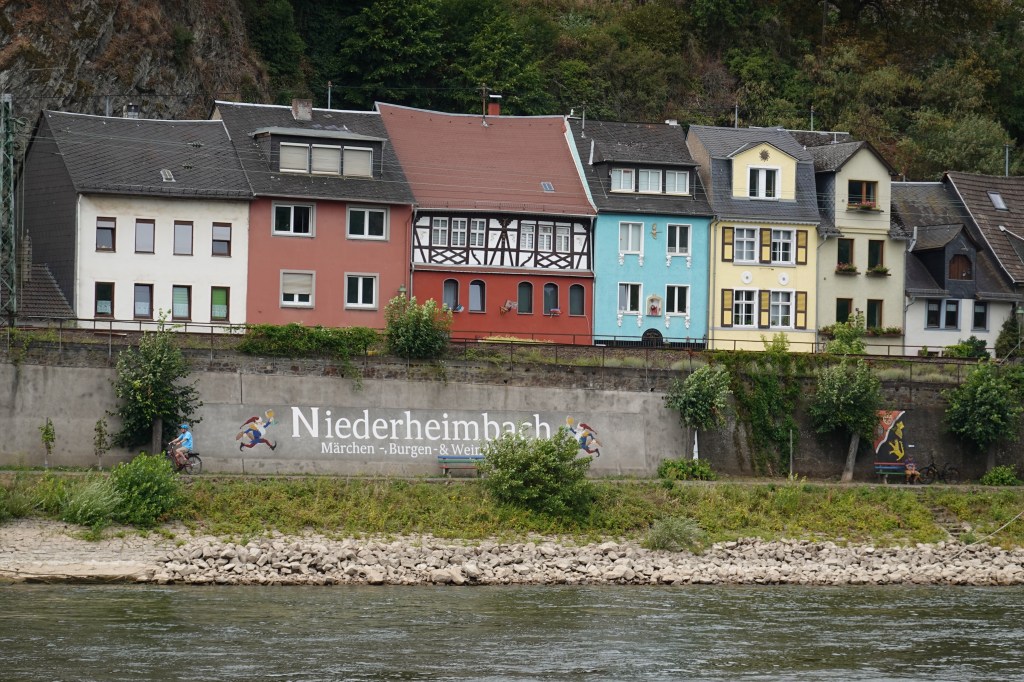
Sooneck castle in Niederheimbach at 538 km
A variety of colors on buildings that front the river
Reichenstein castle in Trechtingshausen at 534 km
Ehrenfels castle in Rüdesheim at 530 km

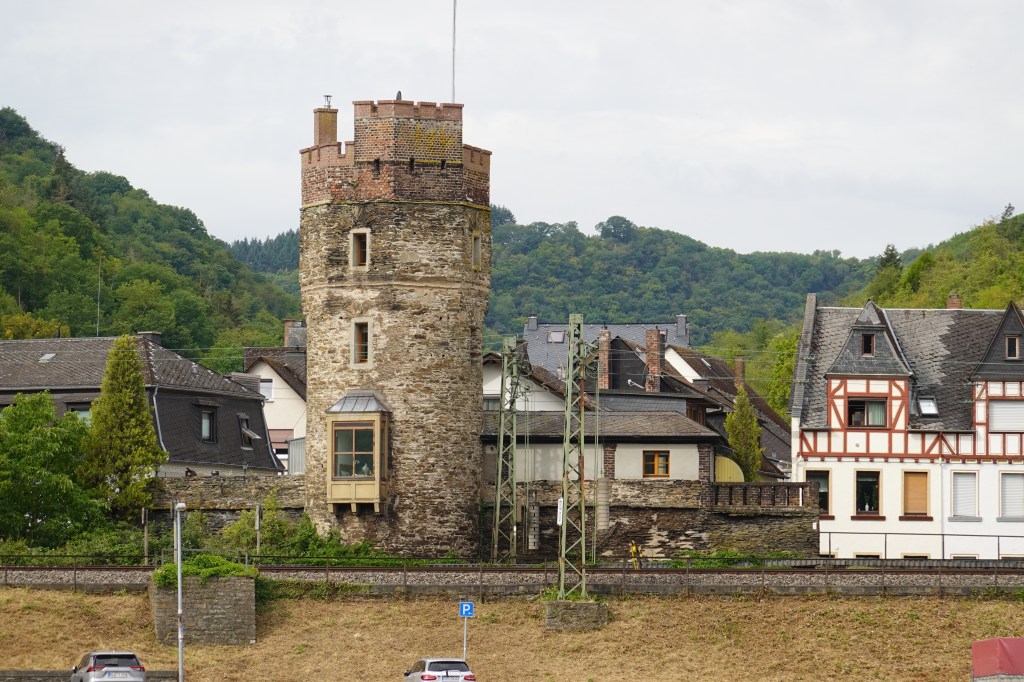
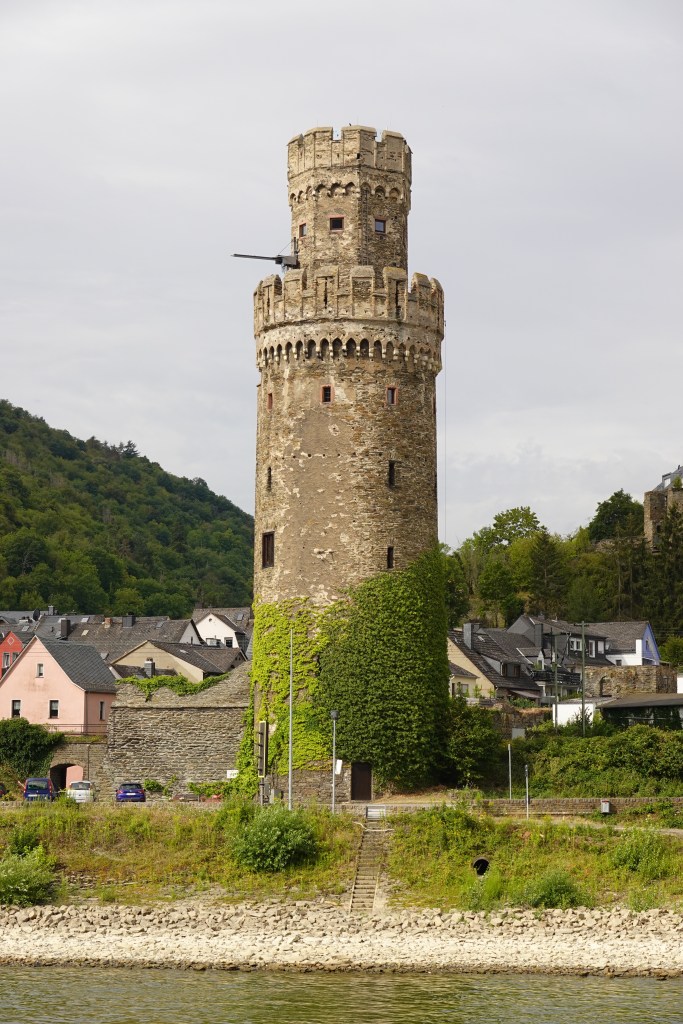
One of the challenges the cruise director prompted was to count the number of “towers” in one of the towns associated with a castle. Clare thought there were many more than the 7 official towers, because she was counting the tall architectural things (not towers, somehow) in the many churches along this part of the valley. The towers are the high points along the old walls and moats protecting the castles.

A few years ago, we stayed in a small town along the middle Rhine and took a ferry to see the castles. The ferry trip was crowded, and the stories about the castles were difficult to hear. This time, we were able to move around the cruise ship easily, making Brian’s photographs more clear than before.

At the end of the Middle Rhine was the christening of the ship.

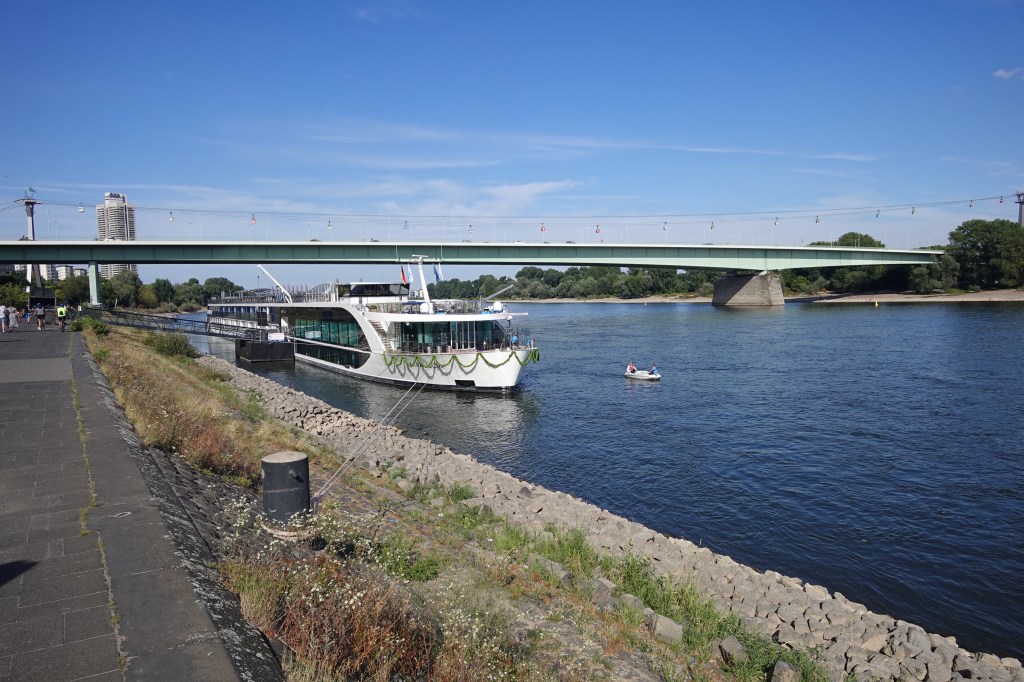
Upon entering Rüdesheim, the AmaLucia was welcomed by the local yacht club.
An old-fashioned music machine added to the festivities.

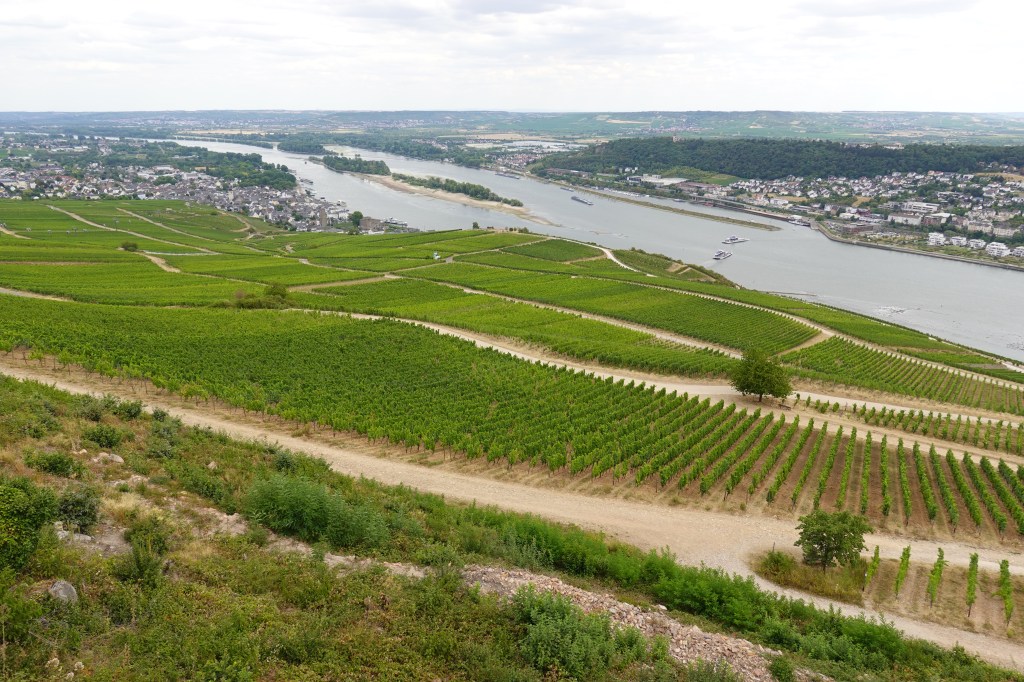
Although the AmaLucia had been sailing for about six months, this voyage was designated for the christening of the ship; the ceremony was held in Rüdesheim. All of the passengers were invited by the owners, Rudi Schneider and Kristin Karst, to attend, but we decided to hike to some vineyards above the village with a small group.

The ceremony included this Irish blessing:

May love and laughter light your days, and warm your heart and home. May good and faithful friends be yours, wherever you may roam. May peace and plenty bless your world with joy that long endures. May all life’s passing seasons bring the best to you and yours!

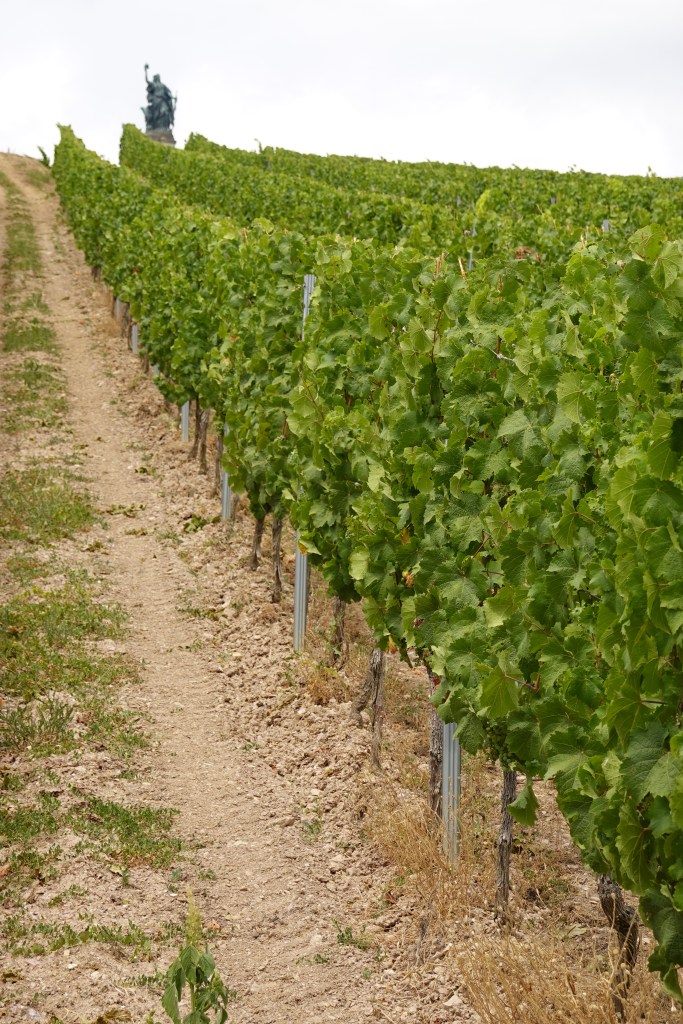
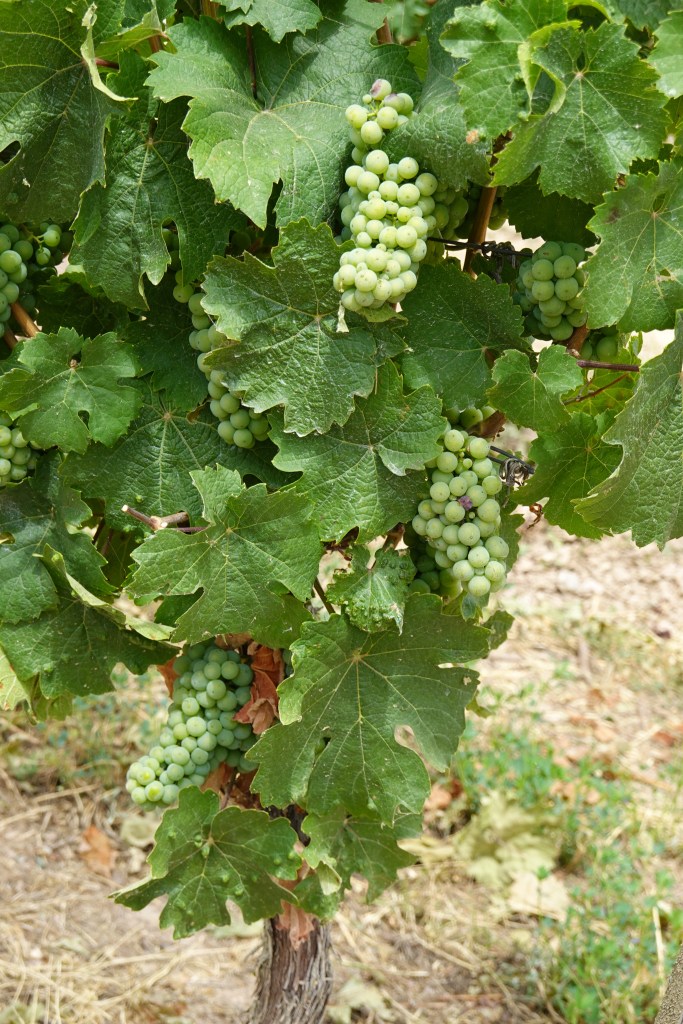
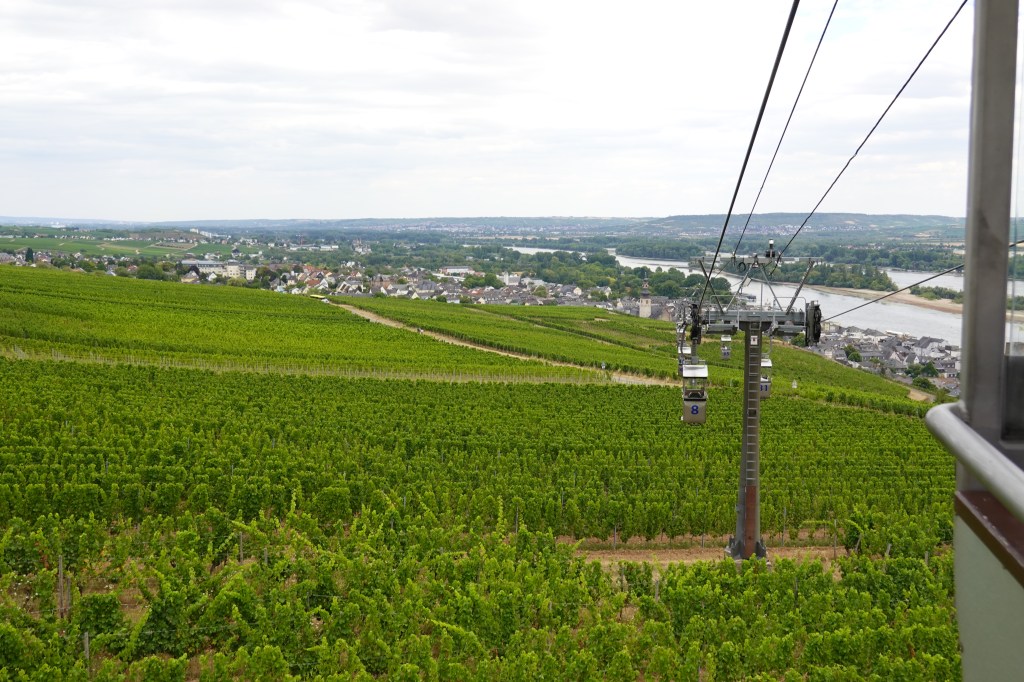
We did not attend the ceremony, choosing instead to walk through some of the vineyards and riding a gondola up the side of the valley.

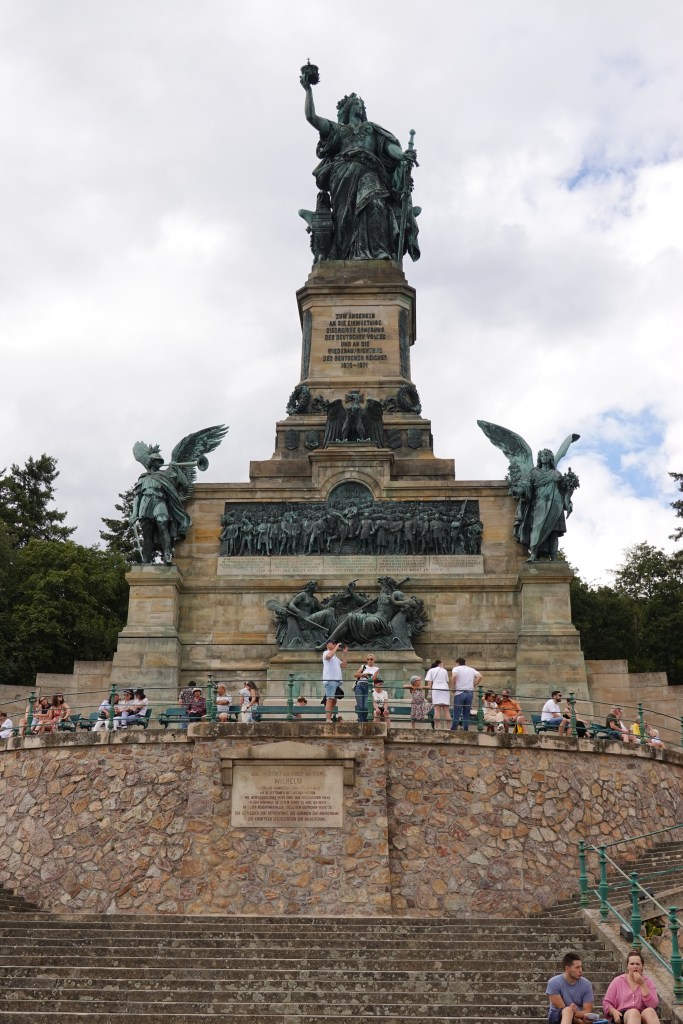
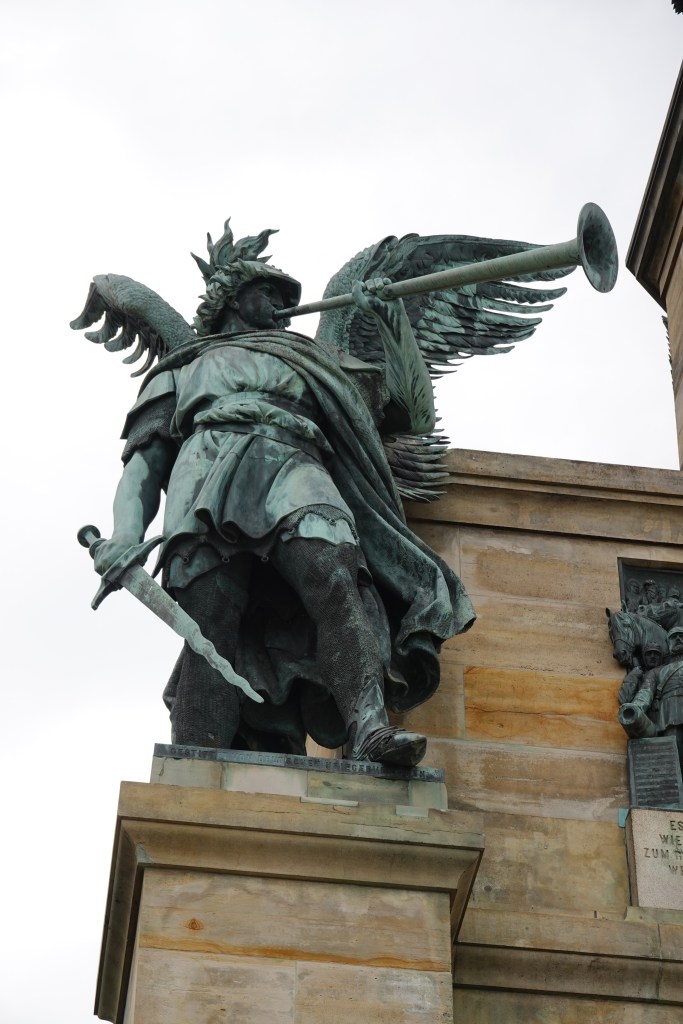
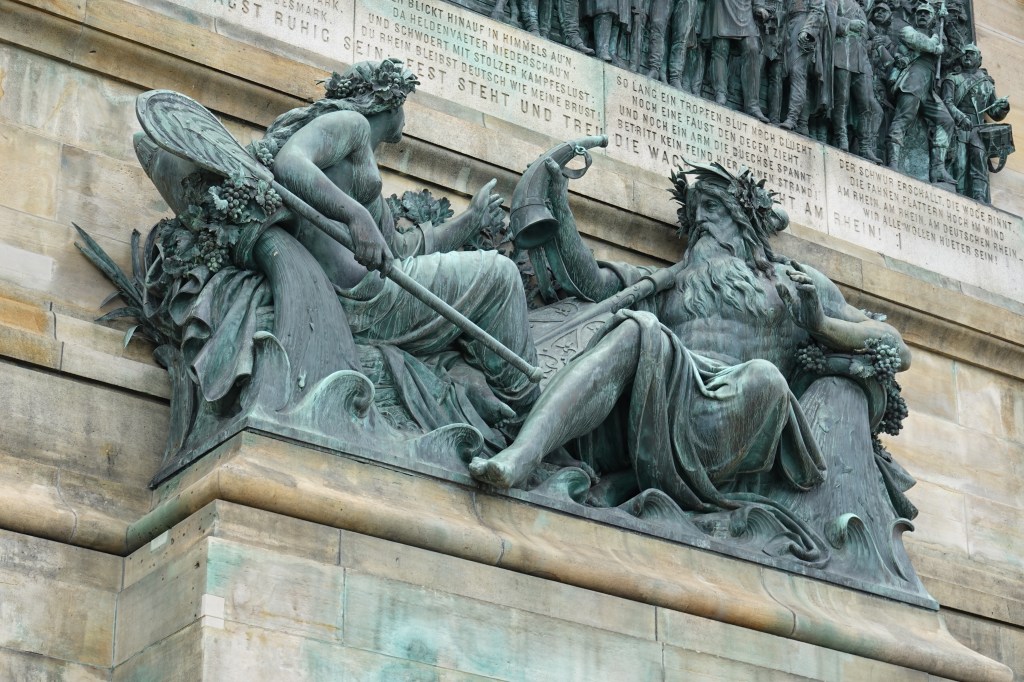
The hike was in direct sun on a very hot day so we opted to go back into the village and ride a gondola up to the Niederwald monument, which commemorates the unification of Germany. The central figure is Germania holding a crown with other figures representing war and peace. The main inscription on the pedestal translates to “In memory of the unanimous victorious uprising of the German People and the reinstitution of the German State 1870-1871.”

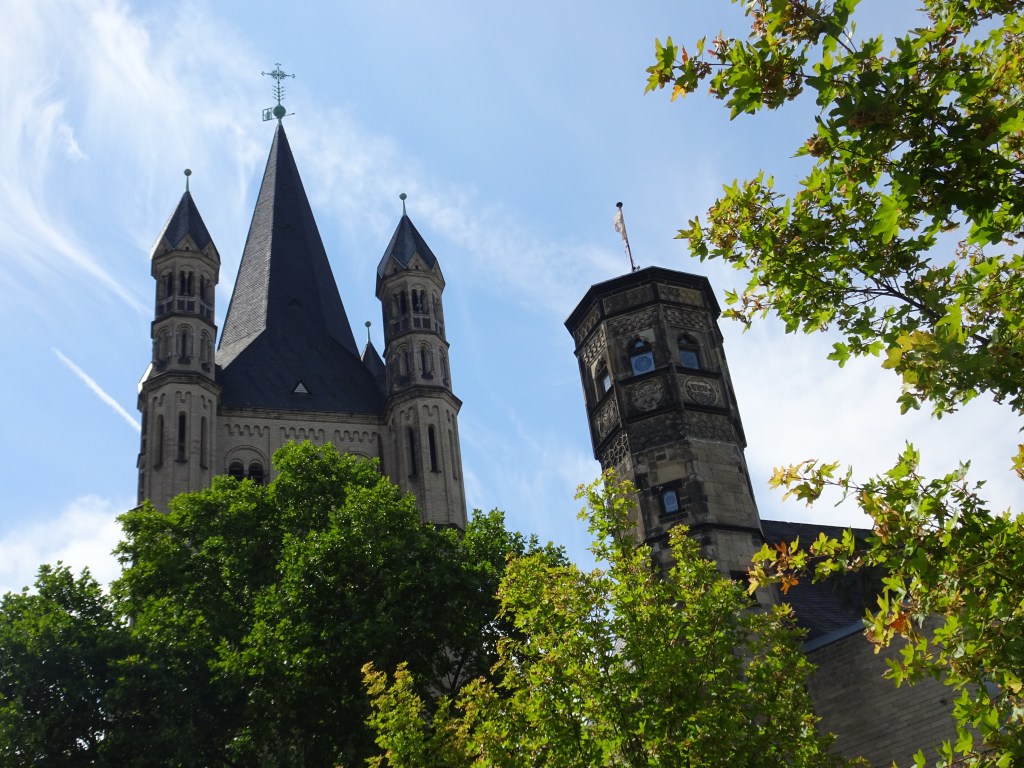
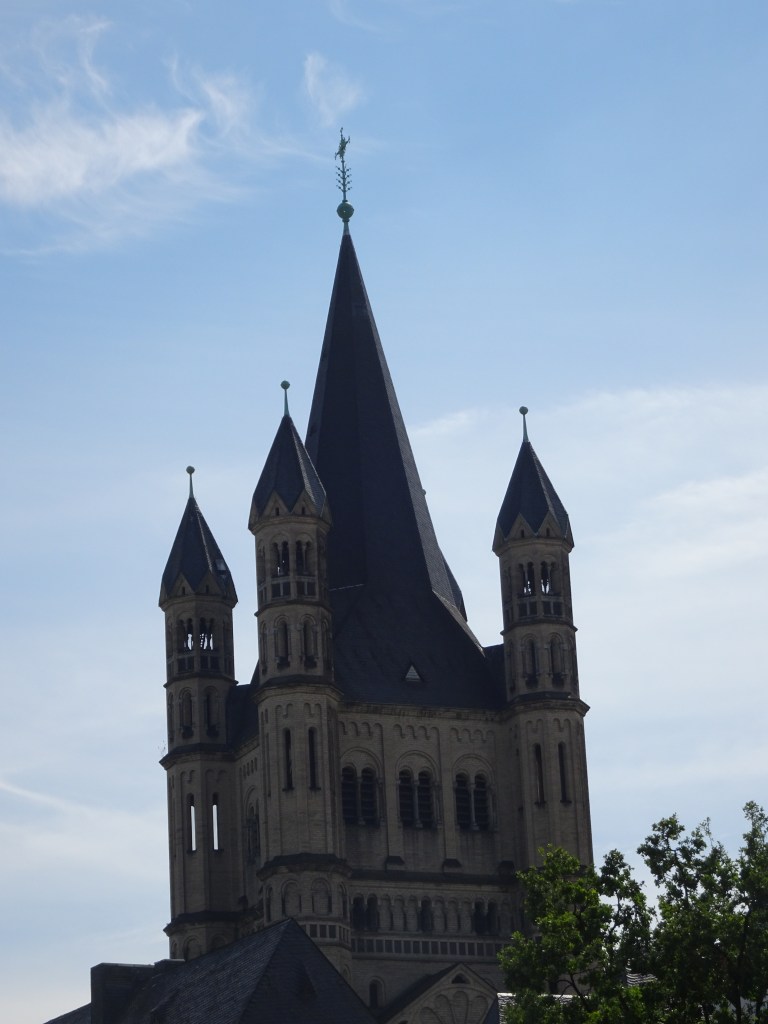
Rhine River Cruise: Köln, Germany

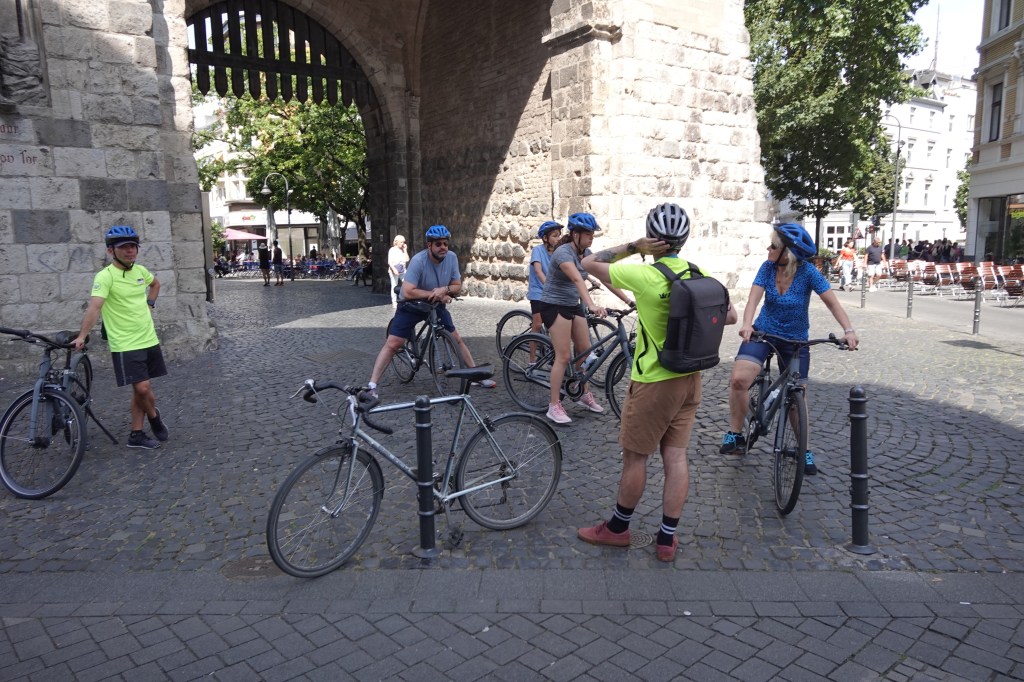
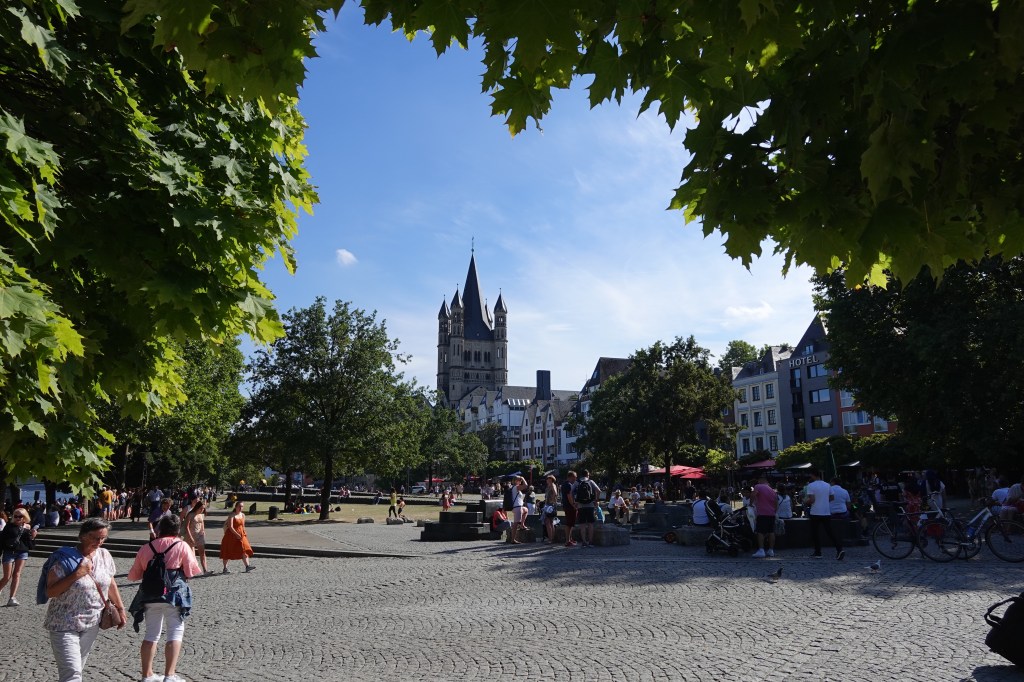
Although Clare had never been to Köln (Cologne), Brian spent a week here attending the Goldschmidt geochemistry conference in 2007. Therefore, while Clare went on a walking tour, Brian went biking with a small group.

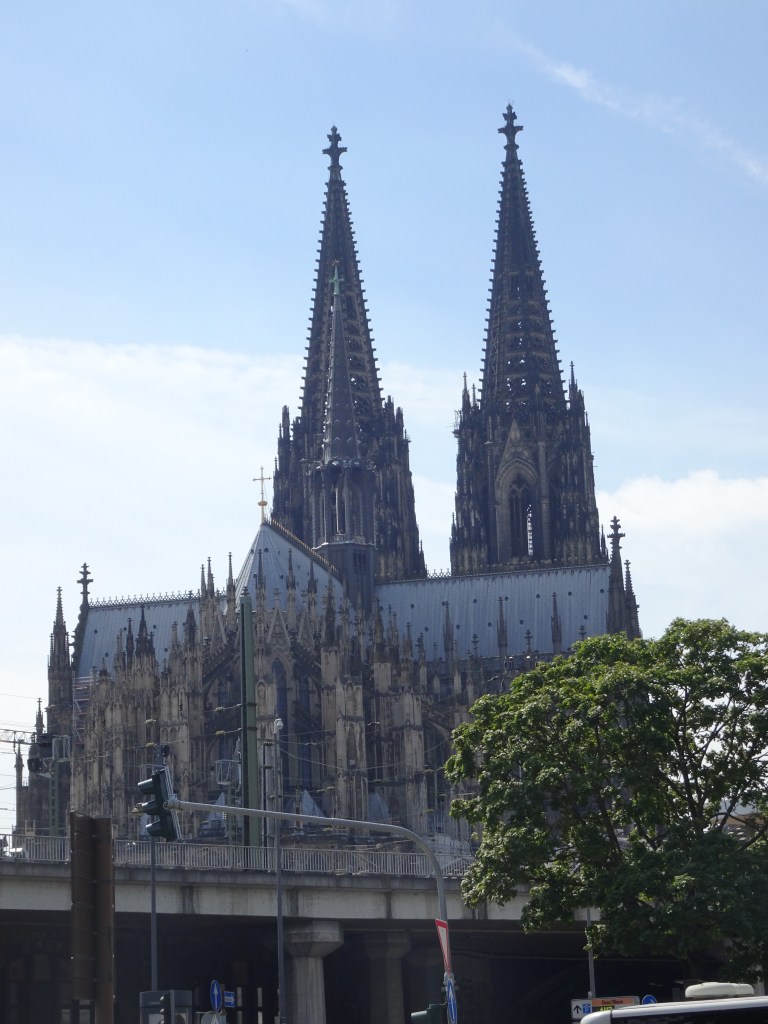
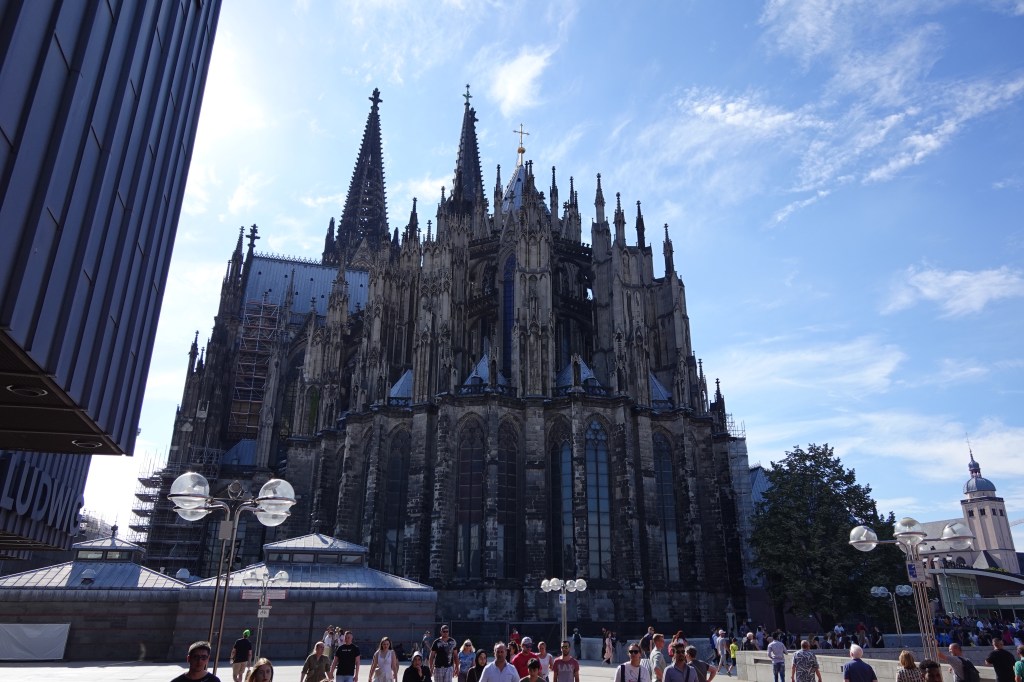
The Köln Cathedral is noted for its twin spires, among the tallest in the world.
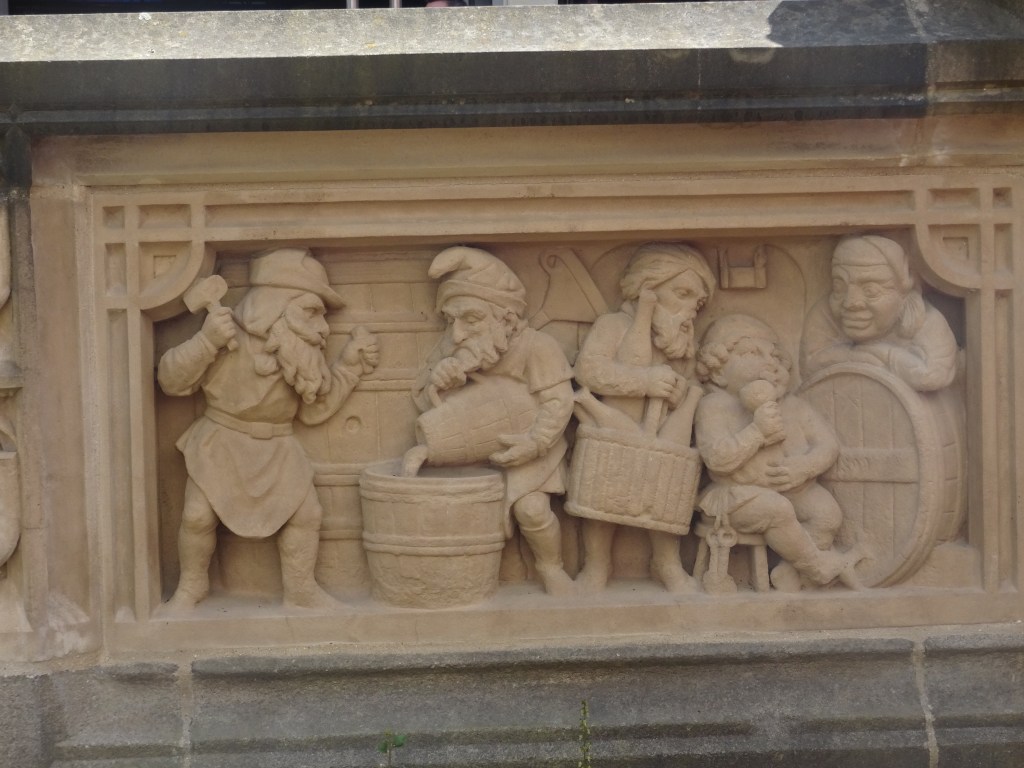
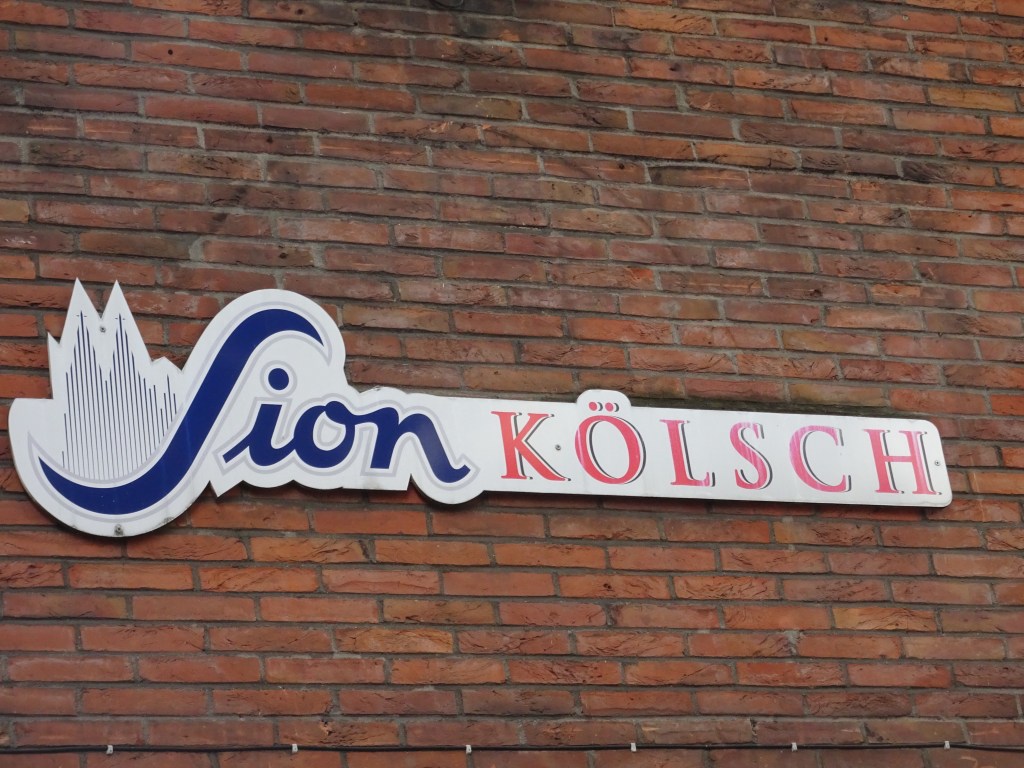
Kölsch is Cologne’s namesake beer, with numerous breweries creating it from top-fermenting ale yeast but at warm temperature.