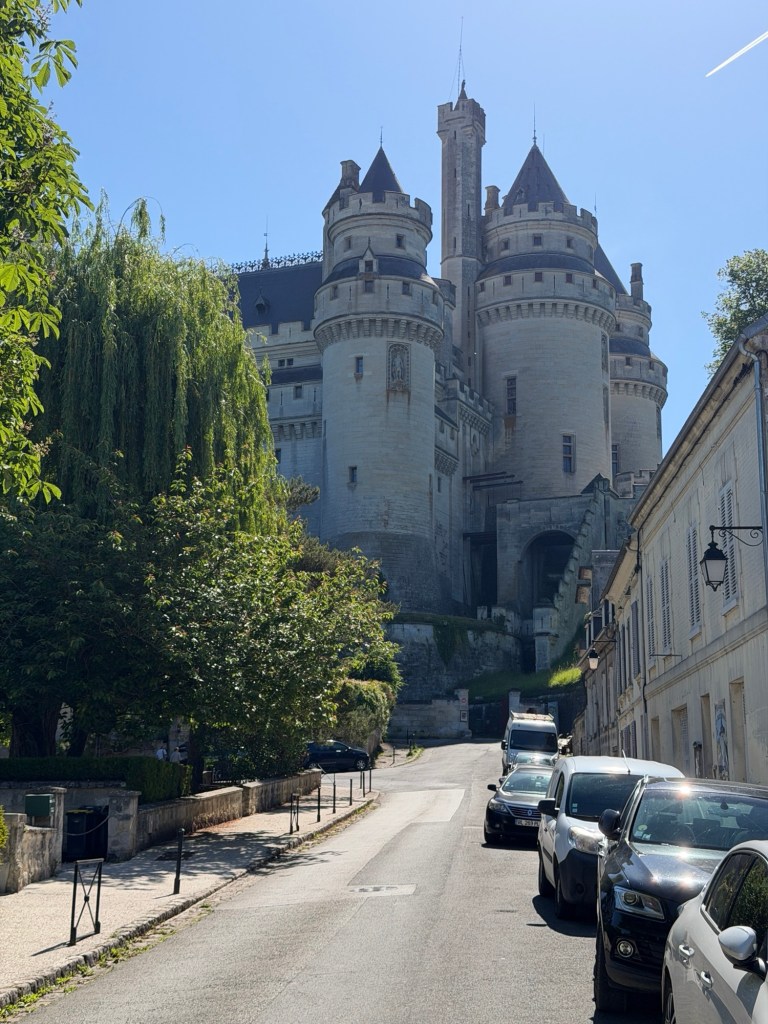
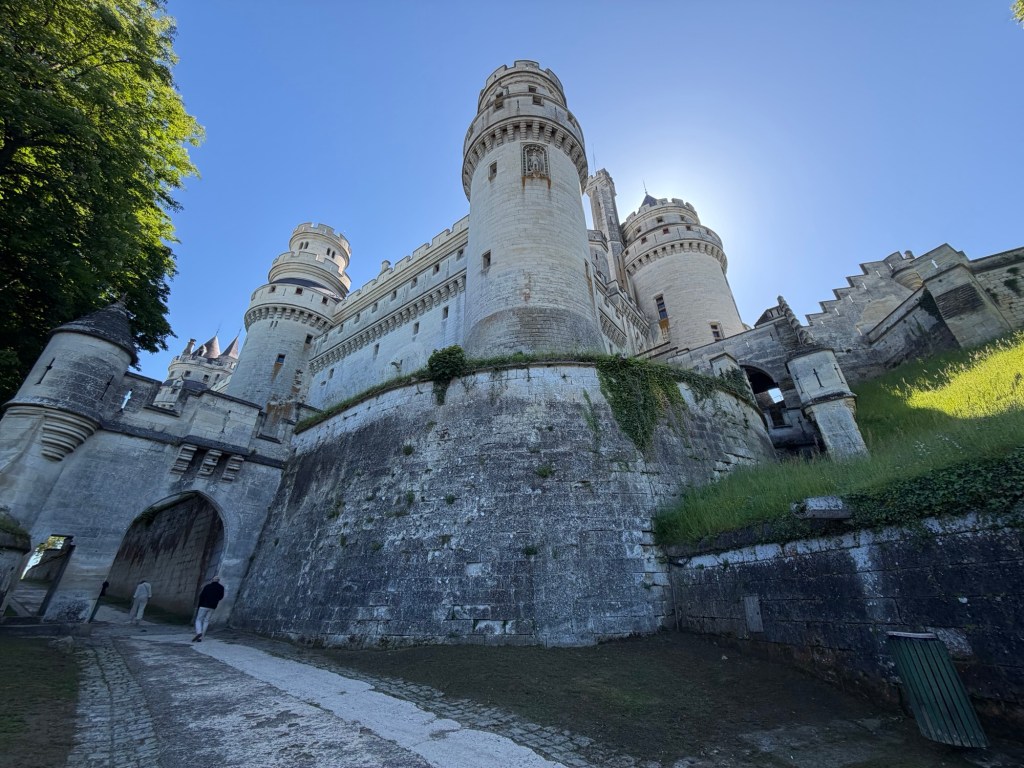
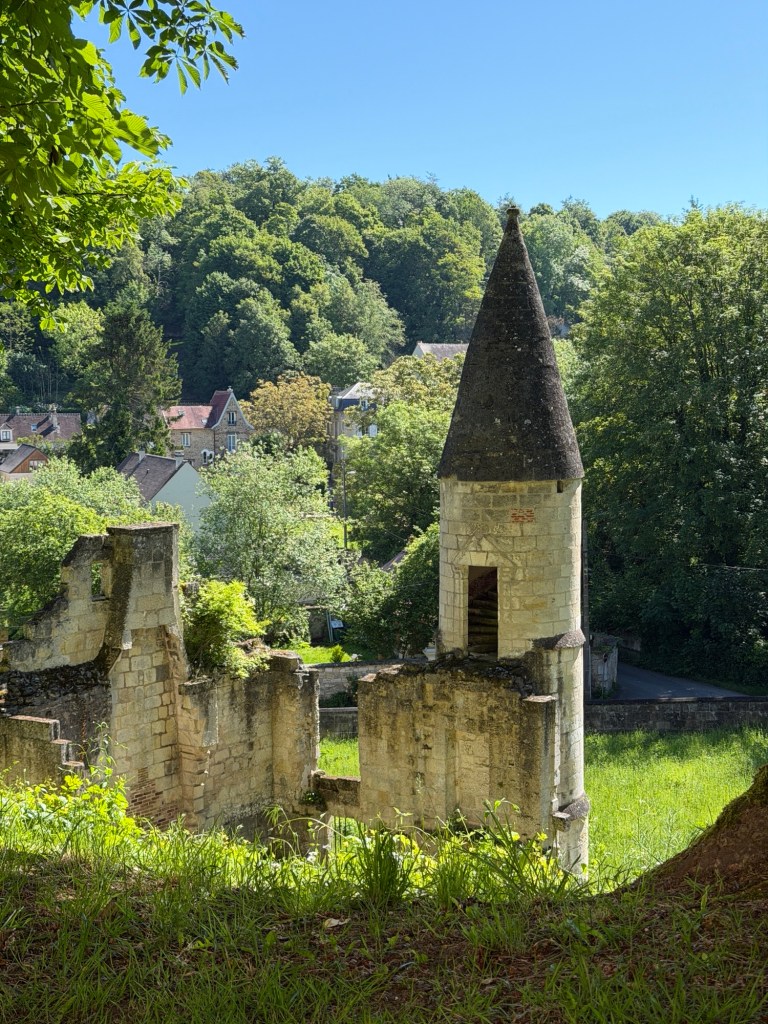
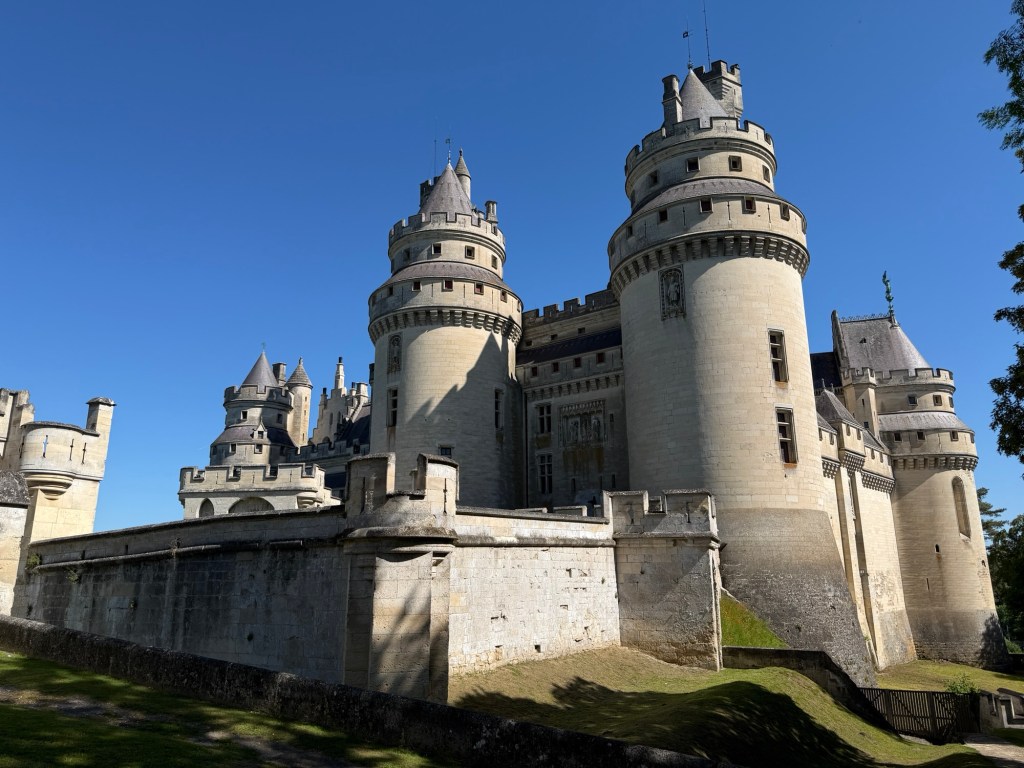
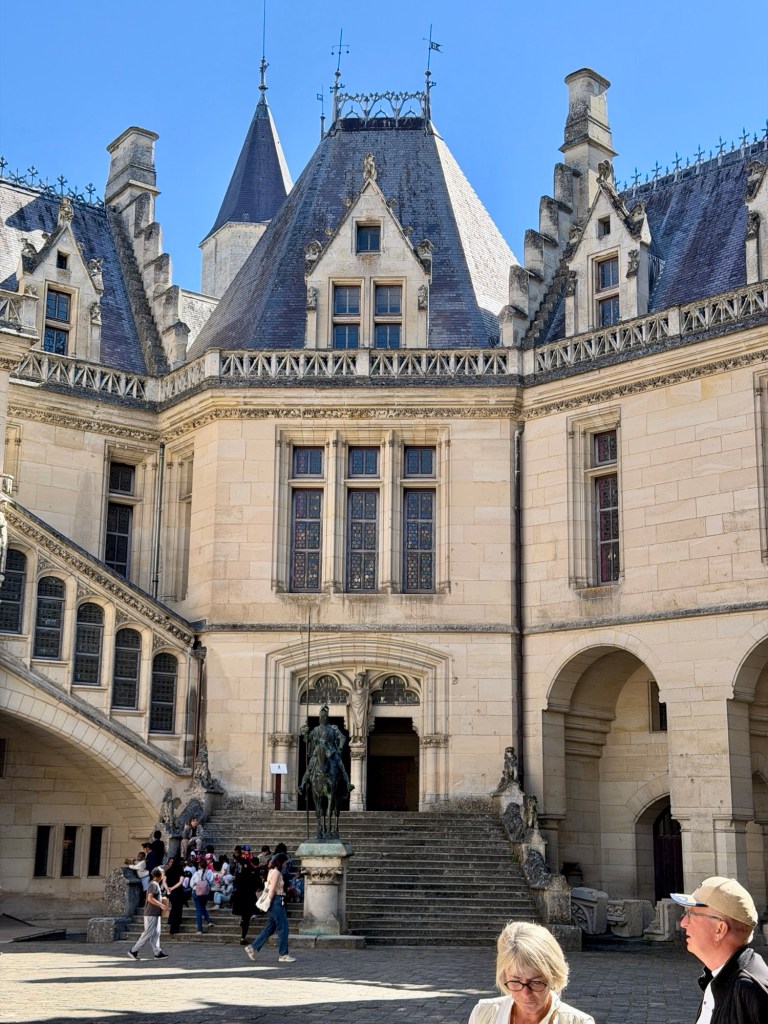
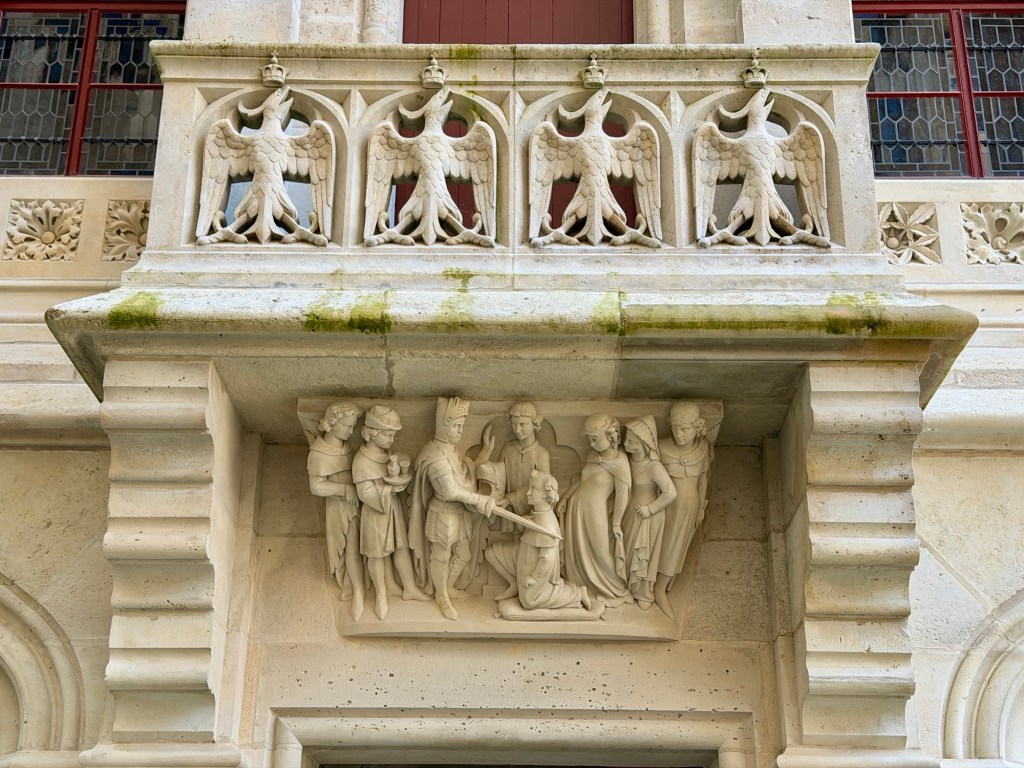
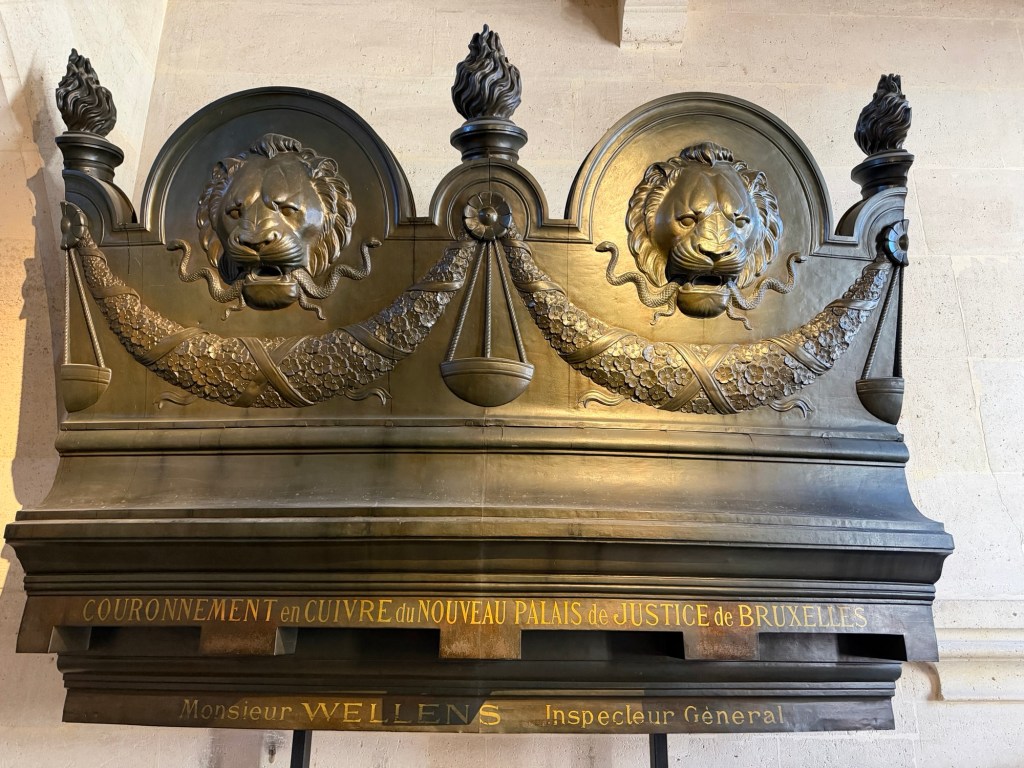
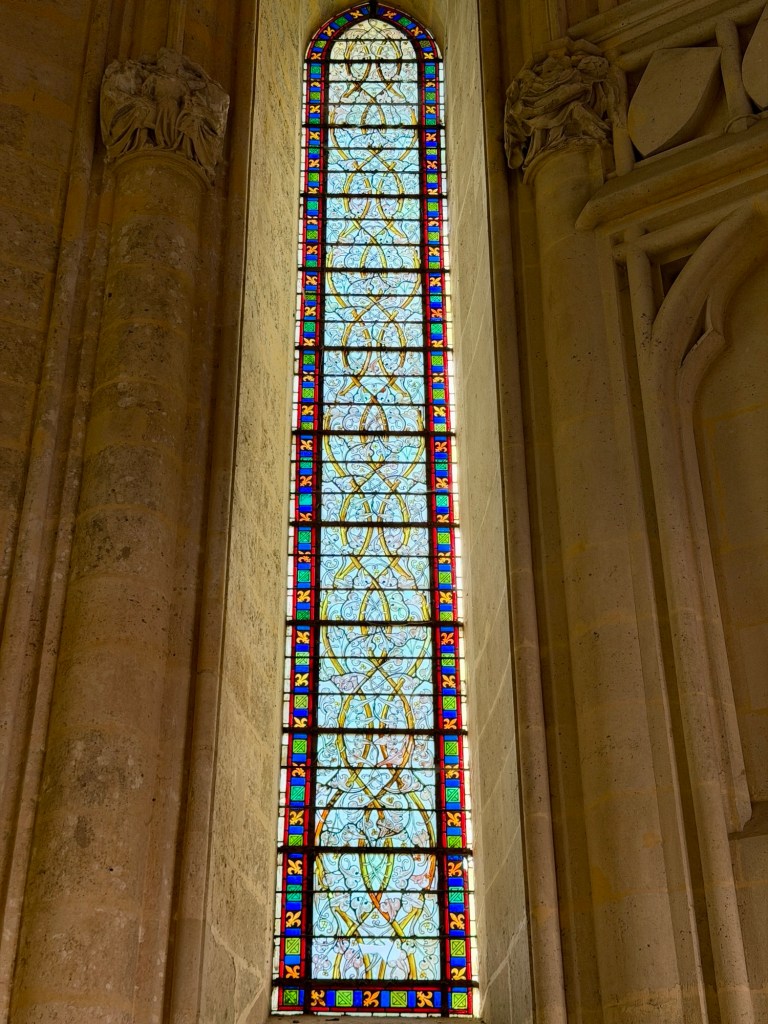
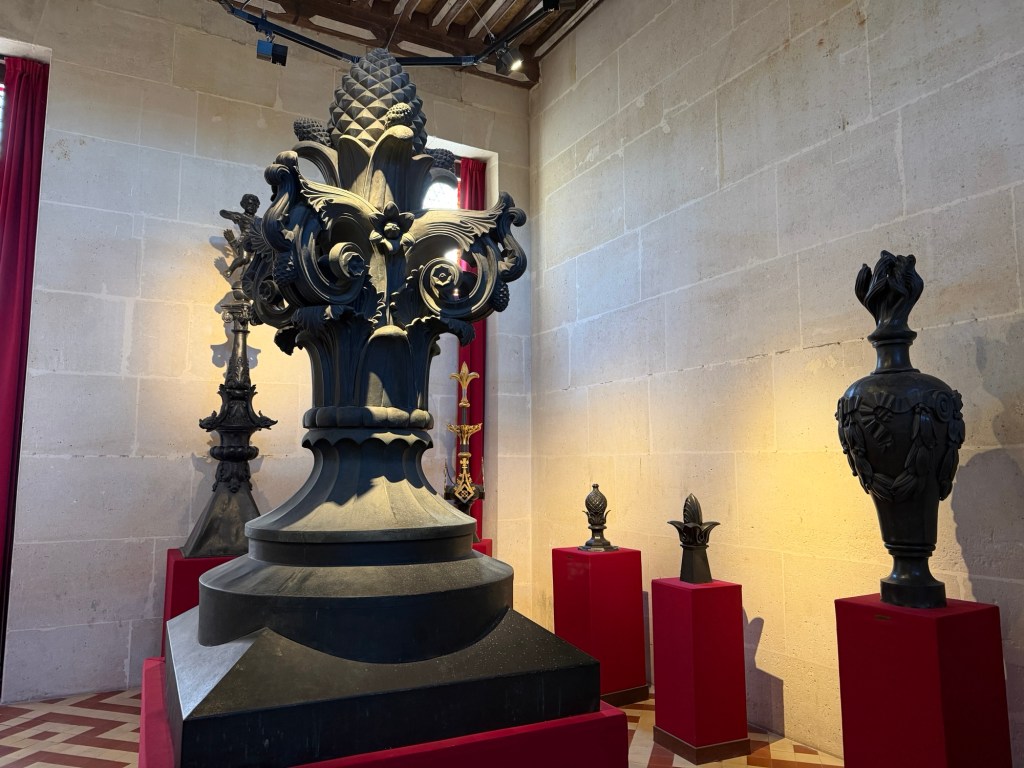
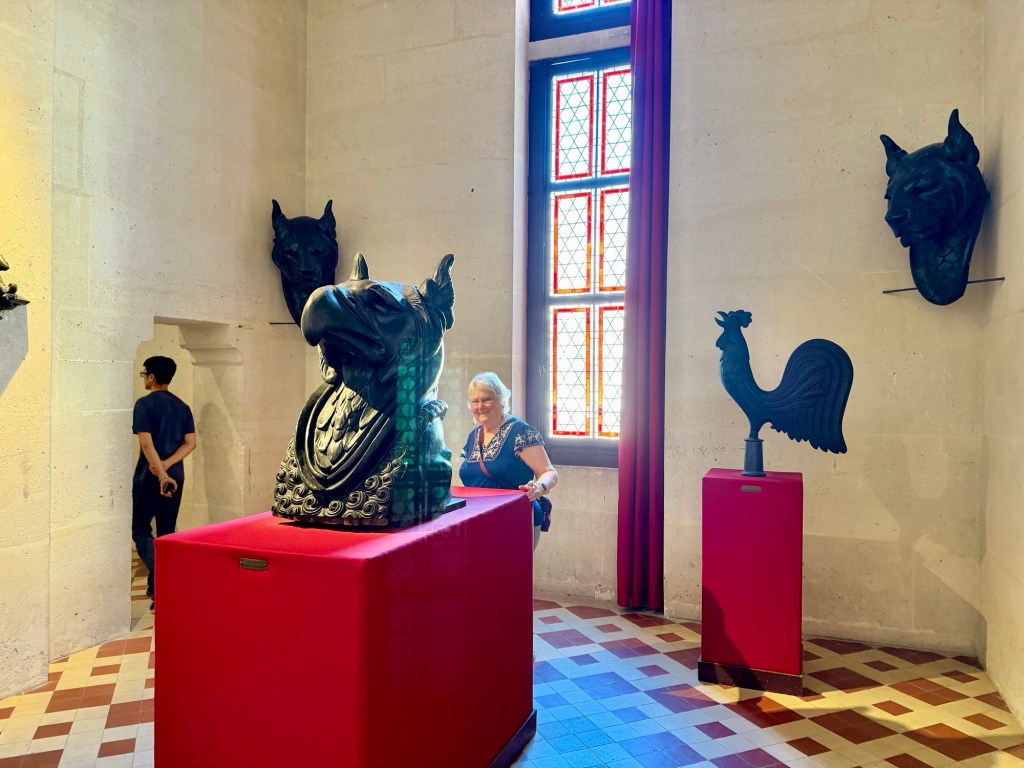
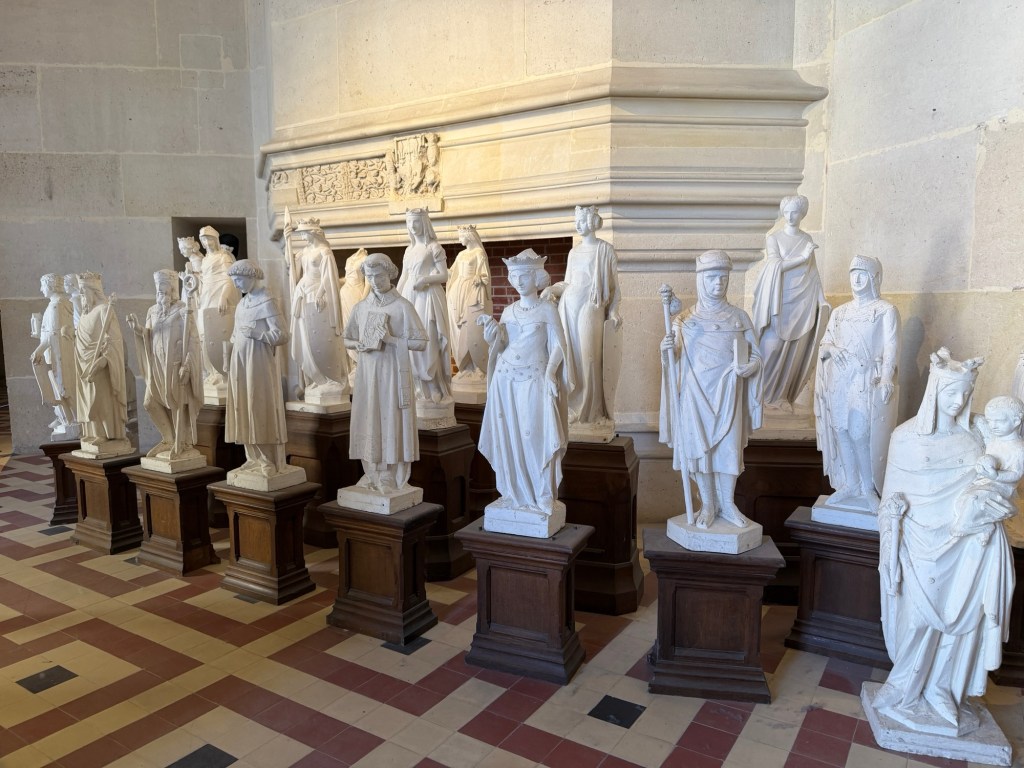
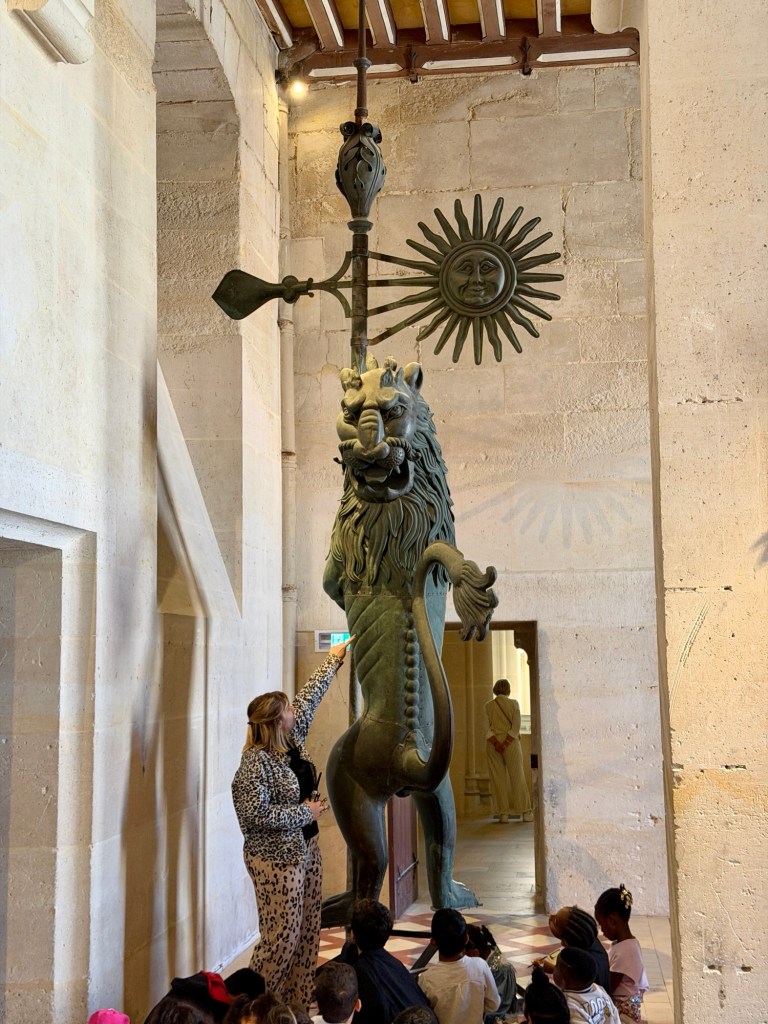
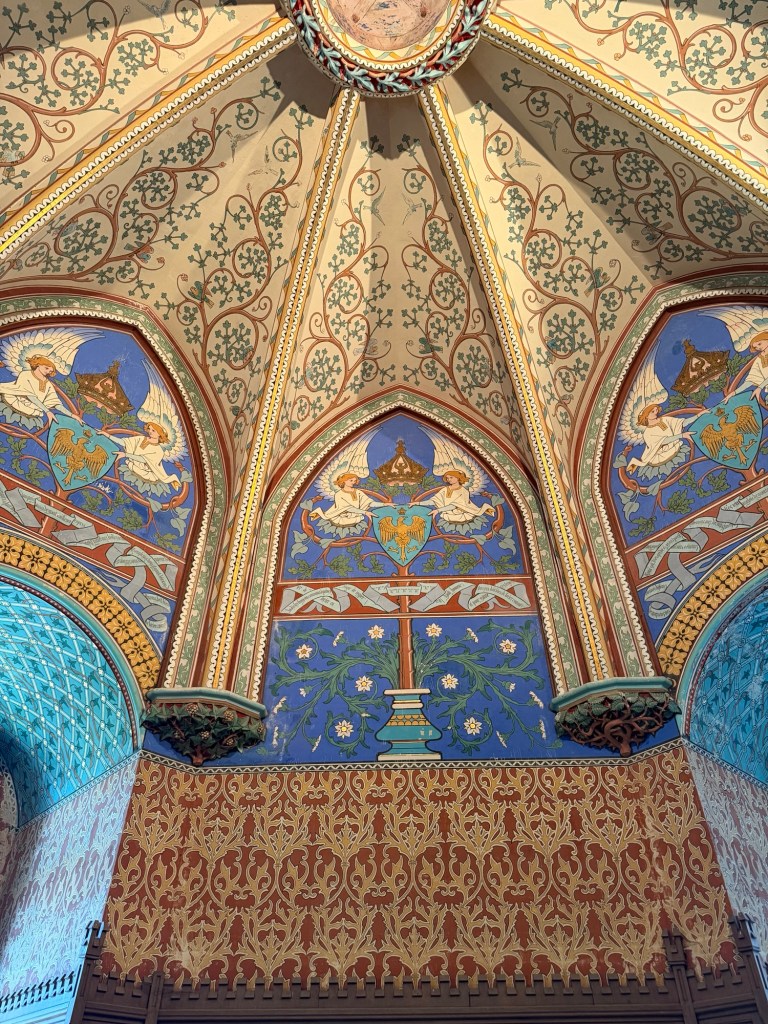
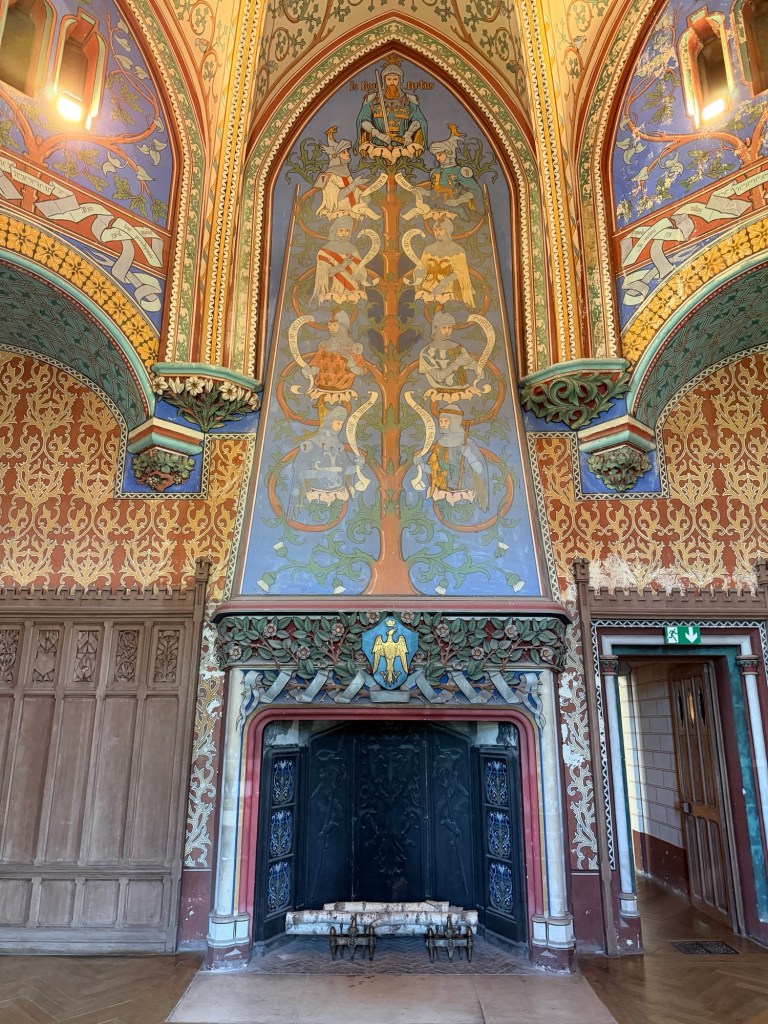
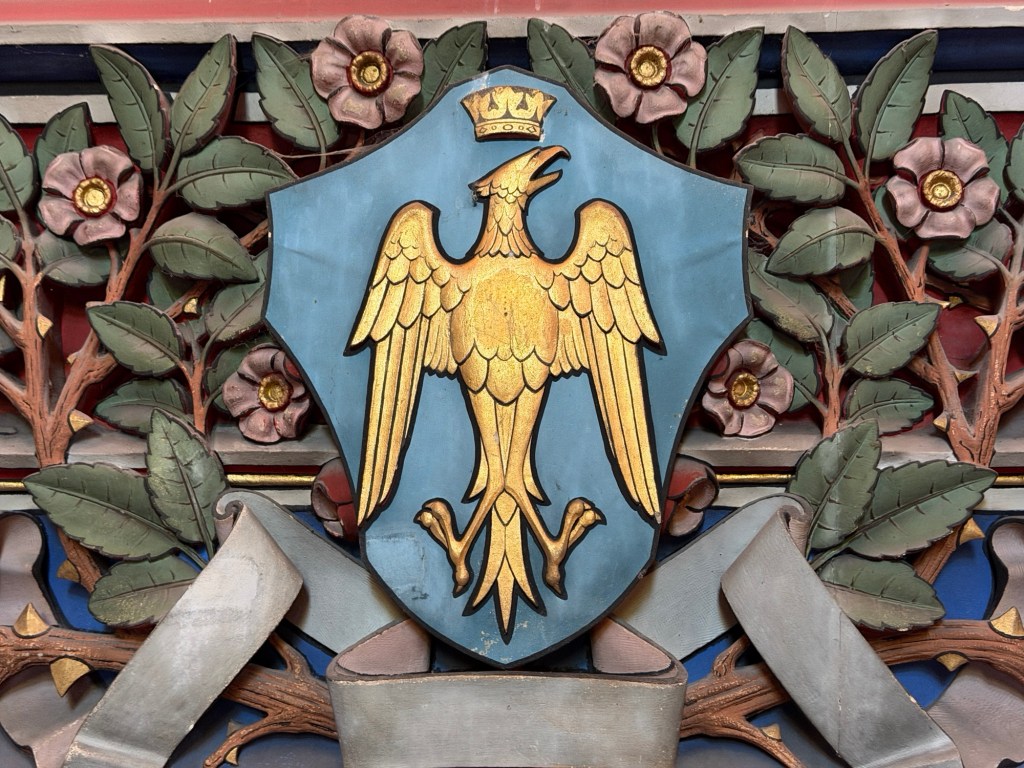
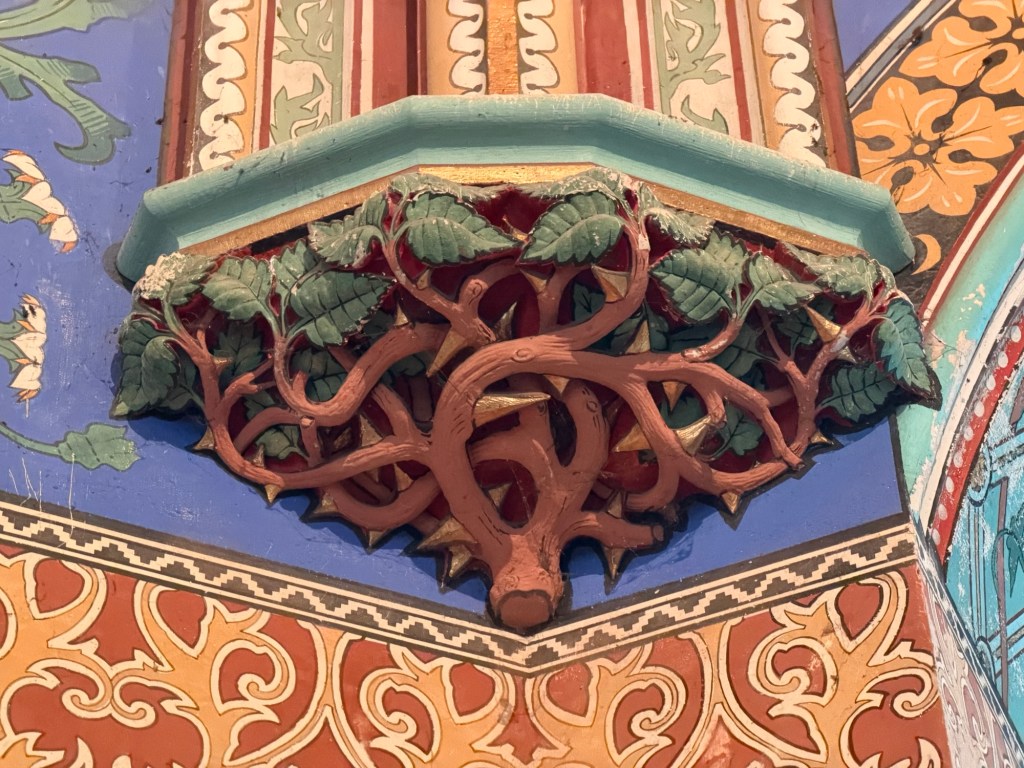
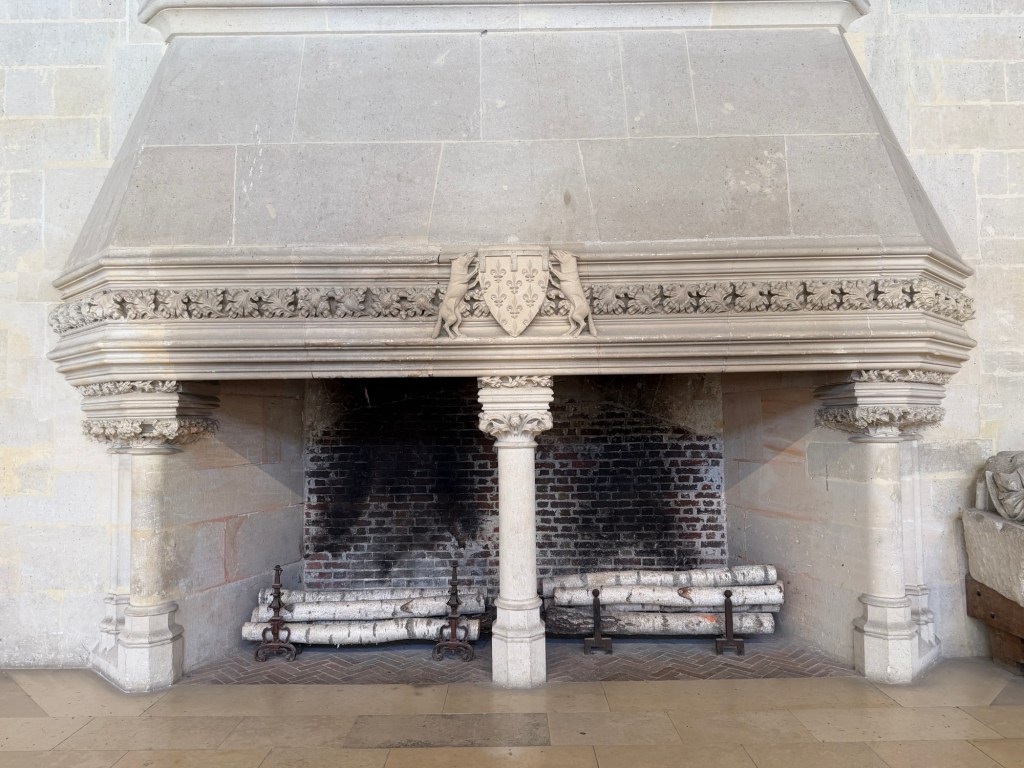
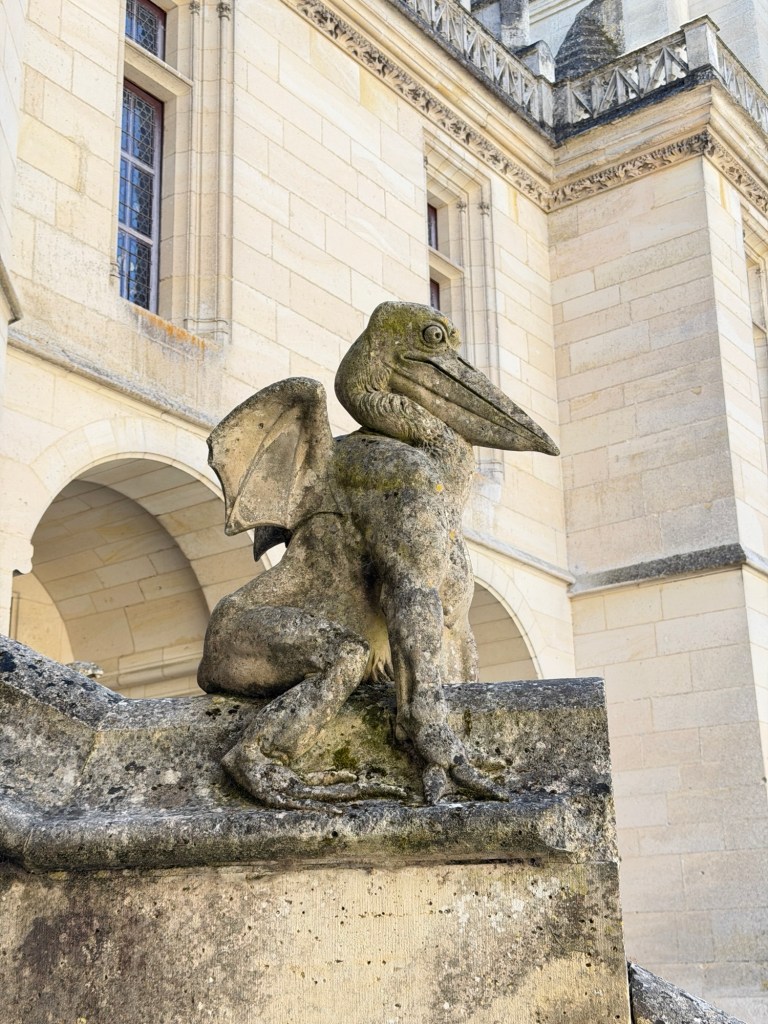
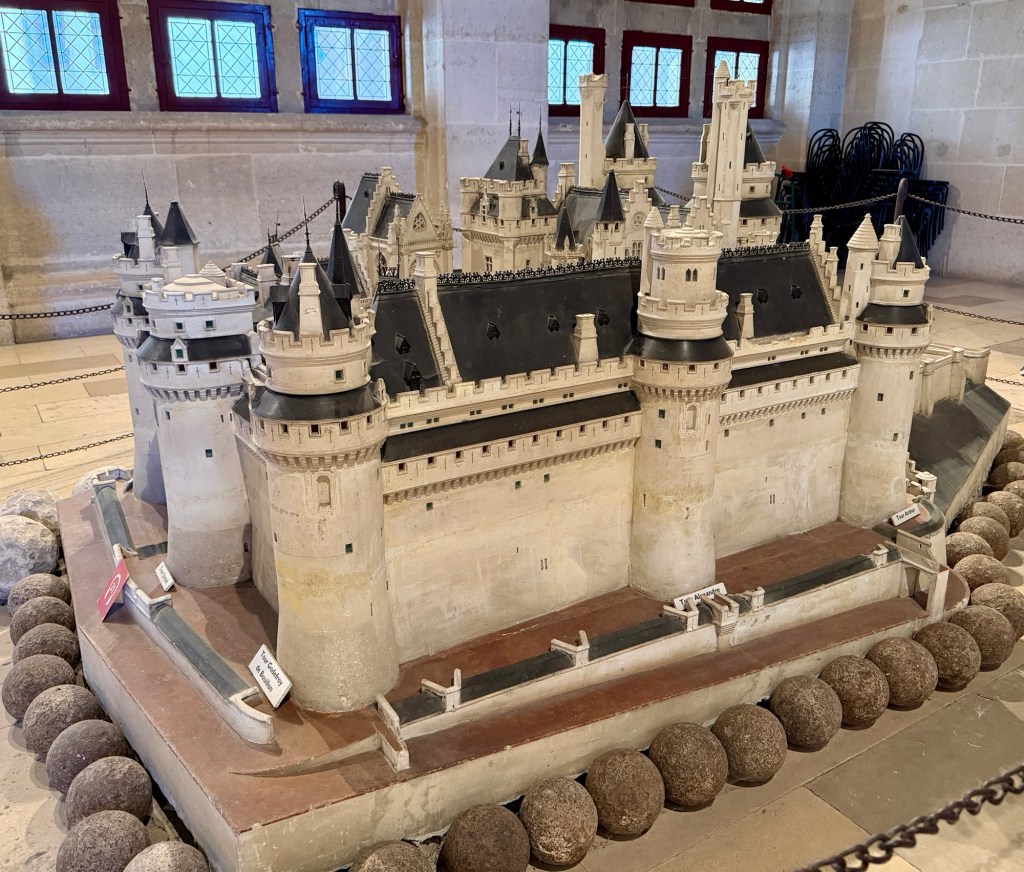
This afternoon is reserved for the civil (legal) part of the three day marriage celebration for Aurélie and Simon. Since the lunch began at 1:00, we had time to visit a restored medieval castle, Château De Pierrefonds. Like many castles, this one had been rebuilt many times over the centuries. But, in the middle 1800’s, a family decided to study it and restore or replace whatever artifacts they could, aiming for a reconstruction of lordly residence of the Middle Ages. They used medieval techniques for making new statues and metal works, using the restored rooms they imagined might have been used for these purposes before.
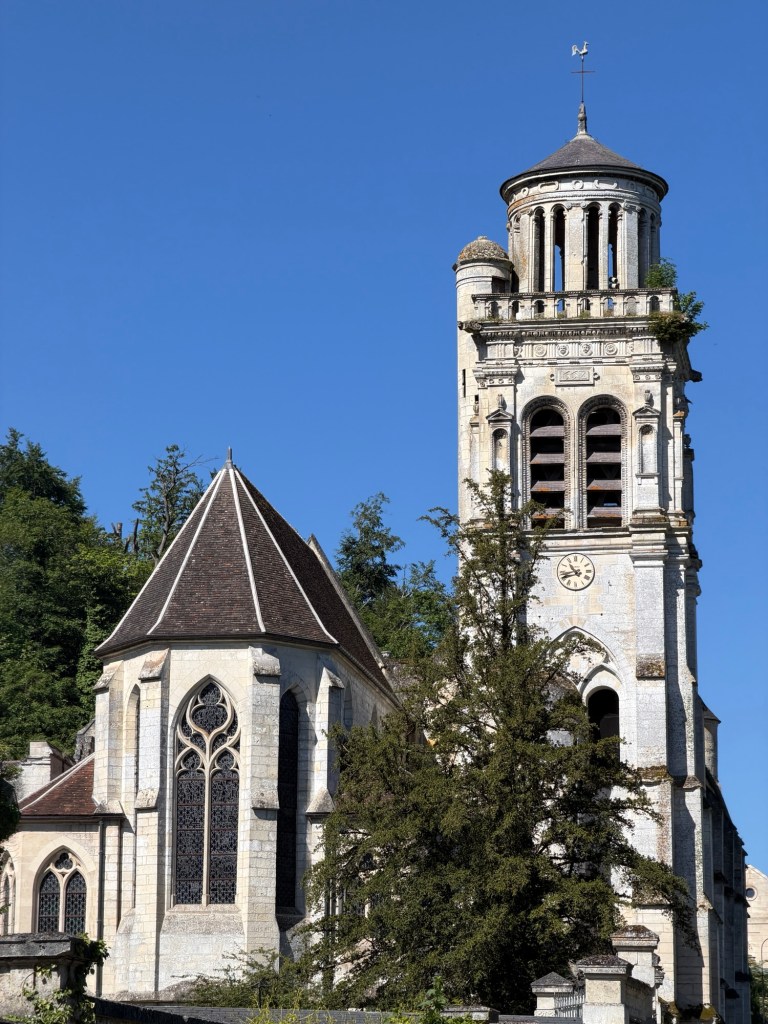
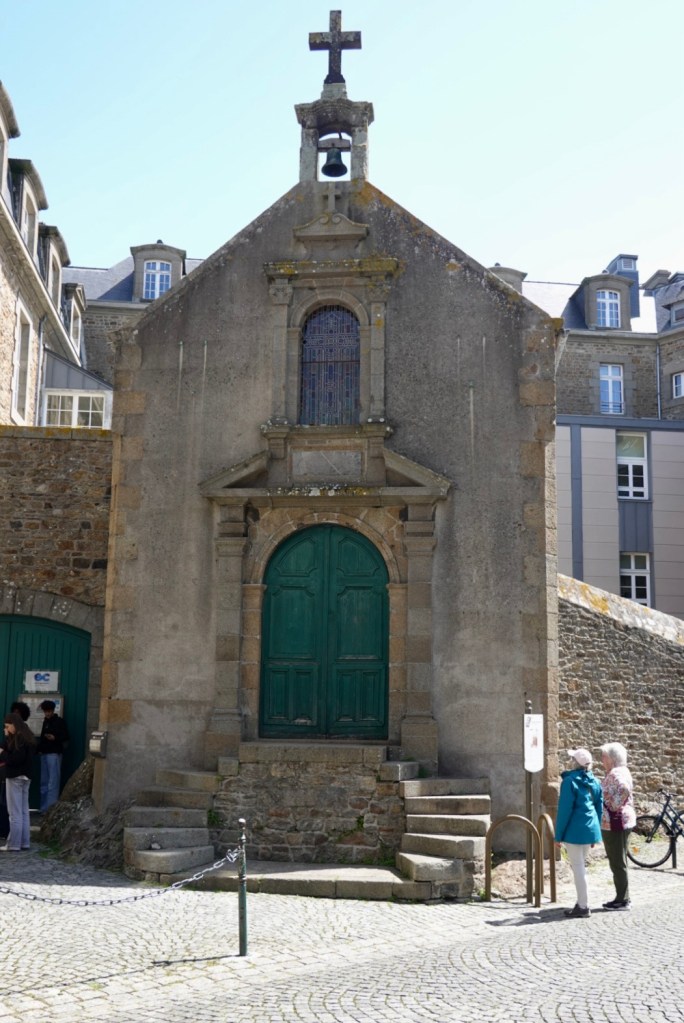
Church near where we parkedChâteau De Pierrefonds, which we explored
On the initiative of Louis d’Orléans, son of King Charles V, the castle was built in the late 14th century on a rocky spur. The Chateau of Pierrefonds replaced an older fortified site built in the 11th century. Damage from centuries of conflicts and sieges caused it to be dismantled in 1617 by order of Louis XIII and left in ruins for over two hundred years.
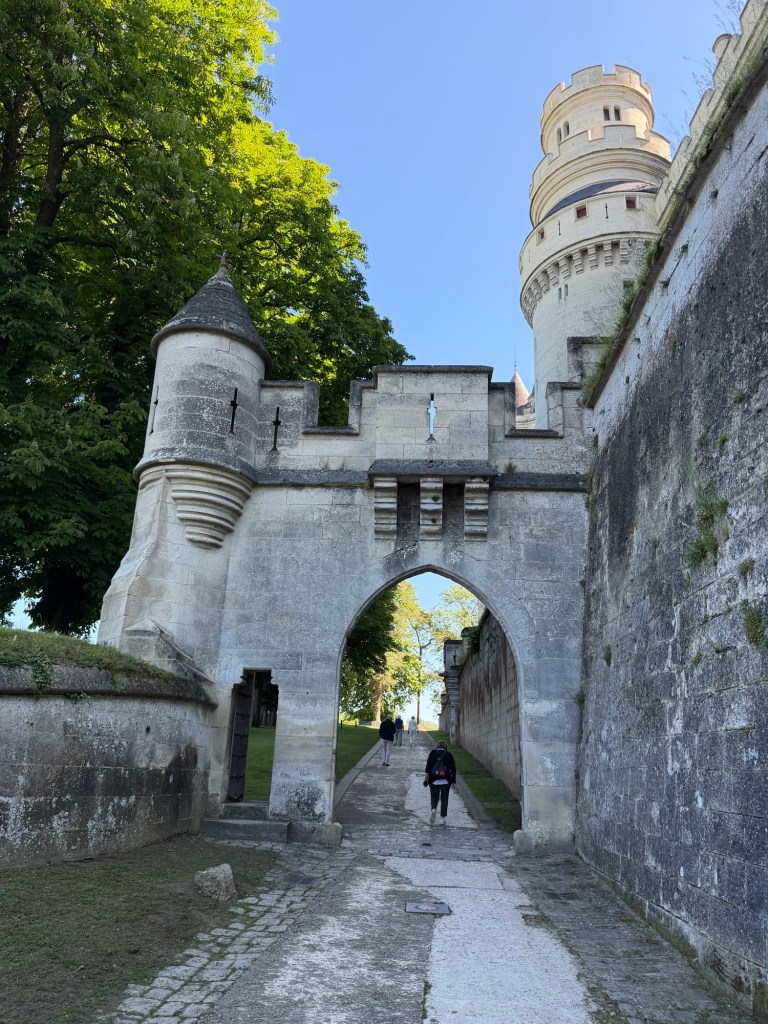
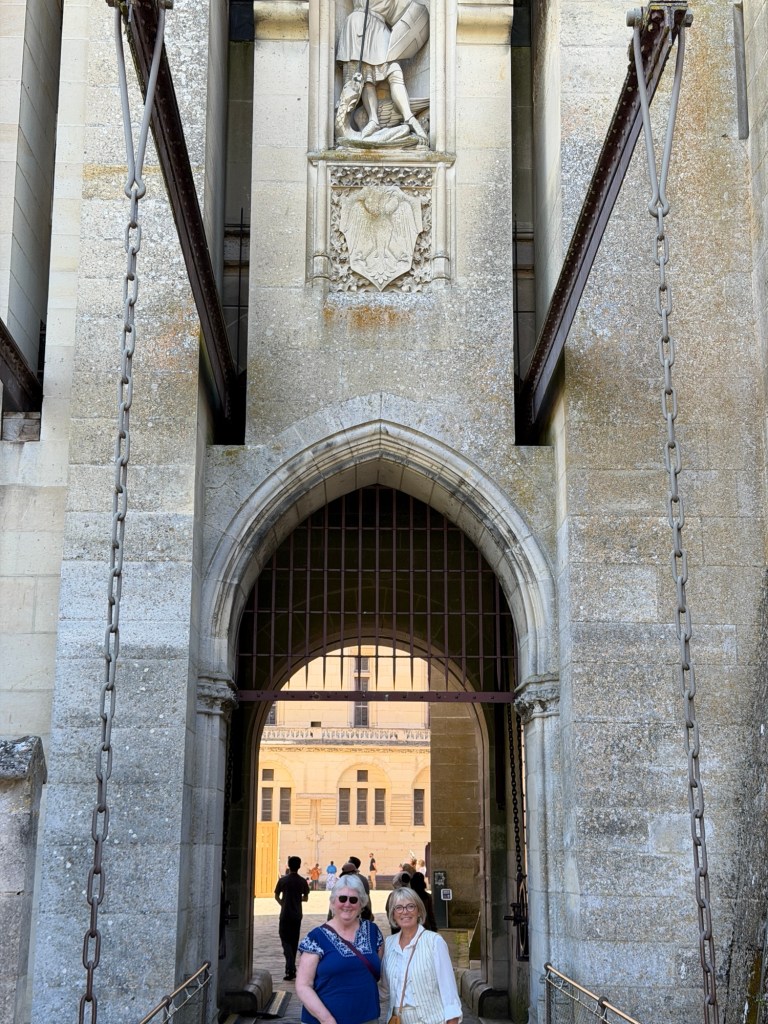
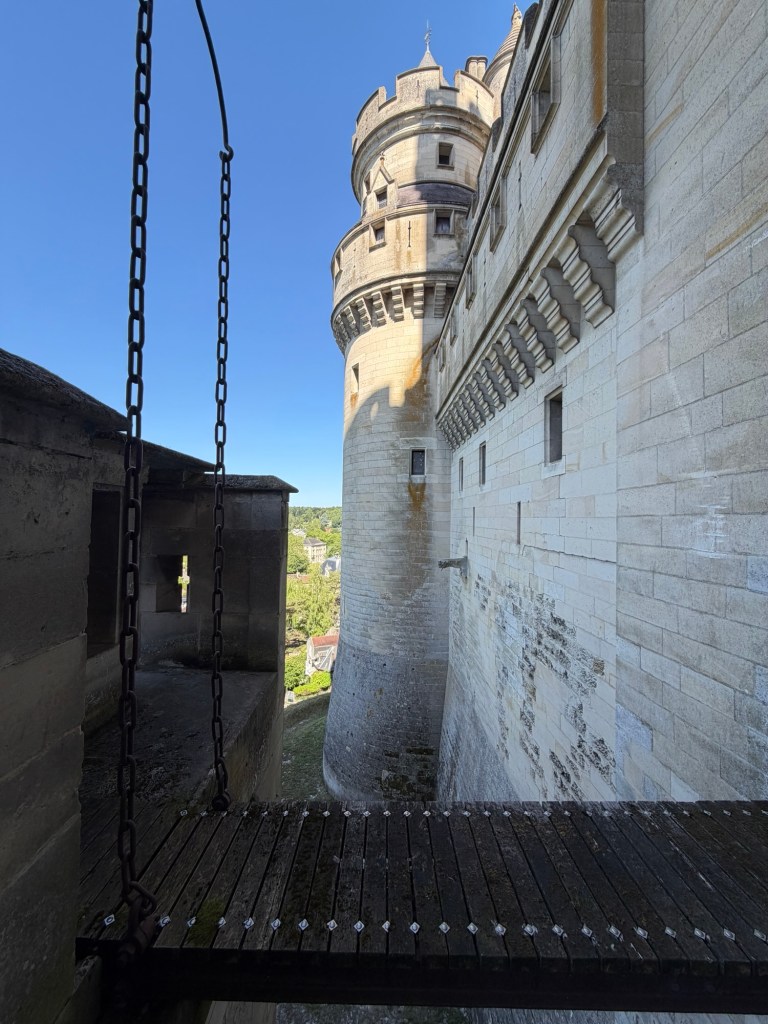
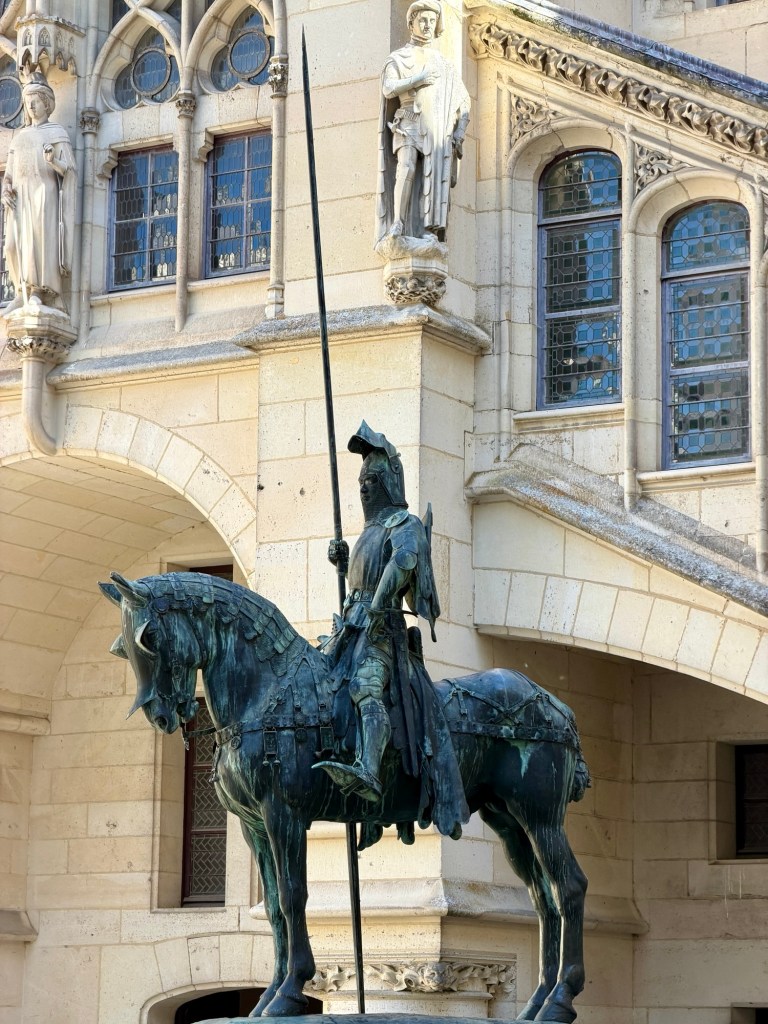
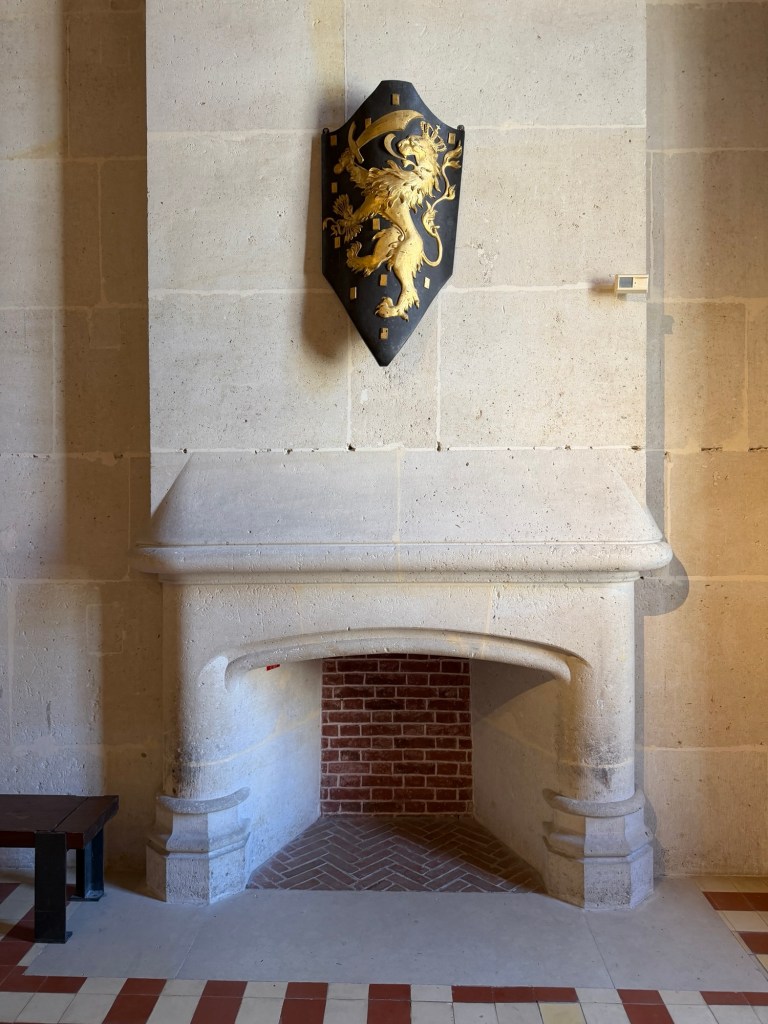
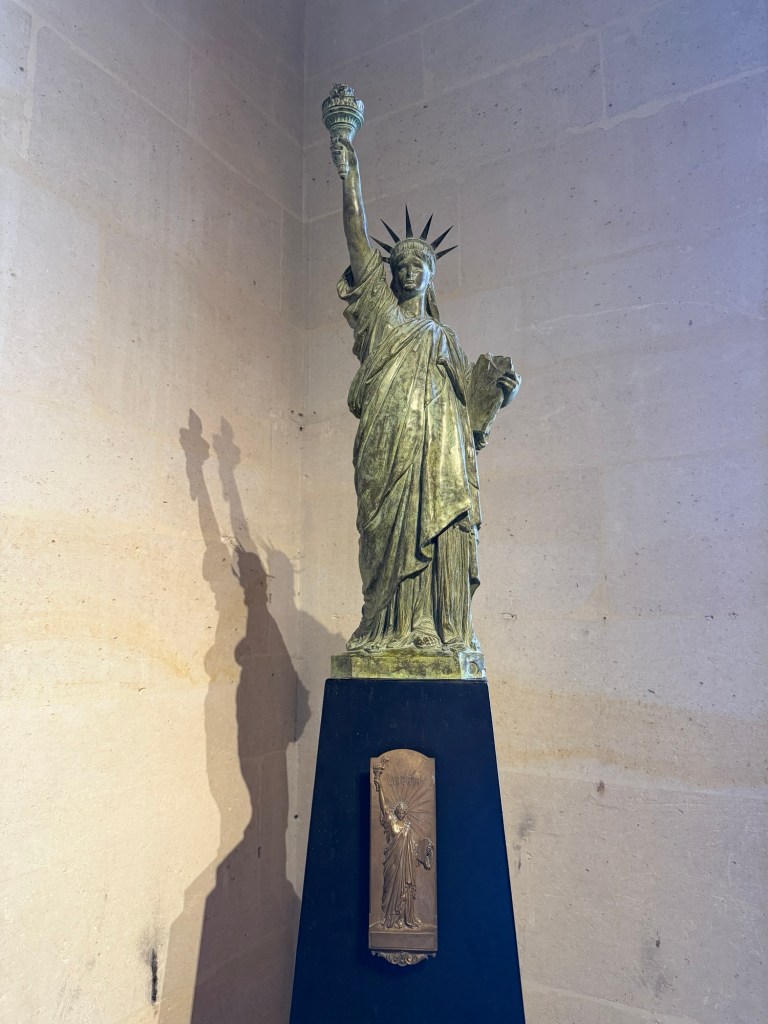
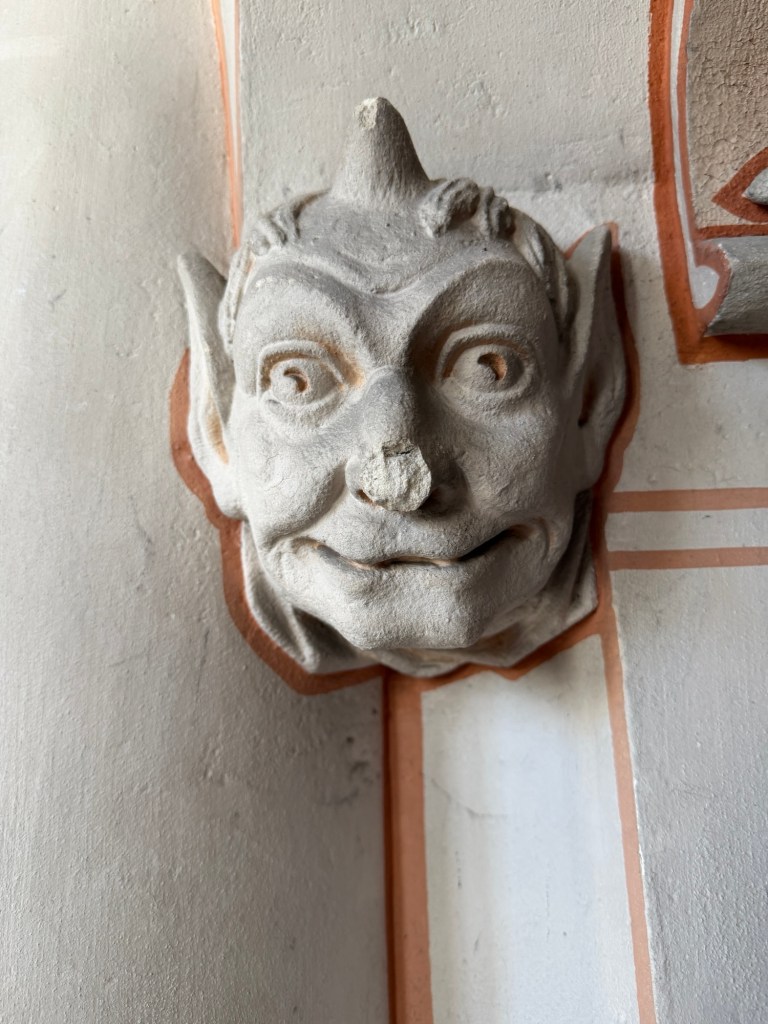
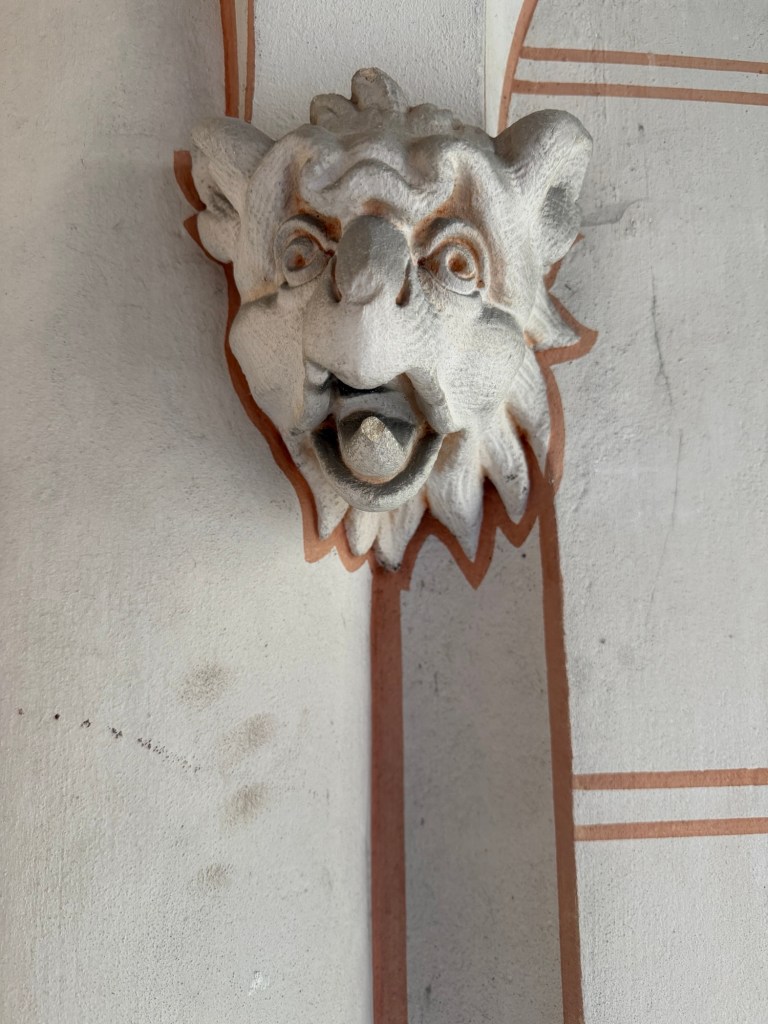
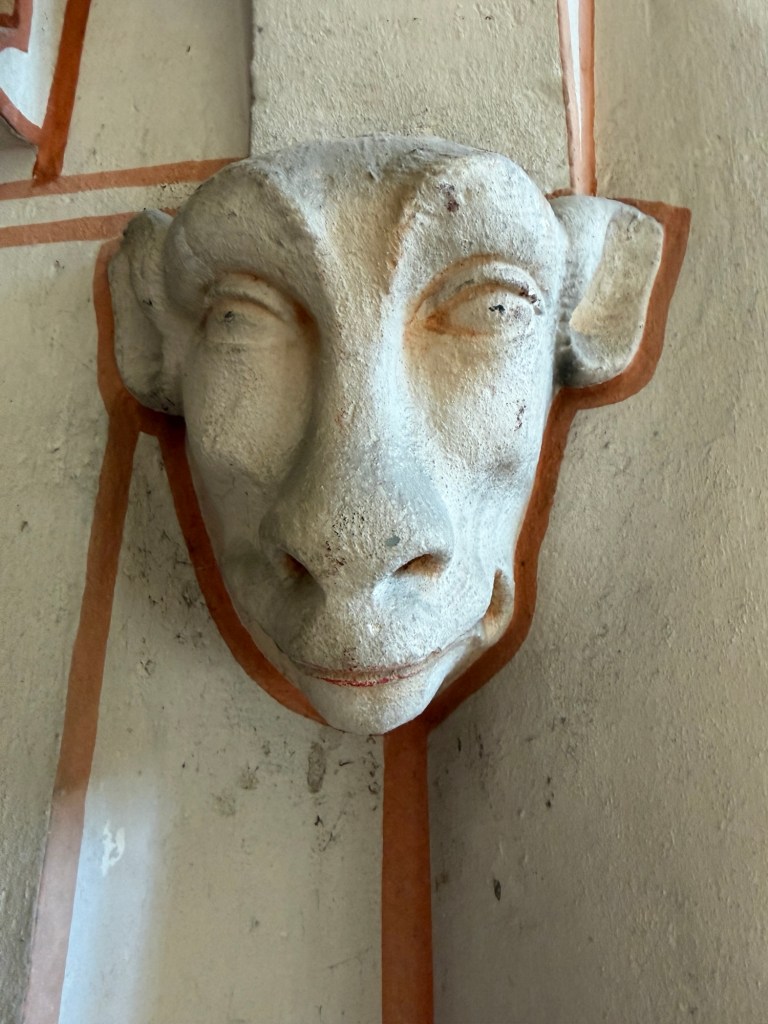
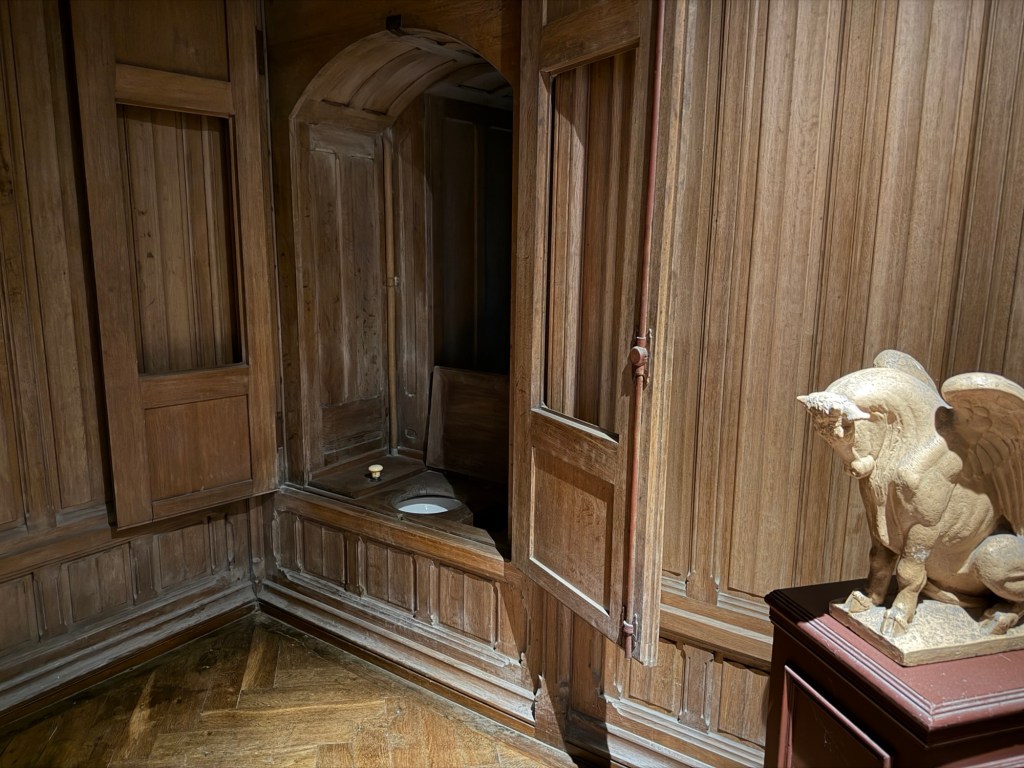
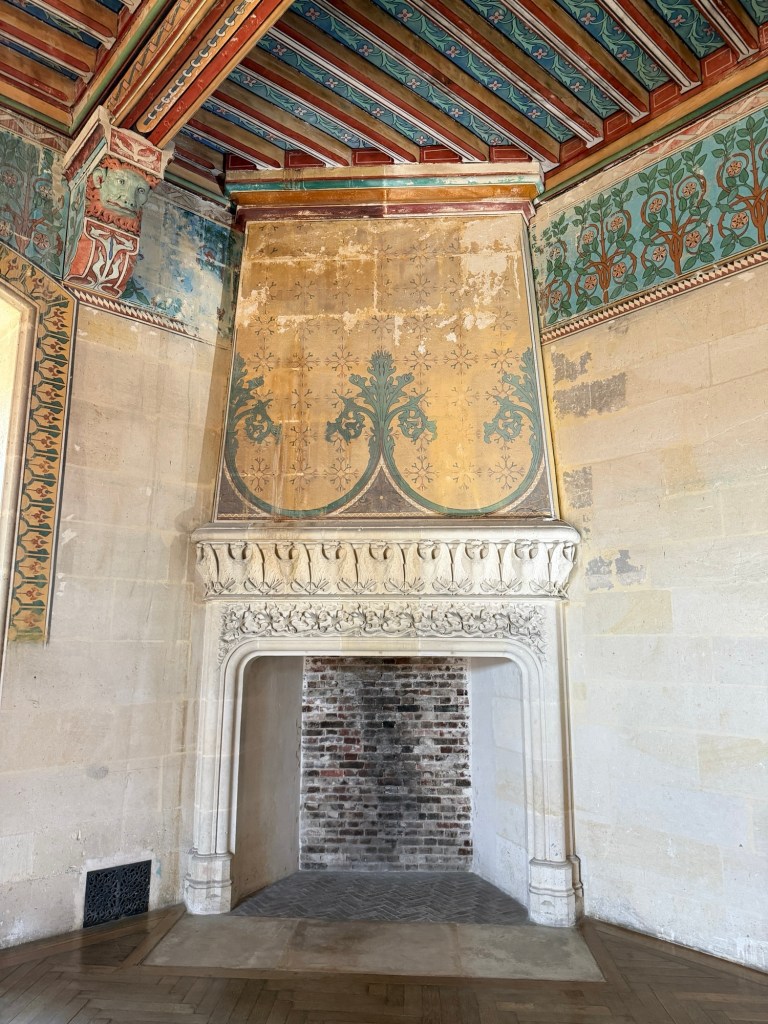
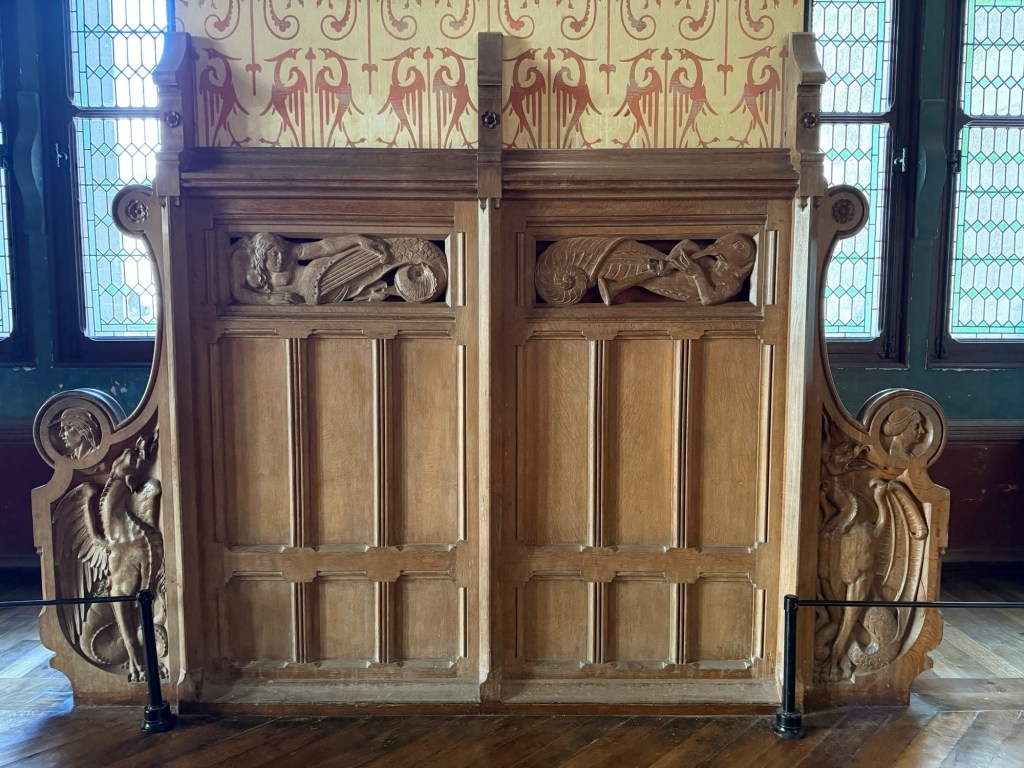
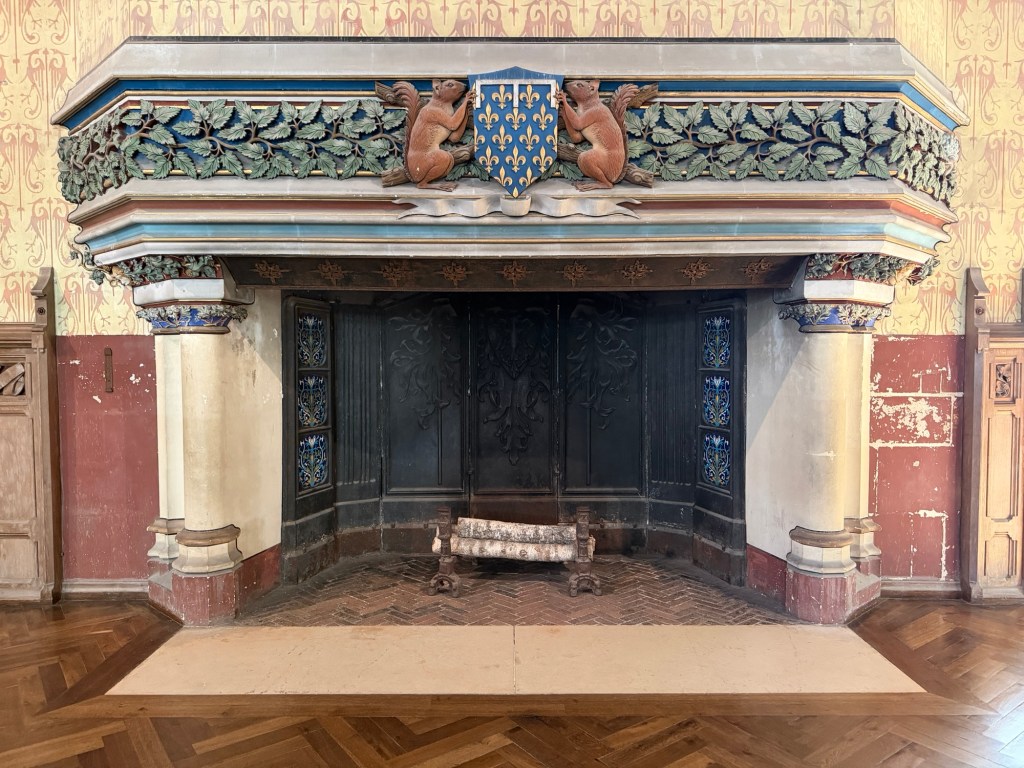
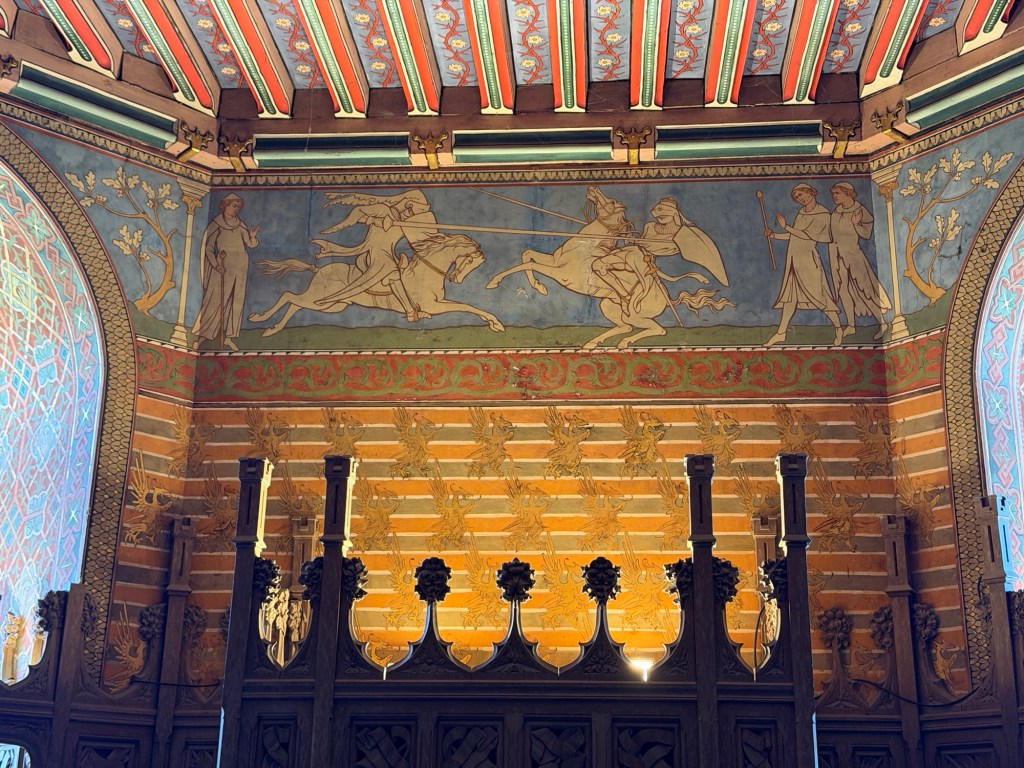
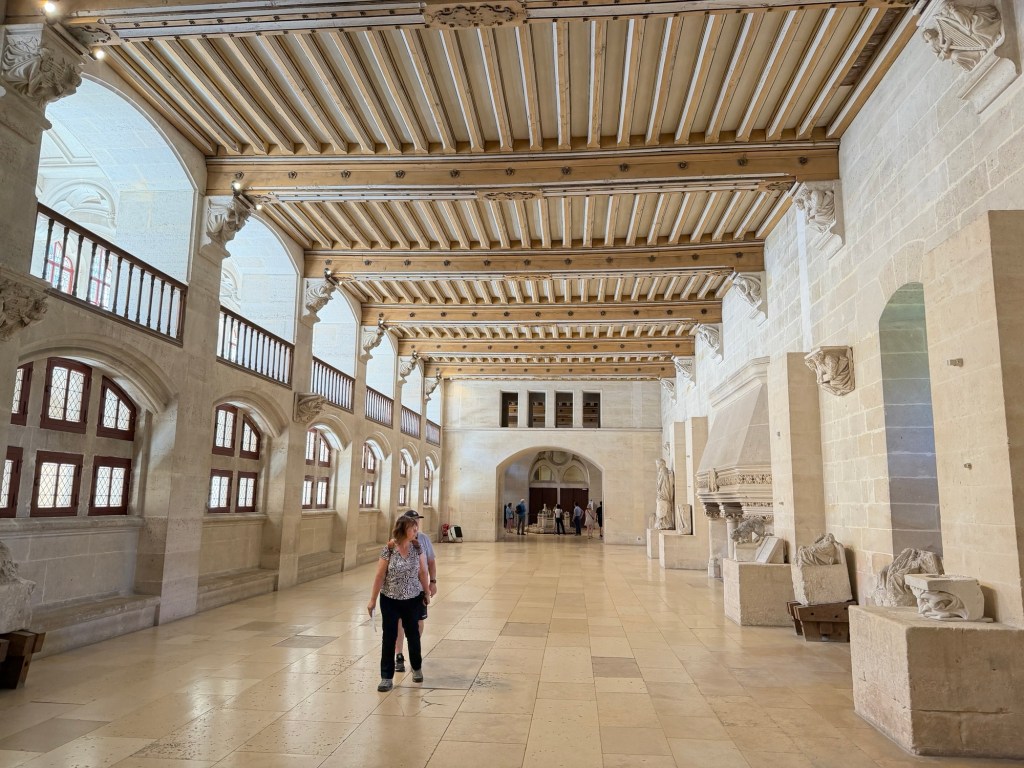
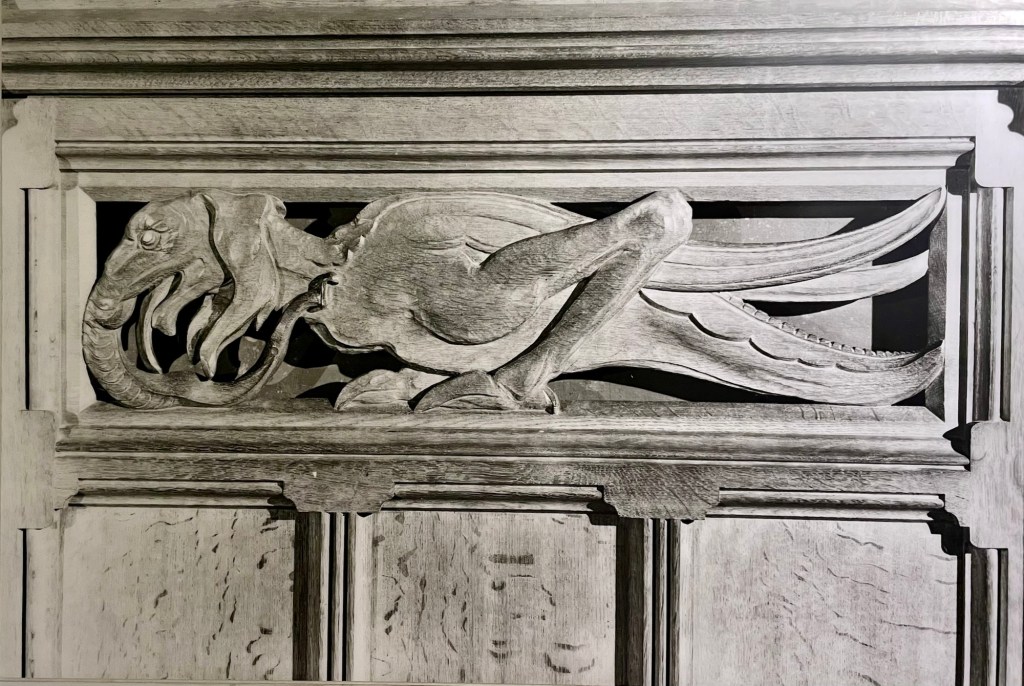
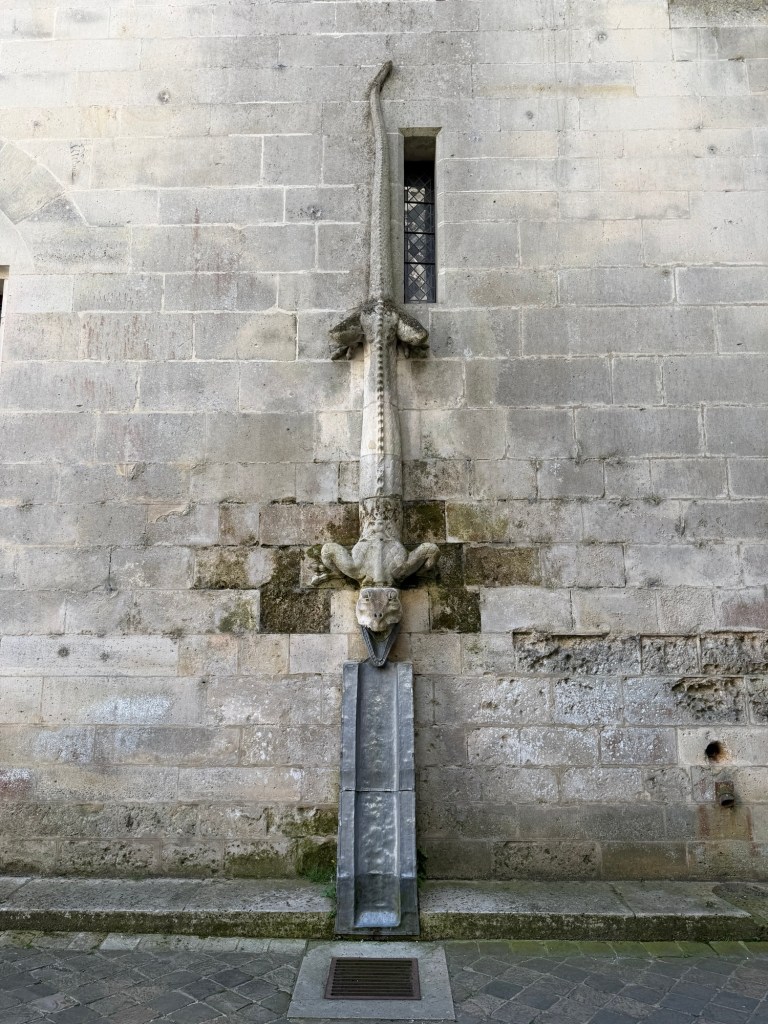
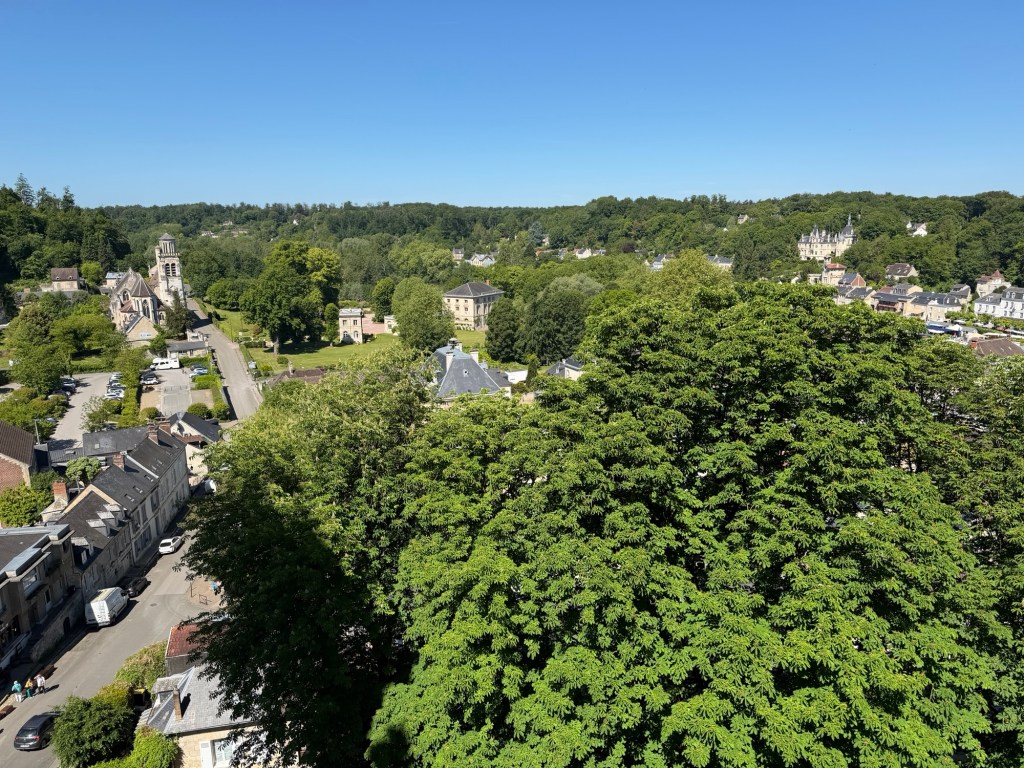
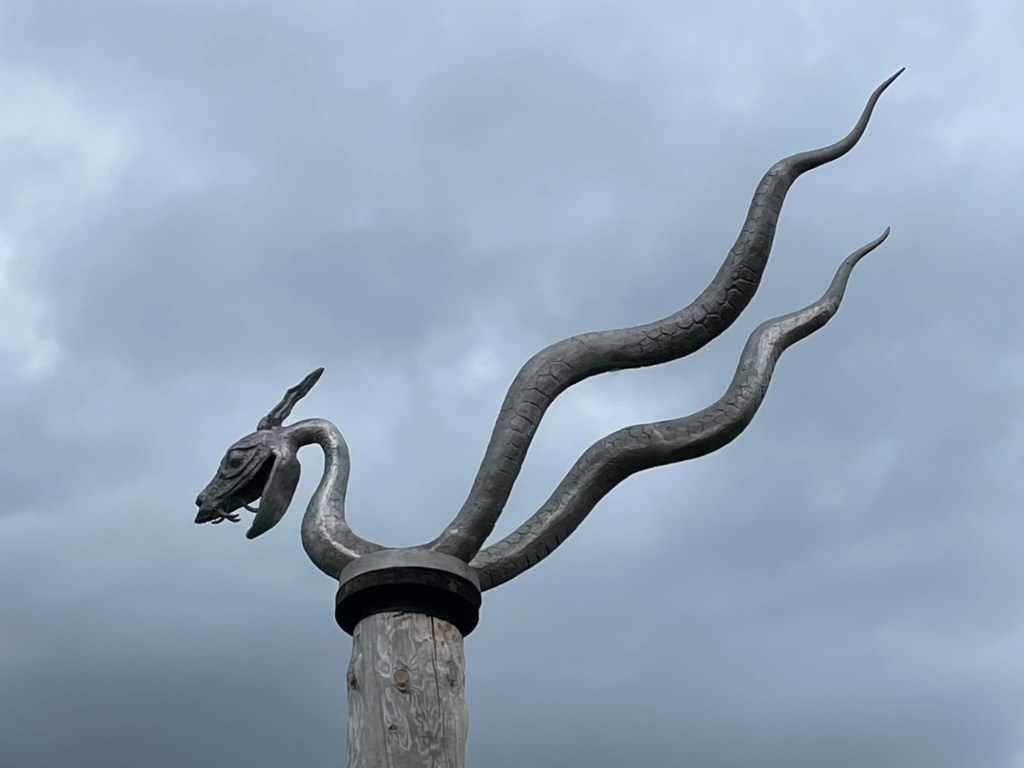
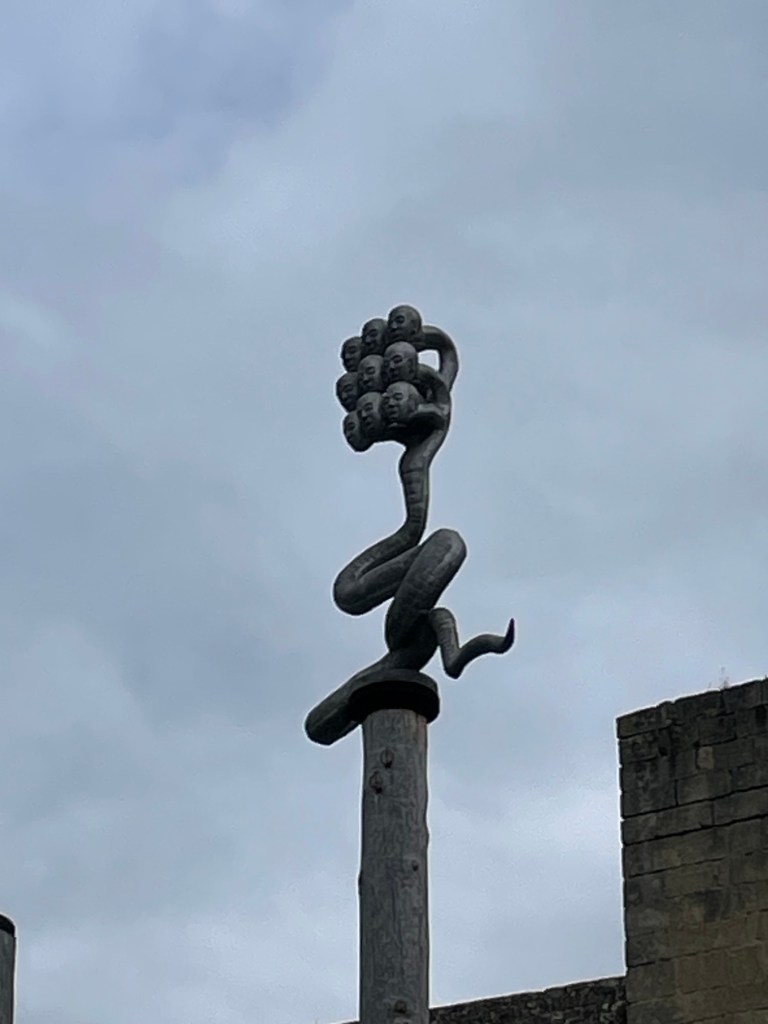
Walking along a giant ramp around castle. Ruins of the older fortifications?Clare and Joëlle at the gateMarc and Joëlle in the large courtyardA knight with a very long spearFigurines, fireplace, furniture, and stained glassThese ornaments and statues were originally on the exterior of the castle.Carved, creepy faces in the stairwells and a medieval toiletThe empress’s bedroom is the most colorful room with Scottish influence in some of the art.Elegant wood carvingFancy fireplaceJoustingLarge hallFireplace to heat the large spaceSome rooms were works in progress or completely empty. Weird creatures and a model of the castleView from the castle
Lunch preceded the civil ceremony, with only the family and special friends, so about thirty people. We made menu choices a few weeks before, but few remembered what they ordered. Fortunately, Aurélie had a list.
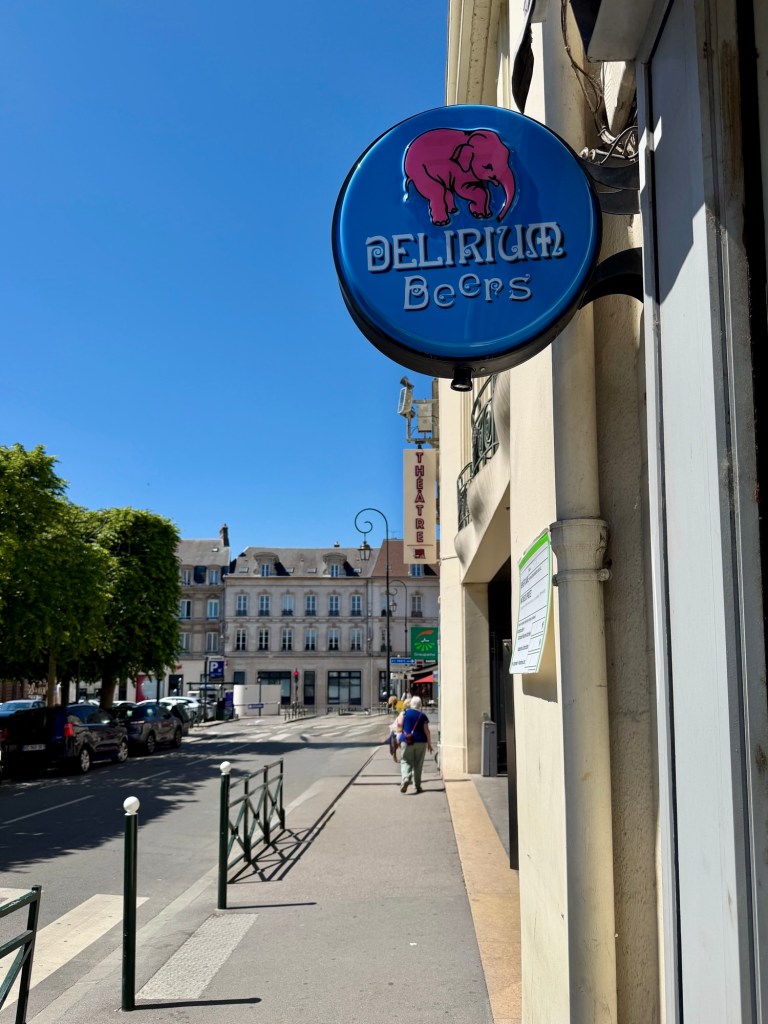
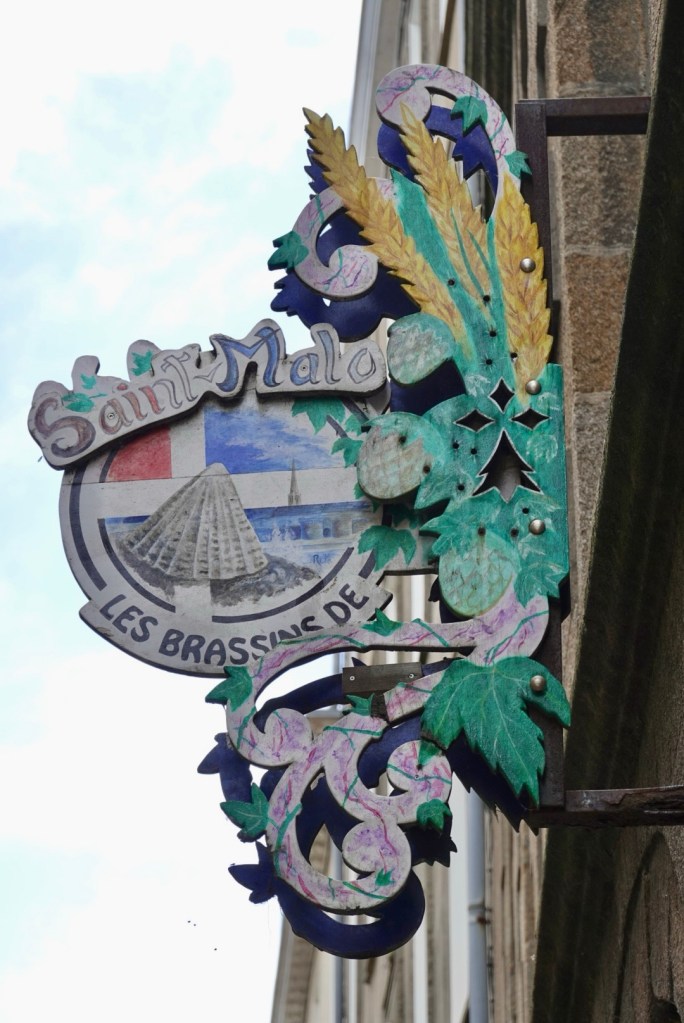
Walking to lunch under a Belgian beer sign
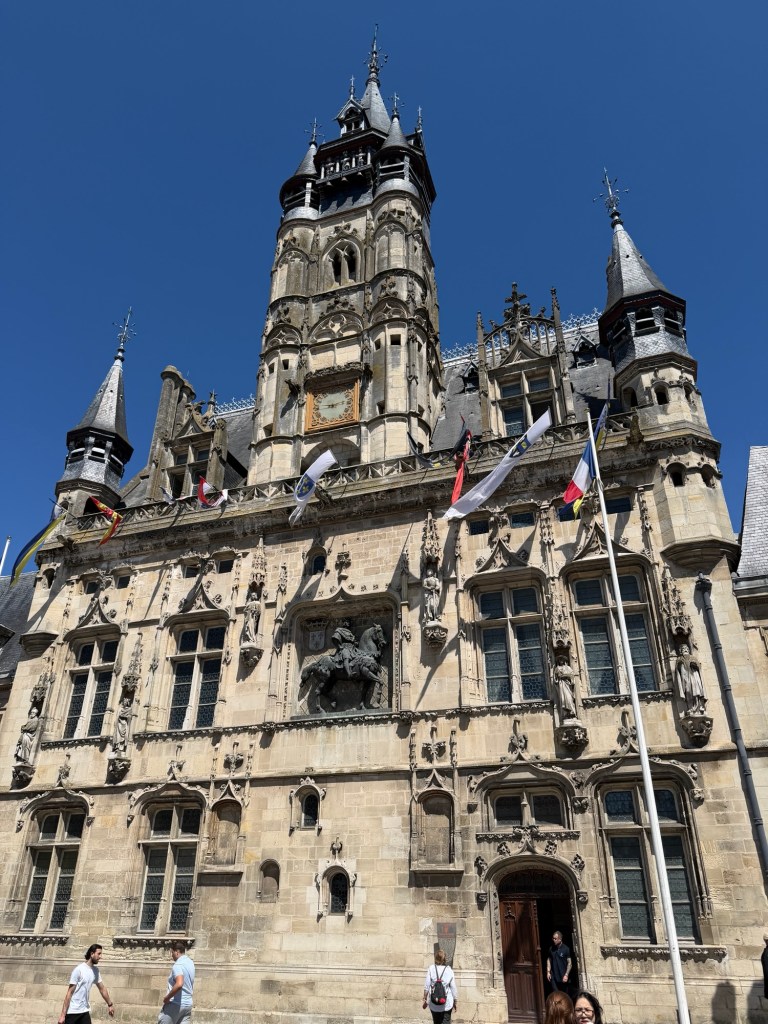
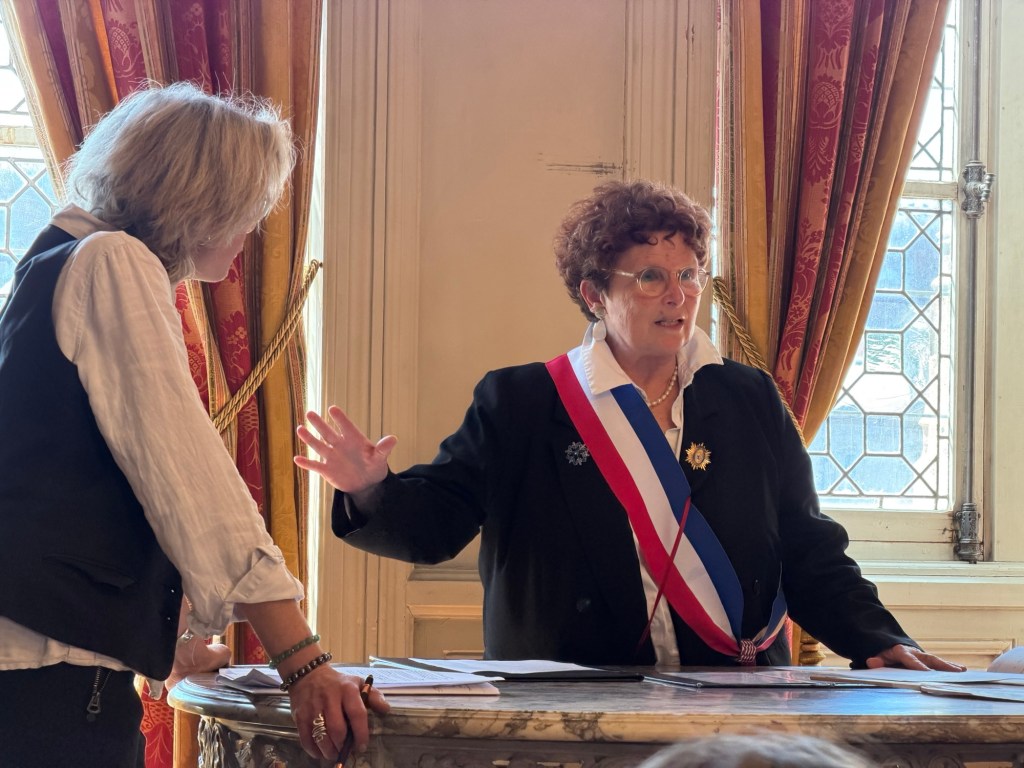
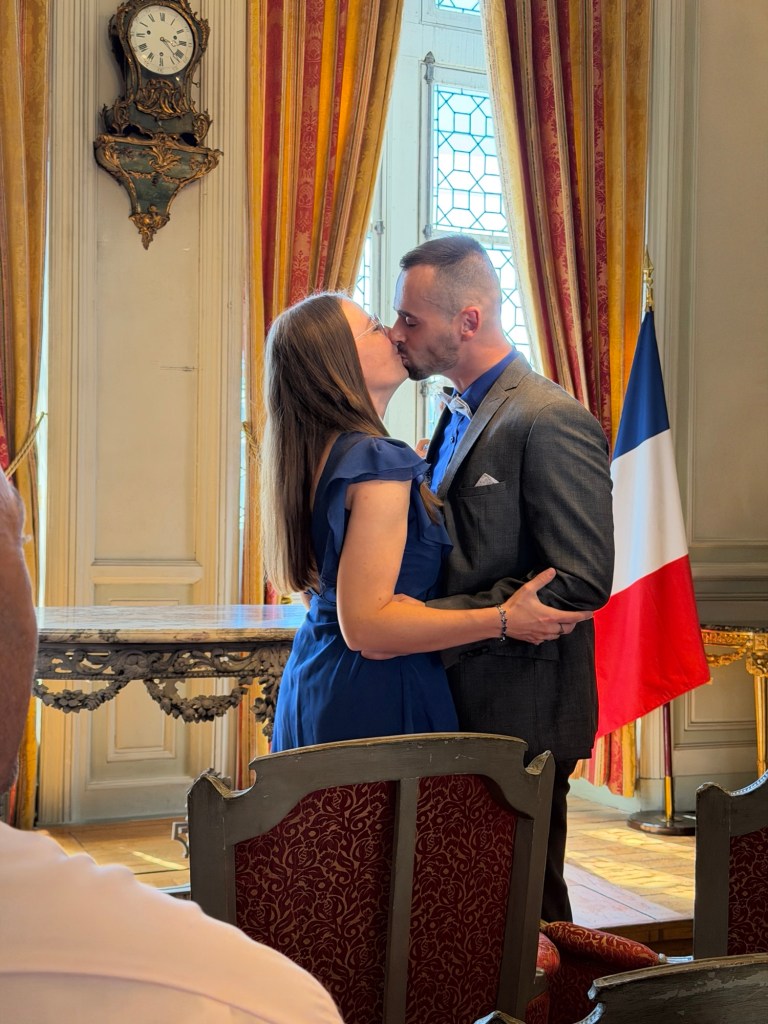
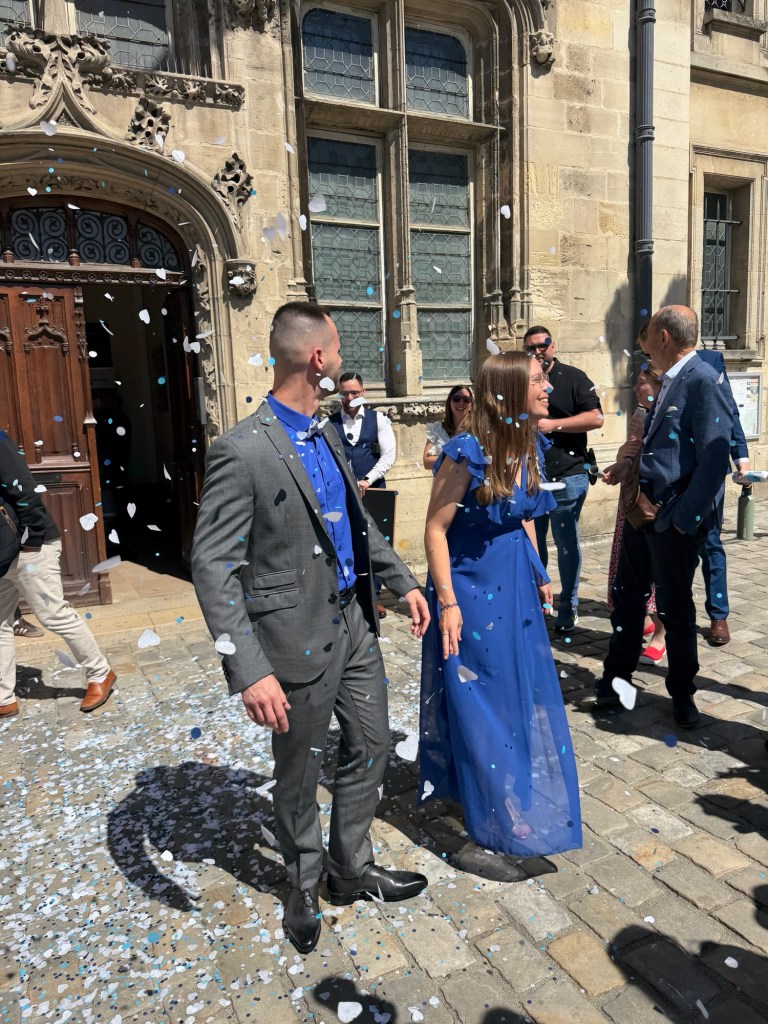
The ceremony in Compiègne was at the City Hall (Hôtel de Ville), by one of the mayor’s executive officers. Being an inquisitive American, Clare asked Aurélie and Simon, each independently, how they were feeling. Both indicated that this was the easy part of their celebratory weekend, the big emotions will come on Sunday.
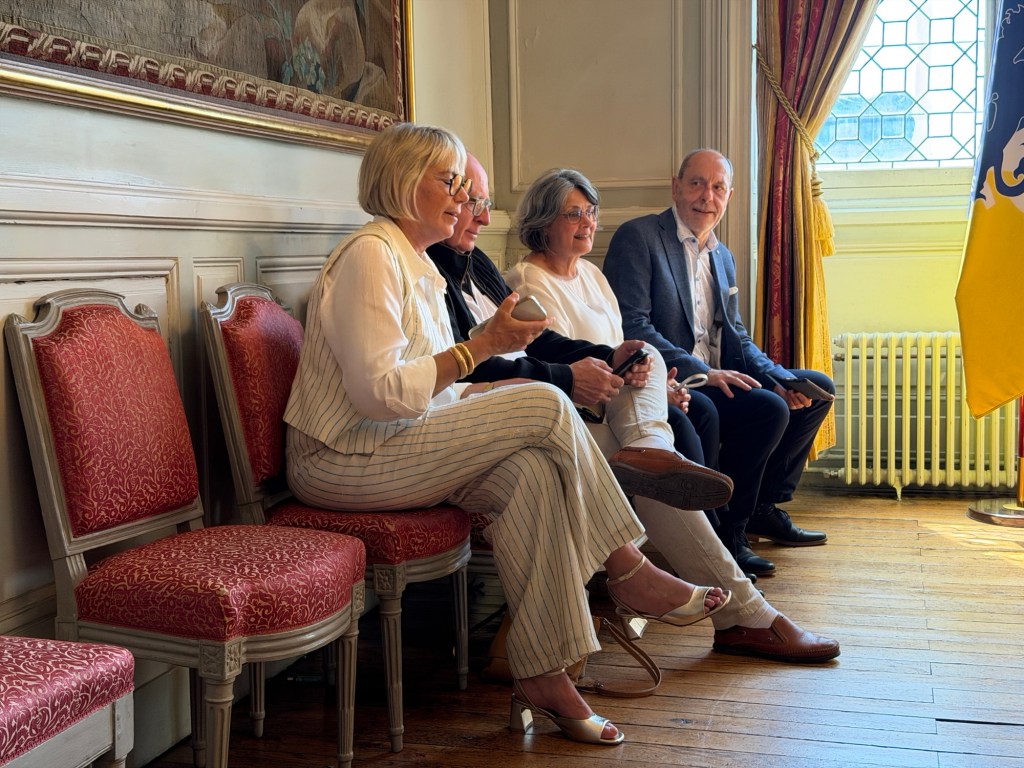
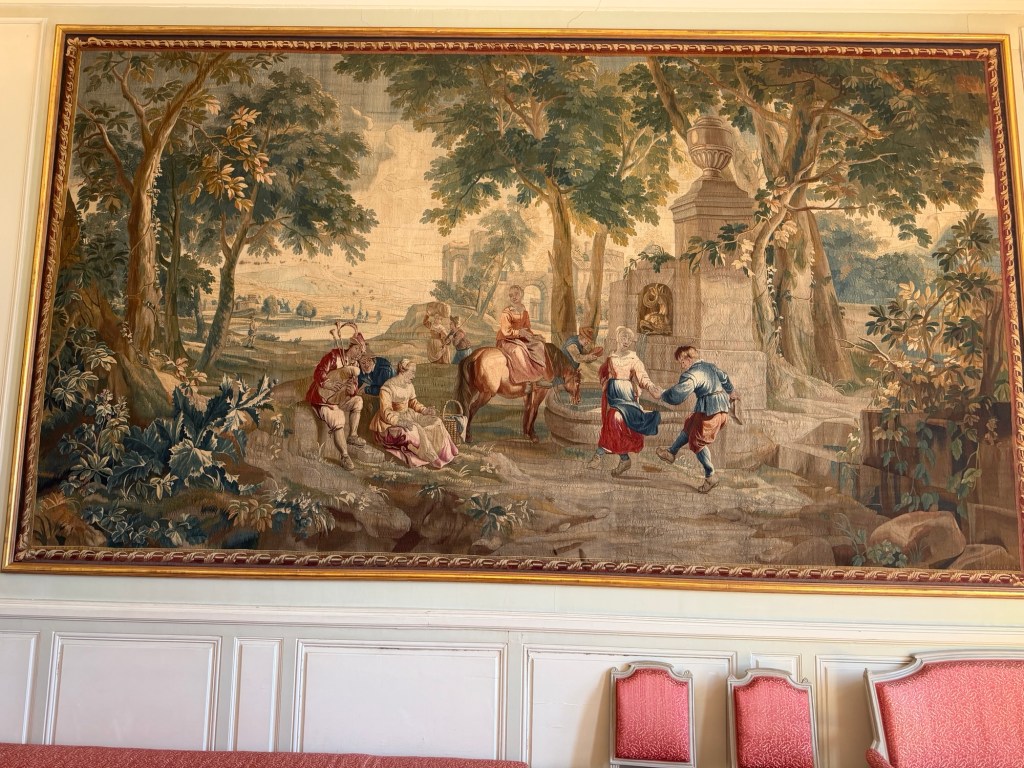
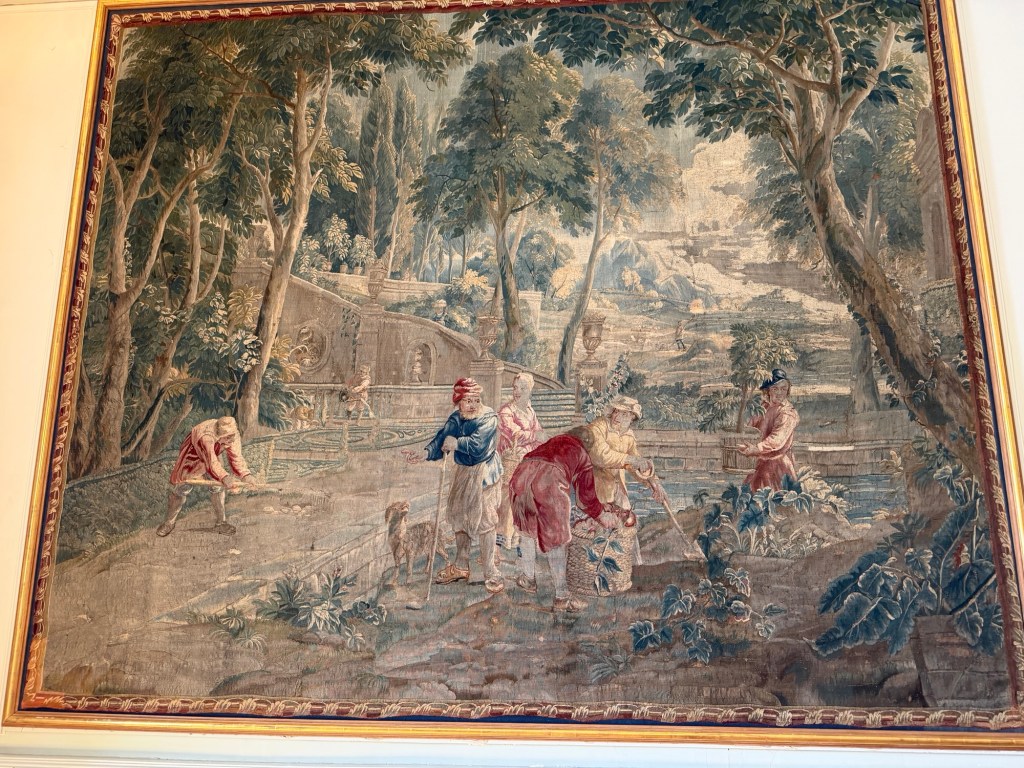
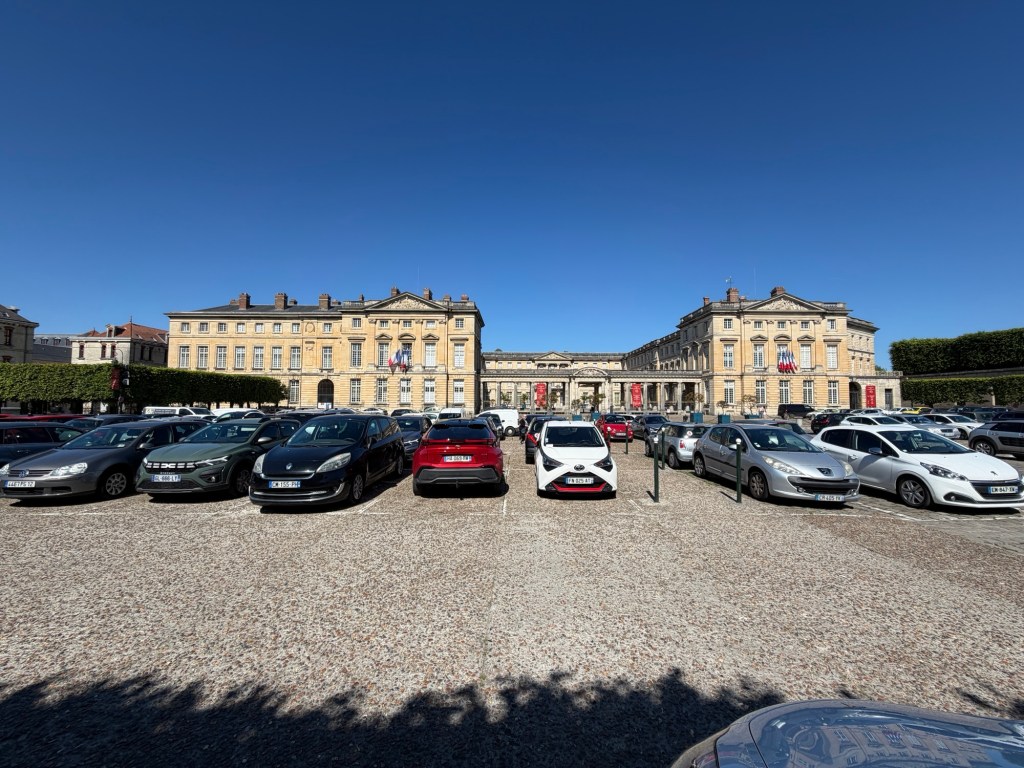
Hôtel de VilleParents of bride and groomMayor’s assistant The smoochTapestries in the Hôtel de VilleWe tossed paper hearts at the newlyweds Château de Compiègne, where Napoleon III and Empress Eugénie met
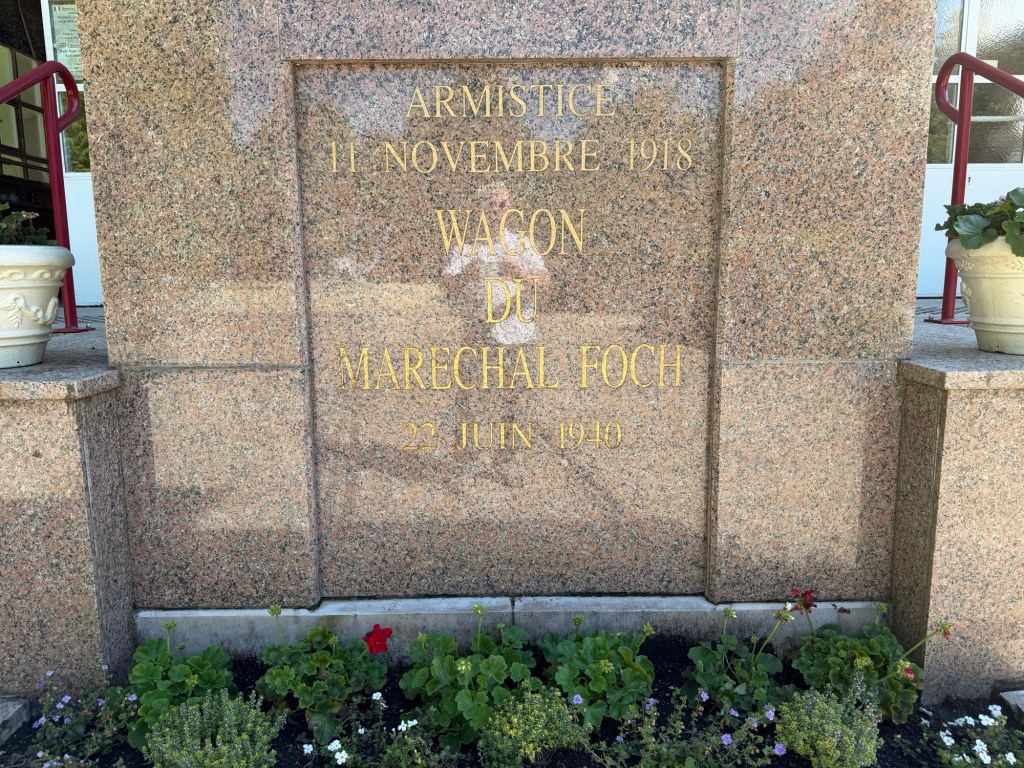
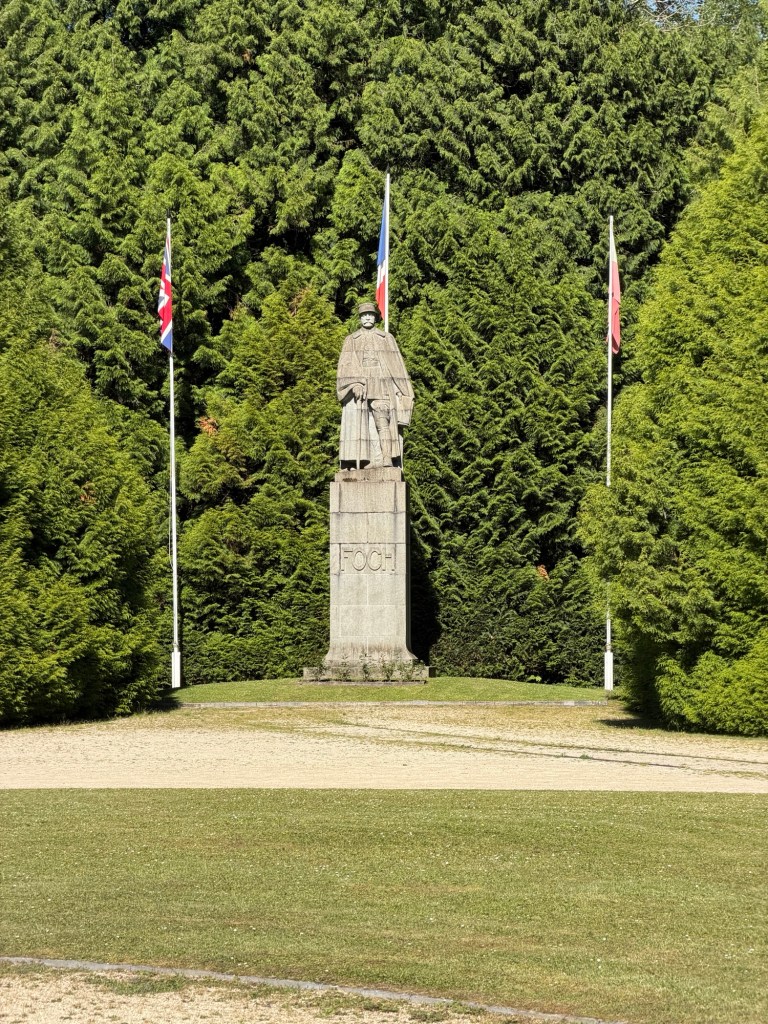
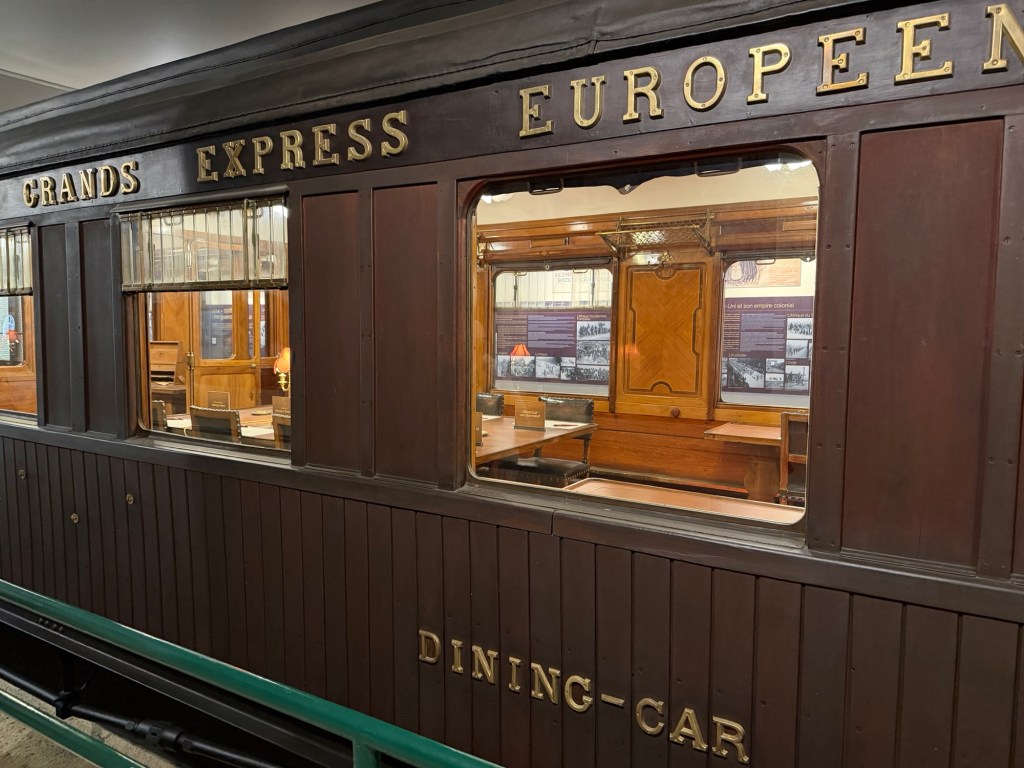
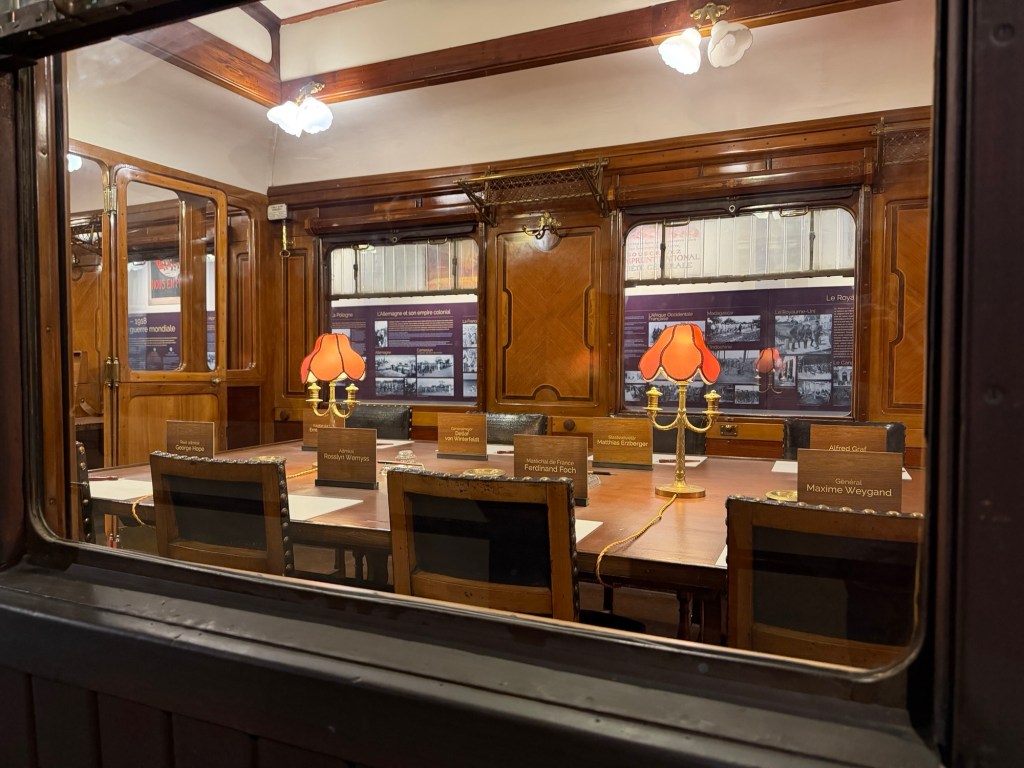
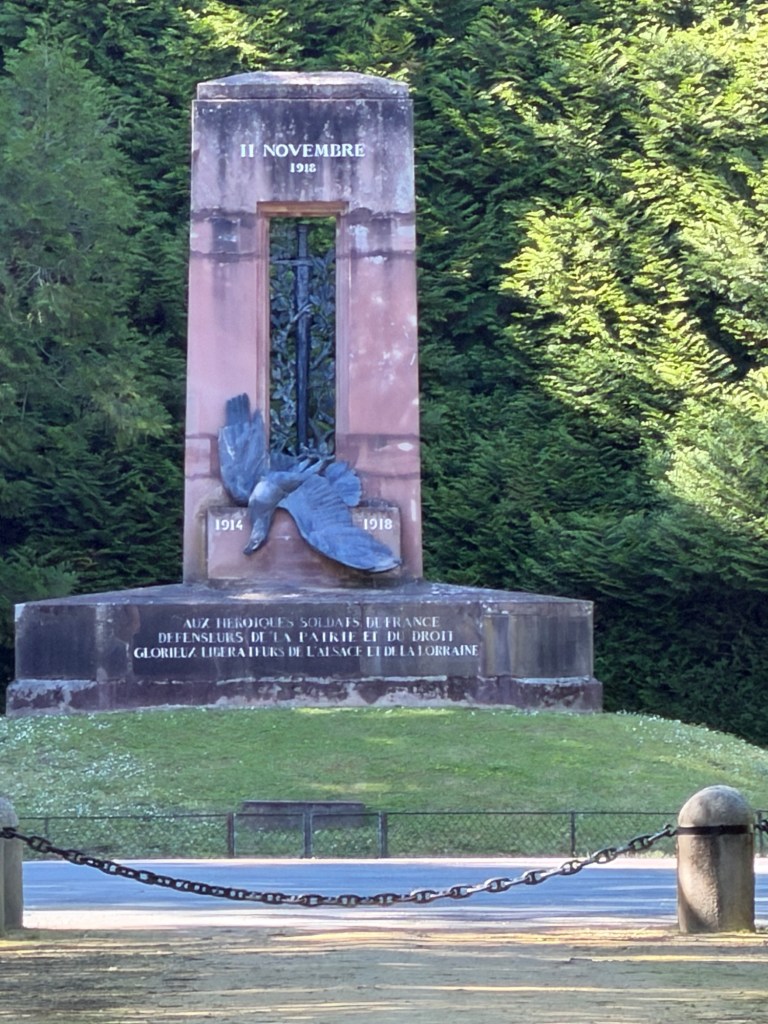
After the ceremony, we (us, Marc and Jöelle, Joëlle’s 2 sisters and their mom, and one brother-in-law) went to the Glade of the Armistice, where WWI treaty documents were signed, in a train dining car.
This was also the place where the French surrendered part of their country in 1940, near the beginning of WWII. Hitler wanted to accept that surrender in the same place where Germany had surrendered before.
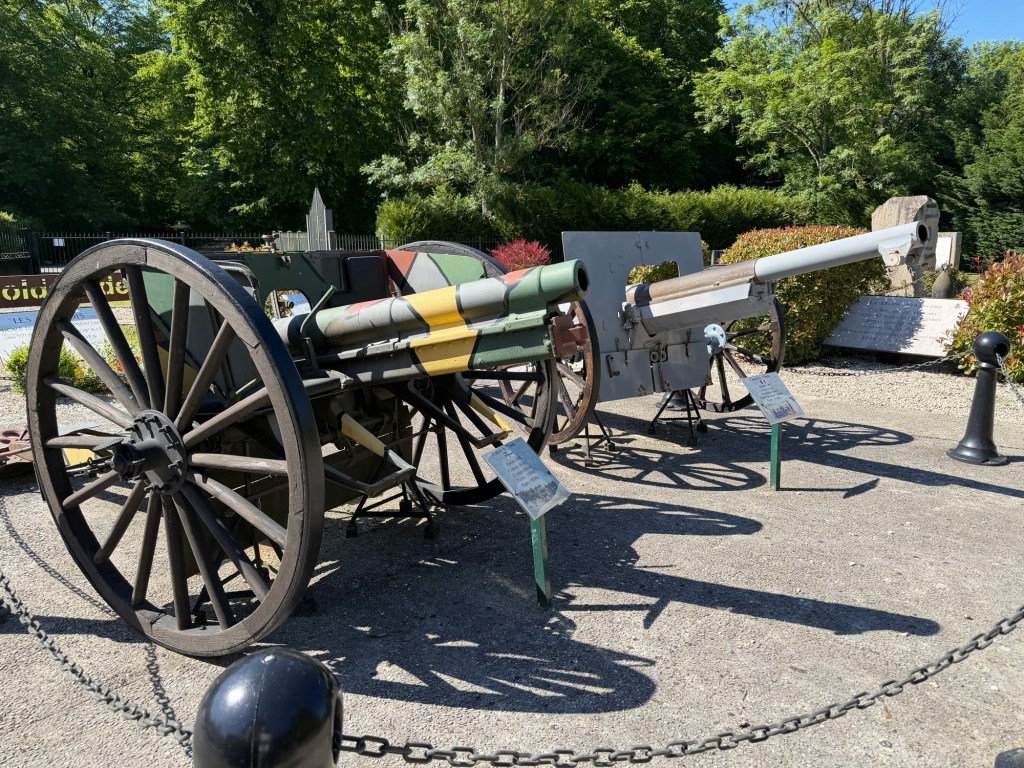
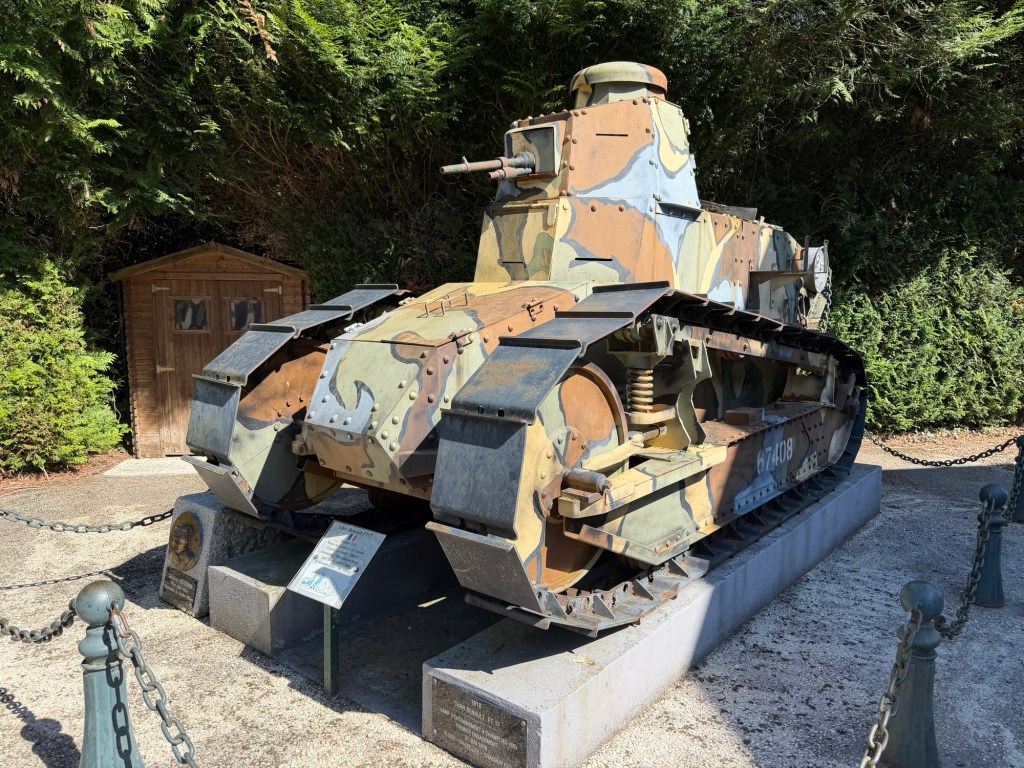
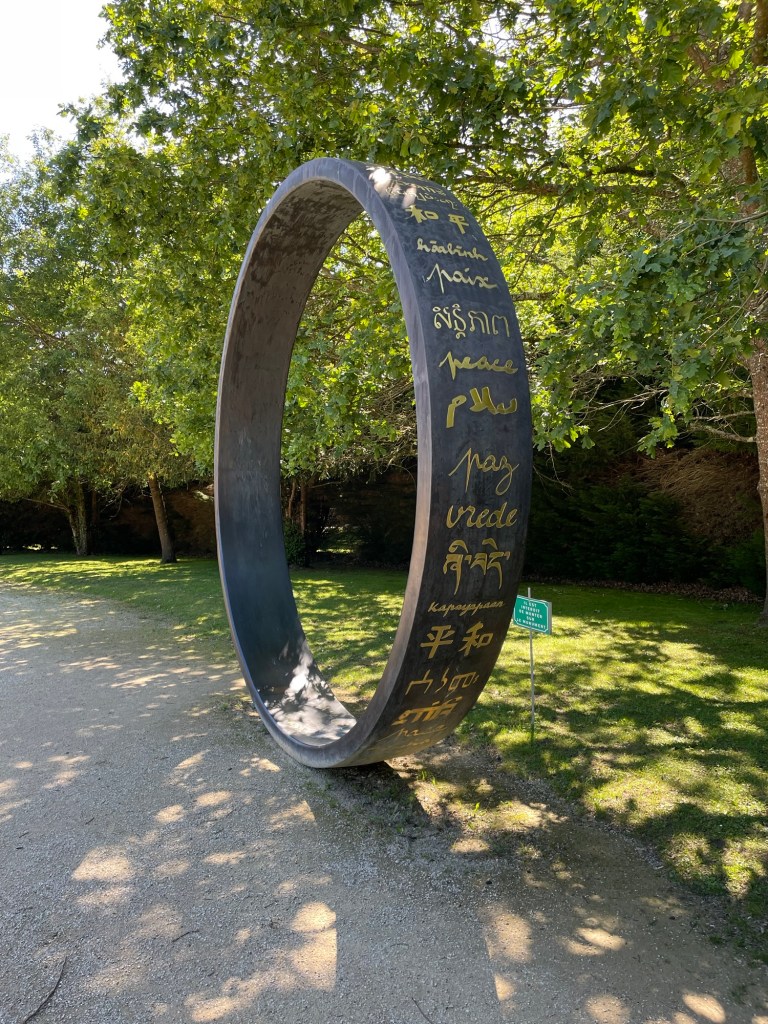
Weapons of war and a ring of peaceMemorials to Maréchal Foch, supreme commander of French forces in World War IInside the train carWorld War I memorial
Dinner was again at the AirBnB, again delightfully unique. This time Simon and his parents and other friends were also with us, and we ate outside.
After breakfast in the hotel in Caen, we started on the drive to the wedding venue. We had to get to the AirBnB before 4:30, because Marc and Joëlle needed to pick up Joëlle’s sister at the Paris airport, about twenty minutes from where we will stay.
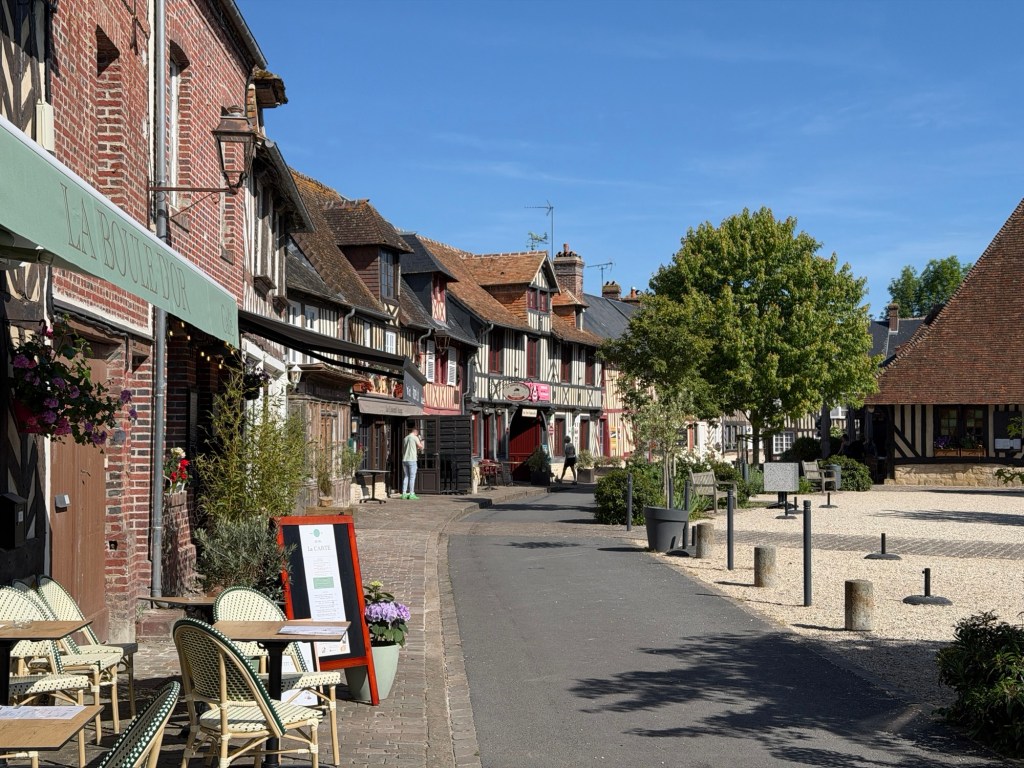
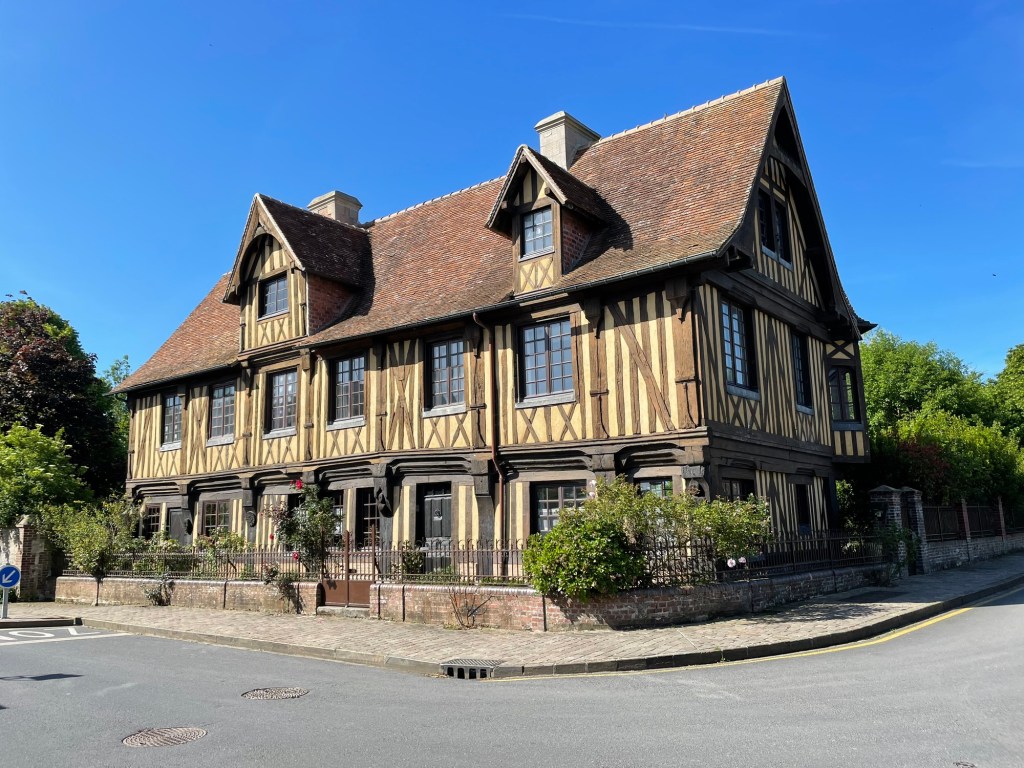
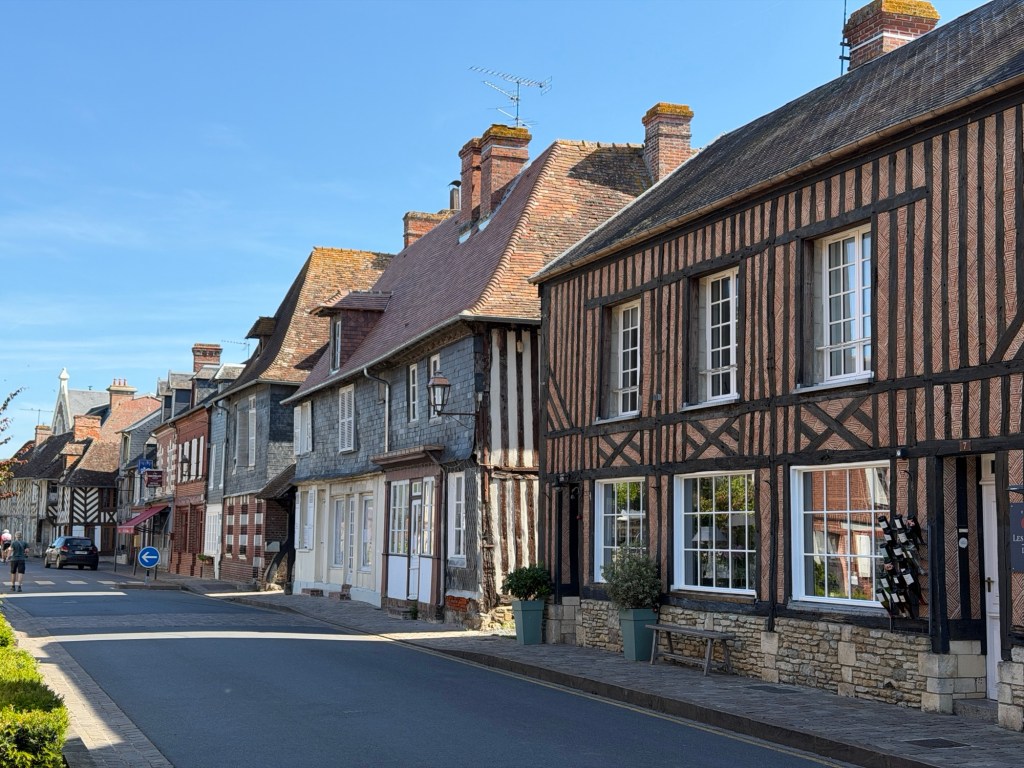
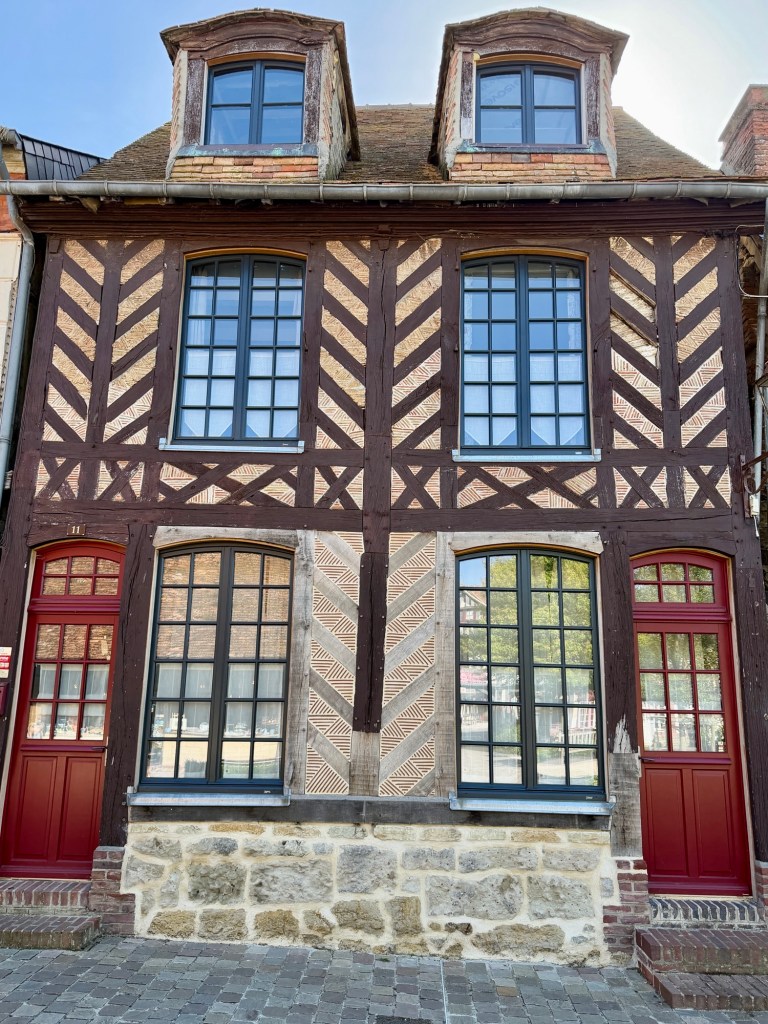
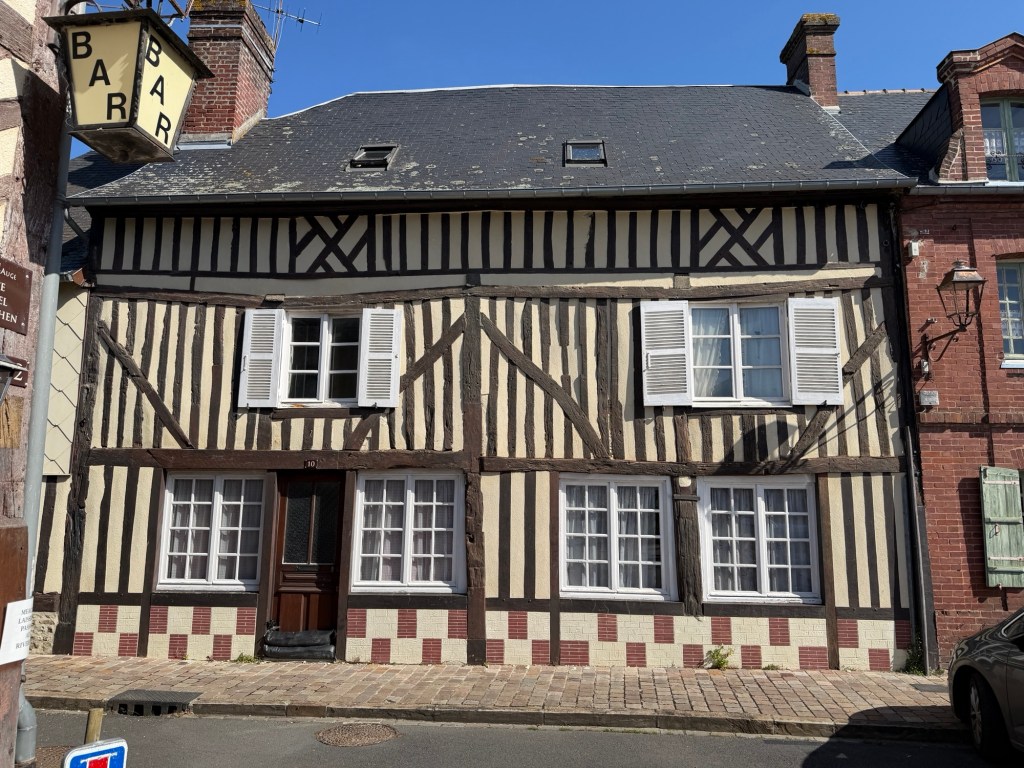
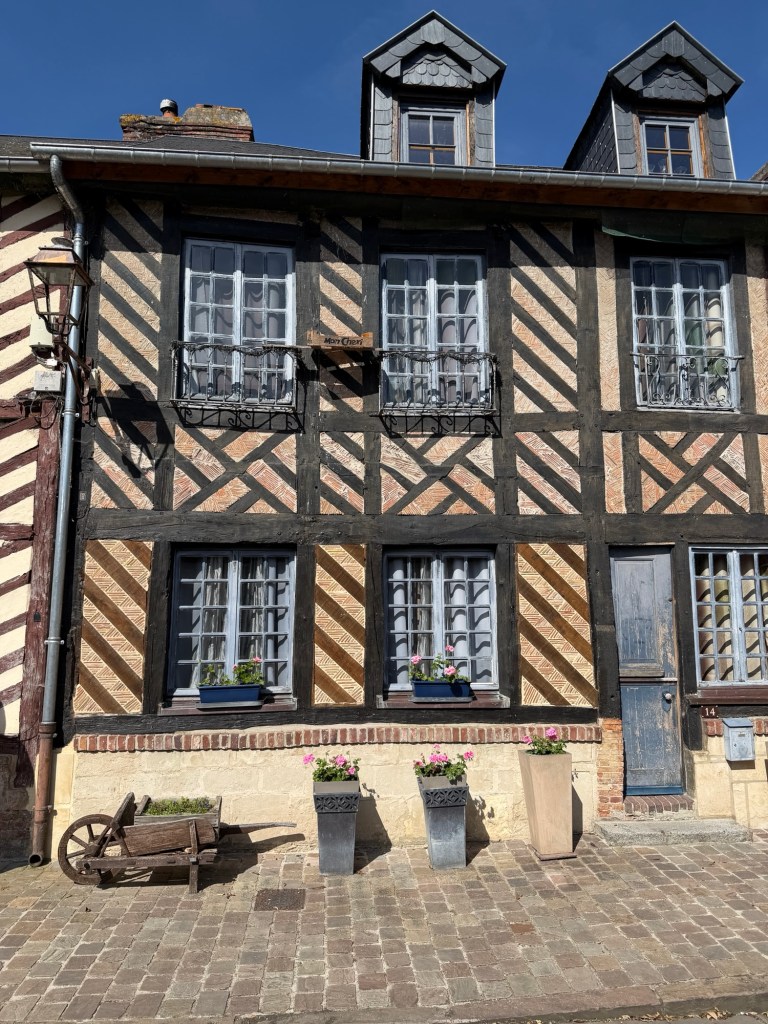
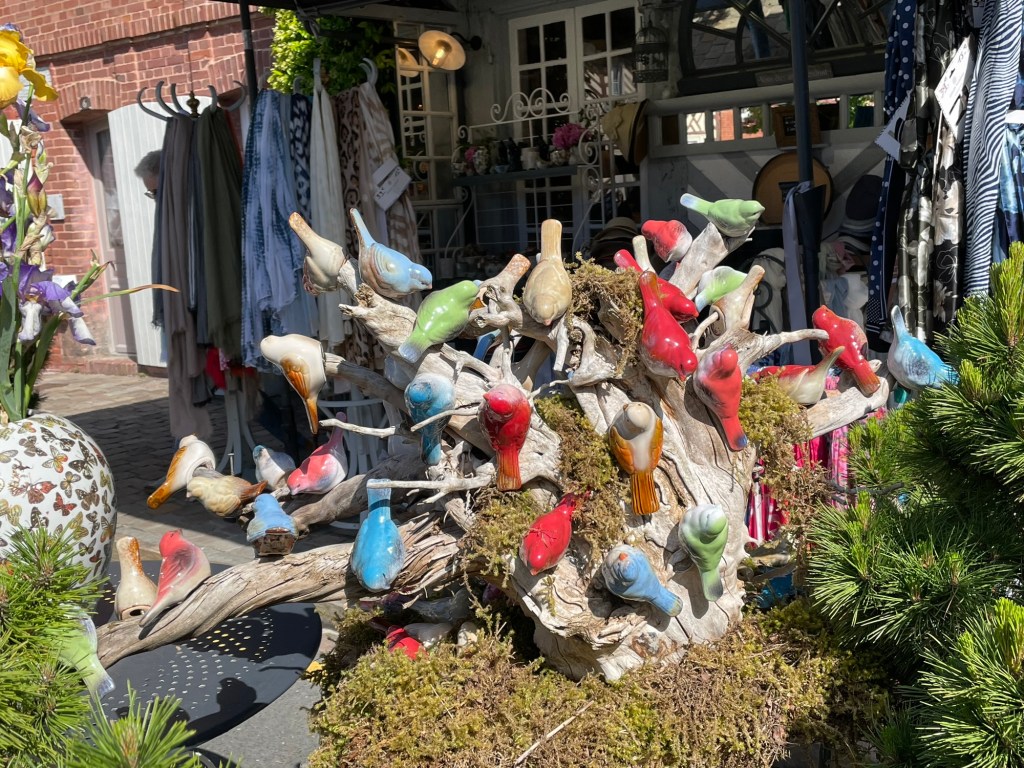
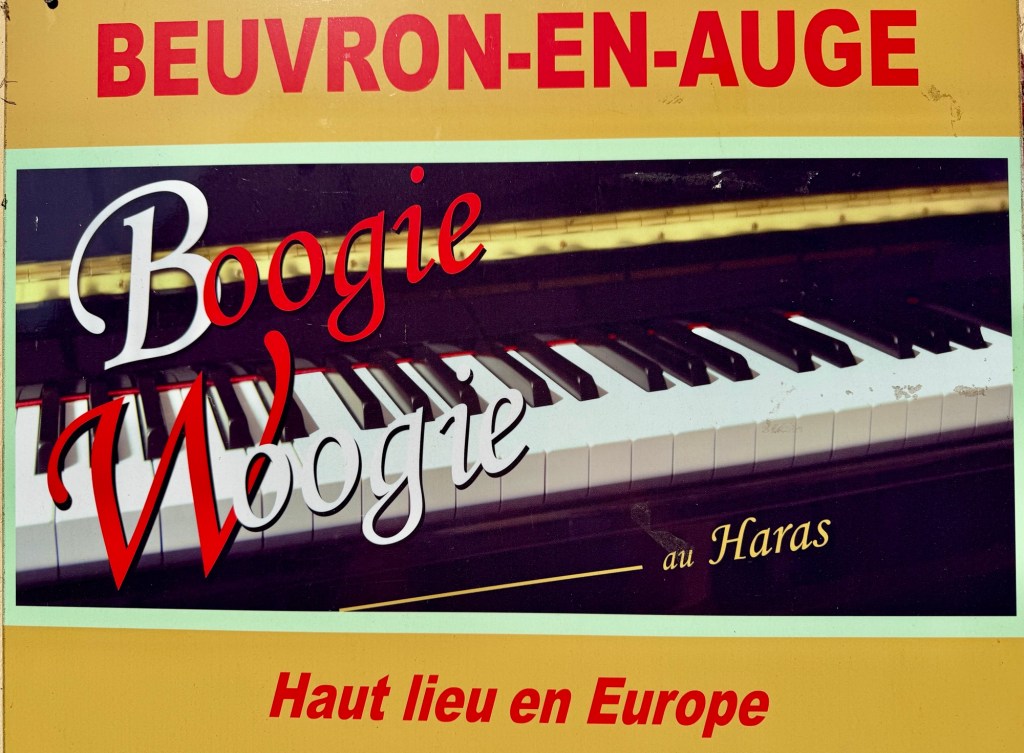
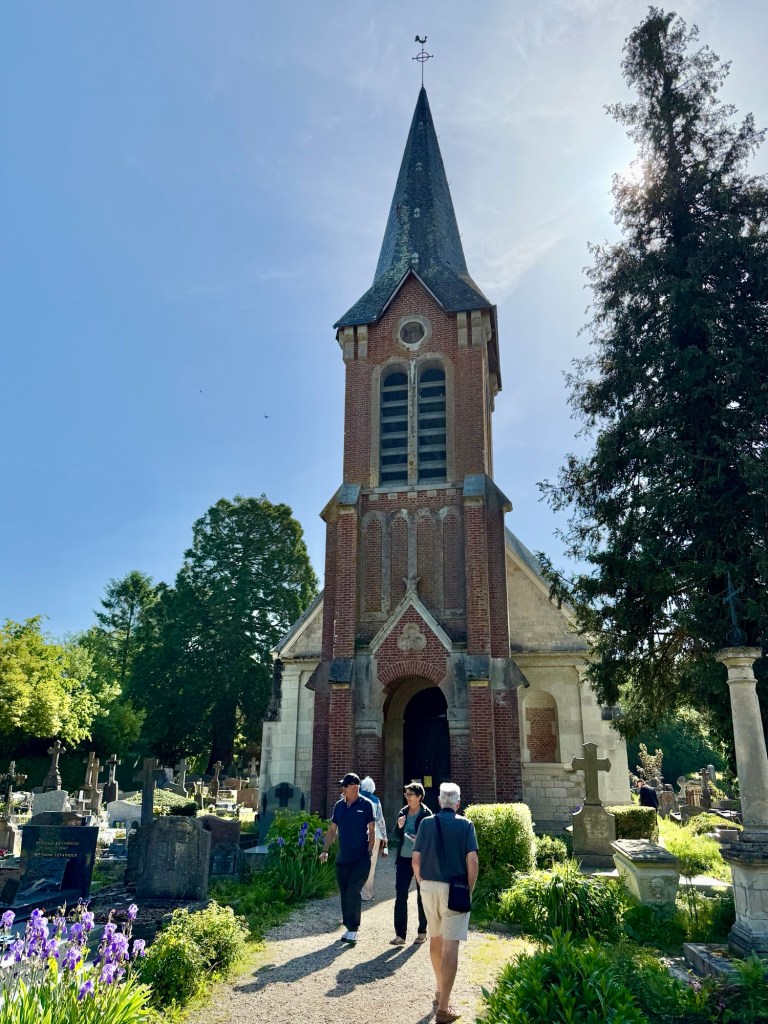
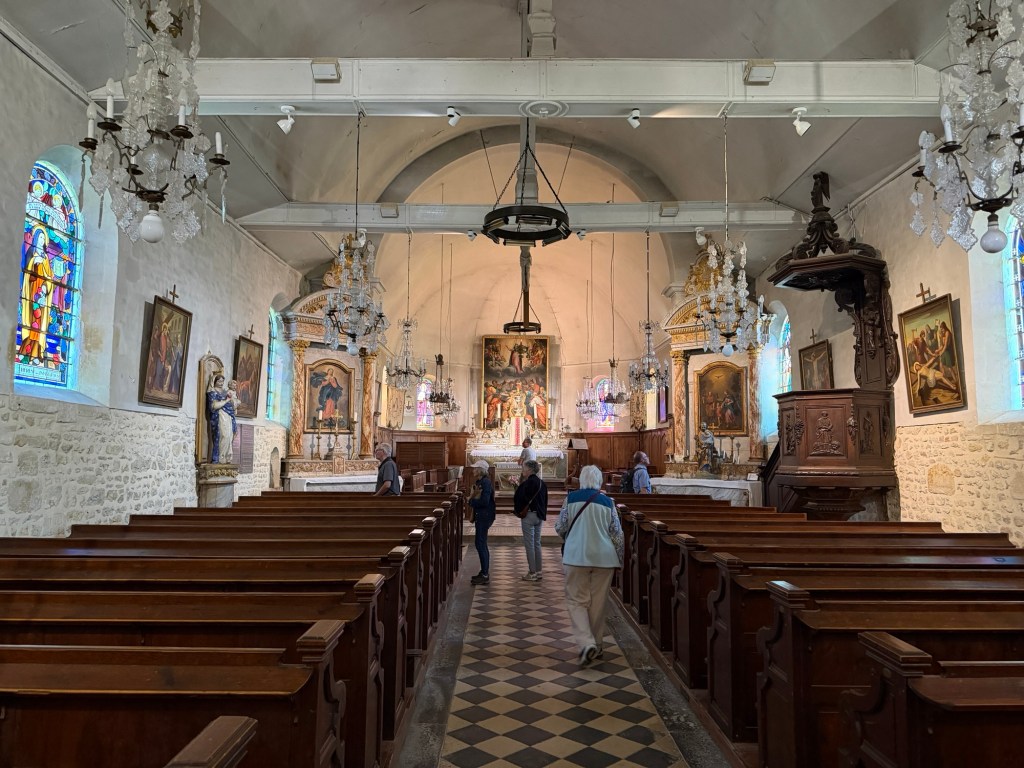
Of course, we explored on the way. Beuvron-en-Auge is one of the designated “Les Plus Beau Villages de France,” rural communities of at least 2000 residents featuring at least two protected national heritage sites. Villages who want tourism work hard to get onto this list.
Lovely building façades and architecture. Streets very clean.Much of the décor is brightly painted ceramicsWhere are we again? The venue for this recurring show holds hundreds.Énglise St Martin, “Leave your worries outside, just enter with your soul.”Ornate decor both inside and outside
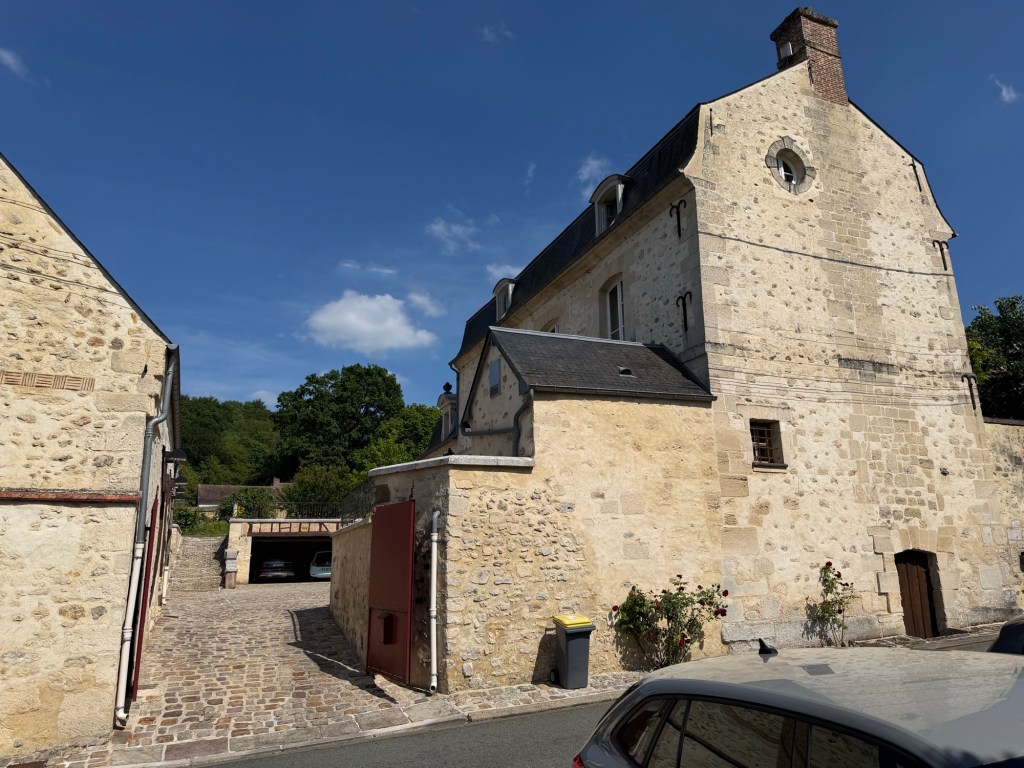
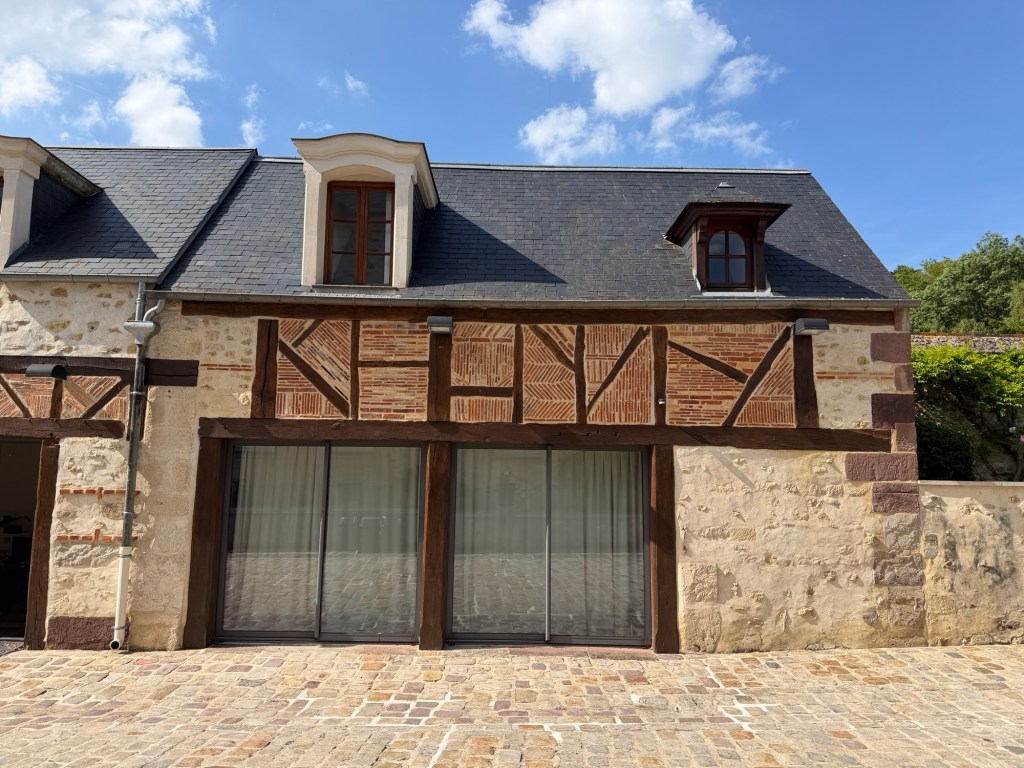
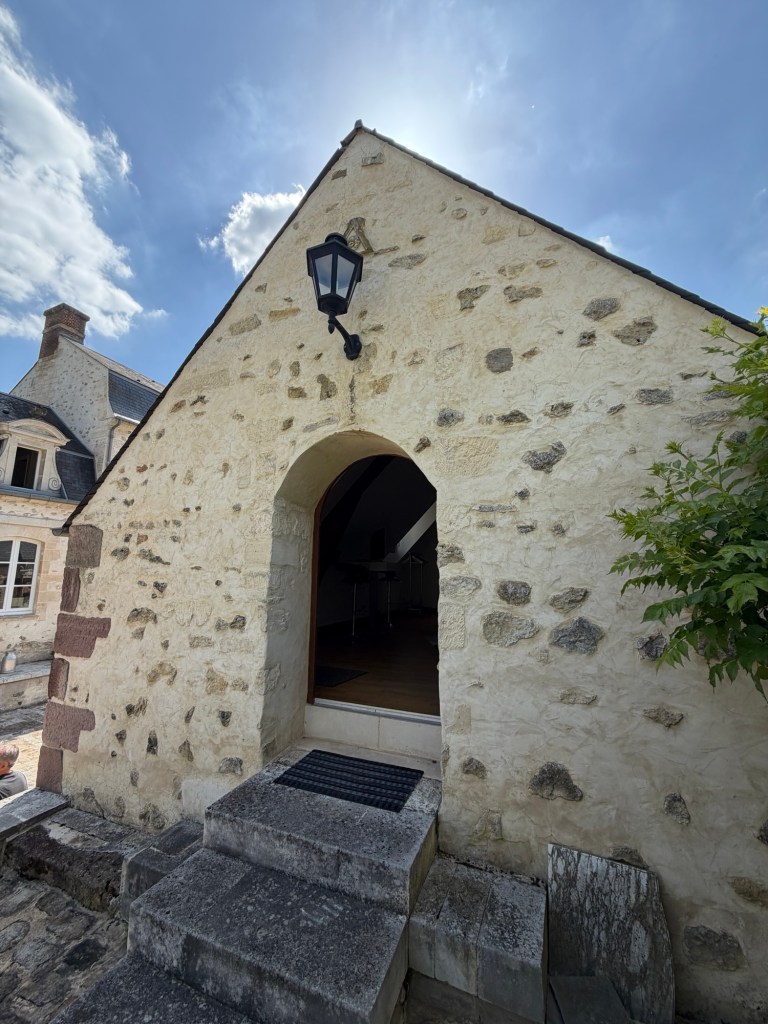
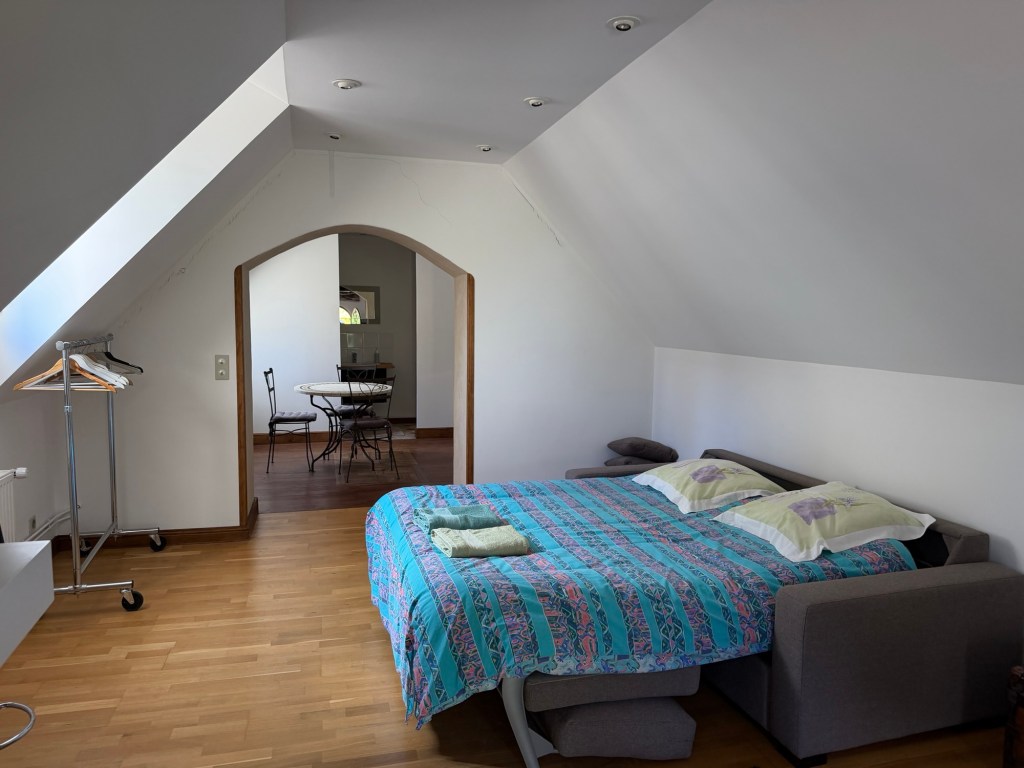
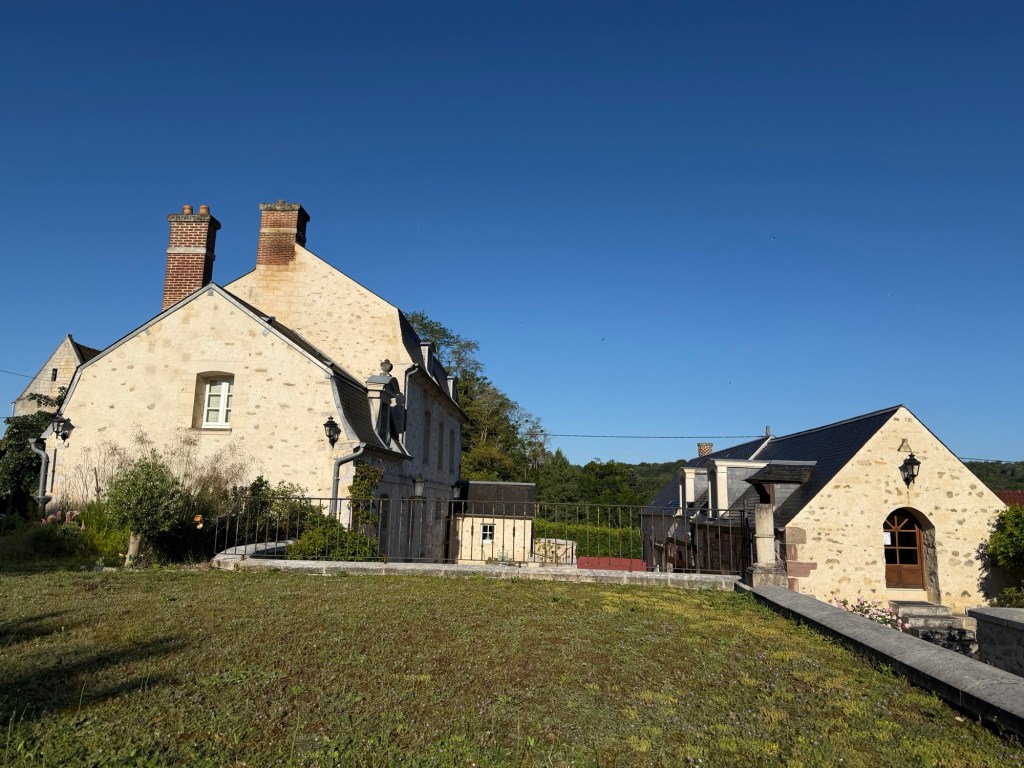
Then off to Verderonne. The AirBnB where we stayed for the next five nights was an old rectory with a converted stable. The beautiful garden provided much of our breakfasts and dinners. The first dinner was a complex, vegetarian delight. We stayed in the upper floors of the stable, perhaps formerly the hayloft? which was converted into a spacious studio apartment.
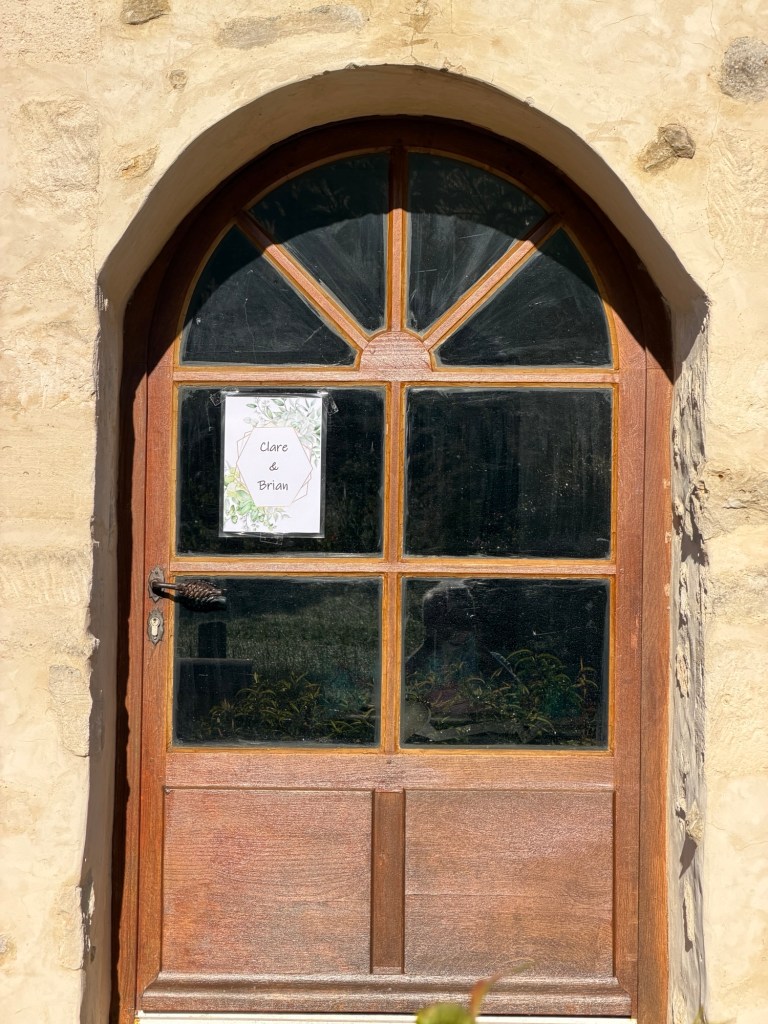
The AirBnB, our room is to the left. Looking toward the converted stables. We were upstairs. Front door of our roomInside our apartment Everyone’s doors were labeled with their names.
Ten other guests of the wedding were staying here as well, in the larger separate building. At dinner, we met two of the witnesses for the wedding, Cindy, Aurélie’s best friend since childhood, and Nono, Simon’s friend from Belgium, who he met gaming on the internet 13 years ago. Cindy’s mom and sister were there as well. Her mom, Irene, is Aurélie’s godmother.
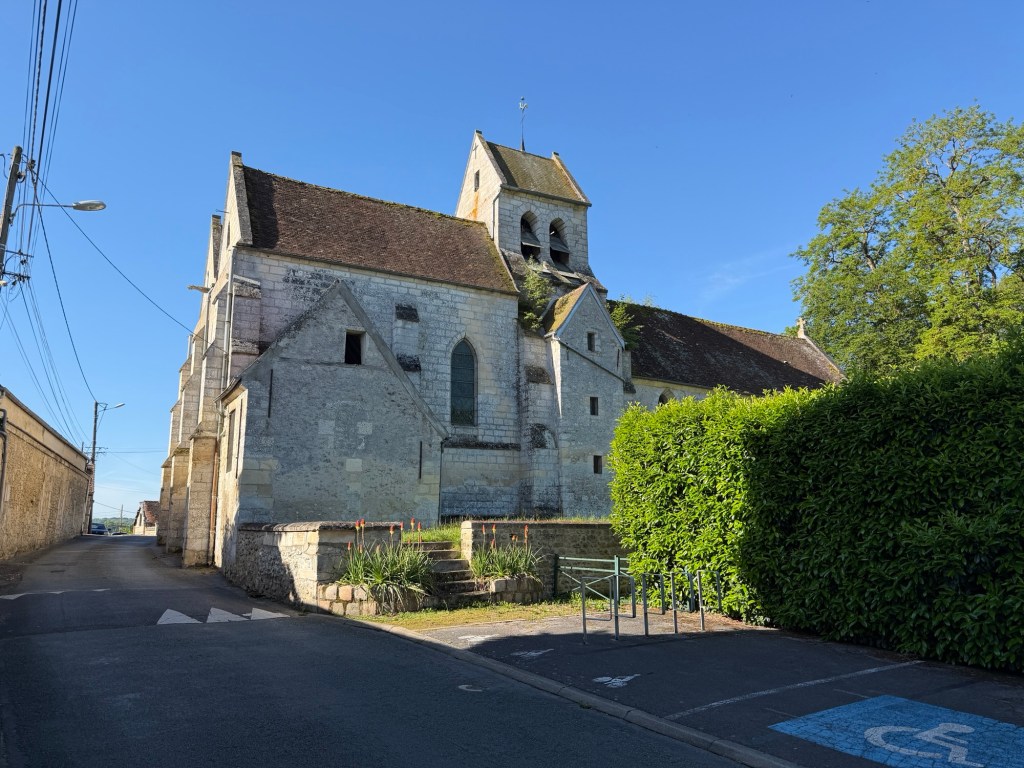
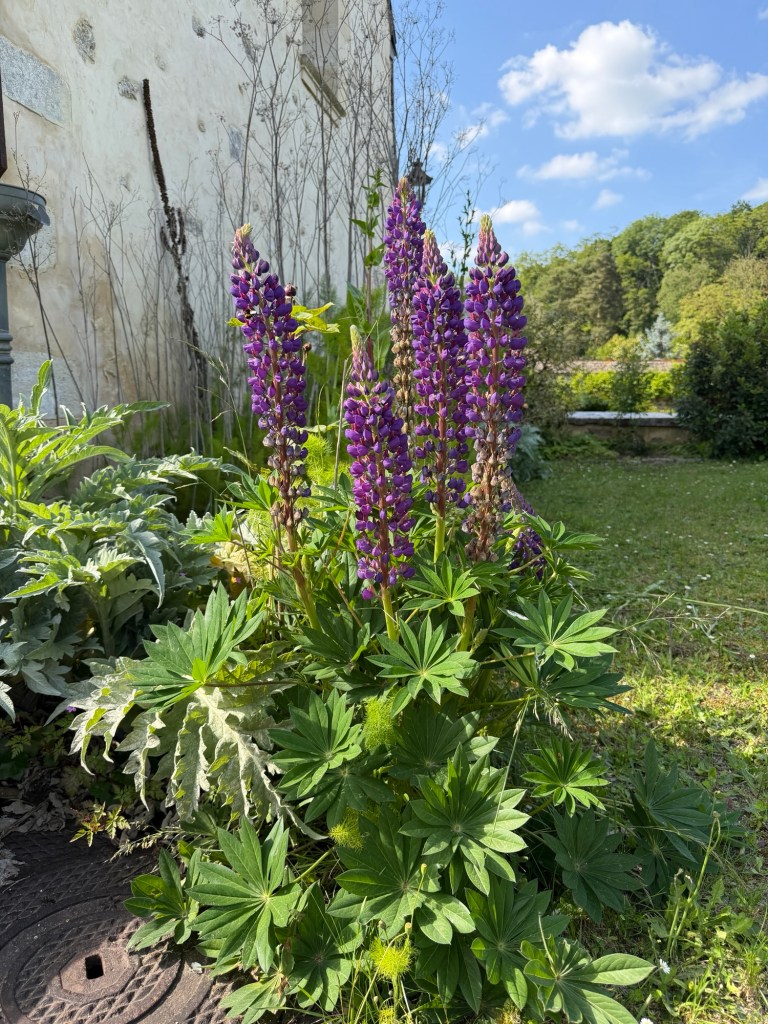
The buildings from the elevated garden behindThe closed church next door had bells that rang day and night.Beautiful flowers.
The owners of the AirBnB tied flowers to the napkins on the tables every time we ate there, adding beauty and a topic of conversation.
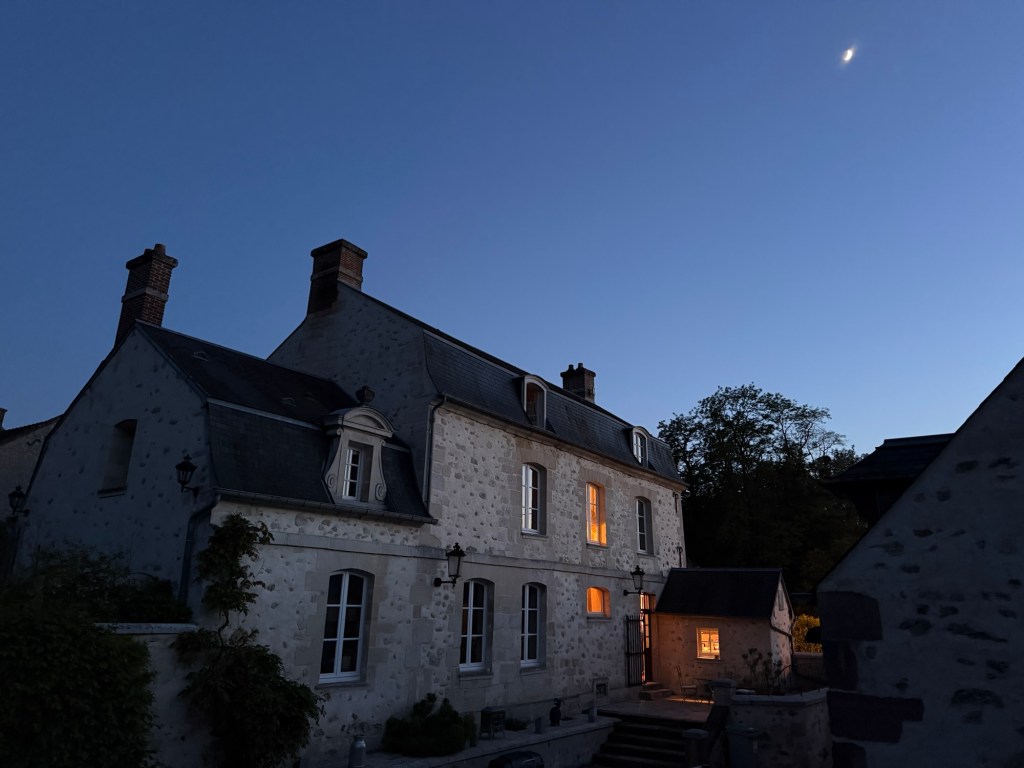
View from our place of moon over the main building.
Getting to Verderonne, near Paris, for the wedding is a long drive, so we cut it in half by spending one night in Caen — at a hotel. The only hotel in our northern France adventures. First, of course, we tidied up the AirBnB, meeting the owner when we were ready to leave. He talked about the tidal bore we tried to see the previous two nights — when it is very large, he and his friends like to ride the wave along the Sélune River from a long way. This didn’t happen when we were there.
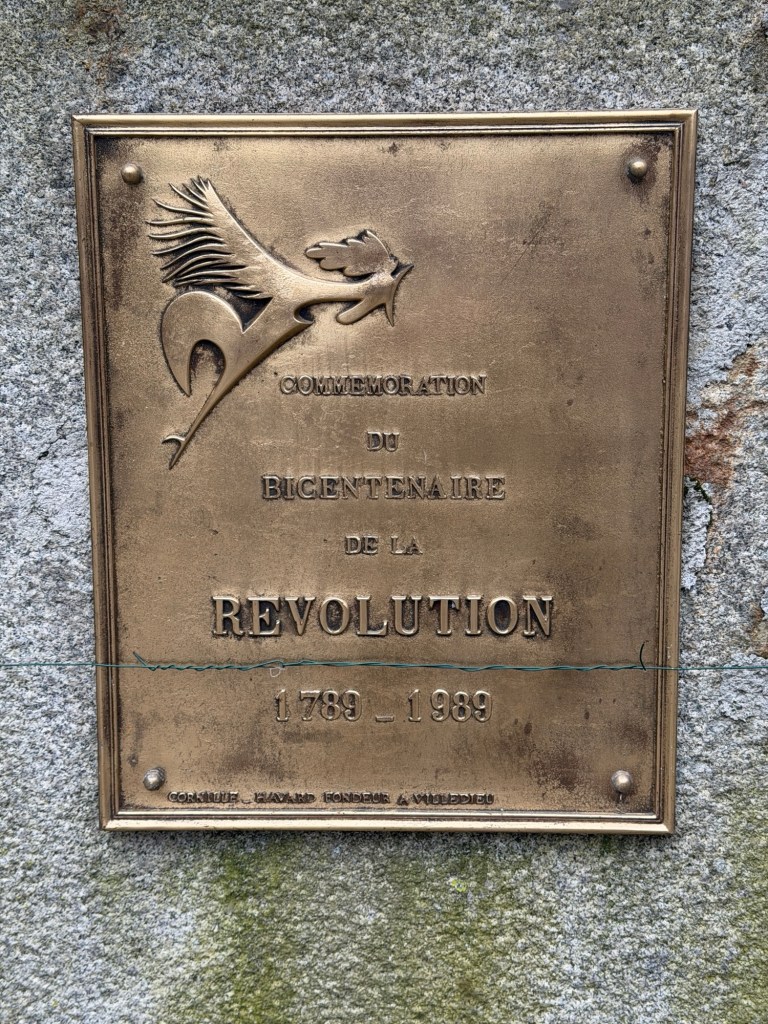
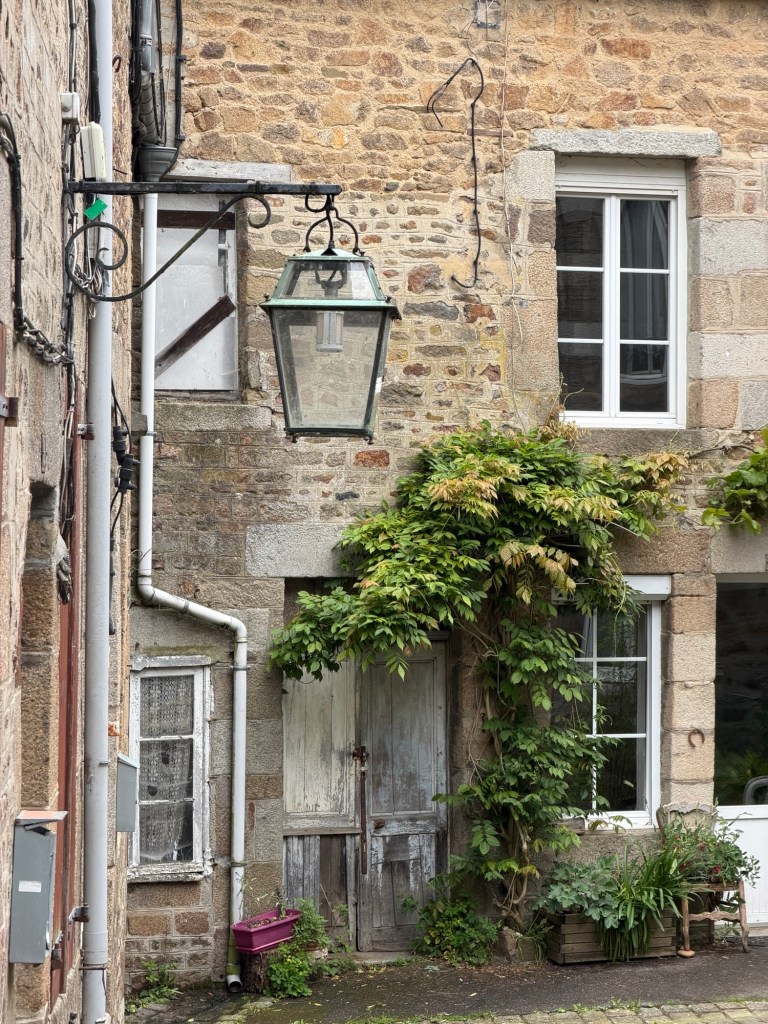
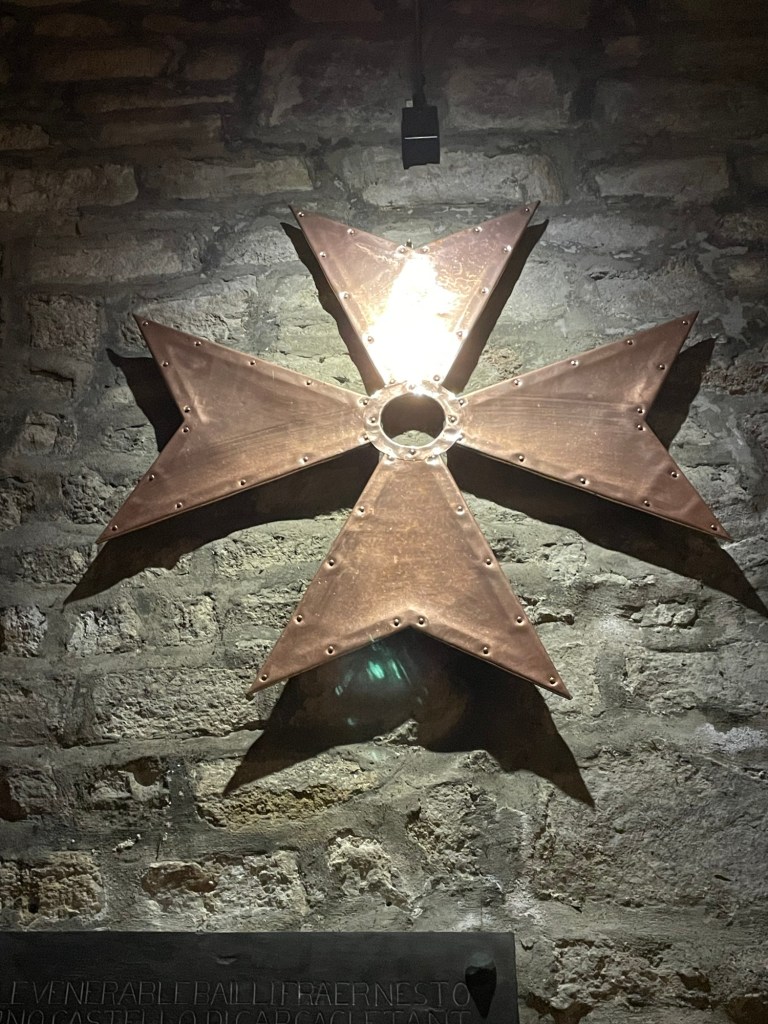
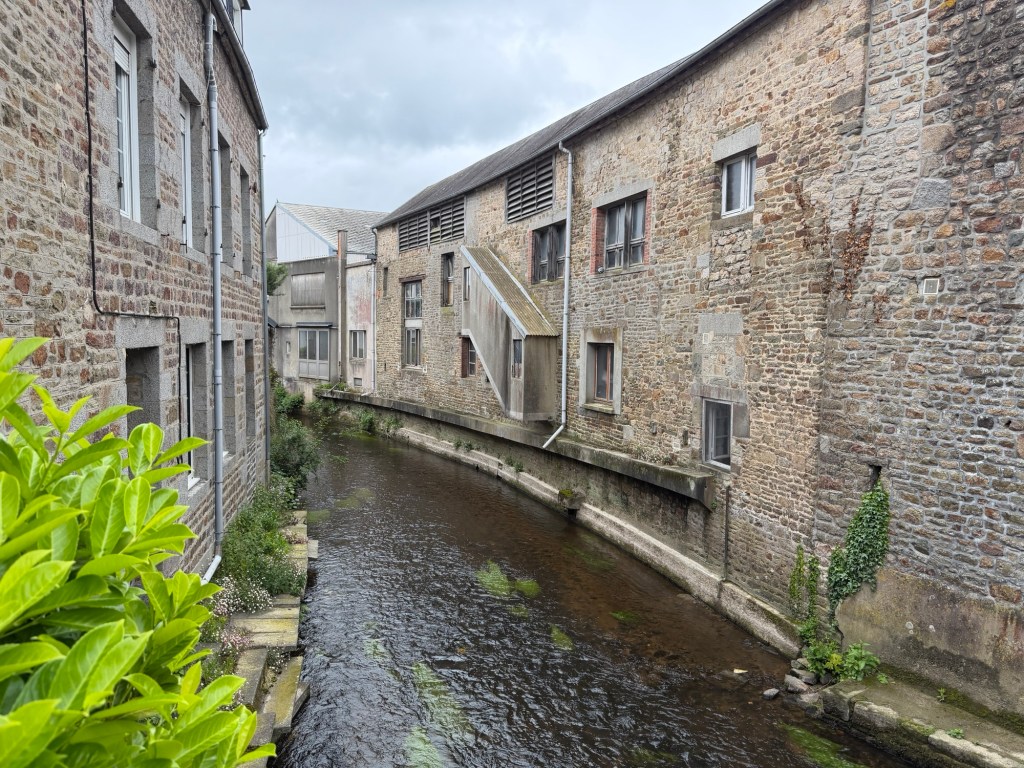
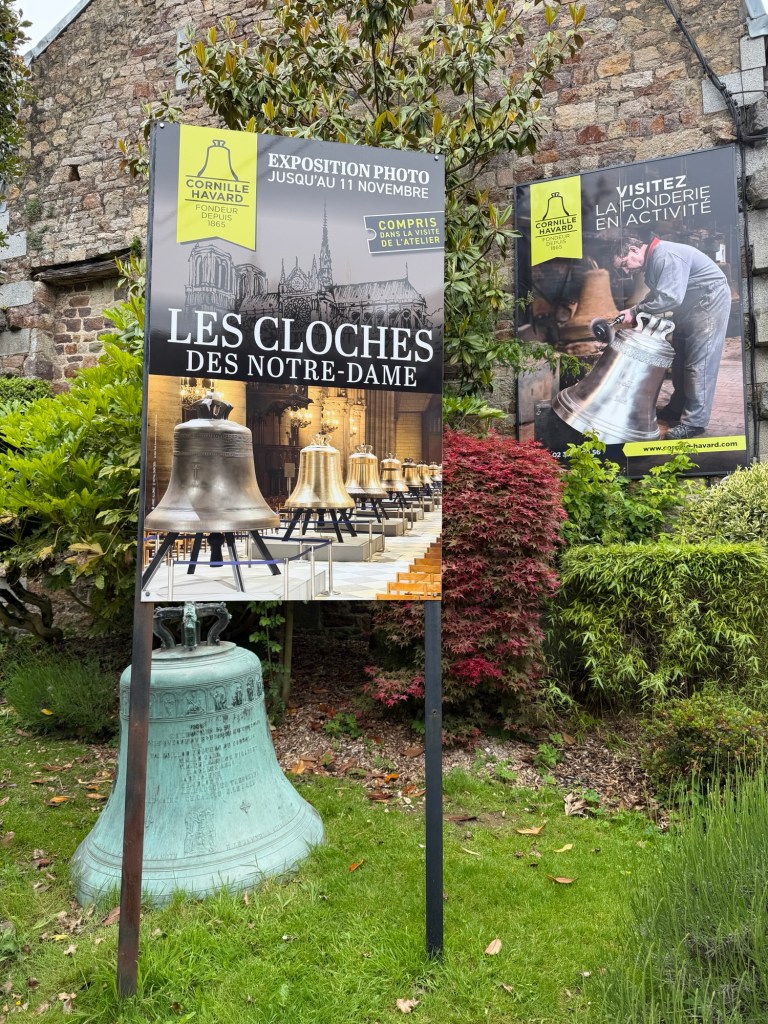
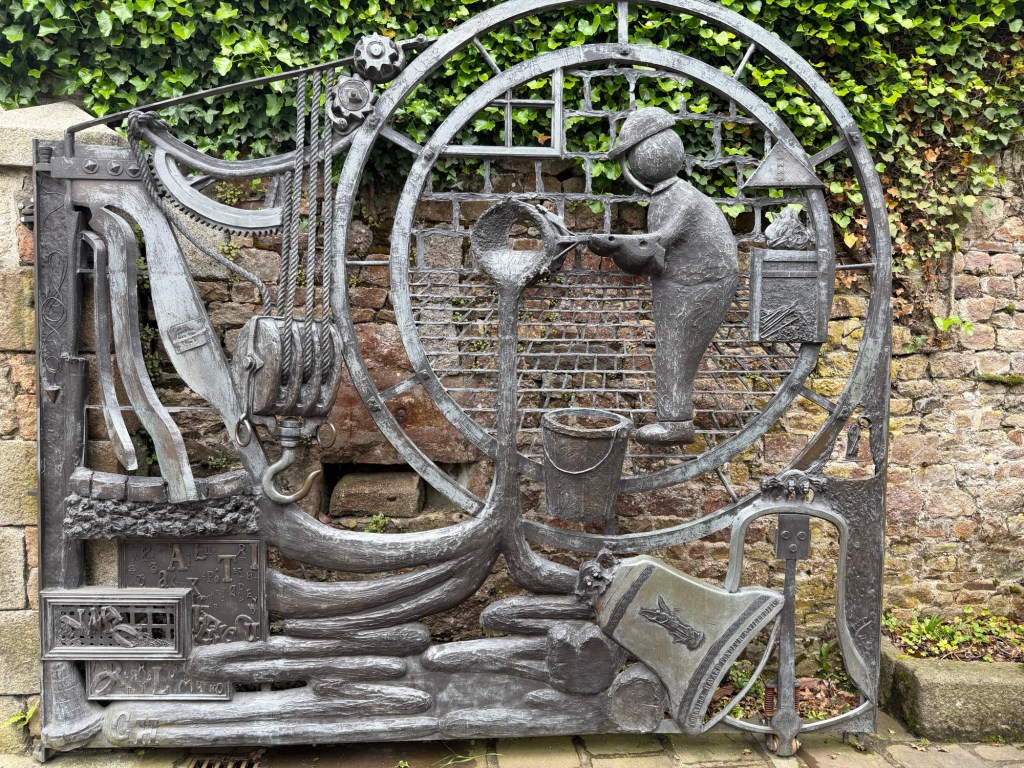
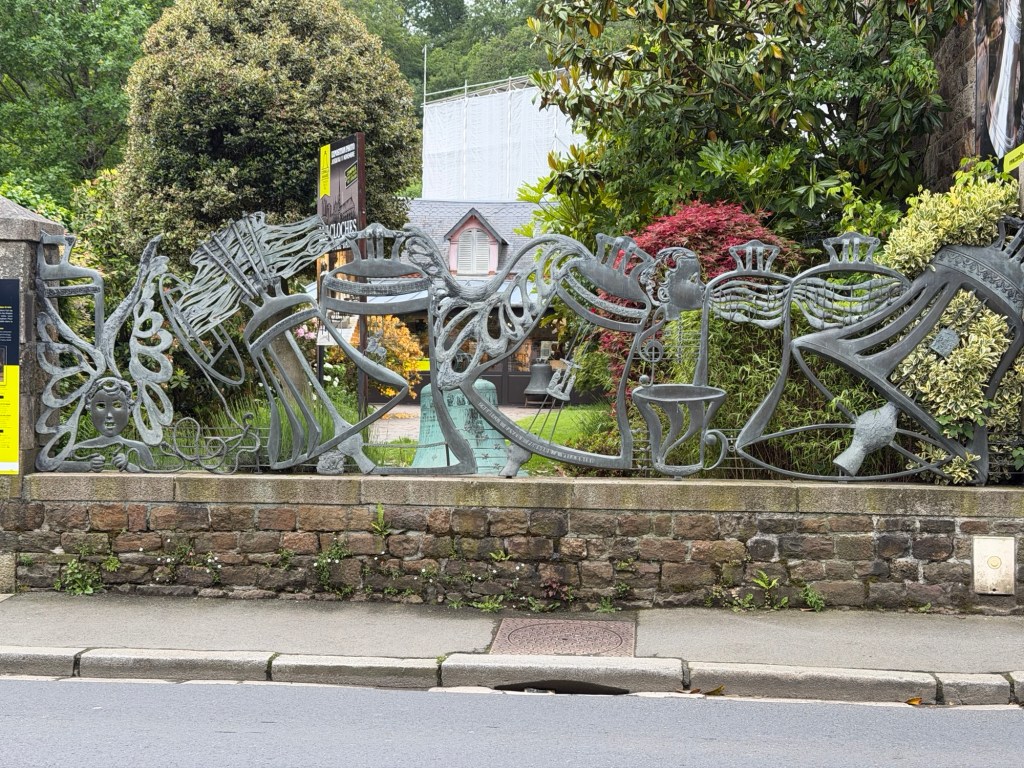
Our first stop was a small village, Villedieu-Les-Poêles, which was a center for copper smelting and other metal works. Being one of only three places in France that still makes bells, the factory is busy replacing the bells that were damaged in the 2019 fire at the Notre Dame Cathedral in Paris. We wandered around the village, enjoying many metal sculptures and views.
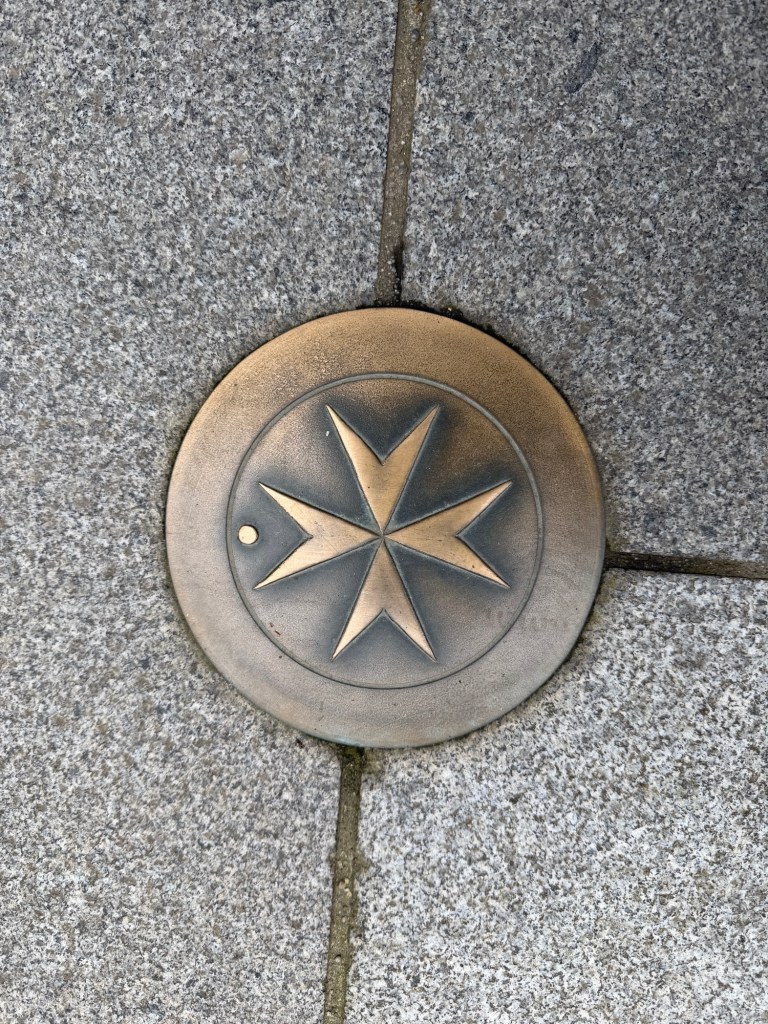
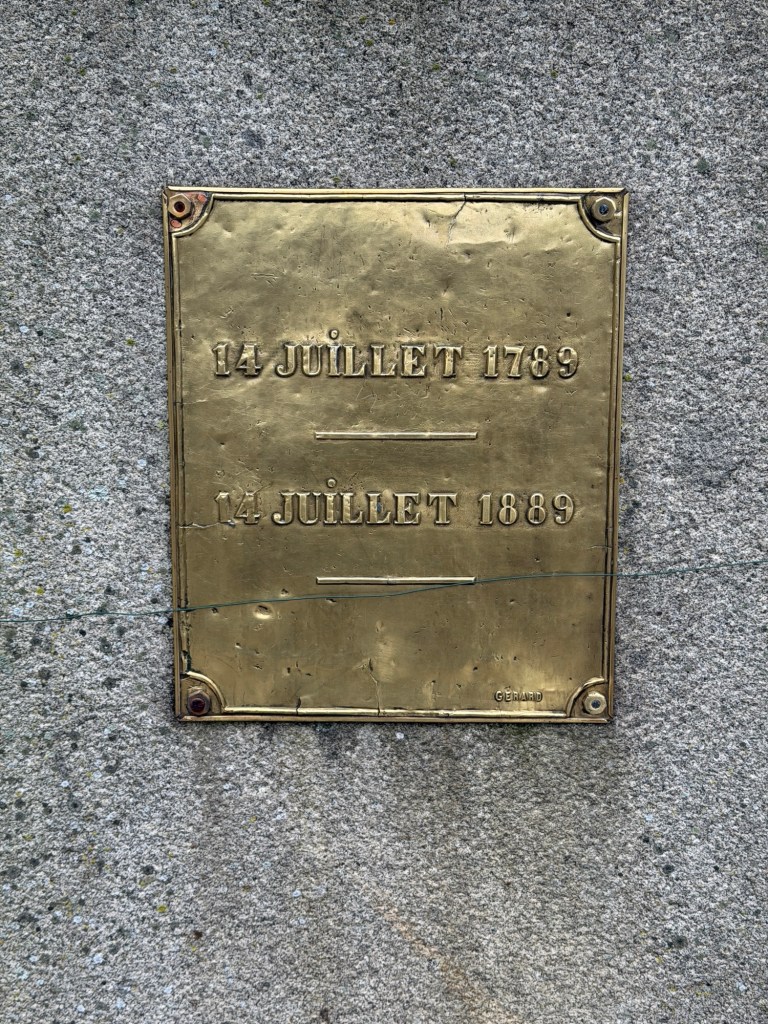
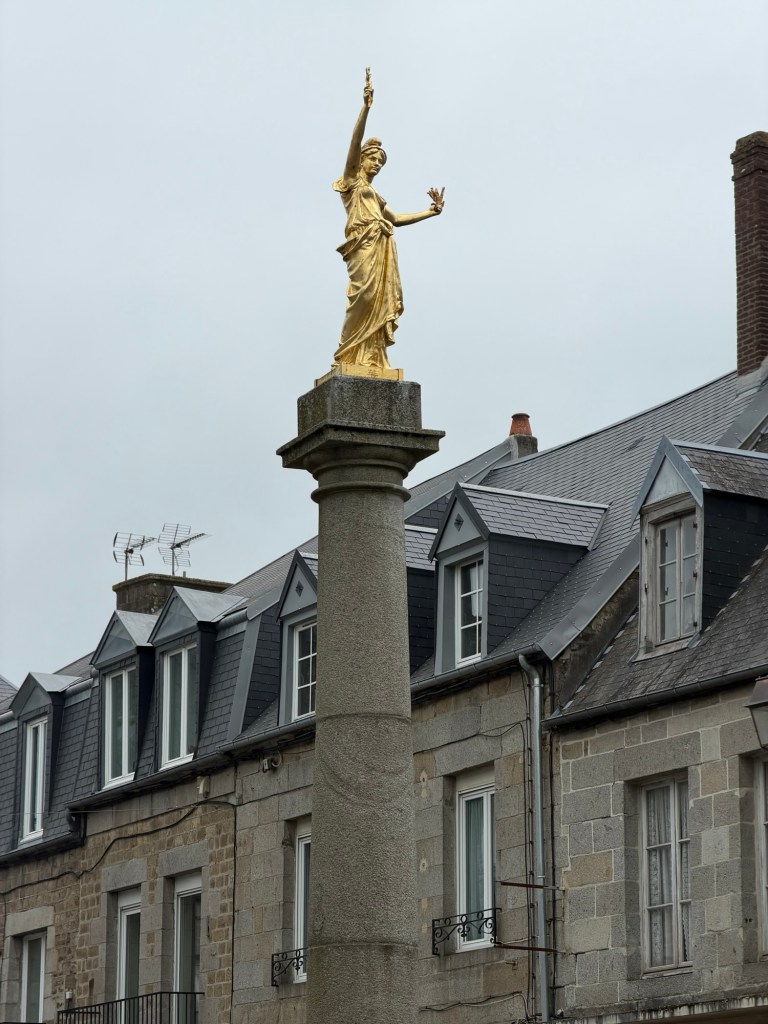
Tour indicator image on sidewalkGolden statue of Marianne with placques commemorating the anniversaries of the French Revolution.
Marianne is the national personification of the French Republic, symbolizing the core values of liberty, equality, fraternity, and reason.
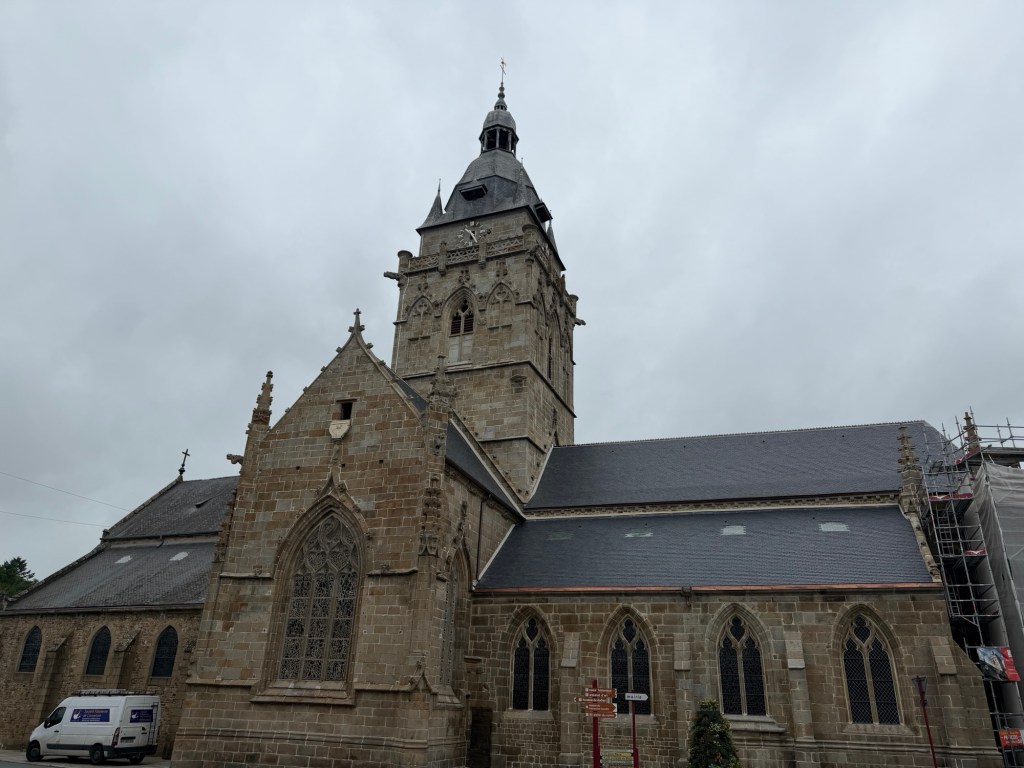
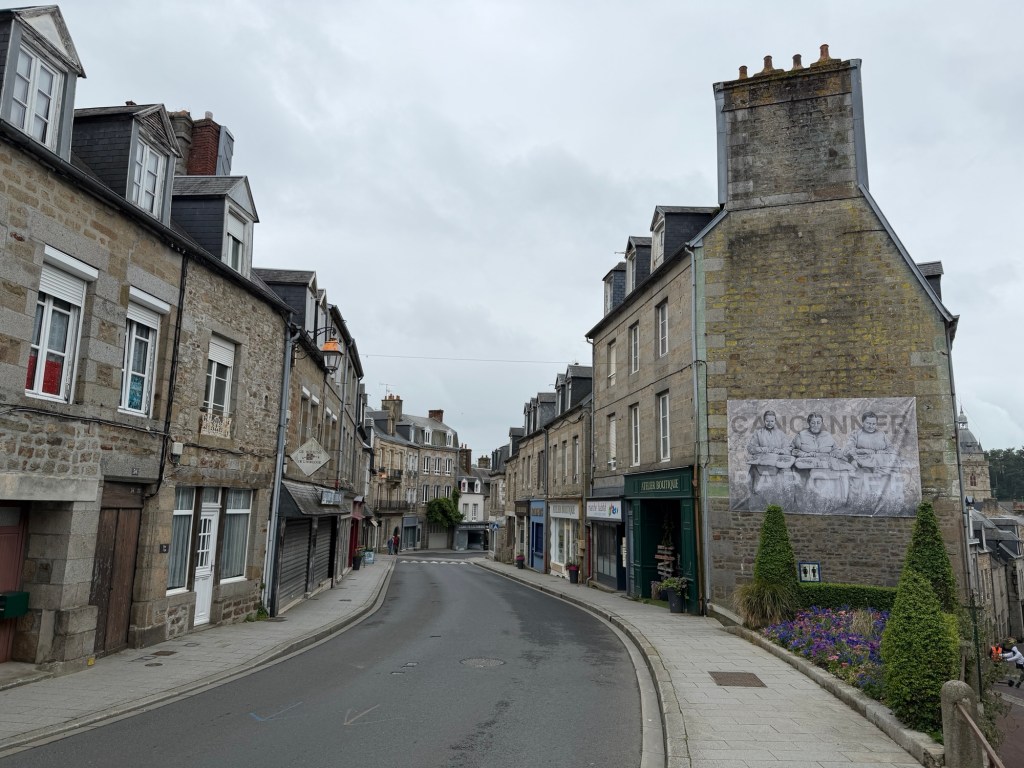
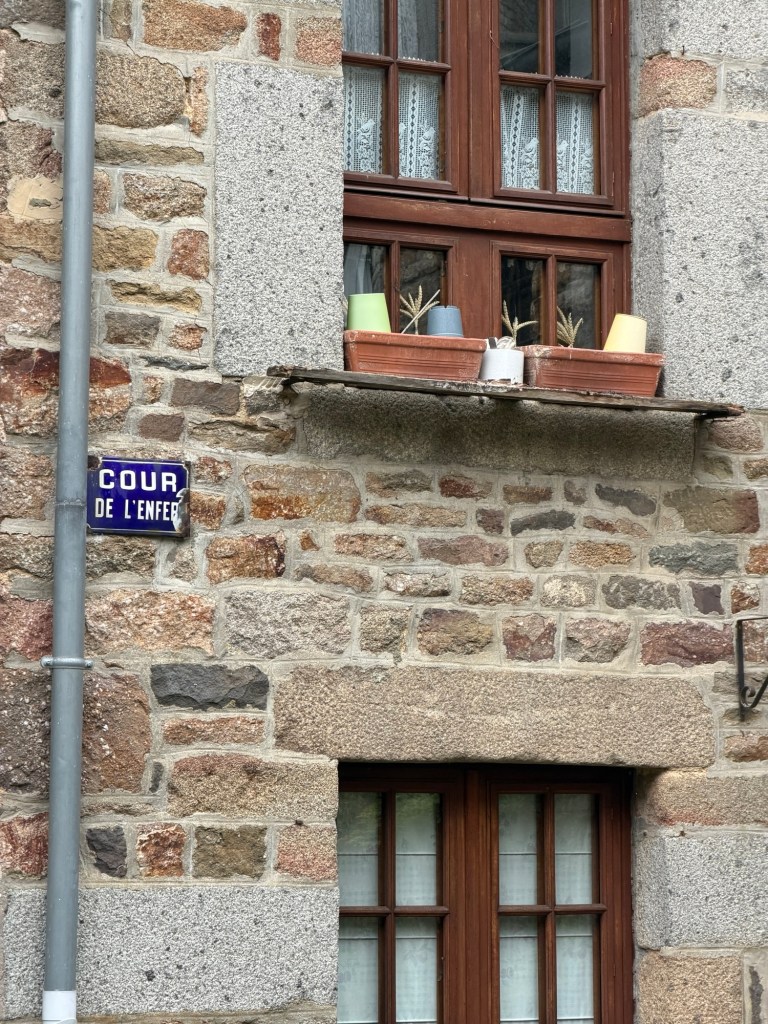
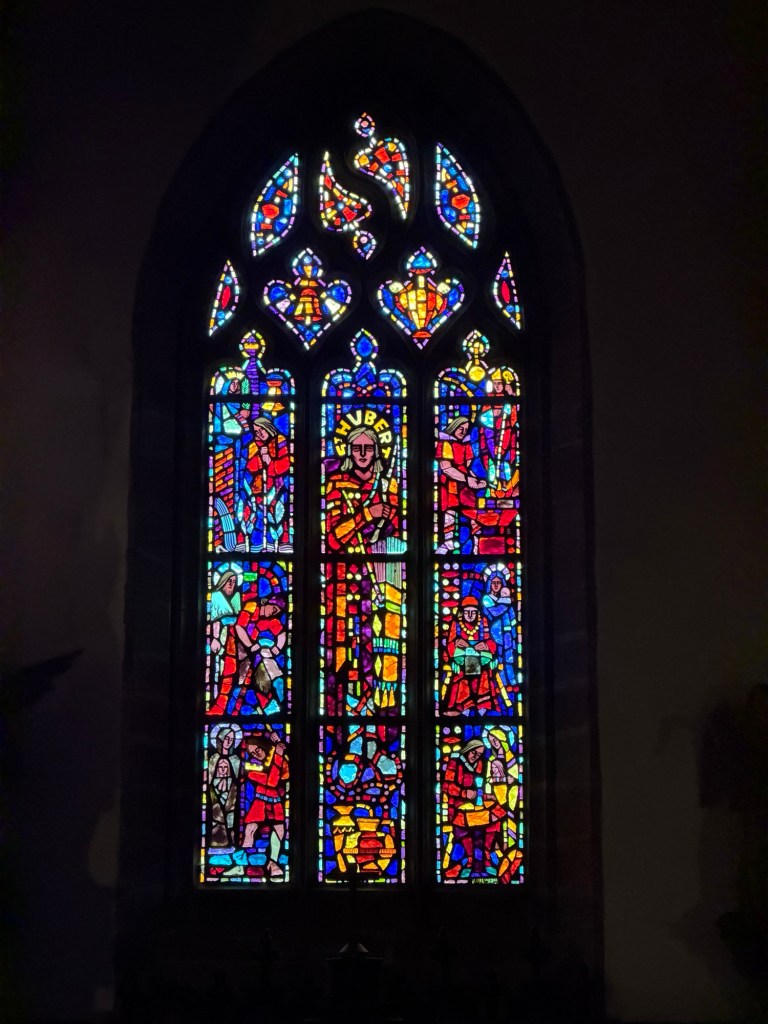
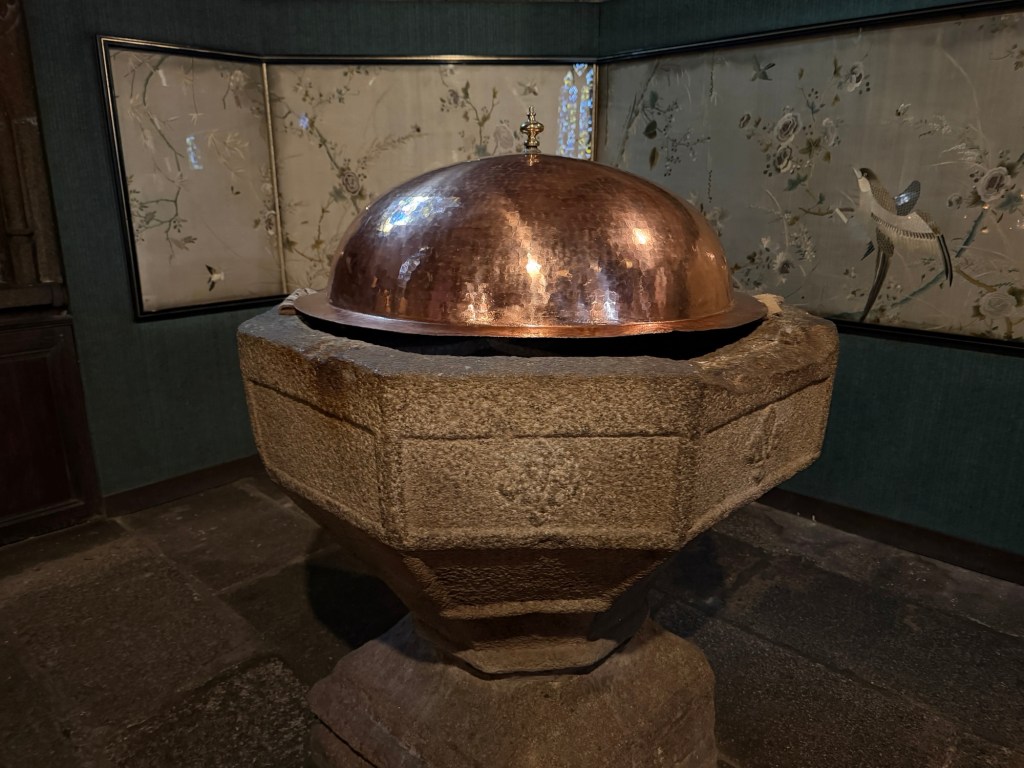
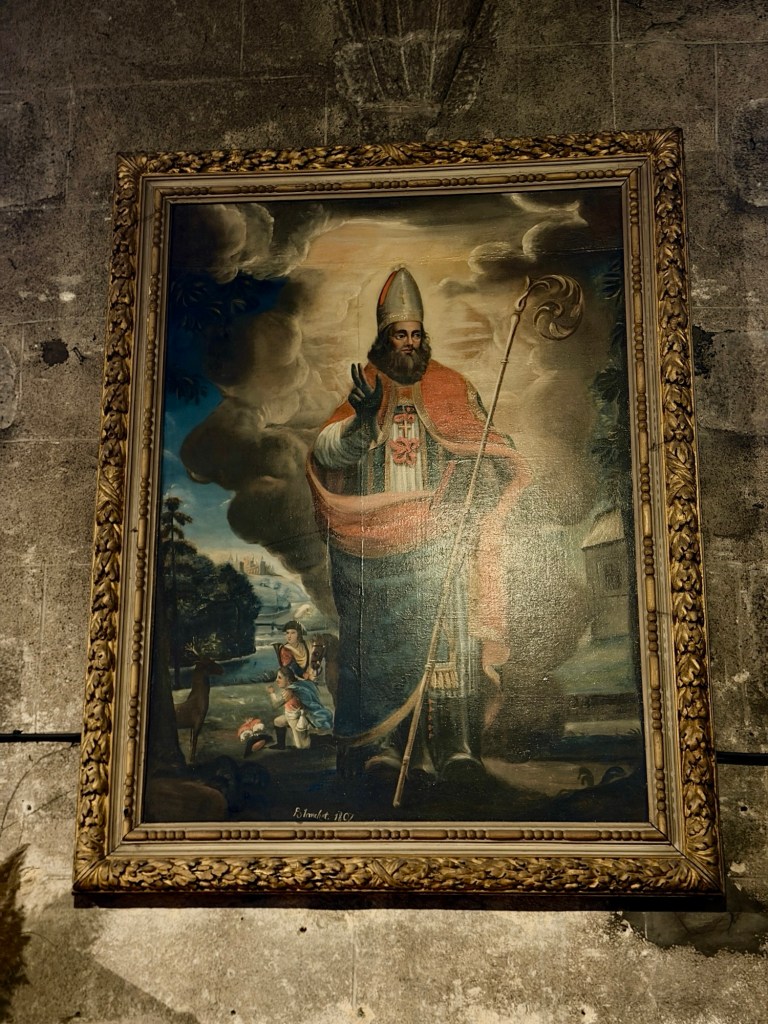
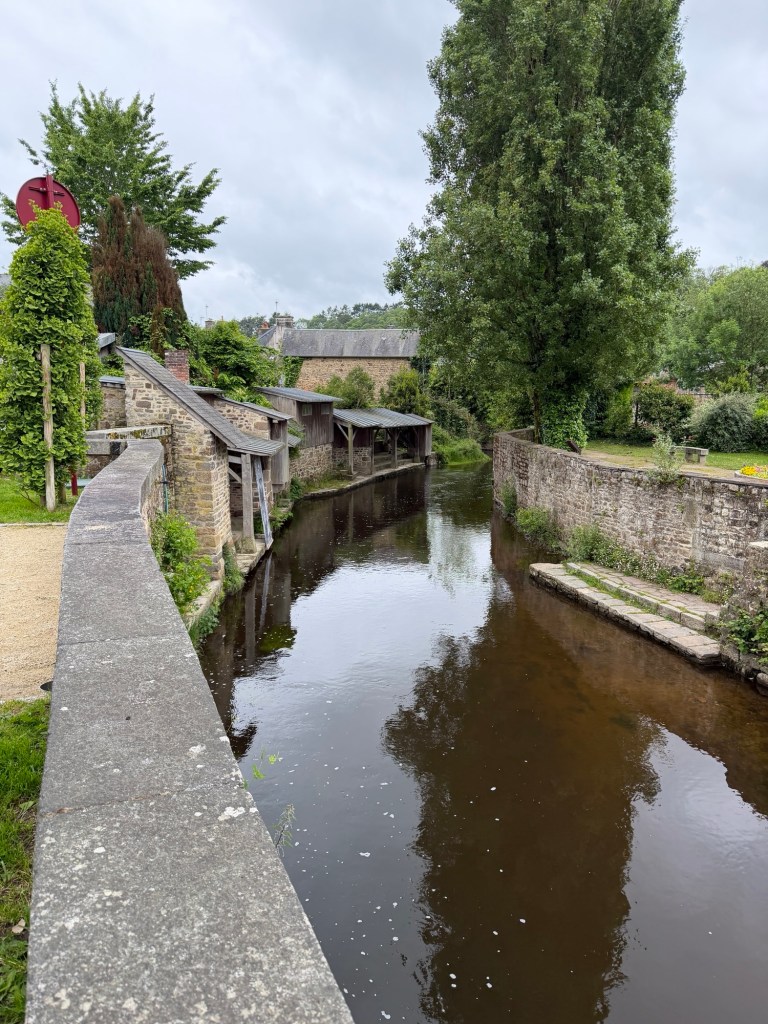
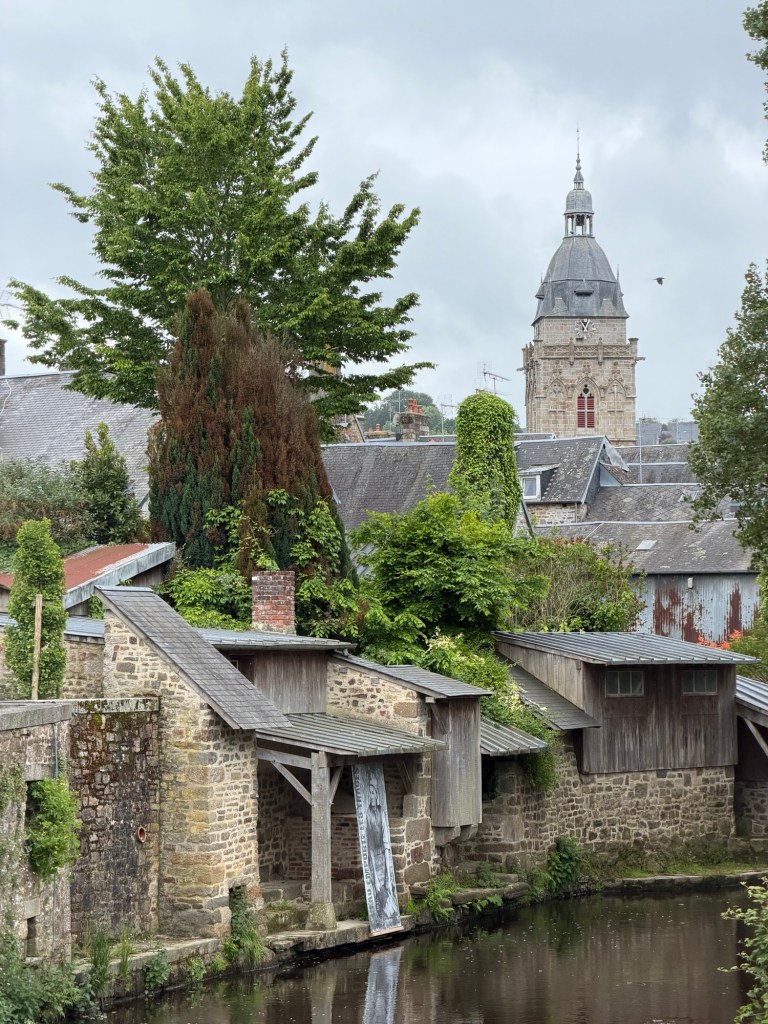
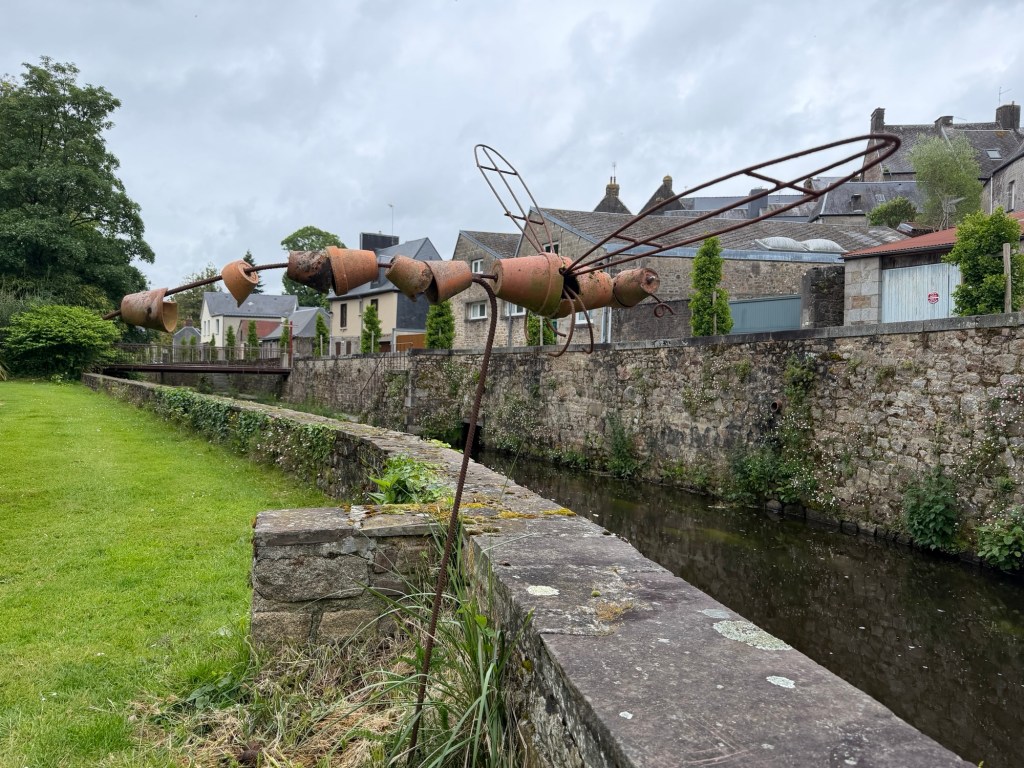
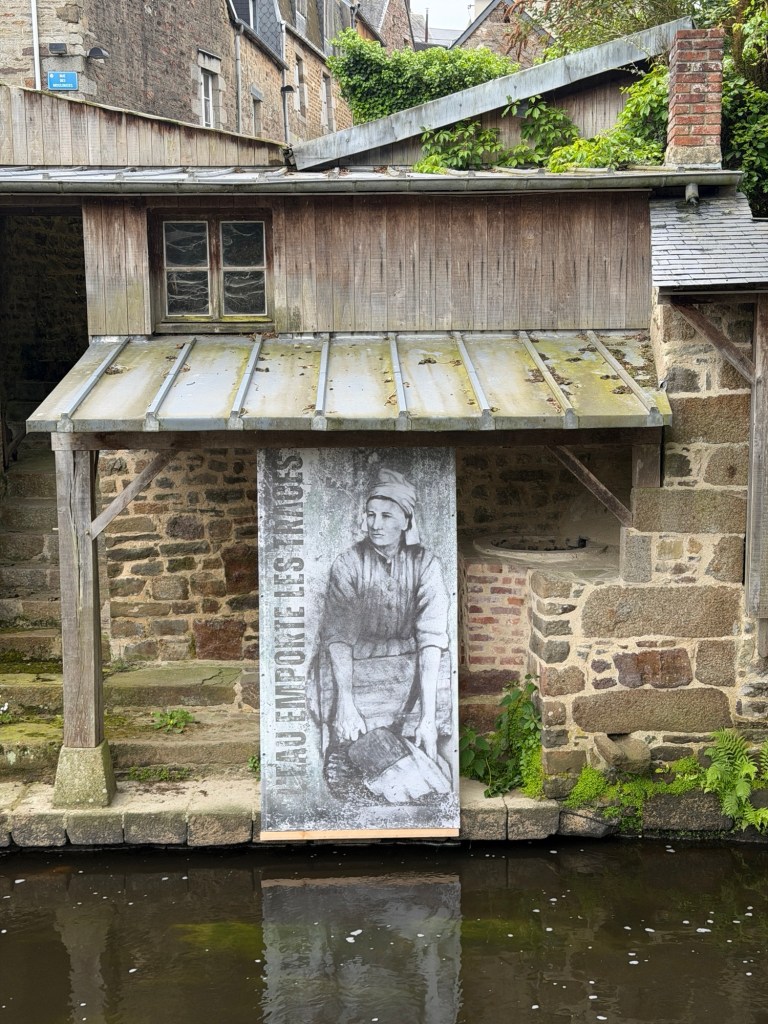
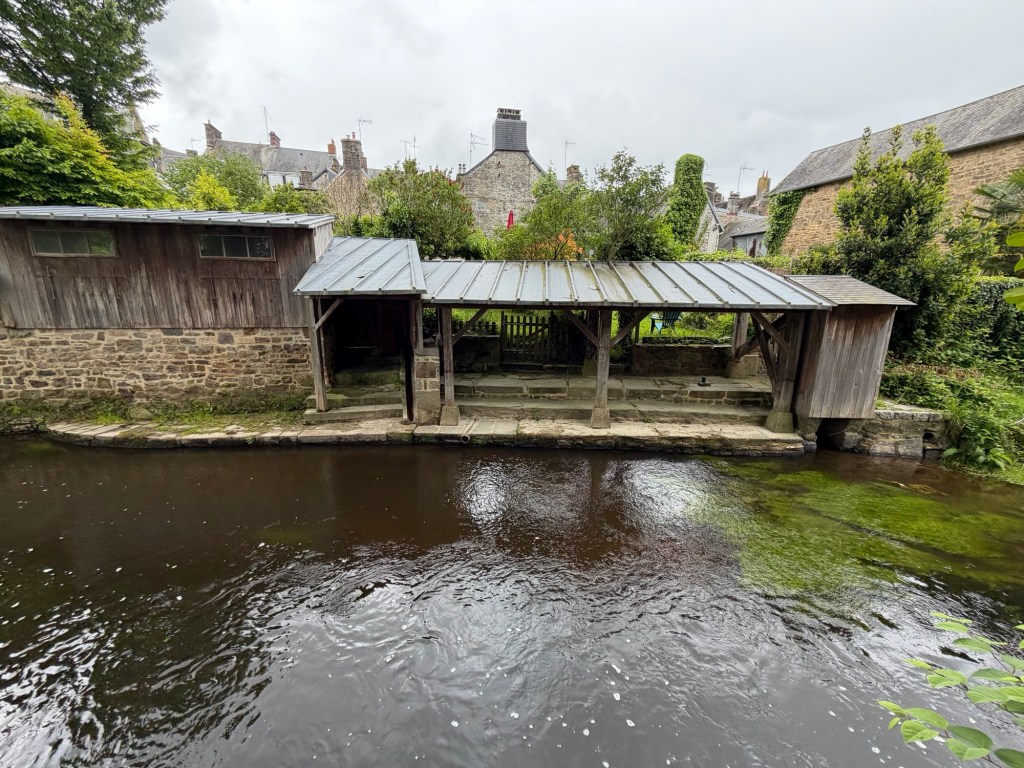
Pictures in the courtyard of hell, a mural of a worker making a copper bowl, and a pretty view of a Main StreetLocal church (Notre Dame), which was open so we went in. Portrayals of Saint Hubert as he is a patron saint of hunters, mathematicians, opticians and metalworkers. Note the many items made of copper.This one bugs me. 😉Washer women did laundry in the canalBell factory and lots of metal sculptures
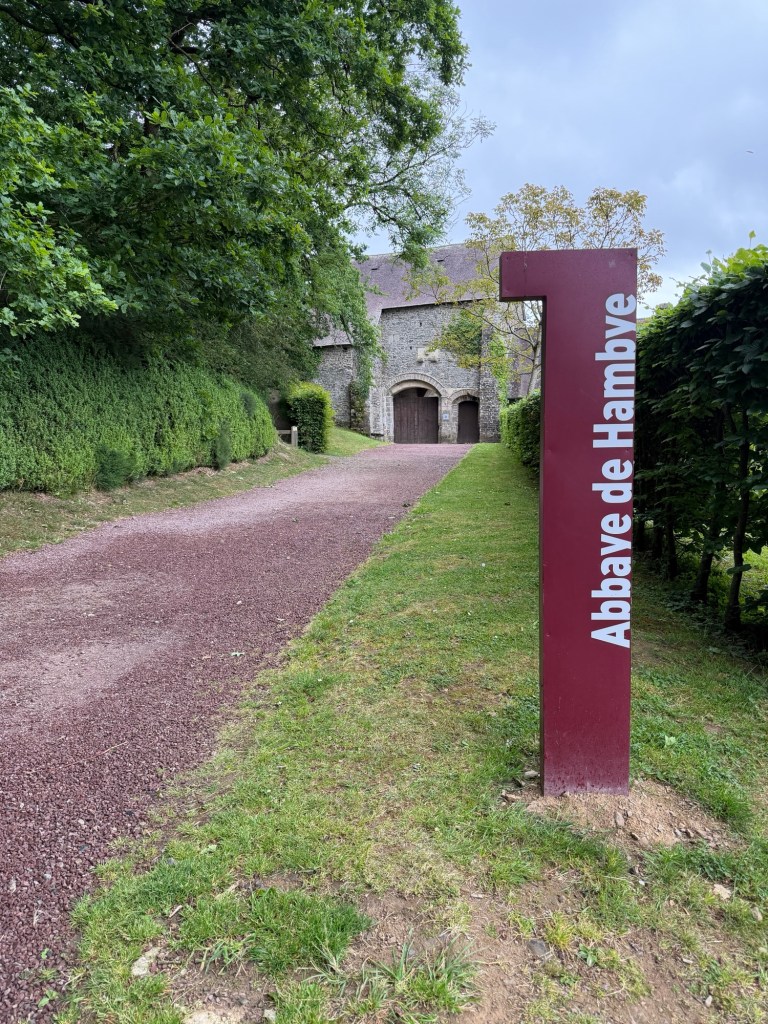
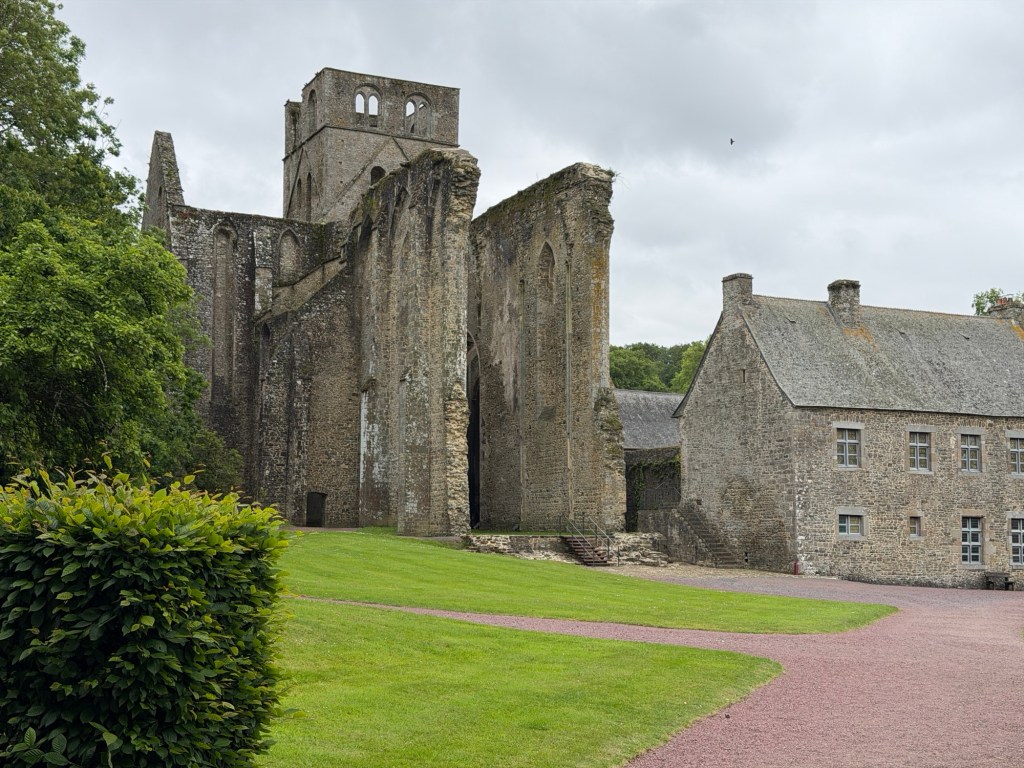
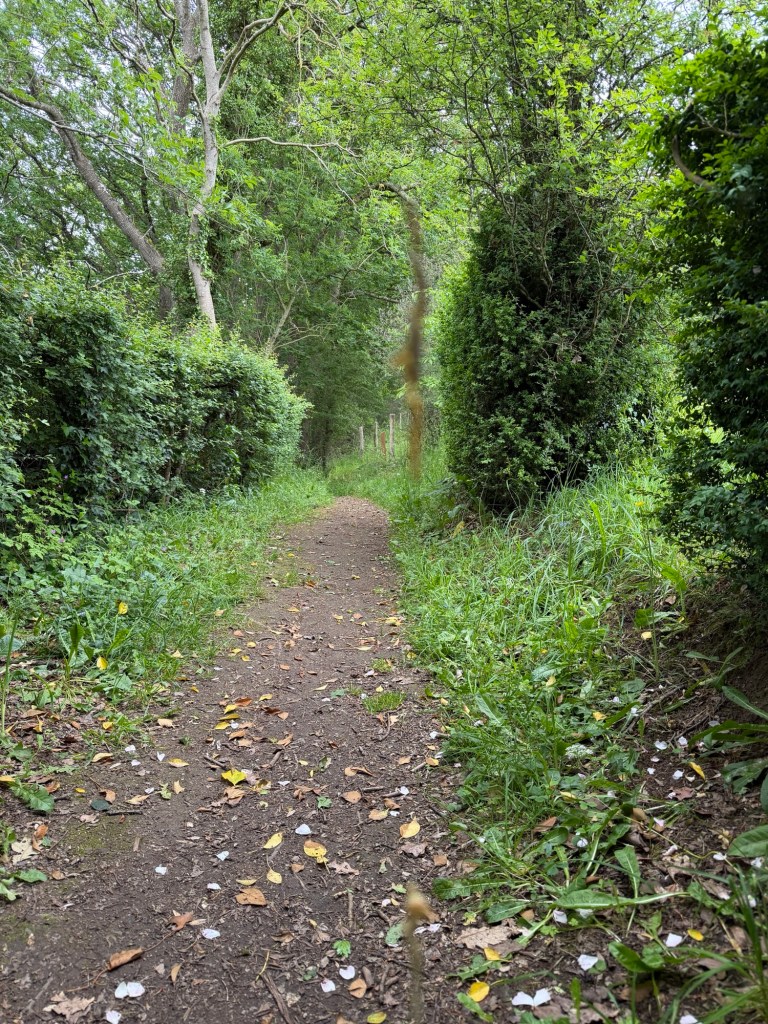
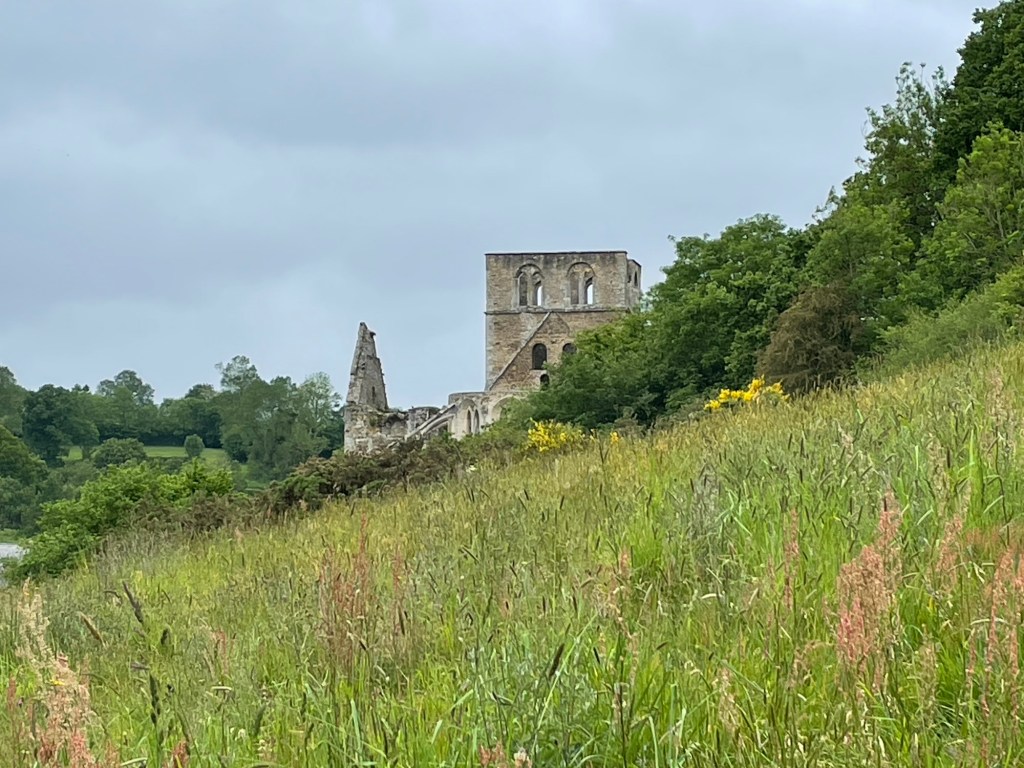
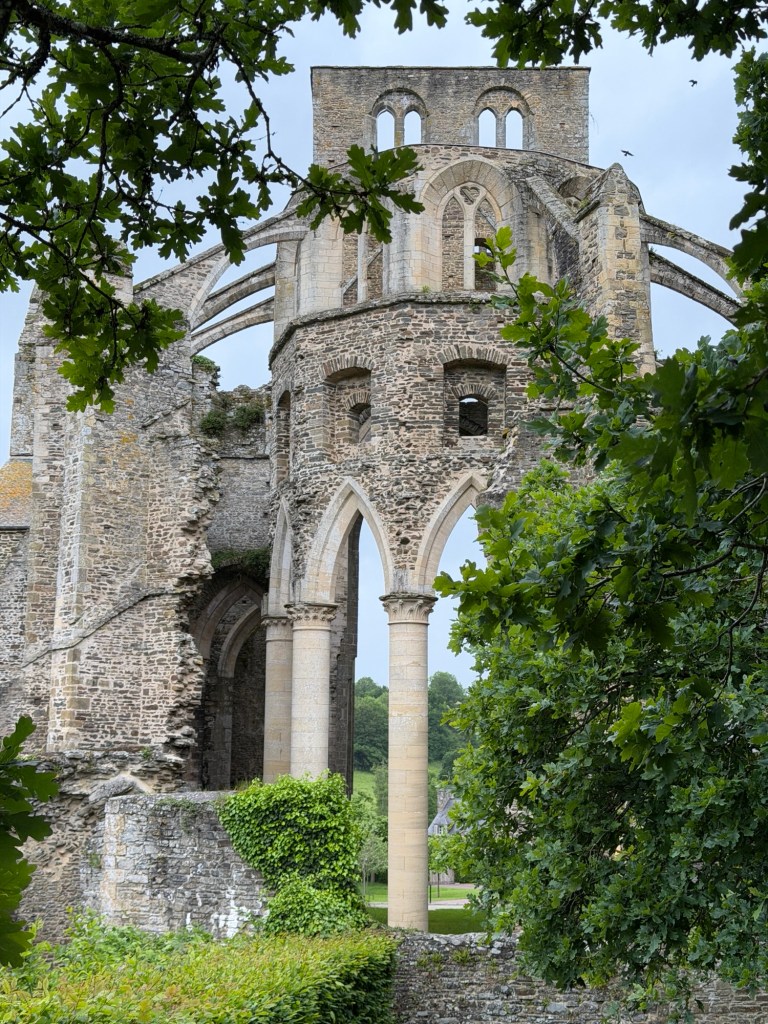
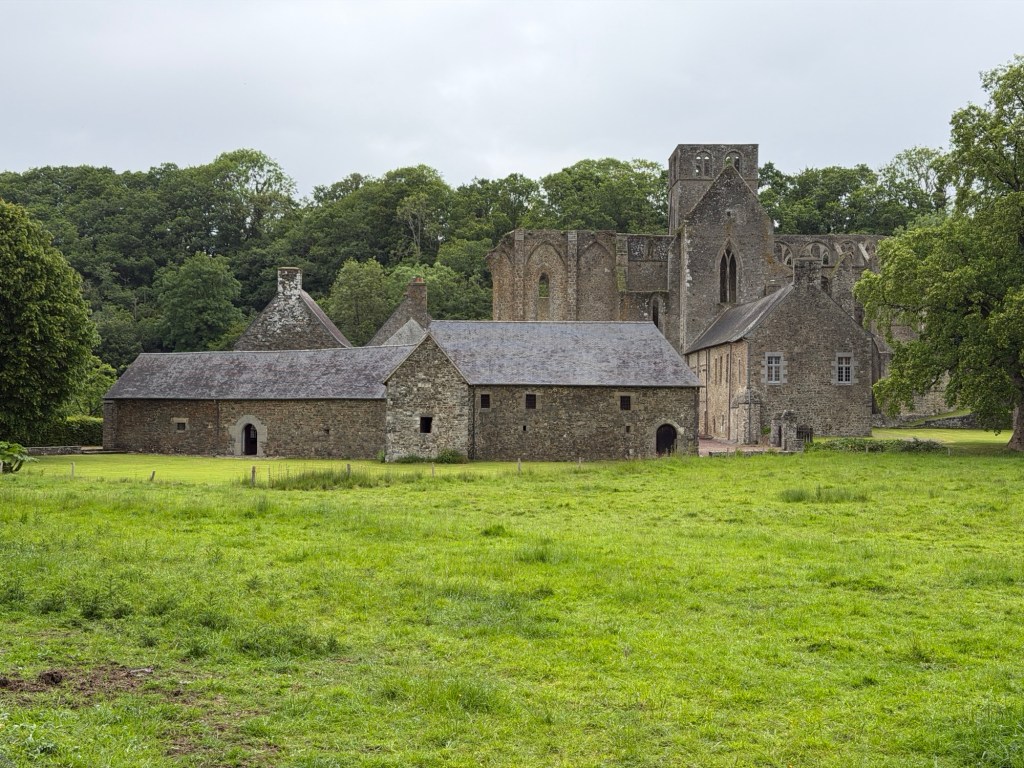
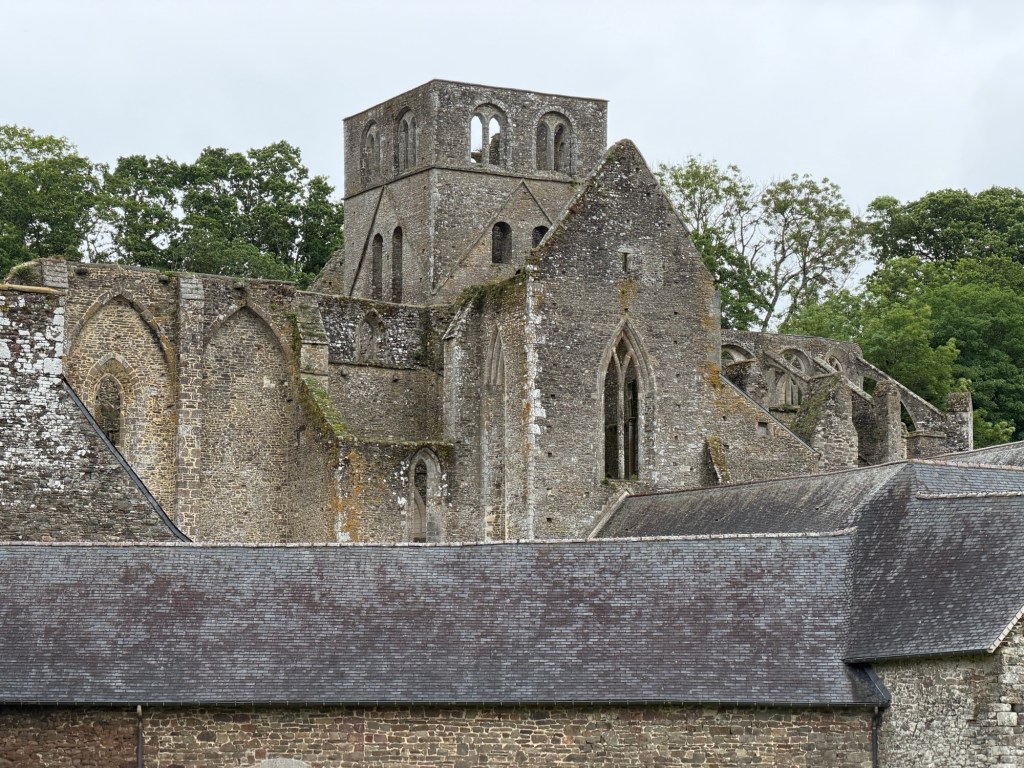
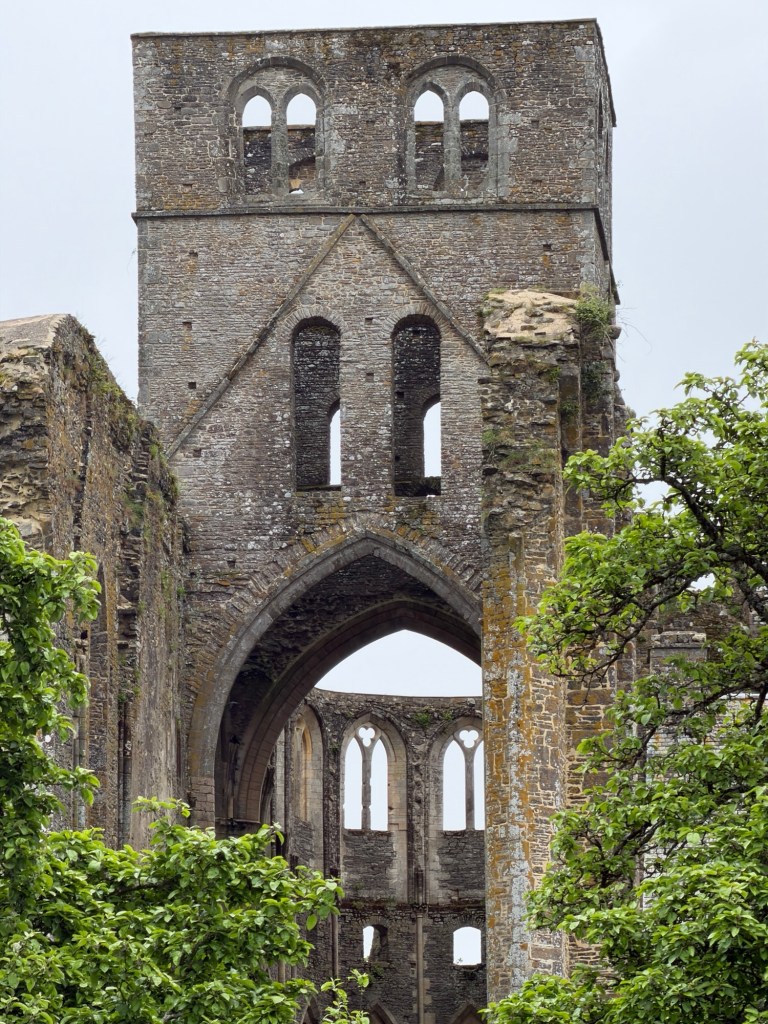
Our next stop was the Abbaye de Hambye, founded in 1145 but partially destroyed by revolutionaries at the beginning of the French Revolution. Sold in 1790, the Abby was partially dismantled, used as a stone quarry. We arrived at 11:30, willing to pay the entrance fee, but were told that it was closed from 12 until 2. They would not let us in. Undaunted, we followed a trail through the forest that circled the Abbey, in search of views of the dismantled buildings.
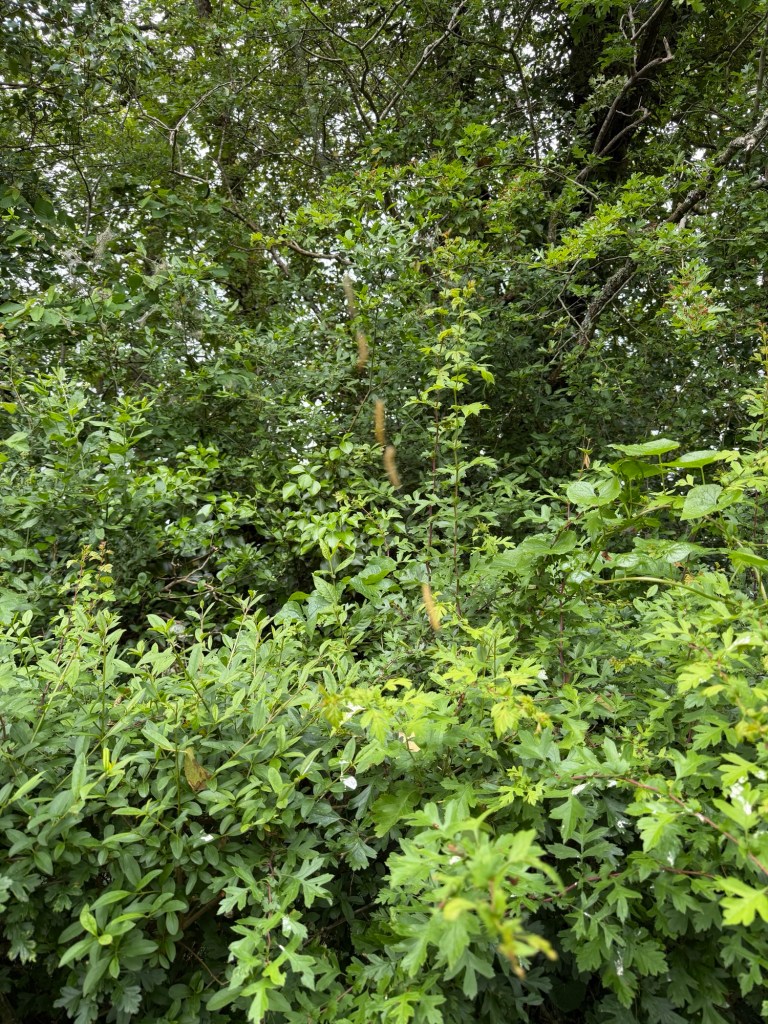
In the forest, Joëlle stopped suddenly to alert us to thin strings, like spider webs, with small beige things along them. These processionary caterpillars are poisonous to humans and can kill small pets! Brian tried for a long time to get a picture of them, but what came out is rather blurry.
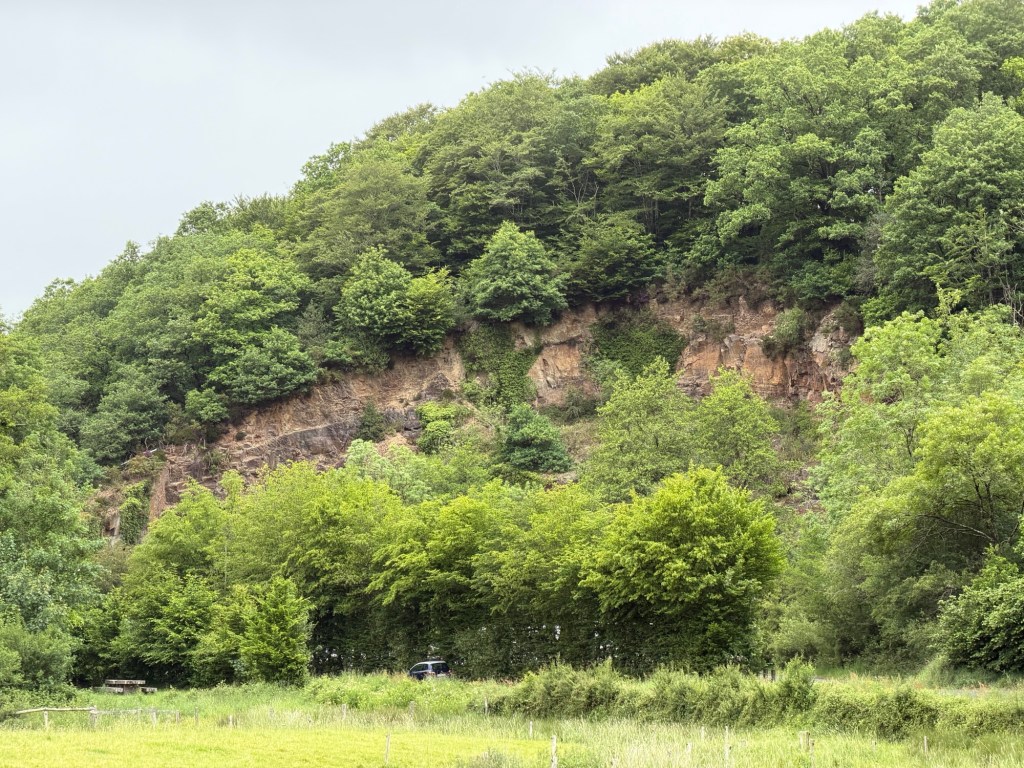
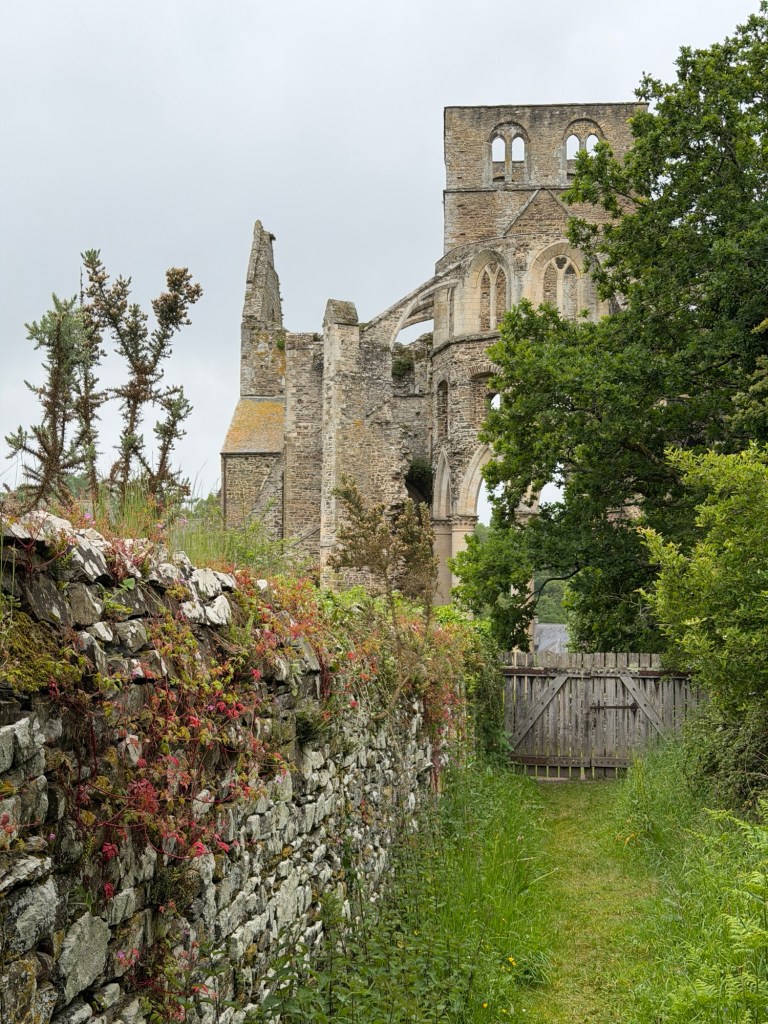
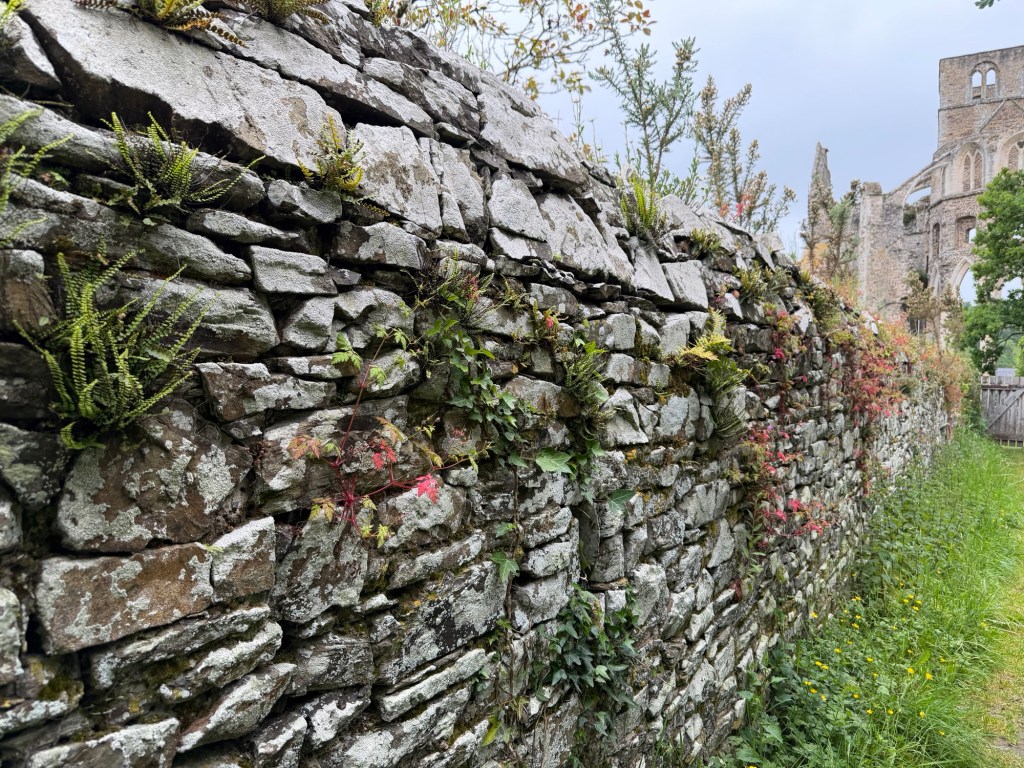
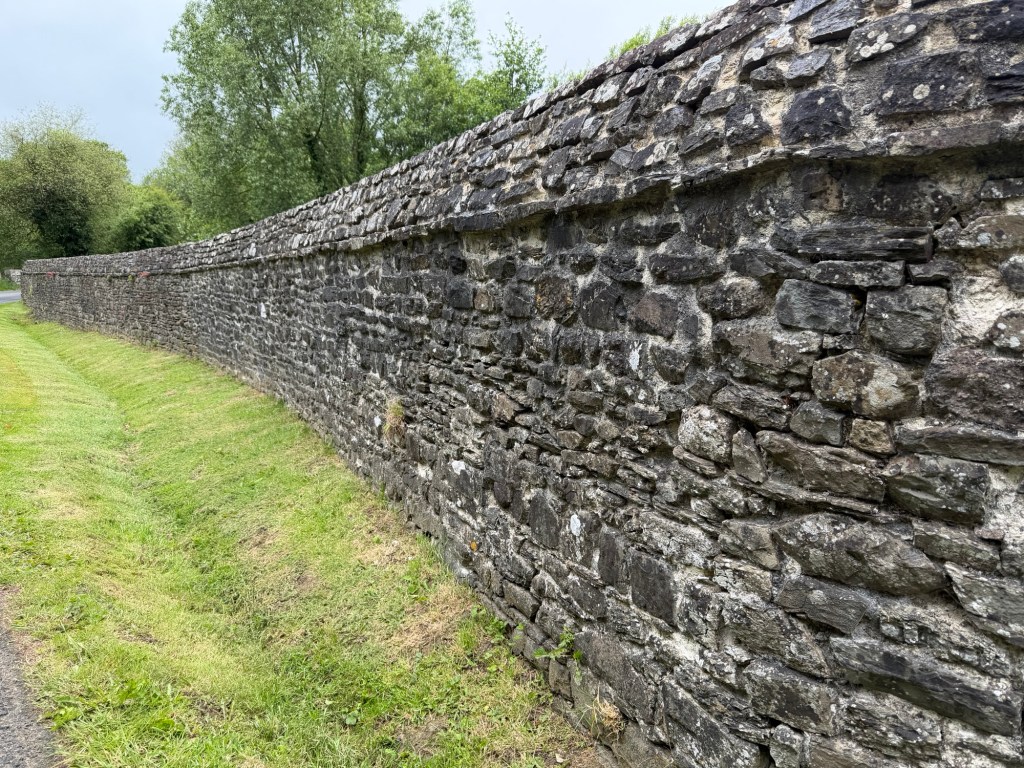
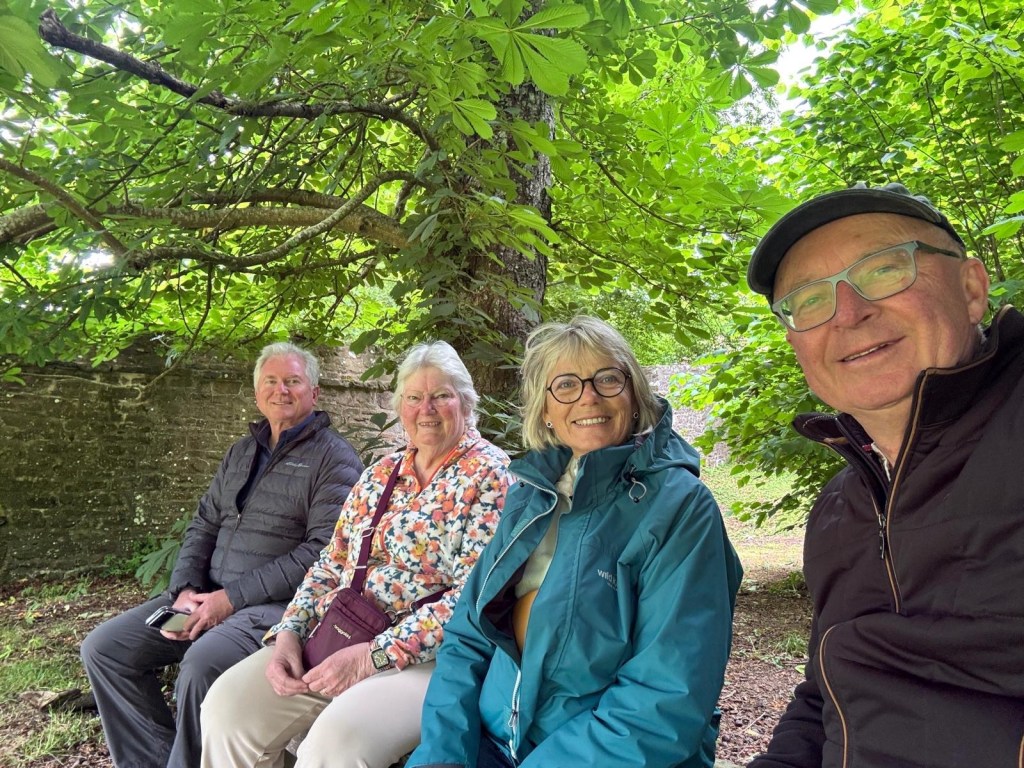
Beautiful forestBlurry caterpillarsFirst view of the abbey on our hikePartial viewOld abbey wallNewer wall around the propertySitting under a large tree, waiting for the rain to pass
We continued along the trail around the Abbey, trying to get a view. Finally, about 80% around, we arrived at a road. The forest cleared and we could see the abbey.
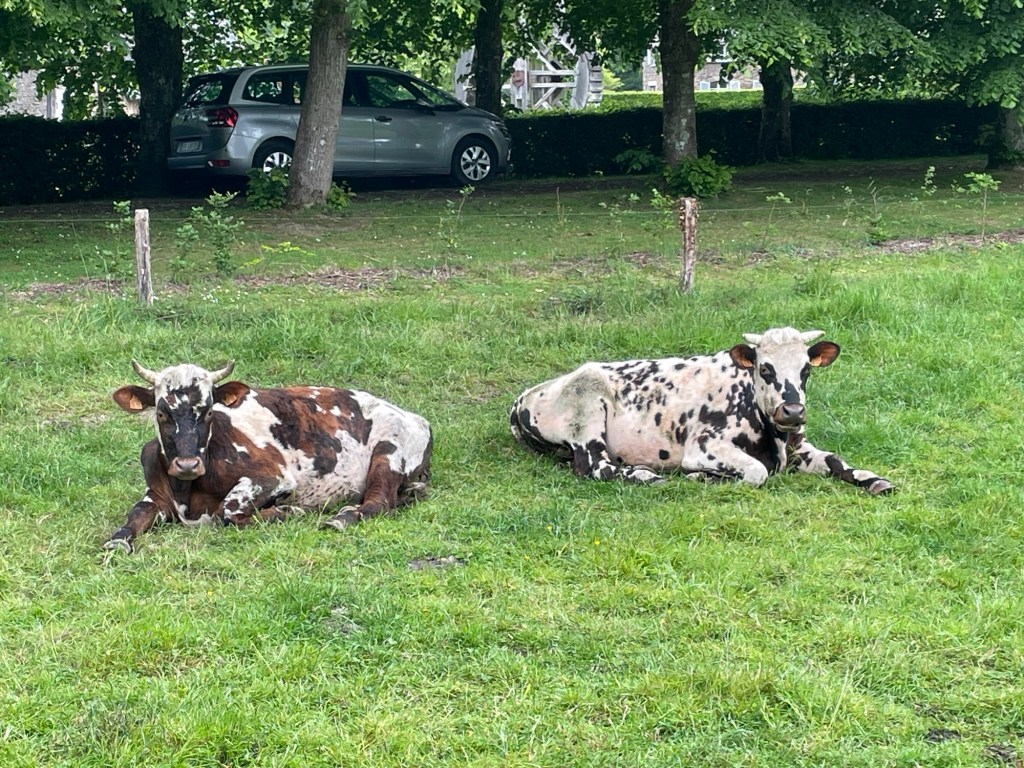
Abbey and wary cows.
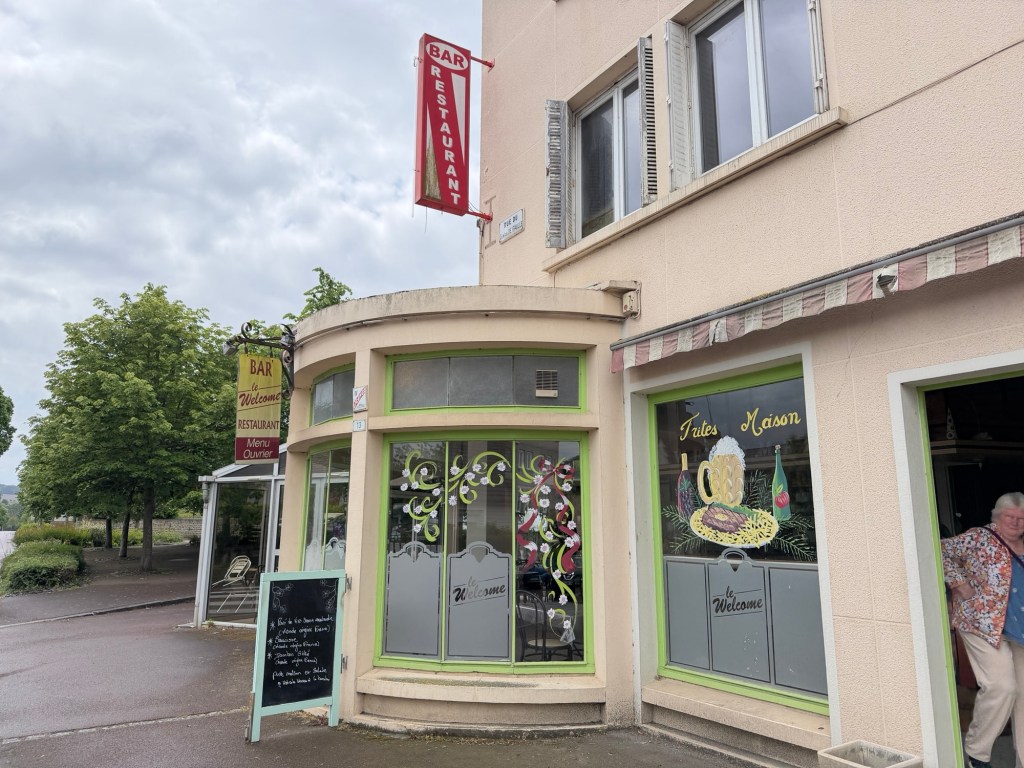
We ate lunch at a local restaurant in a small town.
It’s called Le Welcome.
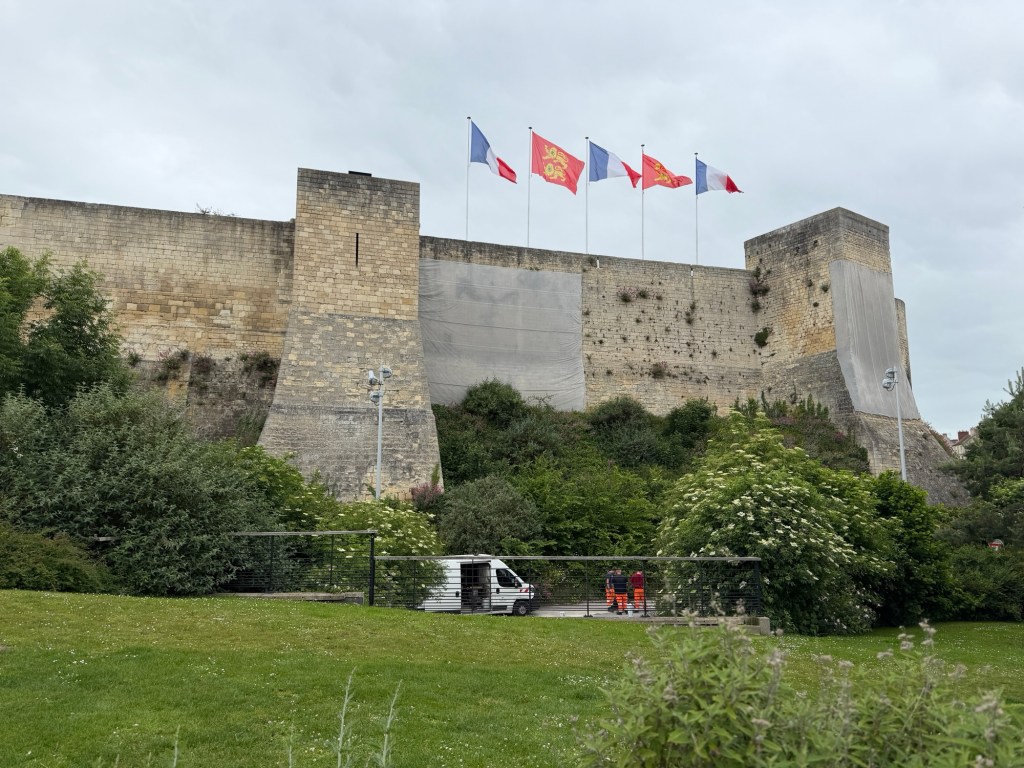
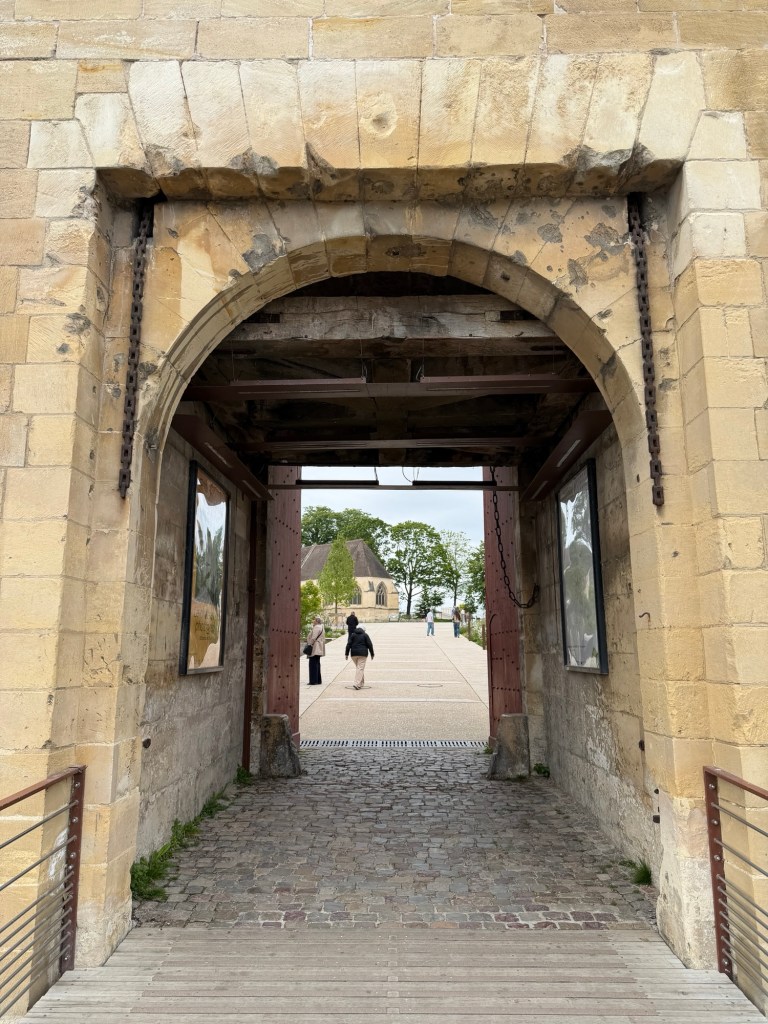
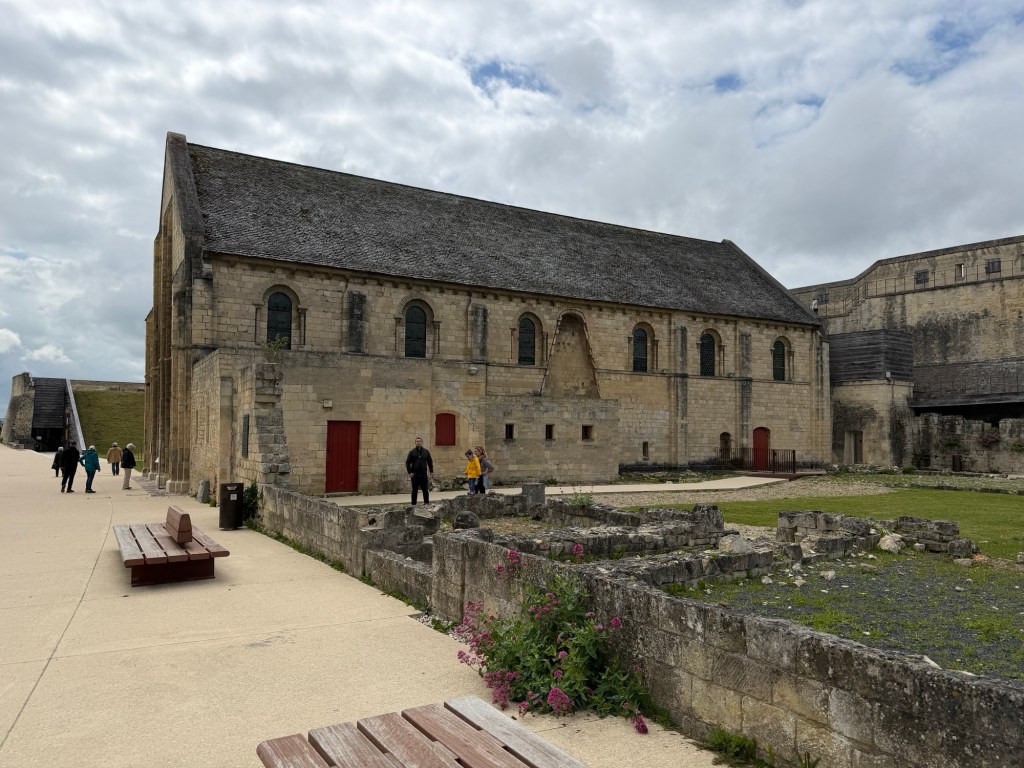
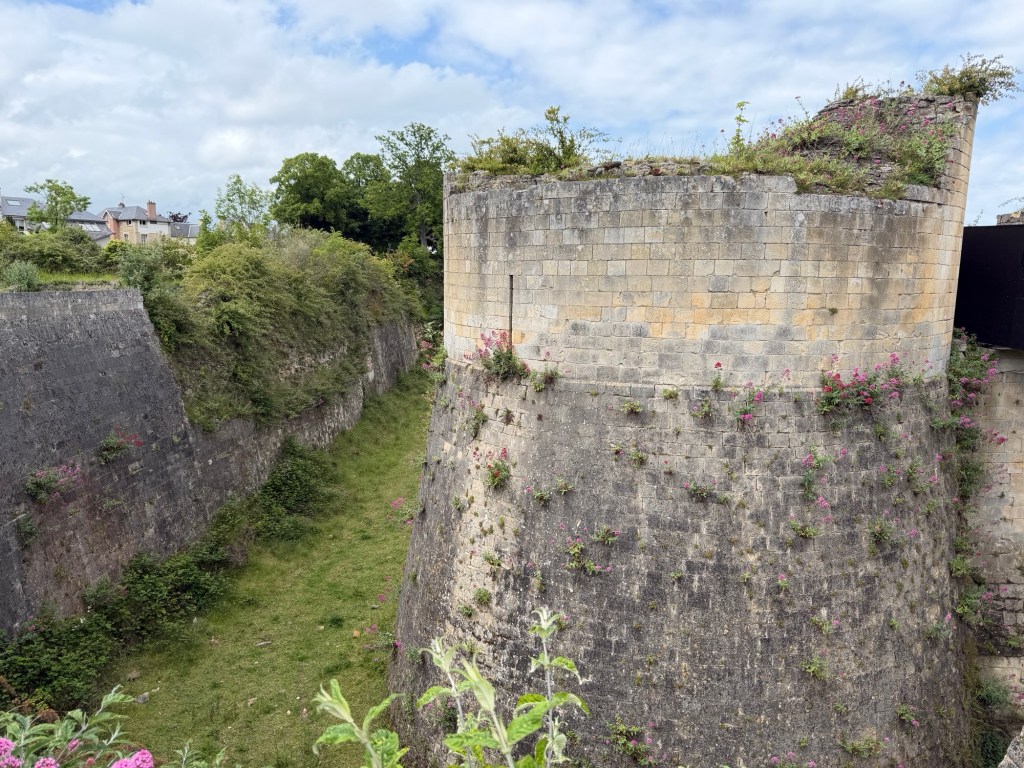
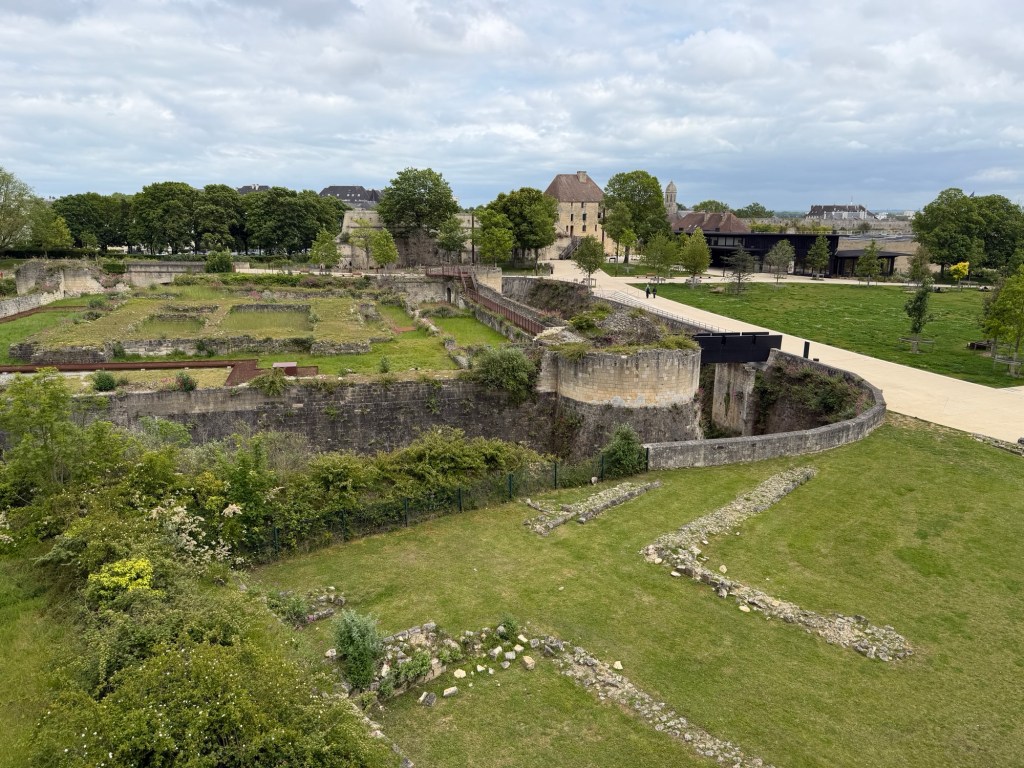
That afternoon, in Caen, we first explored a huge yellow-walled castle. Quite a fortress.
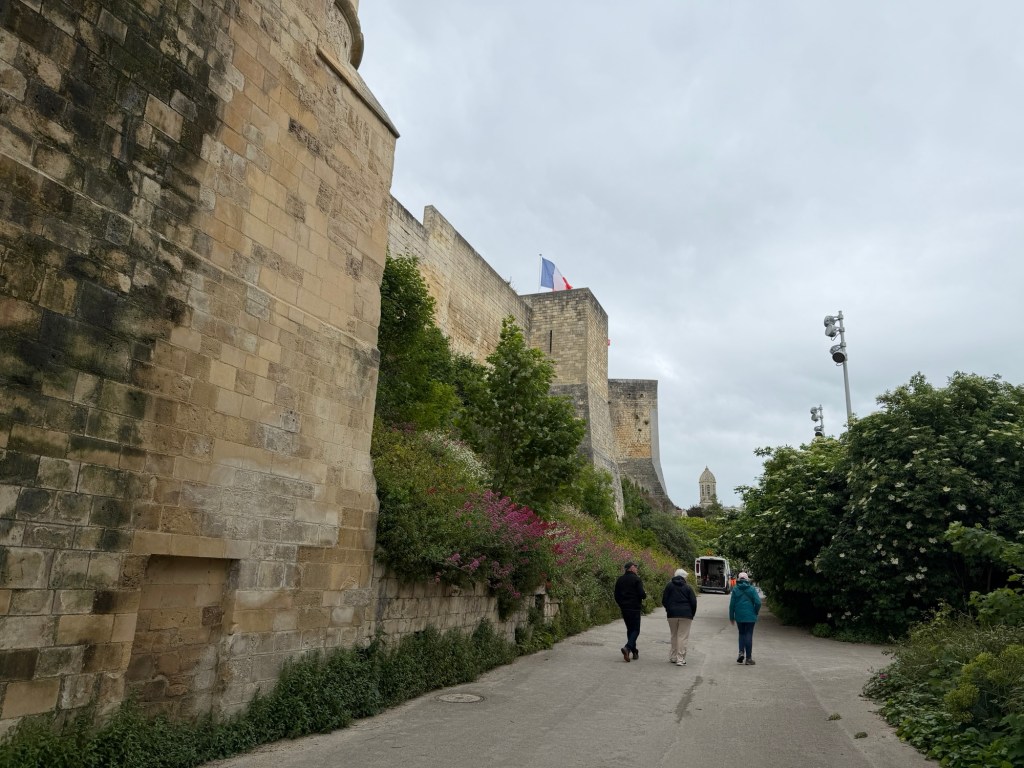
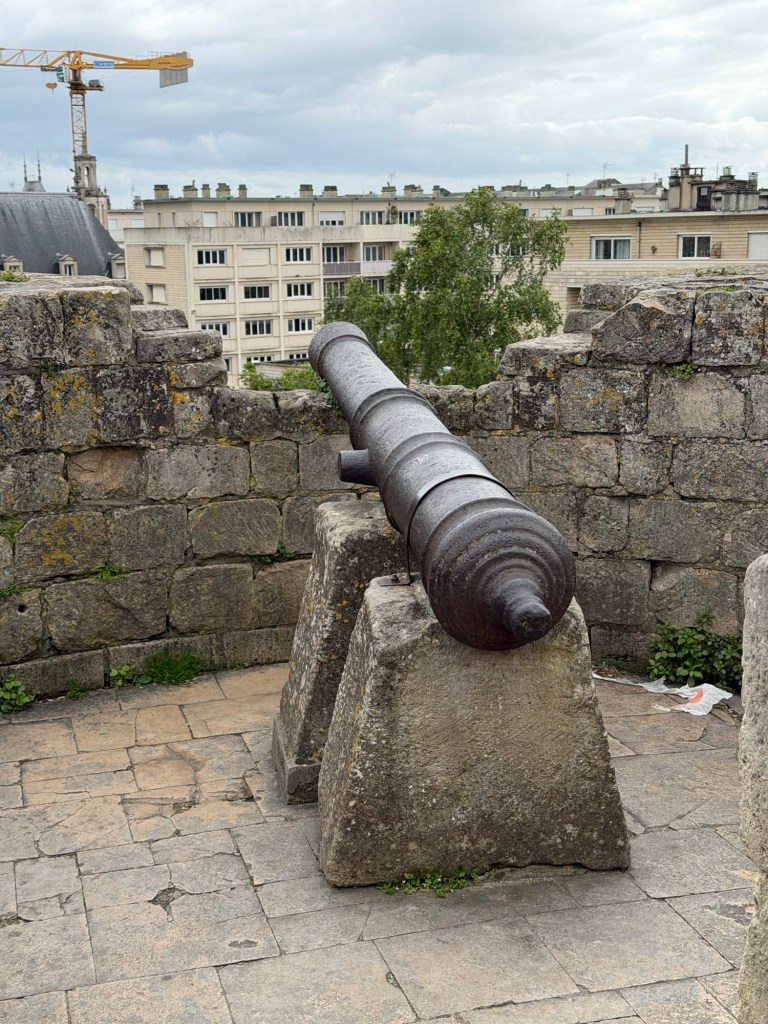
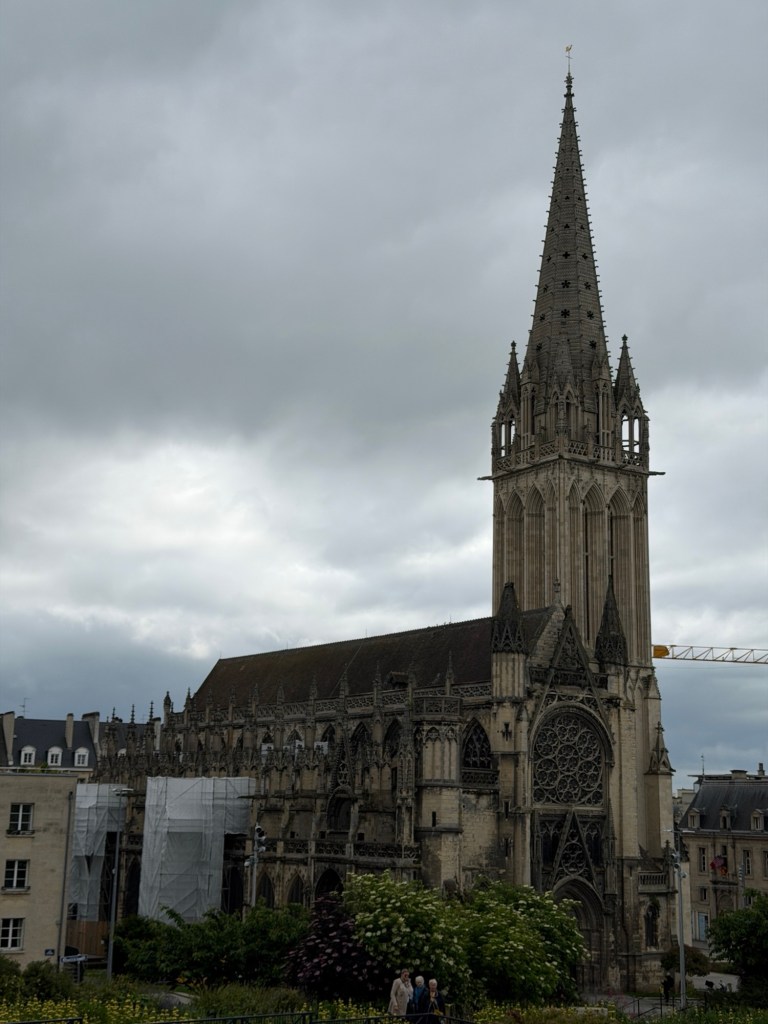
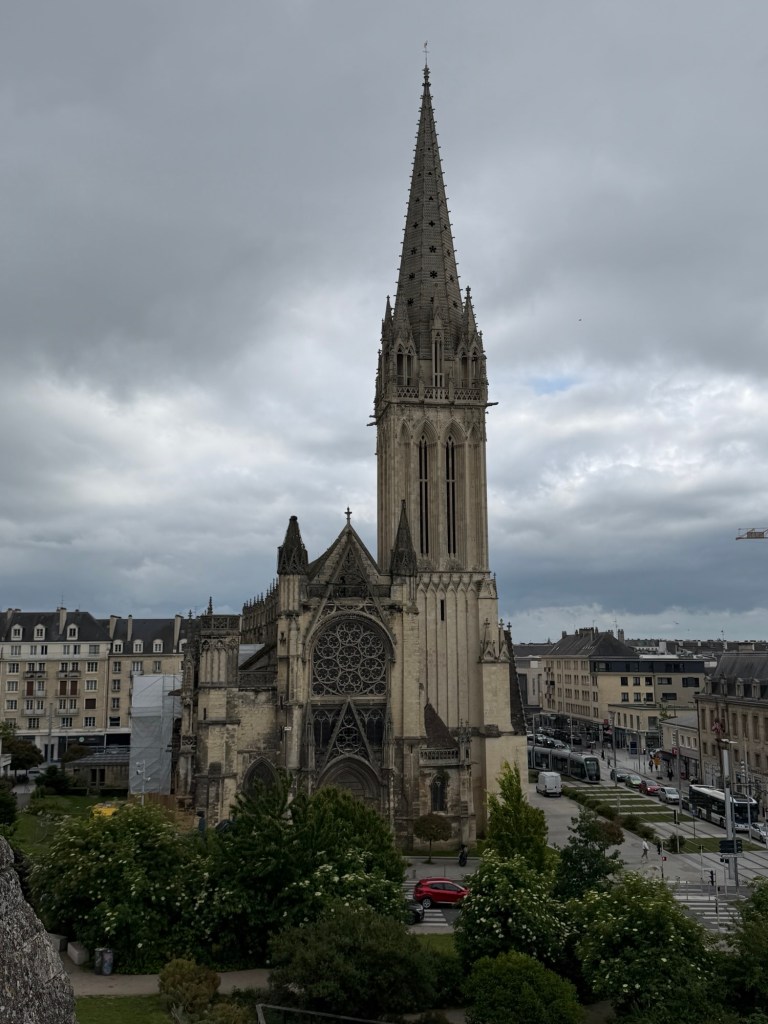
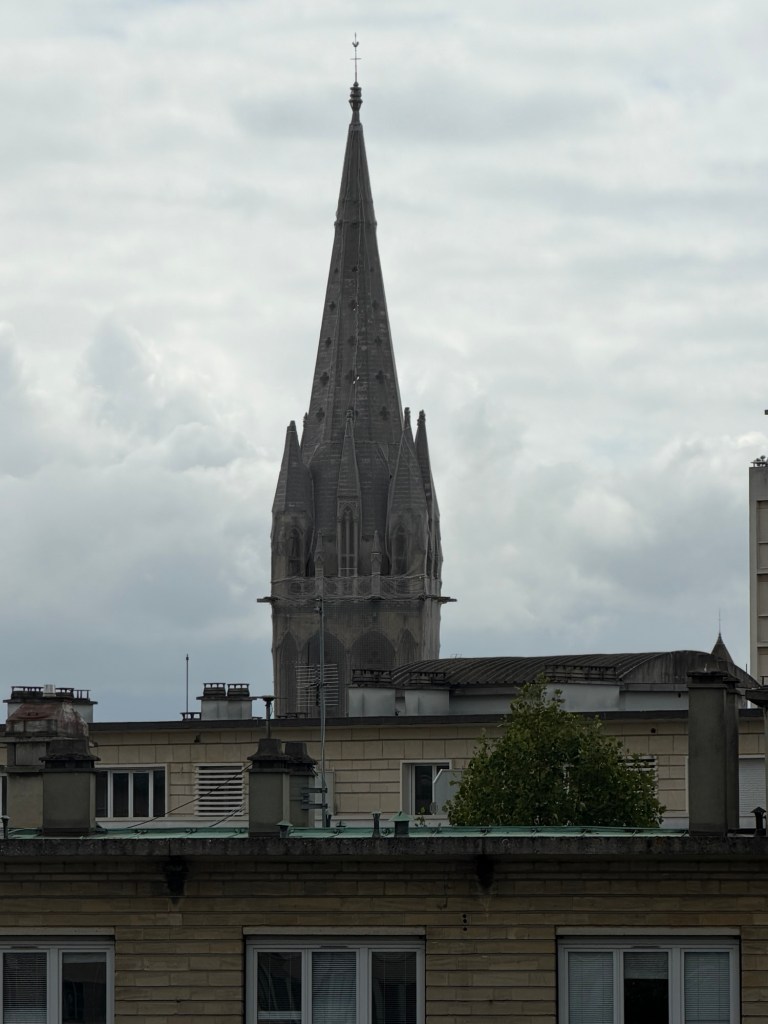
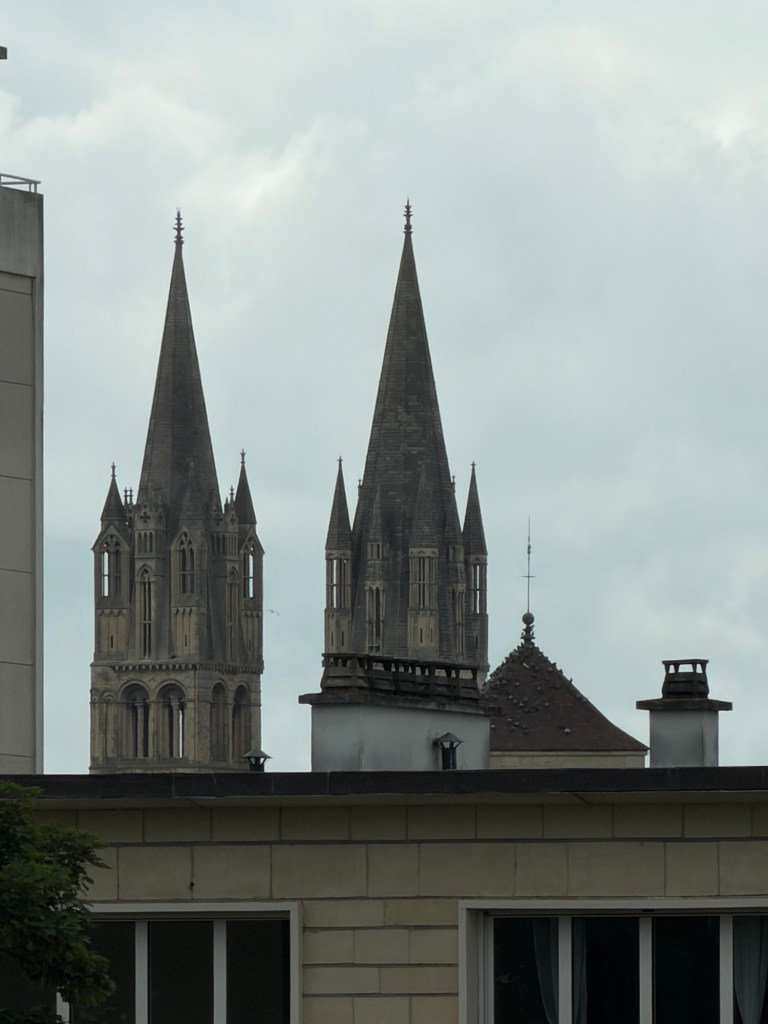
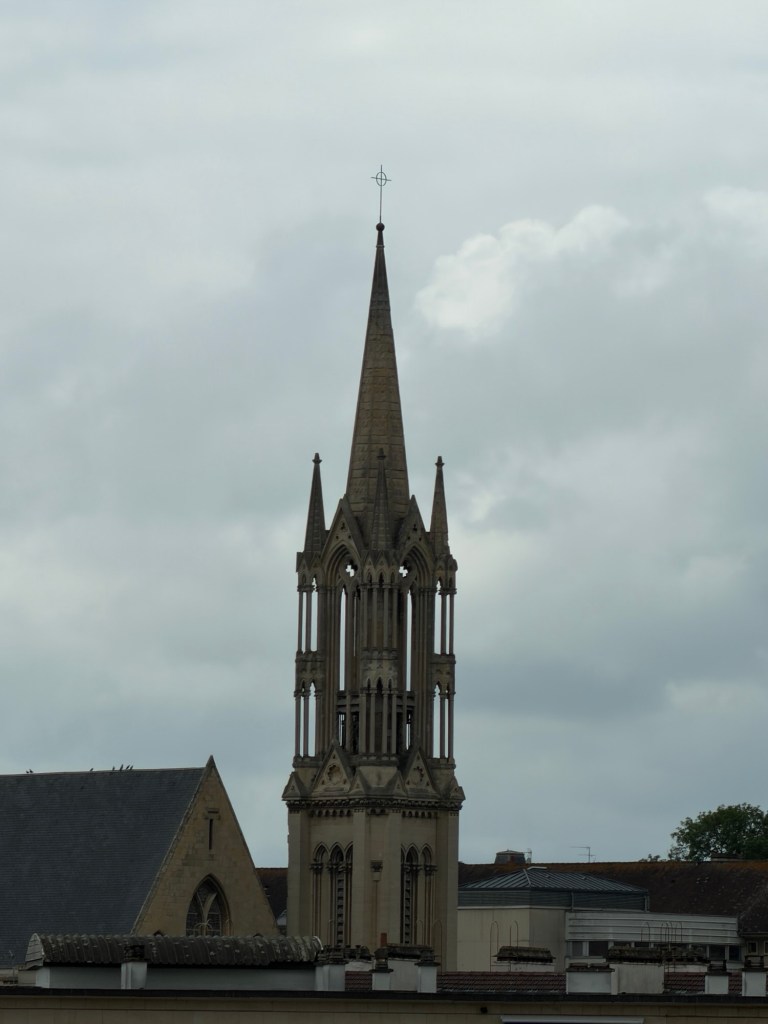
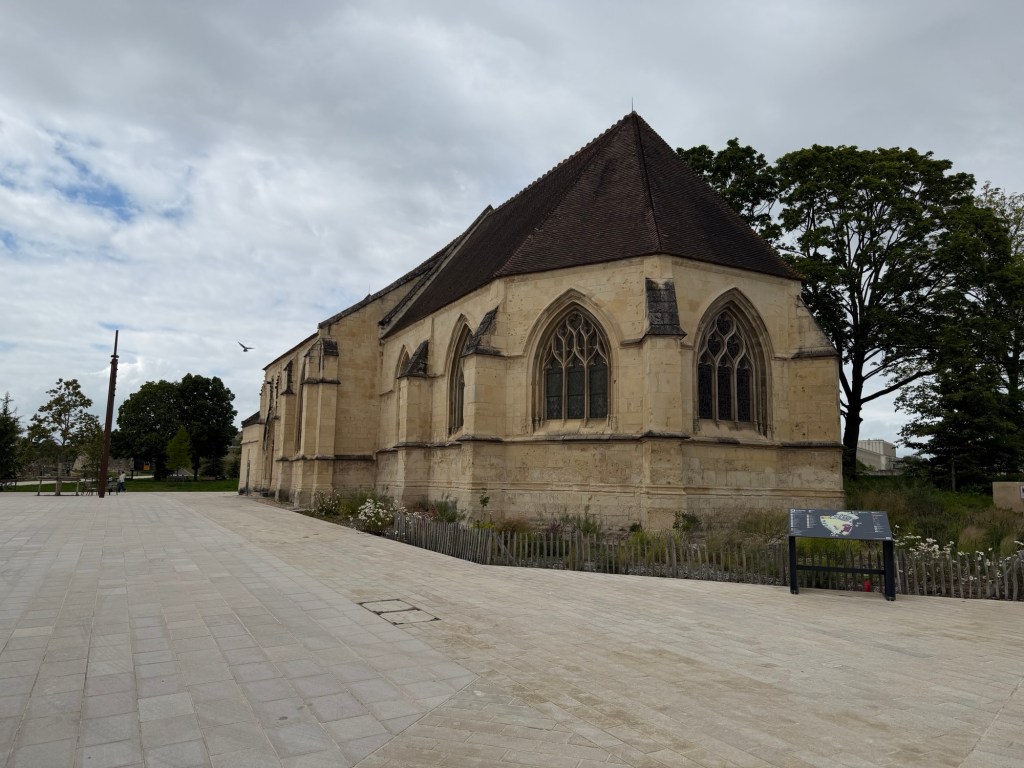
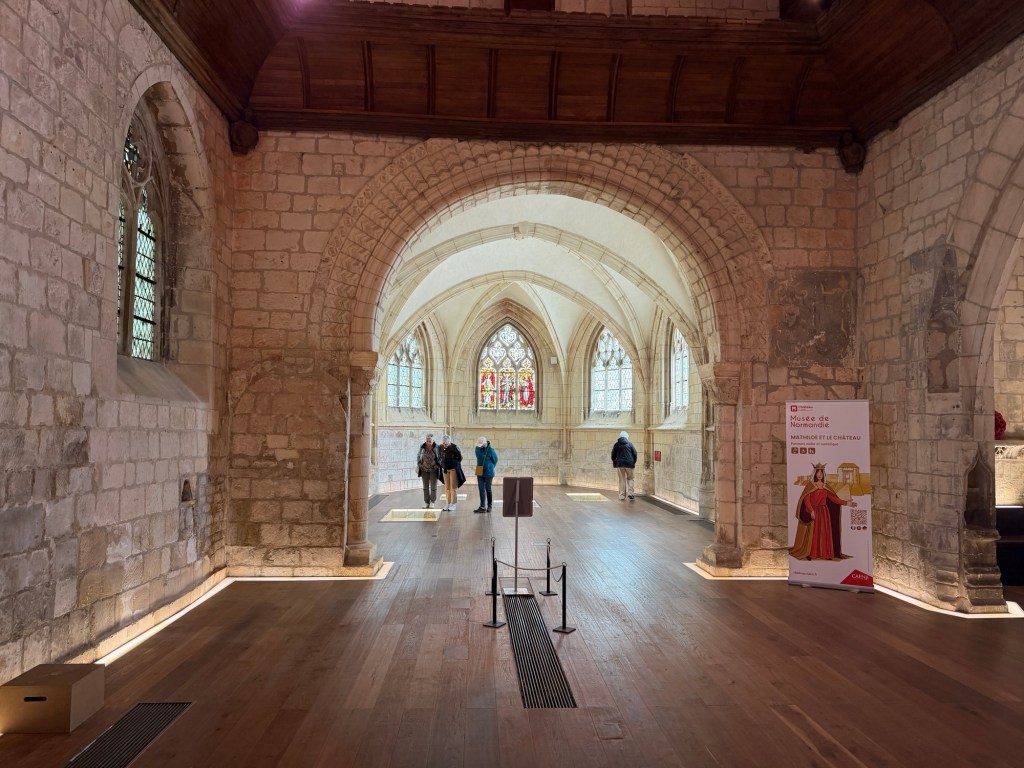
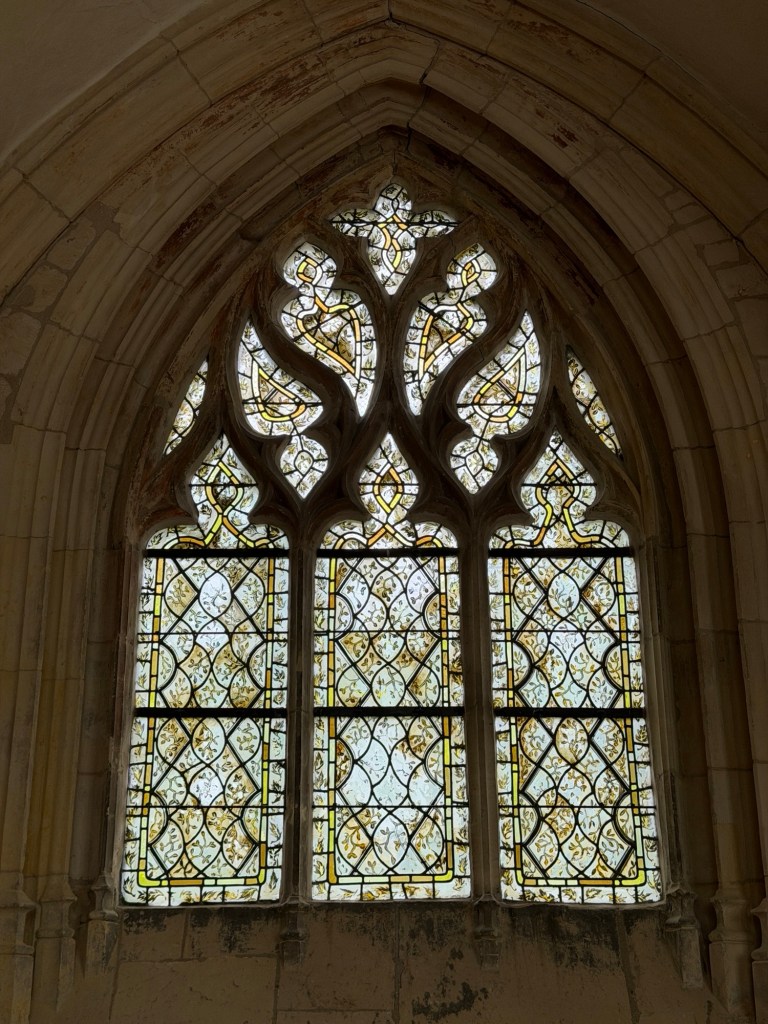
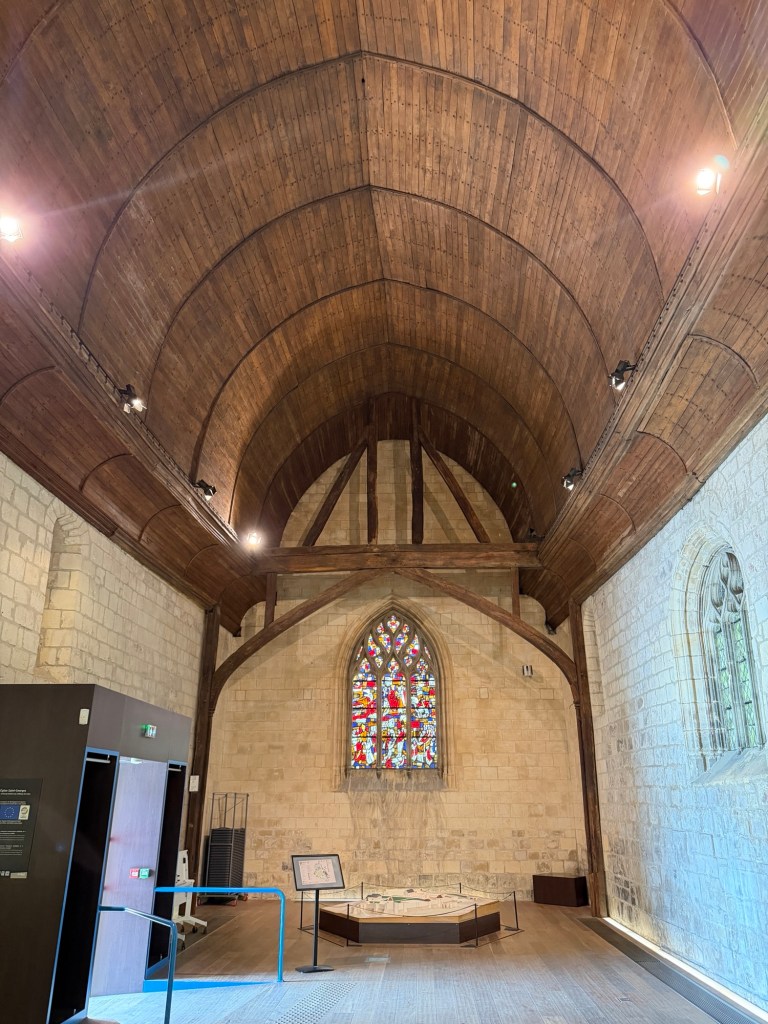
The castle walls surrounded the entire town in the past.Views from the castle of several church steeples in Caen.Chapel inside walls of the castle
The Dukes of Normandy’s Great Hall (photo below)
The great reception hall at Caen castle has a beautiful Romanesque façade, often mistaken for that of a church. The hall was probably built for receptions at the court of King William II (William Rufus) (c. 1098). It was named the Exchequer Hall in memory of the sessions of the fiscal and administrative court that was sometimes held there (counting with tokens on a chequered table).
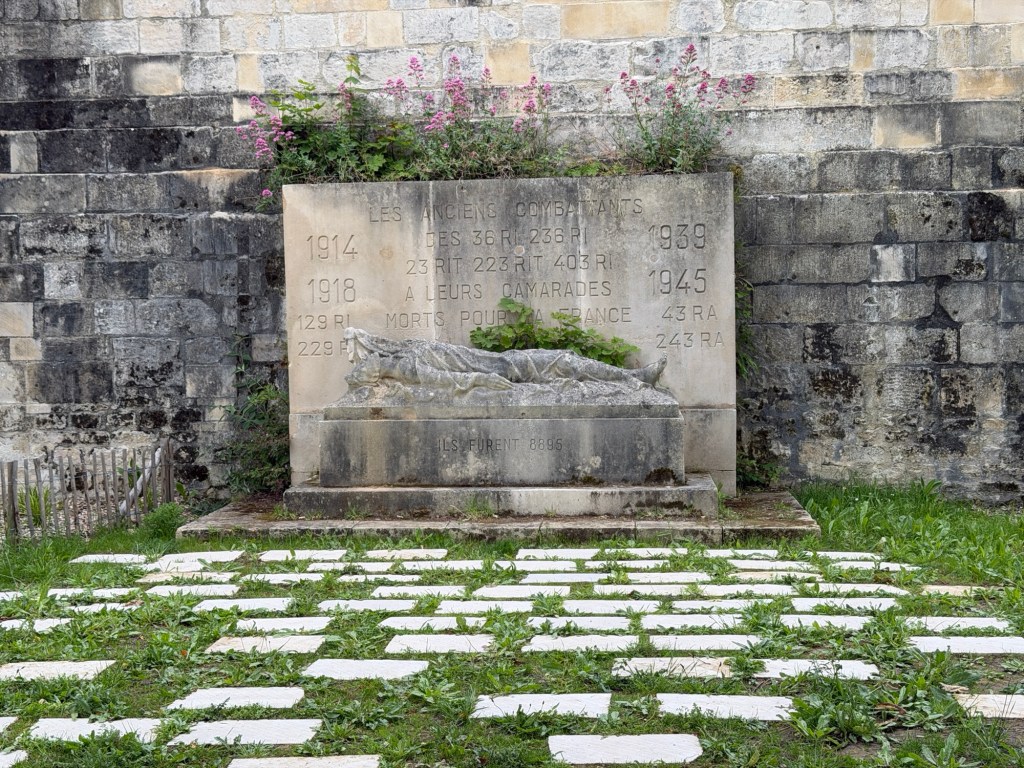
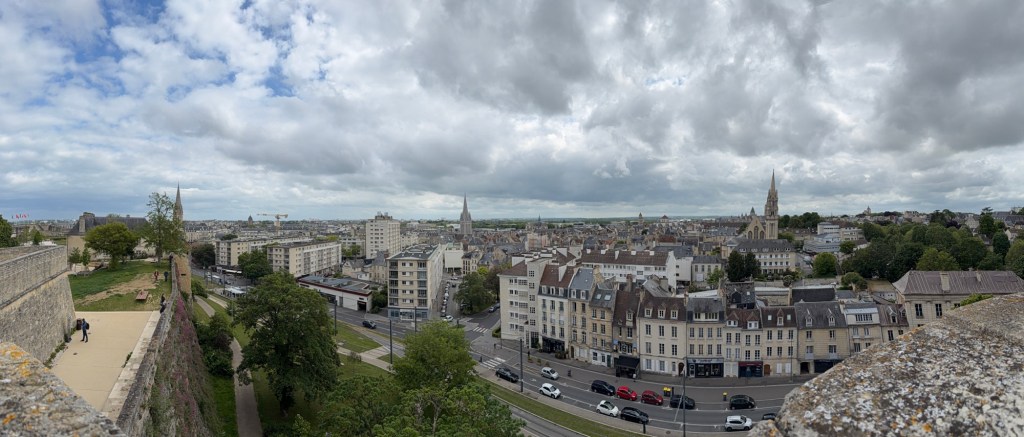
Reception HallMoat formerly around palaceRuins in and outside palaceMemorial for people who died in many wars. Panorama of Caen from castle wallAn art gallery inside the castle with a variety of interesting works using different media.
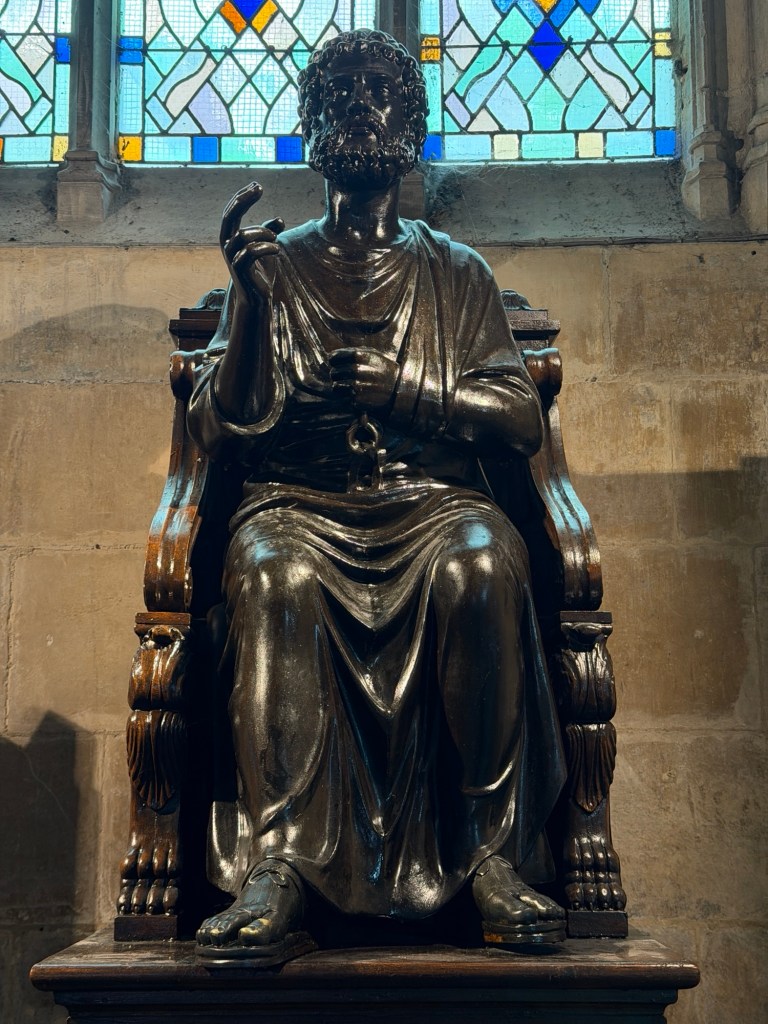
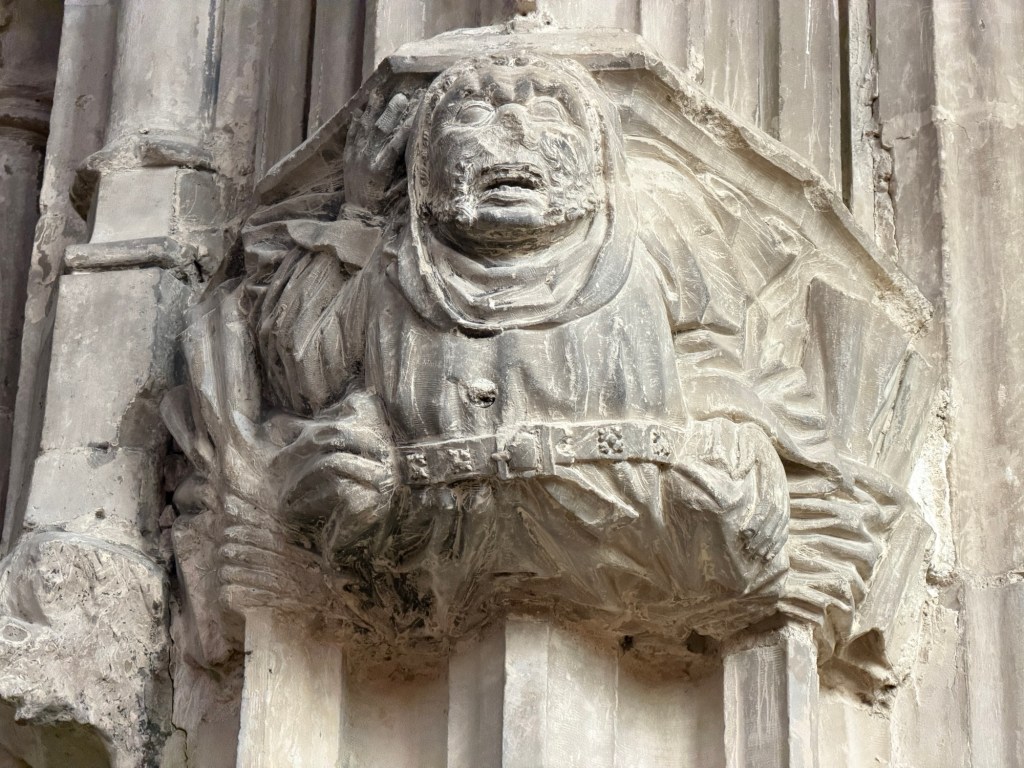
The cathedral adjacent to the castle was worth a quick look. Fortunately the doors were open.
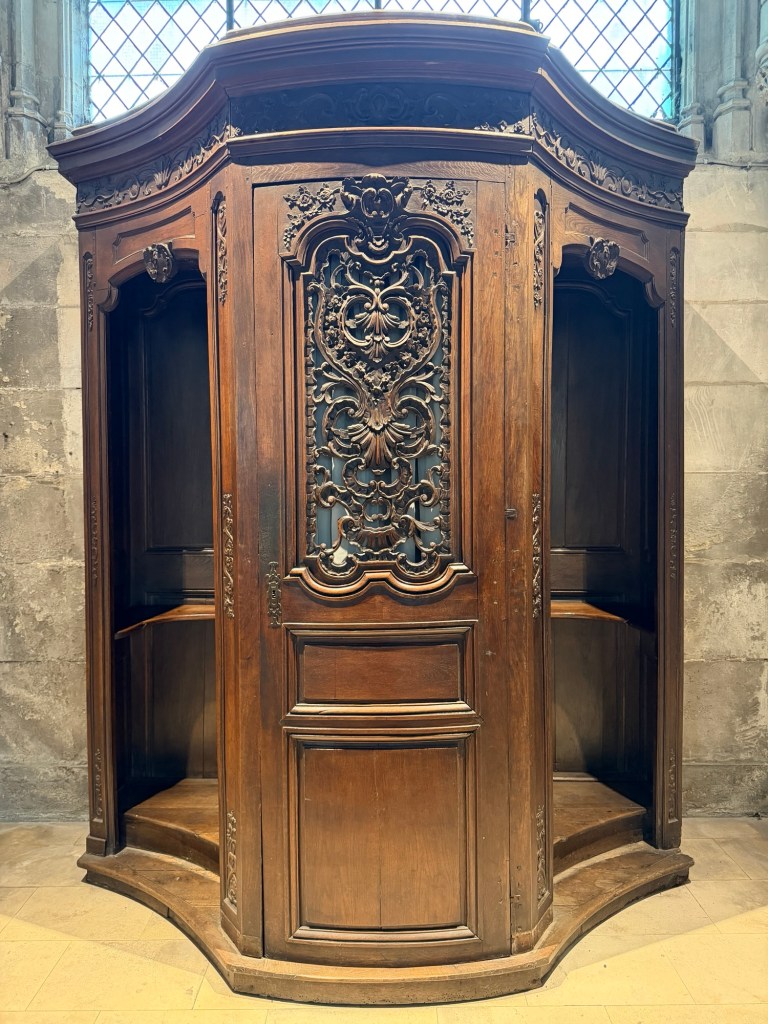
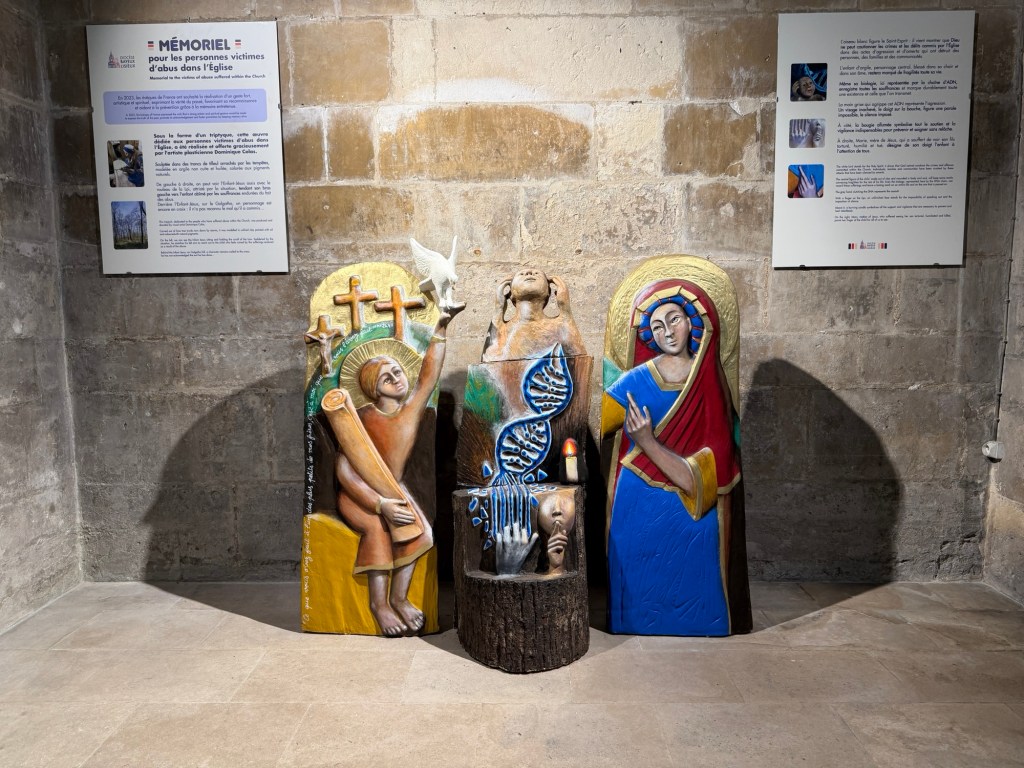
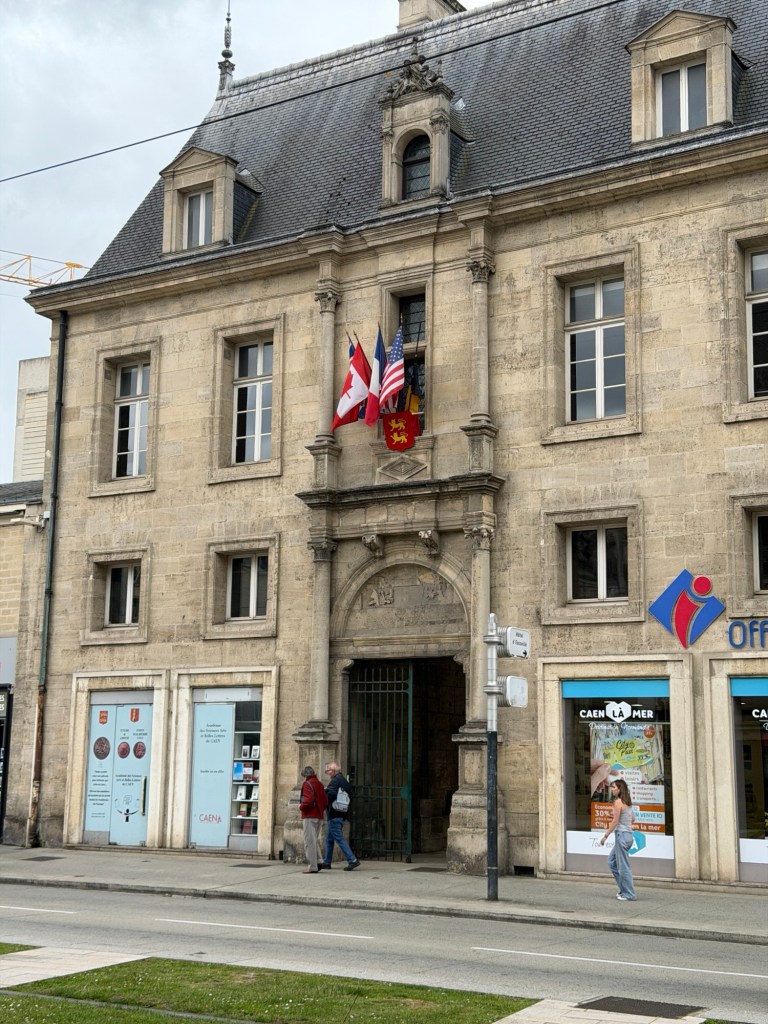
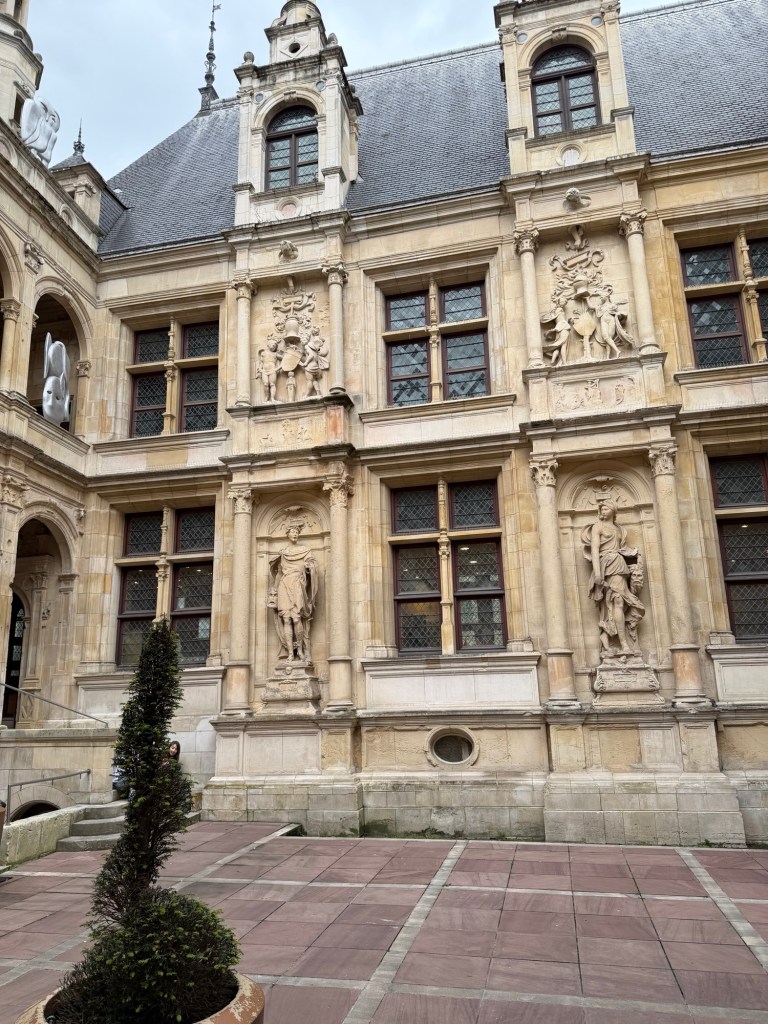
Confessional For children abused by priests. City Hall and a pretty courtyard
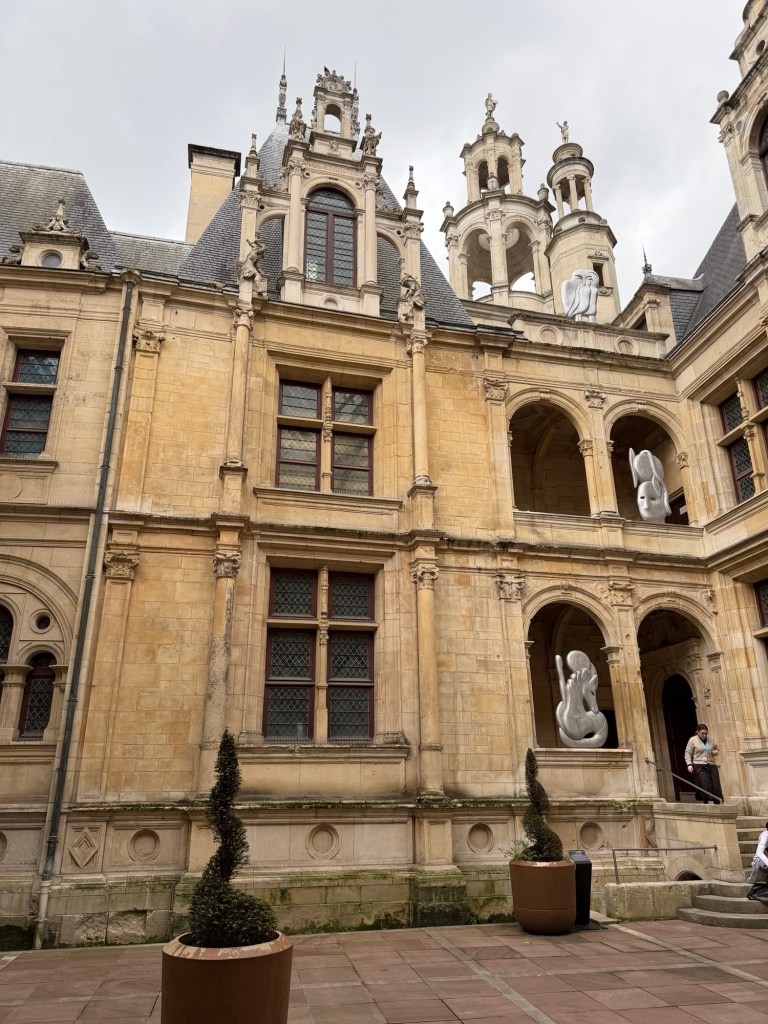
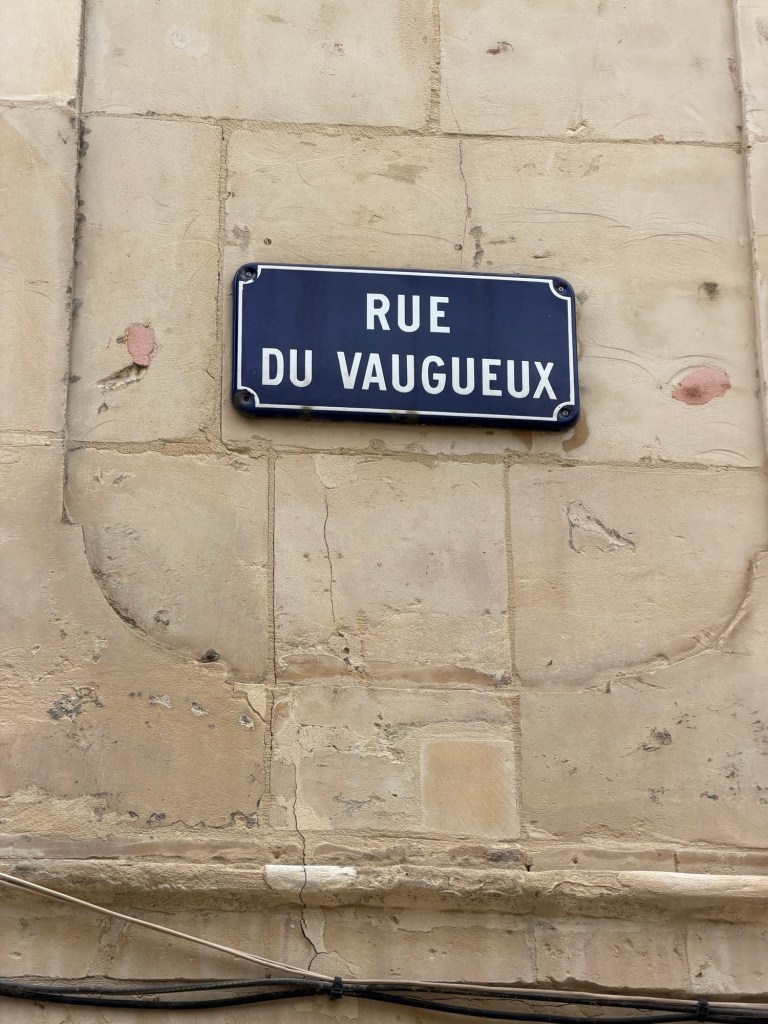
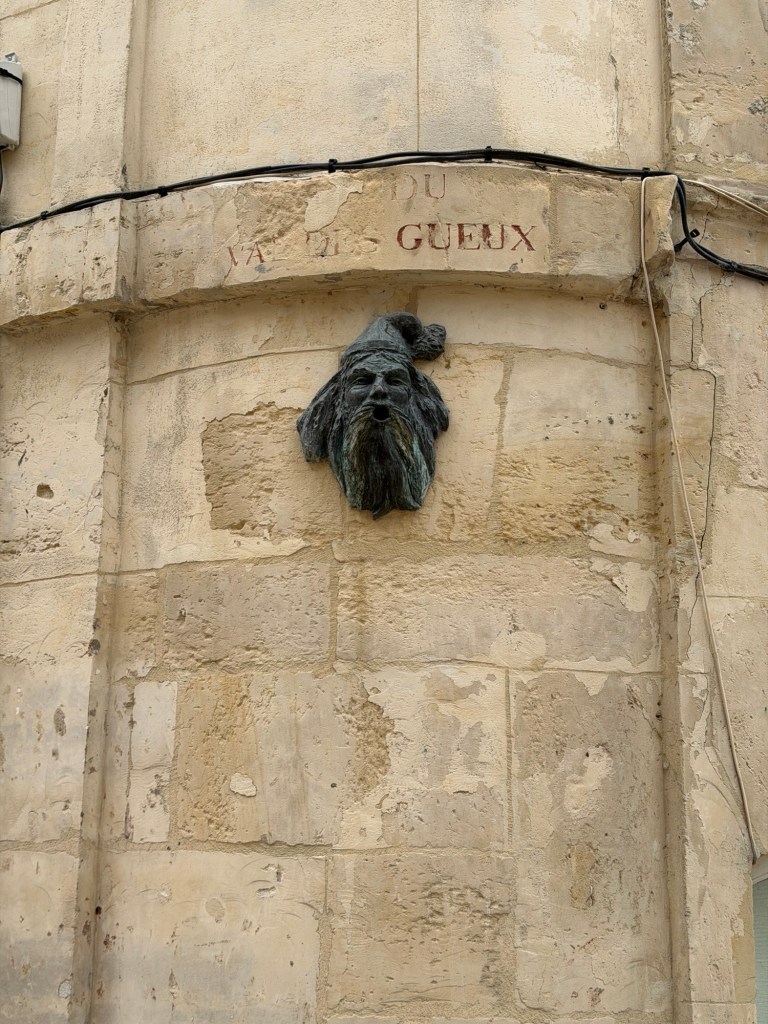
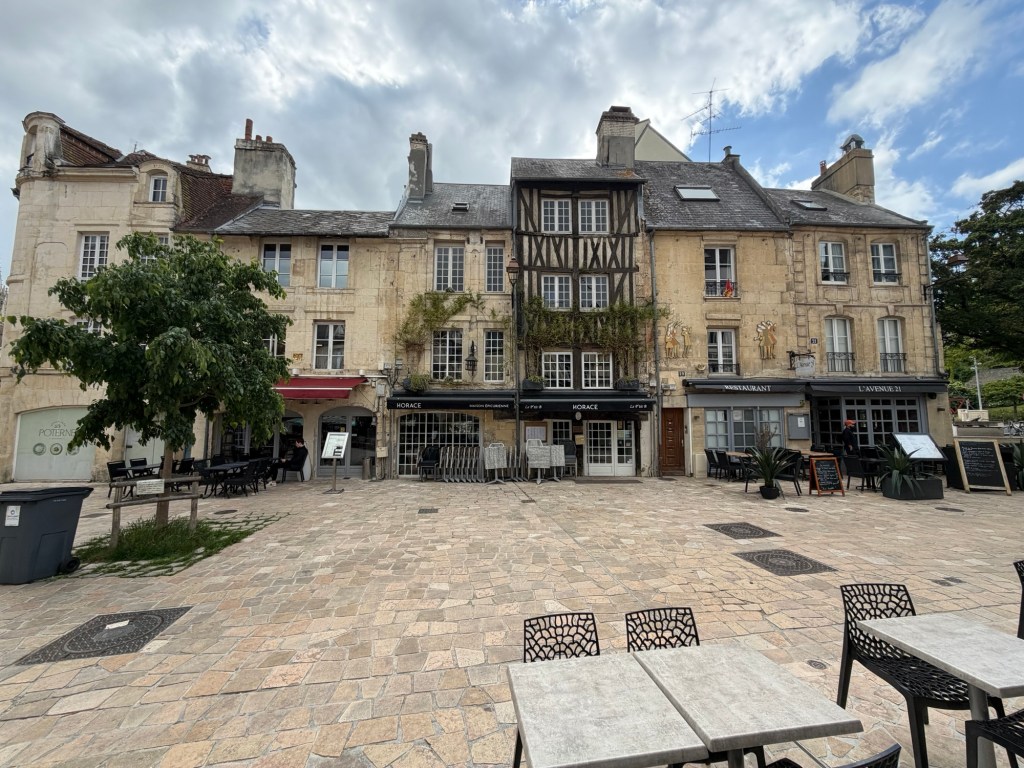
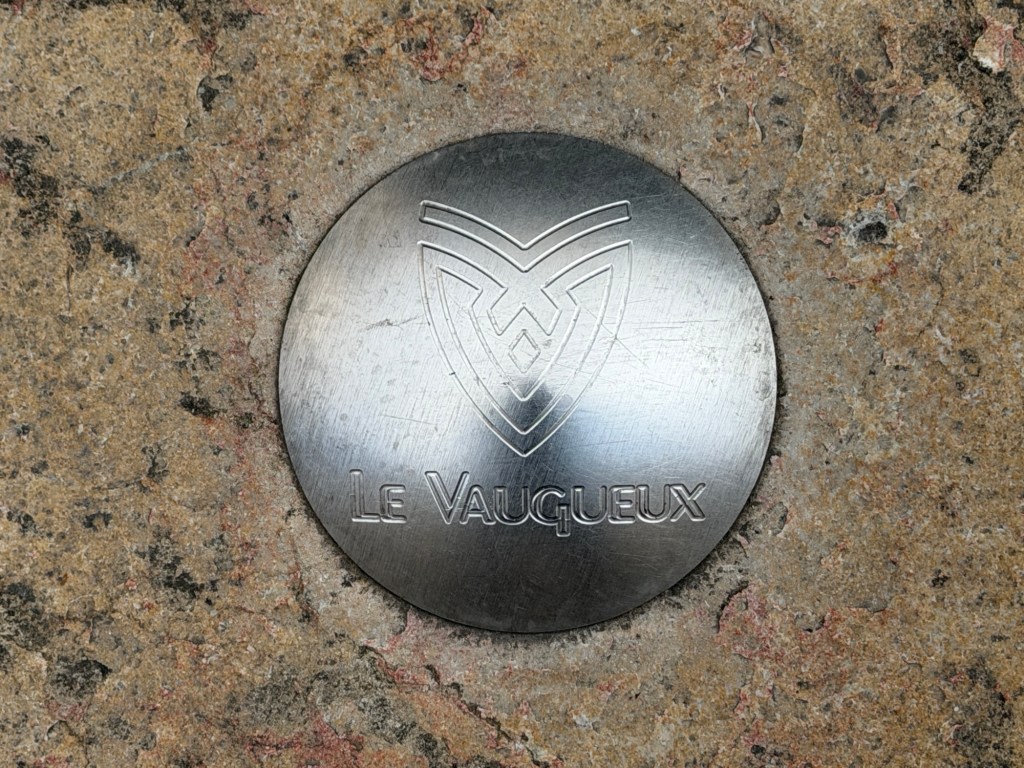
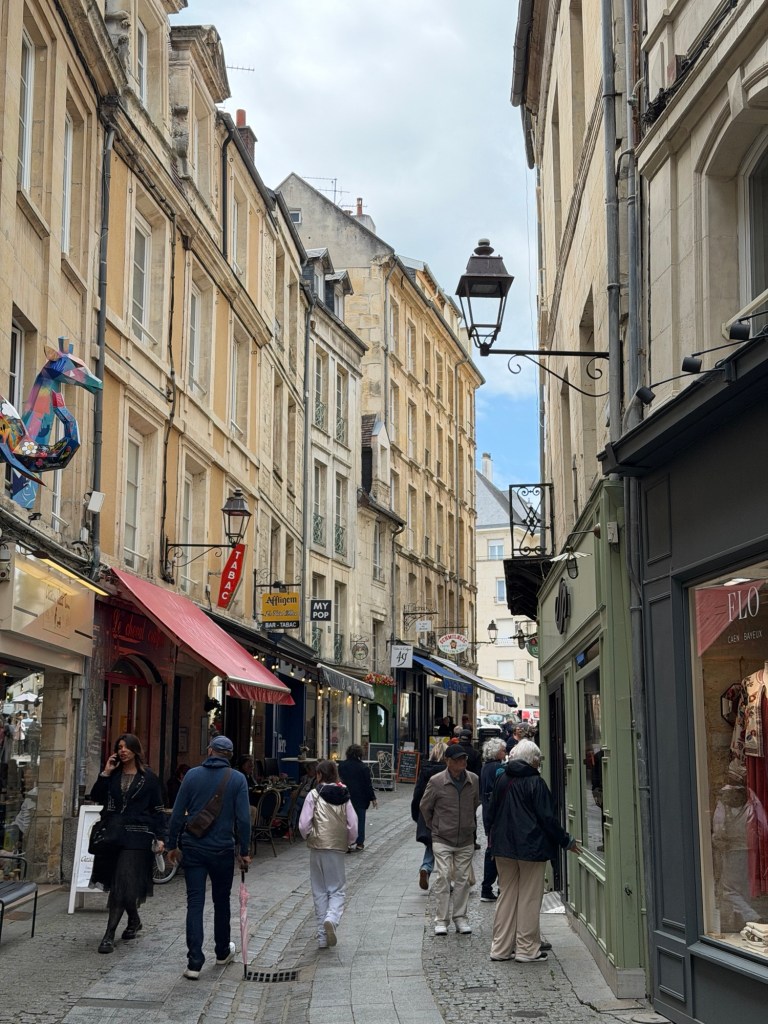
Vaugueux is the oldest part of Caen; it was spared from the destruction of World War II.
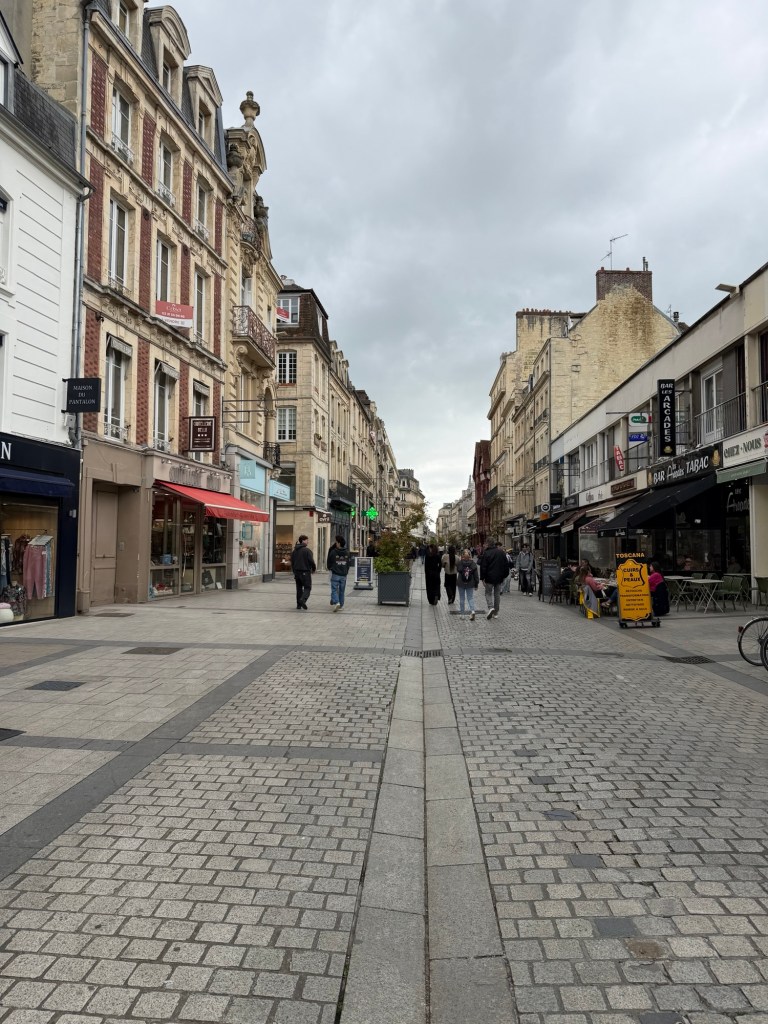
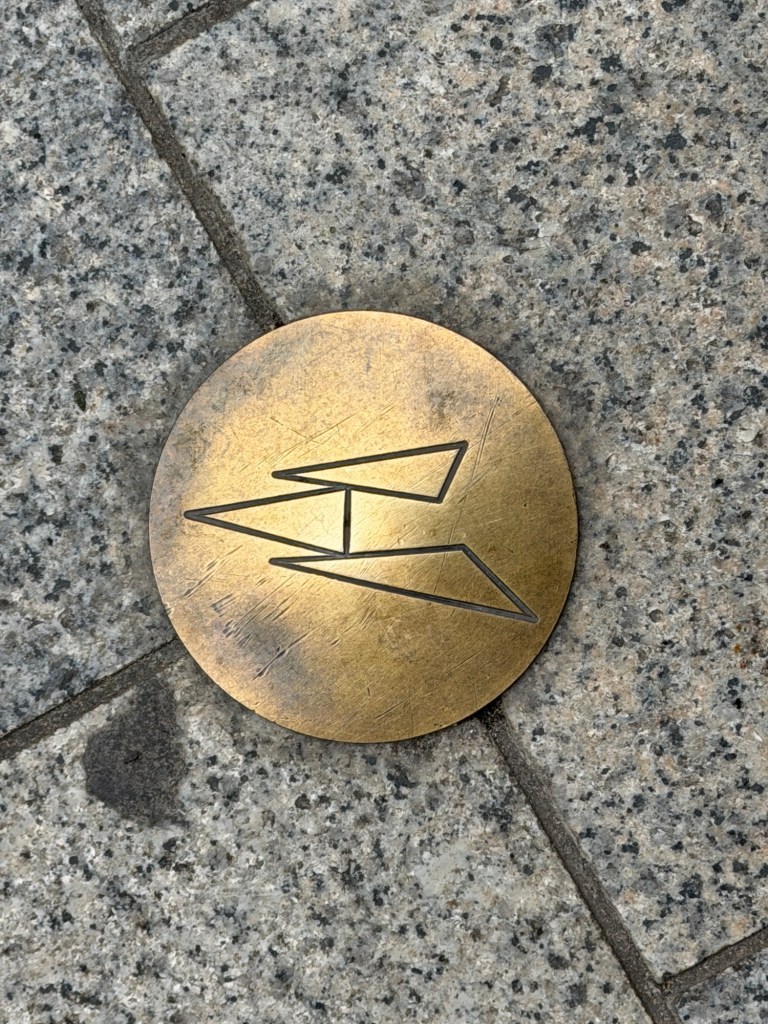
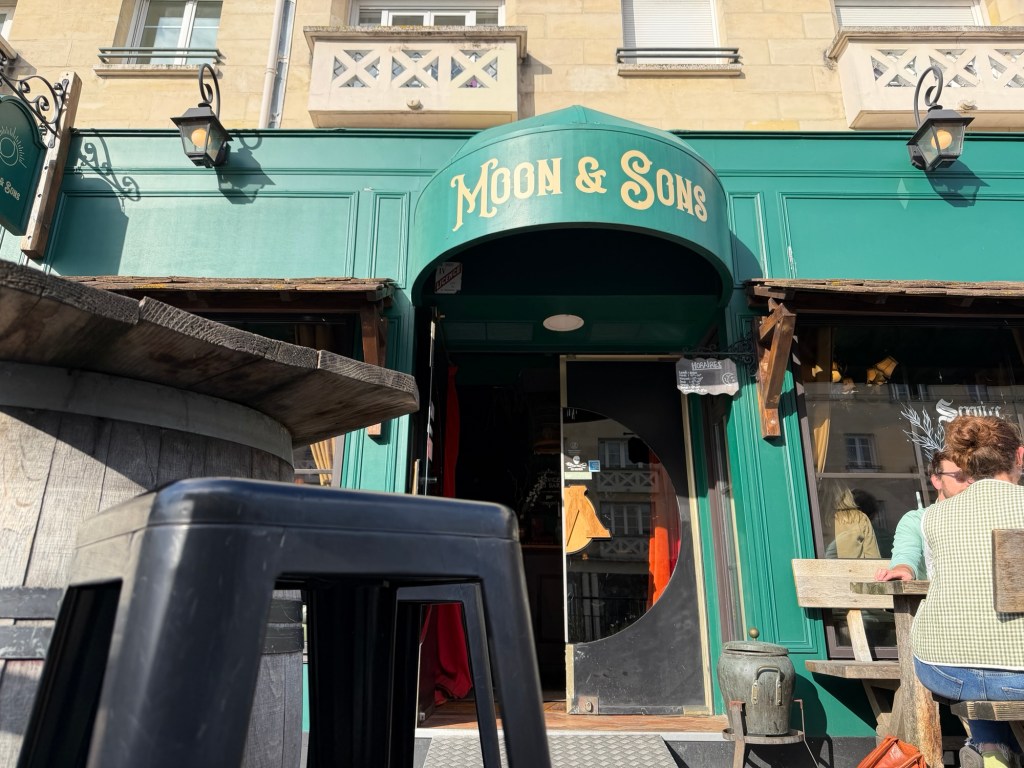
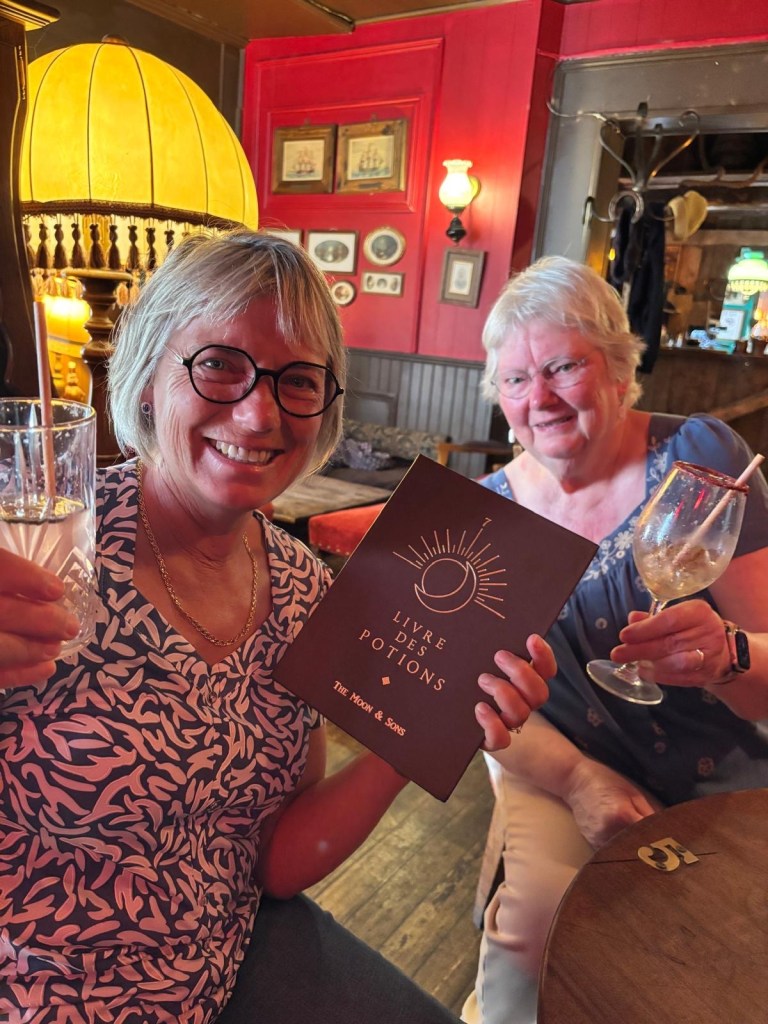
We ate dinner in Vaugueux, and walked back to our hotel along this pedestrian mall.Tour markers on the ground and other sites in the city. At Moon & Sons bar, the Book of Potions was styled after Harry Potter books. Joëlle and Clare each tried a potion with few ill effects!
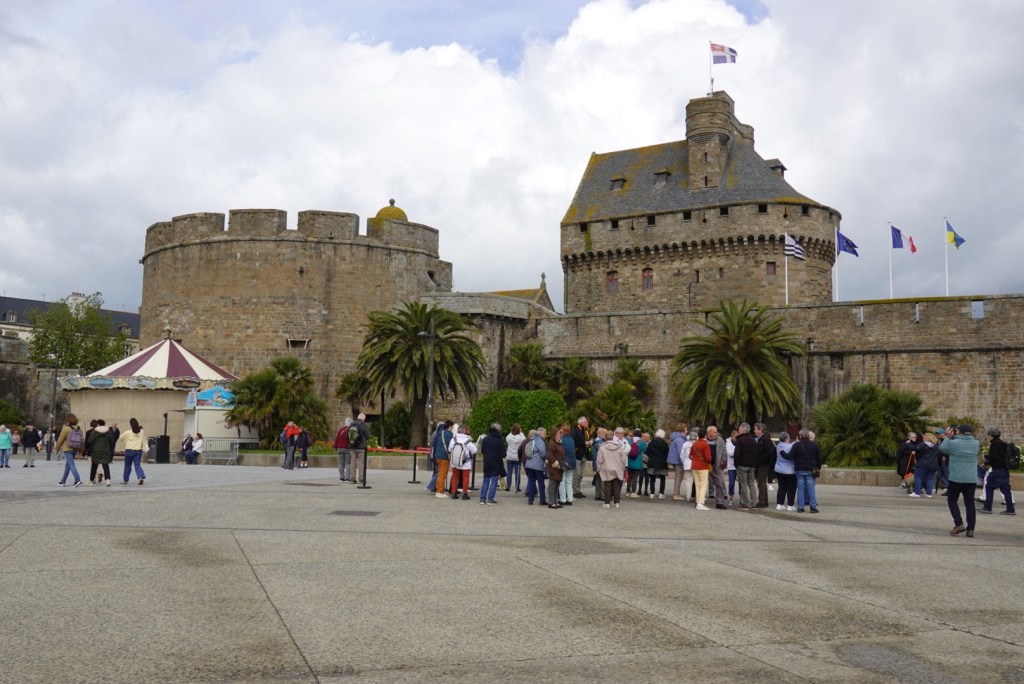
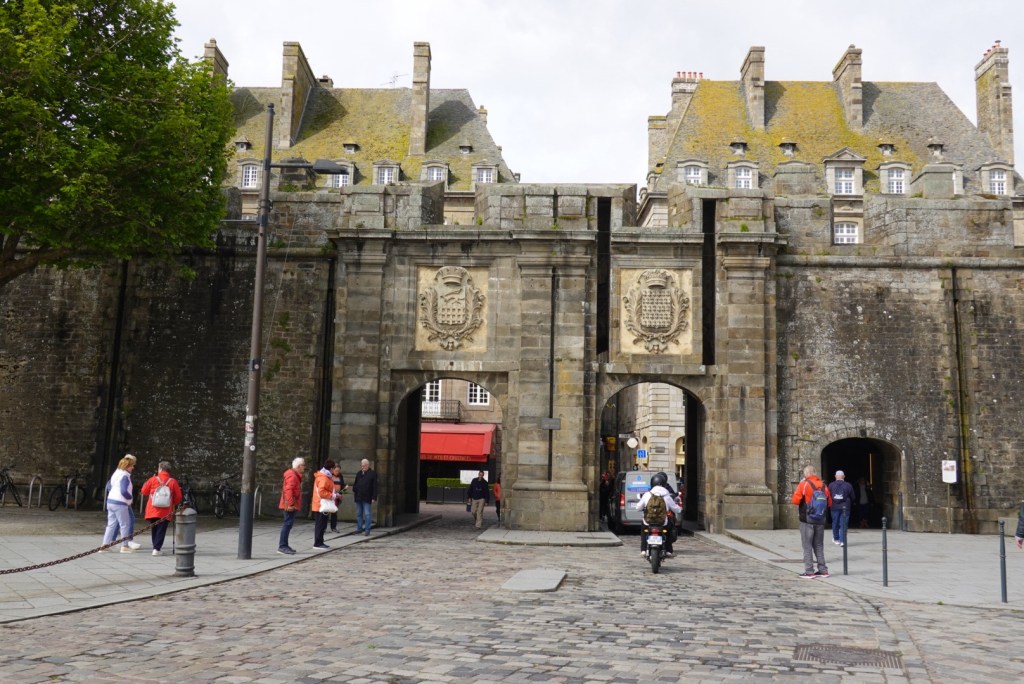
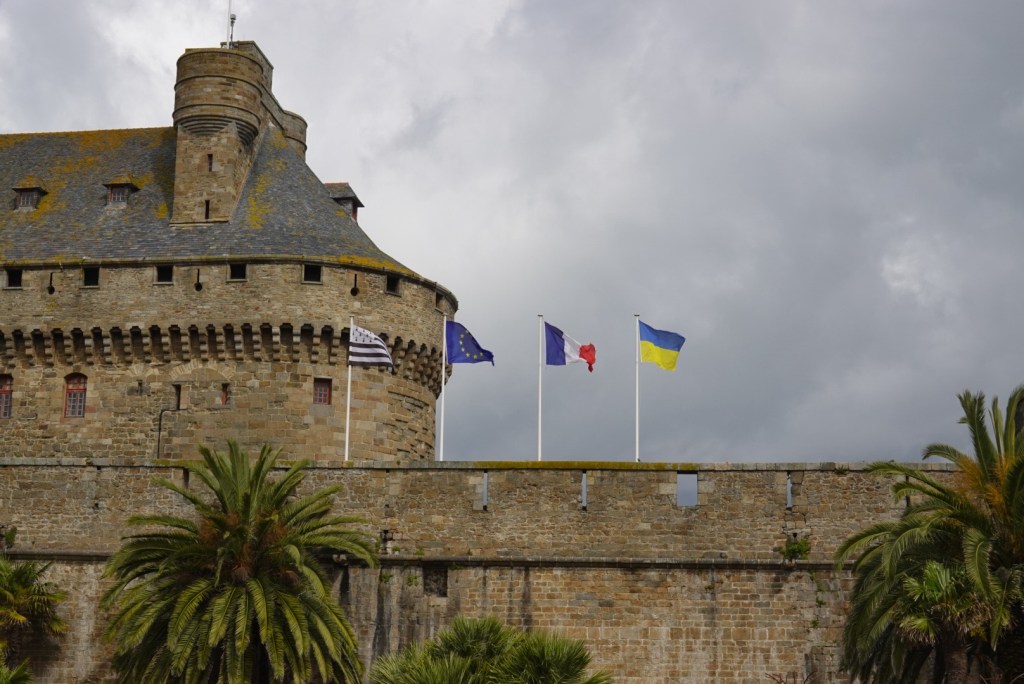
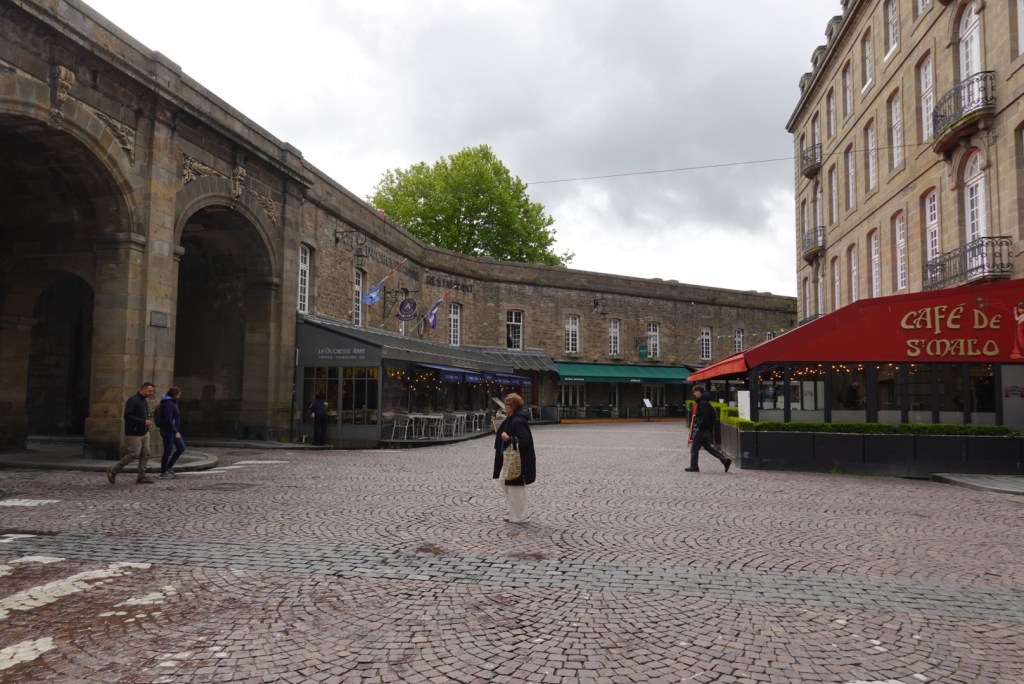
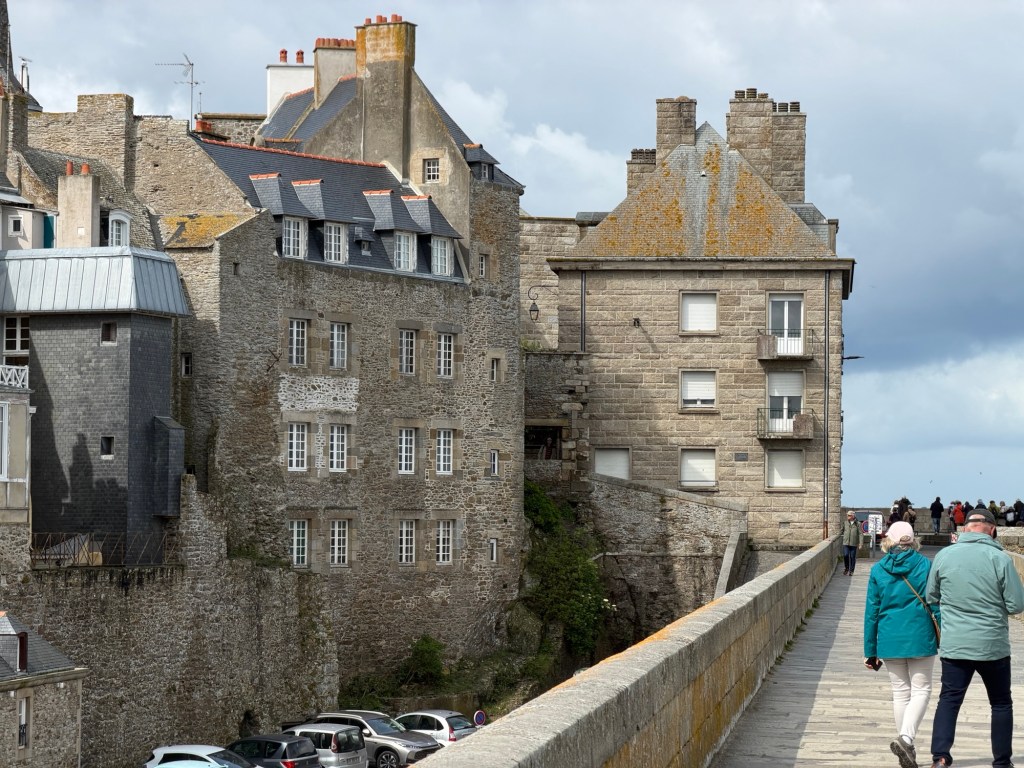
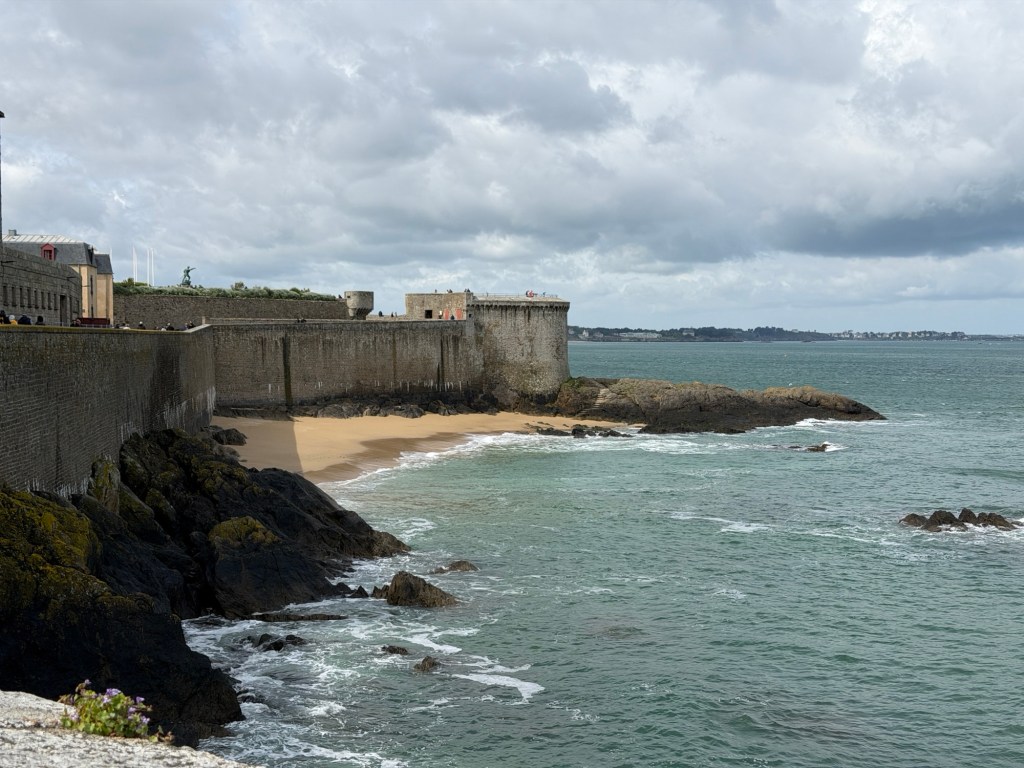
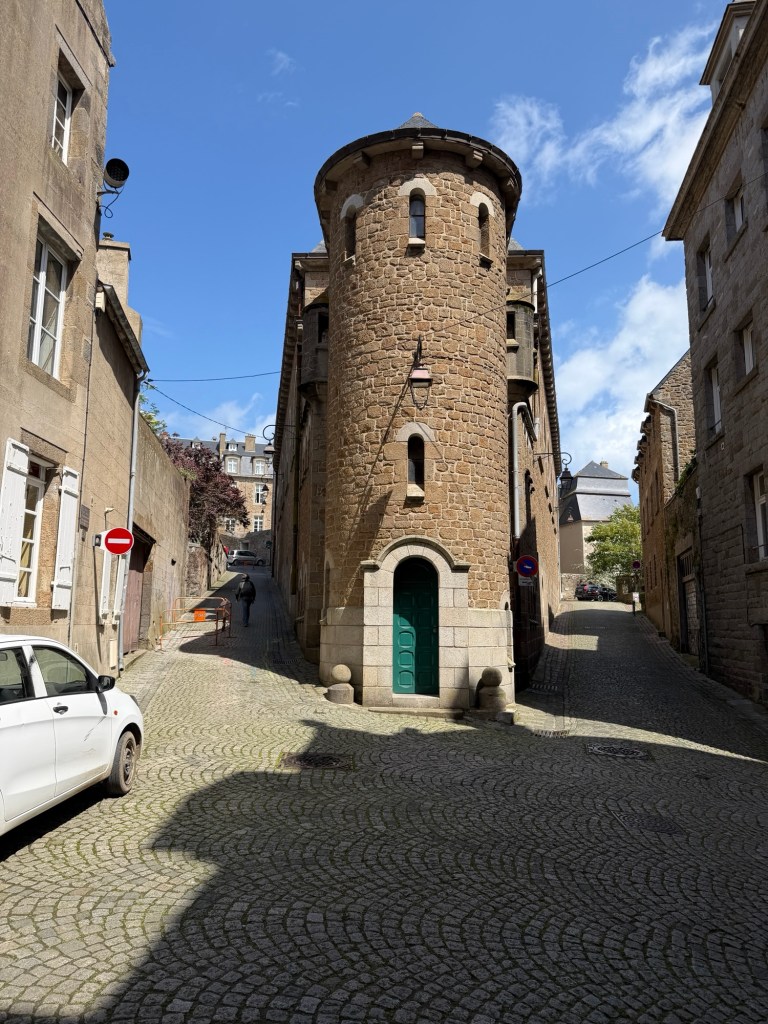
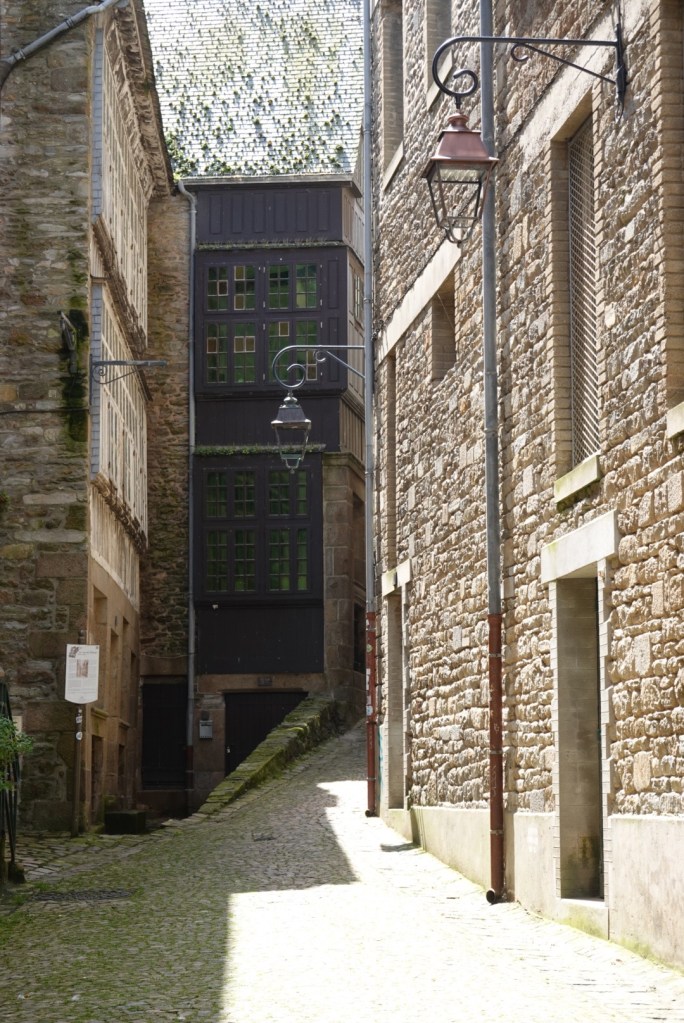
Who would have thought you could see a similar phenomenon two days in a row and still be fascinated? St. Malo is a port city in Brittany, surrounded by thick stone walls. Historically, it was run by privateers, pirates working for the government. It, too, has wide flat beaches and a high tide differential.
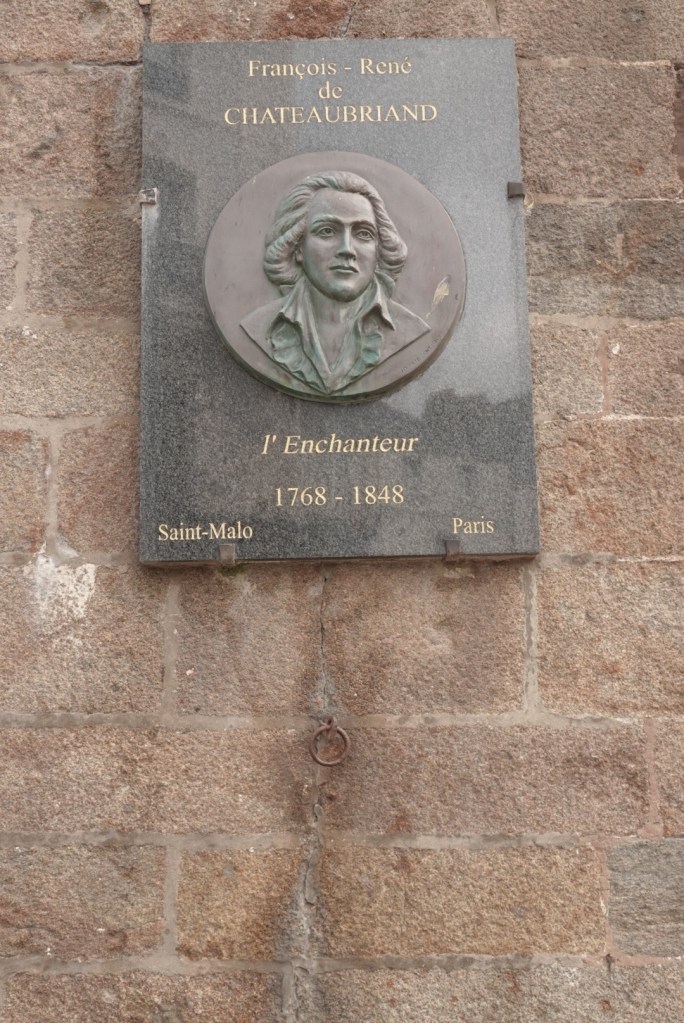
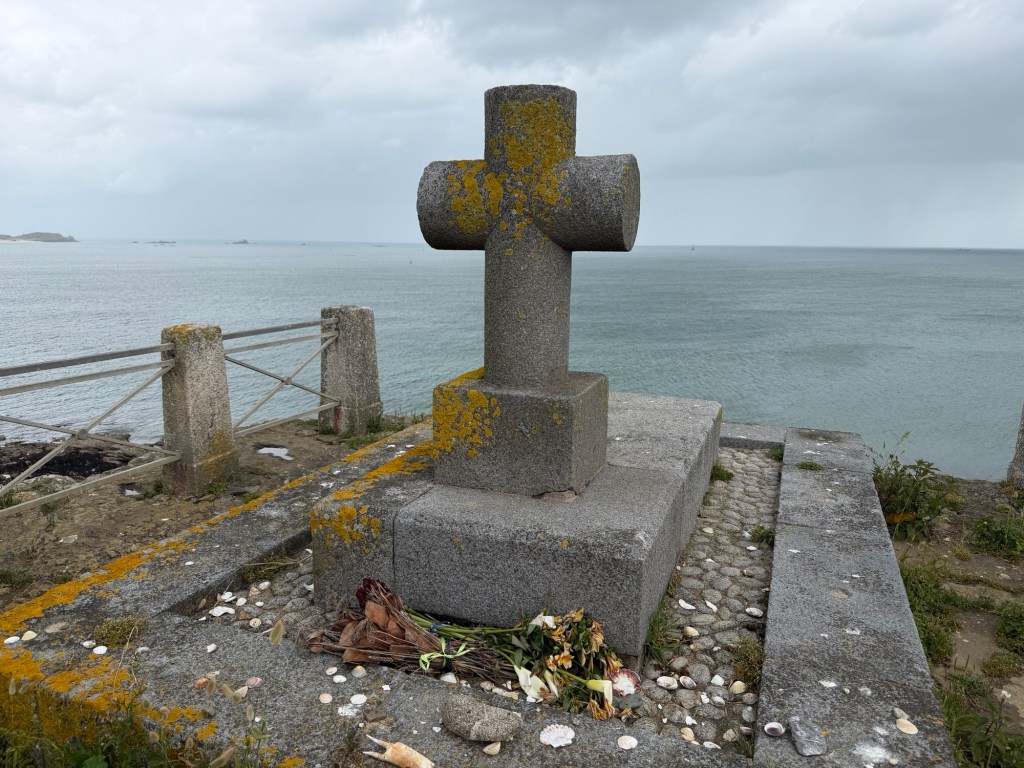
Lots of tourists visit St MaloViscount of St Malo, writer, translator and diplomat, his grave is on an island we walked to later.
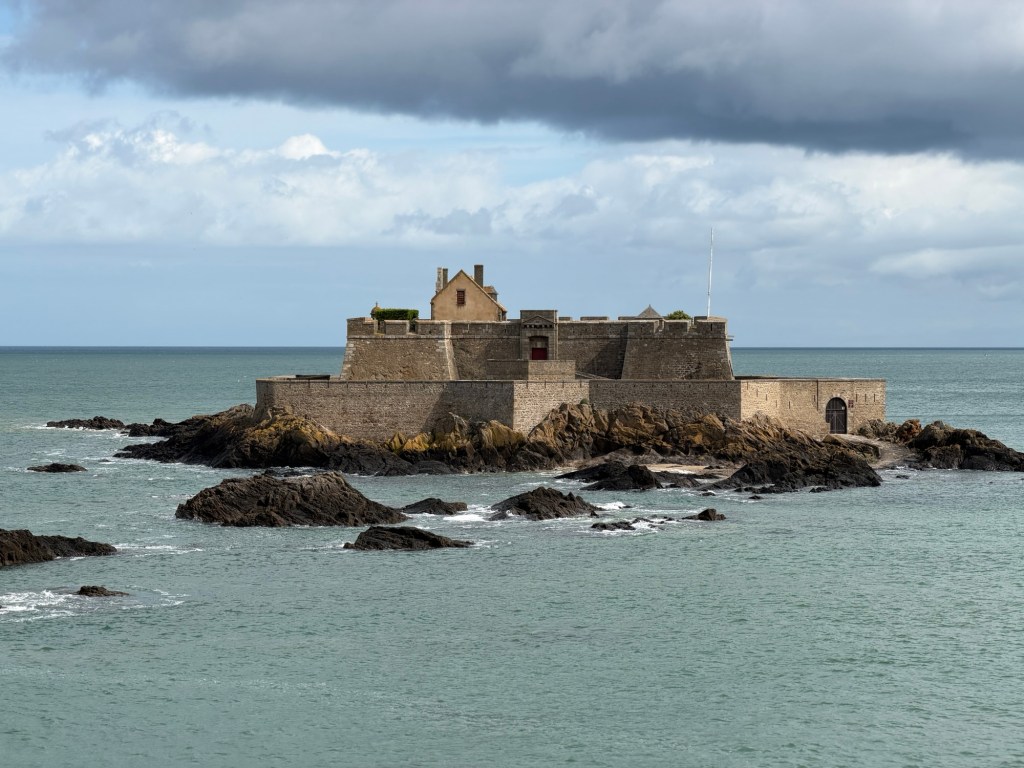
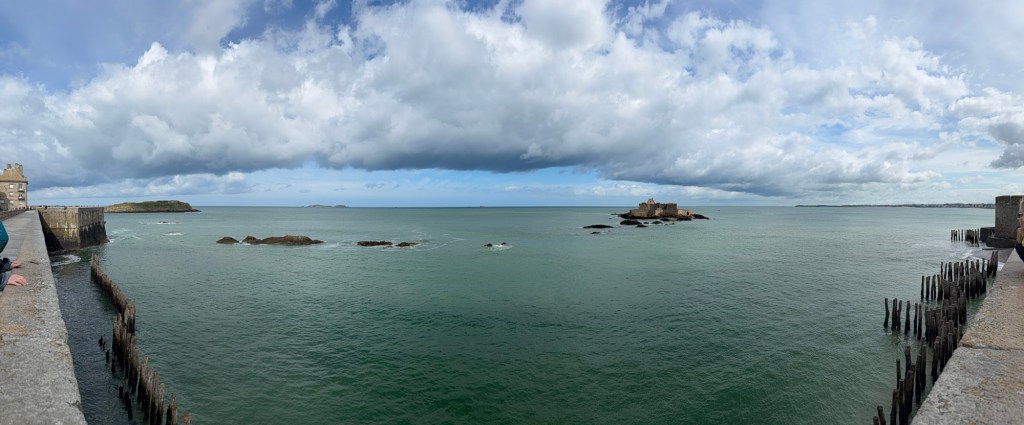
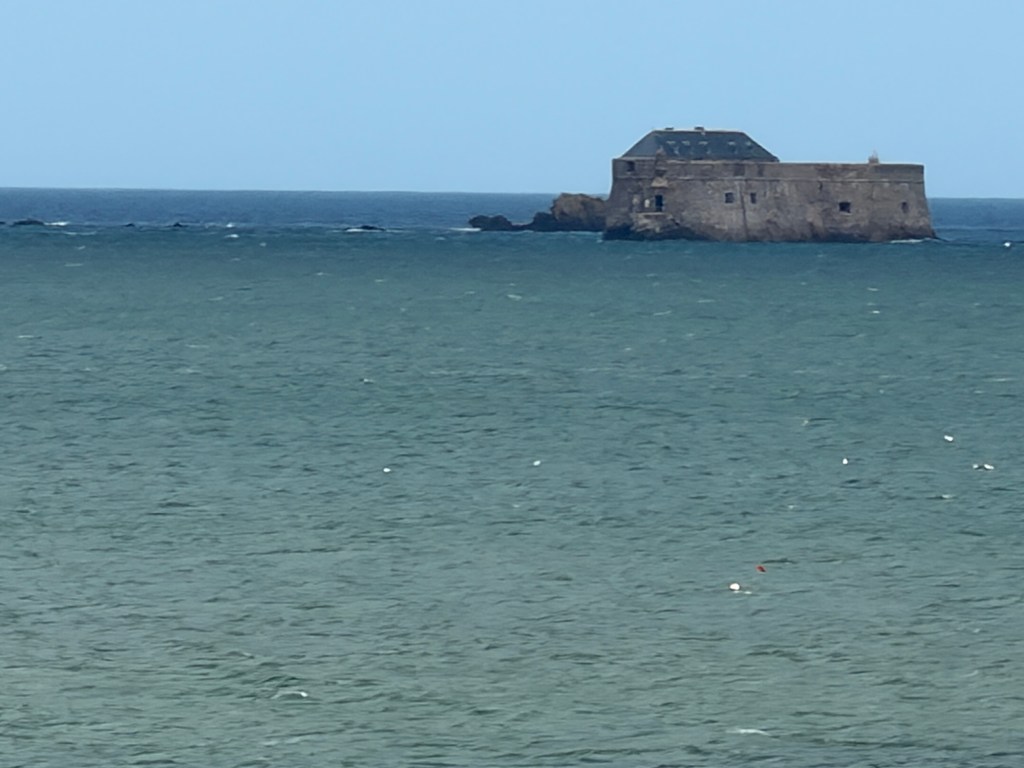
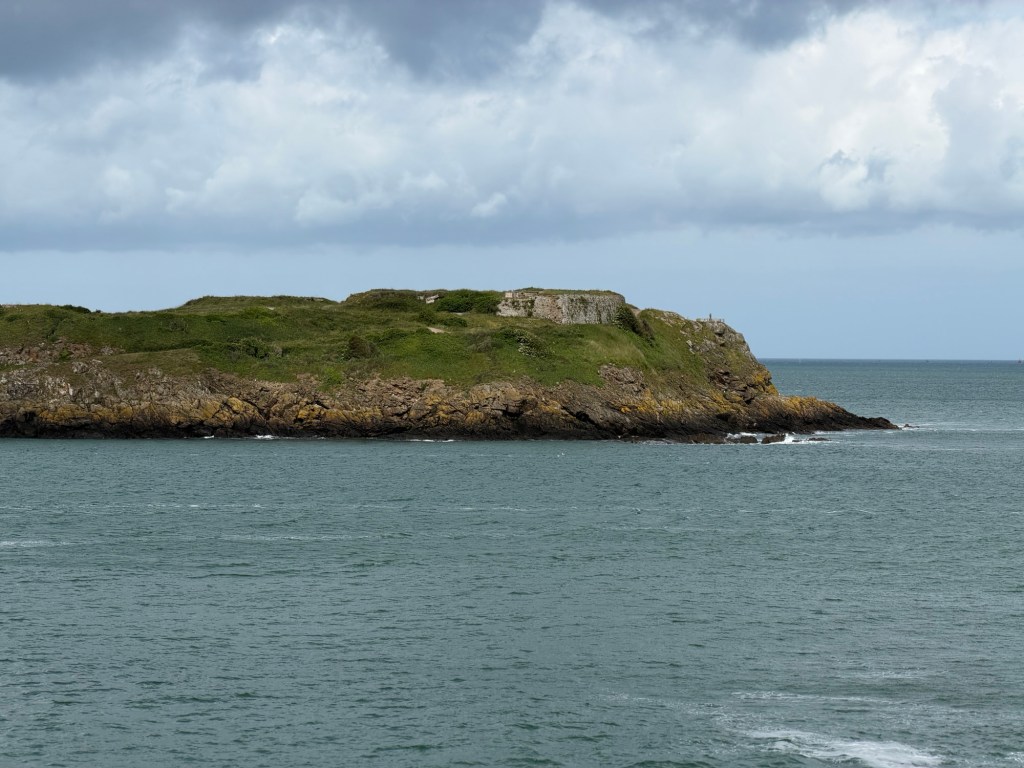
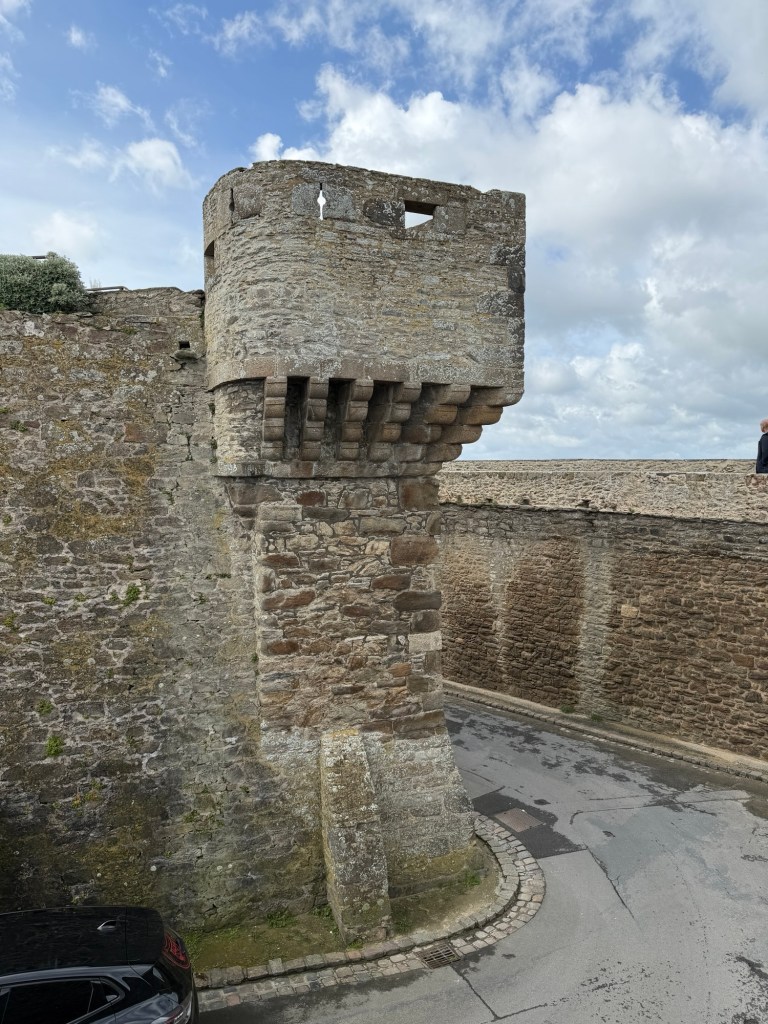
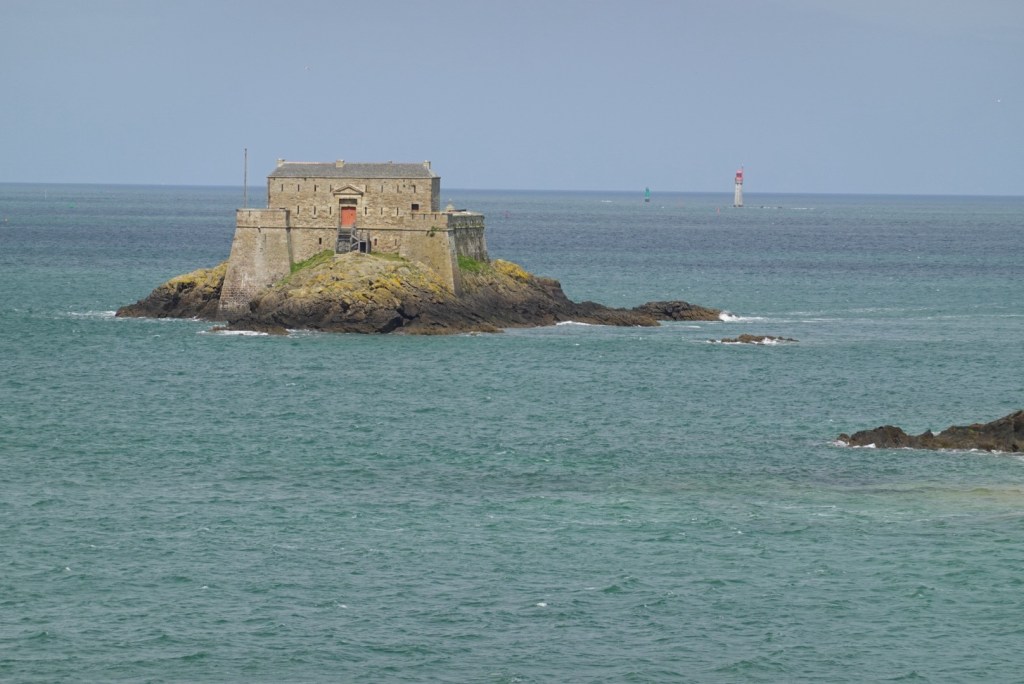
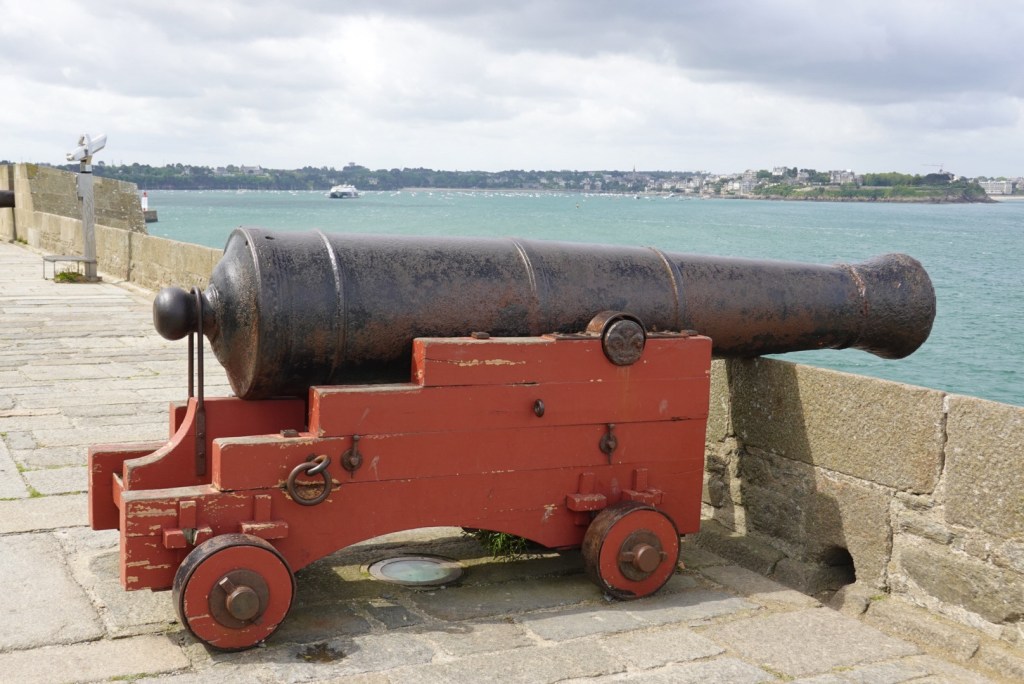
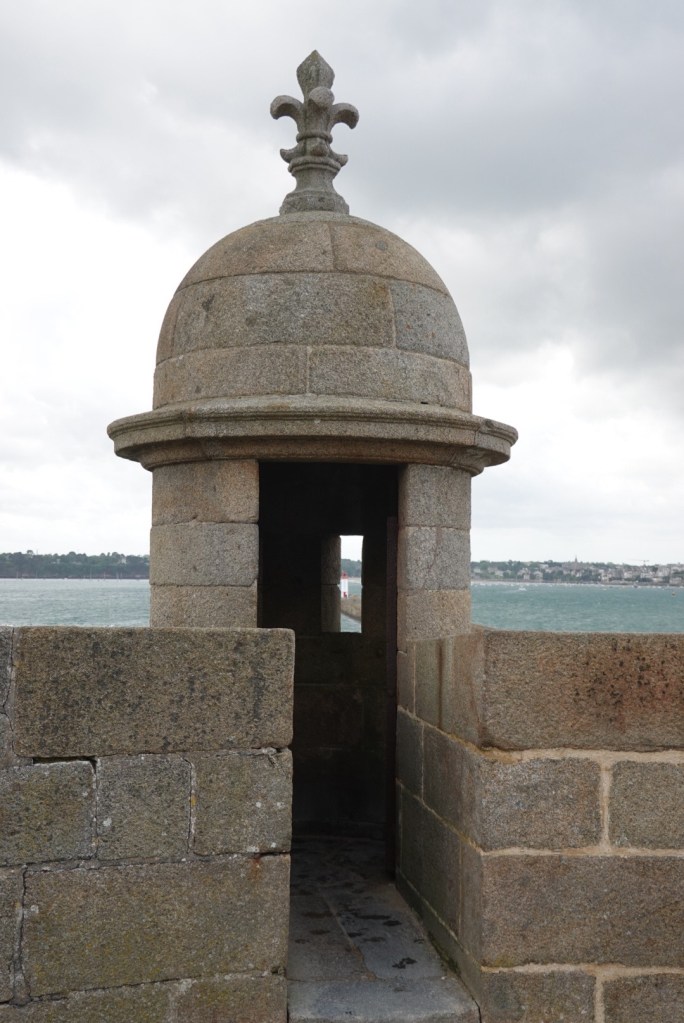
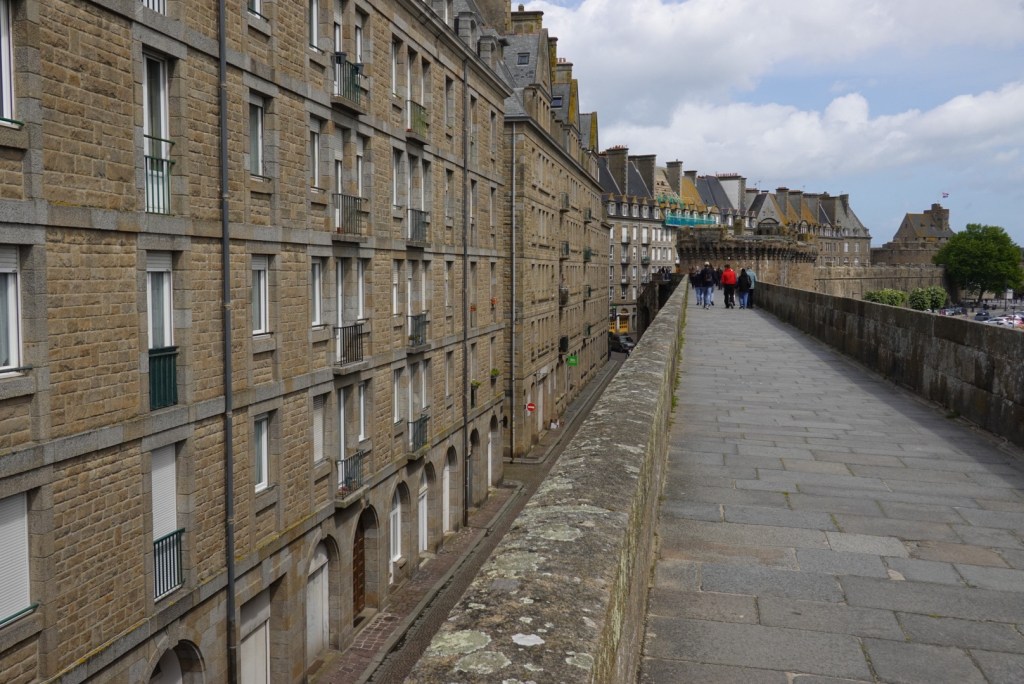
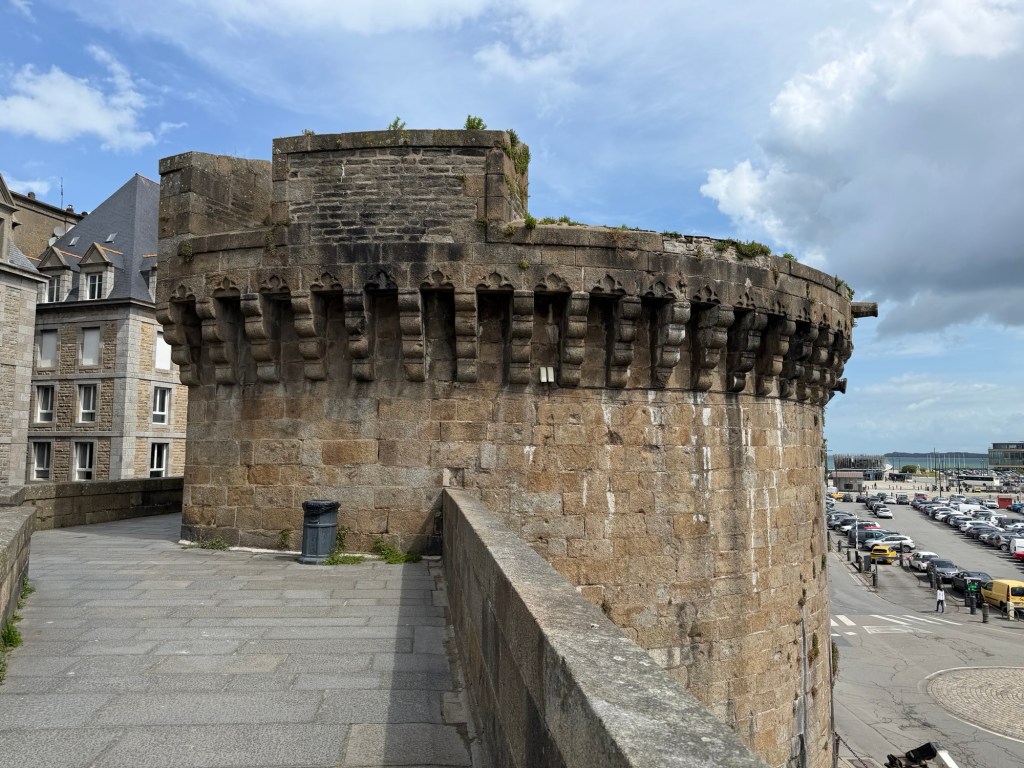
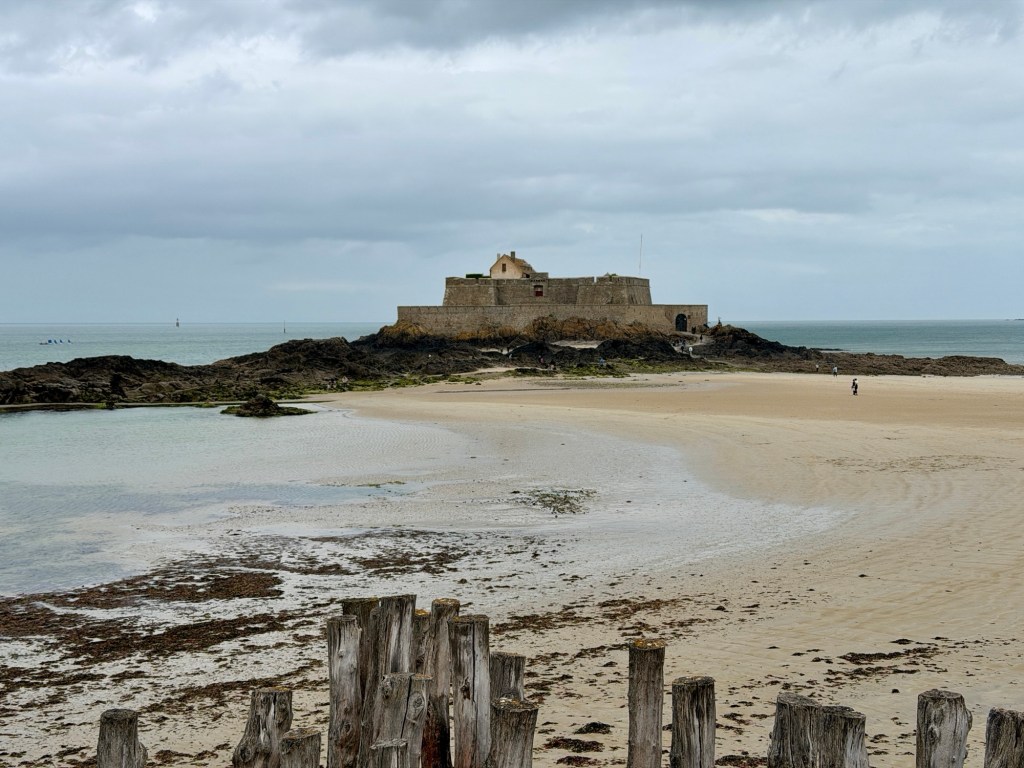
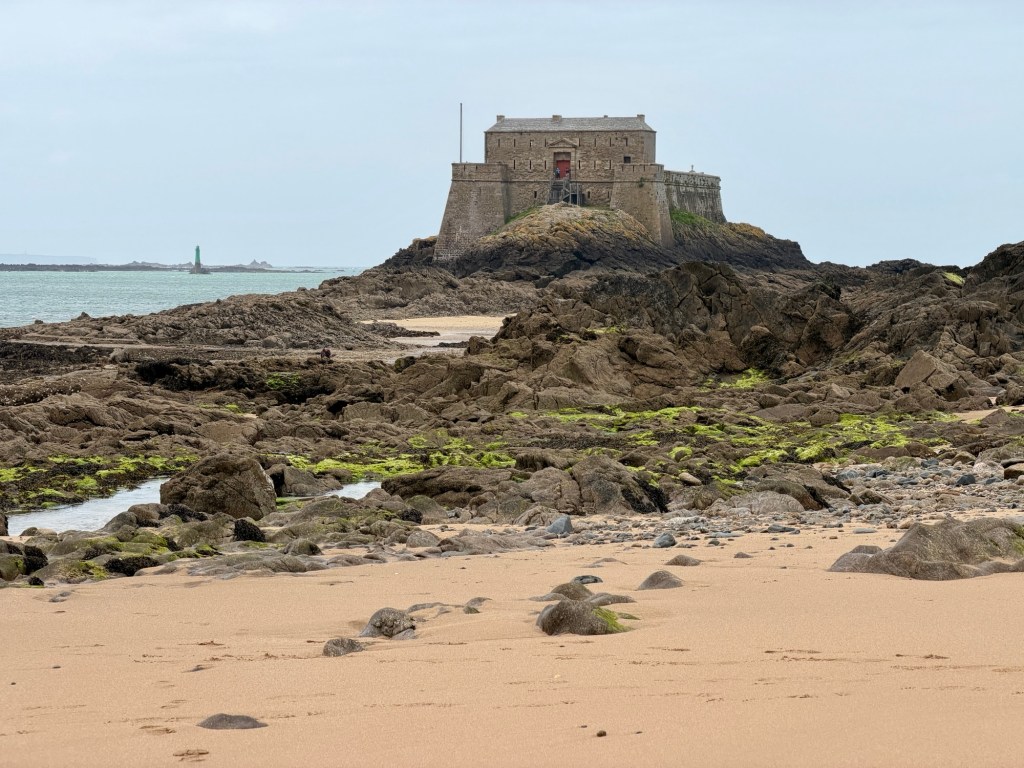
We wandered the ramparts around the fortress at high tide, viewing islands close to the shore.
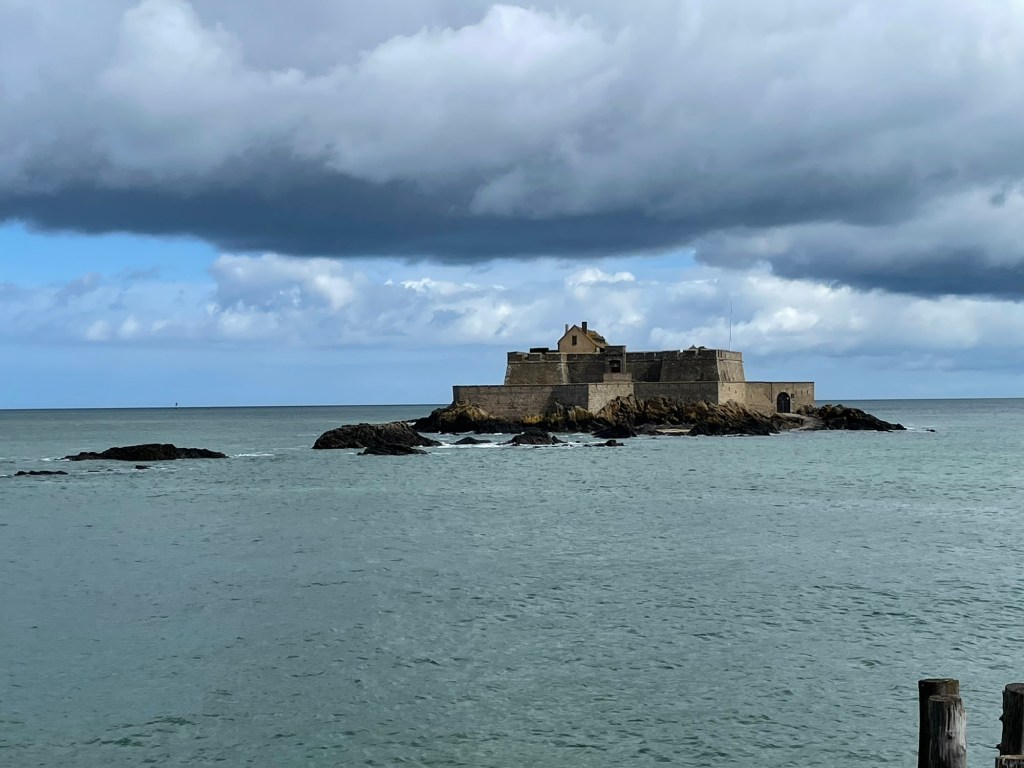
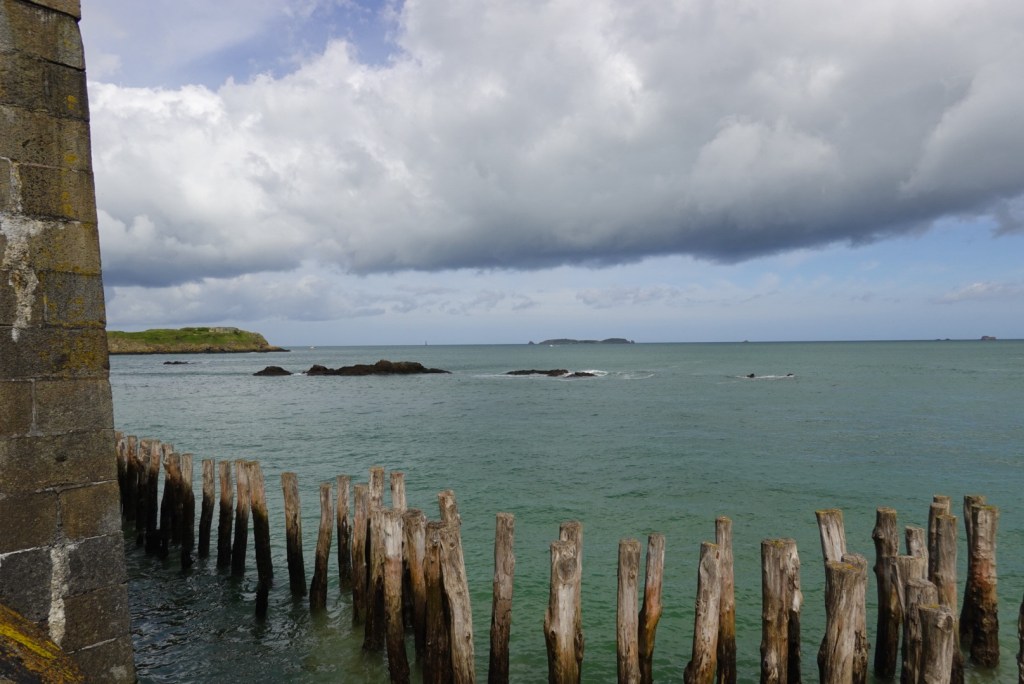
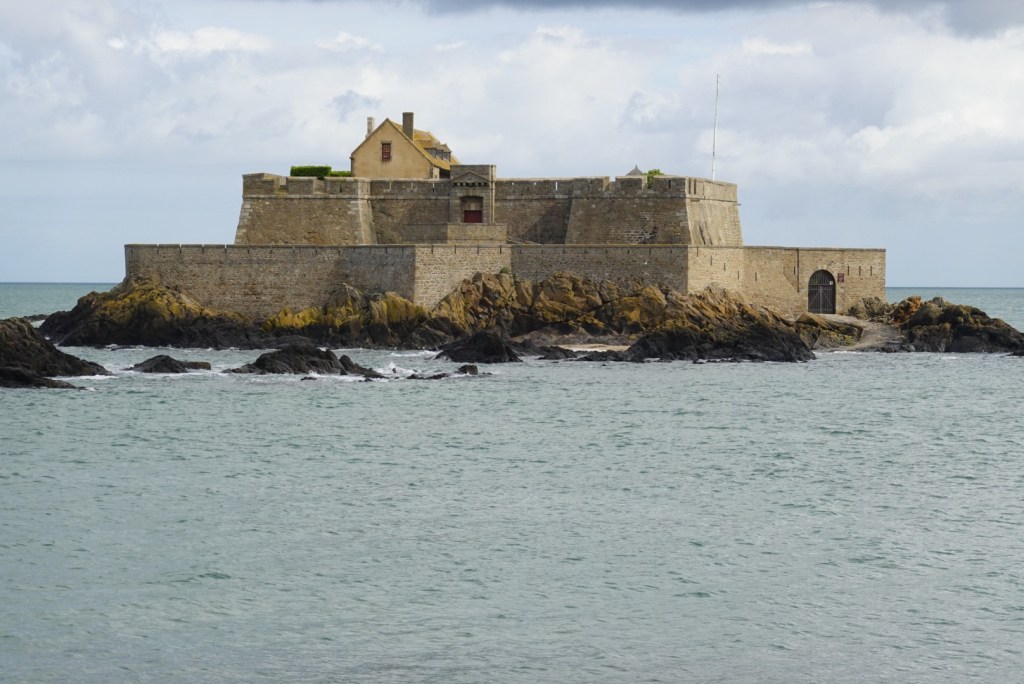
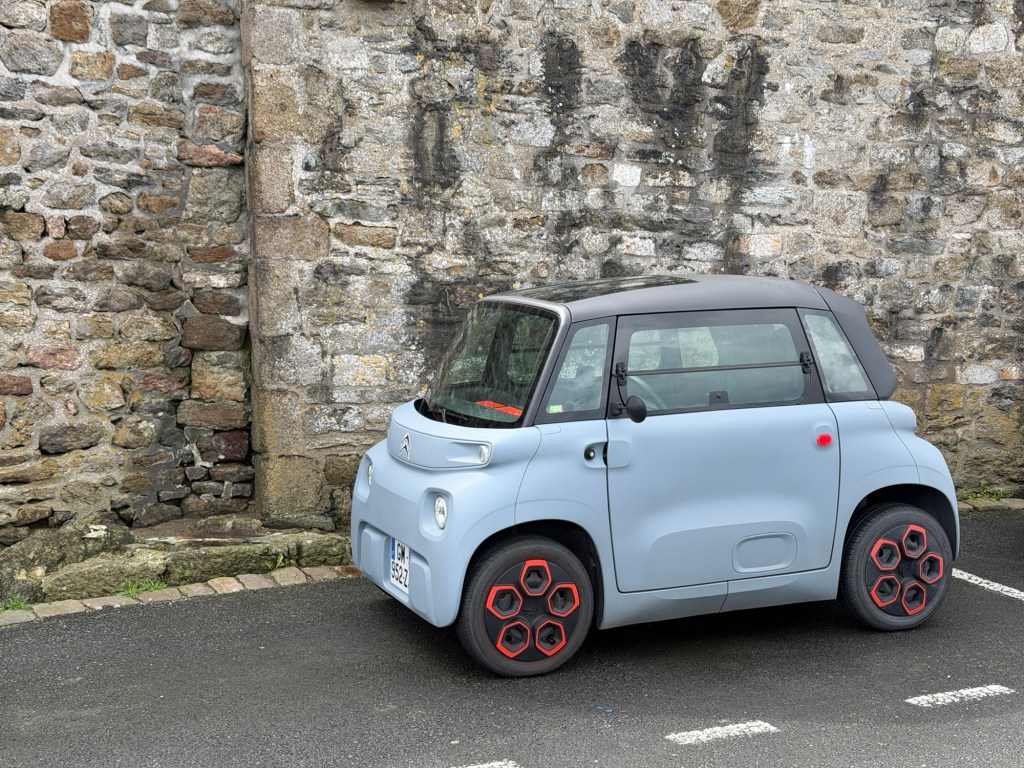
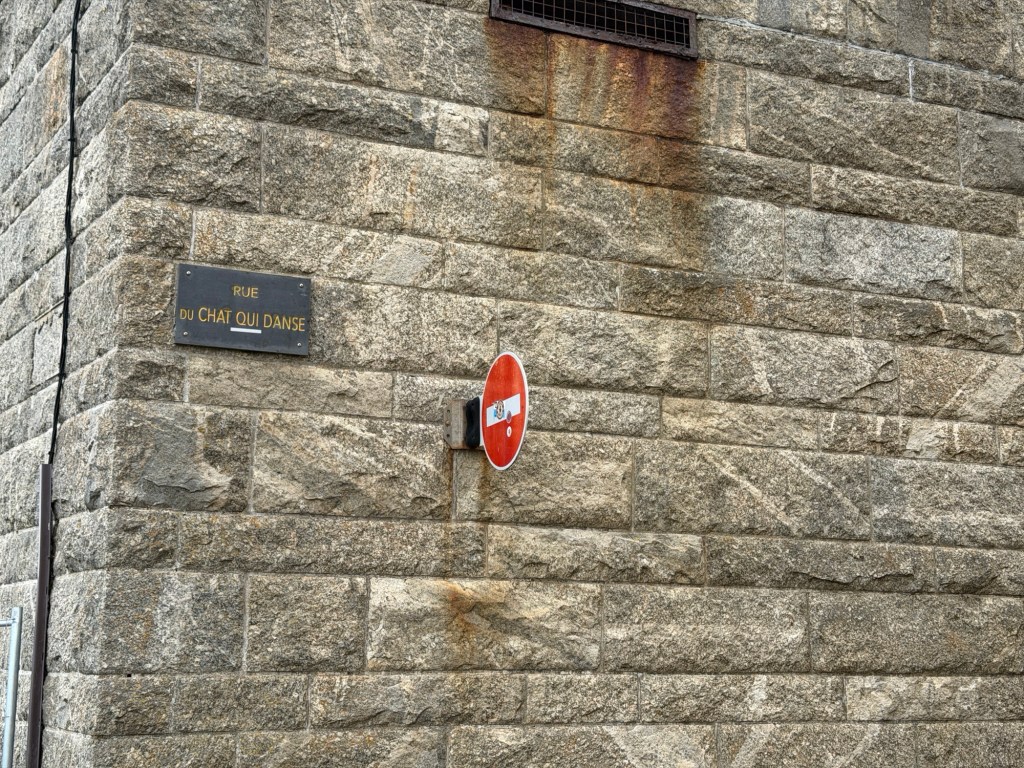
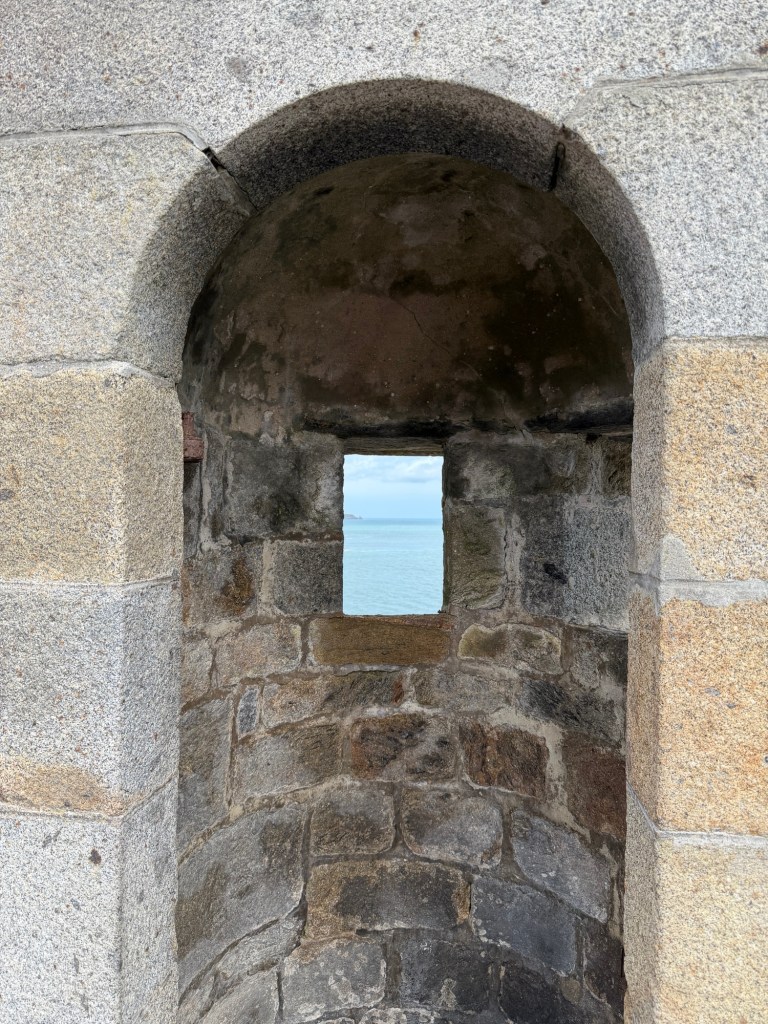
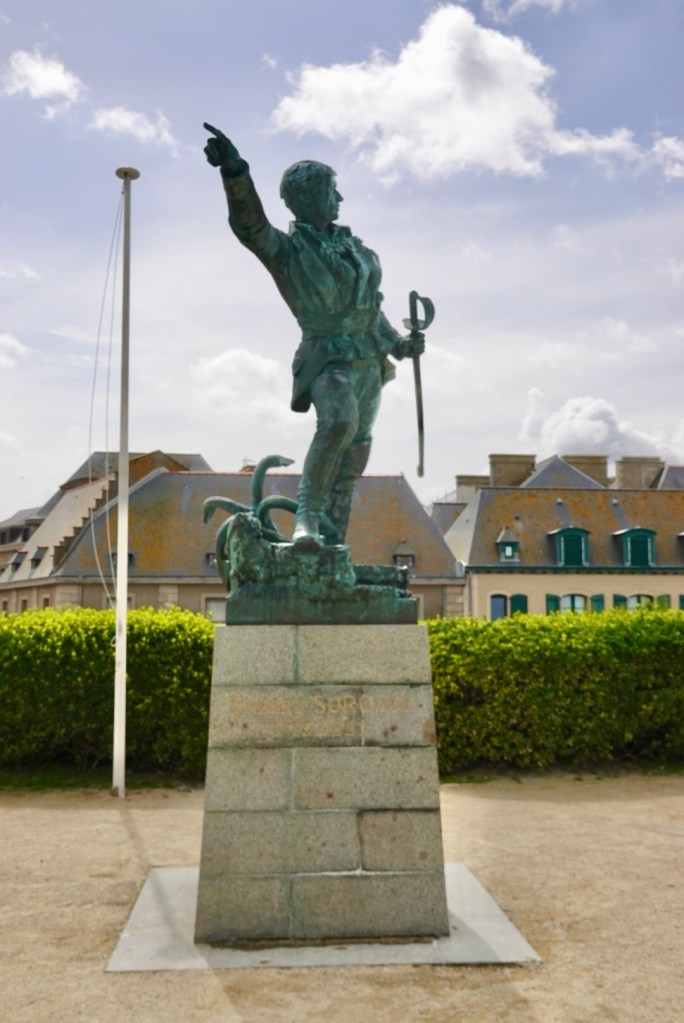
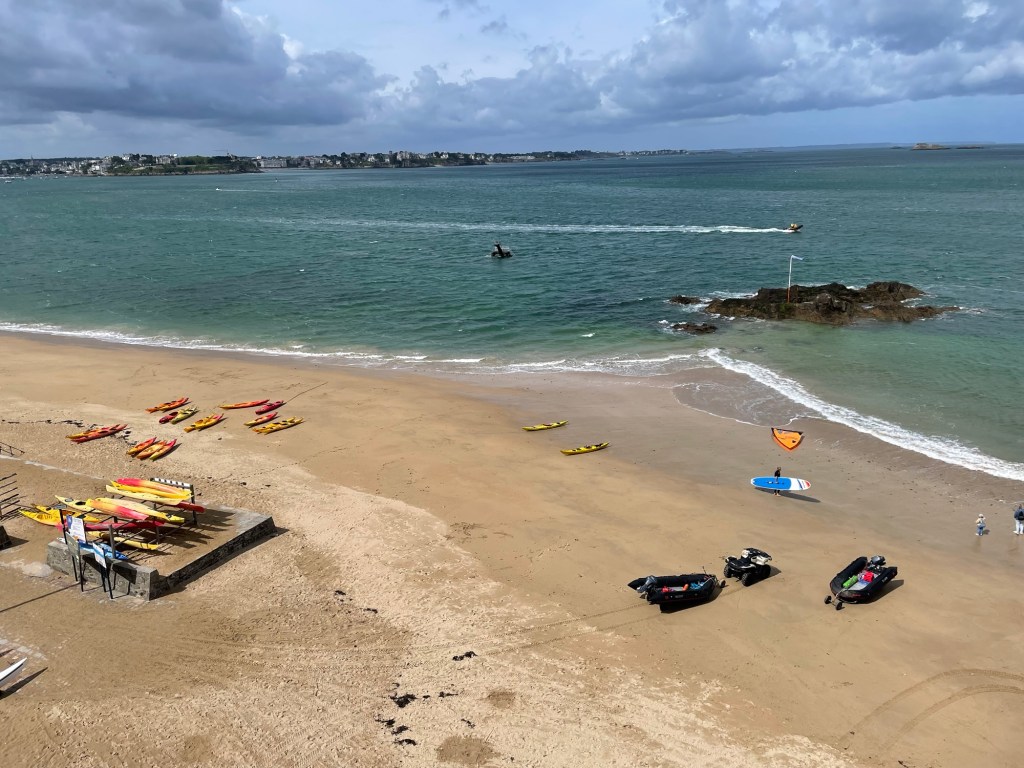
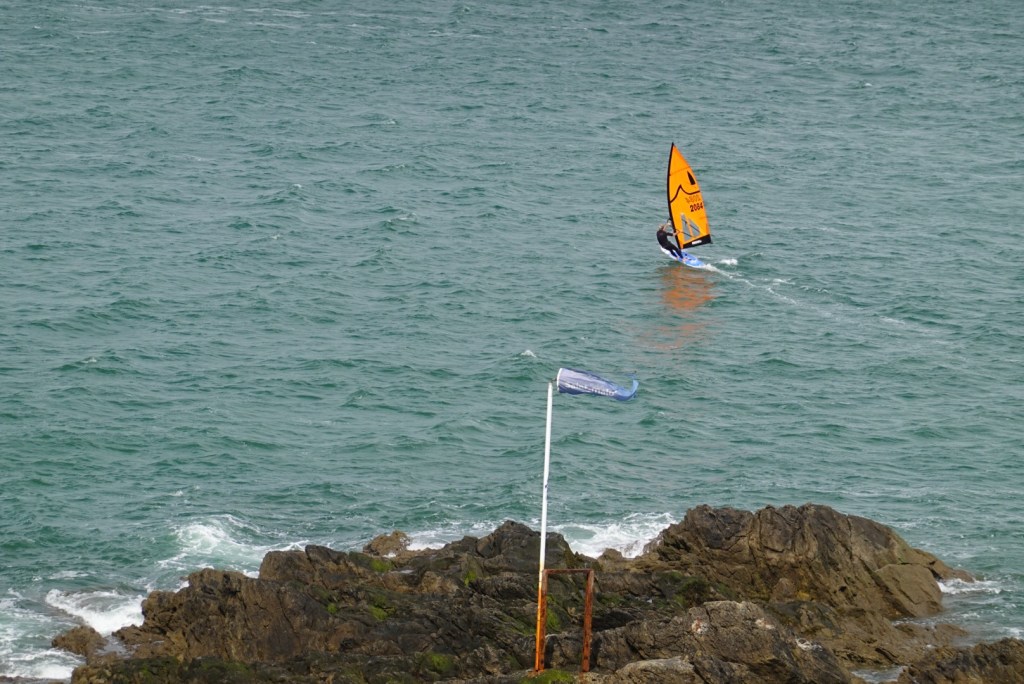
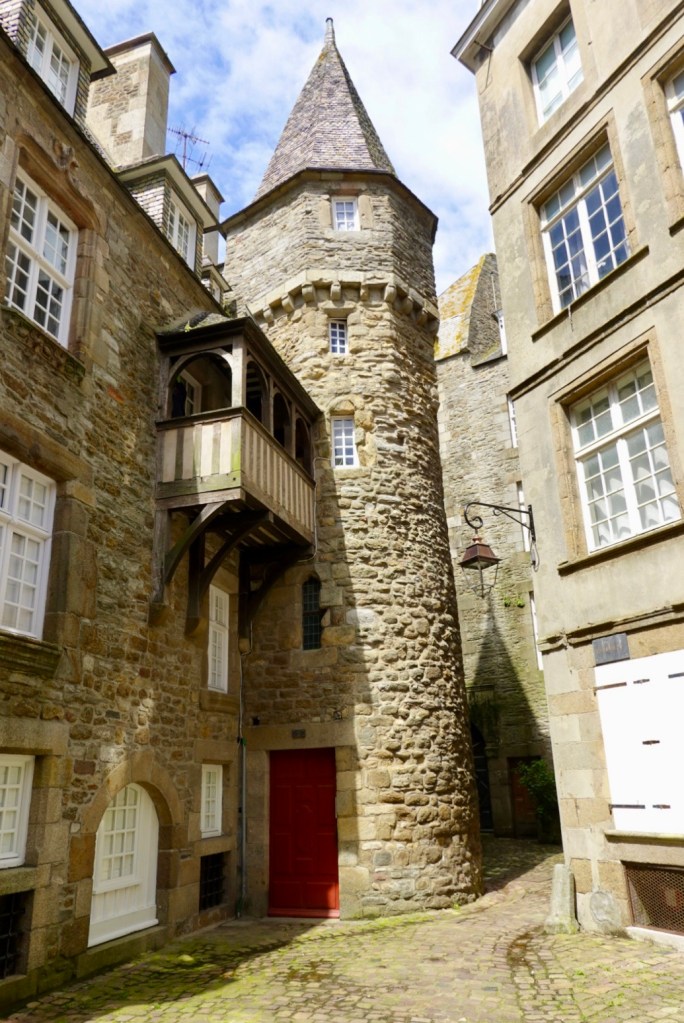
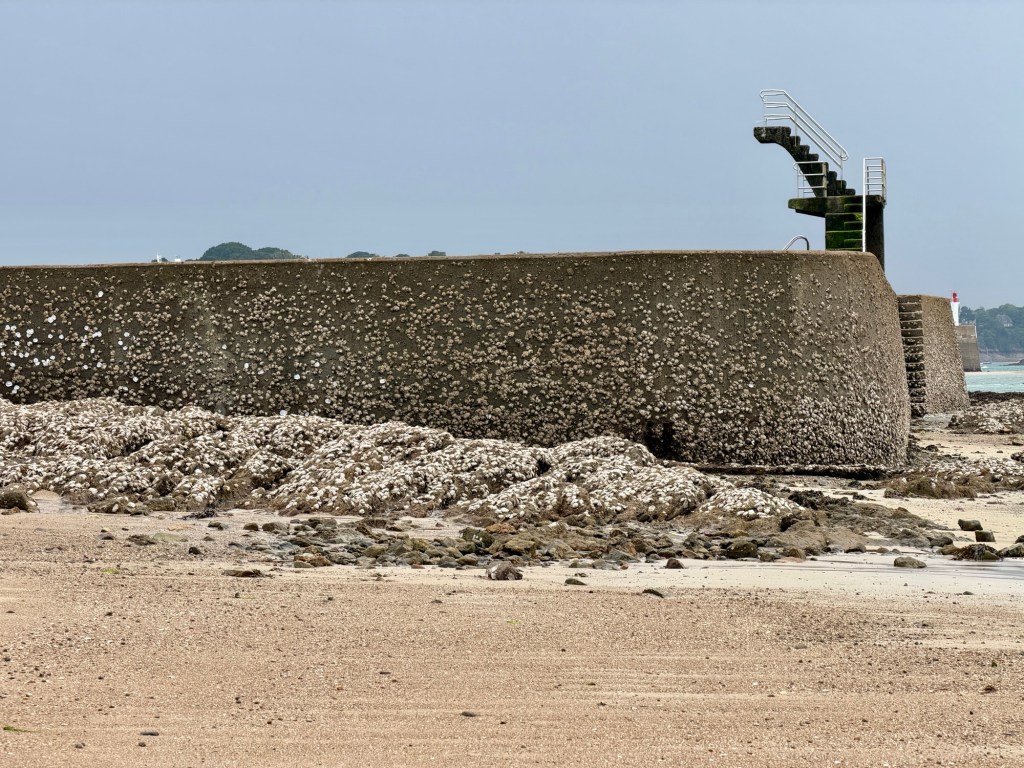
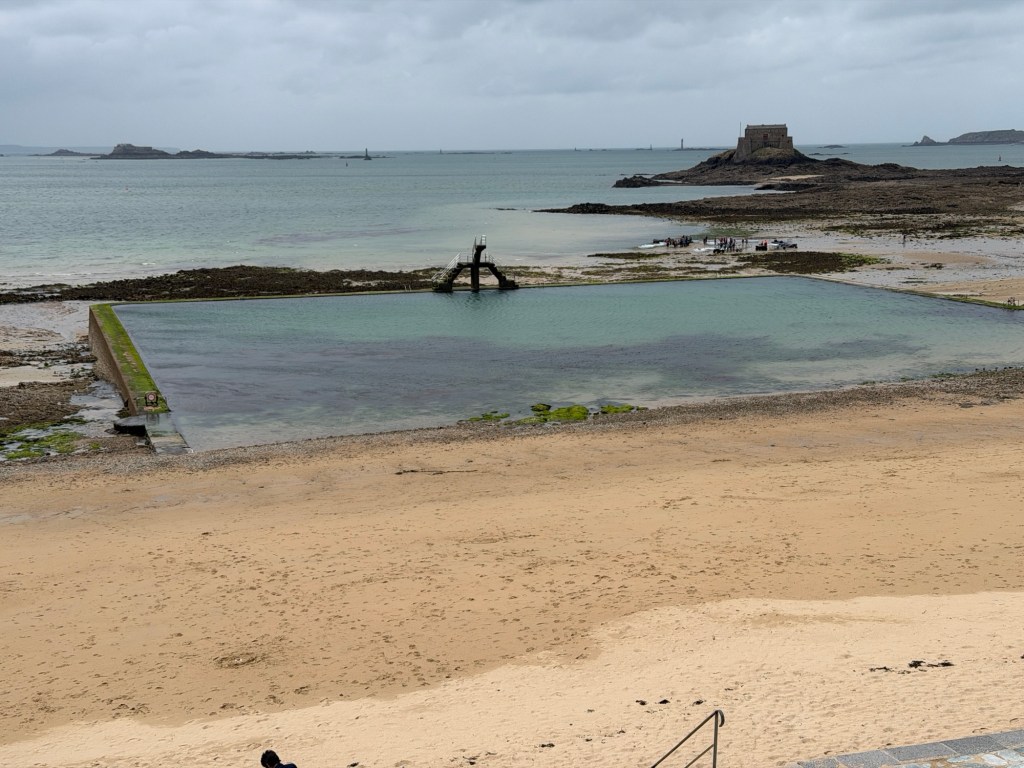
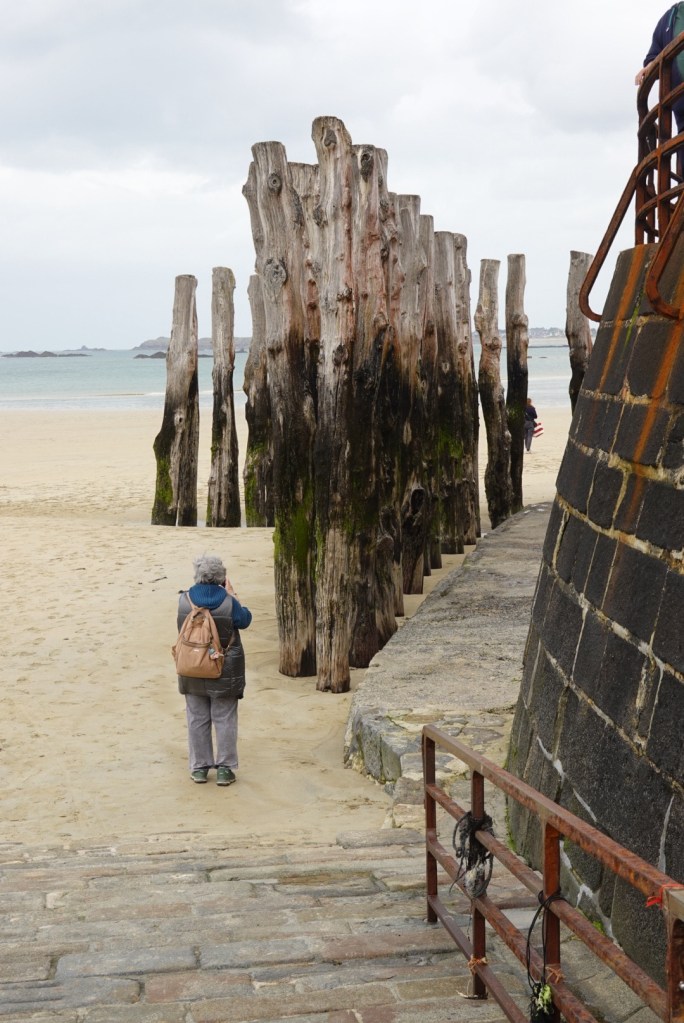
These are islands only at high tide.The islands look far away in this panorama. The wood pilings protect the walls from wave damage.This island has the grave of Chateaubriand, facing the sea.These tiny cars are used by people who have too many violations or are learning to drive; they have a maximum speed less than 70 mph.Marc was looking for humorous street signs for a virtual geocache. This one: street of the cat who dance.Portholes for weaponsSmall alcove that looks out on the seaHouse of QuebecRobert Surcouf, French privateer and slave trader, was born here in 1773. A diving board in the middle of the ocean?The tide is starting to go out. Judging by the sock, this wind-surfer is very strong.
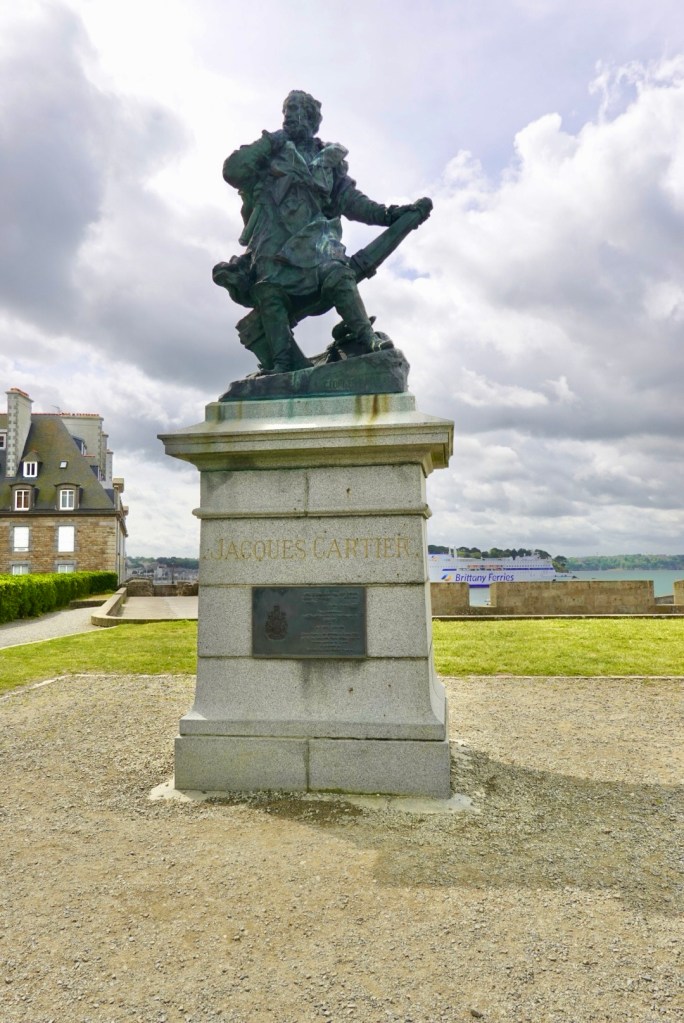
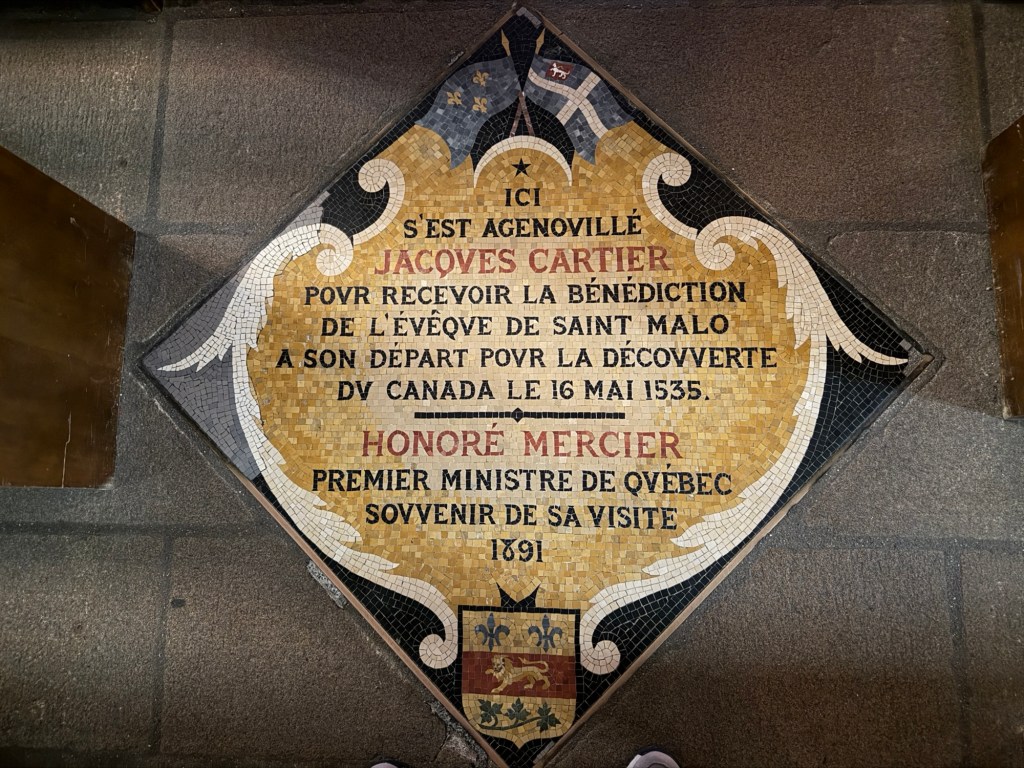
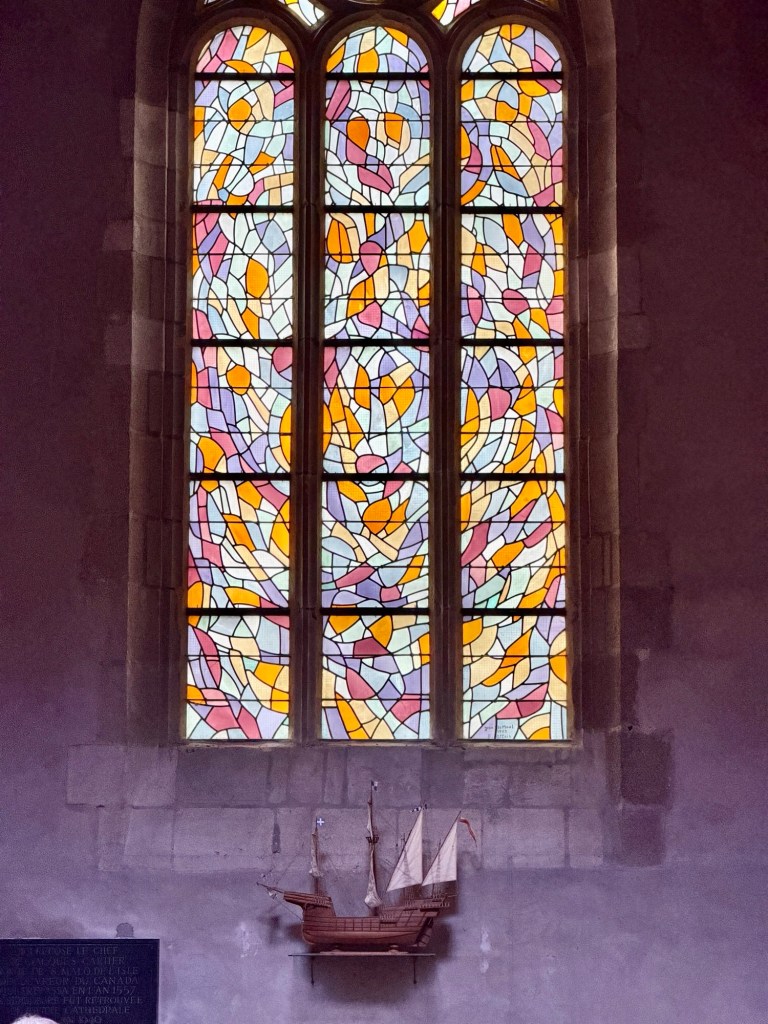
Jacques Cartier, whose statue is here, was an explorer known for being the first person to use the name Canada, our North American neighbor, “discovering” Quebec in the sixteenth century.
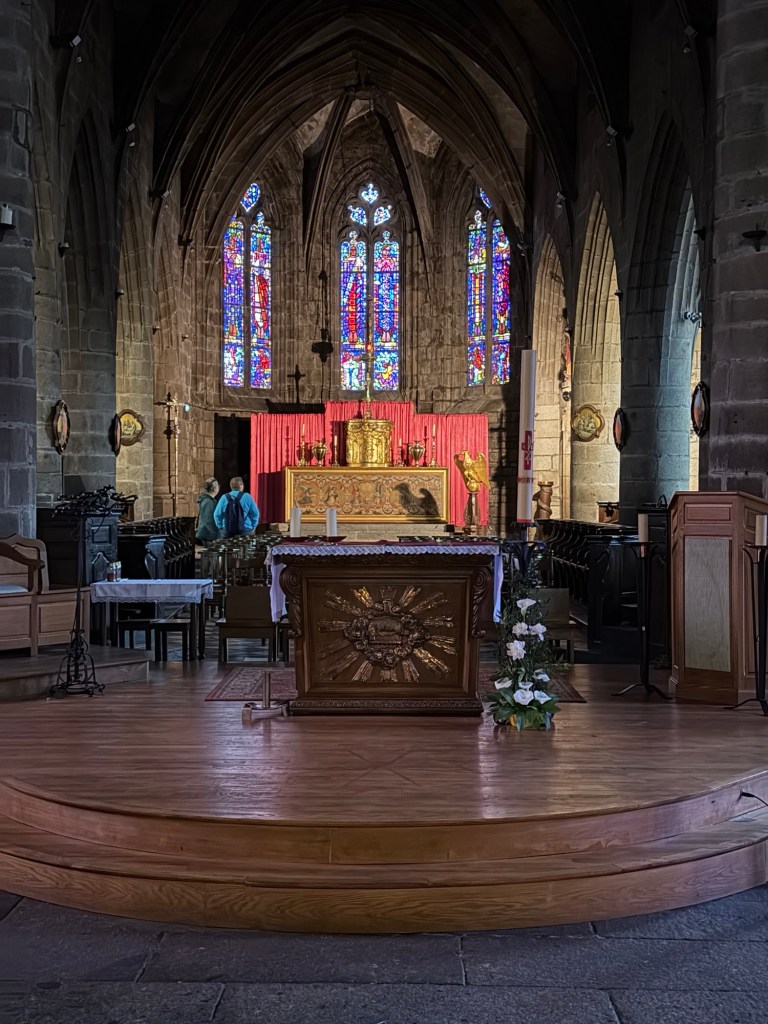
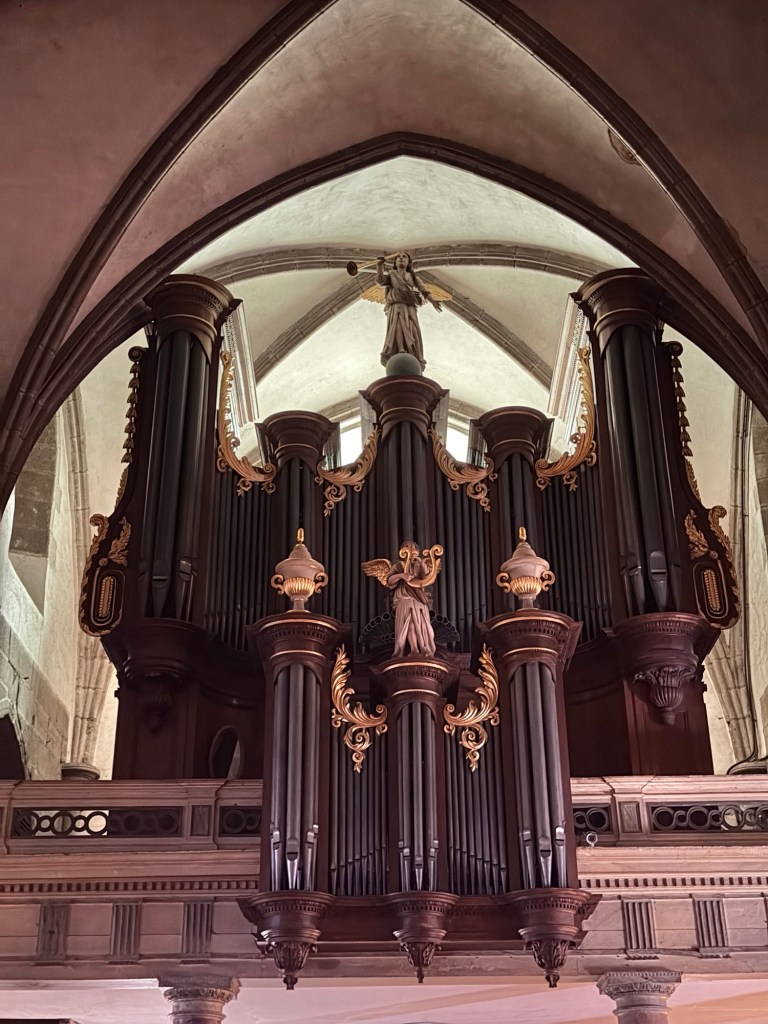
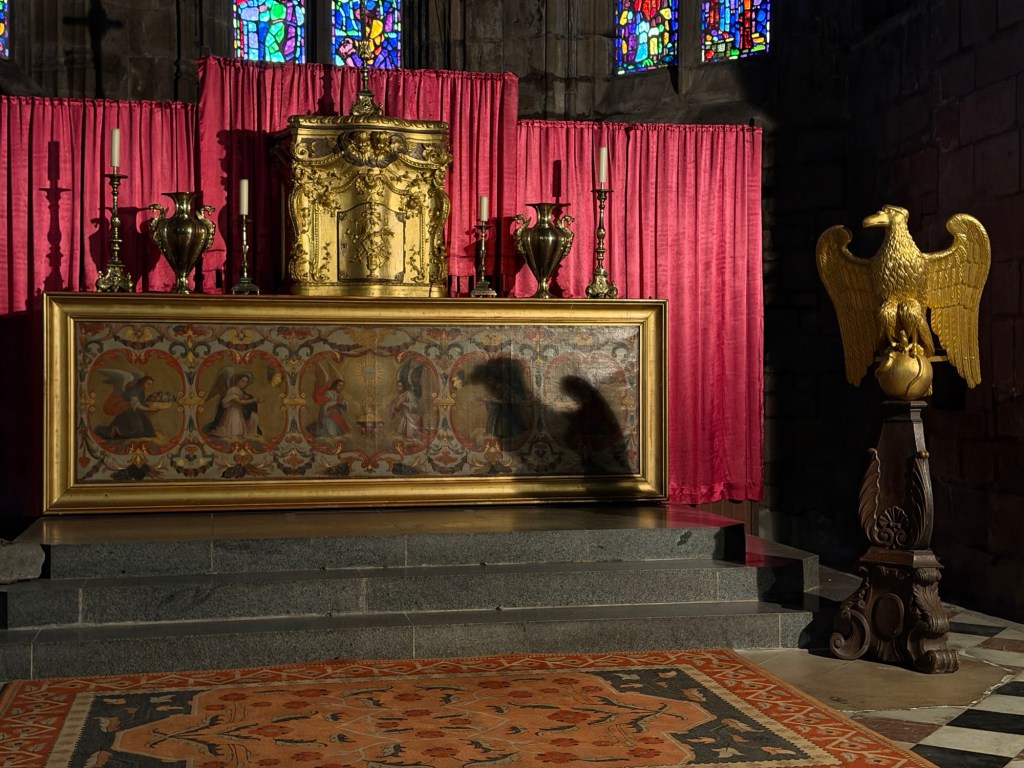
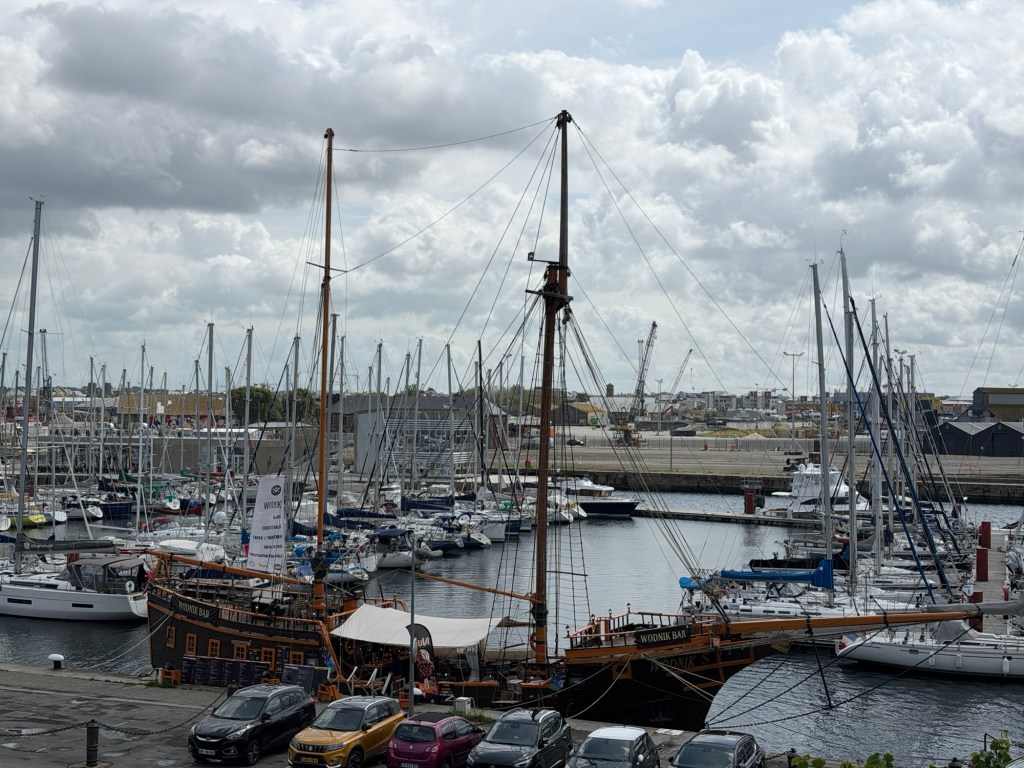
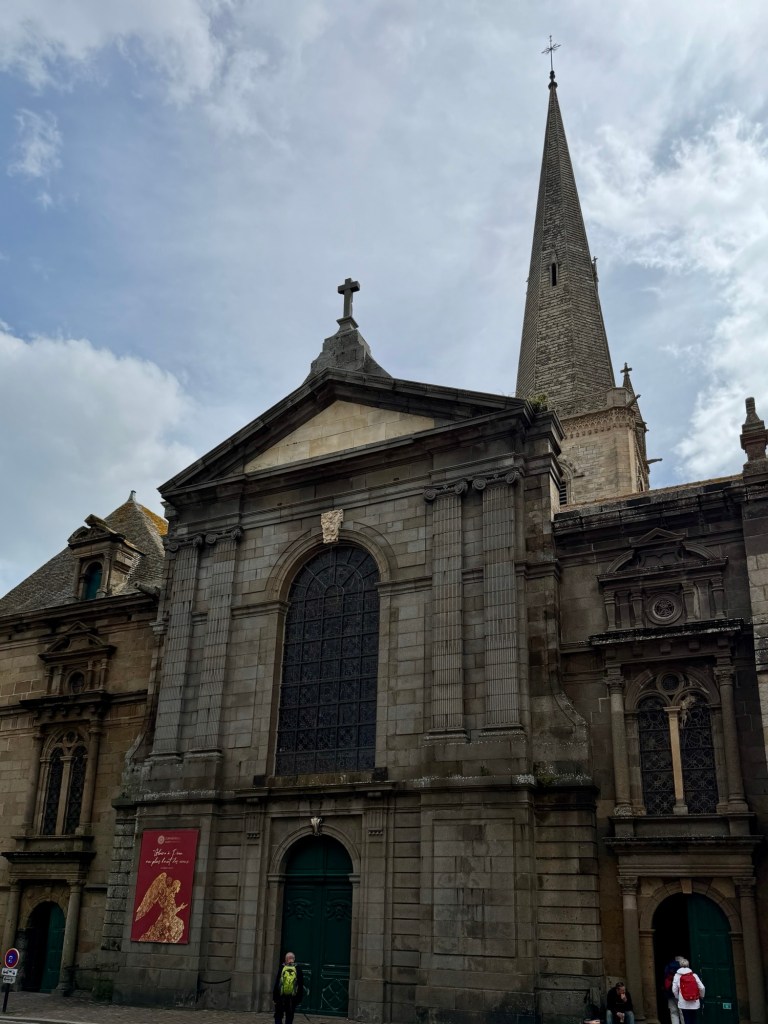
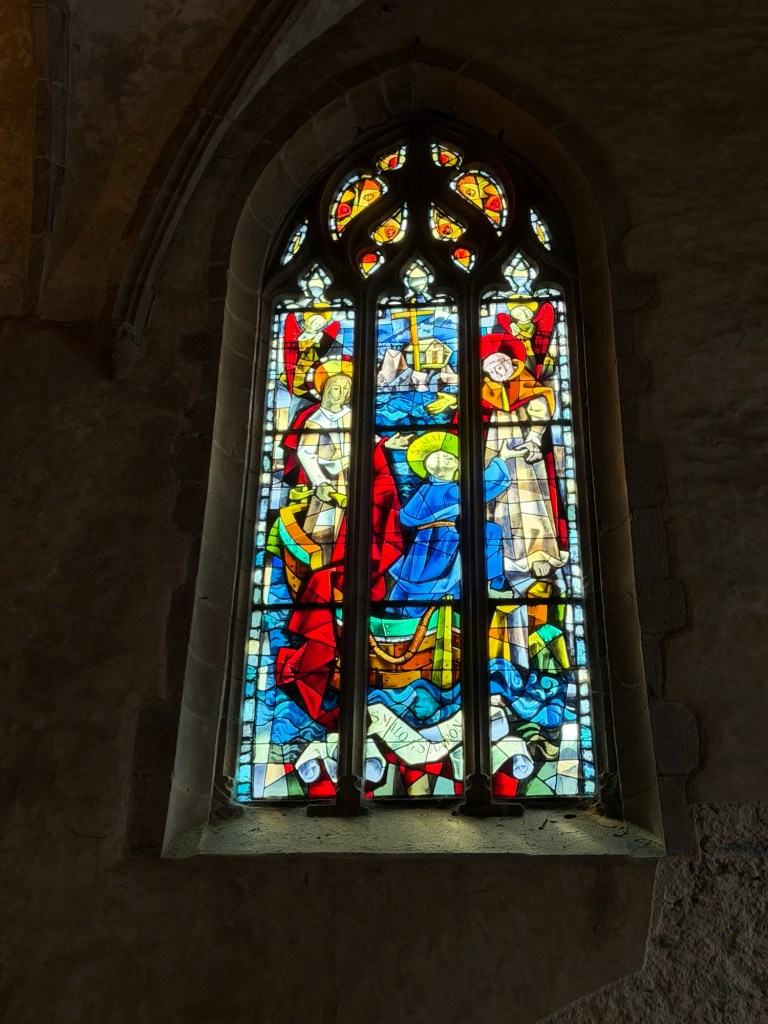
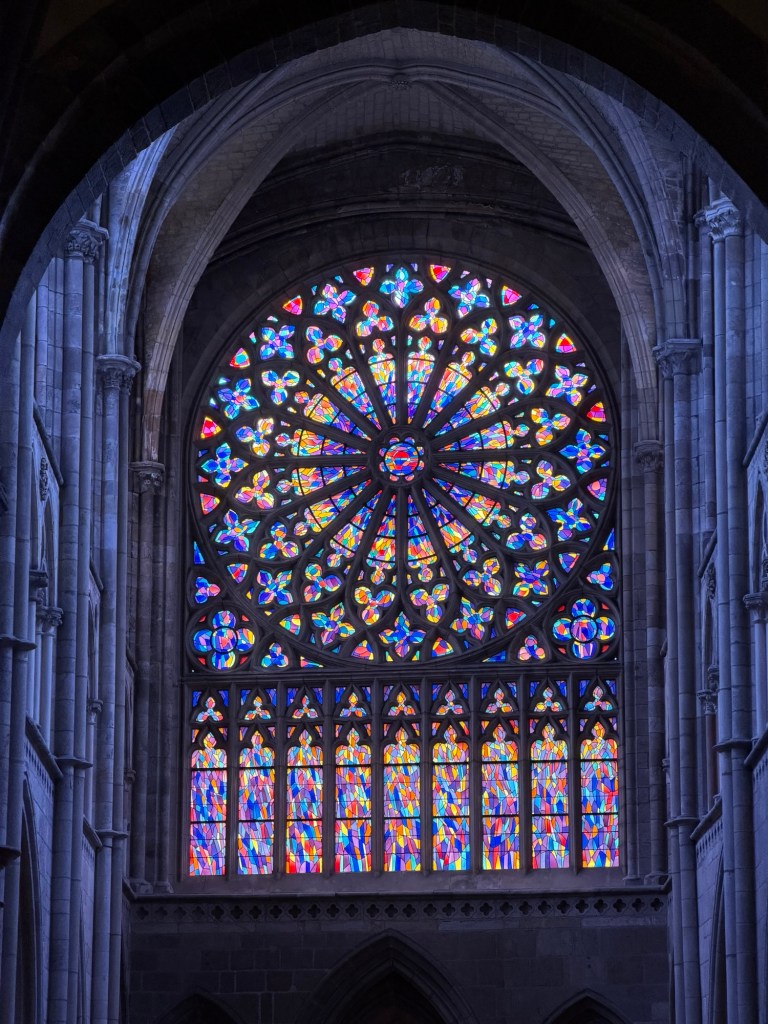
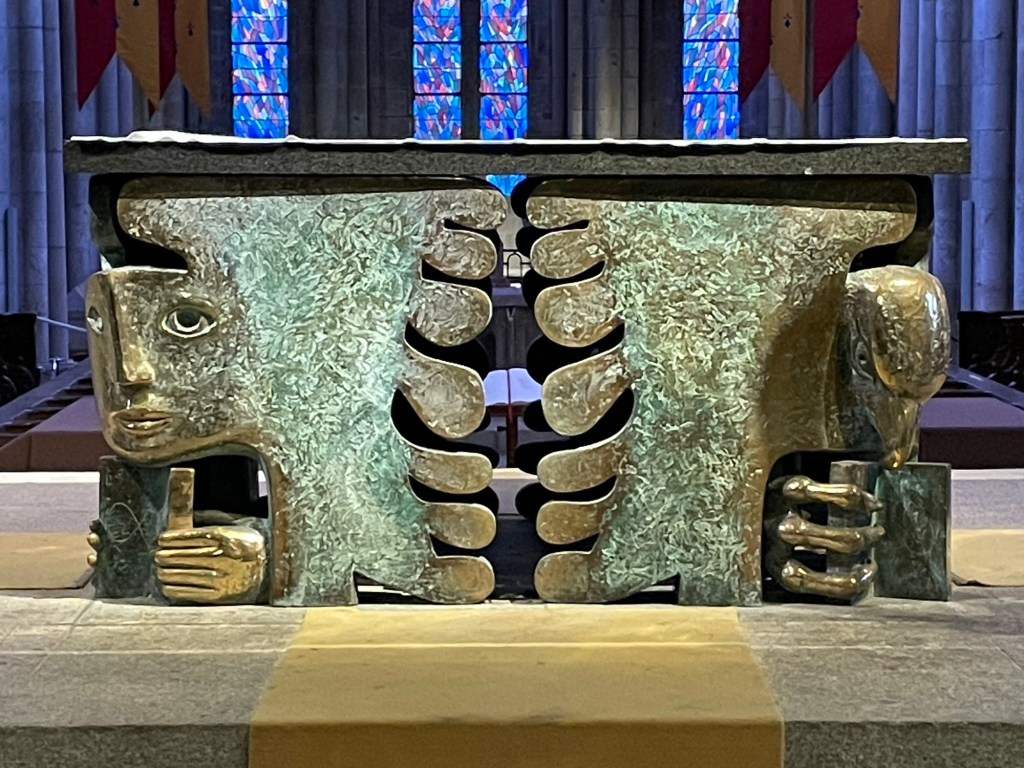
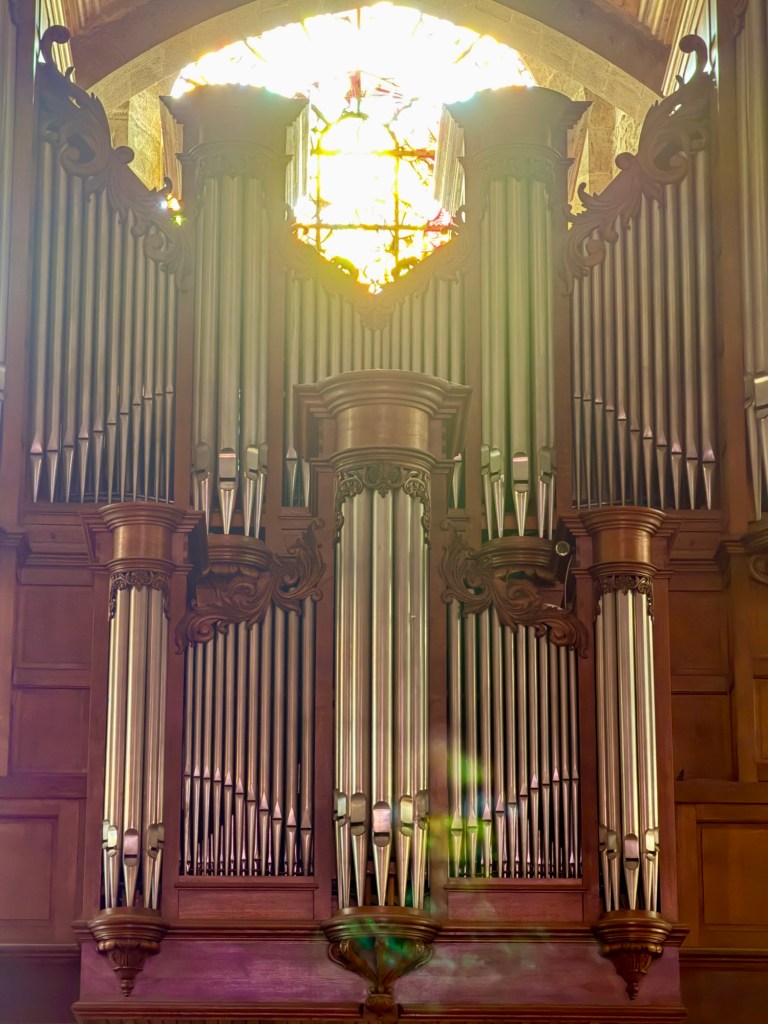
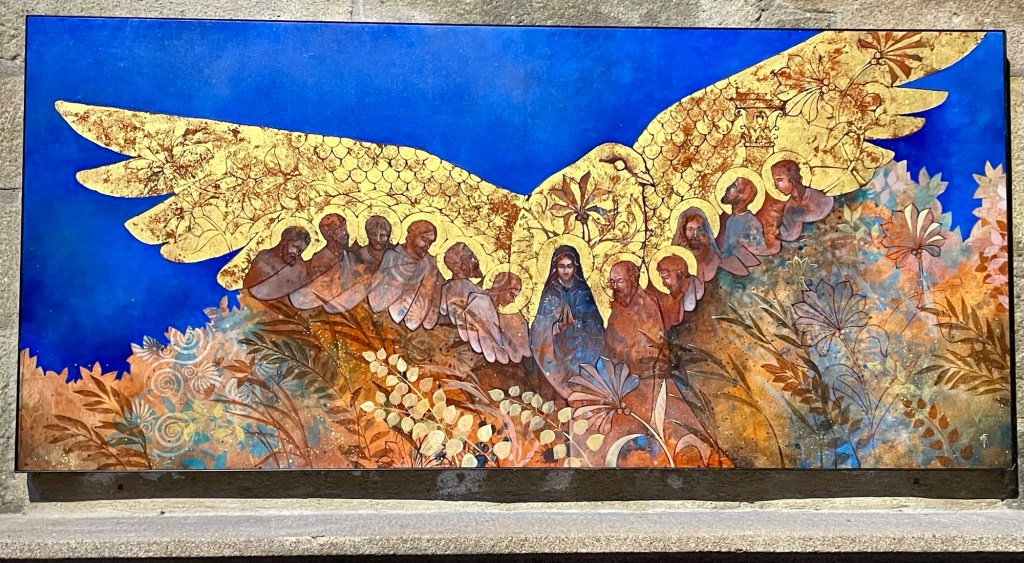
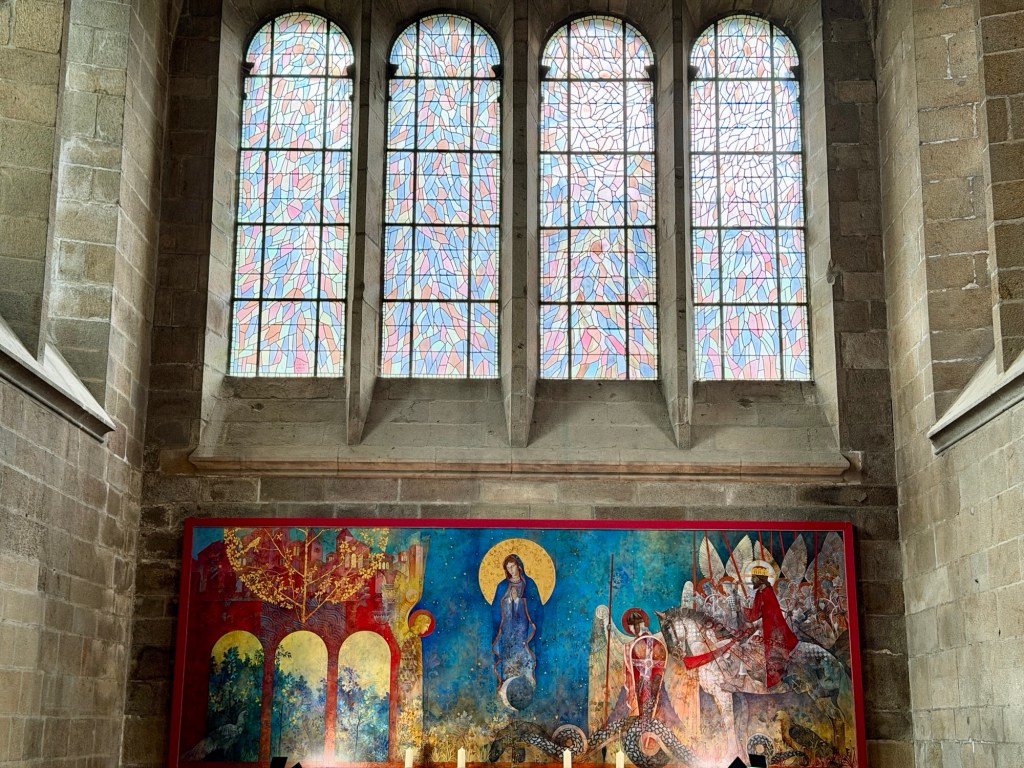
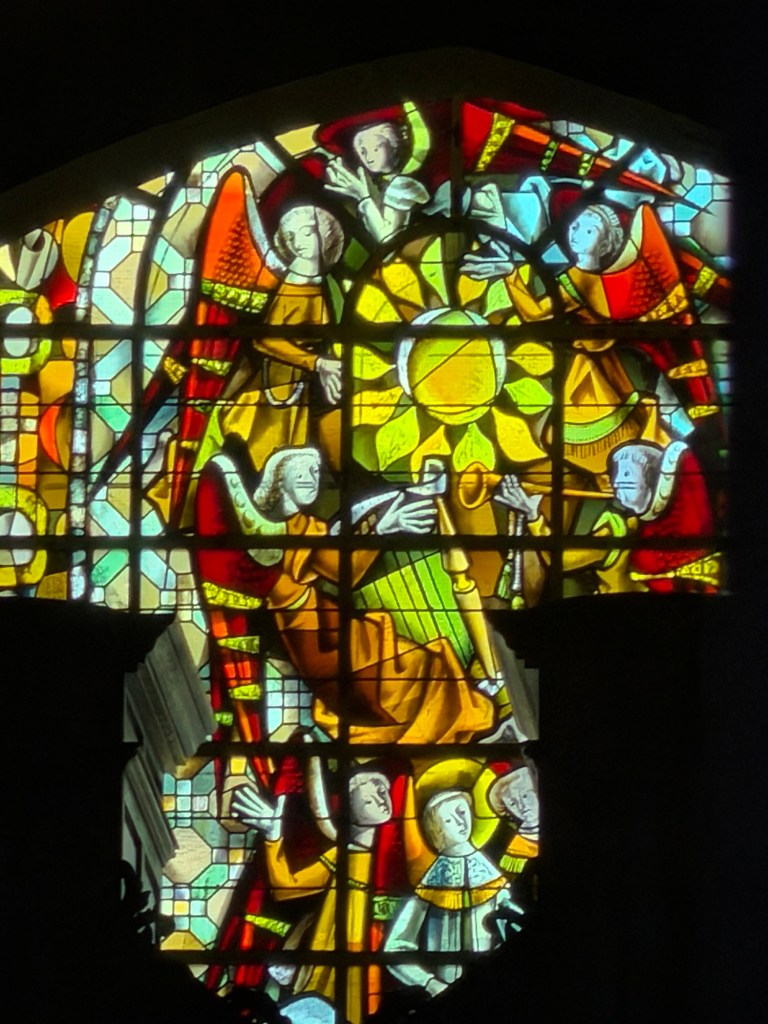
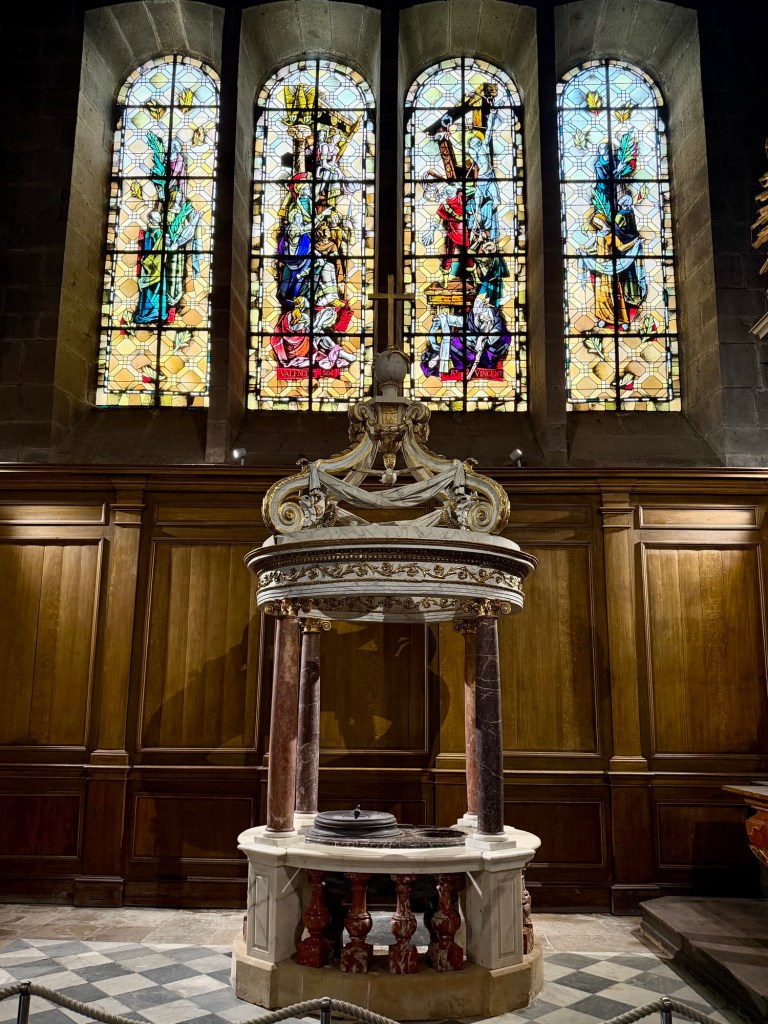
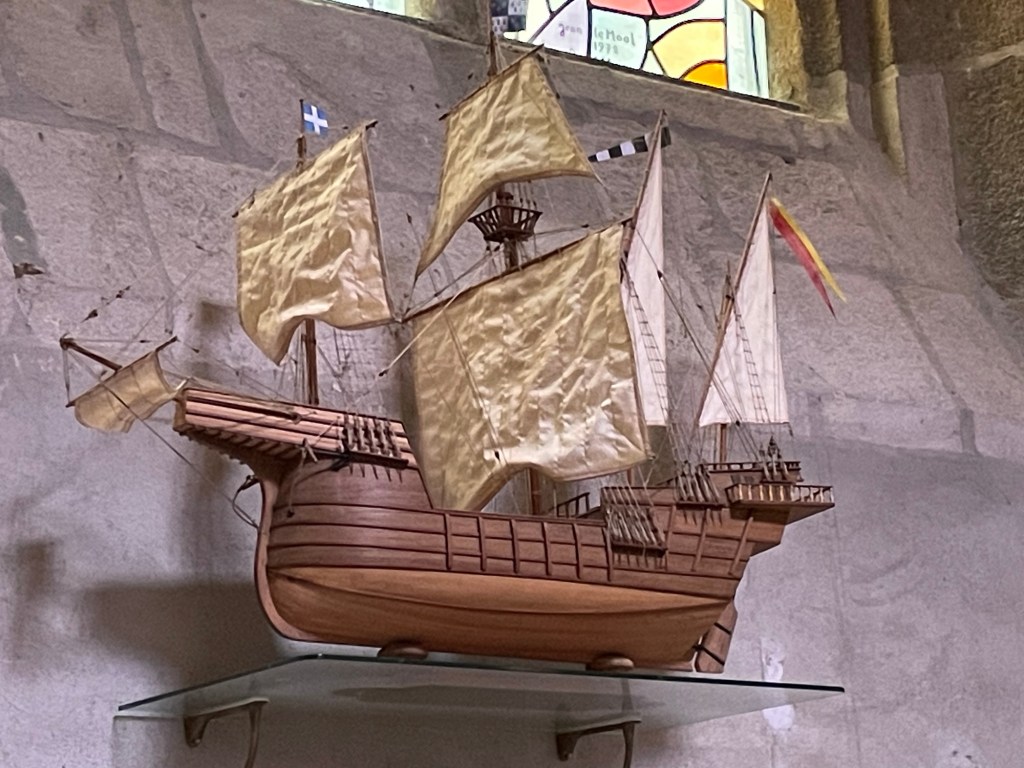
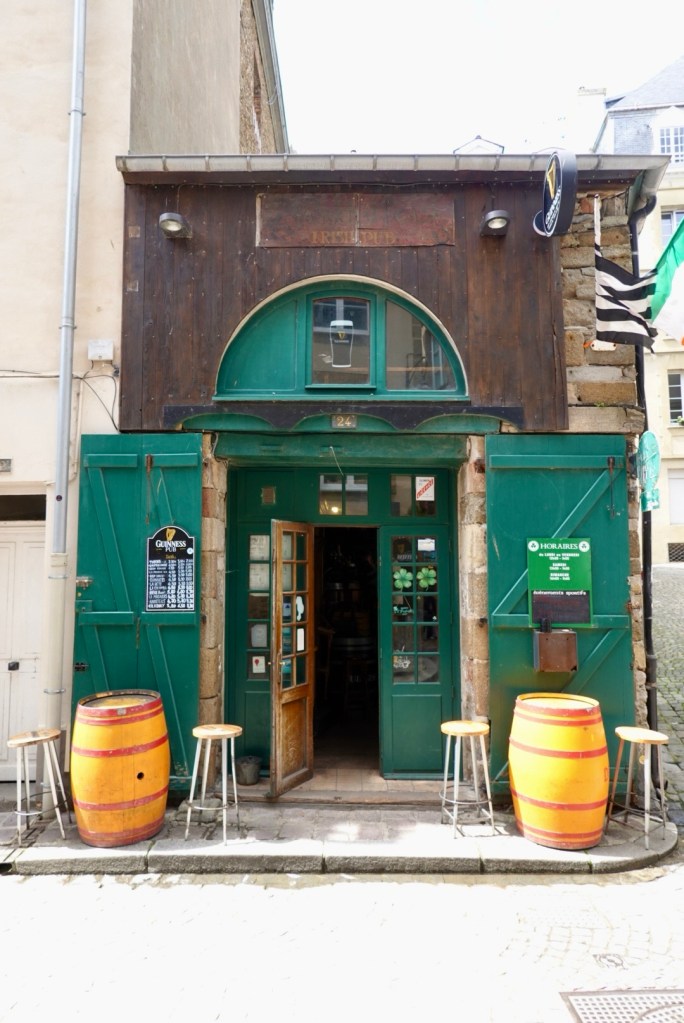
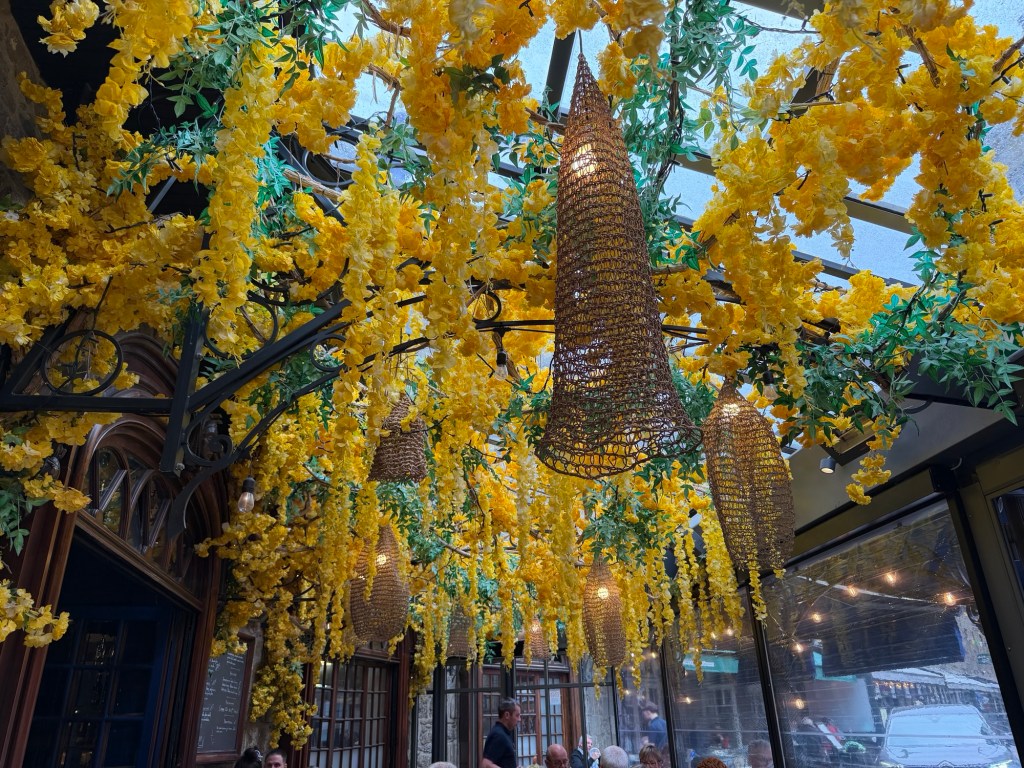
A gull looking to dump on Clare; ramparts and rowers; lots of boats in the harbor, including one serving as a bar.St. Vincent CathedralTh altar’s unusual artworkPipe organPainting, after Jesus died? Only 11 apostles and Mary. Fancy holy water!Another ship in a church. Fishermen must feel a need for prayers.Towers and lanterns; Joëlle and Clare looking at closed church at the highest point in the city.Bars, including an Irish pubPlastic flowers hung over our lunch table.
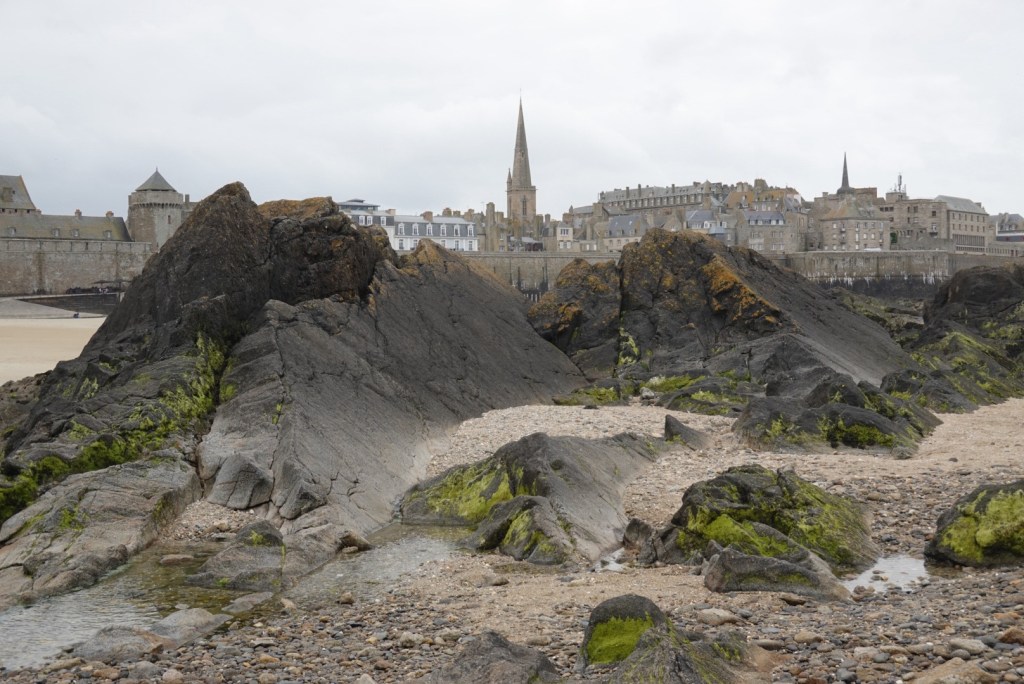
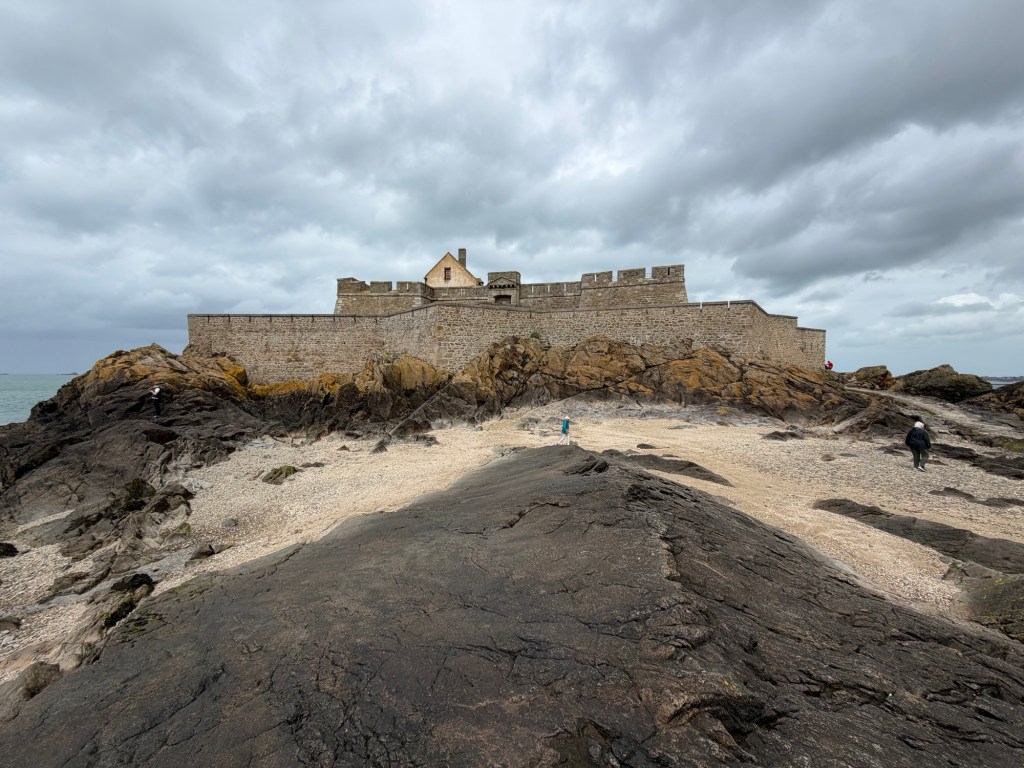
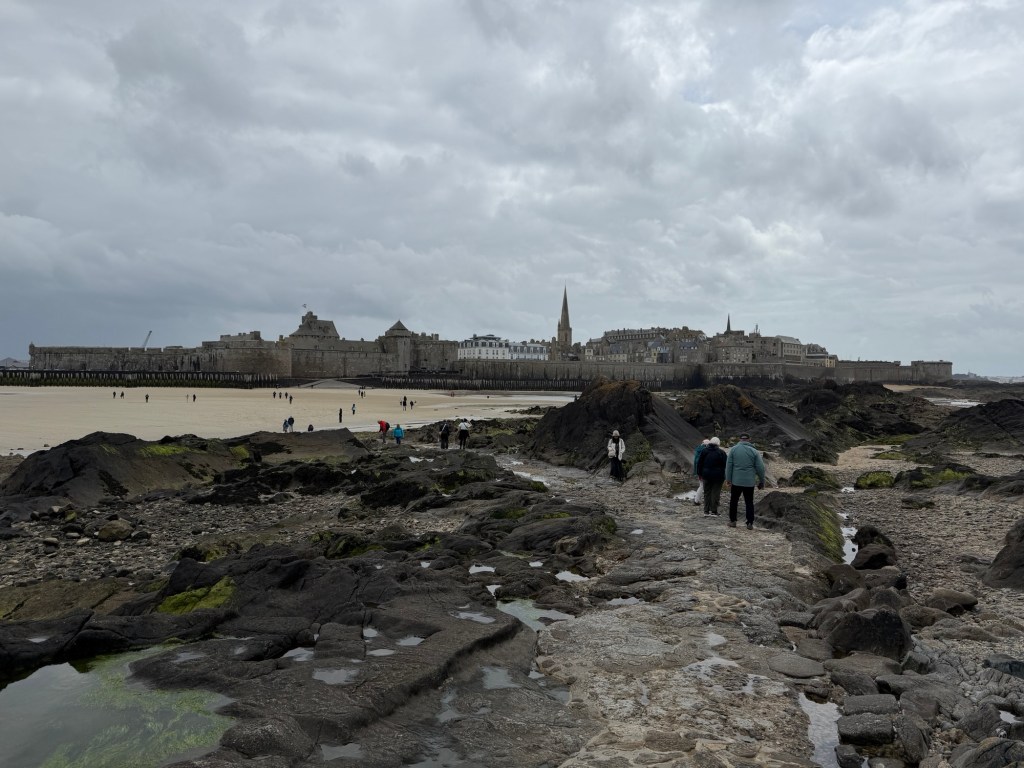
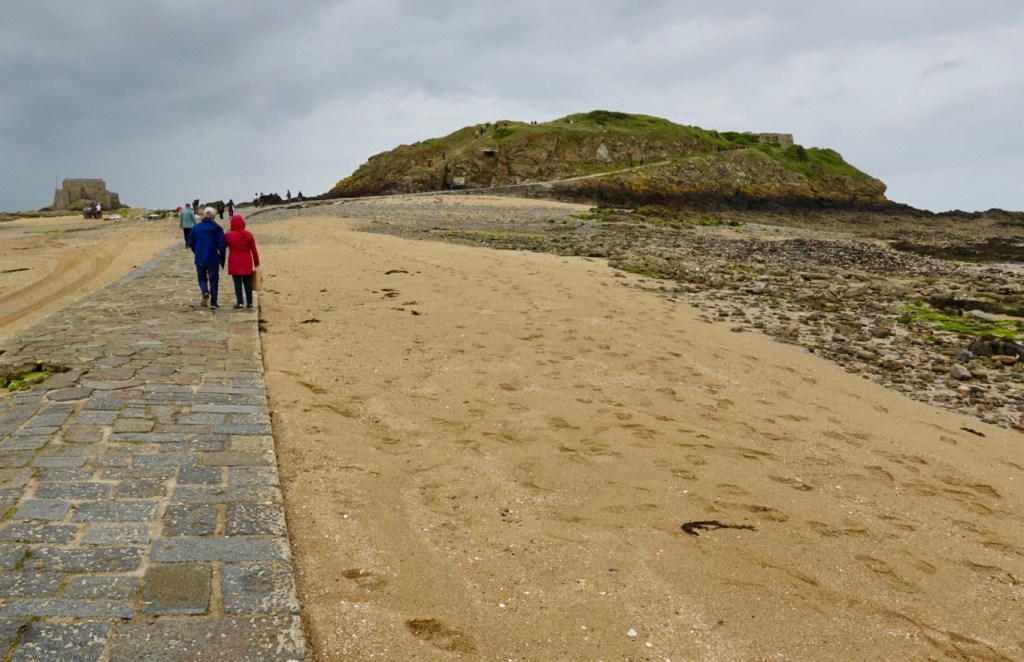
After lunch, we walked out to the rocks that were no longer islands!
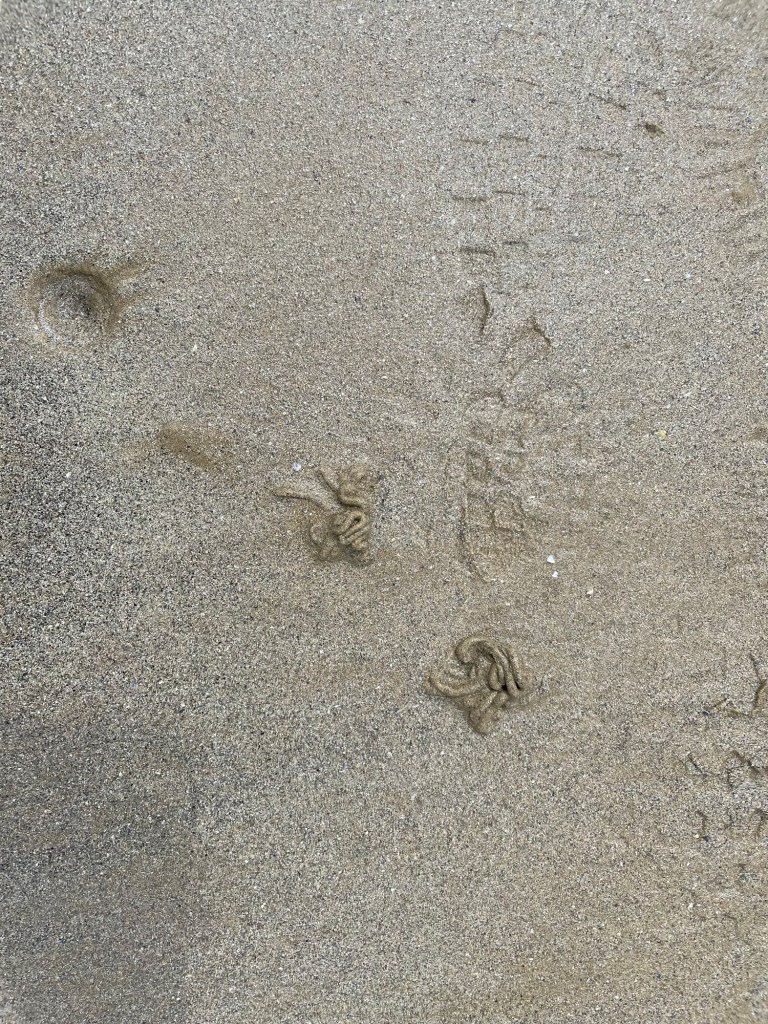
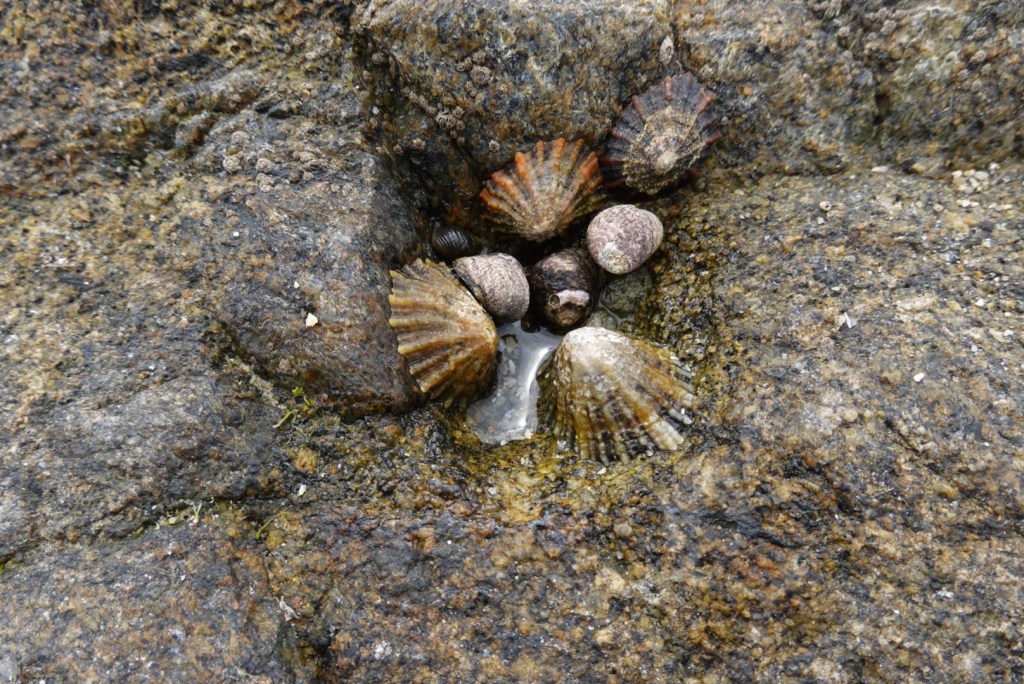
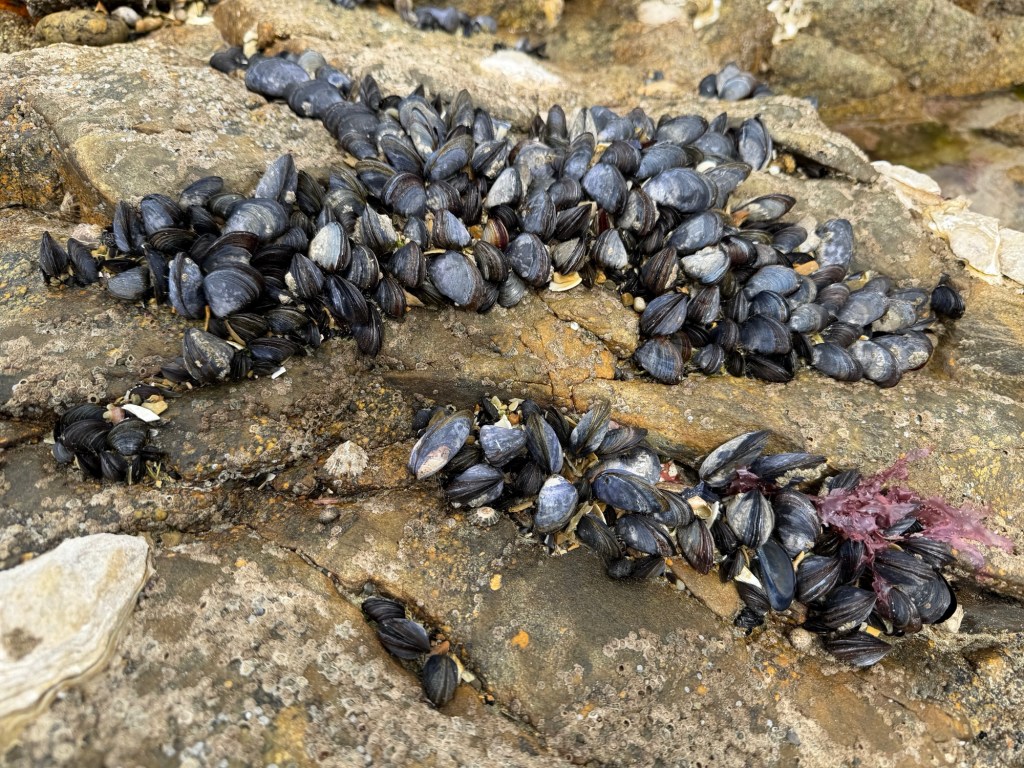
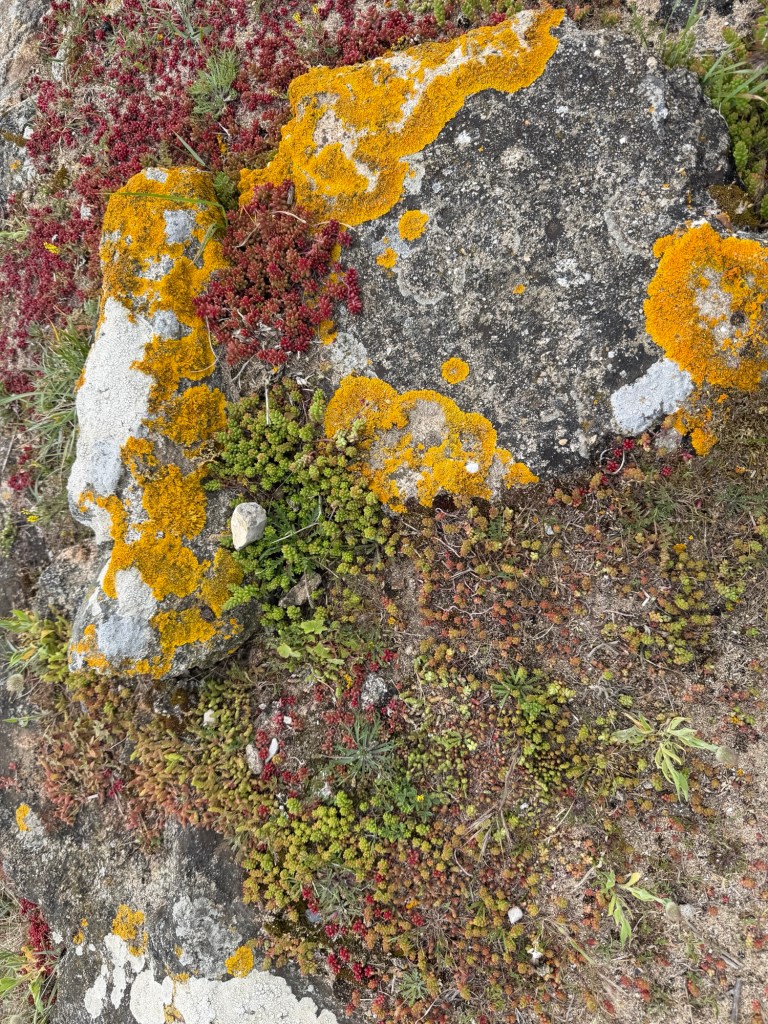
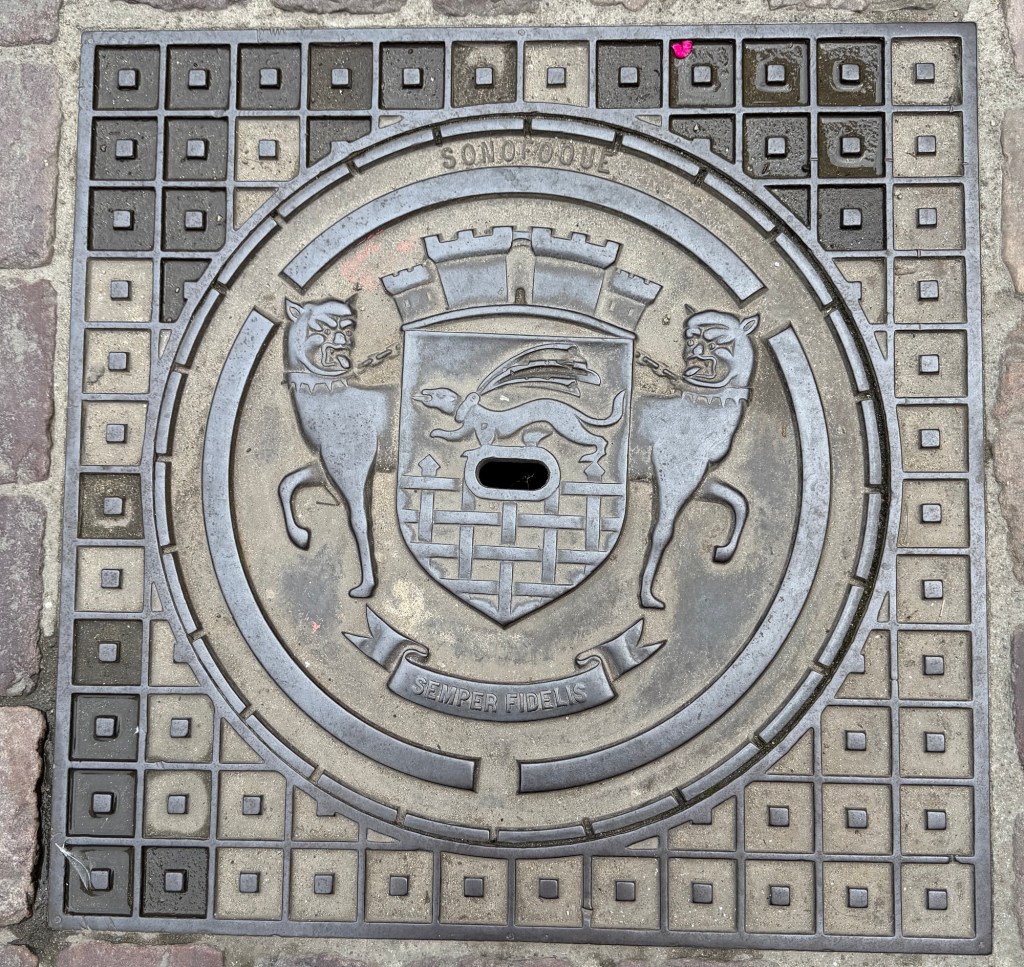
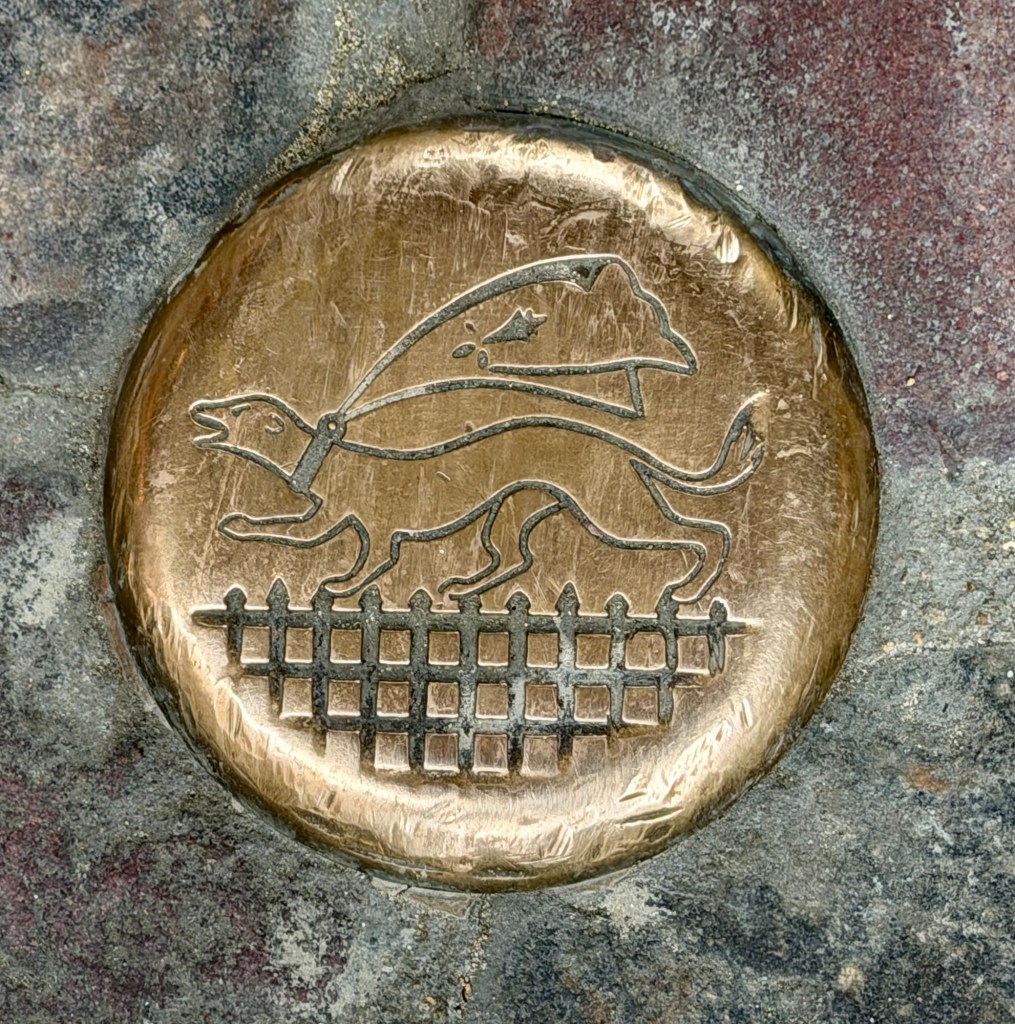
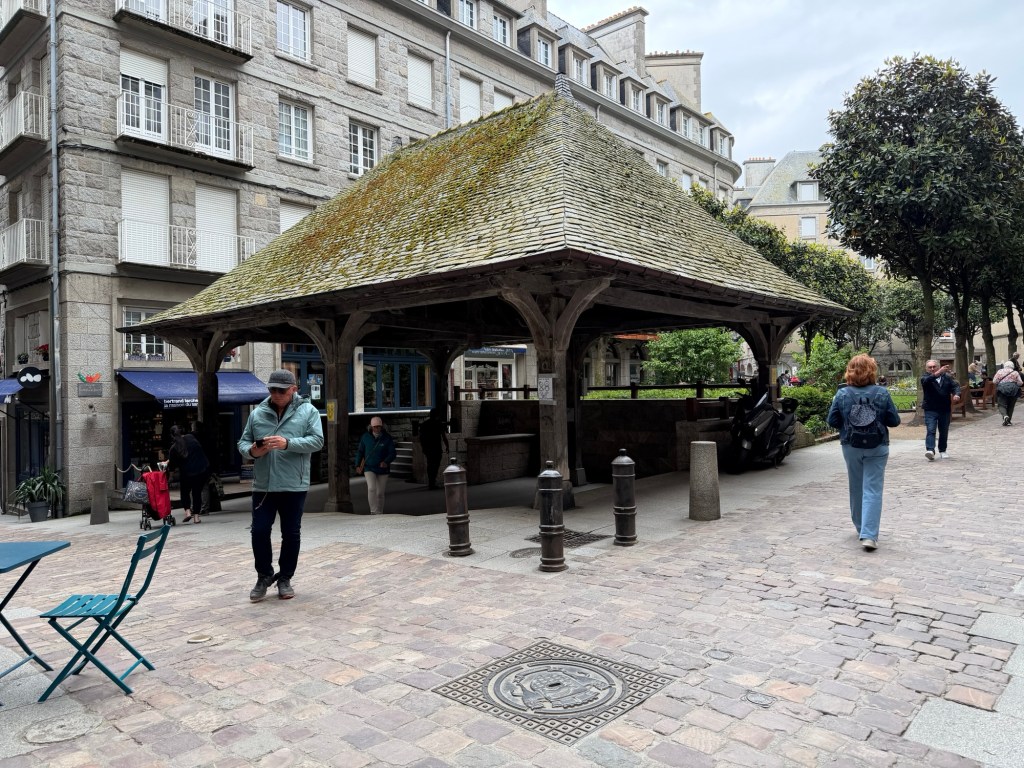
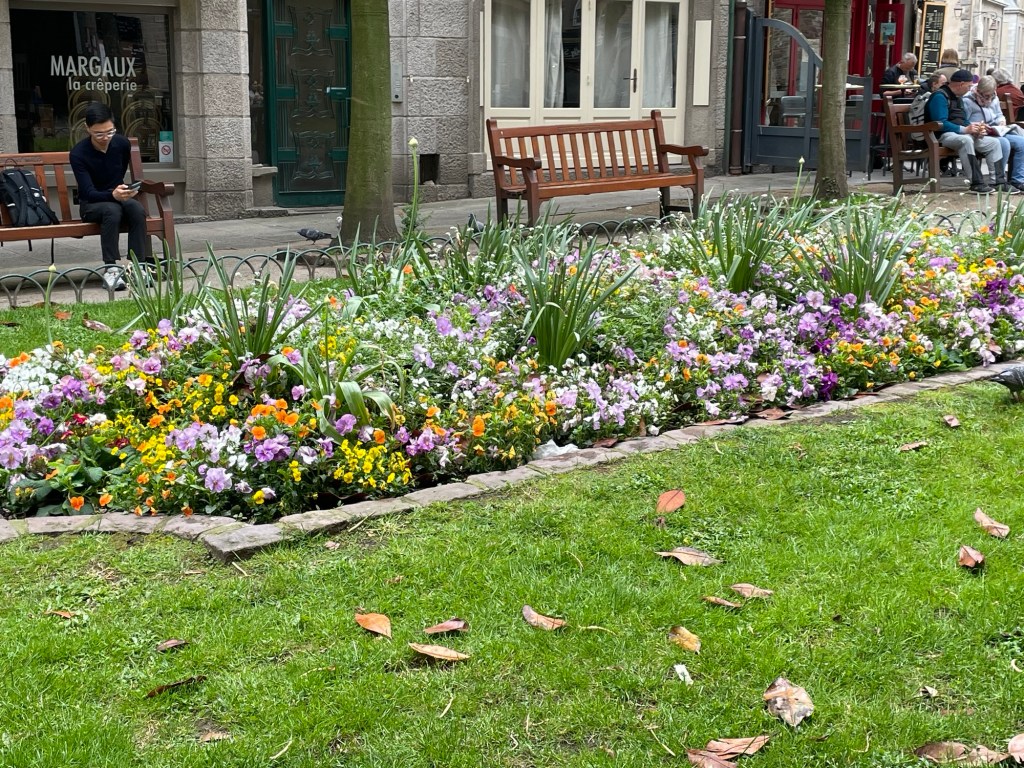
Bedrock, sand and a view of the walled cityDeposits made by sand worms.Cluster of shellsMusselsOn the walk to the cross marking Chateaubriand’s graveAh! An explanation of the diving board. This beach-side swimming pool is exposed at low tide, as well as the wood pilings.Manhole cover and tour marker, unusual wood building (Marc looking for a geocache), and pretty flower beds.
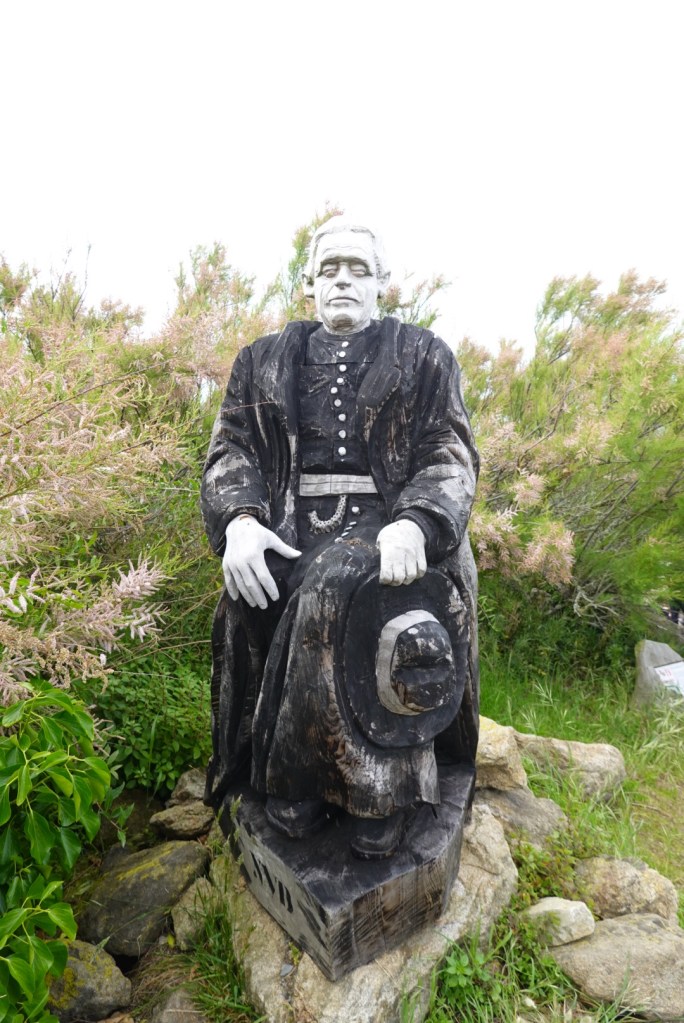
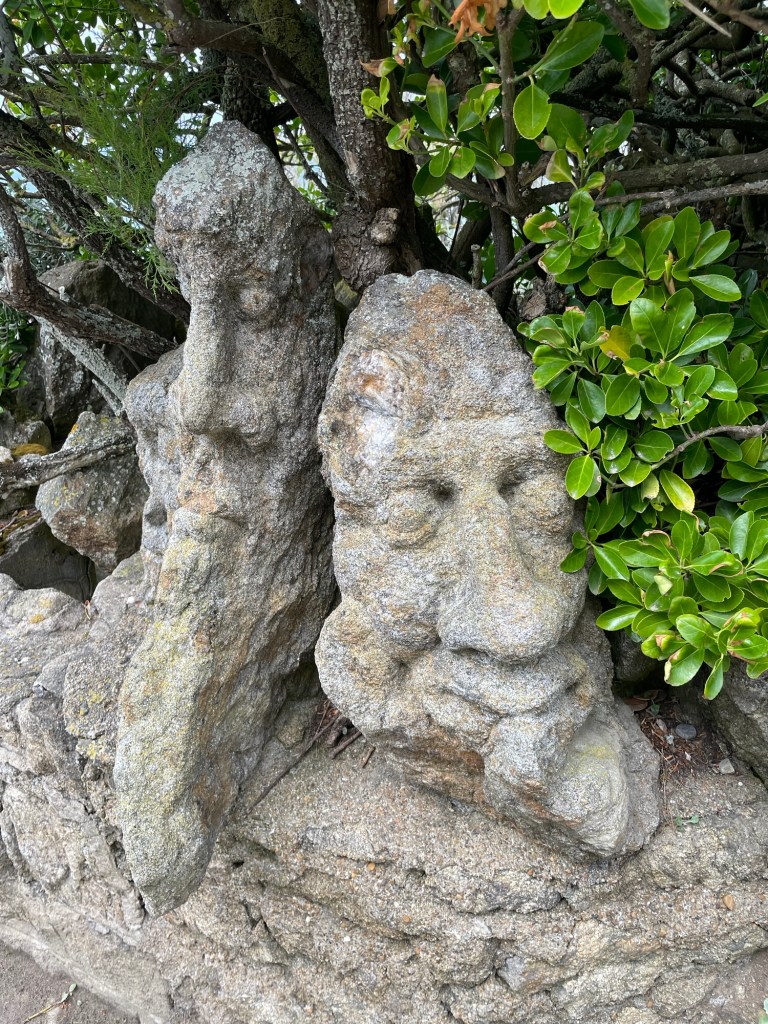
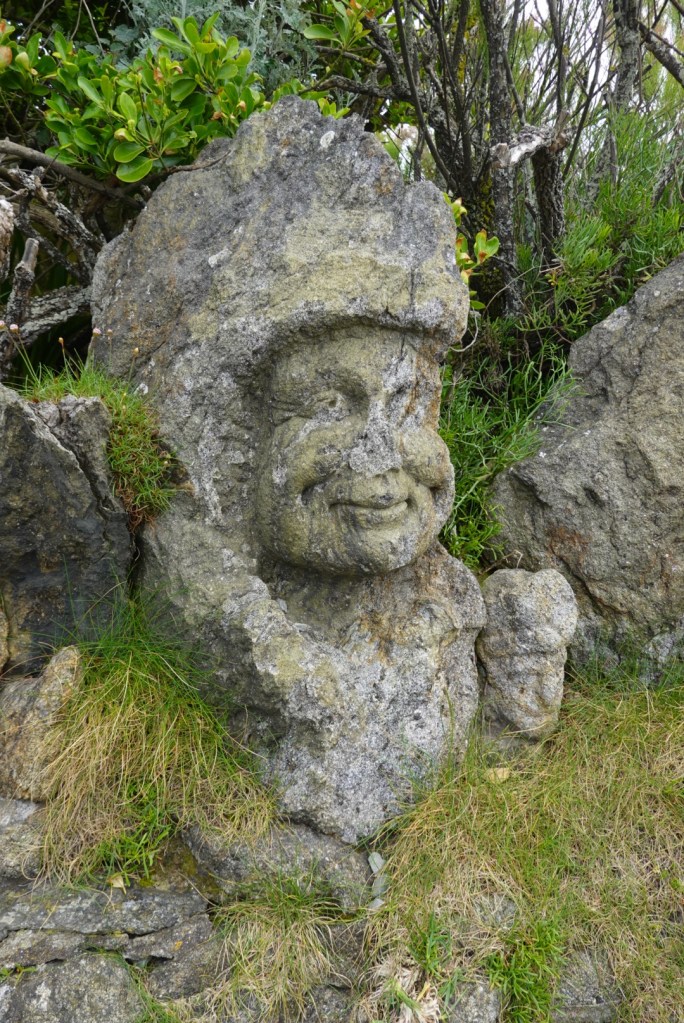
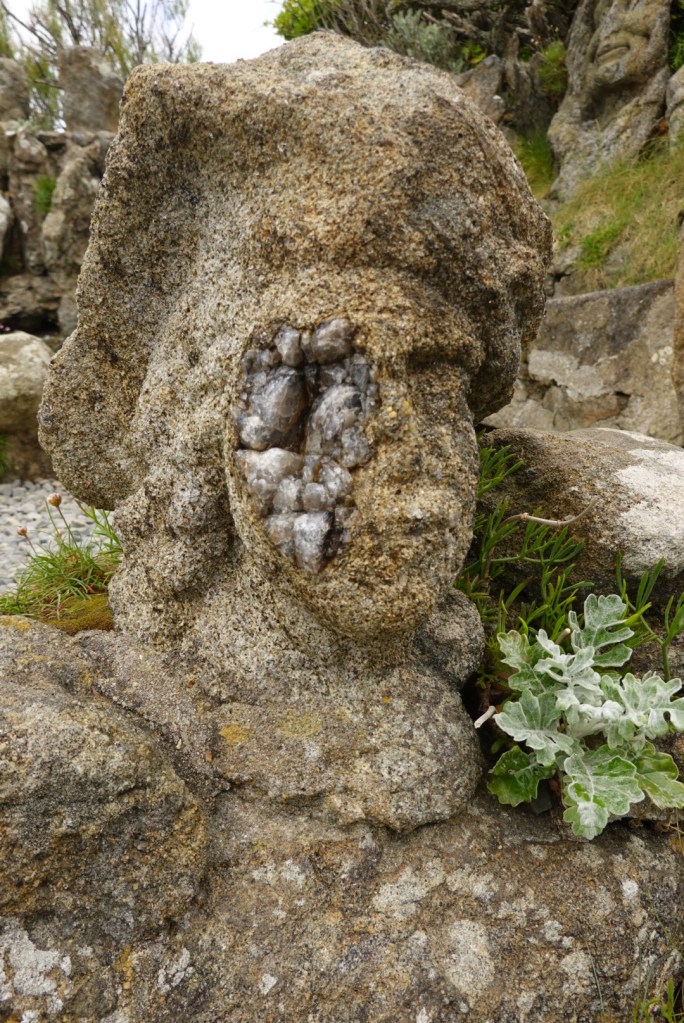
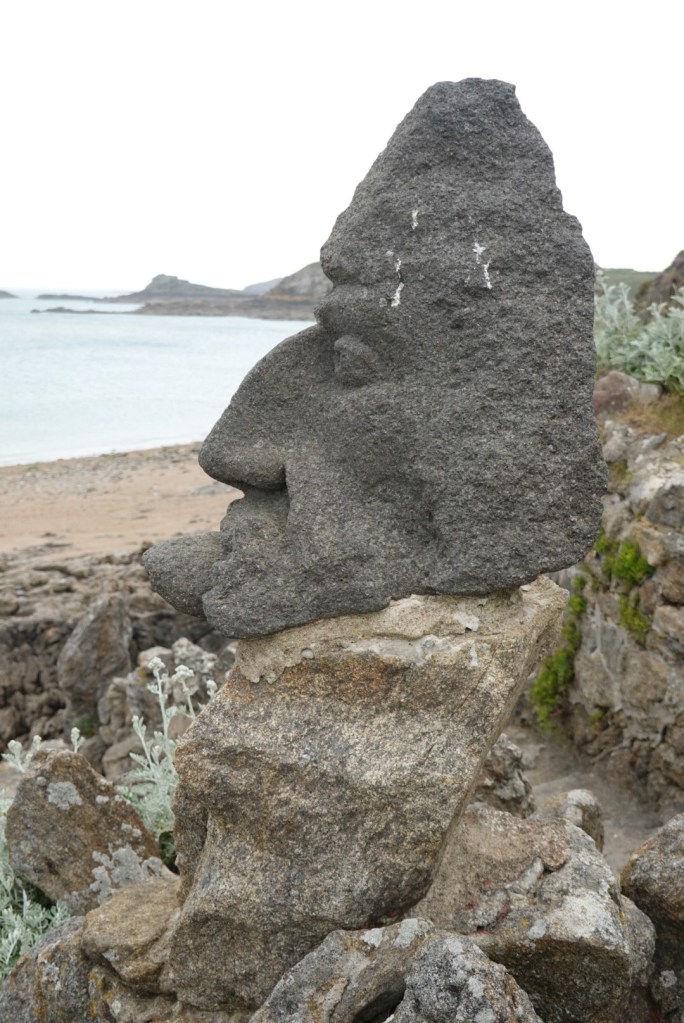
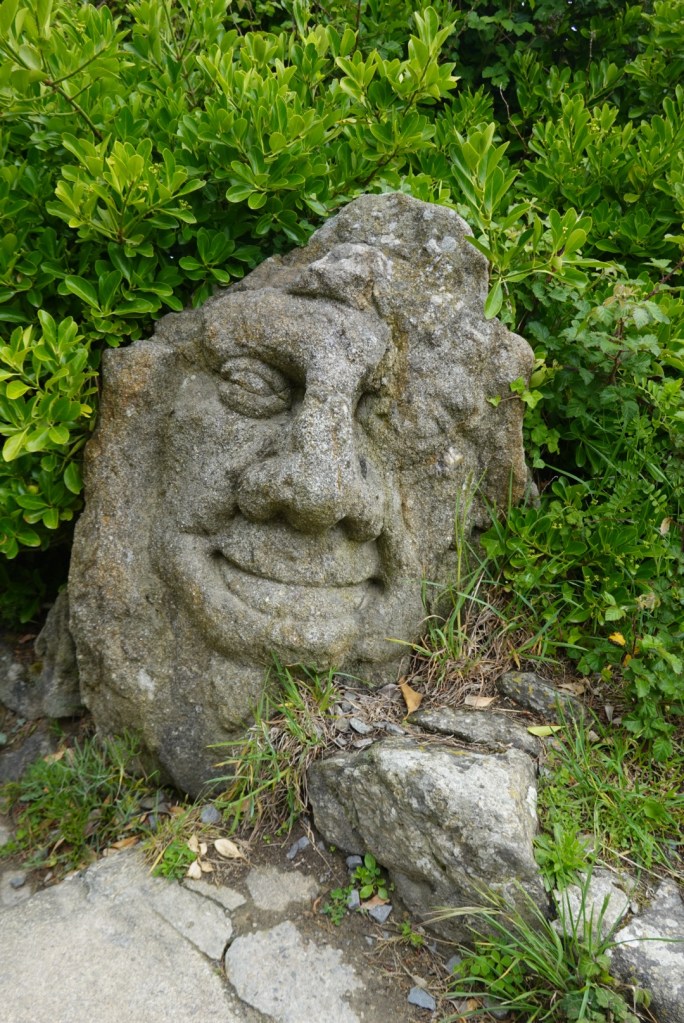
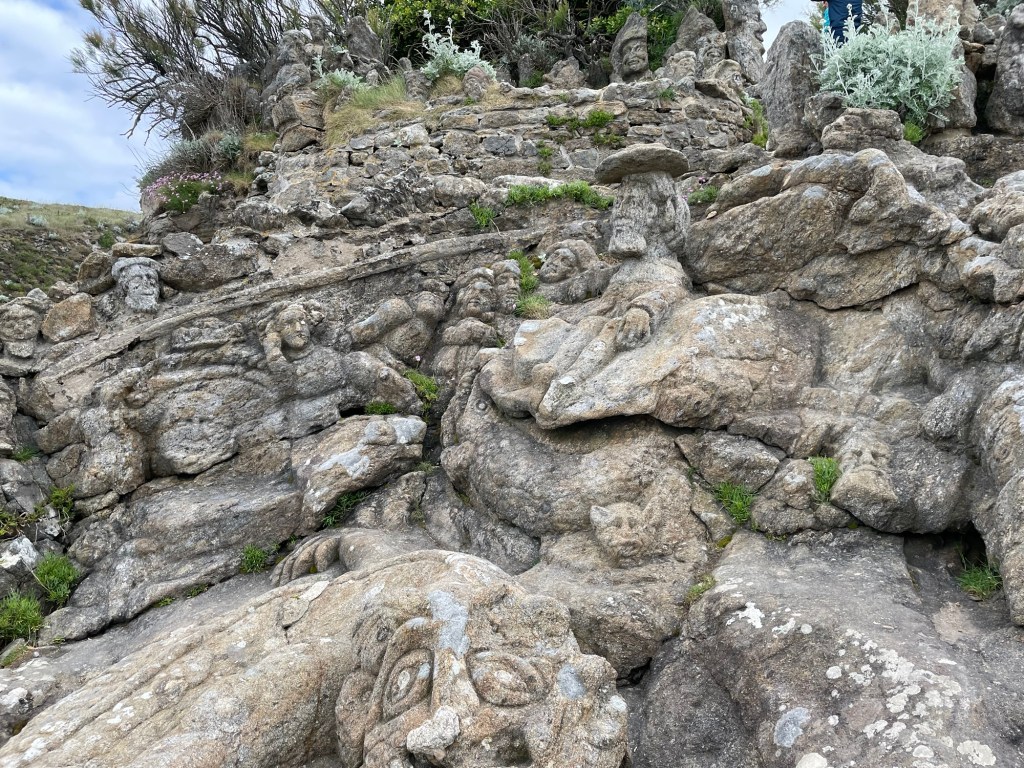
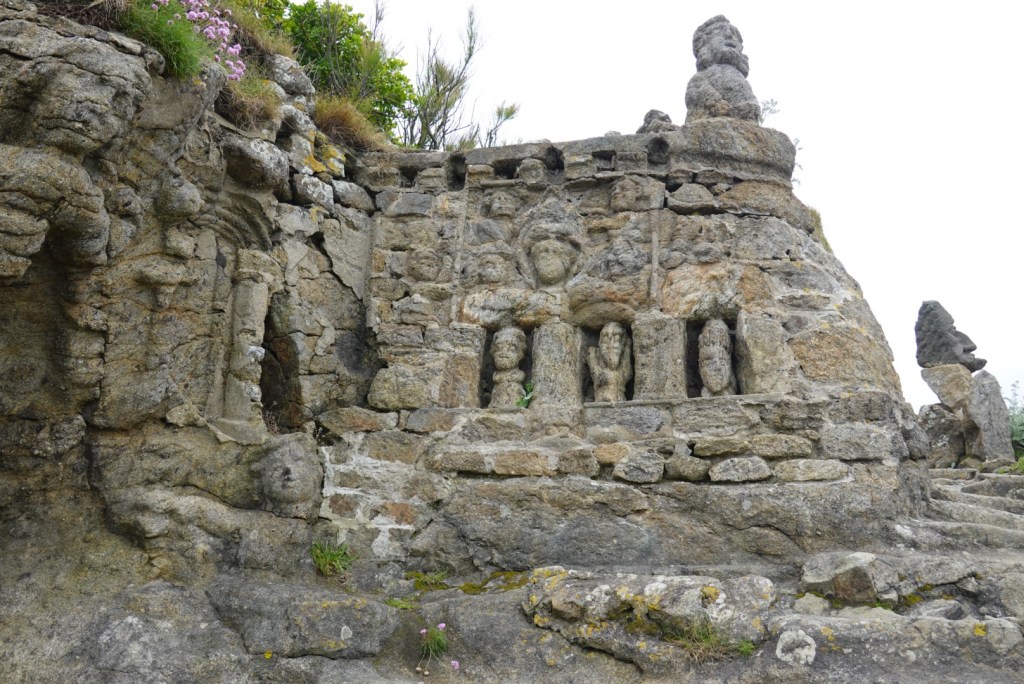
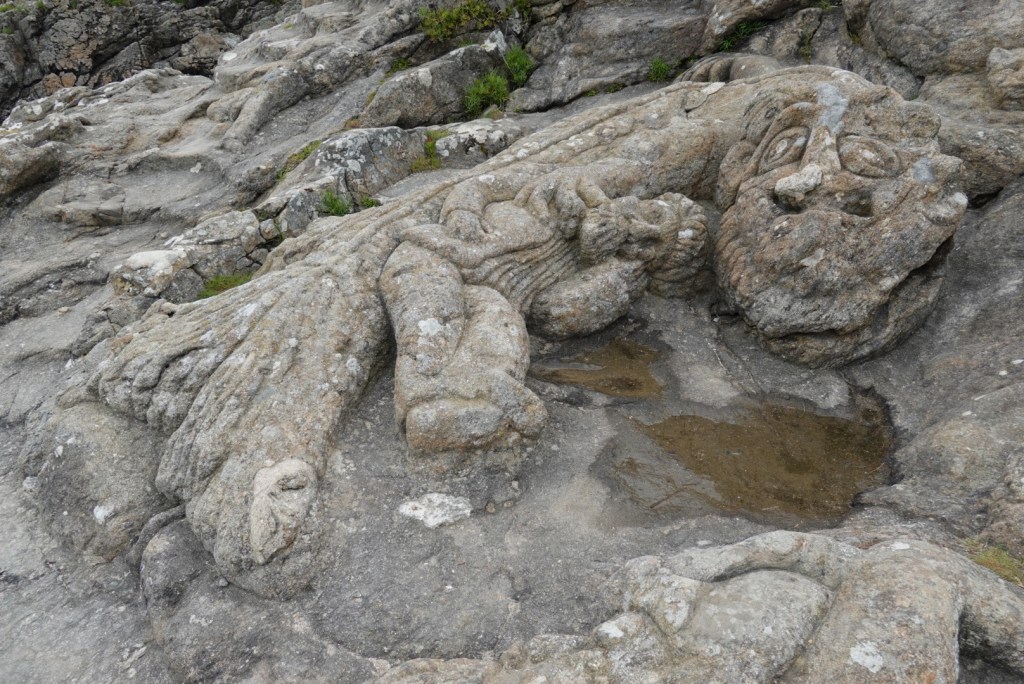
Later, a few kilometers away, we found an obscure outdoor museum, Rock Sculptures of Abbe Foure, filled with statues carved out of the bedrock near the shoreline. The artist, Foure, had a paralyzing stroke at age 30, then retreated to this area, the Cliffs of Rotheneuf, to make his statues.
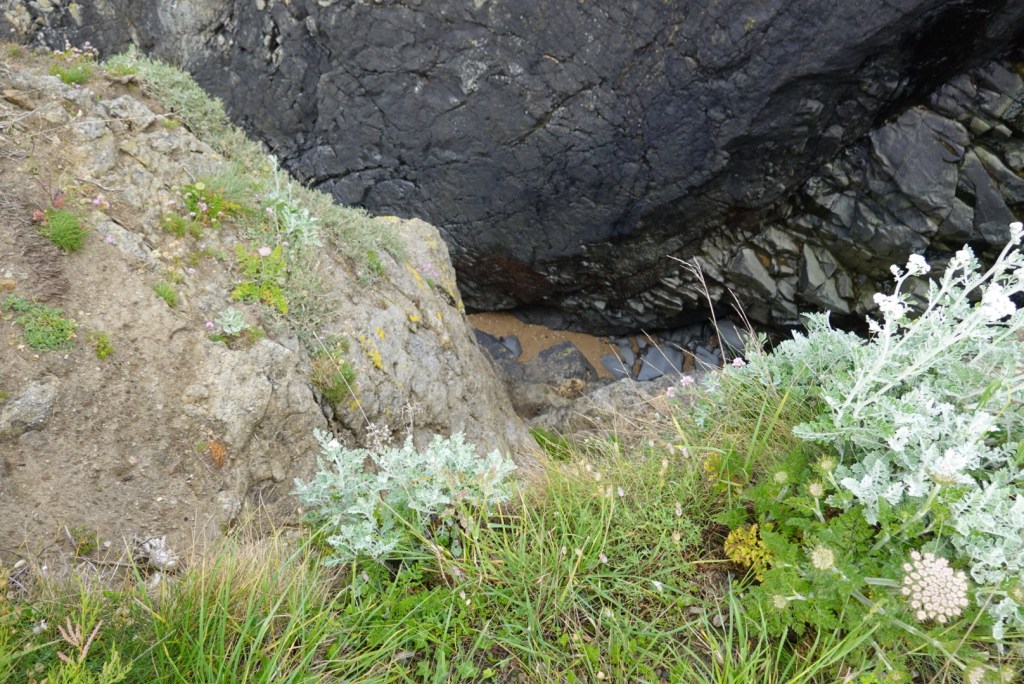
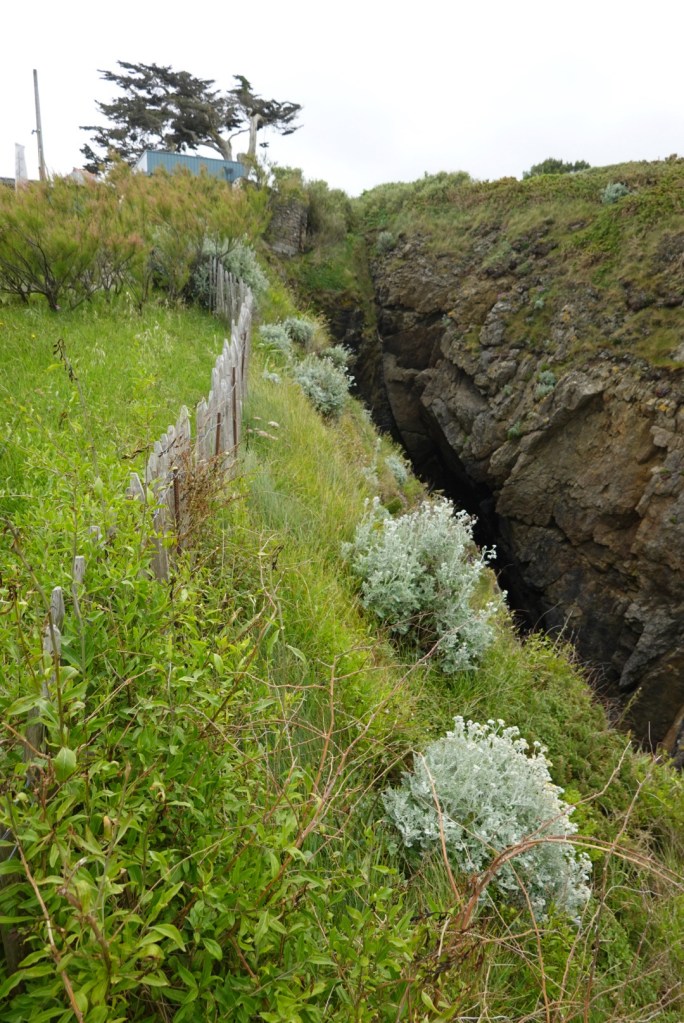
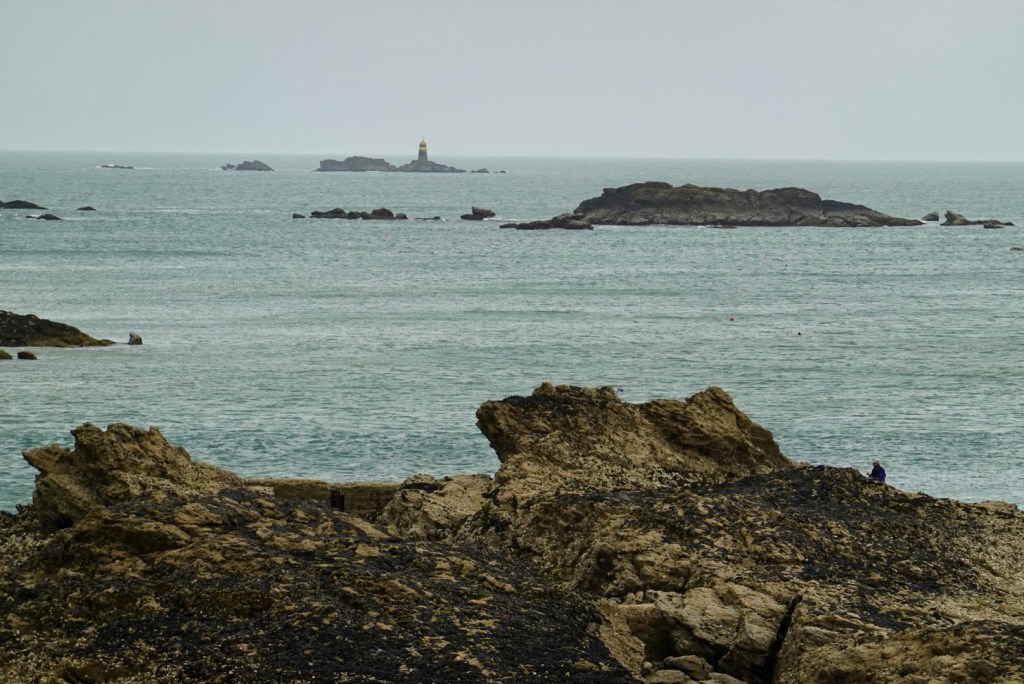
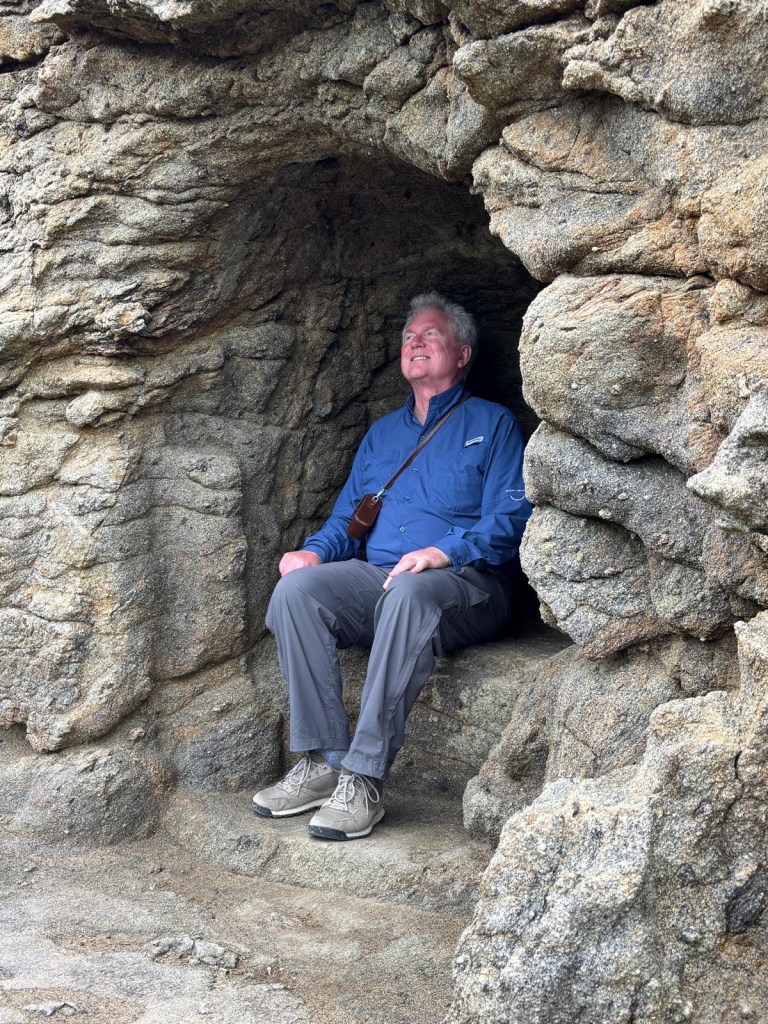
Wooden sculpture of the artistCanyon on one side Canyon on other side View from the Rock sculpture areaOver 300 carvings depict images from old tales of pirates, or the Rotheneuf family, the land owners. Many sculptures and Brian contemplating the sea from an alcove where a sculpture may have stood in the past.Foure began carving the statues in 1870, investing 25 years of his life as a hermit artist.
 Bunch of Geeks go Traveling